



The messy bun is no longer just a casual throw-together hairstyle—it’s evolved into a versatile, intentional look that celebrates texture, movement, and individual style. When combined with bangs, messy buns become a statement, adding softness and framing the face while still delivering that effortlessly undone aesthetic. For Black hair specifically, messy buns with bangs offer incredible opportunities to showcase natural texture, work with different curl patterns, and create styles that feel authentically you.
The key to pulling off a messy bun with bangs on Black hair is understanding how your natural texture works and choosing styles that enhance rather than fight against it. Unlike straighter hair textures, Black hair has curl patterns, coil structures, and natural volume that can be leveraged beautifully in a messy bun. Bangs add an extra dimension—they frame your features, break up the height of a bun, and create visual interest that transforms a simple updo into something more intentional and polished.
What makes these styles particularly powerful is that they work across different curl patterns, hair densities, and styling preferences. Whether you have tight coils, loose waves, or a combination of curl patterns throughout your hair, there’s a messy bun with bangs that will highlight your best features. The styles that follow aren’t rigid rules but rather frameworks you can adapt to match your hair, personality, and the occasion. Each one offers different levels of texture, sleekness, and edge depending on how you want to present yourself that day.
1. The High Textured Crown Bun With Wispy Bangs
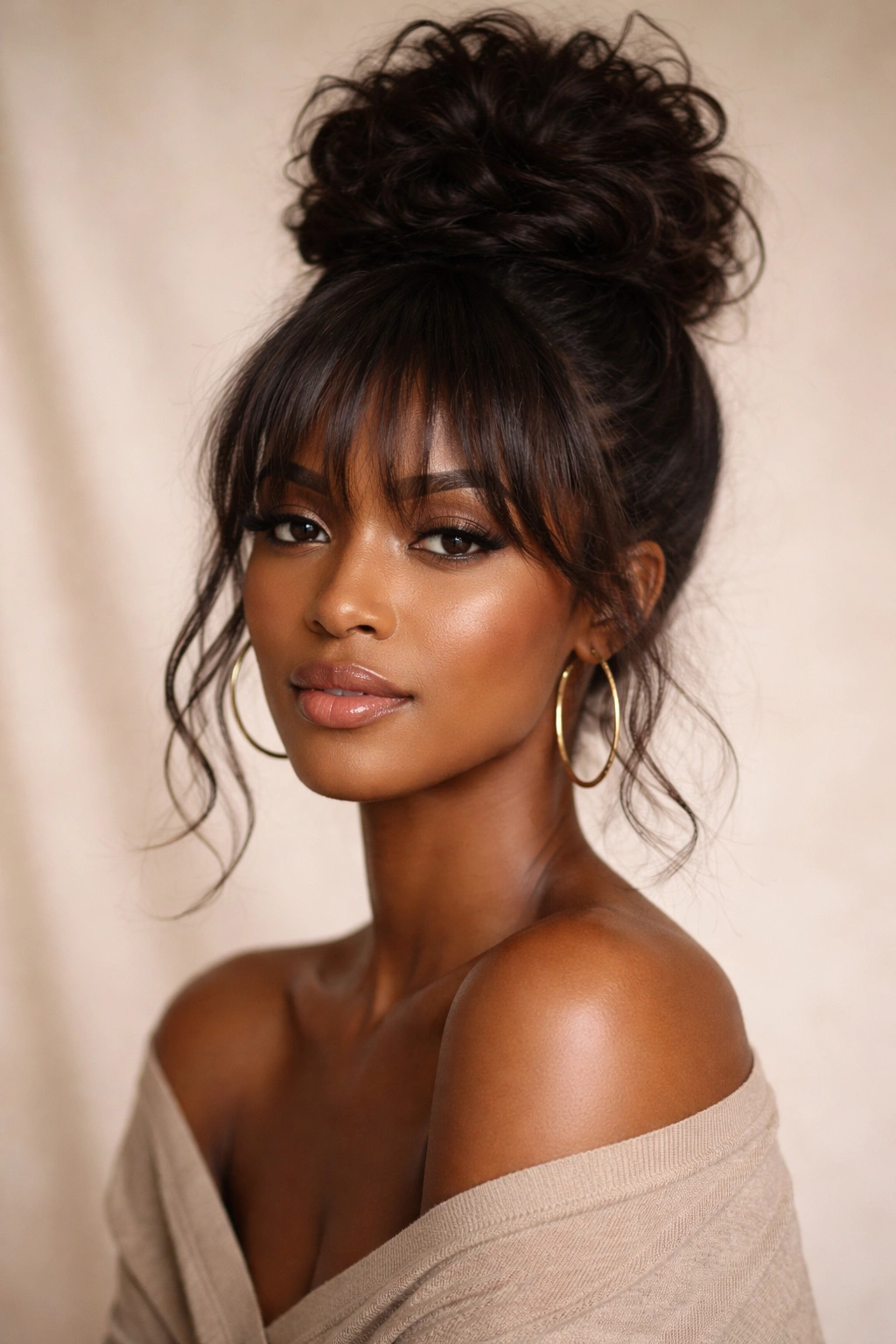
This style is all about volume and movement, using your hair’s natural texture to create a bun that sits high on the crown and catches light beautifully. The high placement elongates the face and works especially well if you have denser hair or want to create maximum visual impact. Wispy bangs—thin, delicate pieces that frame the temples and forehead—soften the overall look and prevent it from feeling too severe or formal.
How to Create This High Textured Look
Start with hair that has some texture to it; second or third-day hair actually works better for this style than freshly washed hair. Apply a texturizing spray or curl-defining cream from mid-length to ends to enhance your natural curl pattern and add grip. Section your hair from the temples up to create your bang area, clipping the rest back temporarily. Decide how thick you want your bangs—wispy means thinner, so take smaller sections from the front and let those drop while you style the rest. Gather the remaining hair into a high ponytail at the very crown of your head, securing it with a fabric-lined elastic that won’t cause breakage. Don’t worry about it being perfectly smooth; you want texture and visible dimension.
What Makes This Style Stand Out
- The high placement makes your face appear longer and more lifted, instantly looking more awake
- Natural texture in the bun creates movement that reads as intentional, not sloppy
- Wispy bangs frame the face delicately without requiring daily edge control
- This style works with virtually any curl pattern because it celebrates texture rather than fighting it
- The contrast between the structured high bun and soft bangs creates visual sophistication
Styling and Maintenance Tips
Once your ponytail is secured, take the elastic and wrap small sections of hair around it to create that classic bun shape—twist, coil, and pin pieces as you go, leaving some strands deliberately loose for texture. Use bobby pins that match your hair color and angle them parallel to your scalp so they disappear into the style. The looser, more undone you keep this bun, the better it looks. Leave pieces of hair falling around your face naturally (these become part of the wispy aesthetic), and use your fingers rather than a brush to gently separate and define the texture in your bun.
A light misting of flexible hold hairspray preserves texture without making it feel stiff or crunchy. Unlike traditional gel or mousse, a light spray keeps everything in place while maintaining the softness and movement that makes this style special. If your bangs start to feel too thick and heavy during the day, use a fine-tooth comb or wide-tooth comb to gently separate them and restore that wispy feel.
2. The Side-Swept Romantic Bun With Long Layers
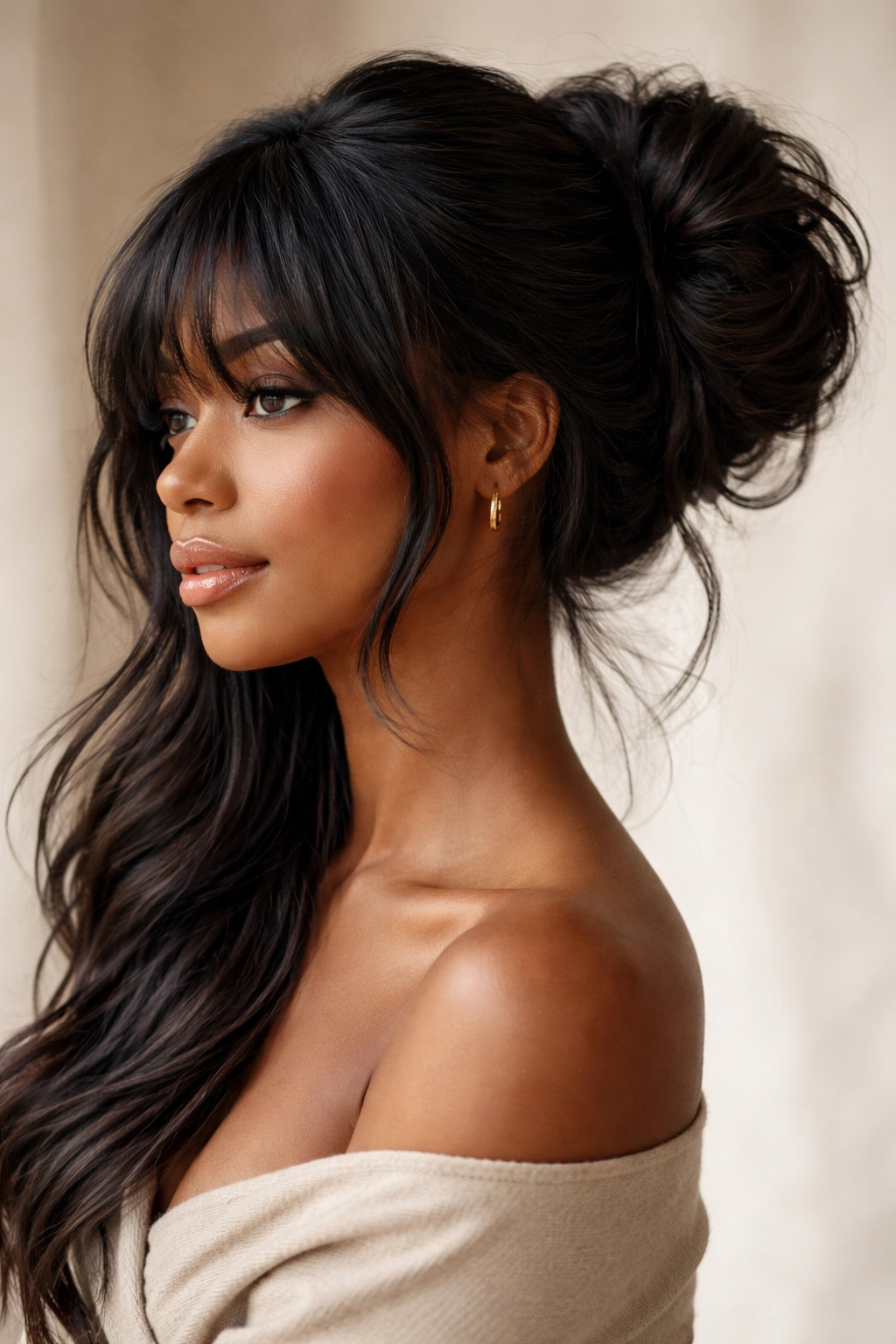
This style drapes one section of hair across the side of your face, creating an asymmetrical, romantic silhouette that’s perfect when you want to feel polished without looking overly done. Long-layered bangs—hair cut to fall below the chin on one side—add movement and allow you to sweep them back dramatically or let them frame your face depending on your mood. The bun sits slightly off-center, which immediately makes the style feel more editorial and intentional.
Building the Side-Swept Foundation
This style requires intentional layering throughout your hair to get the best result, so talk to a stylist experienced with Black hair about adding face-framing layers if your hair is currently one length. Blow-dry or air-dry your hair with a directing mousse applied to the roots to create volume and define your curl pattern. The key difference between this style and others is that you’re not centering your bun on top—you’re creating asymmetry. Part your hair deep on one side (one part should be much larger than the other), and sweep the smaller section across your forehead to create your long-layered bang effect.
Take the remaining hair and gather it into a low, off-center ponytail on the side opposite your deep part. Secure it at the nape of your neck or slightly higher, depending on where feels most balanced. The side-swept element should feel organic, like you swept your hair back but some pieces escaped—which is exactly the point.
Why Black Hair Excels With This Style
- Layered cuts work beautifully with Black hair texture and add dimension even in the bun
- The side-sweep creates an editorial, high-fashion aesthetic that reads as intentional styling
- Long-layered bangs are incredibly flattering for different face shapes and can be customized to frame your specific features
- This style accommodates various curl patterns because layering creates natural separation and definition
- The asymmetry is inherently modern and prevents the look from feeling too classic or costume-like
Creating That Romantic Texture
To finish the bun itself, twist the ponytail gently and coil it around the base, pinning as you go. Leave some pieces intentionally loose—these are what give the style its romantic, undone quality. Use a rattail comb to gently backcomb sections of the bun for texture and grip, which also creates the soft, cloud-like effect that makes this style read as romantic rather than sloppy. Smooth the surface slightly with your fingers or a soft brush, but preserve that tousled quality underneath.
The long-layered bangs should feel fluid and move naturally. If your curl pattern tends to shrink or coil up, consider blow-drying the bang section straight or using a flat iron for a sleek contrast against the texture in the bun. Alternatively, define your curls in the bangs with a curl cream and let them coil naturally—this works especially well if you have looser wave patterns. A light finishing spray holds everything without creating crunch.
3. The Sleek Base With Tousled Crown and Baby Bangs
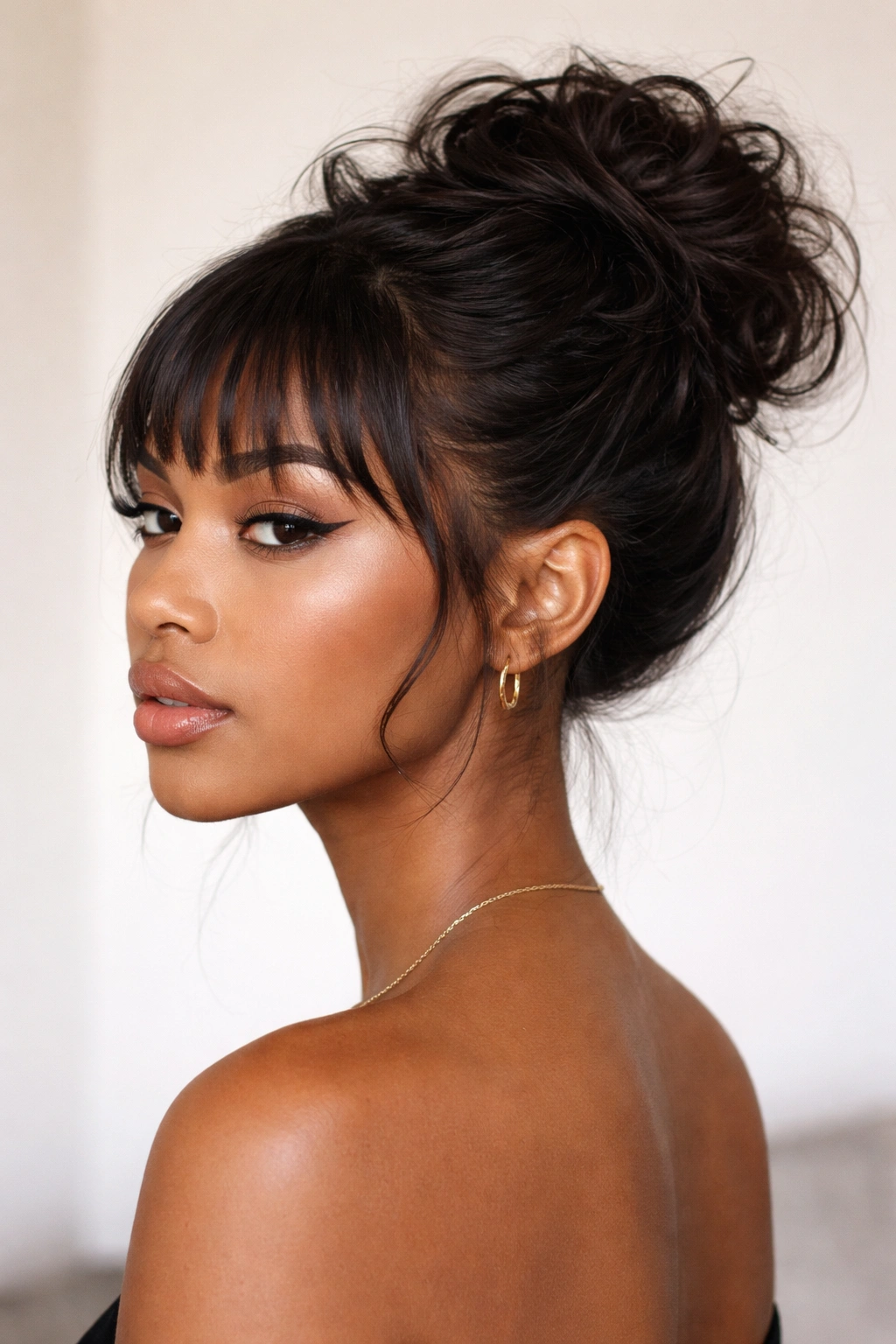
This style splits the difference between polished and relaxed: the lower part of your bun sits sleek and controlled at the nape of your neck, while the crown breaks free into gorgeous, tousled texture. Baby bangs—very short bangs that sit just above the eyebrows—create a bold, fashion-forward look that pairs beautifully with this contrast. It’s the style to choose when you want visual sophistication paired with an edge.
Achieving the Sleek-to-Tousled Transition
Start with smoothing cream or edge control applied to the lower section of your hair—from about ear-level down. Blow-dry this section smooth or use a paddle brush to create a sleek, controlled base. This sleekness matters because it creates the visual contrast that makes the tousled section feel intentional rather than accidental. Section off your bangs carefully (for baby bangs, this should be a smaller section, roughly from temple to temple). The key to good baby bangs on Black hair is working with a stylist who understands your specific hair texture and can cut them to sit at the right angle and length for your face shape.
Gather the remaining hair into a low-to-mid ponytail at the nape of your neck, keeping the lower portion as smooth and polished as possible. Use a flexible or firm-hold hairspray on the sleek section to ensure it stays put throughout the day.
The Crown Tousle That Makes It Special
Now for the fun part: creating intentional texture in the crown and upper bun area. Take the ponytail section and gently backcomb or tease it at the roots to create volume and grab. Twist the ponytail loosely and coil it around the elastic, but don’t worry about making it perfect—you want dimension and movement. Use bobby pins to secure it in place, but let pieces escape deliberately. The goal is a bun that looks like your crown exploded in the most beautiful way possible.
Once the bun is shaped, use your fingers to gently separate and define the texture. Pull out a few longer pieces around the nape to soften the look, and make sure the top of the bun has visible dimension and separation, not a smooth, compact shape. A texturizing spray rather than a heavy gel is ideal here—it enhances texture without weighing it down or making it look sticky.
Why This Style Commands Attention
- The sleek-to-tousled contrast creates a distinctly modern, intentional aesthetic
- Baby bangs are bold and fashion-forward, instantly elevating the entire look
- This style works across curl patterns because the sleekness and texture become a design choice
- The polished base ensures the style reads as intentional styling, not bedhead
- It’s ideal for professional settings where you want to look sharp without feeling boring
4. The Double-Section Bun With Undercut Fade and Blunt Bangs
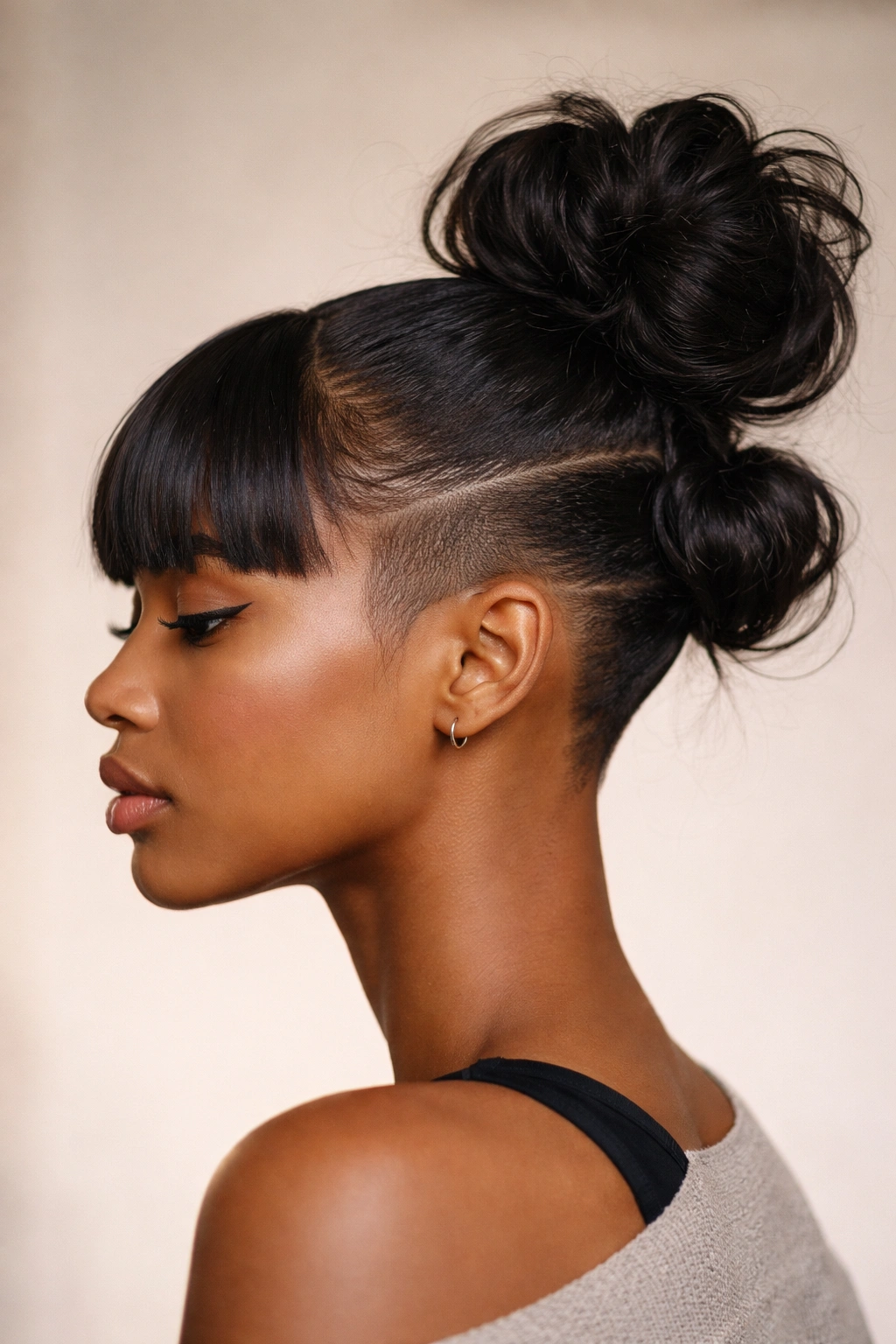
This is the style to choose if you have an undercut or faded sides and want to showcase that design work. The double-section bun uses two gathered sections to create height and visual interest, while the undercut adds an architectural element. Blunt bangs—cut straight across the forehead—pair beautifully with this geometric, modern aesthetic.
Building the Two-Section Structure
The double-section bun works best when you create intentional separation between two ponytail sections. Start with your blunt bangs cut to your preferred length (typically chin-length or shorter for maximum impact). Create a deep side part on whichever side showcases your undercut or fade best. Section your hair into two sections: one from your deep part back to about mid-crown (this becomes your first bun section), and the remaining hair becomes your second section.
Gather the first section into a high ponytail and secure it. Take the second section (the larger one) and gather it into a lower ponytail at the nape, securing it separately. This creates two distinct anchor points, which is what allows you to build dimension and height.
Constructing the Buns
Start with your lower bun first. Twist the lower ponytail gently and coil it around its elastic base, pinning it securely. This bun should be fairly compact and controlled. Then work on the upper section, creating a slightly looser, more tousled bun that sits higher. The contrast between a sleeker lower bun and a more textured upper bun creates visual interest.
Once both buns are in place, they should stack visually—the upper bun slightly in front of or above the lower one, creating a sculptural, almost architectural look. Use bobby pins that match your hair color, and don’t be shy about using enough pins to keep everything secure.
Why the Undercut Element Elevates This Style
- An undercut fade showcases precision and intentional design work
- The double-section bun creates height and visual interest that draws the eye upward
- Blunt bangs complement geometric designs and modern aesthetics perfectly
- This style is ideal for showing off your fade or undercut, which becomes a design feature rather than something to hide
- It’s bold, fashion-forward, and requires confidence to pull off—which signals style intention immediately
Styling Considerations
Blunt bangs require regular maintenance to look sharp. If you’re not getting them trimmed every 4-6 weeks, they’ll start to feel wispy and lose their impact. Use a flexible-hold hairspray that keeps them in place without making them look crunchy. If your hair tends to shrink or your curl pattern is coily, blow-dry or flat-iron your bangs to maintain that blunt line. For the buns themselves, backcomb the sections lightly to create texture and grip, but keep enough structure that they read as intentionally sculpted rather than messy.
5. The Twisted Rope Bun With Braided Bangs
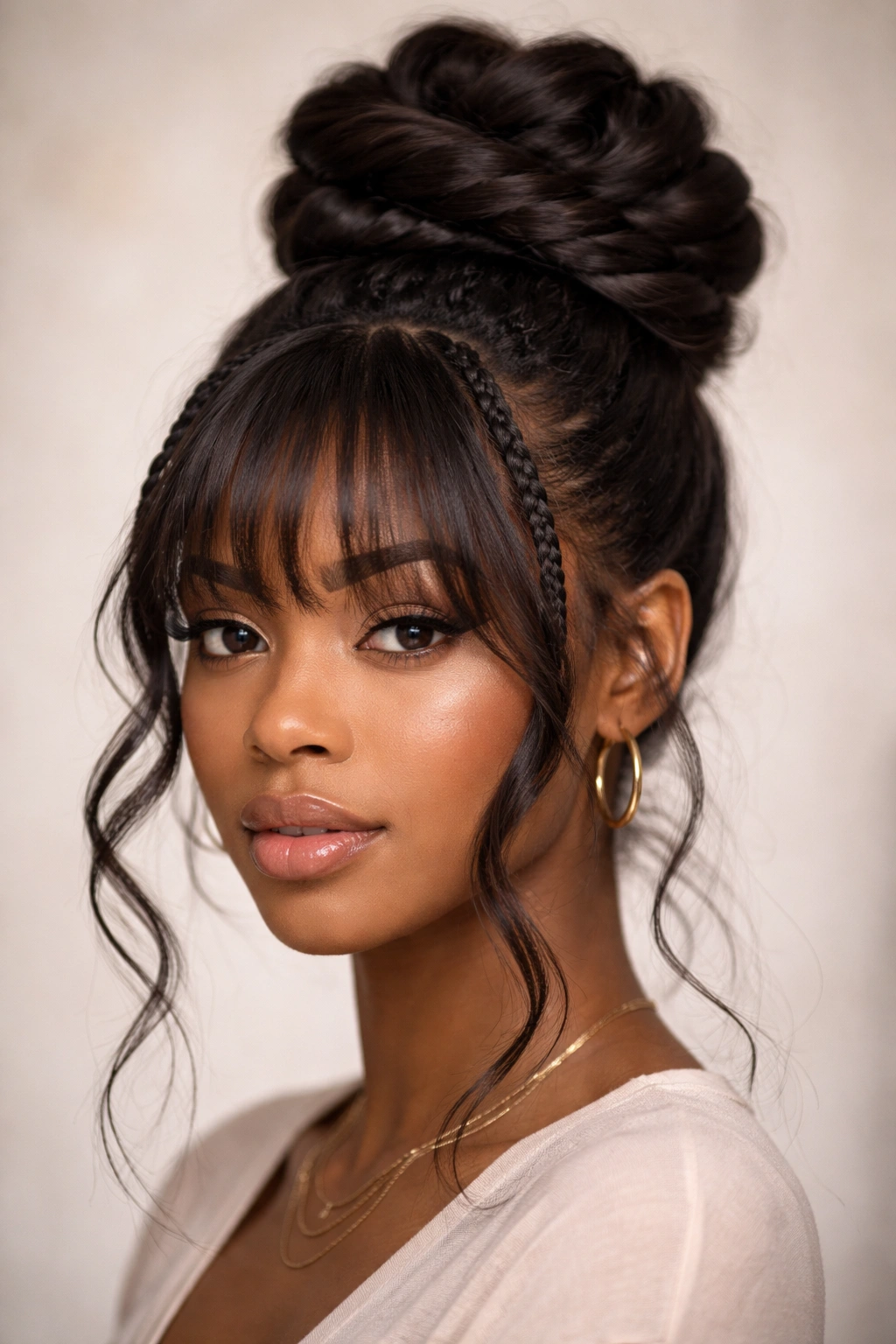
This style uses twisted rope sections to create a bun with obvious texture and detail, while braided bangs add a playful, intricate element that shows off styling skill. Braided bangs—small braids woven into the front section of hair—work beautifully on Black hair and can incorporate multiple techniques (box braids, cornrows, three-strand braids) depending on your preference and the look you want.
Creating the Twisted Rope Foundation
Start by deciding on your braided bang style. You could do a few thin, delicate box braids along your hairline, a thicker side-swept cornrow that frames one side of your face, or even a simple three-strand braid that sits on one side. The braided section should feel intentional and coordinated with the overall style, not like a random addition. Section off your bang area and complete the braids first while you have clear access and can focus on precision.
Once your bangs are braided, gather the remaining hair into a high or mid-height ponytail, leaving some face-framing pieces free. Here’s where the rope twist comes in: take your ponytail and divide it into two sections. Twist each section individually (creating two ropes), then wrap these two ropes around each other in a spiral pattern. Secure the rope-twisted bun at the base with bobby pins, allowing some texture and loose pieces to create that tousled, undone effect.
Why Twisted Ropes Look Especially Good on Black Hair
- Twisted sections create visible texture that reads as intentional and sophisticated
- The rope twist technique works beautifully with various curl patterns because it creates definition
- Braided bangs can be customized infinitely—thin, thick, single, multiple, straight, curved—allowing for total personalization
- This style showcases technical skill and makes even a casual bun feel elevated
- The combination of twists and braids creates visual interest and movement throughout the entire style
Designing Your Braided Bangs
The type of braids you choose dramatically changes the overall aesthetic. Thin, delicate braids create a boho, intricate feel. Thicker, chunkier braids or cornrows read as bolder and more contemporary. You could do a single large braid on one side, multiple thin braids across the front, or even a creative design like a curved cornrow that frames one temple. If you’re new to braiding, start simple and work your way up to more complex designs. The beauty of this style is that the bun remains the focus, so even simple braids elevate the look.
Use a light texturizing spray on the twisted rope sections to enhance separation and texture without weighing anything down. If your natural curl pattern is very tight or coily, the twisted rope effect will be even more pronounced. If your curls are looser, you might consider lightly backcomb the rope sections to add more visible dimension.
6. The Piecey Undone Bun With Curtain Bangs
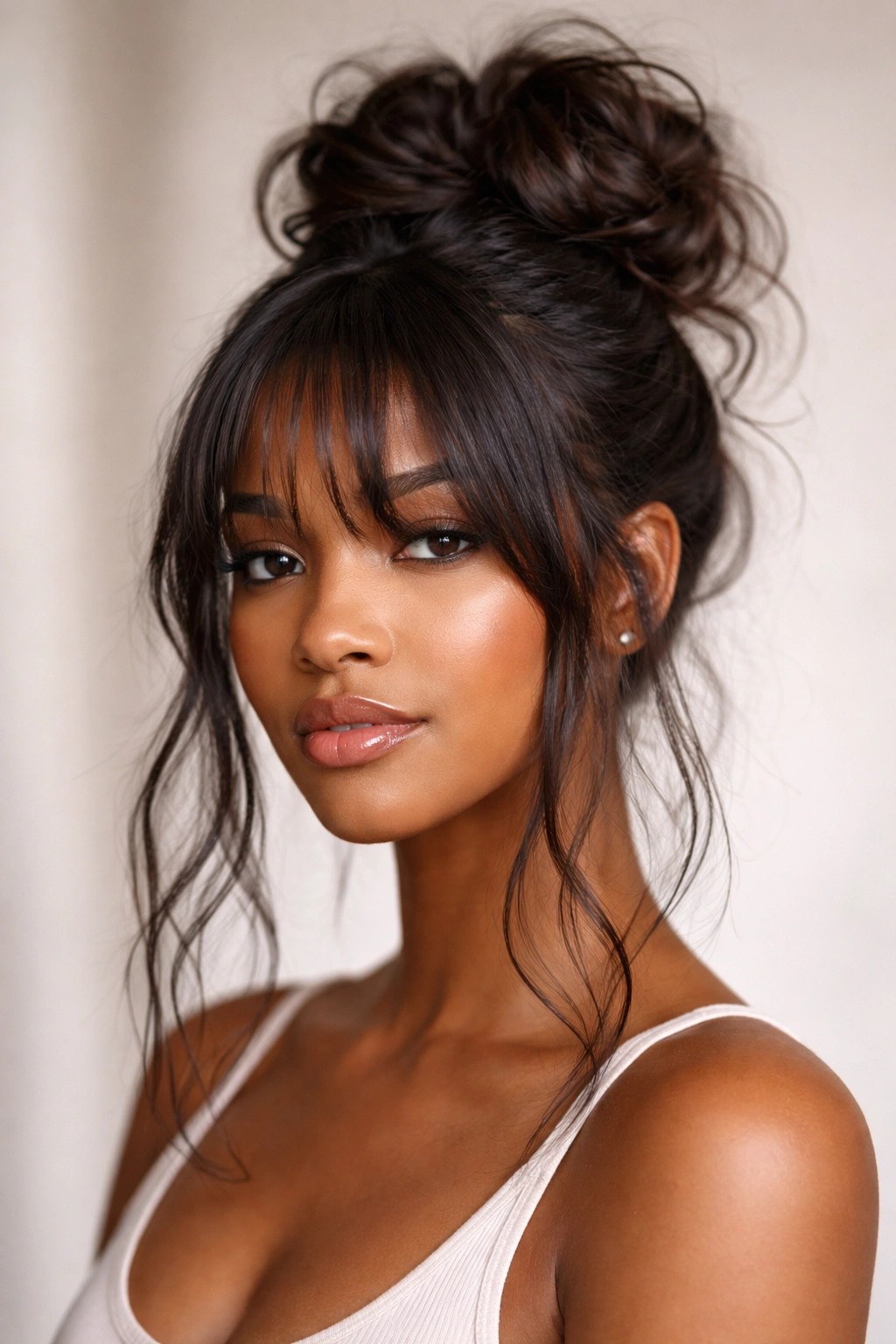
This is the ultimate “I woke up like this” style—carefully constructed to look completely effortless. The piecey bun uses loose, separated strands to create visible texture and movement, while curtain bangs—longer pieces that fall on either side of the face and create a parted effect down the center—add softness and flattery. This style is perfect for days when you want to look polished but not overly styled.
Building Intentional Pieciness
Start with your curtain bangs. These should be longer—typically chin-length or longer—and cut so they naturally fall away from your face toward your ears. Unlike blunt bangs that sit straight across, curtain bangs require some styling to look their best. Once you’ve had them cut, blow-dry them out with a directed air flow pushing them away from your center part, or use a medium-barrel round brush to create a gentle curve.
For the bun itself, apply a texturizing spray or dry shampoo to your hair before styling. This adds grip and makes it easier to create that piecey, separated look. Gather your hair into a ponytail at whatever height feels right—high for more edge, low for more romantic. Here’s the key: don’t make it a tight, compact ponytail. Instead, gather it loosely and secure it with a flexible elastic. The looseness is intentional.
Creating Piece-by-Piece Texture
Once your ponytail is secured (loosely!), take individual sections and twist, coil, or gently braid them before wrapping them around the base. Don’t create one cohesive bun shape. Instead, create several smaller coils and spirals that overlap, leaving plenty of loose pieces escaping. Use a rattail comb to gently separate and define each piece. Pull strands away from the bun structure itself so you can see the individual texture and movement.
The goal is a bun that looks like it happened accidentally—like you threw your hair up quickly but it magically turned out gorgeous. In reality, you’ve spent time creating separation, texture, and intentional looseness. It’s a deceptively complex style because it requires you to think like you’re not trying, when actually you’re trying quite hard.
Why This Style Works on Black Hair
- Black hair texture creates natural separation and dimension that makes pieciness look even more intentional
- Curtain bangs are incredibly flattering across different face shapes and are universally soft and modern
- This style accommodates all curl patterns beautifully—the looser the bun, the more your texture can shine
- It’s the perfect style for when you want to look polished but not overdone
- The piecey aesthetic celebrates texture rather than fighting against it, which is why it looks so good on Black hair
Making Pieciness Last
The challenge with this style is keeping all those pieces in place throughout the day. Use a flexible-hold hairspray that lets hair move but keeps it where you put it. Reapply touch-up spray as needed, especially around the face. If you’re using a texturizing or dry shampoo spray, you can also use that for touch-ups—it adds grip without looking wet or sticky. The curtain bangs might need a quick flip or reshape during the day, especially if you’re in humidity or wind, but that’s actually part of the charm of this style.
Preparing Your Hair for Messy Bun Success
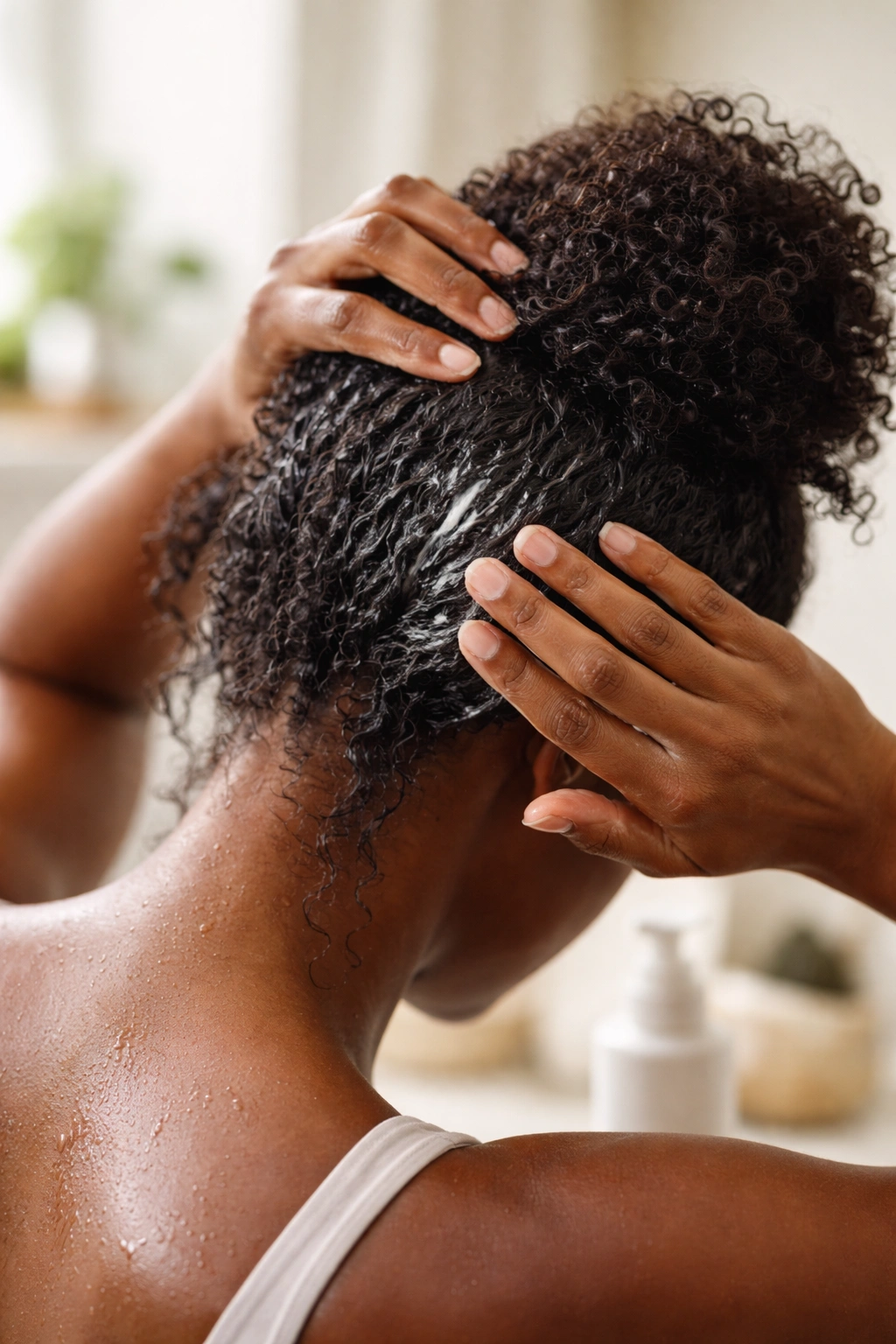
Before you can create any of these styles, your hair needs the right foundation. For Black hair specifically, this means starting with hydrated, well-moisturized strands that have some grip and texture to work with. Freshly washed hair can actually be more challenging to work with for messy buns because it’s too slippery and doesn’t hold texture as well. Second or third-day hair—hair that’s a day or two past your wash—tends to create better results because it has natural oils that add grip and texture.
Your wash routine matters enormously. Use a moisturizing shampoo and conditioner designed for Black hair, and consider doing a deep conditioning treatment once weekly to keep your strands supple and strong. Dry, brittle hair won’t hold styles well and is more prone to breakage when you’re manipulating it into buns. Pay special attention to your edges and the hair around your face, since these areas get handled more during styling and are more prone to damage and dryness.
After washing, your styling product choices set you up for success. A light leave-in conditioner, curl cream, or styling mousse applied to damp hair before blow-drying creates a foundation that holds styles better. If you’re planning to create sleek sections, a smoothing cream is essential. For textured sections, a curl-defining gel or texturizing spray works better. Have multiple product types on hand so you can customize based on what each section needs.
Essential Tools and Products for Black Hair
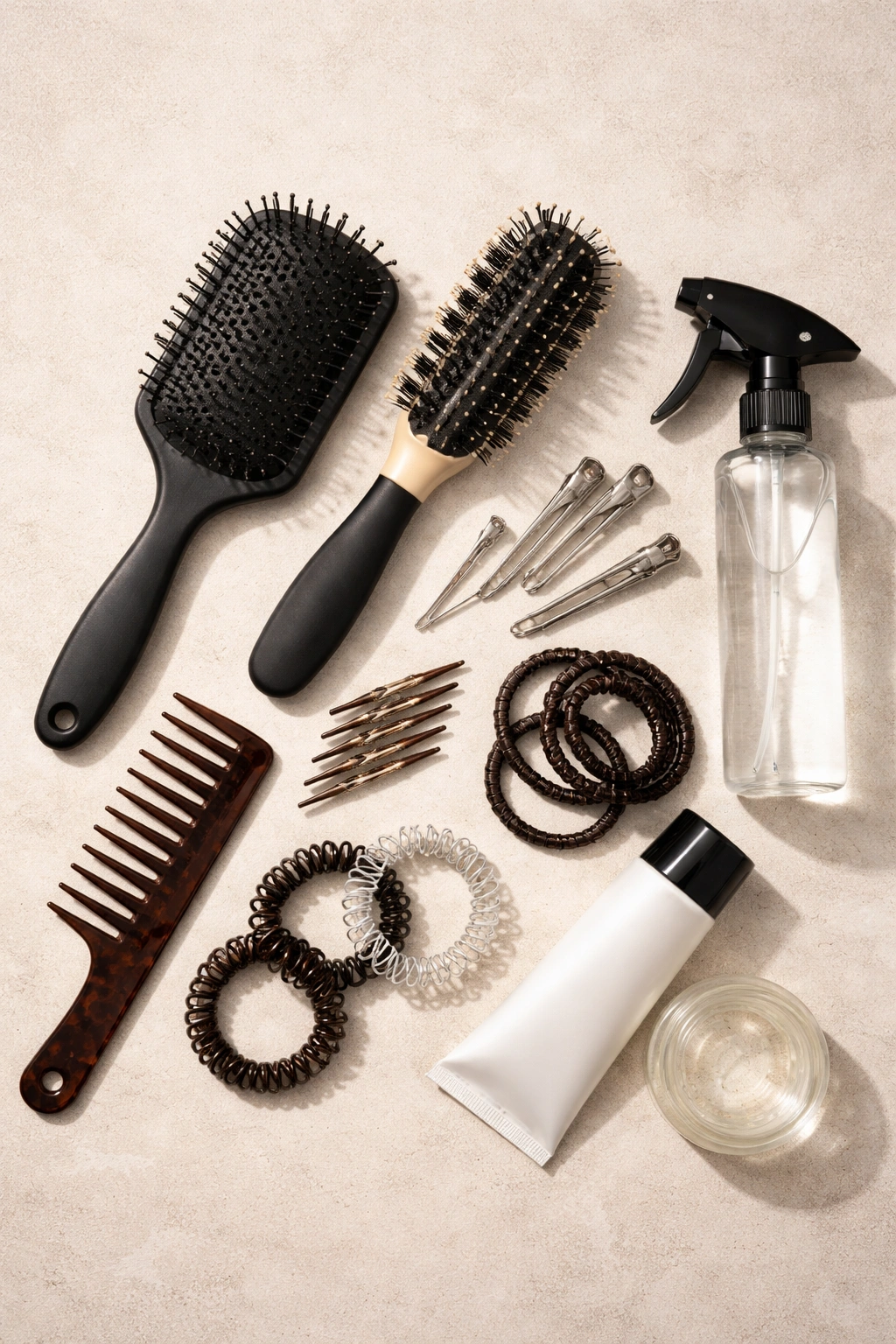
The right tools make messy bun styling significantly easier and faster. Start with a good paddle brush or detangling brush for working through your hair without causing breakage. A wide-tooth comb is essential for gently combing through curls without disrupting texture. For sectioning, use hair clips that grip firmly without creasing—metal clips with a cushioned grip are ideal.
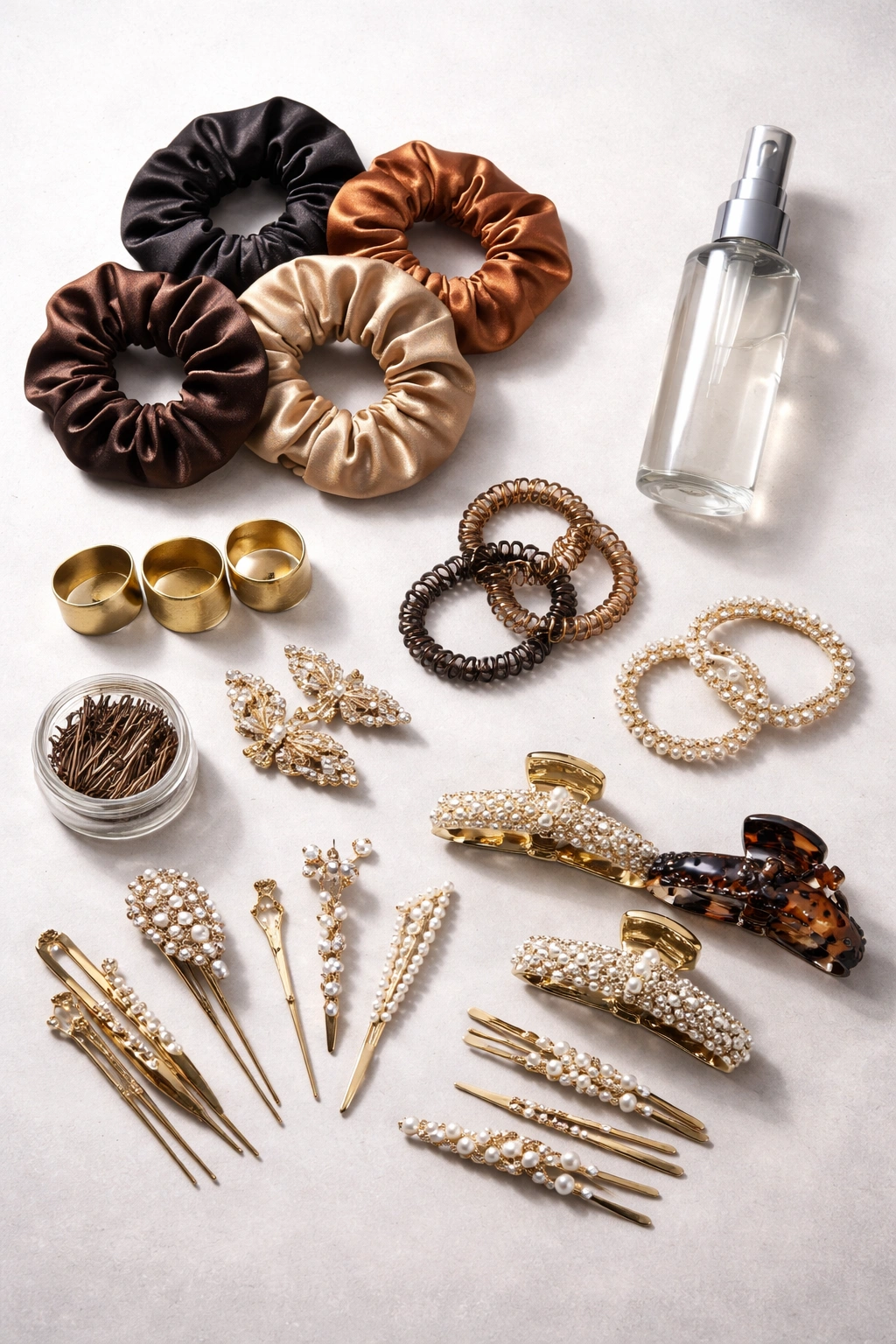
Bobby pins should match your hair color; brown or black pins disappear into dark hair while copper or gold pins work better for reddish tones. Fabric-lined elastics are non-negotiable because they minimize breakage compared to standard elastics with metal closures. Have multiple elastics on hand in your hair color. Spiral hair ties or coil hair ties are gentler alternatives that work beautifully for holding ponytails.
Product-wise, invest in a good texturizing spray, a flexible-hold hairspray, and either a curl-defining gel or a smoothing cream (or both if you’re creating styles with mixed textures). A dry shampoo or volumizing spray adds grip to second or third-day hair and creates texture that helps styles hold longer. For braided bangs or twisted sections, a small bottle of edge control in a light hold helps maintain clean lines without feeling stiff. Keep a spray bottle of water handy for dampening sections you’re actively styling—this gives you more control and makes sections easier to work with.
Styling Tips for Maintaining Bangs With a Bun
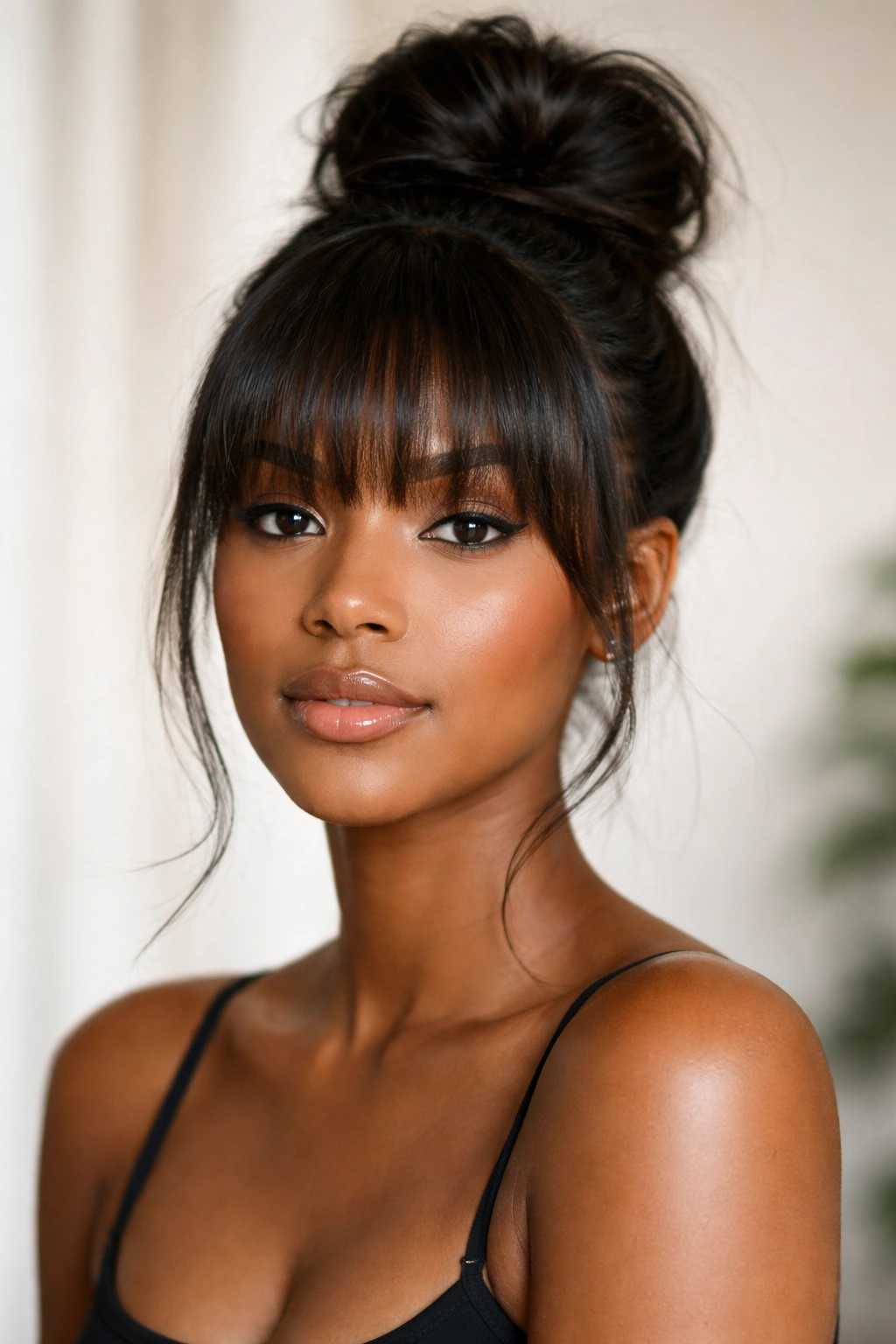
Bangs require different maintenance than the rest of your hair, especially when you’re wearing them with a bun. The face-framing hair gets handled more throughout the day and experiences more friction, which can lead to frizz, breakage, or loss of shape. Start with regular bang trims every 4-6 weeks to maintain whatever cut you’ve chosen. Wispy bangs need more frequent trims because they taper and can start to look stringy. Blunt bangs stay sharp-looking longer but will eventually feather and need reshaping.
Between trims, style your bangs intentionally every morning. Blow-dry them in the direction they’re supposed to fall—wispy bangs should be directed softly to frame your face, blunt bangs should be blown straight and smooth, baby bangs should be blown downward and slightly outward. If your bangs tend to curl up or lose shape throughout the day, a small straightener or curling iron can be a lifesaver. A quick pass with whichever tool creates your desired shape takes thirty seconds and resets your bangs completely.
Throughout the day, your bangs might start to feel heavy or lose shape, especially if they’re longer or thicker. Keep a fine-tooth comb or even a small brush in your bag for quick touch-ups. You can gently comb through them, separate pieces, or reshape them with your hands. A light mist of hairspray (from about six inches away, not directly sprayed) refreshes their hold without making them feel crunchy or stiff.
If you’re wearing braided bangs, you have more flexibility—braids hold their shape well throughout the day. Just check them occasionally to ensure they’re still sitting the way you want them and that no flyaways are escaping too aggressively. A small comb or edge brush can tame flyaways around braided sections.
Making Your Messy Bun Last Throughout the Day
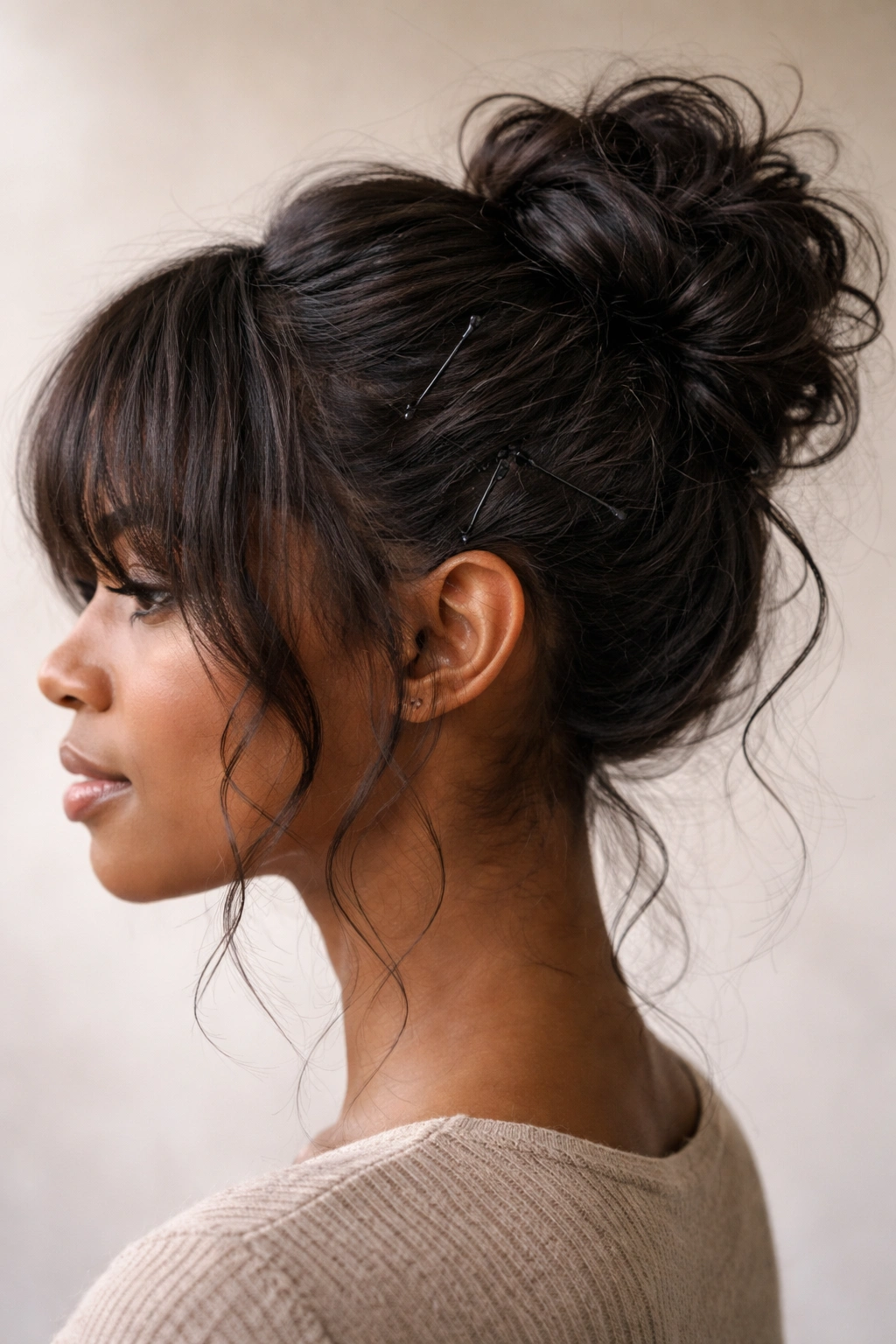
A beautiful messy bun created in the morning should still look intentional and put-together by evening. Several factors contribute to longevity. First, use the right hairspray. A flexible or light-hold spray maintains the style while allowing your hair to move naturally (which actually helps styles last longer because your hair isn’t fighting against the product). Heavy-hold or gel-based sprays can feel stiff and become more visible as they break down throughout the day.
How you initially secure your bun matters. Use enough bobby pins—probably more than you think you need. Angle them parallel to your scalp so they disappear into the style. A loose, piecey bun actually stays in place better than a super-tight compact bun because there’s more surface area of pins gripping multiple strands. Secure the base first, then pin individual pieces and layers. This distributed pinning system holds much better than relying on the elastic alone.
Second-day hair with some natural oils holds styles better than freshly washed hair. If you’ve just washed your hair and styled it into a bun, you might want to use a texturizing spray or light hairspray on the ponytail before gathering it to add grip. Alternatively, wait until the day after washing when your hair naturally has more grip.
Humidity and weather affect how long styles last. In humid conditions, your hair might swell or your curl pattern might change throughout the day, which can loosen a bun. In drier conditions, styles tend to hold longer. If you know you’re going to be in a humid environment (near water, in heavy rain, or just on a muggy day), use a heavier-hold hairspray and consider pinning more liberally. Refresh your edges and face-framing pieces as needed with a light spray or edge control.
Variations and Customizations You Can Try
These six base styles can be customized infinitely based on your preferences, hair length, and the occasion. Consider height variations—move any of these buns higher for more edge and visual impact, or lower for a softer, more romantic aesthetic. Change the placement—off-center buns feel more modern, perfectly centered buns feel more classic, and side buns feel more playful.
Experiment with texture variations. If a style calls for texture but you prefer sleekness, smooth the bun more and use a smoothing cream instead of a texturizing spray. If a style seems too sleek, add more backcomb or tease, use texturizing spray, and pull out more pieces. The foundation of each style is flexible—only the core concept (where the bun sits, what the bangs look like) needs to stay consistent.
Try mixing elements from different styles. Love the high placement of style one but prefer the braided bangs from style five? Combine them. Want the side-swept element from style two but with the twisted ropes from style five? That works. Want baby bangs with the romantic bun from style two? Absolutely. These styles are frameworks, not rigid rules.
Consider adding decorative elements. Hair clips, cuffs, or scarves woven through a bun instantly change its aesthetic. Metallic clips add modern edge, while tortoiseshell clips feel more classic. A silk or satin scarf wrapped around the bun base adds both visual interest and a protective element. Some people add small accessories to their braided bangs—tiny clips, threading yarn, or even beads.
Seasonal variations work beautifully too. In warmer months, you might prefer higher, sleeker buns that keep hair completely off your neck. In cooler months, lower, fuller buns with more pieces falling around your face feel cozy and romantic. In professional settings, tighten everything up and minimize loose pieces. For casual settings, embrace the piecey, undone quality.
Final Thoughts
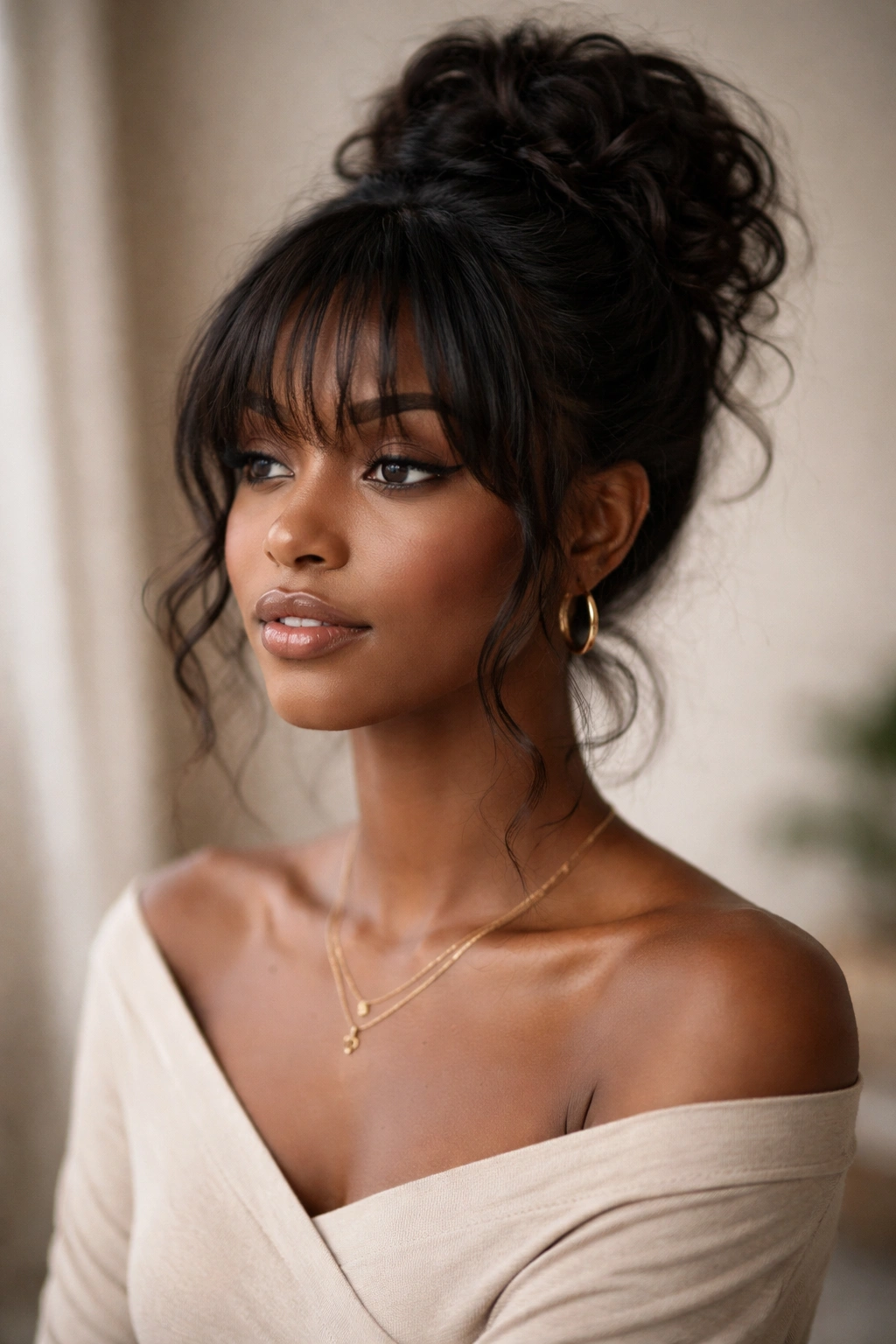
Messy bun styles with bangs celebrate Black hair’s natural texture, movement, and styling versatility. Whether you choose a high textured crown bun, a side-swept romantic style, a bold sleek-to-tousled contrast, an architectural double-section design, an intricate twisted rope and braid combination, or a piecey undone aesthetic, you’re embracing a hairstyle that works with your hair rather than against it.
The beauty of these styles is that they look effortlessly put-together while actually showcasing intentional styling choices. You’re not fighting your curl pattern or trying to make your hair look like someone else’s—you’re enhancing what you already have and presenting it in a polished, creative way. Start with the style that resonates most with you, master the technique, and then experiment with variations. Each time you style it, you’ll learn what works best for your specific hair and what small tweaks make the biggest difference.
Styling your hair should feel empowering and fun, not stressful. These six messy bun styles with bangs are frameworks for expressing your personal style and working with your unique hair texture. Give yourself grace as you learn each technique, invest in good products and tools, and remember that the “imperfections”—the loose pieces, the pieciness, the texture—are exactly what make these styles beautiful and modern.
