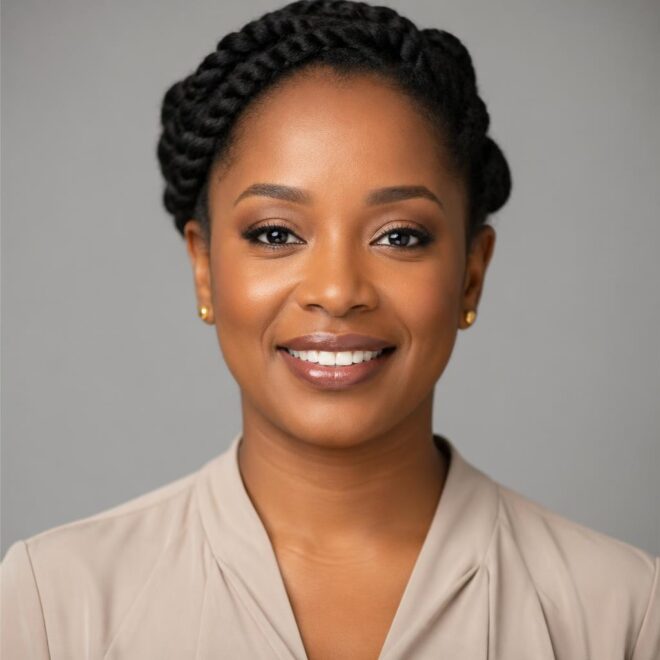


Short black hair offers something truly special when it comes to styling versatility, and messy buns are one of the most flattering, functional, and fun ways to work with shorter lengths. There’s a common misconception that you need long, thick hair to pull off a messy bun—but that’s simply not true. In fact, short hair often creates a more naturally textured, polished messy bun with less effort than longer strands require. The key is understanding how the natural texture and density of Black hair responds to different bun placement, sectioning techniques, and styling methods.
The appeal of a messy bun goes far beyond its casual aesthetic. For Black women with short hair, messy buns offer protective styling benefits, reduce daily heat styling, protect hair from environmental stressors, and require minimal maintenance throughout the day. They work equally well whether your hair is natural, relaxed, textured, coily, or transitioning. A well-executed messy bun on short Black hair looks intentionally effortless—sophisticated enough for work or a night out, yet relaxed enough for casual days at home. The beauty lies in the intentionality: every “messy” element is actually carefully placed for maximum style and hair health.
What makes messy buns particularly appealing for short Black hair is how they work with your hair’s natural texture rather than against it. Short lengths mean your edges, baby hairs, and natural volume all become styling assets rather than challenges. You can celebrate the texture instead of fighting it, create buns that feel authentic to Black beauty standards, and experiment with different heights, tightness levels, and accent styles that all look equally gorgeous.
Why Messy Buns Work Beautifully for Short Black Hair
Messy buns aren’t just a trend—they’re a genuine solution for short hair maintenance and styling. Black hair thrives when given regular breaks from constant manipulation and heat styling, and a well-constructed messy bun delivers both protection and polish without requiring daily blow-drying, flat-ironing, or chemical treatments.
The texture of Black hair, whether natural, relaxed, or somewhere in between, naturally holds texture and shape. This is a massive advantage when styling a bun. Longer hair sometimes requires more product, more bobby pins, and more effort to achieve that casually gathered look, but shorter lengths create volume and movement with minimal tools. You’re working with your hair’s inherent characteristics, not against them.
Short buns also frame the face beautifully and draw attention to your features, bone structure, and accessories. A messy bun on short Black hair reads as sophisticated and intentional rather than lazy or unfinished. The contrast between the gathered crown and the tapered sides or undercut creates visual interest and modern style that feels fresh and current.
The Hair Health Advantage
Protective styling reduces the stress on your hair’s delicate edges and crown area. By securing hair gently into a bun, you’re not pulling or stretching strands, your hair isn’t rubbing against pillows or clothing, and your edges get a break from friction and manipulation. For Black hair, which naturally requires more moisture retention and careful handling, this is genuinely significant.
Short messy buns are also low-manipulation styles. You’re not constantly retouching, finger-combing, or fussing with pieces throughout the day. Once it’s secured, it stays put with minimal intervention, which means less daily stress on your strands and more time your hair can spend in a protected, stable state.
Time and Styling Efficiency
Getting ready becomes faster and simpler. A messy bun takes 5-10 minutes maximum, even if you’re adding braids, twists, or decorative elements. Compare that to the time required for blow-drying, flat-ironing, curling, or setting pin curls—you’re saving significant time and heat exposure. For mornings when you’re rushing, nights when you want effortless style, or weeks when your hair is between wash days, messy buns deliver instant polish.
Essential Preparation for Your Best Messy Bun
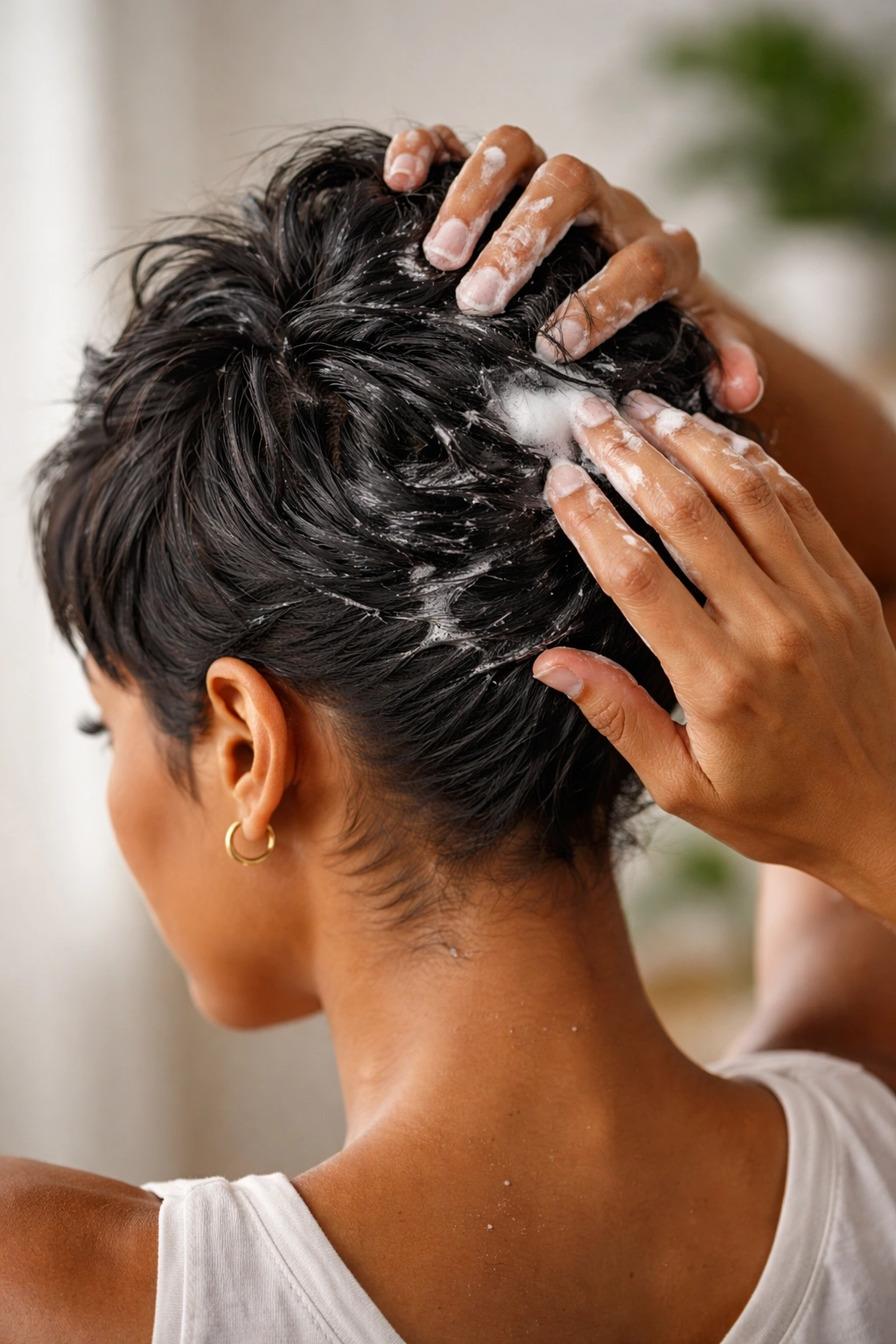
Before diving into specific styles, let’s talk about the foundation. The difference between a messy bun that looks intentionally cool and one that just looks undone comes down to preparation and the right products.
Start with clean, moisturized hair or hair that’s 2-3 days past wash day. Fresh-from-the-shower hair can be too soft and slippery to hold a bun securely; slightly aged hair with some natural oils has better grip and texture. If your hair is freshly washed, applying a light leave-in conditioner or hair mousse adds texture and grip without heaviness.
The right products make an enormous difference. You want something that adds hold and texture without stiffness or crunchiness. This might be a lightweight mousse, a texturizing spray, a light gel, or even a tiny bit of pomade applied only to the crown area where the bun will sit. The goal isn’t to drench your hair or make it visibly wet—just enough to give it grip and cohesion as you’re gathering it.
Sectioning and Subsection Technique
How you section your hair before creating the bun determines the final shape and how secure it’ll be. For short hair, you typically don’t need more than 2-3 subsections, but how you create those sections matters tremendously.
If you’re working with hair that’s roughly chin-length or shorter on the sides with slightly more length on top (common with undercuts or tapered cuts), section horizontally. Create a section at the crown that encompasses roughly the top third of your head from forehead to nape. The sides and back become your secondary sections. This placement lets you bring more volume to the crown without pulling at your nape.
For more uniformly short hair, a diagonal section from temple to temple across the crown works beautifully. This captures enough hair for a full bun while leaving baby hairs and edges loose for softness.
Product Application and Smoothing
Apply your chosen product to each section as you prepare it. Use your fingers or a fine-tooth comb to gently smooth each section, releasing any tangles. For natural hair with coils or kinks, smoothing doesn’t mean flattening—it means creating a cohesive, gathered base. You’re encouraging the texture to work together, not against itself.
Smooth edges and baby hairs around your hairline using a soft brush and a tiny amount of edge control or pomade. These details separate a polished messy bun from a sloppy one. Your baby hairs aren’t flaws to hide—they’re dimensional details to accent.
1. The Twisted Crown Messy Bun
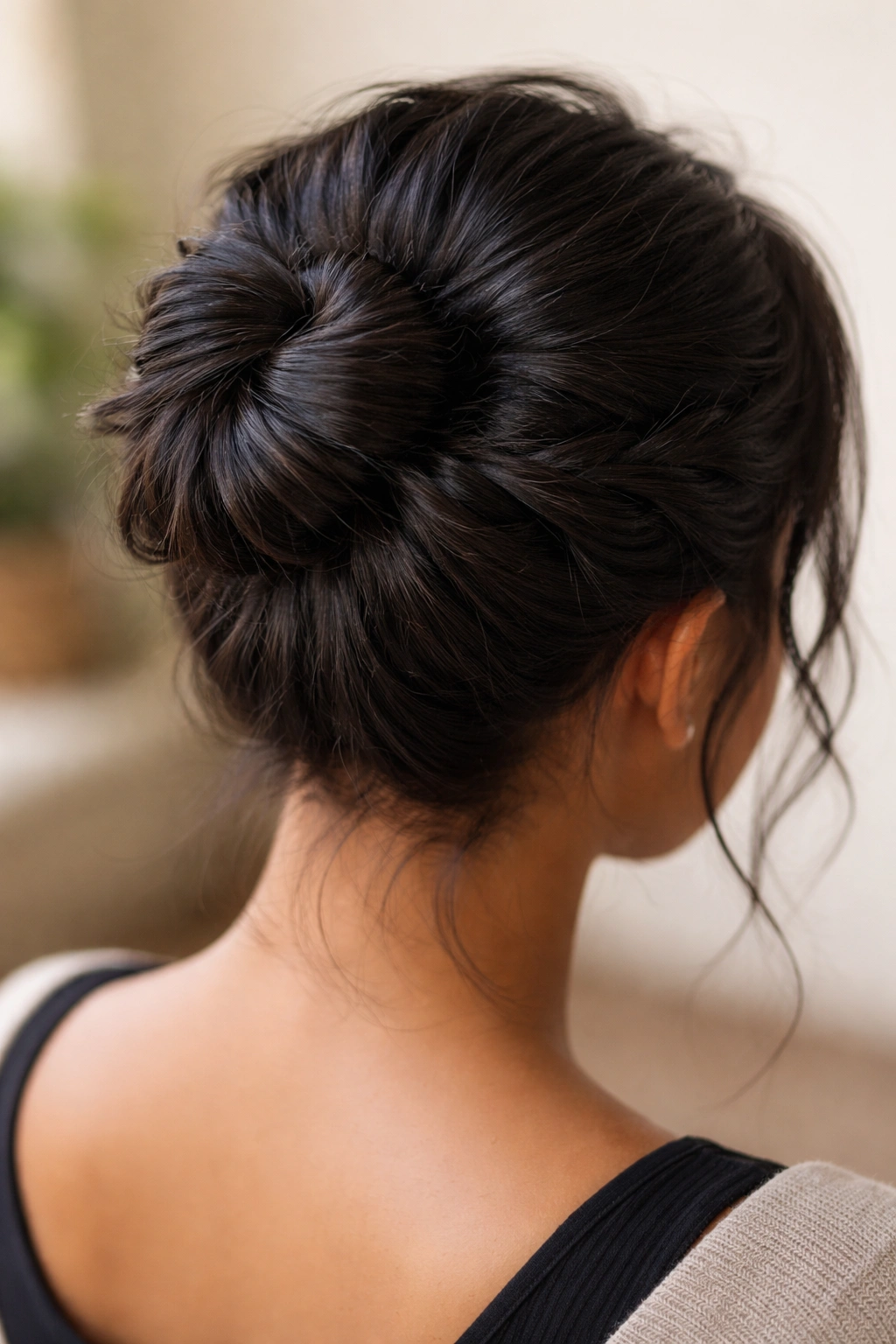
The twisted crown bun is elegant, holds beautifully on short hair, and looks equally appropriate for professional settings or casual outings. This style works particularly well if your hair has some length on top and is shorter on the sides, though you can adapt it for uniform short lengths too.
Start by sectioning the crown area—from your natural part or center line, create a triangular or rectangular section at the very top of your head. The size depends on how voluminous you want your final bun; a larger section creates a fuller bun, while a smaller section gives you a sleeker look.
Smooth your crown section with a light leave-in conditioner or mousse, working it through to eliminate any tangles. At the base of this section—right where your crown meets the rest of your hair—begin twisting. Don’t twist tightly; a loose, casual twist holds just as well and looks more intentionally messy. Twist all the way to the ends, then coil that twisted strand around itself at the crown, securing with bobby pins as you wrap. Tuck the ends underneath and secure them with additional pins, making sure everything feels stable but not tight.
The beauty of the twisted crown bun is that it naturally creates height and volume at the crown, which is the most flattering placement for short hair. It draws the eye upward and creates a lifted, youthful appearance.
Why This Style Stands Out
The twist creates visual texture that reads as intentional and polished rather than hastily thrown together. Unlike a simple gathered bun, the twisted pattern shows craftsmanship and care. On Black hair, the twist emphasizes the natural texture beautifully—the spirals catch light and create dimension.
The twist also provides structural support that a simple ponytail gathered into a bun doesn’t offer. That coiled base means your bun stays put throughout the day without excessive bobby pins or restrictive tension.
Styling Tips and Variations
You can create one twisted crown bun or two smaller twisted buns if your hair is very short. A single centered bun works beautifully; offset buns (one toward the left or right) create a modern, playful look.
Enhance this style with delicate gold or silver bobby pins that peek through and become part of the design. Wrap a silky scarf, ribbon, or decorative wire around the base of the bun. Add a few loose, wispy pieces around your face by gently pulling out a few strands near your hairline—this softens the overall look and creates a romantic feel.
For extra hold throughout the day, use a light-hold hairspray after you’ve secured the bun, focusing on the twisted section and the edges around your face.
2. The Double-Knot Low Bun
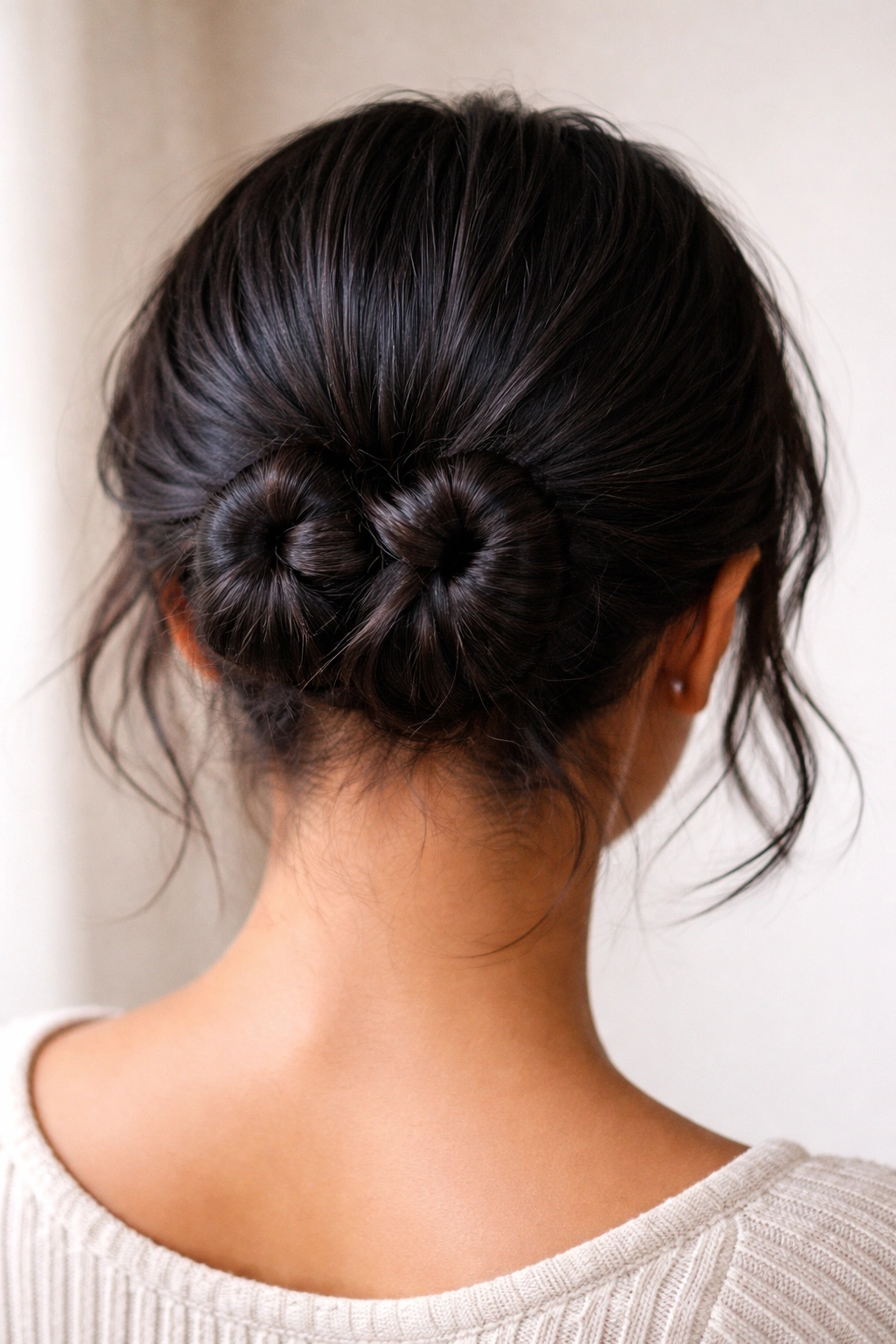
The double-knot bun is playful, youthful, and surprisingly secure. This style works especially well if you’re transitioning between styles, have uneven lengths, or just want something that feels fun and modern. It’s lower on the head than the twisted crown, which means it works well for all occasions and doesn’t interfere with hats or headwear.
Separate your hair into two equal sections, dividing vertically from your center part down to your nape. You now have left and right halves. Each section will become its own small bun, and then you’ll tie those buns together for the final design.
Gather the left section at the back of your head and tie it into a simple knot—literally, treat it like you’re tying a shoelace. Pull it snug but not painfully tight. Do the same with the right section. Now you have two small knotted buns sitting side by side at the nape of your neck.
Here’s where it gets fun: tie those two knots together, one more time, creating a double-knot effect. Secure everything with bobby pins hidden underneath. The final style looks like two small buns intertwined, creating an X pattern when viewed from behind.
Why This Style Stands Out
The double-knot bun is impossible to ignore and speaks to personality and creativity. It’s modern and unexpected while still feeling put-together. On short Black hair, the two-knot design creates beautiful symmetry and balance. If you have natural texture or coils, the knots emphasize that texture gorgeously—the coils seem to tighten and define the shape.
This style is also incredibly secure. You’re using the hair itself to hold the style—the knots prevent anything from shifting or unraveling. You need fewer bobby pins than other styles, which means less weight and less tension on your strands.
Styling Tips and Variations
Loosen the knots slightly after securing them to create a softer, more intentionally messy appearance. This prevents the style from looking too tight or overly controlled.
Add small braids within each knot section before knotting for extra texture and security. Weave small colorful threads or silk ribbons through the knots to add dimension and visual interest. Leave a few loose pieces at the nape to frame the double-knot design.
This style pairs beautifully with statement earrings since your ears and neck are exposed. Accessorize with delicate gold hoops, chandelier earrings, or geometric studs that complement the modern, architectural feel of the double knot.
3. The Secured Twist-Out Bun
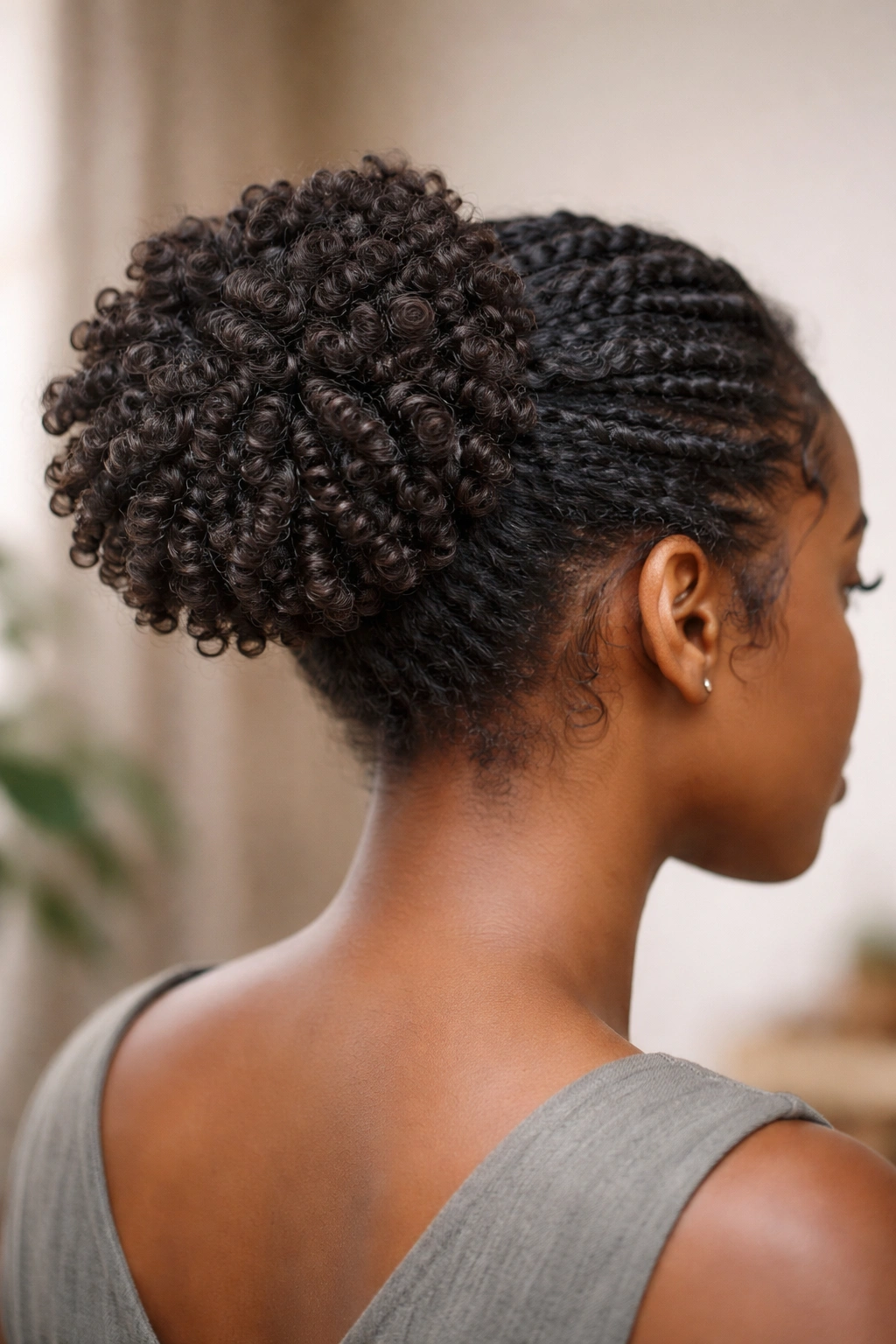
This style celebrates natural texture brilliantly and works wonderfully if you have coils, curls, or natural hair. The twist-out bun combines protective styling with the beauty of defined texture, creating something that feels authentically you.
Prepare your hair with a light curl cream or gel to enhance your natural pattern. Create 4-6 two-strand twists throughout your hair, starting from your crown and working down toward your nape. The twists don’t need to be perfectly neat—in fact, slightly undone twists look more intentional and modern.
Let those twists set for at least a few hours or overnight if possible. The longer they set, the more defined your twist-out pattern will be. Once set, gently unravel each twist, separating the strands with your fingers to enhance the coil pattern.
Now gather all that beautiful textured hair at the nape or crown, depending on your preference, and secure it into a bun shape. Use bobby pins to lock everything in place, tucking the ends under and securing them. The final bun will have incredible texture and dimension—it won’t look smooth or sleek, and that’s exactly the point.
Why This Style Stands Out
The twist-out bun celebrates your hair’s natural pattern while keeping it protected and styled. It’s a beautiful statement of natural hair pride that reads as intentional, artistic, and completely modern. The texture and definition of a proper twist-out creates visual richness that a smooth bun can’t match.
This style also provides excellent protective benefits. Your hair is gathered and protected from friction, yet it’s still showing off your natural pattern. You’re not flattening your coils or forcing your texture into an artificial shape—you’re enhancing and celebrating it.
Styling Tips and Variations
The key to a successful twist-out bun is patience. Don’t rush the unraveling process. Gently separate each twisted section with your fingers, working slowly to enhance the coil pattern without creating frizz or disturbance.
Use a lightweight holding spray after you’ve created the bun to set everything in place without crunchiness or stiffness. Accessorize with colorful bobby pins that complement your skin tone or outfit. Wrap a silk or satin scarf loosely around the base of the bun to add a pop of pattern and texture.
If your hair is very short, you might create two smaller twist-out buns instead of one large one, creating the same double-bun effect as the double-knot style but with gorgeous texture.
4. The Sleek Gel-Back High Bun with Loose Pieces
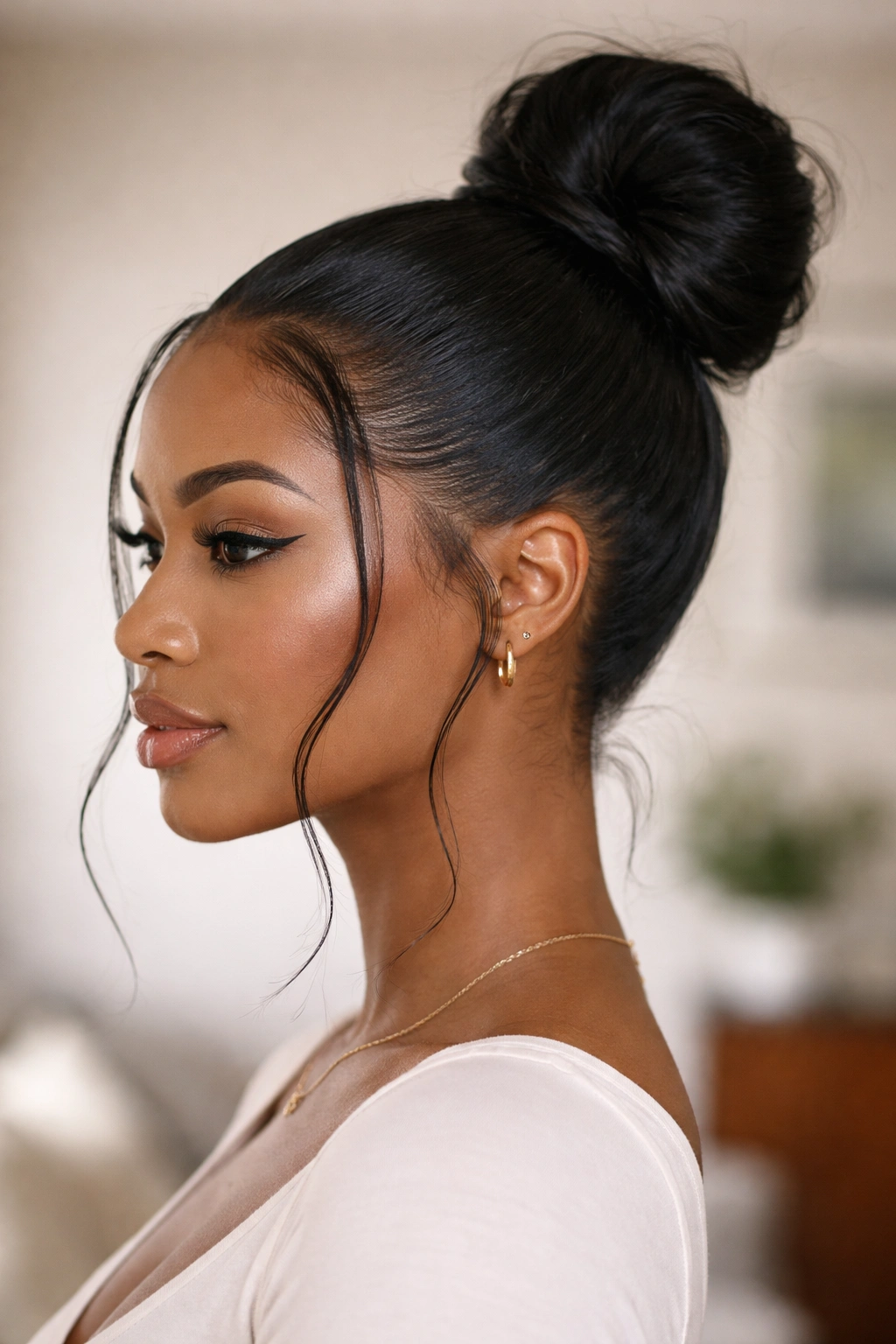
For those mornings when you want sharp, defined style with intentional softness, the sleek gel-back high bun delivers. This is your sophisticated, powerful option—perfect for professional settings, important meetings, or days when you want to feel polished and put-together.
Apply a medium-hold gel or pomade to your crown section, smoothing it back and away from your face with a fine-tooth comb. Create clean, defined edges along your hairline, using an edge control product and a soft brush or toothbrush to craft precise angles. These clean edges are what separate this style from a simple gathered bun.
Gather your slicked-back section at the crown and secure it with bobby pins, then twist or coil the gathered hair into a bun shape. The contrast between the sleek, defined gel-back crown and the textured bun underneath creates visual interest and polish. For this style, intentionally pull out a few strategic loose pieces—one or two near each ear, maybe one or two at the nape. These pieces should look like you planned them, not like they fell out by accident.
Why This Style Stands Out
The sleek gel-back creates undeniable polish and sophistication. It elongates your face, emphasizes your bone structure, and commands attention. On Black hair, clean edges and a defined gel-back read as intentional artistry. This is where edge work becomes part of the design rather than just smoothing flyaways.
The high bun placement combined with the sleek base creates a lifted, authoritative appearance. This style is powerful without being harsh, feminine without being soft. It’s the style you choose when you want to make an impression.
Styling Tips and Variations
Invest in a quality edge control product that holds without flaking or leaving residue. Smooth or gel isn’t created equal—some formulas are too heavy, others too light. Find one that gives you the precise hold and shine you love.
Use a fine-tooth comb to create geometric patterns in your edge control—smooth swoops, straight lines, or even tiny braids work beautifully. Make this style distinctly yours through your edge design.
Keep the selected loose pieces minimal and intentional. Three or four carefully placed pieces create softness; too many loose pieces undermine the sleek sophistication you’re building. Secure them with bobby pins so they stay exactly where you’ve placed them.
5. The Braided Crown Bun with Wrapped Ends
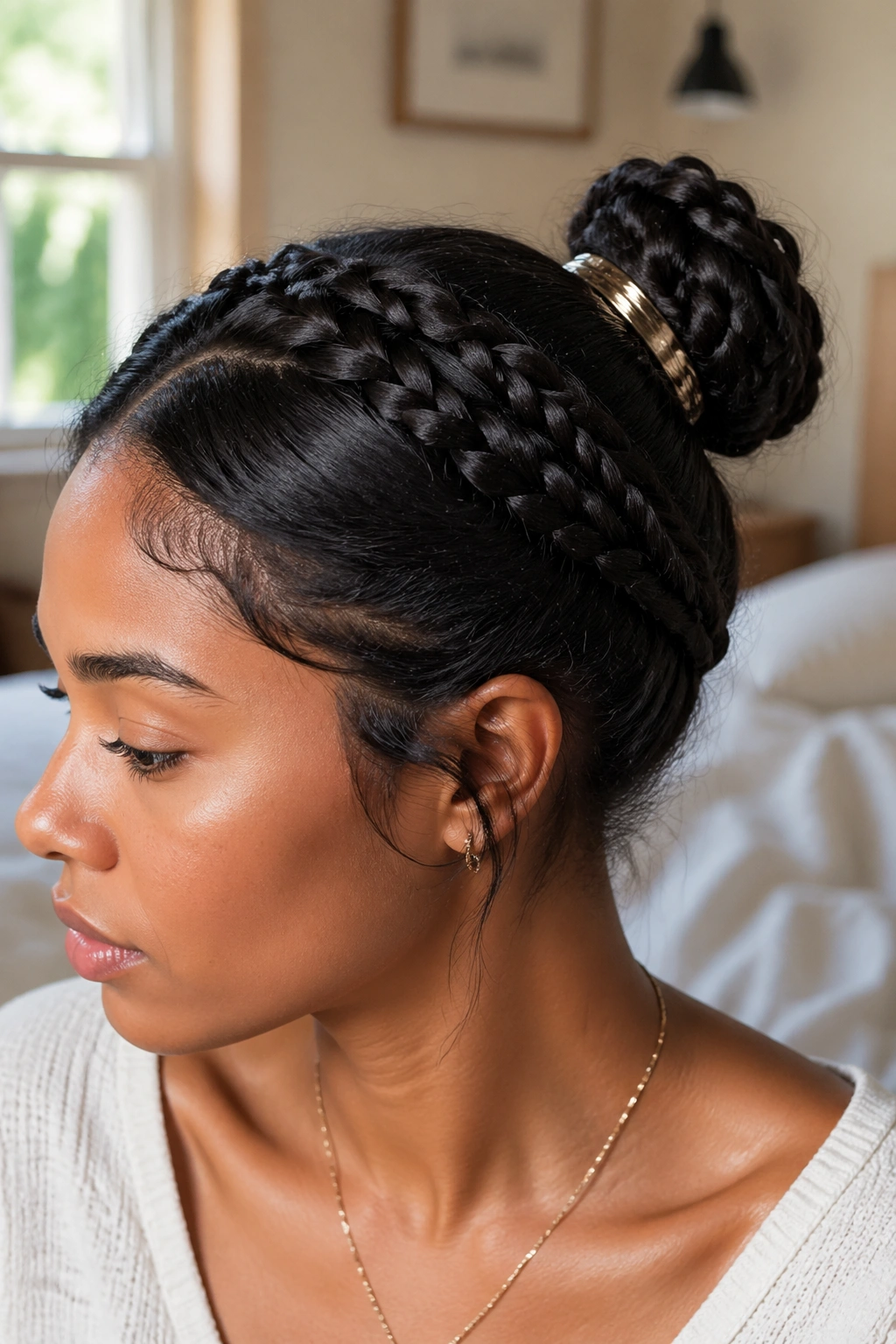
The braided crown bun combines elegance with visible craftsmanship. This style works beautifully for formal occasions, date nights, or anytime you want to show that you’ve put real thought into your styling.
Create two thin braids along your crown, starting from your temples or front corners and traveling back toward your crown area. These braids don’t need to be perfect or overly tight—slightly loose, slightly undone braids have more character and visual interest.
As you reach the crown, gather those two braids together with additional hair from the crown section, bringing everything together into one focal point. Coil this gathered, braided section into a bun shape, tucking the ends underneath. Secure with bobby pins, making sure the braids are visible as part of the design.
Here’s the finishing touch: take a thin piece of hair or a thin ribbon and wrap it around the base of the bun, covering the bobby pins and creating a polished seam. Tuck the wrapped piece underneath where it meets the other end, securing with another bobby pin. This wrapped detail elevates the entire style from casual to intentionally styled.
Why This Style Stands Out
Braids are inherently more visually complex and interesting than smooth gathers. They catch light, they show texture, and they read as effortful in the best way. On short Black hair, braids celebrate your hair’s natural hold and texture. The braids essentially become part of the bun design, not just a preparation step you’re hiding.
The wrapped base of the bun adds a couture touch that most casual messy buns lack. It’s an unexpected detail that signals this styling isn’t thoughtless—it’s considered and complete. The wrap can be a hair wrap, a silk ribbon, a decorative cord, or even a thin scarf.
Styling Tips and Variations
Vary your braid style. Two three-strand braids are classic, but you could also create one thicker braid, four thinner braids, or even french braids that start higher on your head. Each braid variation creates a distinctly different final look.
Make the wrapped base part of your design statement. Choose colors and textures that complement your outfit or your skin tone. A gold wrap on natural Black hair reads as luxe and intentional. A silk wrap in a jewel tone creates drama and sophistication.
Add small decorative elements where the braids meet at the crown—tiny gold cuffs, beads, or fresh flowers tucked into the braid intersection create an artful finishing touch.
6. The Textured Half-Up Half-Down Bun
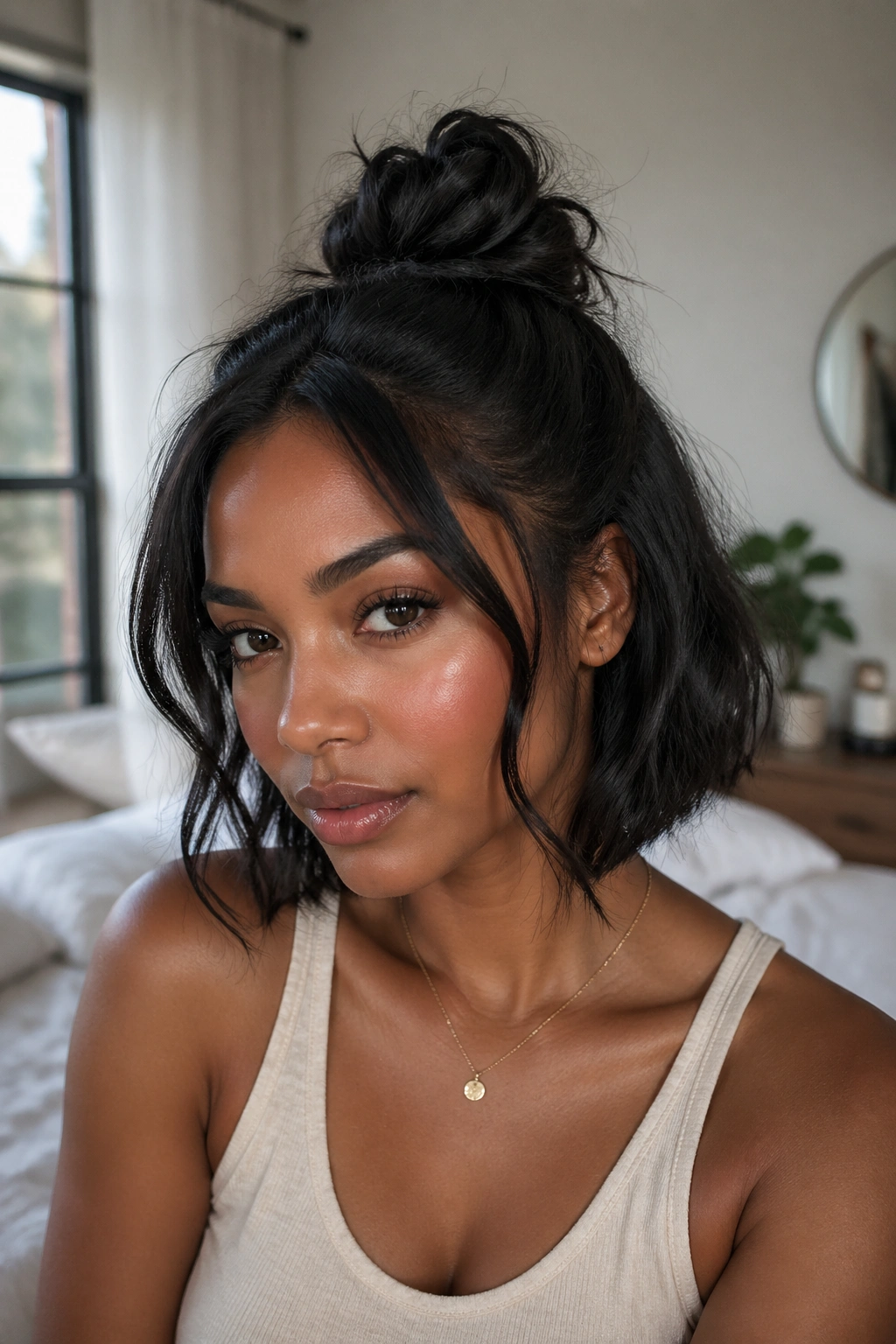
The half-up half-down bun offers the perfect balance for those days when you want some hair secured but not all of it bundled away. This style is endlessly versatile, works with virtually any hair texture or length, and looks equally appropriate for casual and dressy occasions.
Determine how much hair you want up versus down. A traditional half-up half-down secures roughly the top half of your head. Section horizontally from temple to temple, creating a line at roughly the level where your natural crown curves. Everything above that line comes up; everything below stays down.
Gather the upper section and secure it with a hair tie at the crown. Now, instead of leaving it as a simple ponytail, twist or coil that secured section into a bun shape, tucking the tail underneath and pinning it securely. Your lower hair section falls freely, framing your face and shoulders while your crown area is secured and styled.
This gives you the protective benefits of a bun (your crown hair is gathered and protected) while maintaining the softness and flow of down hair (your face-framing pieces and lower length move freely and create dimension).
Why This Style Stands Out
The half-up half-down bun is the ultimate compromise style. You get polish without commitment, protective styling without the full-bun look, and dimension from both the gathered bun and the flowing lower section. On short Black hair, the flowing lower section might be just your natural edges, your sides, or your undercut growing in—all of which frame this style beautifully.
This style is also incredibly practical. If you need to let your hair down during the day, you can simply release the tie. If you want to gather it all up later, you can finish it into a full bun. It’s flexible and responsive to your changing needs.
Styling Tips and Variations
Tease or backcomb the crown section before gathering it for extra volume and a more intentionally messy appearance. The added texture prevents the gathered section from looking too sleek or flat against your head.
Create loose waves or texture in your flowing lower section using a curling iron, braids that you’ll unravel, or finger coils set with a light gel. The contrast between the gathered texture of the upper bun and the flowing texture of the lower section creates visual richness.
Secure your bun with decorative bobby pins that peek through as design elements. Wrap a silk scarf or ribbon around the base of the bun where it meets your hair tie for a finished look that transitions beautifully from the secured section to the flowing section.
Add a second hair tie lower on your down section, creating a half-up half-down half-up effect. This variation is playful and modern, creating three distinct sections with their own visual interest. Just be mindful not to create excessive tension points that could stress your hair.
Styling Products That Support Messy Bun Success
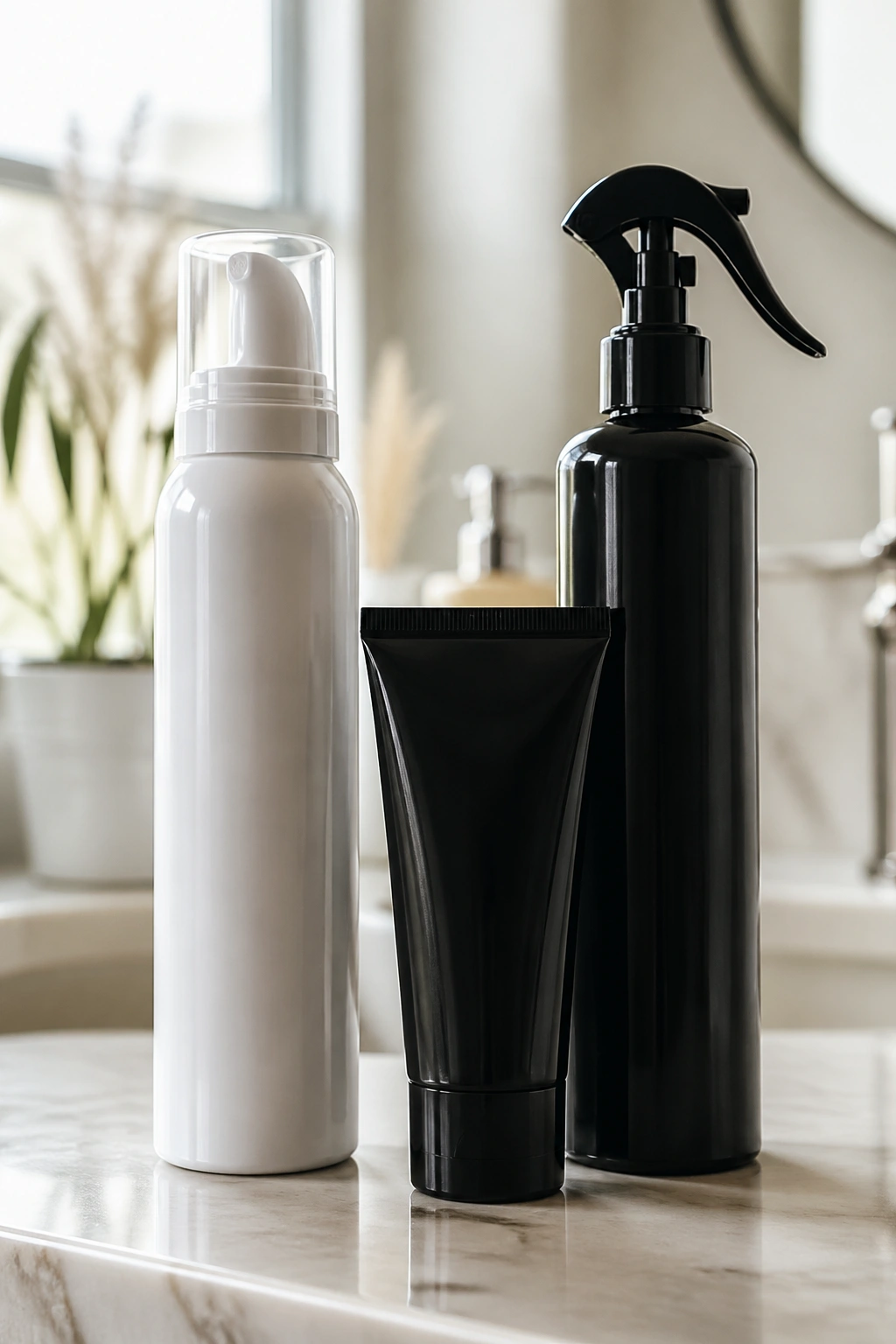
The right products make every style easier to execute and longer-lasting. For short Black hair, you want products that add hold and texture without weight, crunchiness, or stiffness.
A lightweight styling mousse is your best friend for creating grip without heaviness. Mousse adds texture and hold to hair, making it easier to gather and shape into a bun. Applied to damp hair, mousse sets as your hair dries, providing all-day hold. Unlike gel, quality mousse doesn’t leave residue or flaking, and it won’t make your hair feel stiff or crunchy.
Edge control is essential if you’re doing sleek styles, gel-back buns, or any style where defined edges matter. The right edge control smooths flyaways and baby hairs without being visible or heavy. Look for formulas specifically designed for textured hair that provide hold without crunchiness or product buildup.
A texturizing spray adds grip to second-day hair or freshly washed hair that might be too soft to hold a bun securely. These sprays create microscopic texture that helps strands grip each other, making your bun more secure without any visible product or stiffness. Apply sparingly—you want texture, not visible spray residue.
For two-strand twists, twist-outs, or any textured style, a curl cream or defining cream enhances your natural pattern and provides hold. Look for formulas with conditioning ingredients so your texture stays soft and manageable even while holding.
A light-hold hairspray finishes any bun style, locking everything in place for the day. Choose formulas labeled “light hold” to avoid stiffness or crunchiness. A light hold keeps your style set without making your hair feel heavy or making movement difficult.
Silk bobby pins and hair ties prevent snagging and breakage compared to traditional metal pins and elastic bands. For short Black hair, which is naturally more fragile, this seemingly small upgrade makes a genuine difference in hair health over time.
Maintenance and Care for Bun Styles Throughout Your Day
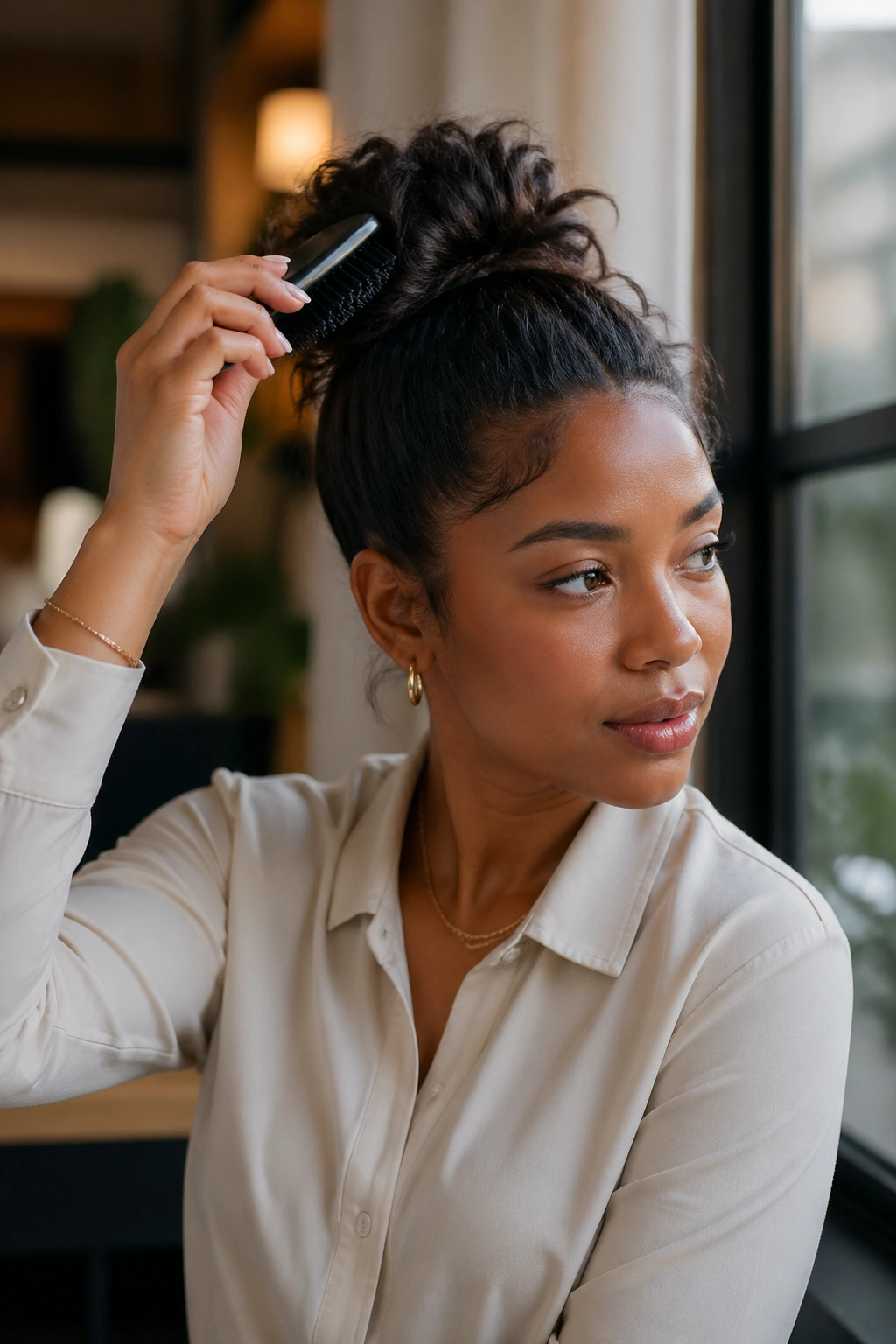
A messy bun that looks flawless when you style it in the morning should look just as polished at lunch or evening. Maintenance is simple but intentional.
Throughout your day, you might notice flyaways or pieces shifting slightly. Keep a small container of edge control in your bag or at your desk so you can touch up edges and flyaways if needed. A few swipes with a soft brush and a tiny bit of product keeps everything looking intentional and polished.
Avoid touching your bun throughout the day beyond what’s necessary. Constant fingers in your hair—even with good intentions—loosens the structure and creates actual messiness instead of intentional messiness. Trust your styling and let it be.
If you’re in a humid environment, mist your hair lightly with a hold spray in the afternoon. This refreshes the hold and keeps everything locked in place even if humidity is working against you.
When you remove your bun at the end of the day, do so gently. Remove bobby pins carefully, gently unwind any twisted or coiled sections, and lightly finger-comb your hair to release it gradually. This minimizes breakage and damage compared to roughly yanking pins out and shaking your hair loose.
Treat your edges and crown with extra care on days you’ve worn a bun. Your edges might be slightly fatigued from the styling, so avoid doing another tight style immediately the next day. Alternate between protected styles and looser styles to give your hair and edges rest days. Apply a nourishing edge treatment the evening after wearing your bun to replenish moisture and strengthen those delicate areas.
Common Mistakes to Avoid When Creating Short-Hair Messy Buns
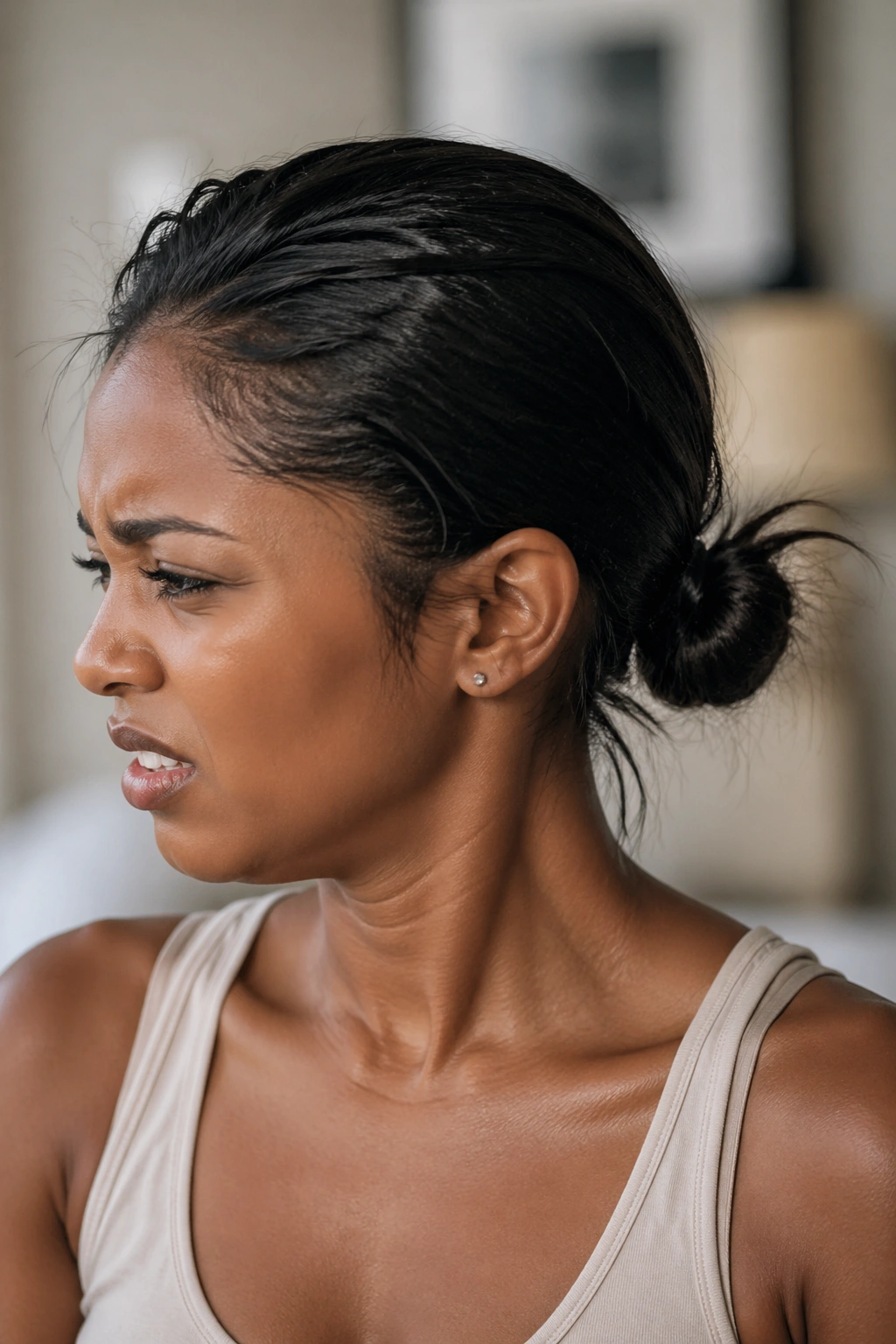
Even with the best intentions, a few common mistakes can undermine your messy bun game. Being aware of them helps you sidestep issues and achieve gorgeous results consistently.
The biggest mistake is using too much product. More product doesn’t equal more hold or better results; it creates weight, stiffness, buildup, and that “damp, product-covered” appearance that reads as unkempt rather than intentionally messy. Start with less product than feels necessary, and add more only if you genuinely need it.
Another common error is making your bun too tight. Tight buns create tension at your crown and edges, which can lead to breakage and hair loss over time. Your bun should feel secure but not painful. You should be able to slip a finger under the hair tie without strain. Intentional messiness and security don’t require tension.
Many people gather their buns too low on the head. For short hair, a bun at the very nape of your neck can read as sloppy rather than intentional. Crown-level or upper-back buns are more flattering for short lengths, creating lift and balance. Experiment with bun placement to find what’s most flattering for your face shape and hair length.
Overpinning is another mistake. You don’t need 15 bobby pins to secure a short-hair bun. Usually, 4-6 strategically placed pins are sufficient. Too many pins create visible bumps, add weight, and make the bun feel stiff and overworked.
Not smoothing edges and baby hairs can make even a perfectly executed bun look unfinished. Spending 30 seconds with an edge control and a soft brush transforms your whole look from rushed to refined. This detail matters far more than most people realize.
Bun Styles for Different Hair Types and Textures
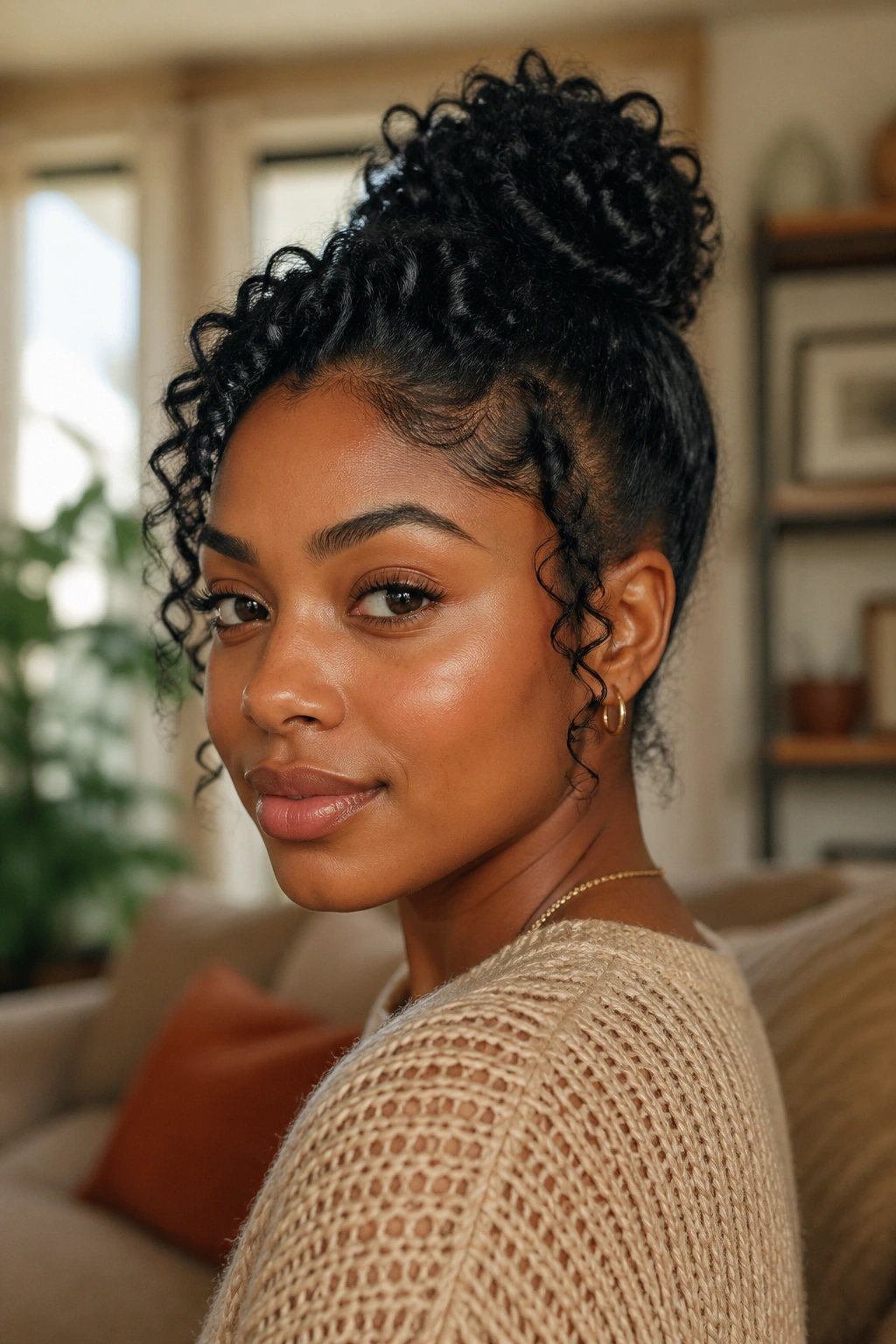
Your specific hair type influences which styles work best and how to adapt each style for your unique hair.
If you have natural, coily hair, the twist-out bun is your friend, but don’t sleep on the braided crown bun or double-knot bun either. Natural texture holds beautifully in structured styles and creates incredible visual dimension. You might need slightly more grip products to keep coils gathered and defined, but this is genuinely an advantage since your hair naturally resists falling apart.
With relaxed hair, all six styles work beautifully, and you might find that you need slightly less product for secure hold since relaxed strands are smoother and grip each other more easily. The sleek gel-back high bun is particularly stunning on relaxed hair because the smooth texture creates clean, defined edges and shapes.
If you’re transitioning between relaxed and natural textures, your hair might have varying texture throughout. The half-up half-down bun or the textured twist-out bun work especially well because they celebrate texture variation rather than trying to create uniform smoothness. Work with your natural pattern, not against it.
With fine hair, focus on creating volume at the crown through teasing or backcombing before you gather your bun. Fine hair holds buns beautifully, but the gathered section might not have natural bulk, so you’re creating that bulk intentionally. The twisted crown bun works wonderfully for fine hair because the twist structure creates visual fullness.
With thick hair, you might need slightly more product for hold and security since you’re working with more volume. The braided crown bun or double-knot bun are exceptional for thick hair because they distribute the weight across multiple sections rather than gathering everything into one focal point. This prevents stress on your crown area.
Final Thoughts
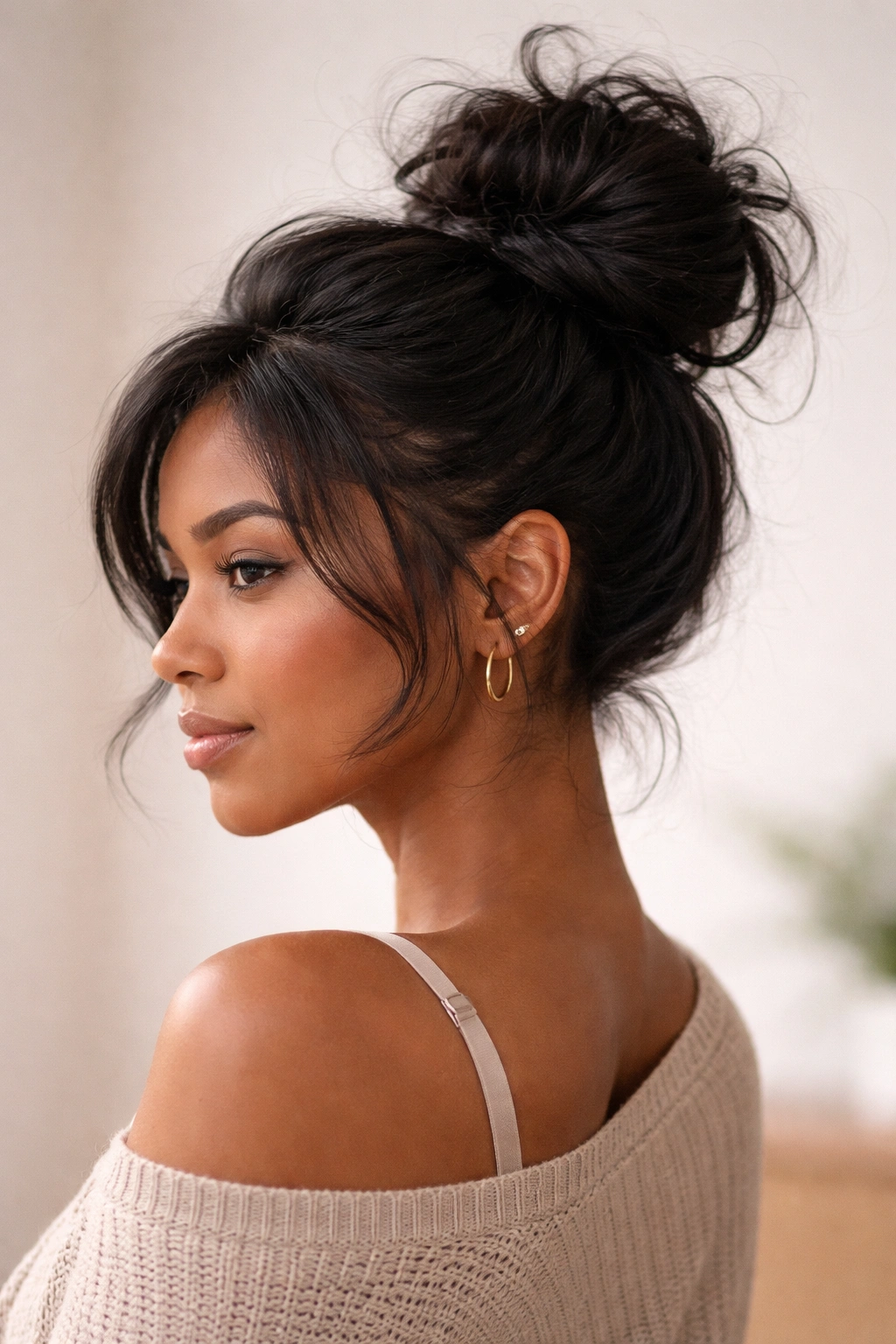
Messy buns on short Black hair are more than just a hairstyle—they’re a statement of versatility, self-expression, and understanding your hair’s needs. Whether you’re gravitating toward the sophisticated sleek gel-back bun, the textured twist-out bun, the playful double-knot design, or any of the styles in between, you’re choosing to work with your hair’s natural characteristics while creating something beautiful and intentional.
The six styles covered here are starting points, not limitations. Combine elements from different styles, add your own accessories and details, experiment with placement and looseness, and make each style distinctly yours. The best messy bun is the one that makes you feel confident, polished, and authentically yourself.
Remember that styling your hair is an act of self-care and creativity. You’re not just managing your hair for the day; you’re engaging in a practice that protects your hair health, celebrates your natural texture, and allows you to express yourself visually. Spend a little time with these styles, figure out which ones make you feel most like yourself, and return to those favorites while staying curious about new variations.
Your short Black hair is beautiful in every single style you choose. These buns simply give you more ways to celebrate that beauty while taking care of your hair at the same time.