



Thick, frizzy hair can feel like a styling challenge, but here’s what most people get wrong: that same texture that seems impossible to tame is actually perfect for messy buns. The volume you struggle with in smooth styles becomes an asset when you’re going for that deliberately undone look. Unlike fine hair that needs tricks to appear fuller, thick hair naturally creates the dimension and movement that makes a messy bun look effortlessly chic rather than sloppy.
The key is understanding that your hair type requires a different strategy than the techniques shown in mainstream tutorials. You’re not trying to smooth everything into submission or create a tight, polished bun. Instead, you’re working with your hair’s natural texture, using strategic twisting, layering, and placement to channel all that thickness into a style that looks intentionally textured and romantically undone. The frizz becomes a feature when it’s positioned correctly—it reads as volume and softness rather than flyaways.
What separates a gorgeous messy bun from a “I gave up on my hair” look is knowing exactly where and how to secure your base, which sections to leave loose, and how to use products strategically without making everything stick together or feel heavy. The six styles below are specifically designed for thick frizzy hair, with techniques that embrace your texture instead of fighting it.
1. The Twisted Crown Messy Bun
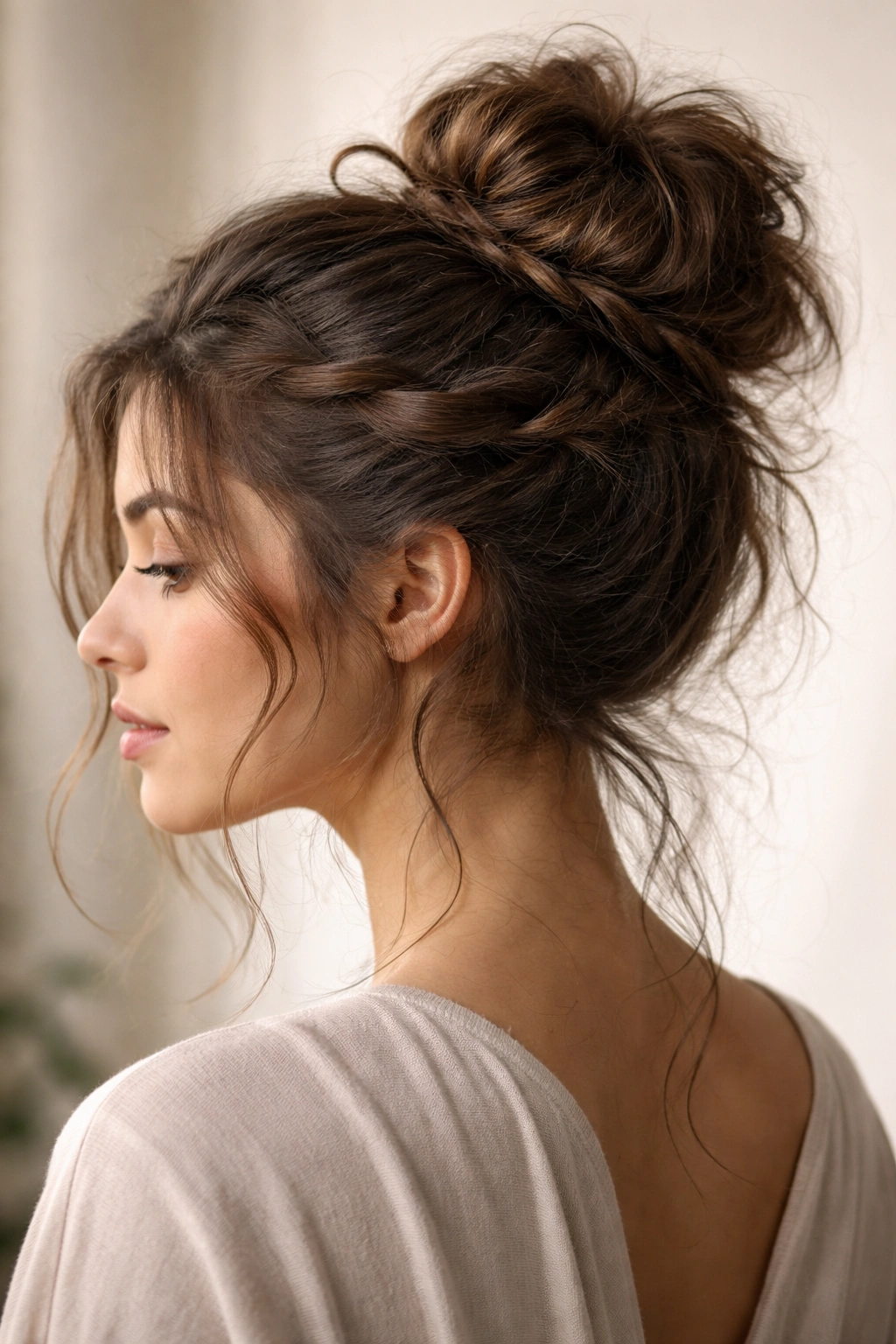
This style works beautifully for thick hair because the twisting creates structure without needing to be tight. You’re essentially wrapping all that volume around itself in a way that looks intentional and polished while still reading as casually undone. The twisted sections catch light differently than smooth hair would, giving the whole look dimension and interest.
How to Create This Look for Maximum Texture
Start with hair that’s slightly damp or has some product in it—completely dry thick frizzy hair can be harder to control, and a little moisture helps the twists hold shape. Brush through gently and create a deep side part. Divide your hair into two even sections from the part down the back of your head. Take the first section and twist it loosely while moving backward, letting the natural texture show through rather than pulling it tight. The goal is a twisted rope, not a flat braid. Wrap this first twist around the base of where your bun will sit (typically at the nape or lower back of your head, depending on whether you want low or medium height).
Repeat with the second section, twisting in the same direction and wrapping around the first twist to create a pinwheel effect. Use bobby pins to secure the wrapped twists underneath where they tuck in, hiding the pins completely. Pull a few face-framing pieces loose and gently tease them with your fingers to soften the overall look.
- Best for: When you want polished but textured, suitable for both casual and slightly dressier occasions
- Texture advantage: The twists showcase your hair’s natural wave and frizz as intentional dimension
- Hold time: This style typically lasts 6-8 hours for thick hair before pieces start fully loosening
- Product strategy: Use a light texturizing spray or dry shampoo at the roots before twisting to increase grip without added weight
Pro tip: If your hair is naturally very frizzy, lightly mist the twisted sections with a flexible hold hairspray before wrapping them. This keeps the twists intact without making them feel stiff or glued-down.
2. The Textured Wrap-Around Bun
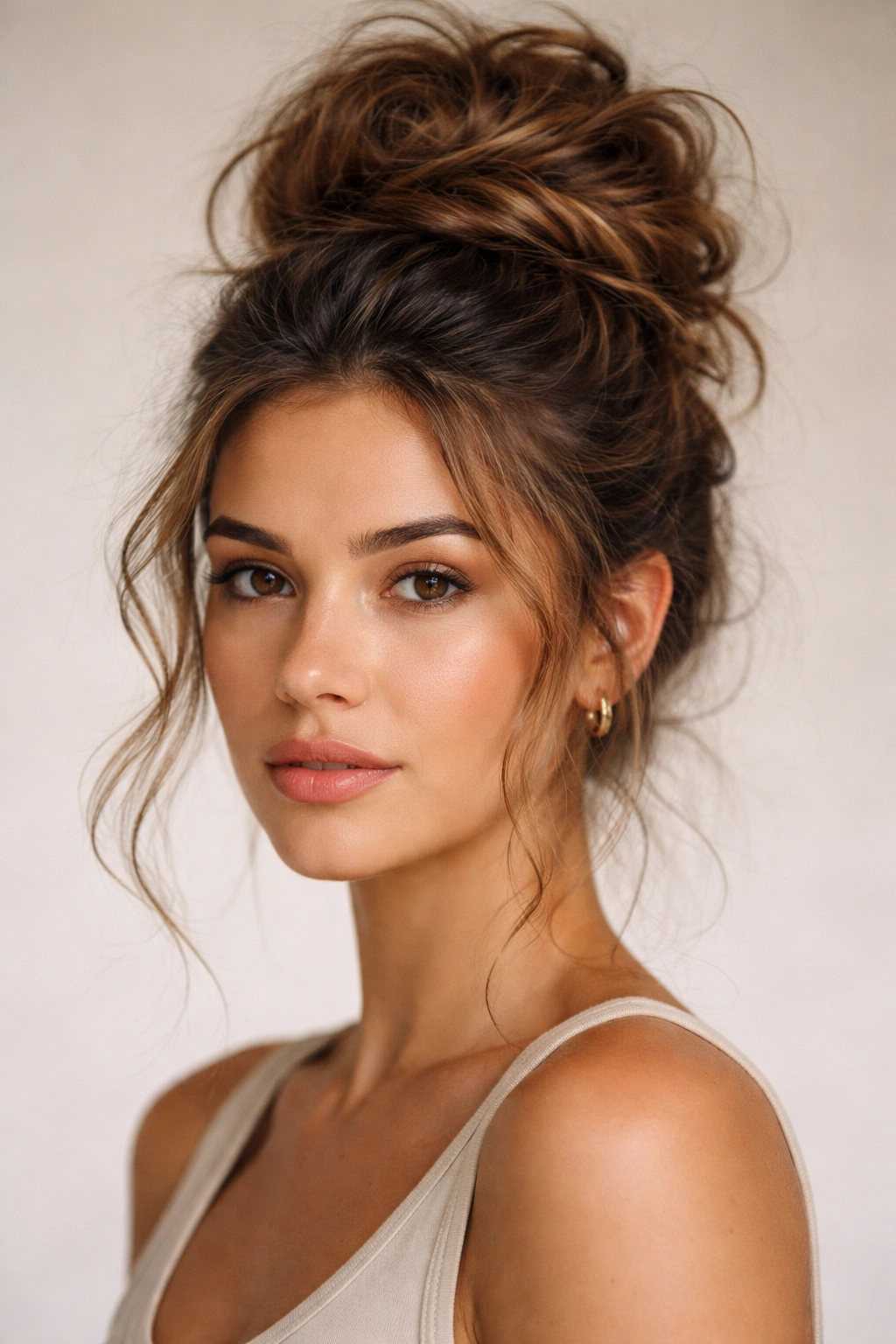
This is the messy bun style for when you actually want more texture, not less. Rather than trying to smooth your frizzy sections, you’re deliberately separating and highlighting them. Thick hair handles this approach beautifully because even the “messy” parts have enough body to create actual shape rather than looking thin and wispy.
Why This Works So Well for Thick Frizzy Hair
The wrap-around technique distributes your hair’s weight more evenly than a traditional gathered bun would, which means less tension on your scalp and fewer flyaways pulling in different directions. You’re essentially creating multiple layers of texture by wrapping sections loosely rather than securing everything in one tight knot. This layering approach lets your natural curl pattern or wave texture shine through as intentional styling rather than frizz.
Create a high ponytail at the crown using a loose elastic. Don’t worry about making this smooth—some texture here actually helps the final style. Divide the ponytail into 3-4 sections. Take the first section and loosely wrap it around the base of the ponytail, securing with a bobby pin. Wrap the next section in the opposite direction, slightly overlapping the first wrap. Continue alternating directions with each section, letting some pieces stick out intentionally as you go.
- Best for: Workouts, casual everyday wear, and any situation where you want undeniable volume
- Texture advantage: Your frizz becomes visible separation and dimension between the wraps
- Securing strategy: Use matte black bobby pins that blend into dark hair or tortoiseshell for lighter shades—visible pins actually add to the deliberately undone vibe
- Longevity: This style holds particularly well for 7-10 hours because the distributed wrapping creates natural friction
Worth knowing: If you have very thick hair (like chin-length-circumference-of-ponytail thick), you might need 4-5 bobby pins instead of the typical 2-3. The weight requires more distributed support, not just a single anchor point.
3. The Layered Volume Bun
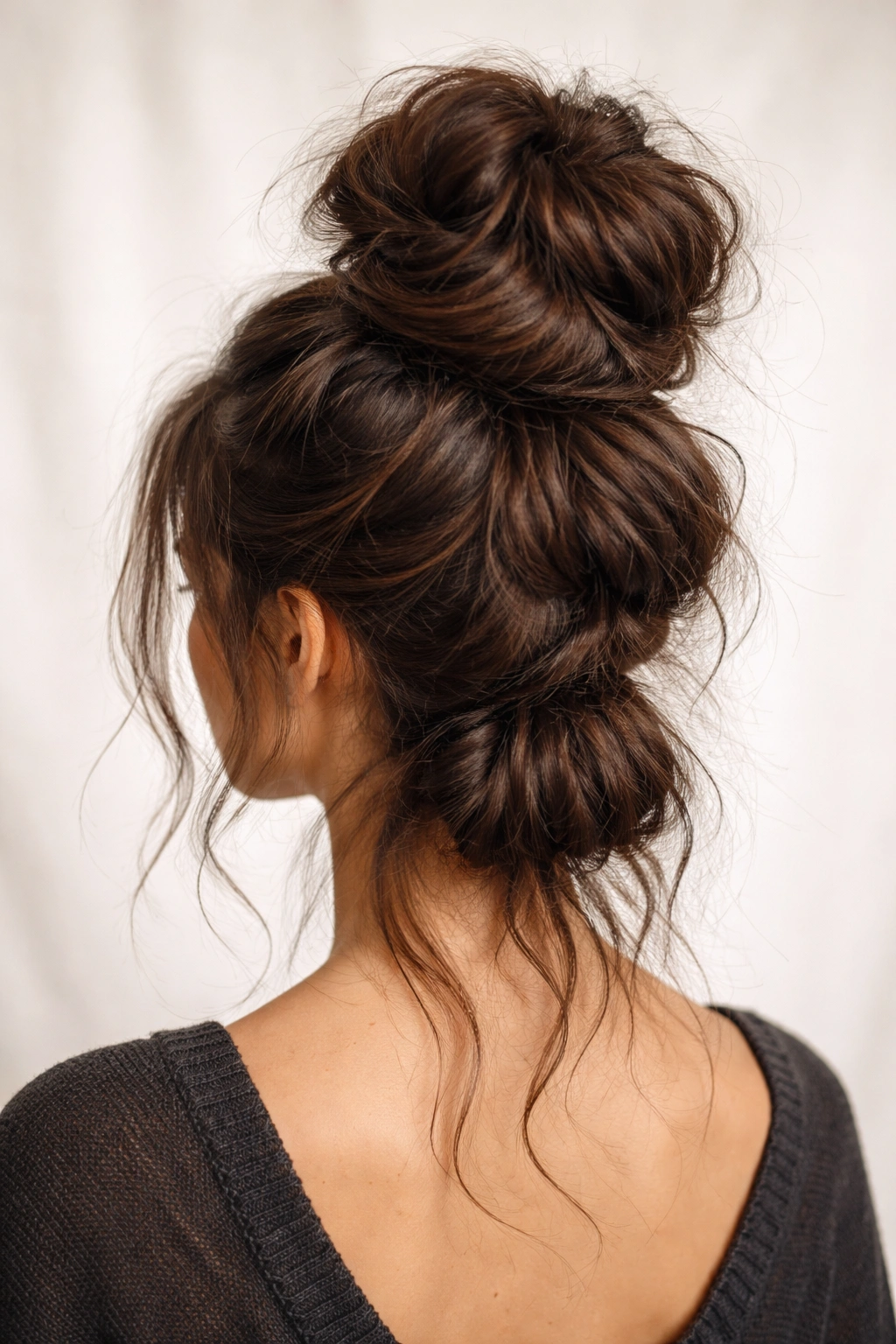
This is the style specifically designed to celebrate thick hair rather than apologize for it. You’re intentionally creating height and fullness by layering sections at different levels of your head, then bunning them separately but close together so they read as one voluminous style. Fine hair would look sparse with this approach, but thick hair fills out every section beautifully.
How to Build This Multi-Layer Effect
Start by dividing your hair into horizontal sections using clips. Create one section at the crown (roughly the top third of your head), another in the middle, and a lower section. Release the crown section and create a small bun just using that hair alone, twisting it loosely and securing with bobby pins. Don’t worry about stray pieces—you want some texture showing. Release the middle section and create another bun right below the first one, with just a quarter-inch of space between them. Repeat with the lower section.
The result looks like three small bunches stacked vertically, but because thick hair has so much volume, they visually merge into one incredibly full, textured bun. Pull out pieces from each layer and gently separate them with your fingers for that deliberate messiness. The separation between layers actually becomes a design feature rather than a gap.
- Best for: Special occasions where you want major impact, really thick hair specifically (if your hair is only moderately thick, stick with 2 layers instead of 3)
- Texture advantage: Each layer is loose enough that frizz creates beautiful separation and movement between sections
- Styling time: Takes about 8-10 minutes longer than a single bun, but the result is dramatic
- How long it holds: 5-7 hours, with the top layer staying tightest and lower layers gradually loosening for an increasingly romantic effect
Pro tip: Before layering, apply a light mousse to damp roots and blow-dry with a round brush. This gives each section more internal structure so the layers maintain their shape longer without needing to be pulled tight.
4. The Undone Side Sweep Bun
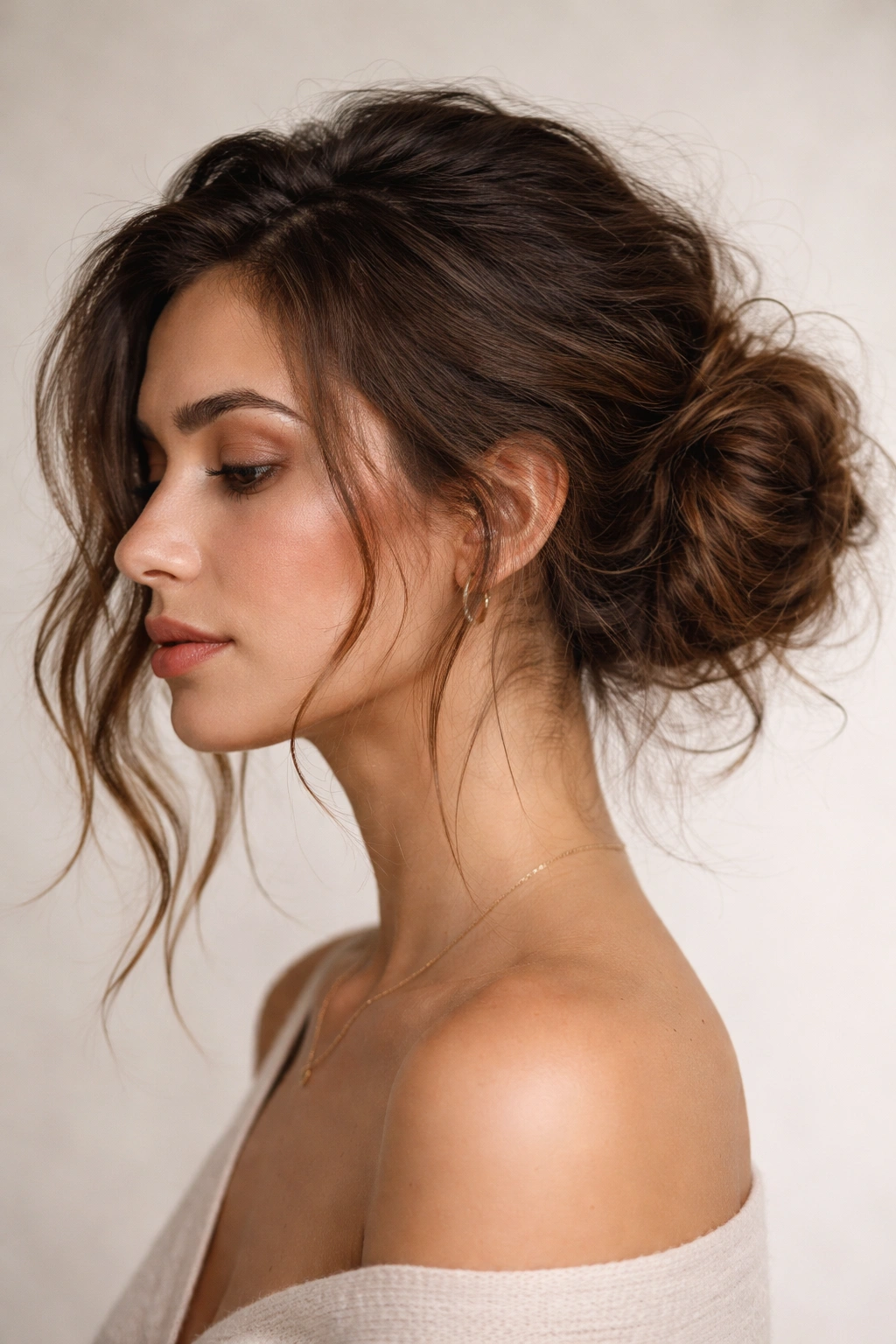
For thick frizzy hair, the side-swept bun is gorgeous because it automatically shows off all your volume on one side while keeping the overall look balanced. The sweep creates a natural diagonal line that’s deeply flattering, and your hair’s texture reads as romantic waves rather than chaos because of the intentional directional movement.
Creating the Intentional Sweep That Actually Holds
Start by applying a smoothing serum or light oil to your hands—this is crucial for thick frizzy hair because it helps sections stay together without needing product that makes everything feel heavy or greasy. Flip your head to one side and brush your hair in the direction you want it to sweep. Create a low ponytail on the side where your hair naturally falls (if you have a preferred side, that’s usually the way to go). The ponytail should sit at your ear level or slightly lower.
Don’t smooth this ponytail at all—let the texture show. Twist the ponytail loosely and wrap it around its own base to create a bun shape, pinning underneath with bobby pins that are hidden in the texture. Pull out pieces from around your face and from the bun itself, gently separating them to emphasize the undone quality. The key is that you want the front-facing side of the bun to look intentionally messy while the secured base underneath stays hidden.
- Best for: When you want to show one side of your face, great for asymmetrical features you want to highlight
- Texture advantage: The sweep naturally directs your frizz to one side where it reads as volume rather than escaping in all directions
- Style duration: Typically holds very well for 8-10 hours because the one-sided weight distribution actually helps the bun stay put
- Face-framing: Sweep small pieces out near your temples and let them fall naturally—don’t secure them, as that defeats the whole vibe
Insider note: If you’re going to wear this style in humidity, use a light moisture-control spray rather than a heavy-hold hairspray. Heavy products make thick frizzy hair feel stiff and can actually make humidity effects worse by trapping moisture in the product coating.
5. The Double-Secured Low Bun
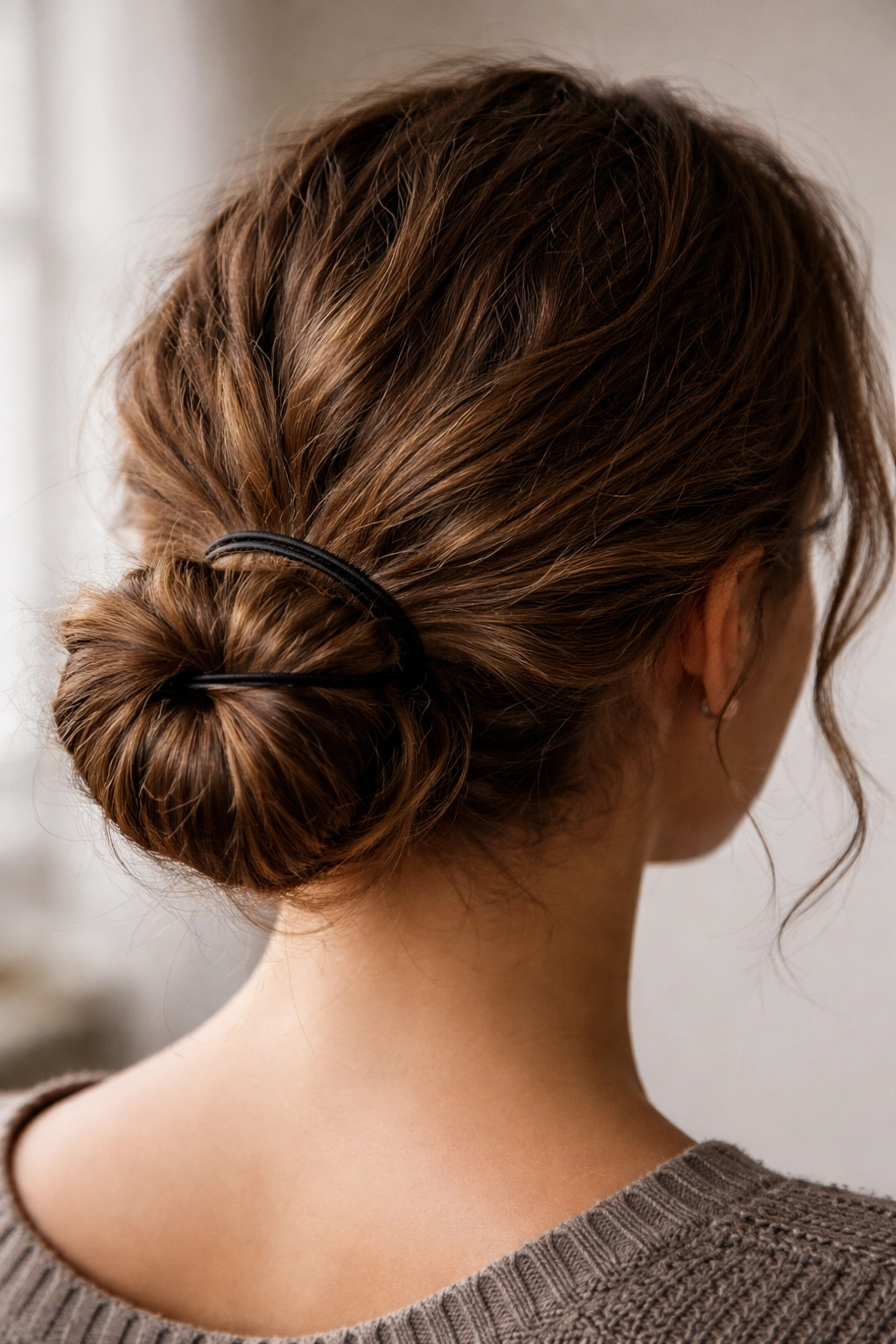
This is the messy bun for when you need serious staying power—think workouts, full work days, or any situation where you can’t be adjusting your hair. The double-secured technique is especially crucial for thick hair because a single elastic can sometimes slip or shift when you have that much volume pulling downward. Two secure points keep everything locked in place without needing to pull the actual hair tight enough to cause tension.
The Two-Point Security System That Actually Works
Create a low ponytail at the nape of your neck using a sturdy elastic—and yes, for thick hair, this actually needs to be tight. Don’t apply serum or smoothing products here; you want grip. Twist the ponytail loosely and create a bun at the base. Secure this bun with a bobby pin pushed through the twisted hair directly into your scalp underneath. Now here’s the key: take a small section of hair from underneath the bun and secure it with another elastic around the entire bun, creating a band that holds the whole structure in place. This second elastic should sit at the bottom of the bun.
This double-point system means even if one securing mechanism shifts (which happens with movement), the other catches it. Thick hair’s weight naturally helps pull downward, so working with gravity rather than against it keeps this style intact all day.
- Best for: Gym sessions, long work days, travel, any situation where you need maximum security
- Texture advantage: Because you’re not relying on extreme tightness alone, you can let pieces fall around your face without the whole bun destabilizing
- Securing materials: Use matte elastics that blend into your hair color—elastic-on-elastic contact is less visible than elastic-on-bobby-pin
- Adjustment window: This style holds for 10+ hours before needing any real adjustment, making it genuinely practical for long days
Worth knowing: If you have very thick, very frizzy hair, that second securing elastic might show. Wrap a small section of hair around it to cover it, pinning that wrapped section with a bobby pin. This takes an extra 30 seconds but looks significantly more intentional.
6. The Tousled High Bun
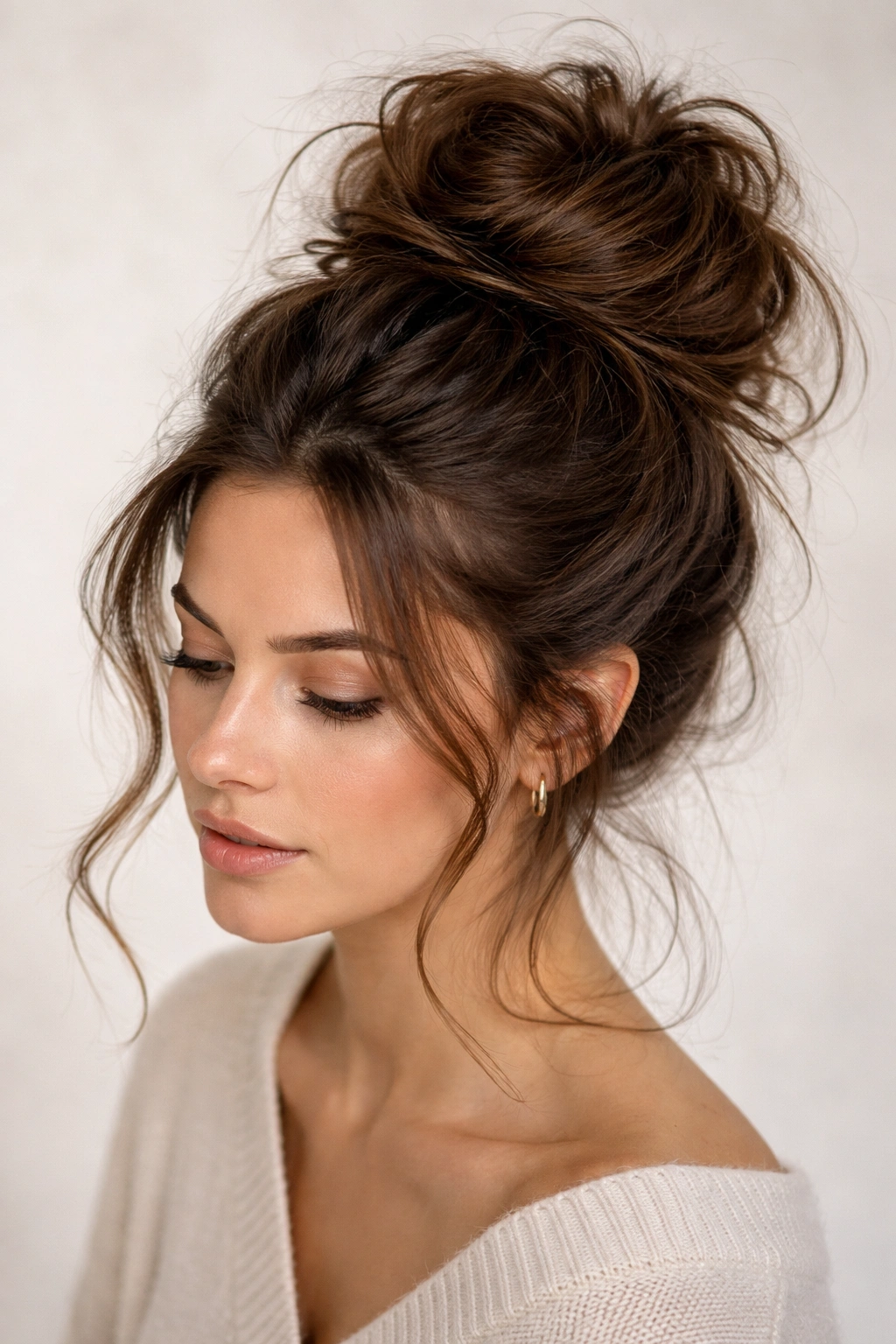
The high bun is traditionally risky for thick frizzy hair because you’re creating maximum tension on the crown where you likely have the most density and frizz. But the tousled approach flips that challenge into an advantage—you’re deliberately creating a messy, undone look at the highest point of your head, which actually draws the eye upward and makes the whole effect look intentionally styled rather than like you overslept.
Building Height and Texture at the Crown
Start with hair that has some texture already—if your hair is freshly washed and perfectly smooth, add texture with a sea salt spray or texturizing powder. Create a high ponytail at the crown, higher than you might typically wear it. Use a standard elastic, not a tiny one, so you’re not creating extreme tension. The ponytail at this point should look a bit messy and textured, not sleek.
Twist the ponytail loosely, separating the twist with your fingers as you go to emphasize the texture. Wrap the twisted section around its base to create a bun, and here’s where thick hair’s density becomes your asset: you can secure this with just two bobby pins and it will absolutely hold because of all that volume. Pull out sections from around your face and from the bun, gently teasing them with your fingers. The goal is controlled messiness—enough texture showing to look intentional, but not so much that it looks like you don’t know what you’re doing.
- Best for: When you want to elongate your face, younger or more casual occasions, creating the appearance of a longer neck
- Texture advantage: Frizz at the crown reads as intentional volume and height rather than as something escaped
- Visual impact: Creates a significant silhouette that photographs beautifully and reads as styled from across a room
- Hold strength: Because you’re working with the crown’s natural density, this style holds remarkably well for 7-9 hours
Pro tip: Use a fine-tooth comb to gently back-comb the crown section before ponytailing. This creates texture at the roots that grips the elastic better, and the intentional back-combing actually adds to the tousled vibe rather than detracting from it.
Final Thoughts
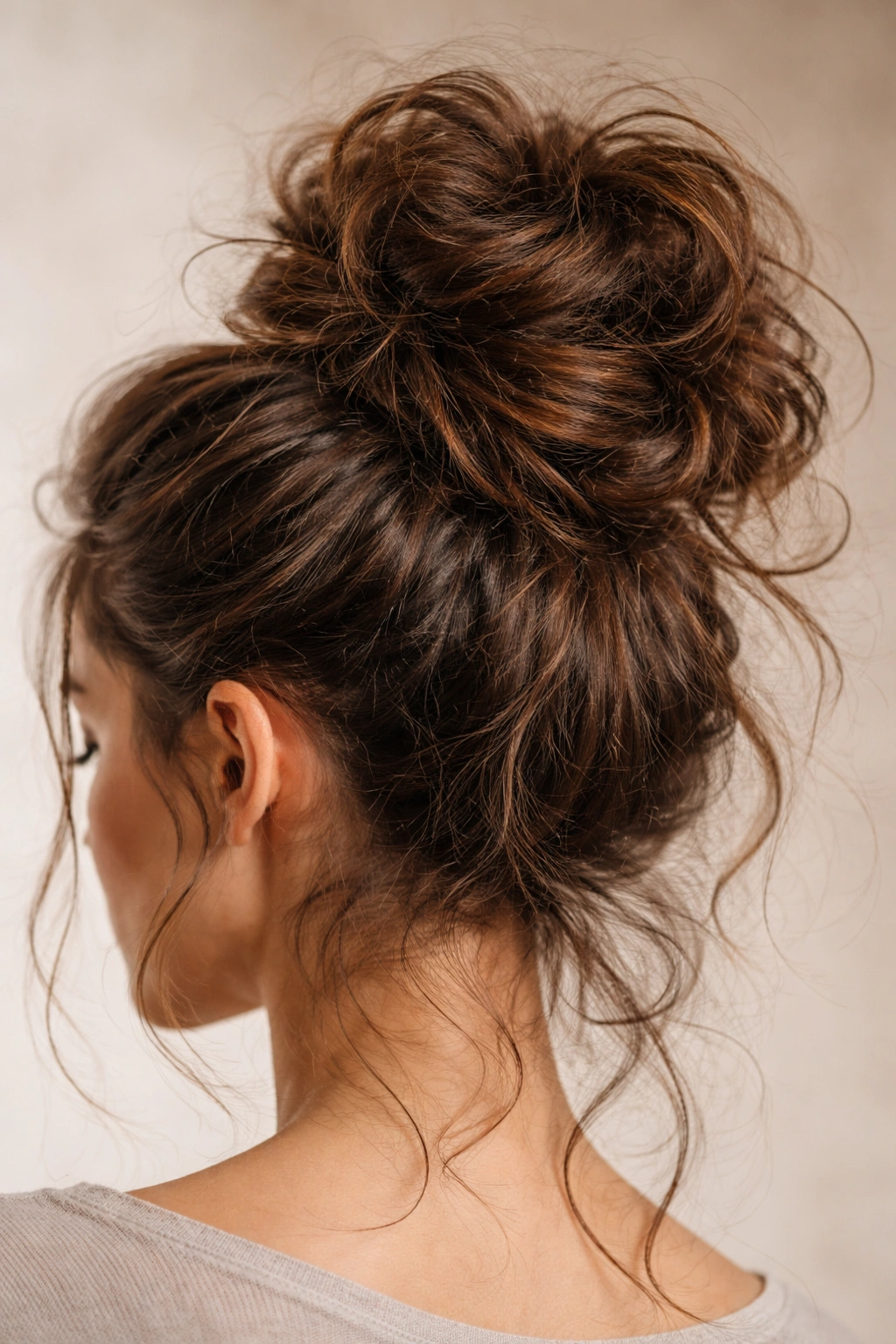
Working with thick frizzy hair doesn’t mean accepting less control over your styling—it means working with your hair’s natural strengths instead of against them. Every one of these six styles succeeds specifically because they embrace texture and volume rather than trying to smooth everything away. Your hair’s thickness becomes the feature that makes these buns look full and intentional, and the frizz becomes dimension and movement when it’s positioned with intention.
The real trick across all of these styles is realizing that “messy” is actually a skill. You’re being deliberate about which pieces fall loose, how much texture shows, and where the bun sits. This is styling with confidence, not styling by accident. Once you understand that your thick frizzy hair is an asset here—that it gives you options more delicate hair types simply don’t have—you’ll find yourself reaching for messy buns not because you’re giving up on styling, but because you’re choosing to look intentionally undone.
Try each of these styles once, preferably at different times when you have slightly different hair textures (slightly damp versus fully dry, with product versus with just serum, textured by salt spray versus naturally textured). You’ll quickly discover which style feels most natural for your specific hair density, wave pattern, and how much actual frizz you’re dealing with. The styles that feel easiest to create and that last longest are typically the ones that work best with your individual hair type—trust that instinct.
