

Postpartum hair can feel like a whole other beast—thinner, more fragile, and frustratingly unpredictable just when you’re running on zero sleep and have zero time for complicated styling. The hormonal shifts that happen after pregnancy trigger something called telogen effluvium, a type of hair shedding that can last anywhere from a few months to a year or longer. Your hair strands that were thickened by elevated estrogen during pregnancy suddenly shift into a shedding phase, which means you’re losing density in areas you desperately want to keep full. On top of that, you’re exhausted, your scalp might be more sensitive, and the last thing you need is a hairstyle that requires a blow dryer, three products, and steady hands.
This is exactly where messy buns become your secret weapon. They’re not just a lazy-day hairstyle—they’re genuinely strategic styling for postpartum hair. A well-chosen messy bun can disguise thinning, reduce styling stress on fragile strands, take thirty seconds to create, and look intentional rather than hurried. The right style can also help you avoid excessive heat styling and tight ponytails, both of which accelerate hair loss during this vulnerable time. Whether your hair loss is concentrated at your temples, your part line, or throughout, there’s a messy bun approach that works with your specific pattern rather than against it.
The styles I’m sharing here aren’t the Instagram-perfect, symmetrical buns that require teasing, hairspray, and a styling iron. These are real messy buns—the kind that take genuine texture and movement, hide thinning gracefully, and survive the chaos of your actual day. Each one works with postpartum hair’s specific texture and density challenges, and each can be created without yanking your strands or creating pressure points that accelerate shedding at your hairline.
Understanding Postpartum Hair Loss and Why Style Matters
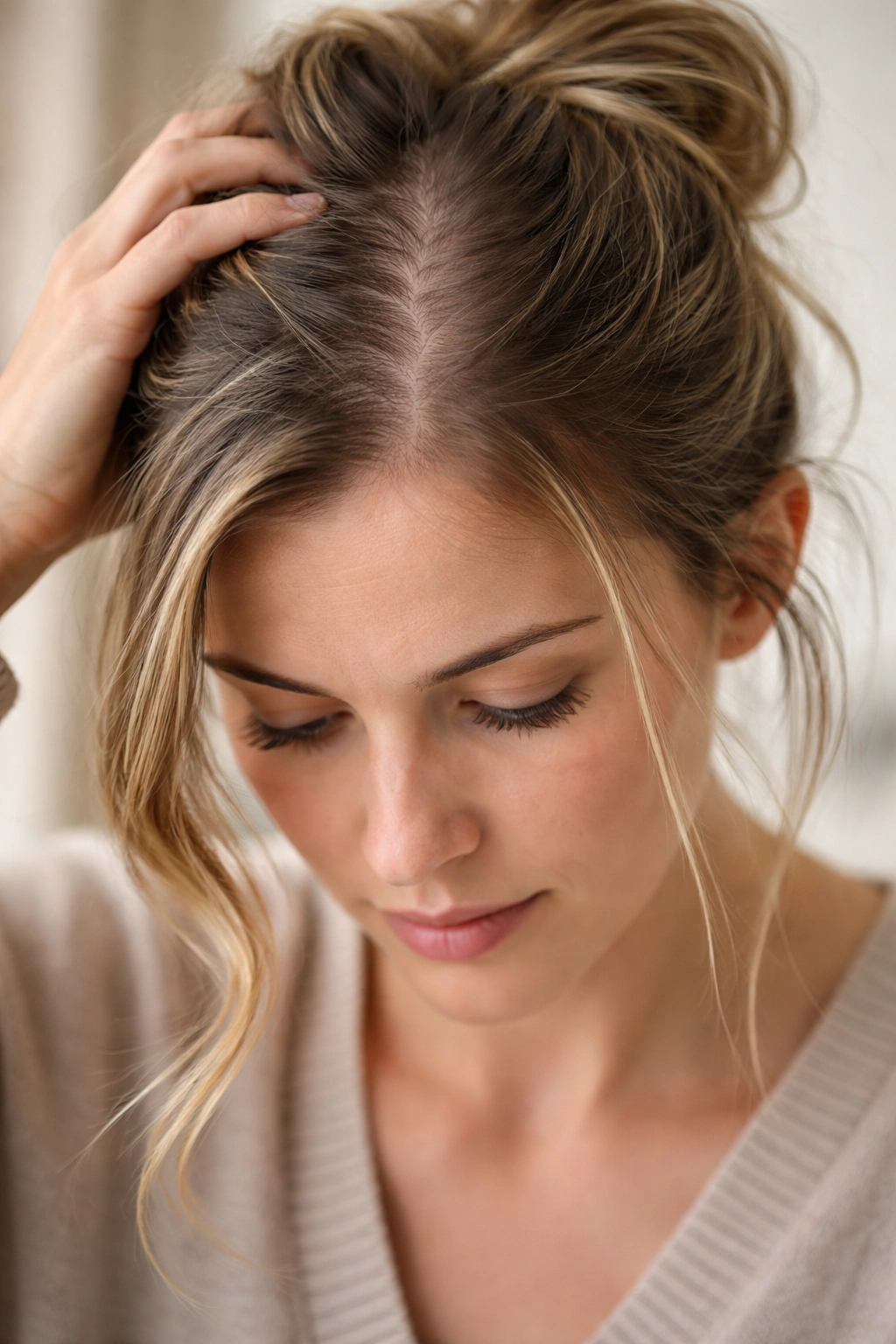
Postpartum hair shedding hits hardest between three and six months after delivery, though it can persist longer depending on factors like breastfeeding, stress levels, sleep deprivation, and overall nutrition. The shedding isn’t happening because something is wrong—it’s a completely normal biological response to the dramatic drop in estrogen after pregnancy. However, that doesn’t make it less frustrating when you’re watching strands collect in your shower drain and noticing your part looks wider than it used to.
During this phase, your hair is genuinely more fragile. The individual strands are weaker, they break more easily, and they don’t tolerate tension well. This is why your go-to sleek ponytail suddenly feels uncomfortable or leaves your hairline sore. Your scalp is also more sensitive, often itchy or tender, which means heavy products and tight pulls feel worse than they did before pregnancy. The goal with any hairstyle during this time is to create something that looks intentional while actually protecting your remaining hair from unnecessary stress.
Messy buns solve this specific problem beautifully. Because they’re intentionally undone and textured, they don’t require the tension of a tight pull or the damage of constant heat styling. They accommodate uneven density—you can position them slightly off-center to camouflage a thinner area, or create volume at the crown to distract from thinning at your hairline. They’re fast enough that you can do them with one hand while holding a baby, which is honestly the most important qualification for any postpartum hairstyle.
The Physics of a Good Postpartum Messy Bun
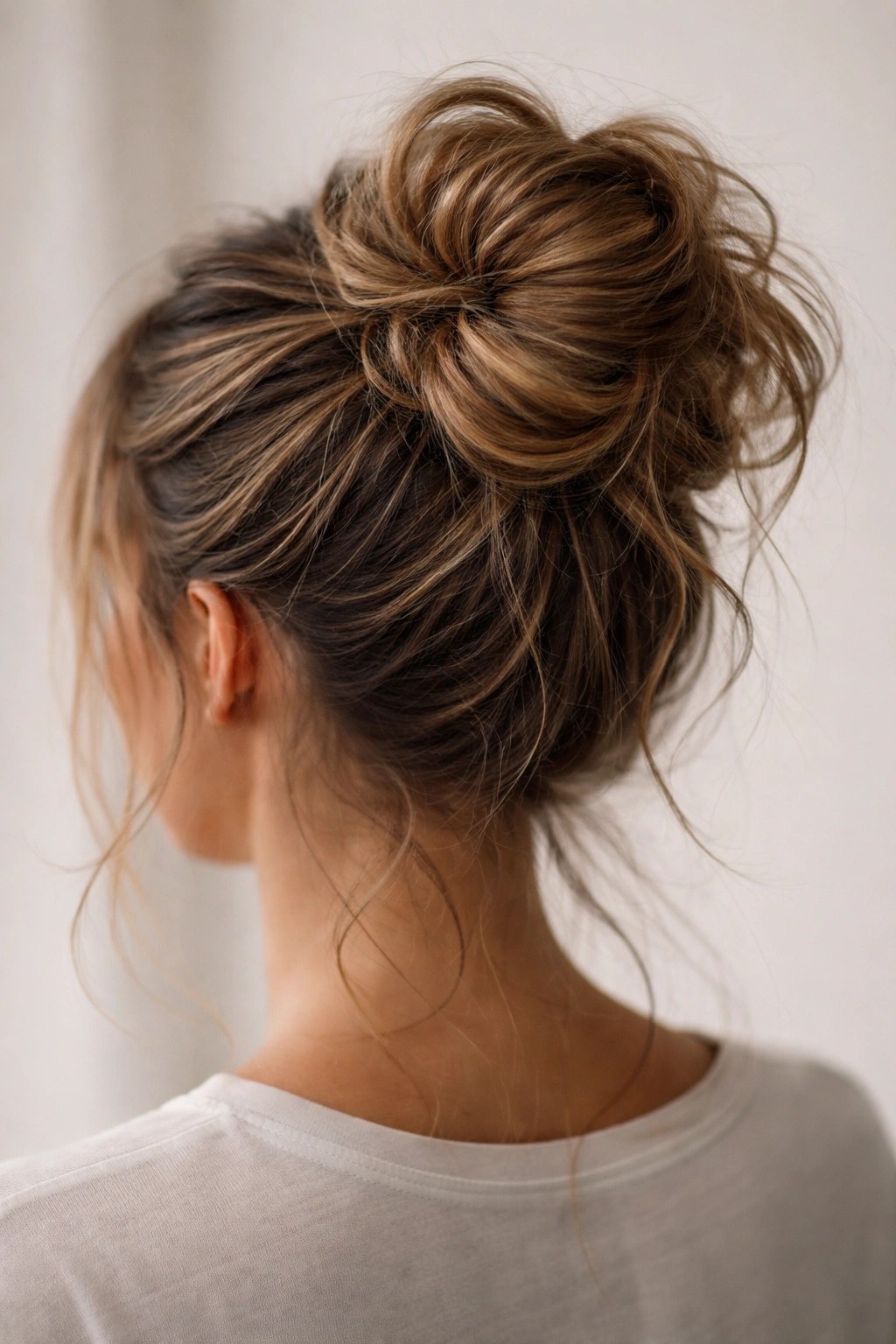
Not all messy buns are created equal, especially when you’re working with compromised hair. The goal is to create a style that looks full and intentional while using the least amount of tension and manipulation possible. This means choosing textures and techniques that work with postpartum hair rather than against it.
The best messy buns for postpartum hair start with texture. If your hair is smooth and slippery from conditioning products or natural oils, it won’t hold the textured, piece-y look that makes a messy bun work. You need grip—either from slightly dirty hair (which is perfect, honestly), from a dry shampoo or texturizing spray applied before styling, or from slightly damp hair that you’ve scrunched upward to create natural wave. This textured base means your bun will hold without needing those tight elastic bands that create stress points.
The second key element is strategic placement. Rather than pulling everything straight back into a centered bun, the best postpartum messy buns are positioned slightly to one side or deliberately off-center. This asymmetry does two things: it disguises uneven density from postpartum shedding, and it automatically looks more intentional and styled rather than like you just threw your hair up. An off-center bun also puts less tension on the vulnerable front hairline, which is often where postpartum shedding is most visible.
Finally, a good postpartum messy bun uses loose, flowing pieces rather than a perfectly contained knot. The pieces that fall around your face and neck aren’t mistakes—they’re intentional, and they cover any thinning or wispy growth at your hairline. This is where the “messy” actually serves you. You’re not trying to achieve perfection; you’re creating a style that celebrates looseness and works with your hair’s current reality.
1. The Textured Crown Bun for Disguising Hairline Thinning
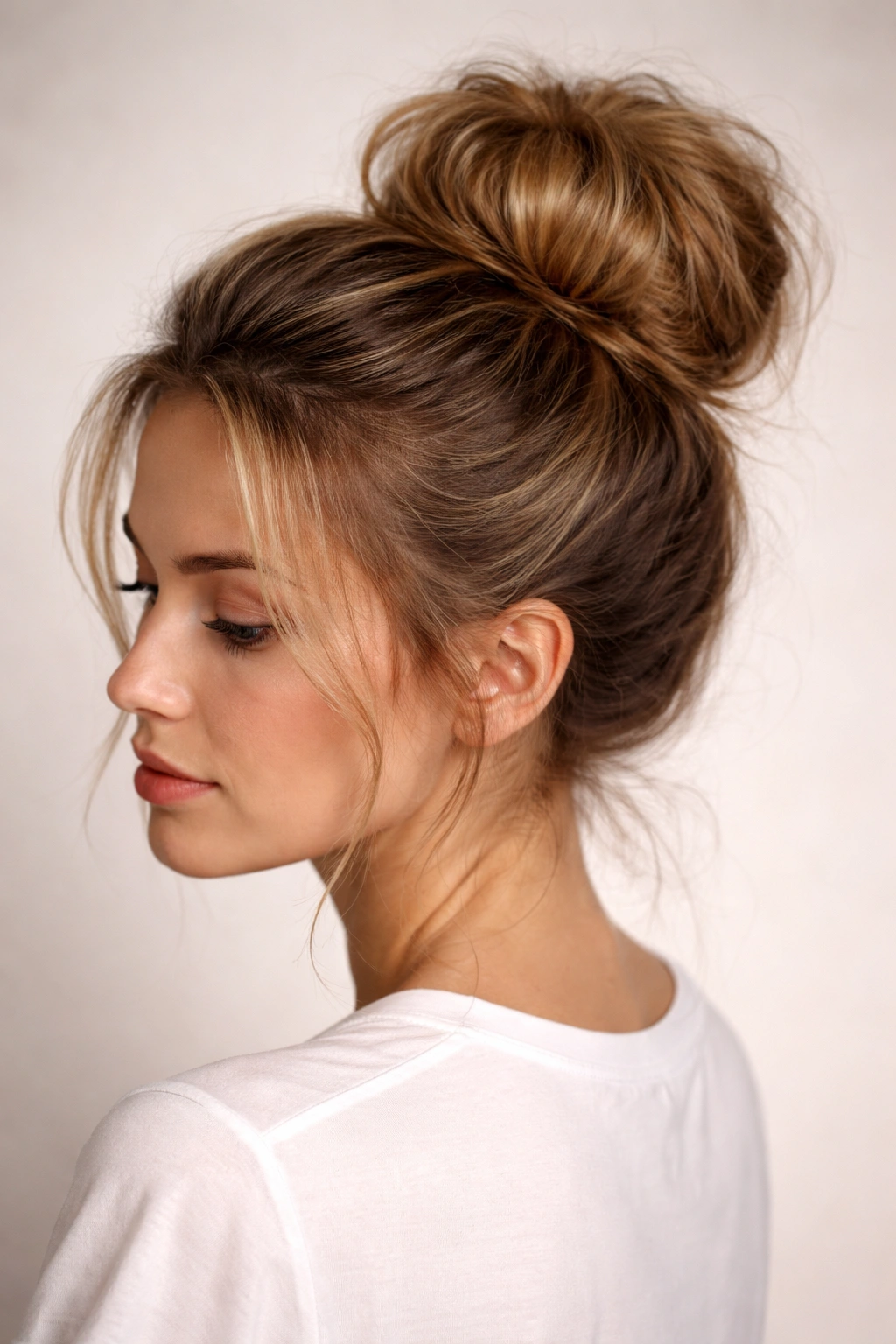
This style sits high on your head, which naturally draws attention upward and away from thinning at your hairline or part. The high placement also means less tension on the front strands that are most vulnerable during postpartum shedding. This is the bun I reach for on days when my part line feels especially exposed and my front layers are still recovering from postpartum hair loss.
Why It Works for Postpartum Hair
The crown placement creates instant visual fullness at the top of your head, which tricks the eye into seeing your overall hair as thicker than it actually is. By gathering hair high on your crown rather than at the back of your neck, you’re naturally lifting and fluffing the hair at your part line, which makes thinning less visible. Additionally, because all the hair is gathered upward, you avoid the tight stretch-back tension that pulls on fragile postpartum strands.
How to Create the Textured Crown Bun
- Start with day-old or dry-shampooed hair for natural texture and grip—wet hair won’t hold this style
- Flip your head upside down and tousle your roots vigorously with your fingers to create lift and volume at the crown
- Flip back up and use a wide-tooth comb or your fingers to very gently gather hair from your crown (the area directly on top of your head) into a loose, unstructured knot—this is NOT a tight bun
- Leave several long pieces loose around your face and neck intentionally, pulling them gently to create soft waves
- Secure the bun loosely with a silk or fabric-wrapped elastic band (metal-free to avoid breakage) or with bobby pins instead of an elastic—pin the knot in place rather than cinching it tightly
- Pro tip: Use a texturizing spray or lightweight dry shampoo on your roots before flipping your head upside down—this adds grip so your bun holds without needing tension
2. The Textured Low Bun with Loose Waves for Postpartum Density
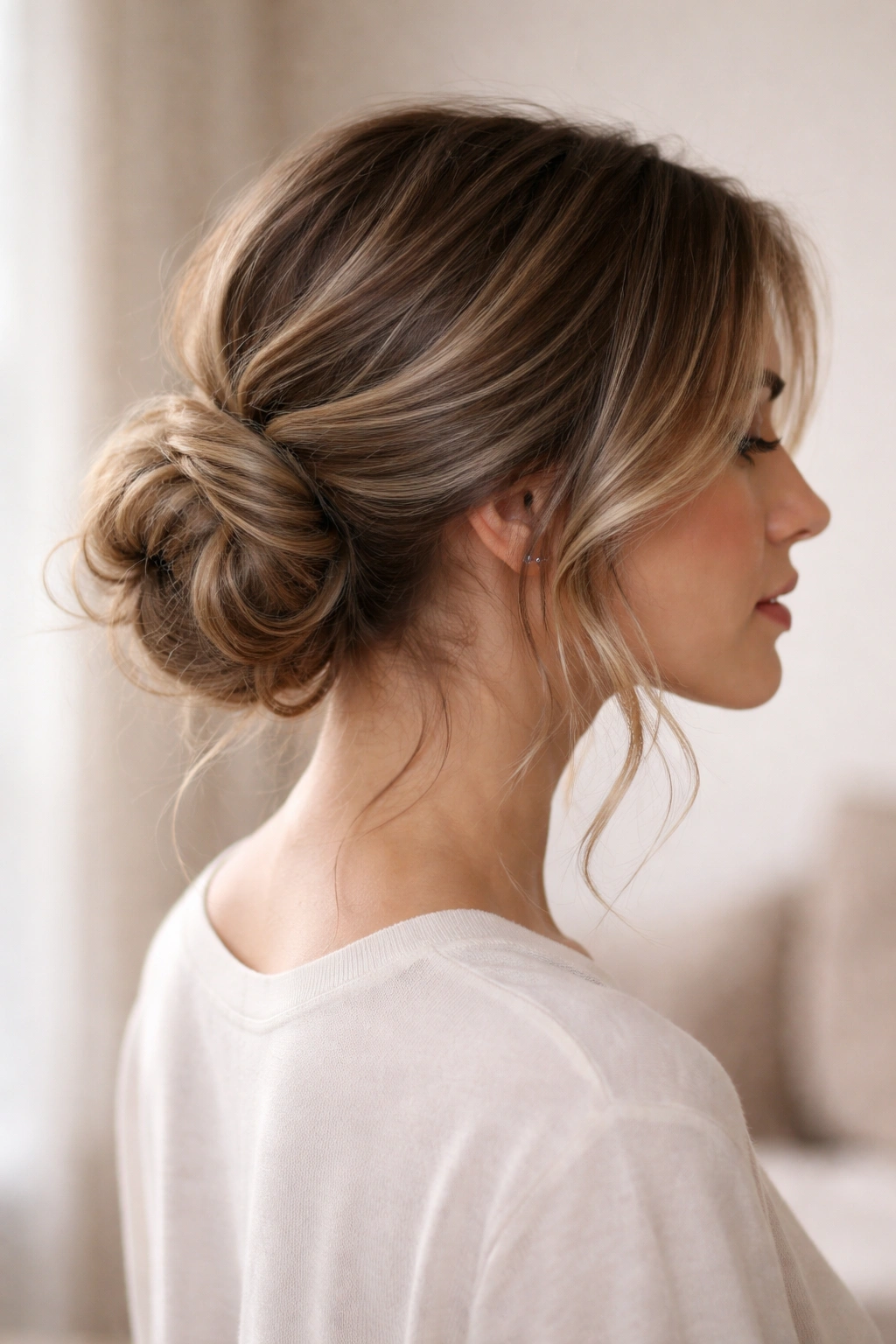
This style creates the appearance of fuller hair by building loose texture and movement throughout, rather than pulling everything into a tight, smooth knot. The waves and wisps make your hair look thicker overall, and the lower placement is more forgiving if you’re dealing with thinning at the crown rather than at your hairline. It’s also genuinely comfortable—there’s no pressure point pulling on any specific area.
Why It Works for Postpartum Hair
Low, loose buns distribute the weight of your hair across a wider area rather than concentrating it all in one tight knot, which reduces stress on individual strands. The loose texture makes even finer or thinner hair look fuller because you’re creating volume through waves and dimension rather than relying on density alone. This style also exposes less of your scalp at the part line, which is genuinely helpful if your part has widened from postpartum shedding.
How to Create the Textured Low Bun
- Brush through damp hair gently and apply a light styling cream or sea salt spray to create natural-looking texture and hold
- Create a deep side part and let it dry naturally with waves, or use a curling iron on the lowest heat setting to gently wave the mid-lengths and ends
- Once dry, flip your head upside down again and gather all hair loosely at the back of your neck—use your fingers rather than a comb to maintain the waves
- Twist the gathered hair gently into a loose rope, then wrap it into a low, loose knot at the base of your neck
- Secure with bobby pins rather than a tight elastic, pinning the bun in place while leaving plenty of long, wavy pieces loose around your face, neck, and sides
- Gently tug and loosen the bun further so it looks intentionally undone rather than neat
- Pro tip: Spray the finished bun lightly with a light-hold texturizing spray—you want hold without crunch, and the spray keeps the pieces exactly where you positioned them while still moving naturally
3. The Half-Up Messy Bun for Minimal Manipulation
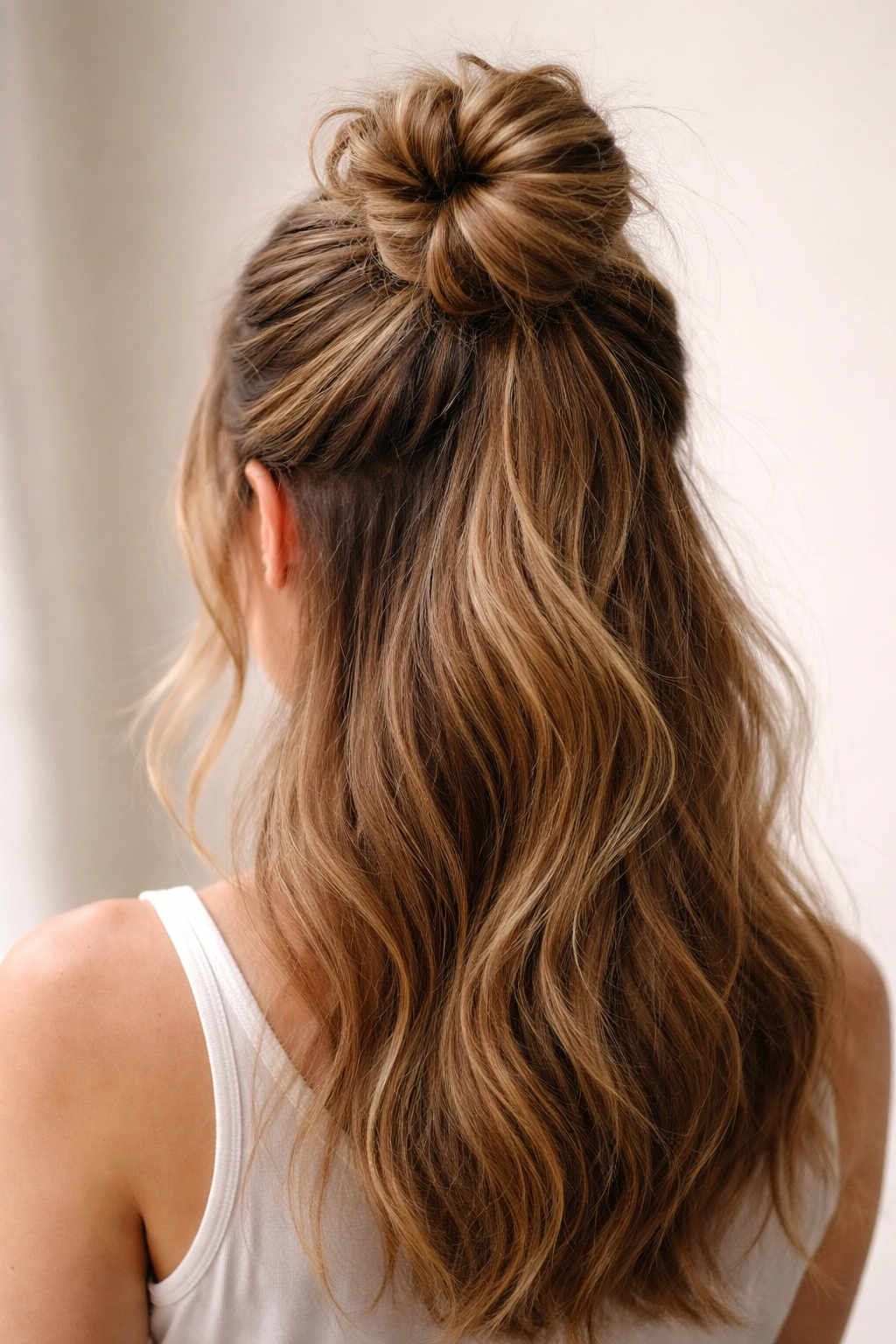
This style only gathers the top half of your hair, leaving the bottom half down in loose waves. It’s a game-changer if you’re dealing with significant postpartum hair loss because it covers thinning completely while requiring minimal manipulation of fragile strands. You’re not trying to make a full head of hair cooperate—you’re only working with half of it.
Why It Works for Postpartum Hair
The half-up style dramatically reduces the amount of hair you’re handling and pulling, which automatically means less breakage and less stress on an already-vulnerable scalp. By leaving your bottom hair down, you’re covering any thinning at your lower crown or back of your head while only putting tension on the stronger upper strands. This style also gives you movement and softness without requiring you to style your entire head—the bottom half just exists as loose waves or natural texture.
How to Create the Half-Up Messy Bun
- Start with waves or curl your entire head gently on low heat, or wake up with day-old waves from the night before
- Take the top section of hair (roughly from your ears up), leaving the bottom section completely loose
- Flip the top section upside down and tease gently at the roots for volume—avoid aggressive teasing that yanks strands
- Flip back up and gather that top section at the crown into a loose, pillowy knot, securing with bobby pins rather than a tight elastic
- Leave long pieces loose in front of your ears and at the base of the bun—these pieces frame your face and hide thinning at your hairline
- Let the bottom section of hair flow loose in waves, gently tousling it with your fingers
- Pro tip: Use a volumizing mousse on the top section before you tease—this creates grip and volume without requiring tight pulling, and it also protects the hair from damage during the teasing process
4. The Side-Sweep Messy Bun for Asymmetrical Coverage
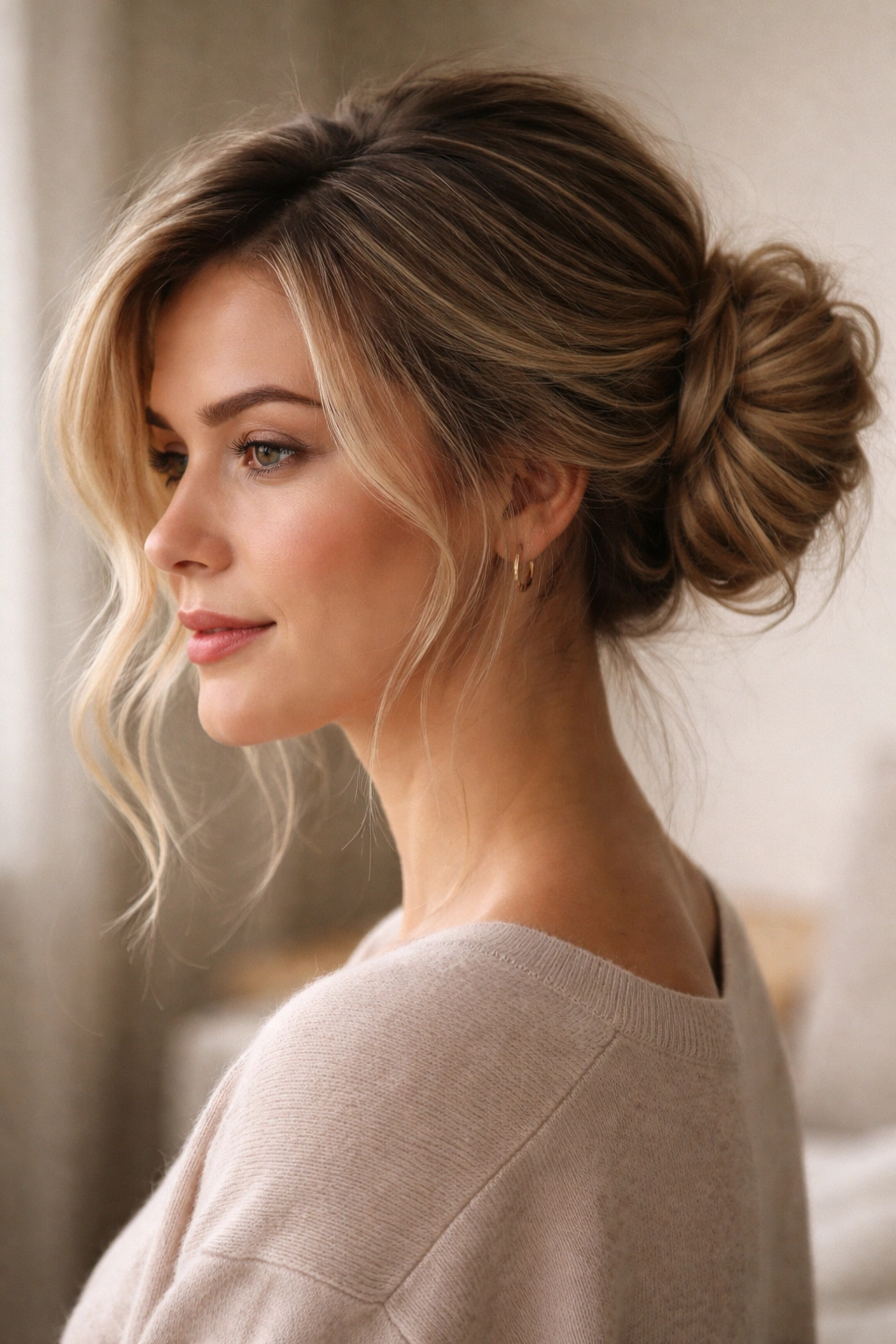
This bun sits off to one side of your head rather than centered at the back, which immediately disguises postpartum shedding patterns. If your thinning is concentrated on one side or along your part line, sweeping everything to the opposite side covers those areas completely while looking deliberately styled. The asymmetry is actually the whole point here.
Why It Works for Postpartum Hair
Postpartum hair loss often isn’t symmetrical—you might lose more density on one side of your part or at one temple more than the other. A side-swept bun works with this reality rather than highlighting it. By gathering all your hair to one side, you’re covering the thinner side completely while creating fullness on top where it shows most. The side sweep also naturally creates soft waves and texture that make finer hair look fuller and more intentional.
How to Create the Side-Sweep Messy Bun
- Apply a dry texturizing spray or work with day-old hair for maximum grip
- Create a deep side part where your hair naturally wants to part, or deliberately create one on the side opposite your thinner area
- Take all your hair and sweep it over to one side of your head, gathering it loosely just behind your ear on that side
- Twist the gathered hair and coil it into a messy, loose bun at the side of your head, below your ear—secure with bobby pins
- Leave long pieces loose in the front, pulling them gently into soft waves across your face
- Leave pieces loose down the back of your neck and in the lower back section—these create softness and fullness where you need it most
- Gently tug the bun to loosen it further, making it deliberately pillowy and undone
- Pro tip: Mist the finished style with light-hold hairspray and then gently run your fingers through the loose pieces—this softens the hairspray feel and makes the style look like you just rolled out of bed looking good
5. The Braided Crown Bun for Texture and Hold Without Tension
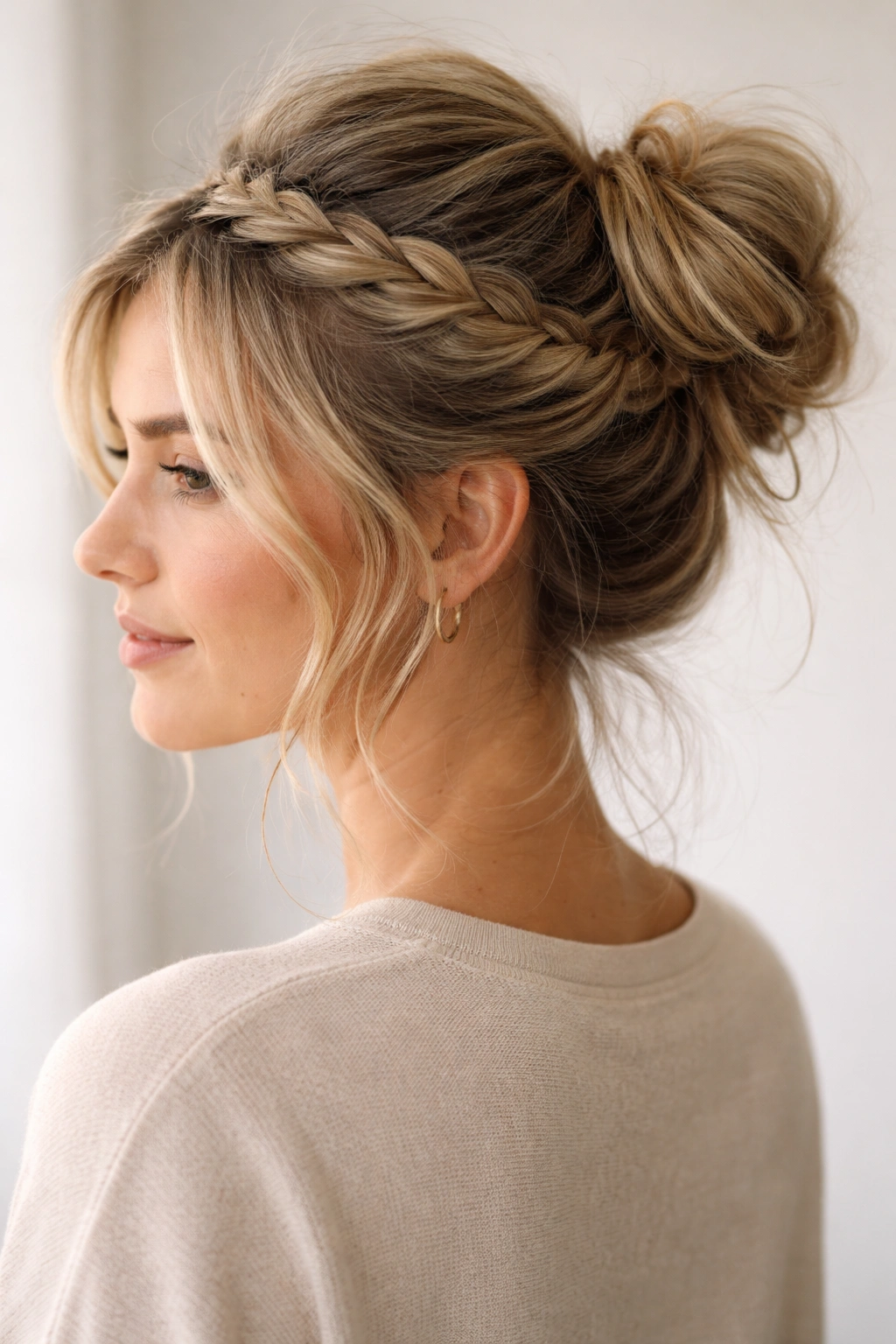
This style incorporates a loose braid, which adds textural interest and visual fullness without requiring you to tease or add any products. The braid gives structure to the style while the messiness keeps it from feeling formal or tight. It’s a good option if you want more hold than a purely unstructured bun but don’t want to resort to heavy products or tight pulling.
Why It Works for Postpartum Hair
Loose braids distribute weight more evenly than tight buns and create visible texture that makes hair look fuller. The braid also holds the style in place with minimal tension—you’re not pulling strands tightly, you’re just weaving them loosely together. This style is also genuinely pretty without requiring you to actually style much; the braid does a lot of the visual work for you, which means less time in front of the mirror and less manipulation overall.
How to Create the Braided Crown Bun
- Work with day-old, textured hair or apply a light texturizing spray for grip
- Take a section of hair from one side of your head (from your temple back to behind your ear) and create a loose, undone braid—don’t pull the braid tight; you want it deliberately loose and messy
- Bring the braid across the back of your head like a crown, pinning it in place with bobby pins
- Gather the remaining loose hair at the back of your head into a messy bun, weaving the braid into the bun as you go
- Leave pieces loose around your face and neck, letting them fall naturally without trying to control them
- Gently tug the bun and braid to loosen them further, creating an intentionally undone, soft look
- Pro tip: This style is actually easier to create if you’re slightly sleep-deprived and shaky because the looseness and imperfection is exactly what you want—don’t fight the messiness
6. The Twisted Top Knot for Minimal Hair Handling
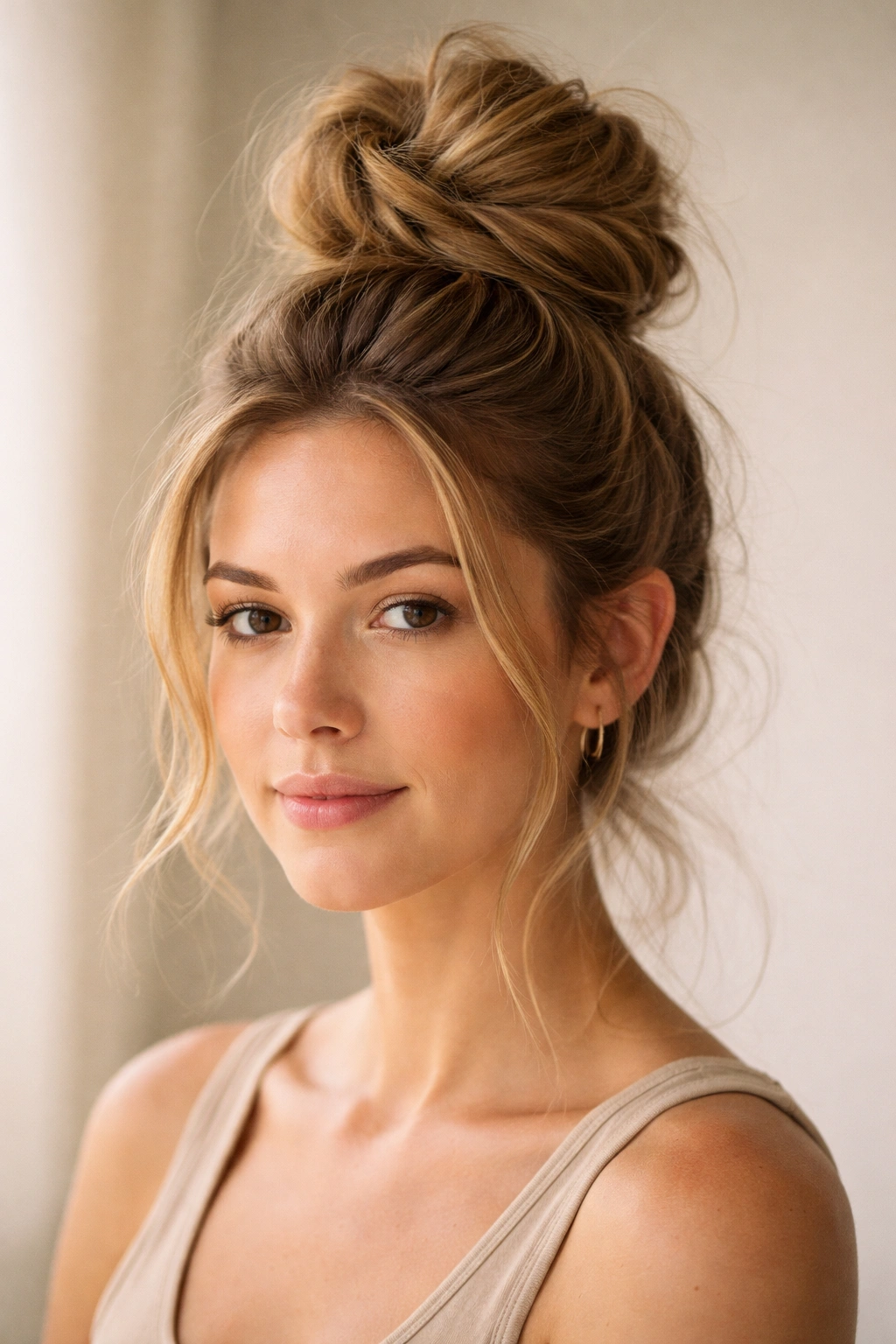
This style uses twists instead of a full bun, which means you’re handling significantly less hair and creating fewer pressure points on your scalp. The twists naturally create texture and visual fullness, and the style holds itself without needing a tight elastic or excessive bobby pins. It’s the fastest messy bun to create, which matters when you’re exhausted.
Why It Works for Postpartum Hair
Twists are gentler than braids or tight bun-pulling because you’re essentially just gently coiling strands together rather than pulling or weaving them. The natural coiling of a twist creates visual texture and volume, making thinner hair look fuller without any teasing or products. You’re also only securing the style with a few bobby pins rather than a tight elastic, which means minimal tension on any single point of your scalp.
How to Create the Twisted Top Knot
- Start with textured hair—second-day hair is perfect for this
- Take a section of hair from the top of your head (above your forehead) and gently twist it away from your face, not tightly but with a loose, relaxed motion
- Pin the end of that twist at the back of your head using bobby pins
- Take another section from the other side of your head and twist it similarly, pinning it to meet the first twist
- Gather any remaining hair at the back of your head into a very loose, undone knot, incorporating the twisted sections
- Use bobby pins to hold the knot loosely in place—you’re not cinching it tight, just anchoring it
- Leave multiple pieces loose around your face and at the nape of your neck
- Pro tip: Skip the elastic band entirely and use only bobby pins—the distributed anchoring means no single pressure point and significantly less breakage
Styling Tips for Maximum Damage Prevention During Postpartum Hair Recovery
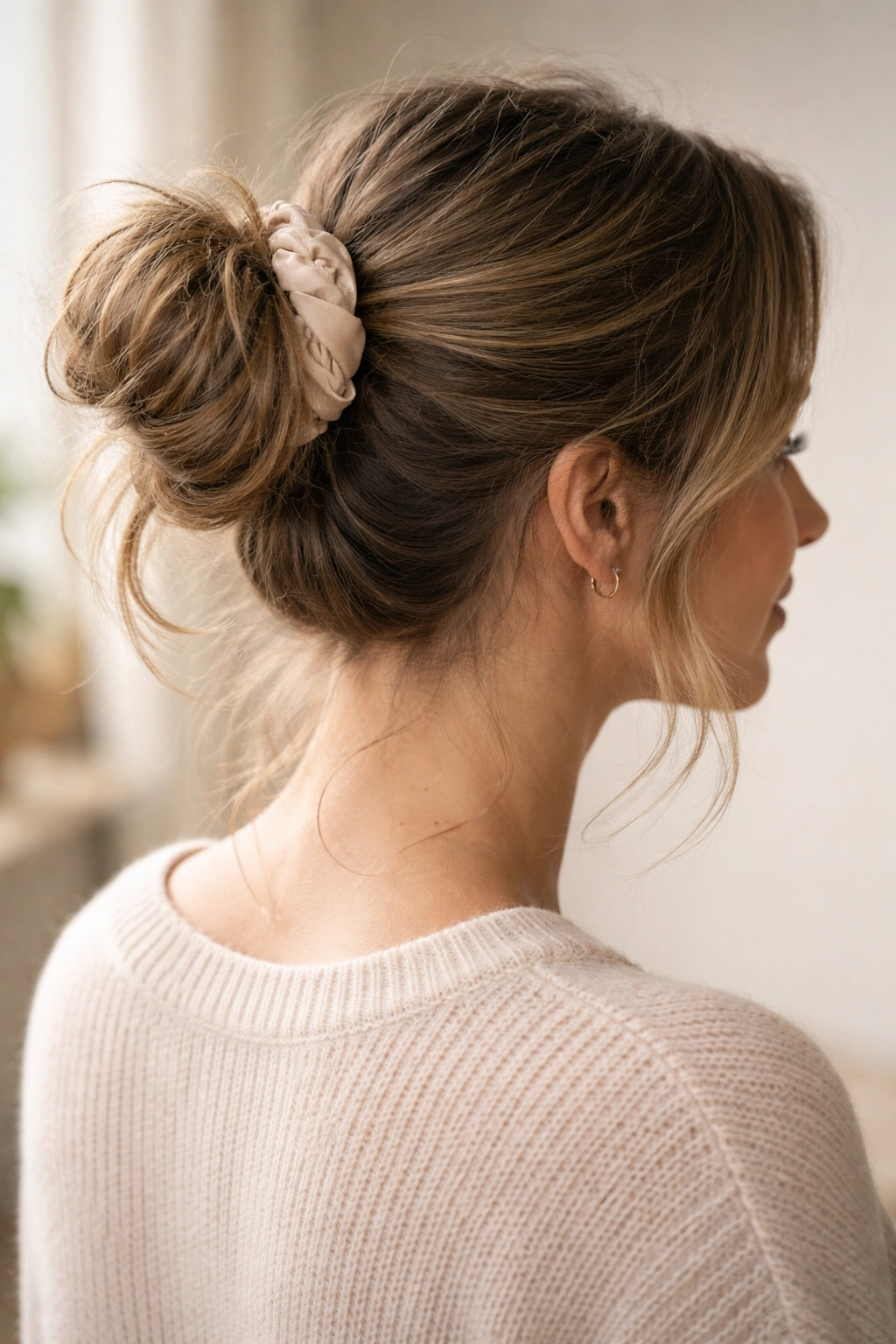
Beyond the specific bun styles themselves, there are universal techniques that protect postpartum hair whenever you’re styling. The goal is to create something that looks intentionally beautiful without actually demanding much from your hair.
Use silk or fabric-wrapped elastics exclusively. Metal-coated bands create friction that snags and breaks postpartum strands, and tight elastics create pressure points where shedding accelerates. Fabric-wrapped bands distribute tension more evenly and slide out with minimal breakage. Honestly, upgrade this single thing and you’ll notice less breakage immediately.
Tease gently at the roots rather than yanking hair upward. Many people create volume by pulling sections straight up and securing them tightly—this is exactly wrong for postpartum hair. Instead, use a fine-toothed tease brush to gently backcomb the roots while your hair is flipped upside down, creating a cushion of texture that holds your style while distributing any tension across multiple strands rather than concentrating it all in one spot.
Let your hair air-dry whenever possible. Heat styling accelerates breakage during the postpartum period when your hair is already fragile. If you’re creating waves, either sleep in braids the night before or use a heat tool on the absolute lowest setting and only on the mid-lengths and ends, never the roots. Your roots don’t need heat—they need protection.
Apply a lightweight leave-in conditioner or smoothing serum before styling. This isn’t about the product itself, but about creating a slippery surface that reduces friction as you handle your hair. The less resistance you feel as you’re gathering and pinning, the less strain you’re putting on individual strands.
Avoid products that are heavy or drying at the scalp. Your postpartum scalp is often itchy and sensitive, and heavy products concentrate at the roots, which is exactly where you don’t want pressure. Use lightweight texturizing sprays or volumizing mousses that evaporate quickly and don’t leave residue.
Knowing When to Skip the Bun Entirely
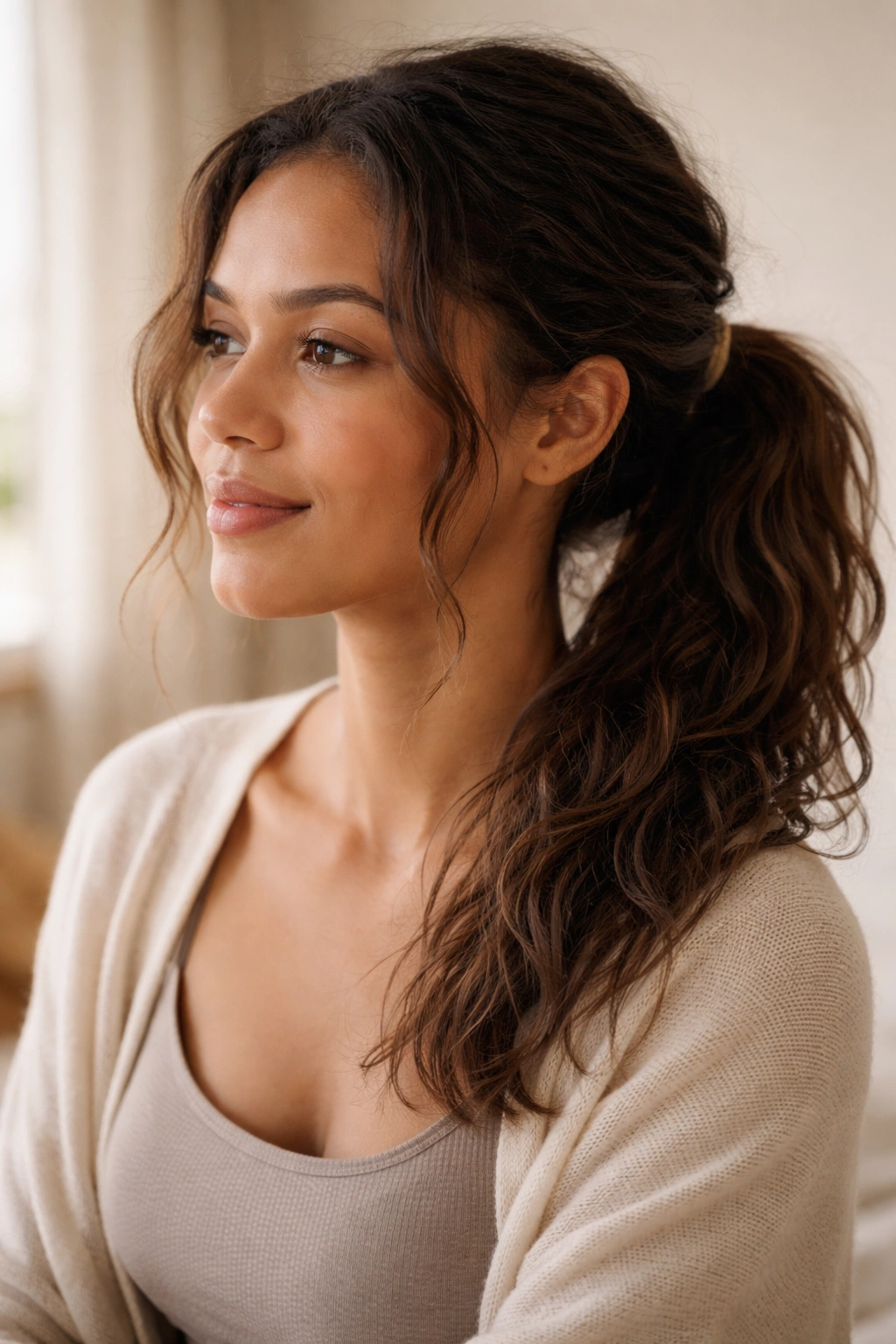
There are days when even a loose messy bun requires more energy than you have, and that’s genuinely okay. On those days, a simple ponytail or letting your hair down completely is better than fighting with styling when you’re running on fumes. Postpartum recovery is temporary, and your hair will return to normal eventually—it doesn’t need you to be perfect about styling during this phase.
Pay attention to how your scalp feels. If any hairstyle leaves your hairline sore or tender, change it. If you’re noticing unusual breakage or seeing more strands in your brush after styling, dial back the tension and manipulation. Your scalp is giving you real feedback; listen to it.
Also know that most postpartum shedding eventually stops on its own, usually between six and twelve months after delivery. In the meantime, the right messy bun becomes less about creating a perfect look and more about protecting your hair while still looking intentional and put-together. A messy bun at three months postpartum isn’t a fashion statement—it’s a genuine act of self-care for your hair and your sanity.
Final Thoughts

Postpartum hair loss is frustrating and exhausting, and pretending that simple hairstyling will make it disappear entirely is dishonest. What these messy bun styles actually do is help you work with your hair during a vulnerable phase rather than against it. They let you create something that looks like you’re keeping it together without actually demanding that your fragile strands and exhausted brain perform perfectly.
The best messy bun for your postpartum phase is the one you actually enjoy wearing, that doesn’t make your scalp tender by the end of the day, and that makes you feel put-together even when you’re running on three hours of sleep and yesterday’s clothes. Whether that’s the textured crown bun or the twisted top knot, you’re protecting your hair while looking intentional—and that’s genuinely the whole point right now.
Be patient with yourself and your hair. The shedding phase is temporary, and your hair will recover and regain its fullness. In the meantime, these styles give you permission to look good without sacrificing the health of the hair you’re trying to keep.