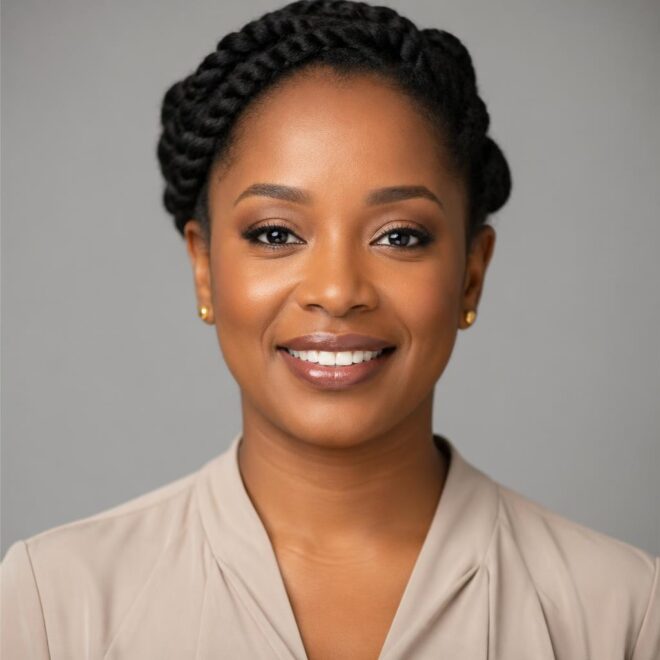


Low messy buns have become the go-to hairstyle for people who want to look polished without sacrificing comfort or spending hours styling their hair. There’s something magical about a bun that sits low on the nape of your neck—it’s sophisticated enough for a job interview or date night, yet casual enough for running errands or working from home. The “messy” element is what makes them so universally appealing: rather than demanding perfect symmetry and architectural precision, these buns actually look better when they’re slightly undone, with a few pieces escaping and texture showing through.
The beauty of low messy bun styles isn’t just aesthetic, though. They’re genuinely practical. A low bun keeps hair off your face and out of your way while still feeling intentional and put-together. You can achieve different moods by simply changing how you texture your hair beforehand, which sections you pull out, or what accessories you add. Whether you’re heading to a casual coffee date, a professional meeting, or an evening event, there’s a low bun variation that works perfectly for the occasion.
The best part? Most of these styles take less than five minutes once you understand the technique. You don’t need fancy tools or advanced braiding skills—just an understanding of how to work with your hair’s natural texture and a willingness to embrace a little beautiful imperfection. Let’s explore ten low messy bun styles that’ll give you options for literally any situation life throws at you.
1. The Classic Low Bun
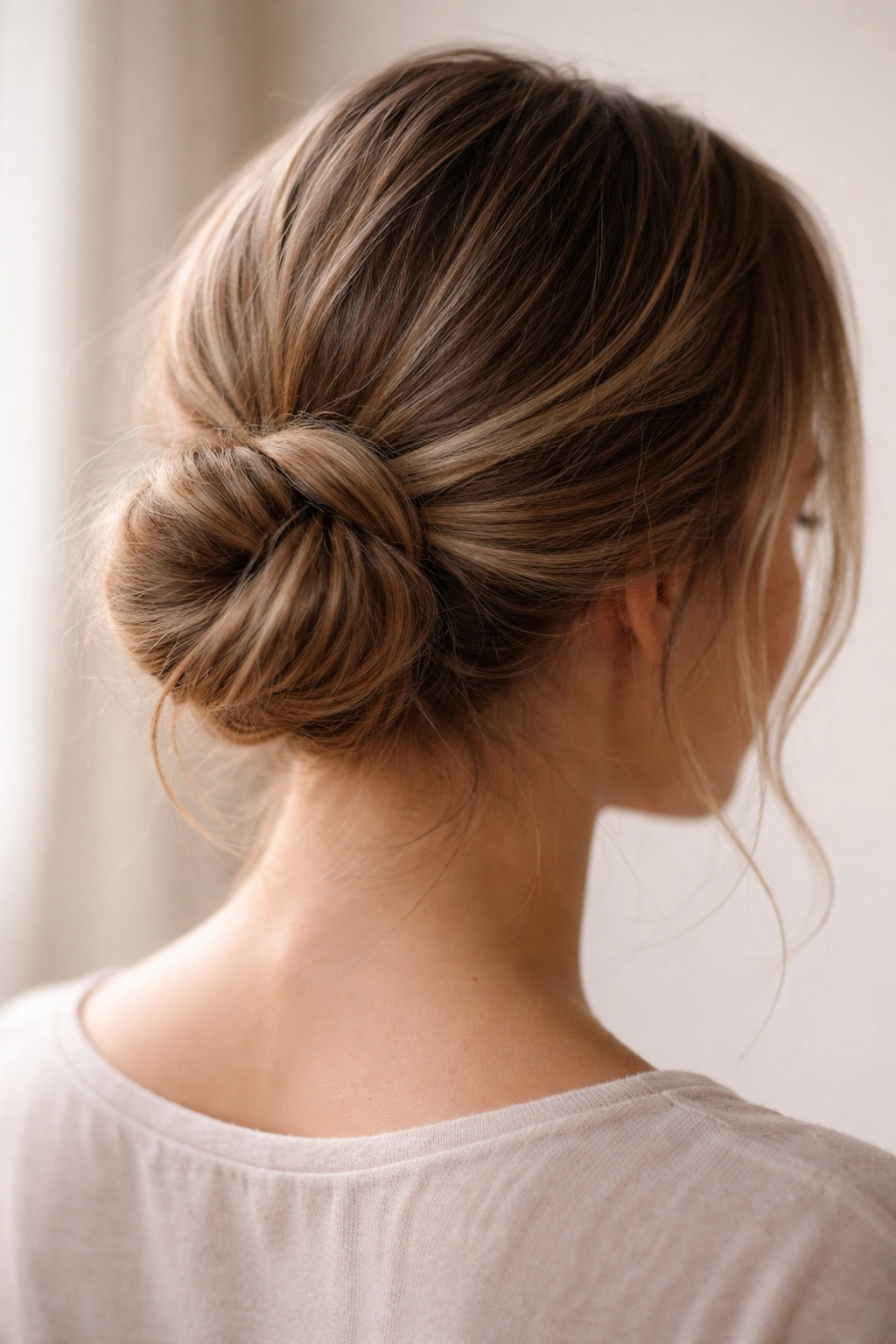
This is the foundation for nearly every other low bun style you’ll ever create, so mastering it is absolutely worth your time. The classic low bun sits right at the base of your skull, about two inches above where your neck starts, and it’s characterized by that perfectly imperfect volume that makes it look effortlessly chic rather than rigidly formal.
Why It Works for Nearly Everything
The classic low bun is your reliable friend because it’s professional enough for corporate environments while remaining casual enough for weekend wear. The positioning is forgiving—it’s far enough down that it won’t slip throughout the day, yet high enough that you’re not pulling your hairline. The key to making it look “messy” rather than severe is leaving enough texture and not smoothing every single strand perfectly flat.
How to Create This Style
- Flip your head upside down and gently backcomb the crown area to create volume at the roots—this prevents that flat, slicked-back look
- Flip back and gather your hair into a low ponytail at the base of your neck, using a soft elastic
- Twist the ponytail loosely around itself and pin it into place with bobby pins, securing the entire spiral
- Gently pull and tease small sections of the bun outward to create that undone texture
- Leave two or three face-framing pieces loose around your face if you want to soften the overall look
- Finish with a light texturizing spray to encourage pieces to stay separated and add grip
Pro tip: The texture of your hair matters more than the technique here. If you have naturally wavy or curly hair, you’ll find this style falls into place almost automatically. Straight-haired folks benefit from using a texturizing spray before gathering the ponytail—it gives the elastic something to grip and makes the final bun look fuller.
2. The Braided Low Bun
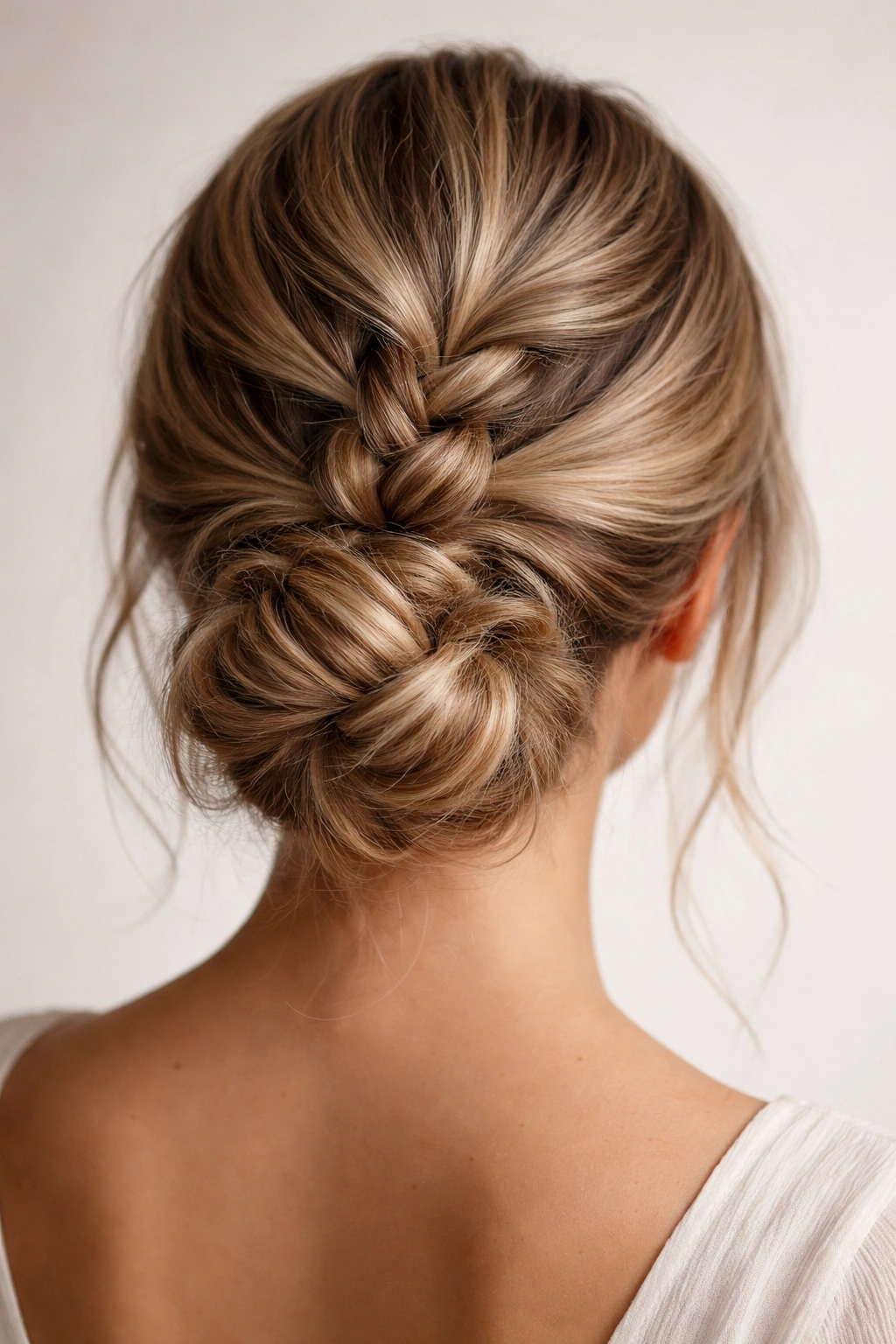
This style combines the elegance of a braid with the ease of a bun, creating something that looks intricate while remaining surprisingly simple to execute. The braid adds visual interest and helps structure the bun so it holds its shape better throughout the day, making it ideal for longer days or active situations.
Why It’s More Interesting Than It Looks
A single braid woven through a low bun elevates the whole style from “standard” to “I clearly put some thought into this.” The braid naturally traps more hair in place than a simple twist does, so this is an excellent choice if your hair is fine or slippery and tends to fall out of regular buns. You also get the psychological benefit of that braid making the style feel special, even though the actual time investment is minimal.
Variations to Keep Things Fresh
- Single thick braid: Braid your entire length from root to tip, then wrap the braid around itself at the base of your neck and secure—this looks almost like a crown and is particularly striking with longer hair
- Half-up braid into bun: Braid just the top half of your hair, then gather all hair (braided and loose) into a low bun—this creates a hybrid style with more texture and movement
- Two small braids into bun: Create two thin braids on either side of your head, then gather everything into a low bun for a more intricate-looking result
- Dutch braid (reverse braid) into bun: Use a reverse braid starting at the crown for a style that sits on top of your head and looks especially detailed
Worth knowing: The tightness of your braid directly affects how polished the final style looks. A looser, messier braid feeds into the overall undone aesthetic, while a tight, neat braid makes the style feel more formal.
3. The Twisted Low Bun
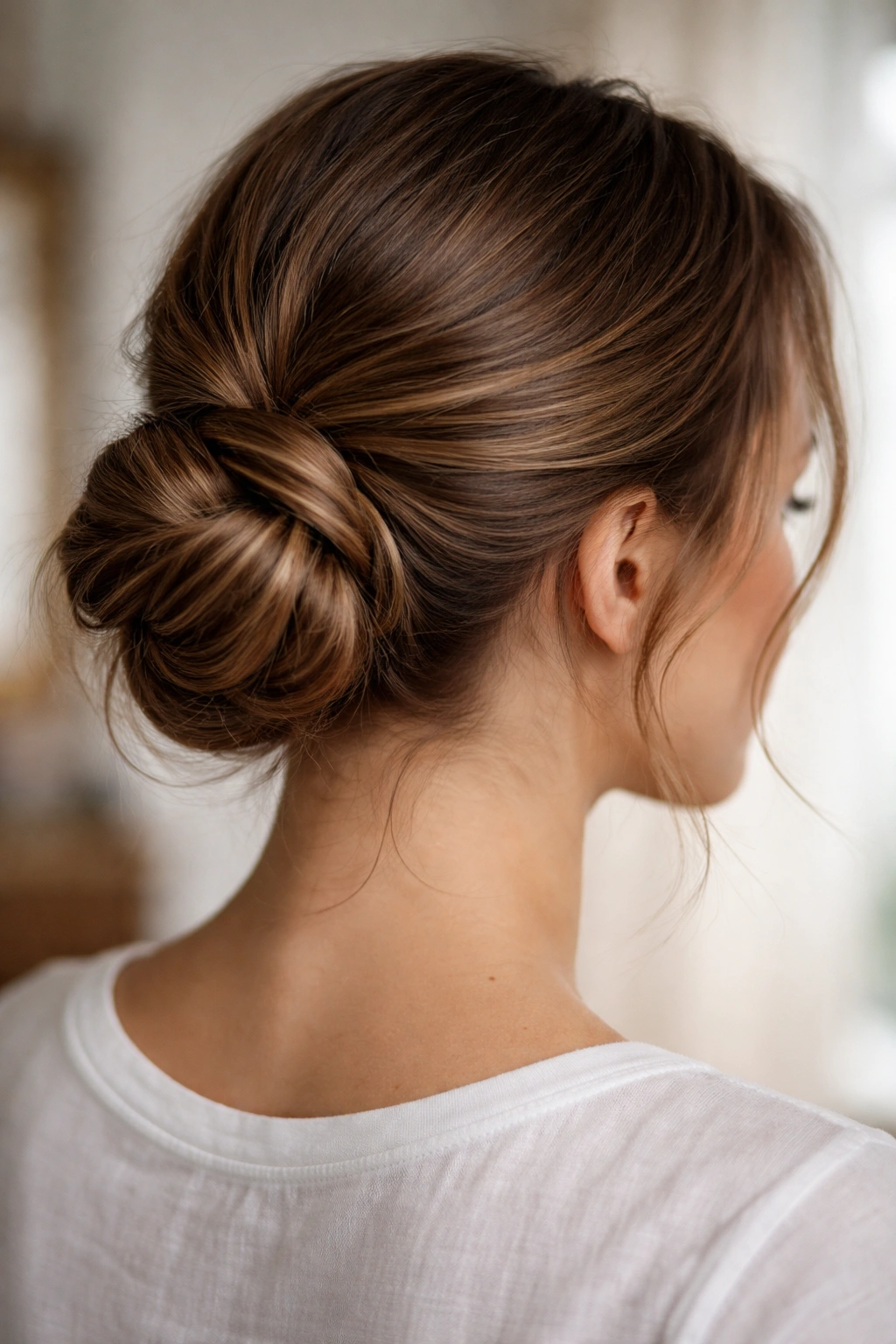
If you struggle with braiding (and honestly, many people do), the twisted low bun is your answer. It creates visual interest and texture without requiring any braiding skills whatsoever. The twist is simply two sections of hair wrapped around each other, and it’s nearly impossible to mess up.
Why Twists Are Underrated
Twists create a different visual effect than braids—they’re smoother and often feel more polished, which makes them perfect for professional or dressy occasions. They also hold better throughout the day because the twisted structure is naturally tighter than a simple-wrapped ponytail. The best part is that even if your twist starts to come undone slightly, it often looks intentionally undone and still attractive.
Creating Multiple Twist Variations
- Rope twist: Divide your hair into two sections and twist each section tightly around itself (clockwise), then wrap those twisted sections around each other in the opposite direction—this creates a thick, structured rope that looks both casual and polished when coiled into a bun
- Spiral twist bun: Twist your entire ponytail as tightly or loosely as you prefer, then coil it at the base of your neck and pin—the tighter the twist, the more defined the spiral appearance
- Two-part twist: Divide hair into two sections, twist each one, then wrap both around each other before securing at the back—this looks more intricate than a single twist and photographs beautifully
The beauty of twists is their versatility based on tension. A loose twist feels casual and romantic, while a tighter twist reads as more intentional and polished.
4. The Textured Undone Bun
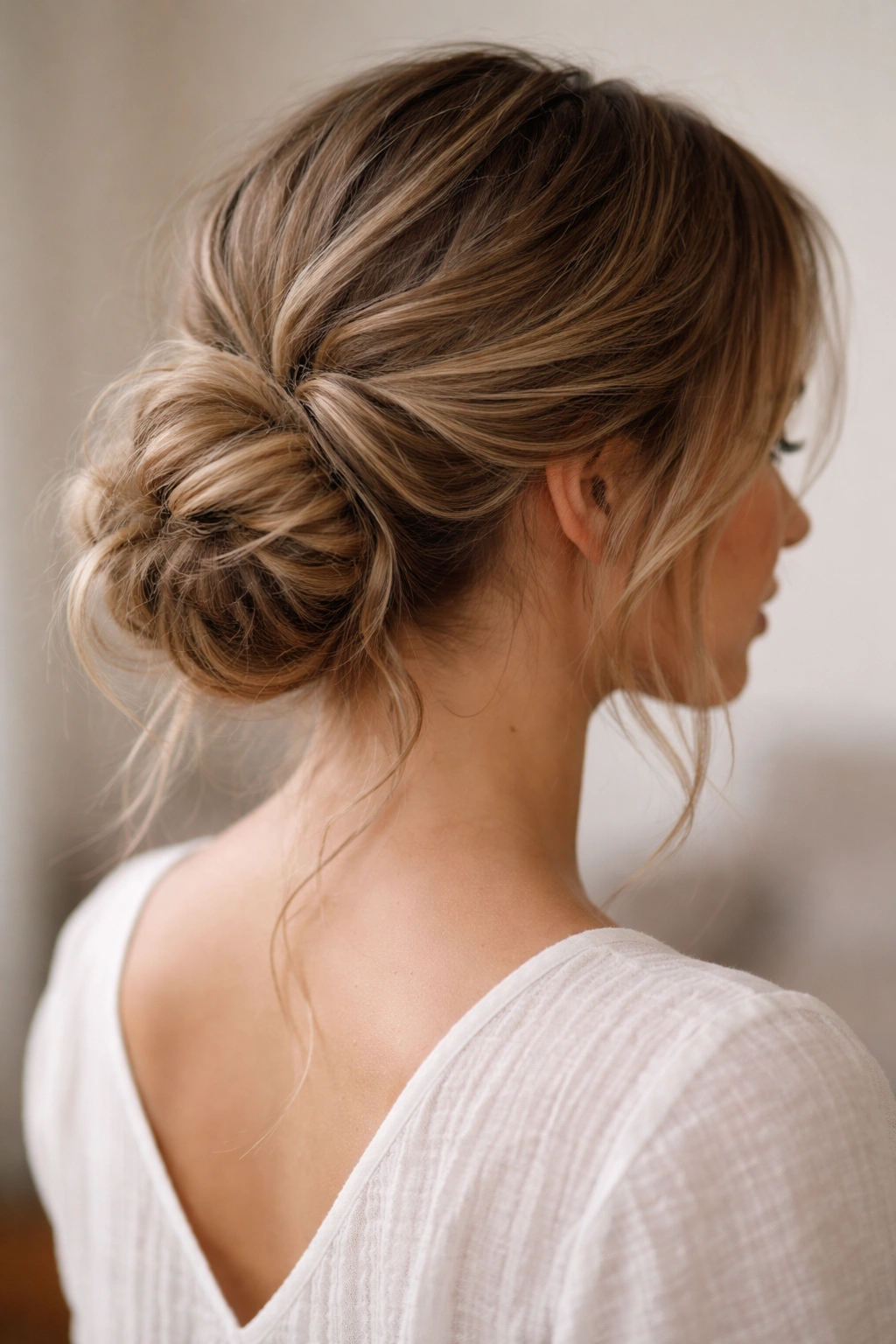
This style leans hard into the “messy” aesthetic and is perfect for days when you want your hair to look like it casually fell into place. It’s the hairstyle equivalent of throwing on your favorite jeans and a perfectly worn-in sweater—intentionally imperfect, deeply relatable, and somehow still completely put-together.
Why Texture Is Everything Here
The textured undone bun requires a bit of preparation beforehand, but it’s worthwhile. Texture gives your bun volume and prevents it from looking limp or thin. You create texture through curling, waving, braiding your hair while damp and leaving it overnight, or using a texturizing spray. Once you have textured base hair, your bun practically styles itself—the texture prevents pieces from slipping back into the gathered section and adds visual interest automatically.
Building Your Texture Foundation
- Curling method: Curl your hair with a barrel curling iron or wand in sections, then let the curls cool completely before running your fingers through them to break them up into waves
- Braiding method: Braid sections of damp hair and leave them in while hair fully dries (or overnight)—unraveling these braids creates immediate wave and texture
- Spray method: Use a dry texturizing spray or sea salt spray before styling, focusing on mid-lengths and ends for maximum grip and texture
- Heat-free method: Sleep in loose braids or use heatless curl methods the night before, then work with what you wake up with
Once your base hair has texture, gather it loosely into a low ponytail and secure it gently—you’re not aiming for tight here. Then pull small sections outward from the bun itself to create volume, and leave as many wispy pieces around your face and neck as feels right.
5. The Sleek Low Bun with Face-Framing Pieces
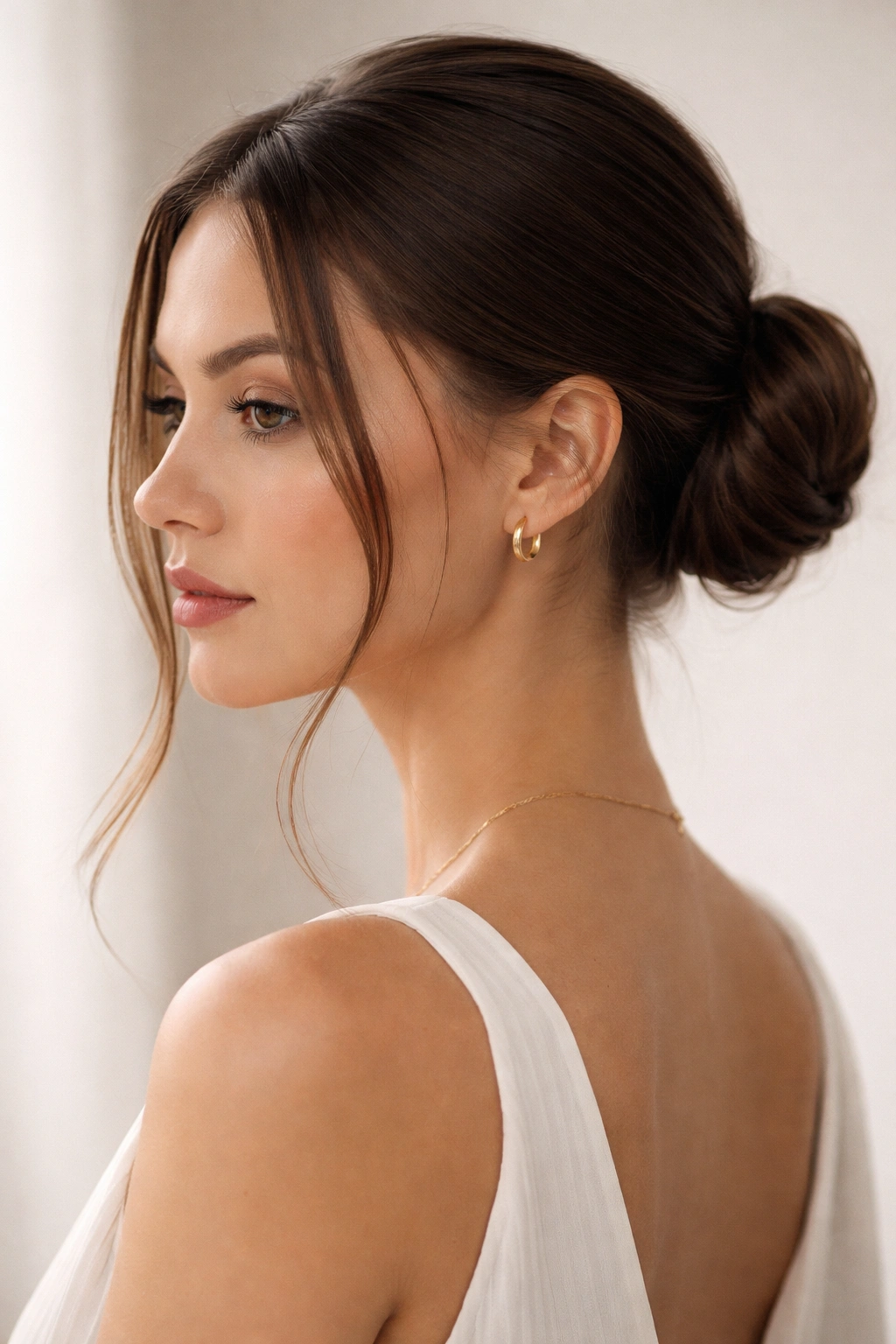
This style is the sophisticated older cousin of the classic low bun. It pairs a smooth, controlled gathered section with intentional loose pieces around the face, creating a look that’s polished and intentional rather than casually undone. It’s your best choice when you need to look your absolute best but still want a bun.
Why Face-Framing Pieces Change Everything
Face-framing pieces soften a bun and prevent it from looking too severe or pull-back-y. They create a frame that flatters most face shapes and add movement and dimension that a tight bun simply can’t achieve. The contrast between the sleek, controlled bun and the softer pieces is what makes this style feel sophisticated rather than strict.
How to Execute This Style Cleanly
- Start with hair that’s been smoothed with a straightening iron or blow-dried smooth if you want the sleek aesthetic
- Take two or three small sections from the front hairline on either side of your face—these are your face-framing pieces, so set them aside away from your main section
- Gather the remaining hair into a low, smooth ponytail just at the base of your skull
- Twist or wrap the ponytail smoothly around itself and secure it firmly with bobby pins
- Smooth the bun section completely using a fine-tooth comb and a bit of smoothing serum for a polished finish
- Curl or wave your reserved face-framing pieces using a curling iron, then pin them gently in place with one or two bobby pins each
- Finish with hairspray to keep everything locked in place
This style pairs beautifully with face shapes that want some softness around the cheekbones and jawline. It’s particularly stunning with makeup because the face is fully visible and nothing competes for attention.
6. The Romantic Wispy Bun
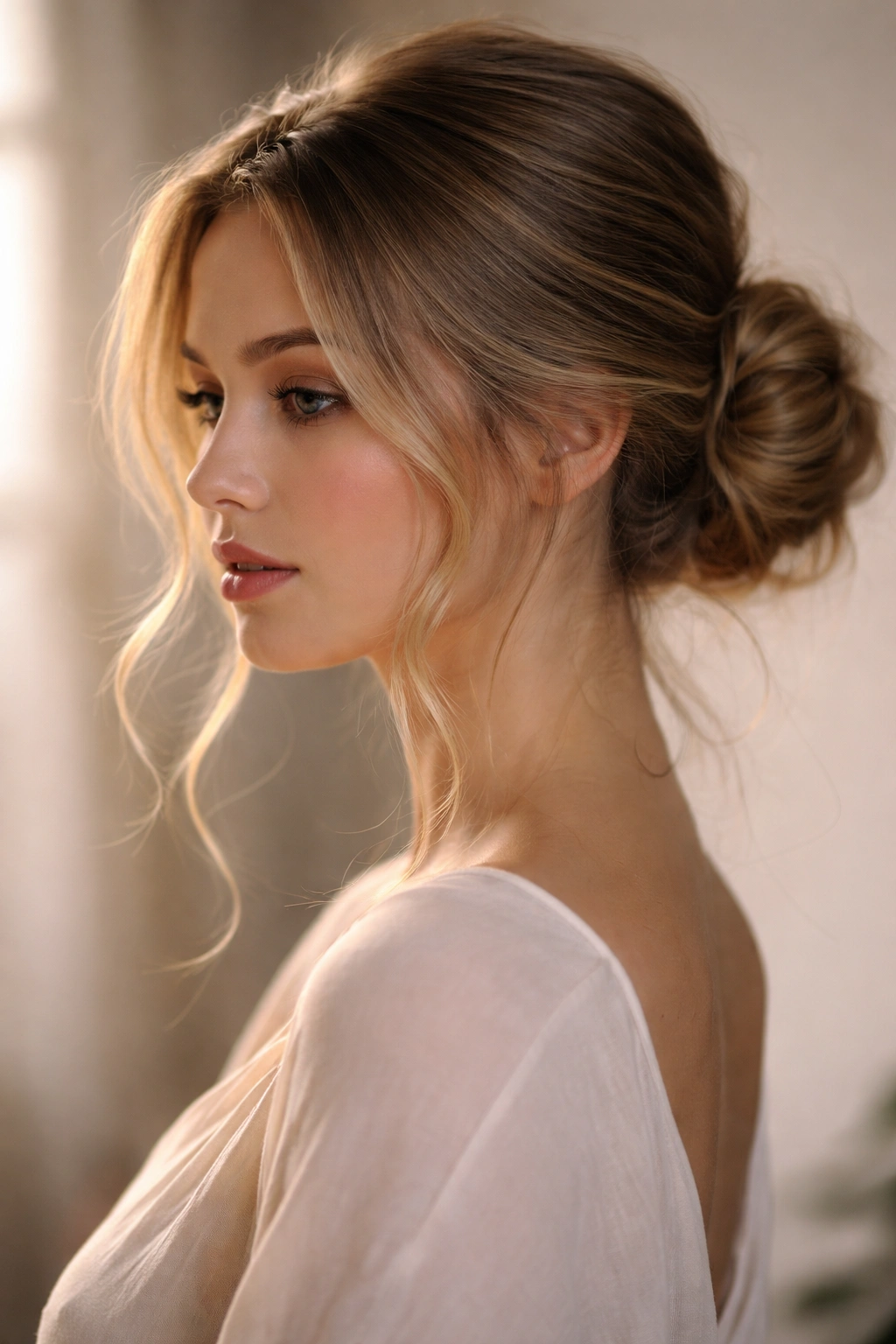
This is the style you wear when you want to feel beautiful and delicate. The romantic wispy bun prioritizes those loose, curled pieces around the face and neck, creating an intentionally soft and ethereal look. It’s perfect for events where you want to feel special—think first dates, celebrations, or occasions where you’re dressing up.
Why Wisps Make All the Difference
A wispy bun reads as more feminine and romantic than a tight bun because of how many escape pieces you’re intentionally leaving out. These wisps catch light, move with you, and create a softer silhouette. This style is specifically designed to feel touchable and graceful rather than severe. It also photographs beautifully because the loose pieces create dimensionality that flat, tight buns don’t have.
Creating the Right Amount of Wisps
- Use textured or curled hair as your foundation—this is crucial for a truly romantic look
- Gather hair loosely into a low ponytail, leaving several inches of loose hair around your face, temples, and the back of your neck
- Create the bun with the gathered section, but don’t tighten it fully—leave it slightly loose so it has softness
- Gently pull and shape the loose pieces around your face so they frame you flatly and frame your features
- Lightly curl any straight wisps with a small barrel curling iron so they match the rest of the textured vibe
- Use hairspray to gently hold the wispy pieces in place without making them feel rigid
The key difference between “wispy” and “messy” is intentionality. A wispy bun means you’ve deliberately chosen which pieces should be loose. A messy bun means you’re embracing slight imperfection. This style lives in the wispy lane.
7. The Faux Bob Bun
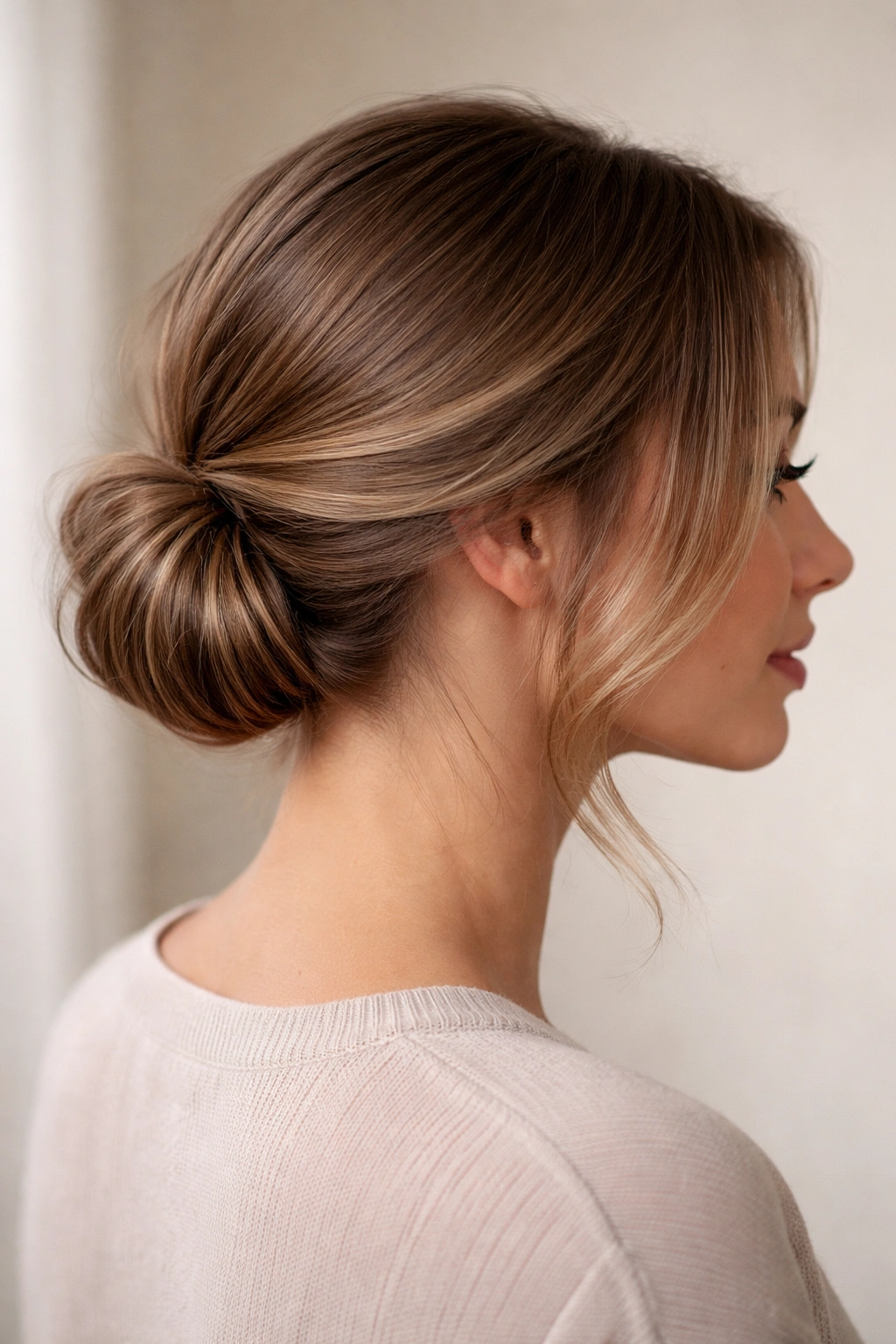
If you love the look of a bob but your hair is longer, or if you’re considering a bob but want to test the look first, the faux bob bun is a game-changer. This style folds your hair up on itself to create the visual illusion of a chin-length bob while keeping your actual length intact.
Why This Style Is More Useful Than It Sounds
The faux bob bun is genuinely practical. It creates a completely different silhouette and changes how your whole face and outfit look. You can see yourself with a bob without making any permanent changes. It’s also an excellent style for keeping longer hair completely out of the way when you want a short, neat appearance—like during a workout, while cooking, or during a busy workday.
How to Create the Faux Bob Bun Effect
- Gather your hair into a low ponytail at the base of your neck, using a secure elastic
- Flip the ponytail upward and tuck it under the elastic, creating a loop—imagine you’re doing the first step of a topknot, but leaving the ponytail fully gathered
- Smooth the folded section to create a clean, bob-like line at the back of your neck
- Pin the tucked section securely in place with bobby pins, using multiple pins around the entire perimeter
- Smooth any flyaways around the front hairline for a neat appearance
- The beauty of this style is that from the front and sides, your hair looks like a bob, but you haven’t cut anything
This works best with longer hair that has enough weight to stay tucked. Fine or short hair might need a second elastic placed higher to keep everything secure throughout the day.
8. The Looped Low Bun
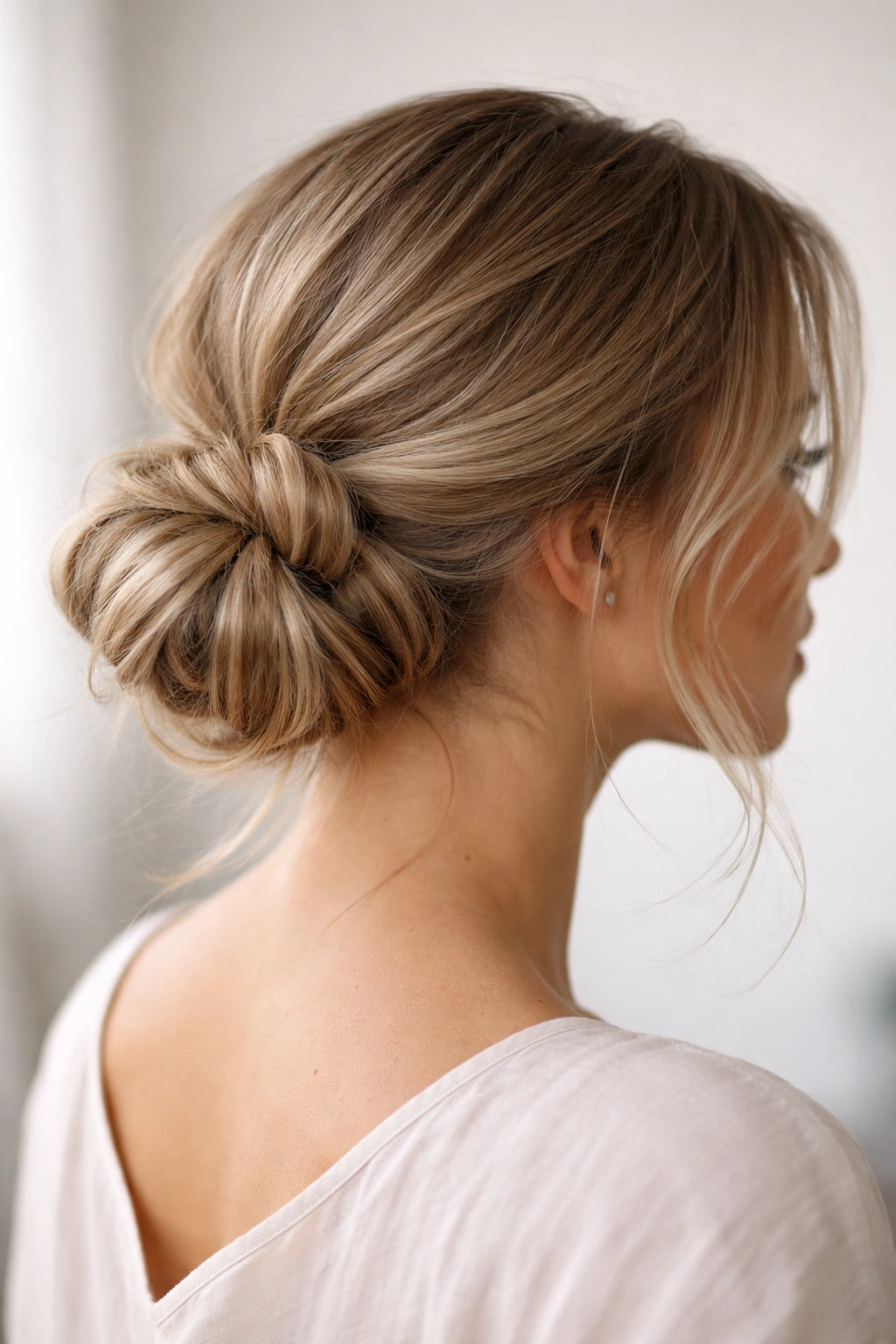
The looped bun is a playful variation that adds a dollop of whimsy while remaining easy to create and manage. Instead of coiling your hair into a tight bun, you create larger, more visible loops that give the style a softer, less tightly wound appearance.
Why Loops Look Modern and Unexpected
The looped bun sits somewhere between a ponytail and a traditional bun. It has more movement and visual interest than a tightly wound bun, and it feels more intentional and styled than a simple ponytail. This is the style to choose when you want to look put-together but not overly formal—it’s perfect for creative workplaces, casual dates, or social gatherings where you want to stand out just slightly.
Constructing Visible Loops
- Create a low ponytail and secure it with a soft elastic
- Instead of twisting the ponytail to create a spiral bun, divide it into two or three sections
- Wrap each section around the base of the ponytail loosely, creating a loop with each section (you can tuck the ends under the elastic or pin them)
- Adjust each loop so they’re visible and create a rounded shape
- Pull the loops and any loose pieces gently to add softness and dimension
- Pin any loose ends in place and finish with texturizing spray
The number of loops you create changes the overall look—two large loops feel modern and sculptural, while three or four smaller loops feel fuller and more textured. Experiment to see which feels right for your hair length and density.
9. The Wrapped Low Bun
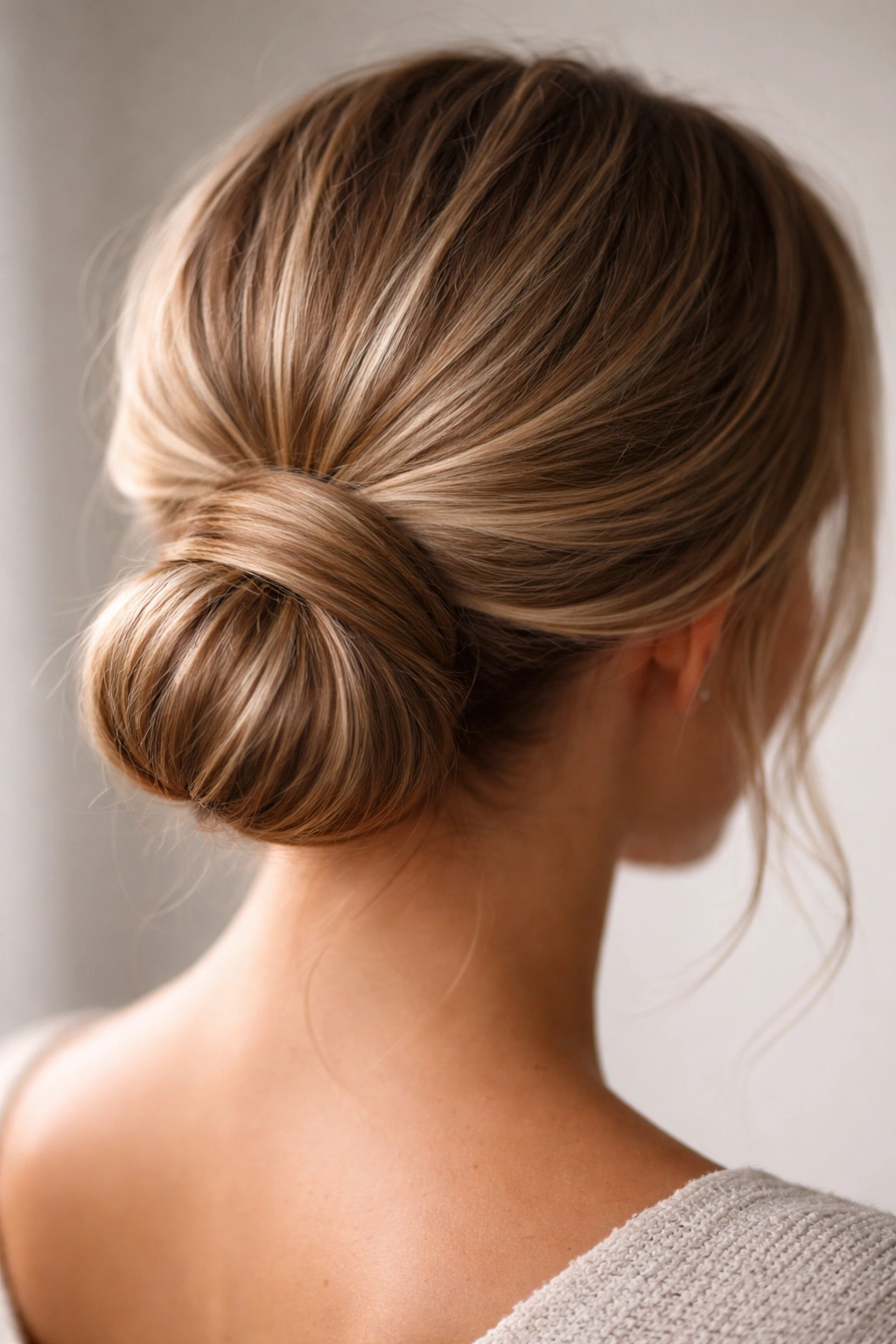
This style involves wrapping a section of hair around the base of your bun to conceal the elastic and create a finished, polished look. It’s perfect for professional settings or occasions where you want every detail to look intentional and refined.
Why the Wrap Elevates Everything
A wrapped bun looks expensive and carefully put-together because every element is visible and controlled. There’s no elastic showing, no loose strands where you don’t want them, and the wrapped section adds visual interest and dimension. This is the hairstyle that says “I have my life together” even if you actually threw it together in three minutes.
Creating a Clean Wrap Bun
- Create your low ponytail and secure it with an elastic
- Take a small section of hair from underneath the ponytail (about an inch-wide section)
- Wrap this section around the base of the bun, covering the elastic completely as you wrap
- Pin the end of the wrapped section underneath so it’s hidden from view
- You can make the wrap tight and neat, or you can leave it slightly looser for a softer appearance
- Optional: use a decorative bobby pin, hair cuff, or small jeweled clip to secure the wrapped section if you want added visual interest
The wrap works beautifully with both sleek and textured buns. The key is making sure the wrapped section completely covers the elastic—no peeking elastic should be visible from any angle.
10. The Hybrid Braid-Bun Style
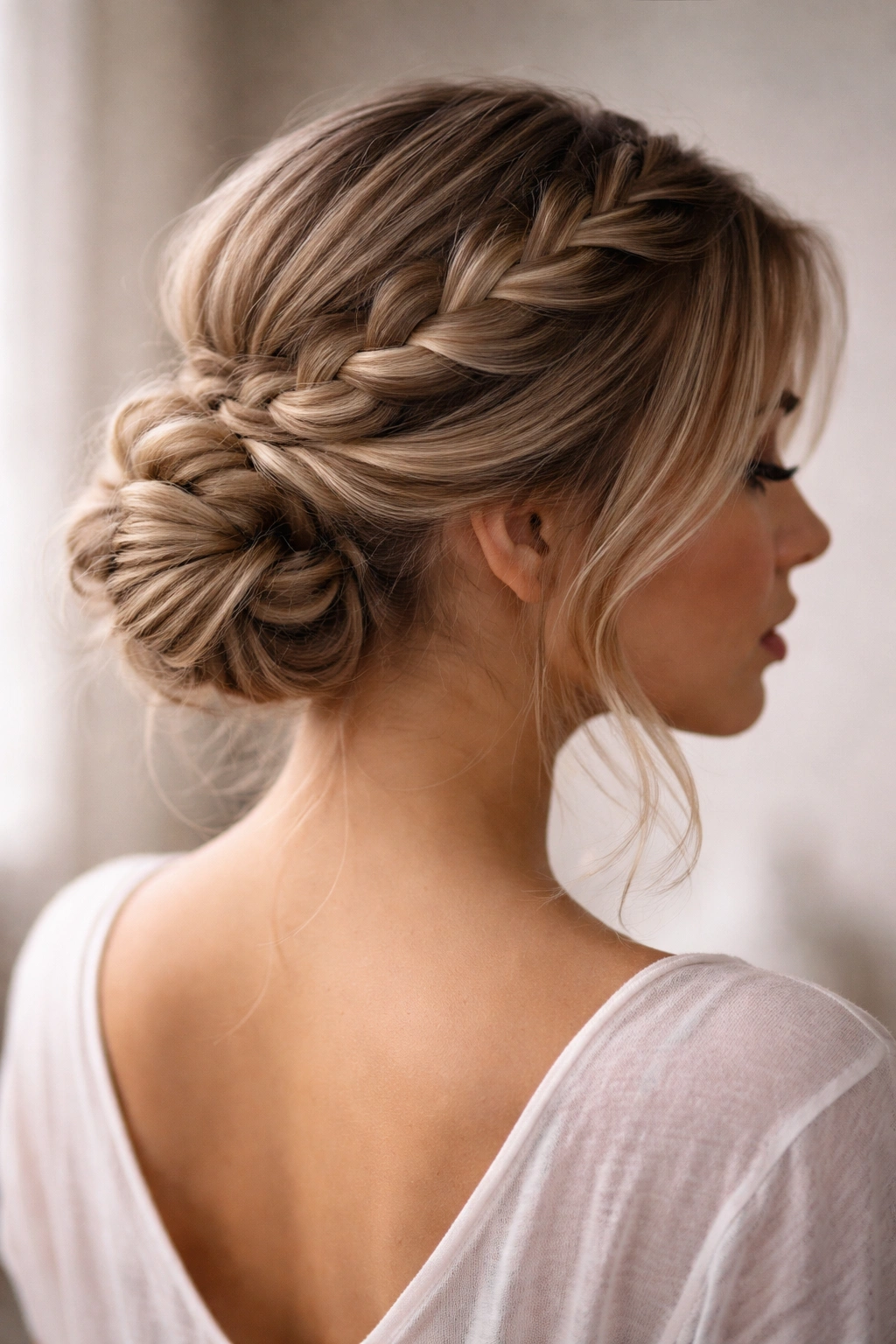
This style incorporates elements of multiple techniques—often combining a braid with a twist with a wrapped bun—creating something that looks intricate and detailed while being made up of simple, manageable steps. It’s perfect for when you want to look like you’ve invested real effort into your styling.
Why Hybrid Styles Feel Special
Hybrid styles are built by layering simple techniques. The final result looks far more complex than the individual components, which means you get the compliment-worthy appearance without the actual difficulty. These styles are memorable because they’re unexpected—they combine elements people don’t always think to put together.
Building Your Hybrid Style
- Create a Dutch or French braid starting at the crown and leading down toward where your bun will be
- Gather the remaining loose hair plus the end of your braid into a low ponytail
- Twist this entire gathered section, or wrap it directly into a bun
- Wrap a small section of loose hair around the base of the bun to conceal the elastic
- Pull small pieces out of the braid and bun to create softness and texture
You can adjust the complexity level based on how much time you have. A quick version might be a simple braid fed into a bun with one wrapped section. A more elaborate version could include side braids, multiple twists, and several carefully placed face-framing pieces.
Final Thoughts
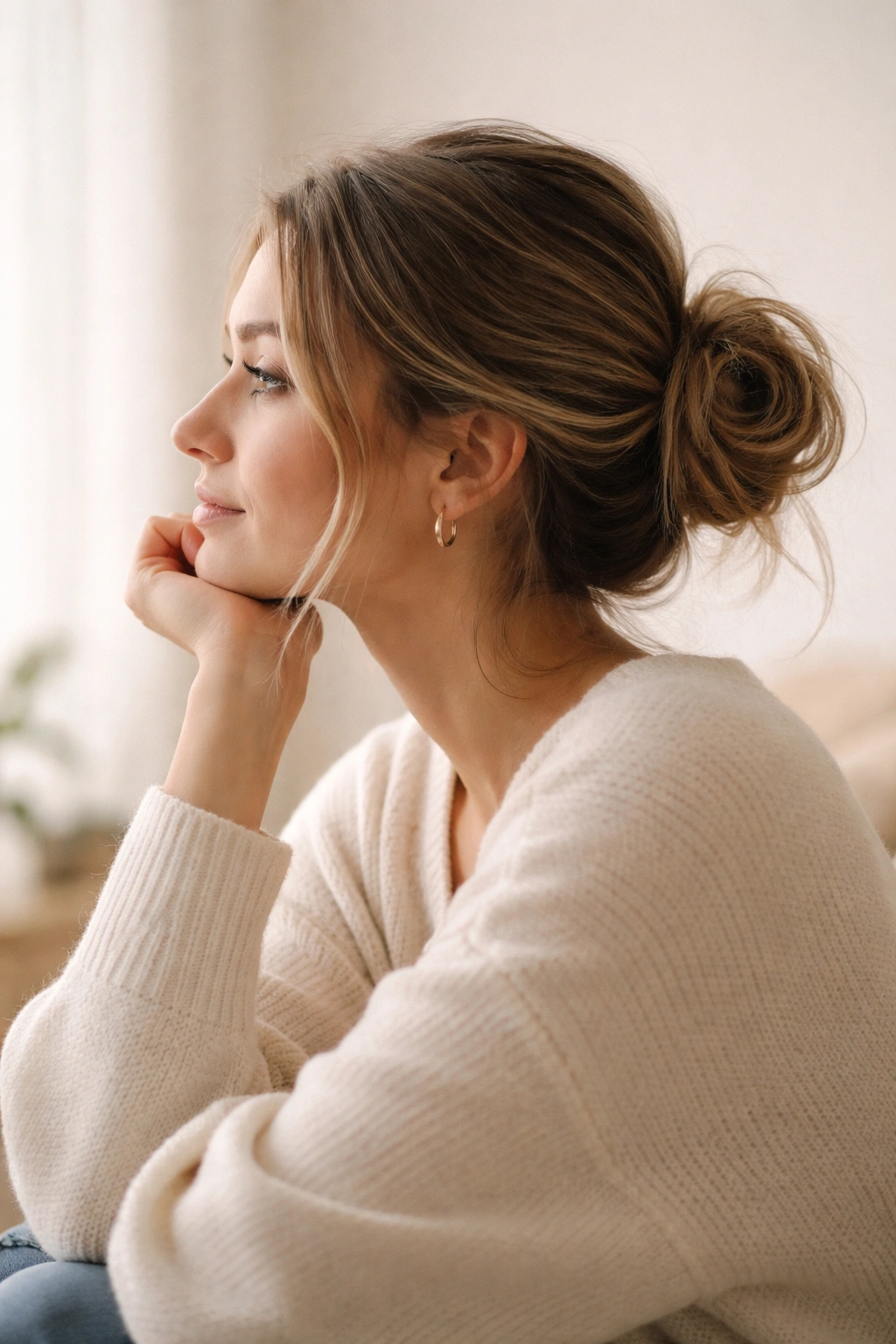
Low messy buns are genuinely one of those rare hairstyles that work harder than they appear to work. You can create a different look each day by changing your texture foundation, how many pieces you leave out, and which techniques you combine. The most important element across all these variations is understanding that “messy” doesn’t mean sloppy—it means intentionally undone, with each piece chosen deliberately.
The other secret these styles share is that they’re far more forgiving than many people realize. That piece that falls out? It’s actually supposed to be there. The slight asymmetry? Adds to the charm. The fact that you did it in under five minutes? It doesn’t show. Once you pick your favorite technique from these ten options, practice it two or three times and your hands will remember what to do automatically.
The real power of having multiple low bun styles in your rotation is the confidence that comes with options. You can choose based on your mood, the occasion, your hair texture that day, and how much time you have. That’s not just practical—that’s genuinely empowering.