

A messy bun that looks effortlessly romantic and undone—without actually falling apart during the ceremony—is one of the trickiest hairstyles to pull off as a bridesmaid. The goal is textured and touchable, not literally messy. You want the look of carefully constructed casualness: enough grip to survive dancing, photos, and hugging at the reception, but enough texture and softness that you don’t appear like you just woke up from a nap. The best messy buns for bridesmaids balance polish with ease, fitting seamlessly into a wedding’s formal aesthetic while remaining flattering to different face shapes and hair types.
What sets a bridesmaid bun apart from everyday messy buns is intention. Every strand matters because you’re part of the bride’s vision, yet you still want to feel like yourself. The style needs to coordinate with your dress’s neckline, work with any flowers or pins the bride has chosen, and hold through hours of celebration. Whether you’re working with fine, straight hair or thick, textured curls, there’s a messy bun approach that will give you exactly the balance you need between polished and playful.
When to Choose a Messy Bun for Your Bridesmaid Look
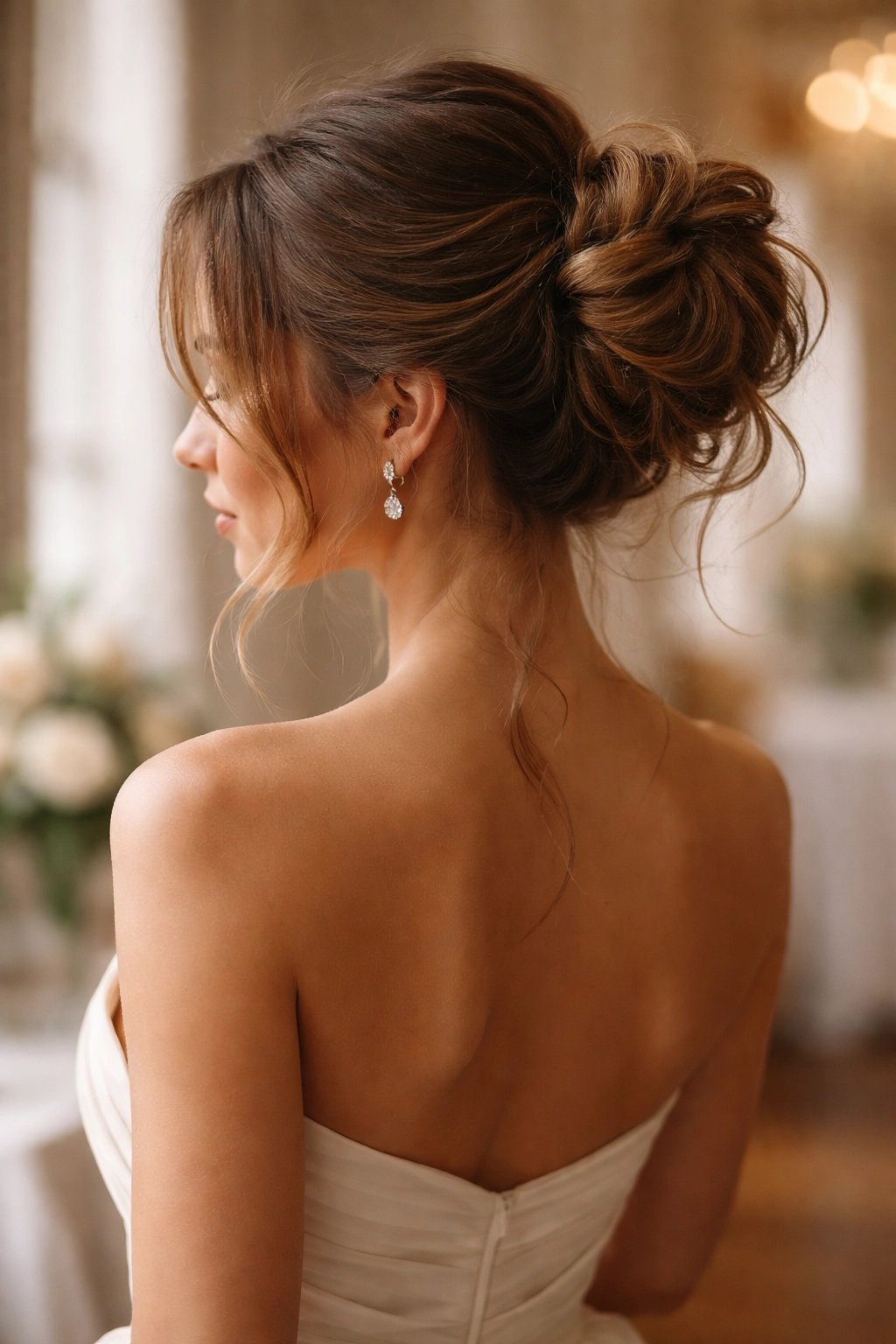
Not every wedding calls for a messy bun, and choosing the right updos for bridesmaids depends on several factors that go beyond personal preference. The wedding’s formality level matters tremendously—a black-tie evening affair might call for something sleeker than a daytime garden wedding. Your relationship to the bride and the overall wedding aesthetic should guide your decision too. A bride planning a modern, minimalist wedding might love messy buns on her bridesmaids; a bride going for timeless elegance might prefer something more structured.
Consider the dress neckline carefully. A strapless or sweetheart neckline shows off collarbone and shoulders beautifully with an updo, making a messy bun a perfect choice. High necklines and illusion backs work better with updos too, as a low bun would compete with intricate beading or lace details. Halter and off-shoulder styles pair gorgeously with messy buns that sit relatively high on the head.
The season and venue also influence which bun style makes the most sense. A beach or outdoor wedding in warm weather? A textured, relaxed bun that allows some face-framing pieces becomes even more forgiving and romantic. An indoor ballroom wedding? You might want a slightly tighter structure that won’t shift as much under the weight of hairspray and time. The bride should communicate her vision, but ultimately, you need to choose a style that will make you feel confident and beautiful for hours.
1. The Soft, Romantic Braided Bun
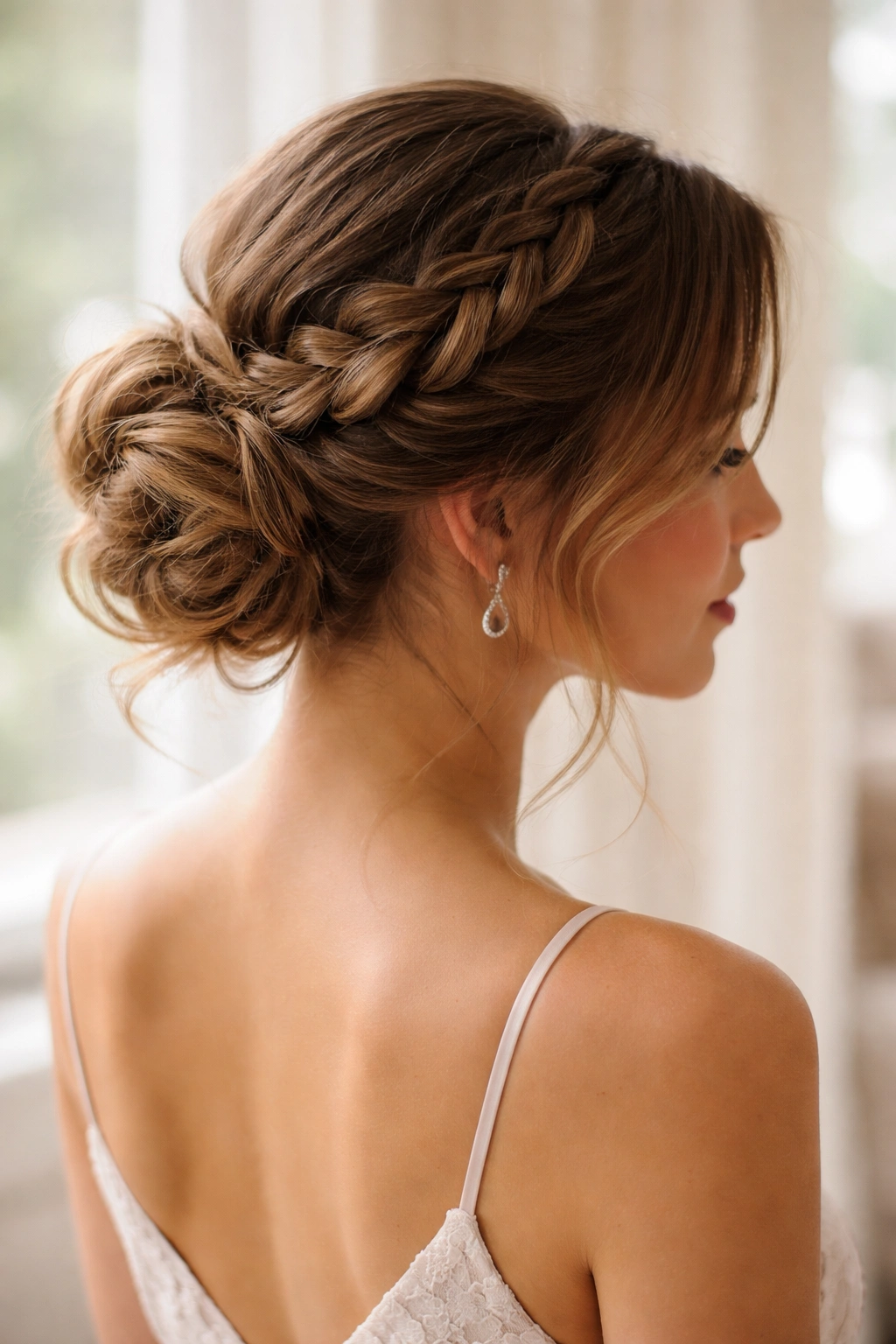
The braided bun is the crossover style between undone and sophisticated—romantic without veering into costume-territory. This bun begins with a loose Dutch or French braid that travels down the back or side of your head and then wraps into the bun itself, creating dimension and softness that a simple twisted bun can’t achieve. It’s particularly stunning on bridesmaids because it looks intentional and bridal-appropriate while maintaining the relaxed texture that feels current and wearable.
Why It Works for Bridesmaids
This style flatters many face shapes because the braided element adds visual interest without requiring perfect face-framing. The braid creates natural texture before you even form the bun, so you’re starting with built-in movement and dimension. It’s also incredibly forgiving with hair texture—fine hair gains visual fullness from the braid’s layering, while thicker hair benefits from the structure the braid provides before piling into the bun.
How to Create This Look
- Blow-dry your hair with texture and volume at the roots; messy buns work best on hair with some grip
- Create a Dutch braid starting from one side (or the center back) and braid loosely down toward where you want your bun to sit
- Gently tug the braid slightly to create a fuller, softer appearance—this takes a braid from “neat” to “romantic”
- As you reach the base of the braid, secure it with a small elastic, then wrap the remaining hair around the elastic base to form the bun
- Pin the bun into place with bobby pins, tucking in any wispy pieces
- Use a light hairspray to set texture without creating a shellacked look
Pro tip: A Dutch braid creates a raised, three-dimensional braid that photographs beautifully. If you’re worried about it unraveling, use texturizing spray before braiding to give your hair more grip.
2. The Low, Twisted Side Bun
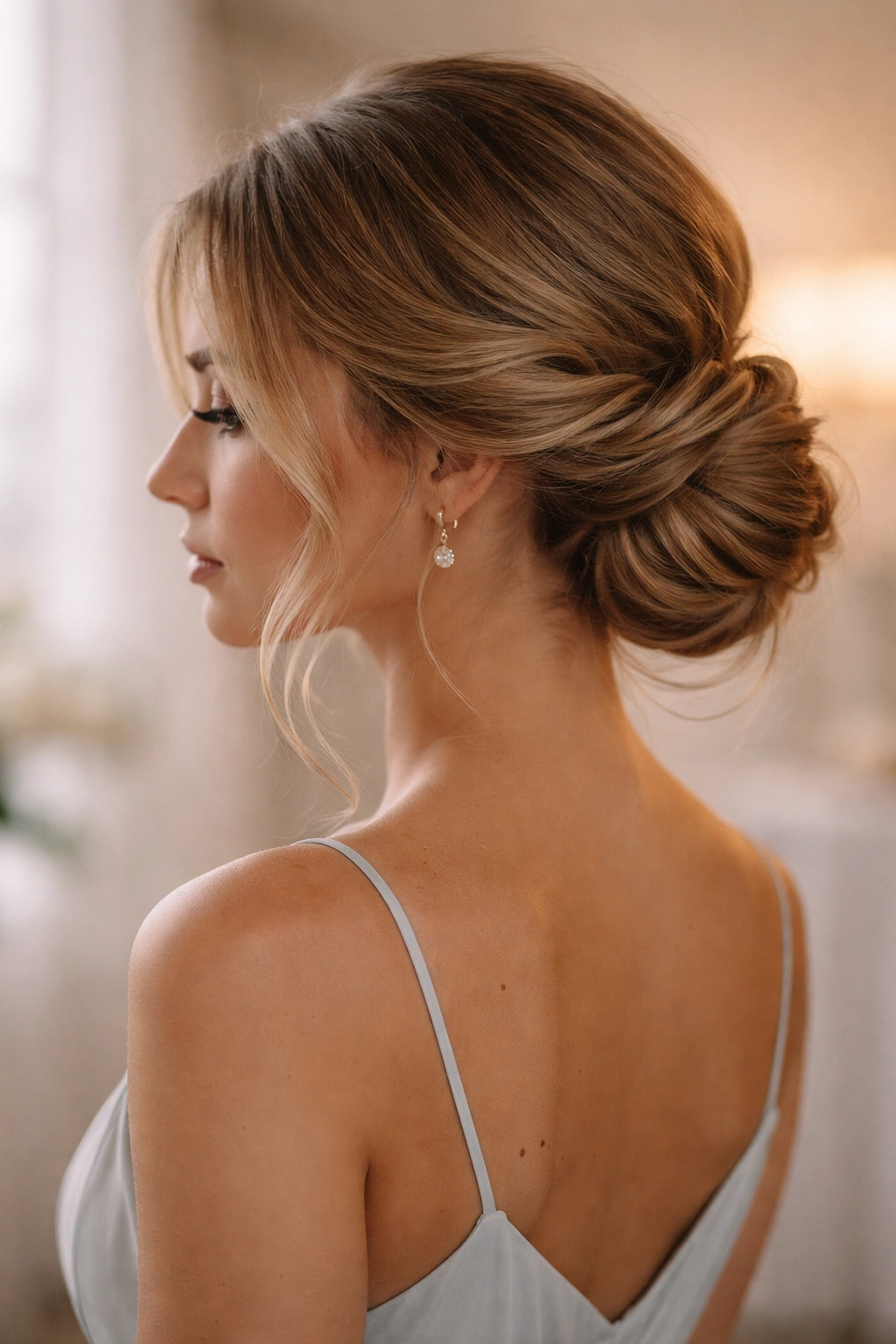
There’s something distinctly romantic about a low bun worn slightly off-center—it’s one of the most flattering angles for faces and necklines both. The twisted side bun sits lower on the nape of your neck, often slightly to one side, creating an asymmetrical elegance that modern bridesmaids love. Two sections of hair are loosely twisted together rather than braided, giving you the textured, undone quality without the pattern a braid creates.
Why This Style Shines
The low side placement elongates the neck beautifully, making it especially striking for strapless or off-shoulder bridesmaid dresses. The twists are quicker to execute than braids and feel less formal, which works for weddings with a relaxed vibe. You can pull out wispy pieces around the face without worrying they’ll destabilize the entire structure—the low position and the twist technique naturally allow for soft, romantic face-framing.
Building Your Twisted Side Bun
- Gather your hair to one side, approximately at the nape of your neck, slightly off-center
- Divide the section into two equal parts
- Twist each section loosely away from your face, then twist the two strands around each other
- Secure the twisted base with a small elastic
- Take the remaining loose hair and loosely wrap it around the twisted base to form the bun
- Secure with bobby pins and gently loosen and piece out the bun for texture
- Leave some shorter, softer pieces loose around the face if the bride approves
Worth knowing: This style looks best when you avoid pulling too tightly. The softer and looser your initial twists, the more romantic the final result. If your hair is very fine, using a texturizing spray or dry shampoo before styling gives you the grip you need.
3. The High, Textured Crown Bun
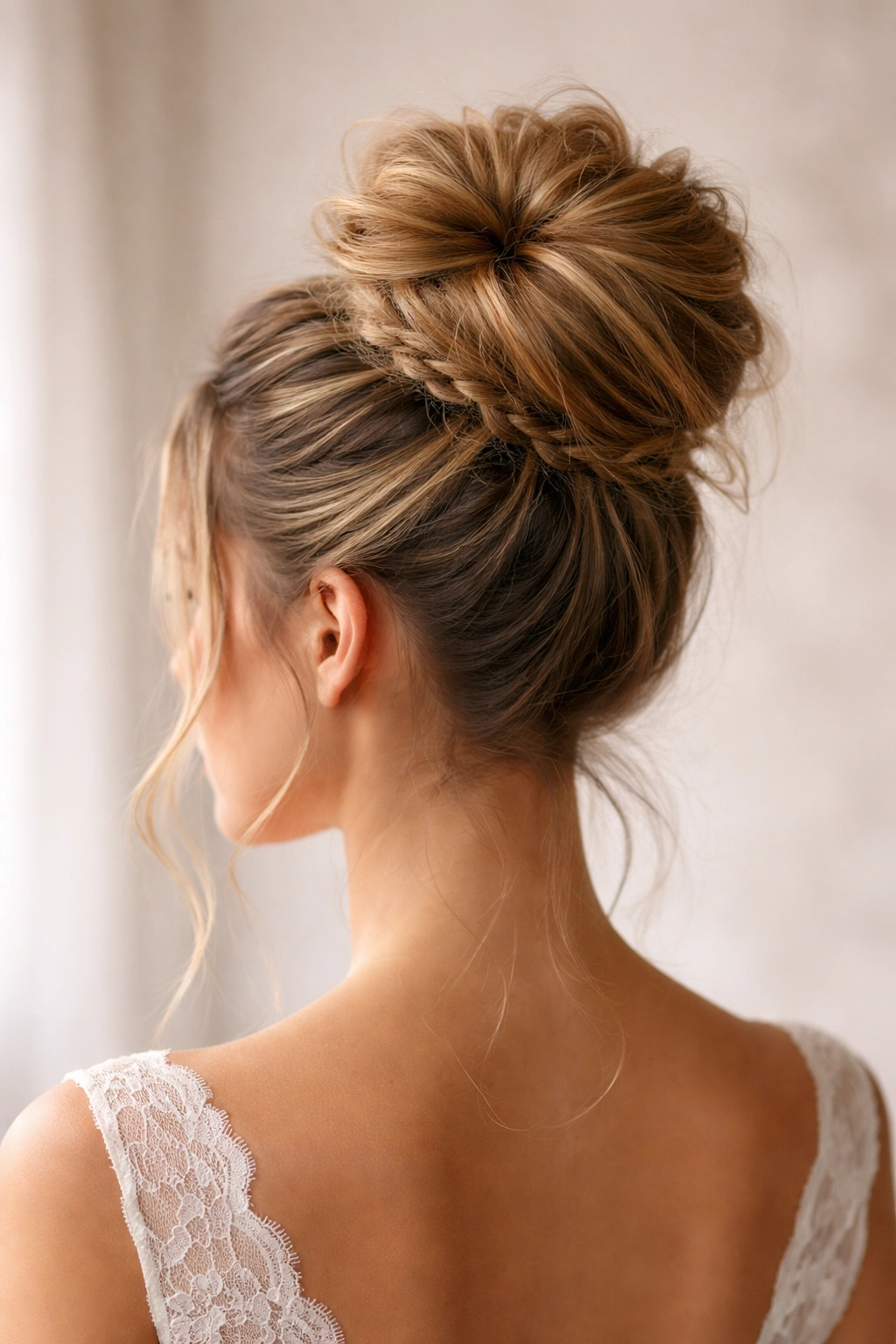
The crown bun sits high on the head, creating a lifted, ethereal quality that works beautifully for ball gown dresses and formal celebrations. Unlike a traditional high bun that can read as severe or overly sporty, a textured crown bun balances height with softness. This style is achieved by creating volume around the crown—through teasing, braiding, or layering—and then bunching the hair into a loosely gathered knot at the very top.
What Makes This Bun Stand Out
A crown bun creates a beautiful silhouette that opens up the face and allows dress details—especially on the back—to shine. It’s easier for tall bridesmaids to manage than a low bun because it doesn’t compete with their height. The style photographs magnificently from behind because the height and texture create dramatic visual interest. It’s also one of the few bun styles that works beautifully with updos that incorporate braids, ribbons, or flower stems.
Creating the Crown Bun
- Tease the crown area gently with a fine-tooth comb to create a base of volume and texture
- Take a section of hair from each side and loosely twist or braid it back toward the crown area (optional—this adds dimension)
- Gather all your hair at the crown and secure loosely with an elastic
- Gently loosen and tease the secured section to create a full, puffy bun
- Wrap a few strands around the elastic base to hide it, securing with bobby pins
- Carefully pull out face-framing pieces or leave them intentionally if they frame your face well
- Lightly mist with hairspray, focusing on the structure rather than flattening
Insider note: A crown bun is perfect if you’re worried about slipping during a long day. The height and structure naturally stay put, even if you’re dancing or moving around constantly. If you have fine hair, tease aggressively at the base—this style needs volume to feel full and romantic rather than thin.
4. The Loose, Undone Knot Bun
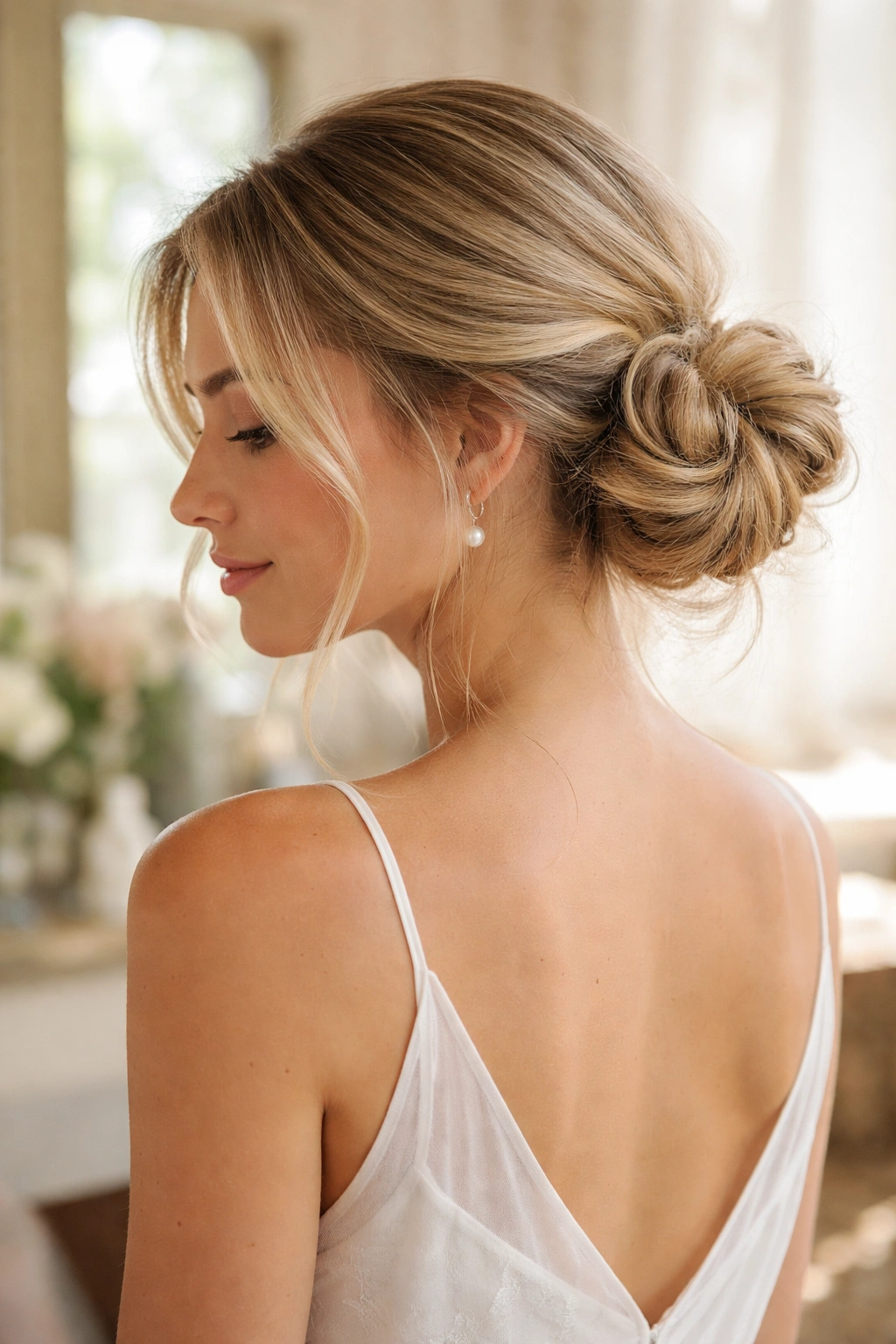
The knot bun is perhaps the most casual and approachable of all bridesmaid bun styles—literally formed by tying your hair in a knot before securing it with bobby pins. Despite its simplicity, a true knot bun (not a bun formed by twisted hair) creates an intentionally messy, undone quality that photographs beautifully and feels modern. This is the style that looks like you got ready effortlessly, even if you spent time perfecting the details.
Why Bridesmaids Love This Style
The knot bun reads as more playful and contemporary than a traditional bun, making it perfect for younger bridesmaids or casual wedding vibes. It’s remarkably quick to create compared to braided or twisted styles. Because you’re literally tying your hair in a knot, there’s natural variation in how full and textured it looks, which adds to the intentional messiness. It works on most hair types and thicknesses without requiring elaborate teasing or preparation.
Making a Perfect Knot Bun
- Gather your hair into a low ponytail at the nape of your neck using a very light hand—avoid pulling too tightly
- Tie your hair in a simple knot, the way you’d knot a piece of string, with the ends still loose
- Tuck the loose ends around the knot and secure everything with bobby pins
- Gently pull and loosen the knot structure to create a fuller, softer appearance
- Use fingers (not a comb) to separate and texture the bun
- Pull out a few wisps around the face for a romantic, undone quality
- Set lightly with hairspray
Real talk: This style works best on hair with some length and natural texture. If your hair is very blunt-cut or ends exactly at your shoulders, you might not have enough length to tie a true knot. In that case, you can create a similar effect by twisting two sections together and wrapping them into a loose bun instead.
5. The Sleek Bubble Bun with Soft Base
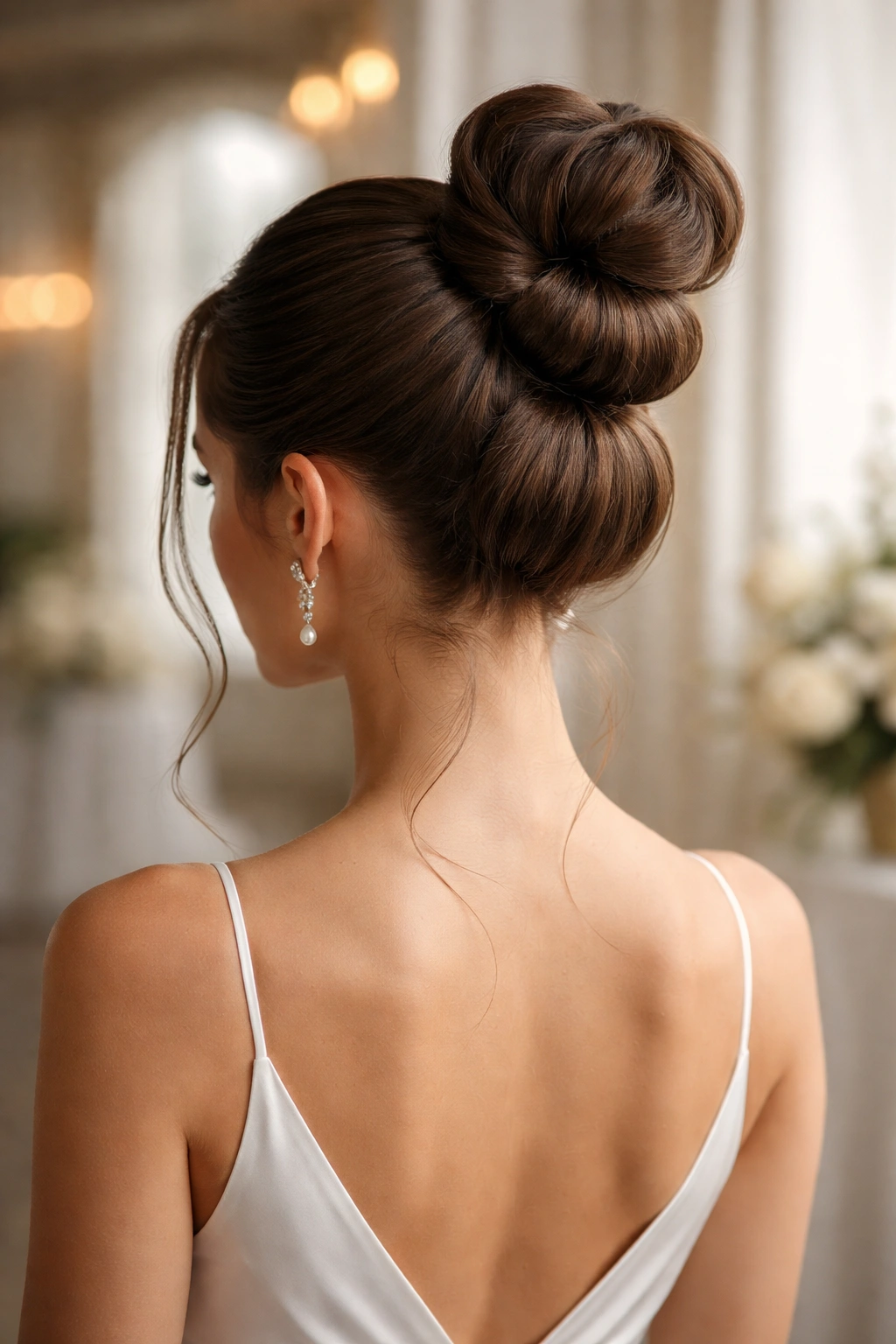
The bubble bun might seem too trendy for a wedding, but executed in soft, neutral tones with a romantic base, it’s surprisingly bridesmaid-appropriate and incredibly photogenic. This style features a series of bubble sections created by securing the hair with small elastics as you move down the ponytail, teasing each section for volume, and then gathering everything into a soft bun at the end. The visual result is sculptural and intentional while still reading as undone.
When This Style Works Best
The bubble bun is perfect for bridesmaids who want something slightly unexpected but still elegant. It photographs beautifully and creates a lot of visual texture and dimension. This style is excellent if you have fairly long hair and want to make a subtle statement without being too playful. It’s also one of the few messy bun styles that feels equally at home at an afternoon wedding or an evening celebration.
Building a Bubble Bun Base
- Create a sleek, smooth base by blow-drying your hair straight and applying smoothing serum if needed
- Gather your hair into a high or mid-height ponytail, depending on your preference
- Secure with a clear elastic
- Divide the ponytail into 3-4 sections from root to tip
- Secure each section with its own small clear elastic, creating bubble sections
- Gently tease and fluff each bubble section outward to create volume and texture
- Bring all the bubbles together and secure into a soft bun at the end
- Loosen individual bubbles and the final bun so nothing looks too structured
- Set with light hairspray for hold without shellac
Pro tip: The key to making a bubble bun look bridesmaid-appropriate rather than too trendy is keeping the base sleek and the overall color palette neutral. Avoid making the bubbles too distinct or separated—the goal is an overall effect of soft texture, not an obvious series of bubbles.
6. The Wrapped and Woven Low Bun
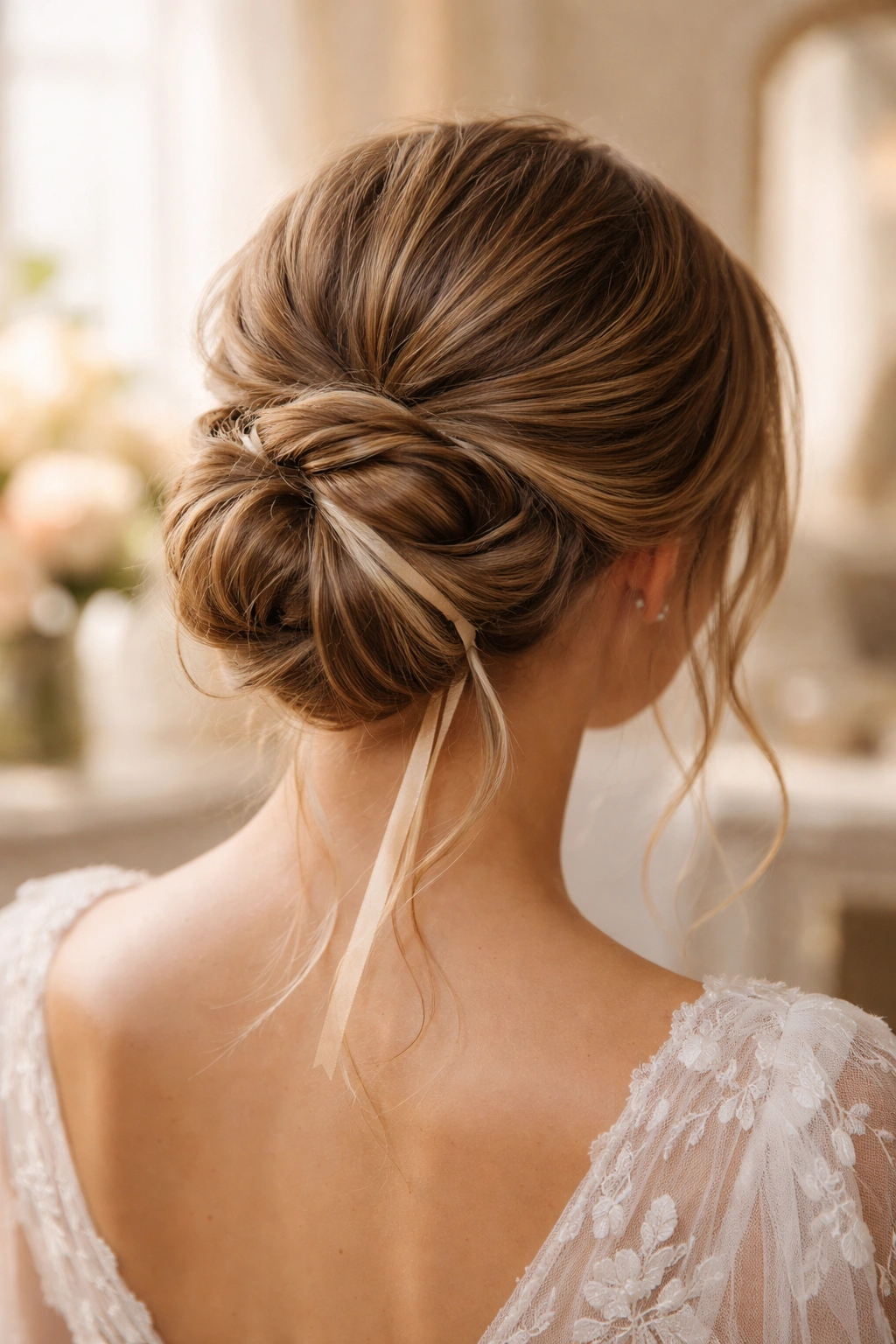
The wrapped and woven bun is for bridesmaids who want maximum texture and dimension—it combines multiple techniques (wrapping, weaving, twisting) to create a deeply textured, romantic style that looks far more complex than it actually is. Hair is gathered low, sections are wrapped around the base in different directions, sometimes woven through with ribbons or smaller sections, and then gently loosened to create a gorgeous, multidimensional knot.
Why This Style Is Unforgettable
This bun is an absolute showstopper for formal weddings and bridesmaids who photograph well in detailed, intricate styles. The wrapped and woven technique creates the illusion of pristine execution while remaining soft and romantic. It’s especially stunning if you have longer, thicker hair that can support the multiple layers and wrapping. This style allows for incorporating floral pins, silk ribbons, or delicate hair jewelry in ways that feel organic rather than added-on.
Creating the Wrapped and Woven Bun
- Gather your hair into a low ponytail and secure with an elastic
- Divide the ponytail into 3-4 sections
- Twist or braid each section loosely
- Wrap the first section around the base of the ponytail, securing with a bobby pin
- Wrap the second section around in the opposite direction, weaving it through the first section
- Continue wrapping remaining sections, alternating directions and weaving through previous sections
- Gently loosen all sections to create fullness and softness
- Tuck in any loose ends and secure with bobby pins
- You can weave a thin ribbon through the wrapping for added detail and color
Worth knowing: This style requires confidence and practice to execute smoothly, but the result is striking. If you’re going this route, do a test run before the wedding. Have your hair dresser or a close friend try it first so any kinks are worked out before the big day.
Preparing Your Hair for Any Bridesmaid Bun Style
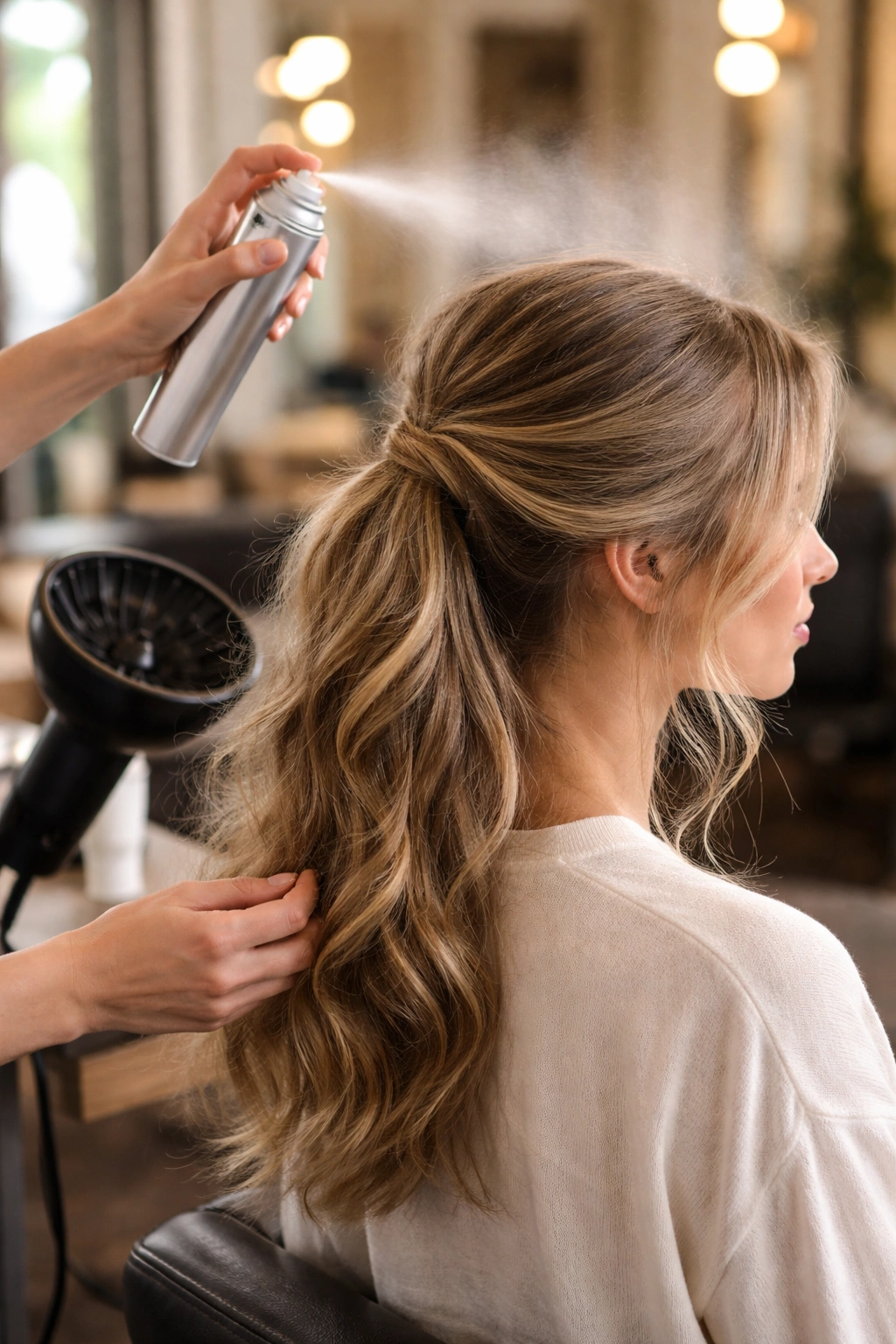
The difference between a sloppy bun and a beautiful, textured bridesmaid bun often comes down to preparation. Your hair’s texture, grip, and natural volume all influence which style will work best and how well it will hold through hours of celebration. Starting with the right foundation means your final style will photograph beautifully and last all day.
Texture is everything for messy buns, and you can create it in multiple ways. If you’re getting a blowout, ask your stylist specifically for texture and movement rather than sleek, straight hair. If you’re styling yourself, use a texturizing spray or dry shampoo before blow-drying—these products grip the hair and create the foundation messy buns need. Day-old hair naturally has more texture than freshly washed hair, so if your wedding is not the morning after a wash, you’re already ahead.
The amount of hairspray you use matters tremendously. Too much creates that shellacked, stiff look that reads as unintentional rather than romantic. Instead, use a light hairspray in layers—spray, style a bit more, spray again. This approach builds hold without the obvious product coating. Flexible hold formulas work better than maximum hold for messy styles, because they allow the hair to have natural movement while still staying in place.
Accessories That Elevate Bridesmaid Buns
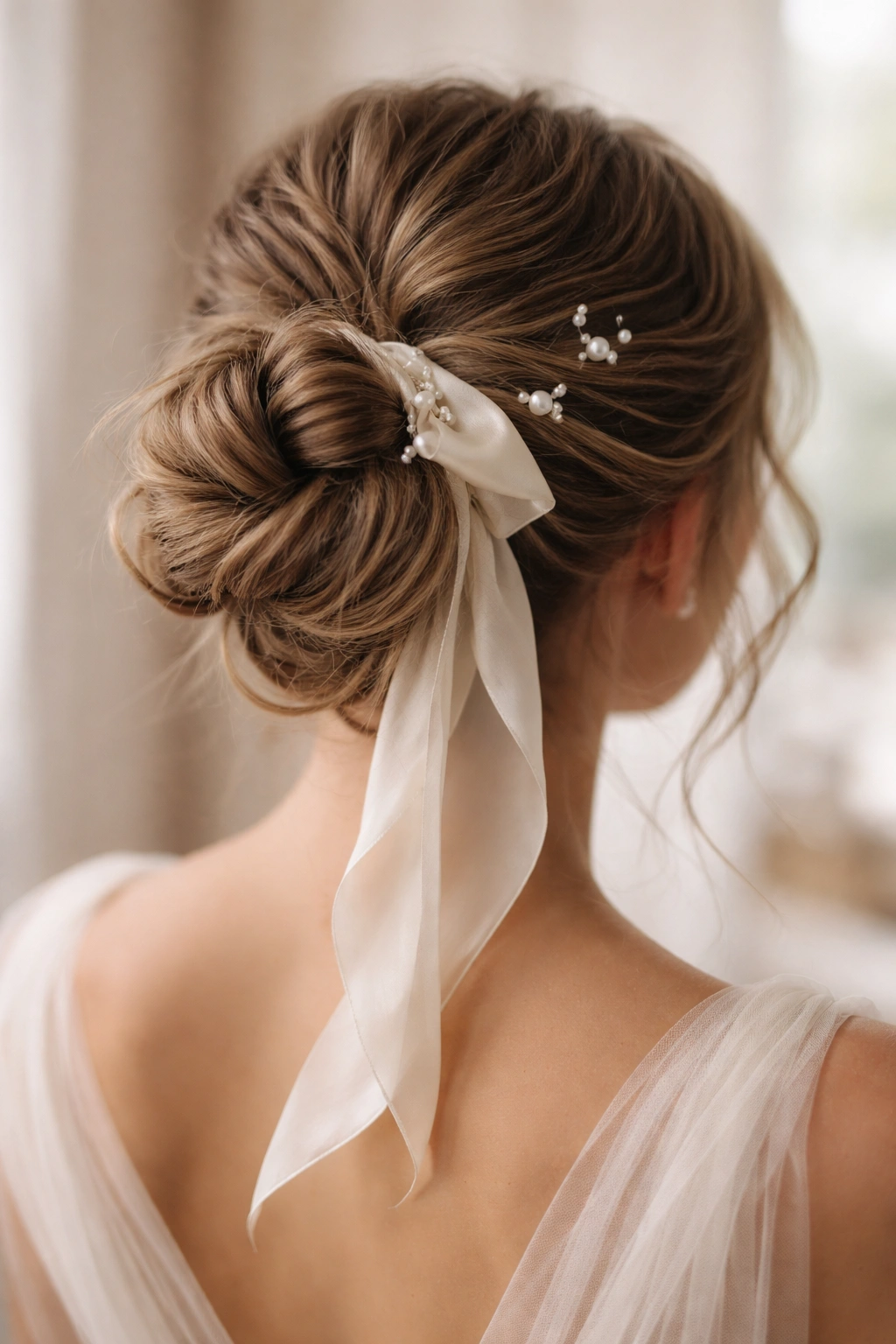
The right accessories can take a messy bun from casual to completely bridesmaid-appropriate, tying it into the overall wedding aesthetic without requiring the bun itself to be more formal. Flowers are the most traditional choice—whether the bride provides them or you coordinate them yourself, a small spray of baby’s breath, waxflower, or greenery pinned into the bun adds immediate elegance and purpose.
Silk ribbons woven through or wrapped around the bun create subtle color coordination and visual interest. Delicate gold or silver bobby pins left intentionally visible add a modern, romantic touch—they read as deliberate rather than functional. Pearl hair sticks or simple metal hair forks can secure messy buns while adding sophistication. Avoid anything that feels costume-y or overly trendy; the accessories should enhance the natural beauty of the bun rather than making it a statement piece.
If the bride hasn’t specified an accessory preference, keep it simple. A small jeweled clip, a sleek gold or silver barrette, or nothing at all are all perfectly appropriate choices that don’t risk clashing with her vision. The bun itself should be the focal point, with accessories playing supporting roles.
Face-Framing Pieces and Softness
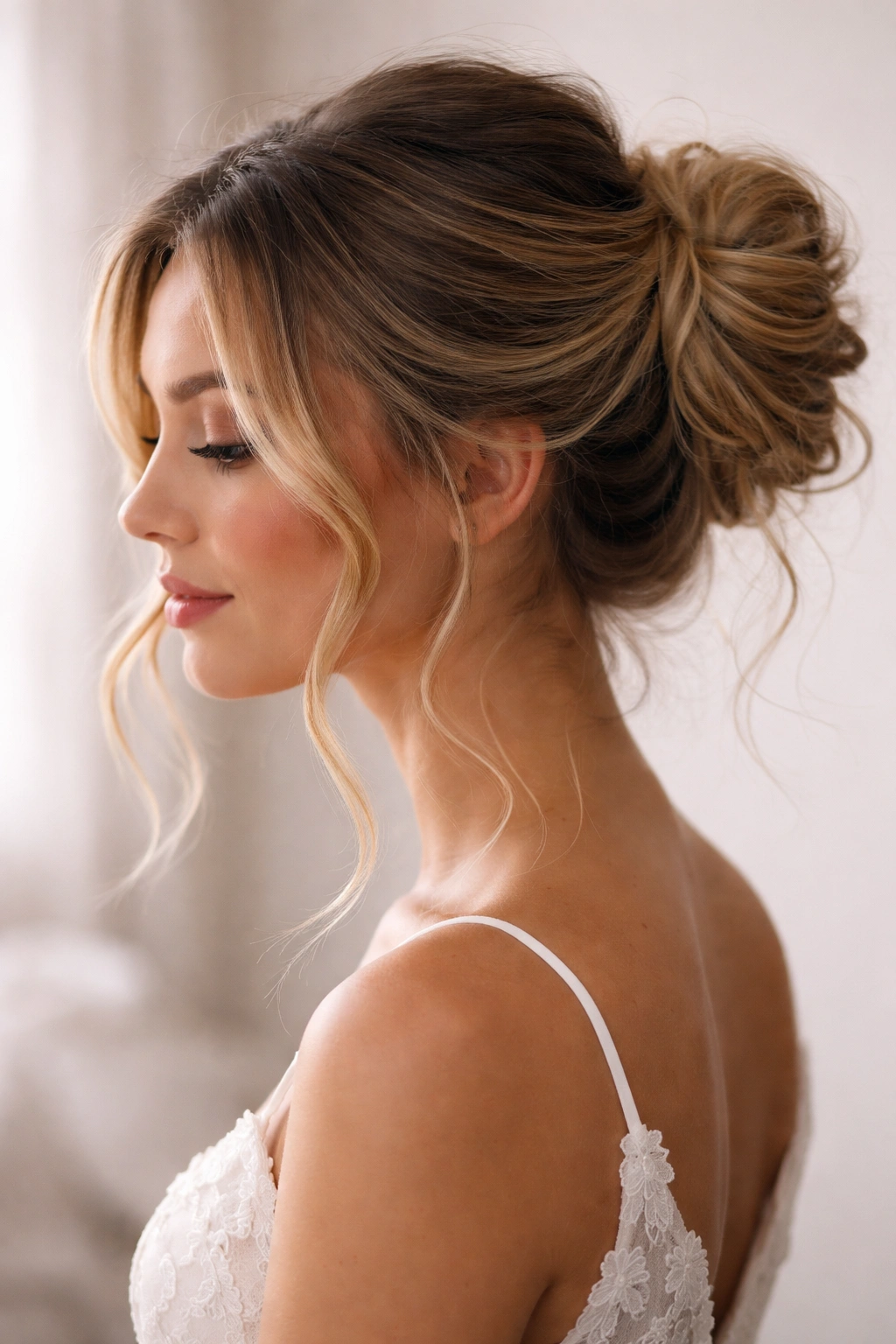
One of the defining features of a beautiful bridesmaid bun is strategic, intentional face-framing. Unlike a sleek, pulled-back style where every hair is controlled, messy buns benefit from wisps and pieces that soften the face and create a romantic quality. The key is the difference between intentional and accidental—pieces that make sense with your face shape and that have been styled with purpose.
If you have a round face, longer face-framing pieces that angle forward slightly create definition. If you have a square or angular face, softer, curlier pieces that echo the texture of the bun balance your features. Fine or wispy pieces scattered throughout rather than one thick strand on each side look more intentional and less like your bun is falling apart.
Texture spray applied to these face-framing pieces ensures they hold their shape and don’t go limp halfway through the day. You can also lightly curl or wave them before pinning the bun for a more structured softness. The goal is pieces that frame rather than obscure—they should enhance your features, not hide them.
Choosing the Right Bun Height for Your Dress
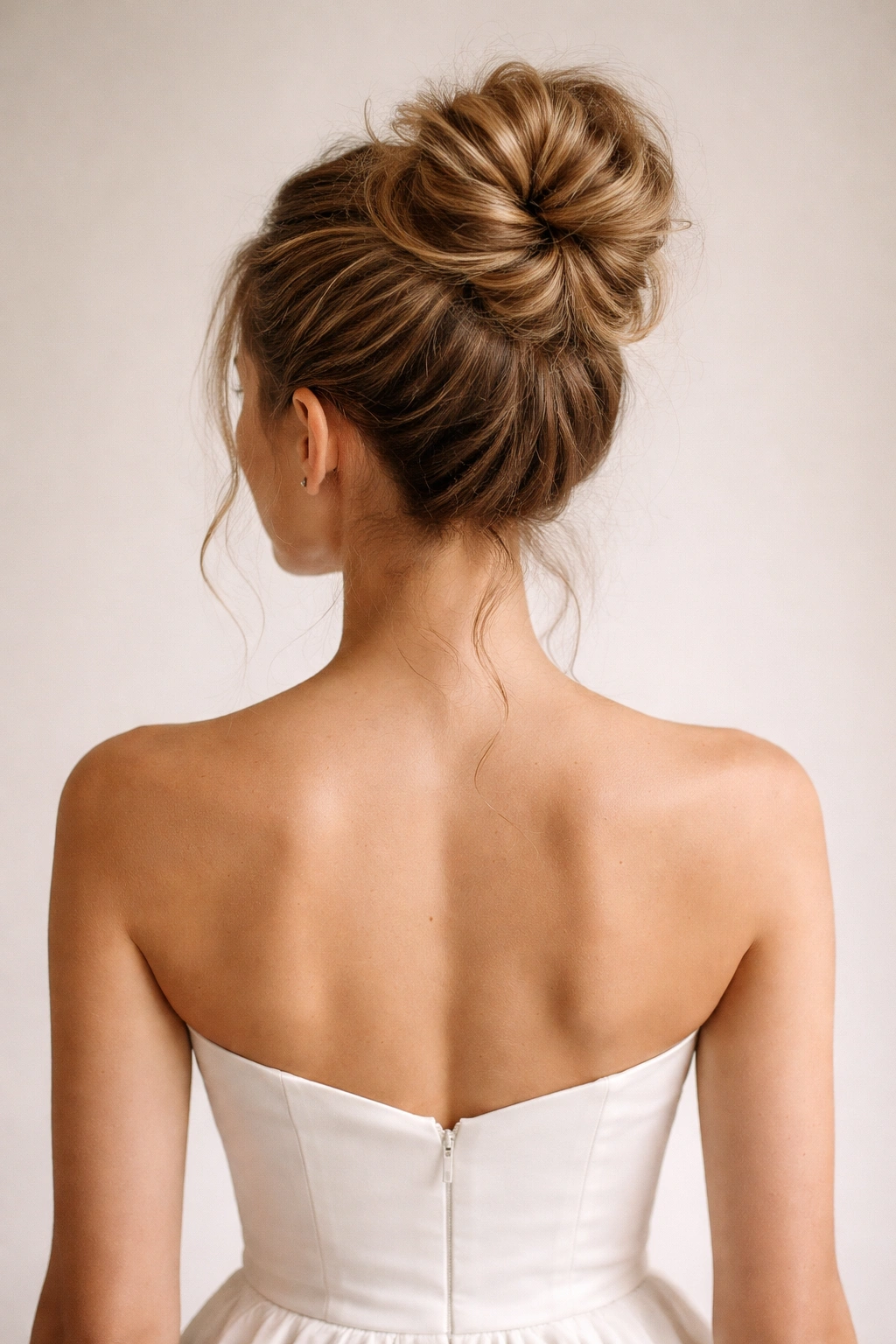
The placement of your bun should work in harmony with your dress’s design and your overall silhouette. A strapless or sweetheart neckline draws the eye upward and creates space for both high and low buns, though low buns often feel more sophisticated for formal dresses. An illusion or high neckline looks better with the neck area clear, suggesting a higher bun placement. Off-shoulder and halter styles give you more flexibility because the shoulders and collarbone are already exposed.
Consider the back of your dress too. Elaborate beading, lace, or intricate design in the lower back calls for a higher bun so your hair doesn’t compete with or obscure the details. A simple, plain back can carry a lower bun beautifully. If there’s a train, a low bun keeps the focus on the dress’s most dramatic elements.
Your height relative to other bridesmaids matters as well. Taller bridesmaids can carry higher buns without overwhelming their proportions; shorter bridesmaids often feel more balanced with mid-to-low placement. The bride’s own bun placement should influence yours—if she’s wearing her hair down or in a lower style, a slightly higher bun for bridesmaids creates visual hierarchy.
Touch-Ups and Lasting Power Throughout the Day
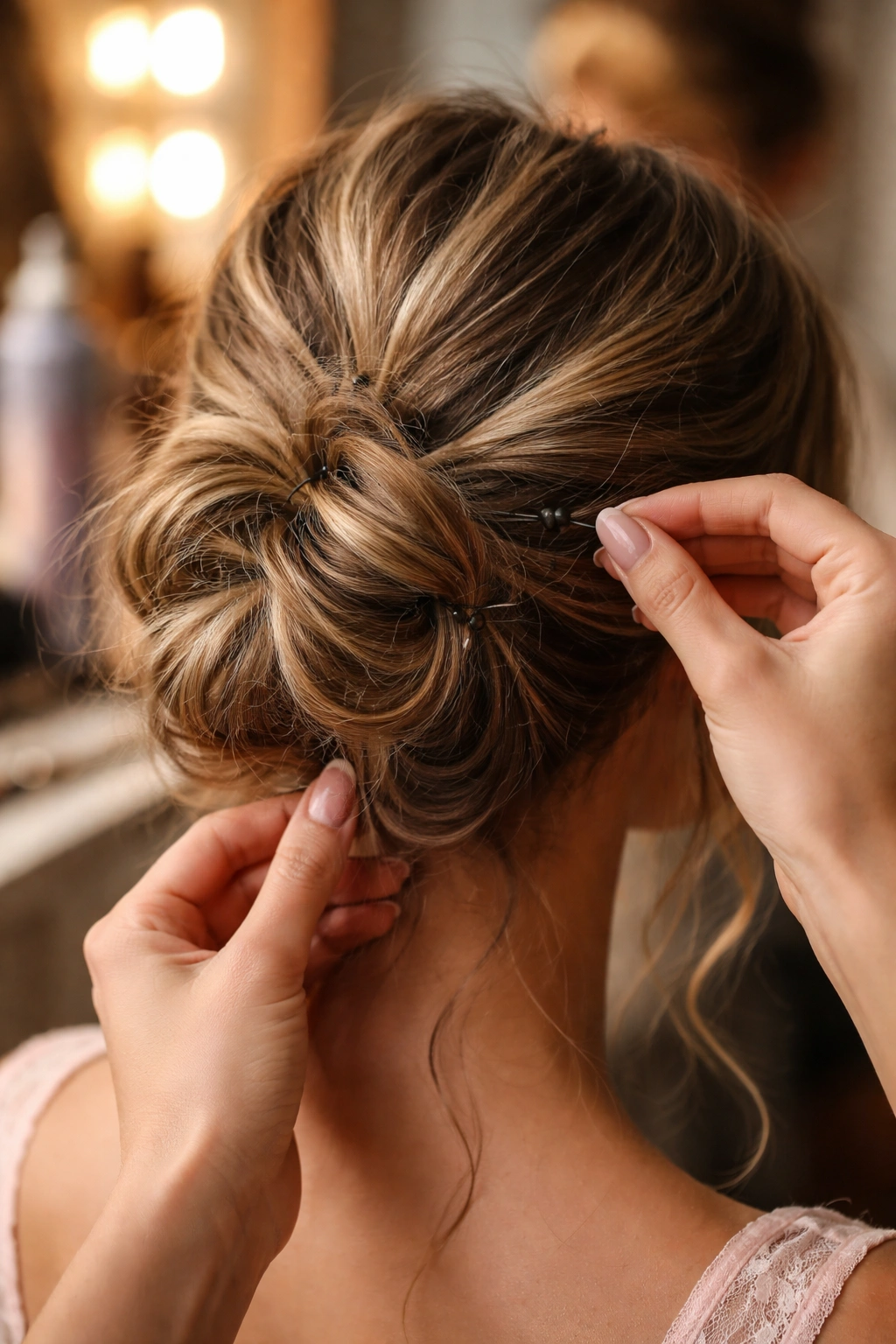
Even the most perfectly styled bun will loosen slightly as you move, dance, and celebrate throughout the day. Building in some give and preparing for minor adjustments means you’ll feel confident from ceremony start to reception end. Pack bobby pins in your clutch in the same color as your hair—they’ll be invisible if you need a quick repair. A tiny bottle of hairspray fits in almost any purse and allows for quick refreshes.
Expect and plan for some pieces to come loose, especially around the face. This is actually desirable—it adds to the romantic, undone quality. What you want to prevent is the entire structure shifting or the bun rotating to an awkward angle. A good grip from your initial styling (texture, secure elastics, plenty of well-placed bobby pins) prevents this.
If you’re worried about your bun feeling loose midday, ask your stylist to use more bobby pins than feels strictly necessary. The pins won’t be visible if they’re placed correctly, and the extra security means you can dance and hug without thought. Some bridesmaids choose to get their hair done professionally on the wedding day specifically to ensure their bun lasts without needing touch-ups.
Messy Buns for Different Hair Types and Textures
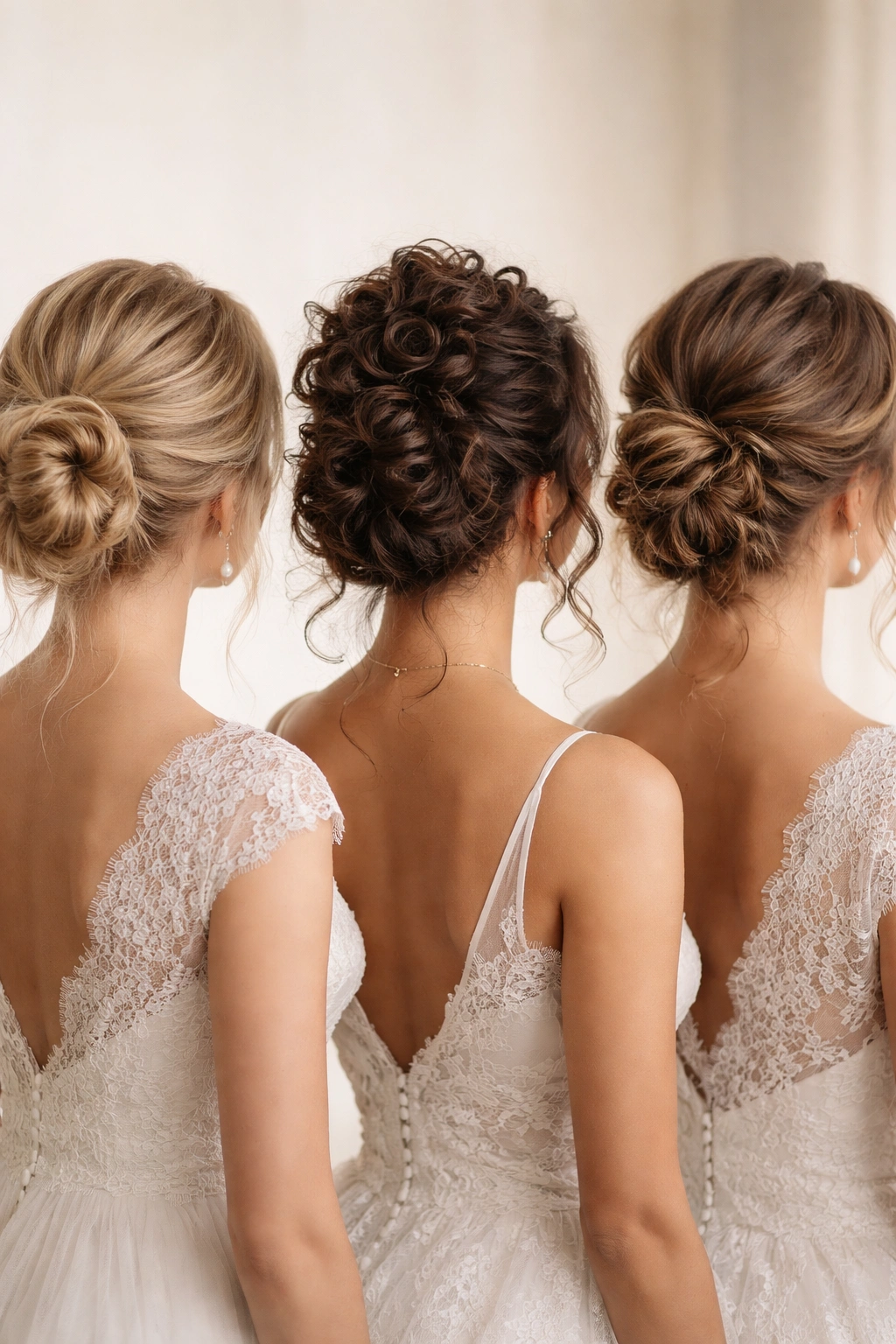
The beauty of messy buns is their adaptability to different hair types, though each type requires slightly different approaches. Fine, straight hair needs maximum texture and grip—use texturizing spray or dry shampoo before styling, tease gently for volume, and don’t attempt the loosest, most relaxed versions of these buns, which can read as limp on fine hair. Instead, go for styles with more structure in the base, like a braided bun or wrapped bun.
Thick, coarse, or naturally curly hair has natural texture already, so you can lean into the loosest, most relaxed versions of these styles—they’ll still look full and intentional. Your challenge is taming flyaways and frizziness rather than creating texture. Use a smoothing serum or oil to manage frizz before styling, and consider straightening naturally curly hair if you want a particular style, or embrace the curls by choosing bun styles that highlight natural texture.
Medium-thickness, slightly wavy hair is perhaps the most forgiving for bridesmaid buns. You likely have natural texture without excessive frizz, and most styles will photograph beautifully with minimal fuss. Your main consideration is ensuring enough grip and structure for the style to hold throughout the day.
Final Thoughts
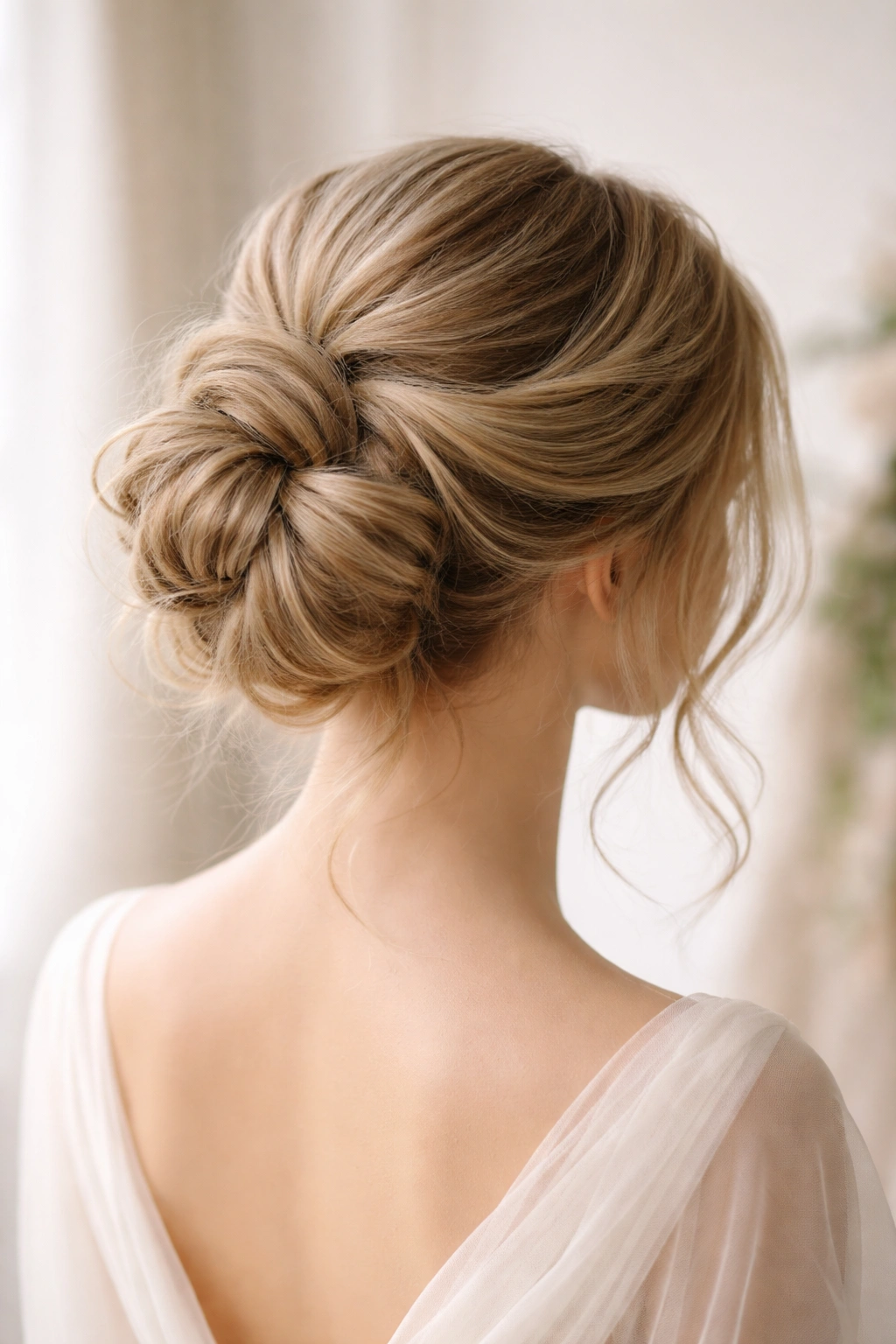
The perfect bridesmaid bun balances romance with reliability, looking effortlessly beautiful while actually being secure enough to survive hours of celebration. Whether you choose the softness of a braided bun, the modern appeal of a low side twist, the drama of a crown placement, the simplicity of a knot bun, the photogenic detail of bubble sections, or the complexity of a wrapped and woven style, the key is starting with properly textured hair and taking time to perfect the details.
Communicate with the bride early about her vision for bridesmaid hair—whether she’s coordinating everyone in the same style or allowing individual choice within a general aesthetic. Get your hair done professionally if you’re uncertain about execution; a trial run with a stylist removes the stress and ensures you’ll look polished on the day. And remember that even the most beautifully styled bun will shift and soften slightly throughout the day, which is actually part of its charm. The goal isn’t perfection—it’s a romantic, intentional look that makes you feel confident and beautiful as you celebrate alongside the bride.