


Cornrows have a useful habit: when the parting is clean and the tension is sane, they can still look deliberate after a long stretch of sleeping, sweating, and general life.
The cornrow styles that last six weeks usually look almost plain on day one. That is the trick. Fewer loose ends, fewer busy turns, fewer spots where the hair can puff up and start arguing with the braid pattern.
That does not mean every set wears the same way. Tiny rows, heavy extensions, and sharp part shapes can look gorgeous, then get fussy fast if your scalp is sensitive or your hairline is easily stressed. A smarter shape — one that fits your density, your face, and how you actually live — keeps its shape longer with less drama.
So yes, style matters. A lot. But the style is only half the story, and the other half is how well the braid lies flat, how the ends are finished, and whether you can sleep on it without waking up with a sore temple.
1. Classic Straight-Back Cornrows
Classic straight-backs are boring in the best way. They give you the cleanest base possible, which is why they hang on so well when the rest of life gets messy.
Why It Stays Neat
- Keep each section the same width from front to back.
- Ask for a firm grip at the root, not a death grip.
- Finish the ends with neat tucks or small extensions that do not fray fast.
Tip: If your scalp is tender, choose fewer rows with a little more width. They usually look fresher longer than tiny rows that start lifting at the edges.
2. Two Jumbo Rows With a Center Part
Two jumbo rows are a cheat code for low upkeep. There are fewer lines to blur, fewer ends to fuss over, and less surface area for frizz to show up on.
They work best when you want a set that feels calm instead of busy. If your hair is dense, the style sits beautifully; if your hair is fine, ask for a light feed-in so the rows do not feel bulky at the temples. The whole look can stay neat for weeks because the braid pattern itself is simple.
3. Small Stitch Cornrows
Why do stitch cornrows hold their shape so well? Because the little horizontal ridges create a disciplined surface that does not wander much as the hair grows.
How to Wear It
Ask the braider to make the stitches clean and even, about the width of a fingertip if you want the pattern to read clearly. A rat-tail comb matters here. So does patience. This is not a style for rushing.
If you like a sharp, polished finish, stitch braids are hard to beat. They show parting work, so the style looks intentional even when the roots start to puff a little.
4. Side-Swept Lemonade Cornrows
Picture a style that leans with the face instead of fighting it. That is the charm of side-swept lemonade cornrows, and it is also why they can stay attractive for a long wear cycle.
The diagonal direction gives the set movement without making it fussy. Keep the front rows smooth and the parting clean near the temple, because that is where the eye goes first. If you want the style to last, ask for the braids to sit flat at the nape; that area gets rubbed the most.
5. Feed-In Cornrows Into a Low Bun
Feed-in cornrows into a low bun are the sort of style that looks more expensive than it is. The braid grows gradually, the bun protects the ends, and the whole shape stays tucked away from shirts, scarves, and collars.
I like this set for people who want less daily handling. A low bun keeps the weight close to the head, which means fewer little tugs pulling at the front rows. Use a light mousse on the roots if they start to bloom, then wrap the bun with a satin scarf for sleep.
6. Feed-In Cornrows Into a High Ponytail
A high ponytail changes the mood fast. It lifts the face, clears the neck, and gives the braid pattern a bit of snap without making the style fragile.
Compared with a low bun, this one needs a stronger base at the crown because the ponytail weight has somewhere to pull. Ask for the rows feeding into the ponytail to be balanced on both sides of the head. If one side is tighter than the other, you will feel it by day three. Not fun.
7. Curved Cornrows That Follow the Hairline
Curved cornrows are the graceful cousin in the group. The braid lines bend around the head instead of shooting straight back, and that curve does a nice job of softening a strong hairline.
What Makes Them Work
The curves need to be smooth, not jagged. A good braider will map the route before braiding, almost like sketching lanes on paper. Keep the rows medium-sized so the shape shows up clearly. Tiny curved rows can look pretty, but they also take longer to maintain.
My take: If you want a set that feels a little softer around the edges, this is one of the smartest ways to do it.
8. Zigzag-Part Cornrows
Zigzag parts turn the parting itself into the feature. That is why this style can look fresh longer than you expect; the eye keeps reading the design, even when the roots are not pin-straight anymore.
The trick is clean geometry. The zigzags should be deliberate and even, not wobbly like someone changed their mind halfway through. Keep the braids medium in width so the parting stays visible. Too many tiny rows and the pattern gets lost. Too few, and the zigzag looks heavy.
9. Triangle-Part Cornrows
Why do triangle parts feel a little richer than square parts? Because the shape breaks up the grid and gives the scalp more movement, even when the braid pattern is simple.
How to Use It
Triangle parts work best when the rows are not too thick. You want the points of the triangles to stay visible near the root. They are nice for people who like detail but do not want a whole head full of decoration.
This style also plays well with a tidy bun or ponytail. The parting does enough talking on its own, so you do not need extra accessories crowding the look.
10. Heart-Part Cornrows
Heart parts are a mood. They are also one of those styles that can keep looking neat because the main visual is tucked into the parting, not the braid length.
I would keep the hearts small and clean. Giant heart shapes can lose their edge fast once the roots puff. Small hearts near the crown feel more controlled and easier to keep tidy under a scarf. If you like playful hair but still want a protective set that works for real life, this is a good compromise.
11. Crisscross Cornrows
Crisscross cornrows have a built-in texture that hides a little growth. The crossing lines keep your eye busy, so the style does not look tired the moment one root starts to lift.
The parting has to be mapped carefully. A messy crisscross is just messy. A good one looks intentional from every angle, which is useful if you wear your hair in updos or low buns. It is a bit more technical than straight-backs, and I would not ask for it if your braider is moving too fast.
12. Diagonal-Back Cornrows
Diagonal-back rows are a nice middle ground between straight-back basics and the more decorative styles. They guide the hair toward the nape on a slant, which flatters the head shape and helps the braid set keep its line.
Compared with straight-backs, the diagonal direction often softens the look around the temples. That can be handy if you prefer a set that does not look severe. Keep the sections even, and ask for the last braid near the nape to sit flat. That part gets rubbed by collars all the time.
13. Halo Cornrows Around the Crown
A halo set wraps the braids around the head like a frame. It is one of the neatest ways to keep the style looking tidy because the shape itself is contained.
What to Ask For
- A smooth braid path that follows the crown without gaps.
- Ends that are tucked or pinned under cleanly.
- Medium tension at the front so the hairline stays calm.
The halo look is pretty practical, too. It keeps the braids out of the way and makes the growth pattern less obvious because the eyes follow the circle, not the roots.
14. Mohawk Cornrows Down the Center
Mohawk cornrows bring the drama, but they do not have to be fussy. A narrow center strip of braids can stay neat for a long time when the sides are slicked close and the center rows are kept uniform.
This style is a smart pick if you want a bold silhouette without covering the whole scalp in tiny rows. The sides usually get fed into flat cornrows or sleeked down with gel, while the center carries the action. Keep the rows centered, or the whole thing starts to lean.
15. Cornrow Bob With Blunt Ends
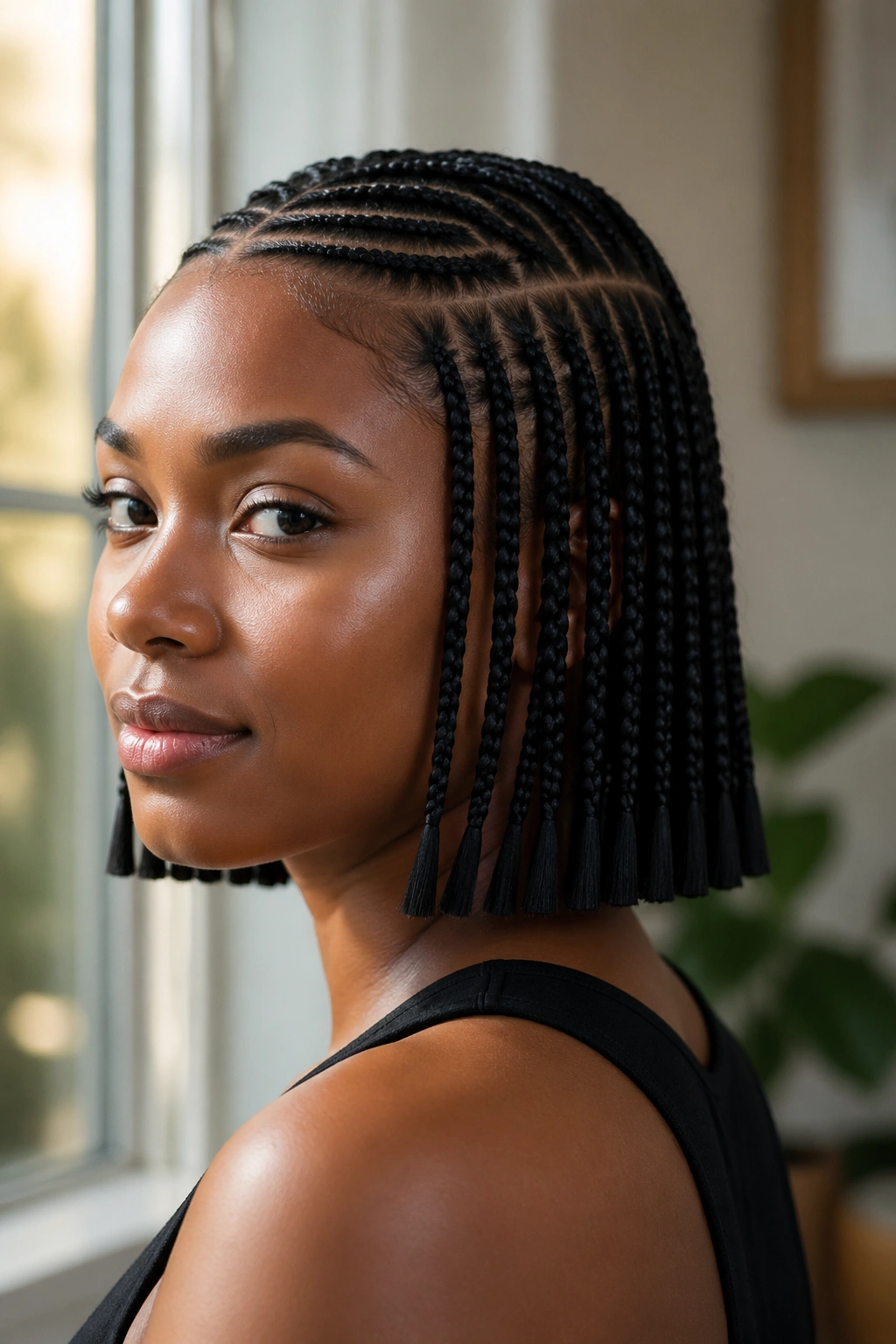
A cornrow bob is one of the easiest long-wear looks to live with. Shorter length means less rubbing on shirts, car seats, and pillowcases, which is a gift by week three.
Why It Holds Shape
The blunt ends help. They keep the outline clean instead of stringy, and they do not collect as much frizz as long loose ends. If the bob is done with extensions, ask for a neat, even finish at the bottom so the cut line reads clearly.
It is a good style when you want movement without a lot of maintenance. Quick, tidy, done.
16. Cornrows With Curly Ends
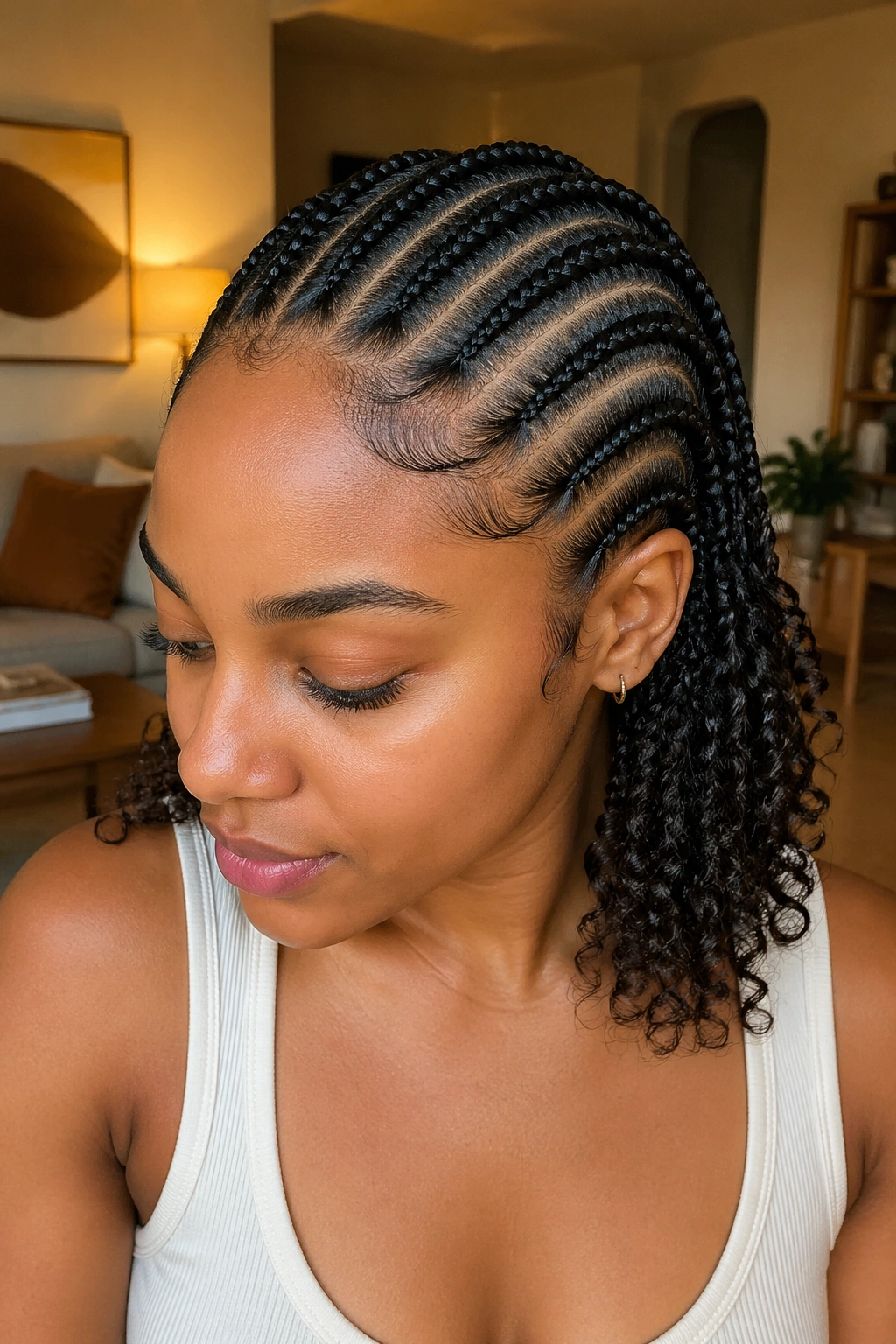
Cornrows with curly ends soften the whole look. The braid base stays controlled, but the ends bring life and movement, which keeps the style from feeling too severe.
You do need to treat the curls with a little respect. Flexi rods, perm rods, or pre-curled extensions work better than trying to force shape into stiff ends after the fact. At night, tuck the curls up loosely so they do not flatten into a sad little tail. A little care there goes a long way.
17. Ghana Braids With Thick Raised Rows
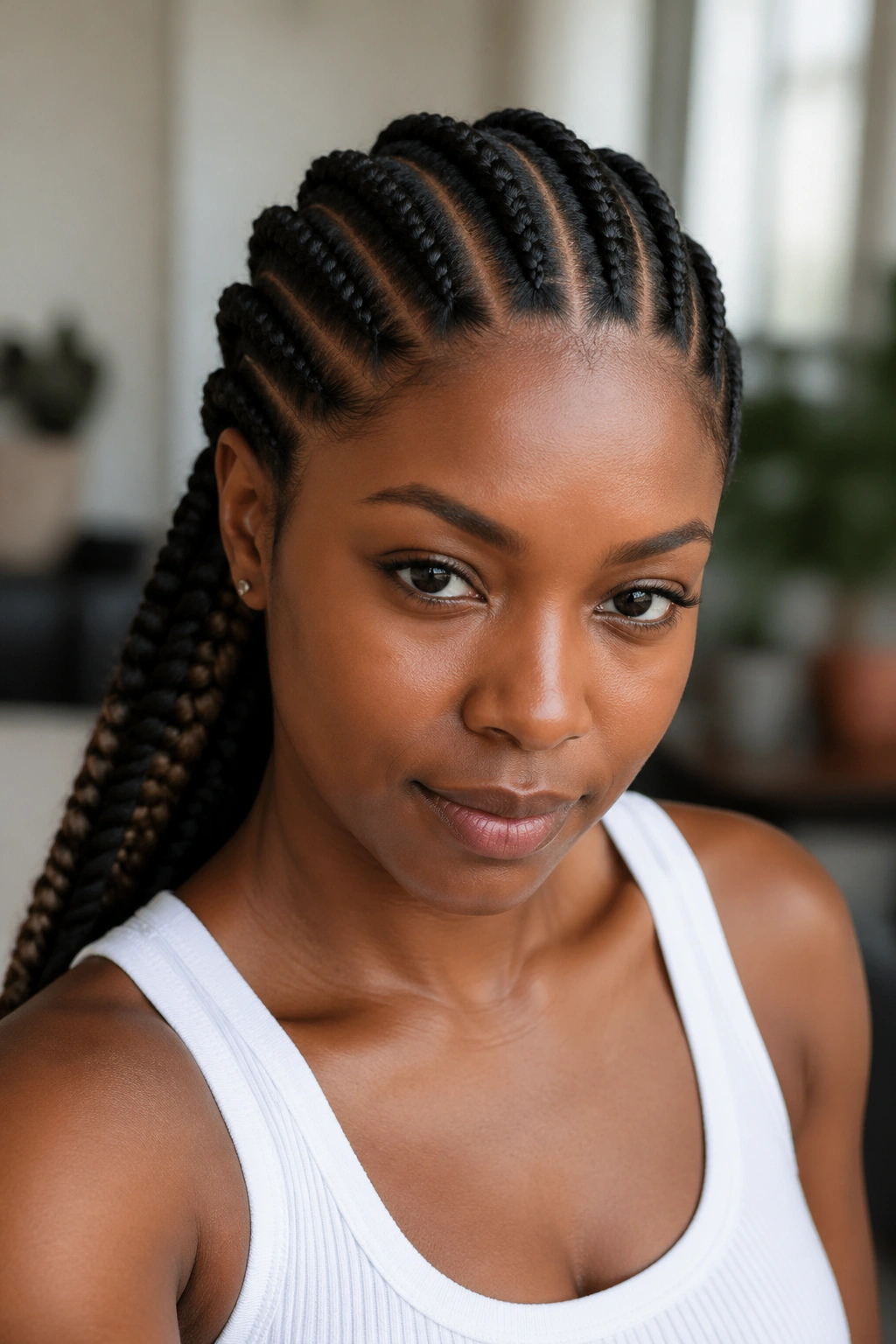
Ghana braids are thick, raised, and built to be seen. They sit close to the scalp at the root, then gain body as the braid moves back, which makes them a strong choice for a long wear period.
I like them on dense hair because the weight feels more balanced. If the rows are too thick for your hairline, they can pull, and that is where the trouble starts. Keep the size even and the feed-in gradual. When they are done right, Ghana braids look rich without getting messy fast.
18. Fulani-Inspired Cornrows With a Center Braid
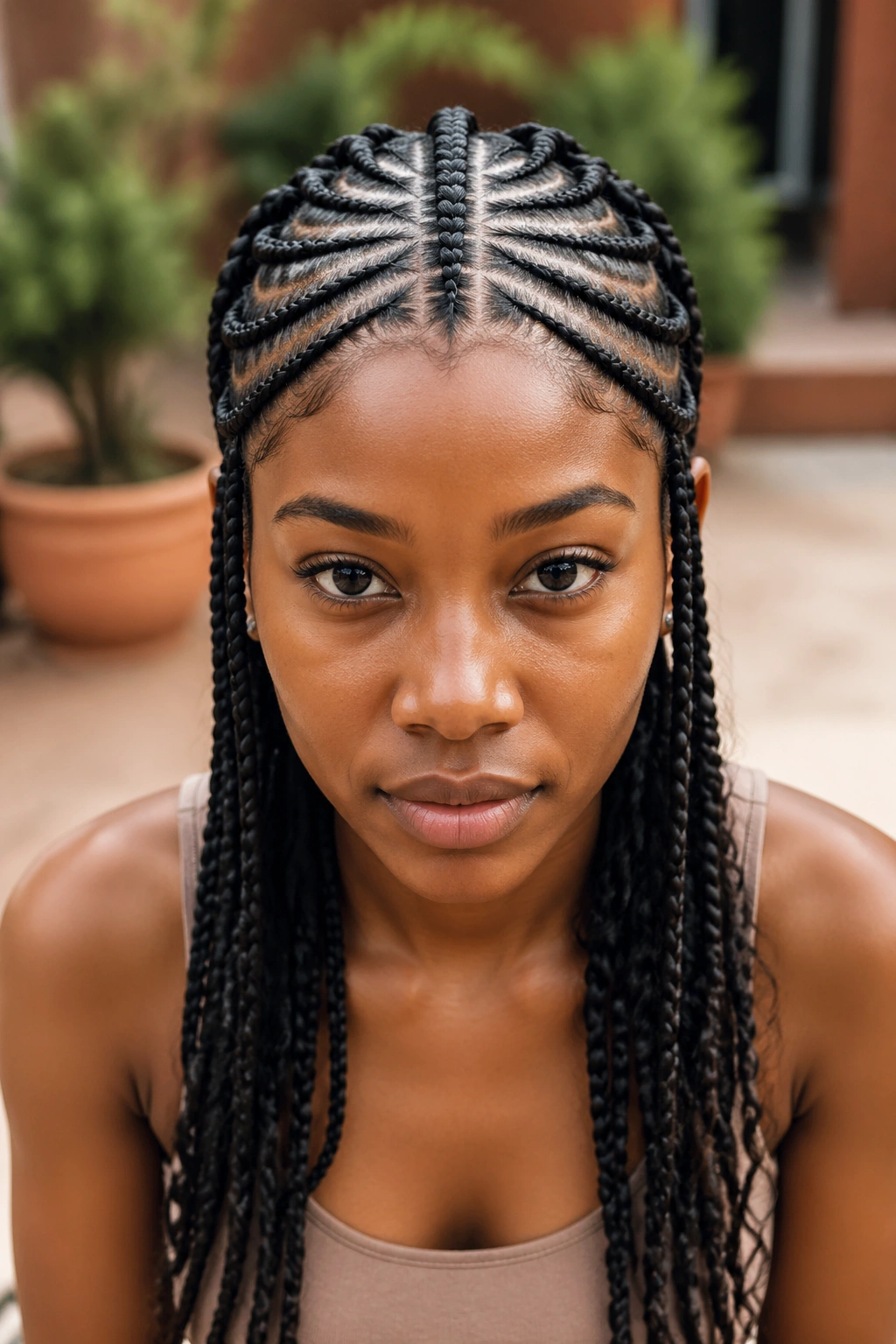
A Fulani-inspired set usually has a center braid running the length of the head, with side rows that fan out around it. It is detailed without being overcrowded, which is part of why it ages well.
The center braid acts like the spine. The side rows can be decorated with beads or kept plain if you want a cleaner finish. I prefer the simpler version for longer wear because it gives you one strong focal line instead of too many little things competing for attention.
19. Tribal Cornrows With Mixed Widths
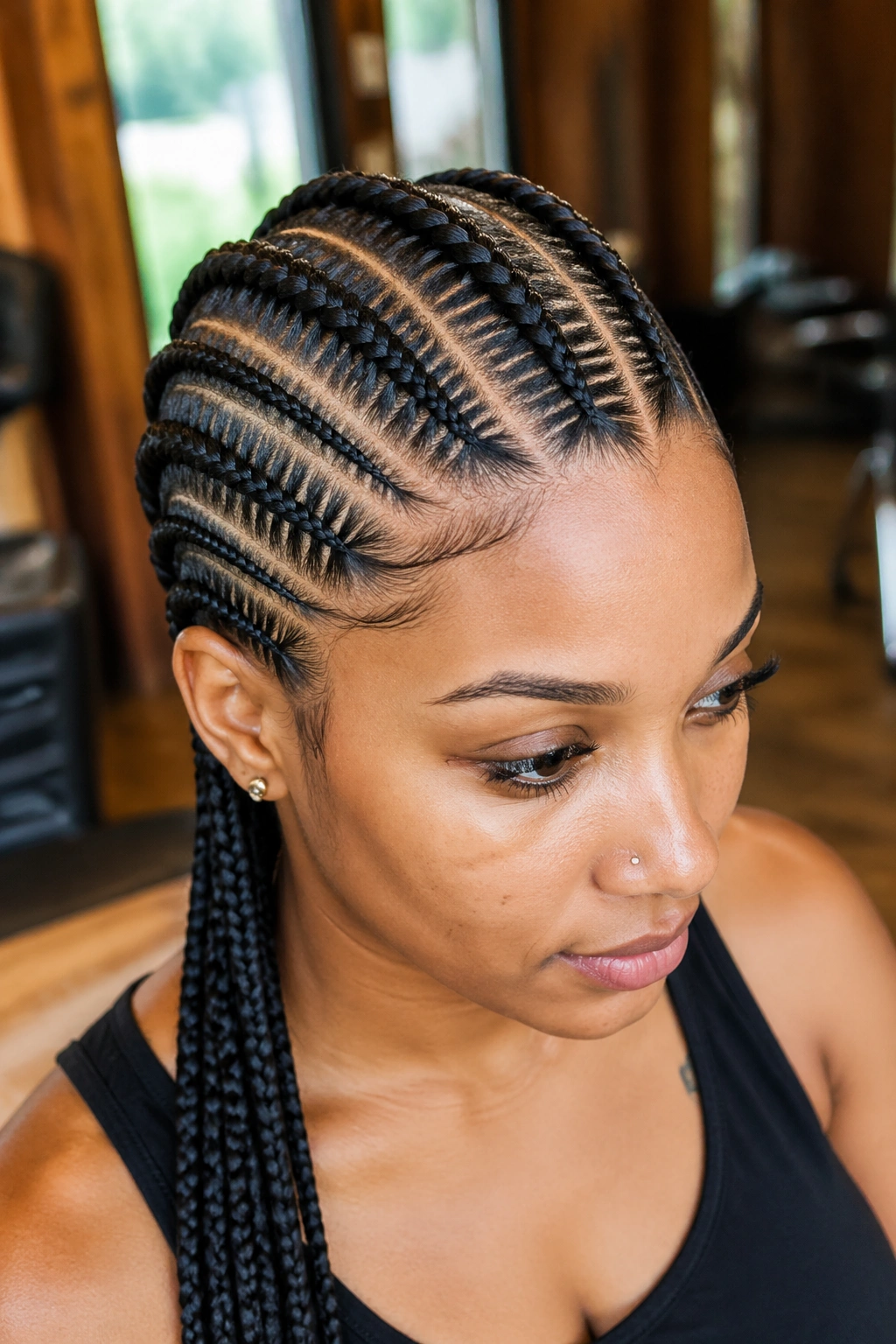
Mixed-width braids make the style feel layered and expensive, but only if the braid map is thoughtful. Thick rows next to thin ones create contrast, and that contrast holds up better than a pattern where every braid tries to be equally loud.
The Parting Strategy
The big mistake here is chaos. You want a rhythm, not randomness. Keep the widest rows in the center or toward the back, then use slimmer rows near the sides to trim down the shape. That keeps the style from feeling top-heavy.
Good for: anyone who wants a set that looks detailed from the side and from the back.
20. Half-Up, Half-Down Cornrows
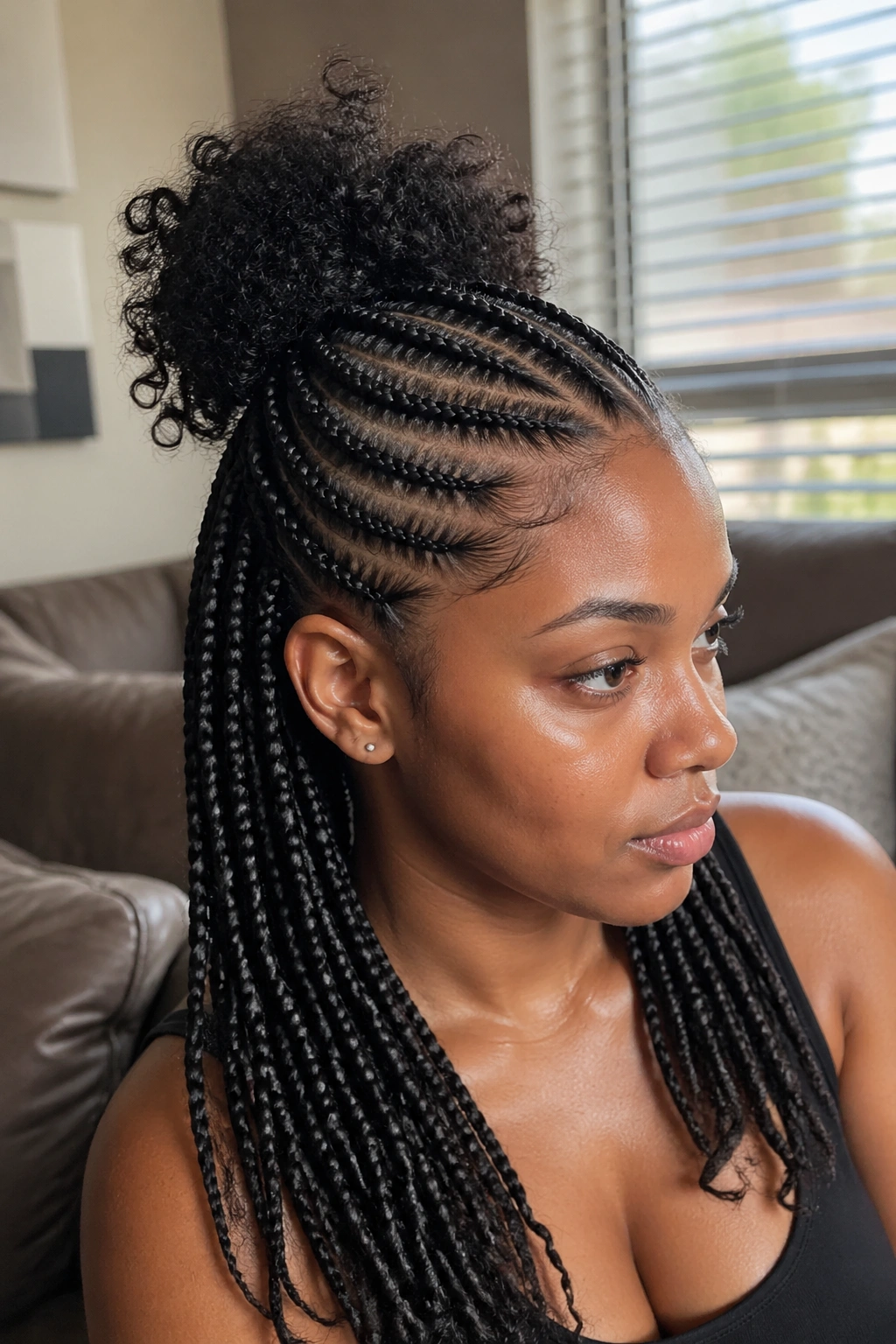
Half-up, half-down cornrows give you motion without exposing the whole head to daily friction. The top portion is gathered away, while the lower rows hang loose and keep the style from feeling too stiff.
That split makes the set easier to wear for a long stretch. The top rows can be refreshed with mousse and wrapped into a small puff, knot, or ponytail, while the lower rows stay protected. If you want something that can go from casual to polished without much work, this is one of the more forgiving choices.
21. Cornrows Into a Top Knot
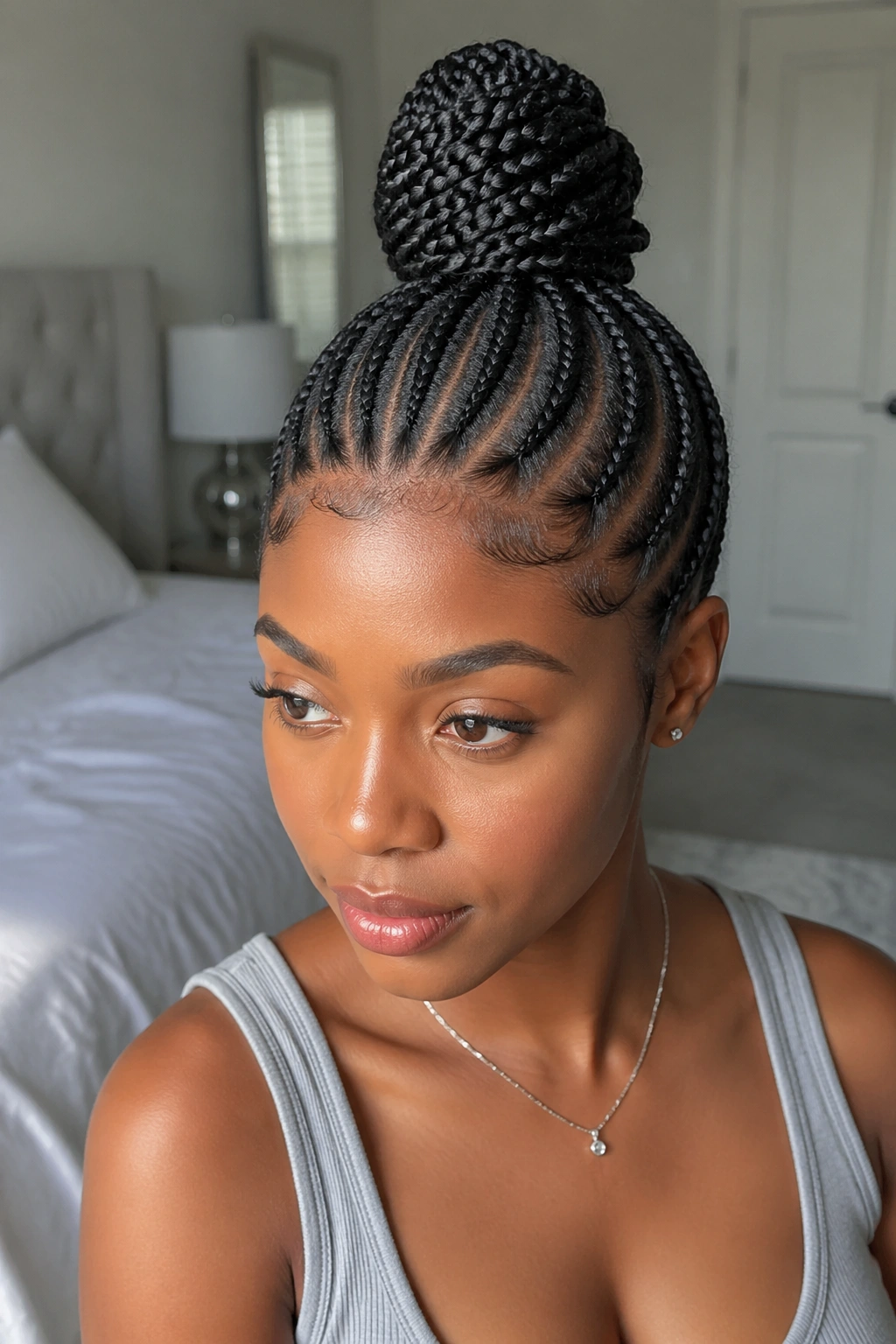
A top knot keeps the ends high and out of the way, which is a blessing if you are tired of braids tapping your shoulders all day. The style also protects the neckline, where friction usually shows up first.
How to Wear It
Ask for the base rows to be anchored evenly so the knot sits centered. If it pulls backward, you will feel it quickly. A satin scrunchie or wrapped extension knot helps keep the bun shape neat without chewing up the roots.
It is a clean, practical look. No fuss. Just lift, twist, and go.
22. Low Ponytail Cornrows
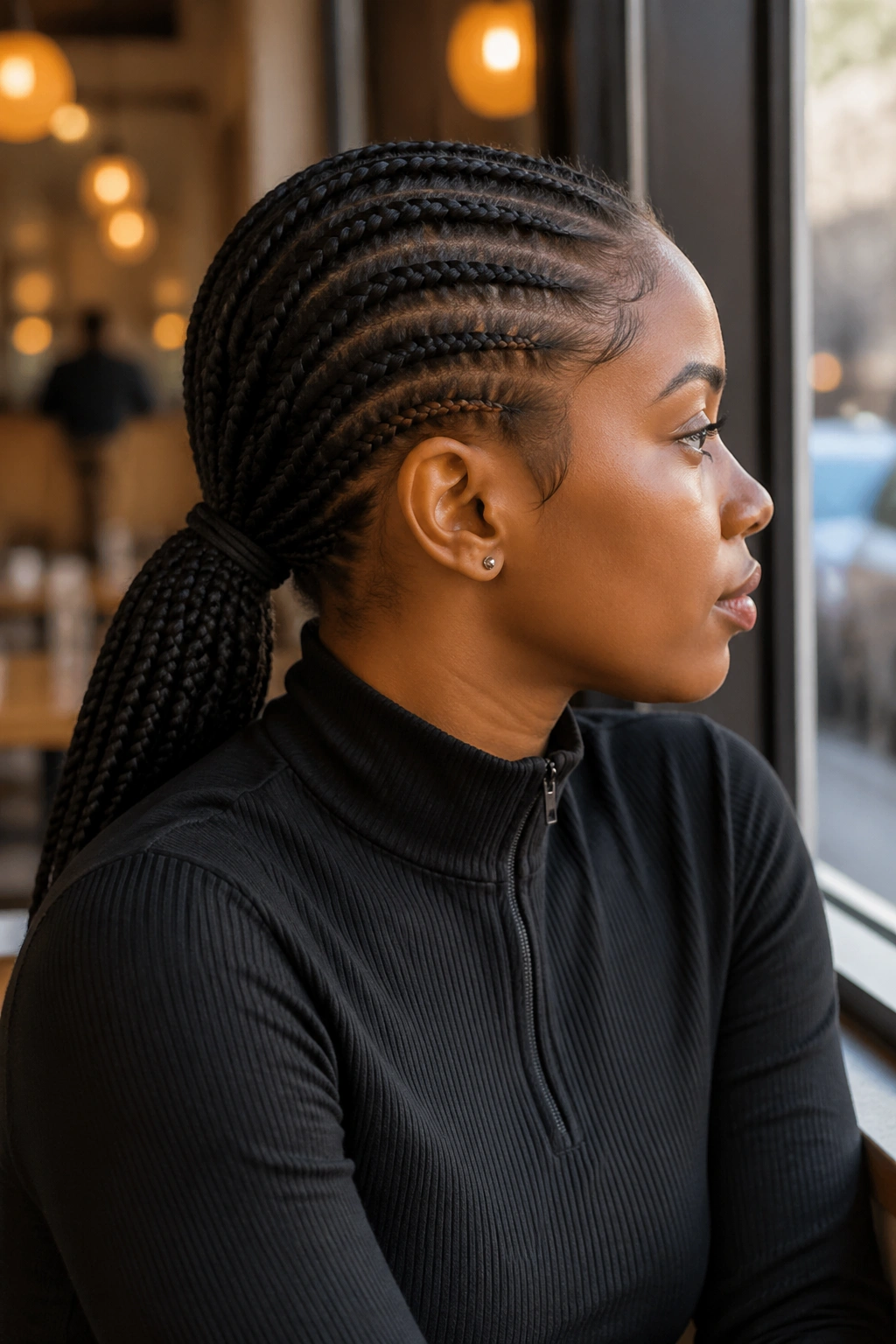
Low ponytail cornrows are the quiet workhorse of this list. They are simple, polished, and easy to sleep on, which makes them a favorite for anyone who wants a style that does not fight with collars and headrests.
The ponytail sits low enough to avoid strain, but the base still needs to be secure. Keep the rows smooth at the nape and do not overload the ponytail with too much hair. A low, medium-weight tail usually holds its shape better than a giant one that starts sagging by day ten.
23. Tapered Cornrows for Short Hair
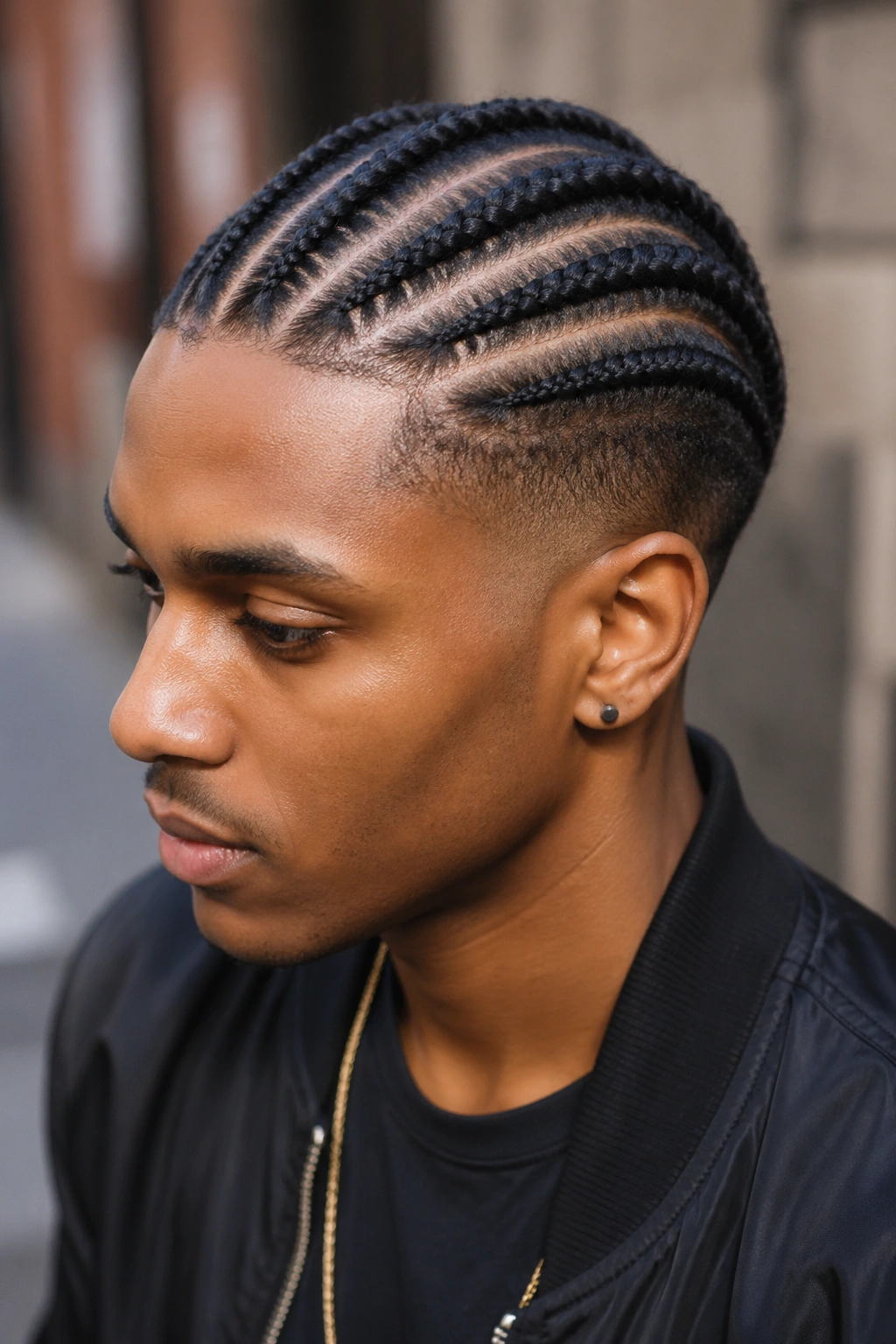
Short hair changes the game, and tapered cornrows solve that neatly. The rows follow the shorter sides close to the head, then leave a little more body where the hair is fuller on top.
That shape is handy because it respects the haircut instead of trying to force a one-size-fits-all pattern. Keep the smallest sections near the temples and slightly wider rows through the crown. If the style is too heavy on short hair, it sticks out instead of lying flat, and nobody wants that.
24. Waist-Length Feed-In Cornrows
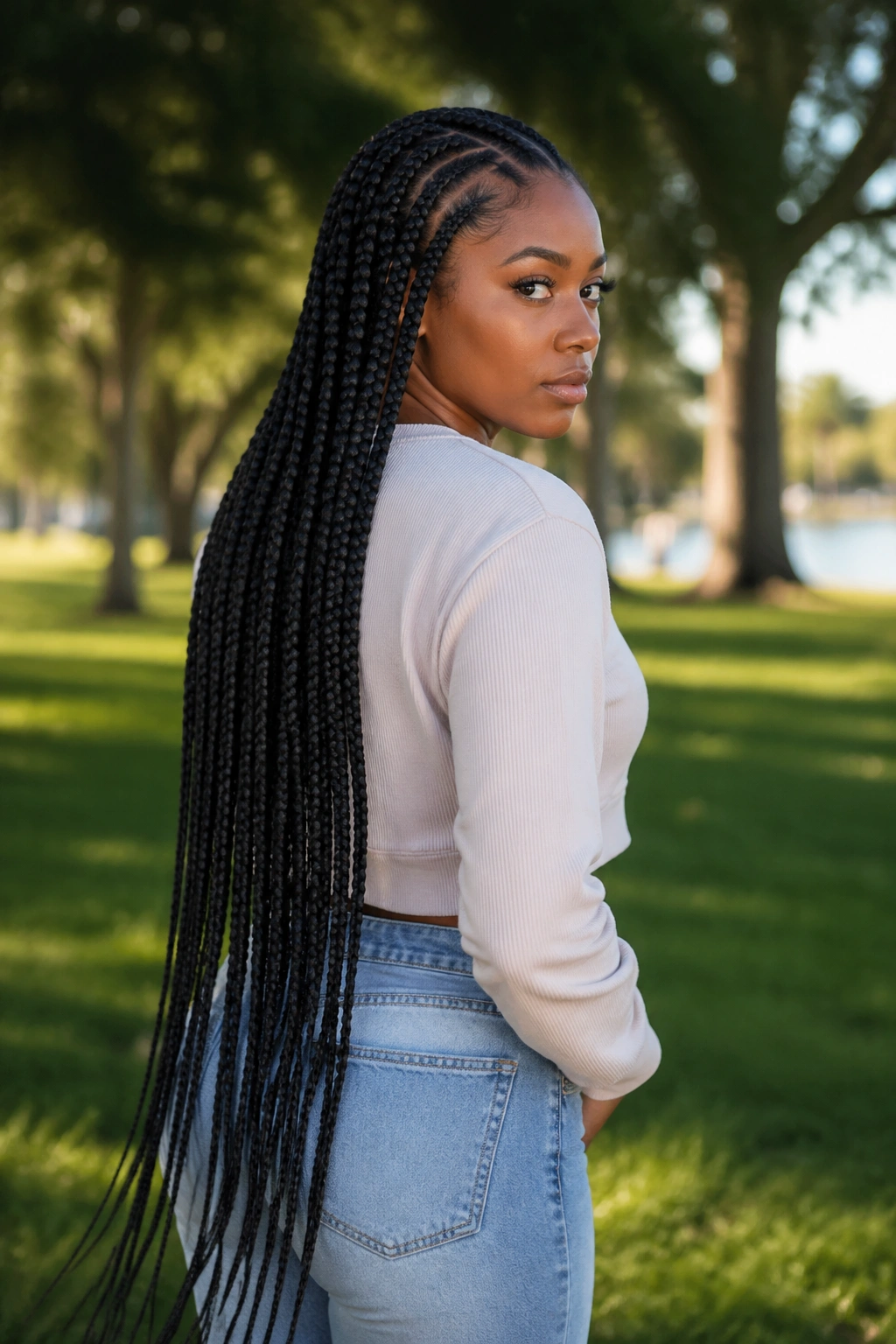
Long feed-ins can last well, but they need a smarter setup than the shorter styles. The extensions should be light, the roots should be balanced, and the weight should be spread across the head instead of hanging from one spot.
What Helps Most
- Use lightweight braiding hair, not bulky bundles.
- Keep the rows medium-sized so the weight does not drag.
- Sleep in a wrap every night, no exceptions.
My opinion: this style is worth it when you want length, but it is not the one to choose if your scalp hates weight.
25. Medium-Width Protective Rows
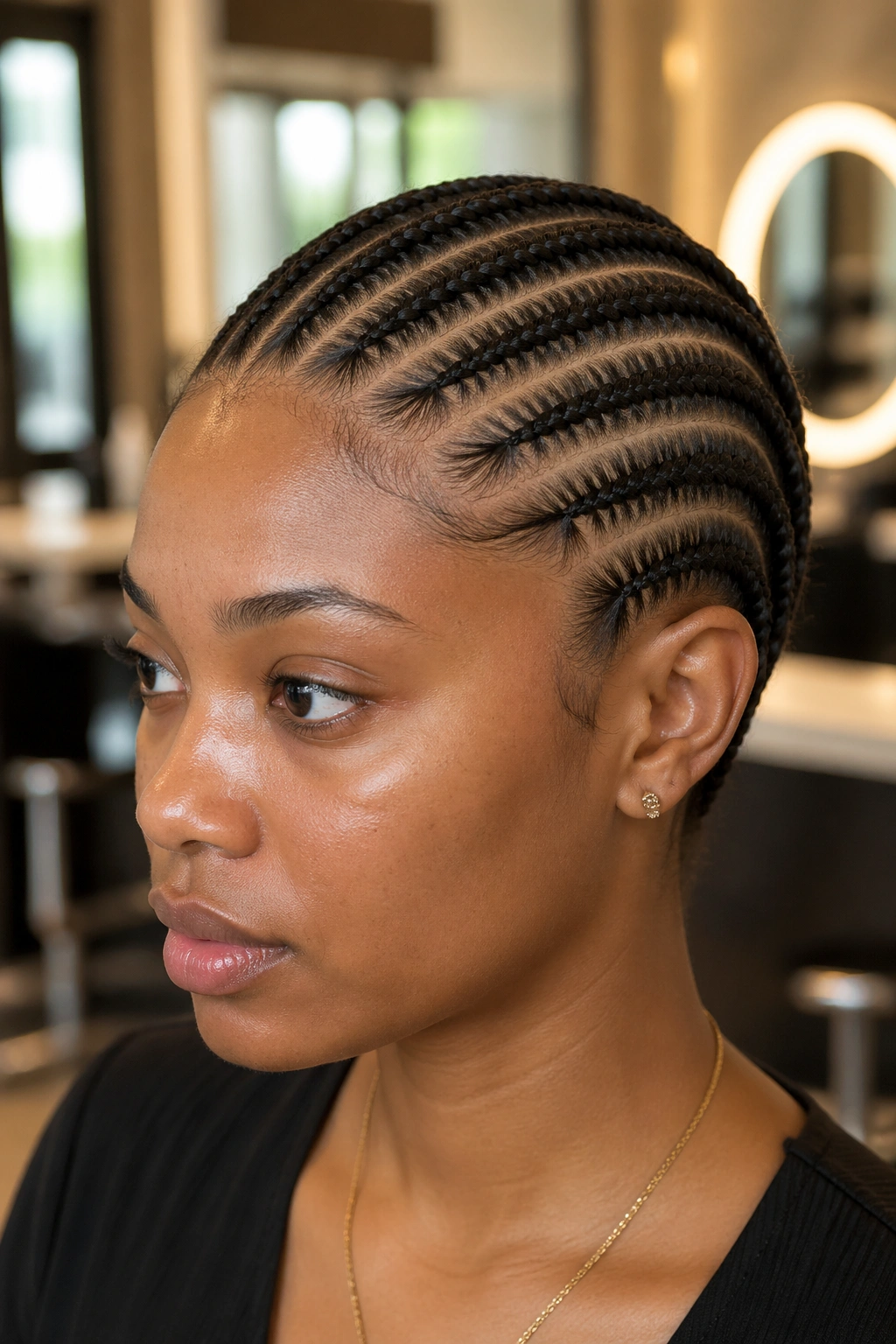
Medium-width rows are my favorite practical option. They are big enough to lie flat and small enough to feel neat, which is a rare sweet spot in braided styles.
They also wear better than extremes. Tiny rows can fray at the root faster, and jumbo rows can feel heavy if the hair is fine. Medium-width rows split the difference without looking plain. Add a little mousse every few days, smooth the frizz with your fingertips, and you can keep the set looking decent for a long stretch.
26. Tiny Micro Cornrows
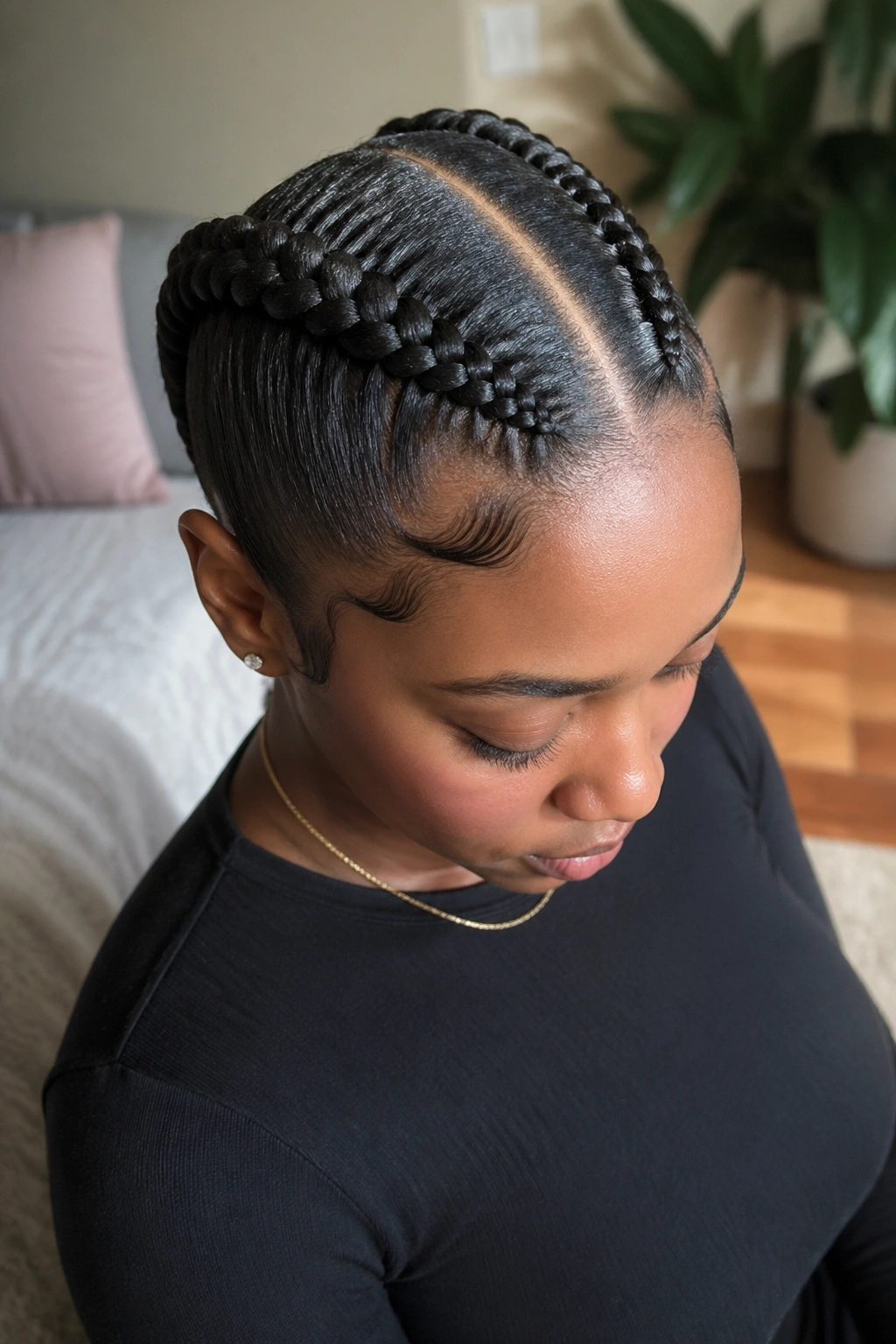
Tiny micro cornrows are intricate and a little obsessive, in the best way. The braid pattern reads clearly, and the scalp is usually well-covered, which can help the style keep its shape.
But here is the catch: tiny rows take time, and time at the chair matters. They also put more stress on the scalp if they are installed too tightly. If you love the look, ask for a gentle base and keep the rows neat rather than aggressive. Delicate styles should not hurt to wear.
27. Beaded Cornrows
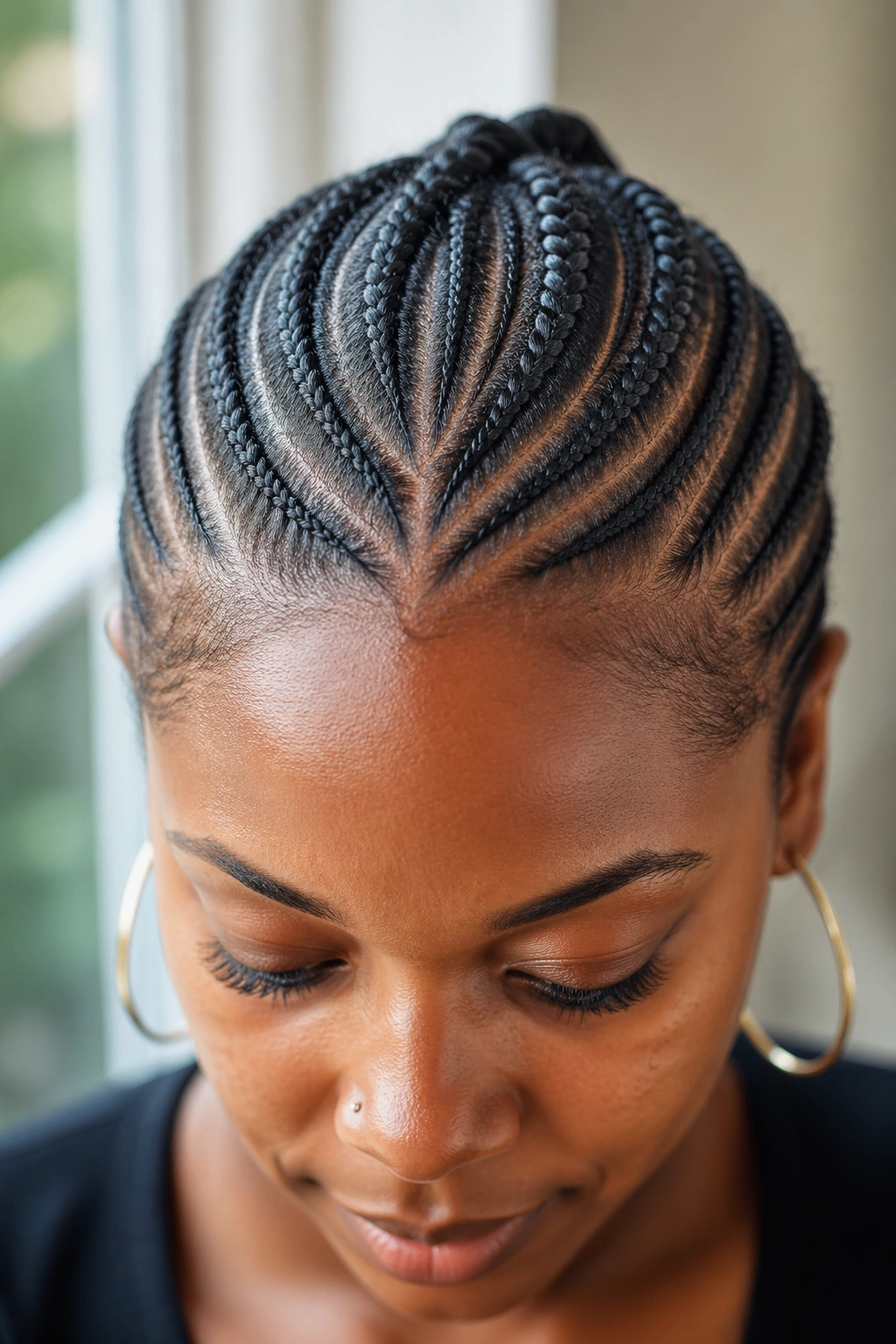
Beads change the whole energy of cornrows. They add weight at the ends, which can help the braids hang straight, and they give the set a finished look even when the roots start to move a little.
How to Use It
Choose a bead count that does not drag. Two to four beads per braid is usually enough. Too many beads make the ends noisy and heavy, and they can snag on clothing.
The best part is the sound and movement. Little things, yes, but they make the style feel alive.
28. Cornrows With Color-Blocked Extensions
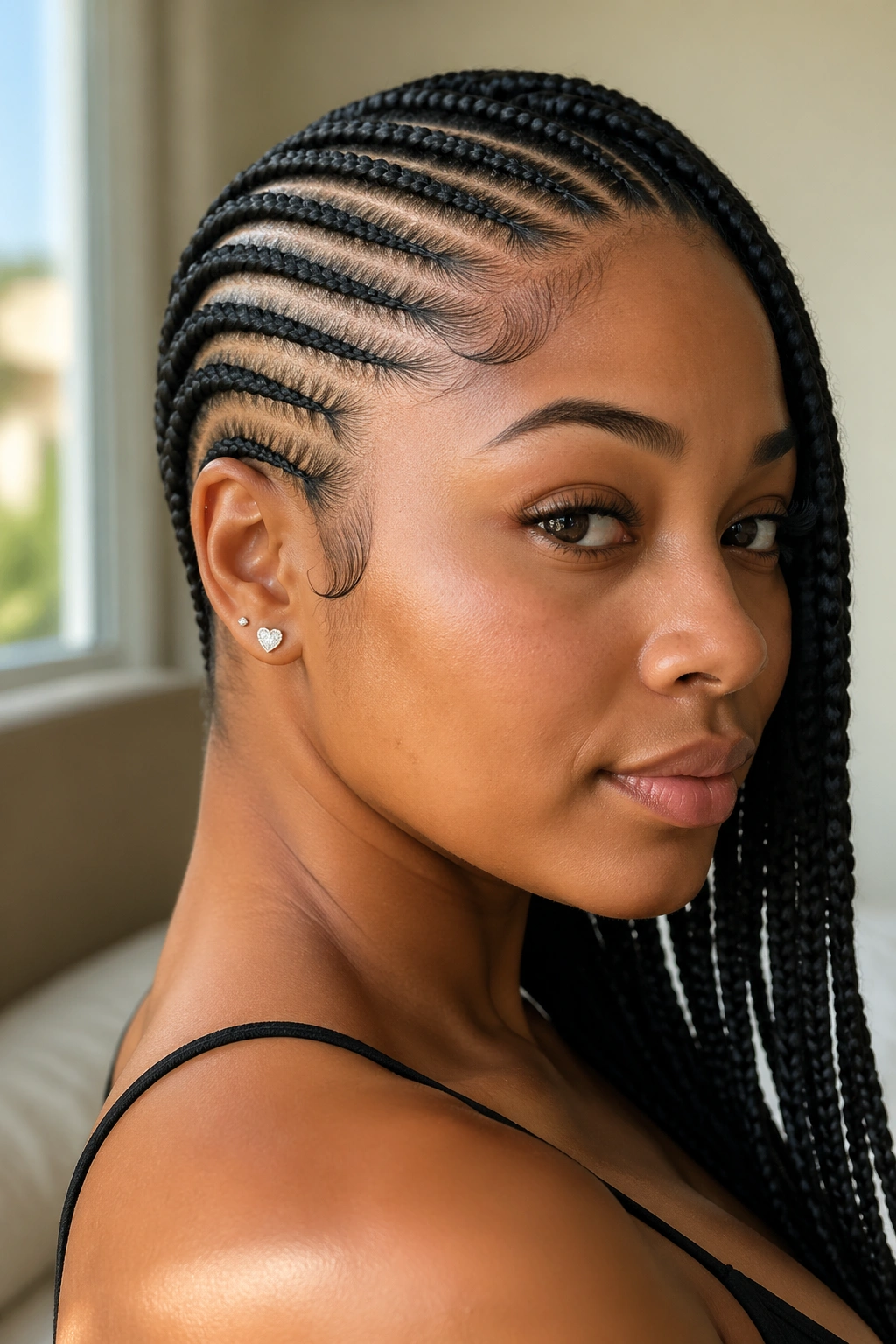
Color-blocked extensions are for people who want the braid pattern to stay classic while the finish brings the fun. Think black roots with honey tips, or alternating rows in two tones.
The color does more than look good. It also helps the shape show up from a distance, which can make the style seem deliberate even when some roots begin to soften. Keep the colors limited to two or three shades. Once you start piling on too many, the braid pattern gets lost.
29. Side-Part Cornrows With a Sleek Swoop
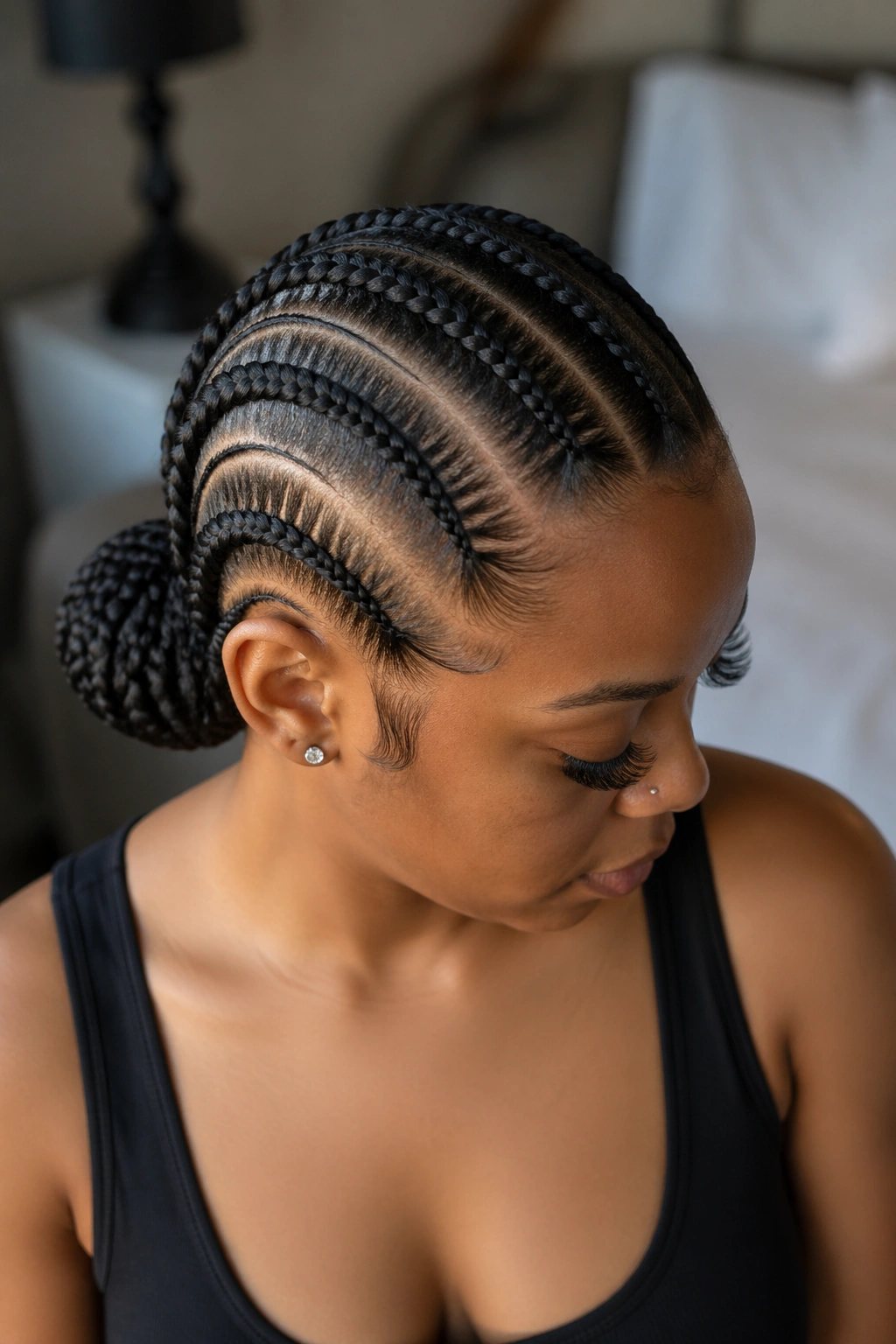
A deep side part and a clean swoop can carry an entire style. The front shape frames the face, and the braids can stay relatively simple behind it.
I like this one when someone wants a little attitude without going full spectacle. The swoop needs to be smooth and pinned or gelled well at the front, because that is the spot most likely to fuzz up first. Keep the rest of the rows straightforward and let the front do the talking.
30. V-Shaped Back Cornrows
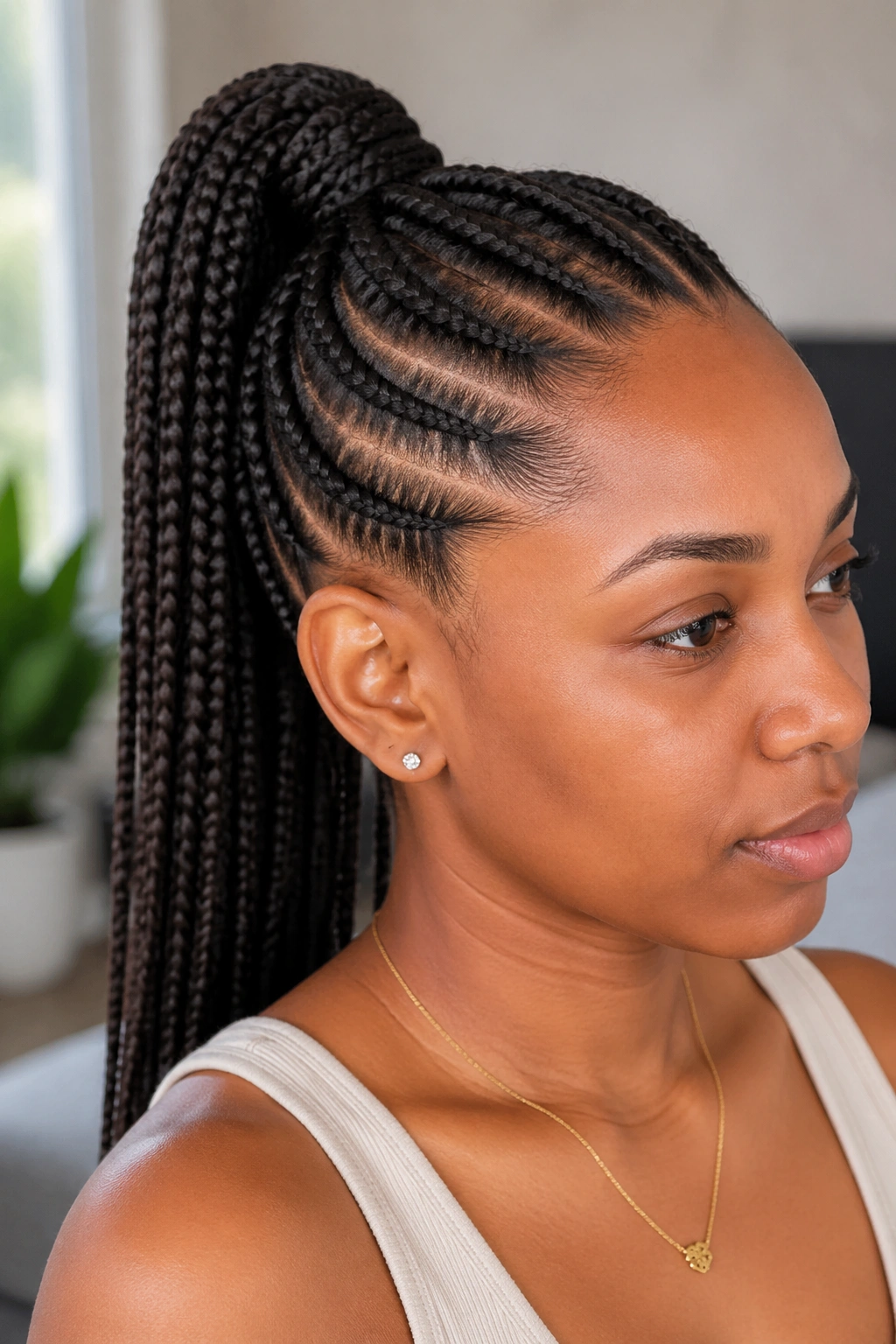
A V-shaped back gives the style a built-in point, which looks sharp without asking for extra decoration. The parting slopes toward the nape in a way that can make the head look longer and more elegant from behind.
The key is symmetry. If one side of the V sits higher than the other, it shows. Ask the braider to map the shape before starting, especially if the braid pattern is going to be worn up. When the lines meet cleanly, this style looks crisp for ages.
31. U-Part Cornrows With Leave-Out
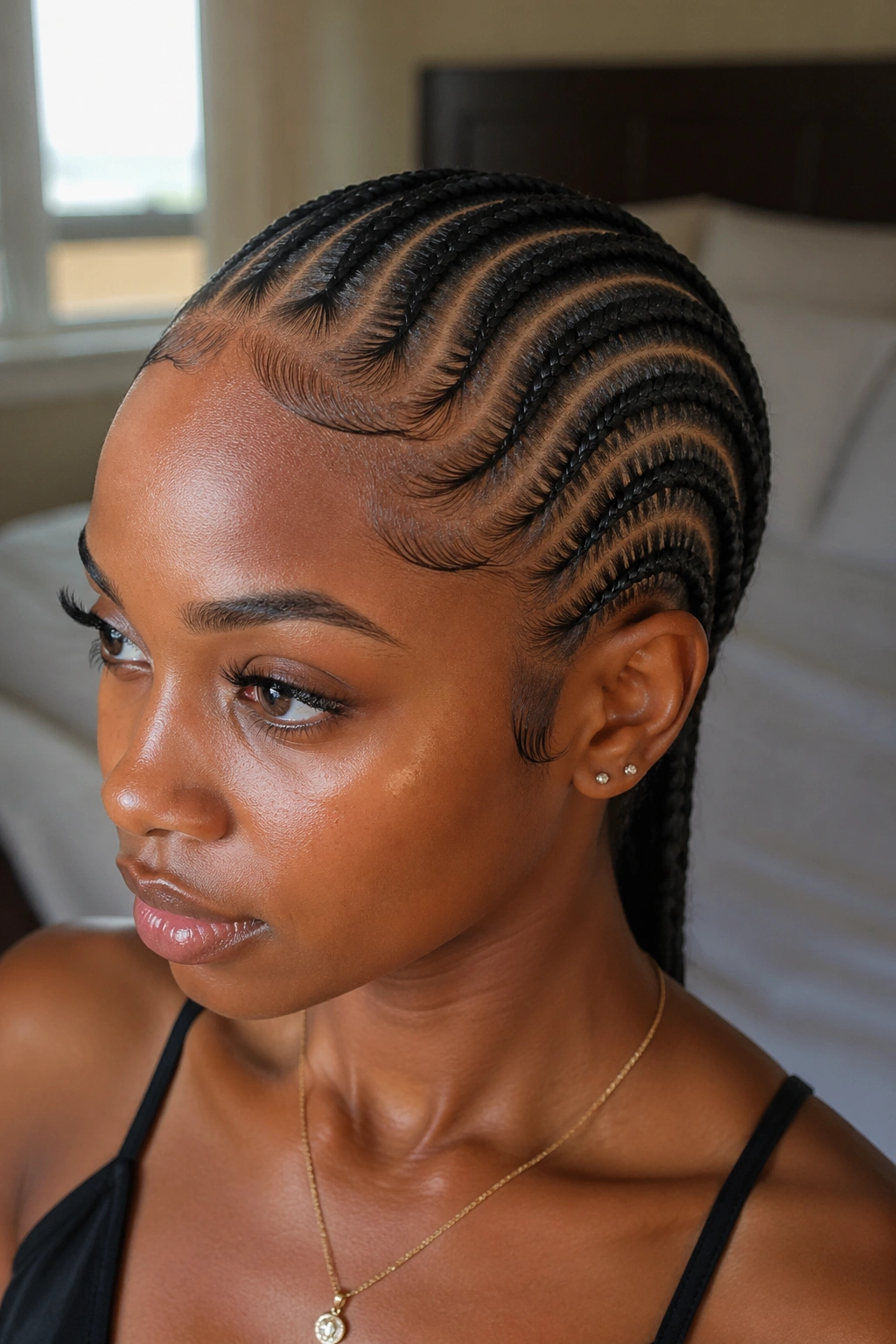
A U-part cornrow base is not the loudest style here, but it is one of the most useful. The braids create a protective foundation while leaving a U-shaped section out for curls, a sew-in, or a blend with your natural hair.
What Makes It Practical
The leave-out should be small enough to blend, not so wide that it loses structure. The cornrows underneath need to lie flat and neat because they are carrying the load. If the base is sloppy, the whole install looks tired fast.
This is the choice for people who want versatility. It is a workhorse, not a show pony.
32. Two-Layer Cornrows
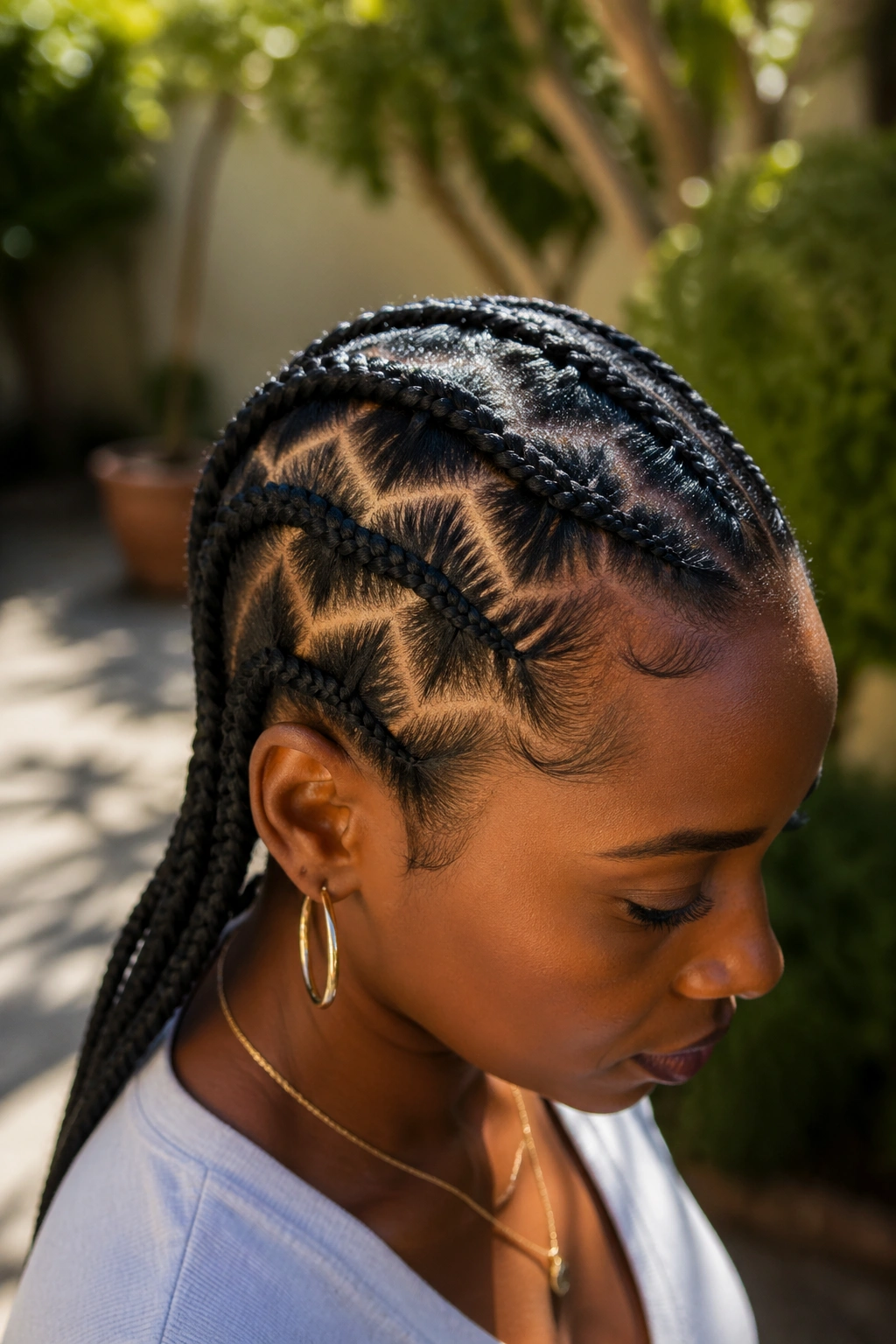
Two-layer cornrows are exactly what they sound like: one braid layer on top, another layer beneath. That stacking gives the style depth, and it also helps keep the set neat because the lower rows stay tucked away.
The trick is keeping the layers balanced. If the top rows are too thick, they will swallow the bottom layer. If the bottom rows are too dense, the head starts to feel bulky. Aim for clean separation and a light finish. It should feel anchored, not stuffed.
33. Cornrow Crown With Tucked Ends
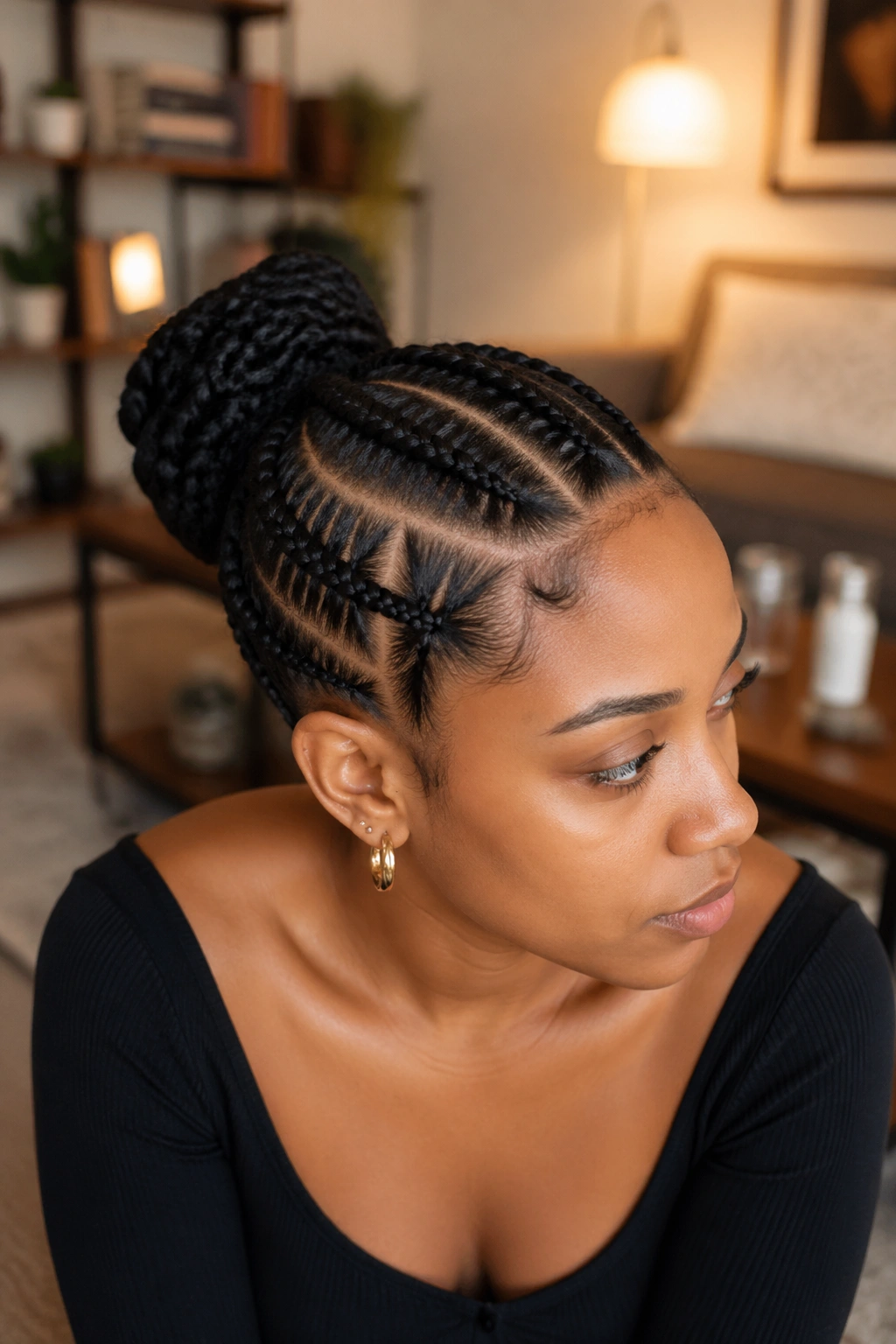
A braided crown that tucks the ends under is a clean, grown-up look. It stays neat because the ends are hidden, which removes one of the main things that usually makes braids look worn out.
I would ask for the crown path to sit close to the head and for the tucked ends to be pinned flat, not piled up. That keeps the silhouette smooth. It is one of those styles that looks calm from every angle, which is not a bad thing when you want a long wear cycle.
34. Cornrows Into Space Buns
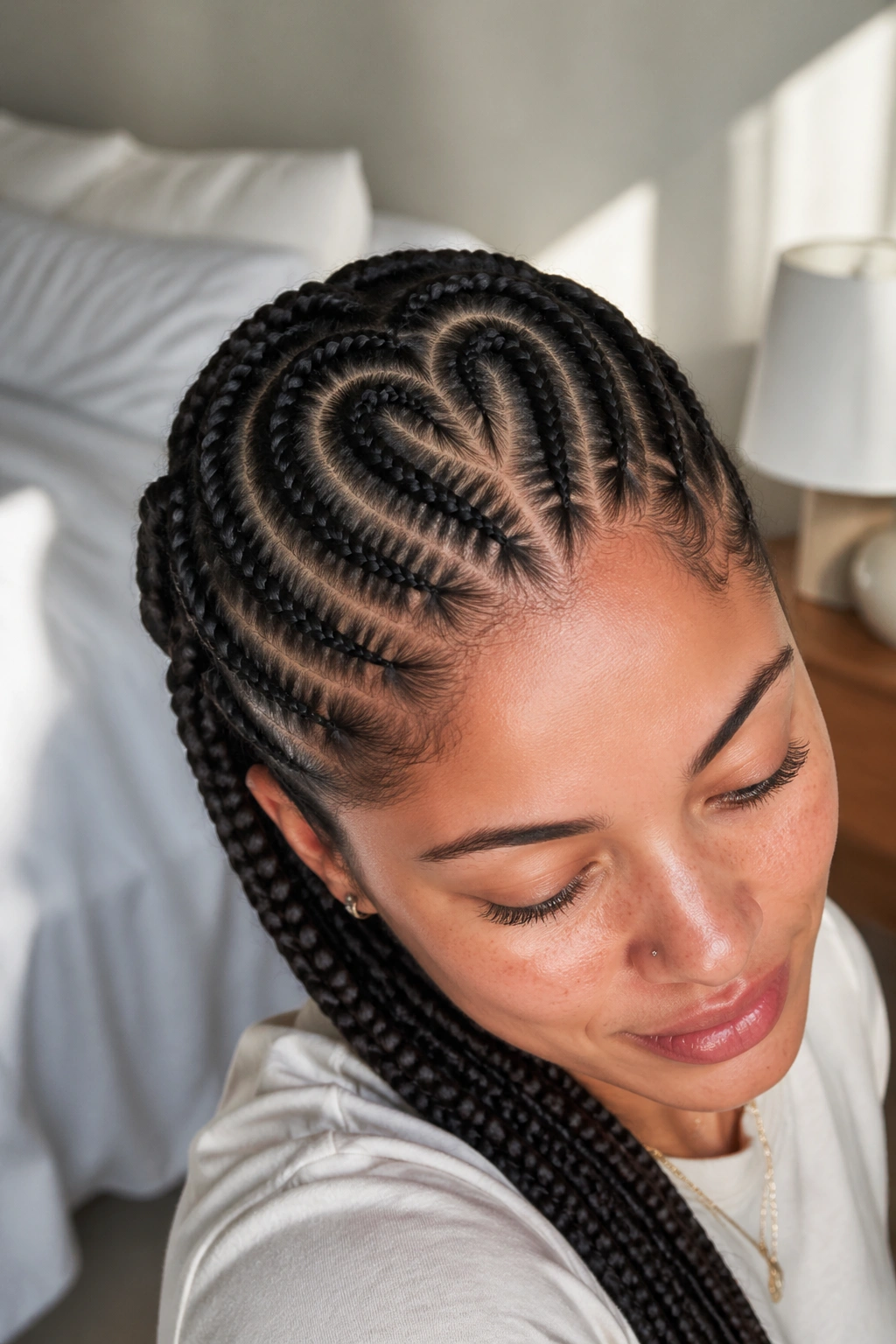
Space buns make cornrows feel playful without turning the whole head into a project. The rows feed upward into two balanced knots, and that lift keeps the style off the neck and away from friction.
The placement matters. If the buns sit too far forward, they can pull on the front rows. Too far back, and the shape gets sleepy. Keep them centered over the ears or slightly above. A neat wrap around each bun makes the style look finished instead of rushed.
35. Layered Cornrows for Thick Hair
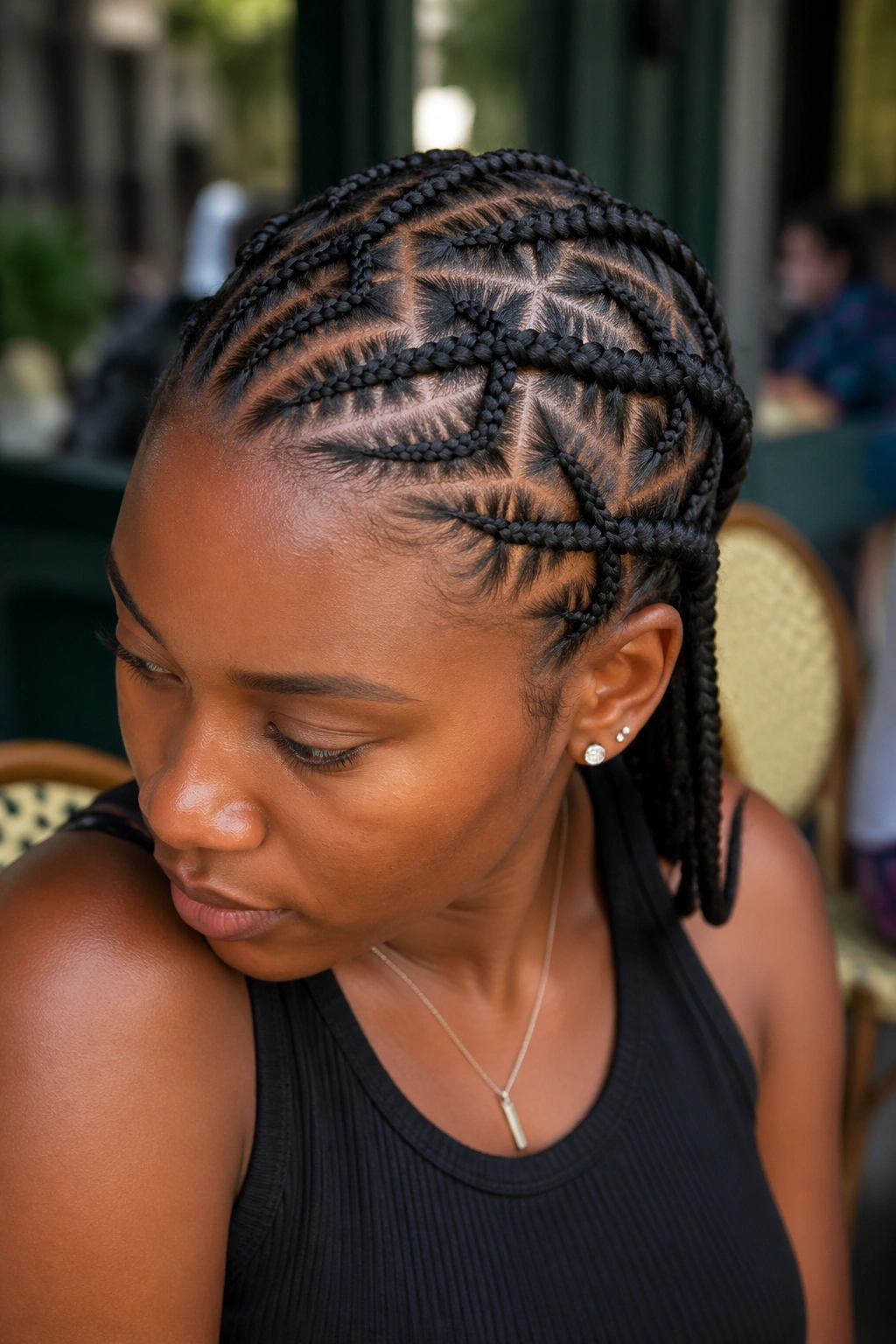
Thick hair can handle layered rows beautifully, and honestly, this is where the style shines. Different row widths help distribute bulk so the set lies flatter instead of puffing up into a helmet shape.
The trick is not making every braid fight for attention. Use wider rows where the density is heavy and slimmer rows where the hair needs to sit closer to the scalp. That balance keeps the style wearable. A good layered set feels lighter on the head than it looks in the mirror.
36. Scalp-Hugging Cornrows With Minimal Tension
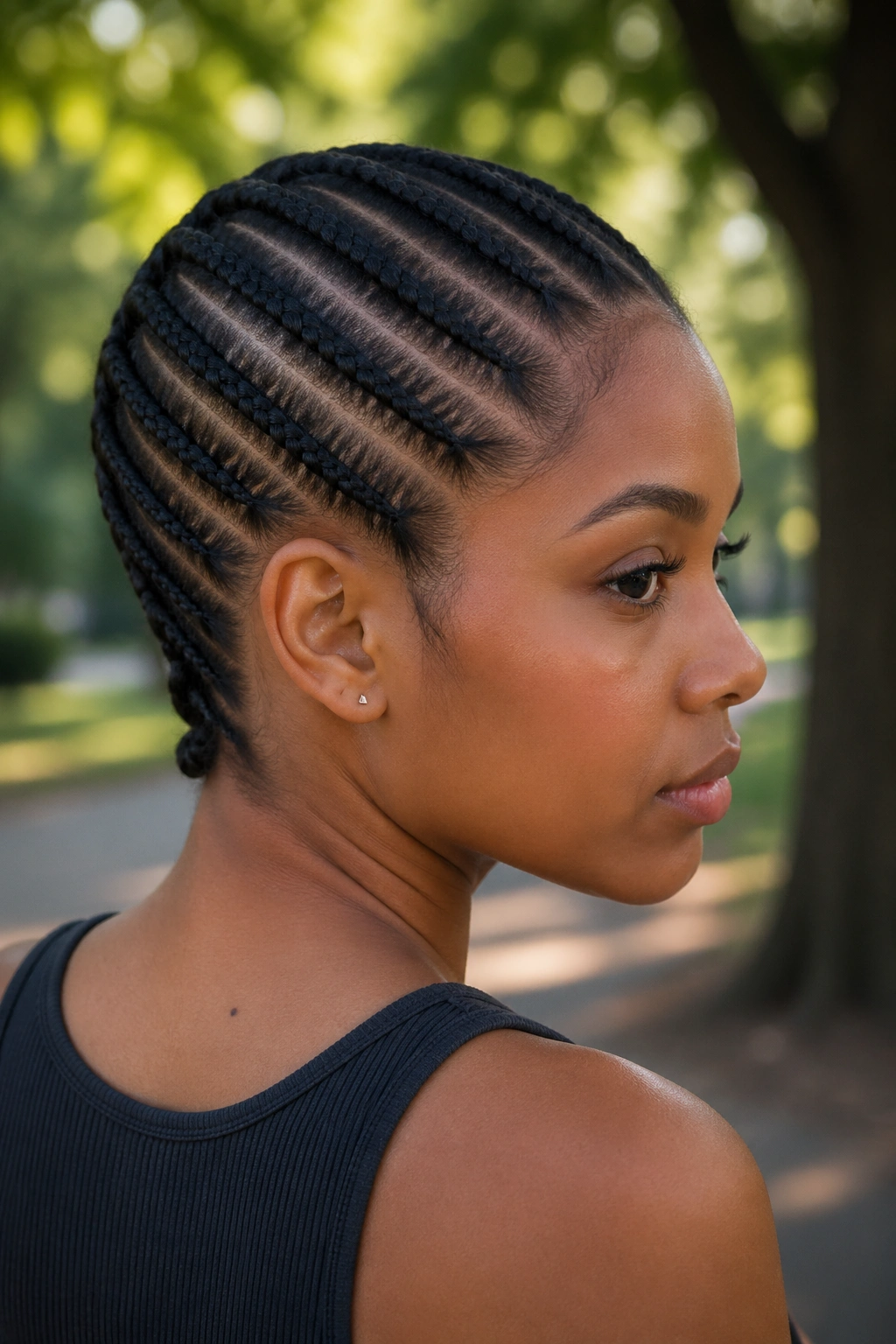
Scalp-hugging rows are for people who want neatness first and decoration second. The braids lie close to the head, follow a clean route, and avoid the kind of tightness that turns a style into a headache.
Compared with louder patterns, this one is quieter but easier to live in. The lines stay sharp longer because they are not fighting gravity or heavy extensions. I like it for anyone who wants a protective style that feels calm on day one and still feels calm on day twenty-one.
37. Clean Straight-Back Cornrows for Everyday Wear
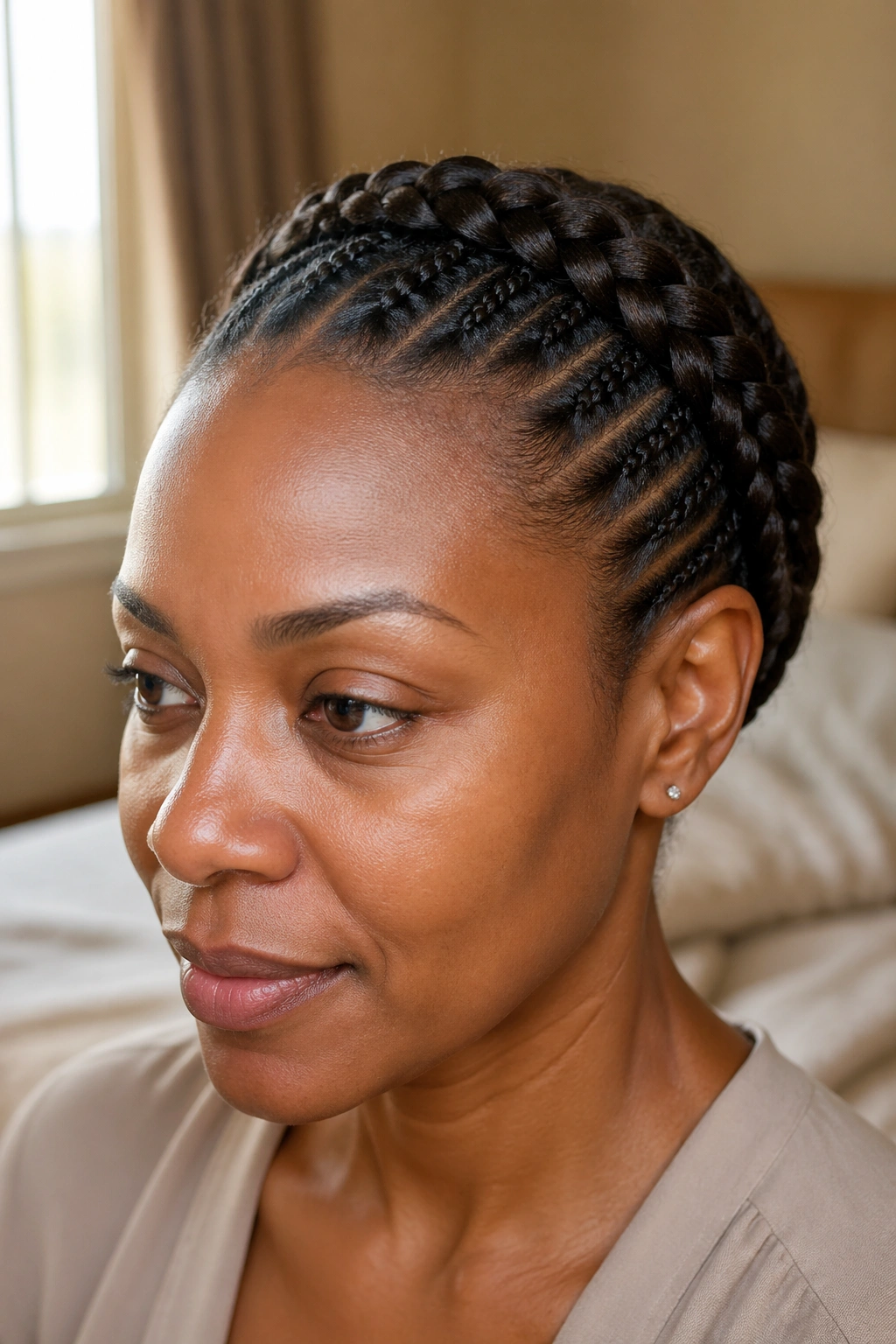
This is the version I recommend when you want the least drama possible. Clean straight-backs, even spacing, smooth roots, tucked ends. Done right, they look fresh without begging for attention.
What keeps them wearable is the balance. Not too tiny. Not too wide. Not too much product at the roots. If you want a set that can move through work, sleep, errands, and a gym day without looking wrecked, this is the one I’d put near the top of the list.
Final Thoughts
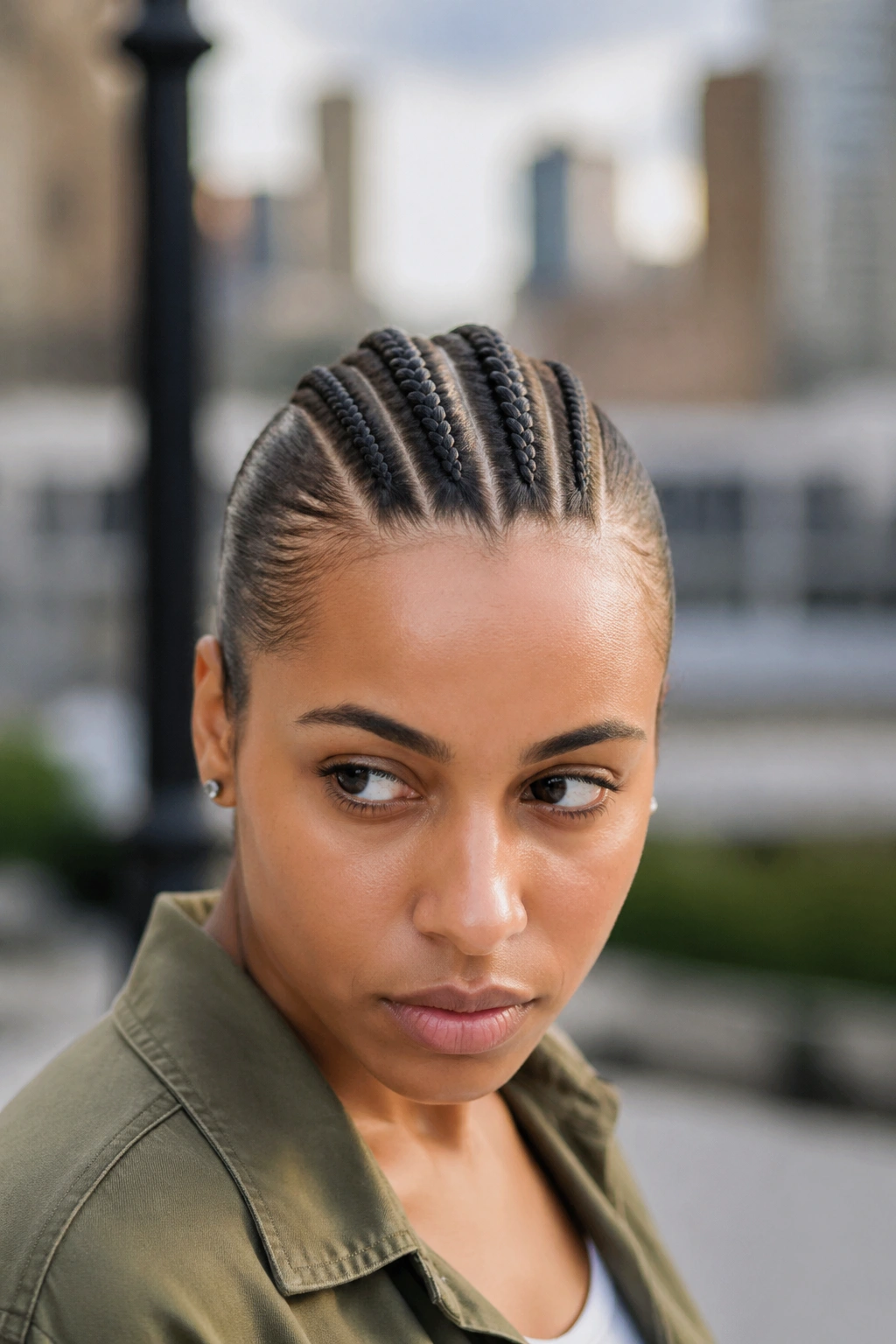
The styles that age best are usually the ones with the least arguing built into them. Clean parting, sensible tension, and ends that are protected beat complicated shaping almost every time.
If you want a set that stays neat for a long stretch, ask for a style that matches your hair density and your real routine. A braid that looks stunning for one afternoon but makes your temples sore is a bad trade. A calm, well-built set is the one you keep reaching for.