


Twist braids can do more than sit neatly on coily hair. They can change the whole shape of the hair, stretch the shrinkage, and give your texture a sharper outline without asking you to heat-straighten a single strand.
That matters because coily hair behaves differently from loose curl patterns. It loves moisture, it loves definition, and it also likes a style that keeps the ends tucked away when you want a break from daily detangling. Twist braids meet that brief in a way that feels practical, not fussy.
Some twist styles are tiny and quiet. Others are chunky, glossy, loose at the ends, or built high into a bun that makes the face look longer. The real trick is choosing the version that matches your hair density, your patience, and how much movement you want the finished look to have.
And yes, section size, part shape, and product choice all matter more than people admit. A quarter-inch twist and a one-inch twist live completely different lives on the same head of hair. One will lie flat and last longer. The other will feel bolder, heavier, and a lot more dramatic from day one.
1. Classic Two-Strand Twists
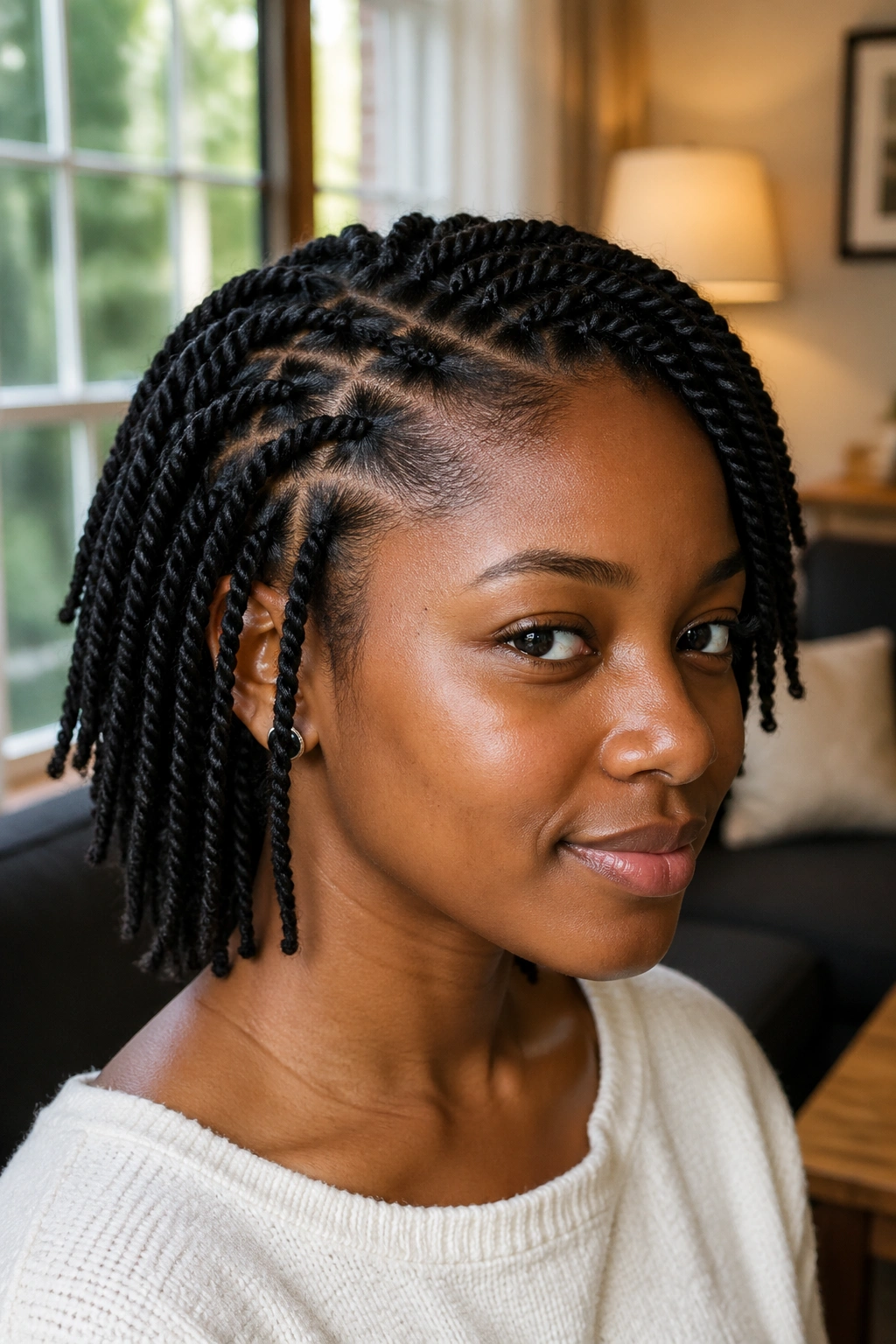
This is the style most people picture first, and for good reason. Classic two-strand twists are the backbone of twist braids on coily hair because they work with the natural curl pattern instead of fighting it.
Why It Fits Coily Hair
Two strands, one over the other, and that’s the whole rhythm. The strands grip each other, the coils nest together, and the result usually looks clean even before you reach for any finishing product. On tightly coiled hair, that grip matters. It helps the twist hold shape without needing a ton of tension at the root.
The best part is the range. You can wear them small enough to mimic a mini set or larger and softer for a chunkier look. They also show off definition on hair that has been lightly stretched, dampened, or coated with a creamy leave-in and a light gel.
- Section hair evenly, usually in 0.25-inch to 0.5-inch parts for a classic look.
- Use a small amount of leave-in and a cream or gel on each section so the twist stays smooth.
- Twist from root to end with steady pressure, not a hard pull.
- Seal the ends by twirling them between your fingers until they hold.
Best for: anyone who wants a neat, everyday twist style that still looks like real hair, not a helmet.
2. Mini Twists for Everyday Wear
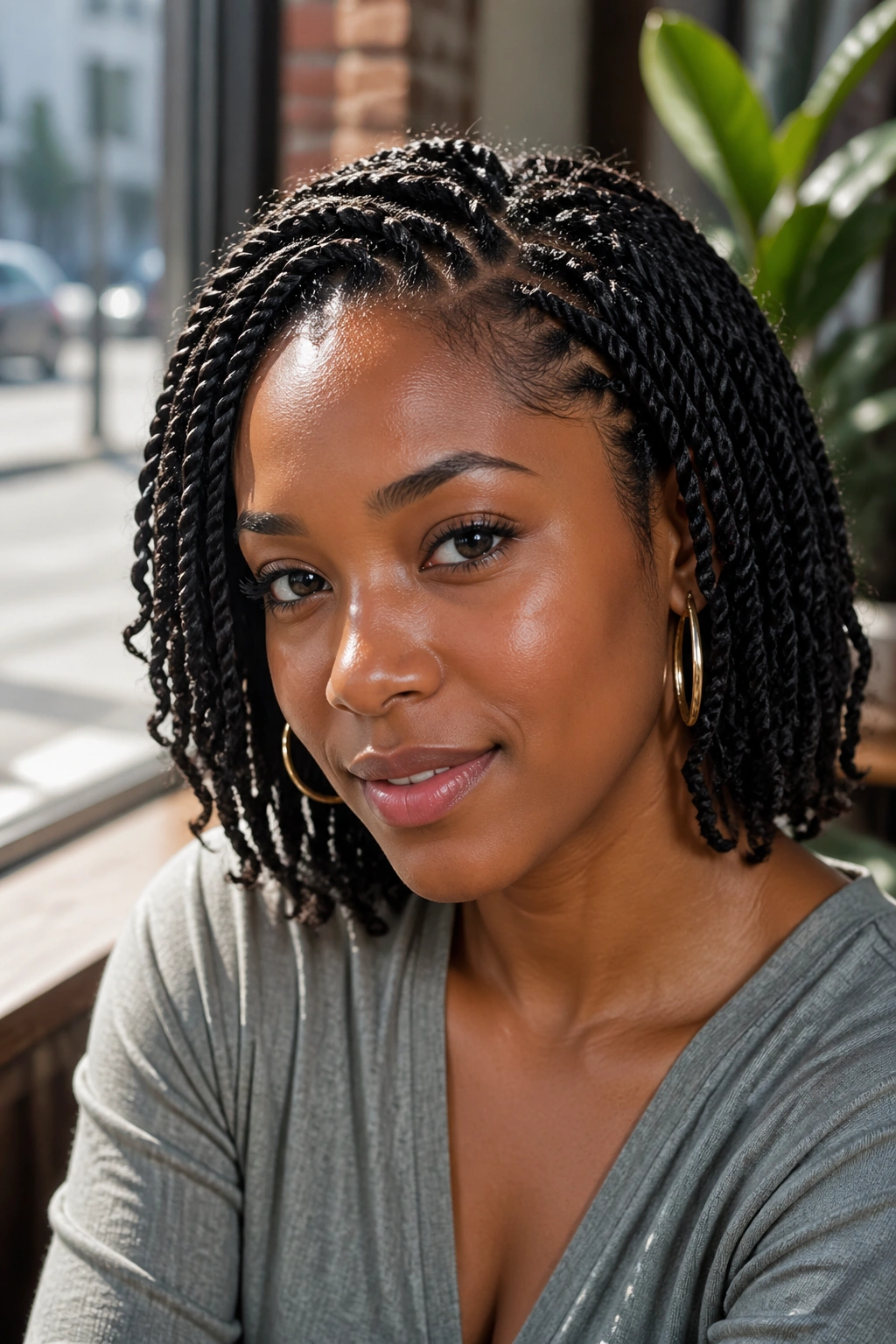
Mini twists have a way of looking calm while doing a lot of work. They tuck away a lot of hair, keep your ends protected, and make coily hair look intentionally styled even when the rest of the week is messy.
The smaller the section, the cleaner the shape. That’s the draw. Tiny twists tend to move less, frizz a bit less at the roots, and give you more styling options later if you want to pin them back, tuck them into a bun, or wear them loose under a scarf.
They do take time. No pretending otherwise. But if you like styles that can last through a busy stretch of days without constant touching, mini twists are a strong choice. They’re also one of the few styles that can look polished on short-to-medium coily hair without adding extension hair.
A lot of people rush the parting, then wonder why the finished set looks uneven. Don’t. Clean parts make mini twists look expensive, even when you did them at your kitchen table.
3. Jumbo Twists with Bold Texture
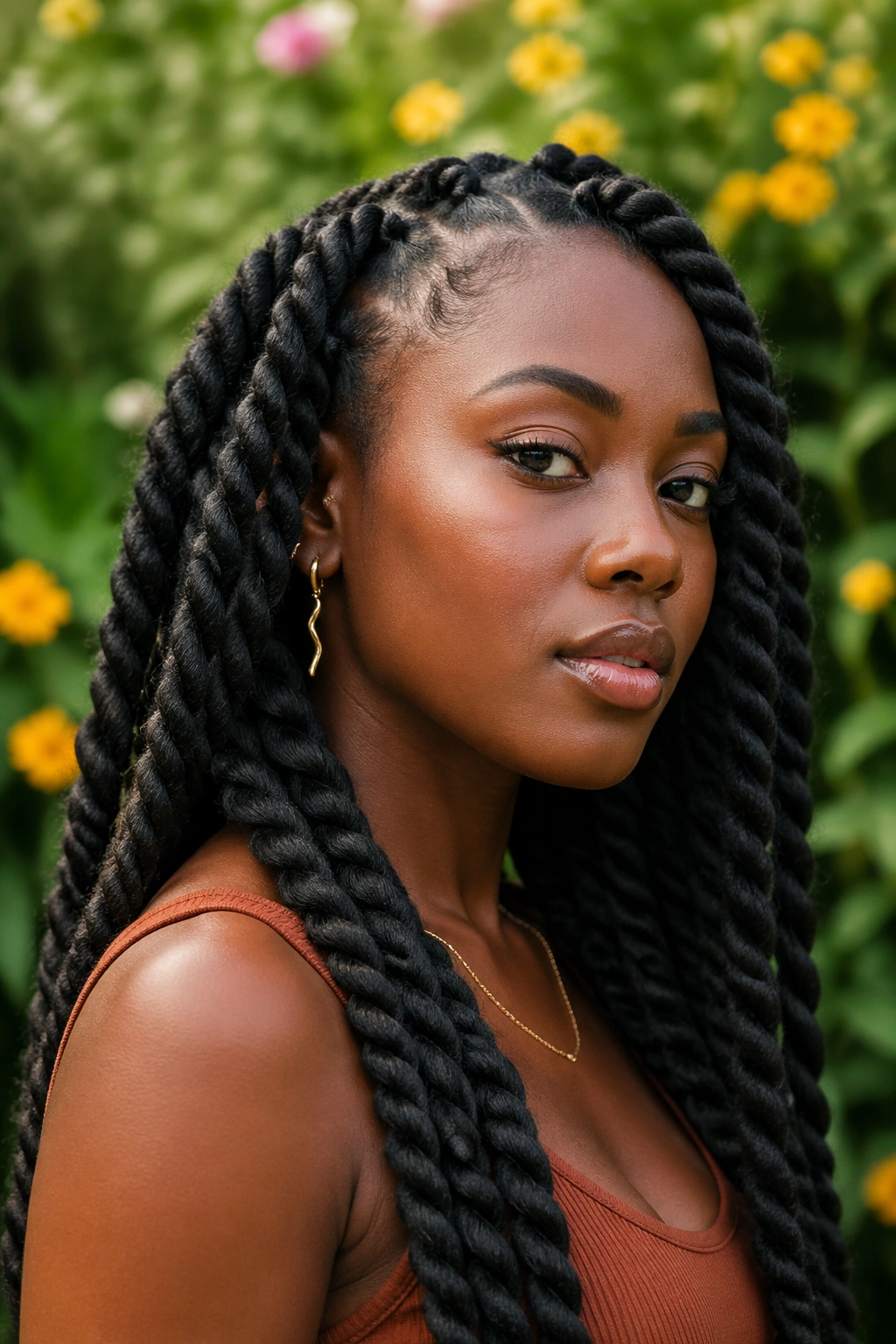
Want a style that reads from across the room? Jumbo twists do that fast.
These are built from larger sections, sometimes close to 1 inch wide or more, so they give coily hair a bigger silhouette and a more sculpted shape. The vibe is soft, dense, and unapologetic. You feel the hair. You see the hair. There is no hiding it, which is half the point.
How to Wear It Well
Jumbo twists work best when the hair has a little stretch. Not bone-straight, not blown out to perfection—just stretched enough that the sections cooperate. If the hair is too tight and springy, the weight of the larger twists can make the roots look fuzzy faster.
They’re a smart pick when you want a style that’s quicker to install than tiny twists but still gives you that twisted texture people notice instantly. Keep the parts clean and the tension even, because a chunky twist with sloppy roots looks rushed.
- Use larger sections and fewer parts for faster styling.
- Add a light cream first, then a small amount of hold product.
- Keep the root neat so the twist does not puff out too quickly.
- Pair with statement earrings or a high-neck top if you want the style to feel intentional.
4. Flat Twists That Sit Close to the Scalp
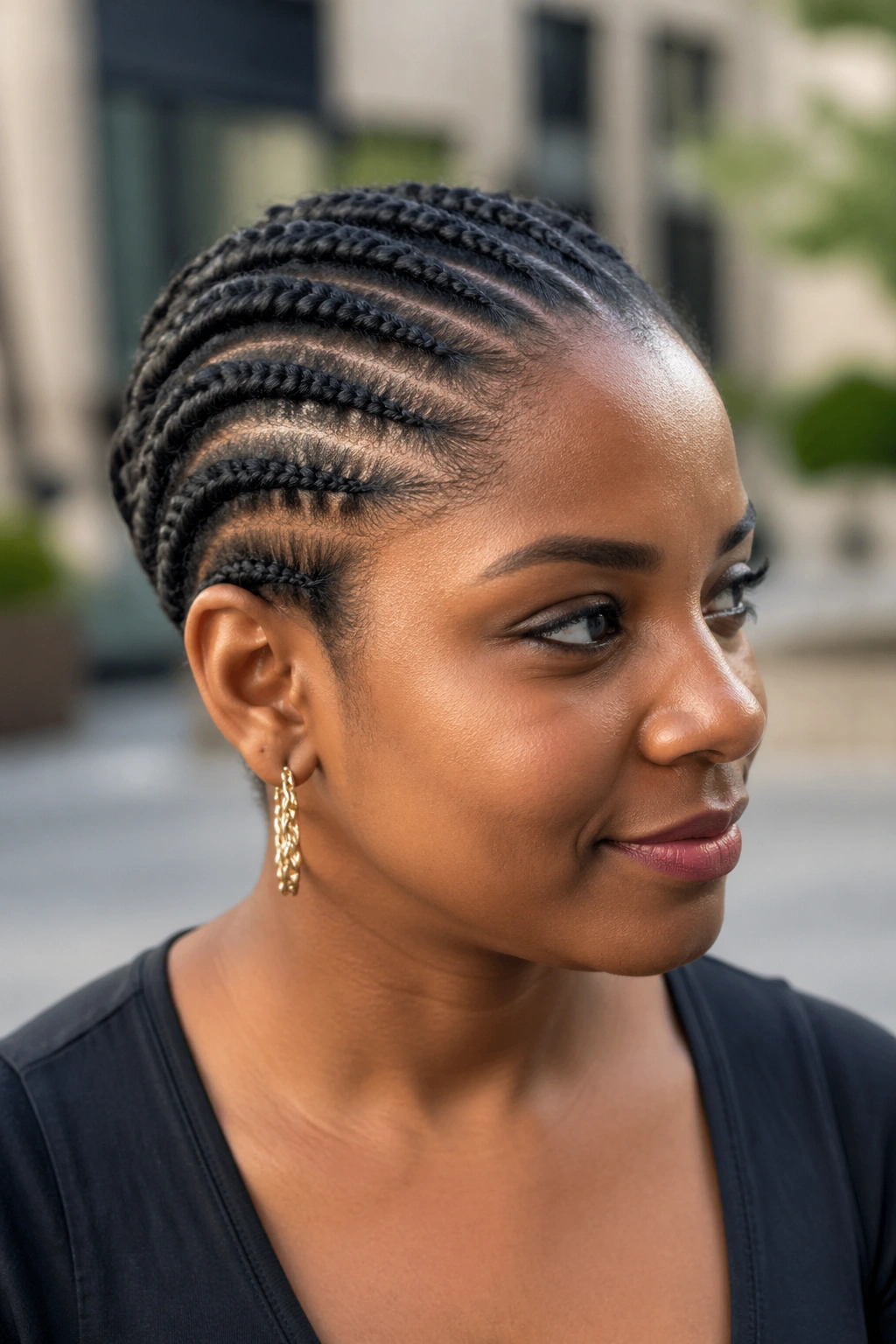
Flat twists are the style I reach for when I want the hair under control without giving up softness. They sit close to the scalp, follow the head shape, and make coily hair look polished in a way that still feels natural.
A good flat twist has a neat base and a smooth curve. It is not trying to stand up for attention. Instead, it lays down with purpose, which makes it ideal for gym days, work days, or any time you want a style that stays put under a hood, scarf, or wig cap.
The tension matters here more than people think. Too loose, and the sections puff up before they’re set. Too tight, and the scalp feels sore by lunchtime. The sweet spot is firm enough to hold, soft enough to wear.
I like flat twists because they make the parting line part of the design. That little detail changes the whole mood.
- Use a rat-tail comb for crisp part lines.
- Start near the hairline and pick up small amounts of hair as you move back.
- Finish the ends as two-strand twists if you want a smoother tail.
- Keep the rows slightly curved if you want a softer finish around the head.
5. Rope Twists with a Smooth Cord Finish
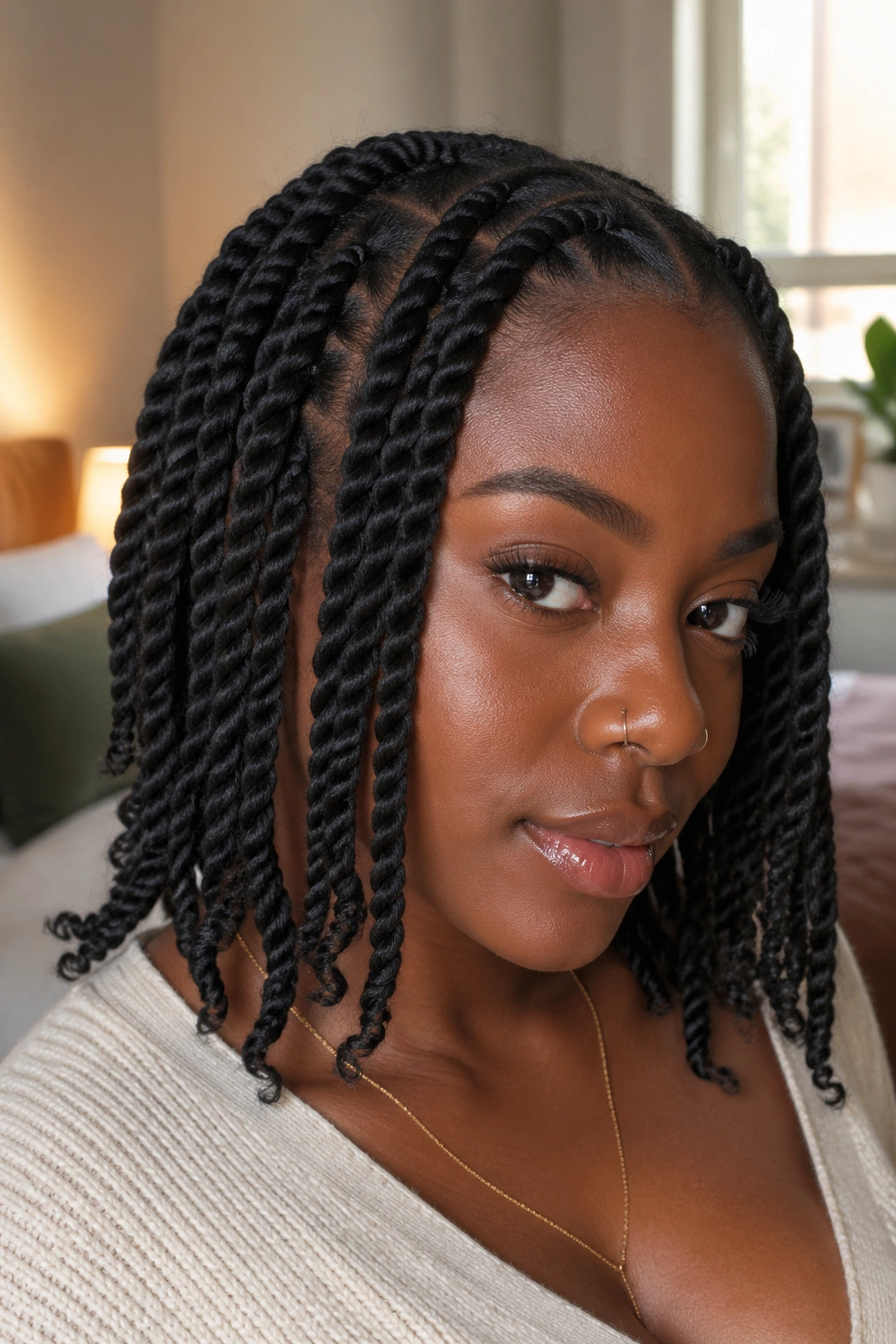
Rope twists look simple until you try to do them carelessly. Then the whole thing falls apart in your hands, because the method depends on direction, pressure, and patience.
Unlike a basic two-strand twist, a rope twist is built by twisting each strand in one direction first, then wrapping them around each other in the opposite direction. That little change gives the style its cord-like look. On coily hair, the result can be sleek at the root and tightly defined all the way down.
They work well when you want a more controlled shape than a fluffy twist set. The finish feels neater, almost tailored, and it shows off the hair’s length without a lot of extra bulk. Shorter coily hair can wear them too, though the sections need to be even or the twist will start to wobble.
A lot of people rush rope twists and then blame the style when it frays. Slow down. The cord only looks crisp when both strands are balanced.
Coily hair that’s been lightly stretched usually gives the best result here, because the twist sits flatter and the ends keep a cleaner line.
6. Senegalese Twists with a Sleek Surface
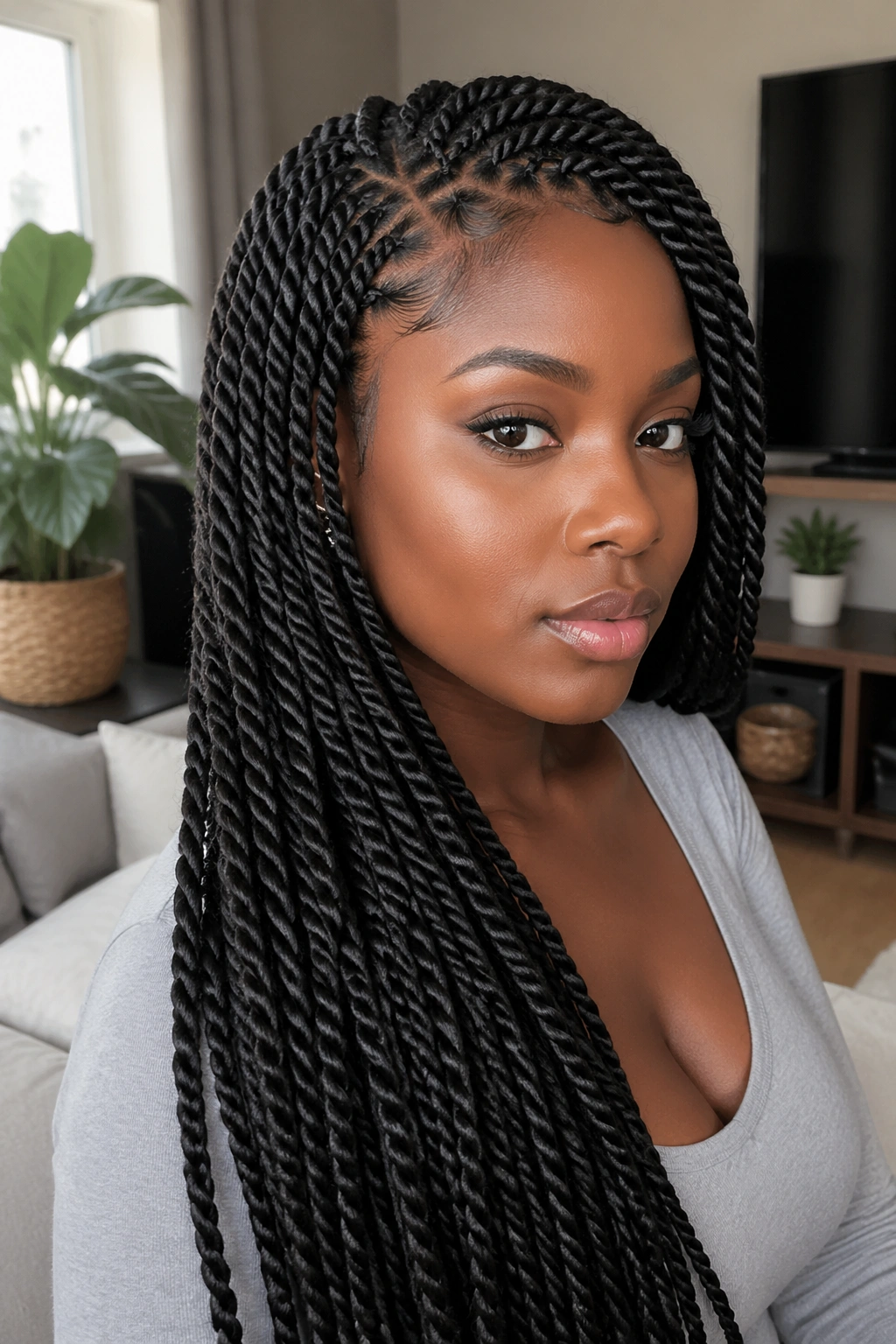
Senegalese twists are the neat friend in the room. They look smoother than many other twist styles because the extension hair usually has a sleek, straight texture that wraps into a clean, shiny rope.
That surface changes everything. Instead of the fluffier feel you get from hair that mimics kink or coil, Senegalese twists have a cleaner outline and a more uniform finish. They can make coily hair look longer and more streamlined without taking away the feeling of movement.
They’re often a good match when you want a style that can hold its shape for a while and still look tidy after a few days of wear. The roots should not be pulled tight. That’s the mistake people make when they want the finish to look extra smooth. Smooth does not have to mean tense.
What Makes Them Different
- The extension hair is smoother and more polished.
- The twists tend to lie flatter against the head.
- The overall look is sleeker than Marley or Havana twists.
- They suit longer wear when installed with careful tension and neat parting.
If your style taste leans crisp, clean, and low-friction, this one belongs near the top of your list.
7. Marley Twists with Matte, Soft Bulk
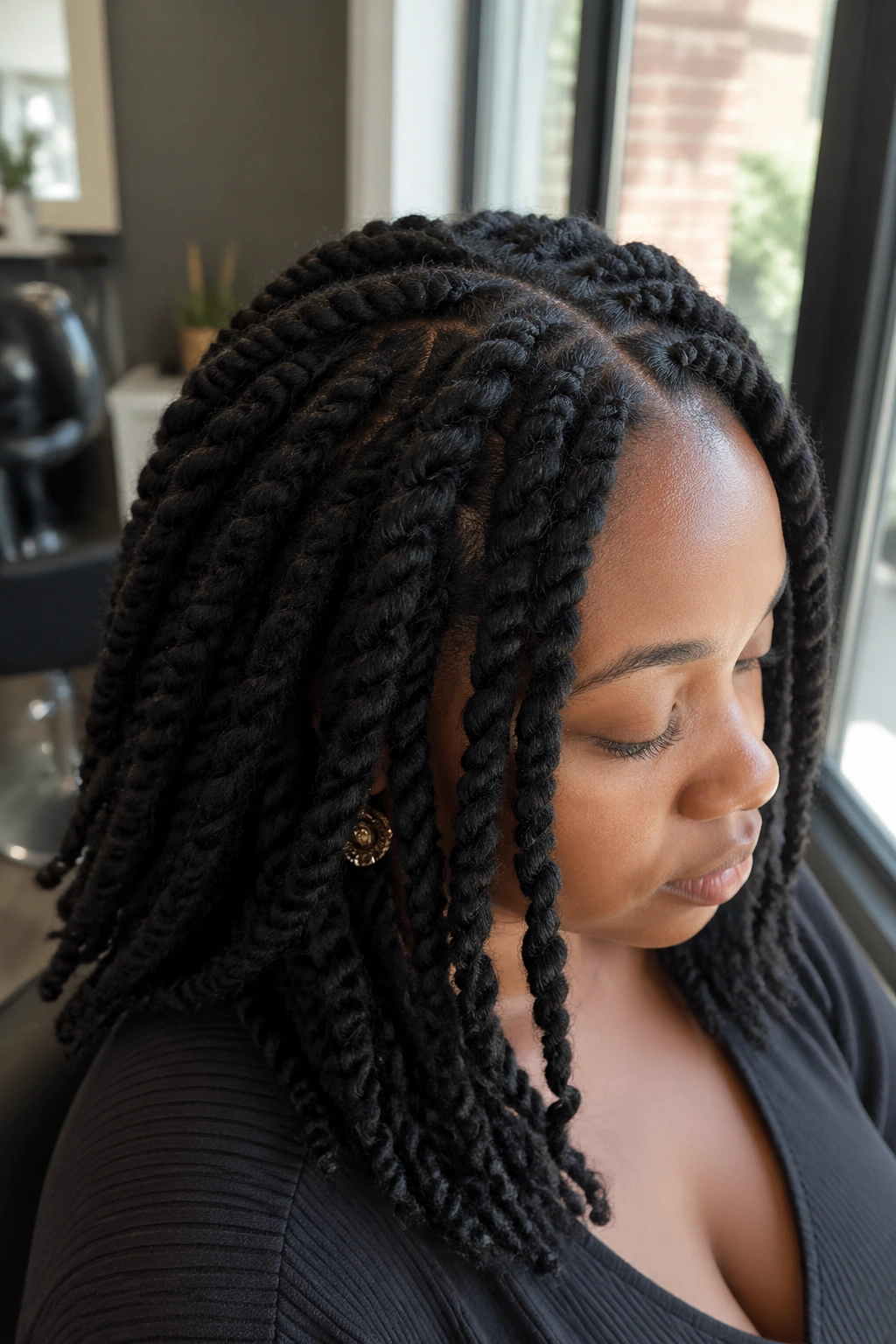
Marley twists have a rougher, more natural texture, and that is exactly why they work so well on coily hair. The texture of the extension hair blends into the coily pattern instead of sitting on top of it like a shiny layer that doesn’t know the assignment.
The finish is matte, soft, and dense. Not fuzzy in a bad way. Dense in a way that gives the hair visual weight. If you like styles that look full without feeling overly sleek, Marley twists hit that sweet spot.
I think of them as the most forgiving of the larger twist styles. They do not demand perfect polish, which is a relief if your hairline or your parting is not salon-level crisp. They still need care, though. Rough handling at the root will show up, especially around the edges of the hairline.
The best versions are installed with enough room for the hair to breathe. Too much tension and the whole set starts to feel heavy. Too little and the root puffs early.
Marley twists are also easy to turn into buns, half-up styles, or side parts because the texture has enough grip to stay where you put it.
8. Havana Twists for Lighter Volume
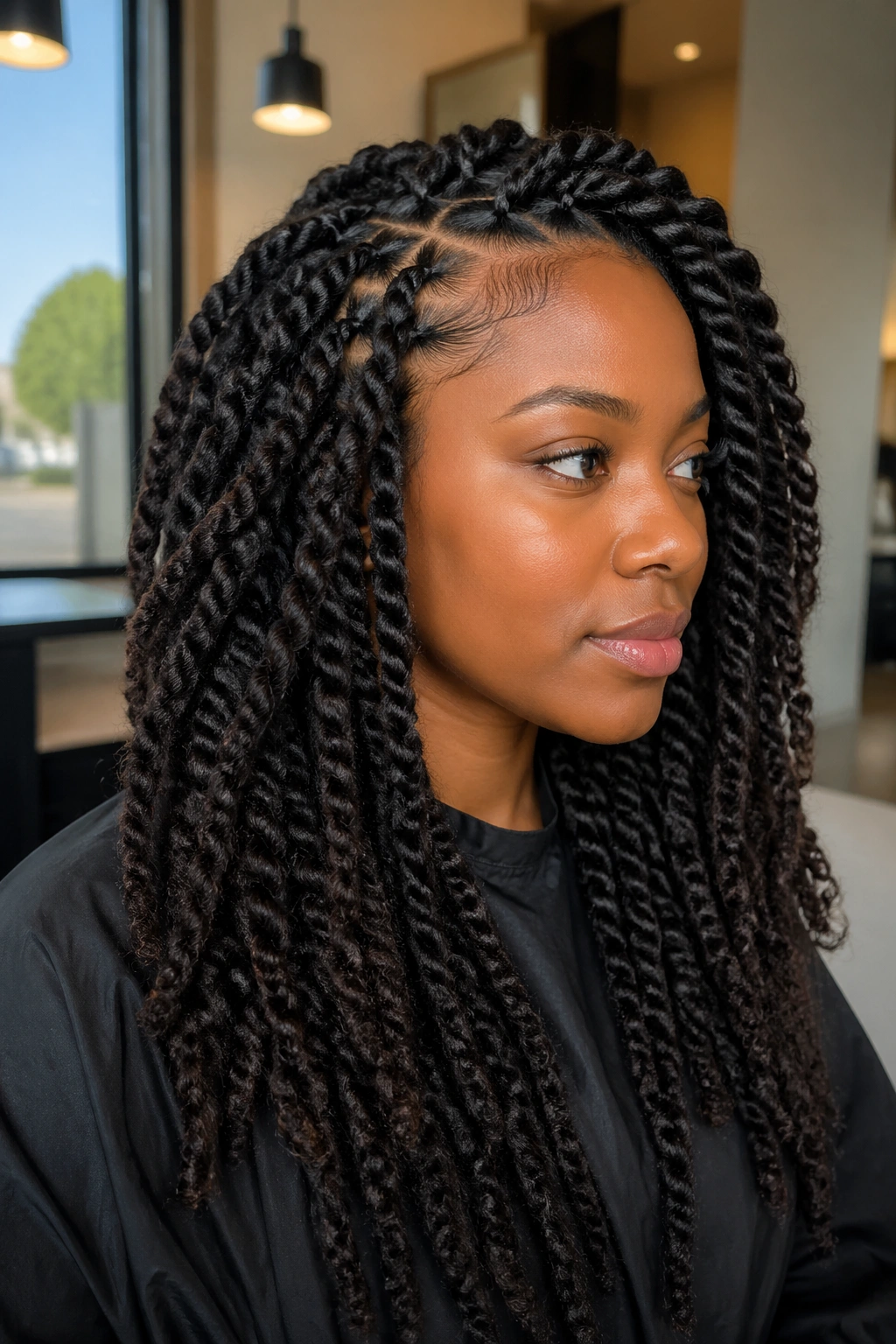
Havana twists give you size without making the style look overloaded. That is the appeal. They’re broader than a lot of other twist styles, but the way the hair is wrapped can keep them lighter than they first seem.
These twists are often built with thicker sections and less wrapping than smaller sets. That means less time in the chair and a fuller silhouette from the jump. On coily hair, the look can be especially good when you want movement around the face and a bold outline through the lengths.
Who They Suit Best
Havana twists are a strong pick for people who like volume but don’t want dozens of tiny parts. They also work if your hair density is high and you want a style that respects that fullness instead of shrinking it into something tiny.
They’re not the best choice if you want the lightest possible wear. Large twists still carry some weight, and the tension needs to stay even or the roots will feel tired after a long day.
A clean center part or a deep side part can change the mood here a lot. So can a few face-framing pieces left a little longer than the rest.
9. Passion Twists with Loose Curl Ends
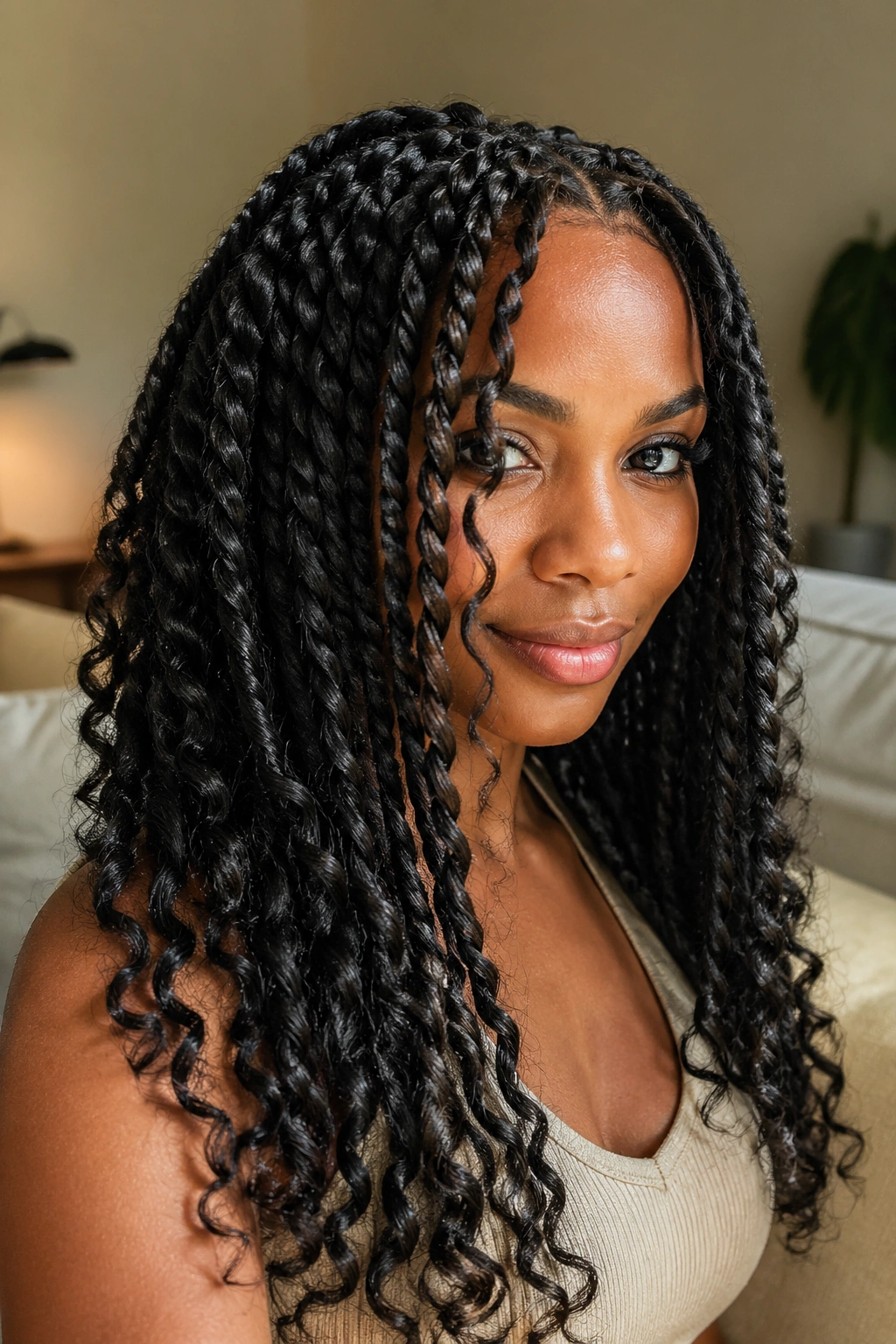
Passion twists look softer because they are softer. That sounds obvious, but it matters. The whole style depends on airy, wavy extension hair that keeps a loose finish instead of locking into a tight cord.
The result is a twist that feels lived-in from the start. Coily hair blends nicely with that texture because the style doesn’t ask the hair to become something flat or stiff. It keeps a little movement, a little fuzz, and a lot of shape around the face and shoulders.
The middle of the twist often looks neat while the ends stay lightly curled or free-flowing. That contrast gives the style its charm. If you try to over-control passion twists, they stop looking like passion twists.
How to Keep Them Looking Good
- Use a light mousse on the lengths when the install is finished.
- Separate the wavy hair gently before twisting so it does not clump.
- Sleep with a satin bonnet or scarf to keep the curls from tangling too fast.
- Avoid heavy oils at the roots; they make the base slip.
Passion twists are a good fit when you want softness, movement, and a little bit of mess in the right places.
10. Spring Twists with Spiral Bounce
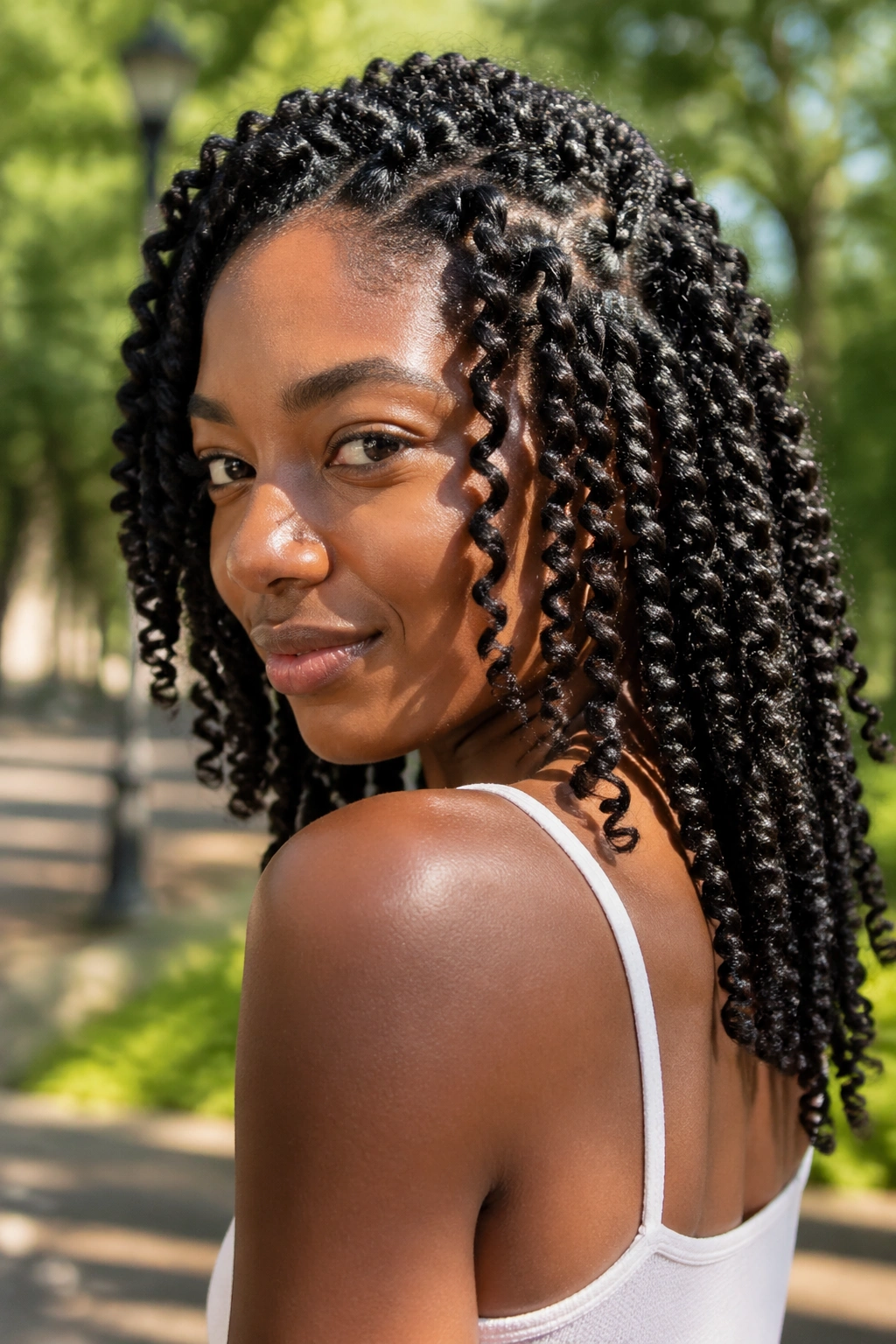
Spring twists are built for people who like bounce. Real bounce. Not the kind that disappears after one night of sleep, either. The texture usually comes from pre-curled extension hair that keeps a spiral shape, so the finished style has a springy, lively look from root to tip.
On coily hair, the contrast is pretty nice. Your natural texture creates the base, and the extension hair adds that tight curl rhythm without making the style feel bulky. Spring twists can look playful, but they still hold a defined line, which is why they work in both casual and dressed-up settings.
The biggest mistake with spring twists is piling on too much product. The curls need movement. If the hair is coated until it feels wet and heavy, the spirals lose their shape and start sticking together.
They also do well with medium-sized sections rather than giant ones. Too much hair in each twist can drag the curls down and flatten the ends.
Tiny detail, big payoff: let the finished style settle before you start touching it. Fresh spring twists can look a little too full at first. After a day or two, they usually find their shape.
11. Goddess Twists with Face-Framing Pieces
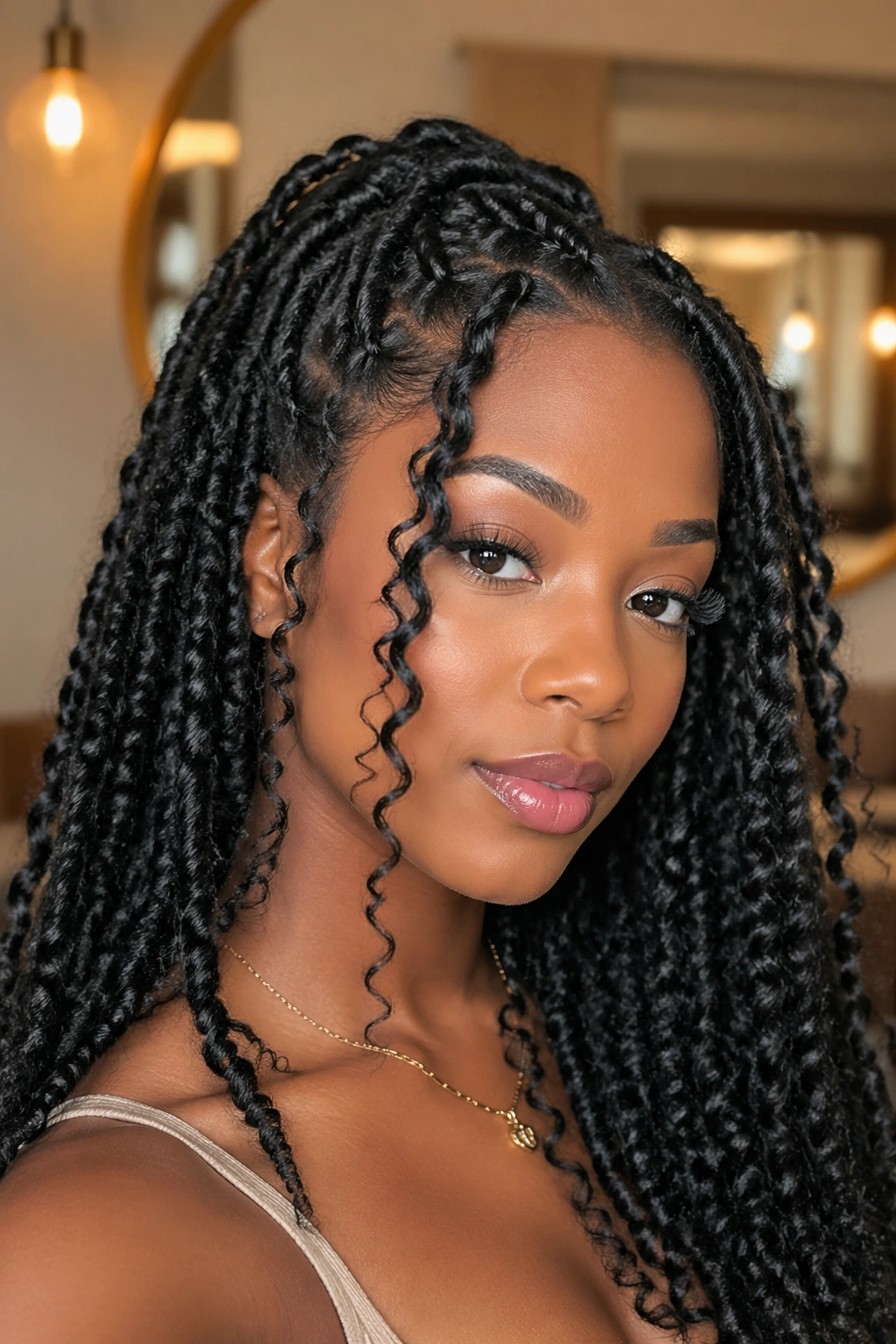
Goddess twists feel a little softer than a standard twist set because they leave room for curl pieces around the front or throughout the style. That small difference changes the whole read of the hair. The twists still do the heavy lifting, but the loose pieces break up the shape and make the style feel less severe.
This is a good option when you want definition and softness at the same time. Coily hair already has a beautiful structure, and goddess twists lean into that without making the look too strict. They can be waist-length, shoulder-length, or anywhere in between, but the face-framing pieces are what keep them from feeling stiff.
A few curls near the cheekbones can soften a strong part or balance a high forehead. That sounds small, and it is. Small details matter.
What to Watch For
- Keep the loose pieces moisturized lightly so they do not frizz out.
- Do not overfill the style with curls; two or three accents are enough.
- Pin the front back if you want a cleaner daytime look.
- Trim any extension hair that starts hanging oddly once the twists settle.
Goddess twists suit anyone who wants a style with a little romance in it, but not a lot of fuss.
12. Boho Twists with Freestyle Curls
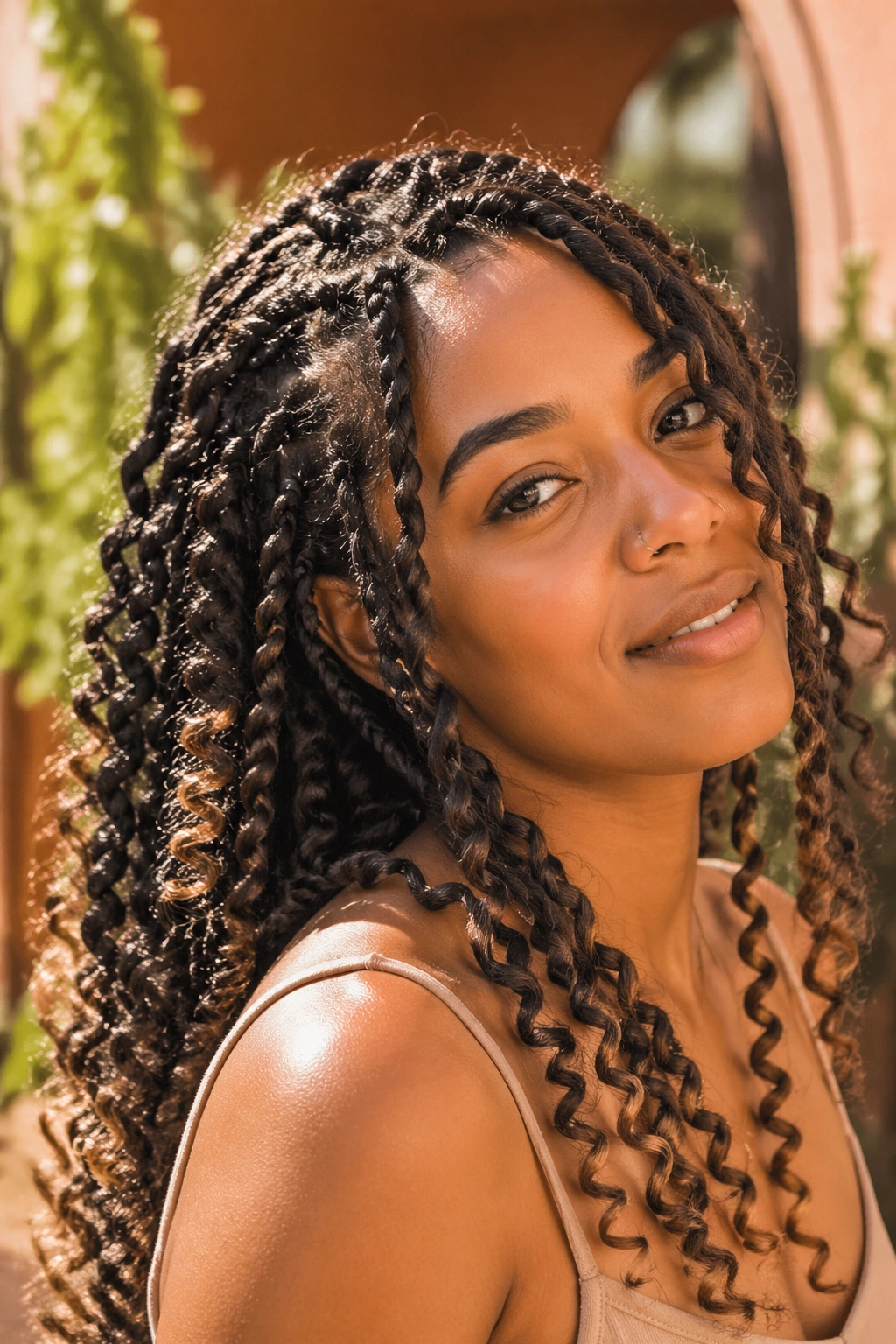
Boho twists are the close cousin of goddess twists, only looser and a little more relaxed. The difference is in the attitude. Boho twists look like they’ve already lived a little, which is part of their charm.
Some curls are woven in, some are left free, and the whole set usually has more movement than a neat traditional install. On coily hair, that looseness can be gorgeous because it lets the hair’s density peek through while still keeping the ends tucked away.
These twists need a bit more care than the cleaner styles. Loose curls tangle. That is the trade-off. If you want the lived-in look, you have to keep the frizz from swallowing the pattern entirely. A satin scarf at night helps. So does separating the curls with your fingers instead of a brush.
I like boho twists on people who do not want the hair to look too finished. There’s a difference between polished and overworked. This style lives on the better side of that line when it’s done well.
13. Knotless Twist Braids
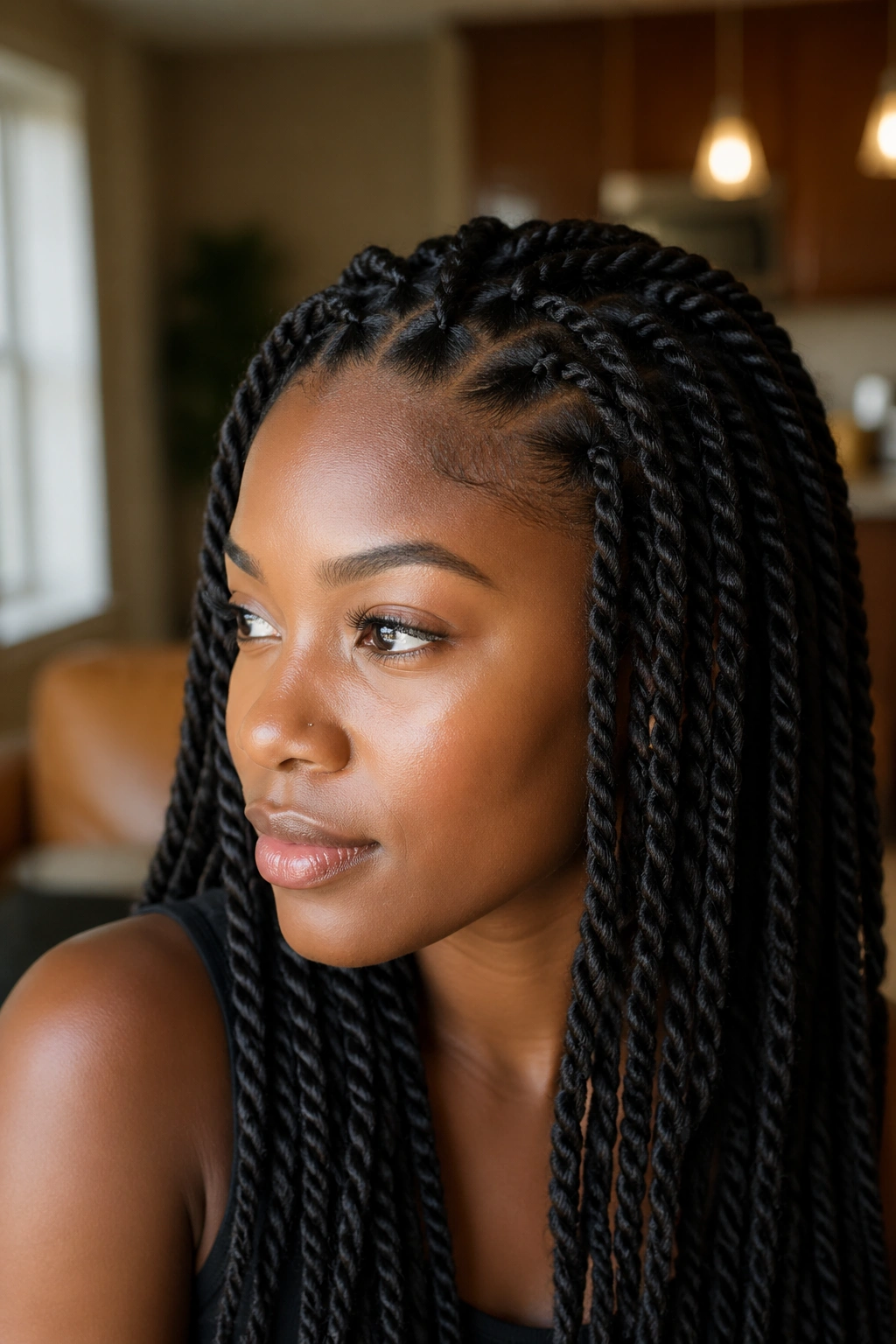
Knotless twist braids are about the root. That’s where the whole style changes.
Instead of starting with a tight knot at the scalp, the twist begins more gradually and builds into the full section as the extension hair is added. The result is a flatter root and a cleaner transition from natural hair to added hair. On coily hair, that can make the style feel lighter around the hairline, which matters more than people think.
The look is smooth, but not flat in a boring way. It still has body. It just does not scream “this hair was installed five minutes ago and pulled hard.” If you have a sensitive scalp, this is one of the styles worth asking for by name.
A knotless start also gives the hair a more natural base if you like styles that move gently when you turn your head. It’s subtle, but the effect is there.
The one catch is that the install takes a careful hand. Rushing the feed-in at the root makes the twist bunch up, and then the whole point is lost.
14. Feed-In Twist Braids
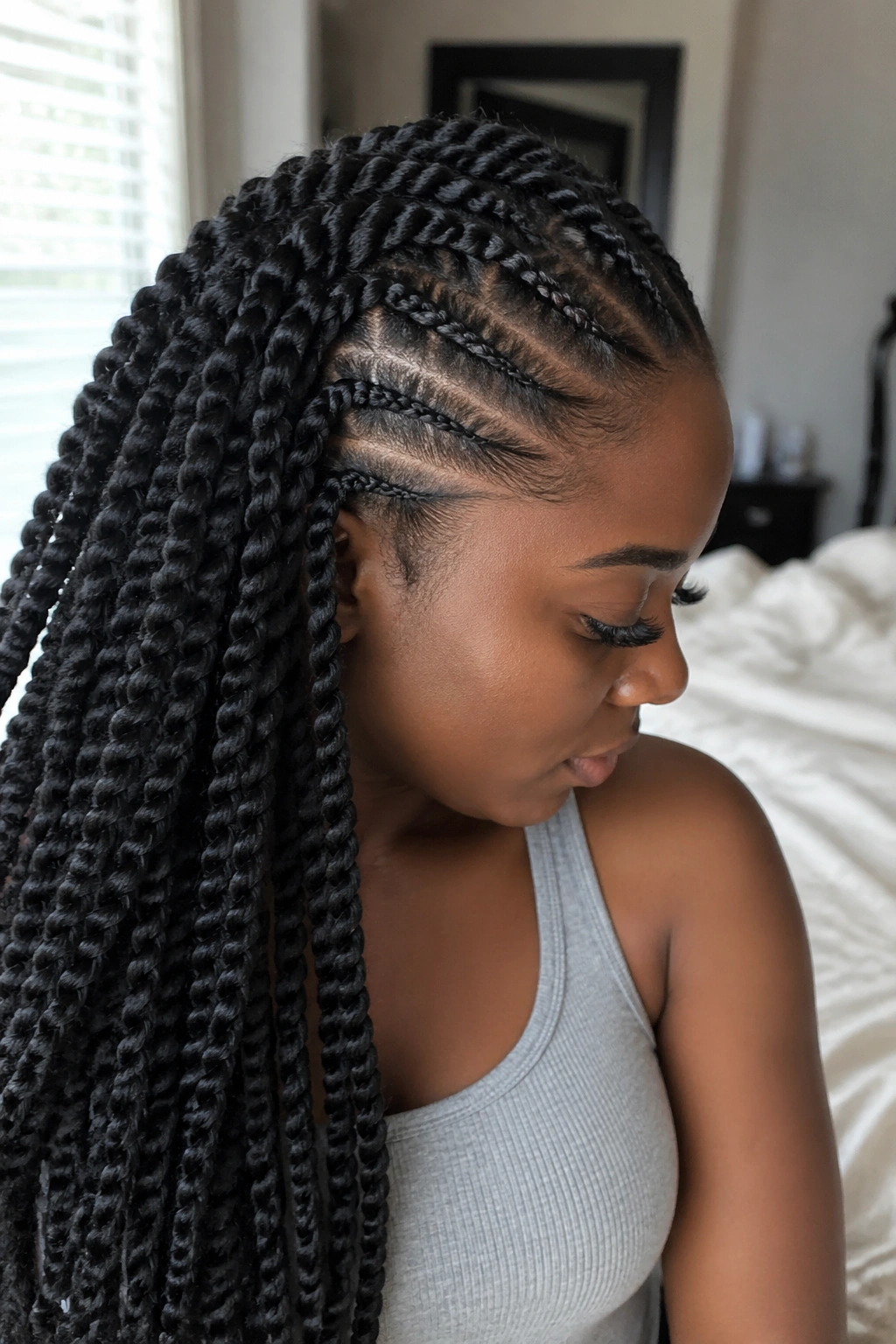
Feed-in twists are all about building the strand gradually. Small pieces are added as you move down the braid or twist, so the base starts slim and grows into the full length. That tapered look keeps the roots tidy and gives the finished style a softer line.
What makes this different from a simple extension twist is the gradual build. You can see it in the way the hair narrows at the scalp before opening into the body of the twist. On coily hair, that shape is flattering because it avoids a bulky start and keeps the whole style from feeling top-heavy.
How to Get the Most From It
Use small feeding sections. Really small. A lot of the neatness comes from the first two or three additions, and if those are sloppy, the braid never catches up. Keep the tension steady and the added hair matched to the size of the section you’re working with.
Feed-in twists are especially good if you like a style with a clean hairline and a gradual, polished drop through the lengths. They also pair well with curved parts or geometric parting if you want the style to feel more designed.
15. Triangle-Part Twists
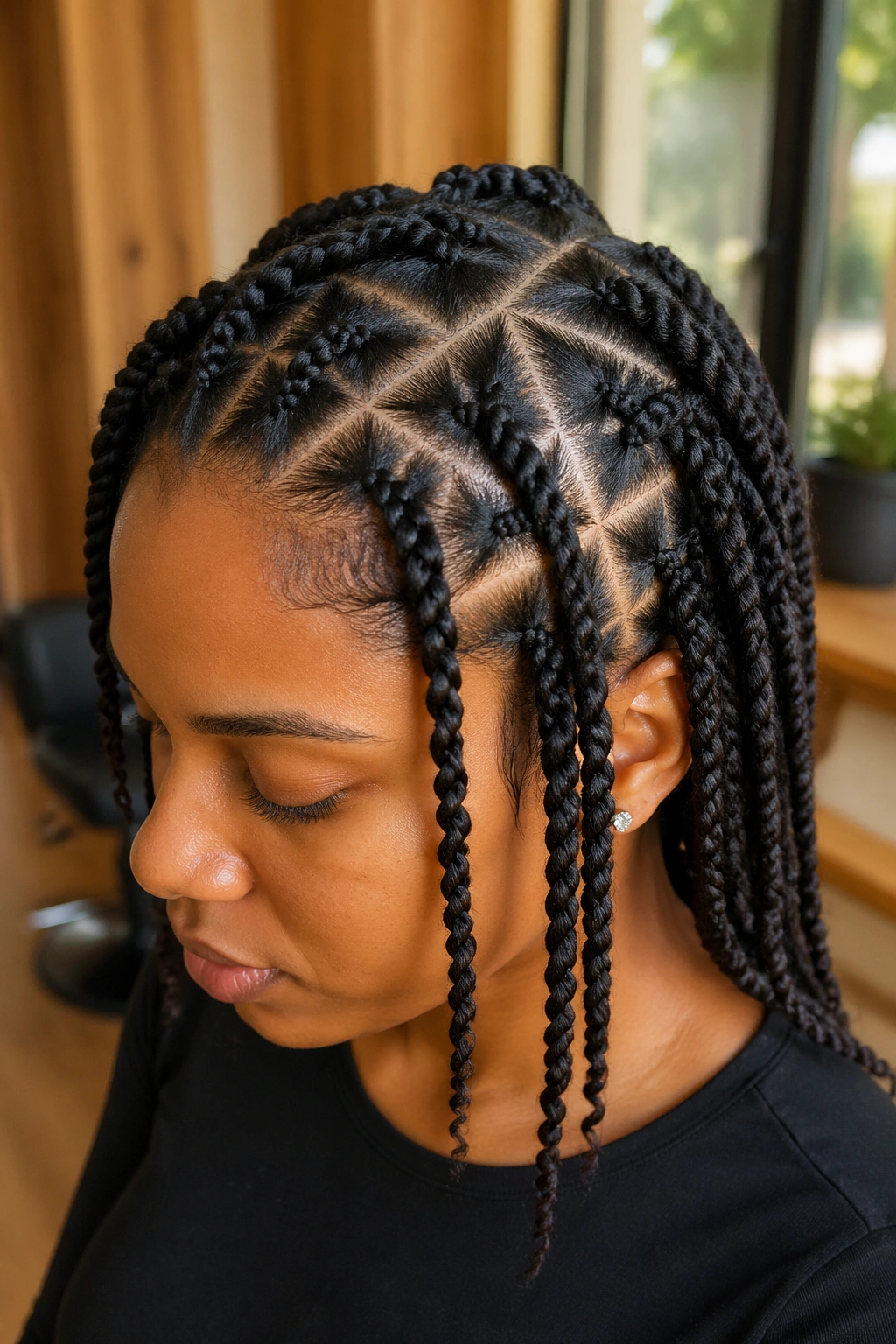
Triangle parts do more than make a pretty grid. They change the whole look of the style, because the sectioning itself becomes part of the design.
A triangle part pulls the eye in a different direction than the usual square or rectangular section. It gives coily hair a sharper, more intentional layout, even if the twists themselves are simple. That’s why the style has such a clean finish on the scalp. The parting creates movement before the twisting even starts.
I’ve always liked triangle parts for people who want a twist style that feels a little less predictable. They work especially well on medium to long hair because the pattern stays visible longer, but even shorter sets can benefit from the sharper geometry.
Key Details
- Keep each triangle consistent in size so the style does not wobble visually.
- Use a rattail comb to draw the points cleanly.
- Let the parting breathe a little; parts that are too tight can make the scalp feel scraped.
- Pair with medium-sized twists if you want the shape to stay visible.
Triangle parts are a small change with a big effect. That’s my kind of styling.
16. Side-Swept Twist Braids
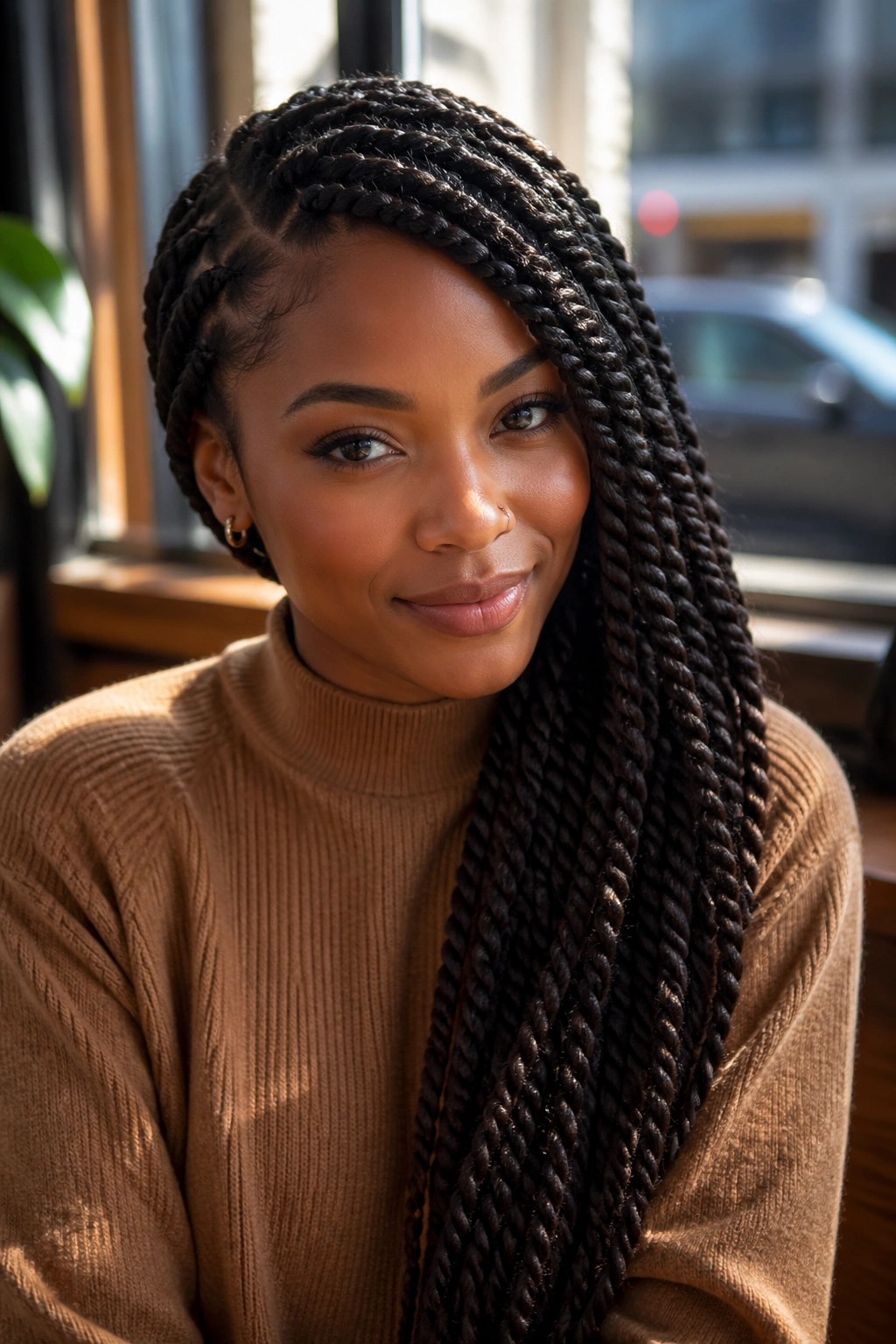
Side-swept twist braids are what happens when you move the parting and let the style lean. That one decision changes the whole mood. The hair feels softer, a little more dramatic, and less symmetrical in a way that can be flattering around the face.
The best side-swept versions usually start with a deep side part, then pull the majority of the twists across one shoulder or into a loose cascade. On coily hair, the side sweep works because it lets the density show while shifting the visual weight away from the center of the head.
This is a smart option if you want movement without committing to a full updo. It also helps when one side of the hairline needs a little less attention than the other. The style draws the eye diagonally, which has a nice lengthening effect.
A clean edge on the part and a few well-placed pins can keep the sweep from collapsing. But the charm of this style is that it does not need to stay rigid. A little softness is the point.
17. Chin-Length Twist Bob
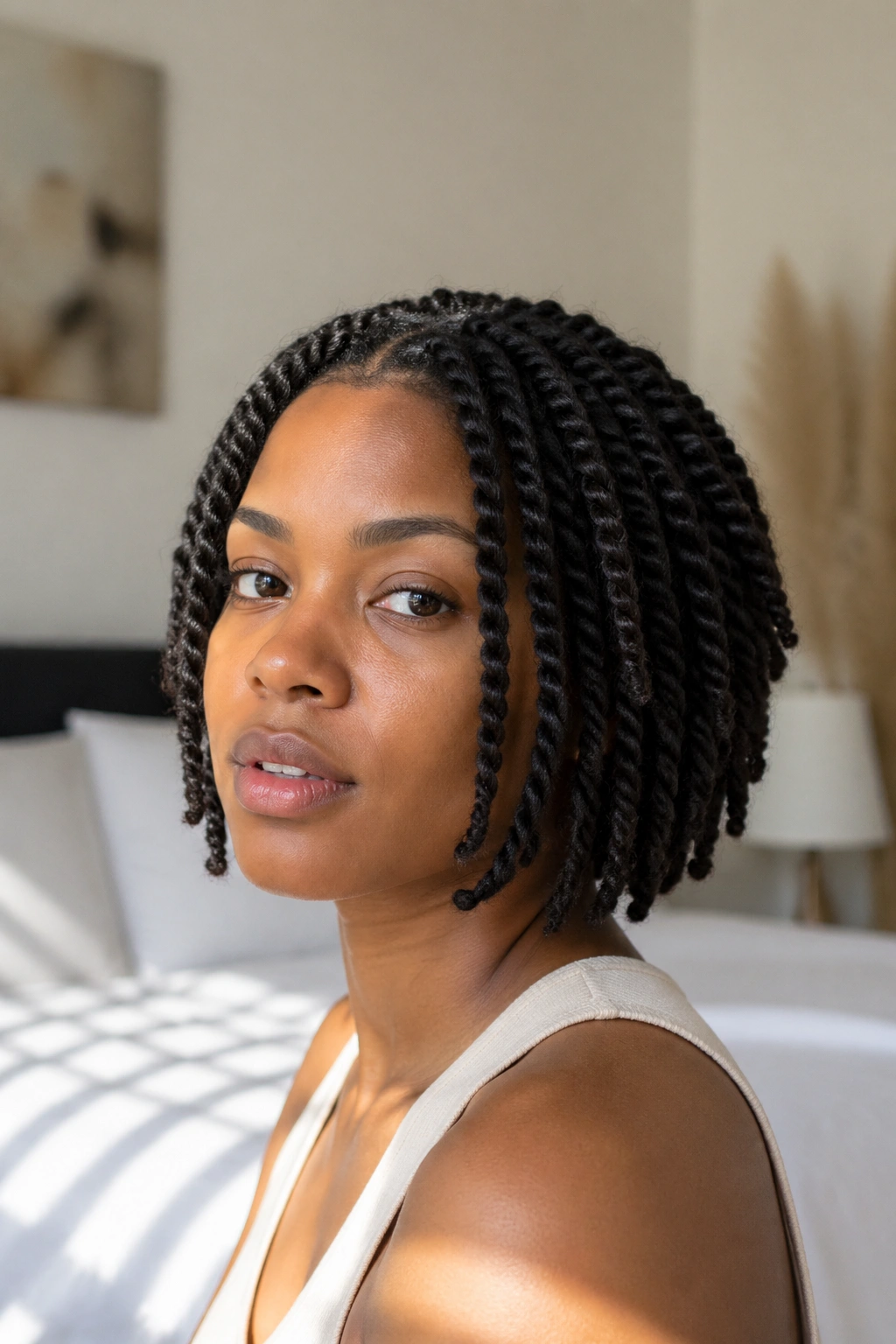
A twist bob sounds simple, and that is why it works. The shape lands somewhere around the chin, jawline, or collarbone, which means the style feels lighter on the head and easier to wear for long stretches.
Shorter twists have a different energy on coily hair. They show the face more, dry faster after washing, and tend to move with less drag. The bob length is a nice middle ground if you want the definition of twists without committing to the weight of long lengths brushing the back or shoulders.
The ends matter a lot here. A blunt bob can feel sharp and graphic. A slightly uneven one feels more relaxed. Either way, the shorter length makes the parting and the root work visible, so the install has to be clean.
This style is also practical. It tucks under jackets, sits better on the neck, and does not fight your scarf every time you turn over in bed. Small win. Big one, actually.
18. High-Puff Twist Braids
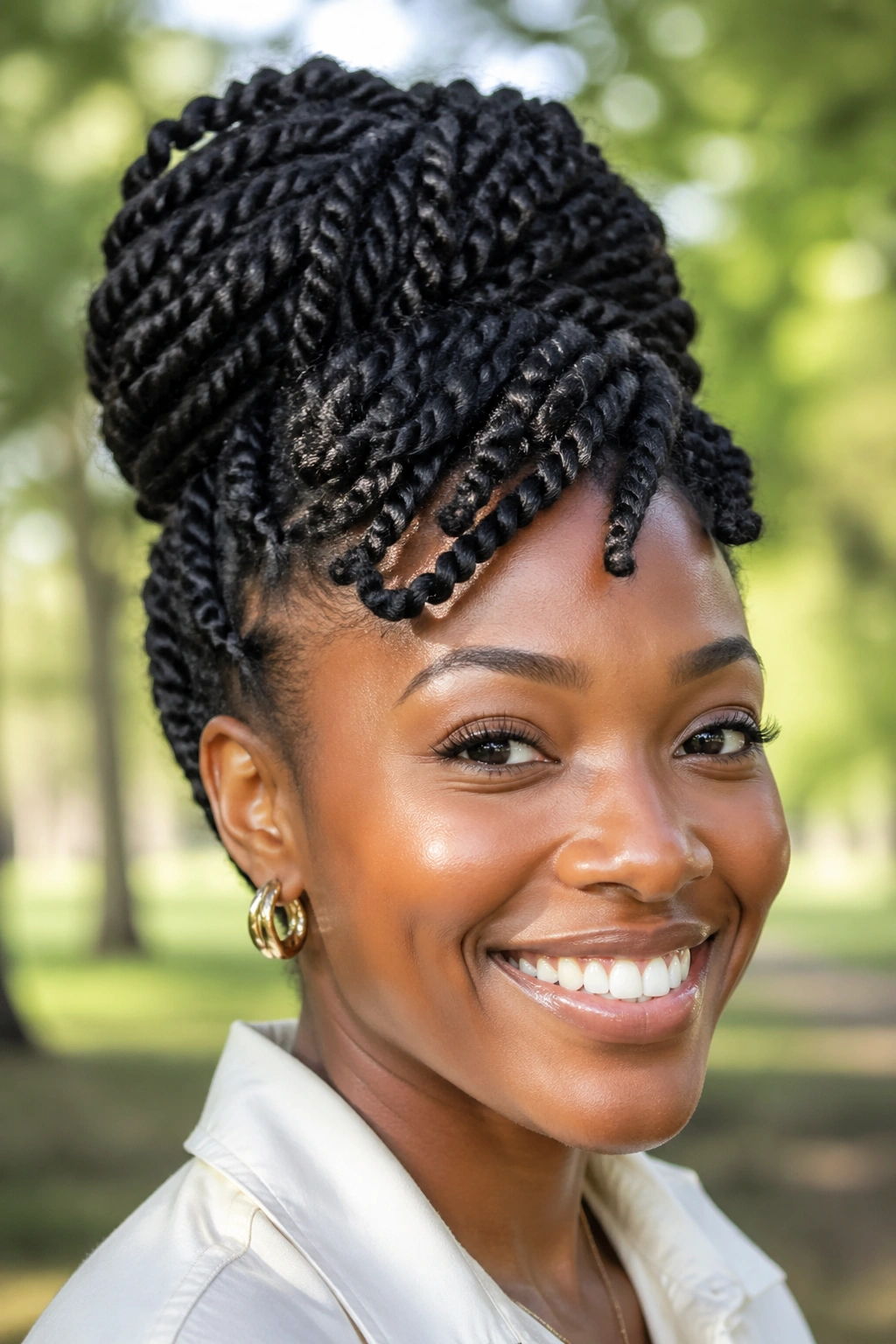
High-puff twist braids give coily hair a lifted shape that feels playful but still controlled. The twists are pulled up and secured at the crown, then allowed to fall into a puff or gathered cluster that shows off the length without dragging it down.
What I like about this style is the balance. The top of the head feels airy, the face gets more open, and the back stays tidy. It works particularly well when the twists are medium or long and the hair has enough density to hold the lift without sagging.
The band or tie you use matters. A rough elastic can snag the base of the twists, which is the last thing you want. A soft, coated band or a strong satin scrunchie works better and feels less aggressive on the hair.
You can make the puff tighter for a neater read or looser for a fuller silhouette. Either way, the crown does the talking.
19. Low-Bun Twist Braids
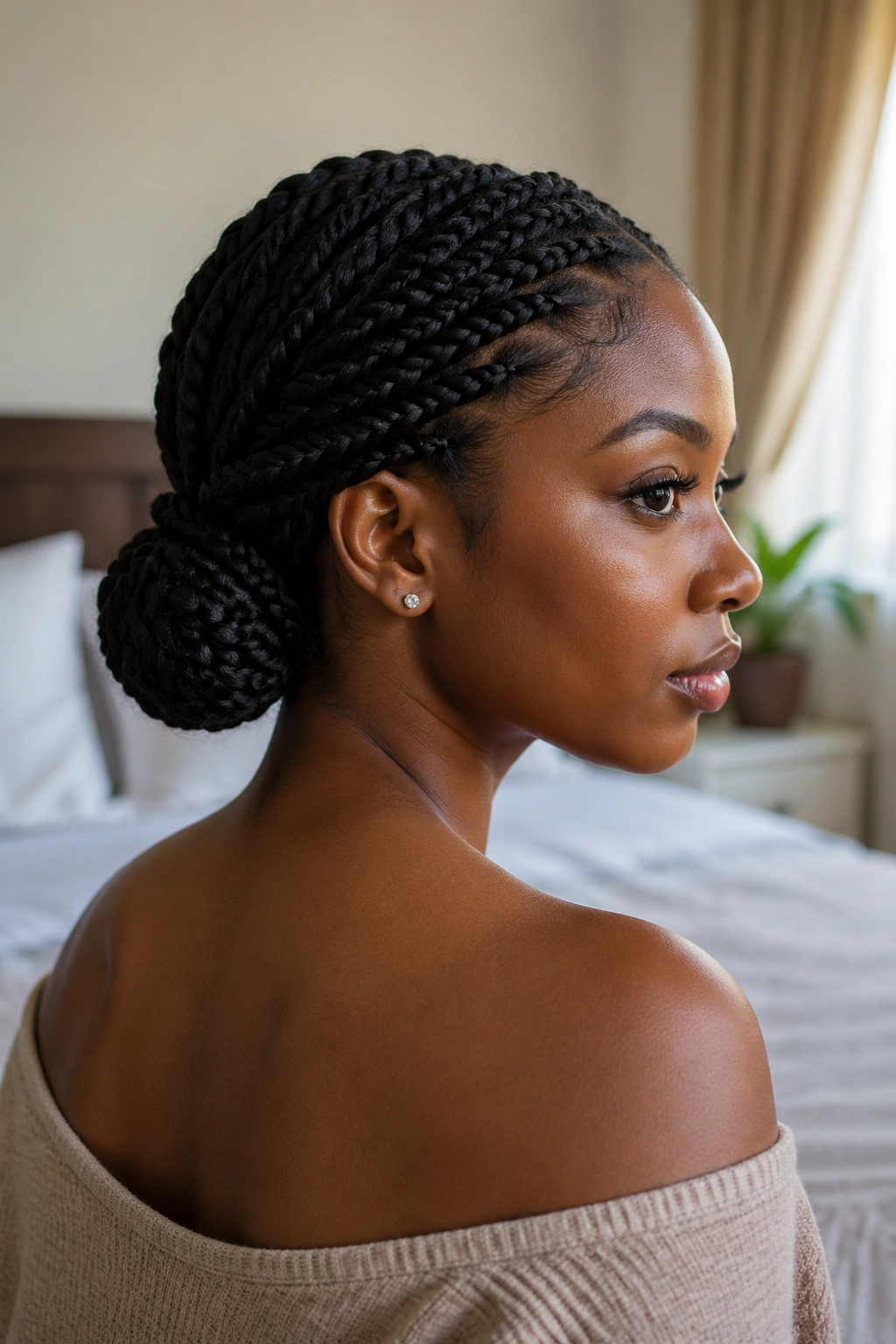
Low-bun twist braids are the opposite of loud, and that’s why people keep coming back to them. They sit low at the nape, gather the twists into a knot or tucked bun, and leave the neckline clean.
There’s something satisfying about a low bun on coily hair. The twists create texture before they even reach the bun, so the style never looks flat or plain. It works for days when you need your hair out of the way but still want the shape to feel deliberate.
The bun should sit secure without being crushed. If you pin too aggressively, the twists lose their body and the bun starts to look squashed. If you pin too loosely, it drifts down by midafternoon. The middle ground is a few firm pins placed from underneath, not a pile of them on top.
A low bun is also a good reset style. You can wear the twists loose for a while, then gather them when you want a cleaner finish without redoing the whole head.
20. Crown Halo Twist Braids
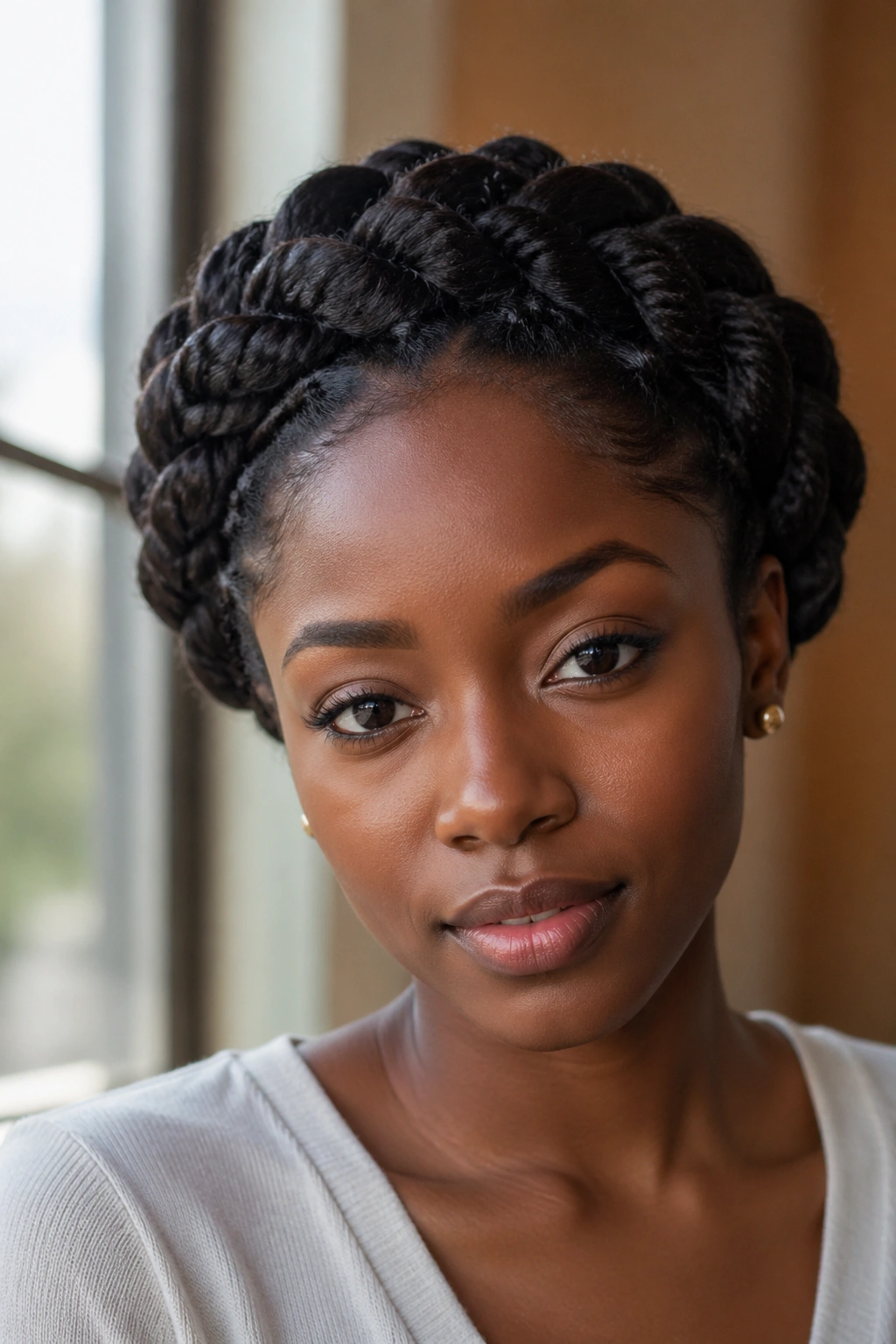
Crown halo twists wrap around the head like a soft frame, and the effect is as elegant as it sounds without needing a ton of ornament. The twist line follows the hairline, curves around the crown, and usually meets at the back or side with the rest tucked away.
On coily hair, this style works because the texture itself gives the halo some structure. You do not need a super-slick finish for it to hold shape. In fact, a little texture keeps it from looking stiff or overworked.
This style is strong when you want the face open and the hair off the shoulders. It can sit high like a halo or lower like a wrapped crown, depending on how much volume you leave at the top. Both versions work, but the lower crown tends to feel calmer, while the high version reads a bit more formal.
A few bobby pins placed along the hidden underside will keep the halo steady. Place them where the eye won’t see them. That tiny detail matters.
21. Twist Braids with Beads and Cuffs
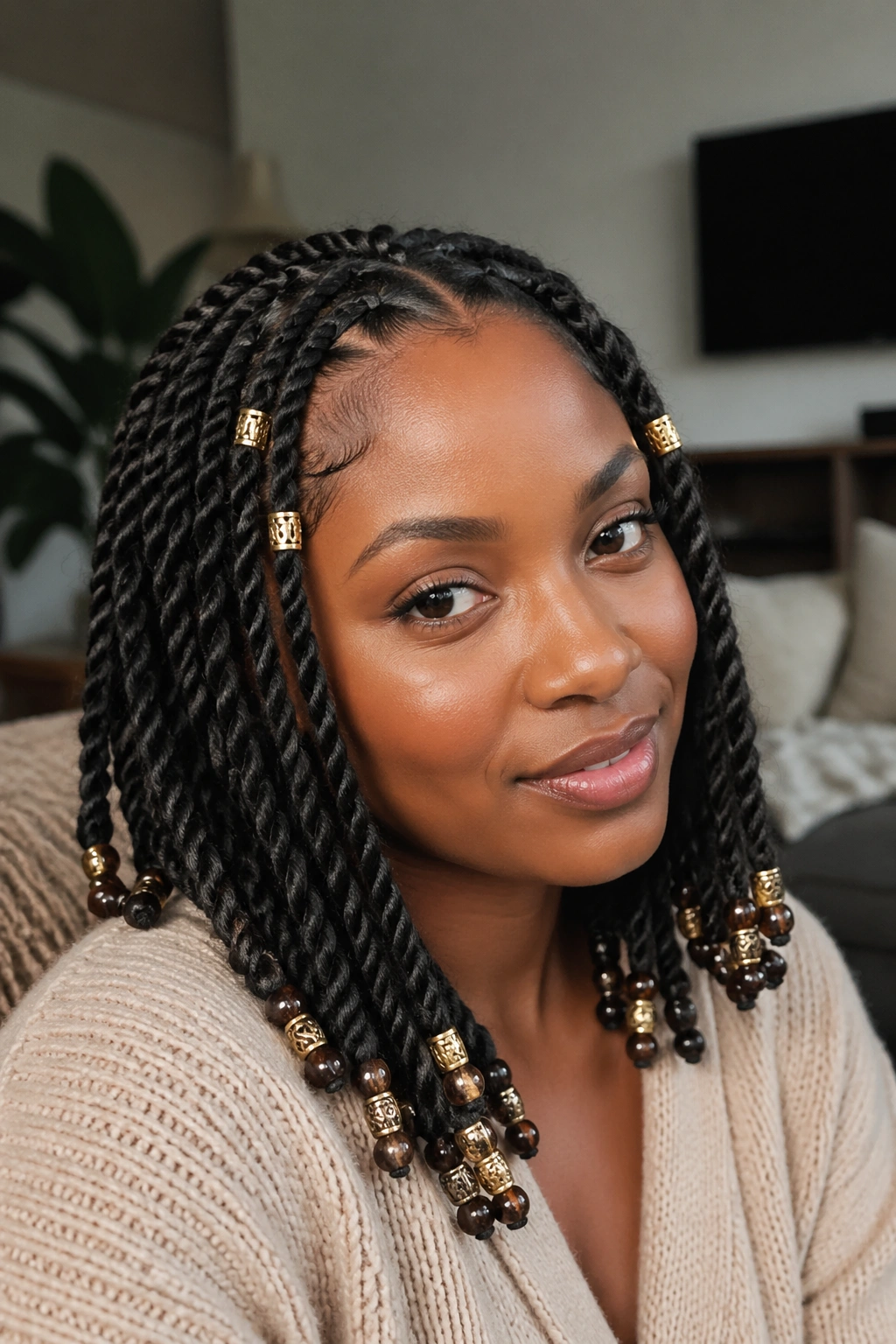
Accessories change a twist style faster than almost anything else. Beads and cuffs can turn a simple set of twist braids into something that feels finished and personal, even when the hair itself is uncomplicated.
Beads add weight and sound. Cuffs add shine and little flashes of metal near the eyes, the jaw, or the ends. On coily hair, the combination can feel especially strong because the texture gives the accessories a place to sit. They don’t float. They anchor.
The trick is restraint. Too many beads and the hair starts to feel crowded. A few placed at the ends or near the front sections usually does more than a full load from root to tip. Cuffs work well on a handful of twists you want to highlight, especially near the temples or along a part.
- Use clear or rubber beads if you want the ends to stay put.
- Choose lighter cuffs for finer hair so the twists do not drag.
- Mix matte and shiny pieces if you want contrast.
- Keep the accessory count uneven; the look feels more natural that way.
Accessories should support the twist, not bury it. That’s the line.
22. Twisted Mohawk Braids
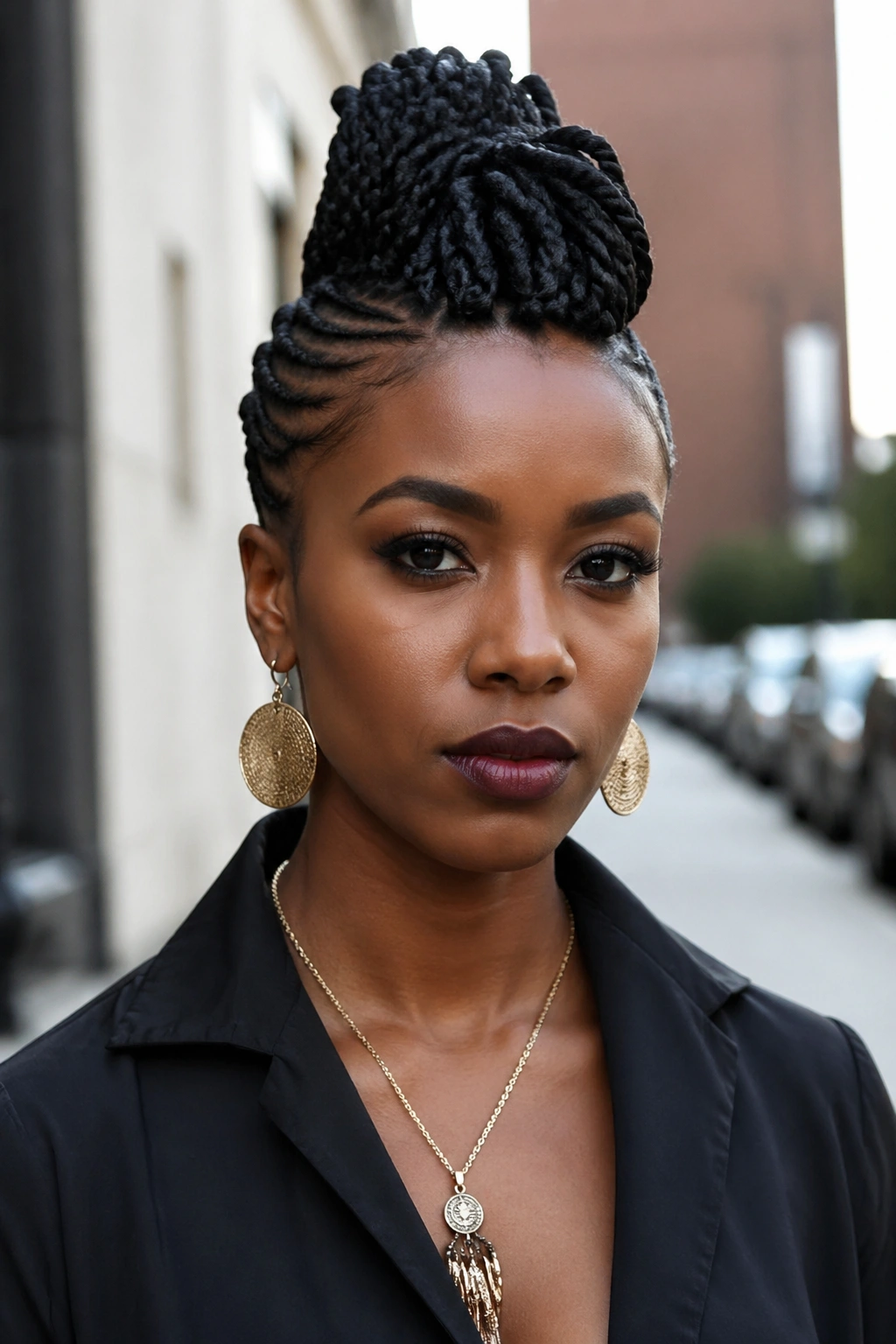
Twisted mohawk braids bring the drama without needing much extra decoration. The sides are slicked, flat-twisted, or pinned close to the scalp while the center strip stays lifted and full, so the whole style rises down the middle like a ridge.
This shape is flattering on coily hair because it lets the texture build upward instead of spreading evenly across the head. The result feels bold, but not messy. It has a strong profile from the front and an even stronger one from the side, which is exactly why people lean on it for special events or when they want the hair to lead the outfit.
The center section can be made from chunky twists, smaller twists, or a mix of both. I like the mixed version most. It gives the mohawk a little more movement and stops the center line from looking too rigid.
A twisted mohawk does ask for good pin work and careful sectioning. The sides have to stay flat, and the middle has to stay balanced, or the style tips into chaos fast. When it’s right, though, it has real presence. No apology needed.