



A braid that’s pulled all the way back does something loose hair never quite manages: it clears the face, sharpens the features, and makes the braid itself look intentional.
That can mean a polished French braid, a row of cornrows, or a chunky knot at the nape. The difference comes down to where the tension sits, how clean the parting is, and whether the ends stay visible or get tucked away.
A rat-tail comb helps. So does a light hand with gel at the hairline and a second mirror for the back of the head. The prettiest versions are rarely the tightest ones; they’re the ones that look secure without making the scalp look pulled thin.
Some styles here are boardroom-neat. Others are sporty, dressed-up, or a little bit tough. All of them keep the hair where it belongs—behind you—and that’s the whole appeal.
1. Sleek High French Braid Pulled All the Way Back
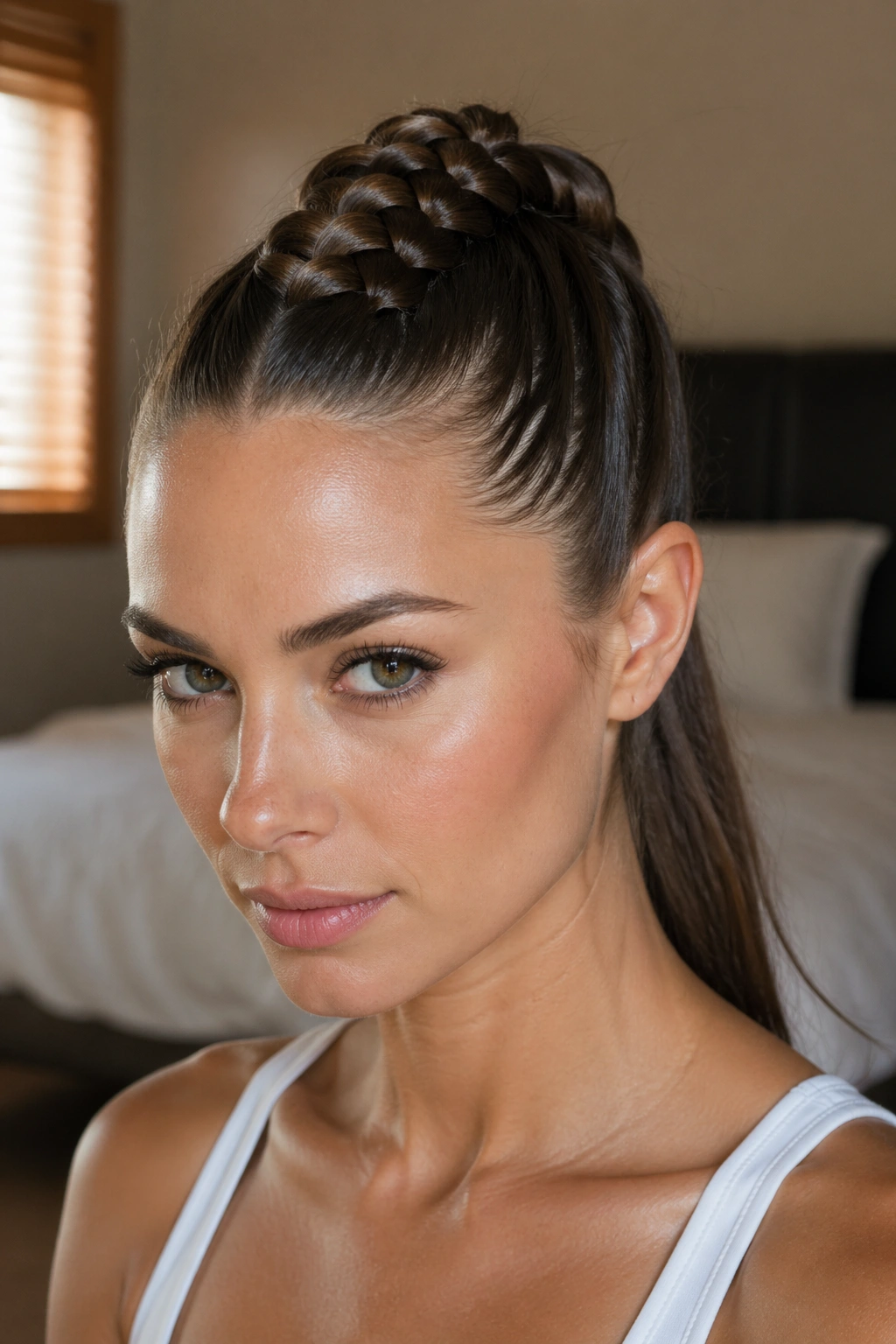
A high French braid pulled into a ponytail is the cleanest way to keep everything off your face without making the style feel severe. The braid starts right near the front hairline, then climbs toward the crown, which gives the whole look a little lift before the length drops behind you.
Why It Works
The braid does two jobs at once. It smooths the front and adds structure through the top, so you get shape without teasing or heavy product.
- Best on medium to long hair.
- Looks sharp on straight, wavy, or lightly textured hair.
- A rat-tail comb makes the parting cleaner.
- A pea-sized amount of gel at the temples keeps frizz in check.
Tip: Keep the first few braid passes snug, then loosen the tail only after the elastic is in. That keeps the braid neat at the scalp and softer through the ends.
2. Double Dutch Braids Into a Low Ponytail
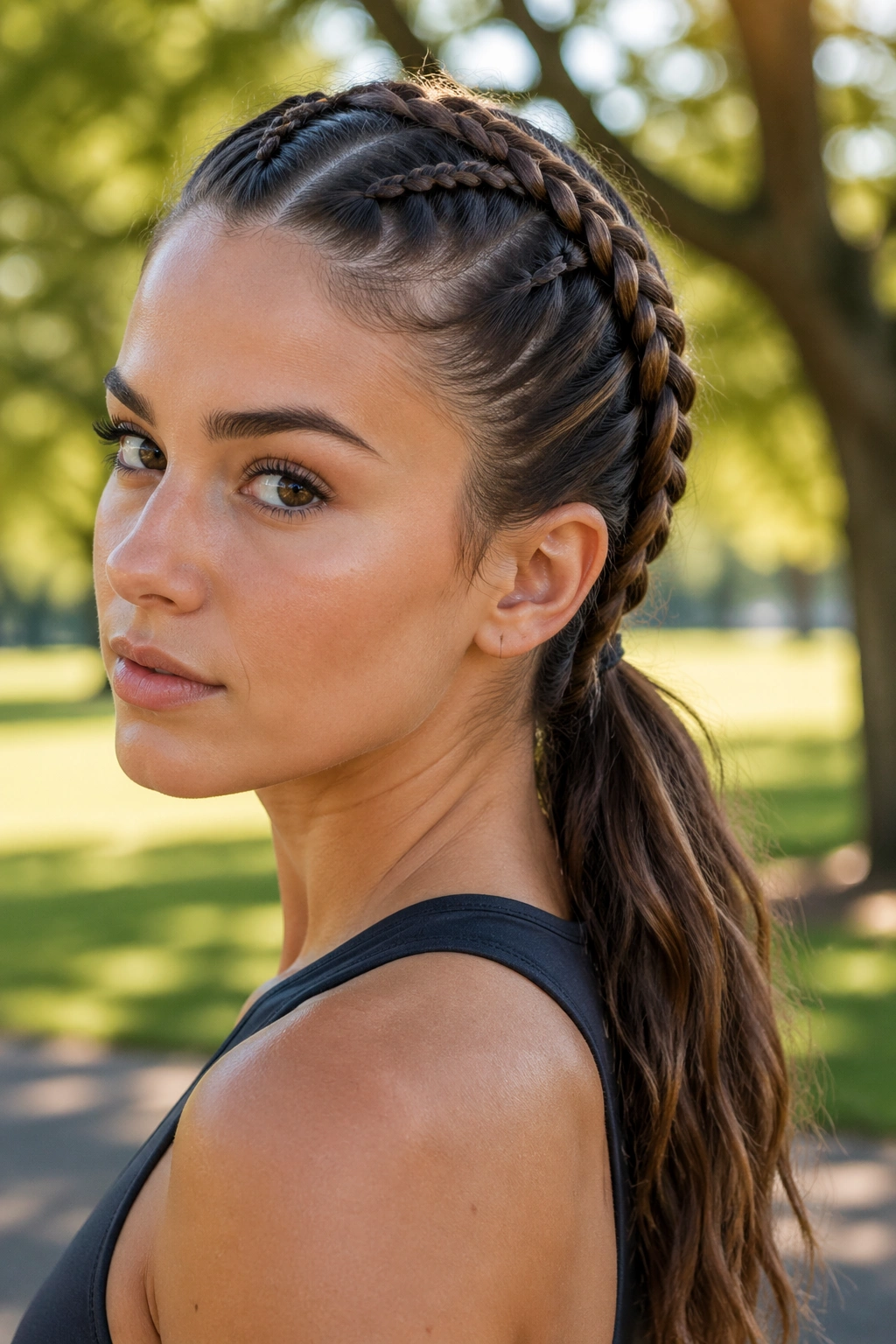
Two Dutch braids gathered into a low ponytail look tougher than a single braid, and I mean that in a good way. The raised braid pattern sits on top of the hair instead of melting into it, so the style reads clearly even from across a room.
It’s one of those looks that makes thick hair feel controlled without flattening it to the head. On finer hair, the same style creates more visual weight because both braids feed into one low tail at the nape. That little shift gives the ponytail a fuller base.
This is not the softest option on the list. Fine. Not every pulled-back style needs to whisper. If you want something that stays put during a long workday, a commute, or a windy walk home, this one earns its keep.
No drama. No loose front pieces. Just structure.
3. Cornrow Braids Into a Bubble Ponytail
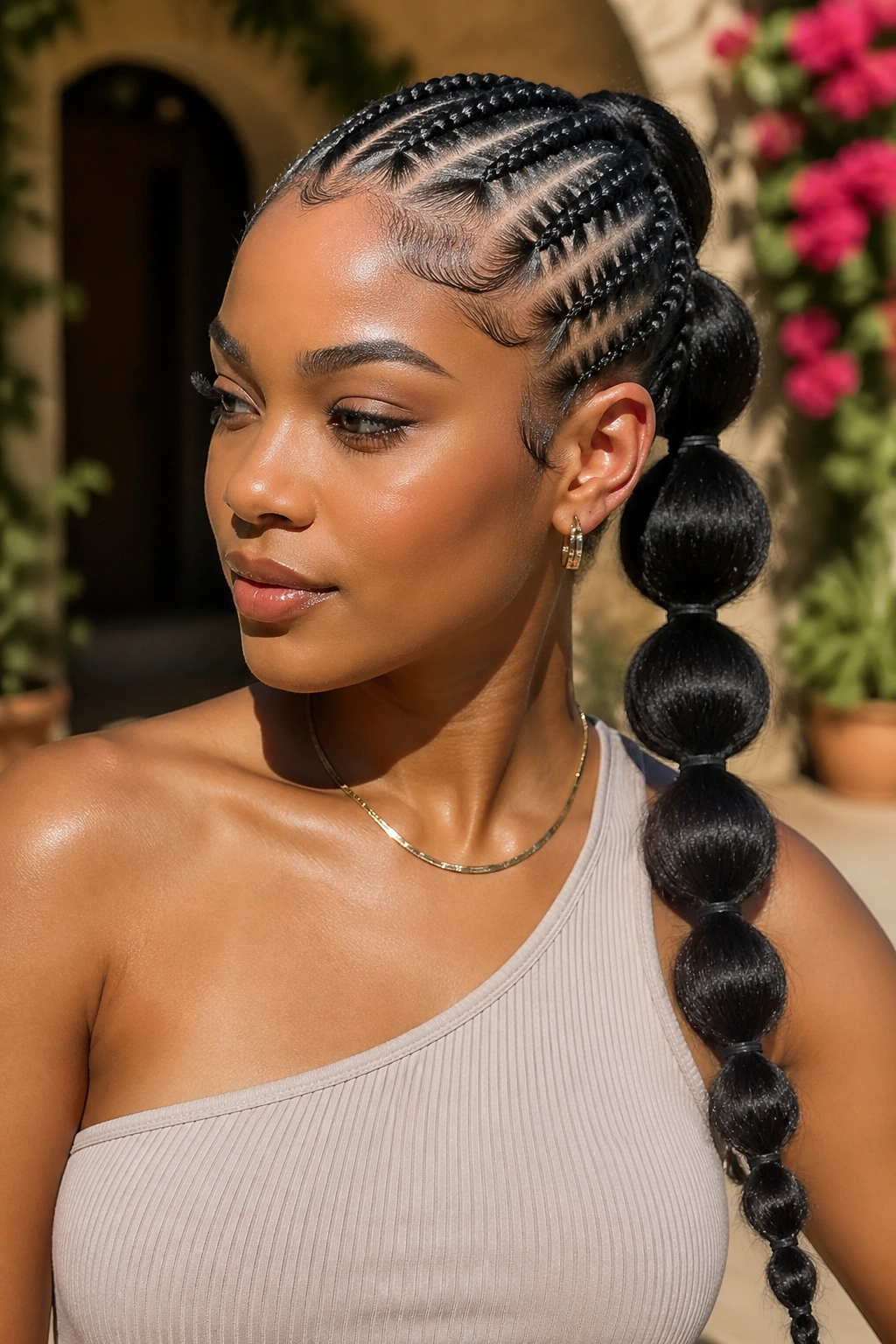
Why do cornrows paired with a bubble ponytail look so finished? Because the front half does the hard work first. Once the scalp braid is set, the bubbles only have to add shape down the length, and that makes the whole style feel deliberate instead of fussy.
How to Get the Bubbles Right
The spacing matters more than people think. Put each small elastic about 1½ to 2 inches apart, then tug each section outward with your fingertips until the bubble looks rounded, not squeezed.
- Keep the cornrows flat against the scalp, but not painfully tight.
- Use clear elastics or a color that blends into the hair.
- Pinch the center of each bubble once, instead of pulling from all sides.
- If the ends are short, finish with a tucked or braided tail instead of leaving them loose.
A style like this gives you that pulled-back look with a little rhythm through the length. It feels structured, but it still has bounce.
4. Crown Braid With a Tucked Nape Bun
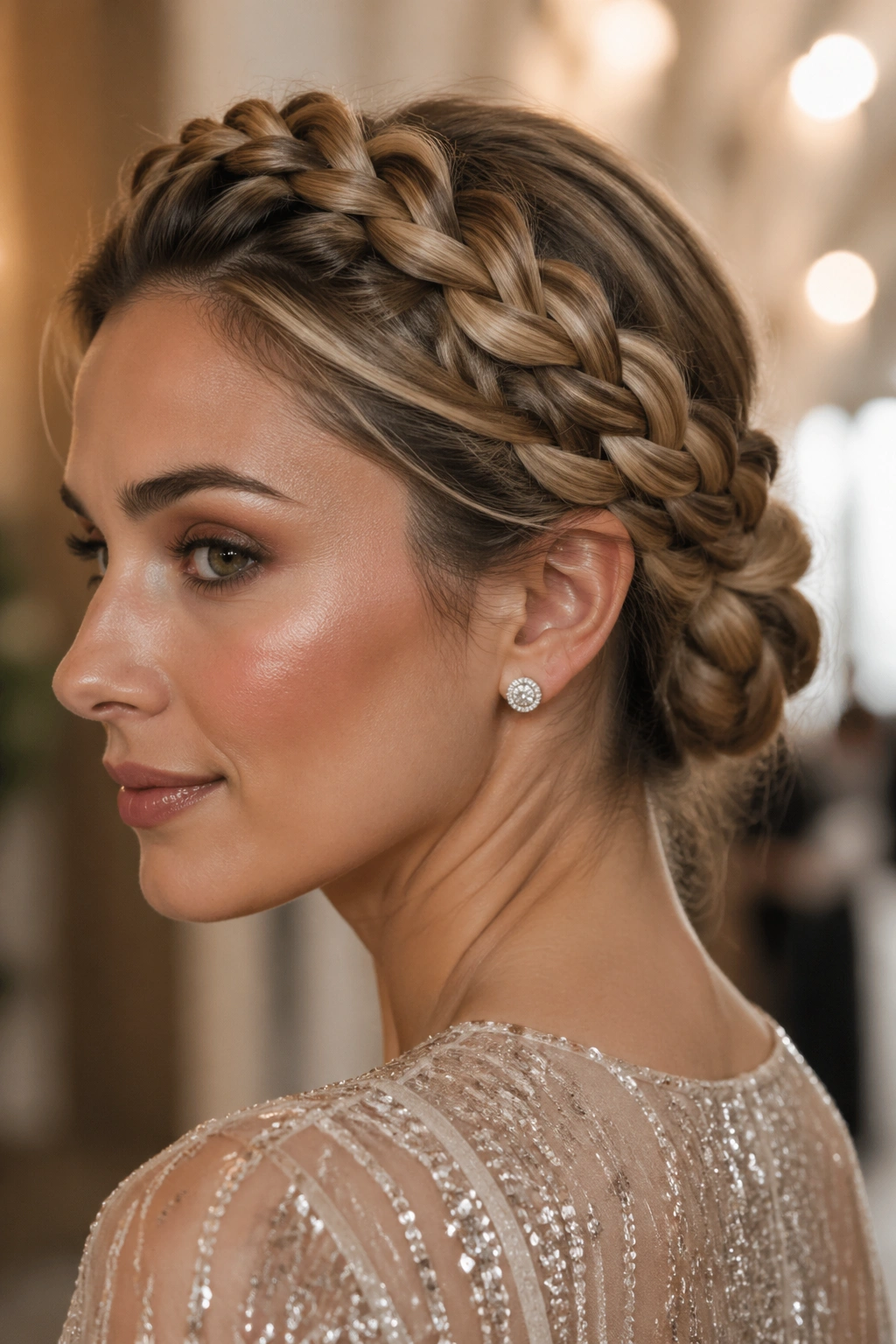
This is the style I picture when someone needs their hair to survive an entire event without constant hand-checking. A crown braid wraps around the head like a built-in headband, then disappears into a tucked bun at the nape. It’s tidy, but it does not feel stiff.
It works especially well when the hair has enough length to wrap around once or twice. Fine hair can still pull it off with a small bun donut or a couple of extra pins. Thick hair usually needs the opposite approach: a few less turns, a few more anchor pins, and patience.
- Best for shoulder-length hair and longer.
- Use crossed bobby pins so the bun stays flat.
- Mist the braid lightly before pinning if the hair frizzes fast.
- Leave the braid a touch wider at the crown for a softer line.
It behaves. That is the point.
5. Side-Swept Feed-In Braids Pulled Back
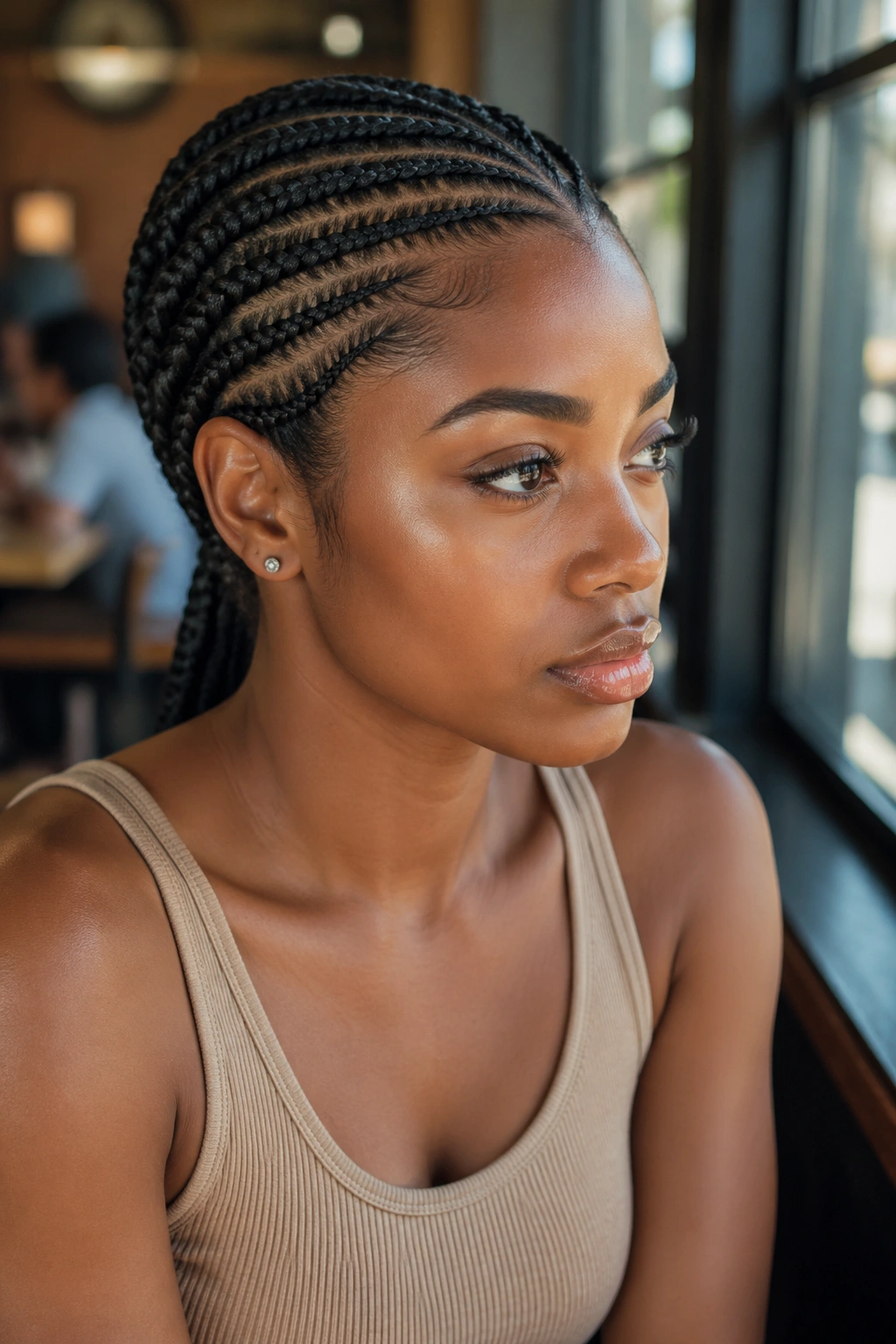
The side-swept feed-in braid is one of my favorite pulled-back looks because it has attitude without getting loud. The braid starts off the center, usually from a deep side part, and the feed-in technique lets the sections grow gradually so the hairline stays smooth instead of chunky.
That gradual buildup makes the front look clean in a way a single thick braid often can’t. There’s less visual clutter near the forehead, which is handy if you like bold earrings or a strong brow line. The whole style moves the eye diagonally, too, and that shape is flattering in a very plain, practical way.
What I like most is the balance between sleek and relaxed. You can keep the braid tight and glossy, or let it sit a little looser for a softer edge. Either version still reads as pulled back. It just depends on how much polish you want.
6. Fishtail Braid Into a Low Knot
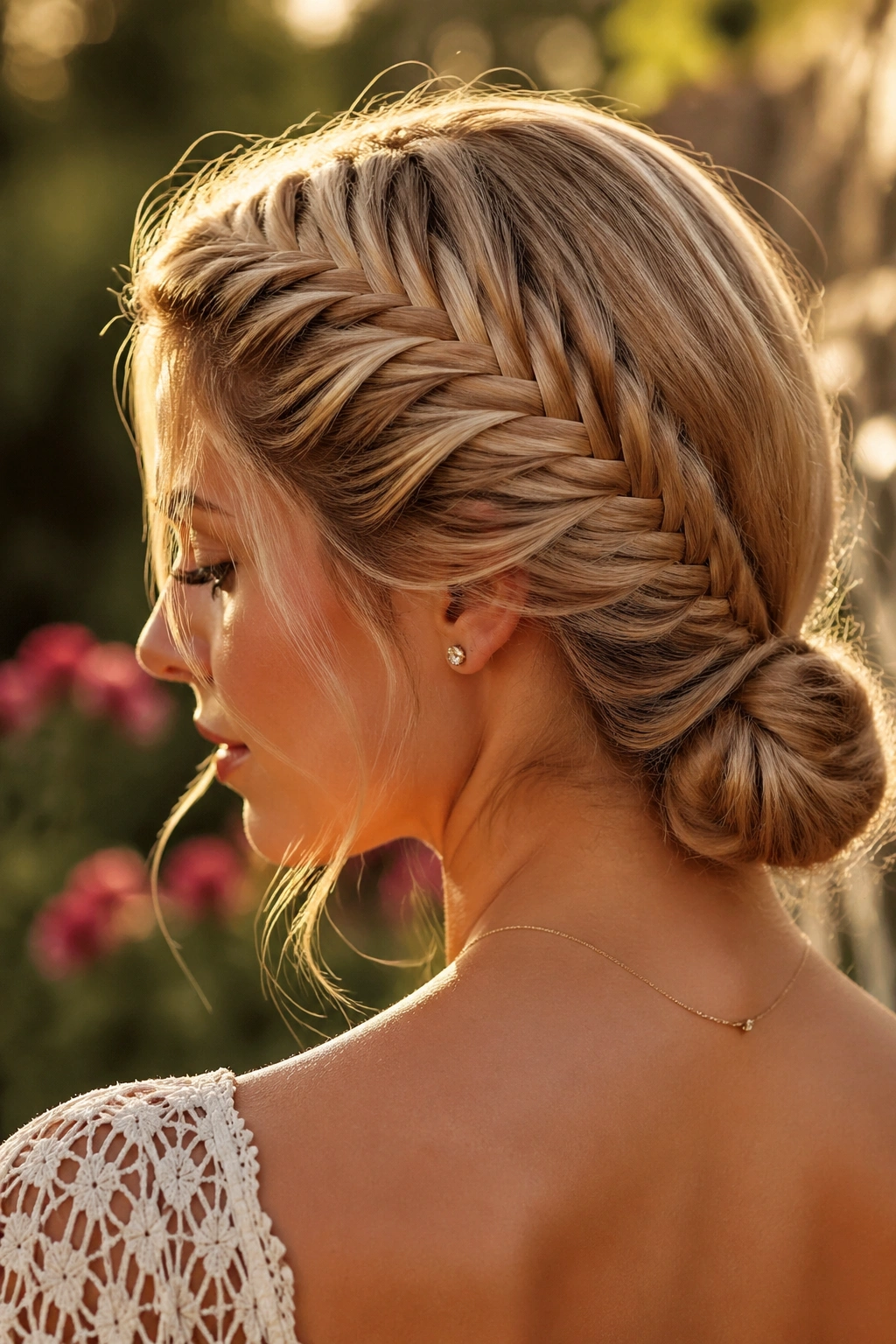
Unlike a regular three-strand braid, a fishtail reads finer and more detailed. That’s why it works so well when you want the back of the head to look textured without looking bulky.
The trick is that the braid itself already has a woven look, so once it turns into a low knot, the style feels composed without much extra effort. It’s a smart choice for finer hair, because the smaller pieces create the illusion of more density. On thicker hair, the same braid can look almost jewelry-like if you keep the outer edges tidy.
This one sits nicely under collars, scarves, and high necklines. It also behaves well at the nape, where a lot of styles start to puff out. If you want something that feels a little more dressed up than a plain braid but less strict than a crown braid, this is a strong pick.
7. Boxer Braids Into a High Bun
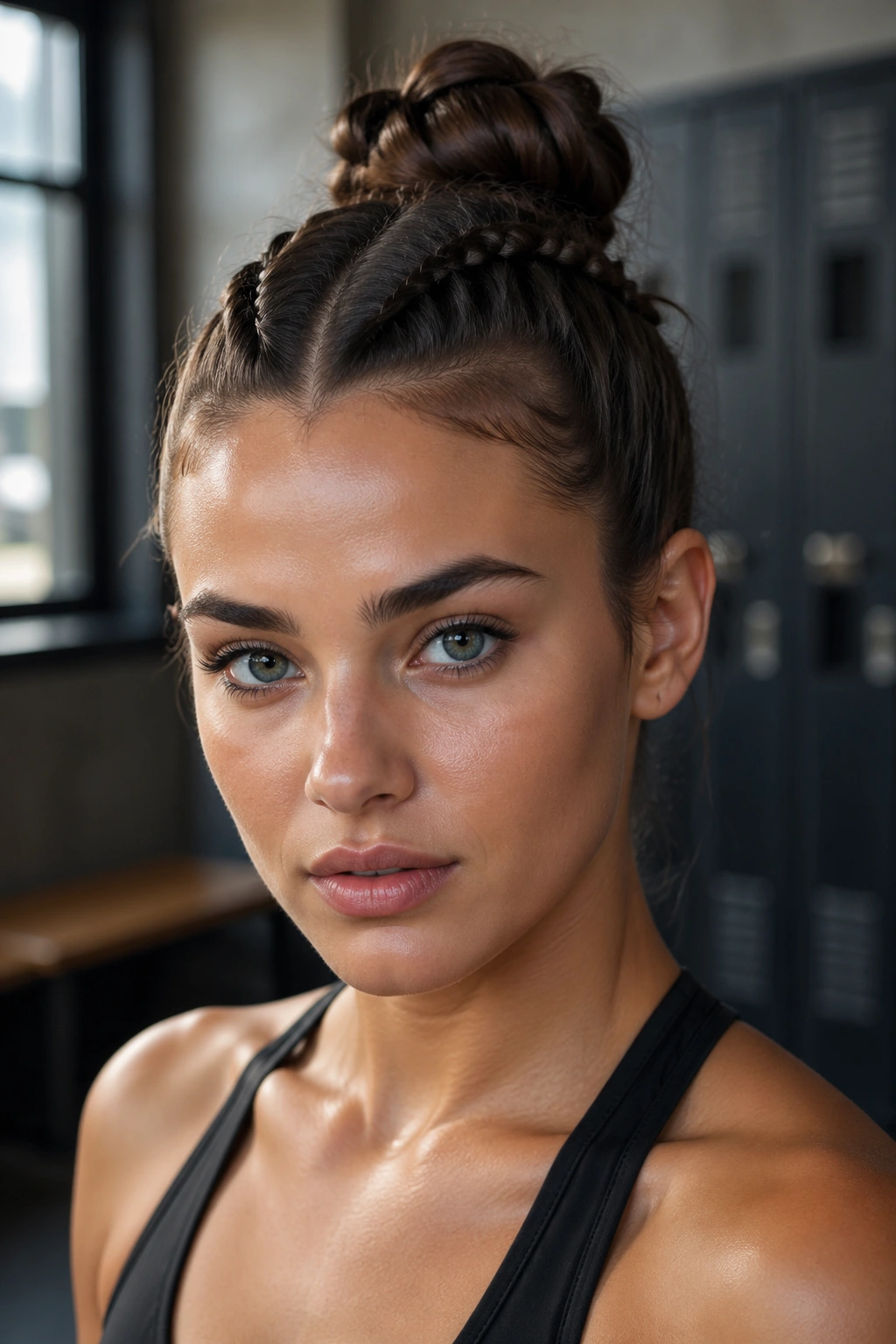
Boxer braids are the no-nonsense version of pulled-back hair. Two Dutch braids run straight back from the hairline, then meet in a high bun, which keeps the neck clear and the face completely open.
What Makes It Different
The braid placement is what gives this style its snap. Because the braids sit on top of the hair instead of sinking into it, the pattern stays visible even after the bun is wrapped.
- Great for long workouts, long travel days, or long shifts.
- Use a firm brush and gel near the front for a flatter start.
- Secure each braid with a small elastic before twisting the bun.
- Pin the bun from underneath so the front stays smooth.
This style does not need extras. No loose tendrils. No decorative fluff. It looks best when the lines are clear and the bun is compact.
8. Halo Braid With Tucked Ends
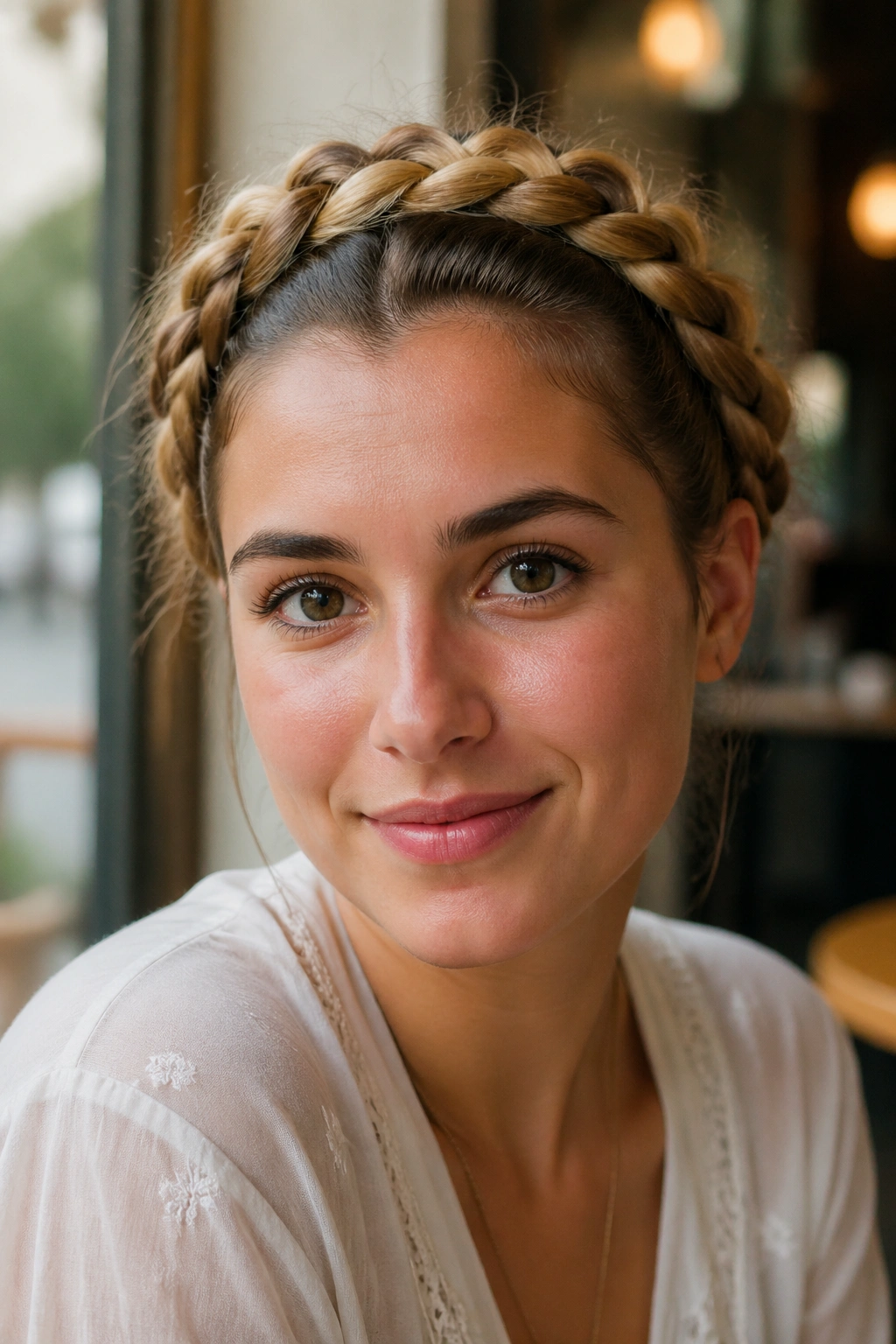
A halo braid has a softer mood than a crown braid, even though they share the same basic idea. The braid wraps around the perimeter of the head, almost like a built-in band, then the ends get tucked away so the whole shape stays clean.
The reason it works so well pulled back is simple: the eye reads the braid first, not the hair underneath. That means you can leave a bit of fullness near the temples without the style looking messy. In fact, a little looseness here helps the braid feel less severe.
This is one of those styles that looks especially good with textured sweaters, simple dresses, or plain shirts that need a little something near the face. It’s calm. It’s tidy. It also keeps the hair out of the way without making the back look flat.
9. Goddess Braids Into a Sleek Ponytail
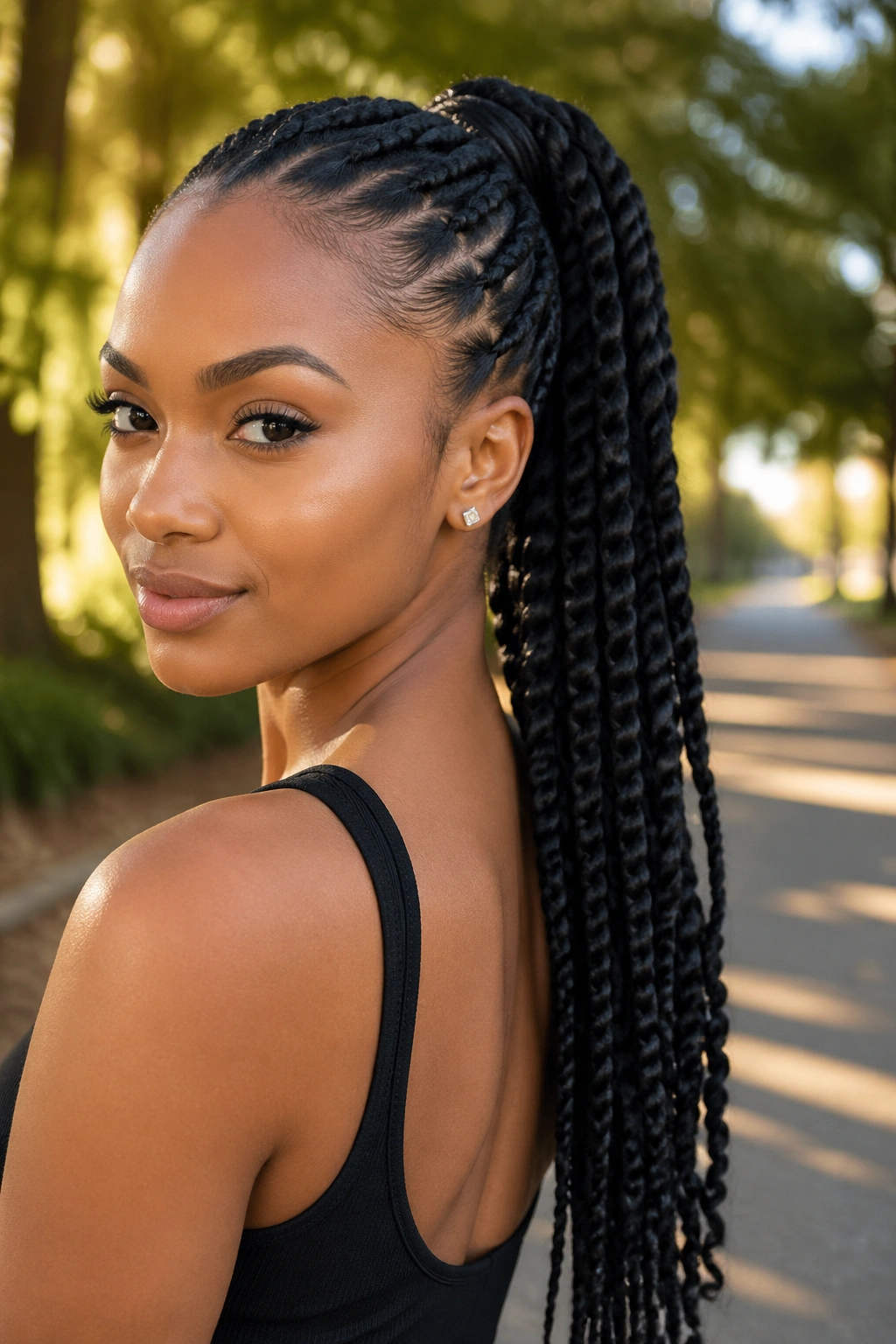
Why do goddess braids catch attention so fast? The size. Larger braid sections create a sculpted look that reads clearly from the front, and when they’re pulled into a sleek ponytail, the contrast between polished scalp and thick braid is what gives the style its shape.
How to Keep It Sharp
The braid pattern should be clean enough to look intentional but not so tight that it feels stiff. That’s where this style can go wrong. If the base is overworked, the whole thing loses the easy sweep that makes goddess braids look good in the first place.
- Use medium-sized parts so the braids stay visible.
- Smooth the front with a little gel before braiding.
- Wrap one braid around the ponytail base if you want a neater finish.
- Add small cuffs only if the braid already has enough room to breathe.
This is a good one for anyone who wants the hair off the face but still wants the braid to feel like the main feature.
10. Braided Top Knot With a Wrapped Base
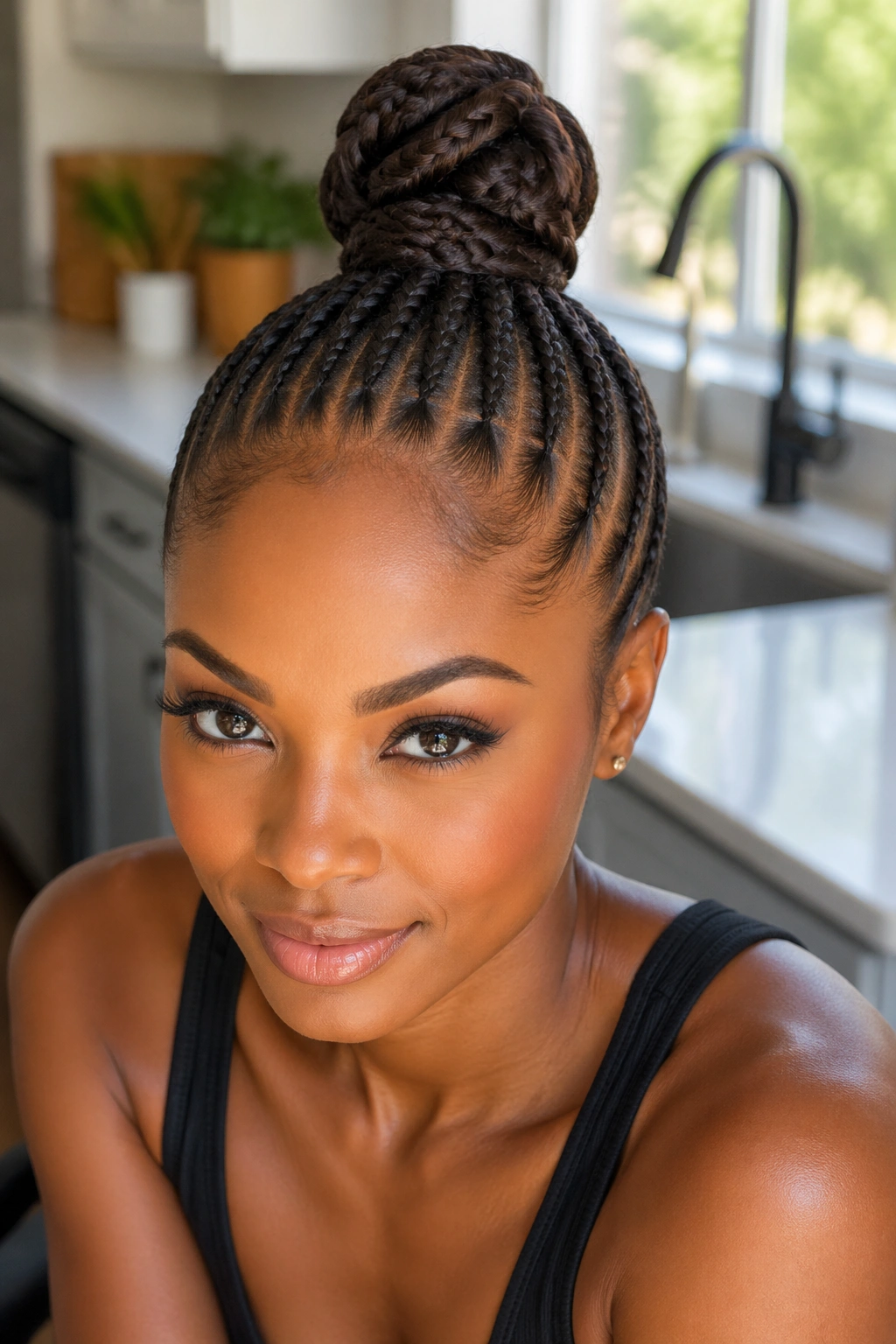
If your ends tend to escape every style you try, a braided top knot solves the problem fast. Everything gets pulled upward, braided or twisted into one compact knot, and then the base is wrapped so the elastic disappears.
It’s one of the easiest styles to wear when you want your neck clear and your face fully open. The shape sits high enough to feel energetic, but the braid gives it more personality than a plain bun. That matters. A bun can look accidental if it’s too plain; a braided top knot looks like someone planned it.
- Works best on medium to long hair.
- A silk tie inside the knot gives extra grip.
- Pin the underside first, then the outer edge.
- Leave the crown smooth so the knot looks intentional instead of lopsided.
This one is a favorite on rushed mornings. It behaves when nothing else does.
11. Stitch Braids Into a Low Ponytail
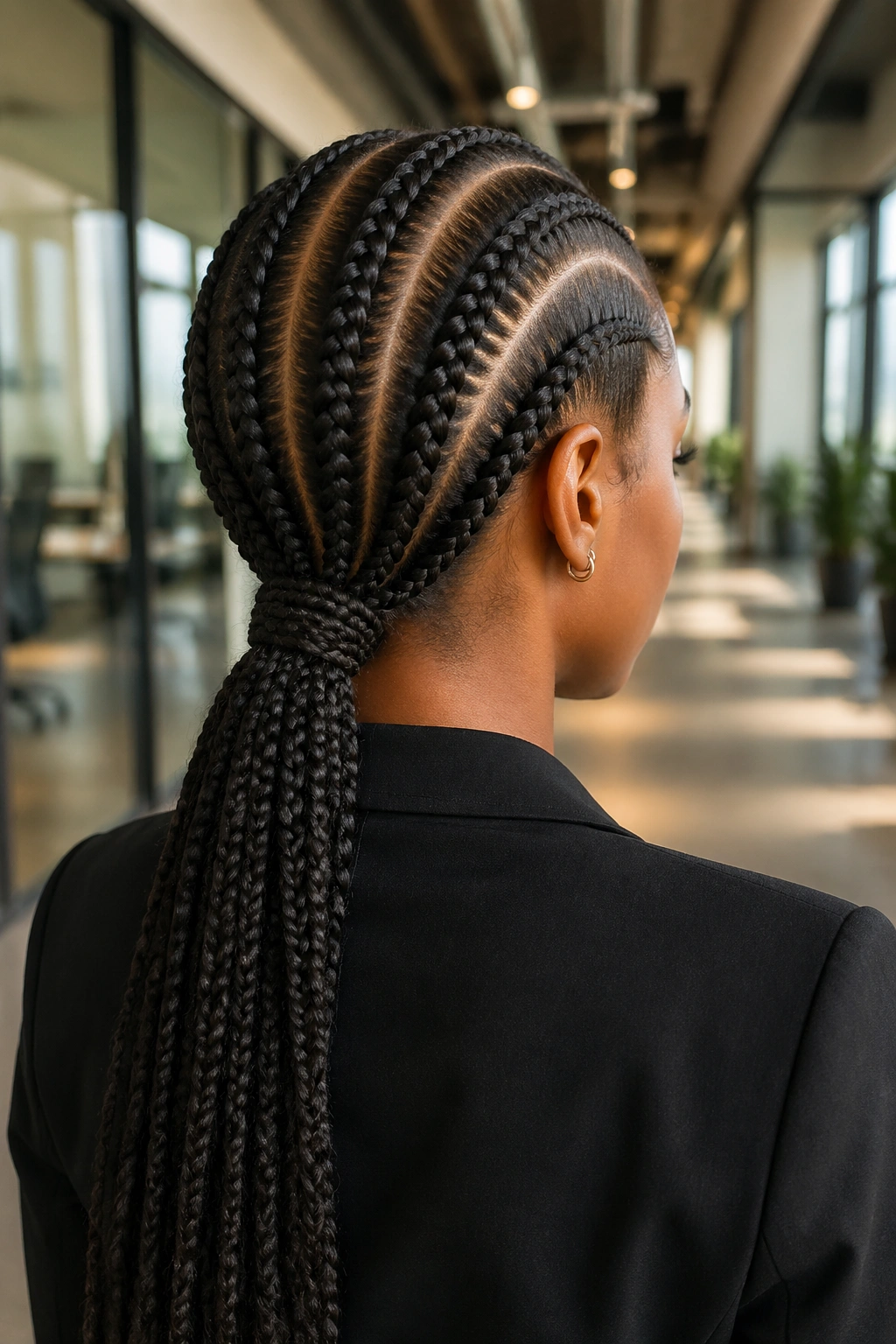
Stitch braids are all about line work. The parts are crisp, the braid sections are controlled, and the finished look has that graphic feel that makes people glance twice. Pulled into a low ponytail, the style becomes even cleaner because the detail stays concentrated near the scalp.
The low ponytail keeps the weight centered at the nape, which makes the whole style easier to wear for a full day. High ponytails can pull on the crown. Low ones usually don’t. That’s one reason stitch braids are such a practical choice when you want polish without a headache.
This is also one of the styles where the back matters more than the front. If the part lines are straight and the ponytail sits smooth, the whole look works. If the parts are uneven, you’ll see it right away. There’s no hiding. That honesty is part of the appeal.
12. French Braid Into a Long Tail
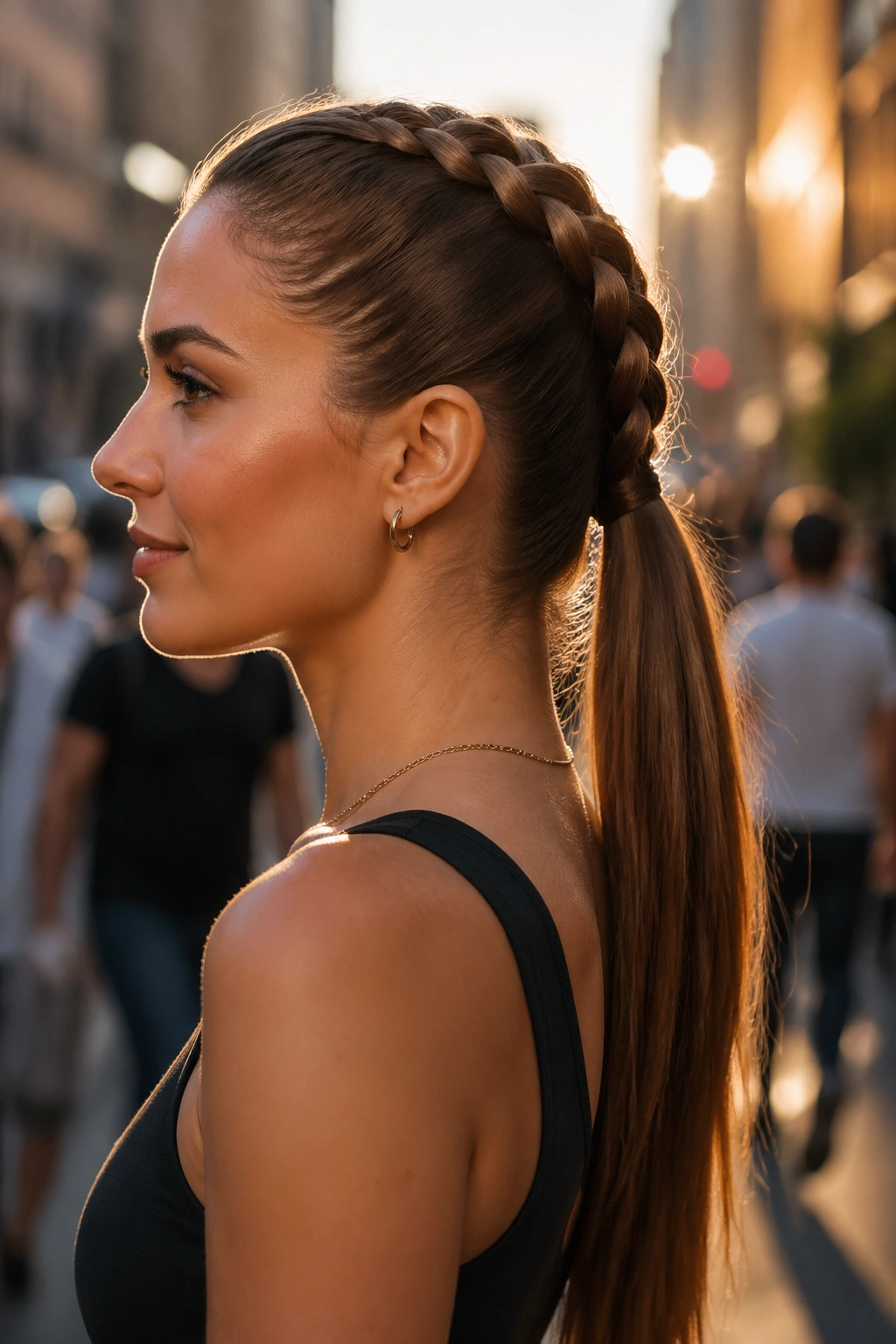
A French braid pulled straight back into a long tail is the most dependable version of this whole family of styles. It lies flatter than a Dutch braid, which gives it a softer profile and makes it easier to wear with almost anything.
That flatter shape is useful if you do not want extra bulk at the crown. It’s also the reason this braid works so well when the rest of the outfit is already busy. The braid stays clean, the tail stays long, and nothing fights for attention.
If your hair has layers, start the braid a little lower than you think you should. That keeps shorter pieces from slipping loose right around the temples. A tiny bit of styling cream on the hands helps, too, especially if the hair is silky and hard to grab.
This is the style I’d hand to someone who wants a pulled-back braid that never feels fussy.
13. Mini Braids Slicked Back With a Claw Clip Finish
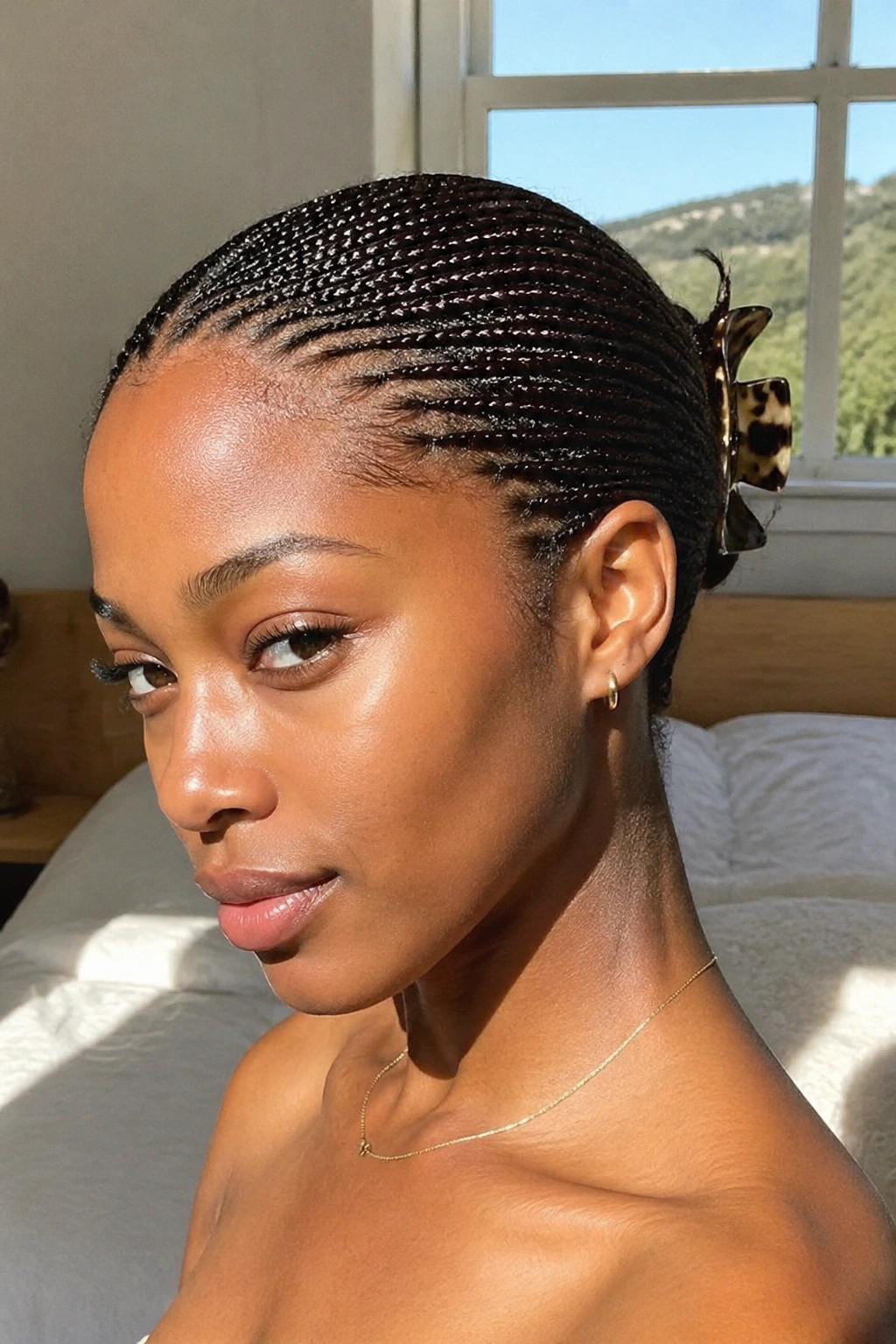
Tiny braids don’t have to look delicate. When they’re slicked back from the front and pinned or clipped at the back, they turn into a sharp, textured style that feels modern without trying too hard.
Why It Works
The small braids keep the front tidy while the clip gives the back an easy finish. That mix is useful on second-day hair, hair that has a little natural wave, or hair that refuses to stay smooth for long.
- Use a small claw clip with teeth that can grip.
- Braid only the front and temple sections if the rest of the hair is short.
- Smooth the roots with a soft brush before clipping.
- Let a few ends bend instead of forcing every strand into place.
Best tip: Don’t use a giant clip. A medium one usually holds better and sits closer to the head, which keeps the whole look from getting bulky.
14. Rope Braids Pulled Into a Low Bun
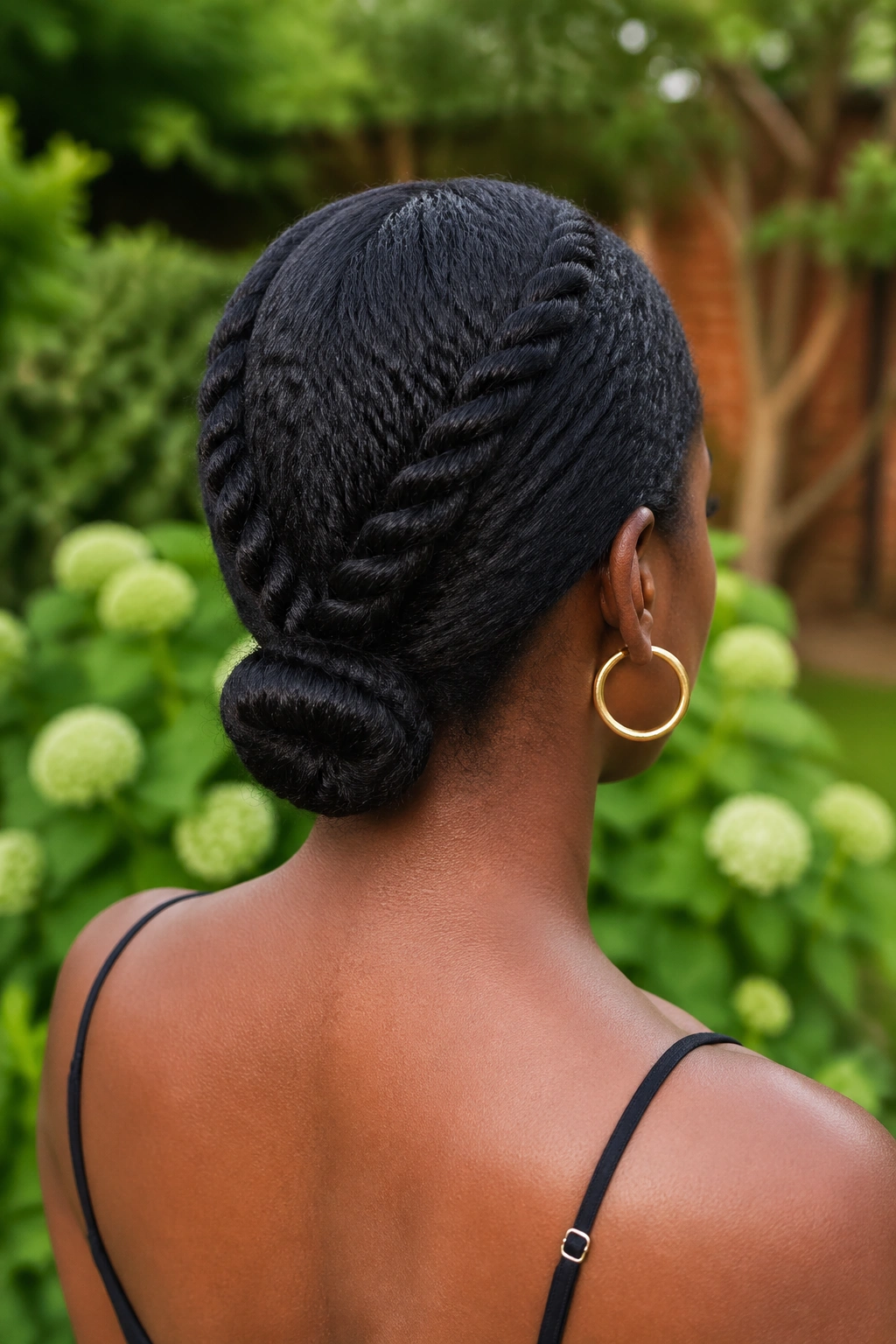
Rope braids get overlooked because they’re straightforward, not because they look plain. Two sections twist in the same direction, then wrap around each other the other way, and the result has a neat spiral that stays visible even when the hair is pinned into a low bun.
That spiral is what gives the style its interest. A standard braid can flatten out when it gets tucked into a bun. Rope braids keep their shape a little better, especially on fine hair that tends to collapse once it’s pinned.
They also need less finger work than people expect. If your hands can manage two sections and a clean twist, you’re most of the way there. The bun can sit compact at the nape or slightly lower if you want a quieter shape.
It’s a good style when you want hair secured and the finish to look intentional, not overworked.
15. Braided Mohawk With Sides Slicked Flat
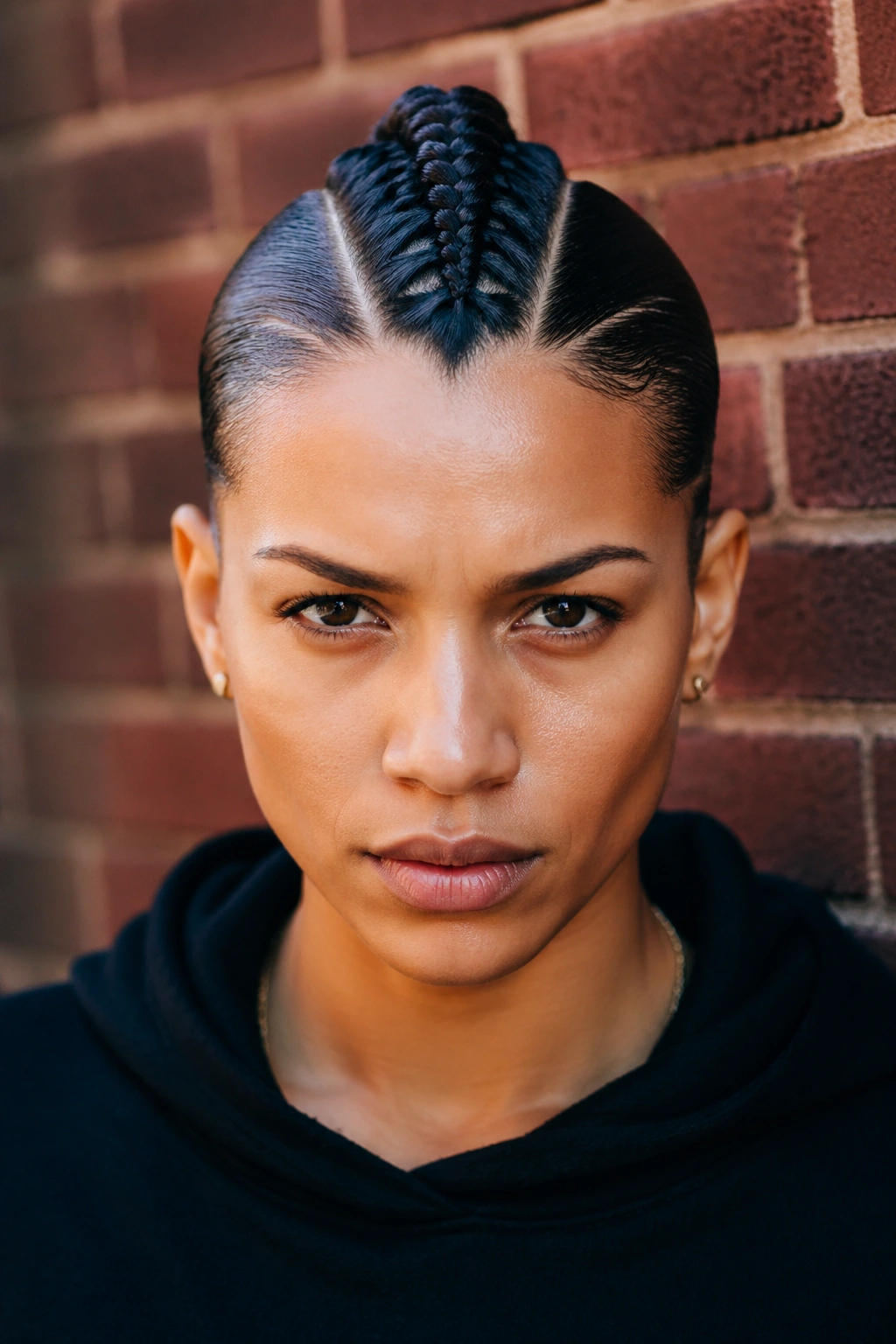
Want the hair off your face and still want some edge? The braided mohawk is the answer. The sides get brushed flat, the center braid or braid row runs from front to back, and the contrast between slick and textured makes the whole thing look sharp.
How to Wear It Without Losing Shape
The center braid should have enough width to read like a real feature, not a thin line lost between two flat sides. That middle section is the anchor. If it’s too narrow, the style starts to look unfinished.
- Use gel or styling wax on the sides, not just water.
- Keep the center braid firm from the hairline through the crown.
- Add one or two pins at the back if the braid starts to lift.
- Works well on natural texture, short-to-medium length, and undercut cuts.
This is not a timid style. It has presence, and it shows it fast.
16. Dutch Braid Crown With a Center Part
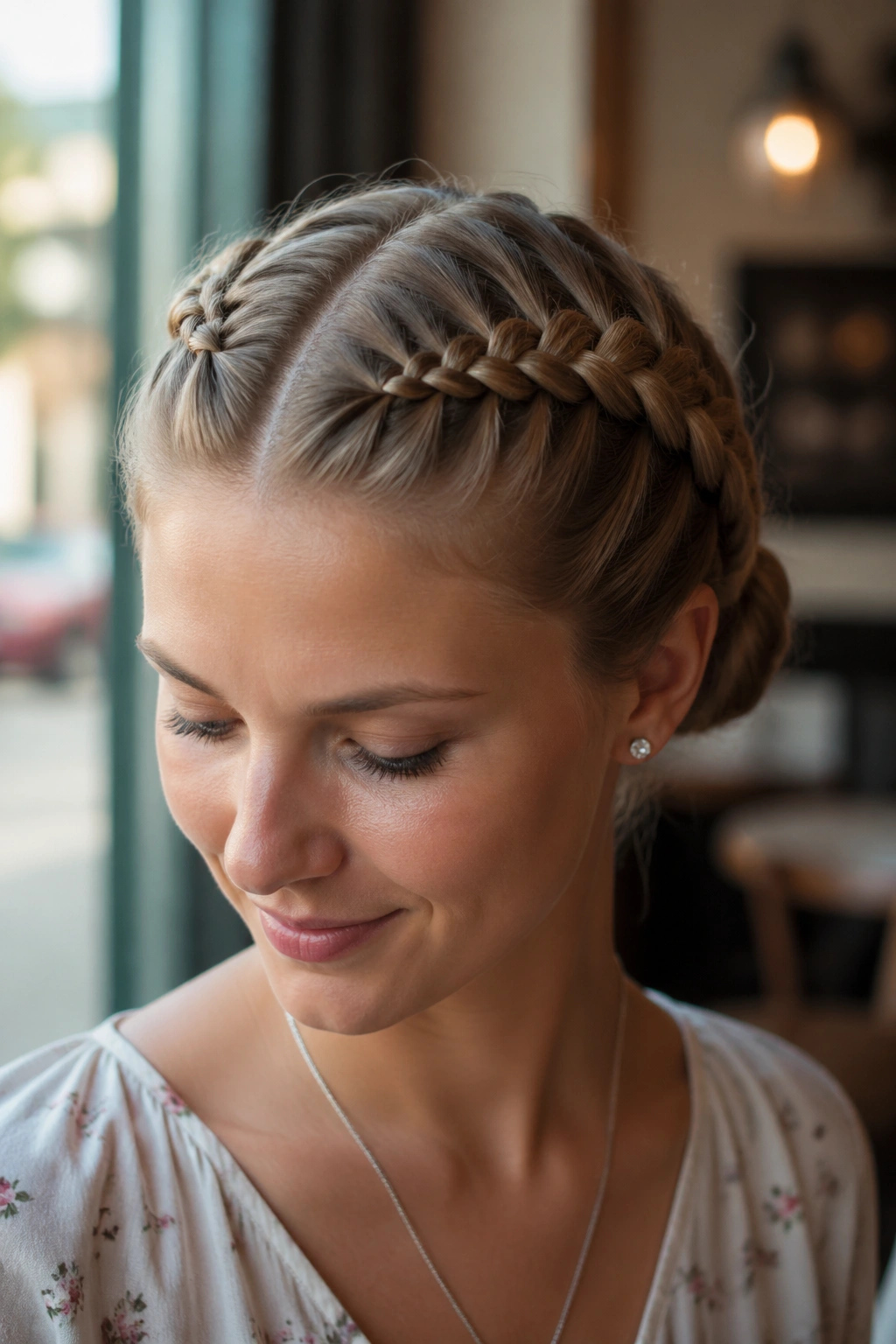
A center part changes the whole feel of a crown braid. Instead of drifting to one side, the braid wraps with symmetry, which gives the face a cleaner frame and the style a more balanced look.
I like this version when the rest of the outfit is simple. The braid itself becomes the detail, and because it loops around the head, there’s no need for extra accessories unless you want them. Even then, one small pin or barrette is enough.
- Keep the center part straight all the way back.
- Braid along each side with steady tension, not a death grip.
- Tuck the ends under near the nape or pin them into a low knot.
- A little sheen spray on the finished braid keeps the surface neat.
It’s orderly without being stiff. That’s a hard thing to get right.
17. Knotless Braids Pulled Into a Mid Ponytail
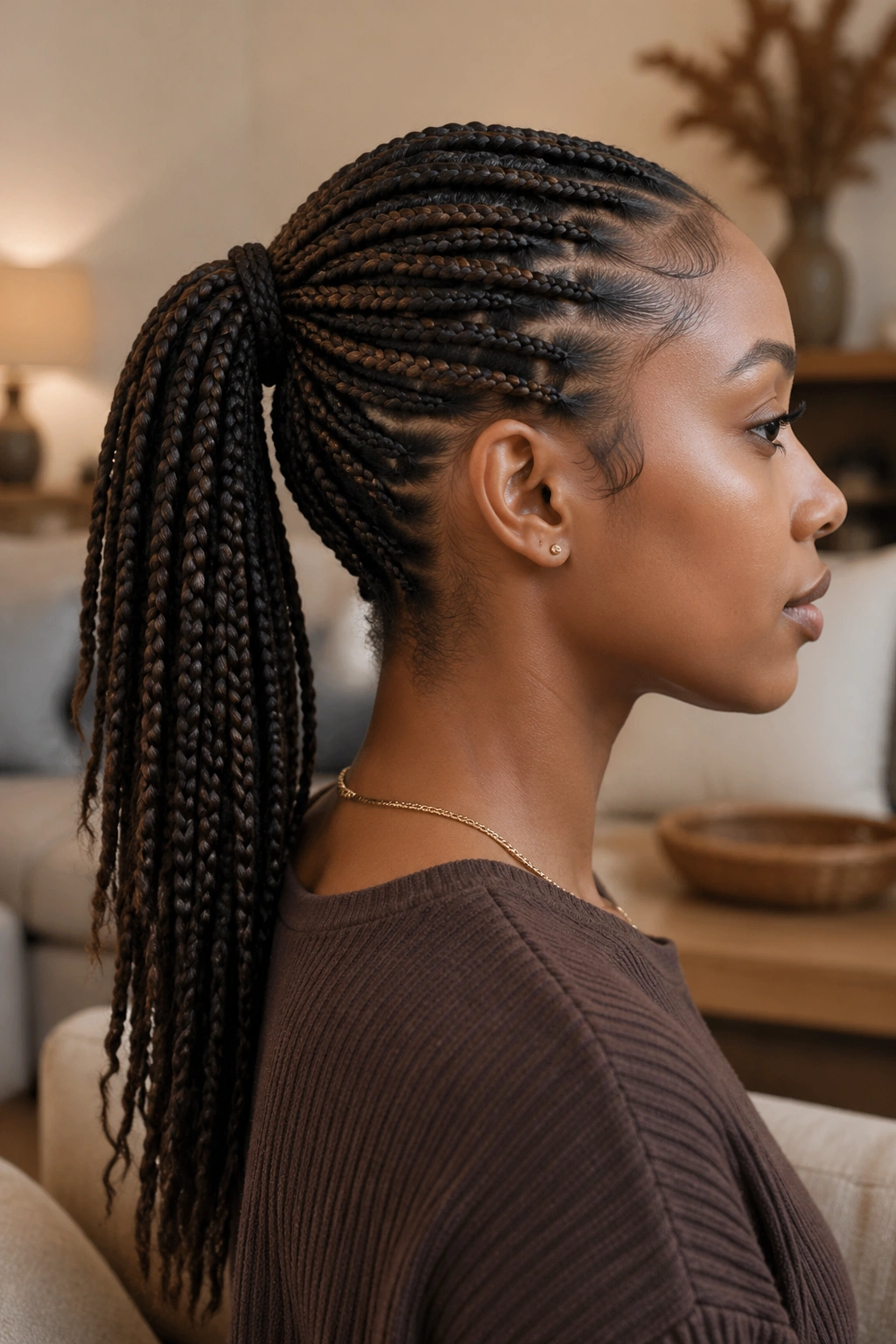
Knotless braids were made for movement. Since the braids start flatter at the root, they don’t have that chunky base some other braids carry, and a mid ponytail lets that softness show instead of hiding it.
The mid position matters more than people think. High ponytails can make the weight feel heavier on the scalp. Mid ponytails keep the pull centered, which is easier on the neck and often easier on the hairline too. The result looks relaxed but still neat.
This is a good style when you want the braids to swing a little. They move. They catch air. They don’t sit like a helmet. If the length is long, wrap a braid around the elastic and leave the ends to fall cleanly down the back.
There’s a reason people keep returning to this one. It wears well.
18. Tapered Feed-In Braids Into a Sleek Bun
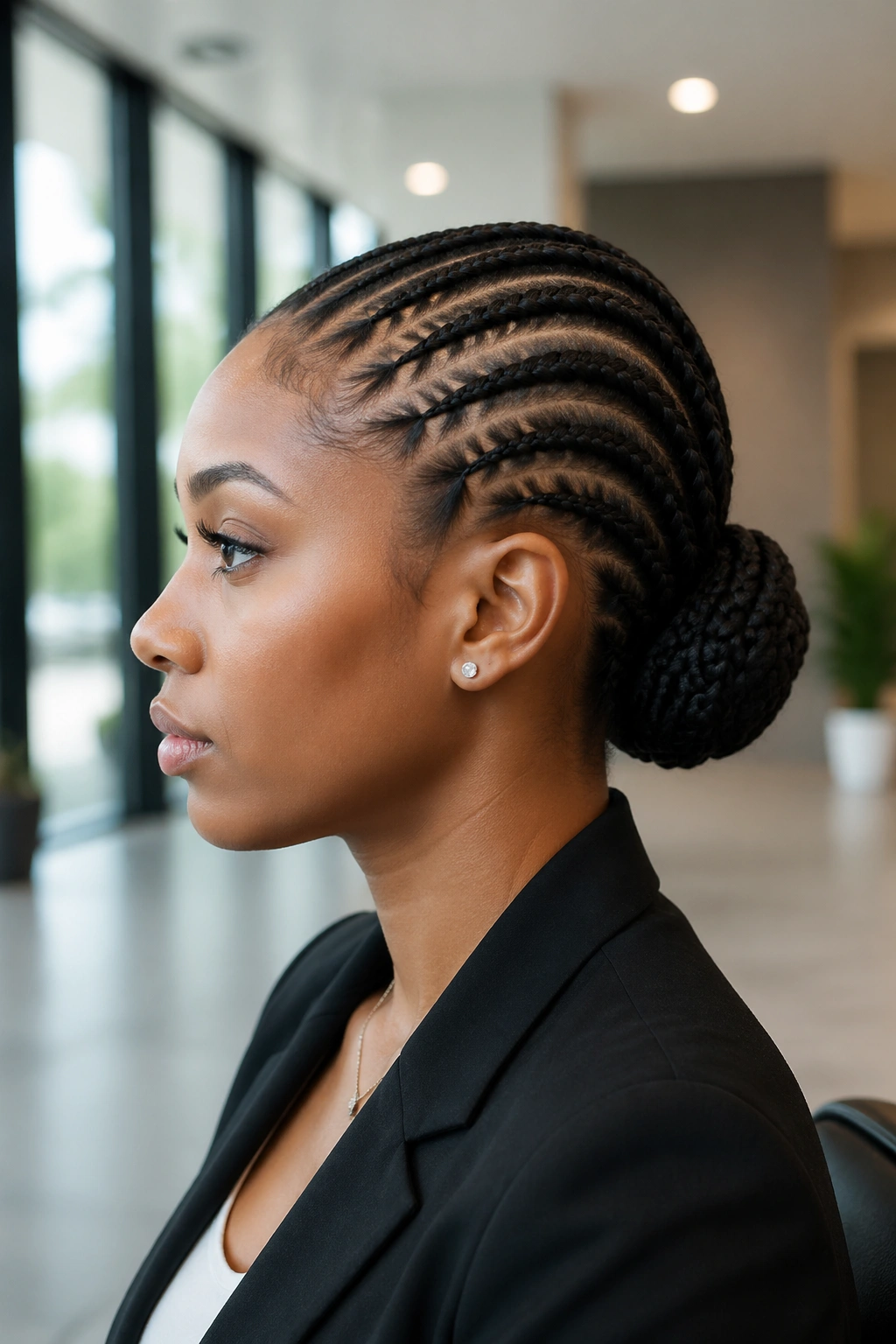
Tapered feed-in braids give you a cleaner start at the hairline than bulkier braid bases do. That gradual build makes the front look smooth, which matters when the whole style gets pulled into a sleek bun at the back.
The taper also keeps the bun from feeling overloaded. A heavy braid base can make the knot sit awkwardly or pull the style off-center. A tapered start solves that by spreading the weight more evenly along the braid before everything gets tucked up.
This is the one I’d choose for a work event or any setting where you want the hair to look polished without looking overdone. A low bun keeps the line sharp, while a mid bun looks a little more relaxed. Gold cuffs can be nice here, but only if the braid already has clean spacing.
One strong part line, one smooth bun. That’s the formula.
19. Four Cornrow Braids Into a Low Plaited Tail
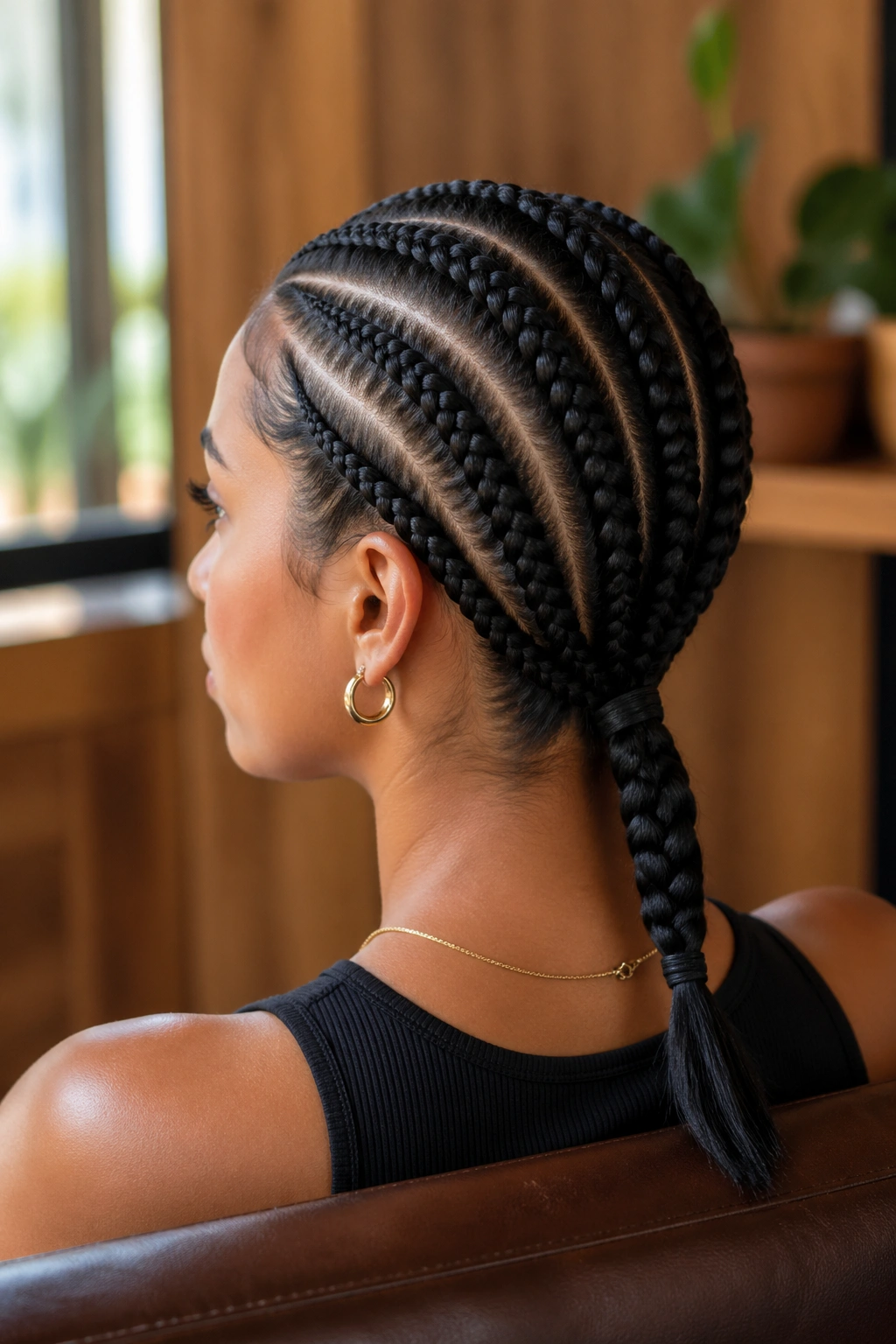
Not every pulled-back look needs a dozen moving parts. Four cornrows can be enough, and sometimes that simpler layout looks better because there’s less visual noise near the scalp.
Why Four Is Enough
The spacing gives the style room to breathe. You can see the parting, but the head doesn’t look crowded. That makes this version especially good if you want a neat finish that still feels approachable.
- Easy to keep straight over a full day.
- Works well for school, work, or low-key weekends.
- A low plaited tail keeps the back tidy without extra pins.
- Good choice for someone newer to braiding.
Small tip: If the hair is slippery, prep the roots with a touch of mousse before braiding. It gives the cornrows more grip and helps the tail stay smoother.
This style is practical in the best way. No wasted motion.
20. Waterfall Crown Braid Into a Tucked Ponytail
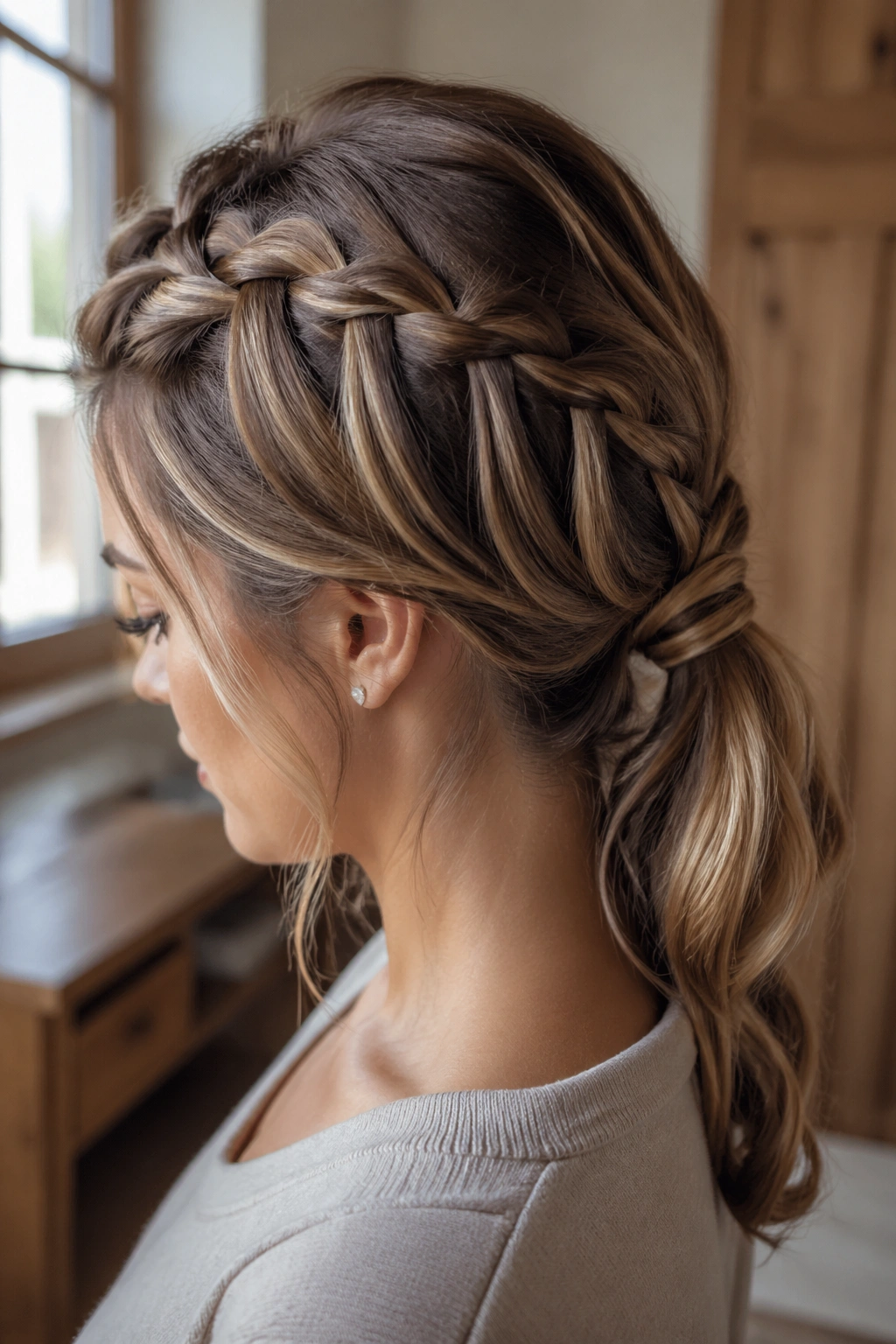
A waterfall braid usually gets treated like a loose, romantic style, but it can pull back surprisingly well when the dropped strands are gathered into a tucked ponytail at the back. That keeps the airy braid pattern near the crown while the length stays controlled.
The result has movement at the top and order at the bottom. That’s a nice trade. You get the woven look people like in waterfall braids without leaving the ends hanging loose all day. It works especially well on medium-length hair that can hold a soft bend or wave.
This style makes more sense than people think for everyday wear. It is not just for dressy occasions or photos. If the braid is anchored cleanly at the temples and the ponytail sits low and tidy, the whole thing feels balanced.
A little looseness near the face helps. Too much, and it starts to fall apart.
21. Classic Low Braided Ponytail Pulled All the Way Back
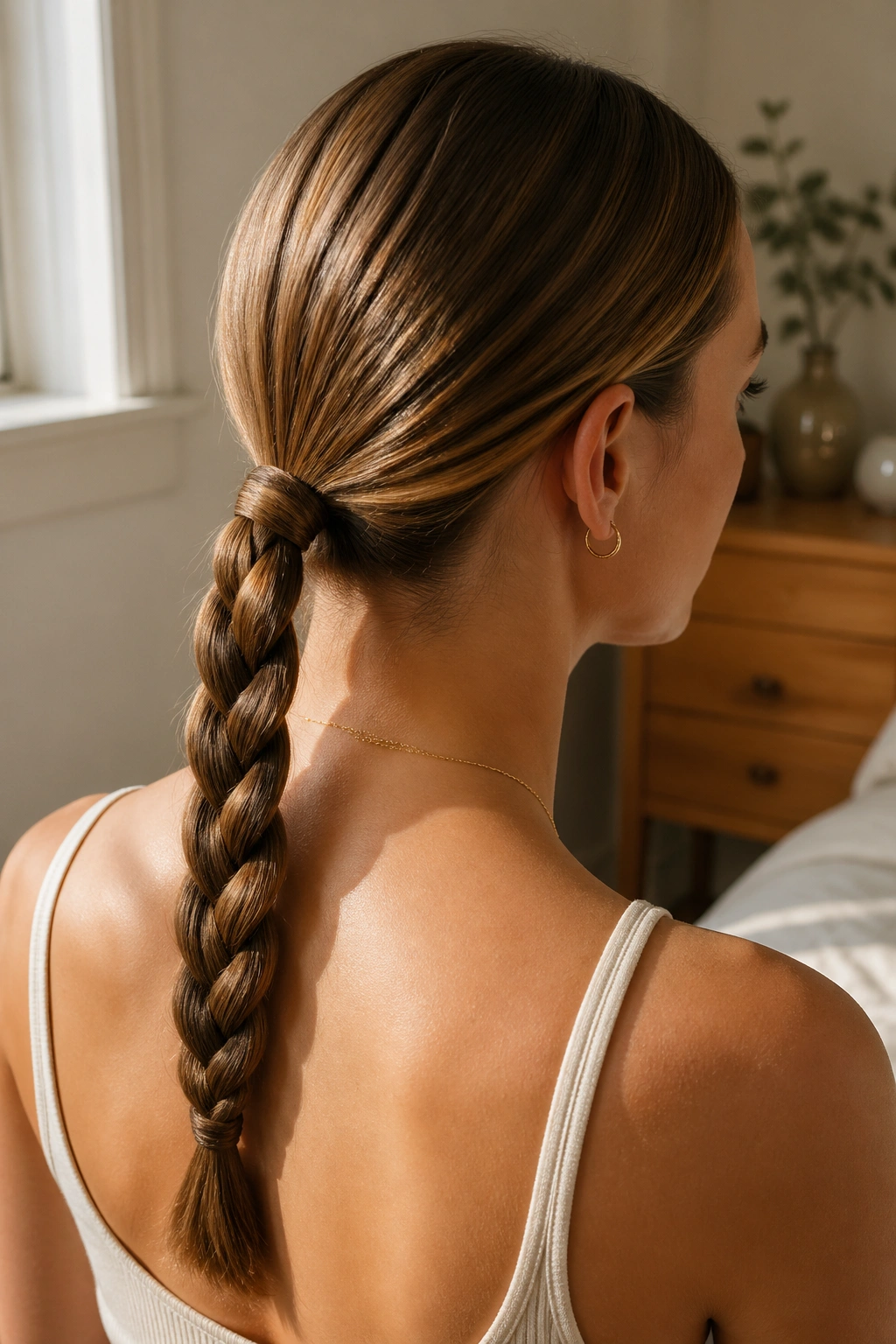
The classic low braided ponytail is the one that never really leaves the conversation. It’s plain in the best sense: a single braid, pulled straight back, gathered low, and finished with a clean base that hides the elastic. There’s no extra choreography to it.
That simplicity is why it works on so many textures. Fine hair gets a neat line. Thick hair gets a controlled shape. Wavy hair gets a braid that feels a little softer and less severe. If the part is centered and the braid is even, the style does the job without drawing attention to the setup.
I also like how easy it is to dress up or down. A matte finish makes it feel casual. A touch of shine spray and a wrapped base push it closer to polished. Either way, the hair stays where you put it, which is the whole point of braids pulled all the way back.
If one style has to earn its spot on repeat, it’s this one.
