



French braid styles for pixies and bobs are one of those things people assume only belong to longer hair, and that’s a shame. Short cuts can hold a braid just fine when the section is small, the tension is clean, and the style is planned around the haircut instead of against it.
The trick is to stop thinking of a French braid as one big plait running from forehead to nape. On a pixie, it might be a 2-inch braid at the hairline. On a bob, it might sweep across one side, tuck behind the ear, or stop halfway and disappear into a pin. Same technique. Different scale. Much better results.
Short hair also has its own advantages. There’s less weight pulling the braid loose, the shape sits close to the head, and a few sharp sections can make the whole cut look deliberate instead of grown-out. That’s especially true with clean parts, a little texturizing spray, and bobby pins that actually match your hair color.
1. Temple-Trace French Braid
A temple-trace braid is the easiest way to make a pixie look styled without trying to fake length. You start near the temple, feed in tiny sections along the hairline, and stop as soon as the braid reaches the ear or the top of the sideburn. It looks neat, but not fussy. That balance matters on short cuts.
Why it works on short hair
The braid follows the strongest part of the cut: the perimeter. On a pixie, that’s usually where the hair has enough grip to hold a slim section without slipping apart.
Use a rat-tail comb and keep the section narrow, about 1/2 inch wide. If the hair is slippery, mist the roots with dry texture spray first.
- Best on pixies with at least 2.5 to 3 inches on top
- Holds well with one clear elastic or a tucked pin
- Looks sharp with side parts and ear-length layers
Tip: Don’t pull the braid too tight at the temple. A little softness keeps it from looking like a helmet stripe.
2. Side-Swept Part Braid
Can a side part do all the work? Almost. A side-swept French braid starts deep on one side and curves across the forehead or crown, which gives a bob instant shape without needing much length.
The braid feels more dramatic than a center line braid because the part itself does half the styling. Short bobs especially like this one; the braid can sit above the eyebrow line and still look finished. If your hair falls flat at the roots, backcomb the first inch at the crown before you begin.
How to wear it
Keep the first braid pass a little loose so the curve reads clearly. Then tighten only after you’ve crossed the front section.
Watch for this
- Fine hair may need spritzes of lightweight hairspray
- Thick hair usually needs smaller feed-in sections
- A bob that hits the jawline or longer will hold the curve best
It’s a smart choice when you want something polished but not overbuilt.
3. Micro Crown Braid
A micro crown braid is tiny, tidy, and strangely strong for such a small piece of hair. Instead of braiding the whole head, you braid a narrow strip from one temple toward the crown and let it hug the head like a little band.
I like this on bobs that have blunt ends. The braid gives the haircut a softer top line, which keeps the shape from feeling boxy. Use very small sections—no more than 1/4 inch each—so the braid stays close and doesn’t puff out.
The finish should feel almost architectural. Clean. Controlled. A bit Parisian, if that phrase still means anything useful.
4. Braided Bang Sweep
A braided bang sweep is for the days when your fringe refuses to behave. You braid the front section back from the part, then pin it just behind the temple so the rest of the bob can do its own thing.
The braid is doing a job here, not making a statement. That’s why it works. It clears the face, keeps shorter bangs off the eyes, and gives a bob that slightly undone feeling people keep trying to fake with curling irons.
A couple of bobby pins crossed in an X are usually enough. If your bangs are layered, leave the shortest wisps out around the hairline. They soften the whole thing.
5. Half-Up French Braid
A half-up French braid gives a bob a little lift at the crown without hiding the cut. It starts at the front or upper crown, feeds back through the top layers, and stops before the braid gets too bulky.
Compared with a full braid, this one feels lighter and easier to wear. The ends can be pinned into a tiny knot, tucked under, or left as a short tail if your bob has enough length. On chin-length cuts, the braid can sit almost like a structured half-up twist.
The biggest mistake is making the braid too wide. Keep it narrow—about 1 to 1.5 inches across at the start—and the rest falls into place.
6. Double Mini French Braids
Two small French braids are practical, yes, but they also look sharper than one big one on short hair. They frame the face evenly and stop a pixie from looking too precious or too flat.
Where to place them
Start each braid just above the temples and angle them back toward the crown. If your layers are short, keep the feed-in sections tiny and use a bit of styling cream on your fingertips.
A pair of mini braids works especially well when the haircut has uneven layers around the ears. The braids give those pieces a job instead of letting them stick out in every direction.
- Great for second-day hair
- Easier to balance than a single braid on very short cuts
- Can be finished with small elastics or hidden pins
Tip: Pull the outer edges of the braids slightly wider after securing them. That softens the look without making it messy.
7. French Braid Headband
A French braid headband is one of the best tricks for a bob because it behaves like an accessory made from your own hair. You braid across the front hairline from one side toward the other, then pin the end under the opposite side.
It gives the face a frame and lets the rest of the hair stay loose. That’s the appeal. You get the visual line of a braid without sacrificing movement in the length underneath.
This style looks best when the braid is smooth at the start and slightly fuller in the middle. A tiny bit of shine serum on the outer surface helps, but don’t load it up. Short hair shows product fast.
8. Pixie Faux-Hawk Braid
A pixie faux-hawk braid is a little bolder, and I mean that in the best way. You braid the top center section from the front hairline backward, keeping the sides sleek or tucked, so the braid reads like a raised ridge down the middle.
It works because the braid creates height where pixies often need it most. The shape can make the cut look longer and more styled in about five minutes. If your hair is soft, rough it up with a pea-sized dab of matte paste before you start.
What makes it different
Unlike a soft crown braid, this one wants contrast. Tight sides. Clear center section. A sharper silhouette.
If you like a little edge, this is the one to try first.
9. Wrapped Bob Braid
A wrapped bob braid starts on one side and curves around the back of the head like it’s making a clean escape behind the ears. The braid itself is visible for only part of the style, then it disappears into pins or the loose lengths.
That disappearing act is the whole point. Short bobs can look busy when every section is fighting for attention. This braid pulls the eye around the shape instead of stopping it dead at one point.
Use a small tail comb to keep the line even, and don’t worry if the braid isn’t perfect in the back. On a bob, a slightly hidden finish often looks better than an overworked one.
10. Diagonal Nape Braid
Why do diagonal braids look so good on bobbed hair? Because they fight the haircut’s natural boxiness. A braid that starts near one ear and drops diagonally toward the nape creates motion, and short hair loves motion.
This style is especially good if your bob has thick ends. The braid can skim over the heavier bottom section and make the shape feel lighter. Keep the feed-in section close to the scalp for the first few passes, then let it relax a touch as it moves back.
How to use it
- Start with a clean side part
- Braid at a 30- to 45-degree angle
- Pin the tail under the back layers
It’s a small adjustment, but it changes the whole mood of the cut.
11. Tucked Side Braid
A tucked side braid is one of those styles that looks more deliberate than it is. You braid a side section back along the head, then hide the tail behind the ear or under the bob’s bottom layer.
This is a good option when your hair is nearly too short for a full braid but too long for a pure pixie. The braid adds interest at the side, and the tucked finish keeps it from sticking out like an afterthought.
Compared with a loose side braid, this one feels neater and more modern. It’s also forgiving. If the bottom of the braid gets a little messy, the tuck covers a lot.
12. Braided Bob Ponytail
A bob ponytail sounds simple until you braid the front into it. Then it becomes something sharper. Start with a French braid at the front hairline or crown, feed it back, and gather the rest into a low ponytail or mini knot.
The braid gives the ponytail structure, which is useful when the hair is too short to look full on its own. It’s a nice way to turn a just-below-the-ear bob into an updo-ish style without fighting the cut.
A small elastic works better than a thick one here. If the ponytail is sparse, wrap a narrow strand around the base and pin it underneath.
13. Halo Braid for Bob
A halo braid on a bob is smaller than the version you see on long hair, and that’s exactly why it works. Instead of circling the entire head with heavy volume, you build a light braid around the crown and let the ends tuck into each other.
The result feels balanced. Not childish. Not severe. Just tidy enough to handle a dressy event or a clean office look.
What makes it different
Unlike a full crown braid, a bob halo needs to stay close to the scalp. If it lifts too far off the head, the shape gets awkward fast.
A few strategic pins are usually enough to hold the loop in place. Spray the finished braid from about 8 inches away so you don’t soak the surface and flatten everything.
14. Braid-and-Clip Pinback
Sometimes the smartest style is the one that uses the braid to support an accessory. A braid-and-clip pinback starts with a short French braid at the front or temple, then the loose end disappears under a barrette, slide pin, or snap clip.
It’s good for bobs that need a fast fix for grown-out layers. The braid keeps the front from splitting apart, and the clip makes the finish feel intentional rather than thrown on.
Use a clip with teeth or a strong grip if your hair is fine. Smooth acetate barrettes can slide on slippery hair, which is irritating when you’ve spent time making the braid look neat.
15. Lived-In Loose French Braid
A loose French braid on a bob should never look overcontrolled. If the sections are a little airy and the braid sits soft against the head, the whole style reads as lived-in instead of stiff.
That’s useful for wavy hair, especially when the bob has texture in the ends. Braiding while the hair still has a bit of natural bend gives the braid a relaxed shape that holds better than freshly blown-out hair.
Don’t chase every flyaway. A few wisps around the hairline give the braid some life. Too much polishing and it starts to look like it’s trying too hard.
16. Ribbon-Woven French Braid
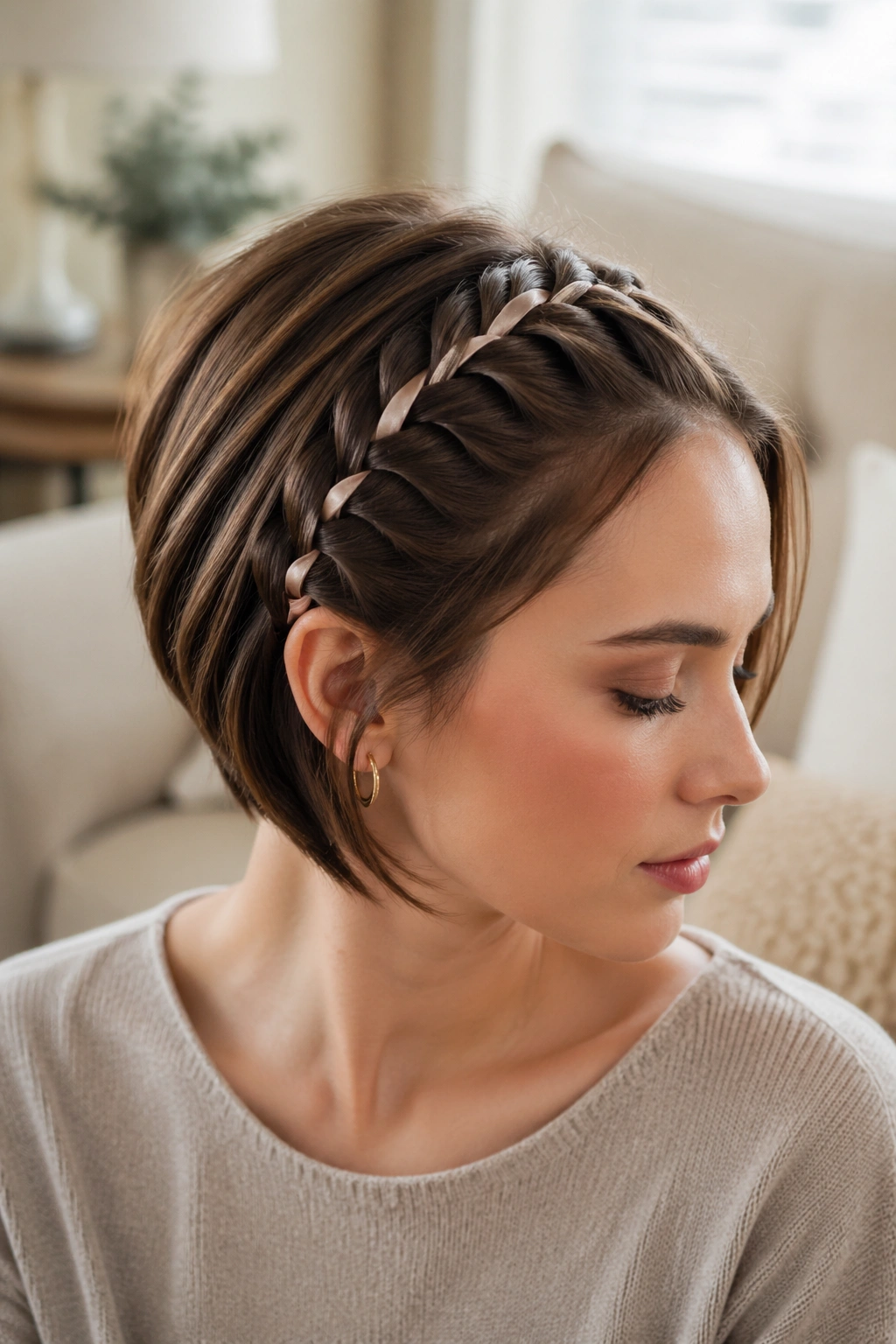
A ribbon-woven French braid can make a short cut look dressed up in one step. You feed a thin ribbon into the first section and continue braiding it through the length, letting the color peek out at regular intervals.
This is especially nice on bobs because the ribbon adds length visually. A narrow satin ribbon, about 1/4 inch wide, works best; anything thicker starts to overpower the braid and weigh it down.
How to get the most from it
Choose a ribbon that sits close to your hair color if you want something subtle, or go for a clean contrast if you want the braid to stand out.
A quick tie at the end helps the ribbon stay flat. If it twists, the braid can look lumpy. Not hard to fix. Just start over on that section.
17. Curly Hair French Braid
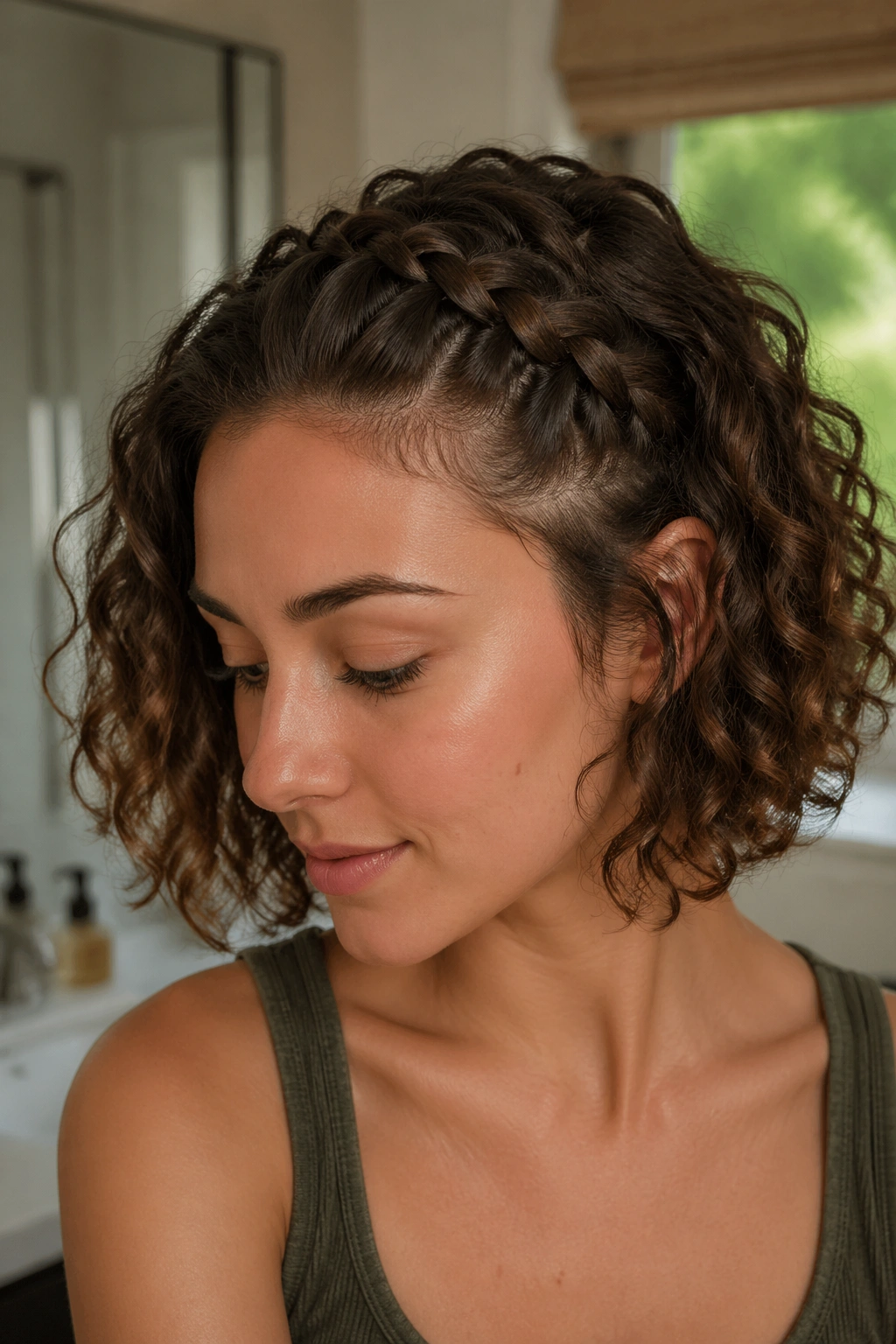
Curly hair and French braids get along better than people think, but the braid should respect the curl pattern. Don’t brush curls into submission. Use fingers or a wide-tooth comb, then braid with enough tension to hold the shape without flattening the curl on top.
A bob with curls gets a lovely mix of structure and bounce this way. The braid keeps the roots neat while the ends stay full and springy. That contrast is the whole charm.
If your curls frizz when handled too much, work with a small amount of curl cream on damp hair and braid once it’s about 80 percent dry. That keeps the braid from puffing up like a cloud.
18. Fine Hair Micro Braid
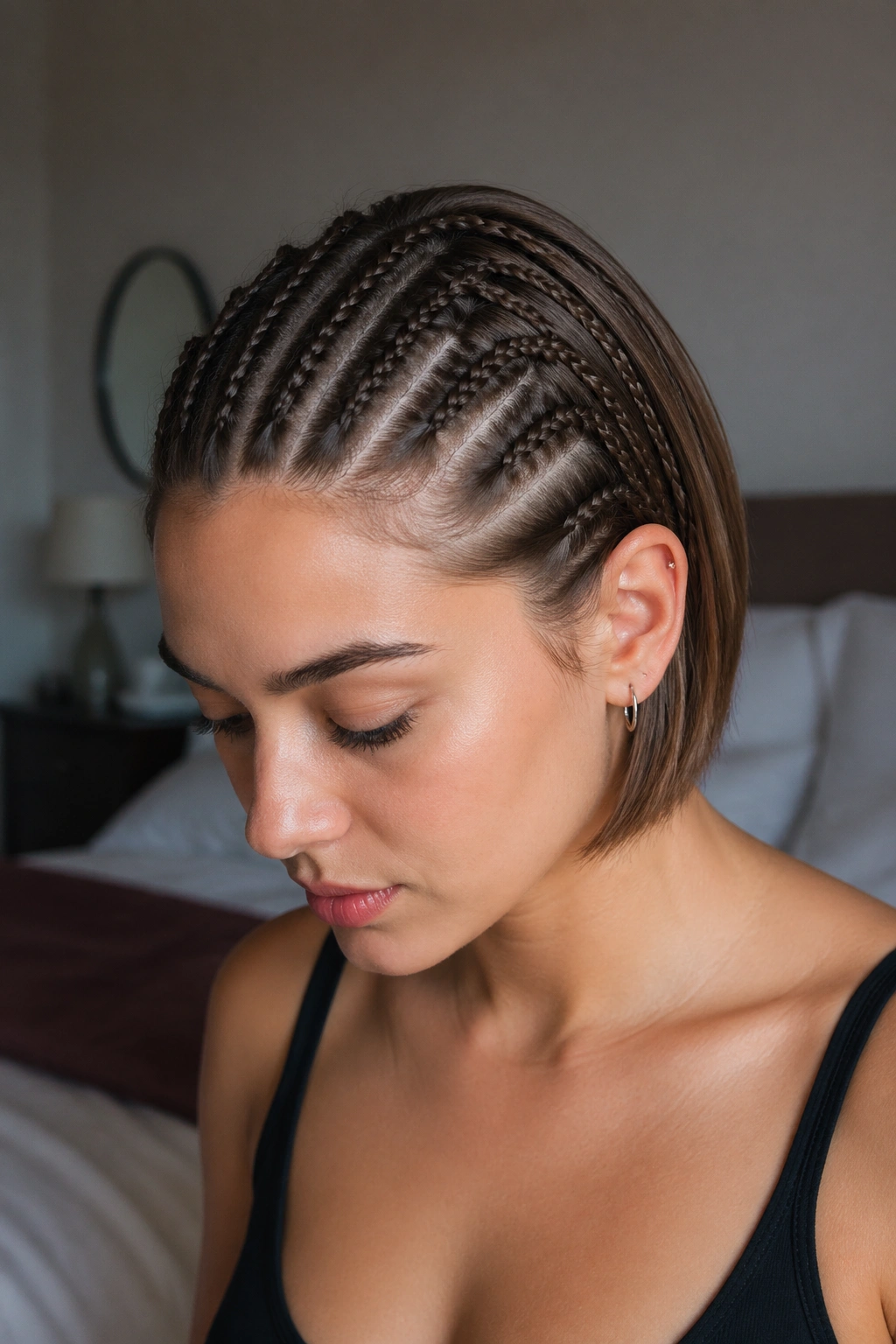
Fine hair needs small sections and a little patience. A micro French braid uses slim feed-ins, tight tension, and a narrow part so the braid doesn’t collapse before lunch.
The upside is that fine hair often shows braid detail better than thick hair does. Each pass is visible, which makes the style look crisp instead of bulky.
What helps
- Use dry shampoo at the roots for grip
- Start on day-old hair
- Secure the braid with a tiny clear elastic
- Finish with a light mist, not a heavy spray
If you want more fullness, tug the outer edges of the braid very gently after tying it off. Very gently. Fine hair can go from neat to frayed fast.
19. Thick Hair Chunky Side Braid
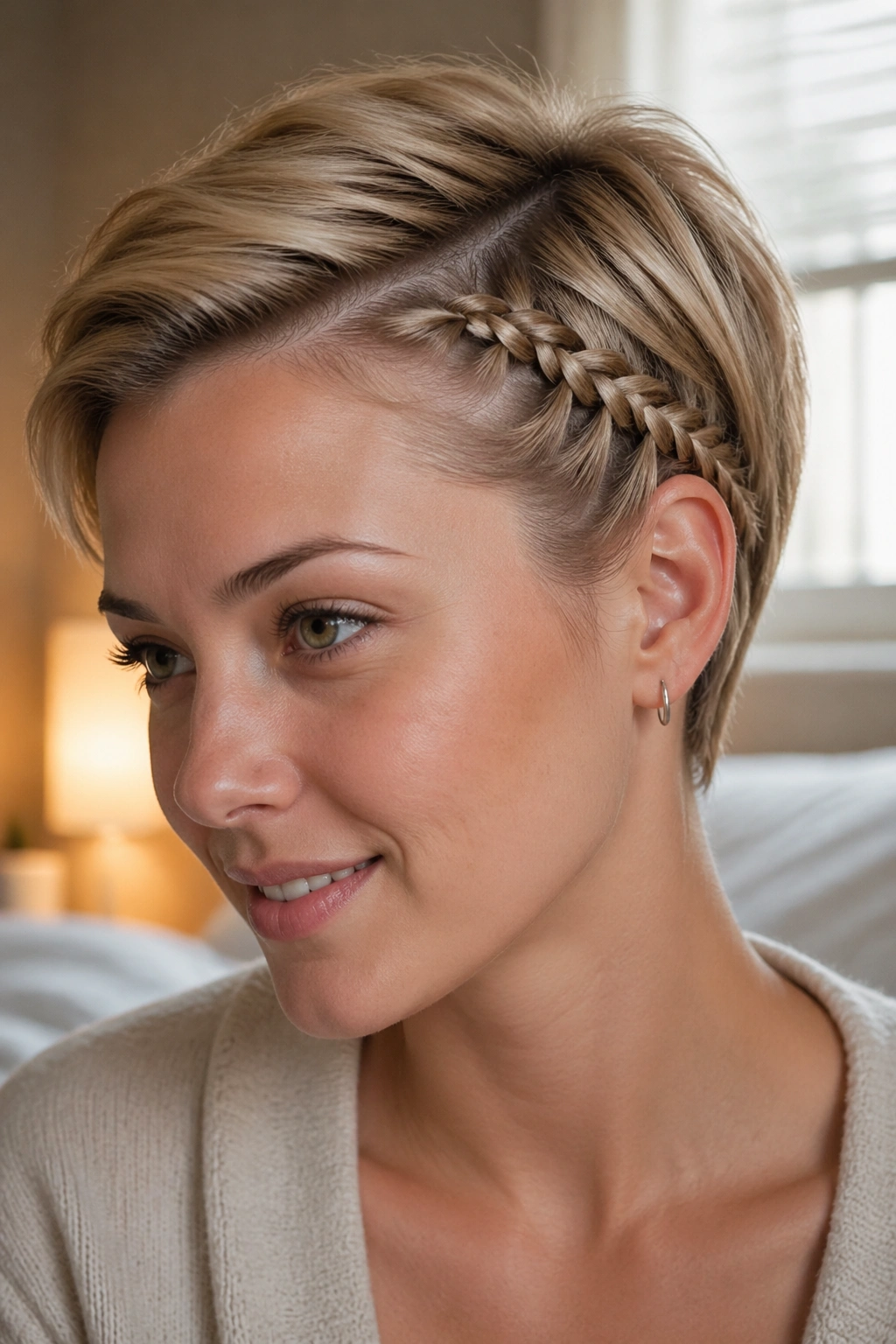
Thick hair makes a chunky side braid look expensive without much effort. The braid has enough density to read from across the room, and on a bob or pixie with longer top layers, that weight becomes part of the design.
The move here is not to over-manage it. Keep the sections even, but don’t crush the braid flat with too much tension. Thick hair already brings its own body. Use it.
A side placement helps reduce bulk at the back of the head. That matters if your bob is blunt or your pixie has a lot of top length.
20. Braided Undercut Accent
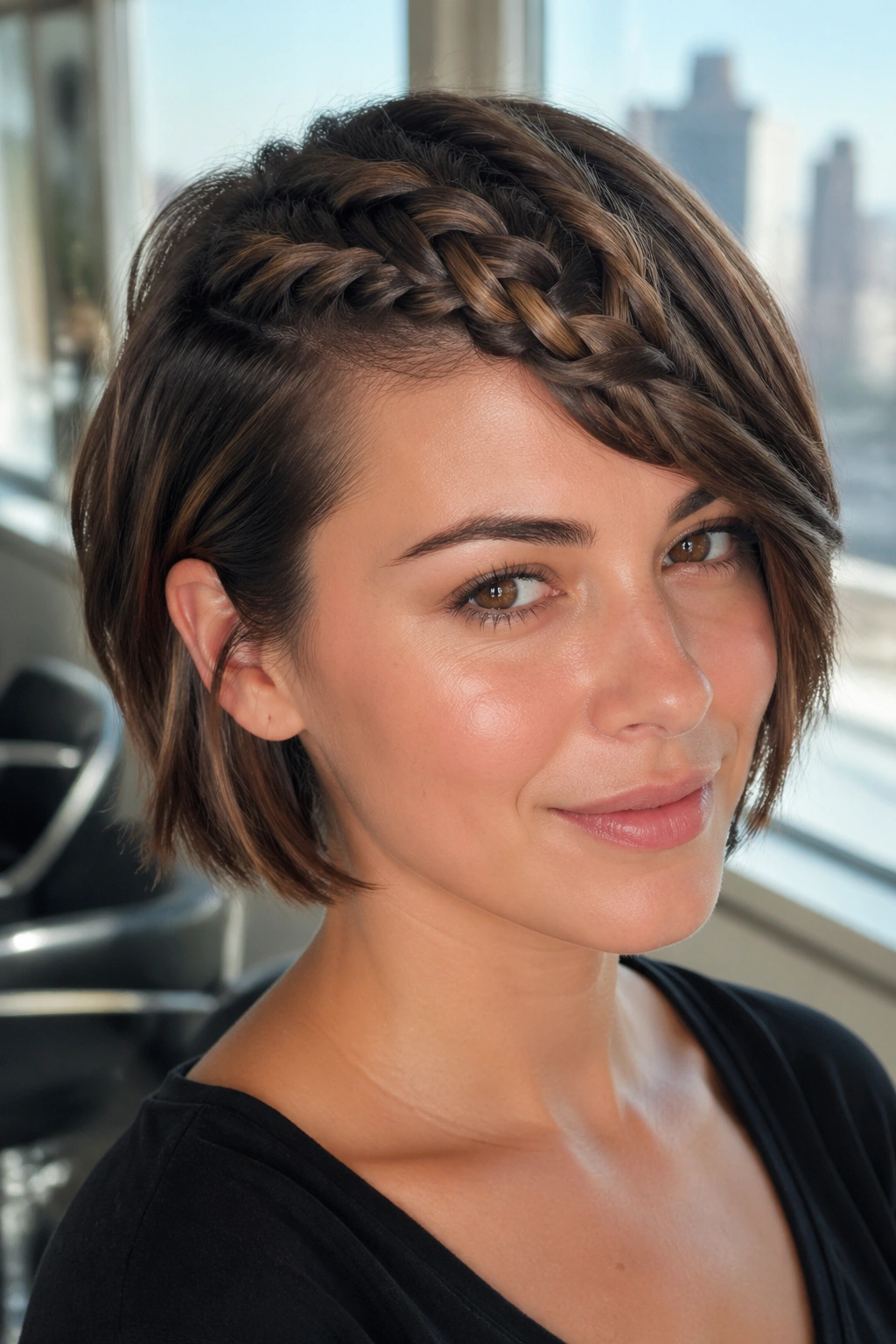
A braided undercut accent is sharp, a little rebellious, and surprisingly wearable. You braid the longer top section over or beside a shaved panel, letting the braid sit like a frame for the undercut instead of hiding it.
The contrast is what makes the style work. Smooth braid on top, clean skin or short buzz beneath. Short cuts need that kind of obvious shape sometimes.
If the undercut area is very short, use the braid to anchor the eye rather than cover the section. One slim braid is enough. More than that and the style starts to feel crowded.
21. French Braid Into Low Knot
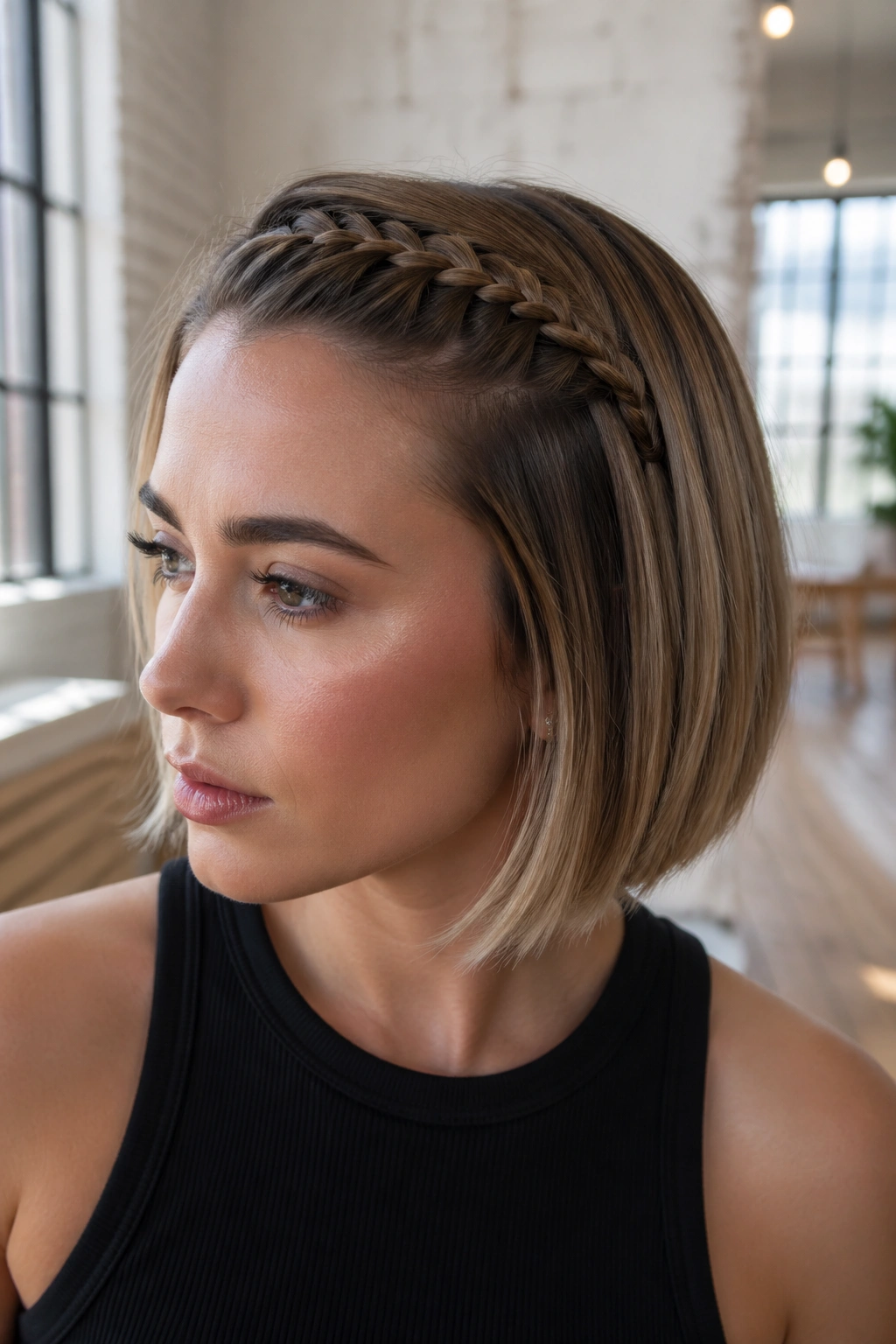
A French braid into a low knot is a useful way to make bob-length hair look like it’s doing more than it is. You braid from the front or crown, then gather the tail into a tiny knot at the nape and pin it flat.
This works best on bobs that reach the collarbone or nearly do. Shorter than that, and the knot gets too small to hold a shape. But on the right length, it’s sleek and practical.
Best use case
A work event. A dinner. A day when your ends are misbehaving and you cannot be bothered to curl them.
The style keeps the face open and the back neat. That’s a useful combination.
22. Braid Over the Ear
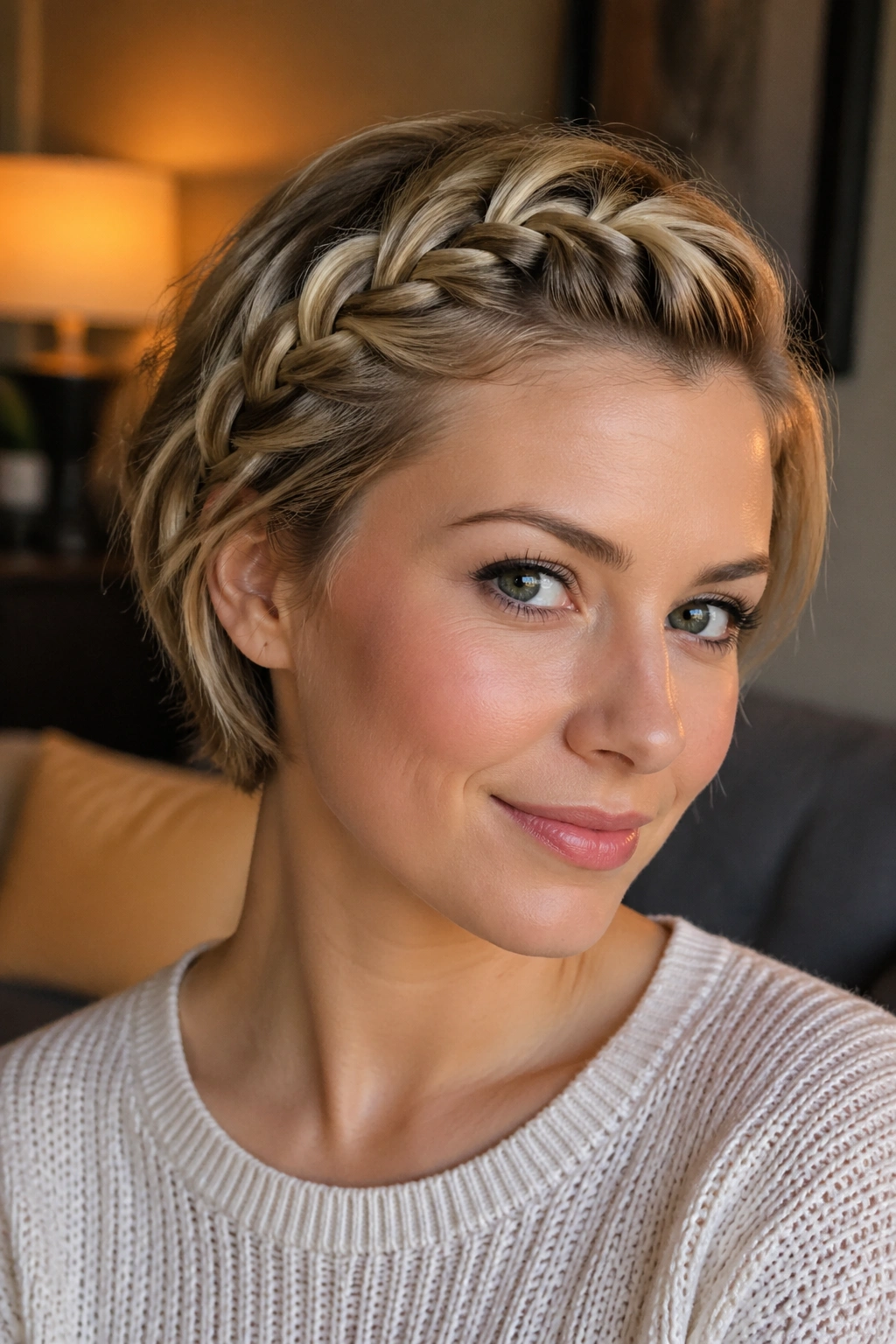
A braid that sweeps over one ear feels soft in a way many short styles don’t. You start near the front, feed the braid backward, then curve it just enough so it rests above or over the ear before pinning the tail out of sight.
It gives the haircut a clear line without exposing too much scalp. On a bob, it can create that tucked, tailored look people like without making the whole style severe.
If your ears sit close to the head, the braid will lie flatter. If not, leave a little room at the edge so it doesn’t stick out. Tiny detail. Big difference.
23. Crisscross French Braid Detail
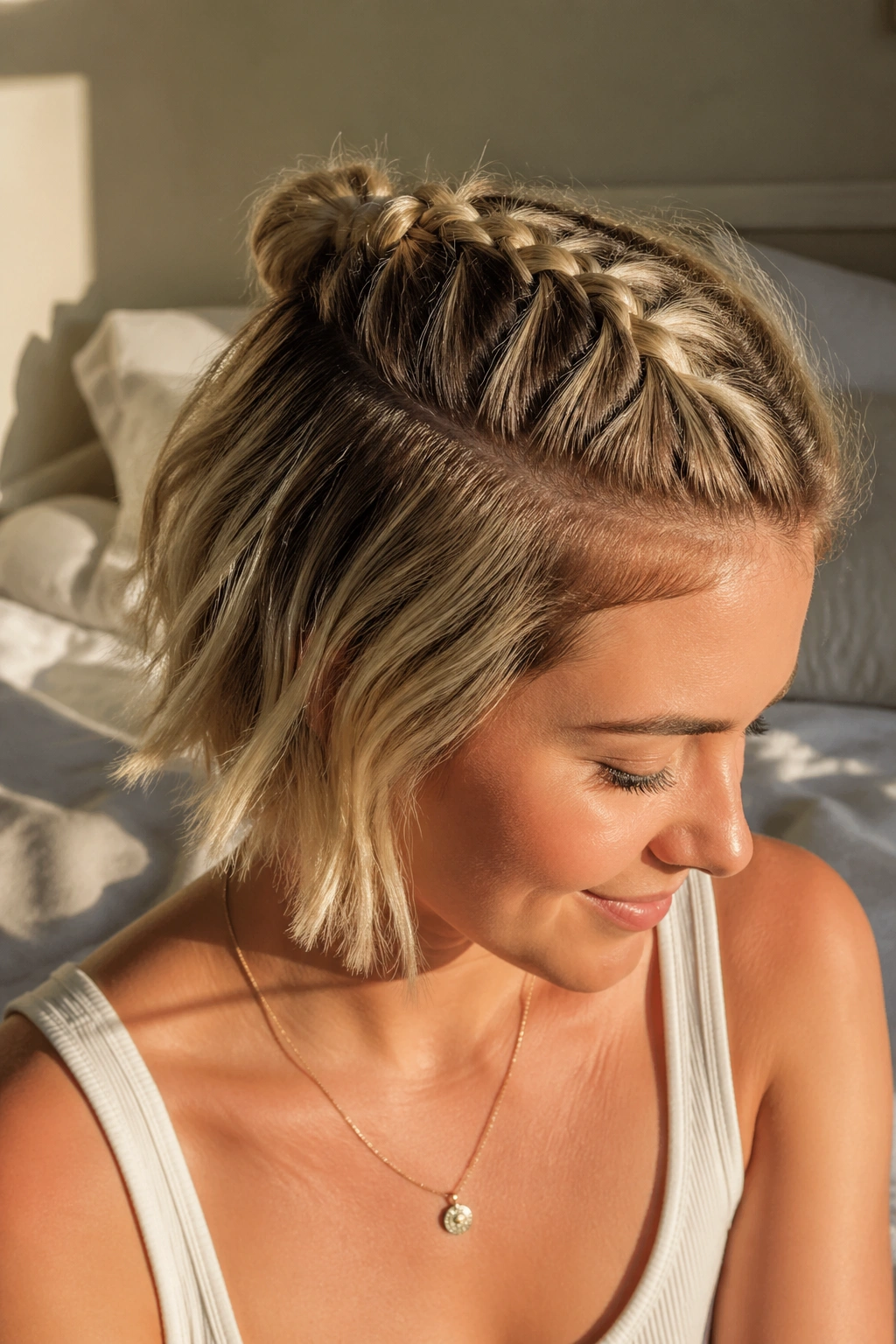
A crisscross French braid detail isn’t a full braid wall. It’s a pair of slim sections woven across each other, often at the front or crown, to create a small lattice effect.
That sounds fussy, and it can be if you overdo it. Keep the pieces narrow and let the rest of the hair stay loose. On a pixie or short bob, the crisscross becomes a detail, not the whole haircut.
Why it stands out
Unlike a standard braid, this one gives you movement in two directions. Forward and sideways. That’s why it looks more intricate even when the actual braid work is tiny.
A couple of hidden pins keep the crossing flat. If one side is puffier, pin that side first.
24. Twin Front French Braids
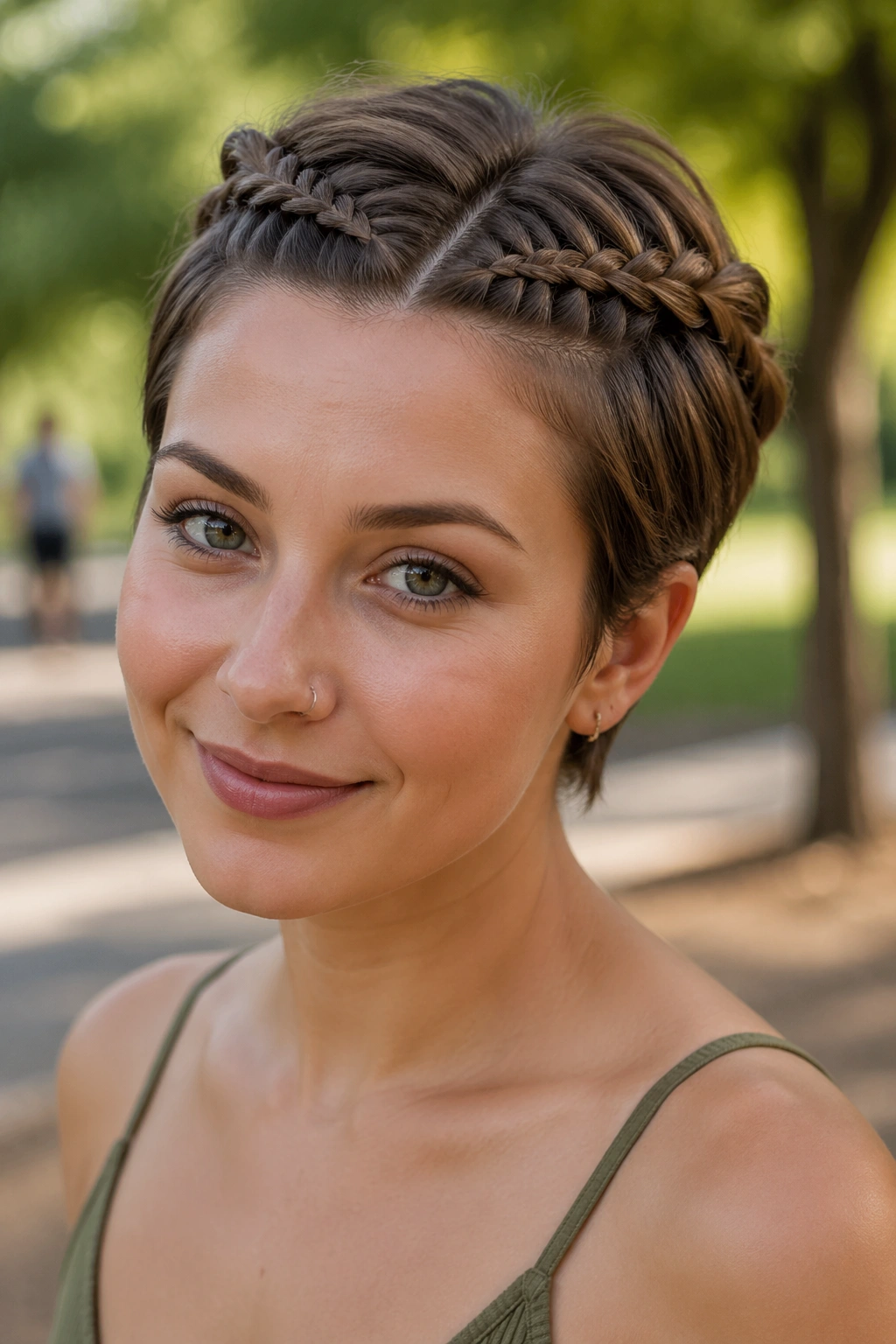
Twin front French braids frame a bob with a little symmetry and a bit of attitude. You braid two small sections from the front hairline back toward the temples or ears, then leave the rest loose.
This style is useful when you want your face visible but still want the hair controlled. It also works well for cuts with layers around the cheekbones, since the braids pull those pieces away from the eyes.
The spacing matters. Keep the braids parallel, with about 1 to 2 inches between them at the start, so they don’t merge into one messy line.
25. Zigzag Part French Braid
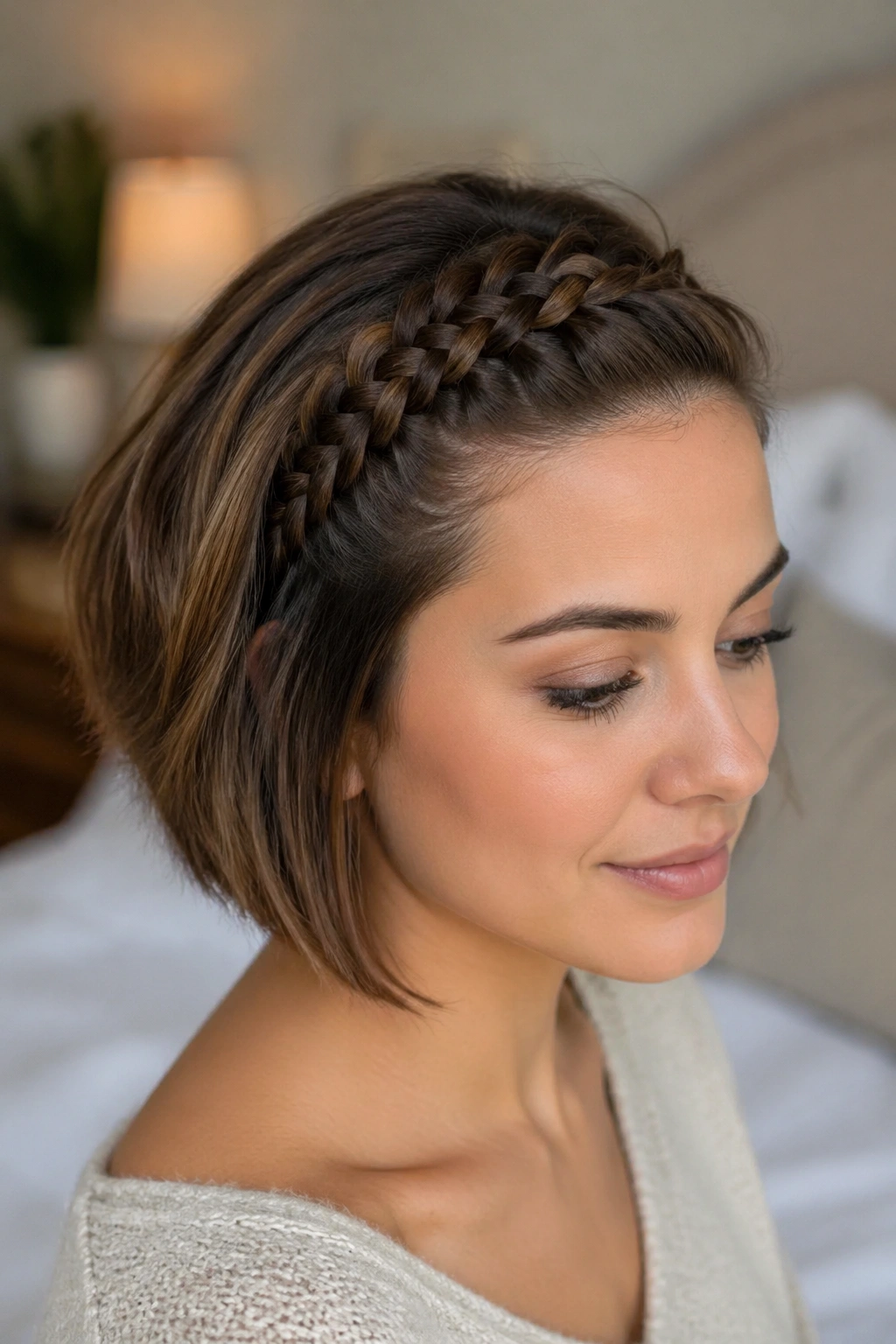
A zigzag part gives a simple French braid a sharper look before the braid even starts. You carve the part with the tip of a comb, then braid along one side or down the center, letting the zigzag stay visible at the root.
This is one of those details that makes a short cut feel styled, not just handled. On pixies, especially, a zigzag part keeps the braid from looking too expected.
How to get the most from it
Use the tail of a comb and make the angles shallow. If the points are too deep, the part gets hard to maintain and the braid can look lumpy.
A tiny amount of gel at the roots helps the part stay put. A tiny amount. More than that, and you’ll fight shine in all the wrong places.
26. Braided Faux Bob
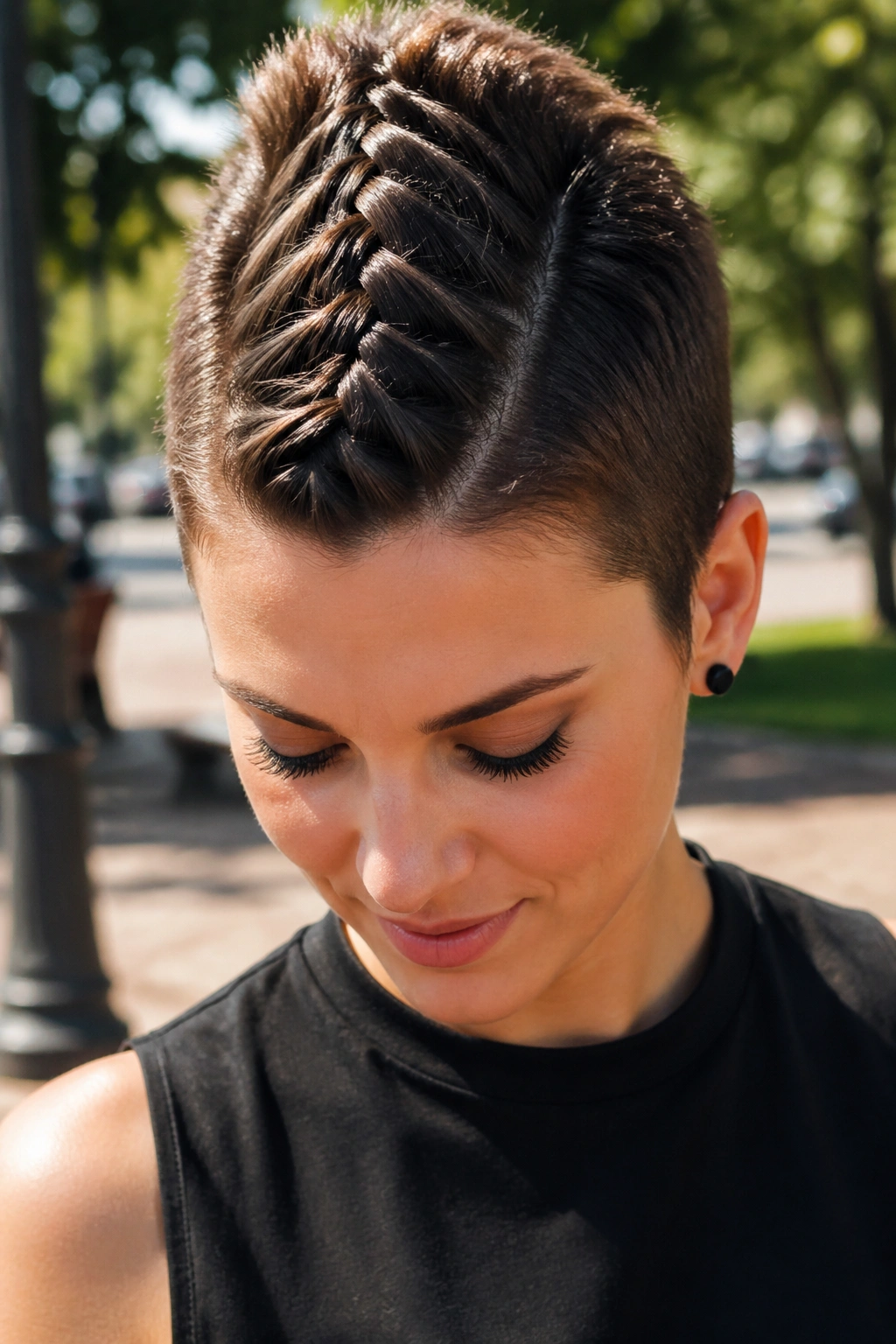
A braided faux bob is for people who want the illusion of more shape without losing the bob’s cropped feel. You braid a front or side section, fold the tail under, and pin it so the length appears slightly shorter and more sculpted.
It’s a good trick for special events, but it also works on everyday cuts that need a reset. The braid hides the natural flip of the ends and creates a cleaner contour around the neck.
If you want it to read as a bob, not a pinned-up style, keep the lower layers loose and touchable. The braid should look like part of the cut, not a costume.
27. Messy Crown-and-Tuck
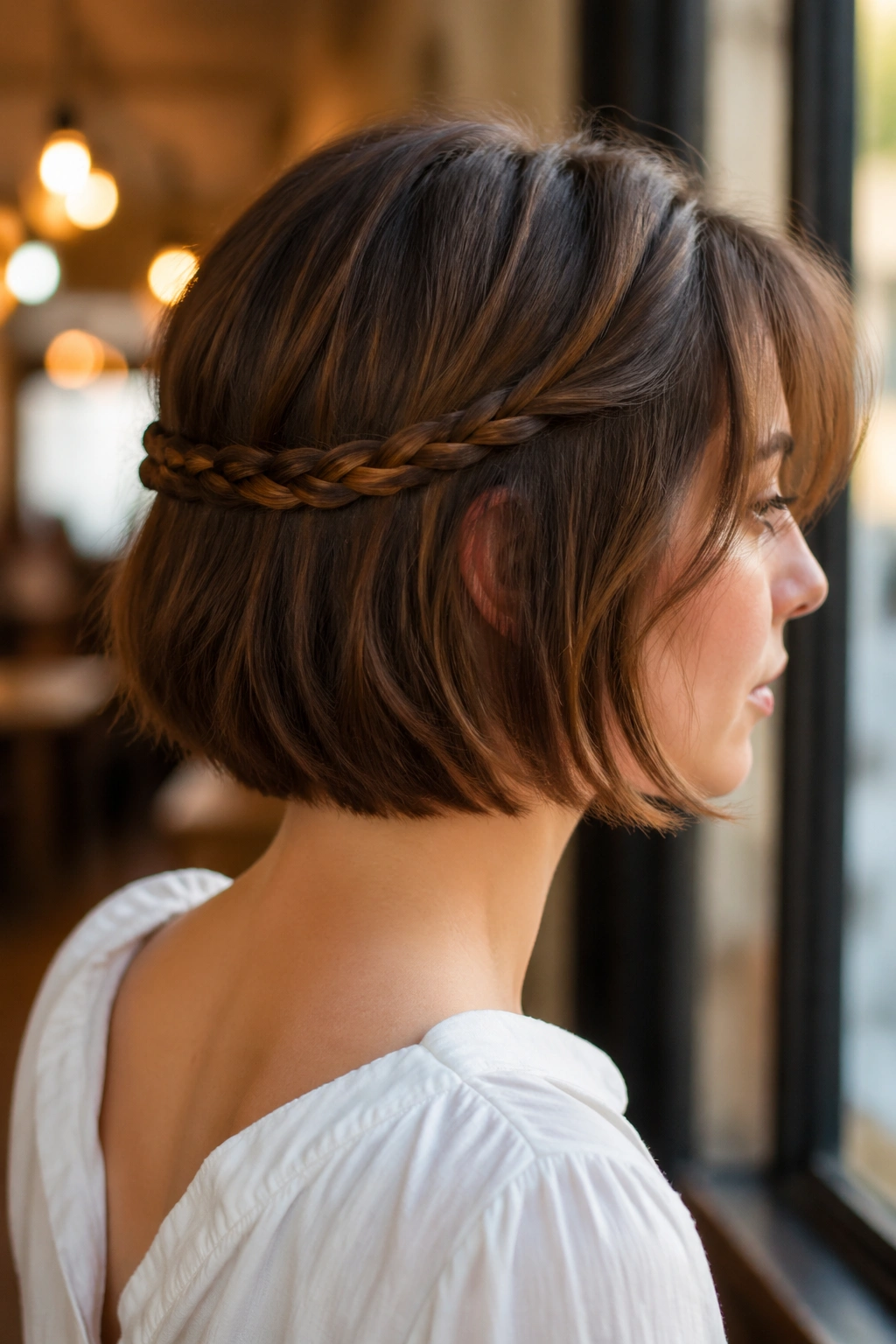
A messy crown-and-tuck braid is one of the least precious short-hair styles, and that’s exactly why it’s appealing. The braid runs across the top or side of the head, then disappears into a tuck rather than a visible finish.
It works beautifully on bobs with texture. Wave, bend, a little dryness at the ends—those things help, not hurt. You do not need a smooth blowout for this one.
The shape should feel almost accidental. Almost. A few loose face-framing pieces make the whole thing softer, but keep the crown section tidy enough that the braid still reads clearly.
28. Pearl-Pin French Braid
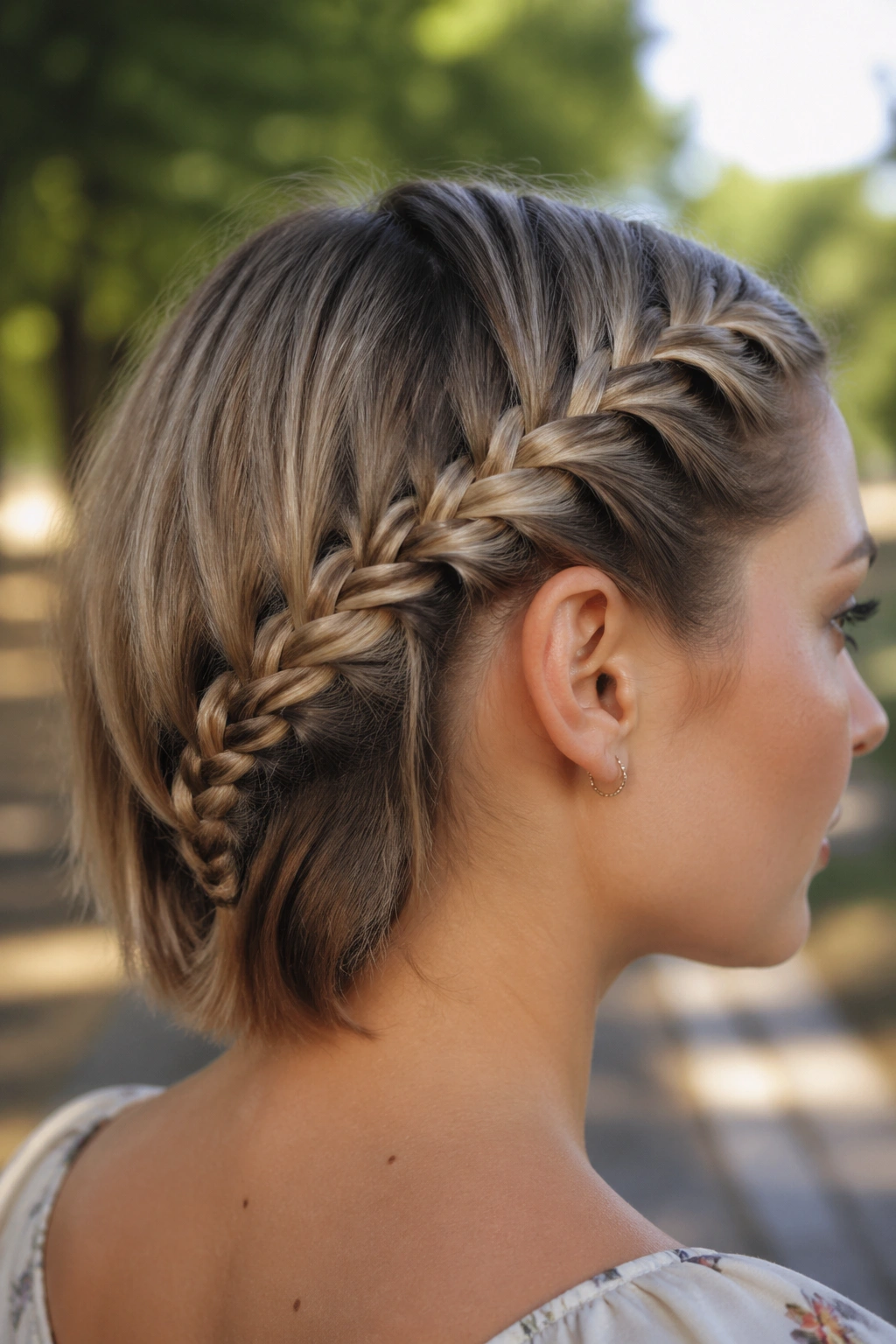
A pearl-pin French braid turns a short braid into a dressier look without adding much fuss. Braid a small section along the side or crown, then anchor it with pearl-topped pins placed at the tail or along the curve of the braid.
The pins do the visual heavy lifting. That’s useful for pixies and bobs because the braid itself may be short, but the accessory gives the style some finish and shine.
What to watch for
- Use 2 to 4 pins, not a whole cluster
- Keep the braid sleek so the pins stand out
- Match the pin size to the braid width
If the braid is very soft, the pearls can slide. Cross the pins under one another for grip.
29. Scarf-Backed French Braid
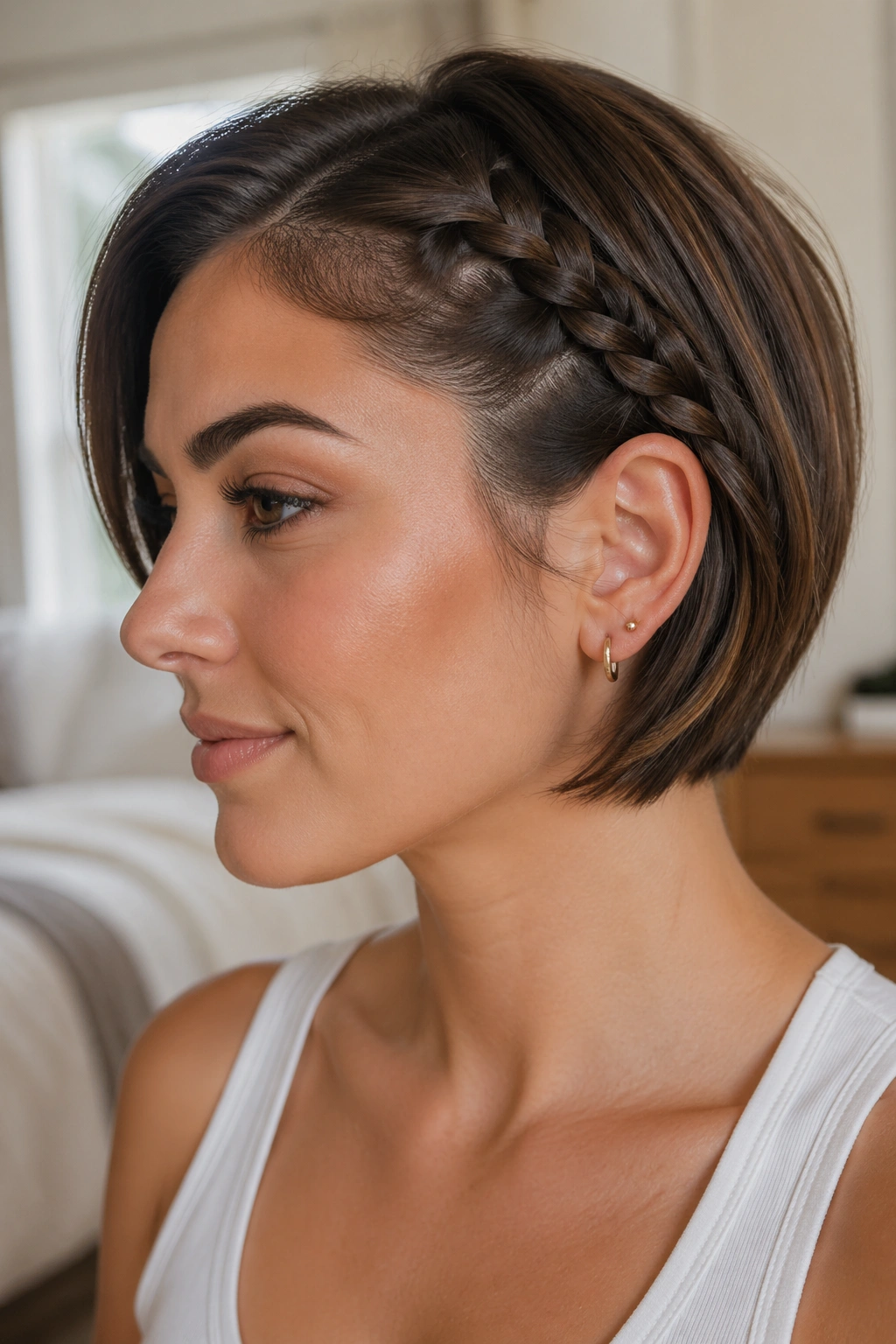
A scarf-backed braid is a nice fix for bobs that need color and control at the same time. You braid the hair from the front or side, then tie a narrow scarf at the base or weave it into the last section.
The scarf brings length visually and helps anchor the braid, which is useful if the ends are too short to look full. Cotton gives a casual feel. Silk or satin looks cleaner and slips less against the hair if you tie it securely.
Keep the print small if the braid is already busy. Loud scarf, chunky braid, lots of layers—too much all at once starts to look chaotic.
30. Waterfall Accent on Bob
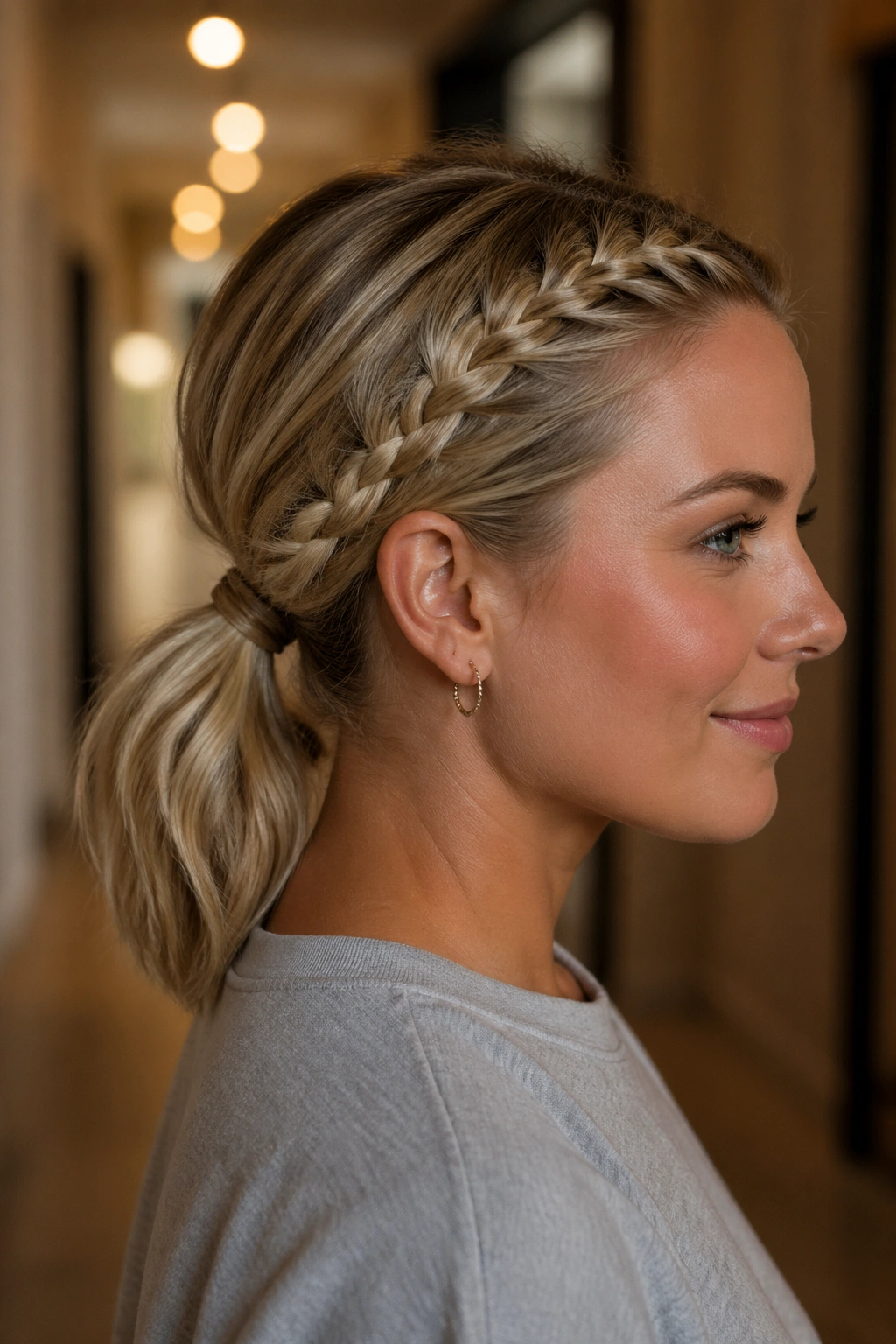
A waterfall accent is a softer braid option for a bob when you don’t want every strand locked in place. You French-braid along one side, drop a section as you go, and let the remaining hair fall through in a loose ribbon-like line.
It’s romantic without going full formal. That matters with shorter hair because the style has to leave enough movement to keep the bob recognizable.
The key is control at the front and looseness everywhere else. If the dropped pieces are too chunky, the pattern gets muddy. Keep them slim, and the braid looks almost stitched into the hair.
31. Grown-Out Pixie French Braid
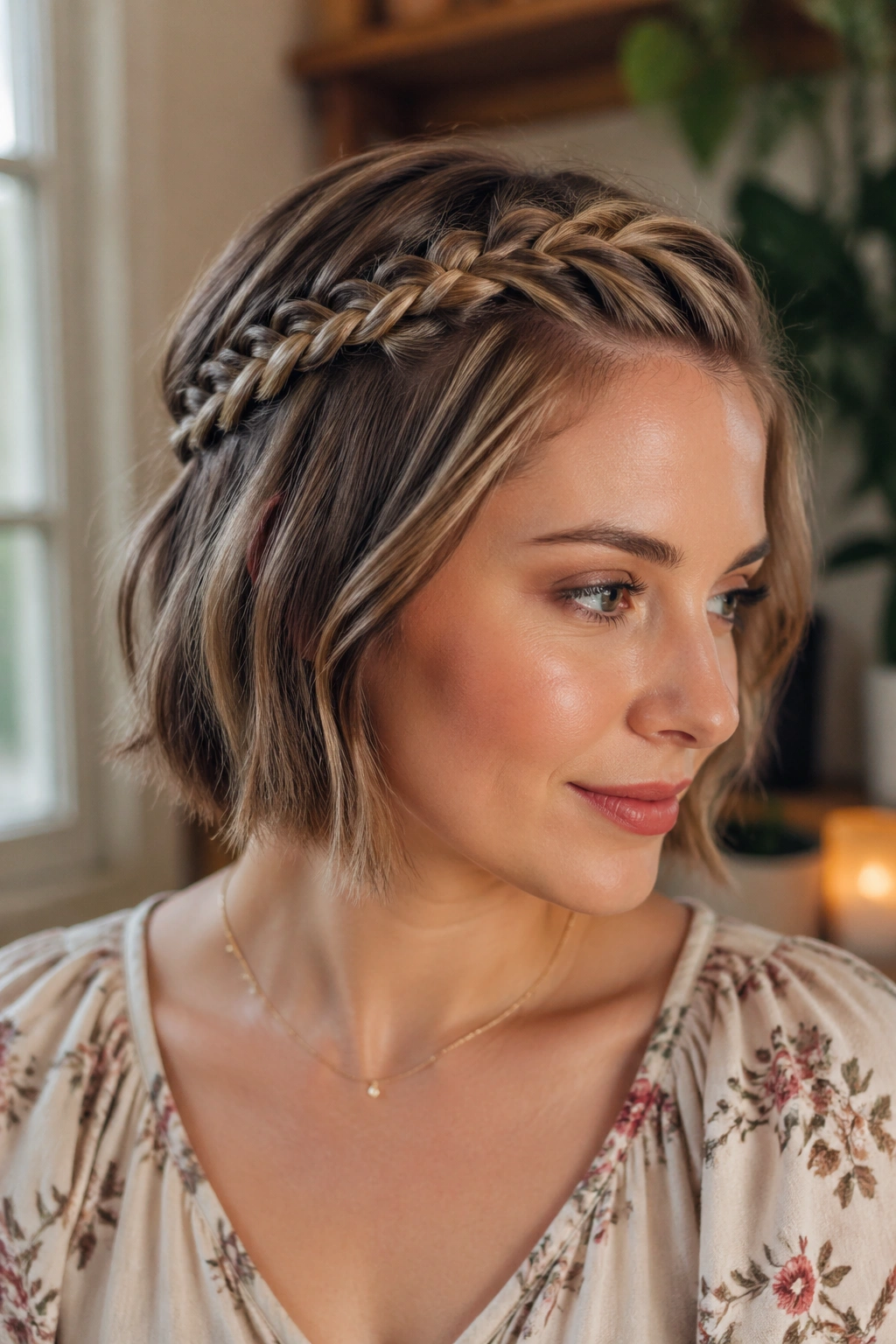
A grown-out pixie often needs a braid more than a short cut does, because the layers around the ears and crown can feel awkward while they’re between lengths. A small French braid on top smooths that transition and makes the haircut look planned.
This style is practical, not precious. Braid the longer top into the shorter sides, then pin the tail flat or blend it into the neighboring layers. The braid gives the top some direction so it doesn’t flop forward all day.
If you’re between cuts, this one earns its keep.
32. Formal Sleek French Braid Bob
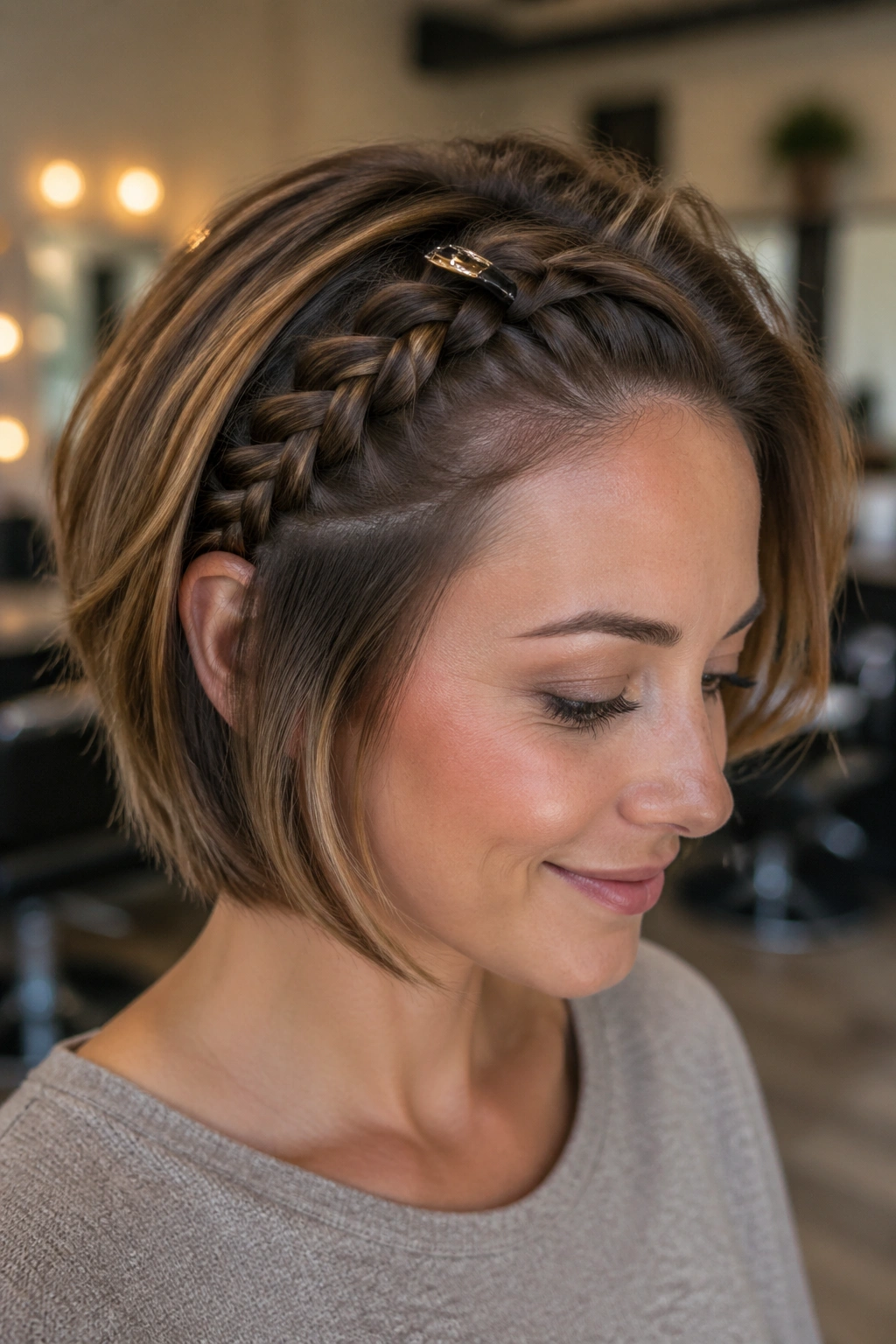
A sleek French braid on a bob can look far dressier than people expect. Smooth the hair with a light cream, make a precise part, and braid close to the scalp so every line feels deliberate.
The finish matters more than the braid size here. Tiny flyaways around the crown can ruin the clean look, so use a soft brush or toothbrush with a trace of gel to smooth the edges before you start.
This style works best on straight or lightly wavy hair. Curly hair can do it too, but you’ll need extra prep at the roots.
33. Soft Tucked Finish
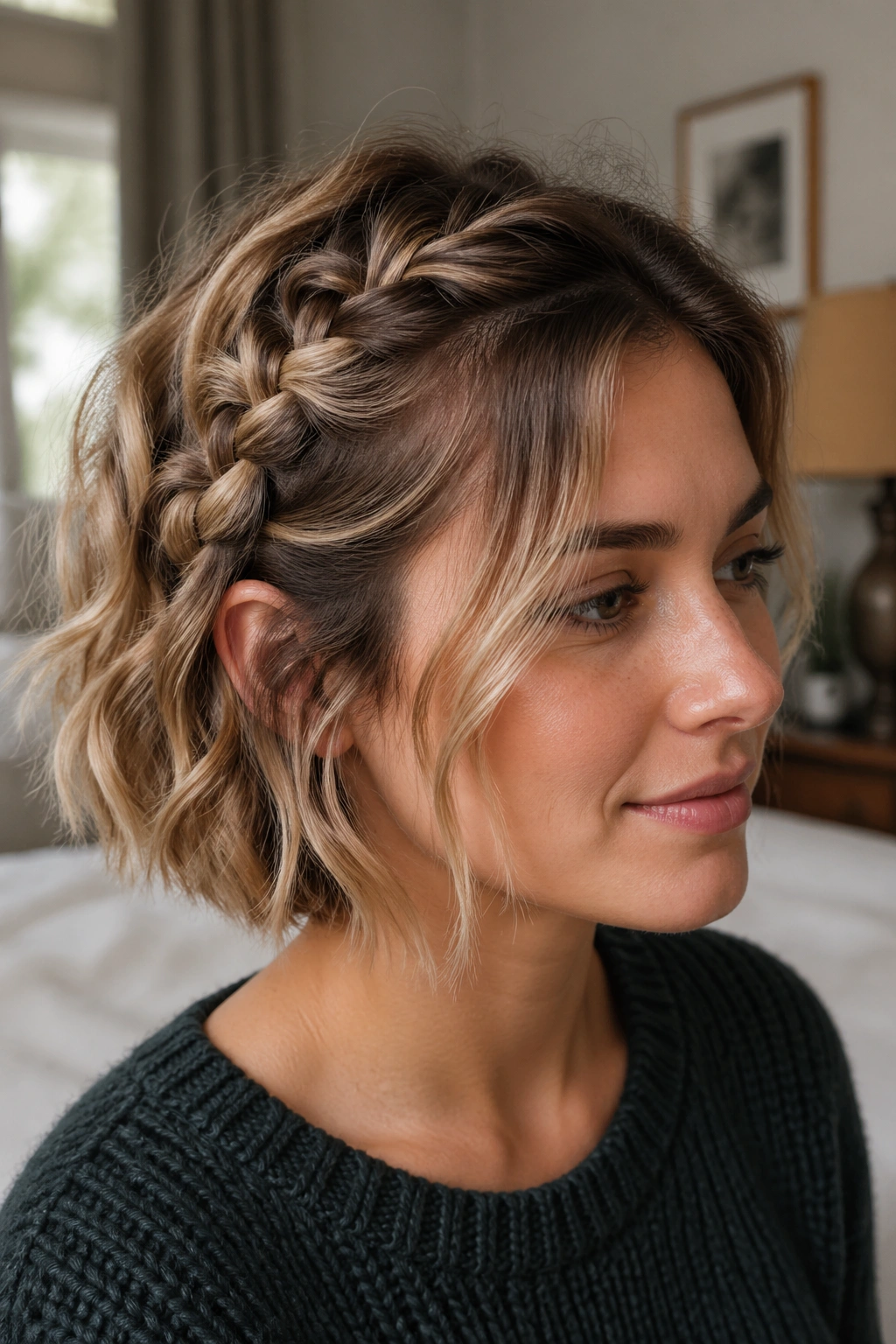
A soft tucked finish is the braid style I reach for when a bob or pixie needs to look finished without looking done up. Build a French braid from the front, side, or crown, then tuck the end under a layer and let the rest stay loose and touchable.
It’s a good ending point for short hair because it respects the cut. Nothing is forced longer than it wants to be. The braid sits there, clean and small, while the haircut keeps its own shape.
A few loose strands around the temples help. So does a quick pinch at the crown to give the braid a little lift. Not too much. Just enough to keep it from disappearing into the rest of the hair.
