



Long braids for Black women can look soft, sharp, bold, or almost regal, depending on how they’re built. The real difference is rarely the length alone. It’s the parting, the weight, the braid size, and how the style sits on Type 4 hair once the shrinkage and density settle in.
A braid that looks easy in a photo can feel completely different on a 4A, 4B, or 4C crown. Dense coils hold styles well, but they also punish sloppy sectioning and too much tension. That’s why the styles that last tend to be the ones with clean base work, thoughtful extension weight, and ends that don’t turn into a frizzy mess after a week and a half.
If you want waist-skimming drama, low-maintenance polish, or a style that gives you movement without flattening your whole head, long braids give you a lot to play with. Some are sleek and close to the scalp. Some are full and chunky. Some look better with cuffs, beads, or curly ends. The first style is the one I reach for when someone wants length without scalp drama.
1. Waist-Length Knotless Box Braids
Knotless box braids are the style I recommend when someone wants long hair that still feels wearable. The braids feed in gradually, so the base sits flatter and lighter than classic box braids. On Type 4 hair, that matters a lot. Less bulk at the root usually means less pulling along the hairline.
Why They Work So Well
The braid length gives you movement, but the knotless base keeps the style from feeling heavy by day three. If your hair is thick or tightly coiled, the roots already have enough volume. You do not need extra knot weight on top of that.
- Best braid size: medium to large for easier upkeep.
- Best extension look: pre-stretched hair with a soft, natural finish.
- Best finish: mid-back to waist length for swing without dragging.
My take: if you wear protective styles often, start here before you go bigger or longer.
2. Jumbo Knotless Braids with a Clean Middle Part
Jumbo knotless braids are for the days you want a lot of impact and not a lot of sitting time. They read bold fast. A clean middle part gives the whole style a sharp line, which looks especially good on Type 4 hair with a full front hairline and strong density.
The charm is speed and shape. Fewer braids means less installation time, less manipulation, and less day-to-day fuss. But they do need neat sectioning. A jumbo braid with messy parts looks sloppy in a way that smaller braids can hide.
Wear them with long ends, then let the braid itself do the talking. No extra fluff needed.
3. Small Knotless Braids to the Lower Back
Do small knotless braids give you more work? Yes. Are they worth it? Usually, yes, if you want the kind of movement that makes a style feel alive instead of stiff. Smaller sections create a softer curtain effect, and that looks beautiful on Type 4 hair because the density gives the braids body without making them feel flimsy.
How to Wear Them
The lower-back length keeps the look elegant, but the size keeps it airy. They’re especially nice if you wear your hair down most of the time and only pull it up for sleep or workouts.
A few things help:
- Use light extension hair so the ends don’t feel ropey.
- Keep the parts square or slightly rectangular for a clean base.
- Finish with mousse and a silk wrap at night.
Tiny braids look delicate. They are not delicate to install.
4. Triangle-Part Long Box Braids
Square parts are the default. Triangle parts are where things start to feel more styled. The shape change gives the scalp a little visual surprise, and long braids with triangle sections have a cleaner, more fashion-forward look than the standard grid.
A lot of people assume part shape is a small detail. It isn’t. On Type 4 hair, where the braid base can already look dense, triangle parts break up the field and make the style feel intentional. They also work well if you like a little edge but don’t want extra accessories.
What Makes the Shape Pop
- Triangle parts spread the braids in a more organic pattern.
- They work well with medium-size braids and long hanging ends.
- They look best when the sections are crisp and the scalp is lightly oiled, not greasy.
That last part matters. Clean, not slick.
5. Fulani Braids with a Braided Center Track
Fulani braids have a strong visual identity, and that’s part of the appeal. The center track, the face-framing pieces, and the longer back braids create a style that feels rooted and polished at the same time. On Type 4 hair, the contrast between the sculpted front and the long back length is especially strong.
This style also handles adornment well. Beads near the ends, cuffs along the side braids, or a few narrow braids in the front all fit naturally here. If your face shape benefits from a middle line and a bit of framing, Fulani braids are easy to love.
The best version isn’t crowded. Let the pattern breathe.
6. Lemonade Braids Swept to One Side
Lemonade braids change the whole mood by moving everything off-center. Instead of a straight, balanced fall, you get a sweep that feels a little dramatic and a little effortless. That asymmetry is what makes them stand out on Type 4 hair.
Unlike center-part styles, lemonade braids put the emphasis on movement across the face. They’re good when you want a style that looks styled even if you’ve done almost nothing to it. They also frame earrings well, which sounds minor until you actually wear them and realize how much the profile changes.
Best for:
- People who like side parts.
- Anyone who wants a softer front line.
- Long braid wearers who prefer one-sided volume over even symmetry.
They’re neat. They’re bold. They do not apologize.
7. Boho Goddess Box Braids with Curly Pieces
Boho braids are for the person who likes structure but doesn’t want every strand pinned down. The curly pieces tucked through the braids loosen the whole look, and on Type 4 hair that contrast can be gorgeous. Tight coils at the roots plus soft, loose texture through the lengths creates a very different finish from a straight braid.
What Makes Them Different
The braid itself still does the protective work. The curly strands are the part that gives the style its softer personality. If you’re choosing this version, ask for the curls to be placed with some spacing instead of packed into every section.
- Use a curl pattern that holds up for several days.
- Keep the braid size medium so the mixed textures do not feel bulky.
- Refresh the curly pieces with mousse, not heavy cream.
A little frizz is part of the charm. Too much, though, and it stops looking romantic and starts looking tired.
8. Feed-In Cornrows into a Long Braid Ponytail
Feed-in cornrows that funnel into a long ponytail are one of those styles that looks clean from every angle. The braids lie close to the scalp at the front, then gather into a hanging tail that gives you length without forcing all of it to sit loose around your neck.
That makes them practical. If you work out, wear headphones, or just get annoyed by hair on your shoulders, this style earns its keep fast. Type 4 hair usually has the density to support the cornrow base, and the feed-in method helps the front stay neat without feeling carved into the scalp.
The key is balance. The ponytail should look full, not stuffed.
9. Stitch Braids with Waist-Length Hanging Ends
Stitch braids are all about clean lines. The parted sections look almost like little ruler marks across the scalp, and that precision gives the style a sleek edge before the length even starts. Add waist-length hanging ends, and the contrast gets even sharper.
Do these if you like a style that reads polished from across the room. The hairline can be pulled taut in a very deliberate way, so the person doing the braids matters here. Too tight and the style becomes a headache. Just tight enough, and it looks crisp for a long stretch.
How to Get the Most From It
- Ask for even stitch spacing so the lines do not wobble.
- Keep the ends long and simple; too much extra styling muddies the shape.
- Use a light mousse wrap every few nights to keep the rows neat.
The lines are the whole point. Don’t bury them.
10. Tribal Braids with Mixed Part Sizes
Tribal braids work because the parting pattern does more than the braid size alone. You can mix thick and thin rows, add a central braid, then leave longer lengths in the back. It’s a style that feels layered without needing a lot of accessories.
I like this one for Type 4 hair because density helps it hold the contrast. A thinner braid next to a thicker one can look too sparse on finer hair, but on coily textures the difference reads as design instead of imbalance. That’s a nice problem to have.
If you want movement, keep the front pieces slightly lighter and let the back lengths carry the drama.
11. Half-Up, Half-Down Long Braids
Half-up, half-down braids are the easy answer when you want length but don’t want every strand in your face all day. The top section gets pulled up, the bottom stays loose, and the whole style moves between casual and dressed up without much effort.
Type 4 hair gives this style nice fullness at the crown. That’s the hidden advantage. Even a simple half-up knot or small top bun can look substantial because the hair has natural body. The loose back braids keep the shape soft.
This is one of those styles that works on busy weeks, travel days, and after-work plans. No drama. Just reliable shape.
12. High Braided Ponytail with Wrapped Base
A high braided ponytail gives you height, lift, and a little attitude all at once. The wrapped base keeps the style looking finished instead of like you simply gathered everything and hoped for the best. That small wrap changes the whole read of the style.
Compared with looser braid looks, this one exposes the face more. That’s useful if you want your makeup, brows, or earrings to stay visible. It also keeps the ends away from your back, which is a blessing when the weather is warm or you’re in motion all day.
Best for people who like a clean crown and a long tail. Simple. Strong. No extra noise.
13. Low Braided Ponytail at the Nape
A low braided ponytail is the quieter cousin of the high one. It sits near the nape, which makes it feel grounded and a little more formal. On Type 4 hair, the low placement reduces the visual strain on the front hairline too, which some people appreciate.
Why I Keep Recommending It
Because it’s easy to wear. Because it doesn’t fight your head shape. Because it lets long braids behave without turning the style into a giant bundle at the top.
It pairs especially well with:
- Middle parts.
- Side parts that sweep into the nape.
- A few cuffs near the base for a cleaner finish.
If high ponytails feel too loud, this is the calmer move.
14. Long Micro Braids
Micro braids are a commitment, and I mean that in the plainest way possible. They take time. They ask for patience. Then they reward you with a lot of movement and a very fine, almost hairlike finish that looks elegant on dense Type 4 textures.
Why They Stand Out
The size makes them different from bigger braids right away. Each plait lands more softly, and because there are so many of them, the overall shape behaves almost like a curtain. That can be beautiful, but it’s not for everyone.
- Installation takes longer than medium or jumbo styles.
- The braids can last well if the scalp is cared for.
- They need gentle detangling at the ends so the tiny sections don’t snag.
If you like tiny detail work and you don’t mind the chair time, micro braids have their own kind of luxury.
15. Knotless Braids with Curled Ends
Curled ends change the tone of a braid style faster than almost anything else. Straight ends read neat and traditional. Curled ends soften the silhouette, add bounce, and make long braids look less rigid. On Type 4 hair, that contrast between coily roots and curled extension ends feels especially natural.
Are they a little more maintenance? Yes. The curls need refreshing if you want them to keep their shape. But the payoff is worth it if you like movement around your shoulders and a finish that feels a touch less severe than pin-straight lengths.
How to Wear It
Use flexi rods, hot water set ends if the hair supports it, or pre-curled extensions. Keep the curl pattern loose enough that it doesn’t turn stringy after one night under a scarf. Soft bends work better than tight ringlets here.
16. Side-Part Feed-In Braids with Gold Cuffs
A side part gives feed-in braids a little more personality, and gold cuffs sharpen the whole thing without making it crowded. The style feels controlled at the scalp, then gets a bit of shine near the ends or along the length. That mix works well on Type 4 hair because the texture already has enough presence.
This is the kind of style that looks finished even when you’re wearing a plain T-shirt. It’s not loud in a messy way. It just has details. And details matter when the braids are long enough to move around on their own.
Keep the cuffs spaced out. Too many, and the style starts clanking instead of flowing.
17. Straight-Back Cornrows with Long Extensions
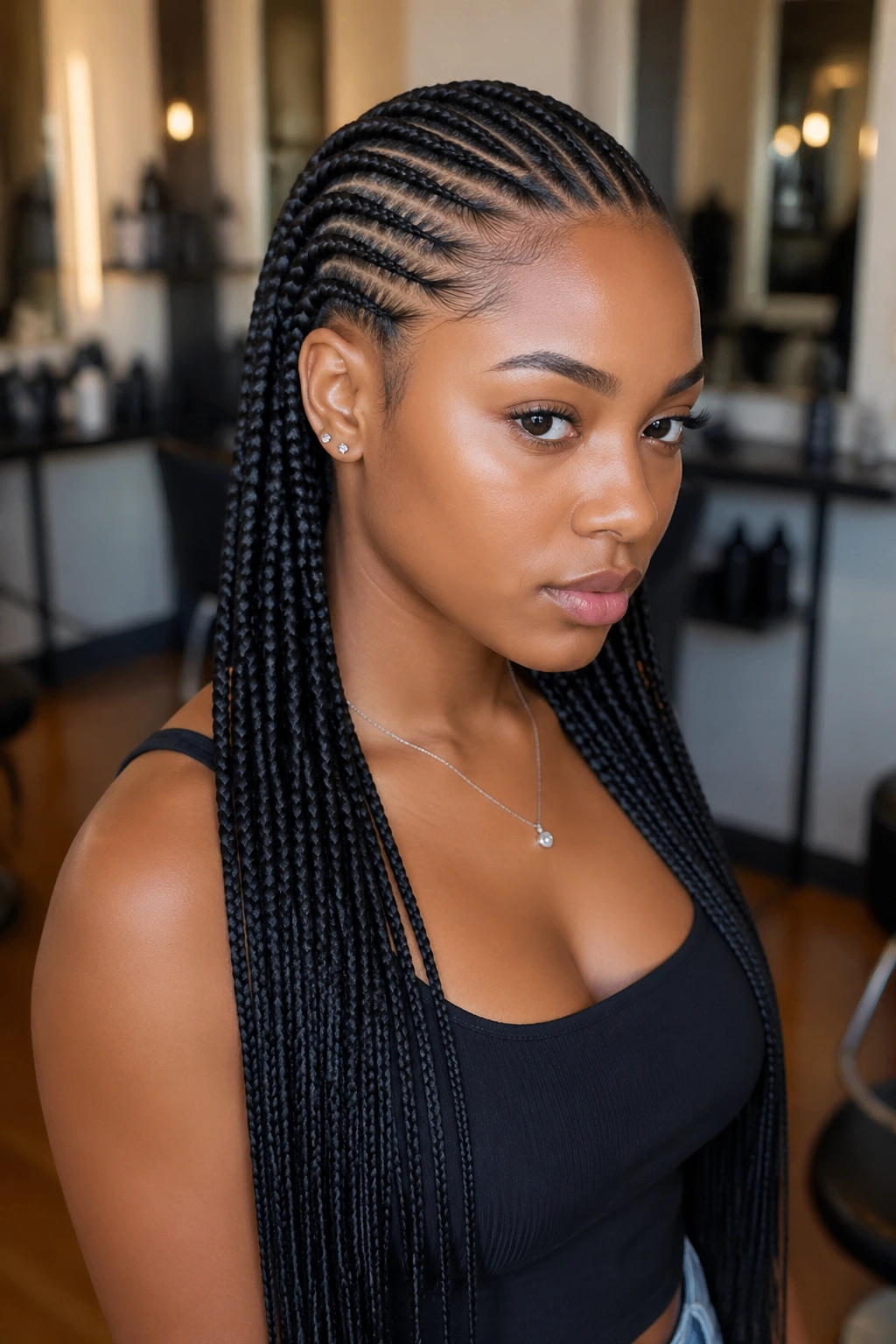
Straight-back cornrows are the old reliable of long braid styling. They’re clean, direct, and easy to read from across a room. Add long extensions, and the style goes from practical to striking without changing the basic shape.
What I like here is the simplicity. The scalp pattern is doing the visual work, so the long lengths can stay plain. That makes upkeep easier too, because there’s less decor to keep straight and less chance of the look feeling overworked.
If your main goal is low-fuss styling with a strong profile, this is a smart choice. No need to dress it up unless you want to.
18. Heart-Part Long Braids
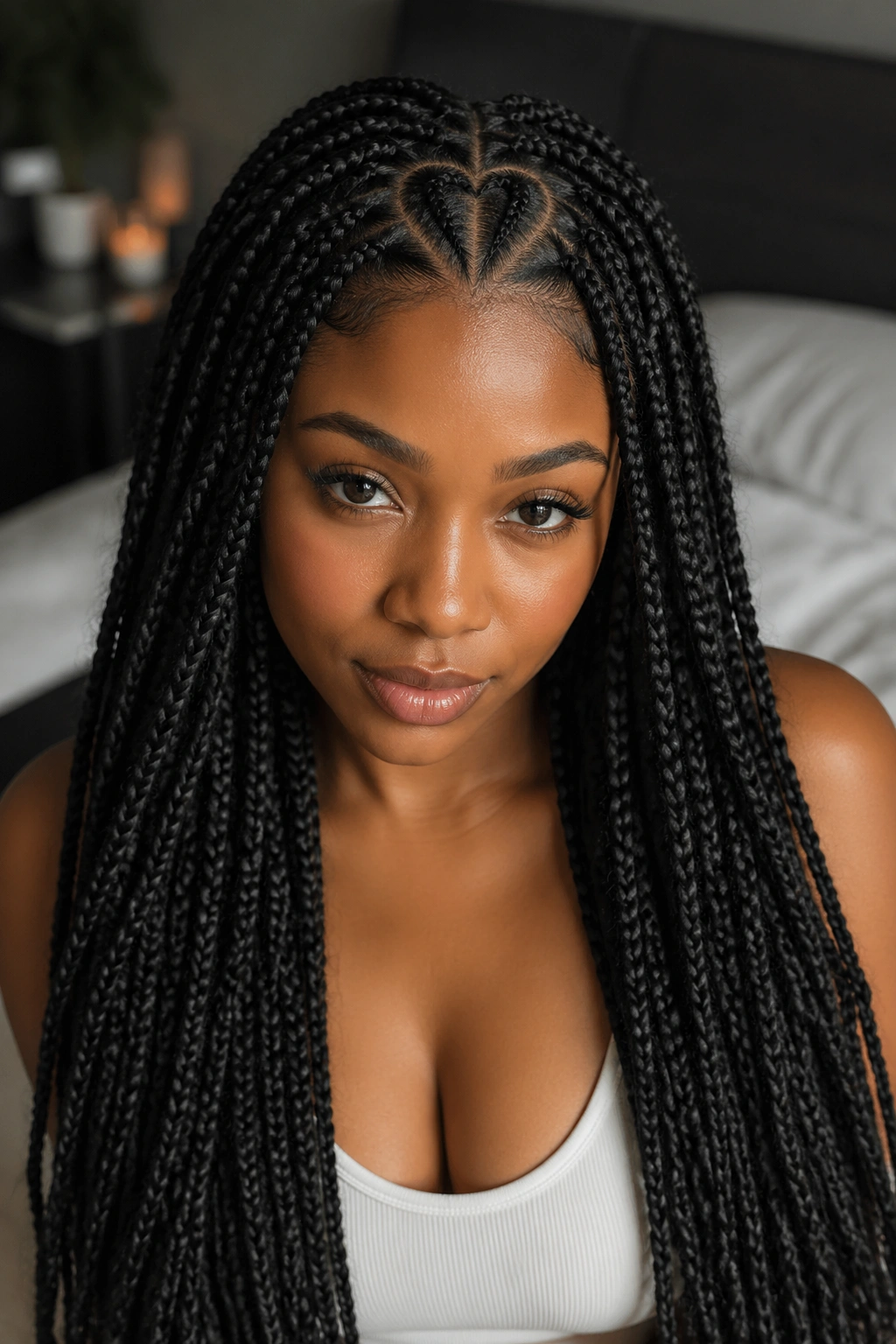
Heart parts are playful, but they work best when the rest of the style stays controlled. A single heart at the crown or near one side can make long braids feel personal instead of generic. On Type 4 hair, that kind of detail stands out because the parting sits against such rich texture.
What Makes Them Different
The heart is the point. The braids themselves can be medium or small, knotless or traditional, but the parting is what people notice first. That means the heart has to be clean and proportional. Too tiny, and it disappears. Too big, and it starts to look cartoonish.
Best use:
- Special occasions.
- Younger braid wearers who want something fun.
- Anyone tired of standard grids.
A good heart part is a tiny flex. Let it be one.
19. Criss-Cross Braids into a Long Ponytail
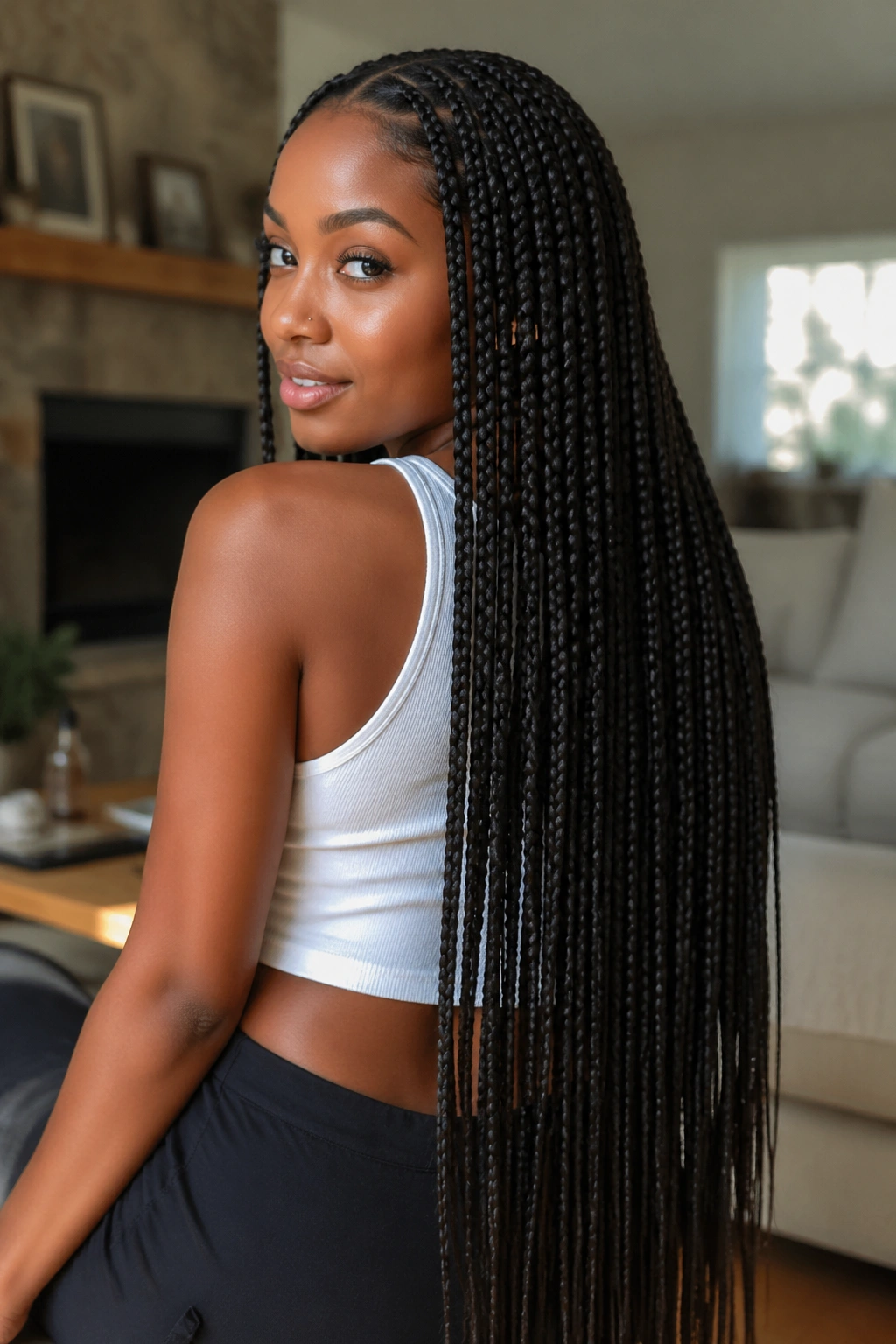
Criss-cross braids do a nice job of making a simple ponytail look far more engineered than it really is. The intersecting sections create visual movement before the tail even starts. Once the long braids drop from the base, the style feels sculpted.
This is one of those looks that works because the scalp pattern and the hanging length balance each other. On Type 4 hair, the base can hold the design well, and the ponytail keeps the braids from spreading out too wide. That shape is especially good if you want height without a giant puff of hair.
A tidy edge line helps. Otherwise the whole thing loses the crisp effect.
20. Long Braids with Colored Peekaboo Panels
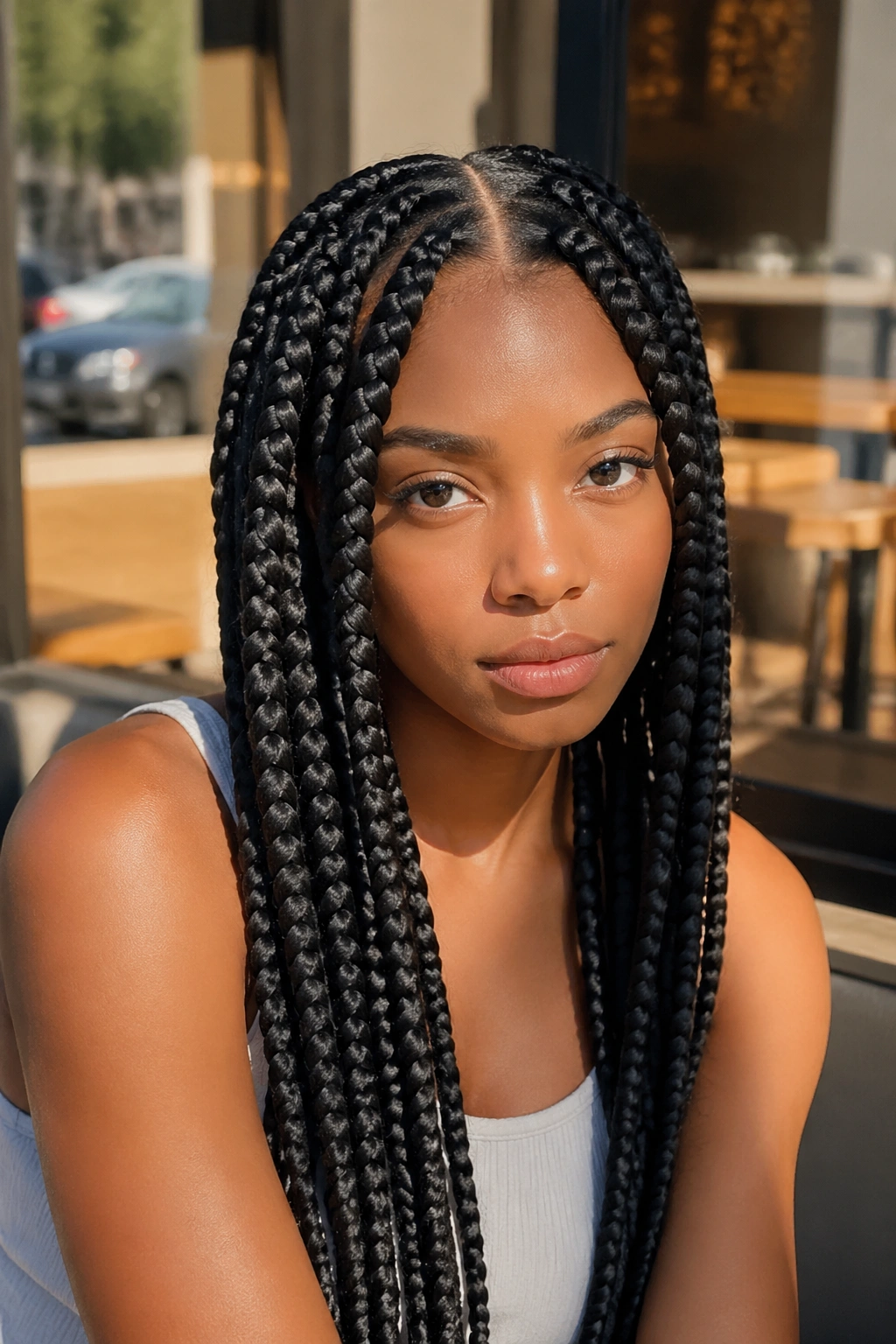
Peekaboo color is for people who want a little surprise, not a full neon moment. You keep most of the braids dark, then hide a few colored sections underneath or toward the back. When the hair moves, the color flashes out.
That works nicely on long braids because length gives the hidden panels room to show up in motion. On Type 4 hair, the contrast can be sharp and beautiful, especially with deep burgundy, honey brown, or muted copper tones. The look feels playful without turning into costume.
Keep the color placement strategic. A few panels go farther than a lot of random streaks.
21. Ombre Black-to-Brown Braids
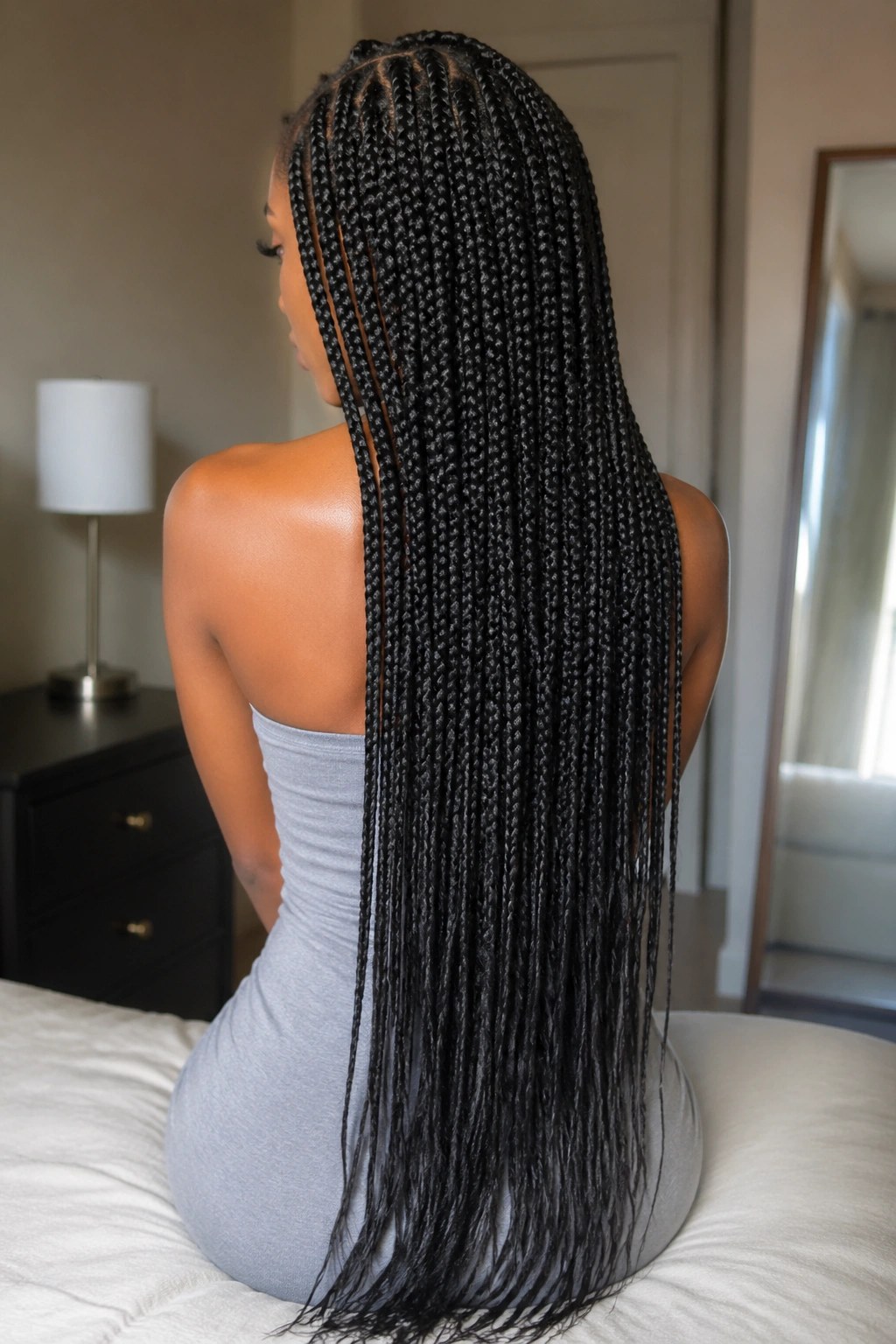
Ombre braids feel softer than high-contrast color, which is why they’re such a safe favorite. Black at the roots melting into brown, caramel, or chestnut through the lengths adds depth without screaming for attention. The gradient also makes long braids look longer, oddly enough, because the eye keeps traveling.
How to Wear Them
If you want the color shift to look smooth, use extensions that already blend well instead of trying to force two mismatched tones together. That difference shows up fast once the braids settle.
- Dark roots keep the style grounded.
- Mid-length brown warms the whole look.
- Lighter ends make the braids feel softer around the shoulders.
This is an easy win if you like color but want to stay close to natural tones.
22. Waist-Length Braids with Layered Ends
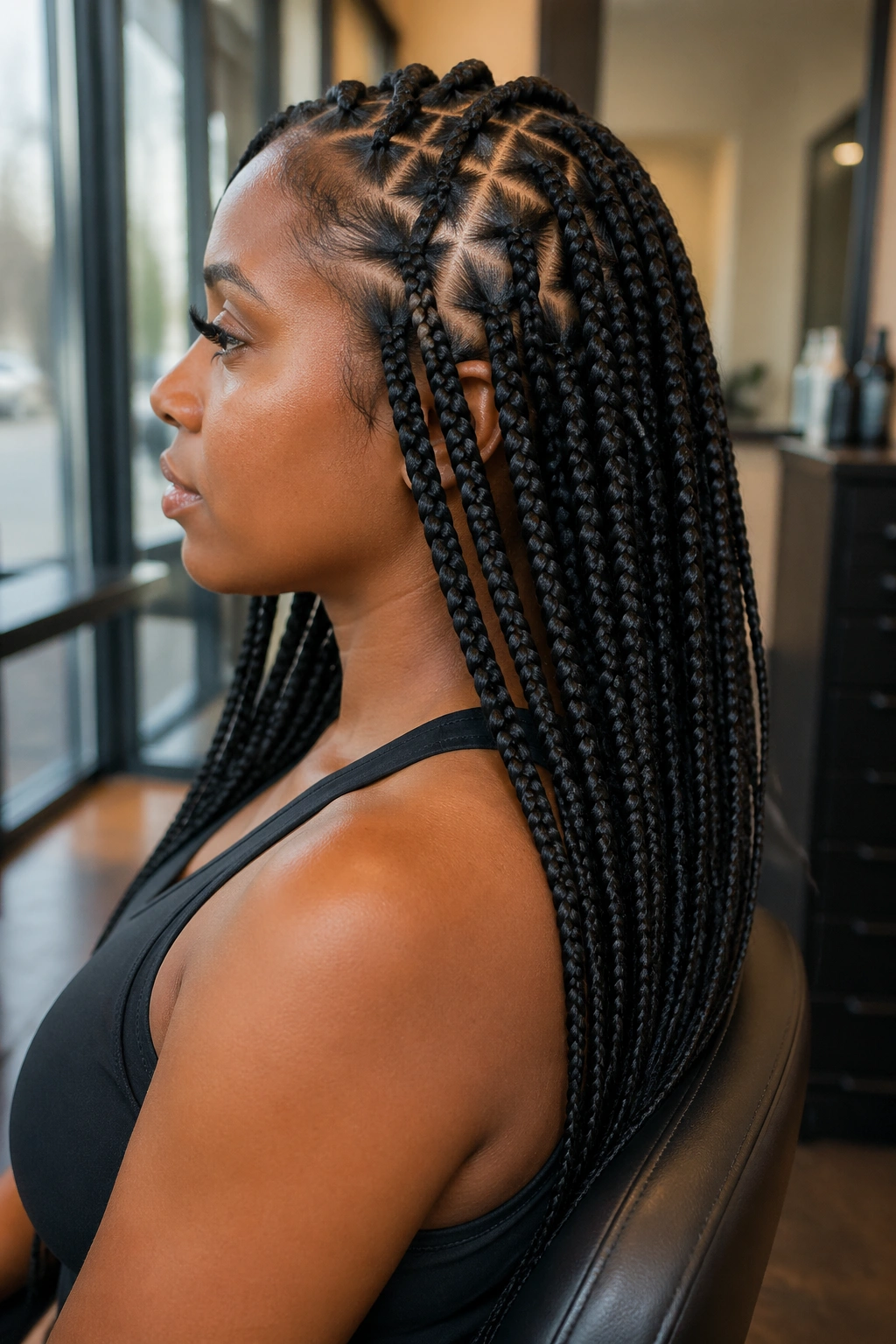
Layered ends keep long braids from looking like one blunt curtain. A few braids land a little shorter, some fall deeper, and the edge of the style gets more movement. That detail matters when the braids are already long, because straight uniform ends can feel heavy.
The layered look also softens the silhouette around the back and shoulders. On Type 4 hair, where volume can be a gift and a burden at the same time, the staggered finish gives the style shape without making it feel thin. It’s one of my favorite tricks when someone wants length but not a blunt wall of hair.
Ask for the layers up front. Don’t let them happen by accident.
23. Diagonal-Grid Box Braids
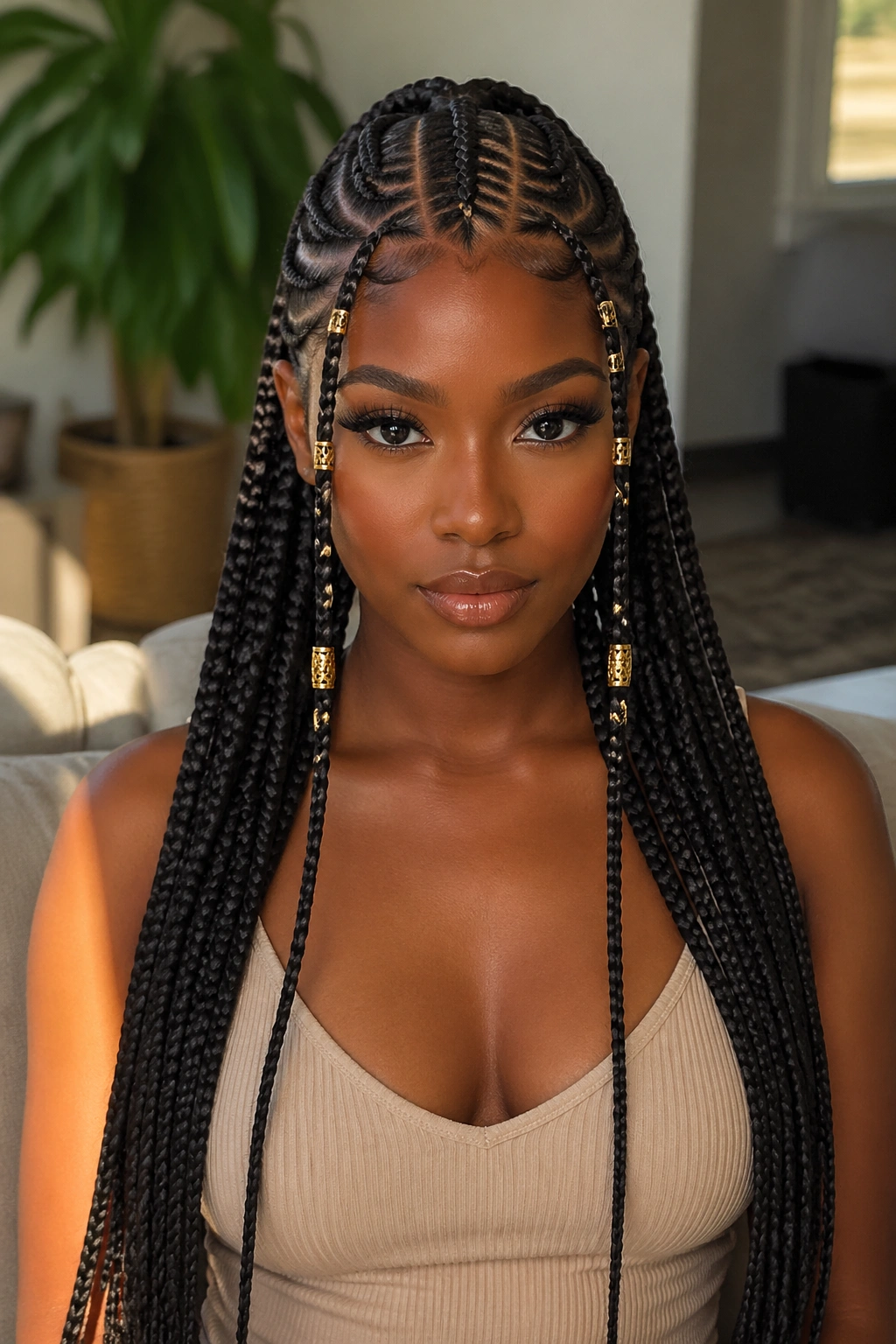
Diagonal parts are a small change that gives box braids a completely different mood. Instead of the standard straight rows, the sections angle across the head and make the whole style feel more dynamic. Long braids with this layout look less formal and a little more custom.
Why bother? Because the scalp pattern matters more than people think. On Type 4 hair, the density can make the usual square grid feel a bit predictable. A diagonal layout breaks that up and keeps the eye moving.
What to Watch For
- The angles need to stay even or the style looks crooked.
- Long braids make the part pattern more visible, so clean lines matter.
- This works especially well with medium-size braids that don’t hide the pattern.
It’s a detail style. The pattern is the point.
24. Braids with Beads and Shells
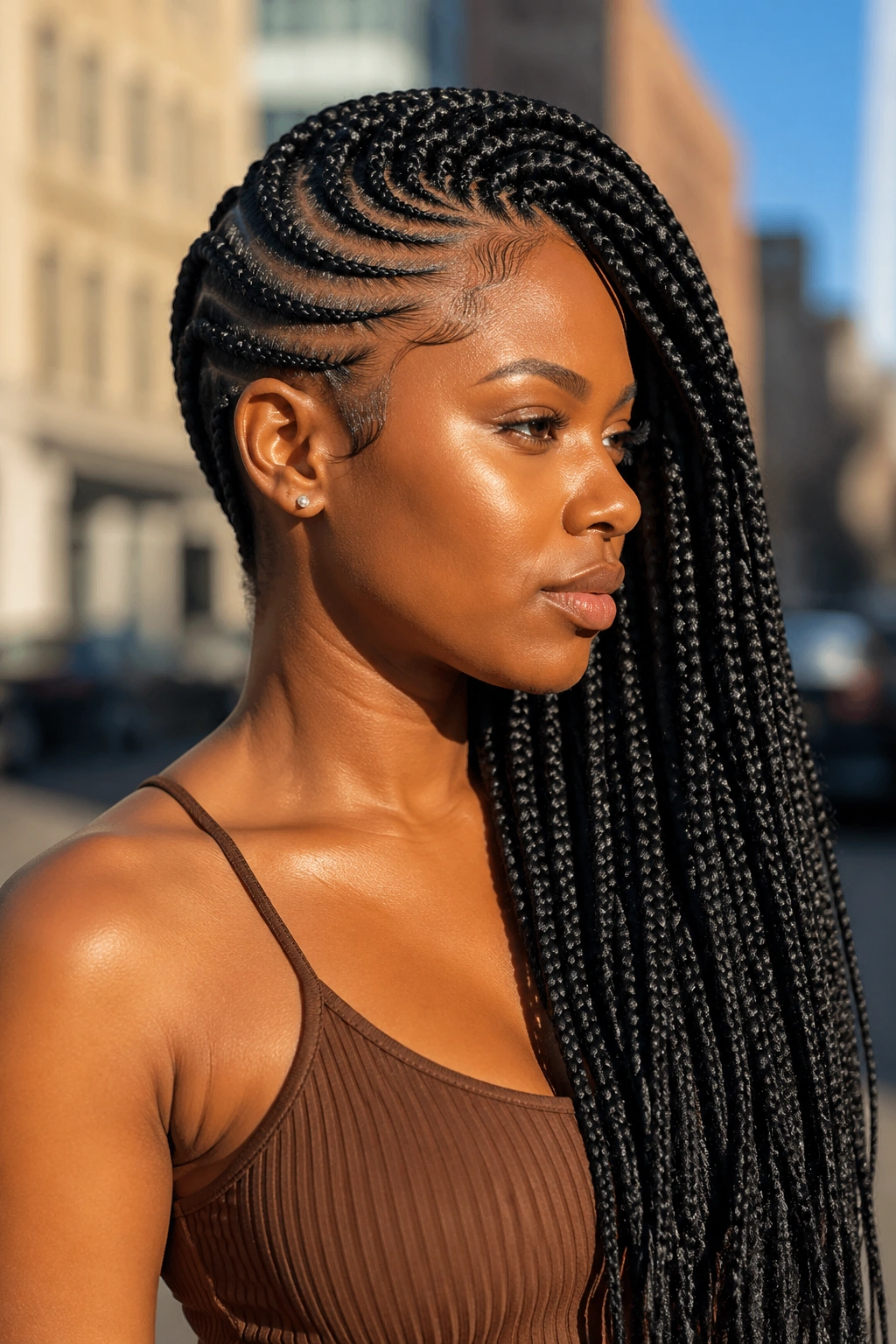
Accessories can turn a simple braid set into something personal fast. Beads add weight and sound. Shells add texture and a little coastal energy. On Type 4 hair, they also give the ends a focal point, which matters when the braids are long enough to drape over clothing.
This style works best when the accessories are used with restraint. A few beads at the ends of front braids, a shell or two on the sides, maybe a cuff near the base — that’s enough. Covering every braid can make the style feel busy, and long braids already have plenty going on.
If you like to hear your hair move when you walk, this one delivers.
25. Long Braids with Braided Bangs
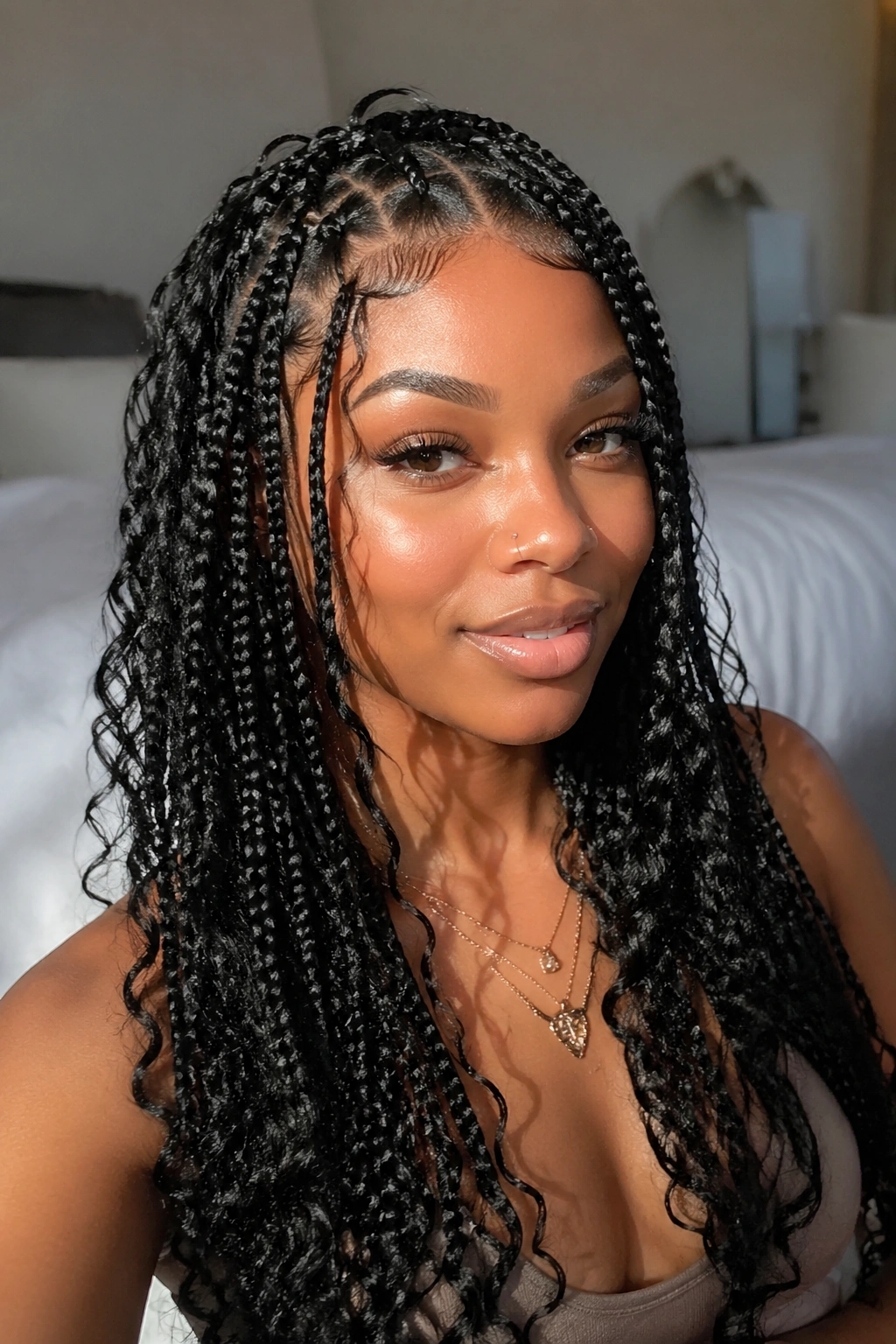
Braided bangs are a nice way to bring the face into the style without chopping the length. The shorter front pieces skim the forehead or cheekbones, while the long back braids keep the drama. That balance looks especially good on Type 4 hair because the texture gives the front pieces enough body to sit properly.
Why It Works on Type 4 Hair
The front section can be shaped to soften a strong forehead, frame the eyes, or break up a long face. And since the rest of the hair stays long, you don’t lose the braid length that makes the style feel special.
A few notes:
- Keep the bangs light enough to move.
- Don’t make them so thick that they crowd the eyes.
- Secure the shortest pieces well at night so they do not twist out of shape.
This is one of those styles that feels playful without losing structure.
26. Long Braids Pulled into Twin Tails
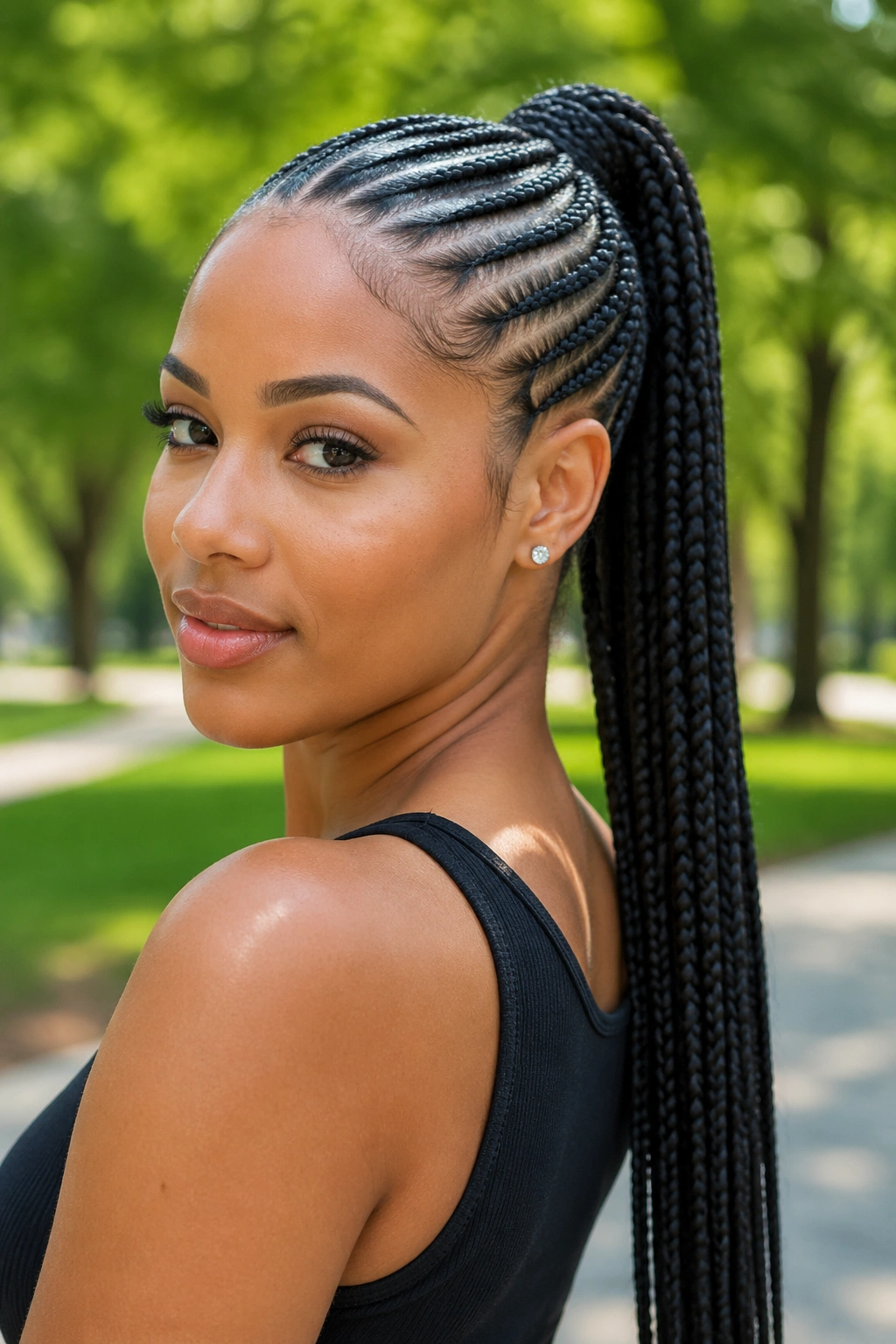
Twin tails are fun, and there’s no point pretending otherwise. Split the braids into two low or high tails, and suddenly the style feels younger, sportier, or just more animated. Long braids make the shape dramatic because each tail has its own weight and swing.
Compared with a single ponytail, twin tails spread the hair evenly and create a balanced frame around the head. That’s useful if the braids are very long or very thick. It also gives you more room to play with parting, whether you go straight down the middle or use a slight side separation.
This style likes movement. Keep it loose at the base and let the tails swing.
27. Braided Crown with Hanging Length
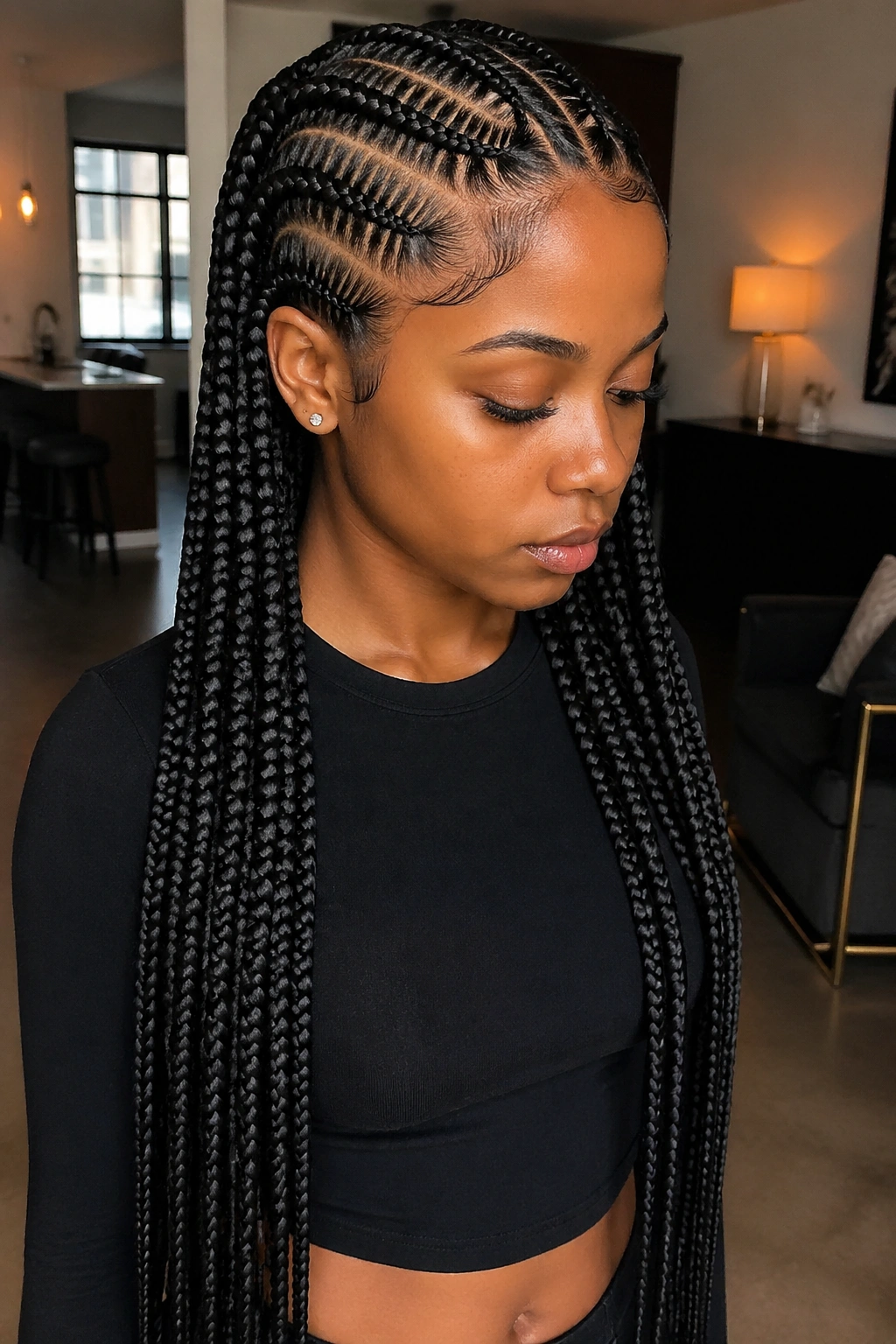
A braided crown gives you that wrapped, lifted feel at the top while still leaving length to hang down. It’s a nice compromise if you like your face clear but do not want to give up the visual weight of long braids. The crown also helps the style feel more finished on Type 4 hair, where the top section can otherwise look a little crowded.
You can make the crown thick and obvious or keep it narrow and subtle. Either way, the long pieces below it keep the style grounded. That’s what makes it work: structure up top, softness below.
Best for special days, long outings, or moments when you want the hair to look like it took effort even if the rest of your outfit stayed simple.
28. Extra-Thick Long Braids
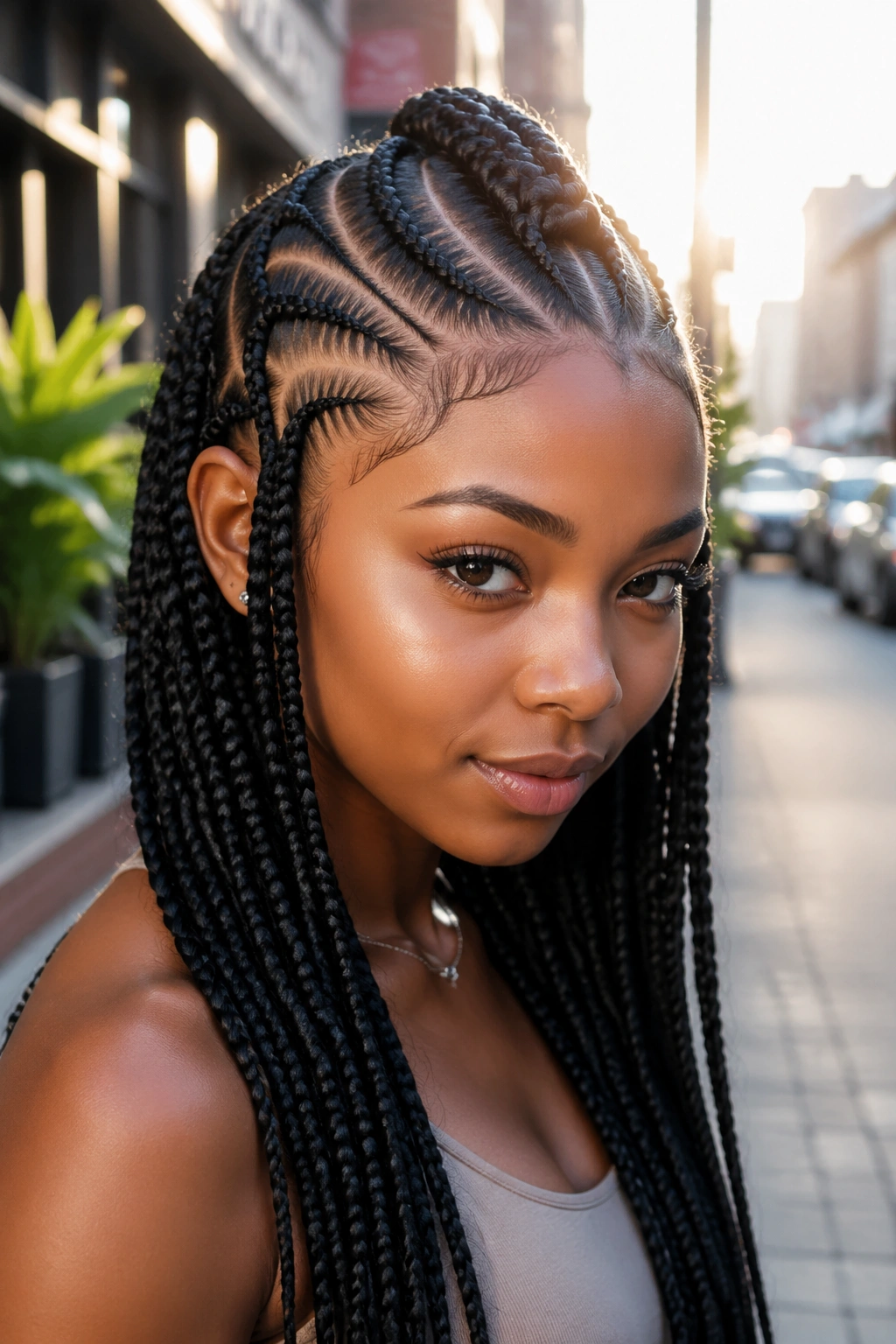
Extra-thick braids are not shy. They take up space, and that’s the appeal. A few bold plaits falling to the mid-back or lower can look striking on Type 4 hair because the natural density gives the style a strong base before the extensions even go in.
Why They Stand Out
Thick braids are lighter in quantity but heavier in presence. They’re faster to install than tiny braids and usually easier to maintain day to day. The tradeoff is less movement per braid, so the style reads more sculptural than airy.
- Great for anyone who likes a chunky, bold profile.
- Easier to take down than micro braids.
- Best when the ends are sealed neatly so the bulk doesn’t fray.
If you like your hair to look unmistakable from across a street, this is the one.
29. Extra-Slim Long Braids
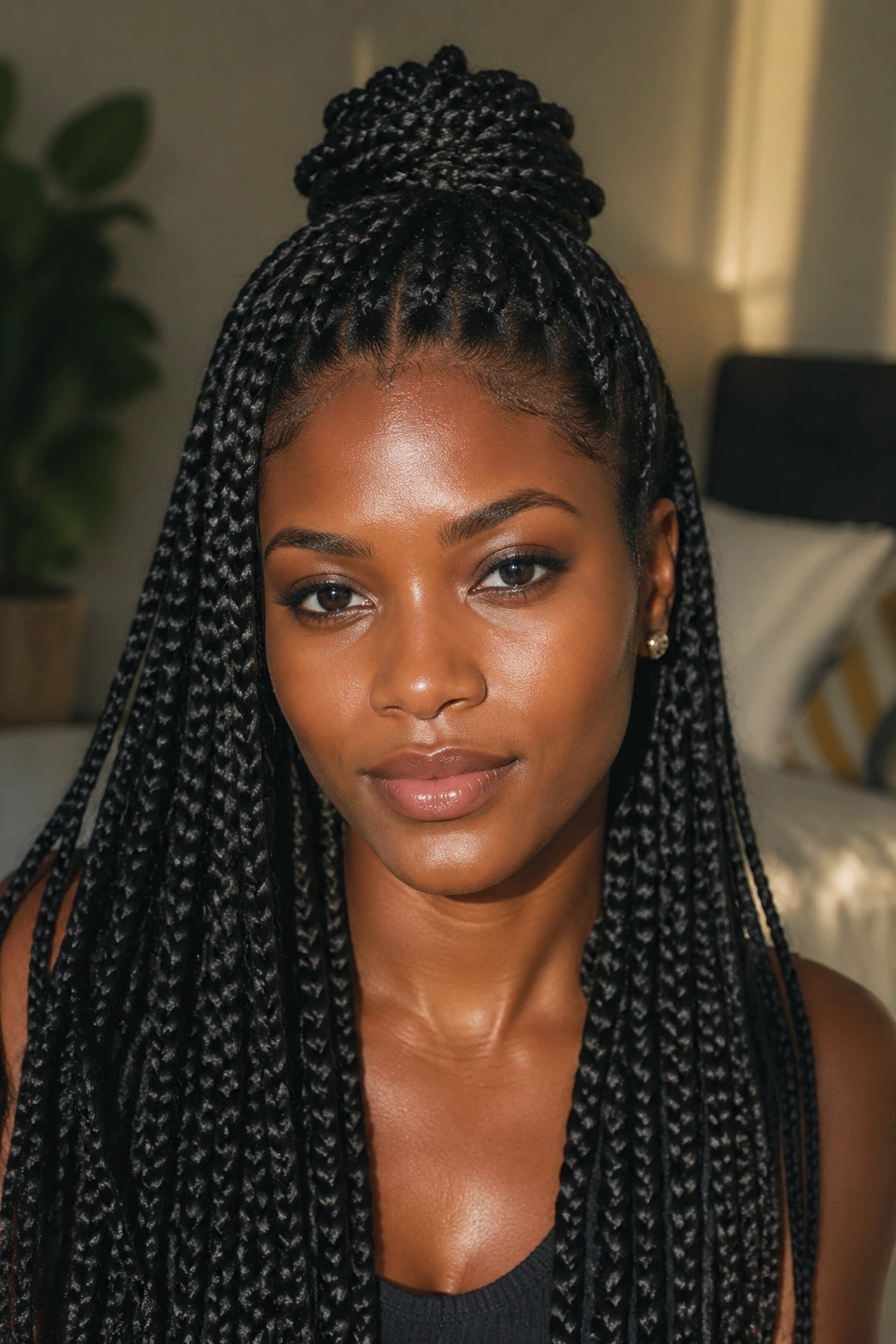
Extra-slim braids are the opposite mood. They’re sleek, detailed, and almost whisper-like when they move. On Type 4 hair, the tiny sections create a dense curtain of braids that can hang beautifully if the install is even and the tension is handled with care.
This style is not quick. It asks for patience, and the person braiding needs a steady hand. But the end result has a fine, polished look that bigger braids cannot mimic. You get more swing, more texture, and a much softer fall around the shoulders.
If thick braids feel too bulky on you, slim ones solve that without losing length.
30. Long Braids with Zigzag Parts
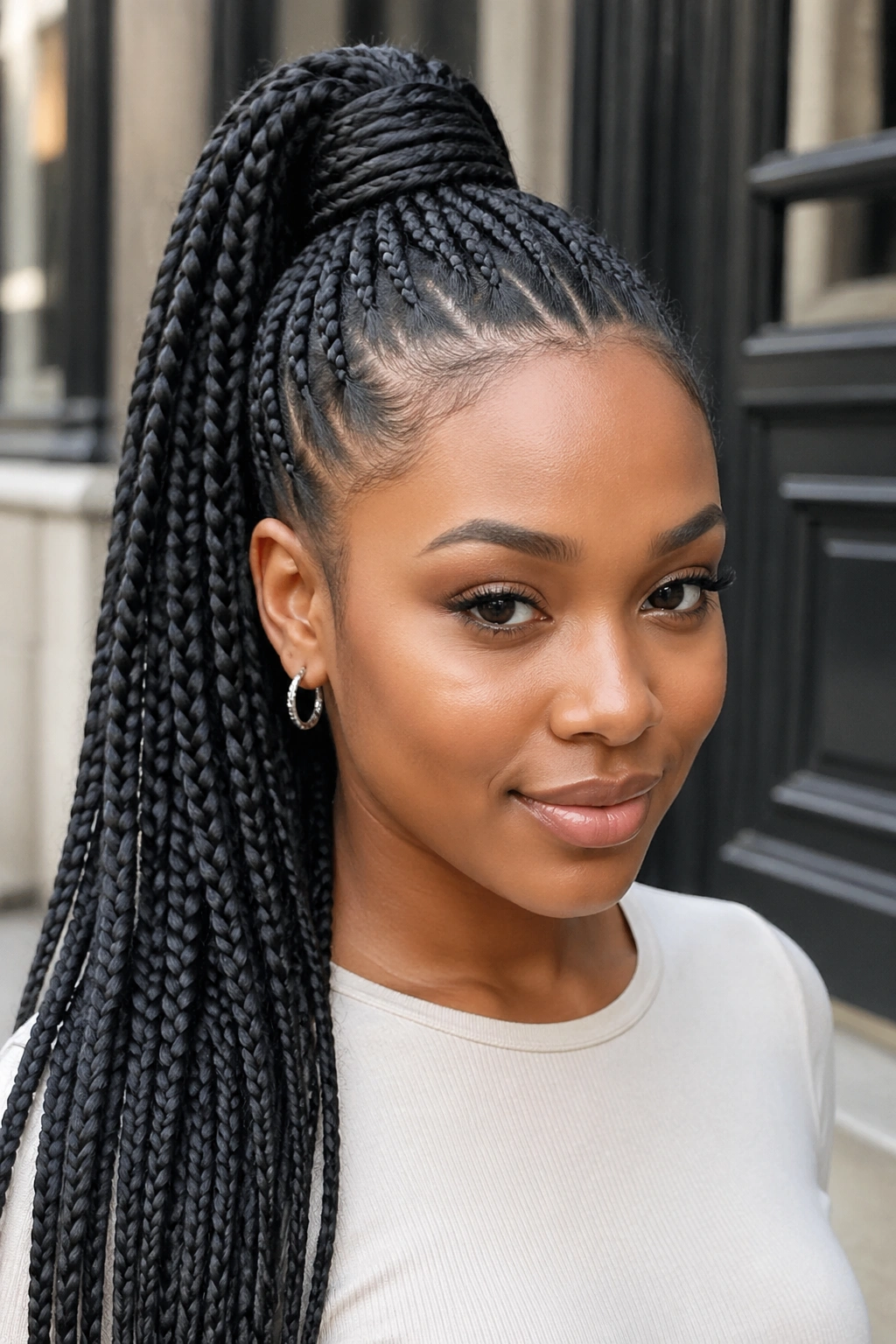
Zigzag parts are playful in a way square parts aren’t. They add motion before the braids even start, and the angled lines make the scalp itself part of the design. Long braids work well with this because the part pattern remains visible for a long time.
The key is keeping the zigzags clean. Sloppy zigzags look accidental, and that ruins the effect. On Type 4 hair, the contrast between the crisp parting and the coiled base makes the style pop, but only if the lines are deliberate.
This is a good choice if you’re bored with standard grids and want something with a little more personality.
31. Side-Swept Braids with Curved Cornrows
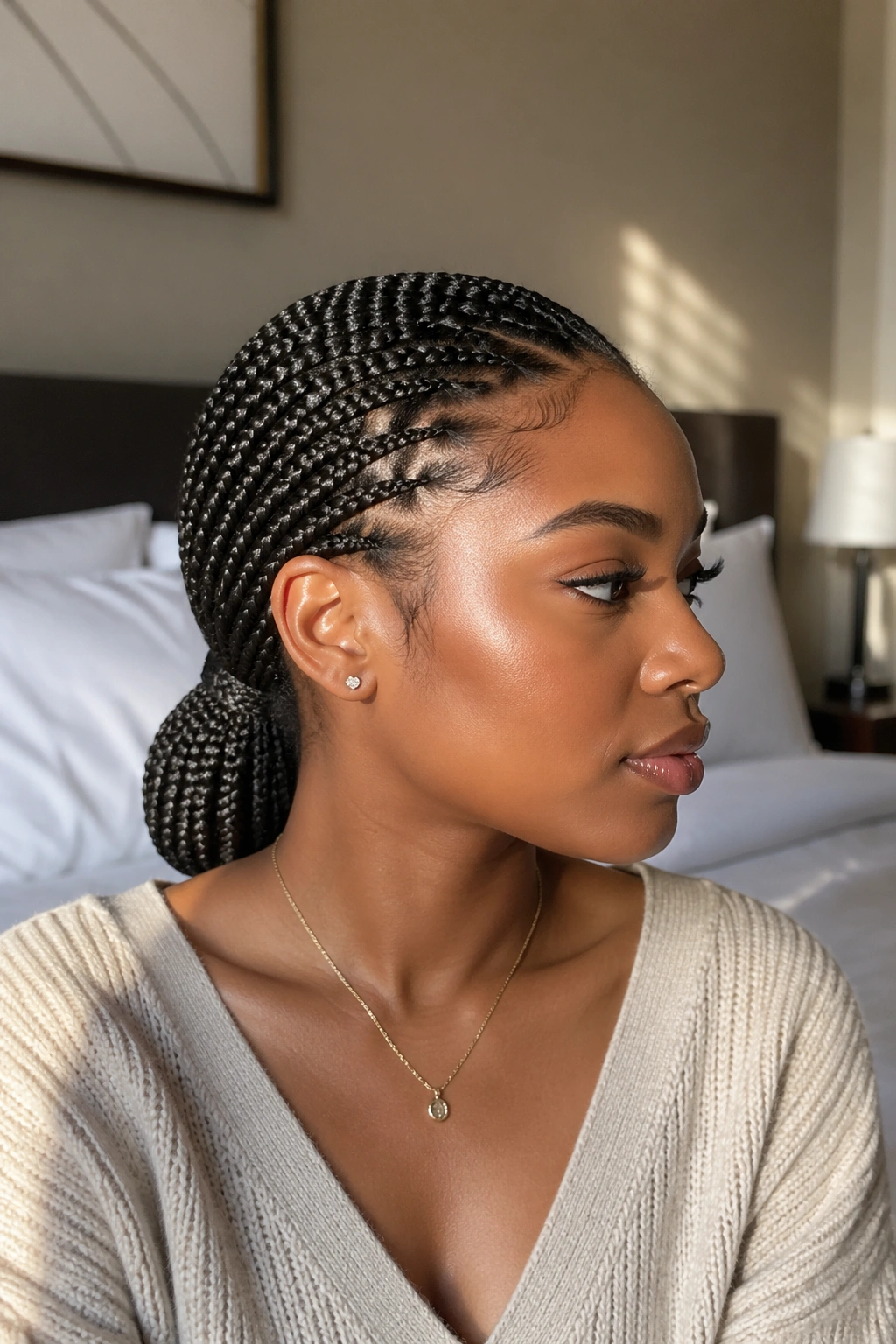
Side-swept braids feel softer than straight-back styles because the curved cornrows guide the eye across the head instead of straight down it. That curve gives the whole look a gentle flow, which is especially nice when the long lengths hang off one side.
It also flatters a lot of face shapes. The asymmetry can soften a strong jawline or create more height at the crown. On Type 4 hair, the curved base helps the style feel sculpted without becoming stiff.
How to Wear It
Keep the sweep obvious. If the cornrows are too shallow, the style loses its point. Pair them with long, simple ends so the shape stays readable, not crowded by extra adornment.
32. Long Braids with Layered Face-Framing Braids
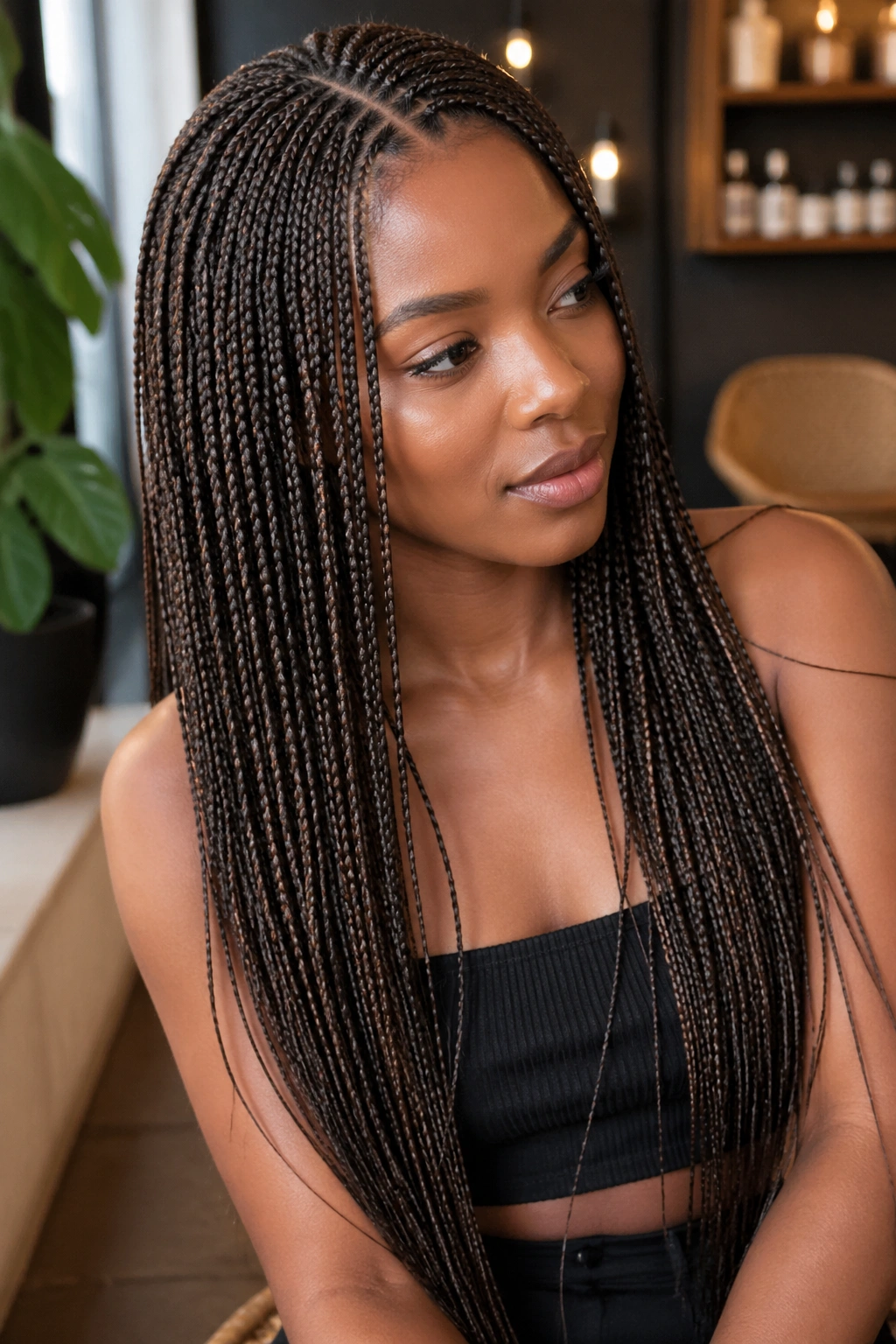
Face-framing braids are one of the easiest ways to make long braids feel less severe around the front. A few shorter pieces near the cheekbones soften the line of the style, while the rest falls long and even. That little bit of framing changes the whole mood.
What Makes It Different
Unlike a full fringe or blunt front edge, these pieces stay narrow and movable. They can tuck behind the ear, hang loose, or sit beside the face depending on the day.
- Helpful if you want to soften a strong hairline.
- Good for highlighting earrings or a jawline.
- Easy to style without changing the rest of the braids.
It’s a small detail. It makes a big difference.
33. Floor-Grazing Long Braids
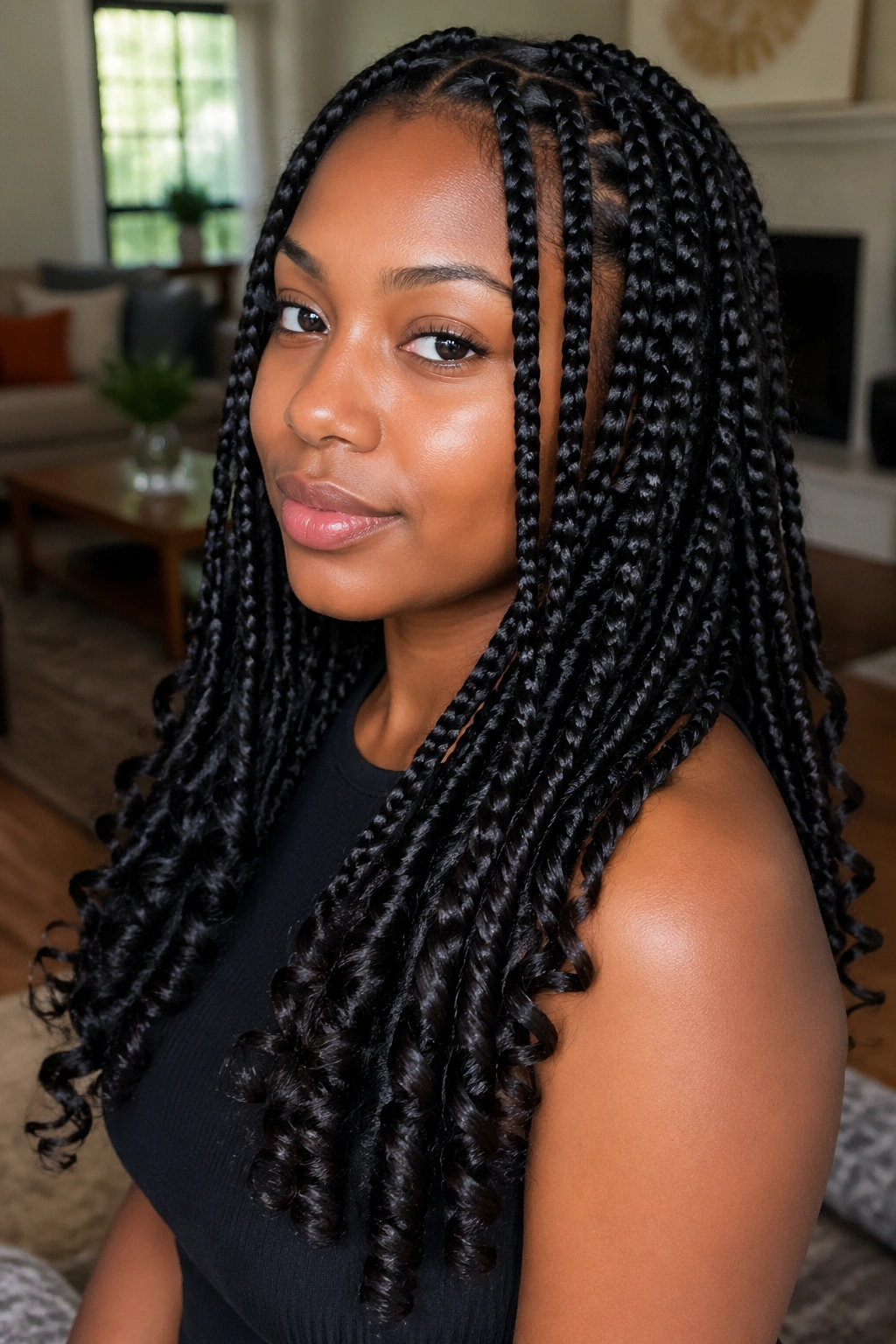
Floor-grazing braids are for people who want length to be the whole story. Not subtle length. Not “mid-back if you stand very straight” length. I mean serious length that swings low and makes every head turn a little slower.
They do require caution. Very long braids can snag on chair arms, bag straps, and coat collars. They also put more weight through the install, so the base has to be clean and not over-tightened. On Type 4 hair, that balance matters even more because the density can hide problems until the style has already been in for a few days.
If you want the drama, commit to the maintenance. The payoff is hard to ignore.
Final Thoughts
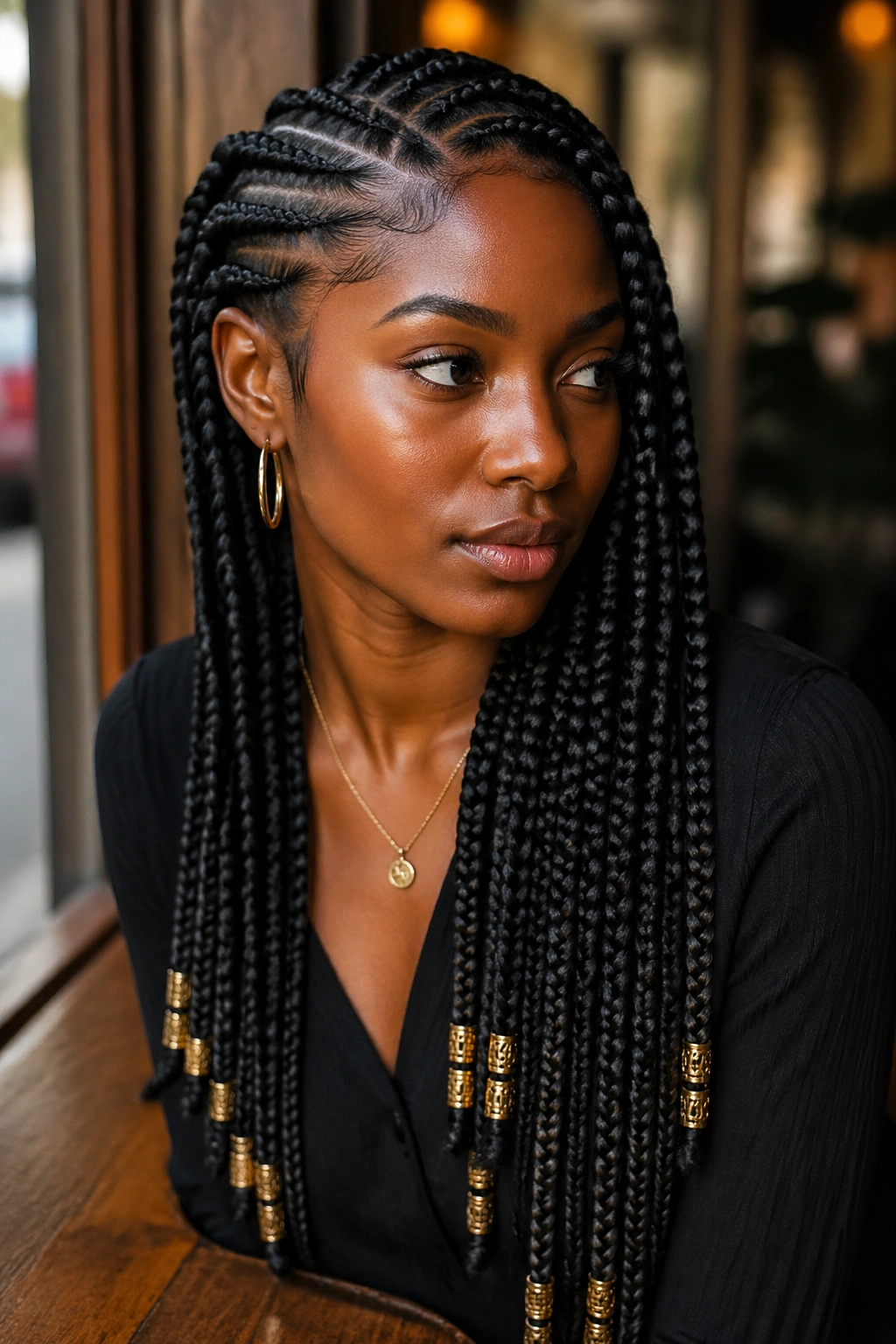
Long braids on Type 4 hair work best when the style matches the way you actually live. Some people need lightness at the scalp. Some want sharp parting. Some want accessories, curls, or color. The beauty of braids is that length is only the starting point.
Pay attention to tension, because that’s where a good install turns into a regrettable one. A braid can be gorgeous and still feel wrong if the base is too tight, too bulky, or too heavy for your hairline. The best long braid styles give you shape first and strain last.
If you’re choosing between a few of these, start with the one that makes your daily routine easier. That’s usually the style you’ll keep wearing.
