



A half-up French braid can do a lot for a heart-shaped face, but only when the braid sits in the right place. That’s the part people miss. A braid that starts too high can make the forehead feel wider; one that hugs the temples and eases toward the back tends to soften the whole look without hiding the face.
Heart-shaped faces usually have more width through the forehead and cheekbones, then taper down toward a narrower chin. That shape looks gorgeous with braid styles that add a little balance near the jawline and keep the top from feeling too tall. The trick is not “more braid.” It’s smarter braid placement, a softer finish, and a little space left around the temples.
Placement matters more than thickness.
Some of the half-up French braids below lean romantic, some feel clean and polished, and a few are made for thick curls or shorter layers. All of them aim at the same thing: making the face feel balanced, not boxed in. If you’ve ever looked in the mirror and thought a braid made your forehead stand out more than you wanted, you already know why this detail matters.
1. Soft Crown Braid with Loose Waves
This is the safest place to start. A soft crown braid that begins near the temples and melts into loose waves gives a heart-shaped face a gentler outline without stealing the spotlight.
Why the Soft Crown Works
The braid sits high enough to show off your cheekbones, but not so high that it pulls everything upward. That matters. Leave a little slack right at the hairline so the braid doesn’t look tight or severe.
- Start the braid about 1 to 1.5 inches above the temples.
- Keep the braid width soft, not rope-like.
- Let the lower lengths fall in loose waves around the jaw.
Best move: pull the braid outward slightly after you secure it, so the crown looks fuller without turning puffy.
2. Deep Side French Braid with Face-Framing Pieces
A deep side part can be a gift for a heart-shaped face. It shifts attention away from the widest point of the forehead and creates a cleaner diagonal line across the top of the head.
That diagonal matters because it changes the whole feel of the style. Instead of drawing the eye straight up, the braid leads it across the face and down toward the ends. Leave two slim face-framing pieces out on the heavier side of the part, and keep them around cheek length or a little longer.
The result feels a little softer and more grounded. It’s a good choice when your forehead feels prominent in photos and you want the braid to do the balancing quietly, not loudly.
3. Center-Part Braid with Curtain Bangs
Can a center part work on a heart-shaped face? Yes, if the front pieces do some of the heavy lifting. Curtain bangs or long swoopy front layers keep a center-part half-up French braid from looking too strict at the hairline.
What Keeps It Soft
The braid should start low enough that it does not crown the head like a helmet. Keep the top sleek, then let the bangs open out from the middle and skim the cheekbones.
- Use curtain bangs that hit near the cheekbone or just below.
- Begin the braid just behind the hairline, not at the highest point of the head.
- Add a tiny bend to the front pieces with a 1-inch iron.
That little bend changes everything. Flat front pieces can make the forehead feel wider; curved ones do the opposite.
4. Messy Braided Bun at the Crown
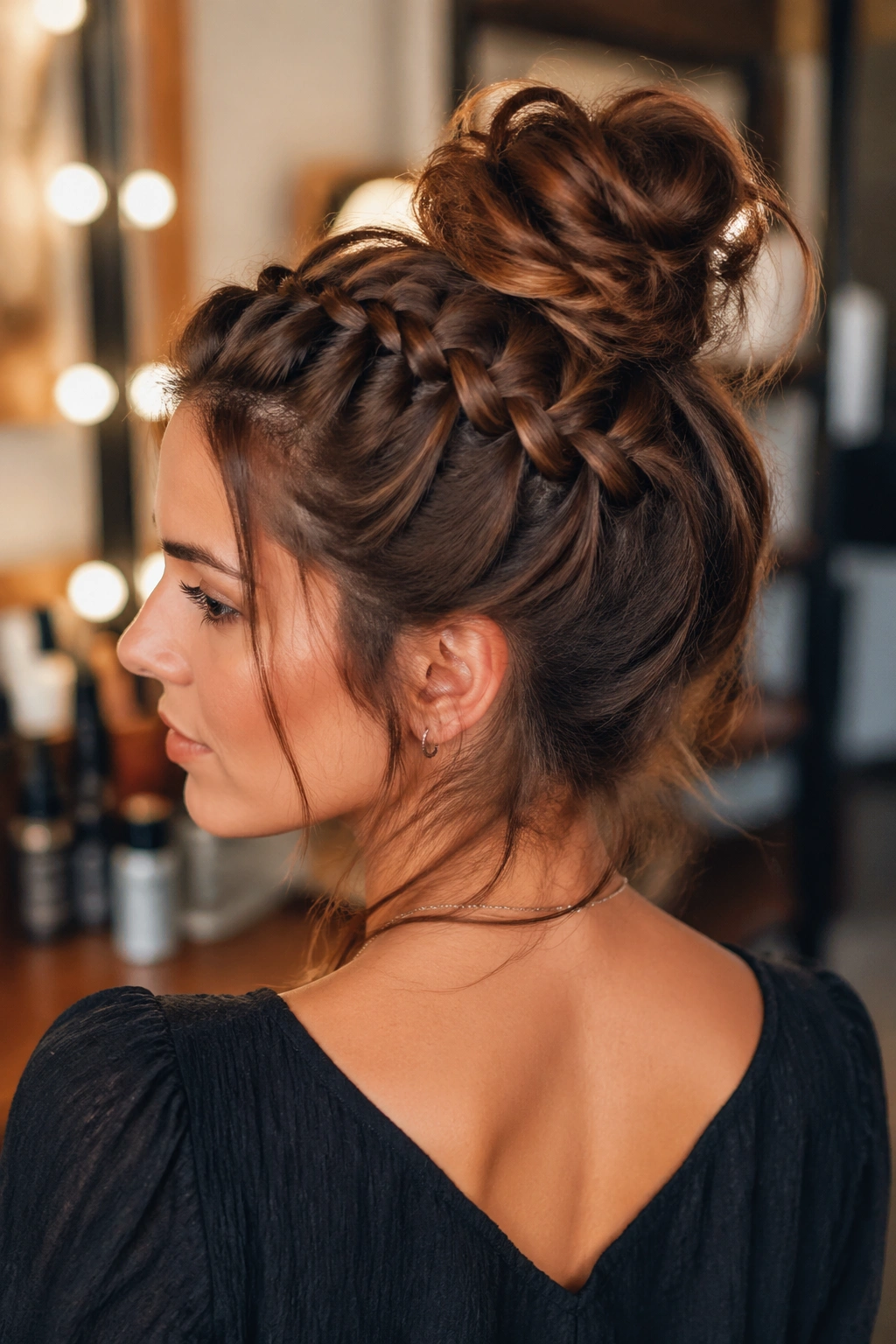
If you want hair off your neck but still want softness at the face, this one makes sense. A half-up French braid that finishes in a messy bun gives height where you can use it and looseness where you need it.
Think of it as controlled chaos. The braid should lift from the temples, then stop short of the very top of the head so the bun sits a bit back, not dead center. That placement keeps the style from exaggerating a narrow chin.
A few loose wisps around the ears help too. Do not pull every strand tight. A heart-shaped face usually looks better when the style breathes a little.
- Keep the bun compact, not huge.
- Leave the sides softly pinned.
- Let the ends fan out instead of tucking every piece under.
5. Sleek Half-Up French Braid on Straight Hair
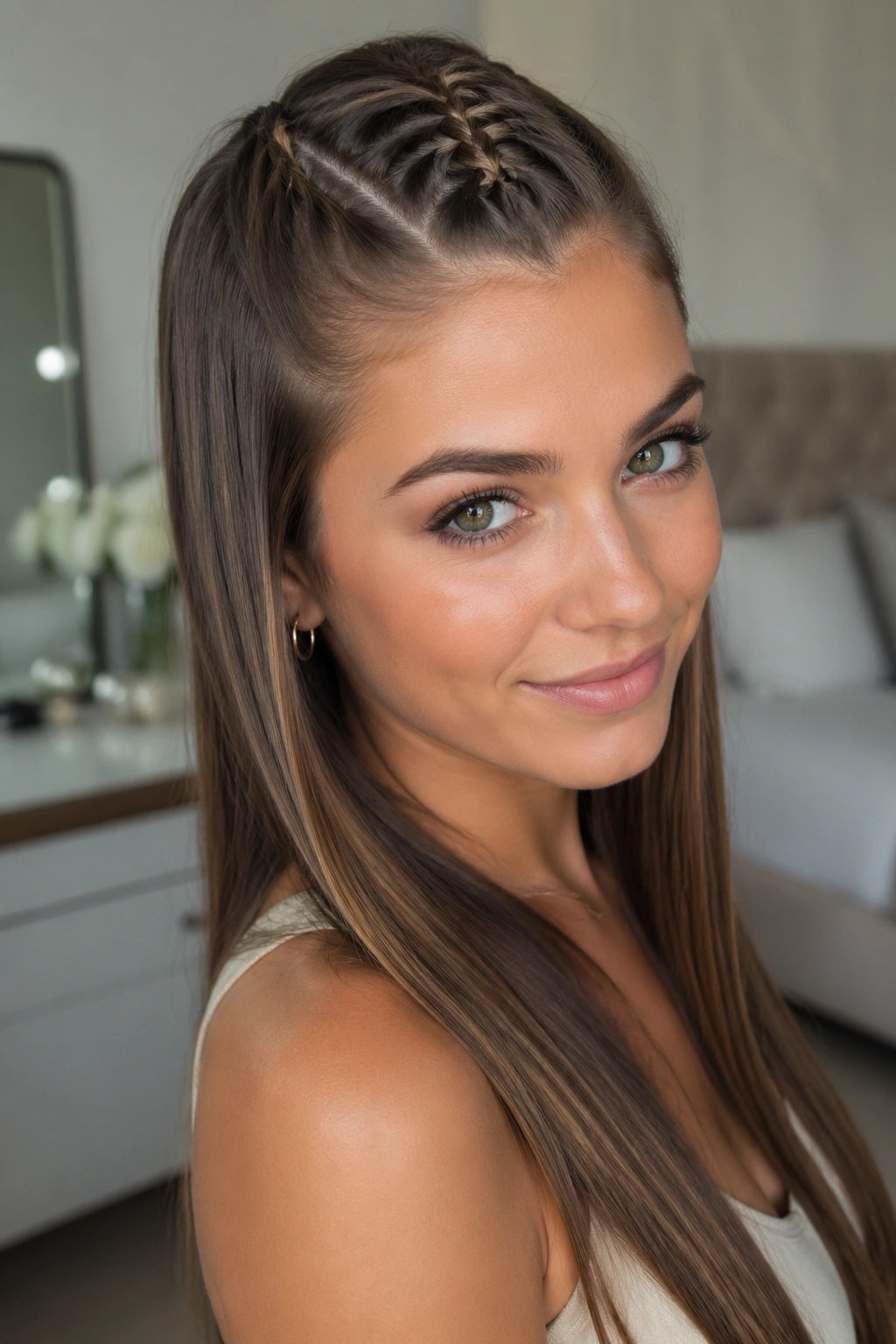
Sleek can be beautiful on this face shape, but it needs discipline. The clean finish works because it shows off the structure of the braid without piling texture on top of an already wider forehead.
Unlike a messy style, this one depends on precision. Keep the braid narrow at the top and let the sleekness live through the lengths, not at the hairline. That difference matters more than people think.
If your hair is naturally straight, a touch of smoothing cream and a fine-tooth comb are enough. If it’s a little puffy near the roots, press that area flat before you braid. The front should look neat, not stiff. That keeps the face from feeling top-heavy.
6. Double French Braids into a Half-Up Tie
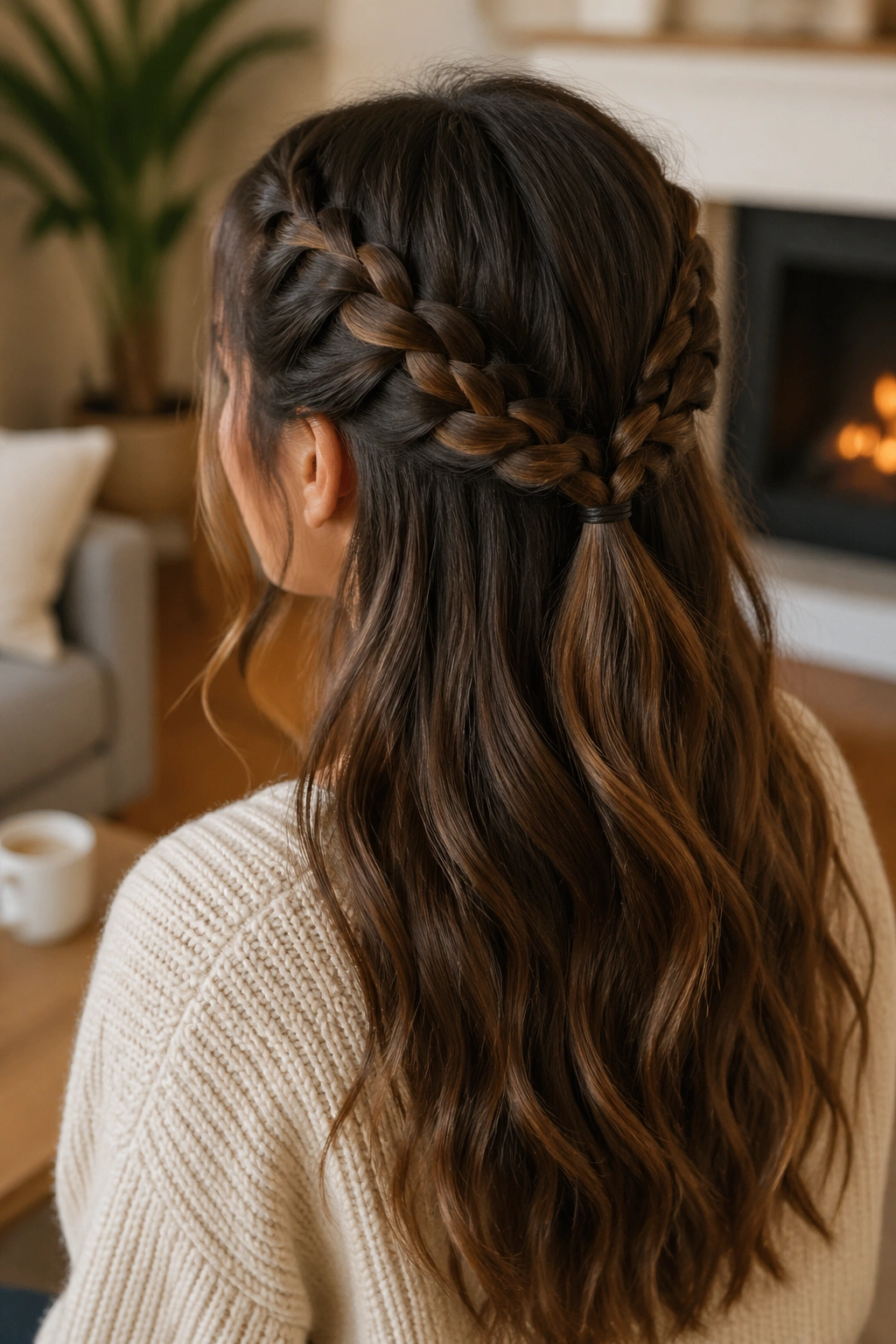
Two braids can look playful without looking childish if you keep them soft. French braid each side from the temples, then connect them at the back with a small elastic or a wrapped section of hair.
The shape helps a heart-shaped face because it spreads attention across both sides of the head. That balances the forehead while the loose lower hair fills out the jaw area. It’s a nice trick, honestly.
The best version stays low-key. Don’t pull the braids tight against the scalp, and keep the tie point just below the crown. If you set it too high, the whole style starts to feel like a cheer braid. A little lower is calmer, and calmer usually looks better here.
7. Waterfall-Finish French Braid
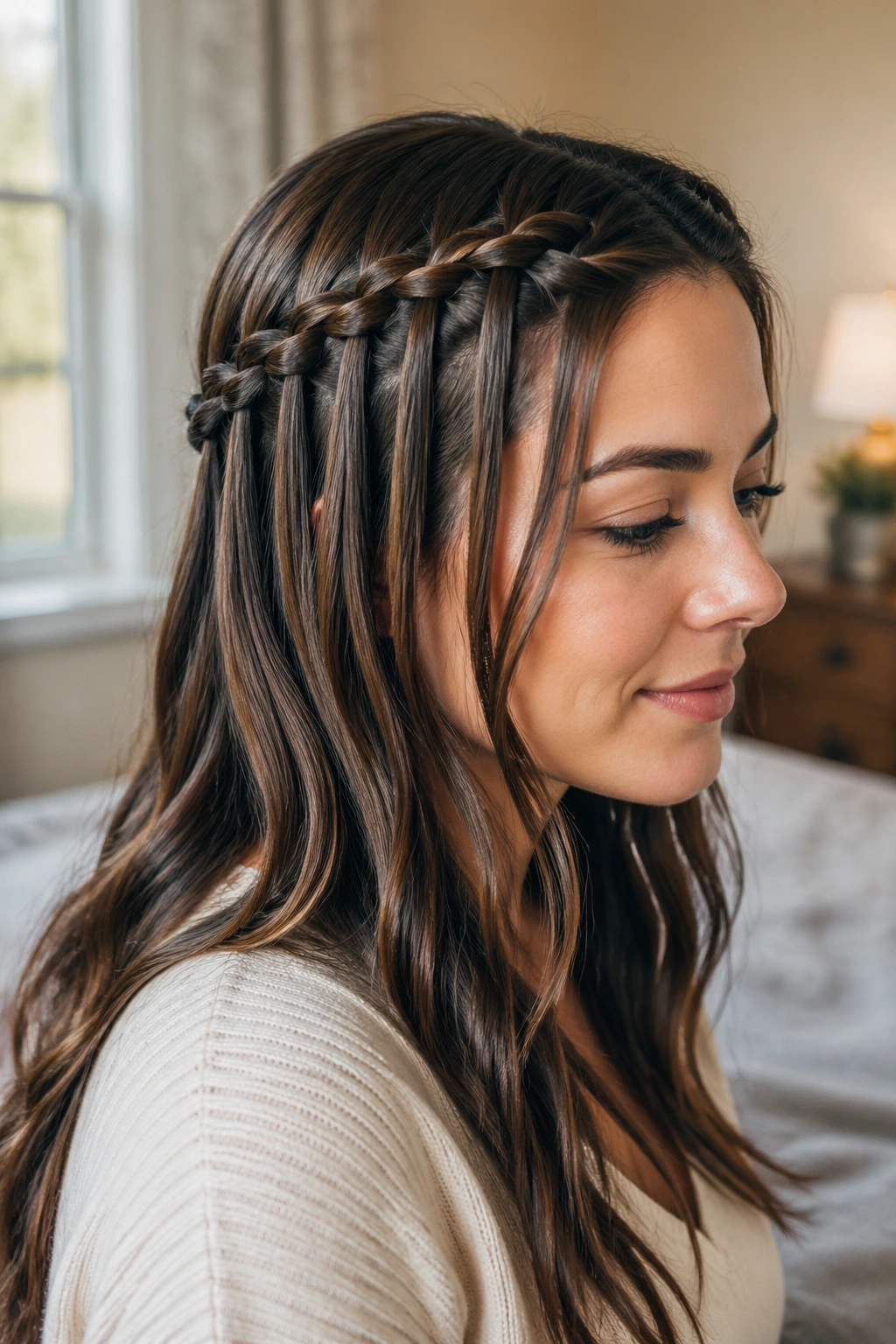
A waterfall braid gives you movement right where a heart-shaped face likes it most: around the sides. Instead of locking every strand into the braid, you let sections drop through, which creates a light frame around the head.
The Small Detail That Changes the Look
That dropped strand is not decoration. It creates soft vertical lines near the cheeks, which takes attention away from a broad forehead and keeps the top from feeling crowded.
- Use medium pieces, not tiny ones, so the drops are visible.
- Keep the braid at temple level or just above.
- Curl the fallen pieces into a loose bend.
Tip: if your hair is fine, a bit of texturizing spray makes the waterfall sections stay put without going crunchy.
8. French Braid into a Fishtail Tail
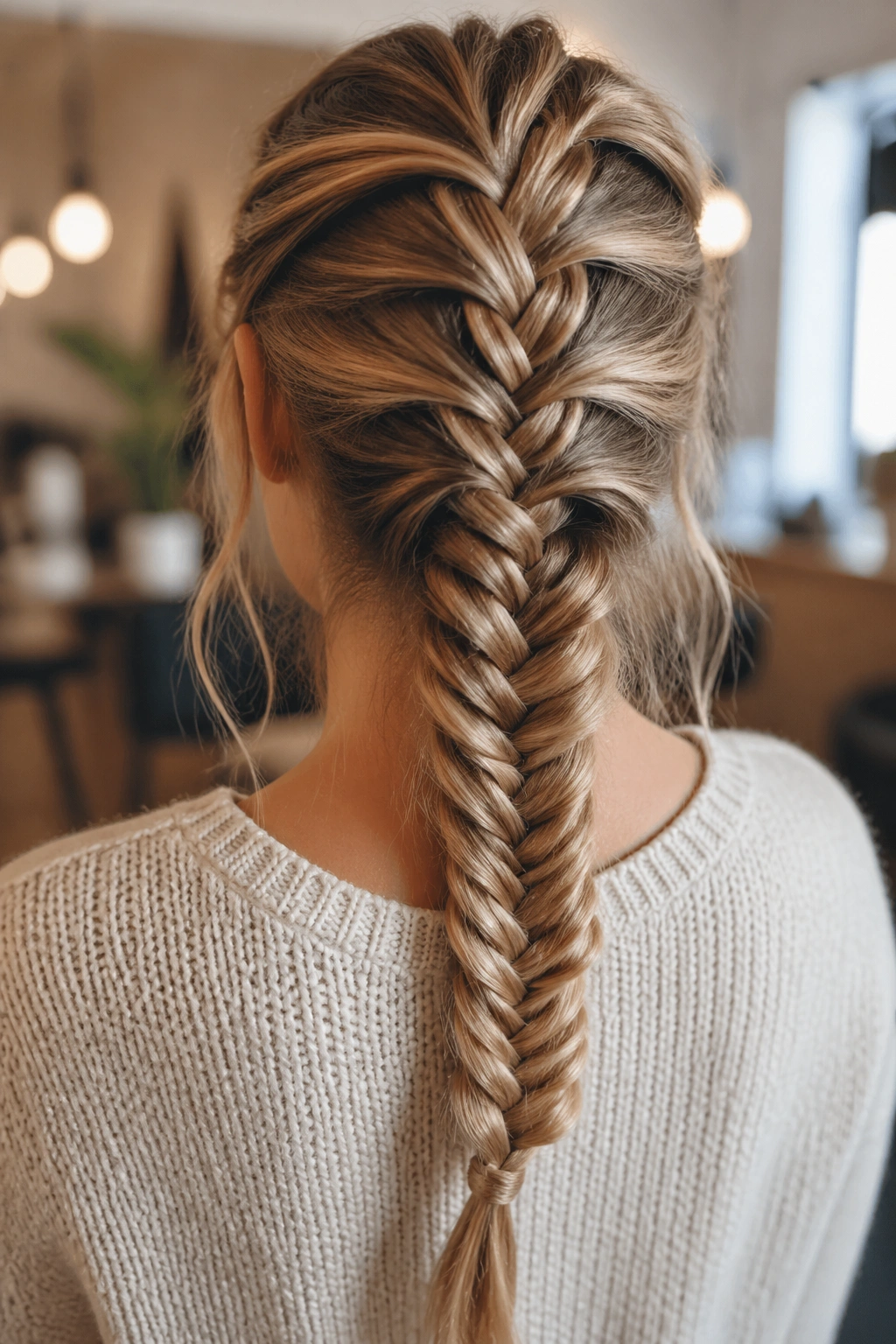
Mixing braid patterns breaks up the stiffness that sometimes shows up on heart-shaped faces. Start with a half-up French braid, then switch the tail into a fishtail once you reach the back.
The change in texture helps because the top stays neat while the tail gets softer and thinner as it goes. That thinner finish pulls the eye downward, which is useful when the face already has a lot of strength through the forehead and cheekbones.
I like this style on medium to long hair. It looks intentional, but not overworked. The fishtail section does not need to be tiny; two chunky pieces are enough. If the braid feels too formal, loosen the fishtail a little with your fingers and let the ends stay imperfect.
9. Voluminous Pancaked Crown Braid
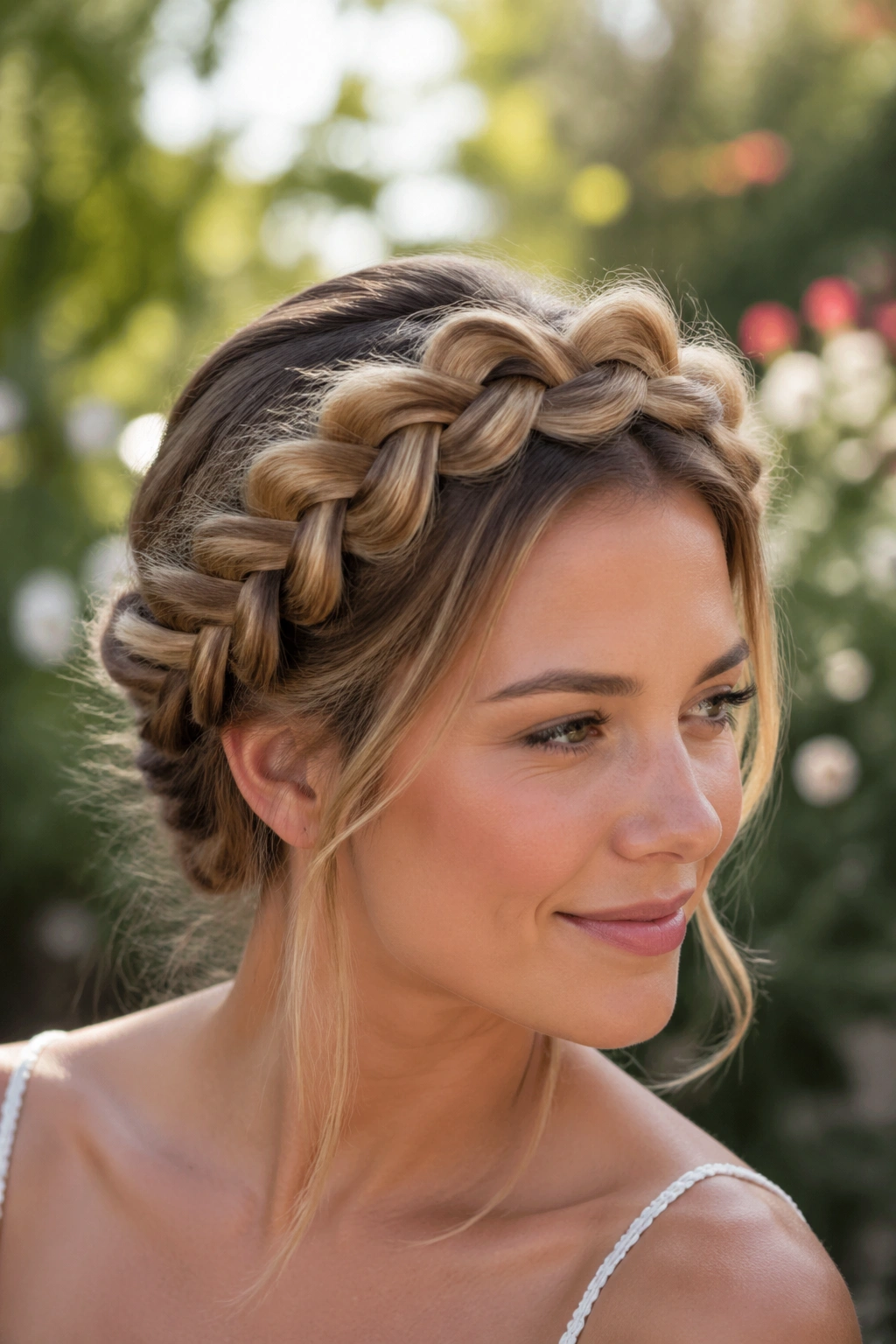
This is the style for anyone who wants more width, not more height. A pancaked braid is gently widened by pulling the outer edges of the plait outward, and that extra breadth flatters a heart-shaped face better than a tall crown ever will.
Where to Pancake
Focus on the upper sections of the braid, especially near the temples. That’s where you want the braid to look fuller and more relaxed.
Where to Stop
Stop before the braid gets too airy at the back. If you overdo it, the braid starts to look frayed instead of soft.
The face-shaping part is subtle, but it works. More width at the sides, less lift on top. That’s the whole game here.
10. Braided Half-Up Ponytail with Curled Ends
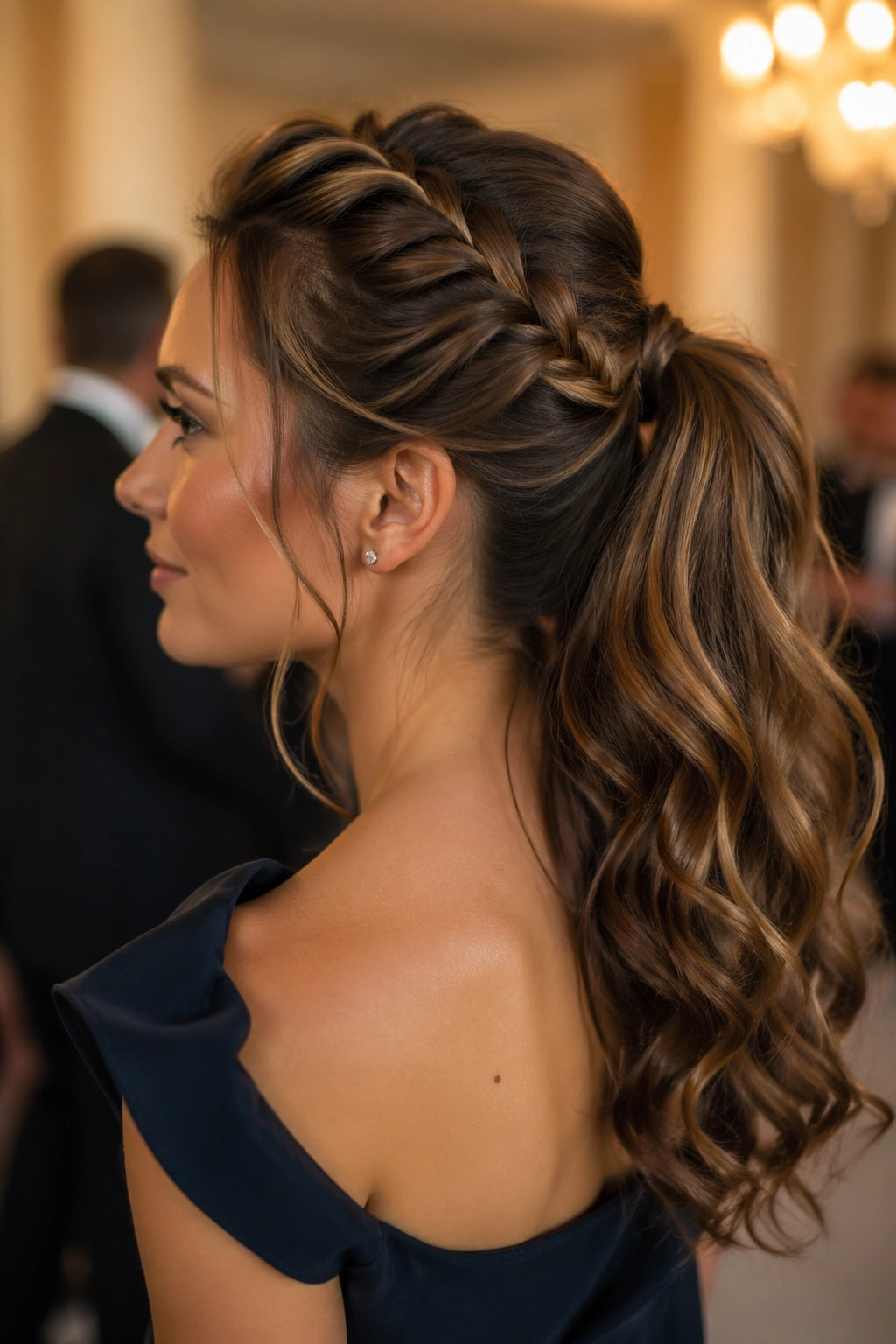
Picture the braid handing off to a ponytail instead of disappearing into a clip or bun. That tiny shift gives the style a little bounce, and bounce helps soften the long line from forehead to chin.
The braid itself should sit at the upper back of the head, just high enough to feel lifted. Then the ponytail can drop into loose curls or soft bends. Those ends create movement below the face, which keeps the style from concentrating all the visual weight above the eyes.
This is a good one for events where you want your hair off your shoulders but not fully pinned back. A 1.25-inch curling iron gives the ends enough shape without turning them into ringlets. Clean at the top, loose at the bottom. That’s the sweet spot.
11. Side-Swept Half-Up French Braid
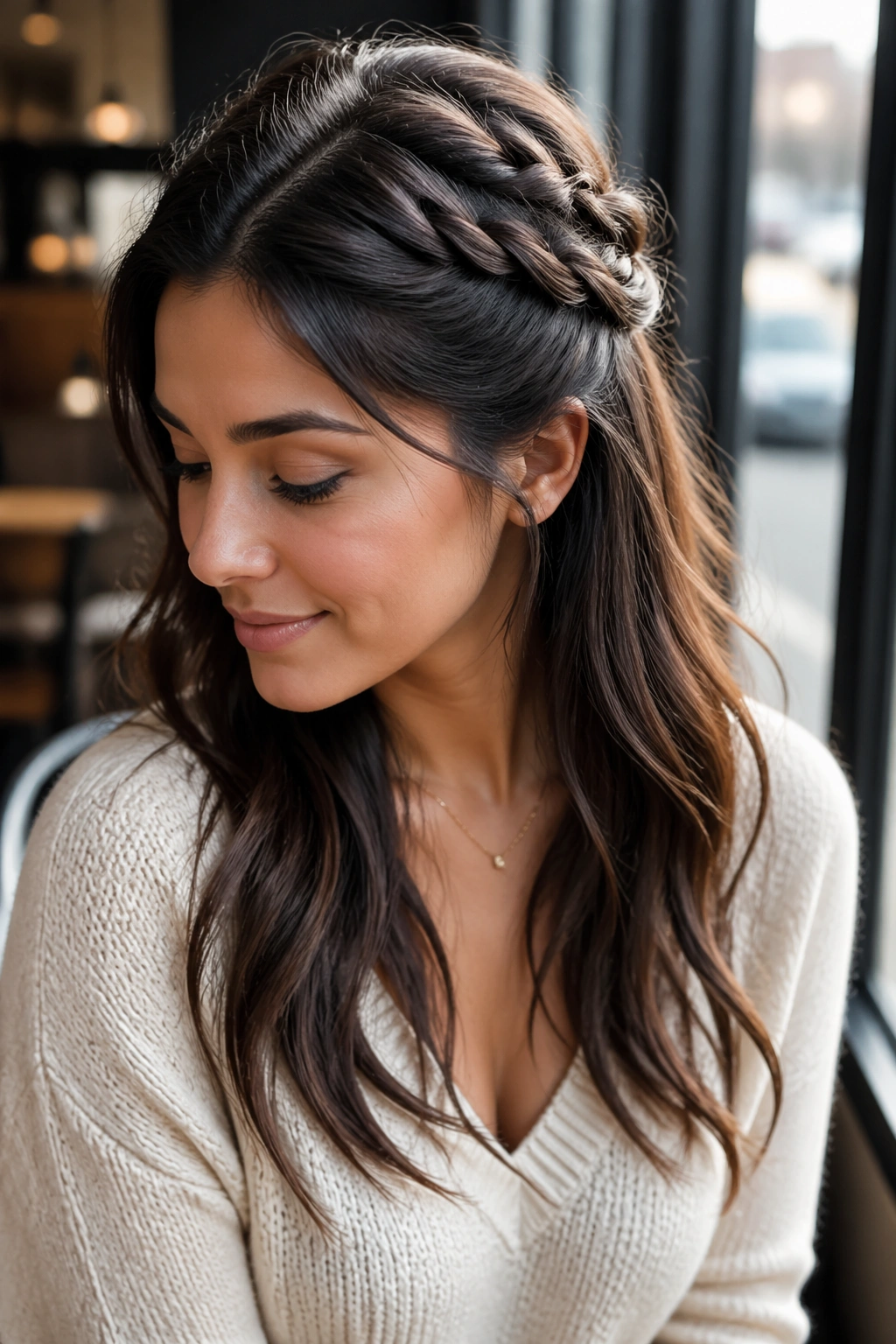
Symmetry is not always your friend here. A side-swept braid can look better on a heart-shaped face because the off-center placement breaks up the broad forehead and makes the style feel less rigid.
Start the braid on the heavier side of your part and sweep it across the back instead of straight down the middle. That diagonal line does a quiet bit of work. It draws the eye across the face and away from the exact center of the forehead.
Keep one side fuller than the other. Not lopsided. Just softer on one side. That slight imbalance is what keeps the face from feeling too pointed at the chin. A tiny bit of asymmetry makes the whole look easier to wear.
12. Braided Headband with Loose Ends
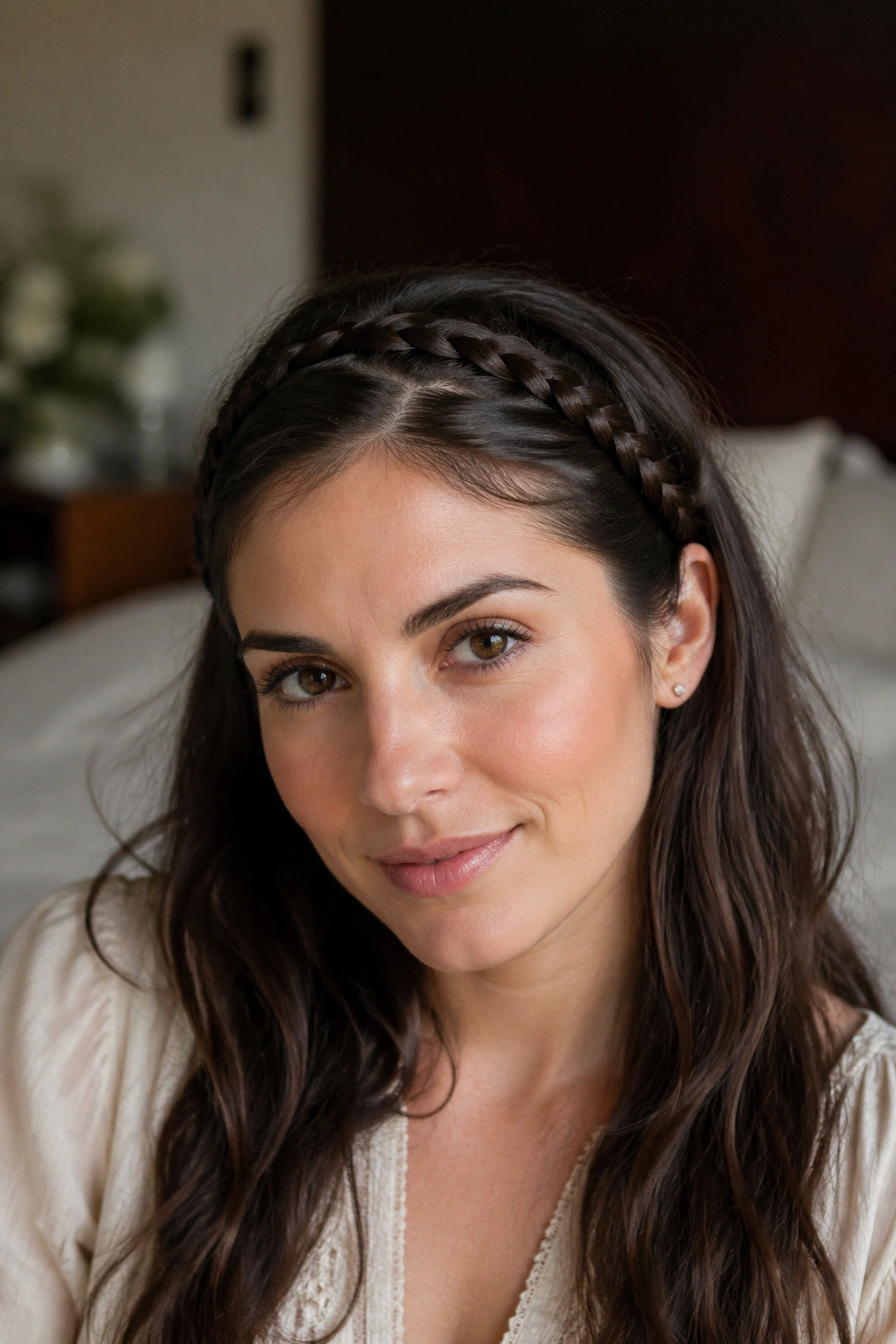
A braided headband style hugs the hairline in a way that feels flattering on a heart-shaped face, especially when the rest of the hair stays loose. The braid acts like a frame, but not a hard one.
One sentence can make or break it: keep the band low and the lower hair soft. If the braid sits too far back, it misses the chance to balance the forehead. If the lengths beneath it are pin-straight and flat, the style feels too sharp.
I like this version for second-day hair. The hair has a little grip, the braid stays put, and the loose ends around the shoulders keep the look from becoming severe. It’s simple, which I love. Simple usually ages better in photos anyway.
13. Twist-and-Braid Hybrid Half-Up
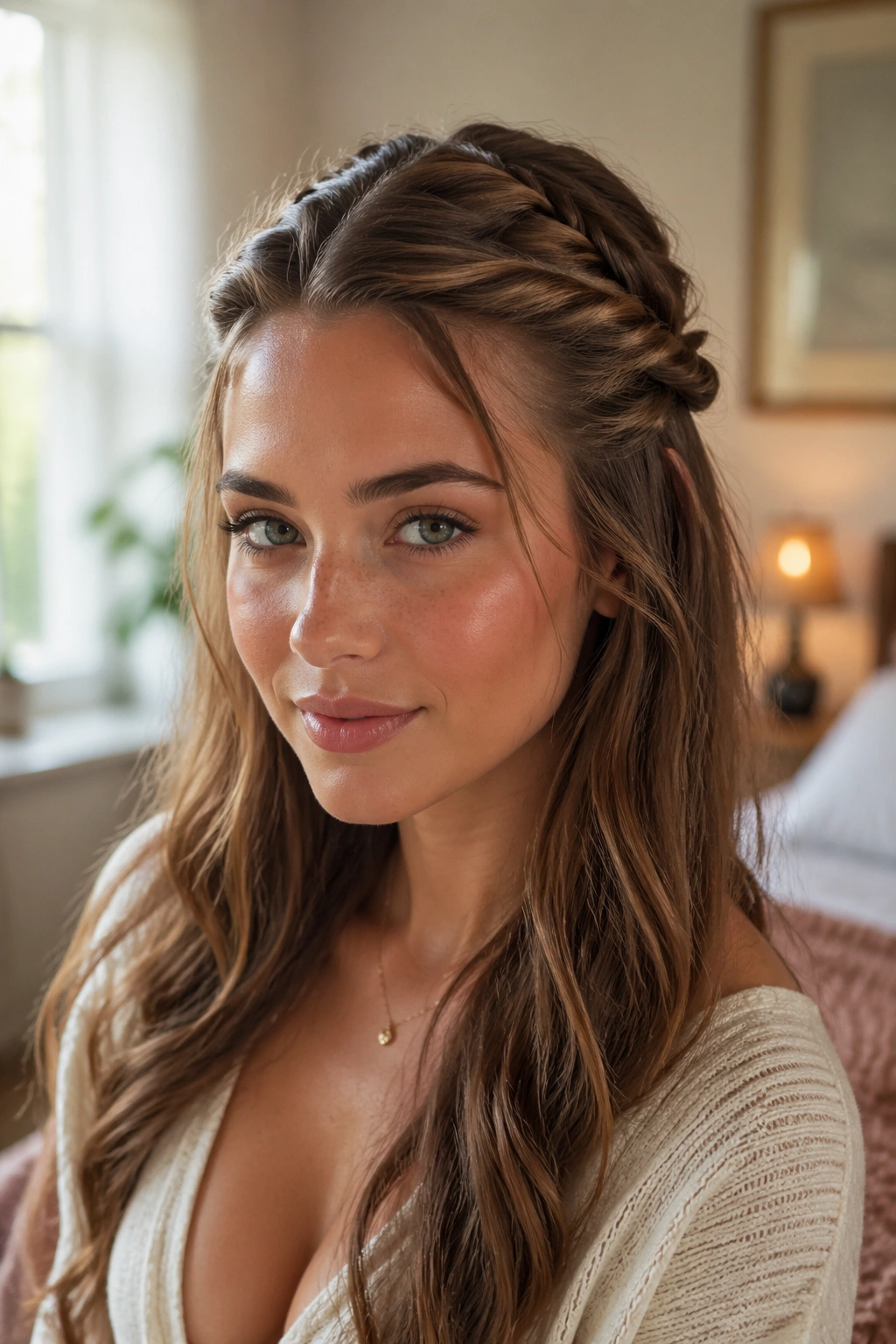
Why choose only braid texture when a twist can soften the hairline first? That’s the appeal here. Two small twists from the temples feed into a French braid, and the whole thing feels less dense around the forehead.
How to Keep It Balanced
The braid should begin after the twists have already opened up the face. That gives the top a gentler start and keeps the hair from sitting too flat at the sides.
- Take 1-inch sections from each temple.
- Twist them back once or twice before braiding.
- Keep the braid loose enough to expand slightly after securing.
The hybrid shape is good for people who do not want a full braid across the whole top. It’s lighter, easier on the eye, and a little less formal. That helps a heart-shaped face look soft instead of shaped by the style.
14. Loop-Back Romantic Braid
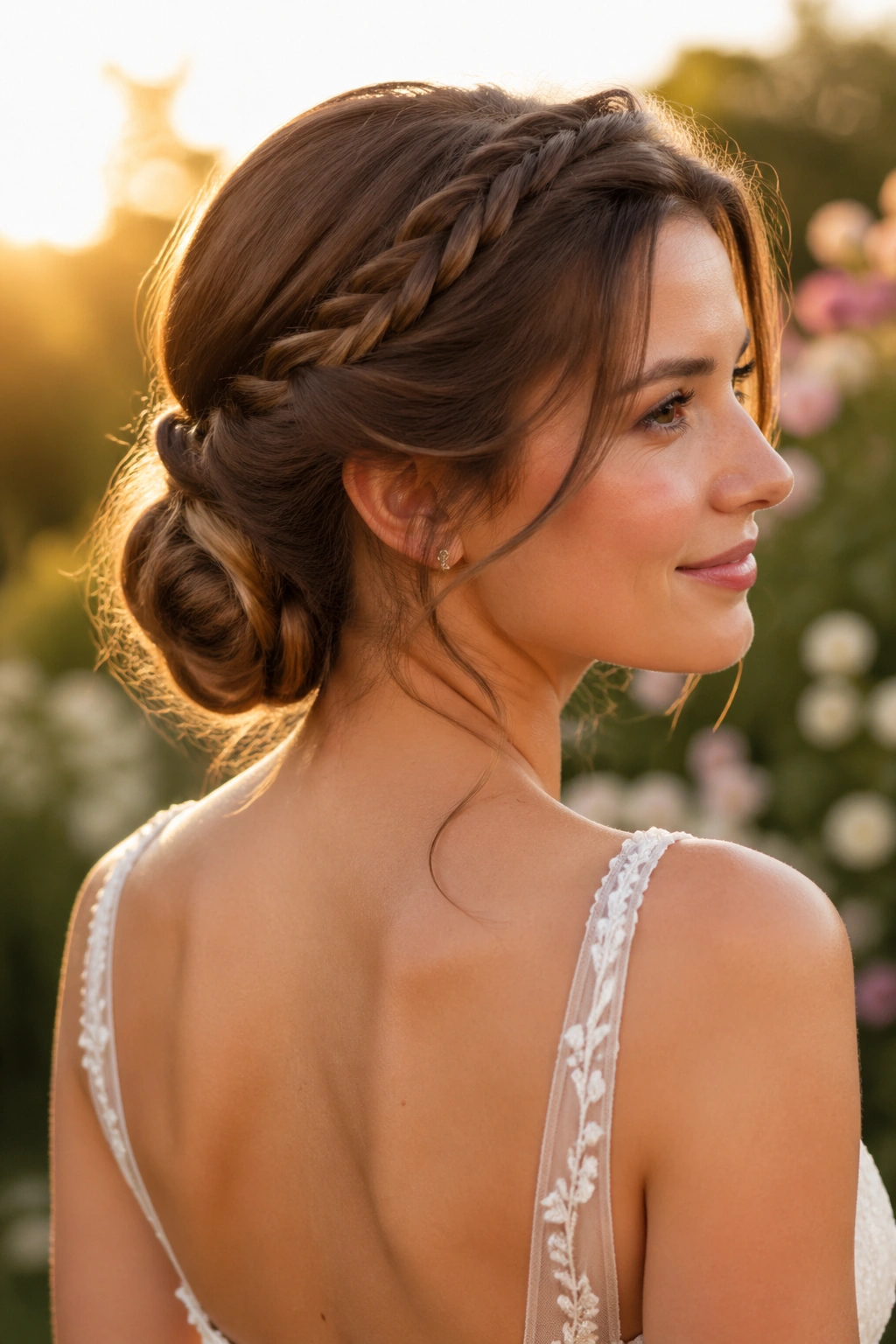
A loop-back braid looks almost like the braid is folding in on itself, which sounds fussy and can look fussy if you tighten it too much. The better version is loose, round, and a little imperfect.
That rounded shape helps because heart-shaped faces already have strong angles near the cheekbones. A looped braid softens those angles by adding curves at the back of the head and letting the front stay airy. It’s a nice contrast.
This style works especially well with soft bends in the lower hair. If the braid is the only textured part, the look can feel disconnected. But when the loop shape and the loose lengths echo each other, the whole thing settles down. It reads romantic without turning sugary.
15. Bubble Braid with French Braid Base
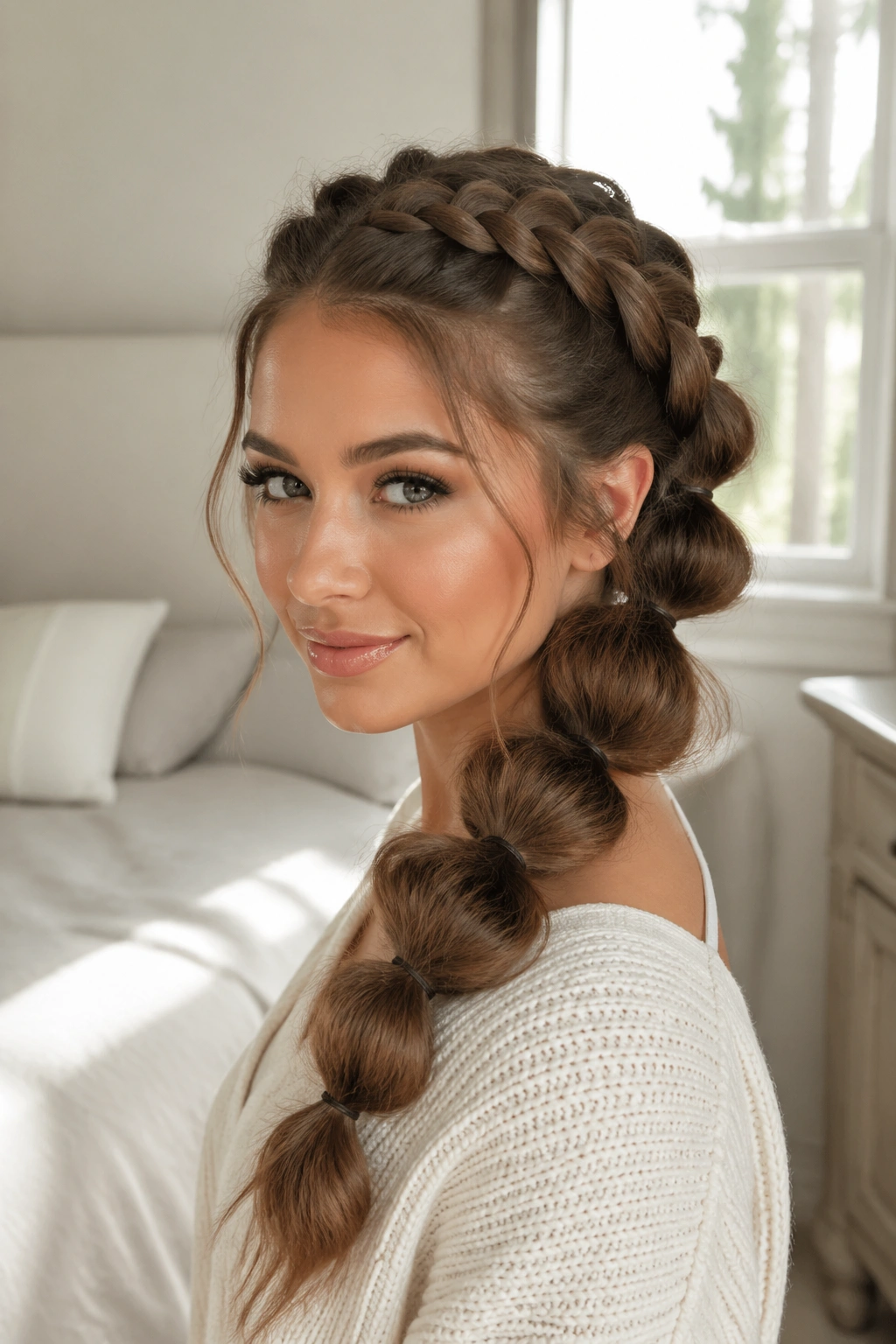
A bubble braid base is a clever move when you want the front to feel tidy and the back to feel a little playful. Start with a French braid at the crown, then segment the tail into soft bubbles with small elastics.
Unlike a flat braid, the bubbles create rounded spaces that give the style body without pushing everything upward. That matters on a heart-shaped face because you want interest near the sides, not just a big lump at the top.
I’d reach for this one if your hair is thick or naturally puffy. It keeps the half-up area under control, and the rounded bubbles pull the eye downward in a steady rhythm. Add a small wrap of hair around each elastic if you want it to look finished.
16. Braided Half-Up with Loose Curls
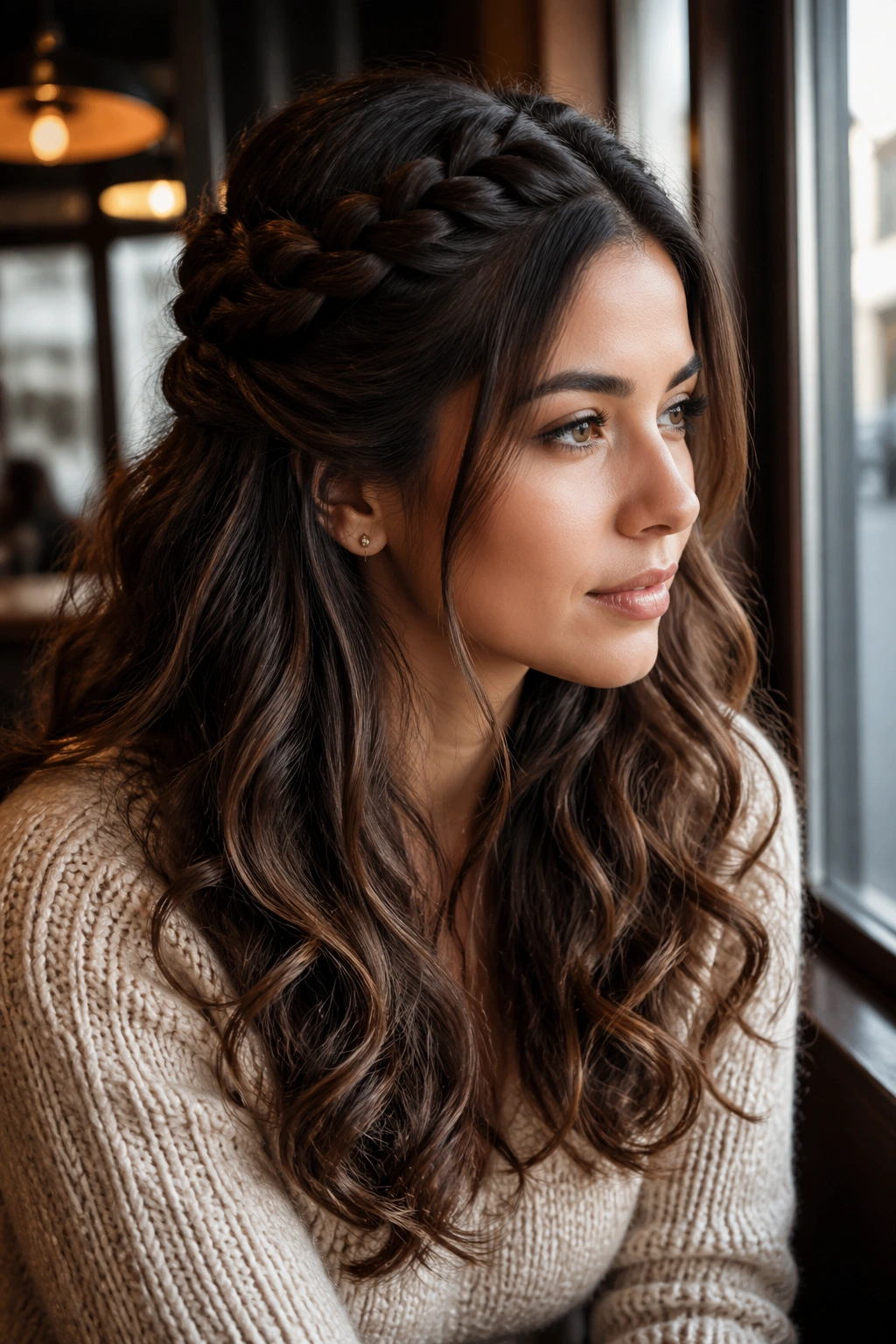
Loose curls and a half-up French braid are a classic match for a reason. The braid holds the top, while the curls below fill out the lower half of the face and stop everything from feeling too sharp.
Start the curls below the cheekbone. That’s the part people get wrong. If you curl right at the root, the width lands too high on the head and can make the forehead seem broader. Lower curls shift the body of the style where it helps most.
Let the braid itself stay a little narrow. The softness should come from the curl pattern, not from stretching the braid apart until it loses shape. A loose 1-inch curl is enough. Anything tighter starts to fight the face shape instead of balancing it.
17. Micro-Braid Accent in the Crown
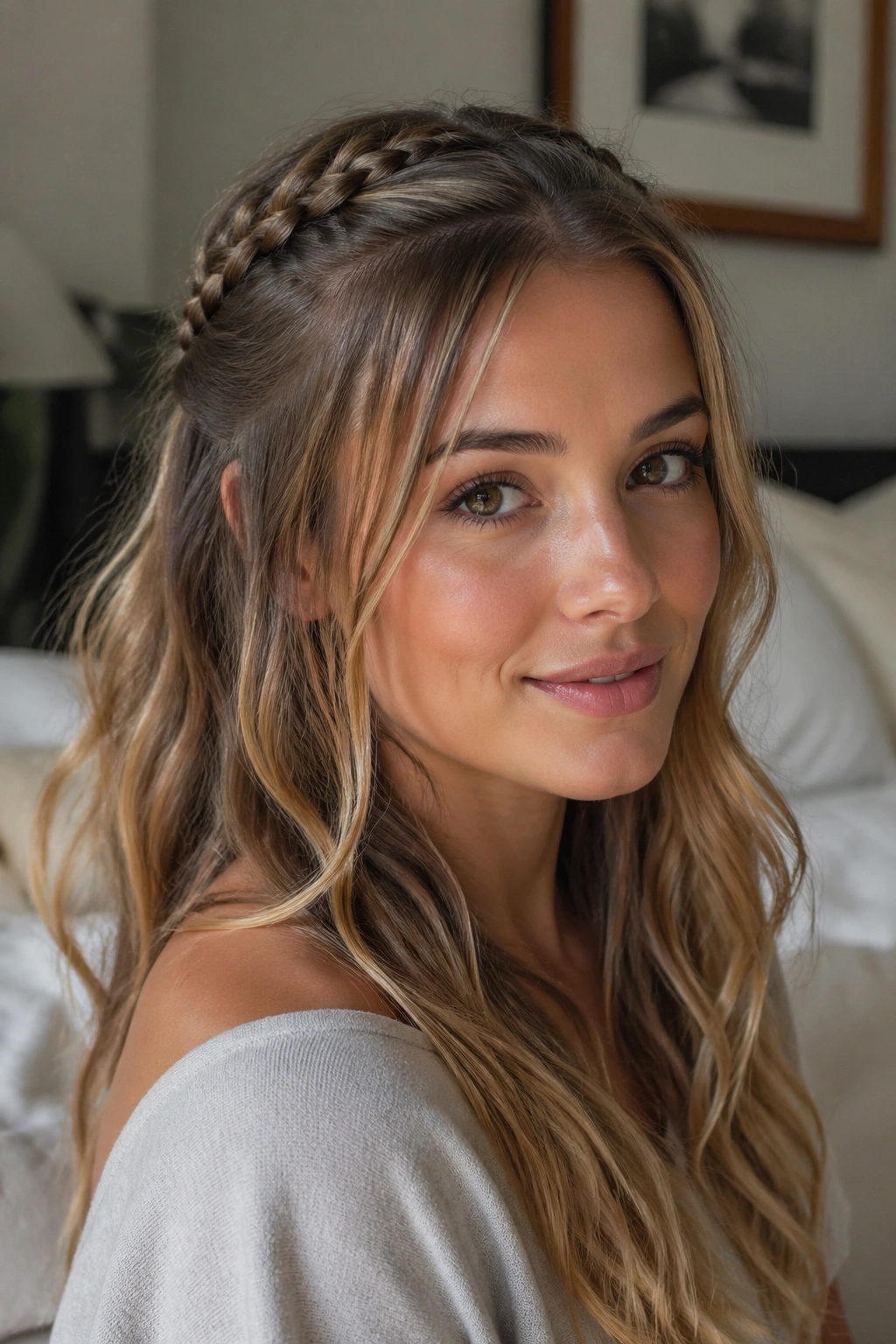
Not everyone wants a full, obvious braid. A tiny French braid tucked into the crown gives you the braided detail without crowding the face, which is useful if your forehead already feels like the main event.
Where the Accent Should Sit
Keep the braid narrow, almost like a trim detail instead of the star of the show. It can start at one temple and disappear into the back section after a few passes.
Why It Flattering
The small braid adds texture at the top without adding bulk. That means the forehead stays open, but not exposed. You get just enough structure to shape the head, and that’s usually all this face shape needs.
- Use it when your hair is fine.
- Use it when you want low effort.
- Use it when you need a style that won’t fight a high neckline.
18. Crisscross Half-Up French Braid
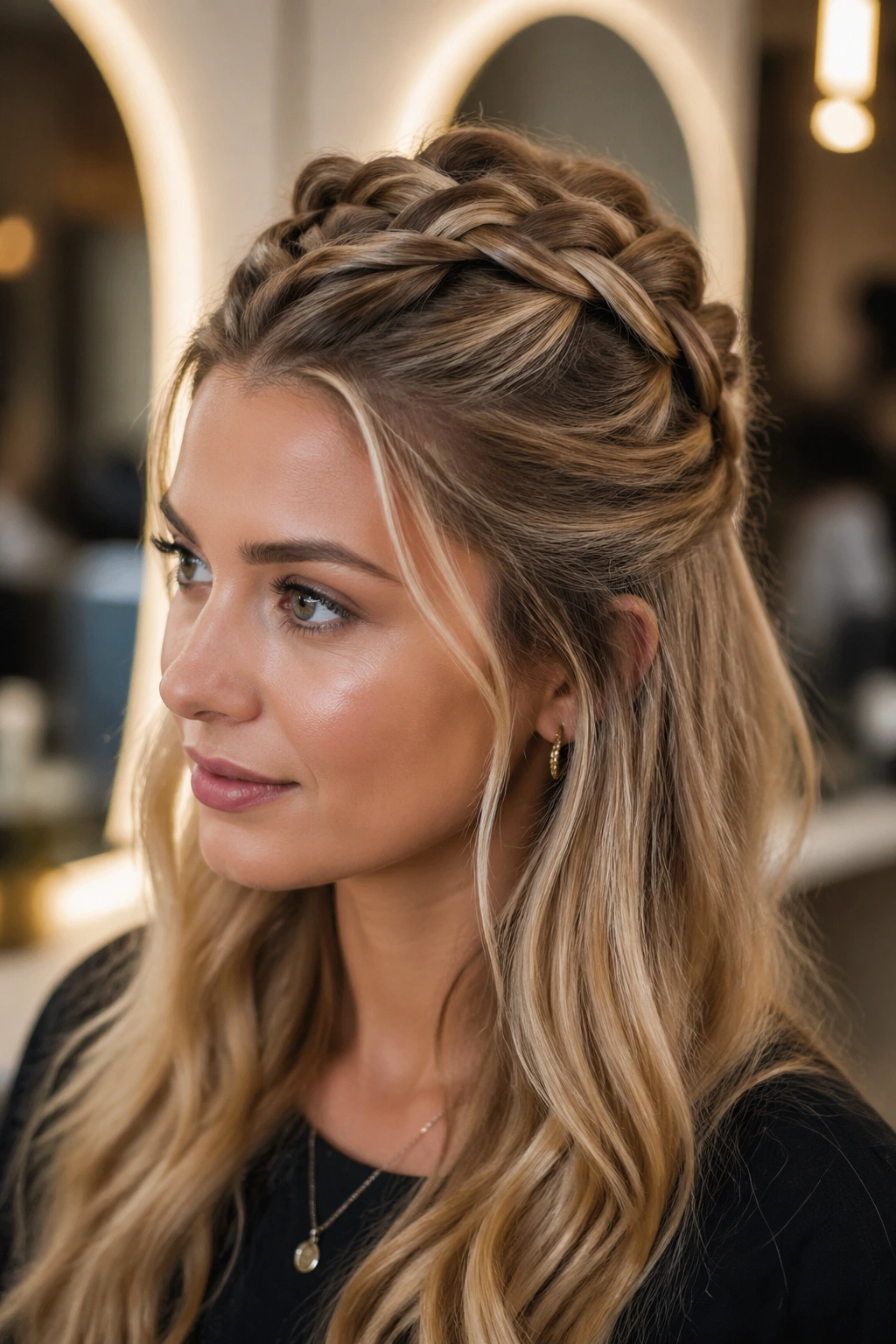
Crisscrossing sections across the crown makes the whole style feel wider, not taller. That’s a good thing on a heart-shaped face. The crossing pattern spreads visual weight from one side to the other instead of stacking it right on top.
There’s a nice little trick here: let each crossed section sit slightly loose before you secure the next one. A braid that is pulled too tight can look like it was drawn on with a ruler. That’s not the goal.
The style has a built-in softness because of the woven movement. It’s especially useful if your face looks longer in profile and you want a shape that fills out the upper half without crowding the forehead. Clean lines, but not sharp ones.
19. Low-Profile Half-Up Braid for Fine Hair
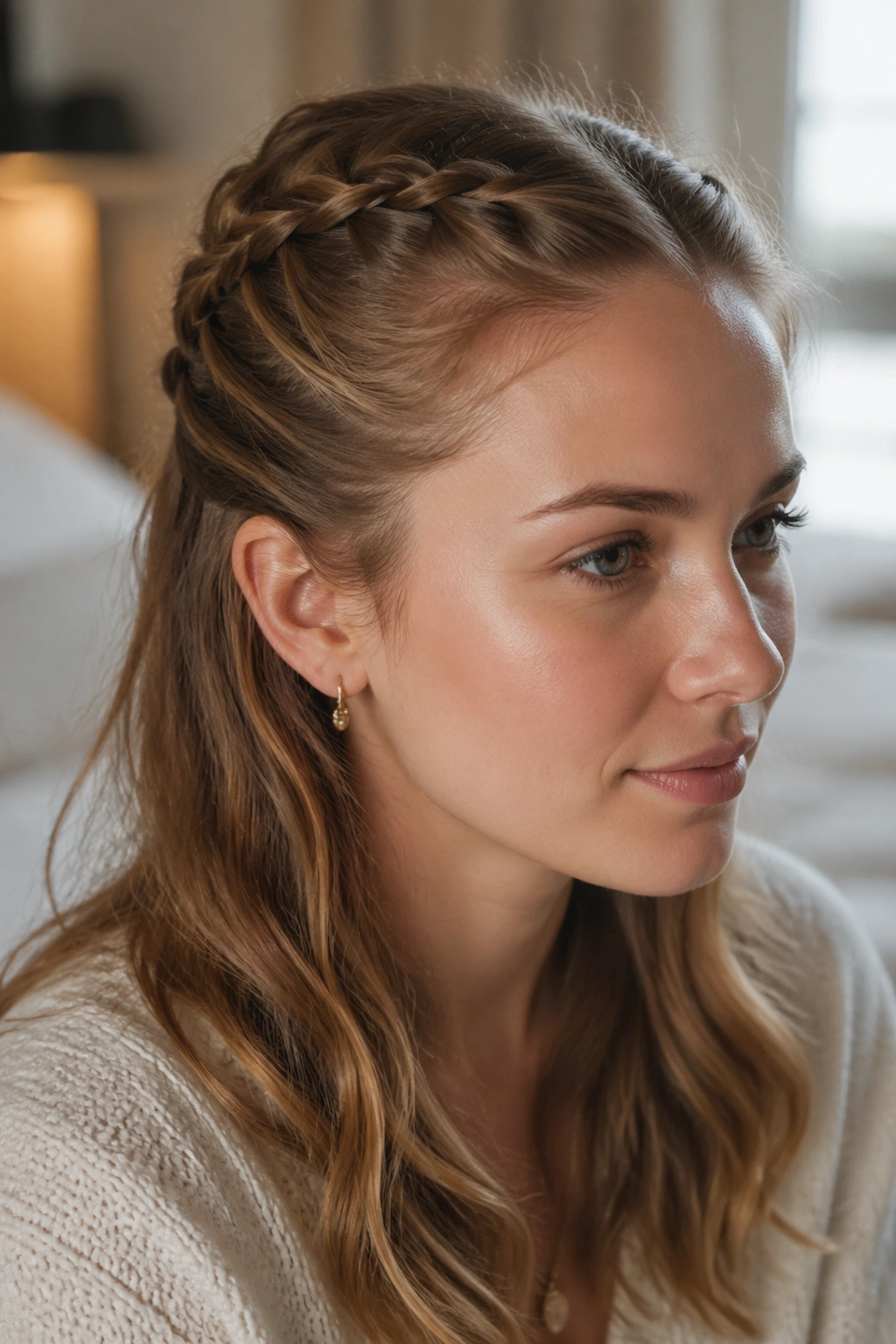
Fine hair can go flat fast, so the low-profile braid keeps things realistic. Instead of chasing volume you don’t have, build a neat braid close to the head and let the lower hair do the softening.
Use small sections, about 1/2 inch wide, and secure the braid with a tiny clear elastic. Too much pulling makes fine hair look thinner, not fuller. That mistake is easy to make.
A little root spray helps, but not a lot. Heavy product makes the top collapse. The better move is a bit of texture at the roots and soft bends through the rest of the hair. Clean, light, and sensible. That’s what works on fine hair and on a heart-shaped face that already has enough shape up top.
20. XXL Volume Half-Up Braid for Thick Hair
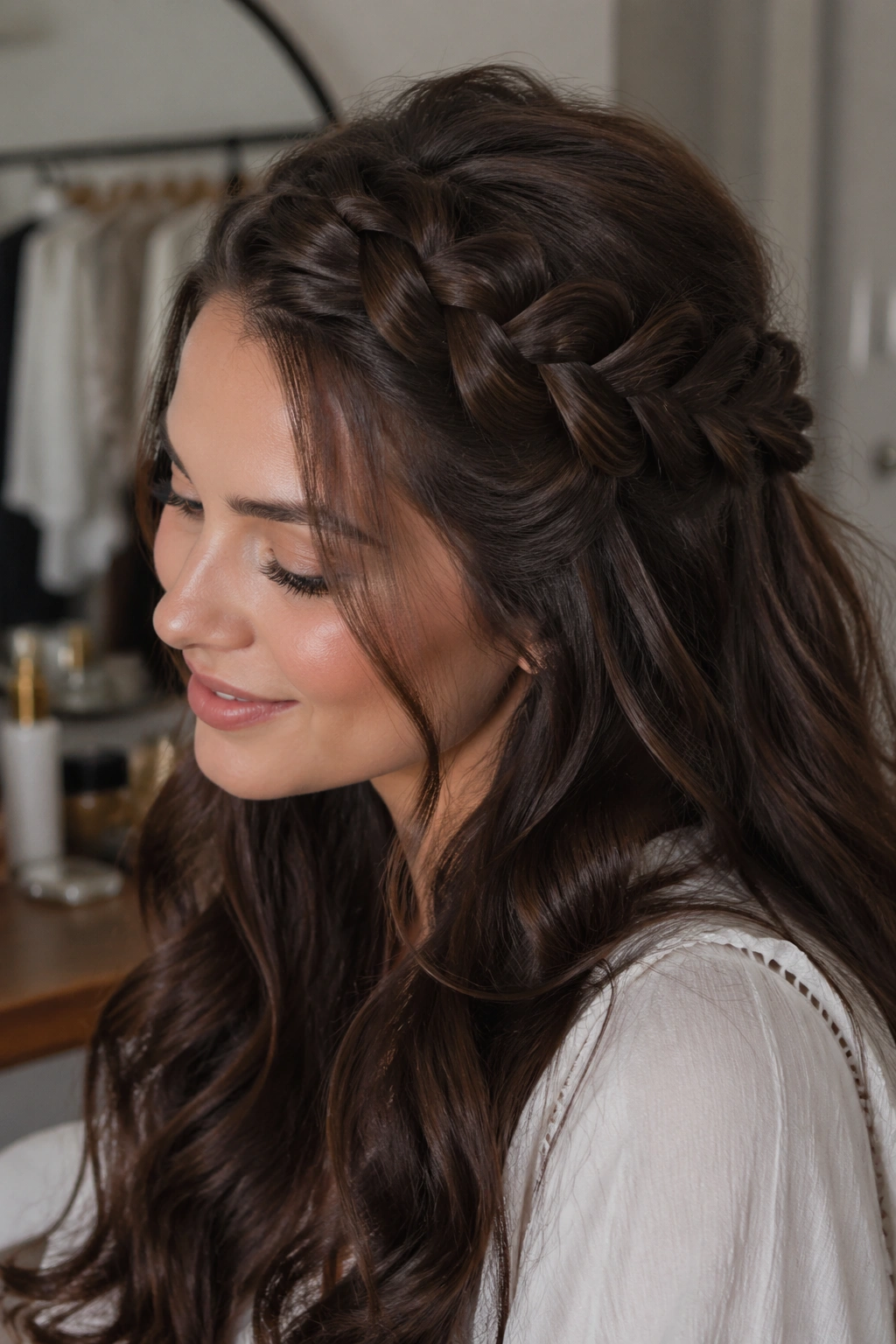
Thick hair wants room to breathe, and a heart-shaped face usually looks better when that volume is controlled instead of stuffed into one tight braid. A larger French braid can be gorgeous here because it uses the hair’s bulk to widen the silhouette across the crown.
But the volume has to stay lateral, not vertical. If the braid stacks upward, the forehead can feel even broader. Keep the top smooth enough to lie close to the scalp, then fan the braid out once it’s secured.
A little smoothing cream helps tame puffiness near the roots. After that, let the braid be big. Thick hair looks best when it looks intentional, not squeezed. That means strong braid sections, a broad shape, and enough looseness that the face still feels open.
21. Braided Crown with Tucked Ends
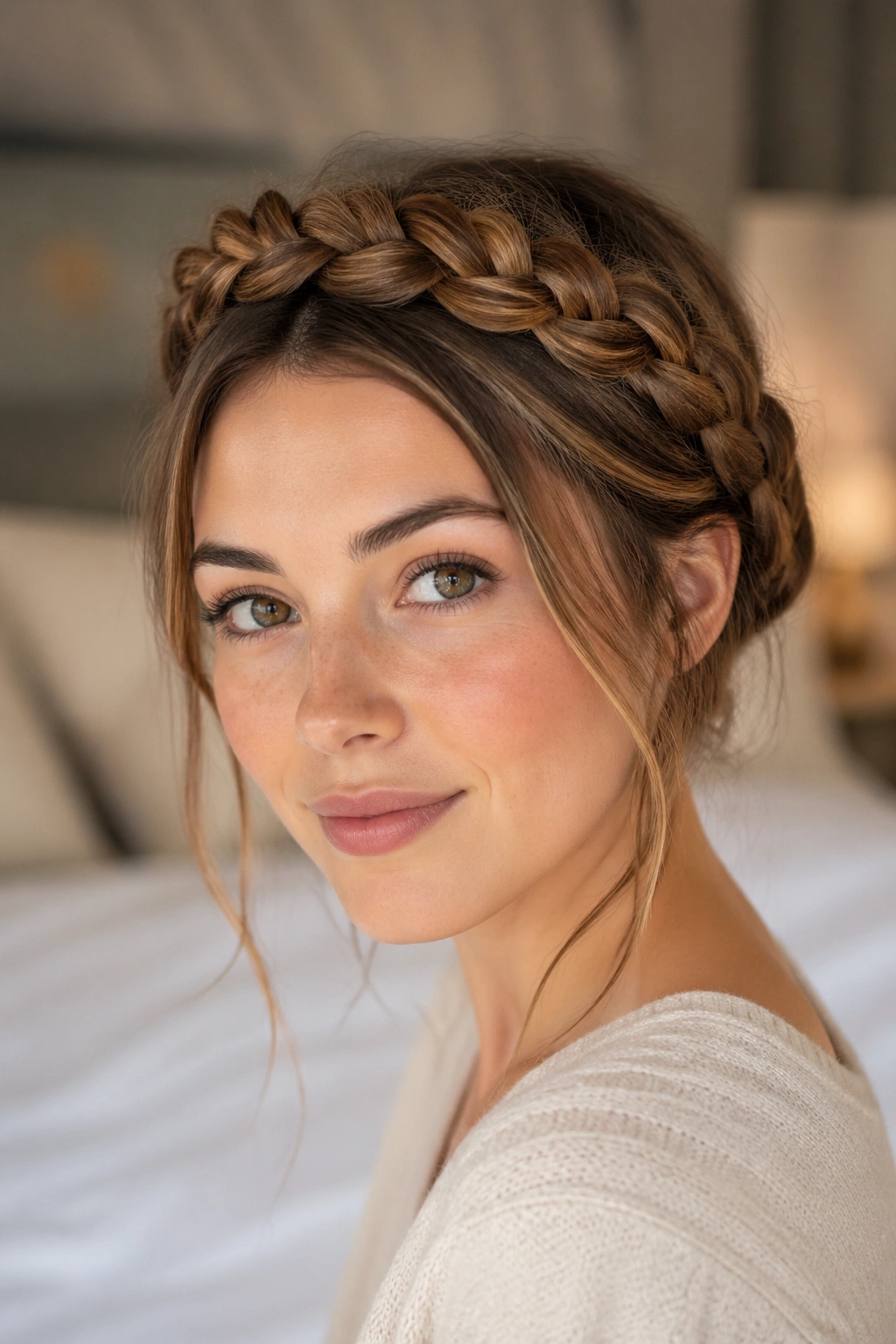
A tucked-end braid gives you a clean finish that can lean formal without getting stiff. The braid arcs across the top, then the ends disappear under a pin or behind a small section of hair.
Does that help a heart-shaped face? Yes, because the tucked finish keeps the eye moving around the face instead of stopping at a bulky knot. The line stays smooth, and smooth lines are kind to a forehead that already has strong shape.
I like this one for dinner, events, or any place where you want the braid to look finished from every angle. Leave a few strands around the temples if you want it softer. The tucked end does the work; the loose pieces are just there to keep it from feeling too neat.
22. Ribbon-Woven Half-Up French Braid
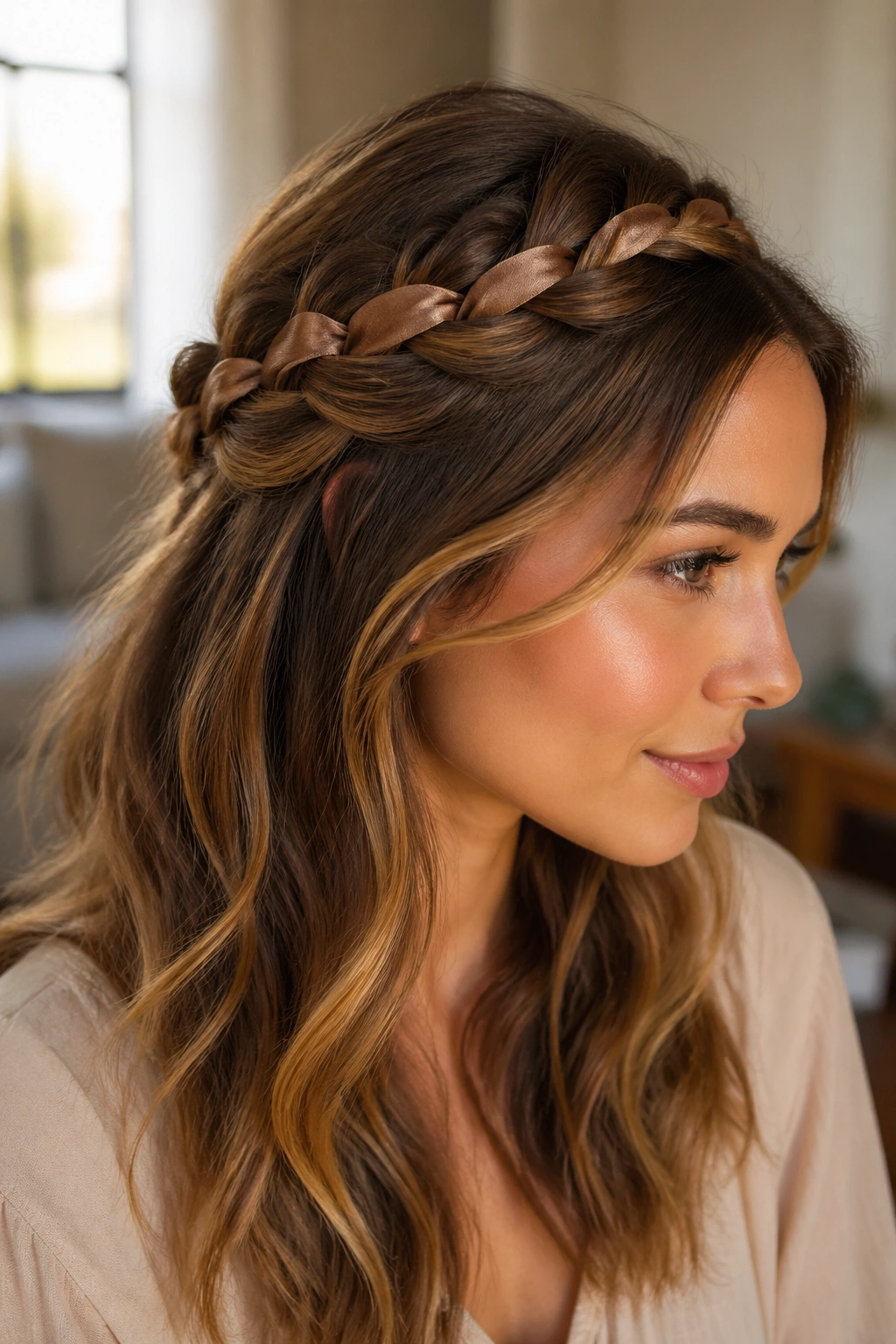
A ribbon changes the braid more than people expect. Once it weaves through the sections, the braid becomes wider, flatter, and a little more obvious in the best way. That helps balance a heart-shaped face because the ribbon draws the eye across the head instead of up and down.
What the Ribbon Does to the Shape
A ribbon creates a soft horizontal line in the braid. That line helps widen the upper frame around the face, which takes some of the focus off a pointed chin.
- Pick a ribbon about 1/4 to 1/2 inch wide.
- Choose satin for shine or matte for a quieter finish.
- Keep the color close to your hair if you want the weave to blend in.
The style is sweet without being childish, which is a harder line to walk than it sounds. A simple ribbon is enough.
23. Pearl-Pinned Bridal Half-Up Braid
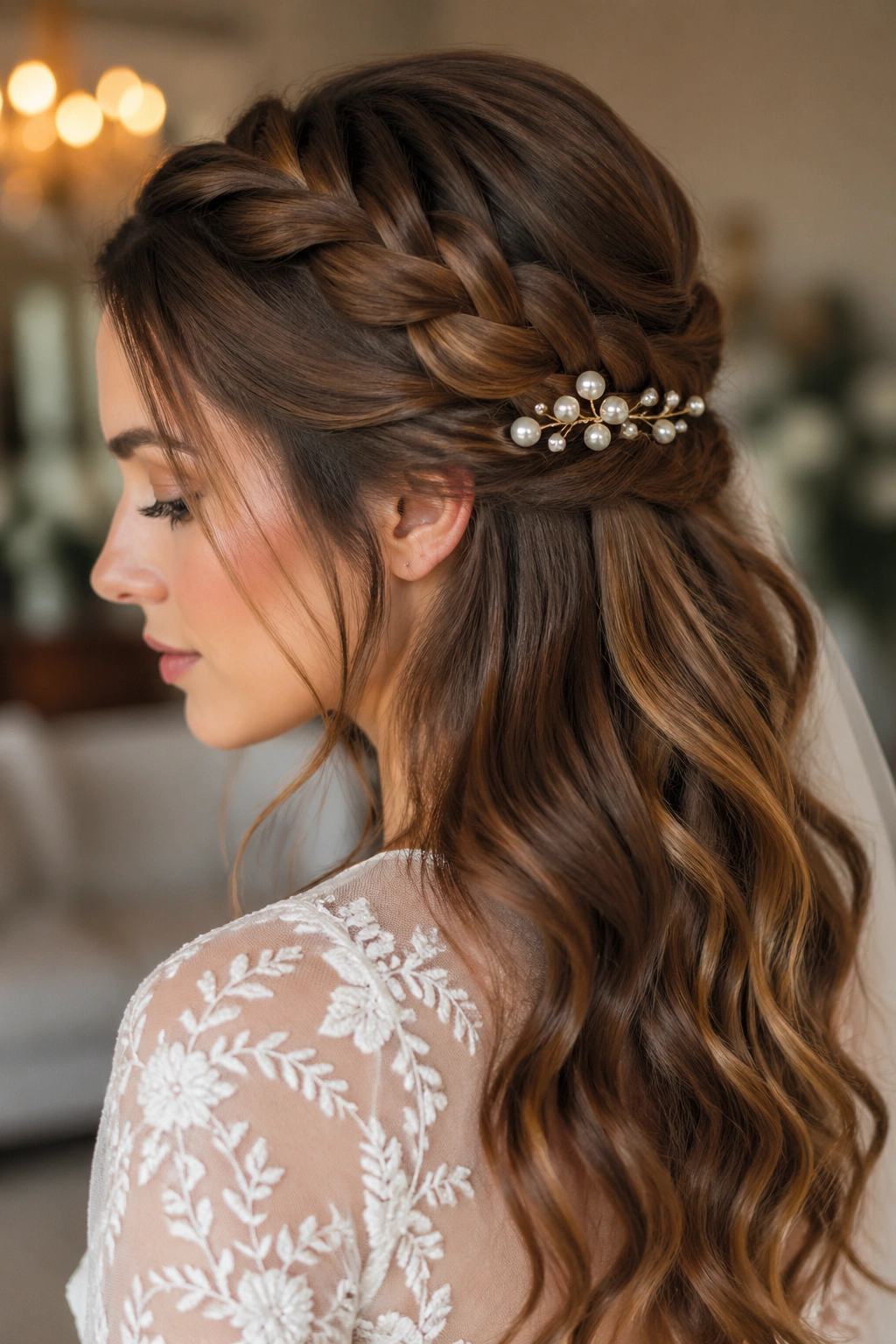
Pearls change the mood fast. A half-up French braid with pearl pins feels bridal, but it can also feel polished enough for a dressed-up evening if you keep the placement small and scattered.
The pins should sit near the braid, not all over the top of the head. That placement matters on a heart-shaped face because you want the sparkle to frame the face, not crowd the forehead. A few pins near the braid junction and one or two near the sides usually do the job.
I’d keep the braid soft and rounded so the pearls don’t fight with stiff lines. If the braid is tight, the pins start looking decorative in a forced way. Loose braid, neat pins. That’s the better pairing.
24. Athletic Half-Up French Braid
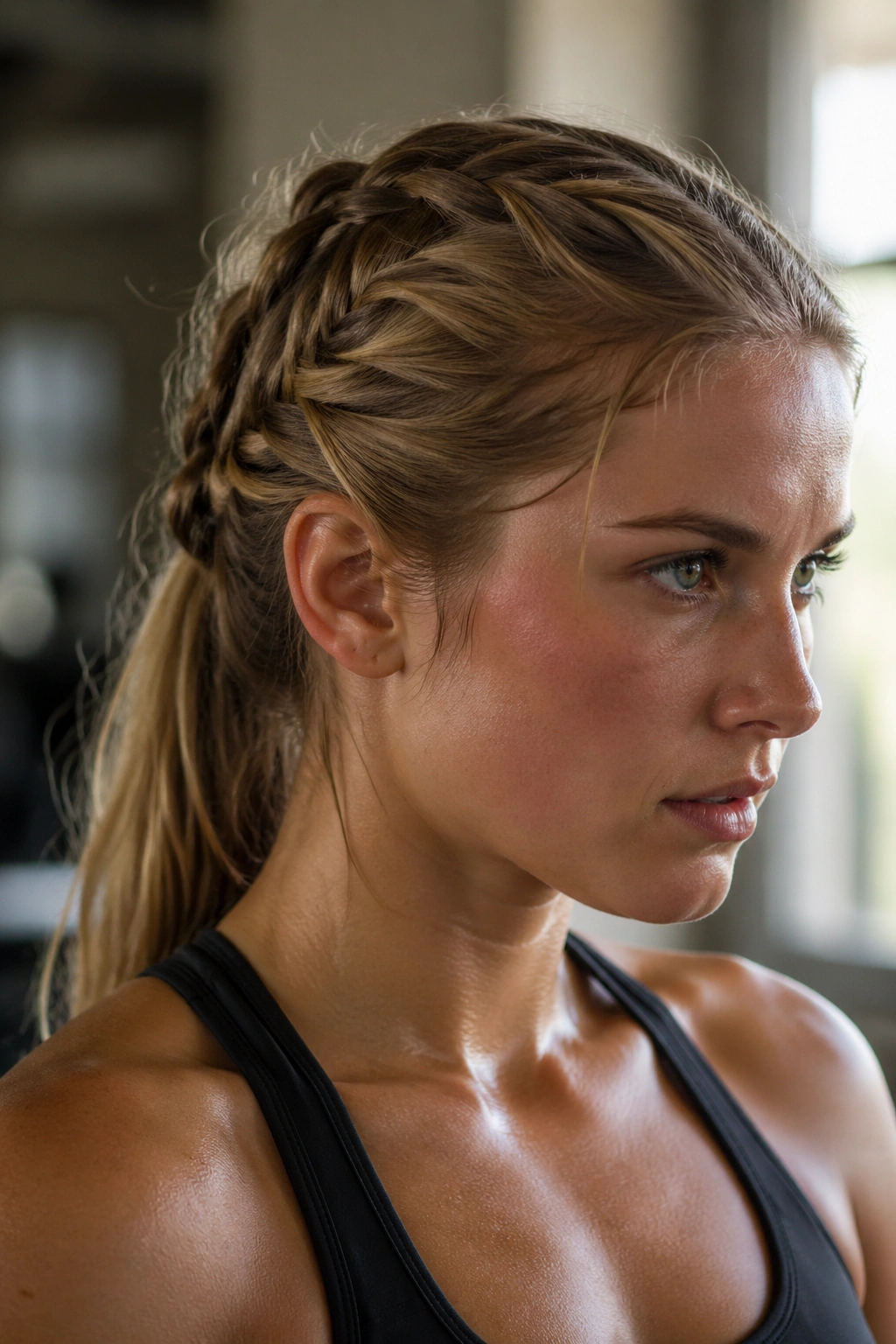
This one is plain in the best way. If you need hair out of your eyes, a French braid in the top half of the hair keeps the face clear while still giving the head some shape.
For a heart-shaped face, the athletic version works because it anchors the braid low enough to avoid extra height. It’s not trying to be romantic. It’s trying to stay put. And that can still look good.
A strong elastic at the back and a few crossed bobby pins are usually enough. If you’re heading into movement, sweat, wind, or a long day, this is the style that won’t make you fight your hair every hour. No fluff. Just useful.
25. Textured Beach-Wave Braid
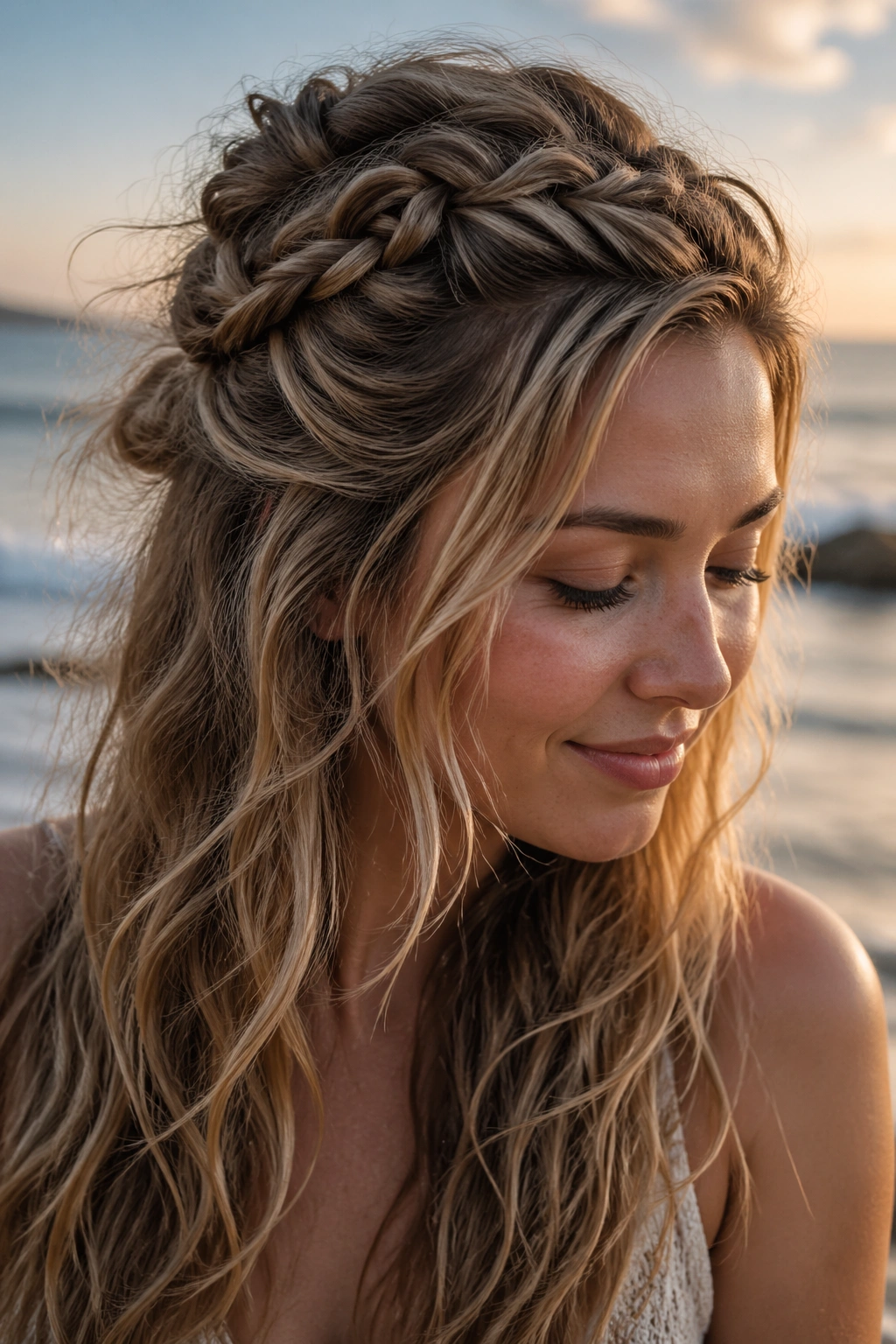
This style looks best when it doesn’t look finished to death. A textured half-up French braid with beach waves should feel soft at the top, piecey at the sides, and a little undone through the lengths.
The texture helps a heart-shaped face by breaking up the clean outline around the forehead and cheekbones. A little mess around the braid keeps the face from looking boxed in. That’s the real win here.
Use salt spray or a light mousse at the roots, then bend the lengths with your hands instead of chasing perfect curls. The hair should feel touchable, not shellacked. When the ends move and the front stays soft, the whole style lands in a good place—casual, but not sloppy.
26. Half-Up French Braid with a Twist Knot
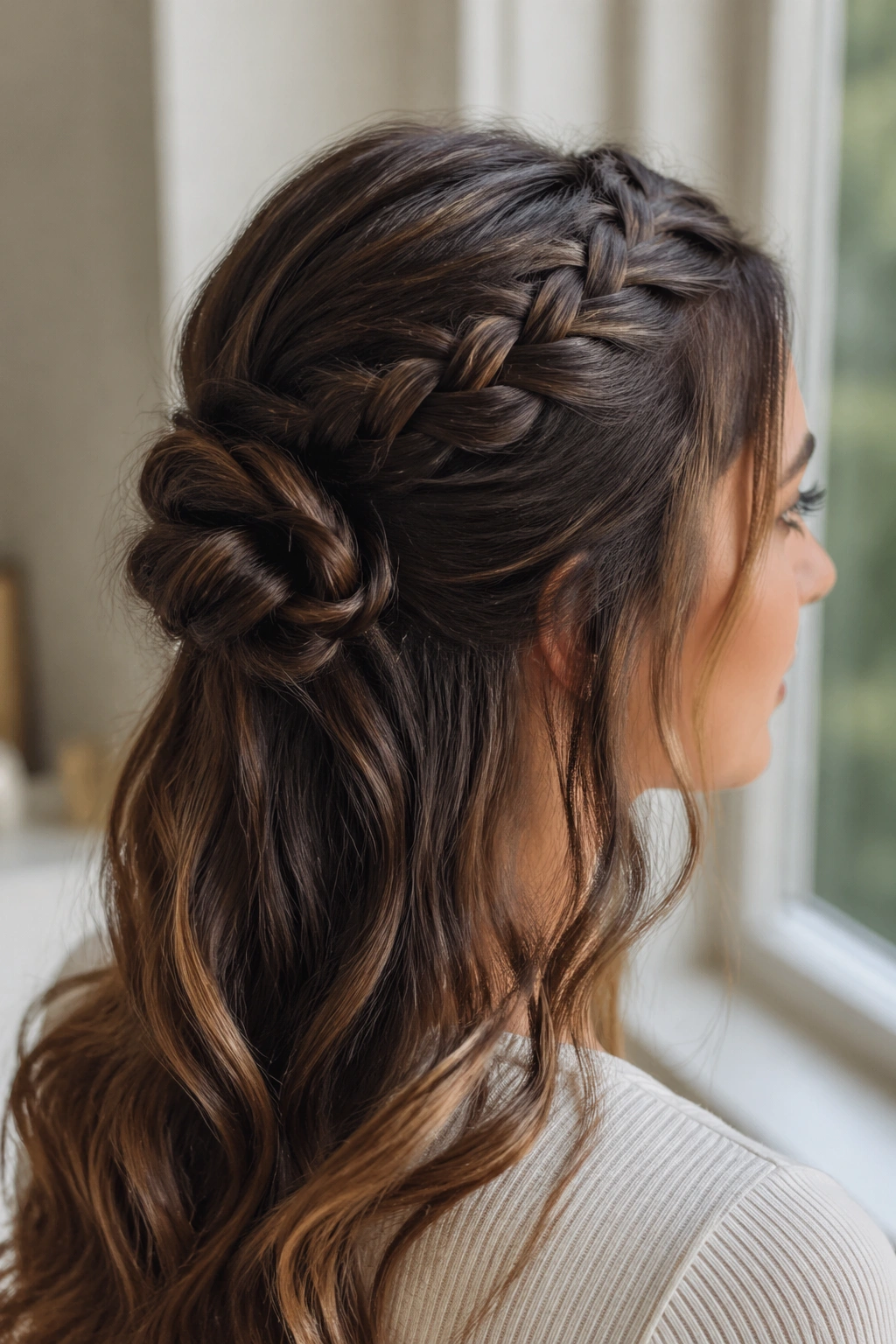
A twist knot gives the braid a softer ending than a tight bun, and that softness matters. The braid feeds into the knot, then the knot sits at the back like a small gathered fold rather than a heavy lump.
Where the Knot Sits
Place it just below the crown, not high on the head. If it sits too high, the forehead gets more attention than it needs.
How Loose It Should Be
Loose enough that you can see a little shape in the knot, but not so loose that it falls apart by lunch. There’s a middle ground.
This style is good when you want a half-up braid with a little more finish than a simple tie. The knot adds a rounded shape at the back, which helps balance a sharper chin. Small choice. Big difference.
27. French Braid That Fades into a Rope Twist
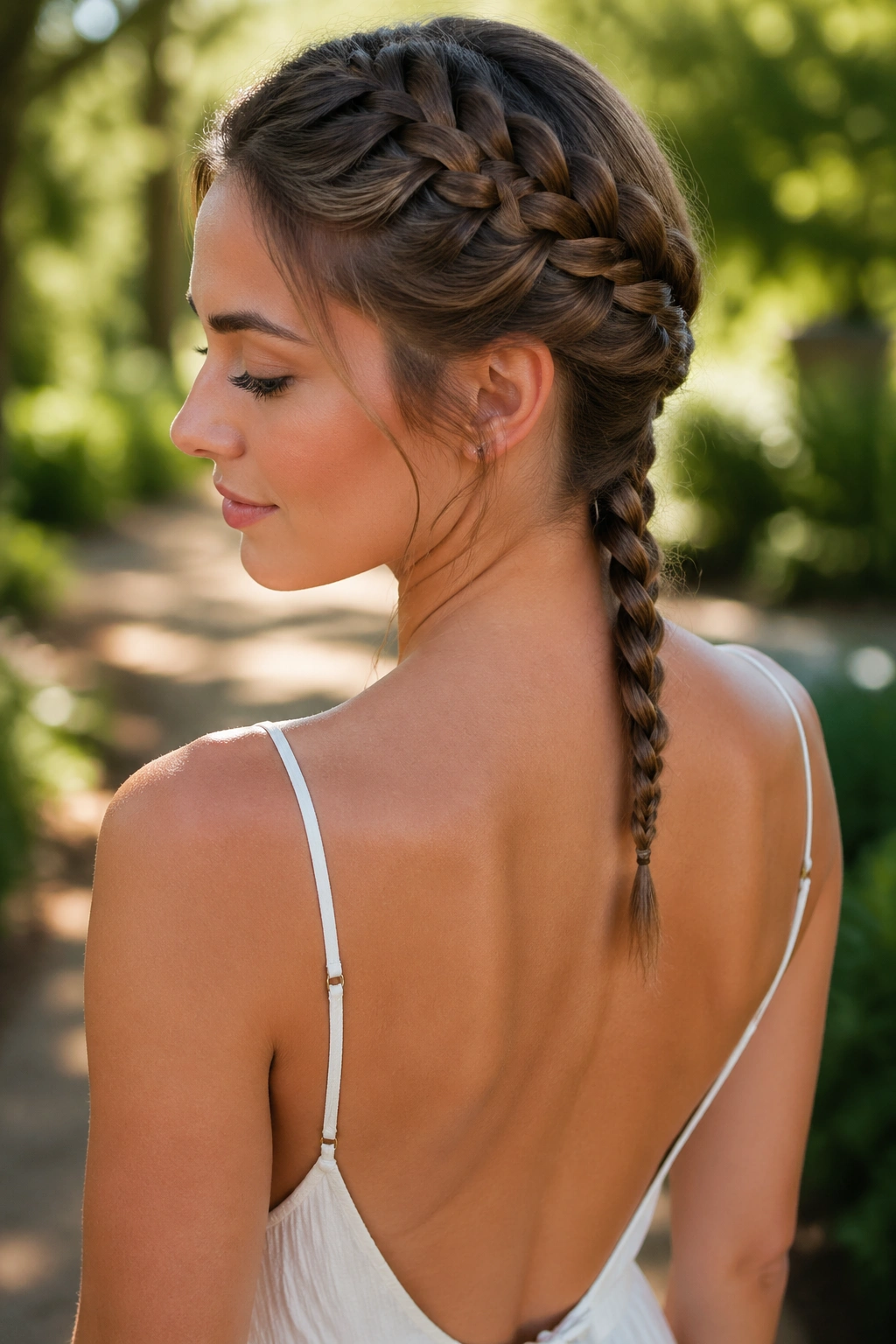
A rope twist gives the tail a smoother, sleeker finish than a braid all the way down. That makes this style useful when you want the top to do the shaping and the length to stay calm.
The braid at the crown provides the structure. The rope twist then narrows the line as it moves back, which keeps the eye from hanging on the widest part of the head. On a heart-shaped face, that cleaner drop can feel easier than a full, bulky braid.
I especially like this on straight or slightly wavy hair. Curly hair can do it too, but the rope twist needs enough polish to stay readable. A little shine cream through the tail helps. Small top, smooth finish. That’s the mood.
28. Braided Half-Up for Curly Hair
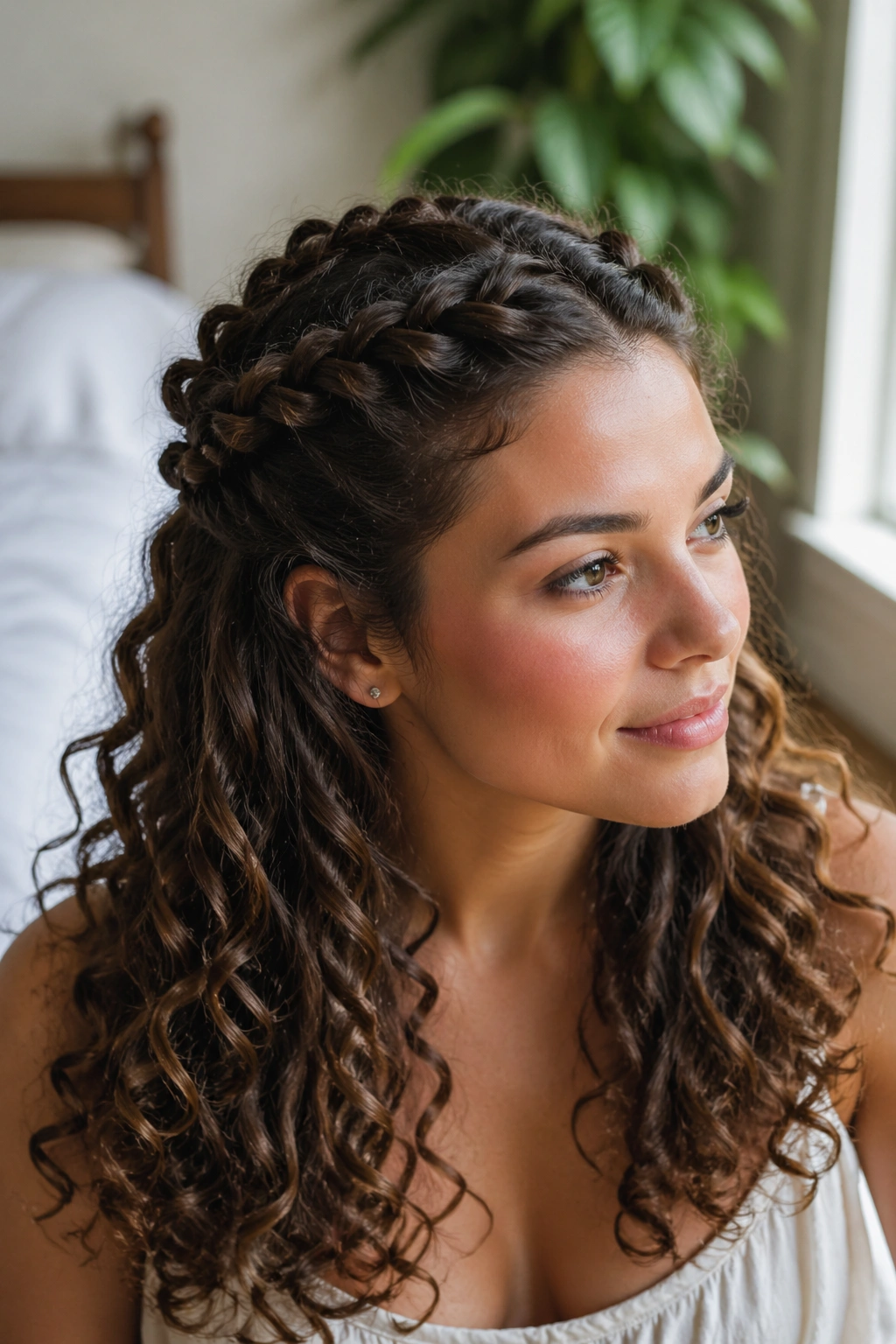
Can curly hair handle a French braid without losing its shape? Absolutely. In fact, the texture gives the style more life, as long as you braid the top gently and leave the lower curls alone.
What to Do Before You Braid
Stretch the roots just a little if they’re very tight, and use a curl cream that keeps the hair soft. You do not want the top to frizz before you even finish the braid.
- Braid the crown loosely so the curls keep volume.
- Leave the lower half untouched so the jawline feels fuller.
- Pin the braid securely with two bobby pins crossed in an X.
The curls below the braid are doing important work here. They fill out the lower face area and make the chin feel less narrow. That balance is what makes this style so good on a heart-shaped face.
29. Half-Up Braid with Side Tendrils
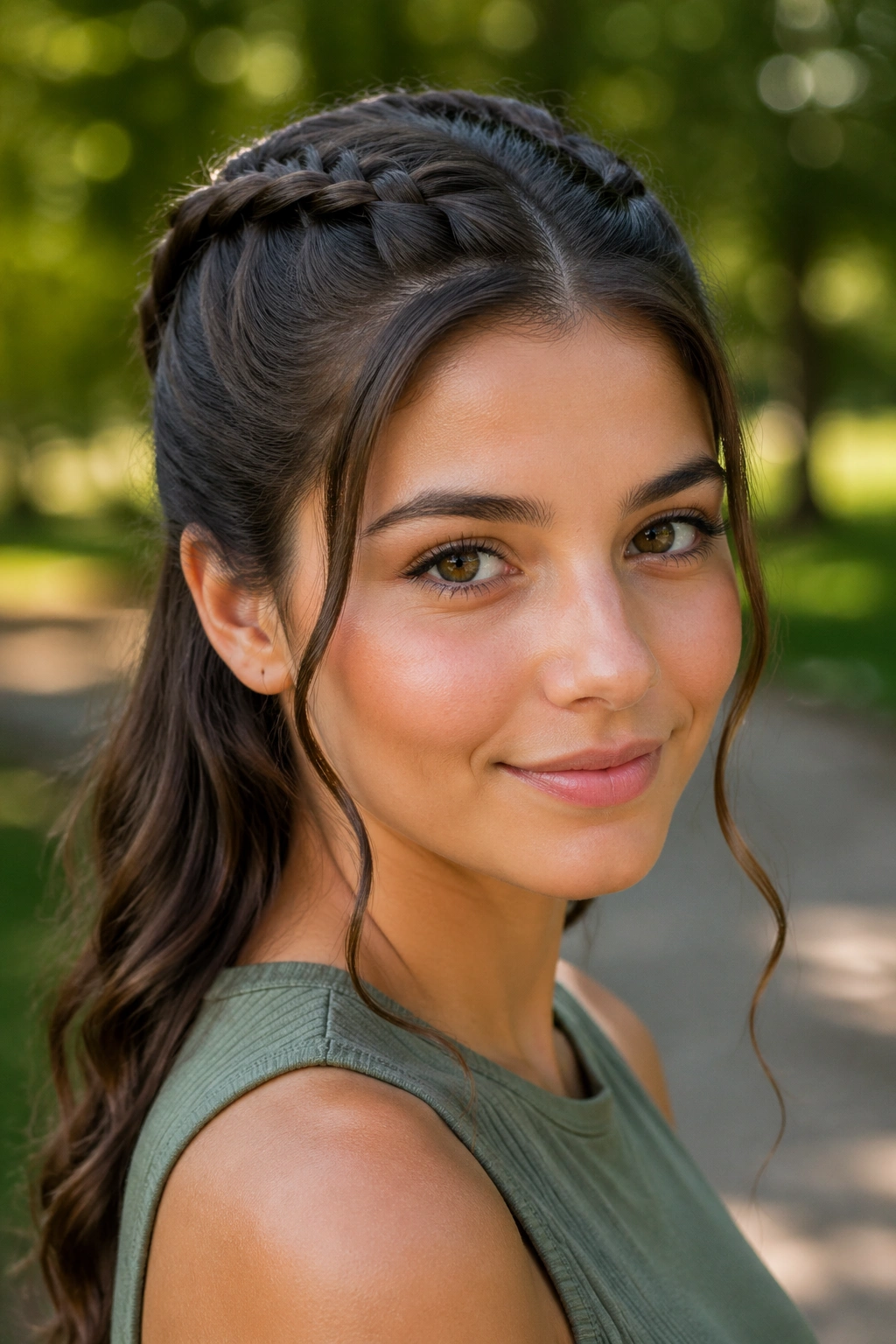
Side tendrils are a small thing, but they can change the whole mood. A half-up French braid with two slim tendrils near the cheeks softens the transition from forehead to jaw, which is exactly where heart-shaped faces can feel a little pointed.
Keep the tendrils narrow, not chunky. Around 1/4 to 1/2 inch on each side is enough. If they’re too thick, they start competing with the braid instead of supporting it.
I like this style when the braid itself is neat and the rest of the hair stays a little messy. That contrast keeps the face from looking overdesigned. One face-framing piece can be enough; two is often better. Just do not place them too high. The lower they sit, the softer the shape looks.
30. Asymmetrical Crown Sweep
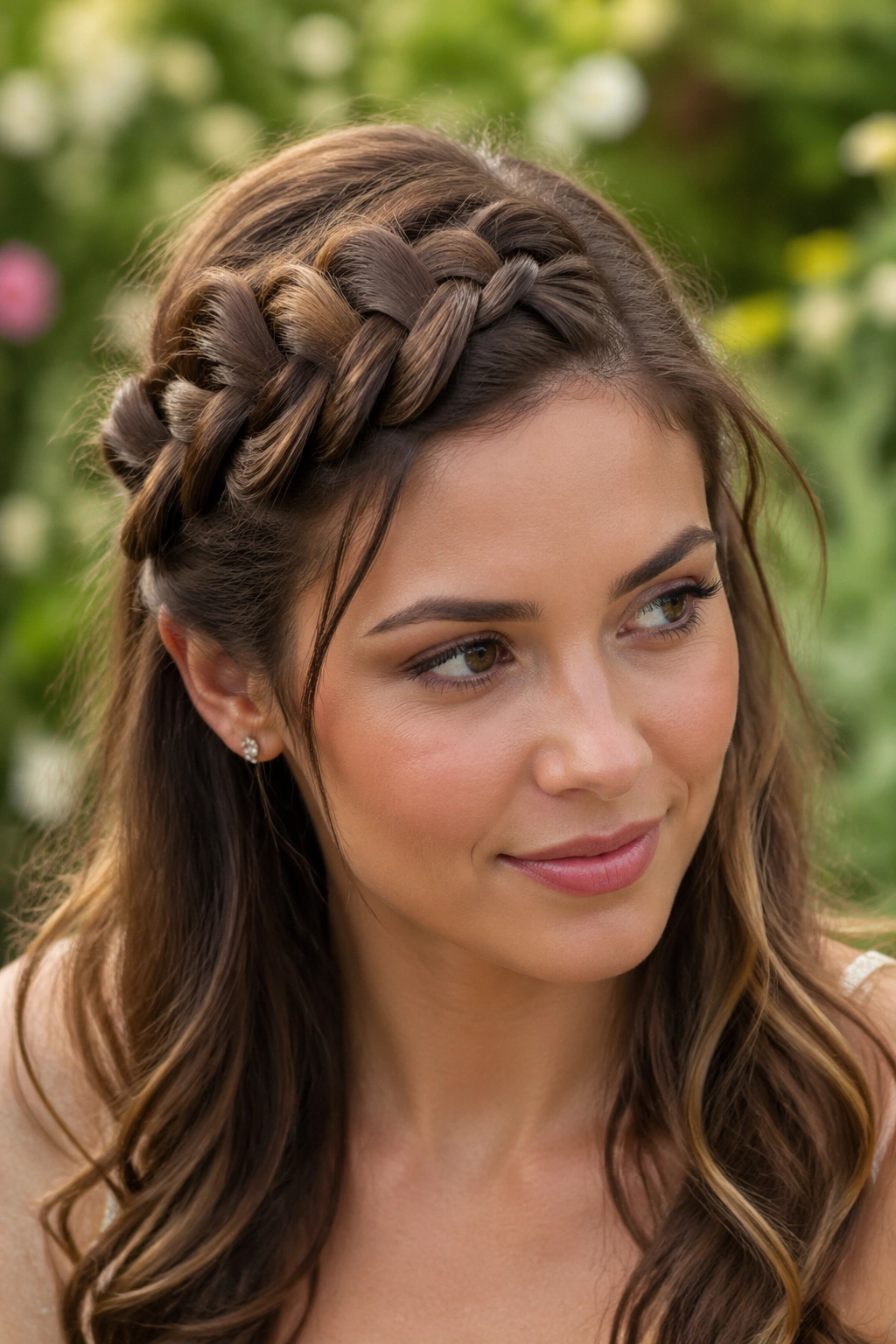
This is one of my favorite fixes for a forehead that feels too dominant. Start the braid slightly off-center and sweep it across the crown, letting one side carry more visual weight than the other.
The asymmetry pulls the eye away from the widest point at the top of the face. It also keeps the braid from sitting like a perfect arch, which can make a heart-shaped face look extra narrow at the chin. A softer diagonal solves that.
A tiny root lift on the smaller side of the part helps the sweep feel intentional. Not big volume. Just enough to stop the braid from collapsing flat. The whole style feels elegant in a quiet way, but not boring. There’s movement in it, and that movement is what flatters.
31. Half-Up Braid with a Claw-Clip Finish
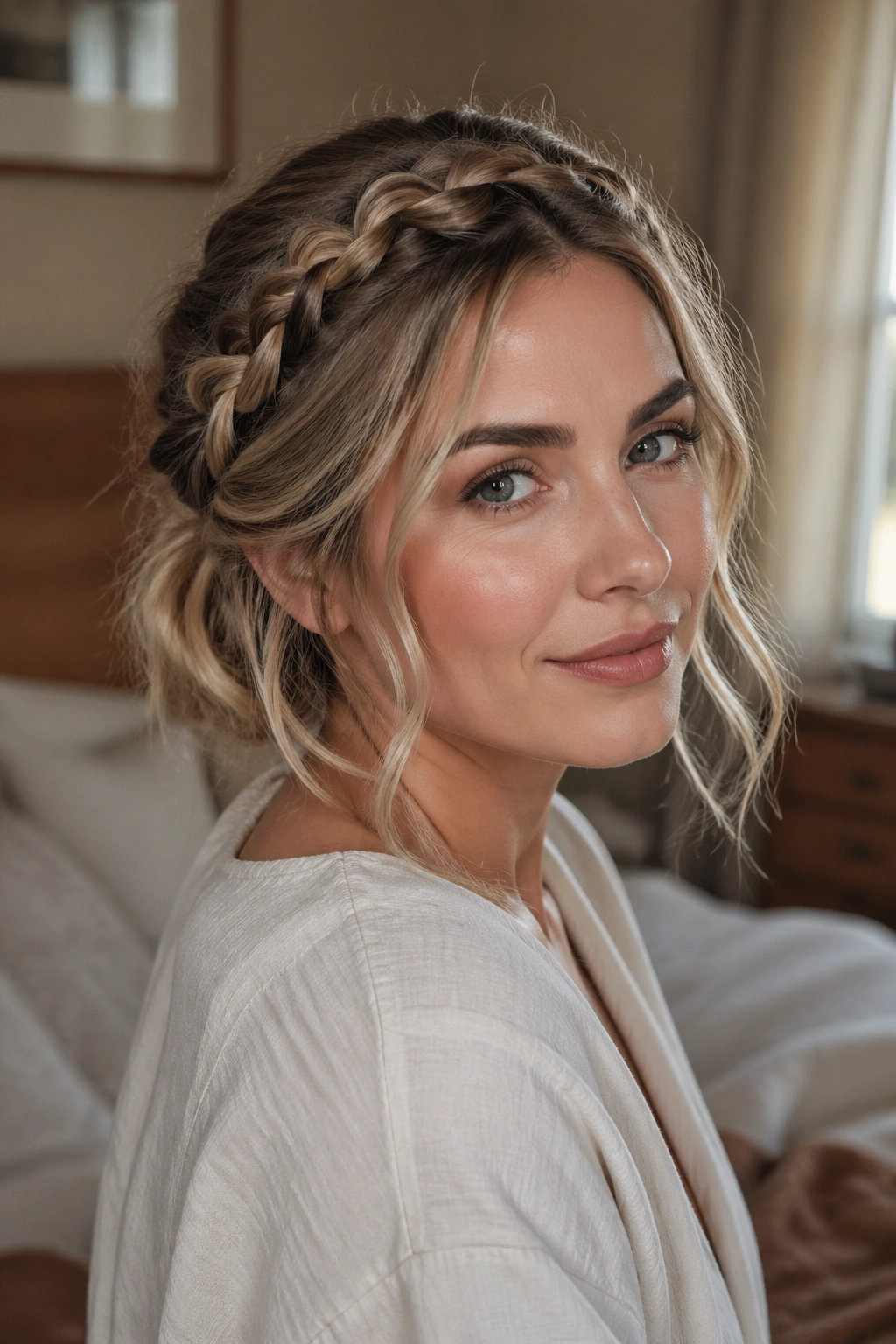
A claw clip can make a braid look easy without making it look lazy. Start a French braid at the sides, feed it toward the back, then secure the gathered section with a medium clip that sits just below the crown.
The Clip Placement That Works
The clip should grab the braid low enough to keep the head shape open. High clips can turn the style into a mini bun on top, and that is not the same thing.
Why It Flatters a Heart Shape
The clip holds the braid in place while the loose lower hair keeps the jaw area fuller. That combination balances the face in a way that feels casual and practical.
- Choose a clip with flat teeth, not sharp ones.
- Leave the ends of the braid visible or slightly hidden, depending on the look you want.
- Keep a little softness around the temples.
32. Braided Half-Up for Shorter Layers
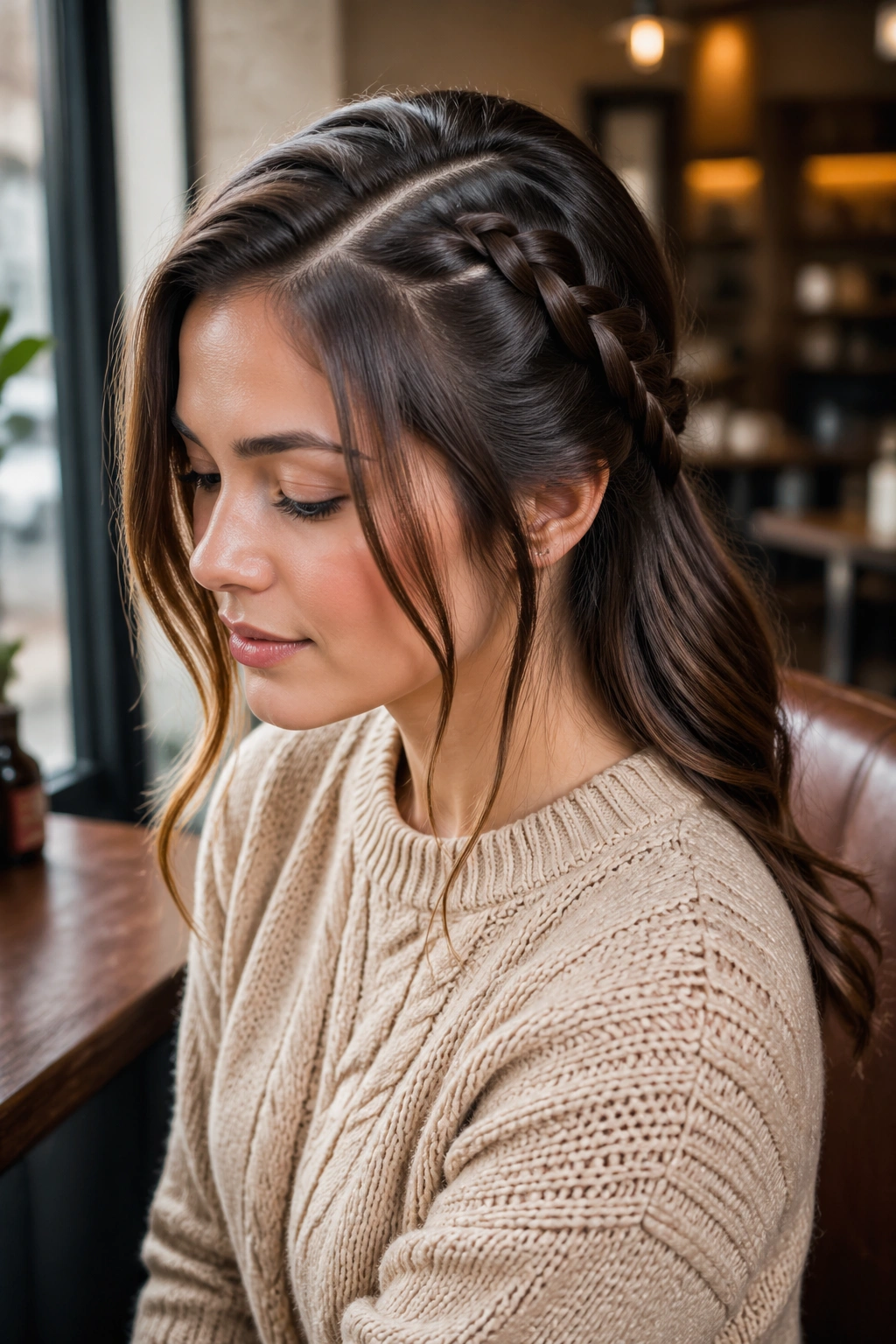
Shorter layers can be tricky, because they slide out of braids faster than anyone wants to admit. But a smaller half-up French braid works well if you keep the sections tight enough to hold and use pins where the layers want to escape.
The face-shaping part matters even more on shorter hair. A heart-shaped face can look extra open at the forehead if the braid starts too high, so begin closer to the temples and let the layers fall softly at the sides. That soft edge helps.
A dab of texturizing paste near the roots gives the shorter pieces some grip. Then tuck the shortest bits under the braid instead of trying to force them into the plait. That usually ends badly. Better to pin a few pieces cleanly and keep the overall shape calm.
33. Soft Finish Half-Up French Braid
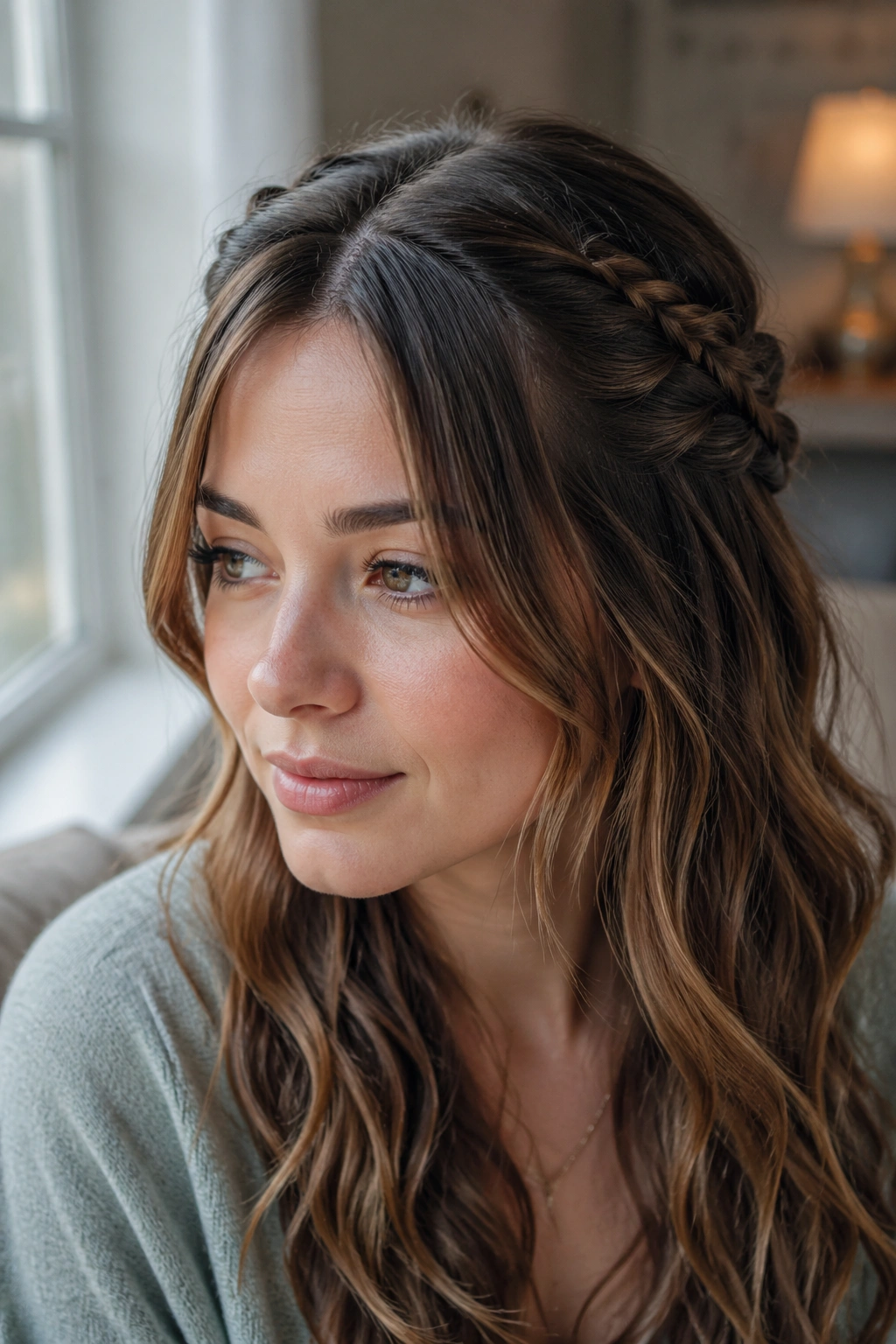
This is the version I end up circling back to when the face needs softness more than drama. A soft-finish half-up French braid starts low, keeps the crown relaxed, and lets the lower hair stay loose enough to balance the chin.
The best part is how forgiving it is. You can wear it with waves, straight lengths, curls, or second-day texture, and it still makes sense. The braid is there to guide the eye, not trap it. That’s why it works so well on heart-shaped faces: the forehead stays open, the sides stay gentle, and the lower half of the face does not get swallowed by the style.
If you remember only one thing from all 33 looks, make it this: softness near the temples and width lower down usually beats extra height on top. That little shift changes the whole read of the hairstyle.
