



A braid ponytail can look expensive in a hurry, or it can look like it fought you on the way out the door.
The difference lives at the hairline. Braids, ponytail placement, and laid edges work together; if the first inch is sloppy, the whole style reads tired even when the braid itself is neat. Get that front section right and the rest of the style almost behaves on its own.
The good stuff lives in the details: a clean part, the right amount of hold, and enough tension to keep the braid from slipping without making your scalp complain. Some of these braid ponytails are sleek and sculpted, some are softer and more wearable, and a few lean into drama in a way that still leaves the edges looking brushed and smooth.
One rule keeps showing up. Firm is fine. Pain is not. If your temples throb or your head feels pulled back after ten minutes, the style is too tight, full stop. The prettiest braid ponytails are the ones that still look fresh after the scarf comes off.
1. High Feed-In Braid Ponytail With Laid Baby Hairs
A high feed-in braid ponytail is the cleanest way to make the hairline look intentional. The braid starts small near the forehead, grows gradually, and pulls the eye upward instead of crowding the temples. That slow build matters. It keeps the front from looking bulky, and bulky front sections are what usually make laid edges seem like an afterthought.
Why the Base Matters
Feed-in braids are easier on the scalp because the added hair goes in little by little. That means the first half-inch around the edges can stay smooth instead of getting trapped under a thick knot. Ask for a neat center part or a few straight-back rows, then keep the front narrow enough that the ponytail reads sleek, not heavy.
- Works best with medium to long hair or extensions.
- A light foam at the roots helps the braid sit flatter.
- A silk scarf for 10 to 15 minutes can tame flyaways before you leave.
- Keep the baby hairs soft, not helmet-hard.
Best move: smooth the perimeter first, braid second. If the hairline is already cooperating, the ponytail looks finished before you even turn around.
2. Bubble Braid Ponytail With Soft Swoops
A bubble braid ponytail is the one I reach for when I want shape without the feel of a tightly wound rope. Each section is tied off, then puffed out a little, so the style has rhythm without looking stiff. That looseness helps the edges, too, because you do not have to tension the front as much to make the back feel full.
Use small clear elastics spaced about 2 to 3 inches apart, depending on length. After each tie, gently tug the sides of the bubble until it looks rounded instead of pinched. A little shine serum on the braid itself keeps the finish glossy, but don’t load the hairline with oil; that usually makes edge control slip.
This style works when you want a ponytail that feels playful but still polished. It is also a nice pick if your hair gets heavy fast, because the bubbles break up the weight.
One-sentence verdict: less pulling, more shape.
3. Low Side Braid Ponytail With A Wrapped Base
If you like a style that sits near one shoulder and stays put all day, this is the one. A low side braid ponytail keeps the tension away from the crown and temples, which usually makes the hairline look calmer from the start. It also has a little old-school glamour to it, especially when the base is wrapped with a thin strand of hair or a braid cuff.
What Makes It Look Smooth
The side placement changes everything. Instead of dragging the hair straight back, you sweep it diagonally, so the front section can lie flatter and the edges do not need to fight a tall ponytail base. That’s a quiet win. The style looks deliberate without being loud.
A few things help it hold up:
- Part the hair on the side where the ponytail will sit.
- Smooth the front with a boar bristle brush before tying it off.
- Wrap the elastic with a small piece of hair or a braid for a cleaner finish.
- Keep the braid thick enough that it doesn’t feel fragile.
It’s a strong choice for date night, but it works just as well with a sweater and hoop earrings.
4. Jumbo Cornrow Ponytail That Sits Flat
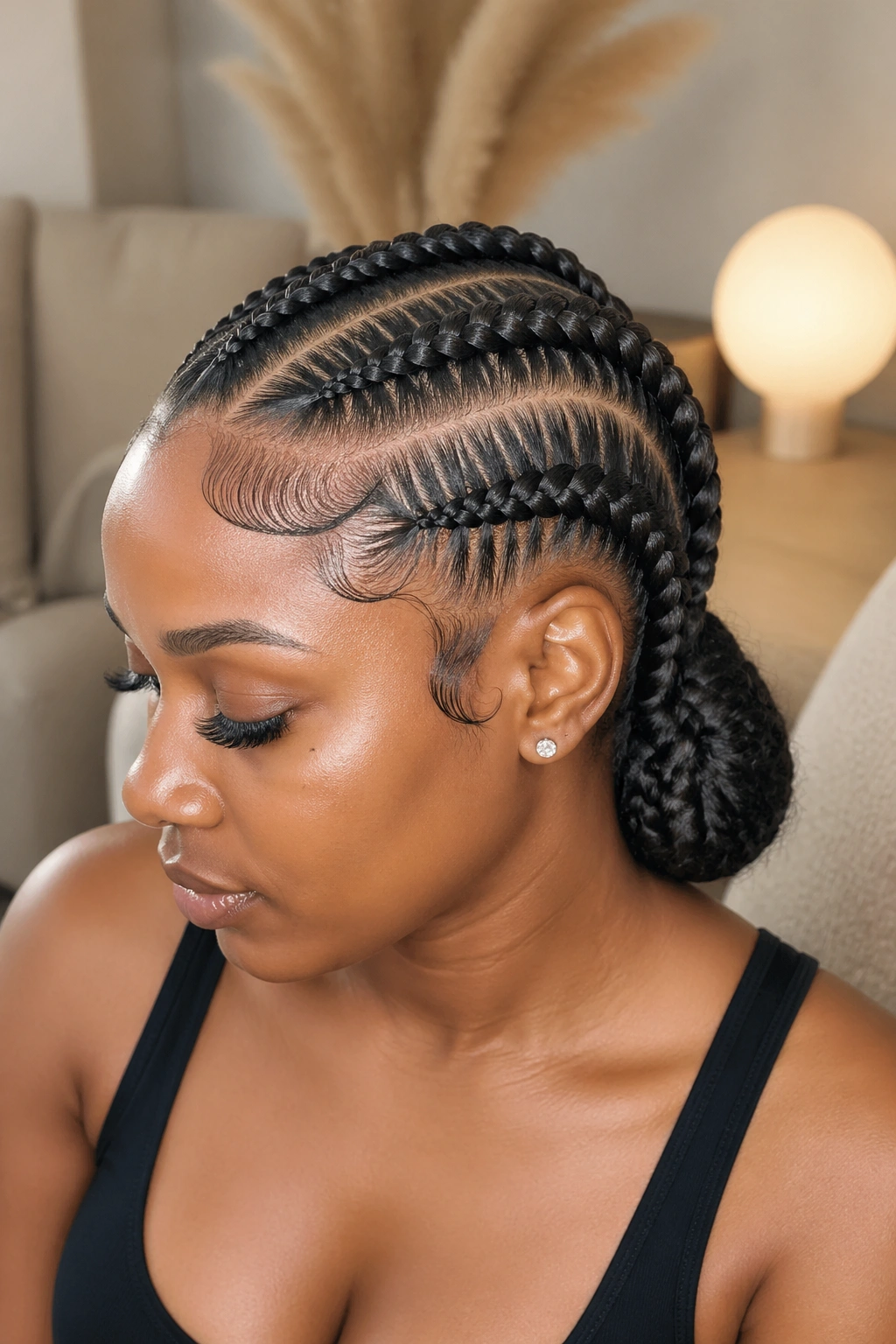
Jumbo cornrows are blunt in the best way. They move fast, they sit close to the scalp, and they leave less loose hair near the hairline than smaller, fussy braids do. That means the edges usually stay calmer, because the front isn’t being packed with tiny sections that tug from every direction.
This style is also practical. If you’ve ever sat in a chair for too long while someone built a tiny braid pattern, you know the appeal of bigger rows. Fewer parts means less handling, and less handling usually means less frizz around the perimeter by the end of the day.
A medium-hold gel on the part lines gives the rows that crisp, glossy look. Don’t overdo it. Too much product turns the front into a wet mess, and that’s a headache to fix later. Keep the ponytail low enough that the weight sits on the back of the head, not the fragile spots at the temples.
Simple style. Less drama.
5. Stitch Braid Ponytail With Clean Parting
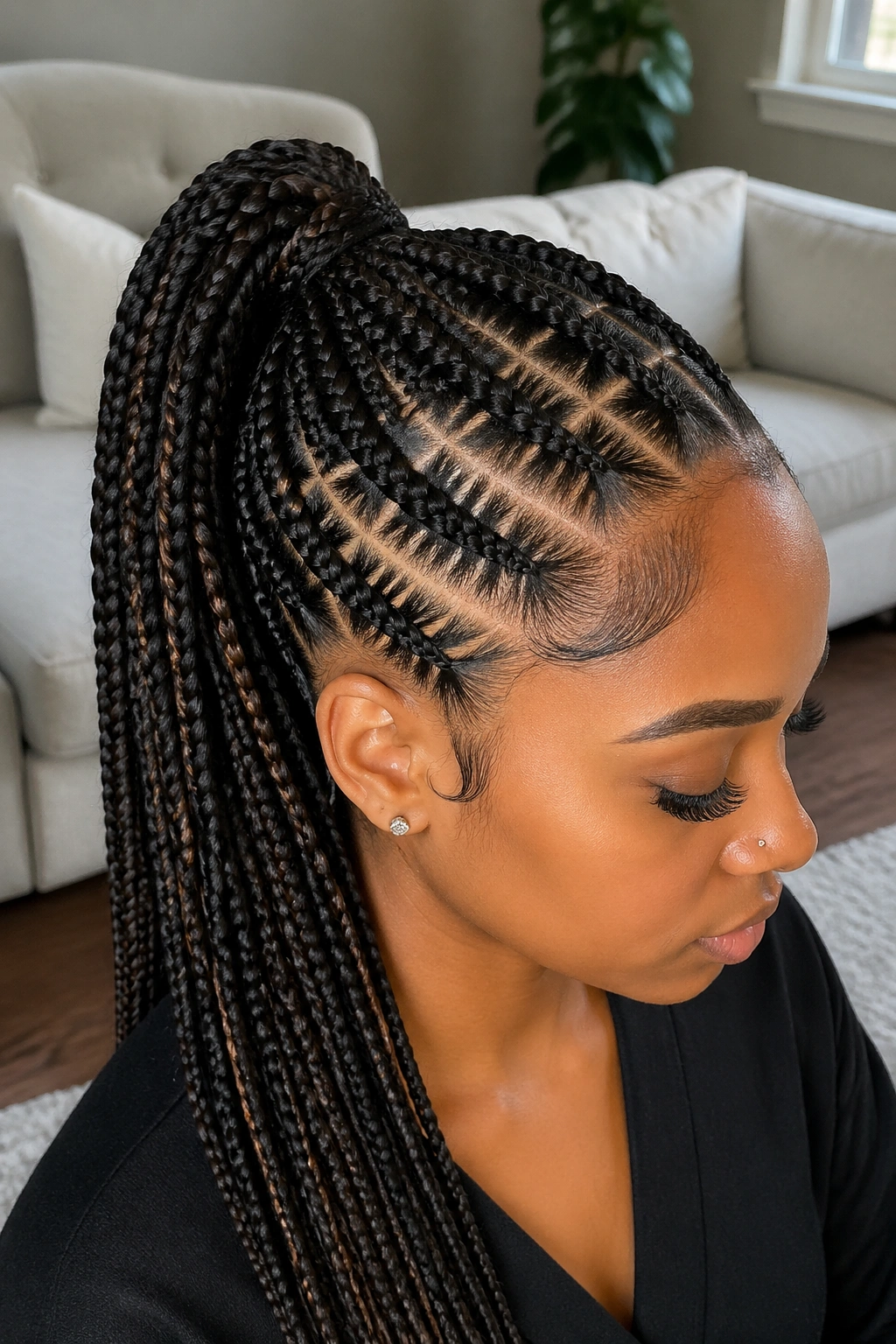
Why do stitch braids make a ponytail look sharper than a plain straight-back braid? Because the parting is the whole show. Those tiny, even lines create a grid that looks neat from a distance and even neater up close. The edge area benefits, too, since the braid starts with a clear map instead of random grabbing.
How to Keep the Front Soft
The trick is not to confuse crisp parting with tight braiding. You want the rows to be clean and the braid itself to sit snug, but the first inch around the hairline should still feel comfortable when you move your eyebrows or blink hard. If the front aches, the braid is too close to the skin.
Ask for the stitch lines to stay a little farther back from the temples, especially if your hairline is delicate. A soft mousse before wrapping the scarf can help the front lay down without turning it crunchy. That little bit of softness matters.
This is one of those styles that looks expensive even with very little jewelry. The braid does the heavy lifting.
6. Fishtail Braid Ponytail For Long Length
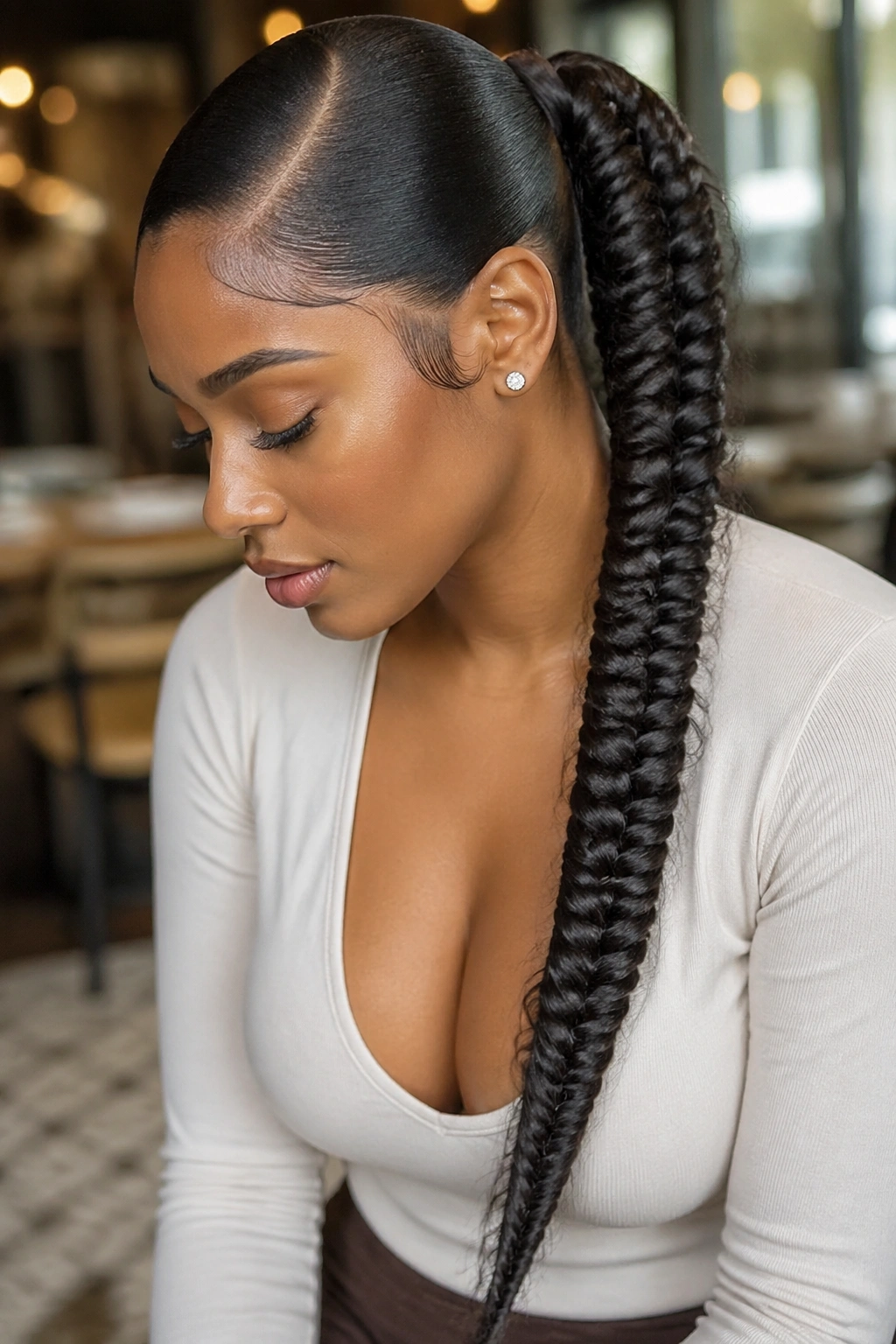
A fishtail braid ponytail has a woven look that feels fancier than the effort it takes. Tiny sections cross over each other in a pattern that looks intricate from the outside, but the front can stay relatively simple if the ponytail starts at a smooth, low-tension base. That’s a good trade.
The braid itself works best when the hair has a little grit, not a slippery conditioner finish. If your hair is too soft, the sections keep sliding apart. A light texturizing spray or a day-old blowout can help. Use a small bit of smoothing cream at the crown, then leave the rest alone.
I like this style on long hair because the braid shows length without needing extra width. It also pairs well with a sleek hairline and a side part, especially if you want the edges to stay brushed flat instead of sculpted into hard curves. The result is graceful, not fussy. And that’s the point.
7. Curved Cornrow Ponytail That Follows The Hairline
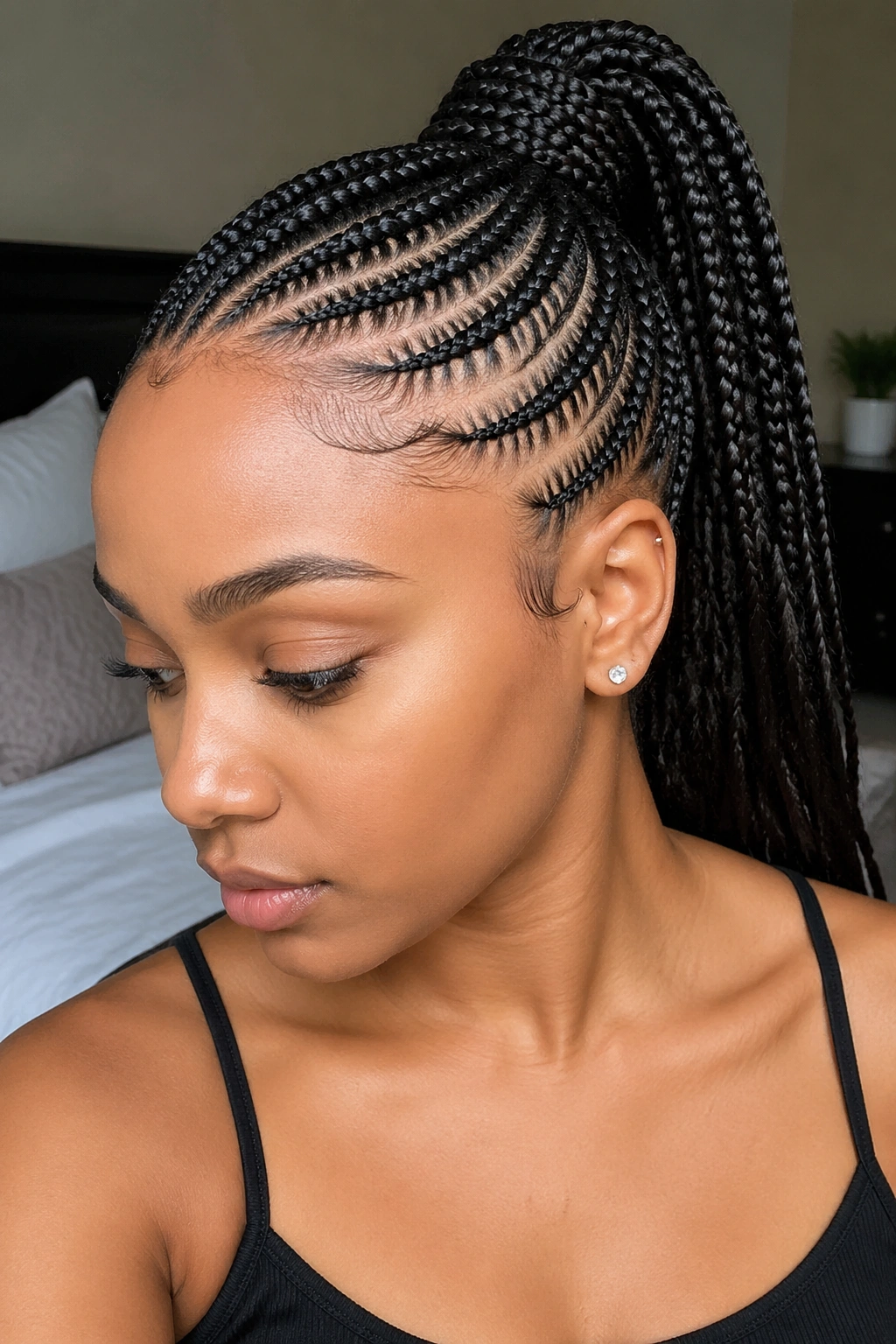
Curved cornrows are a nice fix for people who feel boxed in by straight-back styles. Instead of forcing the braid lines into rigid rows, the parts arc around the head and guide the eye toward the ponytail. That curved shape softens the front, which helps the hairline look smooth without demanding a hard, sharp edge.
Why The Curve Helps
A curve can protect fragile spots better than a straight pull. If your temples are thin or your hairline is uneven, braids that sweep around those areas put less pressure on the exact same point every time. That is not a tiny thing. Repeated tension in one spot is usually where breakage starts.
- Curved sections can start higher on one side and lower on the other.
- The ponytail can sit mid-height or low, depending on how dramatic you want it.
- A thin braid cuff or gold cord looks good here because the parting already has movement.
- Keep the baby hairs light so the curve stays visible.
This one looks especially good with statement earrings. The hairline stays neat, but the style does not feel frozen.
8. Double Dutch Braid Into One Ponytail
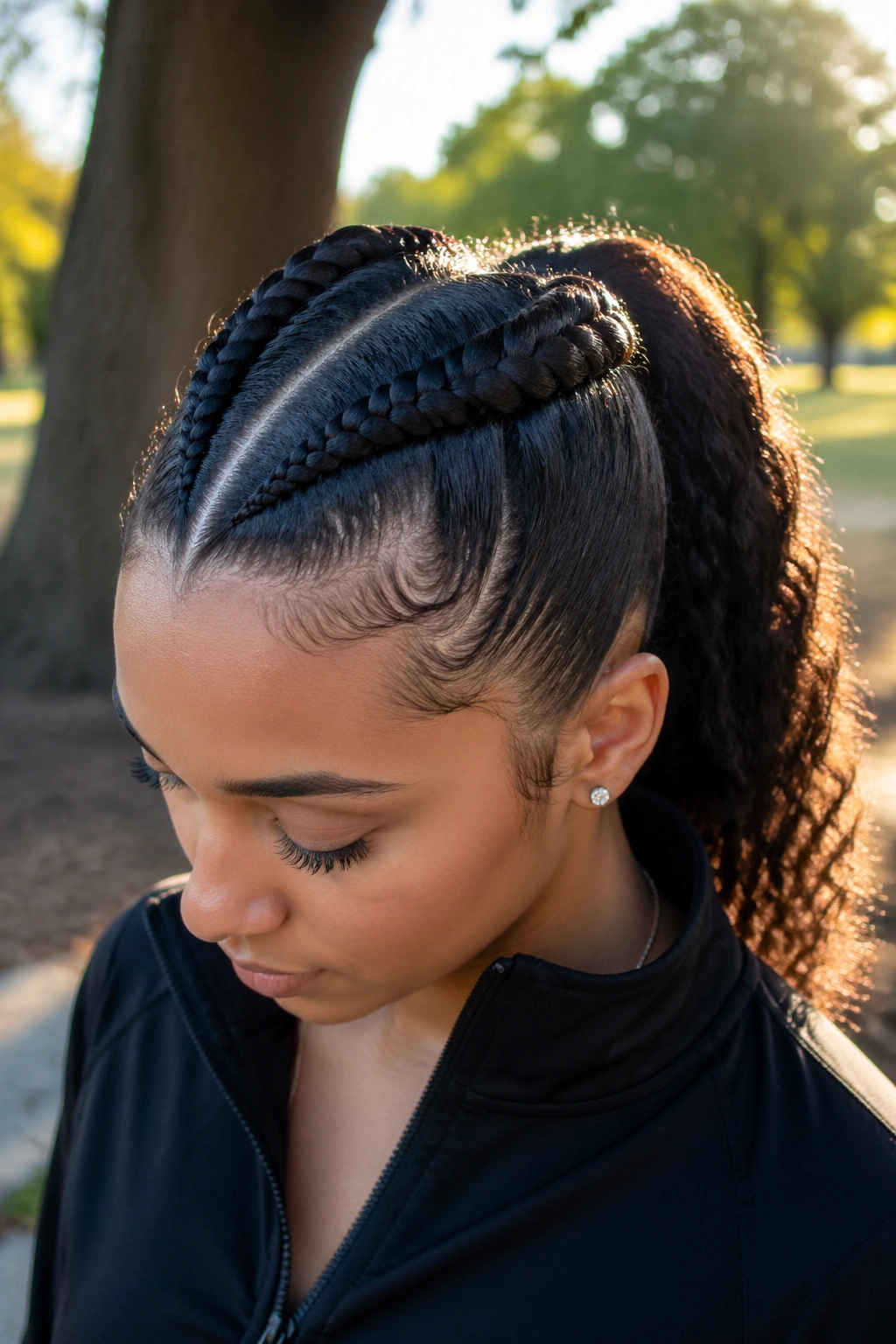
A double Dutch braid into one ponytail gives you height, structure, and a clean front all at once. The braids start near the front hairline, travel back on both sides, and meet in the middle before dropping into one ponytail. It feels athletic, but it can also look surprisingly polished if the front sections are smoothed properly.
The reason it lays the edges nicely is pretty simple: the hair is directed backward in two neat lanes instead of being yanked all at once. That reduces the chaos around the temples. Use a small amount of edge gel on the perimeter, then brush the hair back in short strokes so the surface stays flat.
This style is a smart pick for long days. It doesn’t need a ton of fuss once it’s in place, and it still looks like you made an effort. If you want more softness, leave a few wisps near the front. If you want a sharper finish, tuck everything in and wrap the base with a strand of hair.
9. Fulani-Inspired Ponytail With Braided Side Panels
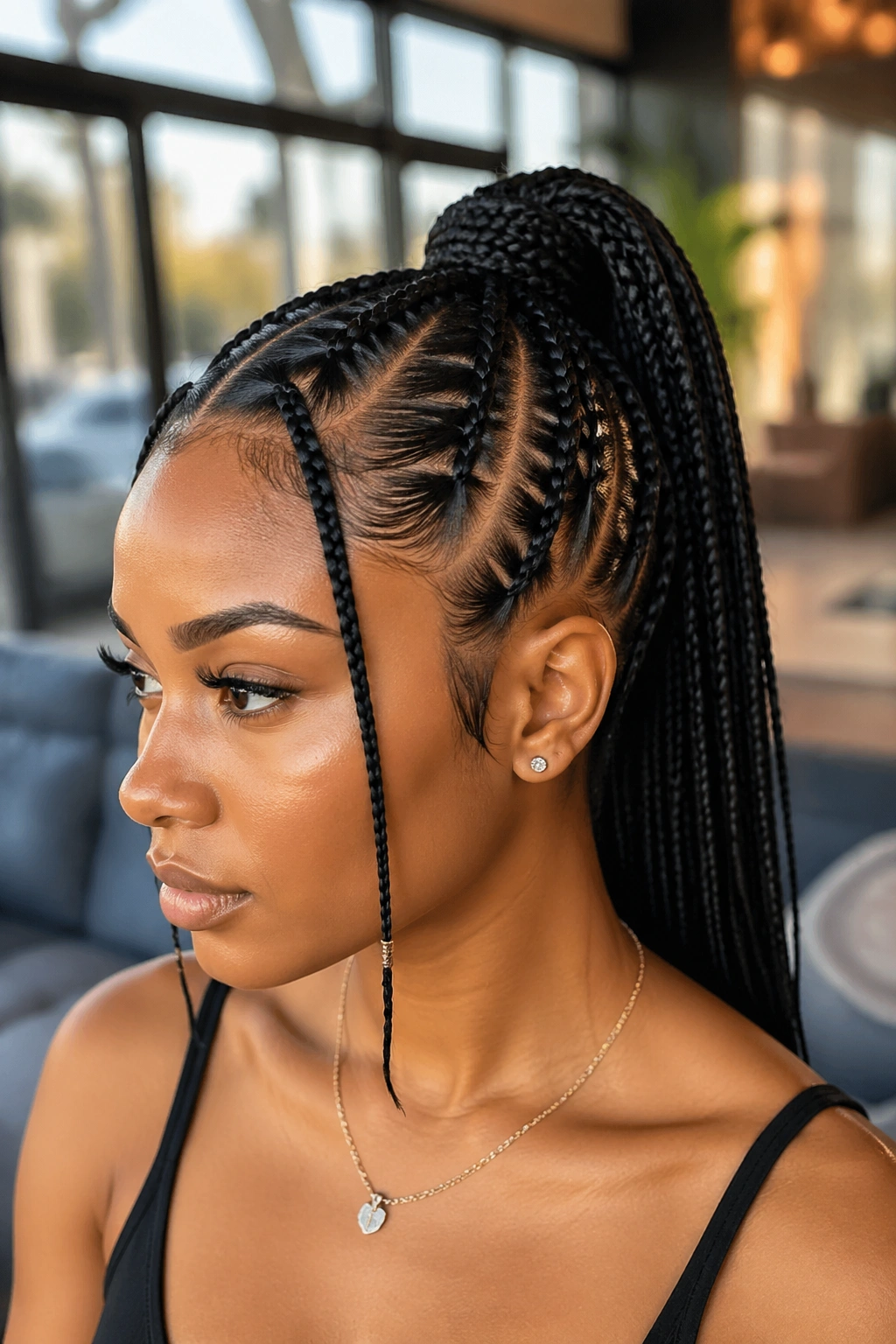
A Fulani-inspired ponytail has a nice balance of detail and restraint. The side panels frame the face, while the ponytail itself stays focused and tidy. That balance is why it works so well for laid edges: the decorative braids pull attention sideways, not straight into the forehead, so the hairline reads clean instead of overloaded.
The best versions keep the side braids slim and the center ponytail smooth. Add a few beads at the ends if that’s your thing, but don’t let the accessories crowd the base. The ponytail should feel anchored, not weighed down. If you’re wearing this style for more than a day or two, keep the side sections moisturized lightly; dry braids can puff up and make the whole style look messy near the front.
I like this one for people who want personality without losing polish. It has movement. It has shape. And it doesn’t ask the edges to carry the whole look.
10. Rope Braid Ponytail With Glossy Ends
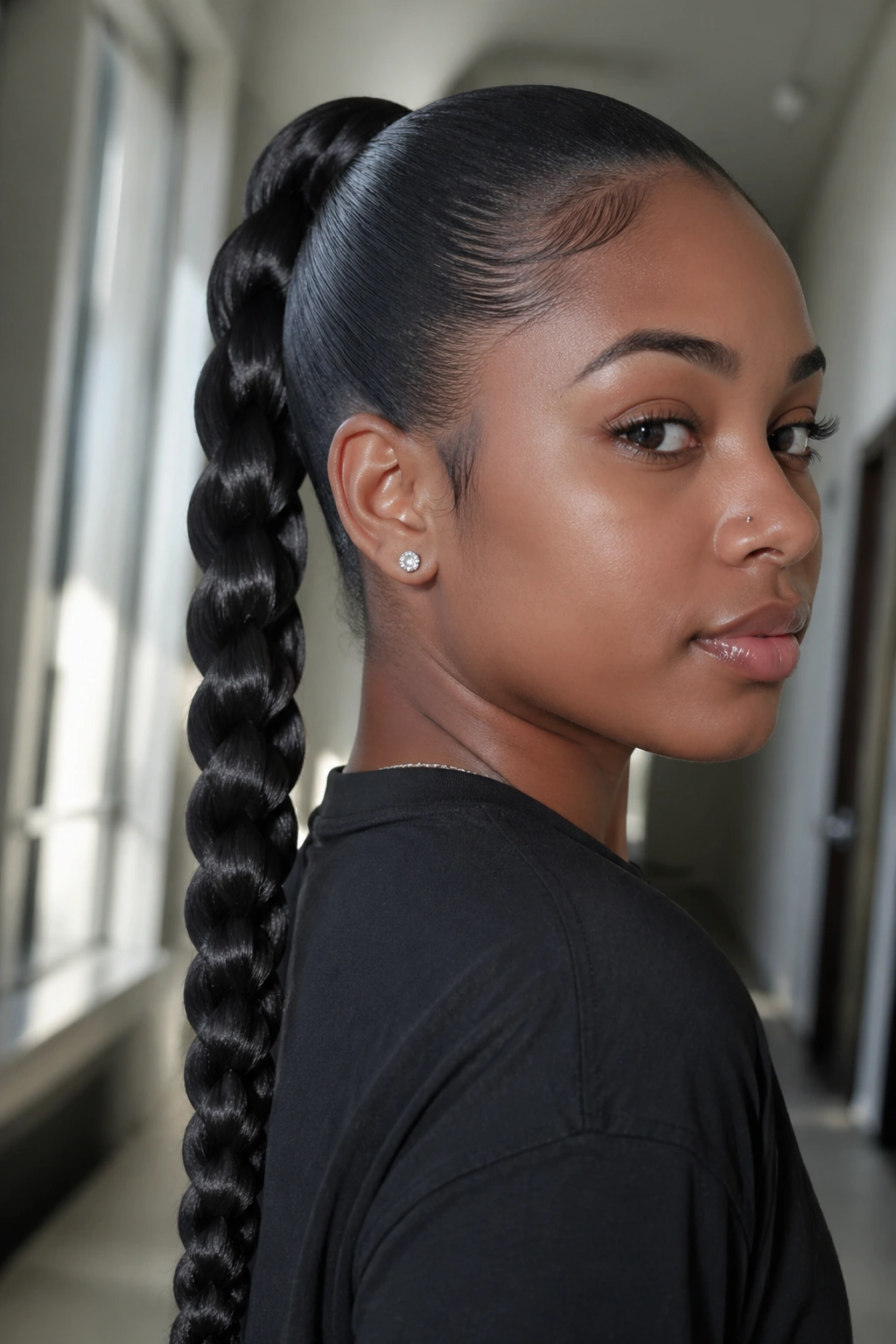
A rope braid ponytail is faster than it looks and smoother than a lot of people expect. Two sections twist around each other instead of the usual three-strand pattern, so the braid has a tight spiral that reflects shine well. If your ends are healthy, it looks sleek almost immediately.
Unlike a thick cornrowed ponytail, a rope braid doesn’t need a lot of heavy braiding along the scalp. That can be a relief for anyone whose edges get tired fast. Smooth the crown first, gather the ponytail where it feels comfortable, and twist the length into a rope until it starts to coil naturally. A little serum on the lengths helps the spiral stay defined.
This style is best when you want something polished but not fussy. It’s a good weekday braid ponytail, honestly. Clean enough for dinner, simple enough for errands, and sturdy enough that you won’t keep checking it in every reflective surface you pass.
11. Goddess Braid Ponytail With Loose Curls
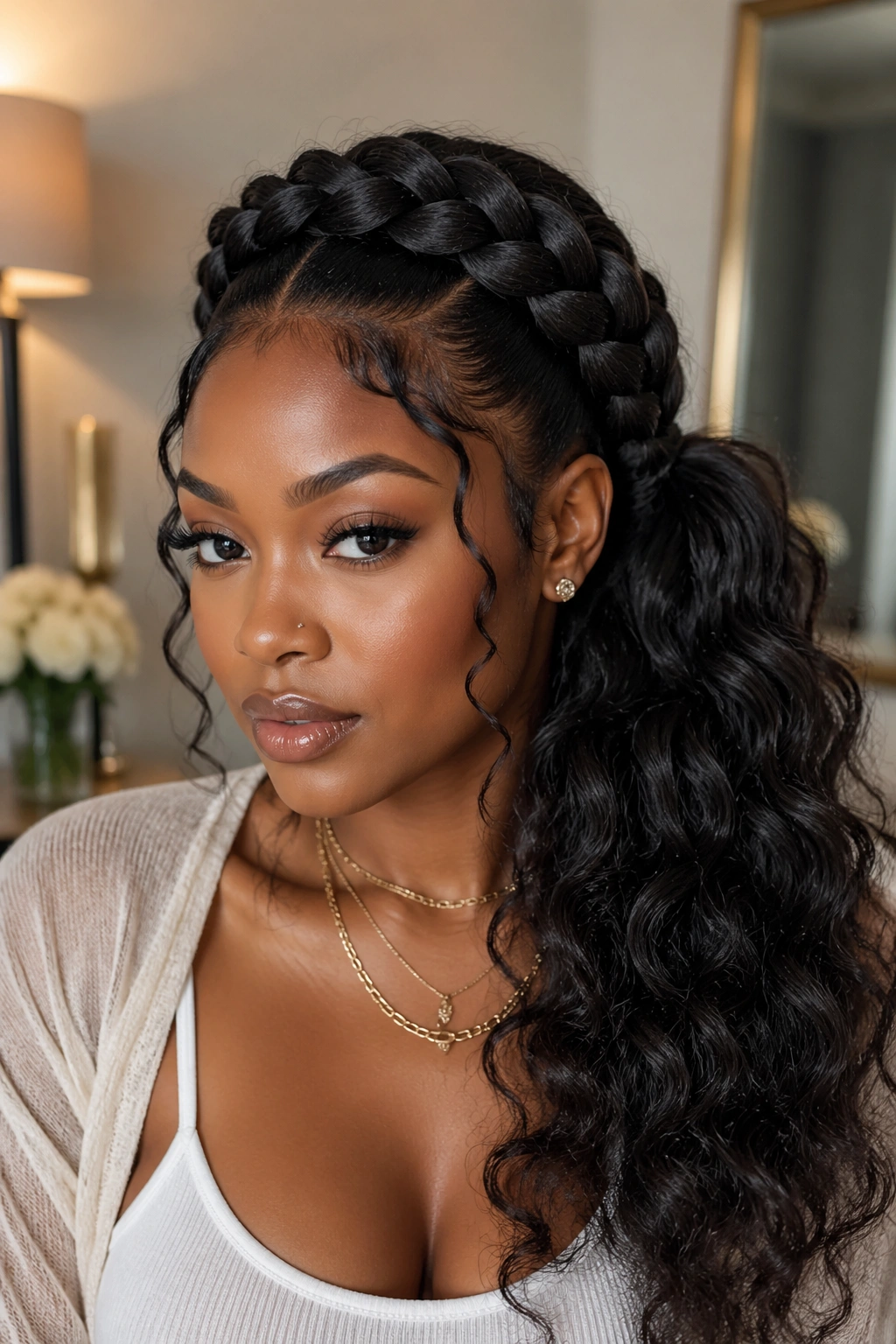
What if you want a braid ponytail that still feels soft around the face? A goddess braid ponytail does that well. The braid structure keeps the style neat, but loose curly pieces at the ends and around the perimeter make the whole thing feel lighter. That softness matters when you want the edges to stay smooth without looking shellacked.
How To Balance Sleek Roots And Airy Ends
The base needs to be calm, not stiff. Brush the hair back with a little foam or gel, then braid or feed the ponytail in a way that keeps the front flat. After that, let the curls do the talking. Human-hair extensions or a curled synthetic piece can both work, depending on the look you want.
The best versions don’t overload the front with baby hairs. A few soft swoops are enough. Too much carving around the temples can make the style look overworked, and once that happens, the curls at the end lose their charm.
This one is lovely for dressier days. It has movement when you walk, which is half the appeal.
12. Crisscross Feed-In Ponytail With Laid Edges
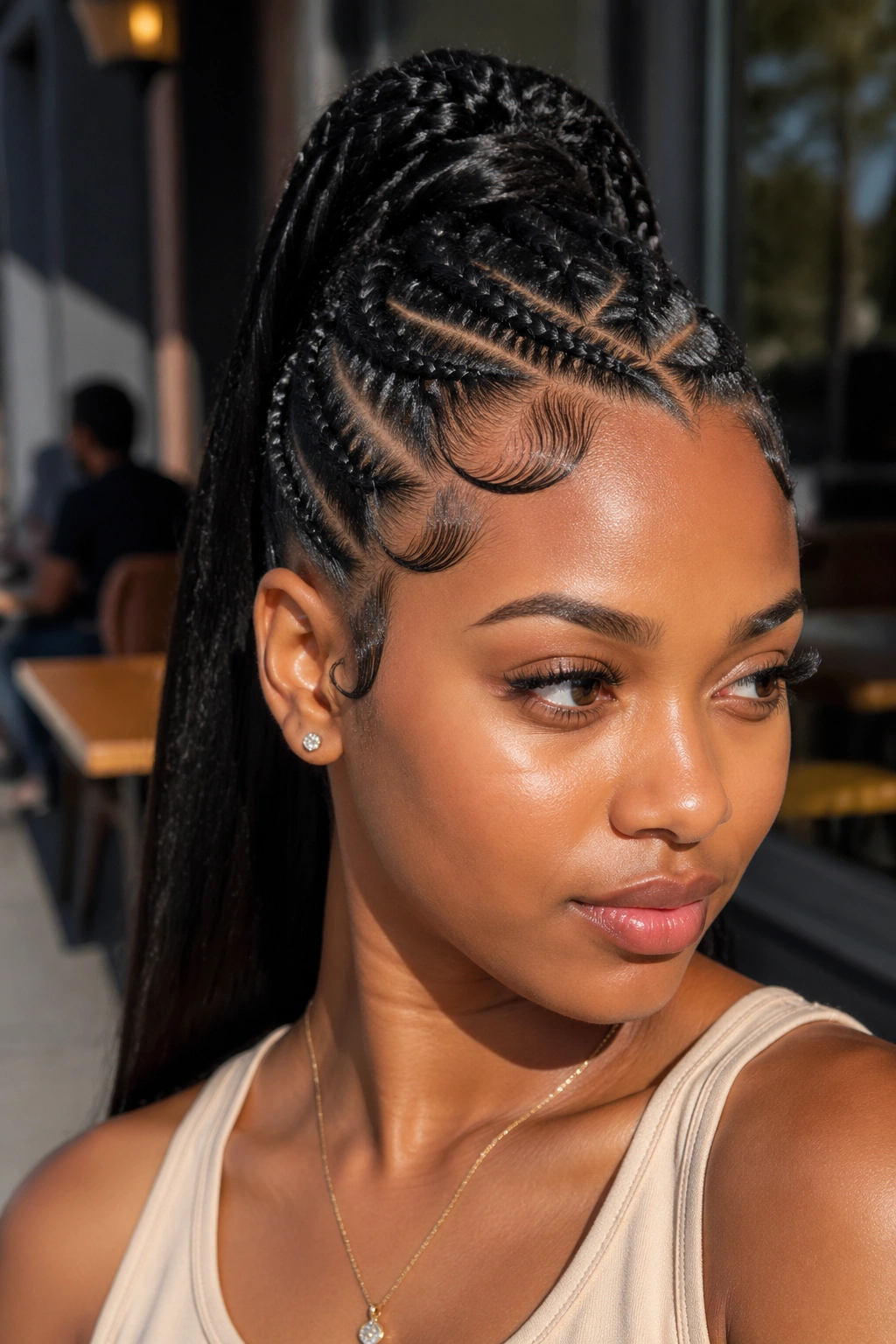
Crisscross feed-in braids bring a little geometry to the front, and that shape helps the ponytail feel intentional right away. The crossing pattern gives the crown structure, while the feed-in technique keeps the base from looking chunky. That combination is why the style often sits so nicely around the edges.
The front works best when the parts are clean and the crossing sections stay narrow. You do not need a dense web of braids to make it read well. In fact, too many crossovers can crowd the hairline and make the style look busy. A few precise lines do more.
Try this when you want a ponytail that photographs well from the side and the front. The crisscross detail catches the eye first, then the braid length takes over. If you keep the finish glossy and the edges soft, the whole thing looks like it was planned from the start rather than assembled in a rush.
13. Deep Side Part Braid Ponytail
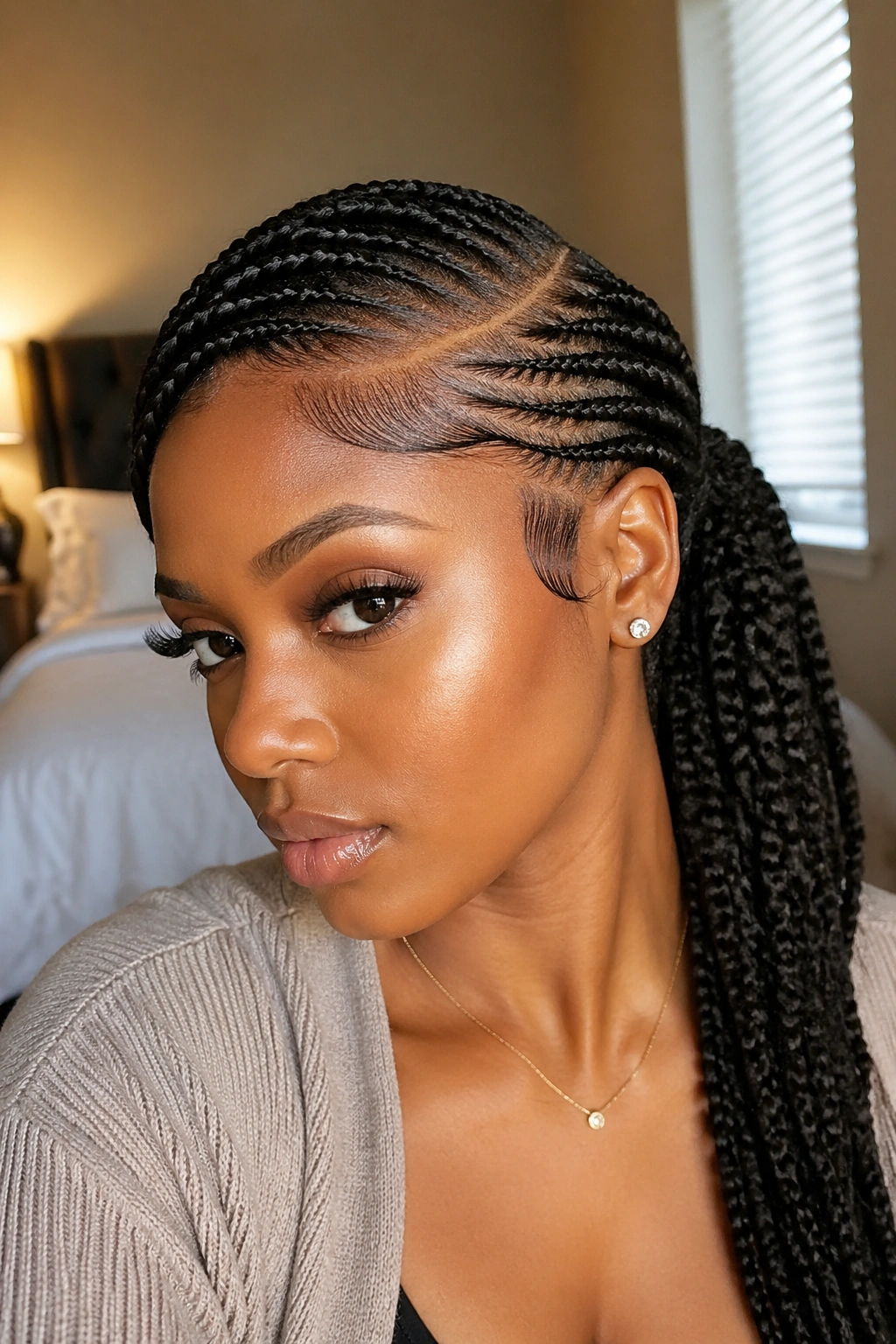
A deep side part changes the whole mood of a braid ponytail. It gives the face more shape, makes the front feel less severe, and usually creates a smoother-looking hairline on the fuller side because the hair is directed away from the face in a long sweep. The effect is subtle, but it matters.
This style is especially useful if your forehead feels broad or you want a little lift on one side without piling hair high. The part itself should land cleanly, usually somewhere near the arch of the eyebrow, and the braid should follow the direction of the part instead of fighting it. That keeps the front relaxed.
One detail people skip: the side with less hair should still be brushed flat before it gets tucked in. If that side puffs up, the deep part loses its shape fast. A tiny touch of edge control and a rat-tail comb go a long way here. The braid ponytail stays elegant when the part line is sharp and the rest is quiet.
14. Braided Ponytail On Natural Curls
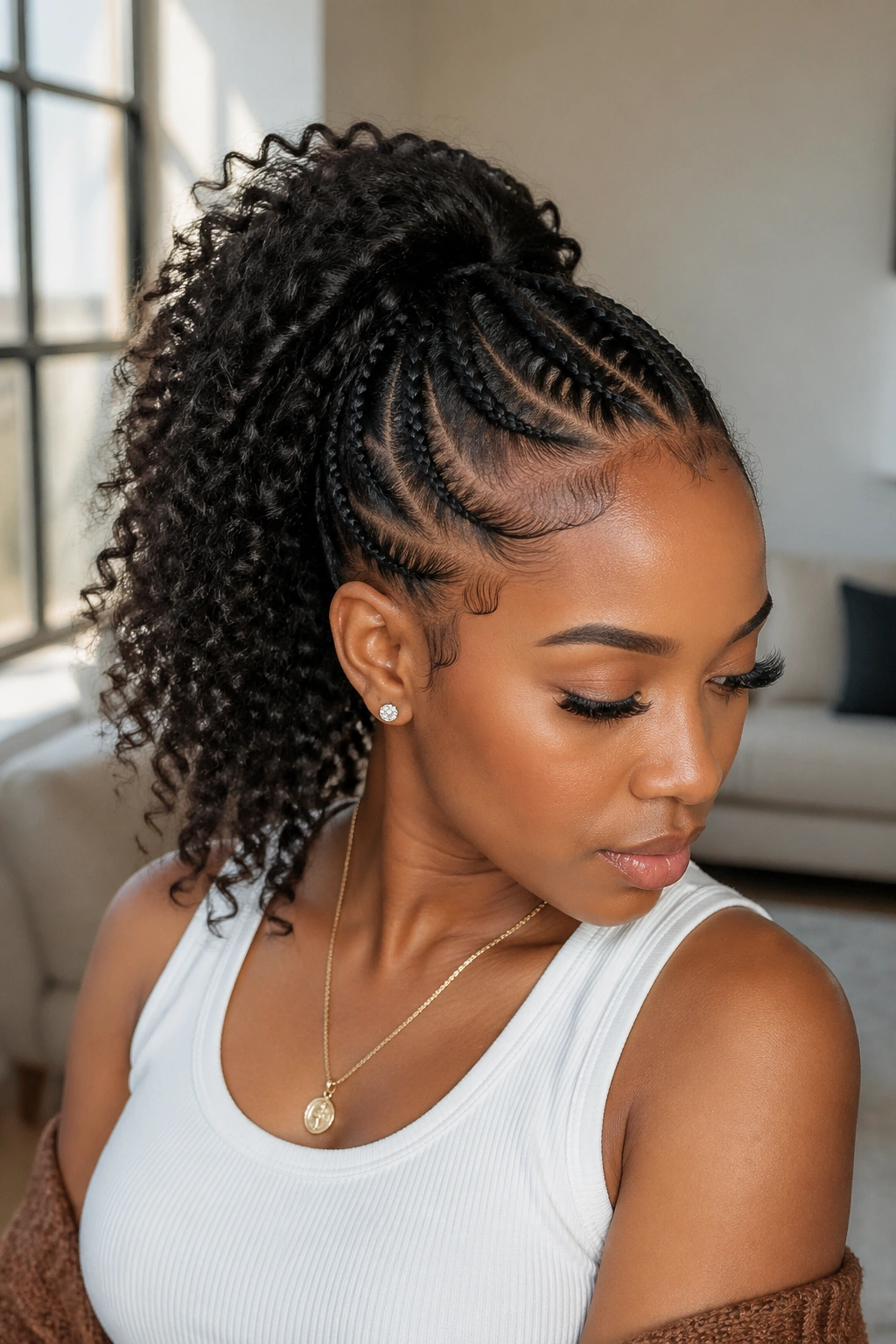
A braided ponytail on natural curls works because it uses your texture instead of wrestling it into something else. That alone can make the hairline look better. When the root pattern is respected, the style settles more naturally around the edges, and you don’t spend all morning chasing down little bits that refuse to lie flat.
There are two good ways to wear this. You can stretch the curls first and braid the length into a ponytail, or keep the curls defined and let the braid begin lower. Both work. The choice depends on how smooth you want the crown to look and how much shrinkage you’re dealing with.
- A light leave-in keeps the curls soft before styling.
- A curl cream can help the loose ends blend with the braid.
- Use a satin scarf after styling so the front stays laid.
- Don’t overload the roots with heavy oil; it usually breaks the hold.
This one feels honest. It looks like hair, not a helmet.
15. Box Braid Ponytail With Faux Loc Ends
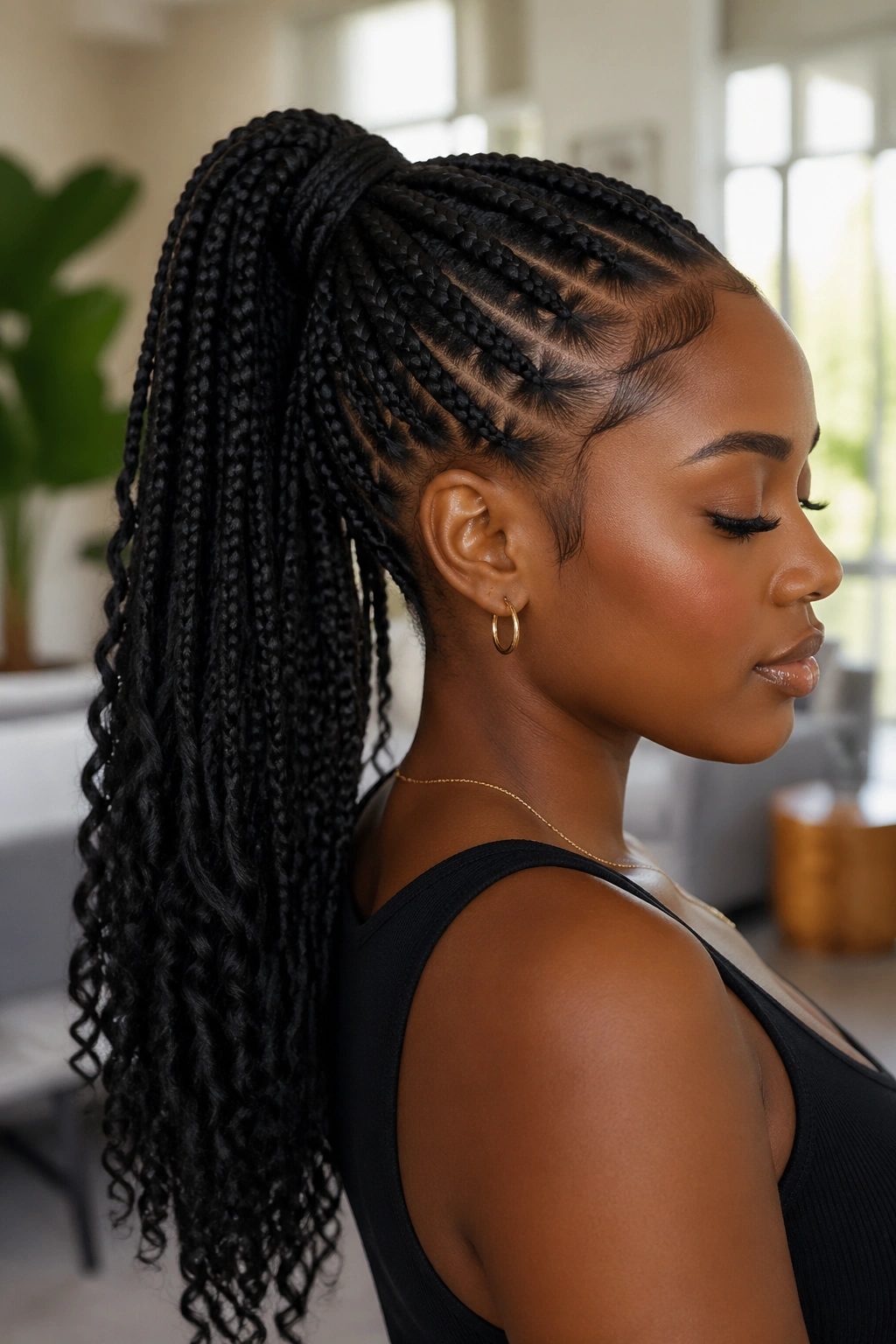
A box braid ponytail with faux loc ends gives you texture without losing the clean shape of the ponytail base. The box braids keep the front organized, while the faux loc finish adds weight and a little drama at the bottom. That weight is useful when you want the style to hang straight and stay controlled.
The trick is balance. Too much length at the ends can tug on the hairline, and that’s where the trouble starts. Keep the ponytail base low enough that the weight rests near the crown or upper back of the head, not on the fragile spots at the temples. If you’re using extensions, lighter fiber usually feels better than heavy pieces that drag.
This is one of those styles that looks bold without needing a complicated parting pattern. The edges stay smooth when the front is simple and the back does the talking. If you like a little edge in your look, this one has it.
16. Triangle-Part Braid Ponytail
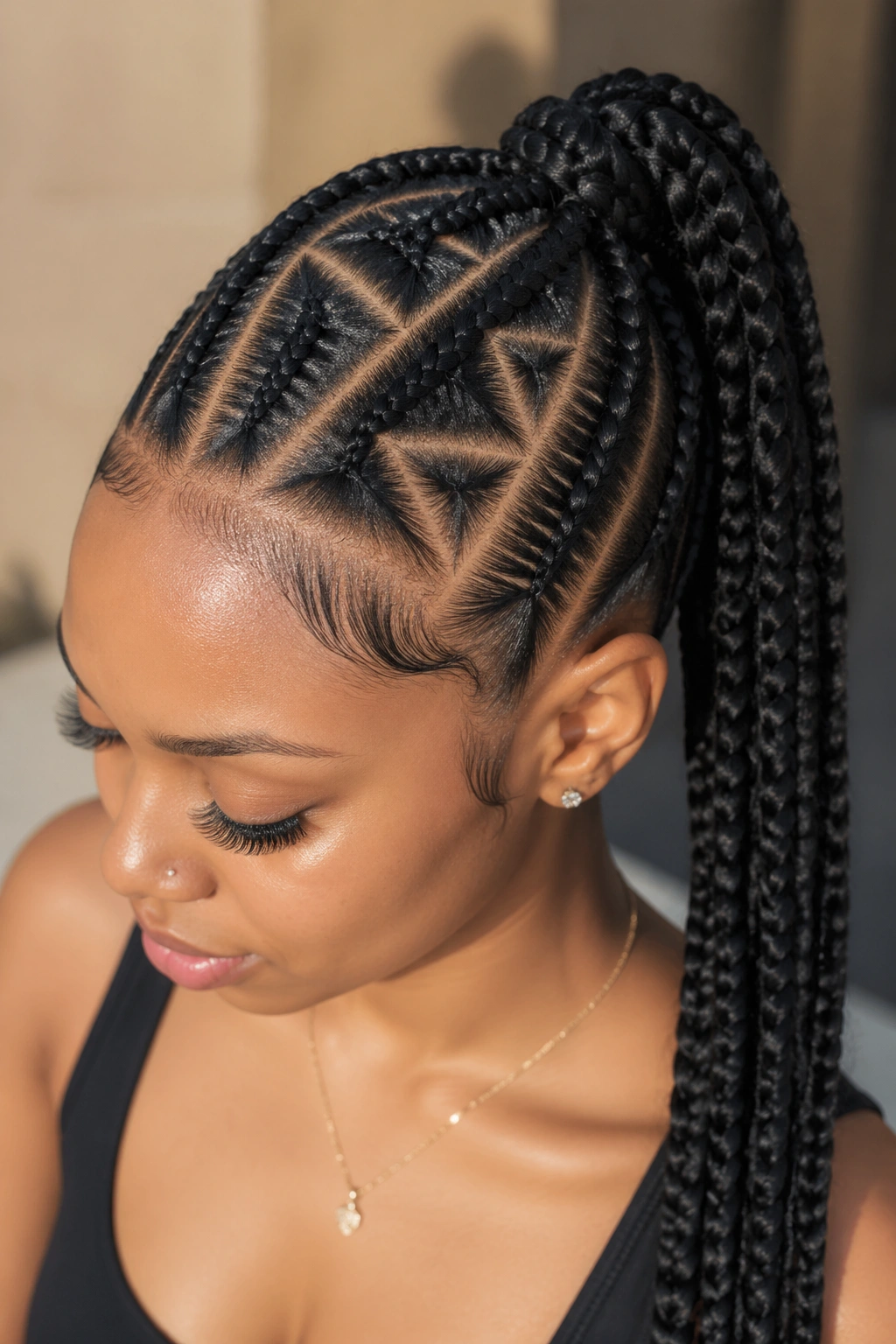
Why do triangle parts make a braid ponytail feel more finished? Because the parting itself becomes part of the design. Triangle sections break up the scalp pattern in a way that looks crisp and intentional, and they keep the front from looking like a row of identical boxes. That variety matters more than people think.
The style works best when the triangles are medium-sized and the braid tension stays consistent from one section to the next. If some parts are tight and others are loose, the front looks patchy fast. The edges benefit from that consistency too, because the hairline isn’t being pulled in different directions all along the front.
The Parting Trick
Use the point of the rat-tail comb to map out each triangle before you start braiding. Clean parts are easier to smooth than fuzzy ones, and fuzzy parts usually lead to puffing near the hairline by the next day.
This is a smart pick if you like visual detail but don’t want jewelry or color to carry the style. The parting does enough on its own.
17. Pull-Through Braid Ponytail With Shine
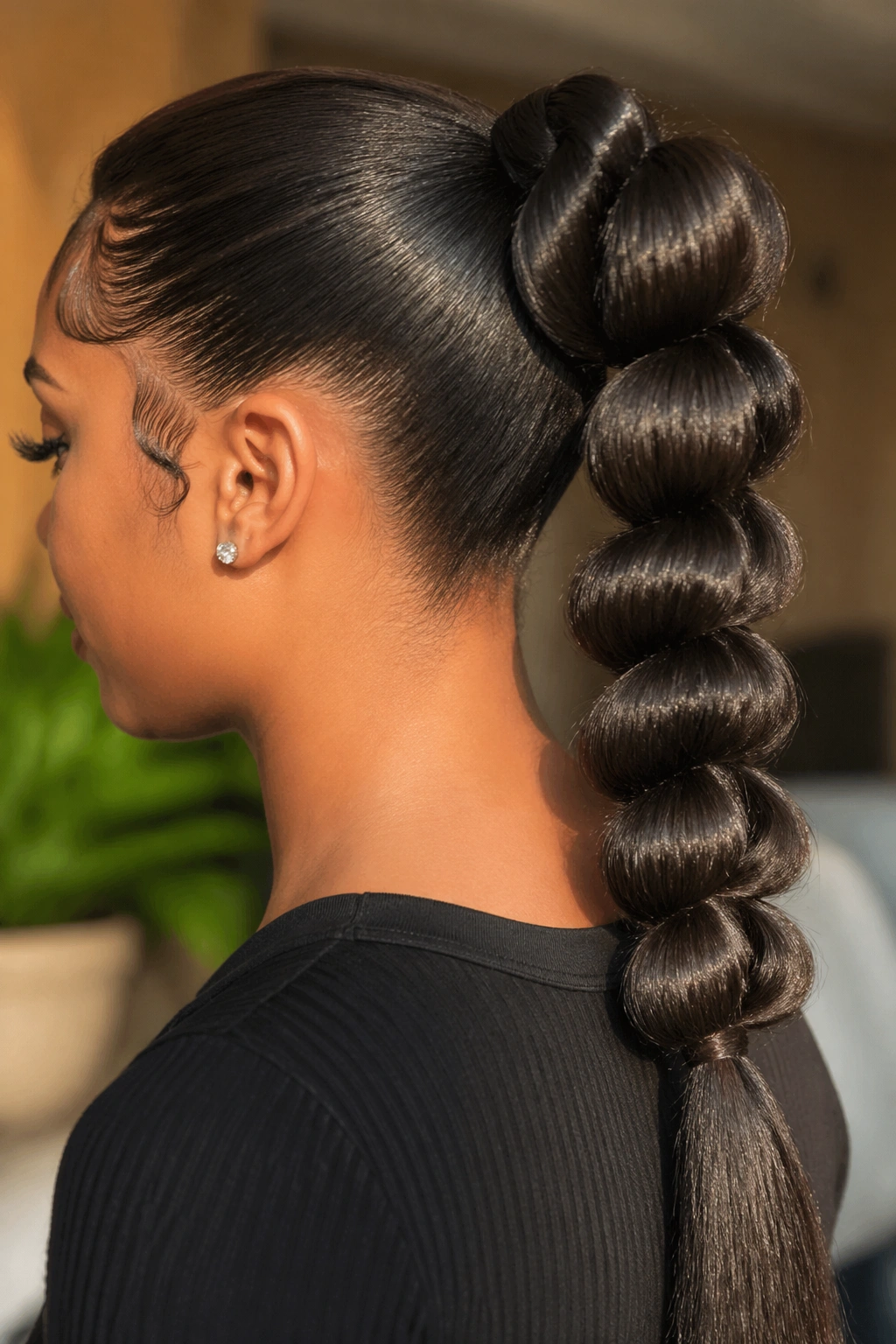
A pull-through braid ponytail is one of the easiest ways to fake fullness. Instead of weaving a single braid all the way down, you stack ponytails on top of each other and split each section to build a thick, rope-like shape. The result looks elaborate, but the front can stay smooth because the effort happens mostly at the back.
This style is friendly to people who dislike tight braiding. That’s a big deal. You can keep the base neat, brush the hairline flat, and still get a dramatic braid ponytail without spending forever tugging at small sections. Clear elastics do the structure work, and a strand of hair wrapped around the top elastic makes the whole thing look tidier.
Best part? It holds shine well. A little gloss spray on the outer surface makes the braid look freshly styled even if you wore it for hours. If your hair gets frizzy quickly, this is a good one to keep on hand.
18. Braided Ponytail With Curved Ends
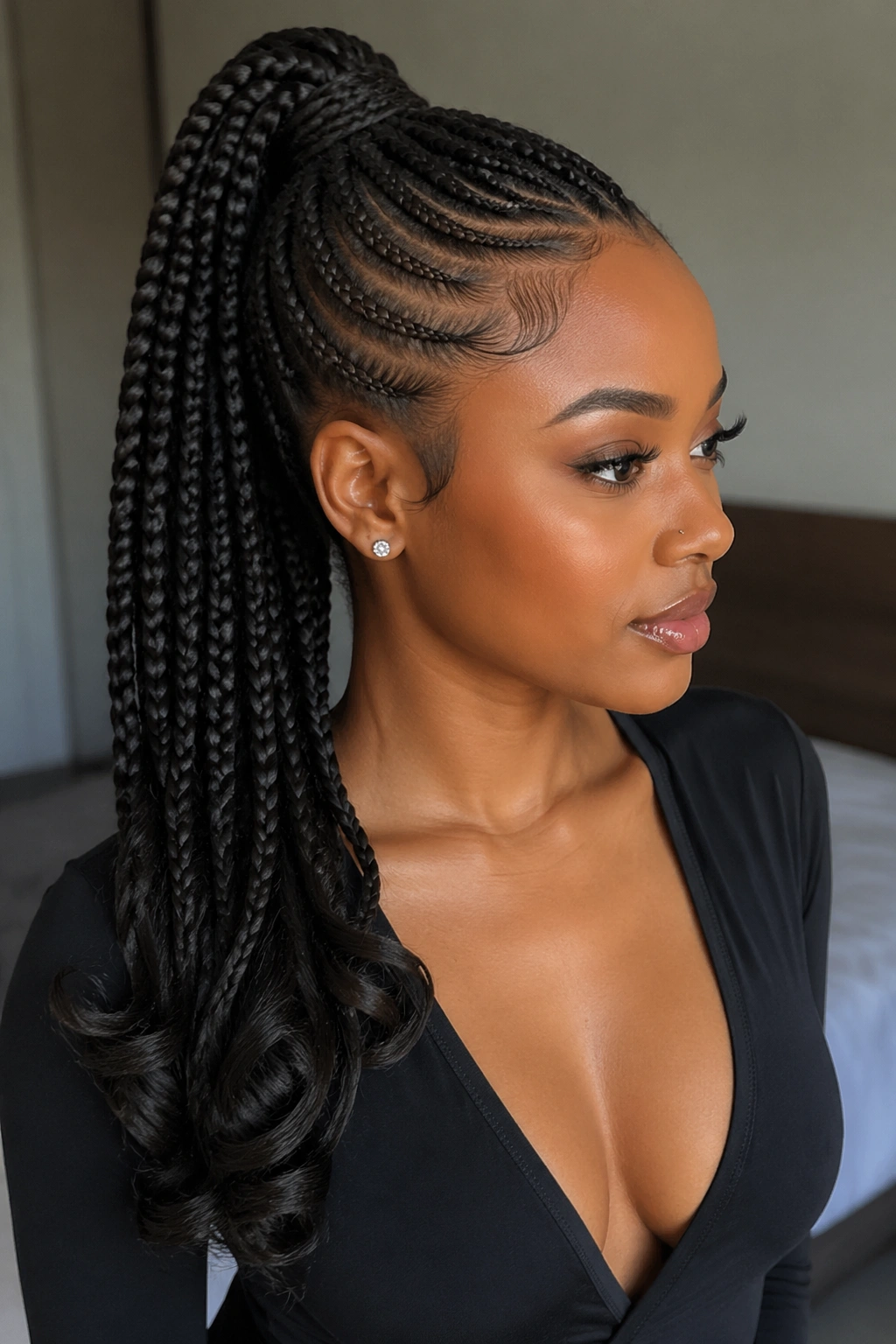
A braided ponytail with curved ends feels softer than a straight drop. Instead of letting the braid hang rigidly down the back, the finished length bends or sweeps slightly at the bottom, which changes the whole mood of the style. It sounds small. It isn’t.
That curve makes the braid look less severe, and it helps the front look more relaxed too. When the eye sees movement at the ends, it doesn’t demand such hard lines at the hairline. I know that sounds fussy, but hair works like that. Small shape changes change the whole read of the style.
This one is good for long necks, sharper jawlines, or anyone who wants something polished without the stiff, straight-down finish. A little setting mousse on the ends before braiding can help the curve hold. Then keep the roots smooth and leave the rest alone. The braid takes care of the rest.
19. High Braided Ponytail With Swooped Front Pieces
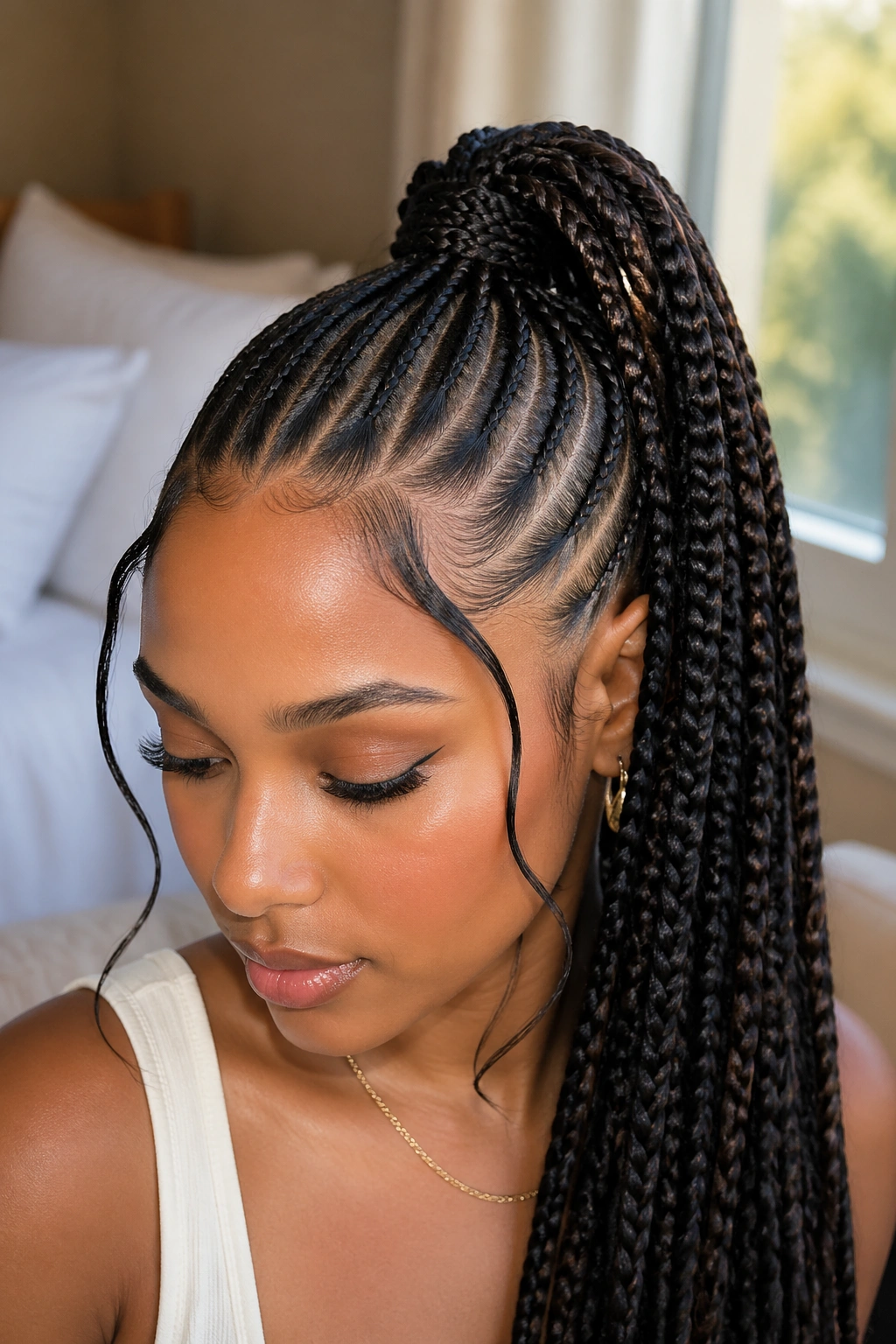
A high braided ponytail with swooped front pieces is the flashier cousin of the classic high pony. The height gives it energy, and the little swoops at the front soften the whole look so it doesn’t feel pulled back too hard. That balance is what lets the edges look smooth instead of overworked.
The front pieces should be narrow and deliberate. A thick swoop can swallow the face, while a slim one frames it. If you’re adding baby hairs, keep the design close to the temples and let the rest of the hairline stay clean. This style does not need a crowd.
Use a strong brush to smooth the crown upward, then set it with a scarf before you braid the ponytail. That step matters more than people think. A high ponytail shows every bump. If the base is flat, the braid looks sleek from every angle. If not, the whole style starts fighting itself.
20. Side-Swept Braid Ponytail With Tucked Edges
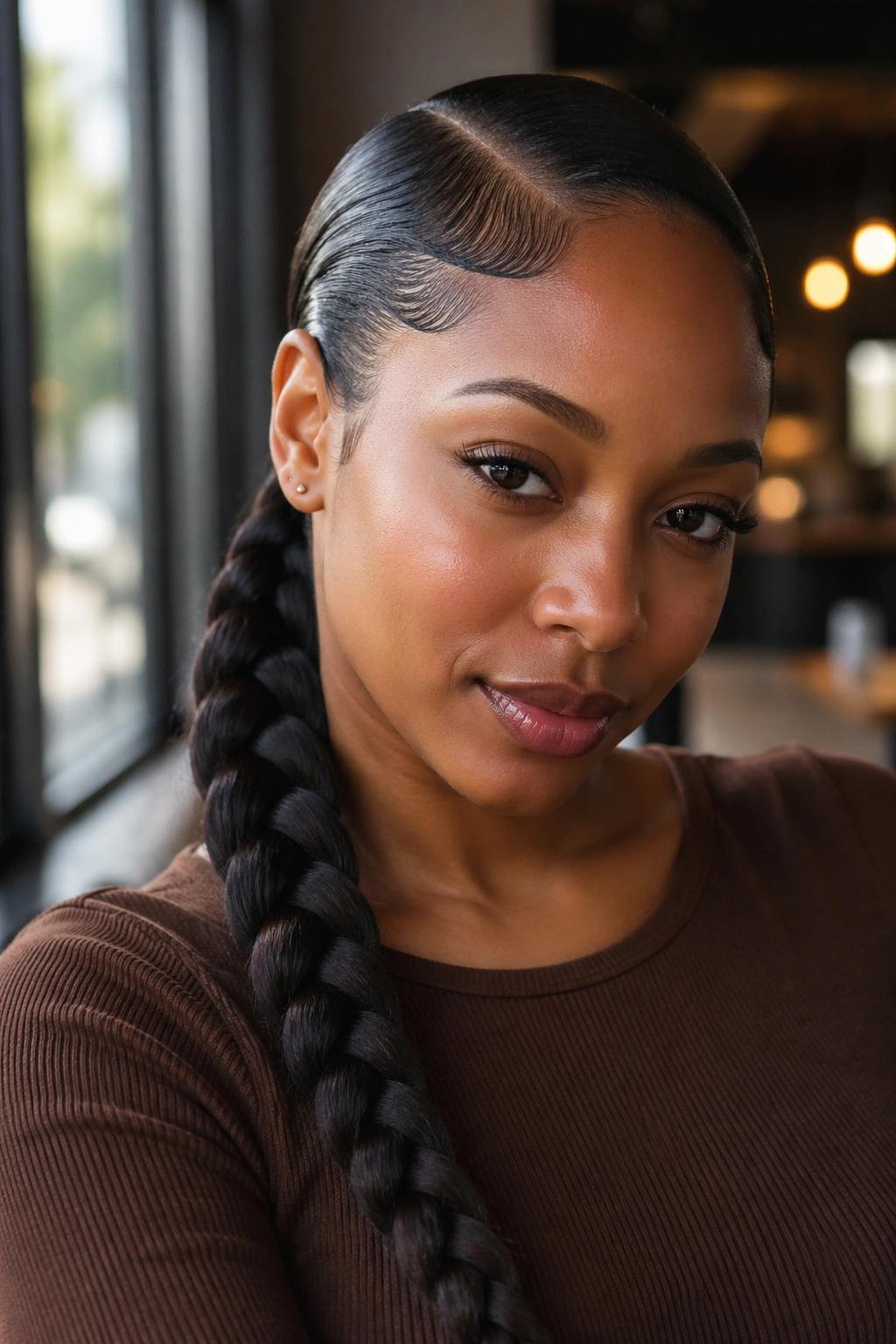
A side-swept braid ponytail has a softer line than a straight-back style, and that softness helps the edges settle nicely. The hair is guided off-center, then tucked toward one side, so the front doesn’t have to bear the full weight of the style. It feels a little romantic, a little laid-back.
This is one of the better options if you like to wear earrings or glasses. The asymmetry leaves the face open without stripping away shape. The braid can sit low or mid-height, but the tucked side should stay smooth and close to the head so it doesn’t puff up by lunchtime.
A mist of water and leave-in before styling can help the front flatten without turning greasy. If you want extra polish, wrap the hairline with a scarf after the side sweep is pinned. The style holds better when you let it set for a few minutes. Rushed edges rarely look calm.
21. Mohawk Braid Ponytail For Extra Height
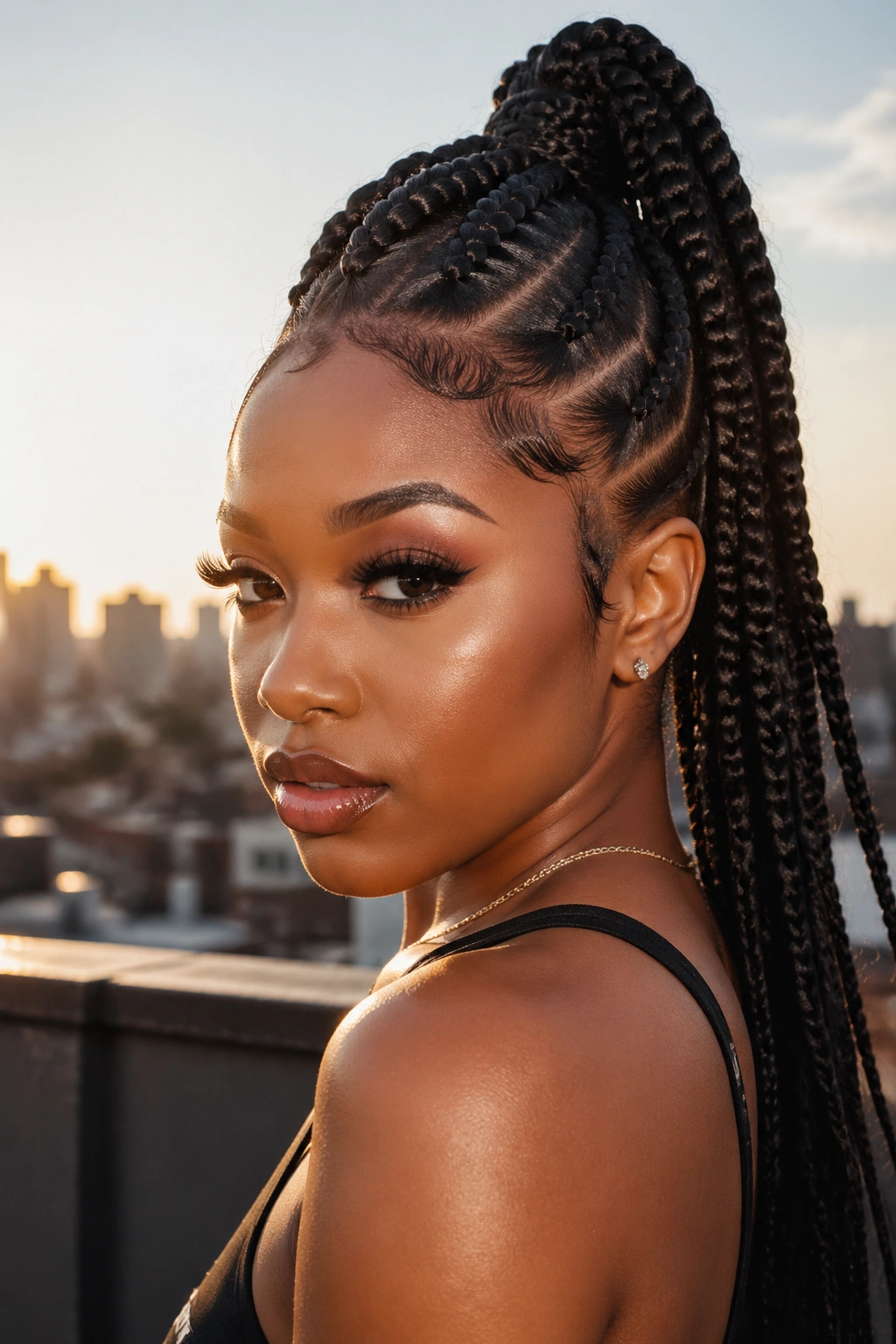
A mohawk braid ponytail is for the days when you want height without losing control. The sides stay close to the head, the center section rises, and the ponytail itself sits like a ridge through the middle. It’s dramatic, sure, but it’s not sloppy when it’s done well.
The reason it can still lay the edges smoothly is simple: the tension stays concentrated in the center, not all over the hairline. That means the sides can be brushed flat and left alone. If your temples are sensitive, this is one of the kinder high-impact styles.
Who It Suits Best
- People who like a lifted profile.
- Round or heart-shaped faces that benefit from height.
- Thick hair that can hold the center shape.
- Anyone who wants bold shape without a full updo.
Keep the side cornrows gentle and the middle braid clean. Too much pulling at the sides defeats the whole point.
22. Braided Ponytail With Colored Extensions
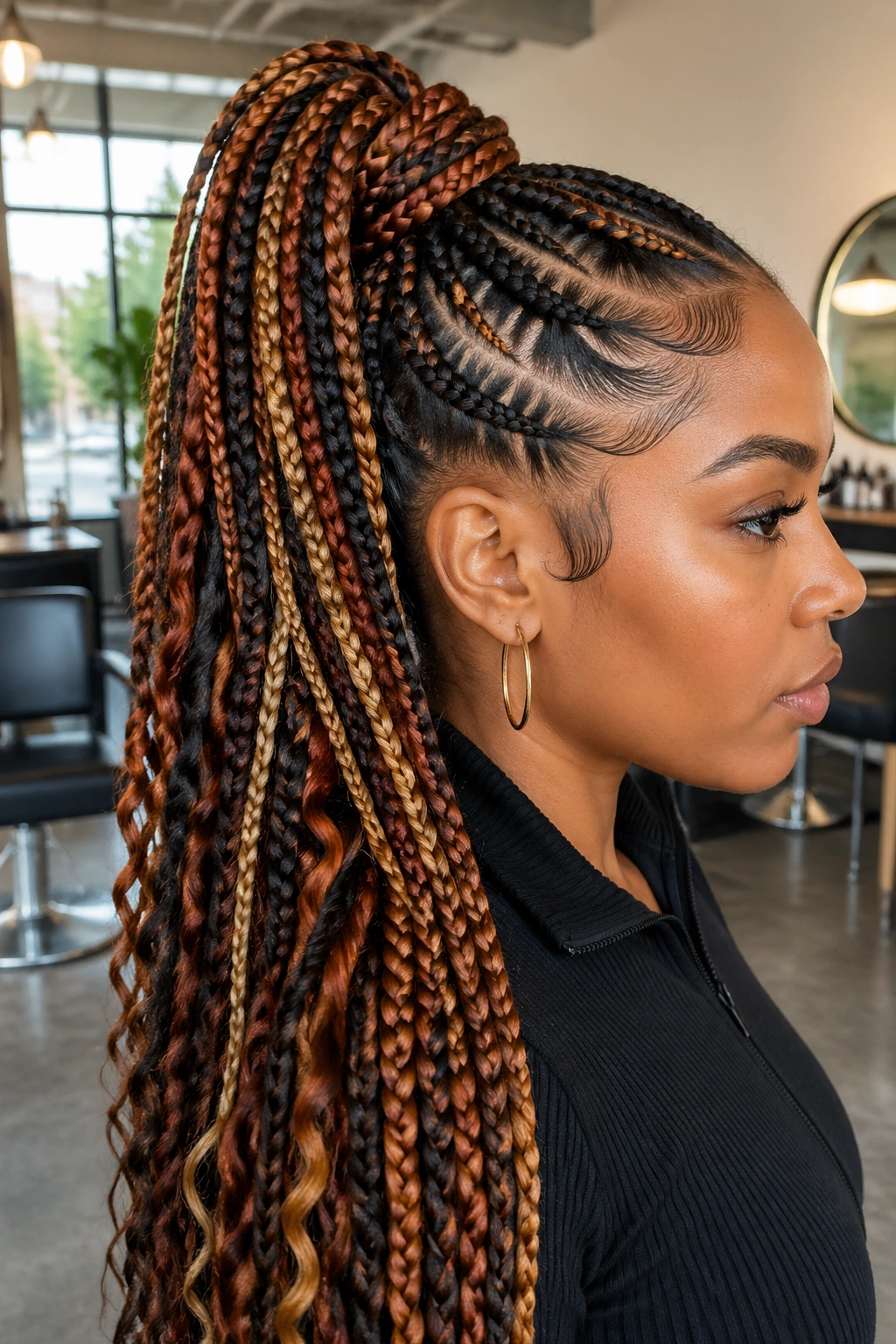
Color changes a braid ponytail fast. A few streaks of copper, honey blonde, burgundy, or even a soft brown blend can make each braid line stand out, and that extra contrast makes the hairline look more defined too. When the parts are visible, the whole style reads as deliberate.
The trick is restraint. You do not need five colors. One accent shade or a simple ombré effect is enough to give the braid depth without turning it into a costume piece. Bright colors can be fun, but they also show every rough patch near the front, so the edges have to be smooth if you want the style to feel polished.
This is a good style when your natural shade needs a little lift or you want the ponytail to pop against your skin tone. The color does half the styling work. Your job is keeping the roots neat and the parting clean, which is not glamorous, but it matters.
23. Half-Braided Ponytail With A Sleek Crown
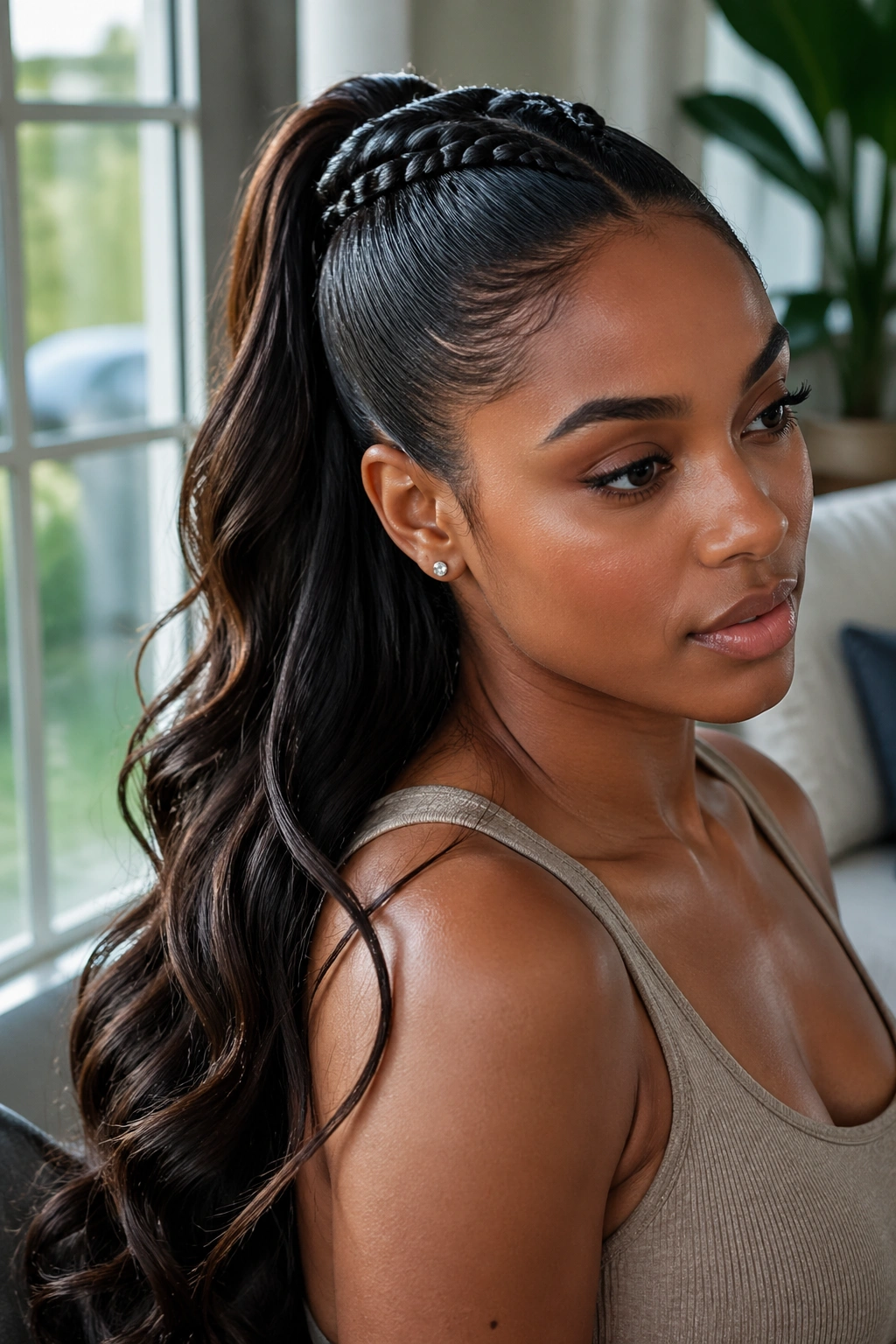
What if you want the polish of a braid ponytail but still want some hair down? A half-braided ponytail gives you that compromise without making the style look unfinished. The top half is braided or gathered into a ponytail, while the rest stays loose, curled, or lightly waved below. That split keeps the front lighter, which helps the edges stay smooth.
The crown should be sleek. That part is non-negotiable. If the top looks fuzzy, the half-up shape loses its point. Brush the front back with a little gel or mousse, pin the upper section firmly, and let the lower half stay soft. The contrast is what makes it work.
I like this one for days when a full ponytail feels too severe. It has movement at the ends, but the top still feels tidy. If your hair is layered, this style can be forgiving. It hides a lot without looking like it is hiding anything.
24. Braided Ponytail For Shorter Hair
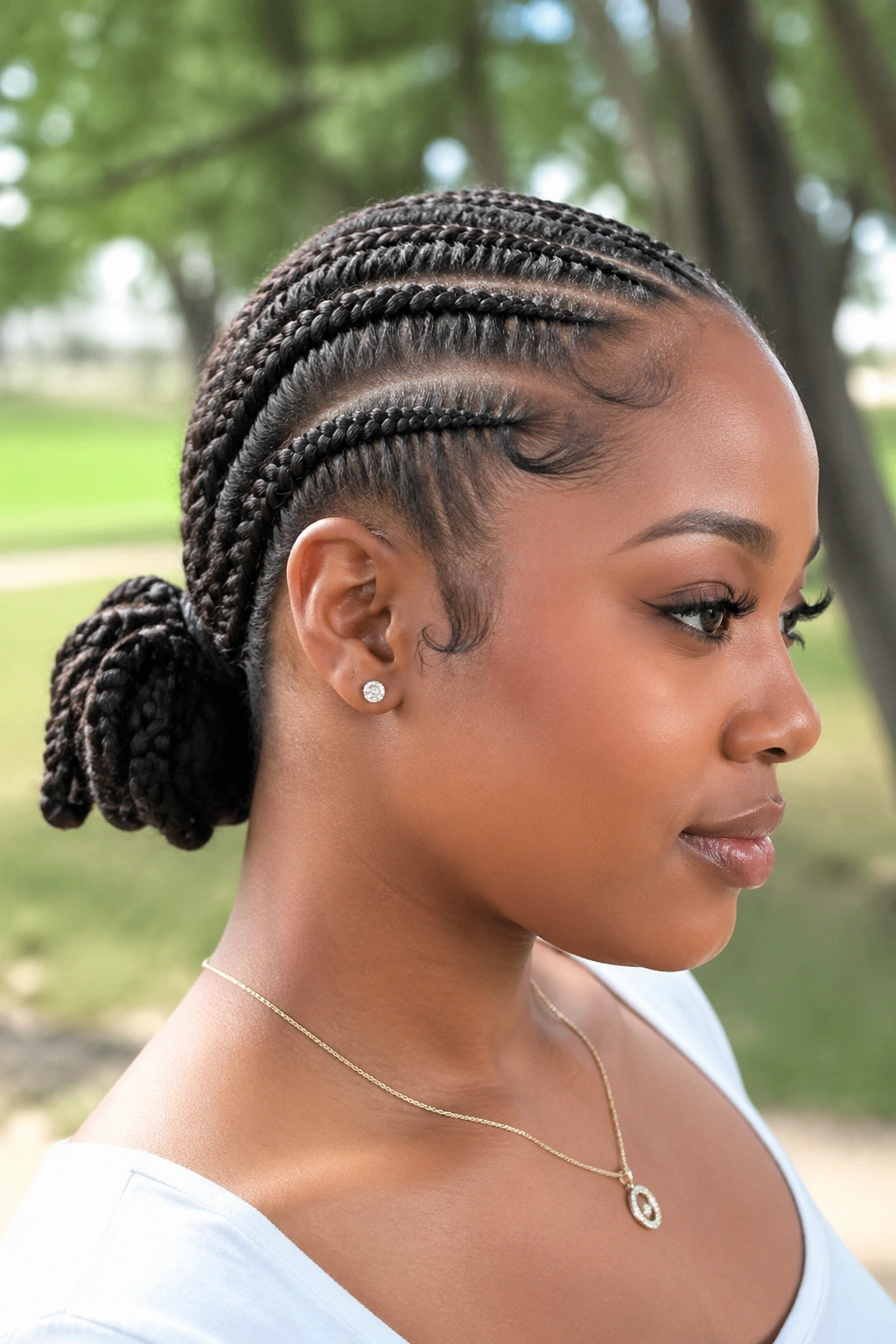
Braided ponytails are not only for long hair. Shorter hair can pull off a clean ponytail braid if the base is supported with extensions or a tucked-in braided finish. The key is not overloading the hairline with weight just to chase length. That’s where a lot of people go wrong.
A shorter style works best when the braid is built close to the head and the ponytail base sits low enough to avoid strain. A few small braids feeding into one ponytail can give enough length without dragging at the edges. If you use extensions, keep them lightweight and match the texture closely so the blend doesn’t look obvious.
- Use bobby pins to anchor tiny layers that escape.
- Keep the ponytail lower if your hair is fine.
- Don’t stretch the base just to make it look longer.
- A narrow braid cuff can hide the join point nicely.
This style is practical, and honestly, that’s what makes it good.
25. Jumbo Rope-Into-Braid Ponytail
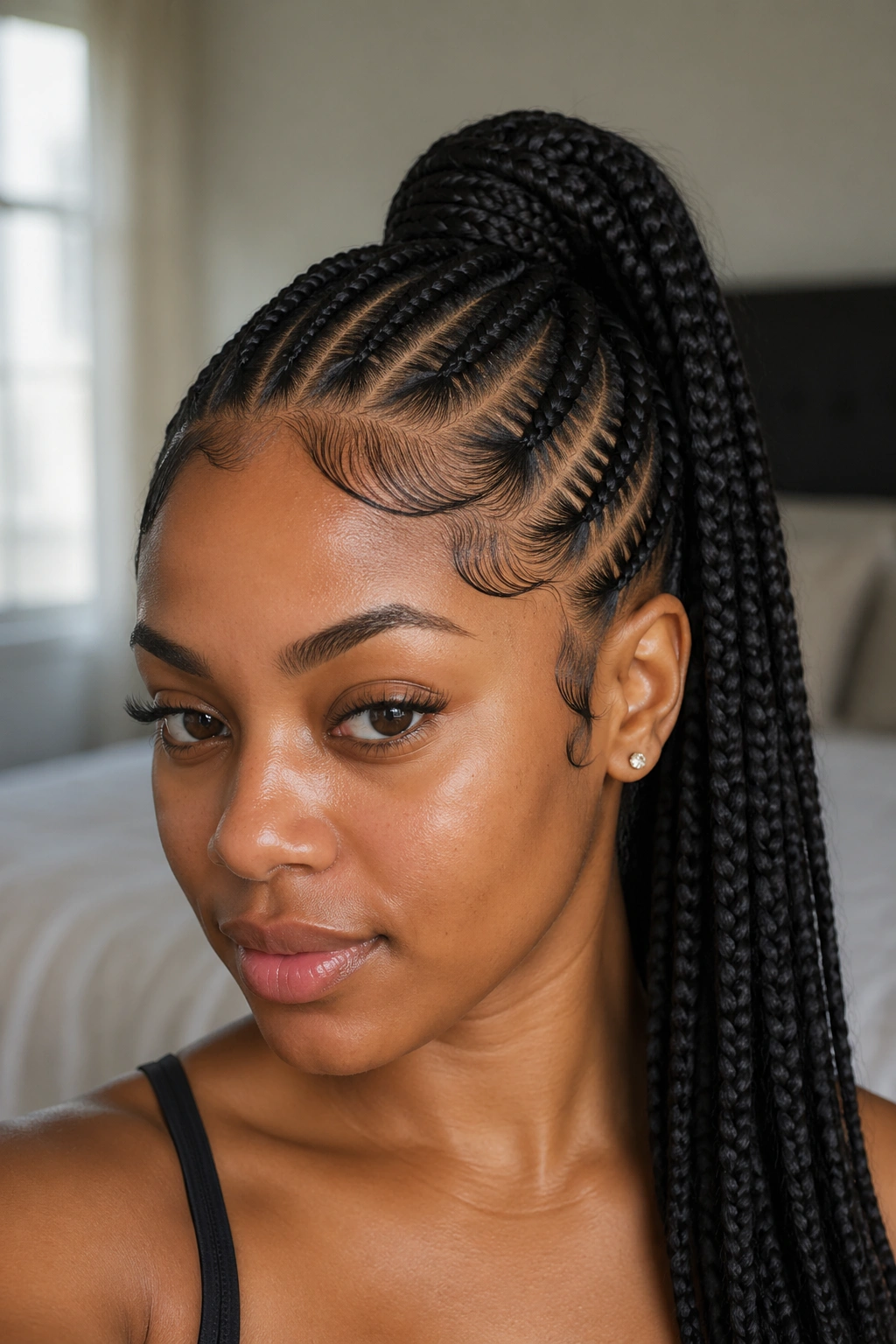
A jumbo rope-into-braid ponytail mixes two textures in one style, which is a neat way to get a lot of visual payoff without a complicated setup. The top starts with a rope twist, then shifts into a loose braid farther down. That change gives the ponytail movement and makes it look fuller than a single pattern would.
The front stays calm because the styling work is concentrated at the base and the mid-lengths. You can brush the hairline flat, secure the ponytail, and spend your energy on the texture transition instead of rebuilding the entire head. It’s a nice trade when you want something that looks more styled than a plain braid but doesn’t take forever.
This one works especially well with extension hair that has a little grip. If the hair is too silky, the rope section can unravel before you get to the braid. A touch of mousse on the lengths usually helps. Keep the root area clean and the ends a little loose. That balance is the whole style.
26. Braided Ponytail With Beads And Wraps
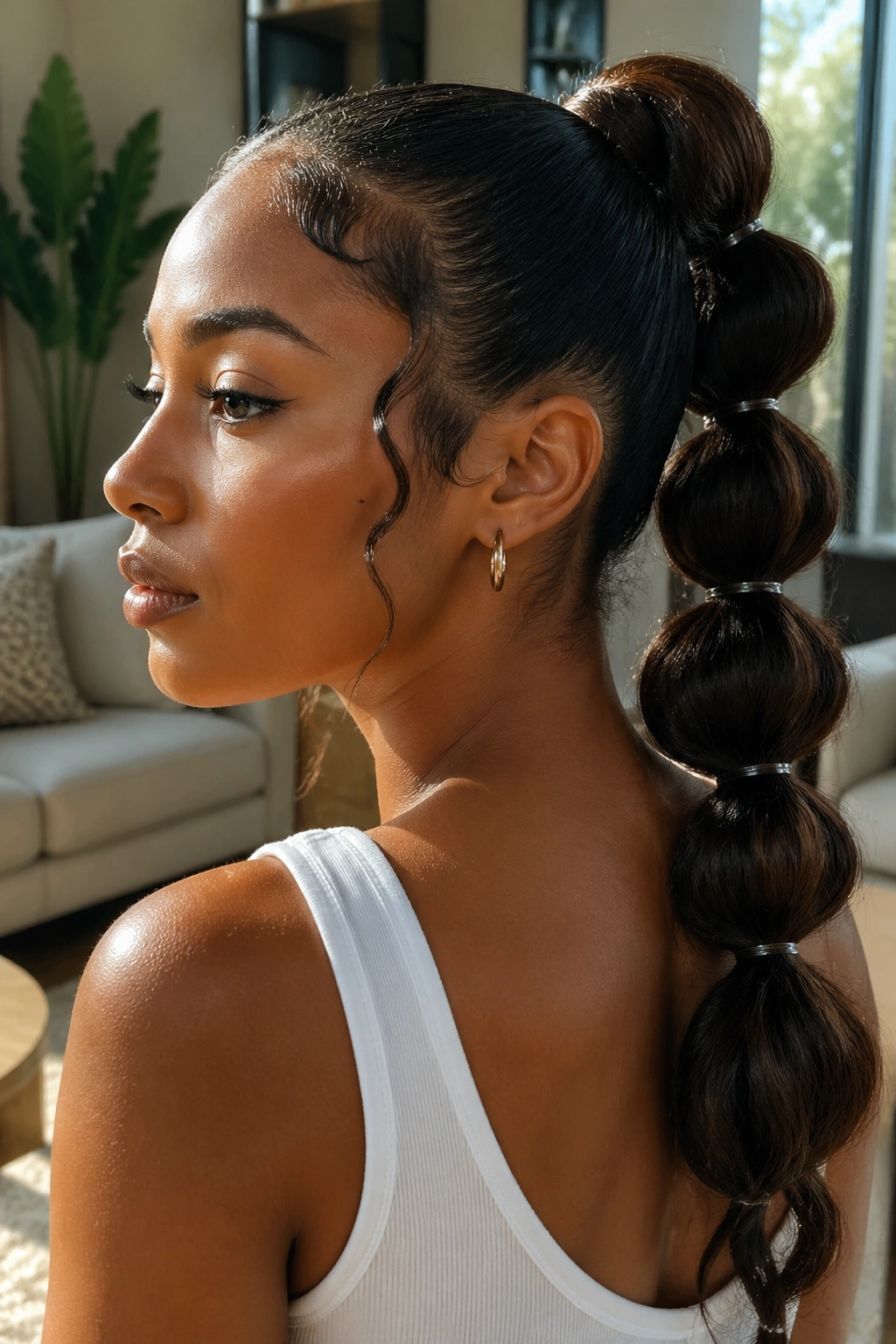
A braided ponytail with beads and wraps turns the braid into an accessory on its own. The sound, the movement, the little flashes of color or metal — all of that changes how the style feels. The hairline still needs to be neat, though. Accessories can’t fix a rough base.
The smartest version uses one or two focal points instead of covering the entire ponytail in beads. A wrapped base, a few beads at the ends, or a single cord woven through the braid gives the style personality without making it heavy. Too many accents can tug on the length and eventually pull at the front, which is exactly what you do not want.
A Few Things To Keep In Mind
- Place heavier beads lower on the braid so they do not strain the base.
- Wrap the elastic at the top for a tidier finish.
- Keep the front edges soft if the accessories are bold.
- Match the wrap color to your outfit or earrings when you want a cleaner look.
This style likes confidence, but it likes balance more.
27. Elegant Low Braided Ponytail For Everyday Wear
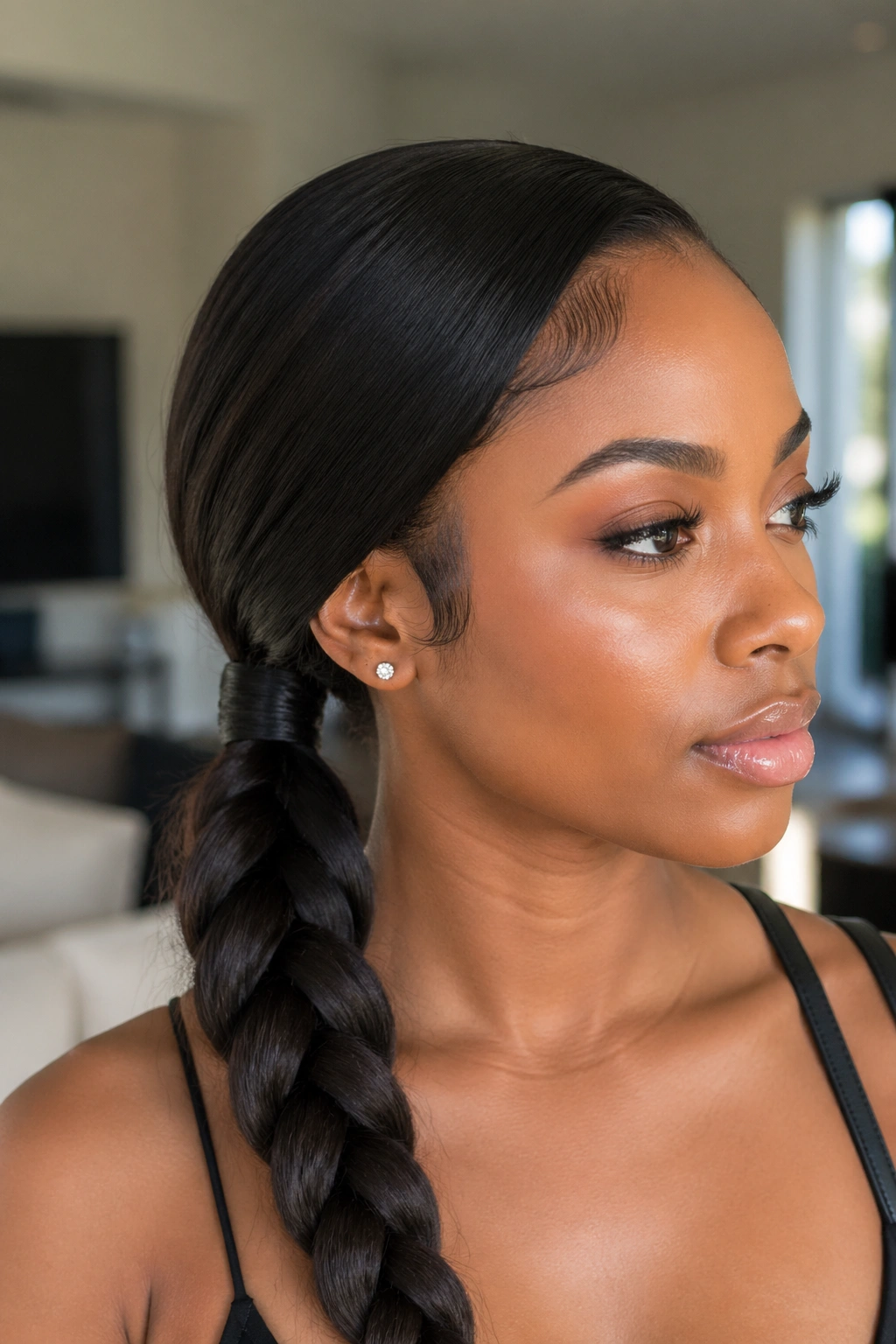
A low braided ponytail is the one I trust when I want the style to last past lunch. It sits close to the neck, keeps the scalp from feeling overworked, and gives the edges a chance to stay smooth because the whole look is grounded instead of pulled upward. That lower placement is doing real work here.
It also wears well in ordinary life, which is underrated. You can wear it to the office, to dinner, to the store, or on a day when you do not want hair in your face but still want the style to look finished. A clean side part, a soft wrap at the base, and a braid that isn’t overstuffed are usually enough.
If you want this version to stay neat, tie a silk scarf around the hairline for a few minutes after styling and resist the urge to keep touching it. Hands wreck a smooth front faster than humidity does. Leave it alone, and the braid ponytail does the quiet part beautifully.
