



Fulani braids with beaded ends can look quiet and clean, or they can walk into a room with a little rhythm of their own. The difference usually comes down to three things: how the braids are parted, how thick they are, and what kind of beads finish the ends.
The style has deep roots in Fulani and broader West African braiding traditions, where braid placement and adornment have long carried meaning, style, and status. That history matters, but so does the day-to-day reality of wearing the look: some bead choices feel light and easy, while others tug, clack, or get in your way if you pick too much hardware for the braid size.
What I love about this family of styles is how flexible it is. Clear beads keep the pattern front and center. Wooden beads soften the look. Shells, metal cuffs, crystals, and layered bead stacks each change the mood without changing the basic braid structure.
And that’s the fun part. The same core idea can look polished, playful, ceremonial, sporty, or a little bit daring, depending on where you land with the details.
1. Classic Center-Part Fulani Braids With Clear Beads
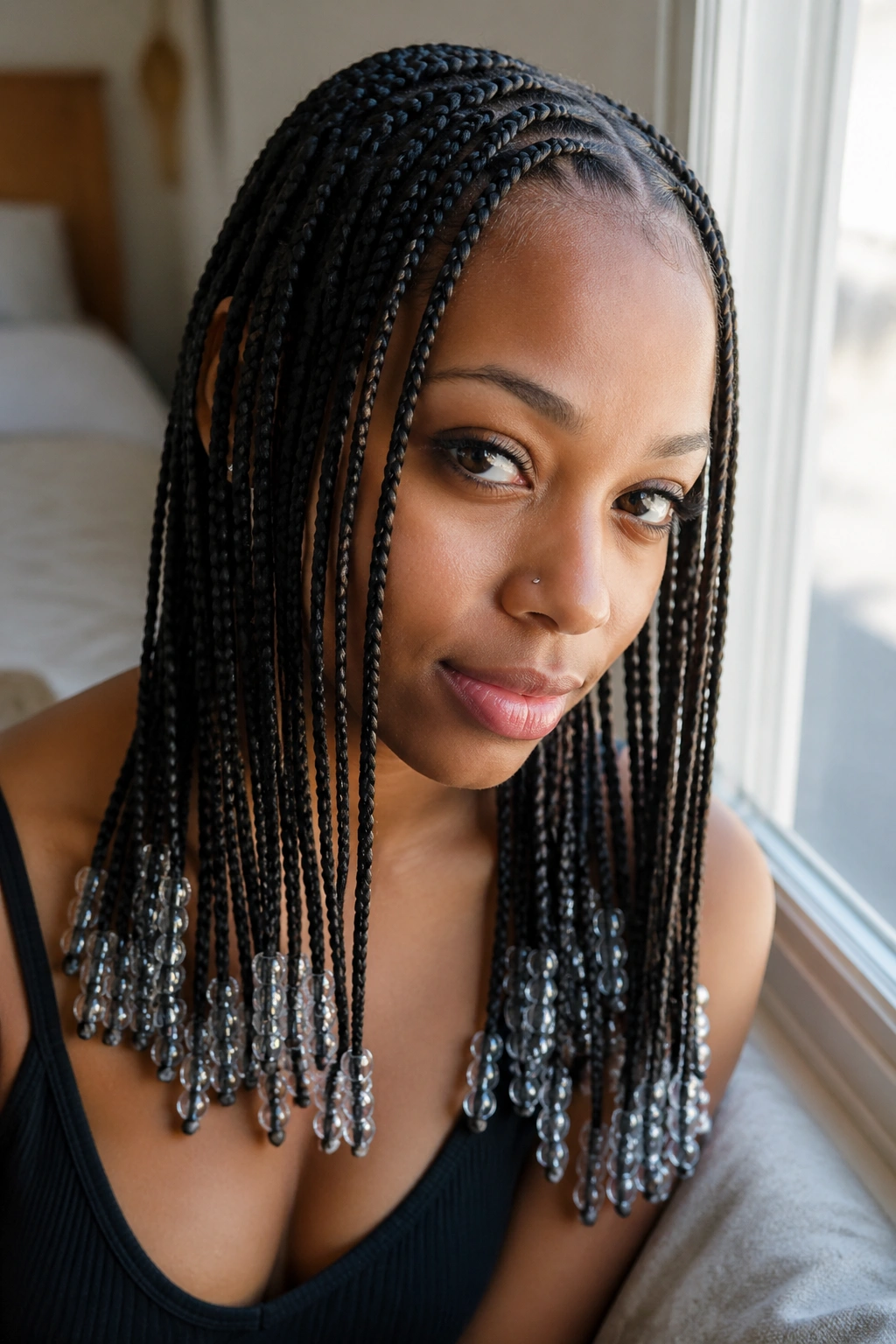
Clear beads are the cleanest place to start. They let the braid pattern do the talking, which is exactly why this version stays so easy to wear. A straight center part, a few face-framing braids, and transparent beads at the ends give you that familiar Fulani shape without extra noise.
Why the clear-bead version works
The look lands because it doesn’t fight itself. The scalp pattern stays crisp, the beads don’t steal attention, and the whole style feels balanced from front to back. If you want something that reads neat in daylight and still has movement when you turn your head, this is the one I’d point you toward first.
- Ask for 6 to 8 medium braids along the crown.
- Keep the beads small to medium, around 8–12 mm.
- Choose light acrylic beads if your hair is fine or your braids are long.
- Leave a little room at the ends so the beads don’t press into each other.
A nice detail here is sound. Clear beads make a soft click instead of a heavy clack, and that matters more than people expect. Heavy bead sets can feel fun for an hour and annoying after a day. These don’t.
2. Side-Swept Fulani Braids With Gold Cuffs and Beads
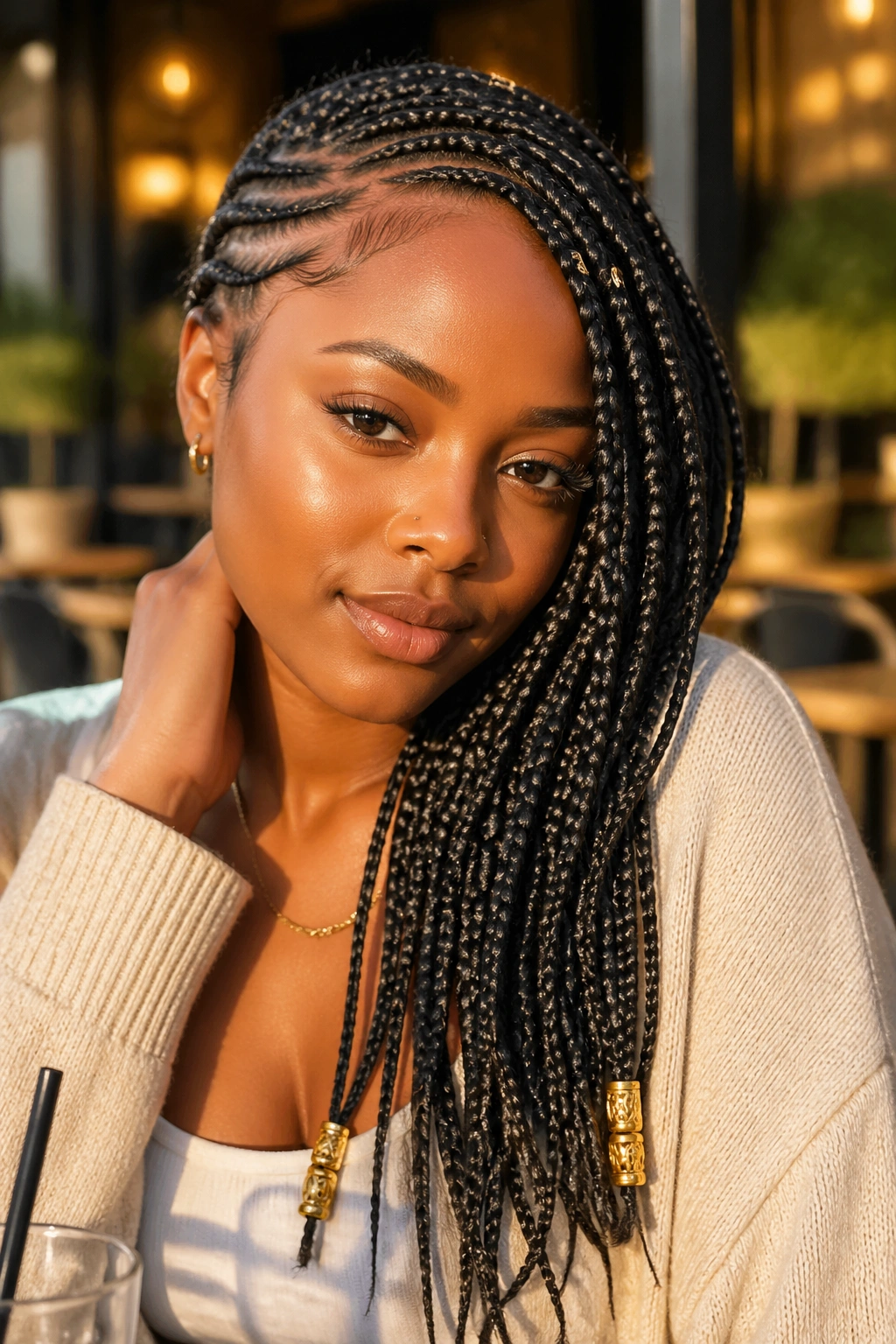
Side-swept Fulani braids change the whole face shape. The part runs off to one side, the braids fall diagonally, and the gold cuffs give the ends a sharper finish than plain beads ever could. It’s a good choice when you want the style to feel dressed up without looking overworked.
The diagonal line is doing a lot of the work here. It softens stronger jawlines, opens up one side of the face, and gives the braids a little more motion than a strict center part. Gold cuffs near the ends—one or two per braid, not a dozen—keep it clean.
I like this version for evenings, photos, and occasions where you want the hair to feel intentional. Keep the bead color simple: clear, black, or amber works better than a busy mix because the cuffs already bring enough shine. If the cuffs are too close together, the ends start to look crowded. Space matters.
And yes, the side sweep grows out gracefully. That matters when you don’t want the style to feel stale after the first few days.
3. Waist-Length Fulani Braids With Mixed Wooden Beads
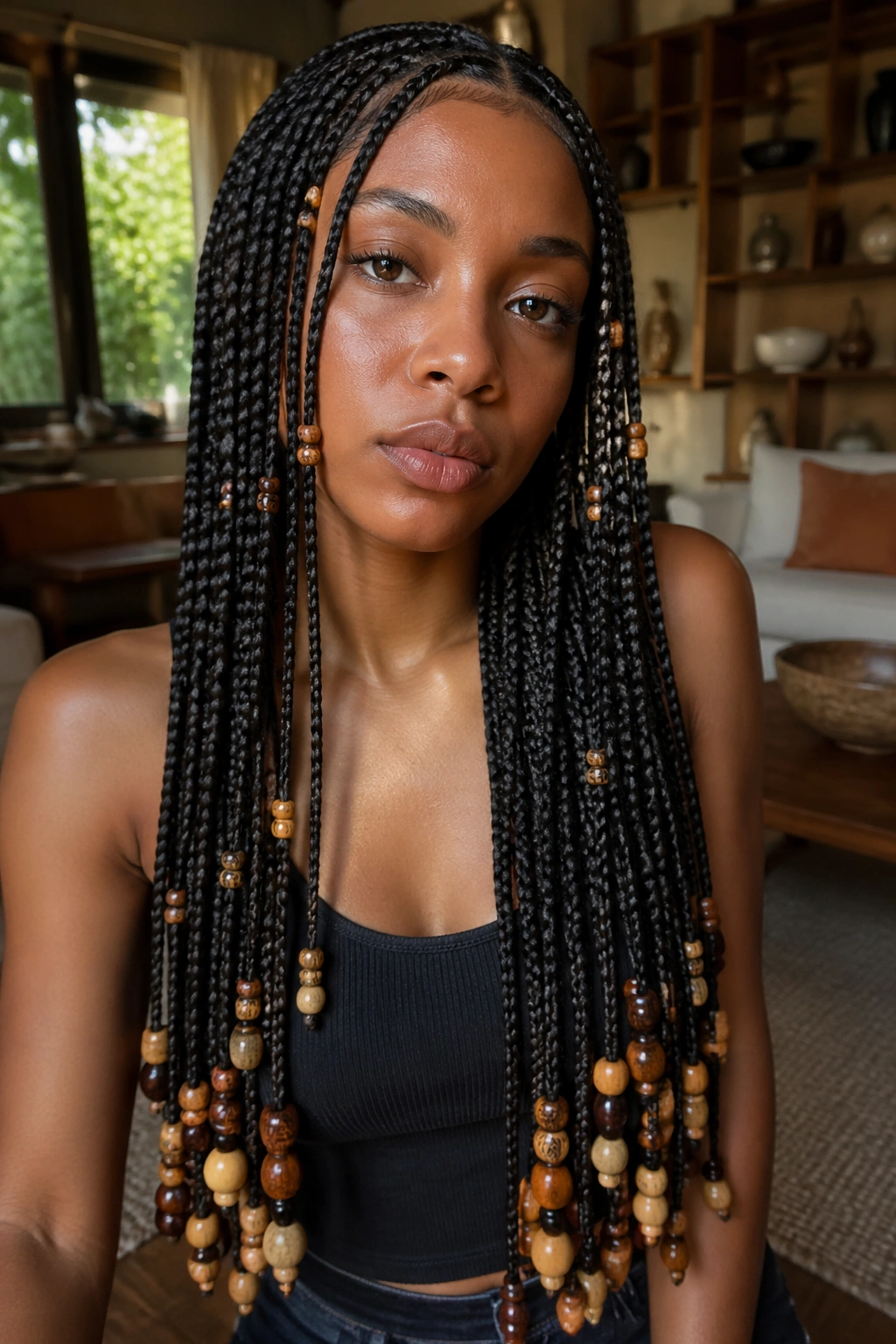
Why does wood work so well here? Because it adds warmth without making the braid ends look bulky or shiny in the wrong way. Wooden beads have a grounded, earthy feel, and when the braids run all the way to the waist, that finish keeps the style from looking too sharp.
What to ask for
A good version starts with evenly sized braids through the crown and then a mix of bead sizes at the ends—small wooden beads near the top of the tail, larger ones lower down. That little size shift keeps the movement interesting. Flat, uniform rows of beads can look stiff on long braids.
Wood is also one of the easier bead materials to wear all day. It has a bit of weight, but not the cold, hard feel of glass or metal. If your hair is thick, waist-length braids can carry it well. If your hair is fine, ask for fewer beads per braid and keep the biggest pieces near the bottom so the tension doesn’t build at the end.
This version has a relaxed, almost lived-in feel that works because the details are honest. Nothing is trying too hard. That’s the charm.
4. Jumbo Fulani Braids With Oversized Barrel Beads
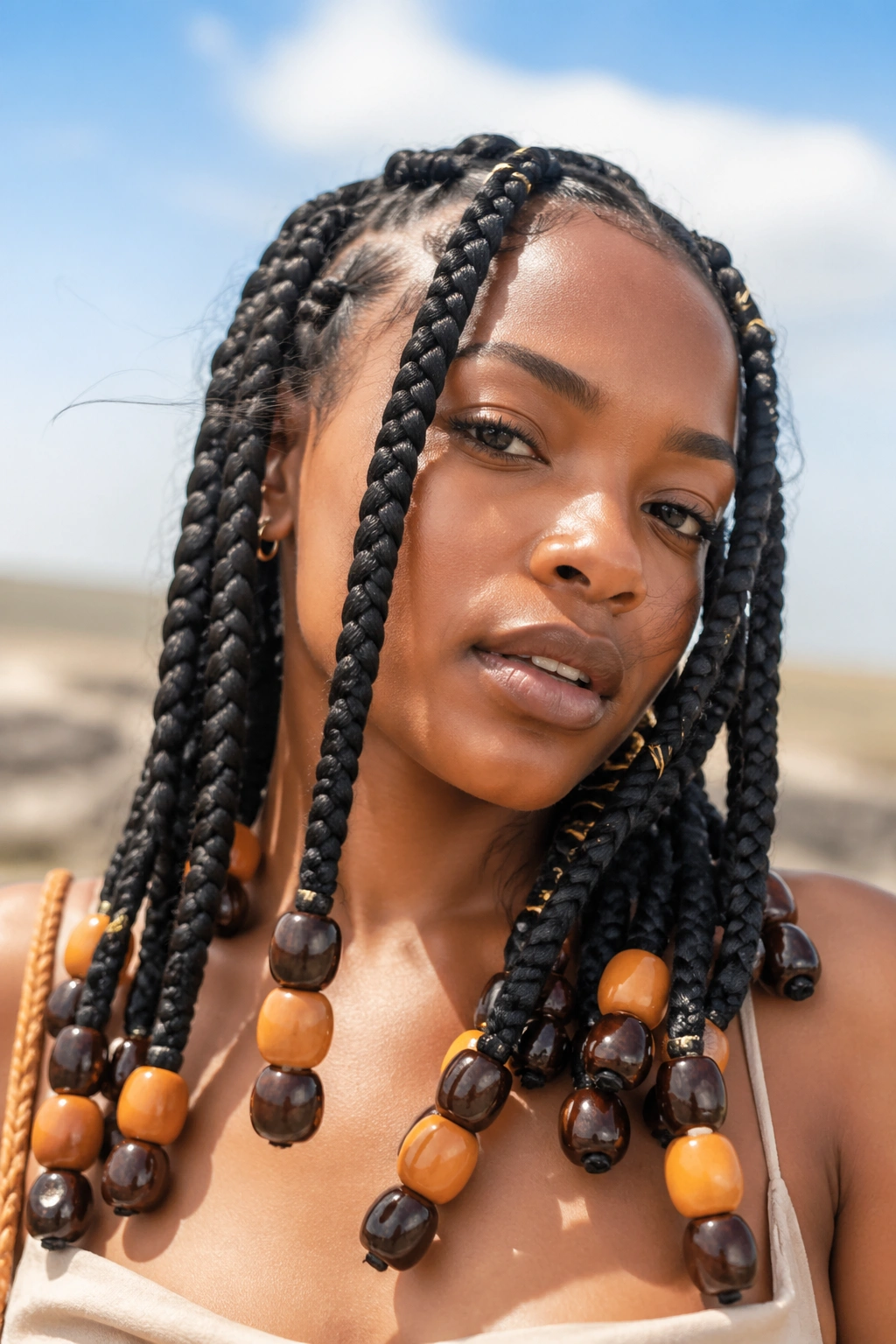
You can spot this one from across the room. Jumbo Fulani braids already have a strong shape, and oversized barrel beads push the look into bolder territory without needing bright color or extra decoration. The trick is keeping the braid count lower so the scalp doesn’t get crowded.
Thick braids carry large beads better than fine braids do. That sounds obvious, but it’s the mistake I see most: too-small braids with too-large ends. The result is top-heavy and awkward. With jumbo braids, the ends feel anchored, almost architectural. The bead shape matters too. Barrel beads read cleaner than round ones when the braid itself is thick.
A style like this works well if you want the hair to hold its shape in wind, movement, or long wear. It also photographs with a strong silhouette. Keep the color palette simple—black, honey brown, or matte gold looks better than a rainbow here.
One honest note: this set is not light. If you don’t like feeling your hair swing, skip it.
5. Knotless Fulani Braids With Seed-Bead Tips
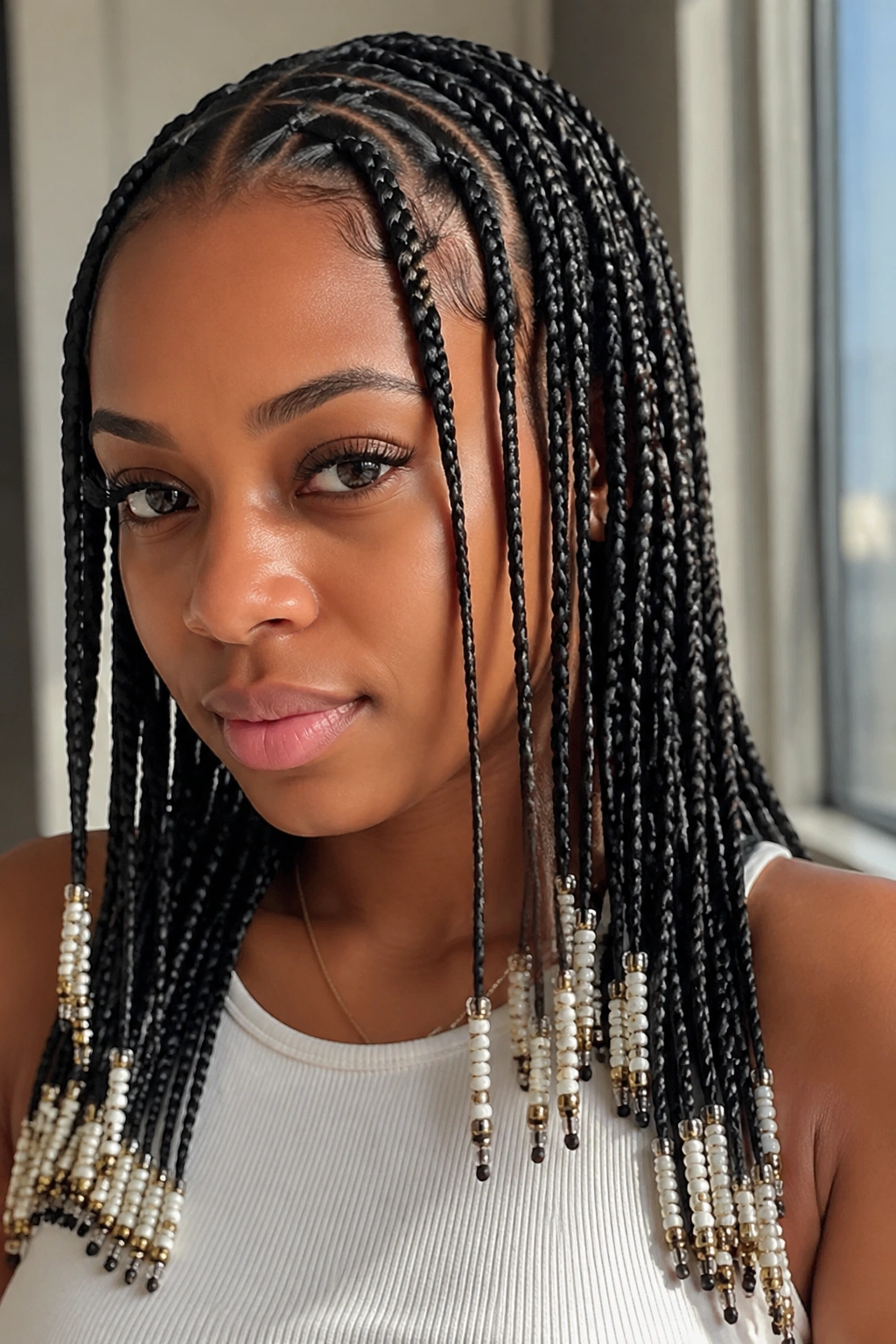
Knotless braids change the whole experience at the scalp. There’s less bulk where the braid starts, which makes the style easier to wear for longer stretches and gives the beaded ends a more fluid swing. Seed beads at the tips finish the look without adding much weight.
The small-bead advantage
Seed beads are tiny, but they pull a lot of visual weight. They give the ends a little sparkle and movement without dragging the braid down. That’s useful on knotless braids because the braid itself already feels sleek and smooth. Add large beads, and you lose that effect fast.
This version is especially good if you like a low-key finish that still has detail. The beads can be clear, smoky, black, or translucent amber. I’d keep the ends short enough that the seed beads cluster neatly rather than spreading out too much. A tight cluster at the tip looks refined. A long, floppy tail of tiny beads can feel fussy.
If your scalp is sensitive, this is one of the kinder options. The lighter root tension plus the small bead finish makes the style easier to live with, plain and simple.
6. Zigzag-Part Fulani Braids With Crystal Beads
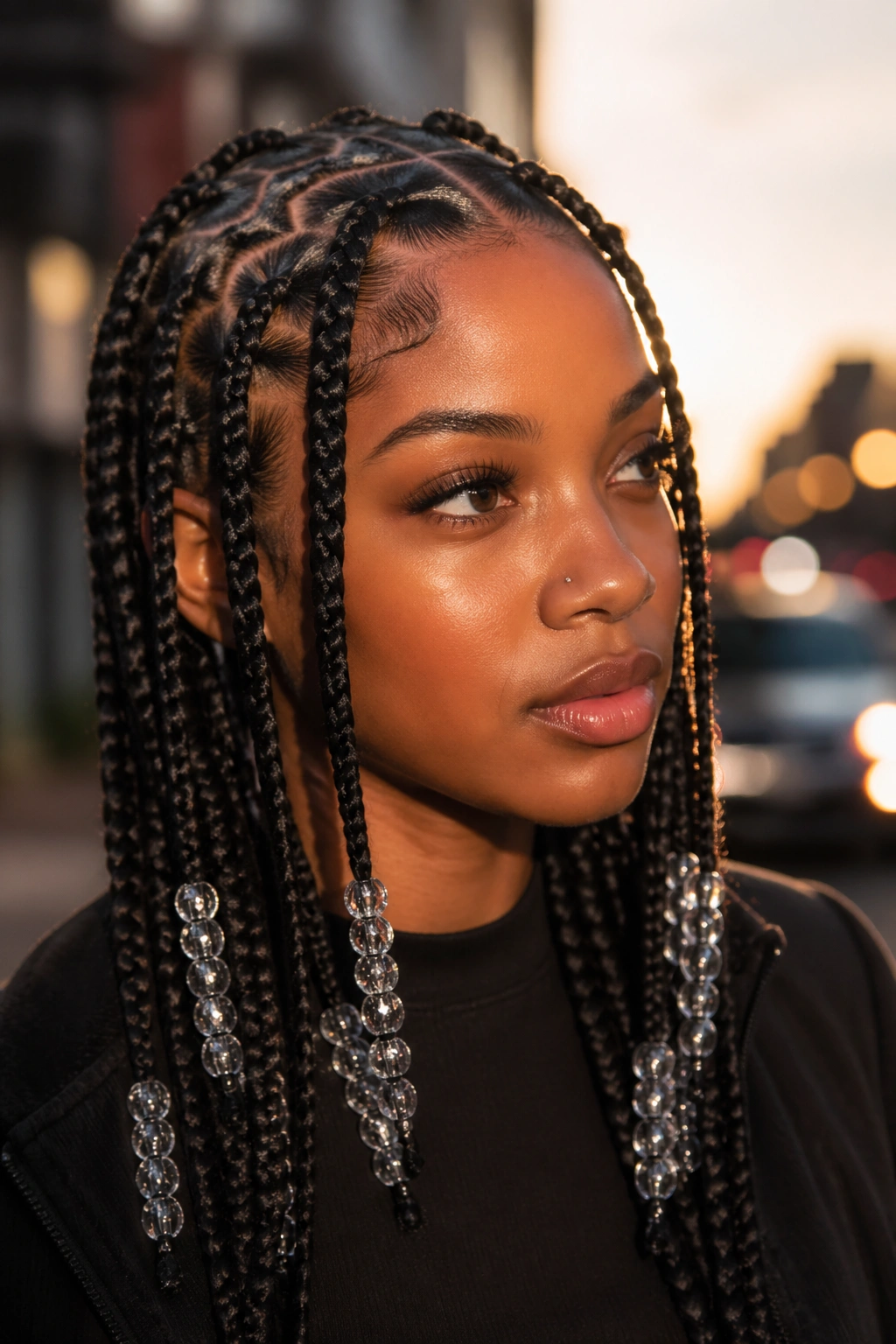
A zigzag part does something a straight part can’t: it turns the scalp itself into part of the design. Add crystal beads at the ends and the whole style starts to look sharper, brighter, and a little less expected. It’s a good move when you want the braids to feel more styled than classic.
The zigzag works best when it’s deliberate, not wiggly. Ask for clean angles and even spacing so the pattern reads clearly from the front. If the parting gets too loose, the whole effect disappears. Crystal beads at the ends catch light in a way that clear beads don’t, especially if they’re faceted rather than smooth.
This style likes a tidy finish. A little edge control around the part can help, but too much product makes the scalp look wet in the wrong way. Keep the braids close to medium thickness so the zigzag still shows.
It’s a little more dramatic than the center-part versions, but not loud for the sake of it. That’s why it works.
7. Half-Up Fulani Braids With a Braided Crown and Dangling Beads
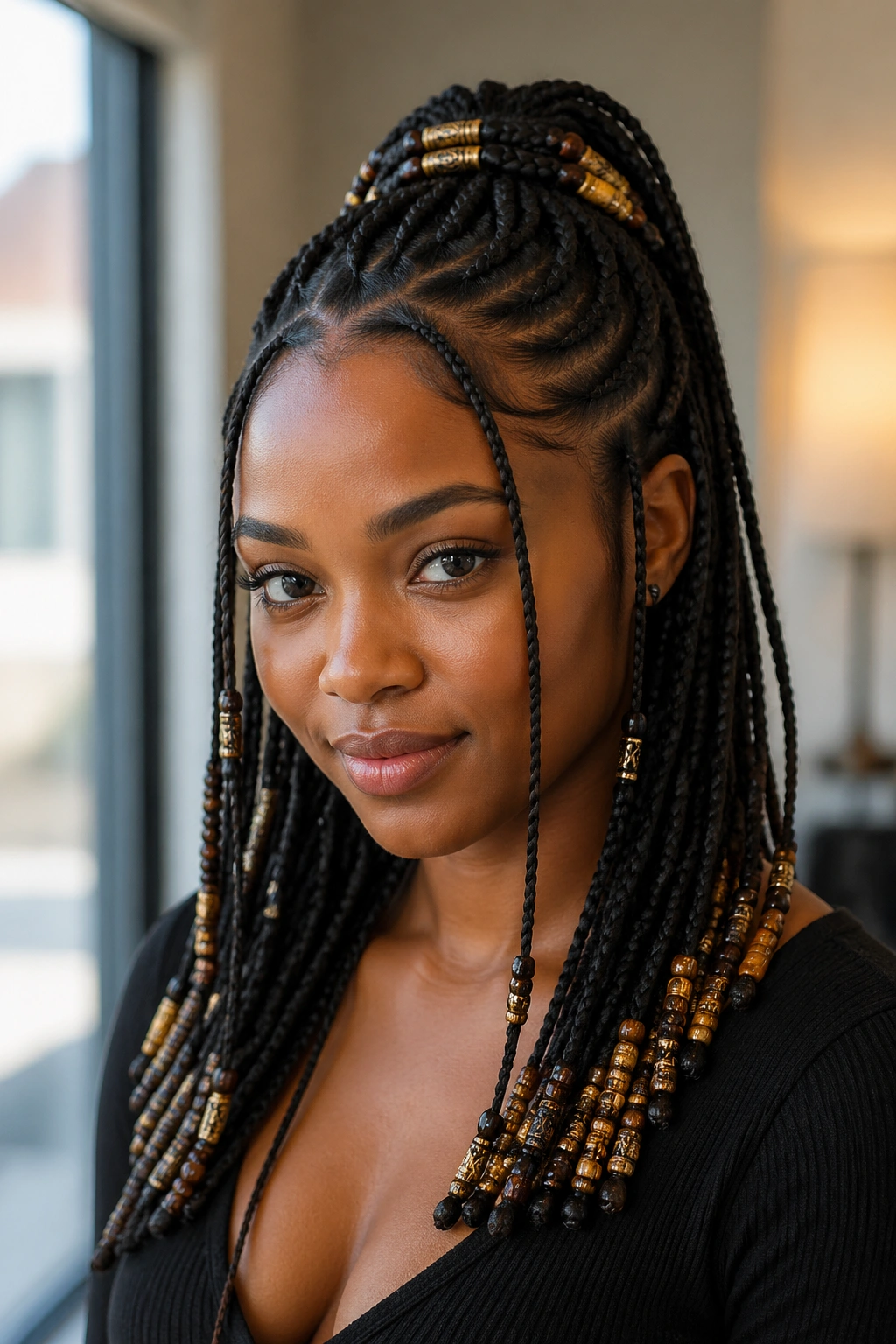
Pulling the front braids into a half-up crown changes the whole posture of the style. The top reads lifted and open, while the back still hangs with weight and movement. Beads at the ends keep the bottom half from feeling plain once the top has been pinned or wrapped.
What makes the crown shape feel balanced
The crown part needs enough braid width to hold itself. If the front braids are too skinny, they won’t sit cleanly when pulled back. Medium thickness is usually the sweet spot. The braid line should curve gently around the head, not pinch hard at the temples.
I like this look for anyone who wants the face open but still wants the length. It shows earrings well, and it makes the neck and collarbone stand out a bit more. The beaded ends can be simple—clear, wood, or gold-toned—because the crown already gives the style enough structure.
A half-up set can get messy if the pinned section is too tight. Ask your braider to leave a little softness at the edges so the crown doesn’t look pasted on. That small bit of looseness matters.
8. Bob-Length Fulani Braids With Tiny End Beads
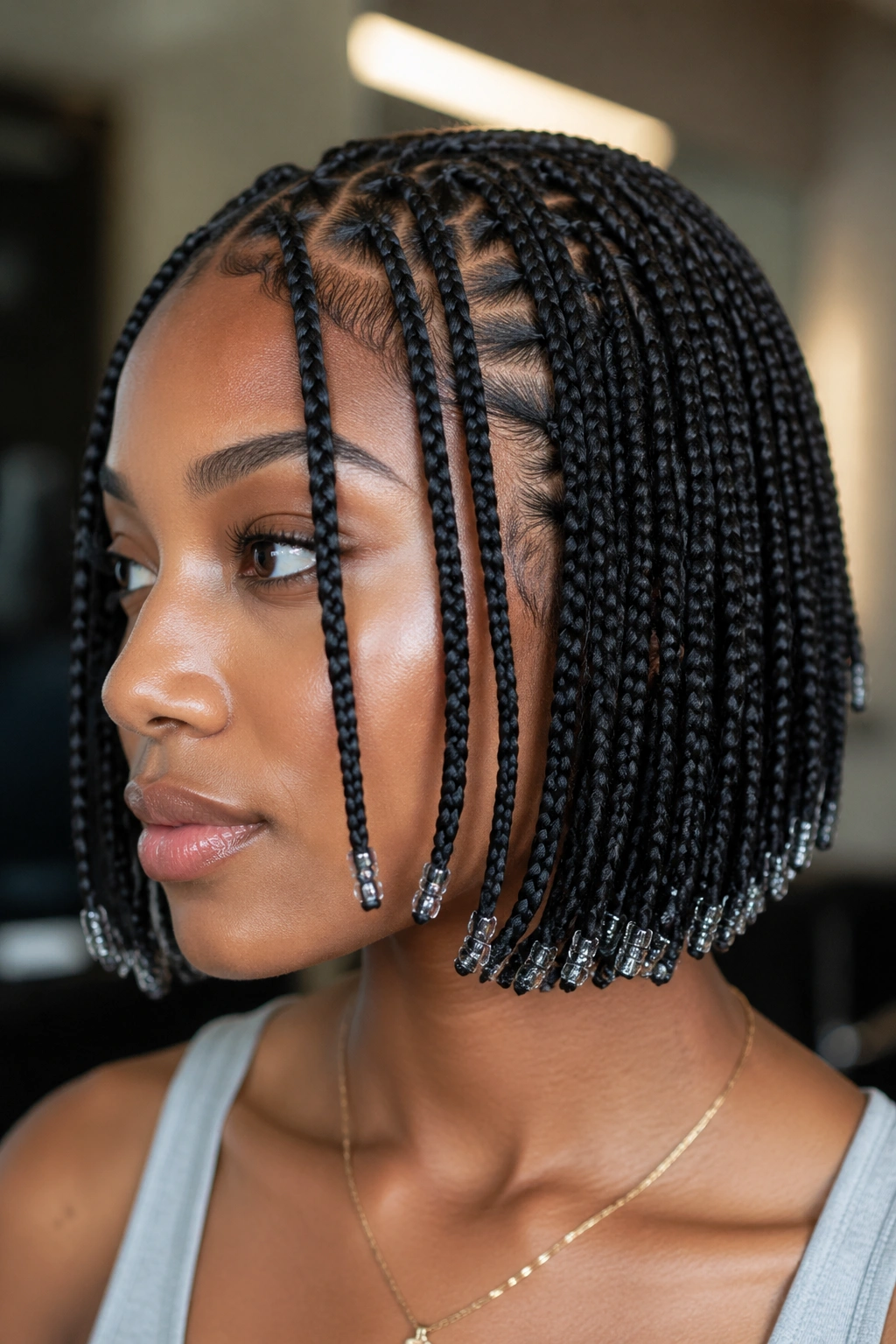
Short Fulani braids don’t get enough credit. A bob-length set feels neat, light, and sharp around the jawline, and tiny beads at the ends keep the cut edge clean instead of chunky. The style has a crisp shape that works especially well when the braids stop around the chin, cheekbone, or collarbone.
The main thing here is proportion. Small braids with small beads look elegant. Large beads on a short braid can tip the whole look into awkward territory because the end hardware starts to overpower the actual braid. Tiny beads keep the finish tidy and give just enough motion when you turn your head.
This is one of the easiest lengths to live with. It doesn’t catch on clothes as much, it dries faster after washing, and it’s less tiring at the nape. That said, short braids still need clean parting. A bob only looks sharp if the top is neat.
If you want Fulani braids without the weight of a long set, this is a smart place to land.
9. Fulani Braids With Curly Leave-Out and Beaded Ends
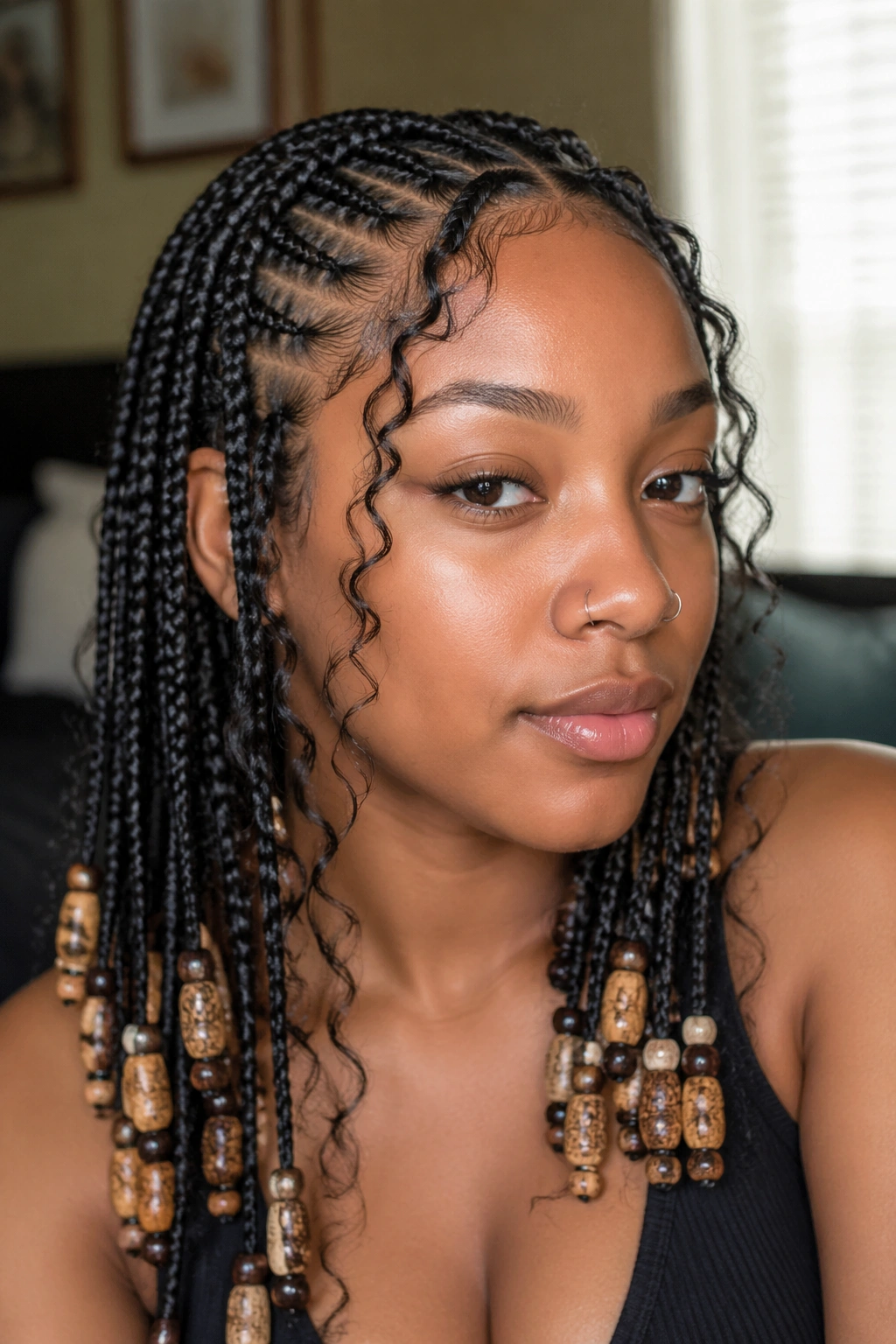
Curly pieces around the face change the whole mood. The braids stay structured, but the leave-out adds softness that keeps the style from looking too rigid. Beaded ends help anchor the look so the curls feel like a detail, not a separate hairstyle.
How the soft-and-structured mix works
The key is restraint. A few curled tendrils near the temples or along the cheekbones are enough. If you add too much loose curl, the braid pattern gets lost. The braids should still be the main event. The curls are there to soften the edges.
Beads at the ends matter even more here because they keep the lower half from floating away from the top. Clear or pearl-like beads pair well with curls, while wood gives the set a warmer, more casual feel. I’d avoid overly bright bead colors unless you want the style to go fully playful.
This is a nice option if you like movement around the face but don’t want a full curly install. The mix feels friendly and touchable, and it grows out in a forgiving way. That’s useful, because styles like this can last longer when the hairline stays soft.
10. Triangle-Part Fulani Braids With Shell Beads
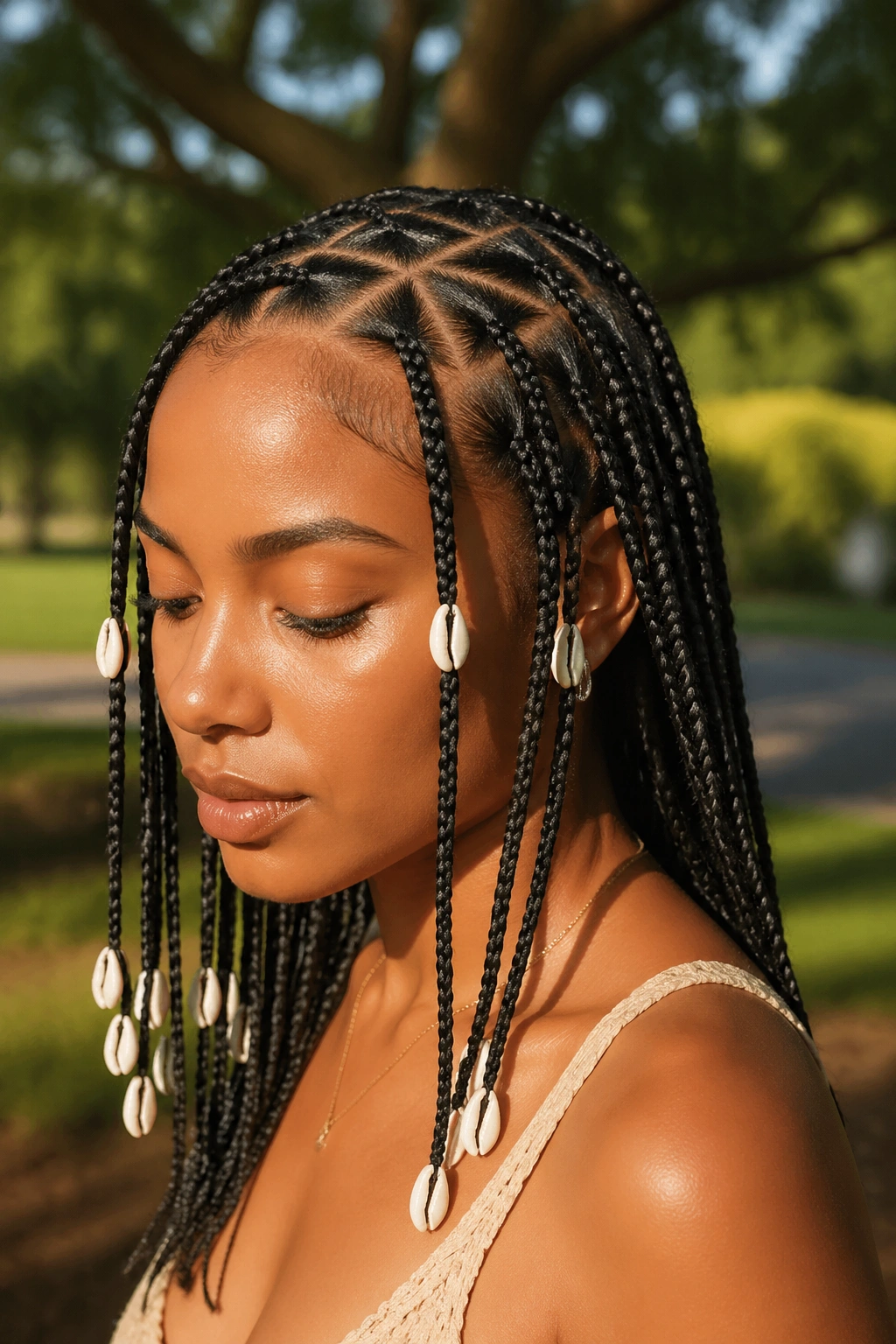
Triangle parts give the scalp a geometric edge that reads immediately. Paired with shell beads, the look takes on a beachy, handcrafted feel that’s hard to fake with regular round parts and plain acrylic. It’s not loud. It’s deliberate.
The triangle shape works best when each section is matched carefully. Uneven triangles stick out fast, especially near the front. Shell beads can be cowrie-style, flat shell discs, or shell-look pieces with a matte finish. I prefer them in small groups, not stacked too high, because the braid already has a distinct parting pattern.
This style sits somewhere between relaxed and ceremonial. It feels rooted, but not stiff. If you want the bead detail to stand out, keep the braid color natural—black, dark brown, or deep auburn usually gives the shells enough contrast.
One thing to watch: shells can be a bit heavier than acrylic. On medium or thick braids, that’s fine. On very fine braids, keep the bead count low so the ends don’t pull down too much.
11. Thin Micro Fulani Braids With Layered Bead Stacks
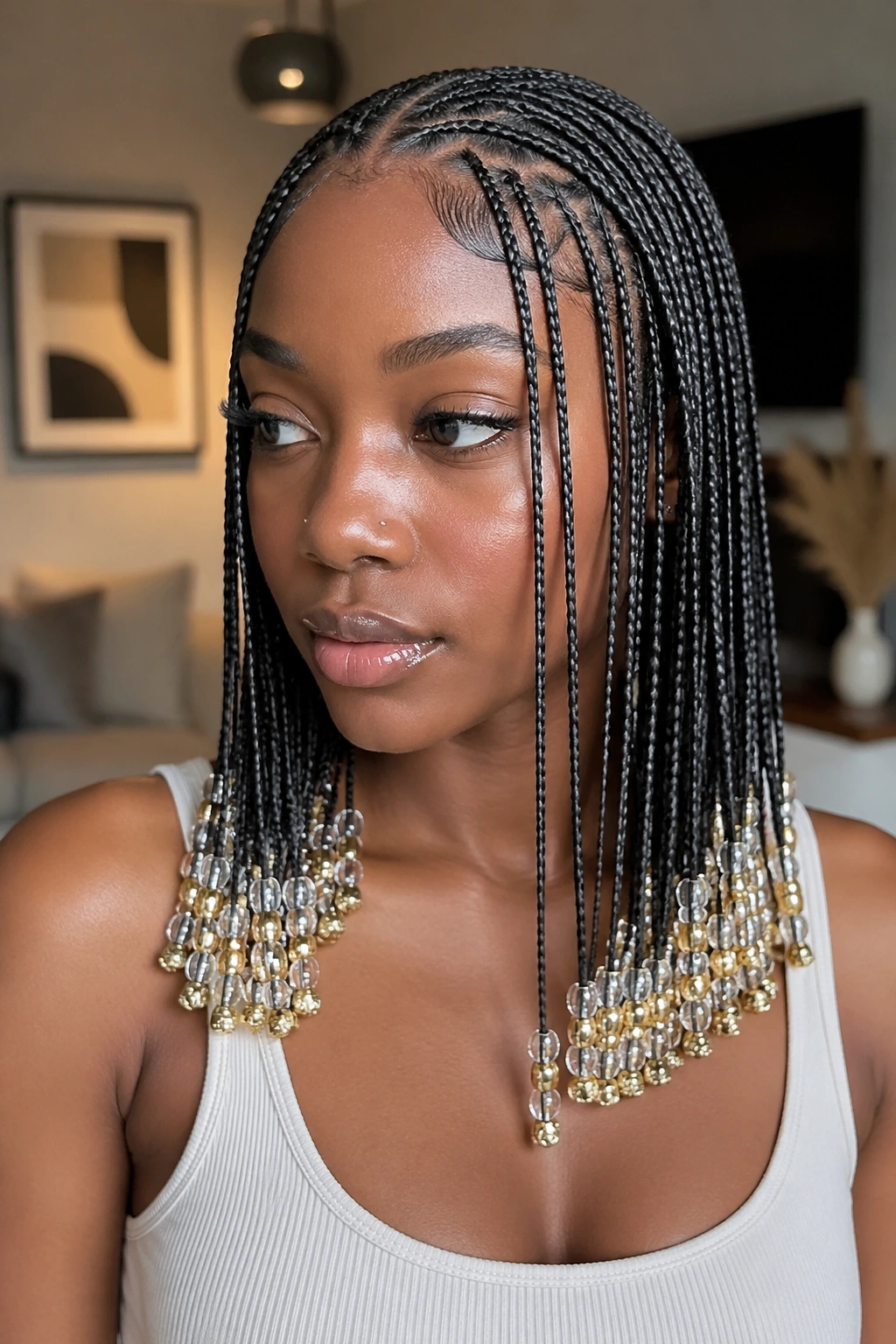
Tiny braids with layered bead stacks take patience. A lot of patience. But the result is worth it if you like fine detail and a finish that looks almost woven. Instead of one bead at the end, you get two or three stacked pieces—maybe clear, then gold, then a small accent bead at the tip.
That layered finish gives the braids a soft shimmer when they move. Because the braids are thin, the beads should be thin too. Heavy ends ruin the whole effect and make the set feel saggy fast. I’d keep the bead colors close together rather than using too much contrast. The beauty here is in the small shifts.
This style is not the fastest to install, and that’s part of the price. Micro braids take time, and the beadwork adds more of it. Still, the final look has a delicate, dense texture that bigger braids can’t match.
If you like hair that reads intricate up close, this one has real charm.
12. Fulani Lemonade Braids With Beads at the Nape
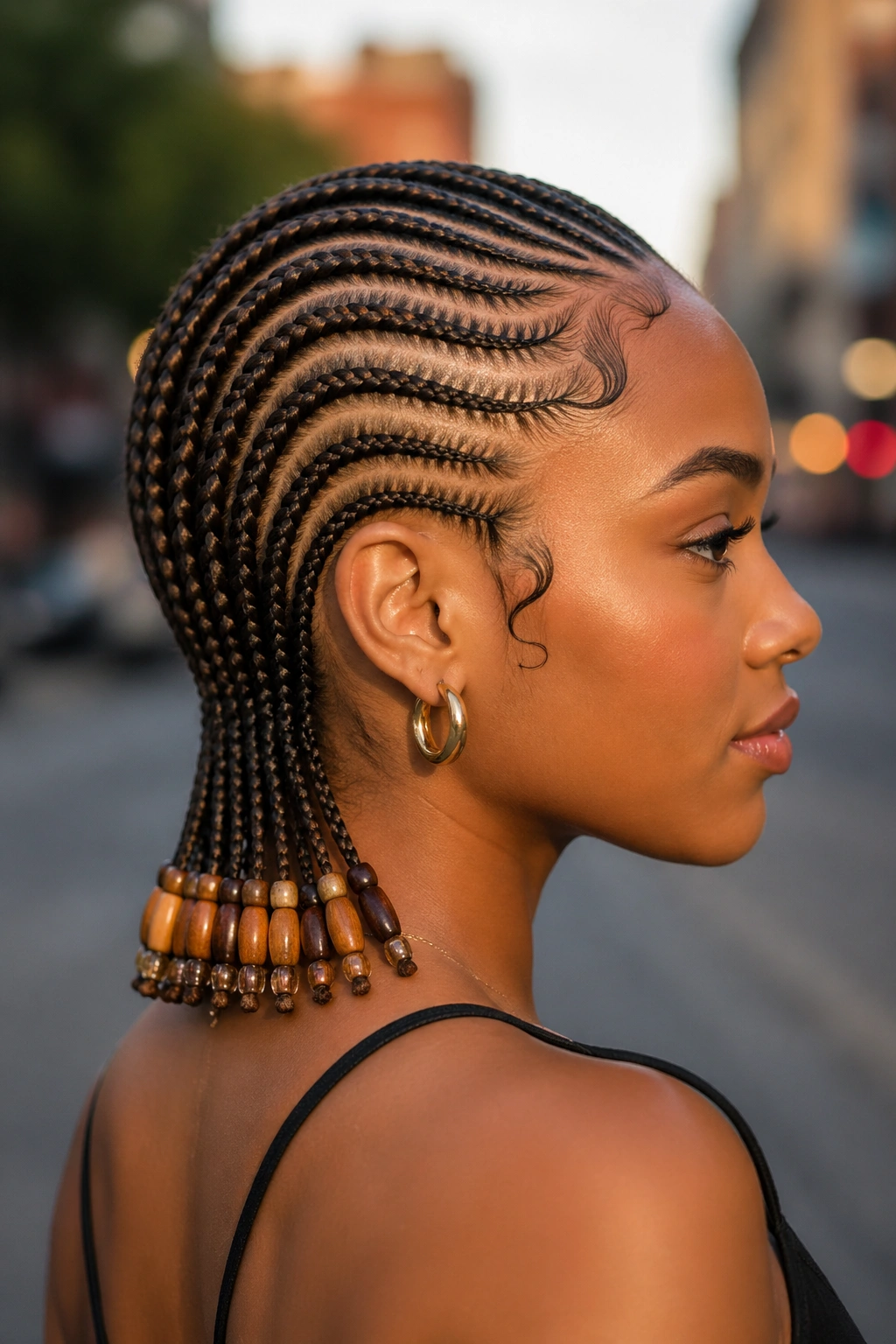
Lemonade braids already have that strong side-swept motion, and when you finish them with beads at the nape, the back starts to move in a cleaner line. The face stays open. The ends stay interesting. Nothing crowds the front.
The name comes from the sweeping angle of the braid pattern, and that angle matters. The rows should curve neatly toward one side, almost like they’re following the shape of the head. Beads at the bottom can stay subtle—black, amber, or smoked clear beads work well because the braid lines are already doing the work.
I like this version for people who don’t want a lot of decoration near the cheeks. The beads sit lower, so the style feels neat from the front and livelier from the back. It also helps if you wear glasses or earrings that already compete for attention near the face.
The nape is where the braids can tangle first, so keep the bead tails even and not too long. That small detail saves a lot of frustration.
13. Feed-In Fulani Braids With Gold and Black Bead Mix
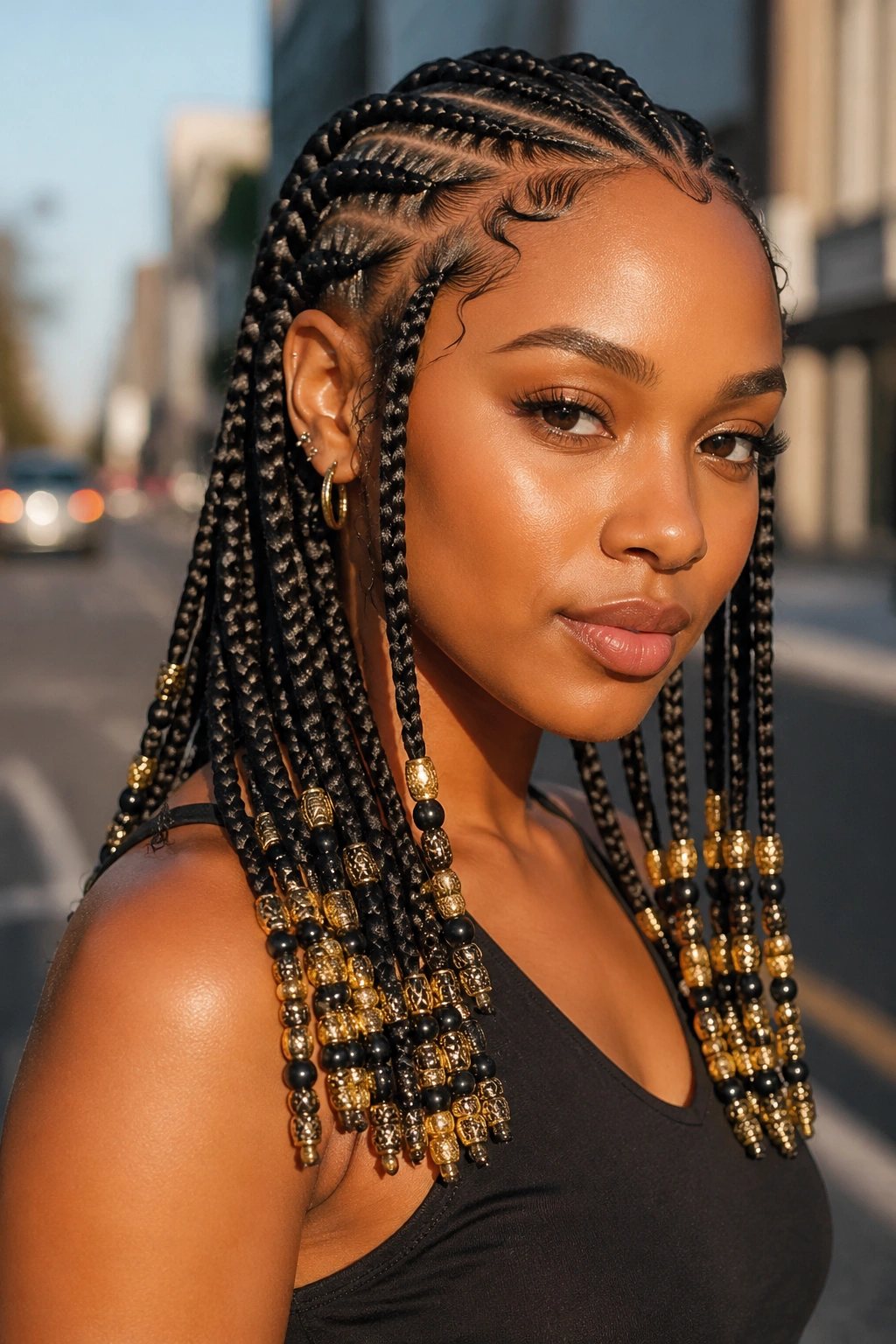
Feed-in braids start with a slim base and gradually build thickness, which gives the scalp a smooth look and keeps the parting tidy. Pair that with a gold-and-black bead mix, and the style gets a graphic edge that feels strong without turning flashy.
Why the color mix works
Black beads ground the braid. Gold beads lift it. Together, they give the ends enough contrast to matter without turning the style into a color pileup. I’d keep the gold to one of two finishes—matte or softly polished—so it doesn’t look too bright next to the darker beads.
This set looks best when the braid count is moderate and the rows are even. Feed-in braids already have a sleek transition at the scalp, so the ends don’t need oversized ornaments. A few well-placed bead clusters are enough. If every braid gets the same treatment, the pattern can feel flat.
It’s a strong choice if you like a polished look that still has personality. The braid itself stays classic. The bead mix does the talking.
14. High Ponytail Fulani Braids With Beaded Ends
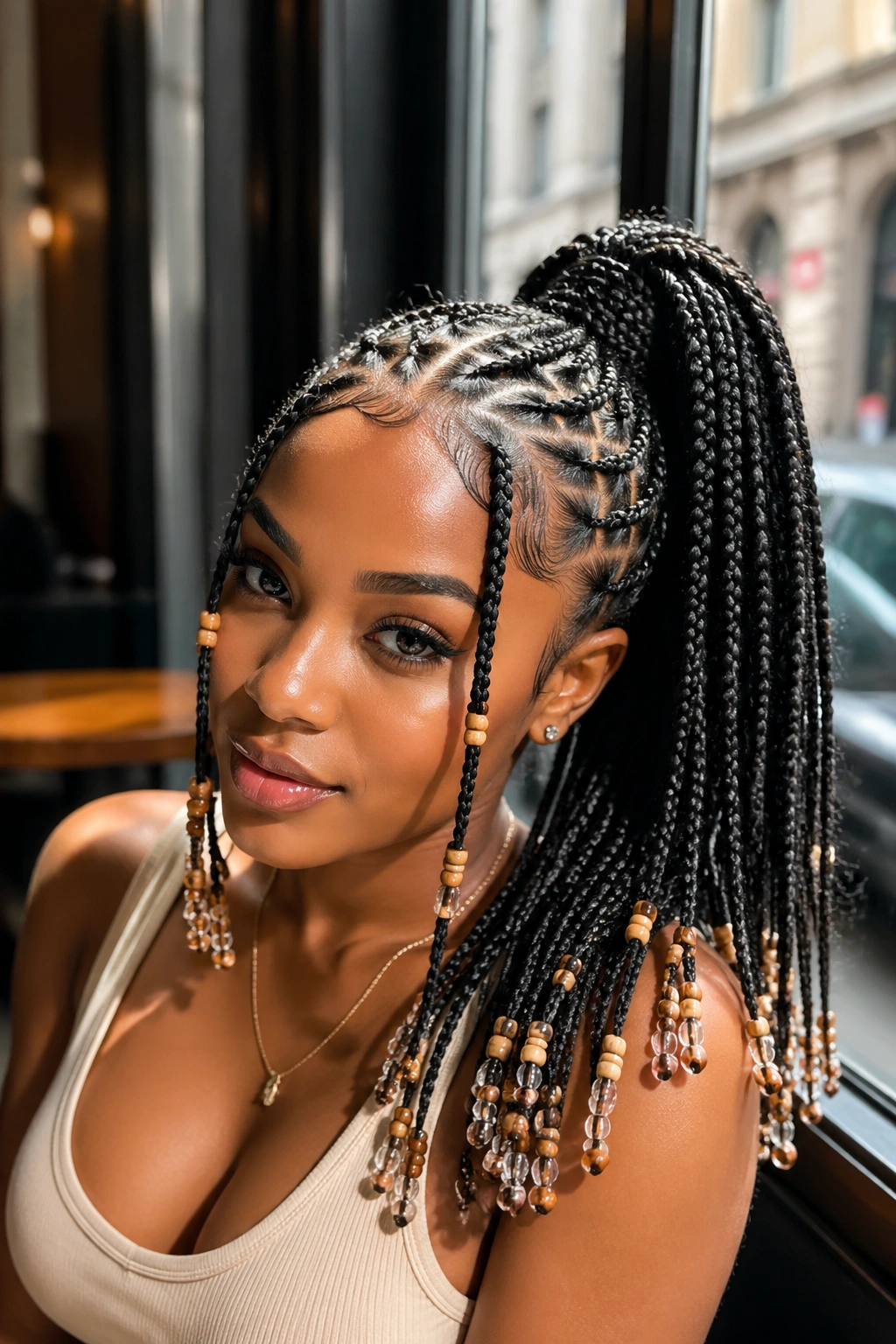
A high ponytail changes the energy instantly. The braids lift off the neck, the crown gets taller, and the beaded ends spill from the ponytail like a little curtain of movement. It’s one of the easiest ways to make Fulani braids feel more playful.
The base has to be secure. If the ponytail anchor is loose, the weight of the beads will pull it down during the day. Ask for enough tension at the crown to hold the shape, but not so much that it hurts. The right balance matters here because the style lives and dies on that lift.
I like this version when the goal is movement. The ends swing more, the face gets more open, and the neck stays free. It also works well with big hoops, stacked necklaces, or a clean neckline because the hair is pulled away from the shoulders.
Keep the beads uniform if you want the ponytail to feel sleek. Mix them only if you want the ends to look more playful than polished.
15. Two Front Braids and Long Back Fulani Style
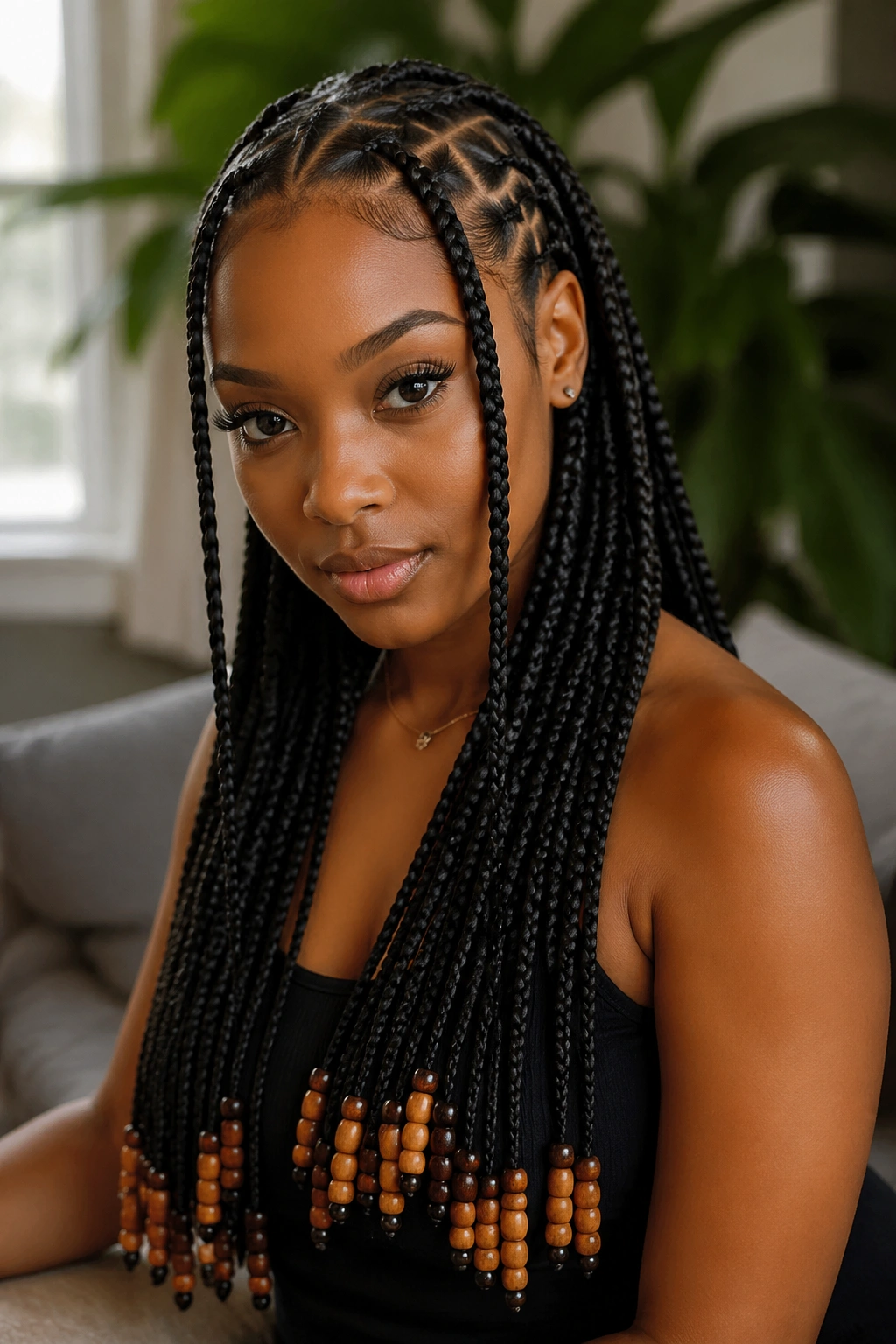
Two front braids change the framing in a way that feels almost tailored. The front pieces sit like bookends around the face, while the rest of the braids fall long behind them. Beaded ends complete the shape and keep the back from looking plain.
The face-framing effect
This style works because the eye goes straight to the front braids first. They can be slightly thicker than the rest, which helps them hold the shape near the temples and along the cheeks. The back braids stay simpler, so the whole look doesn’t become crowded.
A good version keeps the bead details focused near the ends, not halfway up the length. That keeps the silhouette clean. You can use clear beads, gold cuffs, or even small wooden pieces, depending on how formal you want the finish to feel.
It’s a forgiving style for everyday wear. The front braids help the look stay readable even when the back shifts around. If you’re the type who wants people to see the braid work first and the bead detail second, this one is a strong pick.
16. Fulani Braids With Ombré Lengths and Transparent Beads
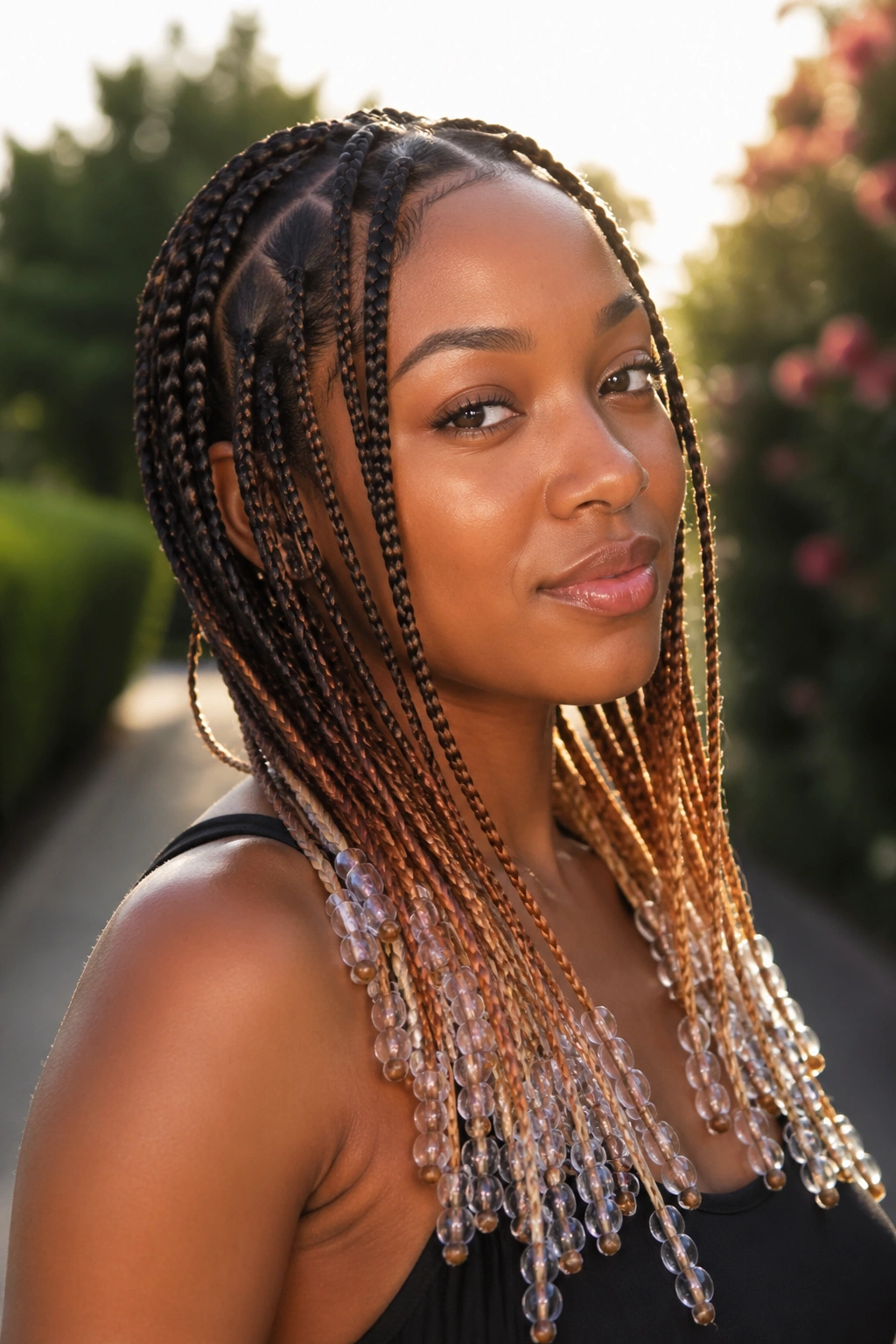
Ombré extensions bring a slow color fade that looks especially good when the beads stay transparent. The beads don’t interrupt the transition; they let it keep moving all the way to the tips. That’s the whole trick.
The braid color should shift in a way that feels natural. Dark roots fading into caramel, honey, burgundy, or soft copper tends to look smoother than a harsh jump. Clear beads are useful here because they don’t clash with the color change. They let the braid show through, which matters when the ombré is the feature.
This style is a good fit if you like dimension but not too much decoration. The color already does part of the work. The beads just finish the line. I’d keep the parting clean and the braid size medium so the fade is easy to see.
A small warning: once the color fade is doing this much work, frizzy ends stand out faster. Seal and care for the tips well.
17. Thick-and-Thin Mixed Fulani Braids With Metal Accents
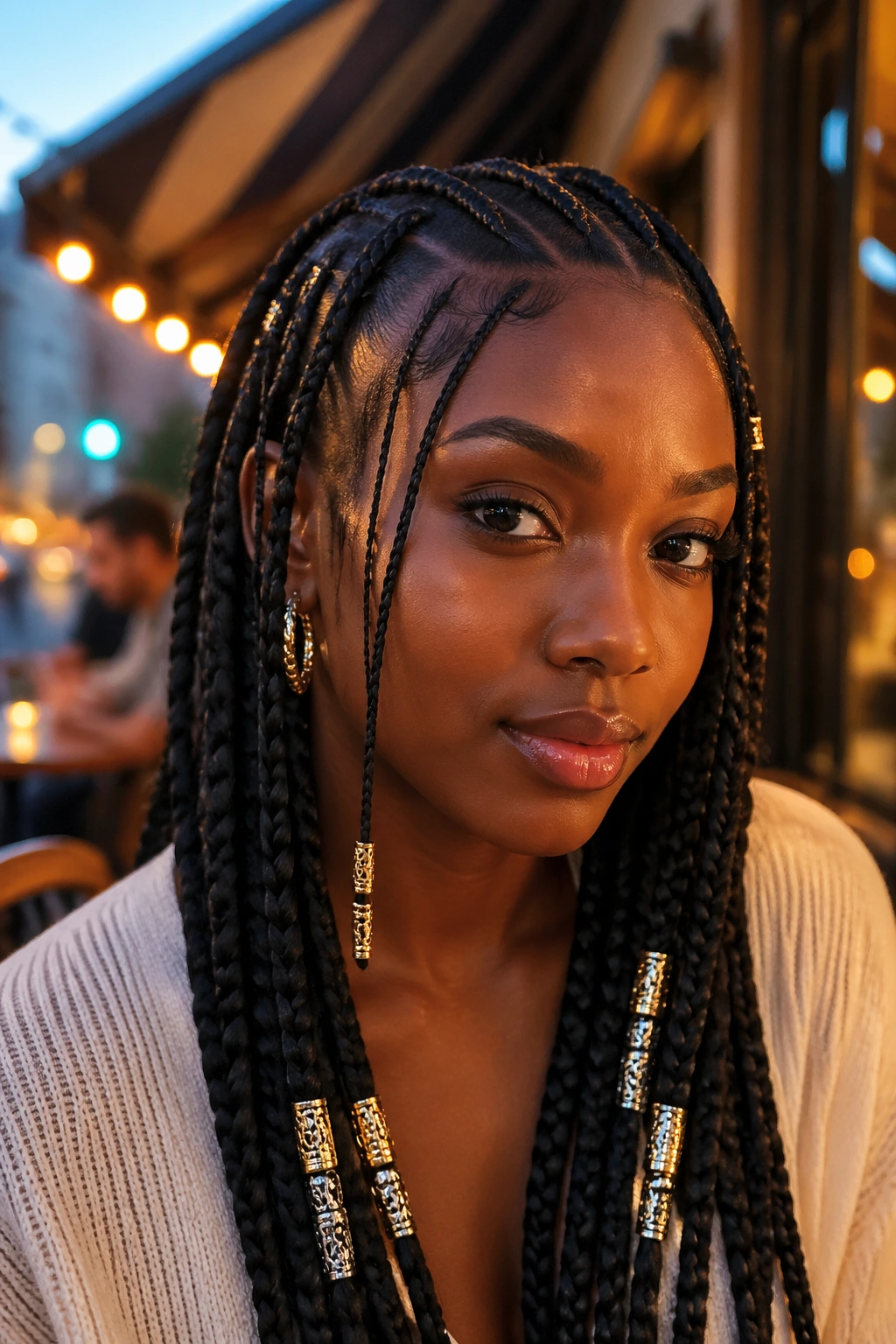
Mixing braid sizes keeps the style from settling into one note. Thick braids bring weight and shape. Thin braids add detail and movement. Add a few metal accents at the ends, and the whole set feels layered in a good way.
The braid sizes should be planned, not random. Put the thicker braids where you want the eye to land first—usually near the center or along the face frame. Let the thinner ones fill in the spaces between. Metal accents work best as a finish on select braids, not all of them. Too much metal can make the style feel hard and noisy.
I like this set for people who want texture more than symmetry. It has a little edge without becoming messy. The difference between thick and thin strands makes the silhouette more interesting from every angle.
If you’re unsure about metal, start with brushed-finish pieces rather than shiny ones. They look less harsh and tend to sit more quietly against the braid color.
18. Fulani Braids With Heart Parts and Color-Matched Beads
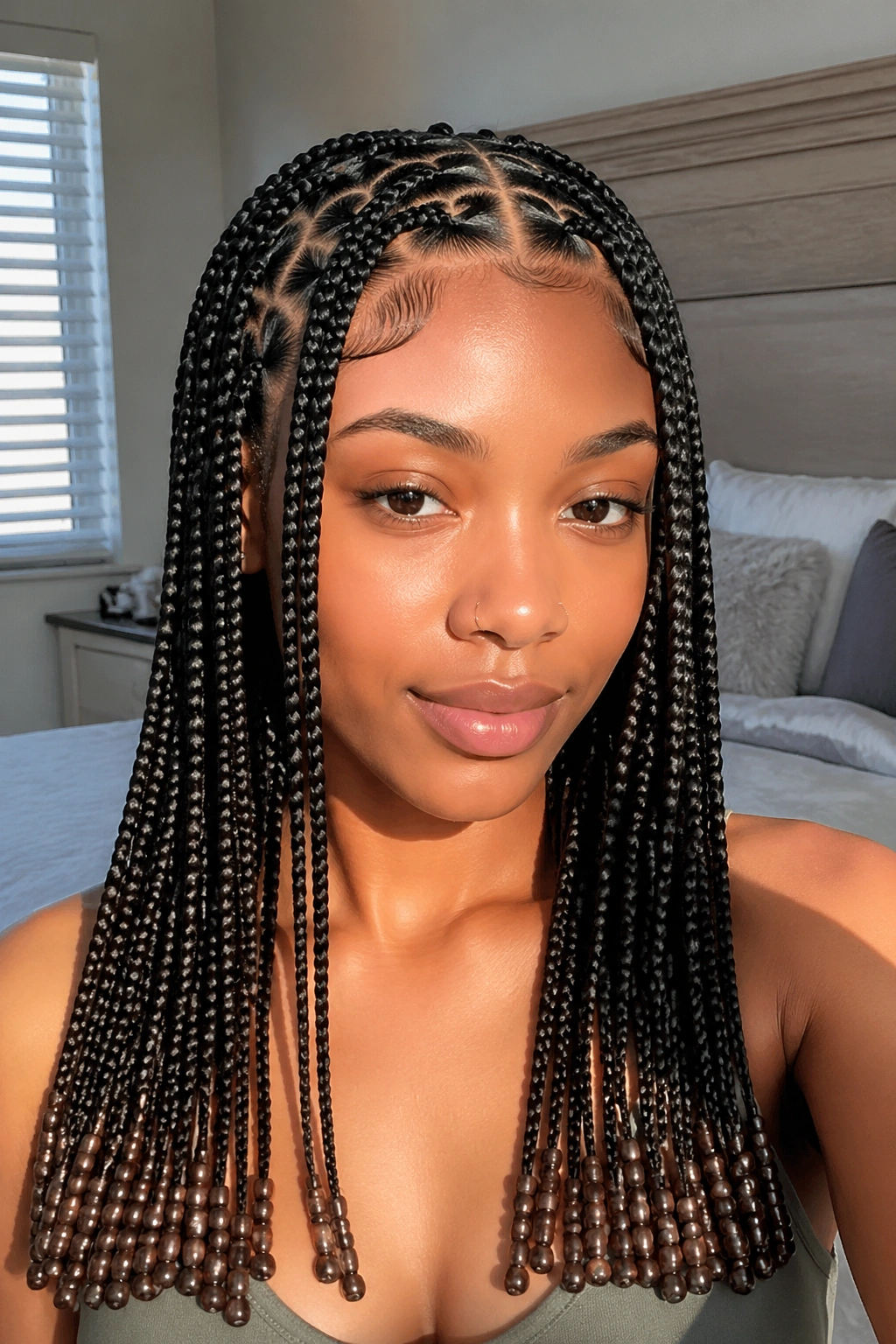
Heart-shaped parts near the front turn the scalp into part of the design, and I mean that in a good way. The shape is playful, yes, but it can also be clean if the lines are sharp. Pair those parts with beads that match the braid color, and the look stays sweet instead of sugary.
The heart should be visible from the front, not hidden under too much braid bulk. That means keeping the front section neat and the part lines tidy. Color-matched beads help because they keep attention on the shape rather than on the ends. Black braids with black beads, brown braids with amber beads, or burgundy braids with deep red beads all work.
This style is easy to love for photos, celebrations, or any time you want the hair to say something without a loud palette. It feels personal. It feels a little crafted.
A small note: heart parts look best when the rest of the braids are balanced. If every section is trying to be dramatic, the shape gets lost.
19. Shoulder-Grazing Fulani Braids With Polished Tips
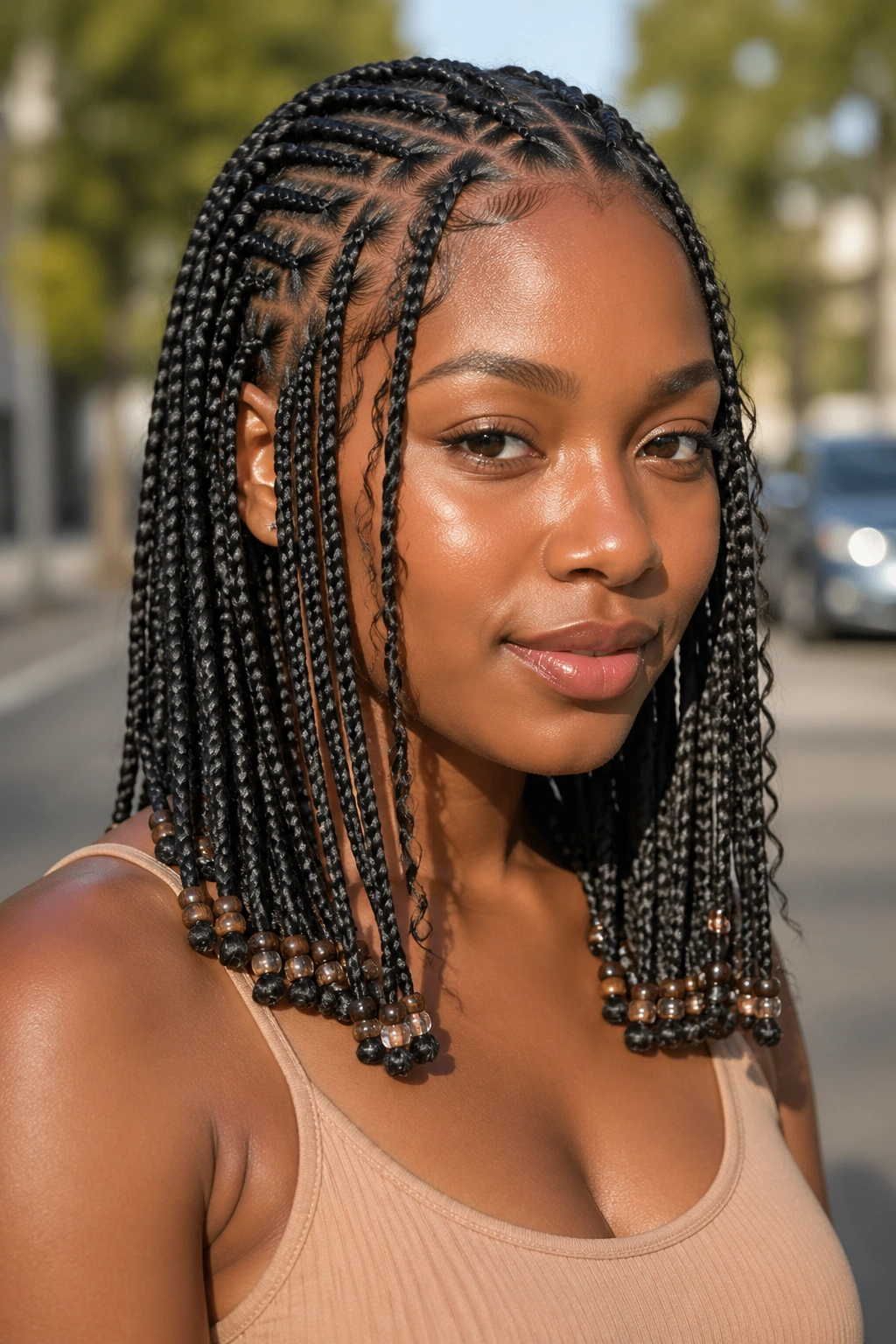
Shoulder-grazing braids are underrated. They sit in that useful middle zone where the hair feels long enough to style but short enough to stay easy. Polished tips and neat beads at the ends give the cut edge a clean finish.
This length works because it doesn’t compete with your clothes as much. Collars, jackets, and earrings still show. The beaded ends add movement without dragging the style downward. If you wear your hair down a lot, this length is one of the least fussy to manage.
The tips should look sealed and smooth, not fuzzy. That matters more at shoulder length than people think, because the ends sit at eye level more often. Clear or matte beads work well here. I’d skip oversized shapes unless you want the style to read more dramatic than casual.
It’s a practical version, but not a boring one. That’s a better combination than people give it credit for.
20. Thread-Wrapped Fulani Braids With Beaded Ends
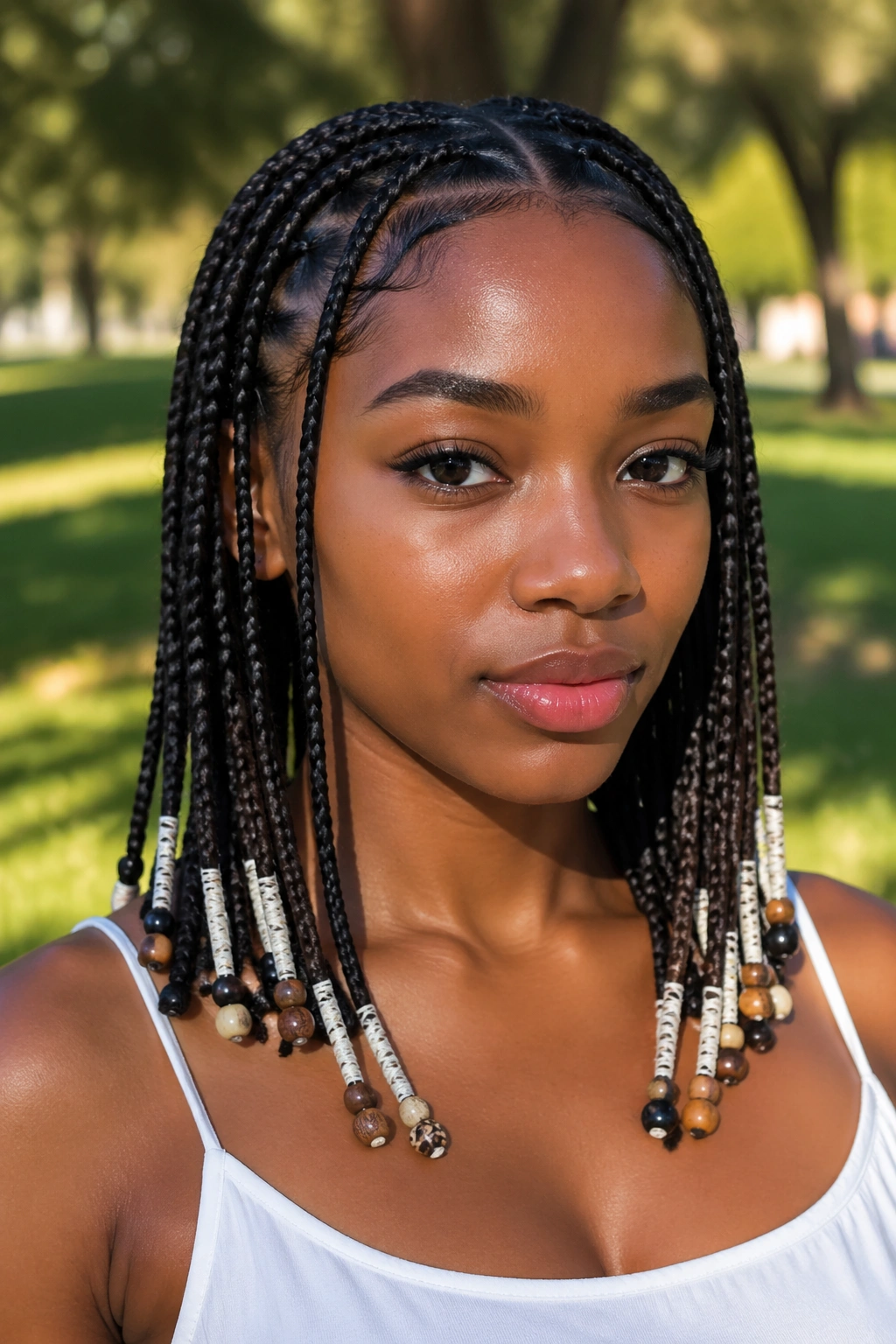
Thread-wrapped sections bring texture to the ends before the beads even show up. A band of colored thread around the lower braid makes the finish look handmade in a good way, and then the beads add one more layer of detail. It’s a smart move if you want the style to feel a little more tactile.
How to keep the wrapping neat
The wrapping should be tight enough to stay put but not so tight that it cuts into the braid. Thin cotton thread or smooth yarn works better than fuzzy material. Wrap a short section near the end—usually just enough to create a visible band—then finish with a bead or two.
I like this on medium-thick braids because the wrapped section needs enough braid to hold its shape. If the braids are too thin, the thread can overwhelm them. Use one or two thread colors, not five. The bead should still be visible at the tip.
This is one of those styles that feels better the closer you get to it. Up close, the texture is rich. From a distance, it still reads clean.
21. Fulani Braids With a Low Bun and Loose Beaded Tails
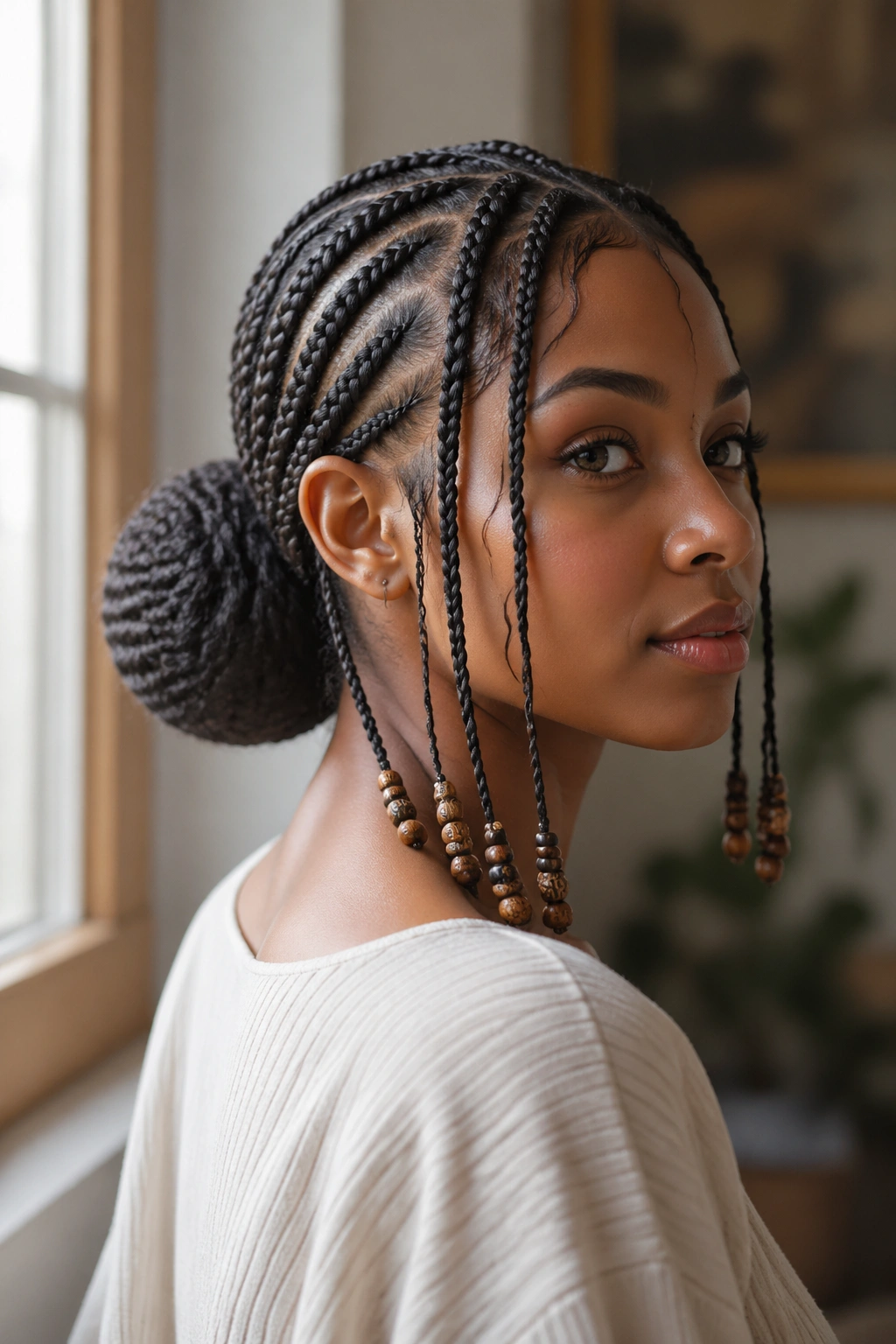
A low bun keeps the braids off the neck, which is a relief when you want the front and sides neat but don’t want a high, lifted style. Leaving a few beaded tails loose gives the bun some motion so it doesn’t feel too severe.
The bun should sit at the nape, not high on the crown. That placement keeps the silhouette soft. A few braids can be wrapped around the base, while the rest hang free with beaded ends. If every braid gets tucked in, the style can lose its interest fast.
This version works well for formal events, work settings, or any day you want the braids controlled. It looks polished without becoming rigid. That little row of loose beaded tails is what keeps it alive.
One thing to watch is balance. If the bun is too small and the loose ends are too heavy, the shape looks lopsided. Keep the bun anchored and the bead size moderate.
22. Curved Side-Part Fulani Braids With Layered Beads
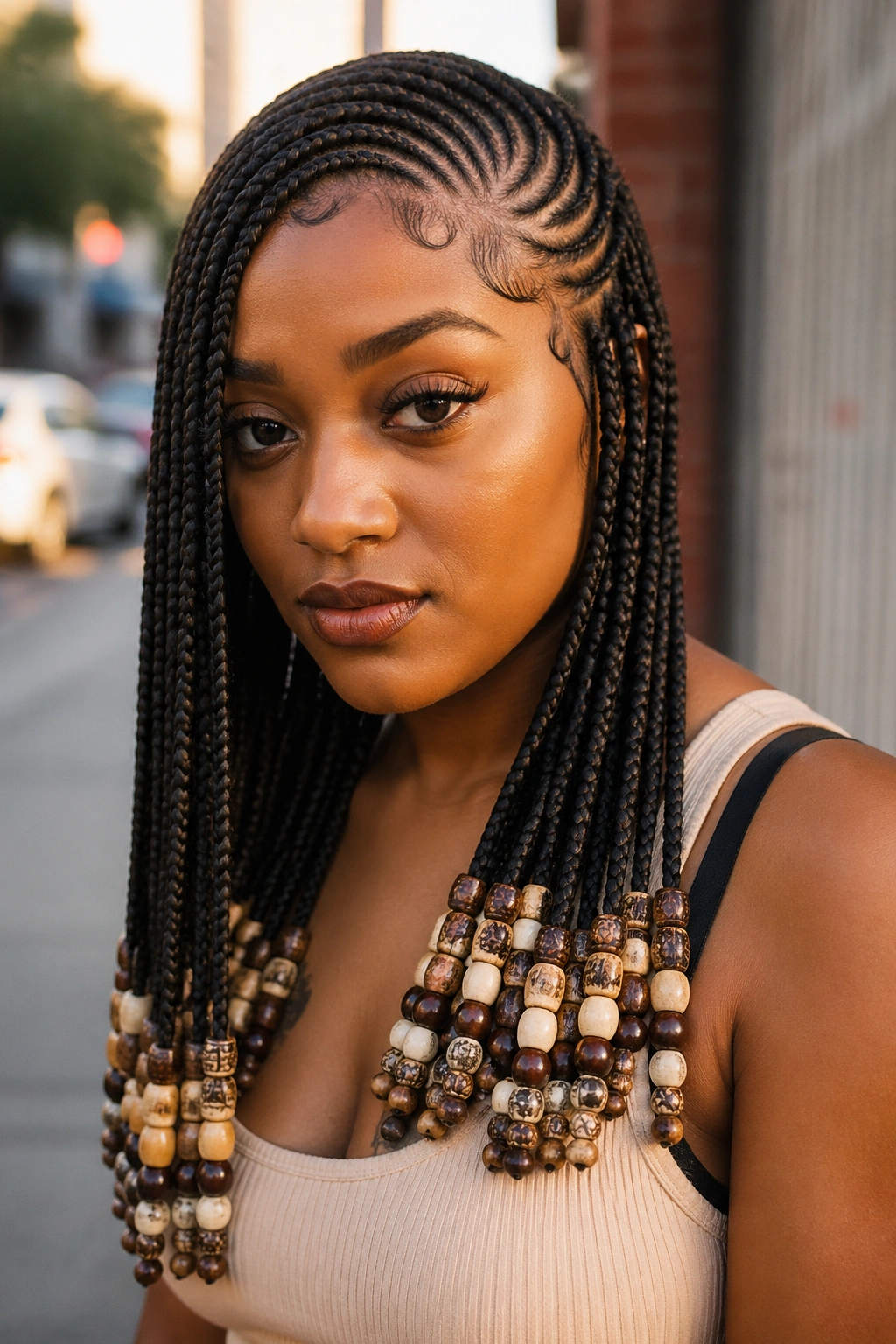
A curved side part feels softer than a straight one, and that changes the whole face frame. The braid lines follow that curve instead of cutting across the head, which gives the style a smoother flow. Layered beads at the ends finish the look with motion and texture.
The curve should be obvious enough to read, but not so dramatic that it starts to look like a design trick. The best versions have a gentle sweep from the front into the side. Layered beads—small to medium, or matte to shine—work well because the part already gives the style movement. You don’t need a lot of color to make it interesting.
I like this version for people with round or square faces because the diagonal line softens the outline a bit. It also looks good with side earrings or a deep side-swept fringe of braids near the cheek.
Keep the layering controlled. Two bead sizes are usually enough. More than that and the ends can start to look crowded.
23. Festival-Style Fulani Braids With Colorful Bead Clusters
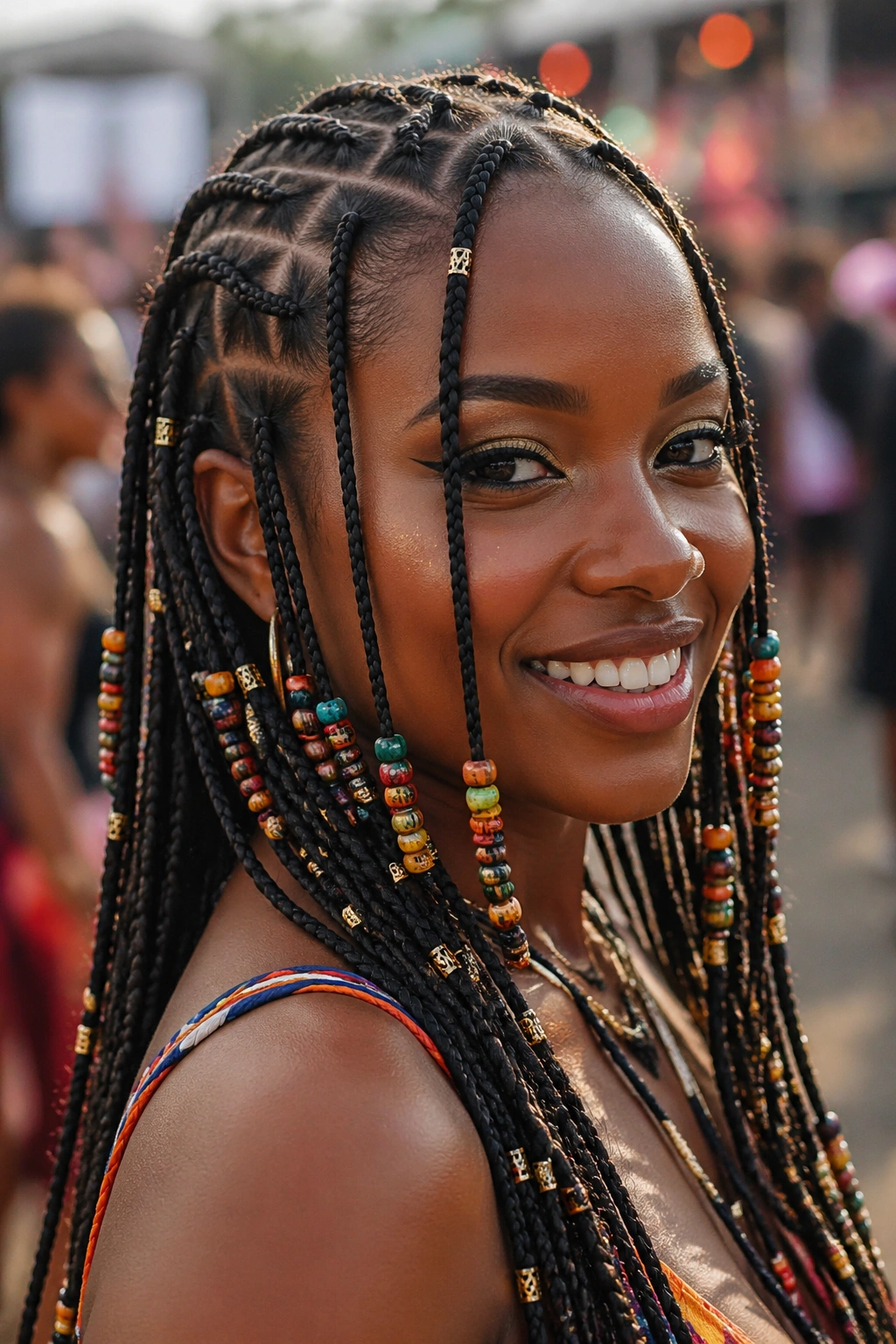
Colorful bead clusters are not shy, and they shouldn’t be. This is the version that leans into joy: bright beads, mixed finishes, and a few clustered ends that move with you. The trick is keeping the color mix smart, not random.
I’d cap the palette at three or four colors so the whole thing doesn’t turn muddy. Clear, red, blue, gold, and white can work together if one color stays dominant. Put the cluster detail on select braids instead of every single one. That keeps the style lively instead of overloaded.
This look is ideal when you want the braids to act like an accessory on their own. You do not need much jewelry with it. The hair already has enough personality. A clean part and tight braid work matter here because the bead color is doing a lot.
It’s playful, but it still needs control. That’s the line that makes it good instead of chaotic.
Final Thoughts
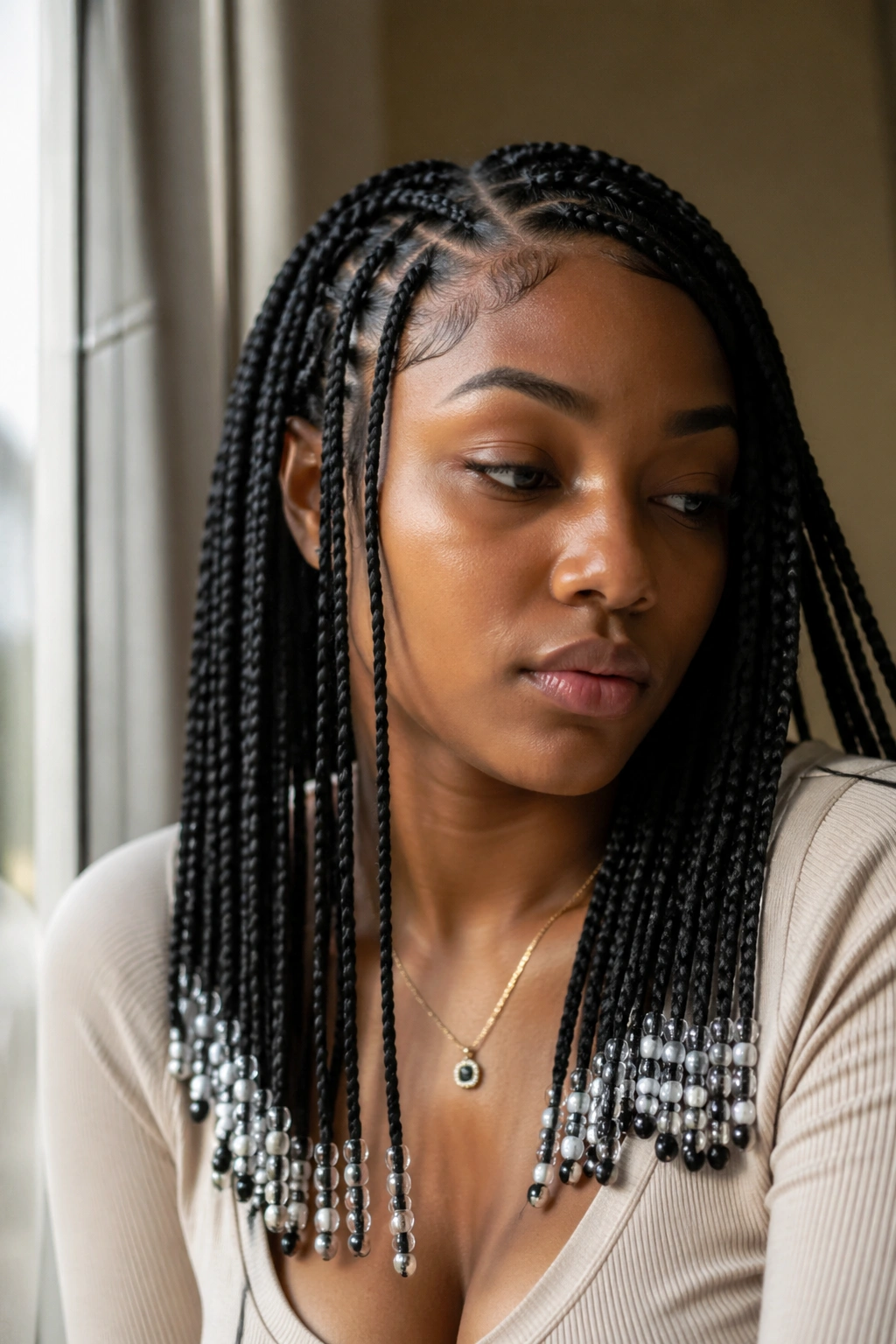
Fulani braids with beaded ends work best when the braid shape and the bead choice actually agree with each other. Big beads need bigger braids. Tiny beads shine on finer plaits. Clear, wooden, shell, crystal, and metal finishes all tell a different story, and the story changes fast when the parting shifts.
If you want the safest starting point, go with a center part, medium braids, and light beads. If you want more drama, push the shape—side sweep, zigzag, ponytail, heart part, or crown. The strongest versions never feel crowded. They feel arranged.
And that’s the part worth trusting: when the style has room to breathe, the beads do their best work.
