



Purple peekabook box braids work because they look calm from the front and a little mischievous from the side. That hidden flash of color does more than decorate the hair; it changes the way the whole style moves. One turn of the head, one half-up bun, one braid tucked behind the ear, and the purple shows up like a secret you meant to keep.
The smartest thing about this look is how adjustable it is. You can keep the purple buried under black or deep brown braids, or let it live closer to the surface so it peeks through on purpose. Plum reads rich and low-key. Violet feels sharper. Lavender softens the whole set. Grape and eggplant sit somewhere in between, which is why they work so well in box braids that need to hold up for weeks without looking flat.
Placement matters more than most people think. A little purple in the nape area gives you movement without turning the whole head into a color block. Purple at the temples reads bolder. Purple braided into the underside of a bob gives you a hit of color every time the hair swings, which is a nice trick if you want the style to feel alive instead of posed.
And yes, the braid size changes everything too. Thick braids hide color in bigger panels. Smaller braids scatter the purple so it reads like depth instead of stripes. Keep that in mind as you look through the styles below, because the difference between subtle and loud is often only one row of hair.
1. Hidden Plum Panels in Medium Box Braids
This is the safest way into purple peekaboo box braids, and I mean that in the best sense. Keep the top layer dark, tuck plum or deep purple underneath, and let the color show only when the braids swing or get gathered into a half-up style. It looks polished from a distance, then a little more interesting when you’re close.
Why it works
Medium box braids give you enough width to hide a purple panel without making the whole set look busy. Ask for the color to sit two or three rows beneath the outer layer, not right at the surface. That little bit of depth is what creates the peekaboo effect.
It also photographs well from angles, which matters more than people admit. Front-on, you get a clean dark braid set. From the side, the purple breaks through in thin slices. That contrast is the whole point. If you want color without having to explain the color, this is a smart place to start.
2. Shoulder-Length Braids with Lavender Face Framing
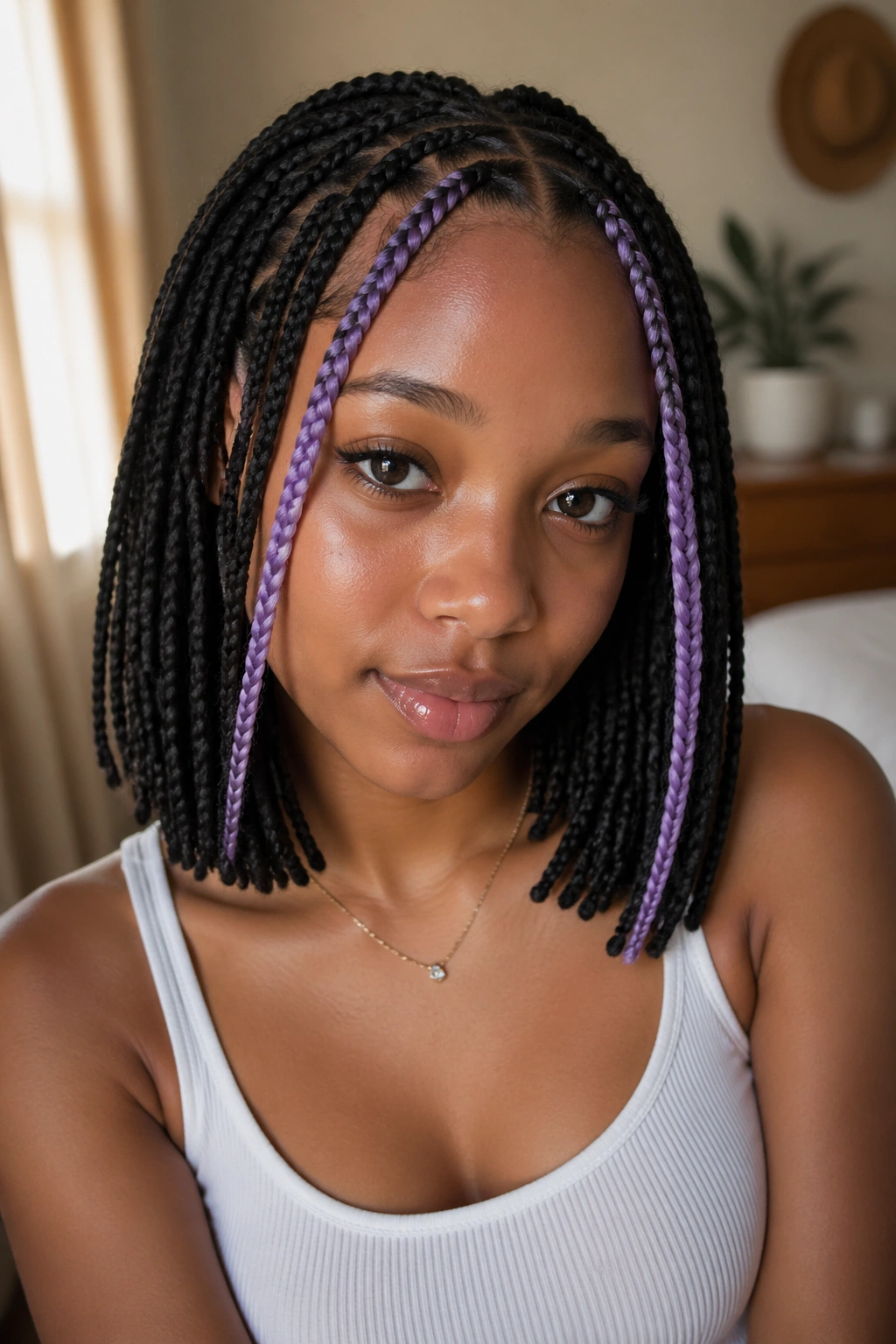
Shoulder-length braids are underrated. They don’t drag on the neck, they’re easier to style into a low bun, and they make hidden color feel lighter. Put the purple around the front edge or just inside the first few braids near the temples, and the lavender shows when you tuck the hair back or wear it half up.
How to wear it
- Ask for two thin lavender pieces near each temple instead of one thick strip.
- Keep the rest of the braids black or dark brown so the frame stays clean.
- Choose braid lengths that hit the collarbone or just above it if you want the color to move more.
- Wrap the front at night with a silk scarf so the lighter purple does not fuzz up first.
There’s a nice thing that happens with this cut: the color brightens your face without becoming the main event. It feels easy. Not basic, easy.
3. Waist-Length Braids with Eggplant Underlayers
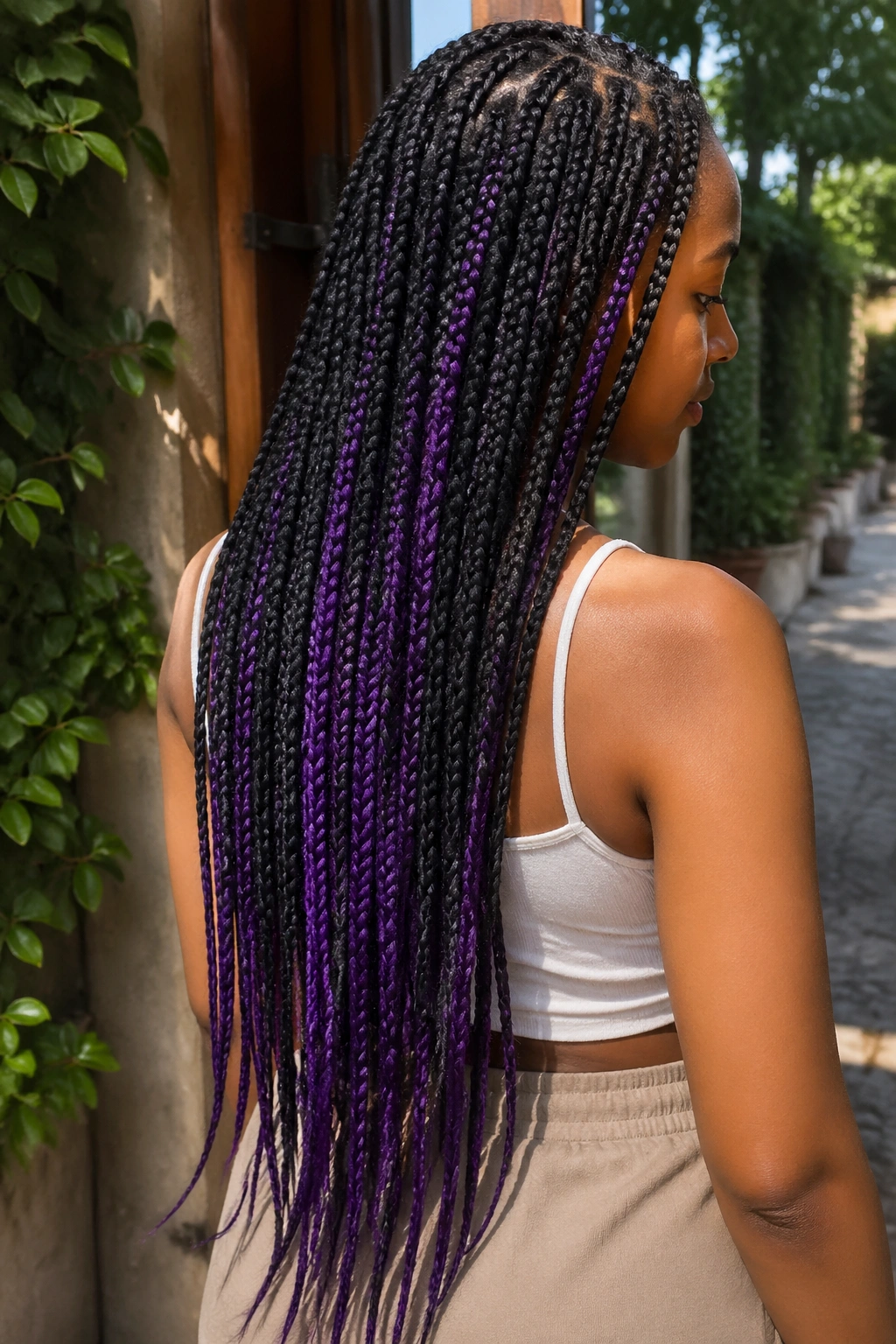
Long braids and eggplant purple get along better than long braids and lighter pastels do. The reason is simple: the extra length gives the hidden color room to reveal itself in pieces, instead of all at once. You get a dark curtain with flashes of deep purple underneath, and the effect is richer than it sounds on paper.
If you want this style to feel expensive rather than heavy, keep the top layer clean and let the eggplant sit low. A few braids at the crown can stay fully dark, then the purple starts around the mid-lengths. That creates a nice swing when the hair moves, especially if you wear it over one shoulder.
I like this version for anyone who wants a long protective style but does not want the purple to fight with every outfit. Deep purple reads like a shadow until it catches light, and that makes it easier to wear with everything from plain tees to dressier looks.
4. Triangle-Part Braids with Violet Peekaboo
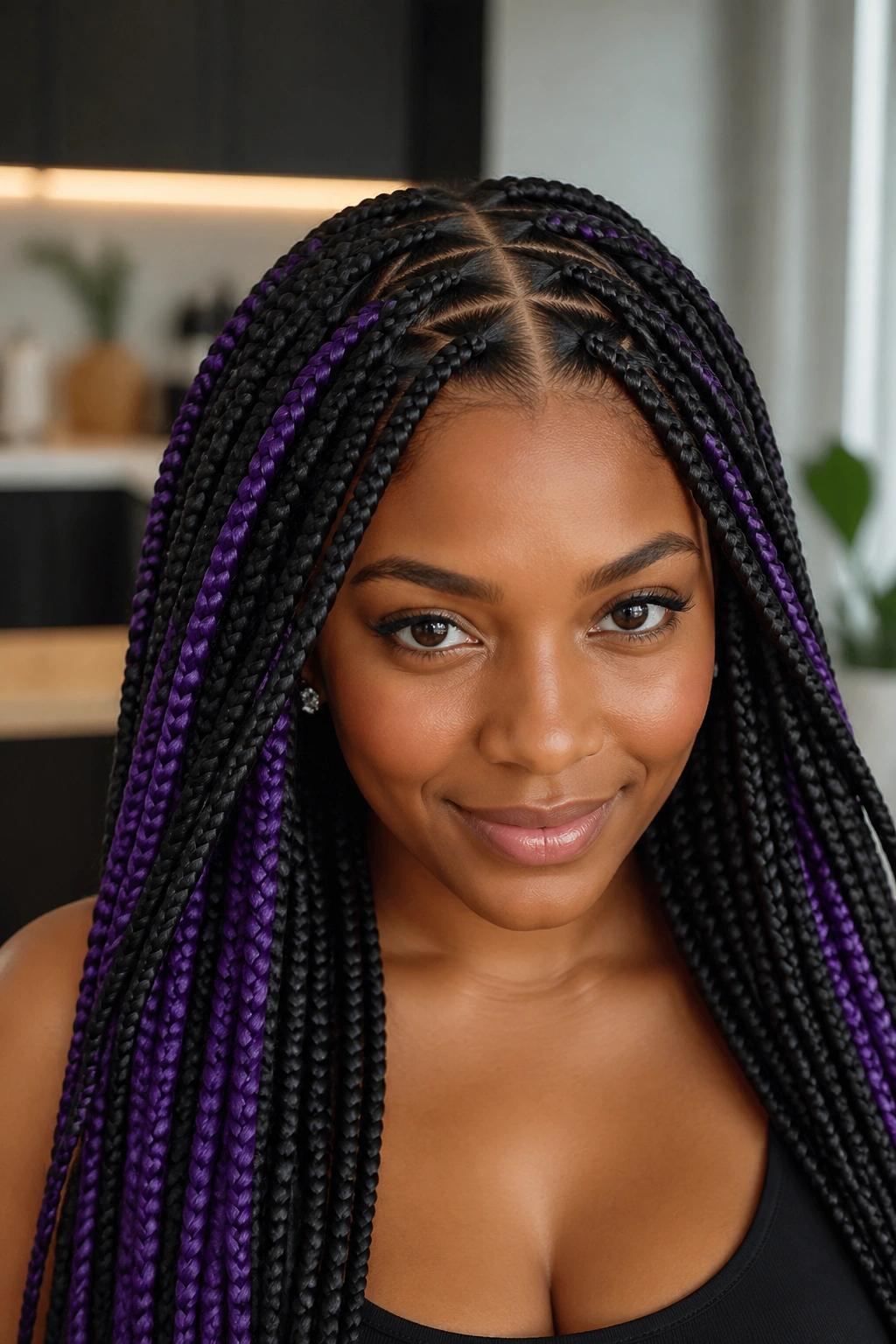
Triangle parts change the whole mood. A square grid looks classic; triangle parts give the scalp a sharper, more graphic feel, and violet tucked underneath only pushes that point further. The color shows in little wedges when the braids are lifted or pinned up, so the style feels deliberate instead of random.
What to ask your braider
Tell them you want the purple placed in alternating sections, not scattered everywhere. That keeps the pattern clean. If the braids are medium or small, the purple can sit in the lower half of each triangle section, which makes the scalp pattern stay visible.
Don’t crowd the hairline with color here. The strength of this look is the structure. Triangle parts plus hidden violet give you enough detail already, so the purple should support the shape, not steal it.
5. Jumbo Box Braids with Purple Accent Feed
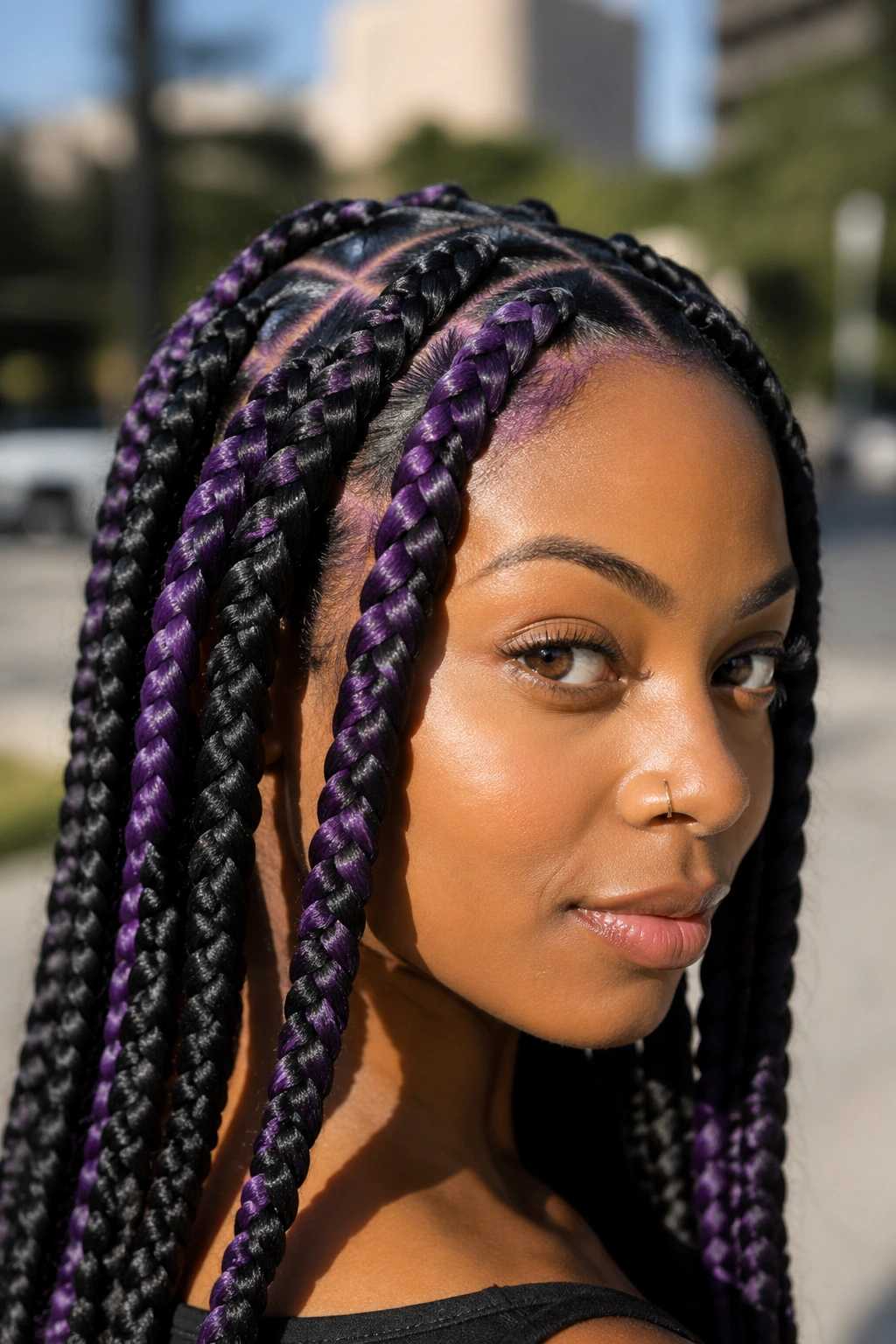
Jumbo braids need a different kind of color thinking. There are fewer braids, so each purple section matters more. Instead of scattering small bits everywhere, place purple on selected feed-in sections or hide it in the interior of a few braids so the set gets strong flashes of color without looking striped.
Best when you want less time in the chair
- Use one purple braid every four or five braids if you want a controlled pop.
- Keep the purple deeper in the braid body so it appears when the braids overlap.
- Ask for larger, neat parts if you want the boldness to feel clean.
- Avoid too many bright tones at once; jumbo braids already carry a lot of visual weight.
Jumbo box braids can look messy fast if the color placement is sloppy. That’s why this version works best with restraint. One or two purple accents can carry the whole style.
6. Knotless Braids with Lilac Mid-Length Surprise
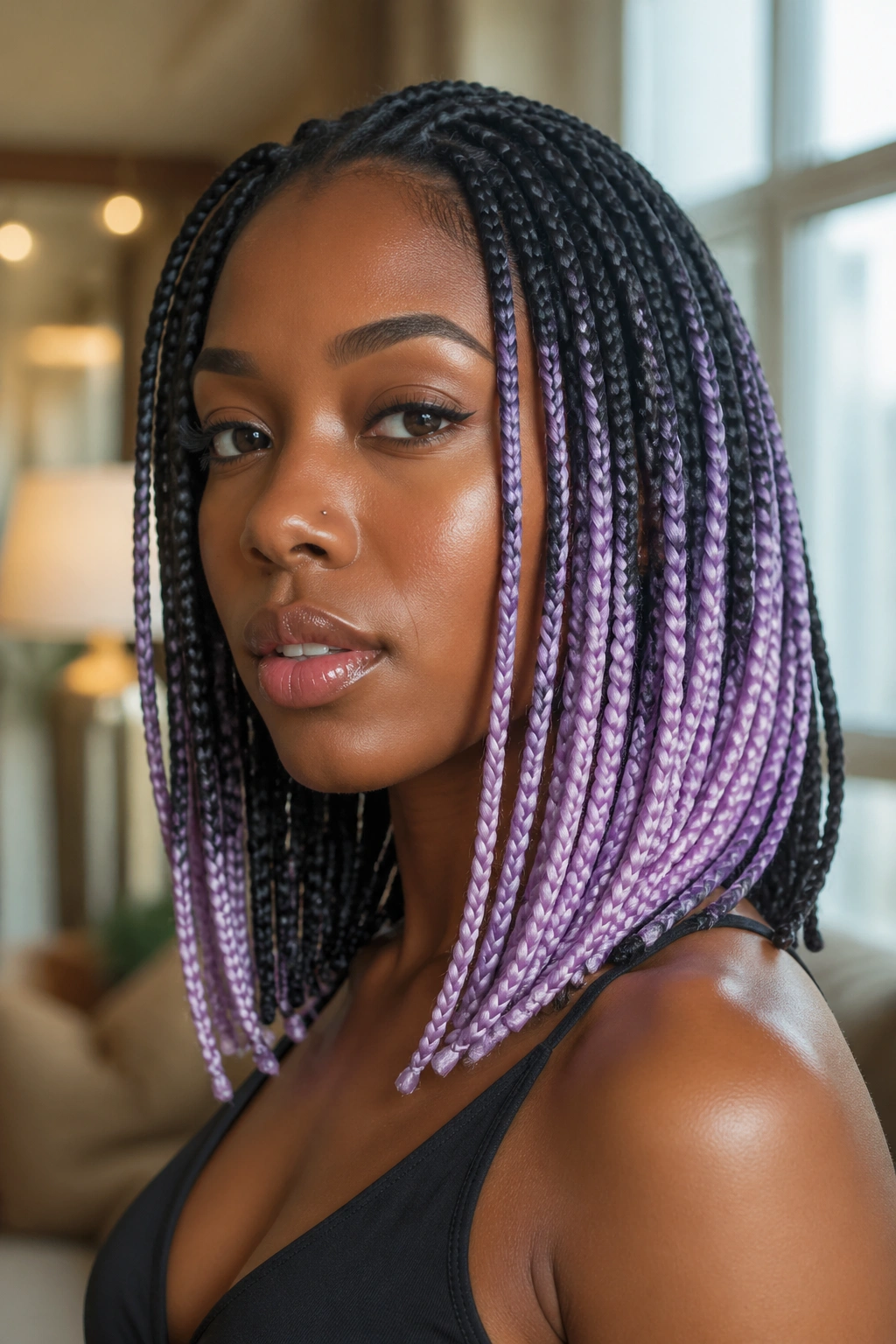
Knotless braids are the soft-spoken cousin of classic box braids. The start is flatter, the tension is lighter, and the braid blends more smoothly into the scalp. That makes them a good match for lilac hidden around the middle of the length, where the color can show without sitting right at the root.
The payoff is a smoother color transition. Instead of a hard shift from black to purple, you get a gentle reveal as the hair drops. That matters if you want something that looks expensive and not overworked. Lilac can look sweet if it sits too high, though, so I’d keep it low enough that it appears mostly in motion.
This version is also easier on the eyes if you wear your braids down a lot. The color peeks through on turns and braids-over-shoulder moments, then disappears again. That push and pull is what makes the style feel alive.
7. Side-Swept Bob with Amethyst Nape Panel
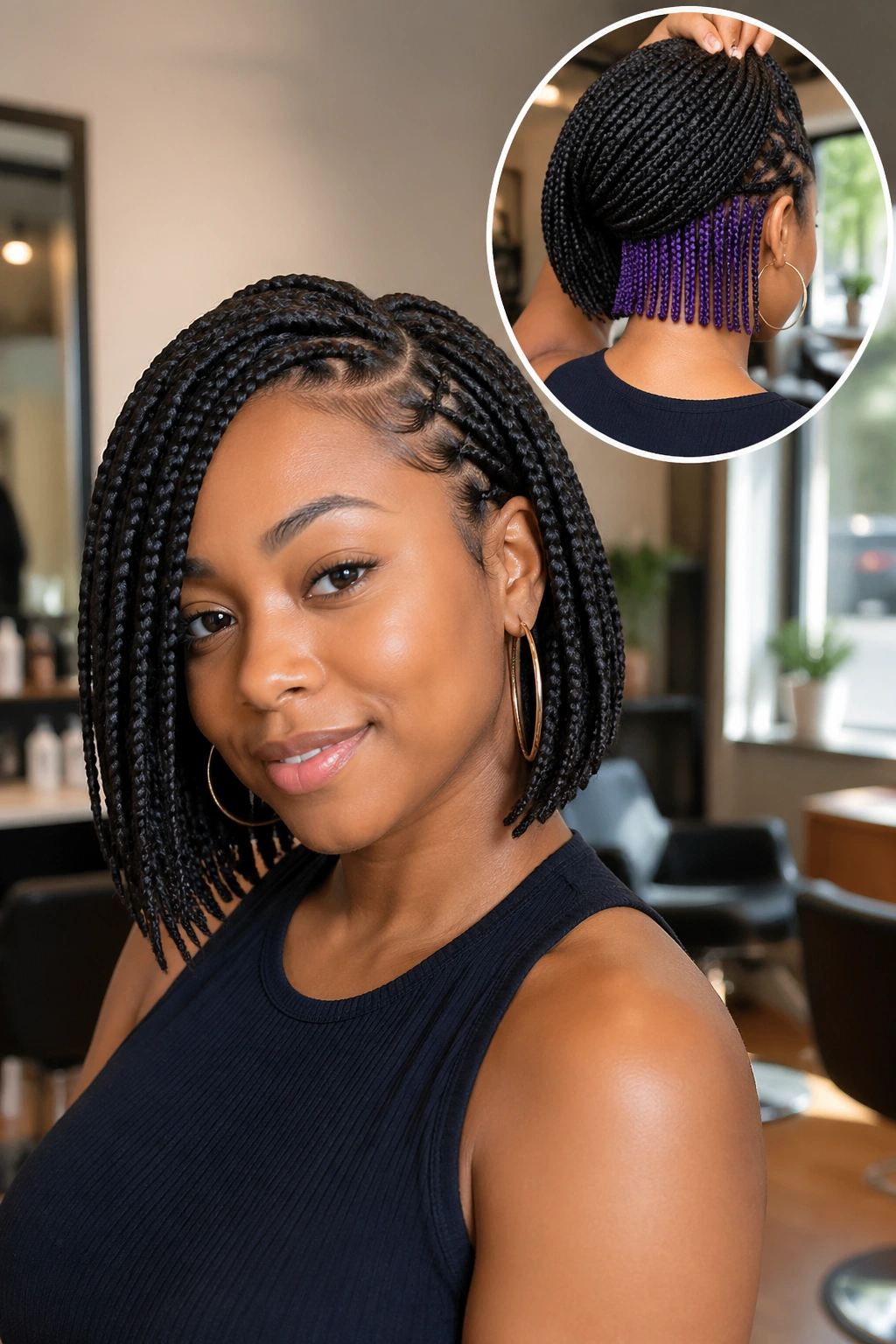
A side-swept bob makes peekaboo color feel sharper because the cut itself already has attitude. Put the amethyst panel at the nape, keep the top layers dark, and the color only shows when the bob shifts or when one side gets tucked back. It’s clean from the front and unexpectedly rich from behind.
This style is especially good if you wear earrings. The short length clears the jawline, so the braids and the jewelry don’t fight each other. And because the purple lives low, the color still has room to surprise people without turning the whole look loud.
One thing I’d keep an eye on: don’t make the purple panel too wide. A bob depends on shape. If the hidden color takes over the back too much, the cut starts to lose that crisp outline that makes it work in the first place.
8. Curly-End Box Braids with Plum Curls
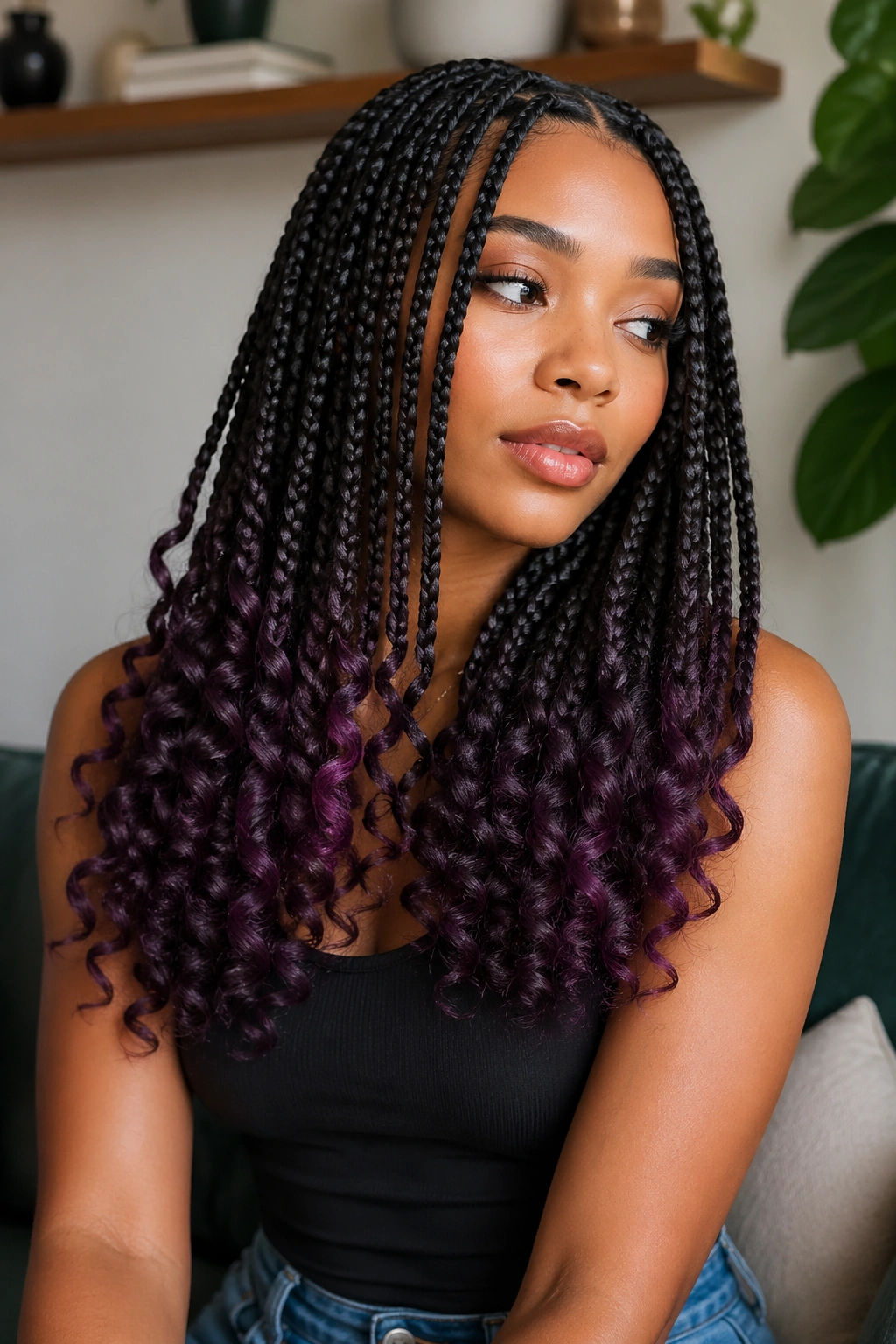
Curly ends change the whole reading of purple. Straight braid ends can feel tidy, almost severe. Add curls at the bottom and the plum starts to look softer, more movable, less blocky. It is one of the easiest ways to make a hidden color feel intentional without needing a full-color set.
Small details that help
- Use flexi rods or perm rods if you want neat curls at the ends.
- Keep the purple concentrated near the curls so the color shows at the swing point.
- Use mousse lightly; too much can make the curls heavy and stringy.
- Trim only the dead ends of the extensions if they look frayed. Don’t overcut.
This is a good pick if you like braid sets that feel a little more dressed up. The curls catch movement, the plum adds depth, and the whole thing feels softer than a straight-ended braid set.
9. Micro Braids with Dense Purple Interior
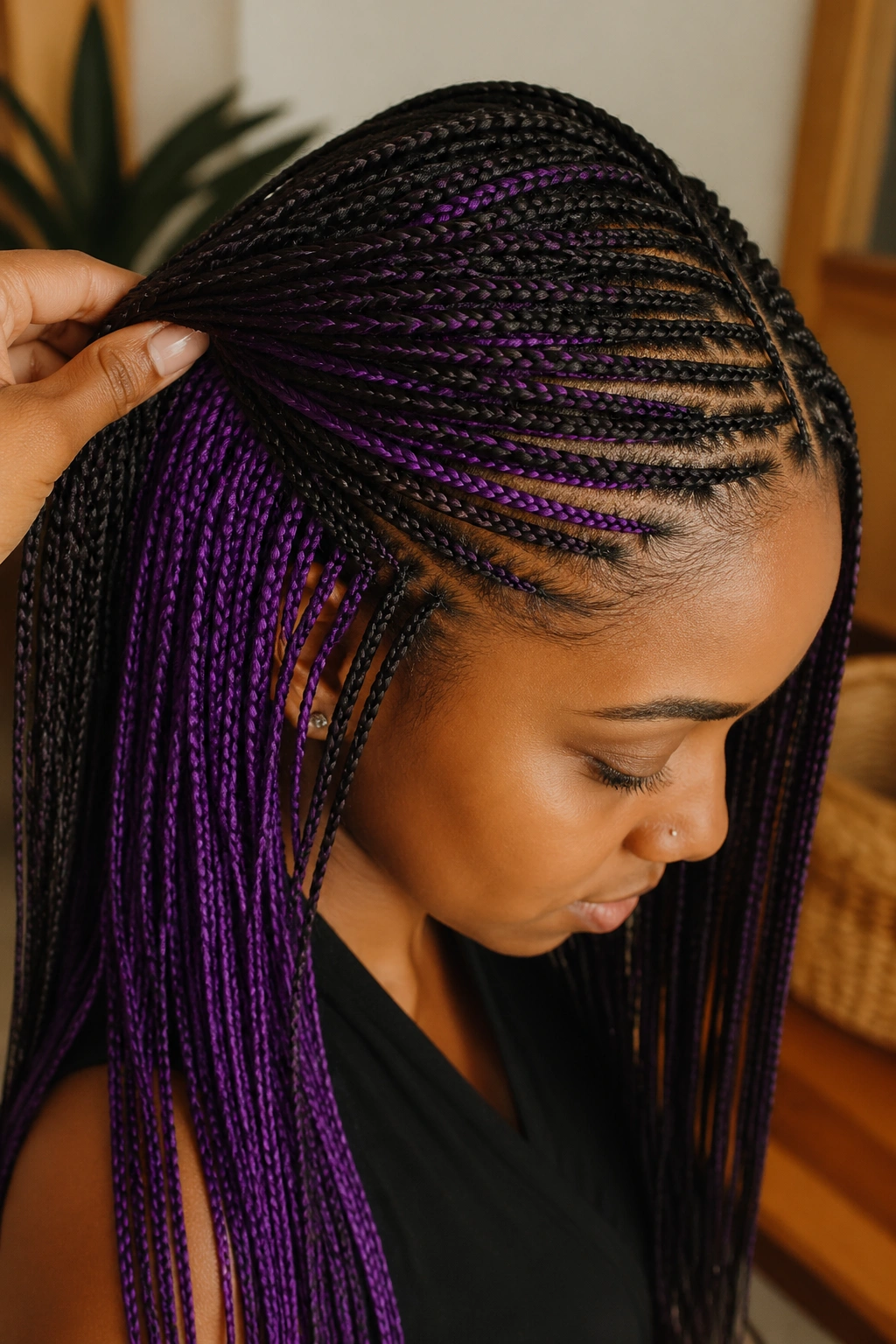
Micro braids are for detail people. They take longer, they sit flatter, and they can carry color in a way that looks woven rather than slapped on. Put purple deep inside the set and you get a fine, textured pattern that shows up in tiny flashes instead of big panels.
That kind of hidden color is not dramatic from across the room. Up close, though, it has a lot going on. The purple threads through the hair like a line drawing, especially if the braids are thin enough that the color appears and disappears with each turn. It’s subtle, but not boring. There’s a difference.
I’d choose this if you like the idea of purple peekabook box braids but don’t want obvious streaks. Micro braids reward patience, and the color payoff tends to feel richer because the sections are so small.
10. Medium Braids with a Purple Money-Piece Alternative
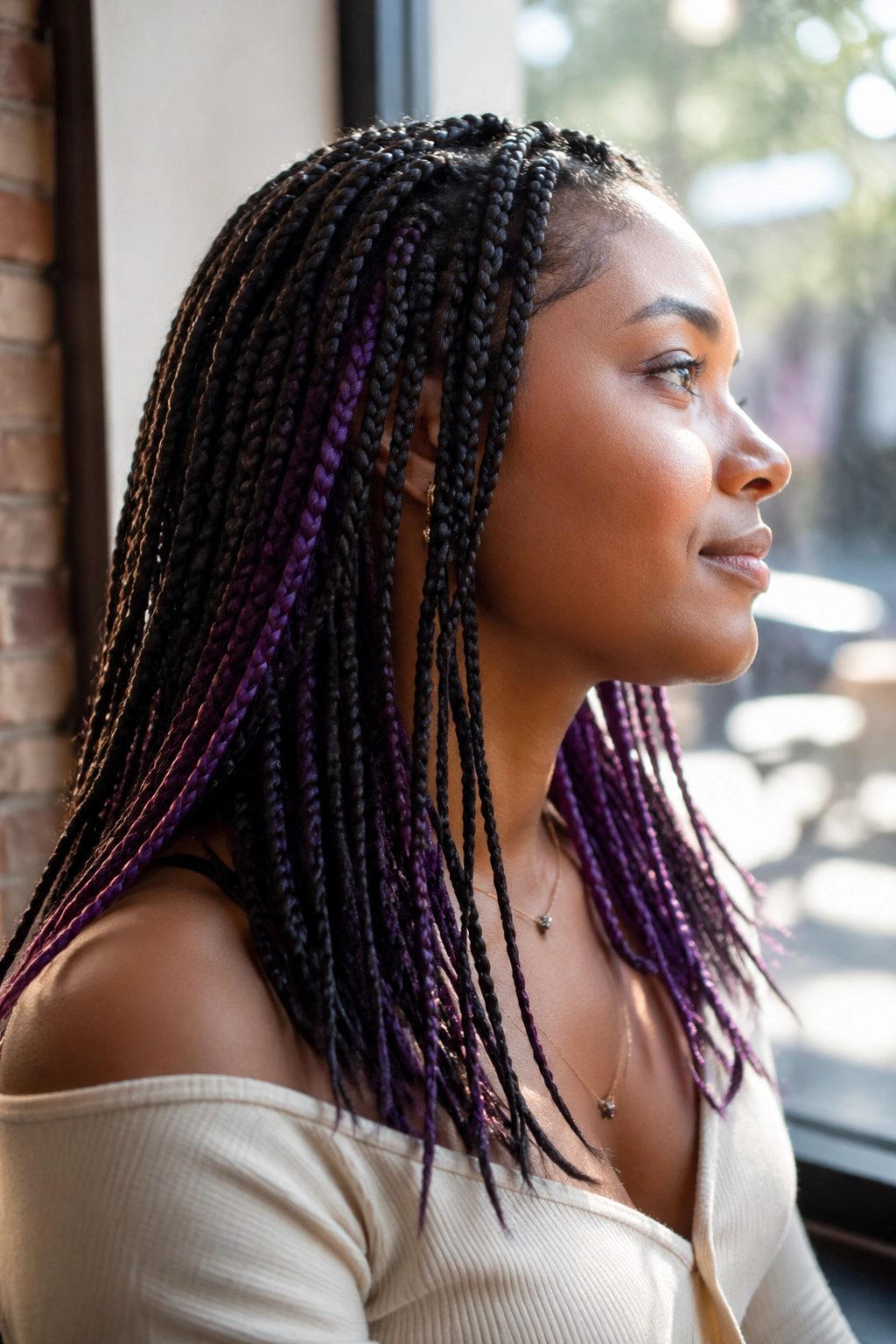
Want color without a front streak? This is the answer. Instead of putting purple right at the hairline, keep the front braids dark and hide the color inside the first interior rows. That gives you the same feeling of brightness when the hair moves, but the face stays framed in a cleaner way.
How it reads in real life
The front stays calm. The sides whisper color. When you sweep the braids back, the purple turns up fast, which is useful if you like tying the hair up for errands, work, or dinner. It’s a much more low-maintenance answer than visible face-framing pieces.
This version works best when the purple is a shade darker than lavender. Think grape, plum, or mid-violet. Those tones stand up to the dark outer layer and don’t vanish as soon as the light changes.
11. Boho Braids with Purple Loose Curls
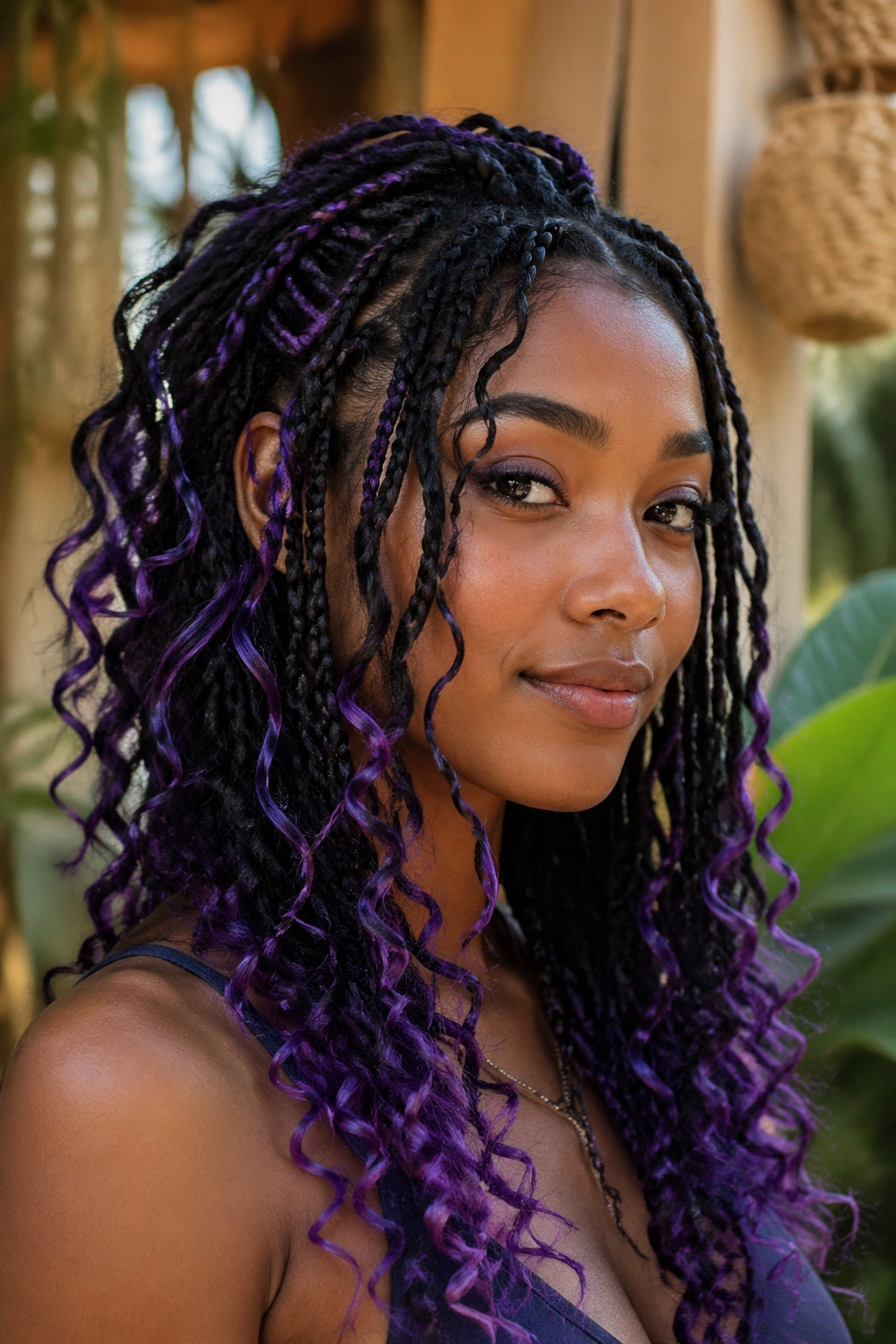
Boho braids loosen the whole idea of what a braid set should look like. Add purple loose curls, and the style stops feeling so structured. You get braided rows, yes, but also curly pieces that move freely and catch the eye when the hair shifts. That mix is what makes the color feel softer.
What makes it different
The purple doesn’t have to live only inside the braid bodies. You can thread it into the loose curl pieces, hide it in a few sections near the ends, or scatter it through the top layer so it shows in motion. The trick is keeping the curls airy. Too many heavy curl pieces and the style starts to droop.
A boho set like this suits people who don’t want the peekaboo effect to feel too neat. It has more texture, more bounce, and a little bit of mess in the best way. The color becomes part of that texture instead of sitting apart from it.
12. Black-to-Purple Ombre Peekaboo
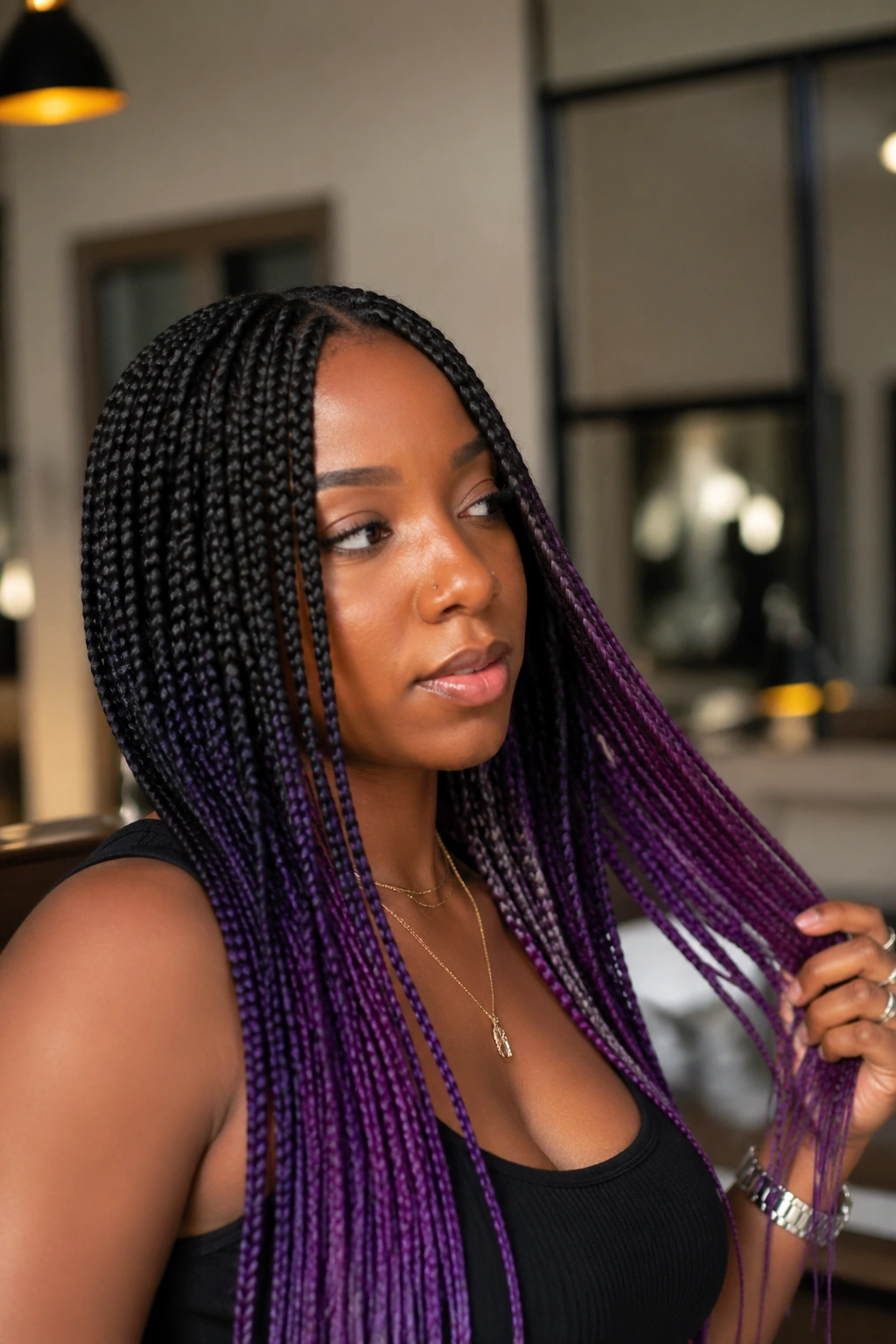
Black to purple ombre can go wrong if the fade starts too high or too bright. Done well, though, it gives you hidden color that looks like it grew that way. The top stays dark, the middle shifts into purple, and the lighter parts show mostly when the braids are pulled over one shoulder or gathered up.
The best version keeps the transition under the outer layer. That way the ombre does not read like a loud stripe from the front. It reads like depth. Depth beats a blunt color block every time in a braid set this long.
If you worry about the purple fading unevenly, this style is actually easier to live with than a bright all-over set. The darker root area hides the early wear, and the hidden placement gives the color more room to age without looking rough.
13. Feed-In Braids with Violet Scalp Detail
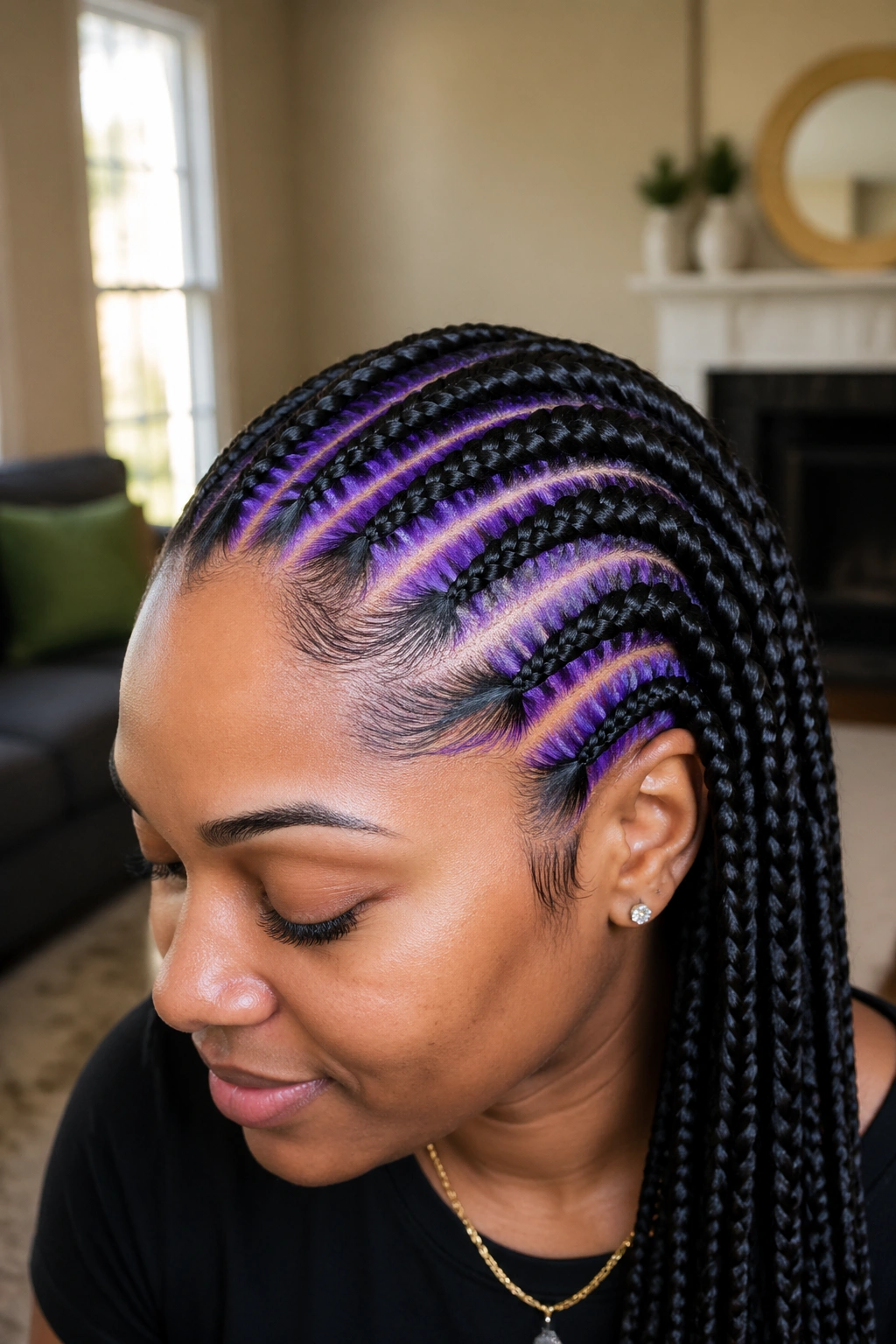
Feed-in braids let the scalp line do some of the talking. When you tuck violet into the feed-in sections near the base, the color shows in clean, thin lines that follow the parting. That makes the whole style feel neat and technical in a way that a loose color placement never quite matches.
Best parting choices
- Use thin, even parts if you want the scalp detail to stay crisp.
- Keep the violet feed narrow so it looks like a line, not a patch.
- Pair it with simple edge styling; too much slickness can make the top look hard.
- Ask for the color to sit only in selected feed-in points if you want the peekaboo effect to stay subtle.
This is a good choice if you like clean braid work and don’t mind people noticing the parts. The color is there, but the pattern is what people see first.
14. Goddess Box Braids with Purple Accent Braids
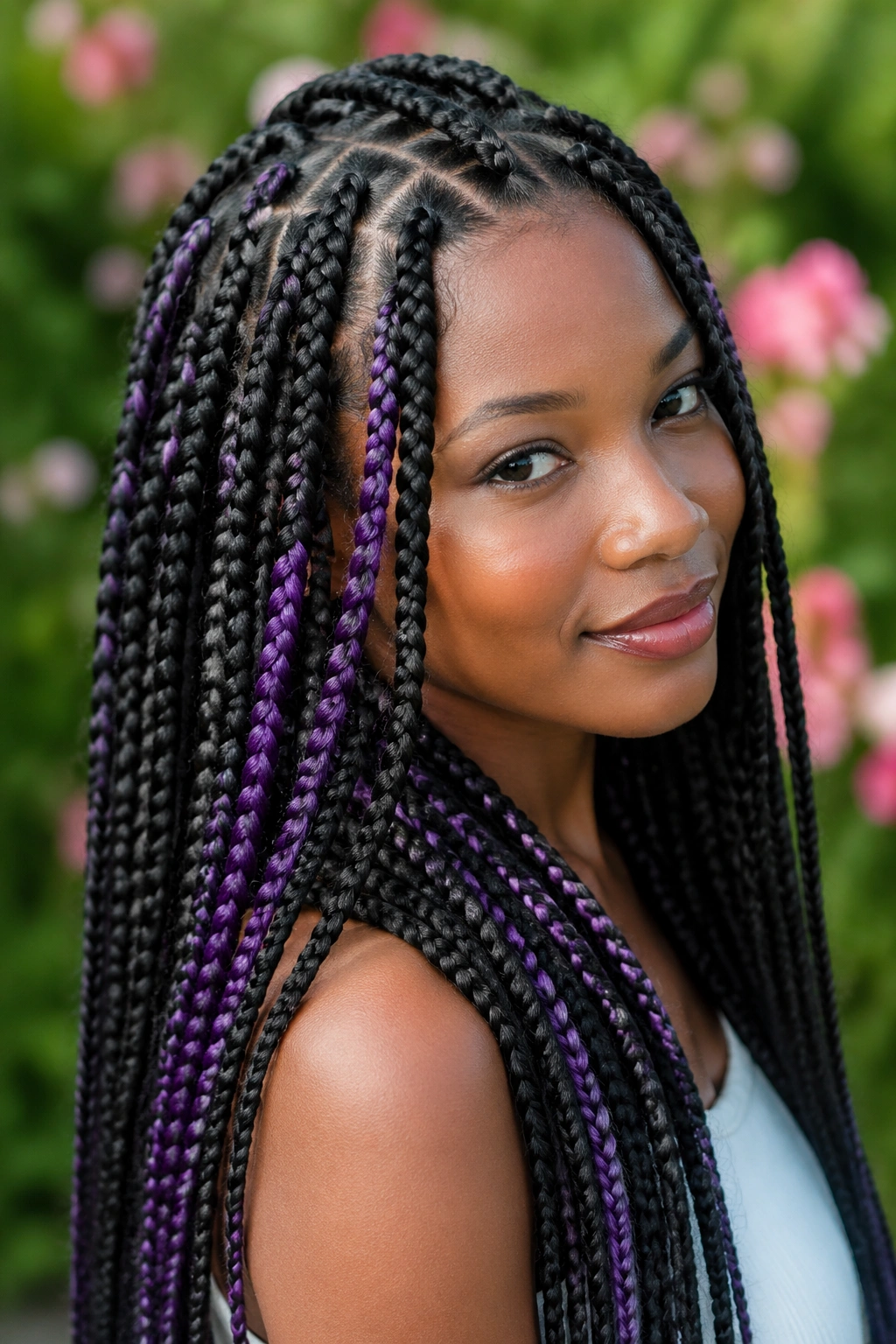
Goddess box braids already bring in loose curls, so purple accent braids have a natural place to live. Instead of hiding all the color inside the set, mix in a few purple braids among the darker ones and let the curls soften the contrast. That gives the style more movement and makes the accent pieces feel intentional.
The danger here is overdoing it. Too many purple accents and the style stops being peekaboo. You lose the surprise. I’d keep the purple braids to a small cluster near the sides or back, then repeat the color in one or two curly pieces so the whole set feels connected.
This version is for someone who wants the color to be seen, but not all at once. It has a little drama, a little softness, and enough variation that the braids don’t look flat after a few days.
15. Blunt Bob Box Braids with Grape Peekaboo
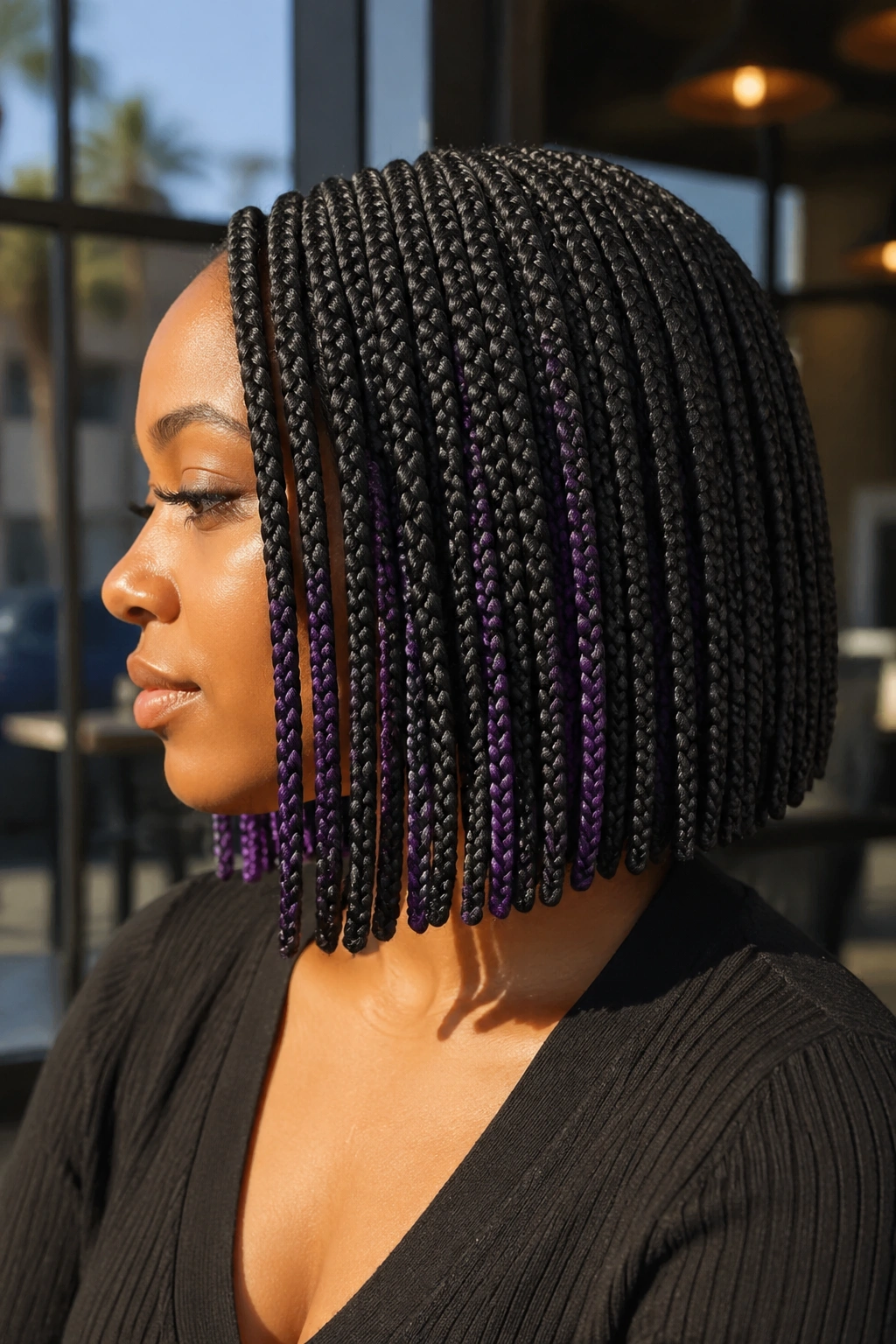
A blunt bob gives you no place to hide sloppy color placement, which is exactly why it looks so good when done right. With grape peekaboo braids, the hidden color sits under the blunt edge and flashes out whenever the bob turns or gets tucked behind the ear. Shorter braids make the effect sharper.
The grape tone works well here because it holds its own against the clean cut. A pale lilac can vanish on a bob if the outer layer is dark, but grape has enough depth to stay visible when it peeks out. That makes the whole style feel tighter and more finished.
This is the kind of braid set that looks good with very little extra styling. A side part, one tuck, maybe a cuff or two. Done.
16. High Ponytail Braids with Hidden Purple Underside
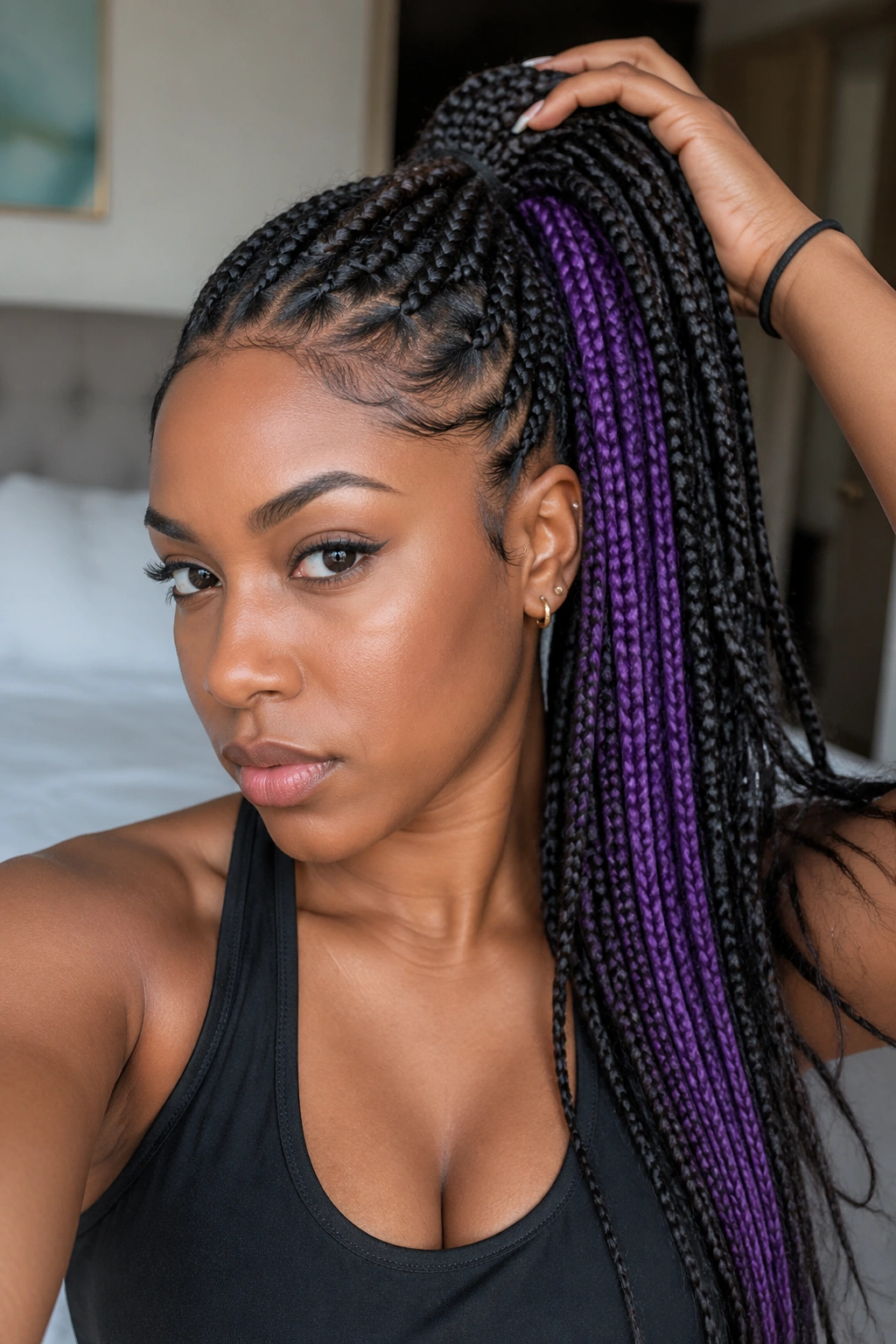
High ponytails show their secrets fast. Pull the braids up, and the underside becomes the star of the show. That makes this one of the easiest ways to turn hidden purple into an intentional feature, because the reveal happens every time you gather the hair.
Best placement for the color
- Keep the purple concentrated in the lower back section so it shows in the ponytail.
- Leave the top crown braids dark if you want the base to stay clean.
- Use a few purple braids near the nape so the color shows from the side.
- Secure the ponytail with a strong band that won’t snag the braids.
This style works because it gives you two looks at once. Down, the color stays tucked away. Up, it becomes obvious. If you wear your hair in ponytails half the time anyway, this may be the smartest use of peekaboo color on the list.
17. Chunky Multi-Tone Purple Braids
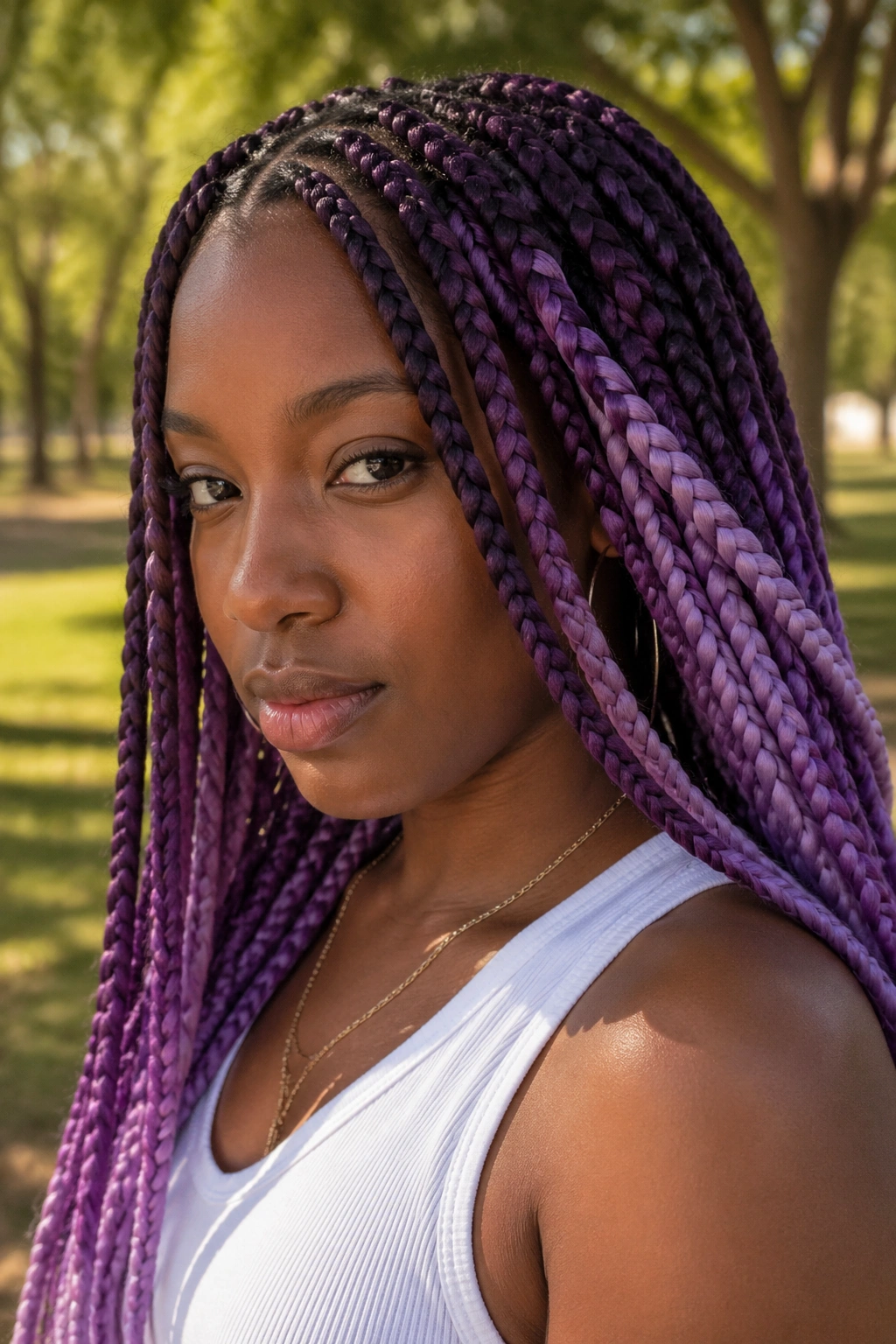
Mixing plum, orchid, and lavender sounds busy on paper. Put them in the right places, though, and the set reads rich instead of chaotic. The trick is to keep the darkest shade closest to the top layer, then let the brighter tones live deeper in the braid or under the surface where they flash through in pieces.
That layering gives the hair dimension without needing a dozen different colors. One purple shade can go flat in long braids; three shades working together give the style movement even when the hair is still. It’s especially strong if the braids are medium or large and the color sections are placed with a light hand.
My bias here is simple: if you want purple but don’t want the set to feel childish, stick to deeper tones and use lavender as the smallest accent. A little goes a long way.
18. Waist-Length Small Braids with Alternating Hidden Rows
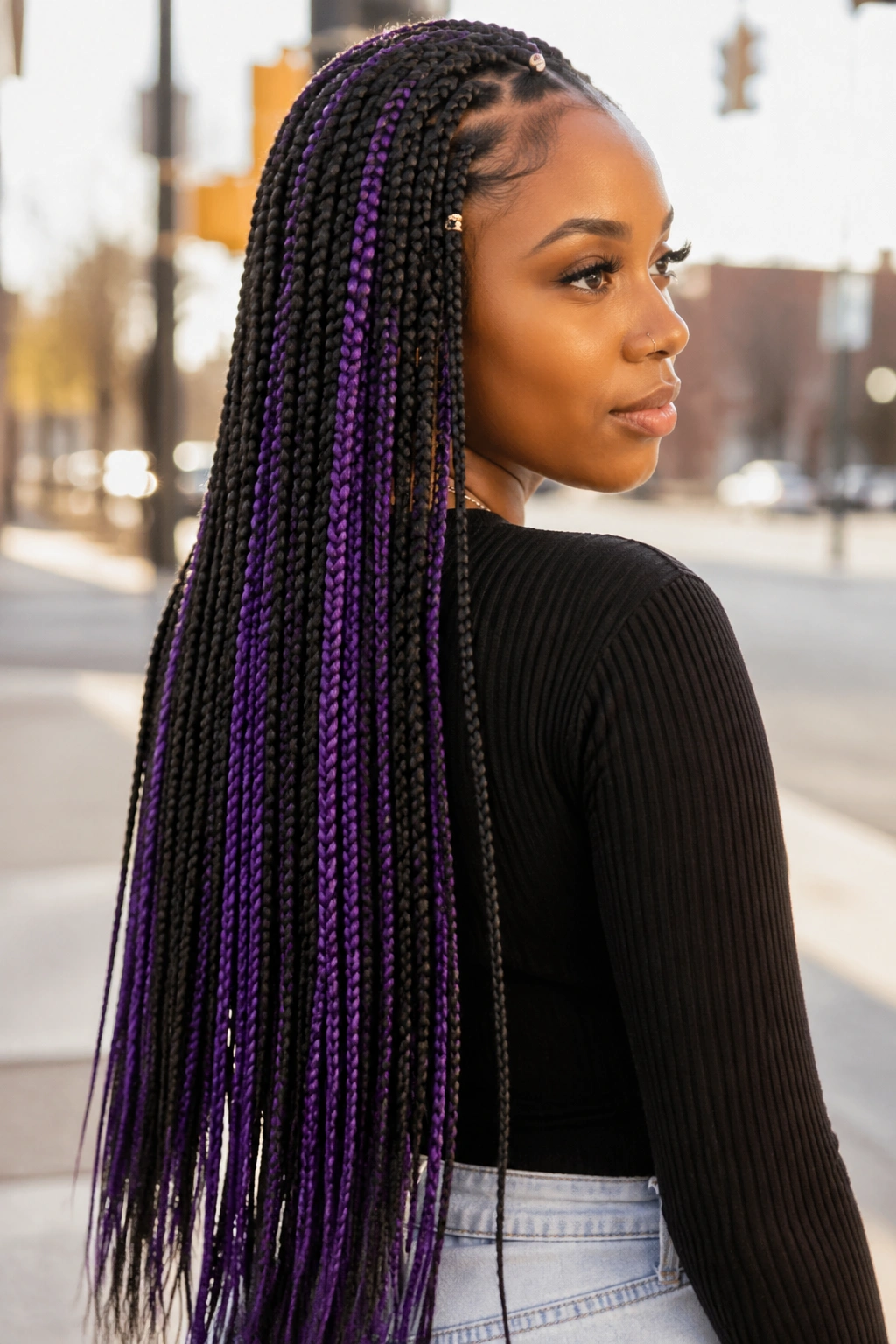
This style is for people who like pattern more than surprise. Instead of one hidden panel, alternate purple rows through the set so the color appears in a repeating rhythm. Every third or fourth row can carry the purple, which gives the braids a steady flash without making the color too loud.
How the pattern changes the look
The eye starts picking up the purple as texture instead of decoration. That’s the interesting part. You stop seeing a few colored pieces and start seeing a woven field of dark and violet strands. It’s more controlled than a random placement, and a lot harder to mess up if the parting is neat.
You do have to be careful not to let the pattern get too regular. If every row is identical, the set can look stiff. A tiny offset — one row thicker, one row slightly deeper — keeps it from feeling mechanical.
19. Braids with Beads and Cuffs Over Plum Panels
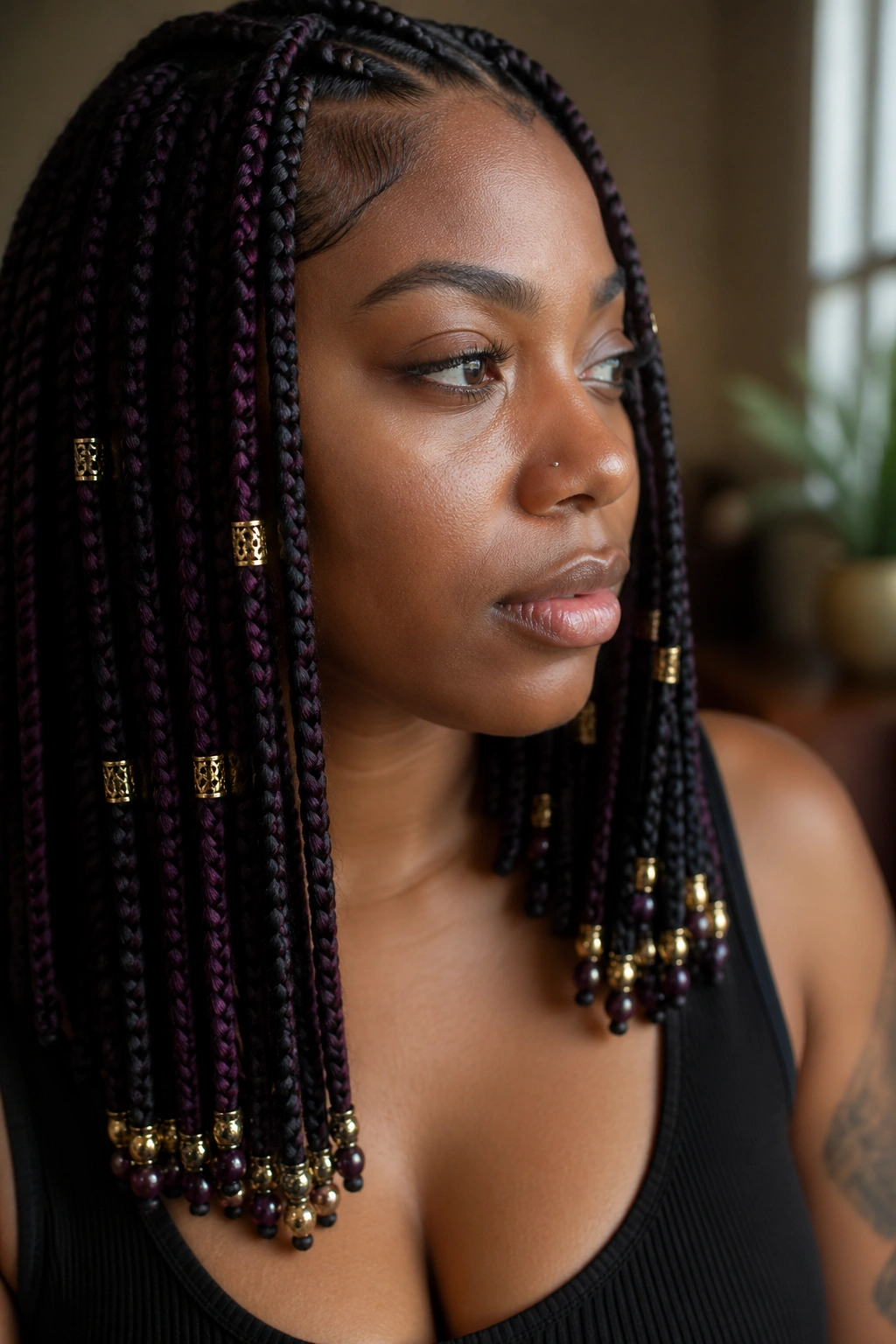
Accessories change the feel of hidden color fast. Gold cuffs, silver rings, wooden beads, clear bands — all of them sit on top of the braid while plum panels hide underneath, which gives the style a layered look without needing more color. The braid becomes the frame; the accessories become the punctuation.
Best accessory pairings
- Gold cuffs work well with plum because the warmth lifts the deep purple.
- Silver rings feel cooler and sharper, which suits violet or grape tones.
- Small beads at the ends keep the braids from feeling too plain.
- Place accessories near the lower third of the braid so the purple can still show in motion.
This is a good style if you like your hair to do a little more than one thing at once. The beads catch the eye, the cuffs add shape, and the plum underneath keeps the whole look from becoming all sparkle and no depth.
20. Layered Lob Box Braids with Electric Violet Peekaboo
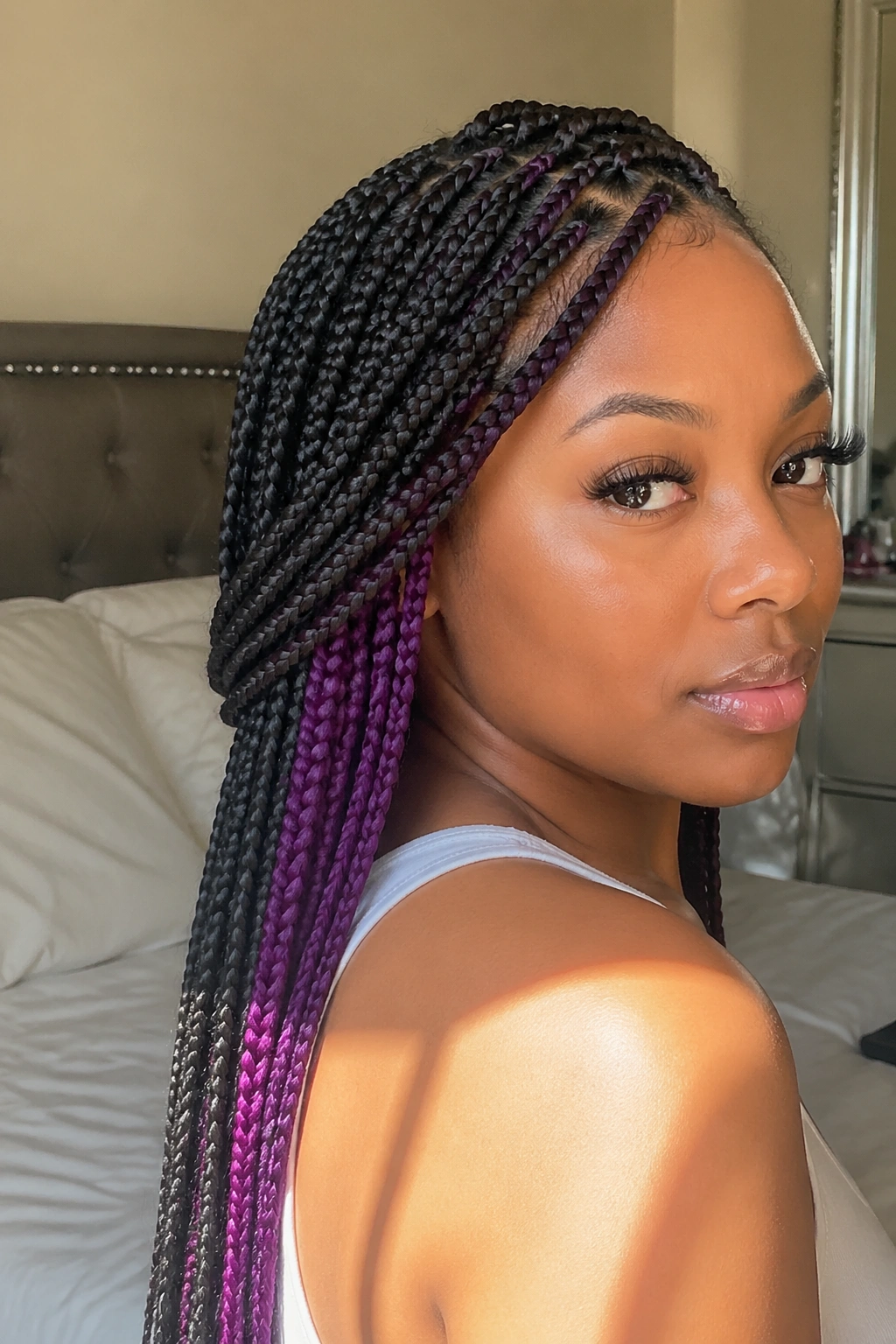
A layered lob is where peekaboo color gets the most use. The shorter layers lift the hair, the ends flip a little, and the electric violet underneath keeps showing up as the braids move. It is one of the few versions that feels both neat and playful without asking for much from you day to day.
The key is restraint at the top. Keep the visible layer dark enough that the violet stays hidden until the hair shifts. Put the brighter color under the mid-lengths and around the sides, where it can show when the lob bends at the jaw or gets tucked behind the ear. That keeps the cut from turning into a solid color block.
If you want the strongest version of purple peekabook box braids, this is it. Shorter layers, hidden color, clean edges, and one bright tone that knows exactly when to show up. The style works because it doesn’t try too hard. It waits for movement, then it pays off.
