



Ribbon does something plain elastics never can. It softens the braid before you even finish it, and that matters when you want hair that feels a little dreamy instead of строго tidy.
That’s why ribbon braids fit so neatly into soft cottagecore looks. A strip of satin, cotton, velvet, or gingham can turn an ordinary plait into something that looks like it belongs with a linen dress, a market tote, and a vase of wildflowers on a windowsill. The braid itself can be dead simple. The ribbon does the mood work.
There’s also a very practical side to it. A 1/4-inch ribbon disappears nicely into fine hair, while a 3/8- to 1/2-inch ribbon reads better on thicker hair or looser braids. If you’ve ever tried a giant bow and felt like the hairstyle was wearing you, you already know the difference a narrow strip can make.
The good ribbon braid is never stiff. It should sway a little, sit a little imperfectly, and look nicer when a few strands have escaped around the temples. That’s the whole charm, really. Now let’s get into the styles that do that best.
1. Classic Three-Strand Ribbon Braid
The simplest ribbon braid is still the one I reach for most. It does not need a fancy part, a curling iron, or a dozen pins. You just fold the ribbon into one of the three strands and braid as usual, which makes it a smart starting point if you want the cottagecore look without a lot of fuss.
Why It Works
A regular three-strand braid already has that soft, hand-made feel. Add ribbon, and the braid gets a little shine, a little color, and a cleaner outline that still looks relaxed. Satin ribbon gives the smoothest drape, while grosgrain stays put better if your hair is slippery or freshly washed.
What I like here is the honesty of the style. It looks like you spent ten minutes on it, not forty. That is a compliment.
- Use 18 to 24 inches of ribbon for shoulder-length hair.
- Choose a 1/4-inch ribbon if your hair is fine or layered.
- Pick a 1/2-inch ribbon if you want the ribbon to show more clearly.
- Tie the braid off with a small clear elastic first, then wrap the ribbon around it.
Tip: keep the ribbon ends a little longer than the braid itself. Short tails look accidental, and not in a charming way.
2. Ribbon-Woven French Braid for Soft Cottagecore Looks
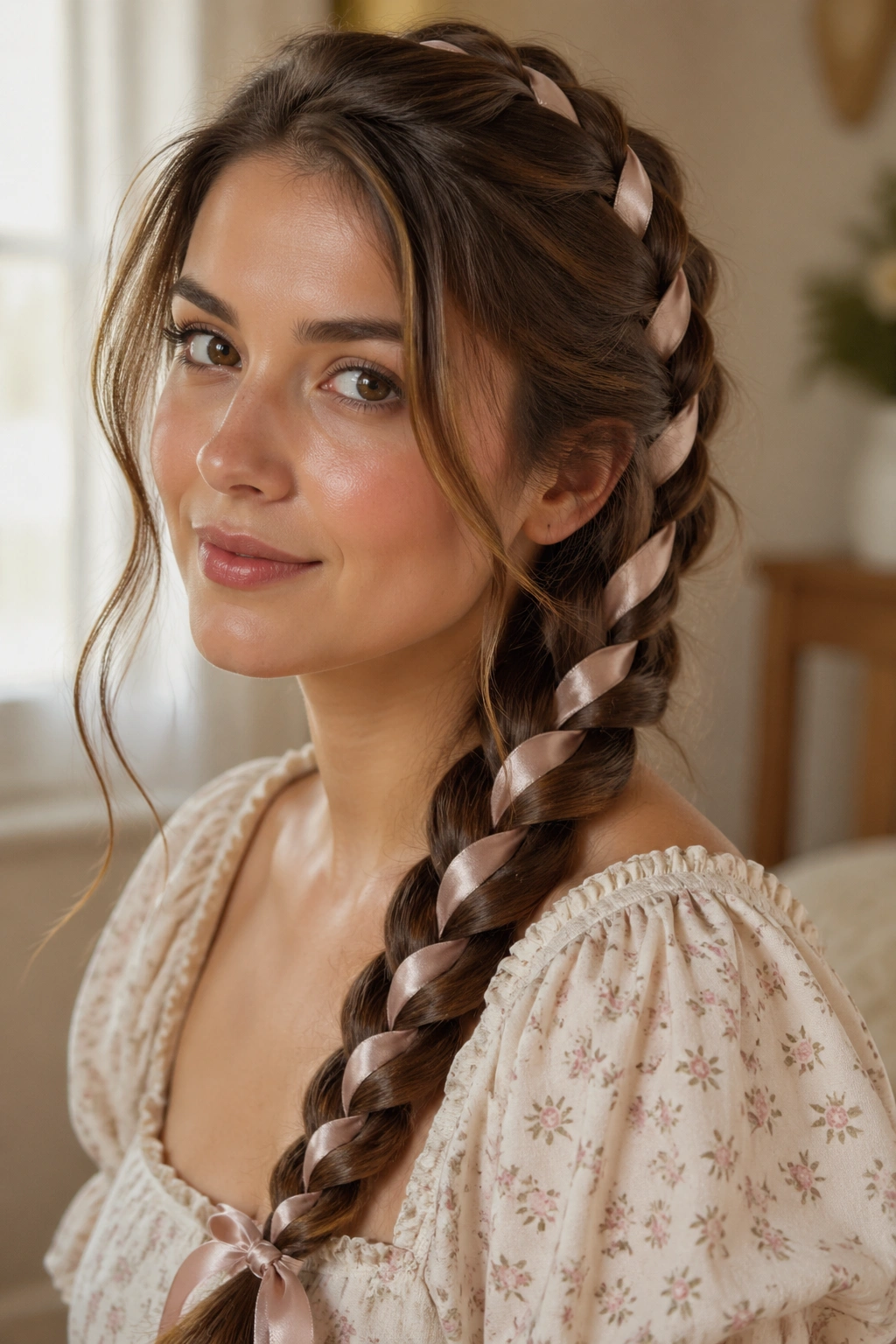
A French braid with ribbon looks fancier than it is. That’s the fun of it. The braid sits close to the scalp, which keeps the style neat, but the ribbon keeps it from feeling severe or school-uniform plain.
The easiest way to do this is to anchor the ribbon at the crown with a tiny hidden knot, then treat it like one of your working strands as you add hair from both sides. The ribbon should stay flat as it moves through the braid; if it twists too much, the whole thing starts to look cluttered. A smoother ribbon, like satin or silk, is easier here than a textured one.
The result is a braid with shape. Not weight. That matters.
A French ribbon braid works especially well if your hair has a little texture already, because the ribbon gives your braid enough visual interest that you do not need perfect polish. If your hair is freshly washed and slippery, mist the roots with texturizing spray or a little dry shampoo before you start. You want grip, not fluff.
A tiny detail I love: leave one or two face-framing pieces out at the front and curl just the ends with a 3/4-inch iron. It keeps the braid from looking too strict and softens the whole line against the jaw.
3. Side Braid with a Long Tail Bow
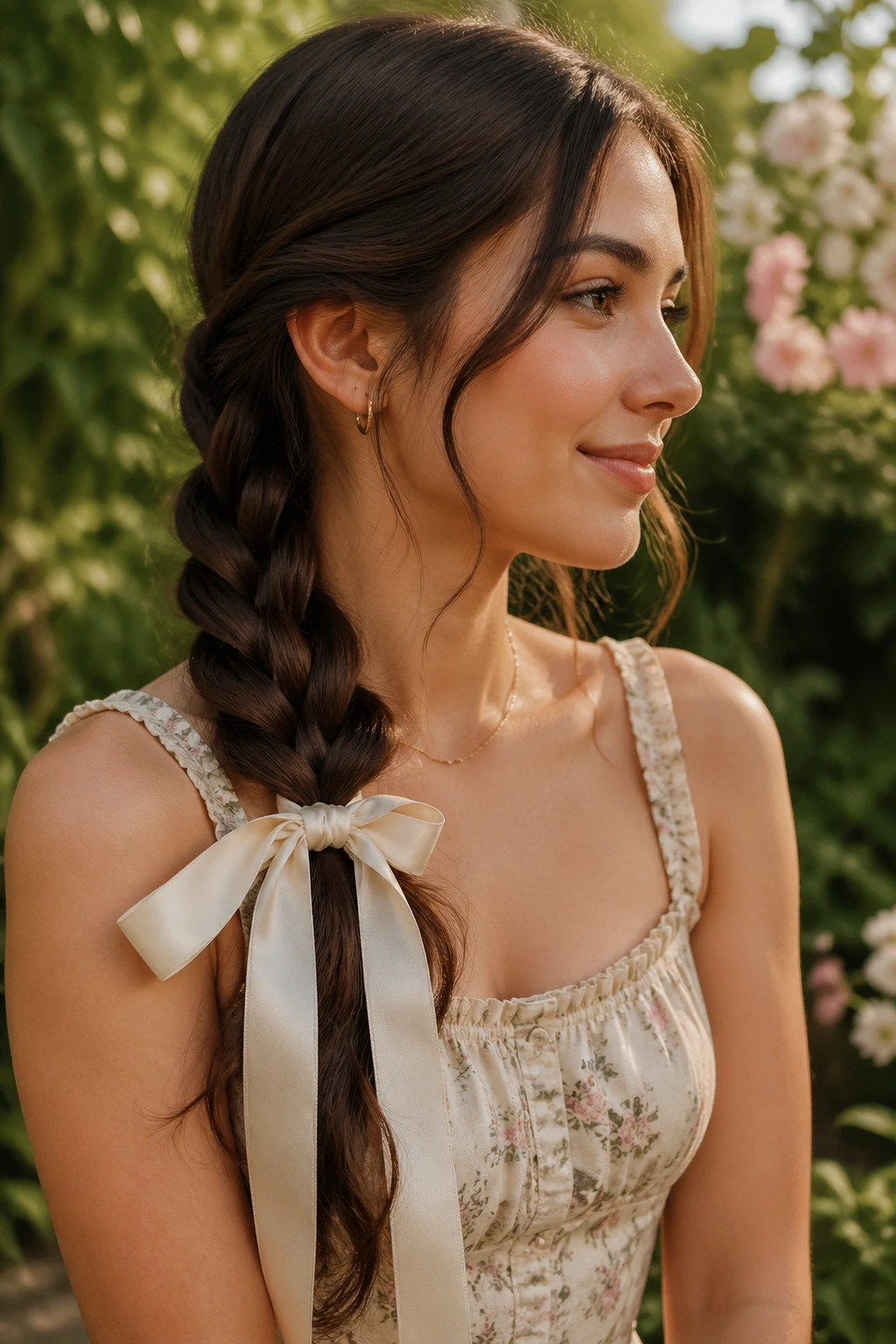
Why does a side braid feel softer the second ribbon enters the picture? Because the braid drops away from the center of the head and lands near the shoulder, where it reads less formal and more casual. Add a bow or a long knot at the base, and suddenly the braid looks like something you’d wear to a picnic, not a dance rehearsal.
How to Style It
Start the braid behind one ear instead of at the back of the head. That single shift changes the mood completely. Keep the braid loose enough that the pieces don’t pull flat against the scalp, then tie it off with a ribbon long enough to leave 4 to 6-inch tails on both sides.
If you want the softest version, tie the ribbon into a flat knot first, then make a small bow just below it. A bow that sits too high near the braid can look stiff. Lower is better. Usually, 1 to 2 inches below the elastic is the sweet spot.
- Best ribbon widths: 3/8 inch to 1/2 inch
- Best hair length: collarbone and longer
- Best finish: a few loose waves or bends through the ends
- Best mood: gentle, a little romantic, not overworked
One caution: if your hair is very silky, a side braid can slide forward. A hidden bobby pin under the top section fixes that fast.
4. Milkmaid Ribbon Crown
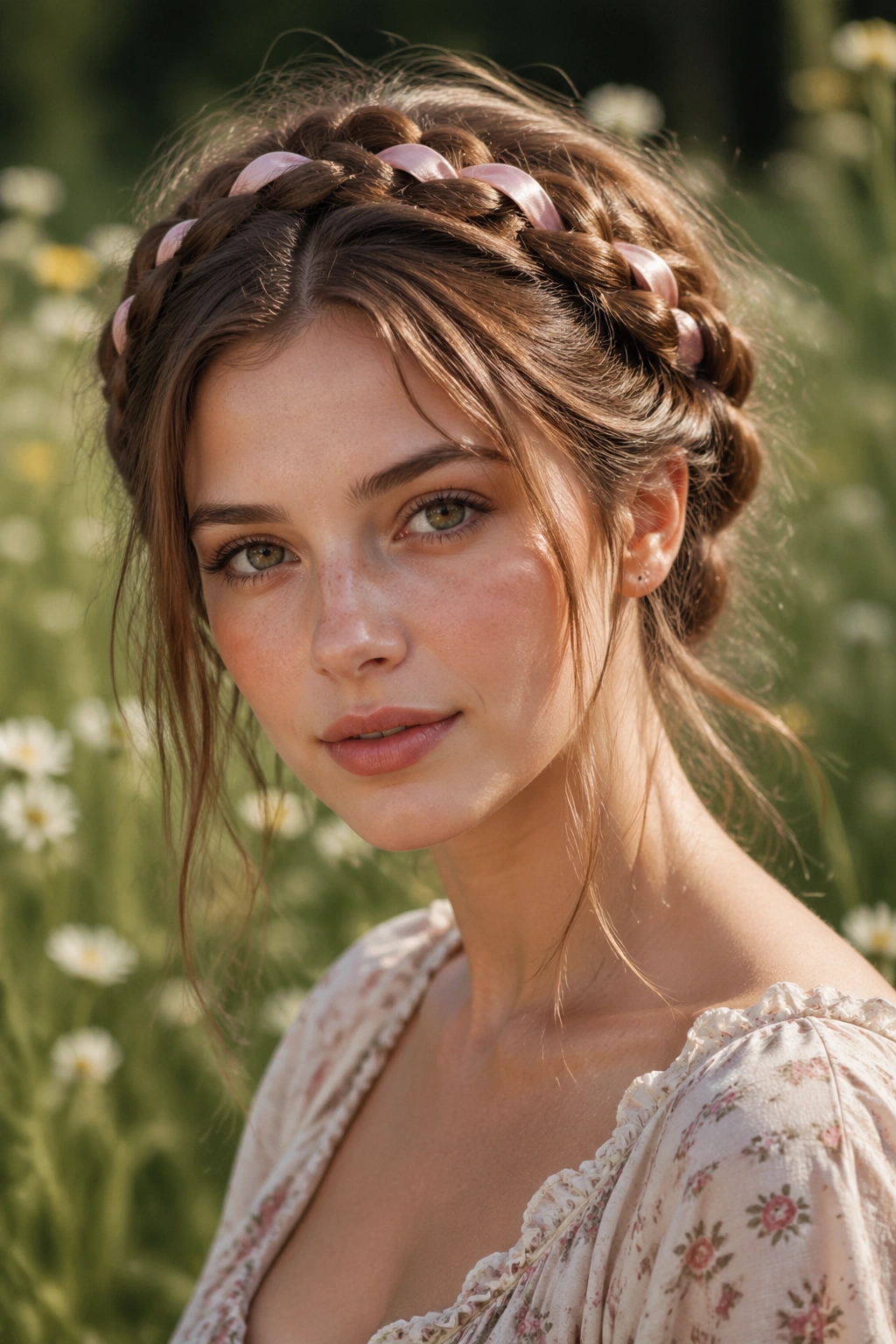
A milkmaid crown is the hairstyle version of a picnic blanket and a loaf of bread. It feels sweet, but if you make it too neat, it slides into costume territory fast. Ribbon pulls it back toward soft cottagecore hair instead of theatrical dress-up.
The trick is to make the crown shape a little loose. Braid two side sections, then wrap them across the top of the head and pin them into place with 4 to 6 bobby pins, crossed in opposite directions. Threading ribbon through one or both braids adds color without making the style bulky. A narrow ribbon works best here, because the crown already has enough shape on its own.
This style is one of those looks that benefits from a tiny bit of mess. I mean a tiny bit. Pull the braid edges outward just enough to widen them by about 10 to 15 percent. That gives the crown a softer silhouette and keeps the braid from looking rope-like.
A few practical details help more than people expect:
- Use a center part if you want symmetry.
- Leave two thin face pieces near the temples for softness.
- Tuck the ribbon tails under the braids so they do not stick straight out.
- If you have layers, mist them with a little light-hold spray before pinning.
The crown sits best on hair that has some bend in it already. Stick-straight hair can do it, but it needs grip. A little wave goes a long way.
5. Half-Up Ribbon Braid with Loose Waves
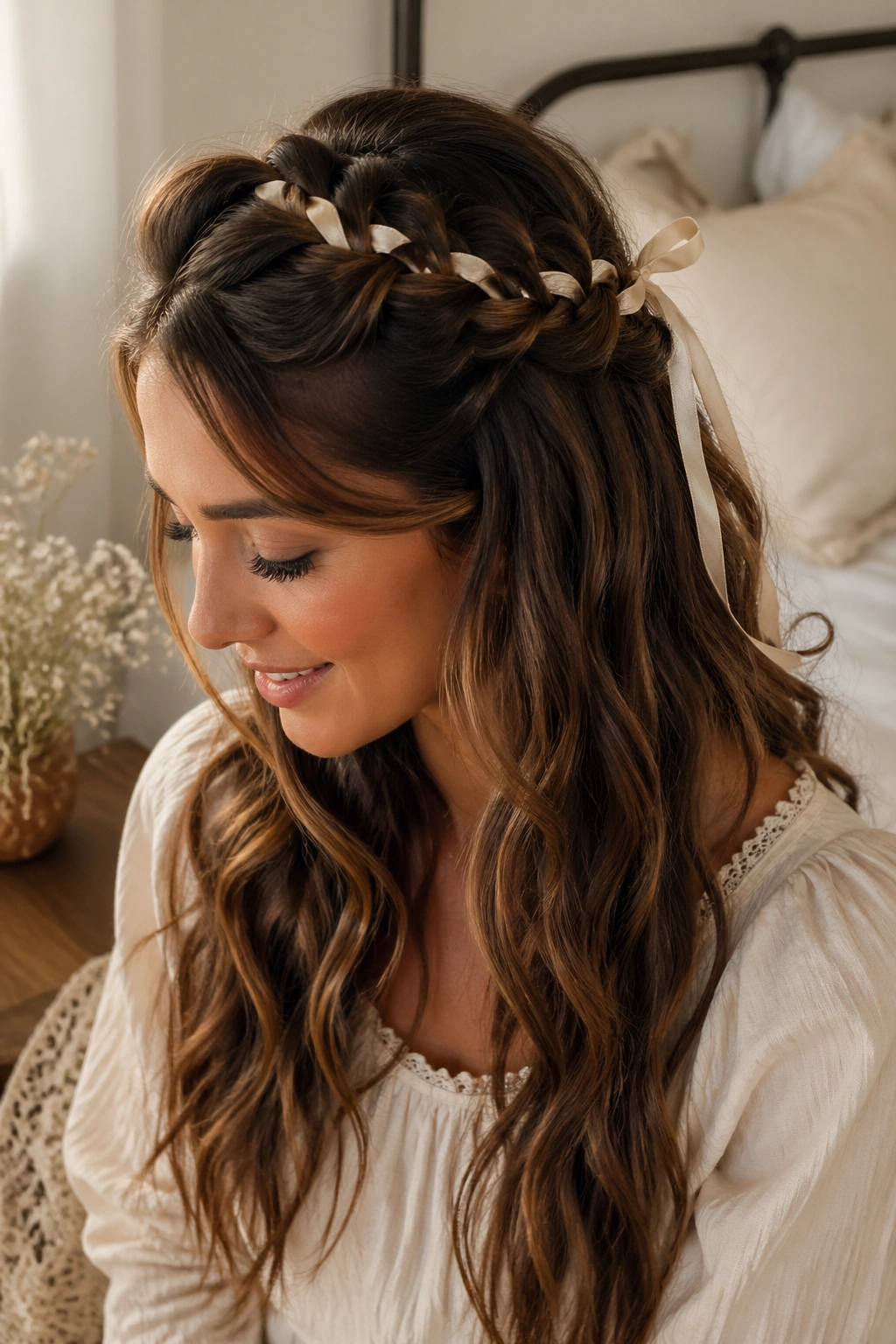
Half-up ribbon braids are the easiest way to keep hair loose and still look finished. The style keeps the back down, which preserves movement, but the braided half-up section gives enough structure that the whole thing doesn’t drift into “I forgot to style my hair.”
Start by taking a triangle of hair from each temple and braid it into a small half-up plait with ribbon woven through the center. Tie it off with a slim ribbon, then let the rest of the hair fall in loose waves. If your hair is naturally straight, wrap a few sections around a 1-inch curling iron and brush them out once they cool. You want bends, not barrel curls.
What makes this version so good is the contrast. The top is controlled, the bottom is soft, and the ribbon acts like a little bridge between the two. That mix is basically the cottagecore formula in one sentence.
I like this style on shoulder-length hair because it gives shape without swallowing the ends. On very long hair, the ribbon braid can get lost if the lower section is too thick. On very short hair, the half-up section can feel sparse. Medium length sits right in the middle, which is where this style really likes to live.
A light mist of flexible-hold hairspray helps keep the braid from widening too much during the day. You do not want it crunchy. Just stable.
6. Fishtail Braid Threaded with Satin
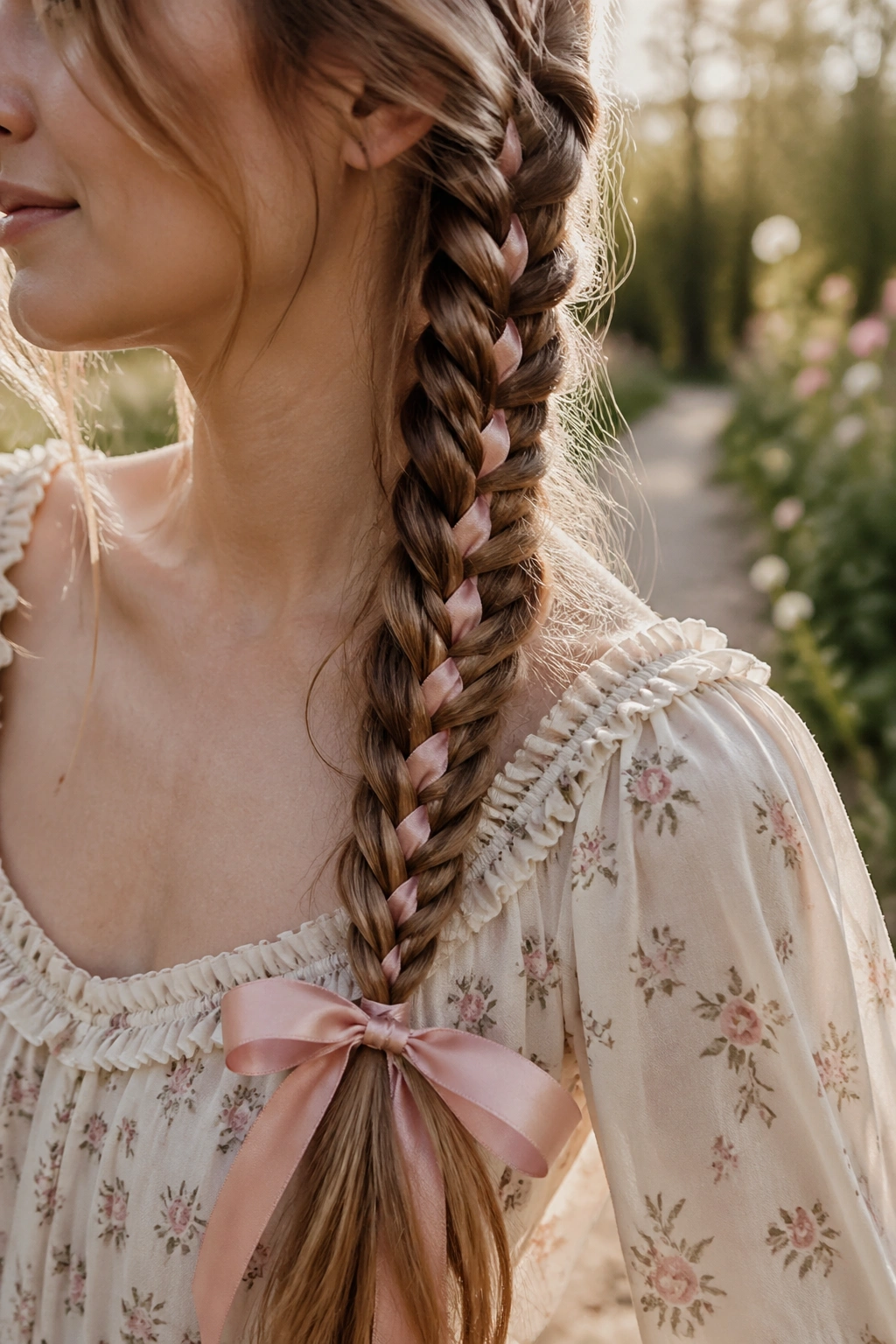
A fishtail braid can look almost too tidy on its own. The thin sections create a tight, elegant texture, and that sometimes reads more polished than cottagecore wants. Ribbon changes that immediately. It breaks the precision and gives the braid a softer, more handmade line.
Unlike a standard braid, a fishtail shows the ribbon in narrow flashes rather than one broad stripe. That is why satin ribbon works so well here. The shine catches in little pieces, which looks prettier than one heavy band running through the whole braid. If you want a quieter result, use organza or a very thin matte ribbon.
The best version is usually a side fishtail or a low fishtail. Both keep the style from feeling too severe. Pull the braid apart gently after you finish — not a lot, just enough to widen the edges by a fraction. A fishtail that’s too tight can look stiff, and nobody wants that.
This braid is especially nice on fine hair because the ribbon gives the eye more to look at. Fine hair can sometimes disappear in a fishtail, but ribbon gives it shape and a little depth. If your hair is thick, use a wider ribbon and keep the weave a bit looser so the braid does not turn into a dense rope.
Best pairing: a soft sweater, bare neck, and maybe one loose tendril near the cheekbone.
7. Bubble Braid with Ribbon Ties
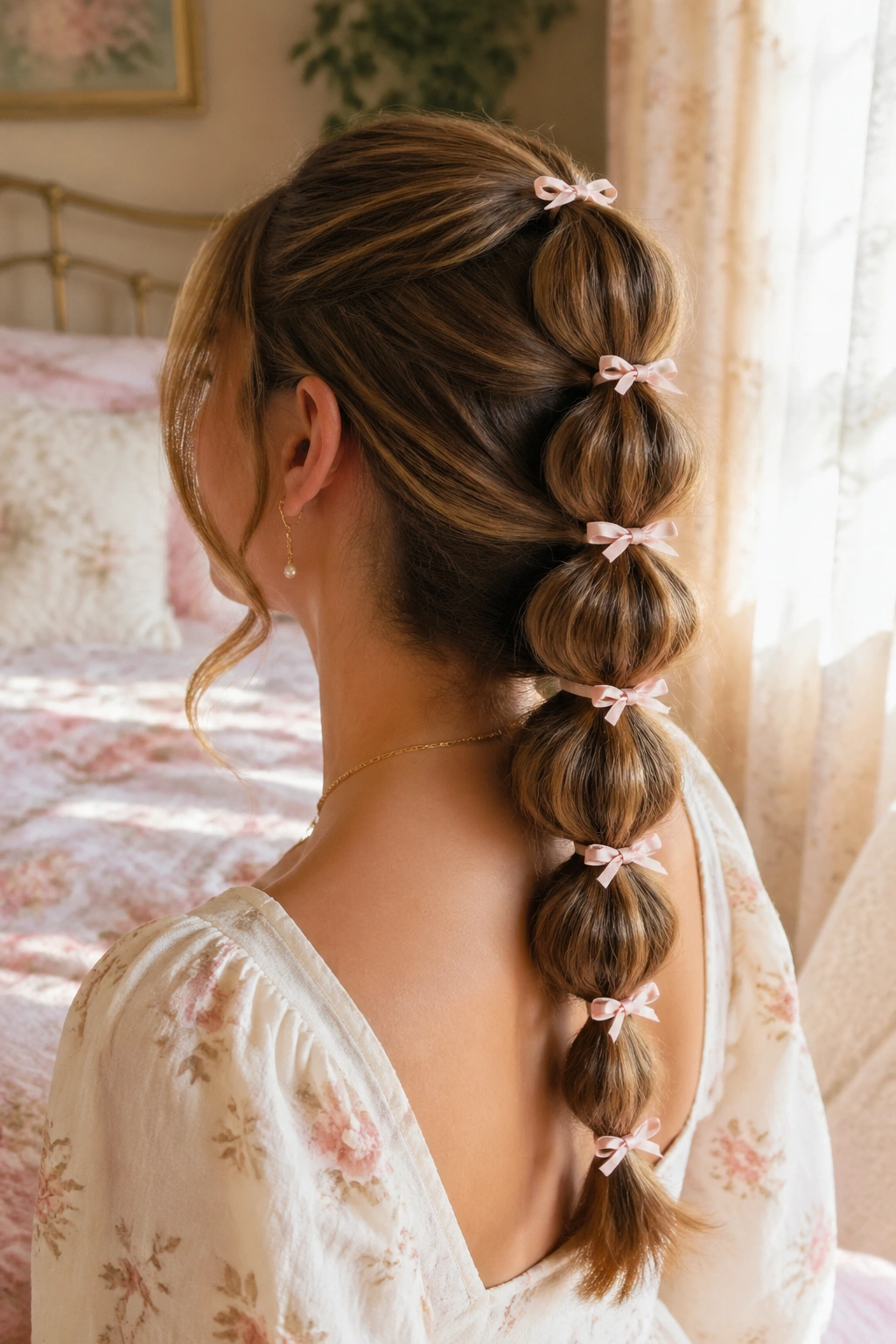
Why do bubble braids read so cottagecore? Because the spacing feels playful. Each segment has its own little round shape, and when you add ribbon ties at every section, the style gets a storybook look without needing any complicated weaving.
Spacing Is the Whole Game
Start with a low ponytail or a half-up ponytail, then add clear elastics every 1.5 to 2 inches down the length. Gently tug each section outward to make a rounded “bubble.” After that, wrap a narrow ribbon around each elastic or tie the ribbon directly over it in a tiny knot.
The part people miss is balance. If the bubbles are too close together, the braid looks crowded. If they’re too far apart, the shape gets saggy. The sweet spot is usually four to six bubbles for medium-length hair, maybe more if your hair runs long.
A bubble braid gives you the ribbon moment without forcing you to thread ribbon through every inch of hair. That makes it a good choice if your hair tangles easily or if you want something that survives a long day out. It also works well on hair that has a bit of volume at the root, since the bubbles need some support to look rounded.
- Use tiny clear elastics if you want the ribbon to stand out.
- Choose gingham, cotton, or narrow satin ribbon.
- Keep the bubbles slightly uneven if you want the braid to feel softer.
- Leave the ends loose or curl them lightly.
The style looks especially nice when the ribbon color is quiet: cream, faded red, dusty blue, soft green. Loud colors can be fun, but they pull the look away from cottagecore and into costume.
8. Dutch Braid with Velvet Ribbon
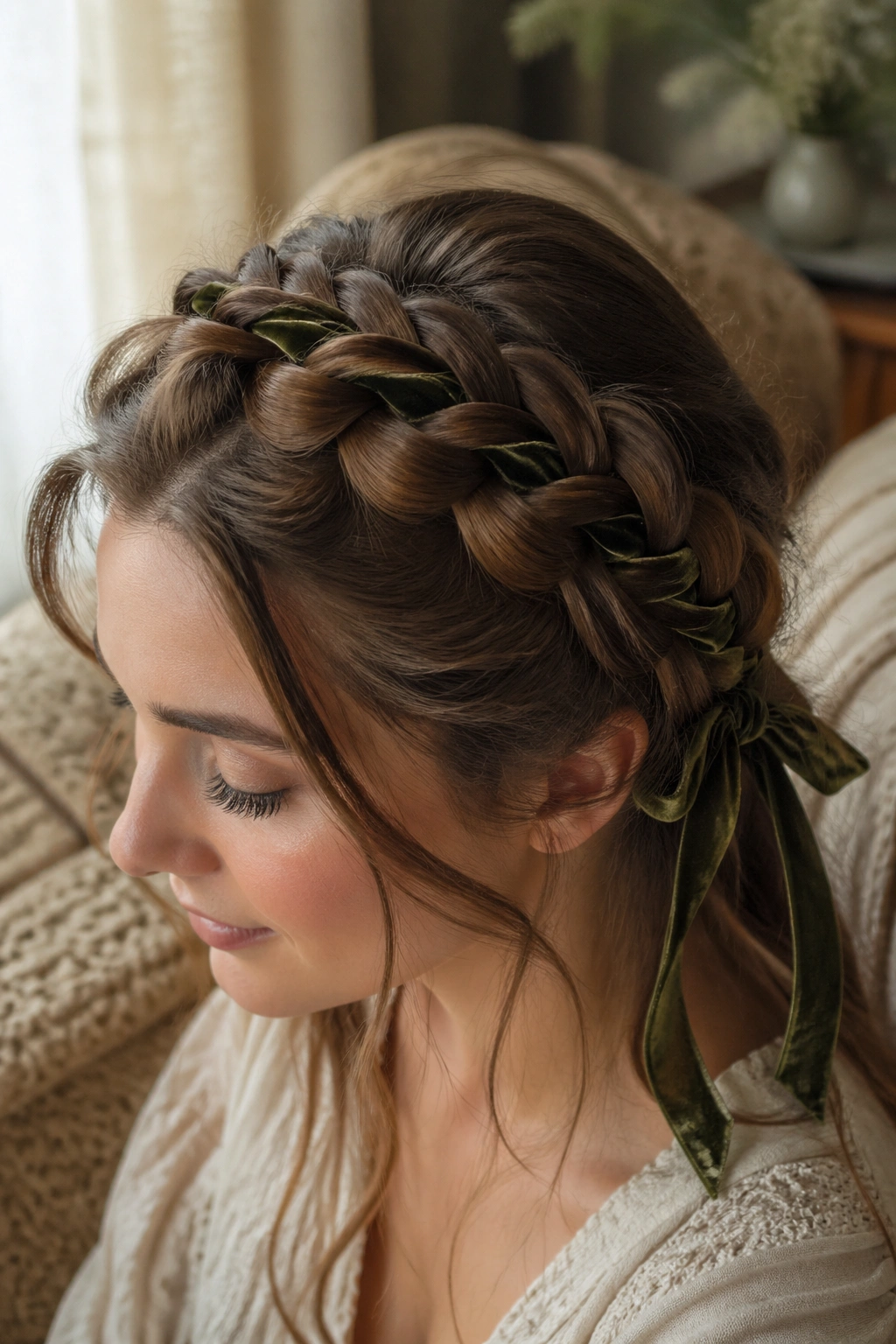
Velvet changes the whole mood of a Dutch braid. A regular Dutch braid already has that raised, brazen texture — it sits on top of the hair instead of sinking into it — and velvet makes the braid look richer and a little more old-fashioned in the best way.
What makes velvet different is the way it catches the eye without shining. Satin can look sleek. Velvet looks soft and deep. On a braid, that means the ribbon reads almost like trim on an old dress sleeve, which is exactly why it suits cottagecore braids so well.
I’d pick this version when the outfit has texture too: knits, cotton, linen, maybe a heavy skirt. Velvet ribbon, especially in moss green, wine, cream, or cocoa brown, adds weight without looking harsh. Keep the ribbon width to 3/8 inch or 1/2 inch so it doesn’t overwhelm the braid. Anything wider starts to look bulky fast.
What Makes Velvet Different
Velvet grips better than satin, which is a help if your braid tends to loosen. It also hides tiny dents and uneven tension better than shiny ribbon, so the style is forgiving on days when your fingers are not at their best.
If your hair is fine, prep it with mousse at the roots and a little dry texture through the mid-lengths. If it is thick, part the hair cleanly and keep your sectioning tidy. A Dutch braid shows mistakes more plainly than a loose plait. That’s not a flaw. It’s just the nature of the braid.
9. Pull-Through Braid with Gingham Ties
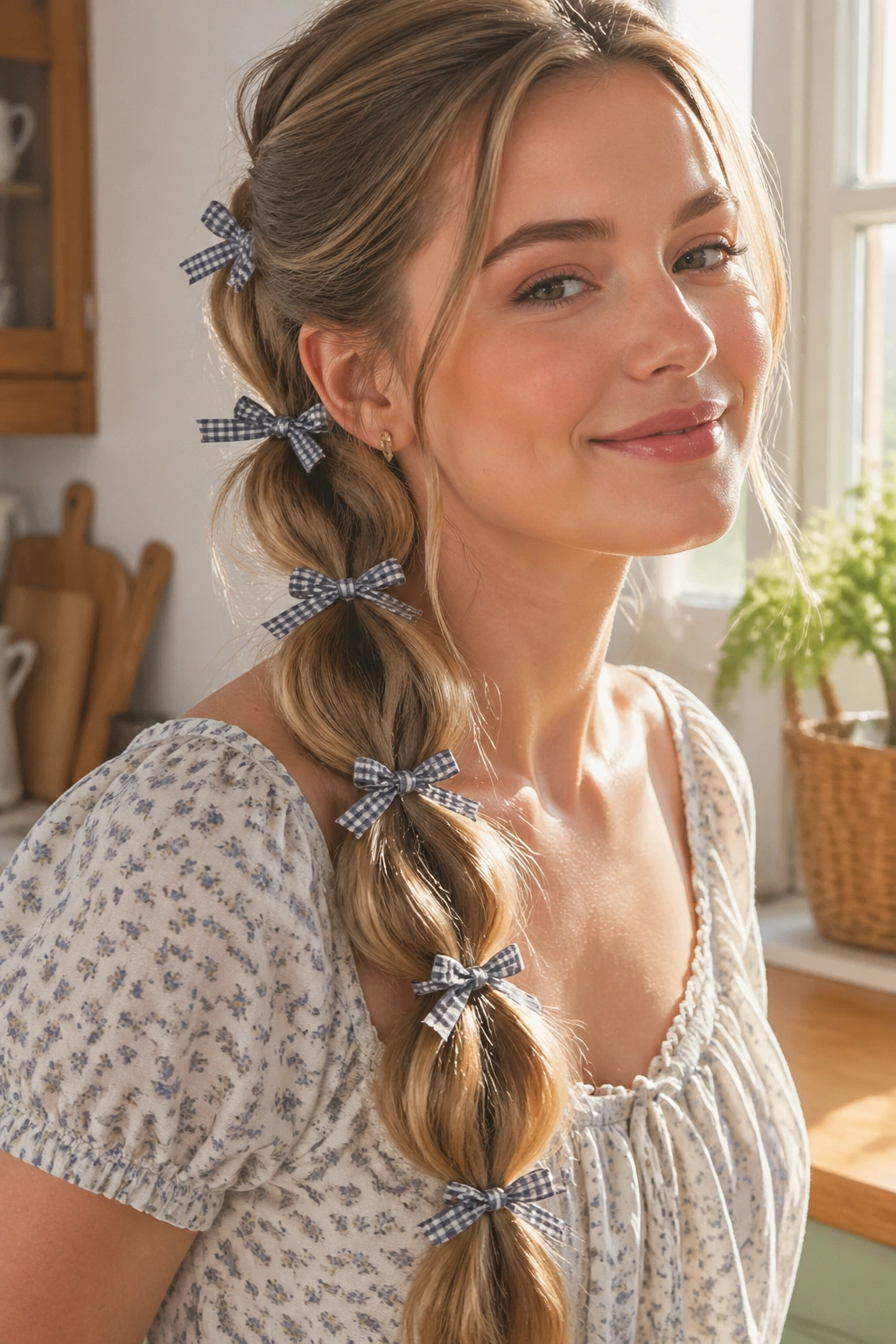
The pull-through braid is the one I recommend when your hair never behaves enough for a true braid. It gives you all the visual fullness of a thick woven style, but it’s really a chain of little ponytails linked together. Add gingham ties, and the whole thing starts looking like a homemade ribbon garland.
The braid works because each section has its own shape. Instead of relying on three strands, you build volume with clear elastics every few inches. Then you wrap ribbon around the elastics or tie small bows on top. If you want the softest finish, use a ribbon that’s about 1/4 inch wide. Bigger checks can look charming, but they can also dominate the braid if your hair is fine.
What I love here is the movement. The pull-through braid swings more than a tight plait because it’s built from repeated loops. That makes it a good choice for hair that sits flat otherwise. If you have long hair, it also keeps the style from collapsing into one heavy rope by the end of the day.
- Use 6 to 10 clear elastics, depending on hair length.
- Backcomb each ponytail lightly if you want more fullness.
- Pinch each loop outward before tying the next section.
- Keep the gingham pattern small if your hair is already thick.
The look is cheerful, yes, but not childish if you keep the ribbon narrow and the color soft. Cream-and-red gingham is classic. Pale blue is quieter. Black-and-white can work too, though it shifts the mood away from soft cottagecore and more toward vintage picnic.
10. Rope Braid Wrapped with Thin Ribbon
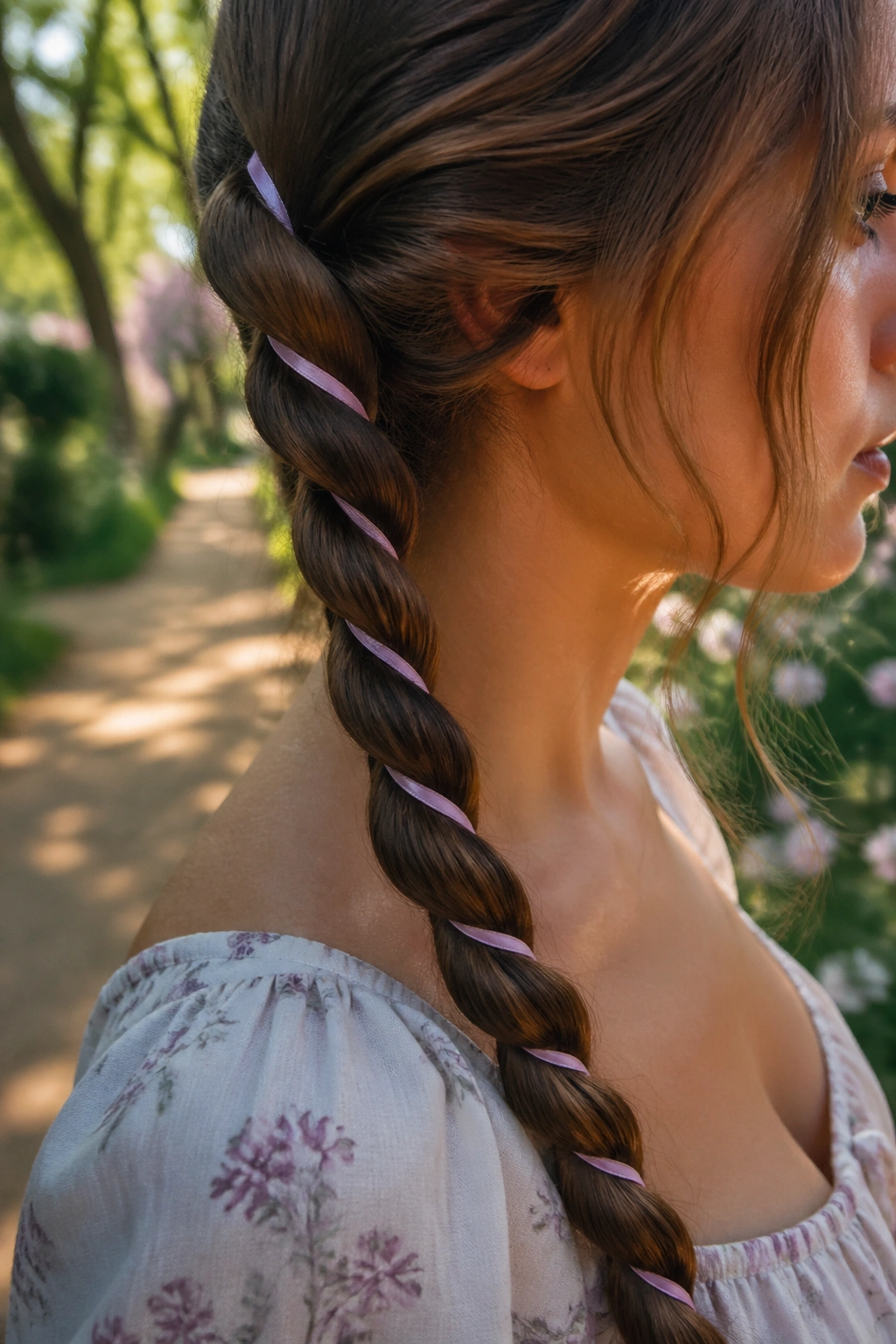
A rope braid wrapped with ribbon has a different swing than a three-strand braid. The twist gives it a clean spiral, and the ribbon can either run along one side or wrap around the length in tiny bands. That makes it a good option when you want cottagecore charm but not a fussy braid pattern.
The rope braid starts with two sections, each twisted in the same direction before being wrapped around each other in the opposite direction. If the direction sounds annoying, the visual result makes up for it. The shape stays neat, and the ribbon adds just enough softness to keep it from feeling severe.
This style looks best with a thin ribbon. Think 1/8 inch to 1/4 inch. A wide ribbon tends to fight the twist and flatten the braid’s spiral. Thin ribbon lets the braid keep its line while still showing the color. I especially like this on smooth, straight hair, because the twist itself creates enough texture to be interesting.
You can also use the ribbon in a few different ways. Wrap it around one strand before you begin. Thread it through the twist at regular intervals. Or tie it off at the end and leave a short tail for a subtle finish. Small choices, big change.
A rope braid is a little more modern than some of the other looks here, but that’s not a bad thing. If your clothes already lean soft and rustic, the braid gives you structure without stealing the scene.
11. Braided Pigtails with Ribbon Lacing
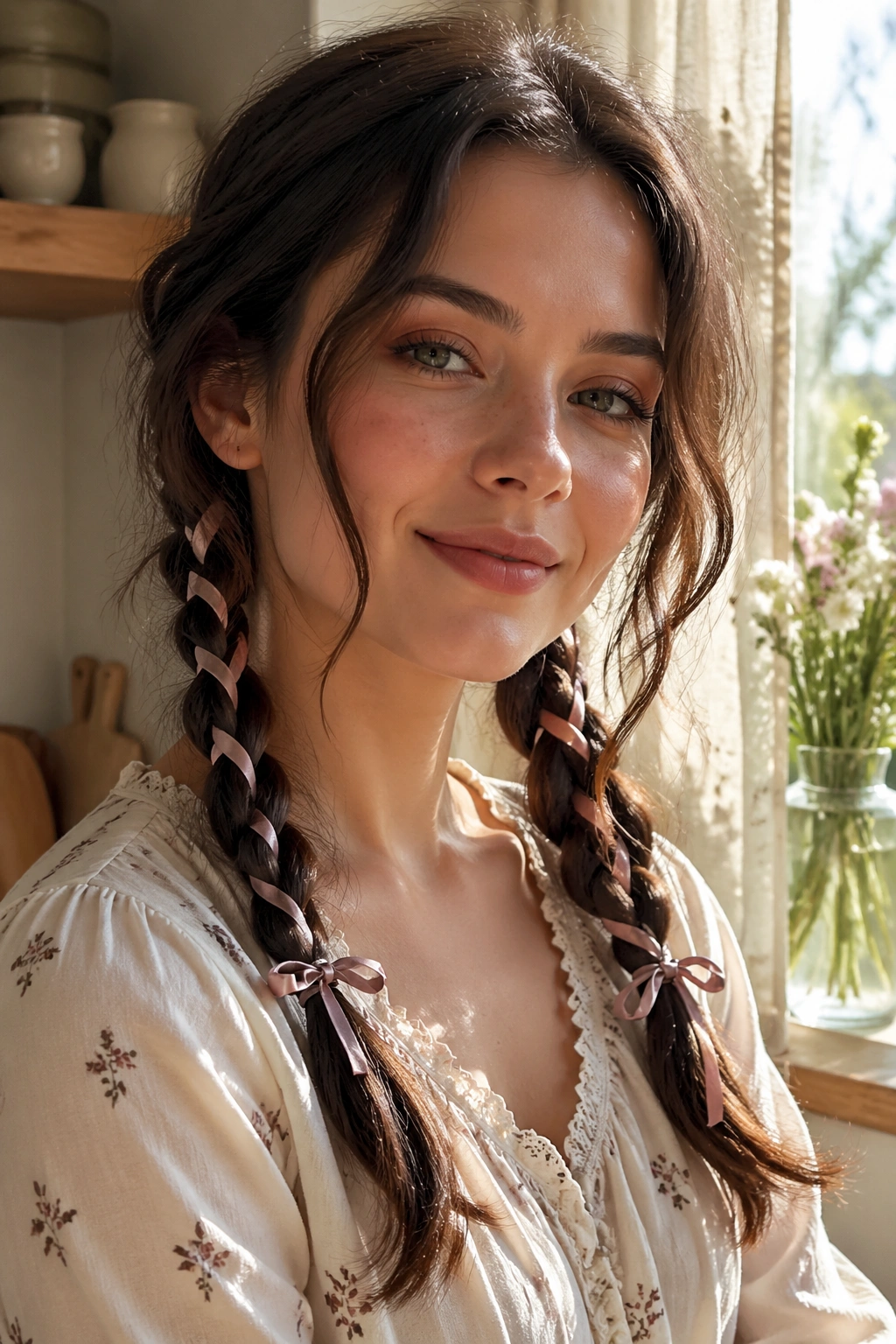
Braided pigtails can lean sweet or childlike fast. The ribbon is what decides which side they land on. Keep the braids low, the ribbon narrow, and the part slightly loose, and you get a look that feels charming instead of costume-ish.
Unlike one central braid, pigtails split the visual weight evenly on both sides of the face. That makes them useful if you want a softer frame around the cheeks. If you lace each braid with its own ribbon, the effect is balanced and tidy, but not stiff. Two ribbons also let you play with color in a quiet way — cream and sage, dusty rose and ivory, pale blue and white.
The braid itself can be a classic three-strand, a French braid, or even a loose rope braid. What matters more is the placement. Keep the part clean, but let the braids sit a little lower than you might for a school-style look. Just below the ears is often the nicest spot. Higher than that can look more playful than romantic.
A few details keep the style soft:
- Leave a thin face-framing piece on each side.
- Tie the ribbons off with short knots, not huge bows.
- Slightly loosen the braids after tying.
- Curl the ends just once or twice for a gentler finish.
This is one of those styles that works well with hats too. A straw hat, a slouchy beret, even a ribboned bonnet if you’re going full cottage mood. The braids sit flat enough to stay comfortable.
12. Waterfall Braid with Ribbon Loop
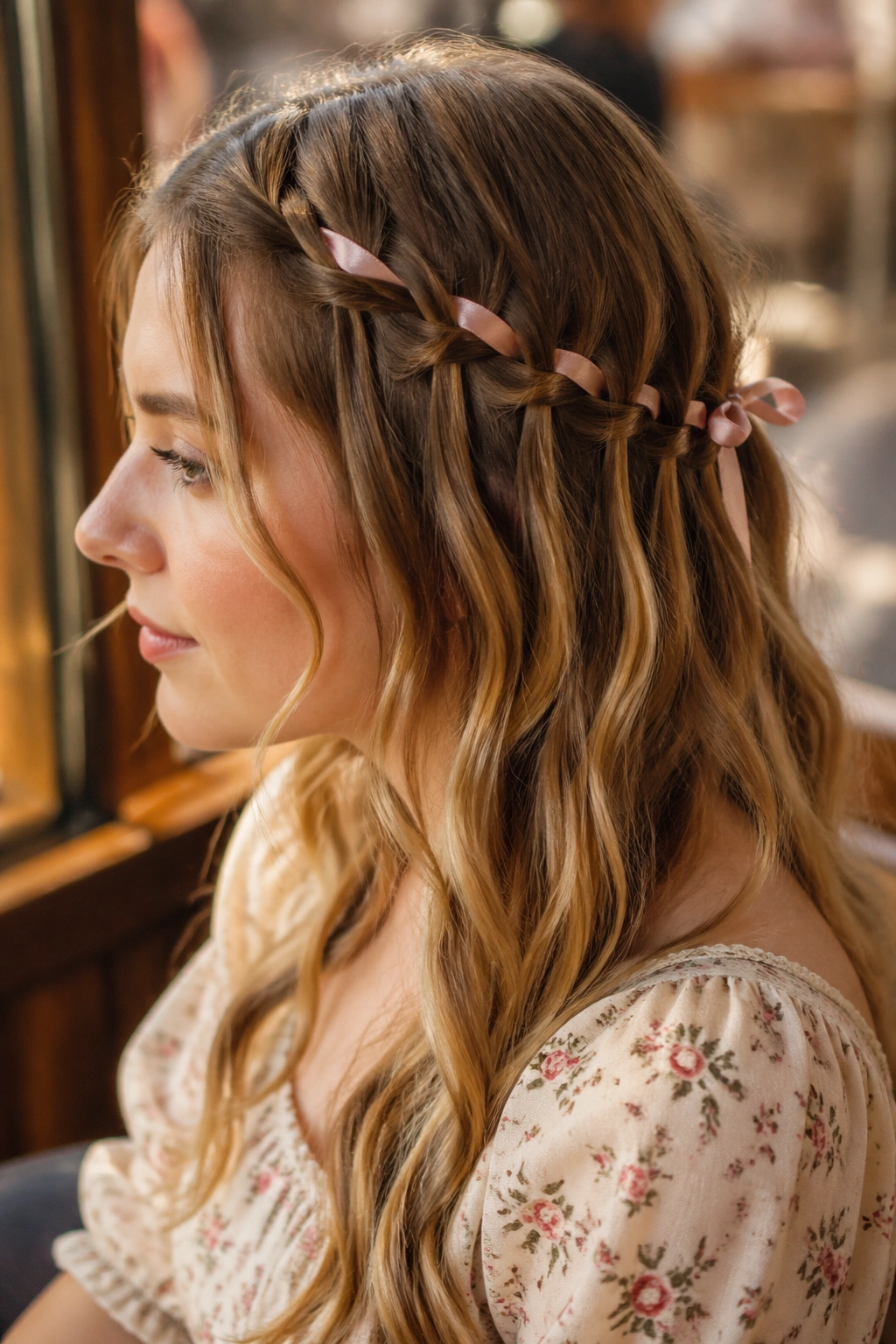
Waterfall braids are the most delicate look in the bunch. They feel light, almost airy, because pieces of hair drop through the braid instead of staying locked inside it. Add a ribbon loop, and the style gets even softer — like a trail of thread moving through lace.
How to Keep the Drops Clean
Start the braid at the temple and work horizontally across the head. As you cross sections over, let the bottom strand fall free each time, then pick up a new piece from above. To work ribbon in, anchor it near the start with a tiny hidden knot and let it travel with the top section. You can also loop the ribbon through the dropped strands if you want a more visible thread of color.
This style is one of the few that really benefits from a little wave in the hair. Straight ends can make the waterfall pieces look sharp. Soft bends make them blend into the rest of the braid. A 1/4-inch ribbon is usually enough; anything wider can overwhelm the fine pattern.
Waterfall braids are lovely on medium-length hair because the pattern shows clearly without stretching too far down the back. If your hair is very long, the braid can lose some of its delicacy unless you keep the drops loose and the ribbon narrow. A bit of shine in the ribbon helps too. Satin works well. So does a matte silk ribbon if you want the look to stay quiet.
One small warning: don’t pull the braid too tight at the start. A waterfall braid that’s cinched down loses the softness that makes it good in the first place.
13. Low Braided Bun with Tucked Ribbon Ends
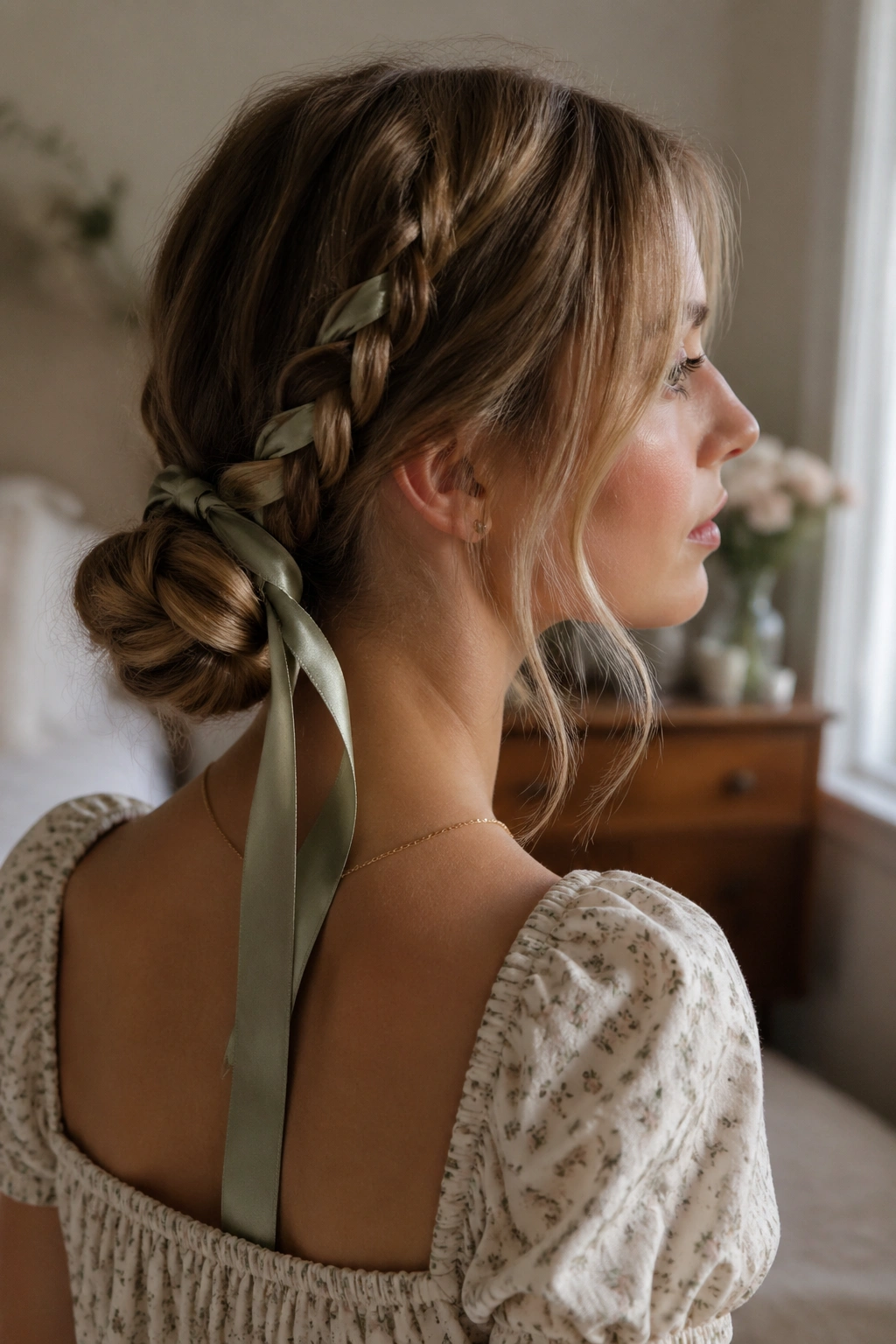
A low braided bun gives you the romance of ribbon without making the whole style feel precious. It’s a good choice when you want your hair up, your neck clear, and the ribbon still visible. That balance is harder to find than it looks.
The braid can begin as a simple three-strand, a loose French braid, or even a rope braid. Once it reaches the nape, coil it into a bun and pin it flat with 4 to 8 bobby pins, depending on hair thickness. Ribbon can be woven through before the bun goes up, or tied around the finished bun so the tails hang softly for 3 to 6 inches. I usually prefer the second method. It keeps the ribbon from getting swallowed by the twist.
This style is especially nice when the fabric has a little texture of its own. Cotton ribbon looks casual. Velvet looks richer. Satin gives the strongest contrast against hair. If you want a quiet cottagecore effect, choose a ribbon that’s only a shade or two different from your clothes, not a loud contrast that demands attention.
The bun also solves a practical problem: wind. A lot of softer braid styles look lovely until you step outside and the loose ends start moving everywhere. The low bun keeps the shape in place while the ribbon still gives you that soft, handmade feel.
A few strands near the ears can stay loose. They should. A bun this neat needs one small unruly detail to keep it from feeling too proper.
Final Thoughts
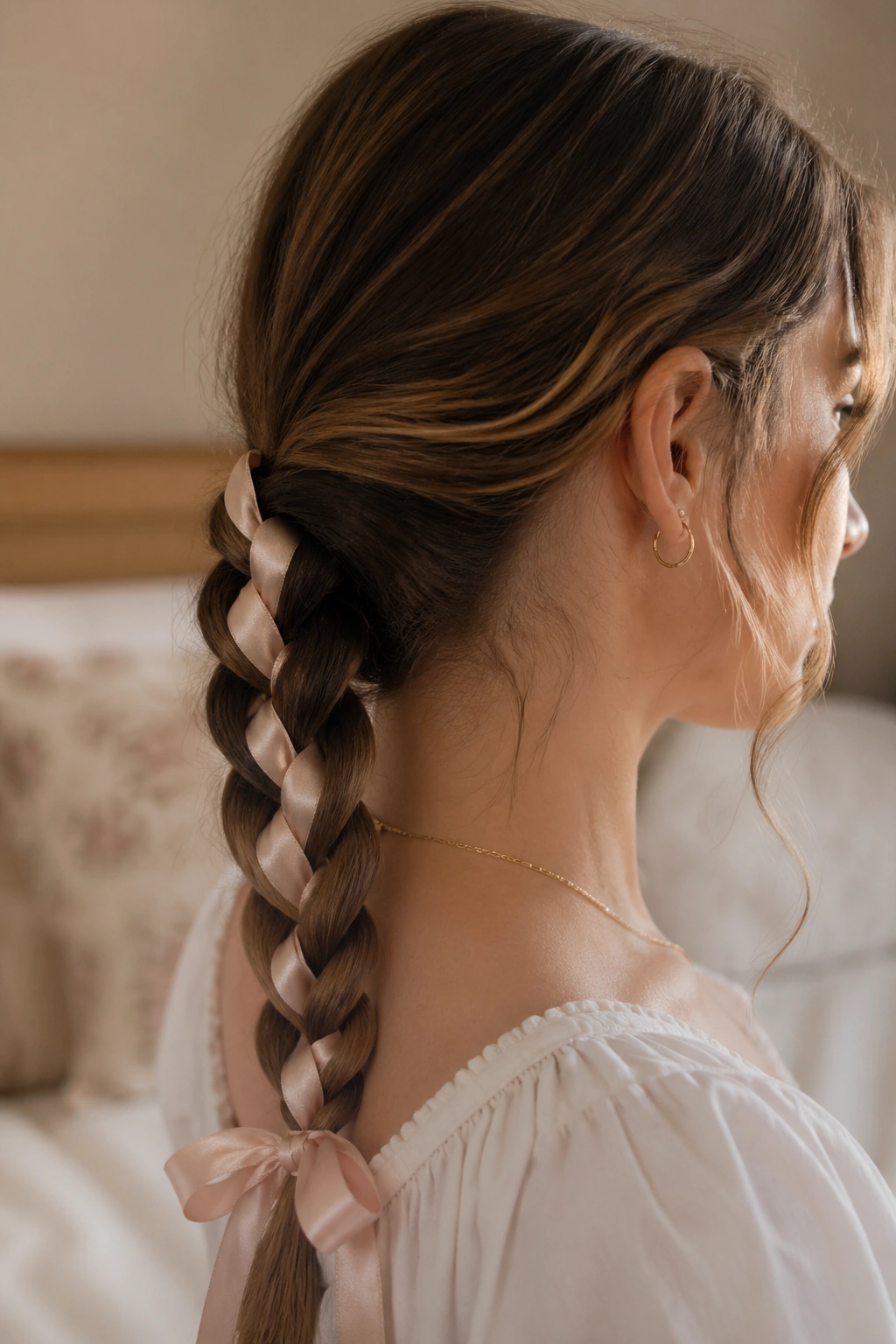
Ribbon braids work because they change the mood without asking for a full hairstyling overhaul. You do not need fancy tools. You need a ribbon with the right width, a braid that suits your hair length, and the willingness to let the result look a little human.
If you’re choosing just one style to start with, pick the classic three-strand ribbon braid or the half-up ribbon braid. Both are forgiving, both look soft, and both teach you how ribbon behaves in your hair before you move on to more involved shapes.
The prettiest cottagecore braids usually have one small thing “wrong” with them — a loose piece, a slightly uneven part, a ribbon tail that moves a little when you turn your head. That’s not a flaw. That’s the charm.
