



A braid that looks neat at breakfast and comes apart before lunch is basically a failed handshake with your morning. Toddler hair has its own rules: it slips, frizzes, tangles again five minutes later, and seems to shed every elastic you thought was secure. The braid styles that really last are the ones that work with that reality instead of fighting it.
The trick is less about fancy technique and more about smart setup. Clean parting, a little moisture, a gentle grip at the scalp, and a finish that doesn’t put too much weight on delicate hair all matter more than most people think. Tiny sections help. So does starting on damp—not dripping—hair, especially if your toddler has fine strands that slide apart the second you turn your back.
Some styles hold because they’re tight to the head. Others hold because they’re anchored low, tucked, or doubled up with elastics. And yes, some look more polished than practical in photos but fall apart the moment a car seat strap, hoodie, or nap hits them. The best toddler braids do both jobs: cute enough for pictures, secure enough for the actual day.
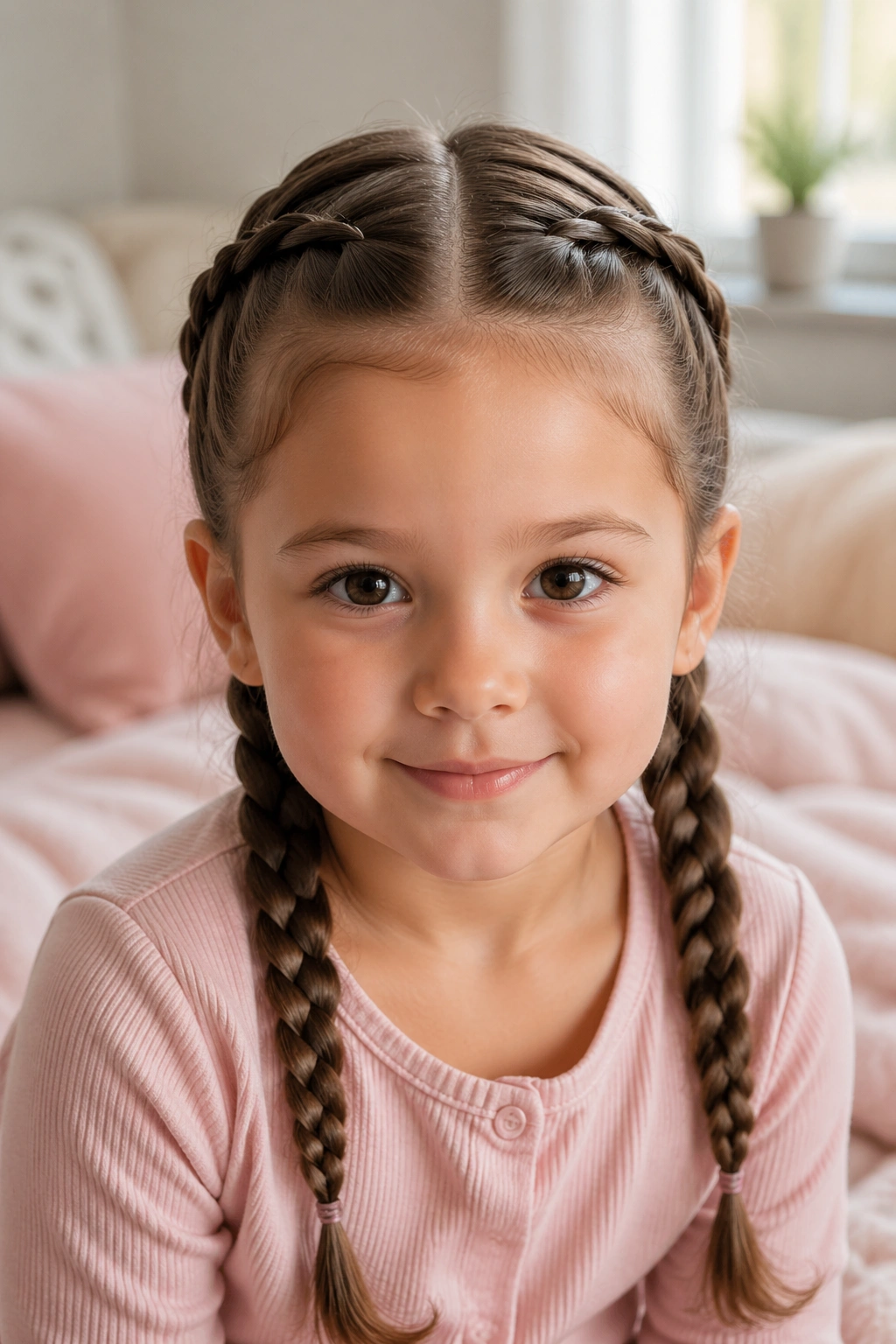
1. Classic Double French Braids
Classic double French braids are hard to beat when you want a style that stays put through daycare drop-off, snacks, and a playground run. They hug the head, keep flyaways contained, and don’t rely on a single loose anchor point at the bottom. If your toddler has medium to long hair, this is one of the easiest ways to get a clean, all-day hold.
The key is small, even sections at the crown. Start with a neat center part, then add hair gradually as you braid down each side. Keep your hands close to the scalp so the braid sits snugly instead of puffing away from the head. A light mist of water or leave-in spray helps the strands gather without fighting you.
If the ends are slippery, finish each braid with a tiny elastic and tuck the tail into a mini bun or loop it under itself. That tiny move matters more than people think.
2. Dutch Pigtail Braids
Dutch pigtail braids look like they sit on top of the hair, which is exactly why they hold so well. The braid has more visible structure than a French braid, and that raised pattern gives you a firmer grip on finer toddler hair. It also makes the style look a little more dressed up without adding fuss.
Why They Grip So Well
Because the sections cross under instead of over, the braid builds a firmer ridge. That ridge helps the style stay compact, even if your child moves around a lot or lies down for a nap. It’s a small thing, but small things decide whether a braid survives lunch.
A neat center part helps here. So does keeping the first few passes snug at the scalp before you relax your hands a little through the lower lengths.
Best for: straight, wavy, or slightly slippery hair
Hold strength: excellent
Finish tip: use clear elastics at the ends, then add a tiny barrettes if the tail keeps slipping
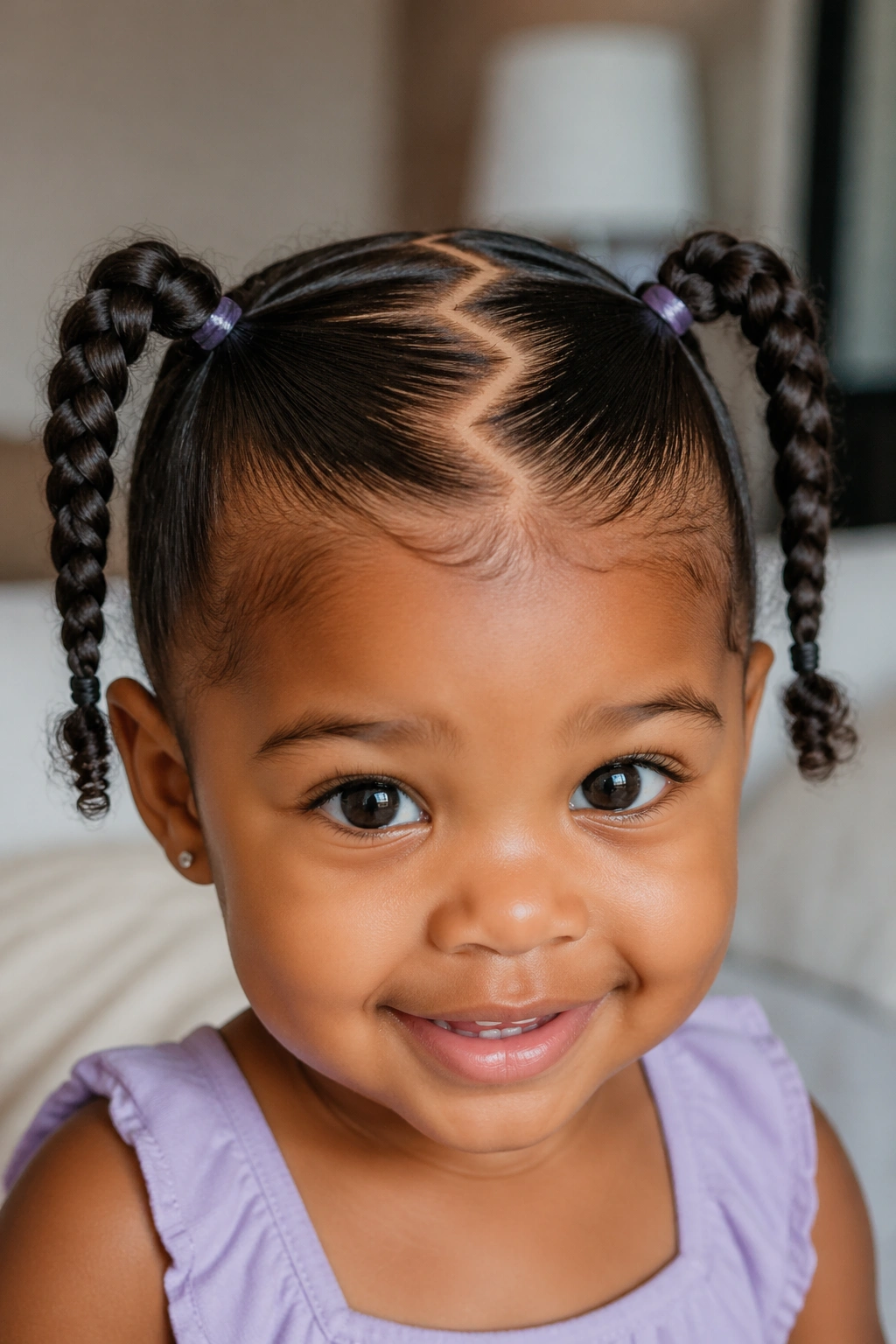
3. Zigzag Part Pigtails
A zigzag part turns plain pigtails into something sturdier and a little more fun. It also hides the fact that toddler hair often refuses to sit flat in a straight part for more than ten minutes. The uneven parting gives the style a built-in detail, and it helps the braids feel more intentional.
Start with a rattail comb and draw a gentle zigzag from the forehead back toward the crown. Keep the angles soft. Sharp, tiny points are annoying to make and even more annoying to redo when a toddler wiggles. Once the part is in place, braid each side as a French or Dutch braid, depending on how much lift you want.
This style works well when you need the front hair controlled but still want the braids to feel playful. It’s also forgiving if one side ends up a touch fuller than the other. That happens. A lot.
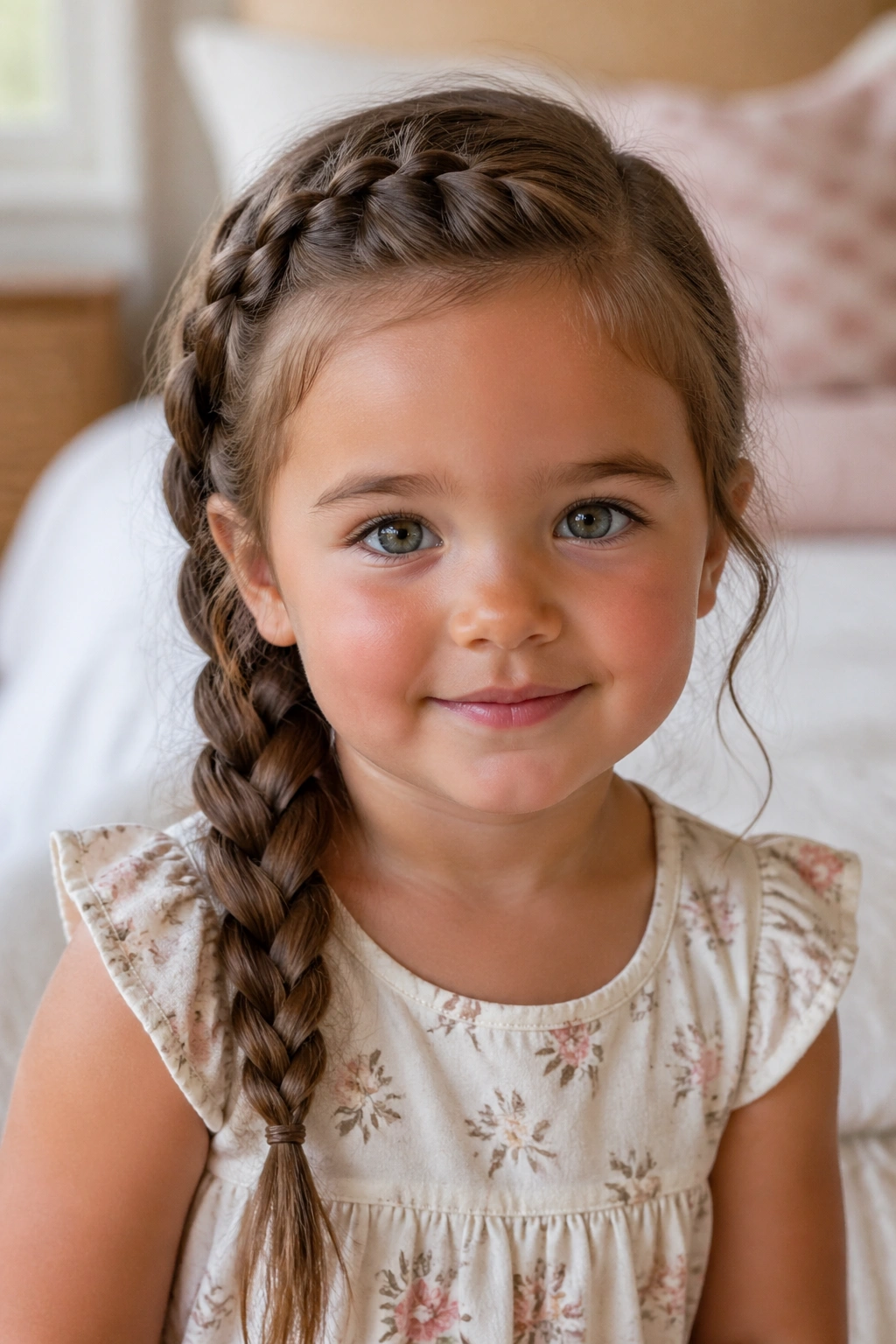
4. Side Sweep Braid
Side sweep braids are one of my favorites for toddlers who hate having hair pulled straight back. The braid starts from a deep side part and drifts over one shoulder, which keeps hair away from the face without making the whole style feel tight or severe. It’s a softer look, but it can still last all day if you anchor it properly.
The secret is to braid close to the scalp for the first few inches, then continue down as a regular three-strand braid. That gives the braid a strong base before it becomes looser at the ends. If your toddler has layers or shorter front pieces, tuck those side wisps in with a tiny amount of gel on your fingertips.
A side sweep braid is especially useful on busy mornings. It’s fast, it handles mixed textures well, and it looks neat even when the day gets messy.
5. Crown Halo Braid
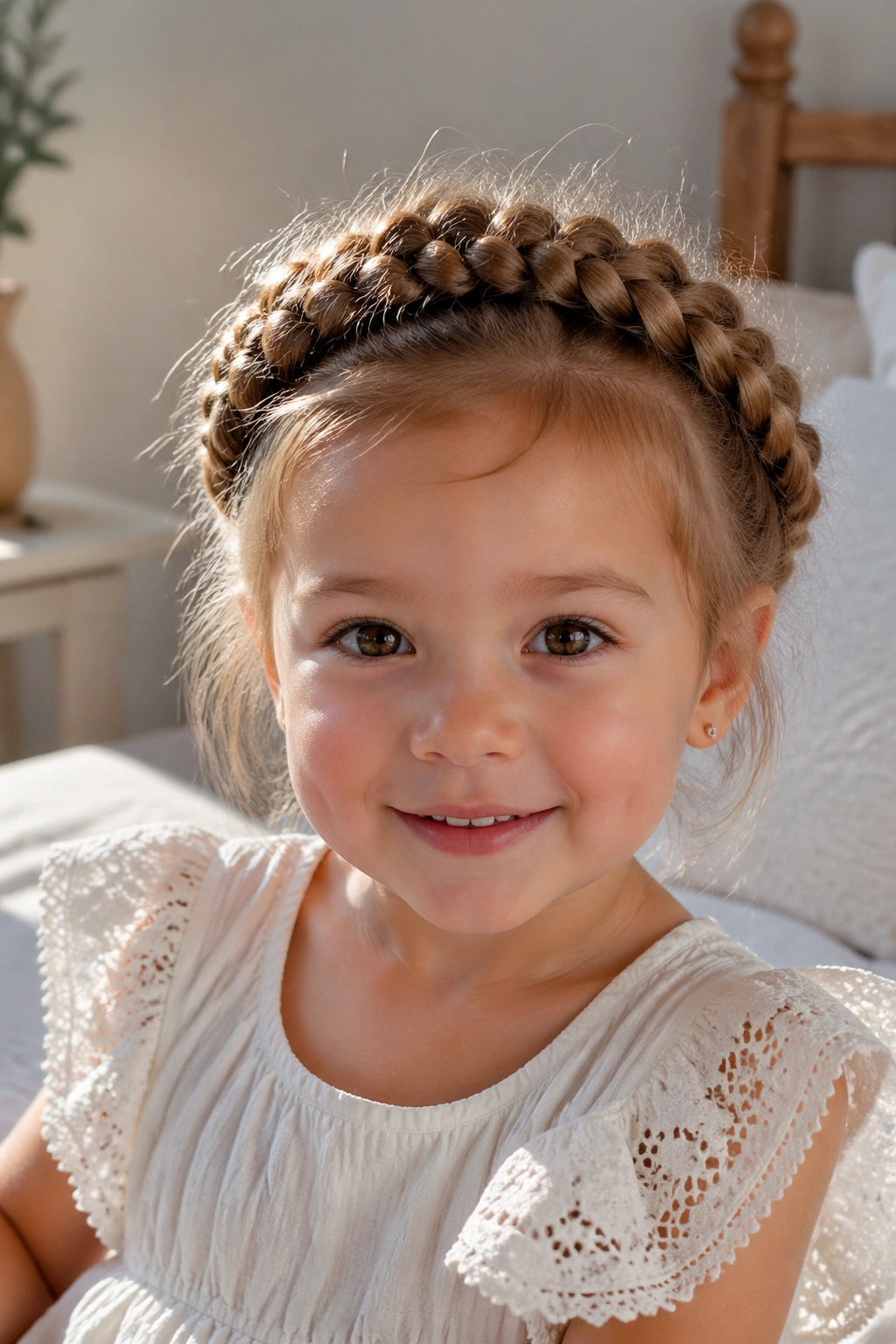
There’s a reason crown braids keep coming back. They wrap the hairline, hold the front pieces away from the face, and leave the rest of the hair quiet and controlled. For toddlers, that means fewer strands in the eyes and less fiddling with clips.
What Makes It Last
A halo braid stays in better when you keep it low and snug around the head instead of floating above it. Think of it like a braid that follows the shape of the skull. If the hair is short, you can fake the rest with small sections pinned around the back.
Use bobby pins that match the hair color if you want a cleaner finish, but snap clips work too for a more playful look. The braid should feel secure, not tight. That difference matters. If the forehead looks pinched, start over.
This one is lovely for dressier days, but it also works for ordinary life if your child’s hair is long enough to wrap cleanly.
6. Braided Ponytail
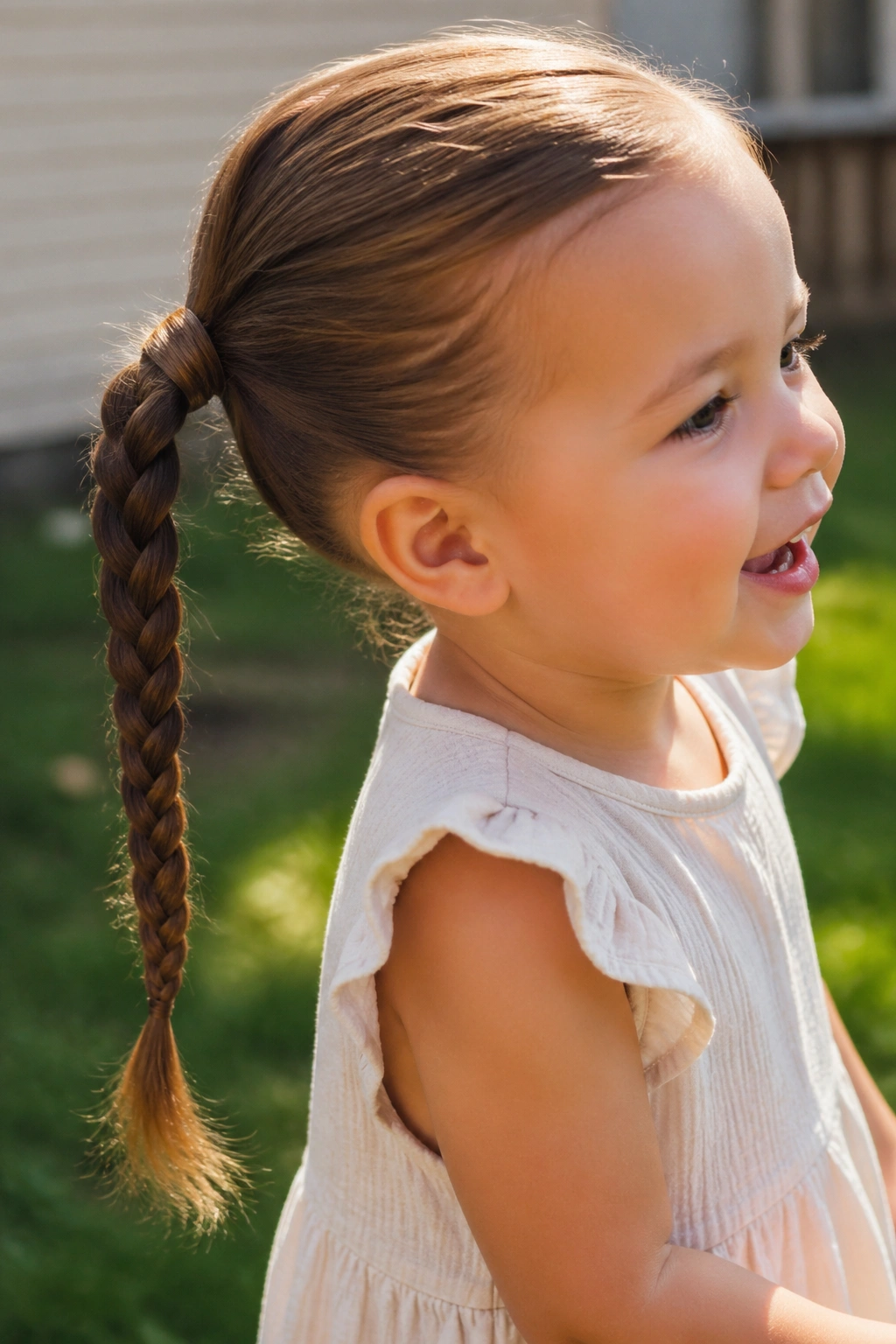
A braided ponytail is one of the simplest styles that still holds up well, especially when you need something quick. Pull the hair into a ponytail first, secure it firmly, then braid the tail all the way down. That two-step anchor helps the braid stay intact longer than a loose braid starting from the neck.
The ponytail base should sit low or mid-height depending on how much your toddler moves. High ponytails can slip faster on fine hair, especially if the elastic is too slick. A soft textured elastic gives better grip than a smooth one.
For extra hold, wrap a tiny strand of hair around the base elastic and pin it underneath. It takes less than a minute and makes the style feel finished instead of accidental. Small payoff. Big difference.
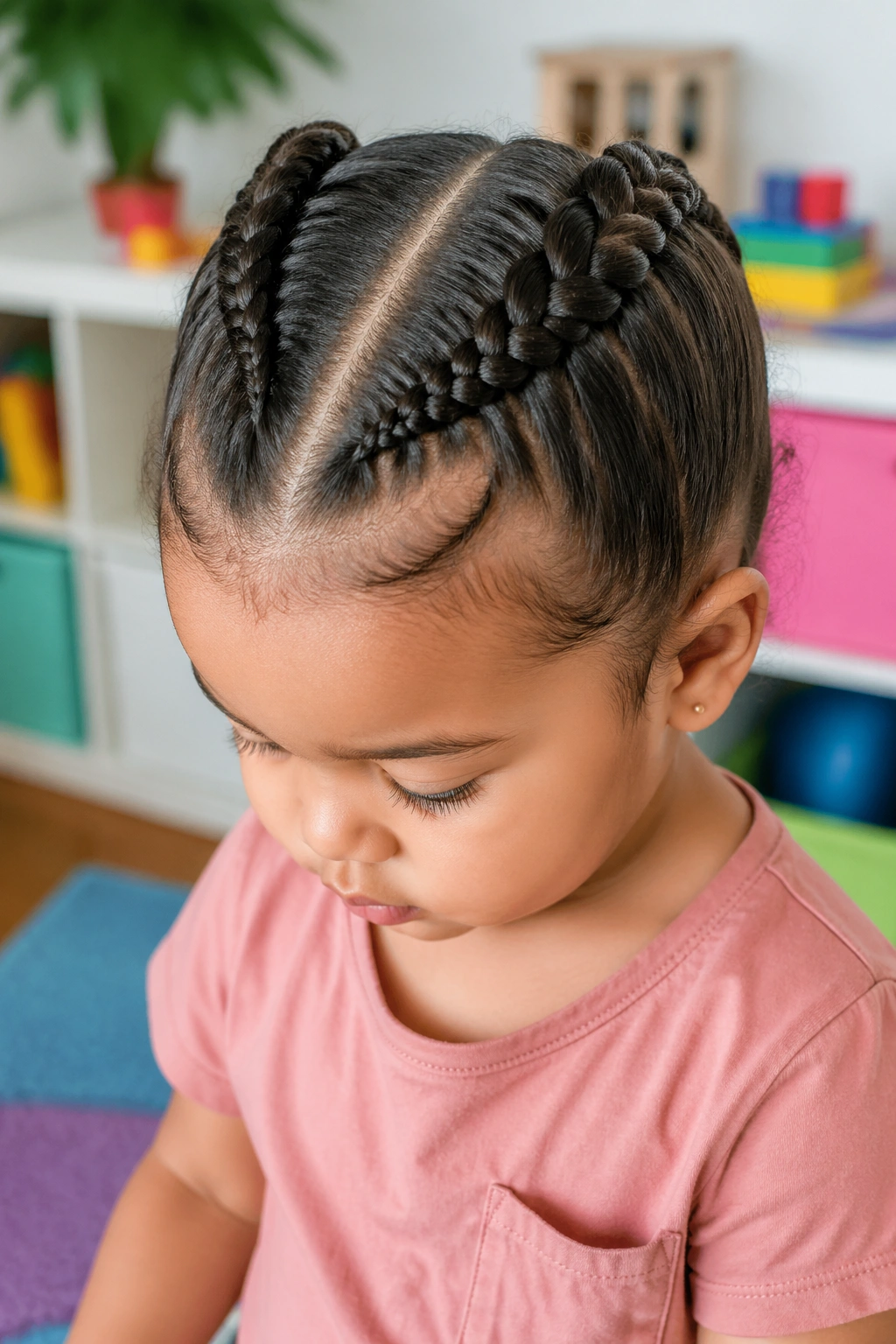
7. Boxer Braids
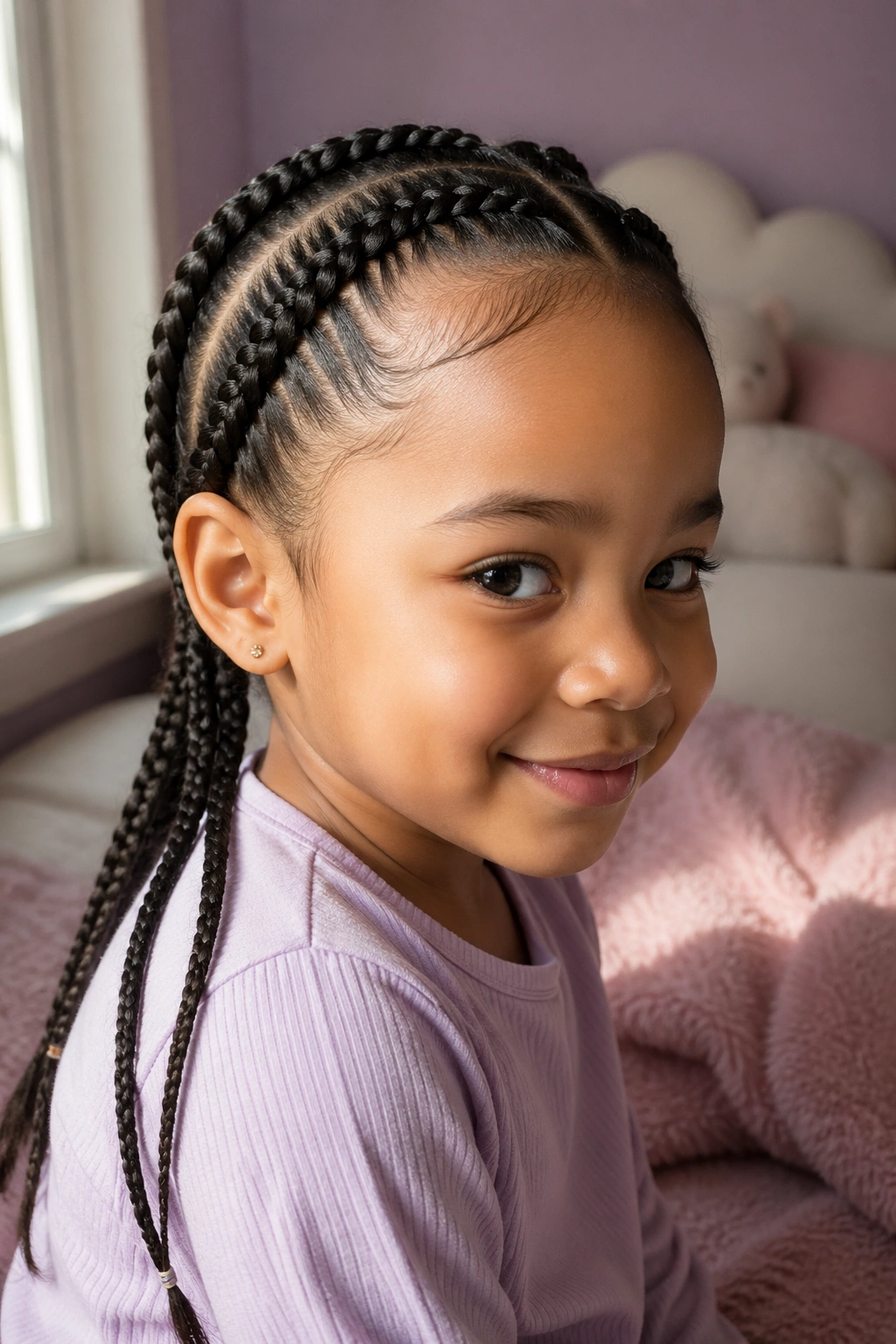
Boxer braids are the practical cousin of double Dutch braids. They sit close to the scalp, keep every section contained, and don’t unravel easily once they’re set. On a toddler, they’re especially useful if hair is thick, active, or has enough texture to puff up after thirty seconds of play.
The style works best when each braid starts directly at the hairline and stays even as it moves down the head. You do not need to pull hard. Tight enough to lie flat, loose enough to be comfortable. That middle ground is the whole game.
If your child’s hair is very slippery, mist each section lightly before braiding. If it’s curly or coily, use a little leave-in to reduce frizz and help the sections separate cleanly. Either way, boxer braids usually hold through a long day better than a single braid ever will.
8. Feed-In Cornrows
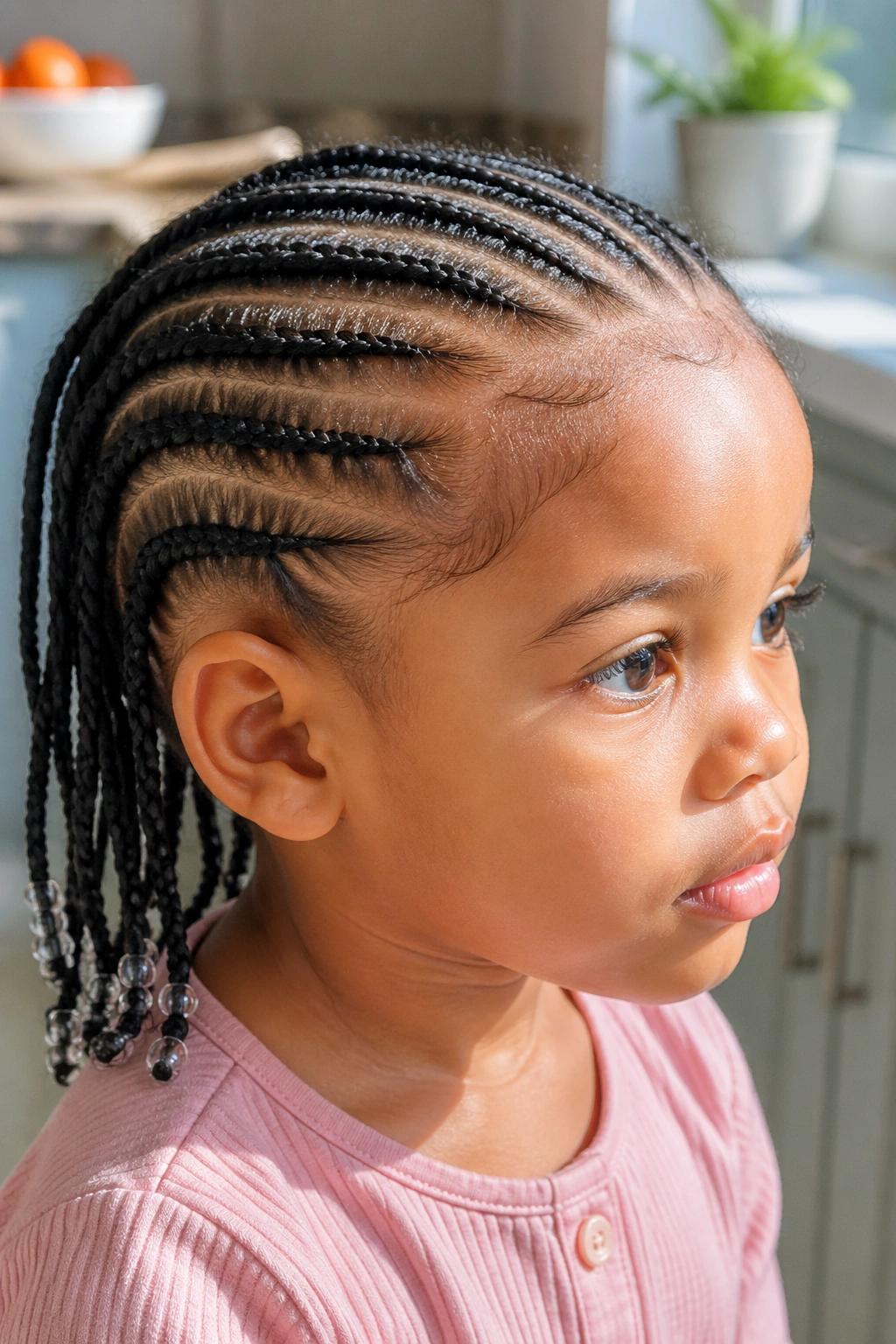
Feed-in cornrows are excellent when you want a style that looks neat from morning to night. They spread tension across the scalp and keep the braid anchored close to the head, which makes them useful for hair that tends to frizz, expand, or escape from looser styles. On toddlers, they can be a lifesaver for school days or special events.
The feed-in part means you add small amounts of hair gradually as you braid. That creates a flatter start and a smoother line than piling in a big chunk all at once. It also helps the braid sit more comfortably, which matters on a little head.
Keep the parting clean, but don’t obsess over perfection. Tiny asymmetries disappear once the style is finished. What matters more is consistency in section size and a gentle touch around the edges.
9. Bubble Braids with Front Braids
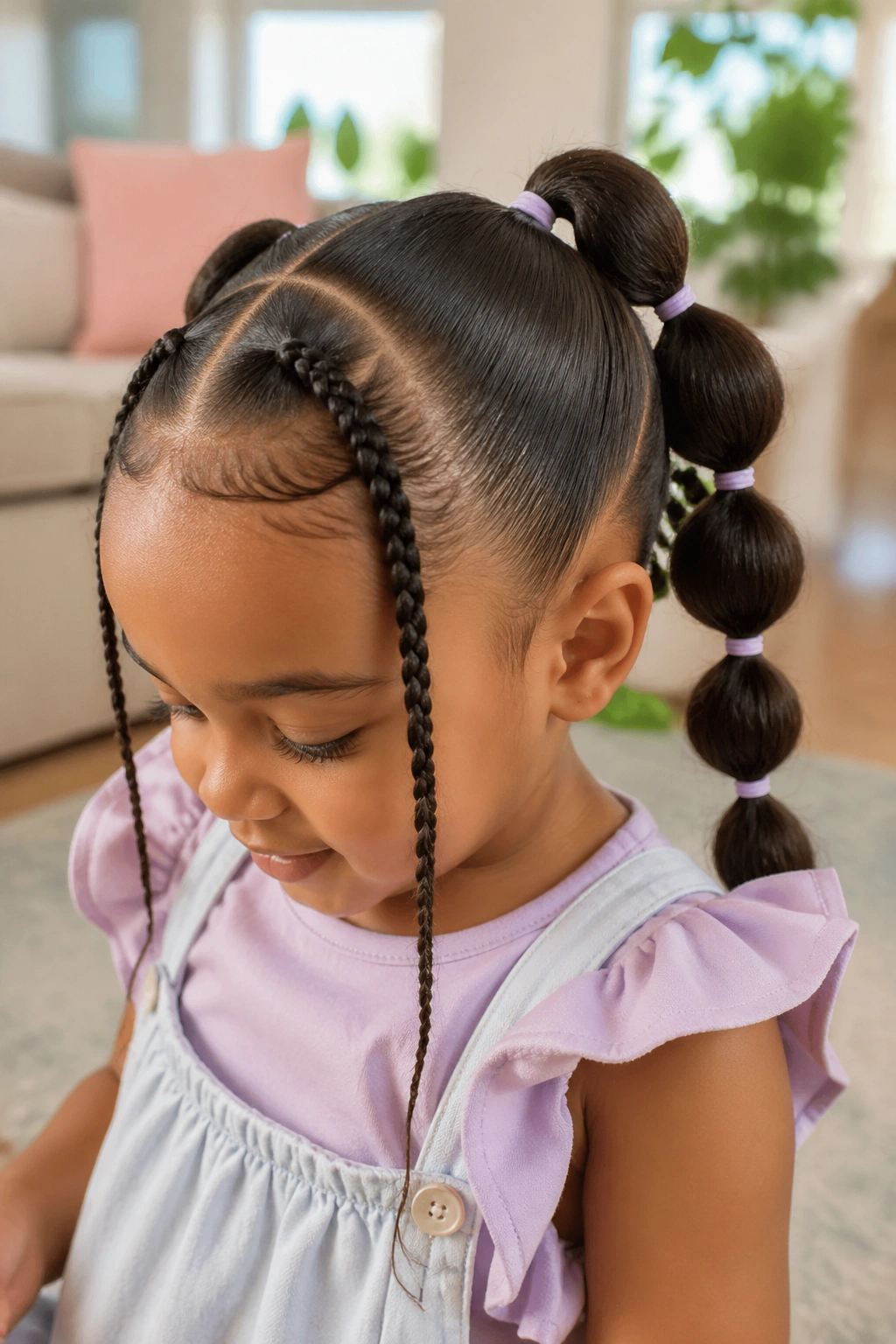
A bubble braid is not a classic braid, but it behaves like one in the best way: secure, cute, and hard to mess up. Add two small front braids or mini cornrows, and you get a style that keeps the hairline contained while the bubble ponytail stays in place behind it.
The bubbles are made by adding elastics every few inches down the ponytail, then gently pulling each section outward to create round little puffs. Don’t yank. Just pinch and expand until each bubble looks even. If the hair is fine, use smaller gaps between elastics so the bubbles hold their shape.
This style is a good fit for toddlers who like hair off the face but hate having a full braid pulled tight around the head. It’s playful, sturdy, and much less likely to get flat and sad by lunchtime.
10. Milkmaid Braids
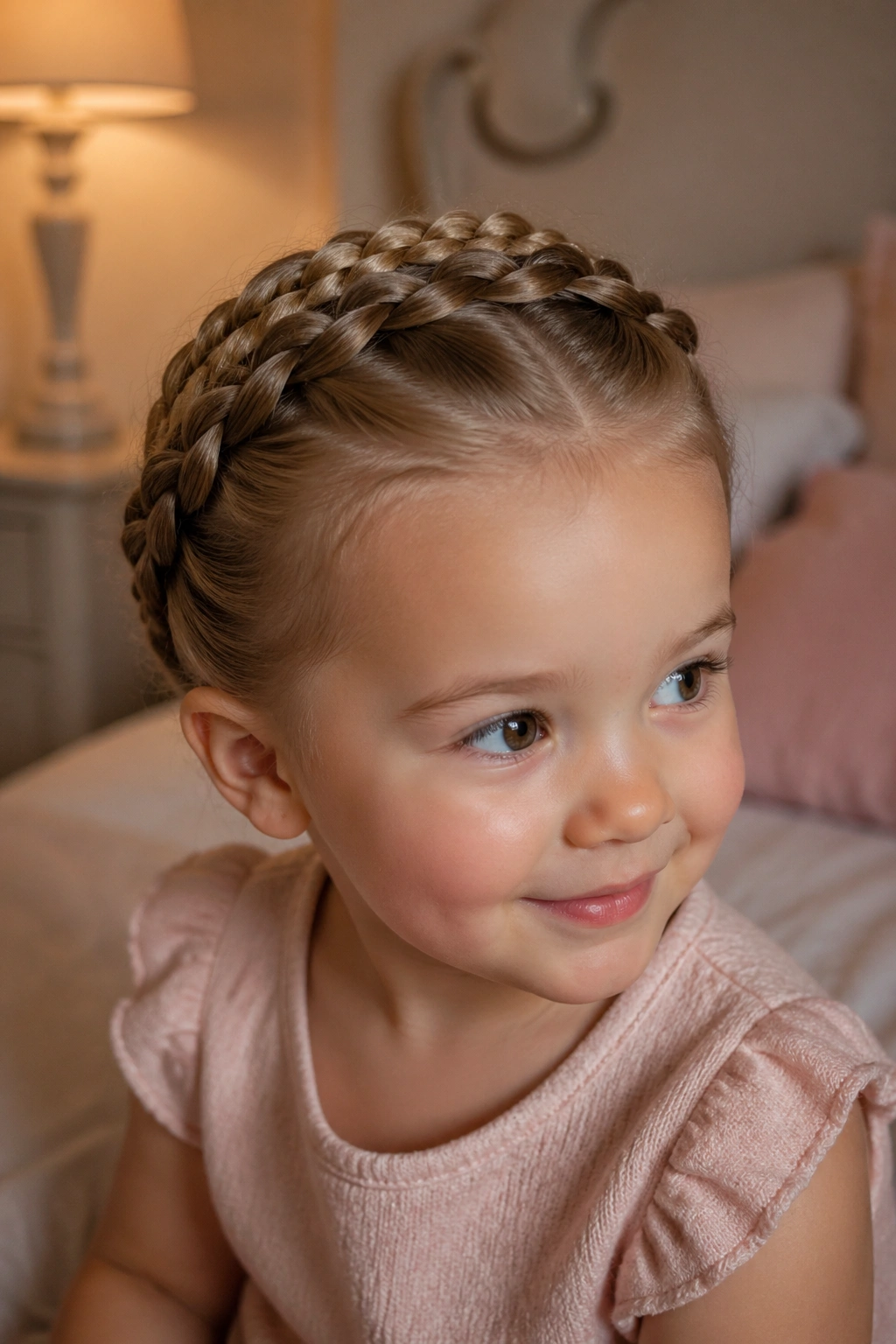
Milkmaid braids wrap the hair around the head and pin it down, which gives them a solid grip if the braid is done with enough tension at the start. They’re also one of the few styles that can hide a lot of hair length without looking bulky.
Braid two pigtails first, then cross them over the crown and pin the ends securely. The braids should lie flat against the head, not sit on top like ropes. If the hair is thick, flatten each braid a little with your fingers before pinning. That makes a surprising difference.
This style works best when the braids are done on hair that has just a little texture. Too silky, and the pins may slip. A touch of dry shampoo or light texturizing spray can help if you use it sparingly. The goal is grip, not stiffness.
11. Half-Up Braided Rows
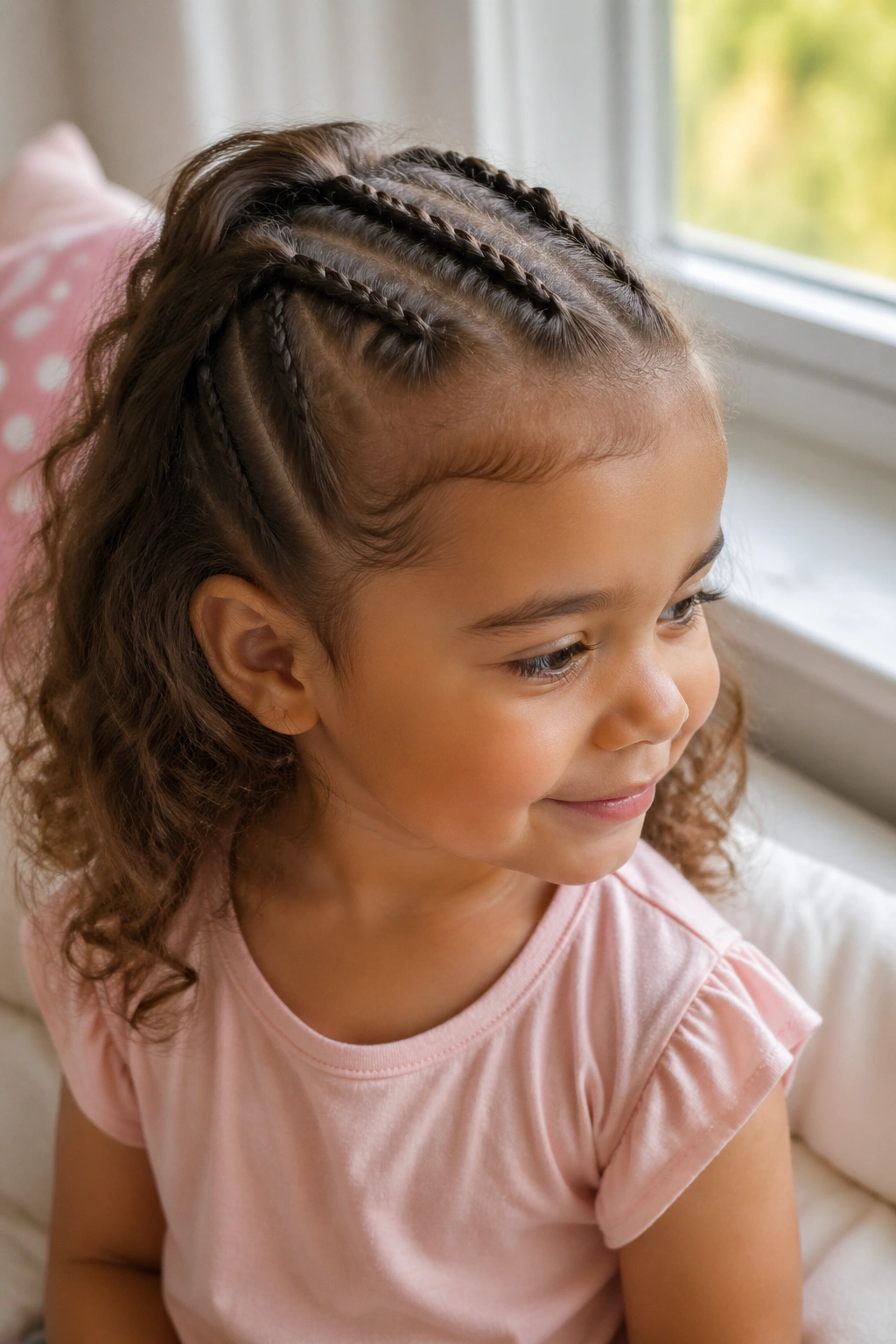
Half-up braided rows are a smart answer when the back hair doesn’t need full control, but the front and crown absolutely do. The rows keep shorter layers from falling into the face, and the loose bottom section keeps the style soft enough for a toddler who dislikes too much pull.
Where the Hold Comes From
The hold comes from the base rows being anchored close to the scalp, not from making the whole head tight. You can do two, three, or even four small braids across the top and then leave the rest loose. That structure gives the style some staying power without turning it into a rigid helmet.
A tiny dab of styling cream on the front sections helps keep frizz down. If the child has fine baby hairs, smooth them with a soft brush and a little water before you start. Don’t overdo the product. Toddler hair gets greasy fast.
This is one of those styles that looks more complicated than it is, which is always a pleasant surprise on a busy morning.
12. Braided Bun at the Nape
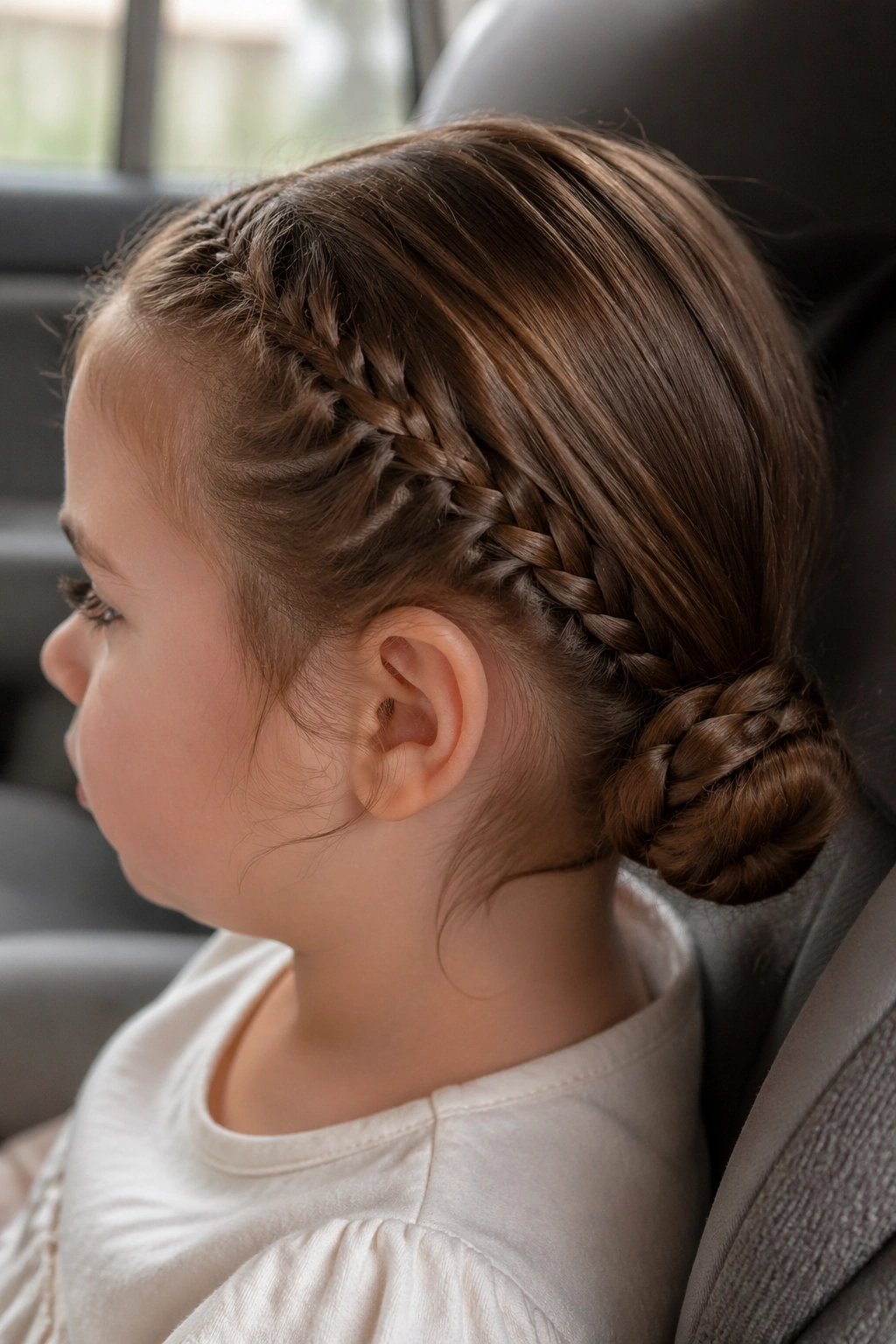
A braided bun at the nape is the sort of style that stays neat because it has nowhere to go. The braid is gathered low, then wrapped into a bun and secured with an elastic or two pins. Low placement matters. A bun sitting high on a toddler’s head tends to slide, wobble, or get flattened by car seats.
Start with a low braid, either single or double, and braid it all the way down before twisting it into a compact knot. If the hair is shorter, braid only the section you can control and coil the rest. No one needs a perfect knot on a wiggly child.
A bun like this is especially useful for thicker hair that gets hot or heavy. It keeps the neck clear and holds up well under hats, jackets, and an ordinary amount of chaos.
13. Two Braids into One Low Braid
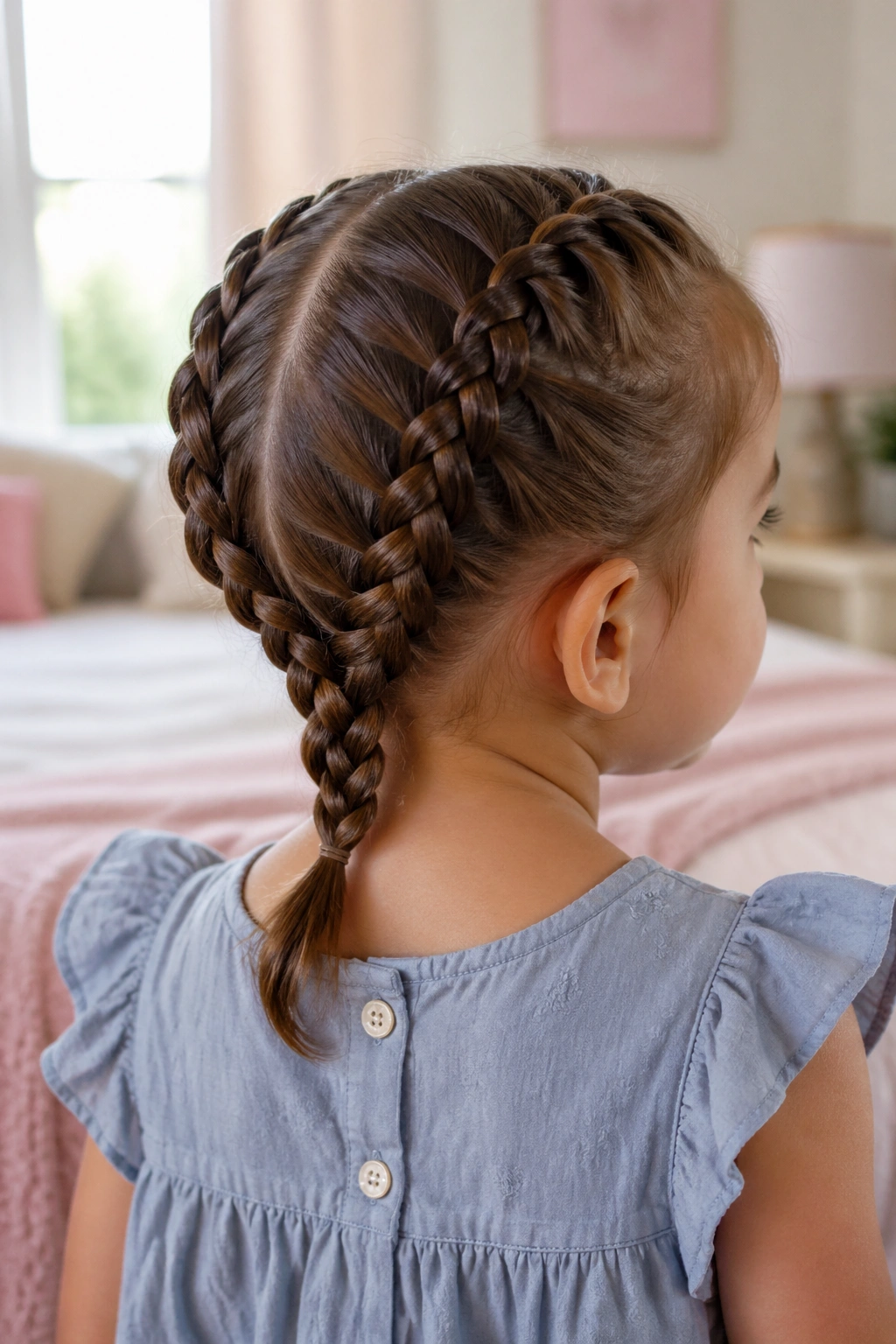
This style is a tidy compromise between pigtails and one big braid. You start with two braids at the top or sides, then join them into a single low braid near the back. It keeps the front sections controlled while reducing the chance that one side slips loose before the other.
The joining point should sit low enough to feel secure, usually around the upper neck. Use a small elastic to fasten the two braids together before you continue braiding the combined tail. That extra anchor stops the braid from unraveling where the sections meet.
It’s a good style for mixed-length hair too. If the front layers are shorter, they get contained in the two starting braids. The lower section can be braided firmly enough to survive the rest of the day without much touching up.
14. Fishtail Side Braid
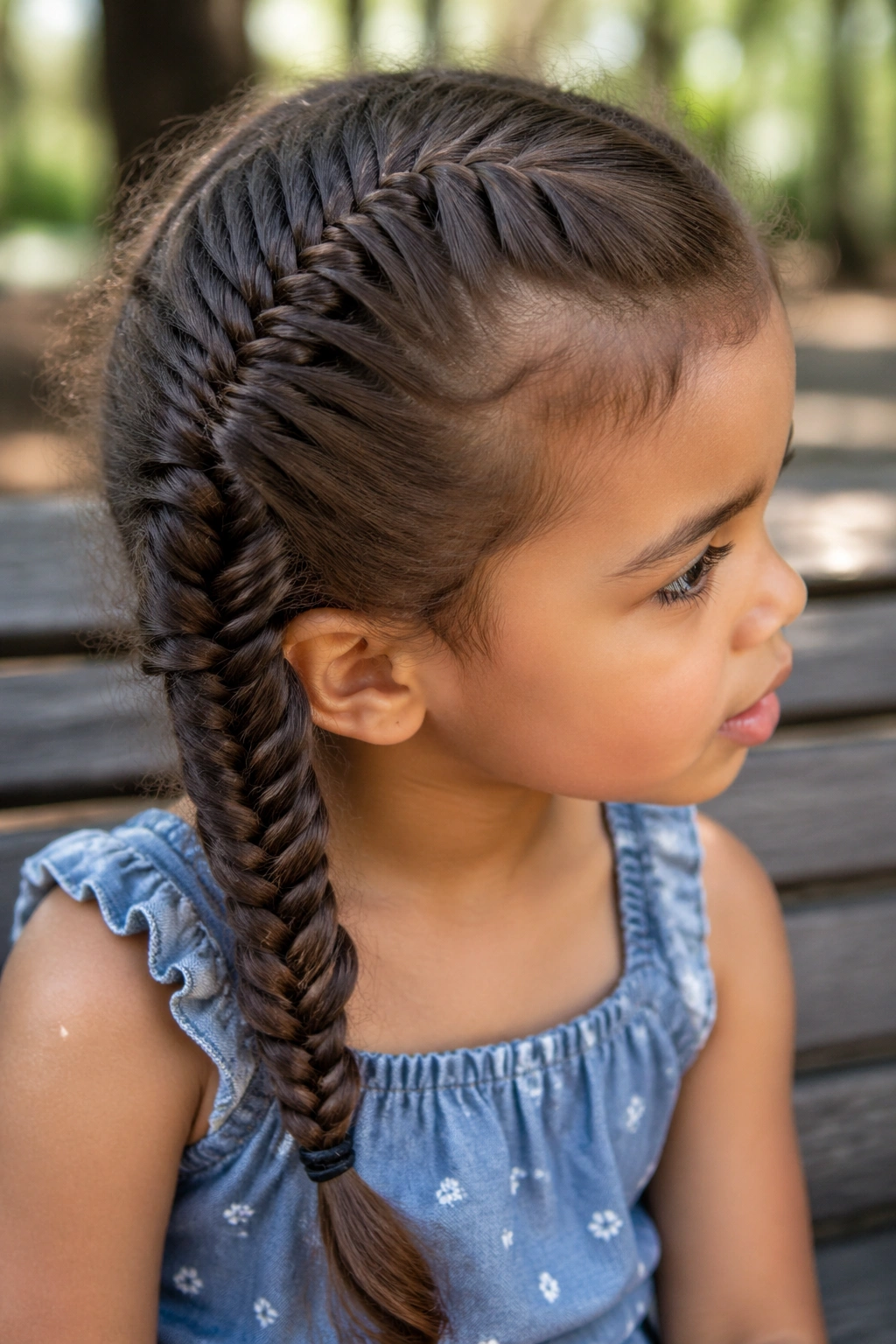
A fishtail side braid looks intricate, but the real appeal is the tight weave. Once it’s started properly, it holds a lot of small strands together in a way that resists loosening better than some bigger braids. It works especially well for medium-length hair that has a bit of texture.
Start to one side, split the hair into two sections, and move tiny pieces from the outside of one side to the inside of the other. Keep the pieces small and even. Large chunks make the braid sloppy, and sloppy fishtails tend to puff out too fast.
If your toddler has fine hair, rub a little styling cream between your palms before you begin. That helps the strands hold together without feeling sticky. A fishtail braid is a little slower than a regular braid, but the payoff is a very secure finish.
15. Crisscross Braid Pattern
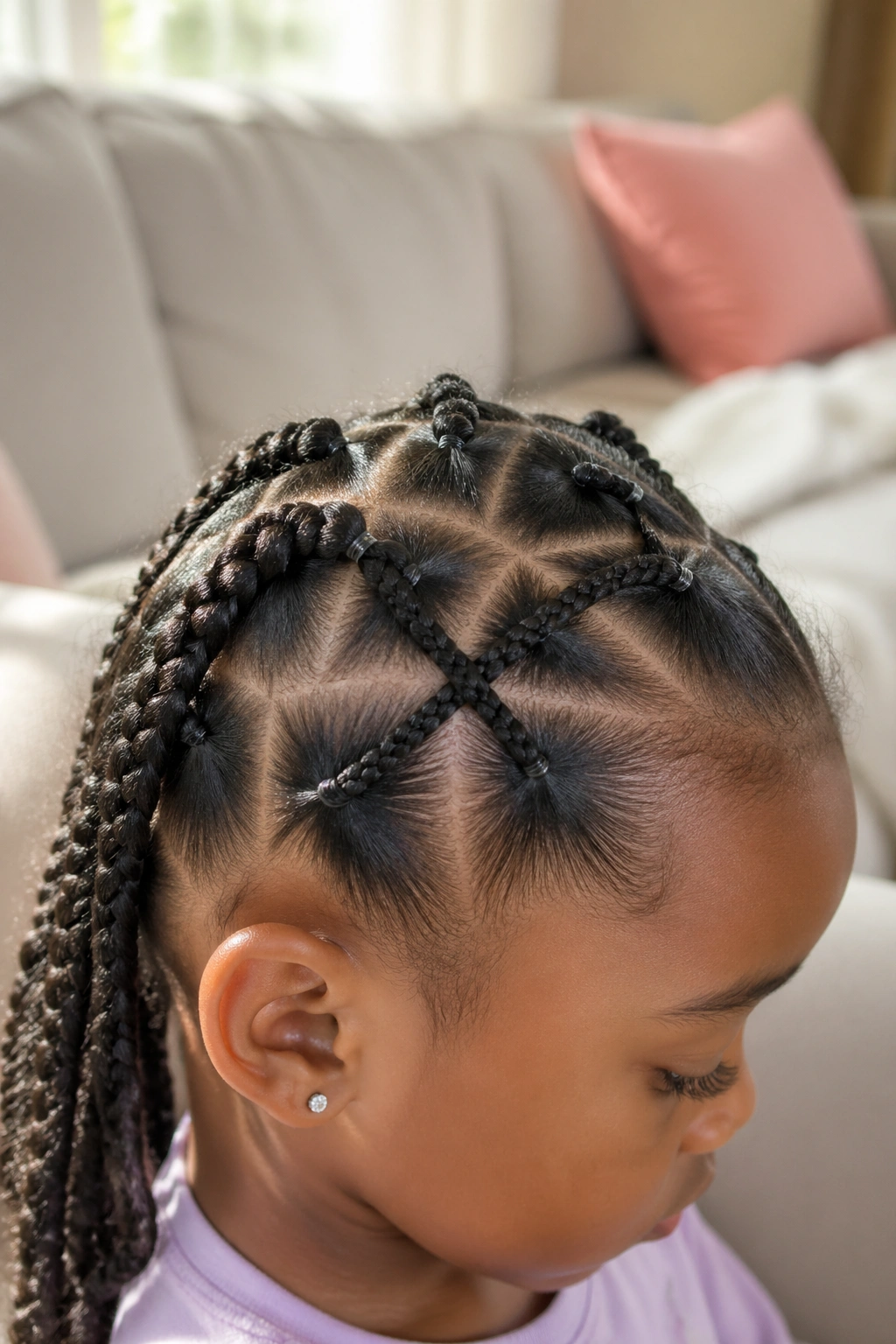
Crisscross braids are a nice choice when you want something that looks deliberate and stays put without needing one single long braid. You create several small braids or sections, then cross them over each other with clips or elastics to build the pattern. It sounds fussy. It isn’t, once you’ve done it a time or two.
Key Details
- Use small, even sections so each braid lies flat.
- Keep the crosses close to the scalp instead of pulling them wide.
- Secure each meeting point with snag-free elastics.
- Finish the ends with a low braid or a tucked coil.
The style works well for toddlers who won’t sit still for one long sitting. You can build it in pieces, and that’s a real advantage. A crisscross pattern also gives fine hair more grip because the structure is spread out instead of relying on one braid to do all the work.
16. Ribbon-Woven Pigtail Braids
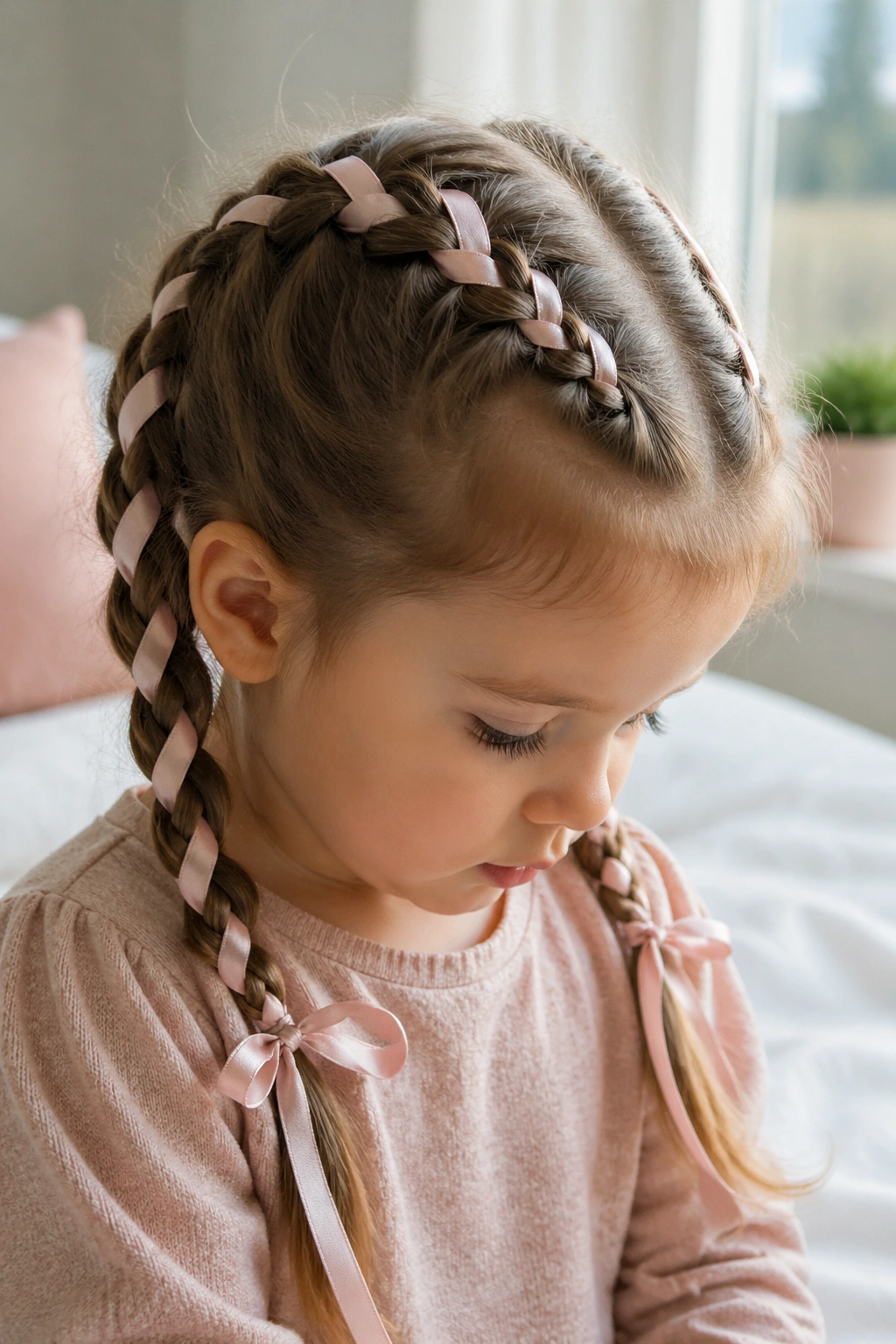
A ribbon woven into pigtail braids does two jobs at once: it helps the braid hold shape and gives you an easy visual anchor when you’re trying to keep the sections even. The ribbon also makes the braid feel more finished, which is handy for picture days or family gatherings.
Choose a thin, soft ribbon. Satin looks pretty, but it can slip, so a slightly textured ribbon often works better. Start the braid with the ribbon folded into the top section, then weave it through as you go. Keep the tension even or the ribbon will twist in odd little knots.
If your toddler has very fine hair, the ribbon can help fill out the braid a little. That’s not cheating. It’s practical. And practical wins when the style needs to survive the whole day.
17. Braided Space Buns
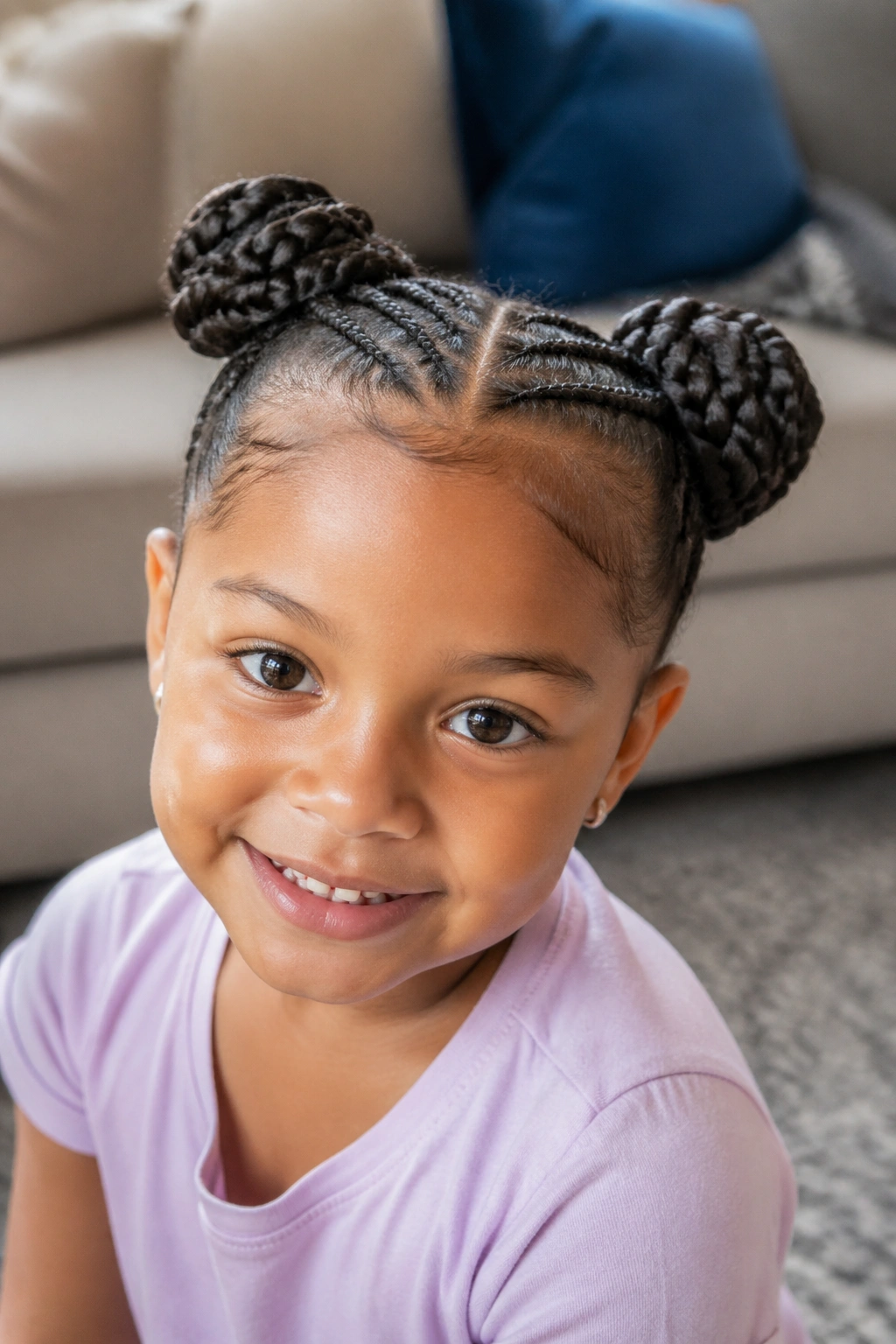
Braided space buns are playful and secure, which is a rare combination in toddler hair. You braid two pigtails first, then coil each braid into a bun and fasten it flat against the head. Because the buns are low-profile and split into two sides, they tend to hold through movement better than one big topknot.
The base braids should be snug enough to anchor the buns, but not pulled so tight that the scalp looks strained. If the hair is thick, braid the tails a little looser so they’ll coil more easily. Tiny elastics are your friend here.
This style is useful on days when hair keeps falling into the eyes but a full set of cornrows feels like too much. It’s cheerful, sturdy, and not as fragile as it looks.
18. Mini Accent Braids on Loose Hair
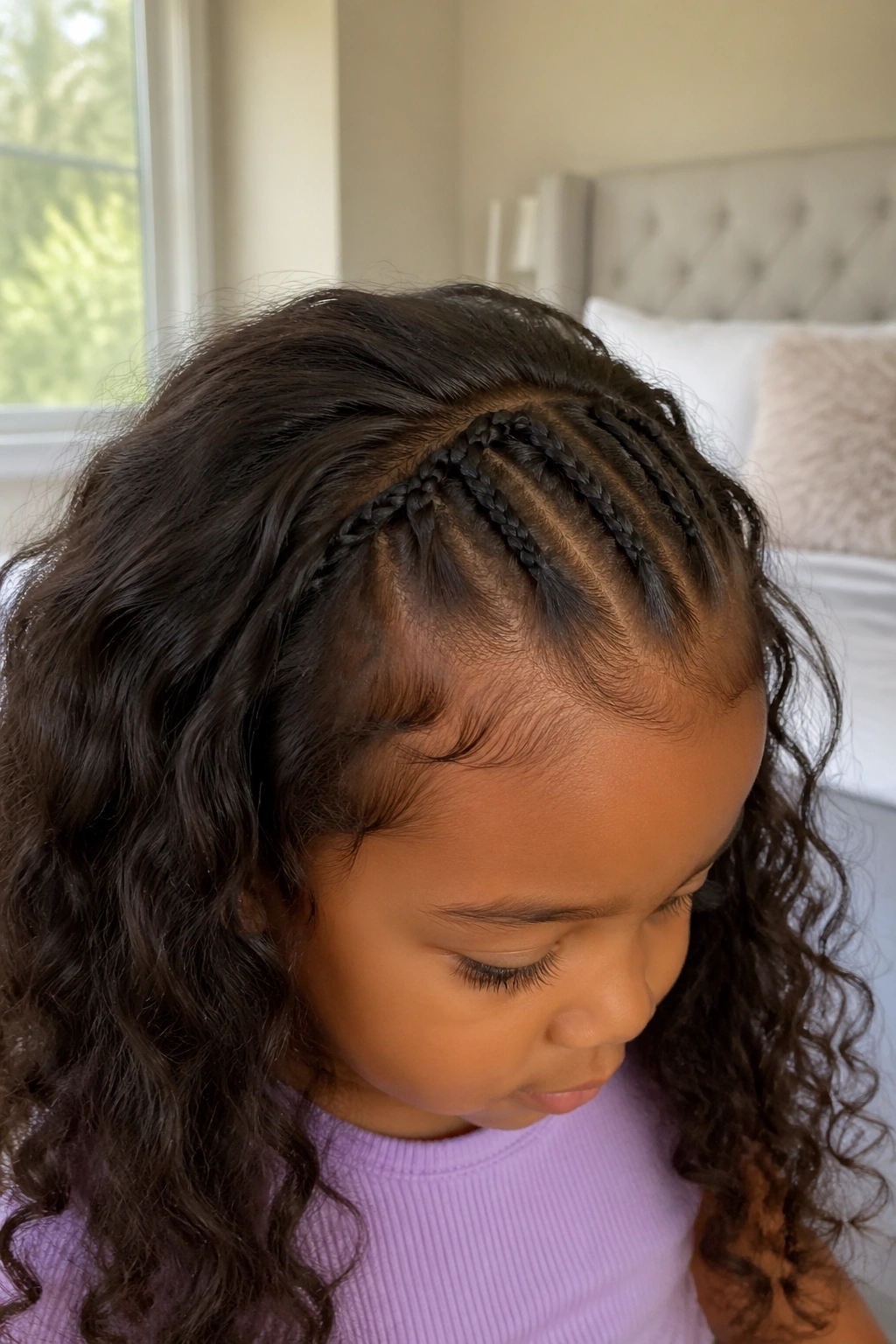
Mini accent braids are the answer when you want most of the hair free but still need some control at the front. Small braids along the hairline keep stray pieces out of the face, and they add enough structure that the rest of the style feels intentional instead of unfinished.
What Works Best
A few narrow braids are better than one chunky one. Chunky accent braids tend to stick out and unravel faster. Keep the braids close to the temples or just above the ears, then secure them with tiny elastics before letting the rest of the hair fall loose.
This is a good style for toddlers with curls or waves because it keeps the front under control while allowing the texture to do its thing. A little leave-in on the loose lengths will keep them softer and less frizzy by midafternoon. No need to overcomplicate it.
19. French Braid into a Ponytail
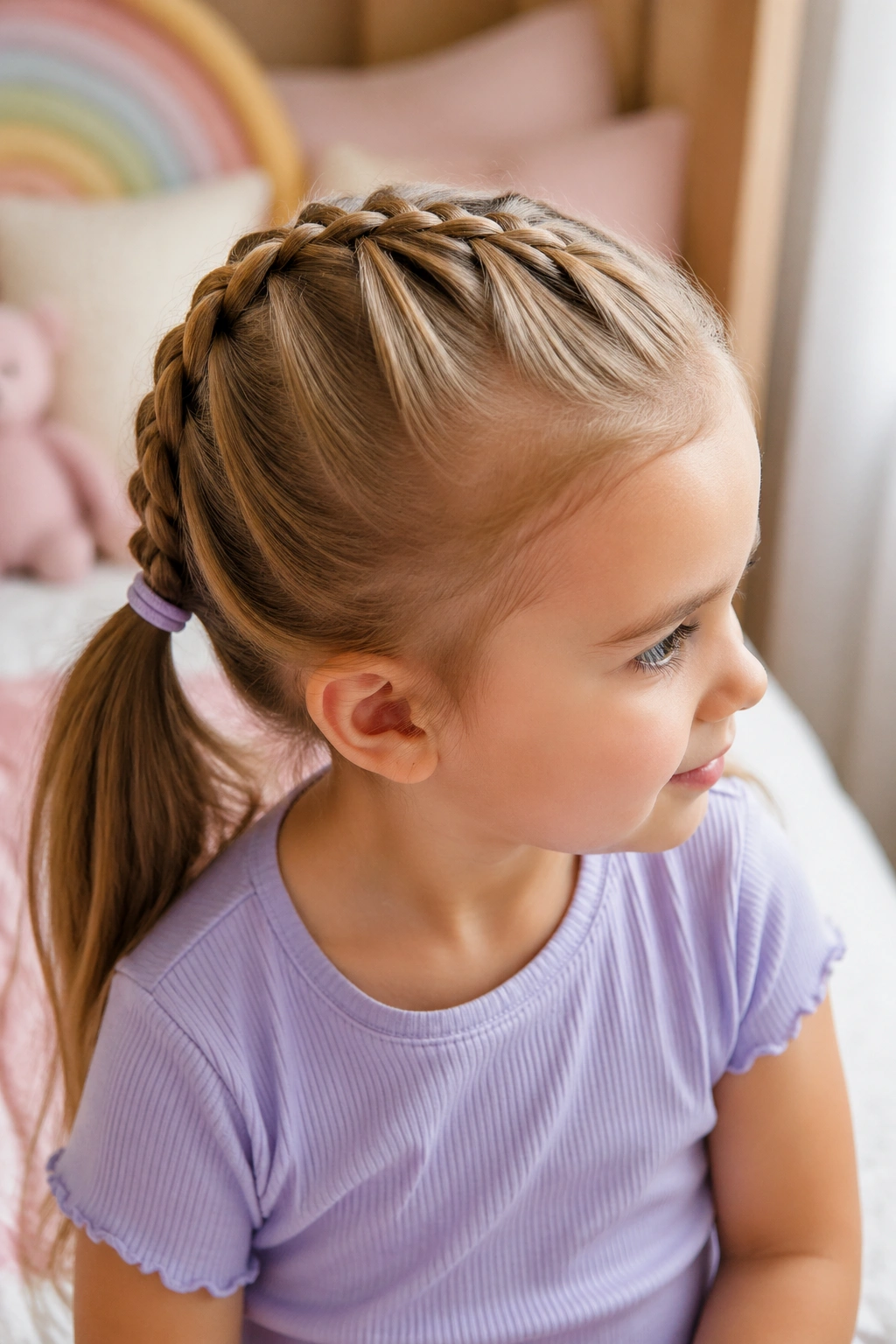
This style starts like a French braid and ends like a ponytail, which is exactly why it lasts. The braid takes care of the front and crown, then the ponytail gives you a fast, secure finish that is less likely to unravel than a free-hanging braid.
You braid down the head until you reach the point where the hair is gathered neatly, then tie the rest into a ponytail. The transition should be smooth, not abrupt. If the braid is pulled tight at the start and the ponytail sits low enough, the style feels balanced and stable.
It’s a good option for hair that is long enough to braid at the top but not long enough for a full, thick braid to look tidy all day. Practical. Easy to redo. Hard to mess up.
20. Crown Braid with a Tucked Finish
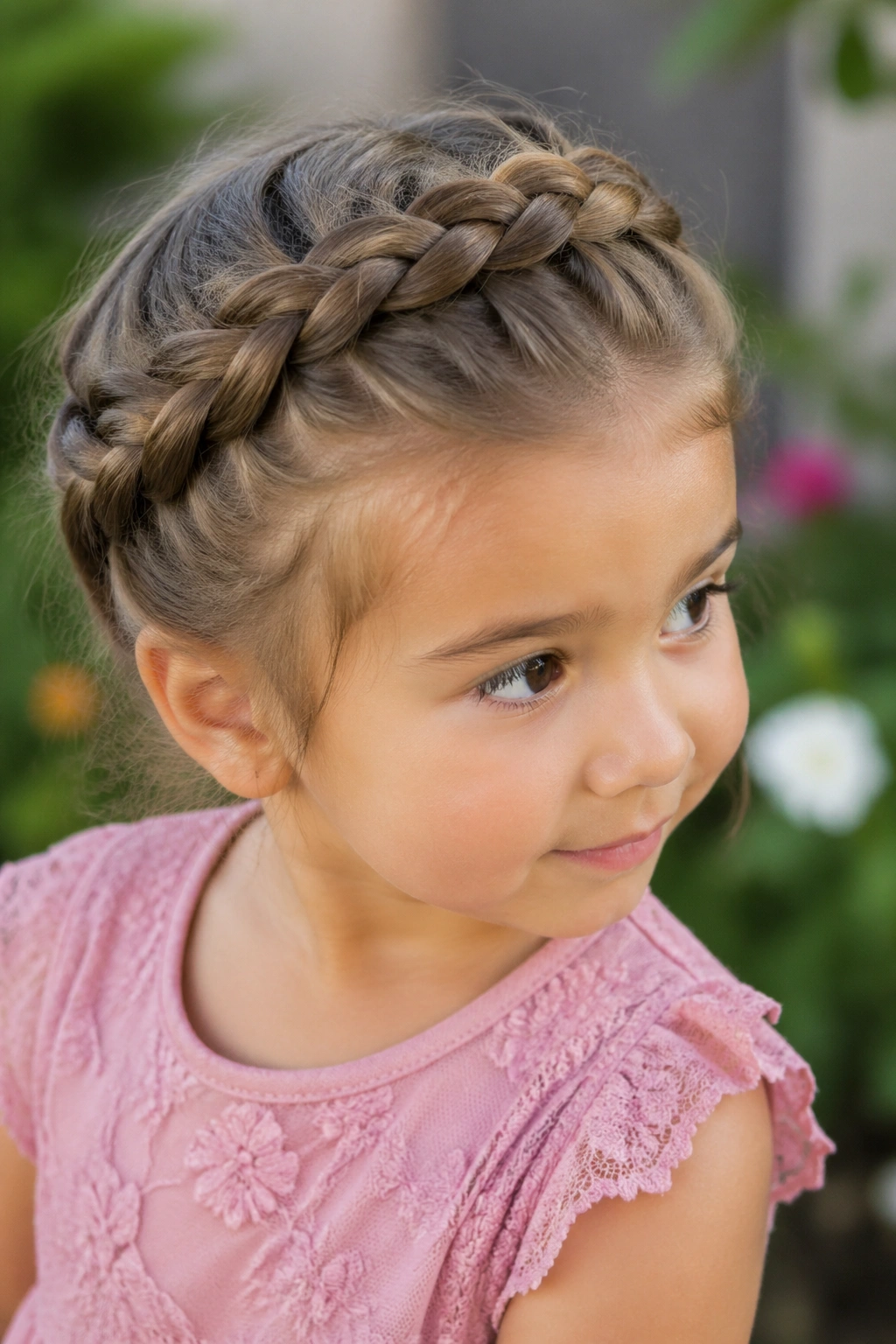
A crown braid with a tucked finish is one of the strongest-looking toddler styles because the ends disappear instead of hanging loose. That tucked end is doing real work. Loose braid tails snag on clothing, pull apart in naps, and frizz faster than people expect.
Braid around the head in a circular path, then tuck the ends under the braid itself and pin them flat. Use bobby pins that grip well, not shiny ones that slide out. If the hair is slippery, a little styling cream on the fingertips helps the pins hold.
This braid is especially nice for thicker hair or for occasions where you want the hairstyle to stay neat for hours. It looks polished, but the practical part is what makes it worth doing.
21. Mohawk Braid Down the Center
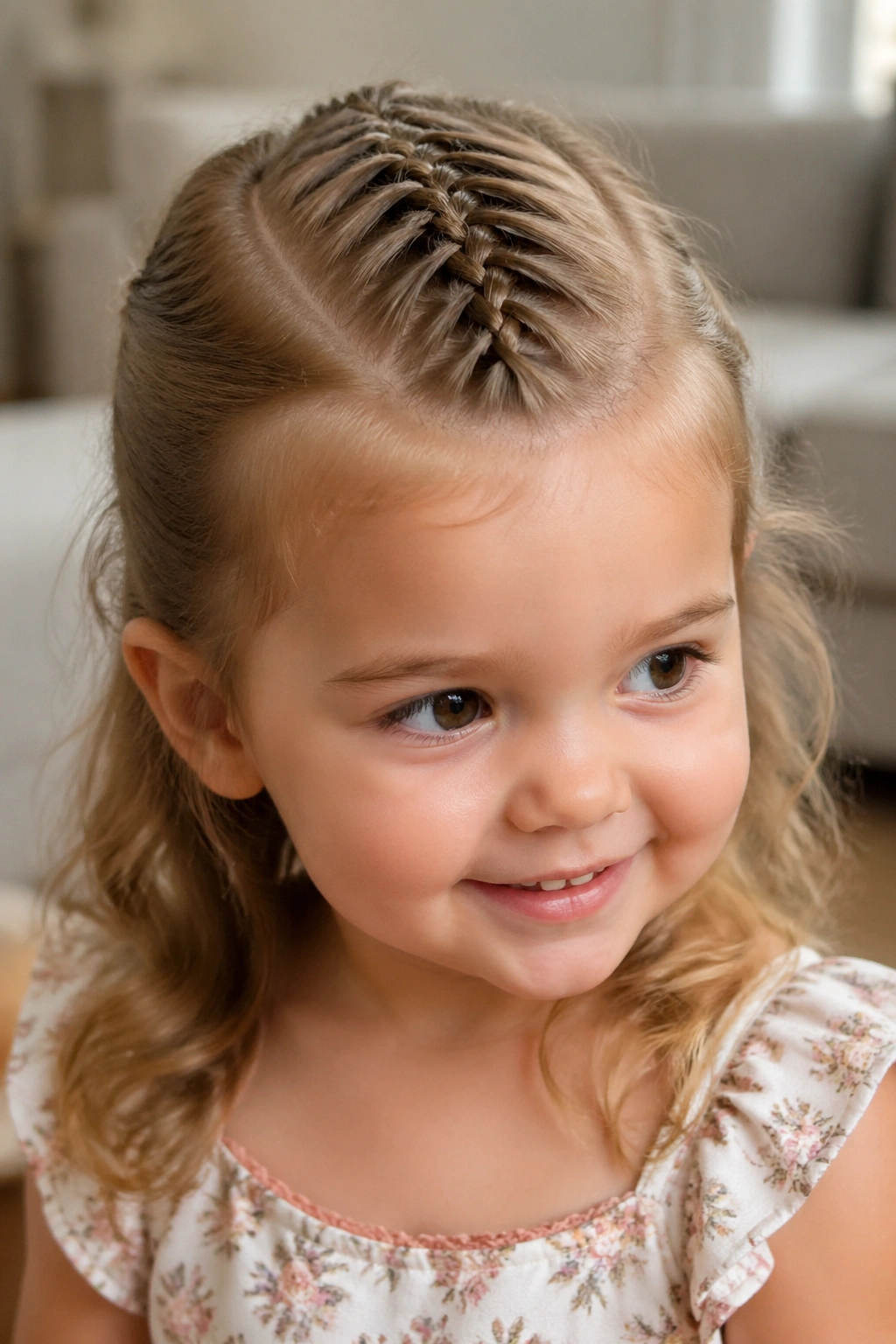
A center mohawk braid keeps the middle of the head under control while leaving the sides free or lightly pinned. It’s a strong choice for toddlers with thick hair that spreads out at the crown and for kids who dislike having all of their hair pulled back at once.
How do you make it stay? Keep the braid close to the scalp, and do not start with a section that’s too wide. A narrow center braid is easier to anchor and less likely to collapse as the day goes on. If the sides are left loose, you can use tiny clips to keep them from falling into the braid.
This style has a little attitude, which I happen to like. It’s neat without looking stiff, and it works well when you want something different from the usual pigtails.
22. Stitch Braid
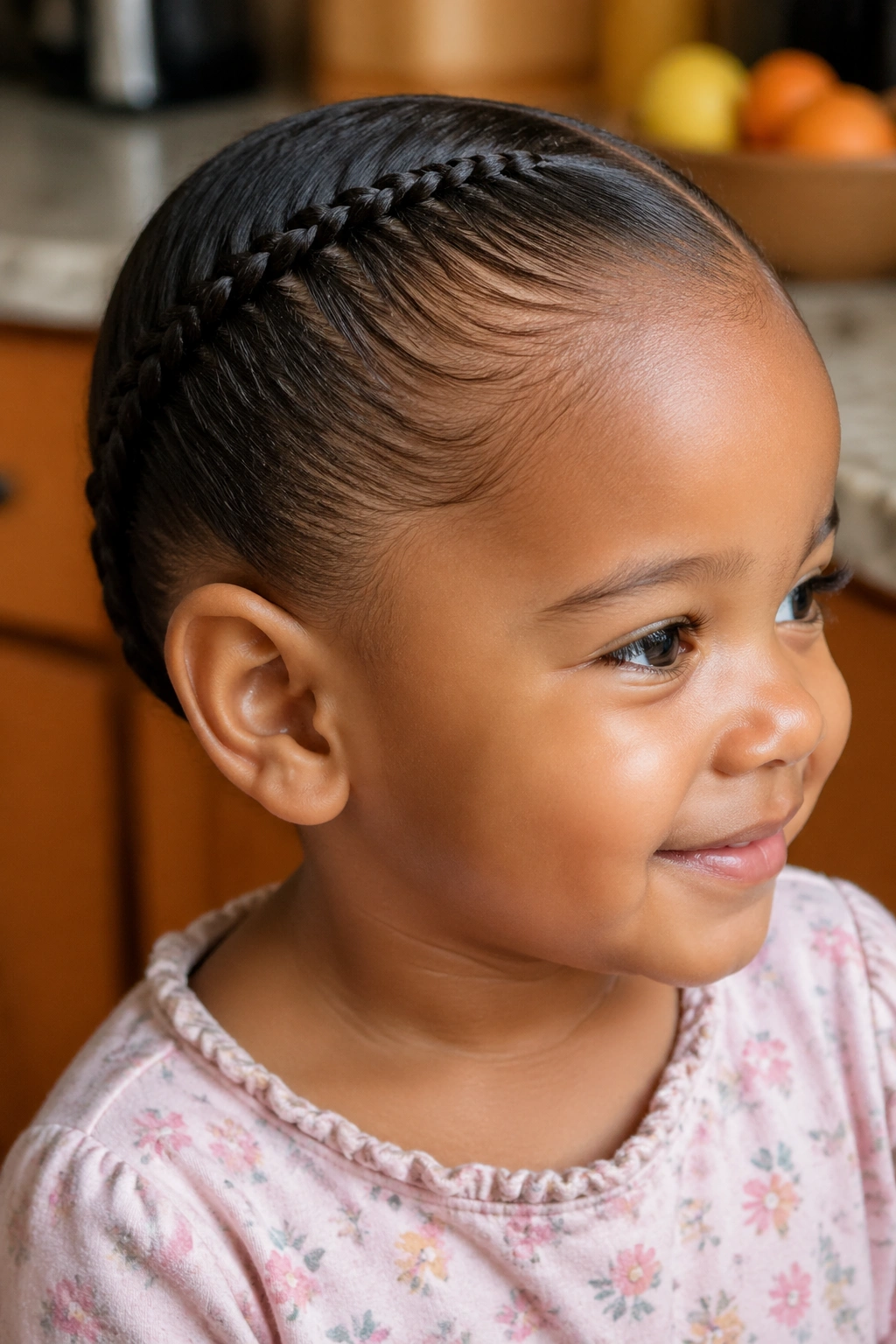
A stitch braid has a very tidy, woven look because the sections are fed in with a cleaner, flatter line than a standard braid. That structure gives it impressive staying power on toddler hair, especially when the strands are soft and prone to sliding apart.
The braid sits neatly against the scalp, and the sections are added in a way that makes the braid line look almost drawn on. It’s precise work, but not impossible. A rat-tail comb helps a lot, and so does a little patience at the start.
Stitch braids are best when you want a style that stays neat without a lot of fluff or expansion. They also pair well with small parts, which can make the whole head look organized in a way that lasts through the day.
23. Waterfall Braid with Anchored Back
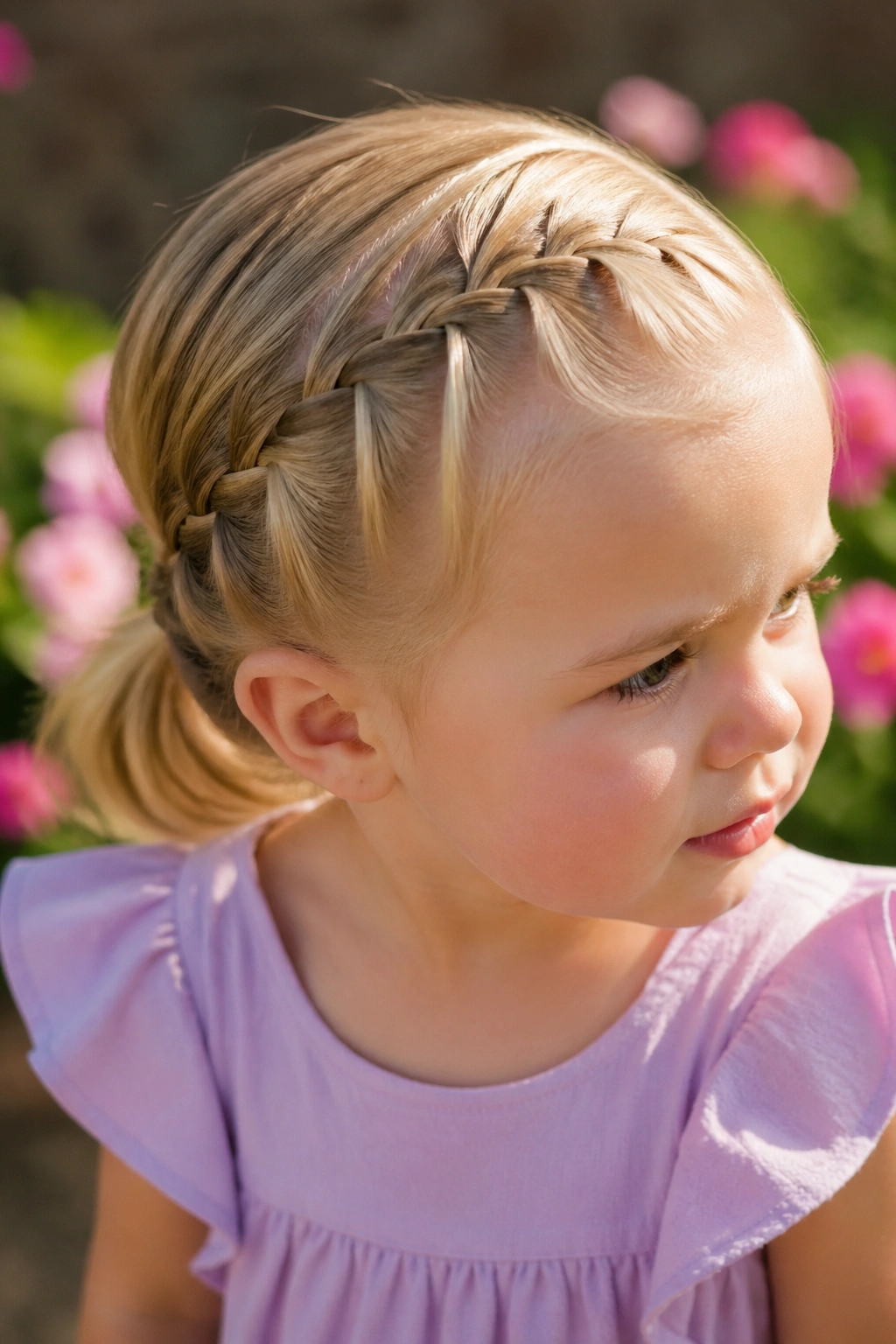
A waterfall braid is not the first style I’d choose for a toddler who lives hard, but with an anchored back section, it can work. The key is to treat the waterfall part as decoration and keep the real hold in the back braid or ponytail that secures everything.
The front section drapes through the braid, while the rest of the hair is anchored below with a regular braid or elastic. That means the pretty part stays visible, but the style doesn’t depend on the loose strands alone. Loose strands are the weak spot here. They look lovely for an hour and then start slipping.
If you’re using this style, keep it for a calmer day or a child who doesn’t tug much. It’s one of the prettier options on the list, but it asks for a bit more maintenance than the others.
24. Four-Strand Braid
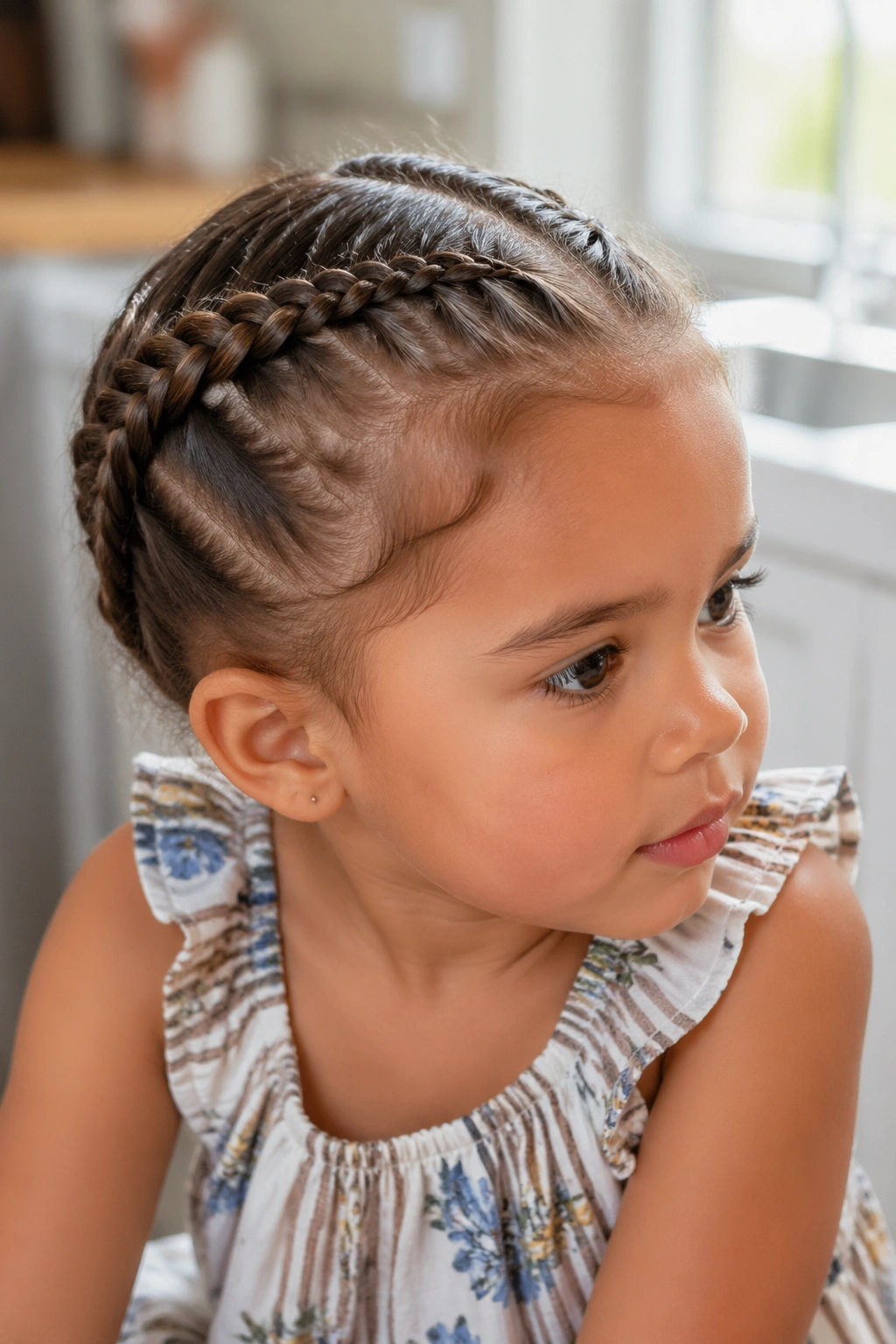
A four-strand braid adds extra grip simply because there’s more woven structure. The result looks fuller than a standard three-strand braid, which can be handy for toddlers whose hair is fine or short enough that a normal braid seems thin by lunchtime.
It takes a little more focus, but the pattern is still manageable once you get the rhythm. Keep the strands even and don’t let one side get too thick. Uneven tension shows fast in a four-strand braid, and that can make the braid slide or twist oddly.
This style is a good pick when you want the hair to sit neatly against the back without needing a lot of added clips. It also looks a bit more special than the everyday braid without being fragile.
25. Five-Strand Braid
Does a five-strand braid look complicated? Yes. Is it worth it on the right kind of hair? Also yes. The extra strands create a denser weave, which helps the braid keep its shape longer than you might expect, especially if the hair has some length and not too much slickness.
How to Keep It Manageable
Start with sectioned hair that has been brushed smooth and lightly misted. Then keep each strand clearly separated in your hands. If the sections blur together, the braid gets messy fast.
This is not the style to rush when a toddler is already impatient. It rewards steady hands more than speed. If you’re short on time, skip it. If you want a braid that looks rich and stays firm, it earns its place.
26. Low Tucked Braids with Clips
Low tucked braids are a workhorse style. The braid sits near the nape, the ends are folded under, and clips hold everything close to the head so there’s less chance of snagging. For active toddlers, that low placement is a gift.
The braid can be single or split into two small braids before being tucked. Use a couple of flat clips to secure the ends against the scalp or bun area. The point is to avoid a dangling tail. Tails get caught. Tails get chewed. Tails get pulled.
If your toddler is sensitive about hair touching the neck, this style is especially useful. It keeps the weight low and the finish neat. No drama. No fussy shape to preserve.
27. Pull-Through Braid Ponytail
A pull-through braid ponytail gives you the look of a thick braid without depending on tiny strands staying perfectly woven together. That’s why it works so well on toddler hair. It’s built from ponytails joined in sequence, which means each section has its own elastic anchor.
Start by making a small top ponytail, then add another below it and pull the upper section through the lower one. Repeat down the length, gently widening each loop as you go. The finished braid looks fuller than a standard braid and tends to stay neat because every segment is tied off.
This is a strong option for fine hair, especially when you want something playful but secure. It also works when the hair is too short for a long traditional braid and you still want that braided shape to hold all day.
Final Thoughts
The braid that lasts is usually the one that matches the child’s hair, not the one that looks hardest to do. Fine hair needs grip. Thick hair needs control. Curly hair needs enough moisture to let the sections slide into place without puffing out before lunch.
If a style keeps getting frizzy at the front, stop blaming the braid and look at the prep. A cleaner part, a lighter hand with product, and a better elastic often fix more than switching the whole hairstyle. Small adjustments matter. A lot.
