



Long hair gives men a lot of room to play, and easy braid styles for men with long hair can do more than keep strands out of your face. They can make shoulder-length hair look deliberate instead of accidental, which matters more than people admit. A braid changes the whole shape of the head and neck, and when it’s done cleanly, it can make even plain hair look structured.
Most guys make this harder than it needs to be. They picture a perfect salon braid, then give up when their first attempt comes out lopsided or loose at the ends. That’s normal. The better starting point is a style that works with the hair you already have — a little texture, a little length, maybe a cowlick or two — not against it.
One thing I’ve learned from watching men wear braids well is that the details matter more than the braid name. A slightly off-center part can look intentional. A low braid can look sharper than an elaborate one. And hair that’s been brushed once, not obsessively polished into submission, often holds better because it has a bit of grip.
If your hair is straight and slippery, a touch of matte cream or a light mist of salt spray can make a huge difference. If it’s wavy or curly, you may need less help than you think. The first few styles here are the easiest place to start, and the later ones open up more options once your fingers stop fighting you.
1. Classic Three-Strand Braid for Men With Long Hair
The classic three-strand braid is the one to learn first, full stop. It’s the same braid most people picture when they hear the word, and that’s exactly why it works so well on men with long hair. It looks clean, it doesn’t ask much from your hands, and it can sit low at the nape or hang straight down the back without looking fussy.
Start with dry or slightly damp hair that’s been brushed free of knots. Divide it into three even sections, cross the right strand over the middle, then the left over the new middle, and keep going at the same tension all the way down. The trick is consistency. If one pass is tight and the next is loose, the braid gets bulky in one spot and skinny in another.
Keep the last inch or two loose enough to tie with a small elastic. Don’t yank the braid tight at the scalp; you want it secure, not sore. This is the braid you practice in a mirror when you’ve got 10 quiet minutes and no patience for drama.
2. Low Nape Braid
A low nape braid has a cleaner, more grown-up look than a braid that starts high on the head. It sits right where the neck begins, which means it stays out of collars and jacket seams. That tiny detail matters more than people think. If you wear hoodies, work shirts, or anything with a rough neckline, this braid stays calmer all day.
Why it works
The low starting point keeps the hair’s weight close to the neck, so the braid doesn’t swing around as much. It also makes the shape feel more grounded. On men with thick hair, that can be a relief, because a braid that starts too high can stick out like a rope.
Quick facts
- Best for: shoulder-length hair and longer
- Hair type: straight, wavy, or curly
- Look: neat, relaxed, easy to wear
- Watch for: loose strands at the crown if the part is sloppy
If your hair has layers, gather the shortest pieces before you start braiding. A little matte paste on the hands helps keep those flyaways from escaping. That’s the kind of small fix that saves a braid from looking half-finished.
3. Side Braid
Why do side braids look less stiff than center braids? Because the whole style leans into asymmetry. The braid lands over one shoulder, which softens the shape and makes it feel more casual. On long-haired men, that can be a nice break from the usual straight-back ponytail.
Part the hair slightly off-center and sweep everything to one side before you start. You can braid from just behind the ear or begin lower, near the jawline, depending on how much hair you want to gather. The lower version is easier. The higher version keeps more hair under control.
How to wear it
A side braid looks especially good when the front sections are a little loose. Not messy. Just not too controlled. That small looseness keeps the style from looking pasted down, which is a trap a lot of guys fall into when they’re trying braids for the first time.
If you want more hold, braid the side into a low tie and leave the rest of the hair to sit naturally. It’s a simple move, but it gives the whole style a bit of shape without making it feel overbuilt.
4. Half-Up Braid
The half-up braid is the answer when you want hair off your face but don’t want to lose the length. That’s the whole appeal. You braid just the top section, then let the rest fall loose. It’s practical, and it shows off your hair instead of hiding all of it.
Picture a guy who’s growing his hair out past the shoulders. A full braid can feel heavy, and a ponytail can look a little flat. The half-up version splits the difference. It keeps the front neat, lets the back move, and works especially well if your hair has wave or curl, because the contrast between braided top and loose ends looks intentional.
- Use it when: you’re working, training, or just sick of hair in your eyes
- Best texture: medium to thick hair
- Small tip: braid the top section before it gets too tangled
- Good pairing: a middle part or soft curtain part
This one looks best when the braid ends around the crown or upper back of the head. Too low, and it starts to read like a rushed ponytail.
5. Double Braids
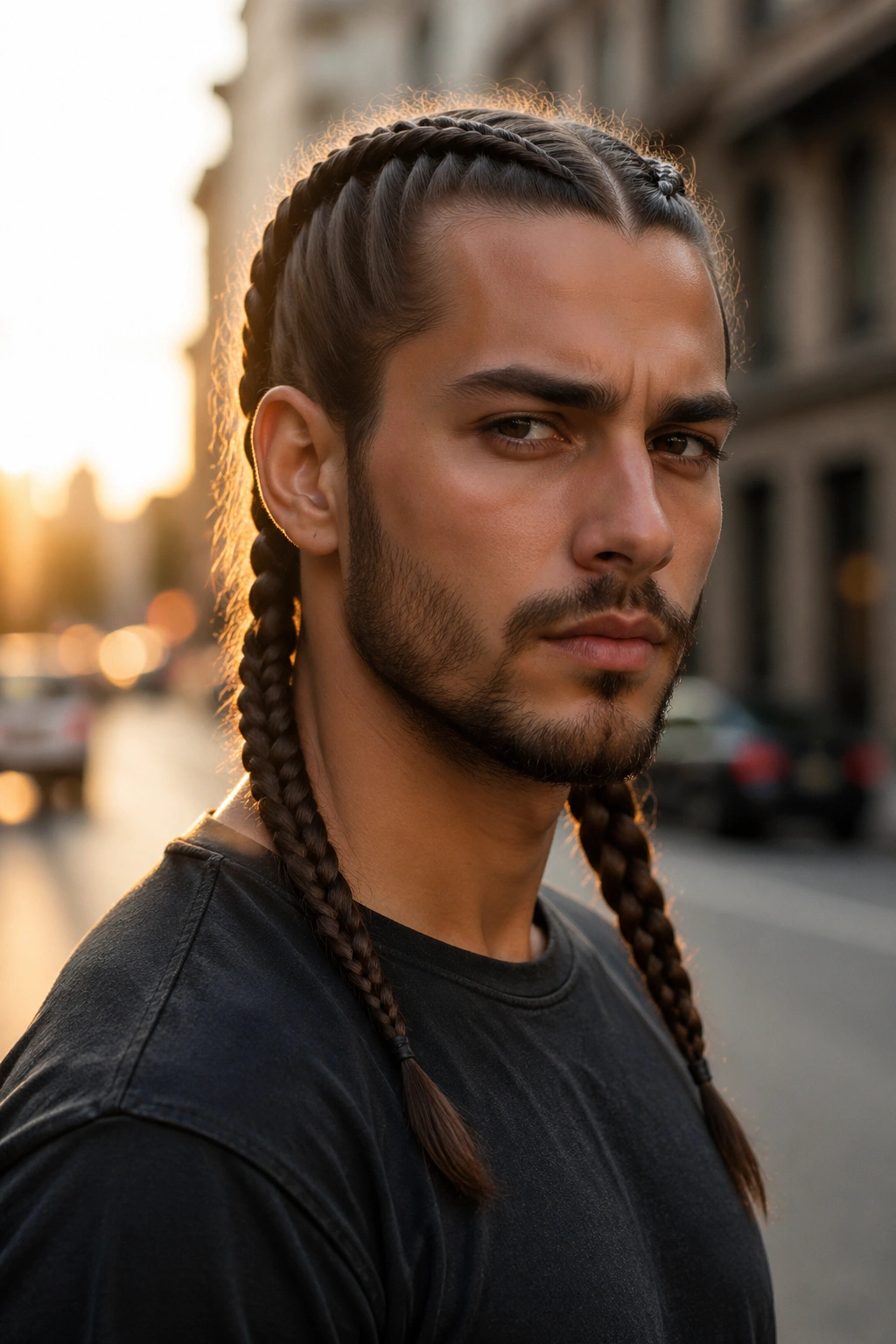
Two braids are easier on the head than one long braid, and that’s not a small thing. A double braid spreads the weight out, which makes it a smart pick for men with thick or heavy hair. It also gives a sharper, more athletic look without needing anything fancy.
Unlike a single braid, twin braids keep each section smaller and easier to manage. That means less arm wrestling with your own hair. The style can be simple and straight back, or you can part the hair down the middle for a cleaner split. Either way, the visual effect is tidy and balanced.
If your hair tends to puff up at the roots, spray a little water or leave-in conditioner along the part before braiding. It helps the sections stay where you put them. And if one braid ends up a little thicker than the other, don’t panic. Human heads are not perfectly symmetrical. Thank goodness for that.
6. Dutch Braid
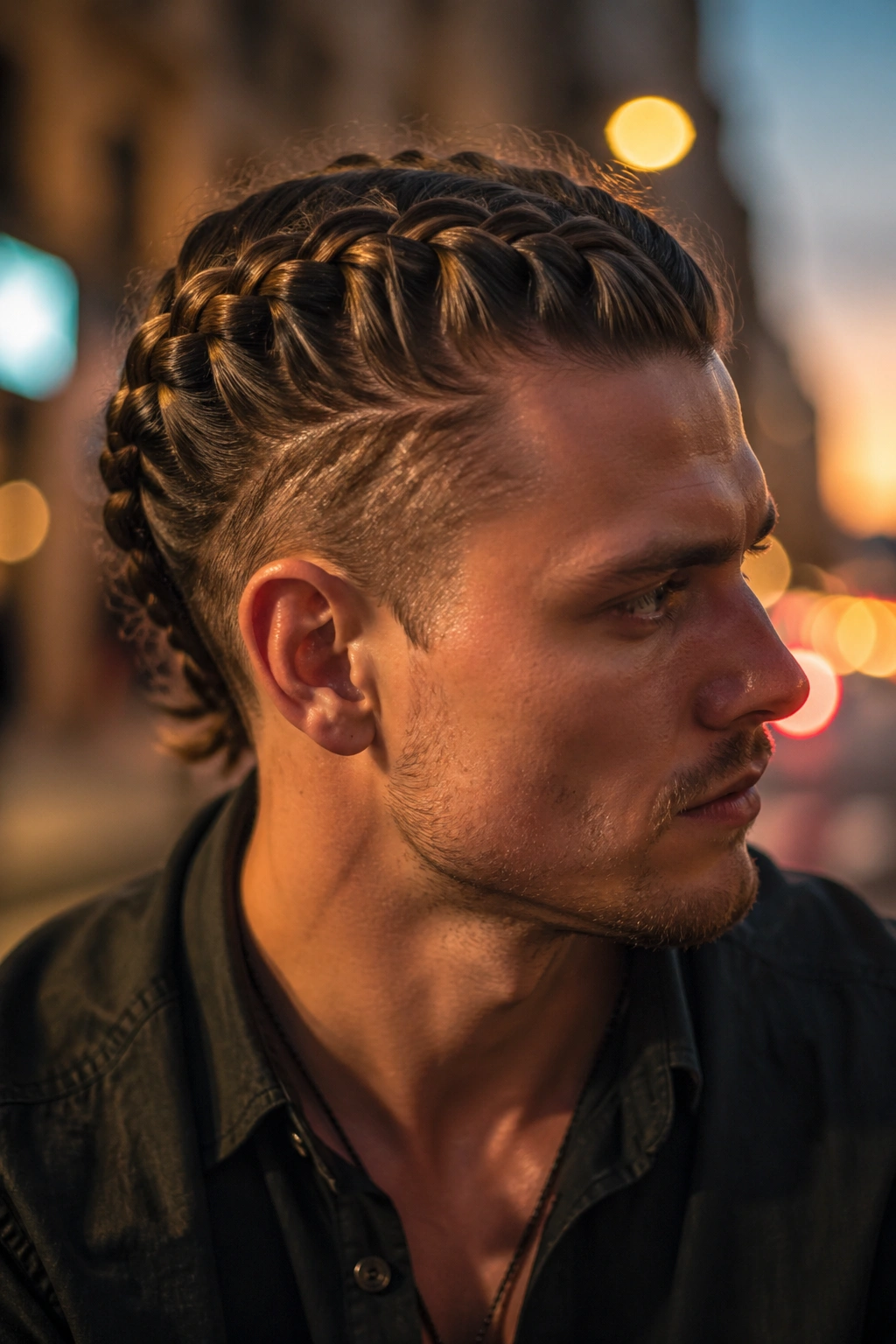
A Dutch braid sits on top of the hair instead of sinking into it, which gives it more shape and definition. If a regular braid disappears into thick hair, this one stays visible. That’s why so many men with dense or wavy hair like it. It has presence.
The technique is simple once you get the hand motion right: instead of crossing each outer strand over the middle, you cross it under. That one change is what makes the braid pop. It looks more sculpted, almost like a raised line running through the hair.
Don’t pull the first few passes too hard. Tightening the braid at the scalp can make it feel pinched, especially around the temples. Start secure, then smooth as you go. The braid should sit snug, not leave your head counting the seconds until you take it out.
A Dutch braid works well down the center, off to one side, or as a single top braid that feeds into a ponytail. It’s a useful style because it can look clean or rough depending on how neatly you part it.
7. French Braid
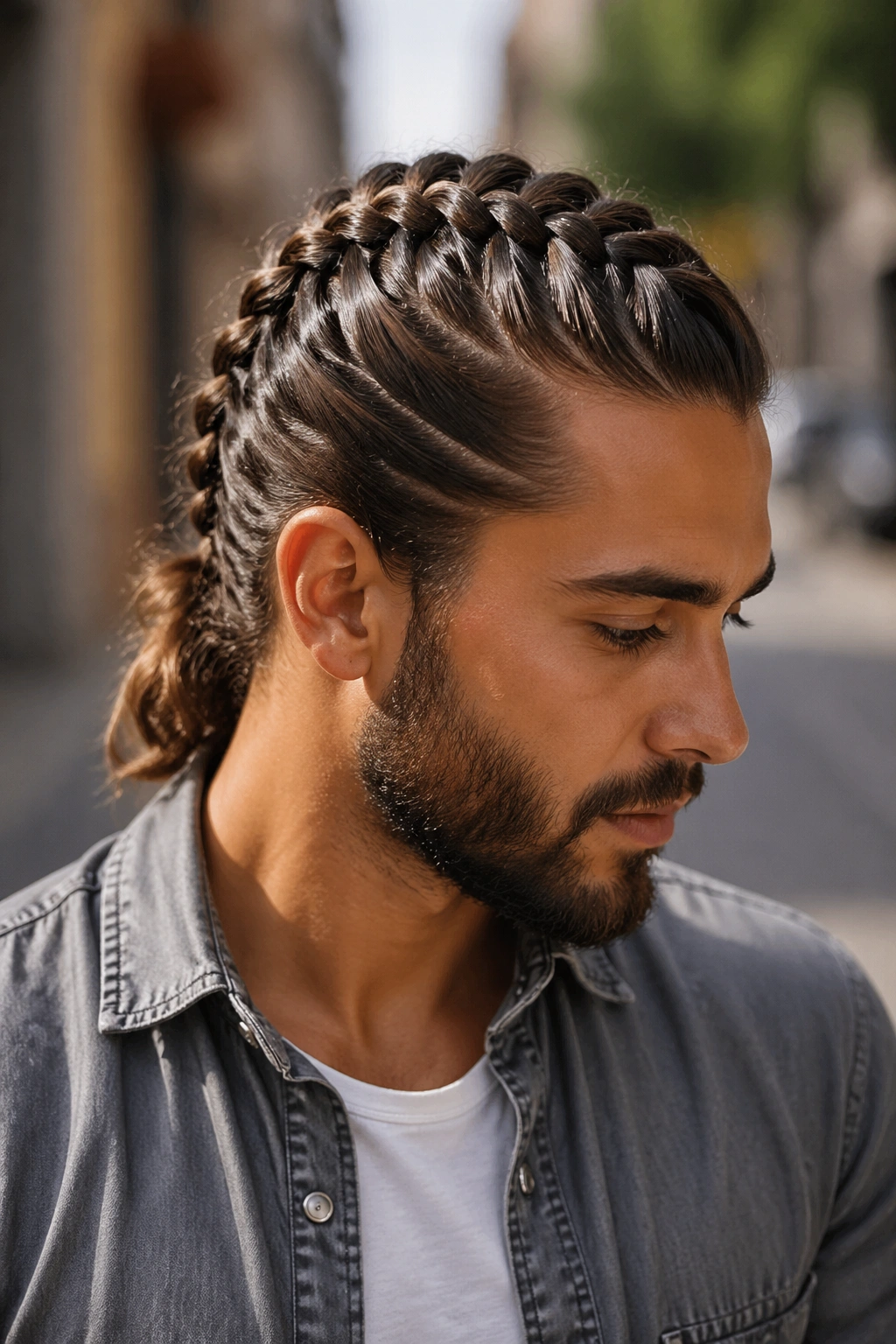
The French braid is the braid people often assume is harder than it really is. It isn’t magic. It’s just a braid that keeps pulling in new hair as it travels down the scalp, so the finished look hugs the head instead of hanging away from it. That close fit is what makes it good for men who want a neater silhouette.
Why the braid lies flatter
As you add hair from both sides, the braid gathers the whole top section into one line. That means less loose bulk at the crown and less chance of strands slipping around during the day. It’s especially useful if your hair falls into your eyes the moment you tilt your head forward.
You can start at the front hairline or a little farther back, depending on how much face-framing hair you want to keep loose. The braid gets easier once you have the first three passes locked in. After that, it’s mostly rhythm.
The best French braids on men look tidy but not lacquered. If every strand is flattened and shiny, the style can feel stiff. A bit of texture keeps it honest.
8. Fishtail Braid
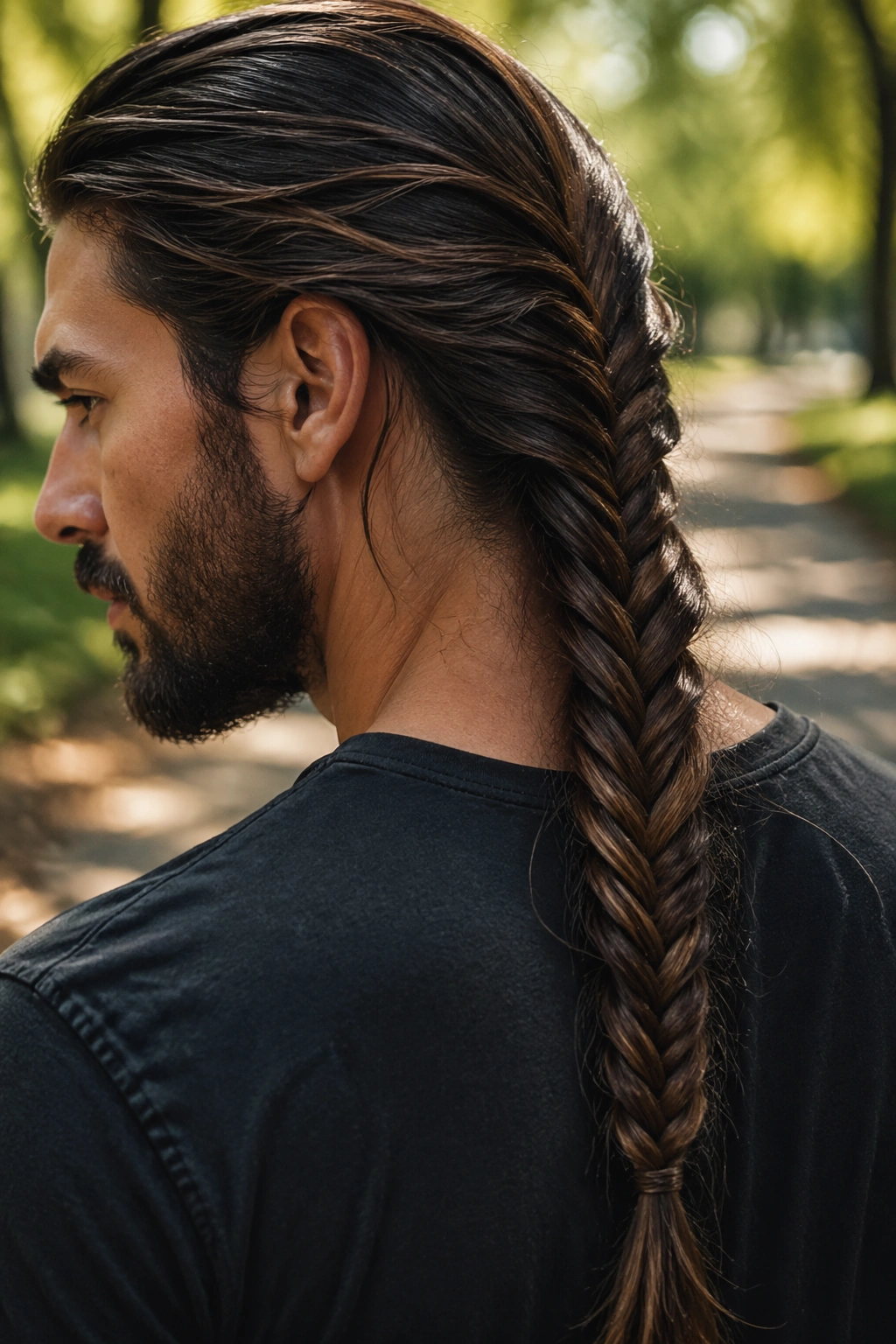
A fishtail braid looks elaborate from a distance, and that’s half its charm. Up close, it’s a simple two-section pattern that just takes a little patience. If you can split hair into two equal halves and keep picking small bits from the outside edge, you can do this one.
What makes it good for men with long hair is the texture. Fishtails look strongest when the hair has some grit, so day-old hair often behaves better than freshly washed hair. The finished braid has that tight, woven look that sits nicely over the shoulder or down the back.
How to get the most from it
- Take very small pieces from each outer edge
- Keep both sections even all the way down
- Tie it off once the tail becomes too thin to hold shape
- Loosen a few links if you want a fuller look
The braid can fall apart if you rush the sectioning. Slow fingers win here. It’s not hard, but it does reward attention.
9. Rope Twist Braid
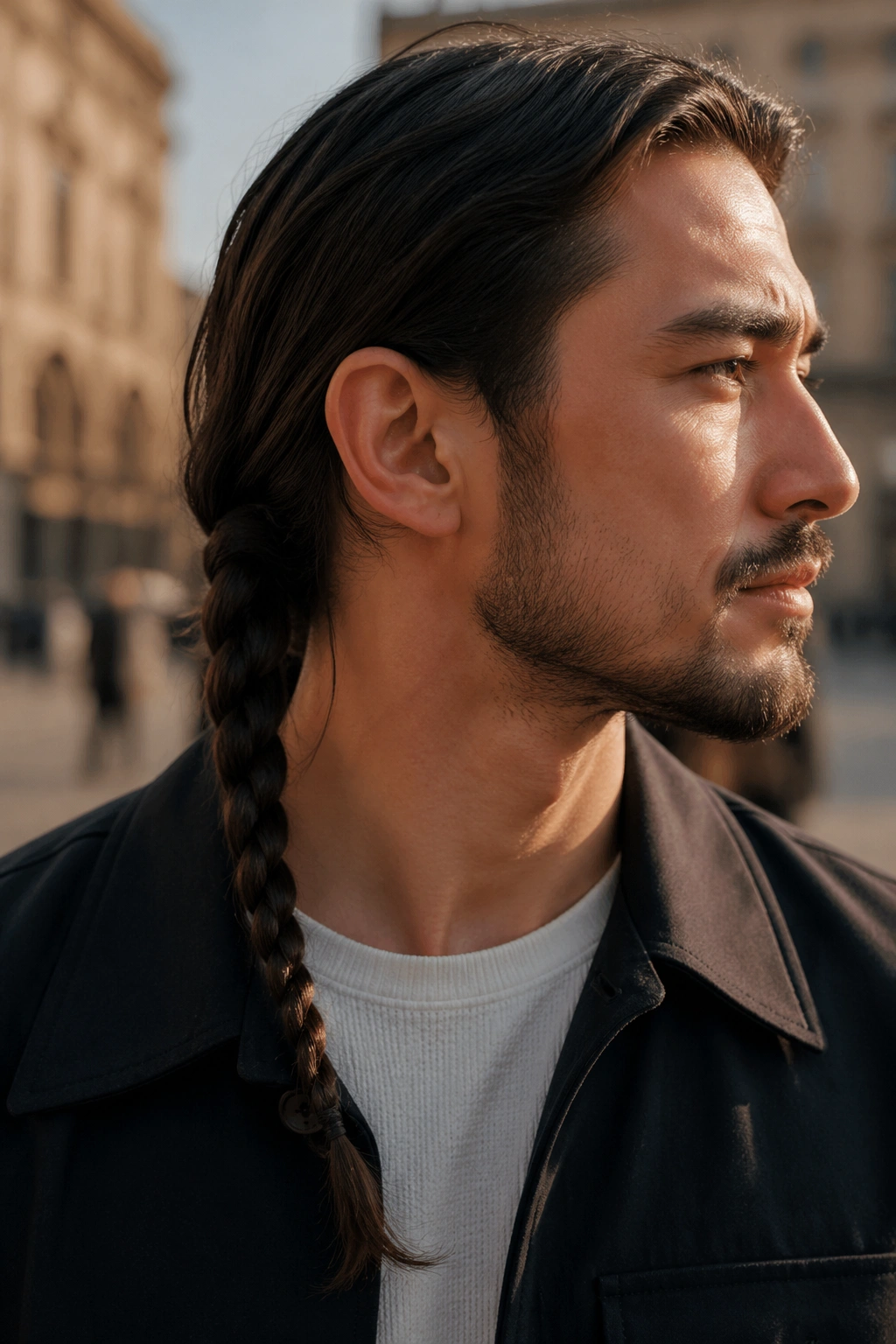
If you want the fastest braid-like style in the bunch, the rope twist braid is hard to beat. It uses two sections instead of three, and that makes the whole thing easier to keep even. Twist each section in the same direction, then wrap them around each other in the opposite direction. That’s the whole trick.
This style looks especially good on long hair that has a bit of natural wave. Straight hair can do it too, though you may need a little product so the twist doesn’t unwind. The shape is slimmer than a classic braid, which is nice when you want something neat without a lot of bulk.
A rope twist is also forgiving if your parting isn’t perfect. The braid itself carries enough shape that a small wobble at the start doesn’t ruin the look. That’s useful on busy mornings when you’re not in the mood to argue with a comb.
10. Braided Ponytail for Long Hair
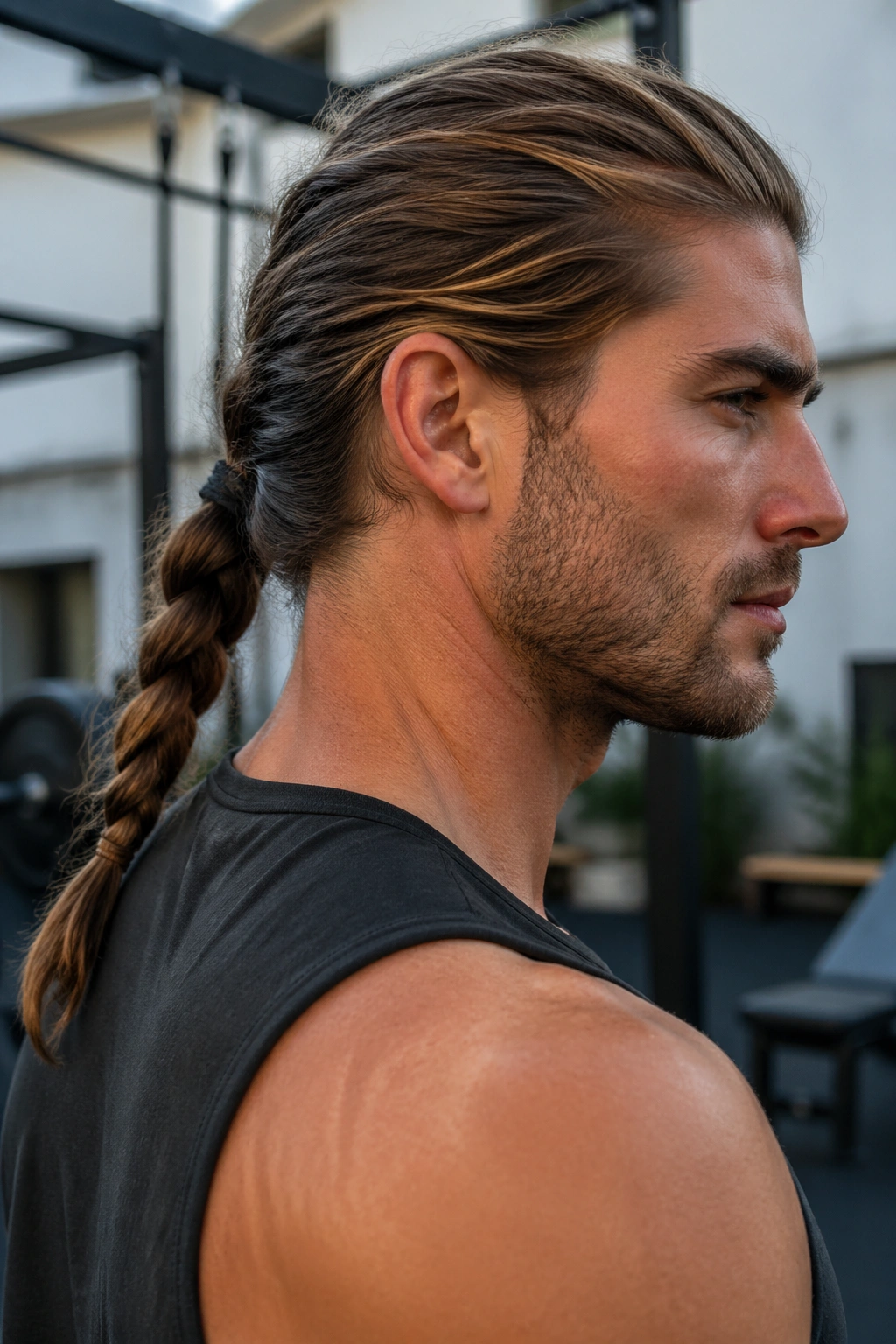
A braided ponytail for long hair gives you the structure of a braid and the ease of a ponytail in one move. Tie the hair back first, then braid the tail. That way the weight stays controlled at the base, and you don’t have to fight loose hair all the way from the crown.
This style is especially handy if your hair is heavy. A plain ponytail can swing around and feel rough by the end of the day. Once you braid the tail, it settles down. It’s also a clean option for gym days, travel, or any time you want your hair out of the way without chopping off the length.
- Best hair length: collarbone and longer
- Best tie placement: mid nape or slightly higher
- Works well with: straight or wavy hair
- Looks best with: a little volume at the crown
If you want the braid to sit tidily, smooth the ponytail base with your hands before you start. Don’t overbrush the rest into submission. A little texture helps the braid hold.
11. Braided Man Bun
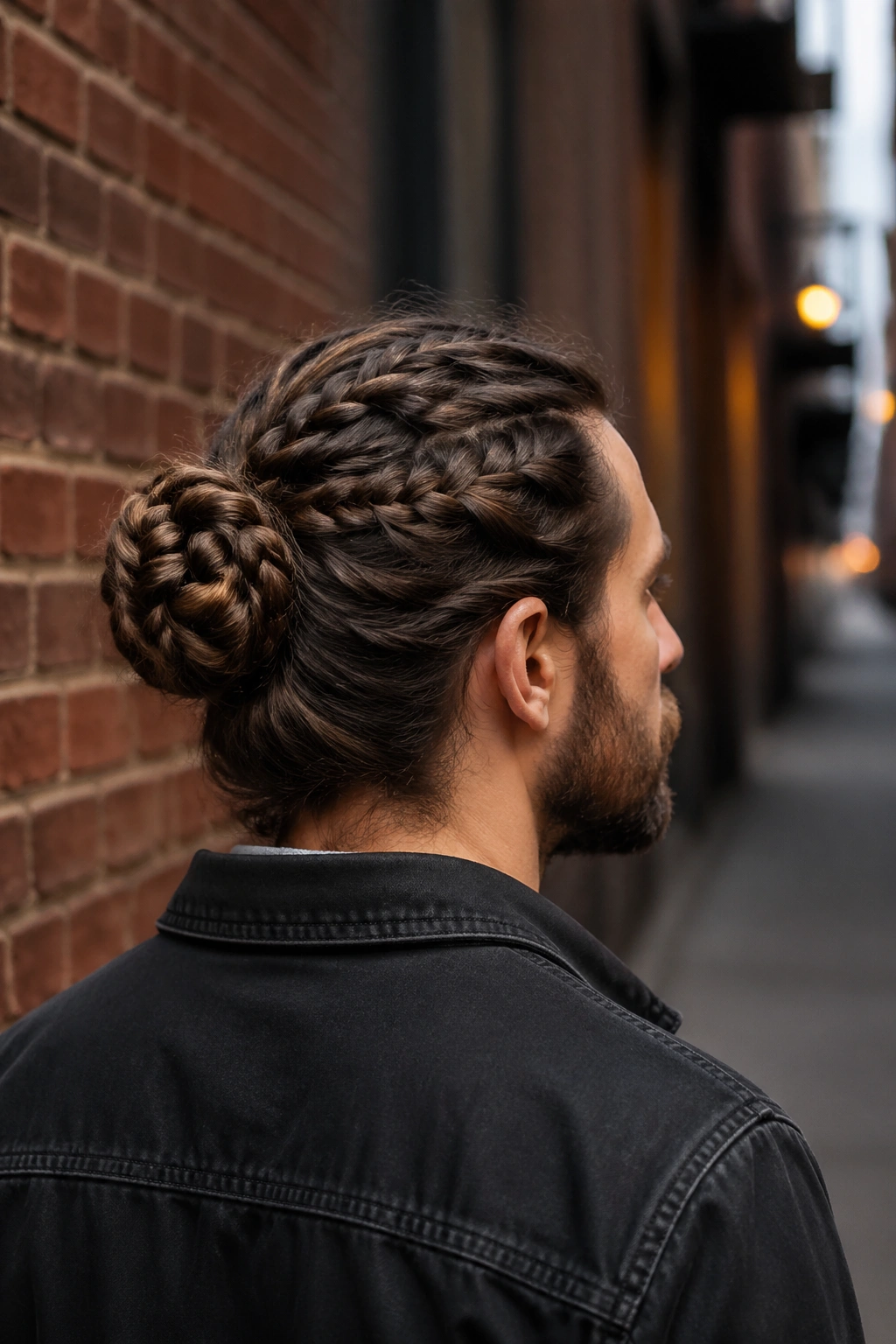
The braided man bun is a better idea than it sounds. It keeps the length controlled, but it doesn’t flatten everything against the head the way a plain bun can. Start by braiding the ponytail, then coil the braid into a bun and secure it with another elastic or a couple of pins.
What makes it different
A regular bun can look compact to the point of disappearing, especially on thick hair. A braided bun keeps the pattern visible, so the style has more shape from the back and sides. It’s tidy without feeling stiff.
This works best when the hair is long enough to wrap at least once around the base. If your braid is too short, the bun gets flimsy and starts poking loose. That’s the point where you should stop pretending and wear the braid down instead.
The style is practical for work, but it also has a little polish. Not polished in a fussy way. Just neat enough to look like you meant it.
12. Crown Braid
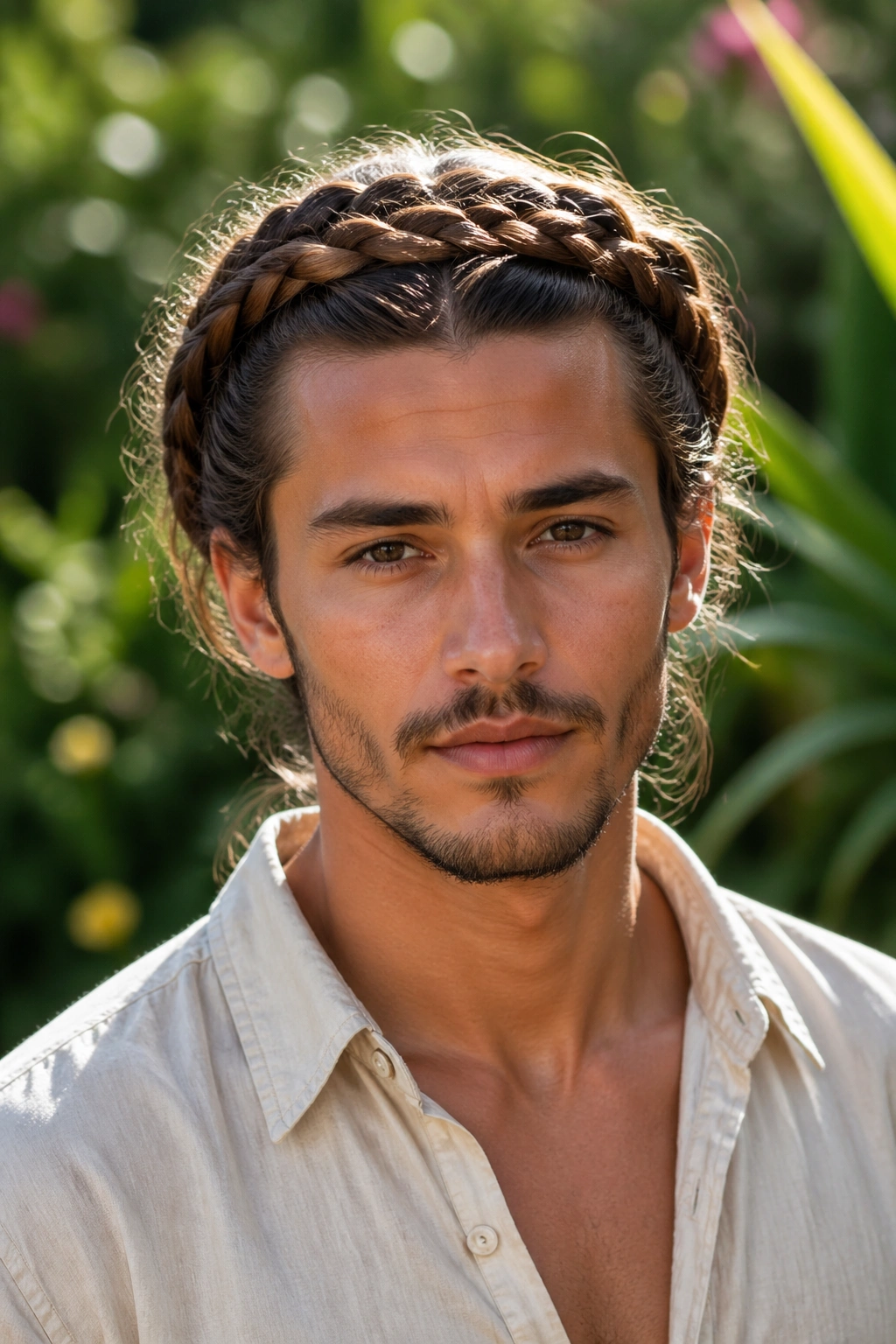
A crown braid circles the head like a band, which makes it one of the cleanest ways to keep long hair off the face. It’s not as difficult as it looks. Most of the work is in the sectioning and in keeping the braid even as it wraps around the head.
Why it works
Because the braid follows the natural curve of the skull, it feels balanced. The hair stays tucked in place, and the shape frames the face without dropping into the eyes. That makes it useful for men with long hair that tends to split and fall forward.
A crown braid can start near one temple and continue around the back, or it can be built from two braids that meet at the back. The single-braid version takes a bit more patience, but it’s cleaner when it works. Use a comb with a fine tail to keep the part neat. Messy parts show fast on this style.
If your hair is layered, pin any short pieces under the braid as you go. Otherwise they’ll stick out like wires by the end.
13. Mohawk Braid
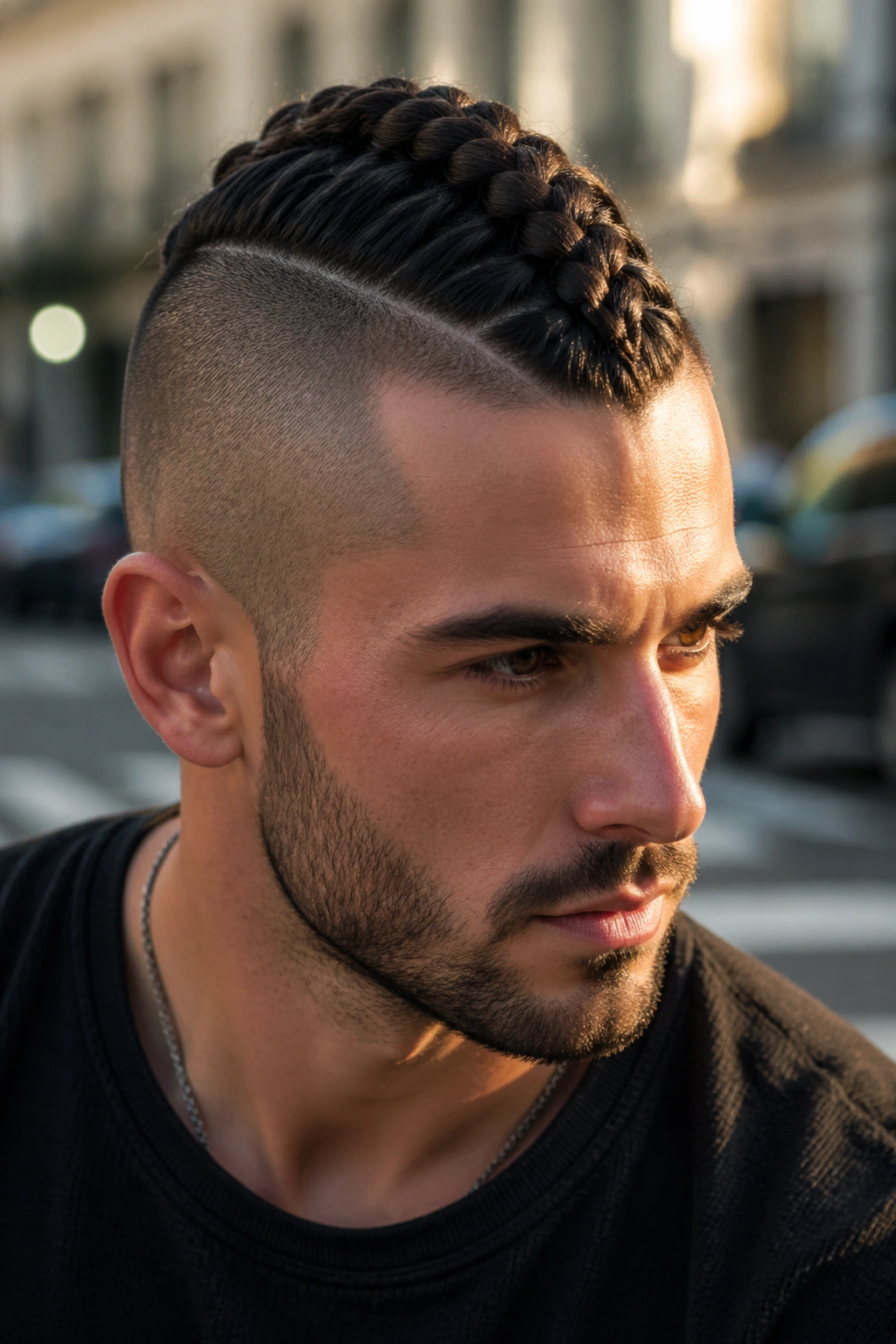
A mohawk braid gives you a little edge without needing a full punk haircut. The braid runs through the center strip of the head, while the sides stay shorter, loose, or pushed back. That contrast is what makes it work.
This is one of those styles that looks more complicated than it is. You gather the top center section, braid it straight back, and leave the sides alone. If your hair is thick, the braid gets a nice raised shape. If the sides are faded or naturally short, even better. The braid becomes the main event.
The style suits men who want the top of the hair to carry all the visual weight. It’s a strong look, but it still reads as practical. And if you’re tired of hair falling into your eyes from both sides, this one fixes the problem in one pass.
14. Temple Braid
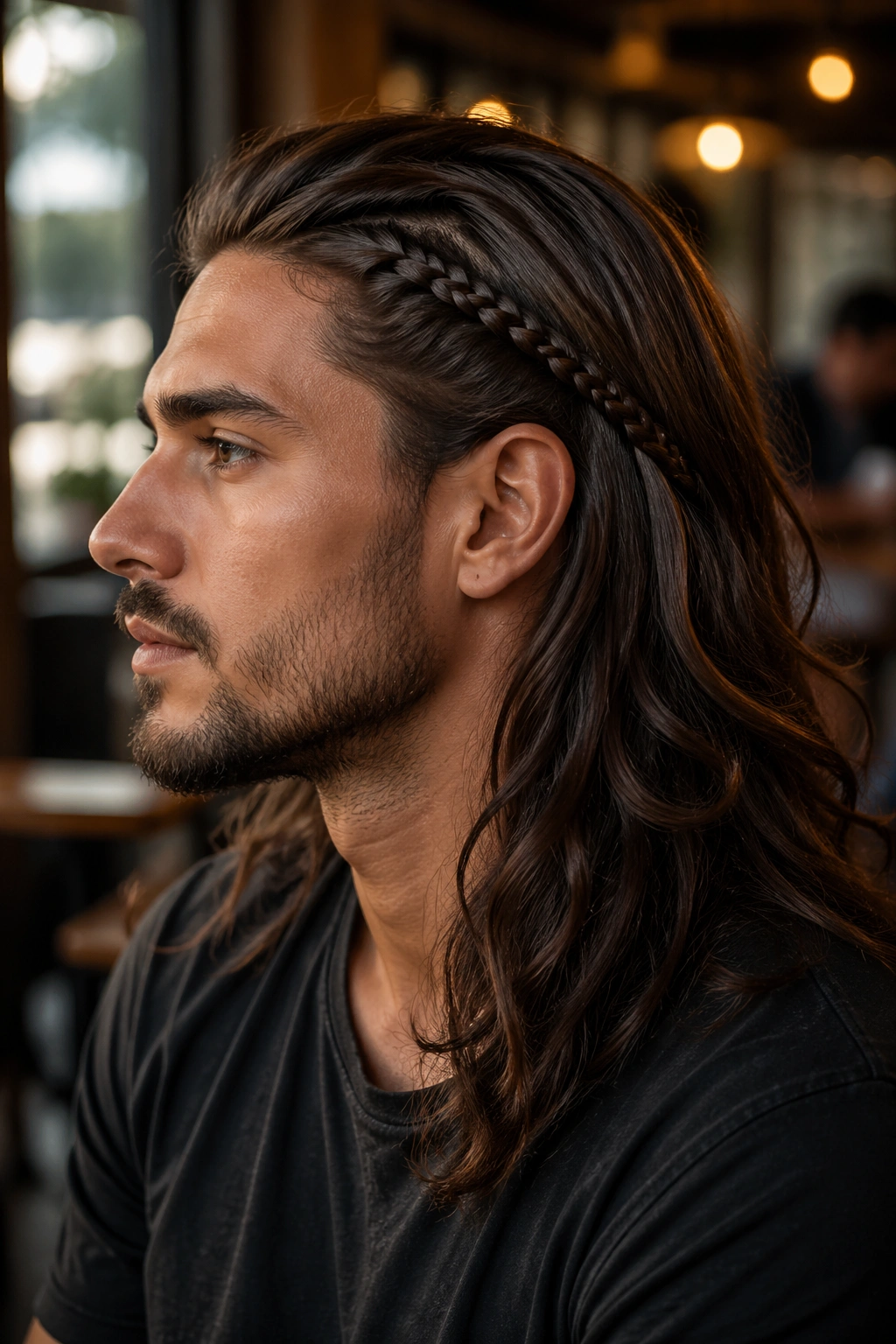
A temple braid is small, but it pulls its weight. It starts near the temple, crosses back along the side of the head, and tucks into the rest of the hair or a tie. It’s a smart accent braid for men who want one detail without turning the whole head into a project.
This style is especially useful during awkward grow-out stages. The front and side pieces are usually the first to get annoying, and a small braid keeps them in line. It also works well if you want to keep one side clean while the rest of the hair stays loose and natural.
A temple braid looks best when the section is thin and the part is tidy. Too much hair and it turns bulky fast. Keep it narrow, secure the end with a tiny elastic, and let the rest of the hair fall where it wants.
15. Four-Strand Braid
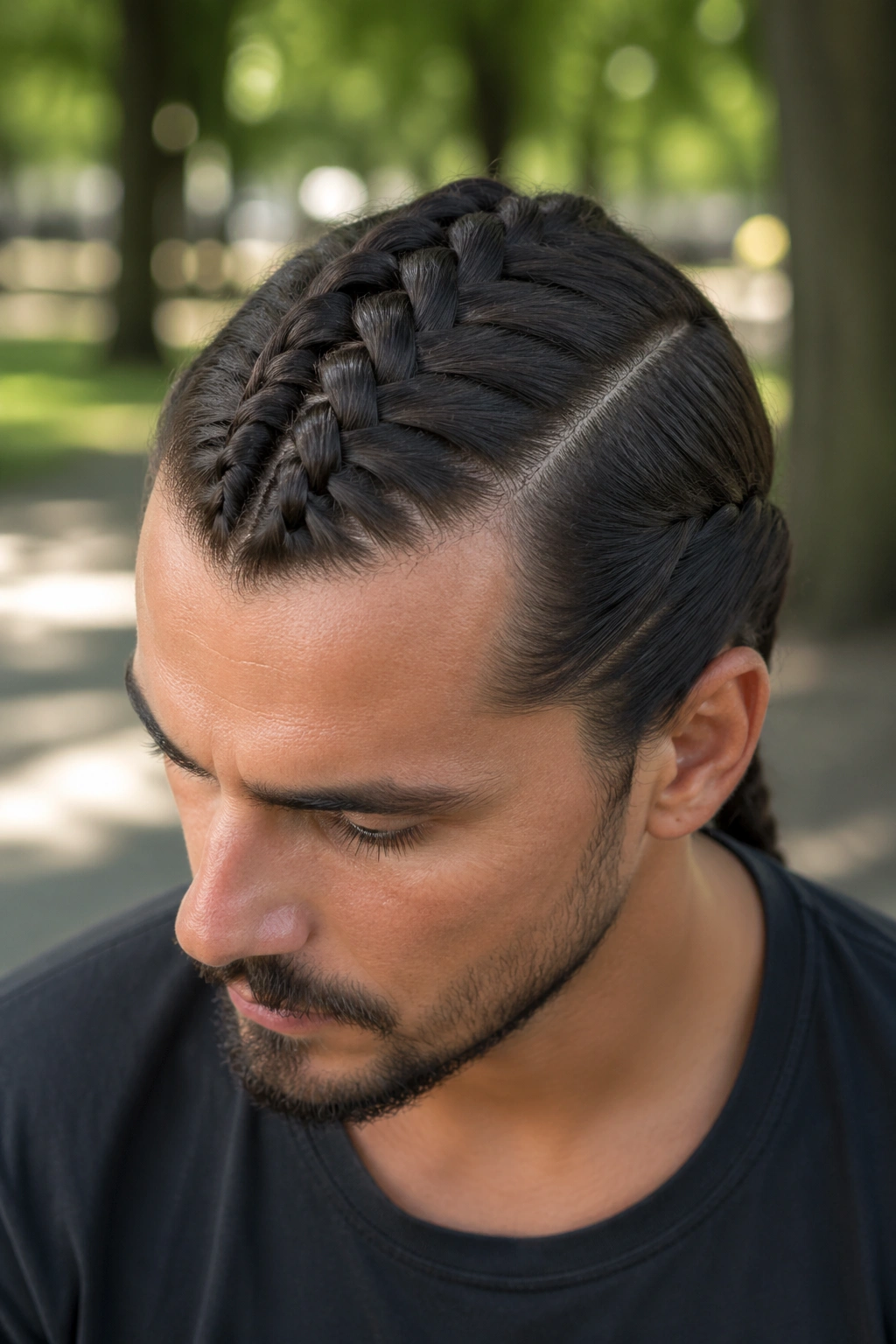
The four-strand braid looks harder than the classic version, but it’s mostly a matter of keeping count. Instead of three sections, you work with four, which gives the braid a flatter, more woven look. On long hair, that extra width can look sharp.
Compared with a three-strand braid, this one has more texture and a slightly more intricate finish. It’s a smart choice if you’re bored of the standard braid and want something that still feels wearable. Thick hair holds the shape best, though straight hair can do it too if you keep the tension even.
What to watch for
- Keep the sections clearly separated
- Use your fingers, not a brush, once the braid starts
- Don’t rush the first few passes
- Tie the end tightly because the braid can loosen near the bottom
It takes a little concentration the first time. After that, it becomes one of those styles that feels oddly logical.
16. Pull-Through Braid
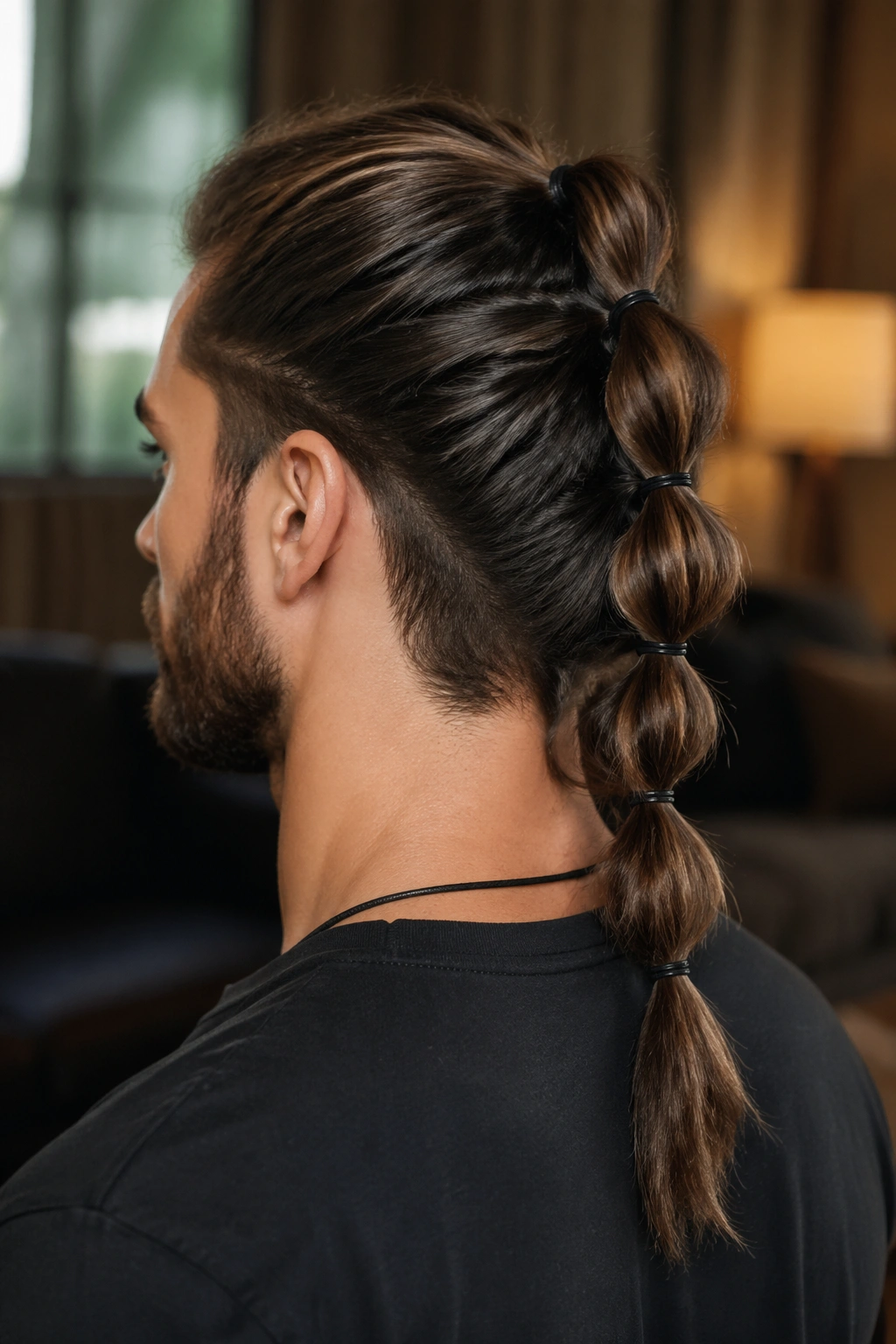
A pull-through braid is the style for people who like the look of braids but don’t trust their hands with traditional weaving. It isn’t a real braid at all. It’s a chain of ponytails pulled through each other, and that’s exactly why it’s so forgiving.
The upside is volume. The braid looks full and stacked, which is handy if your hair is thick or if you want a bigger shape than a slim three-strand braid gives you. It also stays neat because each section is secured with an elastic before the next one is added.
You’ll need a few small hair ties and a comb to make the parts clean. Start with one ponytail, split the hair above it, pull the next section through, then keep building downward. Once you get the rhythm, it moves fast. The finished style has a bold look without demanding delicate finger work.
17. Boxer Braids
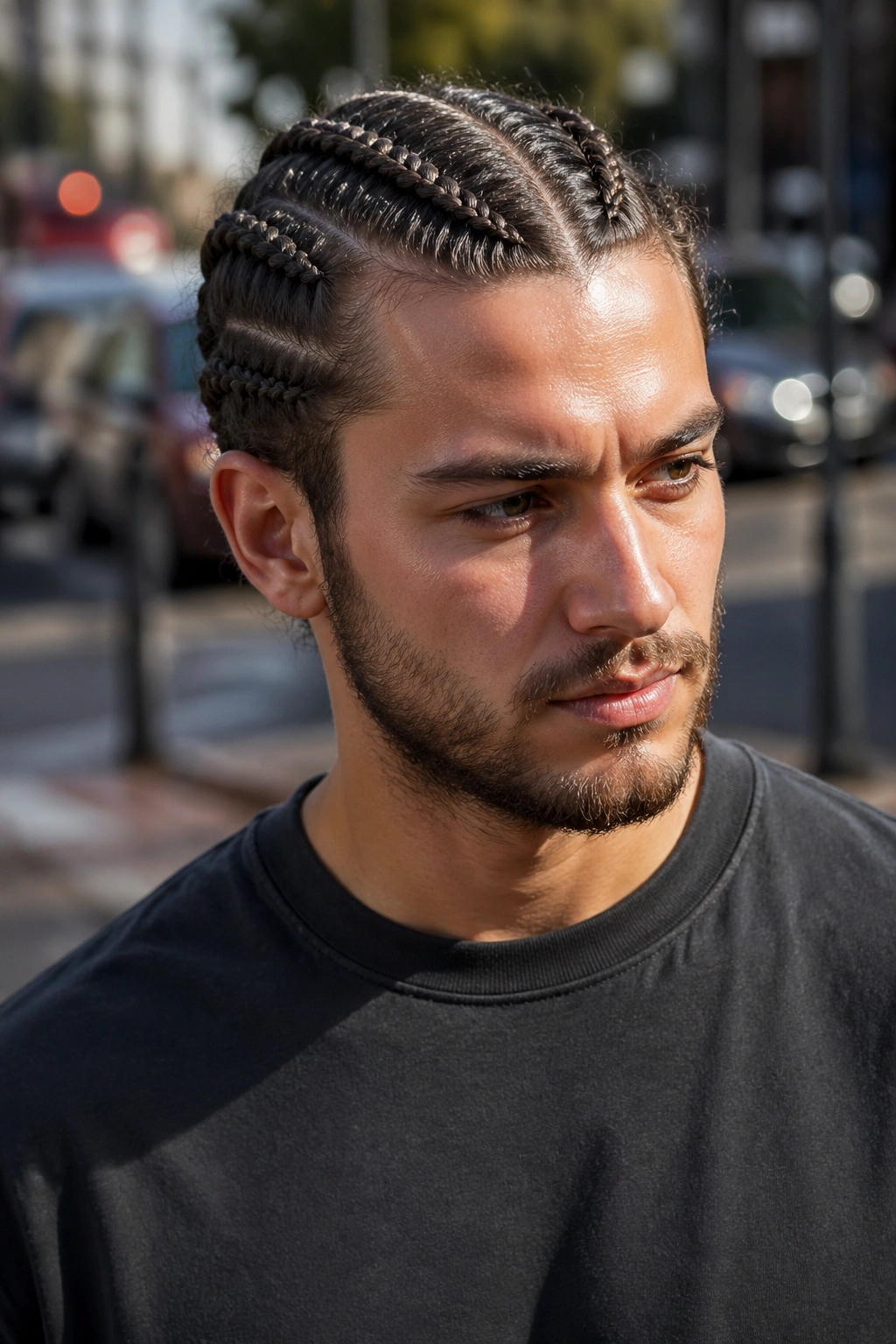
Boxer braids are twin braids worn close to the scalp, usually from the front hairline all the way back. They’re practical, close-fitting, and good when you want your hair locked down. Men with long hair who train, run, or deal with wind will understand the appeal instantly.
Unlike loose braids, boxer braids keep the shape tight from root to tip. That means less bounce and less hair falling loose over time. They can be worn neat and straight, or slightly rough if you want them to feel less severe. Either way, the braid line stays visible.
A little scalp tension is normal. Pain is not. If your head starts to ache, loosen the braid and start again with a gentler grip. That’s worth saying because a too-tight braid can ruin the whole day, and there’s no prize for suffering through it.
18. Straight-Back Cornrows
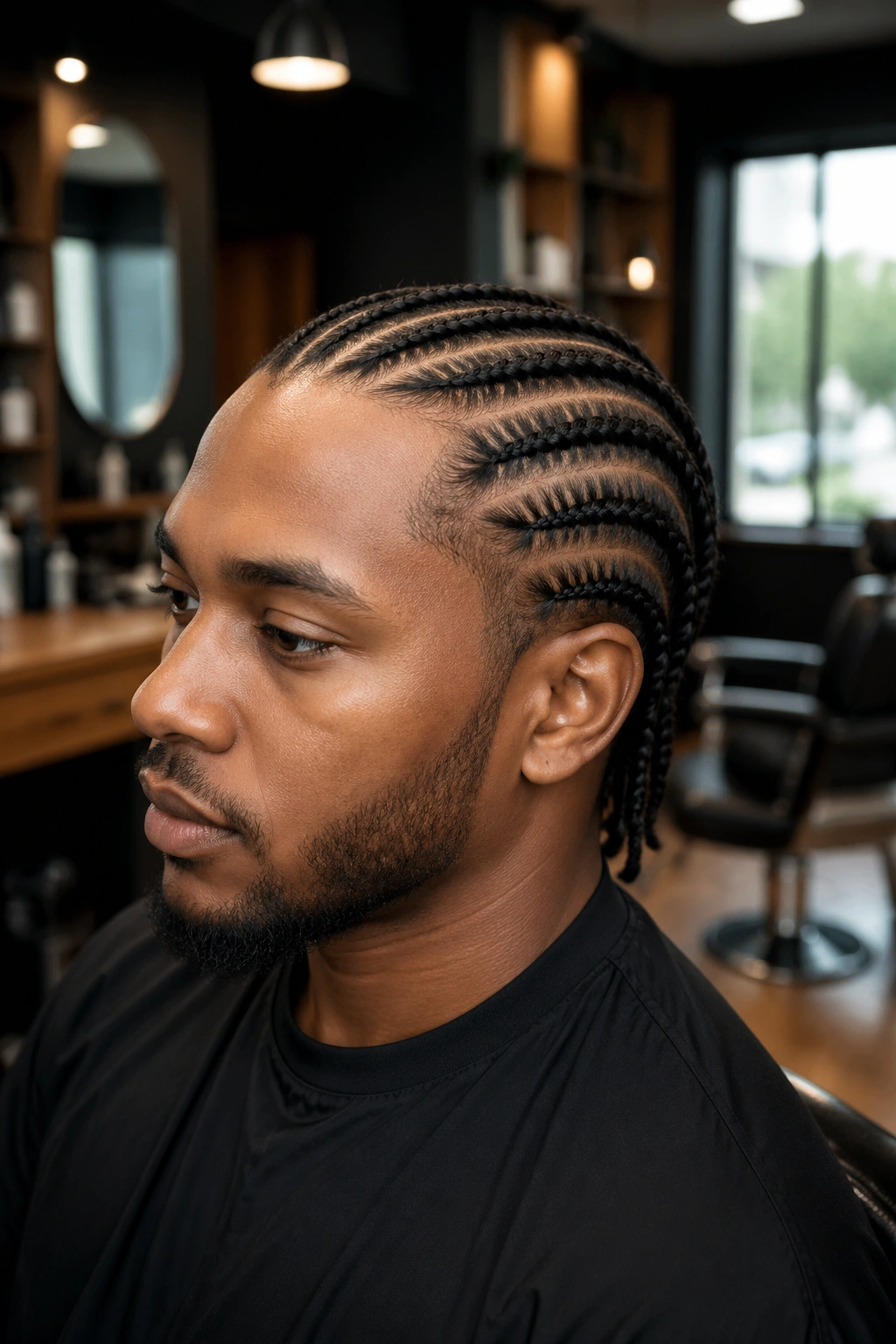
Straight-back cornrows are one of the most practical styles for long-haired men who want a longer-lasting braid. Each braid runs from the front toward the nape in a straight line, which keeps the hair orderly and close to the scalp. The look is clean, direct, and hard to beat when you want the hair completely under control.
They do take patience. The parts need to be straight, and the braid sizes should stay even if you want the rows to look balanced. Once they’re in, though, they hold well and keep the hair tucked away for a long stretch.
Best uses
- Keeping hair secure for active days
- Protecting the ends from constant friction
- Creating a sharp, defined shape
- Working with thick or tightly textured hair
A lot of men like cornrows because they reduce the daily fight with long hair. That’s the real selling point. Less fuss in the morning, less tangling later, and a style that stays put.
19. Single Center Cornrow
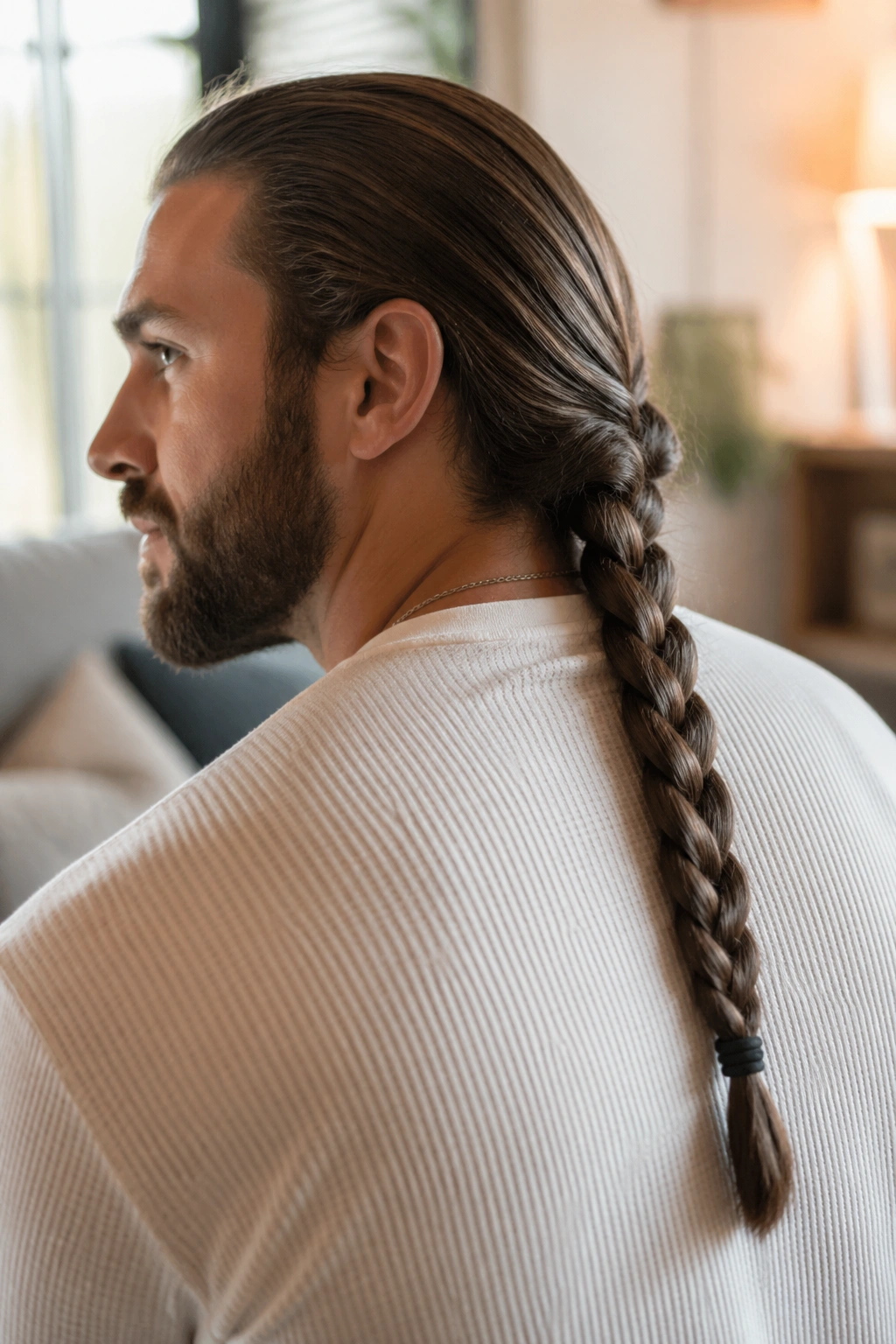
A single center cornrow is a simpler version of the full rowed look. One braid runs straight down the middle of the head, while the sides stay loose. That balance makes it one of the easiest ways to try the cornrow look without committing to a full set.
It also gives you a clean line that works well with long hair hanging on either side. If you want a little structure but still like having volume around the face, this is a nice compromise. The braid draws the eye down the center, which can make the whole hairstyle feel more intentional.
This style is at its best when the part is precise. A crooked center line is easy to spot here. Use a tail comb, check it in a mirror, and don’t rush the first inch. After that, the braid does most of the work for you.
20. Braided Headband
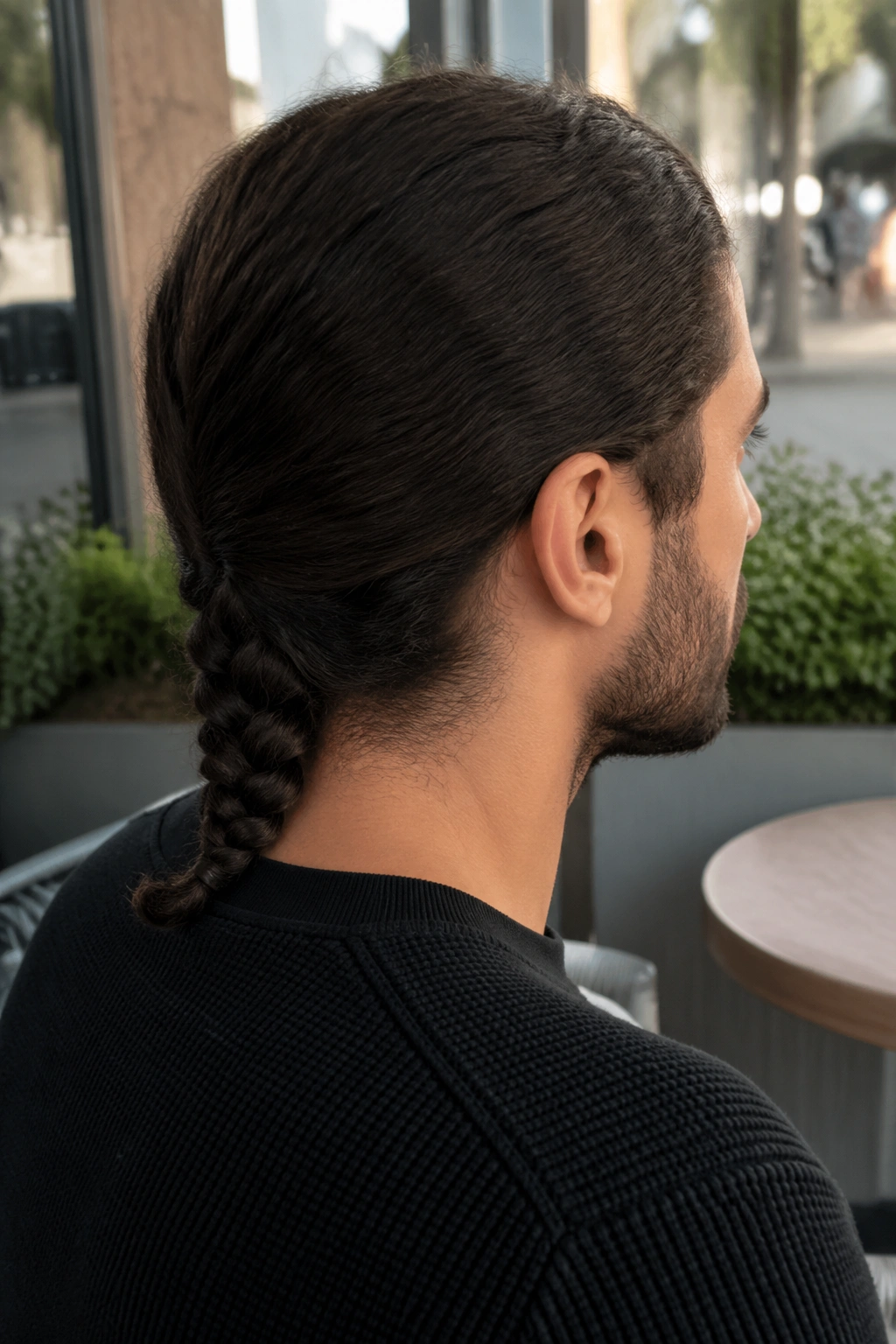
A braided headband keeps hair off the forehead while leaving the rest of the length free. That’s its main job, and it does it well. The braid sweeps across the hairline like a band, which gives long hair a cleaner front without hiding the bulk behind it.
This style is especially useful if you wear your hair loose but hate when the front pieces keep slipping into your eyes. It works with wavy hair, curly hair, and even straighter hair if you add a little grip product first. The braid itself can be thin and subtle, or a bit thicker if you want it to stand out.
Because the braid sits where people notice the face first, the finish matters. Tuck the end behind the ear or pin it under a top layer so it disappears into the rest of the hair. A messy endpoint can distract from an otherwise solid style.
21. Braided Top Knot for Men With Long Hair
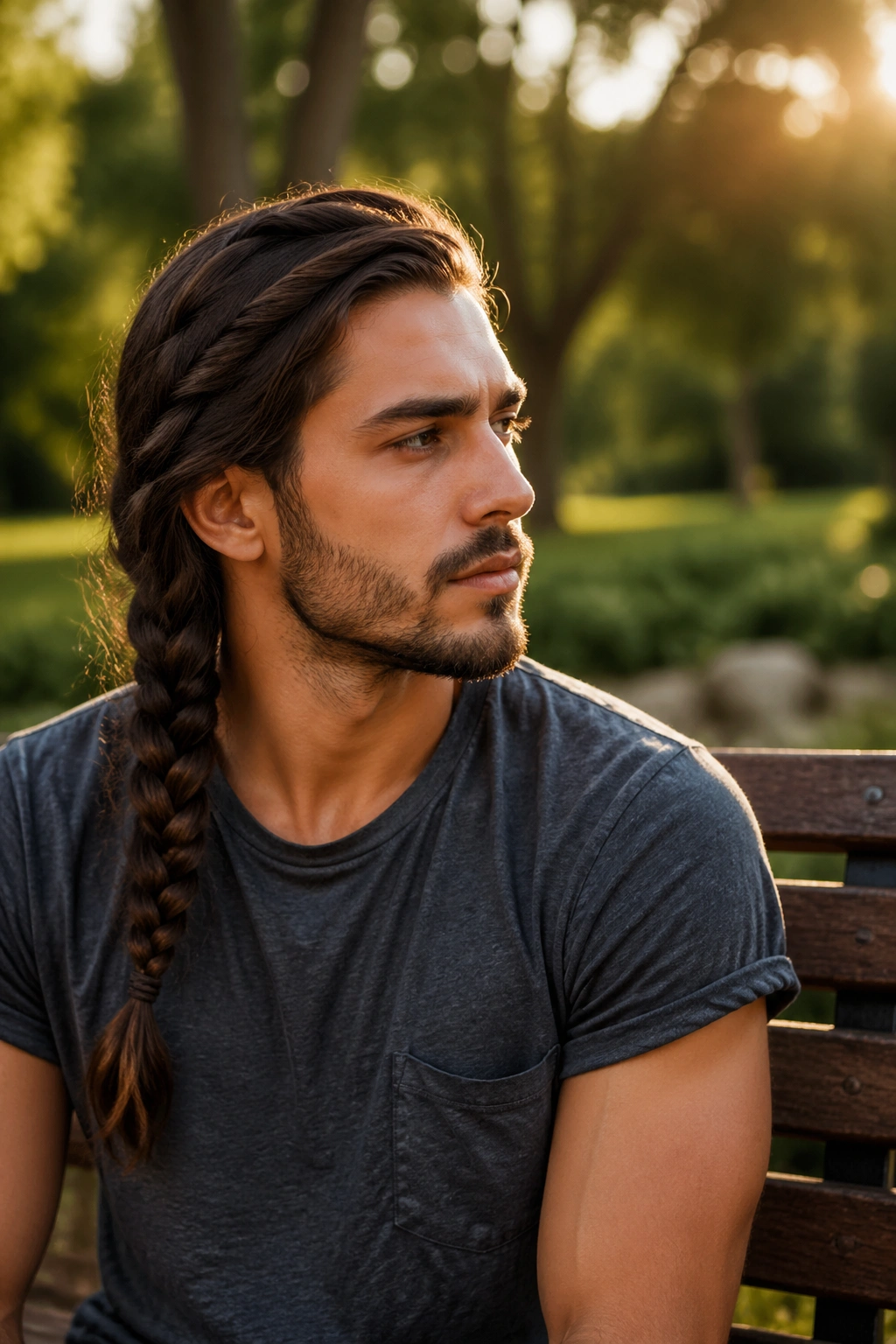
The braided top knot for men with long hair is one of the best answers for days when you want everything up and out of the way. Start with a braid, then wrap the braid into a knot high on the crown. It keeps the hair contained, but the braid adds enough texture that the bun doesn’t look flat.
This style works well when the hair is long enough to make a solid loop. If the braid is too short, the knot will sit awkwardly and need too many pins. When the length is right, though, it’s a sharp way to manage heavy hair without losing the sense of shape.
A top knot feels best when it’s centered and snug, not jammed to the point of pulling. Use a strong elastic at the base, wrap the braid, and secure the ends so they don’t poke out like little antennae. That’s the difference between a style and a half-finished fix.
The Bottom Line
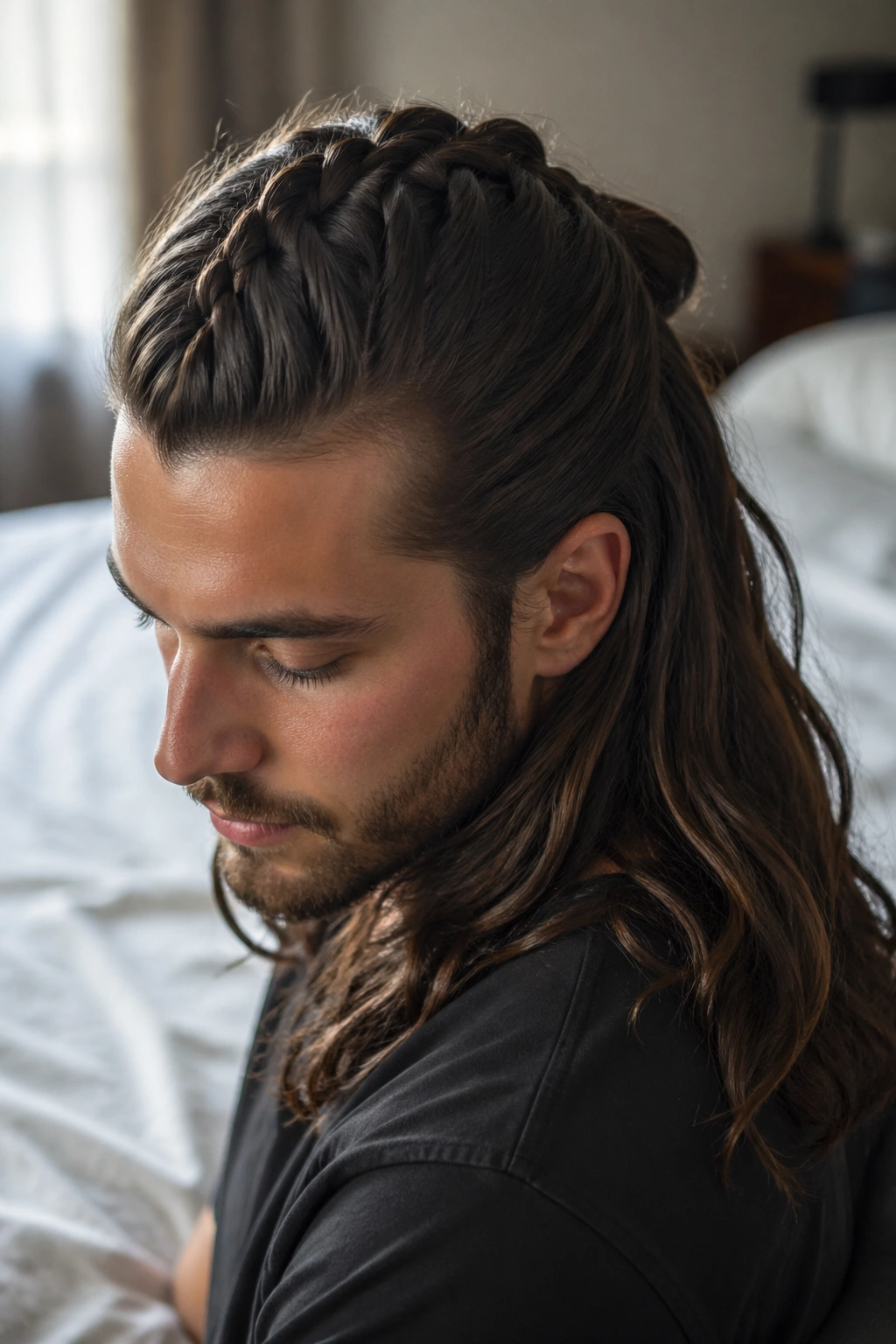
The easiest braid styles usually win for a reason: they fit real life. They stay put, they keep long hair from turning into a daily project, and they don’t demand perfect hands or a lot of mirror time. A clean three-strand braid, a low nape braid, or a braided ponytail can do more for a man’s long hair than a style that looks clever but falls apart before lunch.
If your hair is thick, start with styles that hold shape close to the head. If it’s fine or slippery, work with a little texture and keep the tension even. That small bit of patience pays off fast.
And if the first attempt looks crooked, good. That’s how braid skills start to show up. The hair gets better before the hands do.
