



A braid can save a morning. Pull hair back, smooth the flyaways, and the whole look reads neat before first bell. Under school uniform codes, that matters more than almost anything else.
The styles that work best at school usually have three things in common: they sit close to the head, they stay put, and they do not rely on flashy accessories. A tidy braid with a plain elastic almost never causes drama at the gate. Loose curls, giant bows, and glittery clips? Different story.
I’ve always had a soft spot for the braids that look calm from across the room and still hold together after lunch, gym, and the walk home. Simple braids age better during the day. They also take less arguing with a mirror.
1. Classic Three-Strand Braid
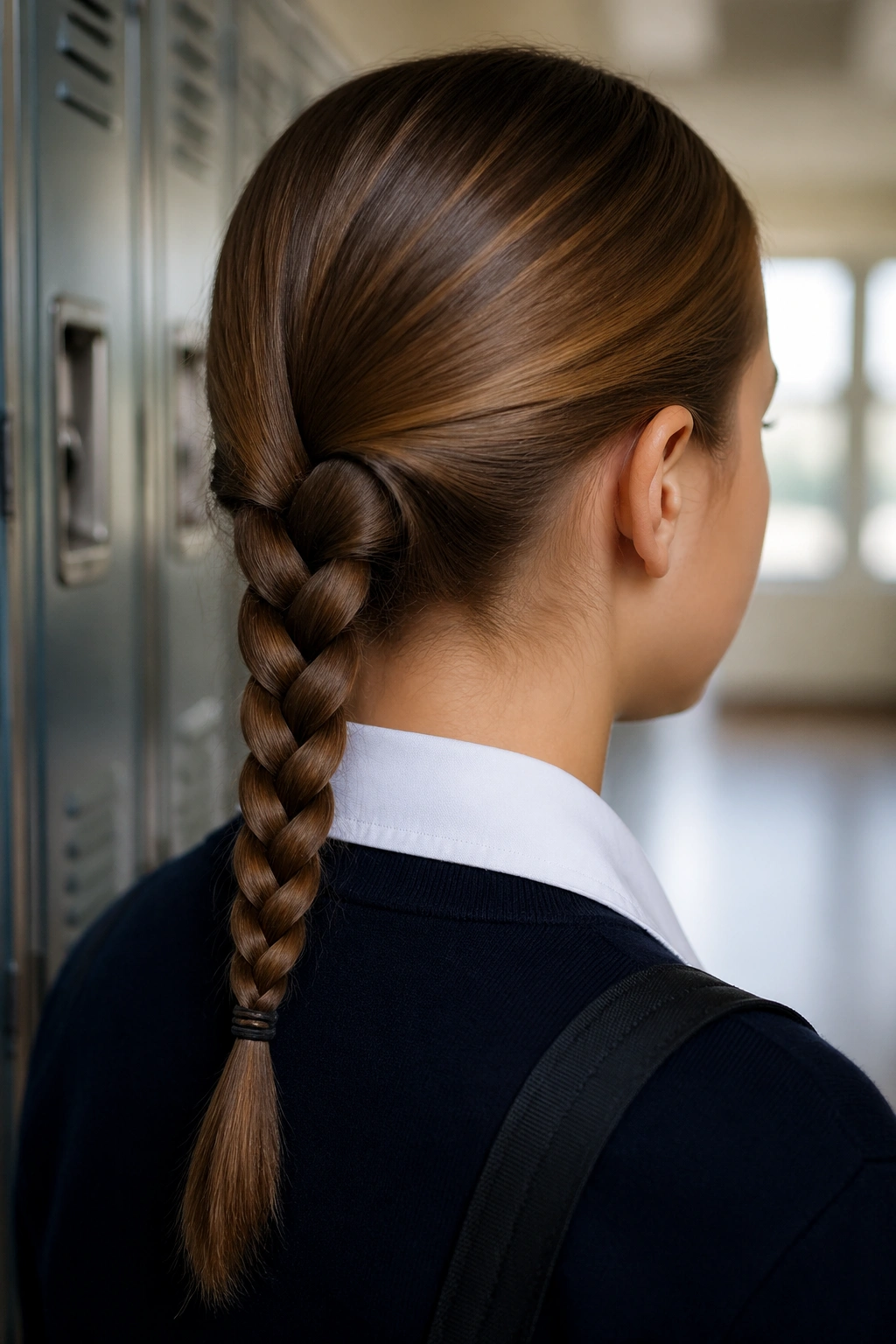
The basic three-strand braid is the safest place to start because it doesn’t try to be clever. It keeps hair controlled, works on most lengths, and usually fits even the stricter school dress codes because it is tidy by design. No extra volume. No fuss.
Why It Clears the Uniform Test
- It lies flat when you braid it snugly from the nape down.
- It keeps hair off the face, which is usually the first thing uniform rules care about.
- It works with a plain elastic in black, brown, or clear.
- It can sit low at the back, so it stays out of the way of collars and blazers.
If your hair slips a lot, mist it with a little water before you braid. Not soaked. Just damp enough to grip. For very smooth hair, a tiny amount of styling cream on the mid-lengths helps the sections stay separate.
Best part: this is the braid that still looks neat when you’ve had a long day and no one’s touched it.
2. Low Side Braid
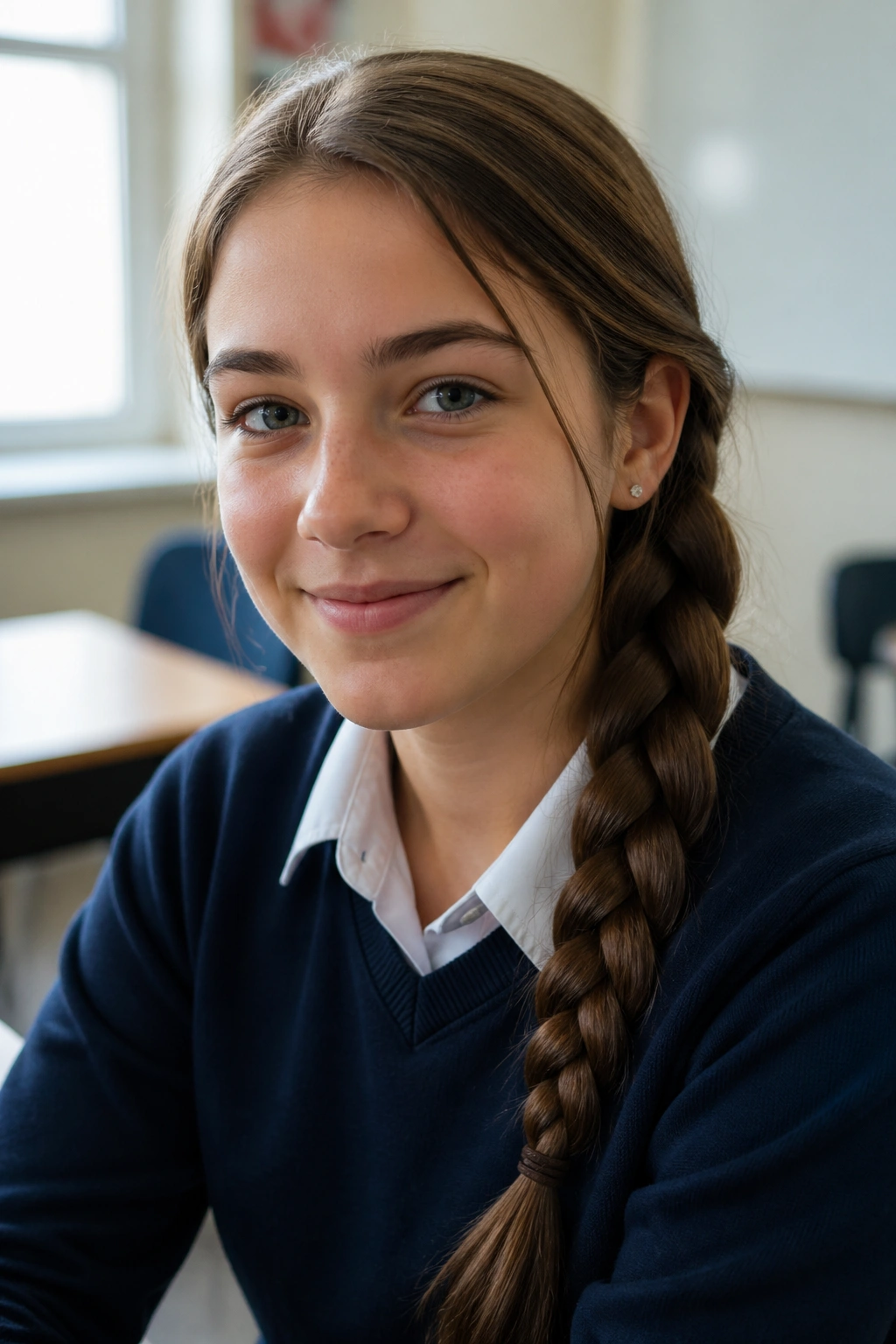
A low side braid looks soft, but don’t mistake soft for messy. When it’s tucked over one shoulder and kept close to the neck, it can pass a uniform check without looking stiff or severe. It’s a good choice when you want something a little less formal than a straight-back plait.
The trick is placement. Start just behind the ear, not high on the crown, and keep the braid tight enough that the strands don’t puff out by third period. If your school is picky about symmetry, this one works better when it’s plain and simple—no ribbons, no woven scarves, no decorative pins.
It also helps on days when your hair is freshly washed and wants to slip around. A side braid gives you a place to gather it without fighting the texture. If your hair is thick, make the braid slightly loose near the end so it doesn’t feel like a rope. If it’s fine, braid the first few inches tightly so the top doesn’t sag.
A side braid reads neat, not flashy. That’s why it keeps showing up in school hallways.
3. Single French Braid
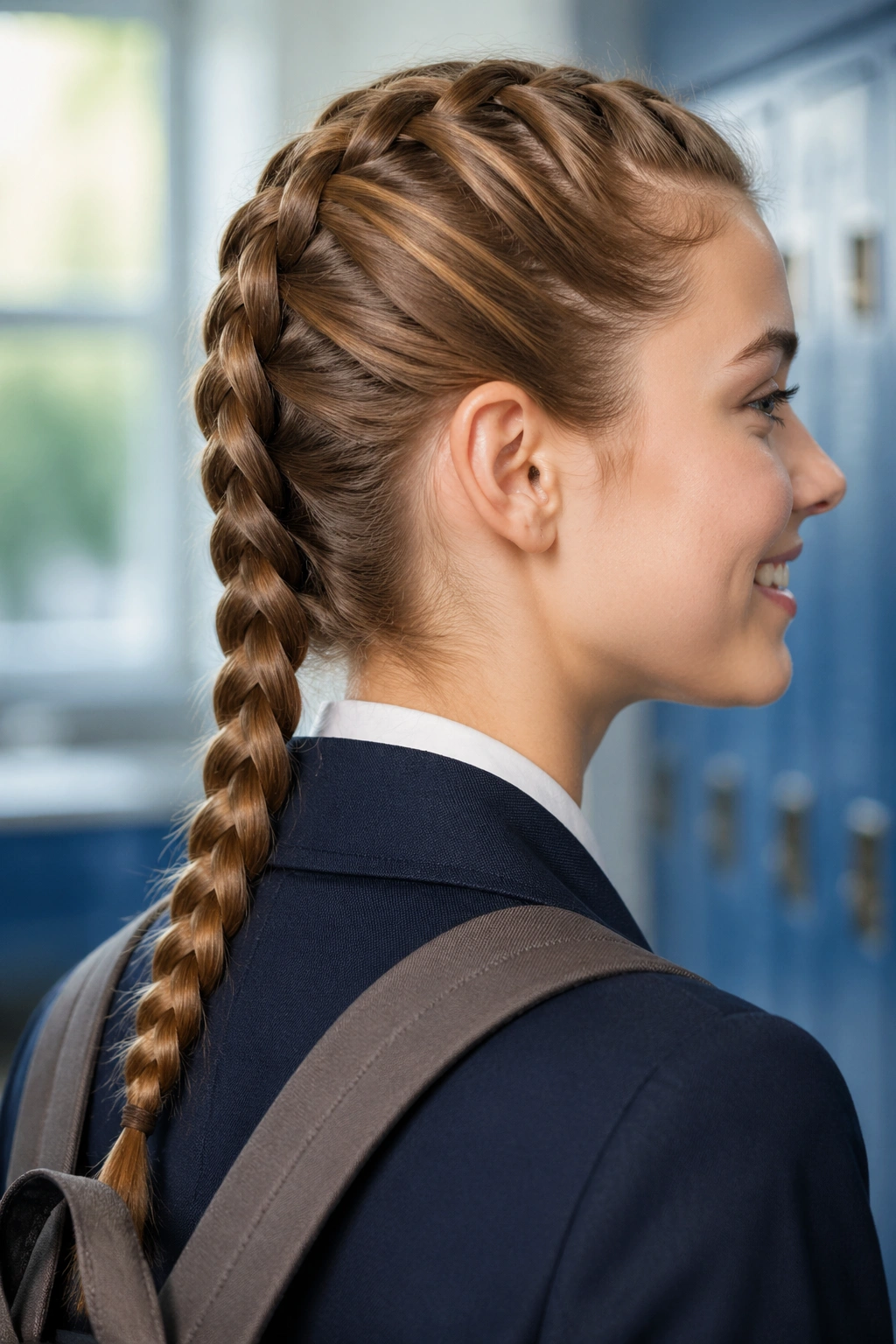
Why does the French braid keep getting recommended for school? Because it solves a boring but important problem: it starts at the scalp, so the hair stays anchored instead of hanging loose and getting in the way. That makes it one of the cleanest-looking braids for a uniform setting.
What Makes It Different
A French braid pulls in hair as you go, which means the shape stays close to the head. It doesn’t balloon out the way some loose braids do. It also keeps the front smooth, which matters if your school wants hair away from the eyes and face.
The parting does matter. A clean center part gives the braid a balanced look, while a side part softens it a little. Keep the sections even, and don’t rush the first inch. That first inch is where the whole braid decides whether it looks polished or shaky.
How to Wear It at School
- Use a fine-tooth comb to make the part clean.
- Tie the end with a plain elastic.
- Pin any short layers near the temples with a small bobby pin if needed.
- Keep the braid low enough that it doesn’t sit awkwardly under a backpack strap.
If you like hairstyles that stay in place all day, this one earns its spot fast.
4. Double French Braids
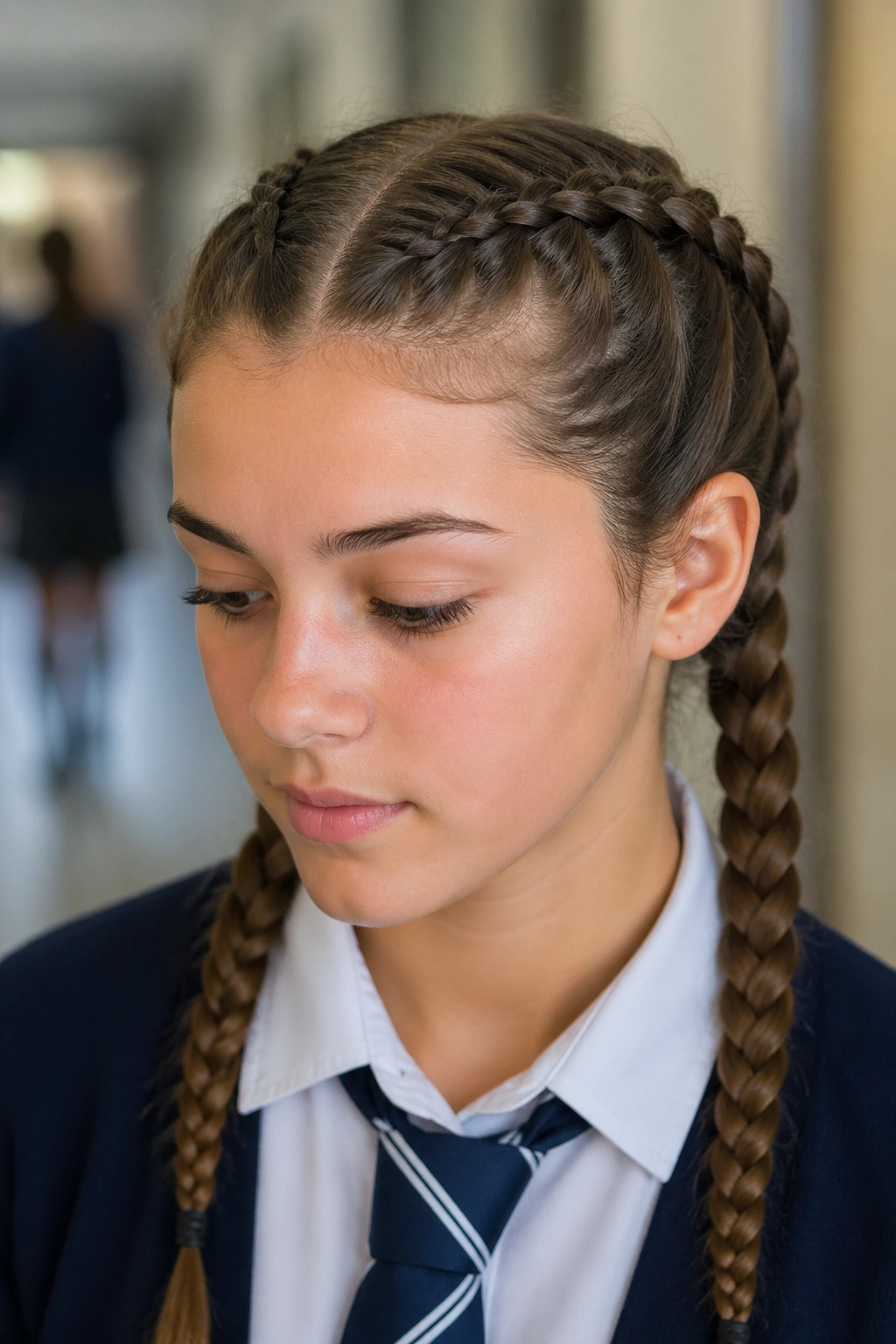
Picture a school day with gym class, a windy walk, and zero time to fix your hair between bells. Double French braids handle that better than almost anything else. They stay tight, look even, and keep the whole head controlled from front to back.
They also give a very orderly look, which is exactly why they pass so many school uniform codes. The symmetry helps. So does the fact that both braids lie close to the scalp, instead of swinging around like loose pigtails.
Use a center part if your school leans strict. If the rules are looser, a slightly off-center part can soften the look a bit. Either way, keep the braid size consistent on both sides. One fat braid and one skinny one always looks accidental.
A lot of people think double braids are just for sports. Not really. On a school uniform, they can look sharp and disciplined, especially when you smooth the flyaways at the temples and use two matching elastics. The style has a little edge, but not enough to fight the handbook.
5. Dutch Braid
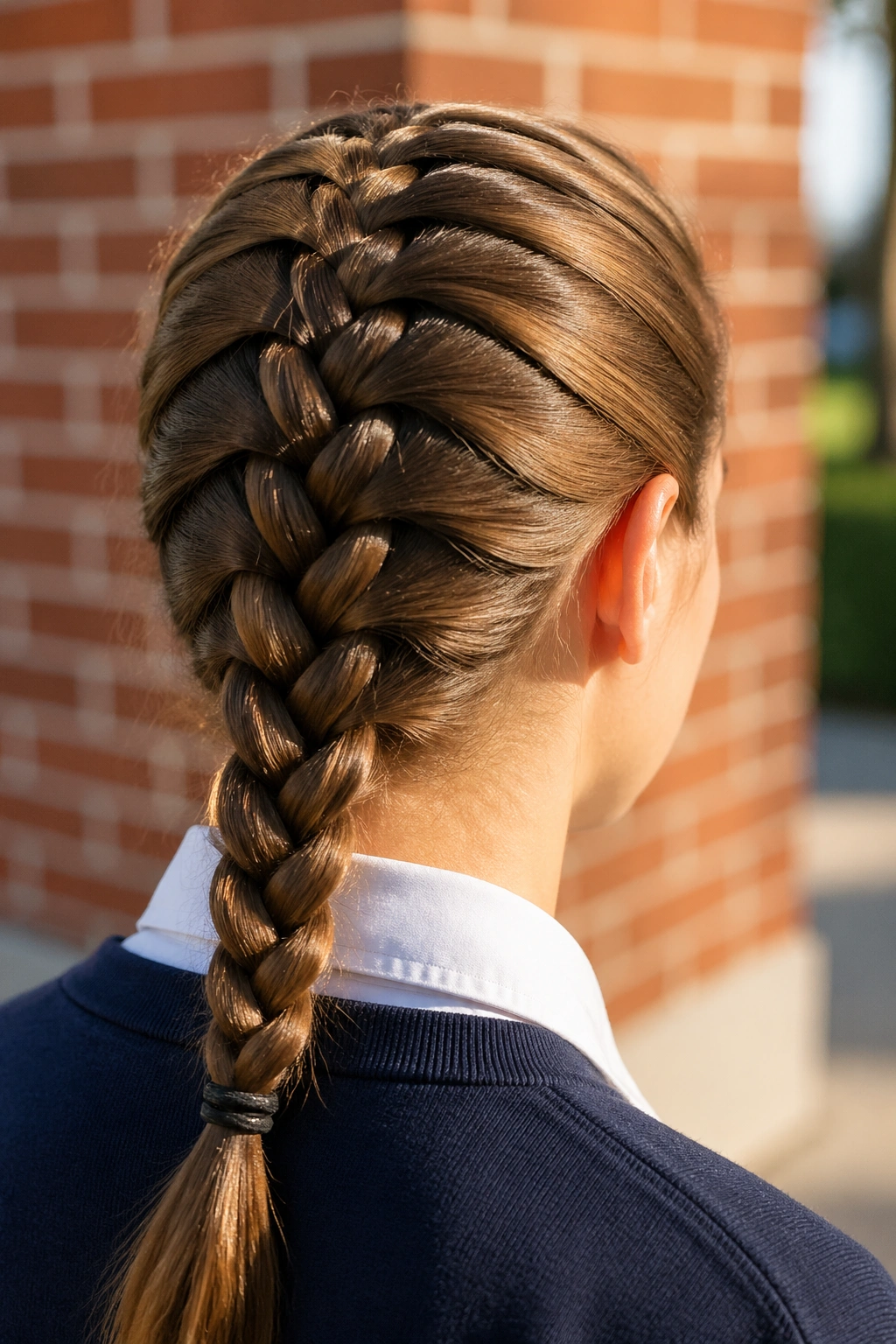
The Dutch braid is the French braid’s more visible cousin. Instead of sitting into the hair, it pops up from the scalp, which gives the braid a defined ridge. That raised shape is the whole reason it looks so neat when done well.
I like it for school because it reads structured. Structured hair tends to pass dress code checks more easily than styles that look loose or decorative. The braid also holds its shape nicely on thicker hair, where a flatter braid can disappear.
A Small Difference That Matters
With a Dutch braid, you cross the strands under instead of over. That little switch gives the braid that lifted look. It takes a few tries to get comfortable with, and your fingers may feel clumsy the first time. Fine. That’s normal.
Keep the sections tight near the part and a touch looser near the end if you want the braid to sit flat against your back. If your school is strict about bulk, braid it low and let it trail down the center of the back rather than off to one side.
It’s the braid I’d pick when I want neat hair that still has some shape.
6. Double Dutch Braids
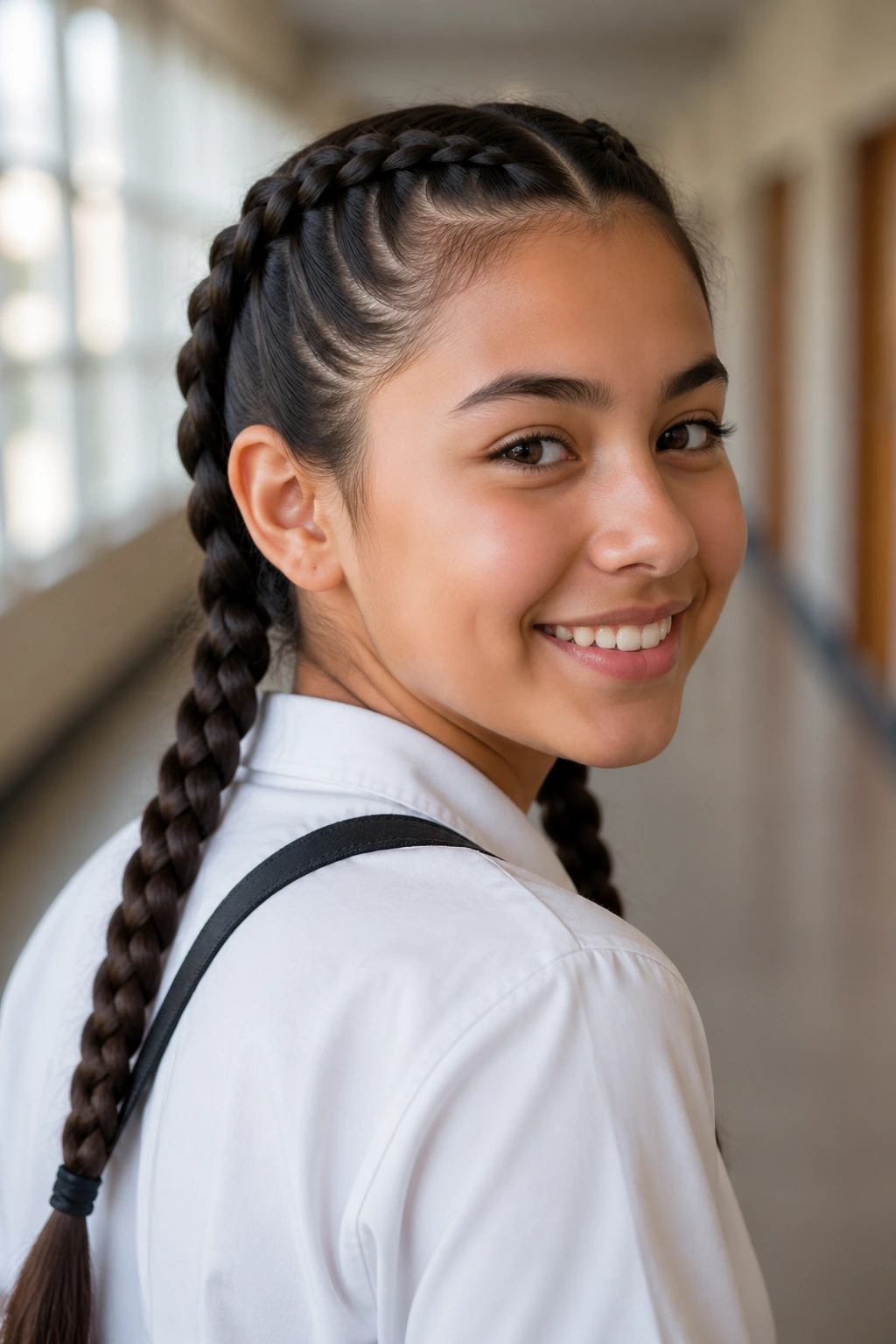
Double Dutch braids are the school-day workhorse. They keep hair contained, look balanced, and stay in place through long stretches of sitting, walking, and moving around between classes. If you want a style that can handle an entire day with almost no fixing, this is a strong one.
Compared with double French braids, these have more visible texture because the braid sits on top of the hair. That makes the pattern easy to see, which can be a plus if your school allows a bit of personality as long as the look stays tidy. The important thing is to keep the braids even and low enough that they don’t flare out at the sides.
Who It Suits
- Long hair that tangles by lunch.
- Active days with sports, lab work, or outdoor activities.
- Thick hair that needs more hold.
- Students who want low maintenance without choosing a bun every day.
A little edge control or a dab of styling cream along the part can keep the front smooth. That’s the difference between “done” and “done properly.”
7. Fishtail Braid
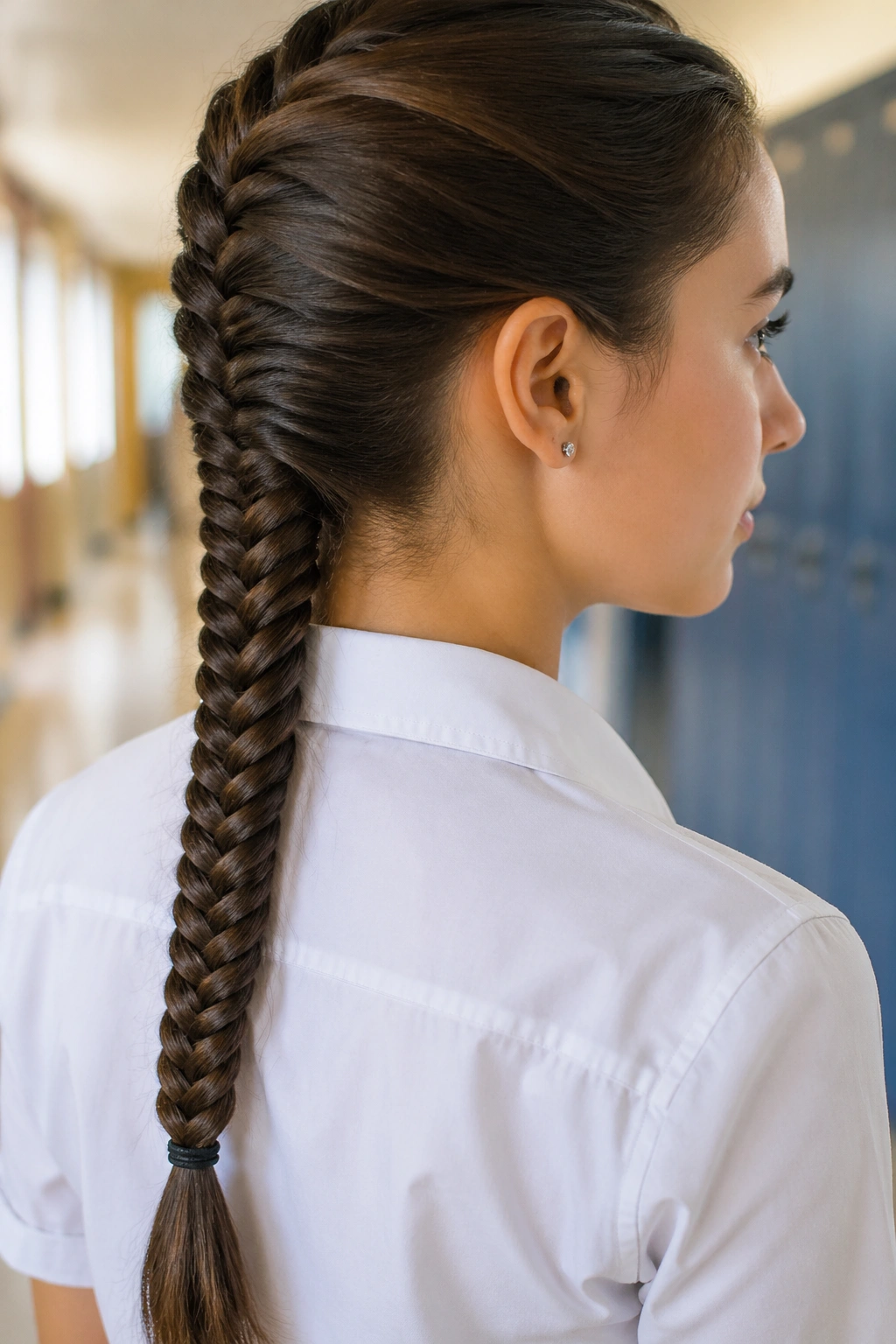
A fishtail braid looks fancier than it is. That’s part of its charm. Two sections, tiny pieces, a little patience, and you get a braid that still feels modest enough for a uniform setting if you keep it neat and compact.
The school-friendly version is not the loose, boho one you see in styled photos. Keep it tight. Start low. Use small sections so the braid has a clean, narrow shape instead of a fluffy one. If the ends puff out, tie them off with a small elastic and maybe wrap a strand around it.
Fishtails work especially well on hair that is smooth but not slippery. Very silky hair can slip apart unless you prep it first. A light texturizing spray or even a tiny bit of dry shampoo gives the strands more grip.
A friend of mine used to wear one for presentation days because it looked more put-together than a regular braid without being fussy. She wasn’t wrong. It’s tidy, but it has texture.
8. Braided Ponytail
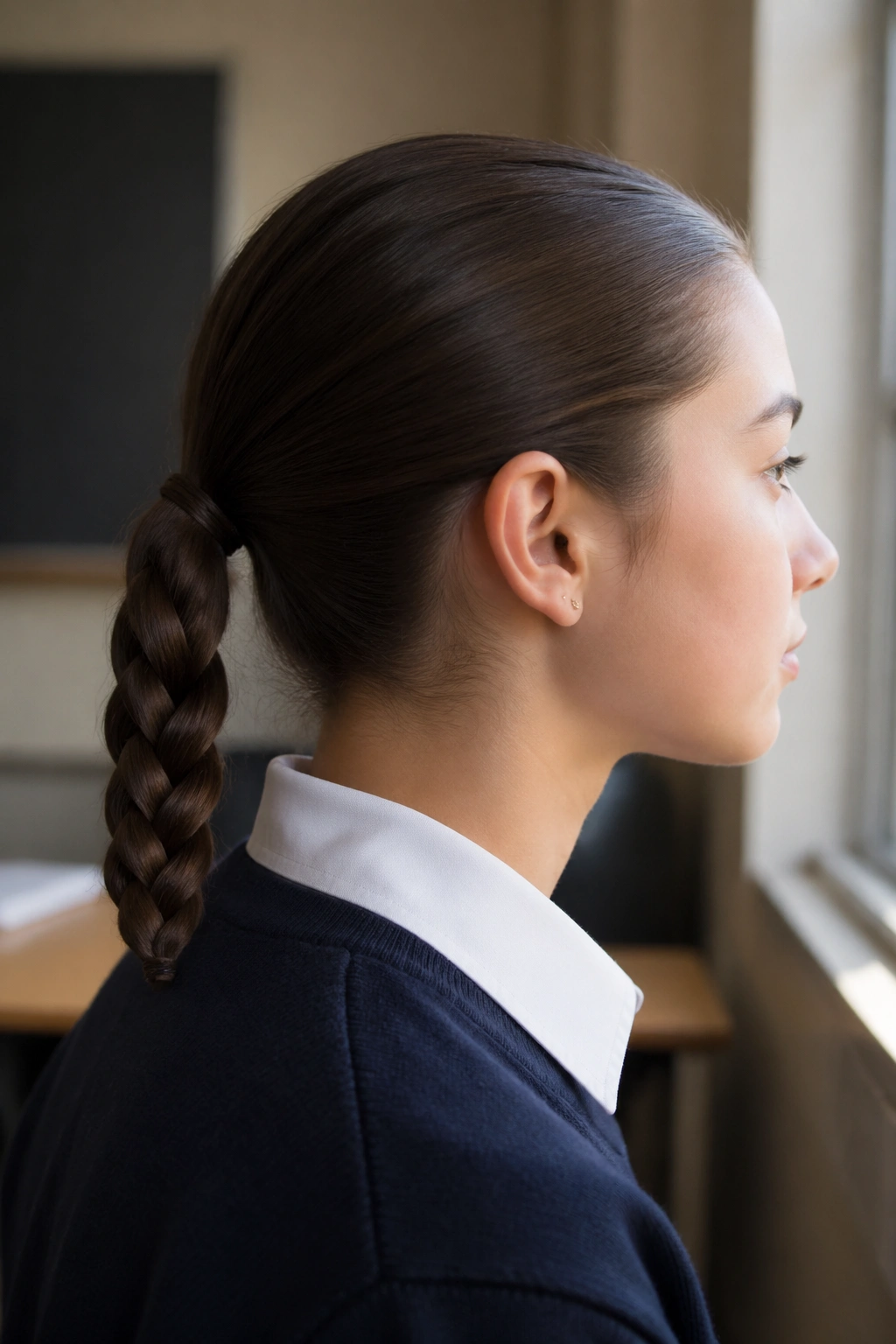
A braided ponytail is what happens when you want the simplicity of a ponytail and the control of a braid. It starts with a plain ponytail, usually low or mid-height, then gets braided down from there. That makes it a good fit for schools that want hair contained but don’t want dramatic styling.
Best Way to Wear It
Start with a smooth ponytail secured with a plain elastic. Then braid the tail tightly and finish with another small band. If your hair is layered, tuck the shorter pieces into the ponytail base with a bobby pin before you braid. That saves you from the annoying little pieces that spring free later.
A low braided ponytail tends to pass stricter codes more easily than a high one. High versions can look sporty and clean, but some schools dislike anything that sits too high or creates too much volume at the crown.
The braid also keeps the ponytail from turning into a frizzy tangle by the end of the day. That alone makes it worth trying. Clean base, clean finish.
9. Braided Bun
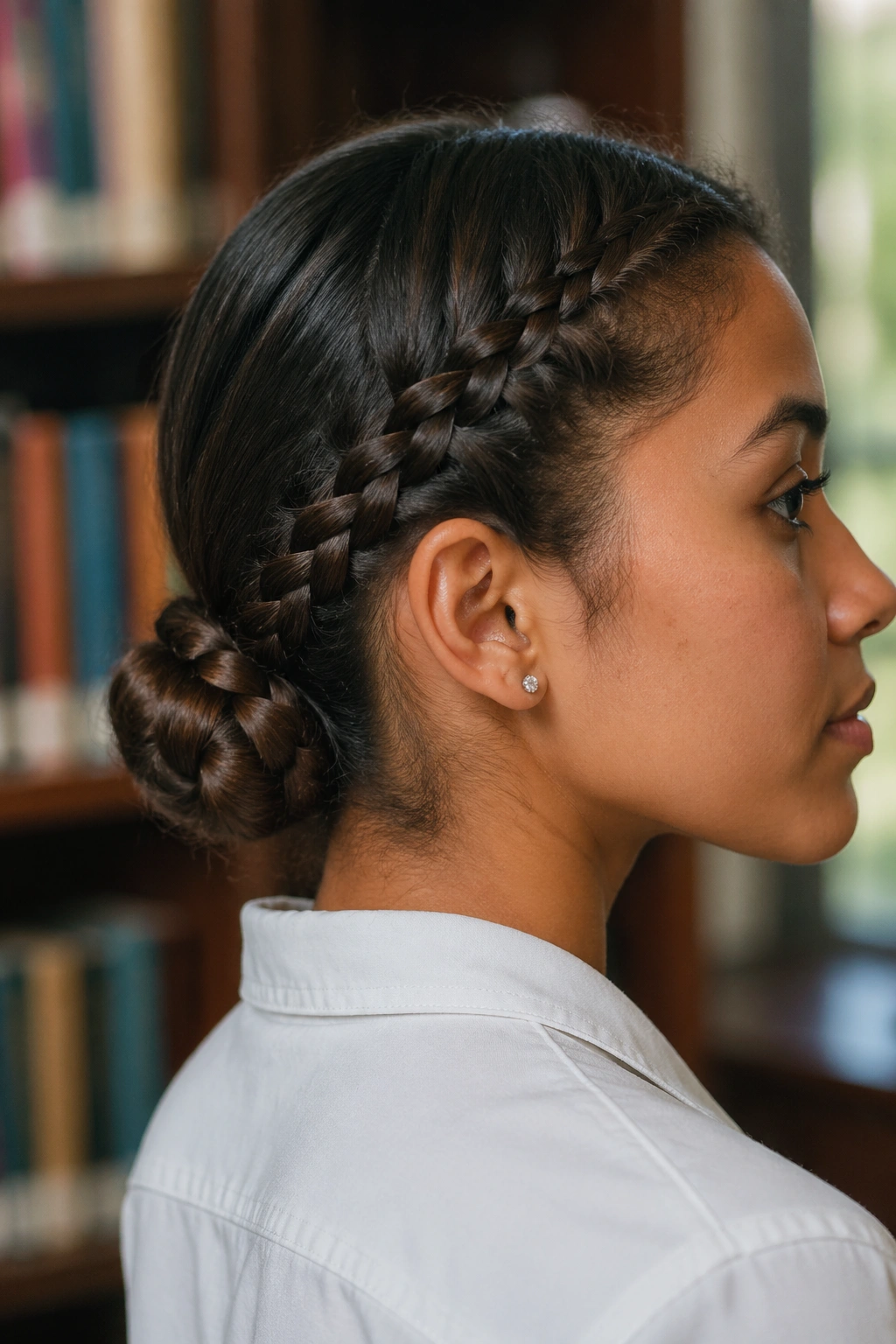
The braided bun is one of those styles that looks obedient in the best way. Hair is gathered, braided, then wrapped into a bun so the ends disappear. If your school is strict about hair being off the neck or kept out of the way, this one makes a strong case.
It works because there’s very little that can move. The braid locks the hair together, and the bun keeps the length compact. Use two or three bobby pins that match your hair color, not a pile of random clips. Too many pins start to look messy fast.
Keep It Neat
- Tie the braid low first.
- Twist it into a bun at the nape.
- Secure the bun flat, not high and wobbly.
- Hide the end under the bun if you can.
I’d choose this for days with assemblies, photos, or a uniform policy that likes hair off the shoulders. It looks more polished than a plain bun and less fussy than a full updo.
10. Crown Braid
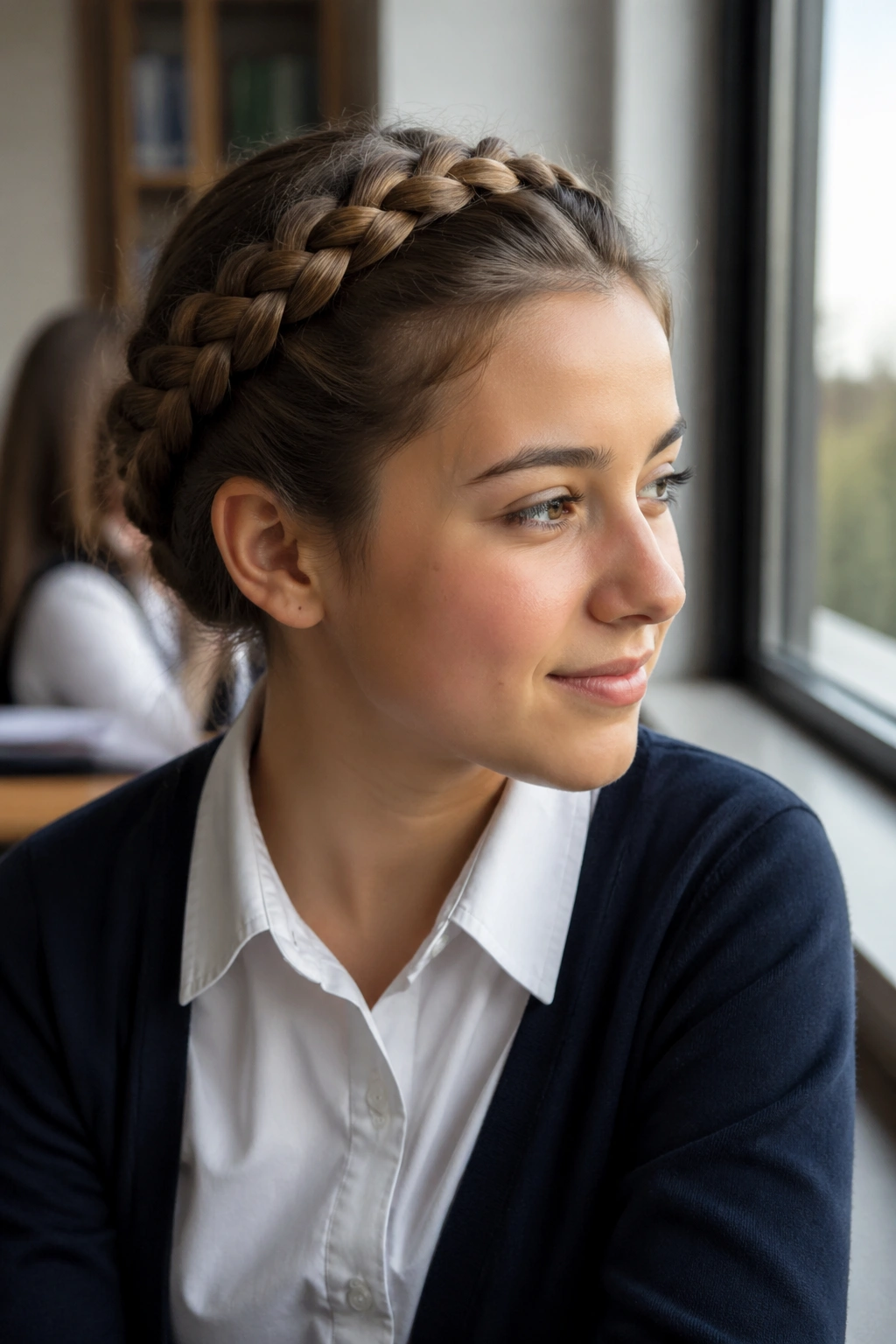
A crown braid wraps around the head like a band, which is why it can look formal without being showy. When it’s done flat and pinned well, it keeps hair away from the face and neck in a way that feels calm and controlled. That makes it a good match for uniform codes that care about neatness.
The best crown braids are low-profile. That means no huge loops, no bulging sections, and no decorative flowers or jeweled pins unless your school allows them. Plain pins do the job better anyway. They disappear into the hair and keep the look clean.
The braid can be made from a single braid wrapped around the head, or from two braids meeting in the back. The second method is easier for a lot of people because it gives you more control over the shape. Either way, keep the tension even. If one side is looser, the braid starts drifting by lunchtime.
This is the braid for days when you want your hair completely out of the way and still want it to look intentional.
11. Halo Braid
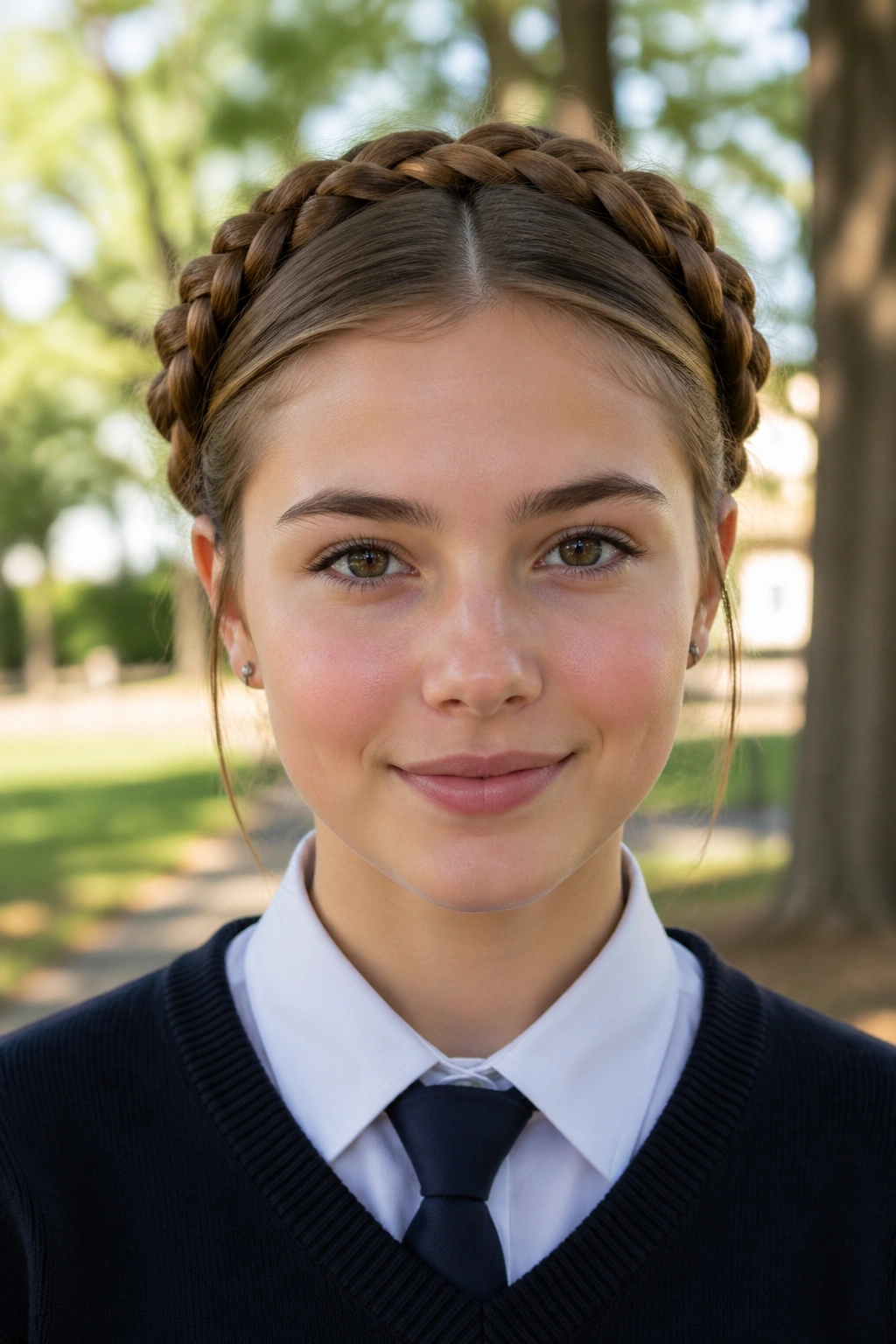
A halo braid sits a little softer than a crown braid, but it has the same basic idea: hair wrapped around the head so it stays controlled. The difference is mostly in the feel. Halo braids often look gentler and a bit less structured, which can be nice if your school allows neat but not severe hairstyles.
The style works best on medium to long hair. If your hair is shorter, the braid may need extra pins to stay in place. Use them. Don’t be shy about pinning under the braid where no one can see them. The front should look smooth, not overworked.
What Makes It School-Friendly
The biggest plus is that it keeps the line of the hair clean around the face. That matters more than decoration. It also avoids the swinging ends you get with some long braids, so it’s less likely to snag on a hoodie or backpack strap.
If you want it to stay school-appropriate, keep the braid close to the head and resist the urge to pancake it out too much. A tiny bit of width is fine. A giant halo starts looking like a weekend style, which is not the goal here.
12. Milkmaid Braid
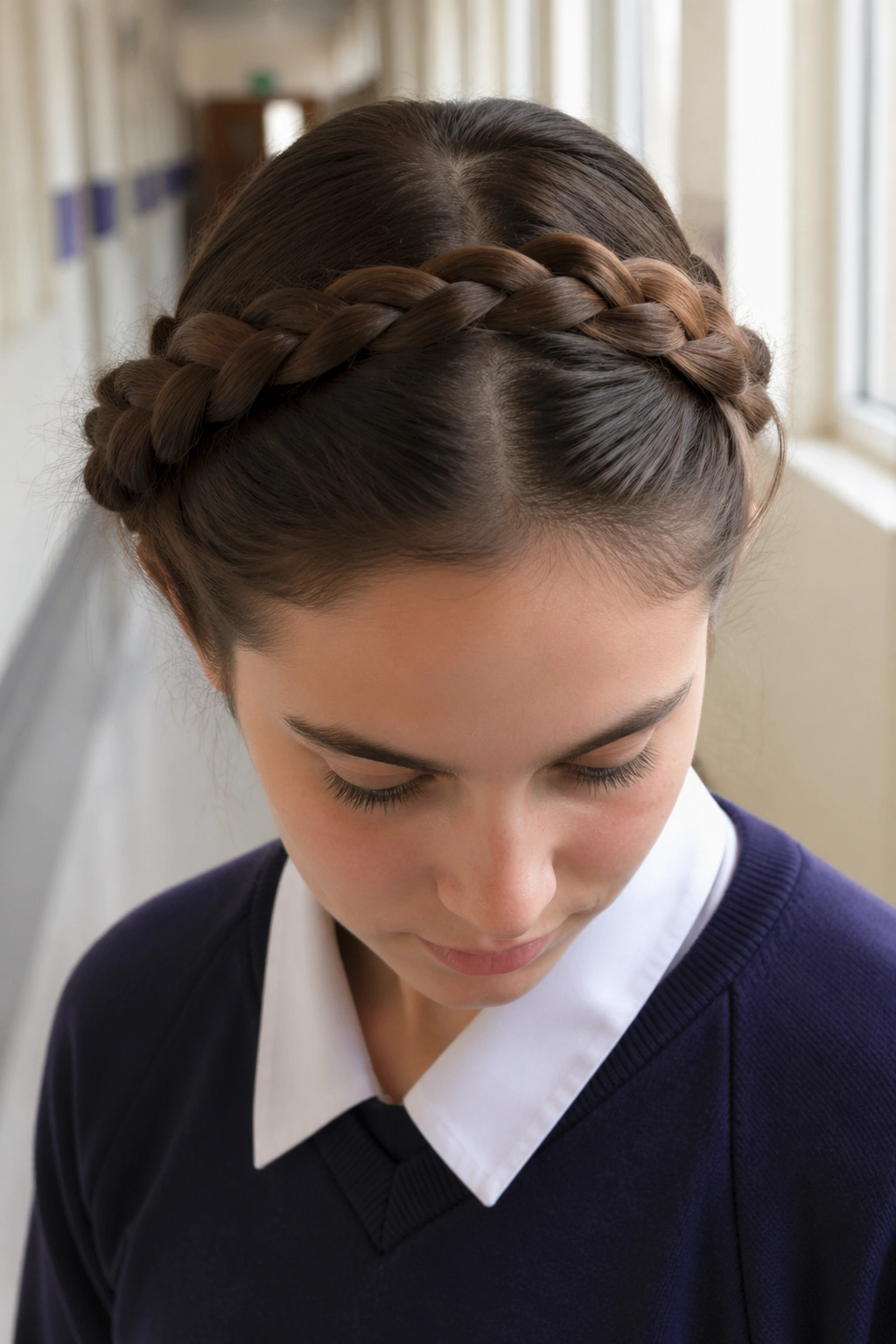
The milkmaid braid is basically two braids pinned across the top of the head, and when it’s done right, it looks orderly rather than costume-y. The name sounds sweet. The actual effect is neat and practical.
This one can be a strong fit for school if your handbook cares about hair staying put. The braids hold the hair off the face, and the band shape keeps everything compact. What I like most is that it doesn’t depend on perfect length. Medium hair can work just as well as long hair if the ends are tucked well.
How to Keep It from Slipping
- Braid both sides first.
- Pin the first braid securely near the temples.
- Cross the second braid over the top.
- Hide the ends underneath with flat pins.
If your hair is very fine, add a little texture first. If it’s thick, keep the braids narrow so the band doesn’t sit too high. This style looks best when it hugs the head instead of floating above it.
13. Rope Braid
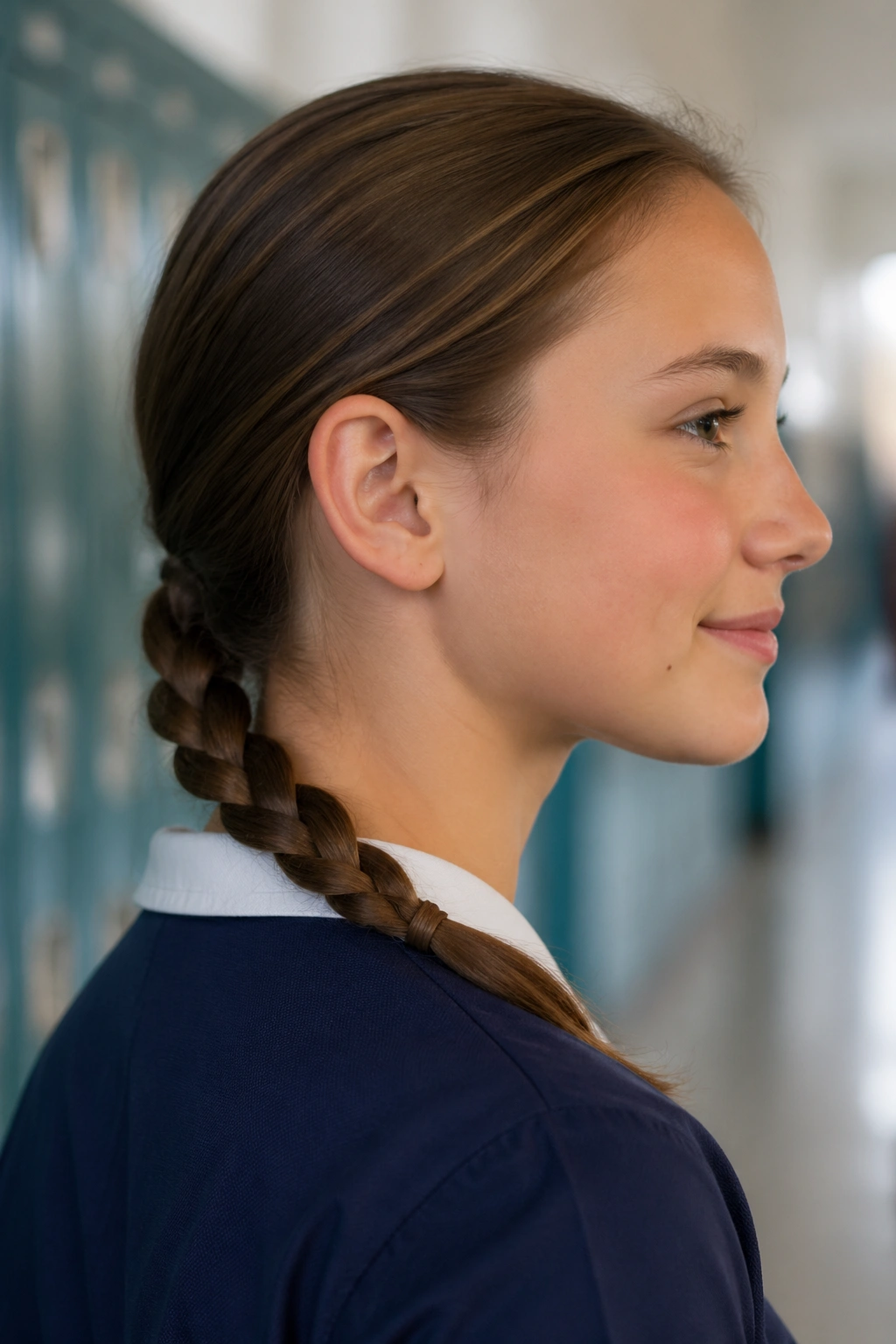
A rope braid is the braid for days when your hands are busy or your patience is low. You twist two sections around each other, and the result is clean, quick, and easy to control. It’s not as intricate as a fishtail or four-strand braid, but that’s part of its school-day appeal.
It also tends to stay compact. That matters. A rope braid that sits close to the neck and ends in a plain elastic can pass a uniform check easily because it doesn’t sprawl. If your hair is layered, use a little smoothing cream first or the shorter pieces may poke out of the twists.
A neat rope braid works especially well on hair that has a little wave. Straight hair can look a bit slippery unless you prep it. Curly hair usually gives the twist more grip, which is nice. The style isn’t fancy, but it has a crisp, tidy line that many braided looks don’t.
Quick, neat, and low drama. Hard to argue with that.
14. Braided Pigtails
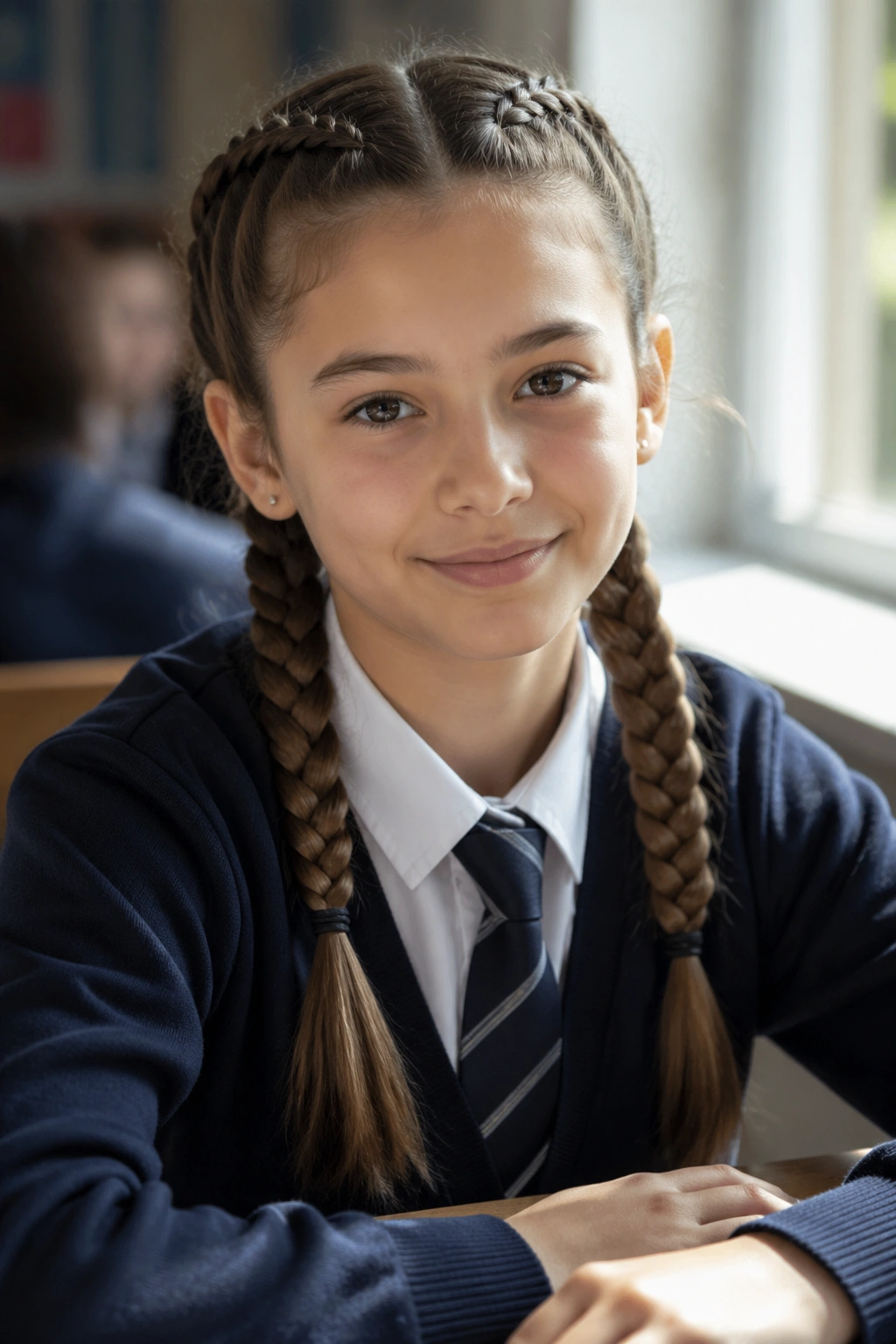
Braided pigtails can feel youthful, but they are also practical when a school wants hair separated and secured. Two braids, one on each side, make a balanced look that stays out of the face and doesn’t fight a uniform shirt collar.
The key is keeping them low and even. High pigtails can look playful. Low ones look disciplined. That difference matters. Use a center part if you want the cleanest, most symmetrical finish. If you have thick hair, make each braid a bit tighter at the top so the weight doesn’t drag them down.
Good When You Need
- A style that holds all day
- A braid that won’t bunch under a sweater collar
- Something easy to redo after gym
- A look that works for younger students and older ones alike
A plain elastic at the end is enough. Skip the bows unless your school allows them. The braids themselves already do the job.
15. Half-Up Braid
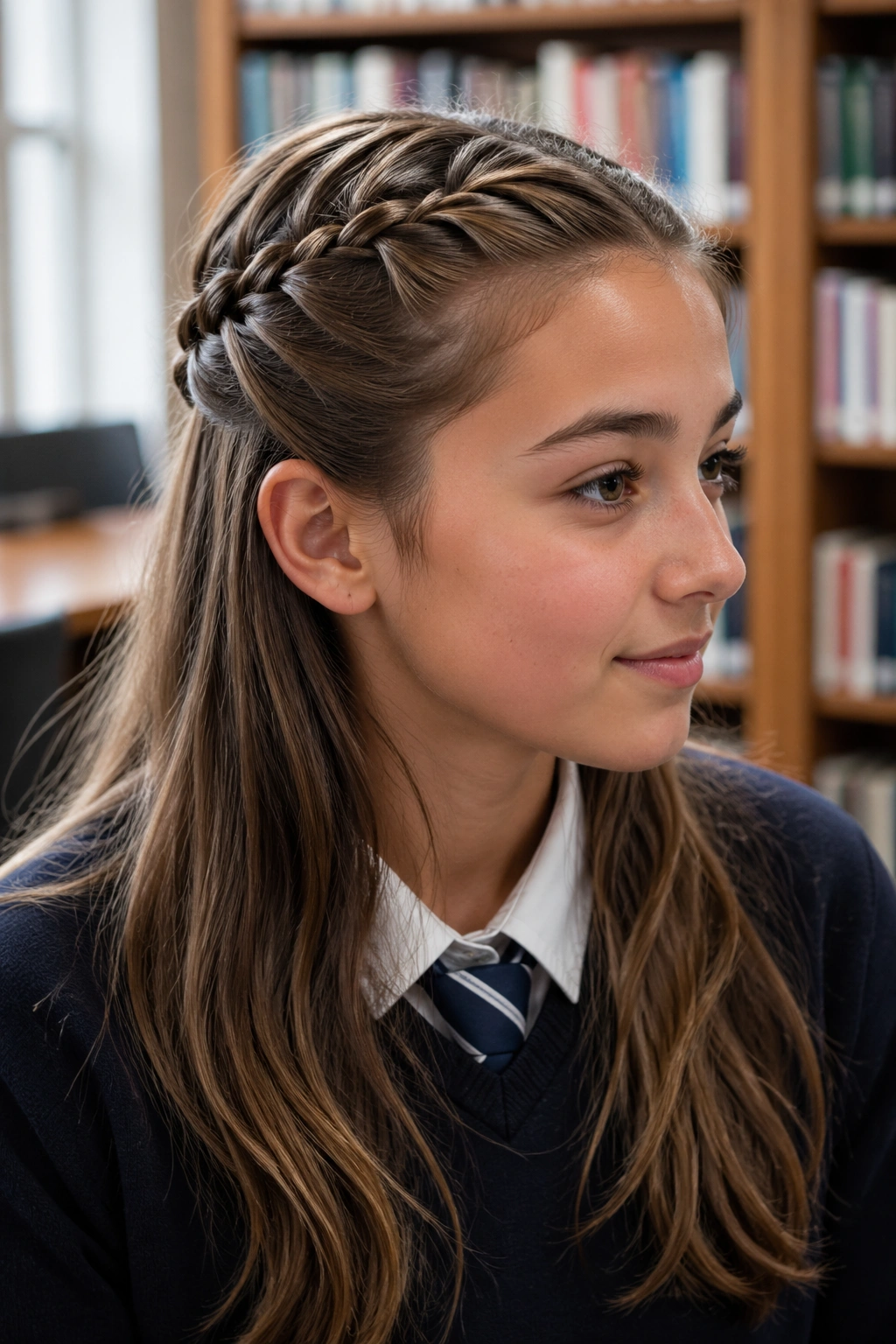
The half-up braid is the one to pick only if your school allows some hair to stay down. It’s not the strictest choice, but in a more relaxed uniform environment, it can still look tidy if the upper section is neatly braided and pinned back.
The upper braid keeps hair away from the face, which gives the style some practical value. The lower hair stays loose, which is where the dress code question comes in. If your handbook is strict about hair touching the collar or shoulders, this one may not be your first choice. If the code is looser, it can work well.
I prefer the versions that keep the braid narrow and close to the scalp. A chunky half-up braid starts looking too styled for school. A slim braid pinned back with a hidden bobby pin? That reads neat.
This style is also a good compromise for hair that looks best down but still needs some control. You get a little movement and a little order. Not a bad trade.
16. Waterfall Braid
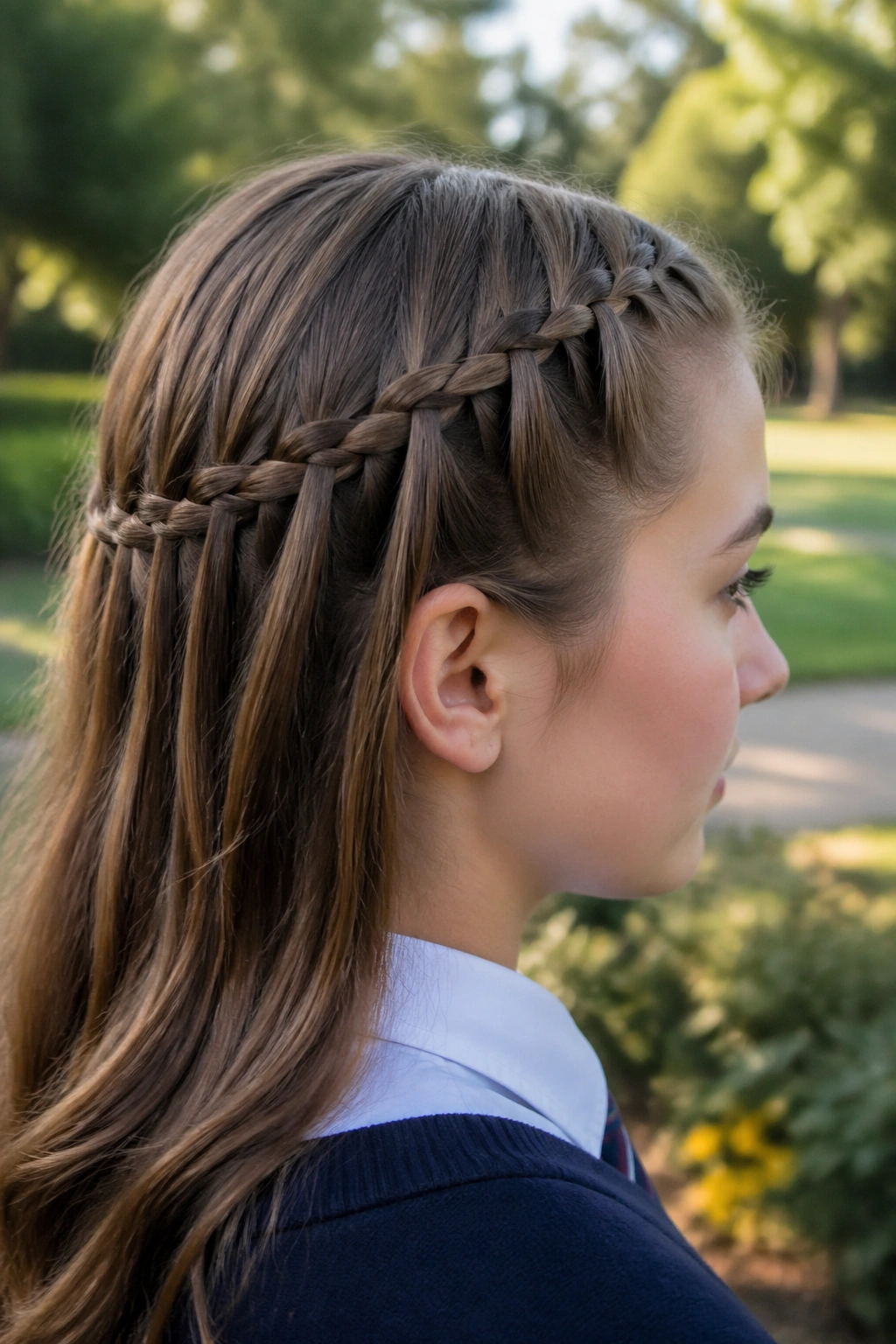
A waterfall braid is prettier than most people expect, but it’s also the most likely on this list to push the edge of a strict code if you make it too loose. That said, a compact waterfall braid with the rest of the hair pinned or tied back can still work in many school settings.
The style creates those little dropped strands that cascade through the braid. That’s the part people love. It’s also the part to watch. Too many loose pieces, and the look starts to feel too dressed up. Keep the dropped strands small and controlled. Better still, use it as a front accent and gather the rest of the hair low at the back.
How to Keep It School-Appropriate
Use clear or hair-colored pins. Keep the braid at temple level or lower. And don’t pancake it out too much. The more dramatic the weave, the less likely it is to feel uniform-friendly.
A waterfall braid works best on days when you want something pretty but still contained. It is not the most low-maintenance option here. It does, however, have a nice clean line when it’s done with restraint.
17. Pull-Through Braid
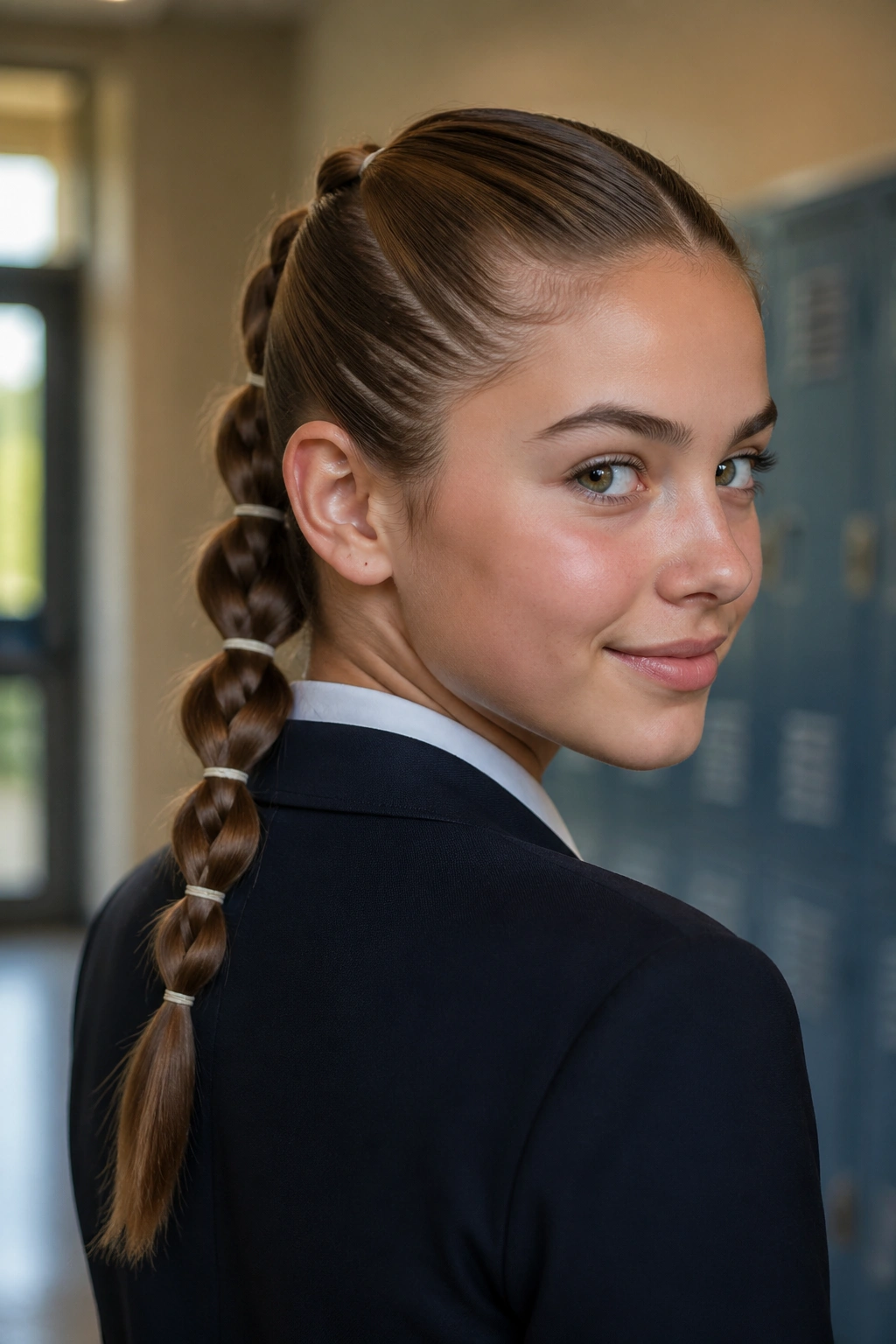
The pull-through braid is not a classic braid at all, which is exactly why some students like it. It creates the look of a full, thick braid using a stack of small ponytails. That means it can give you a polished shape even if your hair is fine and doesn’t hold a traditional braid very well.
For school, the main advantage is control. You can keep it low, tight, and plain. It ends up looking tidy without needing perfect braiding technique. If your fingers get tangled up in French or Dutch braids, this style can be a lifesaver.
A Few Things to Know
- It takes multiple clear or matching elastics.
- Each section should be smoothed before it’s secured.
- The finished braid should lie flat, not puff out like a bubble tower.
- A low version usually fits uniform rules better than a high one.
This is one of those styles that looks more complicated than it is. People often assume it took forever. It didn’t. That’s a nice feeling on a school morning.
18. Lace Braid
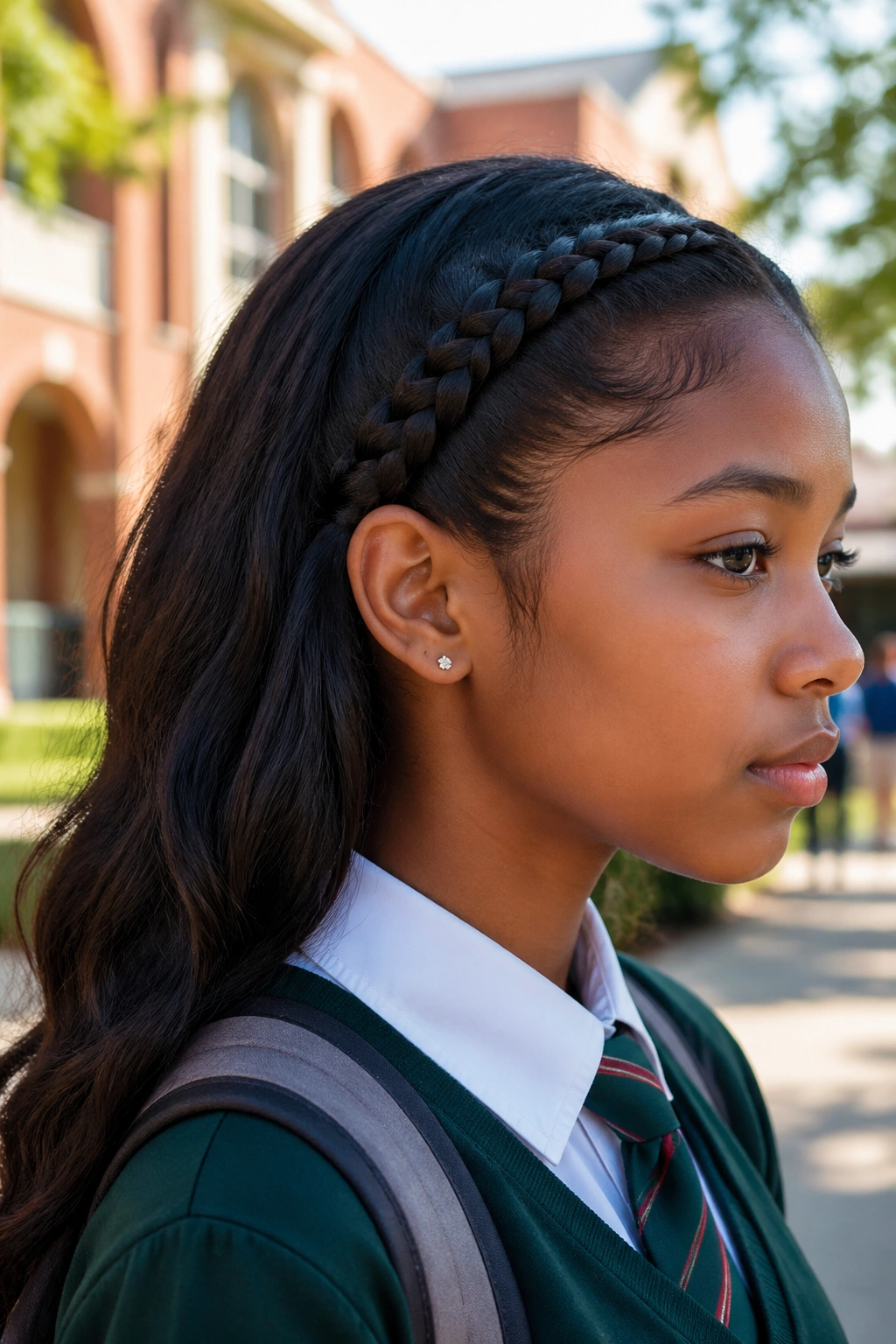
A lace braid is a side braid that picks up hair from only one side as it travels. The result is a smooth, neat line that pulls hair back from the face without making the whole head look heavily styled. It’s a nice middle ground when you want order but not a full updo.
The school-friendly version starts near the part and moves along the hairline, then tucks into a low braid or ponytail. That keeps the front tidy, which is what most uniform codes care about. If you have bangs or short face-framing layers, this braid can help keep them in place without spraying them into submission.
I like lace braids for practical reasons. They hold the front. They flatter side parts. They also work well when you only have a few minutes and need something that looks deliberate. A single clean braid along one side is less likely to draw attention than a bigger style.
It’s quiet, not boring.
19. Four-Strand Braid
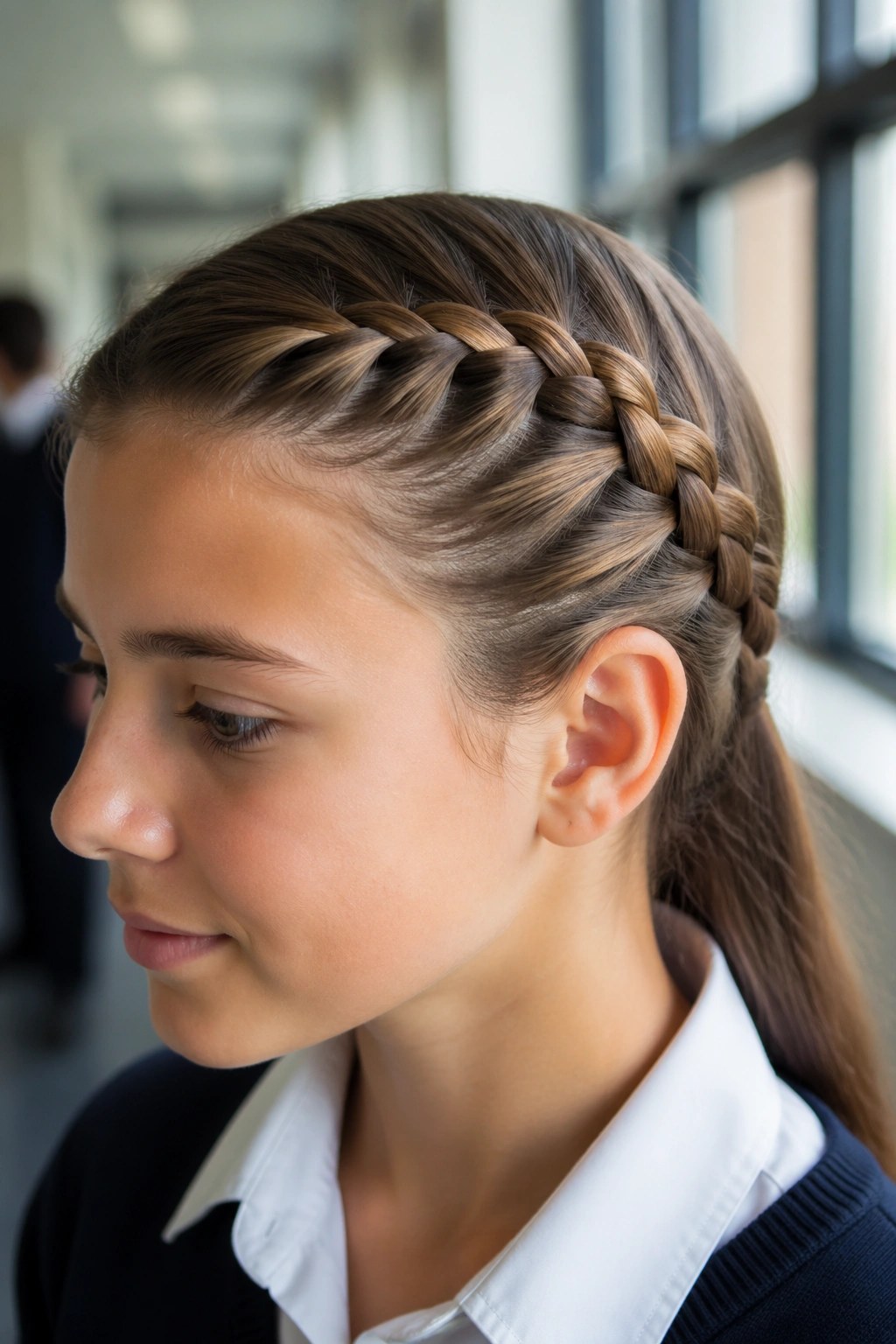
A four-strand braid looks more detailed than a standard braid, but it still sits in the same neat lane when you keep it tight. The weave is flatter and a little more refined, which makes it a good match for school if you want structure without volume.
The extra strand gives the braid a woven look that stands out in a subtle way. Subtle matters here. You don’t want the style shouting. You want it to look like someone cared, then stopped in a sensible place.
What Helps It Work
- Detangle first, or the extra strand will snag.
- Keep the sections even so the braid doesn’t twist sideways.
- Use smaller sections if your hair is thick and bulky.
- Finish low so it stays under control.
This braid takes a little more attention than the classic three-strand version, but not enough to feel precious. If you enjoy braiding and want a slightly smarter-looking shape, it’s worth the extra minute or two.
20. Chain Braid
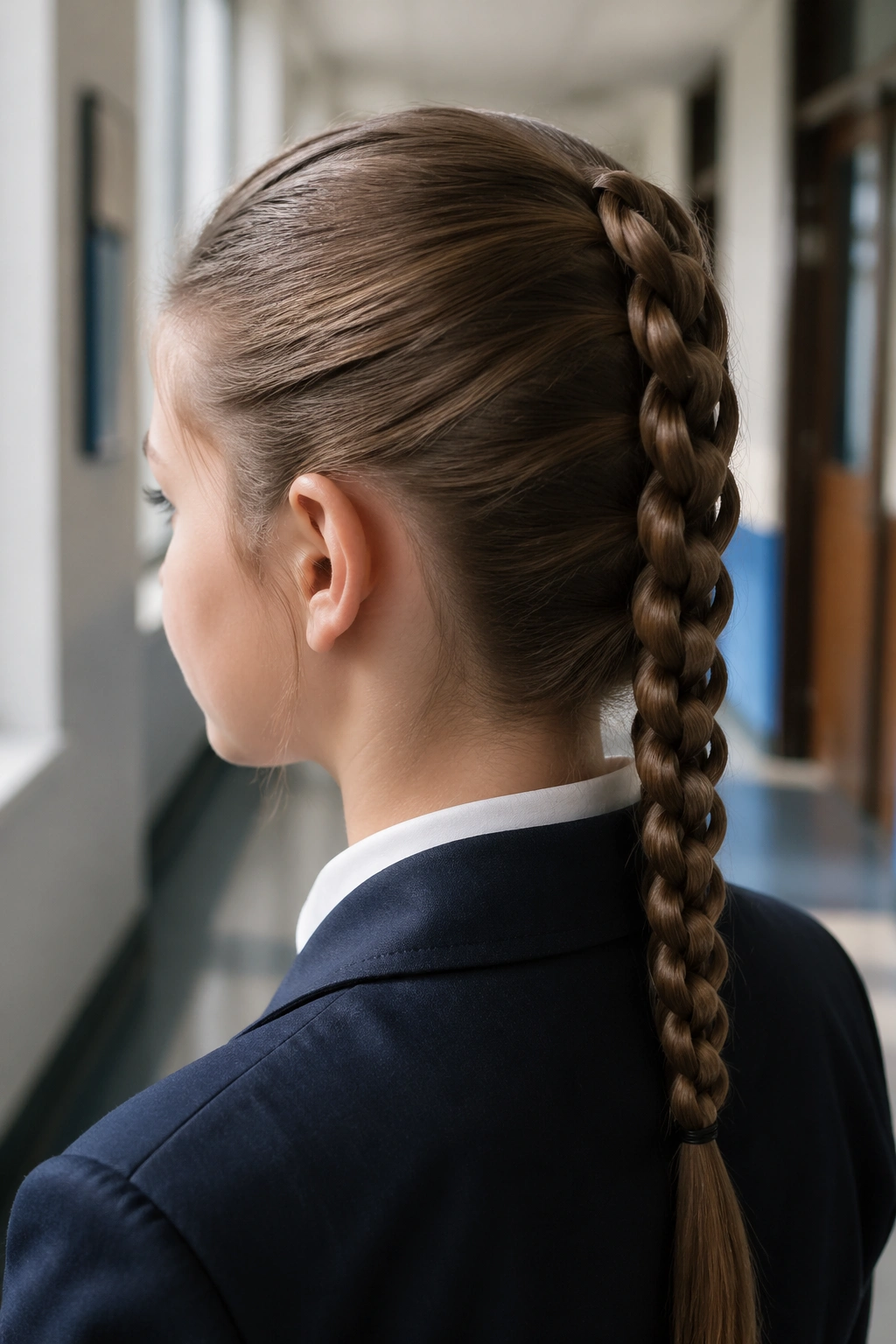
A chain braid has a linked, looped look that feels tidy when it’s kept narrow. It’s one of those styles that can look decorative without being loud, which makes it a smart choice for a school uniform setting if your hair policy allows a bit of texture.
What I like is the shape. It runs cleanly down the back or along one side, and the loops stay visible without getting messy if you use small, even sections. The trick is not to overbuild it. Big loops make it theatrical. Small loops make it neat.
The chain braid is especially useful for long hair that needs a secure style but doesn’t want to collapse into a flat plait by lunchtime. It holds its shape well, and when it’s done in a dark elastic or a hair-matching band, it blends into the whole look instead of calling attention to itself.
A school braid does not have to be invisible. It just has to behave.
21. Tucked-In Braid
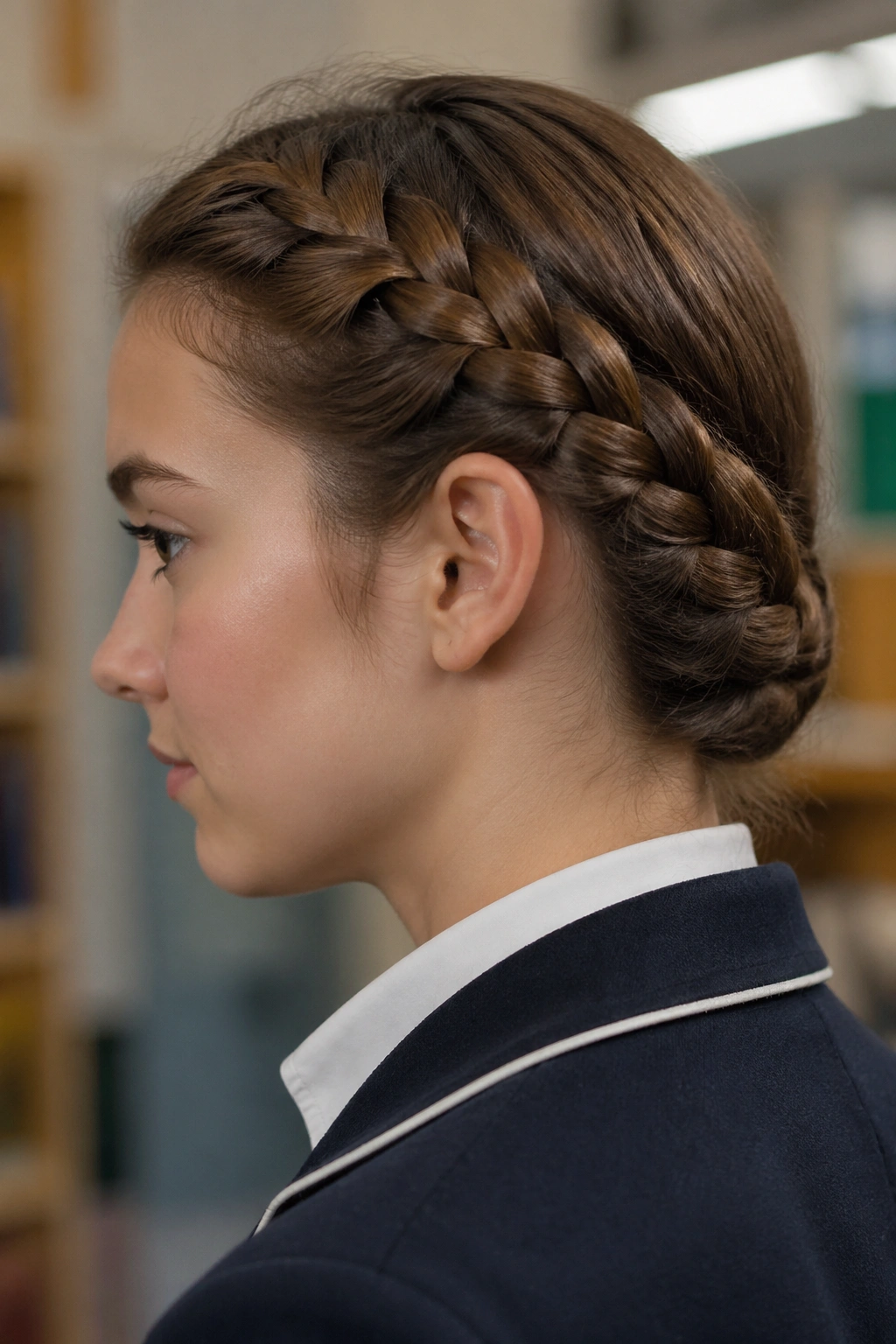
The tucked-in braid is one of the most useful styles for strict dress codes because the ends disappear. Hair gets braided, folded under, and pinned so nothing swings loose. If a school cares about hair touching collars, rubbing against uniforms, or getting in the way during class, this one earns its keep.
It also has a very clean finish. No dangling tail. No frayed end. Just a smooth line that sits where you place it. That matters more than people think. A lot of styles look fine from the front and fall apart at the back. This one does not need to.
When It Works Best
A tucked-in braid is a good pick on humid days, during presentations, or anytime you want the back of your head to stay completely under control. It’s also handy for hair that keeps slipping out of buns. The braid gives it structure; the tuck removes the extra length.
If the tuck feels bulky, use fewer pins and flatten the braid a little before securing it. Not too much. You still want the braid to look like a braid, not a rolled-up knot.
22. Braided Headband
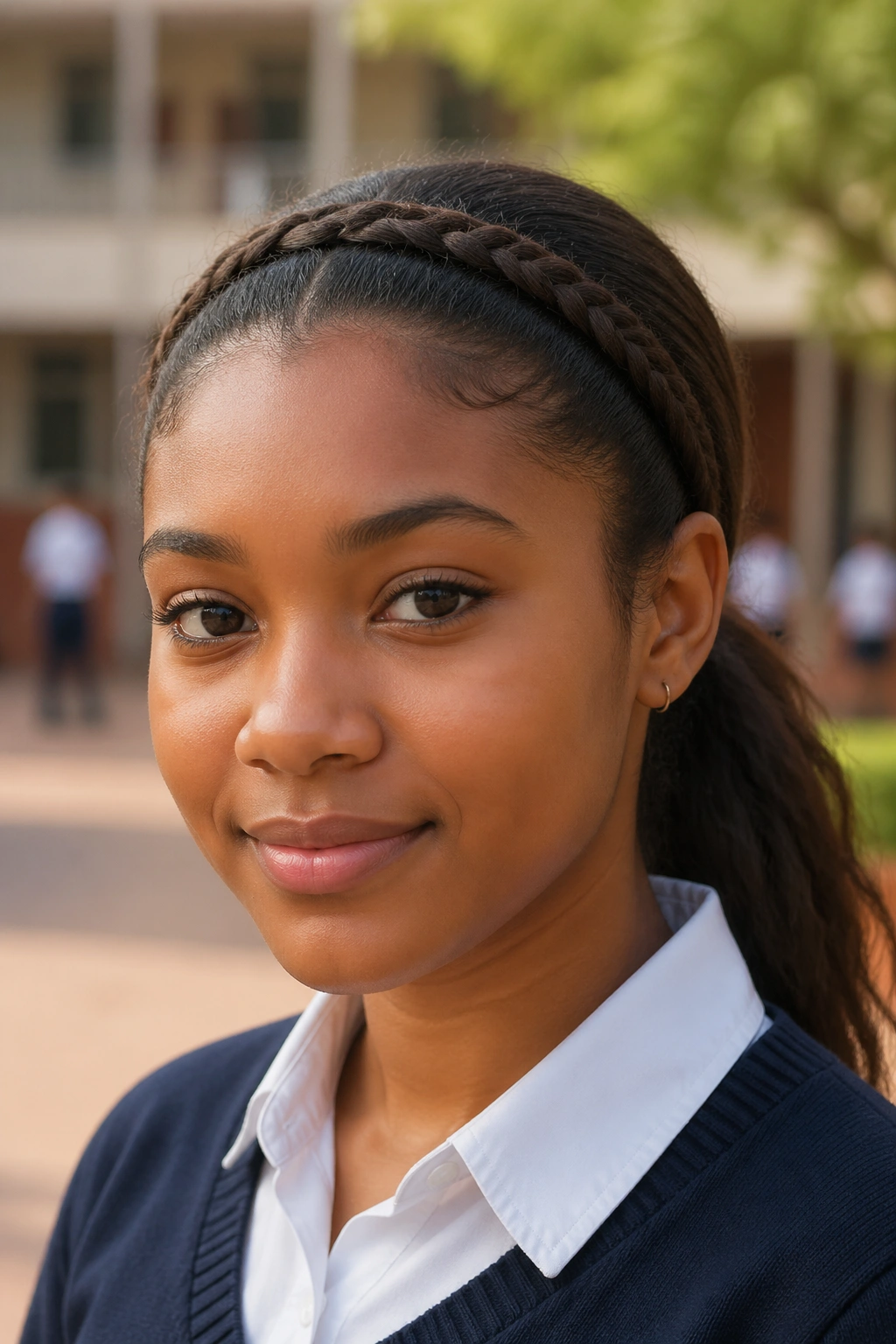
A braided headband keeps hair off the face in a way that feels neat, practical, and calm. It sits across the front or side of the head like a band, while the rest of the hair stays gathered or brushed back. That makes it one of the easiest braids to wear when you want your hair controlled but not severe.
The key is keeping the braid slim. A thick braid across the forehead can start to look costume-like, and that is where school uniform codes may get picky. A narrow braid, pinned flat and matched with the rest of the hair, usually stays in safer territory. If your hair is short to medium length, this style can be a good way to fake a more detailed look without needing an elaborate updo.
I like it because it solves the front-of-the-face problem fast. Bangs, layers, little flyaways—they all stay where they should. And if the rest of your hair is tied back low, the whole look reads polished without shouting about it.
Sometimes the plainest answer is the right one. This braid is one of those times.
