


Long, thick hair can make a French braid ponytail look polished in a way thinner hair sometimes can’t quite pull off. It can also turn heavy fast. If the braid at the crown is loose, the whole style slips downward and starts looking tired before lunch.
The fix is usually not “more product.” It’s smarter placement. A tighter braid at the scalp, a clean elastic at the base, and a ponytail that matches your hair’s weight make a bigger difference than people expect. Once you get that balance right, the style holds its shape instead of puffing out in random places.
I like French braid ponytails on thick hair because they give you control without hiding the hair you’ve worked with. The braid keeps the front neat. The tail gets to be big, shiny, and a little dramatic. That combination is hard to beat when you want hair that looks deliberate, not fussy.
1. Sleek High French Braid Ponytail
This is the one that looks sharp from across the room. The braid starts right at the hairline, stays snug through the crown, and finishes in a high ponytail that sits above the occipital bone. On long thick hair, that placement keeps the weight up and away from the neck, which matters on busy days.
Why It Holds So Well
A high French braid ponytail works because the braid acts like an anchor before the ponytail gets heavy. If your hair is dense, keep the first three passes firm and close to the scalp. That little bit of tension matters.
- Brush the roots smooth before you start.
- Use a small clear elastic at the base if the ponytail is extra heavy.
- Wrap a 1-inch strand of hair around the elastic for a cleaner finish.
Best tip: smooth the top with a pea-sized amount of gel, not a lot. Too much and the crown goes slick in a bad way.
2. Low French Braid Ponytail With a Center Part
A low French braid ponytail feels calmer and more expensive-looking than a high one. The center part gives it that straight, balanced line, and the braid drops into a low pony at the nape where the weight feels easier to manage.
Long thick hair likes this shape because it spreads the bulk out instead of stacking it on top of your head. That makes the style sit flatter against coats, collars, and scarves. It’s also one of the easiest versions to refresh later in the day with a little water and a brush.
I reach for this when I want the braid to do the talking and the ponytail to stay quiet. Not flashy. Just clean.
3. Side-Swept French Braid Ponytail
Why does a side-swept braid feel softer right away? Because the diagonal line breaks up all that vertical length. Start the braid near one temple, angle it across the crown, then gather the rest into a ponytail over one shoulder.
What Makes It Stand Out
The side angle helps long thick hair move instead of sitting like a block. That matters if your hair has a lot of width at the sides. It also frames the face without needing pieces left out everywhere.
How to Wear It
- Keep the braid snug at the start.
- Let the ponytail sit just behind one ear.
- Pull out two thin front pieces if you want a less formal finish.
This one looks best when the ponytail has some bend in it. Pin-straight lengths can feel a little severe here.
4. French Braid Ponytail With a Wrapped Elastic
There’s something satisfying about hiding the hair tie. A wrapped elastic turns a regular French braid ponytail into something cleaner and more finished, especially on thick hair where the base can look bulky if you leave the band visible.
Picture this: the braid runs down the crown, stops at the back of the head, and the ponytail is wrapped with a smooth strand of hair. That small detail makes the style look more deliberate than it really is. It also helps if your elastic is starting to stretch out.
Use one bobby pin to secure the wrap from underneath, then cross a second pin over it if your hair is heavy. Don’t skip the second pin. Thick hair can pull a single pin loose fast.
5. Bubble-Ended French Braid Ponytail
This one has a playful edge, and thick hair makes it even better. The French braid controls the roots, then the ponytail is tied off every 2 to 3 inches to form rounded bubbles. On long dense hair, those bubbles look full instead of flat and sad.
The trick is to gently tug each section after you secure it. You want the hair to puff out evenly, not snag at the elastics. A tail comb makes the spacing easier if your length is past your shoulders.
This style is a good choice when you want movement without curls. It has energy. It also survives a long day better than a loose ponytail, which is why I keep seeing people come back to it.
6. Double French Braids Feeding Into One Ponytail
Unlike a single braid, two side French braids give thick hair more control at the sides before everything gets gathered together. That means less puff at the temples and less sliding at the nape.
This look starts with a center part, then two French braids work down each side and meet in one ponytail. The result is tidy, but not harsh. It’s especially useful if your hair is so full that a single braid feels too wide across the back of the head.
It’s also a solid choice for workouts. The double-brain-to-one-ponytail setup keeps the hair from bouncing around as much. If you want a little more softness, loosen the ponytail ends and leave the braids themselves tight.
7. Messy French Braid Ponytail With Face-Framing Pieces
This is the style for days when you want movement more than perfection. The braid can be loose through the crown, the ponytail can be a little textured, and two slim pieces at the front soften everything near the cheeks.
Why It Works on Thick Hair
Thick hair has enough mass to keep this style from looking accidental. Even when the braid is slightly undone, the ponytail still has shape. That’s a big reason this version feels easier than it looks.
A little texturizing spray at the roots helps. So does starting on day-two hair, when the hair has more grip.
Good habit: leave the face-framing pieces thin. If they’re too chunky, the style loses that easy shape and starts looking heavy again.
8. French Braid Ponytail With Curled Ends
If your ends are blunt, a few curls change the whole mood. The braid handles the crown, and the ponytail becomes the soft part. Long thick hair holds curl well, so even two or three large sections can give the style a dressier finish.
Use a 1-inch curling iron and curl away from the face in alternating directions for the tail. That keeps the ends from clumping into one giant wave. You do not need to curl the whole ponytail if that feels like too much work.
This one is especially good when you want the braid to stay practical but the ponytail to feel less sporty. Clean at the top. Loose at the bottom. That contrast is the charm.
9. Voluminous Pancaked French Braid Ponytail
Why pancake the braid at all? Because a little widening can make thick hair look intentional instead of bulky. After the braid is secured, gently pull the outer loops of each section so the braid spreads wider and flatter.
The Small Detail That Matters
Don’t pancake the first inch near the hairline. That area needs grip. Focus on the middle and lower parts of the braid, where the shape can open up without slipping.
- Use your thumbs, not your nails.
- Pull in tiny increments.
- Stop before the braid starts looking frayed.
The ponytail can stay full and heavy while the braid looks larger and more detailed. That contrast is what makes this version stand out on long thick hair.
10. French Braid Ponytail With a Ribbon Tie
A ribbon changes the tone fast. A velvet ribbon makes the style feel softer and a little dressed up. A grosgrain ribbon reads cleaner and more casual. Either way, the braid gives you structure, and the ribbon gives the ponytail a finish that feels human, not factory-made.
Tie the ribbon over the elastic after the ponytail is secured. Don’t use the ribbon as the only hold if your hair is thick; it will slide. A narrow ribbon usually stays neater than a wide one, especially if the tail is long and heavy.
This style works well for dinners, showers, and any day when you want the ponytail to look like you meant it. Because you did.
11. Crisscross Crown French Braid Ponytail
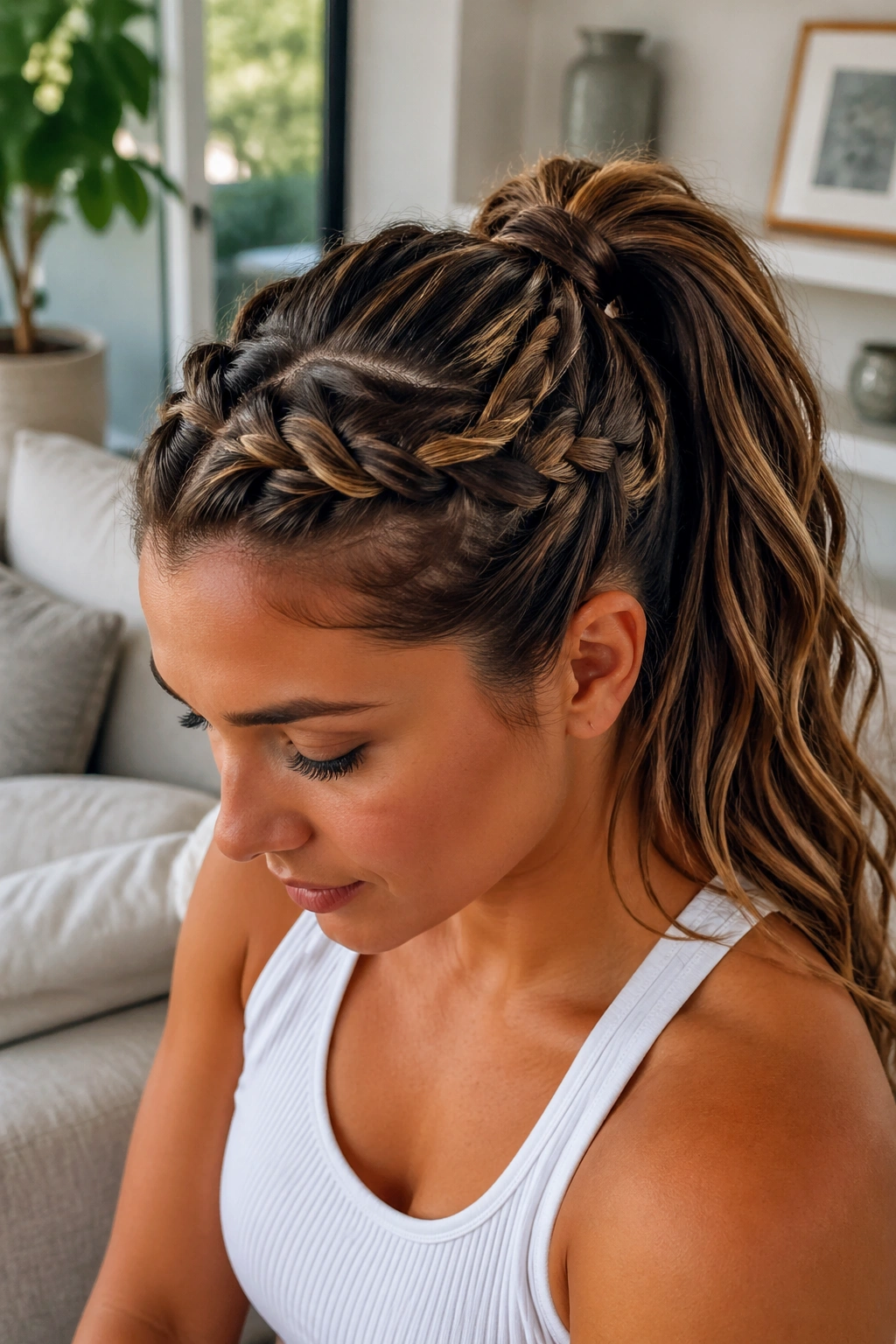
A crisscross crown changes the whole front shape. Instead of one straight braid line, two small sections cross over each other before merging into the main French braid and then the ponytail. It gives the top of the head more detail without turning the whole style into a big braid project.
This is a nice fix for thick hair that tends to look plain when it’s pulled straight back. The extra crossing breaks up the width at the hairline and makes the front feel more finished. It’s also kinder to growing-out layers, since the smaller sections help hide odd lengths.
I’d pick this when a plain braid feels too simple but you still want the rest of the hair to stay smooth.
12. Braided Mohawk French Braid Ponytail
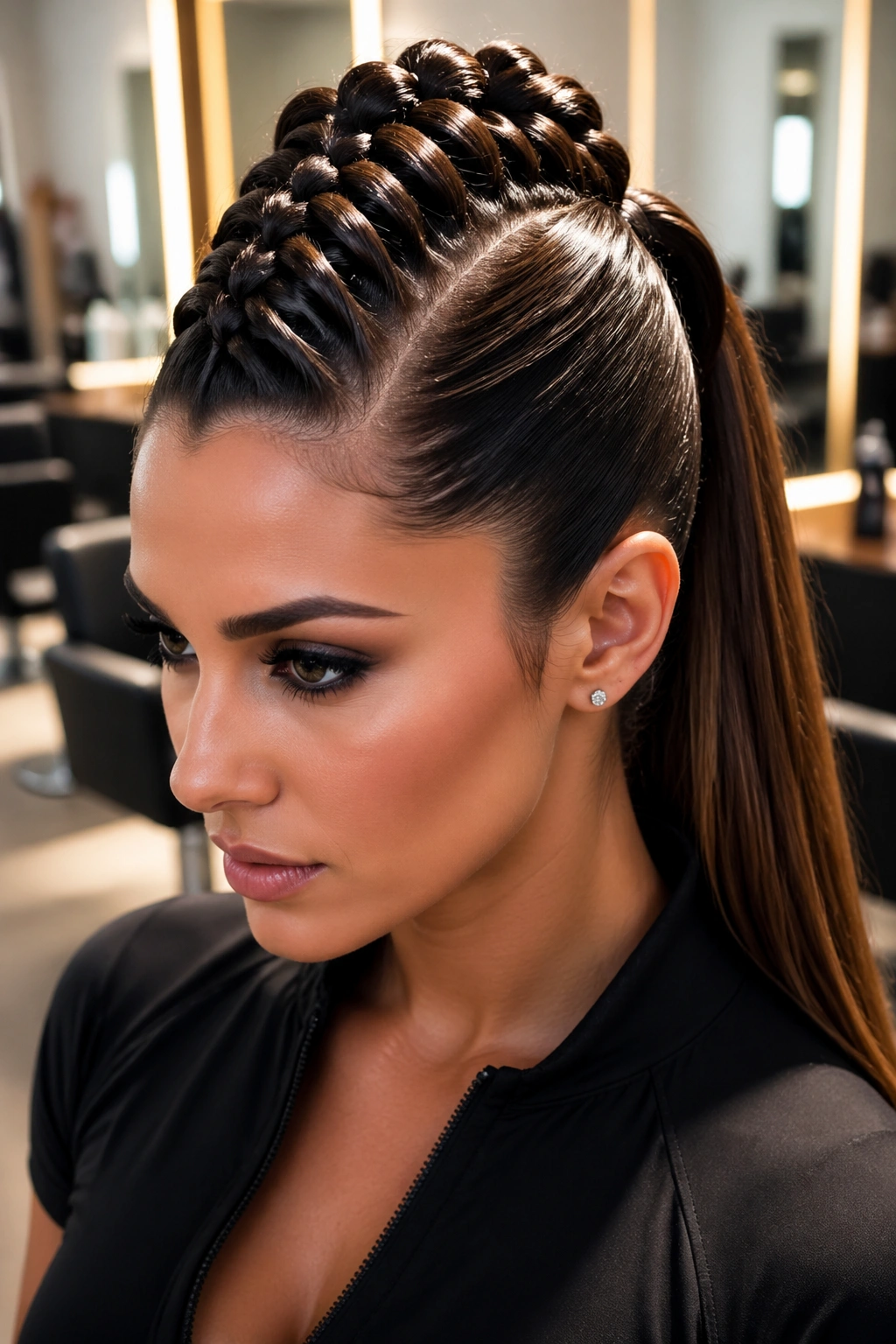
This one has attitude. The braid runs straight down the center like a ridge, while the sides are smoothed back hard and gathered into a ponytail. On long thick hair, that strong center line keeps the style from spreading too wide.
It looks best when the sides are polished and the braid is tight from the first stitch. If the crown is loose, the whole thing loses its shape. A small amount of edge gel at the temples helps keep flyaways under control.
This is the French braid ponytail I choose when I want structure. Not softness. Not romance. Structure. It’s bold, and thick hair wears it well.
13. French Braid Ponytail With a Fishtail Tail
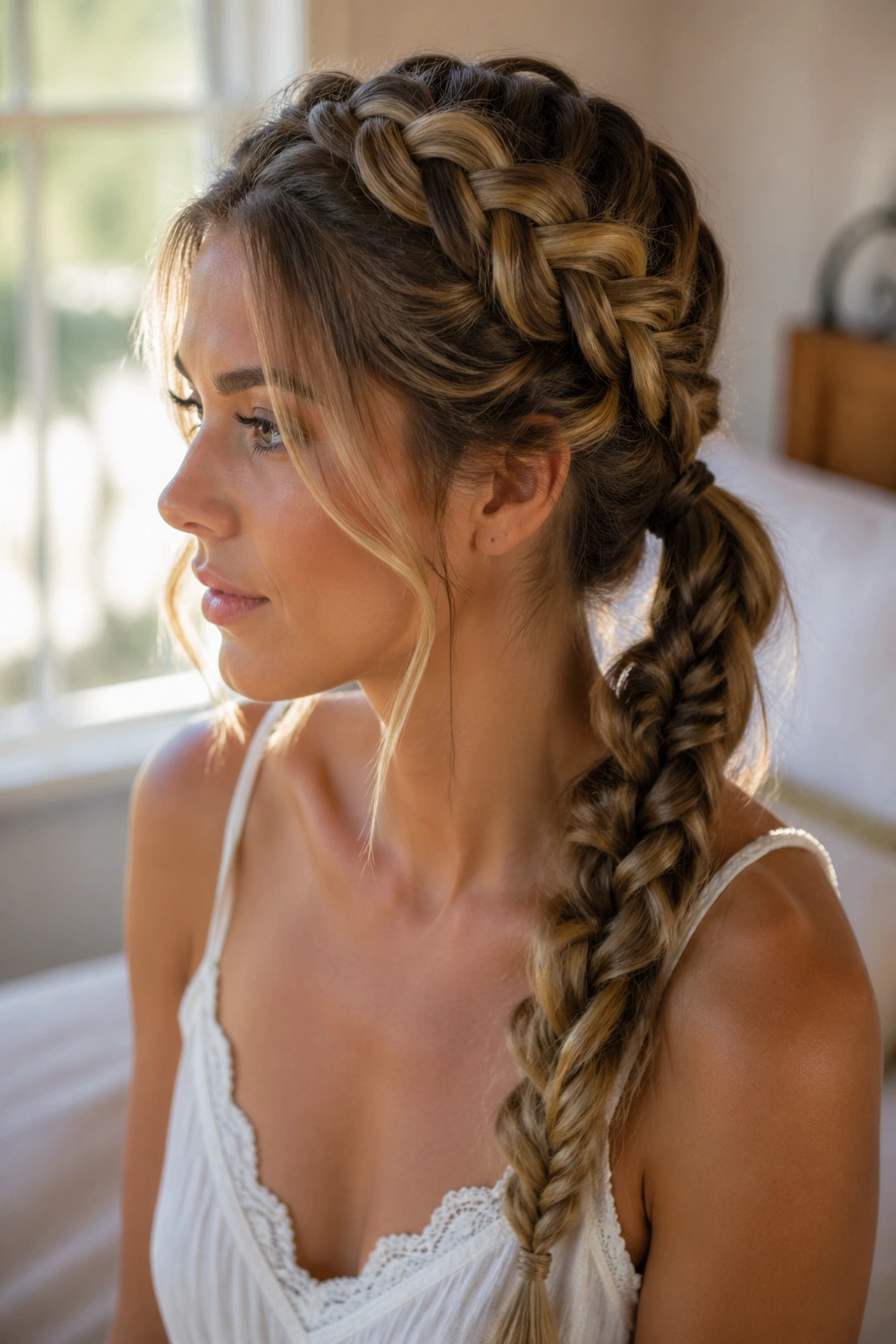
Why stop at one braid texture? A French braid at the top gives you control, then the ponytail can shift into a fishtail for a finer, more detailed finish. Thick hair makes the fishtail look richer because there’s more hair to feed into each crossing.
This does take a little patience. The fishtail part is slower than a regular tail, and the first few tries may look looser than you want. Still, the payoff is worth it if you like braids that look intricate from the side.
A fishtail tail is also a good way to break up heavy lengths. The ends feel lighter visually, even when the hair itself is dense.
14. Low Nape French Braid Ponytail
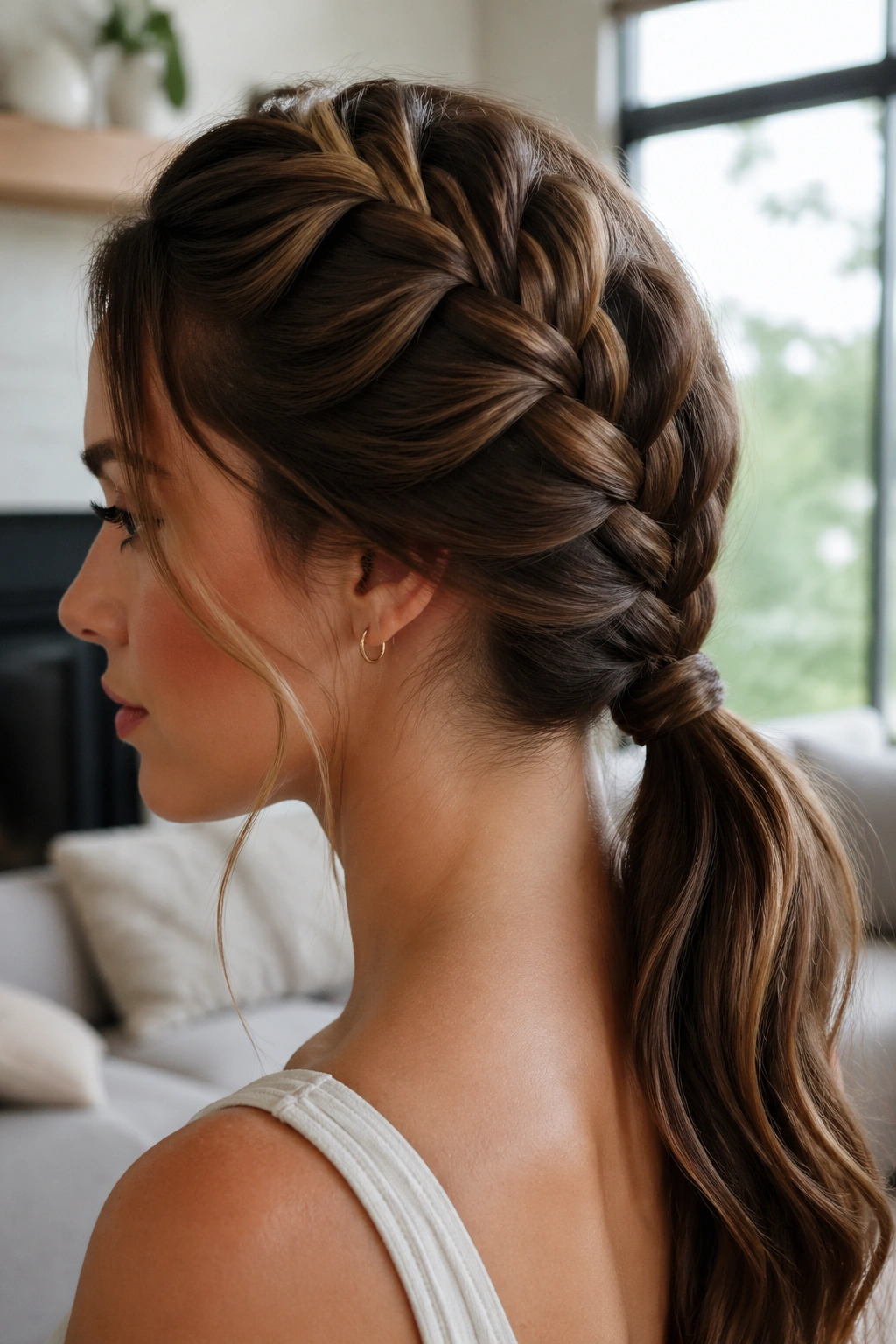
A low nape ponytail is the quiet workhorse of the group. The braid starts high enough to show detail, then settles low enough that the ponytail doesn’t pull on your scalp all day.
Best For Heavy Hair
Long thick hair can get tiring when it’s worn high for hours. A nape-sitting ponytail eases that strain without giving up the braid. It also stays more stable if you move a lot.
Use two elastics at the base if the tail is dense. The first one does the job; the second one keeps the whole thing from sliding.
This version feels especially good on clean hair, when you want the braid to lie flat and the ponytail to move naturally behind you.
15. Half-French Braid Ponytail
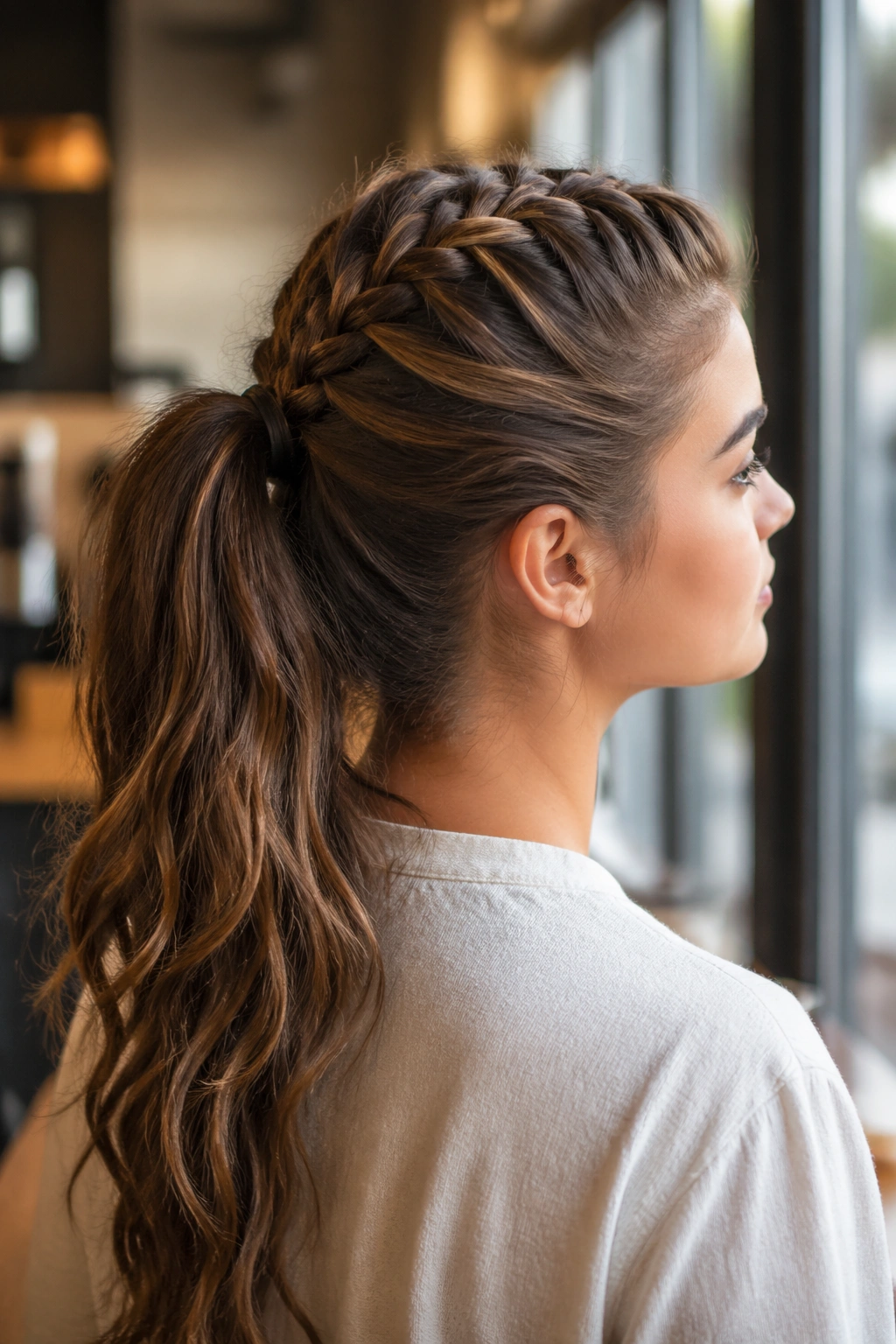
This one saves time, and that matters. Instead of braiding all the way to the nape, braid only the top third or half of the head, then gather the rest into a ponytail. Thick hair can make a full French braid feel heavy, so stopping early is often the smarter move.
You still get the polished front, but the tail keeps more of the hair’s natural swing. That makes the style easier to wear if your length is very long or your strands are extra dense.
How to Use It
- Braid until the crown feels secure.
- Tie the braid off with a small elastic.
- Join the rest into one ponytail at mid-back level.
It’s a good everyday version, no drama required.
16. French Braid Ponytail With a Scarf Woven In
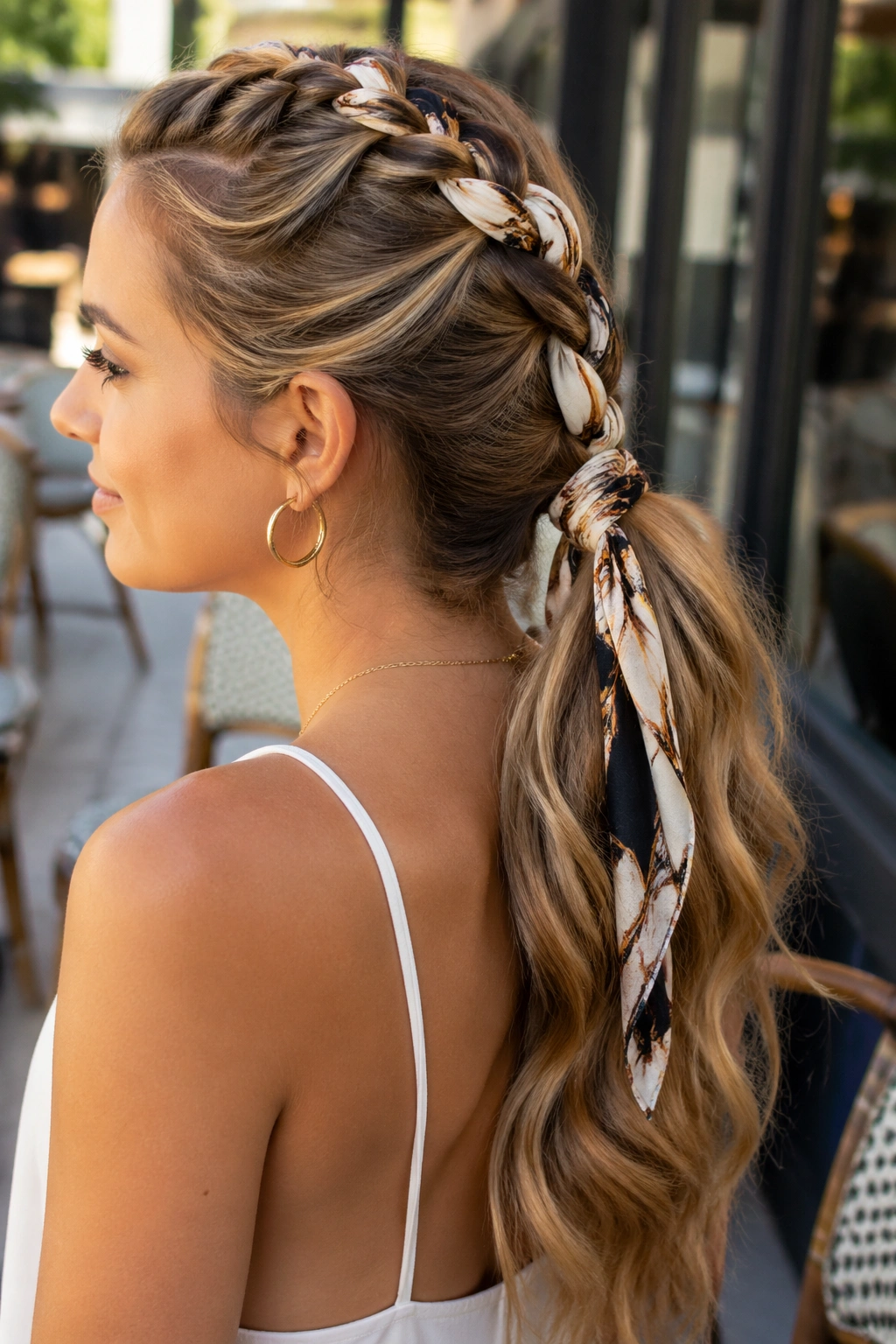
A slim scarf can change the mood in seconds. Thread it into the braid near the top, then let the ends blend into the ponytail. Long thick hair gives the scarf plenty of hair to sit against, so it won’t look lost the way it can on finer textures.
I like scarves that are about 1 inch wide. Wider ones can get bulky fast, especially when the braid already has a lot of body. A silk scarf slides more easily, while cotton grips a little better.
This style feels easy in a way that’s hard to fake. Travel days, markets, casual lunches — it fits those moments without trying too hard.
17. Sporty Gym French Braid Ponytail
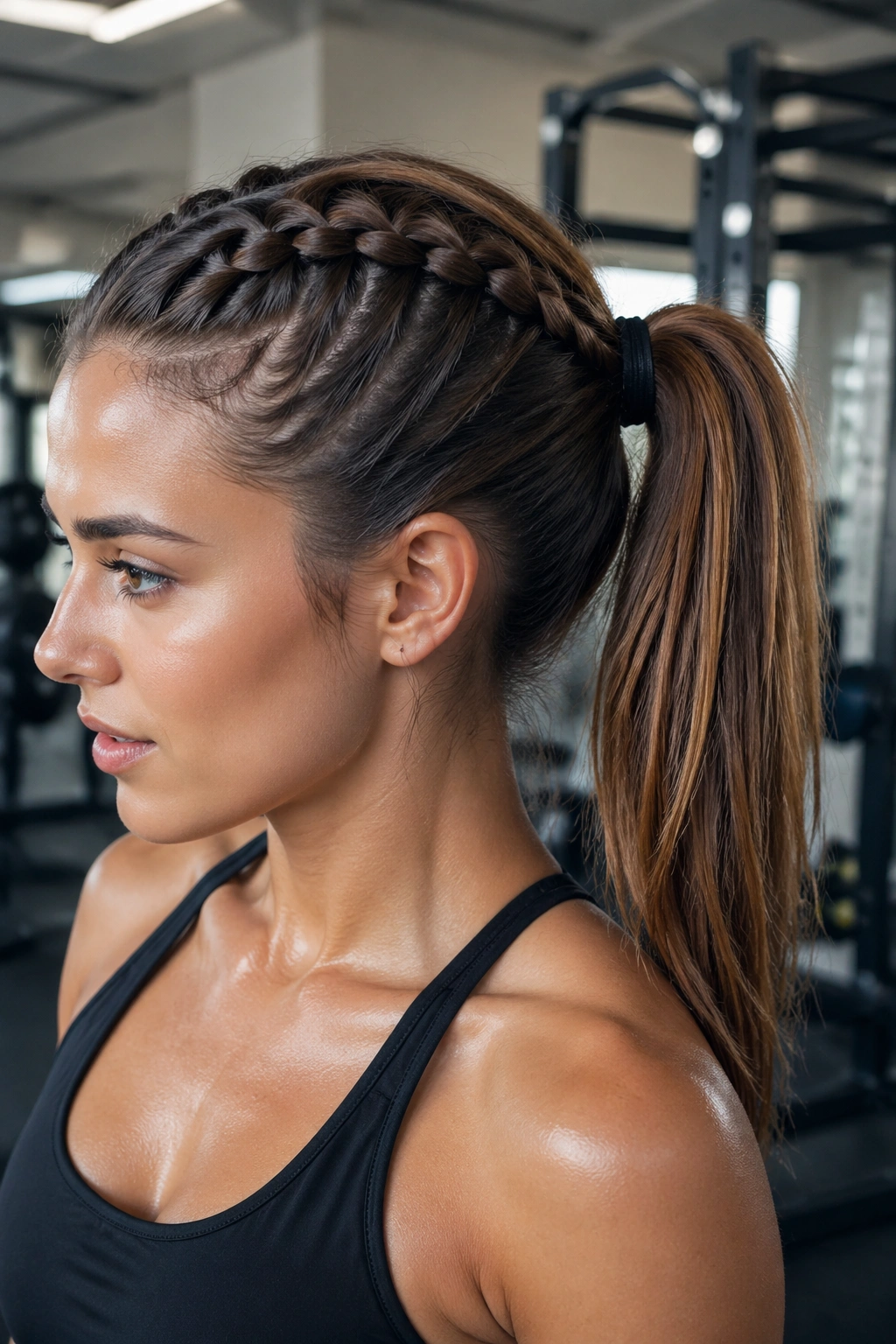
This is the no-nonsense version. The braid starts firm, the crown stays smooth, and the ponytail sits high enough to stay out of the way. Thick hair usually needs that extra hold, or the base starts to loosen once you sweat.
A dab of gel at the hairline and a strong elastic at the tail are the real heroes here. You don’t need shine. You need grip. If your hair is especially slippery, a light mist of hairspray before braiding can help.
The best part is how little maintenance it needs once it’s set. It gets the hair off your neck and stays there.
18. Polished Office French Braid Ponytail
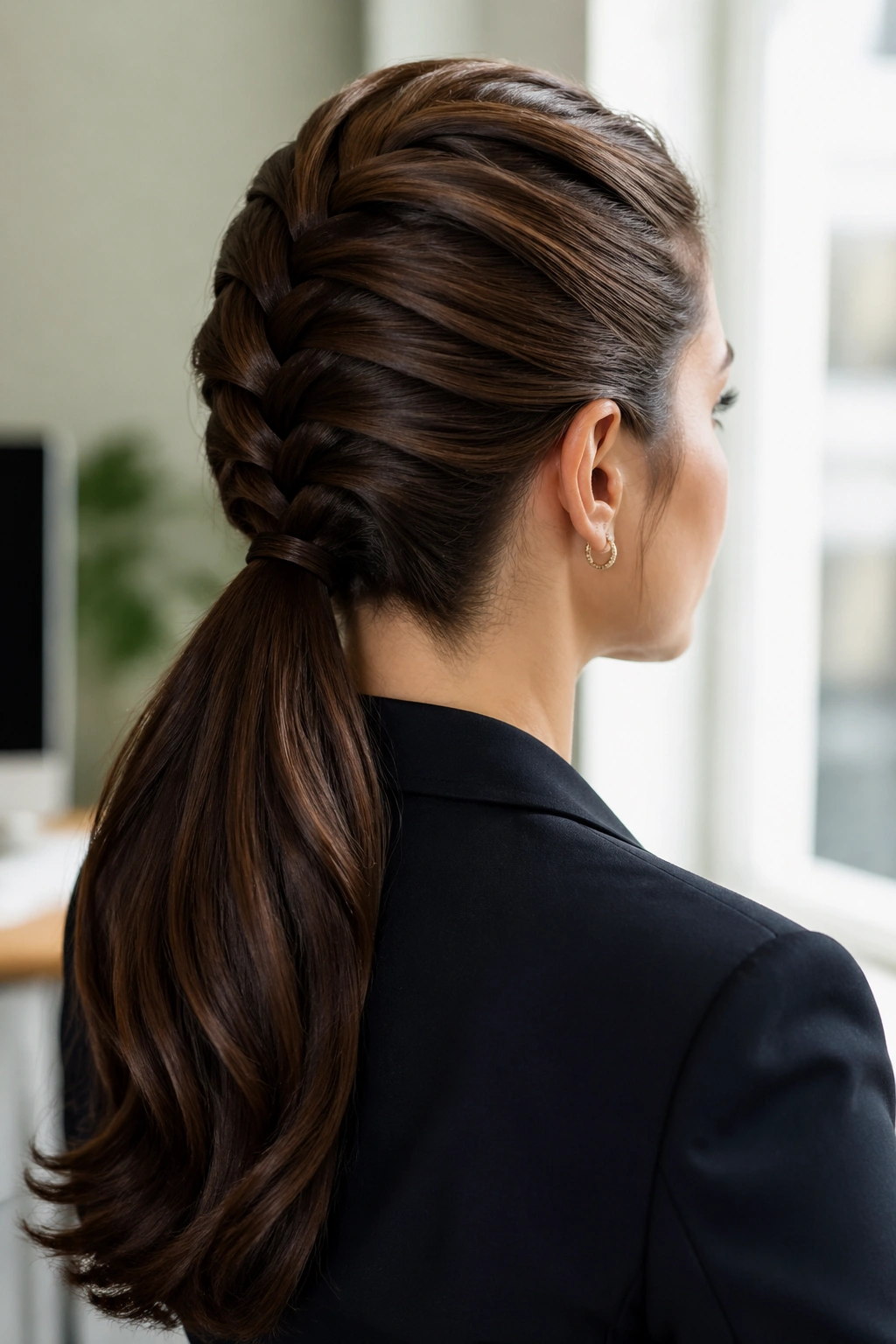
The office version is softer than the gym version and smoother than the party version. The braid stays neat, but not severe, and the ponytail sits low enough to look calm under blazers or collar points.
Unlike the sporty style, this one benefits from a small amount of shine serum on the ponytail ends only. Keep it away from the braid itself or you’ll lose hold. Thick hair can handle a clean finish without looking flat, so a smooth top actually works in your favor.
This is one of those styles that reads as composed without taking itself too seriously. A good choice when you need tidy hair and don’t want a bun.
19. Thick Hair French Braid Ponytail With Tiny Accent Braids
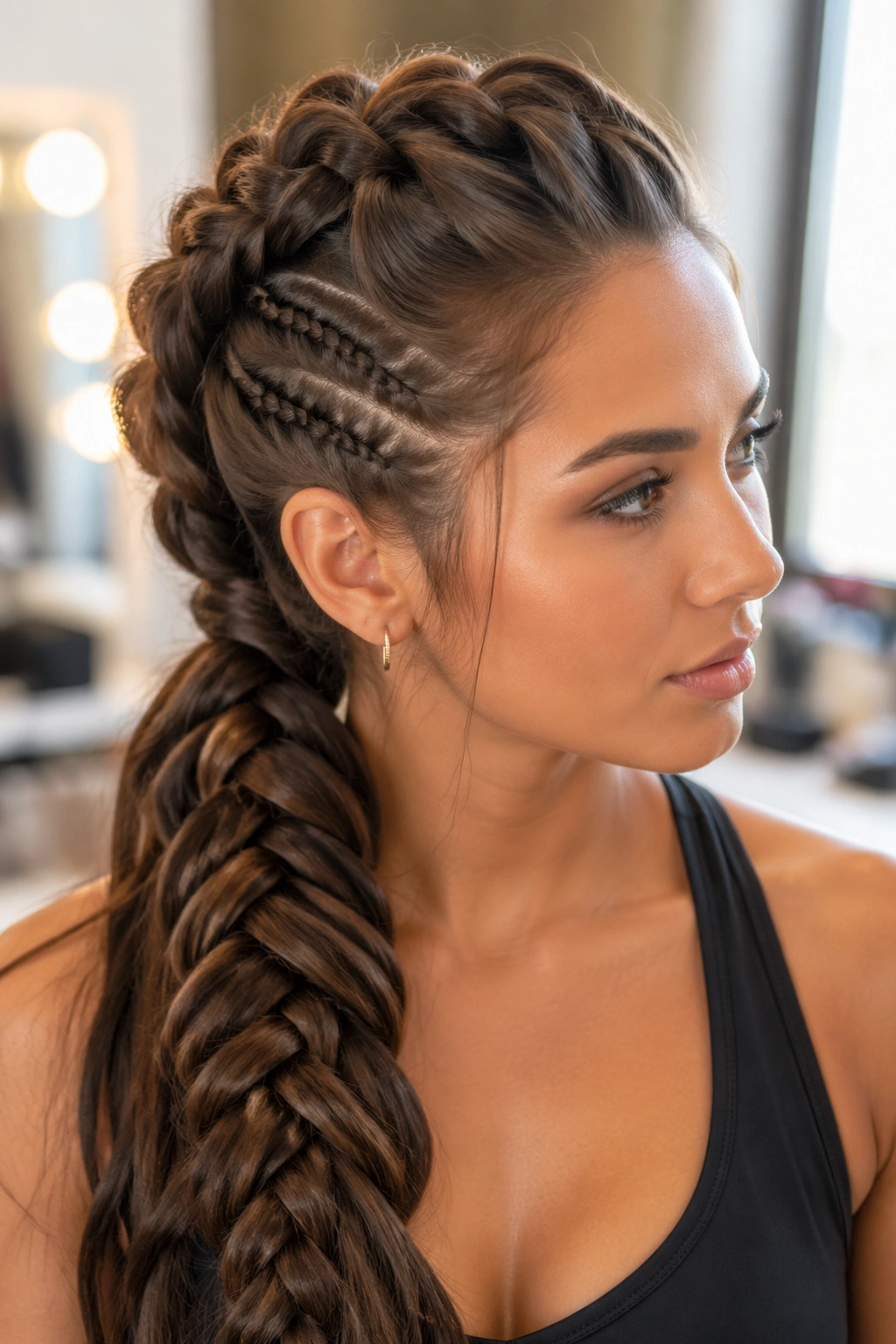
Tiny accent braids are a smart way to break up a lot of hair. Add two or three 1/4-inch braids near one temple or along the side before feeding everything into the main French braid ponytail. The smaller braids give the style texture without adding much bulk.
What to Watch For
Keep the accent braids slim. If they get too large, they compete with the main braid and the whole style starts to look crowded.
A few small details go a long way here:
- Space the accents an inch apart.
- Tie each one with a tiny elastic.
- Blend them into the main braid before the ponytail starts.
This is a good style for concerts, weekends, and any day you want your hair to look a little more styled than usual.
20. Zigzag-Part French Braid Ponytail
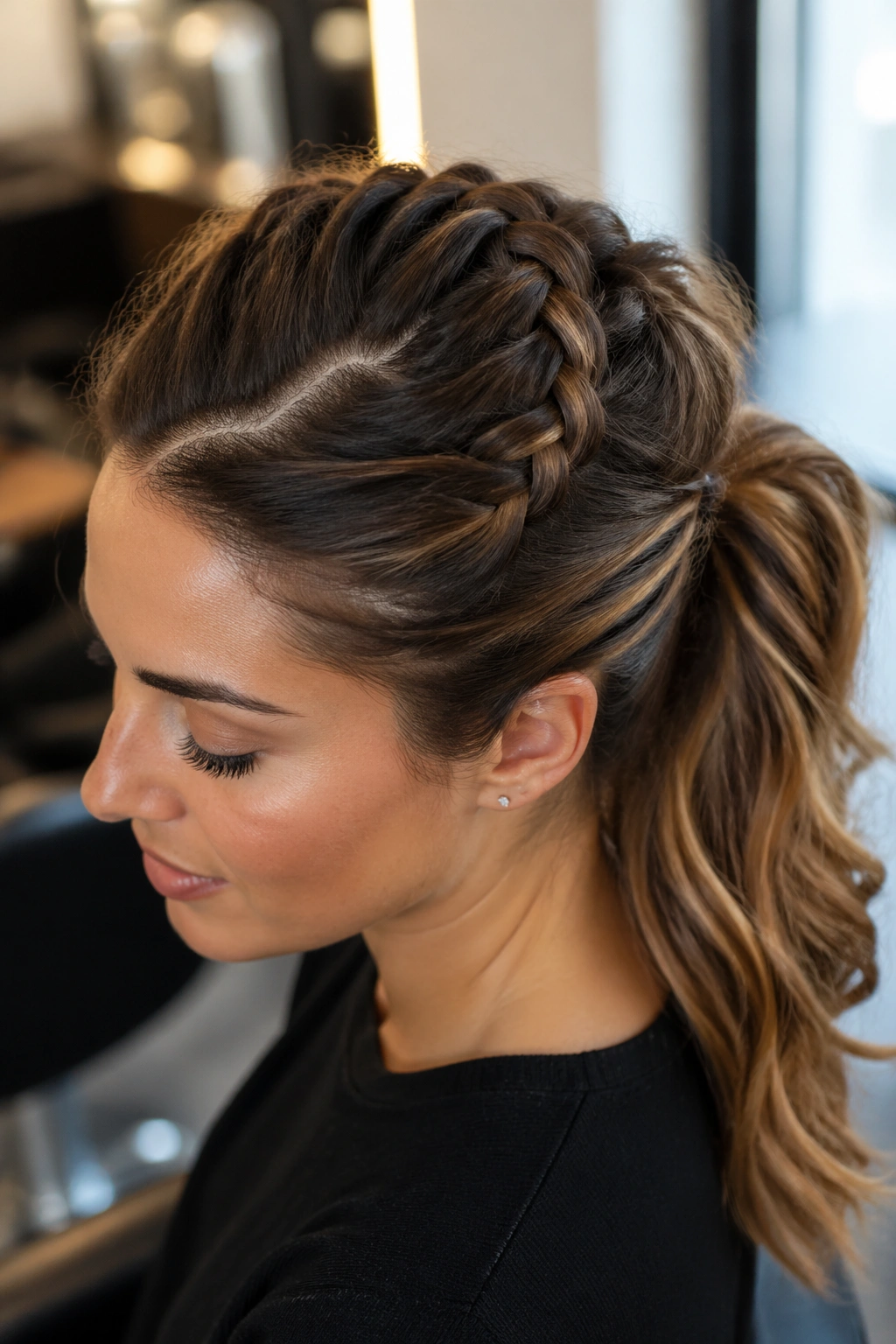
A zigzag part wakes up a French braid ponytail fast. It makes the top of the style feel less expected, which is useful if your hair is long and thick and tends to look heavy with a straight center part.
The zigzag doesn’t need to be perfect. In fact, a slightly uneven line looks better than one that’s too sharp. Use the tail of a comb and make the corners shallow, not jagged.
Why It Feels Fresh
The part does the work before the braid even starts. After that, the ponytail can stay simple. That’s the nice part — a small detail can change the whole impression without adding much time.
21. Curly French Braid Ponytail
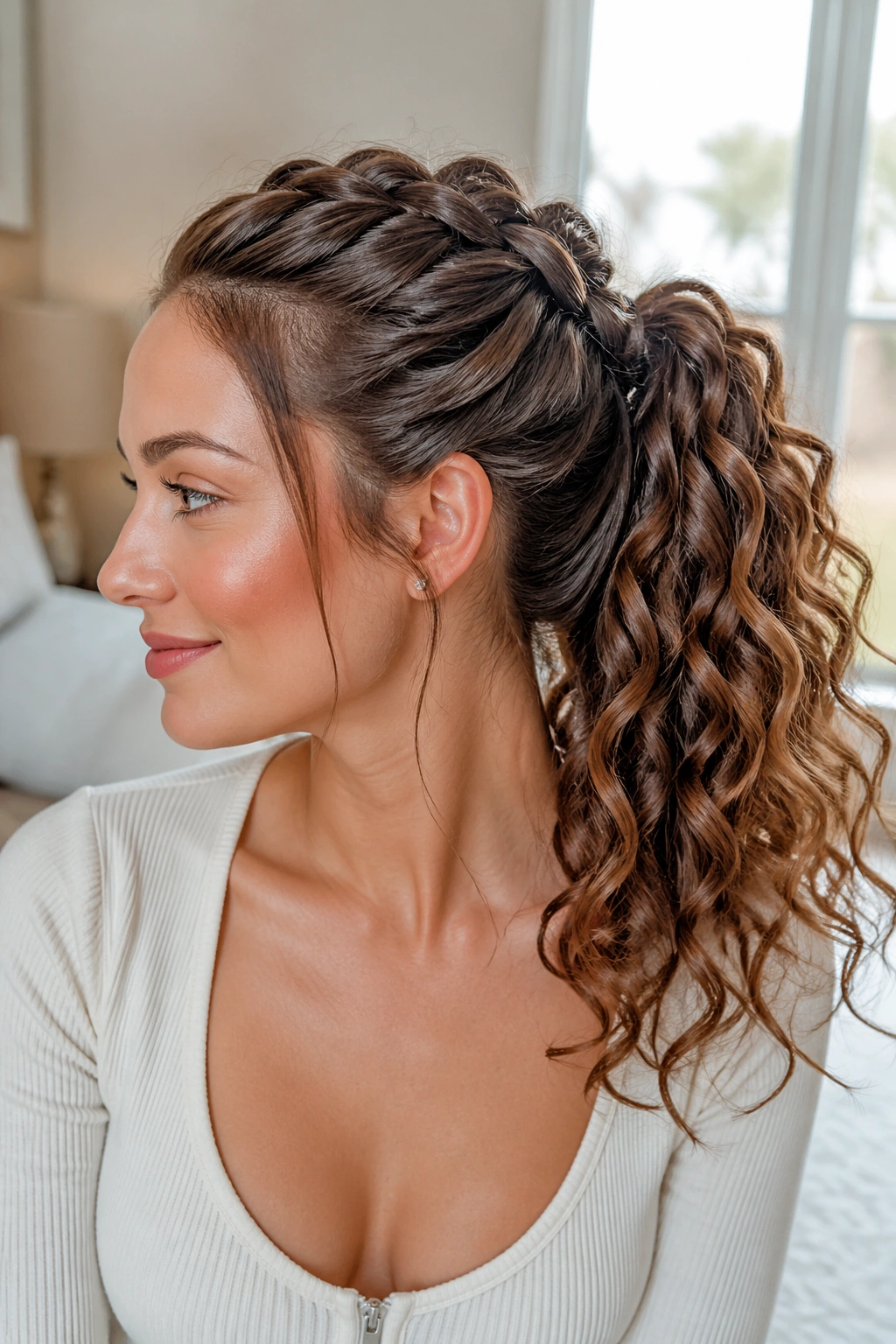
Curly ends change the tone completely. The braid at the crown keeps the roots controlled, while the ponytail ends stay soft and springy. Long thick hair usually has enough weight to keep curls from frizzing into chaos right away, which is a real plus.
If your hair is naturally curly, leave the tail alone and let it do its thing. If it’s straight, wrap large sections around a curling iron or hot tool and keep the curl loose. You want movement, not tight ringlets.
This style looks best when the crown is smooth and the tail has some volume. Too much product at the roots can flatten everything, so keep it light there and save the moisture for the ends.
22. Asymmetrical French Braid Ponytail
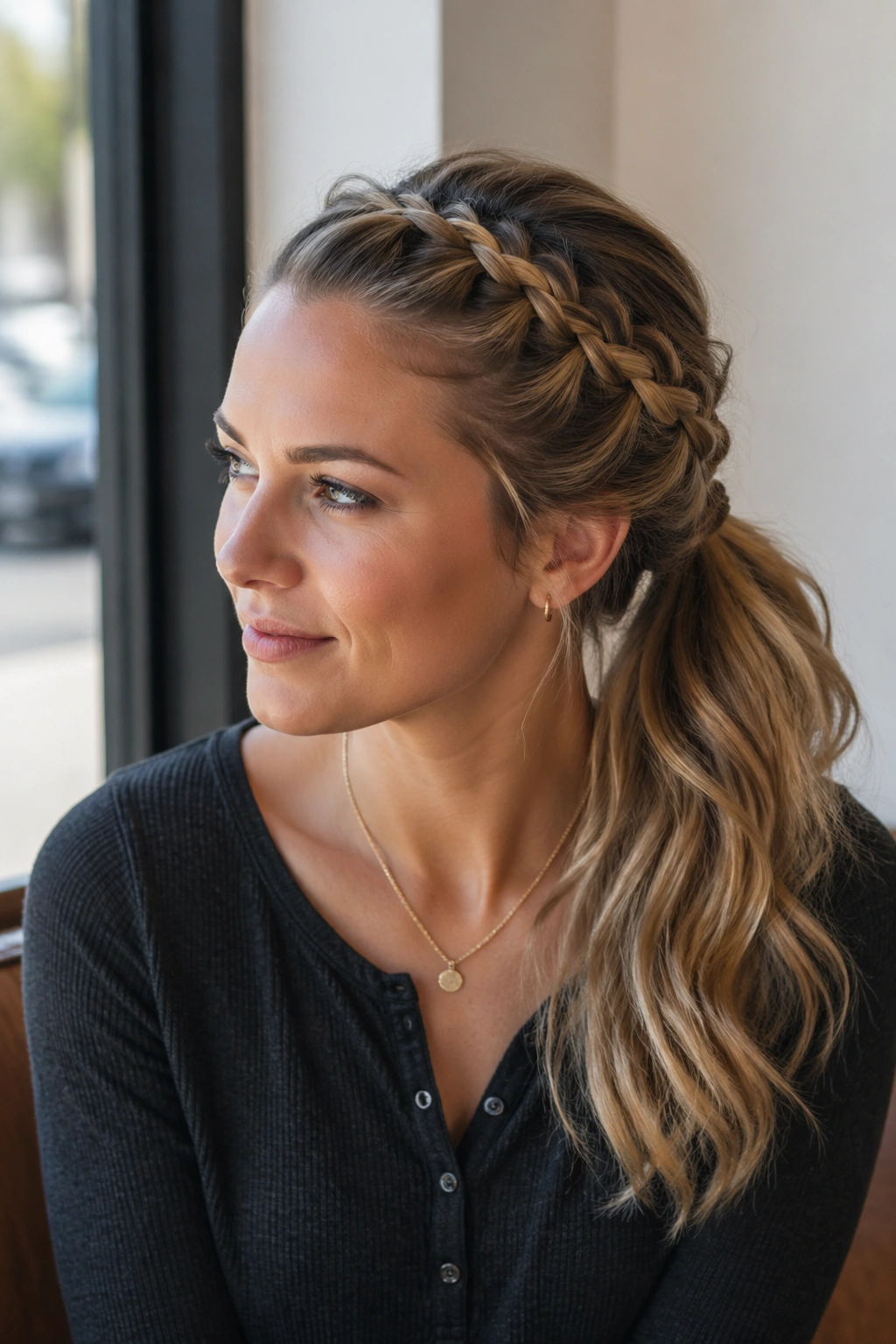
An asymmetrical braid feeds the hair to one side before dropping into a ponytail that sits off-center. It’s a small shift, but on thick hair it changes the balance of the whole head shape.
Who It Suits
This style works well if you like side parts, strong cheekbones, or anything that keeps the face from feeling boxed in. It also helps if one side of your hair has more volume than the other. The off-center placement makes that less noticeable.
A few pins hidden behind the braid keep the shape from sliding. That matters if your hair is heavy enough to pull the braid back toward center by the end of the day.
It feels a little more styled than a regular ponytail, but not so styled that it turns formal.
23. French Braid Ponytail With a Braided Side Swoop
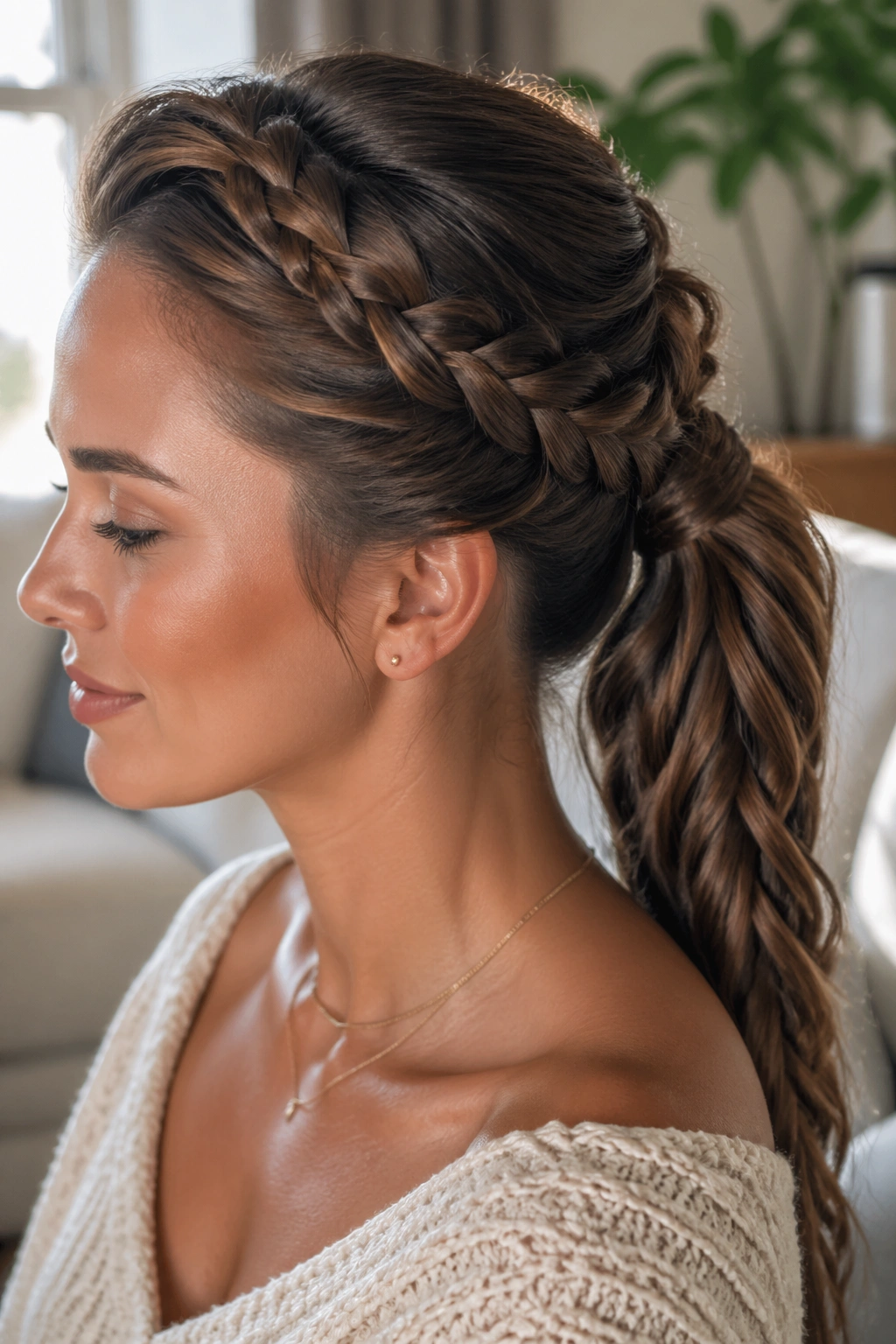
This version leans softer than the asymmetrical one. A side swoop begins near the front, curves into the braid, and then blends into the ponytail with a gentle line. It’s a good choice when you want movement around the forehead but don’t want loose strands everywhere.
The swoop gives thick hair a little shape near the face, which helps if your hair tends to sit heavy in one block. It also looks good with long layers because the curve catches the shorter pieces and tucks them in.
I’d wear this with soft makeup or a plain neckline. It’s one of those styles that does better when the rest of the look stays simple.
24. High French Braid Ponytail With a Teased Crown
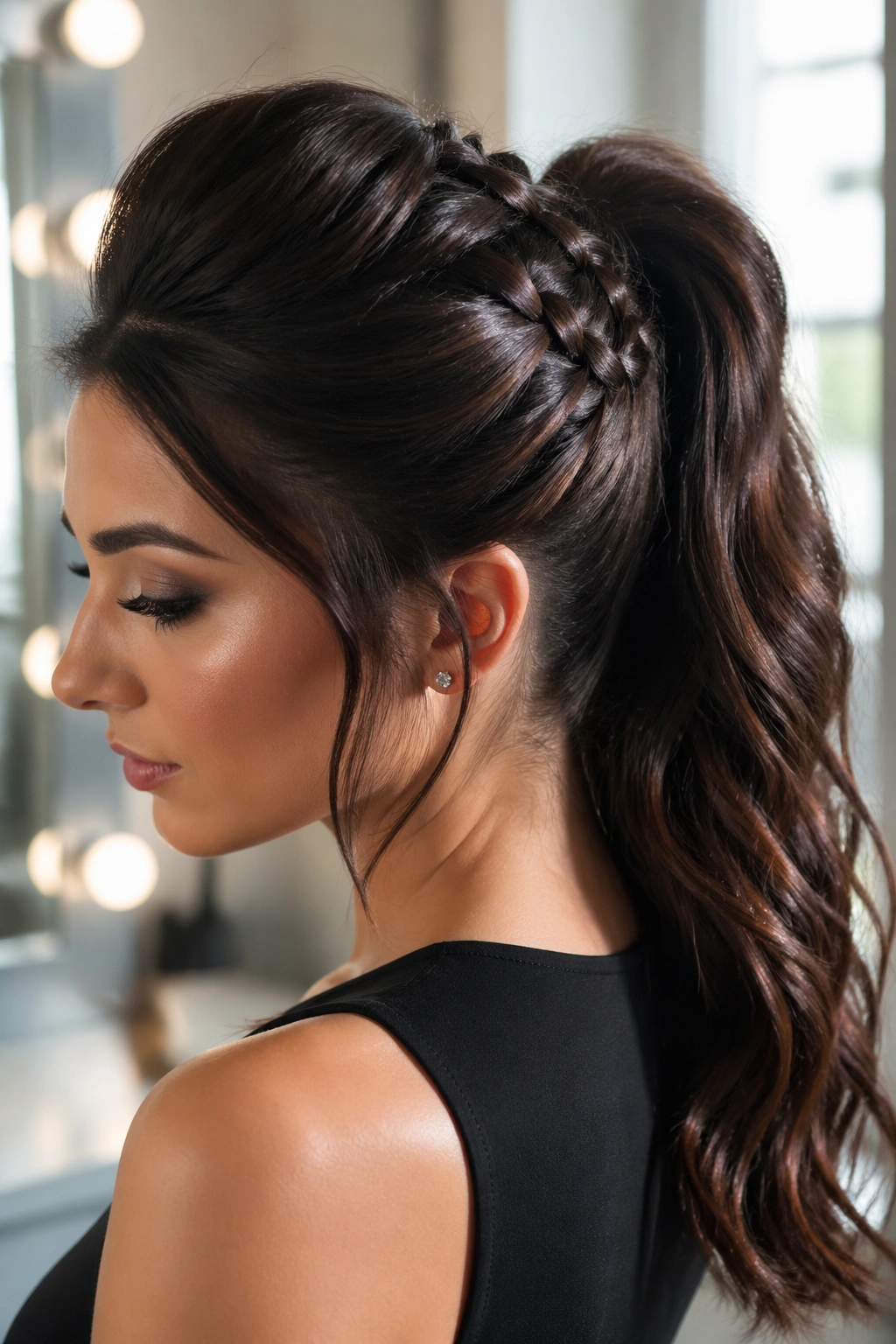
A little crown lift can save a high ponytail from looking too flat. Tease just the top inch of hair at the crown, smooth the surface lightly, and then start the French braid. That tiny bit of height makes the ponytail sit better on long thick hair.
Keep the Teasing Controlled
You do not want a nest. You want a cushion. Two or three backcombed passes are enough.
- Tease only the crown zone.
- Smooth the outer layer with a brush.
- Lock the base with a firm elastic.
This version is useful when your hair weighs down quickly at the top. It gives the braid a little lift before gravity takes over.
25. French Braid Ponytail With Beaded Ends
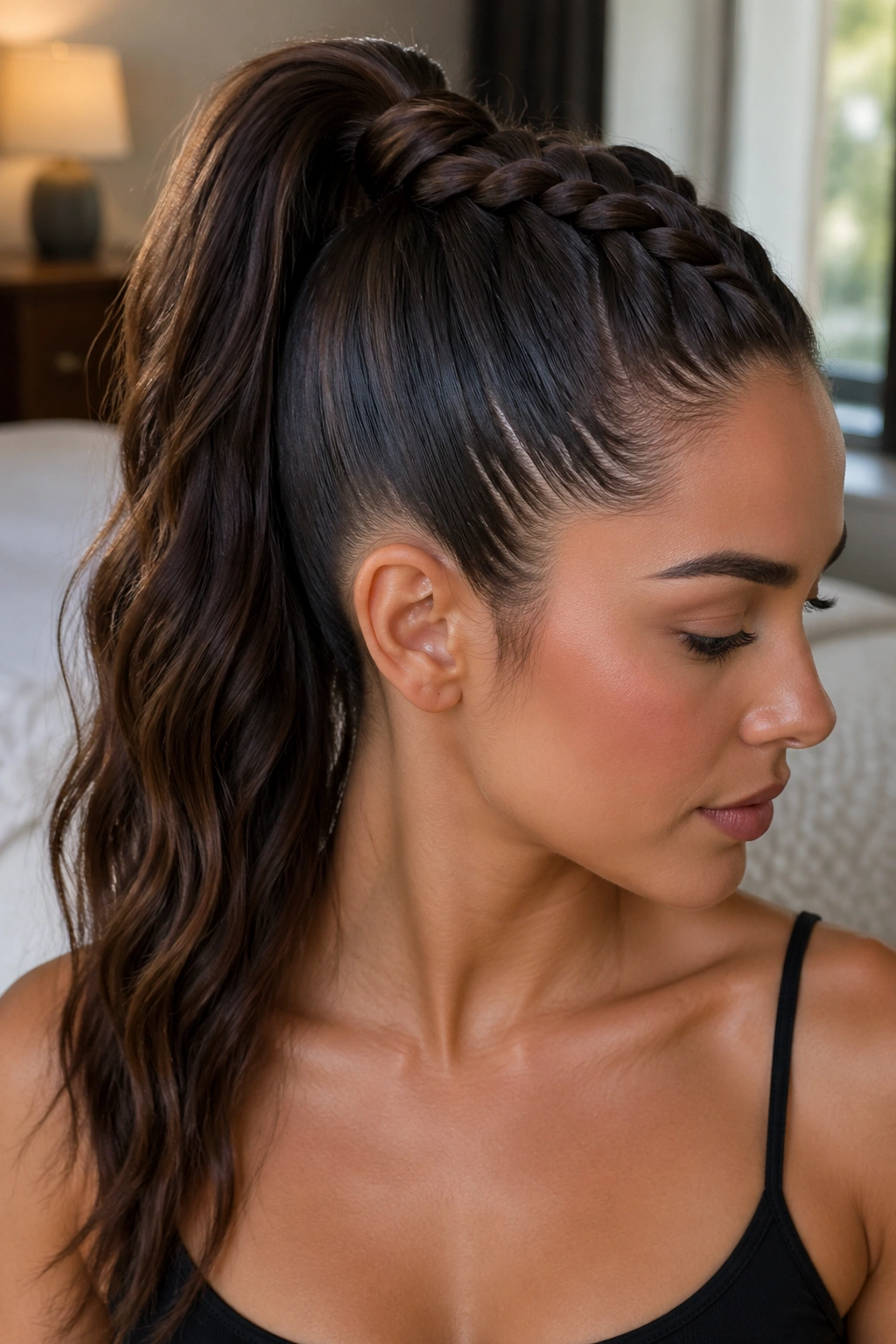
Beads are a fun move on thick hair because the ponytail can actually support them. A few small metal or wooden beads near the ends add weight and movement without needing much else. The braid keeps the top neat, and the beads finish the tail with a bit of personality.
I’d keep the beading concentrated near the bottom third of the ponytail. If you add them too high, the style can get stiff and clunky. A clear elastic under each bead section helps keep them from sliding.
This is a good choice when you want the braid to stay simple but the tail to feel intentional. It’s also one of the few styles here that looks more interesting the longer the hair is.
26. French Braid Ponytail With a Rope-Twist Finish
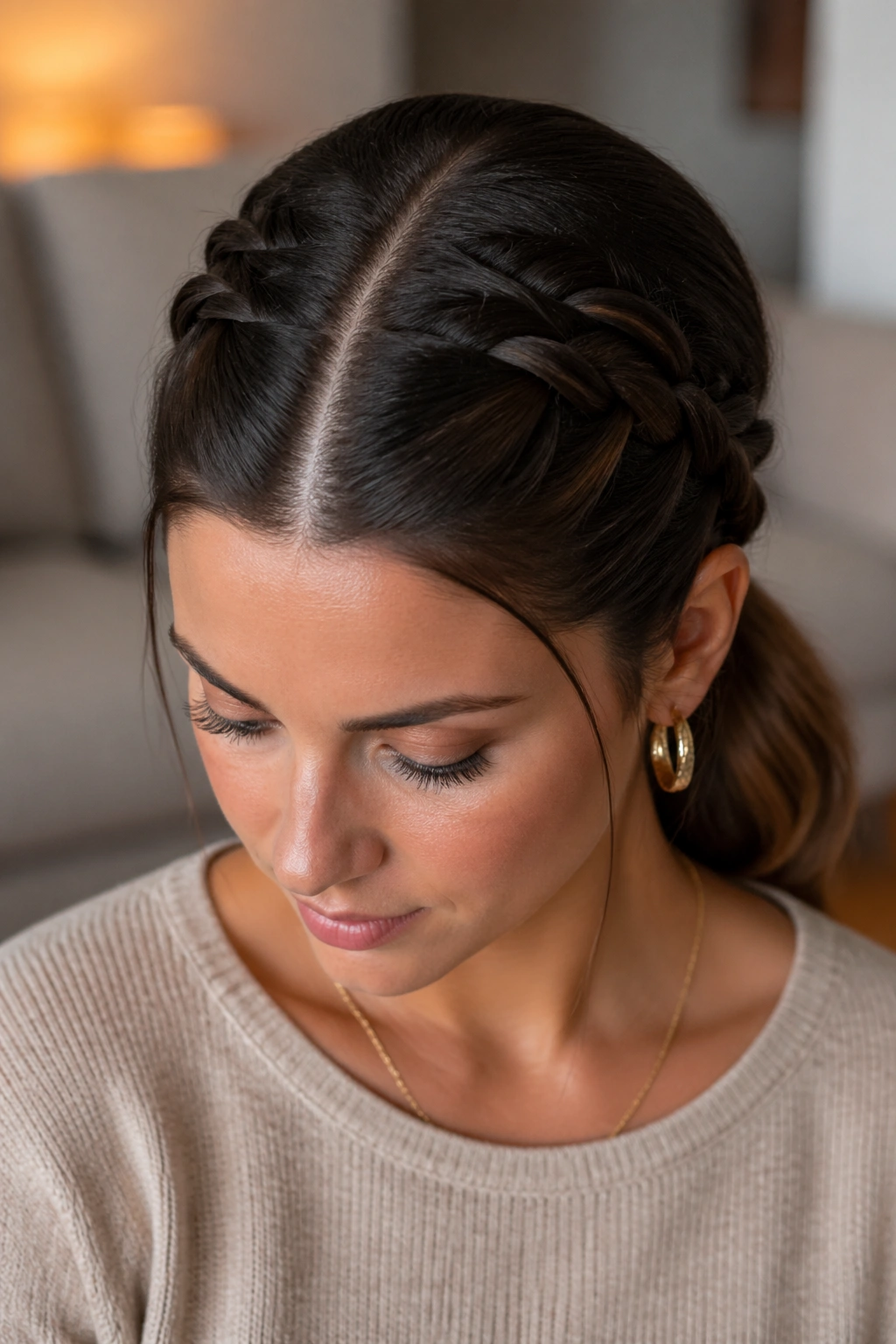
Why use a rope twist after the braid? Because it keeps the tail compact without losing shine. Once the French braid reaches the back of the head, split the ponytail into two sections and twist them around each other until they coil tightly.
Best For
This works best on long thick hair that gets puffy or frizzy at the ends. The twist reins that in without requiring a full braid all the way down.
A little smoothing cream on the ends helps the rope twist stay neat, but keep it off the scalp. Too much will make the braid slip. That part matters more than people think.
The result feels cleaner than a free-hanging ponytail and less fussy than a full braid.
27. Inside-Out French Braid Ponytail
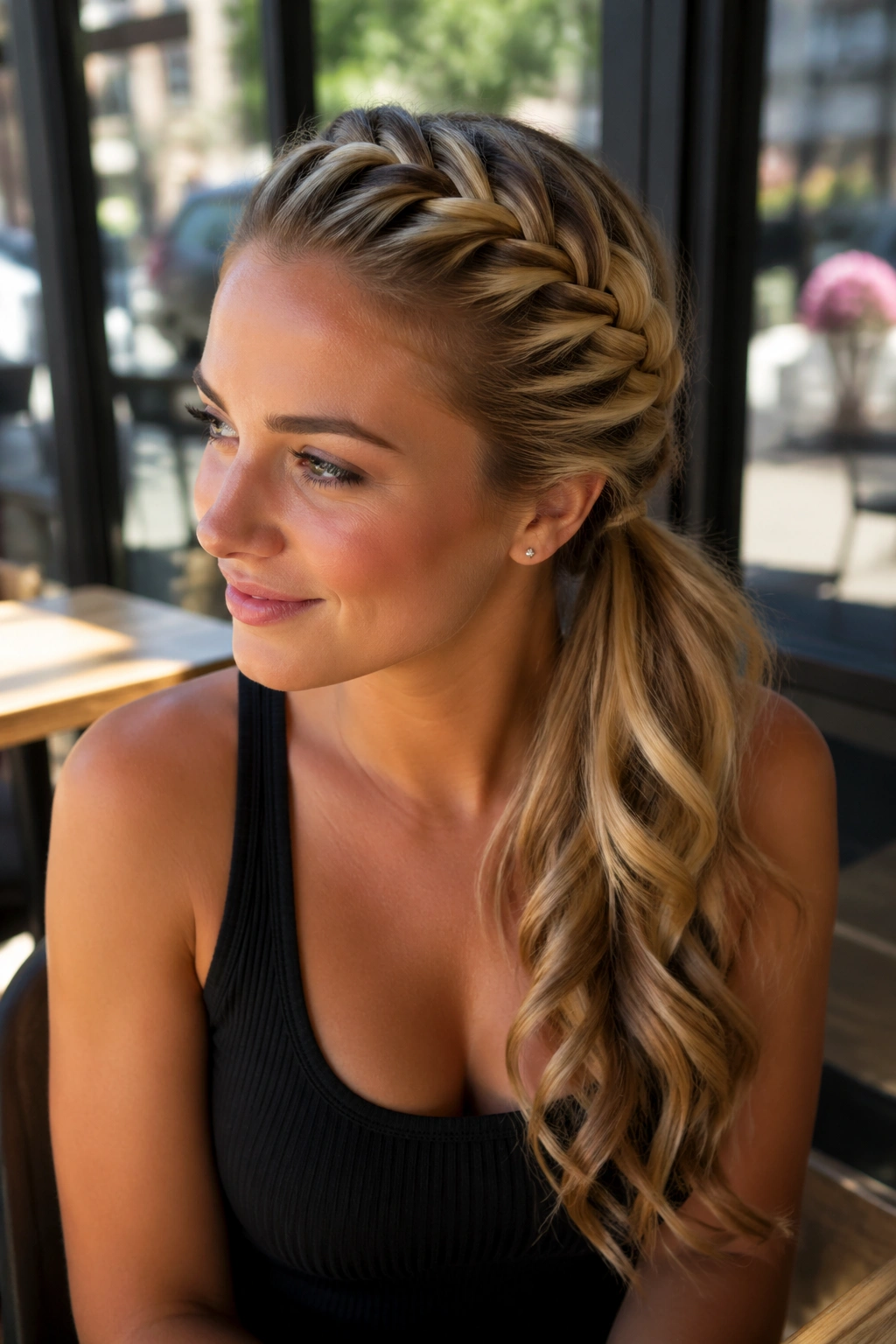
The inside-out version, often called a Dutch braid look, makes the braid stand proud instead of lying flat. On thick hair, that ridge can look bold in a good way. You get more visible texture right away, which is useful if your hair is dark or very dense.
What Makes It Different
A flat braid disappears a little into heavy hair. An inside-out braid sits on top of it. That raised shape gives the style more definition from the front and the side.
It’s best for people who want the braid to show. If you prefer subtle, skip this one. If you like texture, it’s worth the extra few minutes.
The ponytail can stay smooth or wavy. Either way, the braid carries the visual weight.
28. French Braid Ponytail With a Waterfall Front
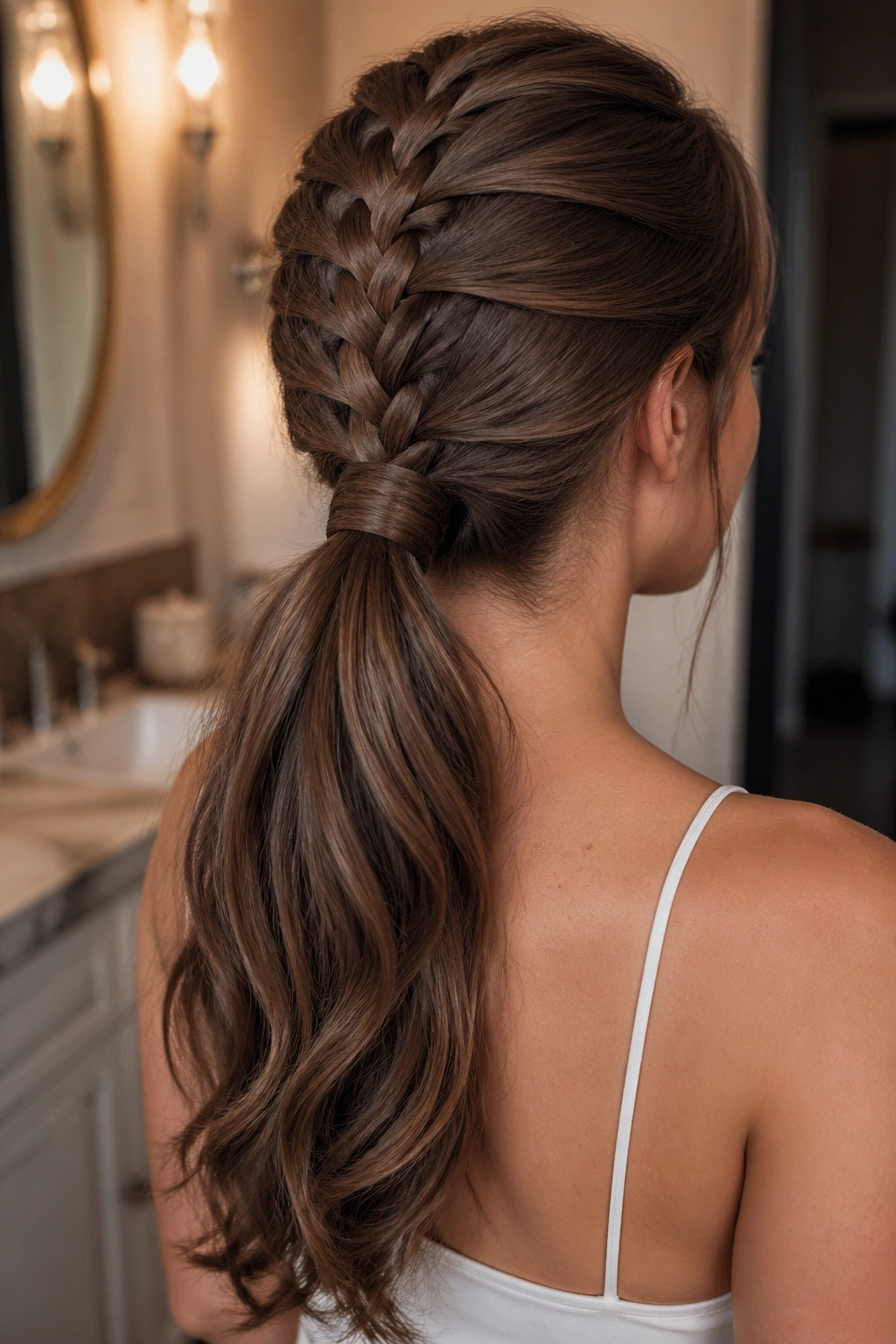
A waterfall front softens the braid before it even reaches the ponytail. Small sections drop through the braid near the hairline, creating a light, airy edge. Thick hair can handle that detail better than fine hair because the braid still has enough body left behind it.
Keep the waterfall pieces slim. Pencil-width is enough. If they’re too wide, the front gets messy fast and the whole style loses shape.
This version is a good middle ground for people who want some softness without letting the front fall apart. It looks especially nice when the ponytail has loose bends through the ends.
29. French Braid Ponytail With a Hidden Elastic Wrap
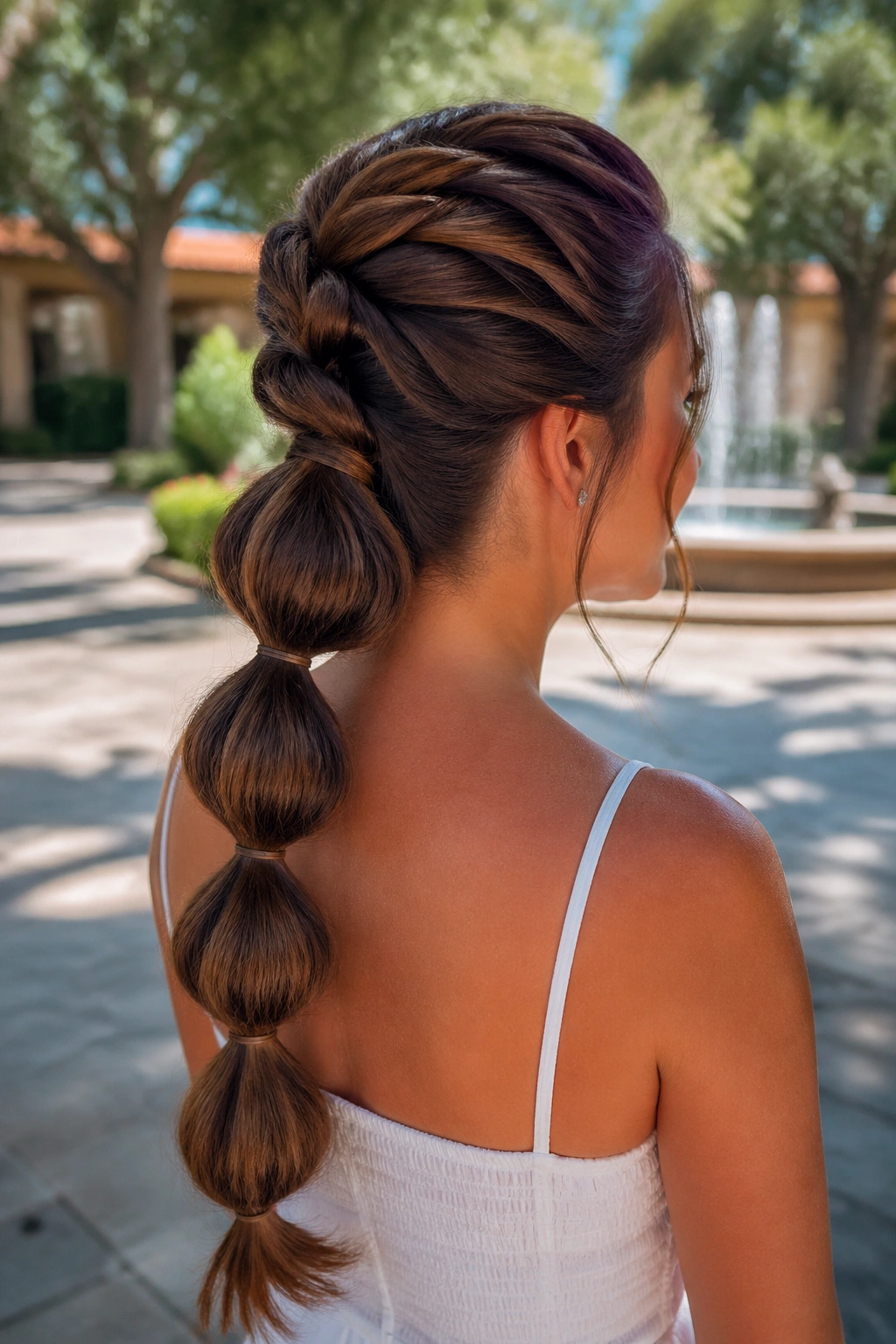
A hidden elastic wrap is for people who hate seeing the tie. The braid and ponytail stay simple, but a small section of hair wraps around the base and hides the elastic completely. On long thick hair, that finish looks cleaner than a visible band, especially if the ponytail sits low.
Unlike the ribbon version, this one keeps the line minimal. No extra texture. No decoration. Just a tidy base and a smooth finish. It’s a good pick for minimalist dressing or formal events where you want the hair to stay quiet.
Use one pin from below and one from the side. One pin alone can slip when the hair is heavy.
30. French Braid Ponytail With Loose Dutch-Like Edges
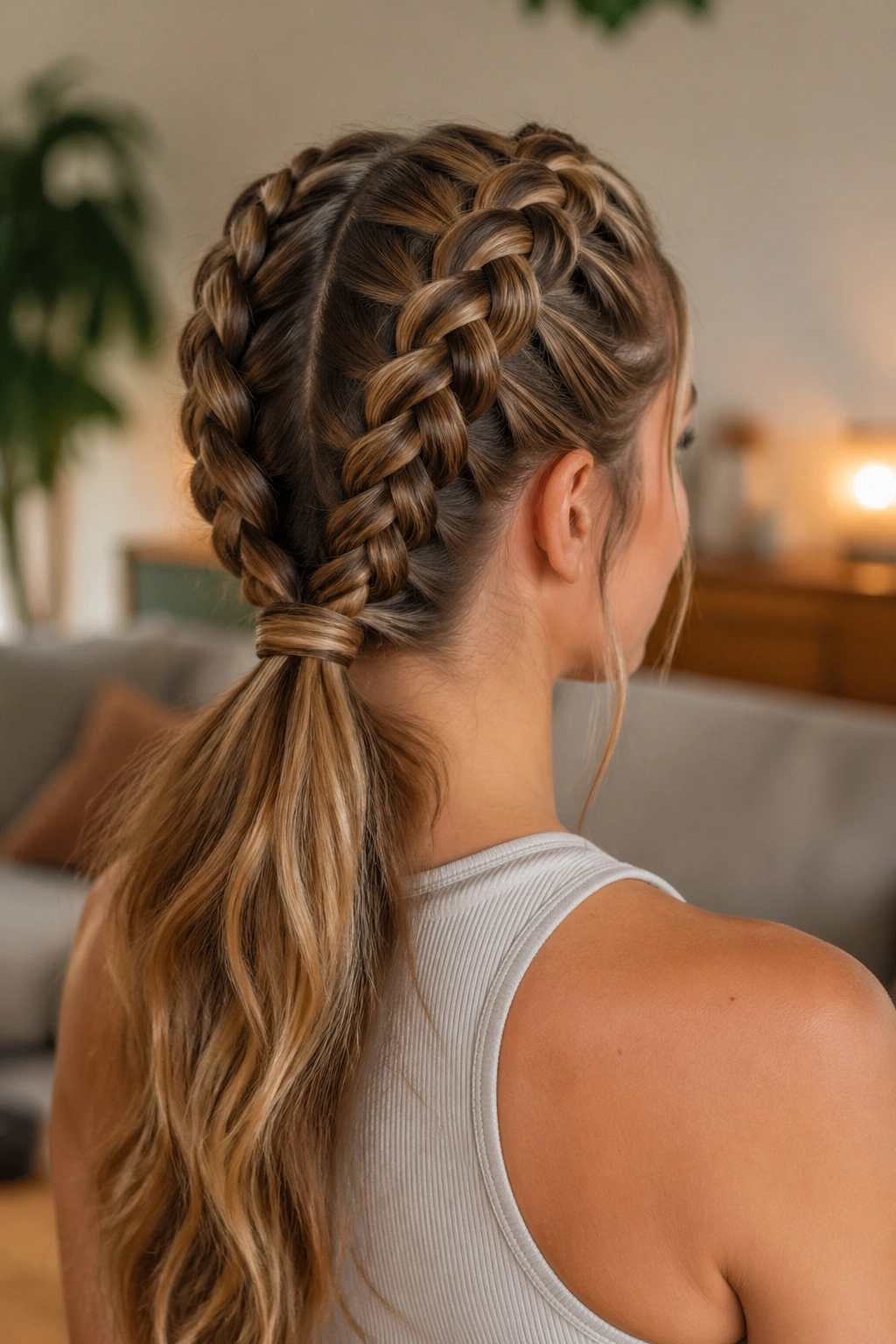
This style is all about opening up the braid without letting it fall apart. After braiding, pull only the outer loops of each section so the braid looks broader and softer. The center spine stays firm. That’s the part people sometimes miss.
How to Keep It Controlled
If you over-pull, the braid gets fuzzy and loses its shape. Stop as soon as the edges look a little wider than you expected.
- Pull gently from the bottom up.
- Use both hands if the hair is very dense.
- Leave the first 2 inches near the forehead alone.
This version works well when thick hair feels too compact in a straight braid and you want a little air around it.
31. Festival French Braid Ponytail With Micro Braids
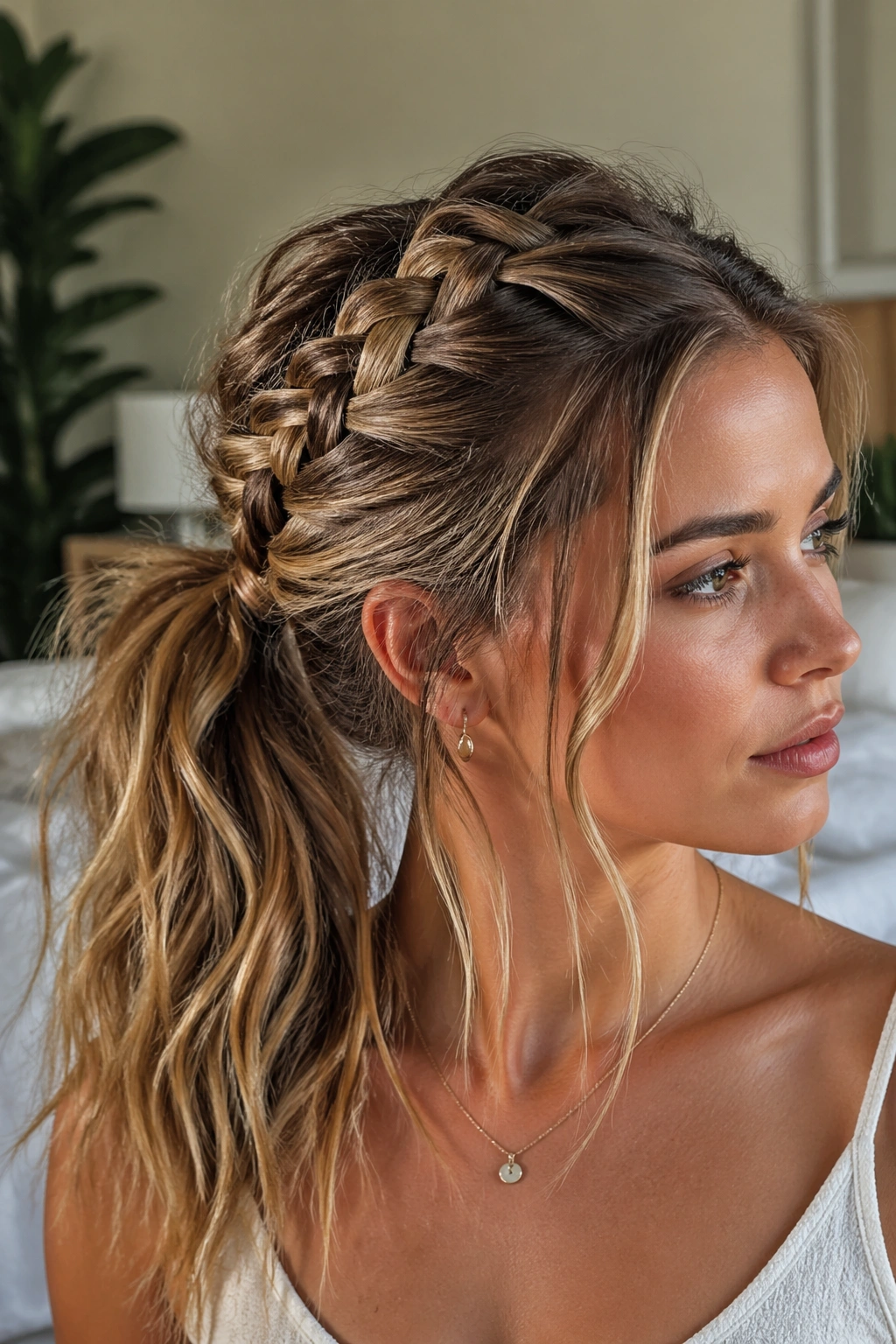
Micro braids add a lot of personality without taking over the whole head. Add four to six tiny braids around the crown or near the sides, then feed them into the main French braid ponytail. On thick hair, the contrast between the small braids and the larger braid reads clearly.
You can tuck the ends into the ponytail or let them blend into the tail. Either way, the style gets a little more texture and movement. Beads, cuffs, or colored elastics fit here too, but you don’t need them.
This is one of the few styles that can look busy in a good way. The trick is to keep the micro braids thin enough that the main braid still feels like the main event.
32. Sleek Low French Braid Ponytail With a Side Part
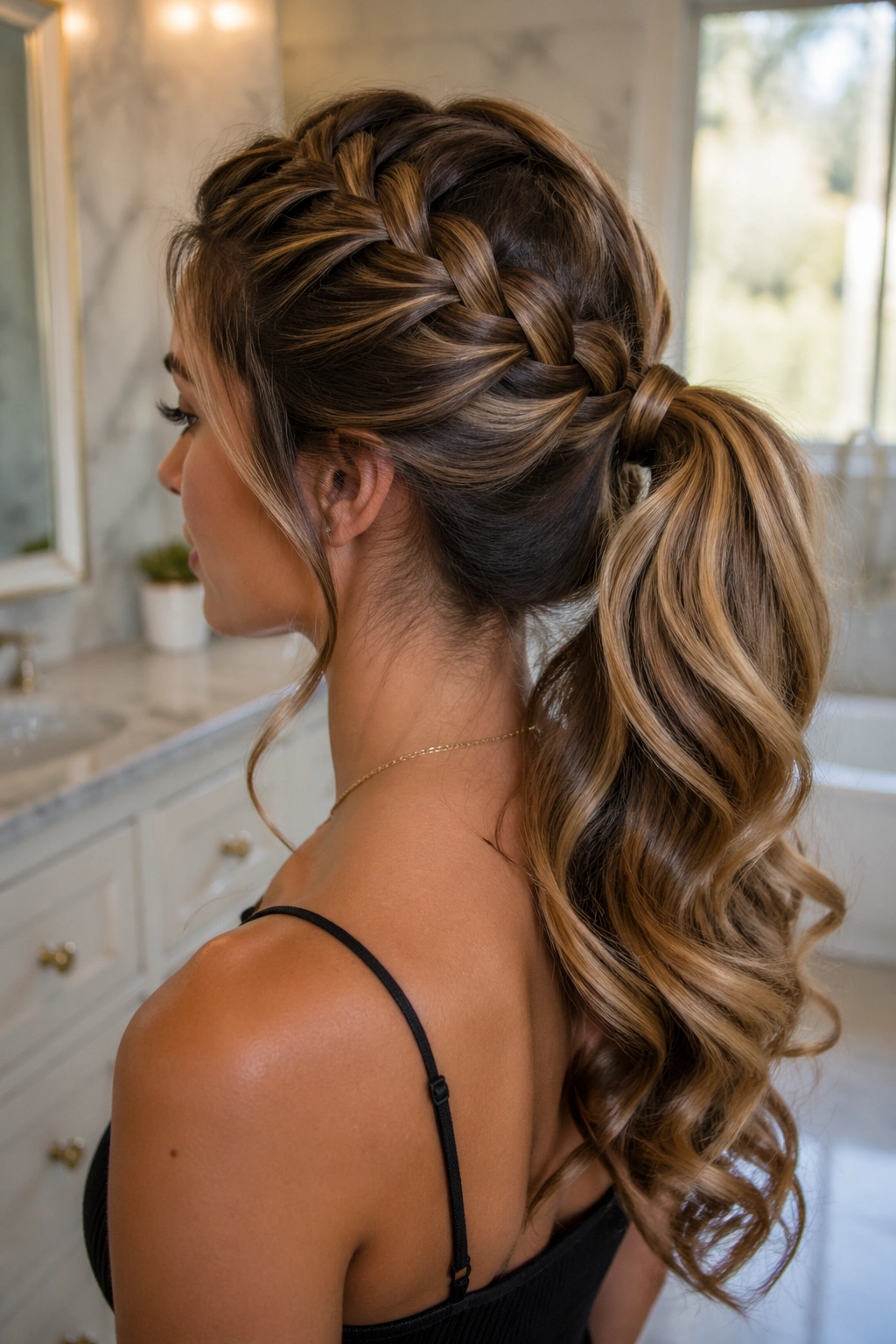
A side part changes the mood fast. It softens the line of a low French braid ponytail and gives the front a little sweep, which can be nicer than a strict center part when your hair is very thick.
This version is good when you want polish without stiffness. Smooth the top two inches with a brush and a touch of cream, then braid low and gather the tail at the nape. The side part keeps the crown from looking too flat or too severe.
It’s the kind of style that works for meetings, dinners, and days when you want to look composed without spending half an hour on your hair.
33. Full-Volume French Braid Ponytail With Soft Waves
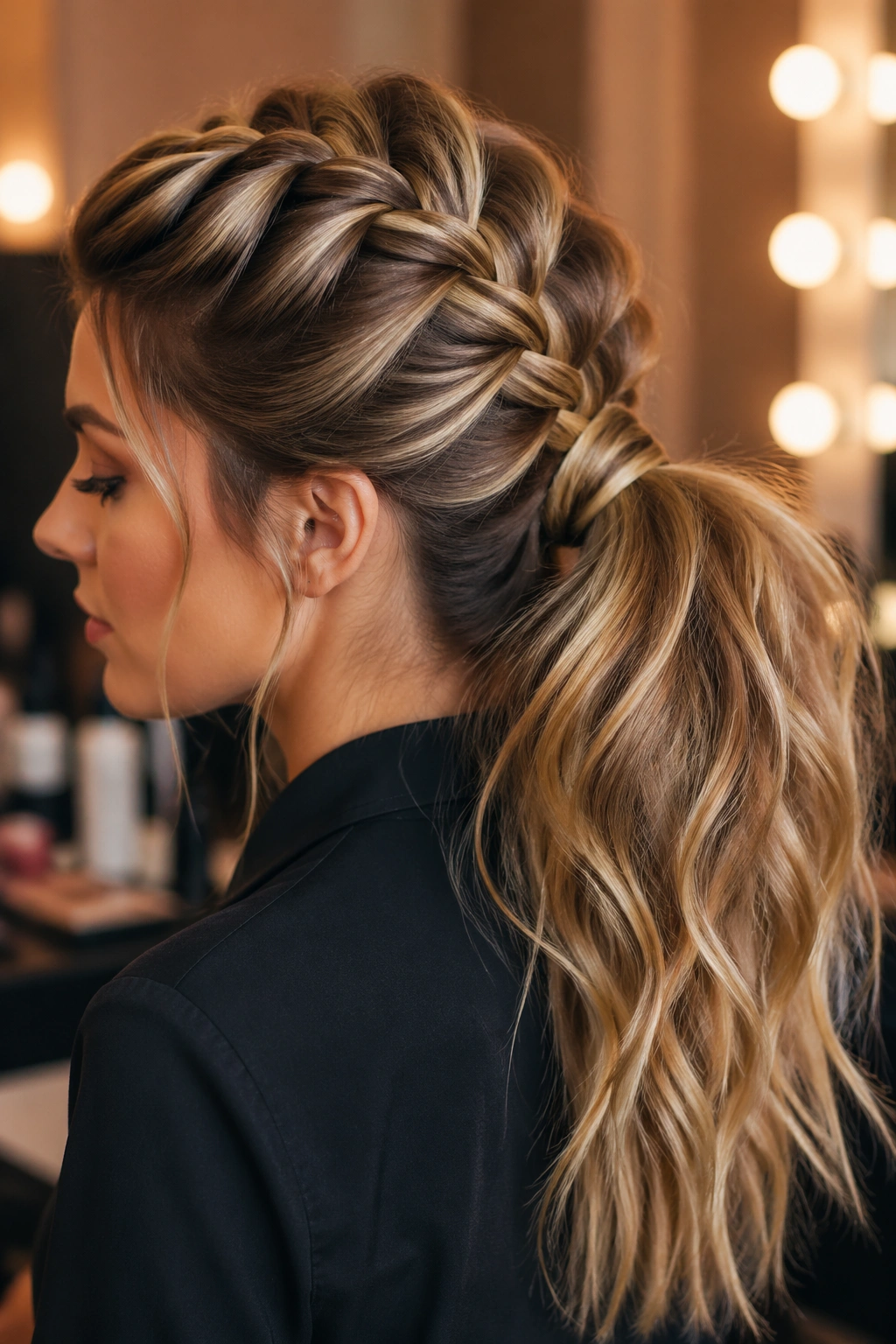
This is the big finish. The braid stays controlled at the top, but the ponytail is left full and wavy, which lets long thick hair do what it does best. You get structure near the scalp and softness through the length.
Why It’s a Strong Final Choice
Unlike the sleeker versions, this style leans into your hair’s body instead of fighting it. That’s a smart move when the hair is dense and naturally wants to take up space.
A 1.25-inch curling iron or a few overnight bends can give the tail enough shape without making it stiff. Leave the waves loose and touchable, not carved.
This is the one I’d pick when the goal is simple: make the hair look expensive, full, and a little effortless — without actually being careless.
Final Thoughts
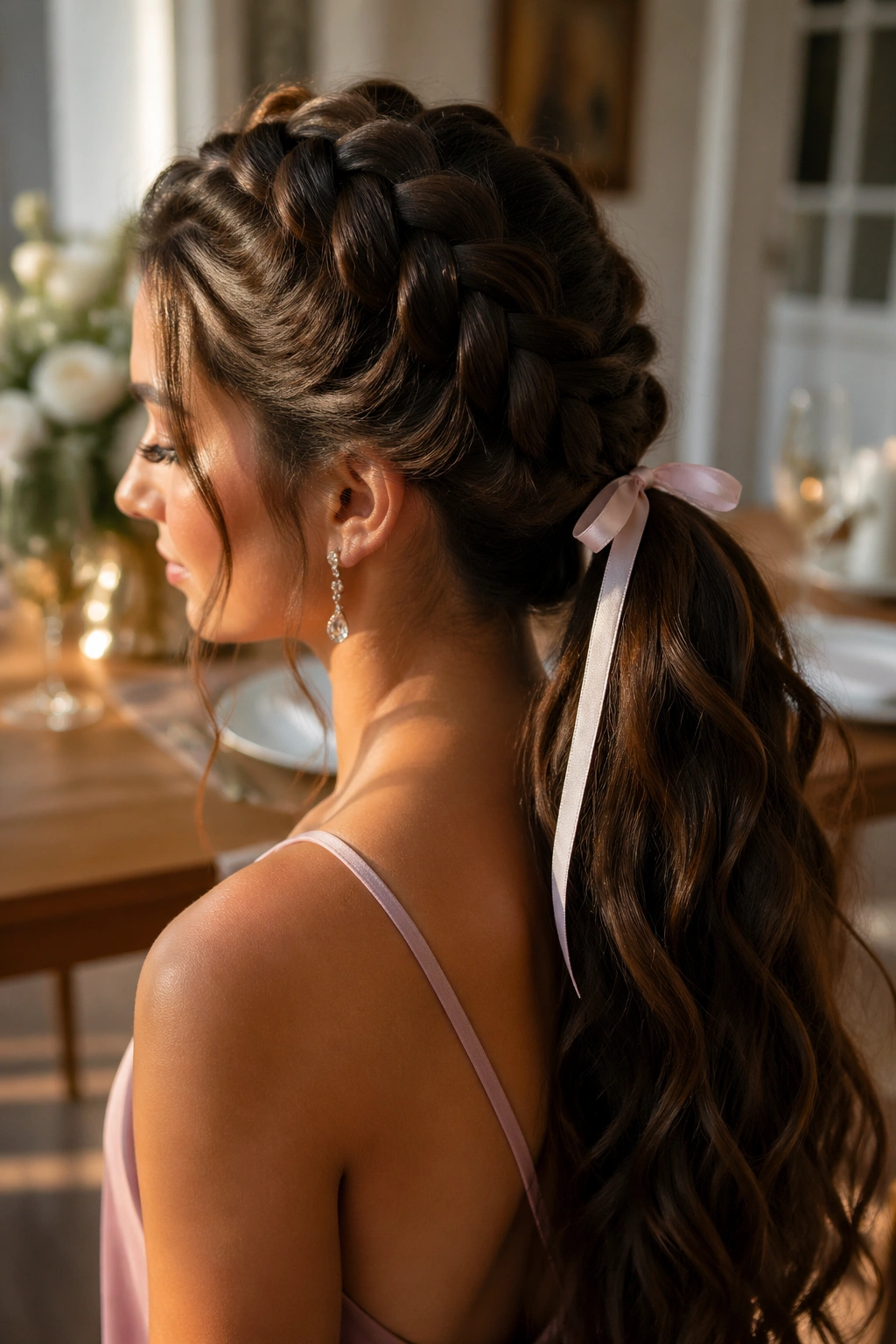
French braid ponytails are one of those styles that get better the more hair you have to work with. Thick lengths give the braid texture, weight, and a tail that doesn’t disappear after an hour. The real trick is choosing where to control the hair and where to let it move.
If your hair slips easily, start with grip at the roots and a strong elastic at the base. If your hair feels too heavy, shift the ponytail lower or stop the braid earlier. That tiny decision changes how the style wears, and it usually matters more than the braid pattern itself.
The best part is that you can keep these looks practical or push them a little dressier with one ribbon, one wrap, or one curl. That flexibility is why the French braid ponytail keeps showing up in real life, not just in photos.