



4C hair has a particular kind of beauty that doesn’t ask permission. It bends, coils, shrinks, and springs back with a mind of its own, and braids can either work with that energy or fight it. The difference shows up fast: a style that looks light on someone else can feel heavy on your scalp, while a smart parting pattern and the right braid size can make the same hair feel calm, neat, and easy to live in.
That’s why braid styles for Black women on 4C hair are never just about looks. They’re about tension, weight, edge care, sleep, wash day, and how much time you want to spend thinking about your hair before coffee. A good braid style should do two things at once: hold up in real life and still make you feel put together when you catch yourself in the mirror.
Some styles give you clean, simple lines. Others bring drama with beads, curls, or sharp parting. A few are low-effort favorites you can wear for weeks without getting tired of them. The best choice usually comes down to one question: do you want the style to disappear into the background, or do you want it to be the first thing people notice?
1. Classic Box Braids
Classic box braids are the style people return to when they want something that just works. The square parts, the uniform plaits, the easy pull into a bun or ponytail — it all adds up to a style that feels dependable without looking boring. On 4C hair, they’re especially useful because the sections can be sized to match your density, which helps the braid sit cleanly and keeps the base from feeling sloppy.
What makes them worth it is the balance. Medium box braids usually give you enough fullness to look lush, but they do not have to feel heavy if your braider keeps the parts sensible and the install neat. If you like changing your hair often, this is one of the easiest styles to switch up with clips, cuffs, beads, or a simple scarf.
A few things matter here:
- Stretch the hair first so the braids start smoother and the roots don’t puff up too fast.
- Ask for consistent part sizes if you want that crisp, finished look.
- Keep the ends sealed well so they do not unravel early.
If you want one braid style that fits almost any routine, this is the one.
2. Knotless Box Braids
Knotless box braids feel lighter at the scalp because the braid starts with your own hair and the extension hair gets fed in gradually. That small change makes a big difference. The base lies flatter, the first inch or two looks softer, and the style usually feels kinder to tender edges than a traditional knot.
The real appeal is comfort. You can wear knotless braids up, down, or in a half-up style without that stiff, bulky feeling at the root. For 4C hair, that can be a relief, especially if your hairline is delicate or you’ve had a rough time with tight installs before.
Why they’re a smart pick
Knotless braids are a strong choice when you want movement without the helmet effect. They also tend to look good for longer because the growth at the root blends in more naturally.
A few details help the style hold up:
- Part the hair cleanly but not too tiny; tiny sections can turn the install into an all-day event.
- Use lightweight braiding hair so the length stays manageable.
- Tell your braider not to pull the feed-in too tight at the first inch.
They’re not the fastest style to put in, but the comfort pays you back every day.
3. Jumbo Box Braids
Jumbo box braids are for the days you want impact without sitting in the chair forever. The sections are larger, the plaits are chunkier, and the finished style has a bold, sculpted feel that looks great on thick 4C hair. If your hair is dense, jumbo braids can actually make that density work in your favor instead of hiding it.
They’re also a good call when you want fewer braids to manage. Less counting, less styling time, less fuss when you’re getting dressed. But there’s a catch: the bigger the braid, the more you need to think about weight. A jumbo braid that’s too long or too heavy can tug at the scalp faster than people expect.
Keep them looking sharp by avoiding overloading the ends with extra hair. A shoulder-length or mid-back version often wears better than one that goes all the way down your waist.
4. Triangle Part Box Braids
Triangle parts change the whole mood of box braids. Instead of square sections, you get sharp little angles across the scalp, and the result feels cleaner and more graphic. It’s one of those styles that looks subtle from far away but catches the eye when someone gets close.
For 4C hair, triangle parts are a nice way to make a familiar braid style feel fresh without changing the braid itself. The parting does the heavy lifting. If you like neat rows but do not want the exact same grid everyone else wears, this is a smart switch.
The style works best when the parts stay even. Uneven triangles can look accidental rather than artistic, so the first sectioning matters more than people think. Bring a clear reference photo and ask the braider to map the parting before the first braid starts. That tiny step saves a lot of regret later.
5. Micro Braids
Micro braids are tiny, detailed, and not for the impatient. They give you a lot of styling freedom, but they also ask for a long install and a careful hand. On 4C hair, they can look beautiful because the fine plaits let the texture and length move in a delicate way that bigger braids can’t always match.
The downside is right there in the name: tiny braids mean more tension points if they’re done too tightly. If your edges are thin or your scalp gets sore fast, this is not the style to treat casually. It needs a braider who knows how to keep the parts neat without making the base cranky.
Micro braids are best if you want a long-wear style and you do not mind the upkeep. Night wrapping matters. So does keeping your fingers out of the roots every five minutes. The style rewards discipline.
6. Feed-In Cornrows
Feed-in cornrows are one of the neatest looks you can put on 4C hair. The braid starts slim and gradually picks up extension hair, so the row lays flat and looks smooth from the scalp down. That gradual build is what gives the style its polished feel. It also helps the braid sit closer to the head without that obvious lump at the root.
This is the style I’d point to for someone who wants structure. Gym days, work days, travel days — feed-ins handle all of them without asking much. They’re also a good base for ponytails, buns, or elaborate parting patterns if you want the braids to do more than sit there.
How to keep them neat
- Use a light gel or braid foam at the roots, not a thick paste that flakes.
- Wrap the hair at night to keep the rows from fuzzing up.
- Ask for part sizes that match your density so the braids don’t look cramped.
The style is simple. That’s the point.
7. Straight-Back Cornrows
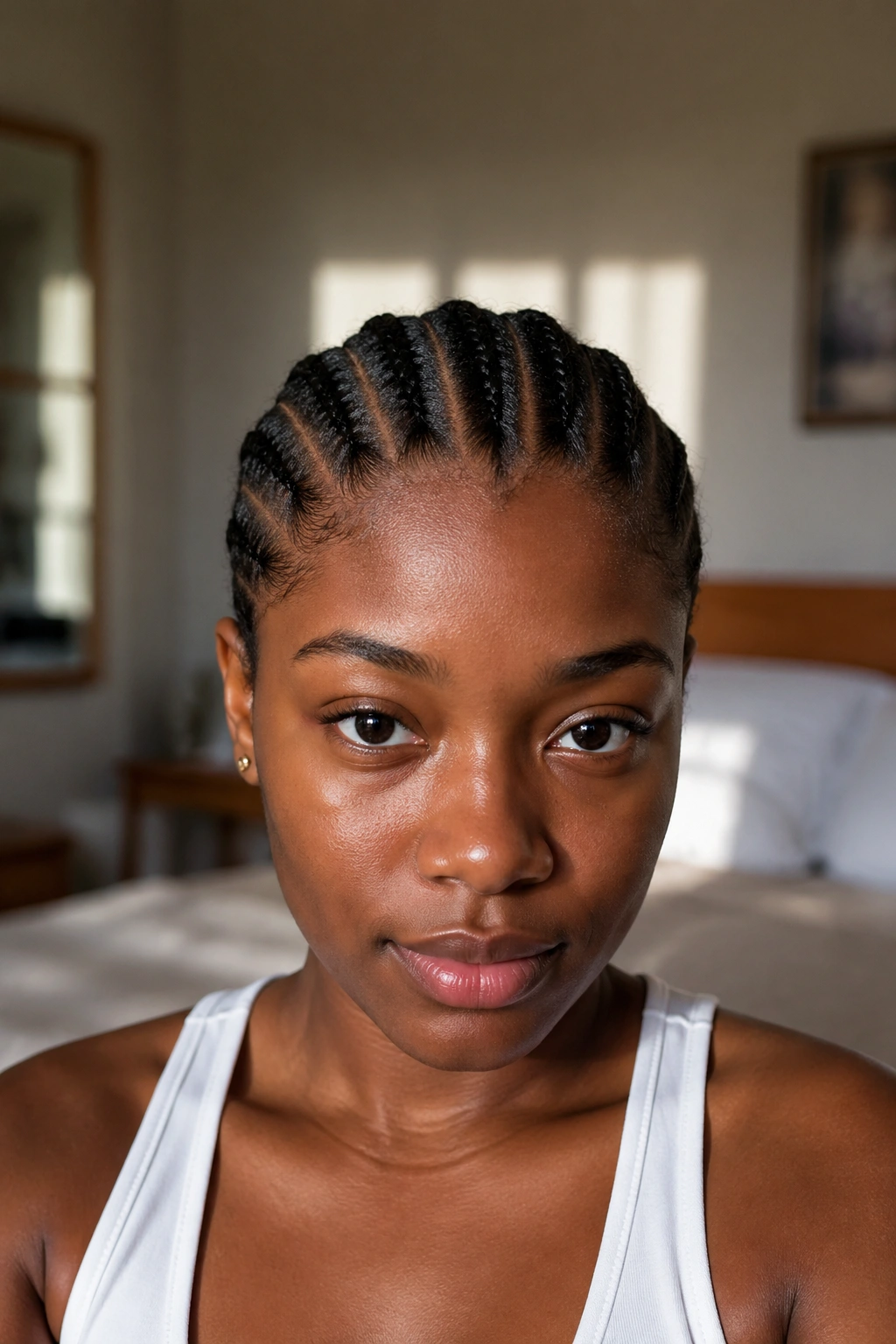
Straight-back cornrows are the plainspoken cousin in the braid family, and I mean that in the best way. They are fast, clean, and easy to live with. If you like a low-drama style that keeps your hair off your face and makes wash days manageable, straight-back rows are hard to beat.
The best versions on 4C hair are firm but not tight, neat but not overworked. You want the scalp to look orderly, not shiny with product or stressed by tension. They’re also one of the easiest styles to wear under a wig, under a hat, or as a base for another look.
A lot of people overlook them because they seem simple. Simple is good. Straight-back cornrows give you a clean slate, and sometimes that’s exactly what your hair needs.
8. Side-Swept Lemonade Braids
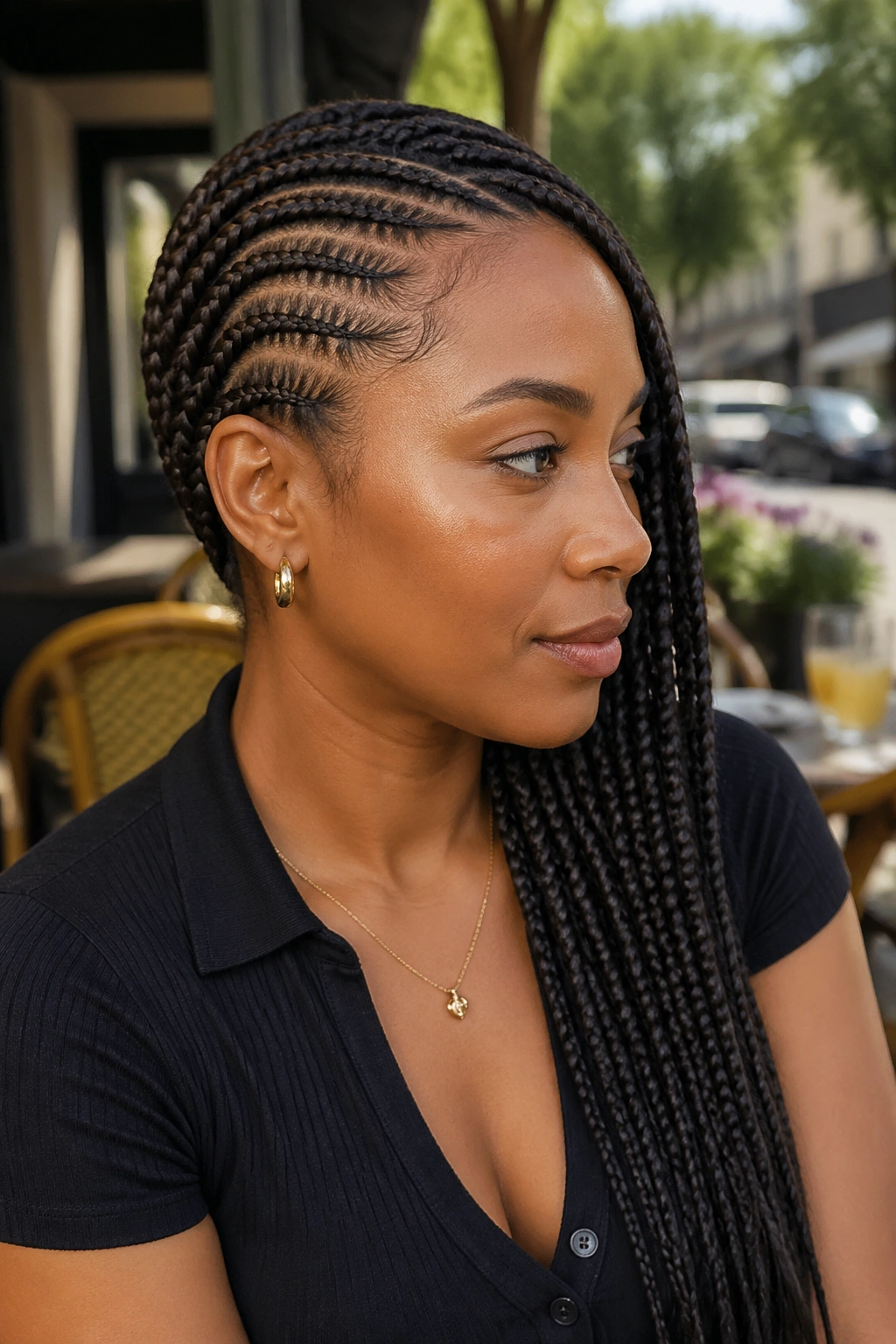
Side-swept lemonade braids bring the braid pattern across one direction, which gives the whole style a soft sweep and a little attitude. They’re flattering because the diagonal movement changes the shape of the face and keeps the look from feeling too boxy. On 4C hair, that angle can be a gift; it breaks up fullness in a nice way.
The style works especially well if you want braids that feel styled, not just installed. You can wear them long, short, with waist-length extensions, or with a sharper shoulder-length finish. The side part is the star here, so clean sectioning matters a lot. Messy parts can make the whole look lose its shape.
If you like braids that show motion even when you’re standing still, this is a strong choice. One side always feels a little more dramatic.
9. Fulani Braids
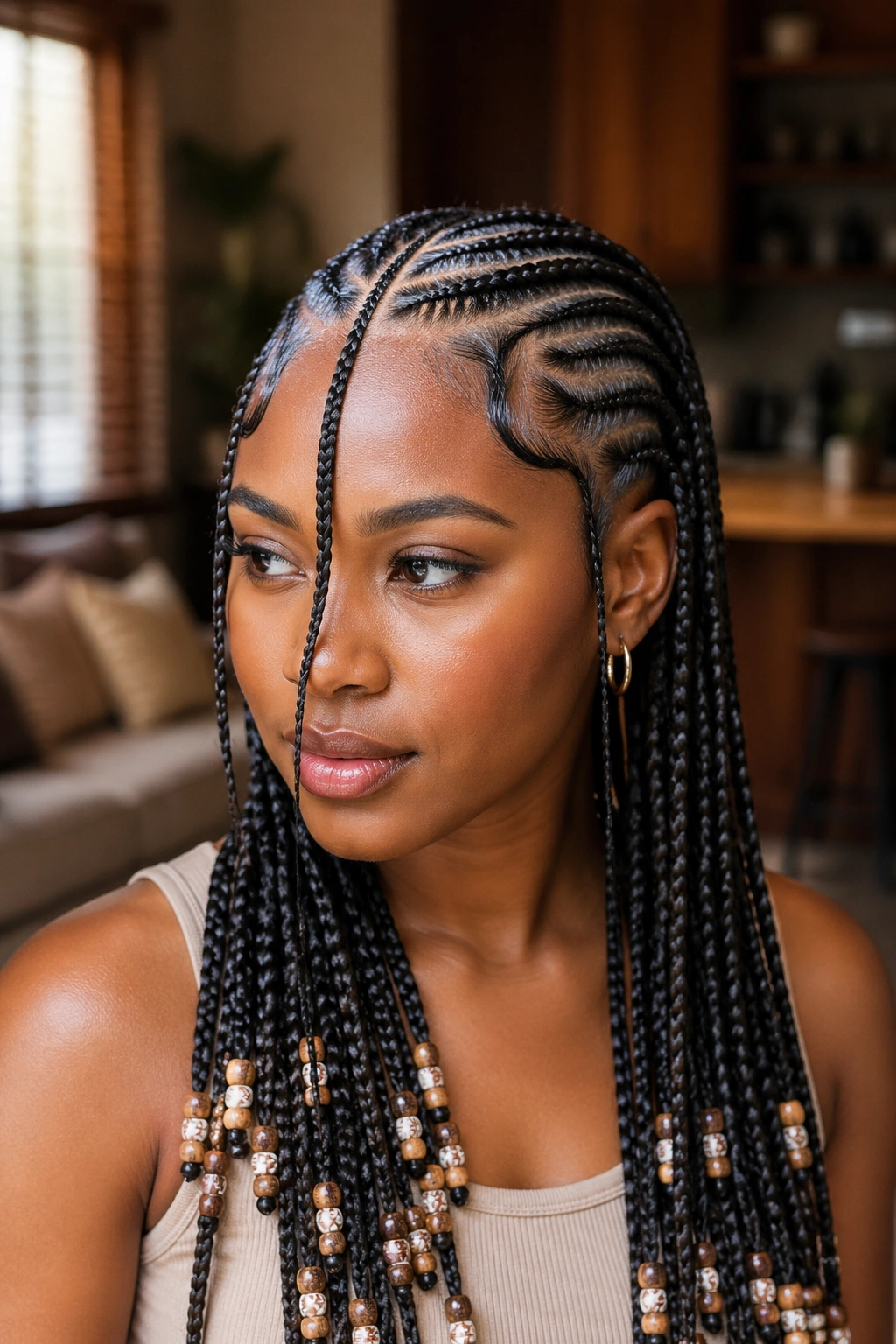
Fulani braids carry a lot of visual rhythm: a central braid or row, side cornrows, hanging plaits, and often beads or cuffs if you want them. The look has roots in West African styling traditions, and it has stayed popular because it can be both practical and beautiful at the same time.
On 4C hair, Fulani braids work well when the front sections are shaped carefully. The style leaves room for decoration, but it also needs restraint. Too many beads on fine sections can drag the front down. Too many tiny braids can crowd the pattern. A good version feels balanced, not overloaded.
I like this style for people who want braid art with a clear structure. It has personality built into it. If you wear beads, keep the weight reasonable and place them where they won’t tug the same spot all day.
10. Tribal Braids
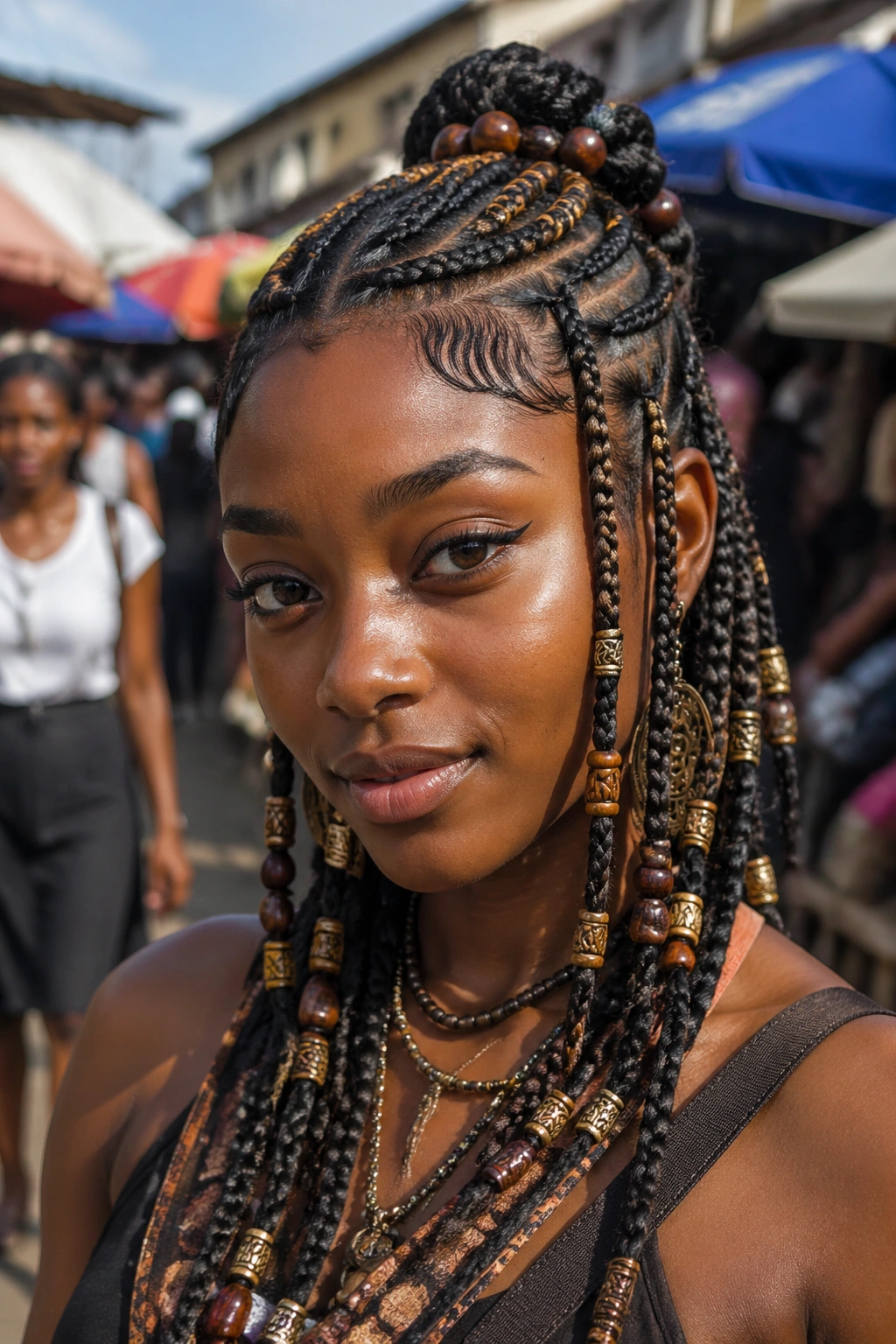
Tribal braids are less about one fixed pattern and more about mixing cornrows, hanging braids, and decorative details into one coordinated look. That freedom is what makes them fun. You can keep them minimal, or you can layer in different braid sizes, beads, curls, or part shapes.
Compared with Fulani braids, tribal braids give you more room to improvise. The style can be neat and symmetrical or more expressive and loose. On 4C hair, that flexibility is useful because not every head wants the same braid density across the scalp. Some areas may need smaller sections; others can handle chunkier rows.
The key is planning. Tribal braids look best when the mix feels intentional. A little chaos is fine. Randomness is not. Ask your braider to sketch the pattern first if you want the style to land the way it should.
11. Ghana Braids
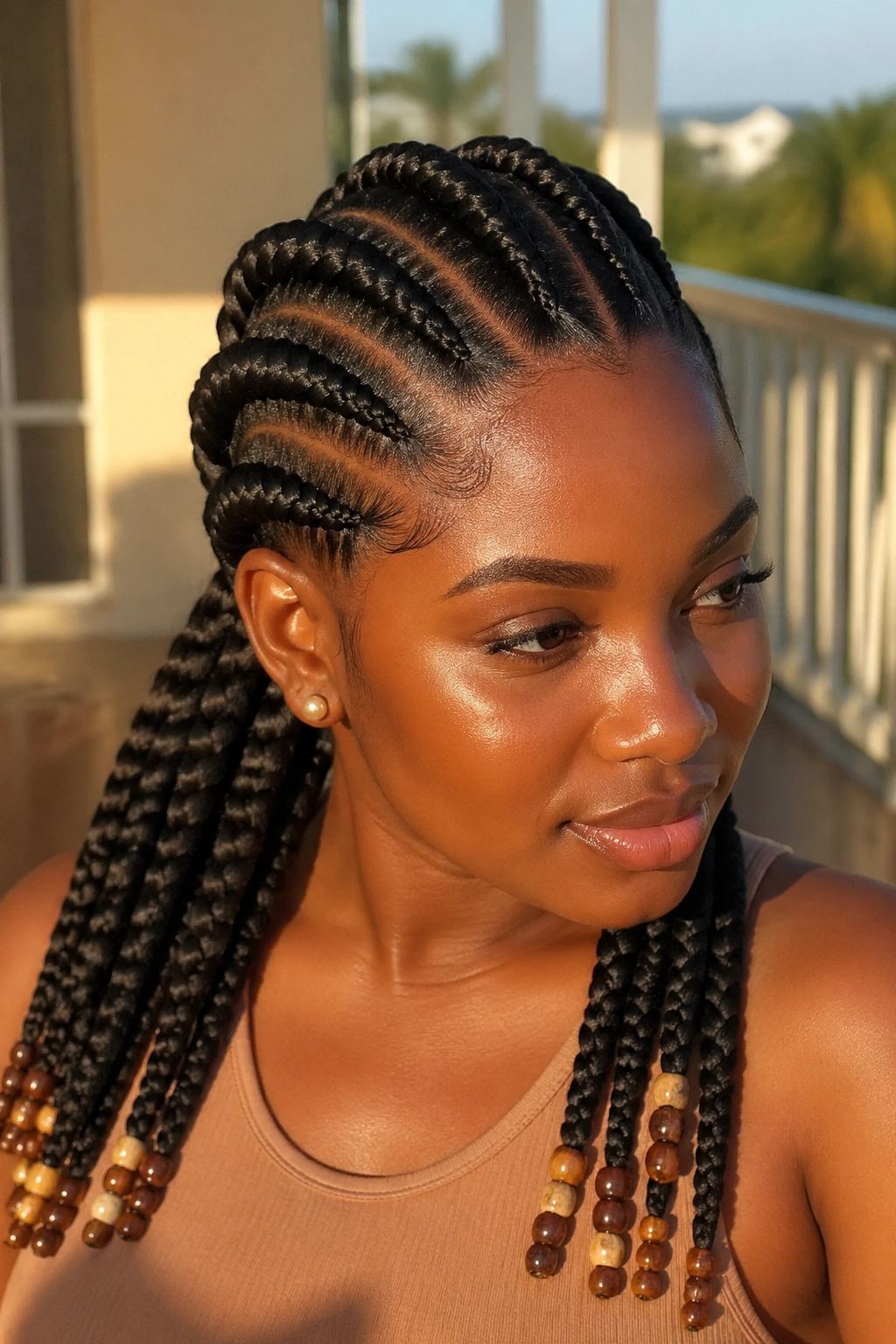
Ghana braids are thick feed-in cornrows that rise from the scalp with a clean, sculpted look. They are one of the best braid styles for people who want strong lines and a bold finish without loose braids hanging everywhere. On 4C hair, they can look especially rich because the thickness of the hair gives the rows real body.
What makes them different is the size and shape. Ghana braids often start narrow and get wider as hair is fed in, which gives the braid a sleek, raised ridge effect. That shape looks great when the parts are precise and the rows follow the curve of the head.
What to watch for
- Do not let the braid start too tight at the edge; the first inch should feel secure, not sharp.
- Choose a braider who can keep the feed-in even so the rows don’t look lumpy.
- If you want longevity, keep the lengths moderate rather than pushing the weight too far down.
They have presence. That’s the appeal.
12. Stitch Braids
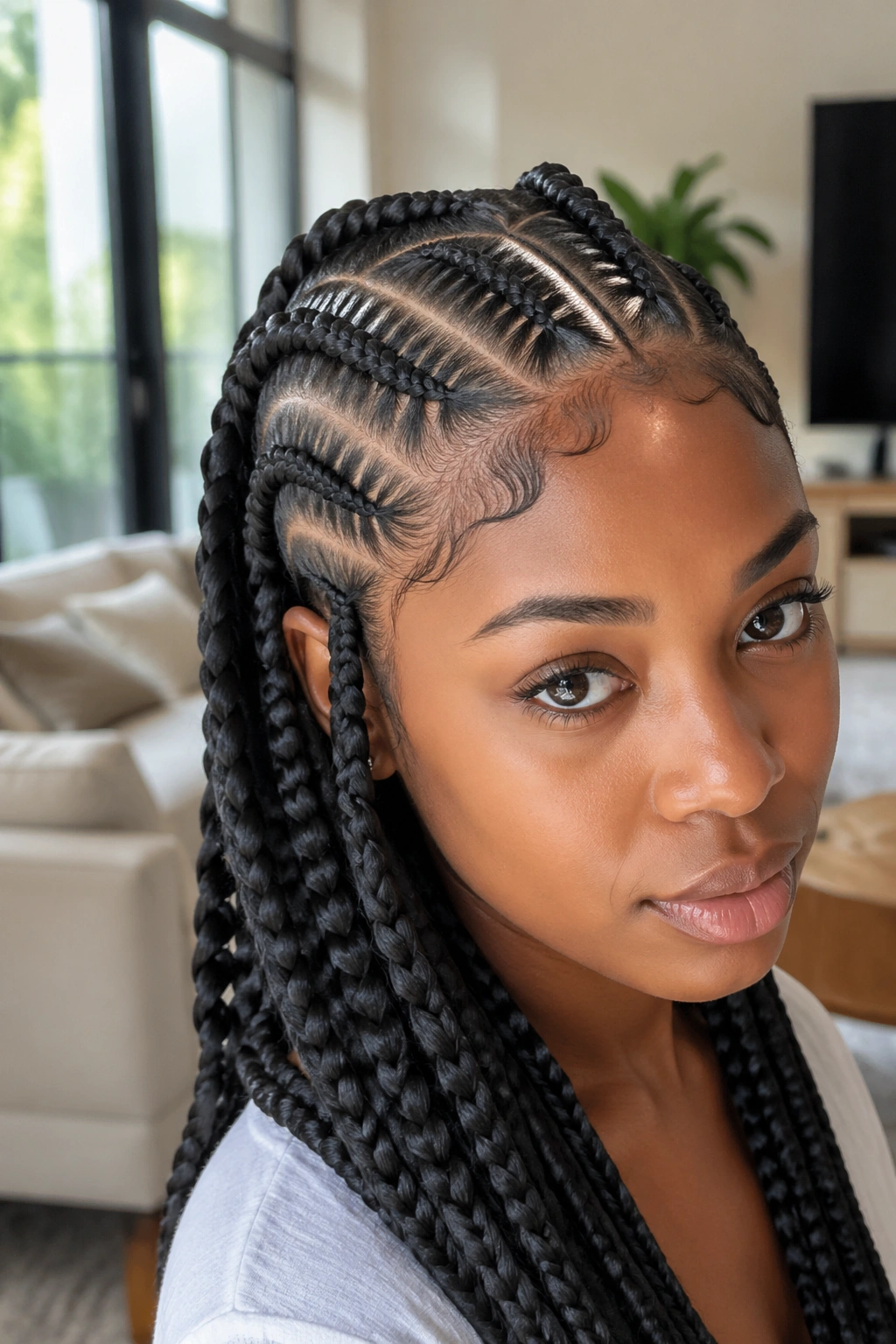
Stitch braids are all about the parting. The rows are separated into clean “stitch” sections that make the scalp look patterned and deliberate, almost like neat little rails running across the head. On 4C hair, that precision gives the style a polished edge that can read sleek, sporty, or dressed up depending on how you finish it.
These braids stand out because of the lines. The braid itself may be simple, but the sectioning does the talking. If you like a style that looks expensive without needing extra decoration, stitch braids are a solid answer. They hold up well in ponytails too, which is part of why they’re so loved.
How to wear it
- Keep the roots smooth with a light gel and a rat-tail comb.
- Ask for clean, even stitch spacing so the pattern stays sharp from front to back.
- Pair them with a low ponytail or long plaits if you want the lines to show.
The style can look sleek or bold. It depends on how hard you lean into it.
13. Goddess Braids
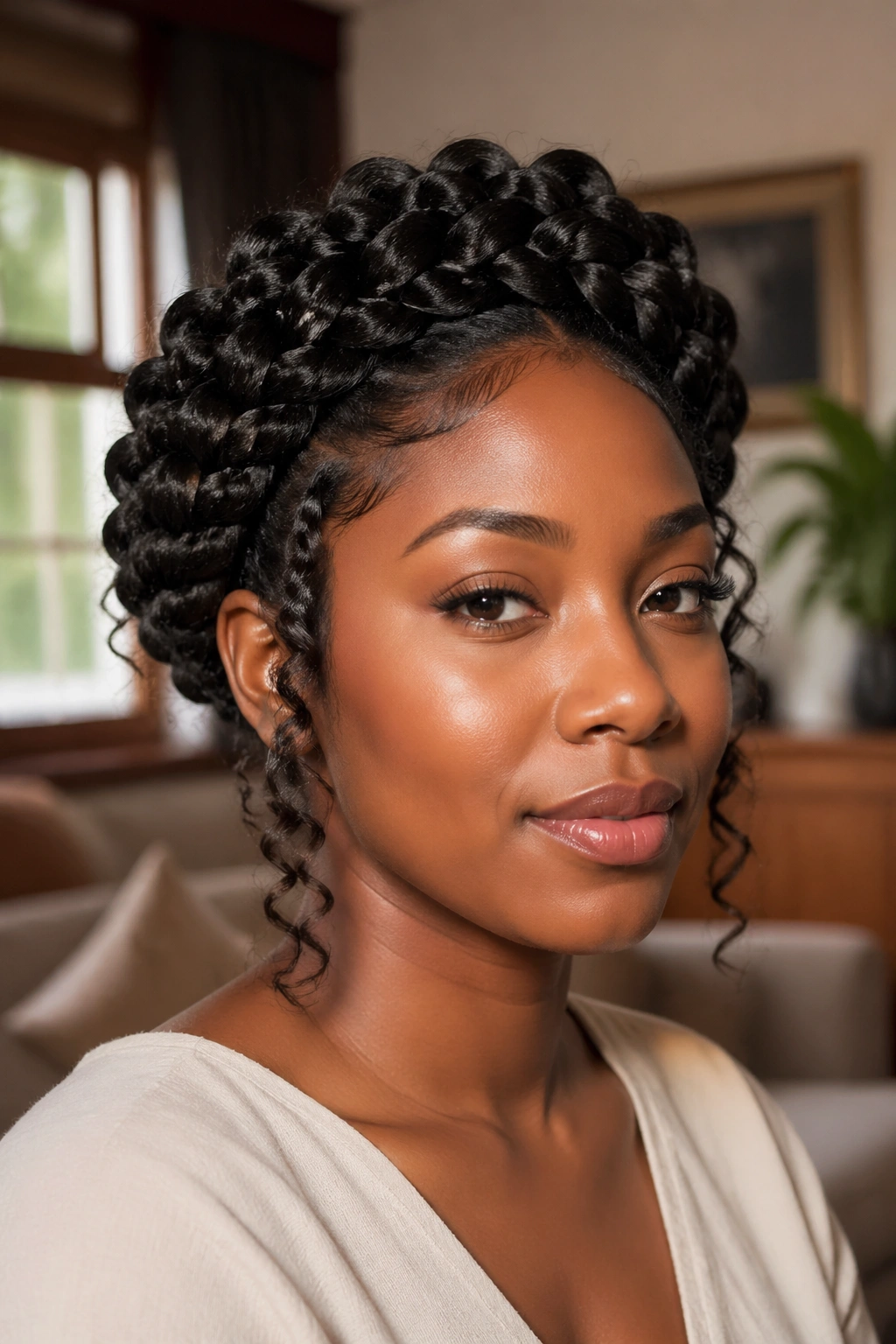
Goddess braids have a softer, fuller feel than tight scalp rows, and that’s why a lot of people reach for them when they want something pretty without looking severe. They’re usually thicker, sometimes wrapped, and often finished with a touch of braid-and-curl detail. On 4C hair, they sit beautifully because the texture can support that sculpted, plush shape.
They’re also one of the more forgiving styles for dressy events. A braided crown of goddess braids can feel formal without being stiff. A low style can feel elegant without looking overdone. The braid size matters here: too tiny and the style loses its softness; too huge and it can become heavy fast.
If you like braids that read graceful and practical at the same time, this one deserves attention. It has presence, but it doesn’t shout.
14. Boho Knotless Braids
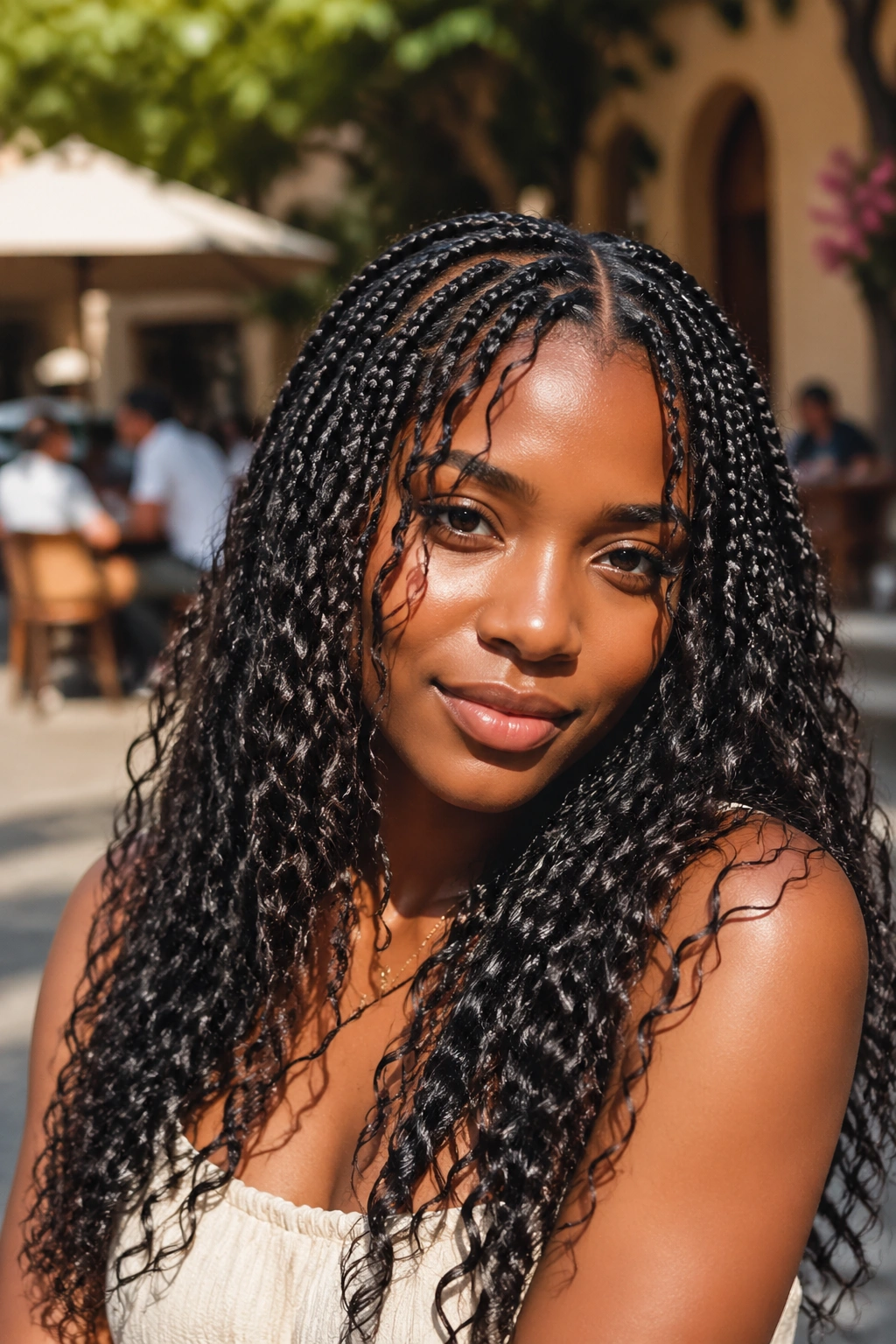
Boho knotless braids mix the flatter, lighter base of knotless braids with loose curly pieces left out through the length. The result is airy and touchable. Instead of one clean rope from top to bottom, you get movement, bits of curl, and a little looseness that softens the whole look.
This style can be gorgeous on 4C hair because it balances structure with texture. The braids keep the hair protected while the loose pieces make the style feel less rigid. That said, the curls need care. If you ignore them, they frizz. If you drench them in heavy products, they go limp.
Use a light mousse and a satin scarf at night if you want the curls to last. This is not the style to install and forget. It wants a bit of attention, and it gives you a more relaxed finish in return.
15. Butterfly Braids
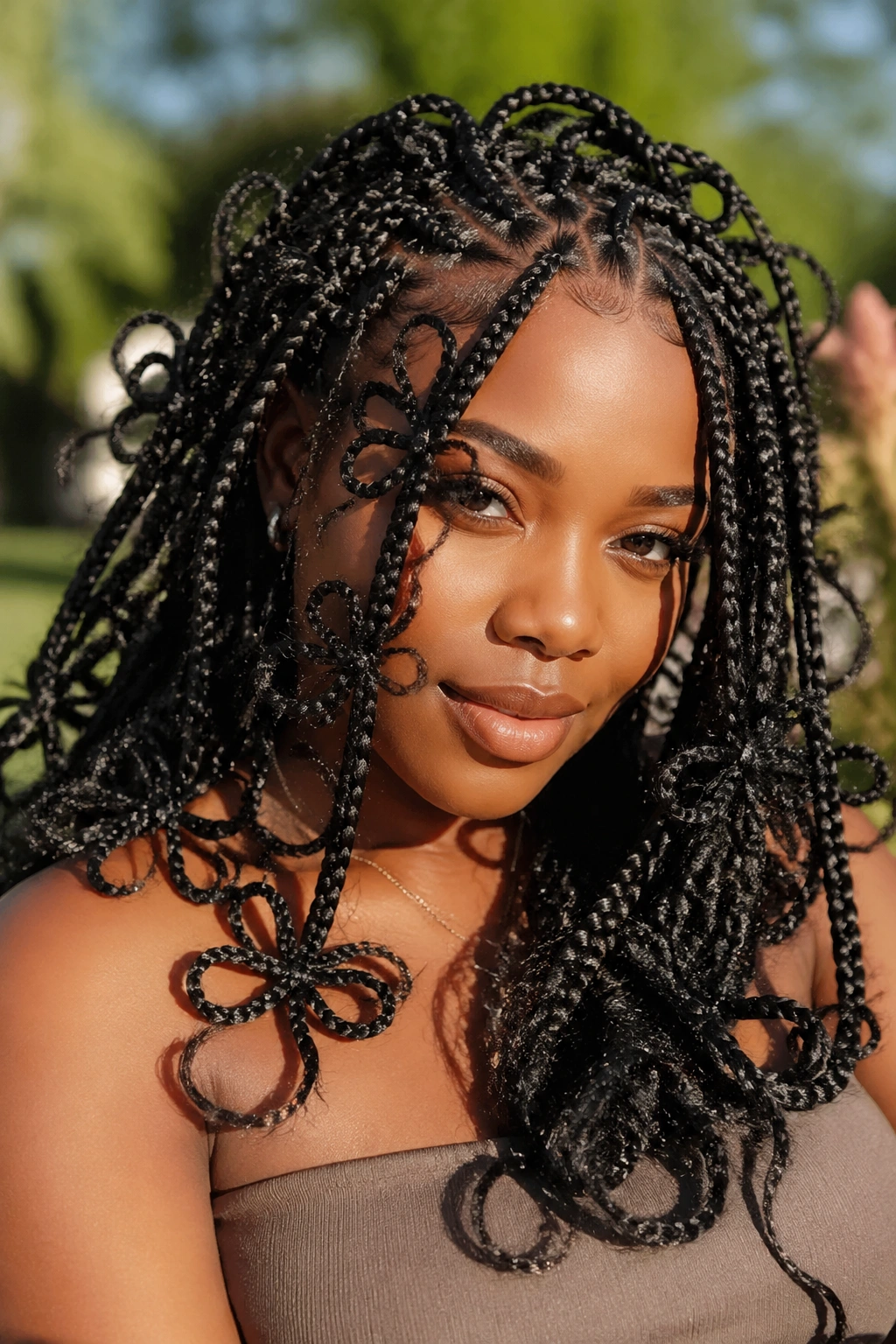
Butterfly braids are soft, full, and a little undone in the best possible way. They’re built to look airy, with looped sections or pulled-out pieces that create texture without making the braid fall apart. The effect is fuller than a plain braid and less rigid than a clean, polished plait.
On 4C hair, butterfly braids can look especially rich because the added texture plays nicely with natural density. The style doesn’t need perfect symmetry to work. In fact, too much perfection can flatten what makes it interesting. The loops and lived-in pieces are the point.
If you want braids that feel romantic but not fussy, this is a good lane. They do ask for a gentler hand when it’s time to detangle or refresh them. Pull too hard, and the loose texture turns messy fast.
16. French Curl Braids
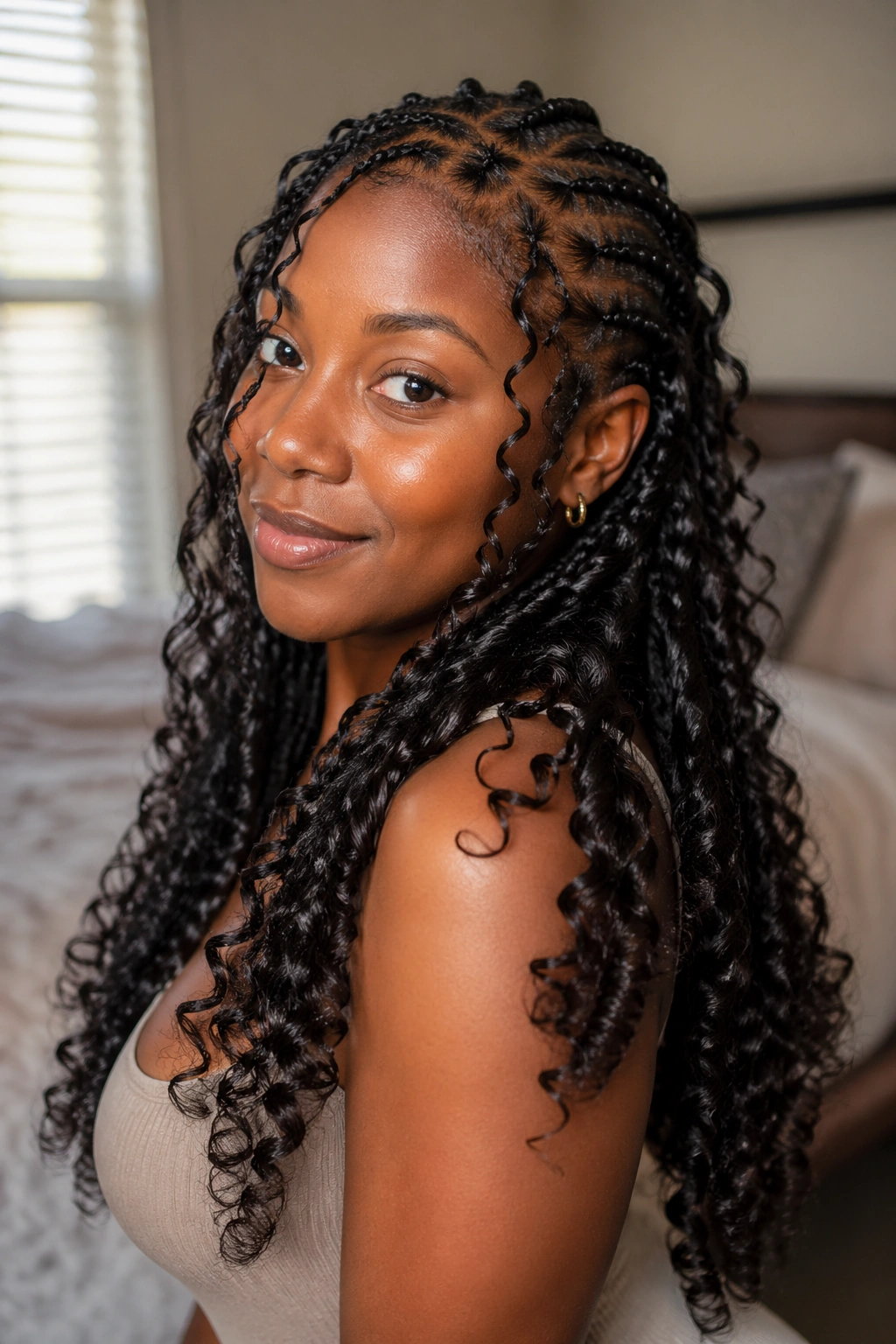
French curl braids finish with long spiral curls at the ends, and that one detail changes the whole mood. The braids still give you the order and control of a protective style, but the curled ends soften the finish and add motion. On 4C hair, that mix can look especially flattering because the texture contrast feels deliberate.
The ends are the part that need respect. Curl pieces tangle if you rough them up, and they look tired if you leave them dry for too long. A little mousse goes a long way, and so does sleeping with the hair wrapped in a way that protects the curls from friction.
If you like braids that feel dressed up without a full updo, this is a strong pick. It gives you a polished shape with a little swing at the bottom, which can be more useful than people expect.
17. Braided Bob
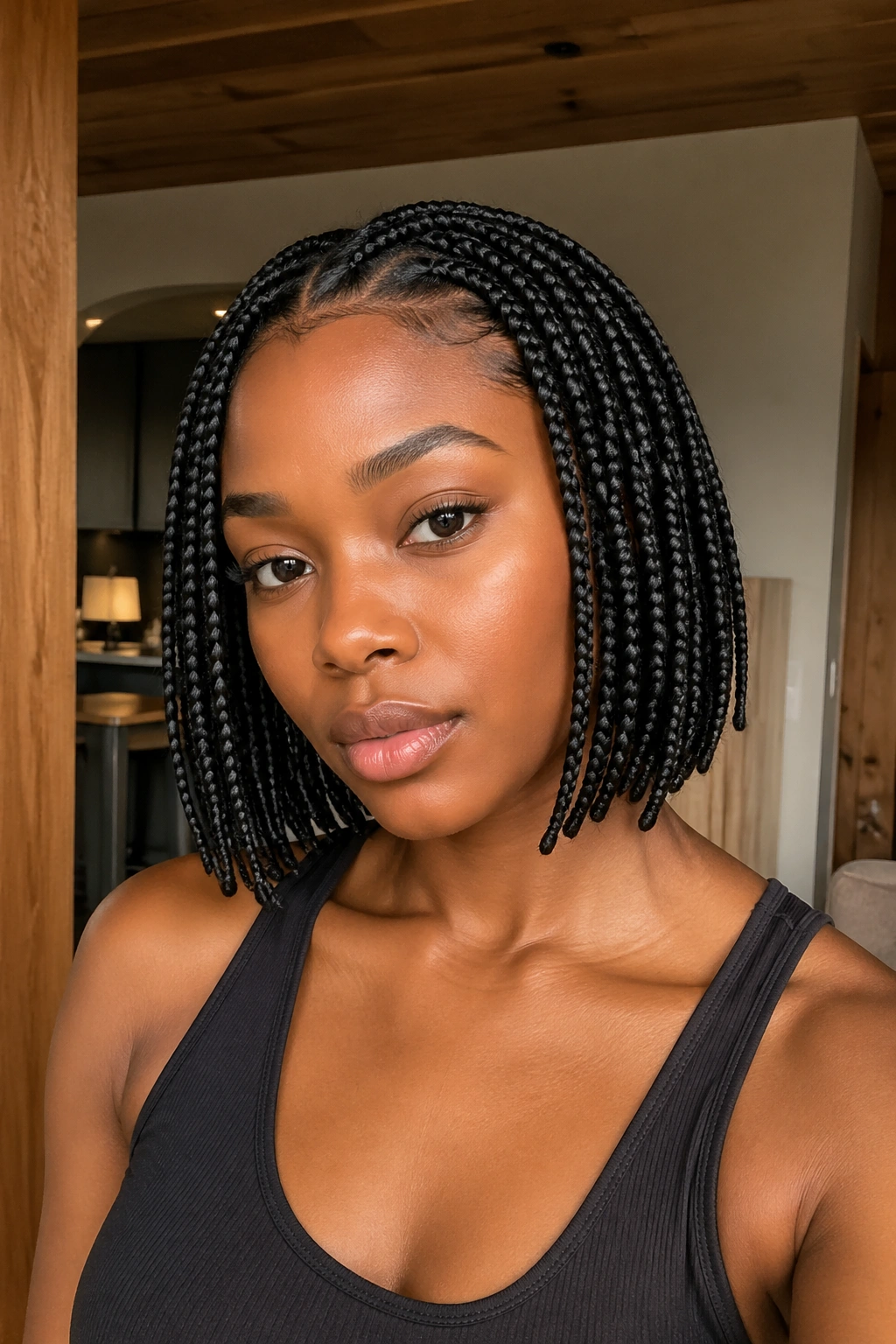
A braided bob keeps the length short enough to stay light while still giving you the structure and neatness of braids. For a lot of Black women with 4C hair, that shorter length is the whole selling point. It sits easier on the neck, dries faster after a wash, and doesn’t yank on the scalp the way long installs can.
The bob works especially well when the ends sit around the jawline or collarbone. Too short and the style can puff oddly. Too long and it stops feeling like a bob at all. A tidy cut makes a huge difference here.
What makes it useful
- Lower weight on the scalp than long braids.
- Faster styling in the morning because you are not fighting extra length.
- Cleaner movement around the face and shoulders.
It’s a practical style, but it doesn’t feel plain. That’s the sweet spot.
18. Waist-Length Braids
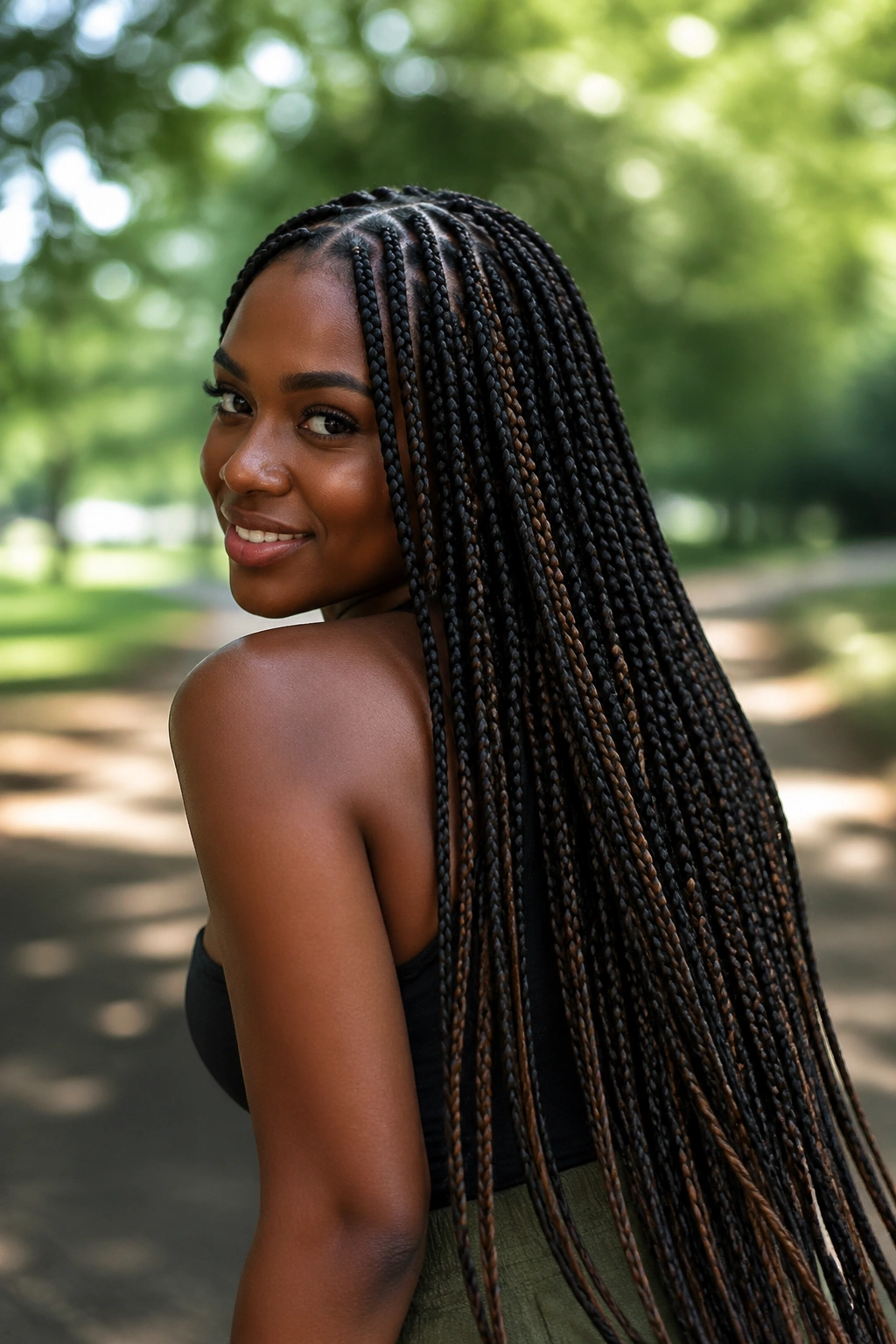
Waist-length braids bring drama, and there’s no polite way to say it. They sway, they photograph well in motion, and they give you a lot of styling options. On 4C hair, though, they need to be chosen with your scalp in mind. A long braid can look amazing and still be too heavy if the hair is too thick or the extensions are too dense.
The best waist-length styles usually balance size and length carefully. Medium or slightly smaller braids often wear better than giant ones when you’re going that far down the back. I’d also pay attention to how often you plan to wear the hair up. If you live in buns and ponytails, the length matters less than the weight.
They’re a commitment. Not a bad thing. Just a real one.
19. Braided Ponytail
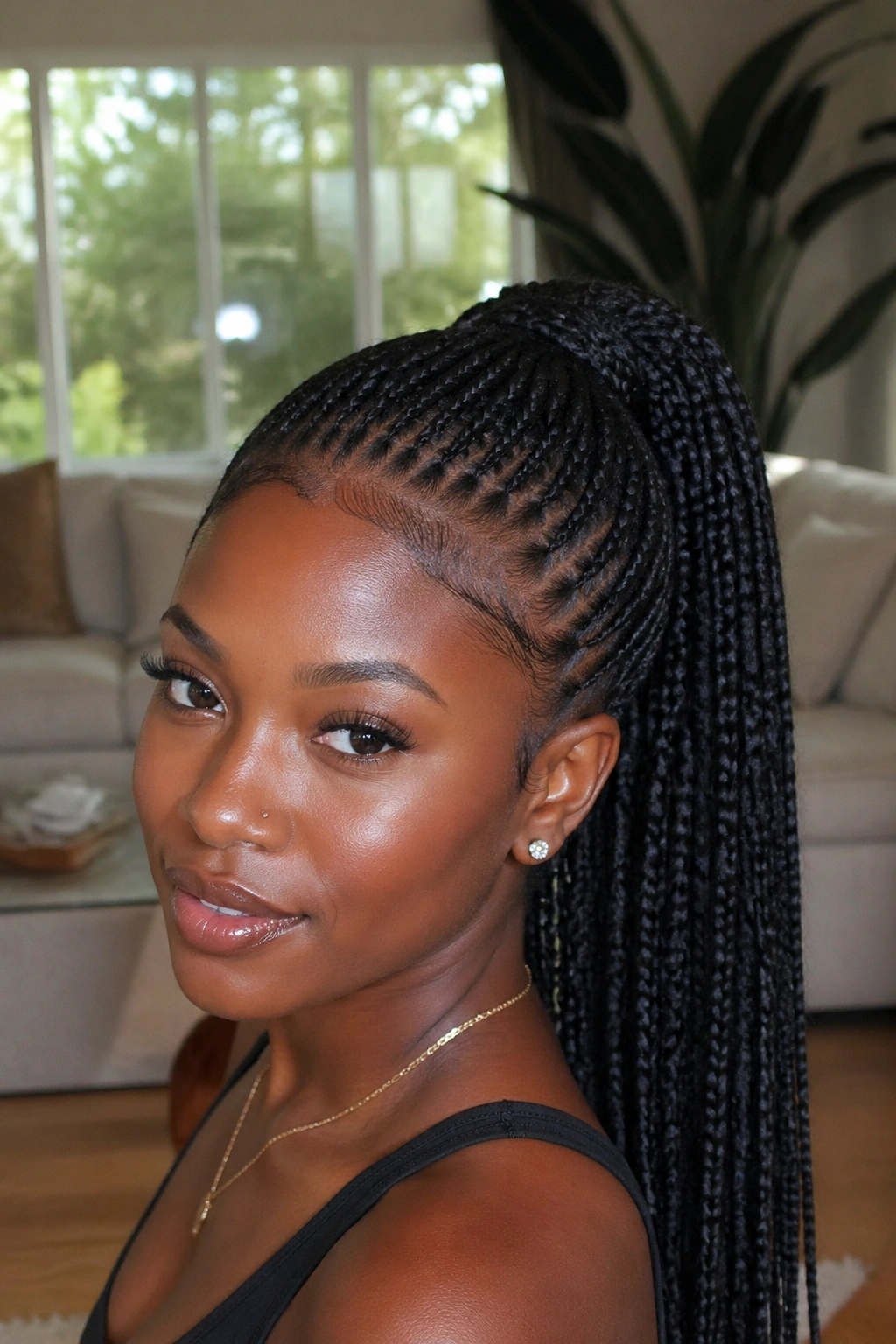
A braided ponytail gives you the neatness of braids with the lift of a pulled-back style, and that combination is hard to argue with. It clears the face, shows the neck, and can feel sharper than loose braids when you want a more pulled-together finish. On 4C hair, it also helps keep the weight centralized instead of spread across the scalp.
The ponytail can sit high, mid, or low. High versions feel energetic and formal. Lower versions feel calmer and easier to wear all day. The base needs to be secure, but not so tight that the front feels like it’s being yanked backward. That’s the mistake people make when they chase a slick look too hard.
If you want a braid style that works for work, dinner, or a dressy event, this one pulls a lot of weight. Literally and visually.
20. Braided Bun
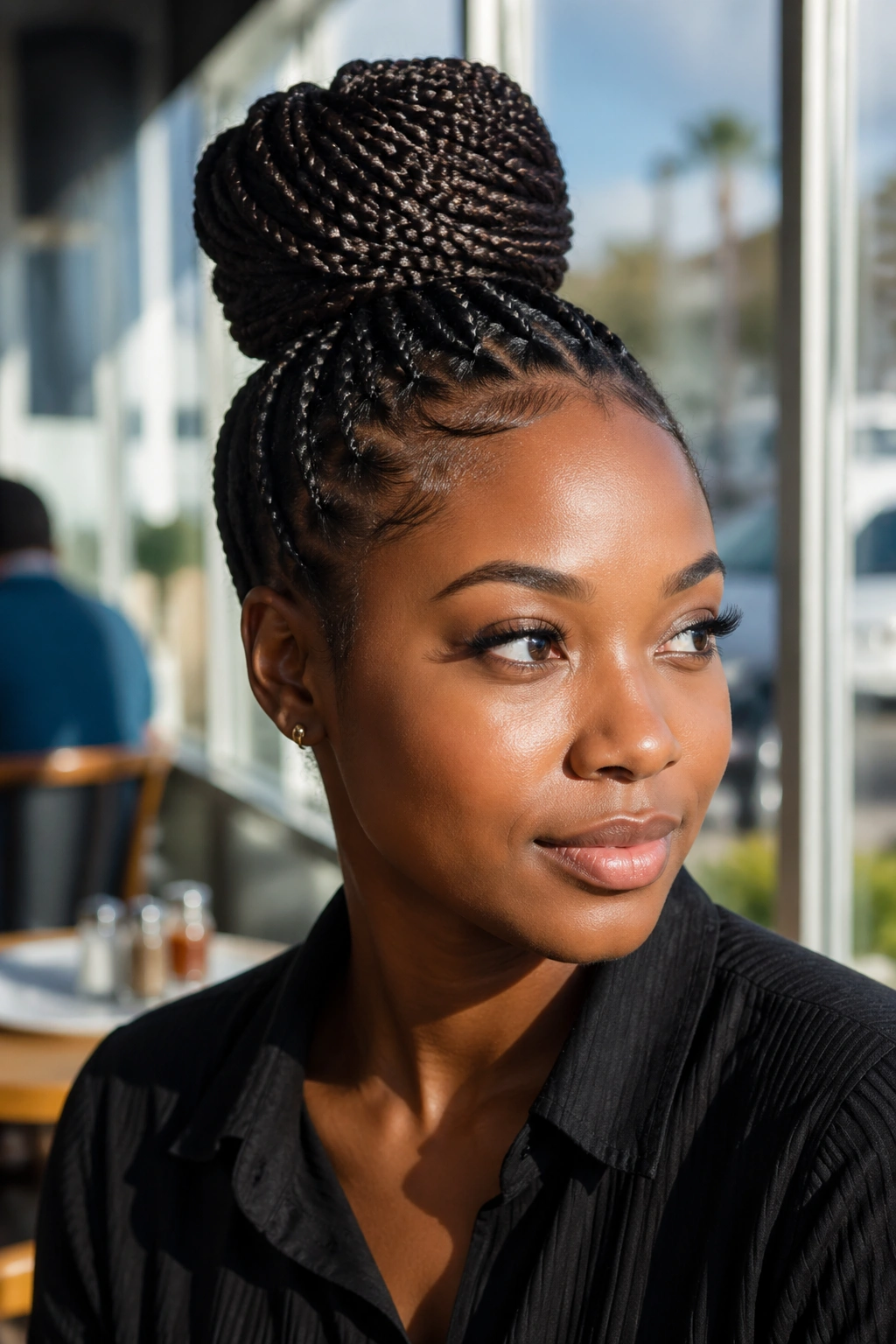
Braided buns are one of the cleanest updo choices for 4C hair. They can sit high and polished or low and tucked, and either way, the hair stays off the neck and out of the way. That matters more than people admit. A good bun can save you from touching your hair all day.
The shape depends on the braid base. Small box braids gather differently from cornrows, and stitch braids feed into a bun with a sleeker line. The style works best when the bun is secure but not overpacked. A giant knot piled on top of itself can look impressive and still feel miserable by hour three.
If you want a style that looks intentional without much daily handling, this is a strong answer. It is especially useful when you want to keep the ends safe and the silhouette tight.
21. Half-Up, Half-Down Braids
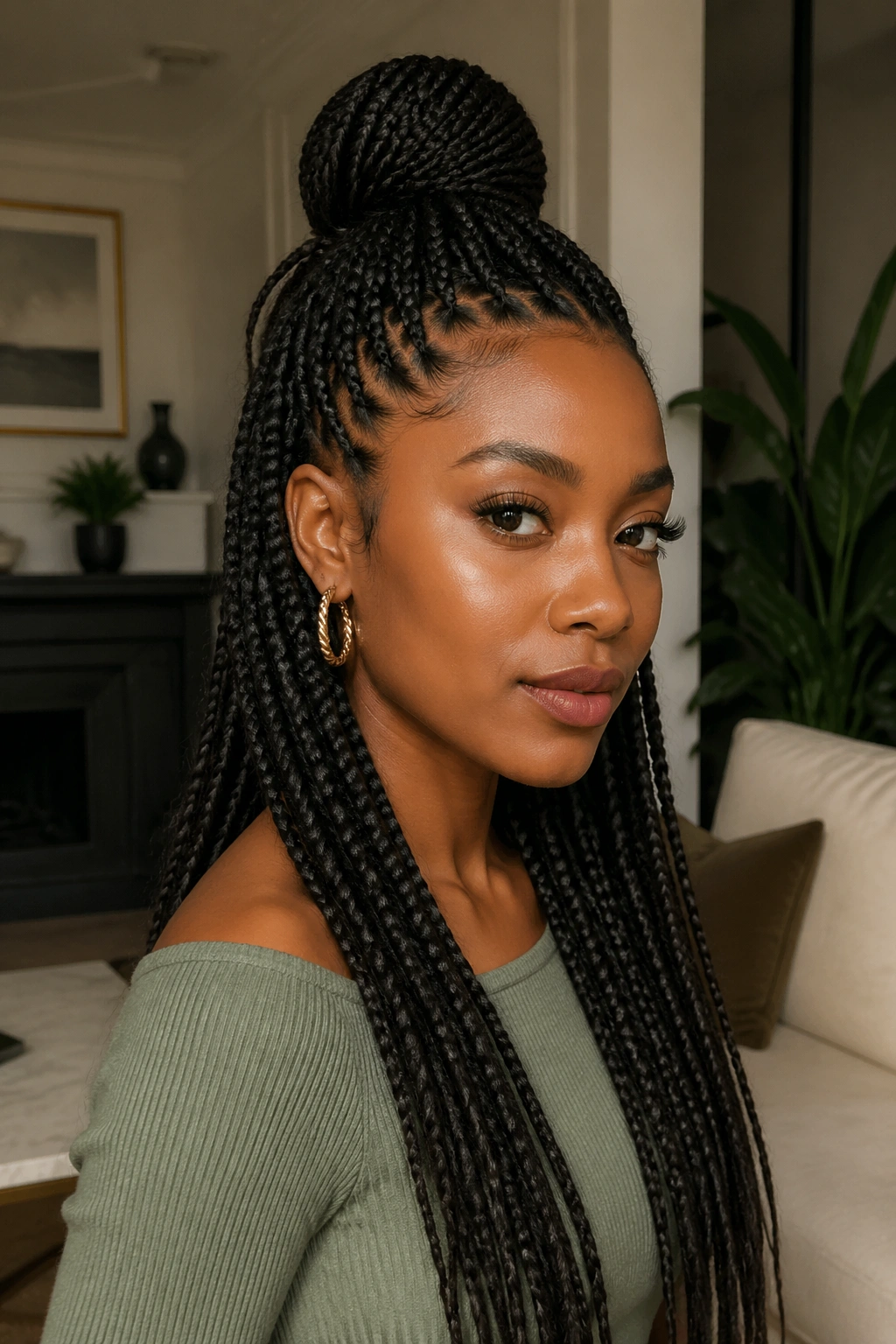
Half-up, half-down braids give you a little structure and a little freedom at the same time. The top section is lifted into a bun, ponytail, or knot, while the rest falls down the back or over the shoulders. On 4C hair, this is a nice way to keep hair out of your face without losing the movement of a full style.
The shape can lean playful or formal depending on how you do the top section. A high knot feels casual. A wrapped bun feels more finished. The style is also kind to people who like wearing their hair down but get tired of length in their eyes.
A good half-up look needs balance. If the top section is too small, it looks like an afterthought. If it’s too big, the style starts to feel top-heavy. That middle ground is where it shines.
22. Crown Braid
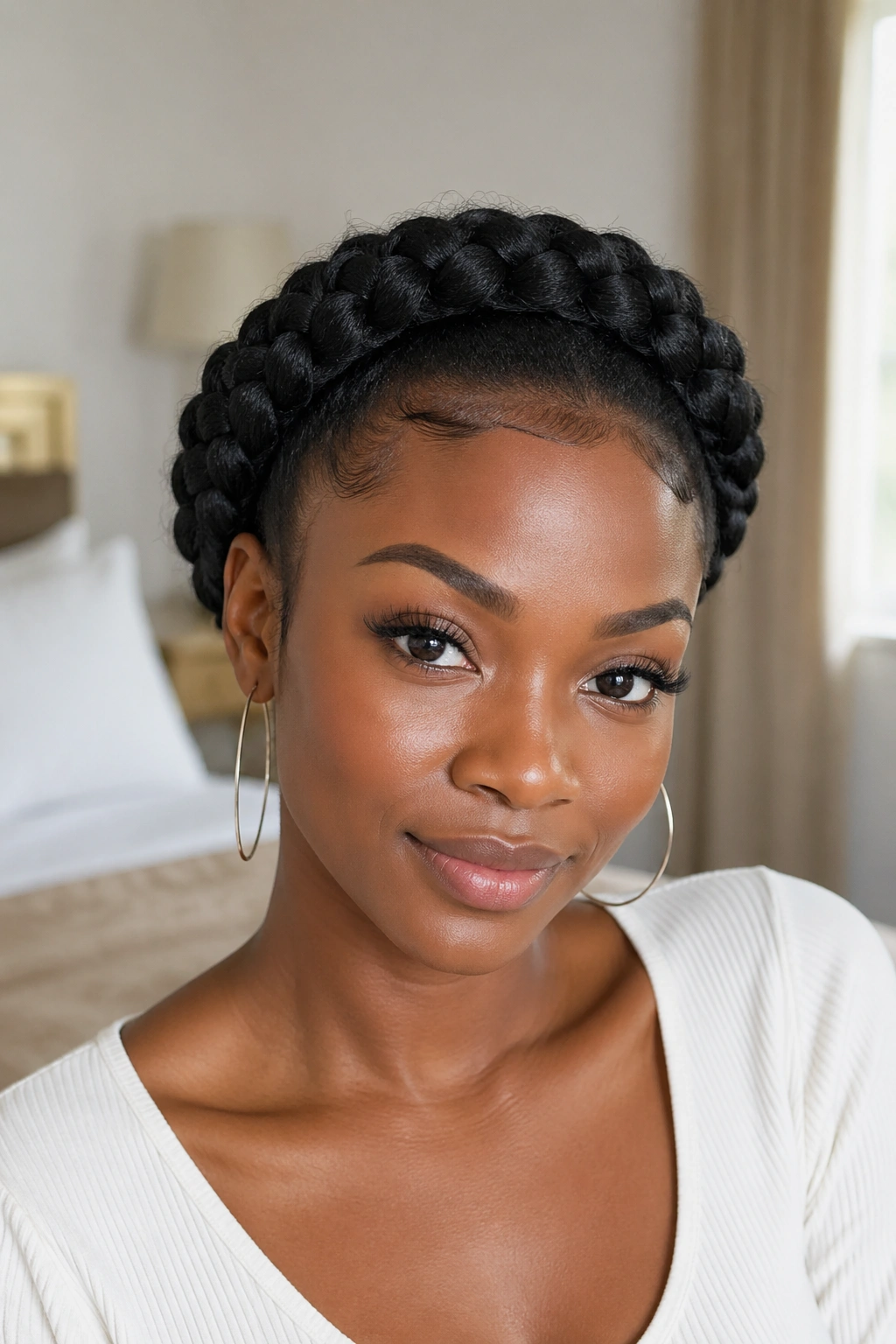
A crown braid wraps around the head and gives you that braided halo effect without needing loose length to carry the style. It has a calm, almost regal feel, and it works well on 4C hair when the braid path is mapped neatly around the hairline. You can keep it simple or dress it up with pins and cuffs.
What makes a crown braid appealing is how contained it is. Nothing hangs where it shouldn’t. Nothing flops into your face. The whole look stays anchored, which is a relief if you want something tidy for a long day or a special occasion.
Best features at a glance
- Keeps hair fully controlled
- Works well with natural hair or added extensions
- Looks more detailed than it actually is once it’s done
The style has a classic feel, but it never looks boring.
23. Halo Braid Updo
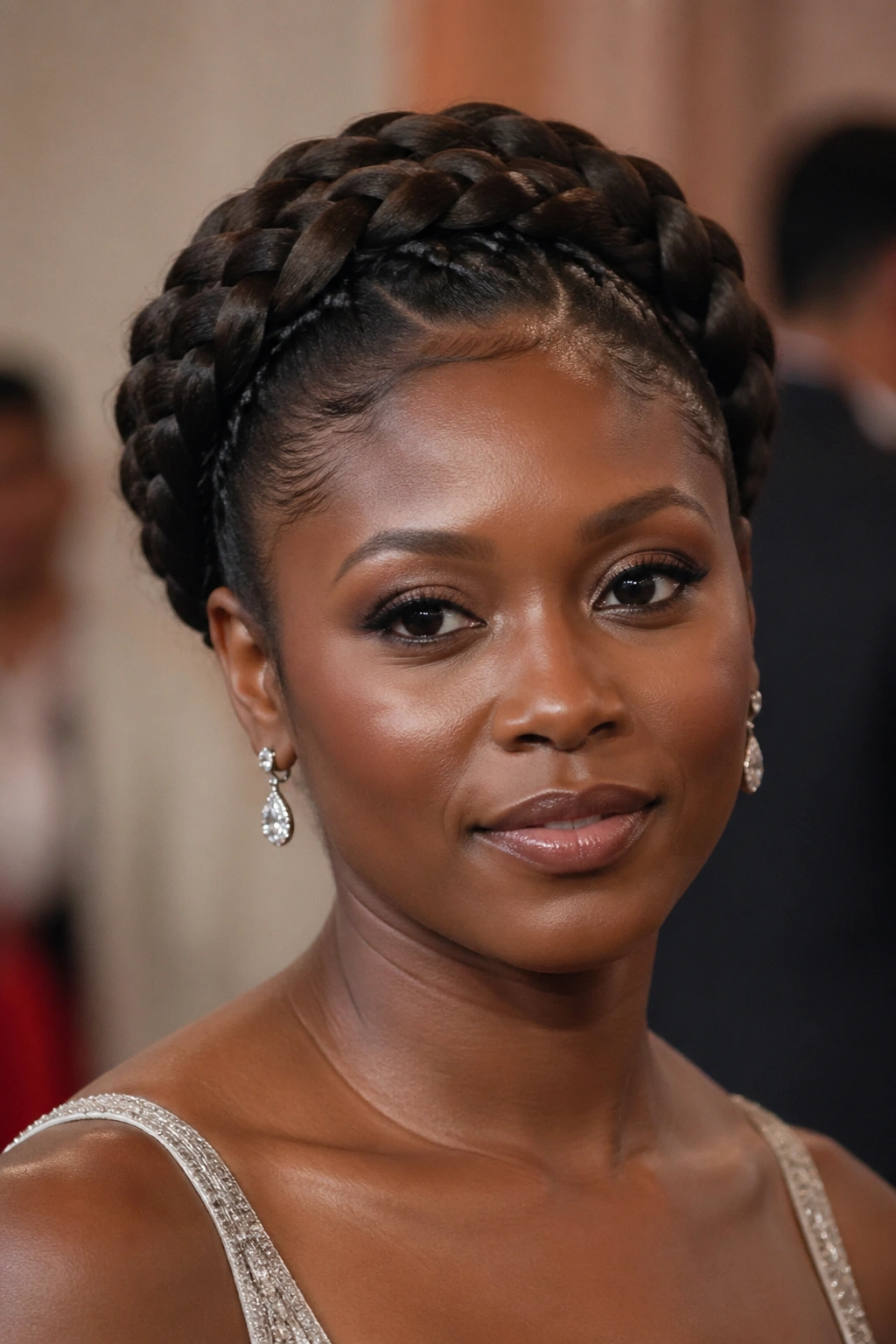
Halo braid updos sit close to the head and wrap around in a soft circle, but they usually feel a little more tucked and finished than a simple crown braid. The hair gets gathered into an elegant loop, and the overall look lands somewhere between formal and practical. On 4C hair, it can be a gorgeous way to show texture without wearing the hair loose.
I like this style for events where you want your hair to stay put from start to finish. Once it’s anchored well, it doesn’t ask for much. The detail is in the shape, not in constant maintenance. The front should be smooth and the wrap should sit evenly, or the style starts to look lopsided.
It’s one of those styles that reads calm. Not plain. Calm.
24. Zig-Zag Part Braids
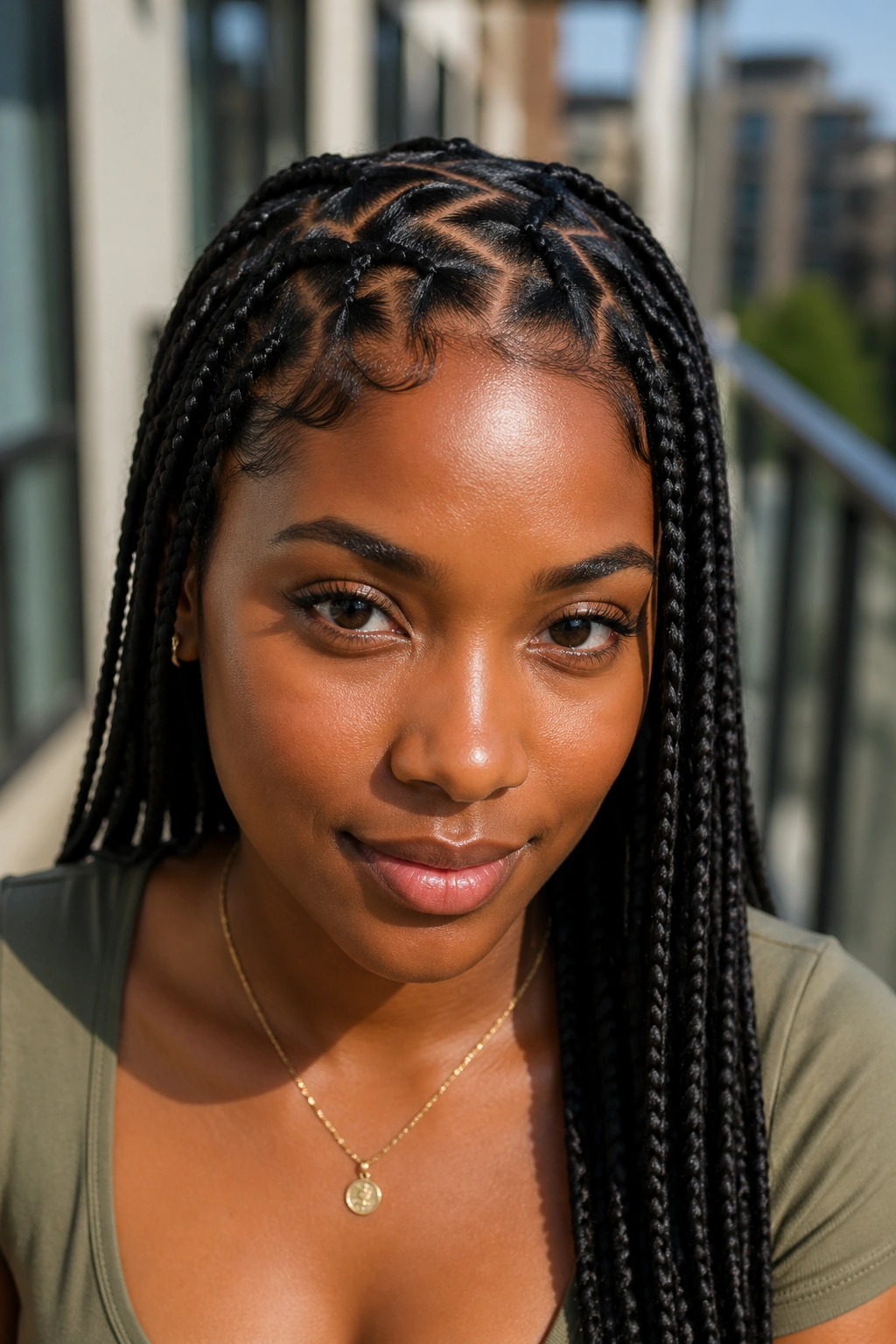
Zig-zag part braids are proof that parting can carry the entire look. The braid pattern itself might be simple, but those angled parts give the scalp a graphic, almost playful energy. On 4C hair, zig-zag sections can turn a regular braid install into something that feels custom.
The trick is keeping the zig-zag clean. If the part lines wobble too much, the effect turns messy instead of sharp. A good braider can make the parting look crisp even before the braids are finished. That matters because the style is built on line work more than length.
If you want a braid style with personality and a little edge, this one fits. It’s especially nice when you’re tired of straight lines but still want something neat.
25. Heart-Part Braids
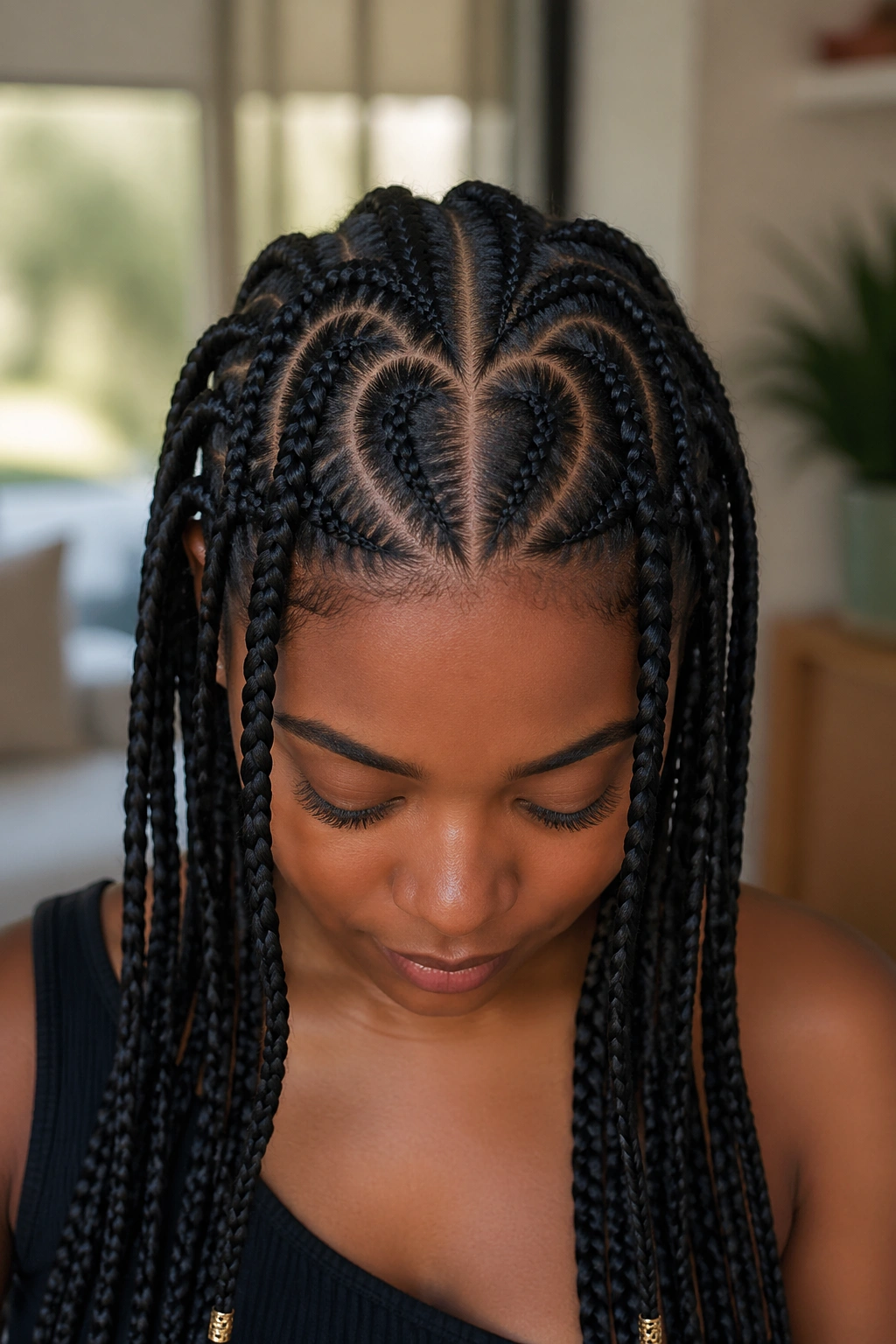
Heart parts are a little extra, and that is the whole point. A heart-shaped part at the front or crown turns a braid style into something clearly styled rather than just installed. On 4C hair, it can look sweet, bold, or both at once, depending on what braid size and length you pair it with.
This is the kind of detail that rewards a steady hand. If the heart is lopsided, everyone sees it. If it’s clean, the whole look feels thoughtful. I’d especially recommend this for a special appointment, a celebration, or any time you want your hair to carry some of the mood for you.
Bring a photo. Seriously. A heart part sounds simple until someone has to draw it on your scalp with a tail comb.
26. Two Jumbo Braids
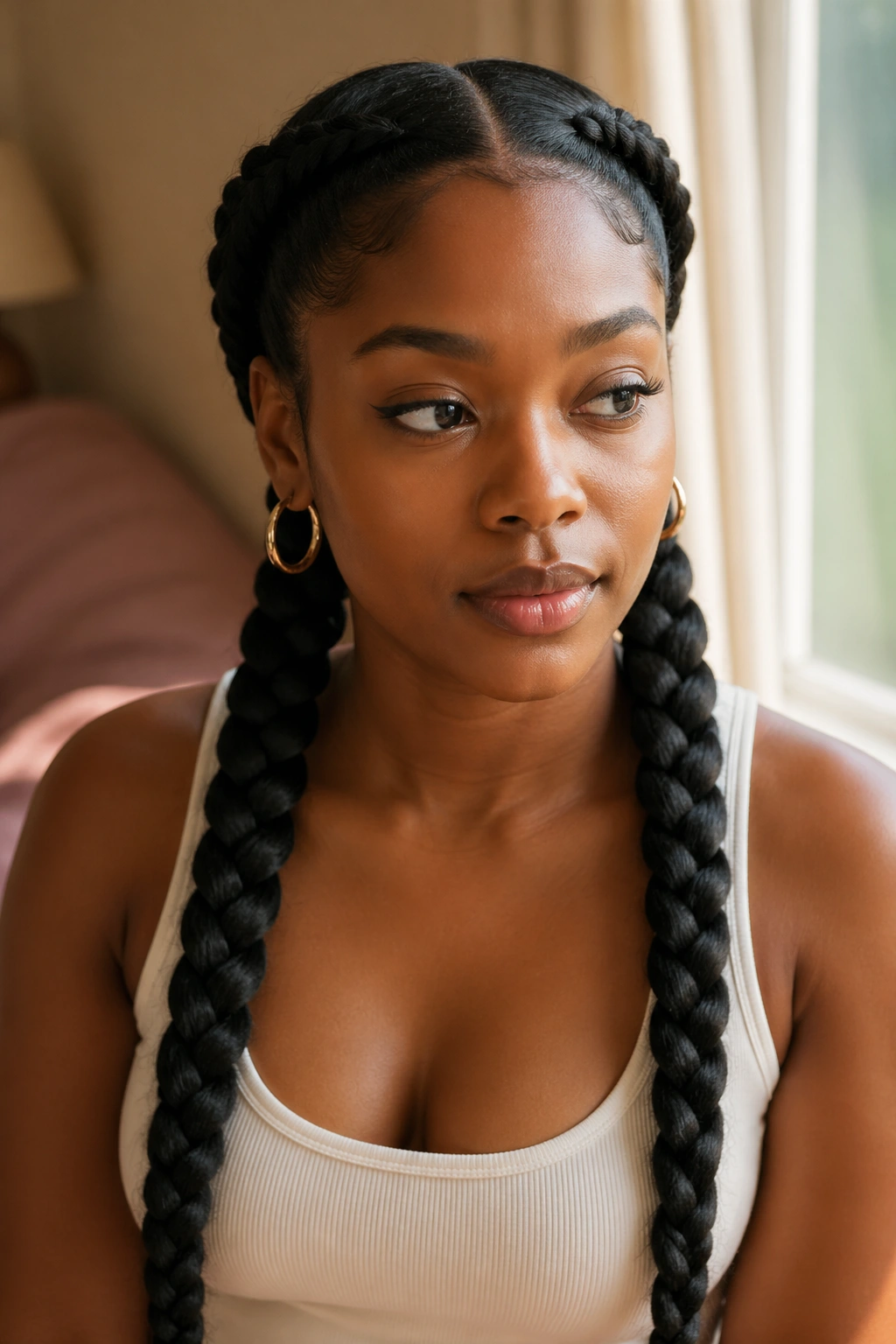
Two jumbo braids are one of the easiest ways to look put together without sitting through a marathon install. They’re simple, centered, and strong. On 4C hair, they can be done with your natural hair alone in a stretched style, or with added hair if you want more length and swing.
The style feels practical in a way that never gets old. It’s easy to sleep in, easy to wash around, and easy to tuck under a scarf or hat. If you like hair that stays out of the way but still looks styled, this is a very good answer.
The downside is that the style leaves less room for variety than smaller braids. Still, sometimes simplicity wins. A clean middle part and two thick braids can look better than a busy style that needed too much effort.
27. Freestyle Braids
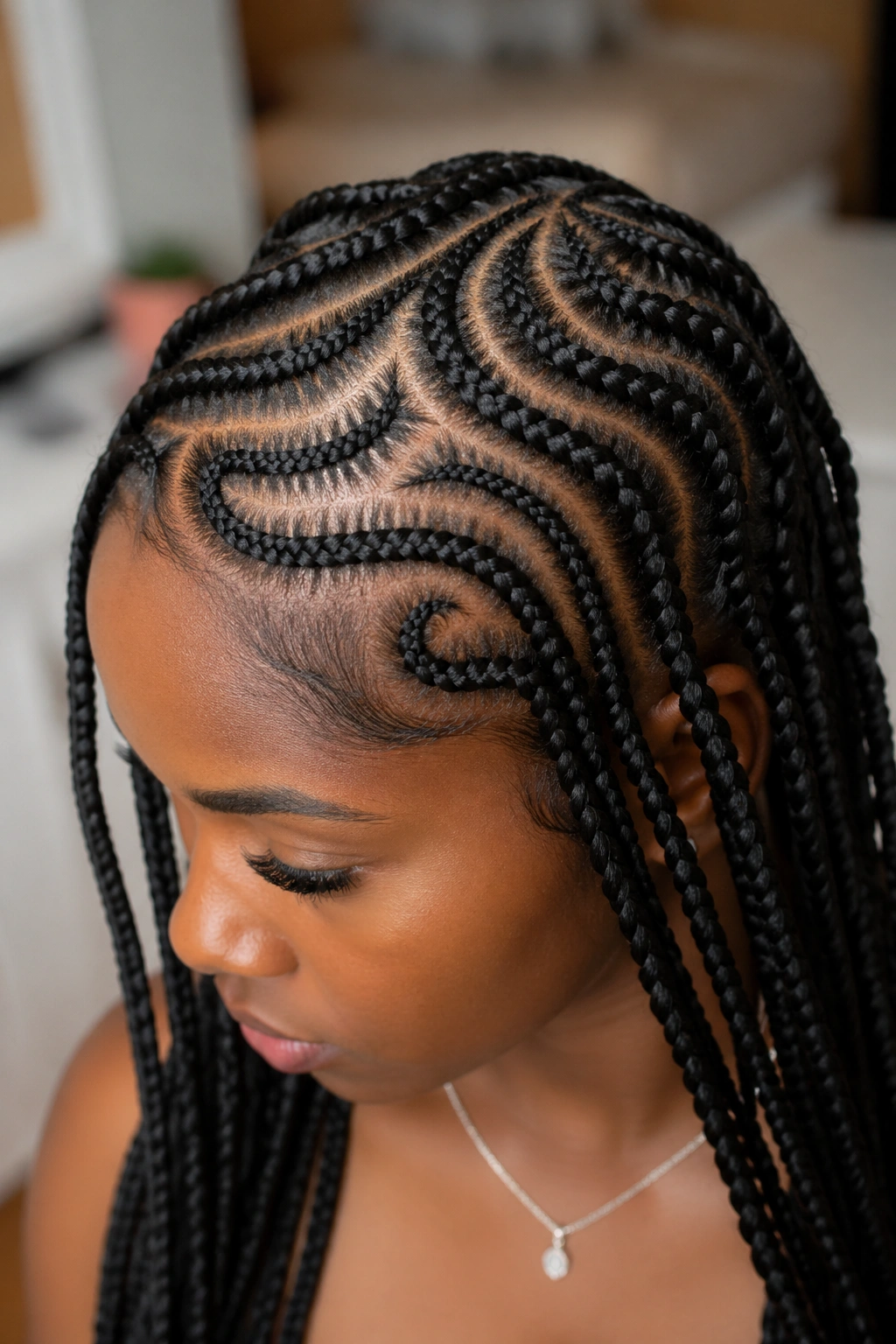
Freestyle braids are for people who do not want the same grid everyone else is wearing. The sections can curve, cross, split, or change size depending on the design. That flexibility is what makes them feel personal. On 4C hair, freestyle braids can be a great way to use density and texture as part of the design instead of hiding them.
The best freestyle looks still have a plan. That’s the part people miss. Random lines can look sloppy, but deliberate irregularity can look smart and fresh. A good stylist will think about balance across the scalp so one side does not feel crowded while the other feels empty.
If you’re bored of standard parting, this is your lane. It gives you room to be creative without losing the structure that makes braids wearable.
28. Tree Braids
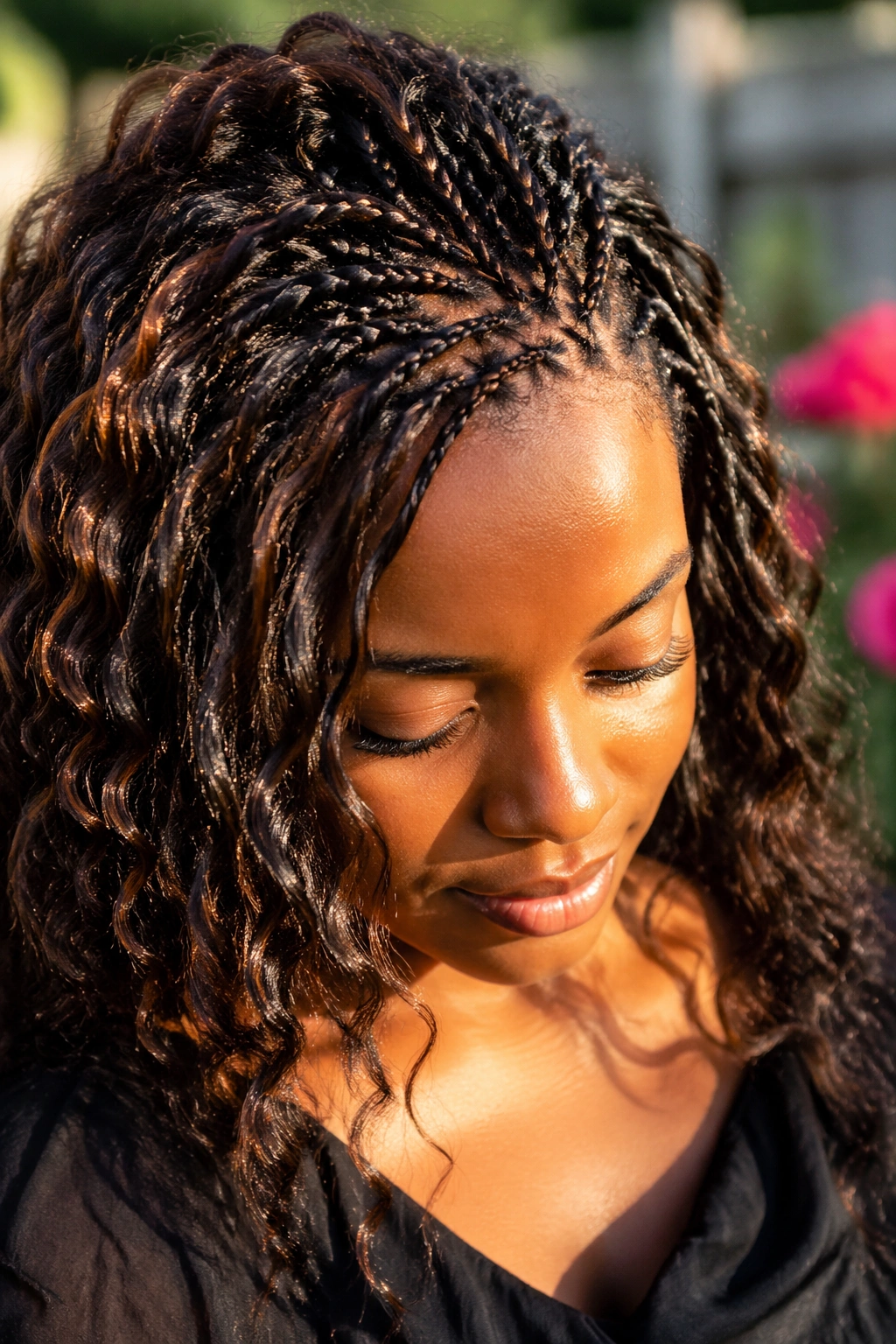
Tree braids blend braided sections with loose hair left out to create a fuller, softer finish. They can be a smart choice for 4C hair when you want your natural texture to stay part of the story instead of being hidden the whole time. The braid base does the holding, and the loose pieces give the style movement.
The style sits somewhere between a braid install and a blended look, which is why it feels less severe than some other options. It can also give you a nice natural-looking perimeter if you want the hairline to feel softer. The trade-off is upkeep. Loose strands tangle faster than fully braided lengths, especially at night.
Protect the ends and wrap carefully. That part matters. If you’re rough with the loose sections, tree braids lose their charm quickly.
29. Box Braids with Curly Ends
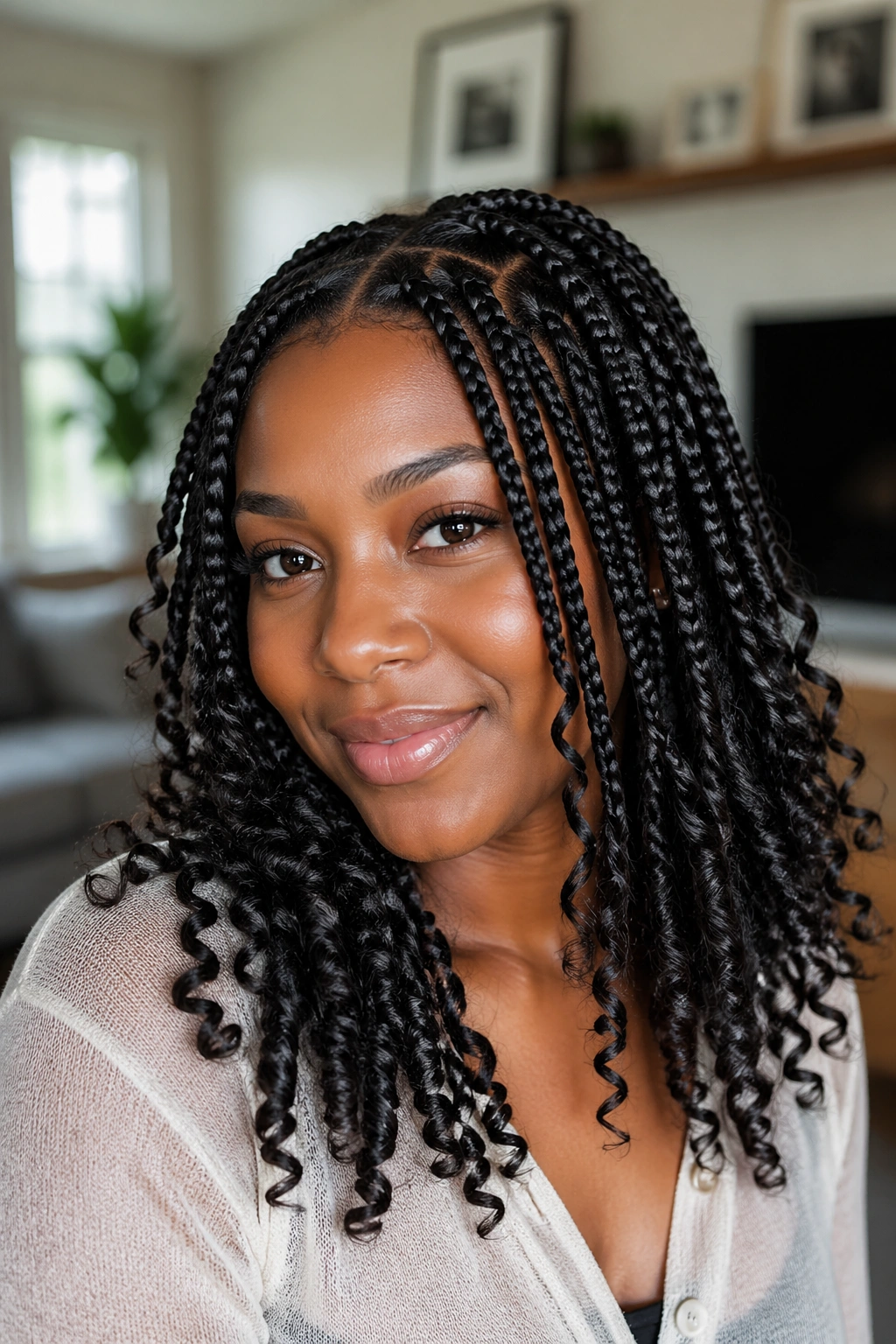
Box braids with curly ends keep the familiar square-part structure but finish with soft curls instead of blunt, sealed tips. That little change makes the whole style feel lighter and more playful. On 4C hair, it’s a nice compromise if you want the order of box braids but don’t want the ends to feel stiff.
The curls add movement, which is the main reason people like this look. They can soften a strong facial shape, break up the length, and keep long braids from feeling too rigid. The thing to remember is that curly ends need gentler handling than straight sealed ends. A rough pillowcase or dry night routine will flatten them fast.
A light mousse and a satin wrap help more than fancy products do. Keep it simple. The curls will thank you.
30. Feed-In Ponytail Braids
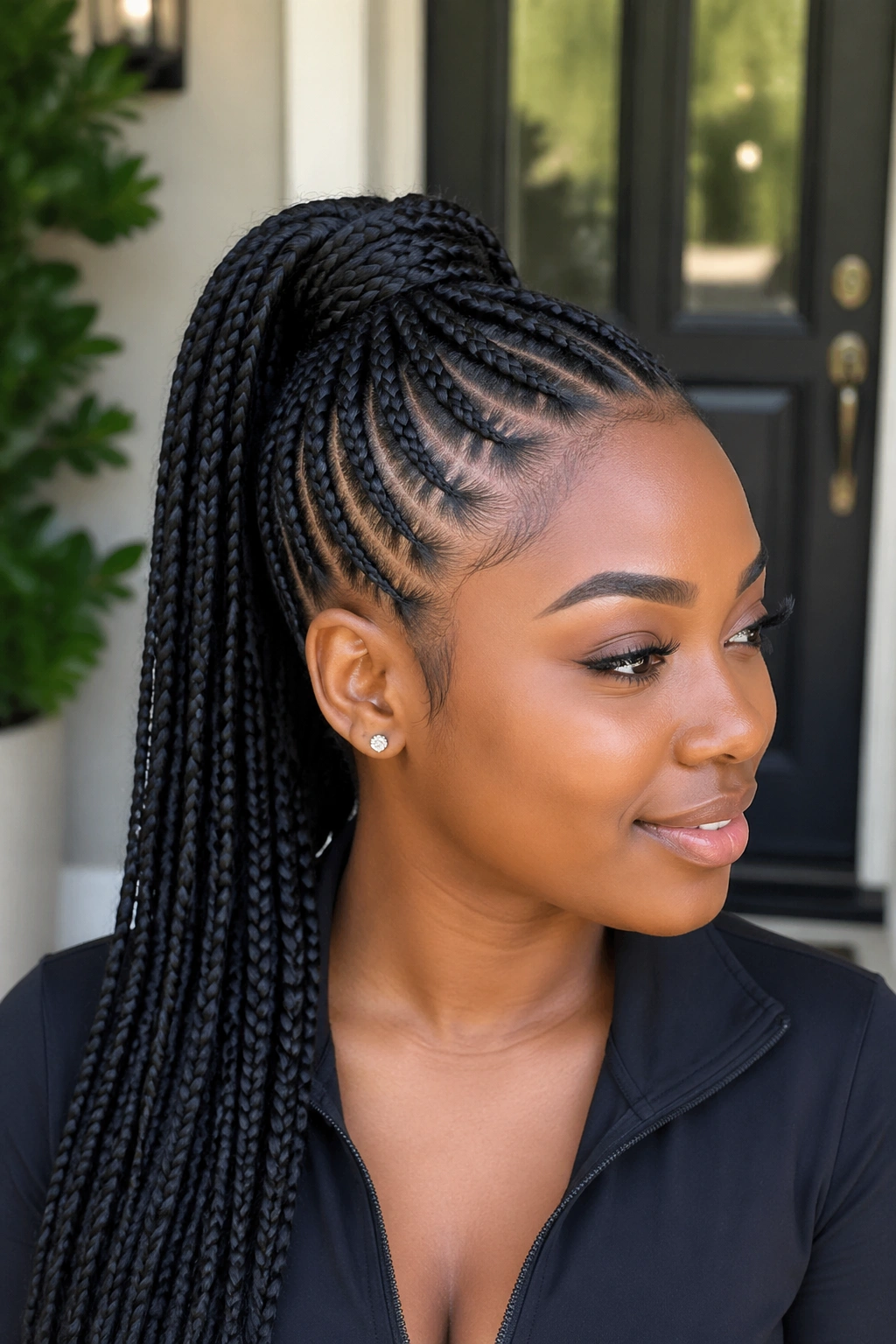
Feed-in ponytail braids are one of the sleekest ways to wear a braided style on 4C hair. The rows start close to the scalp, get fed in smoothly, and gather into a ponytail that sits high or mid depending on the look you want. The result is clean, lifted, and very intentional.
What I like here is the shape. The head looks sculpted without feeling overworked. That makes the style useful for everything from errands to events. It also keeps the front controlled, which can help if your edges do not love a lot of daily handling.
Why they hold up well
- The braid base spreads tension across the scalp
- The ponytail keeps length from dragging at the neck
- The style can be dressed up with wrapped hair or cuffs
If you want sleek without being boring, this one earns its place.
31. Low Bun Cornrows
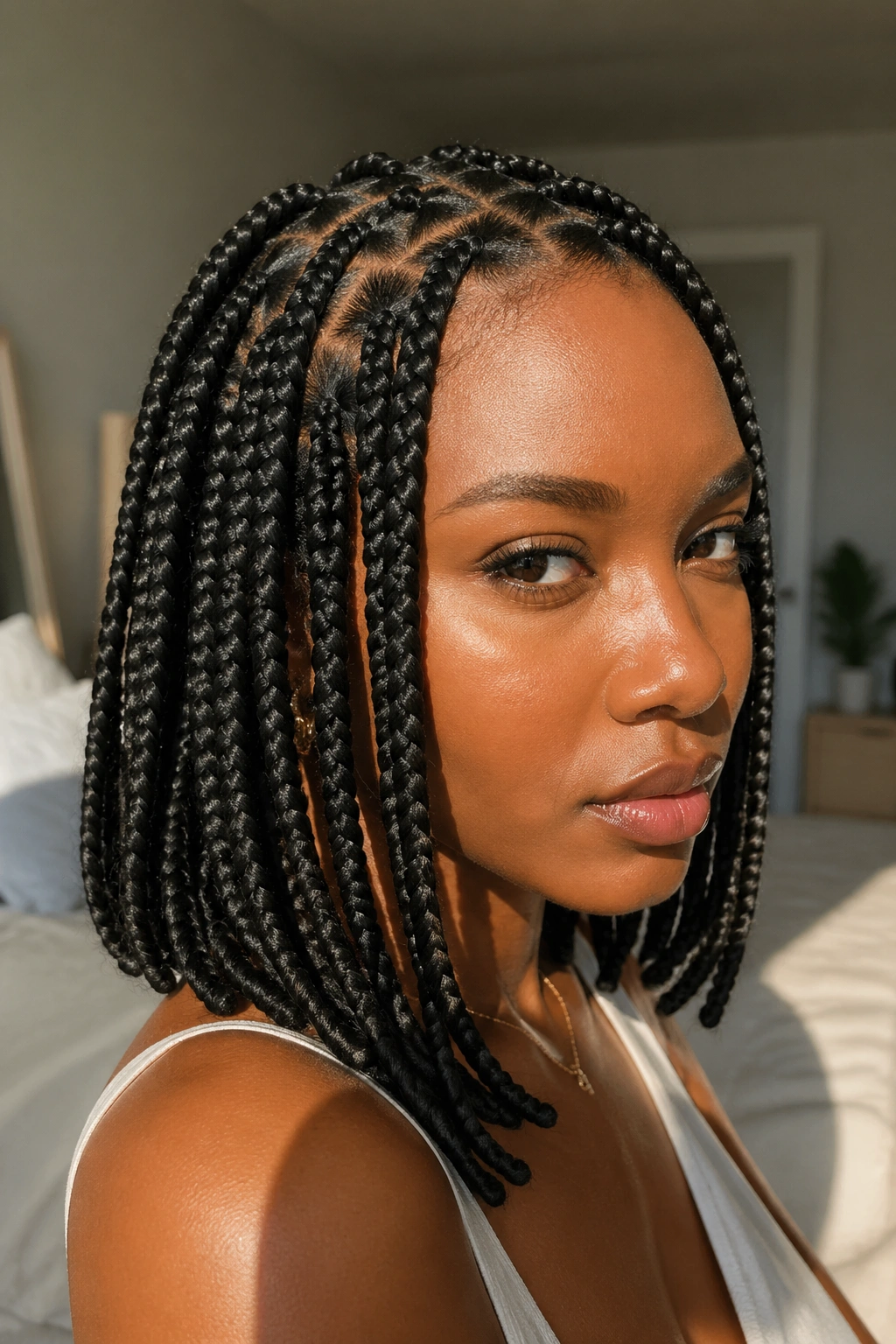
Low bun cornrows are quiet in the best sense. The cornrows lead back to a bun that sits at the nape, which gives the style a neat, grounded feel. On 4C hair, it’s one of the cleanest ways to keep the hair controlled while still letting the braids be the main feature.
This is a serious workhorse style. It stays out of the way, looks tidy under a blazer or uniform, and doesn’t demand much during the day. The low placement also tends to feel gentler than a high style, especially if you are sensitive around the temples.
If you want to look polished with minimal fuss, this is a very good answer. It doesn’t need decoration to make sense. The shape is enough.
32. Braided Space Buns
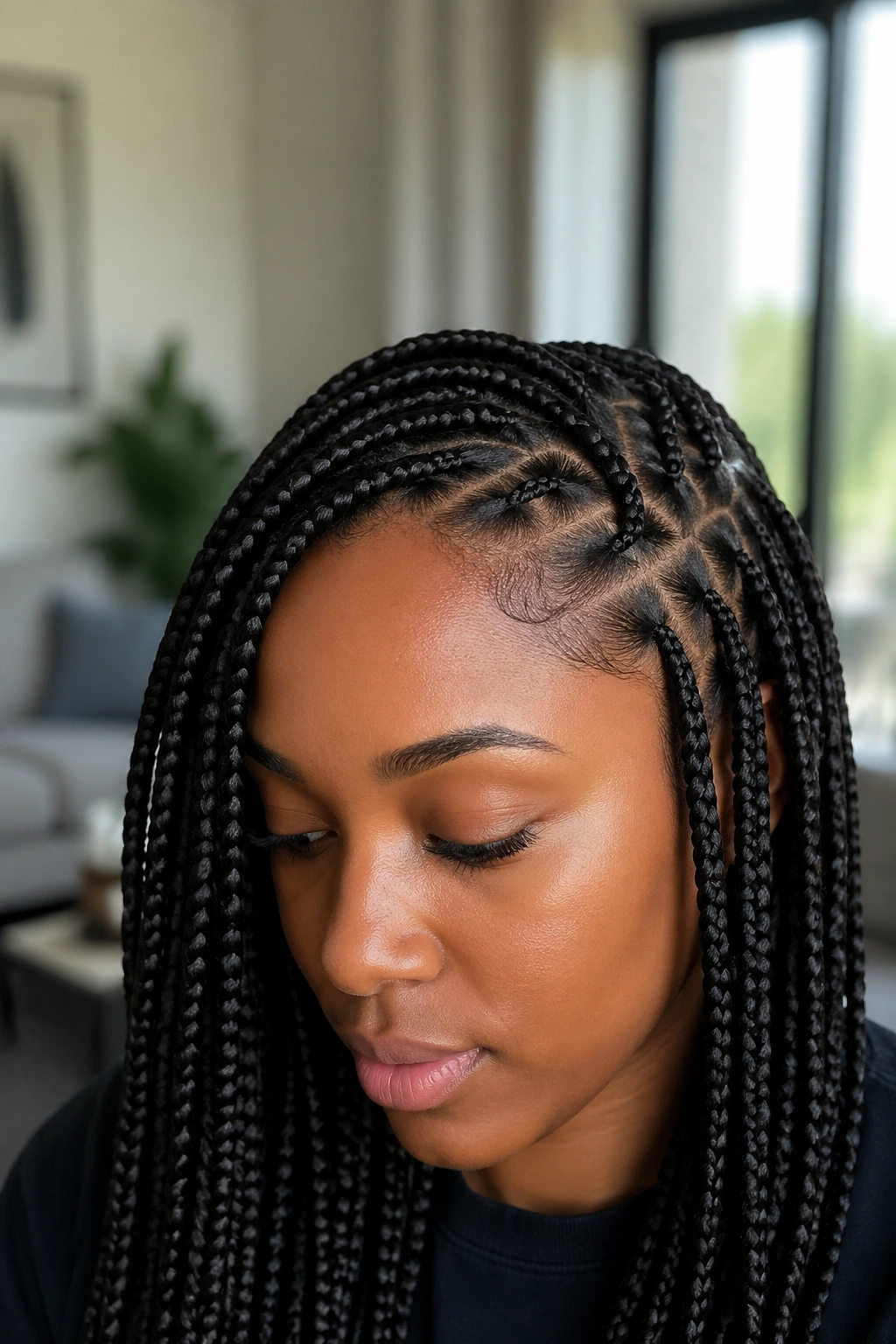
Braided space buns turn braids into two lifted buns, one on each side, and the effect is playful without feeling childish if the parting is clean. On 4C hair, the style can actually be easier to wear than one giant top knot because the weight gets split across both sides.
The best versions keep the buns balanced. If one bun sits much higher than the other, you spend the day noticing it. The style also works better when the braids feeding into the buns are not too bulky, because too much thickness can make the buns feel heavy and awkward.
This is a fun style, but it’s not fluff. It can hold up for long days if the base is secure. A little braid foam and a scarf at night go a long way.
33. Braided Mohawk
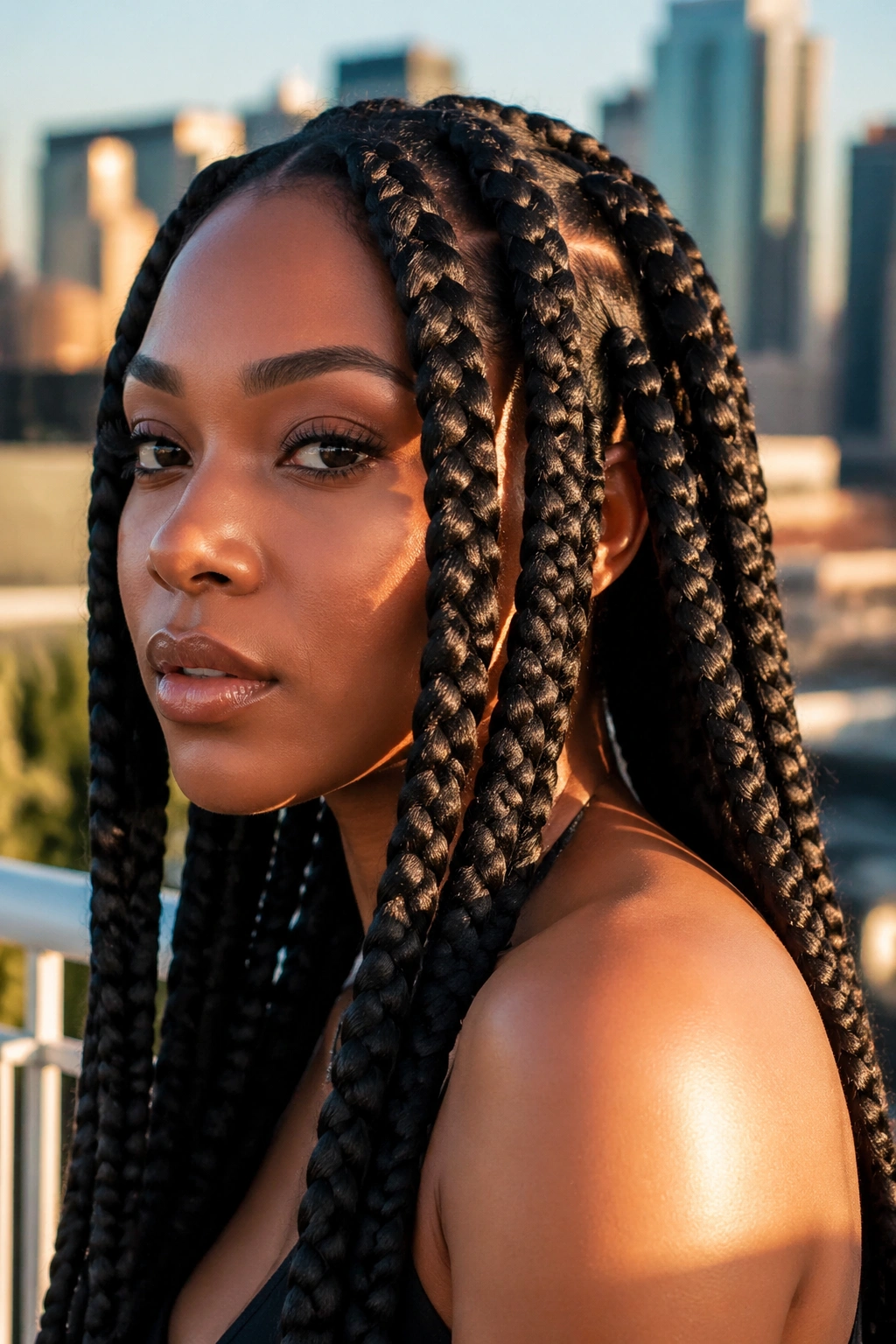
Braided mohawks bring the drama. The sides get braided close or slicked down, and the center section is left fuller or lifted to create a strong middle line. On 4C hair, the style can look bold and structured without needing a lot of extra decoration.
The silhouette is the whole story here. You get height in the center, clean sides, and a shape that reads confident from across the room. It’s a good choice when you want a braid style with edge and don’t mind a little attention.
What to keep in mind
- The side braids should be smooth and secure
- The center should have enough support to stand up without sagging
- Too much product can make the lifted section stiff and sticky
It’s a strong look. Own it or skip it. There’s no middle ground.
34. V-Part Braids
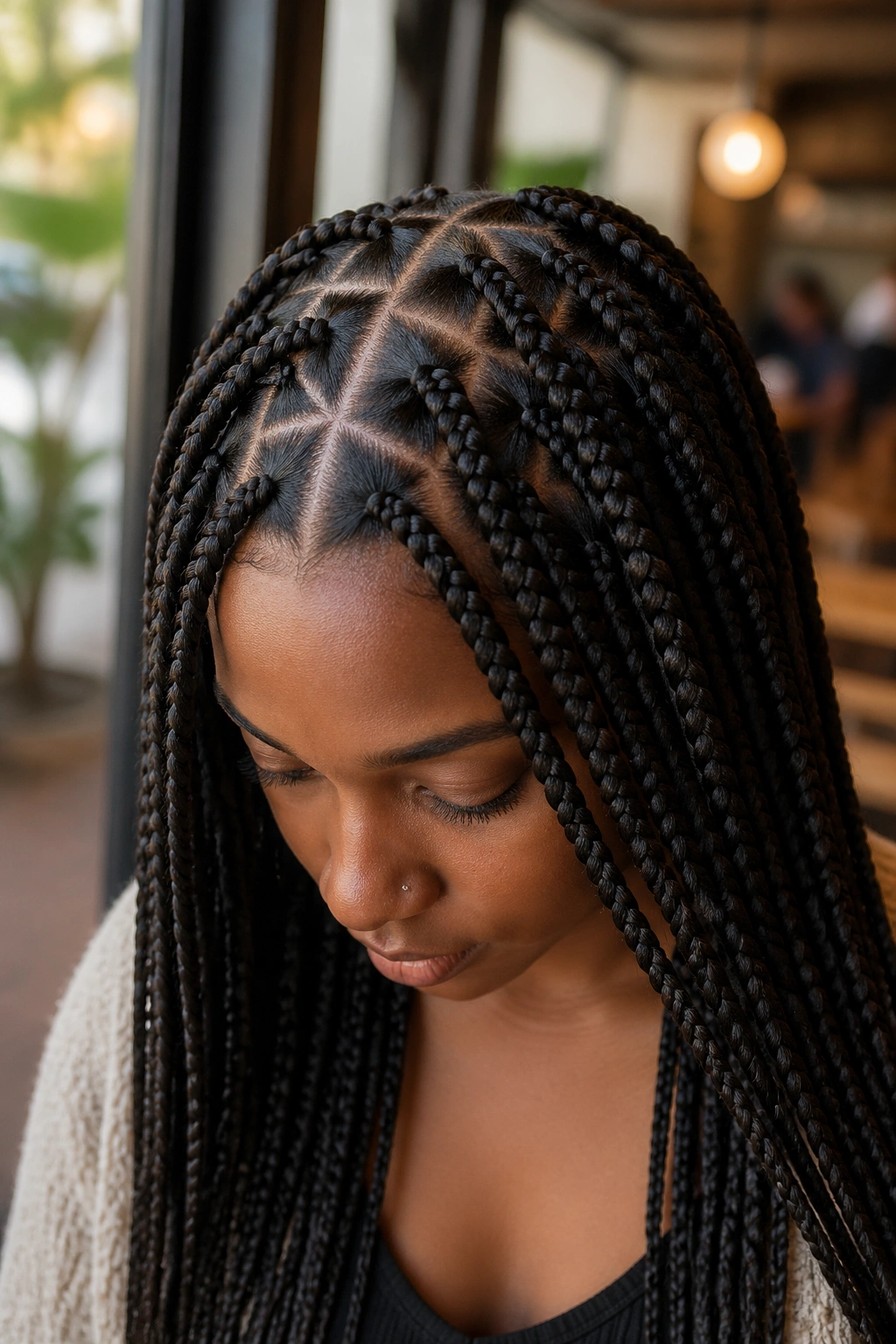
V-part braids use a V-shaped parting area, usually at the top or back, to create a pointed visual frame. It sounds small, but it changes the whole geometry of the style. On 4C hair, that sharper shape can make a braid install feel more modern and a little less predictable.
The V can be subtle or dramatic depending on how wide you draw it. A deeper V gives you more visual impact and can work well with hanging braids or a ponytail finish. A smaller V keeps the style understated while still giving it a twist. Either way, the part has to be planned before the braiding starts.
If you like structure with a little surprise, this is a nice option. It keeps the style neat but not flat.
35. Crisscross Braids
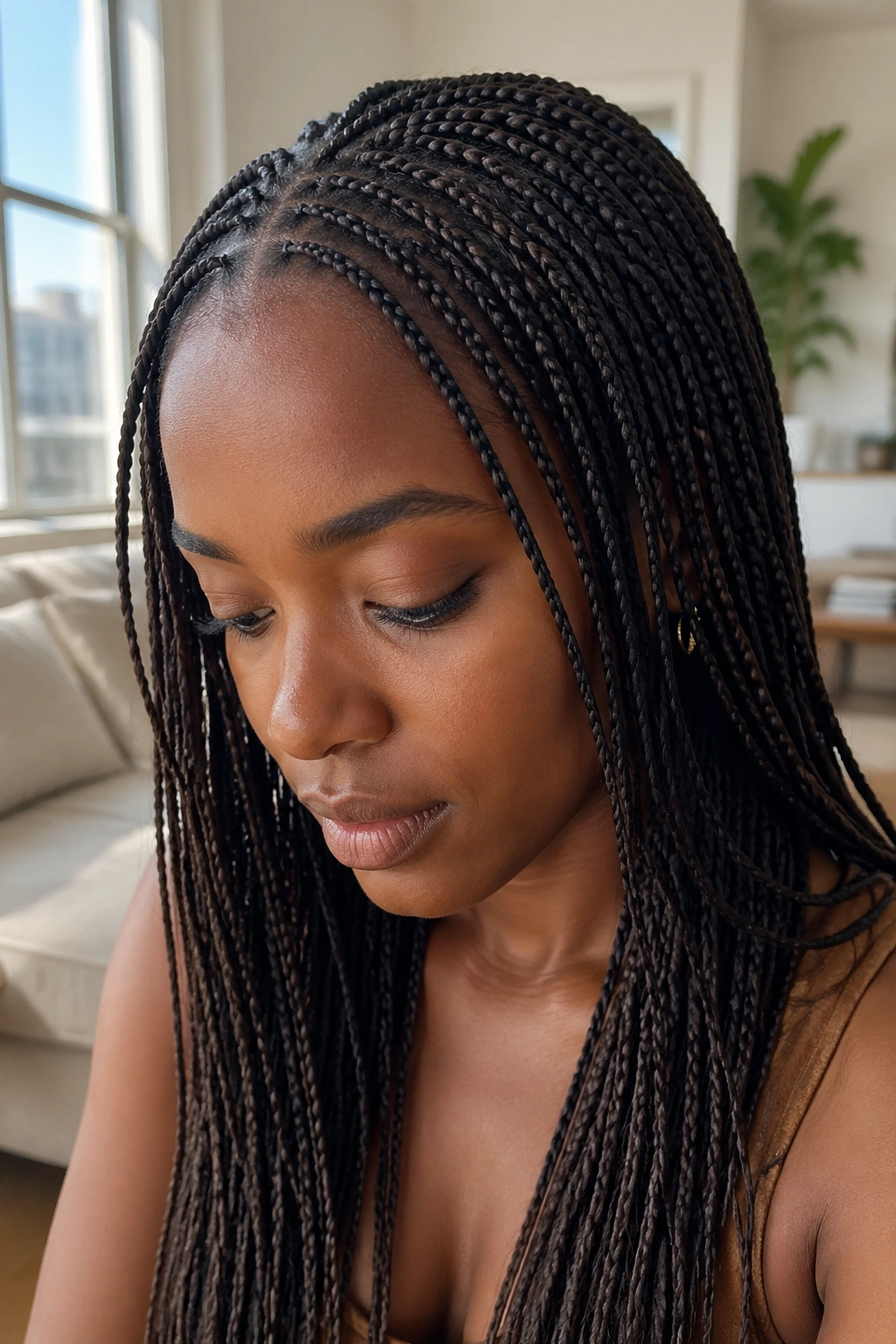
Crisscross braids take parting and turn it into the main event. Sections overlap, intersect, or angle across each other before settling into the braid pattern, and that creates a look with real visual texture. On 4C hair, the style can feel especially rich because the pattern sits on top of dense, coil-prone hair in a way that looks deliberate and bold.
The hard part is precision. Crisscross patterns can go from stylish to messy fast if the lines drift. That means the braider needs a steady hand and a good eye for spacing. The payoff is worth it when the pattern stays crisp, because the hair looks worked, not just parted.
This is not the low-maintenance option. It is the style you choose when you want detail to do the talking. If you’re after something clean but a little unexpected, crisscross braids deliver that without needing much else.
Final Thoughts
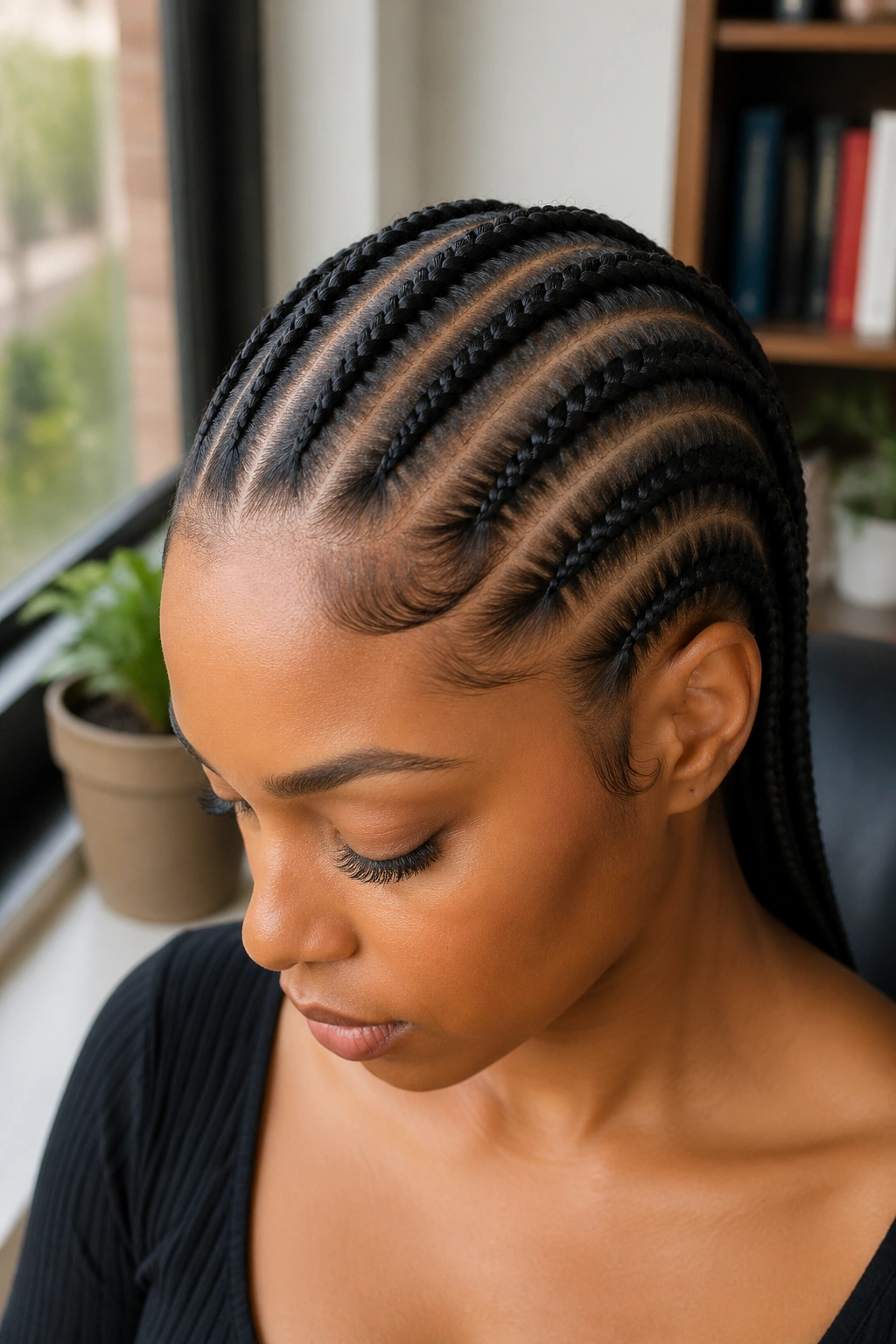
The best braid styles for Black women on 4C hair are the ones that respect your texture instead of fighting it. Some will feel light and easy. Others will give you the drama you want for a week or two. The right choice usually comes down to three things: how much weight your scalp can handle, how much time you want to spend in the chair, and how often you want to touch your own hair.
I always come back to this: good braids should make your life simpler, not harder. If a style looks gorgeous but leaves your edges sore, it’s not a win. If a style feels easy but still makes you feel polished when you walk out the door, that’s the one worth repeating.
And if you’re stuck between two styles, choose the one that fits your routine on a tired Tuesday. That answer is usually more honest than the one that looks best in a photo.
