



A good set of beaded braids for kids does two jobs at once: it keeps hair neat, and it still feels fun enough that a child actually wants to wear it. That second part matters more than people admit. If the style is cute but uncomfortable, the beads end up on a dresser by lunch.
The smartest kid braid styles are rarely the most complicated ones. They use clean parting, light beads, and braid lengths that do not drag on for half an hour while a little head keeps turning toward the TV, the sink, the door, anything except the comb. A style can look polished without being fussy. That’s the sweet spot.
I also care a lot about weight. Heavy beads, tight parts, and too many tiny sections can turn a cheerful style into a sore-scalp day, and nobody needs that. The styles that work best here are the ones that move fast, sit well, and still look special when the child catches sight of themselves in the mirror.
So here are the kinds of braided looks that make sense for real mornings, real school runs, and real kids who wiggle. Some are clean and classic. Some are playful. A few are the sort of thing a child will ask for again the minute the beads start tapping their shoulders.
1. Classic Center-Part Beaded Braids for Kids
A clean center part is one of the easiest ways to make beaded braids for kids look tidy fast. Two neat rows of braids on each side keep the shape simple, and clear or frosted beads make the ends look finished without piling on extra color. I like this style when I want something that looks ordered from every angle.
Why It Works So Well
The center part gives you a strong line to follow, which speeds up the whole process. You are not improvising with the parting, and that alone can save a few frustrating minutes. If the child has medium-length hair, four braids total is usually enough to look full without dragging the style out.
Best bead choice: clear, white, or soft pink beads.
Good for: school days, family photos, and kids who like simple shapes.
Watch for: parts that drift after the first braid. Fix them early.
Tip: Put the beads in cups before you start. Sounds small. It matters.
2. Side-Swept Braids with Gold Bead Ends
A side part changes the whole mood of the style. Instead of a straight-down look, the braids sweep softly to one side, which feels a little dressier and a little more playful at the same time. Gold beads at the ends give the style a neat finish without making it heavy.
The nice thing about side-swept braids is that they flatter a lot of face shapes. They also work well for kids who hate hair falling directly down the middle of the forehead. A deep side part can look intentional in a way that feels almost effortless, which is handy on rushed mornings.
What Makes This One Faster
You only need one direction to work toward. That sounds minor, but it keeps the braid pattern easy to follow. Use 5 to 7 medium braids, depending on hair thickness, and keep the beads clustered near the tips so the base stays light.
This is one of my favorite looks for birthdays. It feels dressed up without asking for an hour in the chair.
3. Half-Up Braided Pigtails with Rainbow Beads
Is there anything more kid-friendly than pigtails with bright beads? Probably not. The half-up shape keeps hair off the face, while the lower section stays soft and loose, so the style feels lively instead of stiff. Rainbow beads make it obvious that the hair is meant to be fun.
How to Get the Shape Right
Start with two small braids at the crown, then let the lower half of the hair stay free or loosely gathered. That keeps the style moving quickly, because you are not braiding the entire head. For a child with shorter hair, this is one of the best quick options since the top section does most of the visual work.
The beads do not need to match perfectly. In fact, a little mismatch looks better here. Red, blue, yellow, and clear beads together can feel cheerful without looking messy.
Best for: younger kids, weekend outings, and short-to-medium hair.
Fastest version: two braids up top, two bead clusters, done.
4. Zigzag-Part Braids with Transparent Beads
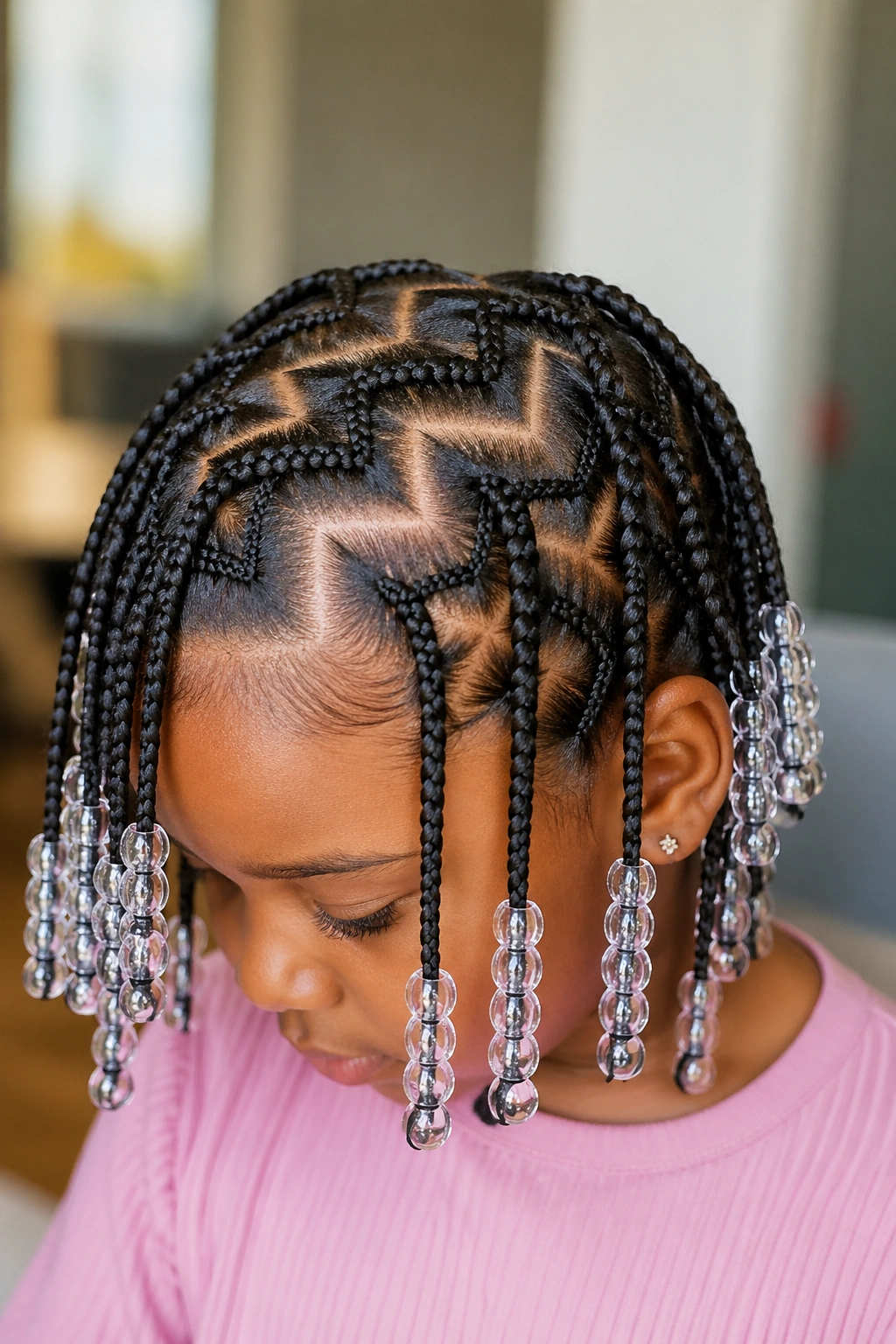
A zigzag part adds shape without adding a lot of extra braid time. That is why I like it. You get a little visual surprise at the scalp, but the actual braiding still moves quickly because the individual sections stay small and direct.
A Small Detail That Changes Everything
The parting is the star here. Once the zigzag is clean, even plain braids look more styled. Transparent beads keep the focus on the part pattern instead of fighting it with too much color. They’re especially nice if the hair itself is already dense or dark, because the light beads show up without making the style feel crowded.
- Use a rat-tail comb for the parting.
- Keep the zigzag lines broad, not tiny and nervous.
- Thread 3 to 5 beads per braid end.
- Finish with a light oil on the scalp line.
Tip: This style looks best when the part lines are crisp. Do not rush that part.
5. Five Tiny Braids into a Low Ponytail
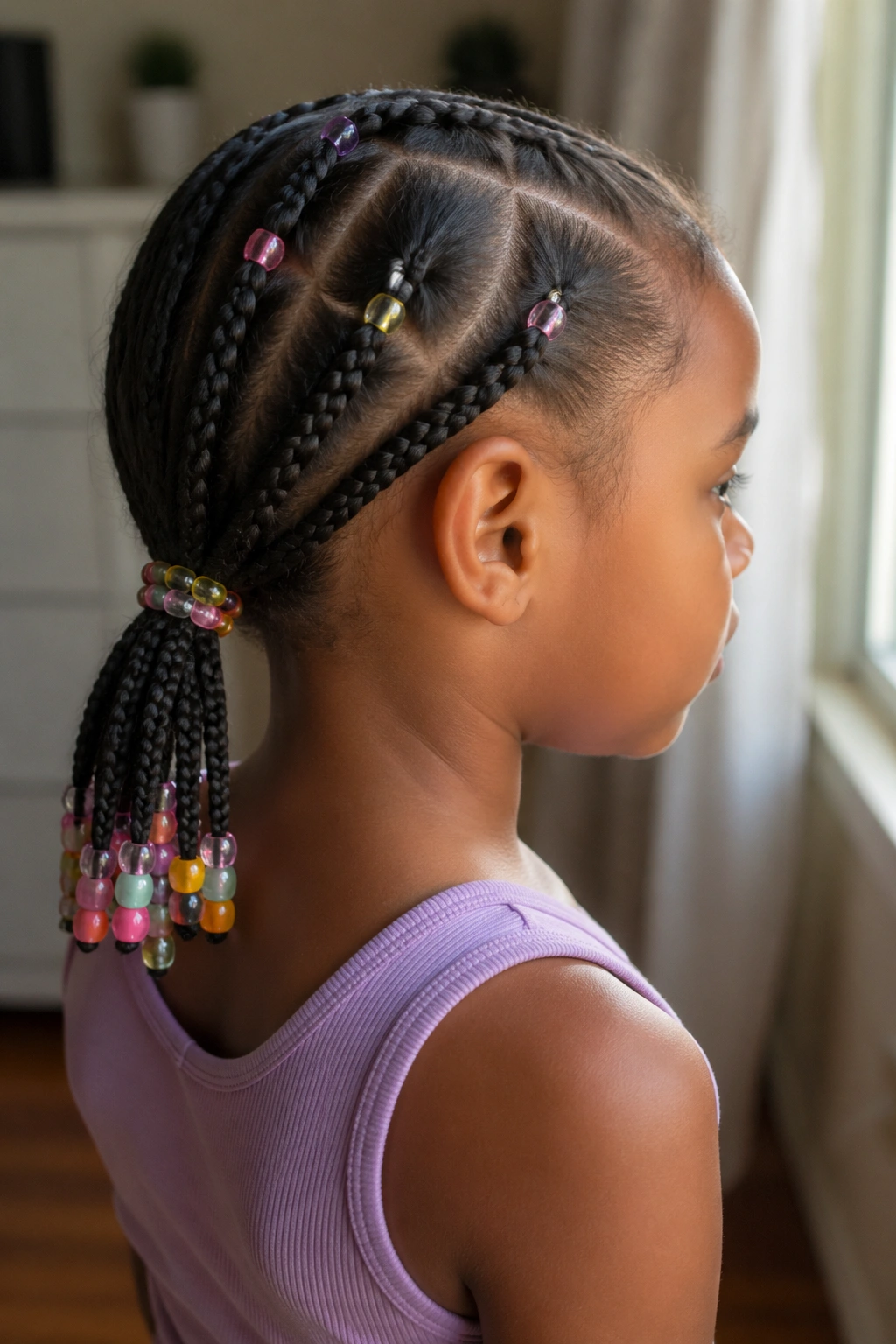
Five braids. One low tie. That’s the whole charm of this look. It feels neat, it takes less time than a full head of small sections, and it sits comfortably on a child who does not love a lot of pulling near the temples.
The braids are short enough that the bead work becomes the decoration, not the braid length. I like mixed bead colors here because the style itself is very simple. A few clear beads, a few soft pink ones, maybe one or two silver accents—enough to look thoughtful, not overdone.
This is also one of the kinder looks for tender scalps. Fewer sections mean fewer pressure points. If the child has fine hair, that matters more than people think.
A low ponytail at the nape keeps the style calm. It does not bounce around as much as a high one, and for some kids that makes all the difference.
6. Triangle-Part Box Braids with Wooden Beads
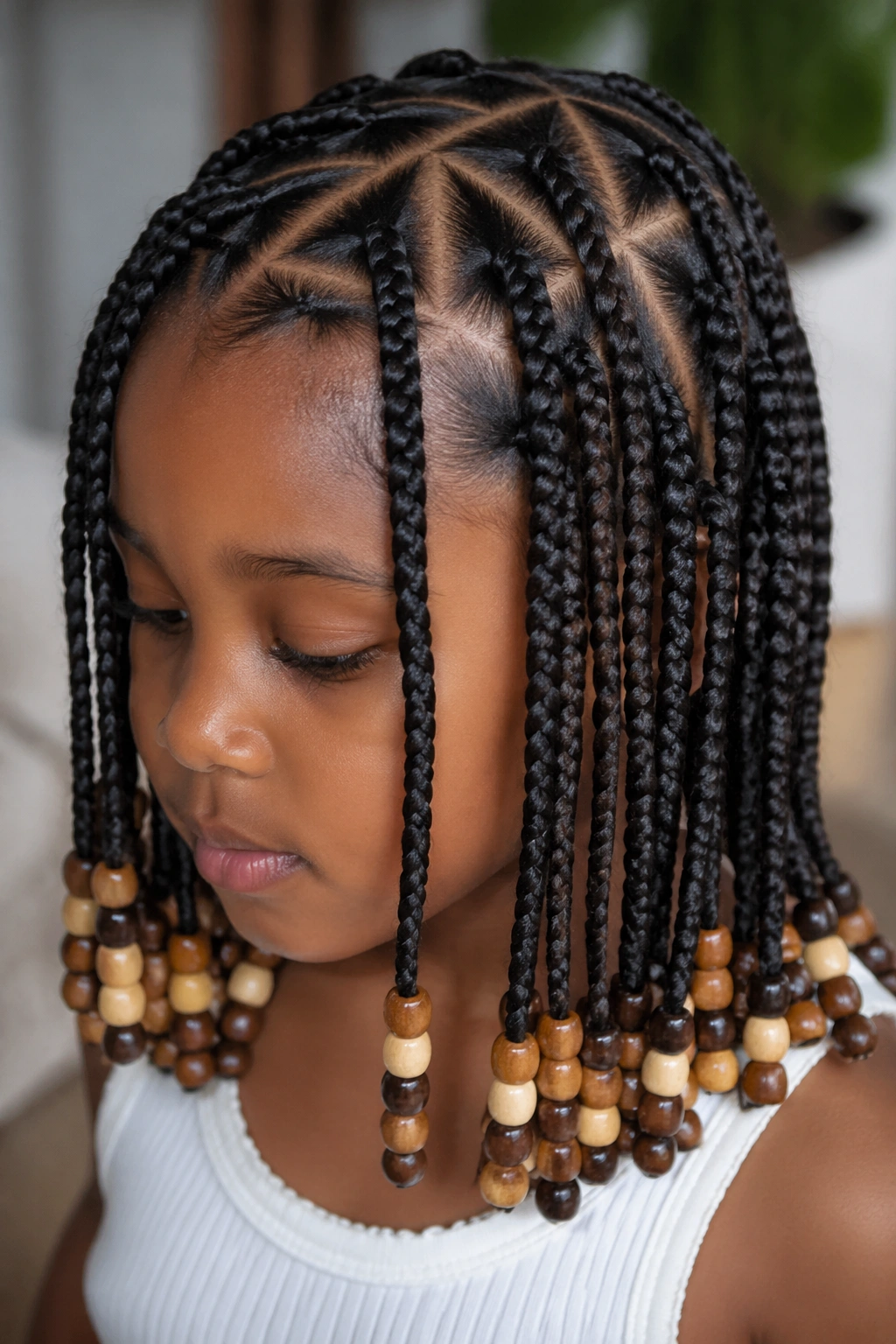
Triangle parts give box braids a sharper, more finished look. The geometric shape is doing a lot of the work, so the braids themselves can stay simple and quick. Wooden beads suit this style beautifully because they soften the edges and keep the whole look from feeling too shiny.
Unlike plastic beads, wooden ones have a matte finish that reads as warm and grounded. That sounds like a small detail. It isn’t. On kids, it often looks calmer and less toy-like, especially when the outfit is already colorful.
Why This Shape Helps
Triangle sections make the scalp pattern more interesting, even if the braids are short. You do not need extra length to create impact. A set of 6 to 8 medium braids with two or three wooden beads on each end is usually enough.
This style works especially well on thicker hair because the parts hold their shape well. If you want the look to feel neat rather than bulky, keep the braids medium-width and stop the beads before they get too heavy.
7. Heart-Part Braids with Pink and Clear Beads
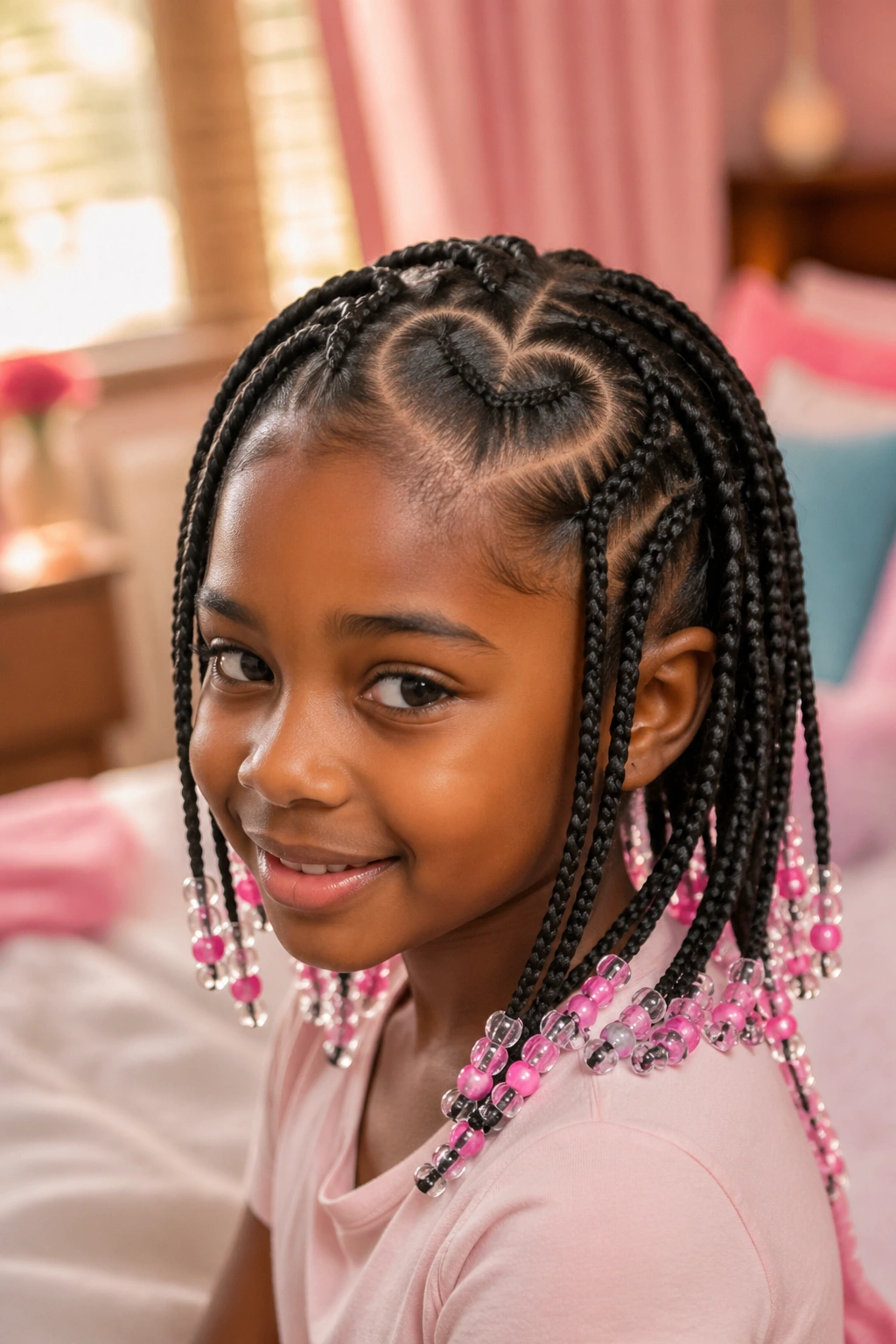
Heart parts are the sort of detail kids notice immediately. They feel special without requiring a completely different braid technique, which makes them a smart choice when you want a style that looks creative but still moves fast.
What Makes the Parting Special
A heart part turns the scalp into part of the design. The braid count can stay modest—usually 4 to 6 braids is enough—because the shaped part already carries the style. Pink and clear beads work well here since they echo the playful shape without turning the whole look into a color explosion.
This is one of those styles that gets compliments from adults and excited grins from kids. Both matter. If the child likes what they see in the mirror, they will usually tolerate the chair time a little better.
- Keep the heart larger than you think.
- Use one accent bead color, not five.
- Make the front edges smooth before braiding.
- Finish with a little braid sheen if the hair is dry.
8. Low Crown Braid with Bead Drops
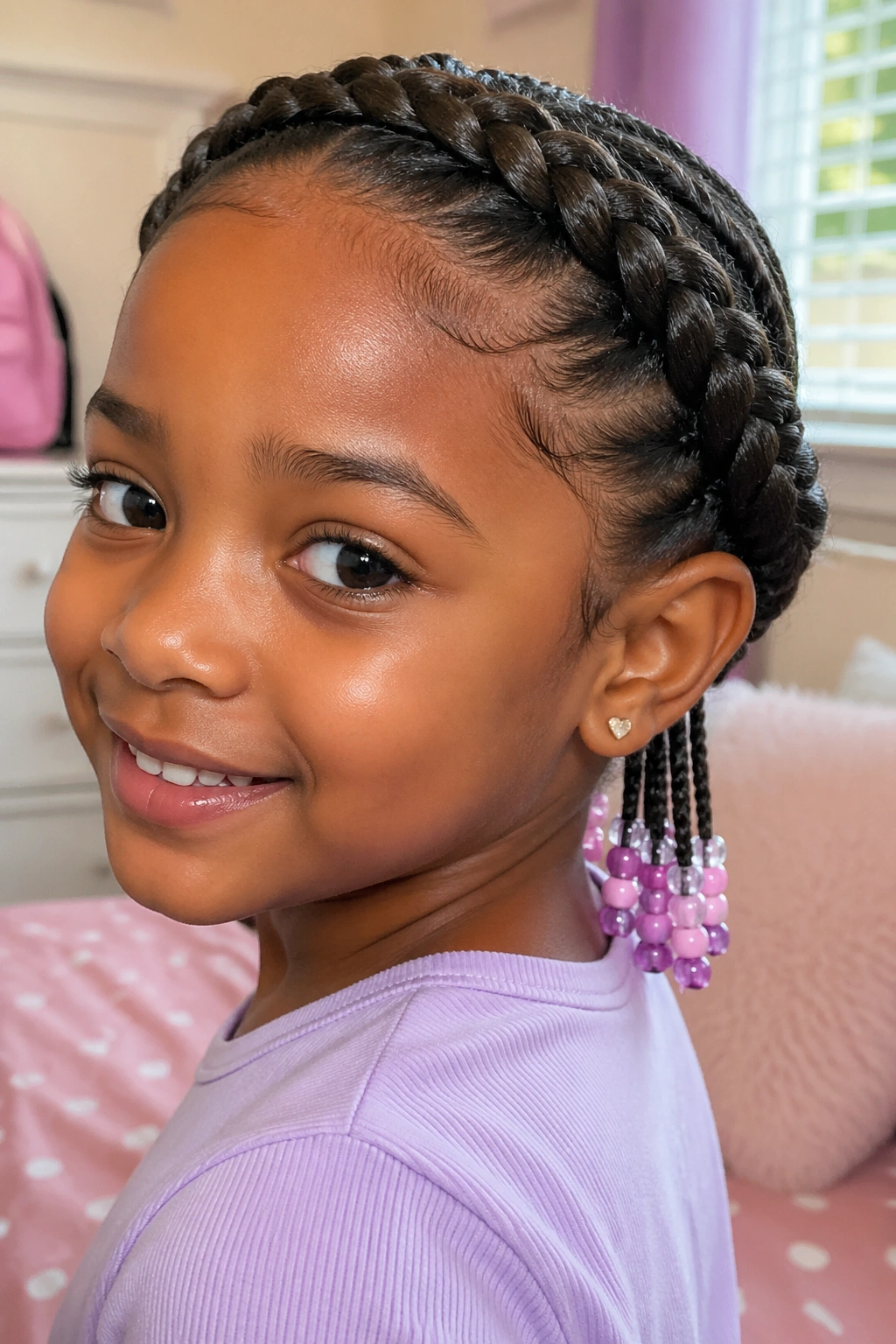
A low crown braid is one of my favorite quick looks for special days, because it gives a dressed-up feel without demanding a full sculpted style. The braid wraps around the head, and the beads hang near the nape or one side, where they move gently instead of clattering everywhere.
The shape is neat. Very neat. It keeps hair off the face and neck, which is useful for kids who get warm easily or just cannot stand hair touching their cheeks. The braid itself can be a simple feed-in or a standard three-strand braid, depending on hair length.
If you want the style to move faster, keep the braid path close to the hairline and save the beadwork for the end. That way you are not stopping to thread accessories every few inches.
It’s a good look for church, family events, and school pictures. Quiet, but not plain.
9. Stitch Braids into a Puff with Jumbo Beads
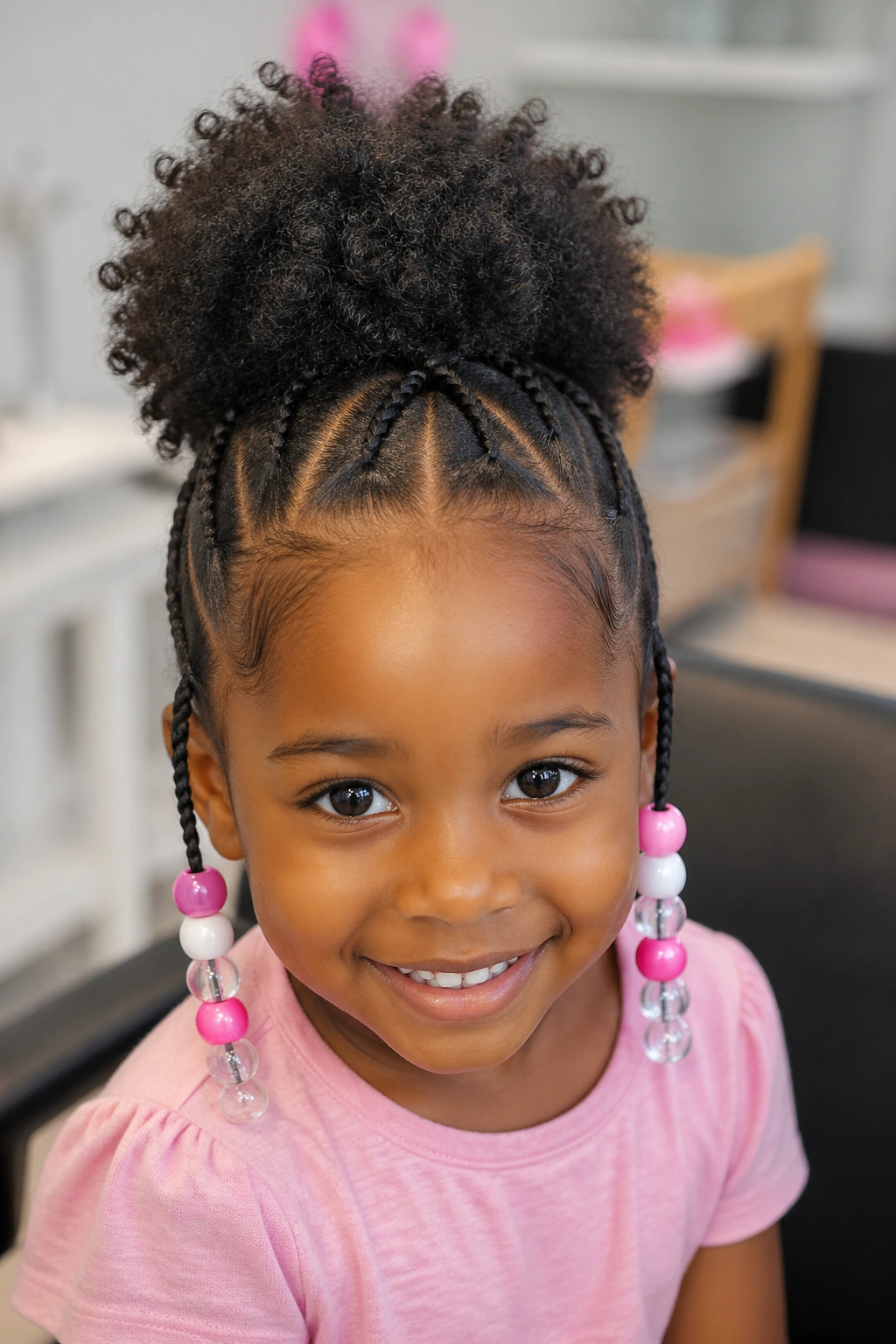
Why does this style work so well? Because the stitched parts do the visual heavy lifting, while the puff keeps the back soft and easy. That combination saves time. It also gives a child some movement, which is useful if they dislike a fully braided finish.
The Parting Makes the Style
Stitch braids use a clean, defined part line, usually with a small amount of added product to help the rows stay visible. Once those rows are set, the braiding moves quickly toward the puff. Jumbo beads at the ends are ideal here because they are easy to thread and they show up clearly without needing a lot of accessories.
- Best for medium to thick hair.
- Use 4 to 6 beads total if the puff is large.
- Keep the braids medium-tight, not tight-tight.
- Let the puff sit high or mid-height, depending on what the child likes.
Tip: If the child has a sensitive nape, keep the back section loose and airy.
10. Braided Bob Beaded Braids for Kids
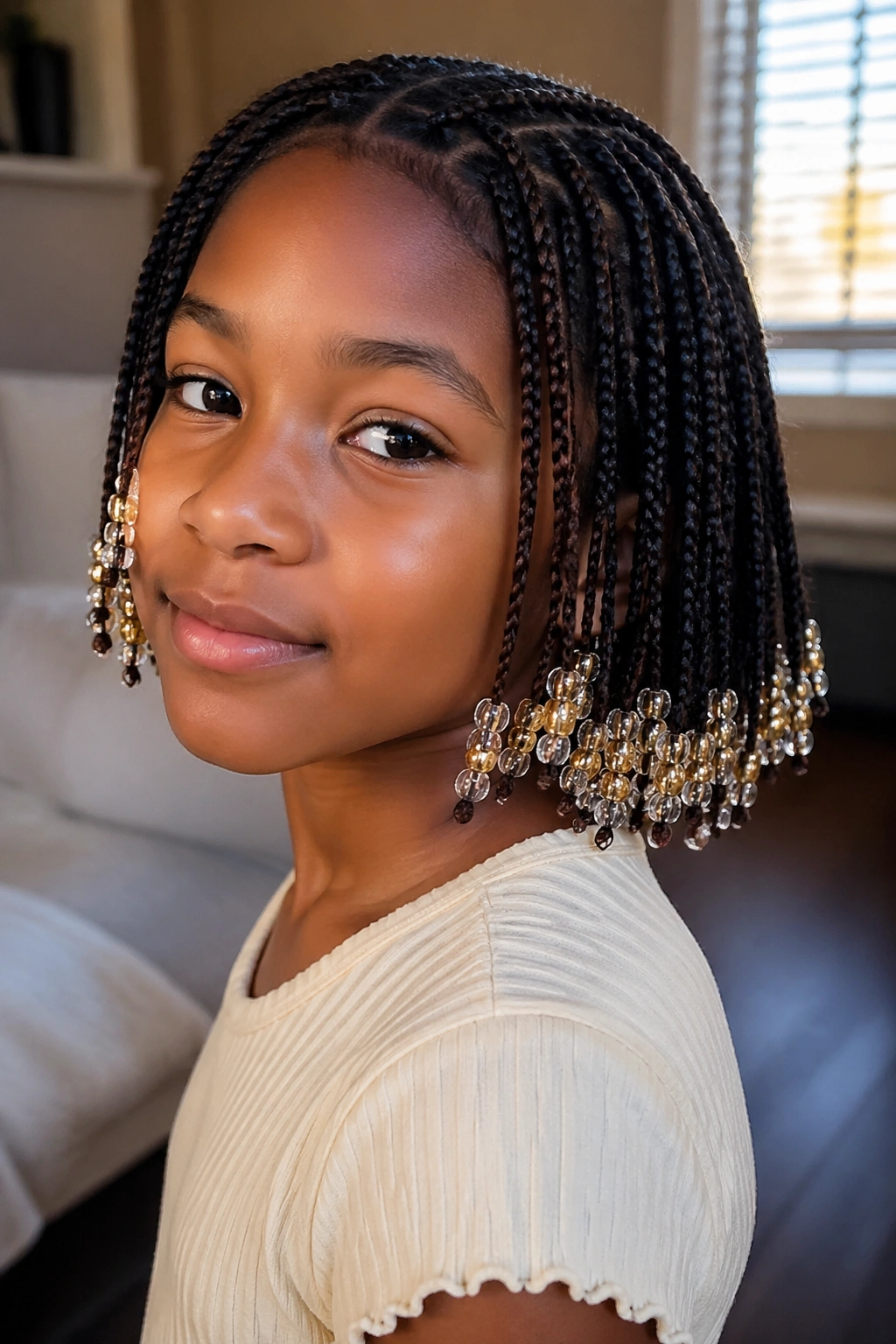
A braided bob is practical in the best way. It stays short, it sits neatly on the shoulders, and it does not take as long to finish as a longer set of braids. Add clear and gold beads to the ends, and the whole thing feels polished without becoming fussy.
Shorter braids also make the bead weight easier to manage. That matters more than people realize. A child can love the look and still hate the tug if the ends are too heavy. With a bob, the braids stop before they get cumbersome, so the style tends to wear better through the day.
Good Things About the Bob Shape
The bob frames the face cleanly, especially if the ends curve inward a little. It also makes it easier to sleep in, which parents appreciate even if they don’t say it out loud. A quick refresh in the morning is often all it needs.
Clear beads keep the ends light. Gold beads add warmth. Together, they make the style feel finished without turning it into a lot of work.
11. Two-Strand Twist Braids with Small Beads
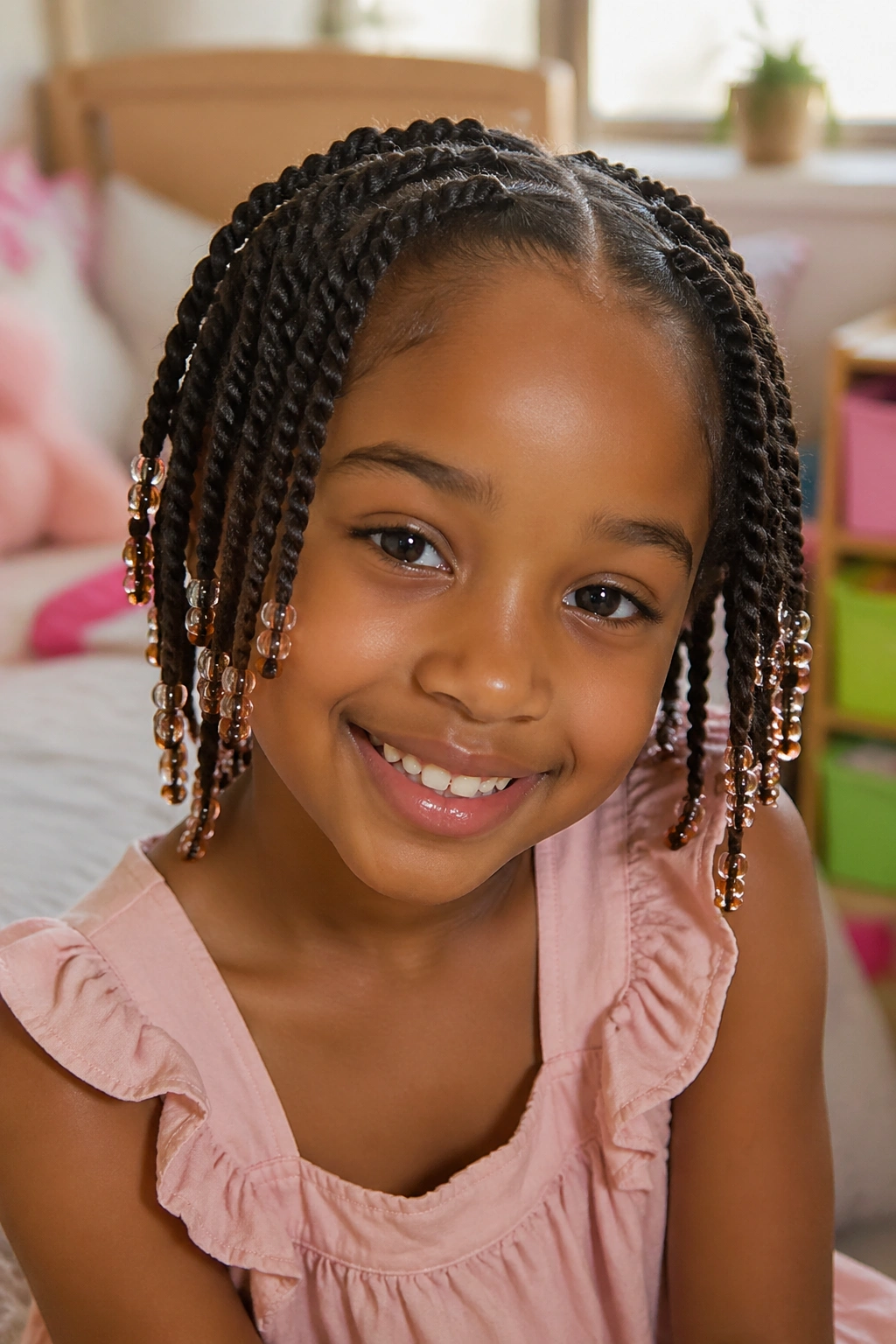
Two-strand twists are kinder to tender heads than many tight braid styles, which is why I reach for them when a child has had a rough week with styling. They move quickly, they stay soft, and the bead ends give enough sparkle to make the look feel finished.
The twist pattern is also forgiving. If one section gets a little uneven, it doesn’t shout at you the way a straight cornrow might. That makes the style less stressful for the person doing the hair, which counts for something.
Use small beads at the ends, not giant ones. A pair of tiny clear or pastel beads per twist is enough. Too many and the style starts to wobble. Too few and the finish feels unfinished.
This is a good pick for younger children and kids who want their hair touched as little as possible. Gentle styles matter.
12. Crisscross Front Braids with Pop Beads
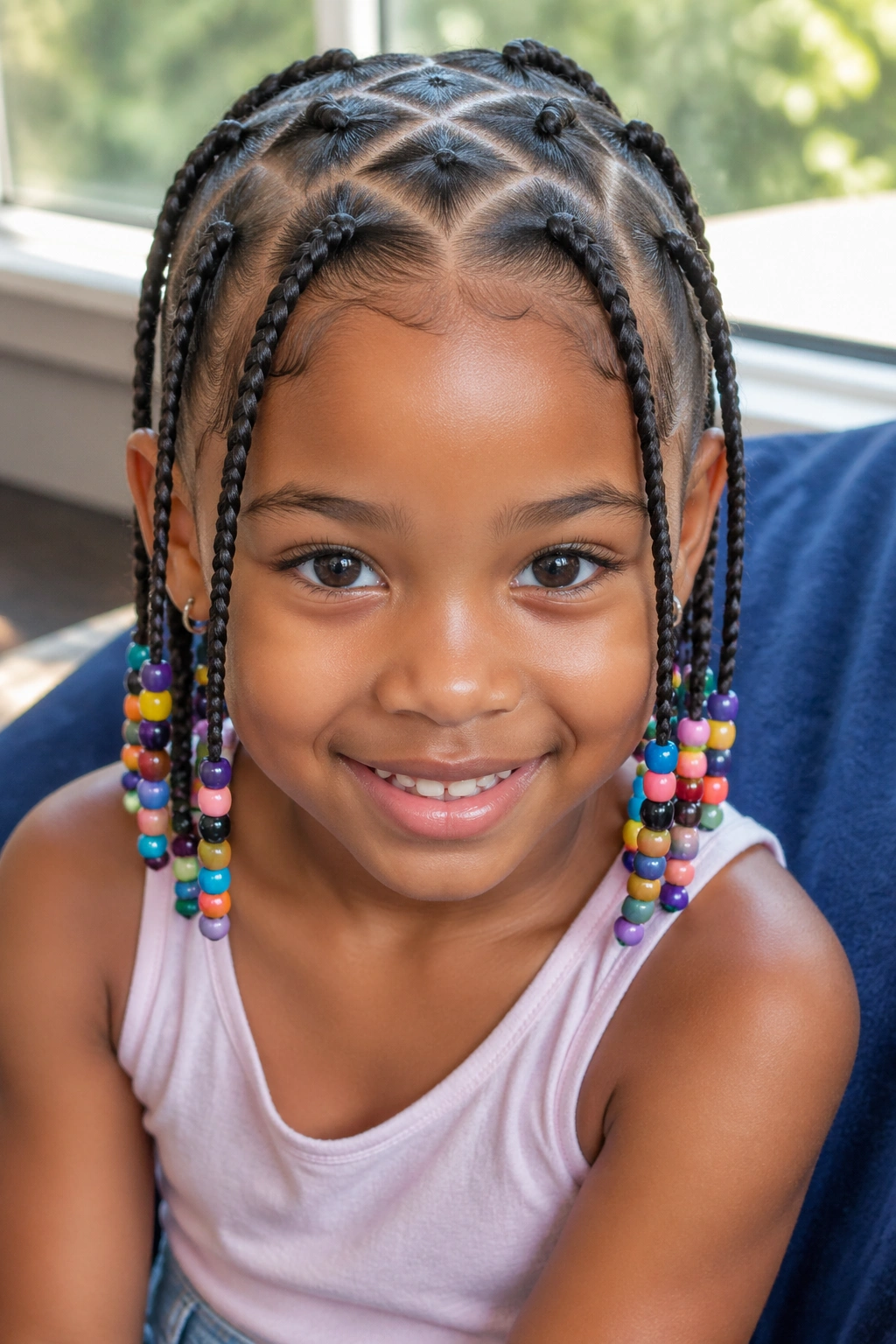
Crisscross braids give you a lot of style from a small amount of work. The front section creates the visual interest, while the rest of the hair can stay in simple braids or a ponytail. That means less total time in the chair and less fuss when the child is ready to get up.
Unlike a full-head braid pattern, the crisscross design keeps the sides open and light. That makes it feel airy, which some kids love. Pop-colored beads at the ends—think red, blue, or bright green—turn the front design into something playful instead of formal.
This is a strong choice for kids who want a style that stands out a bit but still feels comfortable enough for school. The parts should be clean and broad. Narrow crisscrosses can get messy fast, and there’s no prize for making the pattern harder than it needs to be.
13. Mini Braids for Short Hair with Tiny Seed Beads
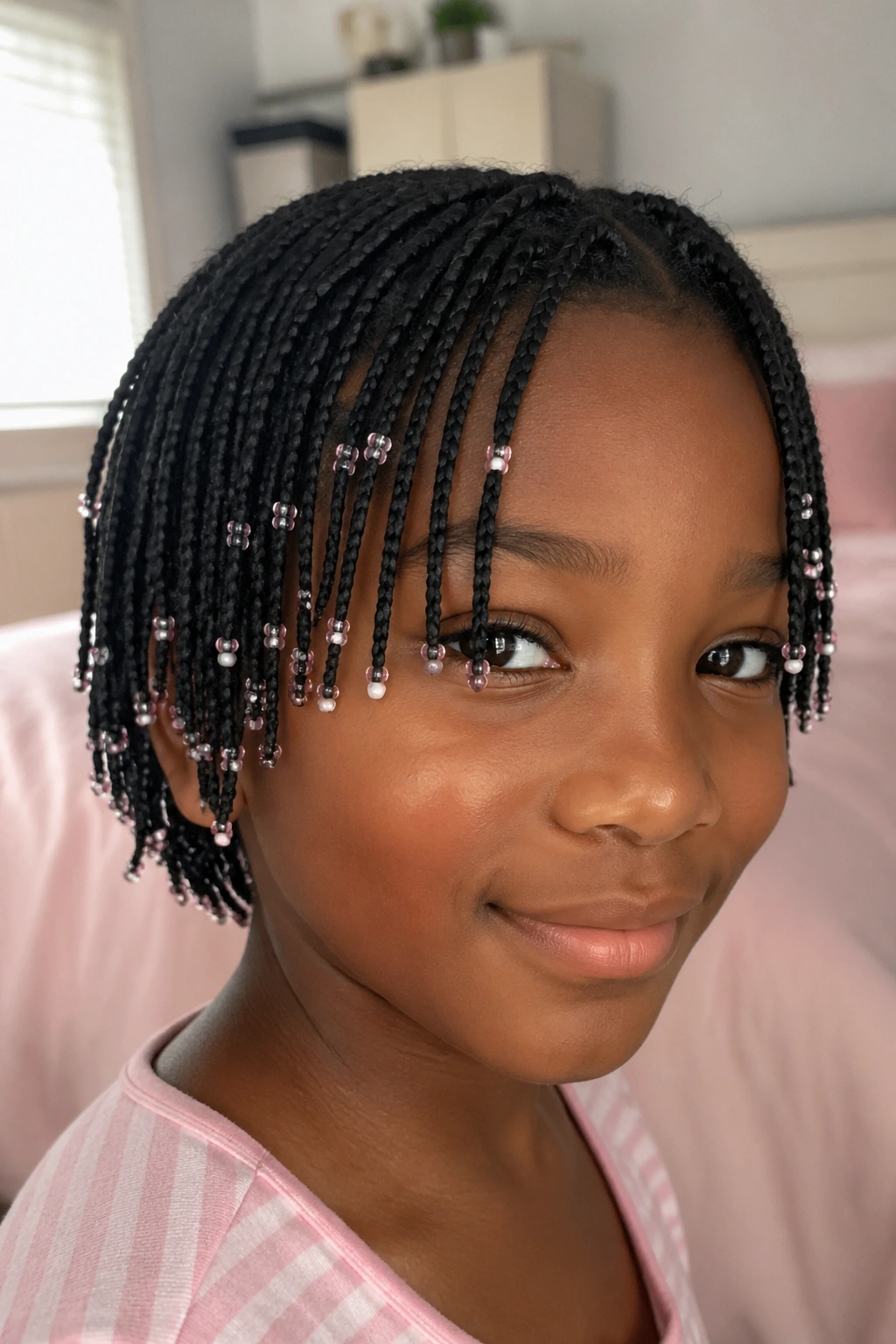
Short hair can absolutely wear beads well. The trick is keeping the braids tiny and the bead size tiny too, so the style doesn’t look overwhelmed. Mini braids are useful when hair is tapered, cropped, or simply not long enough for bigger braid sets.
How Small Is Small Enough
Think of this as detail work, not a dramatic style. You’re creating small, neat rows that sit close to the scalp and finish with one or two seed beads each. That keeps the whole thing light and quick. It also keeps the beads from overpowering the haircut.
- Best for short, natural hair.
- Use a light leave-in before parting.
- Keep each braid narrow and even.
- Choose seed beads with smooth edges.
The best part is how tidy it looks. Short hair often needs a style that respects its length instead of fighting it, and this does exactly that. It’s neat. It’s fast. It doesn’t ask for more hair than the child has.
14. Space Buns with Beaded Braid Tails
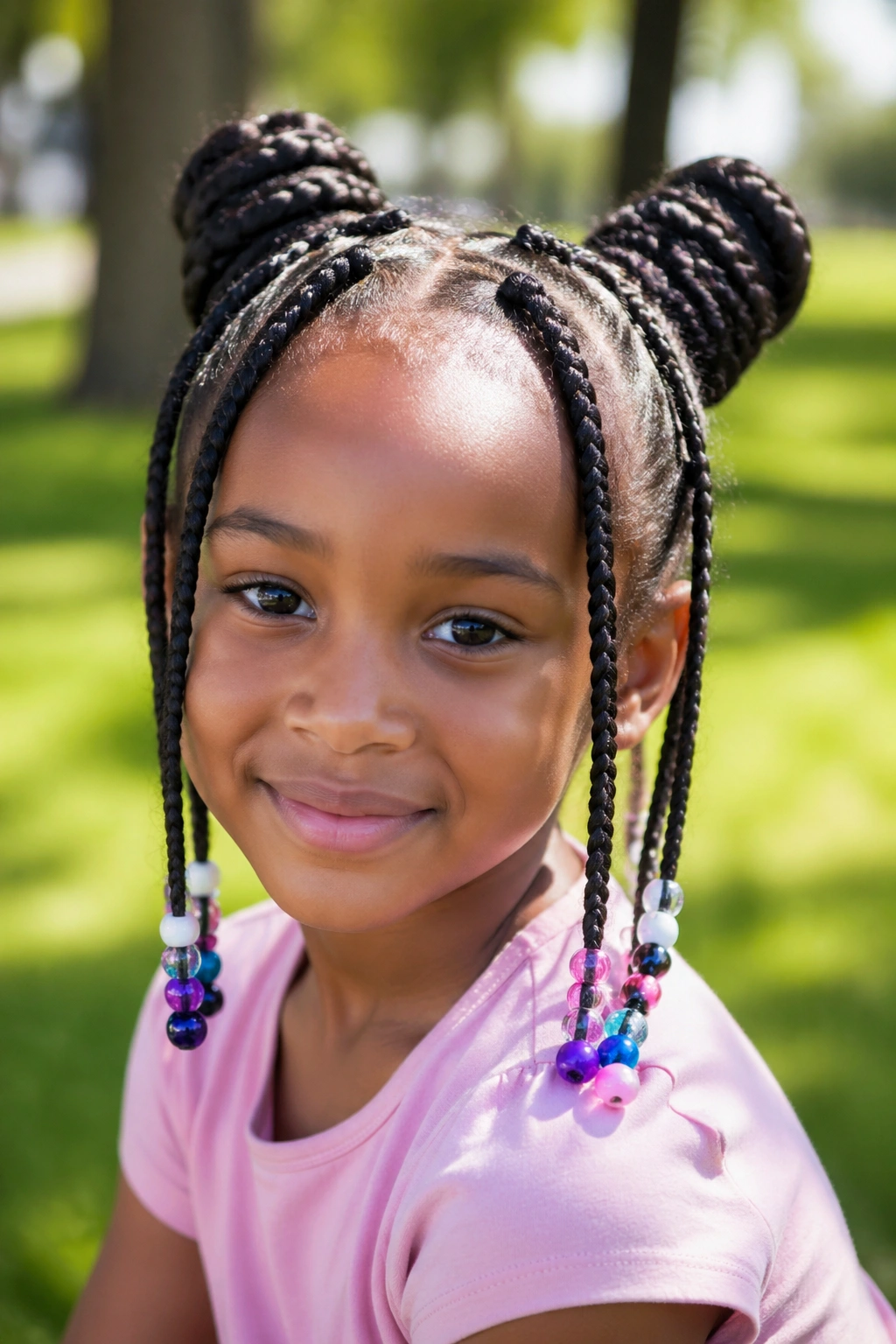
Space buns are pure fun, and the bead tails give them just enough structure to stop them from feeling sloppy. Two buns on top, a few braided tails hanging down, and then the beads at the end—that’s a whole look with a pretty short styling window.
The shape works especially well for active kids because the buns stay out of the way. There’s less hair swinging around during play, and the braided tails stay controlled. If you want the style to feel extra cheerful, mix bead colors in the tails but keep the buns themselves simple.
I like this one for parties or weekend outings. It reads playful without turning into a costume. If the hair is thick, secure each bun with a soft band and keep the braid tails a little shorter so they don’t pull.
Small detail. Big payoff.
15. French Braid Pigtails with Layered Beads
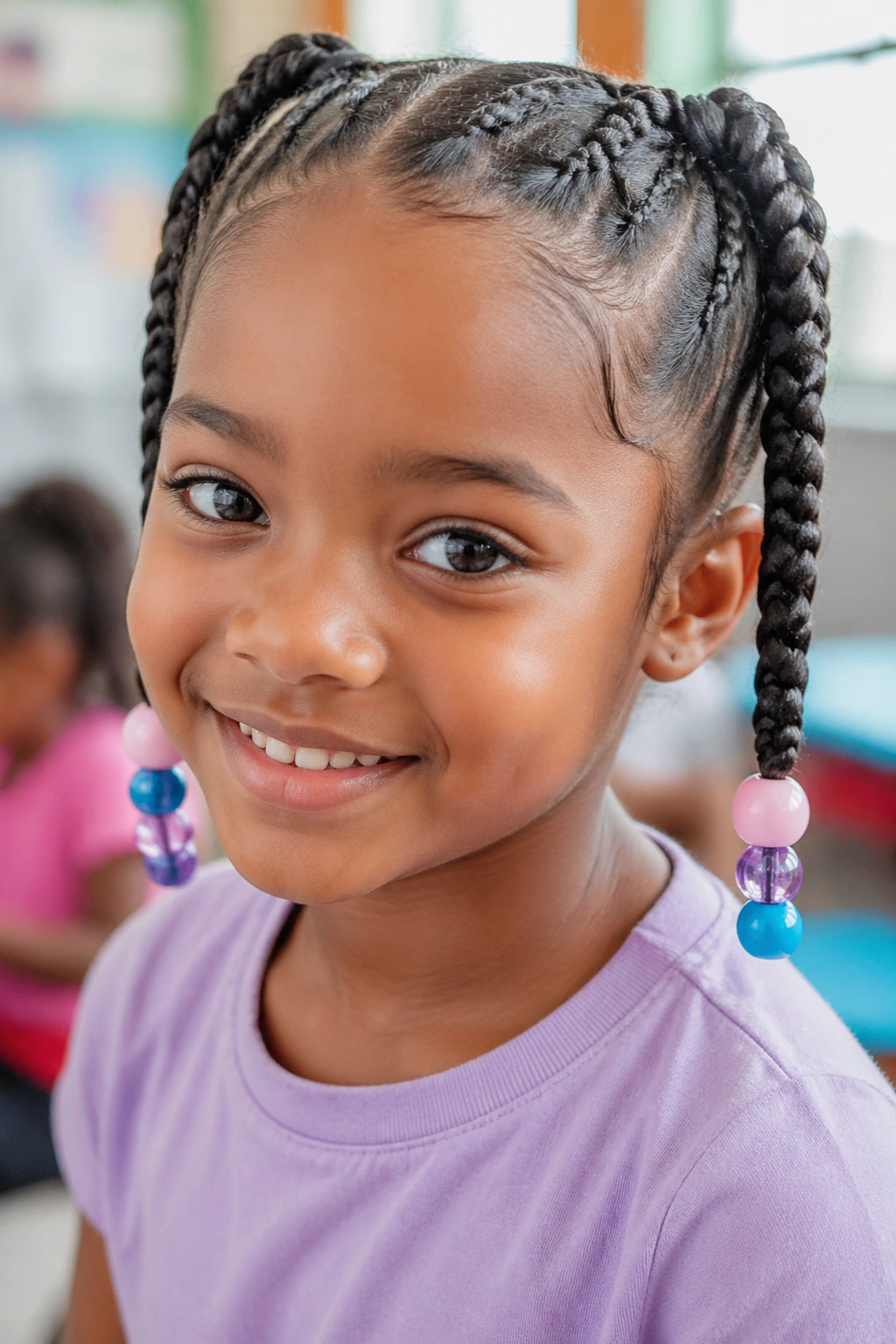
French braid pigtails are one of those styles that look harder than they are. Once the first few passes are in place, the braid holds itself, and the rest moves quickly. That makes it a good option for children who need something neat but not overly elaborate.
Getting Both Sides Even
The challenge is symmetry. Keep the two sides close in size, and start the braid high enough that the style feels balanced. Layered beads—one larger bead followed by two smaller ones, or a clear bead next to a colored one—give the ends a more dimensional look.
You do not need a lot of beads per side. Four or five is enough. Too many beads can make the pigtails swing awkwardly, especially on younger children.
This style is good when you want something familiar but not boring. It’s practical for school, but it still feels like someone made an effort. Kids notice that, even when they pretend not to.
16. Mohawk Braid with Side Beads
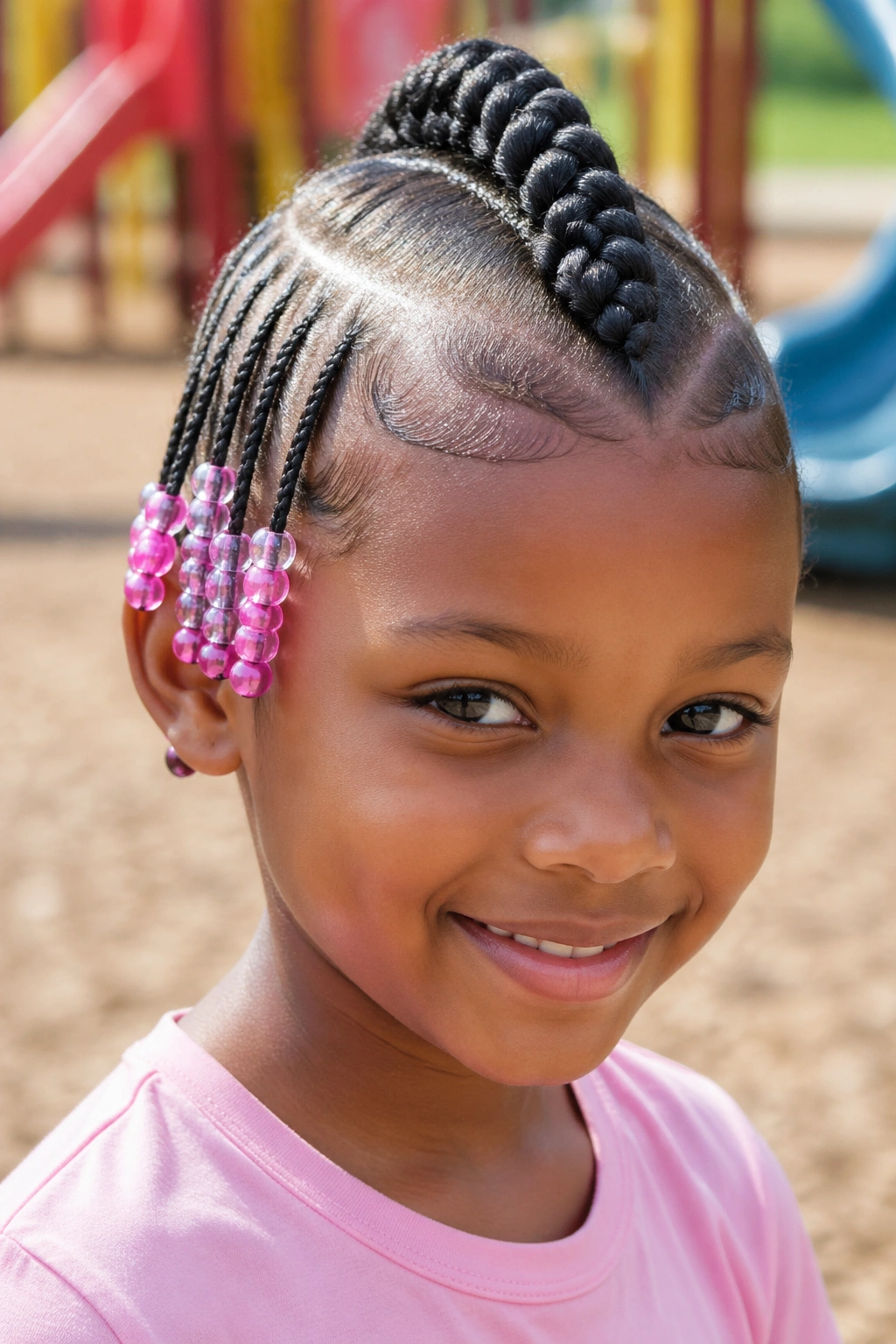
A mohawk braid keeps the middle section bold and the sides sleek. That’s the whole point. It’s also one of the fastest ways to make a child’s hair look styled without braiding the entire head. The sides can be smoothed and pinned, while the center braid carries the look.
A few beads on the side or at the tail add movement without clutter. I prefer this with medium or large beads because small ones can disappear against the braid shape. If the child likes sporty looks, this style fits that mood well.
Why It Holds Up
The center braid has a clear path, so you’re not juggling too many directions at once. That speeds things up. It also tends to stay neater during active play, since the hair on the sides is tucked away.
- Good for thick hair.
- Works well with a high ponytail finish.
- Keep the side sections smooth, not tight.
- Use soft ties at the base.
It’s bold, but not complicated. That’s the appeal.
17. Rope Braid Ponytail with Wooden Spacers
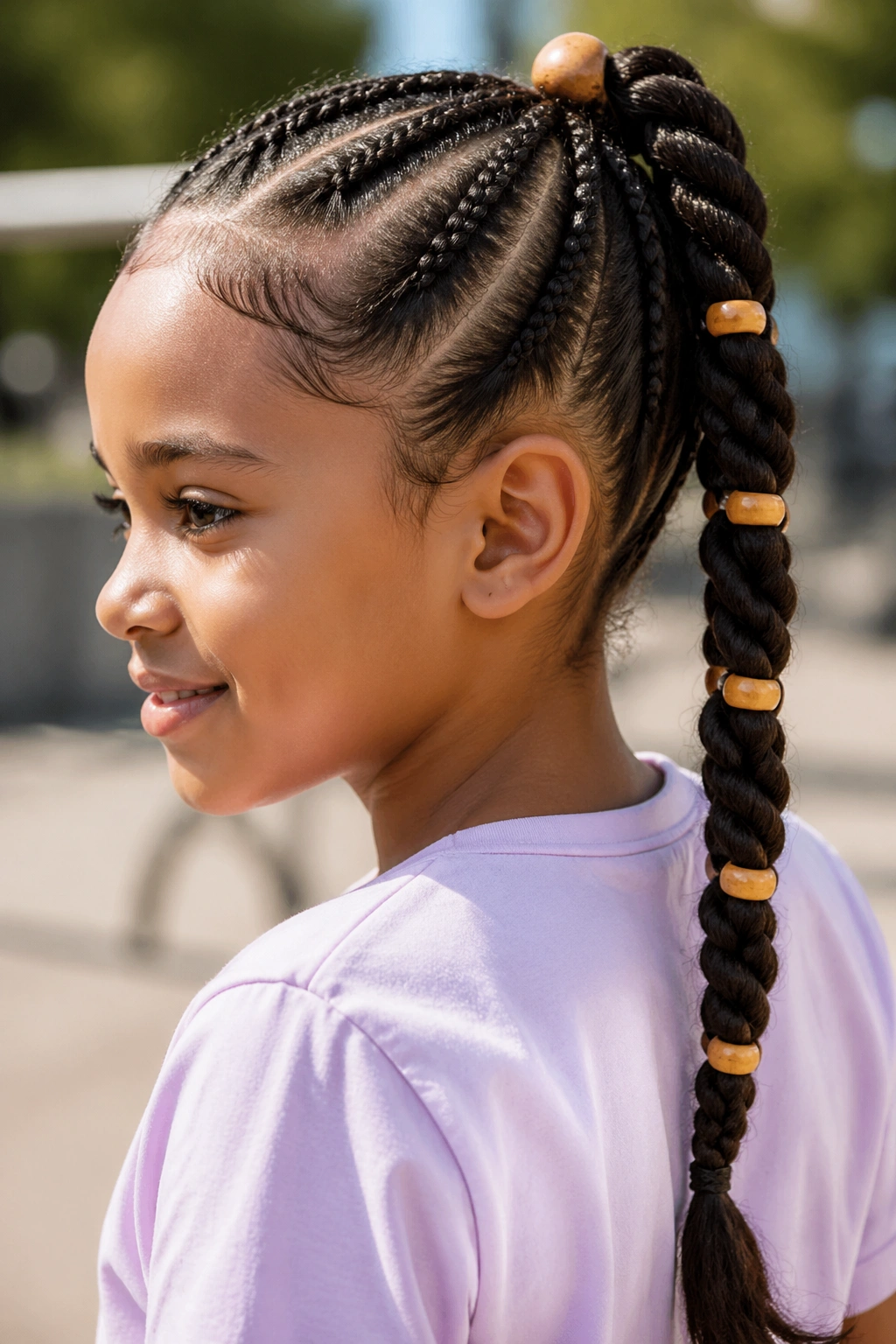
A rope braid is quicker than a standard three-strand braid once you get the rhythm. It twists instead of weaving, which makes it a nice choice for days when you want a finished look without a lot of hand work. Add wooden spacer beads, and the ponytail gets a warm, handmade feel.
The wood keeps the style from feeling too shiny or too busy. It also tends to sit quietly, which is nice on a child who does not want bead clatter every time they turn their head. Keep the ponytail low or mid-height if you want the style to stay secure all day.
This works especially well on hair that has a little grip, because the twist holds better when the strands aren’t too slippery. A touch of leave-in helps, but don’t overdo it. Too much product makes the rope braid puff up in odd places.
Simple, neat, and fast. That’s the whole case for it.
18. Halo Braid with a Beaded Tail
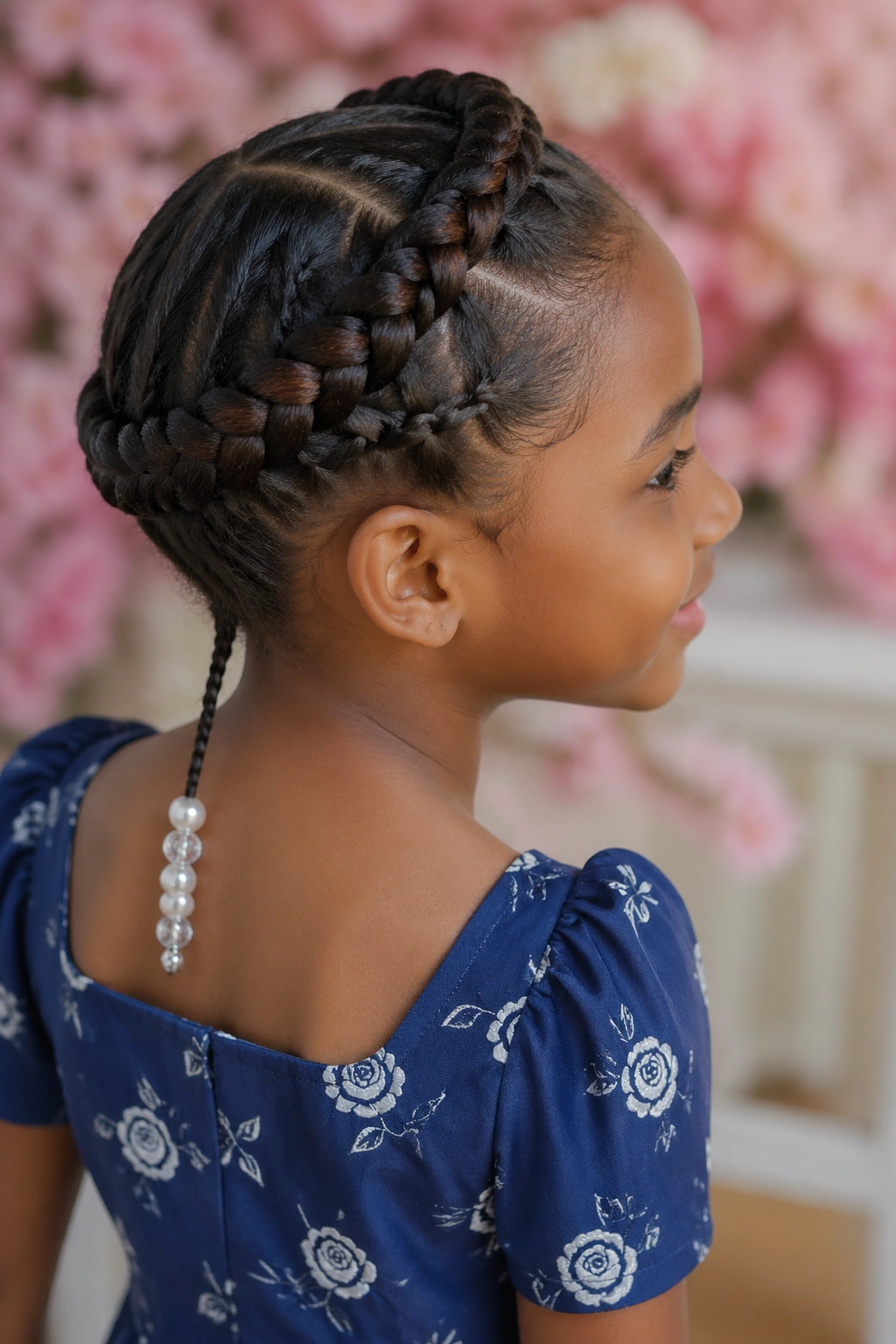
Unlike styles that spread braids across the whole scalp, a halo braid uses one continuous path around the head. That means fewer sections to manage and a cleaner finish near the face. It’s a smart pick for kids who want hair off their cheeks but don’t want a high-tension style.
The beaded tail usually sits near one side or at the back. I like that better than bead clusters all around, because it keeps the halo shape soft. One tail, a few beads, and the rest of the style can stay quietly elegant. Quiet is good here. No drama needed.
This is especially nice for dressier days when you want the hair to look neat in photos and comfortable in real life. If the child has fine hair, keep the braid close to the head so it doesn’t loosen too fast.
It’s a graceful style, but not a fussy one. That’s a rare combination.
19. Waterfall Front Braids with Tiny Beads
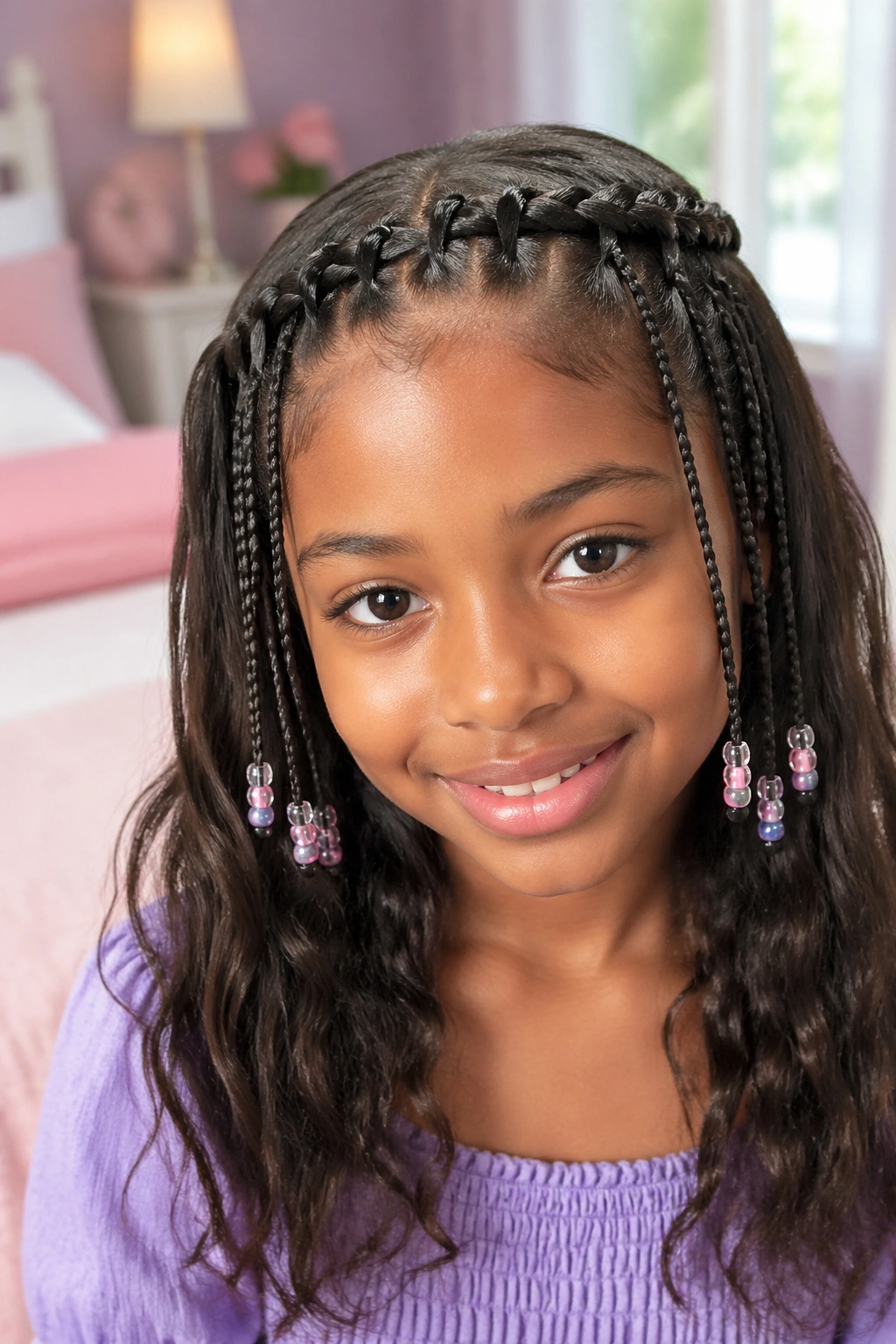
A waterfall braid gives you a pretty front detail without asking for a full braided head. That’s why it works so well for kids who have short attention spans in the chair. You braid just enough to frame the face, then let the loose strands fall through the pattern.
What the Waterfall Does to the Shape
The braid creates movement right around the temple and crown. It looks delicate, but it’s not fragile if you keep the sections even. Tiny beads at the ends of the loose strands keep the style playful without weighing it down.
- Best on medium-length hair.
- Use tiny, smooth beads only.
- Keep the loose strands brushed out.
- Great for dress-up days and birthdays.
I would not load this style with heavy accessories. It works because it feels light. A few tiny beads do the job well enough.
The nice thing is that it gives the illusion of more styling than it actually takes. That’s useful. A little visual payoff for a small time investment is always welcome.
20. Four Straight Braids with Jumbo Clear Beads
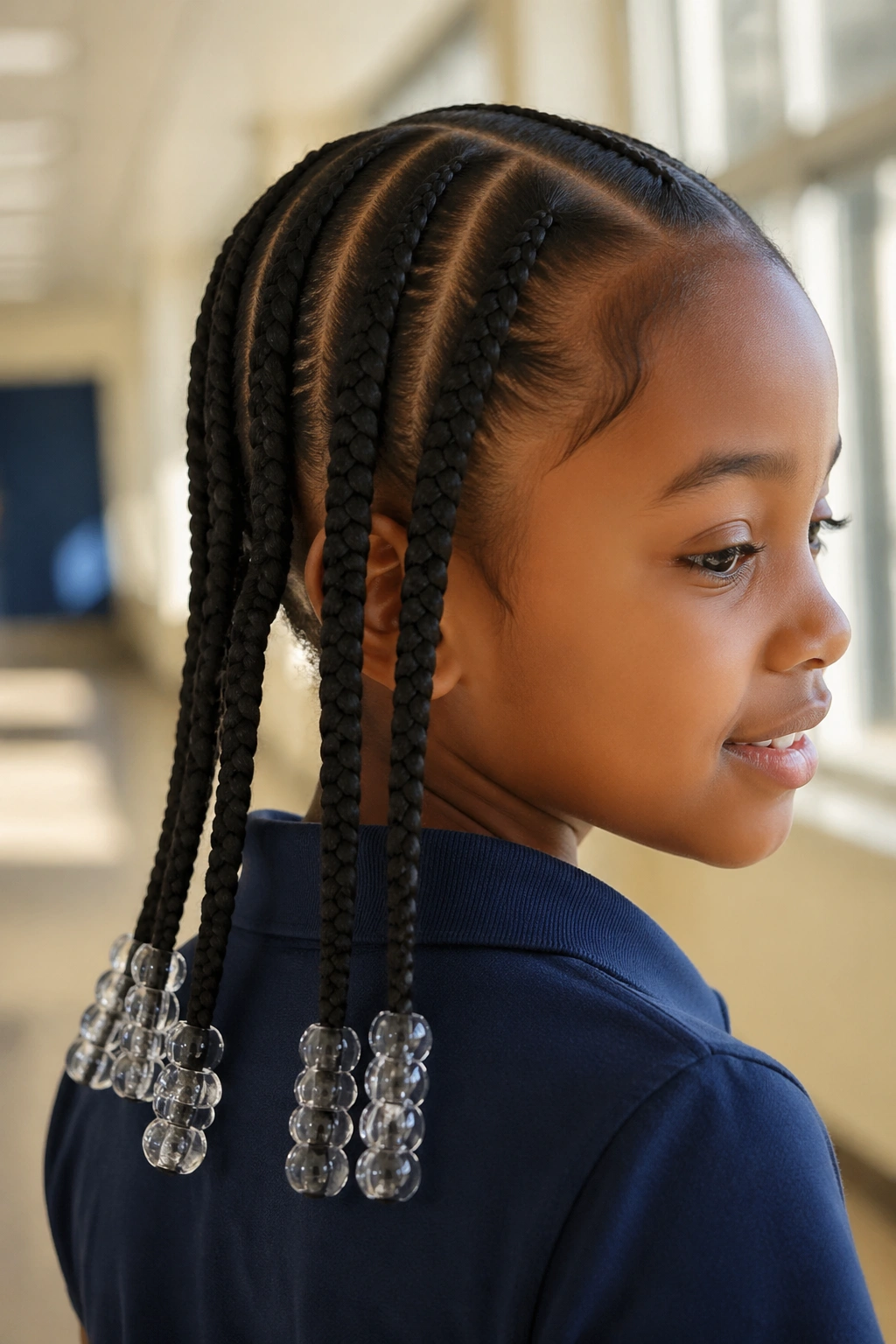
Sometimes the smartest answer is the simplest one. Four straight braids, parted cleanly from front to back, can look tidy, fast, and finished in a way that survives the whole day. Jumbo clear beads help because they slide on quickly and show up well without needing extra color.
The big beads also make this style faster to finish. Fewer threads. Less fiddling. If the child is tired, that matters a lot. I like this for school mornings when there’s no time for a lot of parting drama.
The Simple Formula
Keep the sections even, braid each one straight back, and stop the beads at the same point on all four braids. That gives the style a neat, pulled-together look. If one braid ends shorter than the others, don’t panic. A clean finish matters more than exact length.
This is one of those braid sets that looks calm and reliable. Not flashy. Just solid.
21. X-Part Braids with Spacer Beads
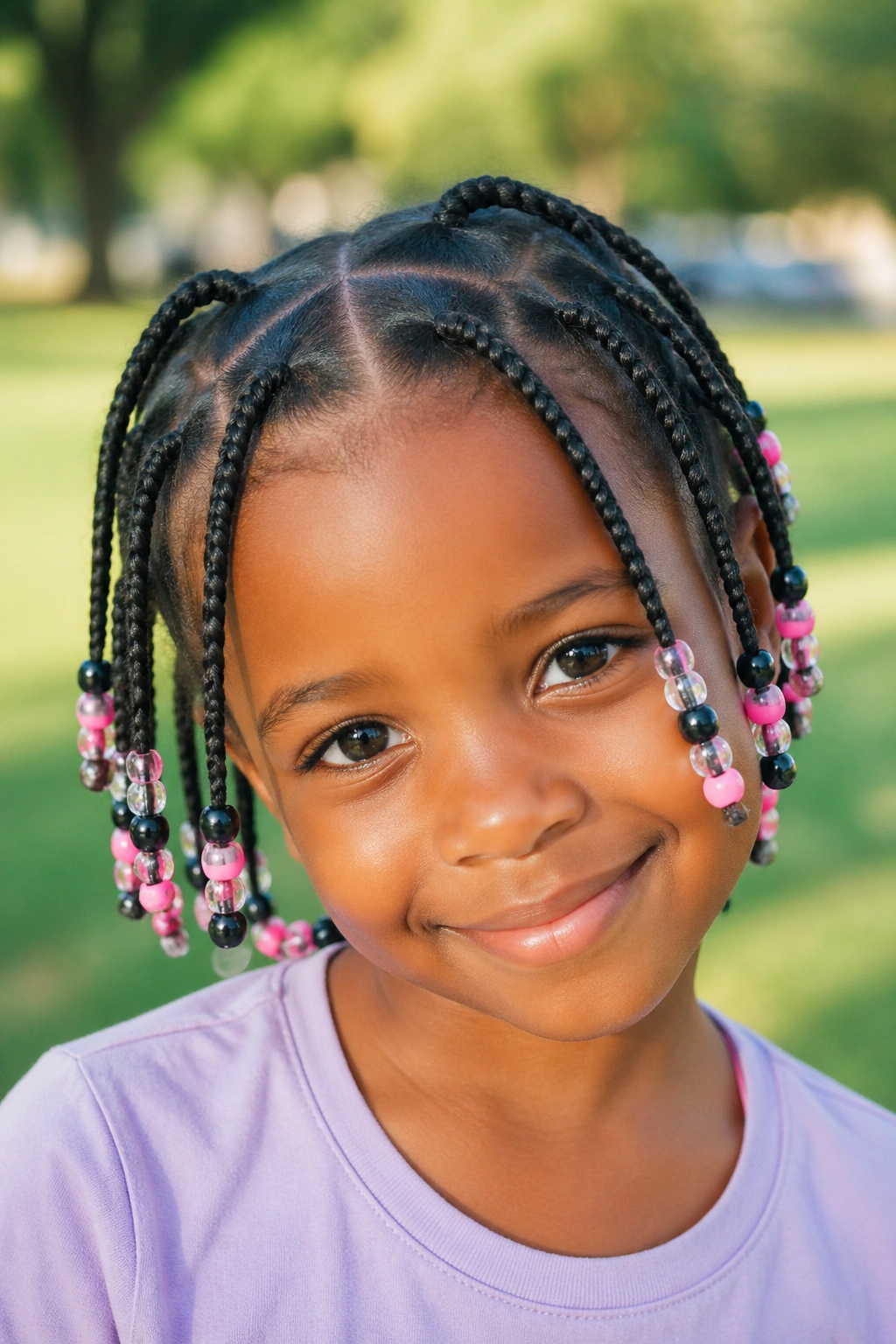
What makes an X-part stand out is the parting, not the braid length. The crossed lines at the scalp create a built-in pattern, so the braids themselves can stay short and practical. Spacer beads help because they break up the end of each braid without adding much weight.
How to Use the Pattern Well
Think of the X shape as the design feature. The braid count can stay modest, and the bead placement can stay restrained. A single spacer bead between two colored beads is enough to make the ends feel deliberate.
This style works well for kids who like something a little different but not too busy. The crossed parts give the head a playful grid effect that feels modern without trying too hard.
- Keep the X lines broad and visible.
- Use two bead colors at most.
- Finish the ends at the same height if you can.
- Best on hair with a little thickness.
It’s one of those styles that looks like more work than it actually is. I count that as a win.
22. Side Ponytail Braids with Crystal Beads
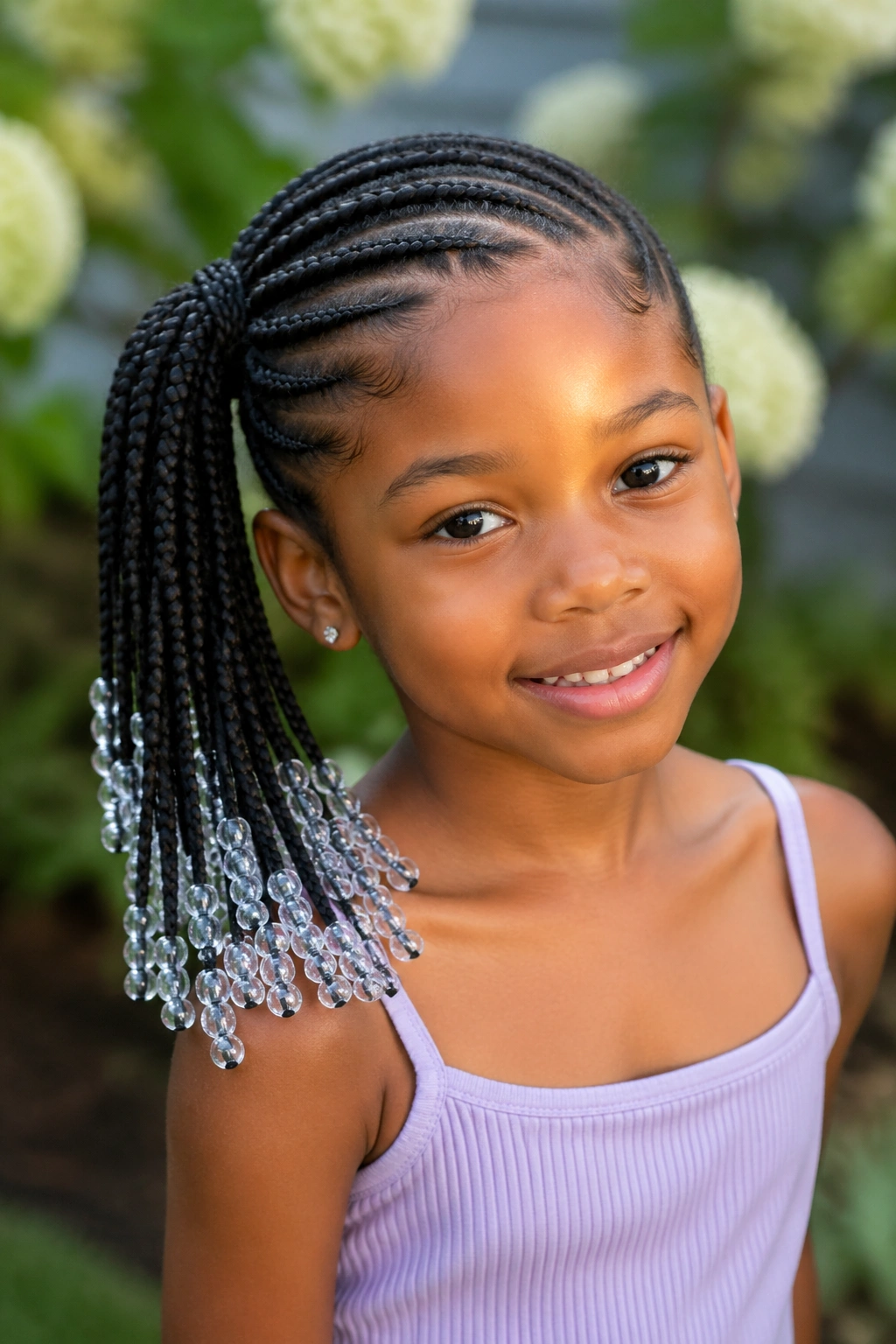
A side ponytail shifts the whole style off-center, which feels youthful and a little softer than a straight back tie. The braids gather to one side, and crystal beads at the ends give the look a clean, bright finish without turning it into a heavy accessory moment.
There’s also a practical upside: the nape stays cool. That sounds small until you’ve watched a child tug at the back of their neck because the hair is sitting wrong. A side ponytail avoids that problem pretty well.
The braids can be medium-width, and the ponytail can sit just behind one ear or slightly lower. I like crystal beads here because they look neat against both dark and light hair. They’re simple enough for school and polished enough for a gathering.
This style doesn’t need a lot of extras. The side placement is the feature.
23. Feed-In Braids into a High Puff
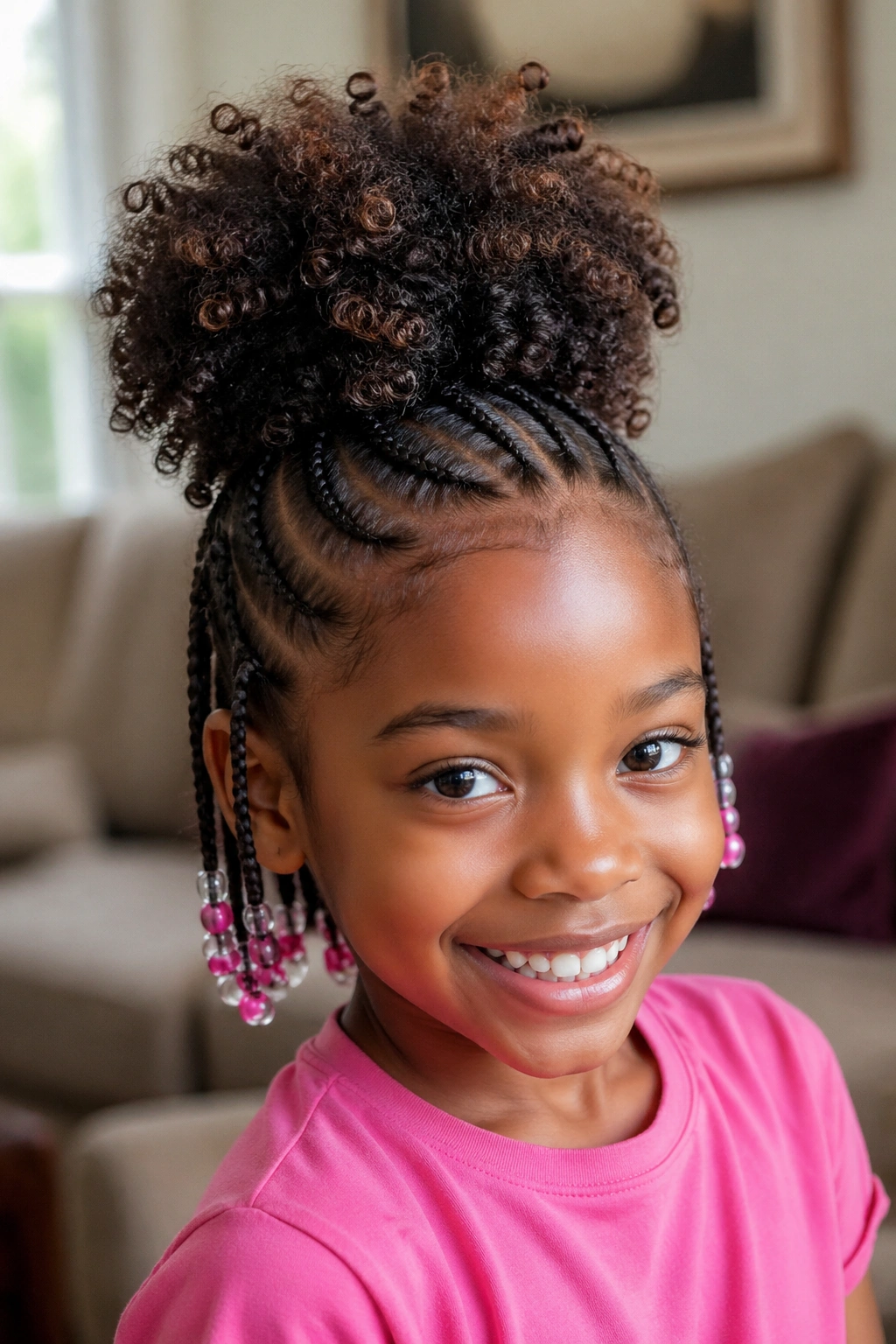
Feed-in braids are useful when you want the front of the hair to look smooth and the back to stay soft. They start narrow at the hairline and grow fuller as you braid, which helps the style look neat without bulky roots. End the braids in a high puff, and the look feels lively and easy to wear.
The puff gives the child some bounce. That matters. A style that moves well usually gets worn more willingly. You can add colored beads at the braid ends or keep the ends plain if the puff already feels full enough.
This is a strong option for longer hair because the feed-in technique lets you build shape without wrestling the whole head at once. The scalp stays neat, the puff stays playful, and the whole thing works for both school and weekend plans.
If you’ve got hair that puffs up fast, this style plays to that strength instead of fighting it.
24. Temple Braids with a Beaded Fringe
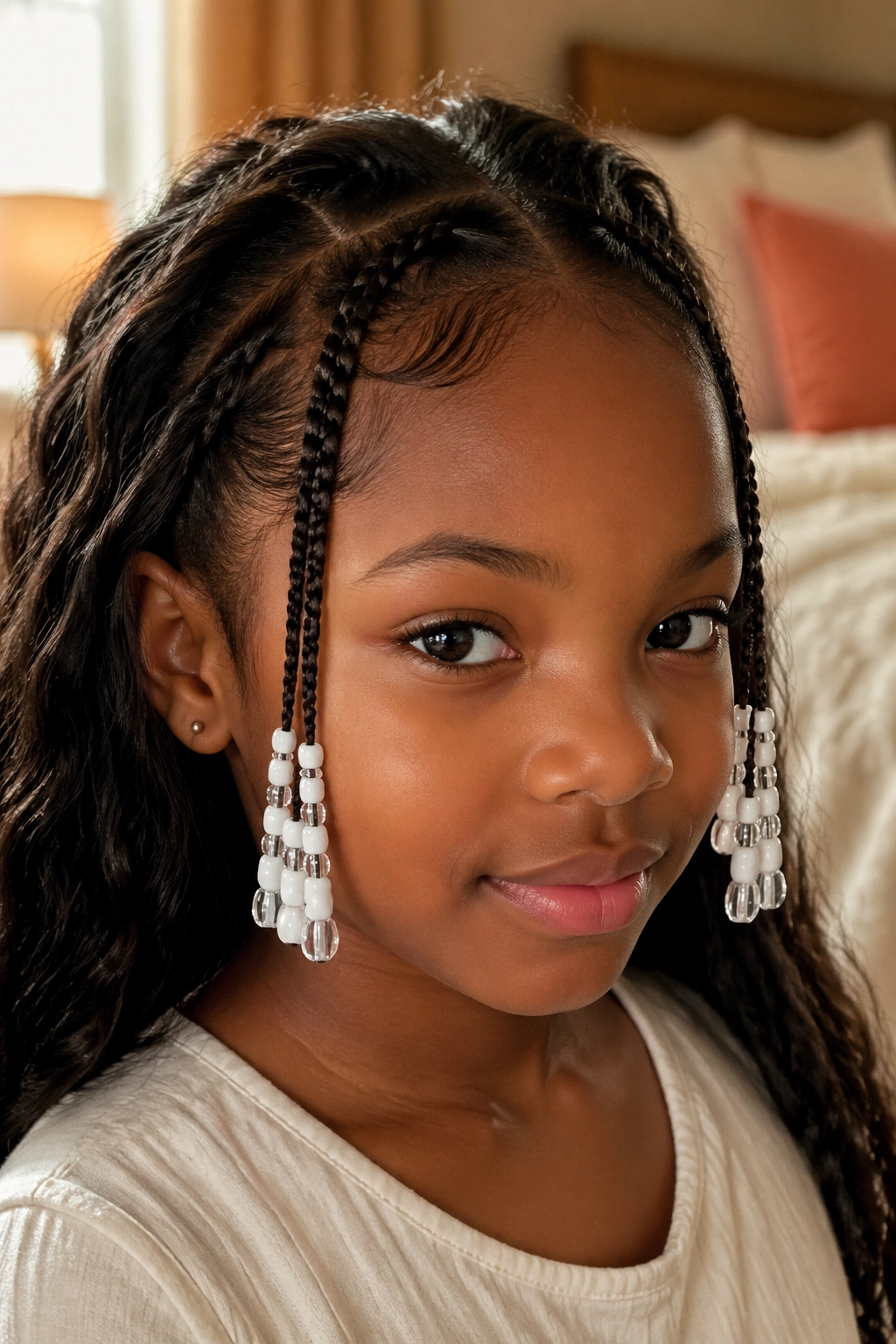
Temple braids are the opposite of a full-head commitment, and that’s exactly why they’re useful. You braid just the front and side sections near the temples, then leave the rest loose or softly tied back. It gives a child a styled look in a short window, which is handy when patience runs thin.
What Makes It Feel Different
The beaded fringe sits near the face, so even a few beads feel noticeable. That means you don’t need to overdo the accessory count. Two small braids on each side, each finished with a couple of tiny beads, is usually enough.
This is the style I’d choose for short attention spans. There’s less scalp work, less sitting still, and less chance of the whole morning running late because one section refused to cooperate.
It also works well on shorter hair that can’t support a lot of long braids. The temple detail gives shape where the hair naturally frames the face, and that makes the whole style look intentional.
25. Braided Bun with Hanging Beads
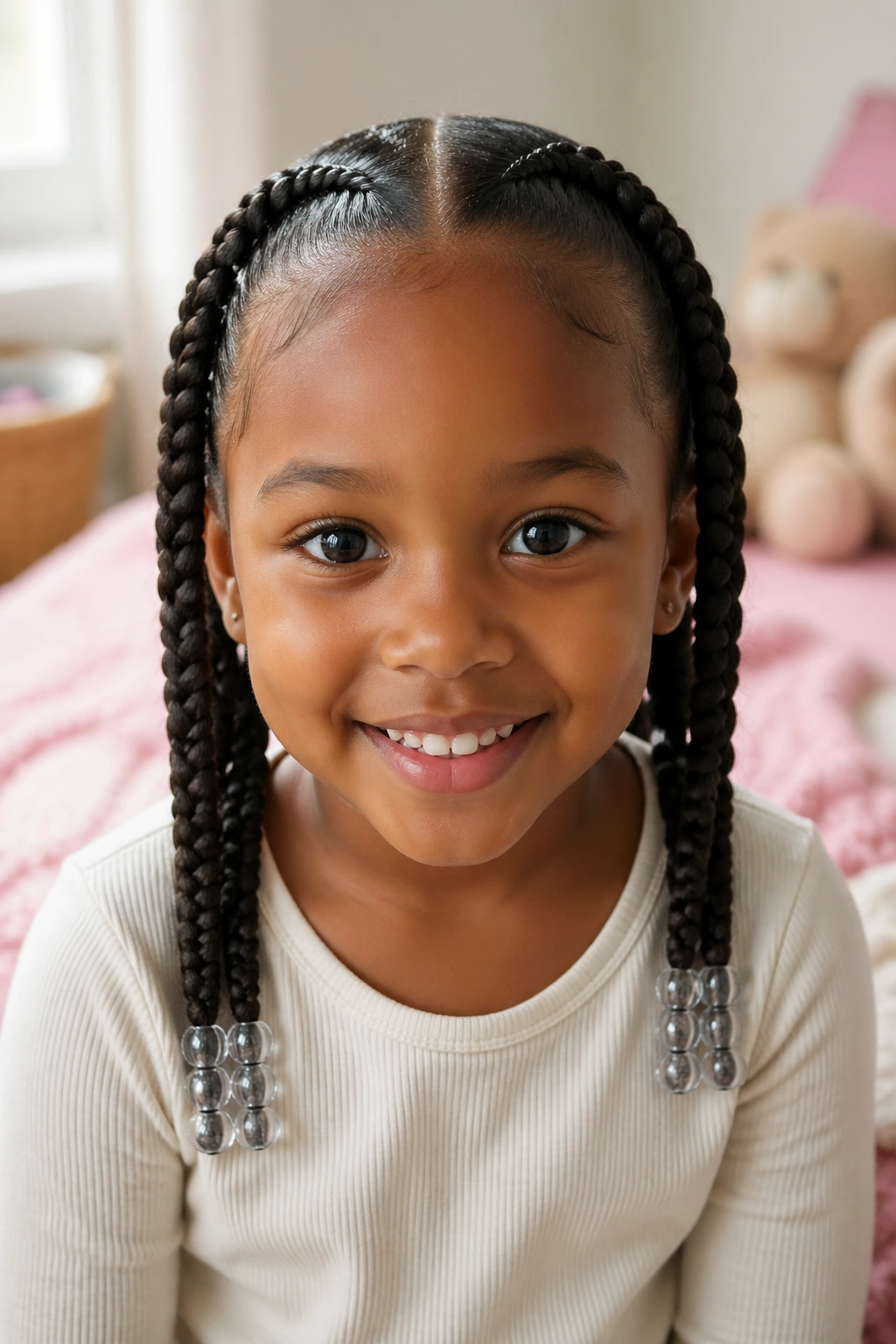
A braided bun is one of the cleanest ways to keep hair secure while still giving the beads something to show off. The braids pull into a bun at the back or crown, and the beaded ends hang just enough to keep the style from feeling too stiff.
The bun itself does the work of holding everything in place. That’s why this style wears so well. Once the braid base is secure, the child can move, run, sit, and play without the style falling apart. Good for busy days. Very good.
Why It Holds Up
The bun keeps the ends contained, and the beads stay grouped where they are easy to manage. If you want to make the style feel more festive, use a mix of clear and colored beads on the hanging pieces.
- Best for longer hair.
- Use a soft band to anchor the bun.
- Keep the bun medium-sized, not overly tight.
- Great for formal events and school recitals.
It’s neat, practical, and still a little fun. That balance is hard to beat.
26. Simple Everyday Beaded Braids for Kids
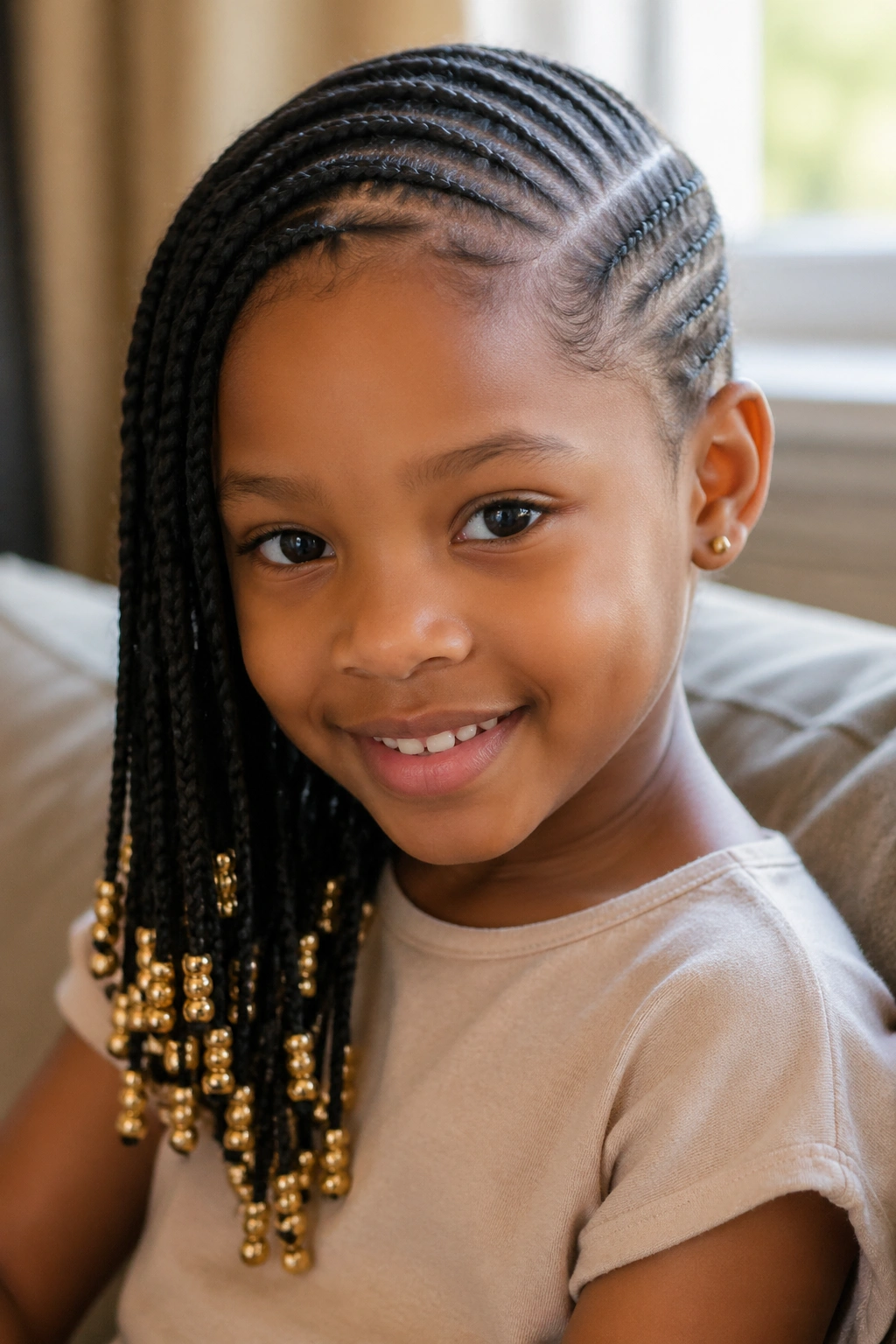
Sometimes the best style is the one a child can wear without thinking about it all day. A simple set of straight braids, finished with evenly spaced beads, does exactly that. No fancy parting. No extra shapes. Just clean, practical braids that stay in place and still feel cheerful.
For everyday wear, I like to keep the braid count modest—usually 4 to 8 braids, depending on hair density. Too many sections can make the morning longer than it needs to be. A few well-made braids with lightweight beads usually look better than a crowded style that is already slipping by afternoon.
This is also the easiest place to experiment with bead color. One day you can go clear and gold. Another day you can switch to pink, blue, or wooden beads. The style stays the same; only the mood changes. That’s part of why it works so well for kids who like a little variety.
Final Thoughts
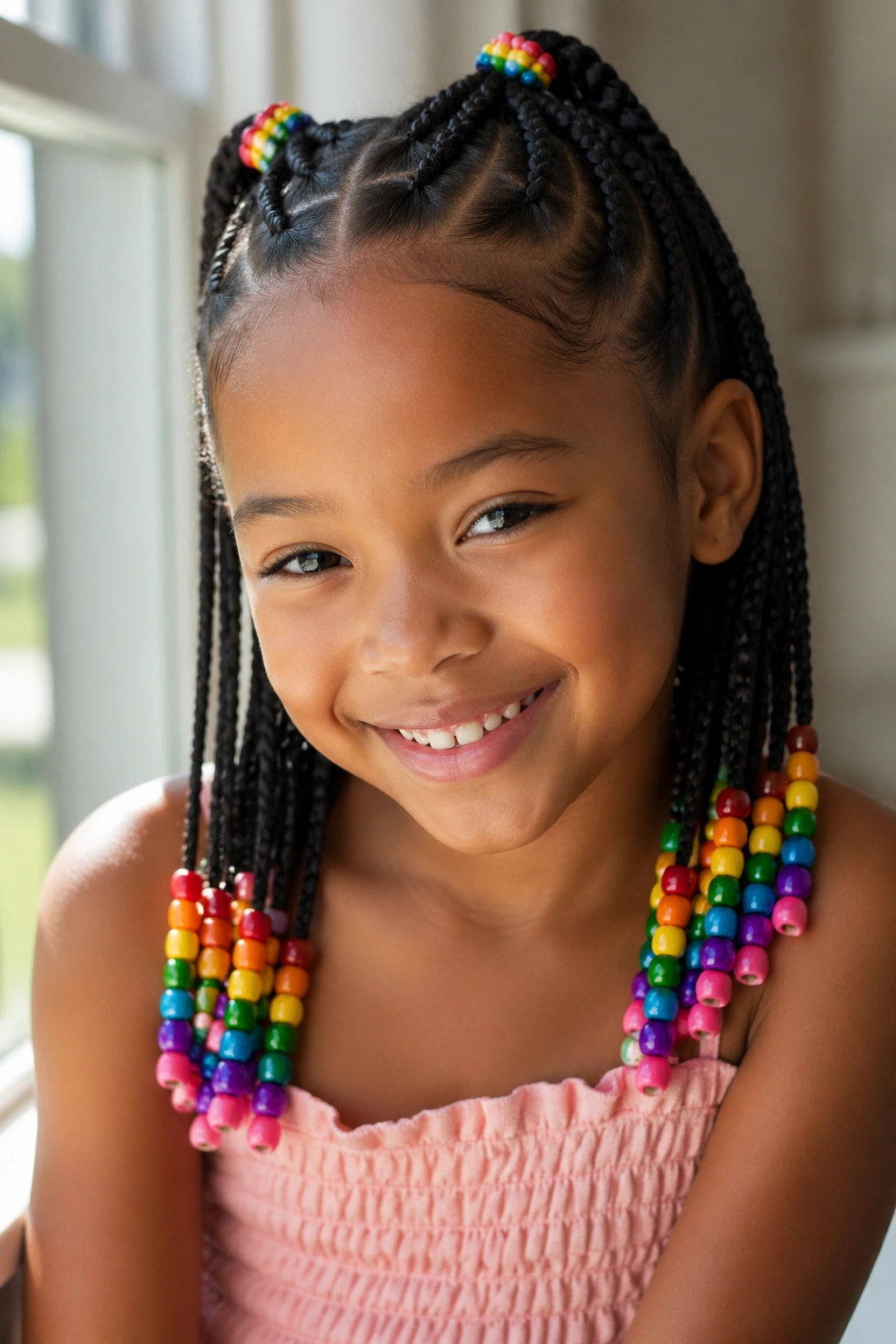
The best beaded braid style for a child is usually the one that fits their patience, hair length, and comfort level—not the one that takes the most time or the one with the biggest stack of accessories. Lightweight beads, clean parting, and braid counts that make sense for the child’s hair will always beat overcomplicated ideas.
If you want one practical habit that saves time, sort the beads before you start. Put them in small cups by color or size. That tiny bit of prep keeps the whole process calmer, and calmer hair days tend to look better too.
