



A cotton kurti has a way of making everything else either look easy or look like you tried too hard. Hair is usually the deciding factor. A braid keeps the mood grounded, pulls the whole outfit together, and saves you from the awkward halfway state where your clothes feel sorted but your hair still looks like it lost a fight with the weather.
The nice part is that braids and cotton kurtis already speak the same language. Both are unfussy, breathable, and happier without too much polish. A sleek pin-straight blowout can feel out of place with handloom cotton or a printed everyday kurti, while the right braid looks like it belongs there from the start.
Details matter here. A narrow braid can soften a sharp neckline. A fuller braid can balance a plain kurti. A side sweep can make a simple outfit feel finished in thirty seconds. And if the day includes heat, dust, a dupatta, or a long commute, a braid is not just pretty. It is practical.
1. Classic Three-Strand Braid for a Cotton Kurti
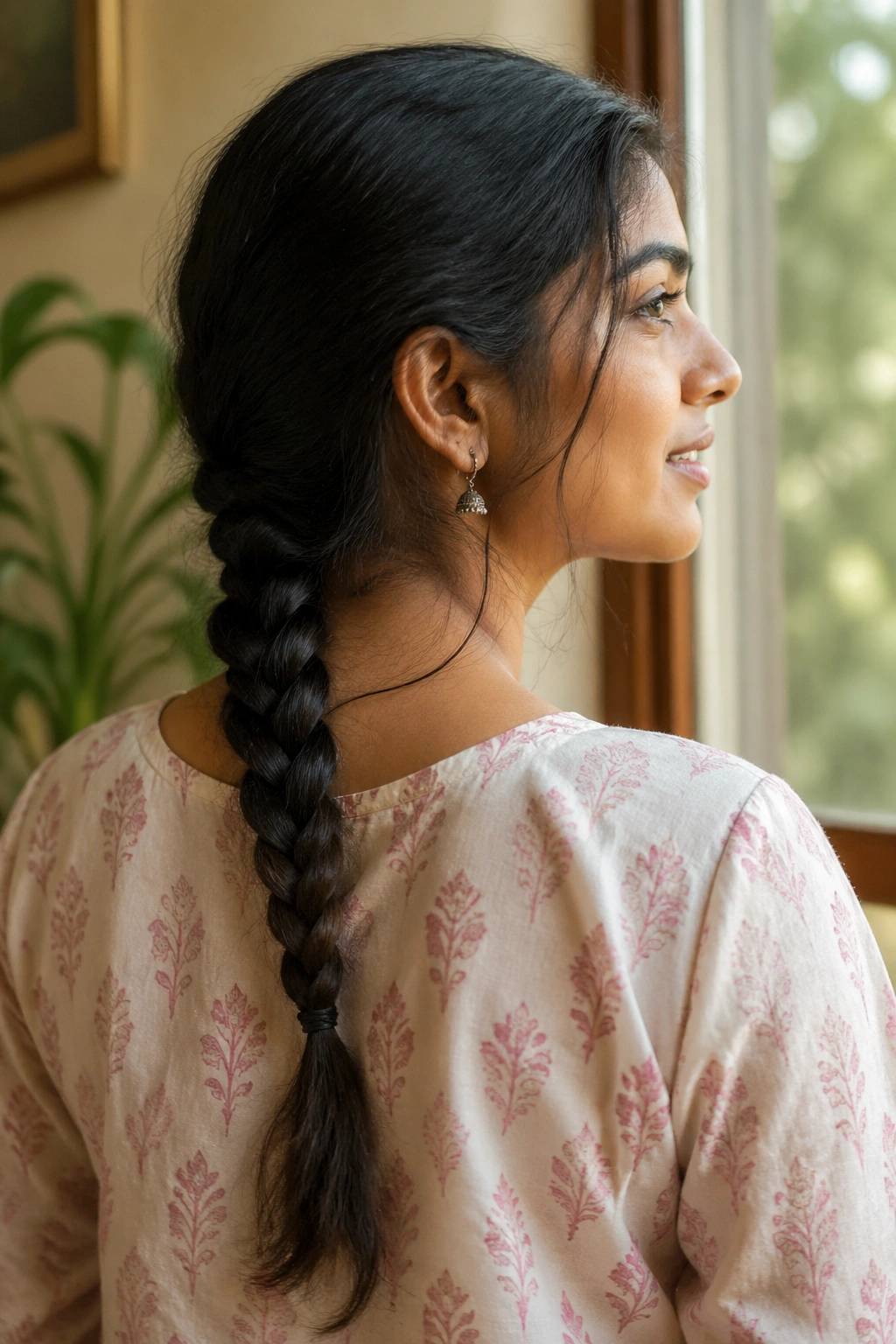
The classic three-strand braid is the quiet overachiever of the whole bunch. It never asks for much, and it rarely lets you down. With a cotton kurti, that’s a gift, because the outfit already has a relaxed, breathable feel and the braid keeps that energy intact instead of fighting it.
Why It Works
A plain braid does one important job: it makes your hair look intentional without looking stiff. That matters with cotton, which has a matte, easygoing texture and doesn’t need a loud hairstyle competing with it. If your kurti has block prints, thin stripes, tiny florals, or a simple solid color, this braid sits right in the same lane.
It also works when you are short on time. Smooth the top with a comb, gather the hair low at the nape, and braid down. Done. No extra twists, no complicated parting, no five-step styling ritual before breakfast.
- Best for hair that falls at least past the shoulders.
- Looks neat with printed, handloom, or everyday cotton kurtis.
- A ribbon at the end can echo one color in the kurti.
- A middle part makes it feel tidy; a slight side part makes it softer.
Tiny detail, big difference: keep the braid a little loose at the bottom so it moves when you walk. A braid pulled too tight can make a cotton kurti feel heavier than it should.
2. Side Braid with a Soft Sweep
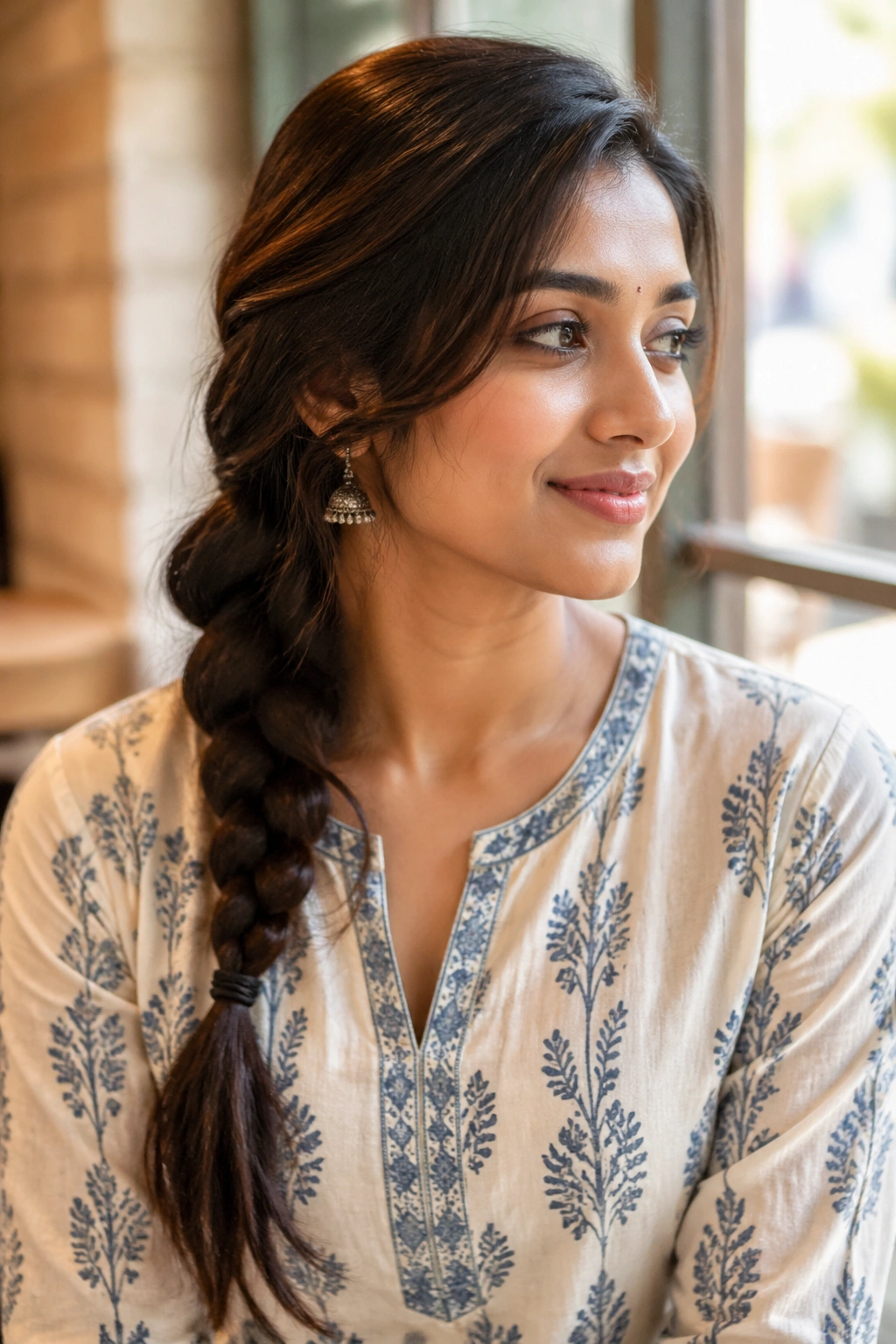
A side braid is the easiest way to make a cotton kurti feel a little more styled without drifting into full formal territory. If the kurti has a busy print, this braid keeps the whole look from becoming visually noisy.
The charm is in the asymmetry. Pull the hair over one shoulder, braid it low and slightly loose, then let the thickness sit against the kurti instead of disappearing behind it. That placement matters more than people think. A braid hanging down the front lets the eye read both the hair and the neckline, which is handy when the kurti has embroidery, contrast piping, or a neat collar.
It takes less time than people assume. A shallow side part, a quick comb through the crown, and a braid started just behind the ear can be enough. If your hair is thin, gently widen the braid from the outside once you finish. If your hair is thick, leave it a little less polished so it doesn’t feel bulky against the shoulder.
One good side braid can make a plain cotton kurti look deliberate. That’s the whole point.
3. Fishtail Braid
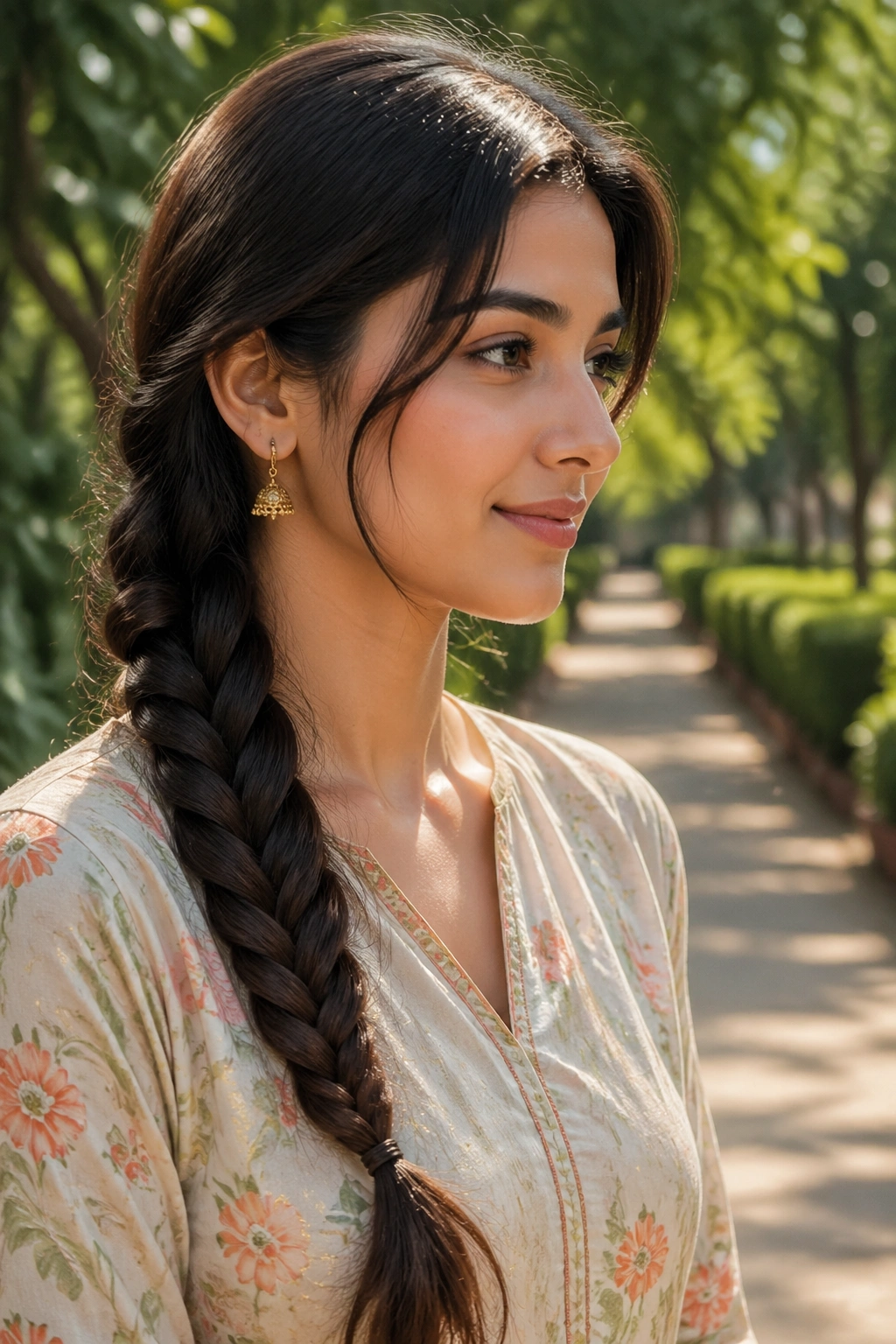
Why does the fishtail braid look fancier than a regular braid even when the effort is roughly the same? Because the weave is tighter and more detailed, so the shape reads like texture instead of just strands.
A fishtail sits especially well with a cotton kurti that has a calm surface — solid white, muted beige, dusty pink, soft blue, that kind of thing. Cotton already tends to have a relaxed drape, and the tiny overlapping sections in a fishtail add enough interest without making the outfit feel overworked. It also helps when the kurti is simple and the jewelry is minimal. The braid becomes the detail.
How to Wear It
Start with a low ponytail if you want the braid to stay neat. If you prefer something softer, sweep it to one side before you begin. Use smaller sections than you would for a standard braid; thick sections make the fishtail look clumsy, and that shape is all about fine movement.
A one-inch elastic is enough to hold the tail before you begin braiding. When you finish, pinch the braid gently from the sides to widen it. Don’t yank. That turns it into a frayed mess. A little widening is enough.
This style looks especially good with cotton kurtis that have a round neck or a narrow V-neck, because the braid gives the front of the outfit a long, clean line.
4. French Braid
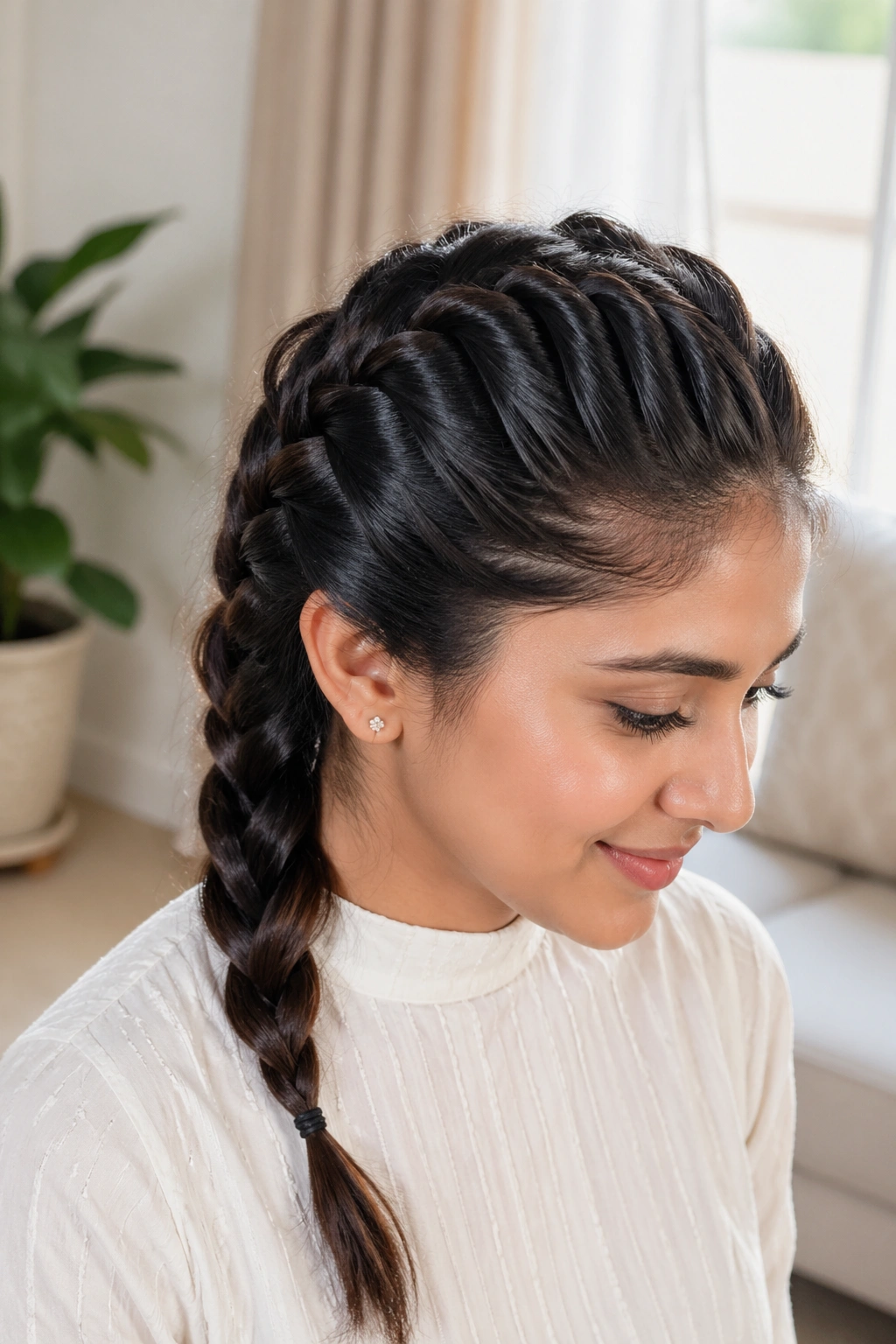
On days when the hair refuses to stay in place, the French braid behaves like a very competent older cousin. It starts at the crown, gathers hair as it goes, and keeps the top under control before the rest of the day has a chance to get messy.
That makes it a strong match for a cotton kurti with a high neck, a band collar, or a neckline that already sits close to the throat. There is less room up there for loose pieces to do anything useful, and the French braid keeps the whole area neat without making it look severe. It also handles straight and wavy hair well, especially when the hair has enough grip to hold its shape.
- Works well on medium to long hair.
- A slightly textured base helps the braid hold.
- Fine-tooth combs clean up the crown fast.
- You can stop at the nape or carry it into a low ponytail.
A tiny center part gives it a cleaner read. A soft side part makes it feel less formal. Both work.
The part people skip is the crown. Keep that section smooth, because frizz there is what makes the braid look tired before noon.
5. Dutch Braid for a Cotton Kurti
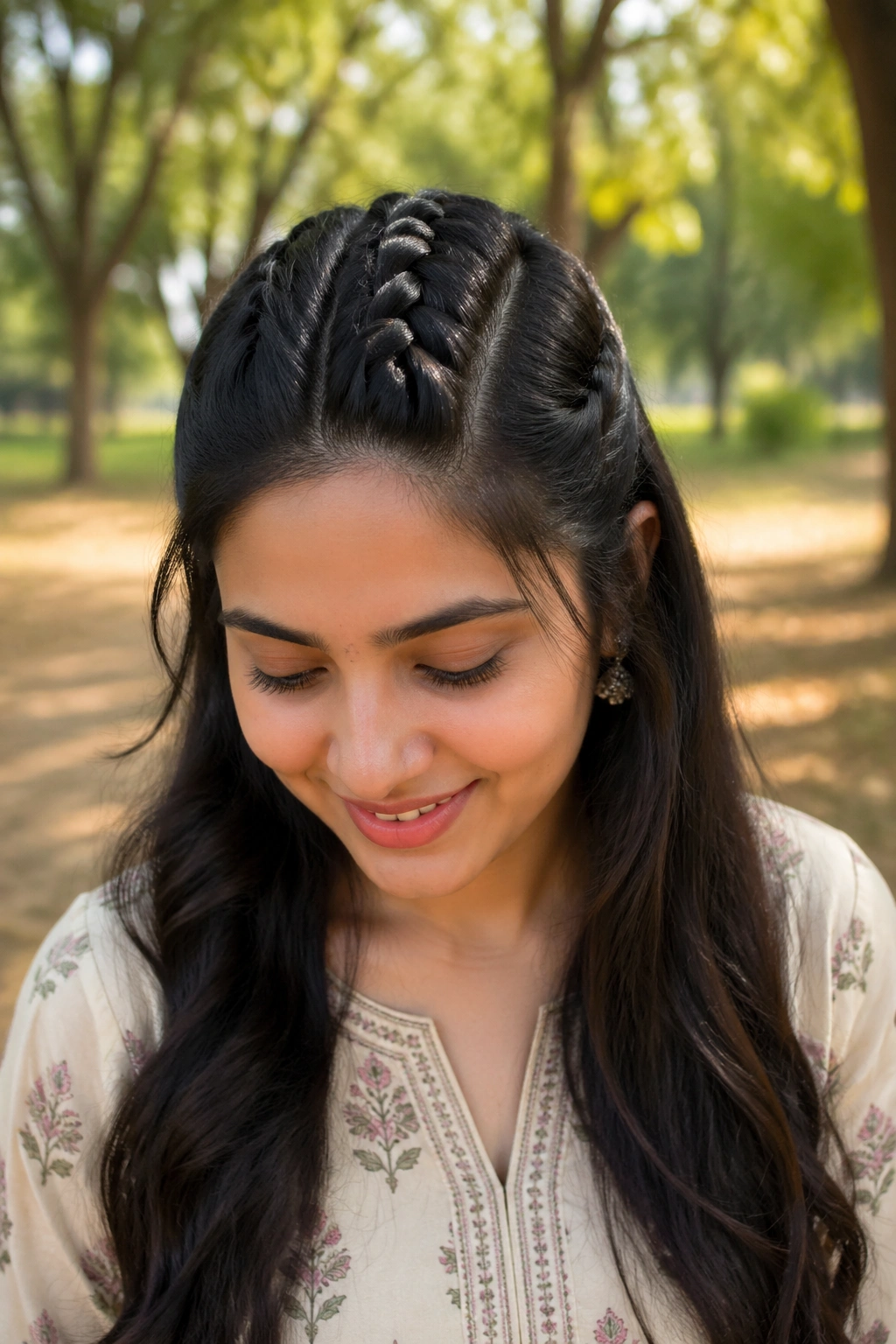
Unlike a French braid, the Dutch braid sits on top of the hair instead of sinking into it. That small difference changes the whole mood. The braid becomes visible from a distance, so it works well when the cotton kurti is plain and you want the hairstyle to do a bit more of the talking.
This style is good for thicker hair, layered cuts, and anyone who likes a little shape around the head. It gives more height than a flat braid, which matters if the kurti has a simple straight cut and needs some balance near the face and shoulders. The raised texture also looks sharp with a dupatta because the braid does not disappear under fabric the way a low braid sometimes can.
If you want a cleaner finish, make the Dutch braid start right at the hairline and keep the sections even. If you want it softer, loosen it after it is done and let a few short pieces live around the temples. That slight messiness fits cotton better than a hair-spray helmet ever could.
A good Dutch braid feels structured without turning formal. That is not easy to pull off, and when it works, it really works.
6. Rope Braid
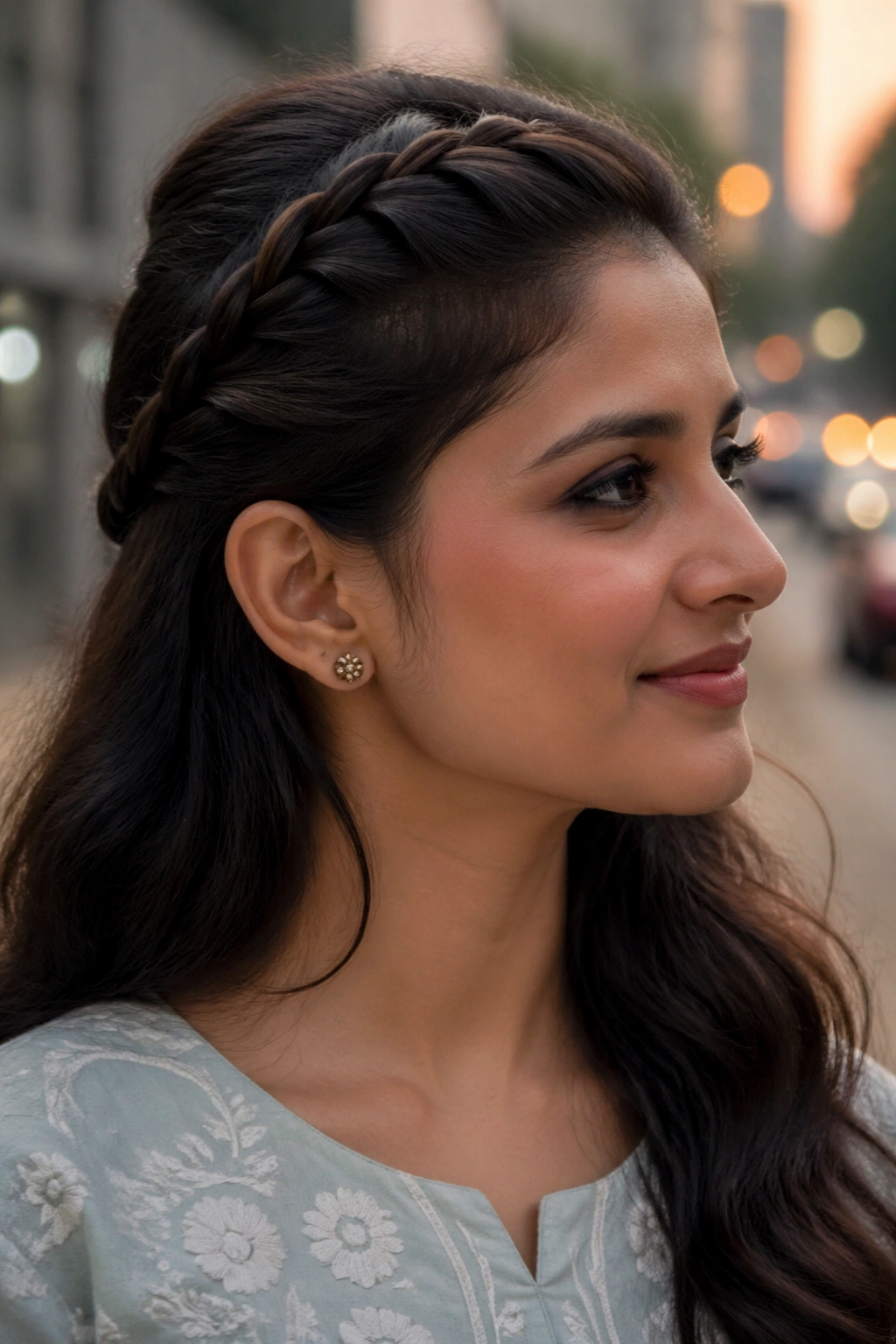
Need something quick that still looks deliberate? The rope braid is probably the fastest braid on this list, and it has a neat, twisted look that suits a cotton kurti on rushed mornings.
It uses two sections instead of three, so the motion is simpler. Twist each section in the same direction, then wrap them around each other in the opposite direction. That’s the whole mechanic. The result is narrow, tidy, and slightly glossy-looking, which can be a nice counterpoint to a matte cotton kurti.
What to Watch For
The rope braid can unravel faster than a three-strand braid if the hair is slippery. If your hair is very smooth, start with a little mousse or texture spray at the roots. Not a huge amount. Just enough grip so the sections don’t slide apart while you’re tying the end.
It also looks best when the twist is even. Unequal tension makes one side bulge and the other side collapse, and then the braid starts looking accidental. Keep the two strands taut as you wrap them.
This is a smart braid for a narrow kurti neckline or a simple straight kurti, because the rope shape adds enough definition without crowding the outfit.
7. Milkmaid Braid
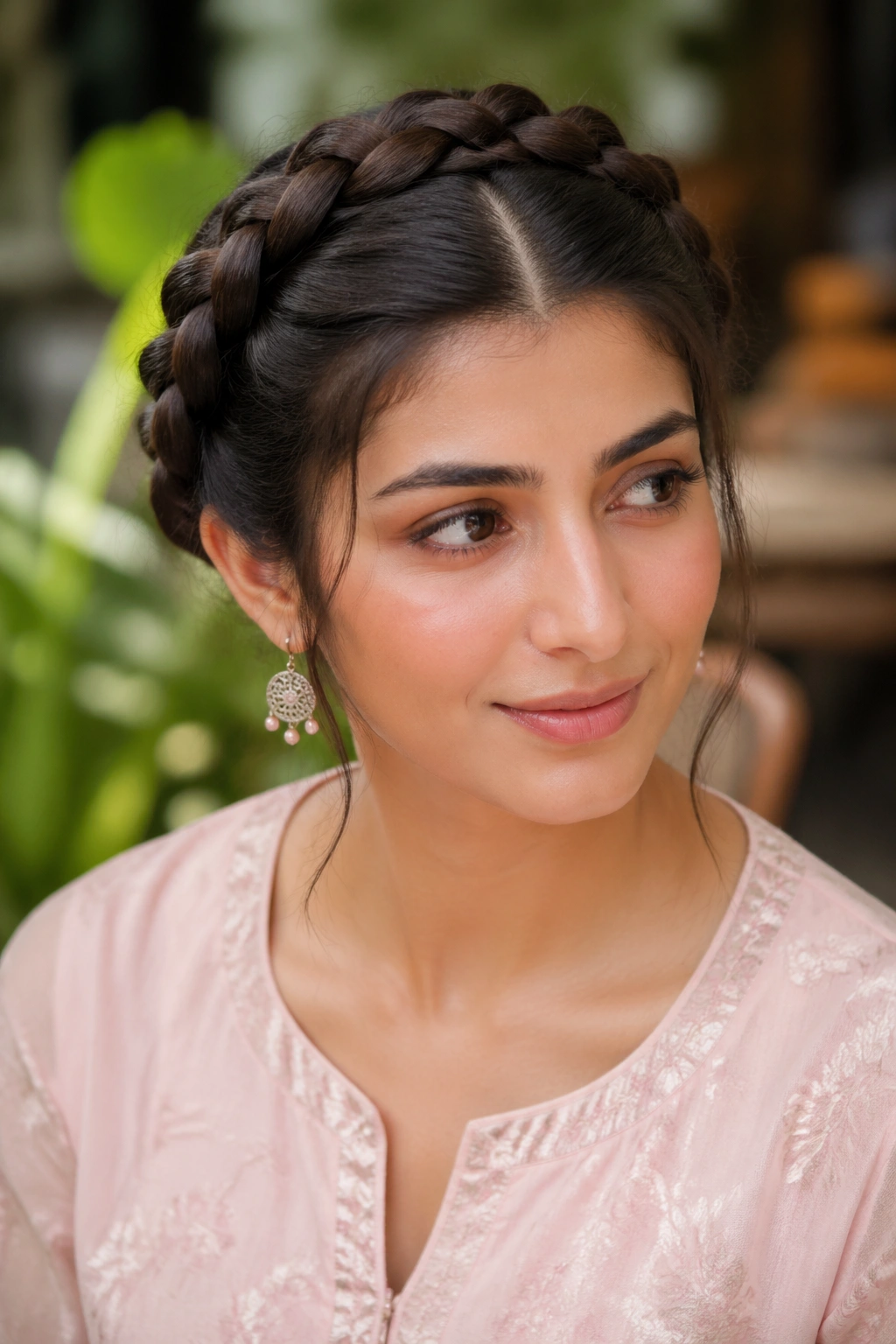
For family lunches, small celebrations, or any cotton kurti that has a square neck or a neat little yoke, the milkmaid braid does something very useful: it opens up the face and lets the neckline stay visible.
The braid wraps around the head like a soft band, which means the look feels finished from every angle. That’s a nice change from styles that only look good from the front. It also gives earrings room to show, and if the kurti has subtle embroidery near the chest or shoulders, the braid does not fight that detail.
How to Make It Sit Properly
- Part the hair down the middle first.
- Braid each side before wrapping them.
- Anchor the ends with U-pins, not only one pin.
- Keep the braid a little loose around the temples so it does not press into the hairline.
A milkmaid braid can slip if the crown is too smooth, so a bit of texture at the roots helps. Not crunchy texture. Just enough hold.
If you like flowers, this is one of the few braids that can handle them without becoming fussy. A tiny gajra or a single jasmine cluster tucked near the back can be enough.
8. Braided Low Bun
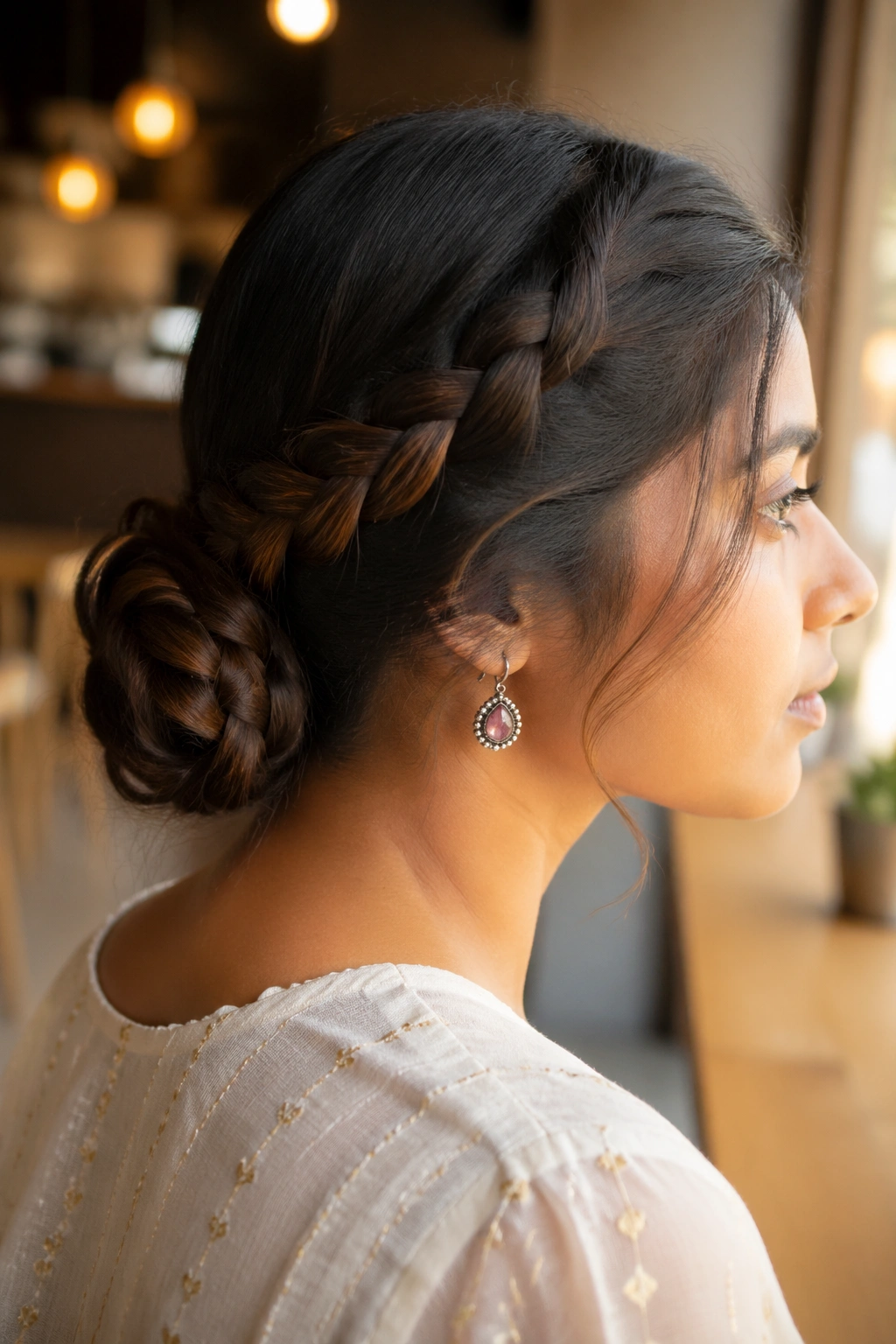
This is the braid I’d pick when the cotton kurti is plain, but the occasion is not. A braided low bun has enough structure for a dinner, a pooja, a college presentation, or even a day when you simply want your hair out of the way and not pretending to be casual about it.
The braid gives the bun a cleaner shape than a bare twist would. Start with a low braid, coil it at the nape, then pin it in two directions so it doesn’t slide downward over the day. A few pins hidden under the bun matter more than one dramatic pin stuck through the middle. That one usually fails.
How to Keep It from Sagging
A low bun needs support at the crown. A little lift at the roots makes the bun look intentional instead of flat. Backcomb lightly at the top if your hair tends to collapse. Then smooth only the outer layer so the volume stays hidden.
This style goes well with heavier earrings, a printed dupatta, or a kurti that has embroidery near the hem. The bun keeps the top half of the look calm, which gives the rest of the outfit room to breathe.
It is not the softest braid on the list. It is the most composed one.
9. Pull-Through Braid
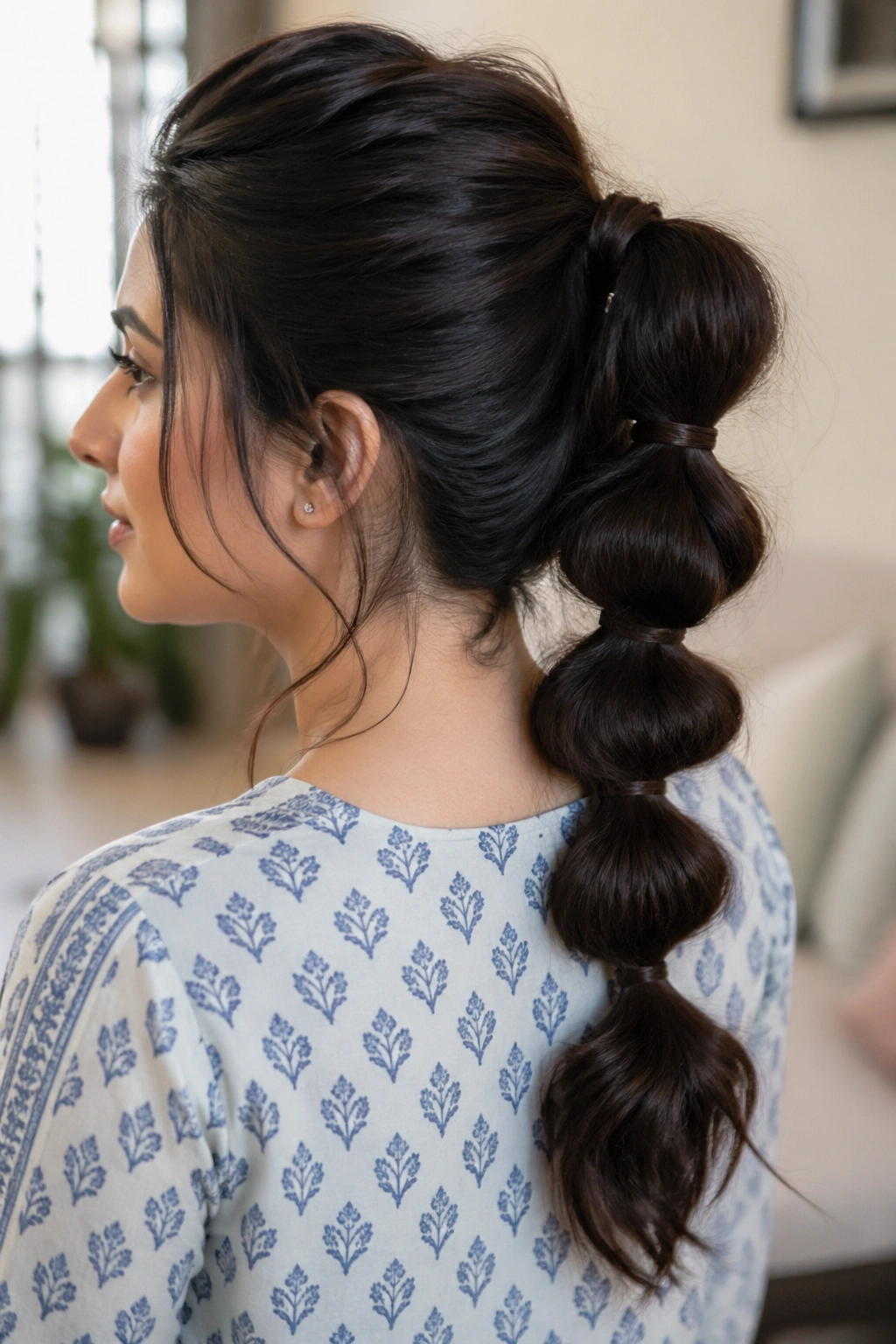
A pull-through braid looks like a thick, full braid, but it is built from stacked ponytails instead of woven sections. That makes it a clever option if your hair is fine, layered, or too slippery for a braid that needs to hold all day.
The shape is clean and bold, which suits a cotton kurti with a simple silhouette. You can wear it low down the back or off to one side. Either way, it creates more volume than a regular braid without needing extra hair pieces or complicated teasing. The trick is to keep each elastic spaced evenly, usually about 1.5 to 2 inches apart, then tug the outer loops gently so they puff out.
It can look a little gym-class if the sections are left too neat. That is the mistake. Pull-through braids need a bit of softness around the edges so they don’t read as stiff. Once the braid is done, use your fingers to loosen the sides, not a comb.
This style works especially well with solid-color cotton kurtis, because the braid has enough shape on its own. If the kurti is already busy, keep the braid low and controlled.
10. Waterfall Braid for a Cotton Kurti
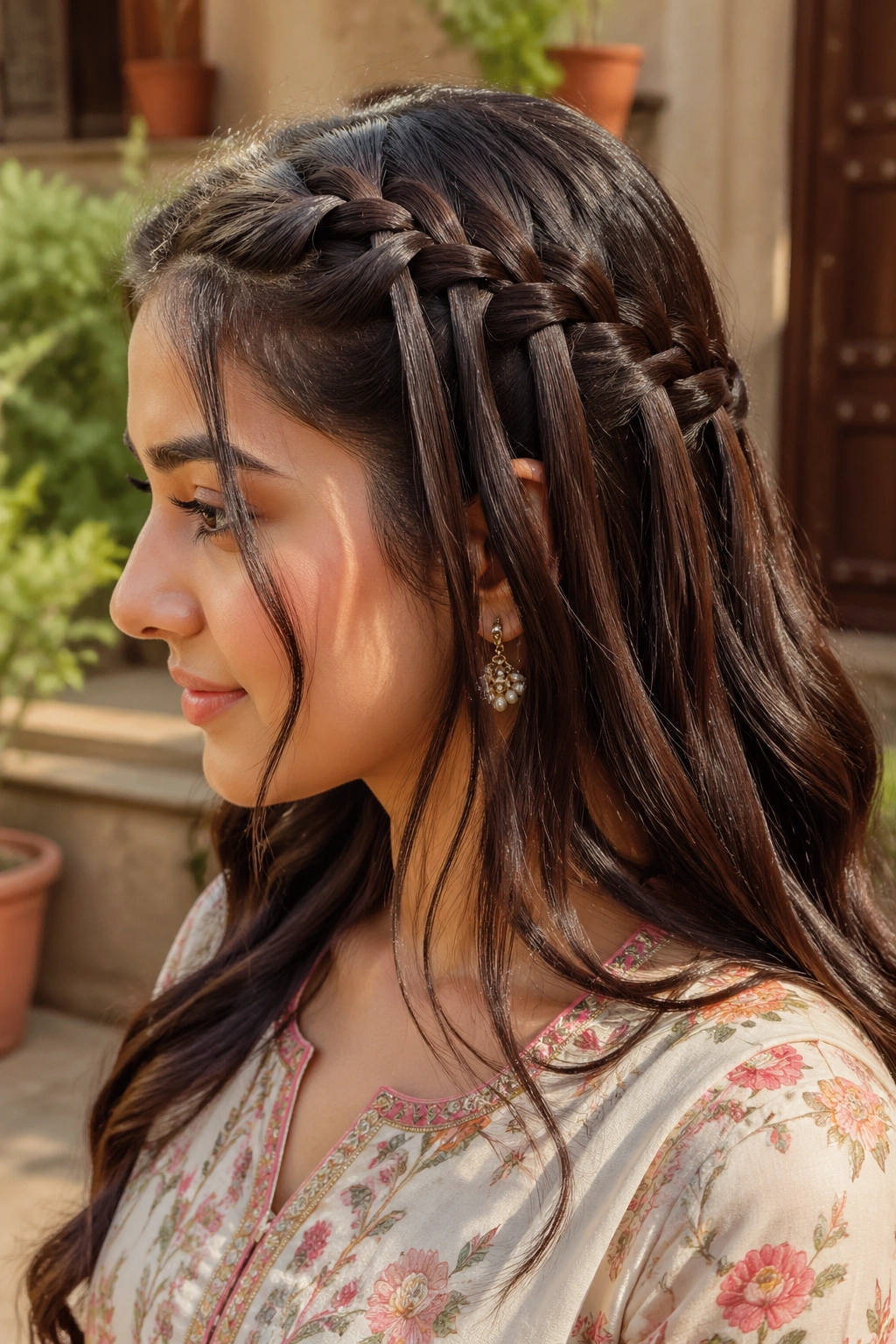
The waterfall braid is the braid you pick when you want hair down but not fully loose. One section drops through the weave as you braid across the crown, leaving soft lengths hanging below. The effect is airy, and that matters with a cotton kurti, because the outfit already has a breezy feel.
It suits wavy hair especially well. On straight hair, it still works, but the braid needs a little grip or it can slide. A touch of mousse at the roots or a bit of texturizing spray before you start helps the sections stay where they belong. Keep the dropped pieces even. Uneven drops make the braid look accidental, which is not the same thing as relaxed.
I like this braid with kurtis that have light embroidery near the neckline or sleeves. The open hair lets the fabric show, while the braided crown gives the style enough shape to feel finished. It is also one of the better choices if you want earrings to show but don’t want all your hair pinned back.
A narrow waterfall braid near one temple can look softer than a full one across the crown. If your kurti is plain cotton, that smaller version is often enough.
11. Crown Braid
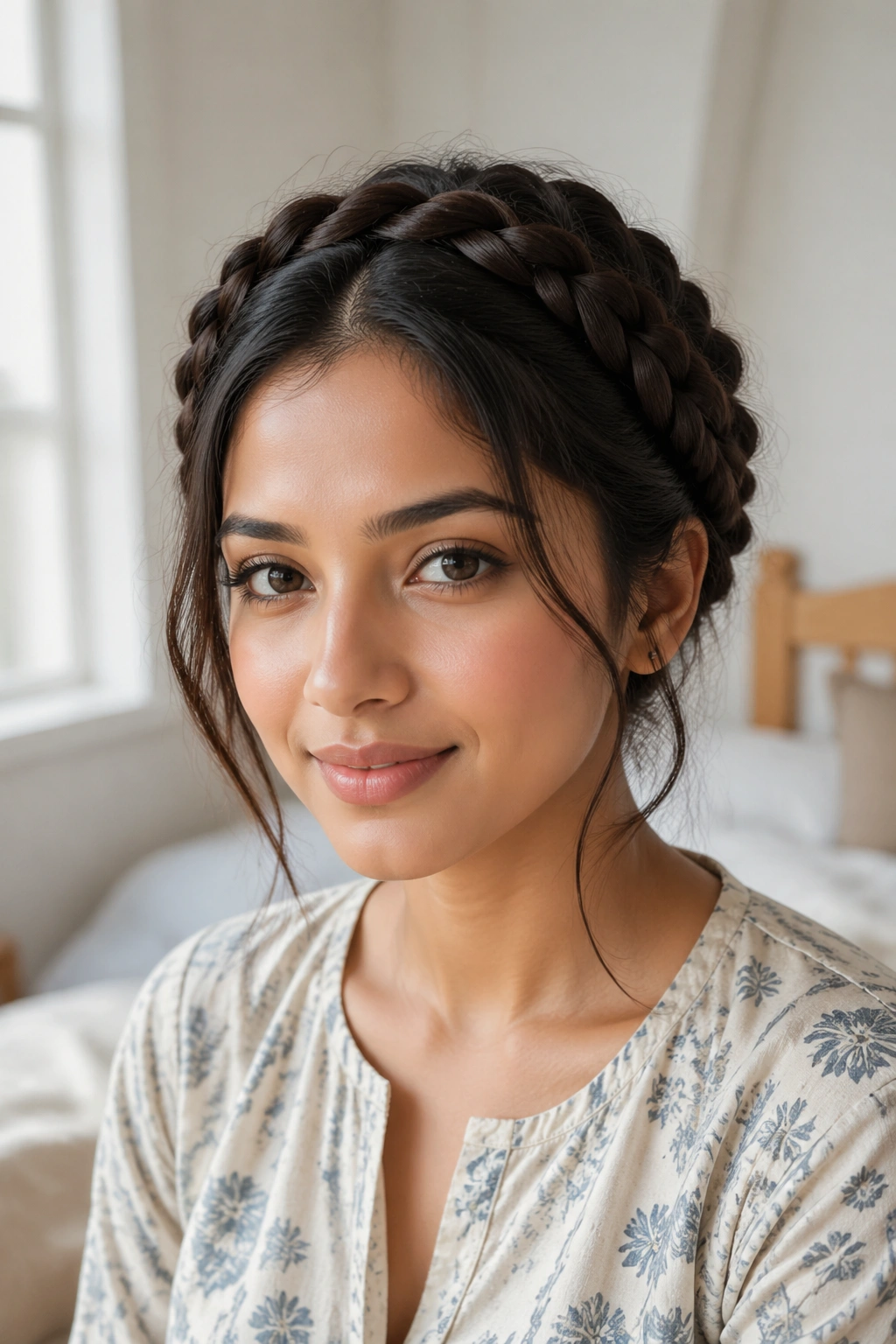
Want your hair off your neck without pinning it into a hard bun? A crown braid does that job and keeps the shape soft around the face.
It wraps around the head like a halo, which sounds fancier than it needs to be. In practice, it just means the braid frames the top and sides of the face while freeing up the back. That combination works well with a cotton kurti that has a round neckline, a keyhole opening, or a simple festive look where you want the hair to feel tidy but not severe.
The thickness of the braid changes the mood fast. A thick crown braid feels more dressed up. A thinner one feels easier and lighter, which suits cotton better. If your hair is long and heavy, pin the braid at several points instead of relying on one or two clips. That saves you from the slow slide that happens halfway through a long day.
A crown braid can be too much for a very simple everyday kurti if the braid is extremely tight. Keep it a touch loose around the temples and the whole thing softens.
12. Double Braids
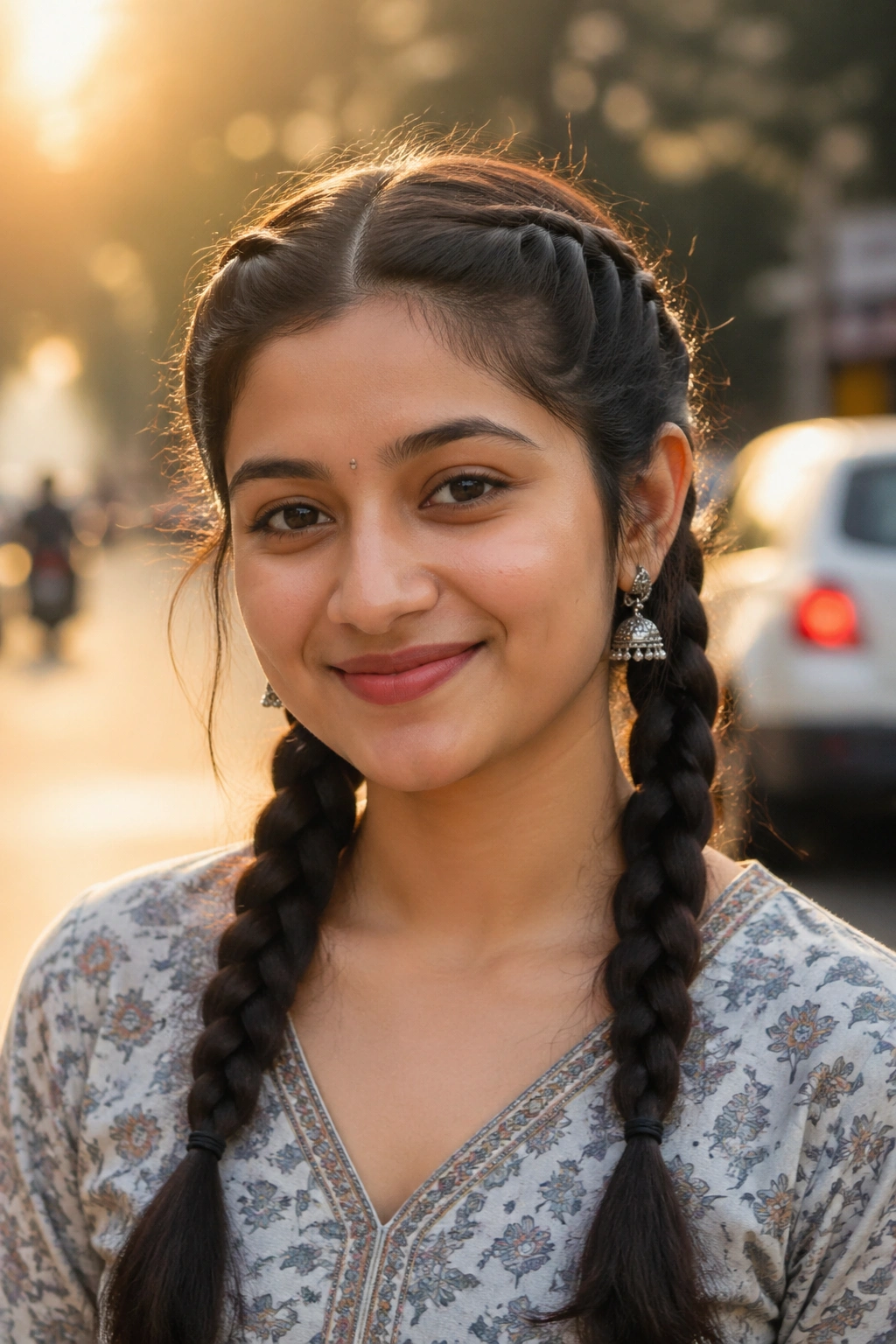
Double braids are the sort of style that makes sense the second you try them on. They are practical, balanced, and a little playful without turning childish when they’re done cleanly.
For a cotton kurti, they work especially well on travel days, busy schedules, or mornings when you want your hair to stay put no matter how much walking, commuting, or wind you deal with. Center part the hair, braid each side low, and keep the tension even. Loose double braids feel relaxed. Tighter ones feel sharper. Both can work with cotton, depending on how crisp the kurti is.
- Good for medium to long hair.
- Easy to turn into two buns later in the day.
- Fabric elastics are gentler on the ends.
- A clean middle part makes the look feel balanced.
The thing I like most about this style is how little it asks from the rest of the outfit. Even a plain kurti gets some shape from the two braids, and printed cotton suddenly looks a little more organized. It is a clean answer on days when you do not want to think too hard.
13. Bubble Braid
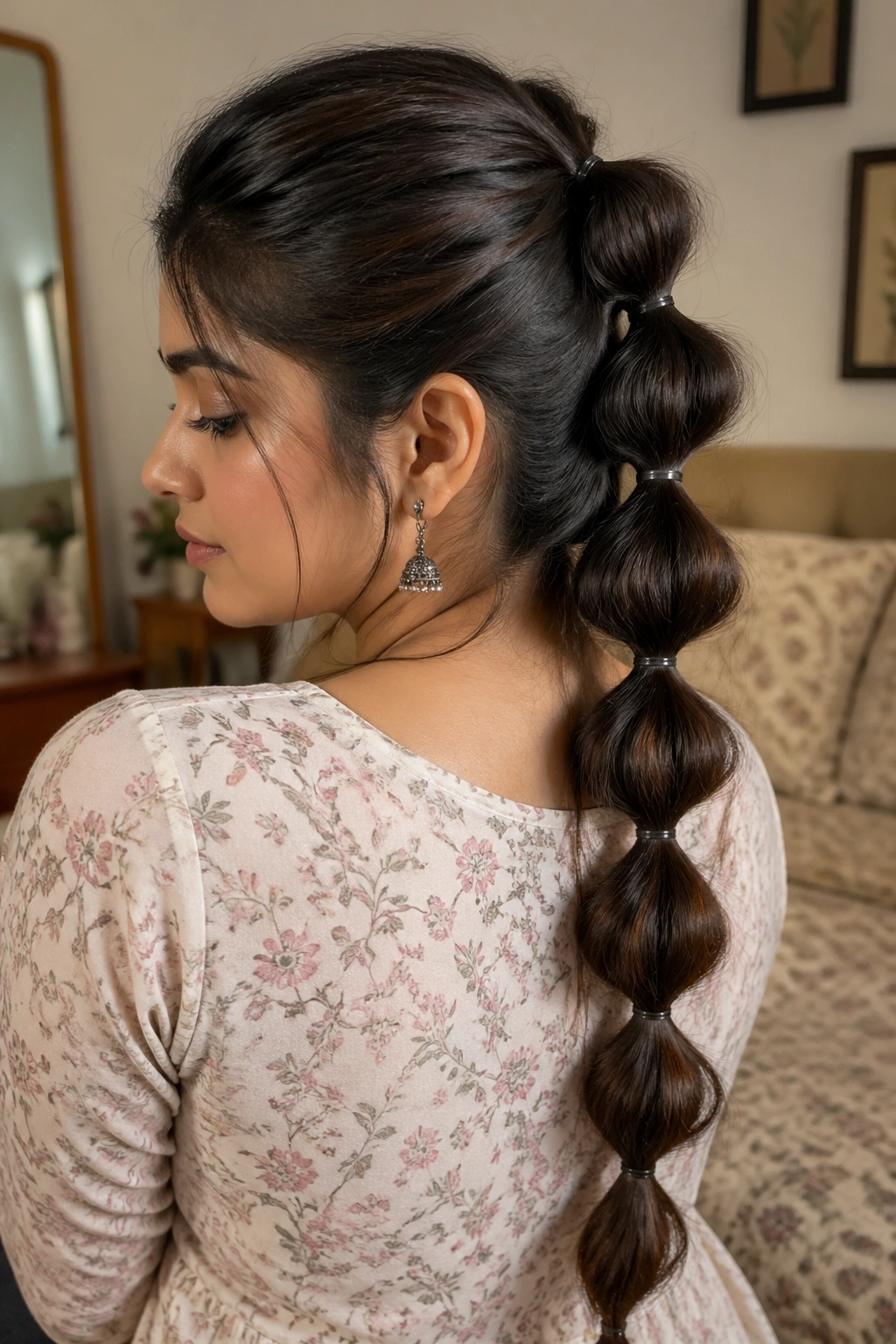
The bubble braid is not a braid in the strict old-school sense, and that is part of why it works. It gives you a segmented, structured look with far less finger work than a woven braid, which is handy when your hair is thick, layered, or a little tired from too much brushing.
It starts as a ponytail. Then more elastics go down the length at even intervals, usually every 1.5 to 2 inches. After that, each section gets gently tugged outward until it rounds into a bubble. The result is clean and graphic, which can be a nice contrast with the softness of a cotton kurti. It keeps the outfit from feeling too plain without making the hair look overdone.
This style is especially good with long, straight hair, because the shape shows clearly. If your hair is dense, the bubbles can look fuller and more dramatic. If your hair is fine, the same style still works, but the sections need a little widening after each elastic so the shape doesn’t disappear.
A bubble braid sits well with kurti styles that are simple and unfussy. When the clothing is matte and breathable, the little round sections in the hair add enough structure on their own.
14. Braided Ponytail with a Wrap-Around Section
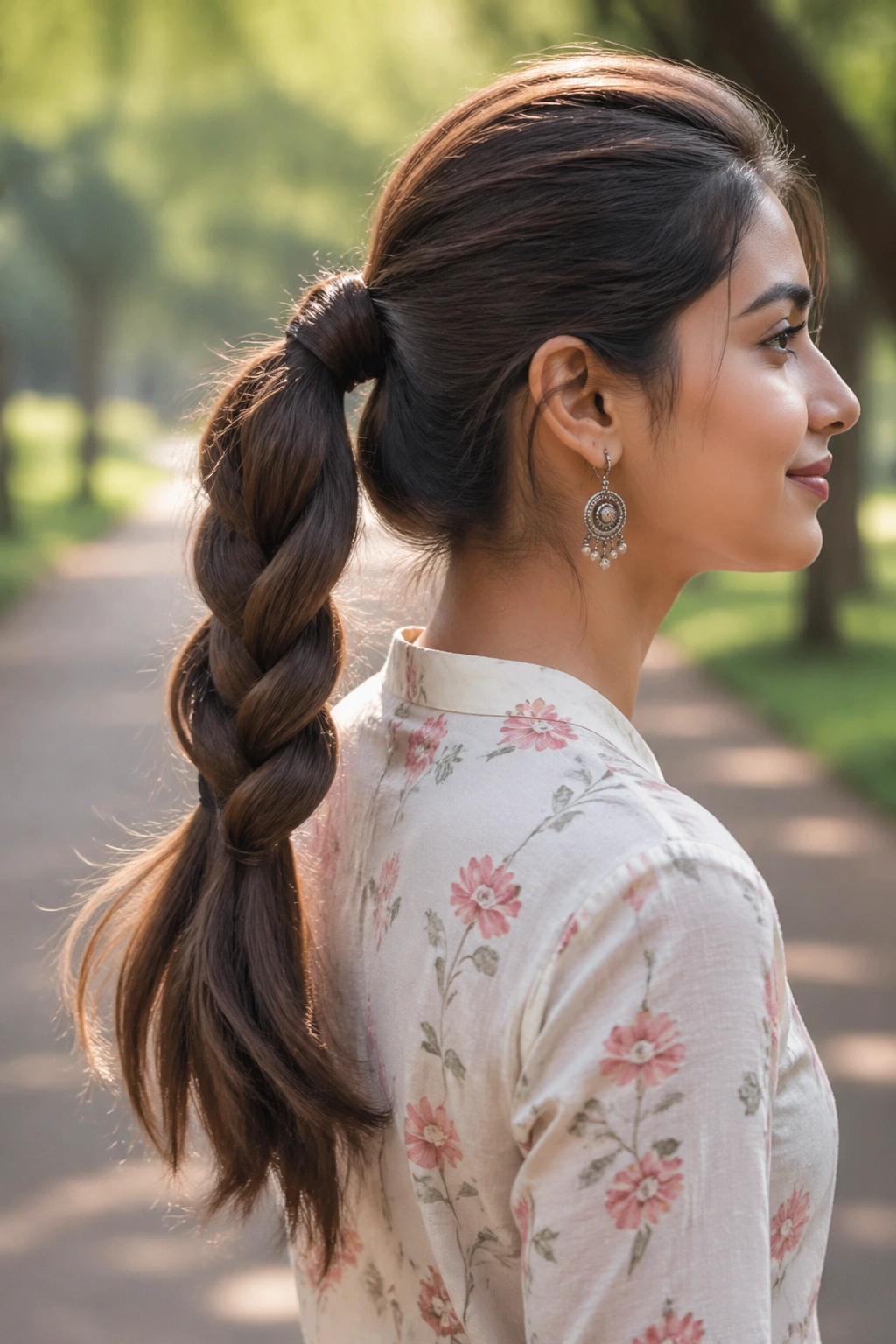
If you like movement, this is an easy win. A braided ponytail keeps the hair secure, but the tail still swings when you walk, which makes it feel less fixed than a bun and less plain than a standard braid.
Start with a ponytail at the height you like — mid-low for a calmer look, higher if you want more lift. Braid the ponytail itself, then take a small strand of hair and wrap it around the elastic at the base so the tie disappears. That tiny wrap changes the finish a lot. It turns a regular ponytail into something more deliberate without adding time you can feel.
This style is especially good with A-line cotton kurtis, shirt kurtis, and anything that has a bit of shape at the hem. The braid adds a vertical line down the back, which balances the clothes nicely. It also works when your hair is second-day and not fresh enough to wear loose.
If you want a slightly dressier version, slide a slim metal cuff onto the braid or tie the end with a ribbon that picks up one shade from the kurti. Keep the rest simple. The braid itself is doing enough already.
15. Half-Up Braid for a Cotton Kurti
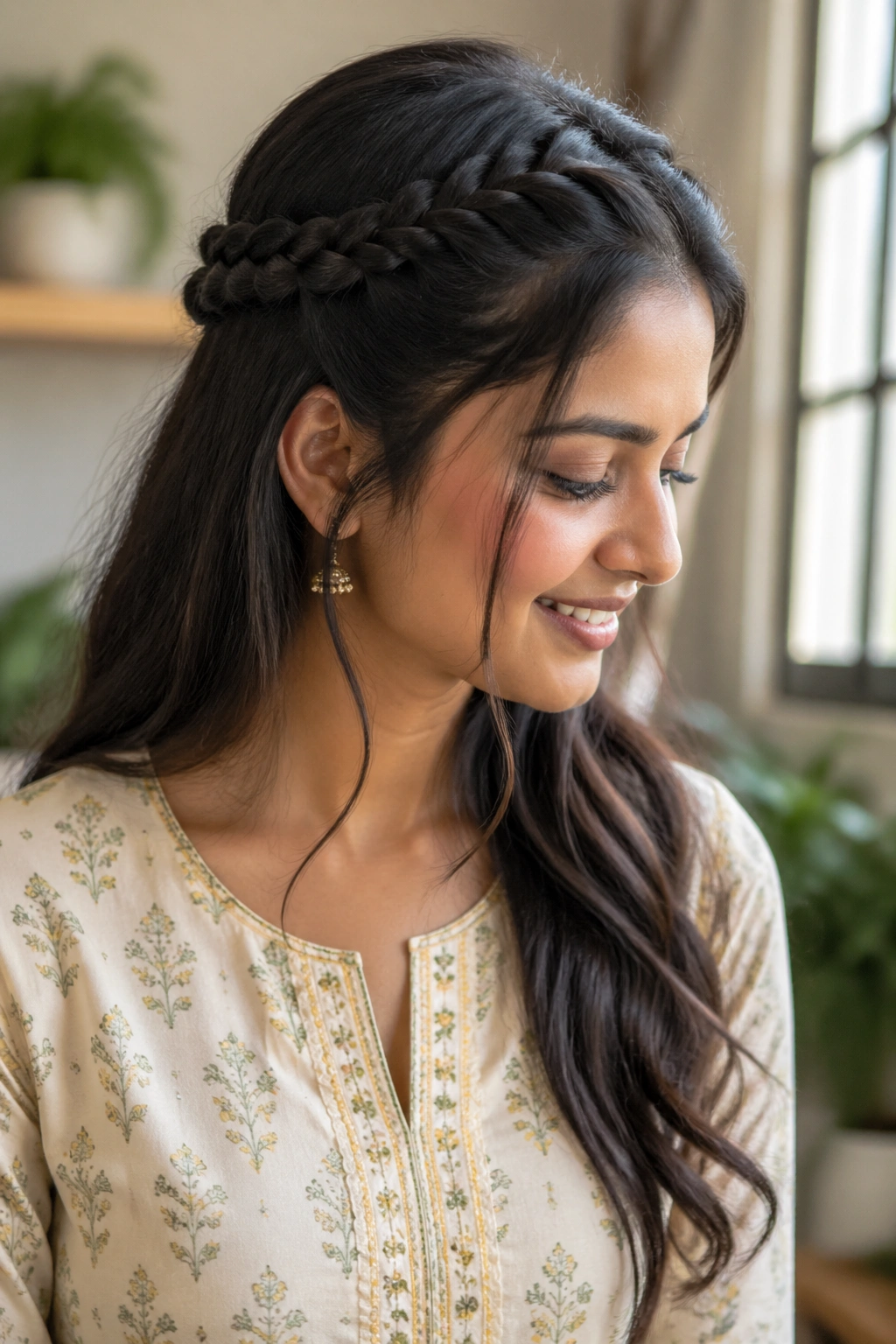
Some days call for open hair, but not all of it. A half-up braid gives you the softness of loose lengths with just enough control near the front to keep things tidy around a cotton kurti.
That balance is the reason this style works so well. Cotton kurtis often have gentle prints, easy necklines, or a light drape, and a half-up braid does not overwhelm any of that. It takes the hair away from the face, shows off earrings, and still leaves the back loose enough to move. On wavy hair, it looks relaxed. On straight hair, it looks neat. On thick hair, it stops the front from puffing out at the temples.
A small braid across each side, pinned at the back, can be enough. A single slim braid starting at one temple and joining the back works too. If you want a softer finish, leave a few pieces loose around the cheeks. If your kurti is very plain, a tiny braid with a simple clip can carry the whole look without much else.
My simplest rule for braids and cotton kurtis is this: match the braid’s weight to the fabric’s mood. Light cotton usually looks better with hair that feels airy, not frozen into place. Keep that in mind, and the rest gets easier fast.
