



Honey blonde hair has a funny habit of making braid color look richer than it does in the pack. Put the same shade next to a duller blonde and it can feel flat; put it next to the right brown, red, or gold, and it suddenly looks textured, warm, and expensive without trying too hard.
Braided color can turn stripey fast, especially when the tones fight each other. The sweet spot comes from pairing honey blonde with shades that either sit close to its golden undertone or give it a sharp enough contrast to read cleanly from a few feet away. That balance matters even more with synthetic braiding hair, because the fiber finish is often more matte than natural hair and can mute the shine.
When people ask about braid color combos for honey blonde hair, I usually start with undertone, not trend. Honey blonde usually lives in that warm zone between golden blonde and light caramel, which means it plays well with espresso, chestnut, copper, burgundy, beige blonde, and even some cooler shades if you’re careful with placement. The wrong match can make the whole style look muddy. The right one makes the braid pattern do half the work for you.
Some combos feel soft and sunlit. Others are sharp, graphic, and a little louder. That split is useful, because it lets you choose the mood first and the hair second.
1. Espresso Brown and Honey Blonde Knotless Braids
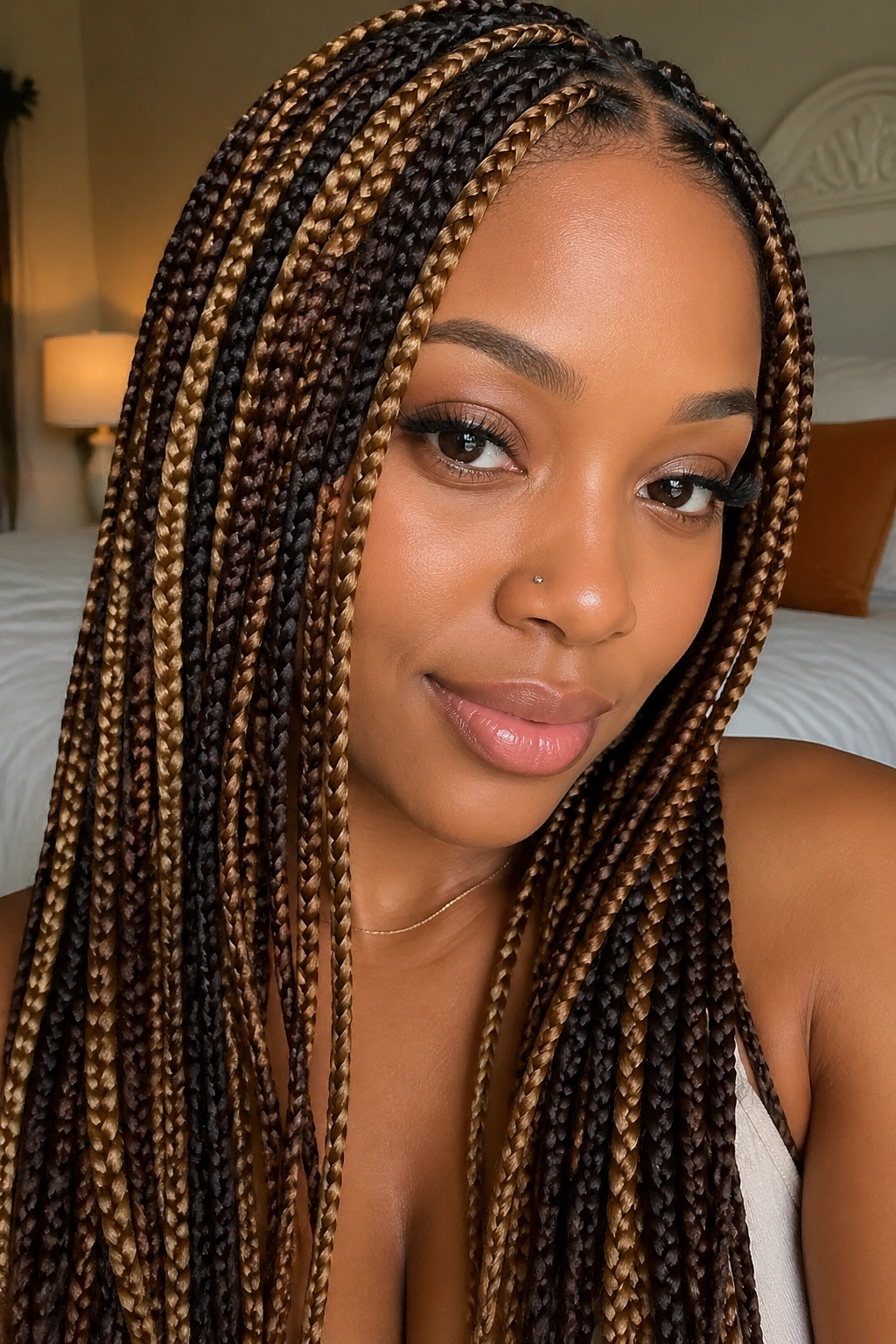
Espresso brown and honey blonde is the pairing I reach for when I want contrast that still feels grounded. The dark brown gives the braid pattern a clean outline, while the honey blonde keeps the style from sinking into one heavy block of color. It reads polished without looking stiff.
Why It Works
Espresso has enough depth to frame the lighter strands, and that makes each braid stand out a little more. On knotless braids, where the scalp area already looks softer, that contrast keeps the style from disappearing into the hairline. The combo also grows out with less drama than a brighter blonde-on-blonde mix.
- Best braid type: Knotless box braids, medium-width feed-ins, and waist-length braids.
- Color ratio: Try more espresso than honey blonde if you want a classic look; reverse it if you want the lighter shade to lead.
- Mood: Clean, rich, and a little dramatic.
- Maintenance note: Darker strands hide dust and frizz better, which is a gift on day eight.
My favorite move: keep the honey blonde in the middle sections and at the ends, not right at the roots, if you want the contrast to look smoother.
2. Caramel Ribbons and Honey Blonde Box Braids
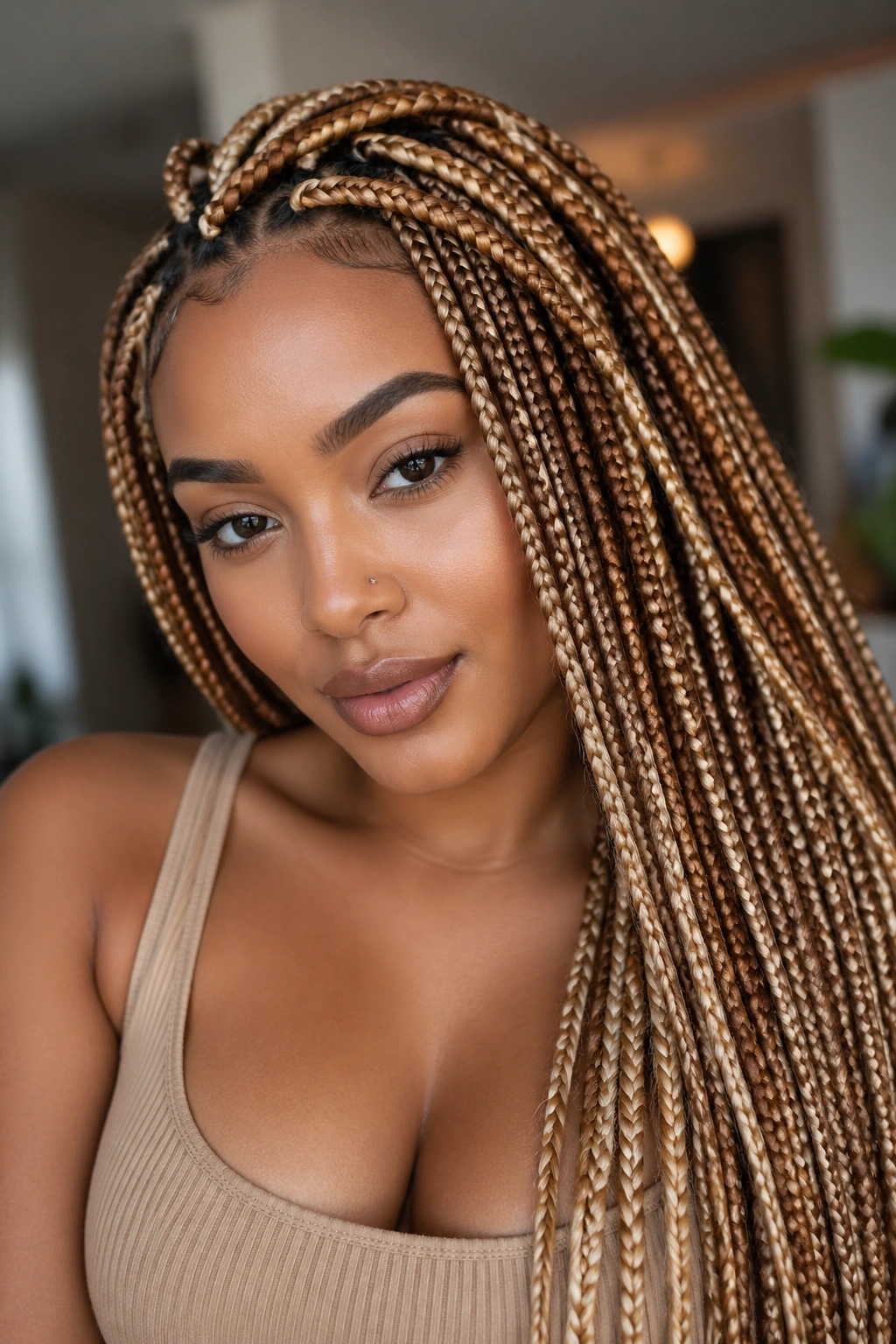
Caramel and honey blonde is softer than espresso, and that softness is the whole point. The two shades sit close enough that they melt into one another, but not so close that the braid pattern disappears. You get dimension without a harsh stripe effect.
I like this combo on box braids with a few face-framing pieces dropped slightly lighter than the rest. It gives the hair movement even when the style is pulled back. The color shift looks especially good if the braids are long enough for the eye to travel down the length instead of stopping at the roots.
If you want the style to feel a little less heavy, this is a smart choice. Caramel keeps honey blonde from reading too yellow, and honey blonde keeps caramel from going flat or brown. The result is warm, glossy, and easy to wear with gold hoops, a black tee, or a crisp button-down. Nothing fussy.
3. Chestnut Brown and Honey Blonde Feed-In Braids
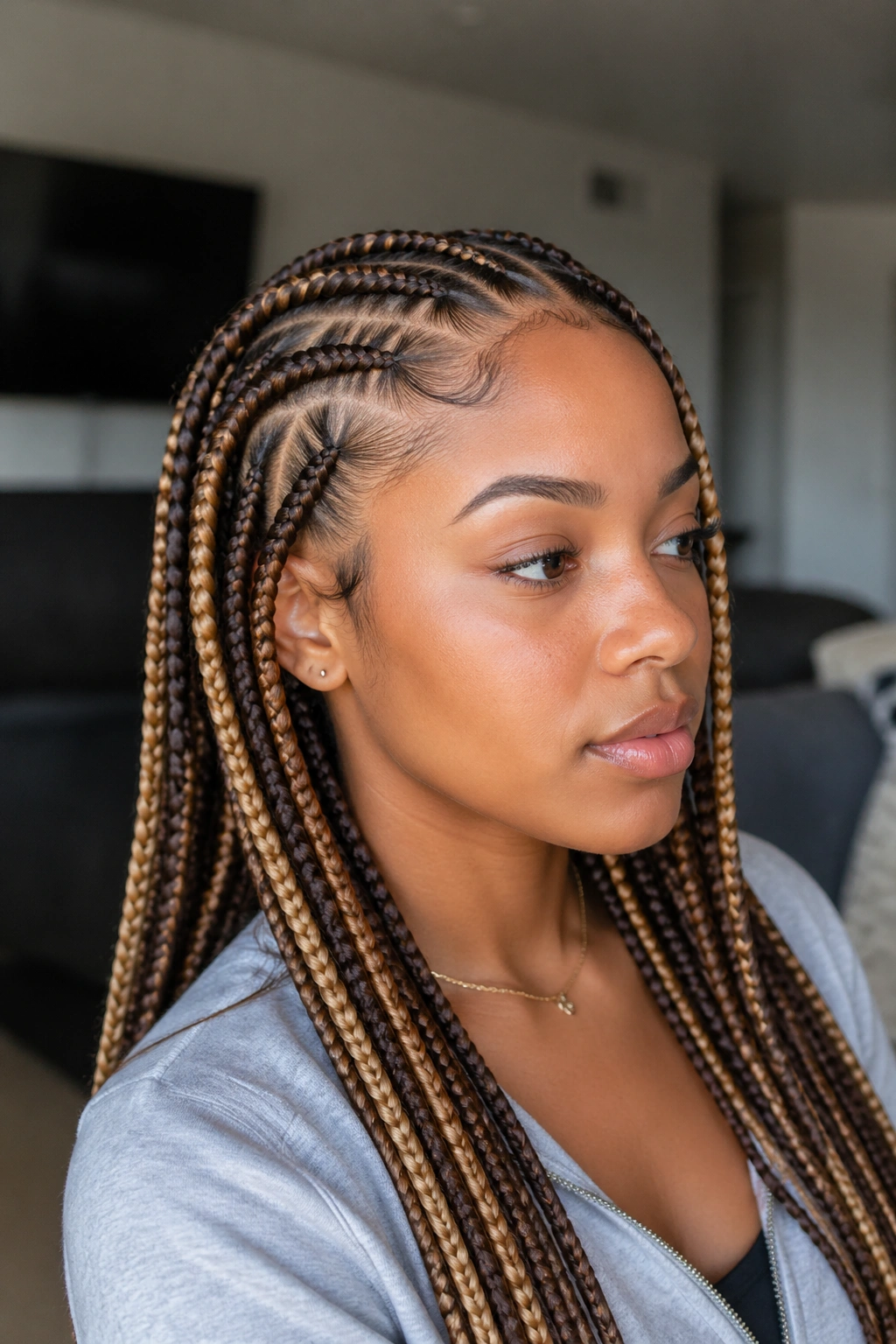
Chestnut brown is the quiet achiever here. It is deeper than caramel but softer than espresso, which gives honey blonde a more natural-looking partner. The combo has a brown-sugar tone that works when you want color, not drama.
What Makes It Different
Chestnut tends to have a slightly warmer, rounder feel than cooler browns. That matters on feed-in braids because the thin braid base already makes the color shifts look crisp. A chestnut-and-honey mix avoids the harsh checkered look that can happen with darker, cooler shades.
How to Wear It
Use chestnut as the anchor color and honey blonde as the accent. Or flip that if you want a brighter braid line along the sides. I like this pairing for side-swept feed-ins, long straight backs, and any style where the braids sit close to the scalp for the first few inches.
- Looks good with center parts and curved parts.
- Works well if your natural hair is dark brown.
- Feels softer than espresso, but more grown-up than caramel.
- Gives a nice finish on medium-sized braids.
4. Copper Streaks Through Honey Blonde Twists
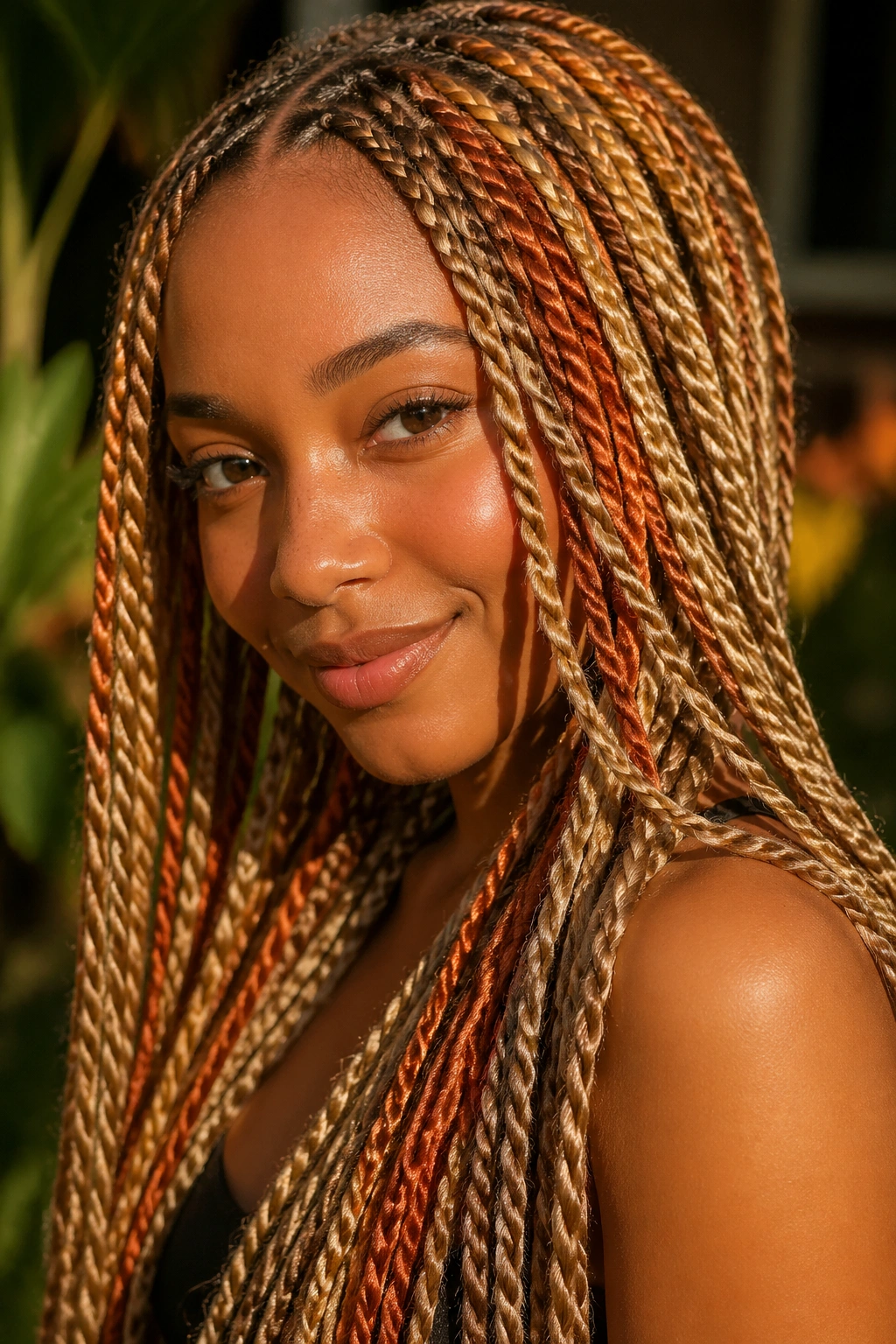
Copper and honey blonde is warm, fiery, and never shy. The two shades share a golden base, but copper brings in that orange-red pulse that makes twists look alive. It’s a strong choice if you want your hair to feel seasonal without being tied to a single look.
Picture this on Senegalese twists or spring twists. The twist texture gives copper more room to move, and honey blonde keeps the red from turning muddy. You end up with a color that glows in daylight and looks almost toasted indoors. That shift is half the appeal.
Copper does ask for a little restraint. Too much of it and the whole look can start to drift orange. A better approach is to let honey blonde lead and use copper as a ribbon or block color in specific sections. Face-framing twists, a lower half of the style, or alternating twist bundles all work well.
5. Auburn and Honey Blonde Fulani Braids
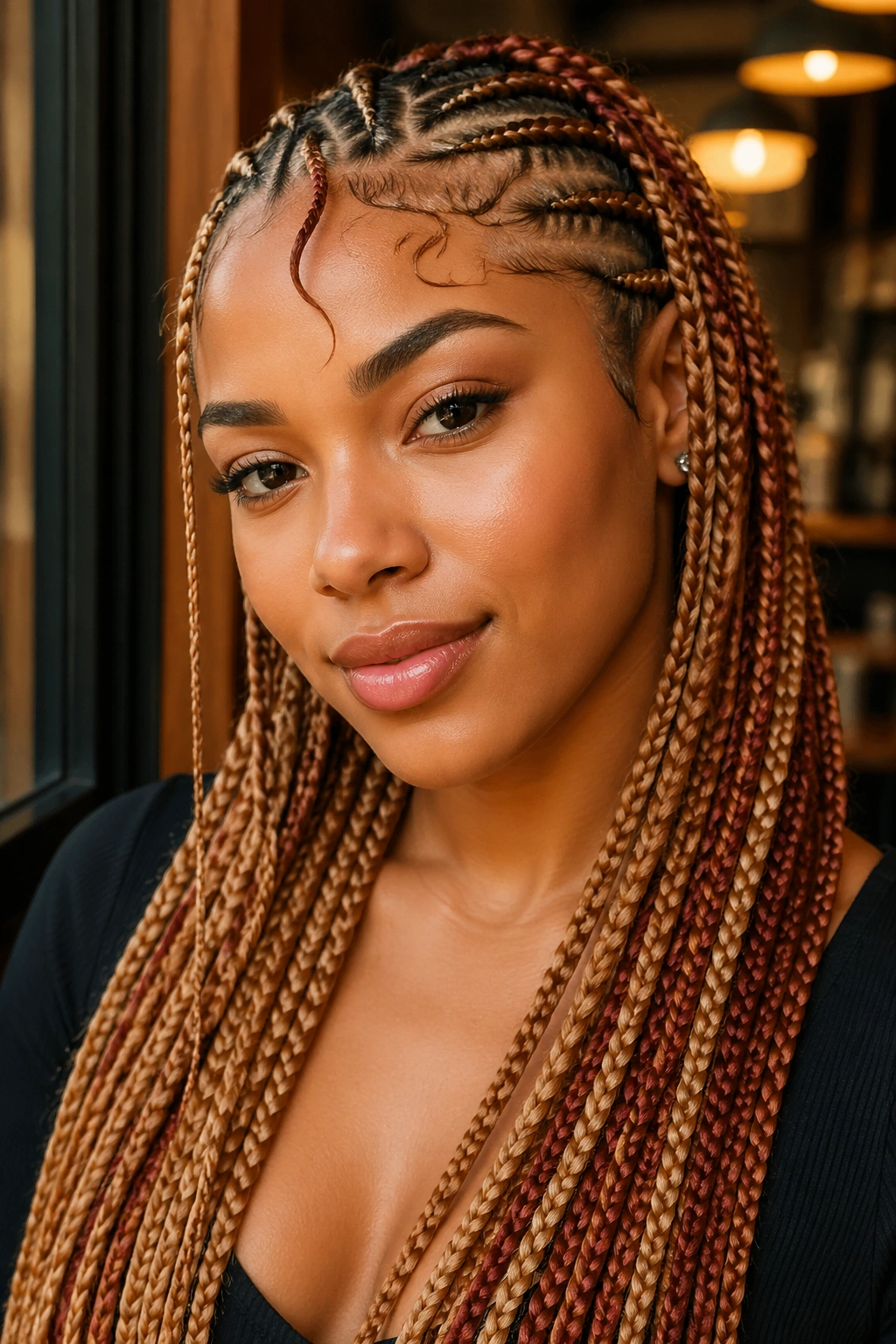
Auburn gives honey blonde a richer, deeper edge. It’s red-brown rather than bright red, so the combo feels mature instead of loud. On Fulani braids, where the center part, side braids, and beads already create shape, that color mix adds another layer without stealing the spotlight.
The best part is how auburn changes in different light. Indoors, it reads almost brown. Outside, the red comes forward and makes the honey blonde look lighter by comparison. That contrast gives the whole style more life, especially if the braids are accessorized with gold cuffs or wood beads.
If you lean toward warm makeup, this pairing is easy to wear. Terracotta blush, brown lip liner, and gloss all make sense with it. If you like the color to do the work on its own, keep the braid pattern simple and let the auburn and honey blonde repeat in steady rhythm. Too many extras can crowd the look.
6. Beige Blonde and Honey Blonde Micro Braids
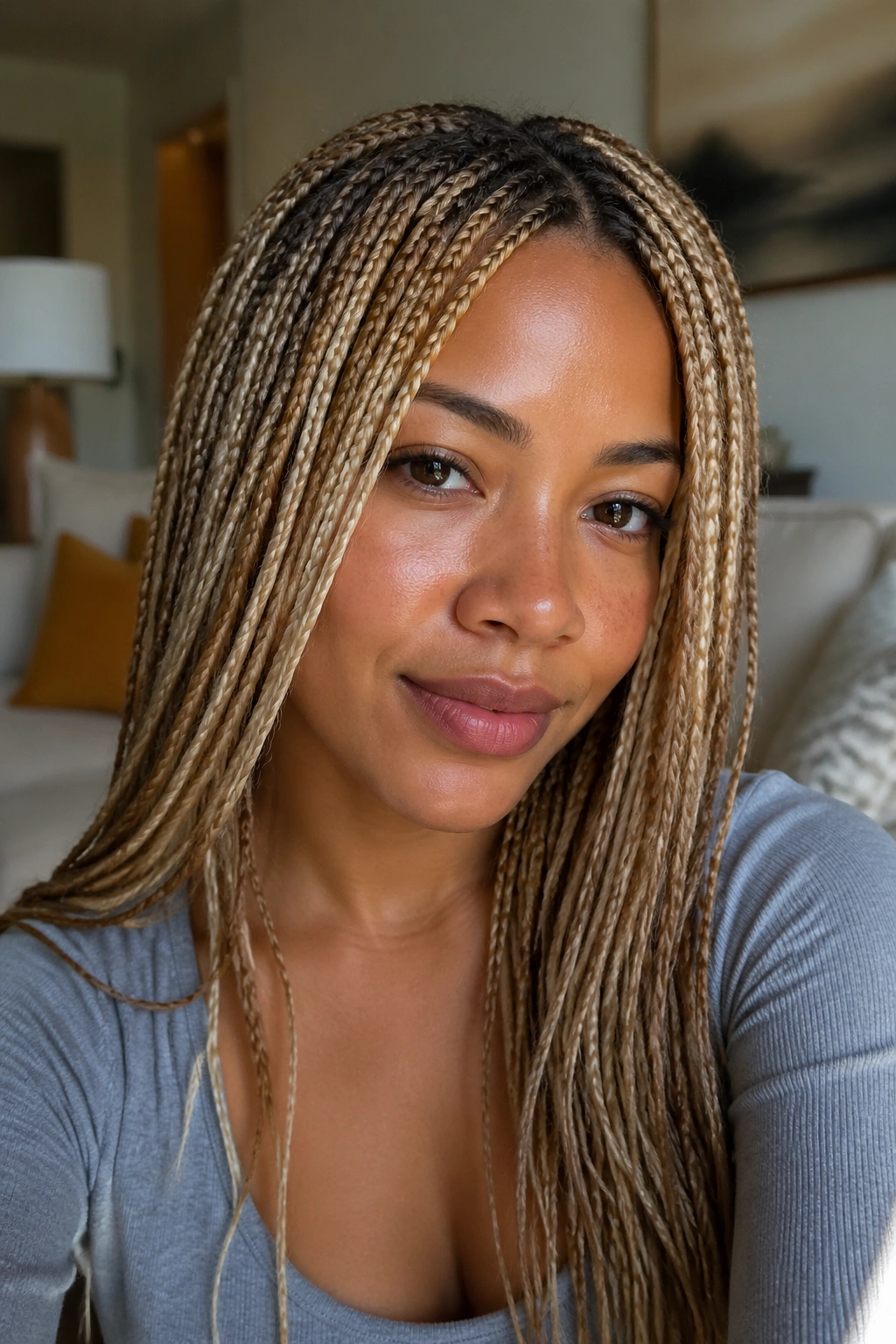
Beige blonde with honey blonde is for people who like blonde, but not the kind that screams. The two tones are close enough to blend softly, but beige cools the warmth just enough to keep the finish creamy instead of golden. On micro braids, that subtle shift looks elegant in a way that brighter pairings sometimes miss.
Micro braids are all about detail, so a tonal color mix makes sense. Each tiny braid catches a slightly different note of light, and the overall effect is more texture than contrast. That means the color reads as expensive and quiet, even though the components are simple.
A small warning: beige blonde can disappear if you use too much of it with a very warm honey blonde. That is why I like a 60/40 split, with honey blonde carrying the style and beige blonde breaking it up. You want enough difference to see the braid pattern, not so much that the tones fight.
7. Platinum Face-Framing Pieces with Honey Blonde Braids
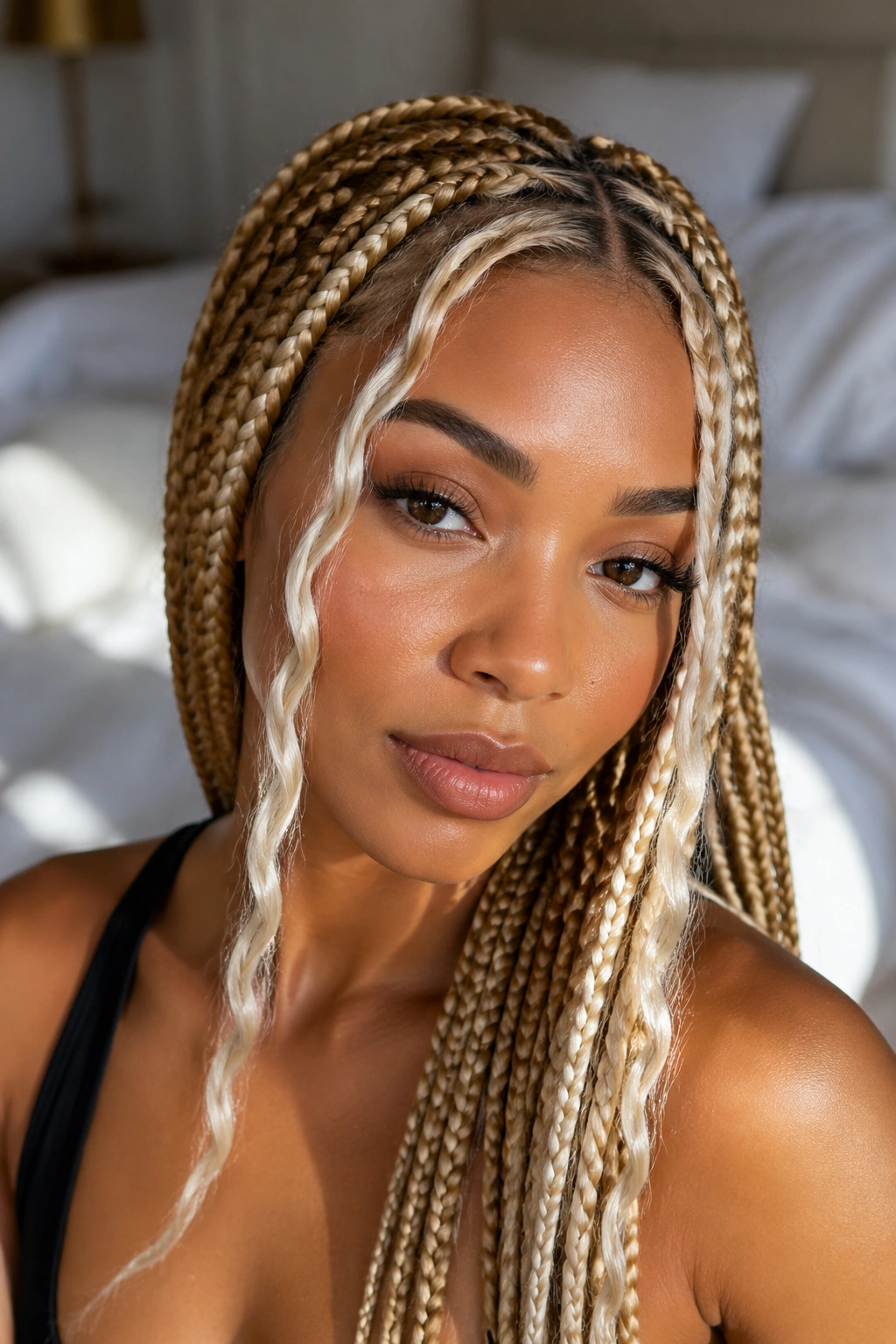
Platinum against honey blonde is a bolder move, but it works when you keep the platinum in small doses. Think money-piece pieces at the front, a few accent braids along the crown, or a single row woven through a full braid set. The contrast is sharp, and that’s the point.
What to Watch For
Platinum can make honey blonde look richer by comparison, but too much platinum can flatten the warmth that makes honey blonde pretty in the first place. I like this combo when the braid style has shape built into it — cornrows that curve, long braids that fall over the shoulders, or a half-up style where the front sections do most of the talking.
- Use platinum sparingly: one to three accent sections is enough for many styles.
- Best on: High-contrast braid patterns and center-part styles.
- Color effect: Brightens the face and makes the rest of the braids look deeper.
- Downside: Platinum shows dullness faster, so it needs a little more visual upkeep.
My take: If you love contrast but hate heavy color, this is the easiest way to get both.
8. Rose Gold and Honey Blonde Box Braids
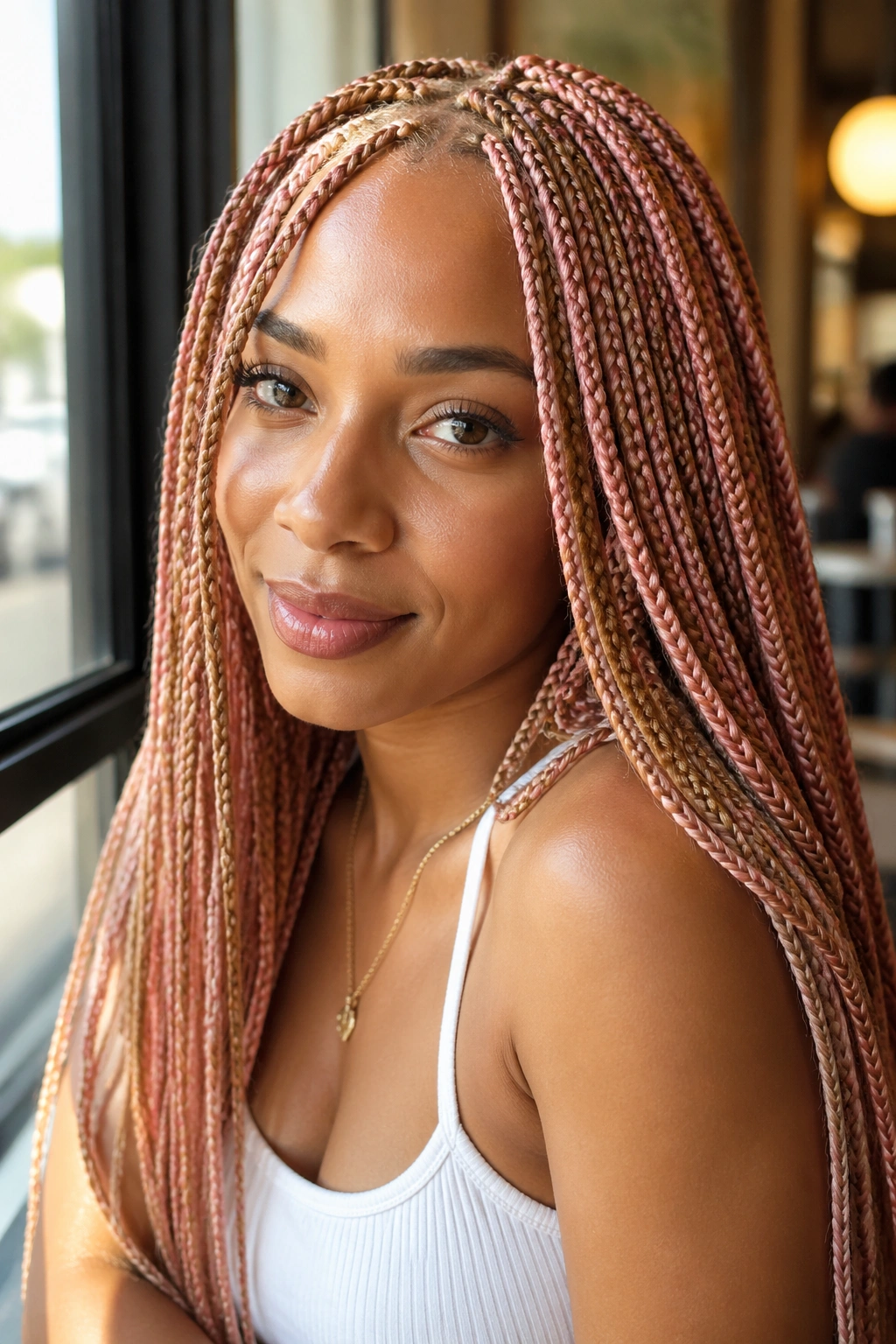
Rose gold and honey blonde has a softer personality than copper or burgundy, and that’s what makes it such a nice choice. The pink-gold note takes the edge off the blonde and gives the braids a warm blush cast that feels fresh without veering sugary.
This combo looks especially good in box braids that are medium or small. The smaller the braid, the more the colors blend visually, which keeps the pink tone from taking over. On larger braids, the rose gold becomes more obvious and a little more fashion-forward. Either version works, but the vibe shifts fast.
I’d reach for this when the outfit is simple and I want the hair to do a little more work. A plain white shirt, denim, and rose gold-honey braids is an easy win. The color mix also handles soft curls at the ends well, because the texture keeps the pinkish tone from looking too flat.
9. Burgundy and Honey Blonde Goddess Braids
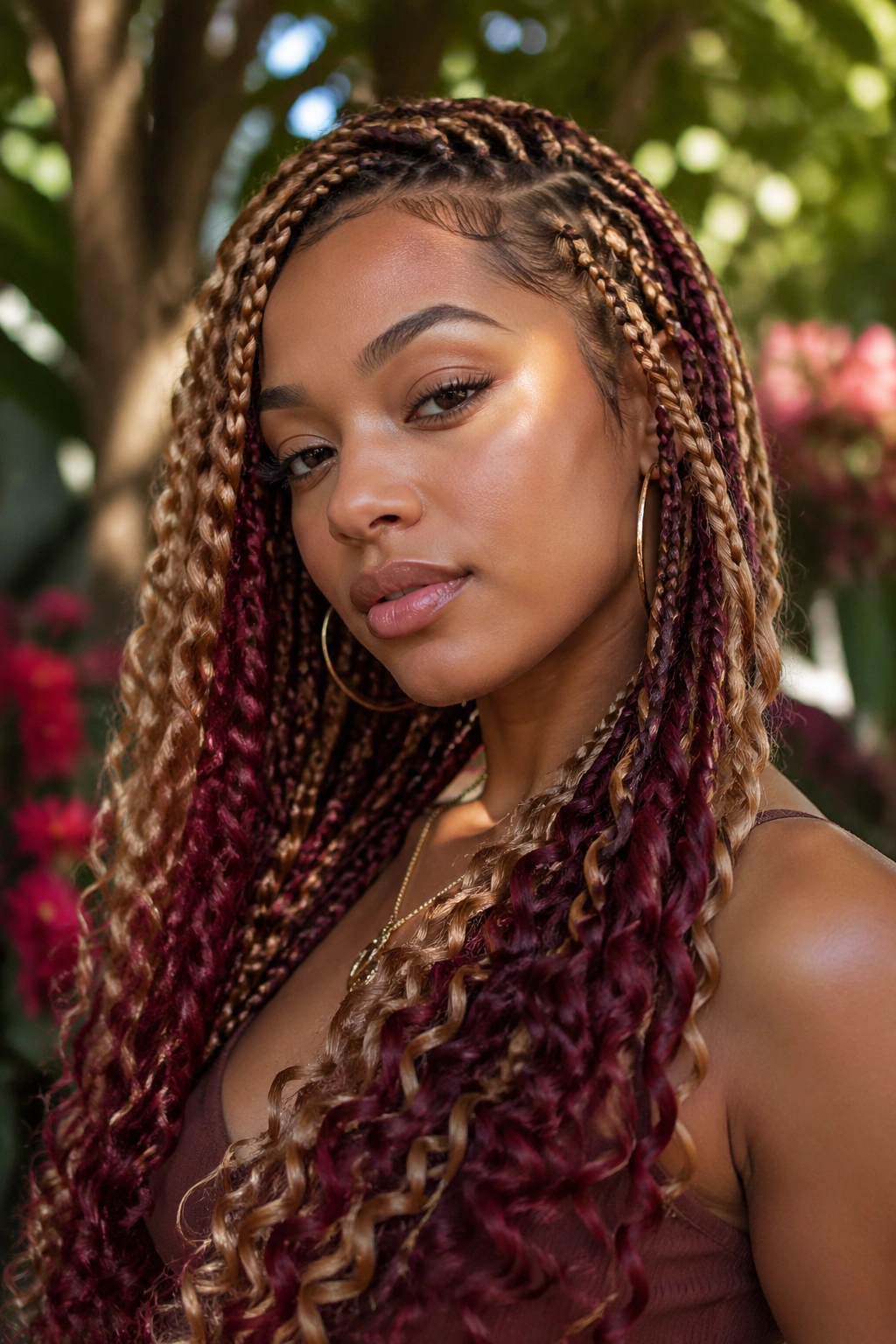
Burgundy is one of the few colors that can sit next to honey blonde and still feel grown, not gimmicky. The red-purple depth gives the blonde something richer to lean against, and that contrast looks especially good in goddess braids where loose curls and structured braids are already sharing the same style.
The trick is balance. If burgundy takes over, the honey blonde loses its warmth and the style starts looking darker than intended. Keep honey blonde prominent along the face or through the top braids, then let burgundy live in the lower sections, the underlayers, or alternating strands. That keeps the style from going flat.
Burgundy also photographs with a little more punch than people expect in person. The color can look almost wine-dark indoors and show a brighter berry note outside. That shift gives honey blonde a nice frame, and it means the style doesn’t need extra accessories to feel finished.
10. Black Roots Fading into Honey Blonde Ends
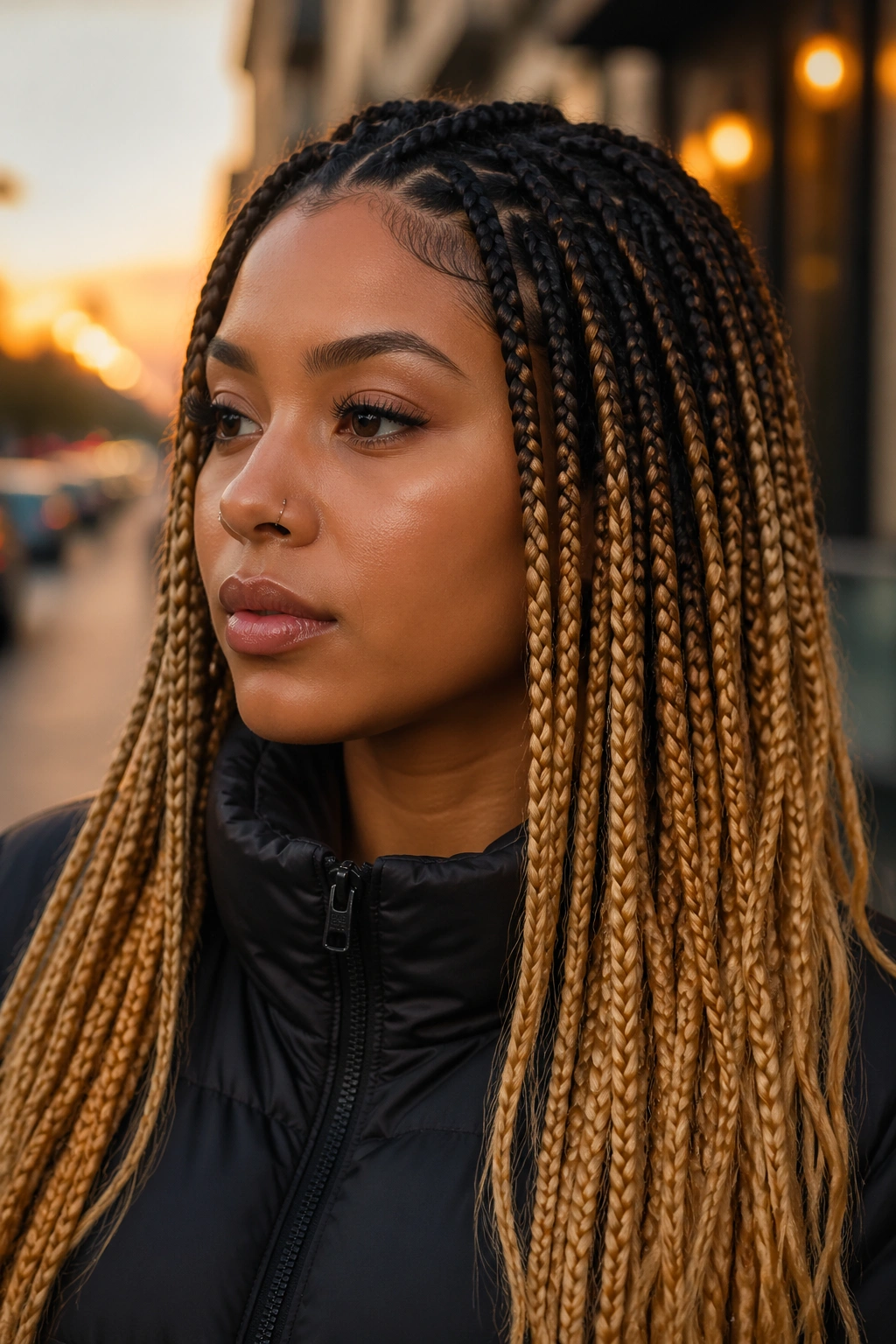
This is the combo for anyone who likes a little edge. Black roots with honey blonde ends create a smoked, ombré effect that feels cleaner than a hard half-and-half split. It gives the braid line a strong base and lets the lighter ends do the softening.
The reason it works is simple: black anchors the style. Honey blonde can sometimes look extra bright when it’s used everywhere, but black roots calm that down and make the lighter pieces feel intentional. On long braids, the fade has room to breathe. On shorter braids, it can feel abrupt unless the transition is gradual.
Best Uses
- Long knotless braids
- Ponytail braids
- Braids with curled ends
- Styles that pull the hair up and away from the face
I like this combo when the goal is contrast with structure. It has shape. It has spine. And it keeps honey blonde from carrying the entire style on its own.
11. Ash Brown and Honey Blonde Braids
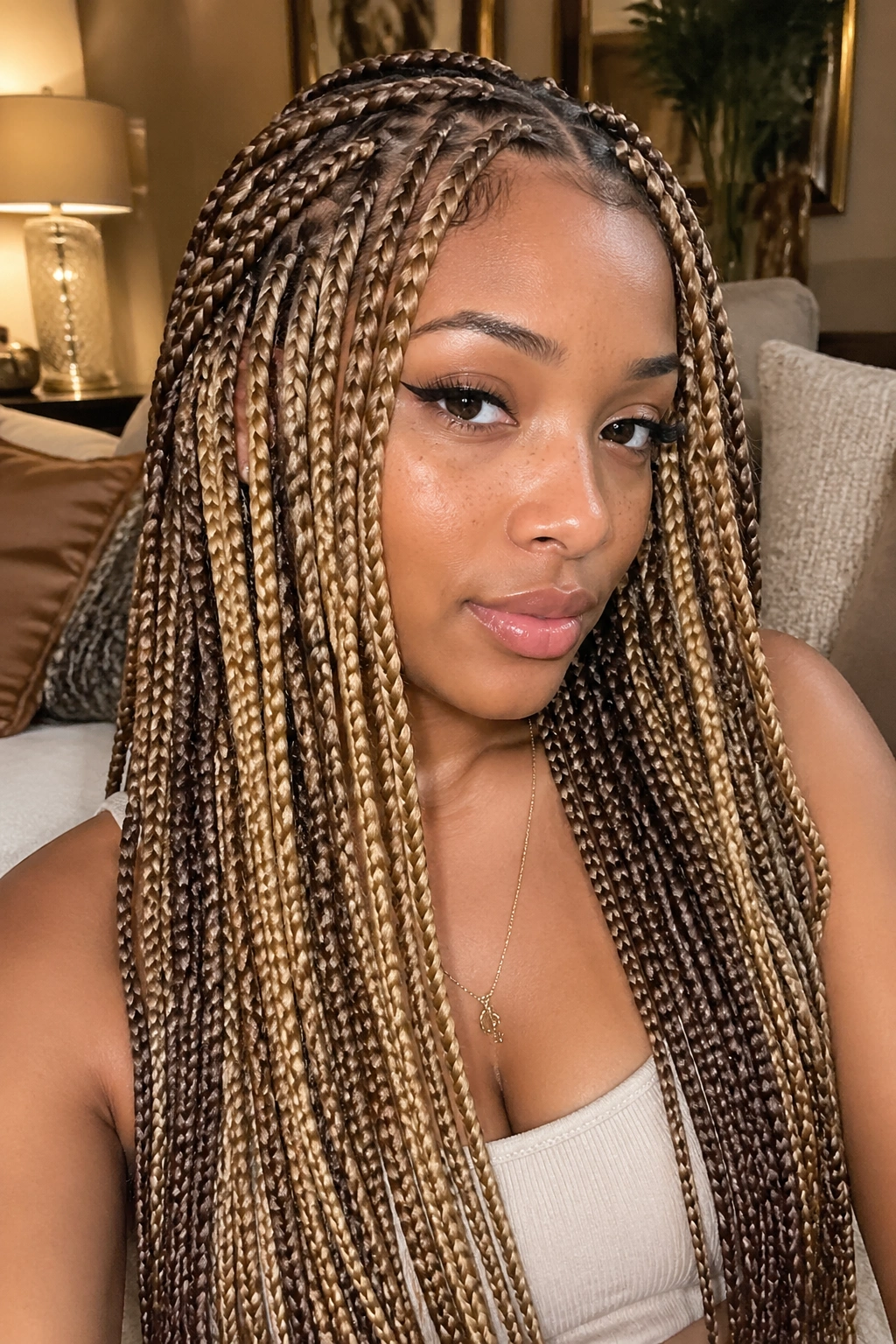
Ash brown is the cool-toned cousin in this group. It tones down the warmth of honey blonde and gives the braids a more muted finish, which is useful if your hair color always seems to drift too golden. The result is less sunlit and more smoke-soft.
Why It Works
Honey blonde can go brassy fast if everything around it is warm too. Ash brown interrupts that heat. The pairing works because the difference between them is clear, but not noisy. On medium or small braids, the colors weave together into a neutral blend that reads calm and modern.
What to Keep in Mind
Ash brown can look a little dusty if you use it in a heavy block. I prefer it as a balancing shade, not the main character. Put it beside honey blonde in alternating bundles, or use it to cool down the underside of a style that already has a lot of brightness on top.
If you like jewelry in silver tones, this pair makes sense. It has a cooler finish that gold-heavy combos do not always give you.
12. Chocolate Brown and Honey Blonde Boho Braids
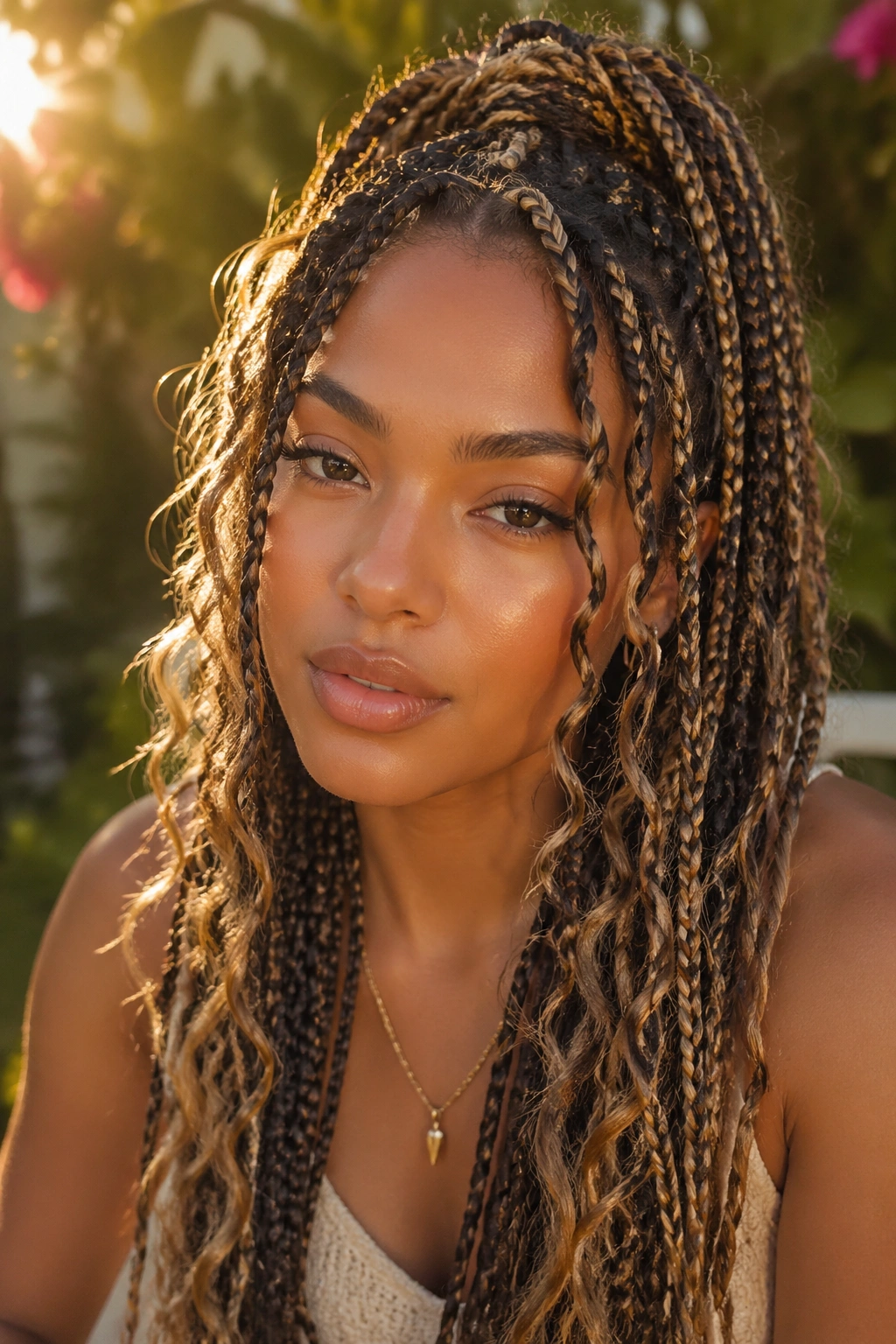
Chocolate brown and honey blonde is a classic for a reason. The brown has enough richness to hold the style together, and the honey blonde breaks up the weight so the braids do not look dense or muddy. On boho braids, where loose curls soften the whole shape, that balance is especially nice.
Boho braids are already a little messy in the good way, so the color needs to support that ease. Chocolate brown brings the depth, while honey blonde gives the eye somewhere to land. You get movement without relying on super bright contrast, which is useful if you want the style to wear well with makeup or bare skin.
There’s also a practical upside: chocolate brown is forgiving. It hides older pieces well, blends with dark natural roots, and keeps the honey blonde from doing all the work once the style starts to age. That makes this one of the easier combos to live with.
13. Golden Blonde and Honey Blonde Jumbo Braids
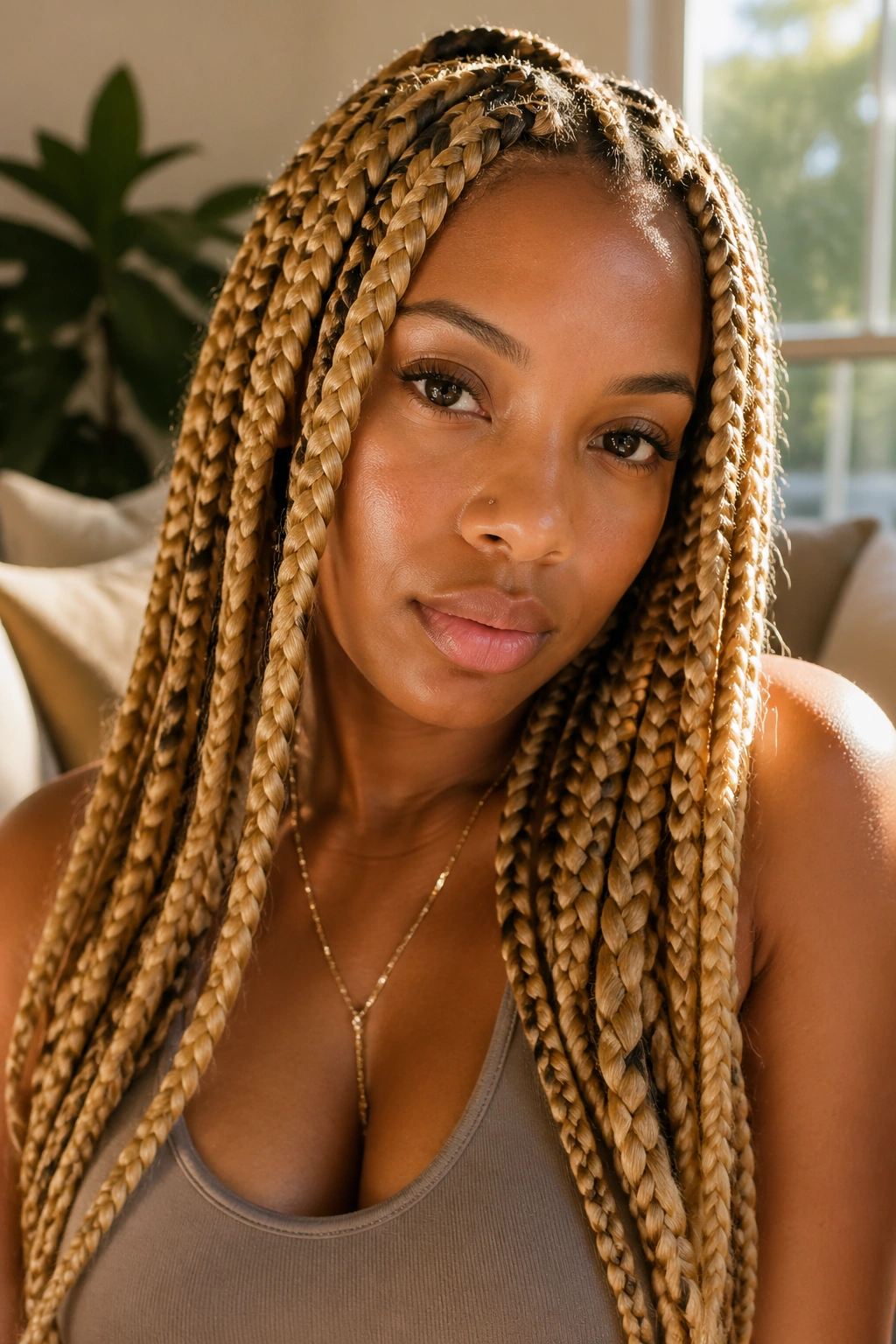
Golden blonde and honey blonde sounds simple, and that simplicity is why it works. The difference between the two shades is small, but not so small that the braids disappear into one flat color. On jumbo braids, where the sections are large and the pattern is bold, that gentle shift keeps the look from feeling heavy.
This combo is a nice choice if you want brightness without the icy bite of platinum or the brown depth of chestnut. It has a sun-warmed finish that feels smooth from root to tip. You notice the color more through sheen and movement than through sharp contrast, which is a good thing here.
Jumbo braids carry color differently from smaller styles. Because each braid covers more space, even a mild shade change can be visible. That’s why golden blonde and honey blonde is useful: it gives dimension without turning the whole head into a patchwork.
14. Sandy Blonde and Honey Blonde Knotless Braids
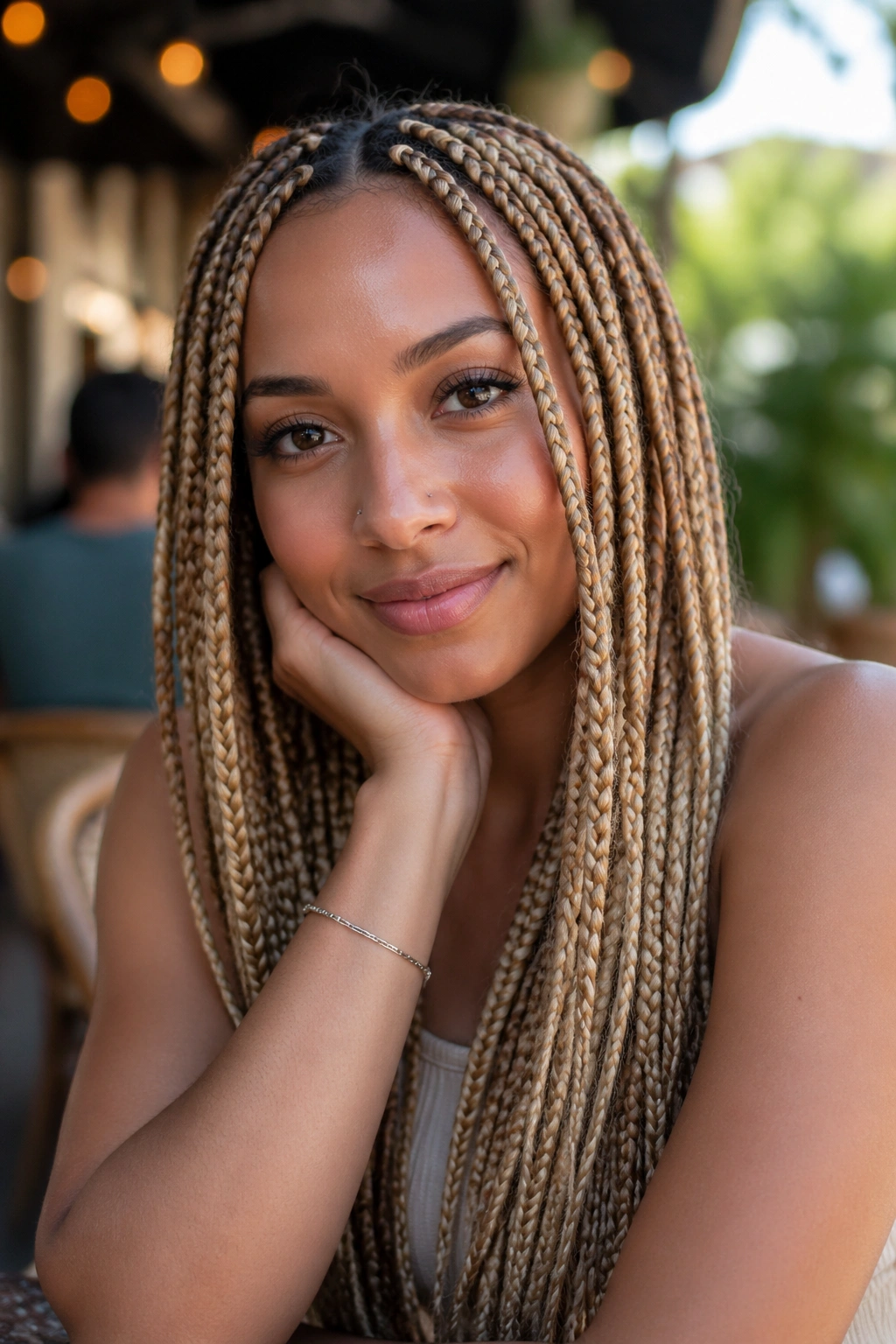
Sandy blonde sits in that soft middle ground between beige and light brown. Paired with honey blonde, it creates a braid color combo that feels natural, airy, and less polished in a stiff way. I like it on knotless braids because the style already has a smooth, scalp-friendly start, and the colors match that ease.
The benefit here is subtlety. Sandy blonde blurs the line between the lighter strands and the warmer ones, so the finished look reads blended rather than striped. That’s useful if you want a blonde braid style but do not want the color to be the first thing people notice.
It also plays nicely with everyday wear. Hoodies, denim jackets, gold earrings, and simple makeup all work with it because the color doesn’t demand a special wardrobe. Not every braid combo needs to be loud to have personality, and this one knows that.
15. Cinnamon Brown and Honey Blonde Feed-In Cornrows
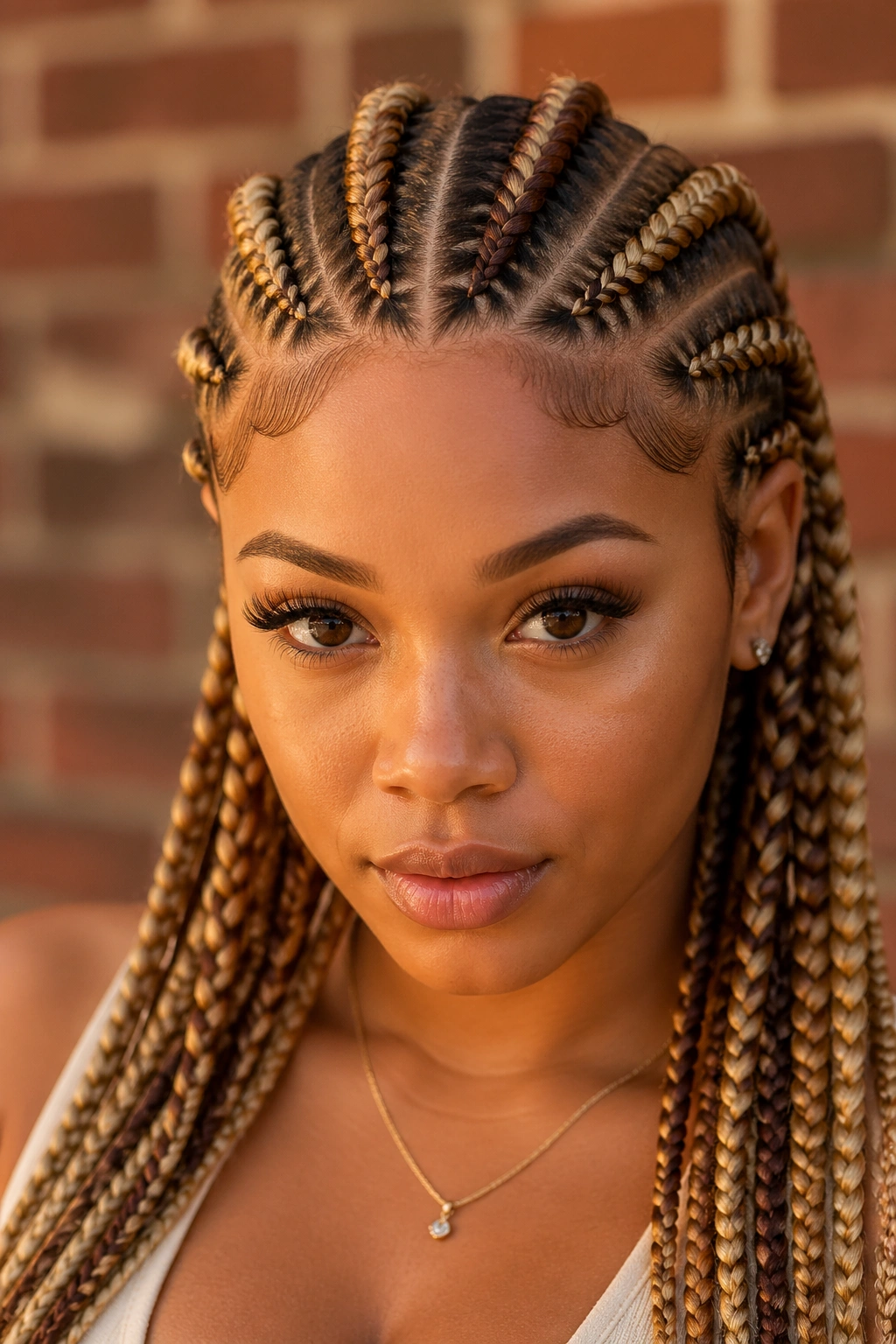
Cinnamon brown brings a little spice without going full copper. It has that reddish-brown warmth that makes honey blonde feel deeper and more grounded. On feed-in cornrows, the effect is sharp and patterned, which is where this color really earns its keep.
Cornrows show color placement in a very honest way. You can see the rhythm of the braid, the parting, and the direction of the design. Cinnamon brown helps those lines stay readable while honey blonde brightens the style enough to keep it from feeling too dark. The combo works especially well when the cornrows feed into a bun, a ponytail, or long hanging braids.
I’d pick this if you want a color story that feels a little earthy. Cinnamon has enough red to be interesting, but not so much that it overpowers the blonde. That middle lane is hard to beat.
- Strong with geometric braid patterns.
- Nice on long styles that need motion.
- Easier to wear than copper if you like warmth but not brightness.
- Looks especially good with warm-toned beads or cuffs.
16. Mocha Roots, Honey Blonde Mids, and Soft Brown Ends
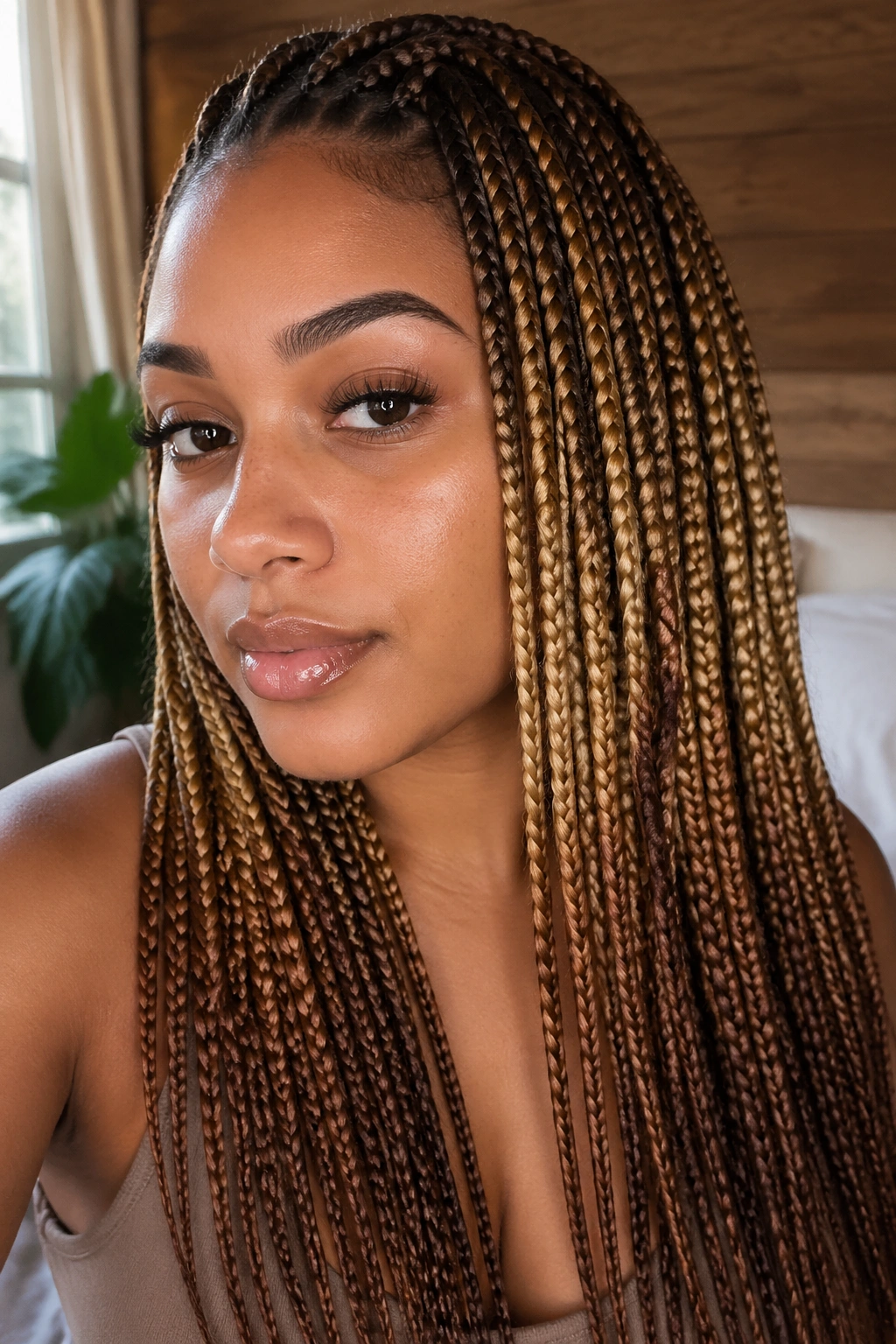
Three-tone braids can go wrong fast if the colors are too busy. This one avoids that problem by keeping the palette in the same warm family. Mocha roots ground the style, honey blonde in the middle adds brightness, and soft brown ends keep the finish from looking unfinished or over-processed.
What I like about this combo is the movement. Your eye travels from dark to light and then settles again at the ends, which makes long braids look longer. The color shift also gives the style a more natural fade, almost like sun exposure in layers rather than one blunt color block.
A Good Way to Think About It
If you want your braids to look textured from a distance, this is one of the easiest routes. It works on waist-length knotless braids, long boho styles, and thick feed-ins where the color can really stretch out. The shades are different enough to matter, but not so different that you spend all day explaining them.
There’s a quiet elegance to that. Not flashy. Just smart.
17. Charcoal Peekaboo Panels Under Honey Blonde Braids
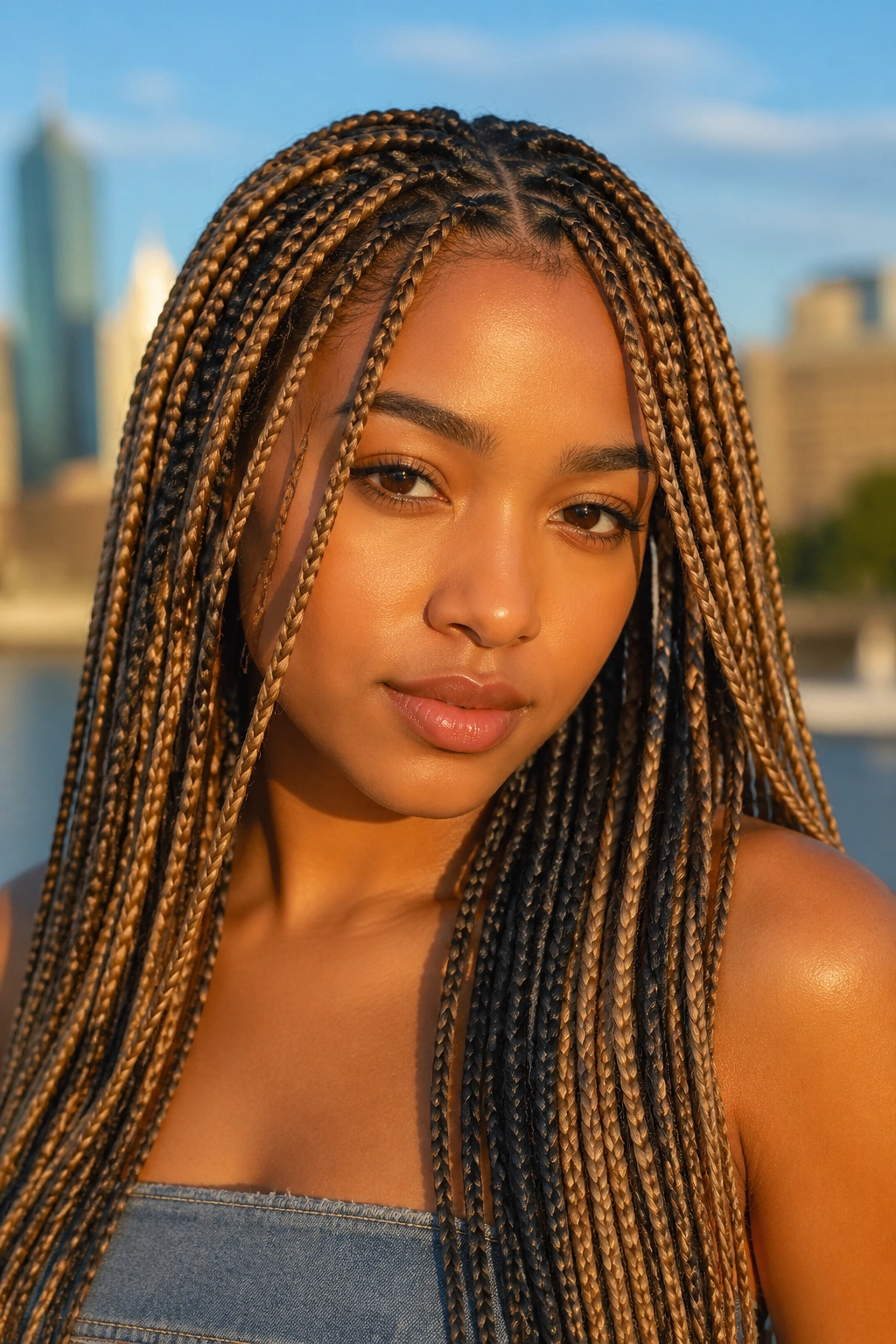
Charcoal peekaboo panels are for people who like surprise detail. From the top, the style can read mostly honey blonde. Then the hair moves, flips, or goes into a bun, and the darker panels show underneath. It’s one of the cleanest ways to add edge without giving up warmth.
The contrast works because charcoal is softer than jet black. It gives honey blonde a shadowy base, but it doesn’t drag the whole style into a heavy dark look. On layered braids or side-swept styles, the hidden color adds depth in motion instead of sitting on top all the time.
Where It Shines
- Half-up styles
- Braids worn in a high ponytail
- Layered knotless braids
- Styles with curls left loose at the ends
One good rule: keep the charcoal underlayer thinner than the honey blonde top layer. That keeps the surprise effect sharp instead of obvious from every angle.
18. Cream, Honey Blonde, and Toasted Caramel Three-Tone Braids
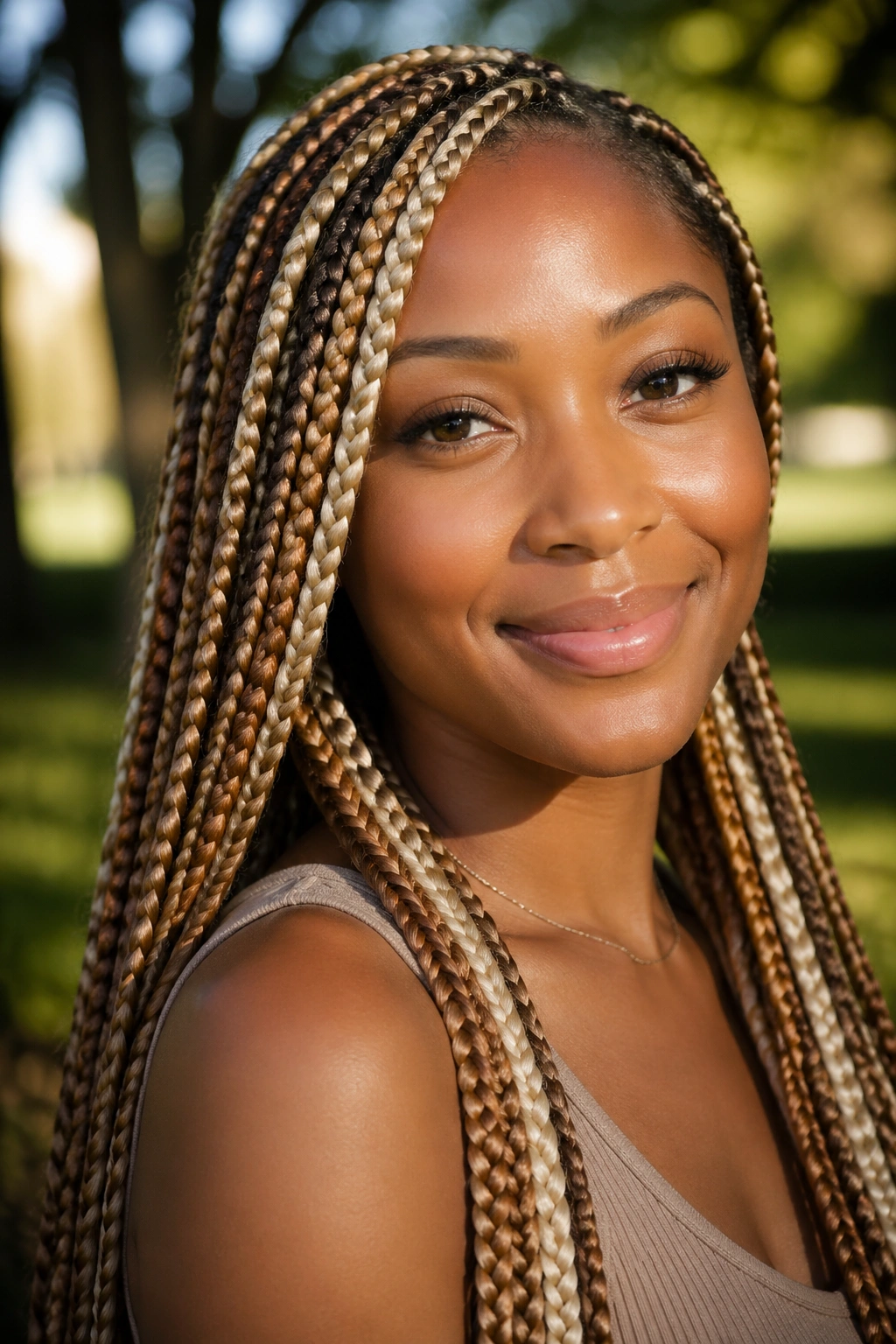
This is the softest combo in the bunch, and maybe the easiest to wear. Cream lifts the palette, honey blonde gives it warmth, and toasted caramel stops the whole look from going pale. Together, they create a braid finish that feels blended, dimensional, and easy on the eyes.
I like this trio for anyone who wants braid color that works with almost anything in the closet. It does not fight gold jewelry, brown makeup, or bright lipstick. It also holds up well in longer styles because the three tones give the braid pattern enough movement even after a few weeks of wear. The eye keeps finding new parts of the color mix.
If you only want one low-drama option from this whole list, this is the one I’d start with. It has enough variation to feel styled, but not so much that it takes over your face. Honey blonde does what it does best here: warms the blend, softens the edges, and keeps the whole thing looking lived-in instead of overdone.
