


Box braids that last two full months are not magic. They’re mostly a matter of size, parting, and how gently the install sits at the scalp. Get those three things right, and you can walk through eight weeks with braids that still look neat instead of fuzzy and tired.
The style matters, too. Some box braids stay crisp because the sections are small and the roots lie flat. Others survive because the shape hides a little frizz in the right places. The wrong choice feels heavy by week two. Worse, it can start tugging at your edges before the style has had time to settle.
Two full months is a long stretch for any protective style, so the best versions are the ones that can take a little life and still look intentional. I tend to favor braids that let you cleanse the scalp, sleep wrapped, and refresh the front without turning the whole head into a mess. Tiny details matter here. A quarter-inch too much hair at the base changes the feel of the entire install.
Some of the styles below are sleek and classic. Others bring in beads, curls, or unusual parting patterns. The common thread is durability. And yes, there’s an order to this—start with the braid sizes and lengths that age best, then work toward the styles that need a steadier hand.
1. Petite Classic Box Braids
Petite classic box braids are the old reliable choice for a reason. The small sections keep the roots from puffing up too fast, and the neat grid gives the style a clean look even after several washes and a few rounds of sweat or wind. If you want something that stays presentable with less fuss, this is where I’d start.
Why They Last So Well
Smaller braids hide grow-out better than chunky ones. The parting still shows through, but not in a harsh way, and the braids don’t swing around enough to get battered at the ends every time you move your head.
- Small sections keep the base neat longer.
- Light weight means less pull on the scalp.
- The shape holds up after a scalp cleanse.
- Ends can be sealed and tucked with less frizz.
Best move: ask for evenly sized parts from the front hairline to the nape. Uneven boxes age fast, and that unevenness always shows first in photos.
2. Medium Knotless Box Braids
Why do medium knotless box braids hold up so well? Because they start soft at the scalp and grow out with less of that hard little bump you get from a tight knot. The braid settles instead of fighting you, and that makes two months feel much more realistic.
The medium size is the sweet spot. Tiny knotless braids can take forever to install, and jumbo knotless braids can feel bulky by week four. Medium braids give you enough fullness to look polished, but not so much weight that the front starts sagging. If your scalp is sensitive, this is the version I’d pick first.
How to Keep Them Looking Fresh
Keep the roots clean and the edges dry. That sounds boring. It is boring. It also works.
A little mousse on the lengths, a satin scarf at night, and a light scalp cleanse every couple of weeks will buy you time. Don’t flood the braid with heavy oil. That’s how the roots start looking damp and dusty at the same time.
3. Waist-Length Small Box Braids
The first thing people notice with waist-length small box braids is the movement. The second is the staying power. Long, slim braids can go two months because the length gives your hair room to age without the whole set looking defeated. The frizz lands farther down, where it reads as texture instead of neglect.
There’s a catch, though. The length invites snagging. Coat zippers, chair backs, seat belts, tote straps—those are the real enemies here. If you wear your braids this long, keep the ends tucked when you’re commuting or sleeping. It sounds fussy. It saves you from unnecessary unraveling.
I also like this style for people who wear their braids up a lot. A low ponytail or loose knot changes the mood without stressing the roots. That matters when you’re trying to stretch the style instead of babying every strand.
4. Triangle-Part Box Braids
Triangle-part box braids buy you forgiveness. The parting is less rigid than a perfect grid, so the style keeps looking interesting even after your roots start to grow. I like that better than a set of parts that screams “fresh install” on day one and “needs a redo” by week five.
The triangles also help soften the look around the crown. That can be a lifesaver if your hairline tends to show every little shift. The pattern breaks up the scalp in a way that makes the braid set look deliberate, not plain.
Just make sure the triangles are balanced. A few lopsided sections in the front will bother you every time you look in the mirror. And once you notice them, you’ll keep noticing them.
5. Chin-Length Box Braids
Chin-length box braids are underrated for long wear. Shorter lengths take less daily abuse, plain and simple. They don’t rub your shoulders, catch on jacket collars, or whip across your face every time the wind picks up. That means less frizz and fewer stray ends by the time the second month rolls around.
They also age in a neat way. A chin-length set can start out sharp and still look tidy when the roots have grown a bit, because the silhouette stays compact. You don’t get that “too much hair, too little shape” problem that long braids sometimes develop.
If you work at a desk, wear headphones, or drive a lot, this length makes life easier. You can tuck it behind your ears, pin it back, or wear a middle part without the hair feeling like a curtain.
6. Shoulder-Grazing Box Braids
Shoulder-grazing box braids sit in that useful middle zone. They’re long enough to pull into a small bun or half-up style, but short enough that they don’t get battered by every coat and tote strap you own. That’s a good trade if you want two months without feeling like you’re managing a whole project on your head.
They also have a nice habit of looking finished even when they’re not brand-new. The length gives the braids movement, but not so much that they start looking stretched out. A little mousse at the ends and a satin wrap at night usually keeps them in line.
I’d choose this length for anyone who wants box braids that work on busy weeks. It’s easy, but not boring. That’s a better combination than people give it credit for.
7. Boho Box Braids
Boho box braids look softer than a standard set because the loose curly pieces break up the straight lines. Done well, they age in a flattering way. Done carelessly, they can turn into a dry puffball by the end of the month. The difference is mostly in where the curls sit and how much of them you use.
What Keeps the Style from Frizzing Out
Keep the curly pieces focused near the ends and around the face. If curls are woven too high into the braid, they lose shape fast and start looking tired long before the braid itself is ready to come out.
- Use setting foam on the curly pieces only.
- Refresh the front curls with flexi rods if needed.
- Sleep with a silk scarf and a loose bonnet.
- Ask for braids that are not too thick at the crown.
My take: boho braids last longer when the loose pieces are treated like a separate texture, not an afterthought.
8. Layered Box Braids
Can layering help a braid set last longer? Yes, and not just because it looks pretty. Shorter pieces in the front keep the frame of the style neat, while longer pieces in the back absorb some of the wear that would otherwise show up around your face. That balance helps the whole style age more evenly.
Layered box braids are also easier to style without overhandling them. You can sweep the shorter front pieces back, let the back fall, or tuck one side behind your ear without pulling on everything at once. That matters when you’re trying to stretch the install.
Ask your braider to keep the layers gradual. Sharp, choppy layers can look exciting for about a week and then start feeling awkward. Smooth layers move better and grow out better. I’d take smooth over dramatic here.
9. Invisible-Knot Box Braids
Invisible-knot box braids are built for people who hate seeing the base of the braid announce itself. The knot is tucked so neatly that the roots look softer right away, and that softness gives the whole style a longer runway. It’s one of the cleaner-looking ways to wear a long-term braid set.
They also age well because the grow-out is less harsh. A visible knot can start looking bulky once your hair grows a bit. An invisible knot blends into the braid itself, so the root shift feels gentler and less obvious.
The only real caution is tension. A tidy knot does not excuse a tight install. If the scalp feels sore for days, the style is too tight, no matter how polished it looks in the mirror.
10. Square-Part Medium Box Braids
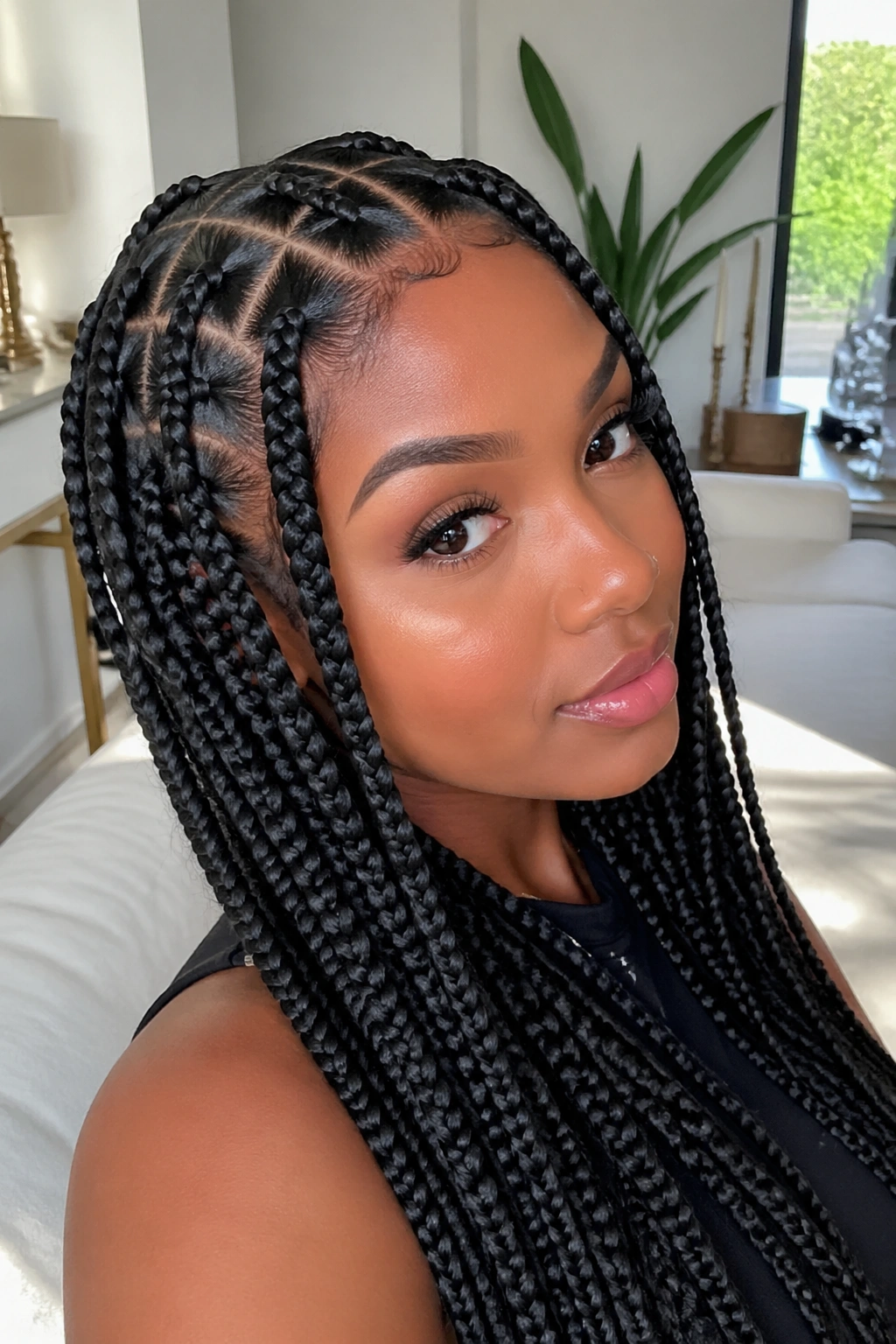
There’s a reason square parts never go out of style: they’re easy to read, easy to maintain, and easy to clean up when the braids start growing out. Medium-sized braids with square parts are one of the most practical choices if you want something that still looks organized after weeks of wear.
Why This Layout Works
The regular pattern helps your eye accept a little frizz. The scalp doesn’t look chaotic, and the braid rows stay easy to separate when you moisturize or cleanse.
- Square parts make the style look intentional longer.
- Medium size gives fullness without heavy roots.
- The layout is easy to refresh with mousse.
- You can still style it up without stressing the nape.
Good habit: keep a small rat-tail comb nearby for tidy part lines around the perimeter. The front is what people notice first.
11. Side-Swept Box Braids
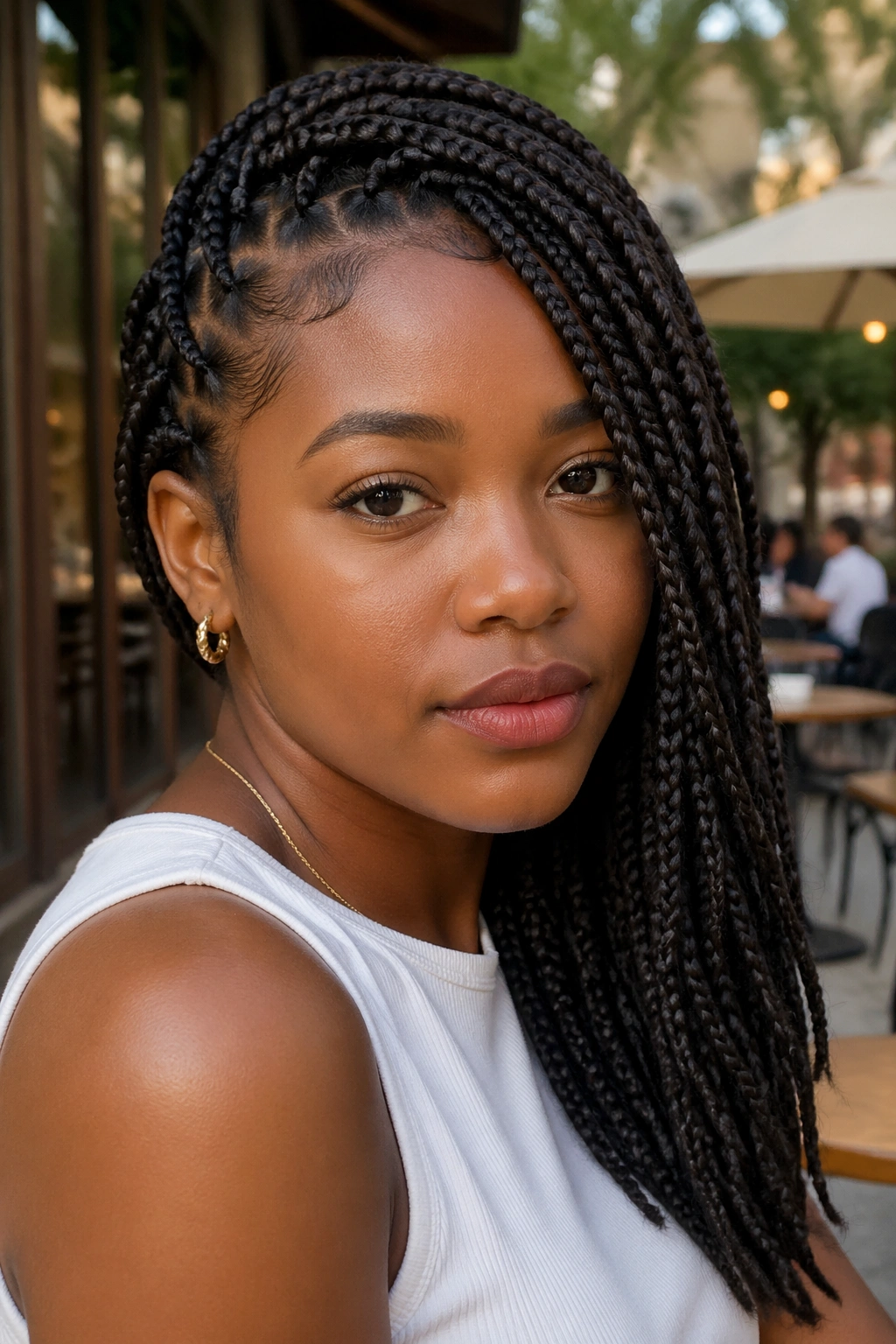
Side-swept box braids are for anyone who wants a little shape without a lot of work. When the braid fall is directed to one side, the style feels finished even when the roots have relaxed a bit. That makes it a smart choice for long wear, since the overall silhouette matters more than every single braid staying perfectly still.
The style also spreads wear differently. You’re not constantly pulling the hair straight back from the same point, which helps the front settle more naturally. If you do wear it in the same direction every day, switch the sweep every few days so one side doesn’t get flattened while the other side keeps volume.
This one looks especially good with shoulder-length or mid-back braids. Longer lengths can drag the shape down if they’re too heavy, so medium weight is the sweet spot.
12. Half-Up High-Bun Box Braids
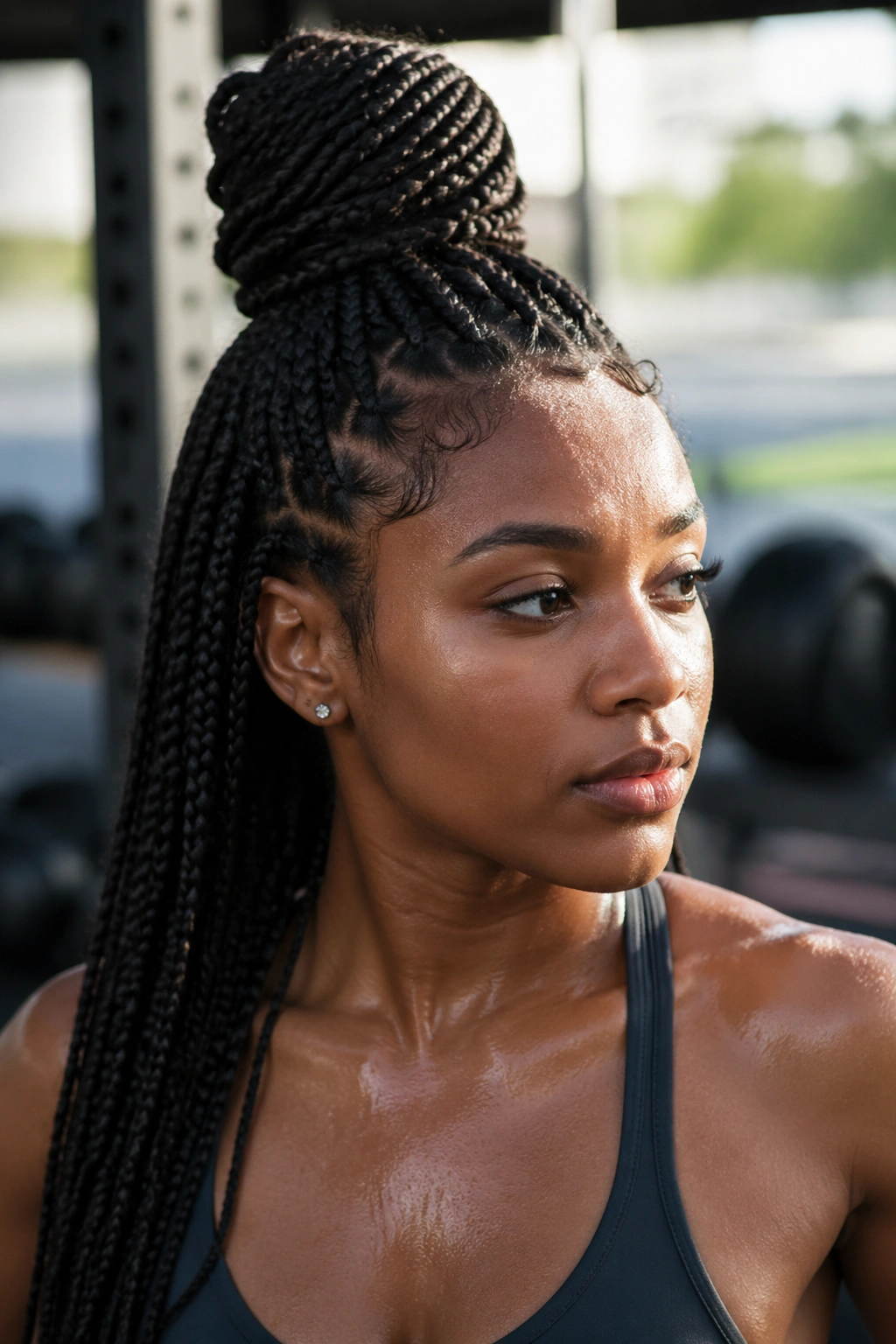
Half-up high-bun box braids are one of the easiest ways to squeeze extra life out of a set. The bun takes some weight off the ends and off the nape, which means less rubbing and less frizz where wear usually shows first. It also gives you a clean look on days when the roots feel a little sleepy.
The trick is not to haul the bun up too tight. A tight topknot looks neat for five minutes and then starts fighting your scalp. Loose enough to breathe, firm enough to stay put—that’s the balance.
I like this style for people who work out or wear their braids in heat. You can switch between half-up and all-down without changing the whole set. That kind of flexibility is what keeps a braid install useful for two months instead of just photogenic for two weeks.
13. Goddess-End Box Braids
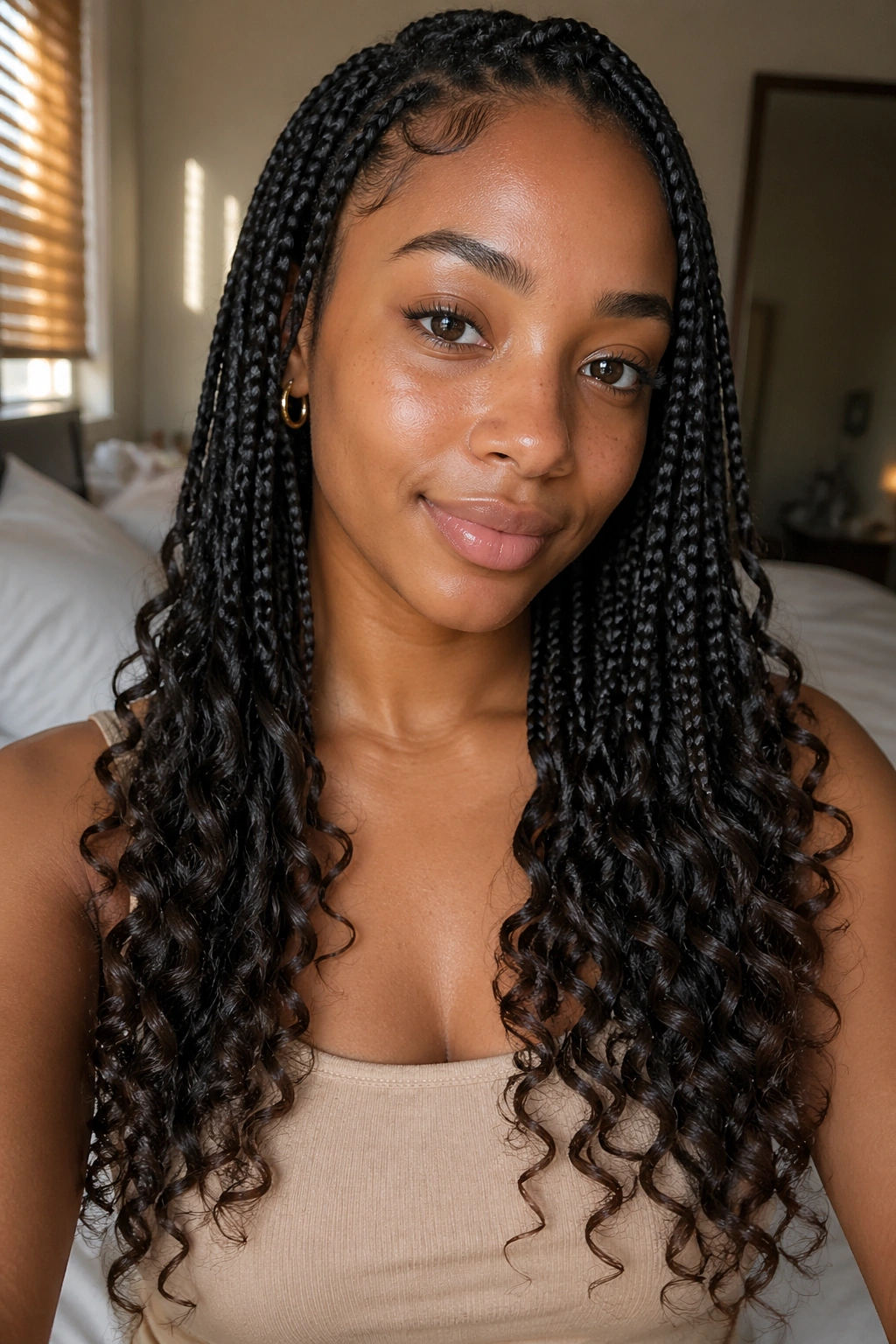
Do curly ends make box braids harder to wear for two months? Only if the curls are too long, too loose, or left to dry in a sad little tangle. Goddess-end box braids can hold up well when the curls are concentrated near the last few inches and refreshed with care.
The loose ends soften the style and make the braid set look intentional as it grows. There’s no hard stop at the bottom. Instead, the braid melts into the curl, which hides a bit of roughness when the style gets older.
A small flexi rod set at the ends can rescue the look without redoing the whole head. That’s a nice trick to know. It keeps the style from drifting into “messy for the sake of being messy,” which is a common problem with curly-ended braids.
14. Curved-Part Box Braids
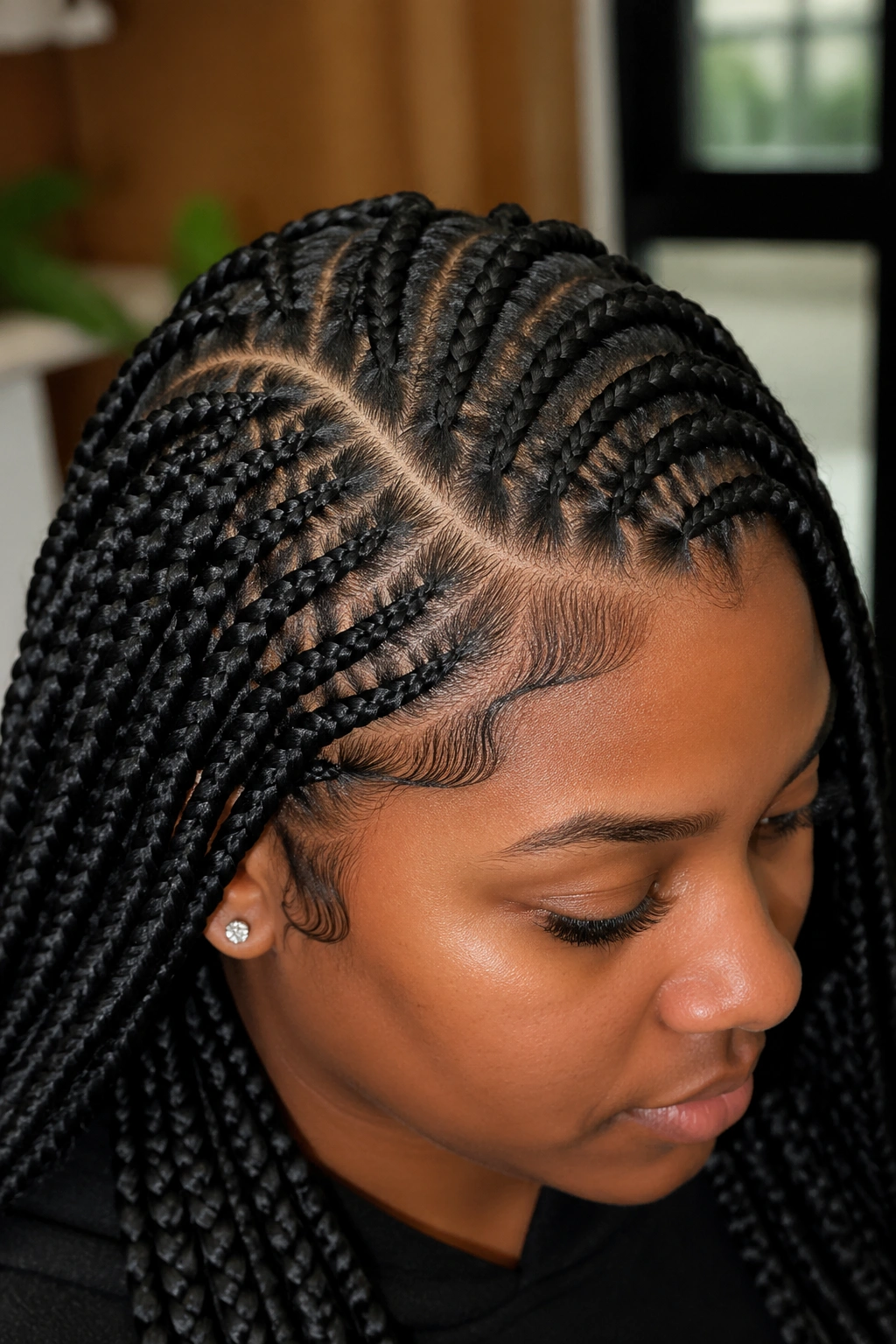
Curved-part box braids feel a little more styled than straight rows, and that matters more than people think. A curved part near the crown gives the eye something soft to follow, so when the roots grow out, the style still reads as deliberate. It doesn’t go flat as fast as a rigid grid.
This is one of those styles that benefits from a braider with a steady hand. The curve has to look clean from the start. If it’s wobbly, the whole thing looks accidental. If it’s smooth, it keeps its shape in a way that helps the braids last visually, even when they’re not brand-new.
I’d choose curved parts for anyone who wants a little movement without adding extra bulk. It’s quiet detail, but quiet detail is often what keeps a style wearable.
15. Feed-In Box Braids
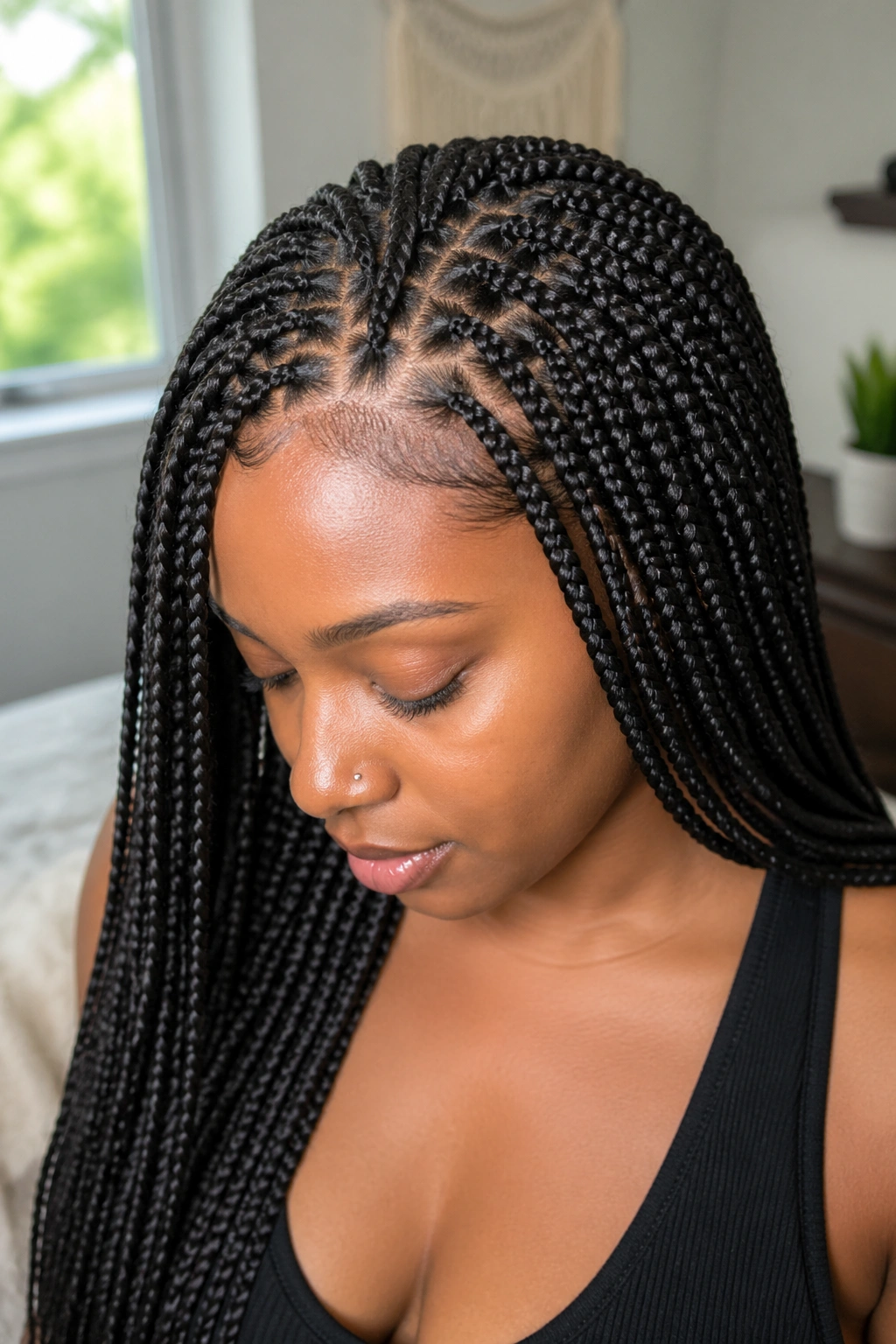
Feed-in box braids start slimmer at the base and build gradually, which is exactly why they wear so well over time. The root sits flatter, and that flatter base keeps the entire set from feeling bulky once your own hair starts growing in. It’s a cleaner look from week one to week eight.
Unlike a braid that begins thick and stays thick, feed-ins give the scalp room to breathe. That matters if you like to cleanse your scalp or if your hair is dense and tends to puff up quickly. The gradual build also makes the style easier to pin, wrap, or pull into low styles.
If you want longevity without a heavy crown, this is a strong option. The style looks refined when fresh, and it doesn’t lose that shape as quickly as a bunch of thick roots can.
16. Ombre Box Braids
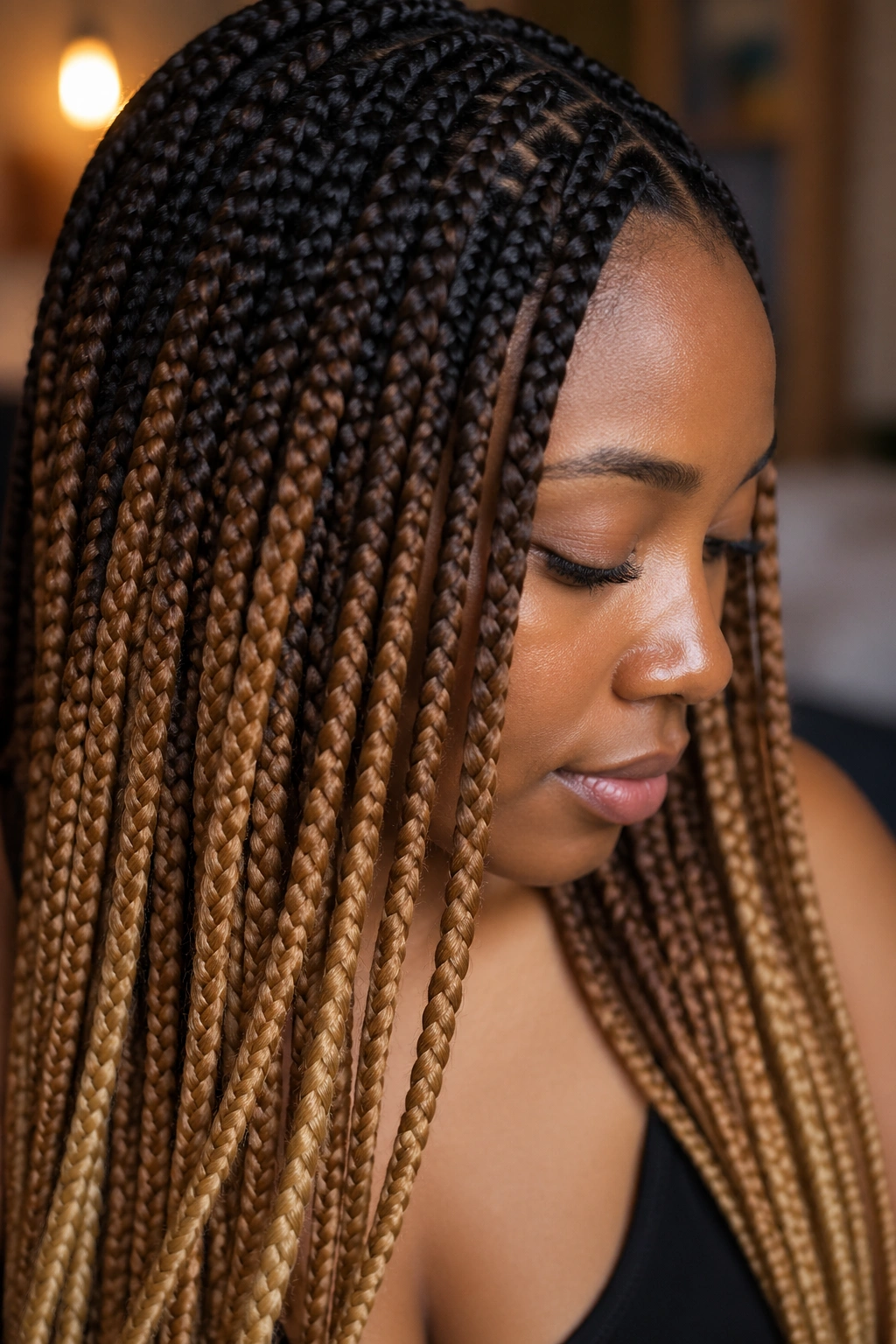
Ombre box braids age well because the color shift distracts the eye from new growth. When the roots and ends are different tones, a little frizz doesn’t look like a mistake; it looks like part of the design. That’s one reason colored braids can stay attractive longer than plain one-tone sets.
The best ombre transitions are gradual. A hard jump from dark to bright can look great on day one, but a softer fade tends to age better. Think black into brown, brown into honey, or deep burgundy into a lighter red. Those blends stay readable even when the braid starts to relax.
I’d avoid overly pale ends unless you’re willing to care for them. Light synthetic hair shows wear fast. Darker ends are a lot more forgiving.
17. Beaded Box Braids
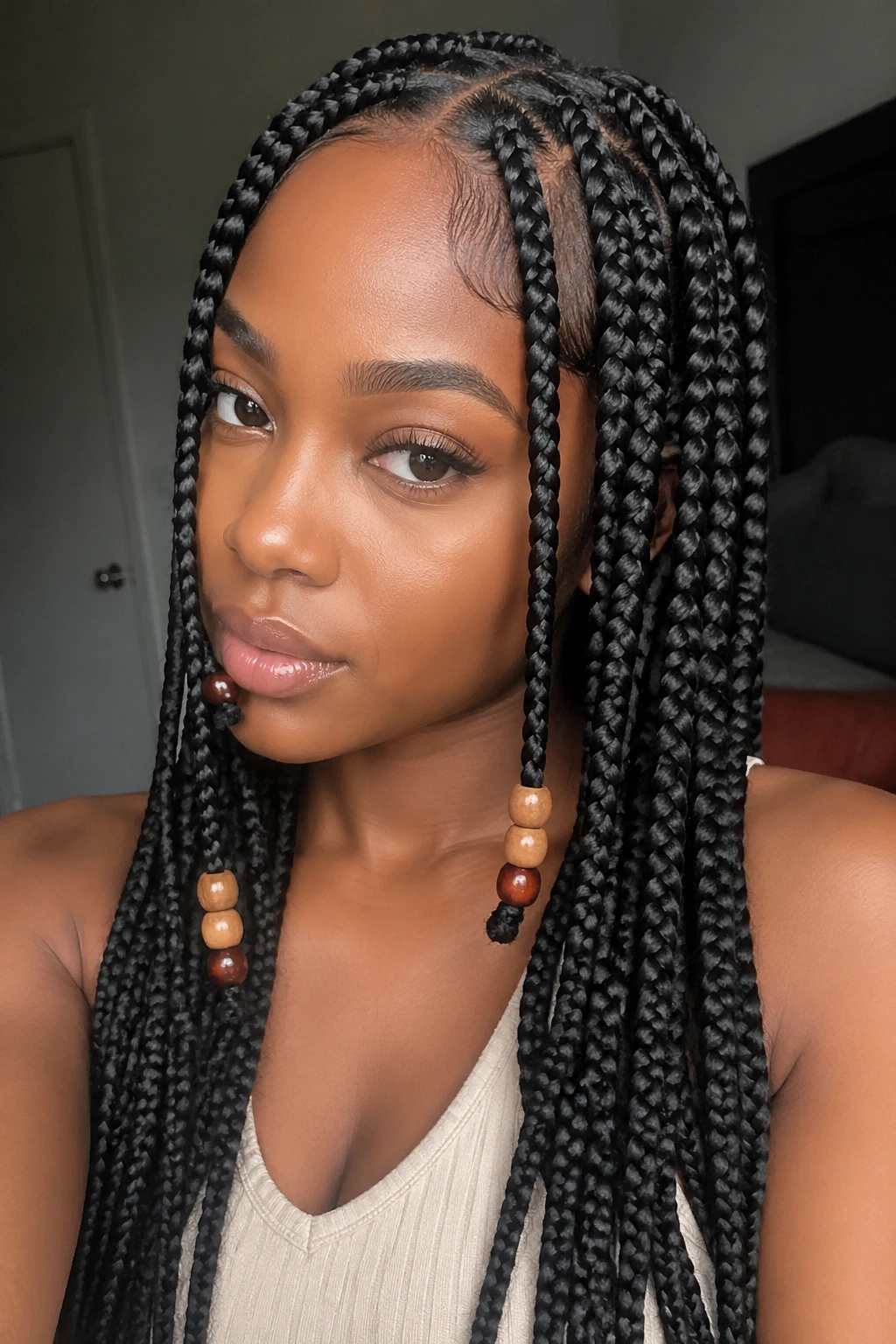
Beads are not just decoration. On box braids that need to hold shape for two months, they can act like little anchors at the ends, giving the style a finished look even when the braid itself has loosened a bit. They also create a rhythm in the hair, which keeps everything from looking too plain as it grows out.
The key is restraint. Three or four beads on the front pieces can look sharp. Loading every braid with heavy beads can make the style swing too much and pull at the nape. That’s when a cute idea turns into a sore neck.
I like beads most on shoulder-length or mid-back braids. The weight feels manageable there, and the sound of the beads moving is part of the charm. Too long, and they can start snagging on clothes. Too many, and they become the problem instead of the accent.
18. Cuffed Box Braids
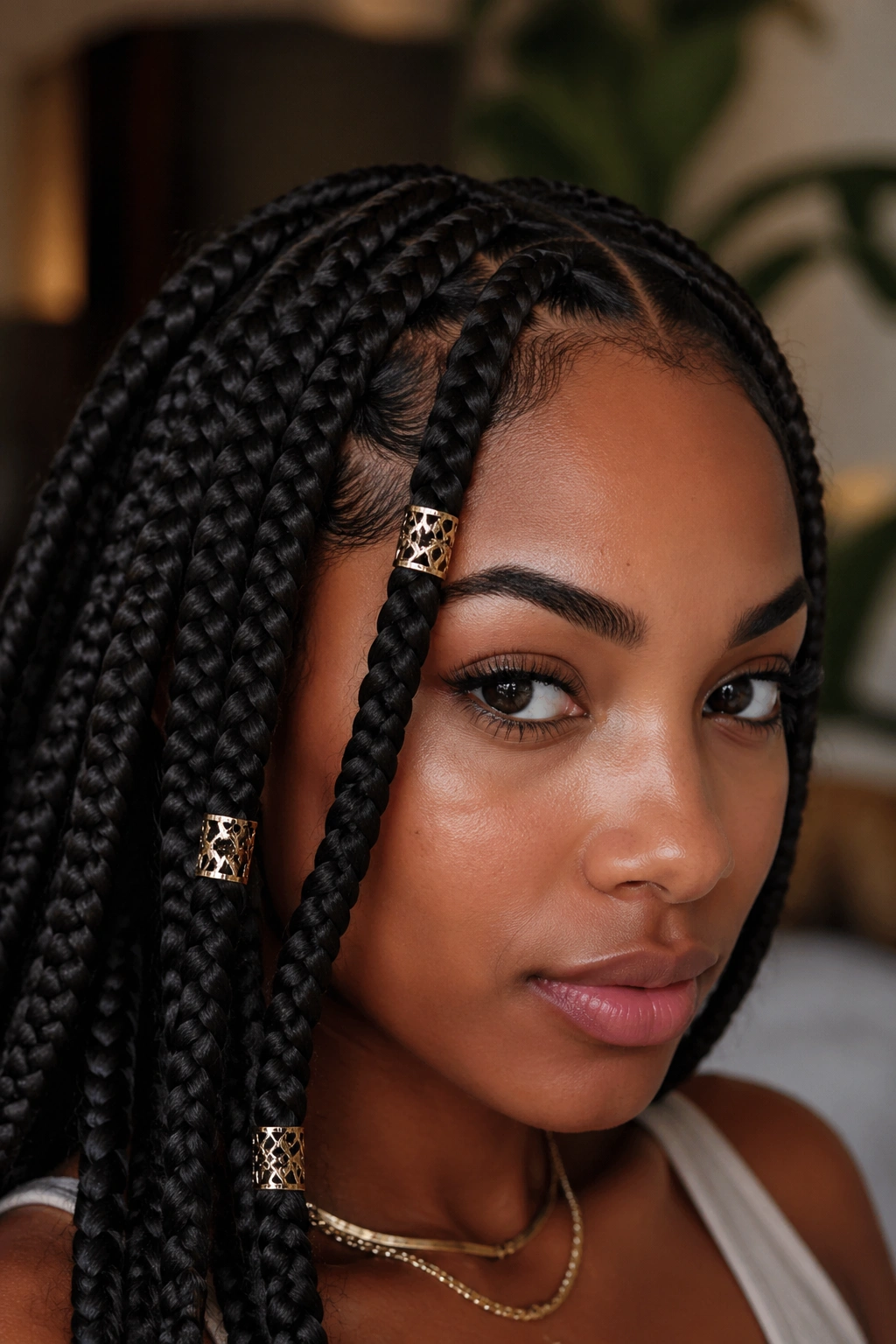
Metal cuffs give box braids the same kind of finish beads do, but with less weight. That sounds minor until you’ve spent a month living with braids that feel heavier than you expected. Cuffs are tidier. They also let you place the shine exactly where you want it—usually around the face or along a few front pieces.
Where They Work Best
Cuffs are strongest on medium or small braids. Jumbo braids can look tipped over if the cuffs are too large, and tiny braids can look overloaded if you overdo the metal.
A few well-placed cuffs can make a fresh install feel styled without requiring extra manipulation. That helps when you’re trying to stretch the life of the braid set instead of fixing it every few days.
Rule I stick to: if the cuff starts sliding, there are too many of them on that braid.
19. Jumbo Box Braids
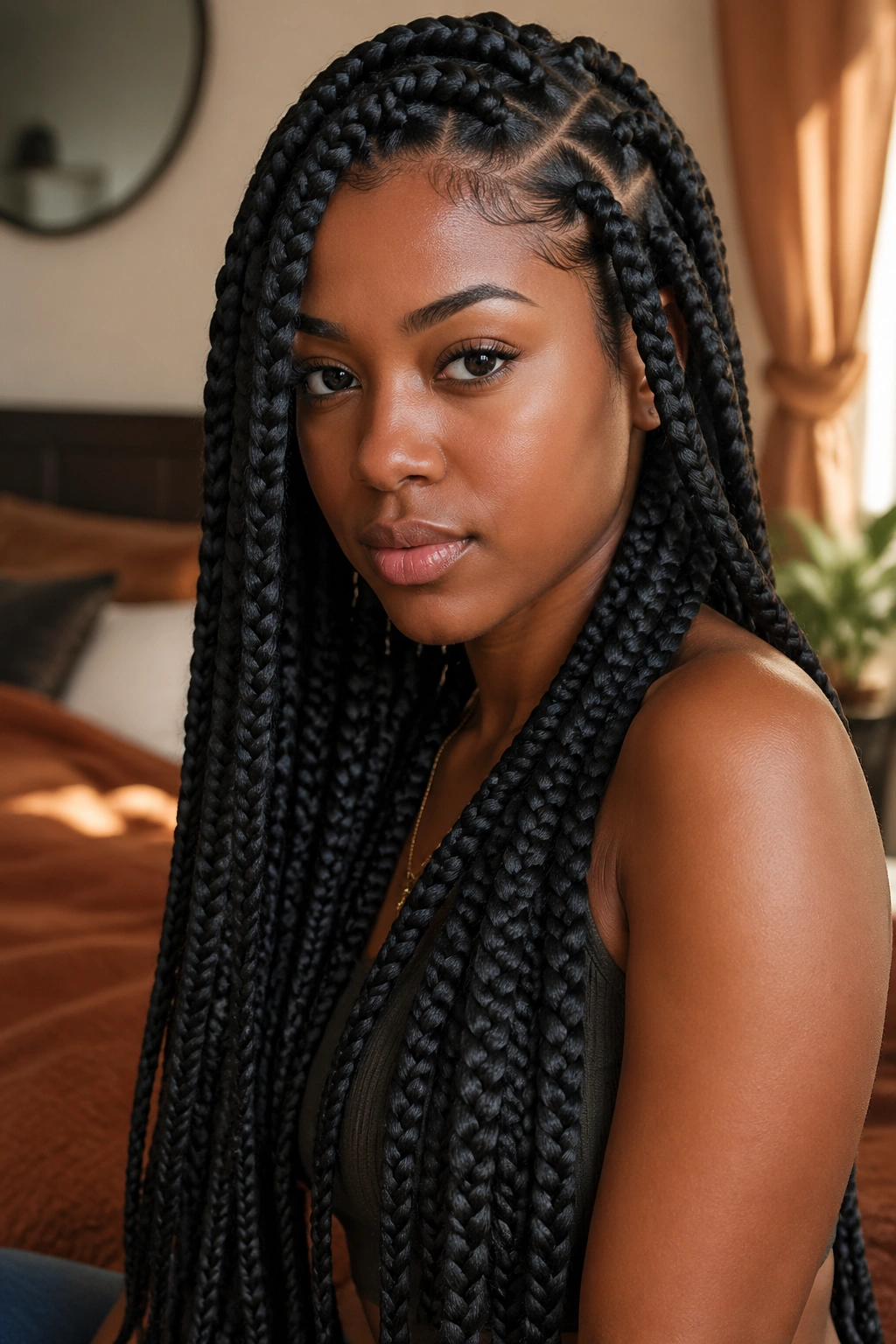
Jumbo box braids are fast, bold, and a little unforgiving. They can last two months, but I wouldn’t call them the easiest style to stretch that long. The weight at the roots is the issue. If the sections are too heavy, the style can start leaning or puffing before you’re ready for it.
Still, a clean medium-jumbo set has its place. It gives you a strong shape, fewer individual pieces to maintain, and a quick morning routine. If you like a head full of presence and don’t mind refreshing the front every so often, jumbo braids can make the cut.
The honest tradeoff is wear pattern. Jumbo braids show frizz faster. They also show breakage faster if they’re installed too tightly. So the style can last, but it has to be done with discipline.
20. Micro Box Braids
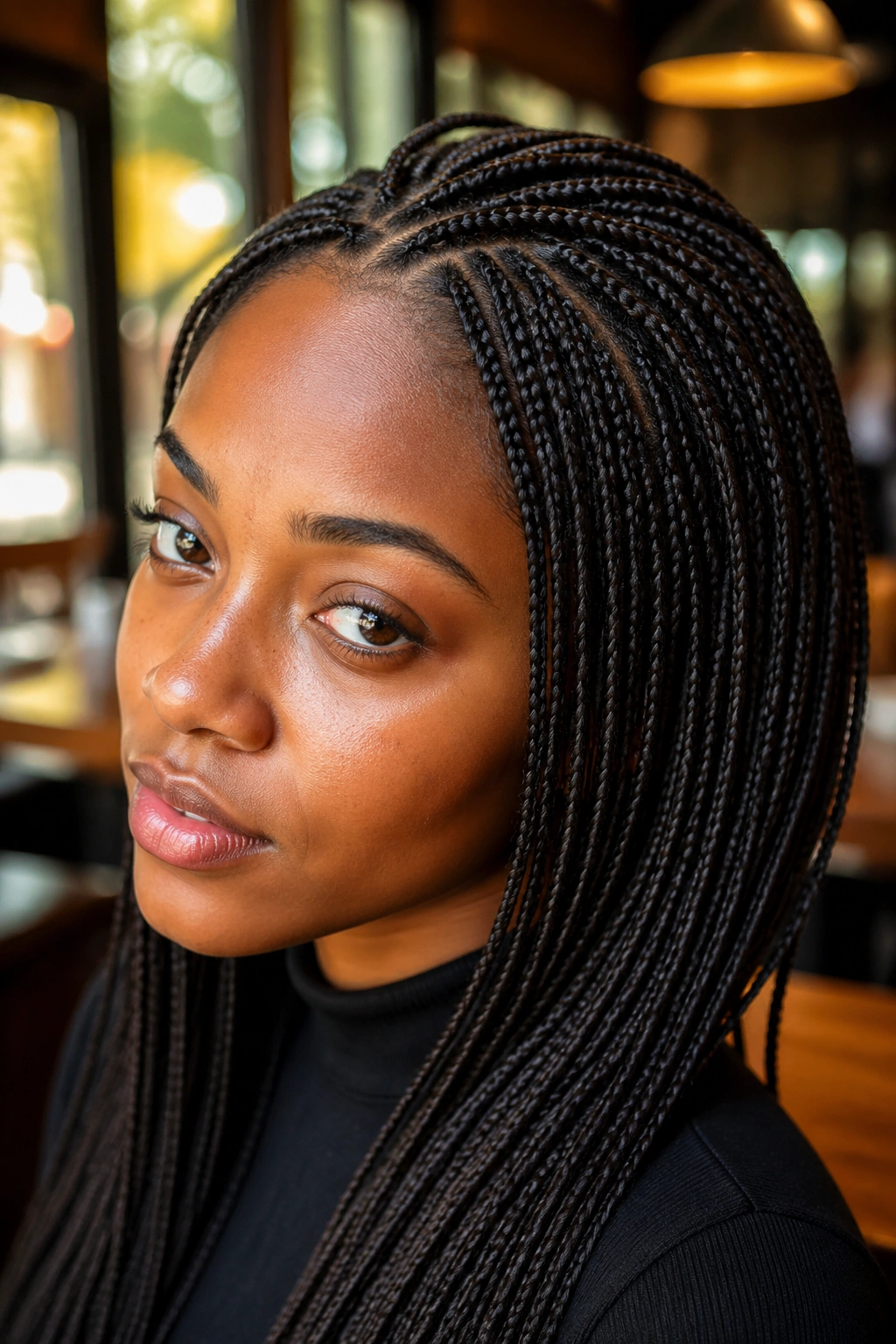
Micro box braids are the opposite of jumbo in almost every way. They take longer to install, but they can wear beautifully because each braid carries less bulk and moves with more grace. That smaller footprint makes them one of the strongest bets for a full two months, especially if you like styles that stay close to the head.
They also age slowly. A little root growth doesn’t change the shape much, and the braids don’t balloon out as fast because each section is so compact. You do have to stay on top of buildup, though. Tiny braids can hide product better than larger ones, which is not always a good thing.
If you like a style that feels light and lasts, this is a serious contender. It asks for patience on install day. That’s the price.
21. Tapered Box Braids
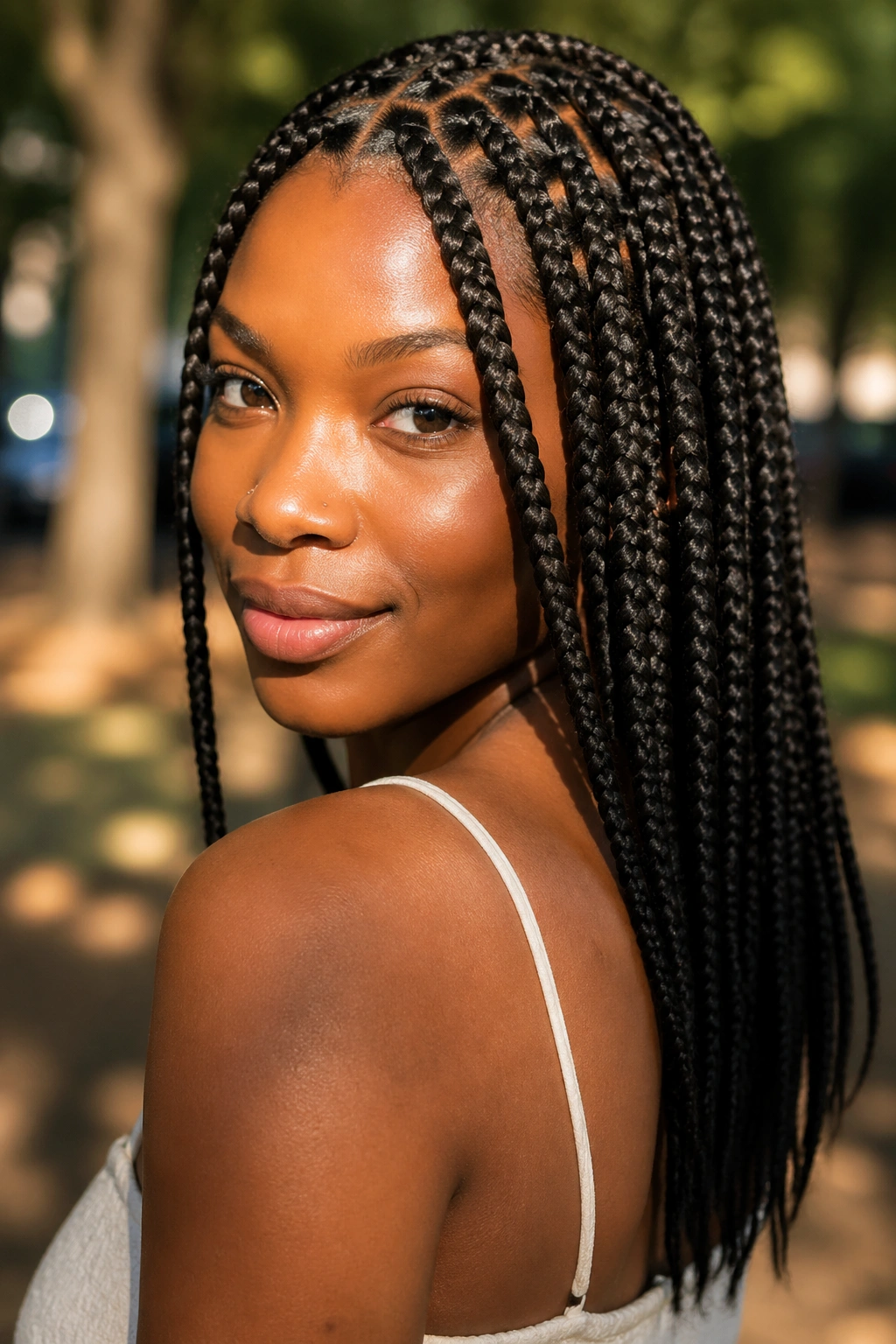
Tapered box braids keep more length in the back and trim some of the bulk around the sides and front. That shape helps the style last because the face frame stays cleaner while the back absorbs the day-to-day wear. It’s one of my favorite shapes for people who wear glasses or tuck their hair behind their ears often.
The taper also makes the whole set easier to live with. There’s less hair sitting right where your hands keep finding it, which means less touching and fewer stray frizz patterns. That can make a bigger difference than people expect.
This is a good choice if you want the braids to feel balanced rather than dramatic. The silhouette stays tidy, and tidy is what lasts.
22. Colored-Accent Box Braids
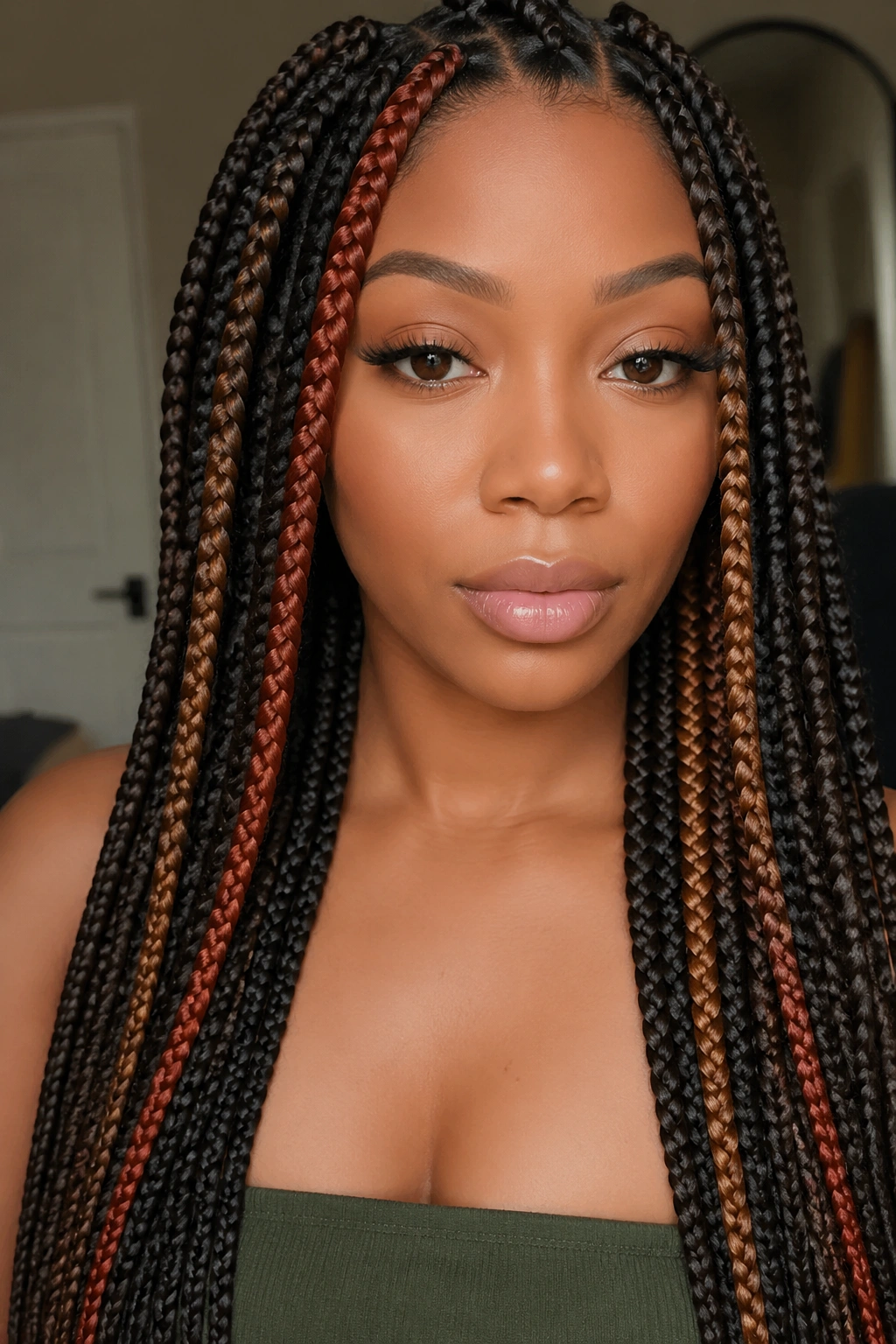
Colored-accent box braids work because they give the eye a break from uniformity. A few braids in copper, honey, burgundy, or gold around the face can make the entire style look fresher, even when the roots have started to show a little life. You don’t need a full-color head to get the effect.
How to Place the Color
Use the accent braids where they’ll be seen first: the front corners, the part line, or one side of the face. Ten to twenty accent braids are usually enough. Any more, and the style stops feeling like an accent and starts feeling busy.
The best part is that color placement can disguise wear. If the front is a different tone, your eye notices the pattern before it notices regrowth.
My preference: keep the rest of the braids neutral and let the accent pieces do the talking.
23. Fulani-Inspired Box Braids
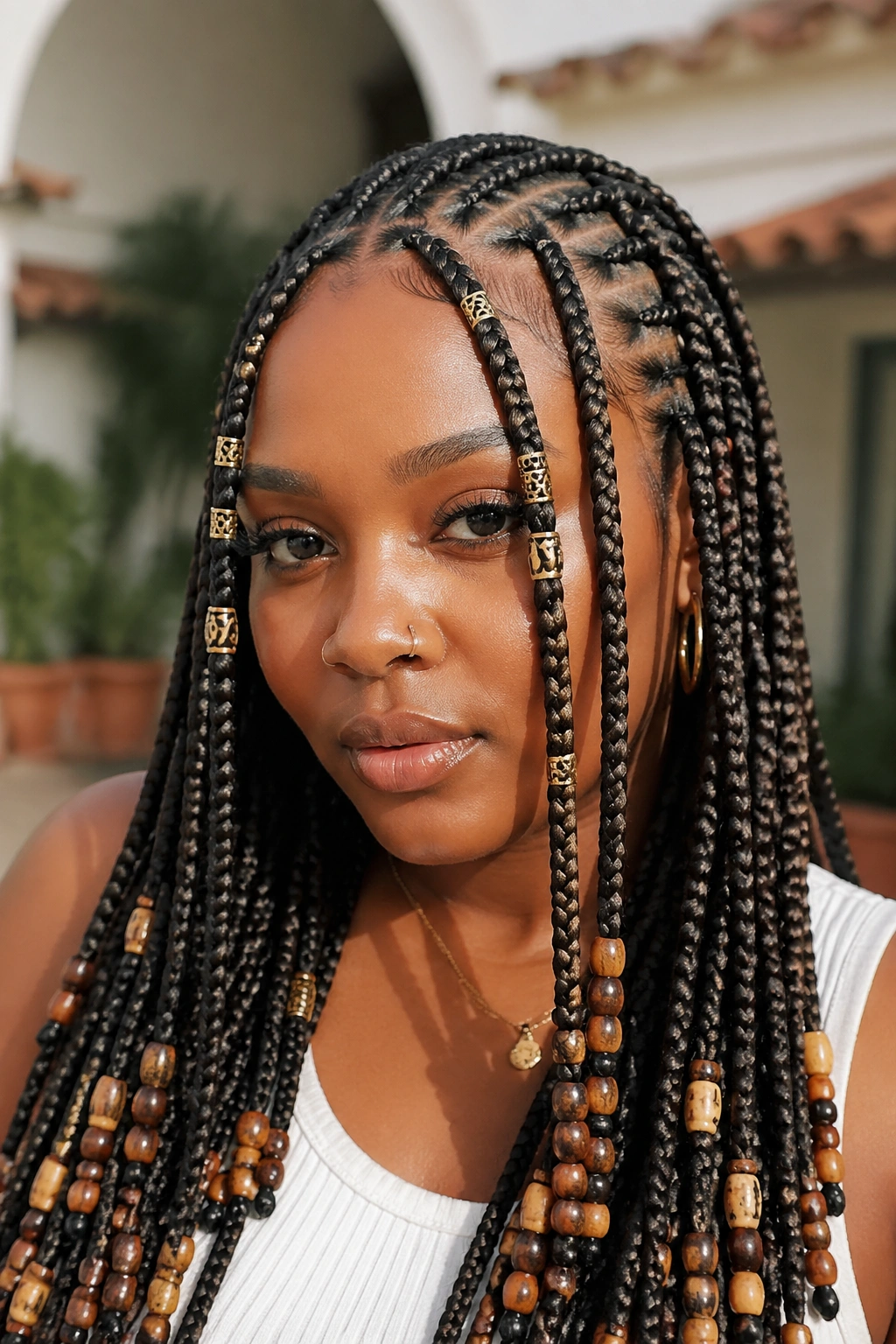
Fulani-inspired box braids have staying power because the front design does a lot of the visual work. The center braid or side rows, the hanging lengths, and the optional beads all create shape before the loose braids even matter. That makes the style feel styled for longer.
What to Ask For
- Clean front braids that sit close to the scalp.
- Medium hanging braids, not oversized ones.
- Beads or cuffs only where they help the shape.
- Enough space at the hairline so the style doesn’t feel tight.
The front needs to stay neat, since that’s what people notice first. If the base is too tight, the whole look ages badly, no matter how good the pattern is. Good Fulani-inspired braids should feel structured, not strained.
24. Zigzag-Part Box Braids
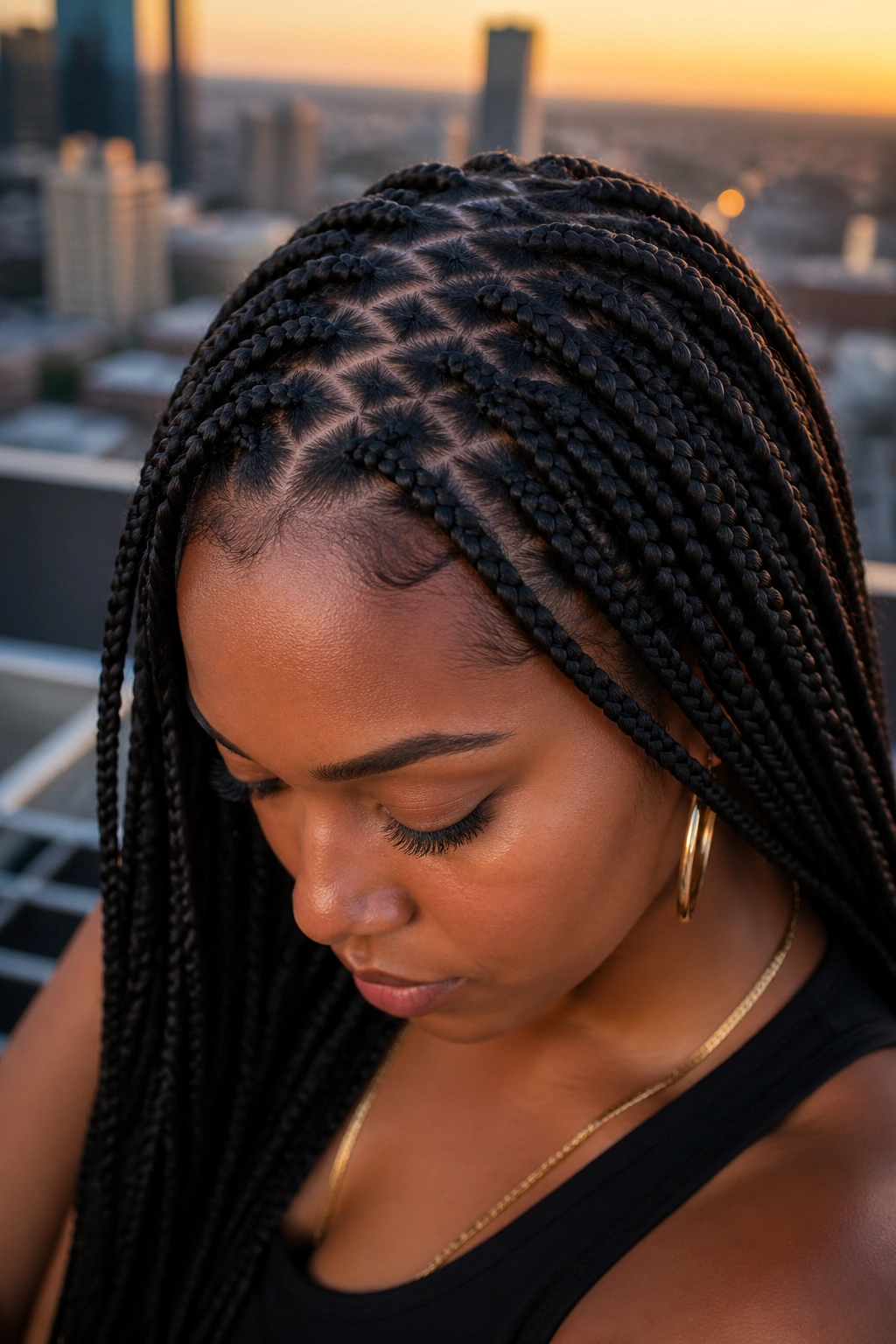
Why do zigzag-part box braids hold attention longer than straight rows? Because the pattern itself keeps the style from looking flat. Even when the roots grow out a little, the zigzag still gives the scalp a sense of design, which helps the style look intentional instead of overgrown.
This is a smart choice if your hairline tends to show the same old part line every time. A zigzag breaks that habit. It also lets the front look fresh a little longer because the eye reads the shape before it reads the exact root pattern.
The downside is simple: the parts have to be clean. A sloppy zigzag looks messy fast. If you want this style to last, the parting has to be precise from the start.
25. Braided Ponytail Box Braids
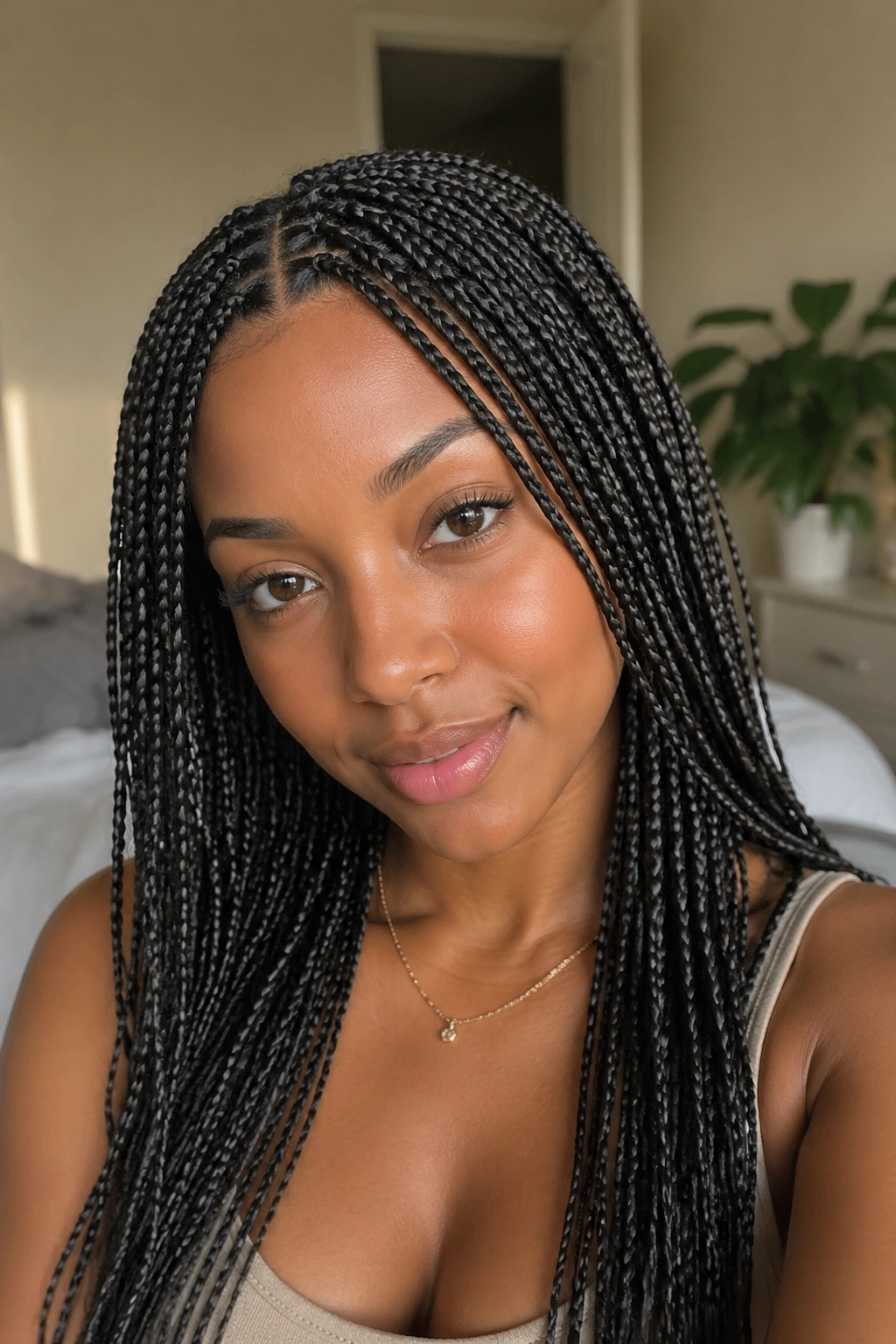
Braided ponytail box braids keep the hair gathered, and that means less wear on the lengths. When braids aren’t rubbing against your shoulders all day, the ends stay neater and the style keeps its shape longer. That’s one reason ponytail versions are so useful for long stretches.
The trick is not to tie the ponytail in the same spot every day. Move it lower sometimes. Move it slightly to the side sometimes. Repeated tension in one place will flatten the roots and stress the same section over and over.
This style is especially good for busy weeks. You get a clean, pulled-together look without touching every braid. That alone can add life to the set.
26. Curled-End Bob Box Braids
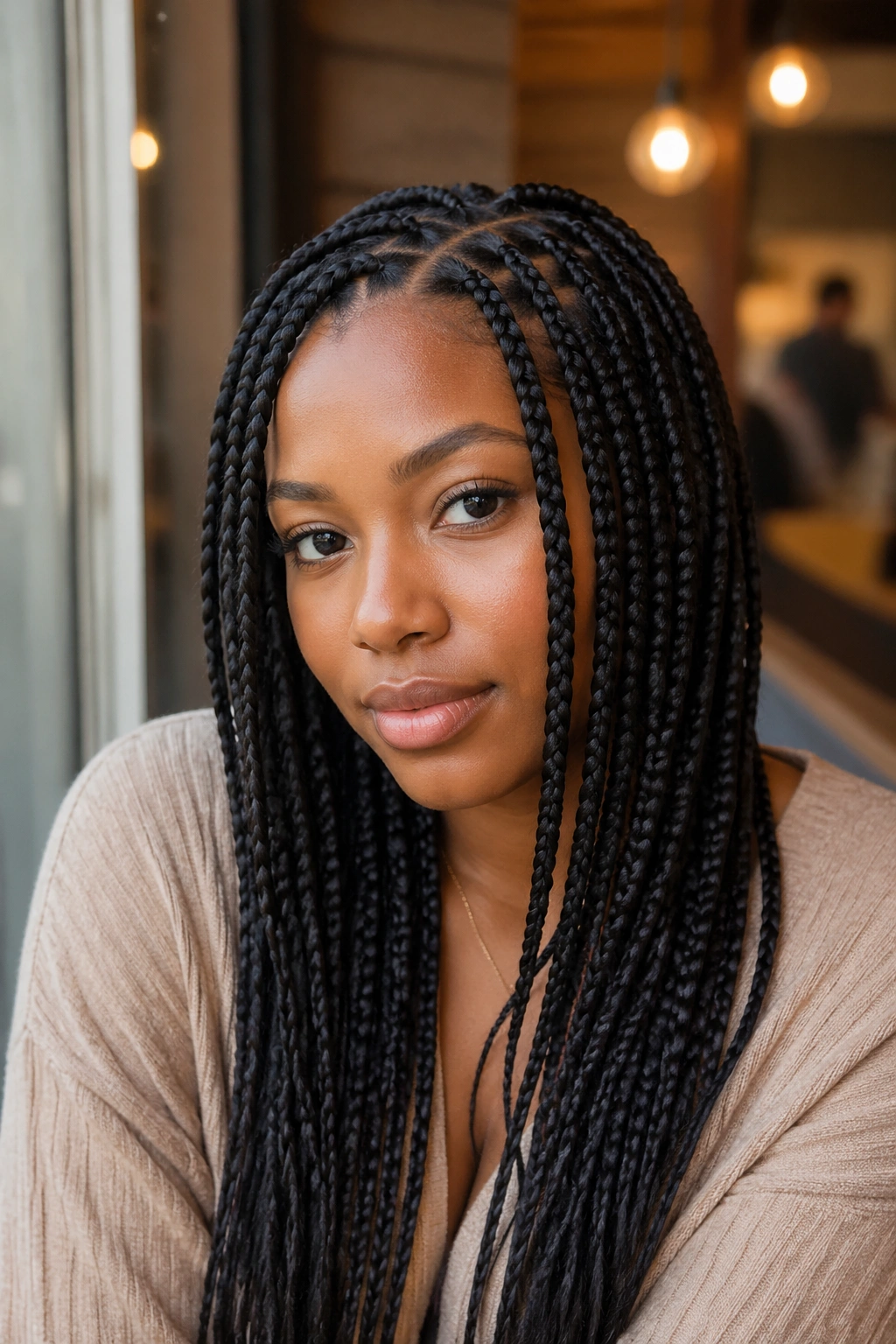
A bob with curled ends feels polished in a way that straight ends sometimes don’t. The curl softens the line of the style, so when the braids start growing out, the shape still looks finished. It’s a small detail, but small details are what keep short styles wearable for two months.
The bob length also helps. Shorter braids don’t drag against coats or chair backs, and that means less frizz at the bottom. If the curls are wrapped at night and refreshed with a little foam, they stay cleaner than people expect.
I like this style on days when you want a tidy look with a little personality. It doesn’t need much. That’s the charm.
27. Long Straight-Back Box Braids
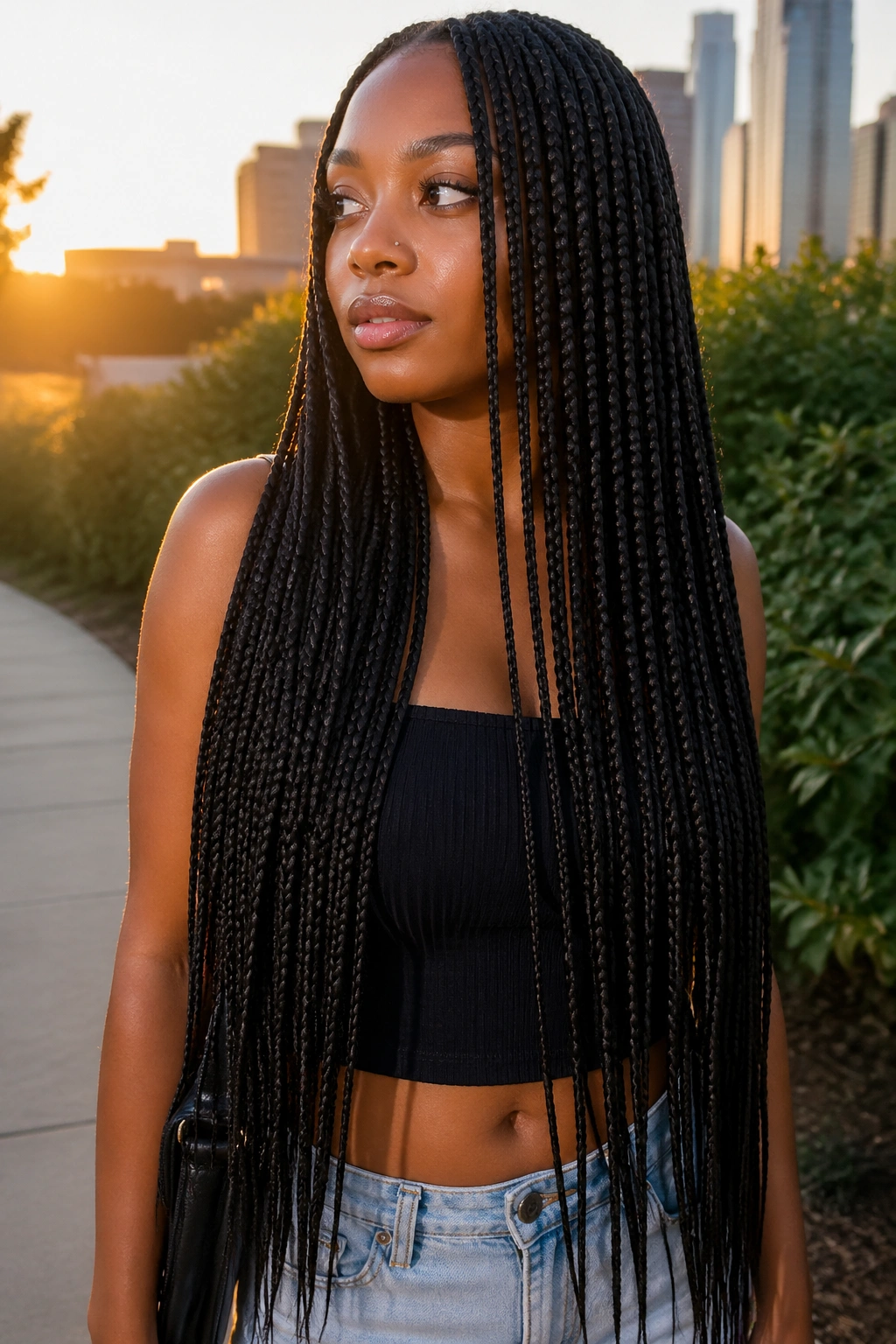
Long straight-back box braids are a practical choice when you want a style that is easy to clean, easy to part, and easy to gather up. The straight-back rows keep the front organized, which helps the style look neat even after several weeks. The layout does a lot of the work for you.
Why the Shape Helps
The rows make the scalp easy to access for a light cleanse, and the straight pattern gives the hair a sense of order that survives a little grow-out. It’s also one of the simplest styles to pin up when you’re trying not to manipulate the whole head.
- Straight rows keep the front looking tidy.
- Long length gives you styling options.
- Easy part lines help with scalp care.
- Low daily handling keeps frizz down.
Best use: if you want something functional first and decorative second, this is a strong pick.
28. Face-Framing Shoulder Box Braids
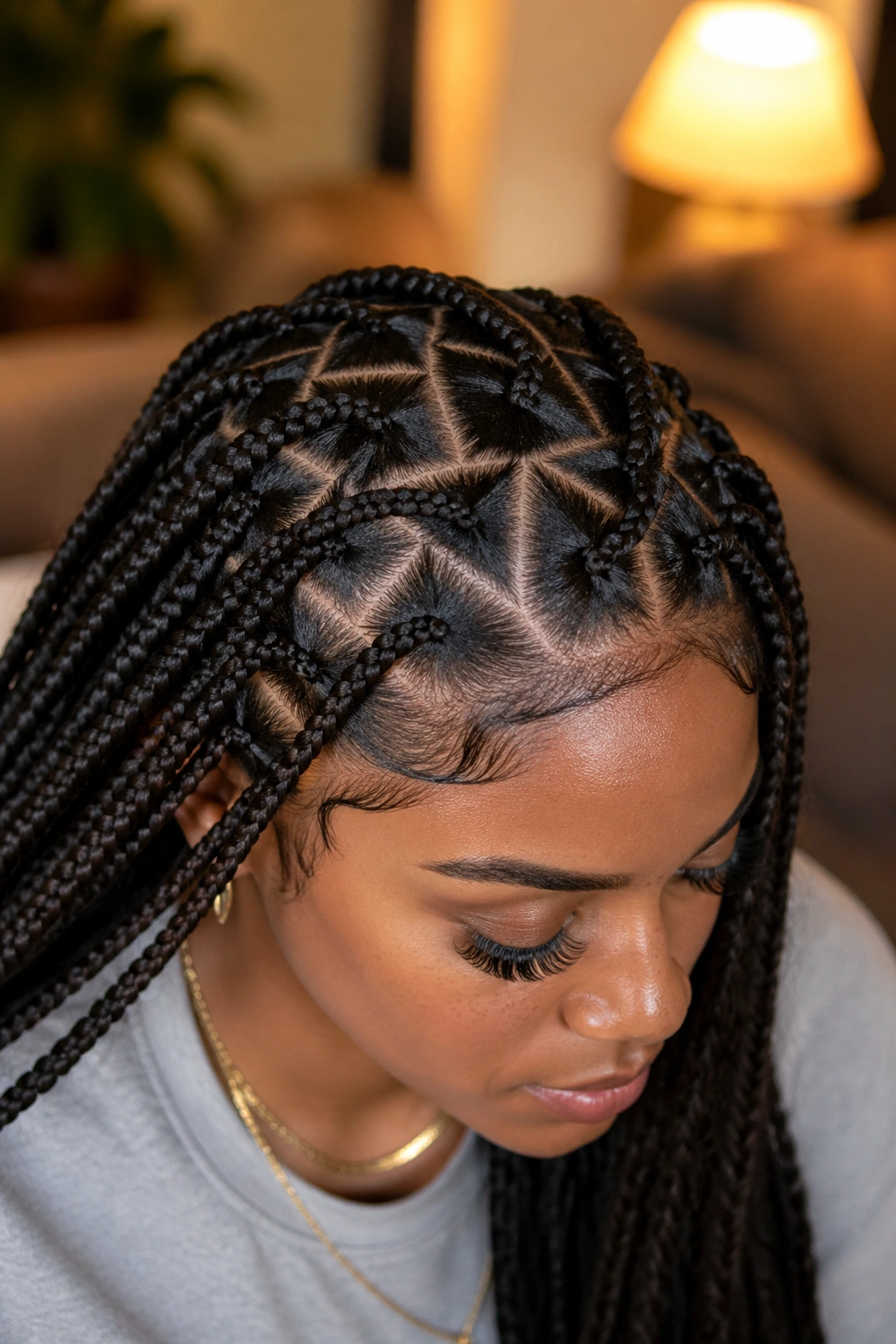
Face-framing shoulder box braids are one of the smartest styles for long wear. A few shorter pieces around the face soften the outline and make the grow-out look deliberate instead of awkward. That matters when you hit week six and the roots stop pretending to be fresh.
The shoulder length keeps the style manageable, while the face-framing pieces add shape where people actually look. It’s a neat bit of visual trickery, honestly. The braid set feels styled even when it’s been living on your head for a while.
I’d especially recommend this if you like wearing your hair down. The front pieces keep the whole style from going boxy. That little adjustment does a lot.
29. Tribal-Inspired Box Braids

Do tribal-inspired box braids last because of the braids themselves, or because the pattern does the heavy lifting? Both, but mostly the pattern. The front rows, side details, and any added beads create a design that still feels complete after the hair has settled a bit.
That front structure makes the style forgiving. When the length grows out, the eye stays on the braided pattern near the scalp instead of every little change in the ends. It’s a useful trick if you want a style that keeps its personality.
The one thing I’d insist on is a gentle install. Tribal-inspired braids should look strong, not tight. If the front is pulling, the design loses its charm fast.
30. Layered Mid-Back Box Braids
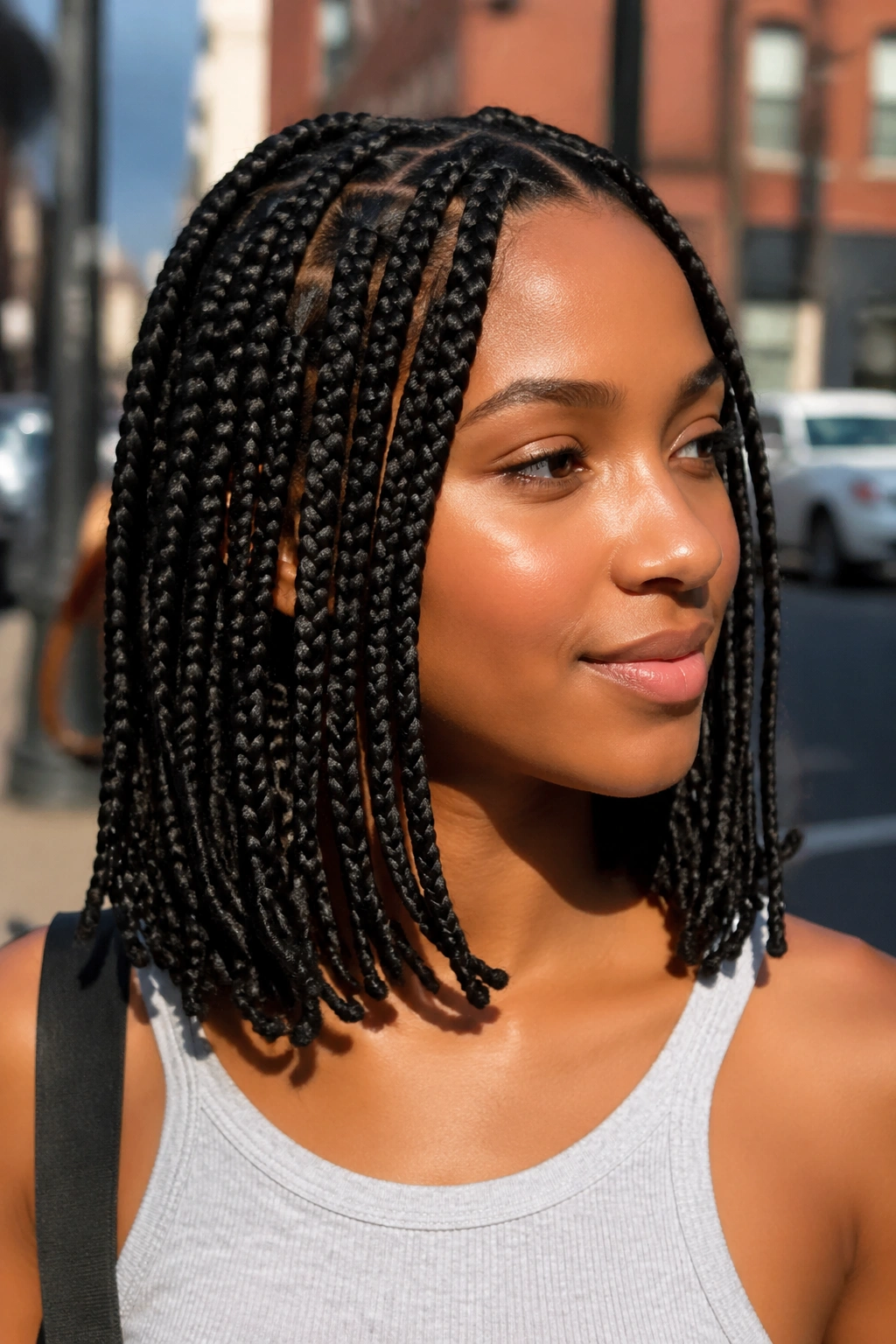
Mid-back length is a sweet spot for a lot of people. It gives you enough braid to pull back, braid up, or wear loose, but it doesn’t carry the same weight or snagging risk as waist-length styles. Add layers, and the whole set stays lighter around the face and shoulders.
That lighter feel matters more than it sounds. Braids that drag get handled more, and handling creates frizz. Layered mid-back braids reduce that urge because the shape already feels finished. You’re less likely to keep adjusting them.
If you want a style that still looks like a style on week seven, this is one of the better choices. It ages in a controlled way. Controlled is good.
31. Faux-Loc Blend Box Braids
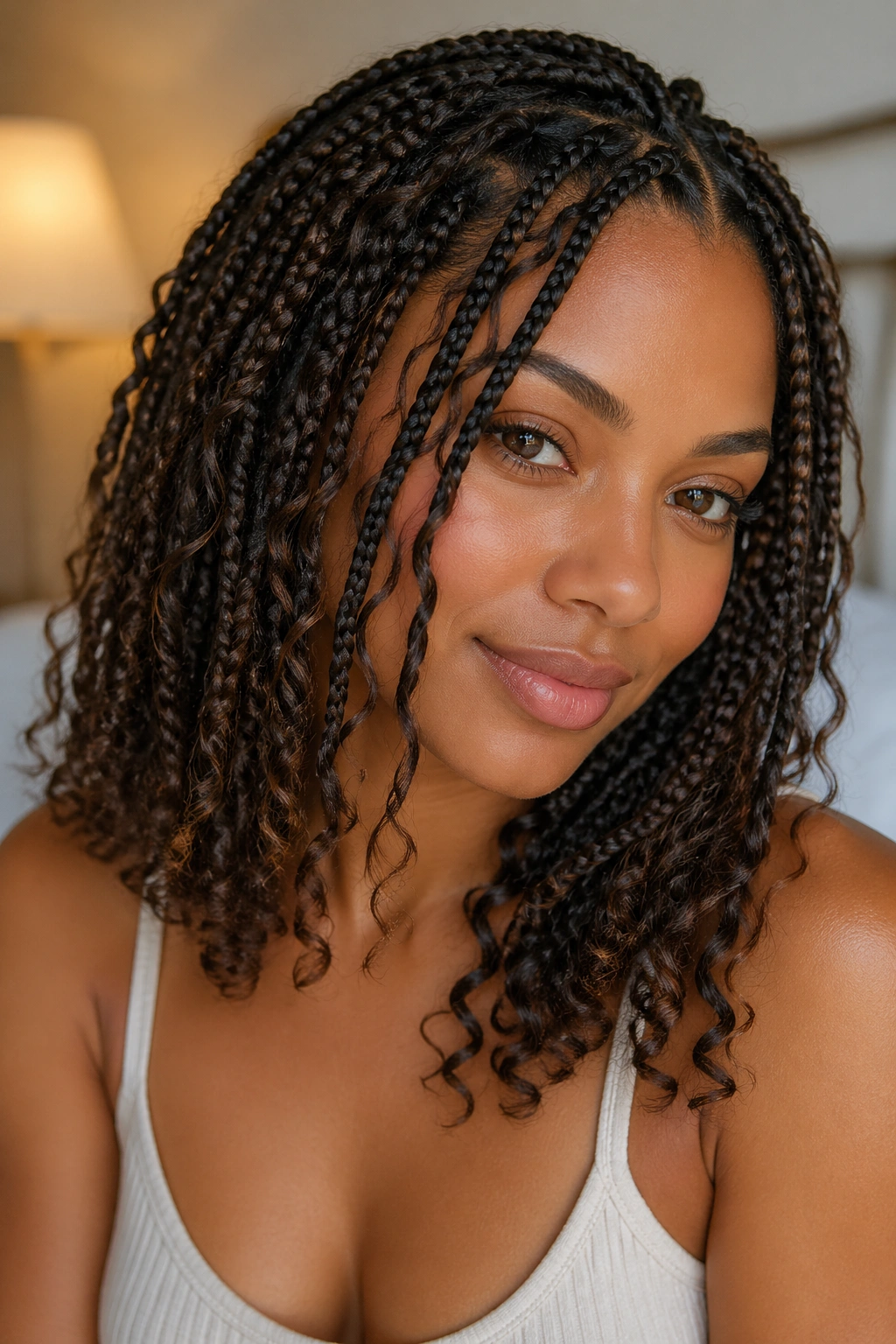
Faux-loc blend box braids give you a thicker, more textured look without committing to full loc styling. The wrapped sections hide frizz well, especially around the perimeter, which makes the style age more softly than plain braids sometimes do.
The texture is doing the work here. Because the surface isn’t perfectly smooth, a little wear blends into the design instead of standing out. That makes it easier to make it through two months without the whole set looking ragged.
This style does ask for a careful balance. Too much wrap, and the head gets heavy. Too little, and the effect disappears. The good version sits right in the middle, where the braid and wrap can share the stage.
32. Rope-Texture Box Braids
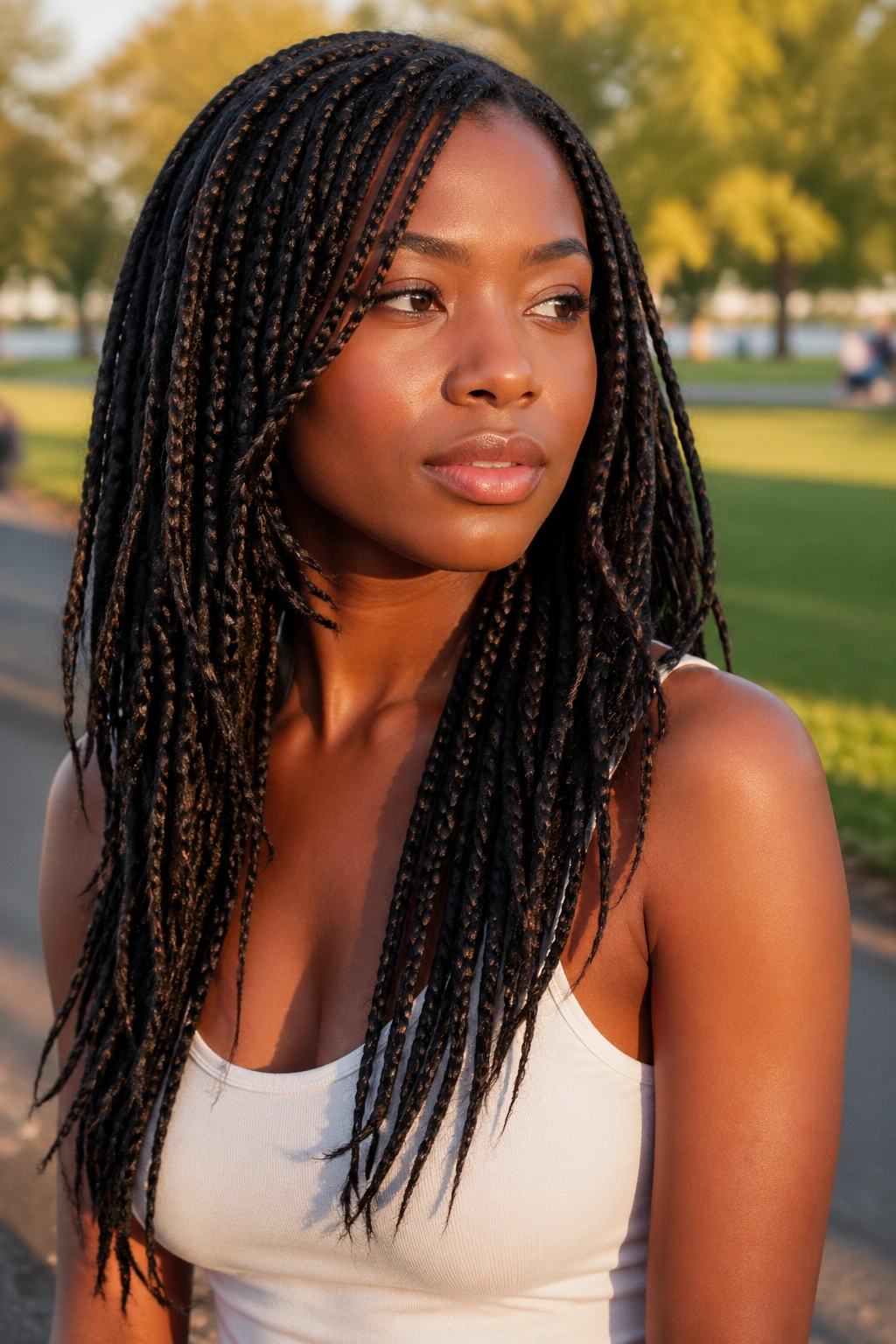
Rope-texture box braids work because the finish already has character. A bit of texture at the surface doesn’t feel like damage here; it feels like part of the style. That’s a nice thing when you’re aiming for two months and not looking to nurse every strand like glass.
The rope effect also helps the ends stay interesting longer. Smooth, shiny braids can start to look tired once they lose their polish. A textured braid can take a little wear and still look deliberate. The trick is to keep the ends sealed and not overload the hair with heavy cream or oil.
I’d call this a good option for anyone who likes a slightly earthy finish. It’s less glossy, more lived-in. And it wears that way on purpose.
33. Low-Tension Long-Wear Box Braids
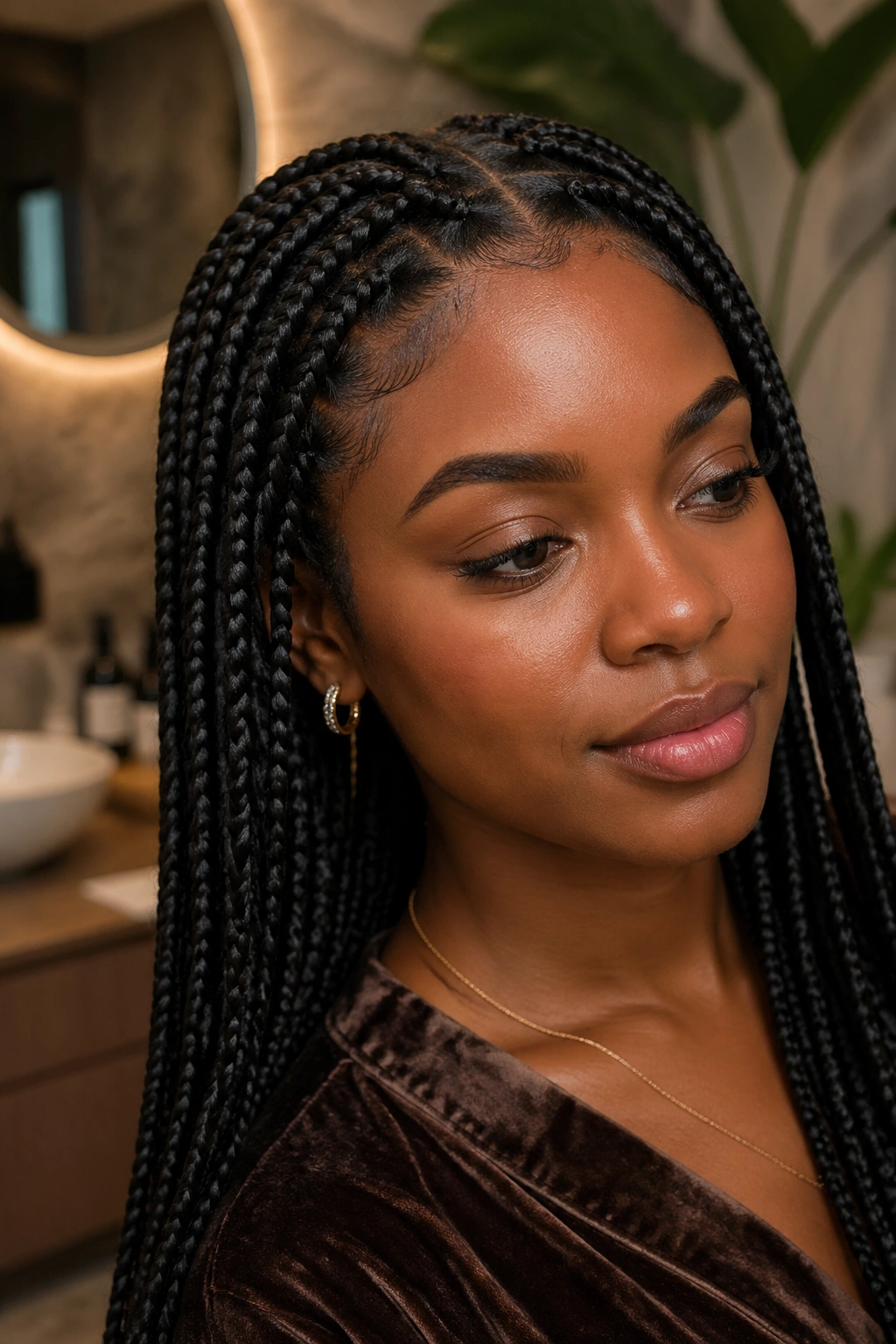
The most honest two-month braid set is often the least dramatic one. Low tension, medium sections, clean parts, and a length that doesn’t whip around your shoulders all day—those are the things that usually matter more than the fancy stuff. Not glamorous. Very smart.
If there’s one style principle I trust above the rest, it’s this: the hair should feel light before it looks fancy. A braid set that starts with too much pull rarely becomes a happy story later. The scalp remembers. Always.
Low-tension long-wear box braids are the version I’d point to when someone wants a style that stays in place, grows out gently, and still feels wearable near the end of the second month. That’s the real win.