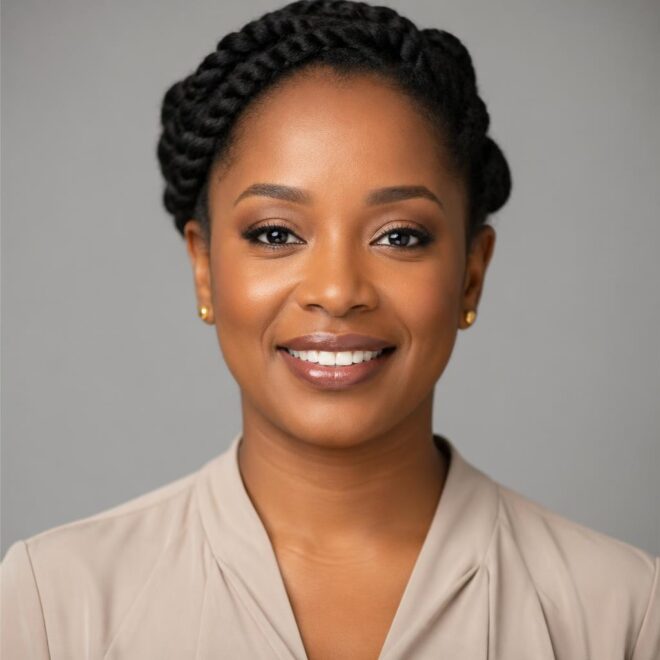


A quinceañera braid has one job: stay elegant from the first photo to the last song.
That sounds simple until you factor in curls, tiaras, veils, hugs, humidity, flash photography, and a dress that already has a lot going on. Braids solve a messy set of problems at once. They give the hair structure, keep the shape of the style intact, and let the face stay open enough to show off makeup, earrings, and the expression that matters most on a day like this.
I’ve always thought braids make the strongest quinceañera hairstyles because they can lean formal or soft without looking forced. A braid can feel regal, romantic, modern, or traditional, depending on where it sits and what you tuck into it. That flexibility matters in a Latina quinceañera look, where the hair has to hold its own next to satin, tulle, embroidery, and a room full of people who will absolutely notice if one side starts slipping.
And the best braid choices are the ones that still look good after the chapel, the photos, the food, and the dancing. That’s the real test.
1. Classic Crown Braid for a Quinceañera Dress
A crown braid is one of those styles that looks composed from every angle. It wraps around the head like a frame, so the hair stays off the face while still feeling soft enough for a celebration. If the dress has a lot of detail at the neckline, this braid keeps the eye moving upward instead of competing with the bodice.
Why It Flatters the Face
The shape matters here. A crown braid draws attention to the eyes and cheekbones, which is useful when the makeup is more formal and the accessories are already doing plenty. It also works well with medium to long hair, especially if there’s enough length to braid from temple to temple without a lot of loose ends poking out.
A stylist can make it look smooth and polished, or they can loosen it a touch so it feels more romantic. I prefer the second version for a quinceañera. The braid should look finished, not stiff.
- Best for dresses with open necklines or soft sleeves
- Works well with pearl pins tucked at one side
- Holds up nicely if the hair is prepped with mousse and a light texturizing spray
- Can be paired with loose curls at the back for more softness
Tip: Ask for the braid to be pinned with an X pattern at the back. It sounds small. It matters a lot.
2. Double Dutch Braids into a Low Bun
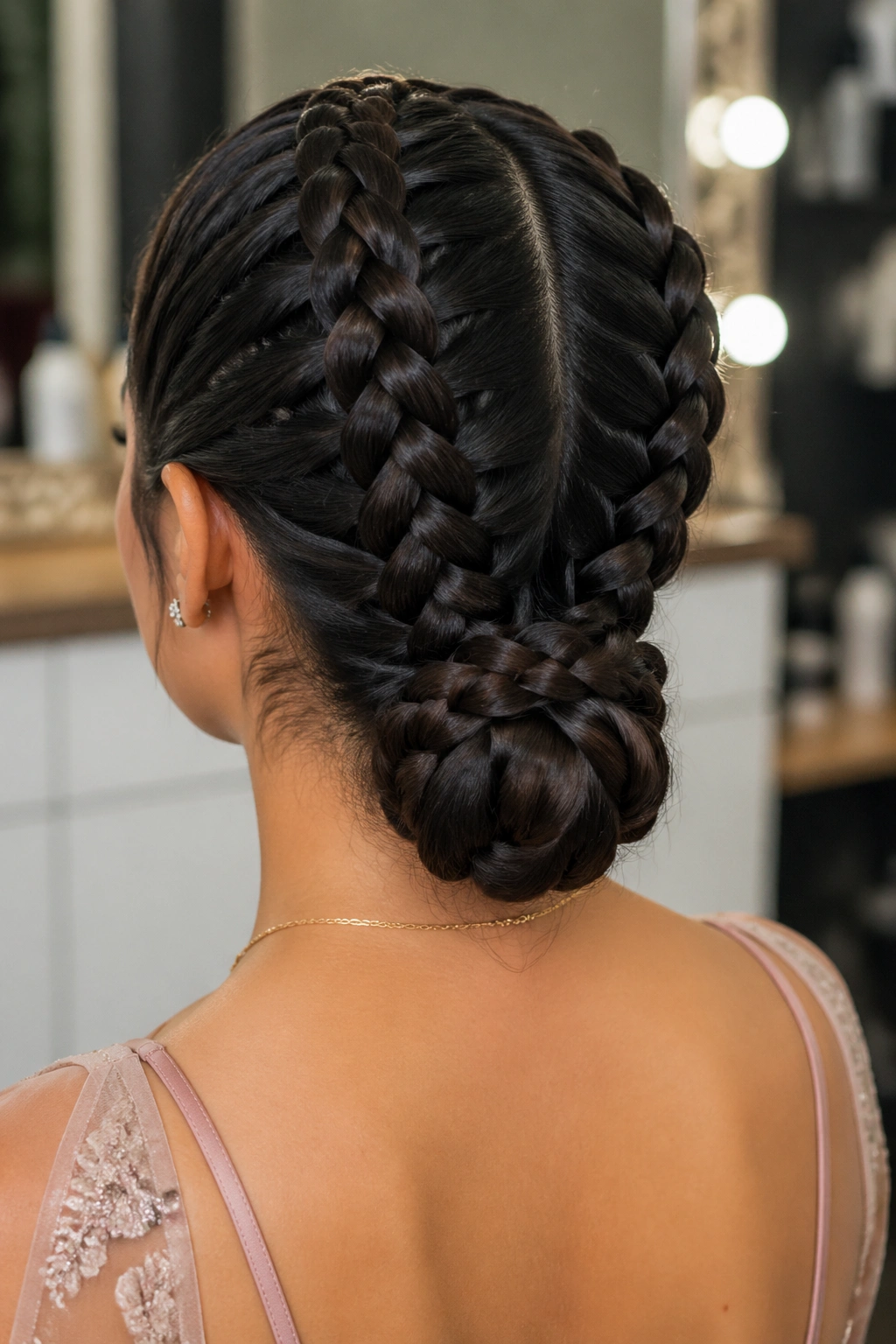
This is the braid for a quinceañera that needs to survive hours of hugging, dancing, and moving from room to room. The braids stay close to the scalp, the bun sits low and neat, and the whole style feels secure without looking severe. It’s the kind of look that lets the dress be the star while the hair does the job quietly.
It also works if the hair is thick. Actually, especially then. Thick hair can get heavy fast, and a low bun keeps that weight anchored instead of pulling at the crown by the end of the night. If the front is smoothed well and the bun is wrapped tightly, the style reads polished in photos and still feels practical in real life.
I like this one for girls who don’t want to keep touching their hair all evening.
The braids can be slightly wider at the top and tighter as they move back, which gives the style shape without making it harsh. If the dress is very ornate, skip extra hair jewelry. If the gown is simpler, a few tiny crystal pins near the bun are enough.
3. Side Fishtail Braid with One-Shoulder Dresses
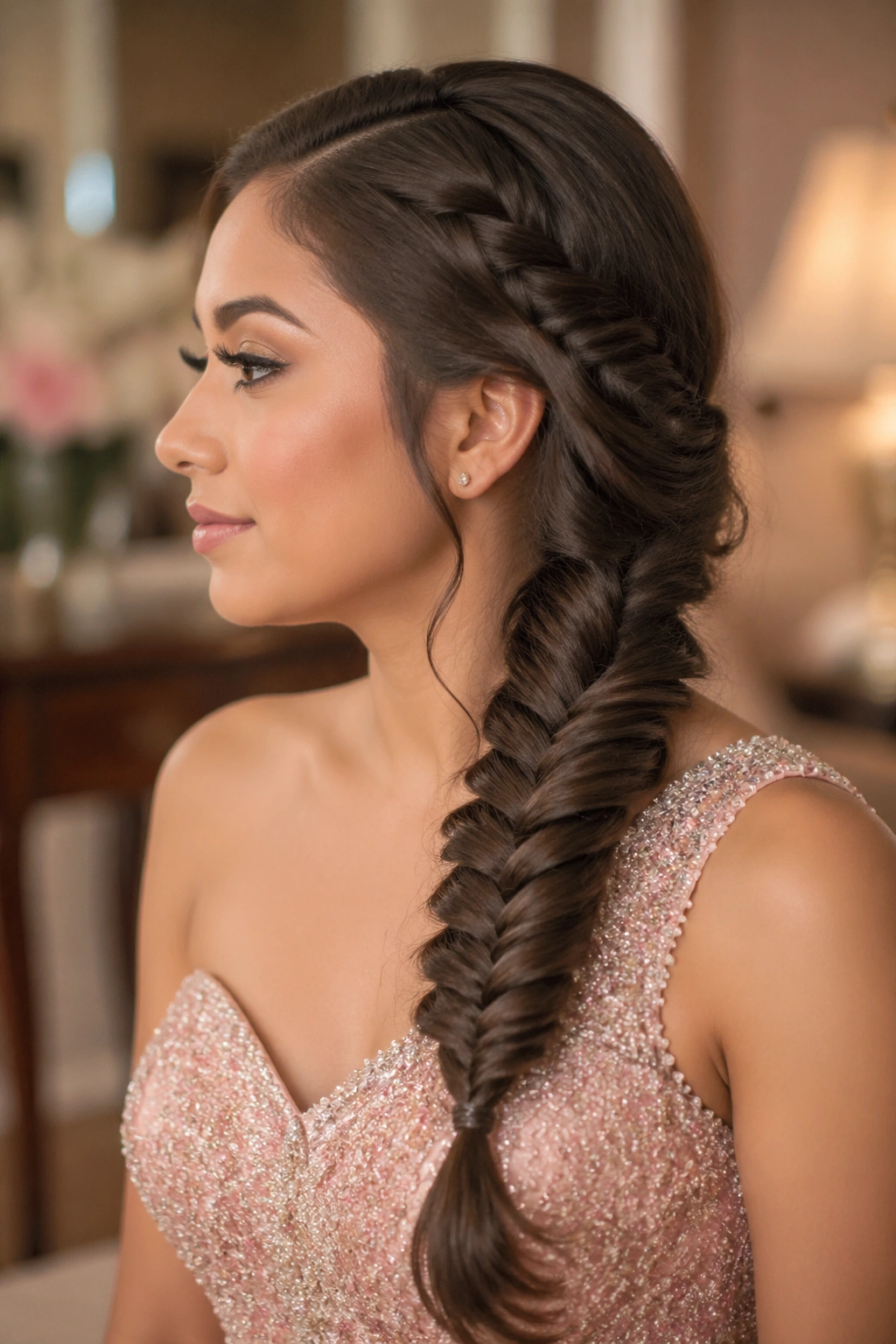
Why do fishtail braids keep showing up in quinceañera photos? Because they look intricate even when the rest of the look stays simple. The woven texture gives the hair visual interest, and the side placement makes it easy to show off earrings, shoulder detail, or a neckline that already has some drama.
How to Wear It with the Dress
A side fishtail works best when the braid falls over the shoulder that feels less decorated. If the dress has beading on one side, sweep the braid to the other side so the two elements don’t fight for attention. That little choice changes the whole read of the outfit.
The braid itself can stay tight at the crown and get softer toward the end. I like that contrast. It keeps the top neat, then lets the lower section feel a little more relaxed, which suits a party where the formal photos and the dance floor are equally important.
If the hair is layered, a stylist may need to tuck the shorter pieces under the braid with a few hidden pins. Don’t skip that part. A fishtail looks best when it hangs cleanly, not when little ends start escaping halfway through dinner.
What to Ask For
- A deep side part or soft off-center part
- A braid that starts near the ear, not too high
- A gentle pull-apart at the edges for fullness
- A small decorative comb near the shoulder if the dress is plain
4. Waterfall Braid with Loose Waves
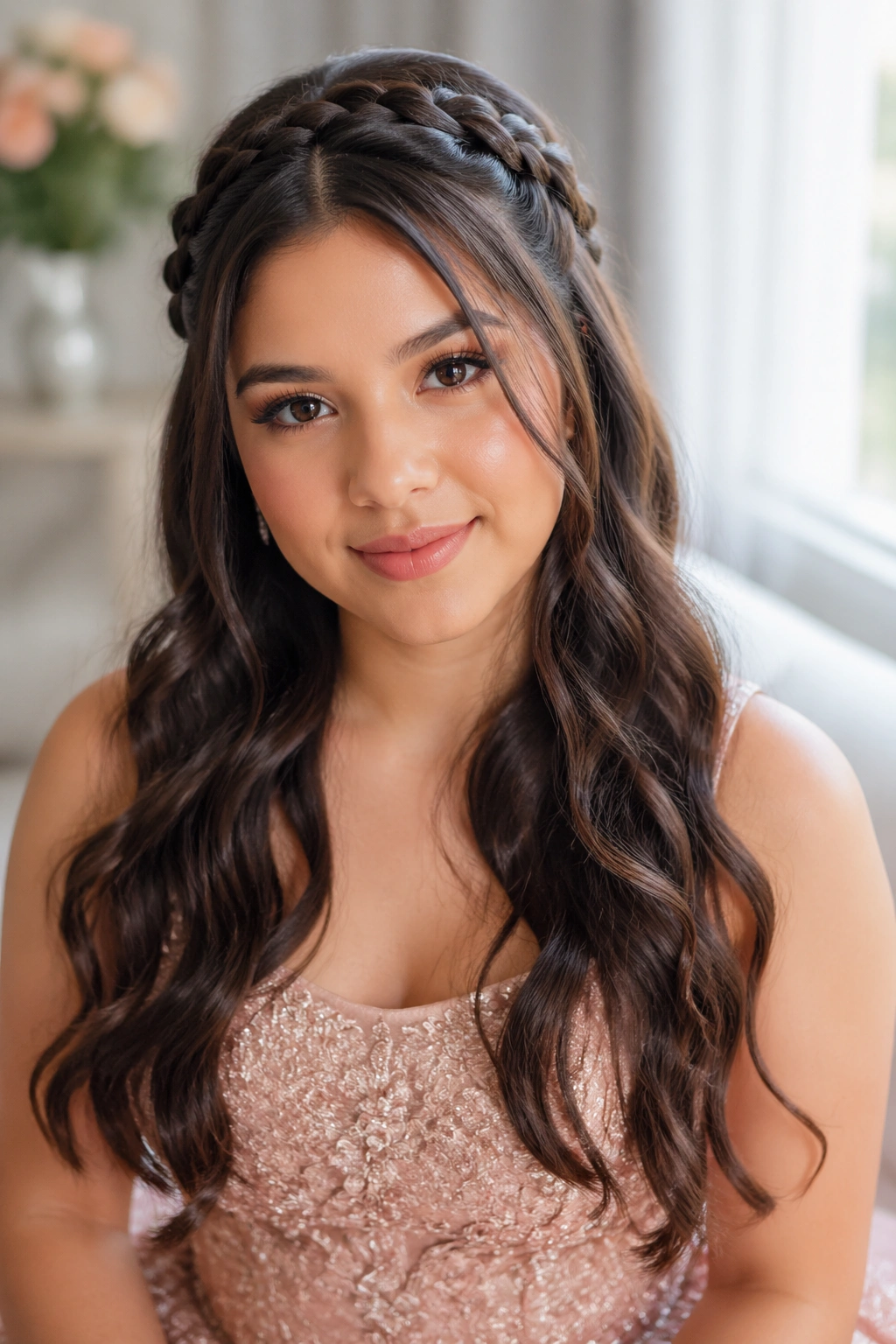
Picture the hair looking loose and romantic from the front, then revealing a braid pattern that runs like lace across the top. That’s the appeal of a waterfall braid. It gives structure without closing off the length, which makes it a smart choice when the goal is softness with a little detail.
This style is especially useful if the hair is already curled or waved. The braid acts like a frame for the top half, and the loose pieces that drop through it keep the whole look moving. It never feels too rigid, which matters if the dress has tulle, chiffon, or a very airy skirt.
The trick is keeping the waterfall strands even. Too thick, and the braid starts to look bulky. Too thin, and the pattern disappears in photos. A good stylist will use small sections and secure each crossover carefully so the shape stays visible from the front.
- Best on medium to long hair with a soft curl
- Good for half-up styles that need a little more polish
- Works with tiny rhinestone clips near the temple
- Needs flexible-hold spray, not stiff hairspray
That last point matters more than people think. A waterfall braid should still move.
5. Halo Braid with a Tiara
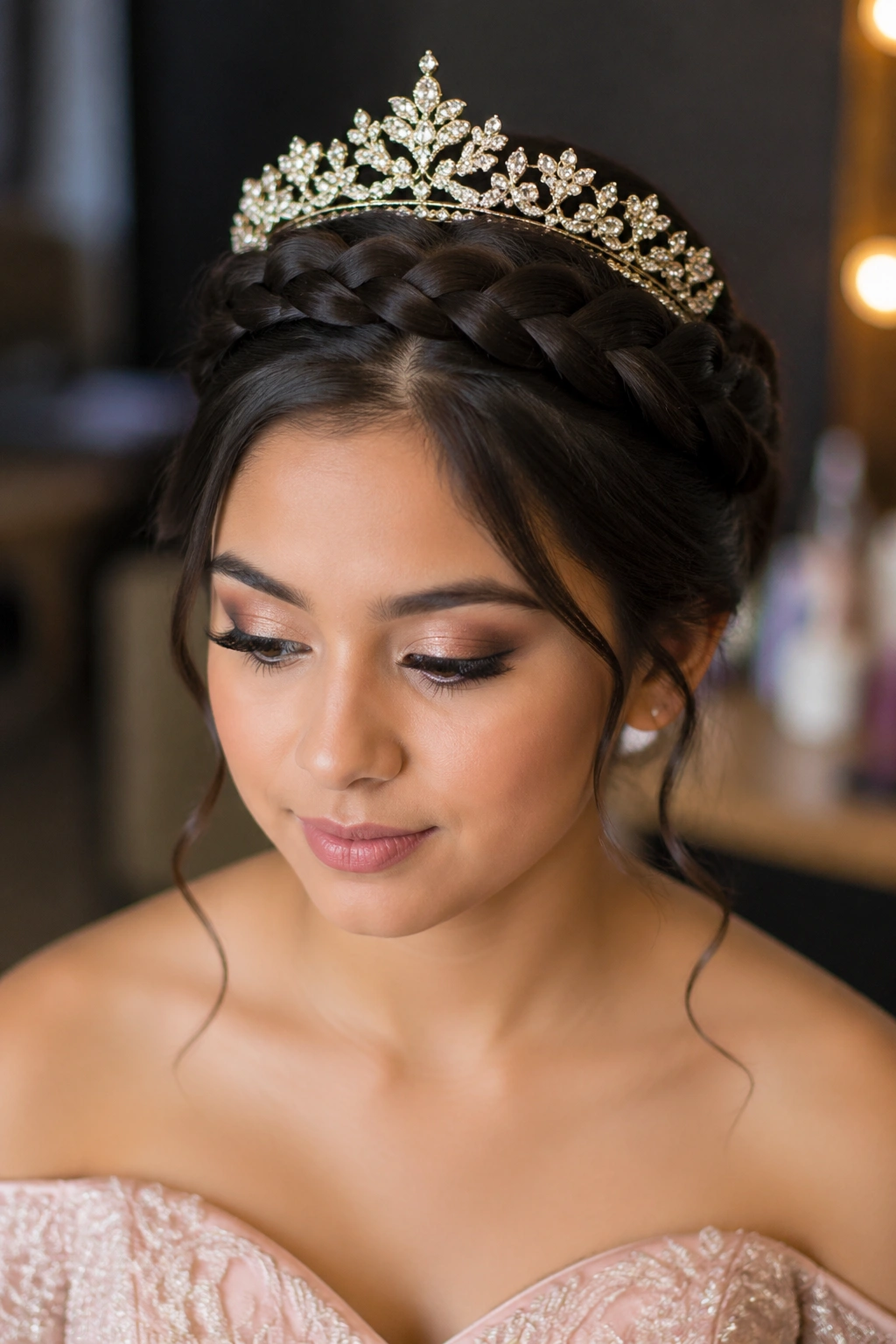
A halo braid has a built-in sense of ceremony. It circles the head and creates a clean frame that can sit under or just behind a tiara without making the top of the hairstyle feel crowded. If the crown is the centerpiece, the braid becomes the support system.
I like halo braids for quinceañeras that lean formal. There’s a reason they photograph so well: the shape is readable from the front, from the side, and from above. That matters when there’s a big dress, a long train, and a dozen people trying to get the right angle at the same time.
The braid should follow the natural curve of the head, not sit too high like a headband. That’s the difference between elegant and awkward. If the hair is very thick, the braid can be flattened a little with the fingers after it’s pinned so it doesn’t feel bulky at the temples. If the hair is fine, a bit of padding or backcombing underneath can help the braid look full enough.
No heavy extras. The shape already carries the style.
A single row of pins, a tiara, maybe a few small flowers at the back. That’s usually enough.
6. Braided Half-Up, Half-Down Style
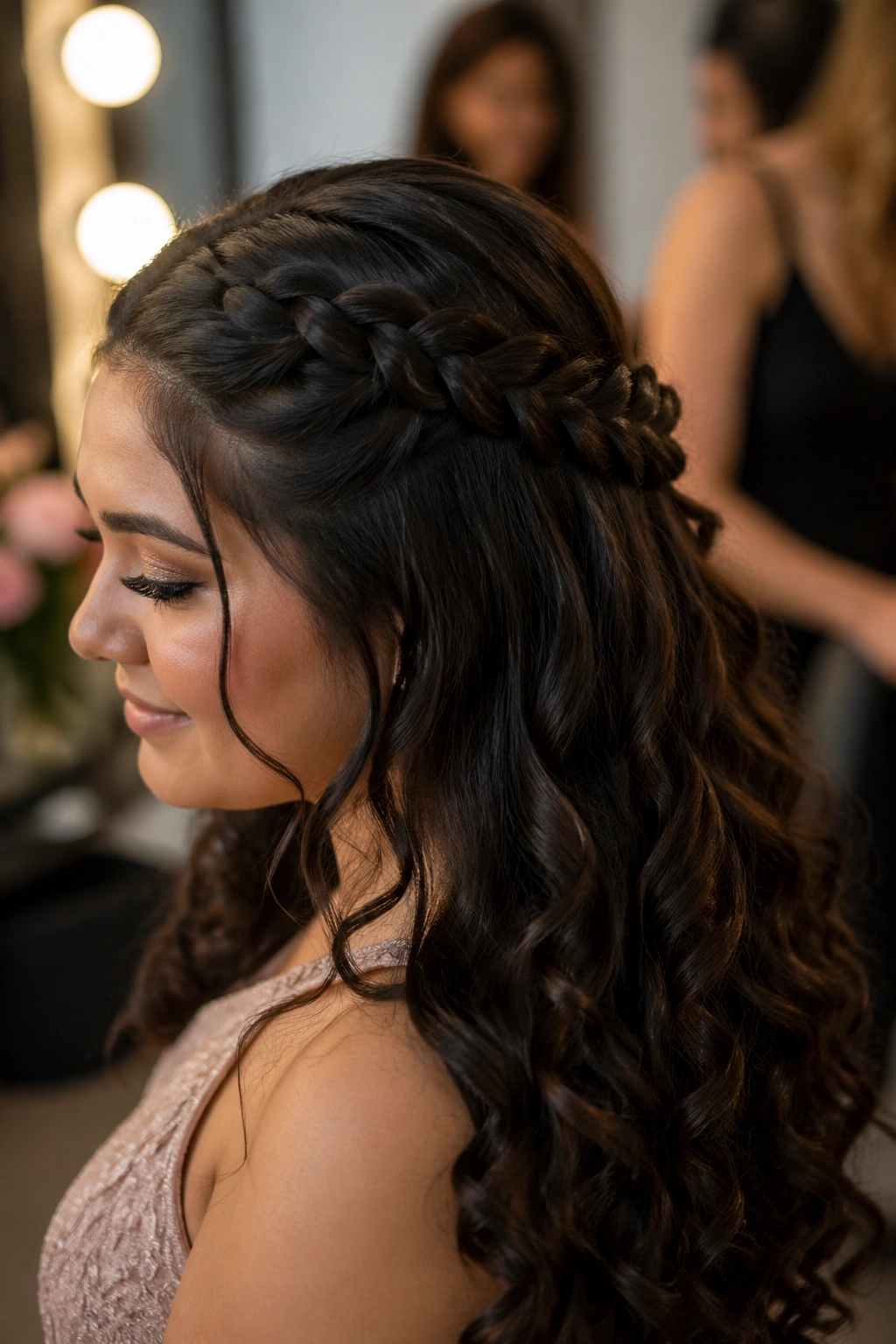
Unlike a full updo, this style keeps the length in the story. That’s why so many people love it for a quinceañera. The braid section gives the top enough structure to feel dressed up, while the loose hair below keeps the look softer and more youthful.
It’s also forgiving. If the curls drop a little by the end of the night, the braid up top still gives the style shape. If the hair is naturally wavy, the half-up section can work with the texture instead of fighting it. Straight hair can be curled first and then pinned back, which creates the same effect with a different starting point.
When It Makes the Most Sense
I reach for this style when the dress is ornate but the wearer still wants movement around the shoulders. It’s a nice middle ground. The braid can be small and delicate, or it can be a bigger woven section that crosses the back of the head.
What to Watch For
- Keep the braid anchored above the widest part of the head
- Let the lower curls start below the shoulder line
- Add a comb or floral pin only where the braid ends
- Use pins that match the hair color so they disappear
That last detail sounds fussy. It isn’t. Hidden pins make the style look cleaner.
7. Sleek Braided Ponytail for a Formal Finish
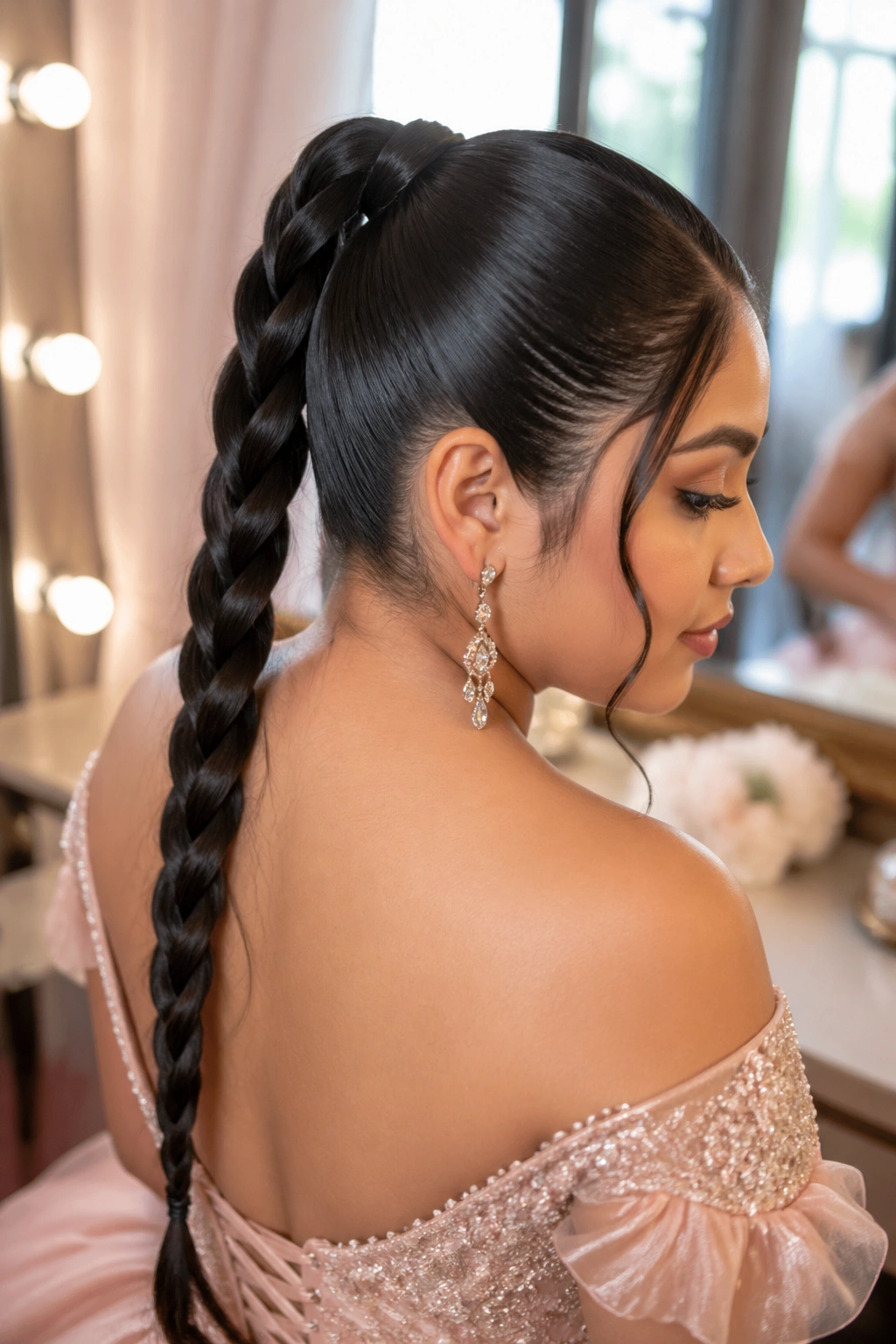
A sleek braided ponytail sounds simple until you see it done well. Then it looks sharp, expensive, and surprisingly dressy. The top is smooth, the braid drops down the back or over one shoulder, and the whole style has enough clean lines to work with a structured gown.
This one suits a quinceañera look that leans modern. Think fitted bodice, strong jewelry, maybe a dress with a dramatic back. The braid gives the ponytail a formal edge so it doesn’t read casual or sporty. It can be high and long, or lower and wrapped tighter at the base. Both versions work.
Where It Shines
A sleek ponytail is a good answer when a full updo feels too heavy but loose hair feels too soft. It keeps the neckline open, which is useful if the dress already has lace, sequins, or beading up top. It also gives the earrings room to show. That’s not a tiny thing.
What to Ask for at the Chair
- A smooth crown with no bumps
- A wrapped hair section around the ponytail base
- A braid that stays tight from top to bottom
- A light shine cream instead of greasy oil
Tip: If the hair is layered, ask for the tail to be curled lightly at the ends. It keeps the braid from looking blunt.
8. Milkmaid Braids with Ribbon
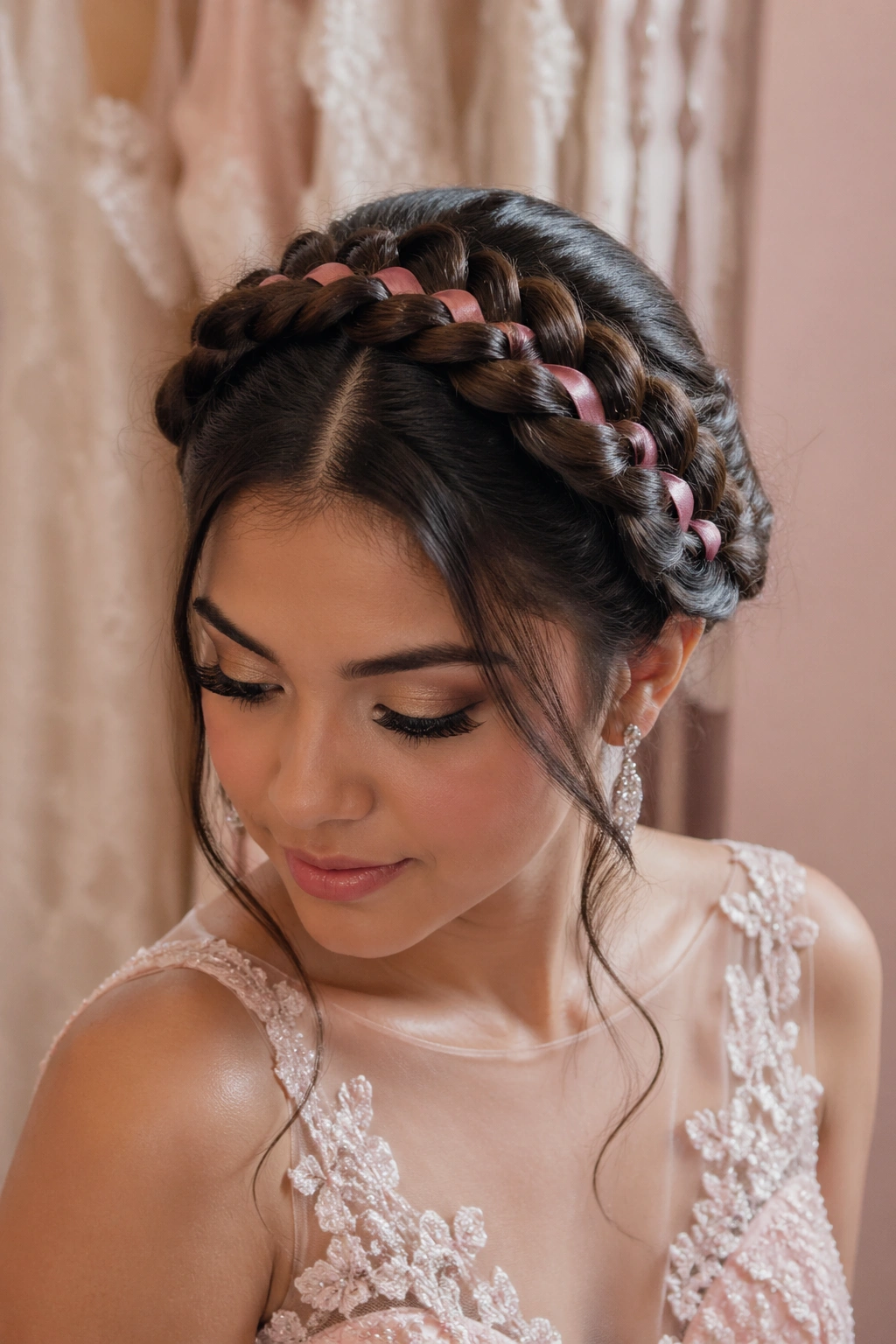
If you want a softer, old-world feel, milkmaid braids do a lot with very little. Two braids are wrapped over the head and pinned into place, which creates a shape that feels sweet without becoming childish when the finish is clean and the parting is precise.
Ribbon changes everything here. A satin ribbon in the dress color, or even a narrow sheer ribbon threaded through one braid, gives the look a more personal feel. I’d keep the ribbon narrow. Thick bows can take over fast, and the braids should stay in charge.
This style works especially well with dresses that have lace, puff sleeves, or a skirt that already leans romantic. It also suits medium-length hair better than people expect. You do not need waist-length strands to make it work; you need enough length to wrap across the head and tuck the ends neatly.
The key is neatness at the edges. A milkmaid braid falls apart visually if the part is crooked or if the wrapping looks rushed. The braid should sit evenly, with the ribbon woven in at measured intervals so it looks intentional instead of decorative by accident.
9. Rope Braid Bun for a Clean Profile
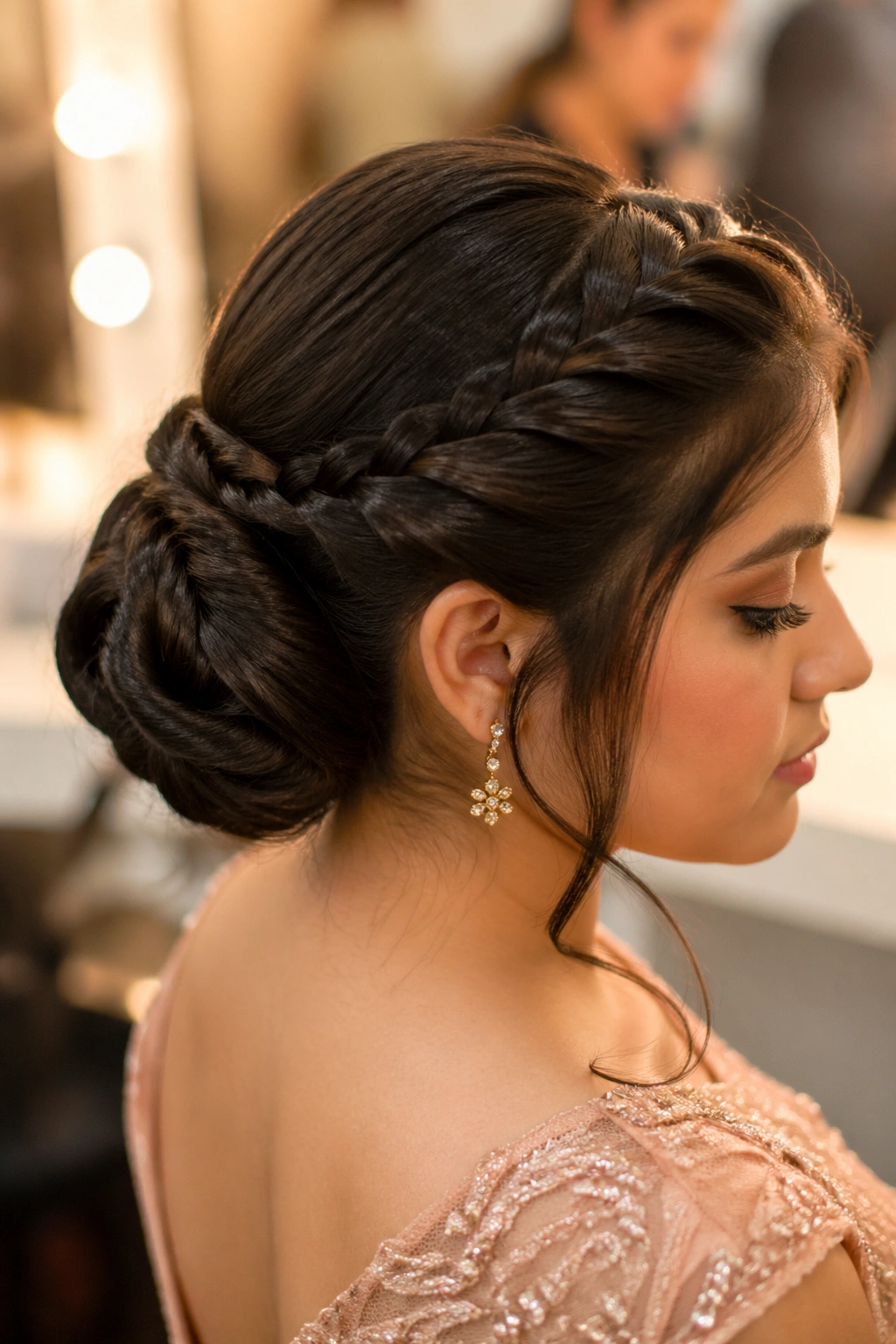
What if you want something cleaner than a braid down the back but less traditional than a chignon? A rope braid bun is a strong answer. It uses two twisted sections instead of the usual three-strand braid, and that gives the finished bun a smooth, rope-like texture that reads elegant from a distance and interesting up close.
How to Get the Twist Neat
The trick is tension. Each section needs to be twisted in the same direction before they’re wrapped together in the opposite direction. If that sounds fussy, it is. But the result holds beautifully when done right. Uneven twisting makes the braid puff out in odd places, and that tends to show in photos.
The bun itself can sit low at the nape or a little higher, depending on the neckline. Low works best with open backs and statement earrings. Slightly higher works when the dress has a heavier skirt and the wearer wants the profile of the hairstyle to show in side shots.
- Smooth the hair first with a light cream
- Divide it into two equal sections
- Twist each section the same way
- Wrap the sections together firmly and pin the bun from underneath
A small comb or one floral pin is enough. The braid texture already does the talking.
10. Four-Strand Braid on Long Hair
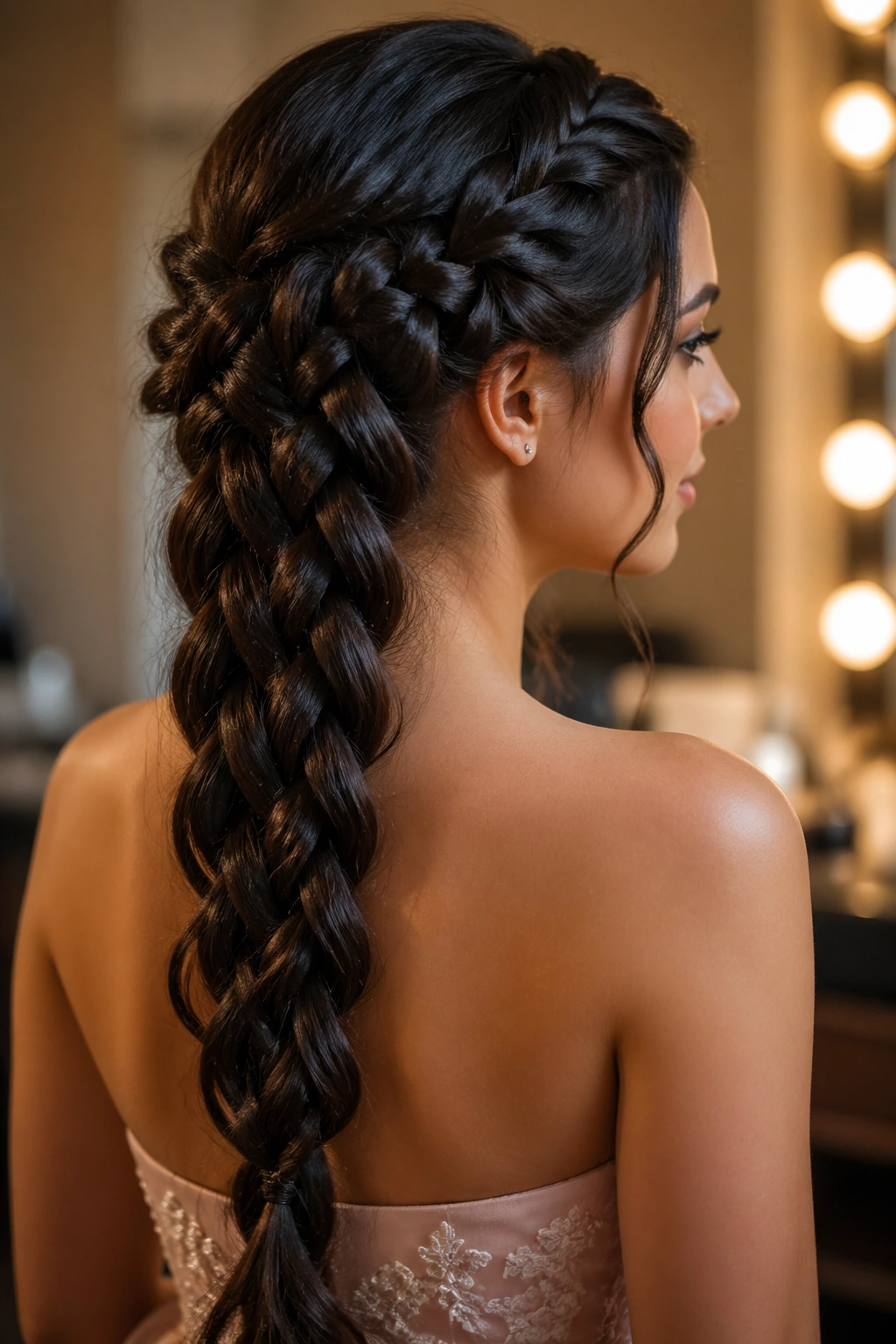
This is the braid for girls who want the braid itself to be the accessory. A four-strand braid looks richer and more woven than a standard three-strand version, and on long hair it creates a wide, textured line that feels formal without needing a ton of extra decoration.
It does take patience. The hand placement is a little more involved, and the sections have to stay even or the pattern gets muddy. That said, the payoff is worth it, especially if the hair is very long or if extensions are being blended in. The braid ends up looking substantial in the best sense of the word — full, orderly, and easy to photograph from the back.
I like this style when the dress is plain and the wearer wants the hairstyle to do more of the visual work. If the gown already has heavy beading, keep the braid simple and let the texture be enough. If the dress is minimal, the braid can become the centerpiece.
Key Details
- Works best on long, smooth hair
- Can be worn down the back or over one shoulder
- Needs even tension from root to end
- Looks best with one small accent pin rather than a lot of jewelry
11. Accent Braids Woven into Hollywood Waves
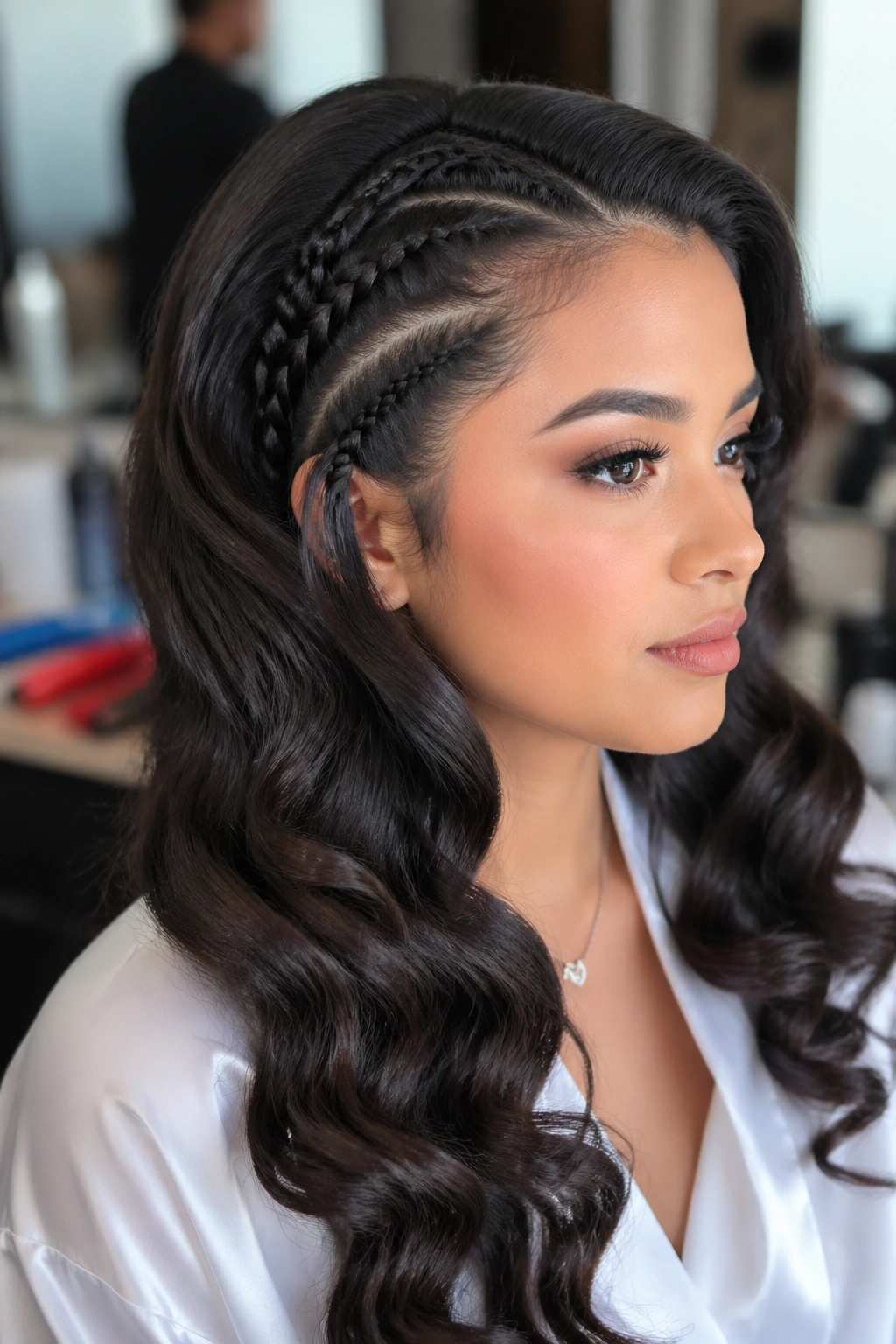
Accent braids are the quiet detail that make soft waves feel finished. A few tiny braids near the temples, along the part, or tucked into one side of the hair add texture without taking over the whole look. The rest of the hair can stay in loose waves, which keeps the style romantic and very photo-friendly.
This is one of my favorite approaches when the wearer wants movement. The waves frame the face, but the small braids give the style a little edge so it doesn’t blur into generic curled hair. That tiny bit of contrast makes the whole look feel more personal.
The braids should be thin enough to blend into the waves but visible enough to notice in close-up photos. A stylist can weave in one or two crystal pins where the braids meet the waves, which keeps the detail from getting lost under stage lights or flash.
There’s a nice balance here. The hair still looks soft from a distance. Up close, the braids give it shape.
If the dress has a one-shoulder line or a beaded sleeve, place the accent braids on the more open side so the hair and the dress don’t crowd each other.
12. Feed-In Cornrow Crown for a Polished Shape
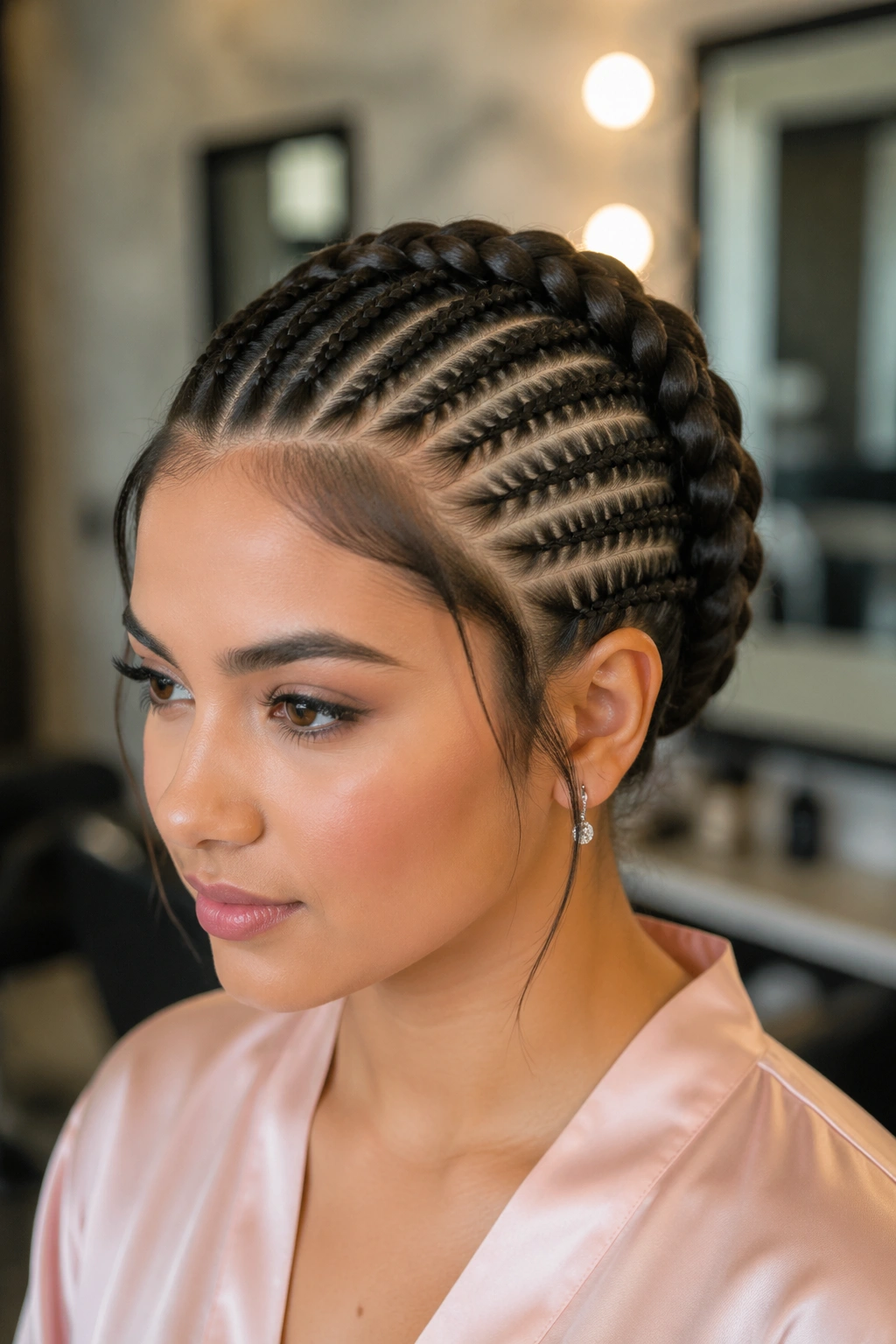
A loose crown braid and a feed-in cornrow crown solve different problems. The loose version feels airy. The feed-in version gives you a flatter, cleaner base and a very secure shape, which is useful if the hair needs to stay intact through a long ceremony, family photos, and a reception that runs late.
This style works especially well on tighter curl patterns, though it can be adapted more widely by a stylist who knows how to section cleanly. The feed-in method makes the braid start small and build gradually, which keeps the scalp line neat instead of bulky. That detail matters when the braid is meant to sit close to the head and frame the face in a precise way.
I like this look when the wearer wants a crown effect but doesn’t want extra height. It sits close, moves well, and usually stays put better than a looser braided crown. The finish can be plain and elegant, or it can include beads, tiny pearls, or a thin row of pins along one side.
Ask for symmetry. Uneven sections show fast with this style.
13. Boxer Braids with Curly Ends
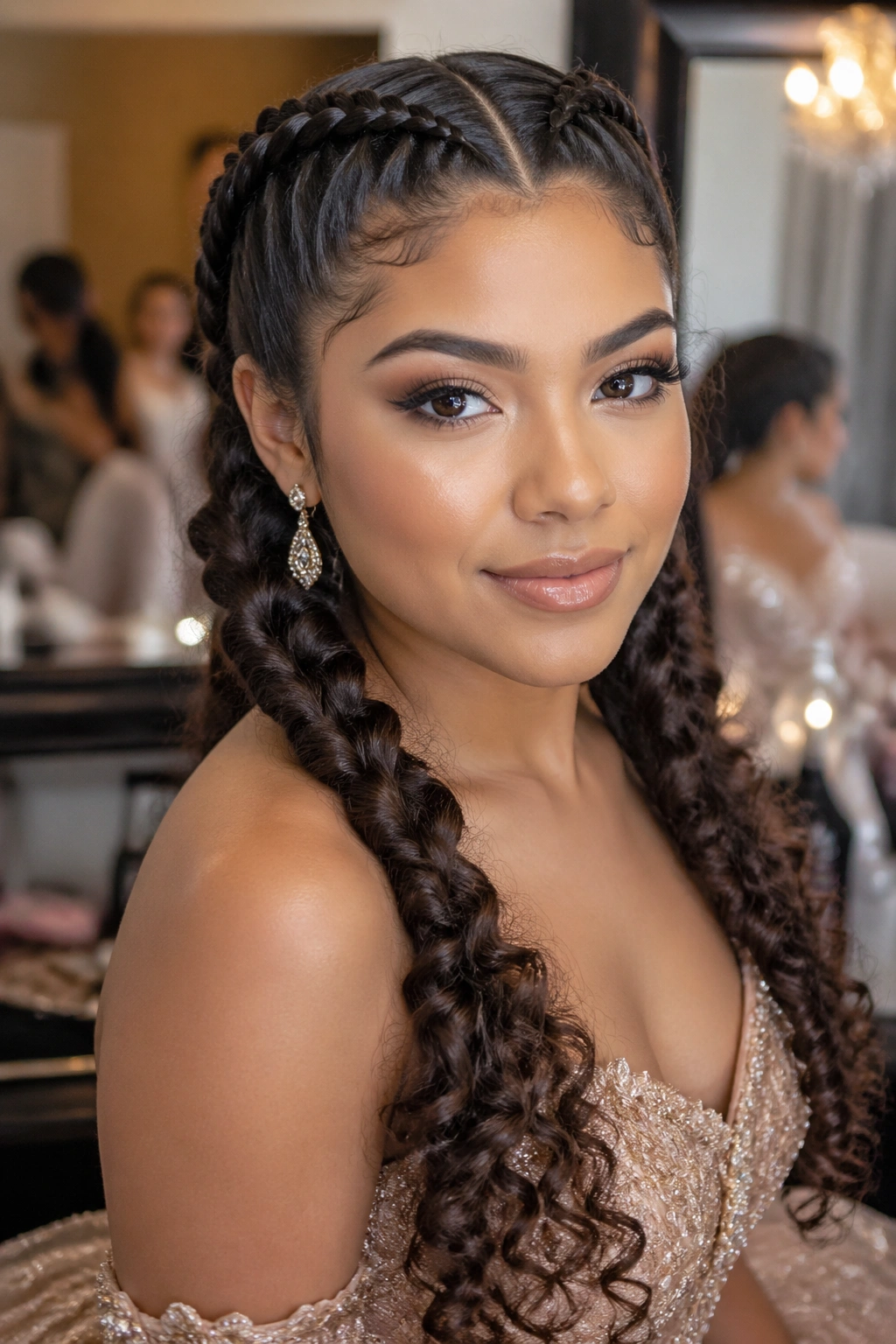
Boxer braids do not have to feel sporty. Done tightly at the scalp and finished with soft curly ends, they can look sleek, youthful, and fully formal enough for a quinceañera. The contrast between the crisp top and the looser ends is what makes the style interesting.
Why They Work for a Bigger Party
The center part keeps the style structured, and the two braids pull the face open in a clean, balanced way. That works nicely with dresses that have a lot happening at the shoulders or neckline. The look is especially useful if the wearer plans to move around a lot, because the braids stay secure and the curls at the end keep the style from feeling too severe.
How to Keep Them Dressy
- Smooth the crown before braiding
- Keep the part exact and clean
- Curl the ends with a medium barrel iron after the braids are set
- Add pearl cuffs or tiny pins near the bottom, not all over
A small change makes a big difference here. If the braids are too tight everywhere, the look can feel harsh. If the ends are left too straight, it gets too casual. The curl at the bottom softens the whole thing.
14. Braided Chignon with Floral Pins
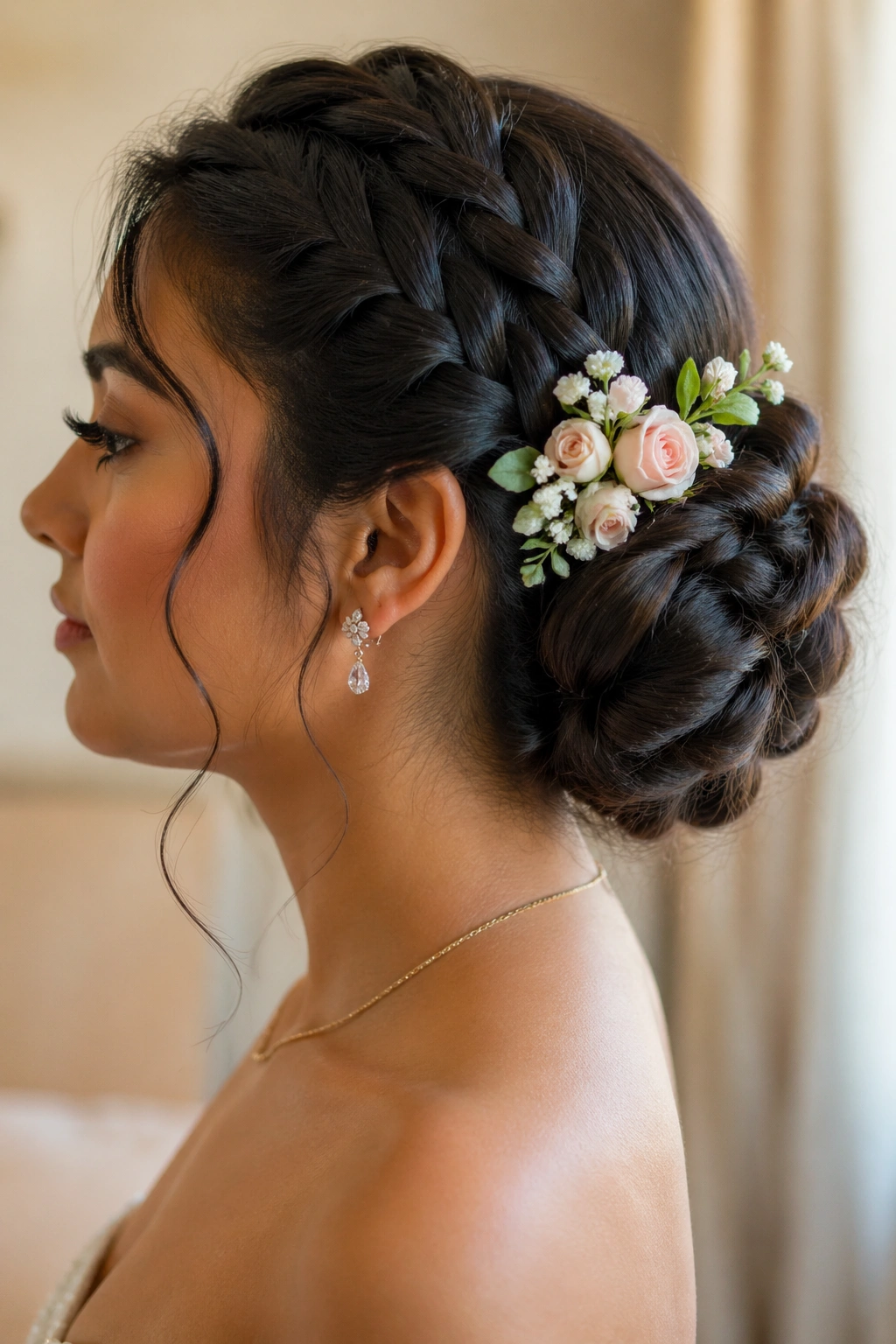
A braided chignon makes the dress look more finished because it clears the neckline and keeps the focus where it belongs. The braid wraps into a low knot, usually at the nape, and the shape sits close enough to the head that it feels elegant without asking for attention.
Floral pins are the natural partner here. Small fresh blooms or realistic silk flowers can be tucked along one side of the bun, or they can trace the edge where the braid folds into the chignon. I’d avoid scattering flowers everywhere. A concentrated cluster usually looks better than a flower storm.
The best part of this style is its calmness. It suits a gown with sleeves, a veil, or a detailed back because it never fights with the clothing. The braid gives the bun texture, and the chignon keeps the overall silhouette neat.
If the wearer has very fine hair, padding under the bun can help the chignon hold shape. If the hair is thick, keep the pins hidden and the braid snug so the weight doesn’t drag the knot down during the night.
15. Pull-Through Braid for Big Volume
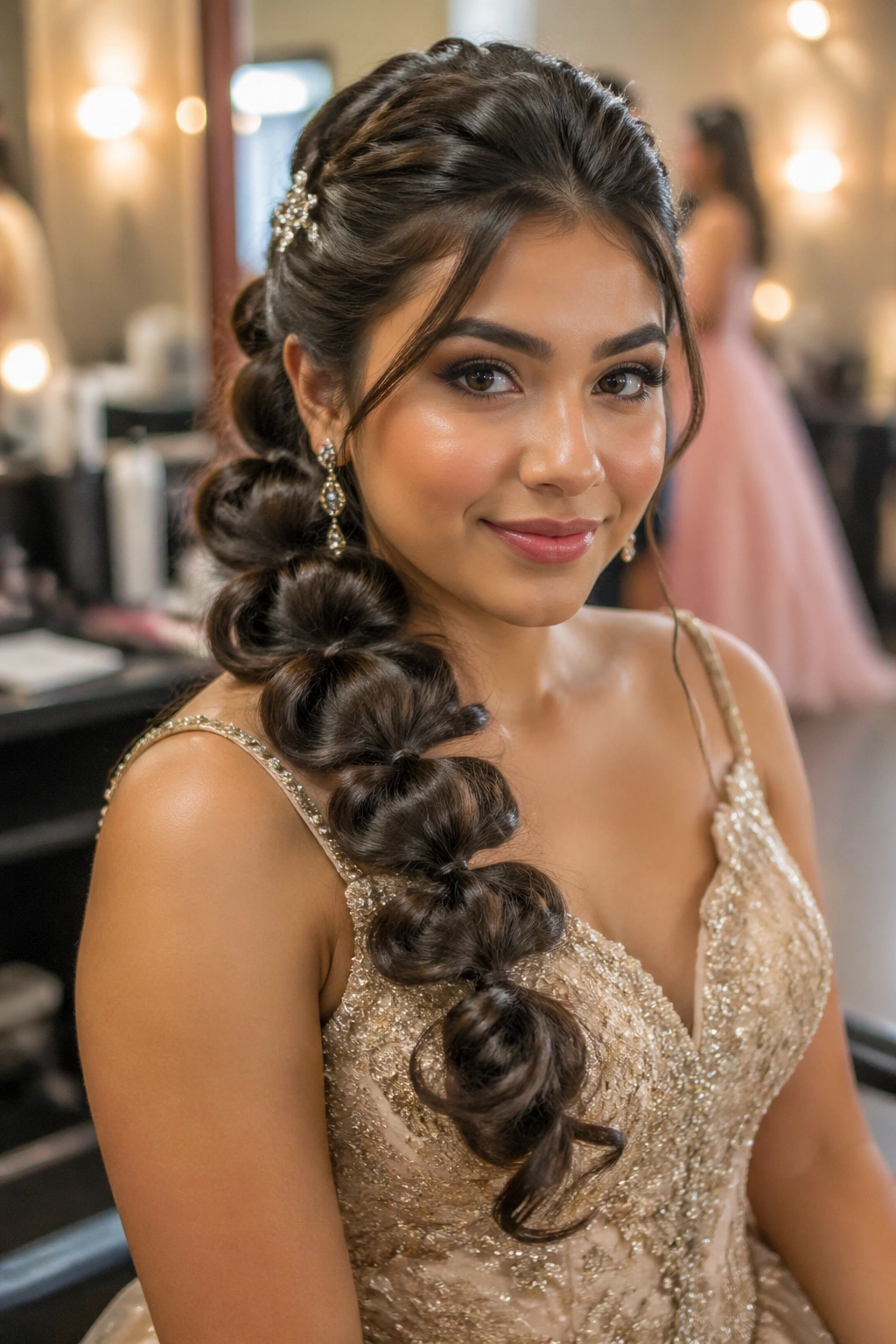
Want a braid that looks thick even if the hair is fine? A pull-through braid is one of the easiest ways to fake fullness without heavy teasing. It’s built from small ponytail sections, layered one over the next, and the final look has a chunky, dramatic shape that reads big in photos.
How to Build the Volume
Start with a secure ponytail at the crown or mid-back, then add a second section below it and pull the top section through. Repeat down the length. After that, gently widen each bubble or panel with your fingers. Not yanking. Just easing the sides out enough to give the braid body.
The style works well if the dress is bold and the hair needs to match that energy. It can also be softened with curls at the ends or a few tiny floral clips along one side. The nice thing is that it looks detailed even from across a room.
What to Watch For
- Use clear elastics or elastics that match the hair
- Smooth each section before stacking the next one
- Keep the crown tidy so the braid looks intentional
- Finish with a flexible spray so the pulled sections stay full
This braid is a little showier than some of the others. That’s part of the fun.
16. Side Braid into a Low Twist
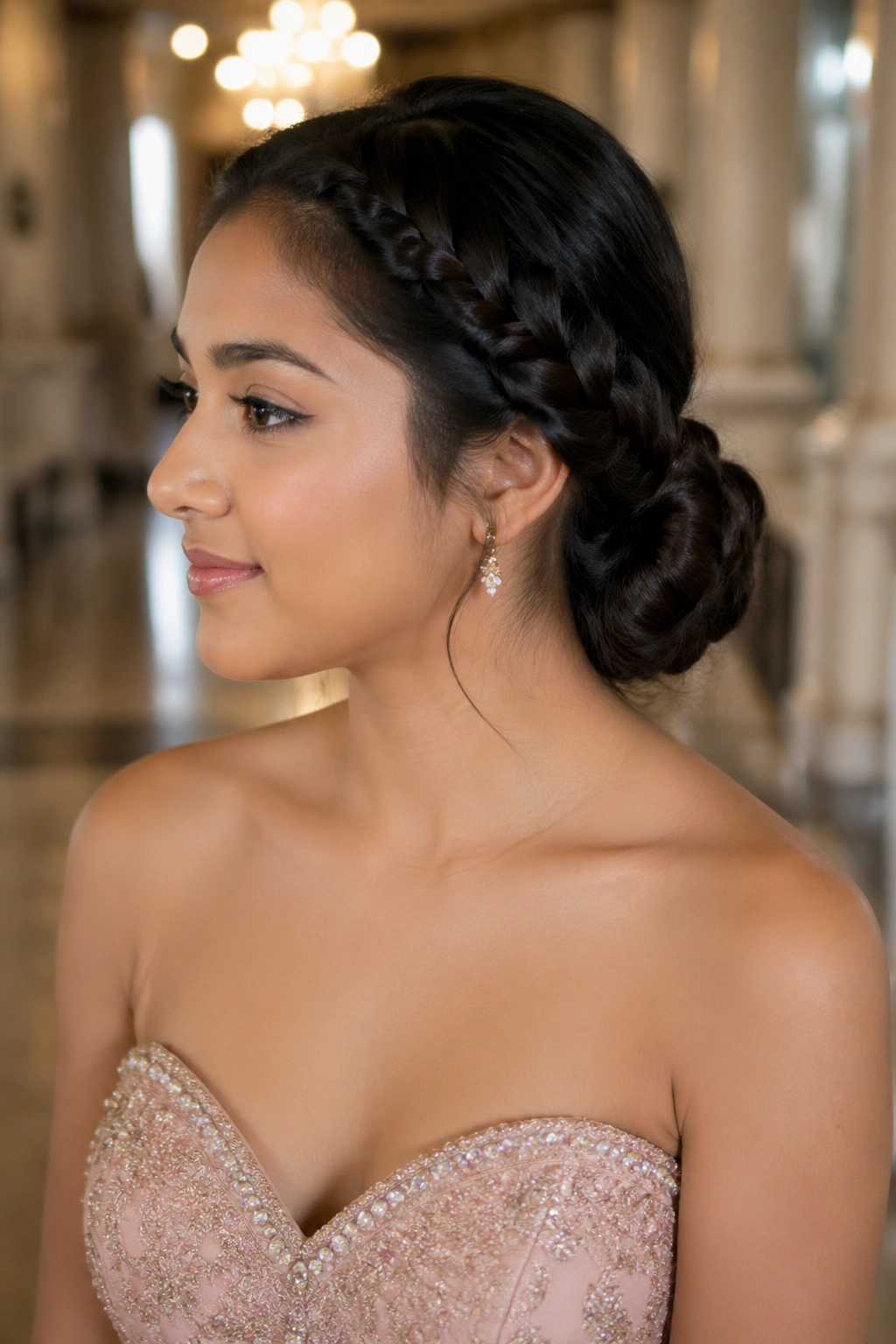
When one shoulder of the dress is doing the most, the hair should step back and support the shape. A side braid that flows into a low twist does exactly that. It keeps the attention on the neckline while still giving the hair enough structure to feel formal.
The braid usually starts near the temple or just behind the ear and moves diagonally toward the nape, where it folds into a twist or a tucked knot. I like this placement because it creates movement without covering up the dress. It also gives the side profile a nice line, which matters in photos when the face is turned slightly away from the camera.
This style is especially good for medium hair that doesn’t need a full bun but still needs more control than loose curls provide. It can be dressed up with a comb at the twist or with a few pins that disappear into the braid. If the wearer wants softness, leave one or two thin pieces around the face. If not, keep it all tucked.
That little shift changes the mood fast.
17. Braided Bun with Veil and Florals
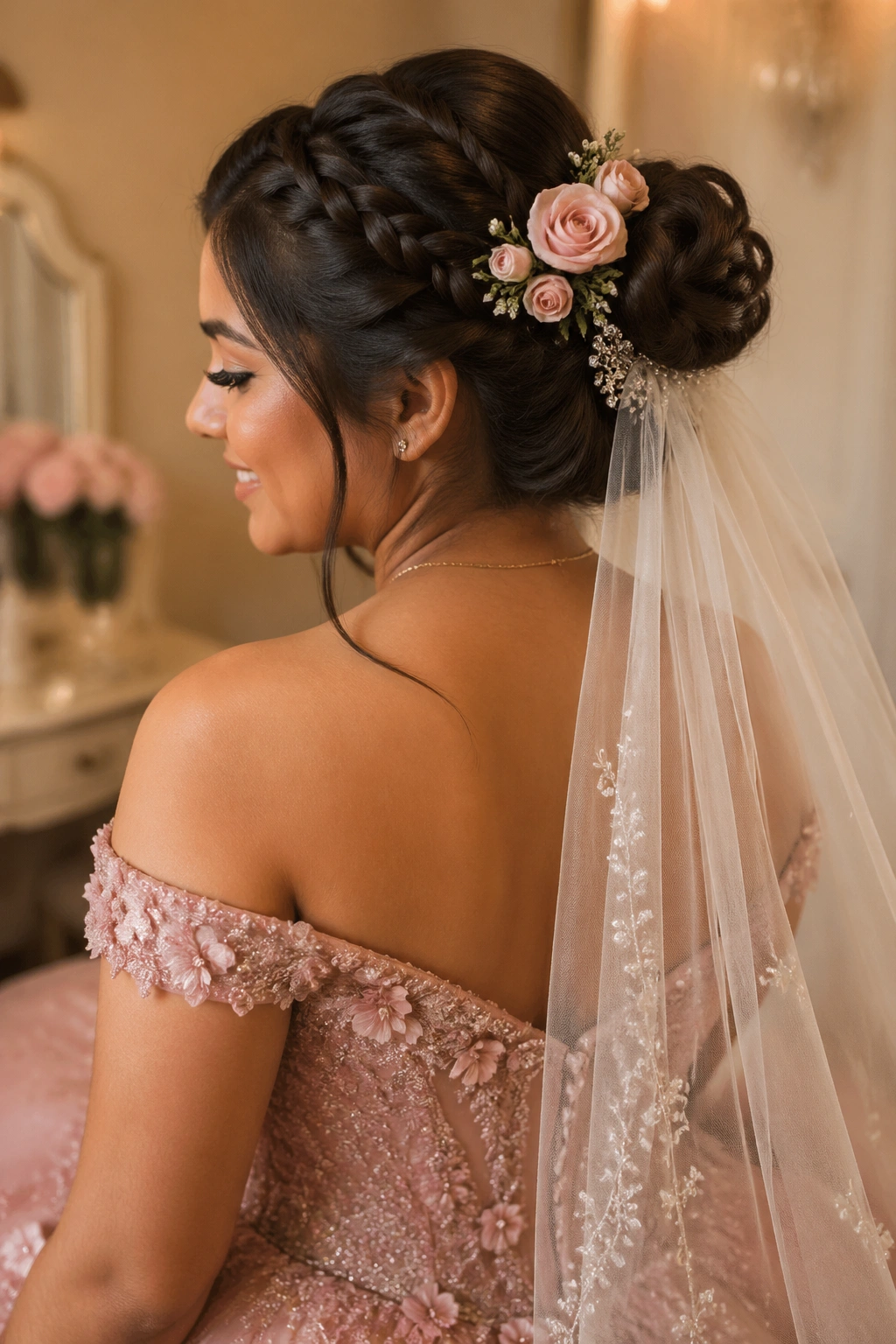
If the whole day needs one hairstyle that can carry a veil, come out of the ceremony, and still look finished for the dance floor, this is the one. A braided bun gives the veil a solid anchor point, and the braid texture keeps the bun from looking flat or plain.
The braid can wrap into the bun base, curl around it, or feed into a tucked knot at the back of the head. Each version works, but the best one depends on where the veil comb sits and how much height the tiara or floral piece needs. I always like a quick test with the actual accessories before the big day. It saves a headache later.
Florals work especially well when they’re placed to one side of the bun or tucked just above it, where they can be seen without crowding the veil. Too many flowers make the style feel busy. A few well-placed blooms feel deliberate.
This is also one of the easiest styles to adapt for different hair textures. Straight hair can be polished and pinned tight. Curly or coily hair can be braided into a secure base that keeps the shape steady and lets the texture bring the style some life.
Final Note
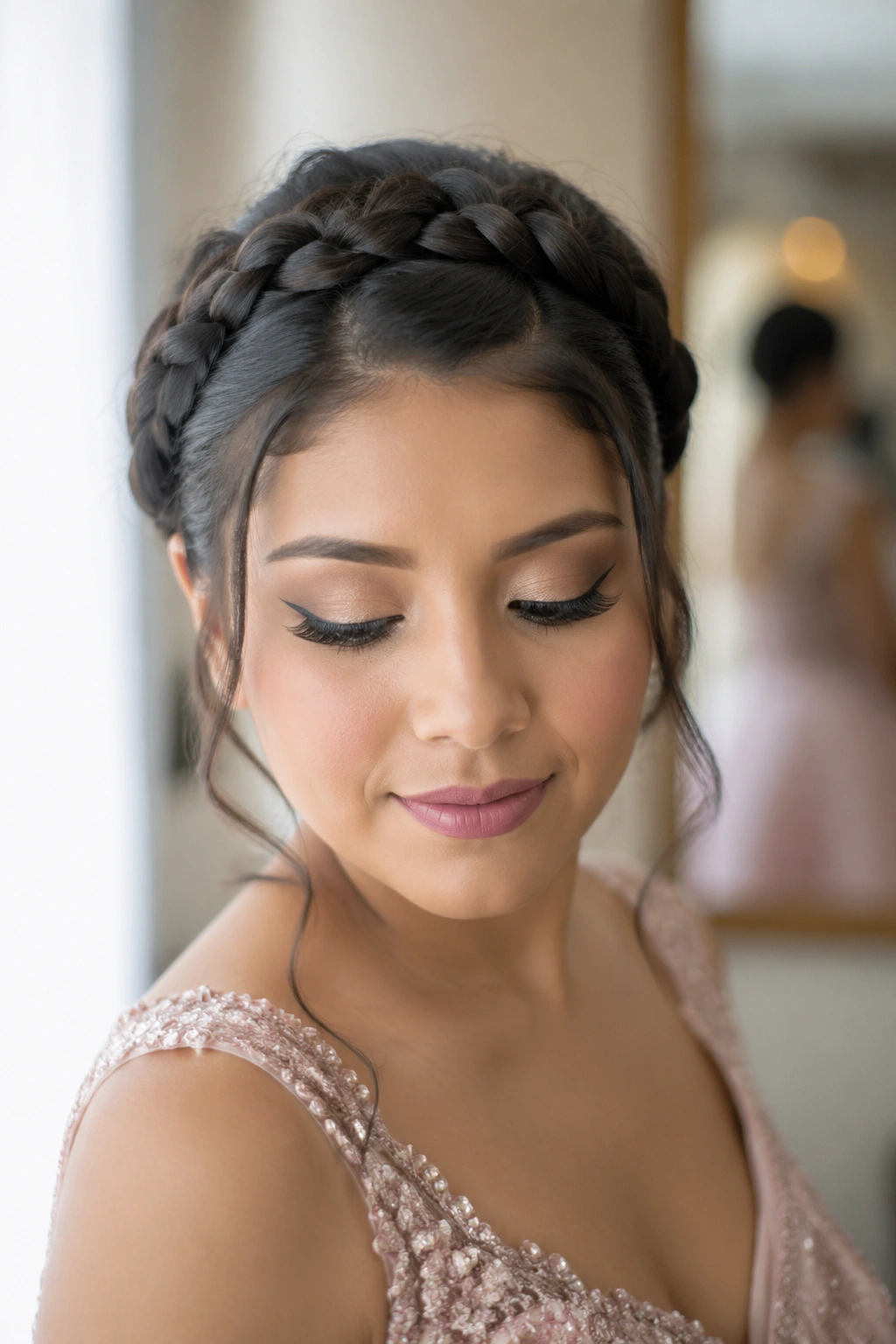
The best braid for a quinceañera isn’t the one that looks the most complicated. It’s the one that sits comfortably with the dress, stays in place through the long parts of the day, and still looks like itself after a few hours of movement.
A good test is simple: if the hairstyle needs constant fixing, it’s the wrong one. Bring the dress details, the earrings, and the accessories into the decision early. A braid that works with those pieces will feel easier to wear, and that ease shows up in every photo.