



Bible braids that lay flat against the scalp have a way of looking neat even when the rest of life is a mess. Clean parts. Tight lines. That smooth, head-hugging finish that makes the whole style look deliberate instead of thrown together.
People use the phrase Bible braids in a few different ways, but the idea is usually the same: crisp, scalp-hugging braids with a polished parting pattern and a flat base. The styles that sit best are the ones built with control at the root — not huge sections, not sloppy part lines, not extra hair shoved in too early. That’s where the shape either works or falls apart.
The tricky part is that “flat” does not mean “tight.” If a braid pulls hard, it may lie close to the head for a day and then start biting into the scalp or lifting at the edges. Good braids feel secure, not painful. Good braids also grow out in a way that still looks tidy after the first wash, which is a small miracle when you’ve spent hours in a chair.
1. Straight-Back Bible Braids
Straight-back braids are the classic for a reason. They sit low, they read clean from across the room, and they make the scalp part of the design instead of hiding it.
Why They Stay So Neat
The magic is in the direction. When each row moves straight from the hairline toward the nape, the braid follows the shape of the head and settles flat without fighting the scalp. That makes this style a strong pick if you want something tidy with very little visual fuss.
Keep the sections narrow at the front and a little wider as they move back. That keeps the rows even and stops the front from puffing up. If you want the cleanest finish, part the hair with the tip of a rat-tail comb and clip each row before you start braiding.
- Best for beginners who want a simple, low-profile style
- Works well on short to medium-length natural hair
- Usually takes less time than patterned braid styles
- Looks especially clean with 6 to 8 rows
Best tip: start the braid close to the scalp, but do not clamp down hard. Flat braids are neat, not brutal.
2. Center-Part Bible Braids
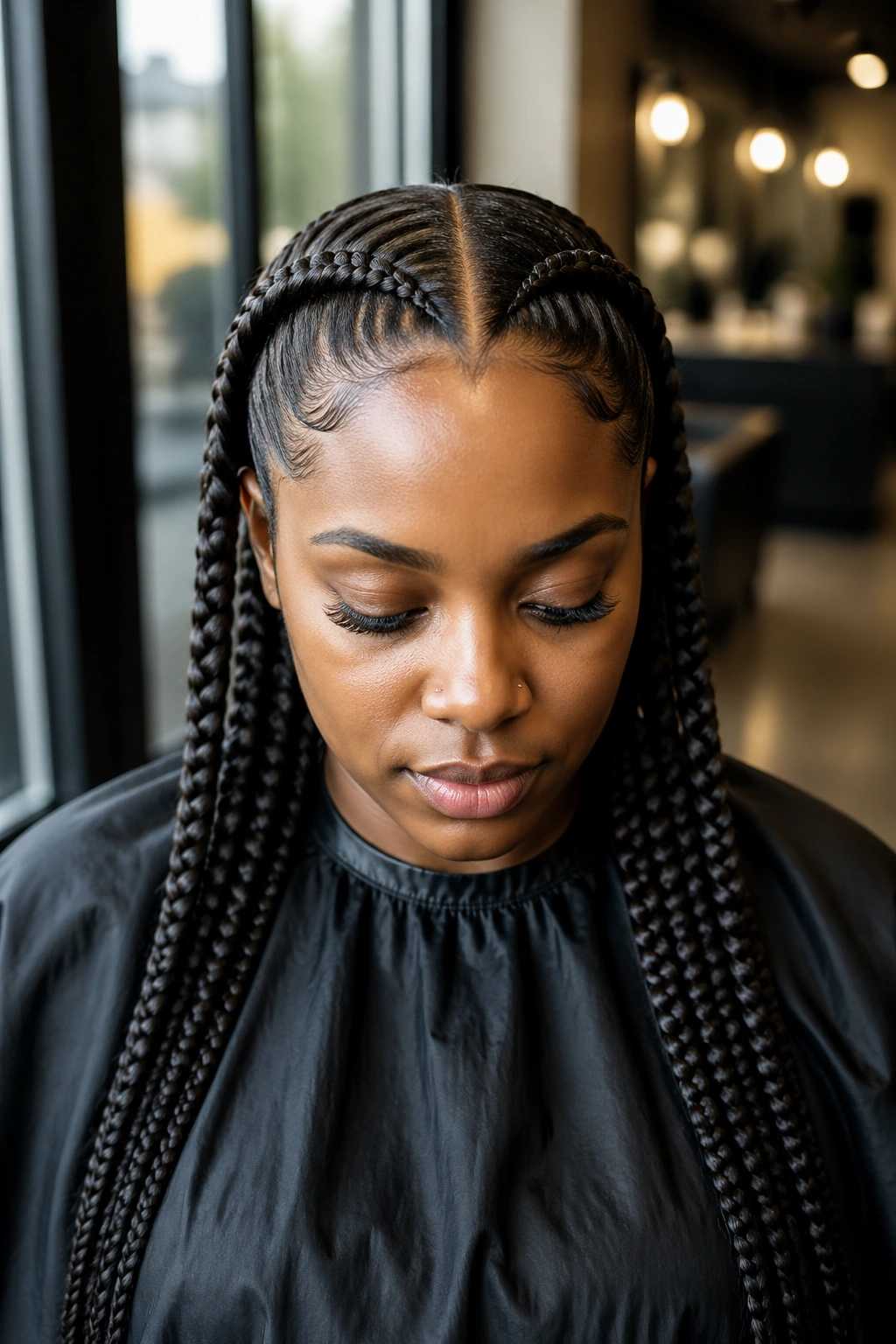
A dead-center part changes the whole feel of scalp braids. It gives the style a calm, balanced look, and the symmetry makes the rows seem even flatter than they really are.
The middle part works especially well when you want the braids to frame the face without stealing attention. It also helps if your hair naturally falls unevenly, because the part gives the eye a fixed line to follow. That line matters more than people think. Messy parts make even good braids look rushed.
Center-part braids tend to look best when the rows are mirrored closely on both sides — same size, same spacing, same tension. If one side is packed tighter than the other, the whole style starts looking lopsided at the crown. A little difference is fine. A lot is not.
This is a solid choice for someone who likes clean lines and wants their parting to do some of the styling work.
3. Side-Part Braids That Sweep Softly Across the Head
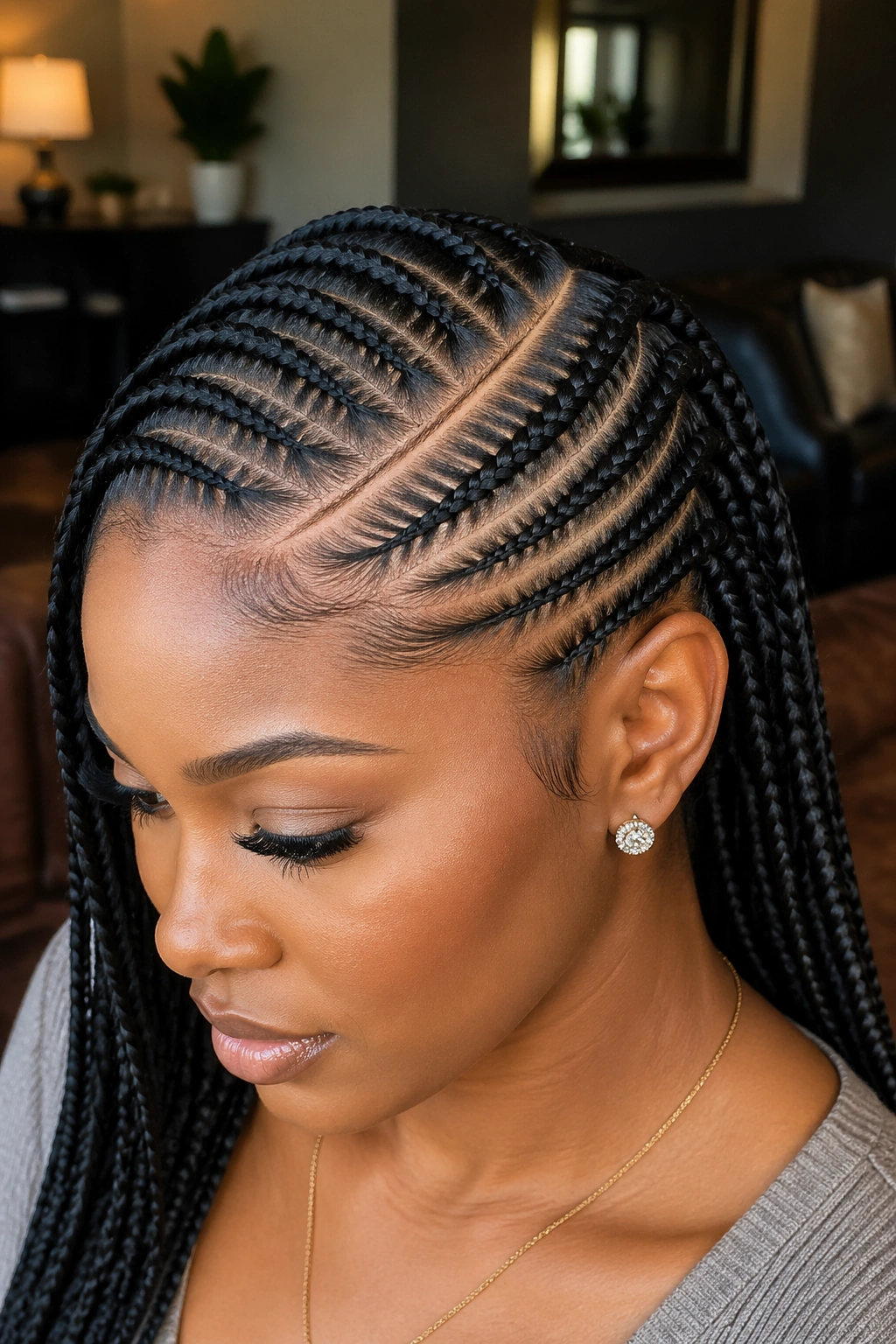
Why do side parts make braids feel softer? Because they break up the straight line at the hairline and let the rows fall in a more relaxed direction.
A side-part set of Bible braids works well when you want the style to look polished but not severe. The angles give the braid pattern a bit of motion, even though the rows still sit close to the scalp. That’s the balance most people are after when they say they want something neat without looking too rigid.
How to Wear It
- Place the part just off-center, not all the way to the ear
- Keep the front section slightly smaller so the braid lays flatter at the temple
- Ask for medium-sized rows if you want the side sweep to show clearly
- Add a little mousse at the finish so the roots stay smooth
This style is especially good if your hairline has a natural peak or if you want to soften a strong jawline. It also grows out in a forgiving way, which is nice. You do not have to obsess over every tiny line when the overall shape already has movement.
4. Feed-In Braids With a Seamless Root
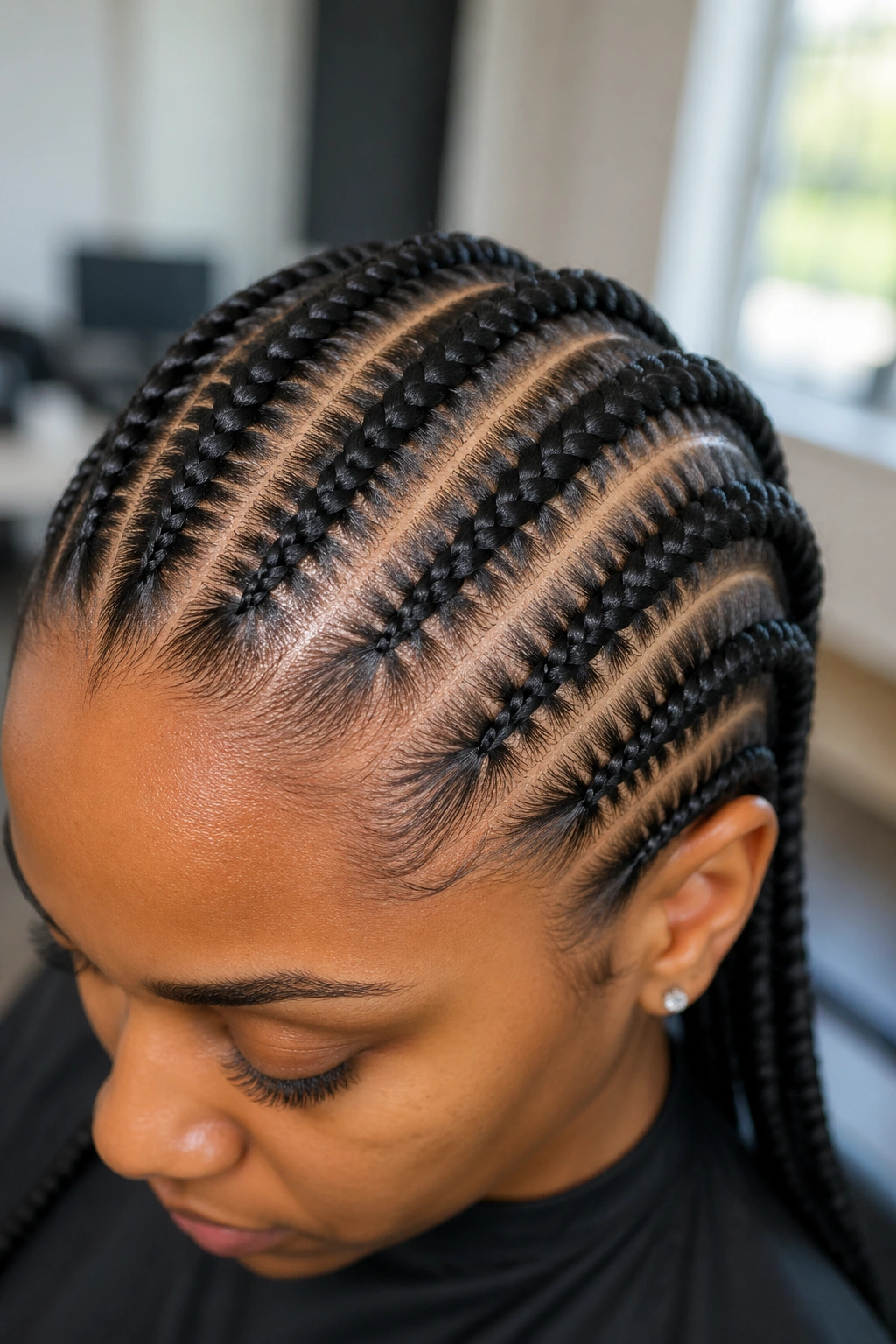
Feed-in braids are one of those styles that look more complicated than they are. The flatter root comes from a simple trick: hair gets added in small pieces instead of all at once.
That gradual build keeps the base from bulking up near the scalp. Instead of a thick lump at the start of each braid, you get a smooth start that hugs the head before the braid grows fuller along the length. It is a cleaner look, and it usually feels lighter too.
The parting has to be neat here, because feed-in braids make every mistake obvious. A jagged section line shows fast. So does hair that was added too quickly at the root. If you want the braid to stay flat, the first inch matters most.
Feed-in braids are a smart choice when you want the scalp to stay visible and the style to feel airy rather than heavy. They also work well with mixed hair colors, since the gradual build gives the braid more dimension without making the root look bulky.
5. Stitch Braids With Razor-Sharp Part Lines
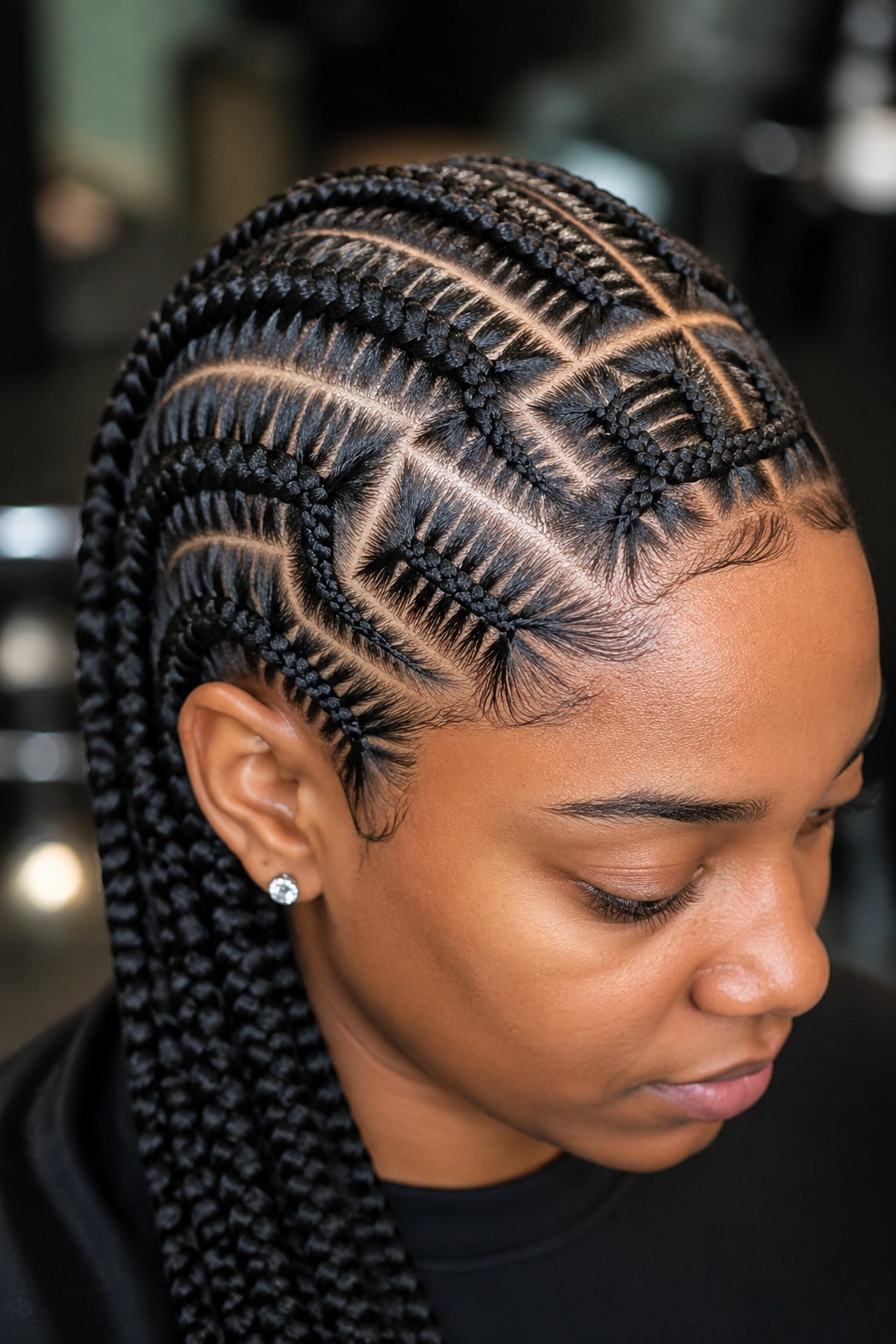
Stitch braids are for people who like their parts crisp enough to make a point. The braid itself sits flat, but the real drama comes from those clean, little “stitch” lines across the scalp.
The reason they stay so tidy is the sectioning. Instead of grabbing hair in a loose, uneven way, you create defined horizontal slices and braid through them in a controlled pattern. That keeps the roots smooth and the rows narrow. The style can look almost graphic when it is done well.
You need patience for this one. Stitch braids take more time than a basic straight-back set because every section has to be measured and kept in line. If the stitch lines wobble, the whole look loses that sharp finish. There is no hiding a sloppy part.
This style suits someone who likes a braider to slow down and make the details count. It is not the fastest option, but the clean root pattern is worth it if you love a very polished scalp braid.
6. Curved Cornrows That Follow the Head
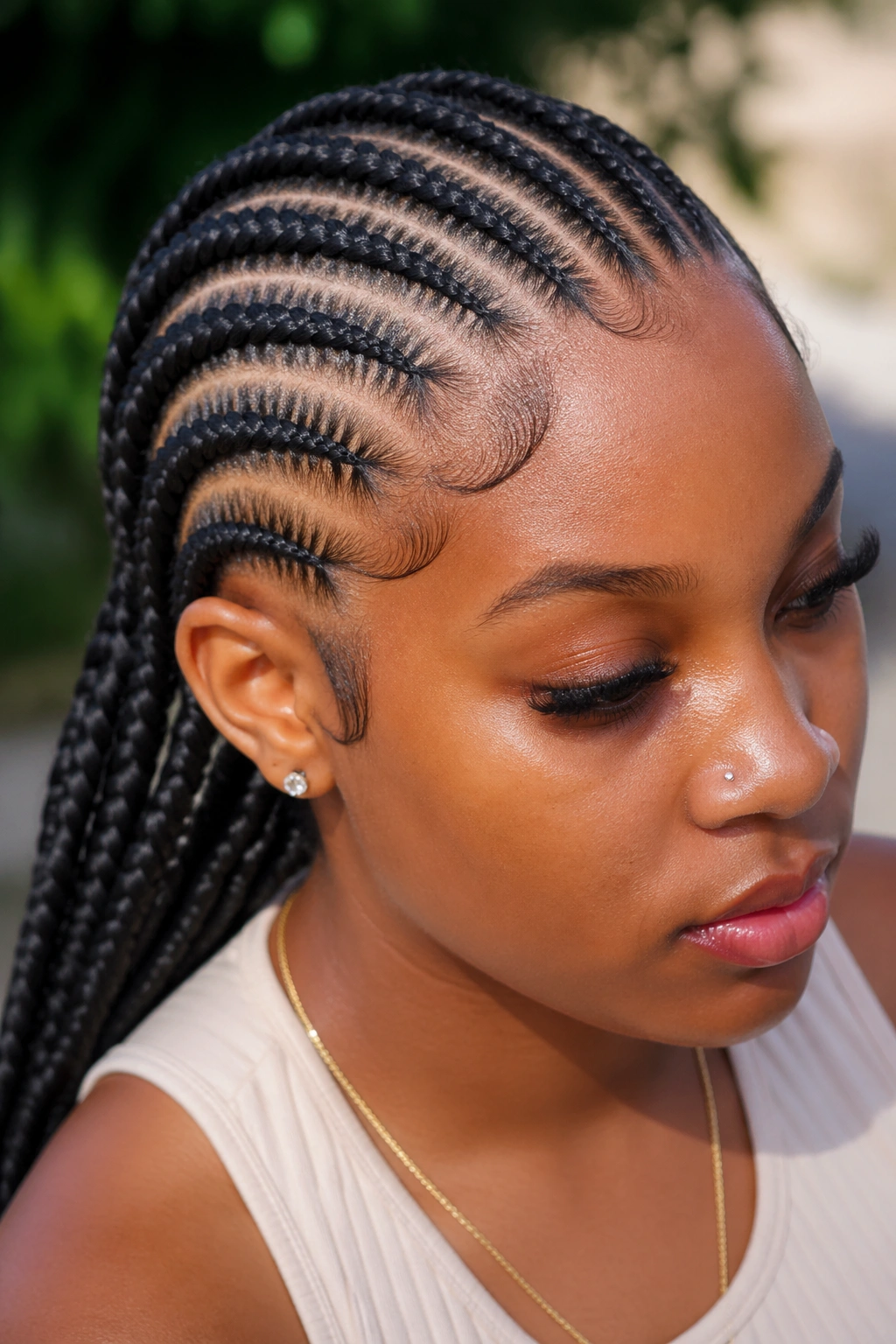
Curved cornrows feel softer than straight rows because the braid path bends with the shape of the head instead of cutting across it.
That bend does a lot of work. It keeps the braid low, it adds movement without adding bulk, and it often makes the style look more custom than a row-by-row straight-back pattern. Curved braids can also flatter the crown if you have a flatter head shape and want a little more roundness in the design.
Unlike straight-back rows, curved cornrows need a steady hand from the first inch. A shaky curve becomes obvious fast. The trick is to map the arc before you begin, then keep each section tight enough to hold the line but loose enough to sit comfortably. No one wants a braid that fights your scalp every time you turn your head.
This is a good pick if you like clean braids but want something less expected than the usual straight rows. The shape feels thoughtful without trying too hard.
7. Zigzag Part Braids
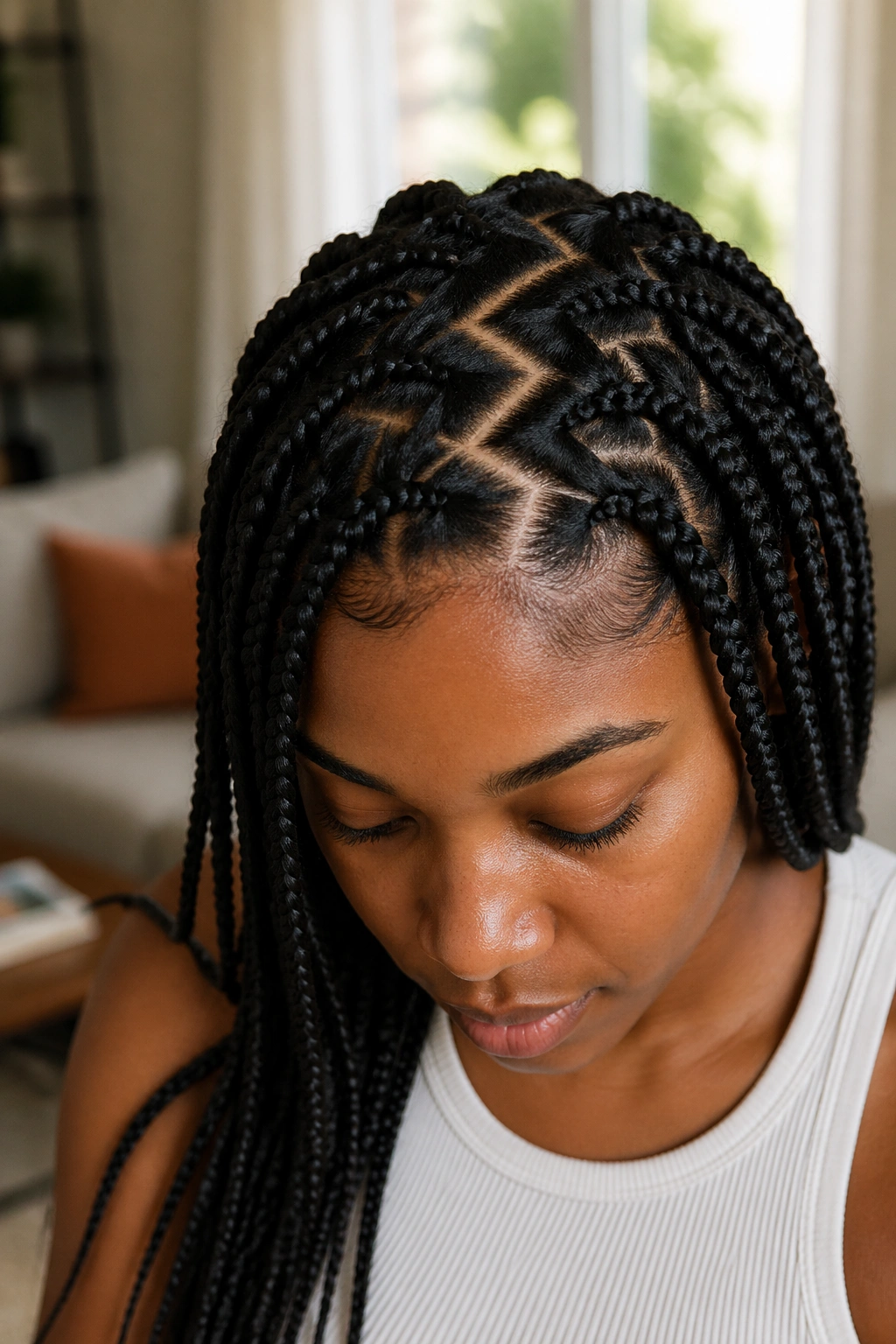
Zigzag parts are for the person who wants the scalp pattern to do more than sit there politely. The braid is still flat, but the parting itself adds texture and movement.
Why It Works
A zigzag part breaks up long straight lines, which makes the hairstyle look fuller without making the braid itself bulky. That can be a nice trick if you have medium-density hair and want the style to appear more layered. It also works well on kids’ styles, especially when you want something neat with a little personality.
Quick Details
- Best done with small to medium sections
- Works nicely with 4 to 10 rows, depending on thickness
- Needs a sharp comb tip for clean turns in the part
- Looks best when the zigzag is even, not random
Small warning: if the parting is too busy, the style can start looking cluttered. One clean zigzag per section is enough.
8. Triangle-Part Braids
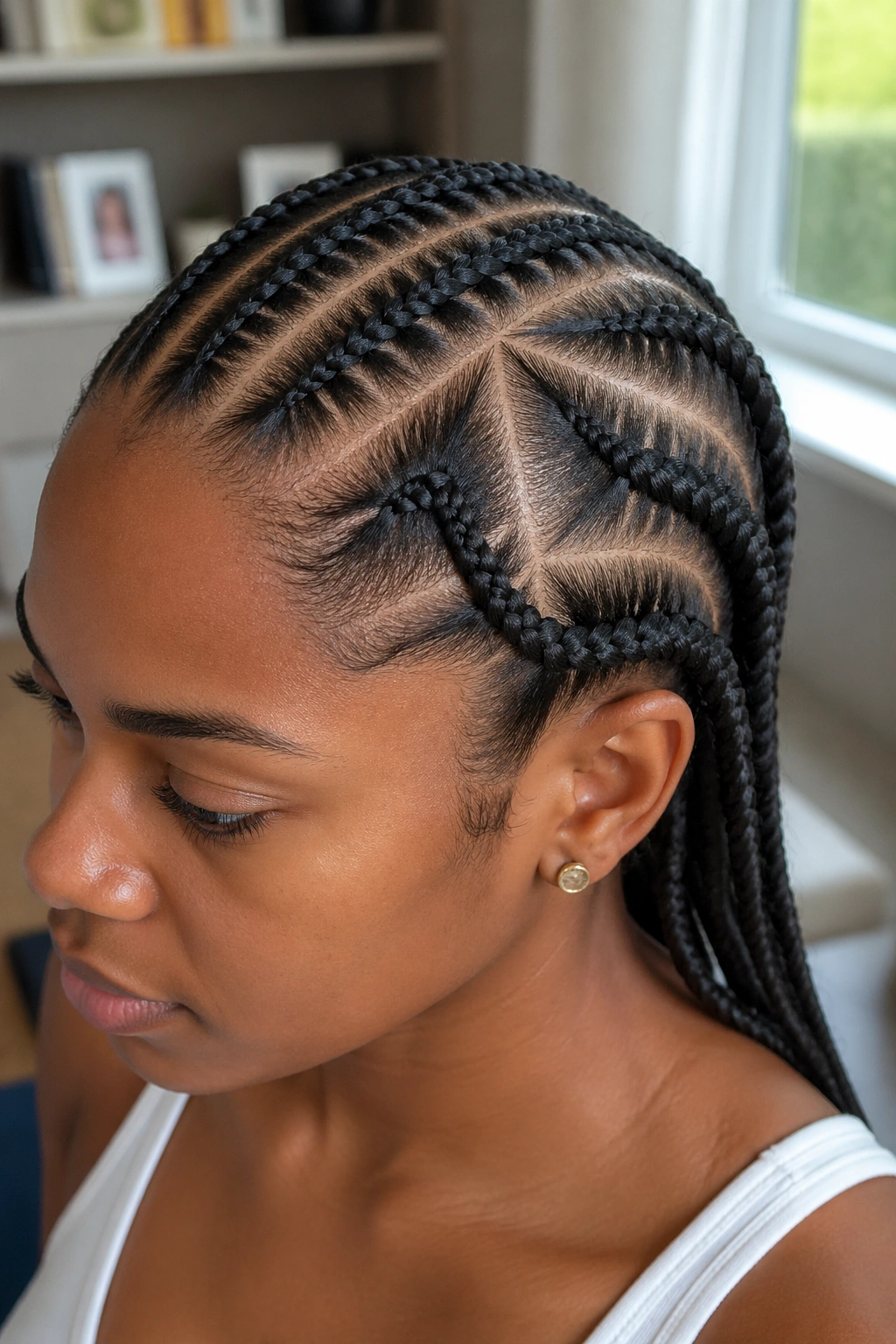
Triangle parts give flat braids a sharper, cleaner base than square sections do. The pointed shape helps the braid sit low at the scalp and gives the style a little geometric edge without making it loud.
The nice thing about triangles is how they spread the tension. A square part can sometimes puff at the corners, especially if the hair is thick or coarse. Triangles tend to reduce that awkward corner bulk. The braid starts from a point and opens evenly, which gives the root a smoother profile.
Triangles also make the style look more intentional from the start. Even if the braid pattern is simple, the sectioning gives it character. That matters when you want a laid-flat style that still feels designed.
This is a good option if you want your braids to look fresh for a while. Triangle parts often grow out in a way that still looks structured, even after the roots begin to soften a little.
9. Lemonade Braids That Sweep to One Side
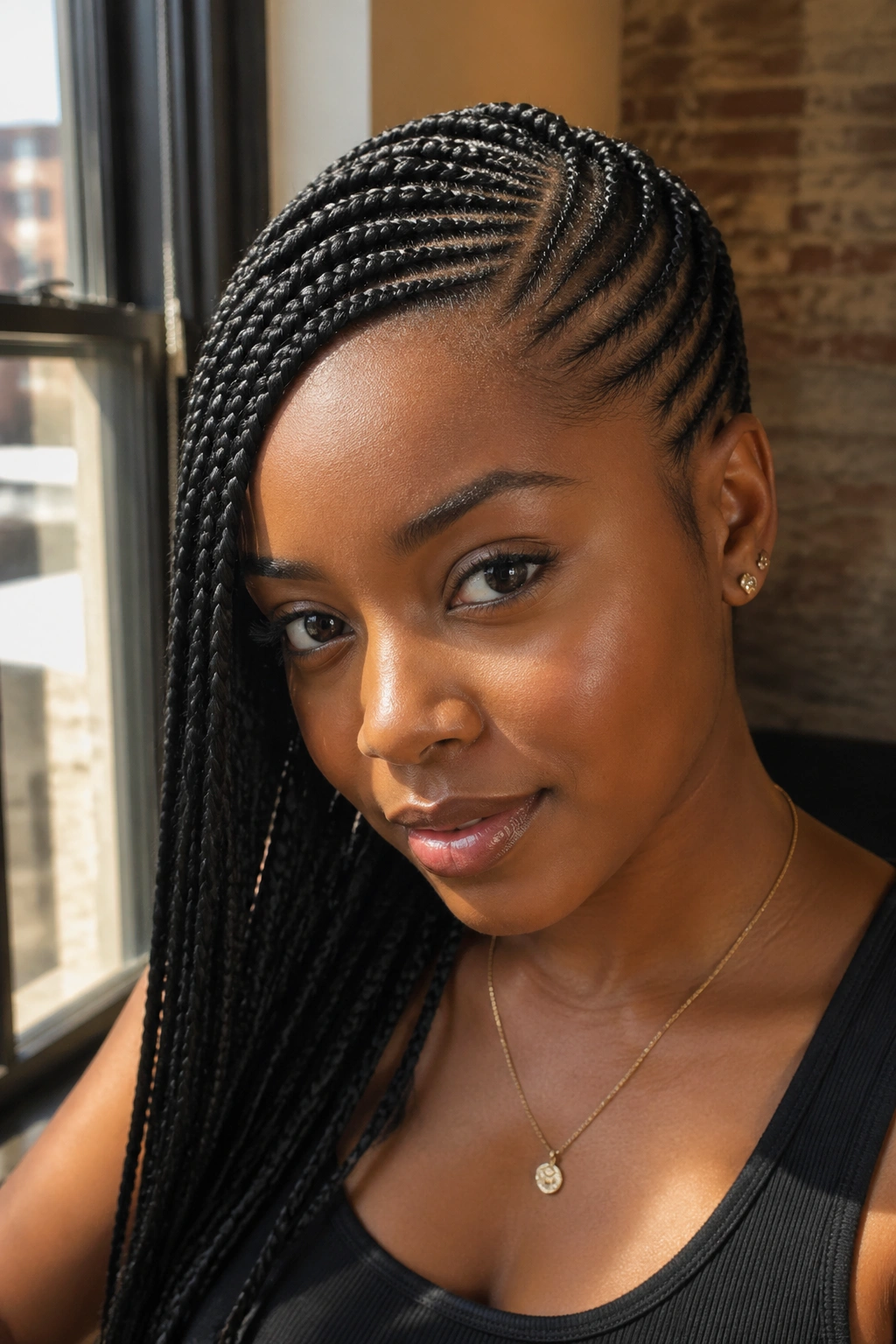
Lemonade braids are one of the easiest ways to make a flat scalp braid feel stylish without loading it up with extras. They sweep in one direction, usually across the side of the head, so the braid pattern follows a long diagonal instead of sitting straight back.
That diagonal is what gives the style its shape. It keeps the rows low, shows off the hairline, and makes the braid pattern feel more fluid. If your face looks good with side framing, this style is a strong one. If you want all the hair pulled off the neck, even better.
The roots still need to be tidy, though. A side-swept braid only looks graceful when the parting is neat and the rows are the same thickness. If one braid is much chunkier than the rest, the whole sweep starts to look heavy.
Lemonade braids suit anyone who wants a laid-flat style with a little attitude. They are especially good when you want the head shape and the braid direction to work together instead of against each other.
10. Ghana Braids With a Fuller, Softer Root
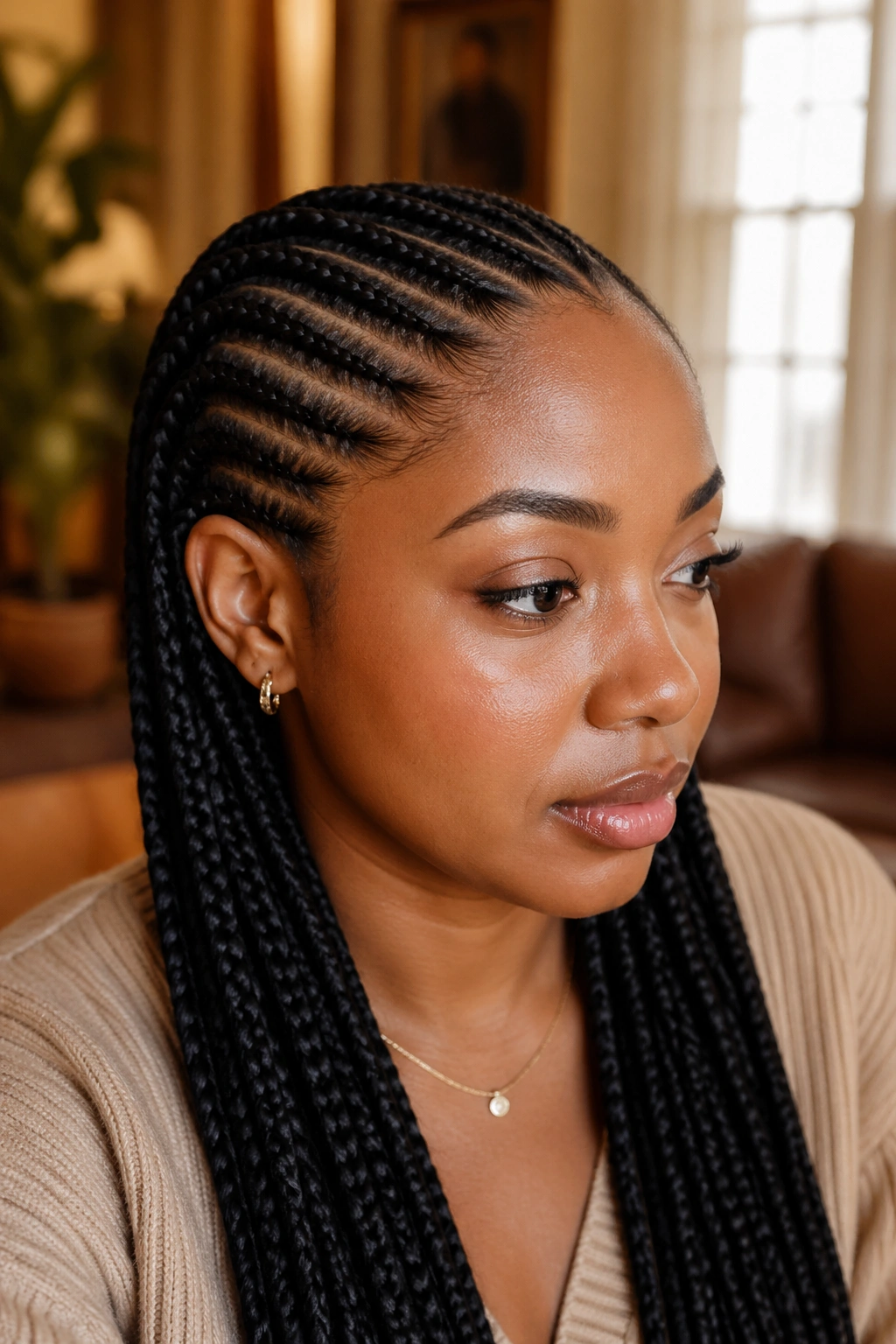
Ghana braids are a thicker feed-in style, and that gradual build is what helps them stay flat at the start. The braid begins slim at the scalp, then gets fuller as more hair is added along the way.
Because the root starts narrow, the style lays down close to the head without that hard lump you get from rushing the first section. The result is a strong, smooth row that feels a little more substantial than a standard cornrow. It is a good middle ground if you want low-profile braids but do not want them too skinny.
They do take a steady hand. The braid has to be fed in evenly, or the thickness can jump in a way that makes the style look uneven. When the addition is smooth, though, the braid has a nice, almost sculpted shape.
Ghana braids work well when you want the hair to read bold but still controlled. They’re one of my favorite flat styles for someone who likes a braid with a bit of body.
11. Goddess Braids With Soft Ends
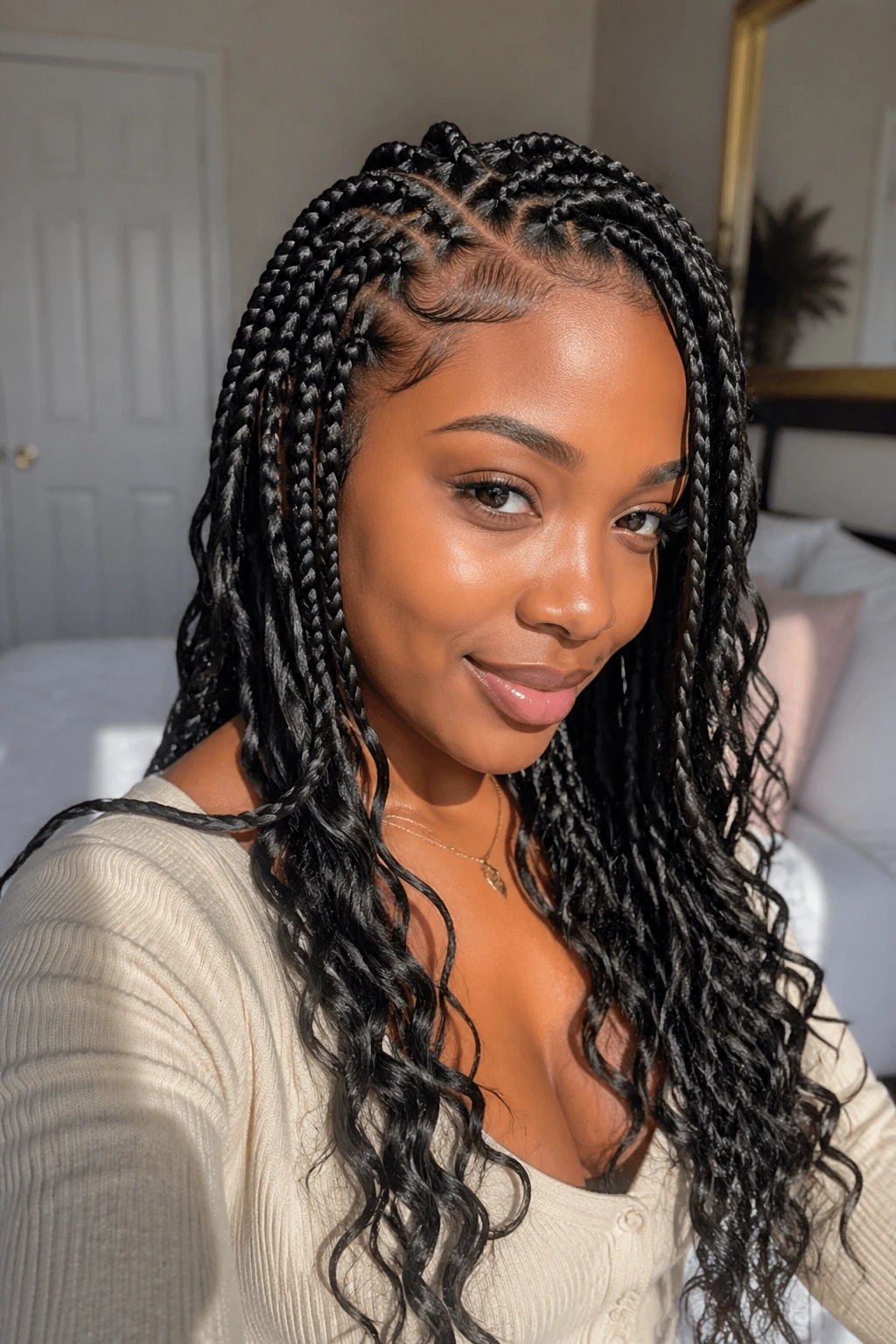
Goddess braids sit in an interesting place. The roots lie flat and neat, but the ends often soften the whole style with loose curls or wavy pieces.
That mix keeps the look from feeling too hard. The scalp work stays clean, and the ends give you a little movement once the braid is done. If you like braids that look dressed up without turning stiff, this is a strong option.
The flatness here depends on the root size. Keep the sections even and let the braid start close to the scalp before you add any decorative hair. If the base is too chunky, the style loses its grace. If the root is tight and tidy, the curls at the end feel like a deliberate finish rather than an afterthought.
This is a good braid for events, yes, but it is not only for special occasions. It also works when you want a protective style that does not feel too severe on day one. That matters more than people admit.
12. Crown Braids That Circle the Hairline
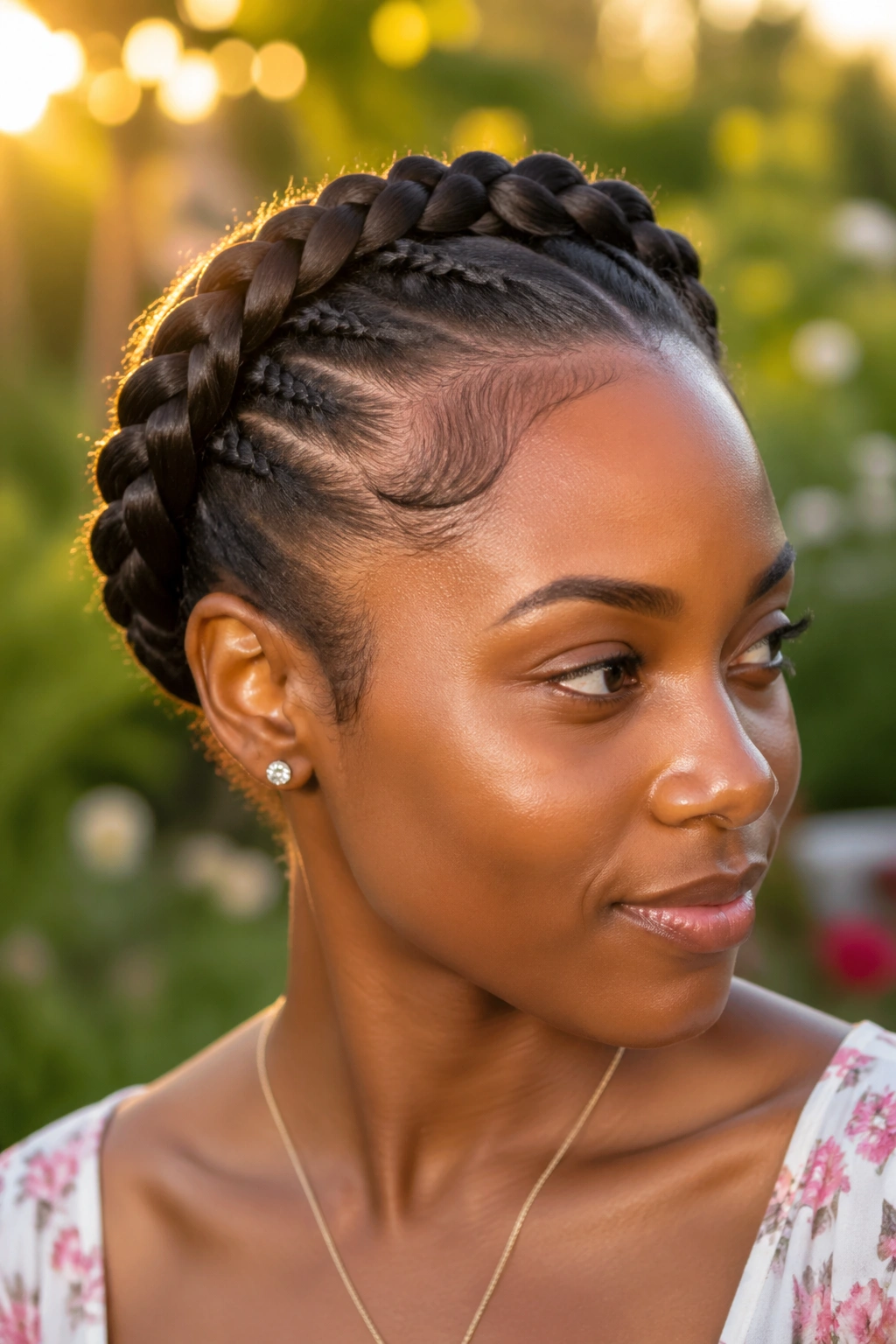
A crown braid is basically a halo of neat, flat braiding wrapped around the head. It sits close to the scalp, follows the hairline, and gives the whole style a finished, framed look.
Unlike rows that move straight back, a crown braid curves around the perimeter of the head. That makes it a little more formal-looking, but also very practical if you want the front and sides fully controlled. It keeps flyaways in check and leaves the center area free for buns, tucked ends, or a clean updo.
This style works best when the braid path is mapped before you start. If the curve changes halfway through, the halo looks uneven. Keep the braid snug enough to stay close, but not so tight that it pulls at the temples. Temples are sensitive. People forget that and pay for it later.
A crown braid is a good choice for weddings, church, interviews, or any day when you want your hair to look put together without a lot of extra decoration.
13. Braided Ponytail Rows That Pull Up Cleanly
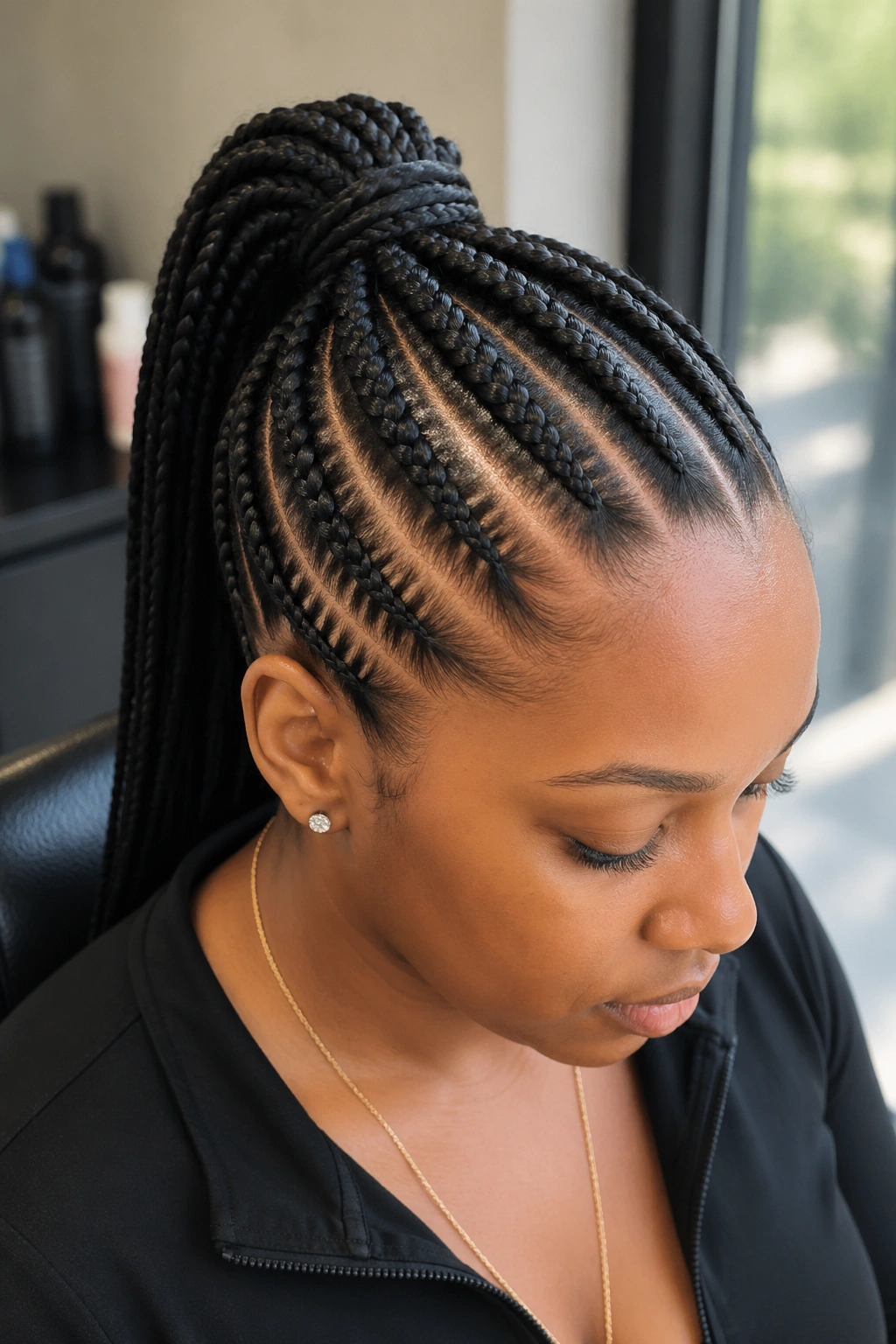
Braided ponytail rows are a neat solution when you want the scalp to stay flat but you also want the braid direction to end in one spot. The rows start low and tidy, then gather into a ponytail at the crown or the nape.
The clean look comes from the way the sections are directed. Each braid has to point toward the same end point or the ponytail sits crooked. Once the rows are aligned, though, the style feels crisp and very easy to wear. It keeps the sides smooth, which is a nice break from braids that fan out everywhere.
Why It Stands Out
- Keeps the scalp close and controlled
- Gives you one secure anchor point
- Works well with long braided lengths
- Makes sleeping easier than loose flowing rows
Tip: if the ponytail base feels bulky, the first sign is usually too much hair gathered near the crown. Start smaller and let the braids do the work.
14. Two-Layer Cornrows for a Cleaner Shape
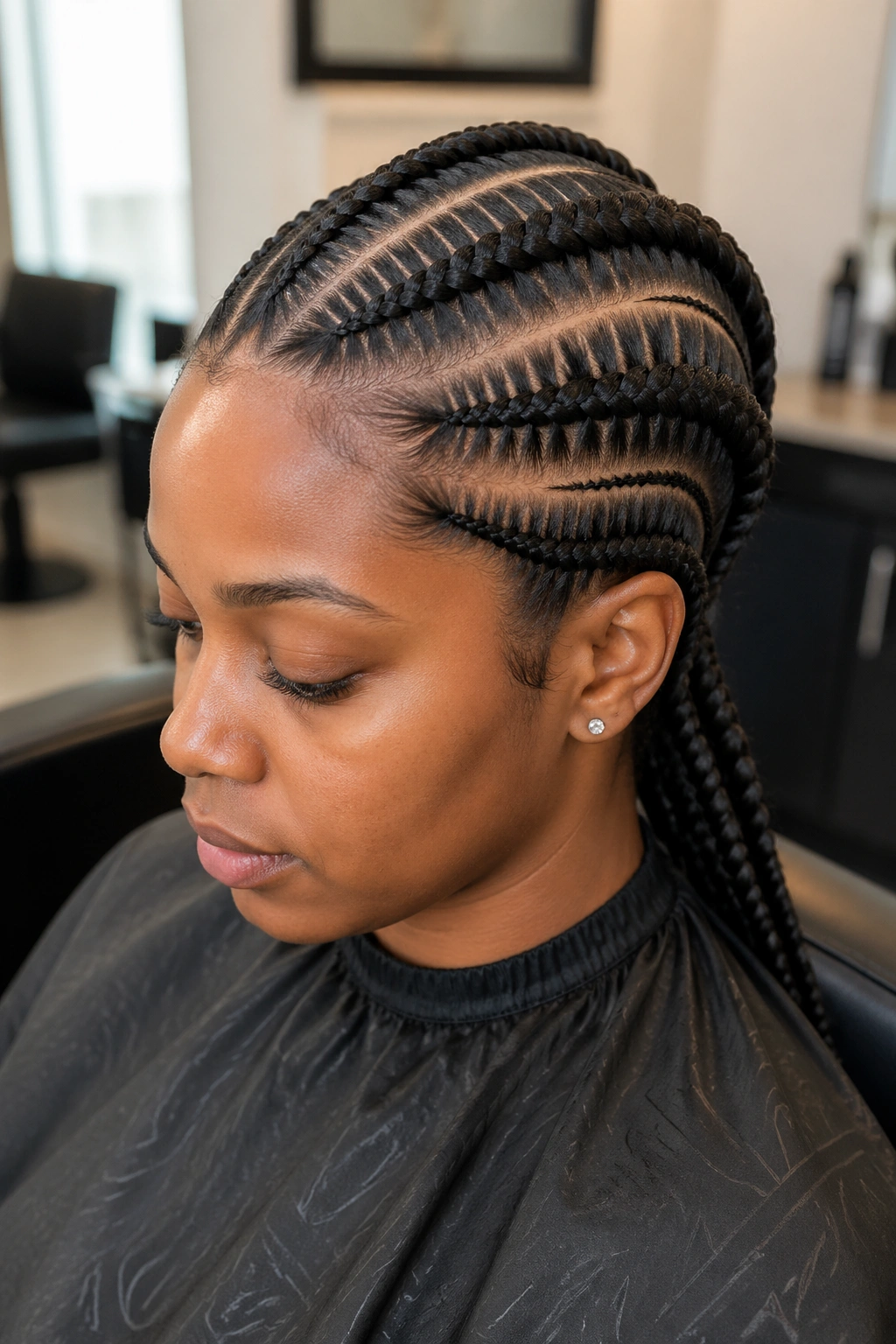
Two-layer cornrows are a smart way to make flat braids look fuller without making the scalp work feel crowded. One row sits above another, usually in a staggered pattern, and the layering gives the style depth.
The nice part is that each layer can still sit close to the head. You get dimension without having to pile on heavy sections. If you have thick hair, this is a useful way to manage bulk. If you have finer hair, it can help the braid pattern look more complete.
The key is spacing. The top layer should not sit so close to the bottom that the rows blur together. You want enough separation to see the pattern, but not so much that the scalp starts looking patchy. That middle ground is where the style looks best.
Two-layer braids work well when you want something orderly with a little more visual weight. They are tidy. They stay close. And they give a very clean shape from the side.
15. Invisible Braids That Disappear Into the Scalp
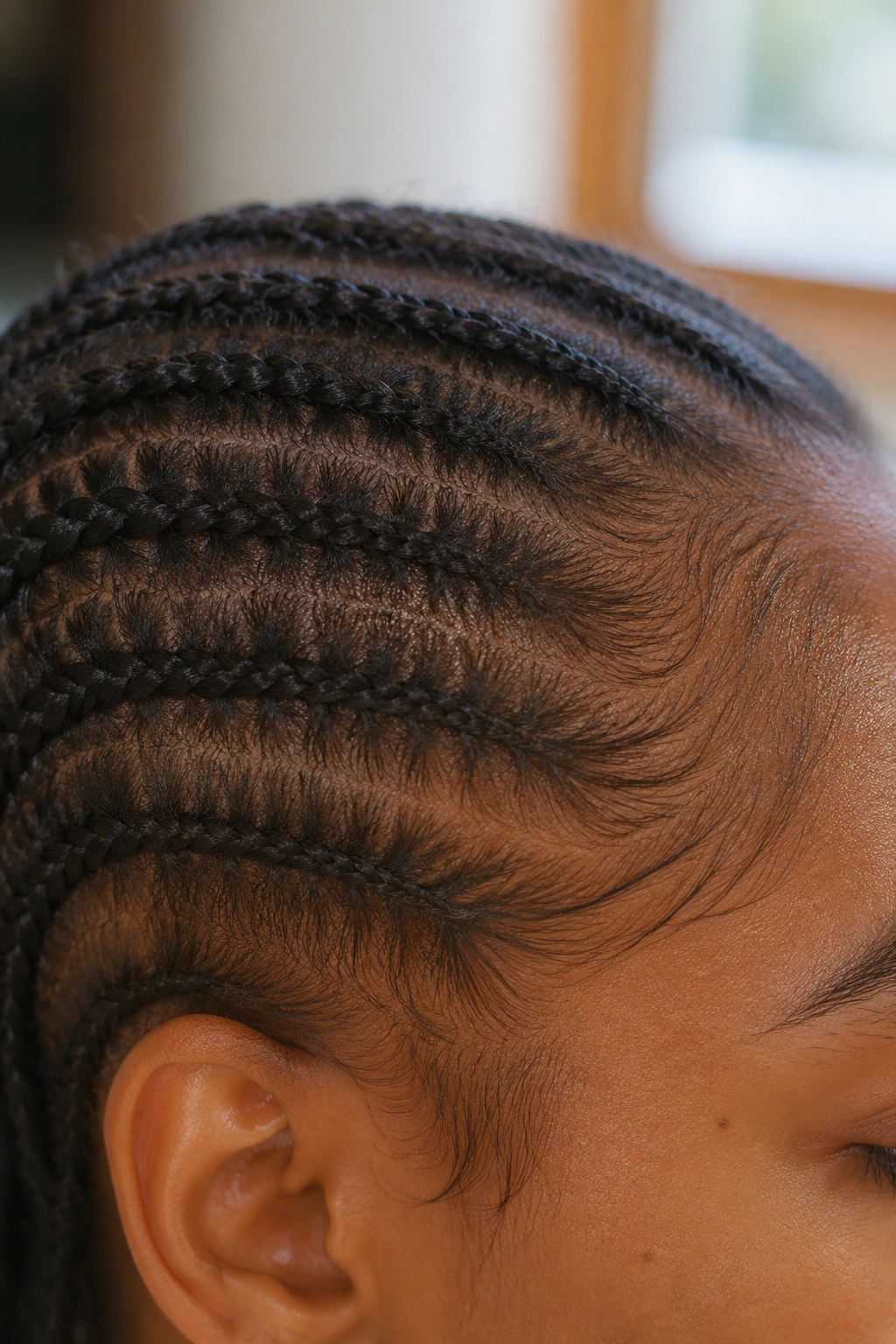
Invisible braids are not truly invisible, of course. They are just braided in a way that blends the root work so smoothly that the braid seems to sink into the scalp.
The effect comes from tiny sections and careful hand placement. The start of the braid is so neat that the line between scalp and braid gets soft. That makes the style look sleek, almost hidden, until the plaits start to show their full length.
Why do people like them so much? Because the finish is low-key. There is no heavy root ridge, no sharp visual block at the hairline, and very little puff if the sections are done well. The style sits flat in a way that feels almost understated, which is not the same thing as boring.
How to Wear It
Use this style when you want your braids to look smooth under hats, scarves, or headwraps. It is also a good choice when you want the braid pattern to be there without shouting for attention. If a flat, quiet finish is your thing, this one earns its place.
16. Micro Cornrows for the Flattest Possible Finish
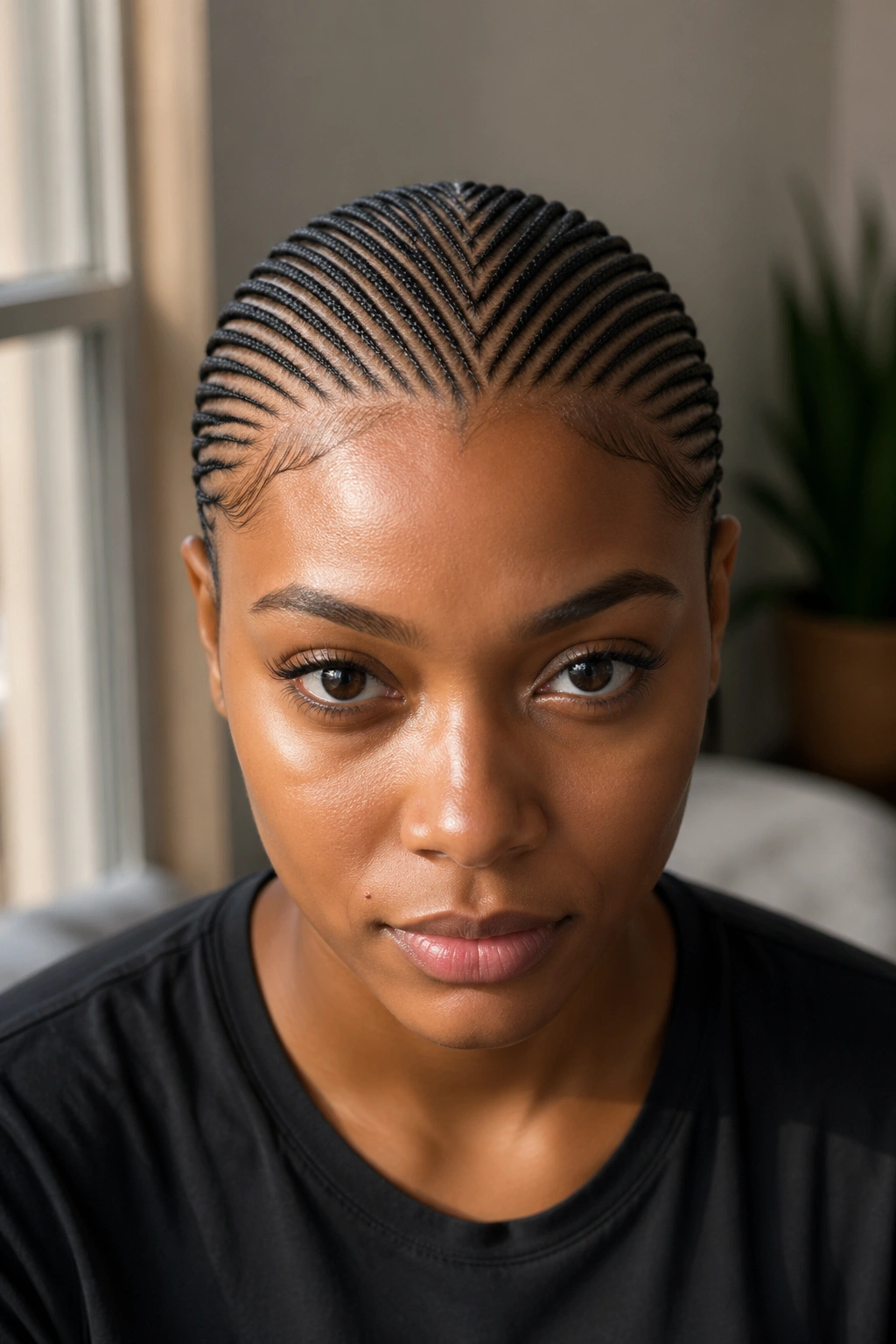
Micro cornrows are tiny, and that is exactly why they lay so close to the scalp. The smaller the section, the less bulk the braid has to fight at the root.
They take time. A lot of it. But the payoff is a very close, detailed braid pattern that sits almost like stitching across the head. The style can look delicate from a distance and surprisingly intricate up close. It also gives you room to play with tiny part lines, which matters if you love detail.
- Best for long wear and precise styling
- Needs a careful hand and a lot of patience
- Works well when you want a very flat profile
- Not the fastest choice if you are braiding your own hair
The downside is maintenance. Tiny braids can dry out if you overdo product, and they can feel fiddly during installation. Still, if you want the braid to hug the scalp as closely as possible, micro cornrows are hard to beat.
17. Crisscross Braids With a Woven Scalp Pattern
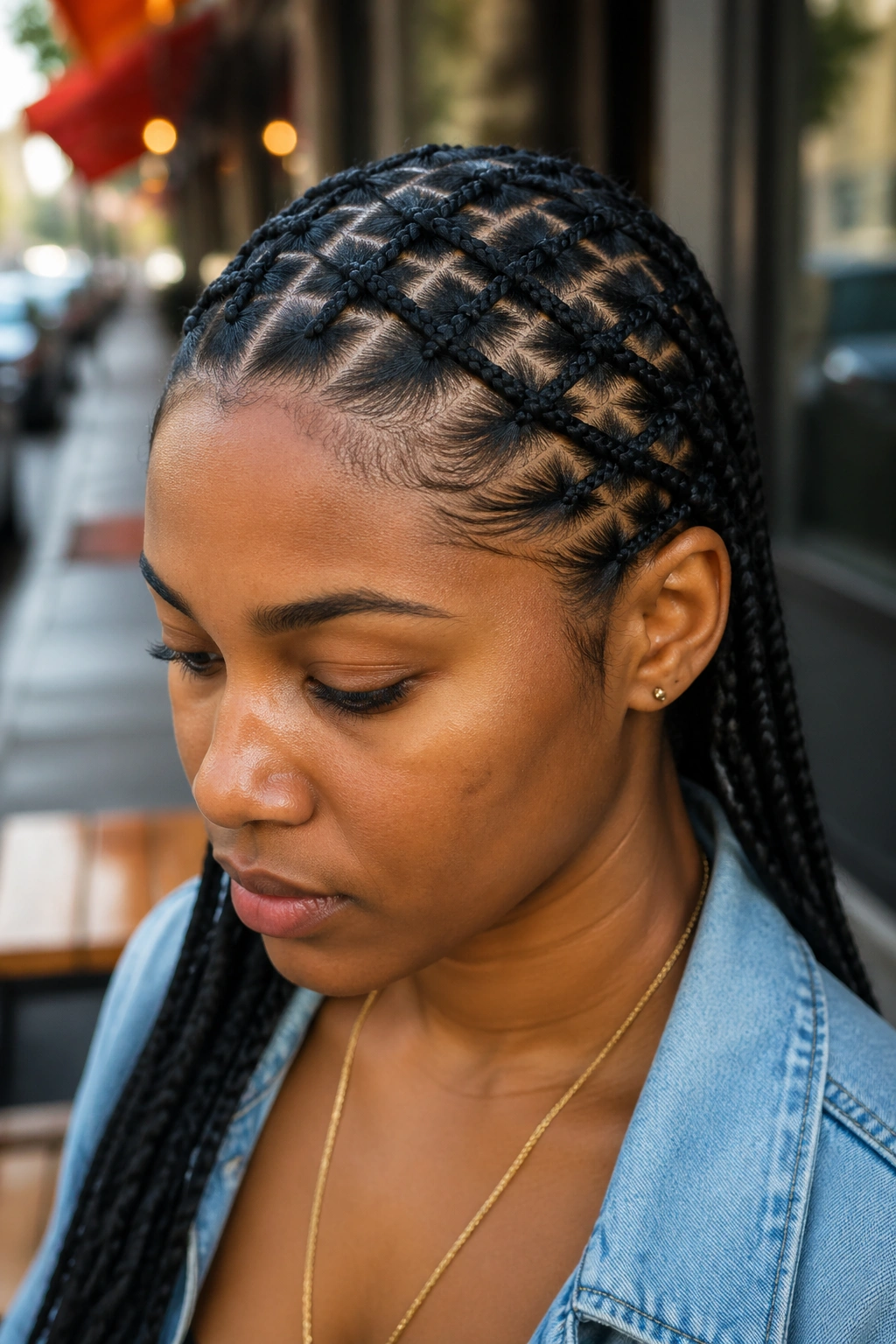
Crisscross braids add a woven look while staying flat at the base, which is a nice trick when you want a little movement without leaving the scalp.
The pattern works by crossing sections over each other before they settle into their braid path. That creates a lattice effect near the roots. Done neatly, it looks polished and intentional. Done carelessly, it looks tangled. There is no middle ground here.
This style is good when you want the front to be the showpiece. The crisscross can frame the forehead, pull the eye toward the center part, or break up a plain braid set that would otherwise look too simple. It also works well with buns, because the woven base gives the updo a clean anchor.
If you like styles that look more detailed than they are, this one is a clever pick. It stays close to the scalp, but it has enough texture to keep from feeling flat in the wrong way.
Final Thoughts
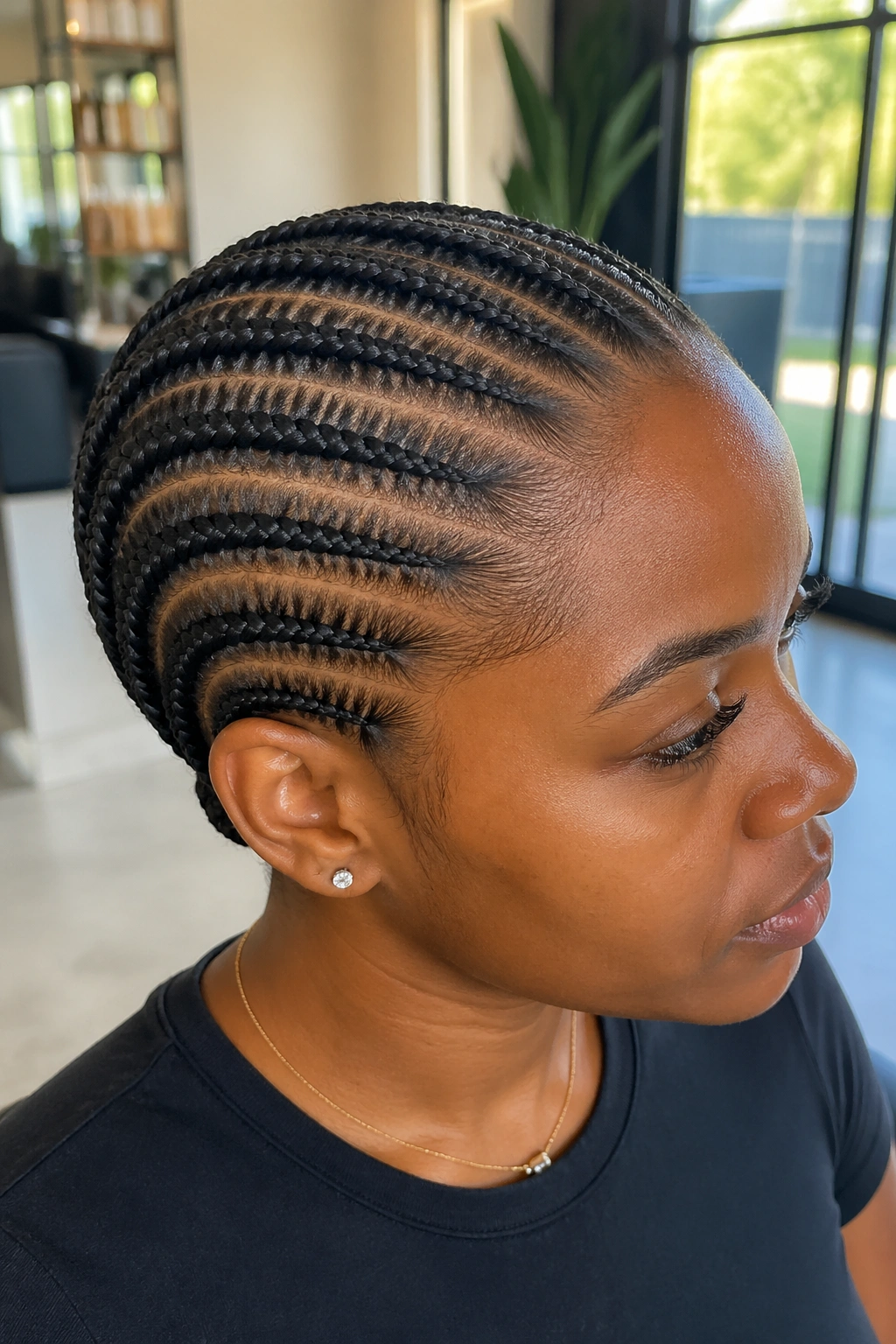
Flat braids live or die by the root. That is the part people notice first, even if they do not know why the style looks so clean. If the sections are neat and the braid starts close to the scalp, the whole look feels sharper.
The safest way to choose is to think about the shape you want on day one and the shape you can live with two weeks later. Straight rows are easy. Side sweeps feel softer. Feed-ins and Ghana braids give you a smoother root with a little more body. Tiny styles like micro cornrows look incredible, but they ask for patience.
Bring a clear reference photo, yes, but also tell your stylist how you want the braid to sit at the hairline. That single detail changes everything.
