



Flat hair is rude. It shows up on the mornings you do everything right — good shampoo, a clean part, maybe a round brush — and then the style still hangs heavy around the cheeks. Layered haircuts for women over 60 fix that problem without forcing a dramatic chop, because layers remove weight, create lift, and let the hair move instead of sitting there like one solid sheet.
Hair changes with age, and the changes are not tiny. The crown can lose density, the ends can get drier, and strands that once folded neatly may start doing their own thing. That is why blunt cuts often look boxy or flat on older hair, while soft layers, feathering, and face-framing pieces can make the whole cut feel lighter and more alive.
Some of these looks are short and tidy. Others keep enough length for a clip, a tuck, or a quick bend with a brush. The cuts that hold up do not fight your texture; they work with it, which is the only sensible way to choose a style you will actually wear.
1. Layered Haircuts for Women Over 60: The Soft Chin-Length Bob
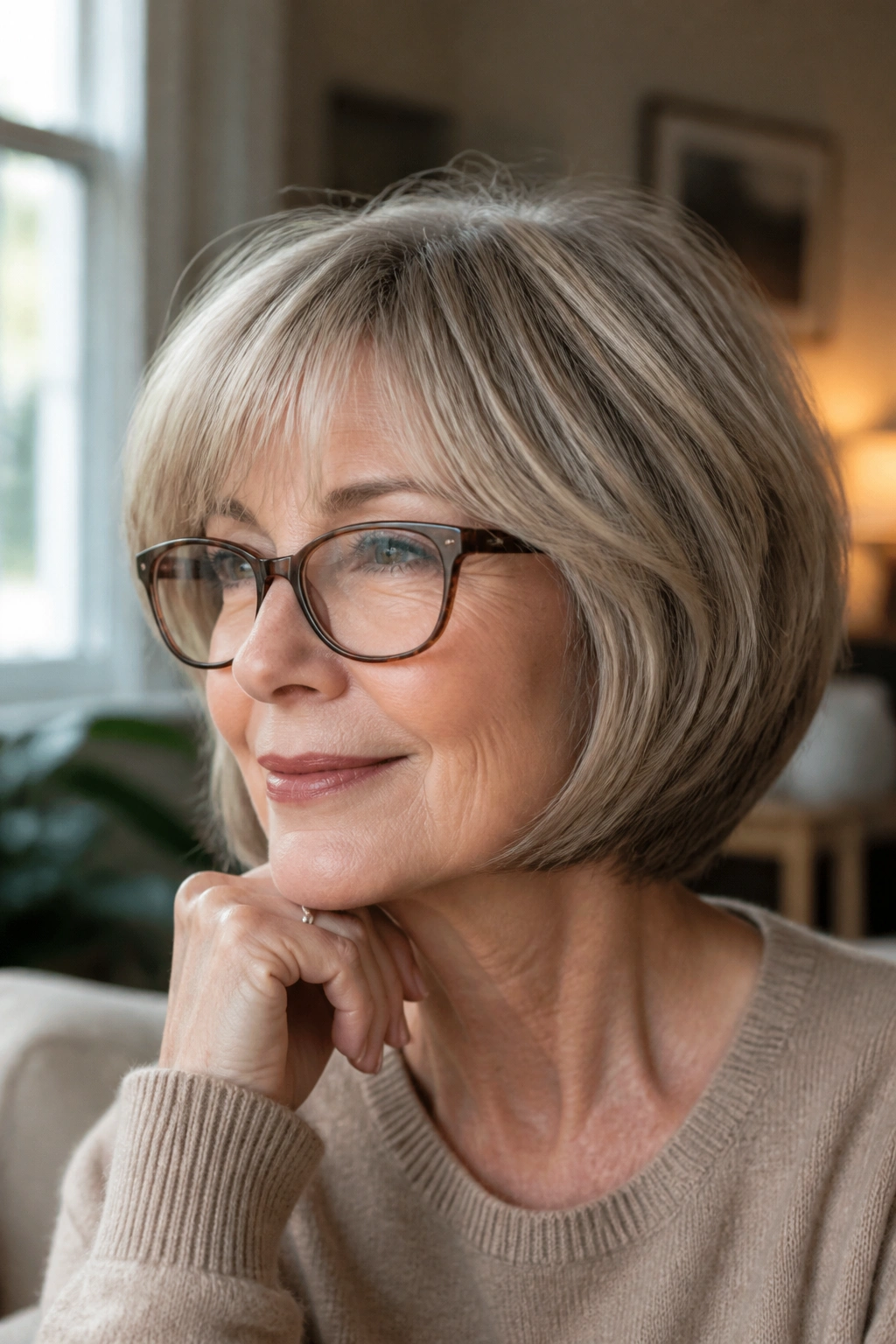
A chin-length bob with soft layers can make fine hair look fuller in one appointment. The length lands where the jaw needs a little shape, and the layers keep the bottom from turning into a flat shelf. If your hair tends to collapse by noon, this is one of the easiest fixes.
What makes it so useful is the balance. The bob gives structure, while the internal layers leave room for movement around the face. It works especially well if you wear glasses, because the ends sit just below the frames instead of fighting them.
- Ask for the shortest layer to sit about 1 to 2 inches below the cheekbone.
- Blow-dry with a 1.25-inch round brush and turn the ends under slightly.
- Keep the nape a touch shorter so the shape does not puff out.
A cut like this does not need much drama to look polished. It just needs clean lines and a little bend.
2. The Feathered Pixie with Crown Lift
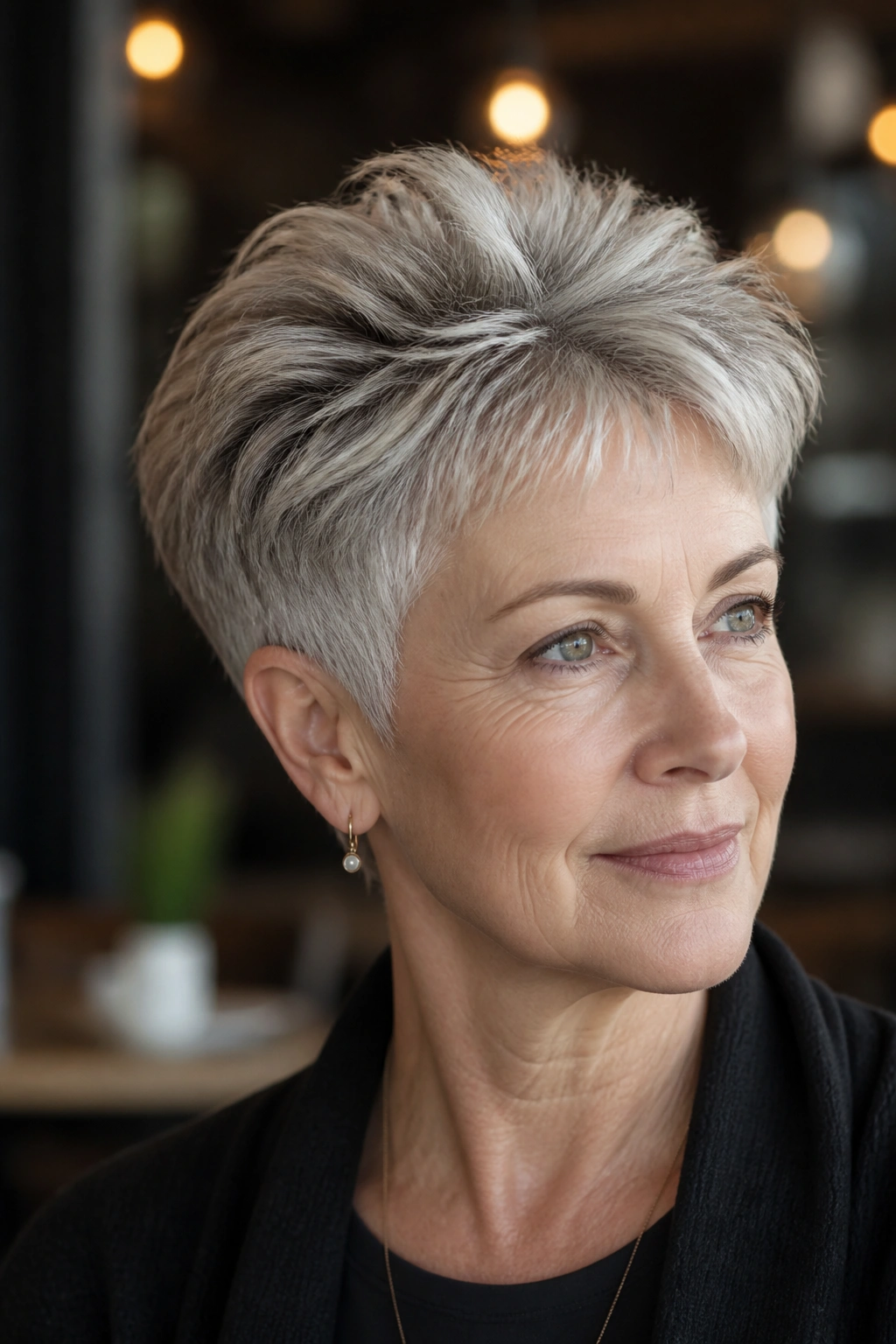
Want something short that still feels soft? This is the one. A feathered pixie with lift at the crown keeps the head shape light, which matters a lot when hair has thinned a bit on top. The shorter sides stop the style from spreading wide, and the feathery top gives you that airy, touchable finish.
Why It Lifts the Crown
The trick is in the direction of the layers. They are cut to stand up and away from the scalp instead of lying flat, so you get volume where many women want it most. That little rise at the crown makes the face look more open, and it works nicely with earrings, scarves, and strong brows.
Styling Notes
- Use a pea-sized amount of mousse at the roots while the hair is damp.
- Dry the crown first with your fingers, lifting the hair up and back.
- Finish with a light wax on the ends, not the roots.
It is a brisk, low-fuss cut. And it looks far more expensive than the effort it takes.
3. The Shoulder-Length Shag with Curtain Bangs
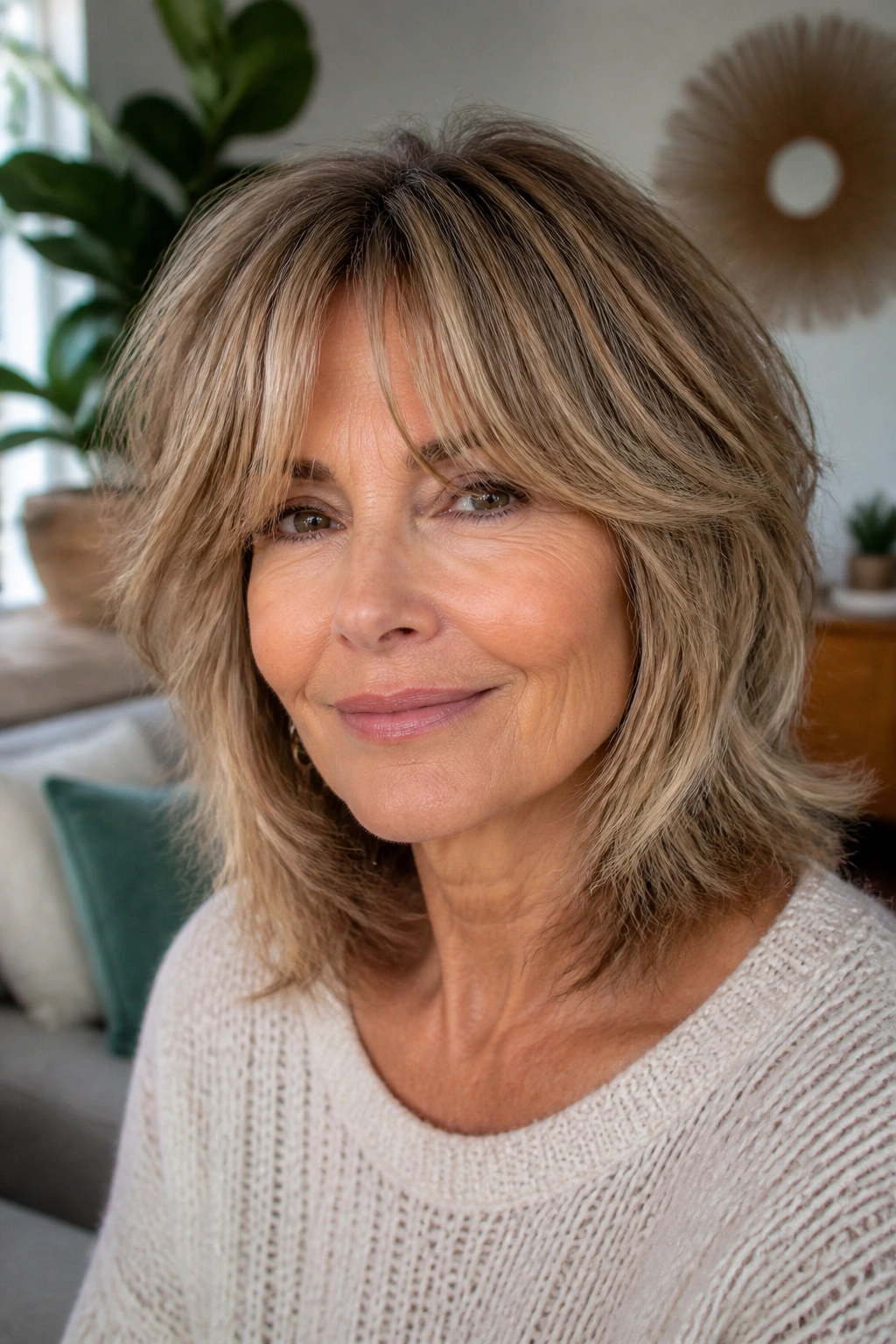
A shoulder-length shag has a nice bit of attitude, but not the sharp kind. It sits in that sweet spot where the hair feels modern without looking staged, and the curtain bangs soften the forehead in a way that feels easy rather than fussy. On wavy or slightly bent hair, it almost styles itself.
The layers matter here because they break up the shape from top to bottom. Instead of a heavy curtain hanging near the shoulders, you get pieces that move when you turn your head. That movement keeps the cut from looking dated, which is half the battle with longer styles over 60.
It is a good pick if you like hair you can air-dry and leave alone. Add a little cream, scrunch the ends, and let the fringe fall where it wants. If your hair is pin-straight, you may need a few bends with a flat iron, but nothing fussy. Nothing stiff either.
4. The Layered Lob with Face-Framing Pieces
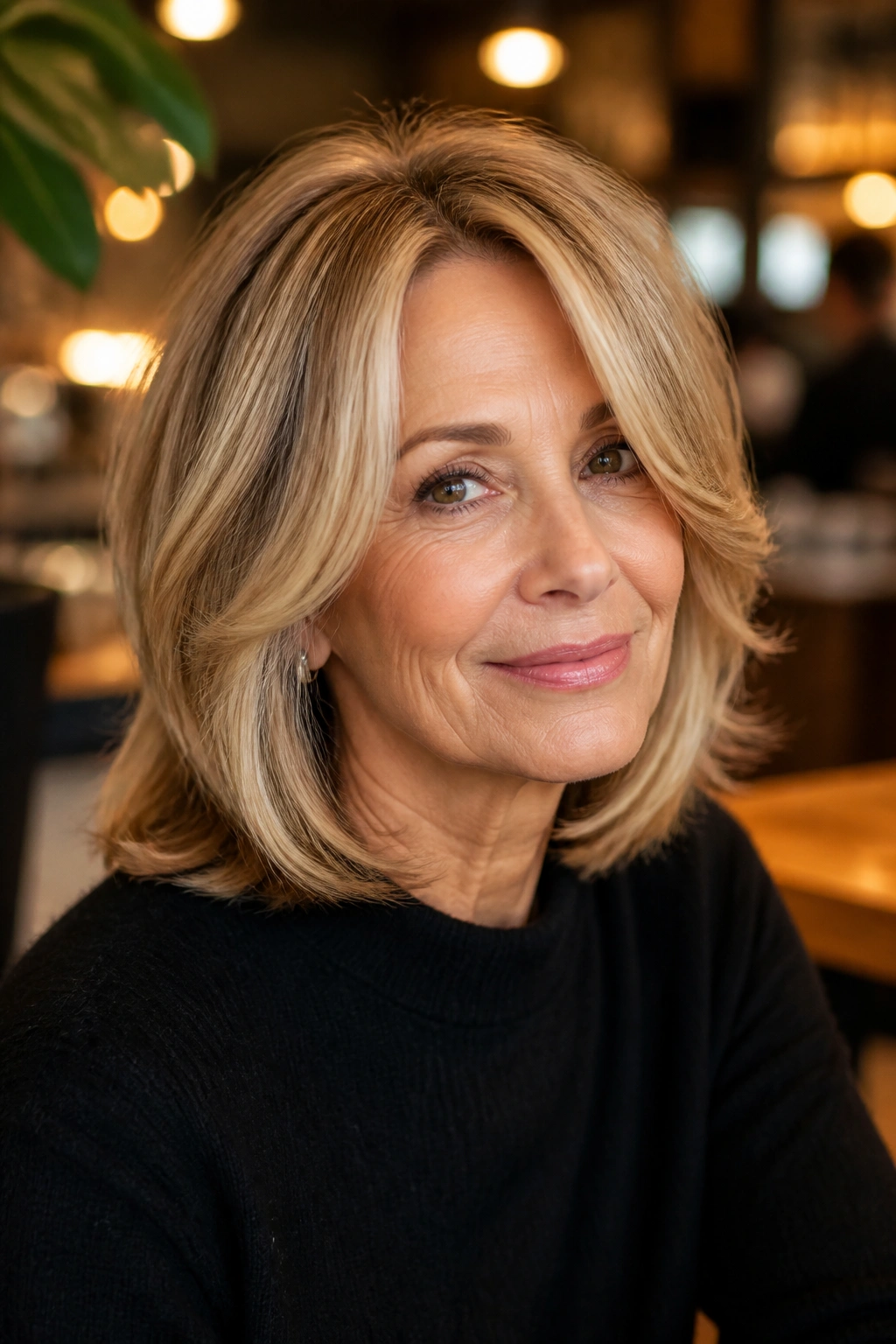
A lob is one of those cuts that rarely argues with anybody. It gives you length, but not so much that the hair drags your face down, and the face-framing pieces keep the front soft around the cheekbones. On a woman over 60, that matters. It keeps the style from feeling severe.
Who It Flatters
This shape is especially kind to round and square faces because the front pieces can be angled to skim the jaw. It also works for fine hair, since the length gives the illusion of fullness without needing a dense curtain of ends.
How to Wear It
- Part it slightly off-center for a softer line.
- Curl the front pieces away from the face with a 1-inch iron.
- Keep the layers long enough to tuck behind the ears.
I like this cut because it does not force a big decision. You can wear it sleek, bent, or loose. That flexibility is worth a lot.
5. The Tapered Crop with Wispy Fringe
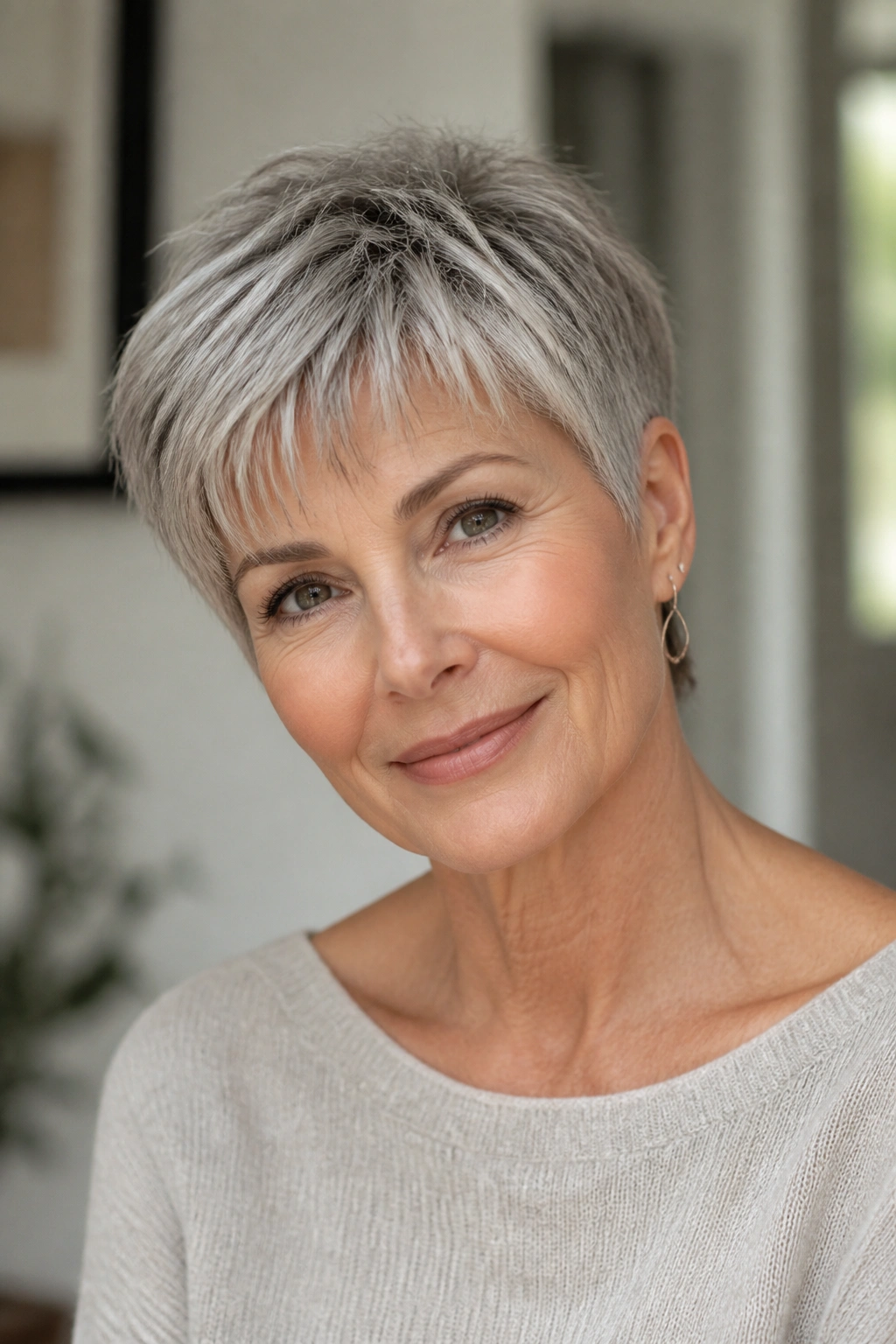
The tapered crop is neat in the best way. It hugs the head a little closer through the back and sides, then leaves just enough softness at the front to avoid that helmet look nobody wants. The wispy fringe keeps the forehead from feeling bare, and it is kinder than a blunt bang on hair that has become finer.
There is something very clean about this silhouette. It shows the neck, lifts the face, and makes necklaces and collars stand out without competing with them. If you like short hair but do not want a hard line, this cut gives you shape without fuss.
It also works when your mornings are busy. A quick blast with a dryer, a dab of styling cream, and you are done. If the fringe starts separating, a tiny bit of water on the fingertips will bring it back together fast.
6. Long Layers on Silver Hair
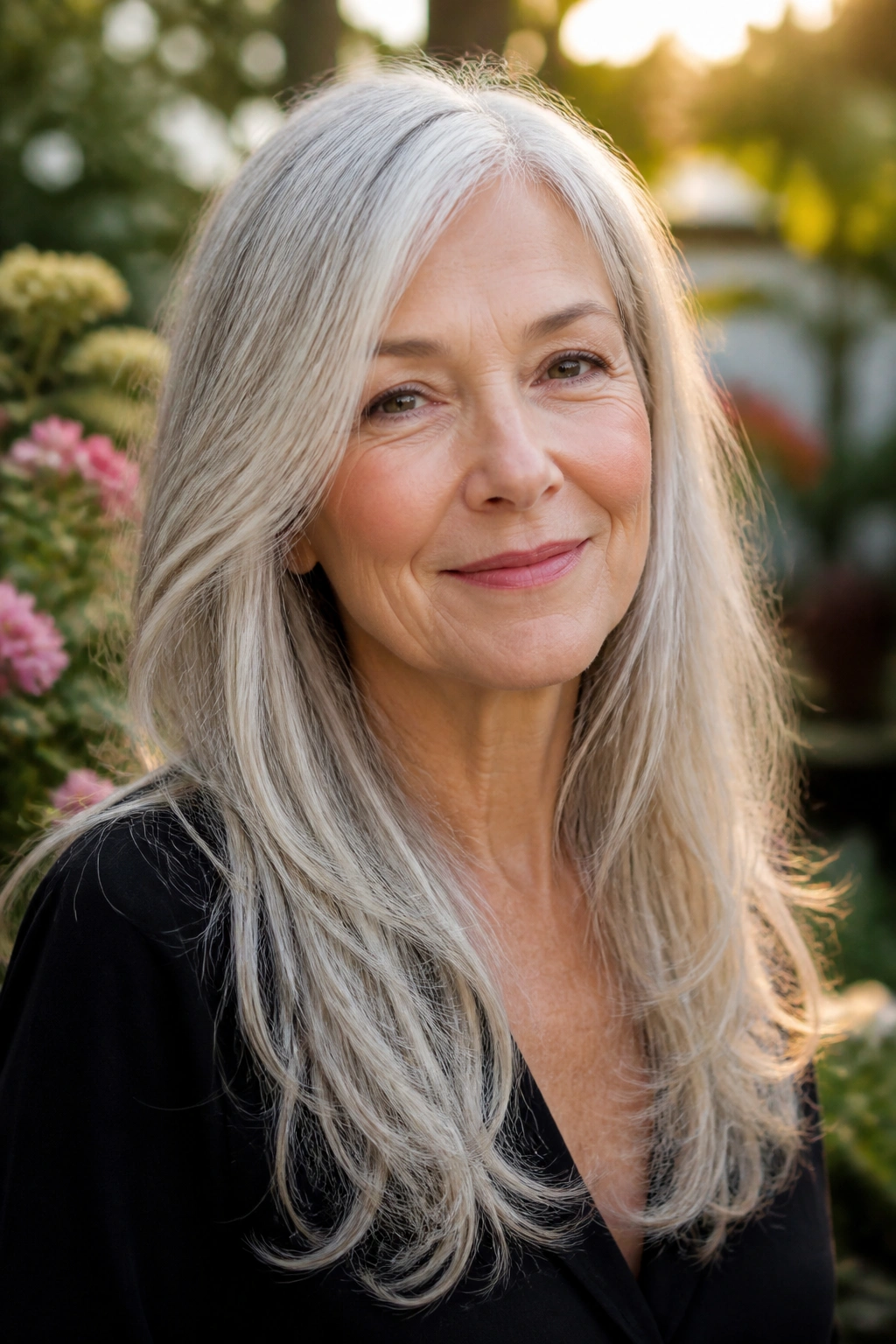
Long hair over 60 can look gorgeous, but only if it has movement. Long layers stop silver hair from hanging in one heavy curtain. They keep the ends from feeling stringy and help the shape stay soft around the shoulders instead of pulling everything downward.
A good long-layer cut usually keeps the shortest pieces around the collarbone or chin, then lets the rest fall in a gentle cascade. That creates shape without taking away the length you may love. It is especially good for silver or white hair, because those tones can show every blunt line.
If you wear your hair long, ask for a U-shaped perimeter rather than a hard straight line. That tiny shift keeps the ends lighter. And if your hair is fine, skip over-thinning at the ends — that is where long hair starts looking tired.
7. The Stacked Layered Bob
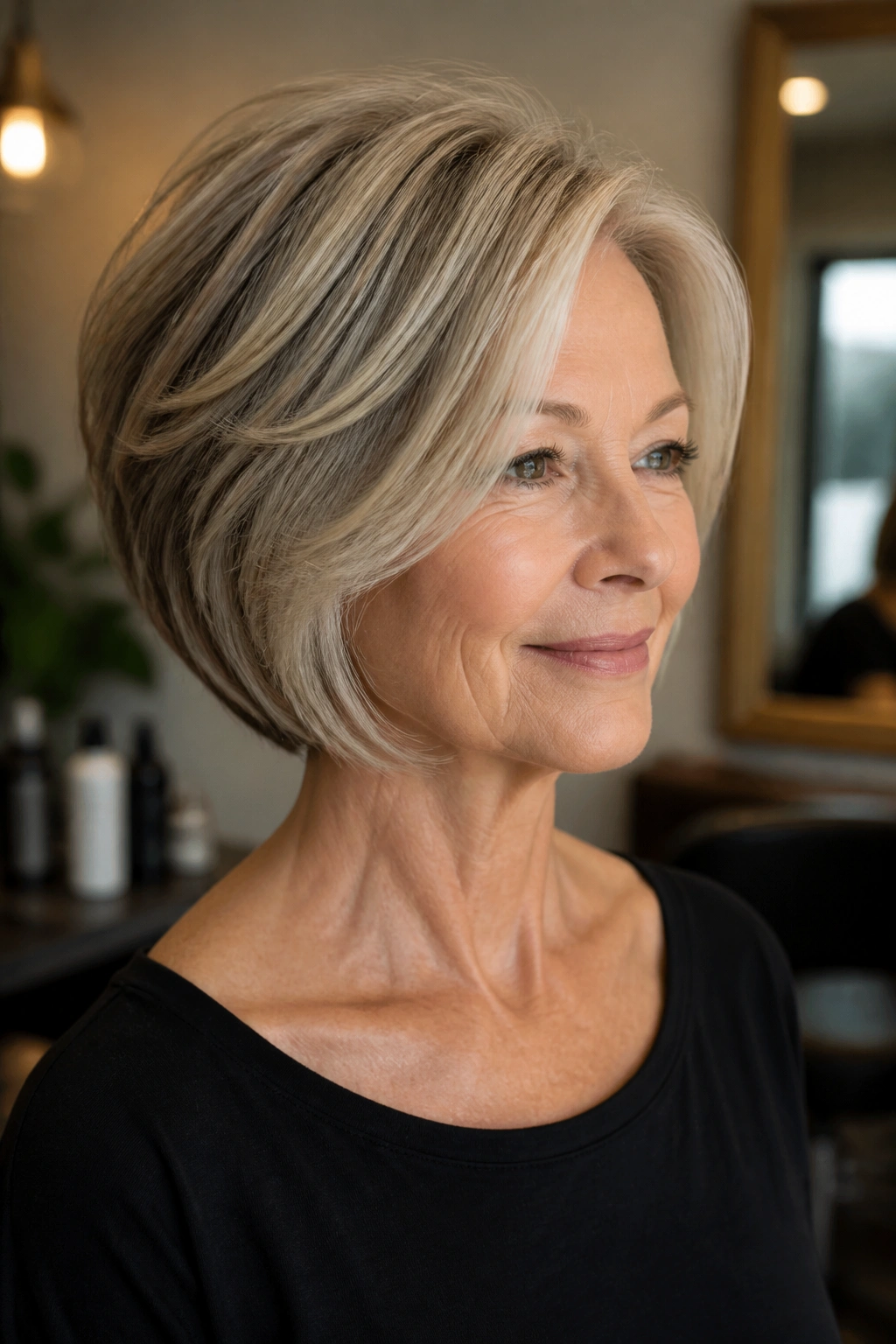
I have a soft spot for a stacked bob. The back is a little shorter, the crown is lifted, and the whole cut has a crisp curve that looks finished even when you barely style it. For straight hair that falls flat, this shape can feel like a small miracle.
The stacked layers build height at the back without adding bulk where you do not want it. That gives the head a prettier profile and keeps the front from looking too wide. It is also a nice choice if your neck is one of your best features. This cut shows it off.
- Keep the nape snug, not shaved tight.
- Ask for stacking that begins around the occipital bone.
- Blow-dry with a round brush to set the curve.
It is polished, sure. But not stiff. That matters.
8. The Wavy Collarbone Cut
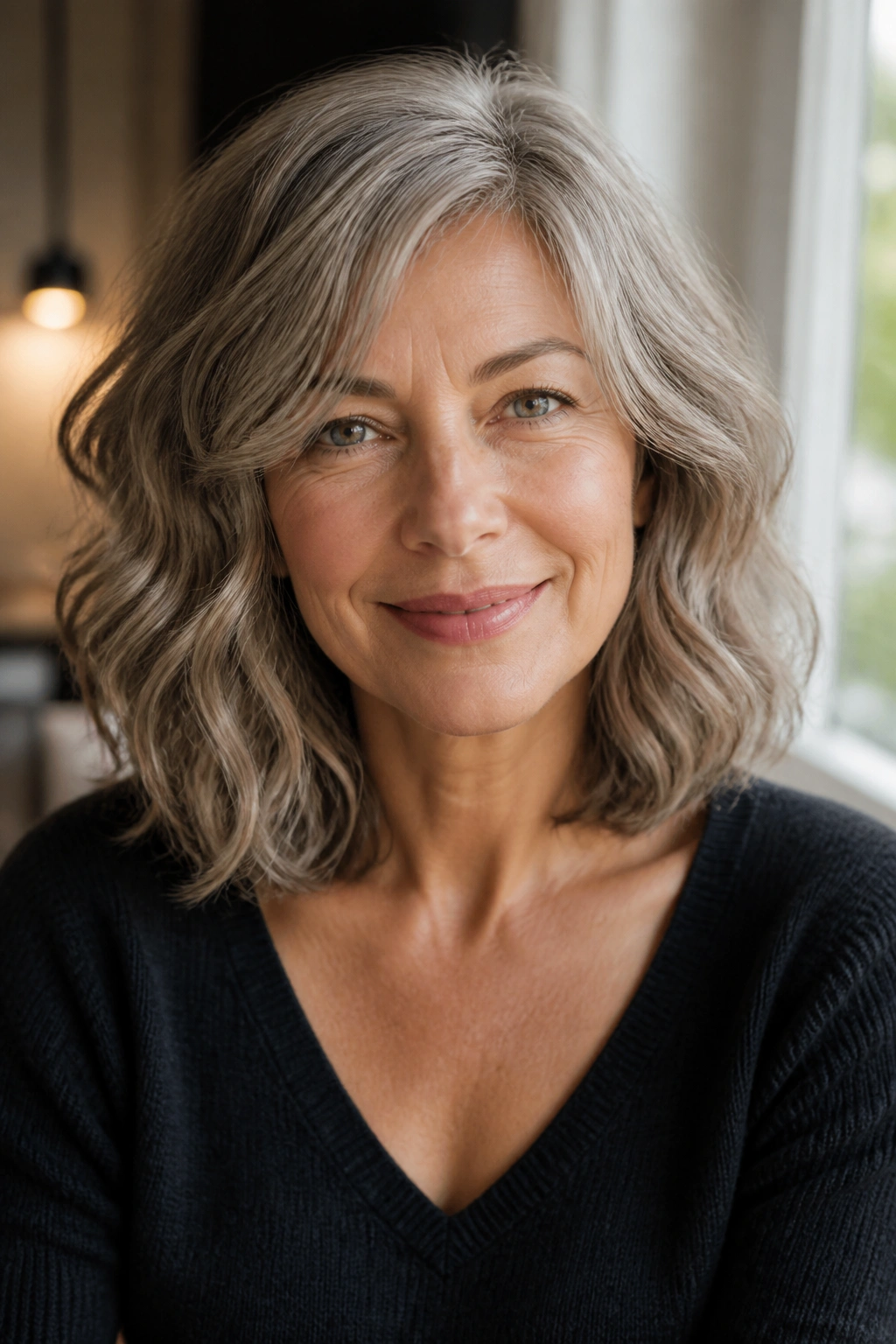
Collarbone length is a sweet spot for a lot of women. It gives you enough length to clip up, tuck behind the ear, or wear loose, and the waves add a soft edge that feels relaxed rather than overly styled. The cut lands right where movement reads best, which is around the upper chest and collarbone.
This one is especially good if your hair has a natural wave that wakes up after a wash. The layers can be hidden inside the shape, so the ends do not look chopped up. You get bend and air without losing the smooth outline.
A little sea-salt spray or a light curl cream goes a long way here. Scrunch, air-dry, and leave the roots alone if you want the softest finish. If the ends tend to frizz, run a drop of serum just through the last inch or two.
9. The Curly Layered Cut with a Rounded Shape
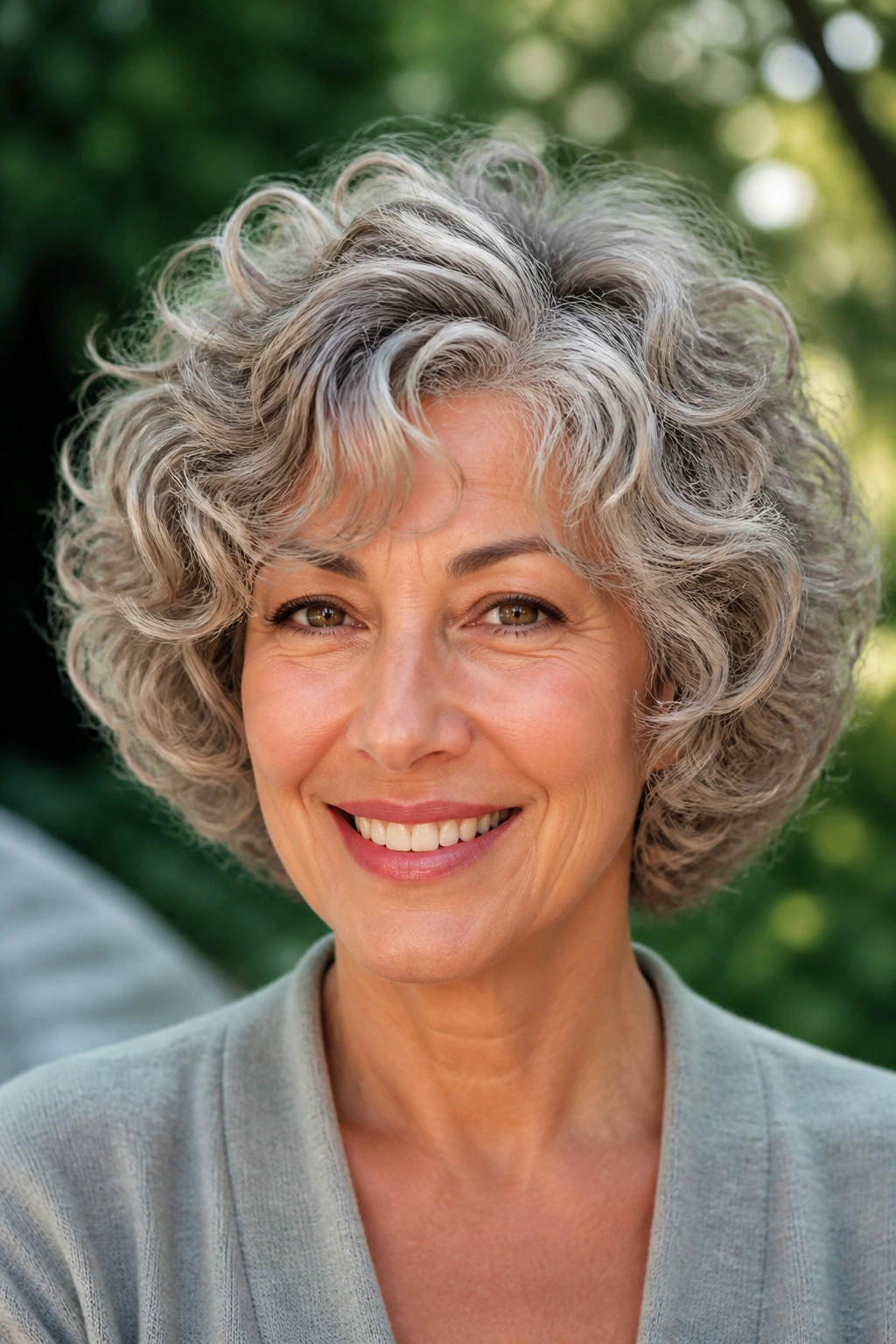
Curly hair loves a rounded cut when it is done right. Not too much bulk at the sides. Not a pyramid. A layered, rounded shape lets the curls stack on each other in a way that feels full but still controlled.
How the Shape Keeps Curls in Line
The goal is to remove weight from the interior without slicing the curl pattern apart. That means the layers should follow the curl, not chop through it. When curls are cut dry or close to dry, the stylist can see where the hair actually sits, which helps avoid surprise shrinkage.
What to Ask For
- Layers that build shape around the cheekbones and jaw.
- A rounded outline, not a wide triangle.
- A soft fringe only if your curl pattern can support it.
This cut is generous to curls that have gotten a little looser with age. It gives them a shape instead of a battle.
10. The Feathered Flip with a Side Part
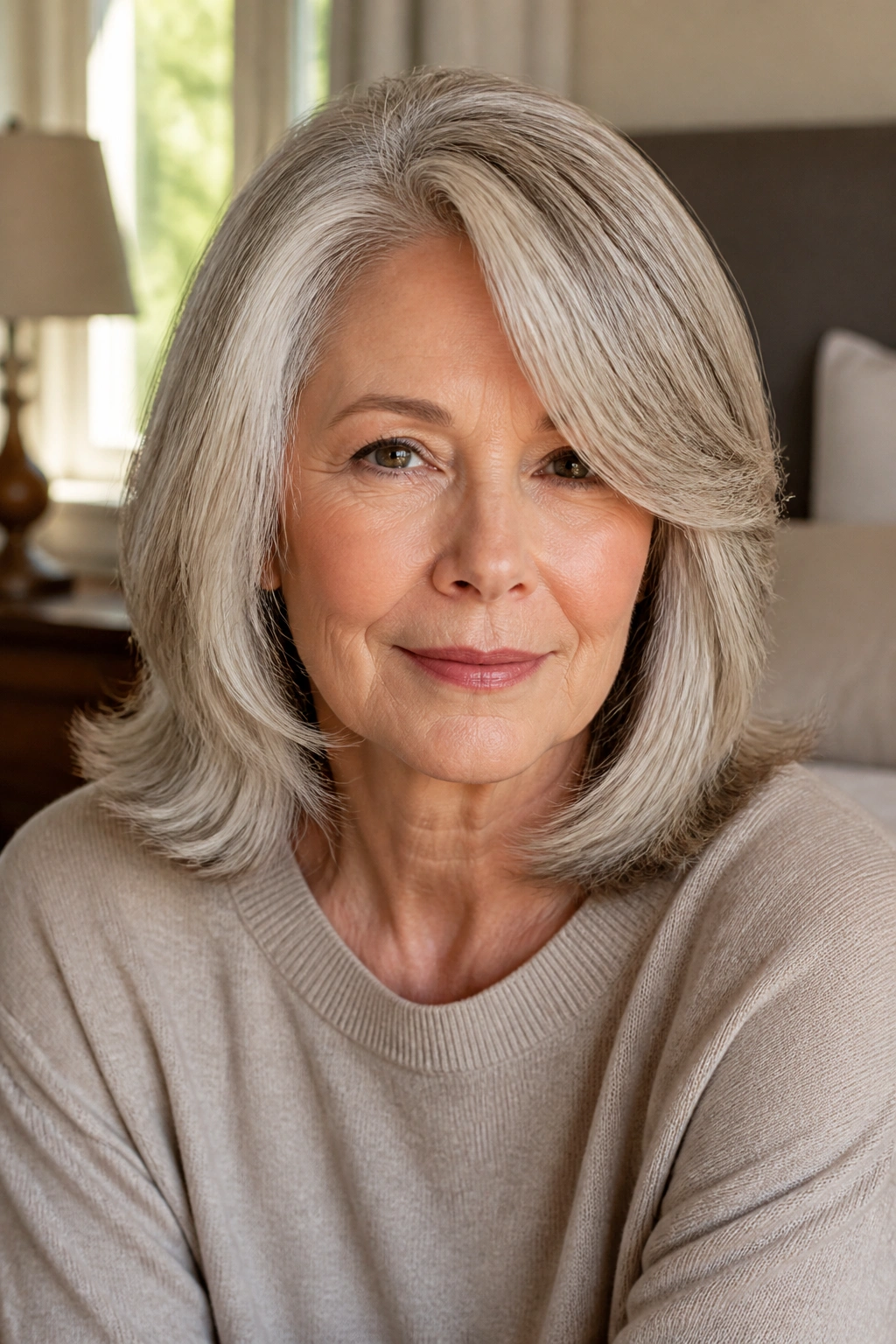
A side part can do more than move hair around. It changes the whole mood of the cut. The feathered flip uses that side part to lift the front away from the face and create a softer sweep. It feels a bit retro, but in a good, lived-in way.
This style shines on fine to medium hair because the feathering keeps the ends from looking heavy. The flip at the bottom gives a little energy, and the part helps create volume where many people want it most. It is one of those styles that looks deliberate without looking overworked.
- Use a medium round brush to bend the ends outward.
- Set the part while the hair is still damp.
- Keep the layers light around the temples so the flip does not feel bulky.
It has personality. That counts for a lot.
11. The Sleek Layered Cut with Blunt Ends
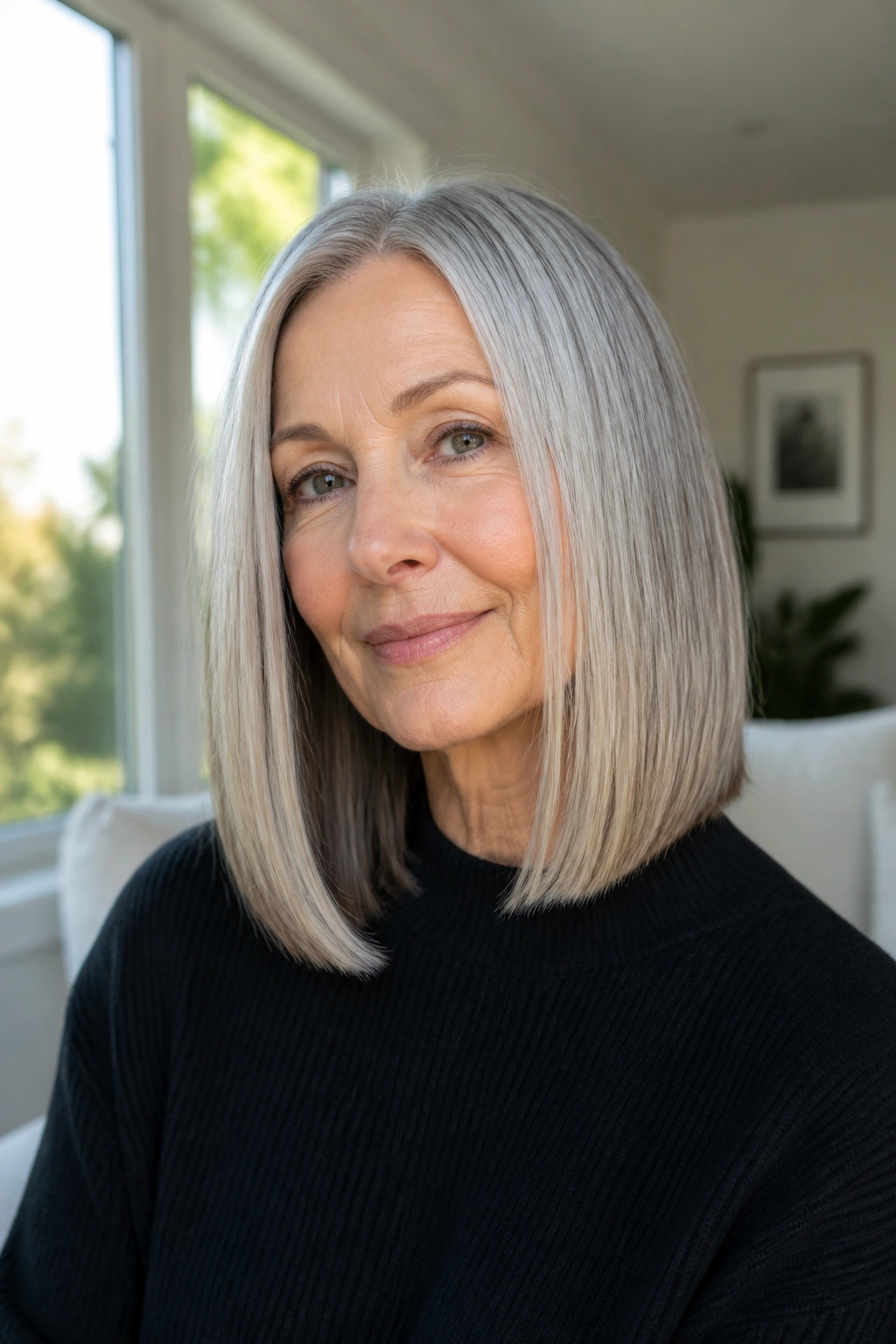
Why choose between smooth and soft when you can have both? A sleek layered cut with blunt ends gives you a clean edge at the bottom, but the hidden layers inside keep the shape from going flat. It is a smart choice for women who like neat hair without the stiffness of a one-length cut.
The blunt perimeter gives the style presence. The internal layers take out just enough weight to keep the hair swinging. That makes it a good fit for straight hair that frizzes when over-layered, because the outer line stays strong while the inside does the work.
This cut also plays nicely with silver hair. The shine shows off the smooth edge, and the layers underneath keep it from looking like a helmet. If you style with a flat brush and a touch of smoothing cream, it stays elegant without feeling overdone.
12. The Soft Razor Shag
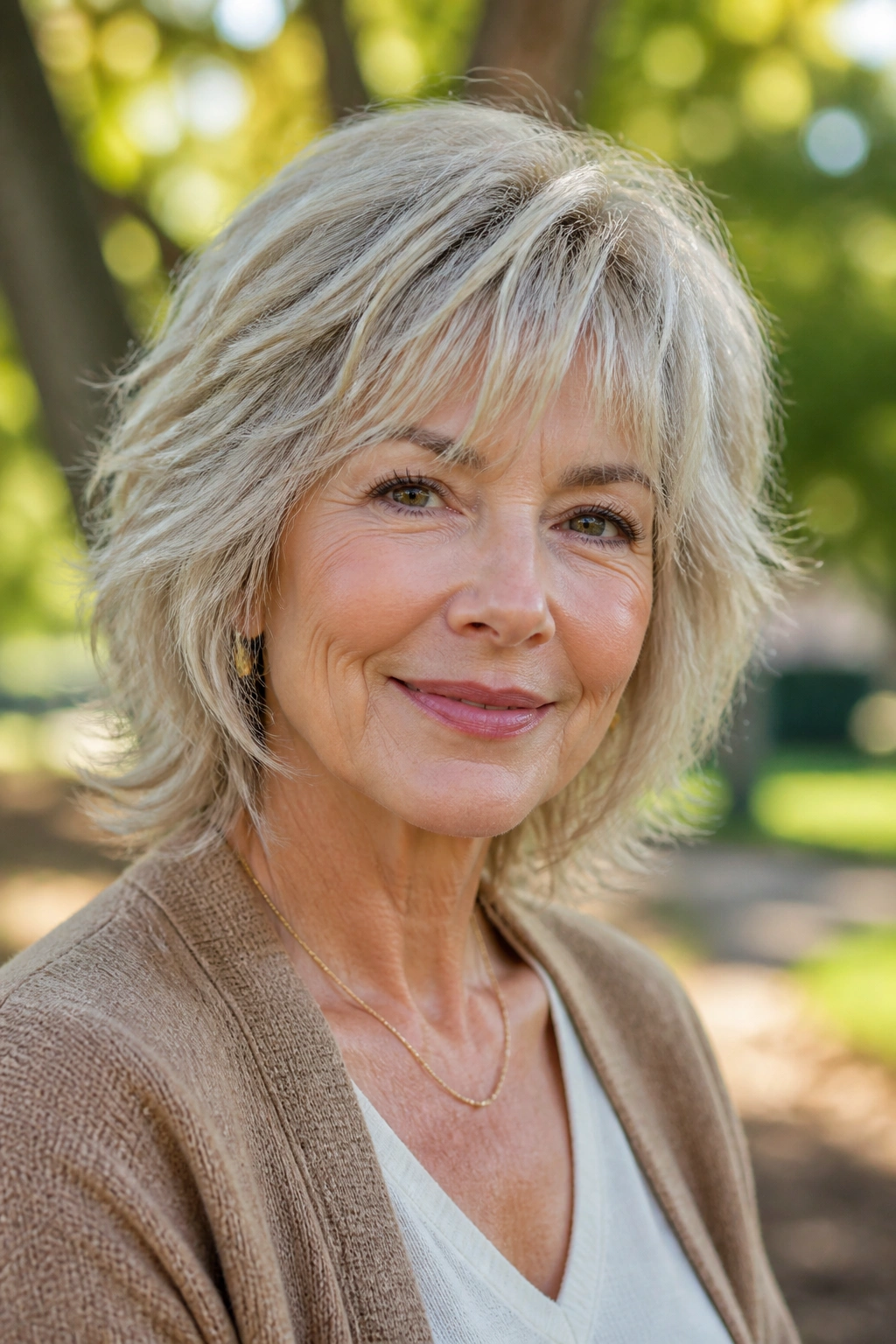
A razor shag is for women who like texture with a little edge. The razor creates softer ends than scissors alone, so the hair falls with a more broken-up finish that suits medium textures well. It is not harsh when it is cut correctly. It just has more air.
This style is especially kind to hair that resists being neat. A razor cut can make heavy hair feel lighter, and it can give fine hair a bit of swing near the ends. The face-framing pieces should stay soft, not spiky. That part matters. Too much blade work and the cut turns flimsy fast.
If your hair likes to move, this is a good one to try. A little mousse at the roots and a rough dry with your fingers will bring out the shape. The more relaxed the styling, the better it tends to look.
13. Layered Haircuts for Women Over 60: Shoulder-Grazing Layers with Bangs
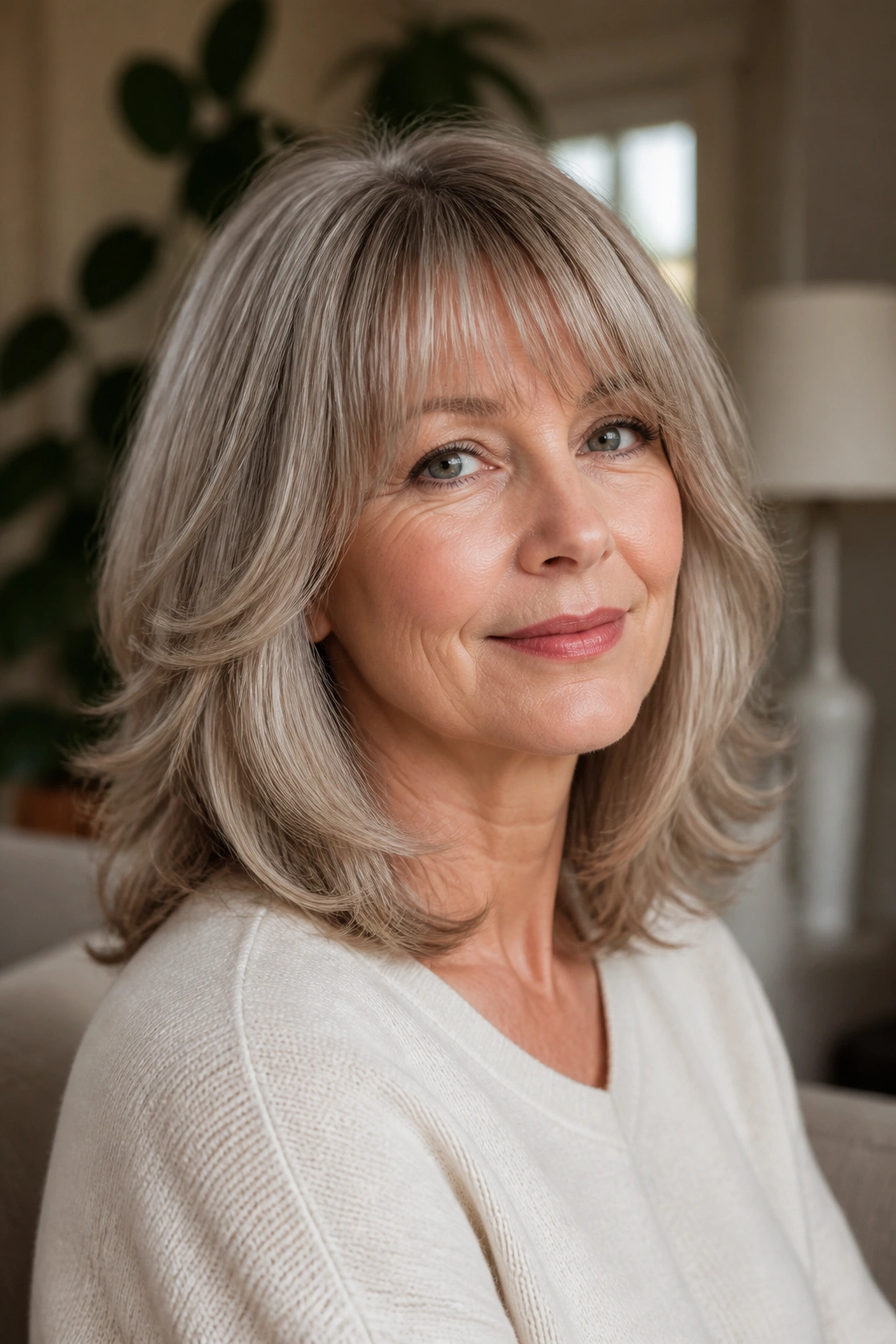
Shoulder-grazing layers are useful because they sit right where the hair can still move, but not so long that it drags. Add bangs, and you get a frame that can soften forehead lines and bring the eyes forward without making the face feel boxed in.
Why the Bangs Matter
The right bang can make a shoulder-length cut feel twice as intentional. A soft, brow-skimming fringe helps connect the top and the sides, which stops the style from feeling split into pieces. It also helps balance a long face or a high forehead.
Styling Notes
- Keep the bangs light and piece-y, not thick and blunt.
- Use a small round brush to bend them under as they dry.
- Ask for layers that begin below the chin so the shape stays soft.
This is a gentle, wearable look. It does not shout. It just works.
14. The Inverted Bob with Hidden Layers
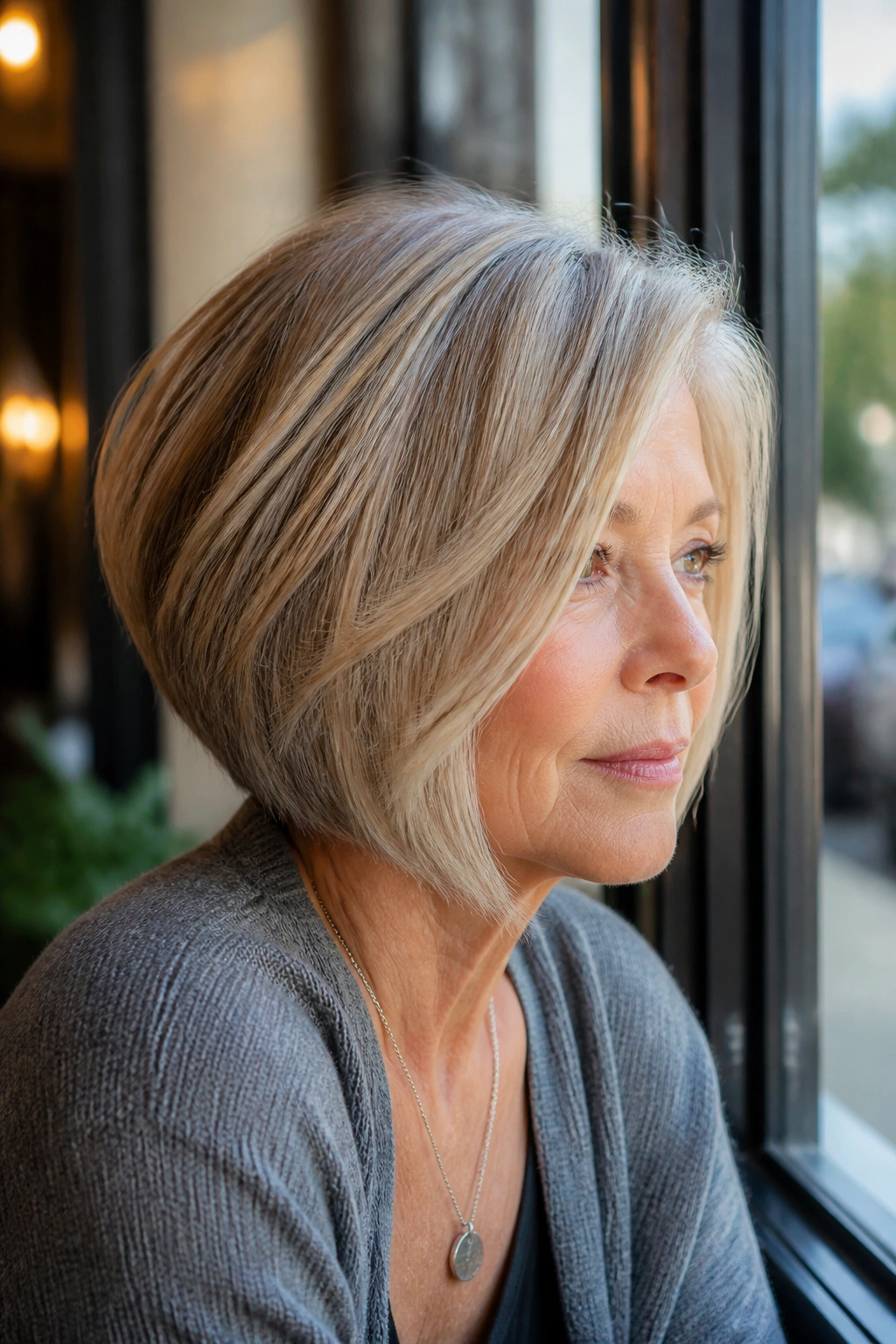
A little angle in the back can change everything. The inverted bob is shorter in the nape and longer toward the front, which gives the hair a clean line and a nice lift through the back. Hidden layers keep that shape from feeling too rigid, so the cut moves when you do.
Why the Back Sits So Nicely
The shorter back removes bulk where the hair often bulges out. That helps the bob hug the head, which is especially flattering if your hair is straight or slightly wavy. The front length keeps the cut from looking severe and gives you room to tuck one side behind the ear.
This is a tidy cut, but not a bland one. If your hair feels heavy at the neck, the inversion solves that fast. It also makes a good case for earrings. Small detail, big payoff.
15. The Mid-Length Cut with Cheekbone Layers
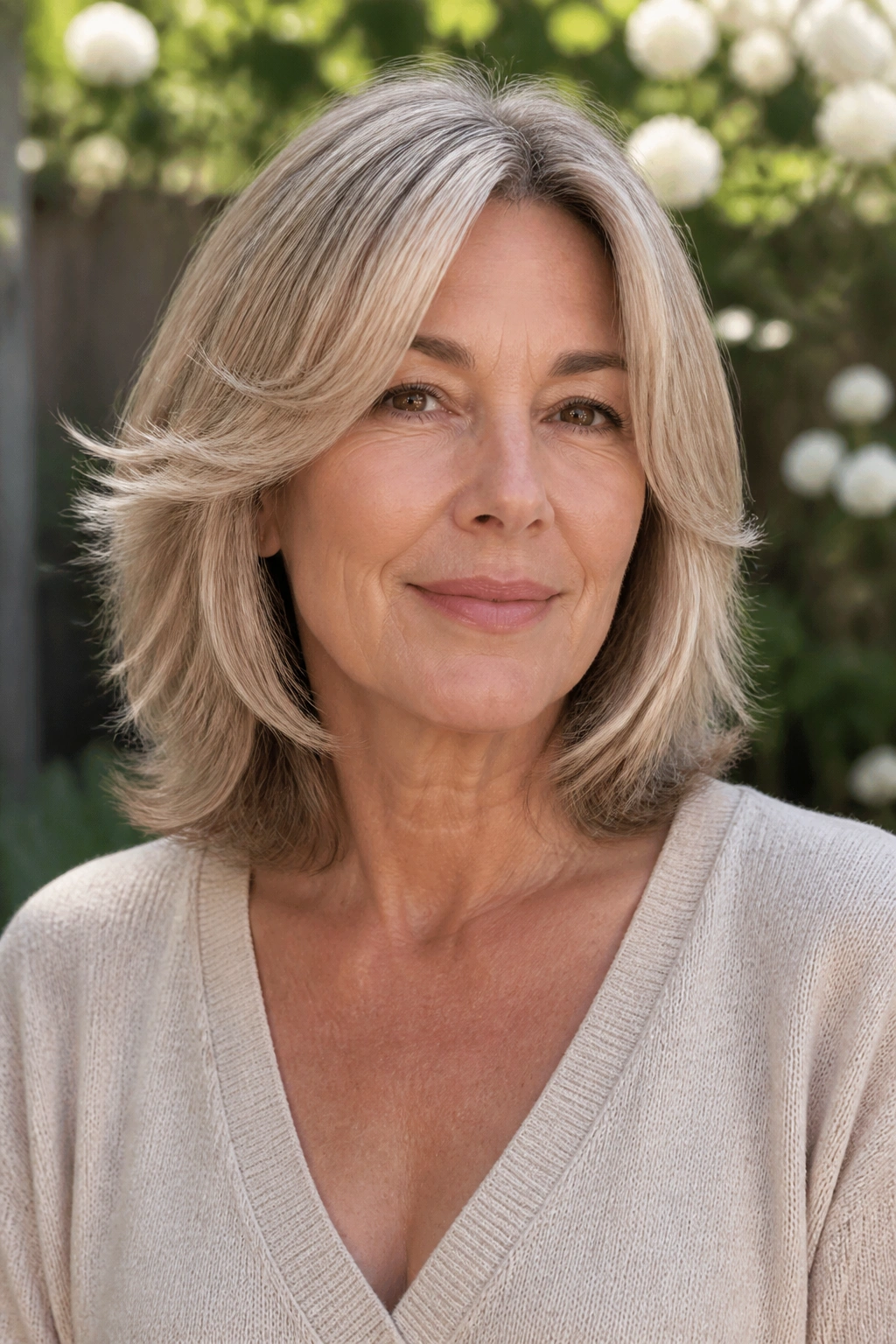
A cut that hits mid-neck or just above the shoulders can do real work for the face. Cheekbone layers draw the eye upward, which is useful if you want more lift around the center of the face and less attention to the lower half. It is a subtle trick, but a good one.
This style works especially well when the layers start high enough to create movement near the eyes, then taper lower toward the ends. That keeps the outline soft. If the layers are too low, the cut can feel heavy. Too high, and it starts looking choppy. The middle ground is where it lives best.
A light bend with a curling iron or a blow-dry with a medium round brush usually does the job. Nothing fancy. Just enough shape to let the layers show.
16. The Layered Crop for Thick Hair
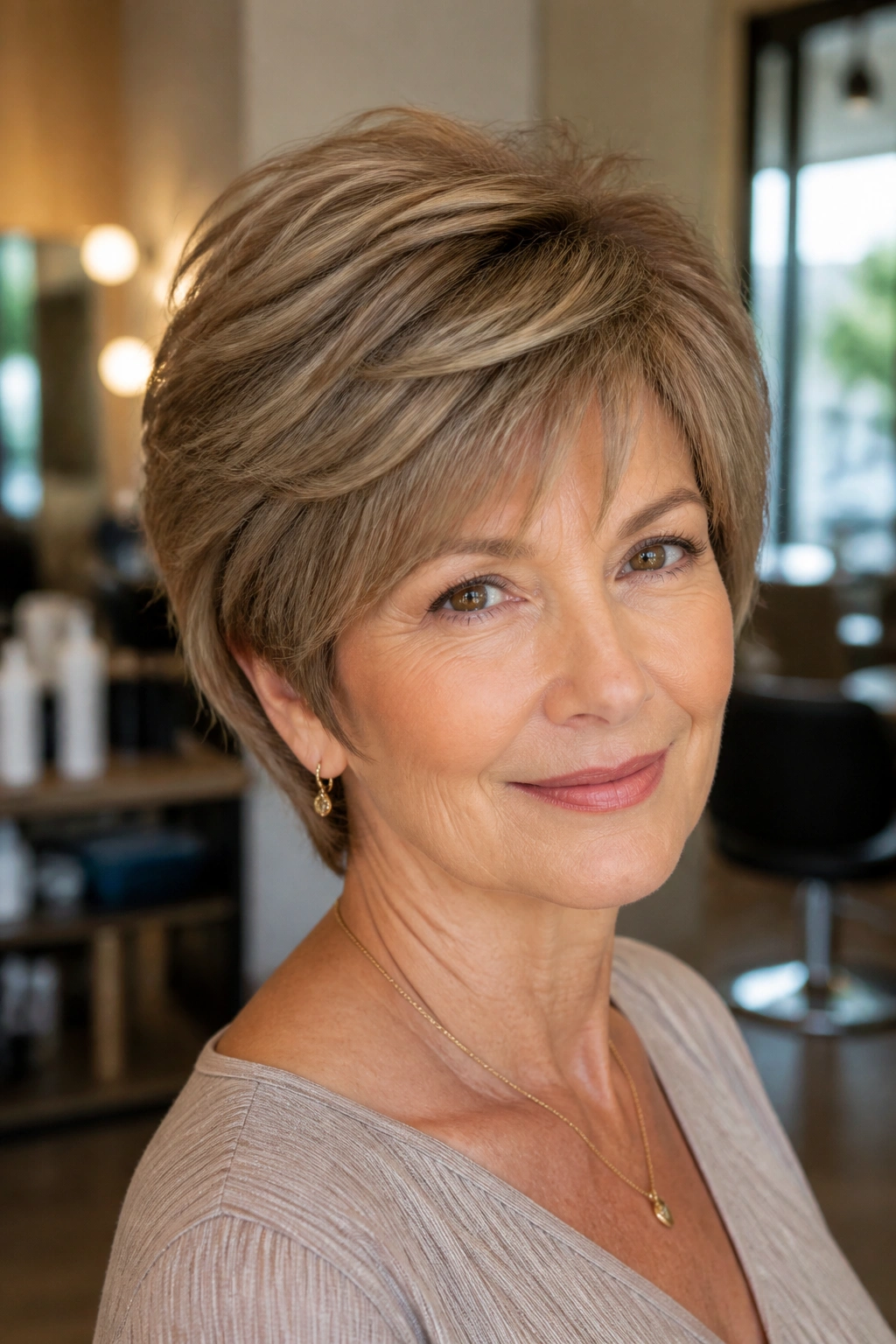
Thick hair needs relief. Not a lot of it, and not in the wrong places, but enough to keep the cut from ballooning out. A layered crop for thick hair removes bulk while keeping the body that makes thick hair so useful. That is the balance worth chasing.
- Keep the layers internal so the surface still looks smooth.
- Take weight out around the ears and lower crown, not only at the ends.
- Finish with a cream or light balm so the texture stays controlled.
If thick hair is cut too bluntly, it can feel like a block. If it is over-thinned, it gets wispy at the tips and takes on a bad, scraggly look. This cut avoids both problems. It gives shape, movement, and enough control to keep the style from taking over your face.
17. The Soft Wolf Cut
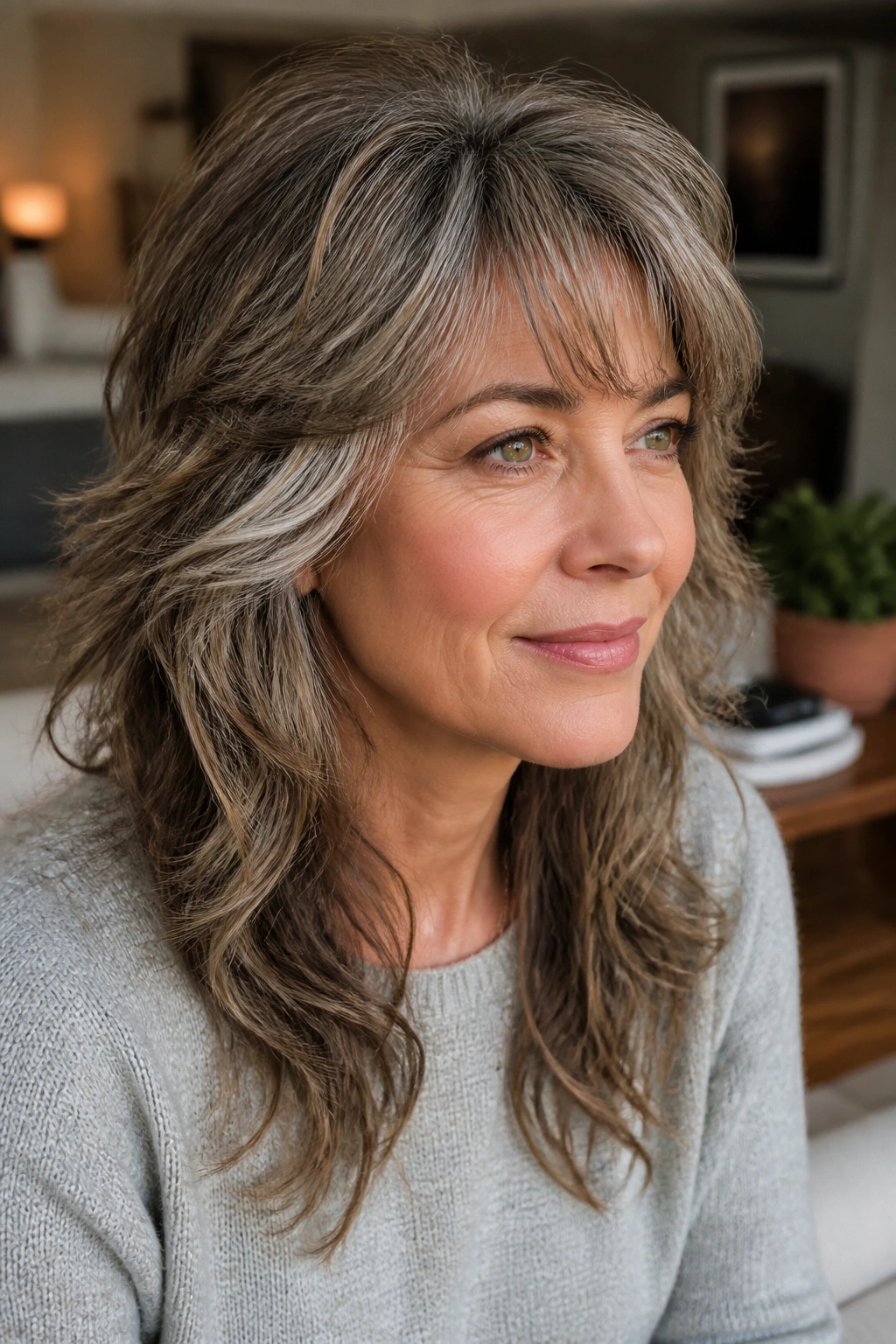
A wolf cut sounds rebellious, but the soft version is much easier to wear than the name suggests. It keeps short layers near the crown, longer pieces through the length, and a general sense of movement that feels modern without looking contrived.
The trick is softness. The top should be lifted, not puffy, and the ends should still have some weight so the cut does not float away from the head. On women over 60, that balance matters more than the trend label. Nobody needs hair that looks like it was attacked by scissors.
This cut works best on hair with a little natural bend. If your hair is very fine and straight, it can be too wispy unless you style it every day. But on wavy, dense, or slightly textured hair, it looks alive in a way that plain layers often do not.
18. The Classic Pageboy with Texture
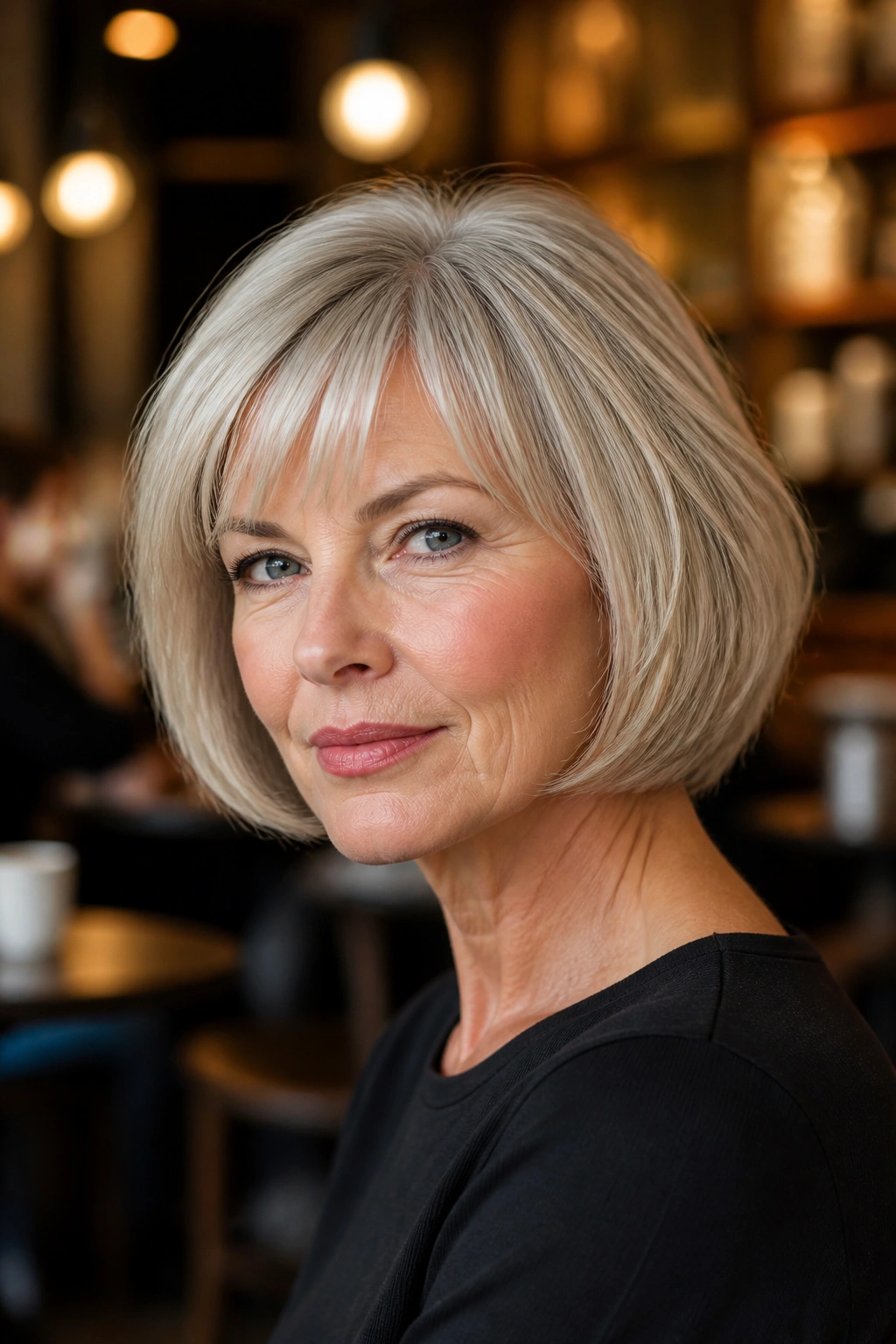
A pageboy can sound old-fashioned, but the textured version is surprisingly flattering. The rounded outline gives the hair a smooth, controlled shape, while the added texture keeps it from looking stiff or dated. It is a clean cut that still has a little bounce.
Why It Feels Classic
The pageboy works because the ends turn inward and create a neat frame around the face. That shape can soften a strong jaw or slim a wide cheek area. Texture inside the cut keeps the line from looking like a solid helmet, which is the risk with any rounded style.
Where It Can Go Wrong
- Too much texturizing can break the outline.
- A heavy bang can drag the whole look down.
- A flat blow-dry can make the style look older than it is.
I like this one for women who want order without severity. It has a little polish, a little nostalgia, and enough modern softness to feel fresh.
19. The Layered Cut with Micro-Bangs
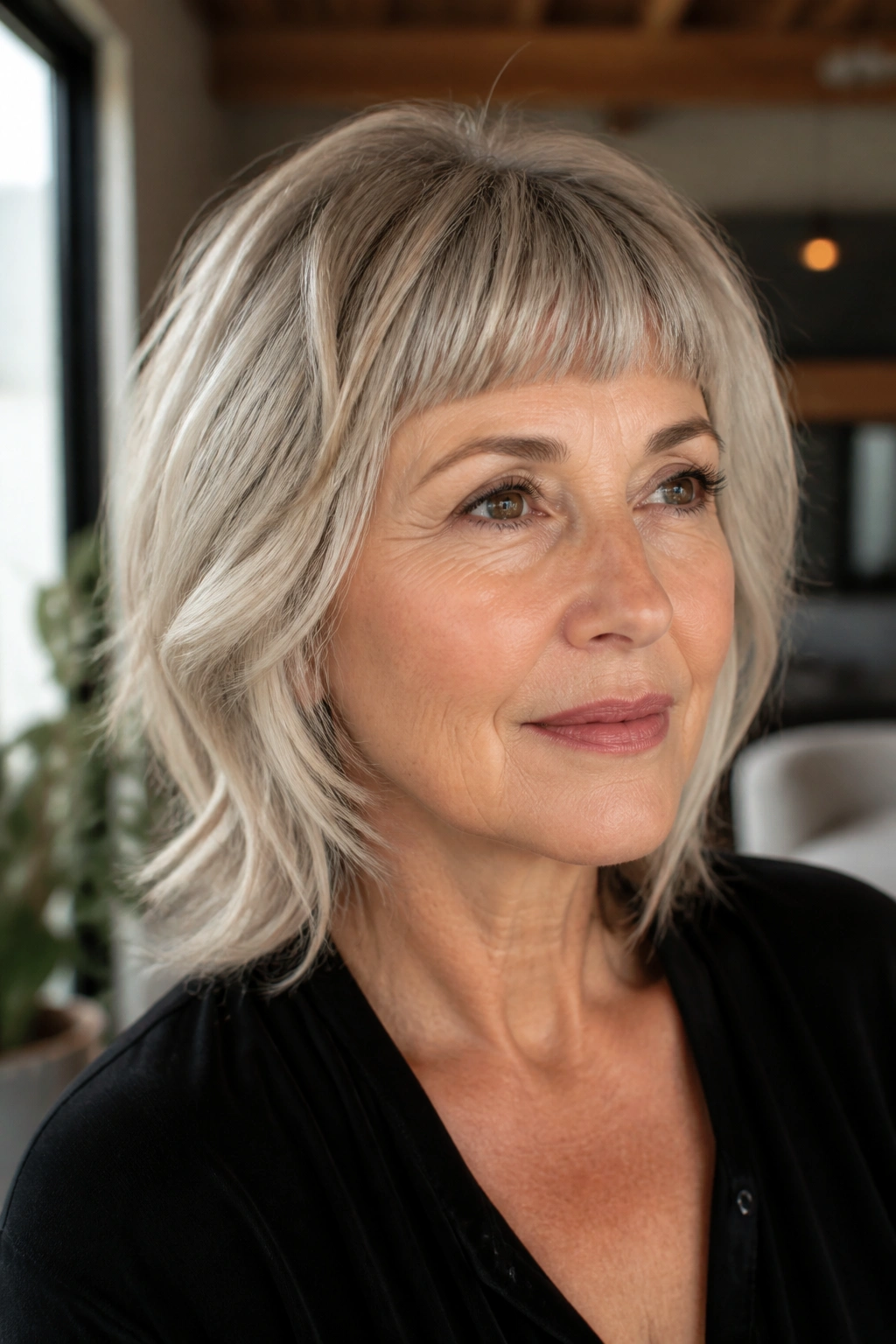
Tiny bangs are not for everybody. That is part of the fun. A layered cut with micro-bangs has a sharp little point of view, and it looks especially good on someone who wears bold glasses, has a defined brow, or wants the eyes to carry more of the focus.
The rest of the cut should stay soft so the bangs can do their job. If the layers are too busy, the whole thing turns noisy. If the lengths are kept clean and the fringe is light, the cut feels chic rather than costume-like.
- Ask for the bangs to sit well above the brow, but not so short that they stand straight up.
- Keep the side layers longer to soften the contrast.
- Style with a flat brush and a touch of smoothing cream near the fringe.
It is a bold choice. But a smart one when the face can carry it.
20. The Bouncy Blowout Layers
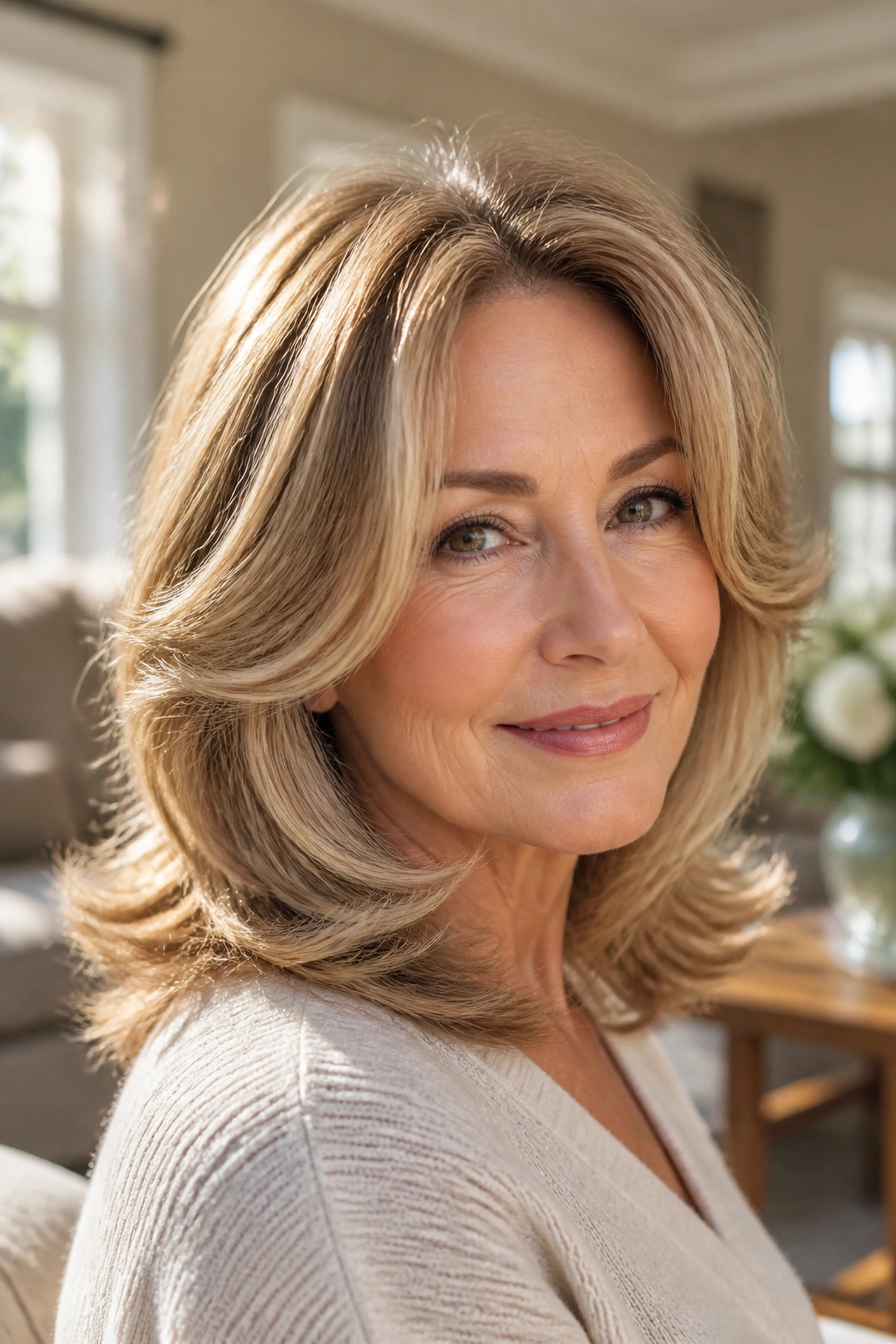
Three words: movement, shine, lift. Bouncy blowout layers are built for women who like hair that has shape from root to end. The cut usually keeps the longest pieces around the shoulders while carving in enough layers to let the brush set a rounded, glossy finish.
This style is especially flattering on medium-density hair. It holds a curve without needing a ton of product, and it makes the hair look full in motion. The ends can flip under or out, depending on your preference. Either way, the result feels lively.
A round brush, medium heat, and a little patience make this work. Let each section cool before you drop it. That cooling part matters. Skip it, and the shape falls fast.
21. The Side-Swept Layered Lob
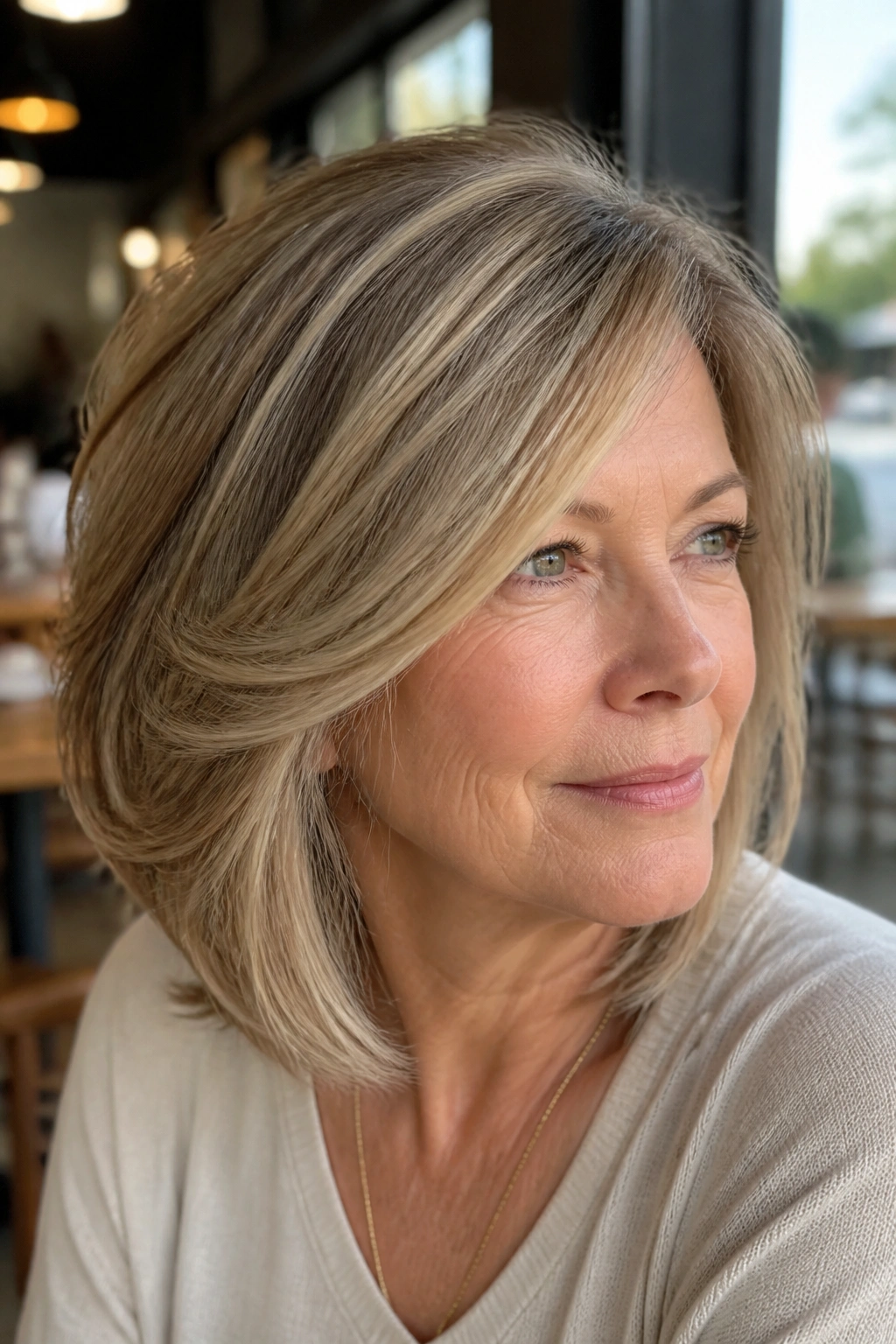
A side-swept lob has a built-in sense of ease. The diagonal line of the part and the front layers creates movement across the face, which softens the whole look without hiding anything. It is one of the more forgiving styles on the list.
The side sweep also gives the hair a little lift at the root, especially if you are dealing with a flatter crown. That makes the style useful for fine hair that needs shape but not too much shortening. It works with straight, wavy, and slightly curled textures, which is part of why so many women end up liking it once they try it.
If you want a cut that can go casual or polished without changing the shape, this is a strong candidate. Tuck one side behind the ear, add a bend to the ends, and it shifts mood fast.
22. The Choppy Textured Bob
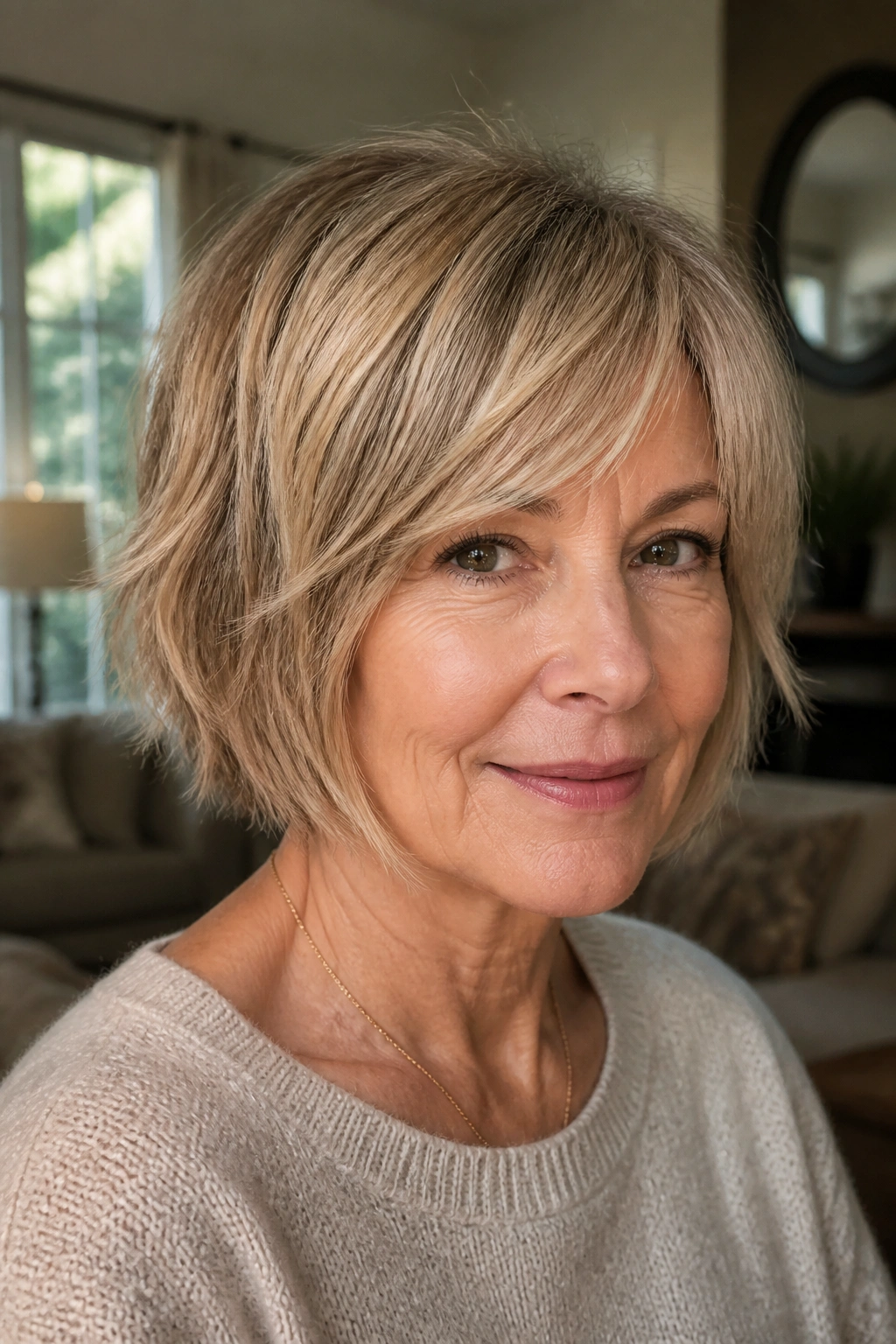
A choppy bob is not the same thing as a messy bob. The difference is control. The ends are broken up enough to create movement, but the overall shape still needs a clear line or the cut loses its purpose. Done well, it gives straight hair a little spark and thick hair a lighter feel.
What to Watch For
The layers should not be so short that the bob sticks out at the sides. That is a common mistake, and it is a bad one. The goal is to keep the outline compact while letting the interior move.
Who Likes It Most
Women with dense hair, straight hair, or hair that tends to hang heavy around the jaw. The choppy finish keeps the shape from feeling stodgy, and it gives a bob a bit more bite.
It is a little playful. Not childish. Just less formal than the usual bob.
23. The Long Layers with a Soft U-Shape
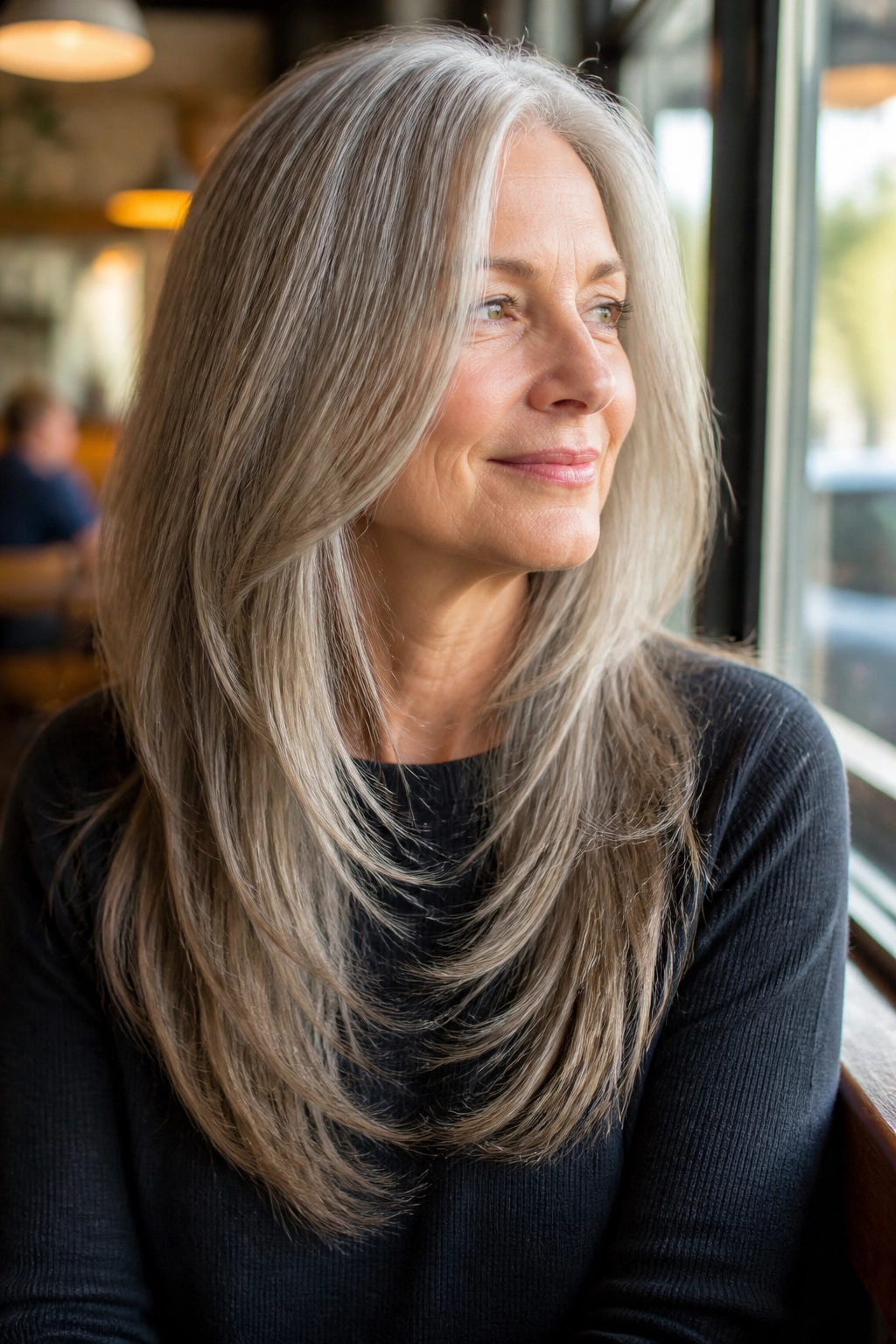
Long layers do some of their best work in a soft U-shape. That means the center stays a little longer, while the sides fall subtly shorter and frame the body of the hair. The effect is smoother than a straight line and more flattering than a hard V on many older women.
This shape is especially good if you like length but hate the feeling of ends that drag. The soft U keeps the perimeter from looking heavy, and the layers add movement without turning the cut thin. It is also lovely on hair with gray or silver tones, because the shape lets the color catch light in different places.
If your hair lives in a bun most days and comes down at dinner, this cut makes sense. It looks neat up or down. That is rare enough to matter.
24. The Curved Bob with Face-Framing Layers
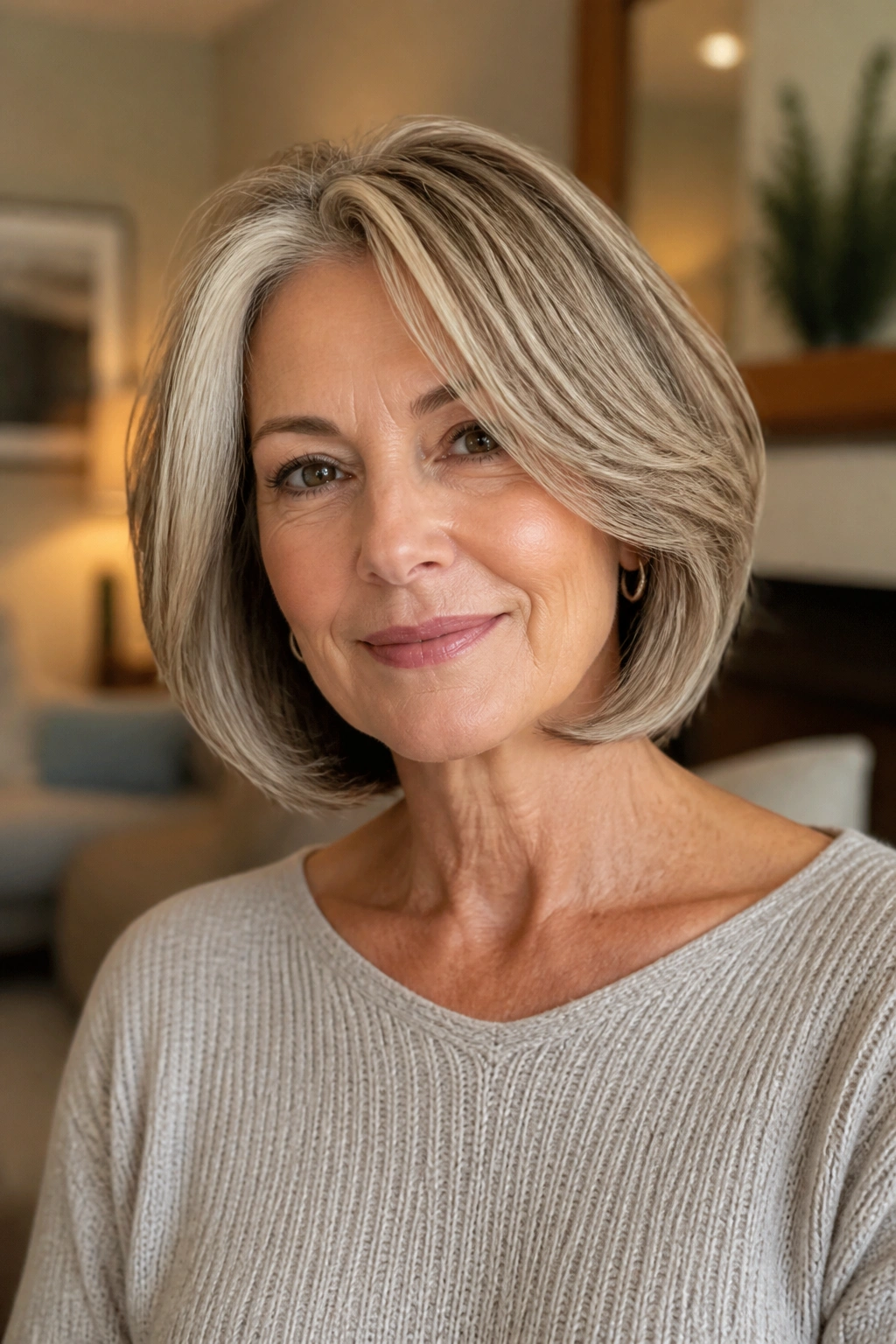
A curved bob has a nice sense of line. It follows the shape of the head and bends gently under at the ends, which gives the cut polish without making it stiff. Add face-framing layers, and the whole thing softens around the cheeks and jaw.
The curve matters more than people think. It keeps the bob from looking blunt at the sides and gives the face a clean frame. The face-framing pieces should start around the cheekbone or lip line, depending on how much softness you want. Too short, and they take over. Too long, and they disappear.
This is a smart choice if you like hair that looks composed with almost no drama. A quick round-brush pass is enough on most days. Easy. And that is the appeal.
25. The Airy Short Crop with Nape Layers
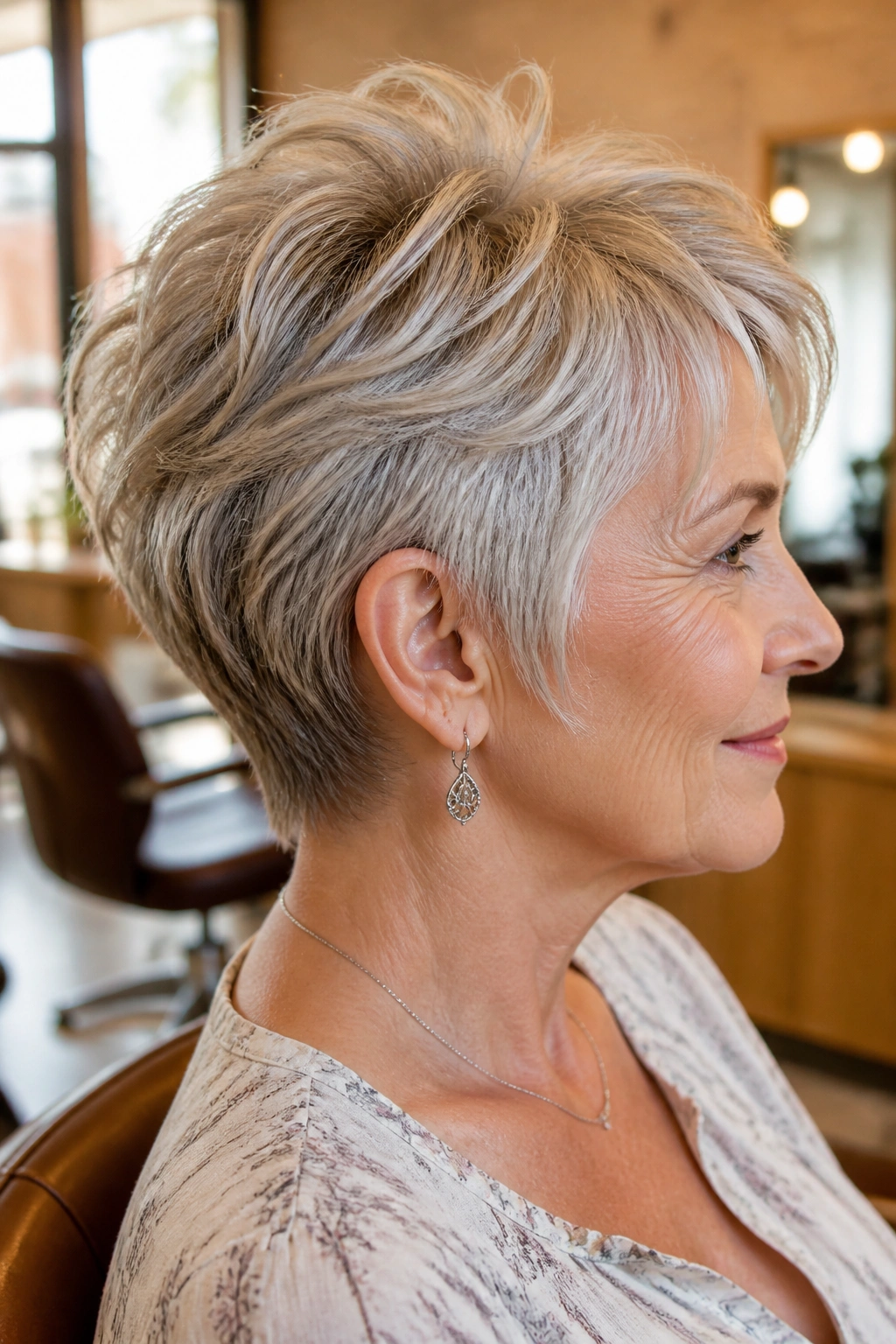
The back of the neck says a lot more than people admit. An airy short crop with nape layers keeps that area clean and light while giving the top enough room to move. It is a tidy cut, but not a severe one, because the layered crown prevents the whole style from sitting flat.
- Ask for soft layering at the crown, not a blunt cap.
- Keep the nape close enough to stay neat, but not shaved tight.
- Use a small dab of styling paste to separate the top pieces.
This cut is a good match for women who do not want to spend time on hair every morning. It dries fast, looks intentional, and does not turn into a frizzy puff when the weather is uncooperative. The airy part is the whole point. It makes the crop feel fresh instead of clipped short for the sake of it.
26. Layered Haircuts for Women Over 60: The Polished Mid-Length Layers
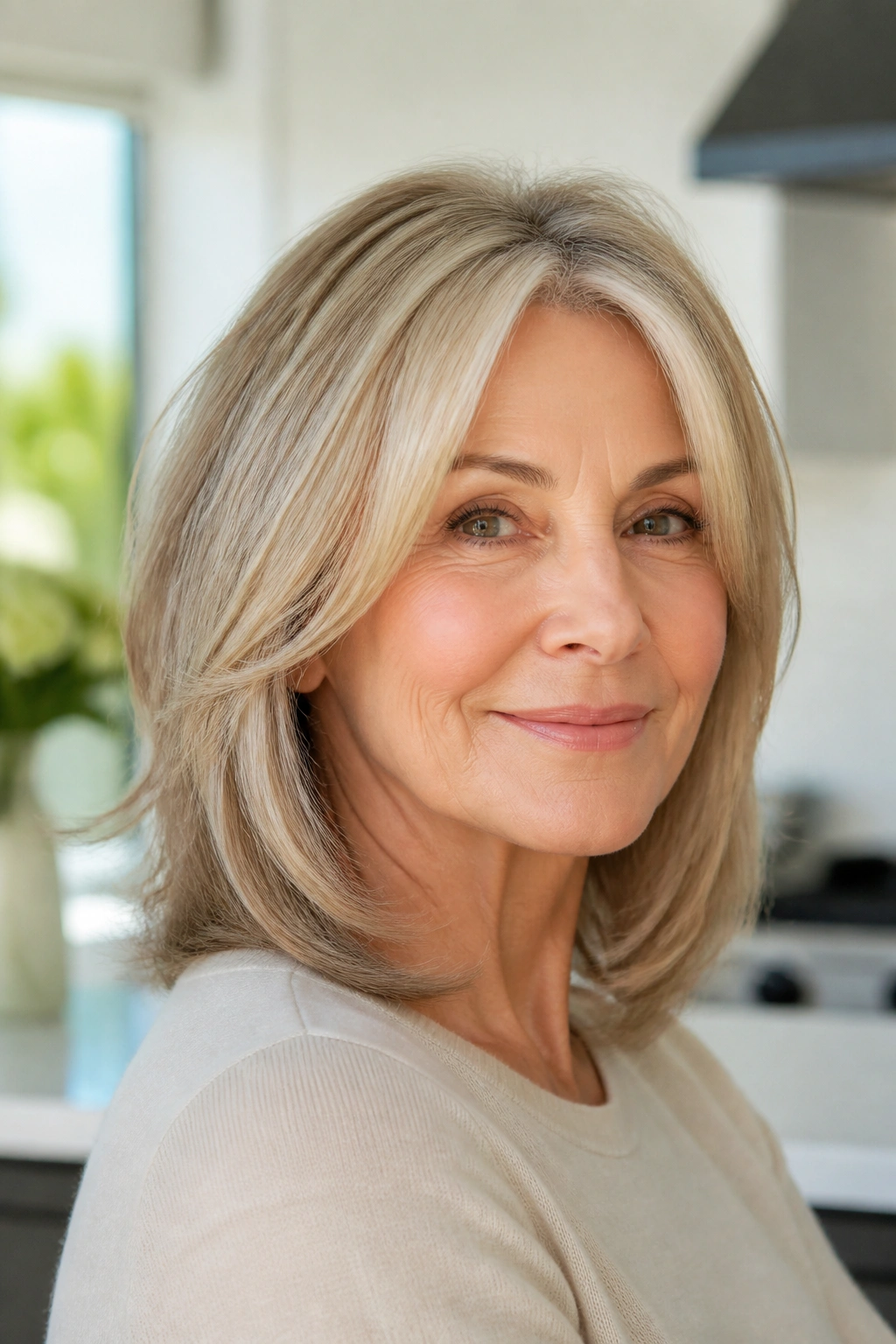
If you want one cut that can be worn neat, loose, tucked, curled, or pinned back, this is the one I keep coming back to. Polished mid-length layers give you enough shape to flatter the face and enough length to stay flexible. That combination is hard to beat.
What Makes It Work
The layers are long enough to move without splitting the ends into thin strands. That matters on hair that has lost a little density, because the cut still looks full from the front and side. A slight face frame can lift the cheek area, while longer back layers keep the shape balanced.
Styling Notes
- Blow-dry with a medium round brush for a smooth bend.
- Add a little volume spray at the roots if the crown sits flat.
- Let the front pieces fall a touch forward so the cut does not feel too strict.
This is the style I would point to for someone who wants elegance without a lot of maintenance. It does not try too hard, and that is part of why it works so well.
