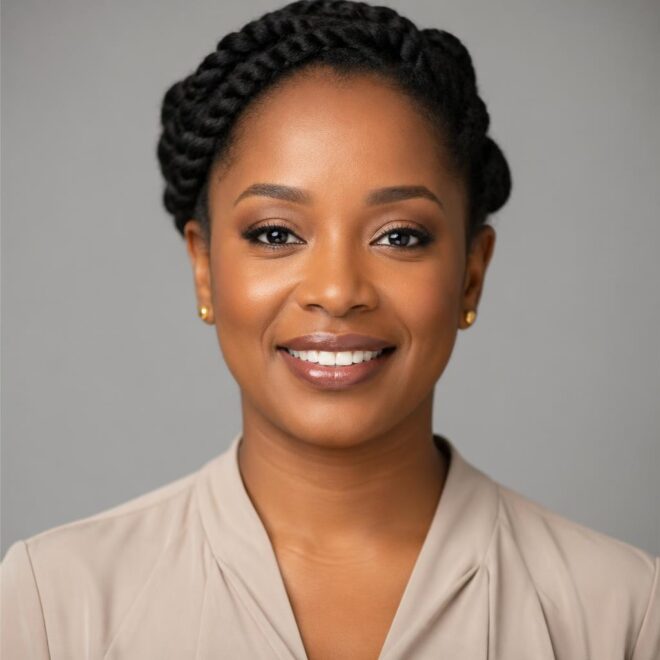


Short layered hairstyles for women over 60 have a way of doing three jobs at once. They can lift the face, make hair look fuller, and shave time off the morning routine without making the cut feel stiff or dated. That matters more than people admit. A blunt shape can weigh hair down fast, and long layers can start looking tired when the ends thin out.
The best short layered cuts don’t try to hide age. They work with it. Silver hair shows off texture in a way darker shades sometimes don’t, fine hair gets a little help at the crown, and thicker hair can be shaped so it stops puffing out at the sides like a triangle with opinions. That’s the real appeal here: shape, movement, and enough softness around the face to keep everything fresh.
A good cut also has to live in the real world. It needs to look decent after a quick blow-dry, or even after a rough air-dry and a comb-through. It should play nicely with glasses, earrings, cowlicks, and the fact that hair can behave a little differently now than it did 20 years ago. The styles below lean into that reality, which is why they work so well.
1. Soft Layered Pixie with Side-Swept Fringe
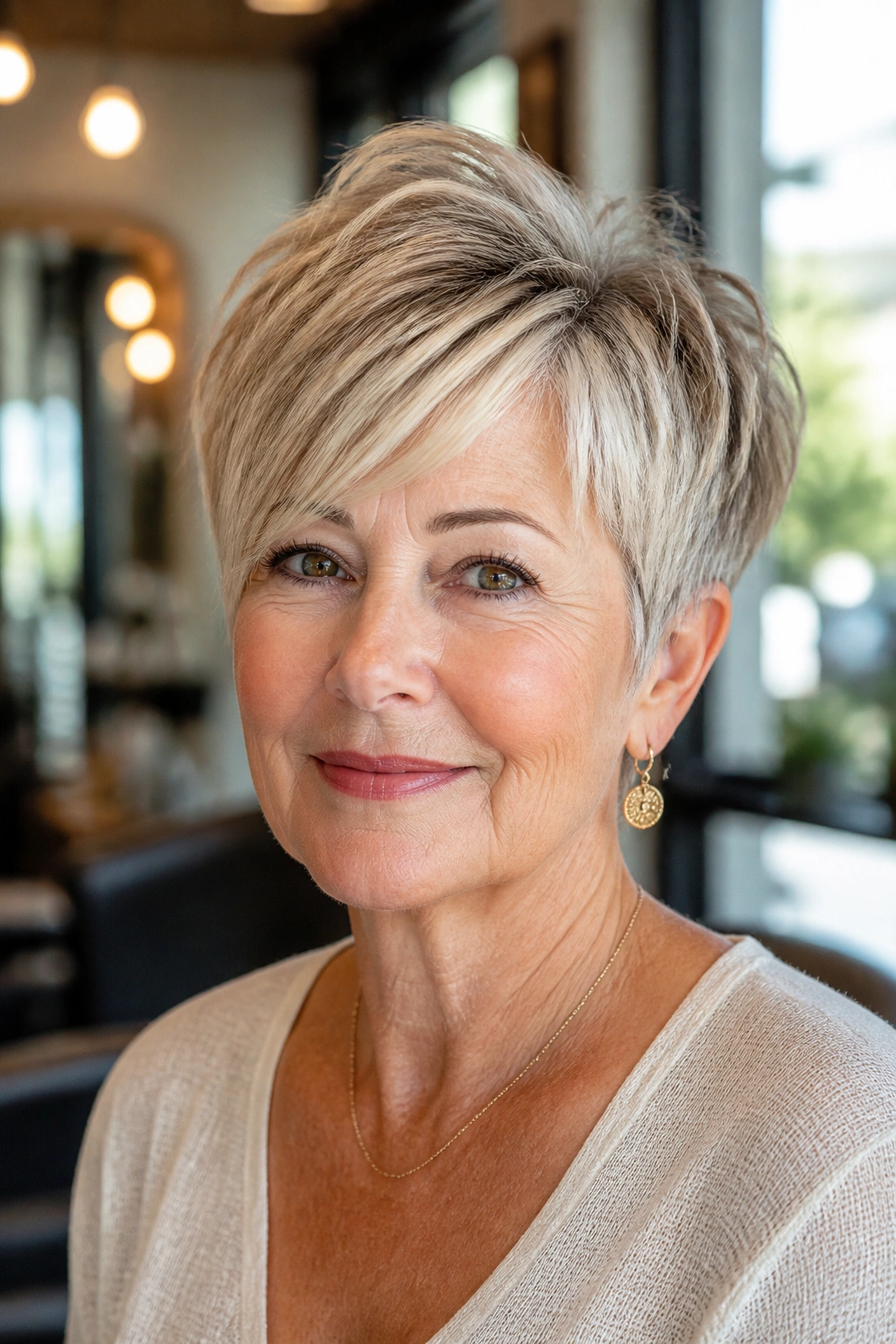
This is one of those cuts that looks small on the salon chair and lively once it’s finished. The crown has enough lift to keep the face from looking flat, while the side-swept fringe softens the forehead and pulls attention toward the eyes.
Why it flatters so many face shapes
The magic is in the balance. Keep the top around 2 to 3 inches, let the fringe fall diagonally, and taper the sides close enough to keep the shape neat without exposing every edge of the hairline. That little sweep across the front is forgiving in a way a straight-across fringe often isn’t.
It works especially well if your hair is fine or medium in texture and tends to lie close to the head. A dab of mousse at the roots and a quick blast with a small round brush is usually enough. No helmet hair. No drama.
- Ask for soft point-cutting around the fringe, not blunt chunks.
- Keep the nape neat so the top can do the lifting.
- Use a pea-size amount of styling cream, then finger-style the front.
Best detail: The fringe should graze, not swallow, your brows.
2. Feathered Crop with Lifted Crown
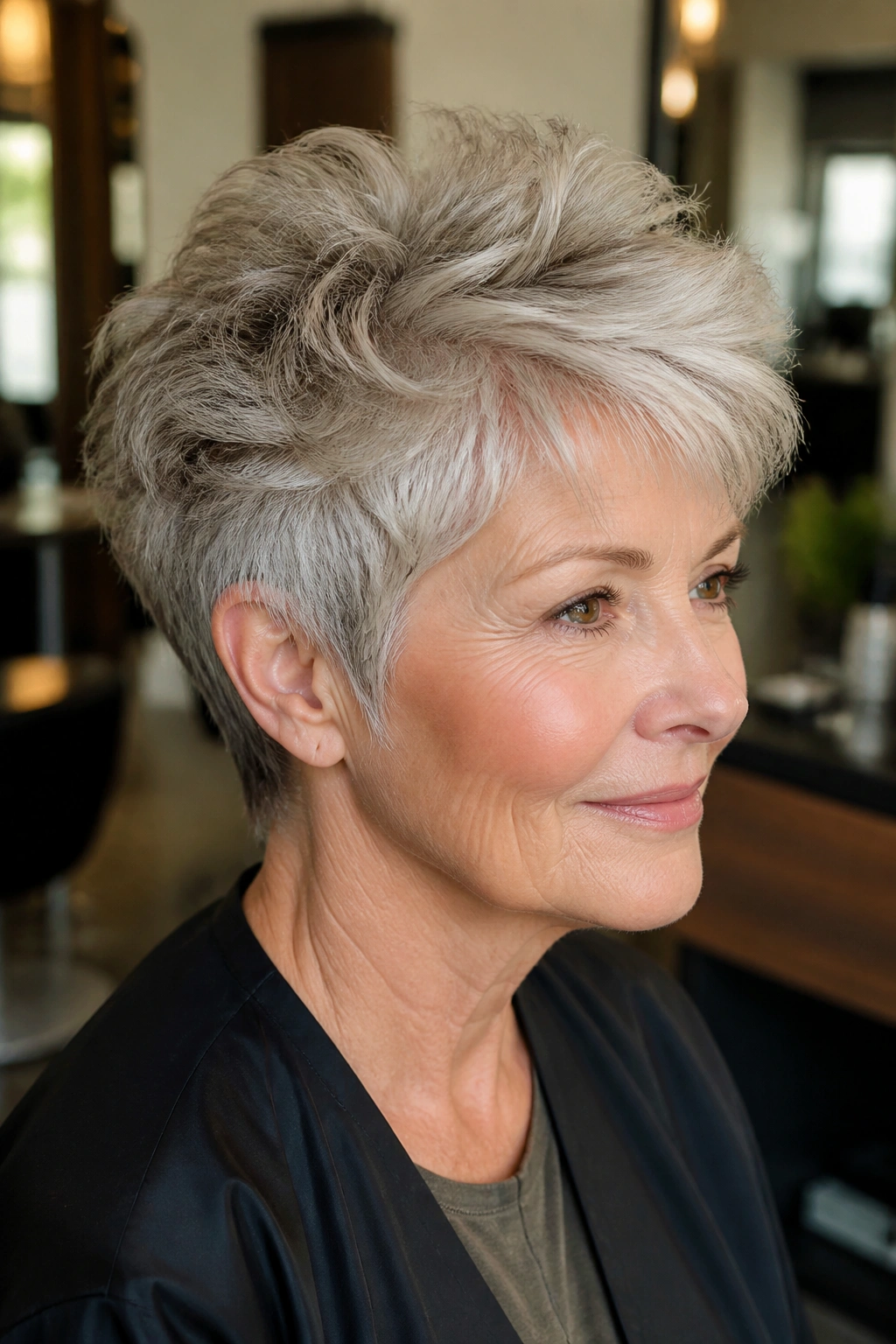
Need a little height without teasing your hair into a stiff little tower? This is the cut for that. Feathered layers at the crown give the top some air, and the sides stay light enough that the whole shape doesn’t collapse by lunchtime.
The nice part is how gentle it looks. There’s nothing harsh about it. The layers are cut to move away from the head, not sit in heavy blocks, so the finish feels softer than a standard short crop.
It’s a smart pick for hair that’s starting to thin at the part or flatten at the crown. A root-lifting spray and a quick dry with the head tipped forward can make a big difference. If your hair is naturally straight, a medium barrel brush helps set the lift without overdoing it.
What makes it different: the movement comes from the cut, not from piling on product.
3. Tapered Bob with Piecey Ends
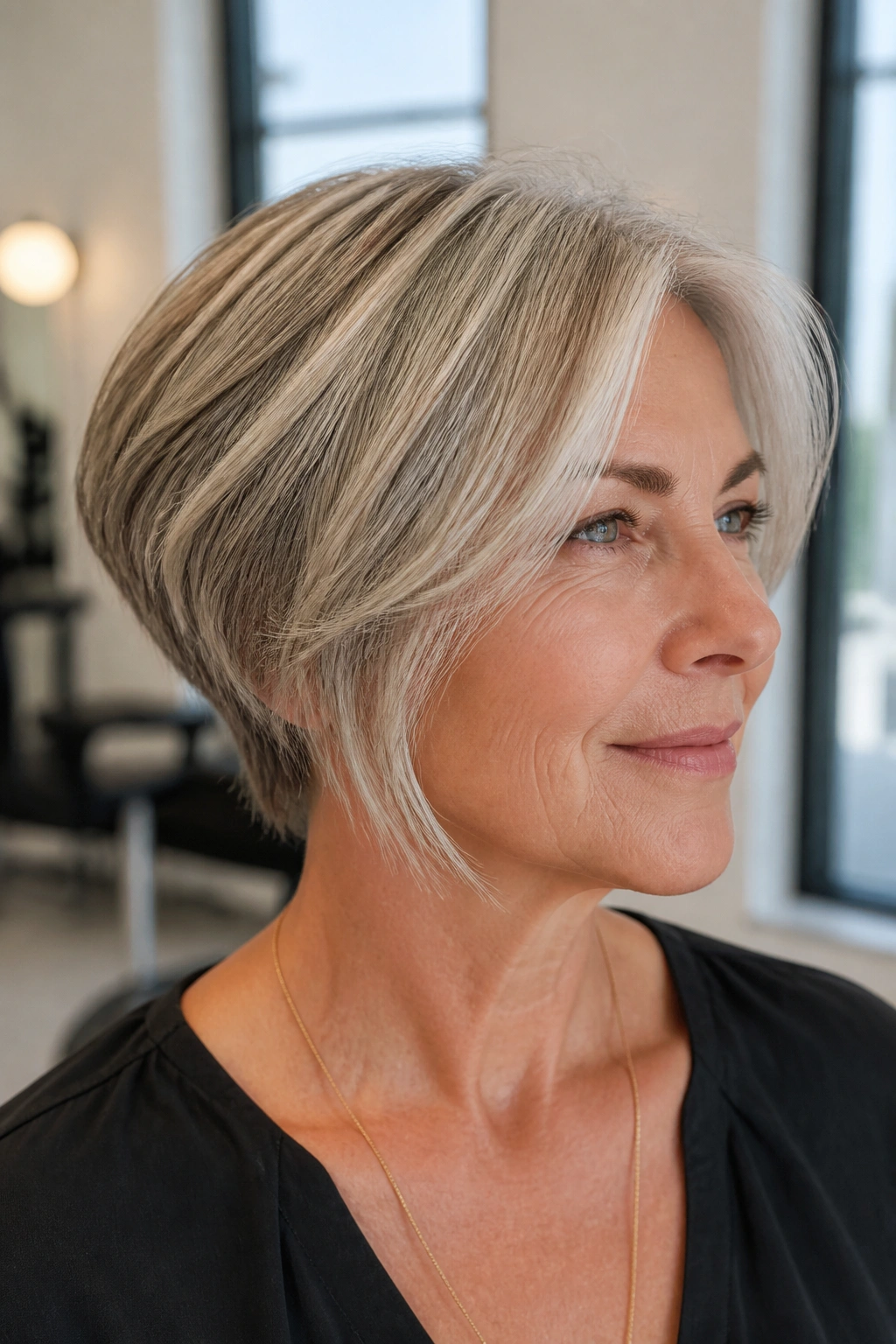
A tapered bob is what happens when you want something neat from the back but still want a little swing at the sides. The nape stays shorter and clean, while the ends around the jaw are softened into small, piecey sections.
That piecey finish matters. It keeps the cut from looking too solid or too severe, which is a common problem with one-length bobs on mature hair. If you wear your hair with a side part, the front pieces can frame the cheekbones in a very easy, natural way.
Styling note
A light texturizing spray is usually enough. Work it through dry hair, then pinch the ends between your fingers so they separate a little. The result should look lived-in, not messy in a rushed way.
This is a good cut if you want a polished shape that doesn’t need a long styling session. It grows out well, too.
4. Chin-Length Shag with Wispy Layers
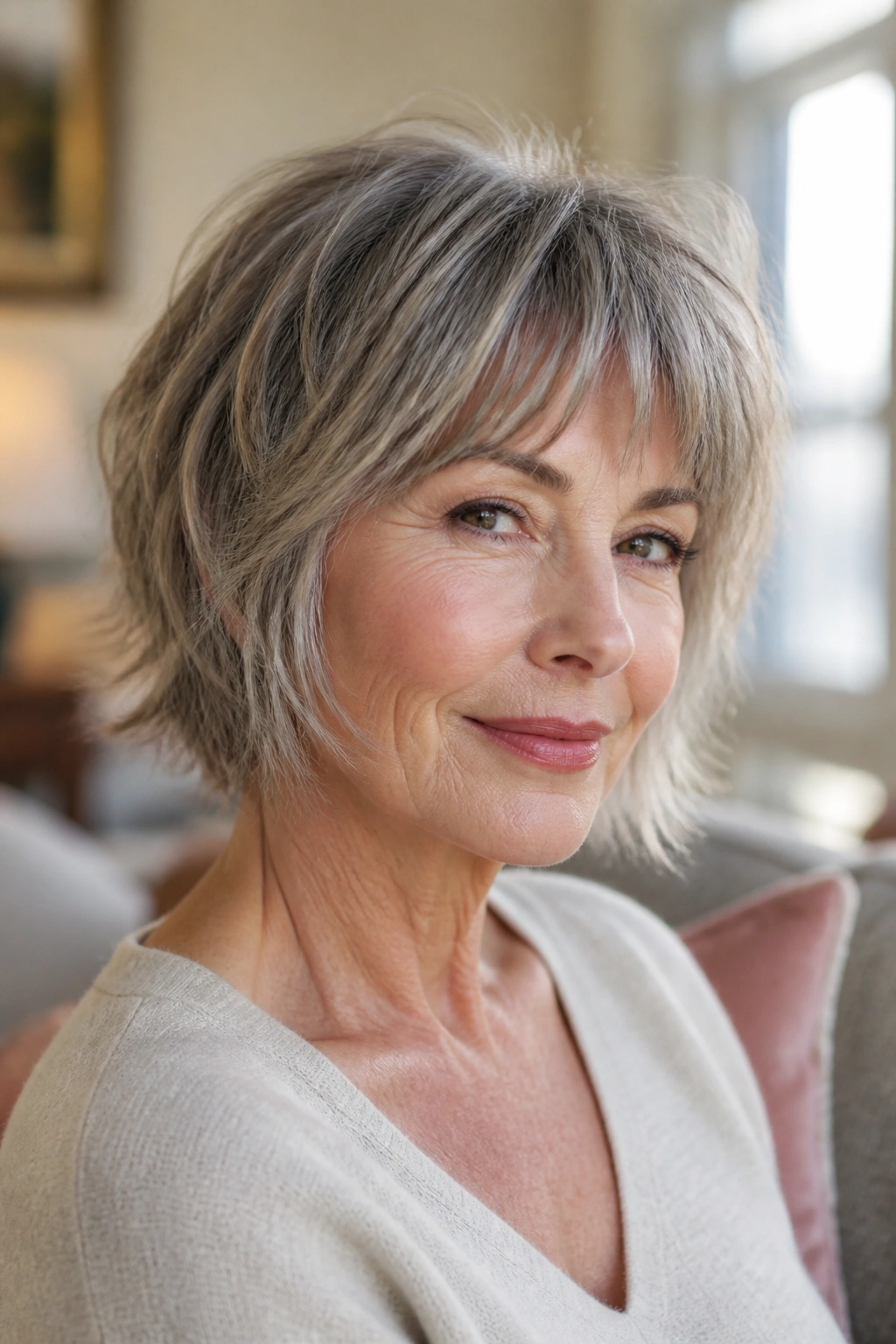
What makes a shag different from a standard bob is movement, plain and simple. A chin-length shag has enough layering to stop the shape from sitting like a helmet, but it still keeps a clear outline around the face.
Wispy layers around the cheeks and jaw can soften strong facial angles, which is handy if your features have become a little sharper over time. The ends should feel light, almost airy, not chopped into obvious steps. If you have a natural wave, this cut is one of the easiest ways to let it do some of the work.
You do not need a lot of product here. A touch of curl cream or a light mousse, then a rough dry with your fingers, is often enough. If the hair is straighter, bend the ends under with a round brush just enough to keep the shape from flipping out in odd places.
A small warning: too much thinning can make the top go wispy in the wrong way. Soft layers are the point, not see-through ends.
5. Rounded Wedge with Soft Graduation
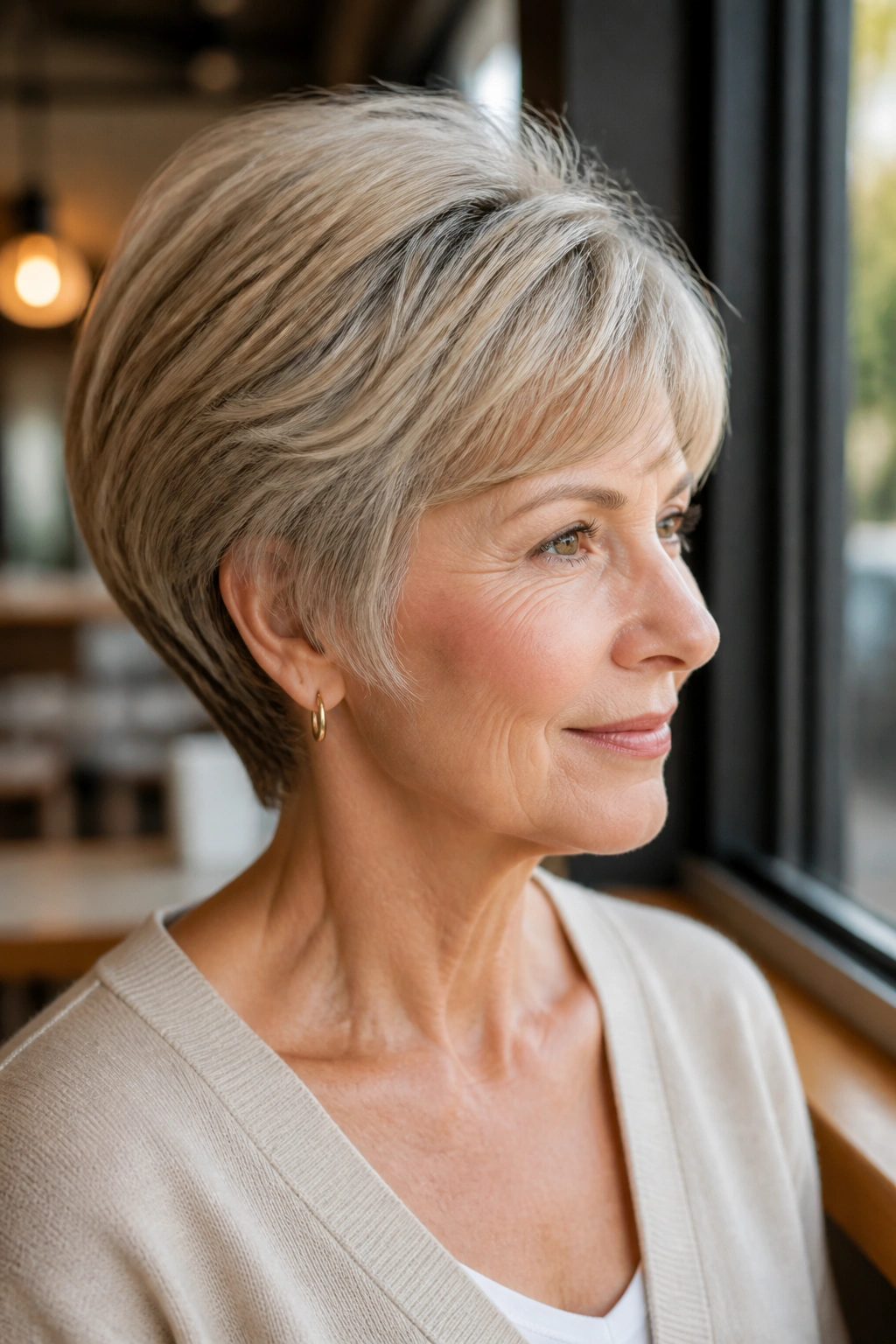
A wedge cut can feel a little too determined if it’s done sharply. Soften it, and it becomes much friendlier. The back follows the head closely, the graduation is smooth, and the sides round out just enough to give the whole cut a tidy curve.
This shape is especially good if you like your hair off the neck but still want a bit of fullness around the ears. It has that clean, sculpted look that can make a plain shirt or sweater look finished without much effort. And yes, it’s practical. Very practical.
The best version avoids hard stacking or a bulky shelf at the back. Ask for a soft transition from the nape into the crown, with the top kept long enough to brush forward or to the side. That keeps the cut from feeling frozen in time.
One sentence worth remembering: soft graduation beats a hard wedge every time.
6. Curly Crop with Tapered Nape
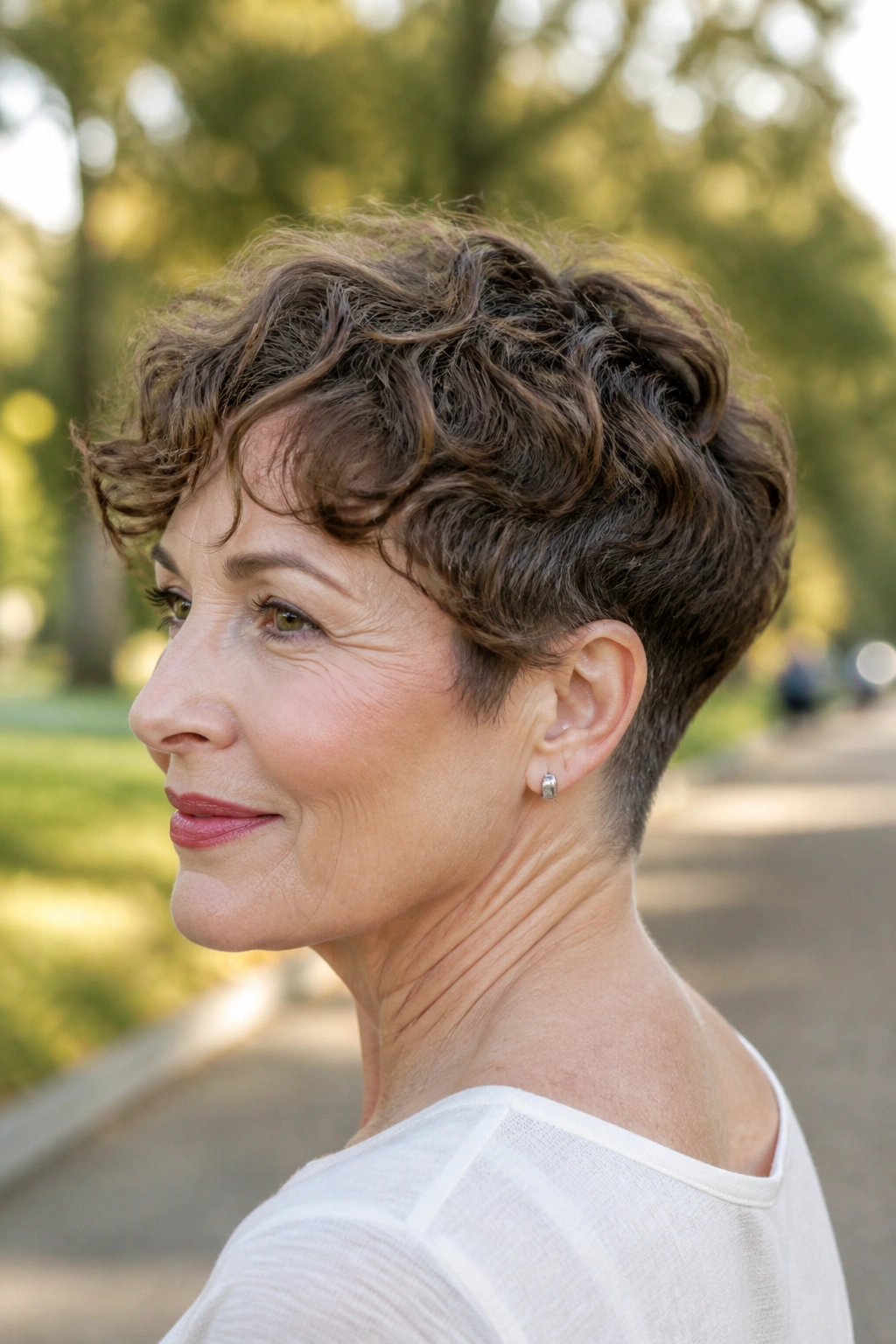
Curly hair changes the whole conversation. Short layers can bring bounce to the surface fast, but they need to be placed with a little care or the shape can widen more than you want. A tapered nape helps keep things tidy while the curls sit fuller up top.
What to tell your stylist
- Leave enough length on top for the curl pattern to spring up naturally.
- Avoid over-thinning the ends; curls need weight in the right places.
- Taper the back and sides so the outline stays neat.
- Cut it dry, or nearly dry, if your curl pattern changes a lot when wet.
This crop looks especially good when the curls are allowed to do their own thing. A diffuser helps, but so does patience. Scrunch in a light gel, dry until the curls feel set, then leave them alone. Touching them too much while they dry is a fast way to get frizz.
The payoff is a cut that looks alive, not stiff.
7. Bixie Cut with Airy Texture
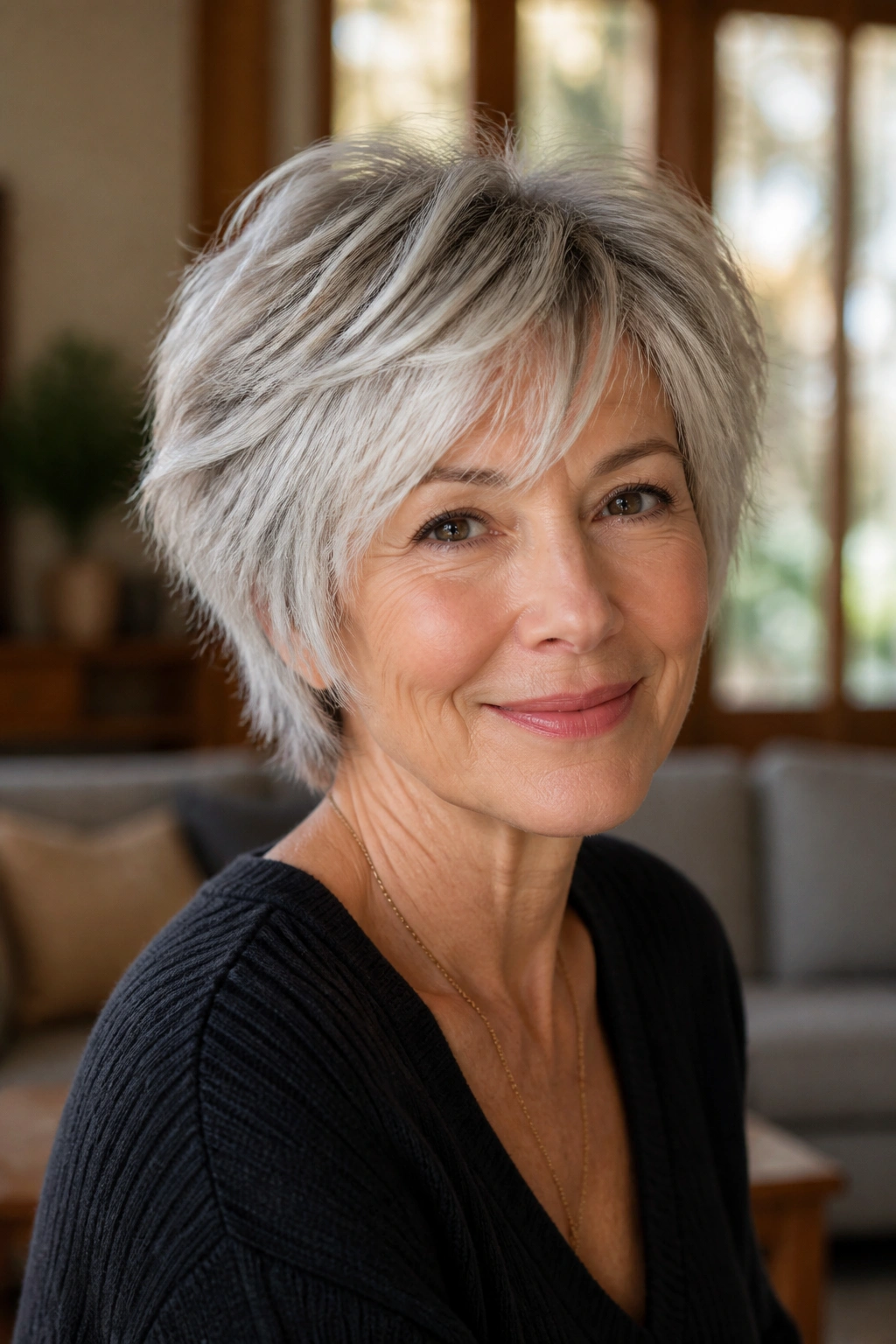
The bixie sits between a bob and a pixie, which is why it has such a strong following among women who want shorter hair without going all the way into a close crop. It keeps a little more length around the ears and cheeks, then uses layers to keep the shape moving.
That extra length is useful. It gives you options when styling, and it softens the whole silhouette in a way that flatters the neck and jawline. If your hair is fine, the bixie can make it look fuller without making it look bulky.
It’s also one of the easier cuts to wear if you like a slightly undone finish. Work a small amount of lightweight cream through damp hair, then rough dry it until the ends separate. The goal is piecey, not spiky.
A bixie is the sort of cut that feels modern without shouting about it. Quietly good. That’s the appeal.
8. Ear-Grazing Layered Bob

An ear-grazing bob sits in a sweet spot. It’s short enough to feel light, but long enough to tuck behind the ear or let curve softly around it. That little length change makes a big difference in how the face reads.
If you wear glasses, this shape deserves a close look. The cut sits cleanly around the arms of the frames instead of fighting them, and the layers keep the hair from ballooning at the sides. Earrings show up nicely too, which sounds minor until you’ve had a haircut that hides them.
Best details to ask for
- Keep the front just long enough to touch the jaw or the top of the neck.
- Add soft internal layers, not heavy stacking.
- Let the back stay neat so the outline doesn’t widen.
- Finish with a slight bend under the ends for polish.
This is a calm, easy cut. Nothing fussy. Nothing loud.
9. Long-Top Pixie with Swept-Back Crown
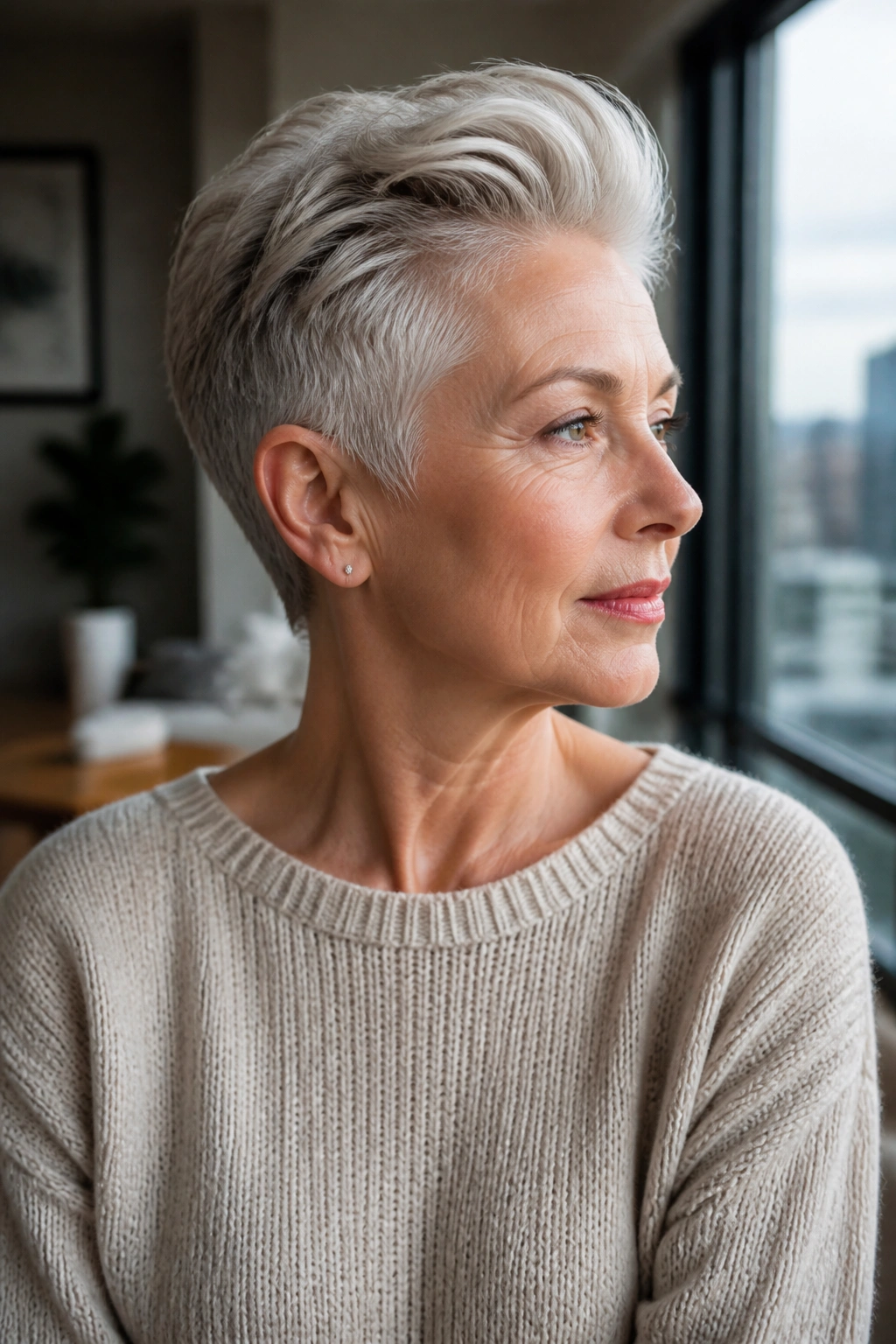
If you like structure, this one has a lot going for it. The sides and back are tight enough to keep the shape crisp, while the top stays long enough to sweep back or slightly to the side for height. It gives you lift without looking overstyled.
A long-top pixie works especially well if your hairline has become more delicate or if your crown needs help. The longer top draws the eye upward, and the shorter sides keep the whole cut from getting bulky around the temples.
Why it works
The shape creates movement where you want it and control where you don’t. That matters if your hair has a few stubborn cowlicks. A little styling paste or a light pomade can direct the top without making it greasy. Use your fingers first, then a comb only if you need extra polish.
This is a strong choice for women who want a short cut that still feels a bit styled. Not fussy. Just intentional.
10. French Bob with Internal Layers
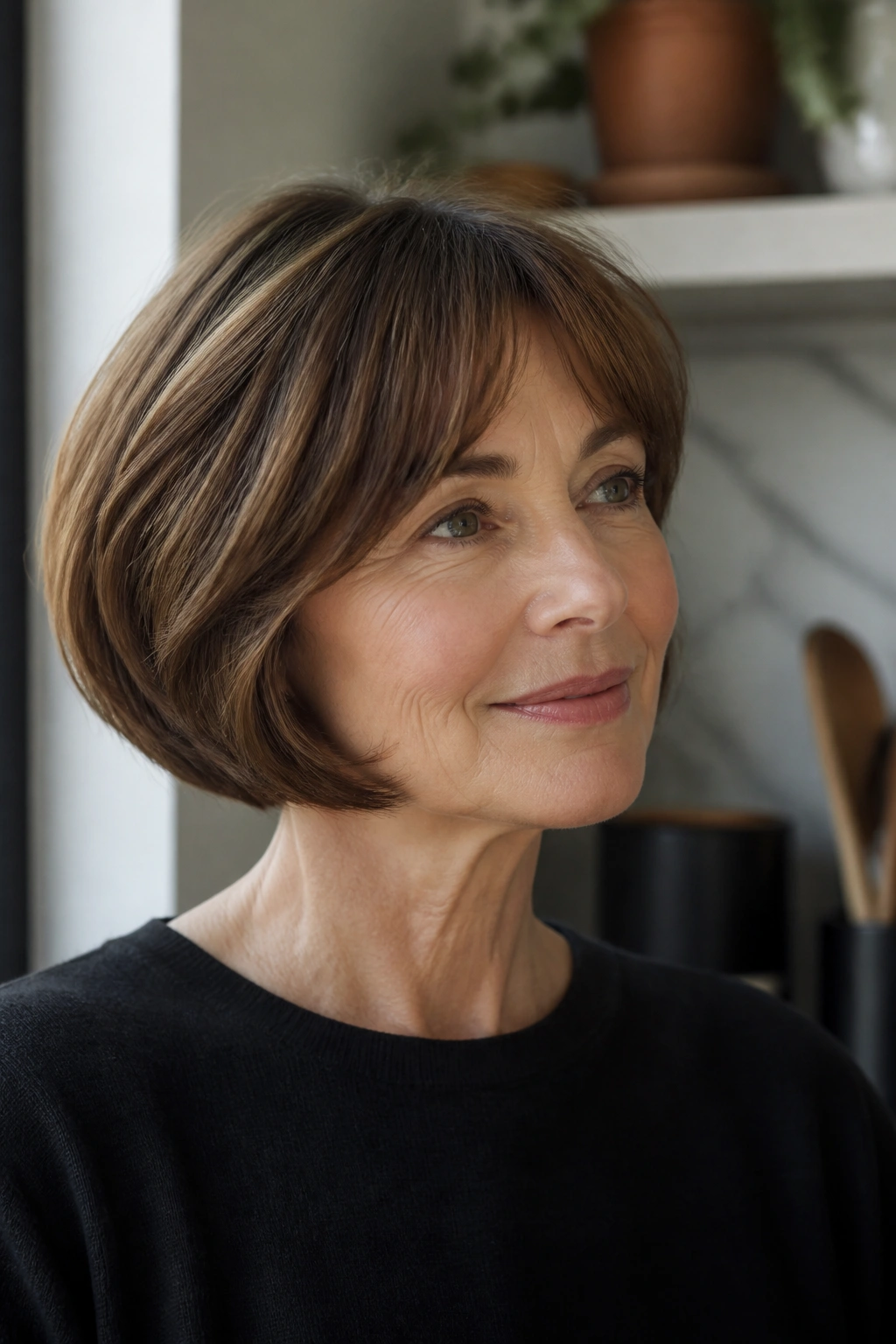
A French bob usually sounds more polished than it is in real life. The best version is short, clean, and slightly cheeky around the jaw, with internal layers that stop it from becoming a solid block of hair. Those hidden layers are doing a lot of the work.
The outline stays neat, which gives the cut its chic shape. Inside, though, there’s enough softness to keep it from feeling heavy. That’s especially useful if your hair is straight or only mildly wavy, because a blunt short bob can look too strict very quickly.
If you want this cut to feel right, keep the front long enough to skim the jaw rather than jump above it. A center part can make it look sharper; a side part makes it gentler. Either way, the neck shows, the cheekbones show, and the face gets a clean frame.
No need to force it. The cut should carry the style.
11. Messy Pixie with Soft, Choppy Edges
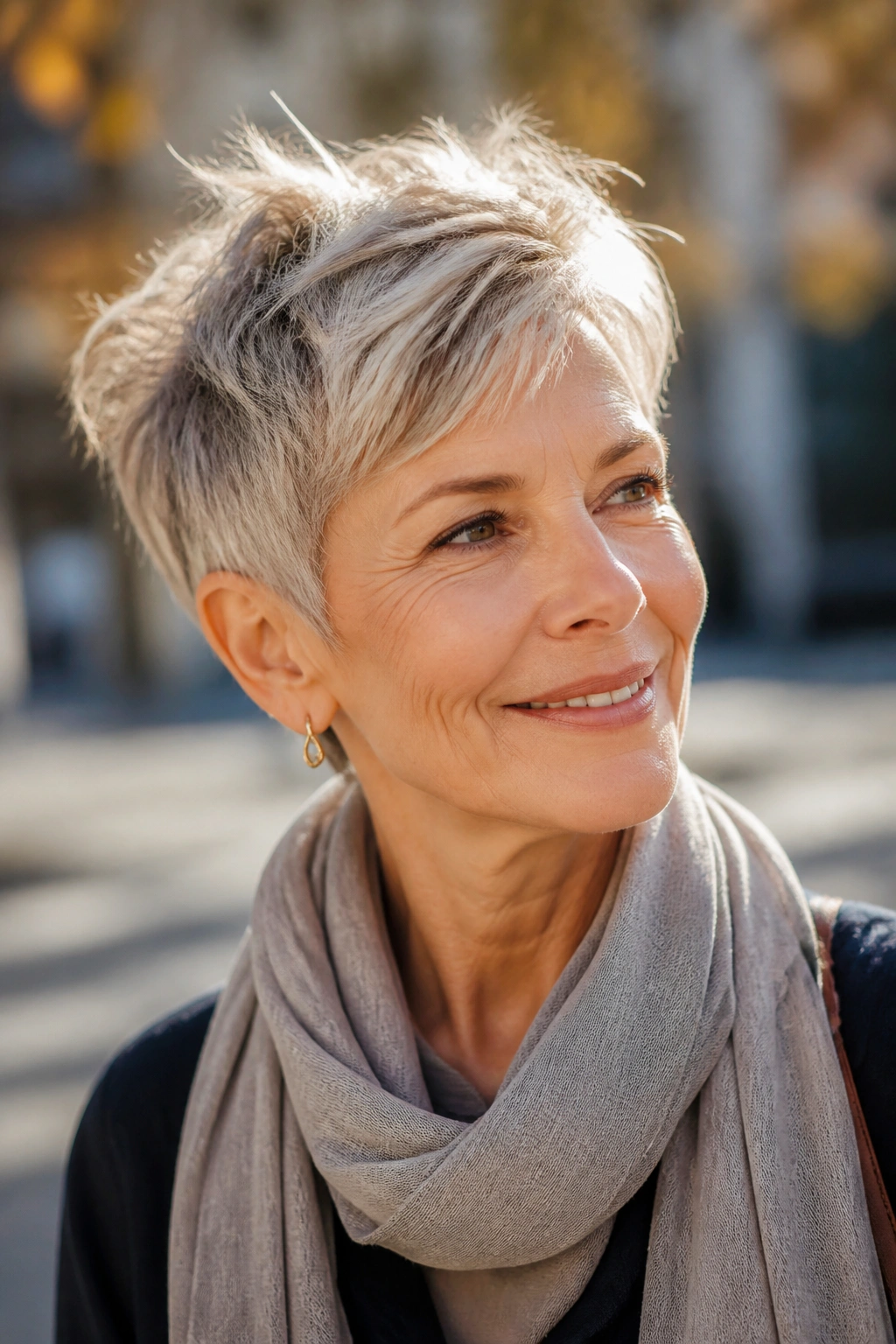
There’s a difference between “messy” and “I gave up.” This cut lives on the good side of that line. The crown is lightly layered, the edges are choppy but softened, and the whole thing has a slightly lifted, lived-in feel.
It’s a great pick if you want hair that can be finger-styled in under five minutes. A matte paste works better than anything shiny here. Rub a tiny amount between your palms, then press it through the ends and the crown, separating pieces as you go.
This shape is useful for hair that has gone a little straighter with age. The choppy edges wake it up. The layers keep the top from lying flat. And because the silhouette is short, it doesn’t take much effort to keep it looking fresh between cuts.
A good messy pixie still looks shaped. That’s the point.
12. Feathered Pageboy
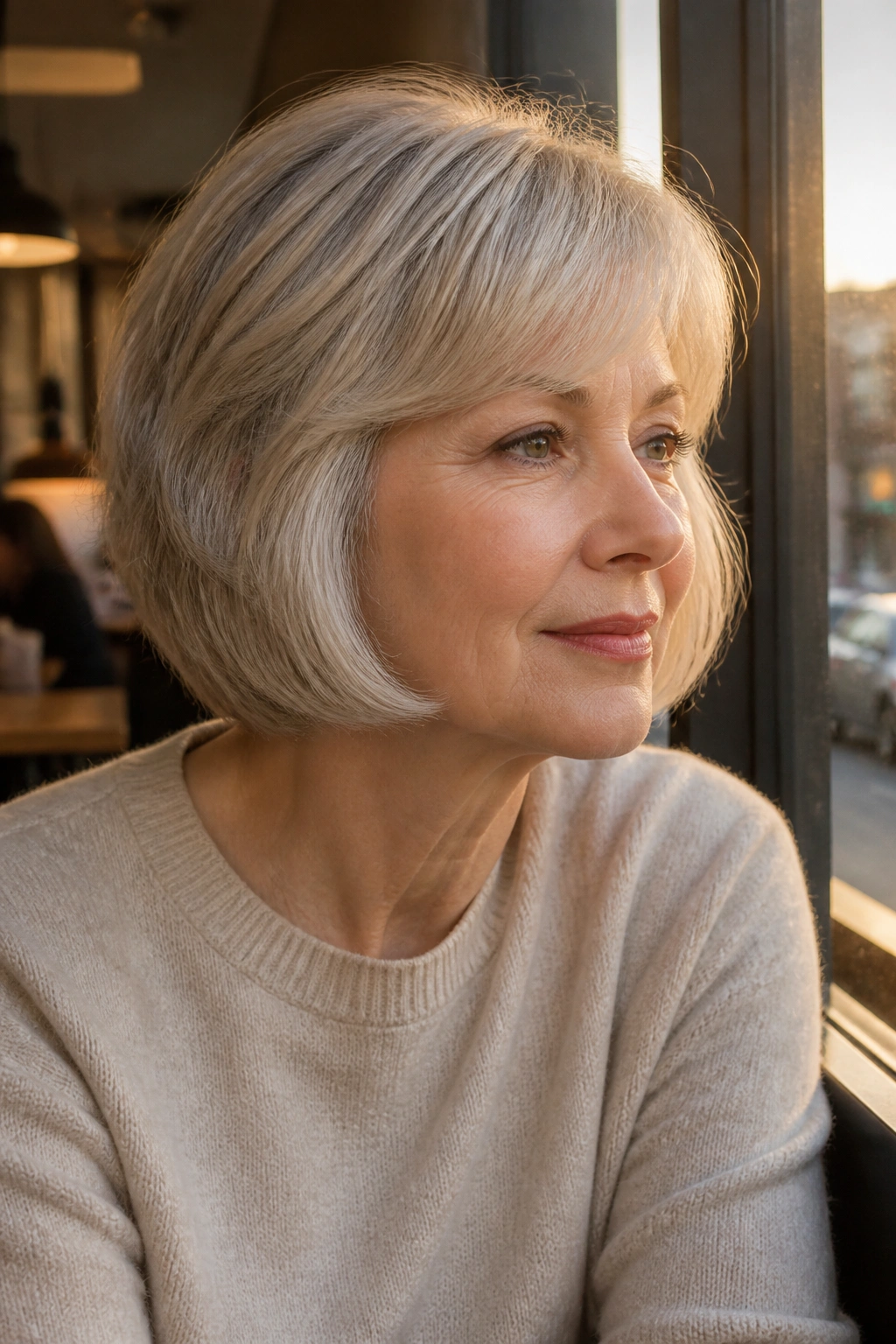
The pageboy gets a bad reputation when it’s cut too blunt and too round. Soften it, and it becomes a very flattering short style. A feathered pageboy keeps the rounded outline, but the ends are lightened so the shape doesn’t sit like a cap.
Who it suits
This is a smart choice if you like a little structure around the face but don’t want the bluntness of a classic bob. It works well on straight to slightly wavy hair, and it’s especially useful if your jawline has become a little softer and you want the hair to frame it gently.
The sides can be tucked behind the ears or left to curve under the cheekbone. Either way, the look stays tidy. Ask for softness around the edges rather than a hard, uniform line.
A feathered pageboy can feel old-fashioned if it’s done too neatly. Keep it light. Keep it moving. That’s where the charm is.
13. Salt-and-Pepper Layered Crop
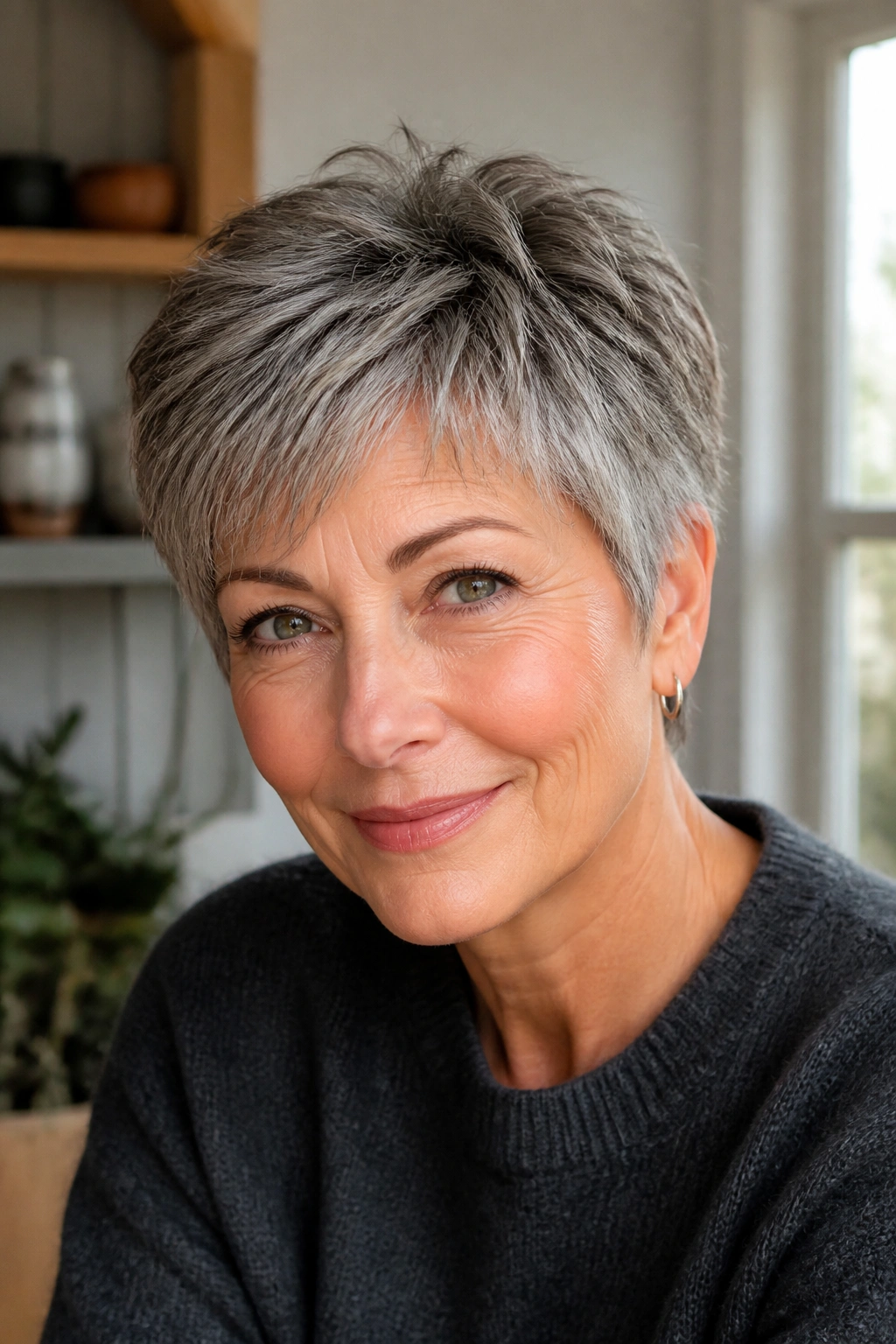
Salt-and-pepper hair has a built-in advantage: texture shows up fast. Short layers make that texture easier to see, and they keep the color from looking like one flat block. That matters when your hair has shifted from pigmented to mixed silver and dark strands.
The smartest thing about this crop is that it doesn’t fight the color. It lets the contrast do some of the work. Soft layers around the crown can create lift, while shorter pieces near the ears keep the silhouette from getting boxy.
Let the color do some work.
A little shine cream can help, but don’t drown it in product. Salt-and-pepper hair often looks richest when it moves. If the ends start to look dry, use a light leave-in conditioner on the lower half only, not the roots.
This is one of those cuts that looks honest in the best way. It doesn’t pretend the hair is younger. It makes the hair look good right where it is.
14. Side-Parted Bob with Tuckable Front Pieces
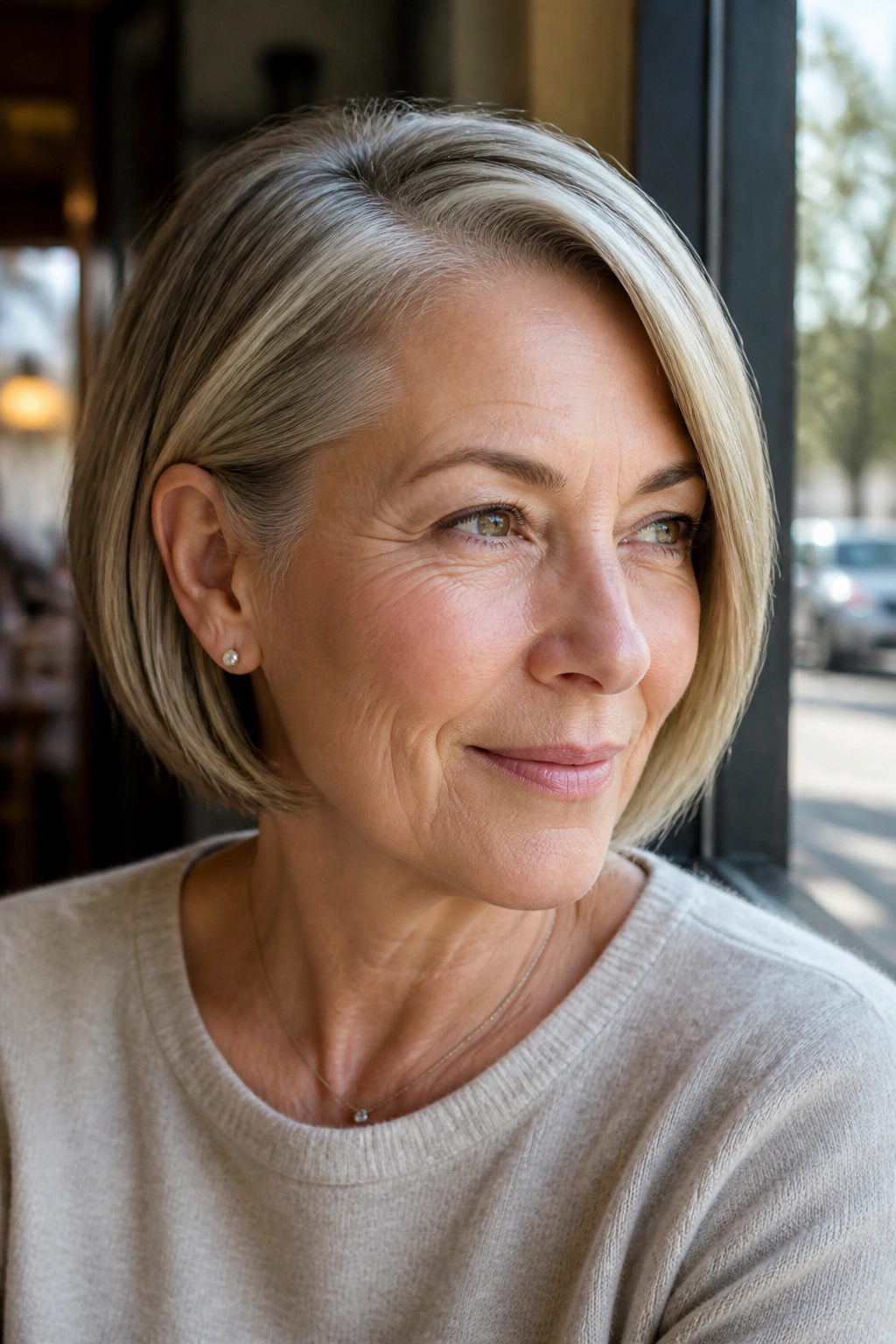
A deep side part changes the whole mood of a short bob. It gives the face a diagonal line, which is useful when you want to soften a broad forehead or bring a little shape to a rounder face. Add front pieces that can tuck behind one ear, and you get a cut that feels relaxed but intentional.
This is a nice option if you like switching between polished and casual. One side can stay smooth and tucked, while the other falls naturally over the cheek. That asymmetry keeps the style from looking too symmetrical or too strict.
It also plays well with glasses, because the tucked side clears the frame and the loose side gives some softness back. If your hair is fine, keep the layers subtle so the front doesn’t look thin. If it’s thicker, the front can take more shape and still sit well.
Simple cut. Good payoff.
15. Silver Shag Bob
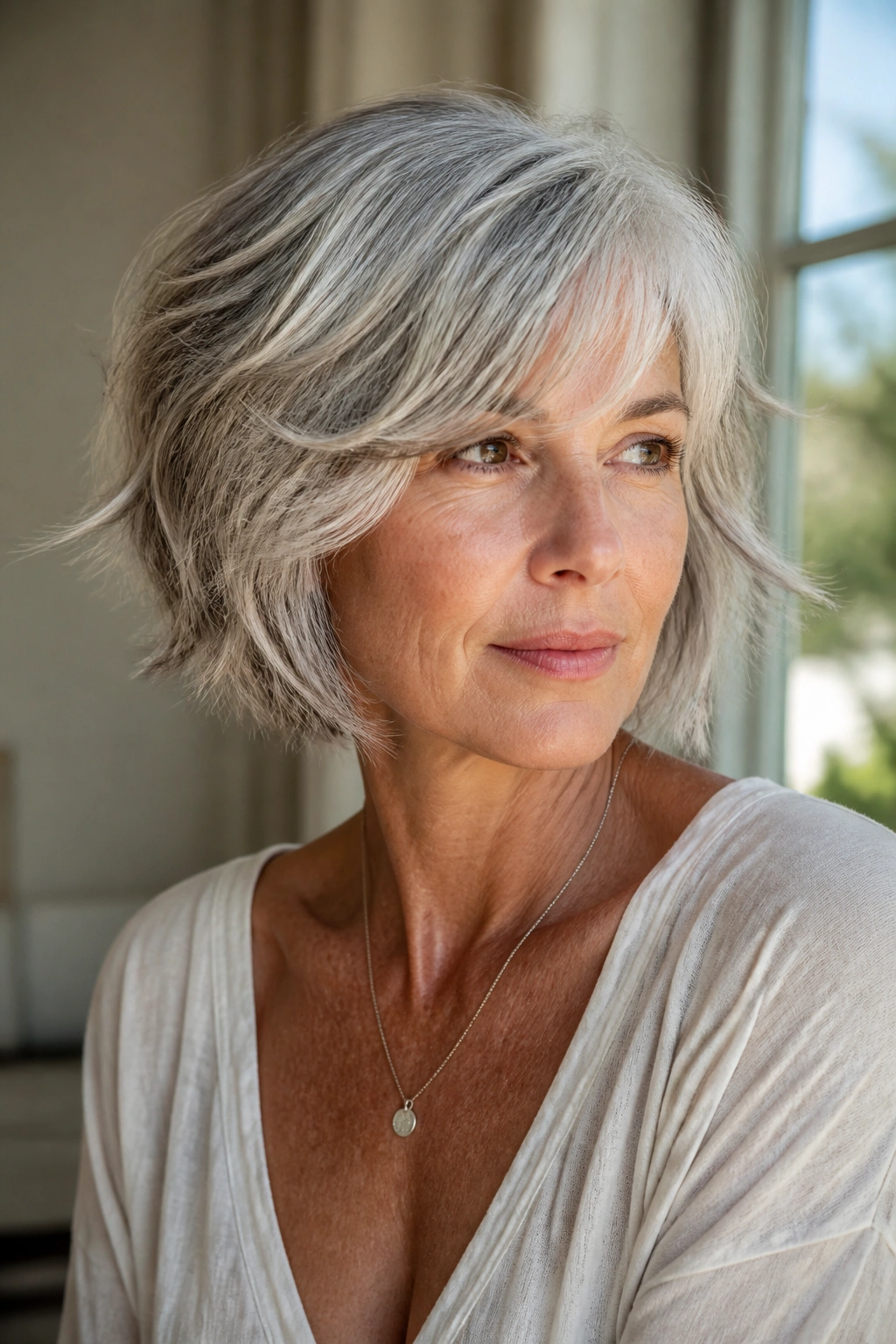
Silver hair and a shag bob are a smart pair. The shag gives the silver movement, and the silver shows off the layers. Together, they look lighter than a blunt cut ever could.
This version should feel airy around the face, with enough length to swing at the jaw but enough layering to keep the shape from going flat. A silver shag bob is especially flattering when there’s a natural wave, because the cut helps the texture bend instead of forcing it into a line.
Styling note
A curl cream or light mousse on damp hair usually does the job. Scrunch, air-dry, then break up the cast with your fingers once the hair is dry. If you want more polish, a quick pass with a diffuser keeps the texture soft but not frizzy.
The best thing about this cut is that it does not need perfect styling. It looks better when it’s a little loose.
16. Layered Cut for Fine Hair
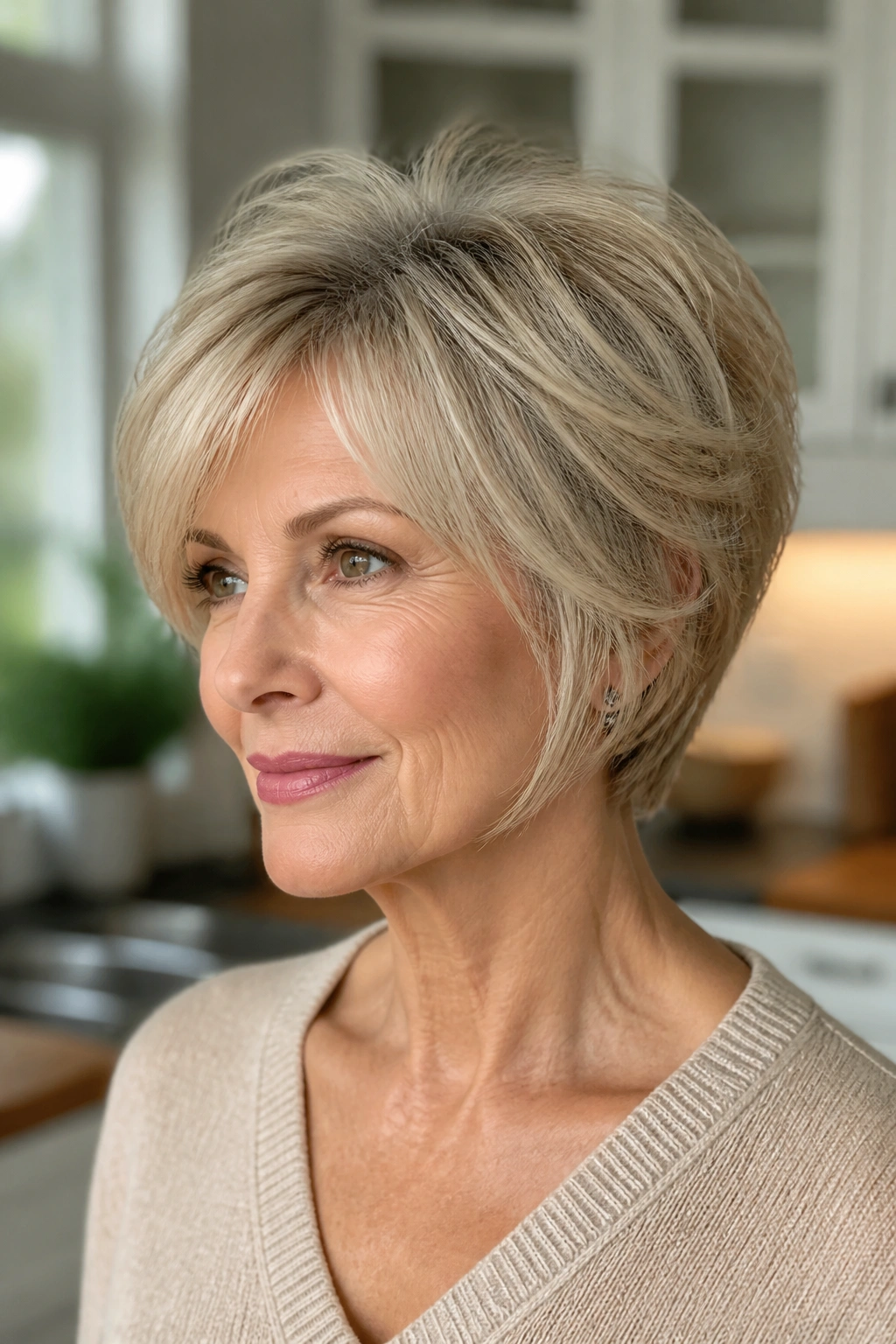
Fine hair can be tricky after 60 because it often needs lift, but not too much removing of bulk. That sounds contradictory, and hairdressers hear it all the time. The fix is a layered cut that keeps enough weight at the bottom to hold shape while adding softness above it.
Too many short layers can make fine hair look wispy and tired. A better approach is to keep the perimeter strong and add longer layers through the crown and sides. That gives you movement without exposing too much scalp.
What to ask for instead of over-thinning
- Ask for longer internal layers.
- Keep the ends full enough to support the shape.
- Use a lightweight volumizing mousse at the roots.
- Avoid heavy oils near the crown.
A side part also helps, because it lifts the roots naturally. On fine hair, little choices matter. A lot.
17. Layered Cut for Thick Hair
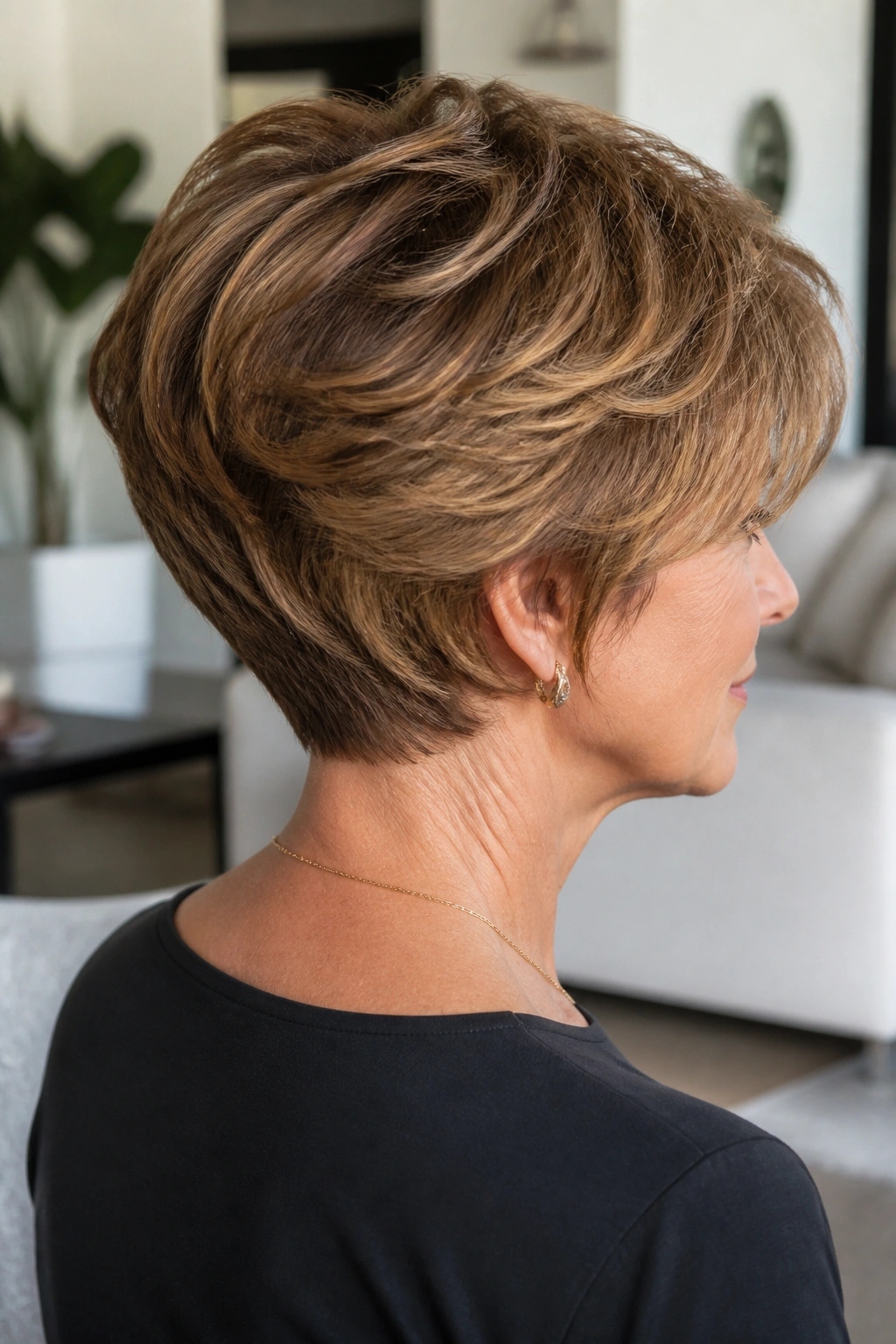
Thick hair does not need a thousand tiny layers. That’s the mistake. It usually needs smart shaping so it stops expanding sideways and starts falling where you want it to.
A good layered cut for thick hair often keeps some fullness on top while removing bulk through the interior and at the nape. If the hair is dense, a little undercut around the lower back can keep the neckline clean without making the surface look chopped up.
What to ask for instead
- Strategic internal layers, not a shredded surface.
- A neat nape that stops the back from puffing.
- Point-cutting at the ends so they don’t look blunt and heavy.
- A length that clears the jaw without turning into a triangle.
Thick hair can look gorgeous short, but it needs control. Not too much. Just enough.
18. Wavy Razor-Cut Bob
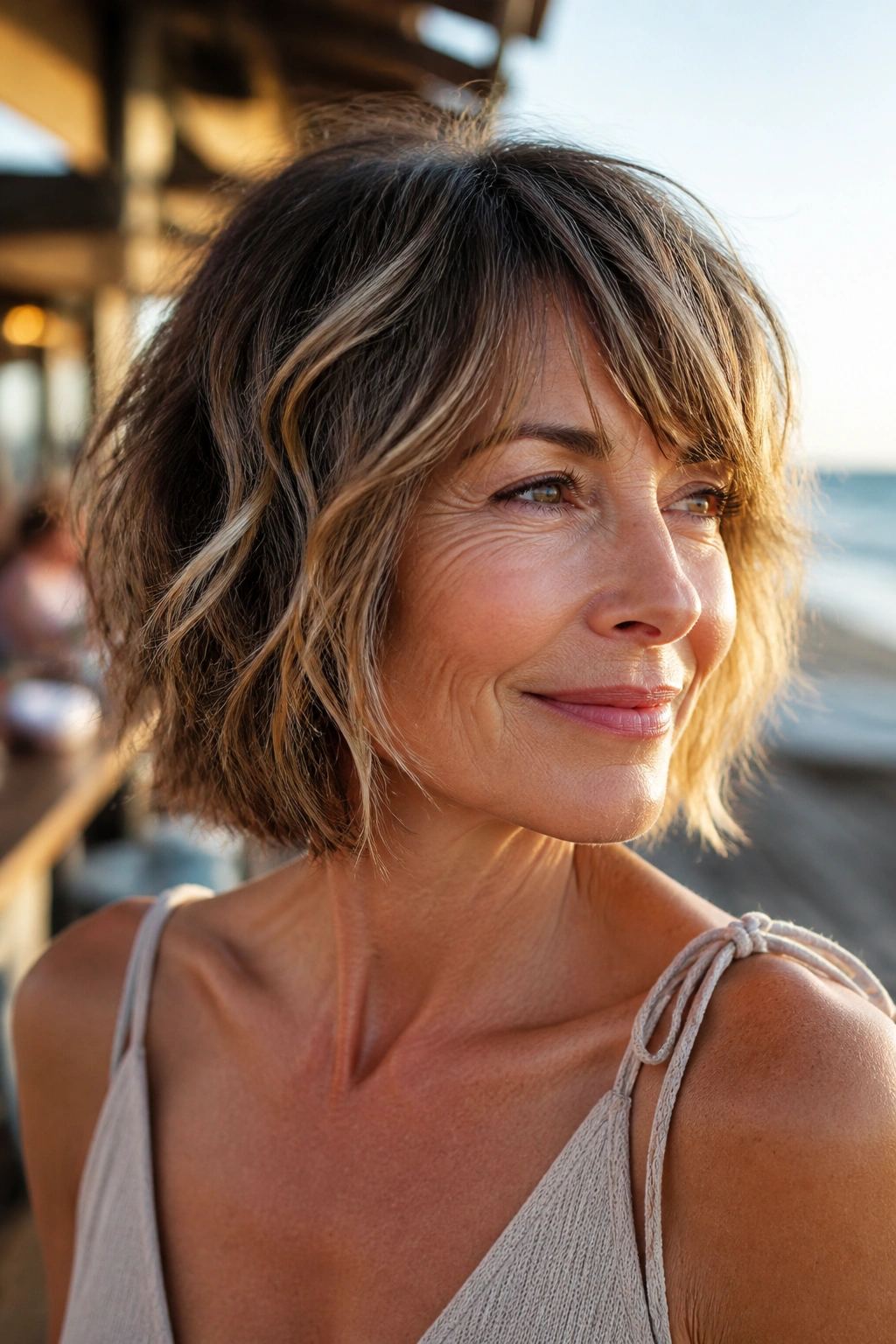
A razor-cut bob can be beautiful on wavy hair when it’s handled with restraint. The razor softens the ends and keeps the bob from looking too boxy, which is helpful if your wave pattern likes to bend in different directions.
This style works best when the hair is not fragile or heavily processed. Razor cutting can leave weak ends looking frayed, so a careful hand matters. You want softness, not raggedness. There’s a difference, and it shows.
The bob should sit around the jaw or just below it, with enough texture to let the waves separate on their own. A sea salt spray can help if your hair tends to fall flat, but use a light hand. Too much and the texture gets crunchy fast.
If your wave pattern has a mind of its own, this cut can meet it halfway instead of fighting it.
19. Soft Undercut Pixie
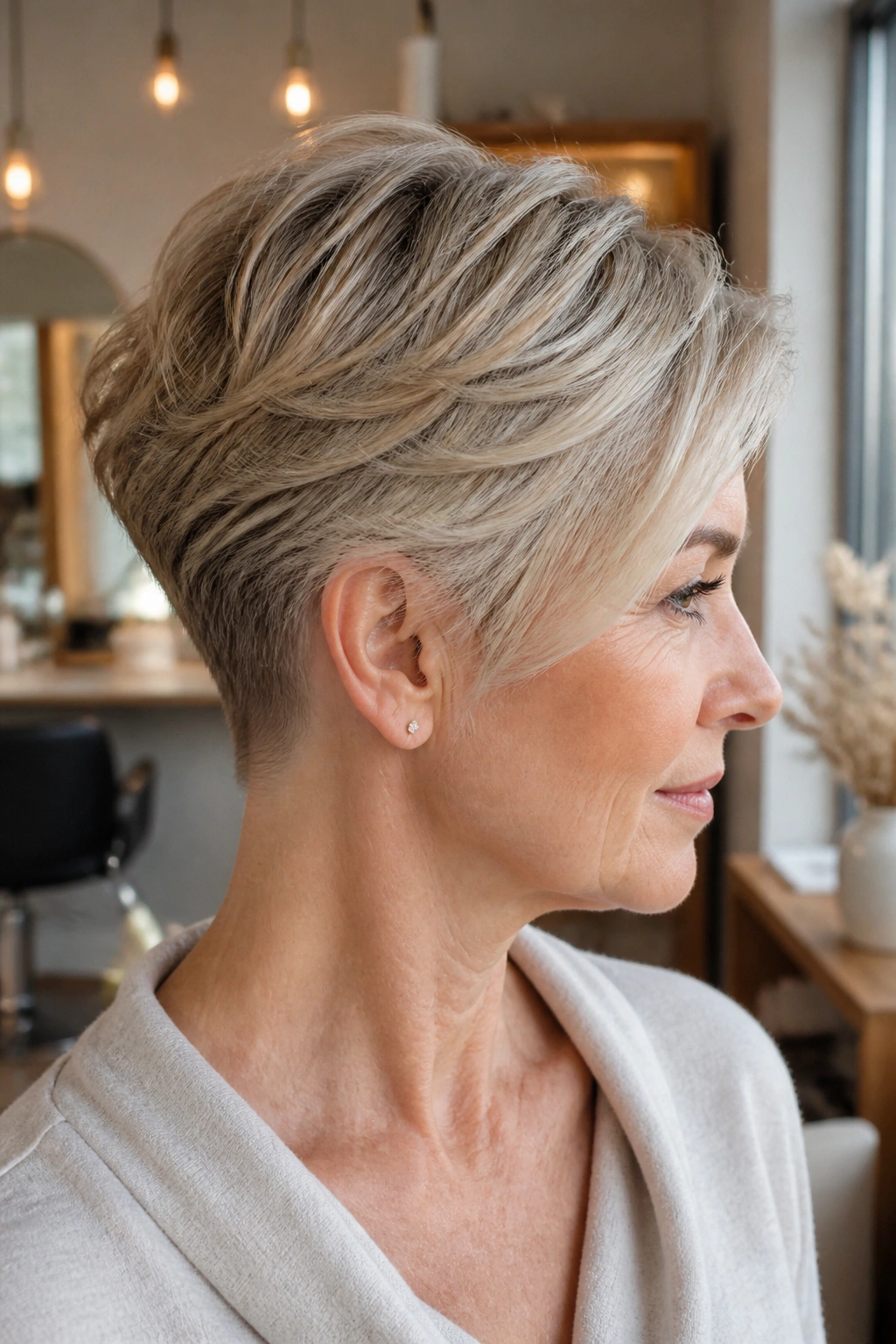
An undercut sounds bold, but a soft one is far more wearable than people think. The nape and the area behind the ears are kept shorter, which removes bulk and makes the top feel lighter. The layers above stay longer so the cut still has shape.
This is especially useful for thick hair that gets hot, bulky, or hard to dry. It also makes the neckline look clean in a way that can feel surprisingly polished. And when the top is left long enough, you can sweep it forward, up, or to the side depending on the day.
The grow-out is the only catch. Keep the appointments regular if you want the outline to stay neat. If you’re the type who skips trims until the ends are begging for help, this may not be the happiest choice.
Still, when it’s done well, it feels light in a very practical way.
20. Rounded Layered Cut with Temple Volume
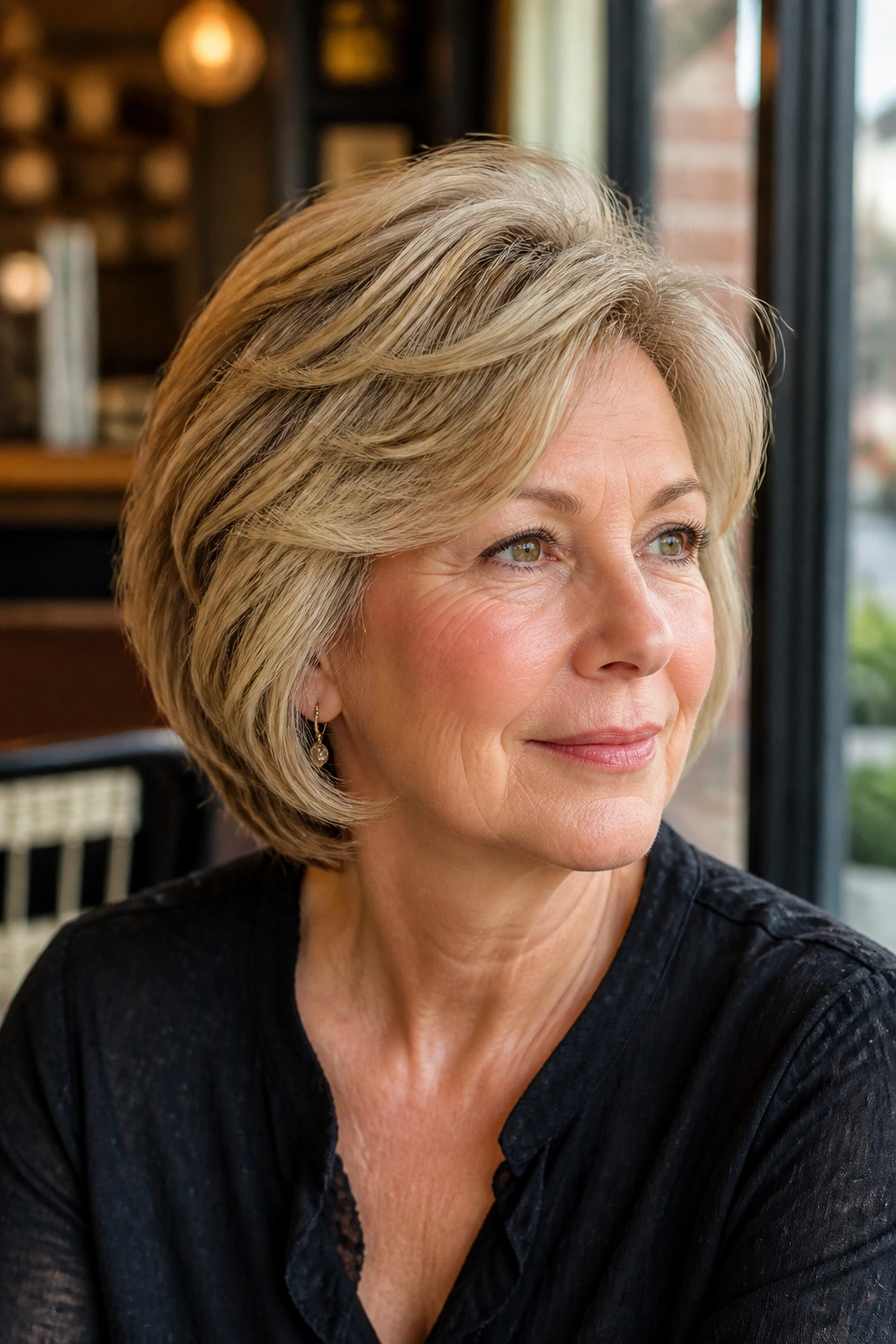
A rounded layered cut can be a gift if your face is long, narrow, or has lost a little fullness at the sides. The trick is to build some width at the temples and cheek area while keeping the back tidy.
This is not about puffing the hair out. It’s about making the silhouette look balanced. The layers should curve gently, not spike, and the side pieces should stop where they help the face most. A soft side part usually works well because it keeps the shape from feeling too symmetrical.
It’s a clean choice for women who like neat hair but don’t want the crown to go flat. A blow-dry brush can help set the roundness in place, and a small amount of smoothing cream will keep flyaways under control without killing the lift.
The result is calm, structured, and easy to wear with a simple shirt or a dressy neckline.
21. Piecey Cut with Choppy Bangs
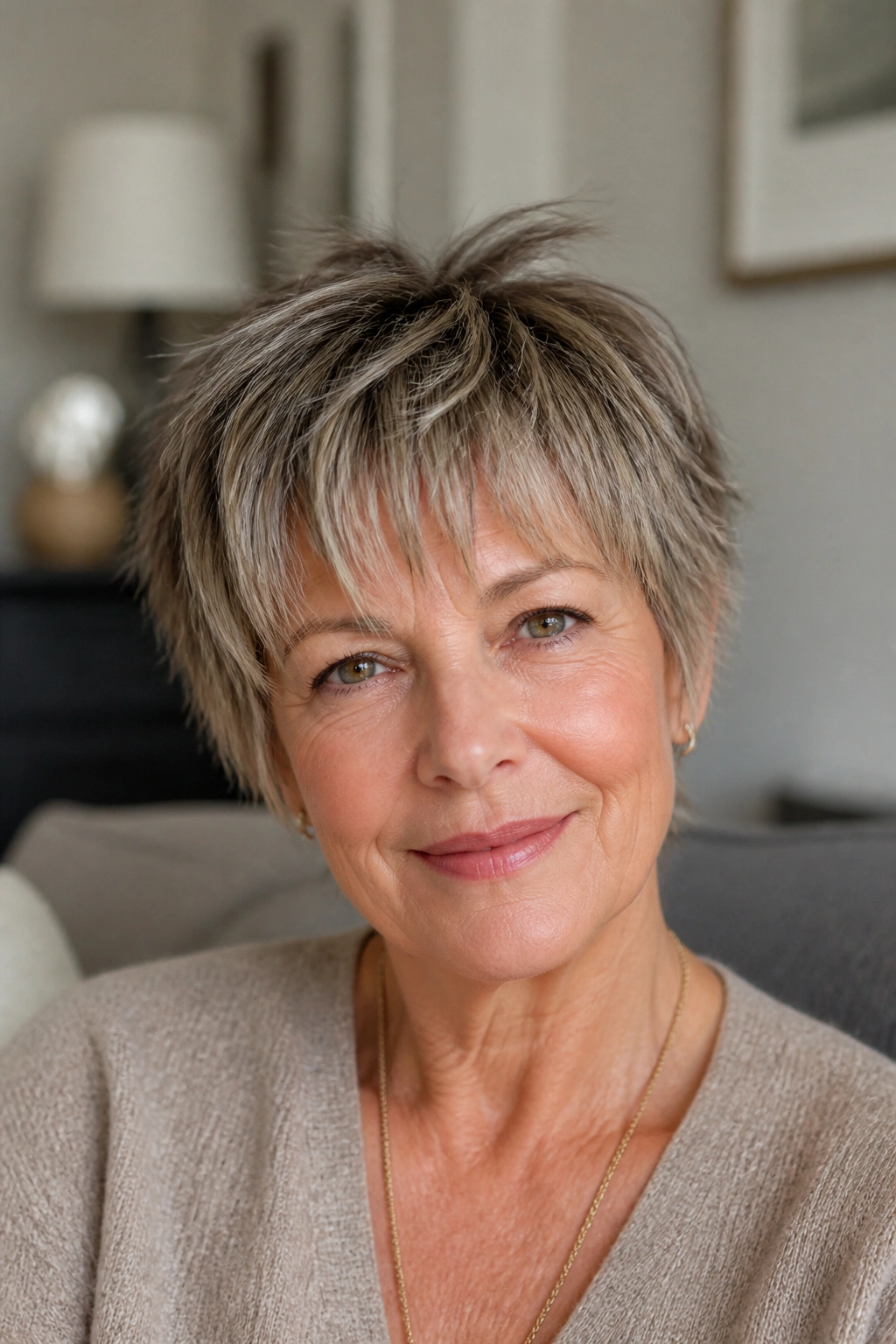
Choppy bangs do not need to cover the whole forehead to work. A few piecey strands can soften the front of the face while keeping the cut light and modern. That’s part of why this style feels fresh without being fussy.
The rest of the cut should stay short and layered, with enough texture through the top to keep the bangs from looking like a separate piece stuck on at the front. If the hair is fine, keep the fringe sparse and airy. If it’s thicker, the bangs can be fuller but still broken up at the ends.
The bang length to ask for
Ask for bangs that hit somewhere between the brow and the top of the lashes, depending on how much forehead coverage you want. Longer pieces at the sides help blend the fringe into the rest of the cut, which keeps things from looking abrupt.
A tiny bit of wax on the fingertips can separate the pieces. Tiny. Too much and the fringe clumps.
22. Neck-Length Layered Crop
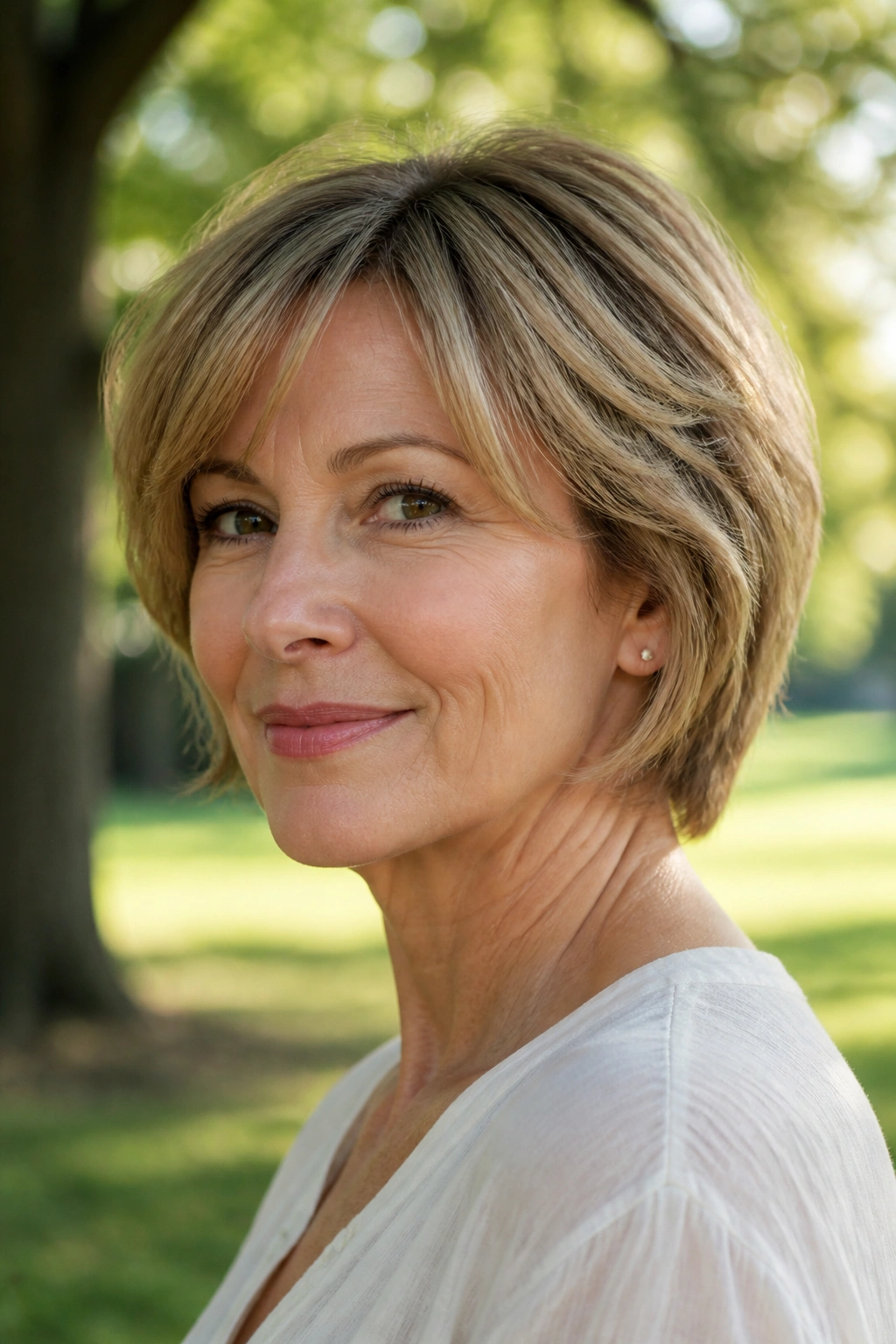
A neck-length crop sits in that useful middle ground between a pixie and a bob. It’s short enough to feel light, but long enough to tuck behind the ear or let brush the nape. That makes it a strong option for anyone who wants ease without going ultra-short.
The layered finish keeps the hair from hanging heavy at the sides. It also softens the outline around the jaw and neck, which is especially helpful if you want a little coverage without hiding the shape of your face. If your hair has a slight bend, this cut can work with it instead of against it.
Why it’s such a practical choice
- It dries faster than shoulder-length hair.
- It still gives you some styling options.
- It works with scarves, collars, and glasses.
- It grows out more gently than a close crop.
This is the sort of cut that earns repeat appointments because it stays useful between visits.
23. Elegant Pixie-Bob with Long Fringe
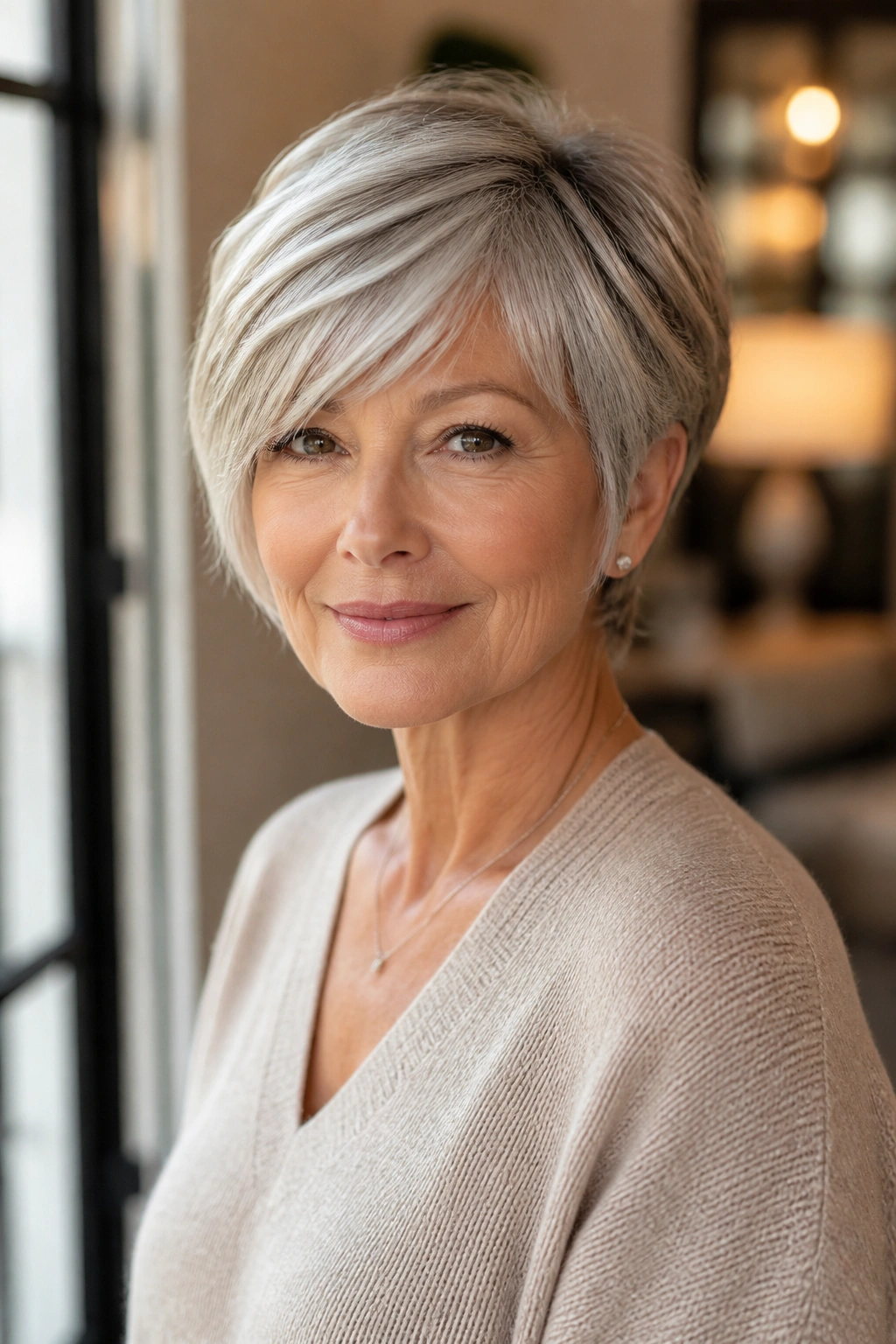
A pixie-bob is one of the easiest short cuts to wear if you want softness at the front and a cleaner shape at the back. It has more length than a classic pixie, but less weight than a bob, and that balance makes it flattering on a lot of women.
The long fringe is the part that changes everything. It can sweep over one side of the face, skim the brow, or tuck back when you want a cleaner look. Around the crown, the layers should stay controlled so the cut keeps its shape rather than puffing up.
This is a good one for earrings, glasses, and side parts. It gives the face a frame without boxing it in. If you like a little polish but do not want to spend ten minutes wrestling with a brush, this cut sits in the sweet spot.
A flat brush and a small amount of smoothing cream are often enough to finish it.
24. Wash-and-Go Layered Crop
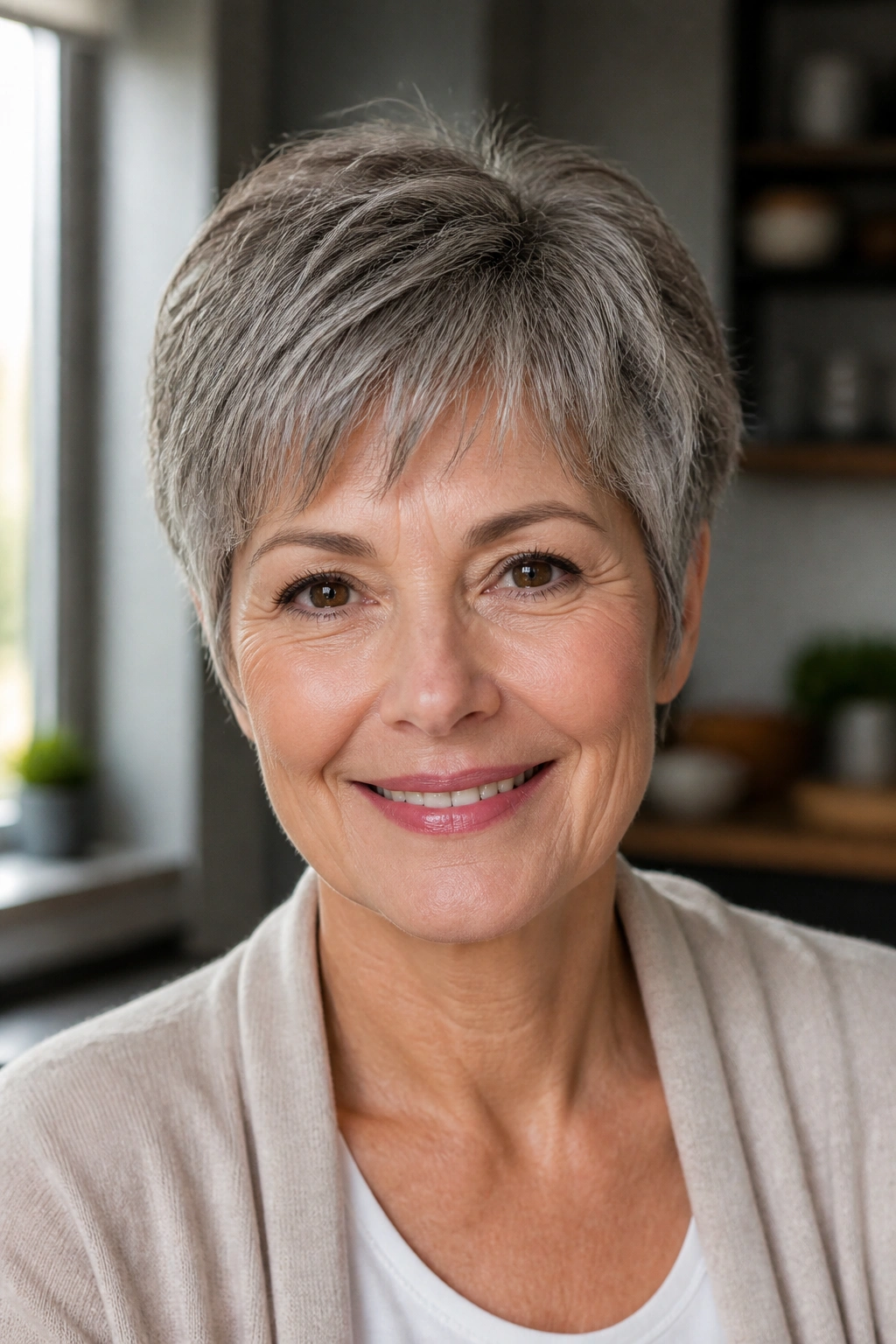
If you want a short style that behaves after a quick towel-dry and a few finger-combs, this is the cut to ask about. A wash-and-go layered crop keeps the shape close to the head, but the layers are placed so the hair falls into a decent pattern with very little coaxing.
The key is restraint. The cut should not be so heavily layered that it turns fuzzy, and it should not be so blunt that it fights your natural texture. The best version has a little lift at the crown, softness around the sides, and a neat neckline that stays tidy even when you skip heat styling.
What to request at the salon
Ask for a short layered shape that follows your growth pattern, not one that battles it. Bring a photo, but also say how much time you actually want to spend styling. That sentence matters more than the photo, honestly.
This is a cut for real life. It works when you’re busy, when your hair is behaving, and when it isn’t. And that’s why so many women keep coming back to some version of it.