



A bob after 50 should not be timid. The best layered bob haircuts for women over 50 have shape, movement, and a little attitude; they do not sit there like a helmet.
Hair changes, and it changes in ways that matter to a cut. The crown can go flatter, the ends can feel drier, and the texture can turn a little more stubborn, especially if gray strands start coming in with their own wiry mood. A blunt line can still work, but it has to earn its keep.
That is where layers come in. Not random layers. Not the kind that look fine in a salon mirror and then puff up by lunch. The useful kind removes bulk where hair stacks up, leaves weight where the shape needs it, and gives the bob enough bend to look lived-in instead of stiff. The right version can soften a jawline, bring life back to fine hair, and make thick hair stop fighting the brush.
1. Chin-Length Layered Bob With Soft Ends
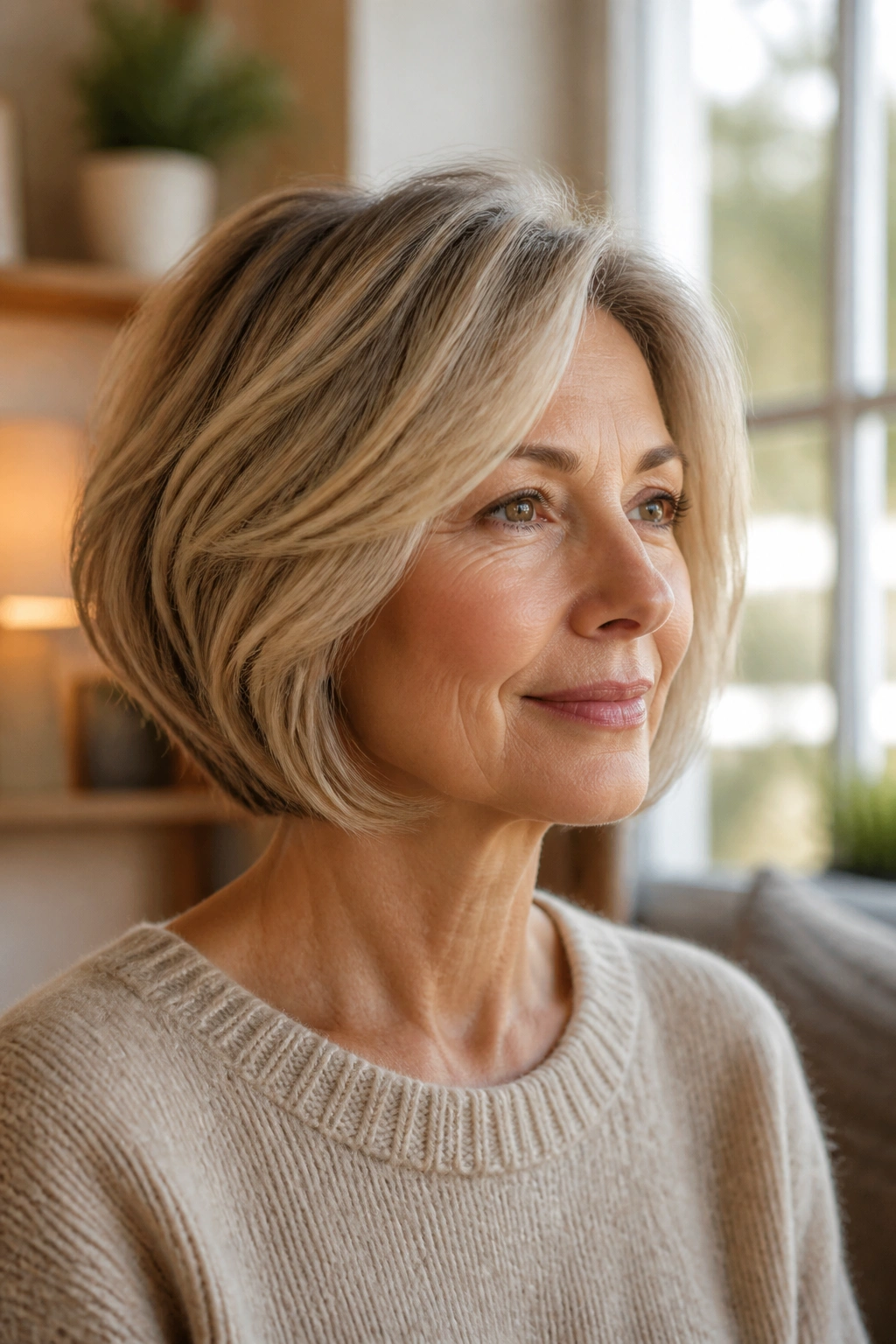
This is the cut I’d hand to someone who wants a bob that behaves. The length sits right around the chin, which means it catches the line of the face without clinging to the neck, and the soft ends keep it from feeling boxy.
Why It Works So Well
Chin length is a smart place for layered bob haircuts for women over 50 because it gives shape without making the face look dragged down. The layers should start low, usually around the mouth or just below it, so the top stays full while the perimeter stays light.
Ask for the ends to be point-cut or lightly textured, not shredded. That little detail matters. Hard, choppy ends can look dry fast; soft ends move when you turn your head.
- Best for fine to medium hair
- Good if you want the jawline softened
- Easy to style with a 1-inch round brush
- Works with a side part or a center part
Pro tip: keep the front a touch longer than the back. It makes the cut feel calmer and a little more expensive-looking.
2. Stacked Bob With a Clean Nape
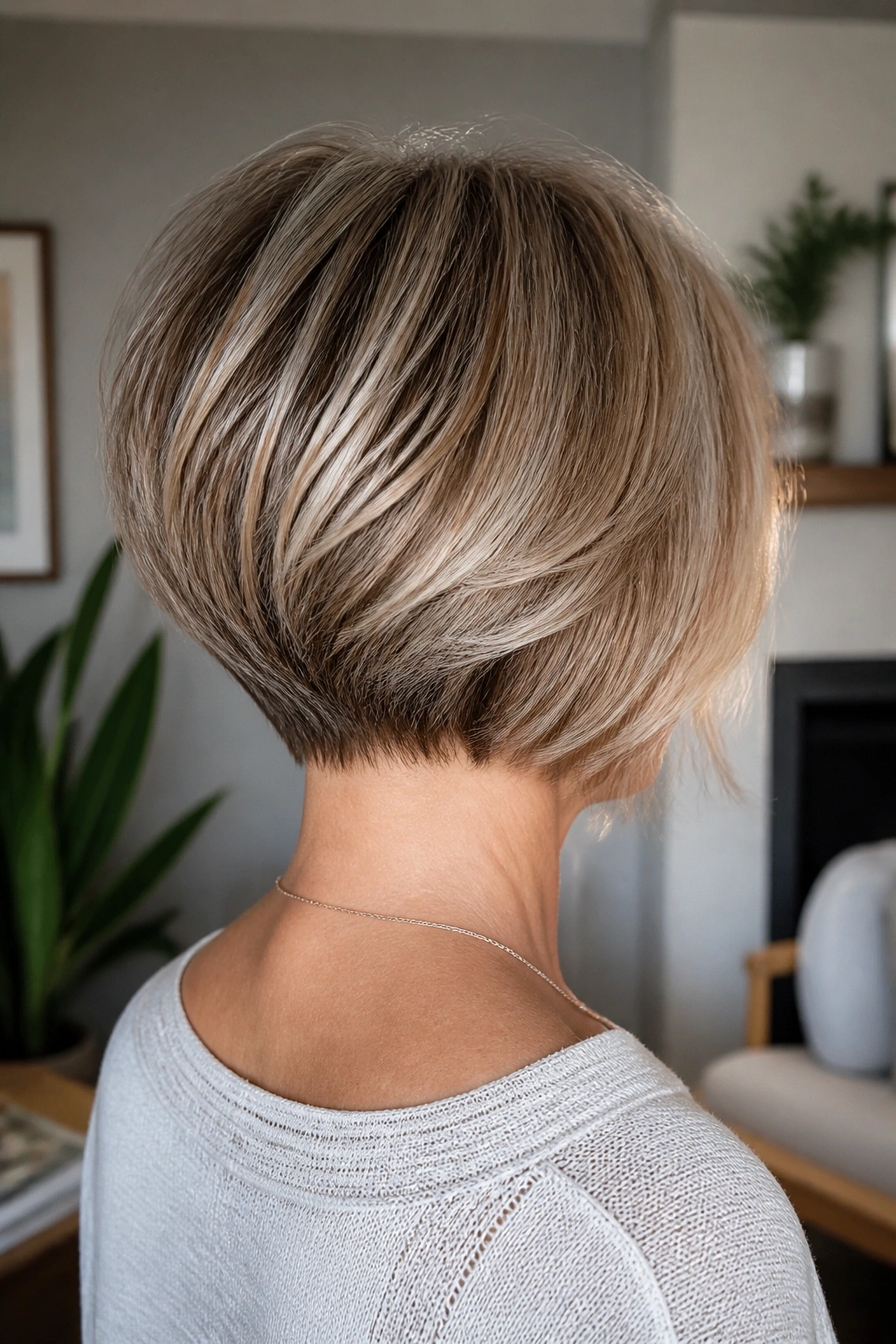
If your hair goes flat at the crown, this cut wakes it up fast. The stacked shape builds height in the back by shortening the layers at the nape and letting them graduate upward, so the head looks fuller without teasing or heavy product.
It can look severe if it’s cut too sharply. That’s the mistake. The trick is to keep the stack controlled and soften the front edges so the whole thing still feels wearable. A little bend near the cheek makes it look modern instead of frozen.
This bob is especially good for women with fine, straight hair that loses lift by midday. A root spray at the crown and a quick round-brush blow-dry are usually enough. If you like a neat neckline and don’t want hair brushing your collar all day, this one makes a strong case for itself.
3. Side-Parted Layered Bob With a Long Fringe
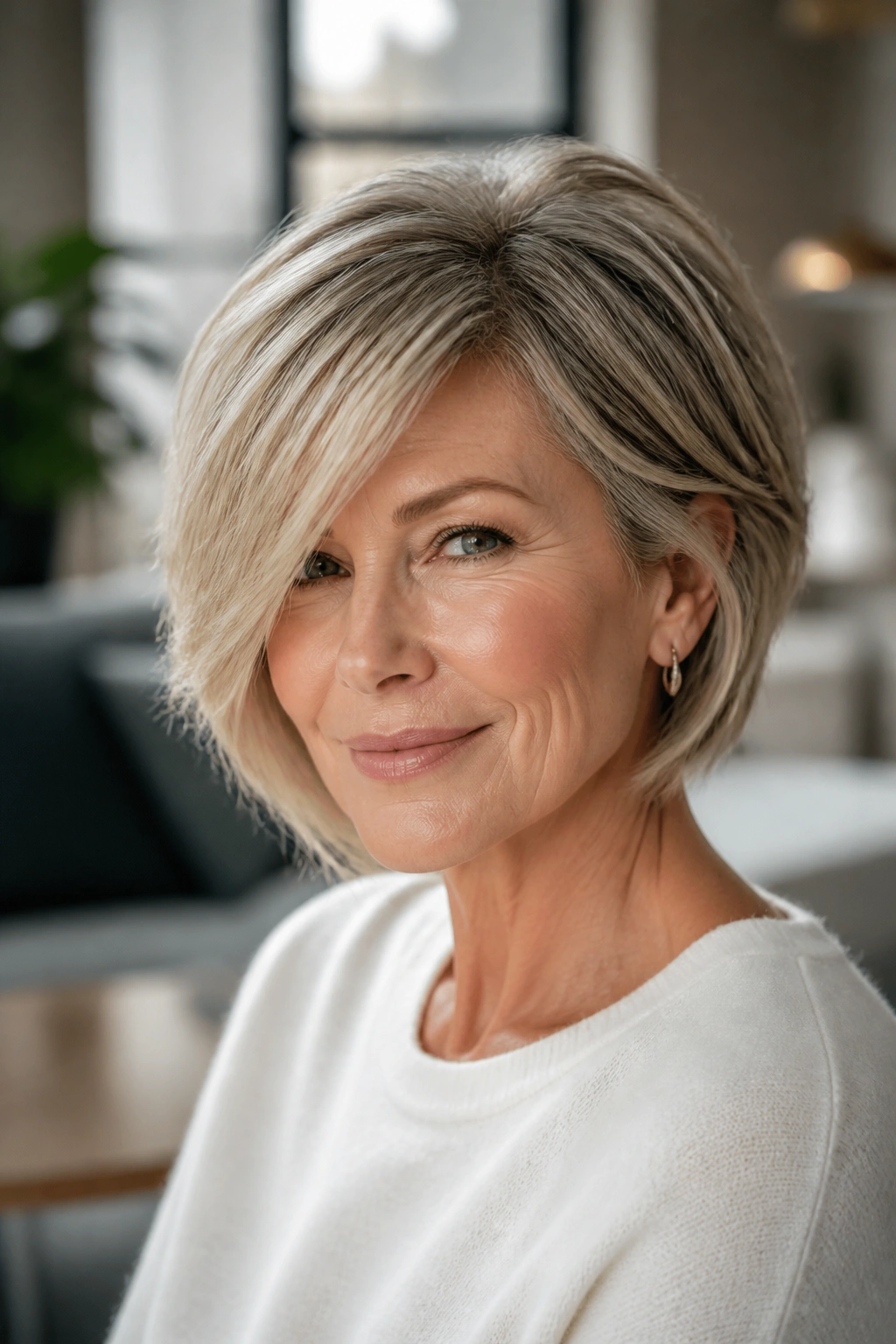
Why does this cut flatter so many faces? Because a side part breaks up straight lines, and the long fringe draws the eye diagonally instead of straight across. That diagonal movement softens the forehead, the cheek area, and even a stronger jaw.
The fringe should be long enough to tuck back if you change your mind. That part matters more than people think. A fringe that starts too short tends to feel dated fast, while a longer one can be swept aside, pinned, or curved away from the face with a quick pass of a round brush.
How to Wear It
A side-parted layered bob does its best work when the front is styled with a little lift, not pasted down. Use a light mousse at the roots, blow-dry the fringe forward first, then sweep it across while it is still warm.
- Great with glasses
- Softens forehead lines without hiding the face
- Best on straight, wavy, or lightly textured hair
- Needs trim appointments every 6 to 8 weeks to keep the fringe usable
4. French Bob With Feathered Ends
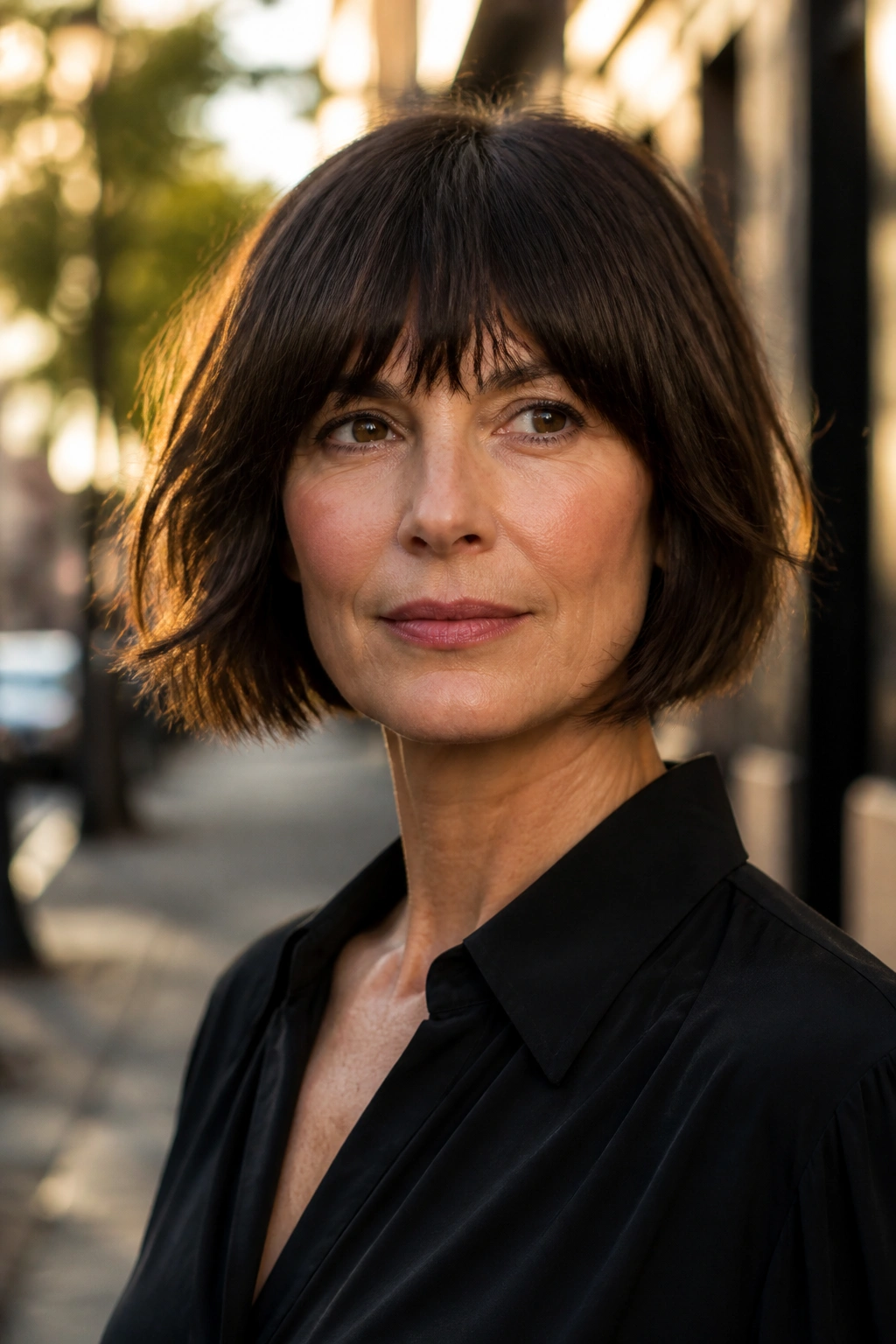
A French bob can be sharp and chic, but feathered ends make it friendlier. The length usually sits around the cheekbone or just below it, and the layers are kept soft enough that the hair moves instead of sitting in one blunt block.
This cut is a nice fit if you like a little polish and don’t want a long styling routine. It also pairs well with natural wave, which is handy because a French bob with too much forcing can look overworked. Keep the shape light around the mouth and temple, and let the neck area stay clean.
Think of it as a shorter bob with a bit of air in it. Not wispy. Not fluffy. Just enough texture to keep the outline from feeling rigid.
5. Jaw-Length Textured Bob for Fine Hair
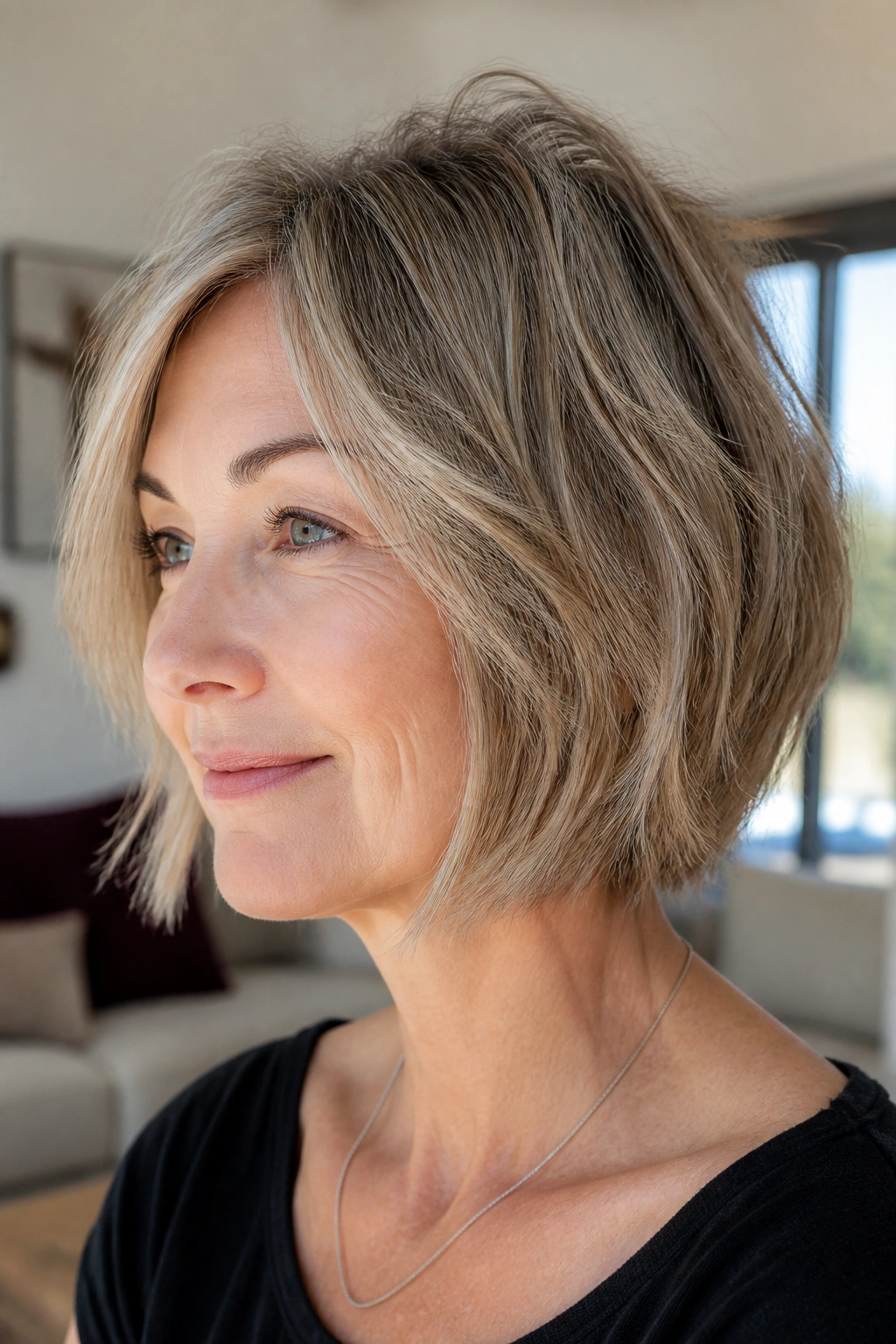
A jaw-length bob can be a gift for fine hair, but only if the layers are handled with some restraint. Too many short pieces and the cut starts to look thin at the ends. Too few and it falls flat like a curtain.
The better version uses internal texture, which means the hair underneath loses bulk while the outside line still looks full. That keeps the bob from collapsing by noon. Point-cutting the perimeter helps too, especially if the hair has a silky slip that makes blunt ends separate.
This is also one of the most forgiving cuts for women who want a lighter feel around the face but do not want to go too short. It works with a quick blow-dry, a round brush, and a dab of lightweight cream on the ends. Skip heavy oils. They tend to drag fine hair down.
6. Collarbone Lob-Bob With Invisible Layers
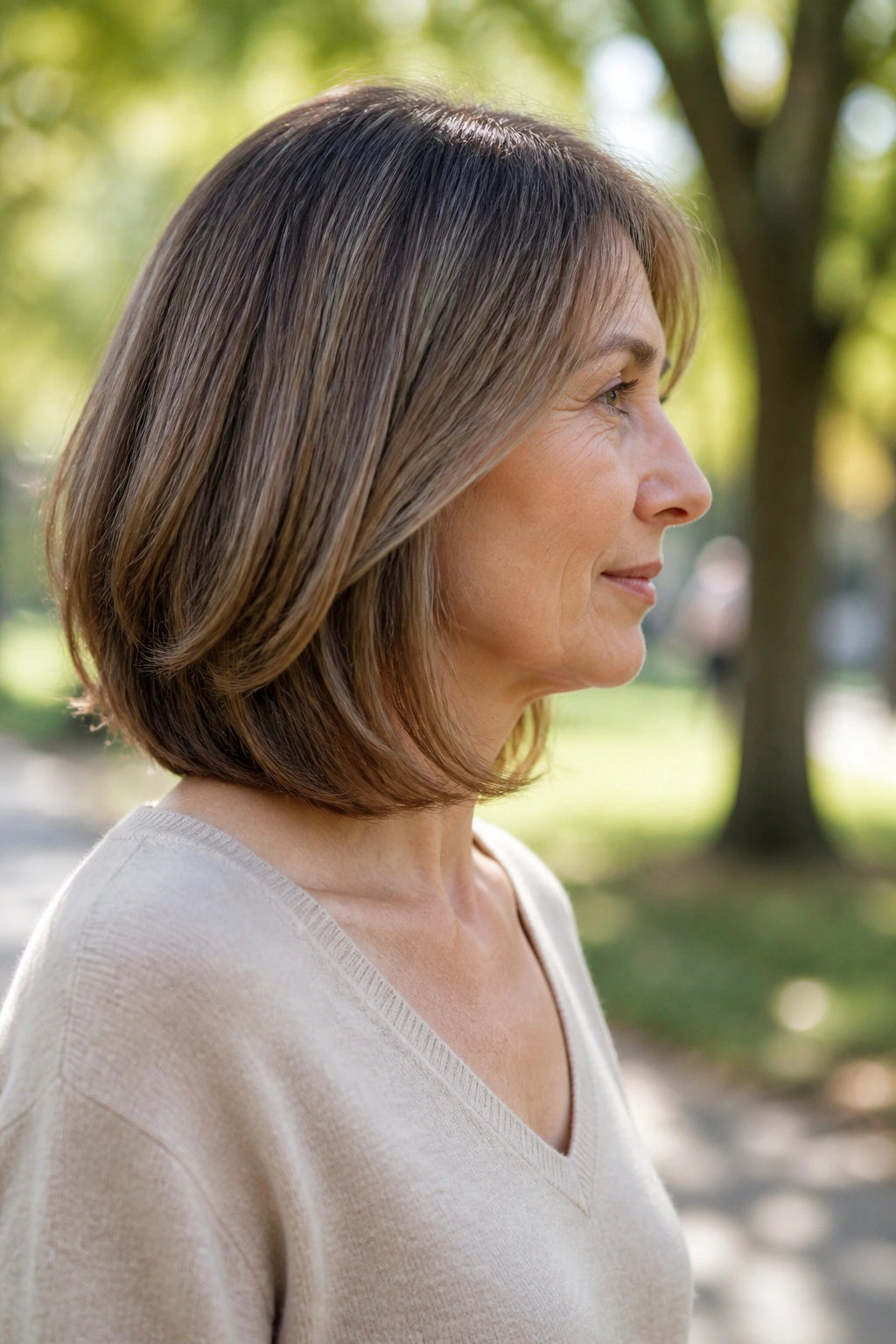
This is the cut for anyone who likes bob energy but is not ready to lose the length. It brushes the collarbone, so it still reads as a bob-inspired shape, but the extra length gives you more room to tie it back, clip it up, or let it fall loose on tired mornings.
What Makes It Different
Unlike a chin-length bob, this version keeps the weight lower, which helps if your hair is dry at the ends or if you do not want constant salon visits. The layers stay tucked inside the shape, so the haircut moves without looking heavily layered from the outside.
That hidden layering is useful on medium to thick hair. It stops the ends from feeling heavy, but it does not expose the scalp or make the outline frizzy. If you have a little wave, the lob-bob can look especially good with a center part and a bend through the mid-lengths.
My take: this is the safest cut on the list if you want a change that still feels familiar.
7. Angled Bob With Longer Front Pieces
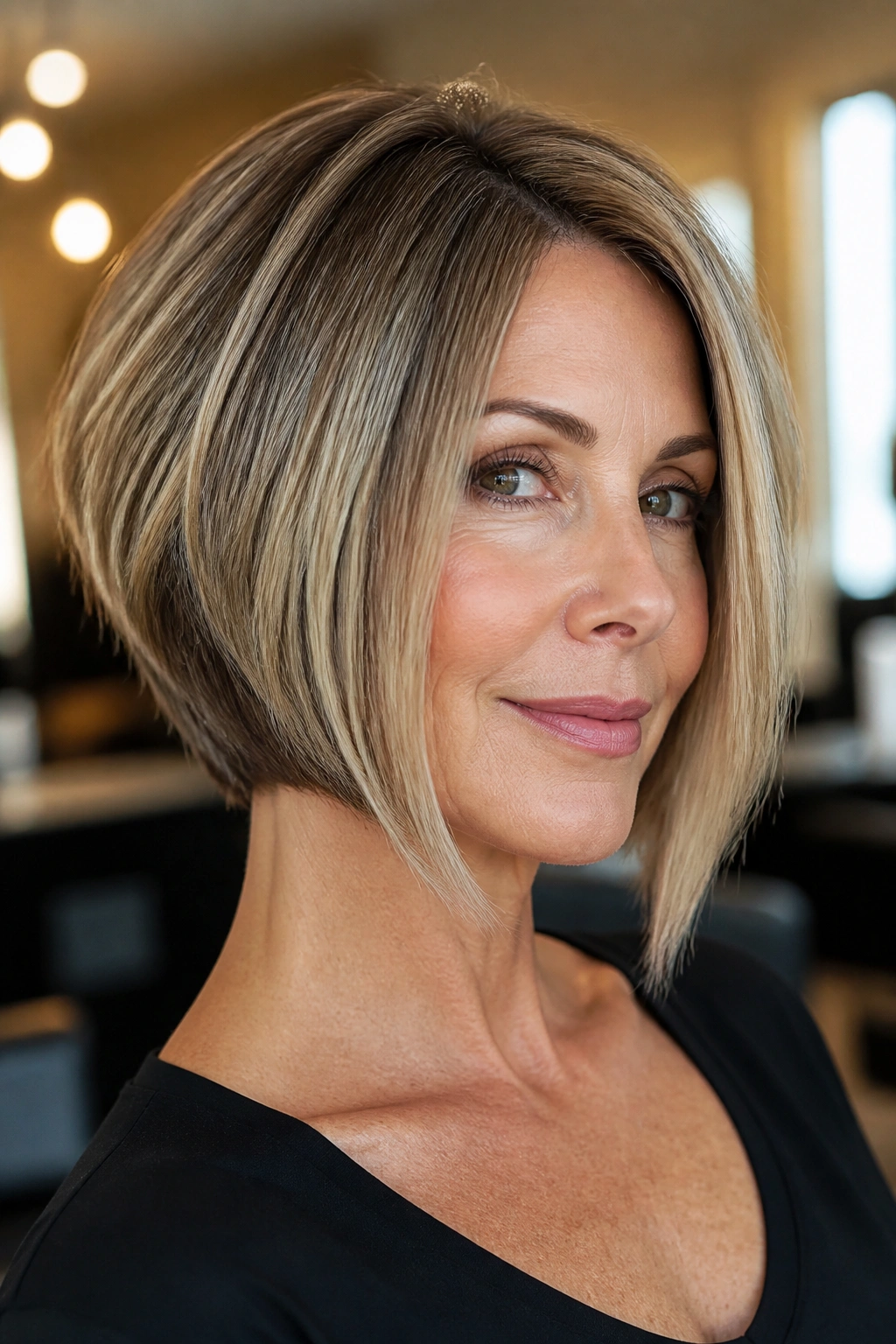
An angled bob gives the face a clean diagonal line, and diagonals are flattering because they pull the eye downward in a gentle way. The back is shorter, the front is longer, and the whole shape feels sleeker than a standard one-length bob.
It suits women who want a little edge without losing softness. The longer front pieces can skim the jaw or dip below it, which is handy if you want to slim a round face or make the neck look longer. A deep side part makes the angle even more obvious.
What to Ask for at the Salon
- Shorter layers at the back, but not a hard wedge
- Longer front pieces that graze the chin or just below it
- Soft texturing through the ends
- A shape that still looks good when air-dried
If you wear statement earrings, this cut gives them room to show.
8. Curly Layered Bob That Keeps the Shape Springy
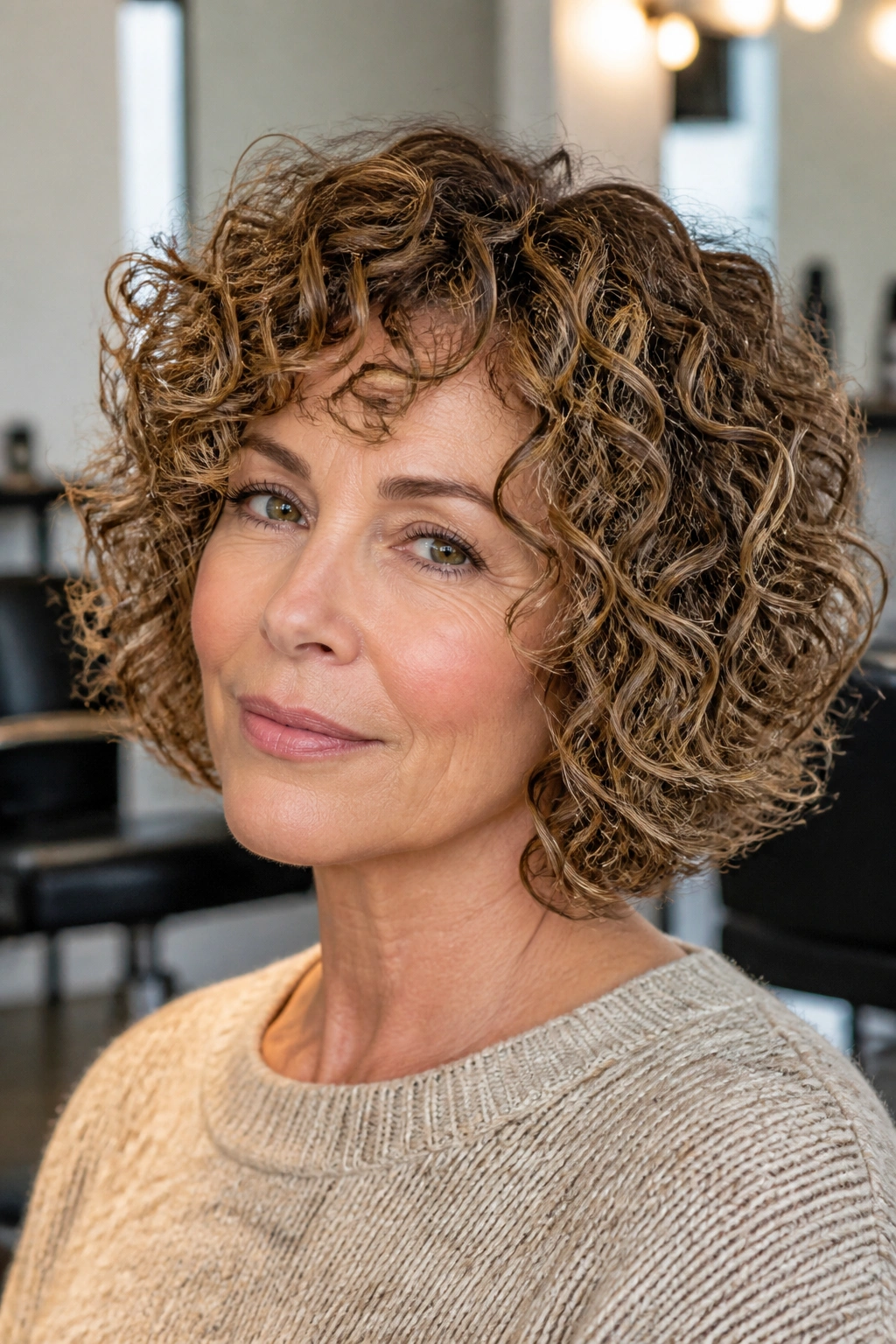
Curly hair and bobs can get along beautifully, but only when the layers respect the curl pattern. Cut too blunt, and curls bunch into a triangle. Cut too high, and the shape can turn puffy. The sweet spot is a layered bob that removes bulk where the curls stack and leaves enough weight at the bottom to keep the silhouette round.
A dry cut often helps here because curls shrink when they dry, and that shrinkage changes everything. The stylist should look at where the curl falls, not where it stretches. That’s the difference between a bob that springs up nicely and one that surprises you in the mirror.
Use a curl cream or light gel, scrunch the hair, and let the pieces find their own shape. Diffuse only until the roots are set. Over-drying curls is how the shine disappears.
9. Wavy Bob With Razor-Lite Ends
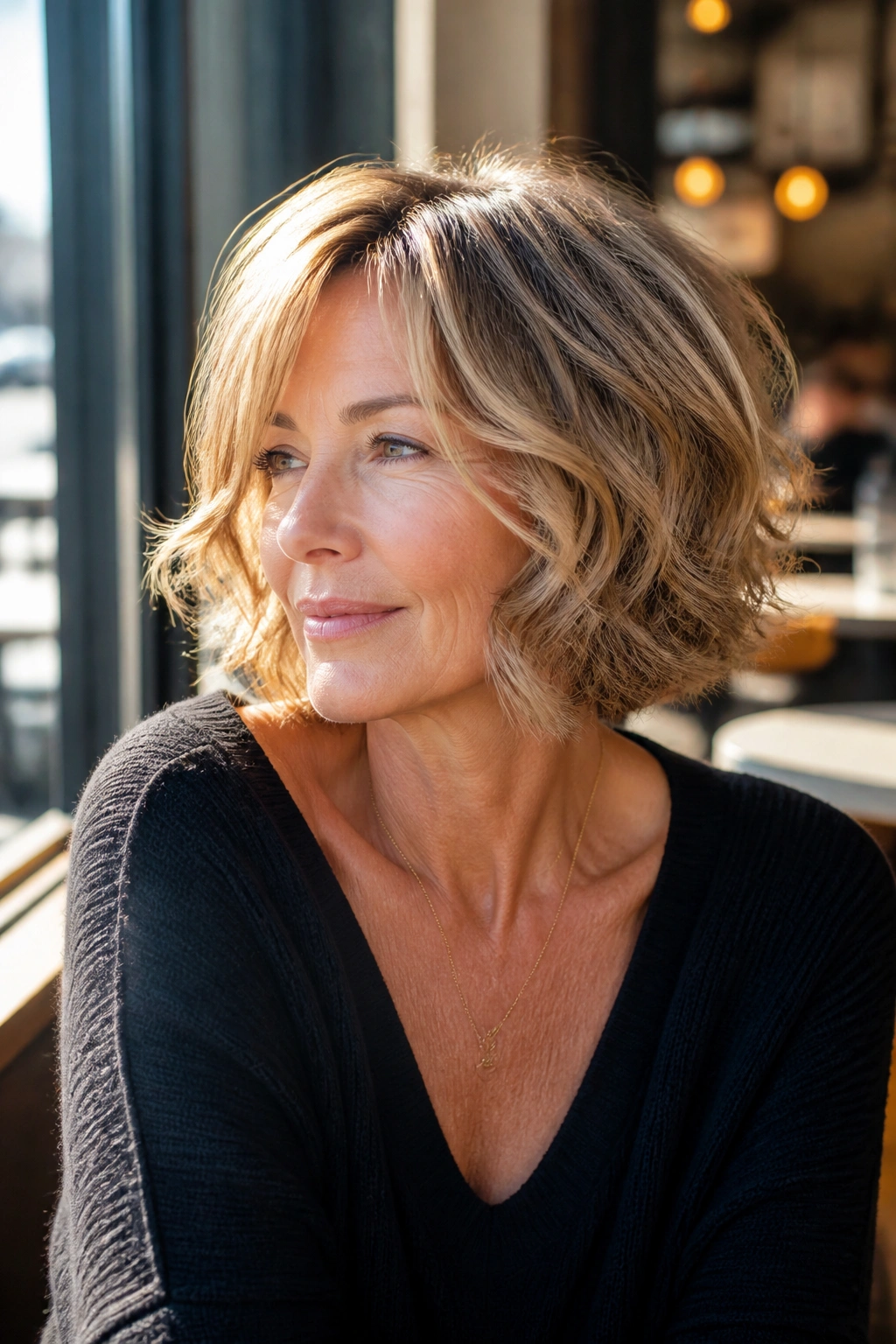
This bob is for hair that wants motion. The shape sits somewhere between soft and piecey, with the ends lightly removed so the waves can separate instead of clumping together. It works especially well on medium-to-thick hair that feels too heavy in a blunt bob.
Razor cutting can help, but only in the right hands. Too much razor on dry, frizz-prone hair can rough up the ends and make them look fuzzy. A gentle touch is enough. The goal is a soft edge, not a ragged one.
I like this cut best with a bit of bend in the front and a looser finish in the back. A salt spray can help, but a lightweight mousse often gives a cleaner result. If your hair already has wave, this shape makes it look intentional without making it fussy.
10. Rounded Bob With Crown Volume
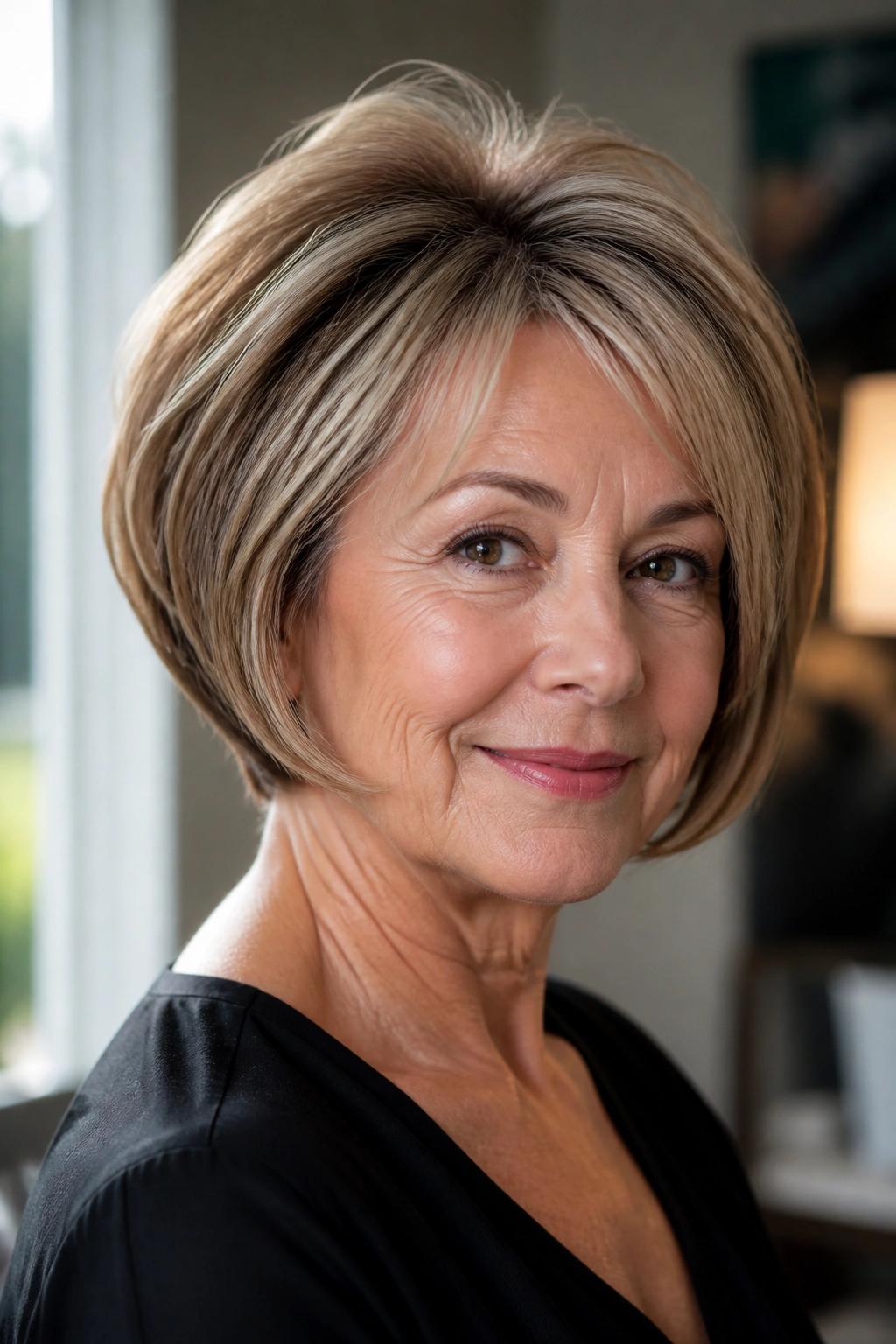
A rounded bob gives the head a softer outline, which is useful if your hair has lost fullness on top. The crown has a little lift, the sides curve inward, and the whole cut sits close to the head without looking flat.
Styling That Actually Helps
The round brush matters here. So does the direction of the blow-dry. Lift the roots at the crown first, then curve the ends under just enough to keep the shape tidy. Finish with a cool shot so the bend holds instead of falling out in two hours.
This is one of those haircuts that looks polished without trying too hard. It works on straight or slightly wavy hair and tends to sit nicely under a blazer, a knit top, or anything with a collar that would fight a wider shape.
A one-sentence truth: if you want softness without losing structure, this is a very strong choice.
11. Shaggy Bob With Piecey Layers
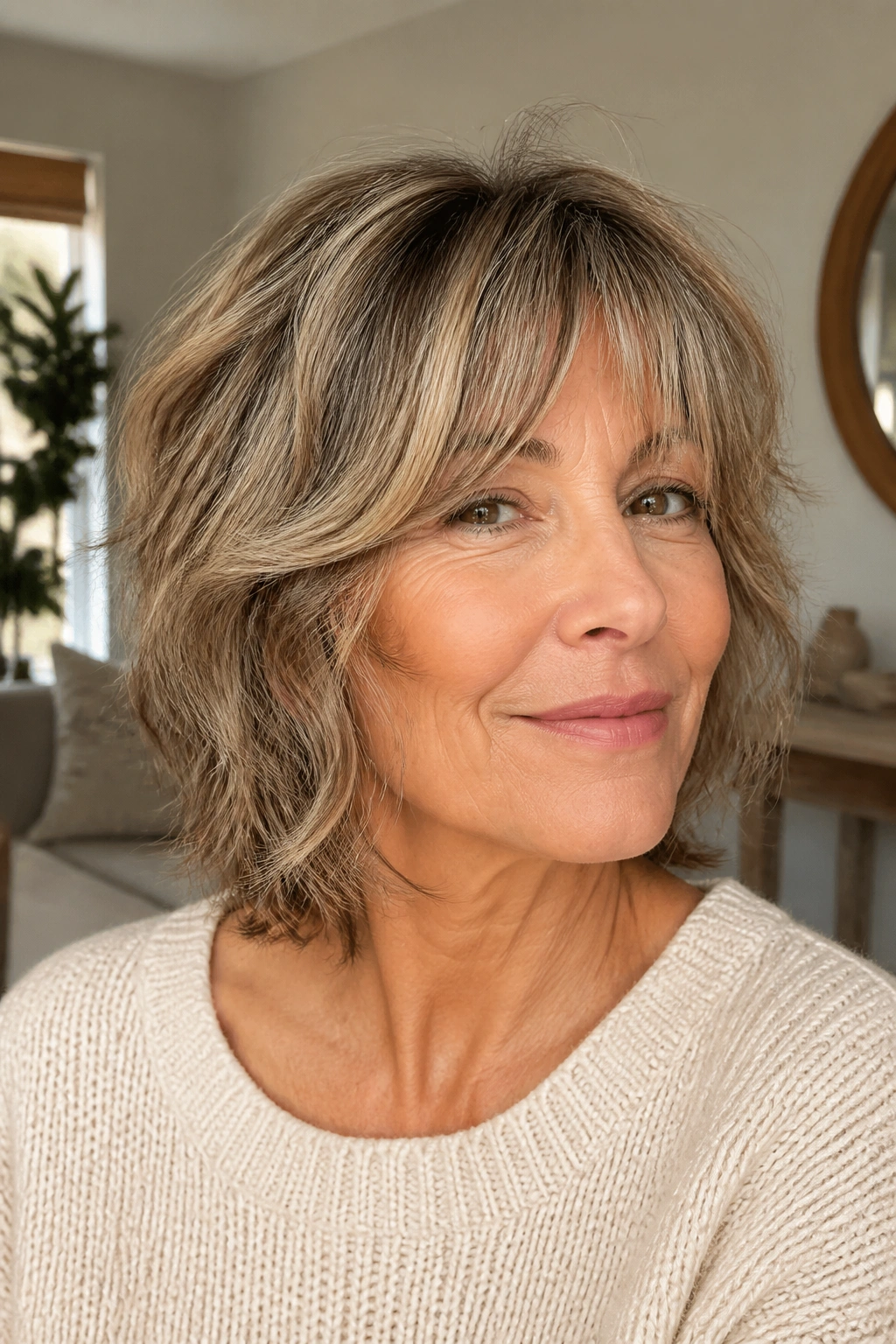
The shaggy bob has a little grit in it. Not mess. Grit. That difference matters. The layers are broken up enough to give movement, and the ends are left piecey so the haircut feels relaxed instead of stiff.
This version works well if you like texture and do not mind a more casual finish. It can be a smart pick for silver hair, highlights, or natural dimension because the choppy pieces help the color show up in smaller sections. On very fine hair, though, too much shag can expose too much scalp, so the layers should stay controlled.
A bit of texturizing spray can give this cut some life on day two. Or day three. It tends to get better when it is not freshly fussed over.
12. Bob With Curtain Bangs and Layers

Curtain bangs change the whole mood of a bob. They open in the middle, curve away from the face, and give the haircut a softer front without covering everything up. Paired with a layered bob, they create a nice line from the cheekbones down to the jaw.
Why It Flatters the Face
The bang length should start around the cheekbone or just below it. Shorter than that, and the shape can feel too chopped. Longer than that, and the fringe loses its frame. The best curtain bangs blend into the side layers so the whole cut reads as one shape, not two separate ideas.
This is a good move if you want to soften a forehead, break up a long face, or make a bob feel less severe. Blow-dry the bangs first with a small round brush, then let the rest of the hair fall where it wants. Do not overwork the fringe. A little bend is better than a helmet.
13. Graduated Bob With a Sleek Neckline
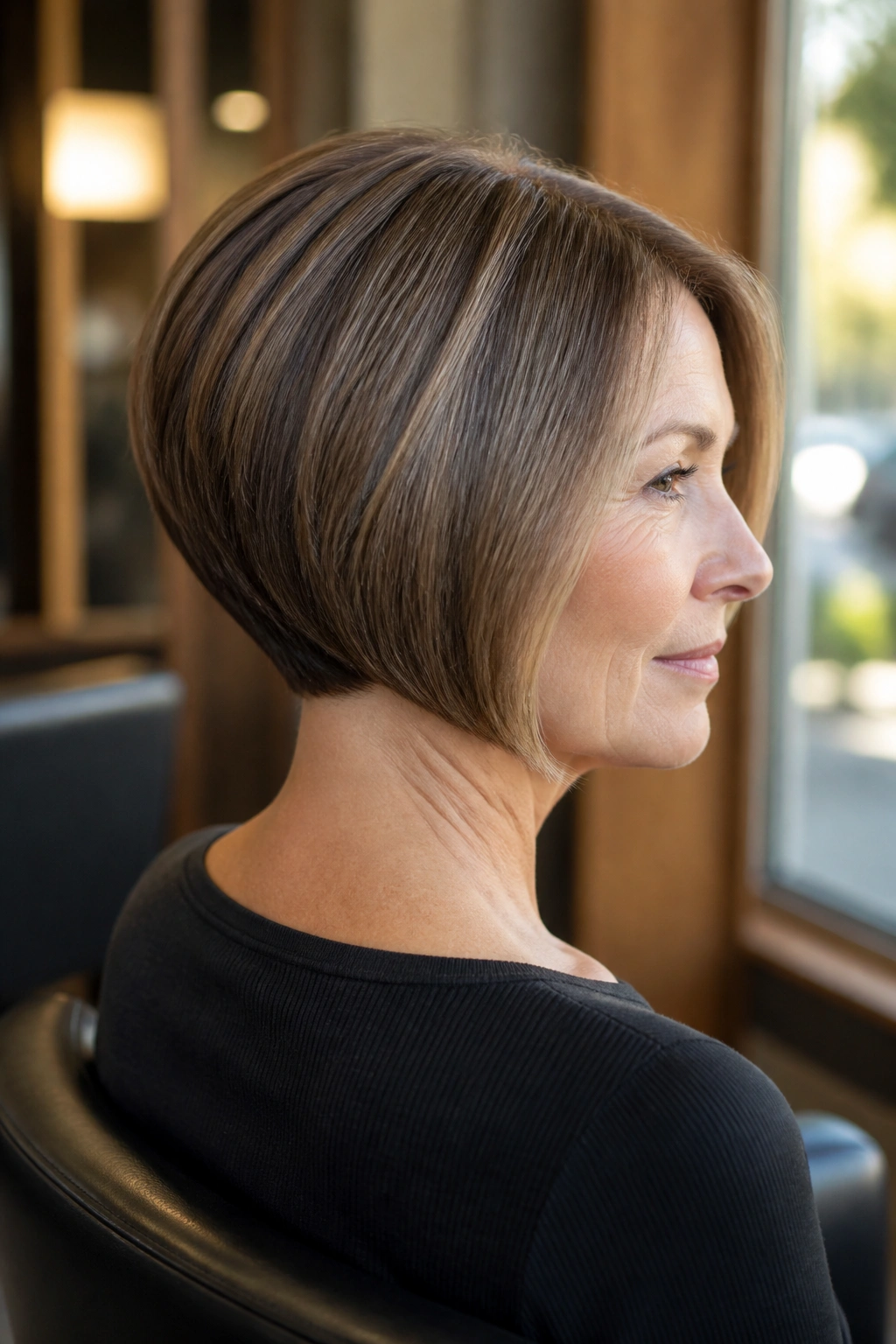
A graduated bob is sharper than a rounded one, but it can still feel soft if the layers are handled well. The back is shorter and lifts into the nape, while the sides taper forward in a smooth line. The neckline looks clean, which is a nice detail if you want the haircut to feel neat under scarves and collars.
This cut suits straight hair especially well. It also plays nicely with hair that has a bit of density, because the graduation helps keep the shape from turning bulky near the neck. If the line is cut too aggressively, though, it can go stiff fast. A gentle graduation is enough.
I like this style when someone wants structure. Not volume for the sake of volume. Just a tidy, strong silhouette that keeps its shape between appointments.
14. Asymmetrical Bob With a Deep Side Part
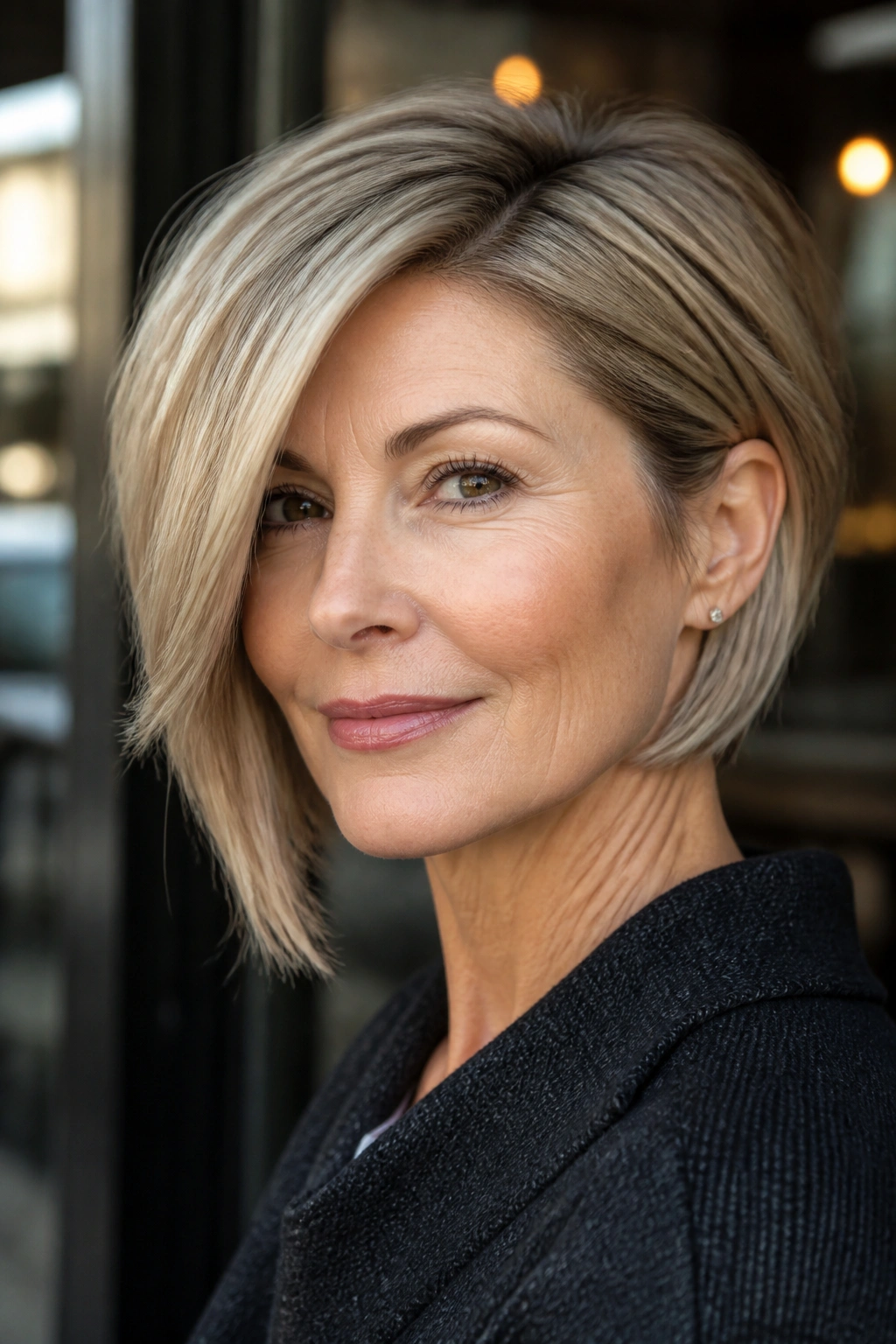
An asymmetrical bob can look dramatic in a good way if the difference between the sides is subtle. One side falls a little longer than the other, and a deep side part makes the effect more obvious without turning the cut into a stunt.
The asymmetry helps if one side of your face feels stronger than the other, or if you want to create a little tension around the jaw. It can also work well with glasses, since the longer side gives the frames a bit of company. Keep the layers smooth, though. Too much texture can fight the angle and make the cut look confused.
A flat iron bend at the ends is enough for this one. You want the shape to be deliberate, not stiff. And if your hair naturally parts to one side anyway, this cut makes that habit look intentional.
15. Silver Bob With Soft Internal Layers
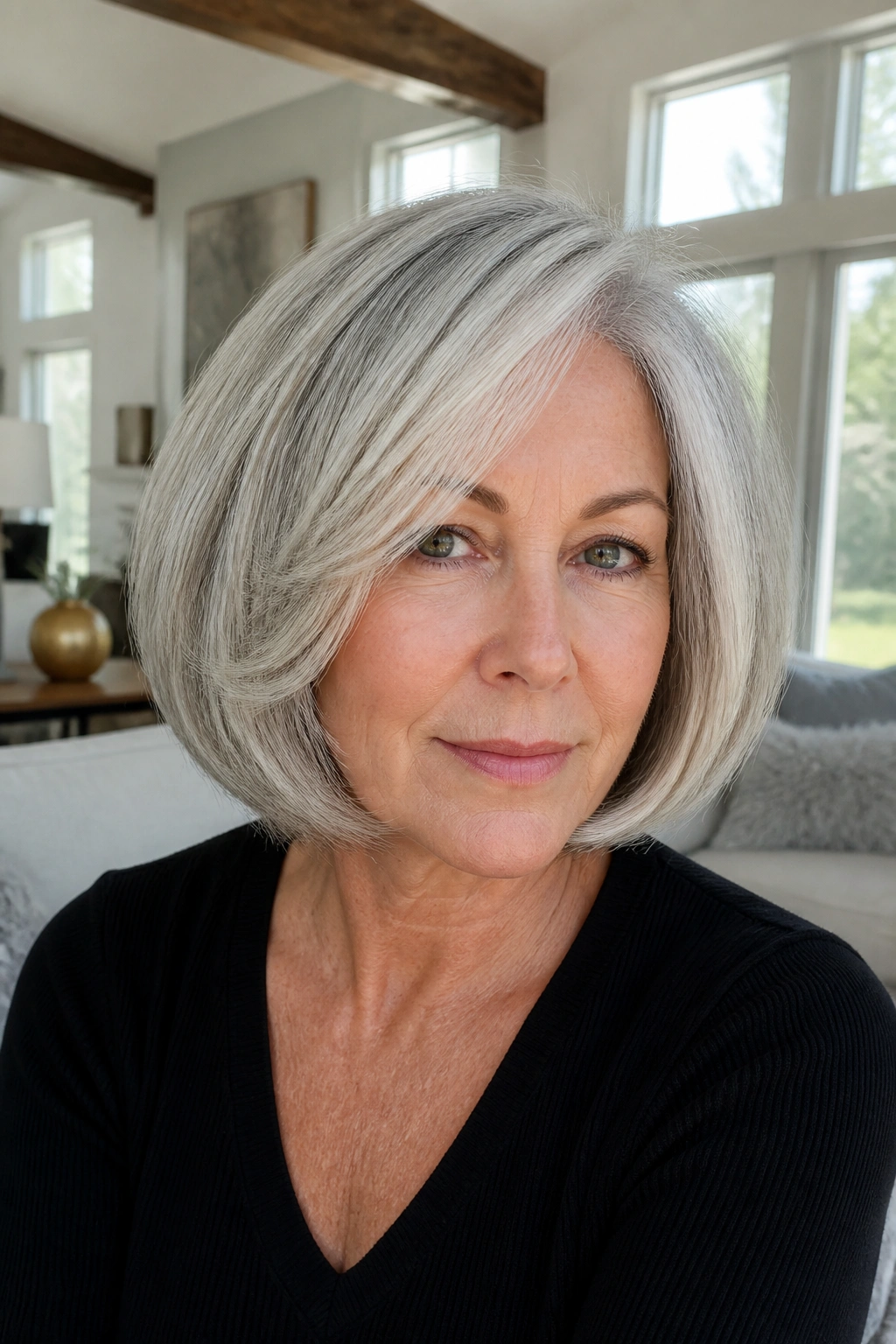
Gray and silver hair often has more texture than people expect. Sometimes it feels coarser, sometimes smoother, sometimes both in one head of hair. Soft internal layers help the bob move with that texture instead of sitting on top of it like a block.
The Best Part
This cut gives silver hair room to shine without making it look poofy. The outer line stays fairly calm, and the hidden layers keep the interior from feeling heavy. That matters if your hair has a lot of natural density or if the gray pieces are coming in with a bit of wiry lift.
A gloss treatment can help silver hair look cleaner at the ends, and a purple shampoo used sparingly can keep brass from taking over. But the cut does most of the work. When the shape is right, silver hair looks crisp without looking harsh.
16. Blunt Bob With Subtle Underlayers
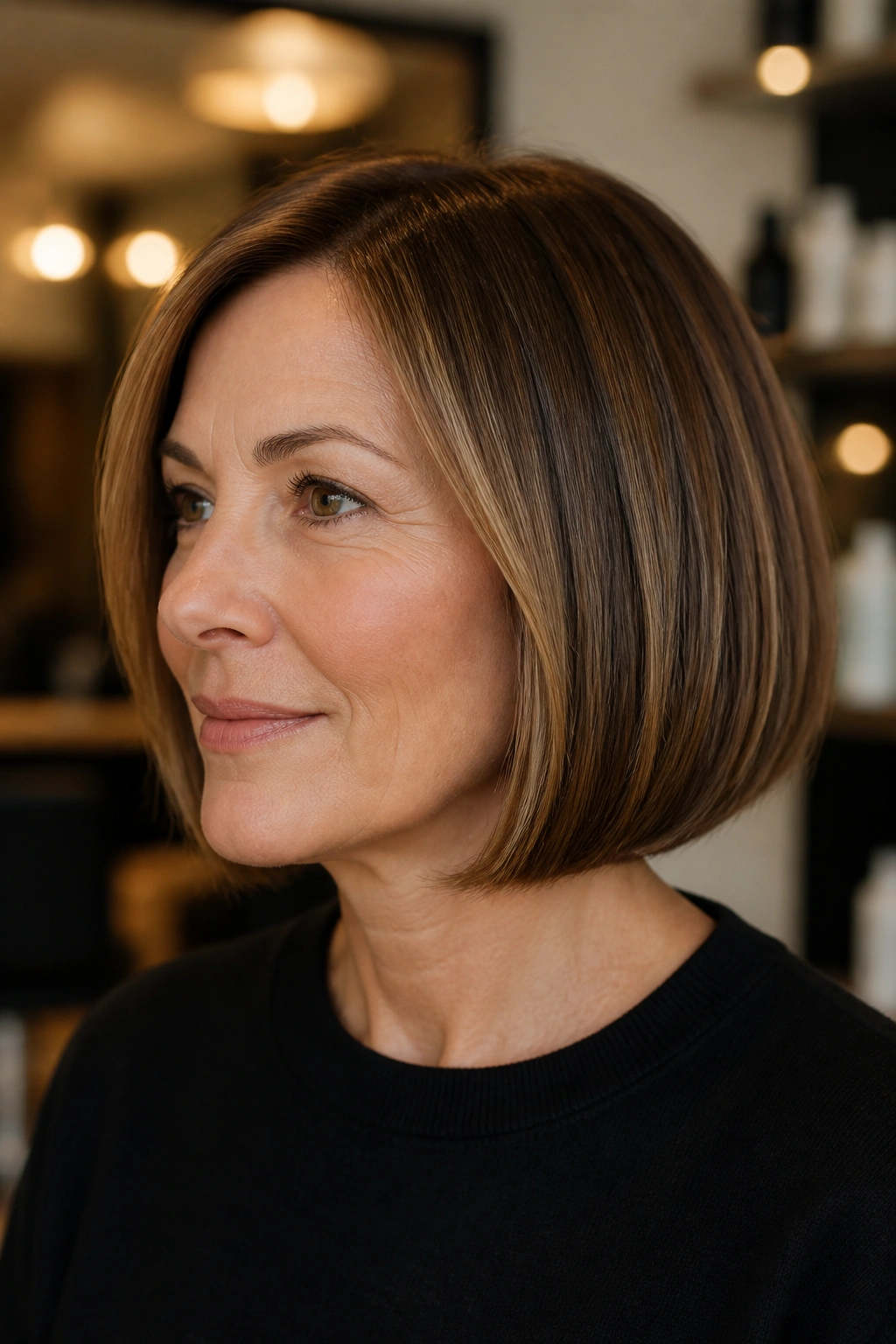
A blunt bob can still have layers. They just should not announce themselves. The outside line stays full and solid, while subtle underlayers remove enough bulk to keep the shape from feeling bulky or triangular.
This is a smart choice for fine hair that needs the illusion of thickness. The blunt edge gives the eye a firm line, and the hidden layers stop the interior from getting heavy. If the layers are cut too high or too many pieces are removed from the perimeter, the bob loses that dense look that makes it work.
I’d call this the quiet achiever of the bunch. It doesn’t shout. It simply makes hair look better from every angle. A paddle brush and a quick bend under at the ends are often enough to style it.
17. Feathered Bob With Airy Movement
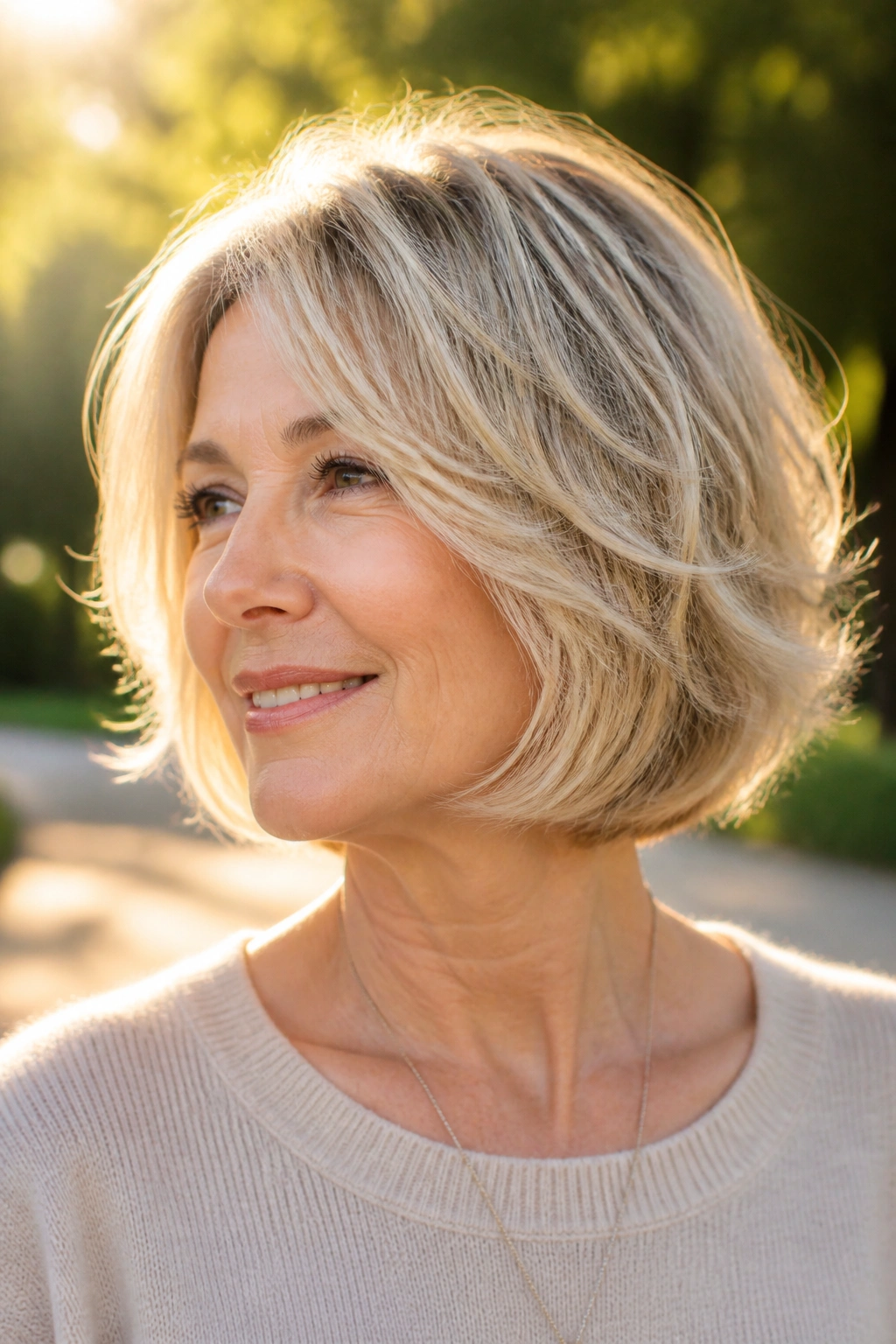
Feathered ends make a bob feel light in the hands and even lighter around the face. The layers are cut so they taper off instead of stopping in blunt steps, which gives the whole shape a breezy finish.
This cut has an easy relationship with a blowout. A round brush, medium heat, and a little lift at the roots are often all it needs. It also works nicely with hair that has started to lose some spring because the feathering brings back motion without forcing texture into it.
Some people hear “feathered” and think of a dated salon look. Fair. But the modern version is softer and shorter on the layering, especially around the temples. Done well, it feels light, not fussy.
18. Tousled Bob With Salt-and-Pepper Dimension
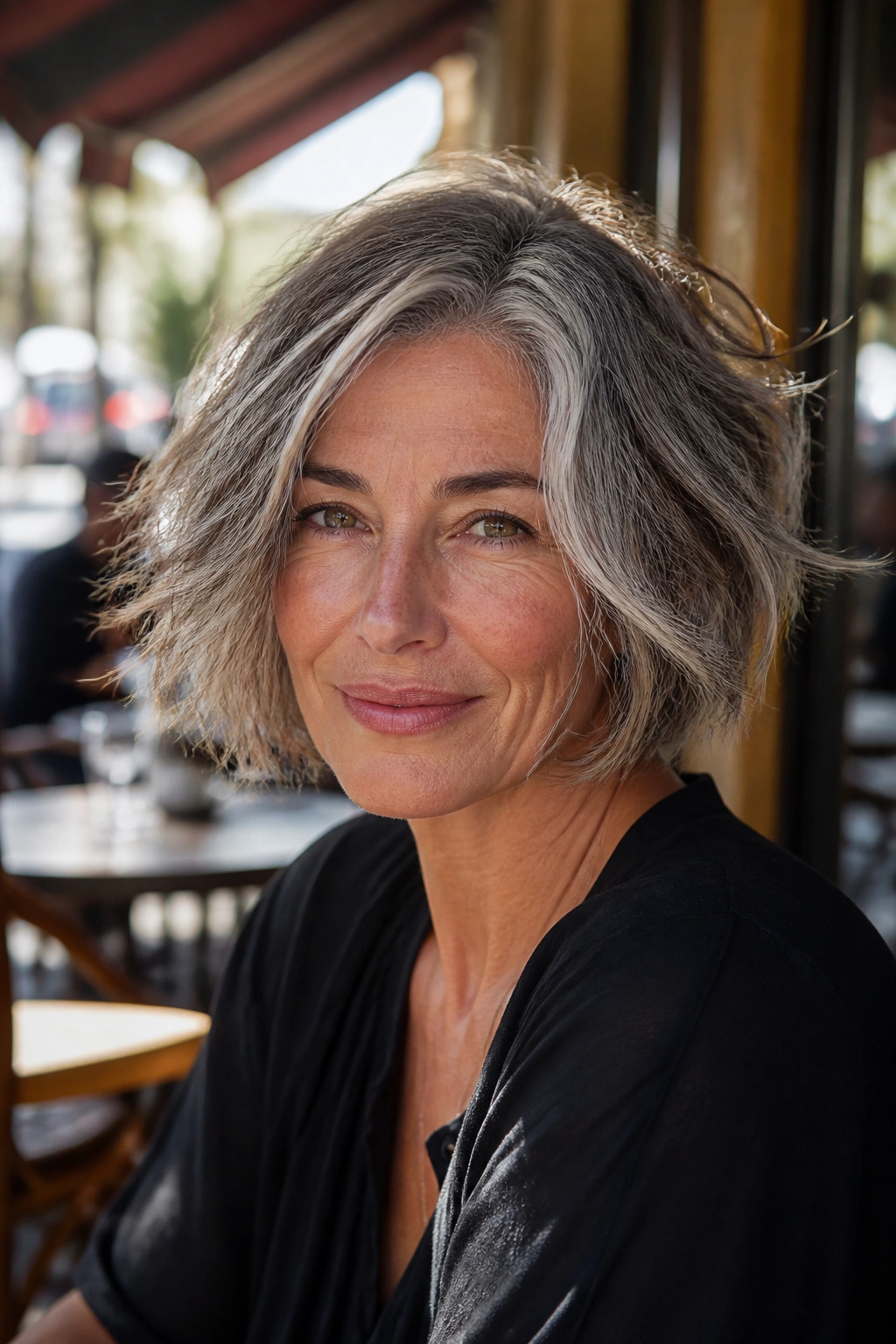
A salt-and-pepper bob can look flat if it is cut too neatly. Tousling the layers gives the mix of gray, white, and darker strands room to show. That color variation is the point. It deserves movement.
Quick Styling Notes
- Use a lightweight mousse on damp hair
- Twist small sections around your fingers while drying
- Add a touch of texturizing spray at the ends
- Leave a few pieces around the face a little longer
This cut looks especially good on hair that is naturally a bit bendy. You do not need a perfect wave. A loose, uneven pattern is enough. The bob should look touched, not overdone.
If you’ve gone fully gray or are in the middle of the transition, this style is forgiving. It keeps the finish relaxed while still giving the haircut enough shape to look deliberate.
19. Bob With Tapered Nape and Soft Sides
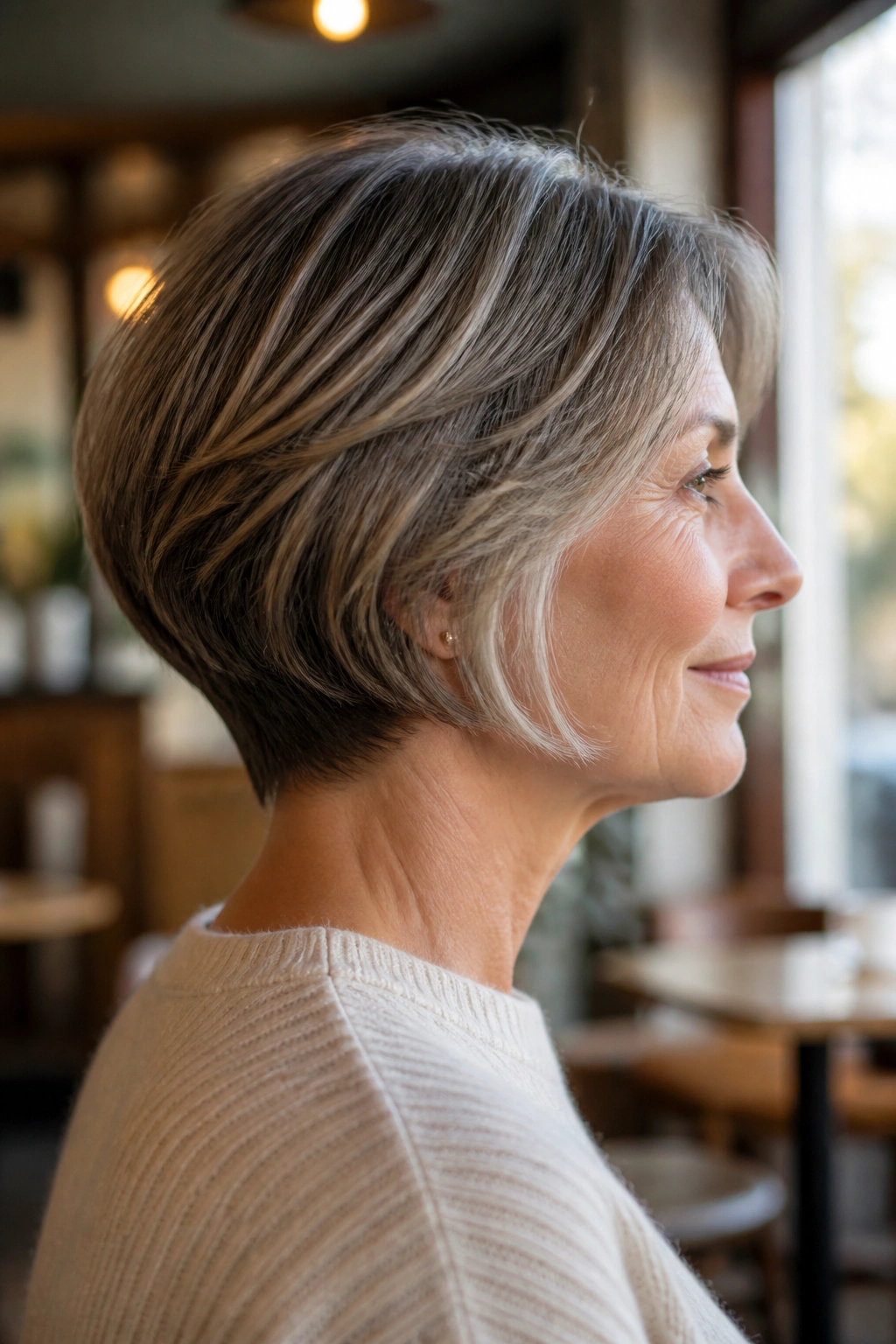
A tapered nape is one of those details people notice even when they can’t name it. The back hugs the neck cleanly, which keeps the cut neat, while the sides stay softer so the face is not boxed in.
This shape works well if you wear jackets, turtlenecks, scarves, or anything that sits high on the neck. Hair that swells out under clothing gets annoying fast. A tapered nape solves that problem without chopping the length too short.
The soft sides are what keep it from feeling severe. They should curve a little, almost like the cut is exhaling. If your stylist cuts the back too tight, the whole thing can feel severe. Ask for close at the nape, soft at the sides. That balance matters.
20. Neck-Grazing Bob With Cheekbone Lift
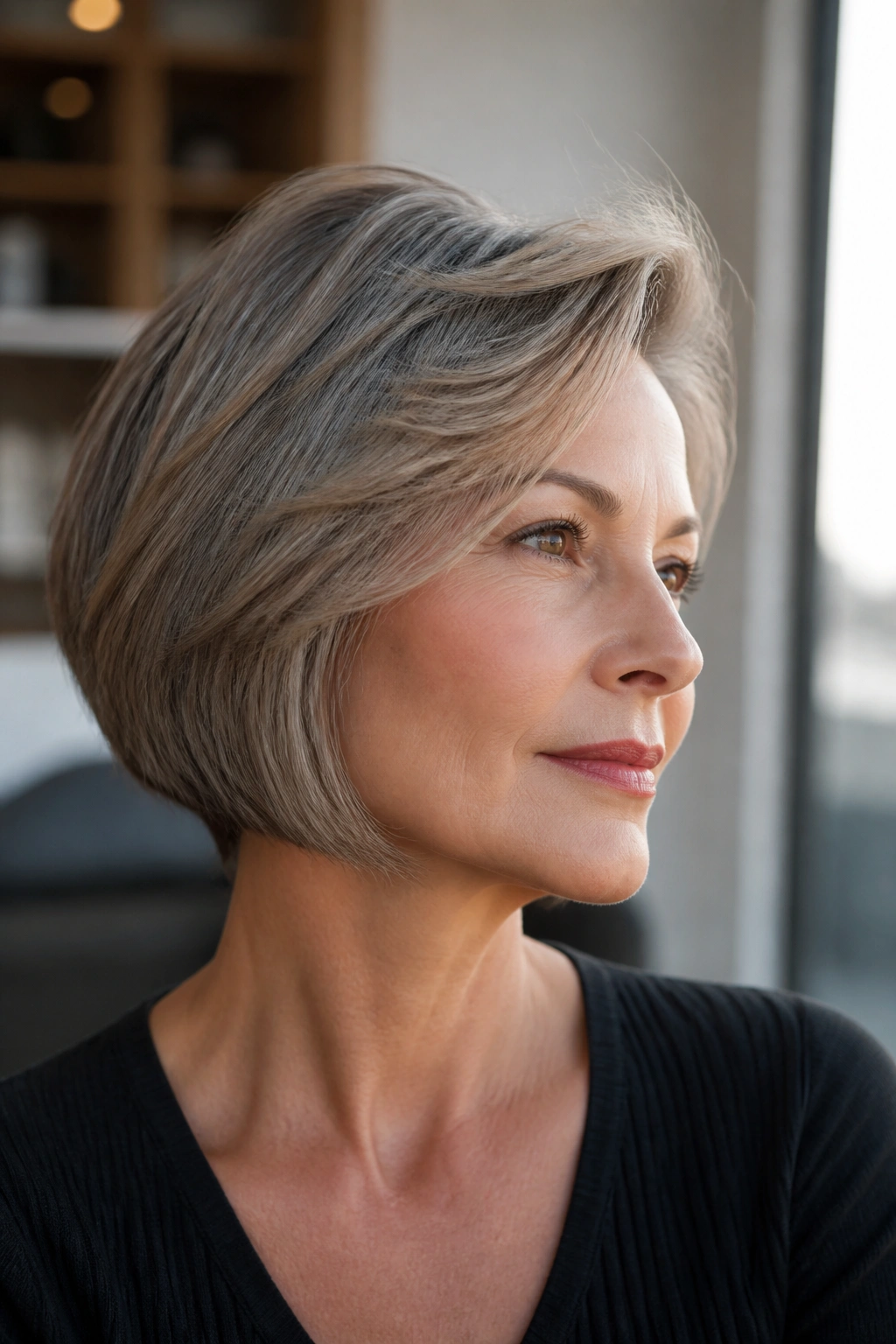
A neck-grazing bob gives you a little more length than a chin bob, which is useful if you want movement but don’t want hair constantly touching the jaw. The extra inch or two can make styling easier, especially if your hair has a bend that likes to settle on its own.
The layers should lift the cheek area without carving the shape apart. That means the front needs some control, not just random pieces falling forward. A soft bend through the mid-lengths can draw attention upward, which is handy if you want the eye to go to the cheekbones rather than the neck.
This is a good in-between cut for people who are tired of short hair but want something lighter than a full lob. It grows out gracefully. That alone earns it a place on this list.
21. Bob With Wispy Fringe and Light Texture
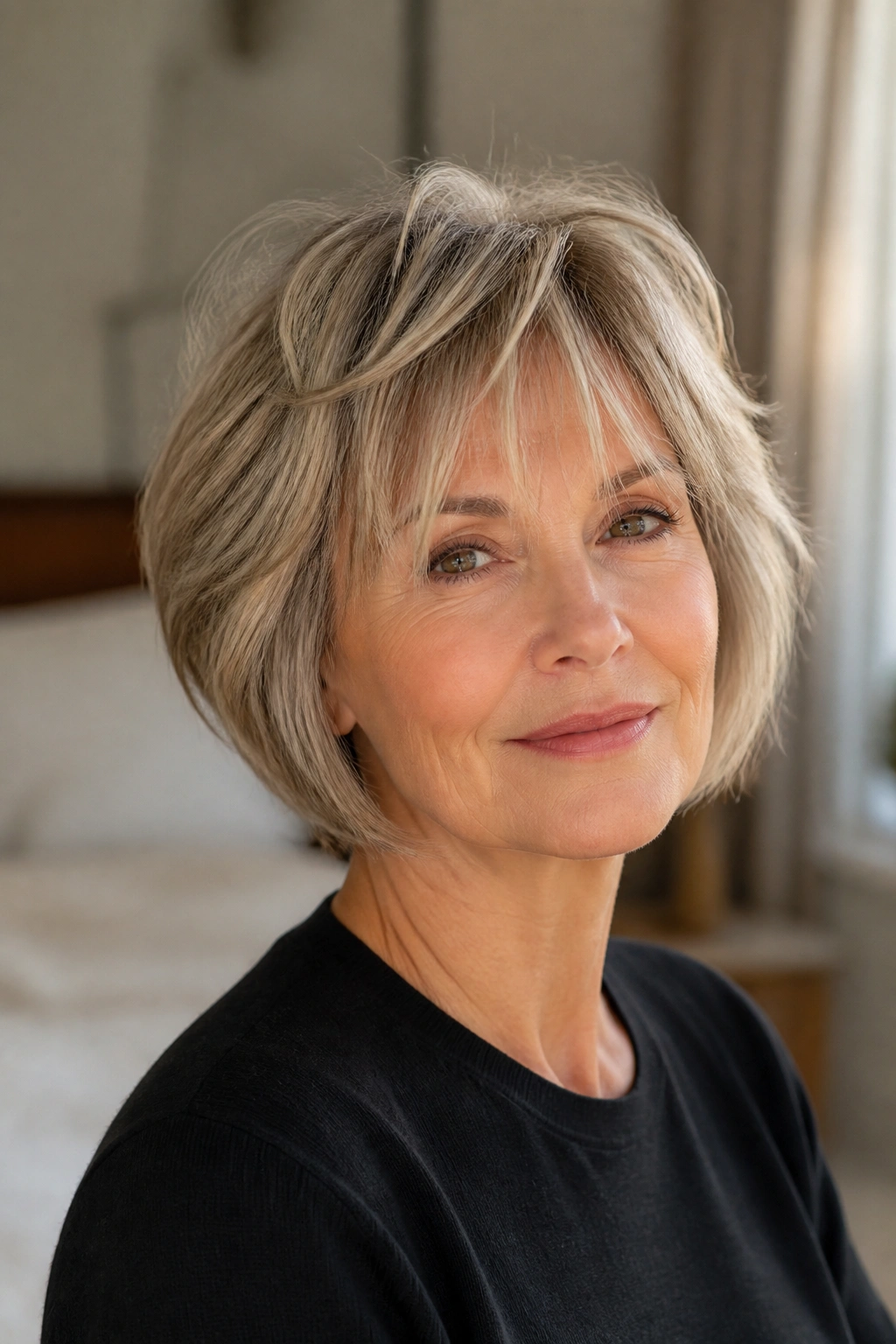
Wispy fringe is a gentler move than heavy bangs. It breaks up the forehead a little, softens the frame around the eyes, and lets the rest of the bob stay light. The texture around it should be faint, not choppy.
What to Watch For
A wispy fringe needs enough density to lie properly. If the hair is too sparse, the fringe can look see-through in a way that feels accidental. If it’s too thick, it stops being wispy and turns blunt. That middle ground is the sweet spot.
This cut works for women who want some face framing but do not want to commit to a full bang. It also suits people who like to tuck hair behind one ear and leave the rest loose. A dry texturizing spray can help separate the fringe a bit, but don’t pile it on. The fringe should float, not stick.
22. Inverted Bob With Full Crown
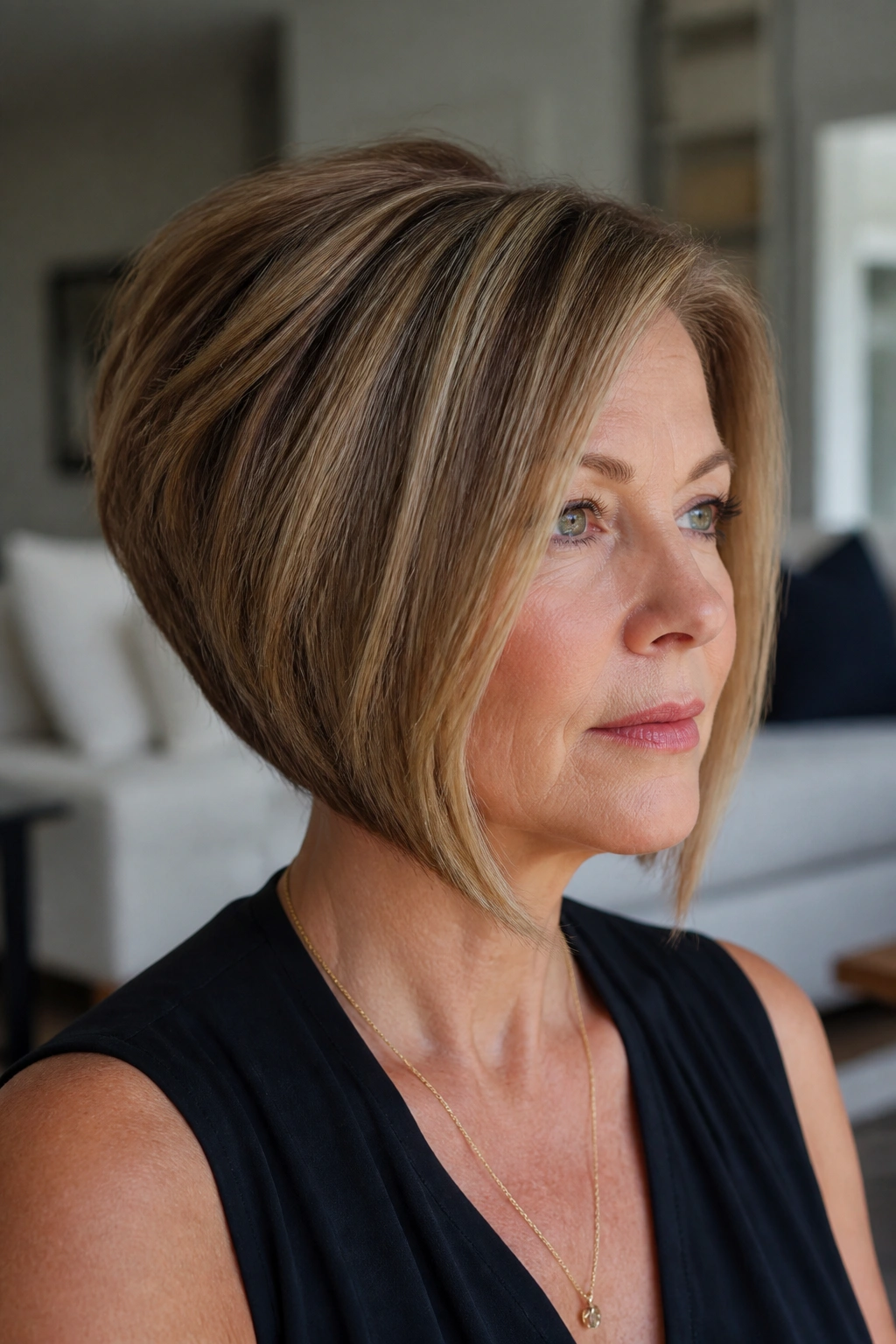
An inverted bob has a stronger angle than a standard graduated cut. The back is shorter, the front is longer, and the crown often carries more fullness so the head looks lifted without a lot of styling effort.
This cut is especially useful for thicker hair that tends to build weight at the back. The inverted shape removes some of that bulk while keeping a strong outline. It also works well if you want a bob that feels a little more directional, a little less plain.
Maintenance is the trade-off. The angle grows out faster than a softer bob, so the shape needs regular trimming to keep the front from swallowing the back. If you like crisp lines and do not mind a salon visit on schedule, it’s a good bet.
23. Blended Lob-Bob for Easy Grow-Out
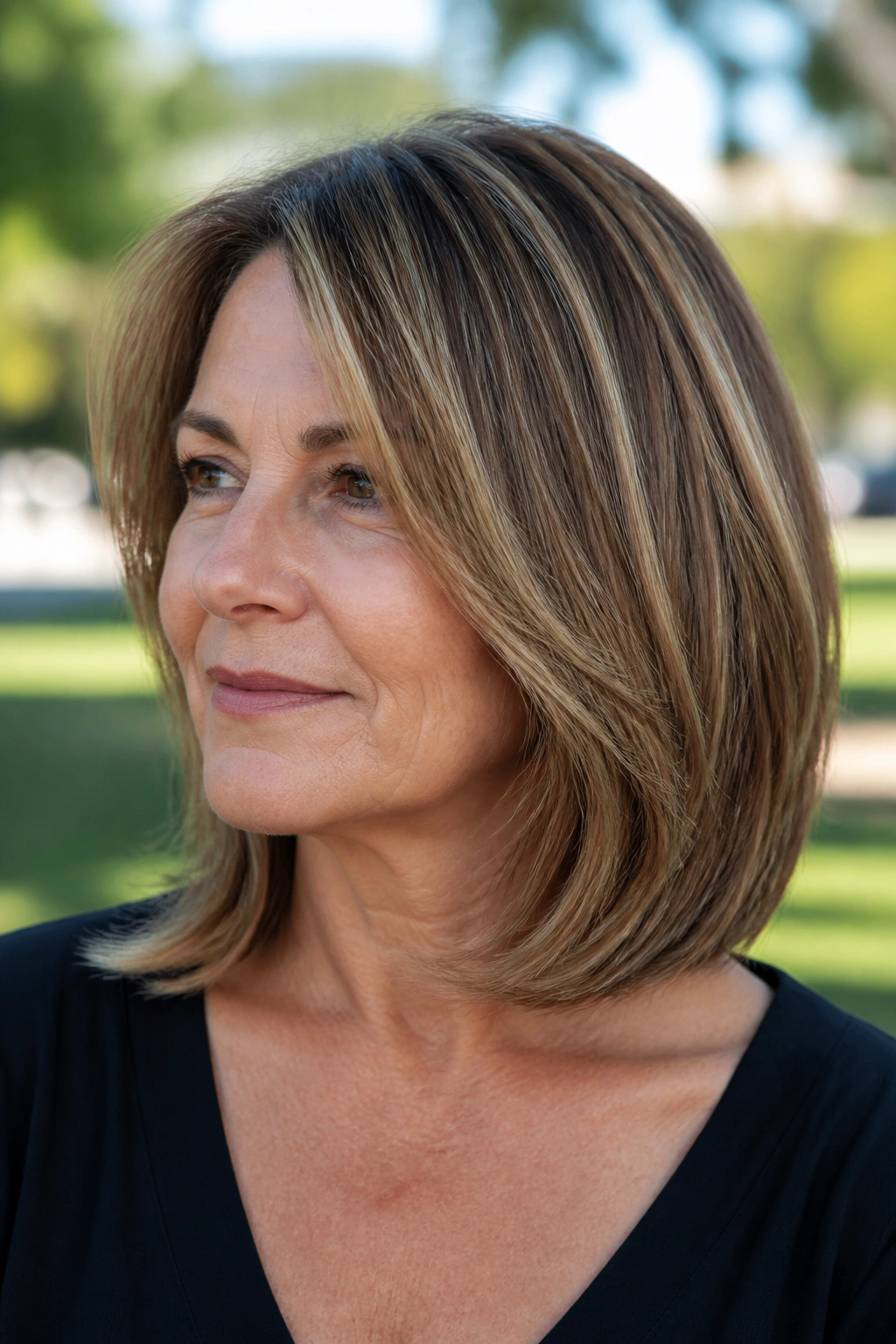
The blended lob-bob is the practical choice, and I mean that in the best way. The layers are long enough to keep the hair from feeling chopped, but short enough to give movement and shape around the face. It’s the cut that forgives delays between appointments.
Best For
- Hair that grows unevenly
- Anyone easing out of a shorter bob
- Medium density hair
- People who like low-effort styling
The blend should be smooth from crown to ends, with no obvious step between layers. That is what gives it flexibility. You can wear it straight, bend the ends under, or let it dry with a soft wave and still look put together.
If you are nervous about committing to a shorter bob, start here. It gives you the shape without the sense that you’ve made a dramatic jump.
24. Soft Rounded Bob That Frames the Jaw
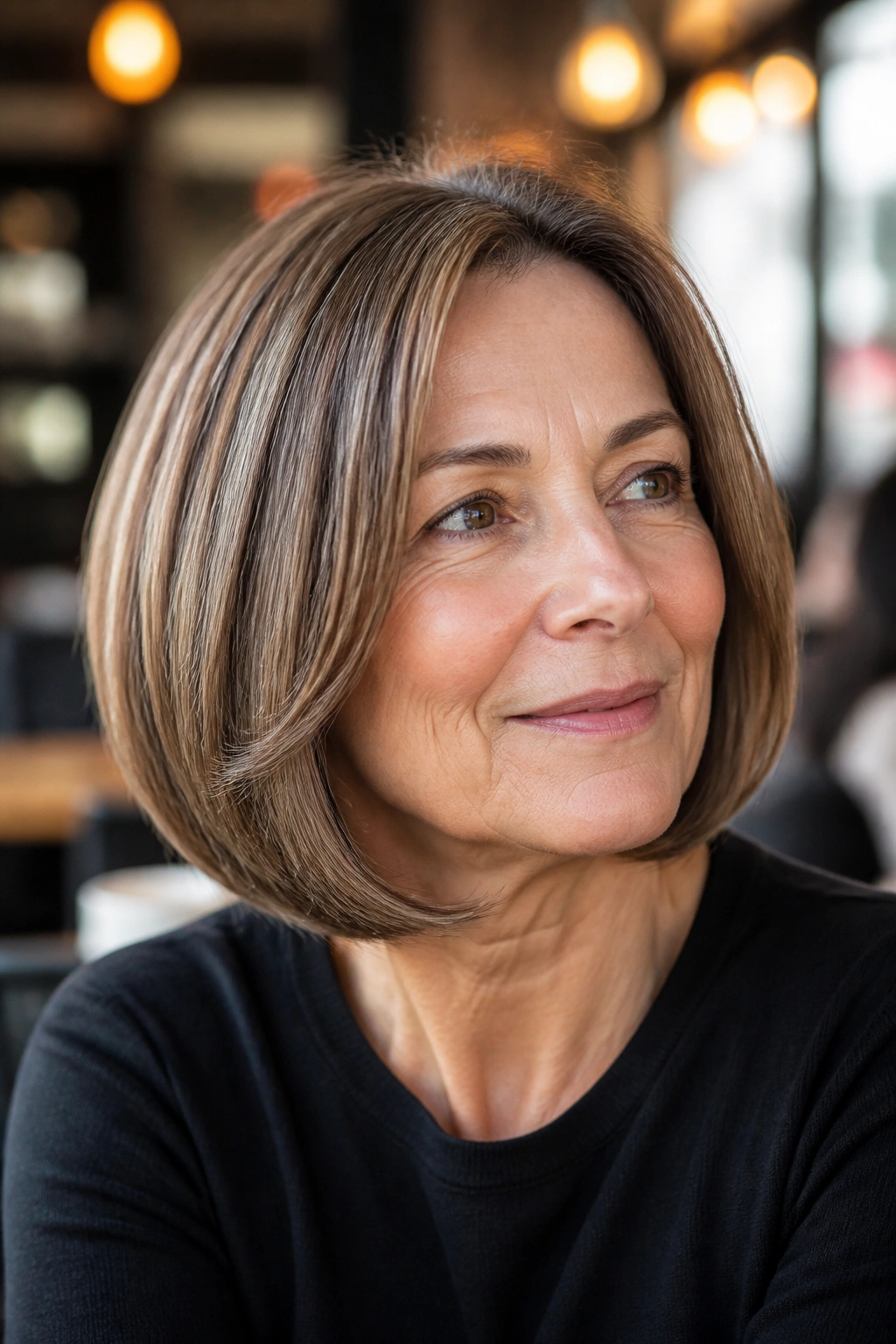
A soft rounded bob is the one I’d put near the top for anyone who wants elegance without stiffness. The cut curves gently under the jaw, the layers are kept smooth, and the shape is tidy without looking hard. It flatters a lot of face shapes because it doesn’t fight the natural line of the head.
The best version has just enough internal layering to keep the hair from puffing out at the sides. That’s the whole trick. You want a rounded silhouette, not a triangle, and you want the ends to sit with a little bend rather than kick out. A blow-dry with a medium round brush usually gives this cut exactly what it needs.
If you want one layered bob that can handle errands, dinners, and a decent grow-out, this is the one I’d hand to you first. It’s calm, but not dull. Soft, but not shapeless. And that combination is hard to beat.
