



Finding a flattering haircut when you wear glasses presents a unique challenge. The frames add visual weight around your face, they can overwhelm certain styles, and if your hair doesn’t fall quite right, the combined effect can feel a bit heavy or unbalanced. But here’s the thing: layered haircuts are actually one of the best solutions for glasses-wearing women. Layers create movement, reduce bulk, and frame your face in ways that complement frames rather than compete with them. The right layered cut can actually make your glasses look more like a deliberate, stylish part of your overall look — not an accident of proportion.
What makes layers work so well with glasses is that they keep hair from clinging to your face and neck. Layered cuts naturally fall away from the face, creating definition and airiness where you need it most. This approach means your glasses aren’t fighting for space; instead, the haircut creates a flattering flow that draws eyes to your features rather than getting lost in a wall of hair. Whether you prefer something sleek and modern or textured and face-framing, there’s a layered cut designed with glasses-wearing in mind.
The styles ahead aren’t just technically sound — they’re genuinely versatile. Each one can be customized to suit different hair textures, face shapes, and daily styling effort. Some work beautifully with minimal maintenance, while others reward the person who enjoys styling. All of them share one key quality: they look polished and intentional when paired with eyewear, which is exactly what most glasses-wearing women are looking for.
Why Layered Haircuts Work Well With Glasses
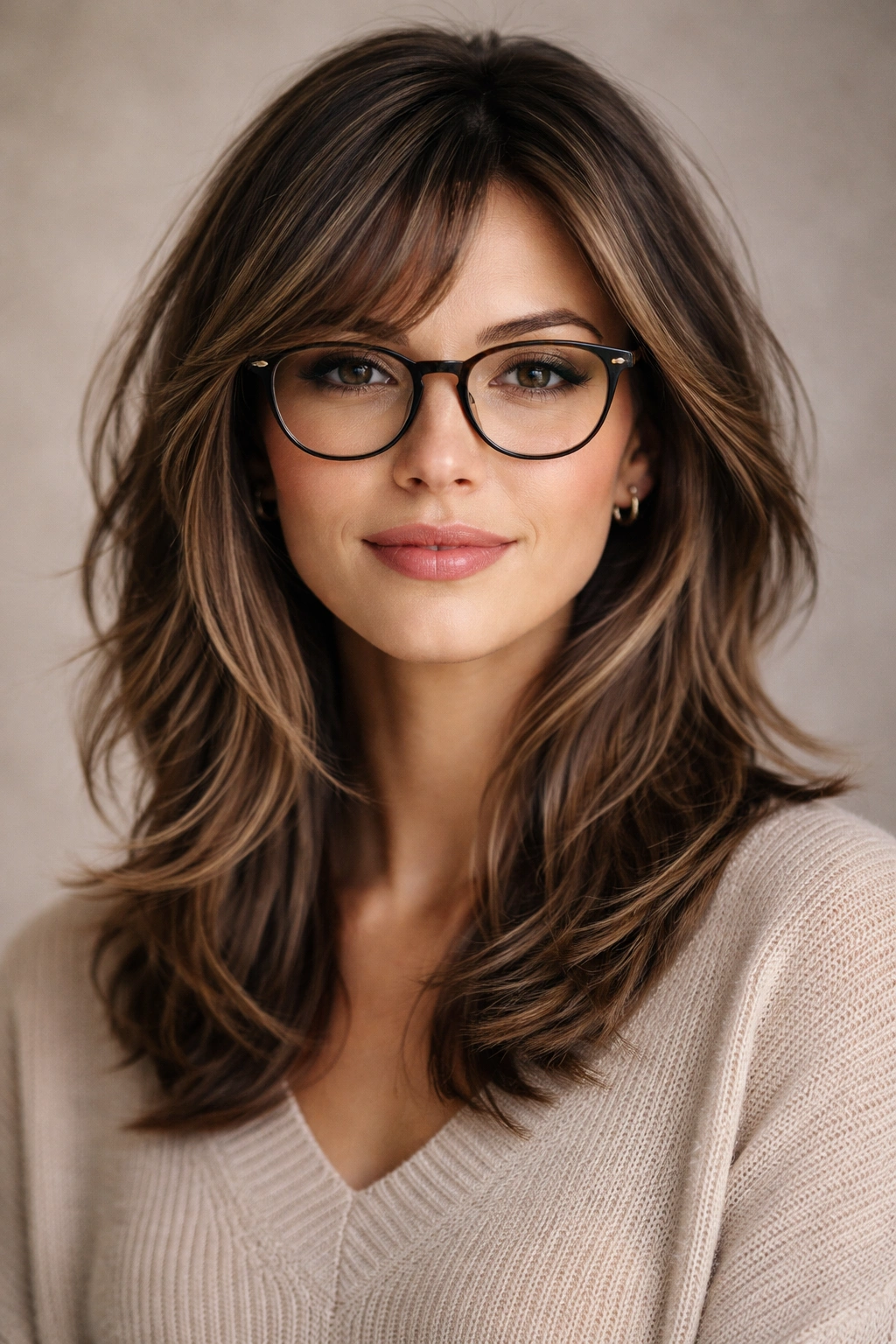
Glasses sit on your face, which means they occupy visual real estate that a solid, blunt haircut might also try to claim. Layers solve this problem elegantly by creating separation and movement. When your hair has texture and dimension, it doesn’t look like it’s fighting your frames — it looks deliberate and styled.
The movement that layers create is particularly important when you wear glasses regularly. Hair that sits flat against your head can make your entire face feel boxed in, especially if you’re wearing larger or darker frames. Layers break that effect up. They create pockets of air and space, which makes the whole look feel lighter and more sophisticated.
Another reason layers work so well is that they help with the proportional relationship between your face and your frames. Glasses naturally draw attention to the upper half of your face and the bridge of your nose. If you have heavy, blunt hair weighing down your shoulders and sides, your face can look disproportionately small. Layers that frame your cheekbones and remove bulk from below your chin help rebalance that proportion.
The Proportion Advantage
Layers create what stylists call “negative space” — areas where you can see skin or scalp between strands. This negative space matters much more than you might think. It makes your face look lighter and more prominent, which naturally complements rather than competes with your glasses.
Movement and Texture Benefits
When your hair moves, it catches light differently. Layers encourage this movement, which keeps your look from feeling static or heavy. This is especially valuable if you wear glasses daily, because the movement adds sophistication and liveliness that a blunt cut might not achieve.
1. The Modern Shag
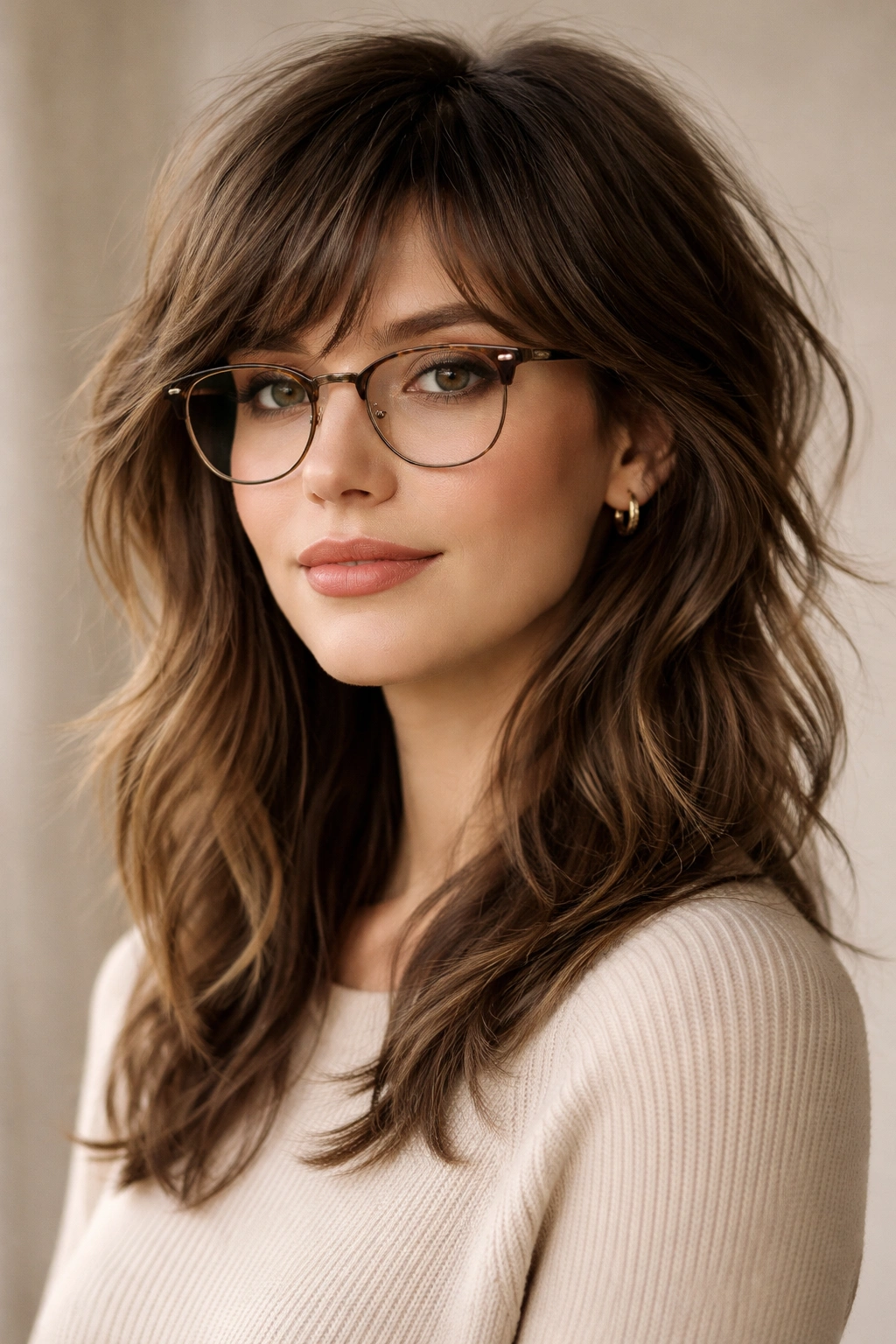
A contemporary shag is textured, layered throughout, and has that rock-and-roll attitude that’s been having a major resurgence. Unlike the shags of decades past, modern versions are more refined — the layers are intentional rather than chaotic, and they create a specific shape rather than looking unkempt. The cut typically features choppy layers starting closer to the crown, so there’s volume where you need it and definition framing your face.
Why It Works With Glasses
The shag’s texture and movement prevent it from getting weighed down by your frames. The layers are cut specifically to frame your cheekbones and jawline, which means your glasses become part of a well-proportioned, intentional look rather than a competing visual element. The cut also works beautifully across different hair types — fine hair gets the illusion of thickness, and thicker hair gets movement rather than bulk.
Key Features to Ask Your Stylist For
- Choppy, textured layers throughout rather than blunt ends
- Shorter, more defined layers around your face to frame your features
- Slightly longer layers underneath to maintain some length
- Point-cut or razor-cut ends to encourage the right kind of texture
Pro tip: Ask your stylist to cut the layers with a slightly shaggy angle so they graze your cheekbones rather than sitting flat. This creates the perfect frame for glasses.
2. The Textured Lob With Face-Framing Layers
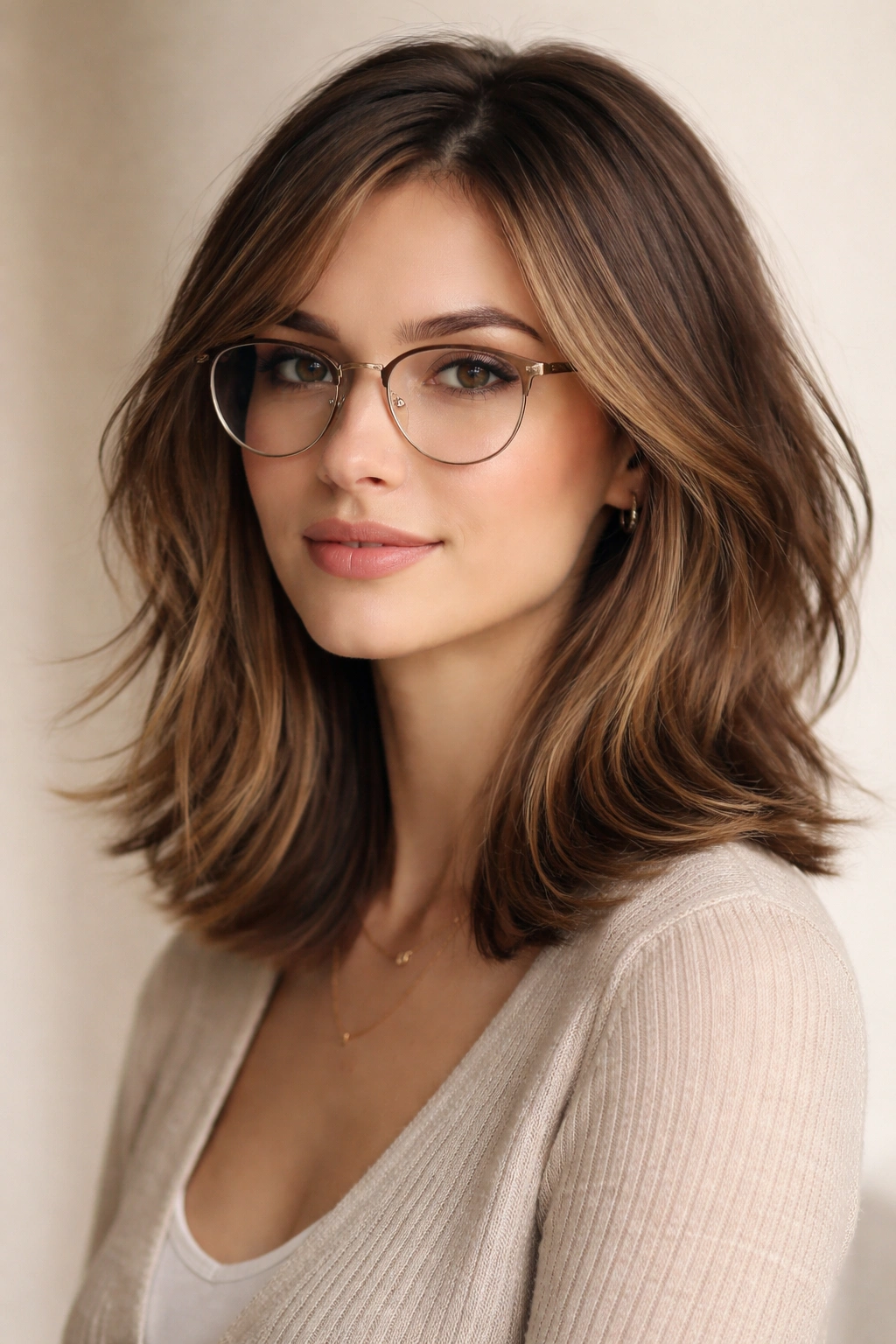
A lob (long bob) sits right at or just below the shoulders, and when you add textured layers and shorter, choppy pieces around the face, it becomes incredibly flattering for glasses-wearers. The cut has enough length to feel romantic and feminine, but the layers prevent it from looking heavy or overwhelming. Face-framing layers are shorter than the rest of the cut, so they sit right at cheekbone level where they interact beautifully with glasses.
Why It Works With Glasses
Face-framing layers do exactly what their name suggests — they frame your face. For someone wearing glasses, this means the shorter pieces draw attention to your eyes and cheekbones rather than getting lost behind your frames. The textured ends add softness without bulk, so you get dimension without weight.
Key Features to Ask Your Stylist For
- Base length hitting the shoulders or just below
- Textured, choppy layers throughout for movement
- Shorter, delicate face-framing layers that hit at cheekbone height
- Razored or point-cut ends for a lived-in feel rather than blunt lines
Worth knowing: This cut looks excellent if you enjoy styling with products like texturizing spray or cream. The texture is built into the cut itself, but styling products enhance it beautifully.
3. The Wispy Curtain Cut
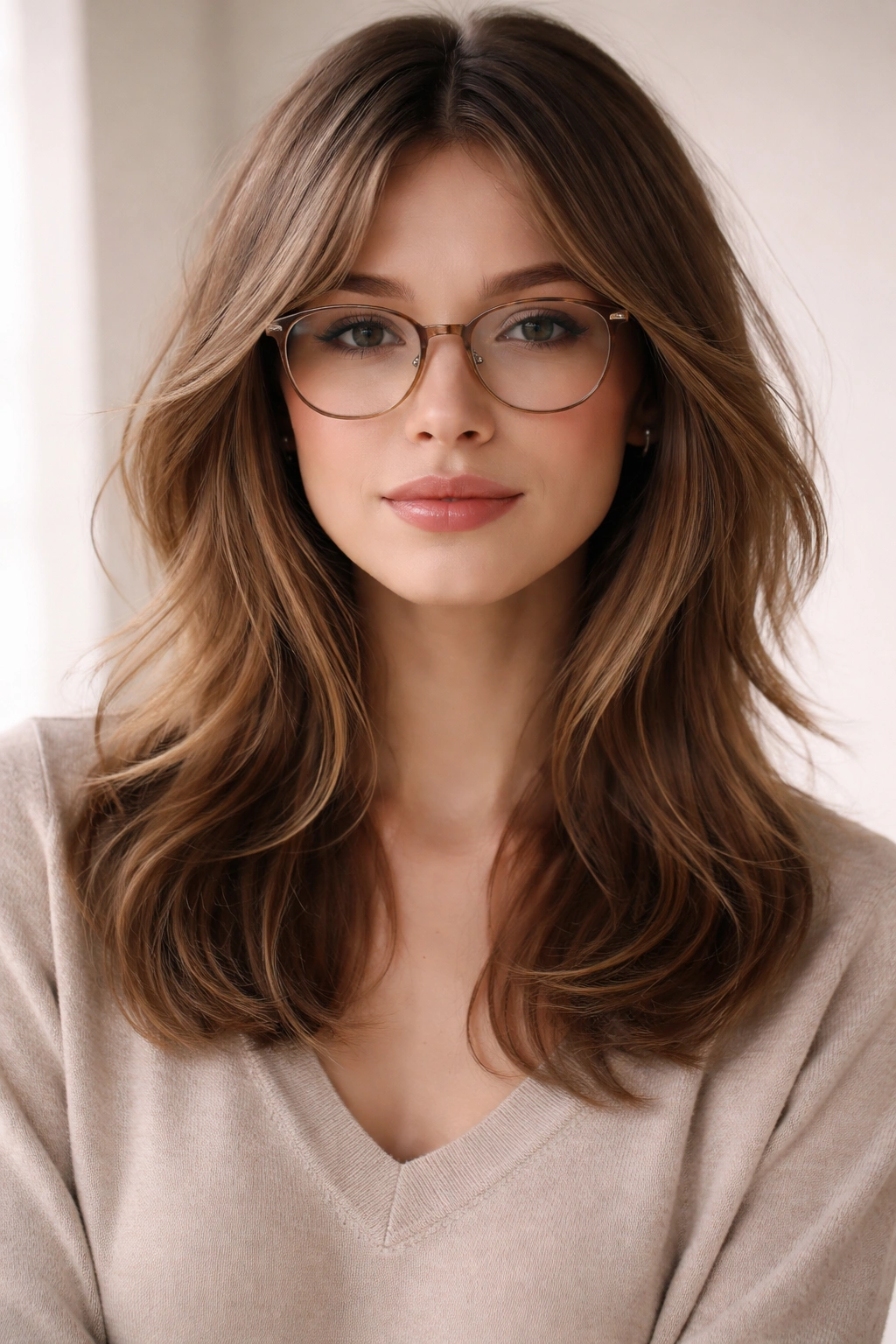
Curtain cuts have that retro cool factor, but the wispy version is what works best with modern glasses. The style features longer layers that part down the center, with shorter, feathered layers that frame both sides of your face. The “wispy” descriptor means the layers are delicate and soft rather than blunt or severe. Your hair sweeps away from your face naturally, creating space for your frames to breathe.
Why It Works With Glasses
The center part draws the eye straight down the middle of your face, which means your features — and your glasses — sit in a visual center point rather than being surrounded by hair. The wispy layers on either side frame your cheekbones without adding weight, and because they’re feathered rather than blunt, they look soft and intentional rather than accident-prone.
Key Features to Ask Your Stylist For
- A defined center part with longer layers that frame both sides
- Feathered, wispy layers rather than blunt cut ends
- Shorter layers closest to your face, gradually getting longer as you move back
- Soft, romantic movement rather than a structured shape
Insider note: Ask your stylist to cut the feathered layers so they naturally flip away from your face when your hair is dry. This prevents them from lying flat against your cheeks and creating an unflattering barrier between you and your frames.
4. The Textured Pixie-to-Bob Hybrid
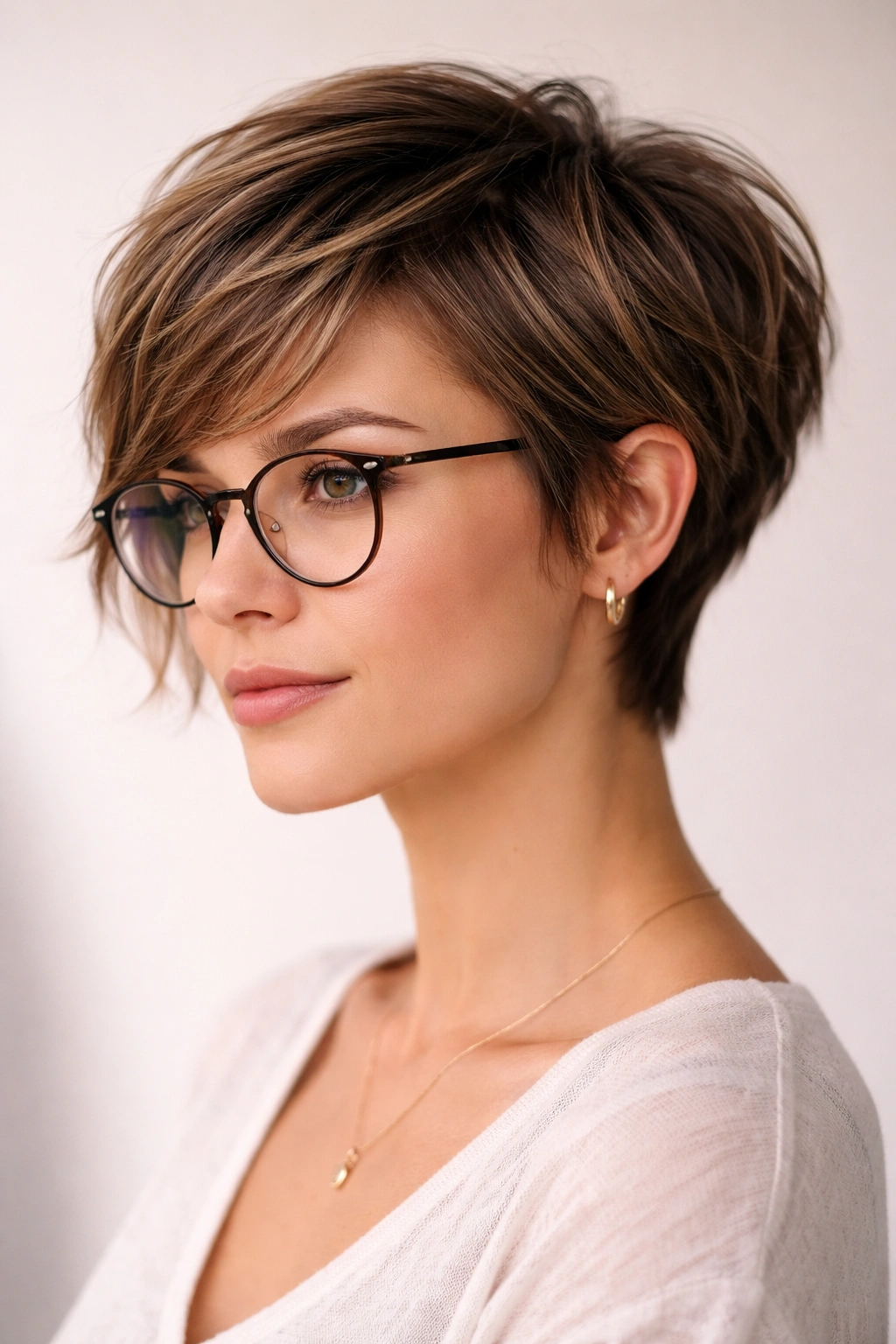
For someone who wants a shorter cut but isn’t quite ready to commit to a full pixie, this hybrid offers the best of both worlds. The back and sides are cut shorter in a pixie-like fashion, while the front is left longer and layered, creating a bob-like silhouette. The result is a cut that’s low-maintenance but still has femininity and softness, especially around the face where it matters most for glasses-wearers.
Why It Works With Glasses
This cut removes bulk from the sides and back of your head, which actually makes your face appear more balanced and prominent. The longer layers in front frame your features specifically, and because the overall cut is shorter, there’s no chance of hair getting caught behind your ears or obscuring your vision. For practical purposes, this cut is a huge win if you’re tired of dealing with hair interfering with your glasses.
Key Features to Ask Your Stylist For
- Shorter layers on top for volume
- Very short or tapered sides and back (pixie length)
- Longer, layered front sections that frame your face
- Textured rather than blunt throughout for movement
Real talk: This cut requires a commitment to trims every 4-6 weeks. The trade-off is that it’s genuinely low-maintenance on a daily basis — you don’t need much styling time or product.
5. The Choppy Shoulder-Length Cut
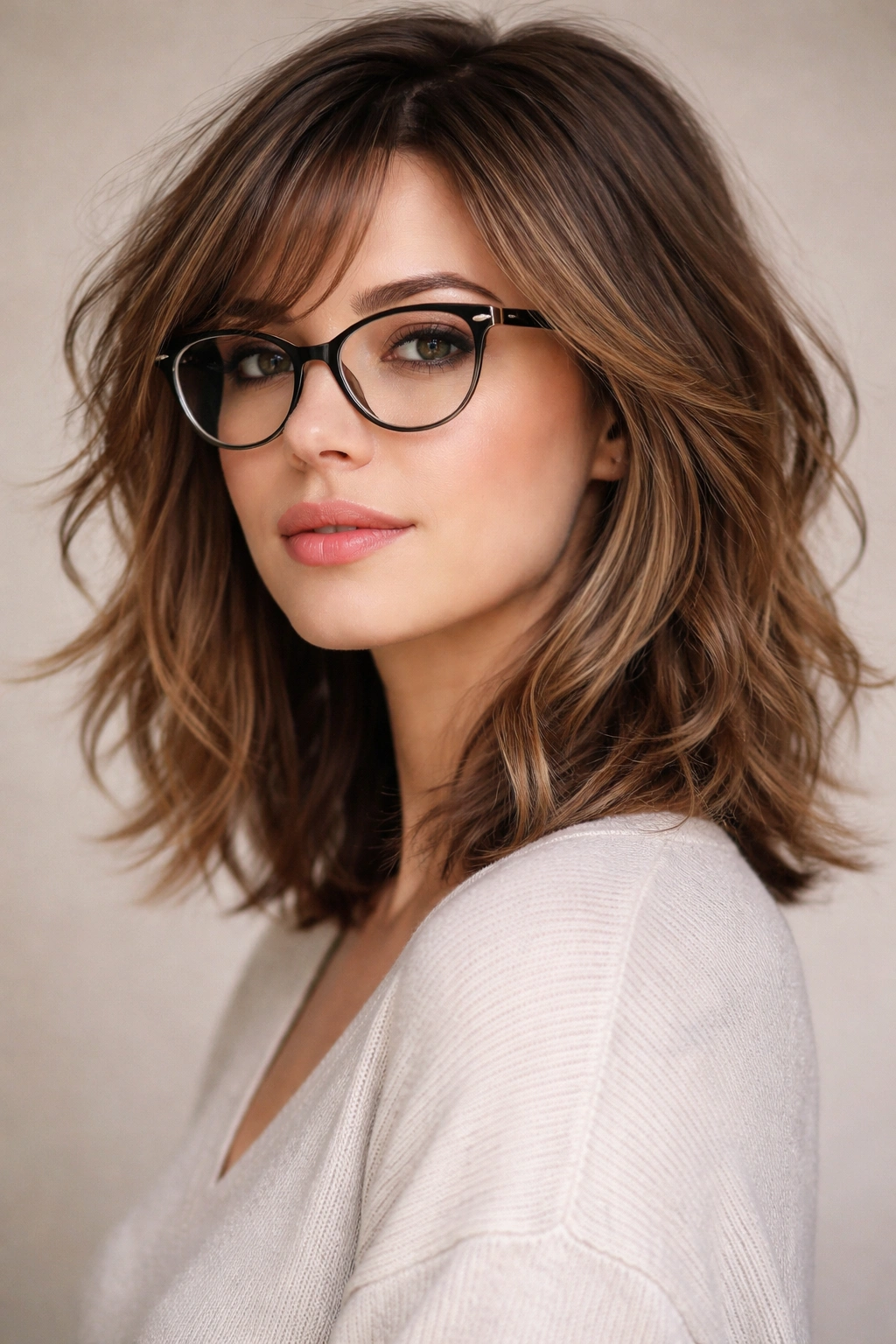
This style sits right around shoulder-length with choppy, piece-y layers throughout. The layers are cut with some attitude — they’re not subtle or delicate, they’re bold and defined. The cut has a casual, modern vibe that feels current without being trendy in a way that will look dated. The choppiness creates movement and texture without requiring perfect styling conditions.
Why It Works With Glasses
The choppy texture breaks up visual space, which means your glasses don’t feel like they’re sitting on a flat canvas. The movement created by the layering adds energy and personality to your look. This cut also works brilliantly if you have wavy or curly hair, because the choppy layers enhance your natural texture rather than fighting it.
Key Features to Ask Your Stylist For
- Defined, choppy layers throughout (not subtle or delicate)
- Shorter layers closest to your face, longer underneath
- Razored or point-cut ends for that intentional, piece-y texture
- Enough length to hit around the shoulders or just below
Worth noting: Choppy cuts look best when you’re willing to use some texturizing product. A good salt spray or texturizing cream takes this cut from nice to absolutely stunning.
6. The Soft, Feathered Bob
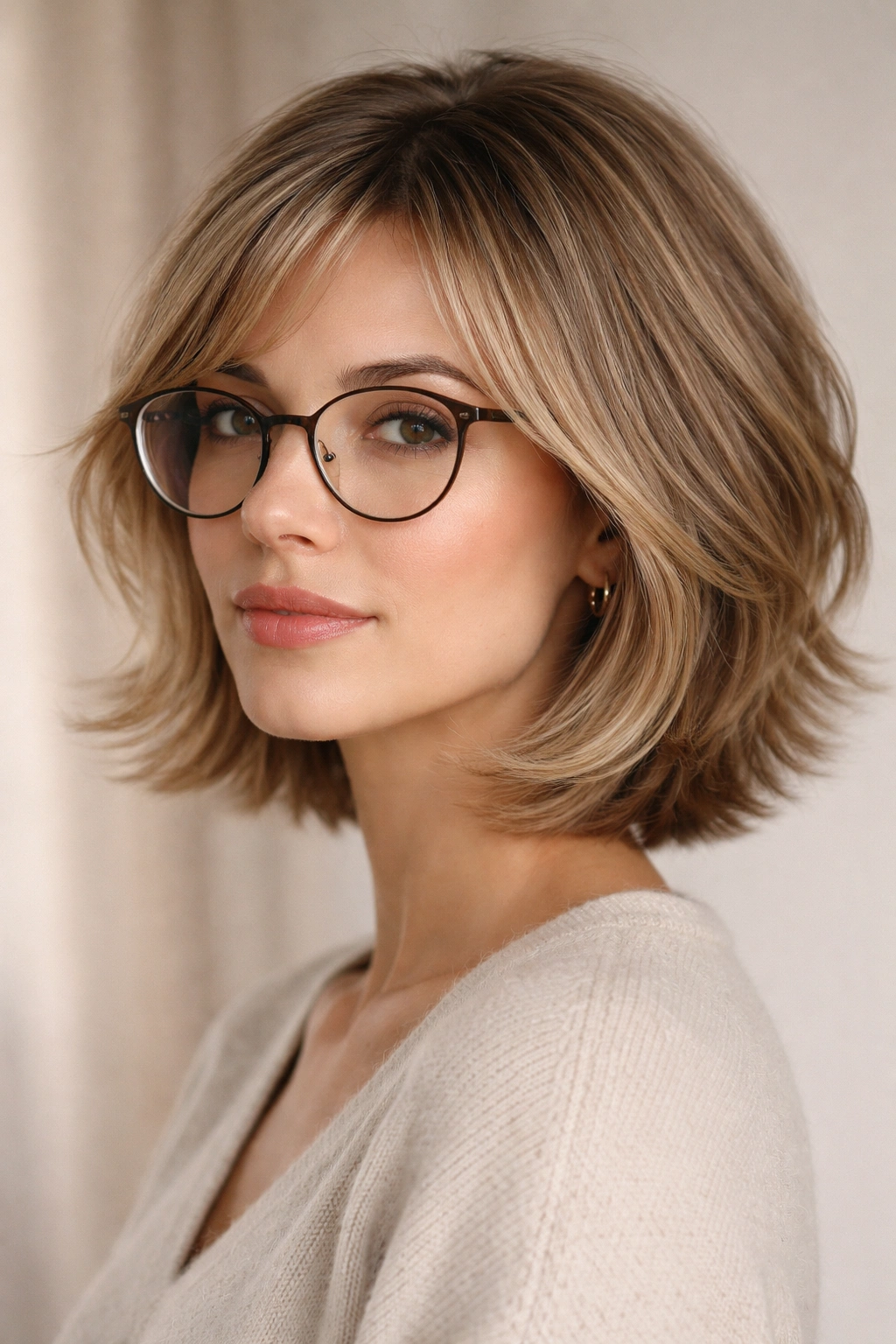
A feathered bob sits around chin-length with layers throughout that feather away from your face. Unlike blunt bobs, which can feel heavy and severe (especially with glasses), a feathered version is soft and romantic. The feathering means individual strands are cut at angles rather than straight across, so they flip and move rather than sitting flat. This cut is incredibly flattering for most face shapes and works beautifully with glasses because the softness counters any hardness the frames might add.
Why It Works With Glasses
The softness of the feathering prevents this cut from feeling severe or architectural. Glasses are naturally structured objects, so pairing them with a soft, feathered cut creates a nice visual balance. The layers that feather away from your face mean your cheekbones are revealed rather than obscured, and your glasses sit beautifully in that space.
Key Features to Ask Your Stylist For
- Chin-length or slightly longer base length
- Feathered layers throughout (cut at angles, not straight across)
- Longer layers in the back for some shape
- Soft, romantic movement rather than structured or geometric
Pro tip: This cut looks its best with some gentle waves or a soft blow-dry. The feathering is built into the cut, but encouraging your hair’s natural wave pattern makes it look effortless.
7. The Long, Face-Framing Layers
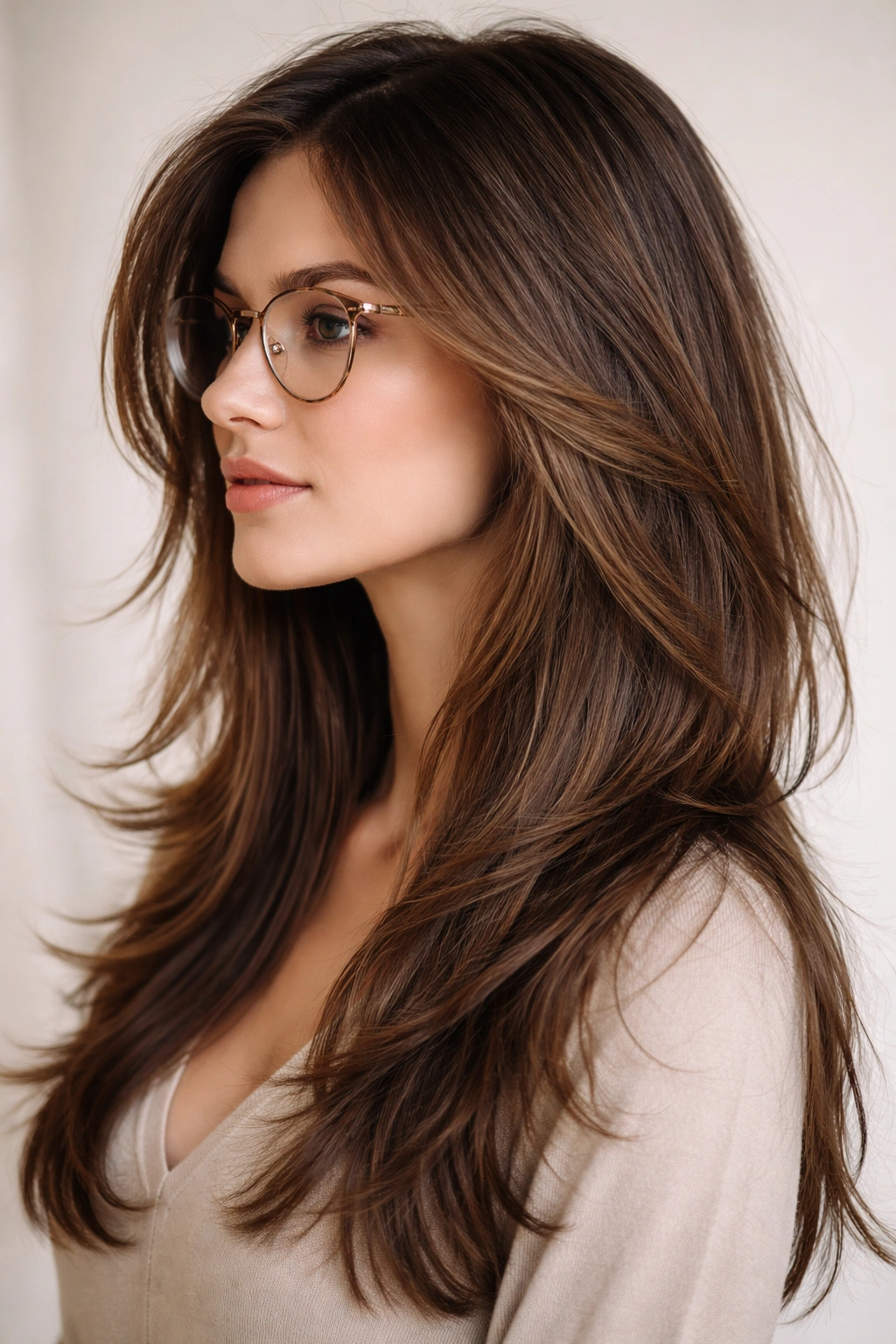
If you love having longer hair but want to avoid the heavy, flat look that sometimes comes with it, longer layers with specific attention to face-framing pieces are the answer. The base length extends past your shoulders, but layers throughout — especially shorter, more defined layers around your face — add movement and prevent the cut from feeling solid or overwhelming. This style lets you keep the length you want while still getting the benefits of layering.
Why It Works With Glasses
Longer hair can sometimes emphasize the weight of glasses if the cut isn’t right, but strategic layering changes everything. Face-framing layers that are intentionally shorter than the rest create a focus point right where your eyes and glasses sit. The movement in longer layered hair also adds sophistication, which makes the whole look feel more elevated and intentional.
Key Features to Ask Your Stylist For
- Base length extending past shoulders (as long as you want)
- Textured, choppy layers throughout for movement
- Shorter, more defined layers around your face and cheekbones
- Point-cut or razored ends to encourage movement rather than bluntness
Worth knowing: Longer layered hair requires consistent trims every 6-8 weeks to maintain the shape. The investment pays off because the cut keeps your hair looking intentional rather than like you’re just not getting it cut.
8. The Textured Wolf Cut
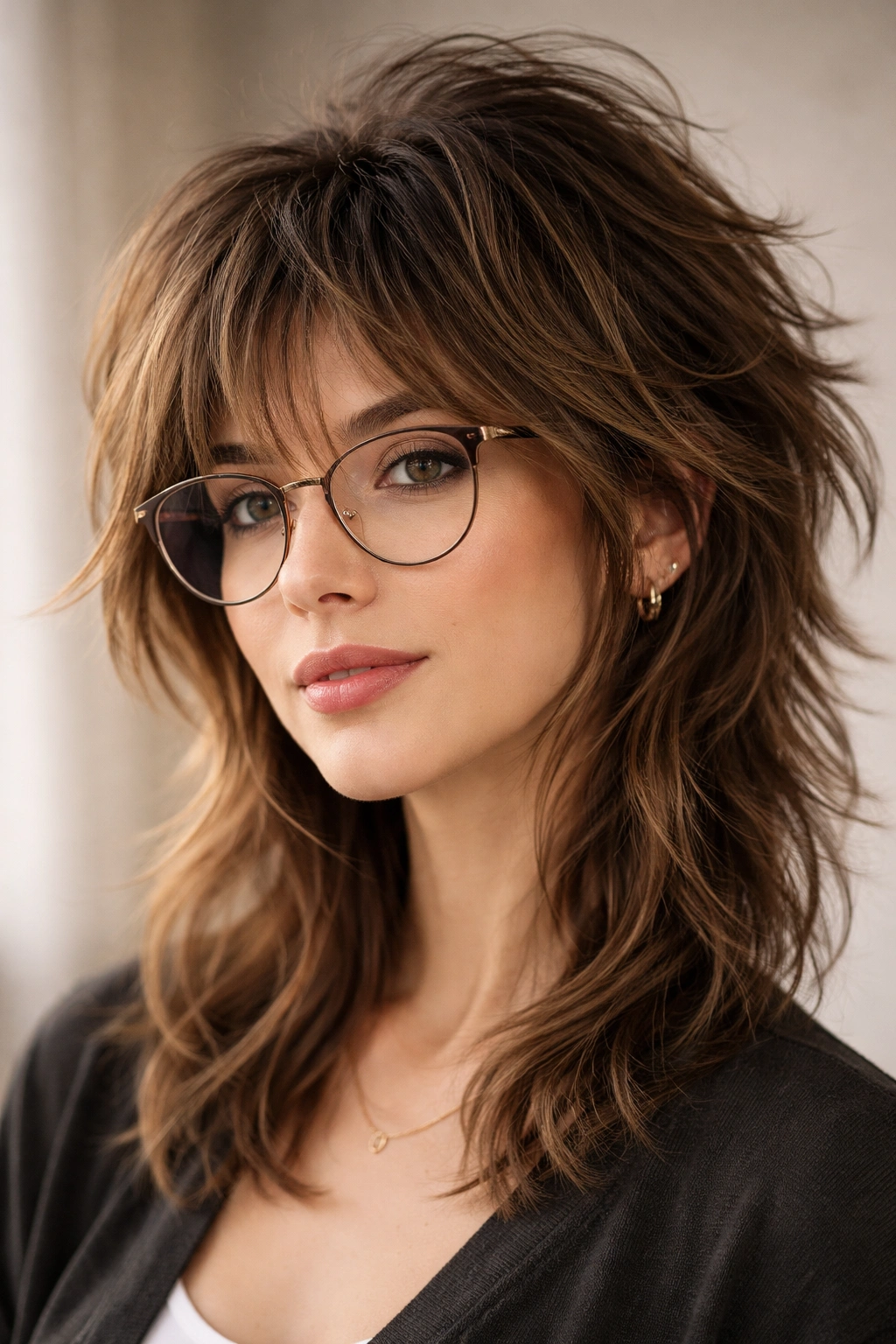
A wolf cut is essentially a hybrid between a shag and a mullet, but done in a modern, refined way. It features longer layers on top for volume and movement, with shorter layers underneath and around the sides. The result is a cut with serious personality and movement. The textured, piece-y quality throughout means your hair catches light and creates dimension, which pairs beautifully with the reflective quality of glasses.
Why It Works With Glasses
The wolf cut’s volume on top and shorter sides create balance and proportion that works beautifully with glasses. The textured movement prevents the cut from looking heavy, and the shorter layers around your face mean your glasses are framed rather than surrounded by hair. This is a cut for someone who wants something modern and interesting, not safe or basic.
Key Features to Ask Your Stylist For
- Volume and longer layers on top
- Shorter, more textured layers on the sides and underneath
- Choppy, piece-y texture throughout (not smooth or blunt)
- Intentional movement rather than a structured shape
Real talk: This cut requires some styling commitment. It looks best when you’re willing to work with your hair texture using mousse, texturizing spray, or styling cream.
9. The Piece-y, Textured Shag With Extended Bangs
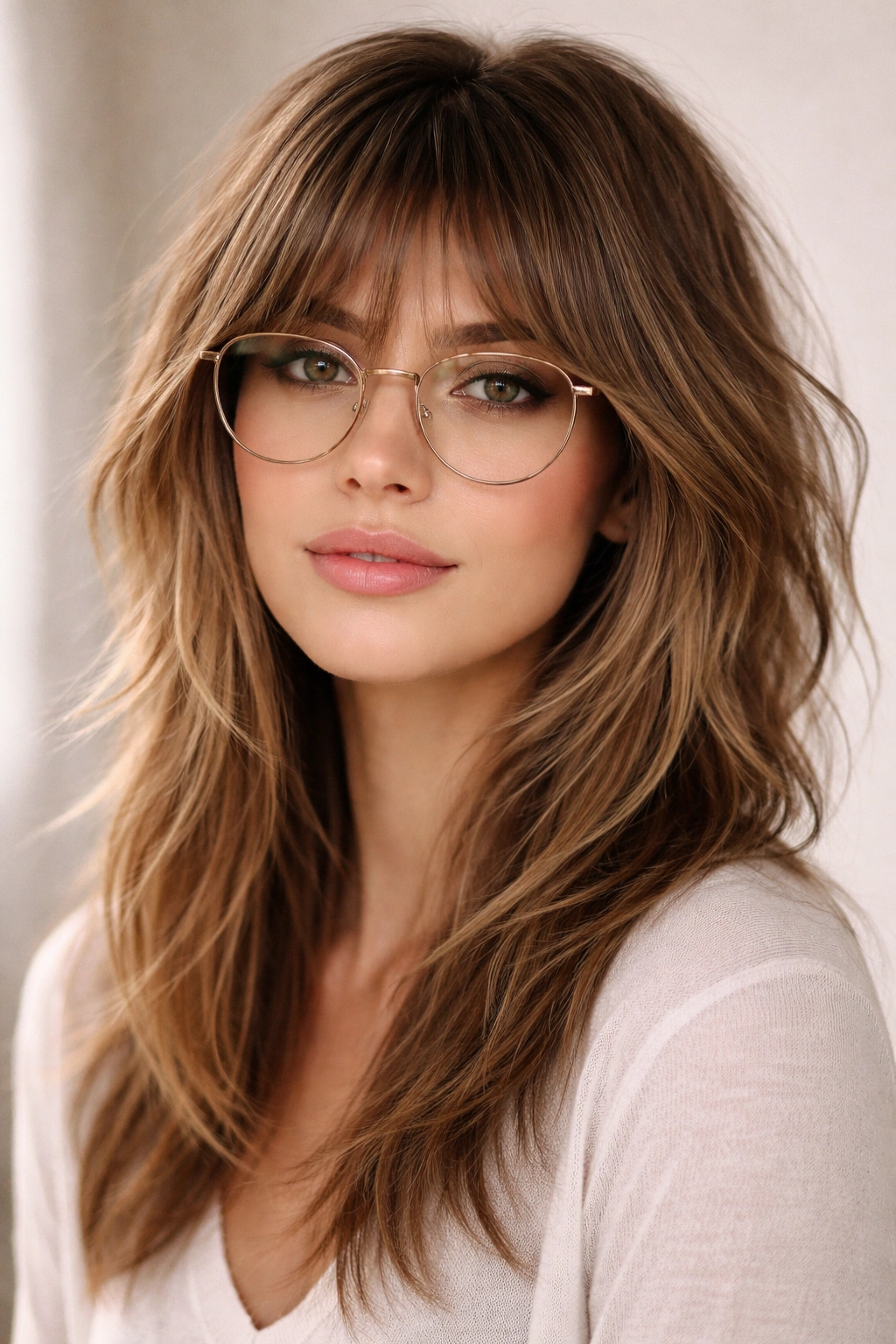
This style is similar to the modern shag we discussed earlier, but with a specific twist: extended bangs that frame your face. Rather than traditional bangs that sit straight across your forehead, extended bangs blend into your face-framing layers, creating a soft, graduated frame. The whole cut features choppy, intentional texture throughout, which means no two strands sit exactly the same way.
Why It Works With Glasses
Extended bangs that blend into your face-framing layers create a beautiful frame for your glasses. The bangs don’t sit across your forehead (which can sometimes look heavy with frames), but instead they sweep away from your face, creating movement and space. The choppy texture throughout means your whole look has that effortless, high-fashion quality that makes glasses feel like an intentional accessory rather than a practical necessity.
Key Features to Ask Your Stylist For
- Choppy, textured shag throughout
- Extended bangs that blend into your face-framing layers
- Bangs that are longer on the outer edges, shorter toward your nose
- Point-cut or razor-cut throughout for that intentional texture
Insider note: Ask your stylist to show you how to style the extended bangs. They should flip away from your face when your hair dries, not fall flat against your forehead.
10. The Asymmetrical Textured Bob
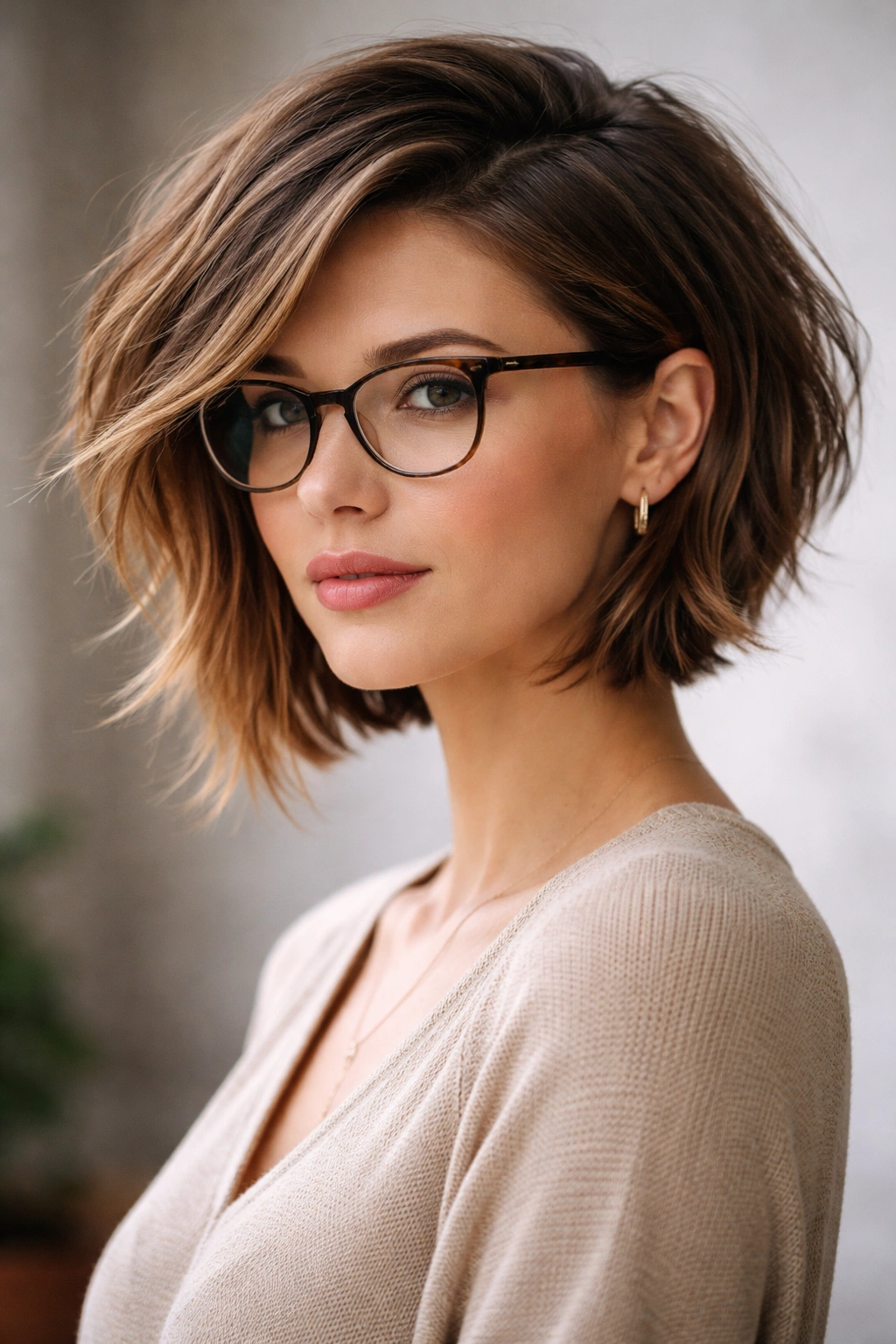
This modern take on a bob cuts one side longer than the other, with textured, layered pieces throughout. The asymmetry adds visual interest and personality, while the texture prevents the cut from feeling severe or architectural. The layering creates movement that prevents the cut from looking heavy, and the off-balance silhouette is genuinely flattering for most face shapes. It’s a cut that says you’re thoughtful about your style without being trendy in a way that will feel dated quickly.
Why It Works With Glasses
An asymmetrical cut adds visual interest that complements rather than competes with glasses. The textured layers throughout mean your whole look has movement and dimension, which makes your glasses feel like they’re part of a cohesive, intentional aesthetic. The cut also works beautifully if you have a rounder or wider face shape, because the asymmetry adds a subtle narrowing effect.
Key Features to Ask Your Stylist For
- Shorter on one side, longer on the other (with an intentional length difference)
- Textured, choppy layers throughout
- Longer layers in the front to frame your face on both sides
- Razored or point-cut ends for texture and movement
Worth noting: An asymmetrical cut looks best when you embrace the asymmetry in your styling. Don’t try to make it symmetric — instead, work with the cut and let it do what it’s designed to do.
How to Adapt Any Layered Cut for Your Face Shape
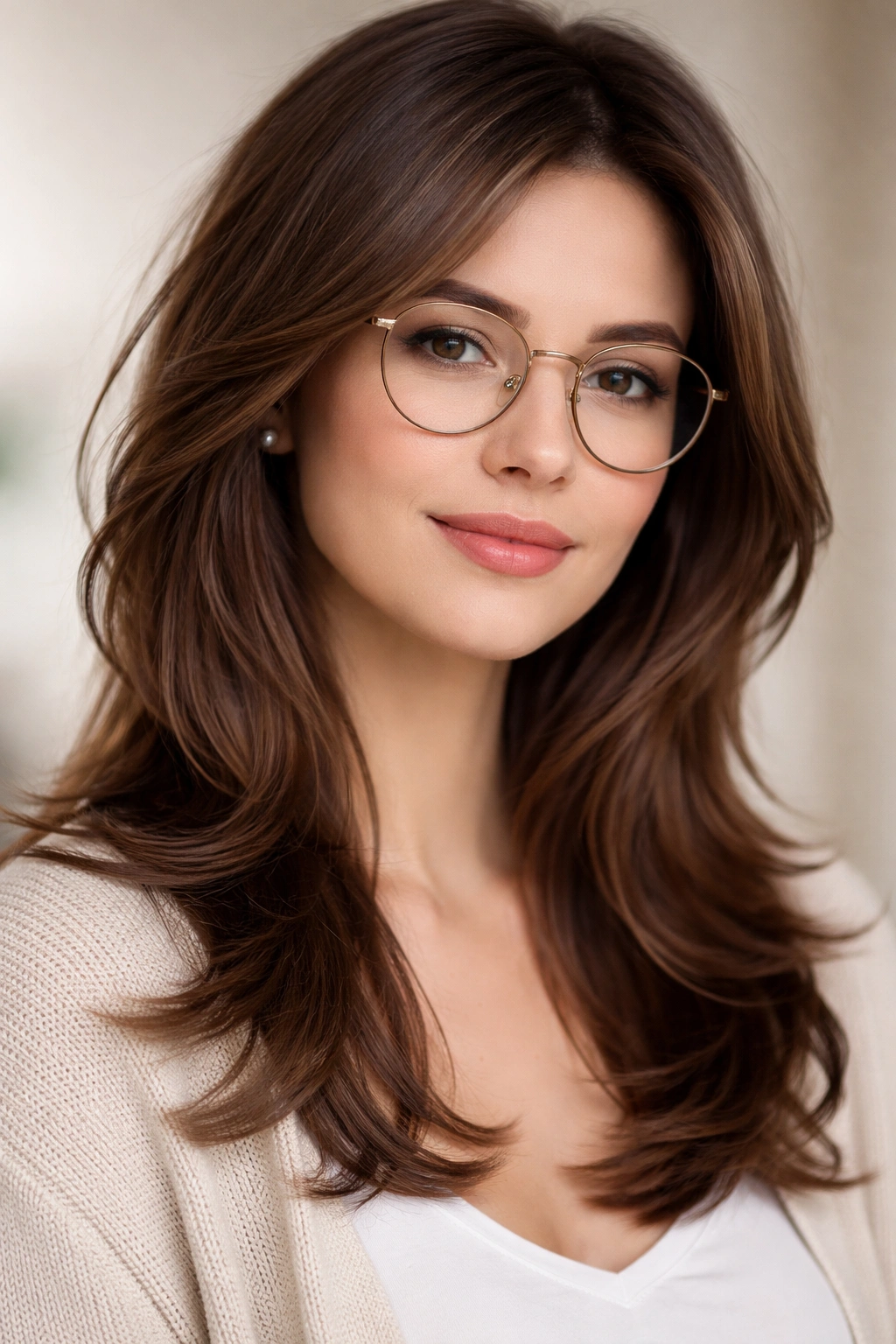
Not every cut that looks good on Instagram will look good on your specific face. The good news is that most layered cuts can be adapted to work beautifully with your particular face shape and proportions, especially when you’re considering how glasses sit on your face.
If you have a round face, ask your stylist to create longer layers in the front that hit below your cheekbones. This elongates the appearance of your face and prevents the cut from emphasizing width. Shorter layers on top and at the crown also add height, which further elongates. For glasses specifically, you want longer face-framing pieces that draw the eye downward.
For square faces, textured, choppy layers throughout work beautifully because the texture softens the angular quality of your jaw. Ask for layers that feature some movement and that create softness around the jawline. Face-framing layers should ideally hit around your cheekbones rather than your jaw. Avoid blunt lines, which will emphasize your angular features.
Oval faces are genuinely lucky because they work with almost any layered cut. If this is your face shape, focus instead on what your glasses need. If you wear smaller frames, you might choose a cut with more defined face-framing layers that don’t compete with the frames’ presence. If you wear larger frames, you might opt for longer overall layers that create balance.
Heart-shaped faces (wider at the forehead, narrower at the chin) benefit from layers that add width and softness around the jawline and chin. Longer layers in front are your friend. For glasses, you want the cut to balance the width of your forehead, so longer face-framing layers that pull away from your forehead work beautifully.
Getting the Consultation Right
When you consult with your stylist about your face shape, bring photos of cuts you like and specifically point out what appeals to you. Is it the texture? The face-framing? The overall volume? This helps your stylist understand your aesthetic preferences and translate them into a cut that flatters your specific features.
Mention your glasses in the consultation. Tell your stylist what kind of frames you wear and whether the fit is important. A stylist who’s experienced with glasses-wearers will automatically consider how the cut interacts with your frames, but making it explicit ensures you’re on the same page.
Styling Tips for Layered Hair When You Wear Glasses
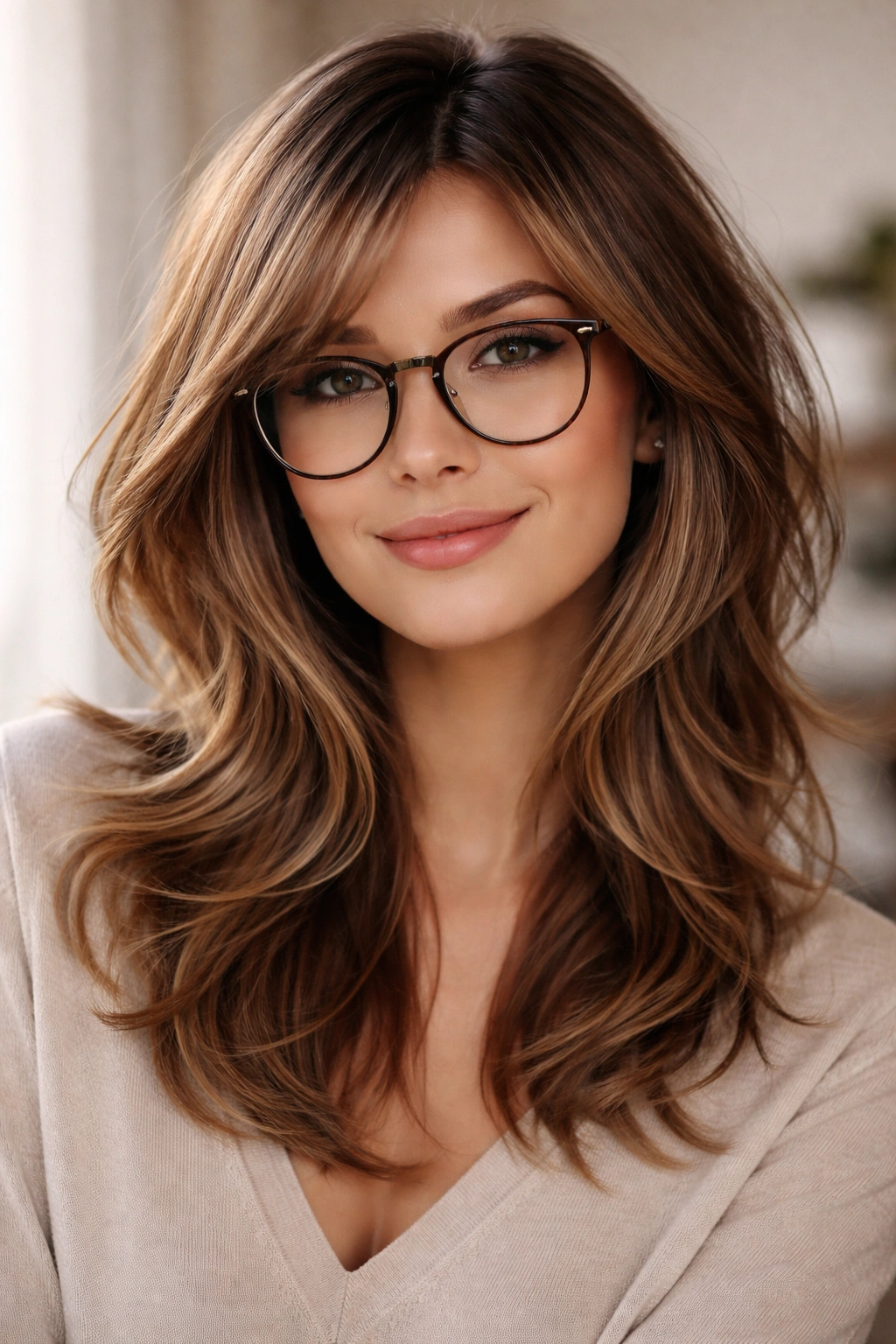
Layered hair that’s styled intentionally looks polished and put-together. Layered hair that’s not styled can sometimes look a bit disheveled, especially if you wear glasses. The key is finding products and techniques that work with your hair type and lifestyle.
For fine or thin hair, a lightweight texturizing spray or mousse is your best friend. These products add grit to your hair without weighing it down, which allows the layers to separate and move instead of clumping together. Apply to damp roots for volume, or to dry hair for texture. The goal is to make individual layers visible rather than letting your hair look like one solid mass.
For wavy or curly hair, lean into your natural texture with styling creams, curl-enhancing gels, or texturizing sprays designed for textured hair. The right product encourages your hair to curl or wave in a way that emphasizes your layers rather than fighting them. You can apply products to soaking wet hair and let your hair air-dry, or blow-dry with a diffuser attachment to define your natural texture.
For straight hair, you have options. You can use texturizing spray to create grit and separation, or you can blow-dry your hair with a round brush and then run a flat iron through the pieces to create subtle texture. Some people love using a small curling iron on the face-framing layers to create gentle waves, which adds movement and dimension.
Dealing With Glasses-Hair Interference
If your glasses tend to displace your hair or create weird dents, use a texturizing spray that dries with some hold. This keeps hair in place even when your frames move. Some people find that blow-drying their hair away from their face (opposite the way it naturally falls) before applying their glasses helps too.
If you have extended bangs or face-framing layers, let them fall naturally and don’t fight them. A little texturizing spray on these pieces encourages them to flip away from your face instead of lying flat against your cheeks, which prevents them from getting caught under your frames.
Between-Wash Styling
Textured, layered hair often looks better on day two or three than it does on day one. Use dry shampoo or texturizing spray on non-wash days to refresh your style and add grip to your hair. This prevents your layers from falling flat and keeps your cut looking intentional.
Maintaining Layers: Cutting and Product Recommendations
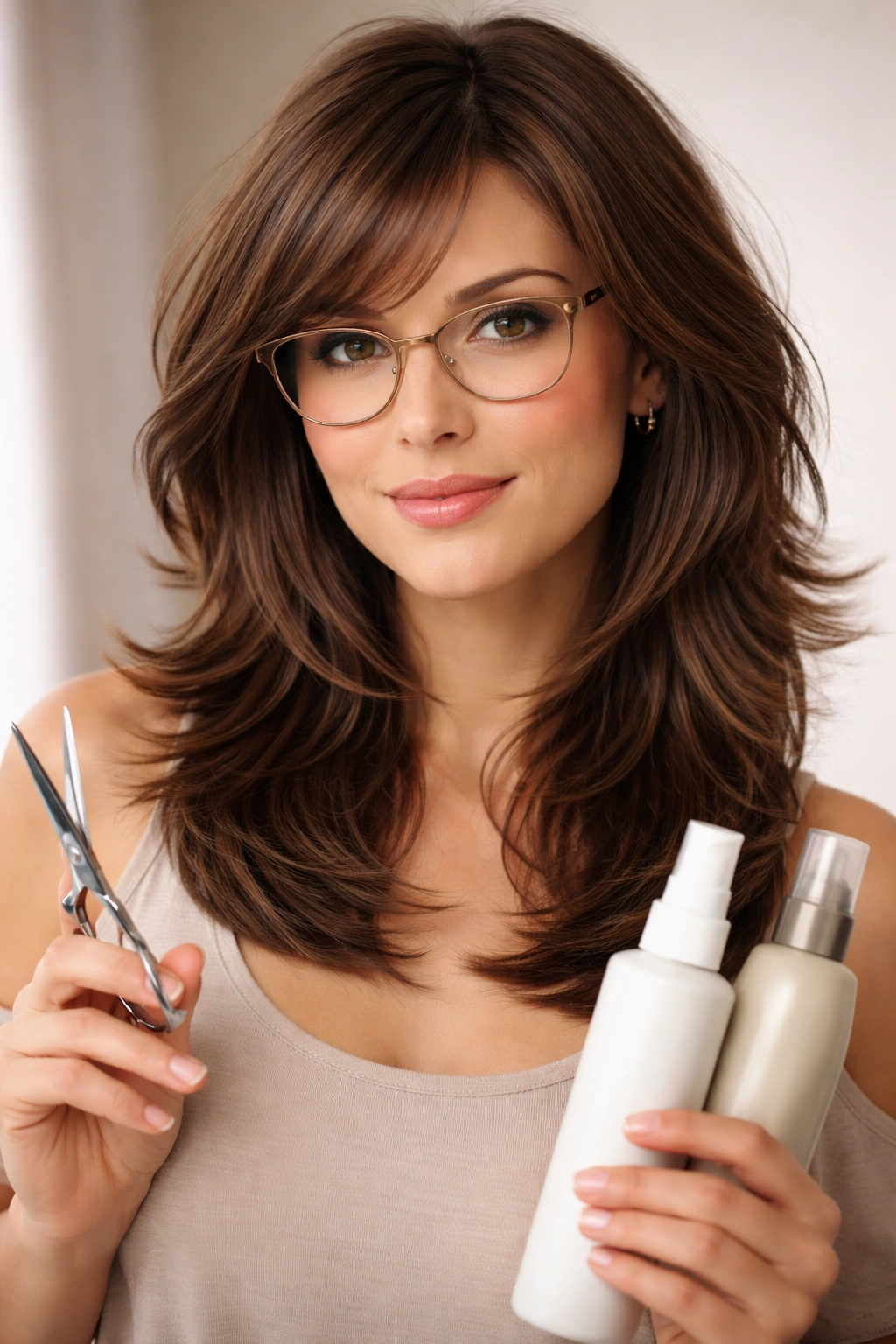
Layers look their absolute best when they’re fresh, which means you’ll need regular trims to maintain the cut’s shape and intention. Most layered styles look great with trims every 4-8 weeks, depending on how fast your hair grows and how defined you want your layers to remain.
When you go in for a trim, your stylist should focus on refreshing the shape — taking off length from the longest pieces and redefining the shorter, face-framing layers. This isn’t just about removing split ends (though that matters too). It’s about maintaining the specific shape and dimension your stylist originally cut into your hair.
Between professional trims, you can use a few product strategies to keep your layers looking intentional. A good texturizing spray is non-negotiable for most layered styles. It adds grip to your hair, encourages movement, and makes individual layers visible. Brands like Bumble and bumble Thickening Full Form Mousse, Oribe Dry Texturizing Spray, and Tresemmé Budget-Friendly Texturizing Spray all work beautifully on layered hair.
Styling creams and leave-in conditioners are also valuable. These products add definition and softness without crunch or buildup. They’re particularly useful if you have dry hair or textured hair that tends toward frizz. A good cream helps your layers move smoothly without flyaways or separation that looks unkempt rather than intentional.
Choosing the Right Shampoo and Conditioner
Layered hair does best with products that add texture rather than slip. Heavy, smoothing shampoos and conditioners can actually work against the movement that makes layers look great. Look for volumizing shampoos and lightweight, texturizing conditioners instead. You want to condition your ends without adding weight that collapses your layers.
Some people find that using conditioner only on their ends rather than their whole head helps layered styles look less limp. If your hair tends to look flat, try shampooing normally and then conditioning only the last few inches of your hair.
Products That Work With Glasses
If you wear glasses regularly, look for products with flexible hold rather than rock-hard hold. You want your hair to stay in place when your glasses move, but you don’t want product that creates a stiff, immobile effect. Mousse, sea salt spray, and flexible texturizing creams are usually better choices than heavy, crunchy gels for this purpose.
Final Thoughts
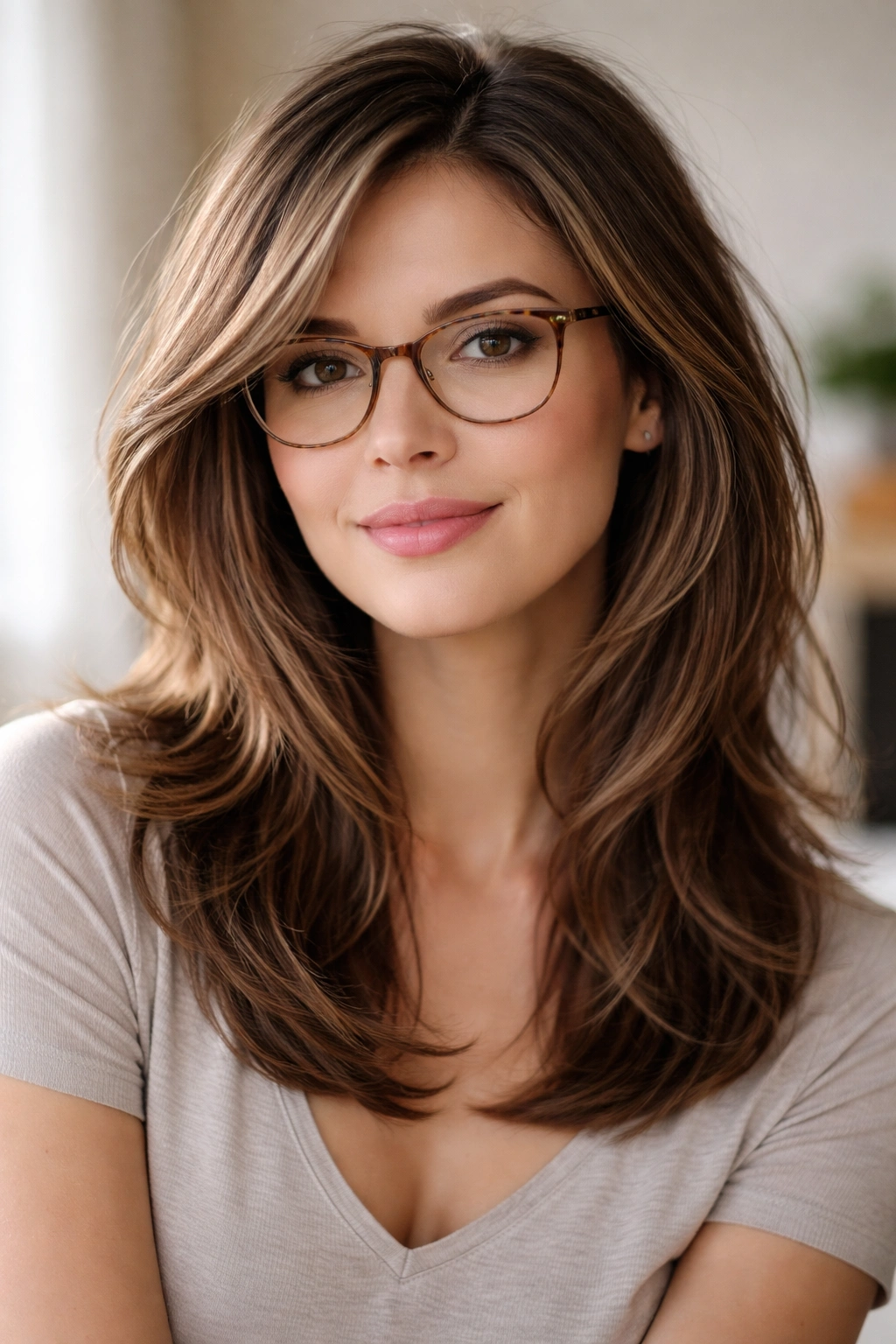
A great layered haircut is one of the best style investments you can make if you wear glasses. The right cut works with your frames rather than against them, turning glasses from a practical necessity into part of your overall aesthetic. Layers create movement, reduce bulk, and frame your face in ways that are genuinely flattering.
The ten styles covered here represent different aesthetics and different levels of styling commitment, but they all share the fundamental quality of working beautifully with glasses. Whether you want something modern and edgy like a wolf cut, romantic and soft like a feathered bob, or bold and textured like a contemporary shag, there’s a layered cut that will make you feel confident and polished.
The most important step is finding a stylist who understands both your hair type and the specific challenge of creating a cut that flatters glasses-wearing. Bring reference photos, mention your glasses during the consultation, and don’t hesitate to ask your stylist questions about styling and maintenance. A cut is only as good as your ability to style it, so make sure you understand exactly how your stylist wants you to approach your hair at home.
Once you’ve found your perfect cut, commit to regular trims and the right products, and you’ll have a hairstyle that looks intentional, polished, and flattering every single time you put your glasses on.
