

Thin hair after 50 does not need apologizing for. It needs shape.
The best easy hairstyles for thin hair over 50 do one job well: they make the hair look fuller where it tends to go flat, especially at the crown, around the temples, and through the ends. That usually means clean lines, smart layering, and a little lift in the right place — not a gallon of product and a prayer.
A cut that sounds fancy can still be a headache in real life. I’d take a sharp little bob or a soft pixie that I can style in ten minutes over a high-maintenance shape that falls apart by lunch. The trick is to work with the hair you have, not the hair you wish you had in photos from twenty years ago.
And one more thing: thin hair is not the same as fine hair. Fine hair describes the thickness of the strand; thin hair usually means lower density. You can have one without the other, and that changes everything about which styles flatter you most. The good news is that once the shape is right, the hair looks more expensive, more deliberate, and a lot less fussy.
1. Soft Pixie With Side Fringe
A soft pixie is one of those cuts that earns its keep fast. The side fringe keeps the front from looking severe, while the short layers on top create the illusion of movement and lift without piling on weight.
Why It Works
Ask for a little length at the crown and a gentle taper at the nape. That combination keeps the cut from turning puffy on the sides or flat on top. A long, wispy fringe also softens forehead lines in a way that feels natural, not heavy.
For styling, a pea-sized amount of lightweight mousse on damp hair is enough. Blow-dry with your fingers first, then nudge the fringe across the forehead with a small round brush or a quick pass of a flat brush. Done right, it looks airy, not overworked.
Best for: women who want a short cut that still has movement.
Avoid: thick, blunt bangs that sit straight across the face.
Bonus: it grows out gracefully if you keep the layers soft.
2. Layered Chin-Length Bob
This is the haircut I recommend to people who want fullness without going short. A chin-length bob with gentle internal layers gives thin hair a rounder outline, and that rounded shape is doing a lot of heavy lifting.
The key is restraint. Too many layers will make the ends look see-through, which is the opposite of what you want. Keep the perimeter clean, then add just enough texture inside the cut so the hair bends instead of hanging like a curtain.
Styling Notes
Use a root-lifting spray at the crown and a 1-inch round brush while blow-drying the top sections. The ends should curve under just a touch. If they flip out wildly, the cut usually needs less thinning, not more product.
I like this style for women who want something polished but not stiff. It looks tidy for dinner, work, or errands, and it still feels easy on a regular Tuesday.
3. Side-Parted Lob
Why does a side part matter so much? Because it gives thin hair instant asymmetry, and asymmetry reads as volume. A lob that falls between the jaw and collarbone already has more swing than a shorter bob, and the side part keeps the roots from lying flat in one boring line.
This cut is especially kind to hair that has started to lose a little body at the front. The longer shape lets the ends stay weighty, which helps thin hair look denser than it really is. That’s the whole trick.
How to Wear It
Air-dry with a lightweight cream, or wrap a few sections around a medium curling wand for loose bends. Don’t curl every strand. That looks busy. Just add movement through the middle and the ends, then flip the part and leave it alone.
If you want one cut that can look casual or dressed up without a lot of effort, this is a strong contender.
4. Feathered Crop
A feathered crop has a little old-school polish, but in a good way. The texture around the temples and crown keeps the cut from looking flat, while the lighter edges give the hair room to move.
I’ve always liked this style on women who don’t want to spend time fighting their hair. It gives shape quickly, and the feathers make the outline softer than a blunt short cut. You get lift without the helmet effect.
What to Ask For
- Light feathering around the crown, not heavy razoring
- Soft length at the sideburns to frame the face
- A tapered nape so the back sits close to the head
- Enough top length to sweep forward or to the side
A little volumizing spray at the roots is usually enough. Then finger-dry and stop before the hair gets puffed out.
5. Textured Shag for Thin Hair Over 50
A shag can be a gift if your hair has a natural wave or a slight bend. The reason it works is simple: the texture breaks up the flatness, and the layers keep the silhouette from looking dense at the bottom and bare at the top.
The mistake people make is asking for too many short pieces all over the head. That can strip away the weight thin hair needs. A better version keeps the layers soft, with the most movement around the cheekbones and jawline.
How to Style It Fast
Use mousse on damp hair, scrunch it a little, and let it air-dry about 70 percent of the way before you finish with a diffuser or a few quick bends from a wand. A touch of texturizing spray at the ends can help, but don’t drown it. Thin hair gets greasy-looking fast.
This cut is for people who want a little personality in their hair. Not fussy. Not precious. Just enough edge to keep the style from going limp.
6. Blunt Bob With Airy Ends
The blunt bob is underrated because it sounds severe, and it doesn’t have to be. A clean perimeter makes thin hair look fuller at the ends, which is where a lot of people lose the most visual weight.
The trick is to keep the base blunt while softening the very tips. A good stylist will point-cut just enough to keep the line from looking boxy, but not so much that the ends turn wispy. That balance matters.
Best for straight hair: yes, especially if your hair tends to lie flat.
Best for waves: also yes, if you want a little bend and polish.
Needs: a side part or slight off-center part to keep it from feeling too rigid.
I’d choose this over a heavily layered bob nine times out of ten for fine hair. The blunt edge does the heavy lifting.
7. Tapered Pixie Cut
A tapered pixie keeps the sides and back neat while leaving enough length on top for lift. It’s a good choice if you want very short hair but don’t want it to look choppy or over-textured.
What makes it friendly for thin hair is the tapering. The close sides keep bulk under control, and the top can be styled forward, up, or diagonally across the forehead. You get options without extra length.
Quick Styling Checklist
- Work a small amount of matte paste through damp hair
- Blow-dry the top section in the direction you want it to sit
- Use fingertips, not a brush, for the last pass
- Keep the ends piecey, not crunchy
This cut is low-fuss, but it does need regular trims to stay sharp. If you like a neat shape and a quick morning routine, it’s hard to beat.
8. Swept-Back Short Cut
A swept-back cut is a little dressier than a pixie, but it’s still fast. The hair is kept short enough to stay manageable, then brushed back from the face to create height at the front.
That lift matters. Thin hair often collapses at the hairline first, and sweeping the front back makes the face look more open while the crown looks fuller. It’s one of those styles that seems small until you see the before-and-after effect in the mirror.
What Makes It Easy
Use a round brush or even a vent brush while blow-drying the front upward and back. A light hold spray at the roots helps, but don’t use sticky gel unless you want a wet look. That’s a different style entirely.
This works well for glasses, earrings, and strong brows. It has a bit of confidence to it. Not loud. Just clean.
9. Collarbone Cut With Face-Framing Layers
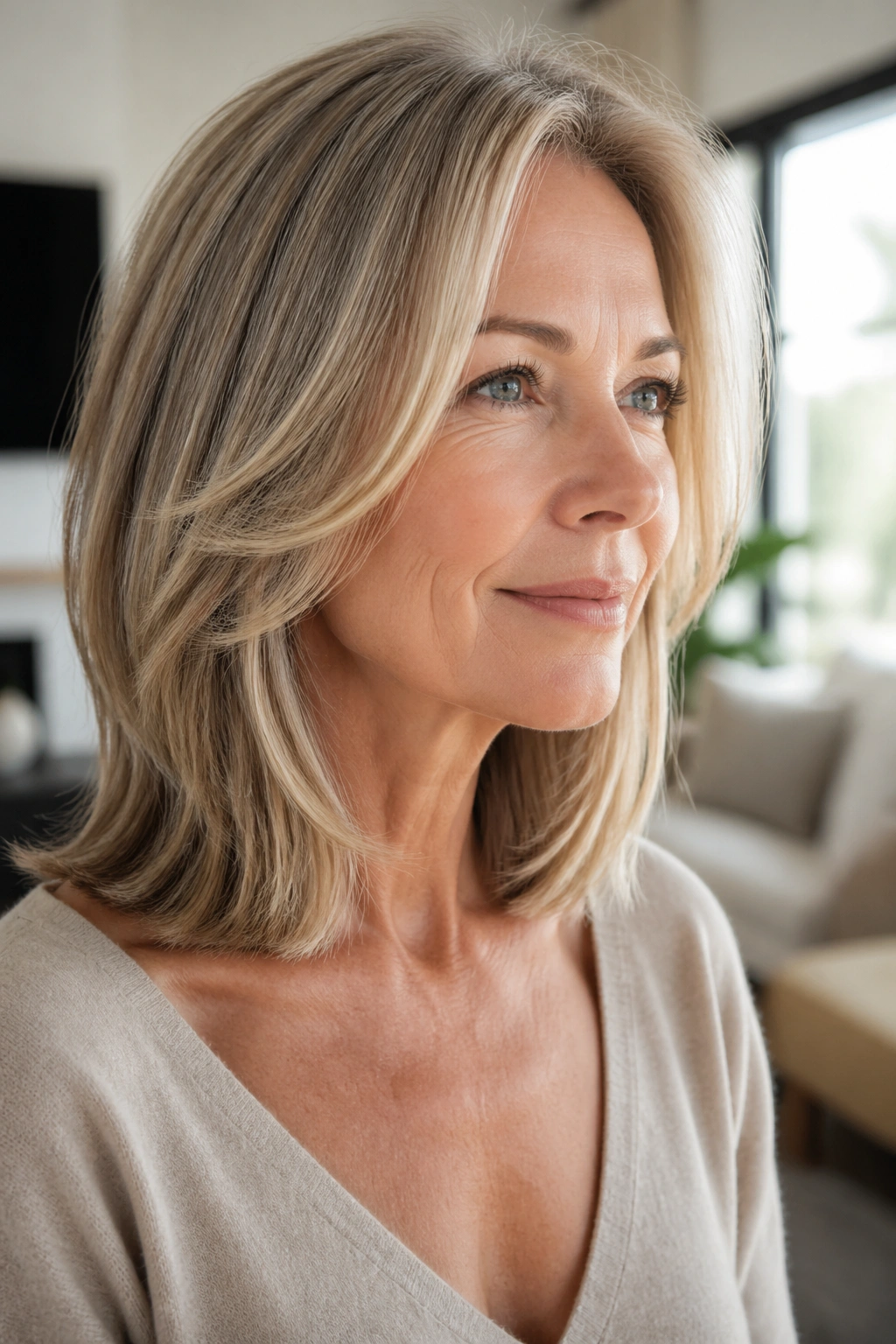
A collarbone cut gives thin hair a little more swing than a bob and less commitment than a long style. The face-framing layers bring attention upward, which is useful when the ends are fine and the top needs help.
The layers should start low, usually around the chin or just below, so they shape the face without chewing up density around the perimeter. That’s the part people get wrong. If the layers start too high, the hair can look stringy by the shoulders.
Best Styling Habit
Try a big round brush or a large roller on the front sections only. You do not need a full blowout for this cut to work. A slight bend away from the face is enough to make the whole shape look more awake.
It’s a good middle ground for women who want hair that can be worn down most days but still pulled back when needed.
10. French Bob With Soft Bend
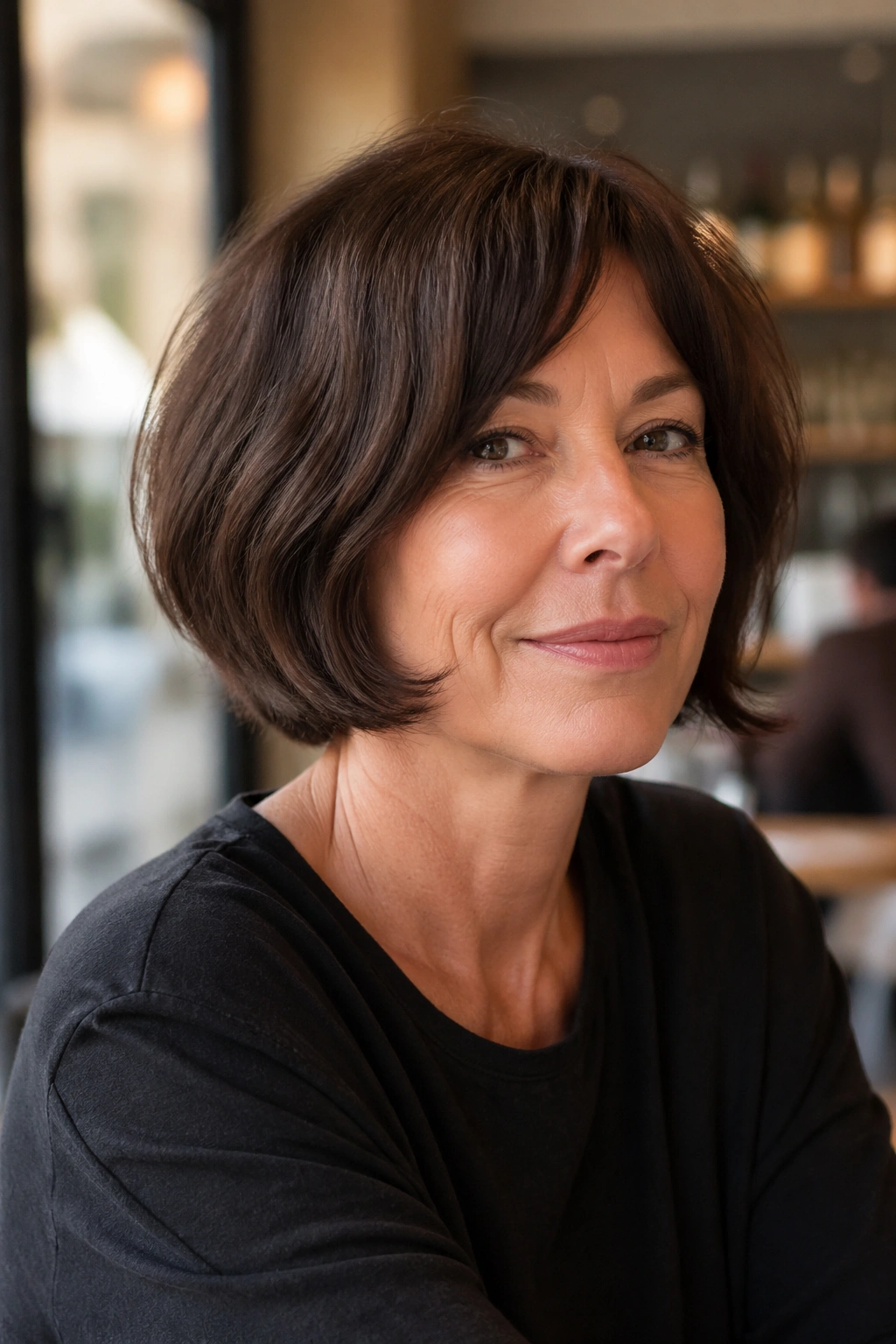
The French bob is shorter than a classic chin-length cut and usually sits somewhere between the cheekbone and jaw. On thin hair, that short shape can be a blessing because the outline looks deliberate instead of dragged down by length.
I like this version with a soft bend rather than stiff waves. A bit of movement keeps it from feeling too sharp. If your hair is naturally straight, a quick pass with a small iron around the ends is enough.
A side part or a very soft fringe makes this more wearable for mature faces. Hard lines are the enemy here. You want the shape to look like it belongs on you, not on a runway model who hasn’t touched a humid summer day.
11. Stacked Bob With Crown Lift
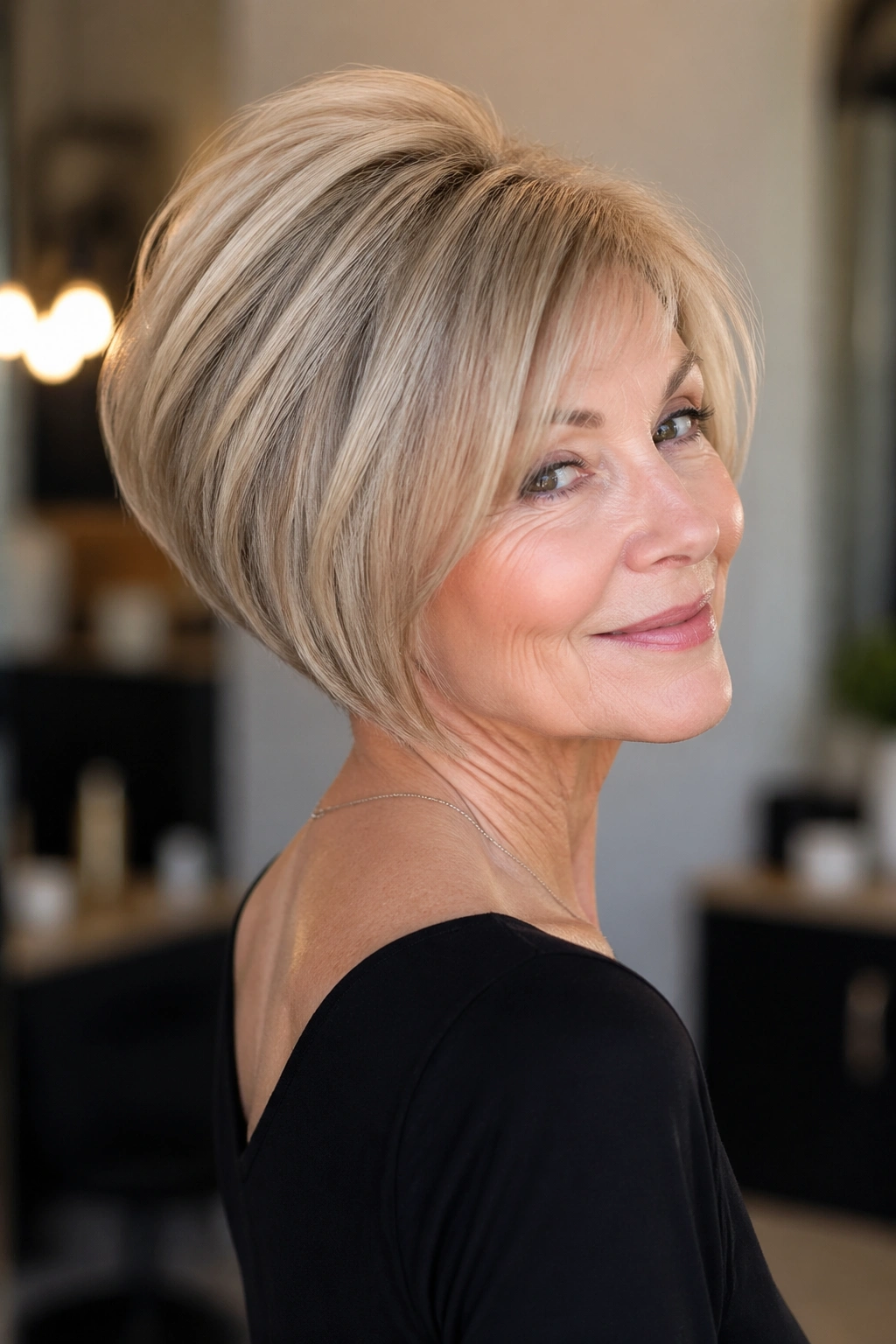
A stacked bob adds height in the back, which is gold if your crown tends to lie flat. The shorter layers underneath create that slight lift at the back of the head while the top layers still skim smoothly over the shape.
What to Watch For
A heavy stack can look dated fast. Keep it subtle.
You want a clean rise at the back, not a shelf. The most flattering stacked bobs on thin hair keep the front longer and the back rounded just enough to make the head shape look fuller. That little curve is doing a lot of visual work.
This style is best on hair that can hold a bend, even a slight one. Blow-dry with a round brush and lift the roots as you go. The result should look polished from the side and fuller from behind, which matters more than people think.
12. Wavy Lob
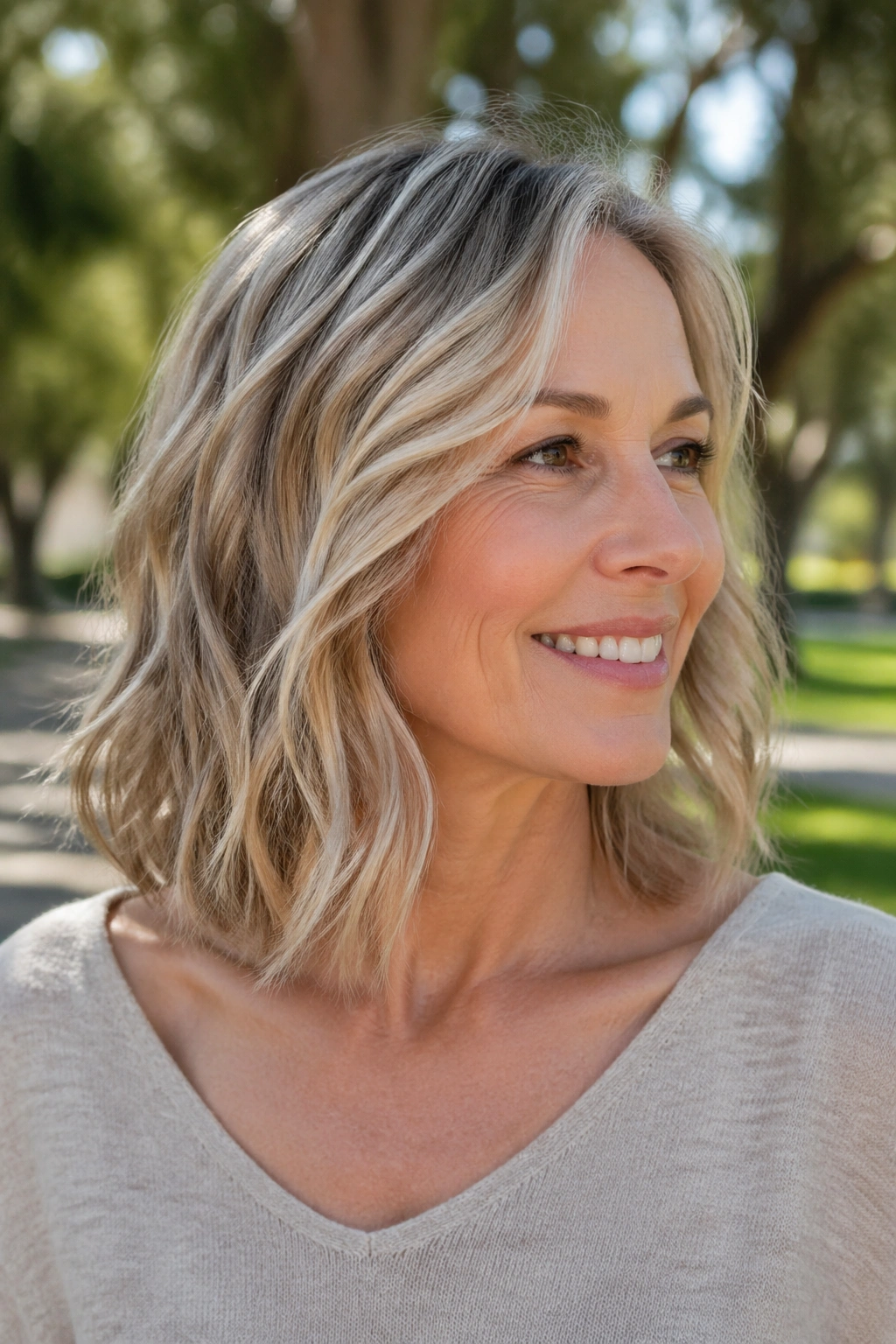
A wavy lob gives thin hair body without demanding a dramatic cut. The length sits around the collarbone, and the waves break up the flatness so the hair doesn’t hang in one straight sheet.
What makes this look good on older women is the softness. The waves should be loose and irregular, not tight and uniform. A few bends through the middle sections make the hair feel fuller, while the ends keep some weight.
How to Get the Shape
Wrap random 1-inch sections around a medium-barrel curling iron, leave the last inch out, then brush through lightly once the hair cools. That single step keeps the texture from looking too done. A dry texture spray at the roots can help if the crown goes limp by noon.
It’s casual, but not sloppy. That’s the sweet spot.
13. Soft Curls Set With Hot Rollers
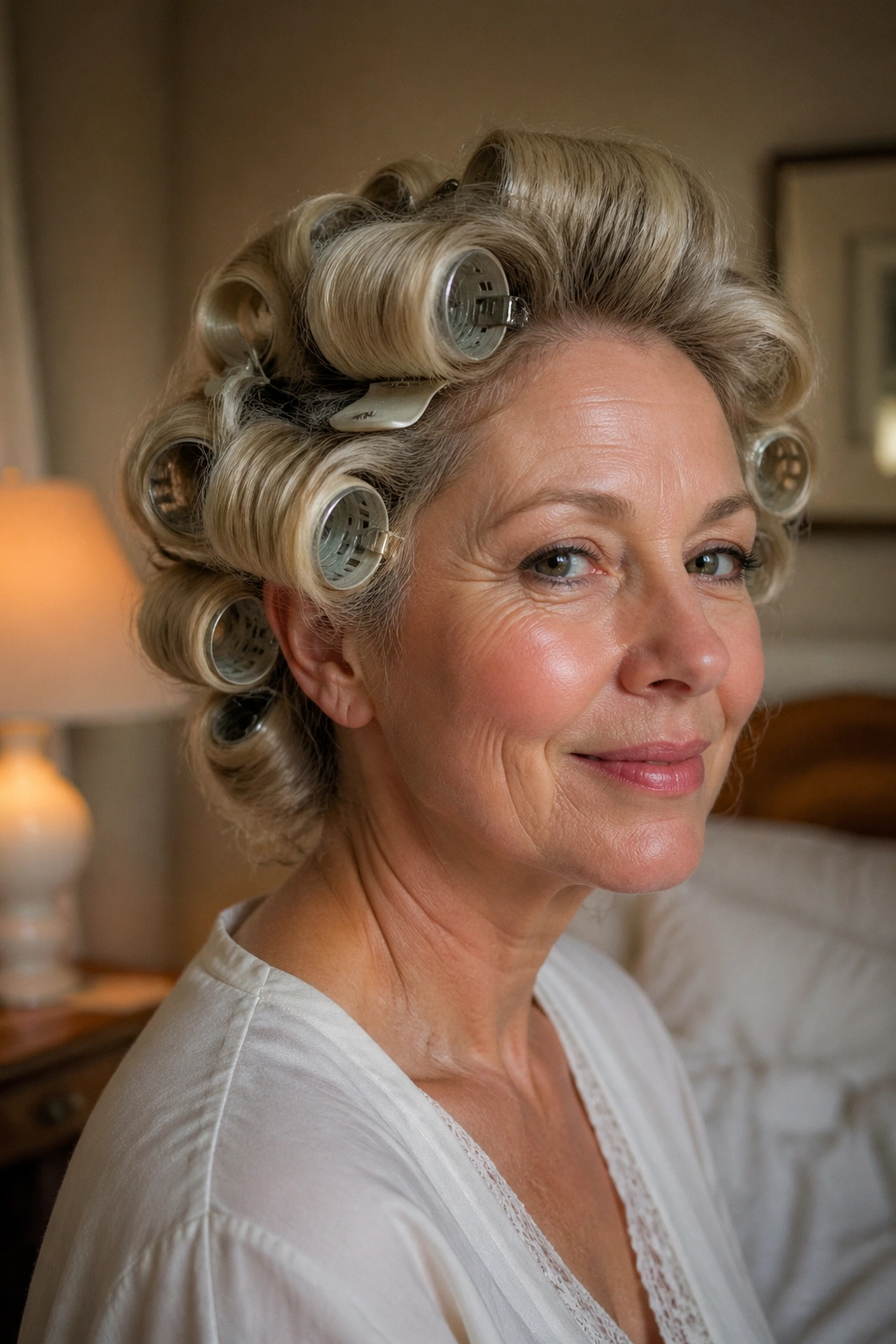
Hot rollers are old-fashioned in the best possible way. They give thin hair lift at the root and a soft curve through the mid-lengths without needing a curling marathon.
If your hair struggles to hold waves, rollers can be more helpful than a wand. The shape sets as the hair cools, which makes the curl last longer and look a little rounder. That extra roundness is what fine hair often needs.
How to Use Them
Set the top section first, then the sides. Leave the rollers in until they’re fully cool — warm hair drops too fast. Once you remove them, brush the curls out gently with your fingers or a wide-tooth comb. You want cloud-like movement, not ringlets.
This is a good choice for dinner, events, or any day you feel like having a little more polish without a salon blowout.
14. Half-Up Crown Lift for Thin Hair Over 50
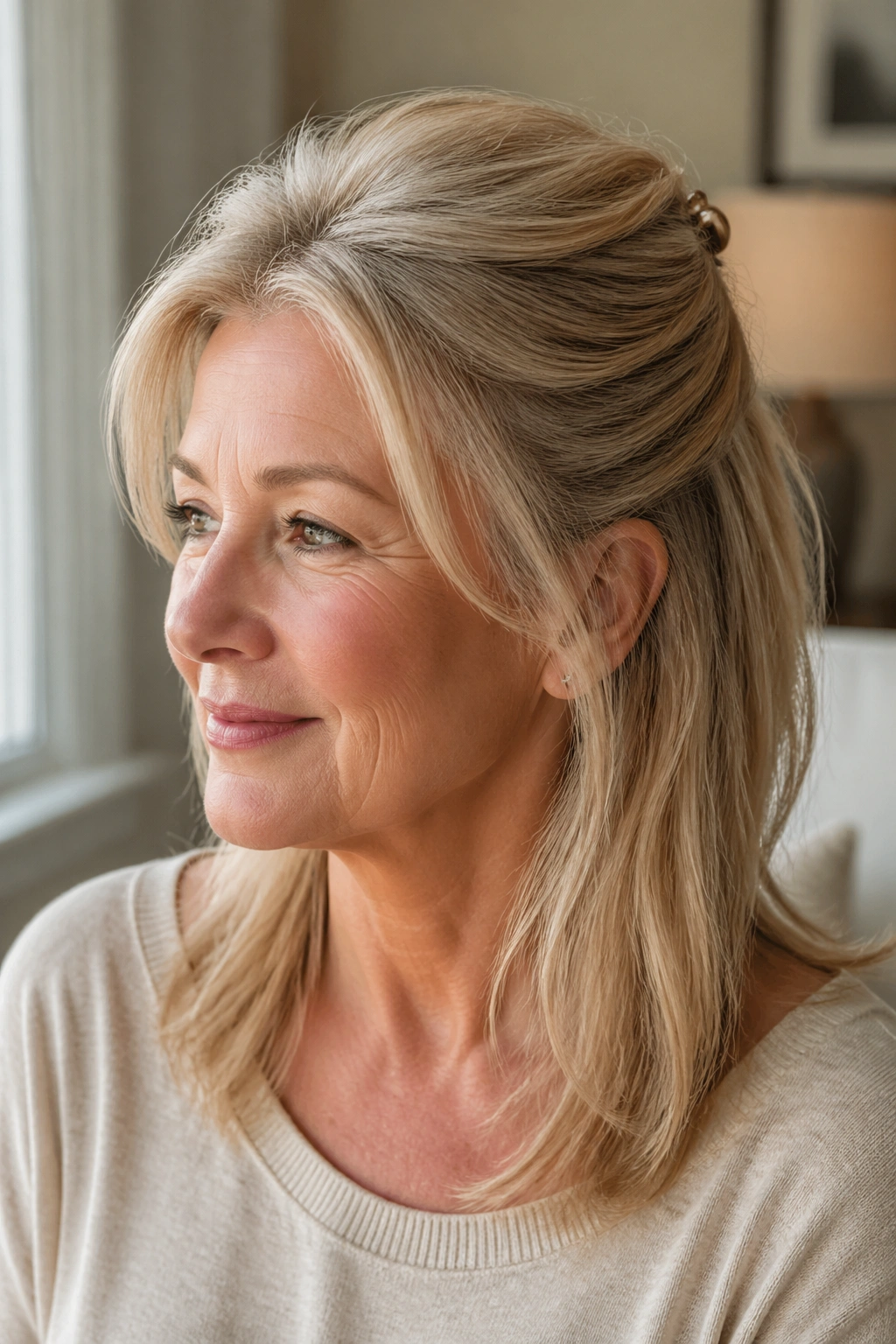
A half-up style sounds almost too simple, but that’s why it works. Pulling the top section back gives the crown a lift, while the lower half keeps length and softness around the shoulders.
The trick is where you gather the hair. Too low, and the style drops flat. Too high, and it can look childish. Aim for the top third of the head, then pinch the crown slightly before you secure it. That little bit of height changes the whole profile.
Quick Steps
- Spray the roots with a light texturizer.
- Tease the underside of the crown very gently.
- Pull back the top section with your fingers, not a brush.
- Secure with a small clip or two bobby pins.
This is one of the easiest everyday hairstyles for thin hair over 50 when you want something tidy without losing softness.
15. Low Twisted Chignon
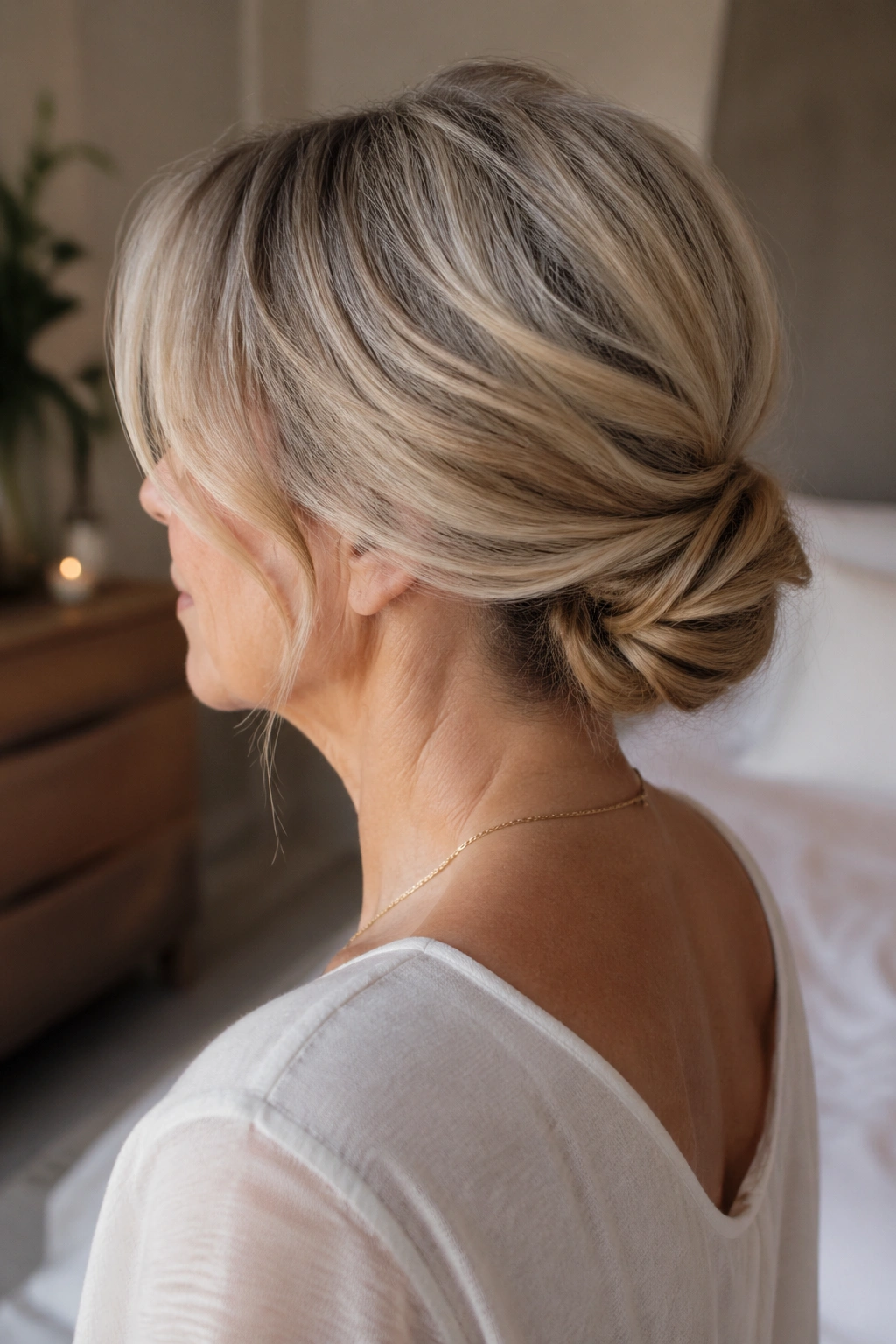
A low twisted chignon can look elaborate, but it doesn’t have to be. For thin hair, the secret is not to squeeze everything into a tiny knot. Give the twist a little room and let the shape stay soft.
I like this one because it flatters the neck and works well with fine hair that has been lightly sprayed for grip. If the hair is too slippery, the style slides around. A little dry texture spray fixes that fast.
You can leave a few pieces loose around the face, or tuck everything in for a cleaner line. Either way, it reads as intentional. That matters more than perfection.
16. Low Ponytail With Volume at the Crown
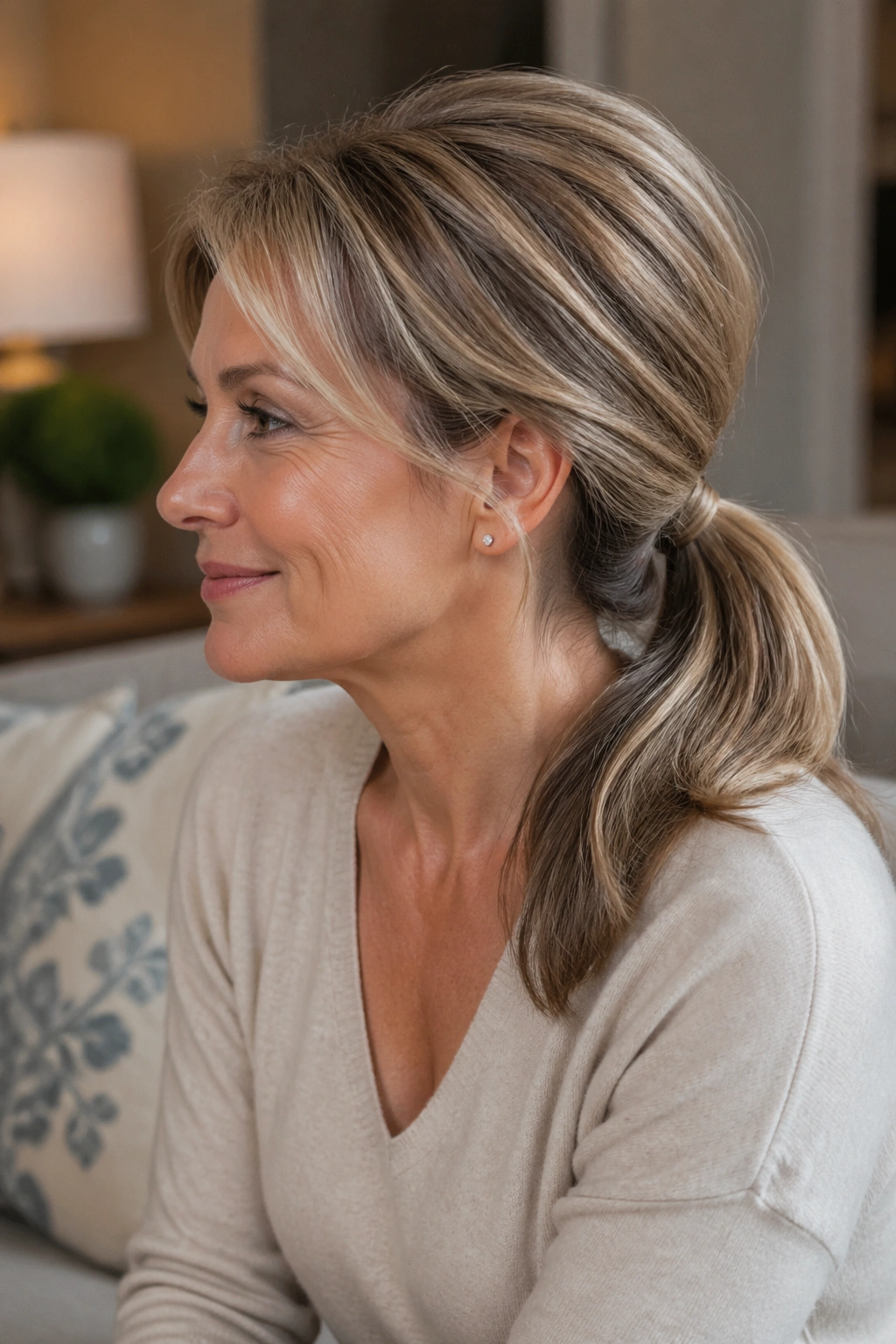
A low ponytail can be elegant if the crown has some lift. Without that lift, it tends to expose thinness at the top, which is why so many people feel disappointed by it.
The answer is to create softness before you tie it back. A slight side part, a bit of root teasing, and a small puff at the crown make all the difference. Then wrap a thin section of hair around the elastic so it looks finished.
Best Ways to Wear It
- Keep the ponytail low and loose
- Use a soft elastic, not a tight black band
- Add a bend through the tail with a flat iron if the ends are flat
- Leave out a few face-framing pieces for balance
This works especially well on second-day hair. Clean hair can be too slippery for it.
17. Claw-Clip Twist
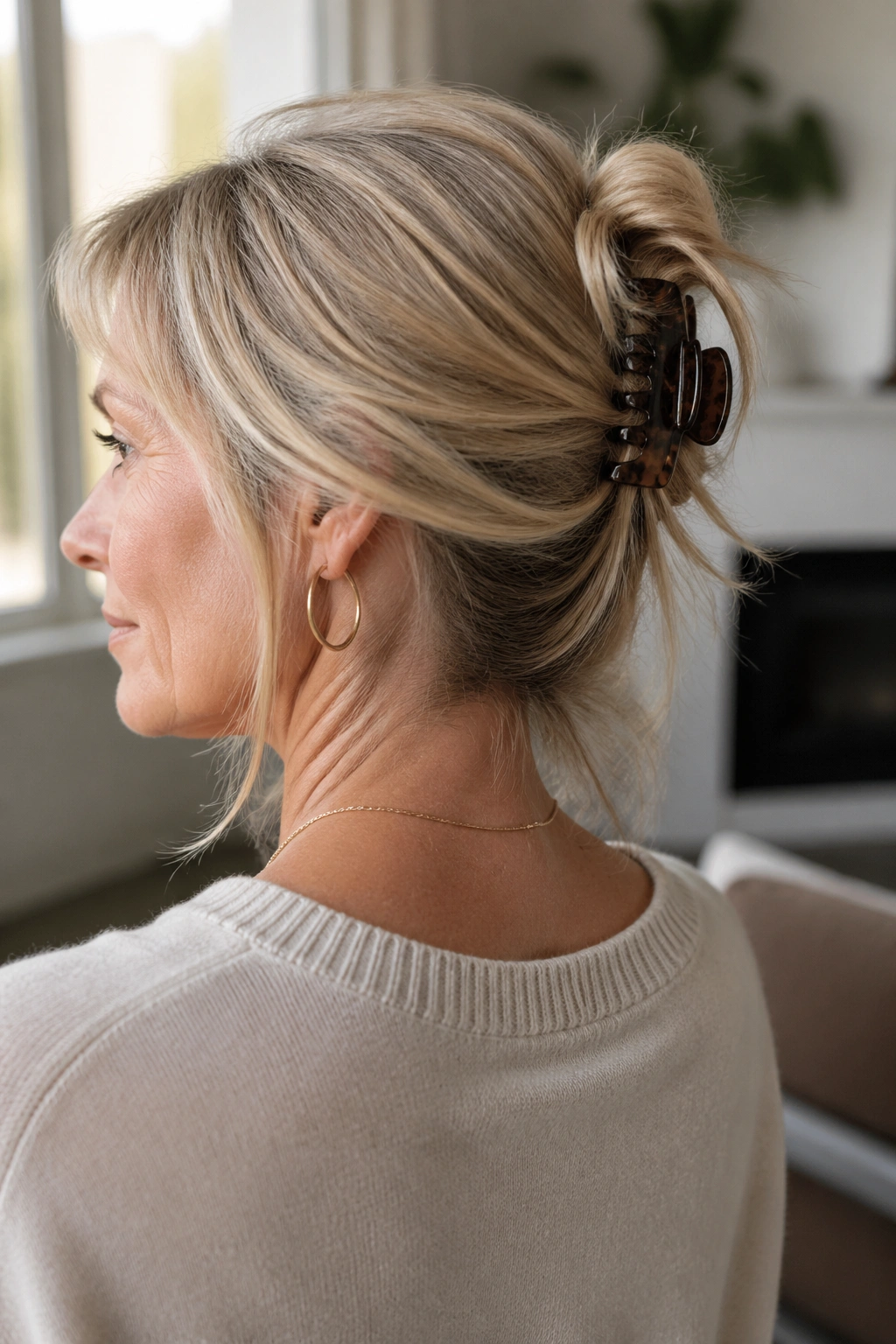
The claw-clip twist has earned its place because it’s fast and forgiving. If your hair is shoulder length or a little shorter, you can twist it up in under a minute and still look put together.
Thin hair usually does better with a medium clip than a giant one. Oversized clips can slide if there isn’t enough hair for them to grip. A smaller, stronger clip holds the twist closer to the head and keeps the shape from drooping.
A few loose ends at the back are fine. Honestly, they help. The style looks better when it isn’t too exact.
18. Headband Tuck for Thin Hair Over 50
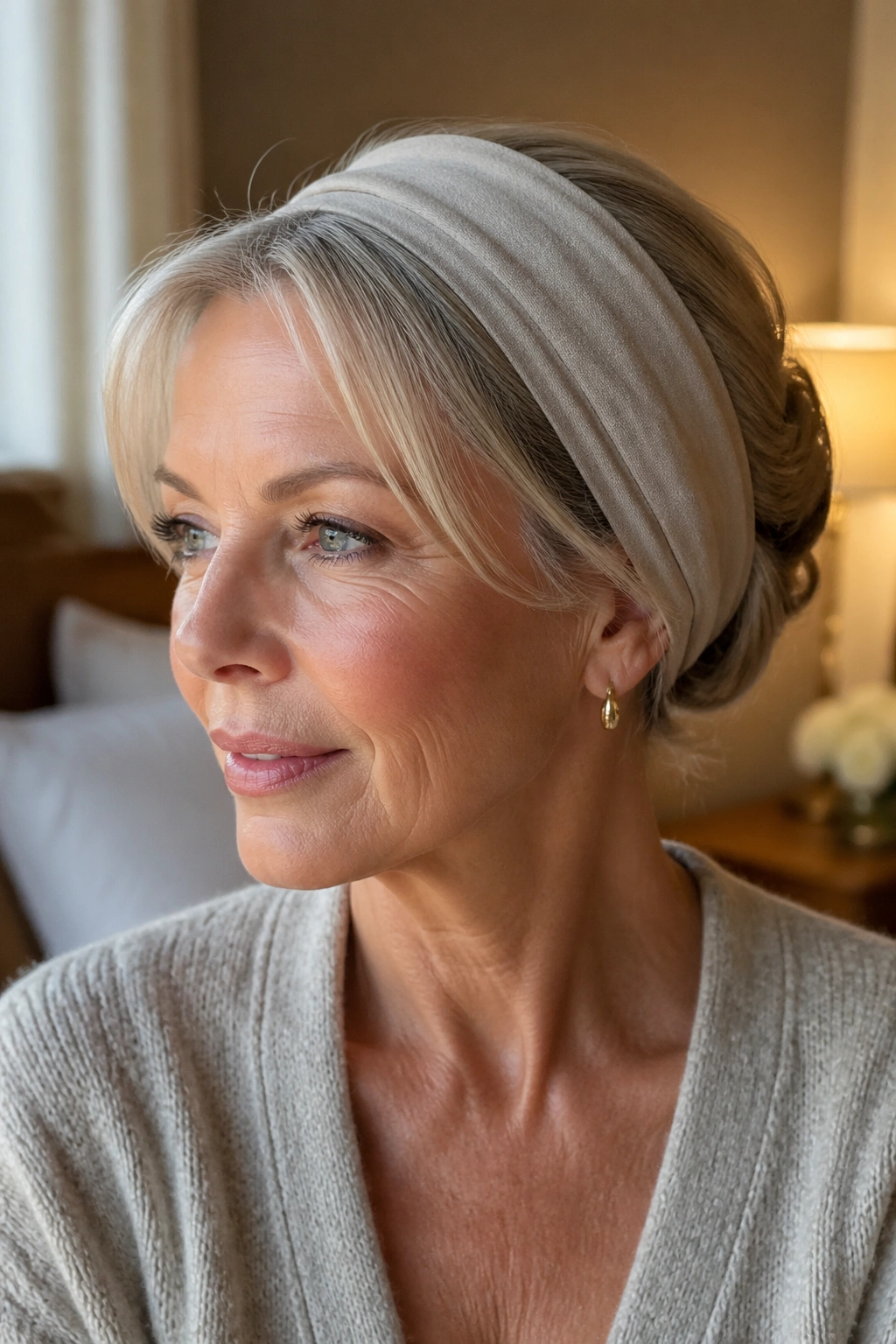
This is one of those styles that saves you on days when the ends are tired. A wide headband can hide frayed lengths while giving the front some lift and the face a clean frame.
What I like most is how forgiving it is. If your hair is fine, dry, or flat, the headband takes the pressure off the rest of the style. You can tuck the ends under the band at the back, or leave them loose if your hair is longer.
What to Watch For
Choose a band that grips without squeezing. Fabric-covered bands and padded bands usually stay in place better than hard plastic ones. If the band slips, add a touch of dry shampoo at the roots first.
It’s not a fancy style. It doesn’t need to be. Some mornings, neat is enough.
19. Curtain Bangs With Shoulder-Length Cut
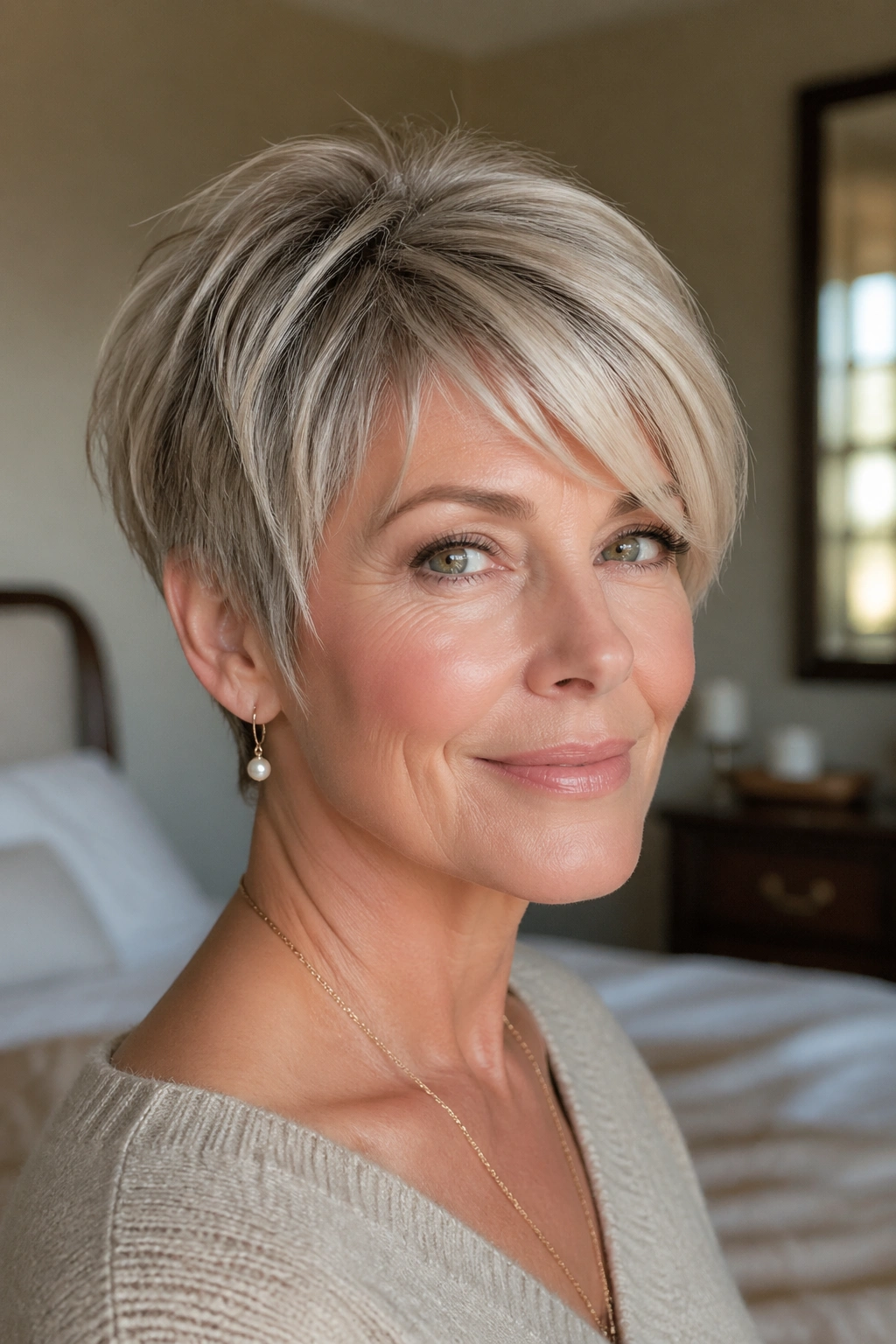
Curtain bangs are flattering because they open up the face without cutting off too much hair. On thin hair, that matters. You get movement near the eyes and cheekbones, which pulls attention away from flat spots around the crown.
The bangs should be long enough to sweep to both sides, not chopped short. Short curtain bangs can split awkwardly on fine hair, while longer ones blend into the rest of the cut more naturally. That blending is the part that makes them easy to live with.
Blow-dry them with a round brush or even a roller brush in the direction away from the face. They should fall in a soft curve, not a stiff curtain. A small thing, but it changes the whole mood of the haircut.
20. Tousled Shoulder-Length Layers
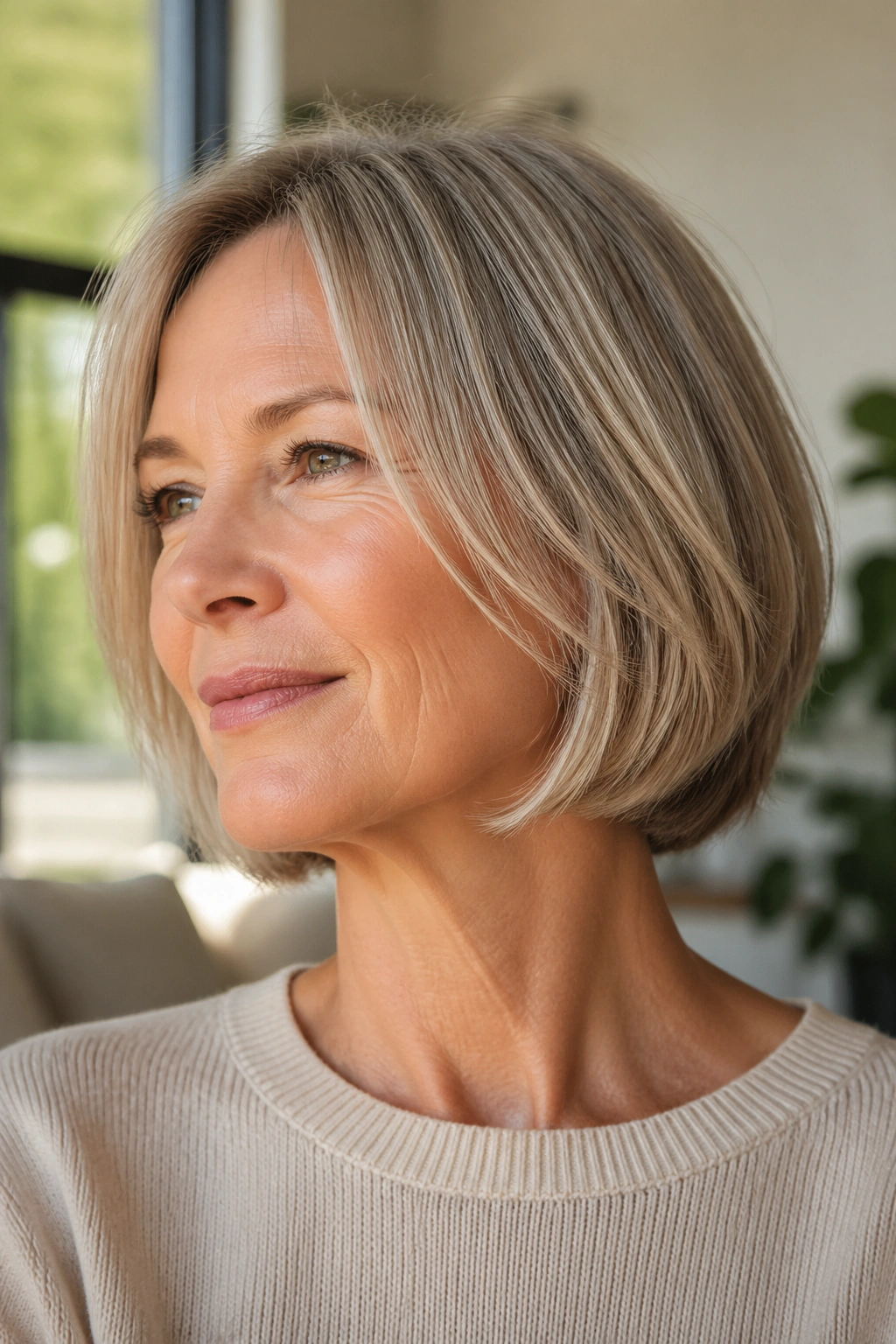
A tousled shoulder-length cut gives you movement without forcing you into daily heat styling. The layers are soft and broken up, so the hair doesn’t sit in one heavy block, but the ends still keep enough weight to look full.
I like this on women whose hair has a little bend but no patience for constant styling. A touch of mousse, a scrunch at the ends, and a quick air-dry can be enough. If you want more shape, twist a few random sections around your fingers while the hair is damp.
Small Styling Rule
Do not curl every piece the same way. That’s how shoulder-length hair starts looking puffy and overworked. A few bends here and there are better than uniform waves.
This is a relaxed cut, which is exactly why it works. It looks better when it isn’t trying too hard.
21. Angled Bob
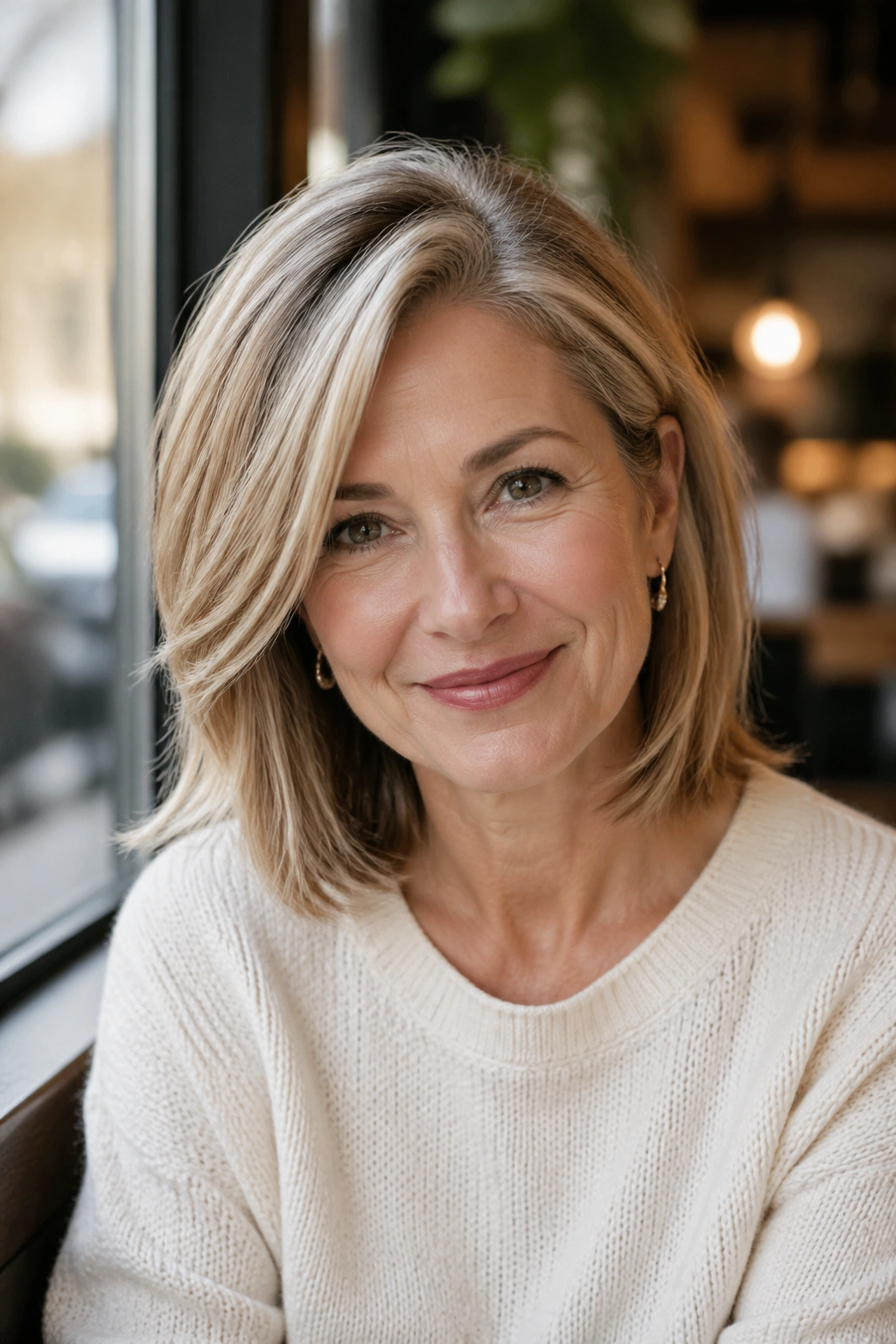
An angled bob is shorter in the back and slightly longer in the front, and that shape can be a nice fix for hair that feels thin at the ends. The forward length gives the eye something to follow, while the shorter back keeps the crown lifted.
Why It Flatters Thin Hair
- The front pieces frame the jaw and neck
- The back stays neat and full-looking
- The shape keeps the style from collapsing into one flat line
- It still looks good as it grows out
If your hair is straight, this cut is easy to manage with a quick blow-dry. If it’s wavy, the angle still holds, but you may want a little smoothing cream on the ends.
It’s a smart cut for anyone who wants structure without a hard edge. The line does the work.
22. Flat-Iron Bend Waves for Thin Hair Over 50
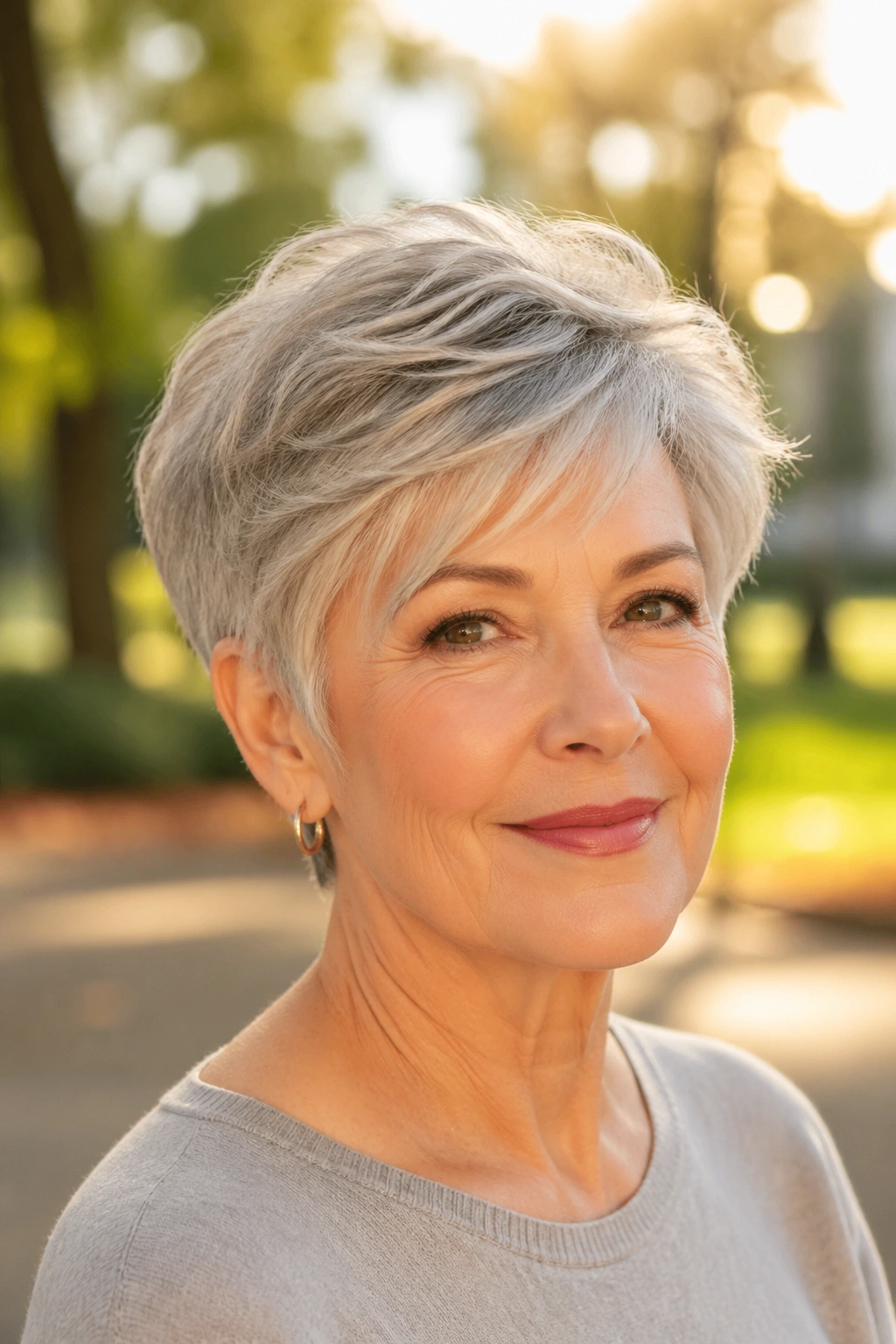
Flat-iron waves can be a lifesaver when your hair won’t keep a curl. The key is not to create tight spirals. You want soft bends — almost like an S-shape — that give the illusion of thickness without making the hair look curled to death.
Work in medium sections and change direction as you go. That uneven pattern helps the hair look fuller, because the light doesn’t hit every strand the same way. A heat protectant is non-negotiable here. Thin hair can burn faster than people expect.
Finish by shaking the roots with your fingers and leaving the ends loose. If the waves look too polished, brush them once and stop. One pass is plenty.
23. One-Side Pin-Back Style
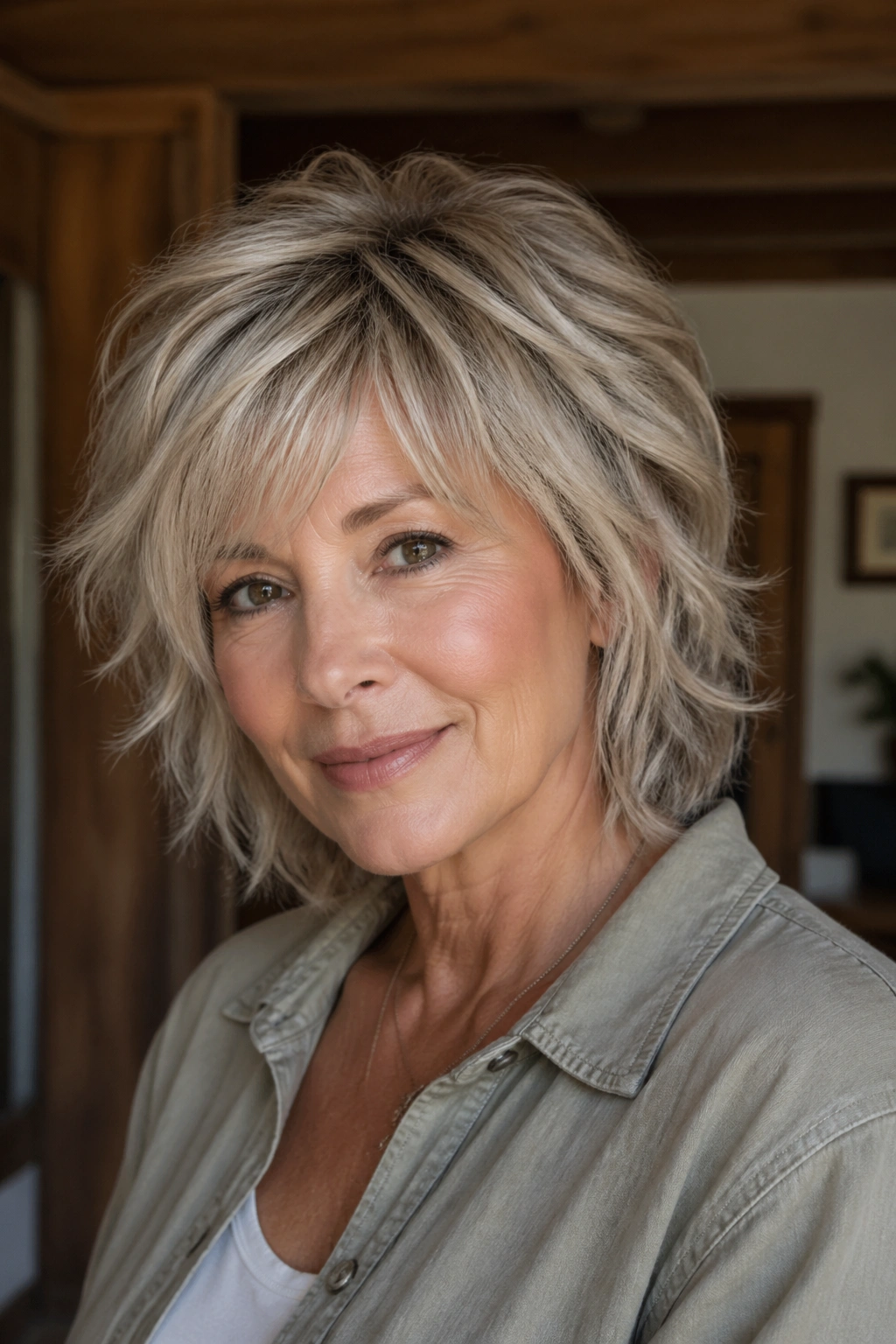
A one-side pin-back style is one of the easiest ways to make thin hair look intentional in under five minutes. Pulling one side away from the face opens up the features, while the pinned side adds a little asymmetry and lift.
It works with short, medium, or layered hair. That’s why I keep coming back to it. You don’t need a special cut — just enough length to tuck or clip the side back cleanly. A decorative pin can make it look finished, but two crossed bobby pins work too.
This is a good style when the hair is behaving badly on one side and you want to stop fighting it. Sometimes the smartest move is to pin it and move on.
24. Short Curly Crop
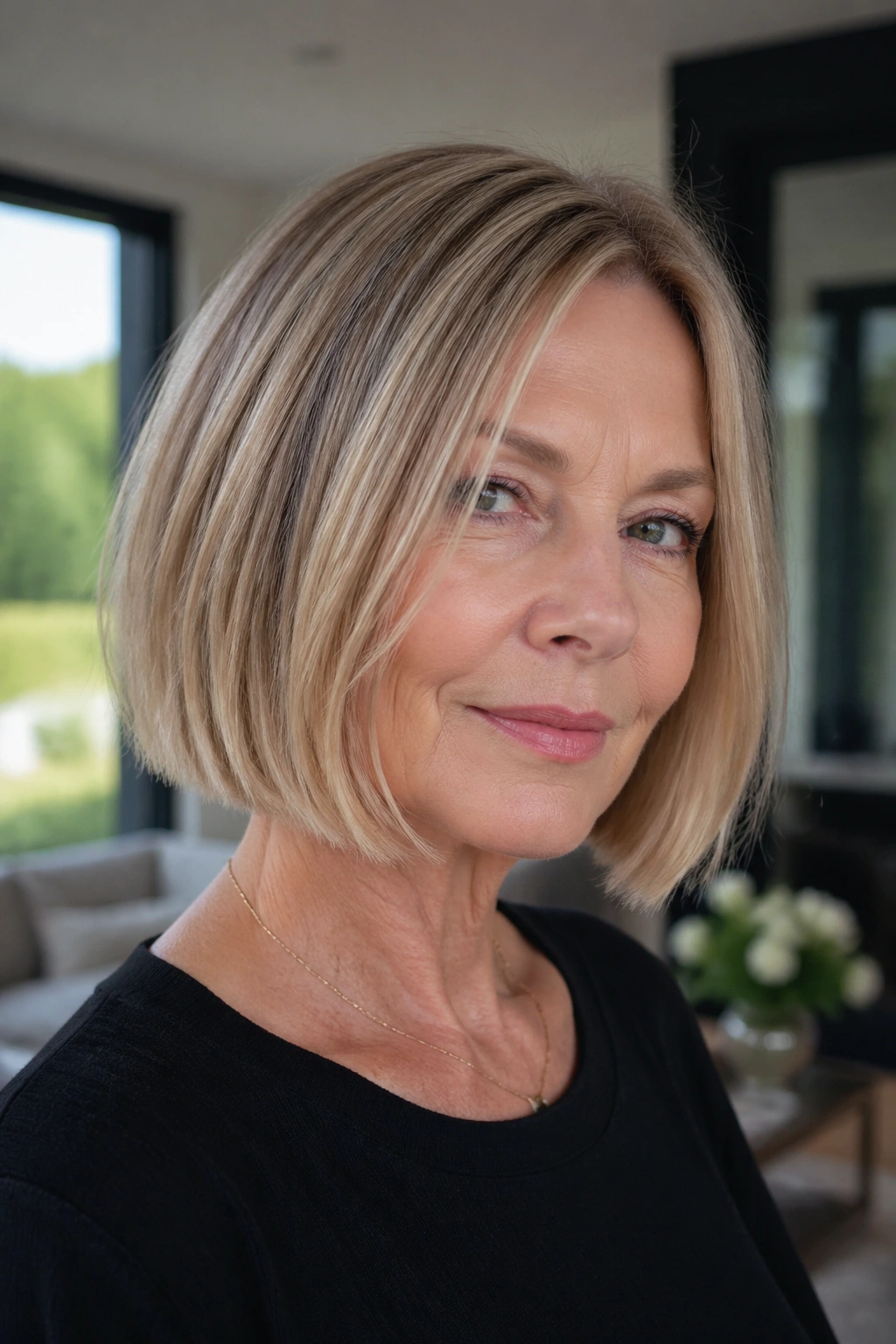
A short curly crop can look fantastic on thin hair if the curls are natural or softly permed. The shorter length keeps the curl pattern springy, and the crop shape prevents the bottom from dragging the whole head down.
The danger is overcutting. Thin curly hair needs shape, yes, but it still needs enough length for the curl to gather and bounce. If you cut it too short, the scalp can show through more than you want. A little length on top usually helps.
Styling It Right
Use a leave-in conditioner and a curl cream, then diffuse on low heat. Stop when the hair is about 80 percent dry and let the rest air-dry. If you touch it too much while it dries, the curl can frizz and separate in odd places.
This cut looks best when it’s allowed to be itself. That’s the whole point.
25. Sleek Ear-Tucked Bob
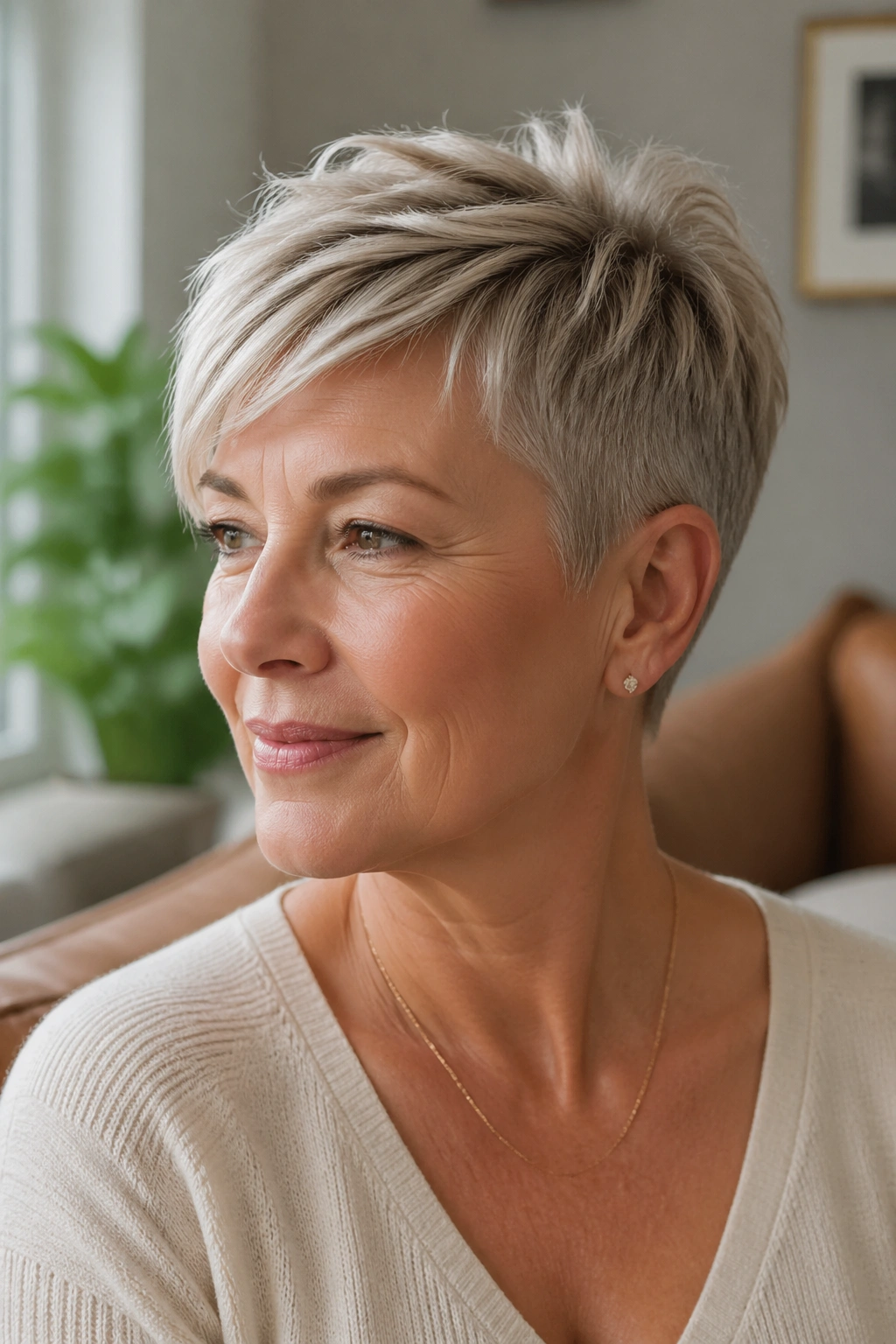
A sleek ear-tucked bob is simple, sharp, and easy to wear with glasses or earrings. The tuck behind one ear creates a neat line on one side and a little asymmetry on the other, which keeps thin hair from looking too symmetrical and flat.
The crown should still have a bit of lift, even if the rest is smooth. That’s the difference between polished and pasted down. A side part helps here, and so does a quick root lift with a round brush before you smooth the rest.
If your hair is fine, this is a strong everyday style because it doesn’t ask for much. Clean ends, a little movement at the top, and one tucked side. Enough.
Final Thoughts
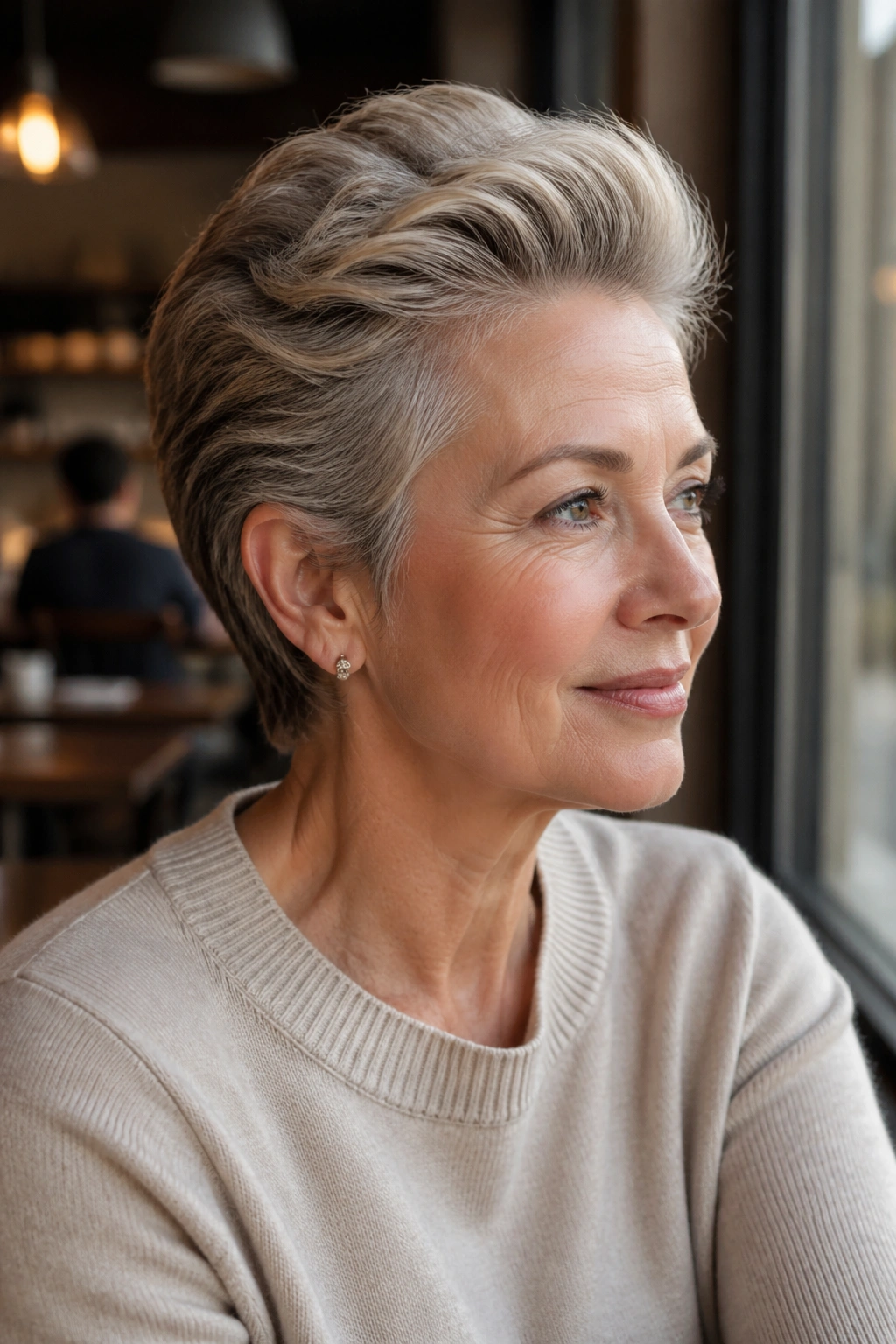
Thin hair after 50 usually looks best when the shape is doing the work, not the product. A good cut, a smart part, and a little lift at the crown will outdo a complicated routine almost every time.
I’d start with the style that matches your life, not your fantasy schedule. If you want fast mornings, lean short. If you want versatility, keep the length around the chin or collarbone and ask for soft structure instead of heavy layers.
Bring a photo of your hairline, crown, and side profile to the salon if you can. That tells the stylist far more than a glamour shot ever will.