



A good wash-and-wear haircut earns its keep the first time you skip a blow-dry and still like what you see in the mirror. That matters even more with wash and wear haircuts for women over 60, because hair often changes in texture, density, and direction long before anyone warns you about it.
Fine strands can lose lift faster. Gray hair can feel coarser or wirier. A crown swirl that once behaved may suddenly go rogue. The right cut works with all of that instead of fighting it.
I’ve always liked cuts that do most of the work themselves. A blunt line gives fullness. A soft taper keeps the neckline neat. A few strategic layers can make thin hair look like it has a bit more life without turning it into a feathered mess.
Shape matters more than length.
1. The Wash-and-Go Pixie With Tapered Sides
This is the cut I reach for when someone wants hair off the neck, wants lift at the crown, and refuses to spend 20 minutes wrestling with a round brush. A tapered pixie does the heavy lifting for you. It dries fast, it grows out neatly, and it usually looks better with a little finger-combing than with too much fuss.
Keep the top around 1½ to 2½ inches, with the sides and nape softly tapered rather than clipped too tight. That little bit of length on top gives you movement, while the shorter sides stop the shape from puffing out at the ears. If you wear glasses, this cut can be a dream because it keeps everything tidy around the temples.
What to ask for
- A soft taper at the sides and nape
- A top length that can be swept forward or to the side
- Light texture at the crown, not aggressive thinning
- A fringe that stops just above the brows or skims them
Use a pea-size dab of styling cream on damp hair, then lift the roots with your fingers. That’s usually enough. If your hair is very fine, skip heavy waxes; they tend to collapse the shape by lunchtime.
2. The Chin-Length Bob That Never Tries Too Hard
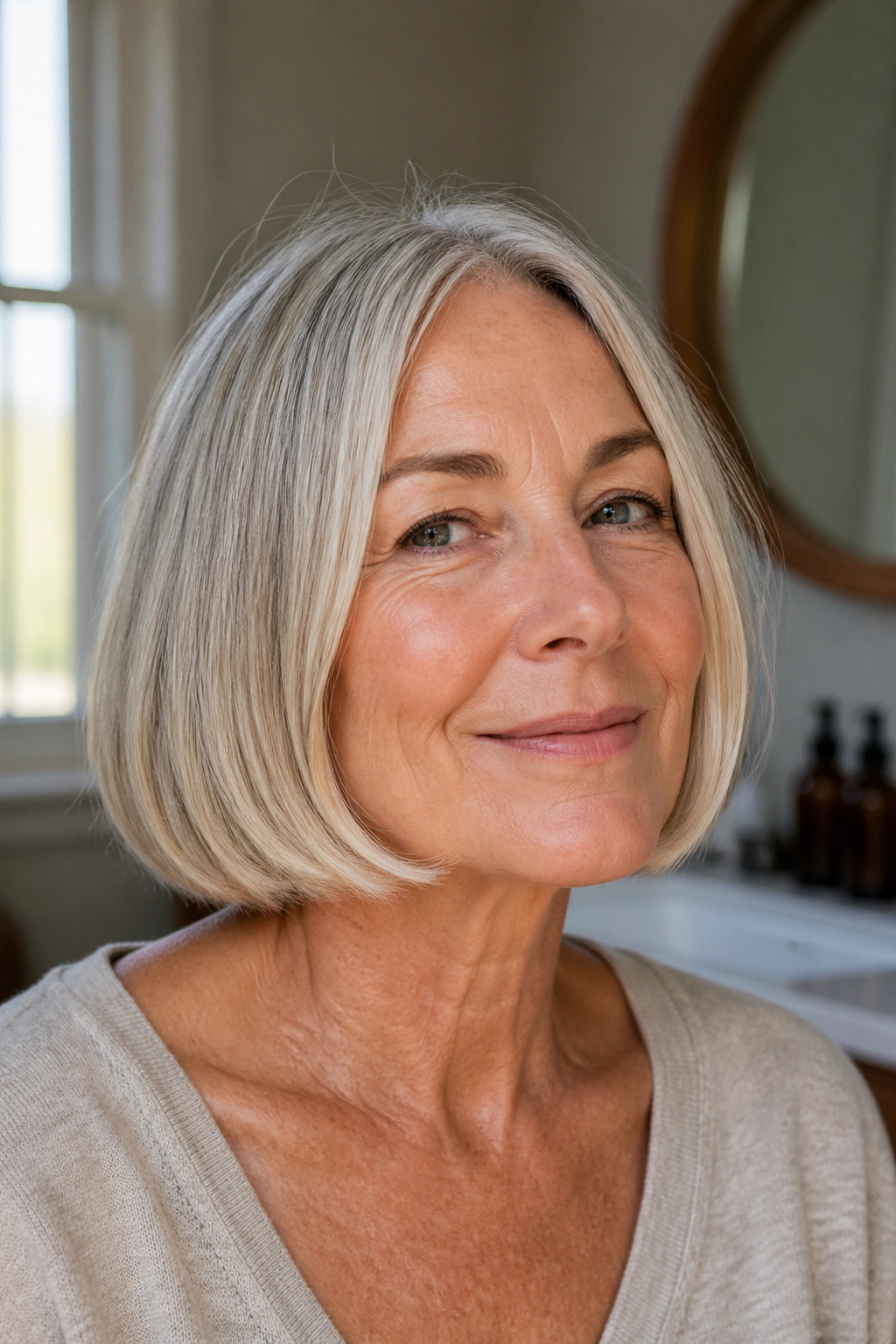
Why does the chin-length bob keep showing up in good haircut conversations? Because it’s steady. It frames the face without getting fussy. It also works with straight hair, soft waves, and even hair that flips a little at the ends, which is more forgiving than a super-precise cut.
The trick is to keep the line clean at the bottom. A bob that lands right at the jaw can make the face feel open and fresh, while a slight under-bevel helps the ends sit in instead of kicking out. I prefer a bob like this with minimal layers. Too much layering can make it lose the blunt edge that gives it shape.
If your hair is thick, ask for a touch of internal weight removal under the top layer rather than a lot of slicing at the ends. That keeps the outline neat. On the other hand, if your hair is fine, a blunt perimeter can make it look fuller right away. No gymnastics needed. Just a trim every six to eight weeks and a quick shake after washing.
3. The Layered Crop With Side-Swept Bangs
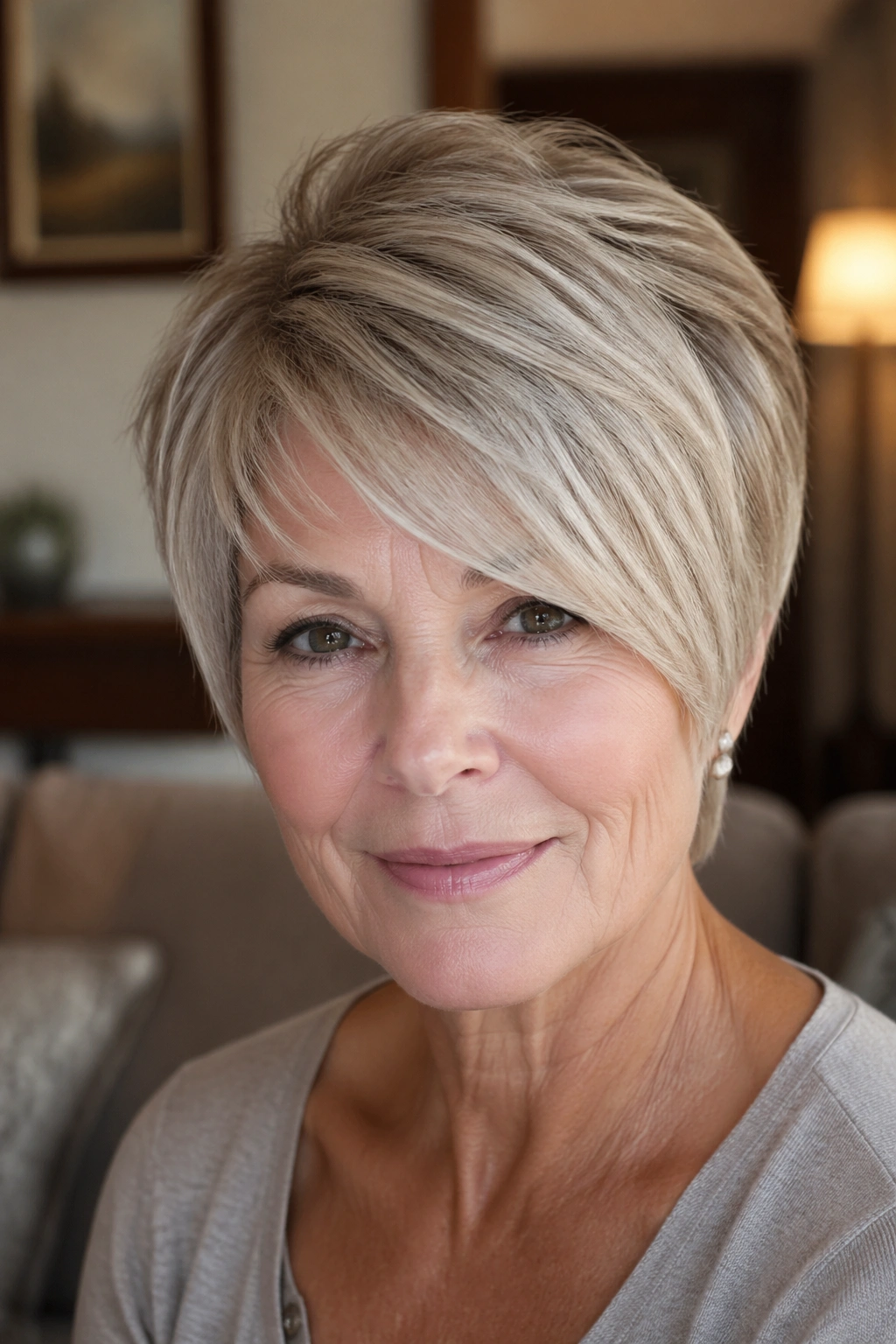
If your hair flops flat by noon, this is the cut that changes the mood without forcing you into a short-short style. Layers near the crown create lift where older hair often needs it most. The side-swept fringe softens the forehead and makes the whole cut feel a little more relaxed.
A good version of this cut keeps the longest pieces just touching the cheekbones or jaw, with short crown layers that don’t look choppy. Bangs should be long enough to brush sideways, not short enough to stand up on their own. That matters. Short fringe can get stubborn fast, especially if you have a cowlick near the hairline.
Quick notes
- Best on fine to medium hair
- Works well with glasses
- Easy to air-dry with a dab of mousse
- Needs a trim about every 5 to 7 weeks
If you want more height, blow-dry the roots for 30 seconds only, then stop. Seriously. The haircut should carry the rest.
4. The Feathered Shag That Moves on Its Own
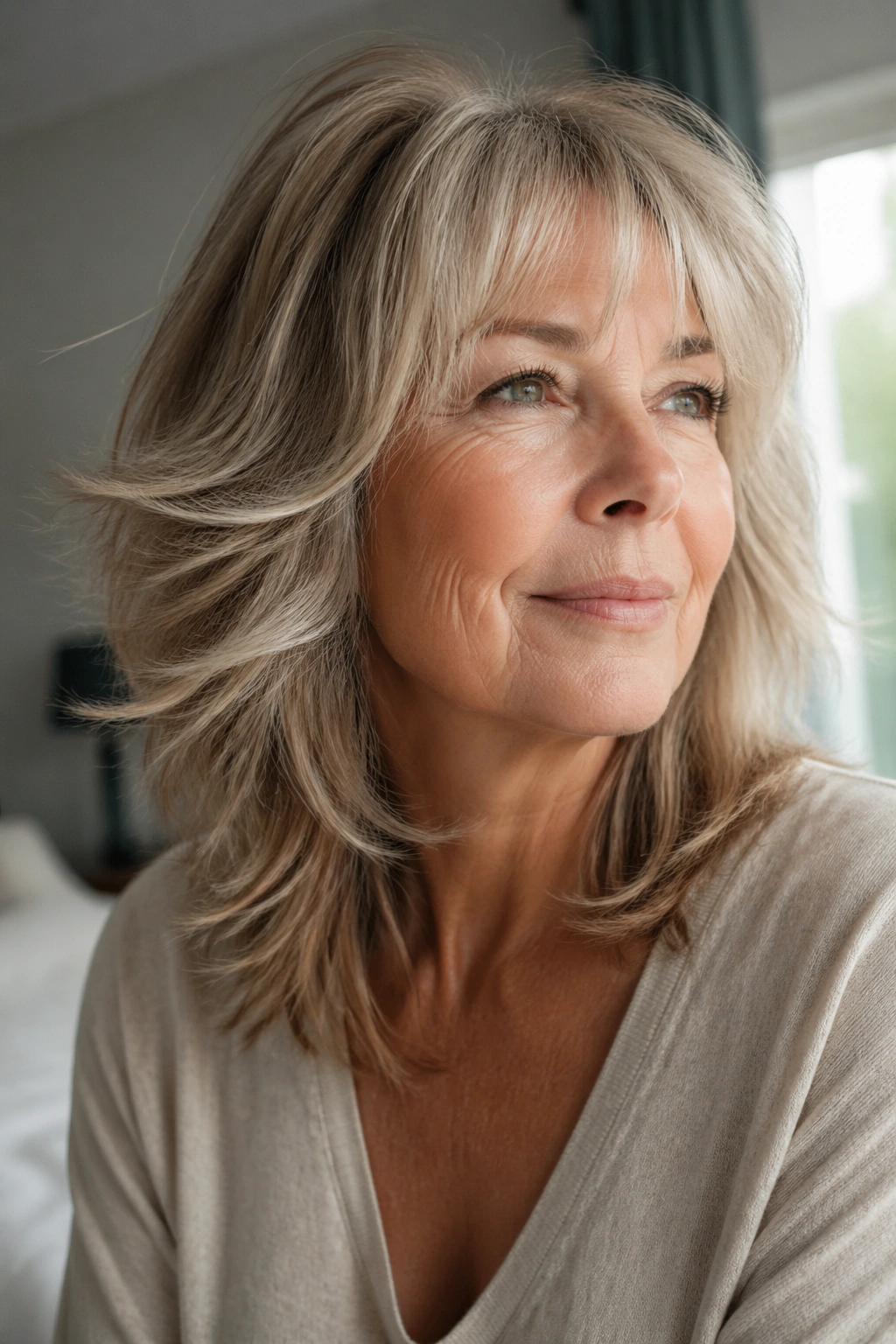
The feathered shag is forgiving in a way a precise bob is not. It likes a little chaos. That’s the point. The layers are softer, the edges are lighter, and the whole cut can look finished even when you’ve done almost nothing to it.
Ask for layers that start around the cheekbones and fall through the shoulders or just above them, depending on how much length you want to keep. The ends should be feathered, not chopped bluntly. I’m partial to this on wavy hair because the natural bend gives the layers somewhere to go. Straight hair can wear it too, but it usually needs a bit of root lift or a texturizing spray.
Why it works
Movement without bulk
The layers remove weight, so the hair doesn’t sit like a block.
Softness around the face
That matters if your features have sharpened a bit over time and you want a gentler frame.
Easy styling
Scrunch in a light mousse, twist a few damp sections, and let it dry.
One warning: if your ends are badly damaged, this cut will show it. Trim first, then texture.
5. The Bixie: Half Pixie, Half Bob, All Practical
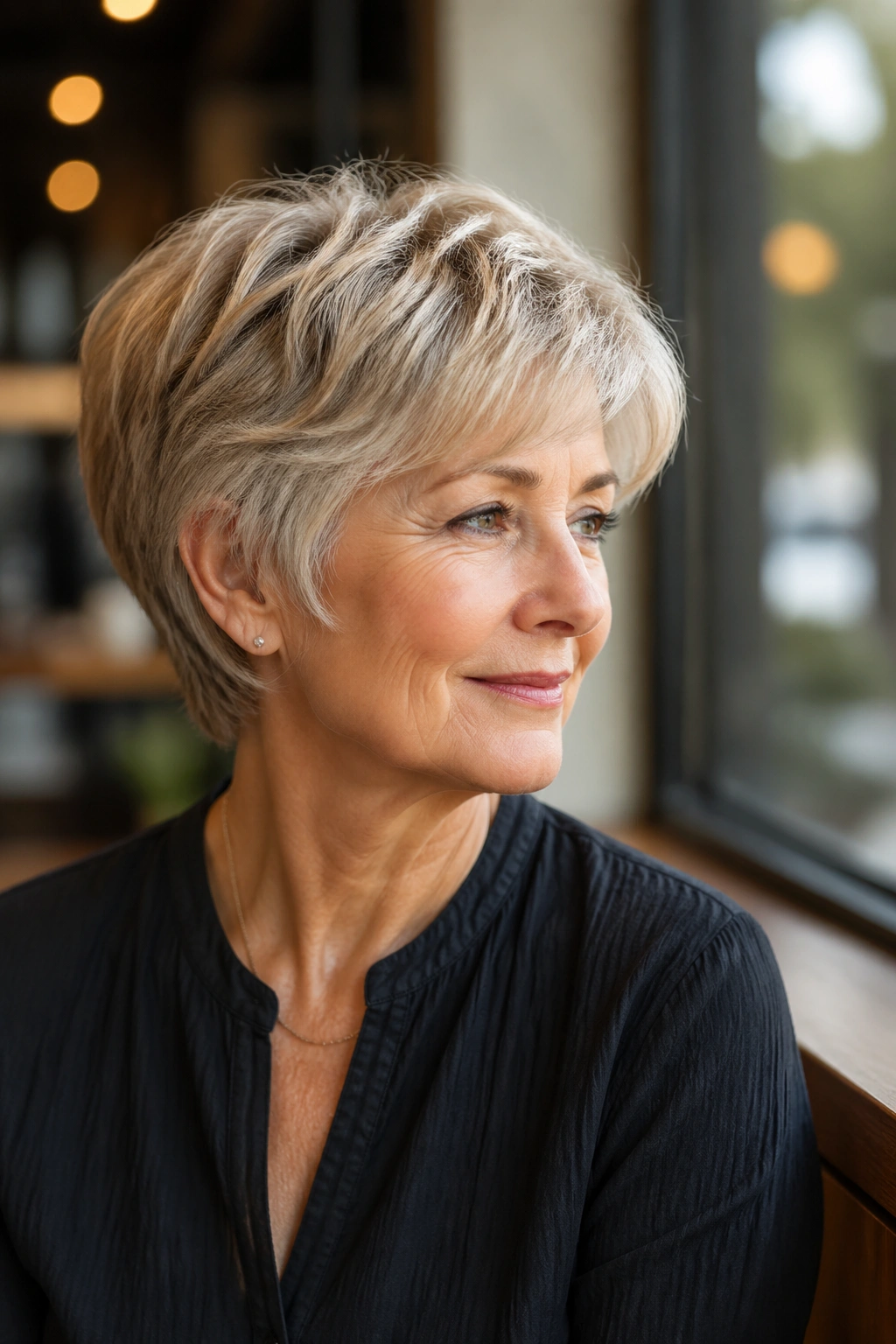
Unlike a classic pixie, the bixie leaves enough length to move. Unlike a bob, it doesn’t hang heavy around the jaw. That in-between shape is exactly why it works so well for low-maintenance hair. It gives you the neatness of short hair with a little more softness around the ears and cheekbones.
The top usually stays longer, sometimes 3 to 4 inches, while the back sits closer to the head. You can push it forward, sweep it sideways, or let it air-dry into a slightly piecey shape. If your hair is fine, this cut can make it look fuller without a lot of teasing. If your hair is dense, the length on top keeps it from going helmet-like.
I like it for women who want something modern without spending a lot of time styling. It has enough attitude to feel fresh, but not so much structure that it falls apart the second humidity shows up. A little cream, a little finger shaping, and you’re done.
6. The Rounded Bob With Soft Ends

A rounded bob has a neat, tucked-in feel when the ends curve slightly under the jaw. The cut itself does the shaping, so you are not standing over the sink trying to force your hair into obedience. That alone makes it a strong wash-and-wear choice.
Ask for a length that kisses the jawline or sits just below it, with soft ends rather than razor-sharp corners. The roundness should come from the cut and the natural fall of the hair, not from over-styling. If the hair is dense, a little internal layering can keep the shape from ballooning at the sides. If it’s fine, a blunt outline at the bottom helps it hold weight.
This is one of those cuts that looks neat after air-drying, especially if you tuck one side behind the ear. It also plays nicely with silver hair, which can look glossy in a smooth, rounded shape. A flat brush is optional, not required. That’s the beauty of it.
7. The Shoulder-Length Lob With Invisible Layers
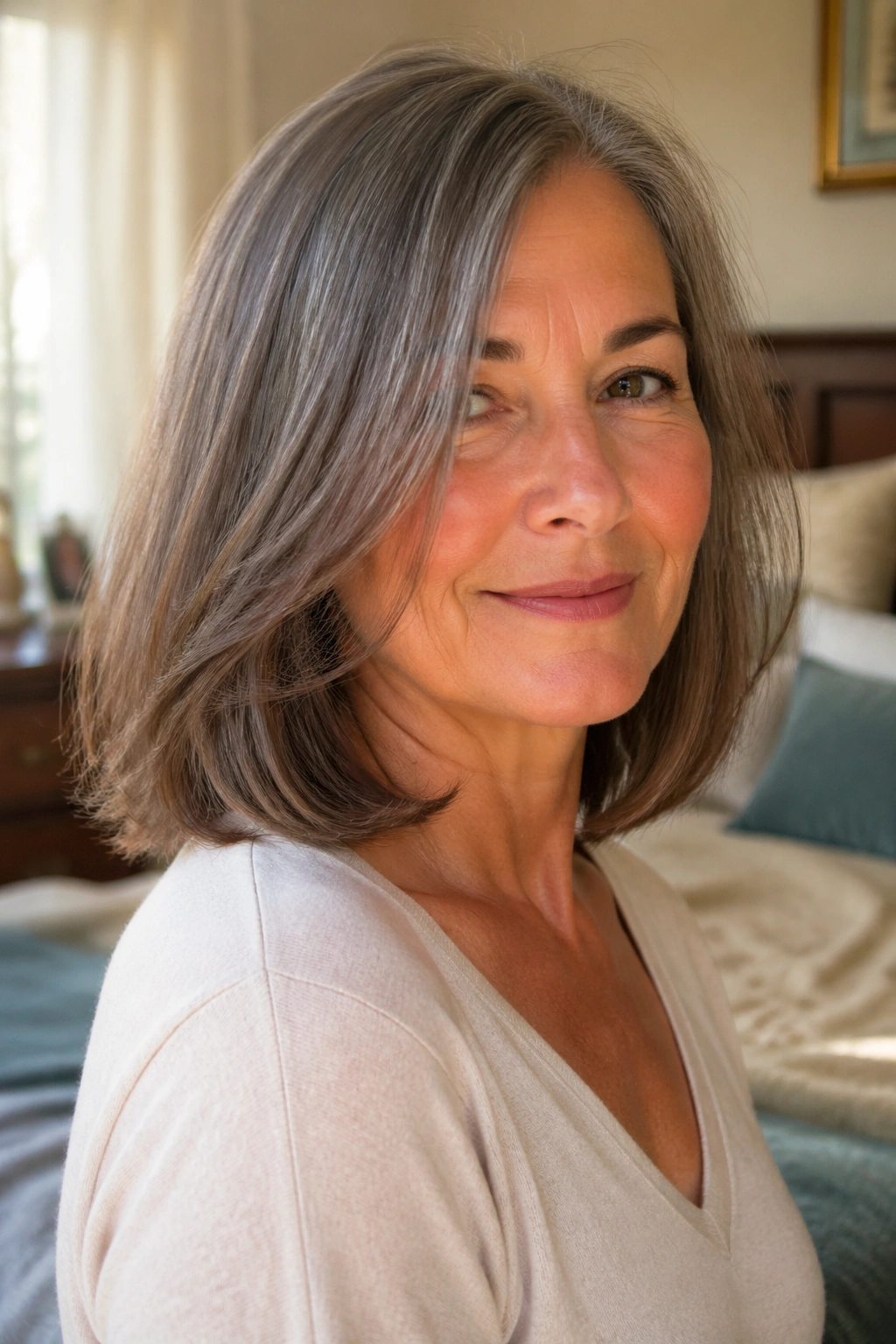
Can a longer cut still count as wash-and-wear? Absolutely, if the shape is smart. A lob that lands at the collarbone gives you movement without the daily drama of long hair. Invisible layers keep the surface smooth while quietly removing weight underneath.
The best version isn’t chopped into obvious steps. You want long, internal layers that show up when the hair moves, not when you’re standing still. That keeps the silhouette clean. It also means the hair can air-dry with a bend instead of collapsing into one flat sheet.
Why invisible layers matter
They let the hair swing without looking thin at the ends. That’s useful if your hair has started to lose density and you still want some length around the face. They also help thick hair sit closer to the head instead of sticking out at the sides.
How to wear it
- Tuck both sides behind the ears for a neat look
- Part it off-center if the crown is flat
- Let the ends dry naturally for a softer finish
- Add a tiny bit of leave-in cream on the mid-lengths only
If you like tying your hair back sometimes, this is a forgiving length. That matters.
8. The Curly Crop That Leaves Room for Spring
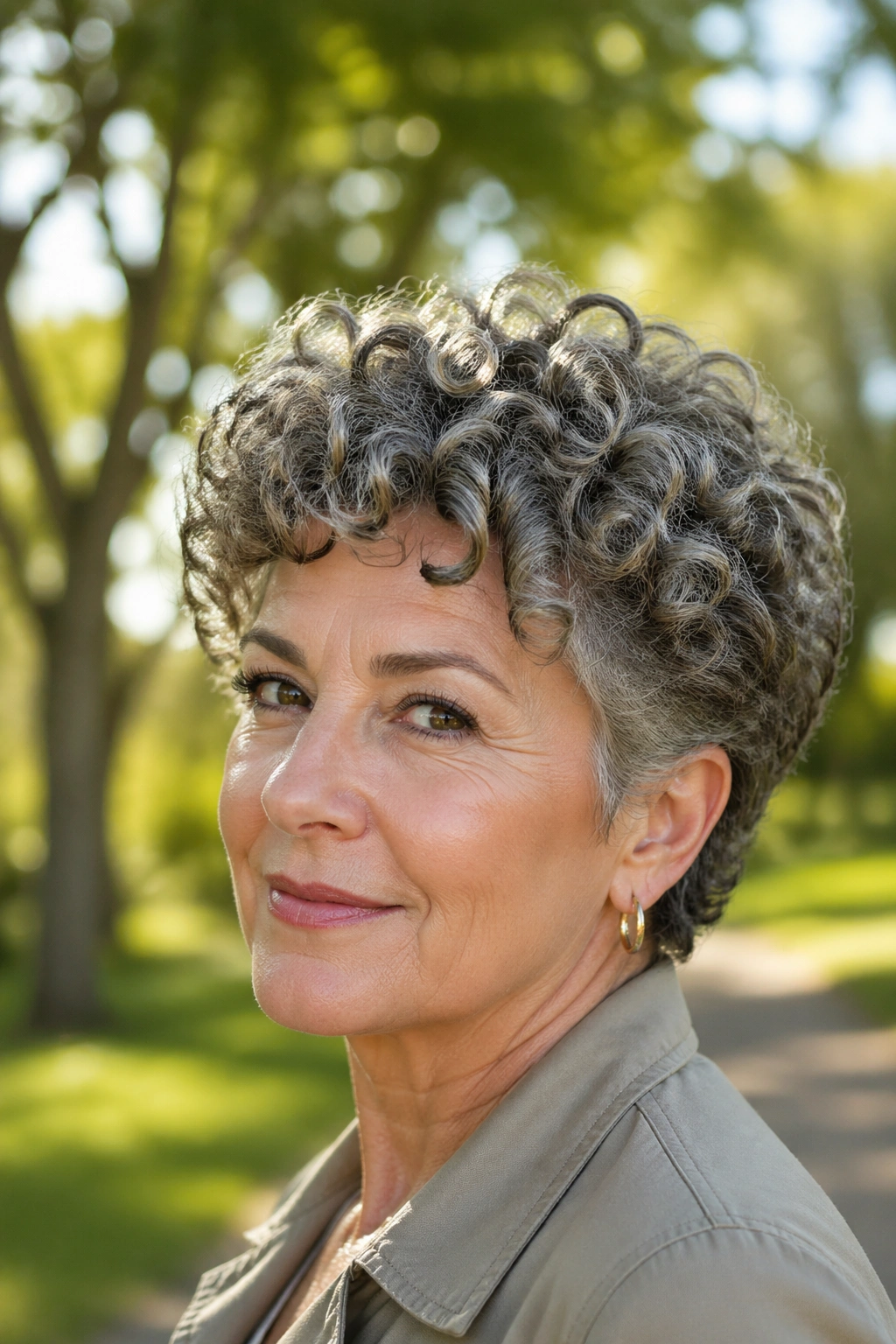
Curly hair does not need to be tamed; it needs a perimeter. A short curly crop works because it gives the curl a shape instead of fighting the curl pattern. The length stays short enough to dry quickly, but long enough on top to let the curls form proper loops instead of little fuzzy bends.
Keep the sides and back tapered gently, with more length on top and around the front. That keeps the shape balanced and stops the style from turning into a triangle. A good stylist will cut curly hair in a way that respects shrinkage. That part matters more than people think. A curl that looks chin-length when wet may end up several inches shorter once dry.
Air-dry it with leave-in conditioner and a curl cream, then leave it alone. Touching curls while they set is how you get frizz. Hands off for the first 20 minutes. After that, a little fluff at the roots is fine.
9. The Tapered Natural Curl Cut for Coils and Kinks
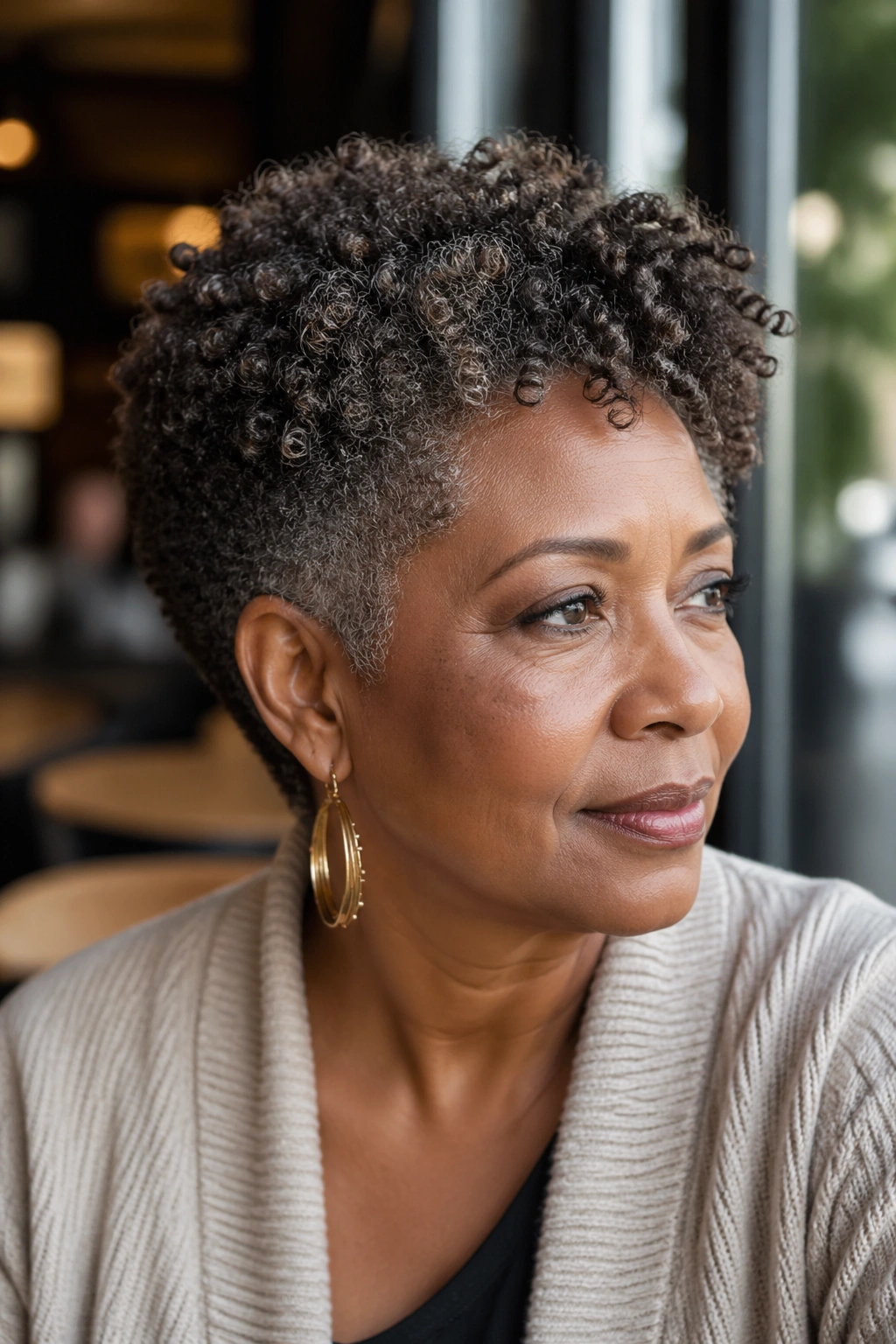
A lot of women with coils are told to keep length because it is “versatile.” Sometimes that just means heavy. A tapered natural curl cut lifts the hair where it needs lift and removes weight where it drags. The result feels lighter on the head and easier to live with.
The back and sides are usually kept closer to the scalp, while the crown and top remain fuller. That shape gives the cut a clean outline even when the curls shrink up after washing. You can wear it rounder or a little taller, depending on how much softness you want around the face. I prefer this when the neckline is taper-sharp and the top has room to breathe.
Ask for a shape that follows the natural curl pattern instead of fighting it flat. A good cut like this can make earrings pop and keep the whole look polished without pinning a single thing. That’s a nice trade.
10. The French Bob With a Light Fringe
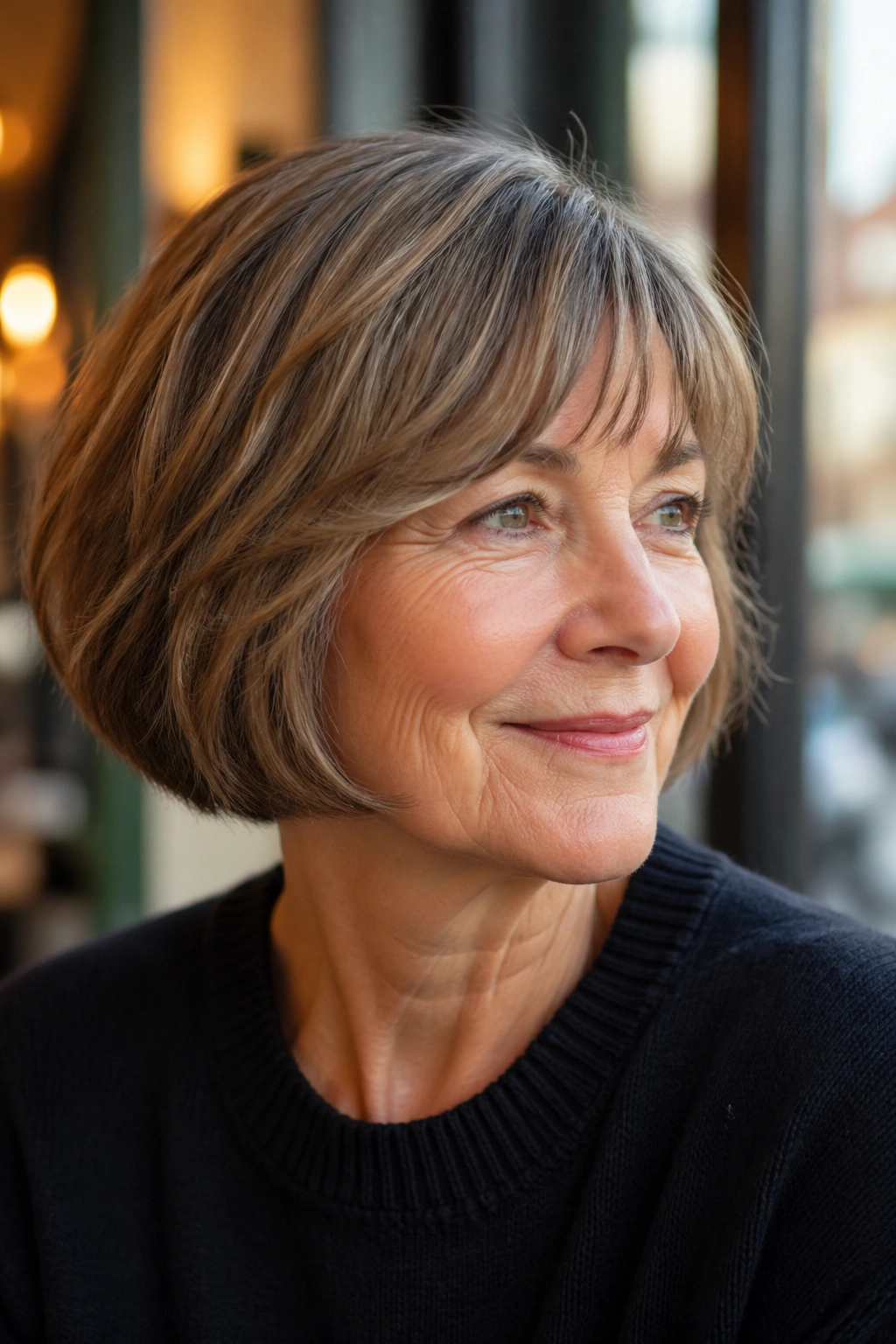
A French bob sits around the jawline and usually has a little bend, a little air, and a little attitude. It’s short enough to feel neat, but not so strict that it turns stiff. The light fringe makes the face feel softer and keeps the cut from looking boxy.
This one works especially well if your hair has a natural wave or a slight curve at the ends. It also suits women who like a compact shape that shows off the neck. Keep the fringe wispy and brow-grazing rather than thick and heavy. Thick bangs can fight the face more than they flatter it.
I like this cut with a side part or a soft off-center part. It keeps the top from looking too symmetrical, which can make the whole style feel more relaxed. If you have fine hair, ask for a blunt edge with a whisper of texture through the ends. If you have dense hair, the stylist should remove bulk inside the shape, not from the perimeter.
11. The Wedge Cut That Lifts in Back
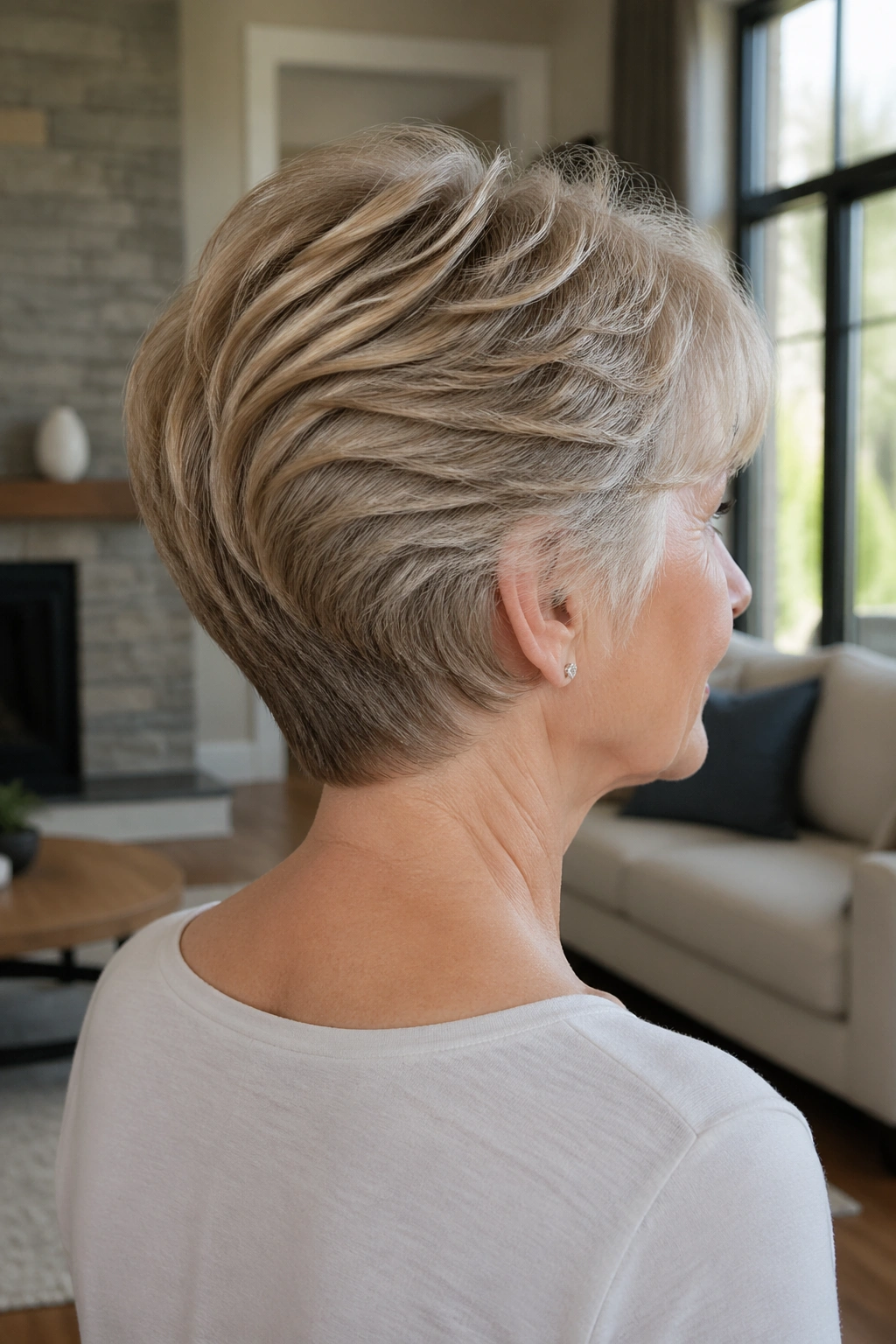
The wedge cut is what happens when a bob stops playing nice and starts lifting at the back. That stacked shape creates volume at the crown without relying on teasing or heavy product. It’s a strong choice for hair that falls flat in the back of the head.
The back is cut shorter and layered upward, while the front stays longer and softer. That angle gives the style its shape. A good wedge should not look harsh. It should feel clean, with enough softness around the ears and jaw to keep the profile from going sharp. When it’s done well, it almost styles itself after washing.
Who it suits
- Fine hair that needs structure
- Straight or slightly wavy hair
- Women who like a neat neckline
- Anyone tired of limp roots
What to avoid
- Over-thinning the ends
- Too much height if you dislike crown volume
- A blunt fringe that makes the cut feel severe
This cut needs regular trims. Not because it’s high-maintenance, but because the shape loses its clean line when it grows out too far.
12. The Midlength Cut With Long, Soft Layers

What if you want movement but refuse to go short? Then keep the length around the shoulders and use long layers to stop the hair from hanging heavy. A midlength cut with soft layers can air-dry into shape with almost no help.
The best version starts the layers below the chin if the hair is fine, or around the cheekbones if the hair is thick and straight. That gives the shape breathing room without making the ends look see-through. If you wear your hair loose most days, the layers should frame the face gently and keep the outline from turning one-note.
This cut also works if you like to tuck pieces behind the ears or clip the front back. It’s easy to live with, which matters more than people admit. Some haircuts look pretty in photos and fight you in real life. This one usually doesn’t.
A light cream, a wide-tooth comb, and a bit of scrunching can be enough. Less product is usually better here.
13. The Cropped Afro With a Soft Shape
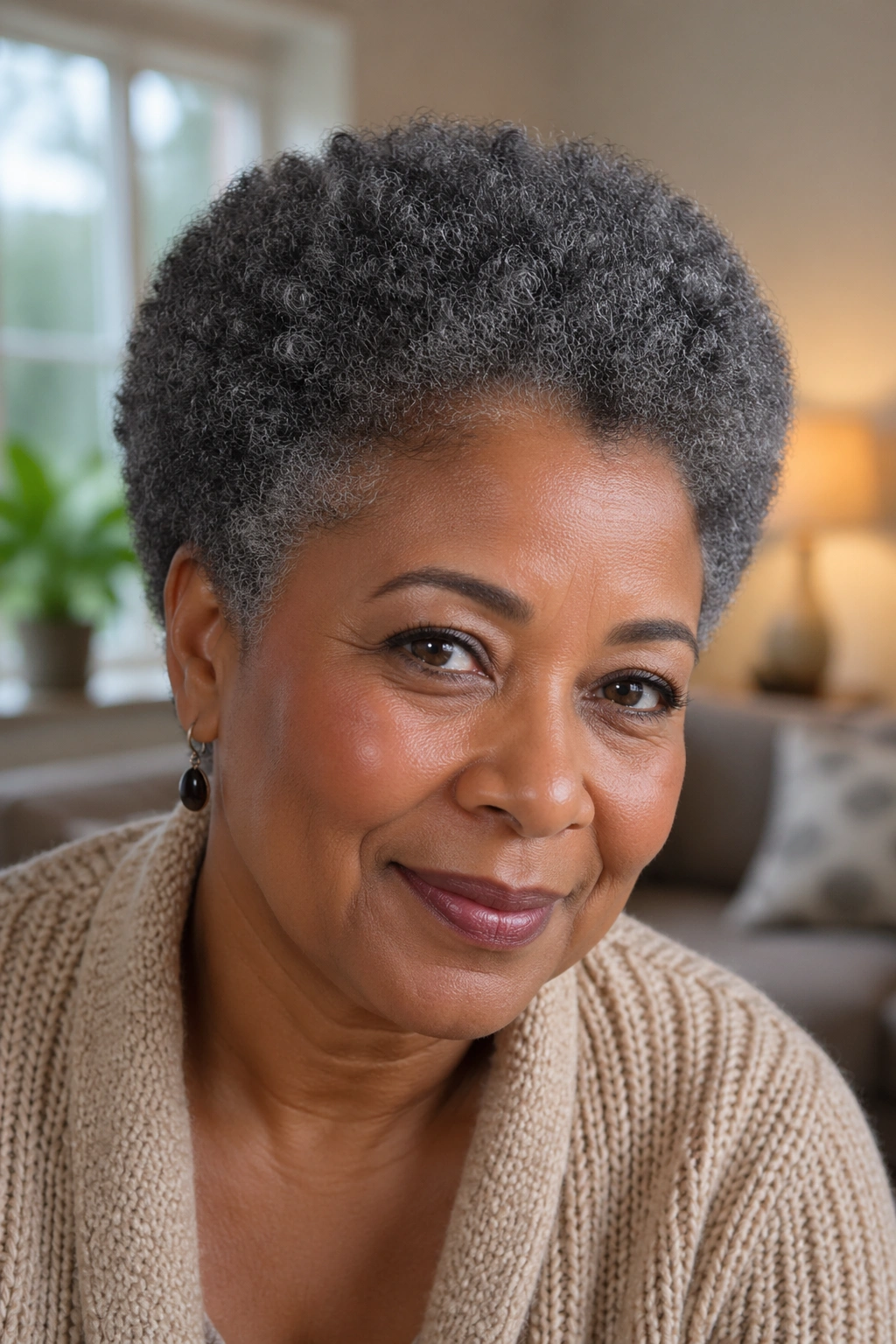
Short natural hair can look elegant without becoming stiff. A cropped afro with a soft shape lets the texture stay the star while the outline stays clean. That balance matters, especially if you want a cut that air-dries well and doesn’t ask for a lot of daily upkeep.
The crown should have enough length to show off the curl or coil pattern, while the sides stay softly tapered. The outline can be round, slightly oval, or a little more compact, depending on how much width you like at the temples. A good crop like this does not need to be flattened into place. It just needs moisture and a bit of shape.
- Ask for a taper at the nape
- Keep the top slightly longer than the sides
- Use leave-in conditioner after washing
- Finish with a light cream or butter, not heavy grease
The shape should follow your head, not sit on top of it. That is the whole trick.
14. The Ear-Length Crop That Feels Clean and Light
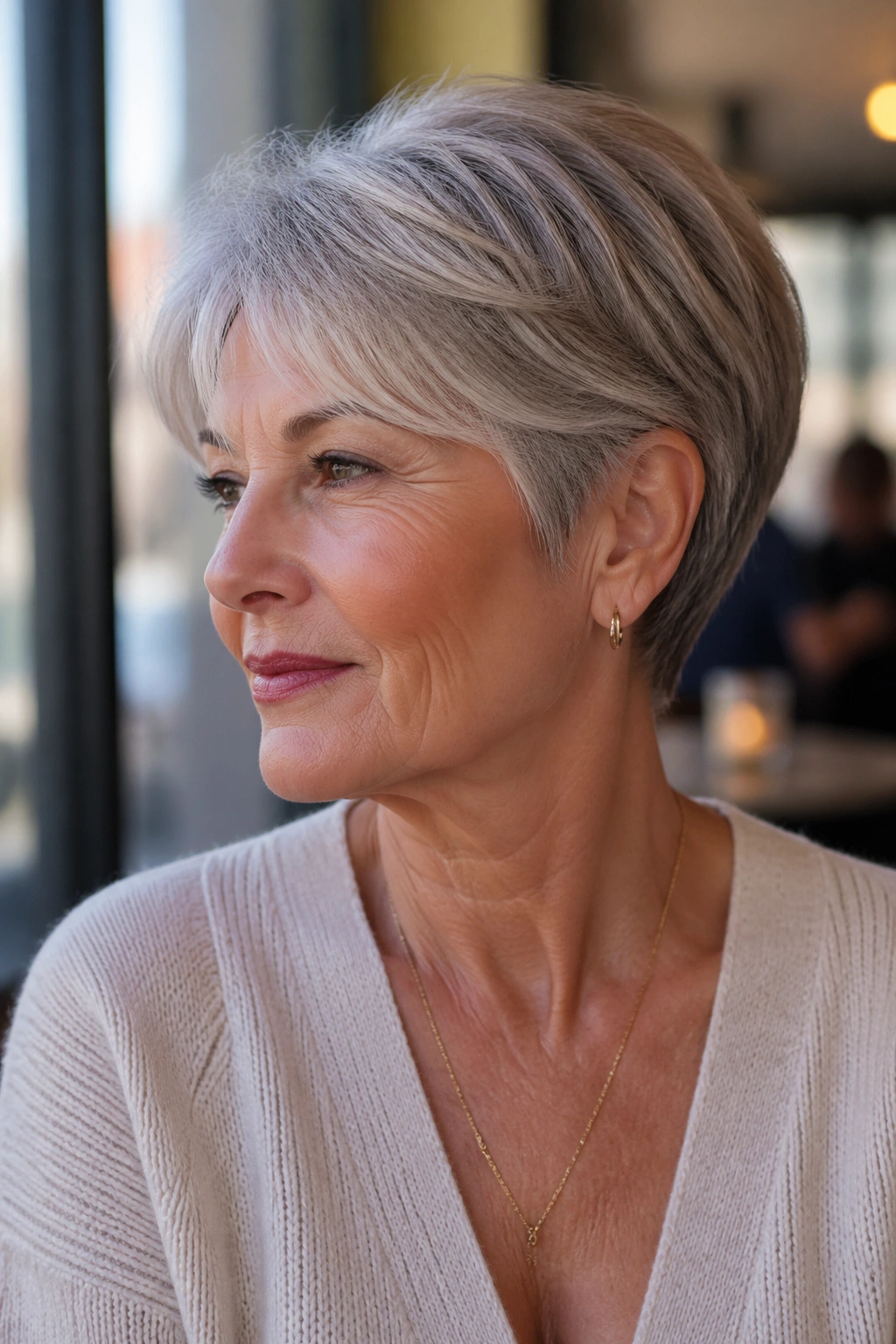
A very short crop can be calmer than a longer one. Ear-length hair gets out of the way, shows off the neck, and dries in a flash. If you like a tidy silhouette and hate hair brushing your cheeks, this is a smart cut.
The best version keeps a little softness around the top and temples so the cut doesn’t look clipped flat. I like a side part here because it keeps the shape from feeling too severe. If your hair is straight or silver and naturally smooth, this style can look crisp with almost no effort. If your hair is wavy, it may need a dab of cream to keep the ends from flipping away.
This is also a strong choice for women who wear bold earrings or statement glasses. There’s space for both. A short crop can do that — it clears the stage. That’s the fun of it.
15. The Shaggy Lob With Curtain Bangs
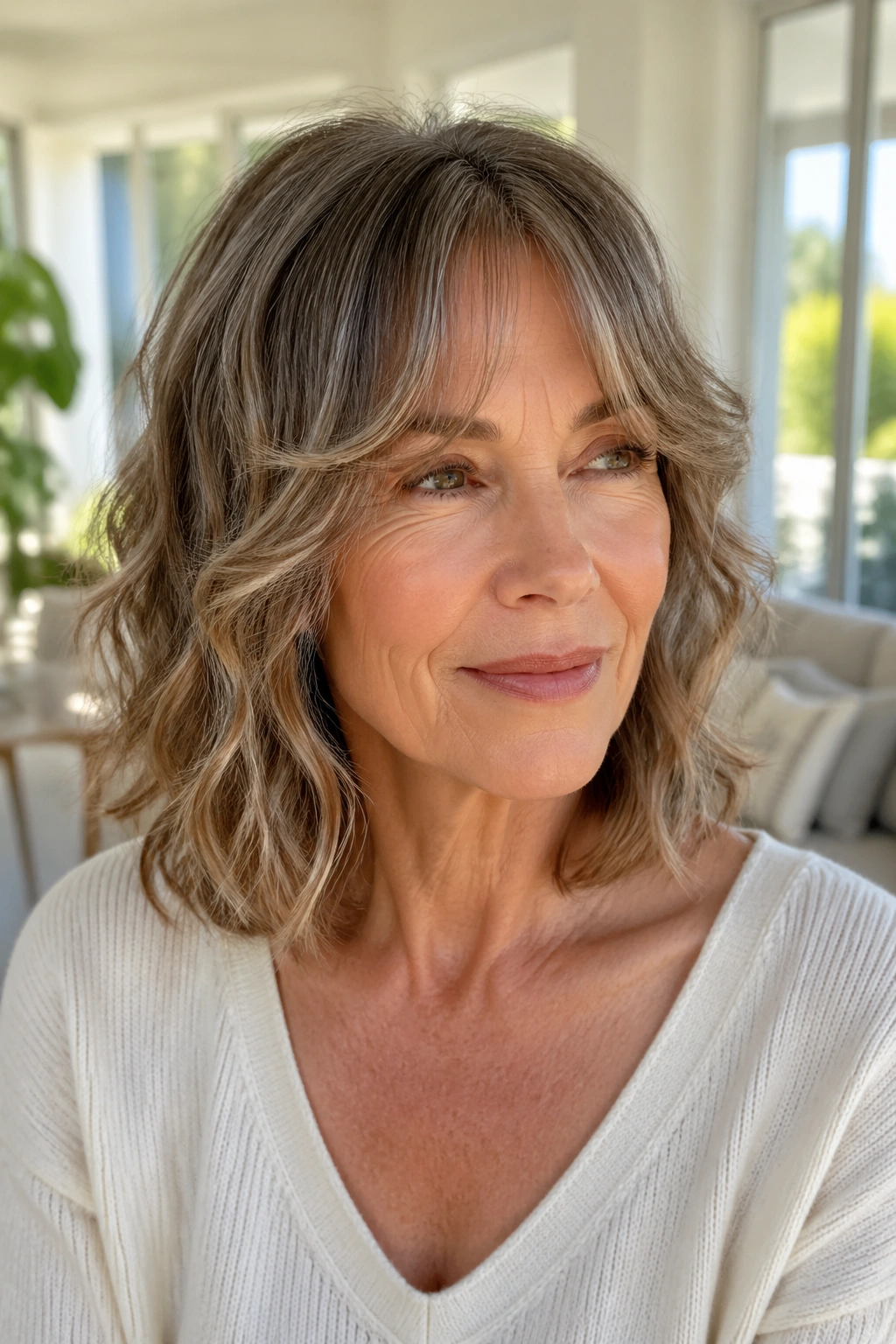
Picture a collarbone cut that air-dries into a bend instead of a puffball. That’s the appeal here. Curtain bangs soften the front, and the shaggy lob keeps the rest of the hair loose and easy.
The bangs should start at the cheekbones and open away from the face, not fall like a solid curtain. The rest of the cut needs enough layering to encourage movement, but not so much that it frays at the ends. This is a favorite for wavy hair because the shape can look intentional even when the finish is a little undone.
What to ask for
Face-framing pieces
Ask for the shortest front pieces to hit around the cheekbone, then blend them down.
Collarbone length
That length gives you ponytail options and enough swing to feel light.
Soft internal layers
They keep the shape from looking bulky when it dries naturally.
If you wear glasses, this cut can be especially flattering because the curtain fringe sits around the frames instead of fighting them. It’s one of the easier “grown-up” styles to live with.
16. The Short Stacked Bob
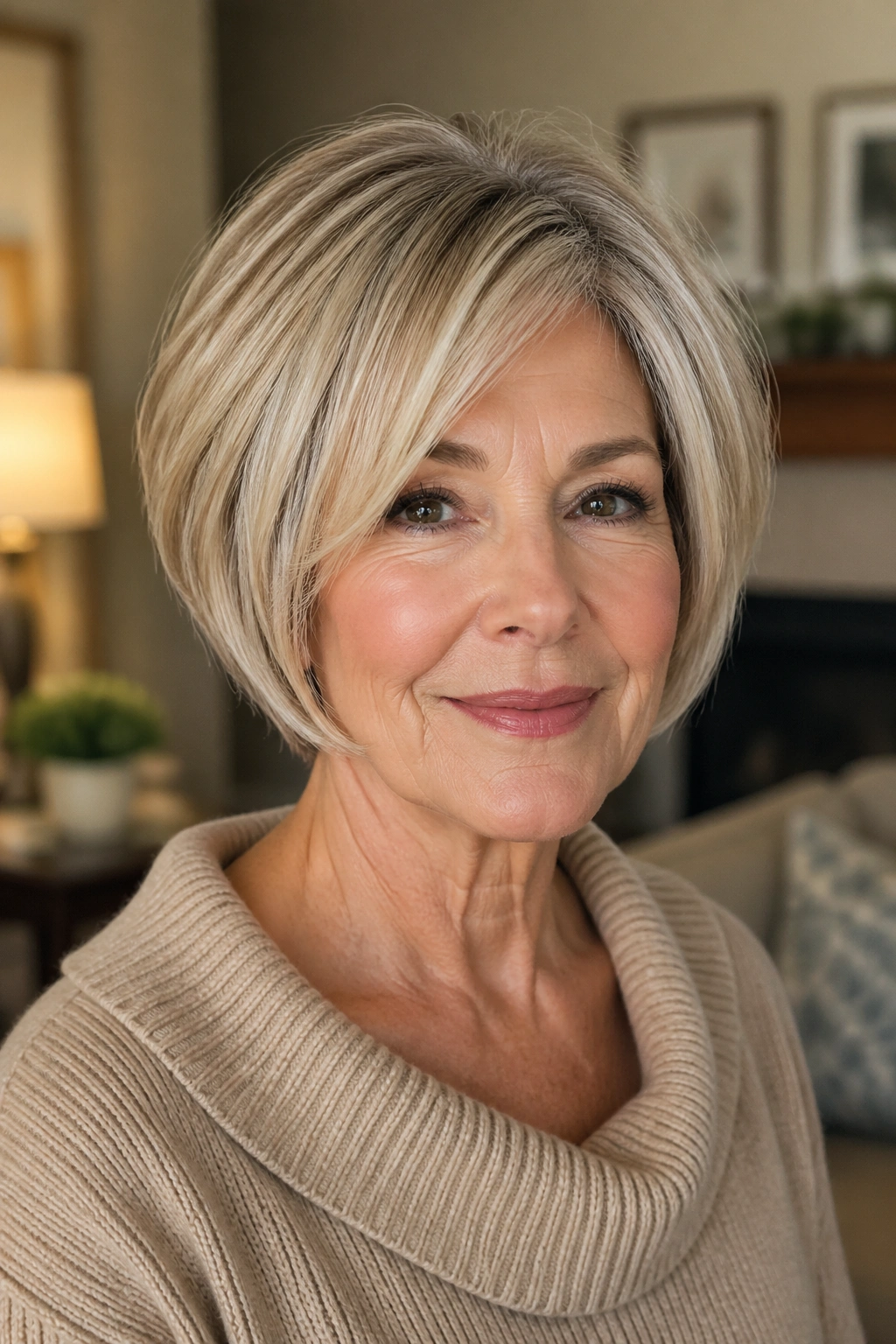
A stacked bob is one of the fastest ways to fake fullness without teasing. The back is cut shorter and stacked upward, which gives the crown lift and keeps the nape neat. Fine hair often wakes up in this cut.
The shape matters more than the styling. If the graduation in the back is too steep, it can look dated. If it’s too soft, you lose the lift. The sweet spot is a gentle rise from the nape into the crown, with enough length in front to keep the face framed. It’s a precise cut, but not a fussy one when it’s done well.
This style does best with regular trims, because the stacked shape loses its punch as it grows out. I’d call that a fair trade. You get structure on the days you need it, and the styling is usually as simple as a quick finger dry or a round brush at the roots for 2 minutes, not 20.
17. The Salt-and-Pepper Pixie Bob
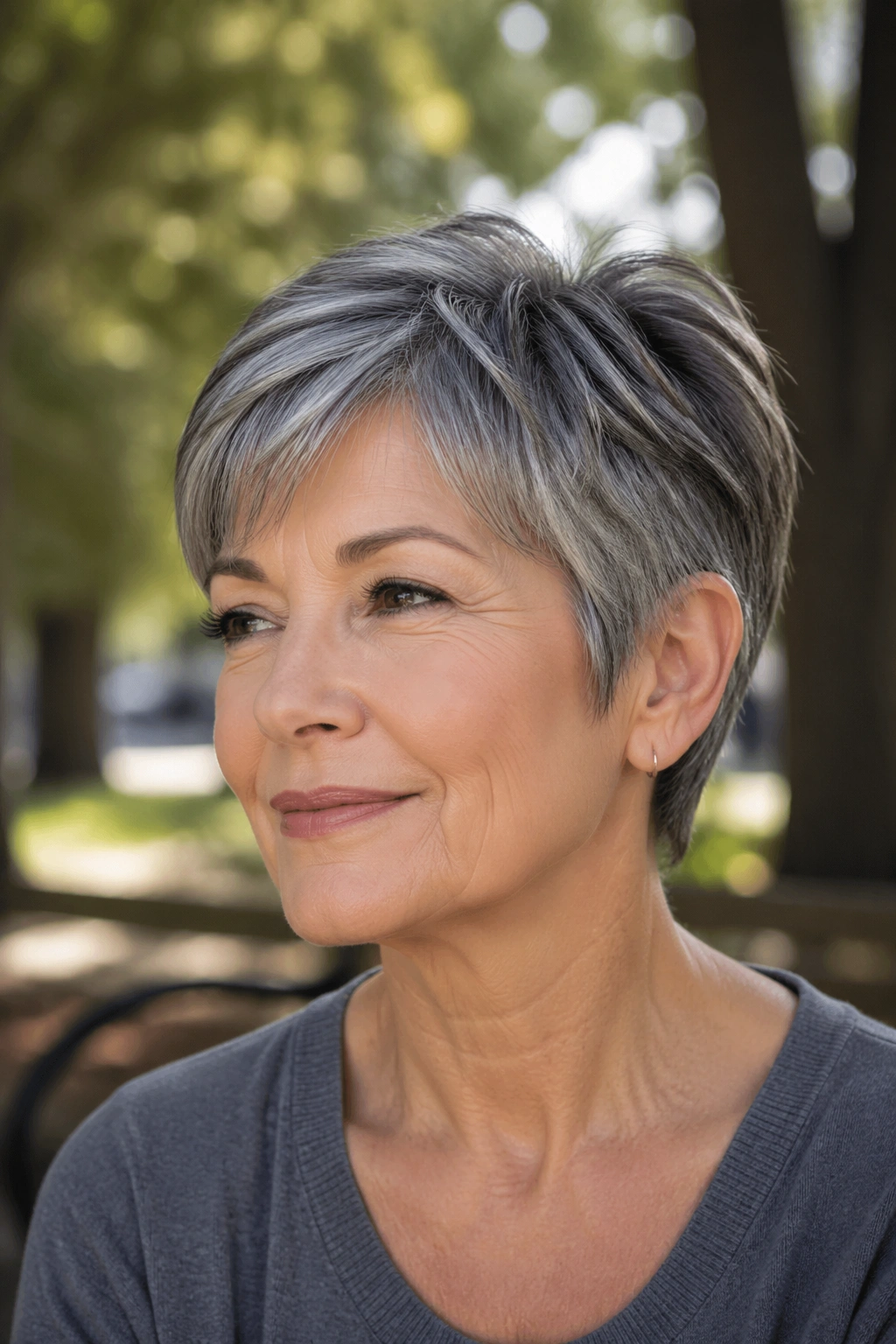
Mixed gray and dark tones look especially good on a cut with a bit of shape and texture. A pixie bob gives those colors room to show without making the hair feel bulky. It sits between a pixie and a bob, which means you still get some movement around the face and enough length to soften the jaw.
This cut is useful if you want the ease of short hair but aren’t ready for a very cropped style. The front can stay long enough to tuck behind the ears, while the back stays cleaner and shorter. That blend keeps the silhouette light. It also helps salt-and-pepper hair look dimensional, because the varying tones catch the eye as the hair moves.
I like this one with a side part and a little root lift at the crown. It avoids the flat, too-neat look that can make short hair feel severe. A little texture paste on the ends is usually enough. Not more.
18. The Razor-Textured Crop
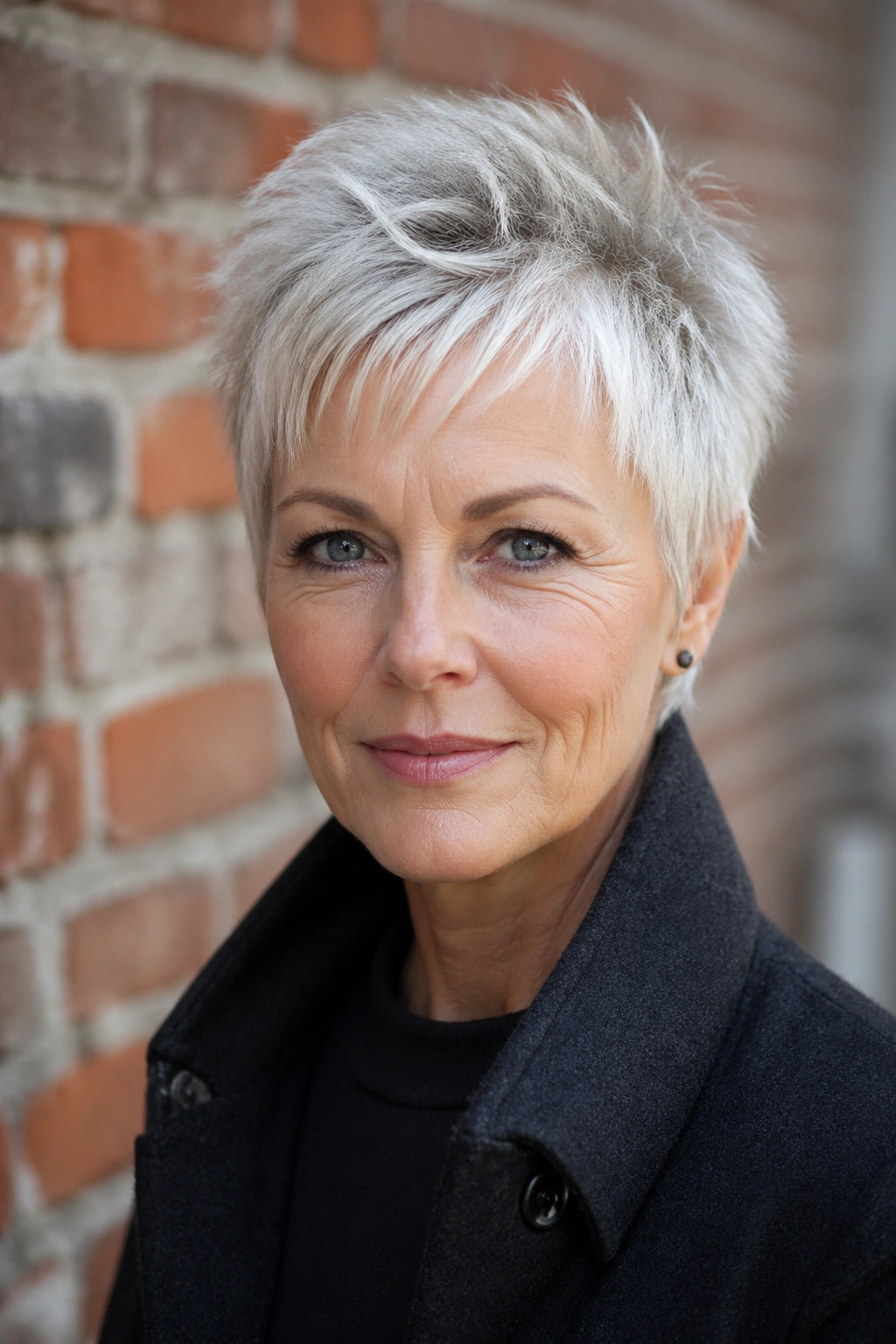
This cut feels light in the hand. Razor texturing can make the ends look airy and piecey, which helps if your hair tends to sit heavy. It’s a good choice for straight to slightly wavy hair that likes movement but not a lot of styling.
The important part is restraint. Too much razor work can make the ends fray, especially if the hair is already dry or fragile. A skilled stylist will use the razor to soften the outline, not shred the whole cut. You want a hint of separation, not a wispy cloud.
Best for
- Medium-density hair
- Straight or loose-wave textures
- Women who like a slightly undone finish
- Short styles that need less bulk
Be careful if
- Your hair is very frizzy
- The ends are weak or split
- You prefer a smooth, polished line
I’d keep this cut on the shorter side and let the texture do the talking. It is not the haircut for somebody who wants a perfect, glassy finish. It’s for someone who likes a little movement and a little edge.
19. The Long Bob With a Deep Side Part
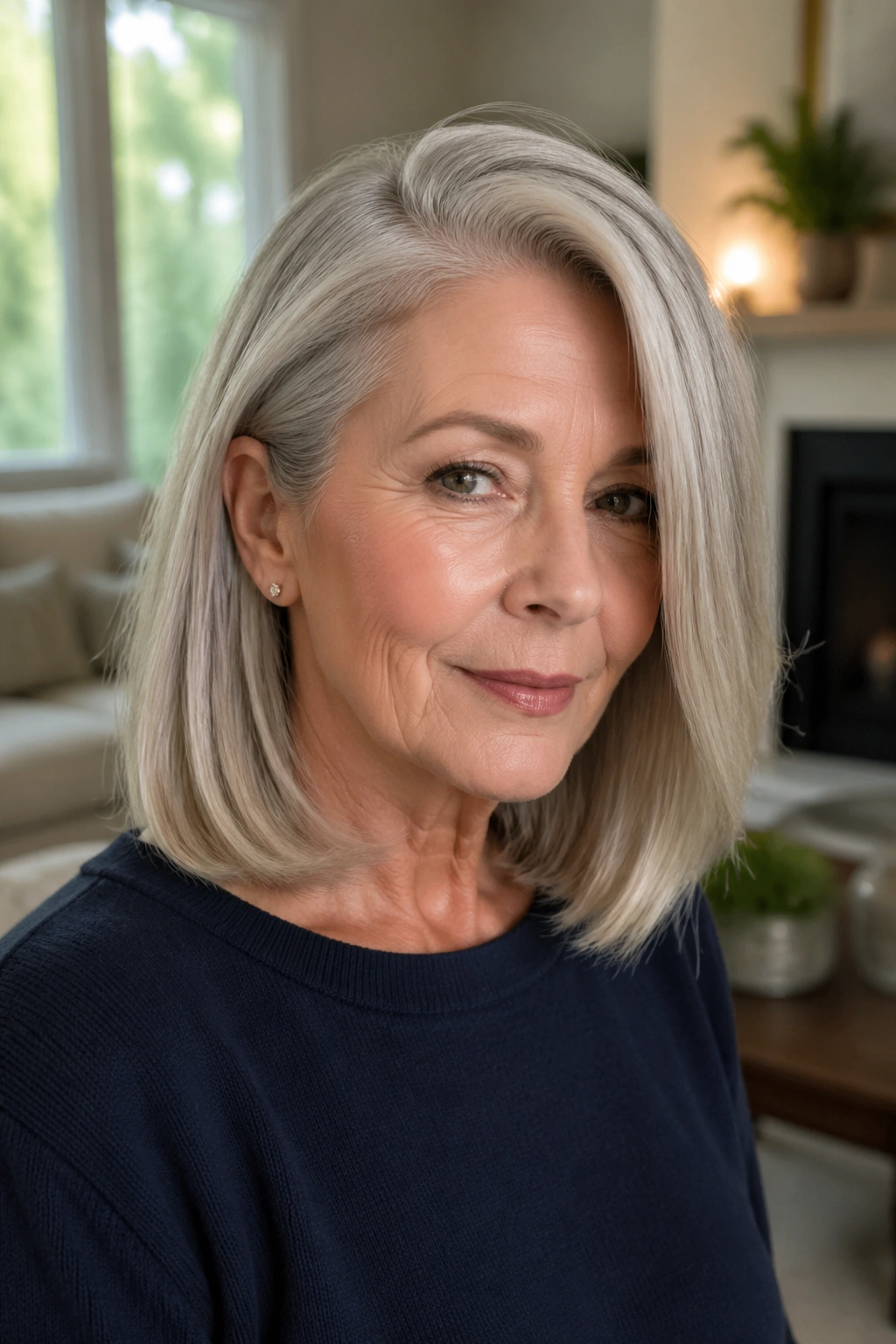
A center part can flatten some hair shapes. A deep side part can fix that in one move. A long bob with a side part gives you lift at the front and a soft sweep across the face. That matters when the crown is sparse or the hairline has changed a bit.
Keep the length around the collarbone or just below it. That length gives you enough weight to prevent flyaways, but not so much that the hair drapes flat. The side part changes the whole mood of the cut. It makes the front look fuller, and it lets one side sit a little closer to the cheekbone. If your hair naturally falls flatter on one side, this is often the easiest way to work with it instead of against it.
I like this cut because it is plain in a good way. It doesn’t shout. It just behaves. And some mornings, that is the entire point.
20. The Bob You Can Tuck Behind Your Ears

There’s something satisfying about a haircut that still looks intentional after you tuck it behind your ears. This bob sits at the jaw or a touch below it, with enough softness to move but enough structure to hold shape.
The length should be chosen with your ears, glasses, and neckline in mind. If the bob is too short, the tucked look can feel accidental. Too long, and it loses the neat outline. A soft layer or two around the front helps the hair fall back into place when you untuck it. That’s the detail people forget. A good tuck-friendly cut should recover quickly.
This is an easy style for everyday wear because it works with a loose sweater, a scarf, or a pair of statement earrings. It also lets you shift the look without changing the cut. Wear it loose one day, tucked the next. Simple. That flexibility is the whole appeal.
21. The Soft Short Shag That Makes Air-Drying Easier
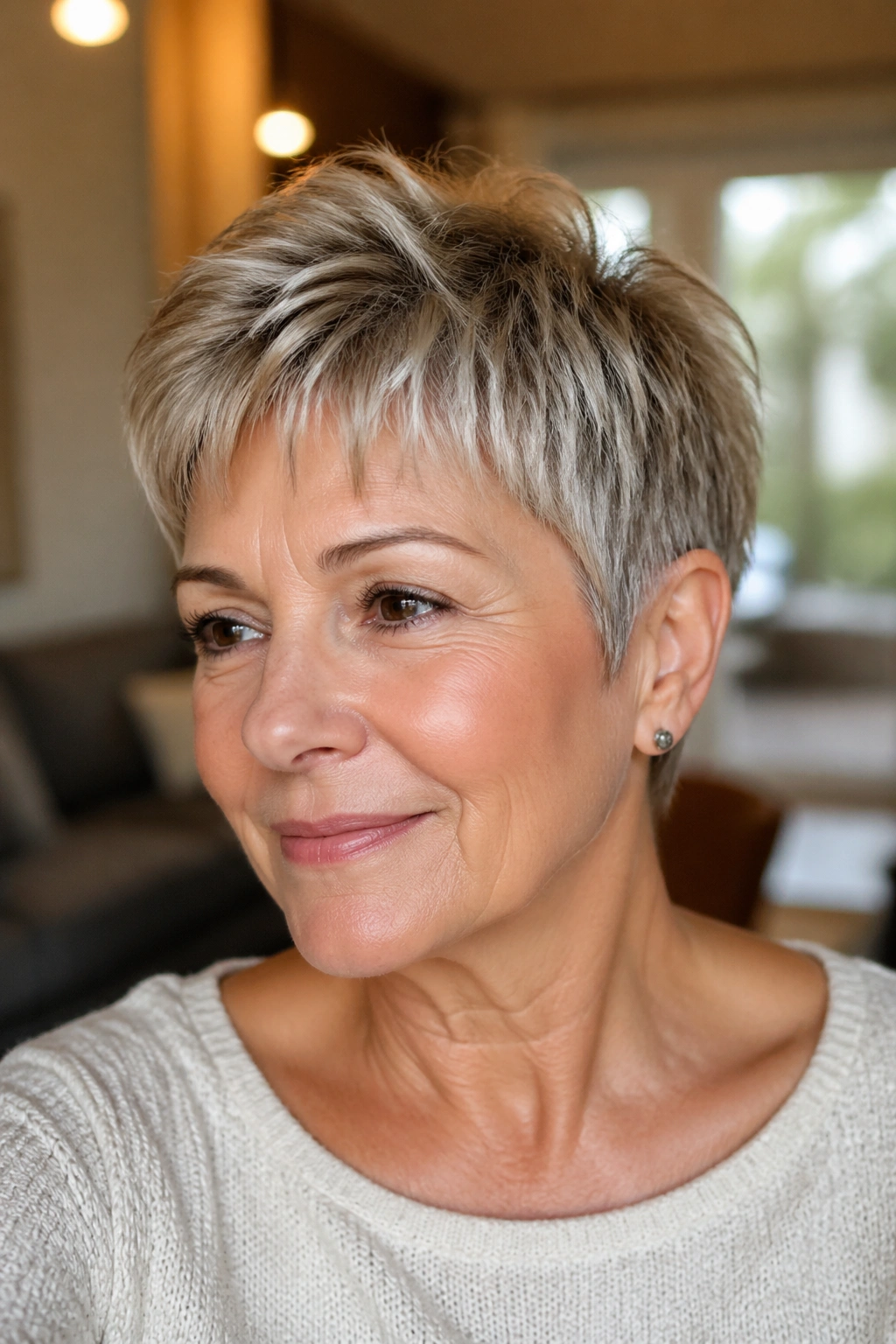
If I had to pick one cut that rewards air-drying and imperfect mornings, it would be this one. A soft short shag gives you movement, shape, and just enough edge to keep the hair from sitting flat. It is especially kind to waves, but it can work on straighter hair too if the layers are cut with restraint.
Ask for choppy but soft crown layers, a fringe that can sweep sideways, and ends that aren’t chopped into hard points. The silhouette should feel airy, not ragged. I like this cut because it doesn’t demand perfect styling. Scrunch in a bit of mousse, twist a few damp sections, and let it go. If the pieces dry with a little separation, good. That texture is part of the charm.
It’s also one of the few short-to-medium cuts that can look better on day two. A small mist of water, a dab of cream, and your fingers usually bring it back. A haircut that behaves on busy days is worth keeping around.
