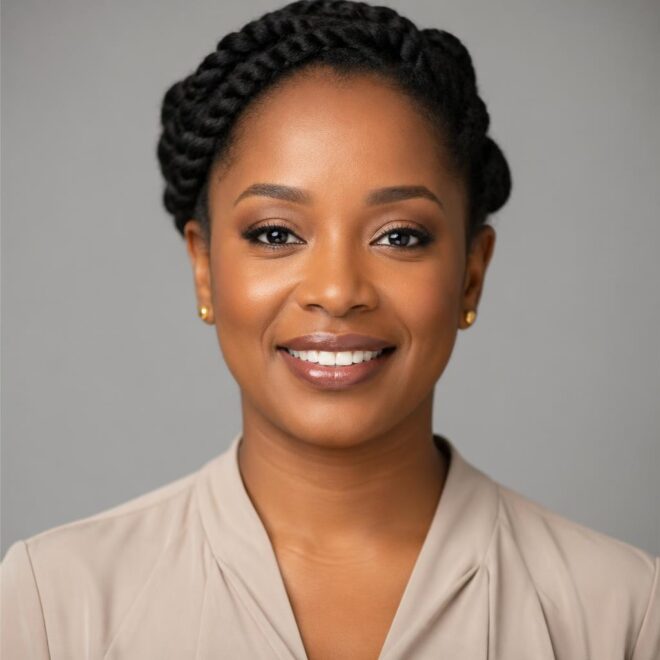


Short hairstyles for women over 50 work best when the cut does some of the heavy lifting for you. A good short shape can lift the eyes, open up the neck, and make thinning ends look deliberate instead of tired. That matters more than people admit. When hair changes texture — finer at the crown, coarser at the ends, a little wirier around the temples — a cut that once behaved can start lying to you every morning.
The nice part is that short hair is rarely about one “right” look. It’s about the right shape for your hair: the cowlick near the forehead, the way your part falls, whether your hair bends or sticks straight out, and how much time you want to spend with a brush. Some cuts give softness. Some give lift. Some make gray hair look crisp and expensive in the best possible way. No panic, no helmet hair, no pretending your hair is still the same as it was twenty years ago.
That shift is where the good stuff lives. The styles below lean into real hair, real faces, and real routines — not salon fantasy. Start with the soft pixie; it does a lot with very little length.
1. Soft Pixie with Side-Swept Fringe
A soft pixie is one of those short haircuts that makes people look rested, even when they’re not. The fringe does most of the face-framing, so the cut feels gentle instead of severe, which is why it works so well for women who want short hair without a hard edge.
Why it flatters so many faces
Keep the top around 2 to 3 inches, leave the fringe long enough to brush the brow, and taper the sides close to the head without shaving them down to nothing. That little bit of softness matters. It keeps the cut from looking blocky, especially if your hair is fine or your forehead feels a little more open than it used to.
- Best for fine to medium hair
- Easy to style with a pea-size amount of mousse
- Works well with glasses because the fringe can sit above the frames
- Needs a trim every 4 to 6 weeks
My favorite ask at the salon: tell your stylist you want the fringe movable, not fixed. A fringe that can sweep left or right gives you more room on days when your hair has other plans.
2. Layered Crop for Fine Hair
Fine hair usually looks better when the cut gives it shape, not when it gets thinned out to the point of vanishing. A layered crop does exactly that. The layers are short enough to create lift, but not so choppy that the ends look frayed.
A lot of short hairstyles for women over 50 miss this point and go too light on top. That’s a mistake. Fine hair needs structure at the crown, and a little texture through the top helps the hair look fuller without making it fluffy.
Use a root-lift spray before blow-drying, then rough-dry with your fingers until the roots are about 80 percent dry. Finish with a small round brush only where you want bend. Do not over-layer the perimeter if your ends are already wispy. The cut should look airy, not see-through.
3. Bixie Cut with a Tapered Nape
What if you want the ease of a pixie but still like a little bob length around the face? That’s the bixie. It sits in that sweet spot between short and shorter, which sounds vague until you see it on the right head shape.
How to style it in five minutes
The back stays neat and tapered, while the front gets a bit more length and swing. That makes the bixie good for people whose hair flattens fast at the crown but still want some movement near the jaw. It also handles a side part nicely, which is useful if your forehead has decided to take up a little more visual real estate.
- Ask for the nape to be kept tight
- Leave the front pieces long enough to tuck behind the ear
- Use a light styling cream, not a heavy paste
- Blow-dry the crown upward for lift, then direct the front forward
It’s a smart cut. Not fussy. Just balanced.
4. Chin-Length French Bob
A chin-length French bob has attitude without acting like it needs attention. The line usually hits right at the jaw or just above it, and the ends stay a little blunt so the shape looks clean from across the room.
Picture it on a woman who wants polish but does not want to spend twenty minutes trying to make her hair “behave.” That’s the French bob in a sentence. It works especially well with straight or slightly wavy hair, and it likes a soft bend more than a perfect curl.
What to ask for
- A blunt-ish line at the chin
- Minimal layering through the ends
- A soft curve around the face, not a bubble shape
- Bangs only if you want them to grow out gracefully
The trick is restraint. If you add too much texture, the bob loses its crisp shape. A quick pass with a round brush or a flat iron bend at the ends is enough. No need to overdo it.
5. Shaggy Bob with Airy Ends
The shaggy bob is for the woman who wants movement more than precision. It has shorter layers through the crown, softer pieces around the face, and ends that don’t try to sit still all day. That looseness is part of the charm.
It’s also a cut that tends to look better after a little wear. Fresh from the salon, it can feel almost too neat. Give it a day or two, let the layers separate a bit, and it starts to look like hair with a pulse. That matters if you have wavy hair that gets poofy when it’s all one length.
A good shaggy bob should still have a shape. It should not look like you got halfway through a haircut and stopped. Ask for the layers to be soft at the crown and lighter around the jaw, then use a texturizing spray at the mids and ends. Skip heavy oils near the roots or the whole thing will collapse.
6. Tapered Pixie with Soft Sideburns
This is the pixie for people who hear “pixie” and think of something sharp and boyish. The tapered version keeps the neck clean, but the sideburns and front pieces stay soft enough to frame the cheekbones instead of slicing across them.
That difference is subtle in a photo and obvious in real life. A hard pixie can look amazing on one face and harsh on another. A tapered one with soft sideburns tends to be kinder, especially if you wear earrings, glasses, or lipstick and want the haircut to play along rather than compete.
The styling is easy: a dab of matte cream through the top, fingers at the crown, and a small round brush if you want a little lift at the front. If your hair grows fast at the neckline, plan on trims every 4 weeks. That’s the trade-off. Worth it, though.
7. Stacked Bob with Crown Lift
A stacked bob makes the back do the heavy lifting. The layers are shorter under the crown, so the shape lifts away from the nape and gives the top a rounder, fuller look. That’s useful if your hair has flattened out over time or if you like a little height without teasing.
What to ask your stylist
Tell them you want soft stacking, not a stiff shelf. A harsh stack can look dated fast, while a softer version creates body without turning the back into a helmet.
- Keep the nape neat and close
- Build volume under the crown
- Leave the front slightly longer than the back
- Avoid over-thinning the top
This cut shines on straight hair and medium-density hair. It can work on waves too, but the layers need to be placed with care. Too much internal cutting, and the bob starts to kick out in places you didn’t choose.
8. Asymmetrical Bob with a Deep Side Part
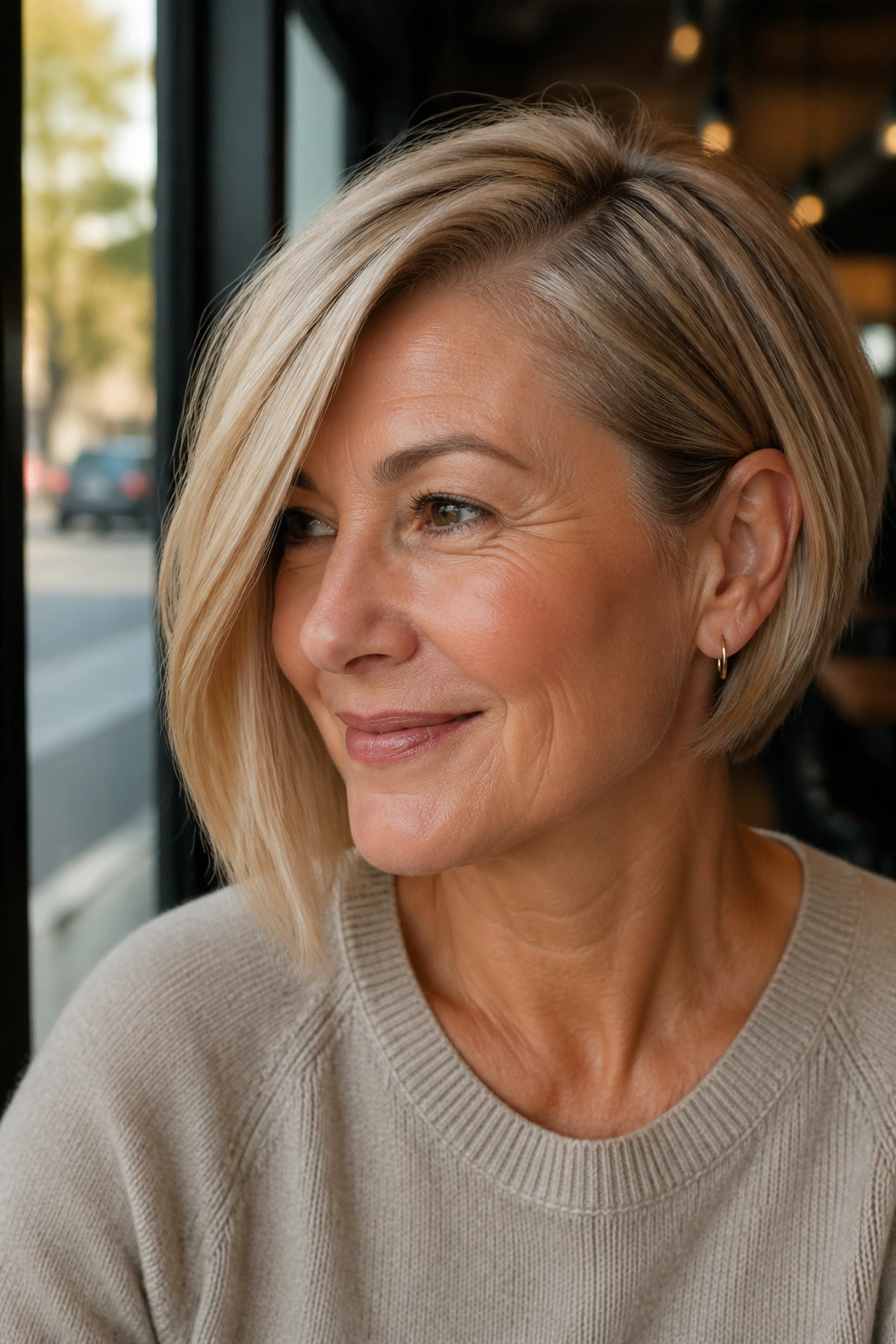
Symmetry is overrated on purpose. An asymmetrical bob — one side a little longer than the other — can add lift and personality without turning the whole cut into a statement piece.
The deep side part is the real engine here. It gives you a little drama at the crown, which helps if your hair falls flat on one side or your face looks better with a bit of directional movement. That’s often the case with rounder faces, but it can also be a nice fix for hair that insists on going the same way every single day.
Keep the difference subtle. Half an inch to an inch can be enough. You don’t need a sharp angle that screams for attention. A soft asymmetry reads as modern and tidy, and it plays well with straightening or a loose wave. The goal is movement, not surprise.
9. Curly Crop with a Round Shape
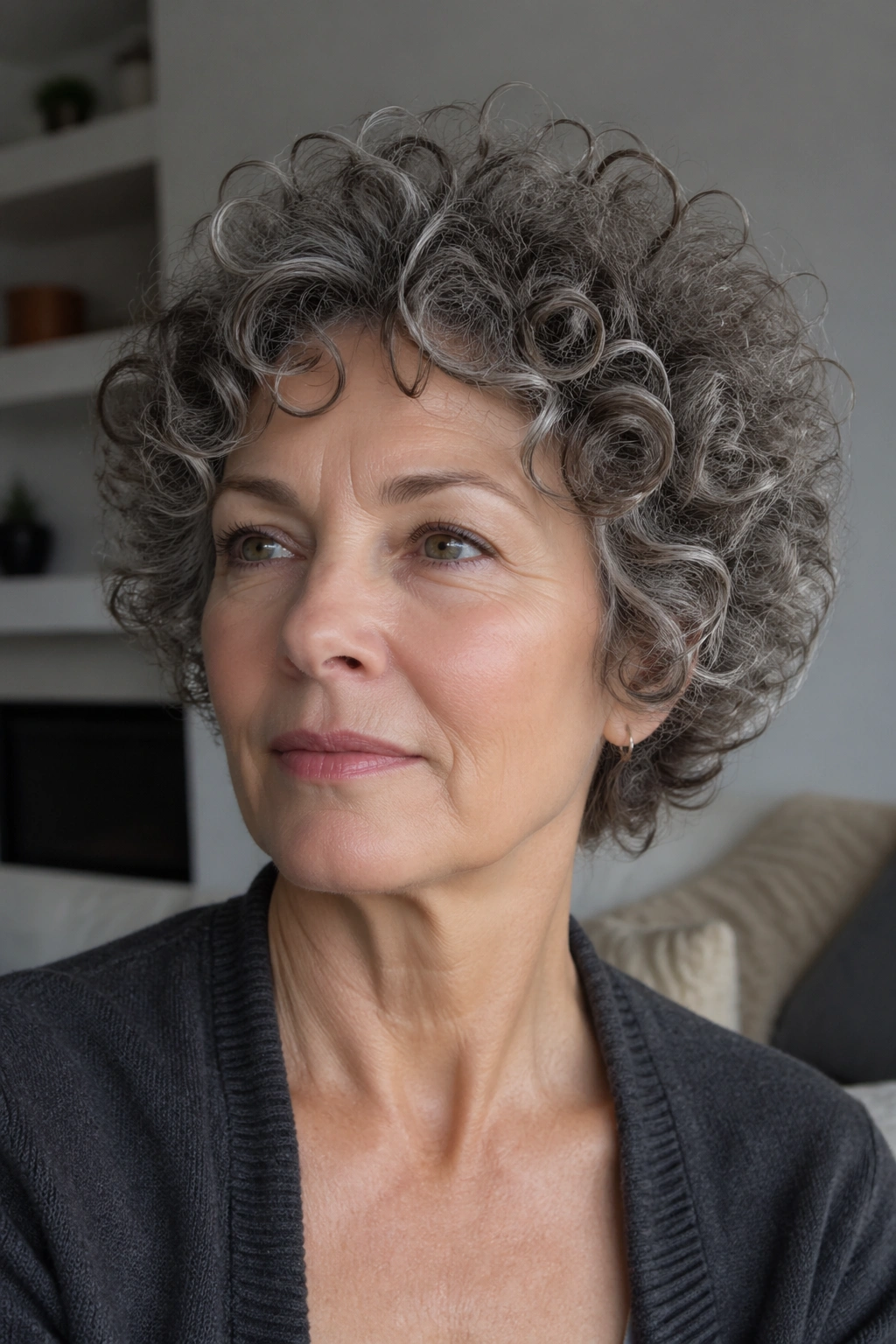
Curly hair gets happier when the cut respects the curl pattern instead of trying to bully it into a blunt line. A rounded crop lets curls stack naturally, so the shape looks full without turning mushroom-like.
The first time you dry this kind of cut, the curls spring upward and settle into a soft halo around the head. That shape is the whole point. It keeps the sides from puffing out too wide while letting the top keep its bounce. If you’ve ever had curls that feel heavier at the bottom than the roots, this solves a lot of that imbalance.
Keep the curl memory intact
Use a curl cream on soaking-wet hair, scrunch from the ends upward, and dry with a diffuser on low heat. Once dry, don’t rake through it with a brush. That breaks the curl and steals the shape.
- Best with loose curls to tight coils
- Great for reducing bulk at the ends
- Ask for dry cutting if your stylist knows curls well
- Refresh with a water spray and a dime-size leave-in on day two
10. Feathered Crop with Wispy Bangs
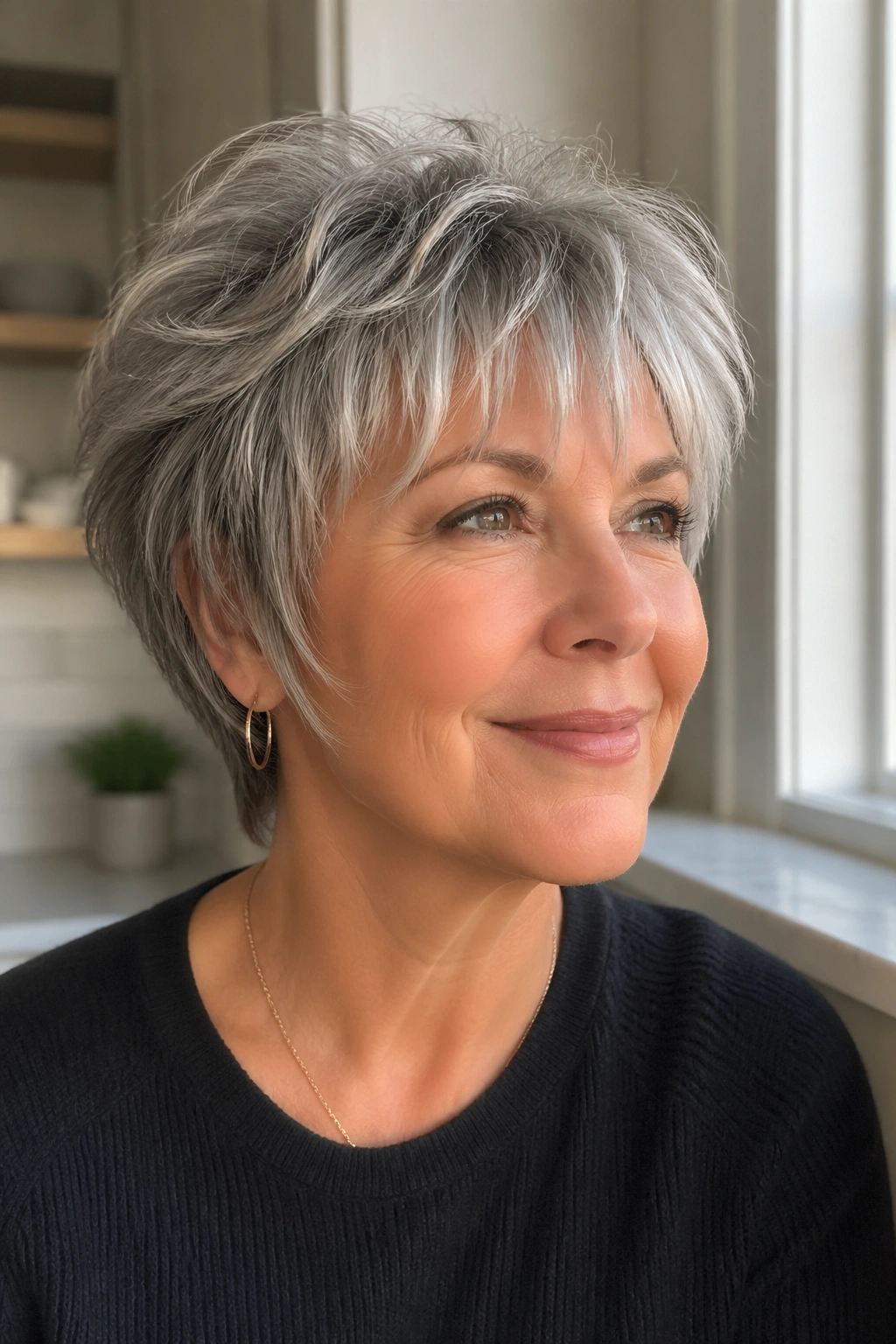
A feathered crop makes short hair feel lighter around the face, and that’s where the cut earns its keep. The layers are sliced so they move instead of sitting in one blunt block, and the bangs stay airy enough to soften the forehead without hiding it.
This is a smart choice if your hair is straight or only slightly wavy and you want softness more than density. It also helps when the hair around the ears tends to stick out; the feathering breaks up that line so the whole cut reads as smoother.
A small round brush is your friend here. Dry the bangs forward first, then sweep them side to side while they cool. That gives them a bend instead of a crease. Avoid heavy wax at the fringe. It turns wispy bangs into sticky bangs, which is a much less charming look.
11. Undercut Pixie with Longer Top
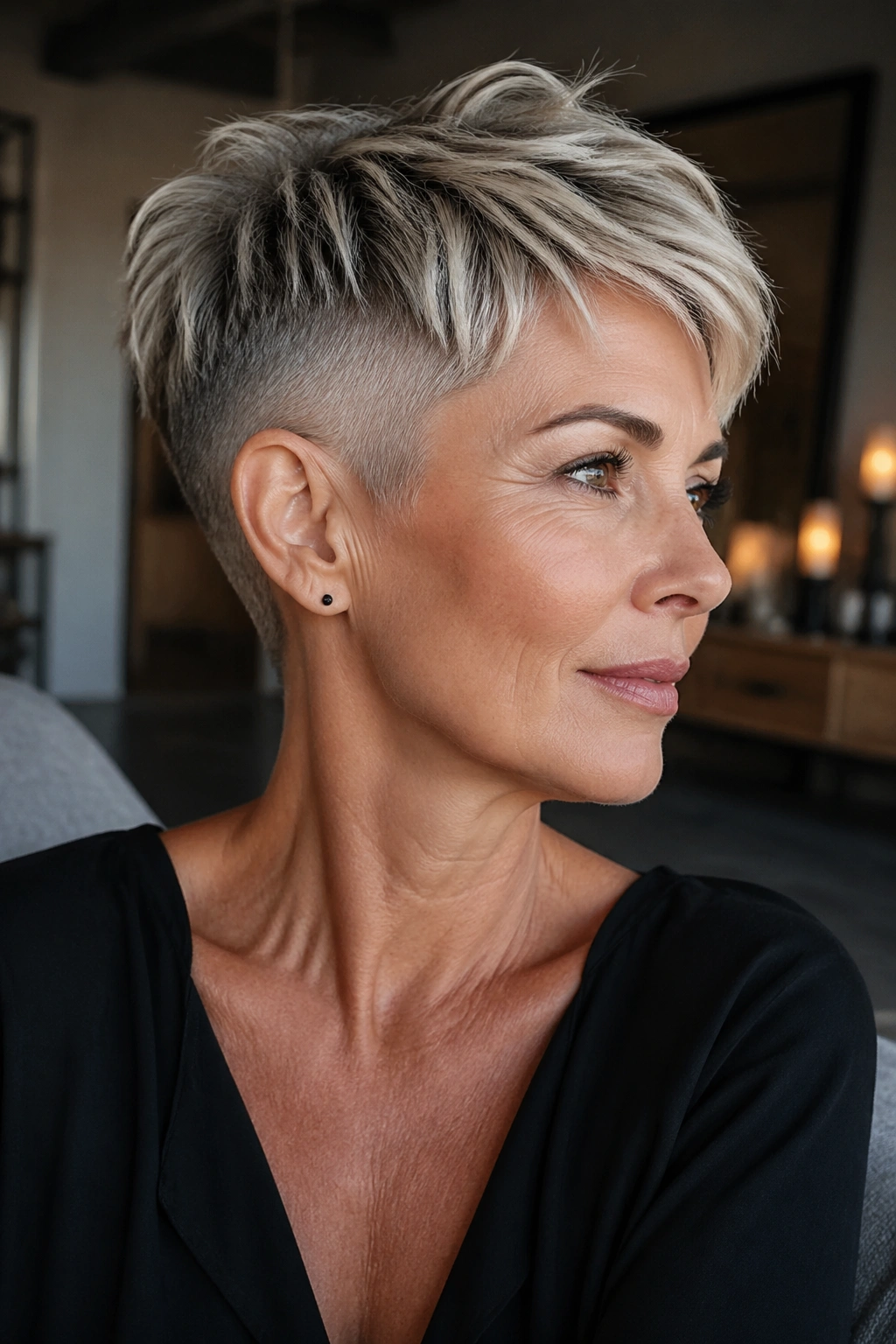
If you’re tired of bulk around the nape or behind the ears, an undercut pixie can be a relief. The underlayer is clipped very close, while the top stays longer so you still have shape and styling options.
Who it suits best
This cut works best for thick hair, coarse hair, or hair that grows into the neck like it has somewhere to be. It also suits people who like a little edge. Not a costume. Just enough contrast to make the top feel deliberate.
- Ask for the undercut to stay hidden when the hair is down
- Keep the top around 3 to 4 inches
- Style with mousse for lift or pomade for separation
- Expect more frequent cleanups at the neck
It’s not for everyone. If you hate salon maintenance, skip it. But if you love feeling weight come off the head, this is one of the best short cuts around.
12. Rounded Afro Crop
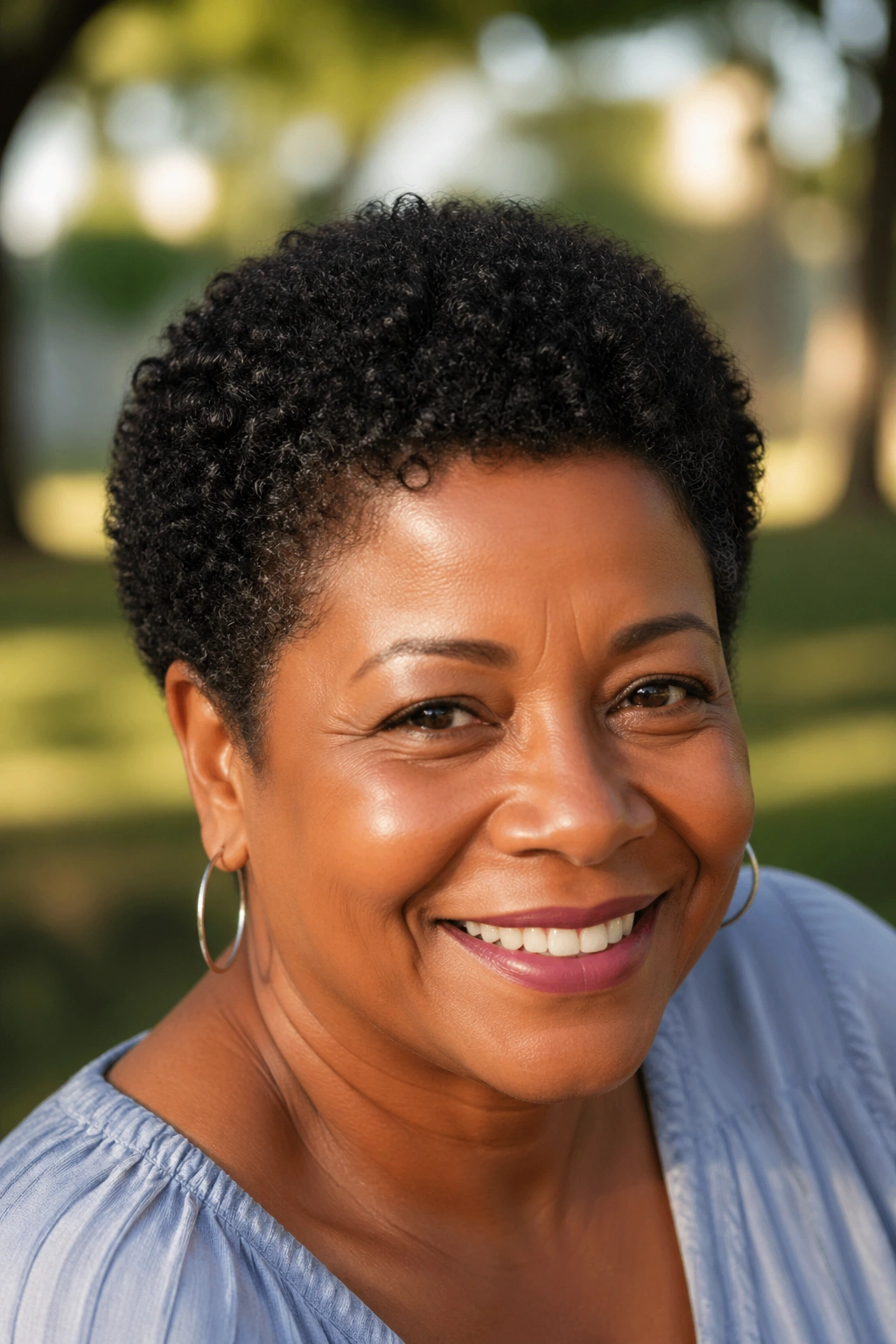
How do you keep natural coils short without losing shape? You round them. A rounded afro crop keeps the silhouette soft and balanced, which means the hair looks intentional from every angle, not just the front.
The outline should follow the head with a little room for the curl to breathe. If you cut too flat across the top, the shape can look boxy. Too much length on the sides, and the whole thing widens faster than you planned. That’s why the round crop works so well: it respects shrinkage and still gives the hair a clean line.
Moisture matters here. Use leave-in conditioner on damp hair, then a cream or butter that defines without weighing the curls down. A pick can lift the roots, but a wide-tooth comb can flatten the definition if you overdo it. Shape first, fluff second.
13. Inverted Bob with a Clean Neckline
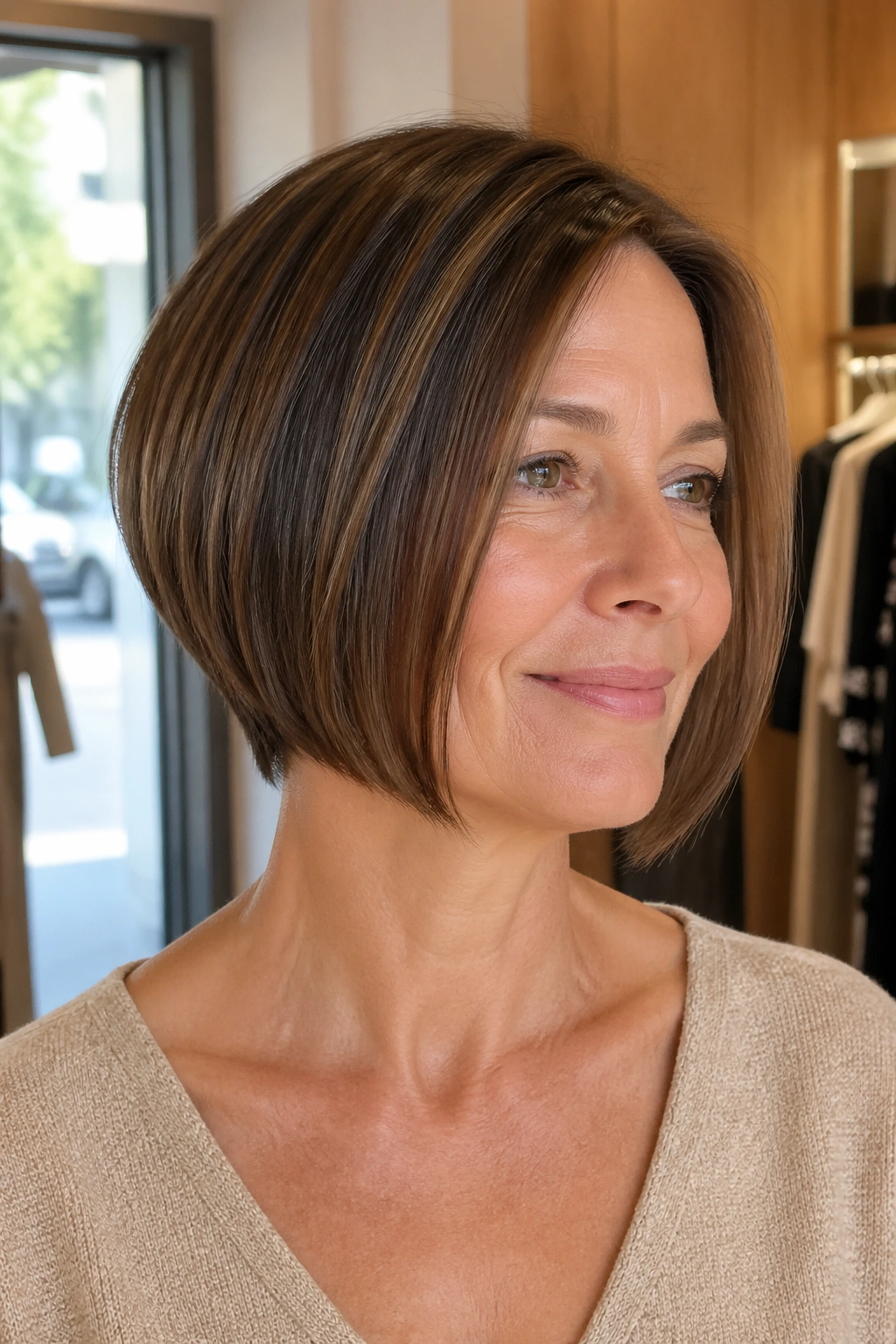
An inverted bob has a little more length in the front and a shorter back, which creates a clear line from cheek to nape. It’s a stronger shape than a standard bob, and that’s the appeal.
Unlike the stacked bob, which builds height at the crown, the inverted bob leans into angle. That makes it good if you want your haircut to frame the face a bit more sharply or if you like the visual pull of hair that points forward. It can make the jawline look more defined, especially on straight hair.
Keep the front pieces long enough to tuck behind the ears if needed. Too short, and the whole shape can feel severe. A slight undercurve at the ends keeps the cut from looking stiff. A polished bob is usually about the neckline first. If the back is tidy, the rest falls into place.
14. Side-Parted Crop for Glasses
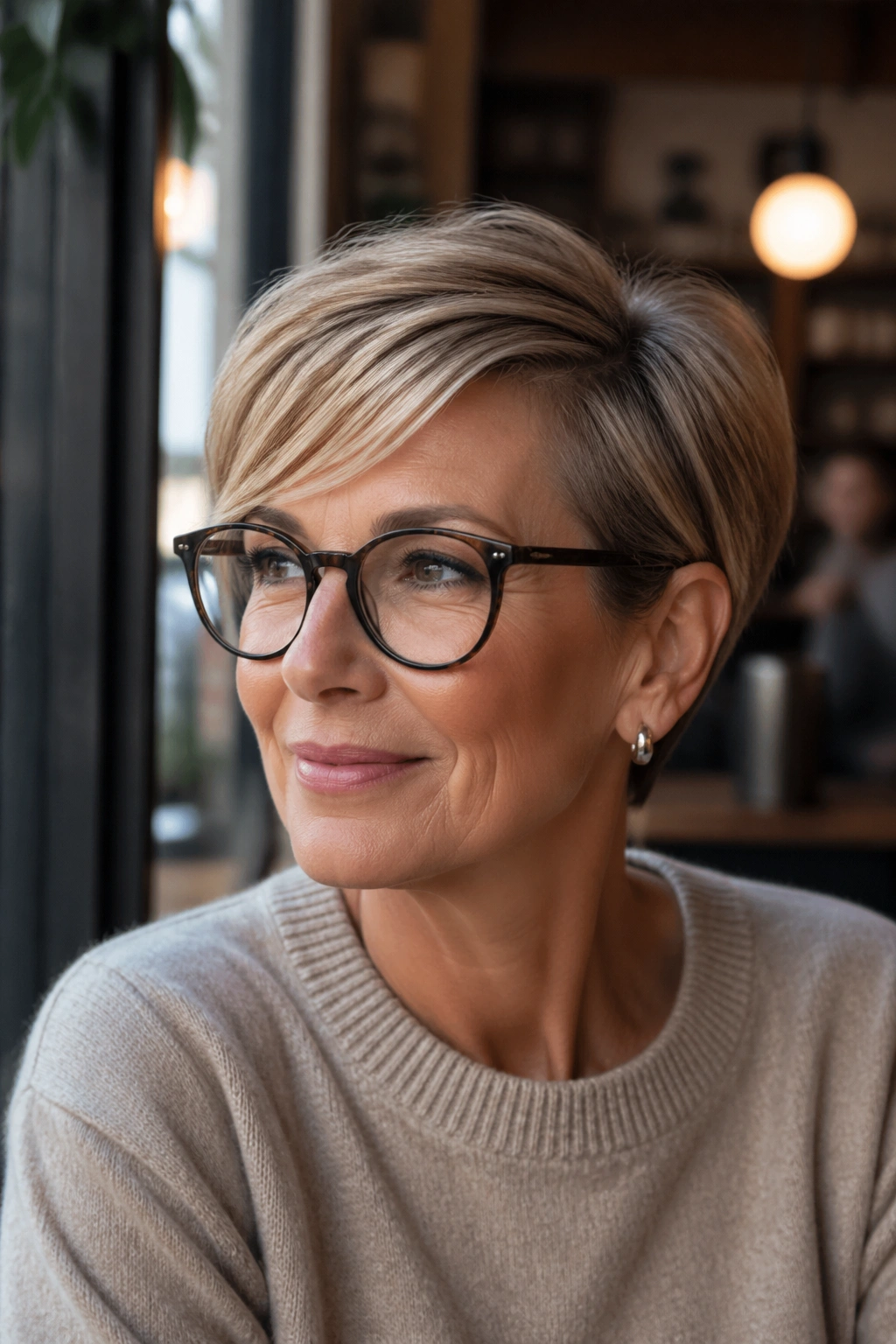
Glasses change the whole face, and the haircut should work with them, not fight for space around the eyes. A side-parted crop does that well because it opens one side of the forehead and gives the frames room to sit without crowding the fringe.
The part creates a natural diagonal line, which helps if your face feels a little rounder than you want or if your hair grows flat at the front. Short pieces around the temple keep the cut from looking too heavy near the arms of the glasses. That sounds tiny. It isn’t. It makes a big difference every day.
If you wear bold frames, keep the cut clean and simple. If your glasses are narrow or lightweight, you can get away with more texture in the top. Either way, the haircut should leave the center of the face open enough to breathe. No curtain of hair needed.
15. Razor-Sliced Bob for Thick Hair
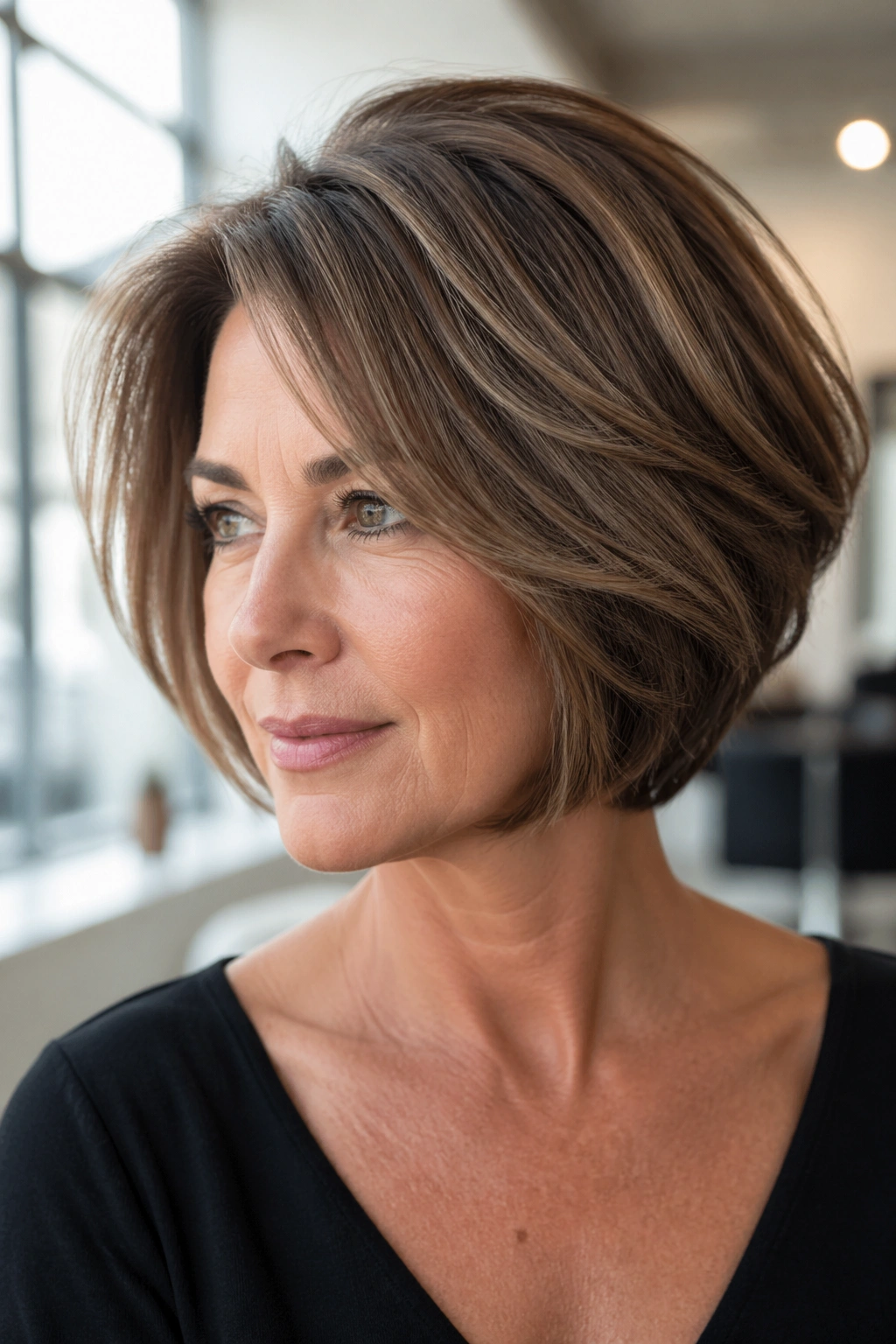
Thick hair looks luxurious until it turns into a triangle. A razor-sliced bob helps break that shape up by removing bulk in a softer way than blunt scissors do, so the ends move instead of sitting like a shelf.
The salon details that matter
Ask for slicing through the mids and ends, not aggressive thinning at the roots. Those are not the same thing, and confusing them can leave thick hair frizzy and uneven. The goal is swing, not empty space.
- Works best on straight to wavy thick hair
- Keep the perimeter at jaw to chin length
- Use a smoothing cream or light serum
- Avoid too many short interior layers if your hair poofs in humidity
This cut is a lifesaver when you want short hair but hate the heavy feeling that thick hair sometimes has around the neck. A good razor bob should feel lighter by the time you leave the chair. That’s the sign it’s been done well.
16. Wash-and-Go Salt-and-Pepper Pixie
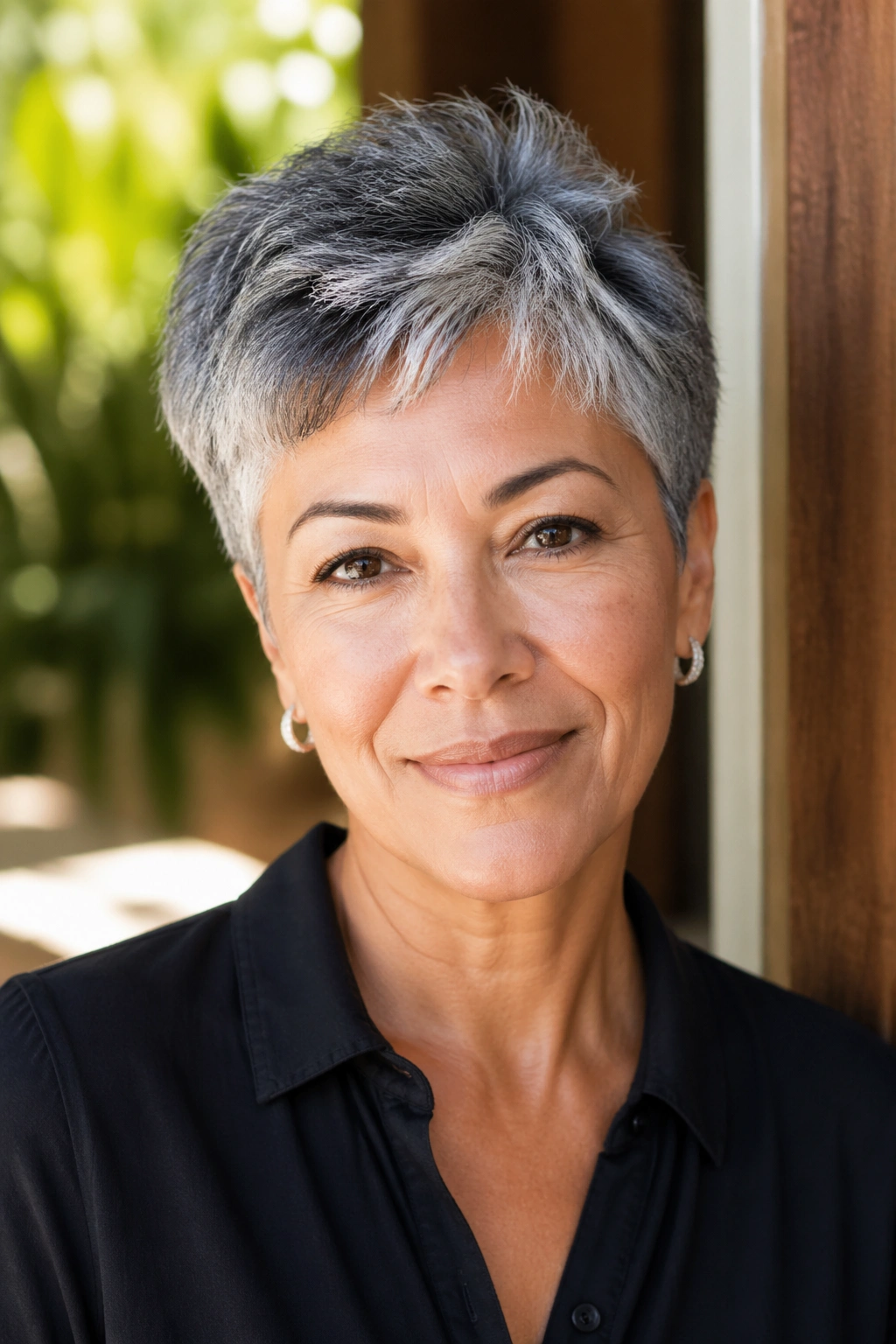
Gray hair has a way of showing every bad cut and rewarding every good one. A salt-and-pepper pixie takes advantage of that contrast instead of trying to hide it, and the result can look crisp in a way darker hair often can’t.
The key is texture with control. Gray strands can be coarse, wiry, or beautifully smooth, sometimes all on the same head. A short pixie keeps those differences from turning into a battle. Add a light leave-in, a touch of cream at the ends, and let the hair dry in its own shape. If the top needs lift, use a blow dryer for thirty seconds at the crown and stop there.
There’s no need to fight the silver. Let it show. That’s the point. A strong cut can make gray hair look deliberate, not accidental.
17. Jaw-Length Bob with Soft Layers
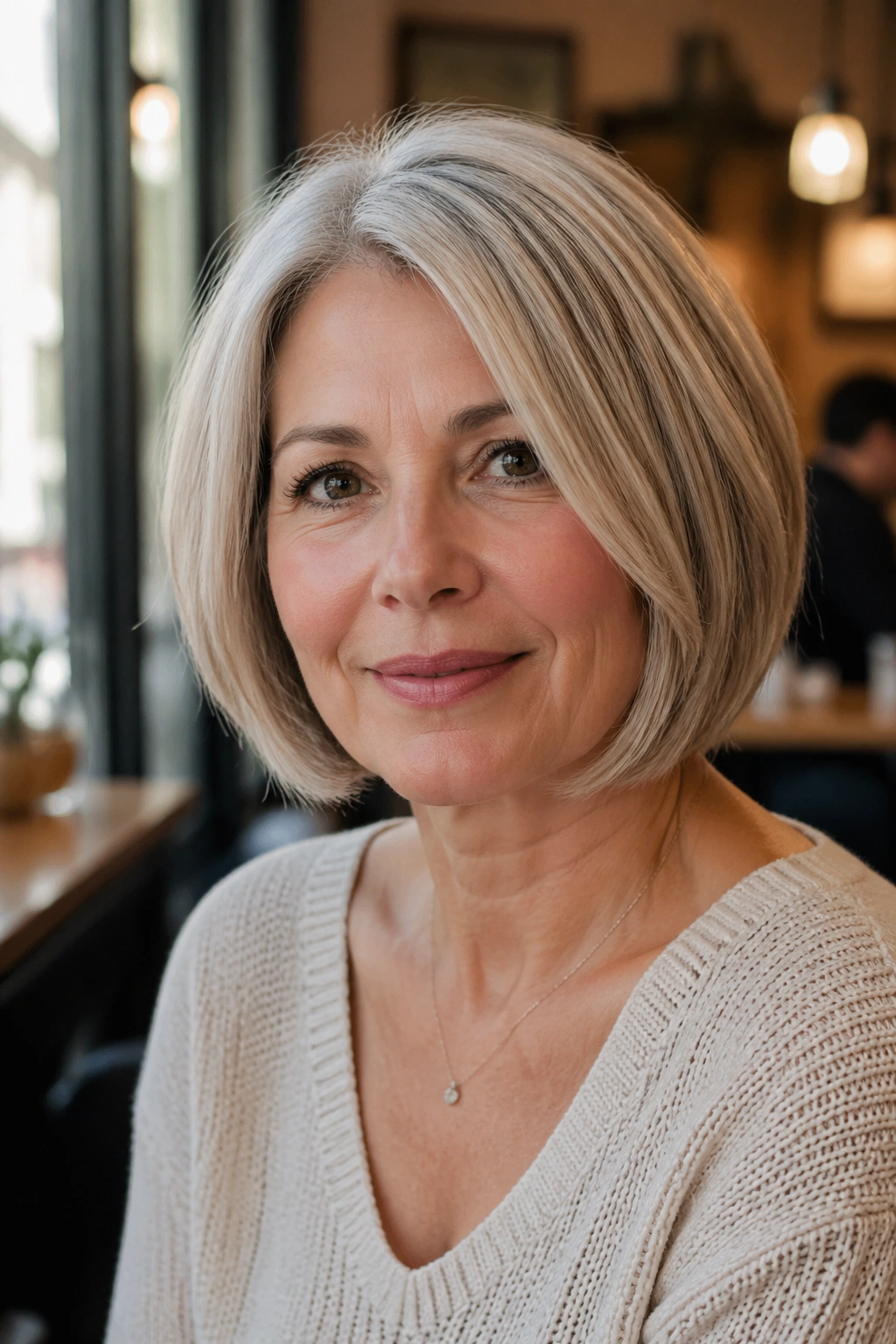
Need a cut that follows the jaw without clinging to it? A jaw-length bob with soft layers does that neatly. It gives a little shape around the lower face while keeping the edges light enough that the haircut does not feel heavy.
This works especially well if your jawline is something you want to highlight, or if your hair tends to flip out when it gets too short in the back. The soft layers keep the bob from becoming a box. They also let the ends bend under with a round brush, which is useful on straight hair that prefers order.
A center part can make this cut feel clean and modern, while a side part softens it. If your hair is fine, keep the layers subtle. Too much slicing, and the ends start to look thin. The line should frame the face, not float away from it.
18. Short Shag with Fringe
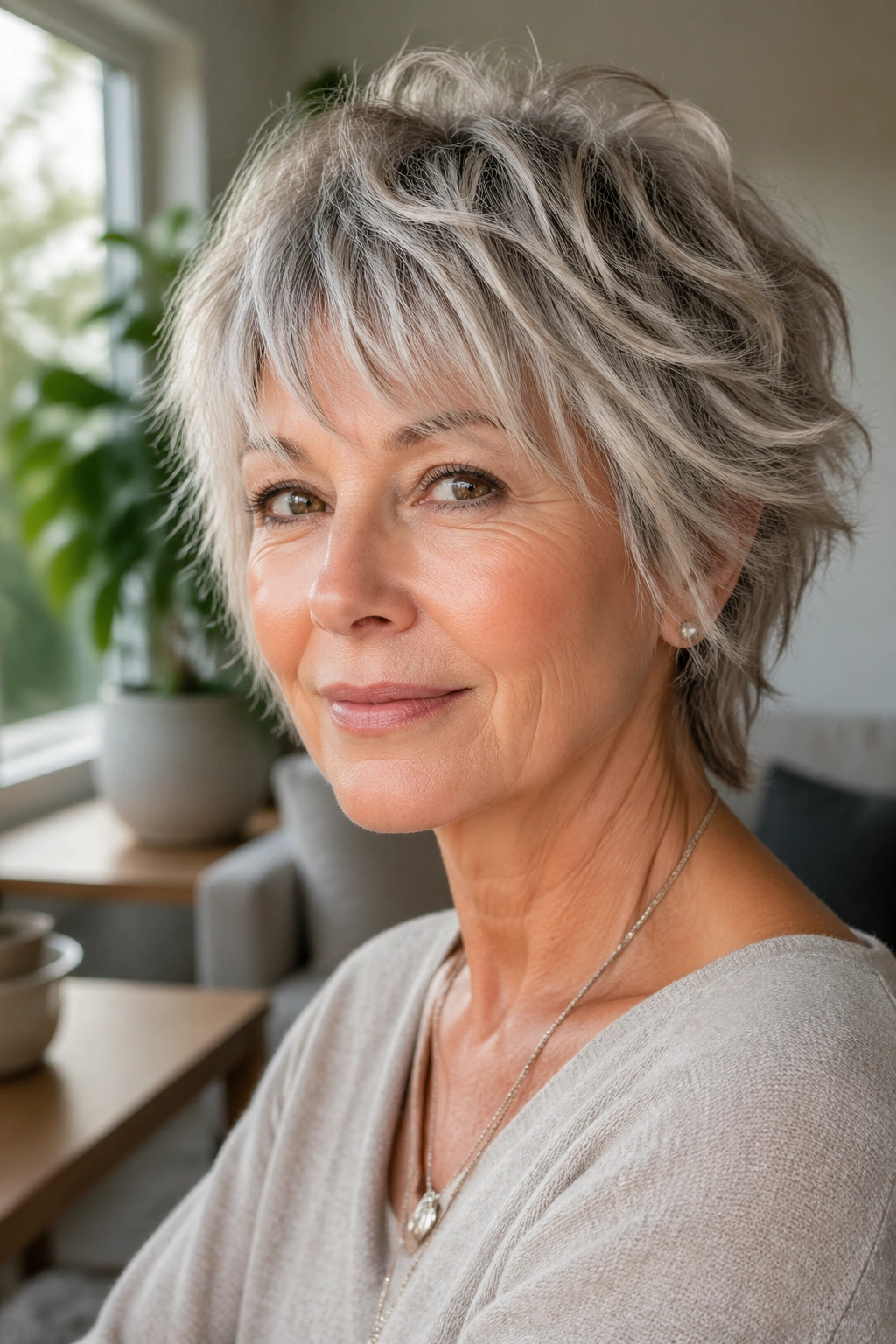
A short shag has one job: move. The fringe skims the forehead, the crown gets choppy layers, and the ends stay loose enough that the cut looks alive even when you air-dry it.
Why the fringe matters
The fringe keeps the shag from feeling too wild. It brings the eye back to the face and gives the haircut a starting point, which is helpful when the rest of the style is full of separation and texture.
This cut is a gift for wavy hair that likes to do its own thing. Put mousse through damp hair, scrunch a bit at the sides, and let it dry partway before you decide whether it needs a diffuser. Most of the time, it does not need much more. That’s the beauty of it.
- Best for natural wave and loose curl
- Good for people who hate precise styling
- Keep the fringe soft, not heavy
- Refresh with water and a little cream the next morning
19. Slicked-Back Crop with Clean Edges
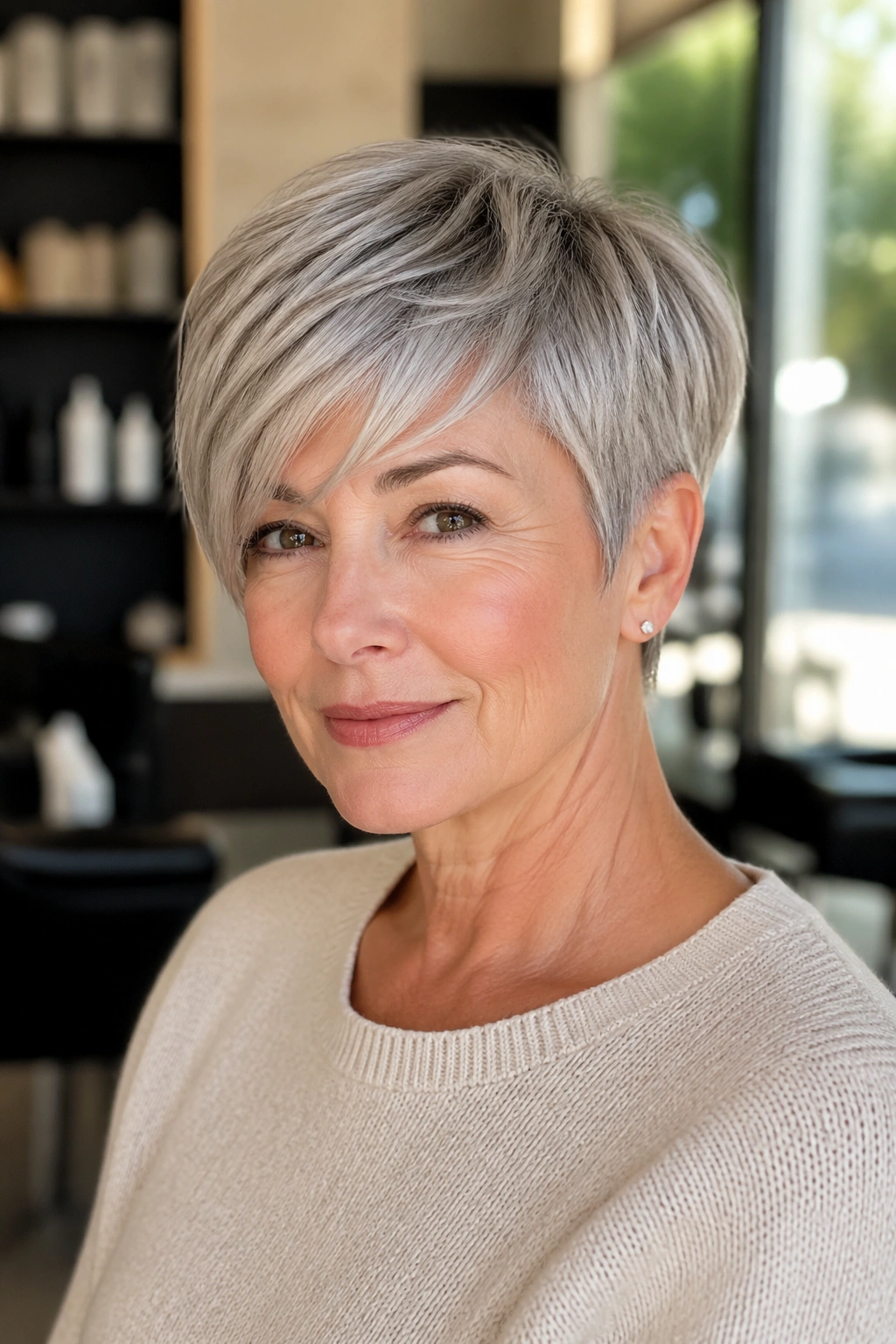
Not every short haircut needs to be soft. A slicked-back crop can look sharp, confident, and a little bit expensive if the edges are clean and the hairline is tidy.
This style works because it clears the face completely. Your eyes, cheekbones, earrings, and makeup get to do the talking. The cut itself becomes the frame. That can be a relief if your hair is thick, if your forehead feels crowded by fringe, or if you just want something that looks intentional with very little fuss.
Use a light gel or pomade on damp hair, comb it straight back or slightly off-center, and let it set. The mistake to avoid is too much product. You want sheen, not grease. Too much weight at the front will pull the whole look down, and then the style loses its edge.
20. Spiky Pixie with Piecey Texture
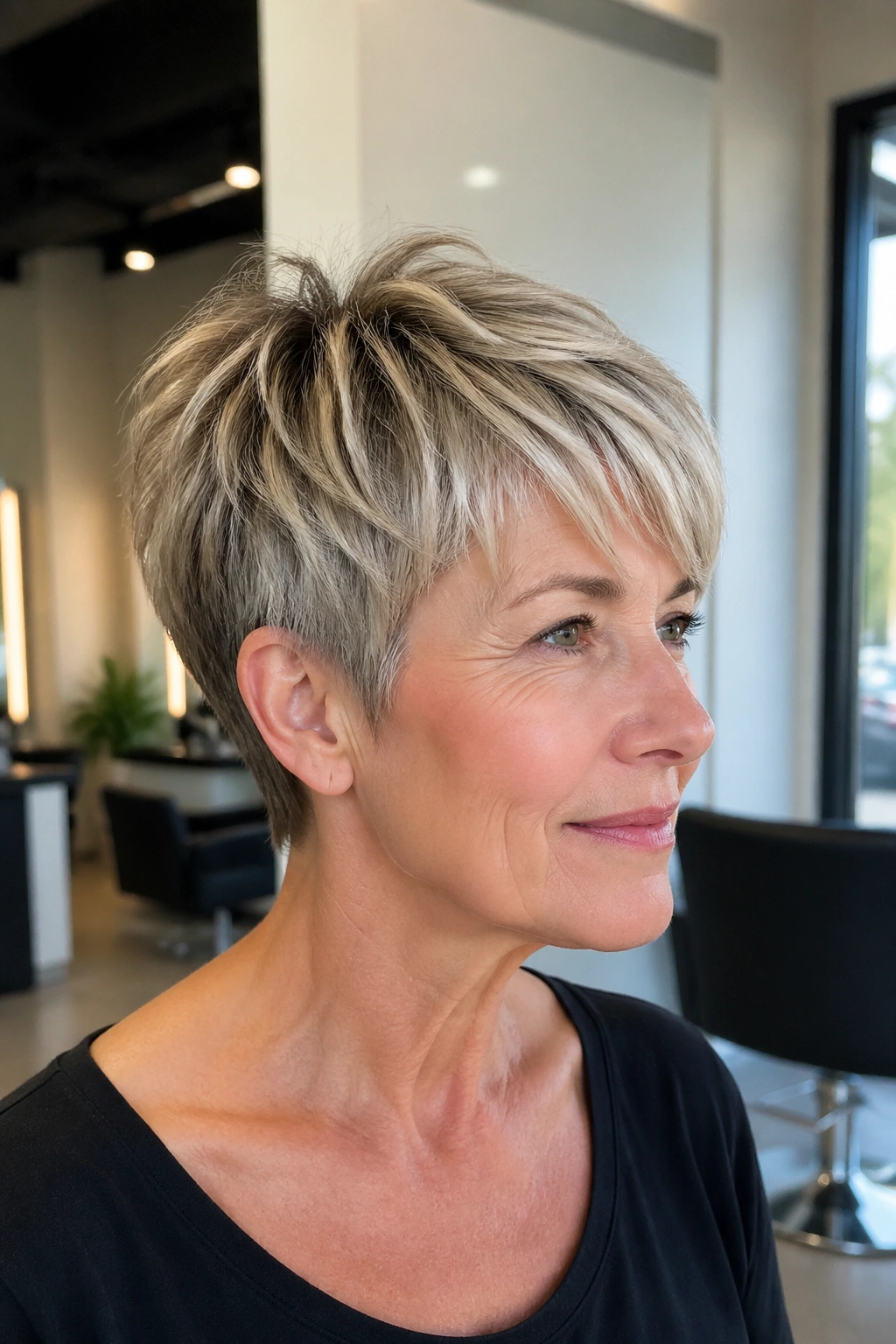
A spiky pixie can go wrong fast if it’s crunchy or overstyled. A piecey version keeps the lift, but the strands stay separate and touchable instead of locked into place.
Unlike the old-school spiky cut, this one doesn’t need to stand up on command. A little lift at the crown, a few forward pieces over the forehead, and some separation near the temples is enough. It looks better when there’s movement in it. That’s the whole point.
Use a tiny amount of styling wax — about a pea size — warm it between your fingers, then pinch small sections at the top and front. Stop before it starts to look stiff. If your hair is fine, this can make it look fuller. If it’s thick, it can keep the shape from feeling bulky. Either way, it needs a light hand.
21. Ear-Grazing Crop for Low Maintenance
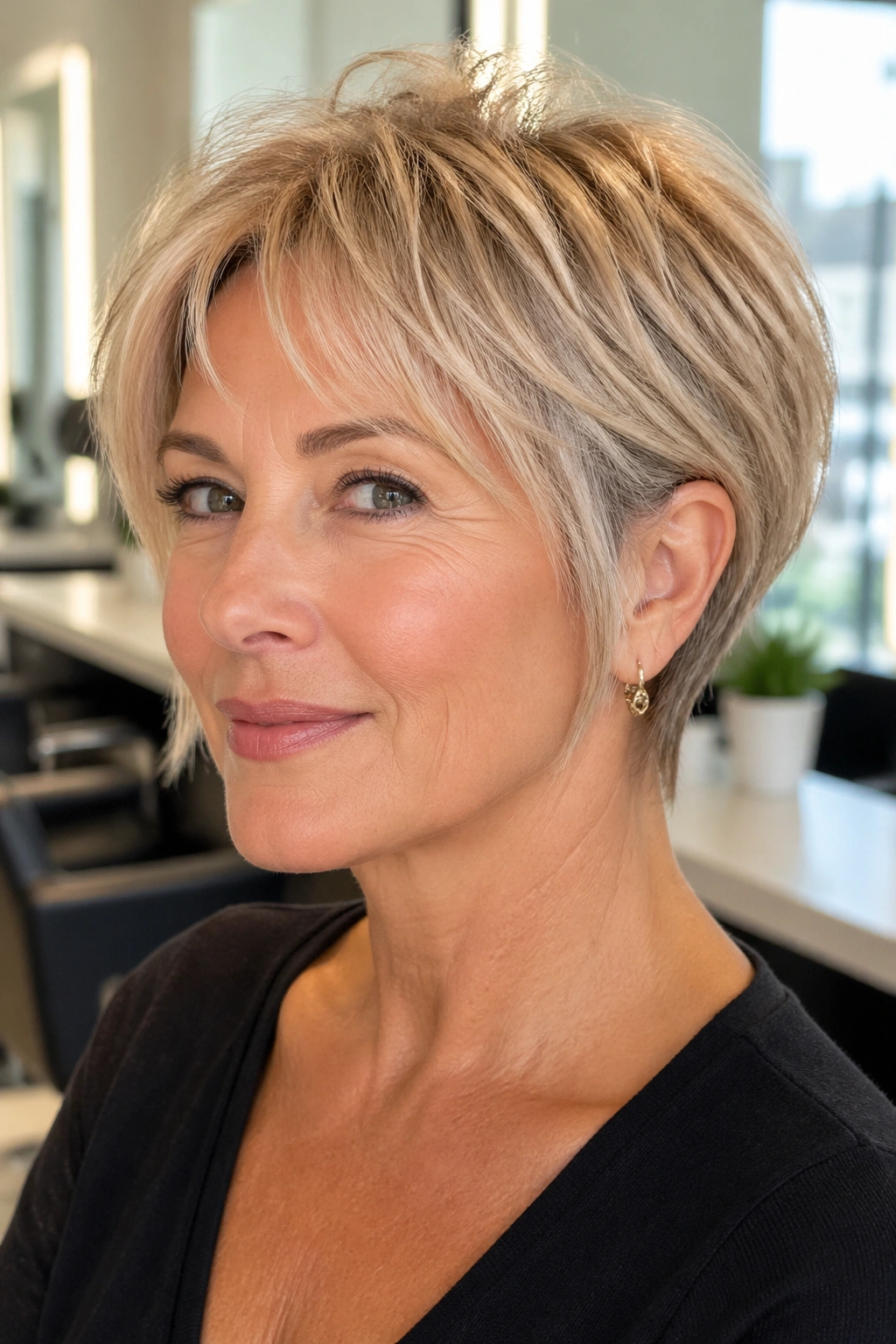
How short can you go and still keep the shape soft? Pretty short, as long as the crop grazes the ears and leaves a little length on top. That combination keeps the haircut easy to wear while still giving you some room to move the hair around.
The ear-grazing crop is one of those practical cuts that makes mornings easier without looking plain. It dries fast. It fits under hats. It doesn’t snag on collars. And if the top is left a touch longer, you can still sweep it forward, side to side, or tuck it back when you want a cleaner look.
This is a good choice if you want to spend less time styling and more time leaving the house. The trade-off is frequent neck cleanups. Shorter hair shows growth sooner, so you do need a trim schedule. But the daily payoff is real.
22. Curled-Under Bob for Straight Hair
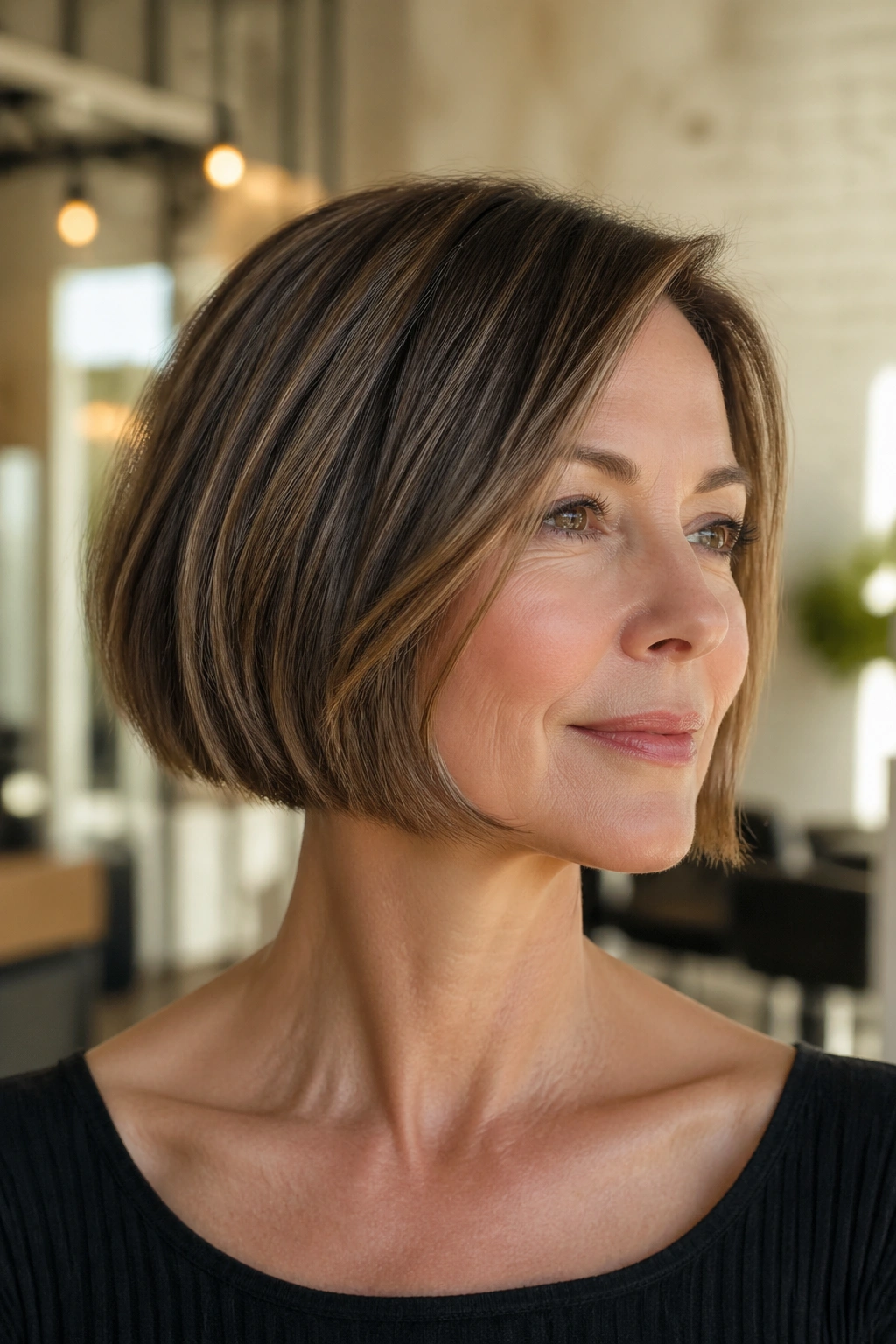
Straight hair can be sneaky. It looks neat until the ends go flat or flick out in two weird directions. A curled-under bob solves that by giving the perimeter a soft inward bend, which makes the whole cut look calmer.
The trick is in the finish. Ask for a length that lands around the jaw or just below it, then style with a round brush or a 1.5-inch iron so the ends tuck under rather than flip out. That little curve adds shape without making the bob feel round and old-fashioned.
It’s especially good if you like polished hair but don’t want it stiff. A curved-under bob can look smooth in the morning and still hold its line by the afternoon. If your hair is naturally pin-straight, keep the layers light. Too many layers and the ends lose that tucked shape.
23. Crown-Heavy Crop for a Taller Silhouette
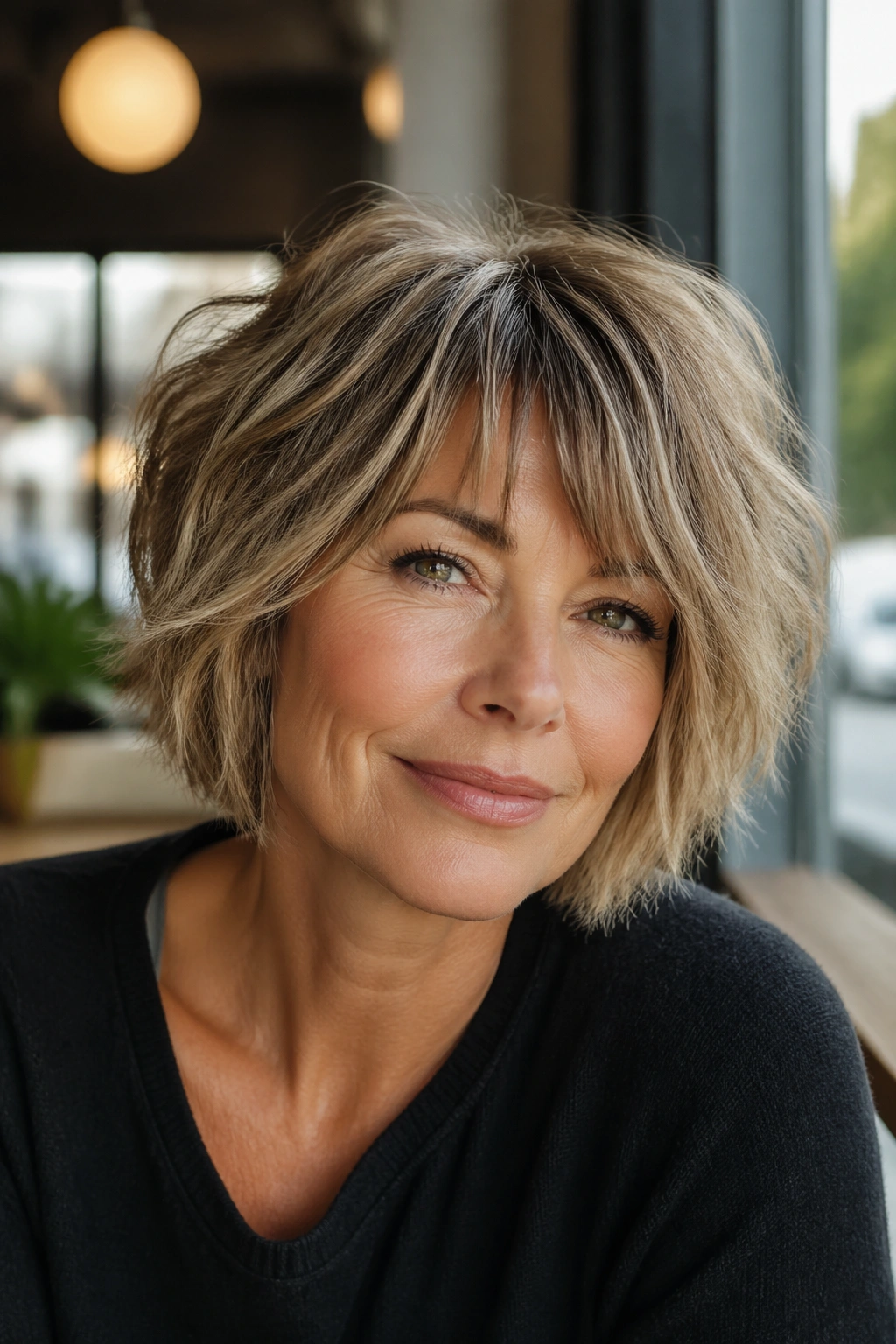
A crown-heavy crop uses length where you want height and keeps the sides close enough to clean up the outline. That creates a taller silhouette without making the style feel overblown.
This kind of cut can help if your face is round, your head shape is flatter at the top, or you just like the way a little lift changes the whole balance of the haircut. The crown doesn’t need to be big. It only needs to be controlled. A few well-placed layers at the top and a tighter nape do most of the work.
Blow-dry the roots upward first, then direct the front pieces where you want them. A light mousse gives enough grip for the shape to stay. Don’t chase volume everywhere. Put it where it counts, and let the rest stay neat.
24. Textured Bowl Cut with Soft Edges
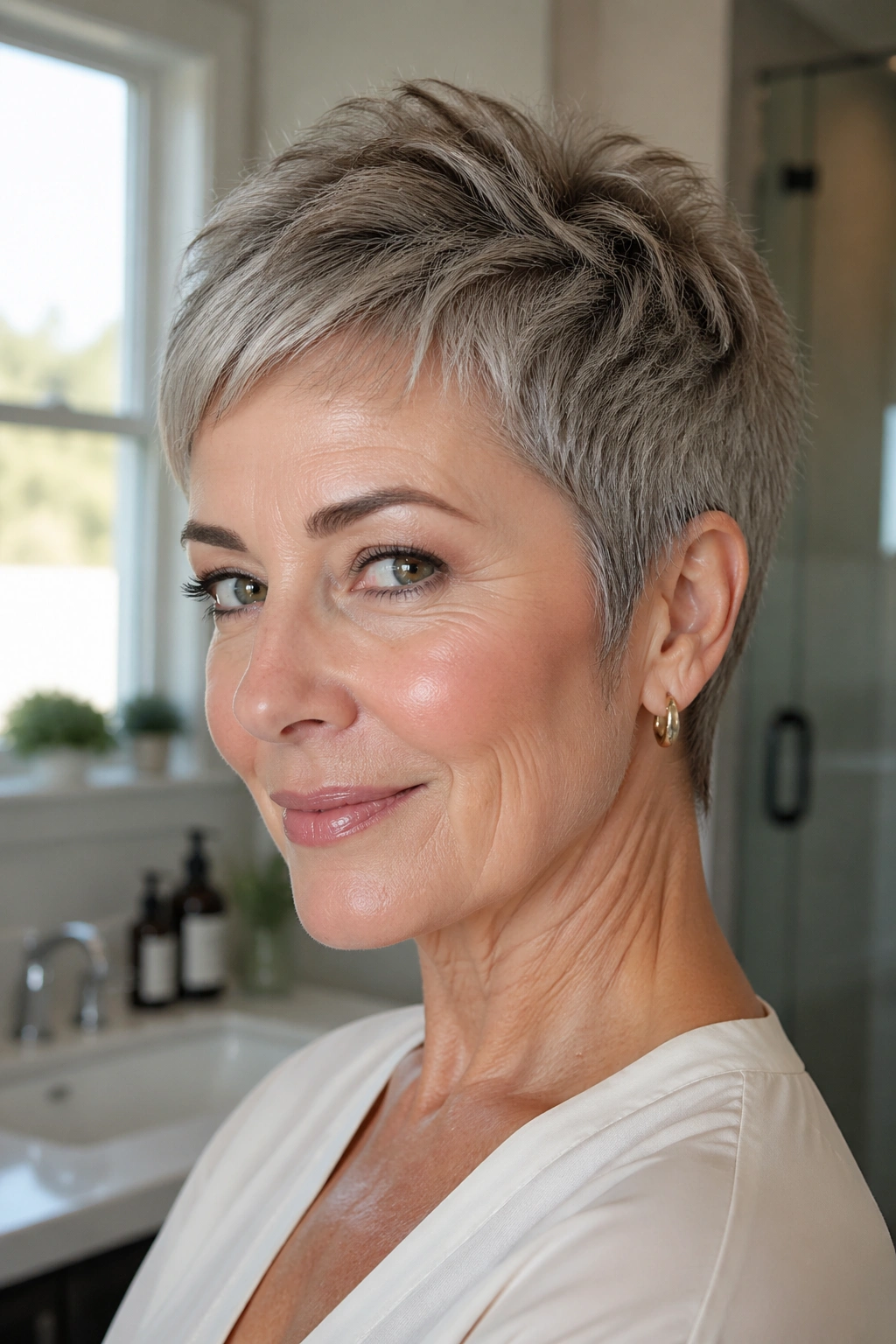
A modern bowl cut is not the blunt haircut people remember from old photos. Done well, it has soft edges, a little texture through the top, and a perimeter that curves gently instead of sitting like a helmet.
What makes it work now
The change is in the edge control. Leave the line soft around the ears, keep the crown slightly choppy, and let the fringe blend rather than draw a hard circle across the forehead. That makes the cut feel current without trying too hard.
- Best on straight or slightly wavy hair
- Needs a stylist who knows how to soften the perimeter
- Works well with a bold pair of glasses
- Can look sharp with minimal styling
It is not the safest cut on the list. That’s why it works. If you like hair with shape and a little personality, a softened bowl can be a very good choice. If you want invisible hair, skip it.
25. Classic Crop with a Little Top Length
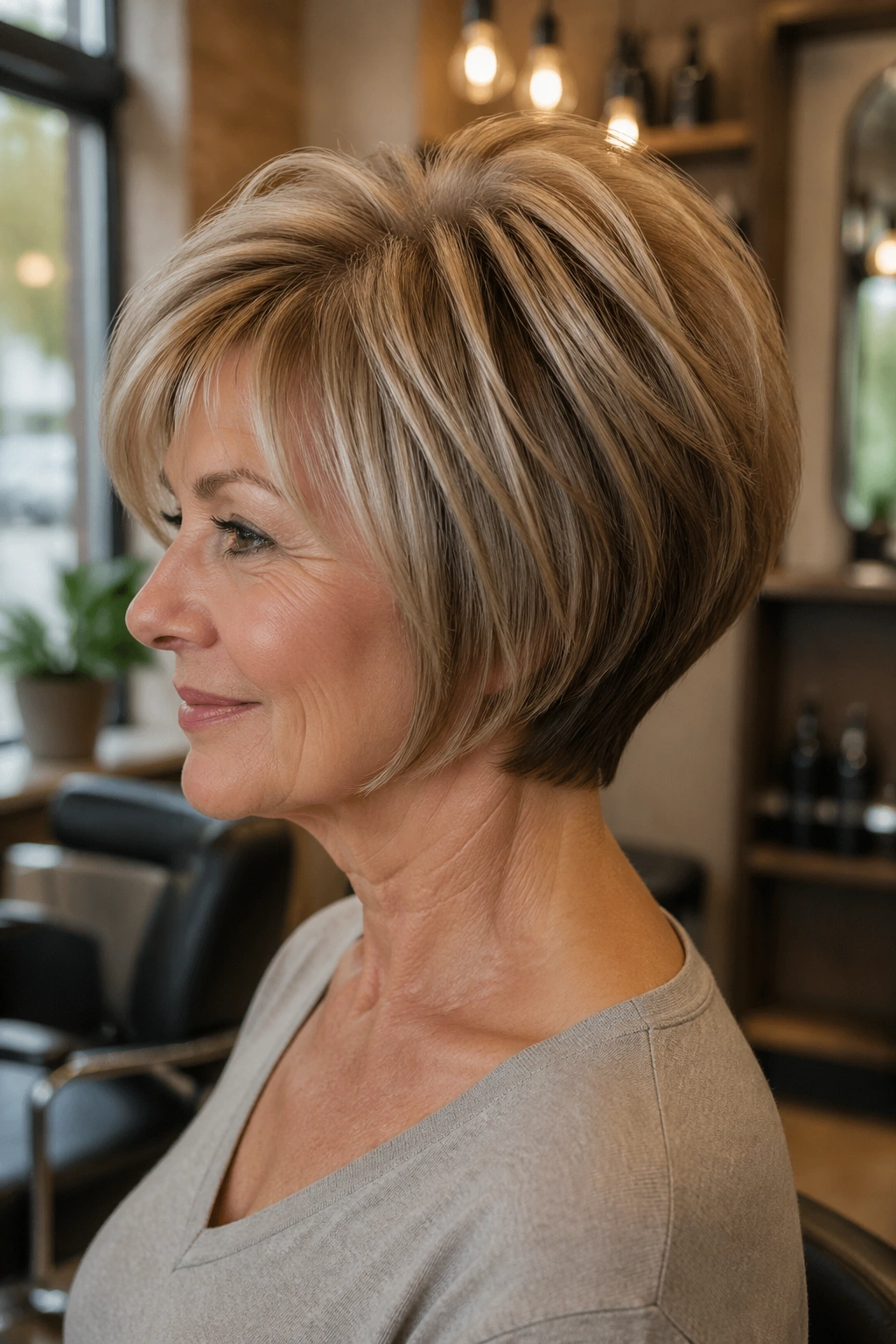
A classic crop with a little top length is the haircut I’d call the easiest to live with. The sides stay tidy, the nape stays neat, and the top has enough length to sweep, part, or mess up with your fingers when you’re in a hurry.
Why it keeps coming back
Some cuts are exciting for a week. This one is useful for months. It handles fine hair, medium hair, and even thick hair if the bulk is removed in the right places. It also grows out with more grace than many ultra-short styles, which matters when salon visits need to stretch a bit.
- Keep the top around 2 to 4 inches
- Ask for a soft taper at the neckline
- Use a light cream for control or a matte paste for separation
- Trim every 5 to 7 weeks if you want the shape to stay crisp
If you want short hair that behaves on ordinary mornings, this is hard to beat. It is not flashy. It does not need to be. The haircut just has to fit the way your hair lives now, and that is usually enough.