



Bangs can change a haircut faster than almost anything else. A few inches of fringe can soften a forehead, pull attention to the eyes, and give finer hair a little more shape without sacrificing length. For hairstyles with bangs for women over 50, that matters because hair often behaves differently than it did before — it can be thinner at the temples, drier at the ends, or a little more stubborn around the crown.
The trick is not chasing a “youthful” look in the vague, silly sense of the word. The goal is cleaner shape, better balance, and a cut that works with the hair you actually have. A good bang line can make glasses look intentional, help gray hair feel crisp instead of frizzy, and soften features without hiding your face. A bad one can sit heavy, separate in weird places, and demand more attention than the rest of your style ever asked for.
I’m a fan of bangs when they’re cut with some judgment. Not chopped straight across because someone got impatient. Not pushed into a shape that ignores a cowlick. The best versions have movement, a little air, and enough length to be forgiving on busy mornings. That’s where this list starts.
1. Soft Layered Bob With Side-Swept Bangs for Women Over 50
This is the haircut I’d hand to someone who wants bangs but does not want a hard edge sitting across the forehead all day. The side-swept fringe skims across the brow, and the layered bob keeps the shape from looking blocky or stiff. It’s one of those cuts that quietly does a lot of work.
Why it flatters so many faces
A side-swept bang gives you softness without closing off the face. That matters if your forehead is a little broad, if your hairline has become less dense, or if you wear glasses and don’t want the frame fighting the fringe.
The bob itself should land somewhere between the jaw and just below it. That length gives enough weight for movement, but not so much that the hair hangs flat. Ask for the ends to be point-cut rather than chopped bluntly; the difference is small in the chair and huge when you’re styling it at home.
Best for: fine to medium hair, straight to slightly wavy textures, and anyone who wants low-drama styling.
Ask for: a soft diagonal fringe, layers around the cheekbones, and a little lift at the crown.
Style it with: a round brush or a quick bend from a flat iron, then a mist of light-hold spray.
Pro tip: keep the bang a touch longer than you think you need. Hair shrinks when it dries, and a fringe that lands too high can feel fussy in a hurry.
2. Chin-Length French Bob With Brow-Grazing Fringe
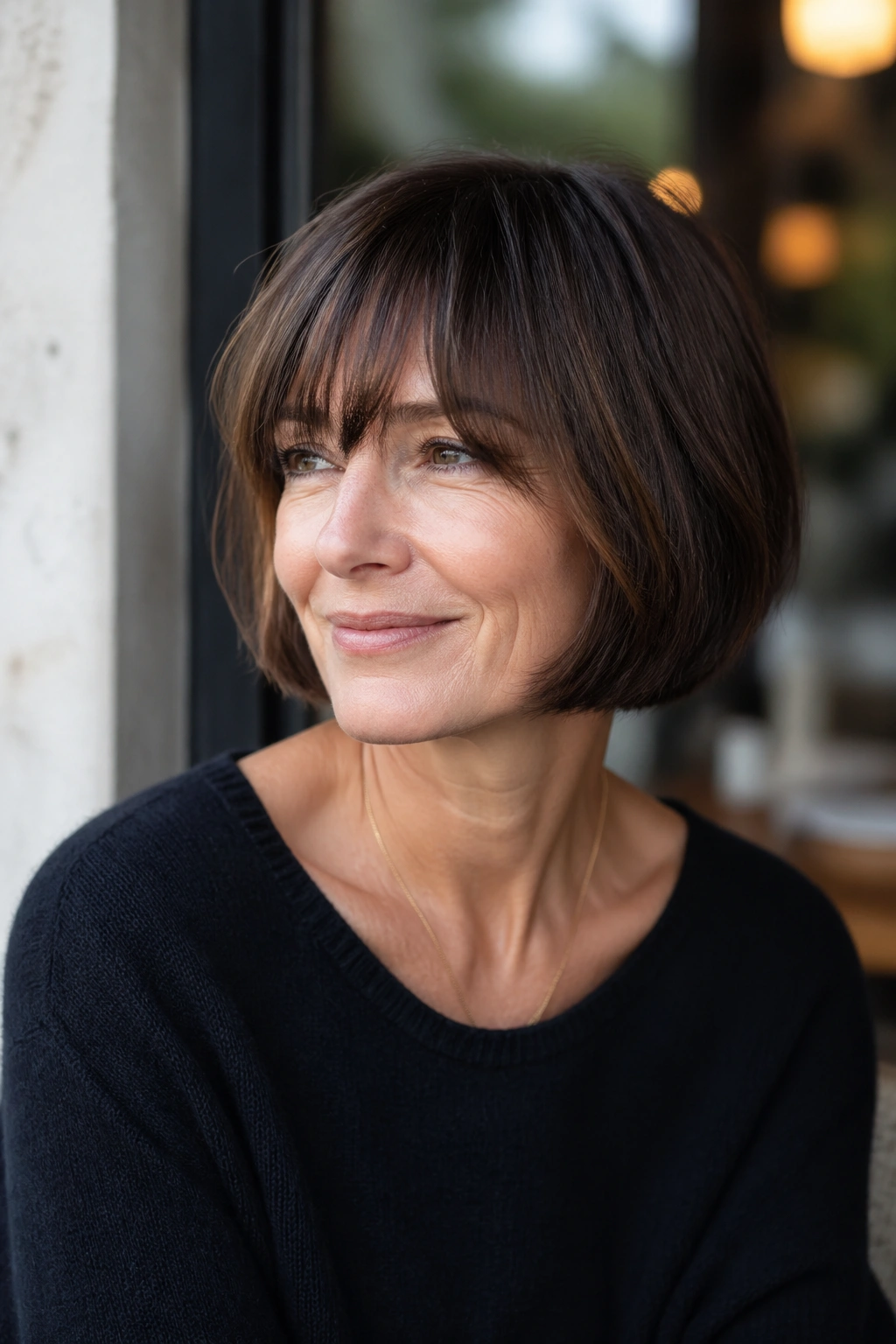
The French bob works when it’s not too perfect. That’s the whole charm. A chin-length cut with a brow-grazing fringe gives the face a clean frame, and it has enough attitude to look intentional even when the styling is loose.
Short hair is honest.
If your jawline is one of your favorite features, this cut puts it front and center. If your hair is dense, ask for the ends to be softened a little so the shape doesn’t puff out into a helmet. If it’s finer, the compact length can actually help the hair look fuller because there’s less weight dragging it down.
The fringe should touch or skim the brows, not bury them. That little bit of space keeps the cut from feeling heavy. I also like this one on women who want bangs but hate blow-drying a large section of hair every morning. The cut has a built-in confidence that doesn’t need much fuss.
One note: a French bob looks chic when the line is neat, but not when it’s severe. If a stylist offers a perfectly blunt edge with no softness at all, I’d ask for some movement through the ends.
3. Pixie Cut With Feathered Bangs
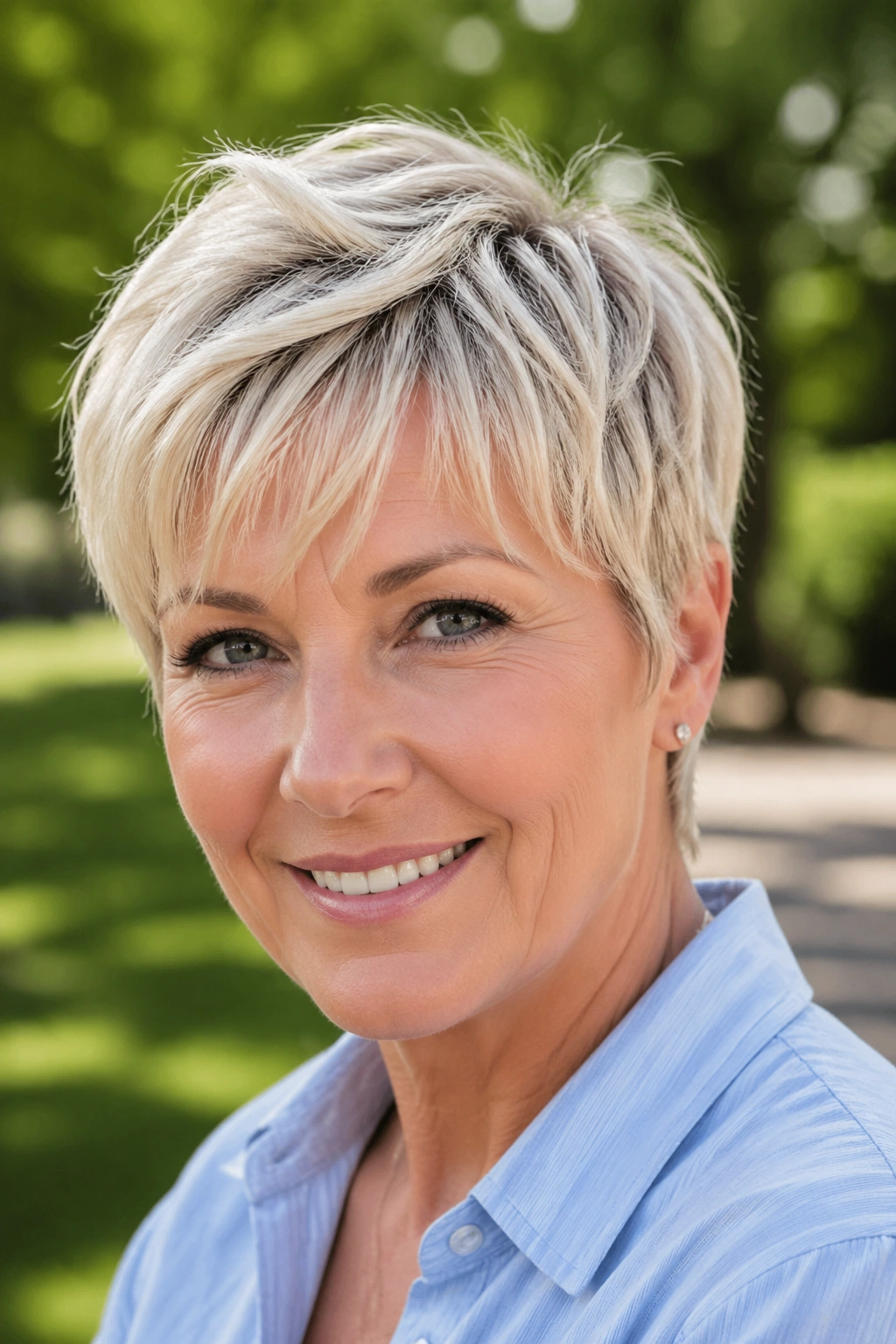
Why do pixie cuts with bangs work so well after 50? Because they remove weight where hair often needs it most and keep softness right where the face needs it. The result is light, neat, and a little playful without going into helmet territory.
How to ask for it
Tell the stylist you want the top left long enough to move, not so short that it spikes up. The fringe should be feathered through the ends so it falls in small sections instead of one solid bar.
A good pixie with bangs often has 2 to 3 inches on top, shorter sides, and a slightly longer front that can sweep across the forehead. That gives you options. You can wear it forward, brush it to the side, or tuck a piece behind the ear when you want the face more open.
This is a smart cut if your hair is fine, because the shorter length can make the strands look denser. It also works for active people who want hair that dries fast and does not spend half the day getting in the way.
Best for: straight hair, slightly wavy hair, and anyone who likes a polished but easy shape.
What to avoid: a blunt top and stiff fringe. That combination ages the cut fast.
Daily styling: a pea-size bit of styling cream or matte paste, worked through the crown and fringe with your fingers. That’s enough. More usually looks like too much.
4. Collarbone Lob With Curtain Bangs
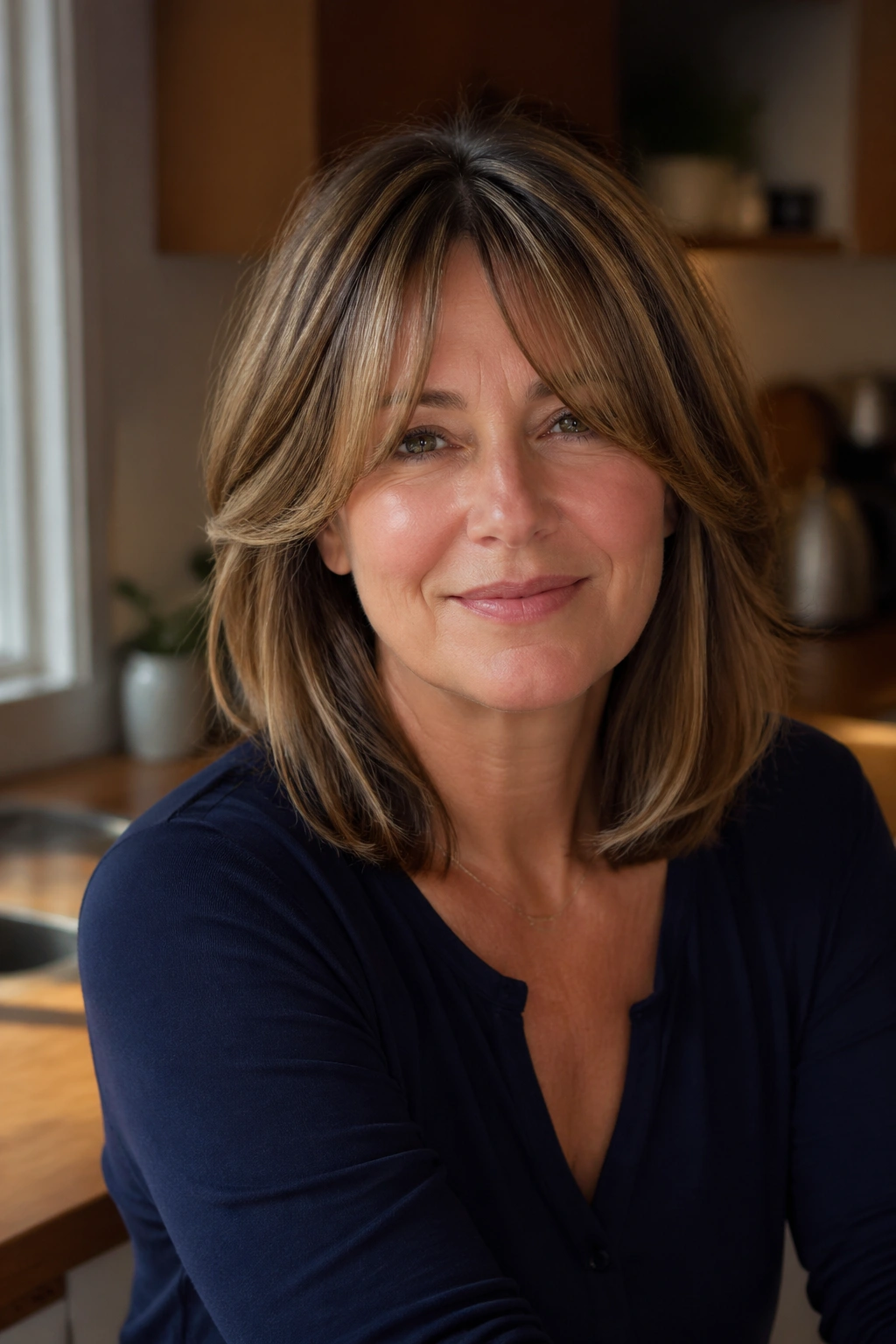
A collarbone-length lob is one of those cuts that behaves well in almost every situation. Add curtain bangs, and you get a face frame that opens in the middle, falls softly at the sides, and grows out more gracefully than a blunt fringe ever will.
If your hair keeps flipping out at the ends, this length gives it room to settle. If it tends to go flat, the curtain bangs bring movement back up near the face, which is where people notice it most. That’s part of why this style is so forgiving. It works with straight hair, loose waves, and even hair that has a little bend and wants to misbehave.
Curtain bangs should usually start around the bridge of the nose and graduate longer toward the cheekbones. That shape keeps the center light and the sides flattering. If you wear glasses, this is one of the easier bang styles to live with because the bangs split away from the frame instead of fighting it.
A large round brush helps, but you do not need a full salon blowout to make it work. Dry the bangs side to side at the roots, then let the ends fall naturally. Simple. Effective.
5. Long Layers With Wispy Bangs
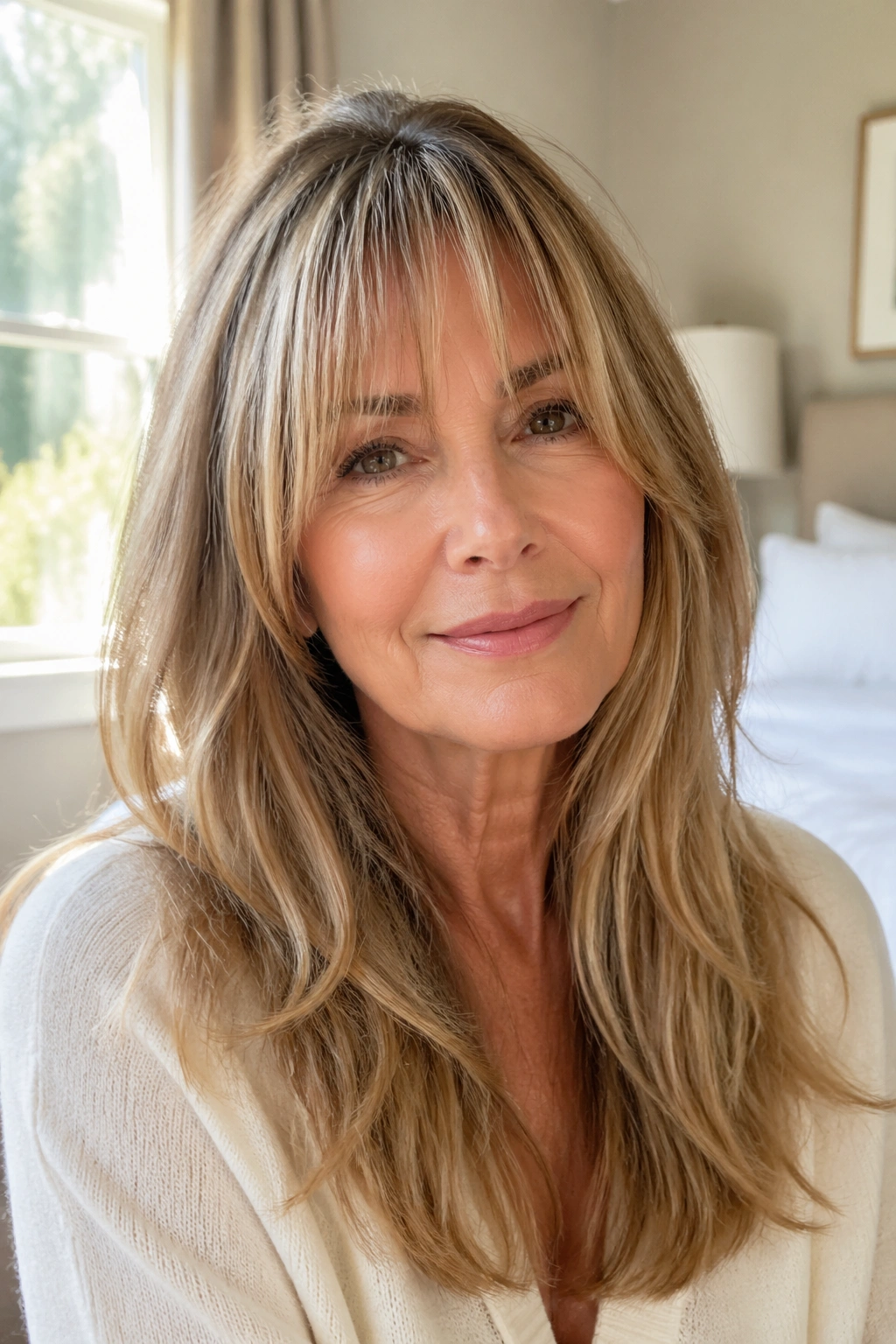
Long hair after 50 is not a problem. Heavy, one-length hair that sits like a curtain is the problem. Long layers fix that, and wispy bangs keep the front light enough that the whole cut still breathes.
This is a good option if you like having length around your shoulders or chest but don’t want the face to disappear under it. The layers should start below the chin so the shape stays soft. If they start too high, the hair can get frayed and thin at the ends, which is exactly what you do not want.
Wispy bangs are nice because they never feel sealed off. They let some forehead show through, and that makes the cut easier to wear on days when your hair is doing its own thing. A lightly textured fringe also blends better when you pull the rest into a low ponytail or loose clip.
This style suits medium to thick hair especially well. Fine hair can wear it too, but keep the layers long and the fringe sparse. Over-thinning is the mistake here. Once the ends get see-through, you spend more time trying to fake fullness than you would have spent on a better shape.
6. Shag With Piecey Bangs
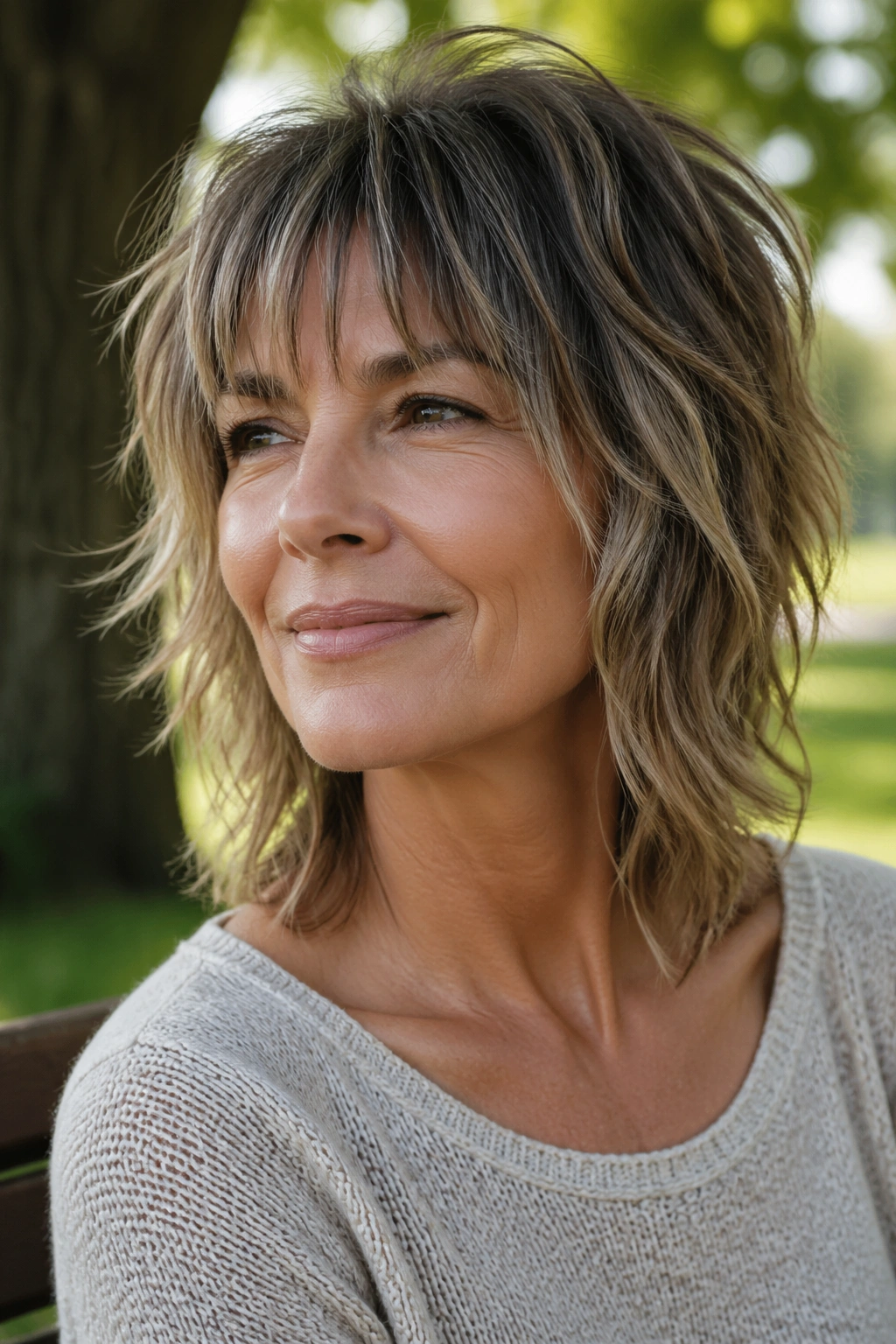
A shag with piecey bangs is for the woman who likes hair that has a little attitude. Not messy for the sake of mess, though. Good shag cuts are built with layered movement, especially around the crown and cheekbones, and the bangs are broken into sections so they fall softly instead of sitting as one thick wall.
Unlike a polished bob, this cut does not need perfect symmetry to look right. A little bend in the hair helps. So does natural wave. If your hair has texture, a shag can make it look more alive without asking for a lot of heat styling.
What makes it different
The fringe is usually cut with separation in mind. A stylist may point-cut it or razored it lightly so the ends don’t hang in one block. That’s why it reads as easy instead of heavy.
The best version has layers that start around the cheekbones and fall longer through the ends. That keeps the cut from puffing out around the crown or turning triangular at the bottom.
Best for: wavy hair, thick hair, and people who hate strict blow-dry routines.
Style it with: a bit of mousse at the roots, a diffuser if you’ve got wave, or air-drying with a cream that supports texture.
Watch for: over-texturizing. Too many short pieces can make the cut look frayed rather than soft.
7. Blunt Bob With Full Fringe
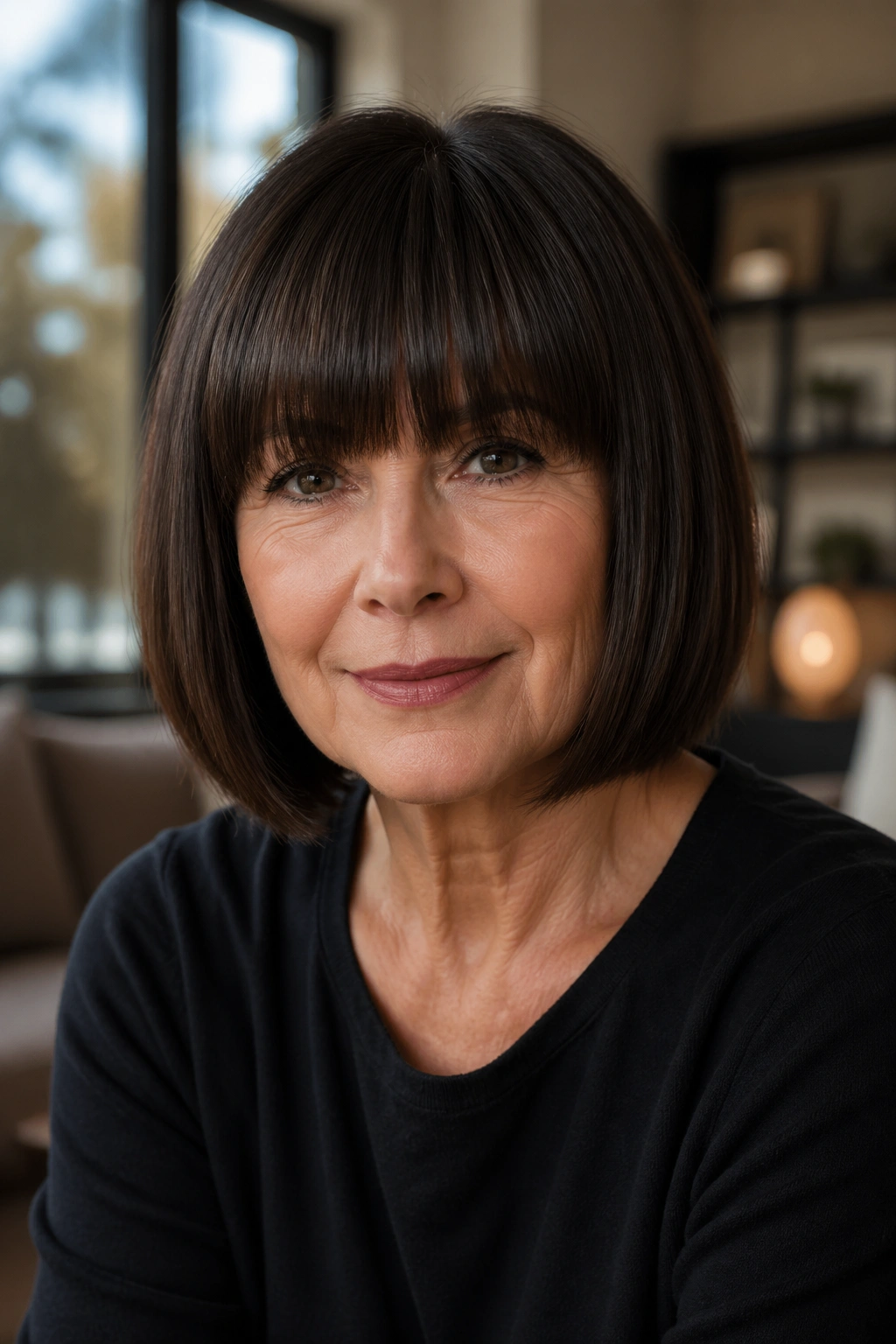
A blunt bob with a full fringe is the boldest cut on this list, and when it’s done well, it looks sharp in the best way. The line is clean. The fringe has presence. The whole style feels deliberate.
This cut works best when the hair is dense enough to hold a solid shape. If your hair is very fine, a full fringe can separate or expose the scalp in spots, which defeats the point. But if you have good density, the blunt bob gives a tidy frame that sits close to the head and makes the face stand out.
The fringe should not be hacked across like a ruler line. That’s where people go wrong. A tiny bit of curve or internal texture keeps it from looking severe. Even a straight fringe needs some give at the ends so it moves with the forehead instead of sitting like a shelf.
I like this look on women who wear strong lipstick, bold glasses, or simple clothing with clean lines. It has a graphic feel. Not everyone wants that. Fair enough. But when it works, it really works.
8. Bixie Cut With Side Fringe
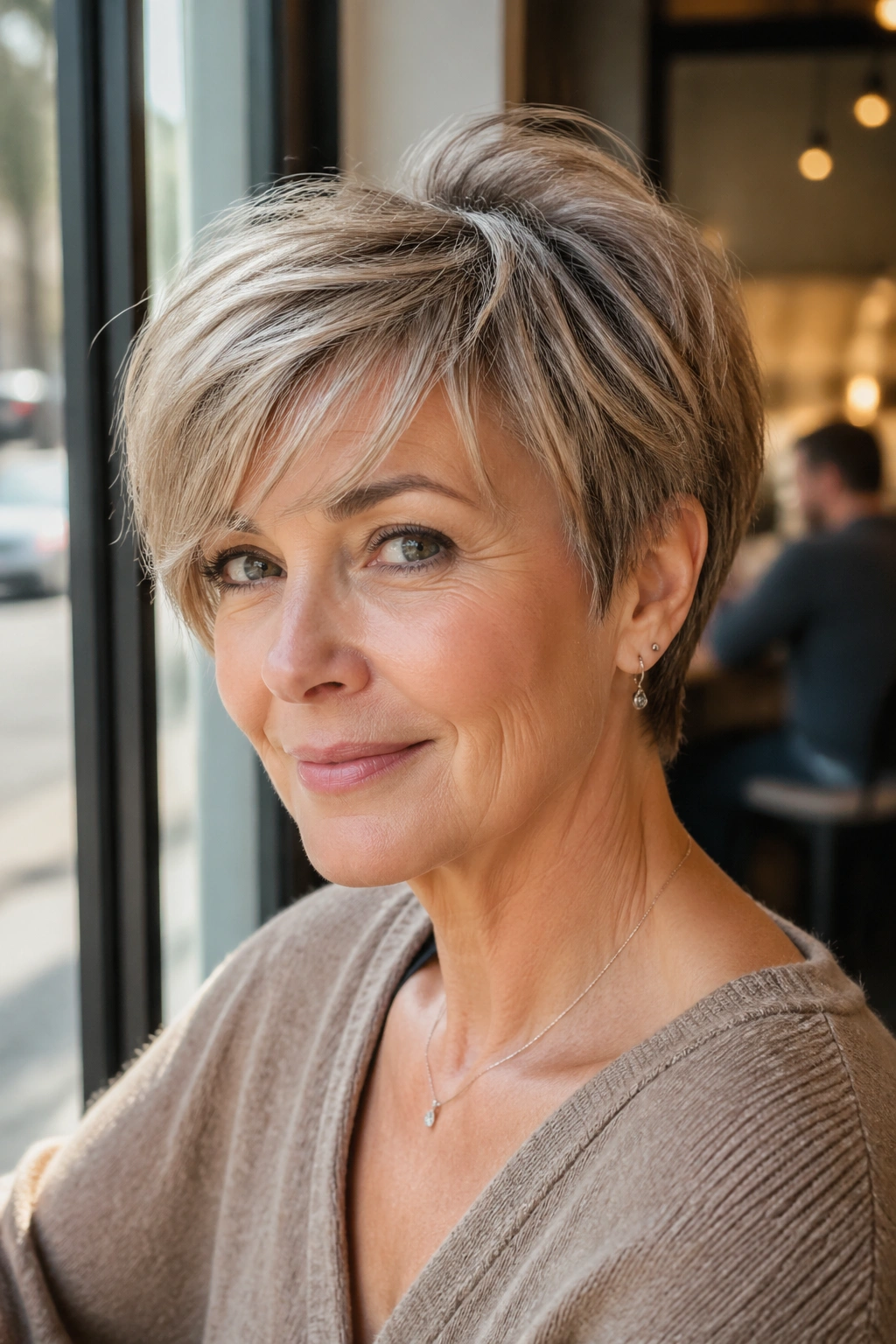
The bixie sits between a bob and a pixie, and that middle ground is useful. You get shorter sides, a bit more softness on top, and enough length in the fringe to shape the face without committing to a full short cut.
What makes this cut different
A bixie is great when you want the neck open but not bare. The longer top creates lift, while the side fringe keeps the front flattering and easy to move around. It’s a smart choice if your hair has gotten lighter at the temples, because the side-swept front gives you coverage where you may want it most.
This cut also wears well if you like a little asymmetry. One side can tuck behind the ear while the other falls forward. That unevenness makes the style look current without feeling fussy.
A bixie is best when the layers are clean and the crown is not over-thinned. If a stylist takes too much weight out of the top, the whole cut can lose its shape in a week. Short hair shows bad layering fast.
Best for: fine hair, active days, and anyone growing out a pixie.
Style tip: use a small amount of mousse at the roots, then rough-dry with your fingers. Don’t overbrush it. The texture is part of the point.
9. Soft Wedge With Textured Bangs
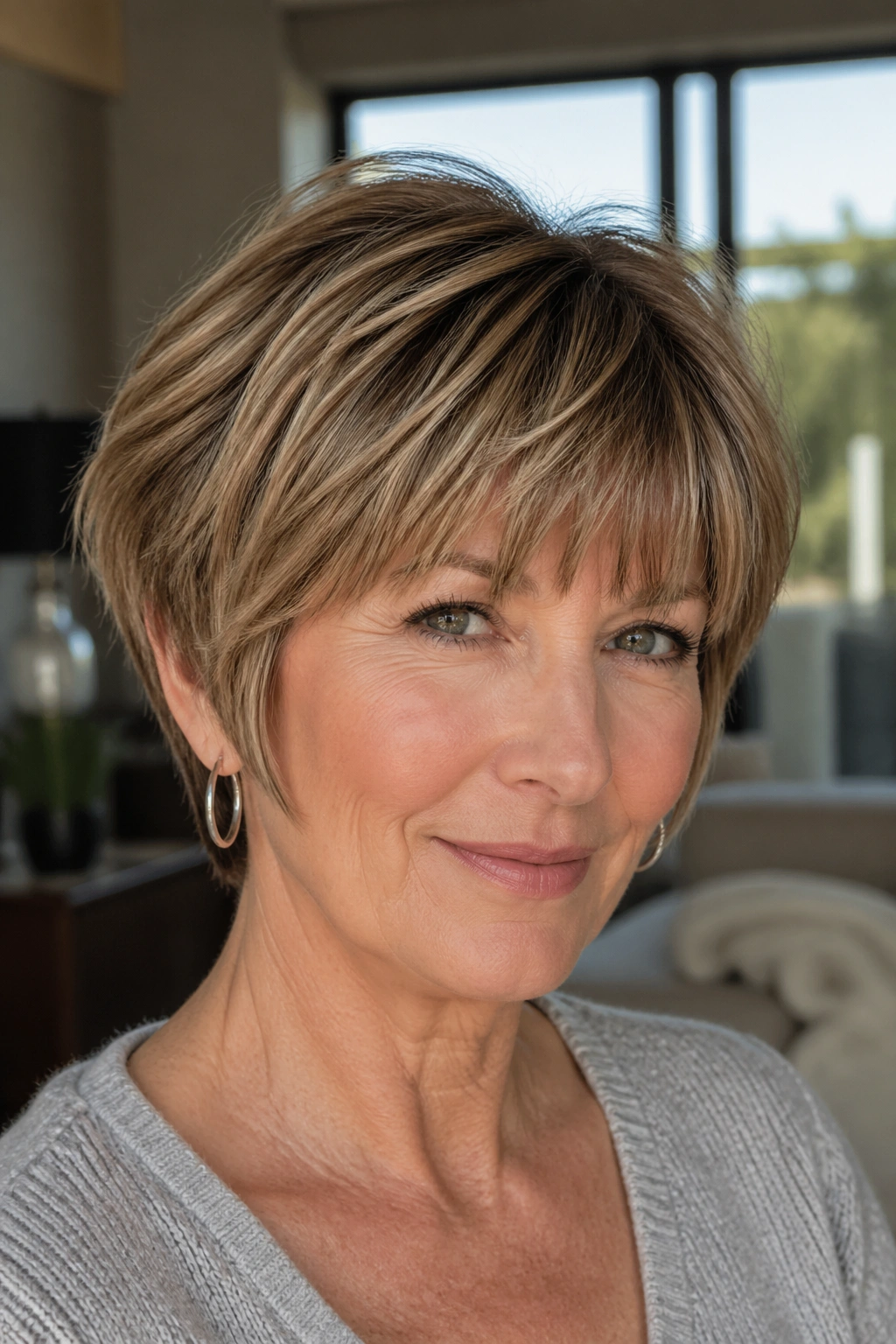
Why does the wedge still earn a place here? Because it builds volume in a way that many older haircuts forget to do. The back is stacked a little higher, the sides angle cleanly, and textured bangs stop the shape from feeling dated.
This is a strong option if your hair is straight and tends to lie flat against the head. The wedge creates a sense of lift without needing teasing or a gallon of hairspray. That said, it does ask for a regular trim. If you let the shape grow too long in the back, the silhouette can sag.
The bangs should be textured, not chunky. You want small variations in length so they blend into the rest of the cut. Straight-across bangs with a wedge can look too hard, especially if the hair around the crown is already neatly structured.
A round brush helps at the crown, but the fringe can be dried forward with your fingers and then nudged slightly to one side. That loose finish is better than trying to make every strand obey. Hair rarely obeys anyway.
10. Collarbone Cut With Face-Framing Bangs for Women Over 50
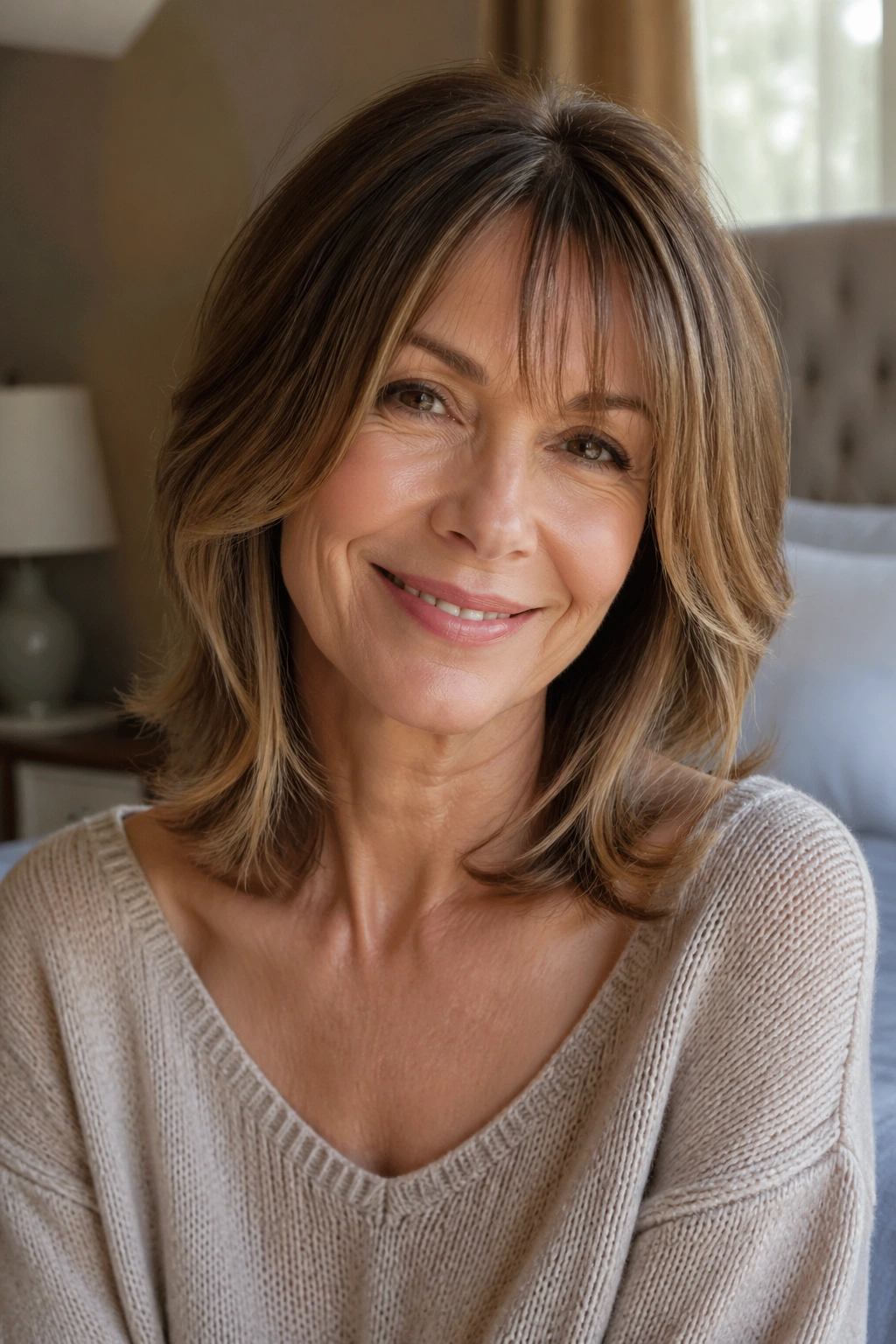
This is the safe cut for people who want bangs but feel nervous about making the jump. The length sits around the collarbone, which gives enough room to wear it up, clip it back, or let it fall loose. The face-framing bangs do the flattering work without taking over the whole head.
One sentence: tiny changes matter here.
A good version starts with shorter pieces near the cheekbones and gradually lengthens toward the jaw. That gives the face shape without building a heavy curtain in front of it. If you wear glasses, this cut is forgiving because the bangs can be shaped around the frame instead of crashing into it.
It’s a good option for women whose hair has become a little more fragile at the ends. Keeping the length around the collarbone avoids the split, wispy bottom that happens when long hair gets too stretched out. It also gives you a cleaner outline than hair that falls past the shoulders but has no shape.
If you want more lift, ask for very light layering around the front only. Too many layers in the back can make the cut lose its calm, easy feel. That’s the balance worth protecting here.
11. Curly Bob With Curly Bangs
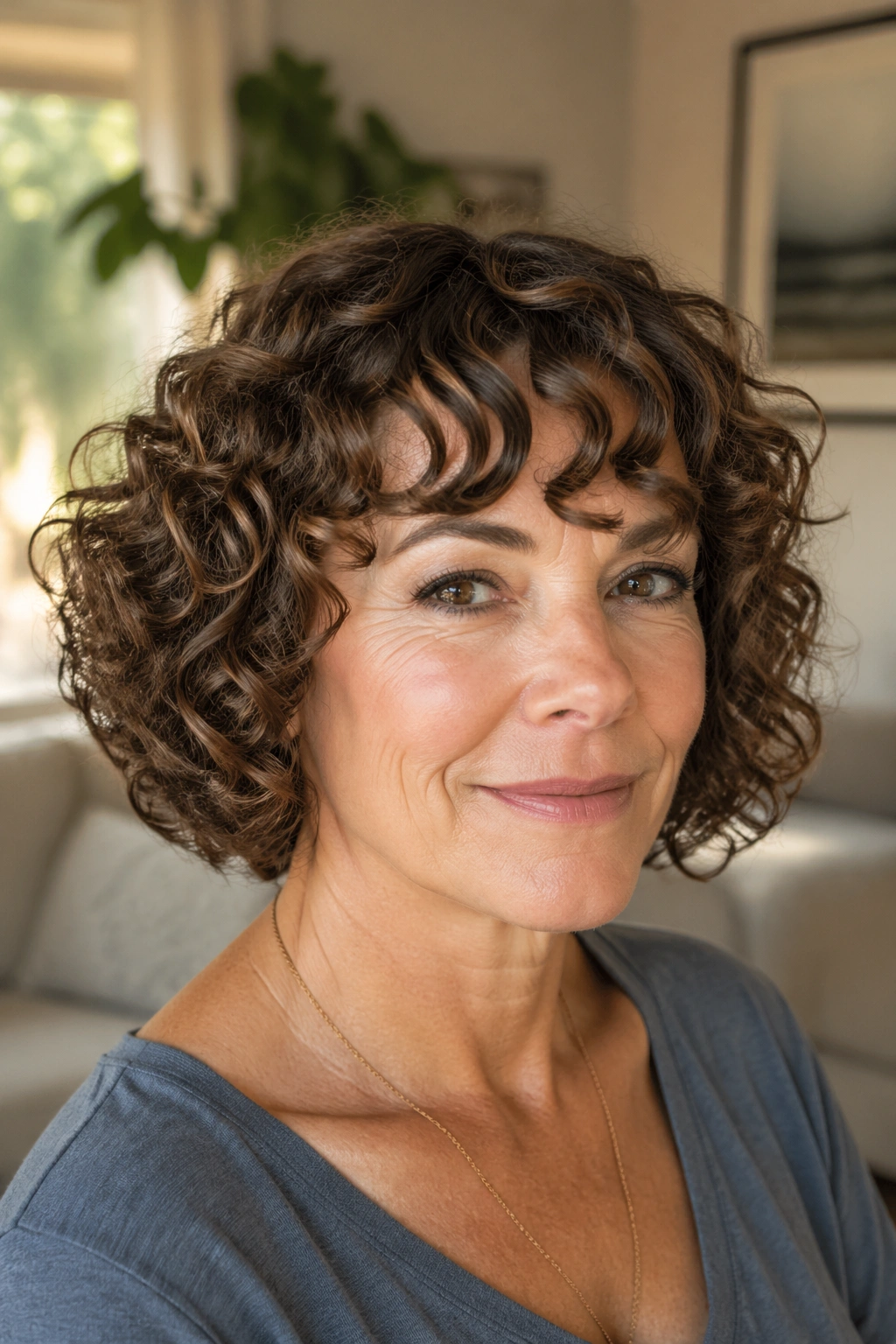
Curly bangs are not a mistake when they’re cut the right way. In fact, they can be one of the freshest things you do with curls after 50. A chin-length curly bob with matching bangs frames the face and keeps the texture front and center, which is where it belongs.
How to get it right
Ask for the curls to be cut dry, or at least mostly dry. Curl pattern changes how hair sits, and wet cutting can hide shrinkage that shows up hard once the hair dries. That’s how people end up with bangs that bounce way too high.
The bob should hit around the jaw or a touch below. That length keeps the shape round without becoming bulky. The bangs can land at the brow or slightly above it when dry, depending on how much shrinkage your curls have.
Good curl habits for this cut:
- Use a diffuser on low heat.
- Keep heavy creams off the fringe.
- Scrunch in product from the ends upward, not from the roots.
- Let the bang dry in its natural curl pattern instead of brushing it straight.
This cut is especially good if you’re tired of fighting curl volume and want to wear it on purpose. That changes everything.
12. Sleek Shoulder Cut With Curtain Fringe
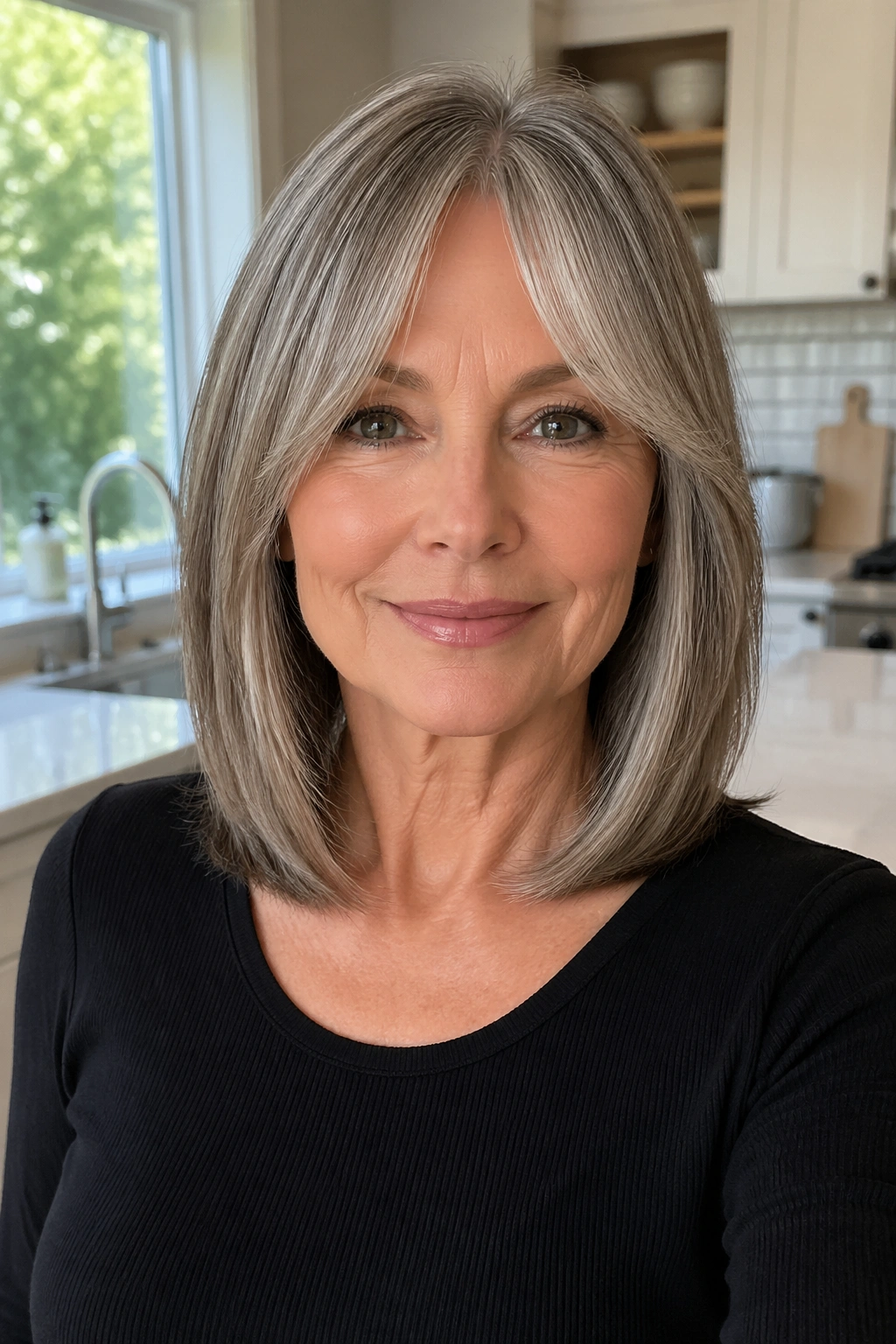
The shoulder-length sleek cut is not flashy, and that’s part of why it works. It gives a clean line through the body of the hair, then the curtain fringe softens the front so the style doesn’t feel severe.
This one is ideal if your hair is straight, thick, or slightly coarse and you like a more polished finish. It also plays well with gray hair because the smooth surface lets the color read clearly rather than getting lost in a lot of layers. The cut should skim the shoulders, not flop over them, and the front should open at the center and fall toward the cheekbones.
Compared with a lob, this version is a little more controlled. Compared with a shag, it is calmer. That makes it a good fit if you prefer neat hair that still has some movement. A paddle brush and a blow-dryer usually do the job, though a quick pass with a flat iron can tame the front if the hair bends in odd ways.
The only downside is that sleek hair shows damage fast. Dry ends, split points, and rough bangs are easier to spot here. Regular trims matter more than most people want to hear.
13. Tapered Crop With Long Top Bangs
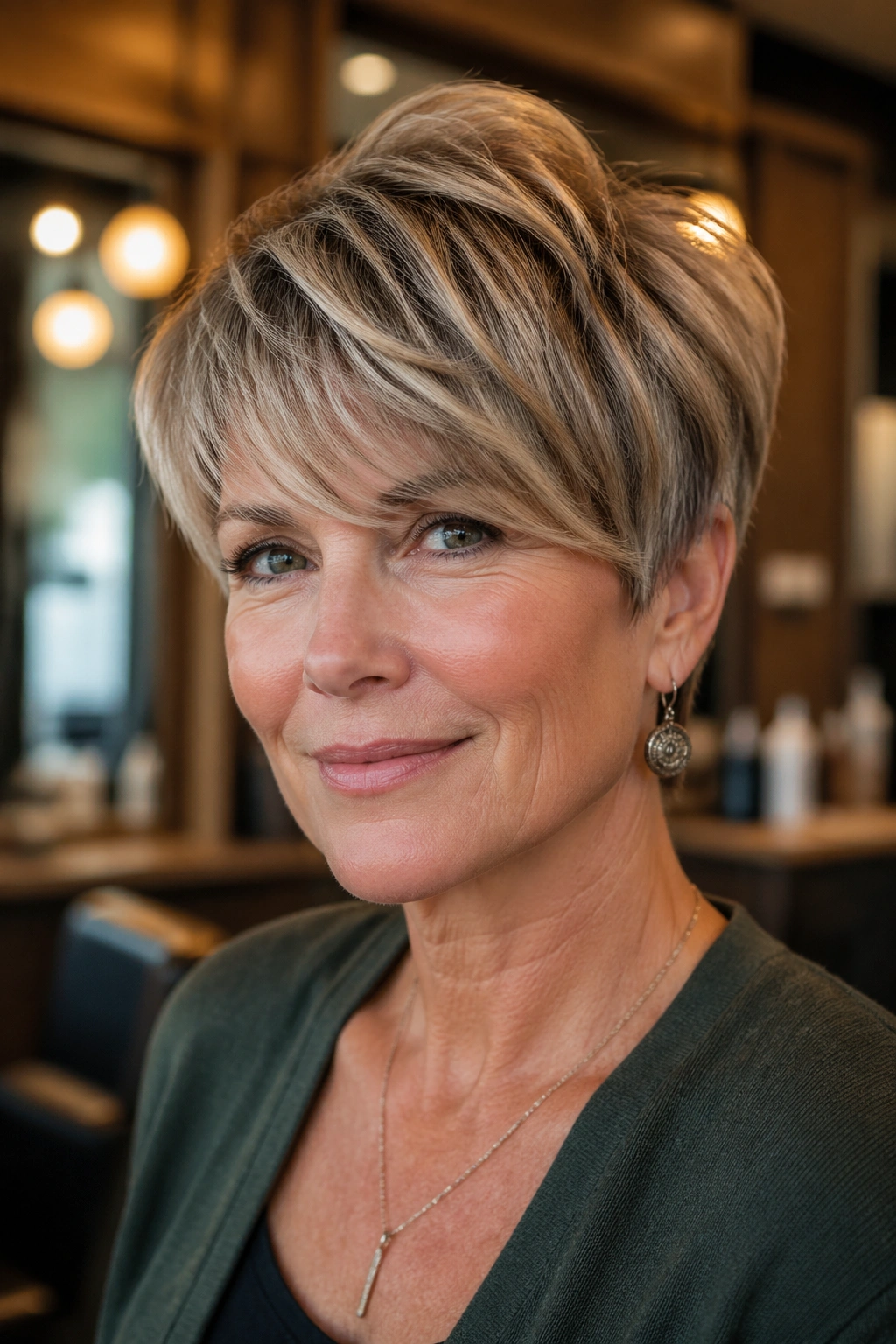
A tapered crop is one of the cleanest ways to wear short hair with bangs. The sides and back are close to the head, while the top stays longer and can sweep forward or sideways. That longer front is what keeps the cut soft.
This style is especially good if you want height at the crown. A little lift there can change the whole face shape, especially on round or heart-shaped faces. The top bangs should not be thin to the point of transparency. They need enough density to create a line, even if that line is a soft one.
What to tell your stylist:
- Keep the nape neat but not shaved too high.
- Leave the top long enough to move.
- Texture the front with point-cutting, not blunt cuts.
- Keep the fringe light around the temples.
A crop like this works best with a bit of styling paste or wax. Rub it between your fingers, then pinch a few pieces into place. Don’t smear it all over the hair. That’s how a nice crop turns greasy in ten minutes.
14. Inverted Bob With Side Bangs
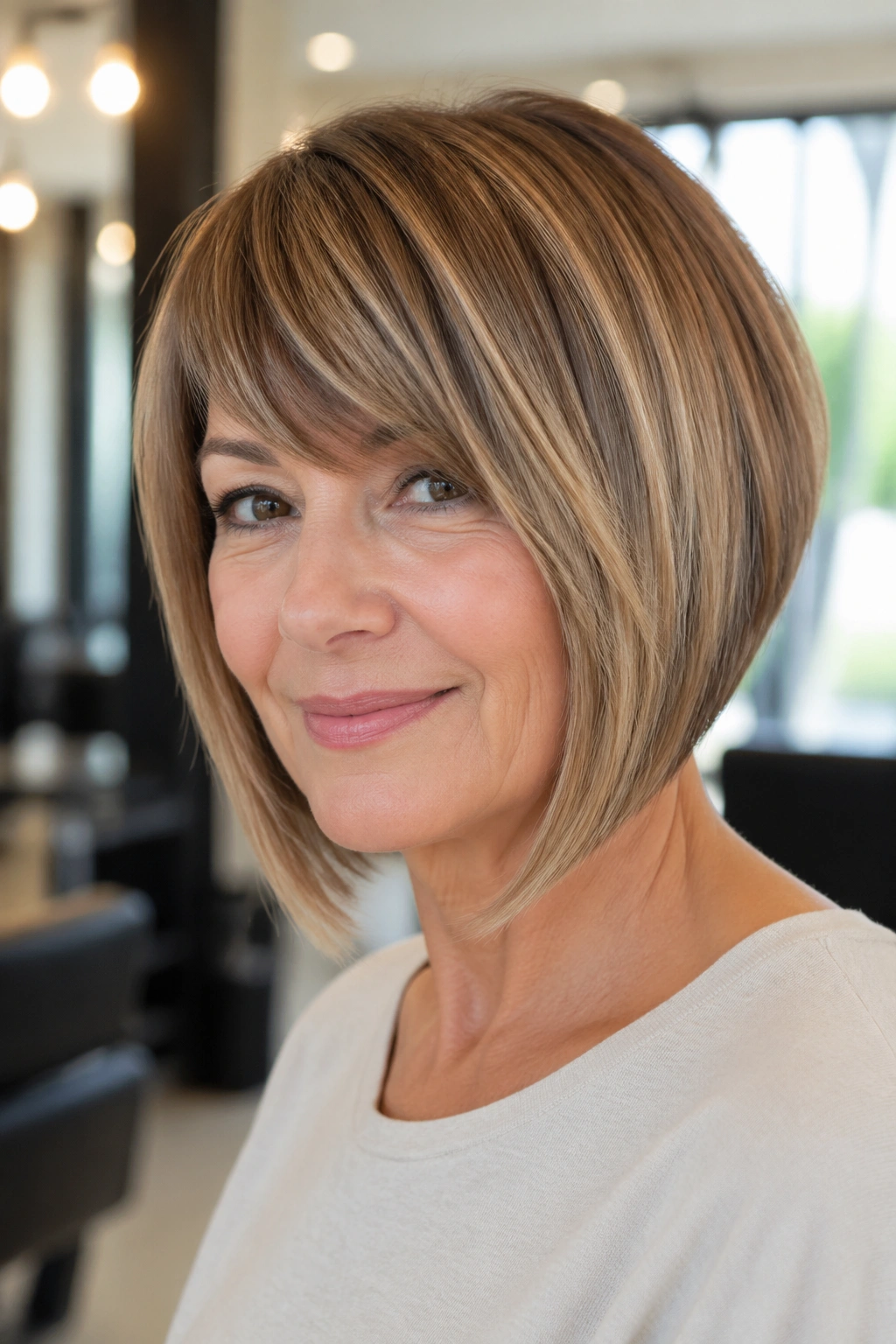
The inverted bob has a shape that does some of the work for you. It sits shorter at the back and longer toward the front, which creates forward motion around the jaw. Side bangs make that line softer and easier to wear.
If your face is round or square, the longer front pieces can slim the outline a little without feeling severe. If your neck is one of the places you like to show off, this cut keeps it visible while still giving you enough hair around the face to balance the shape.
This is a cut that looks best with clear angles. Not rigid angles. Clear ones. The difference matters. A messy inverted bob can look like the haircut grew out before the appointment was due. A well-cut version has a smooth fall from back to front, and the bangs follow that same logic.
Styling is straightforward. Blow-dry the front with tension, turning the brush slightly inward at the ends. If the side bang flips the wrong way, don’t wrestle it with too much heat. Let it cool in the direction you want. Hair remembers shape better when it cools in place.
15. Wavy Lob With Bottleneck Bangs
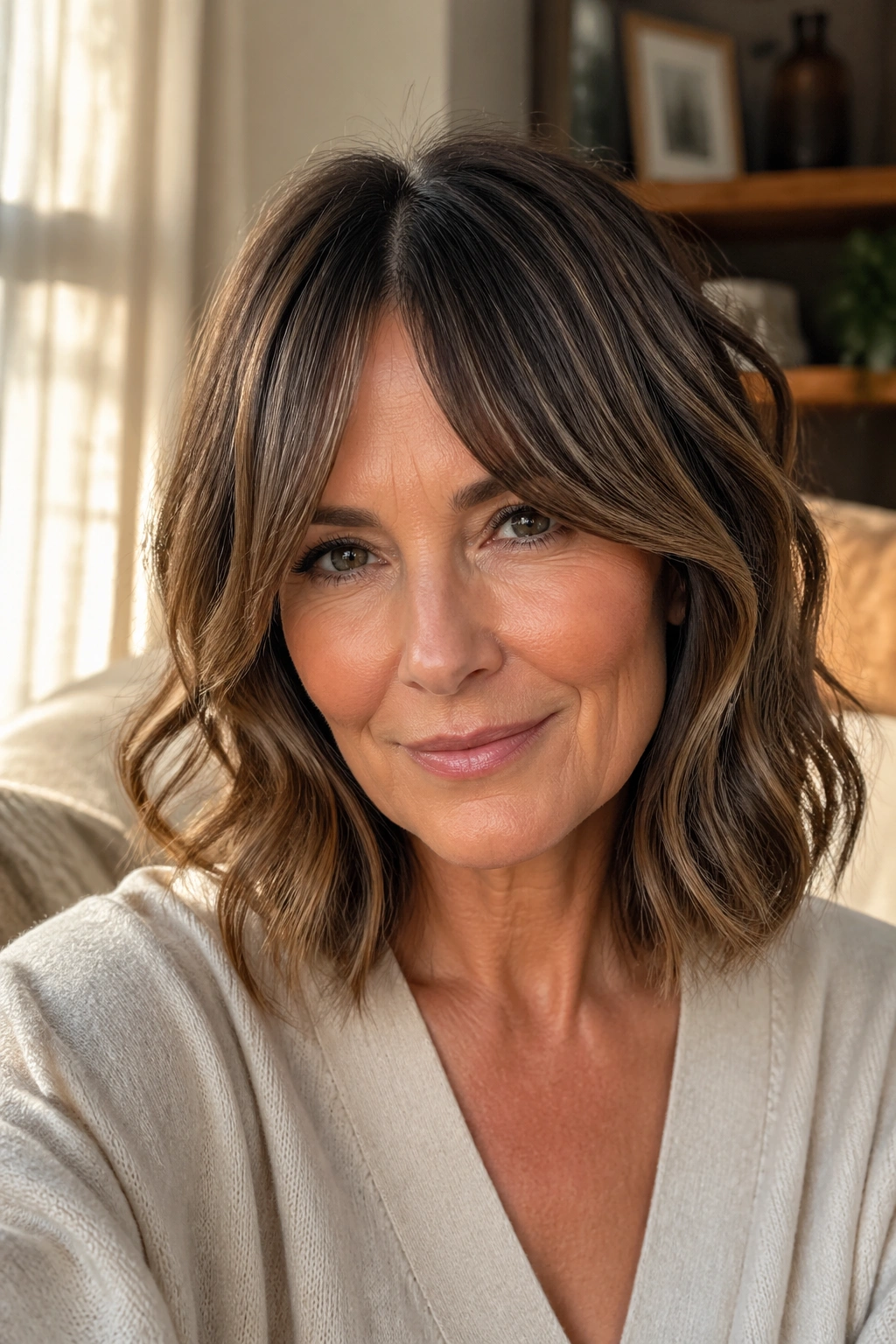
Bottleneck bangs are named for the shape, and the shape is exactly why they work. They start a little narrower near the center, then open wider as they move down toward the cheekbones. On wavy hair, that creates a soft frame that does not feel heavy.
Why pick this over curtain bangs? Because bottleneck bangs can feel a bit more polished at the top while still giving you that open center. If you have a forehead you’d rather not cover completely, they give you some relief without making the front look sparse.
The wavy lob underneath keeps everything relaxed. It usually lands between the chin and collarbone, which means the hair can bounce a little and still look intentional. The waves should not be overdone. Soft, loose texture is the whole point. Too much curl makes the bangs and the length compete with each other.
A good stylist will cut the bangs a touch longer than the brow when dry, especially if your hair bends or expands as it dries. That saves you from the all-too-common problem of fringe that looks perfect in the chair and too short at home.
16. Rounded Bob With Wispy Bangs
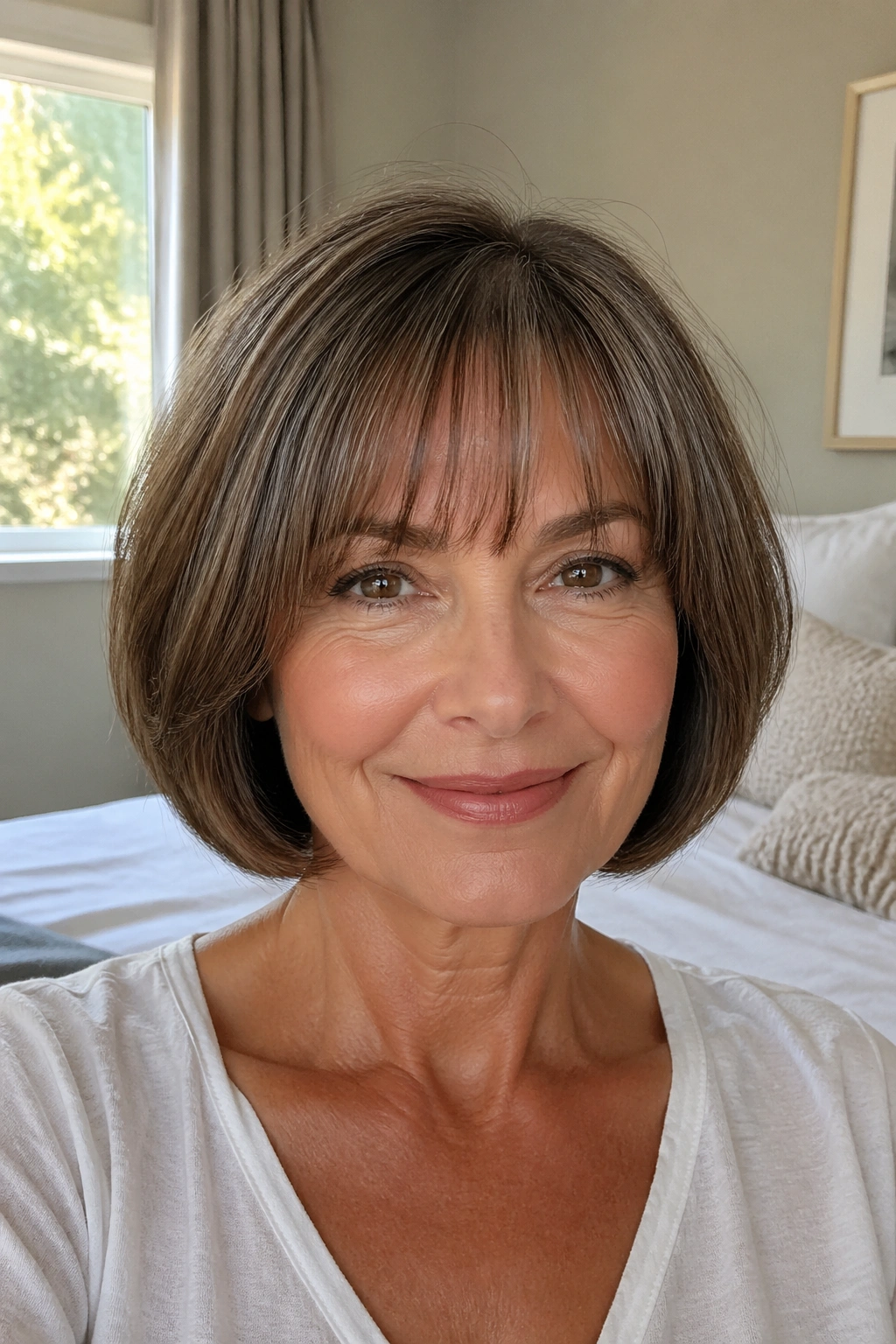
A rounded bob is one of the friendliest shapes for straight hair that wants movement but not chaos. The ends curve inward a little, the silhouette stays soft, and wispy bangs keep the front light enough that the cut does not feel bulky.
How to ask for it
Tell the stylist you want the length to sit around the jaw or just below it, with enough layering to shape the curve but not enough to break the line apart. The bangs should be cut into thin, airy pieces that fall across the brow, not one dense strip.
That wispy front is doing a lot. It softens the forehead, keeps the cut from feeling formal, and gives the bob a little space around the eyes. If you have a long face, this shape can be especially flattering because the rounded sides add width while the fringe shortens the vertical line a bit.
Use a 1-inch or 1.5-inch round brush if you want a smooth finish. If not, a quick bend with a flat iron is fine. The key is not making the ends too puffed. Rounded should not mean puffy. That’s a mistake people make all the time.
17. Shoulder-Grazing Cut With Cheekbone Bangs
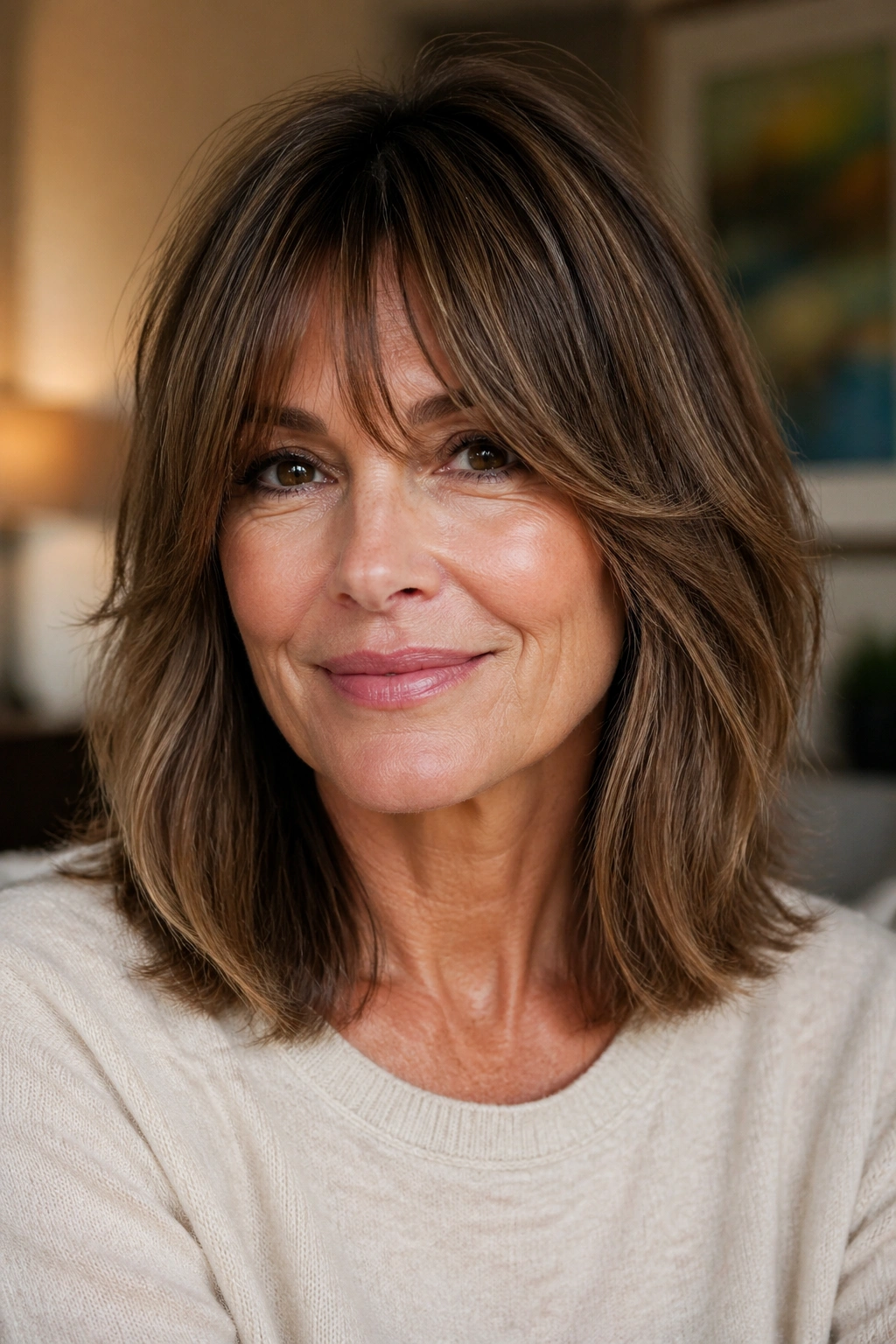
Imagine a cut that still gives you ponytail length, but makes the front feel deliberate. That’s what cheekbone bangs do when they’re paired with shoulder-grazing hair. The bangs slide toward the cheekbones instead of sitting squarely on the forehead, which gives the face a softer outline.
This is a smart choice if you want flexibility. You can wear it down, clip half of it back, or tuck the front pieces behind your ears without losing the shape. The bangs are long enough to grow out gracefully, too, which matters if you hate that awkward in-between stage.
It works especially well on women who want to minimize a long forehead or soften sharper features. The face-framing pieces should start around the cheekbones, not the chin. That upper placement keeps the style open and lifts the eye line upward.
A good cut here should not look over-layered. The hair around the shoulders should still feel like a solid shape, otherwise the bangs end up floating alone. A little weight through the length gives the front a place to land.
18. Silver Hair With Airy Curtain Bangs
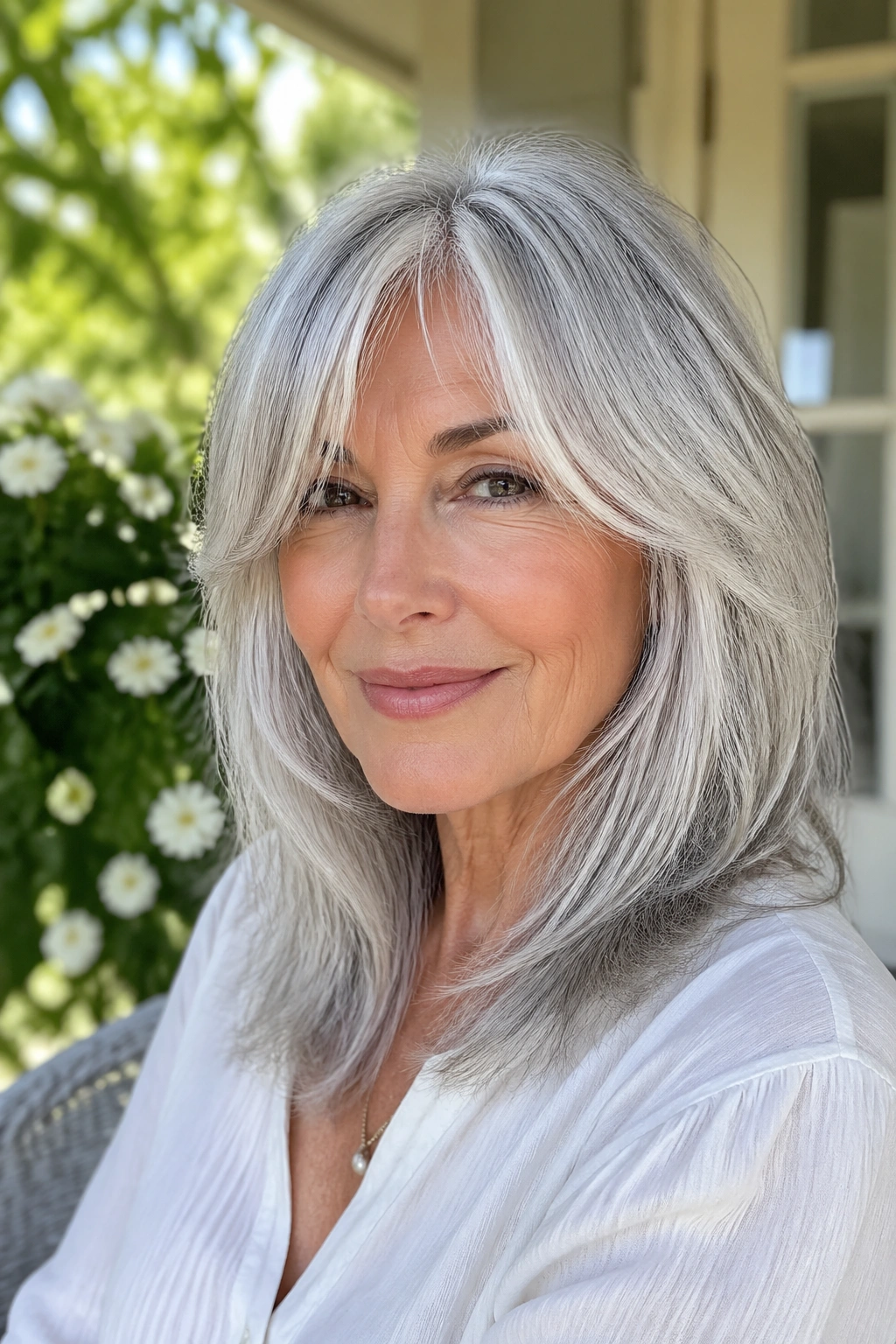
Silver hair has its own texture, and it deserves a cut that respects that. Airy curtain bangs are one of the nicest ways to do it because they let the brightness of the hair show without creating a blunt block across the face.
Gray and silver strands often feel a bit wirier or drier, so a soft fringe helps a lot. Heavy bangs can get stiff fast on this texture. Airy ones move better. They part near the center, fall to the sides, and keep a little lightness around the brow so the whole look feels open.
A one-sentence truth: silver hair looks best when the cut stays soft.
You do not need a giant amount of product here. Too much cream can make the bangs collapse and look stringy. A light leave-in on the mids and ends is usually enough, while the fringe itself can get a touch of styling lotion or a mist of flexible spray. If the ends start to feel rough, a trim every few weeks keeps the shape fresh.
This is one of those styles that looks calm without trying to be precious. That’s a good thing. Hair should not have to fight its own color.
19. Layered Medium Cut With Swoopy Bangs
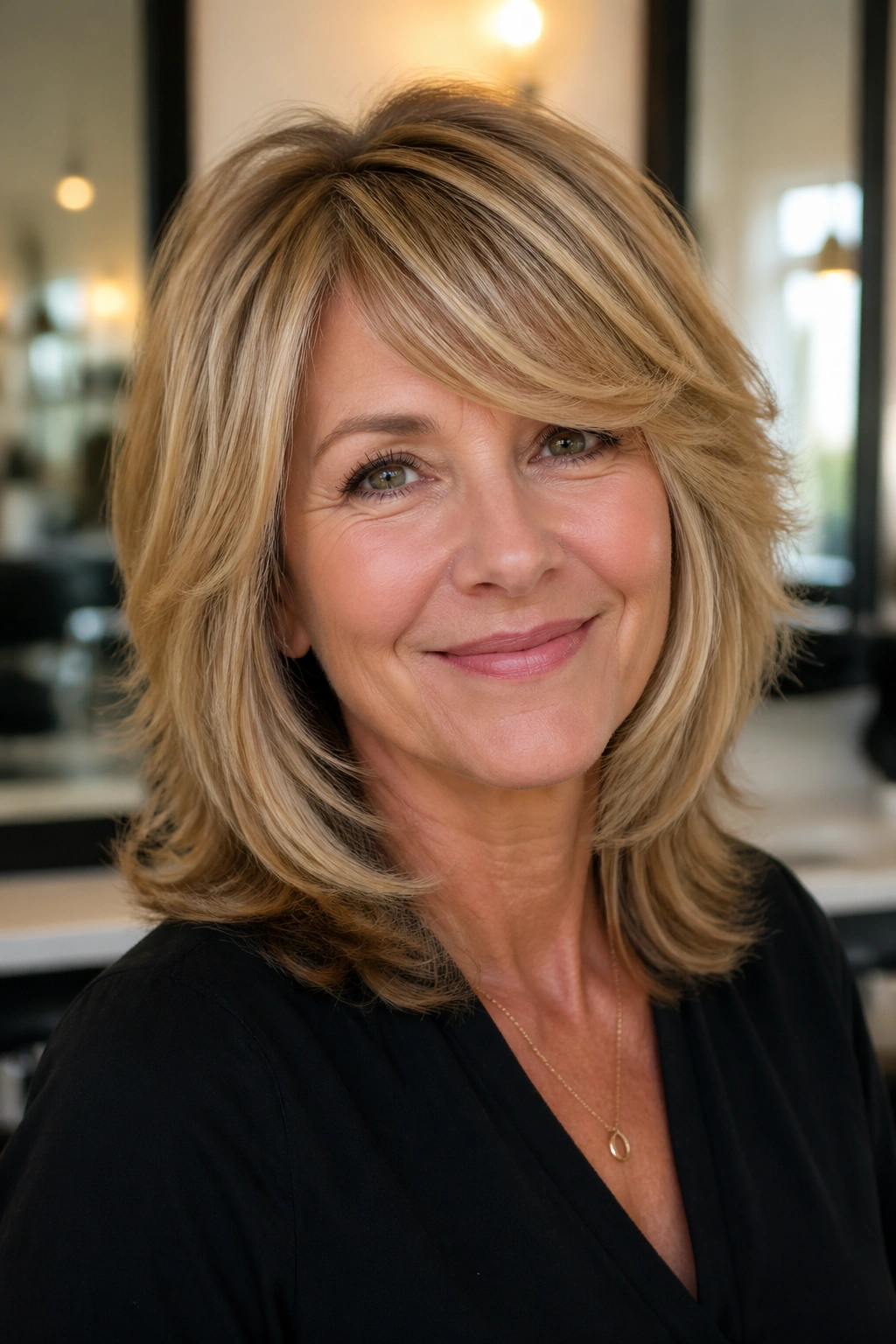
Swoopy bangs are underrated. They slide across the forehead in a long curve and blend into the layers around the face, which makes them less fussy than a short fringe and easier to wear than a full bang.
Why this shape works
The medium cut gives the hair enough weight to move, but not enough to hang flat. Layers around the chin and shoulders make the silhouette lighter, while the bangs direct attention toward the eyes and cheekbones. If your hair tends to sit heavy on one side, this shape can correct that without looking overworked.
The best swoopy bangs are cut with a diagonal line from the outer brow toward the cheek. That angle matters. It keeps the fringe soft and gives it a bit of forward motion. If a stylist cuts the section too straight, the whole thing can look dated fast.
Good for: medium-density hair, straight or loose-wave textures, and anyone who likes side parting.
Ask for: long layers around the face, a bang that blends into the side lengths, and a little crown lift.
Avoid: making the front too short. Swoopy bangs need room to move.
20. Asymmetrical Bob With Angled Fringe
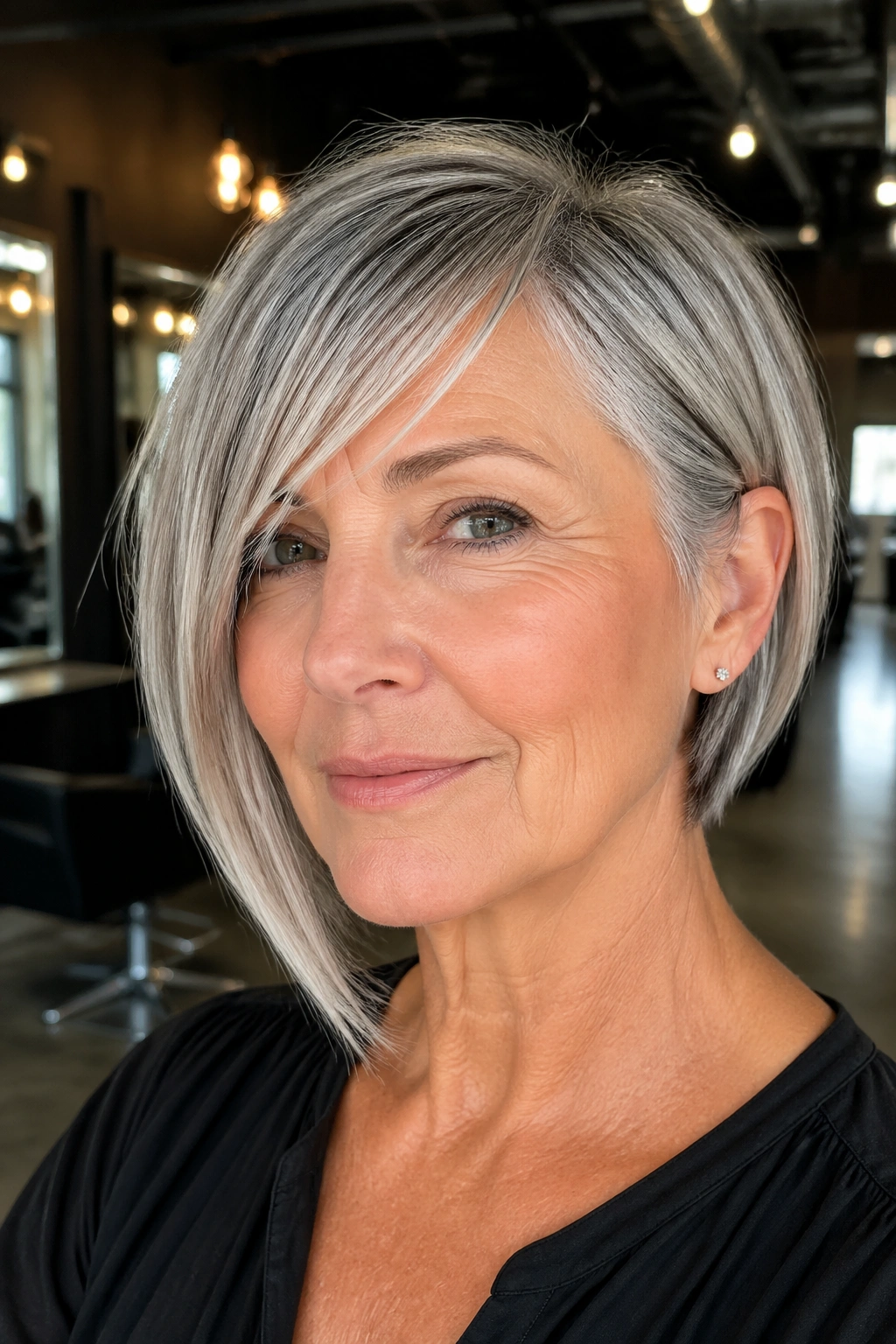
Sometimes a little imbalance is exactly what a haircut needs. An asymmetrical bob with angled fringe has one side slightly longer than the other, which gives the whole style a sharper edge without going full drama queen.
This cut is a strong choice if you want your hair to look deliberate from every angle. The angled fringe can follow the line of the bob, and that creates a clean flow from forehead to jaw. It’s a nice option for square faces because the diagonal line softens stronger angles. It also works on round faces if the longer side falls past the jaw and pulls the eye downward.
The cut should not be extreme unless you want it to be. A half-inch difference can be enough. That small shift is usually more wearable than a big one, especially if you’re not used to asymmetry.
Styling needs a little direction. Blow-dry the front toward the longer side, then let the rest settle naturally. If the fringe flips the wrong way, resist the urge to flatten it with too much product. That makes the style look stuck instead of intentional. A light hand wins here.
21. Textured Shoulder Cut With Full Fringe
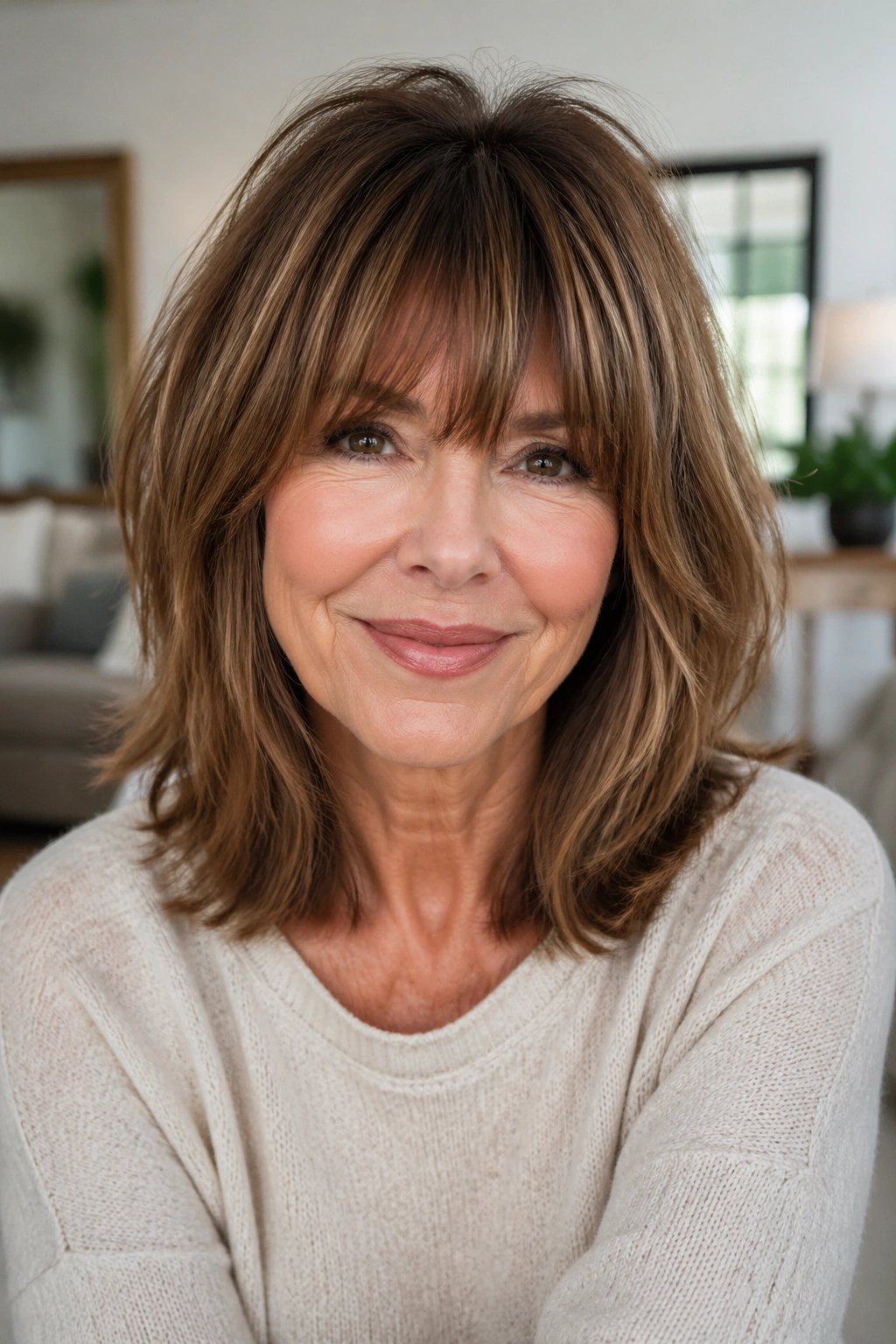
A textured shoulder cut with full fringe is for people who want bang coverage but not a severe line. Unlike a blunt fringe, a textured full fringe has tiny breaks in the shape, so it feels softer across the brow and easier to live with day to day.
This works especially well if your hair is thick or a little wavy. Texture breaks up bulk, and shoulder length keeps the weight from sitting too high. The fringe can still be full enough to matter, but the ends should be softened so they don’t form one solid sheet.
I like this cut because it has structure without looking precious. You can wear it smooth, give it a little bend, or let it dry with some natural separation. If you’re the type who doesn’t want to spend forever on bangs, that flexibility is worth a lot.
One caveat: full fringe needs regular trimming. Not every week, but more often than a long curtain bang. Once it gets into your eyes, the whole shape starts to blur. Trim it before it gets annoying, not after.
22. The Soft Wash-and-Go Cut With Light Bangs for Women Over 50
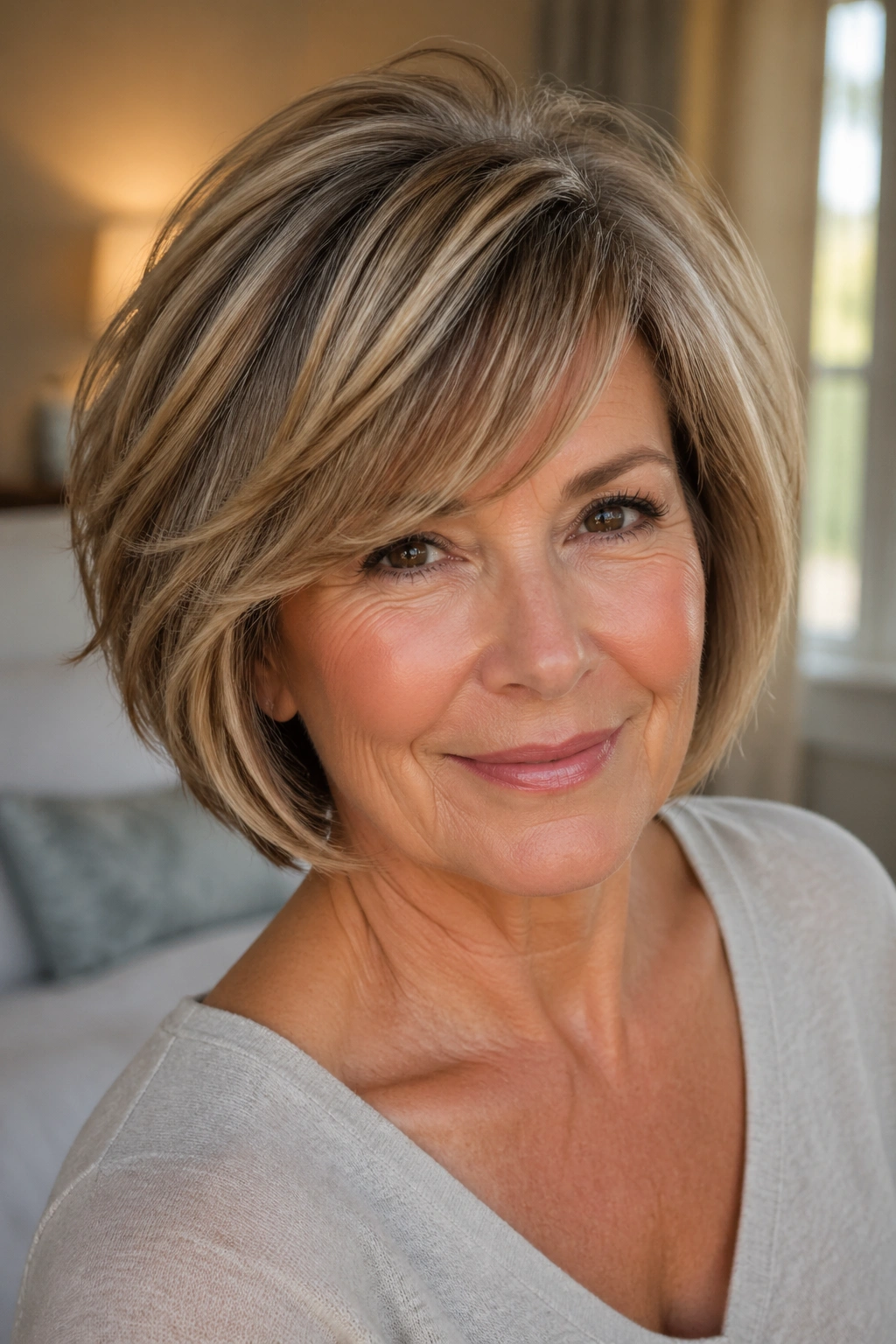
This is the haircut for women who want bangs without the daily negotiation. The length is usually shoulder-grazing or a little shorter, the layers are soft, and the fringe is light enough to dry into place with minimal help. It’s not fancy. It’s practical, and that’s exactly why it works.
The bangs should skim the forehead rather than blanket it. They can be curtain-style, side-swept, or softly broken up in the center, as long as they don’t feel dense. That gives the cut room to air-dry without turning puffy. If your hair has a natural wave, this shape can look especially good after a quick scrunch and a touch of mousse.
Best for: busy mornings, mixed textures, and hair that loses patience with heavy styling.
Ask for: soft layers around the face, a fringe that can part naturally, and ends that are textured rather than blunt.
A few things that help:
- Apply product only from mid-length to ends.
- Use a wide-tooth comb, not a brush, on damp bangs.
- Let the fringe fall where it wants before you start adjusting it.
- Trim before the shape loses its softness.
The best part is how this cut settles into real life. It does not need perfect weather, a salon blowout, or a tiny miracle. It just needs a good shape and a little respect.
If you keep circling back to one thing from this list, make it this: the right bang style should make your face look more open, not more covered. That single detail saves you from most bad choices. And once the shape is right, the rest of the haircut stops feeling like work.
