
Hairstyles for elegant women over 70 work best when they look settled, not strained.
Stiff hair ages fast. Soft shape lasts.
Silver hair, white hair, salt-and-pepper hair — all of it can look exquisite when the cut has a clear line at the neckline, a little lift at the crown, and some movement near the face. What tends to go wrong is not age, really. It is shape. Heavy layers can make fine hair look thin, while overbuilt curls can harden the whole head into something that feels more helmet than style.
I keep coming back to one simple idea: elegance comes from balance. A cut should flatter your features, work with your texture, and stay believable if you only have ten minutes and a round brush. That is the sweet spot. Not fussy. Not severe. Just finished.
1. Soft Side-Part Bob
A soft side-part bob is one of those cuts that makes people look polished without looking like they tried too hard. The side part gives the face a slight lift, and the length, usually somewhere between the jaw and the top of the neck, keeps the shape light.
Why It Flatters So Many Faces
The side part is doing a lot of work here. It interrupts flatness at the crown, brings a little height where hair often collapses, and lets the front pieces skim the cheekbones instead of hanging straight down. That tiny angle can make a big difference, especially if your hair has started to feel finer than it used to.
The bob also has a useful honesty to it. It does not hide behind a lot of layering or spray. It just sits there looking clean, neat, and calm — which is exactly why it reads as elegant.
- Best length: Just below the jaw or slightly under the chin
- Best texture: Fine to medium hair, straight or softly wavy
- Styling tool: A 1 to 1¼-inch round brush for a smooth bend
- Daily finish: Light mousse at the roots, then a flexible-hold spray
- Salon note: Ask for the ends to stay slightly blunt so the shape looks fuller
Small tip: Tuck one side behind the ear and leave the other loose. It gives the cut a little asymmetry, and asymmetry tends to look expensive even when the haircut itself is simple.
2. Feathered Pixie with Lift at the Crown
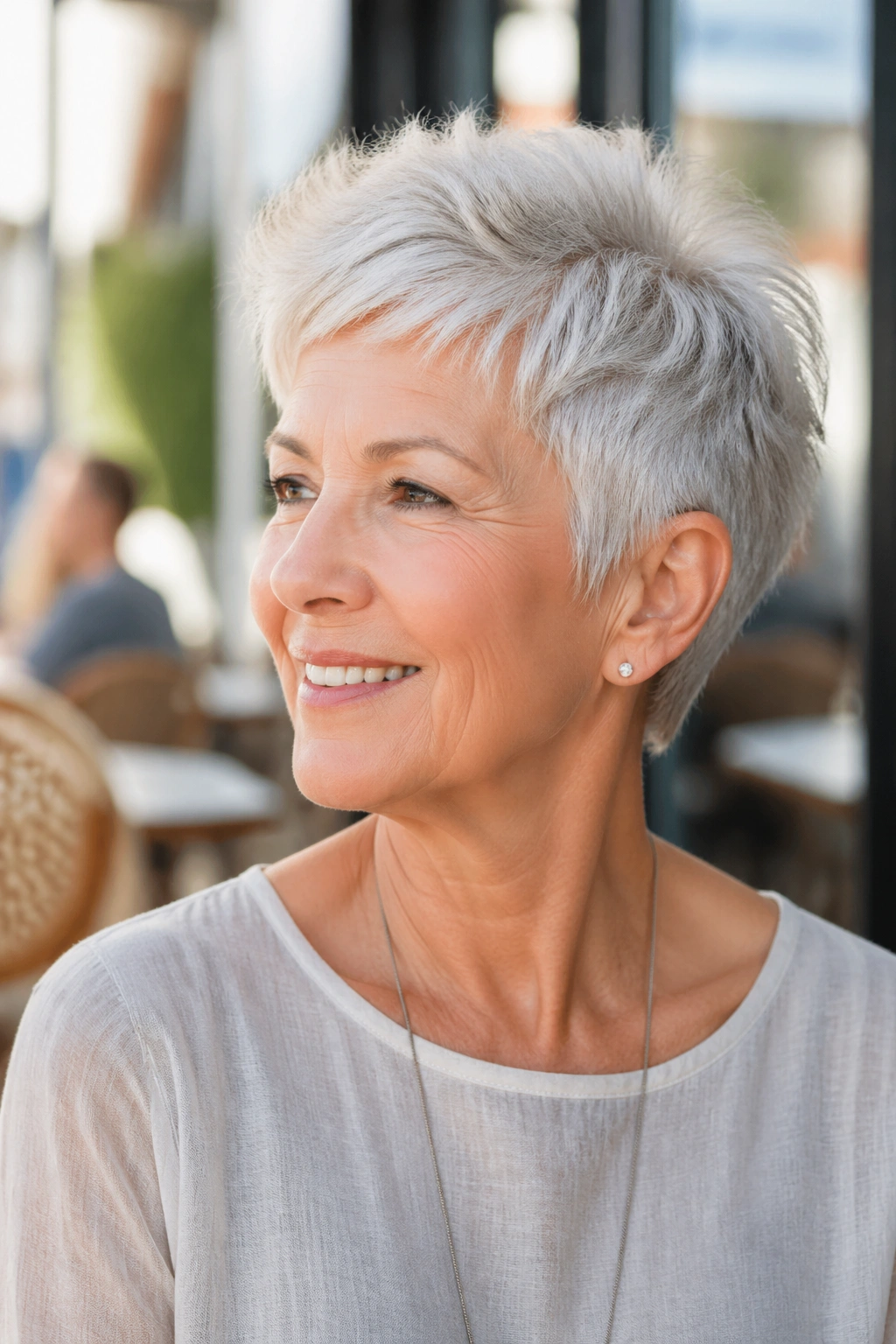
A good pixie should look airy, not spiky. The feathered version does that beautifully because it keeps the top soft and the sides close, so the whole cut feels light around the face instead of heavy on top.
The real trick is restraint. Too much texturizing and you get pieces sticking out in odd directions. Too much product and the hair turns stiff. The sweet version has movement in the fringe, a little height at the crown, and softly tapered sides that follow the head shape instead of fighting it.
That makes it a strong pick for women who want a neat neck, easy washing, and a cut that still looks cared for even on a bare-minimum styling day. A pea-sized amount of styling cream warmed between the fingers is usually enough. Put it on the ends, not the scalp.
Trim it every 4 to 6 weeks if you want the shape to stay clean. A pixie grows out fast, and once the crown drops, the whole thing starts to lose that lifted, fresh look.
3. Shoulder-Grazing Layers with Loose Waves
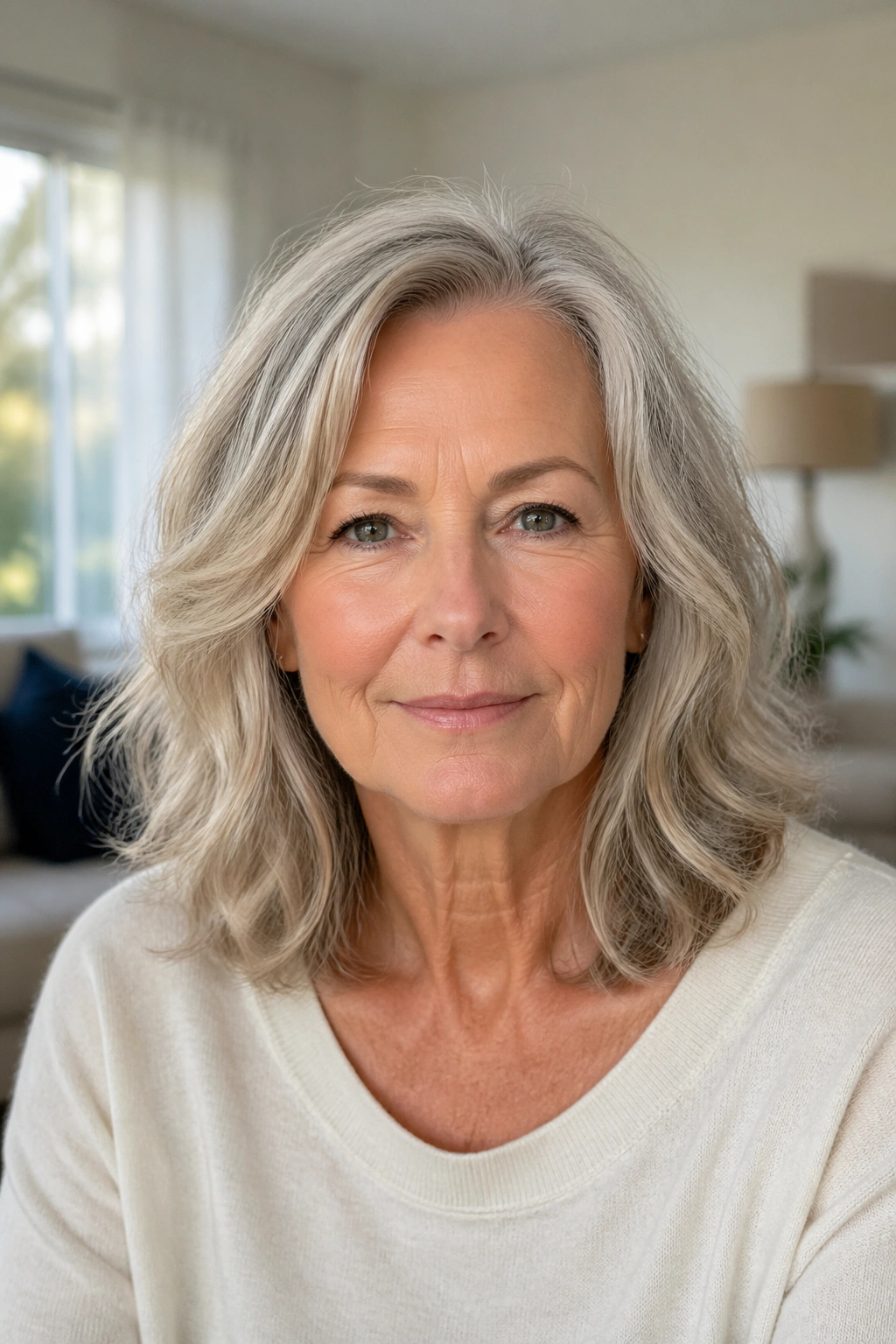
Can longer hair still feel elegant after 70? Absolutely, if the layers are cut with purpose and the waves are kept soft.
This length works because it gives movement without making the hair feel dragged down. The best version usually lands around the shoulders, with the shortest layers starting somewhere below the jaw and the longest pieces grazing the collarbone. That keeps the face open while still letting the hair swing a little when you walk.
What to Tell Your Stylist
Ask for long layers, not choppy ones. If the top layers are too short, fine hair can look frayed. If the face-framing pieces start too high, the cut can start to feel busy. A little softness around the cheekbone is enough.
- Keep the base length at or below the shoulder
- Start the first face frame near the cheekbone
- Use a 1-inch curling iron or large hot rollers for loose bends
- Finish with a light serum on the ends, not the roots
- Avoid tight curls unless the hair is naturally coarse and needs more control
One thing I like about this cut: it can look dressed up with almost no effort. A side part, two loose waves, and a smooth front section are enough.
4. Classic French Twist with Softness
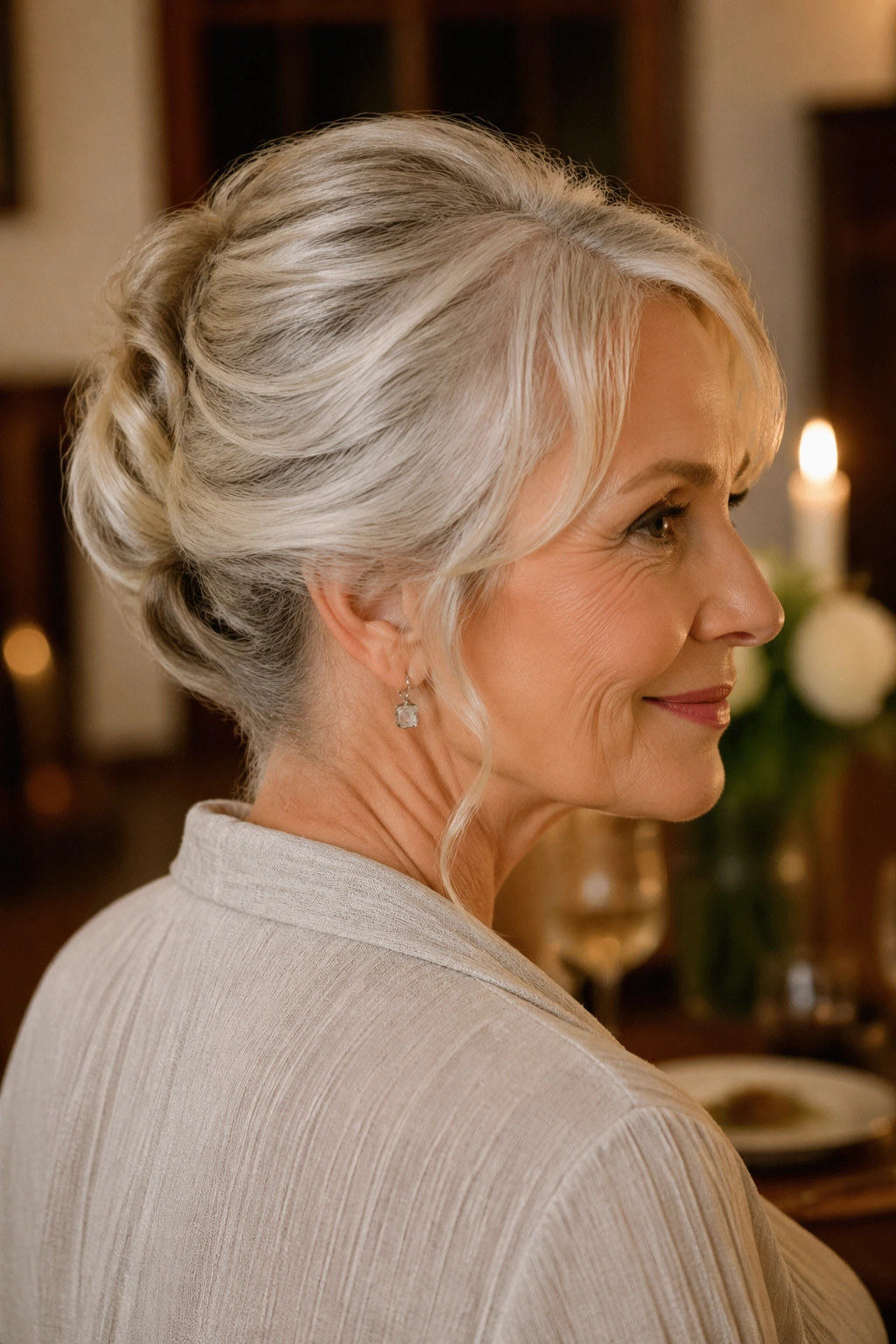
Picture a dinner, a necklace, and hair that stays off the neck without looking severe. That is where the soft French twist earns its place.
A tight twist can feel too formal, almost stern. The better version leaves a little looseness at the temples, keeps the roll low enough to balance the head shape, and lets a few fine pieces drift near the ears. It looks graceful because it has softness in it. Not mess. Softness.
For special events, this style is one of my favorites on mature hair because it creates a clean silhouette fast. If the hair is fine, a little texture spray at the roots gives the pins something to hold. If the hair is thicker, you may need to twist in two sections so the shape lies flat instead of bulging.
- Keep the twist at the nape, not high on the head
- Leave 1 to 2 face-framing pieces loose
- Use bobby pins crossed in an X for better hold
- Add texture spray before twisting if hair slips easily
- Finish with shine spray, but only on the surface
The best French twist does not announce itself. It just makes the whole face look more open.
5. Silver Pageboy with Curved Ends
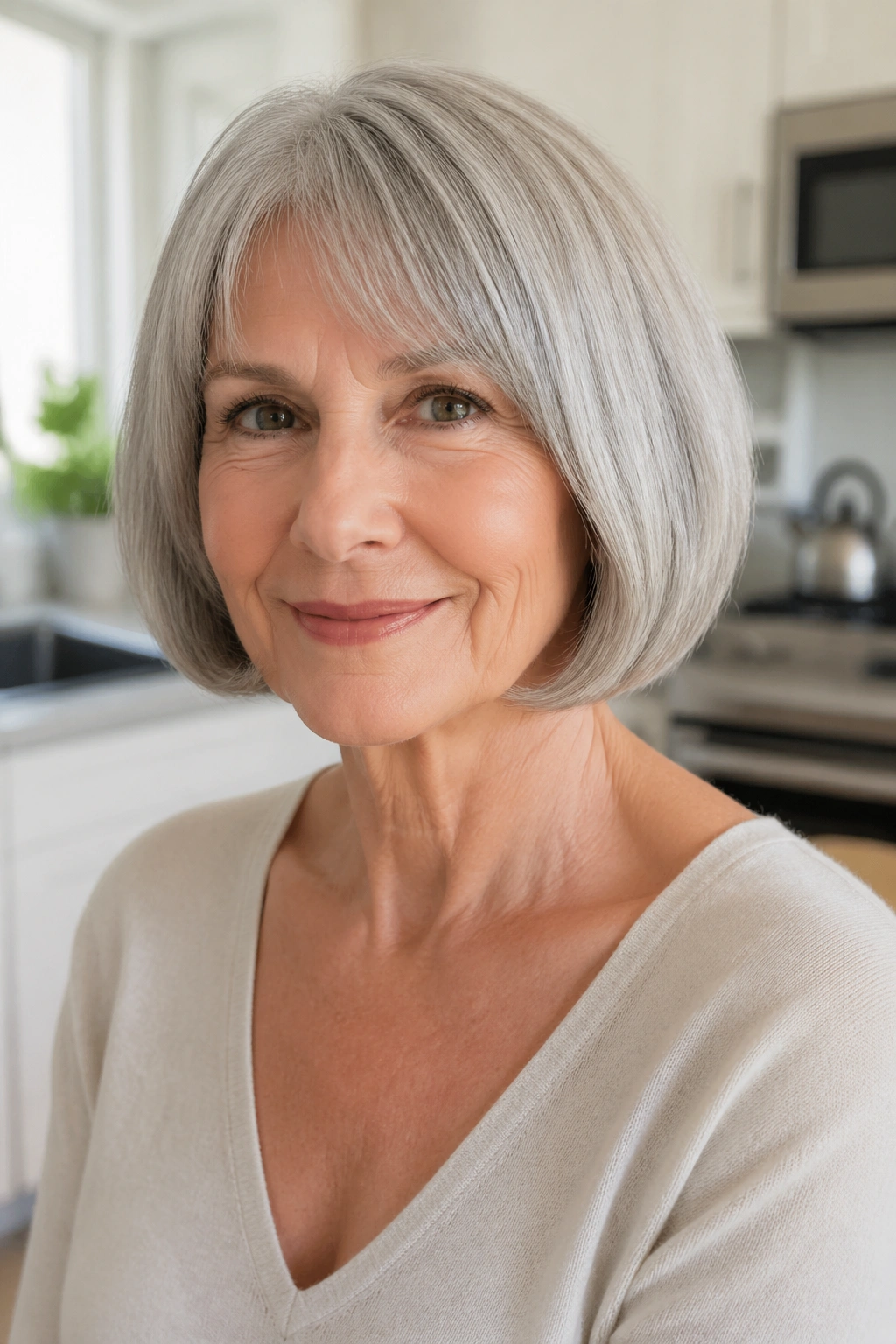
The pageboy is one of those old-school shapes that keeps coming back because it works. On silver hair, the curved under-end gives a calm, smooth frame that feels neat without looking severe.
This cut sits close to the head and turns under at the ends, usually around the jaw or just below it. That curve matters. Straight ends can look blunt in a harsh way, while the gentle tuck under adds a small amount of movement that softens the whole look. It also helps if your hair wants to puff out at the sides.
I like this style for women who wear glasses, because the rounded shape leaves room around the frames and keeps the face from feeling crowded. If the hair is naturally straight, a round brush and a blow-dryer with a concentrator nozzle are enough. If it has a wave, a smoothing cream and a larger brush make the finish cleaner.
The pageboy does need maintenance. Every 6 to 8 weeks is about right, because the curve loses its crispness once the cut grows out past the jaw. Small shape, big payoff.
6. Blunt Chin-Length Bob with Tucked Sides
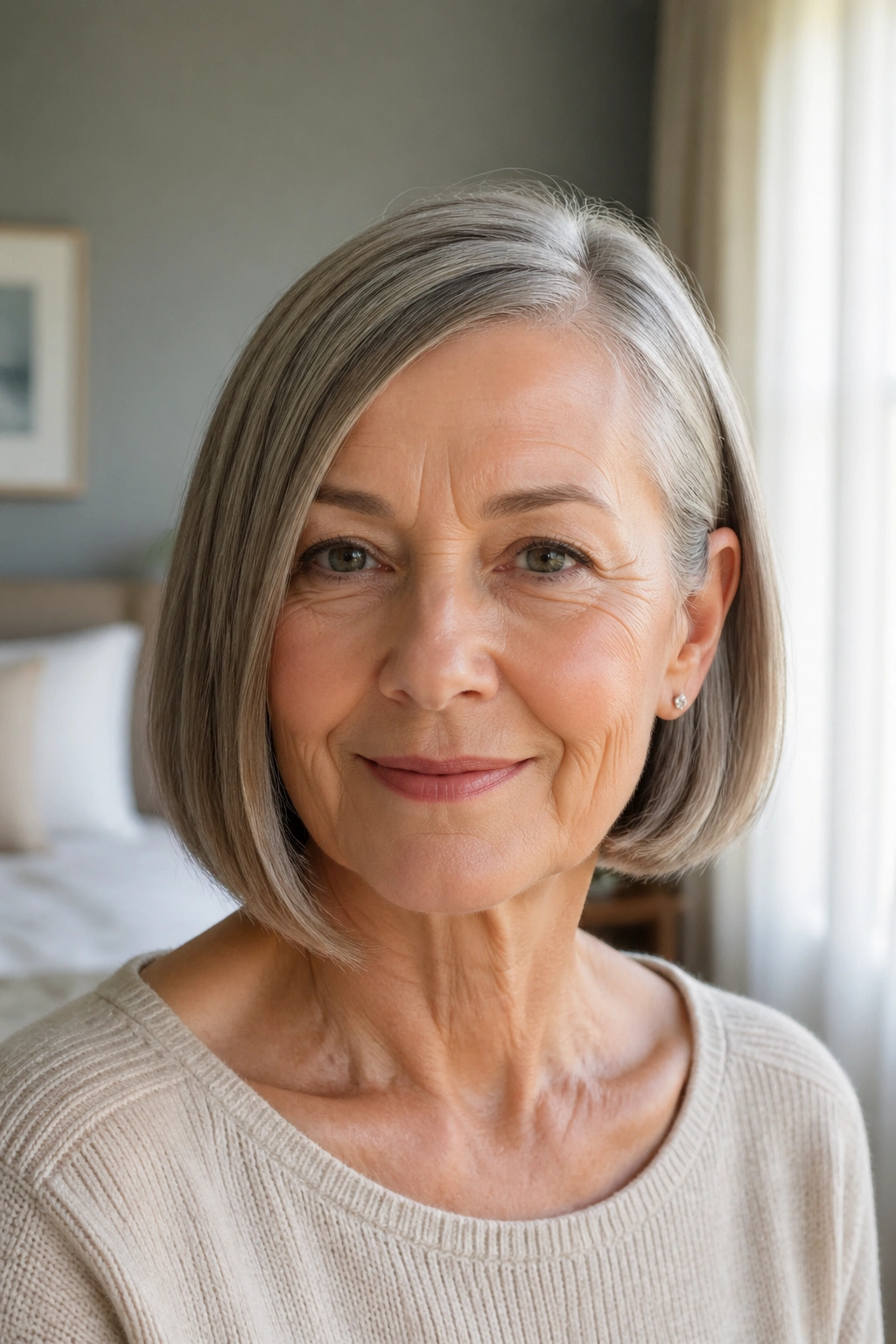
Unlike layered cuts, a blunt chin-length bob leans on density. That makes it a smart choice if your hair has thinned and you want the perimeter to look fuller right away.
The clean line at the chin gives structure to the jaw, and the tucked sides keep the style from feeling boxy. One side behind the ear, one side loose — that simple move gives the cut a little life. It also plays well with earrings, which is not a small thing. Earrings and a clean bob can do a lot for a face.
This is the haircut I suggest when someone says they want polish but do not want to spend half the morning styling. A straight blow-dry, a smooth center or side part, and a dab of anti-frizz cream at the ends are usually enough. If the hair is very fine, ask for a soft internal bevel instead of heavy layering. That keeps the edge looking full.
It is not the most playful cut on this list. It is one of the sharpest, though, and that sharpness can be beautiful.
7. Wispy Shag with Feathered Bangs
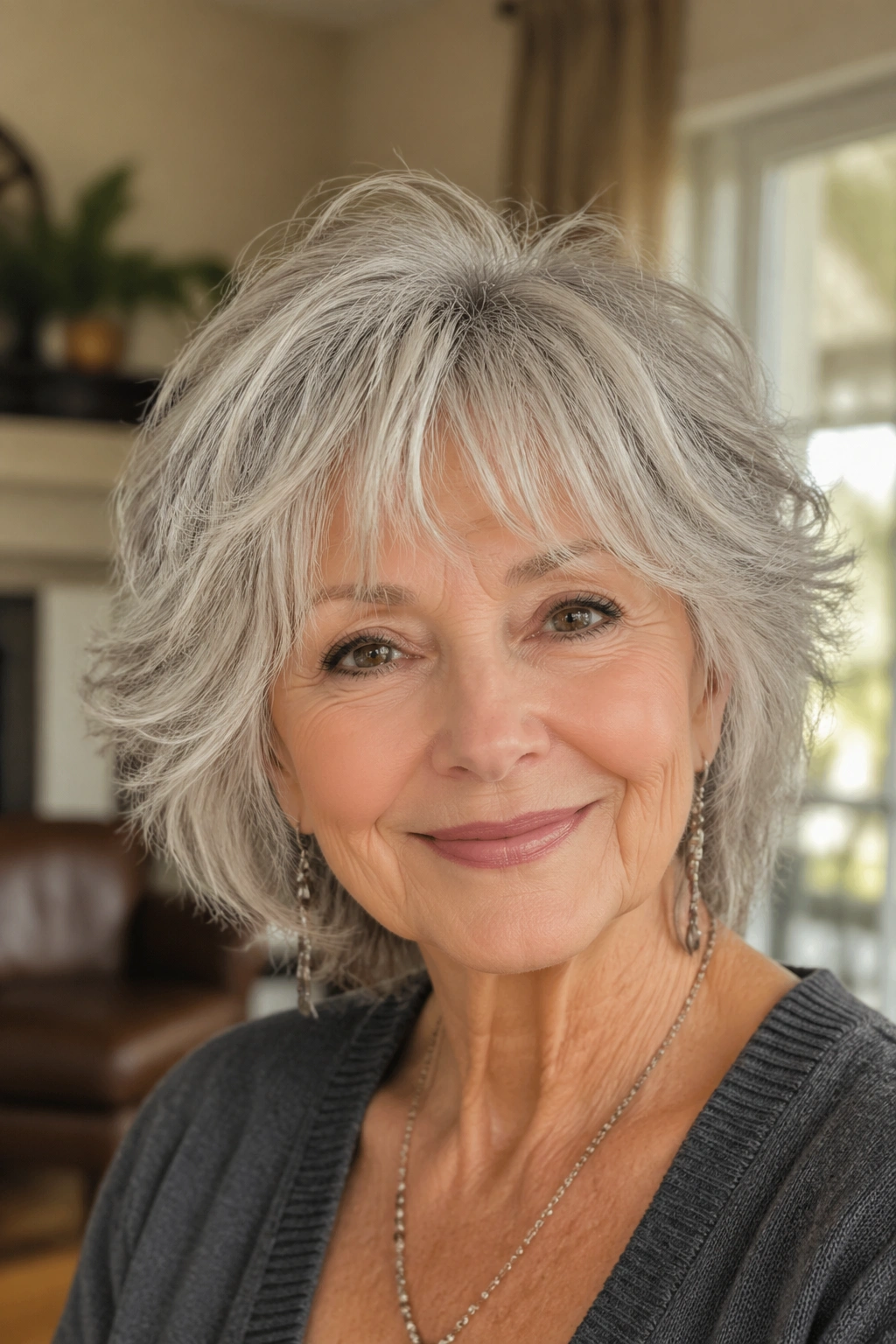
A wispy shag is a good answer when hair has gone a little limp and you want shape without stiffness. It has texture, but not the overworked kind.
Why It Works
The feathers and soft bangs break up the silhouette, which is useful if the hair has grown wide at the sides or flat at the top. A shag gives the eye somewhere to go. It keeps the front lively and the ends light, so the whole cut feels less heavy on the neck.
I especially like it on hair that has a slight wave. Straight hair can wear it too, but the shape tends to look richer when there is a bit of natural bend. The bang area should stay airy and short enough to move, not sit like a curtain.
- Ask for soft, disconnected layers rather than choppy slices
- Keep the fringe feathered, not blunt
- Style with a lightweight mousse and a diffuser or round brush
- Use dry shampoo at the roots only if the hair starts to collapse
- Don’t overload it with wax; the shape should stay touchable
The main warning: too many layers around the crown can make fine hair look stringy. Keep the shag soft, not shredded.
8. Defined Curly Crop
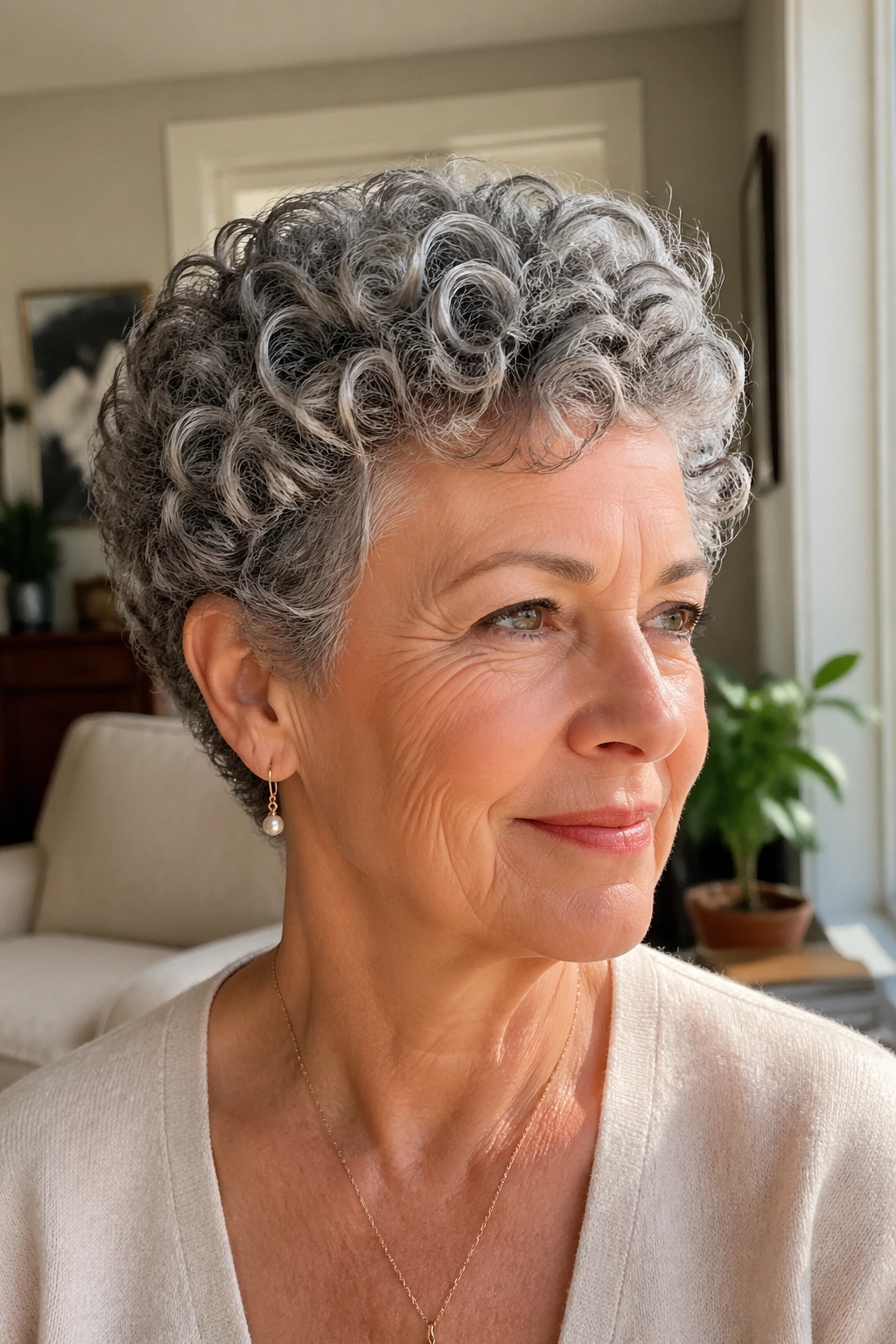
Curls look especially elegant when they are shaped instead of fought. A defined curly crop keeps the curl pattern close to the head and lets the texture be the style.
This cut works best when the shape is rounded but not puffy. The sides stay controlled, the top keeps enough room for the curls to spring, and the neckline stays neat. That balance matters. If the crop gets too short on a tighter curl pattern, it can start to look bristly. If it gets too long, the curls can lose definition and hang down in tired-looking loops.
Use a curl cream or gel on soaking-wet hair, then scrunch gently and let it air-dry or diffuse on low heat. Do not rake through it with a brush once it dries. That is the fastest way to get frizz and lose the shape you paid for.
This is a very good style for women who want a cut with personality but not a lot of daily fuss. Trim it often enough to protect the shape, and let the curl do the work.
9. Long Silver Layers with Face-Framing Movement
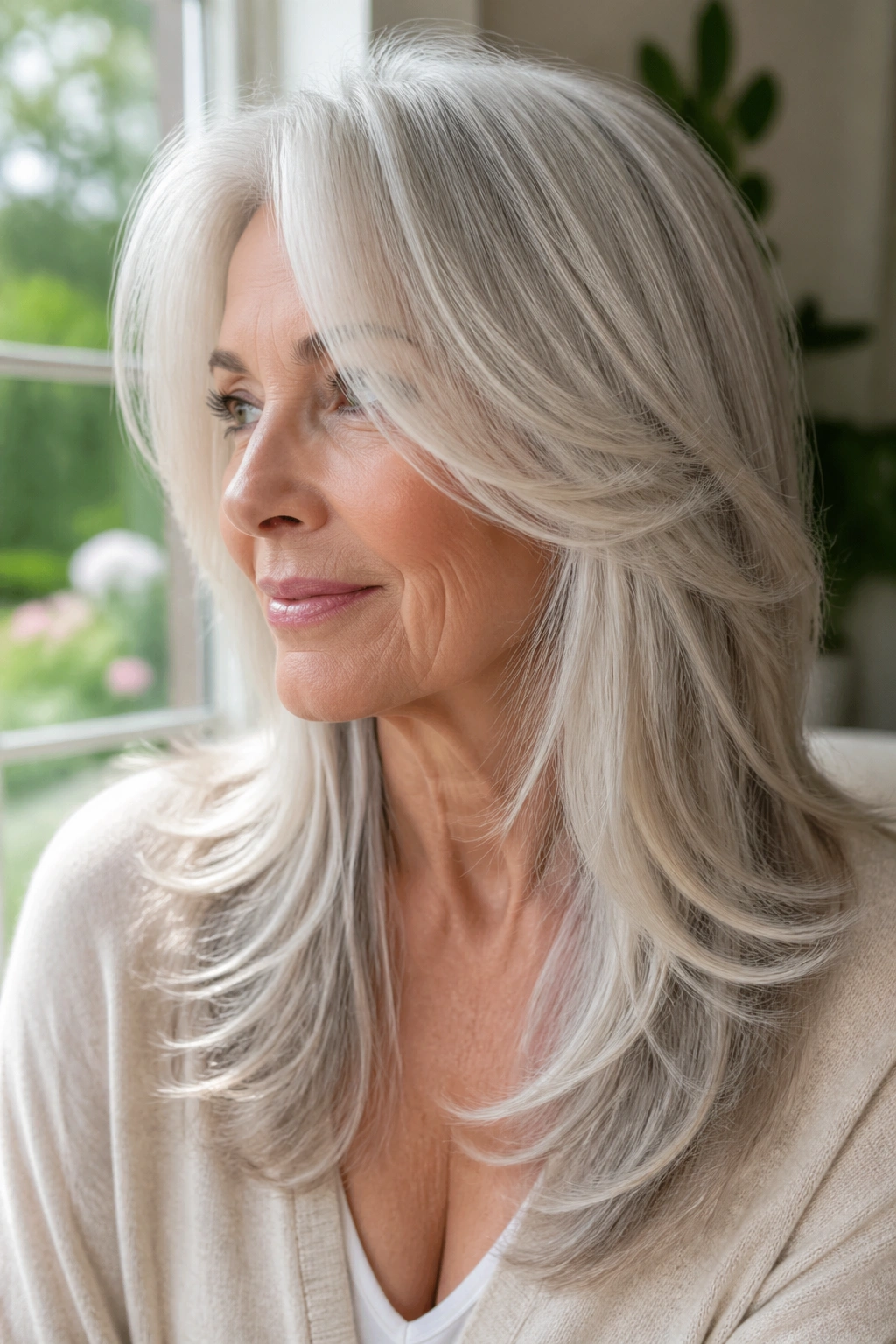
Can long hair look graceful past 70? Yes, if the layers are long, the ends are tidy, and the face frame starts low enough to stay soft.
The problem with long hair is usually not the length itself. It is weight in the wrong places. Hair that hangs straight from the temples can drag the face down, especially if the front pieces are too heavy. The fix is simple: keep the longest layers toward the bottom and let the front pieces skim the cheek and jaw instead of covering them.
How to Keep the Length from Feeling Flat
A big round brush or a large roller set gives this style life without making it look busy. You want movement, not corkscrews. A little bend through the mid-lengths is enough.
- First face frame should start near the cheekbone or below
- Ends need a trim every 8 to 10 weeks
- Use a leave-in conditioner on the lower half of the hair only
- Add a side part if the crown needs lift
- Ask for the perimeter to stay thick, not wispy
The shine matters here too. Silver layers can look almost luminous when the cut is tidy and the ends are not see-through. That is the difference between long and languid, which is a much better place to be.
10. Sleek Low Bun with a Side Sweep
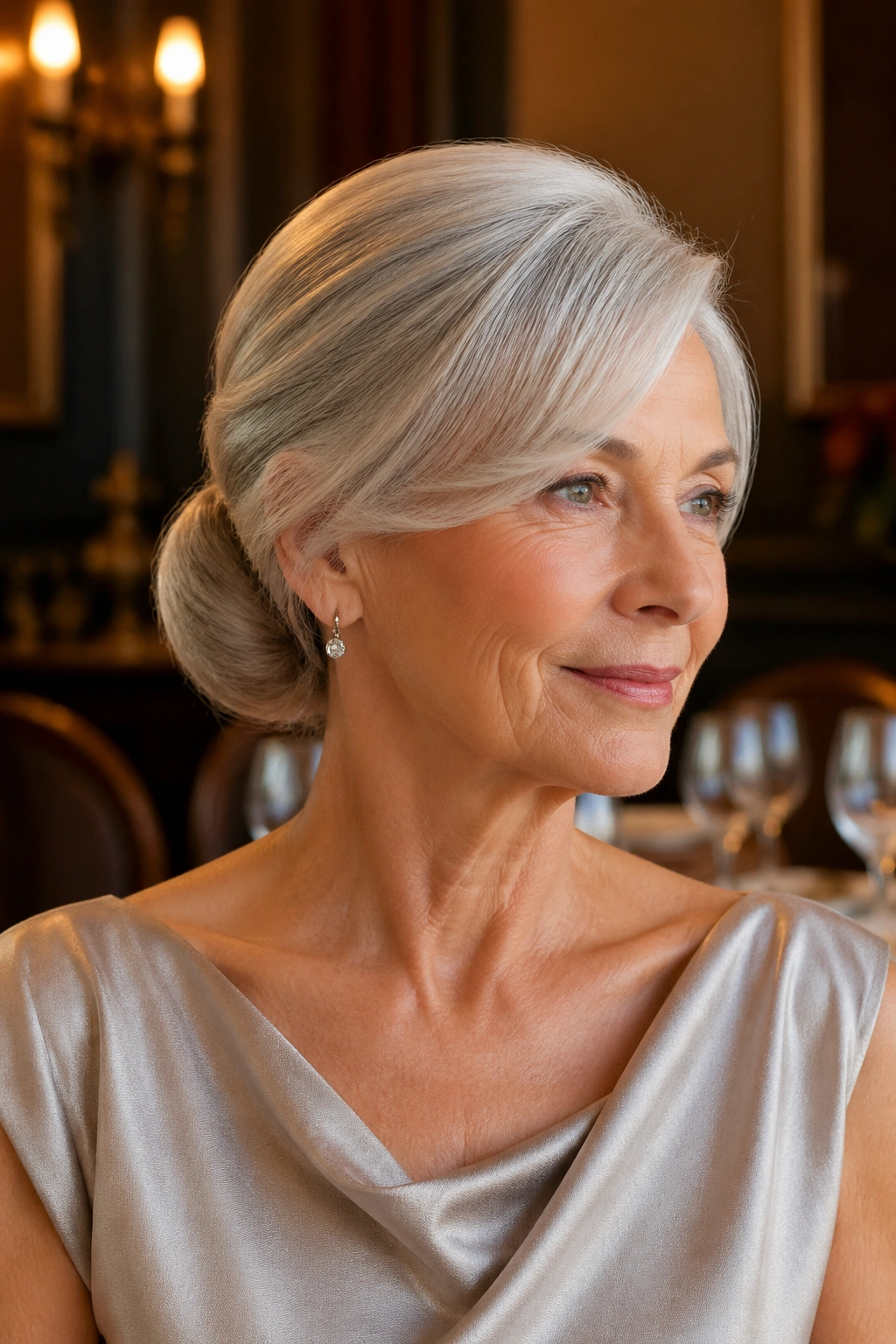
A sleek low bun is not boring when it is done with intention. It can look quietly grand, especially with a side sweep that softens the front and keeps the face from feeling boxed in.
Think of this style for a formal dinner, a family event, or any day you want your hair completely out of the way but still neat enough to feel dressed. The bun should sit low at the nape, never bunched high on the back of the head. High buns can pull the face upward in a strange way; low buns keep everything calm.
A little smoothing cream on the surface helps, but do not flatten the roots too much. A slight lift at the crown gives the style shape. A side sweep at the front — even a small one — keeps the look from becoming too severe.
- Gather the hair at the nape, not the crown
- Twist the bun loosely enough to keep it soft
- Pin with U-pins or crossed bobby pins
- Leave the front section smooth and slightly arched
- Finish with a light mist of hairspray from 10 inches away
The best part? It works on clean hair and second-day hair, which saves time.
11. Neck-Length Layered Cut with Crown Volume
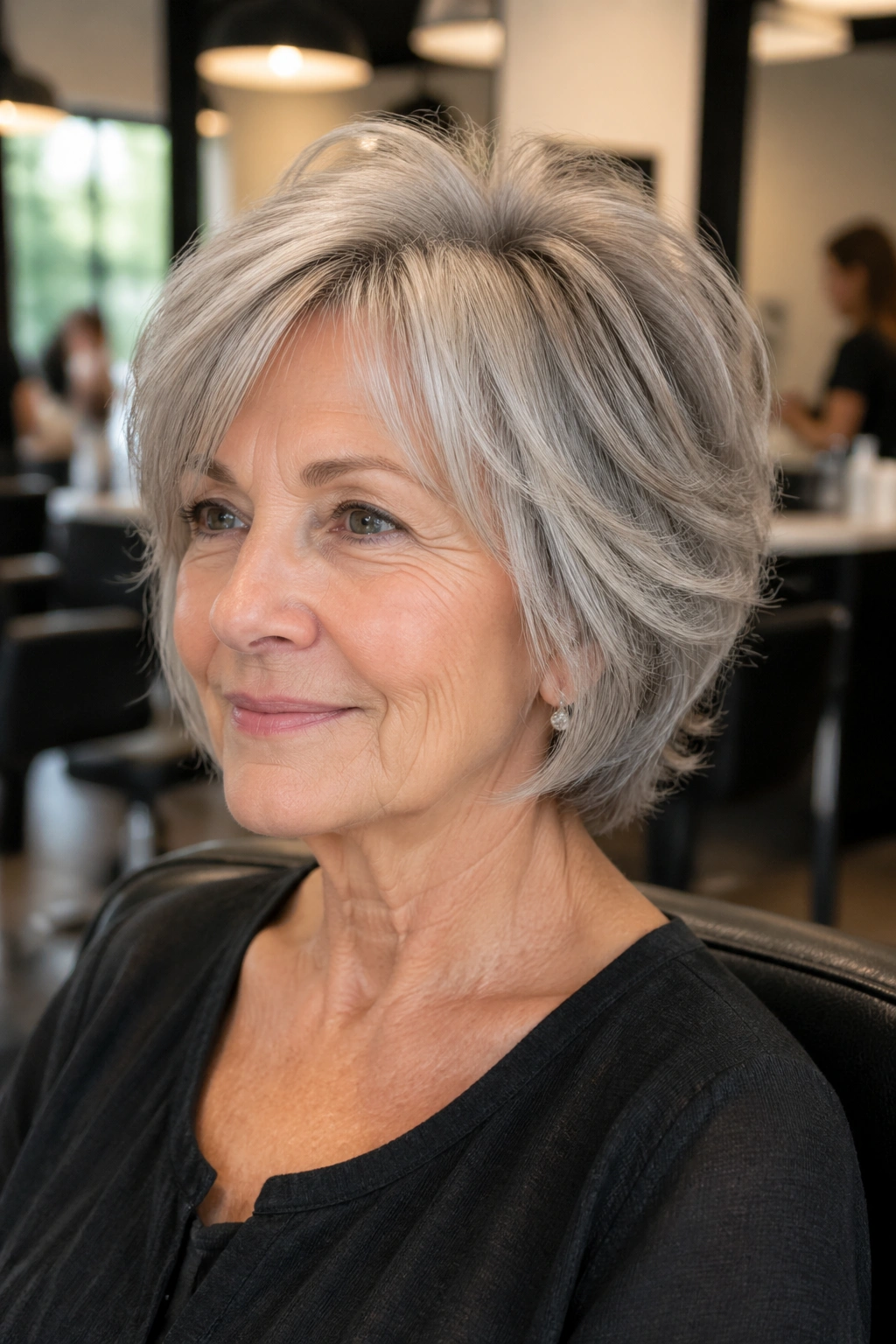
A neck-length layered cut is a good compromise when you want hair short enough to feel easy but long enough to keep some movement.
The crown is the important part. If the top is cut with a little lift, the style gets shape right away. If the top is too flat, the whole haircut sits on the head like a cap. That is the mistake to avoid. Keep the layers concentrated around the upper half of the head, and let the neckline stay neater and closer.
This cut suits fine hair well because the length is short enough to support volume without becoming puffy. A root-lifting mousse, a quick blow-dry with the head tipped forward, and a small round brush are usually enough to get the top moving. The sides can stay soft and close.
I like this shape for women who want a style that looks finished even on days when the hands are stiff or the energy is low. It has enough structure to hold on its own. That is worth a lot.
12. Side-Swept Lob with Polished Ends
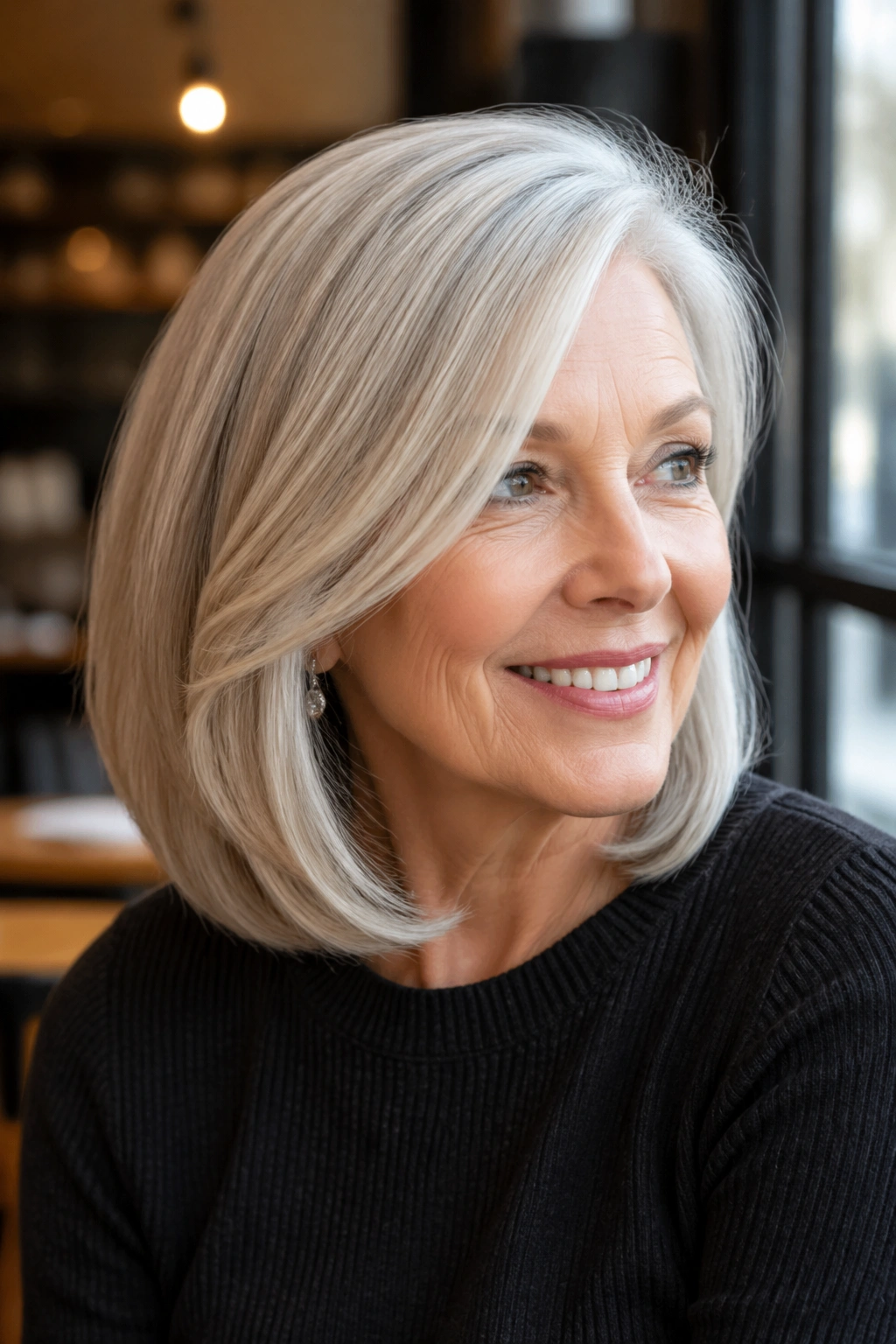
A lob gives you more swing than a bob and less daily work than long hair. That middle ground is exactly why it keeps showing up on women who care about polish.
The side-swept version is kinder to the face than a straight middle part, especially if the hair is fine or the forehead feels wider than it used to. The sweep creates a diagonal line, and diagonals are flattering. They keep the look moving. The polished ends keep it adult and clean, not beachy or overworked.
This cut is especially useful if you like the idea of some length but still want to tuck the hair behind the ear, clip it back, or pull it into a low twist on busier days. That flexibility makes it more practical than a lot of people expect.
It works best at the collarbone or just above it. Any longer, and the shape starts to drag. Any shorter, and it stops feeling like a lob and becomes something else.
13. Tapered Cut with a Soft Nape
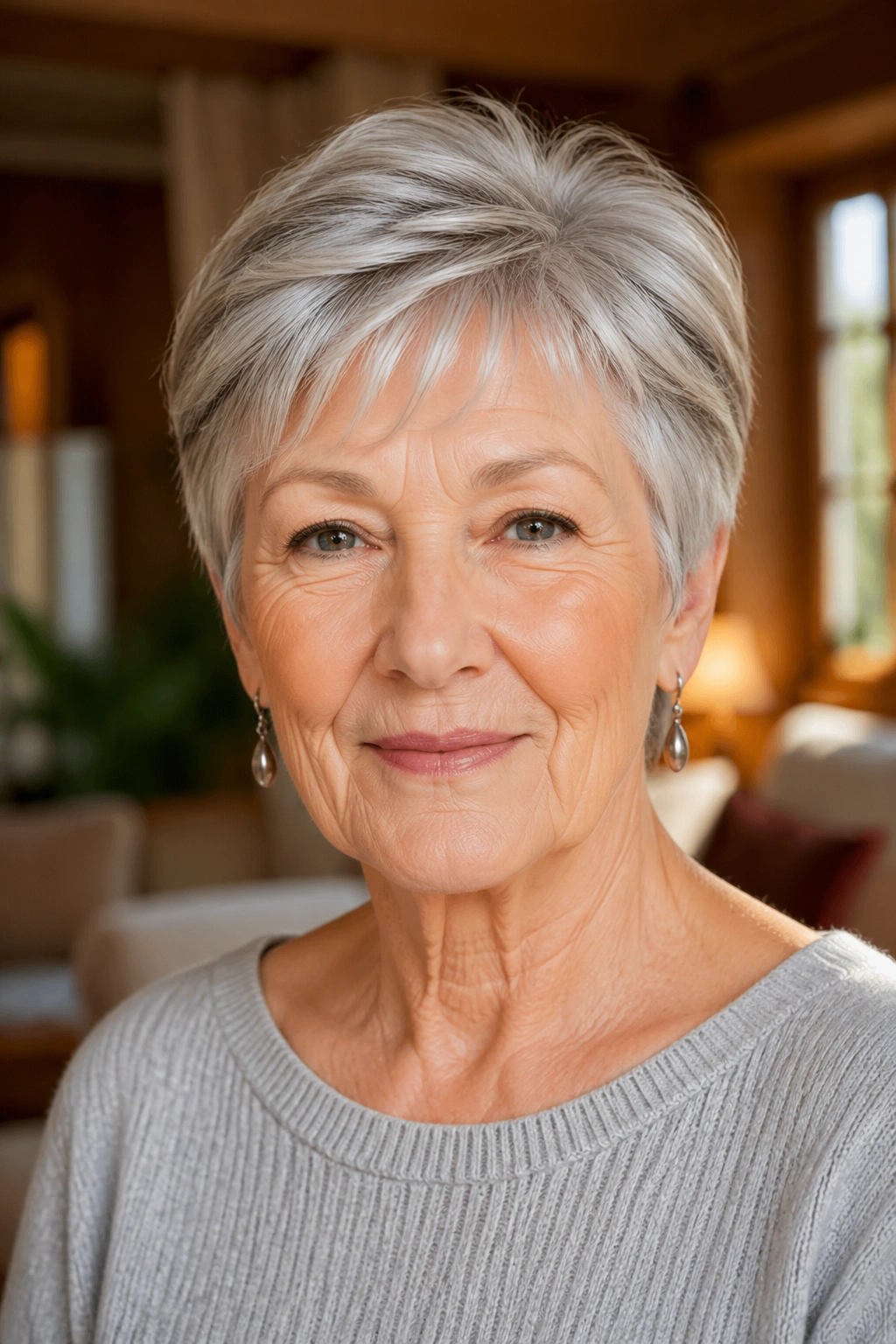
The neckline is where this cut earns its elegance. A tapered back keeps the nape neat, while the top stays a little longer so the hair still has shape and movement.
Why It Flatters
The taper removes bulk from the back of the head, which helps a lot if the hair grows wide or poufs out behind the ears. The longer top gives you room to sweep, part, or fluff the front. That balance keeps the cut from looking too hard.
It is a strong choice for women who like clean outlines, shorter hair, and easy earrings. The shape opens the neck, which tends to make the whole profile look lighter. And if the hair has a natural wave, the taper keeps the sides from mushrooming.
- Keep the nape short and softly graduated
- Leave the top long enough for finger styling
- Use a small amount of matte paste for piecey definition
- Trim every 5 to 7 weeks to preserve the taper
- Ask your stylist not to overthin the sides
My favorite detail: a tapered cut looks especially good when the front is brushed slightly upward, not flat. That tiny lift changes everything.
14. Rolled-Under Collarbone Cut
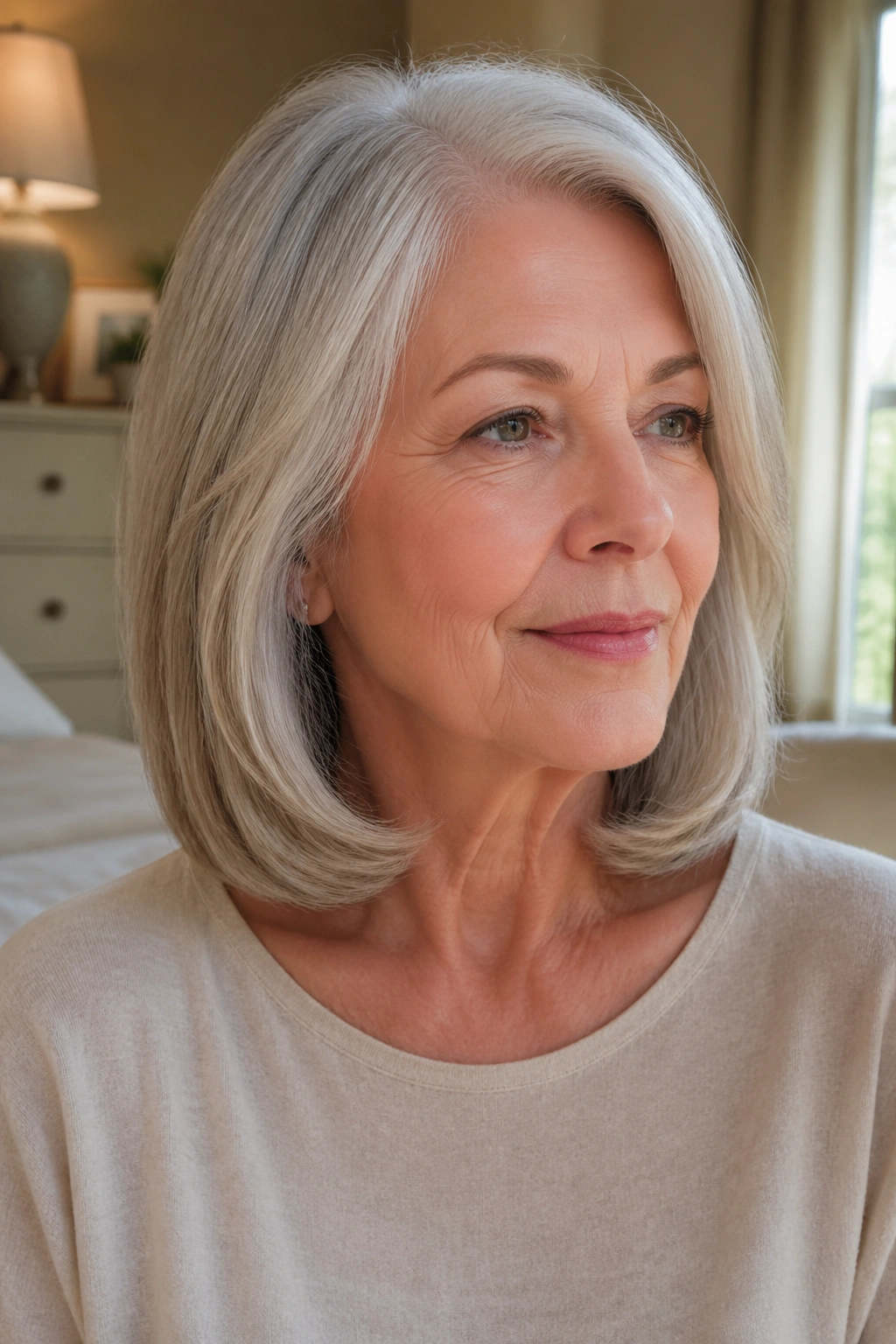
A rolled-under collarbone cut has a calm, tailored feel. The ends curve inward, the outline stays clean, and the shape sits right in that sweet spot between casual and dressed up.
Unlike a blunt cut that hangs straight, this one uses the brush and blow-dryer to create a soft turn under the shoulders. That turn matters because it keeps the hair from looking heavy. It also helps if your hair naturally flips out at the ends. A little warmth from the dryer, a medium round brush, and a careful pass under the bottom section can tame that in minutes.
This style is especially kind to thicker hair. The curve keeps the edges controlled, while the shoulder length still gives enough movement to feel lively. A light smoothing balm on the lower third of the hair can stop frizz without making the roots limp.
The cut is elegant because it looks deliberate. Nothing screams. Everything sits where it should.
15. Wedge Cut with Gentle Graduation
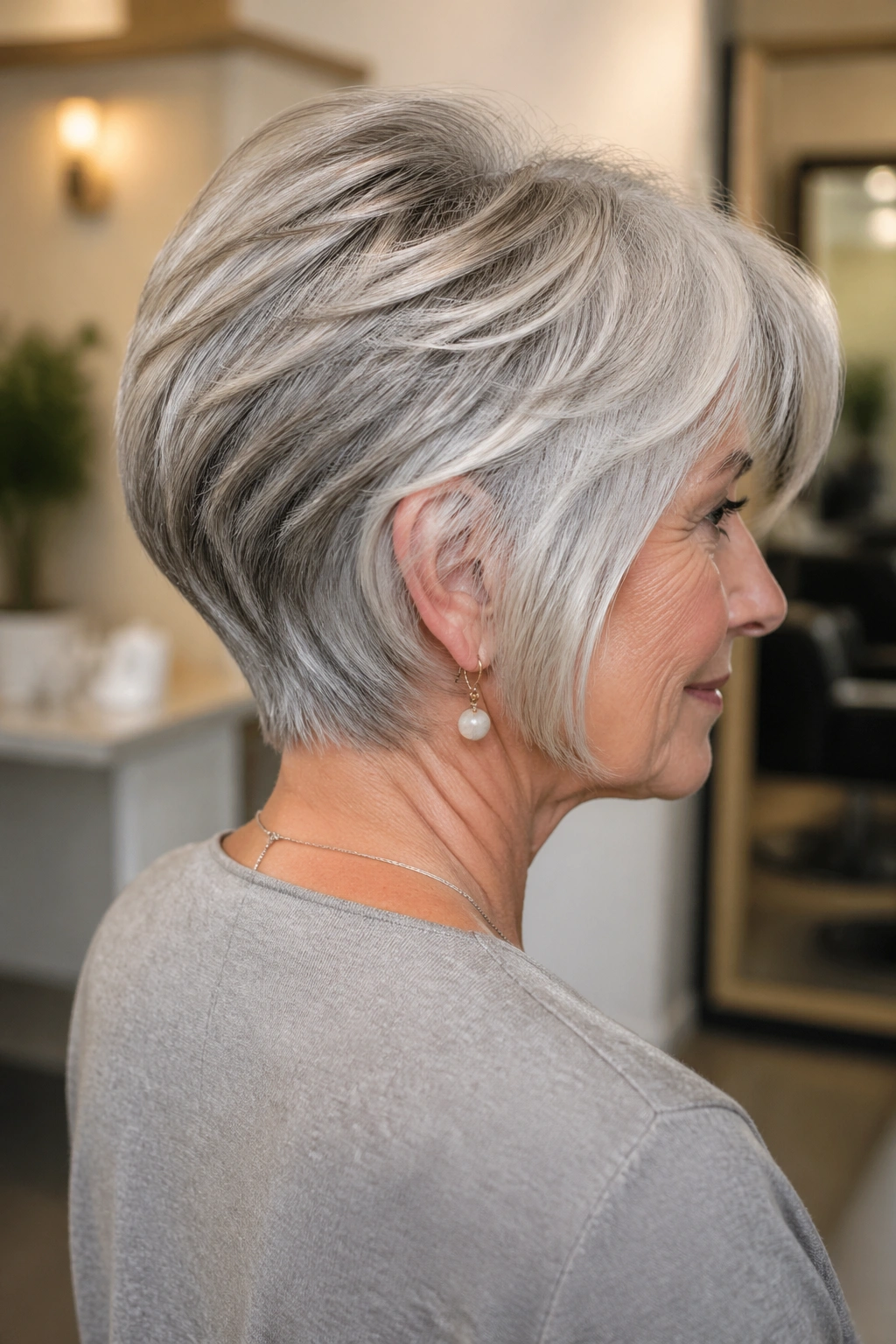
Do you want height in the back without going full retro? A wedge cut can do that, as long as the graduation stays soft.
The shape is built with shorter layers at the back and longer pieces toward the front. That gives the crown a little lift and keeps the nape neat. The old-school version can feel sharp, but the gentler version is much easier to wear. It keeps the structure, then softens the edges so the cut feels modern enough for everyday life.
This is a strong option for straight hair or hair with only a small wave. The stacked back creates body fast, which means you do not need much product. A bit of mousse at the roots and a round brush through the top are usually enough.
How to Style the Shape
Work from the crown downward. Lift the top section with the brush, dry it first, then smooth the sides last. If you dry the sides too early, the back loses shape and the whole cut starts to collapse.
The wedge is one of those styles that looks more expensive than it is. That is not a bad thing.
16. Halo Curls with a Soft Part
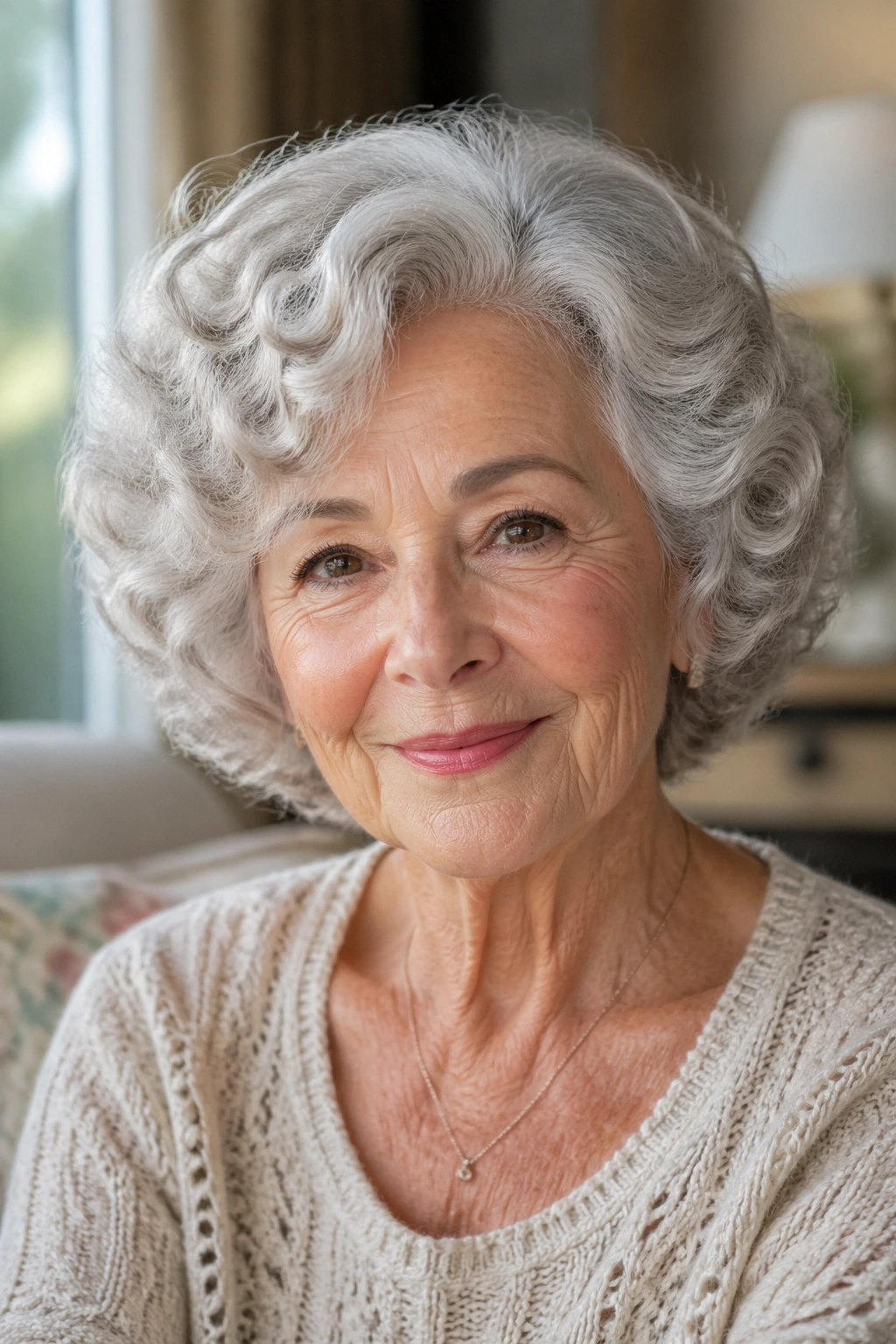
Halo curls have a lovely way of framing the face without crowding it. When the curl pattern is kept round and the part is soft, the whole head looks full, gentle, and alive.
This style is especially good for natural curls that need definition, not correction. The shape should sit like a halo around the head, with enough room at the crown so the curls do not look pressed down. A soft side part usually works better than a strict center part because it lets one side rise a little higher and keeps the face from feeling symmetrical in a stiff way.
Use a curl cream or light gel on wet hair, then either air-dry carefully or diffuse on low heat. Once it is dry, separate a few curls with oiled fingertips, but do not pull the whole shape apart. That is where people go wrong. They want volume, but what they get is frizz.
- Keep curl definition near the face
- Use a wide-tooth comb only on wet hair
- Diffuse with the head angled slightly to the side
- Trim the shape often so it does not turn triangular
- Refresh with a spray bottle and a little leave-in between washes
The result feels warm and graceful, not rigid. That matters.
17. Curtain Bangs on a Shoulder-Length Cut

Curtain bangs are one of the easiest ways to soften a face without committing to a heavy fringe. On a shoulder-length cut, they open the forehead a little and create movement right where the eye goes first.
The best version starts longer at the cheekbones and slips into the sides of the haircut. That way the bangs do not sit like a separate piece. They belong to the cut. If you wear glasses, this shape can be especially kind because it leaves space around the frames and keeps the front from feeling crowded.
I also like curtain bangs for women whose hairline has become finer. The soft parting breaks up the front and gives the illusion of fullness without trying to cover everything. That is a smart trade.
A small round brush or even a blow-dry brush is enough to shape them. Bend them away from the face, not straight down. And if you do not want to style them every day, ask for a length that can fall into the rest of the cut on lazy mornings. That flexibility is the whole point.
18. Swoopy Short Cut with Lifted Front
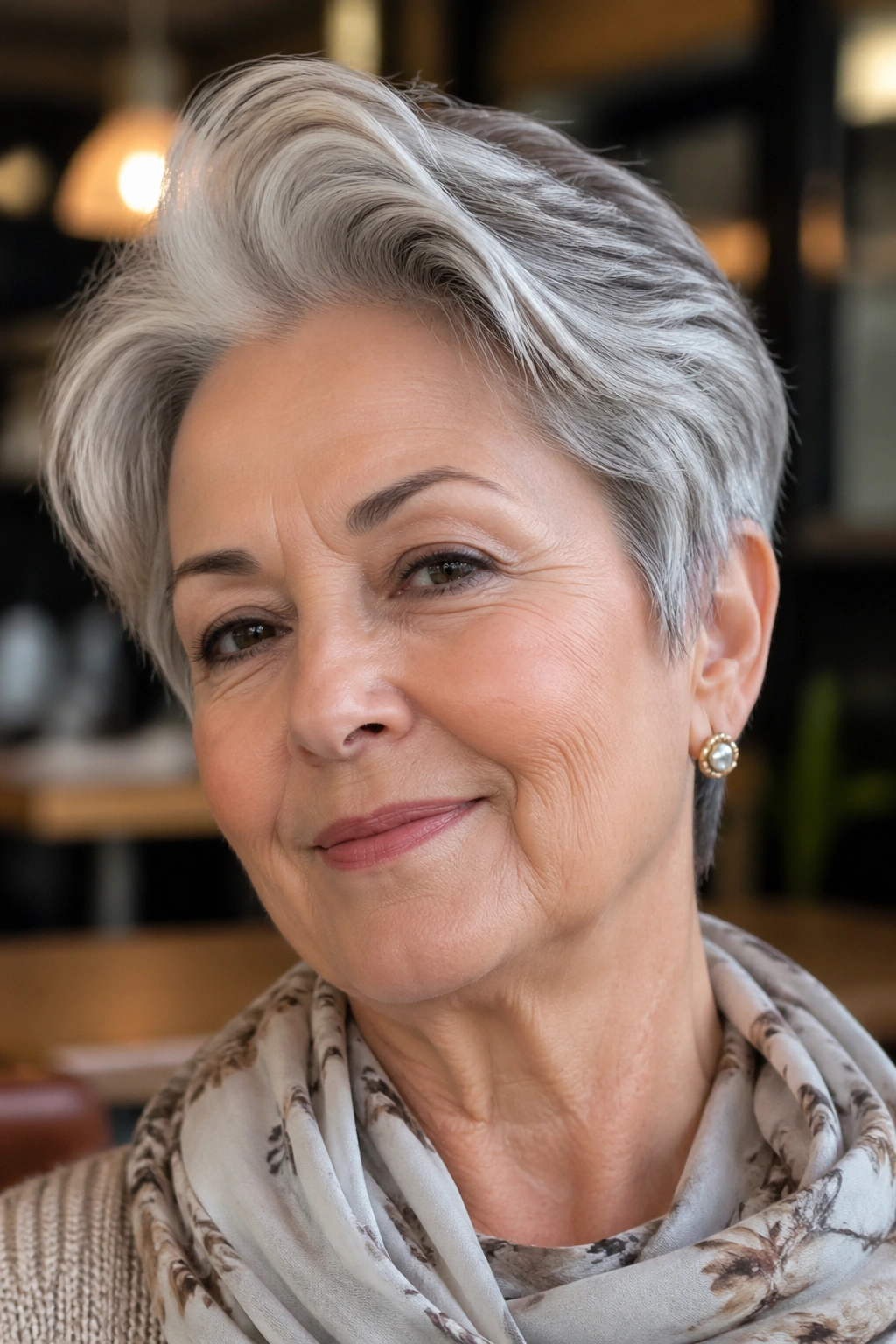
A swoopy short cut gives you the ease of short hair without the hard edges of a cropped pixie. The front stays longer, which means you get a little sweep, a little softness, and a lot of room to frame the face.
Compared with a traditional pixie, this version feels less exposed. The lifted front can move over the forehead or off to the side, depending on how you part it. That makes it useful if you like short hair but do not want the face entirely open. The shape also works well on women who want something neat enough for daily life and polished enough for a dinner out.
The trick is keeping the front piece long enough to swoop, while the sides and back stay tidy. A light styling cream or paste gives the front control without killing the movement. Use fingers first, comb second. Too much combing tends to flatten the lift.
This cut looks best when the top has a little air. Flat roots make it lose its charm fast.
19. Half-Up Polished Style for Special Days
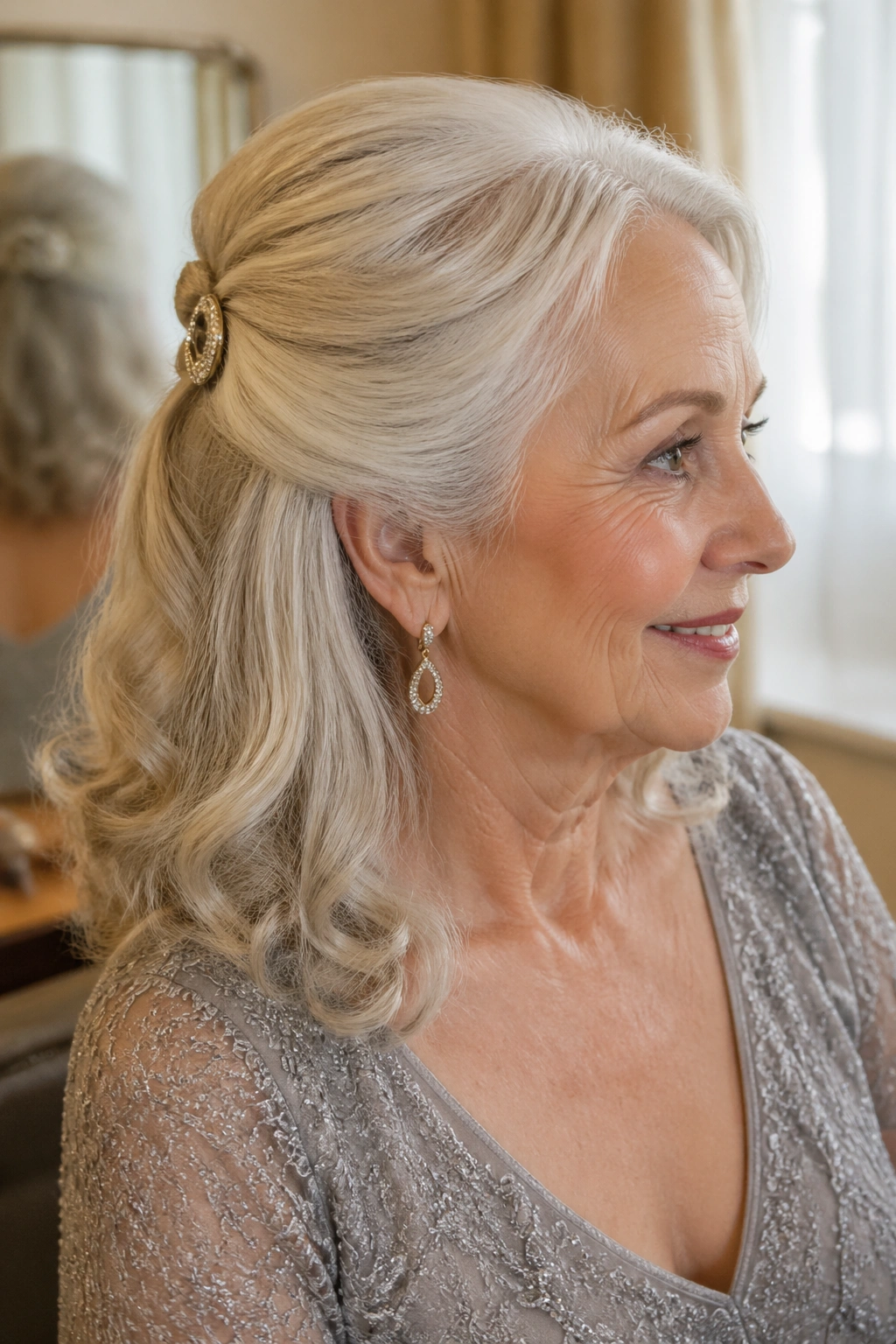
A half-up style is useful because it behaves like a reset button. It takes weight off the face, keeps the sides neat, and still lets the length show.
Why It Works So Well
The top section can be smoothed back, twisted, pinned, or clipped in a small decorative barrette. That one move gives the hair shape and lifts the eyes upward. If the hair is shoulder length or longer, the lower section stays loose and soft. If the hair is shorter, the top half-up can still work with a small twist at the crown.
This style is a strong choice for silver hair because the contrast between the pinned top and the flowing lower section shows off shine. A light mist of shine spray helps, but the real appeal is the shape. It feels composed without looking sealed up.
- Use a small oval clip or 2 crossed pins for hold
- Leave a little volume at the crown
- Smooth the front lightly with a brush, not a flat iron
- Curl the ends of the loose section if you want extra softness
- Keep the top section loose enough to avoid tension
Best part: it looks dressed up without needing a full updo. That saves time and still feels special.
20. Elegant Swept-Back Bob
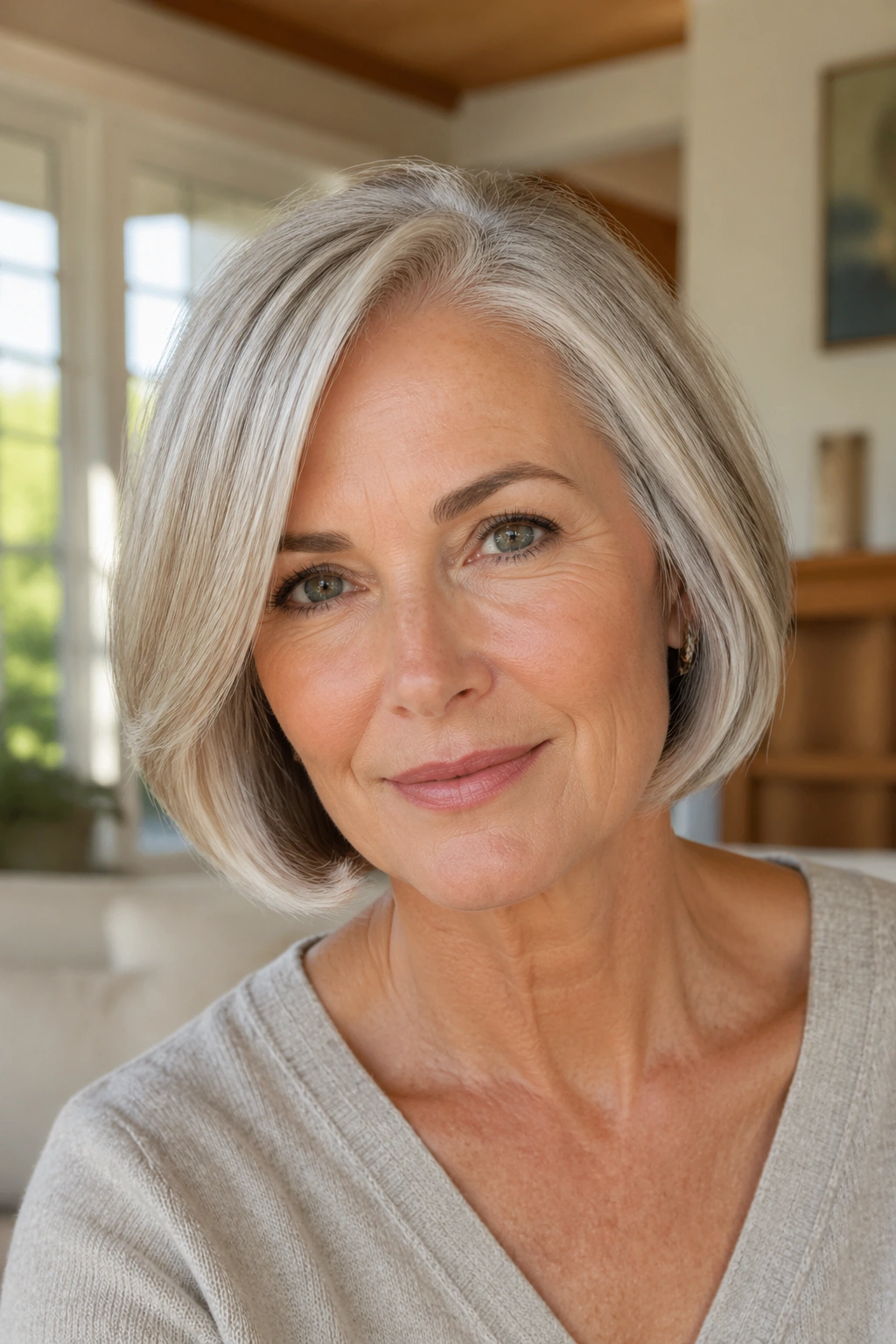
A swept-back bob has a clean, confident look that never tries to steal the room. It simply clears the face, shows the cheekbones, and lets the hair line do its job.
The style works because the front is brushed away from the face while the back stays close and tidy. That gives you a little lift at the roots and a neat shape around the jaw. On silver hair, the effect can be especially good, because the swept-back front catches the light in a soft, controlled way rather than falling into the eyes. It feels modern without getting fussy.
This is one of those cuts that benefits from a small amount of product and a careful hand. Use a lightweight cream or a bit of pomade only at the front and temples. Too much product will flatten the crown, and a flat crown kills the whole look. A side sweep or subtle back direction at the roots keeps it alive.
If you want one style that can move from lunch to dinner without drama, this is the one I’d keep on the shortlist. Clean, neat, and quietly strong. That is a fine place to end.