



Thick hair after 60 can be a gift and a headache on the same morning. It holds shape, takes a curl, and gives you body that a lot of people spend a fortune chasing. It also swallows time, traps heat at the nape, and turns a blunt cut into a helmet if the shape is wrong.
The usual advice to “thin it out” gets tossed around too casually. Sometimes it helps, sure. Plenty of times it leaves the ends fuzzy, the crown flat, and the whole style looking like it lost its backbone. Thick hair usually looks better when the bulk is removed in the right places, not hacked away everywhere at once.
Age changes the picture a little, too. Hair can stay thick while the strands get drier, a bit wirier, or more stubborn about lying flat, and silver hair often shows every hard line at the ends. That is why the best hairstyles for women over 60 with thick hair are the ones that control shape without making the hair look tired or overworked.
So the smartest styles are the ones that make the hair feel lighter while still leaving it full. Some lift the crown, some narrow the sides, and some keep the length but move the weight to the inside where nobody sees it. The right cut should feel like it was made for how your hair actually behaves, not for a photo on a screen.
1. Layered Shoulder-Length Cut
A shoulder-length cut with long layers is one of those styles that quietly does a lot of work. It keeps thick hair from piling up around the face and neck, but it does not strip away the fullness that makes the hair look healthy in the first place.
Why It Works So Well on Thick Hair
The best version starts with the length grazing the shoulders or resting just below them. That gives the hair enough weight to settle, while the layers take some of the bulk out of the midsection so the shape does not puff out like a triangle. If you have a strong natural wave, this cut is even better, because the layers help the bend sit in a softer, cleaner pattern.
Ask for long layers that begin below the cheekbones, not right at the jaw. That keeps the front from looking too chopped up. A small amount of point cutting at the ends can soften the line without making the haircut look thin or ragged.
- Keep the shortest face-framing pieces at least chin length if you want softness.
- Ask the stylist to remove weight from the inside, not just the surface.
- Blow-dry with a medium round brush for lift, then finish with a cool shot.
Best for: thick straight hair, loose waves, and anyone who wants movement without losing density.
2. Chin-Length French Bob
A chin-length French bob has confidence built into it. On thick hair, it can look crisp and chic instead of boxy, but only if the ends are softened a little and the shape is kept close to the head.
The trick is balance. Too blunt, and thick hair turns into a solid block. Too layered, and the bob loses the clean edge that makes it charming. The sweet spot is a neat line at the chin with just enough internal shaping to keep the sides from flaring out.
I like this cut on women with strong cheekbones or a fuller jaw, because the line can sit right where the face wants definition. If your hair is silver or white, the shape really shows up. The reflection on the edges gives it a clean, polished look that does not need a lot of styling.
One warning. A chin-length bob needs regular trims or it can kick outward at the bottom and start looking stubborn instead of sharp.
3. Long Pixie With Side-Swept Fringe
Can thick hair really work in a pixie after 60? Absolutely, and often better than finer hair does.
A long pixie keeps enough length on top to show off the density, while the back and sides stay short enough to remove heat and weight. The side-swept fringe is the part that makes it feel softer. Without it, a pixie on thick hair can read as severe. With it, the cut moves and bends instead of sitting like a cap.
How to Style It
Use a pea-sized amount of styling cream or paste on damp hair, then push the top forward and slightly to the side. A blow-dryer with your fingers, not a brush, usually gives the best shape. If the hair sticks up too much at the crown, that means the top is too short or too blunt.
This cut is also friendly to glasses. The fringe can skim the frames instead of fighting them, which sounds small until you live with it every day.
4. Soft Shag With Curtain Bangs
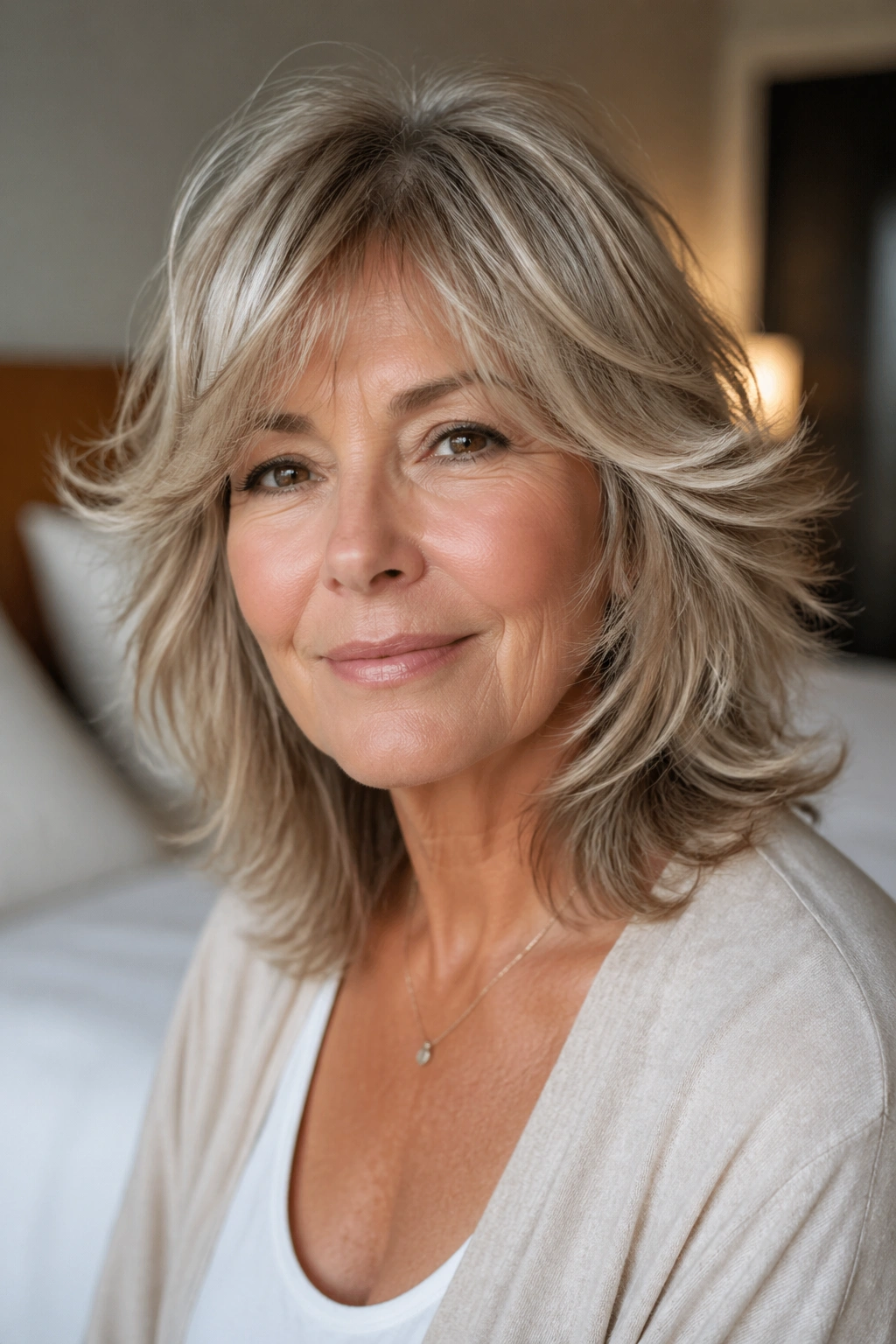
This is the style for thick hair that keeps building width at the sides. A soft shag breaks up that square shape and gives the hair some swing.
Picture a cut with layers that start around the cheekbones, then move down through the mid-lengths in a loose, feathered way. Curtain bangs split the front and draw the eye down the center of the face, which is handy if you want to soften a wider forehead or balance a fuller chin. The whole thing should feel airy, not choppy.
What to Ask For
- Curtain bangs that hit around the cheekbone or lip line.
- Soft, blended layers through the top and sides.
- Ends that are point-cut, not shredded.
A shag can go wrong fast if the stylist removes too much weight from the wrong spots. Then it starts to balloon instead of move. The good version looks lived-in, not messy, and thick hair gives it enough body to stay interesting even on day two.
5. Collarbone Lob With Internal Layers
A collarbone-length lob is one of the easiest places to land if you want polish without losing the comfort of hair you can still tie back. On thick hair, the length around the collarbone keeps the weight from crowding the jaw, and internal layers stop the ends from feeling too heavy.
I’m fond of this one because it works in almost every setting. It can look neat with a smooth blowout, and it can look relaxed when you let the natural wave come through. That flexibility matters more than people admit. A haircut that only looks good one way gets old fast.
Internal layers are the quiet part here. They live inside the haircut, so the outside line still looks full and clean, while the bulk gets removed where it actually affects movement. That is the difference between a lob that falls nicely and one that sits there like a brick.
If your hair has a little gray coming in, this length is forgiving. It lets the texture shift without looking messy.
6. Stacked Bob With a Rounded Back
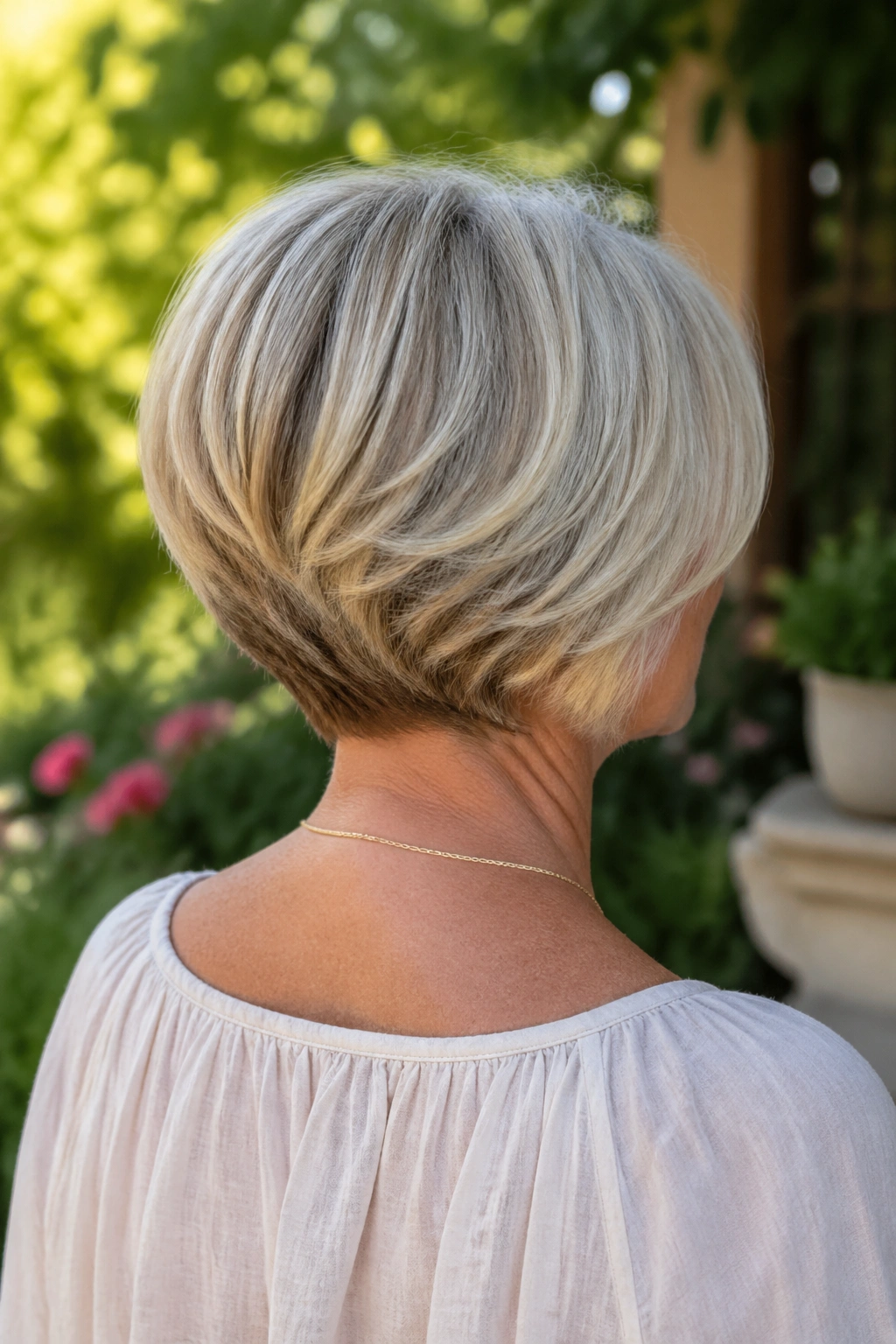
A stacked bob gives thick hair a place to go. Instead of building width at the sides, the graduation at the nape lets the hair sit in a neat curve that feels controlled from every angle.
This is the bob I’d point to if your hair grows out like it has opinions. The shorter back lifts the nape, the longer top covers the stack, and the whole shape stays sleek without needing much effort. It is a strong choice for straight or slightly wavy hair that likes to puff at the bottom.
Compared with a blunt bob, the stacked version feels more sculpted. Compared with a shag, it feels cleaner. That makes it a good middle ground for women who want shape but do not want layers flying all over the place.
Best When You Want
- a tidy neckline
- easier drying time
- a bob that keeps its shape between salon visits
It does need a precise cut. If the graduation is too steep, it can look dated fast. If it is too soft, the shape loses its point.
7. Feathered Midi Cut
A feathered midi cut is what happens when thick hair wants movement but not too much drama. The length usually sits between the shoulders and upper back, and the feathering softens the heavy line that thick hair can create.
What to Tell Your Stylist
- Keep the perimeter long enough to tuck behind the ears.
- Feather the top layers so they fall away from the face.
- Avoid heavy thinning at the ends.
That last point matters. Feathering should feel like lightness, not shearing. On coarse or silver strands, too much aggressive thinning can make the ends puff and fray. Better to keep the shape smooth and remove bulk in controlled sections.
This cut works beautifully with a round brush and a little lift at the crown. It also grows out gracefully, which is a big deal if you do not want to live at the salon every six weeks.
8. Face-Framing Long Layers
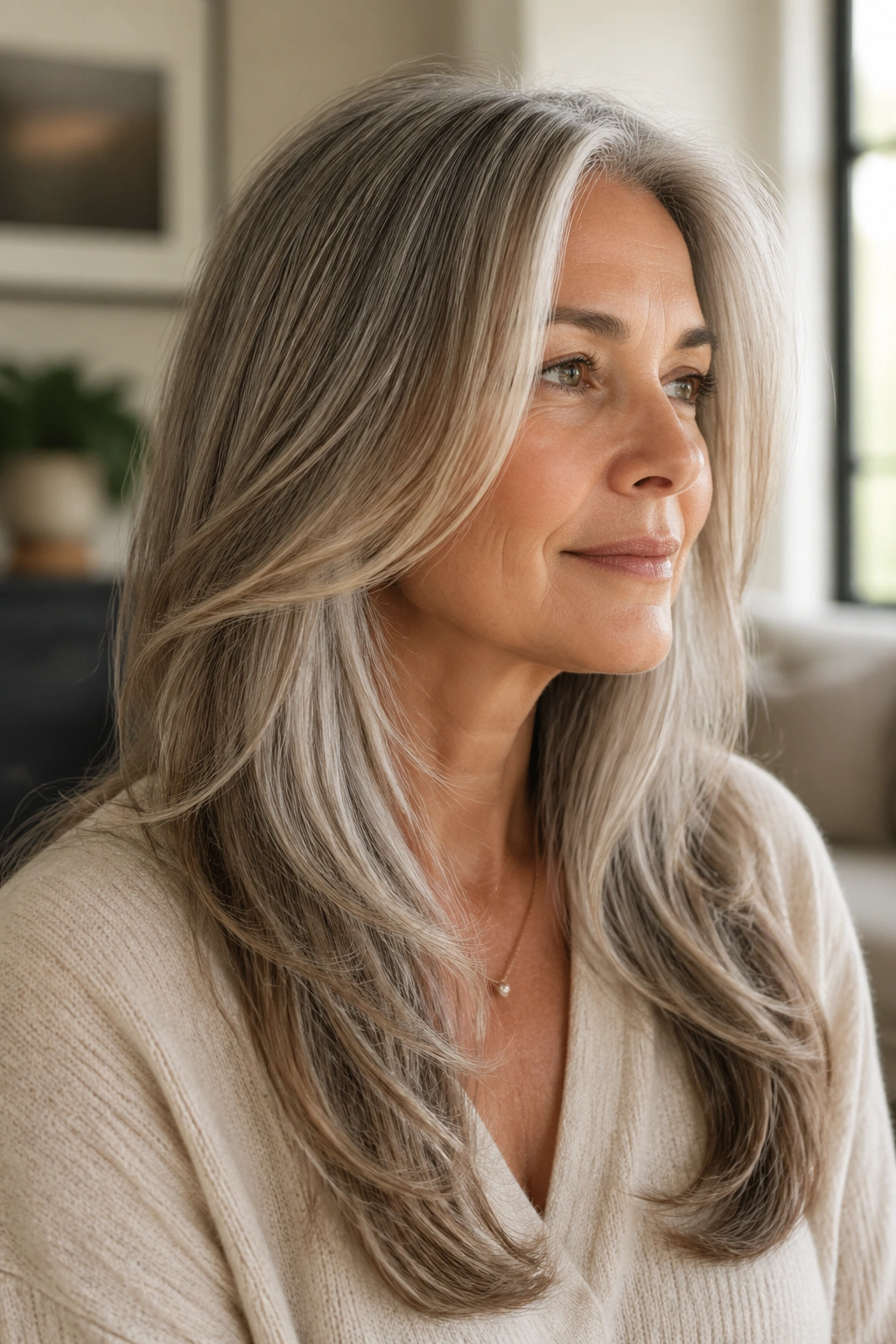
Long hair after 60 does not have to look dragged down. If the layers start in the right place, long hair can look elegant, soft, and much lighter than people expect.
The key is restraint. Keep the first face-framing layer somewhere below the chin so the hair around the face bends inward instead of flipping out. Then let the longer layers fall through the back to remove weight without breaking up the overall length too much. Thick hair actually helps here, because the layers still have enough substance to show.
I think this style is underrated. A lot of older women are told to cut their hair because it is “too much,” when the real issue is that the cut is too blunt or the ends are too flat. Long layers fix that without forcing a drastic change.
If you wear your hair in a ponytail or clip most days, this is a smart compromise. The hair stays long, but it moves better when you let it down.
9. Side-Parted Wavy Bob
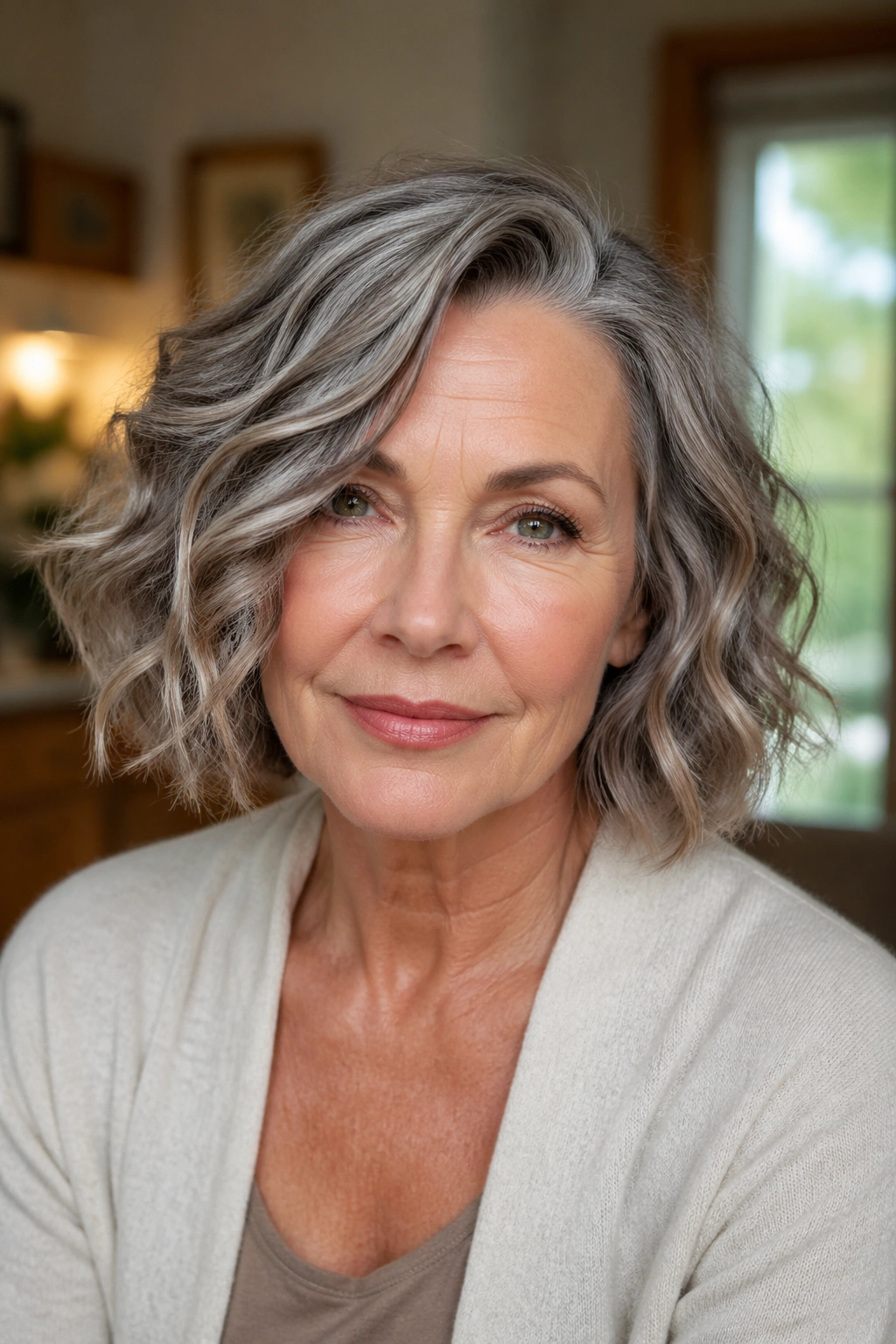
A side part changes more than people think. On thick hair, it can shift the weight, lift the crown, and stop the style from looking too symmetrical or stiff.
A wavy bob with a deep side part works because the wave pattern breaks up the bulk. The hair falls in soft bends rather than a straight wall, and the side part gives one side a little more height. That tiny difference keeps the cut alive.
If your hair dries with a natural bend, let it do that job. A light mousse at the roots and a few scrunches with your hands can be enough. For stronger wave, use a diffuser on low heat until the hair is about 80 percent dry, then leave it alone. Hands off. The more you touch it, the more likely it is to puff.
This is one of those styles that looks casual without looking sloppy. That is harder to pull off than it sounds.
10. Blunt Mid-Length Cut With Beveled Ends
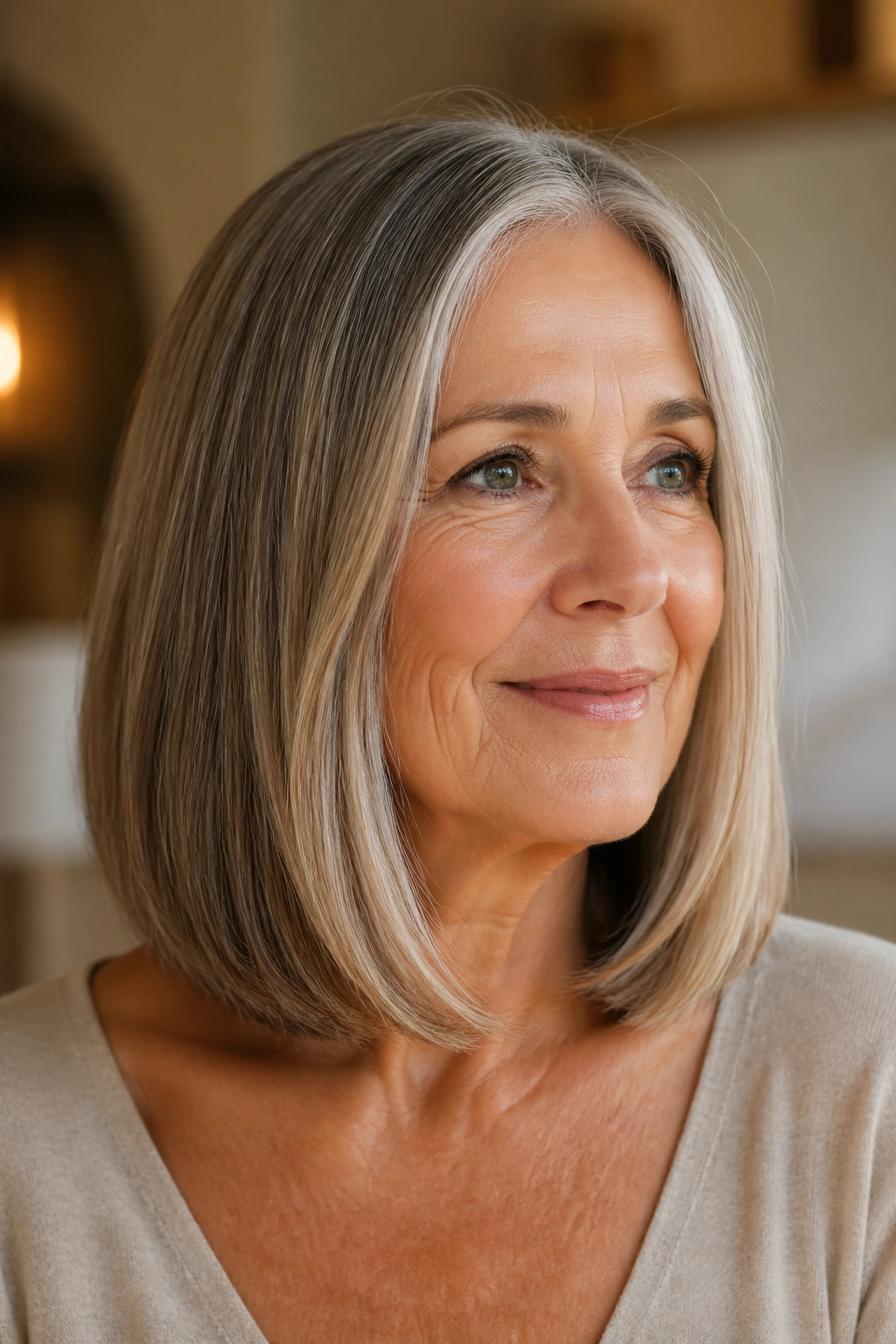
A blunt cut sounds risky for thick hair, and sometimes it is. Done carelessly, it can look heavy and solid in the worst way. Done well, though, it gives the hair strength and shine.
The difference is in the ends. Beveled ends soften the perimeter just enough to keep the line from looking like a shelf. The result is a mid-length shape that feels full but not massive. It is especially good if your hair is straight and the strands have some natural body of their own.
This cut does not beg for layers. That is the whole point. If you like clean lines, silver shine, and a style that looks deliberate from across the room, the blunt midi can be a very nice choice.
One caution: if your hair is extremely thick at the bottom, ask for a slight interior reduction. A tiny bit goes a long way. Too much and you lose the clean edge that makes the cut work.
11. Layered Curly Bob
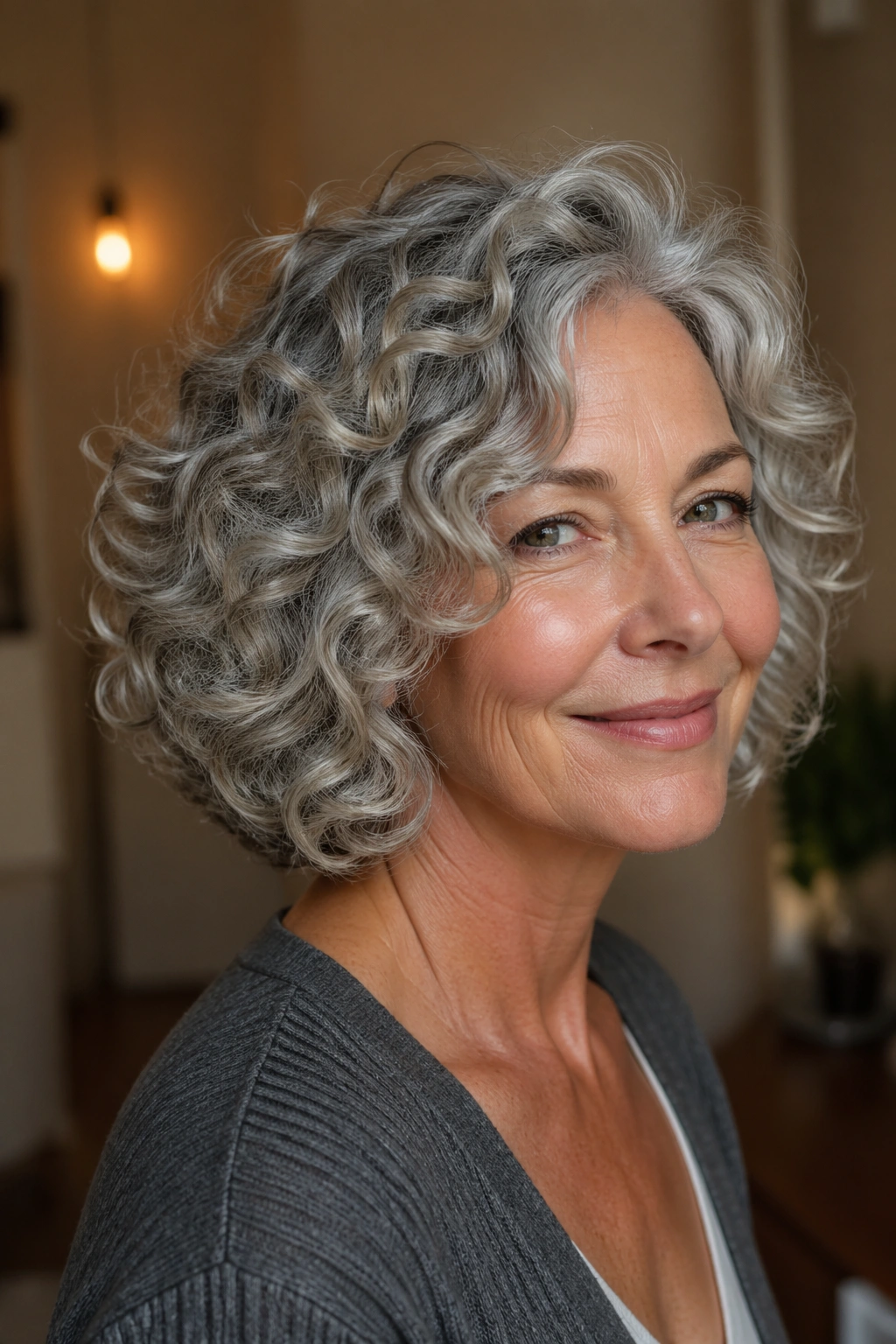
Curly thick hair needs shape more than it needs control. A layered curly bob does that job by giving the curls room to stack without turning into a triangle.
What Makes It Different
Curly hair should be cut with the curl pattern in mind, often dry or mostly dry, because a wet curl lies to everybody. What looks even in the sink may spring up unevenly once it dries. A bob that sits just below the jaw with longer layers underneath can keep the curls buoyant without making the top too wide.
Ask the stylist to shape around the curl, not fight it. That usually means longer layers and careful curl-by-curl detail at the surface. A blunt, one-length bob is usually not the friend here unless the hair is very loose and heavy.
How to Wear It
Use a leave-in conditioner, then a curl cream or gel while the hair is still damp. Scrunch, then let it dry with as little touching as possible. Thick curls hold a shape well, but they also remember bad habits. If you rough-dry them, they will show it.
12. Subtle Asymmetrical Bob
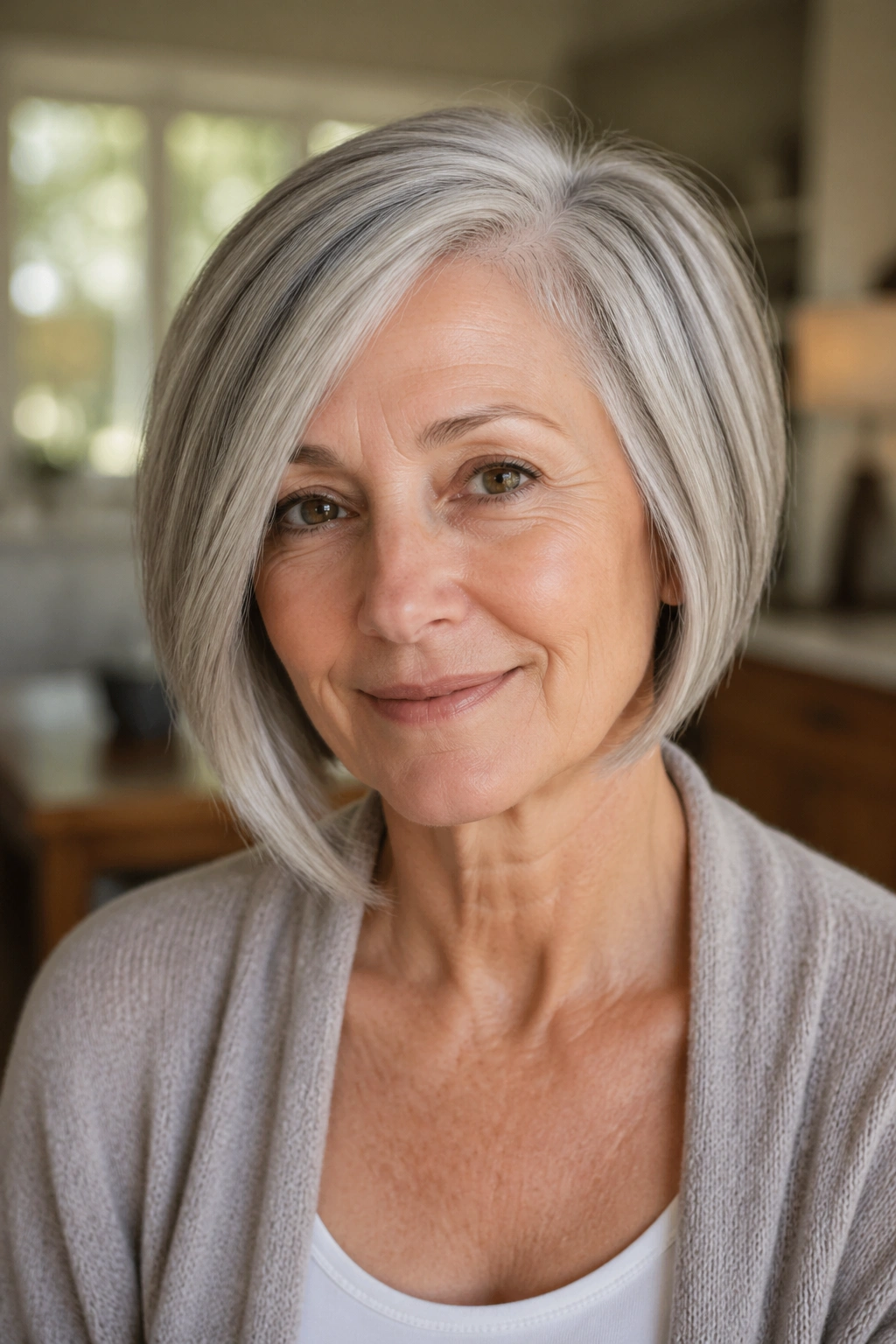
A slightly asymmetrical bob gives thick hair a little tension, and that is what makes it interesting. One side is a touch longer than the other, usually by less than an inch, so the shape feels intentional rather than theatrical.
This cut is good when you want a bob but do not want it to feel too safe. The asymmetry pulls the eye downward, which can narrow the face and keep thick hair from looking overly square. It also works well if one side of your hair naturally sits flatter than the other. Instead of fighting that, the cut uses it.
The key word here is subtle. A huge difference between sides can feel fussy. A soft shift in length looks modern without trying too hard. For women over 60, that matters. The haircut should flatter first and announce itself second.
Keep the styling smooth or softly waved. A jagged asymmetrical cut on thick hair can get loud fast.
13. Tapered Crop With Crown Height
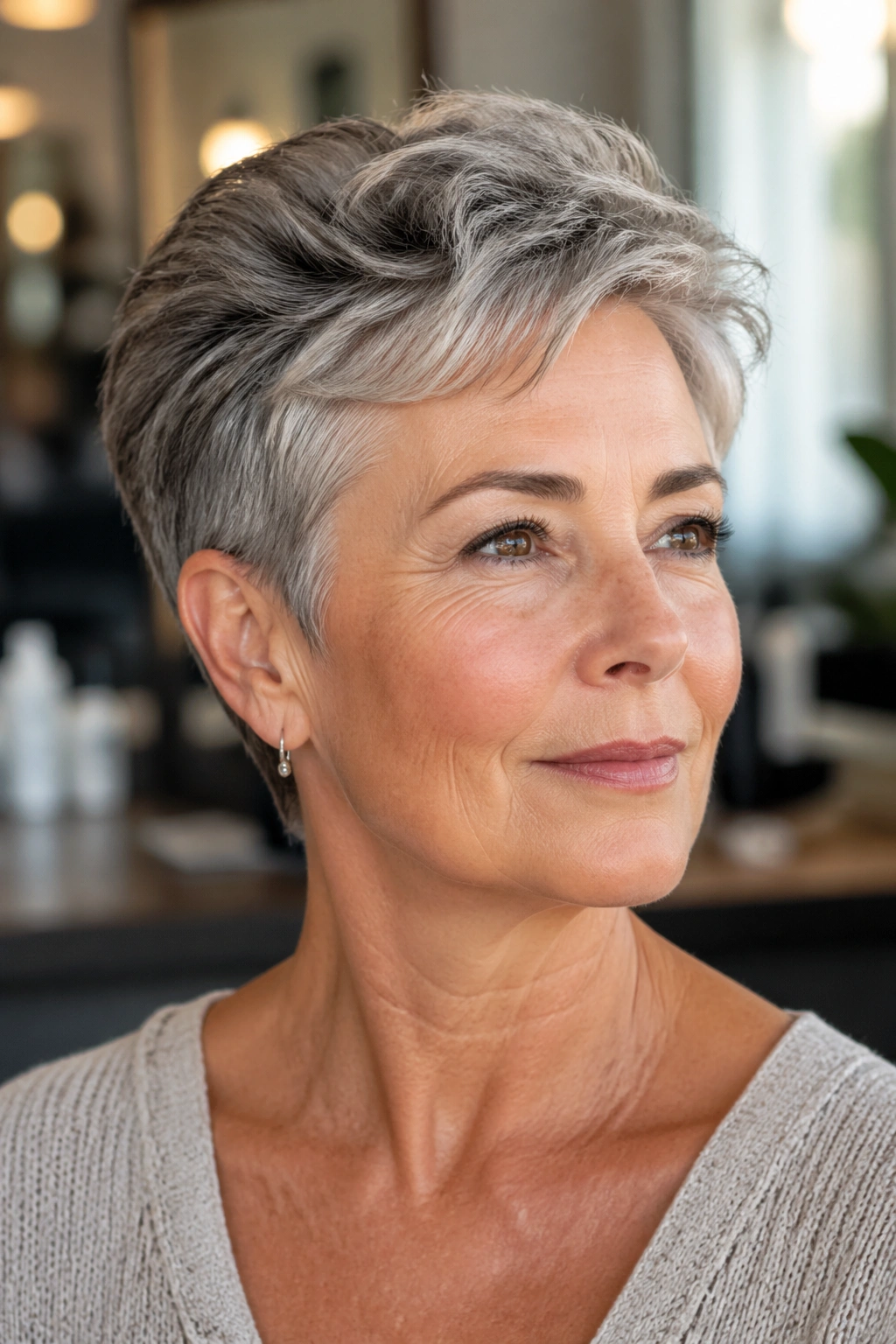
Short hair and thick hair can be a very good match when the shape is tapered properly. A tapered crop keeps the sides neat and leaves enough height at the crown to avoid that flattened, helmety look that some short cuts get after a few weeks.
The crop is especially useful if your hair is thick through the back of the head. Shorter sides and a clean nape reduce heat, and the extra lift on top makes the face look a little longer. That can be flattering on rounder faces or on anyone who wants a fresher neckline.
Ask for It Like This
- Short, tapered sides around the ears
- Slightly longer crown with texture
- A soft nape, not a hard edge
This cut needs regular shaping, but the styling time is low. A dab of matte paste and a few finger movements are usually enough. If you hate a lot of morning fuss, that alone may sell it.
14. Shaggy Pixie Bob
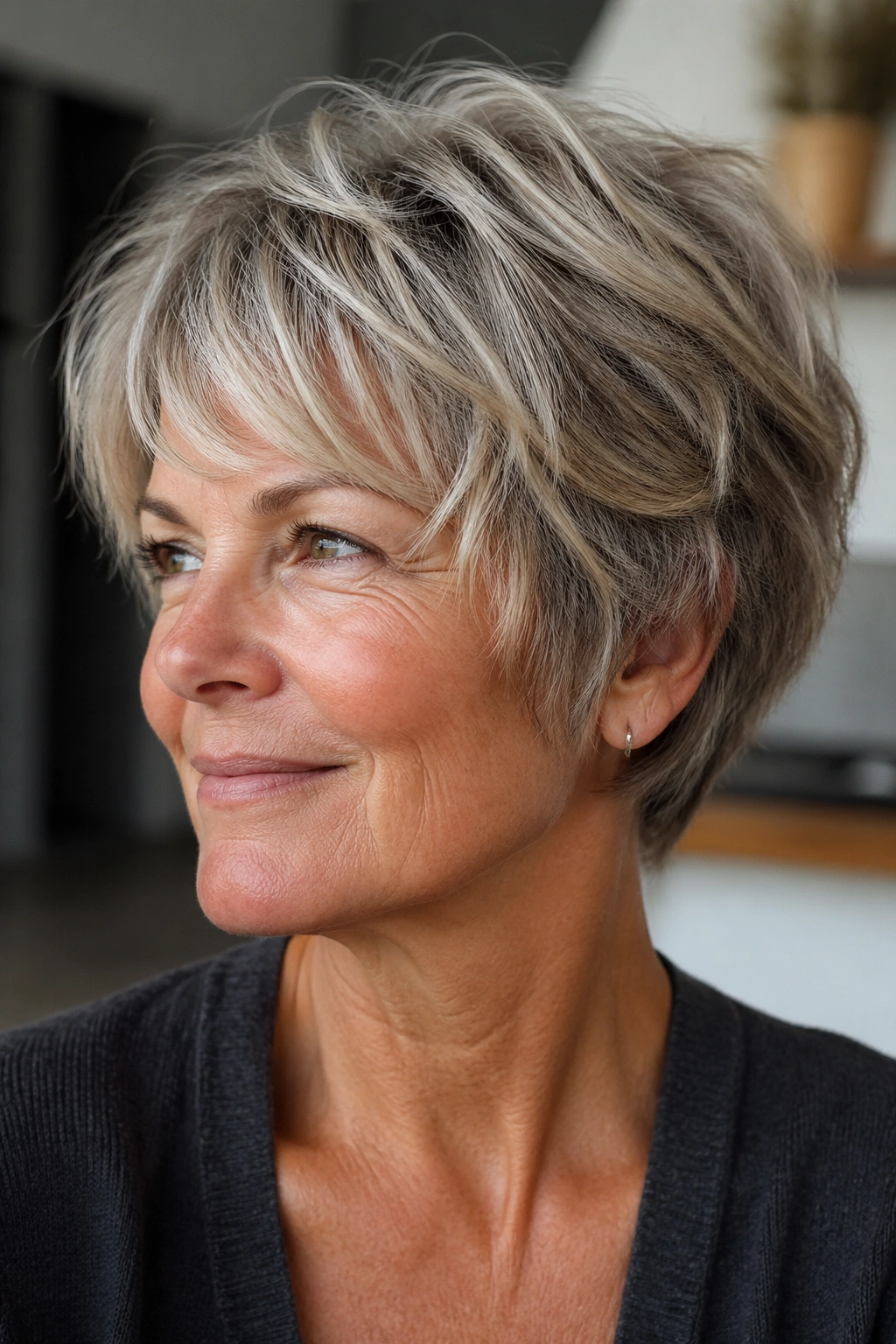
A shaggy pixie bob sits between a pixie and a bob, which makes it useful for thick hair that wants movement but still needs some body around the face. It keeps the sides fuller than a pure pixie, while the layering stops the cut from feeling heavy.
I like this one for women who have already worn a bob and want something lighter without going full short. The hair can be tucked behind the ears, pushed forward, or rough-dried into a piecey shape. That kind of flexibility is worth more than a fancy name.
The shaggy part matters. Without texture, the hybrid cut can look awkward, almost like two haircuts arguing with each other. With texture, it feels easy and a little playful. On thick hair, the layers have enough substance to stay visible, which is one reason this cut photographs well in real life, not just in salon mirrors.
If you want a smaller face-framing effect, keep the front slightly longer than the back. That gives the shape room to breathe.
15. Shoulder-Length Cut With Curtain Bangs
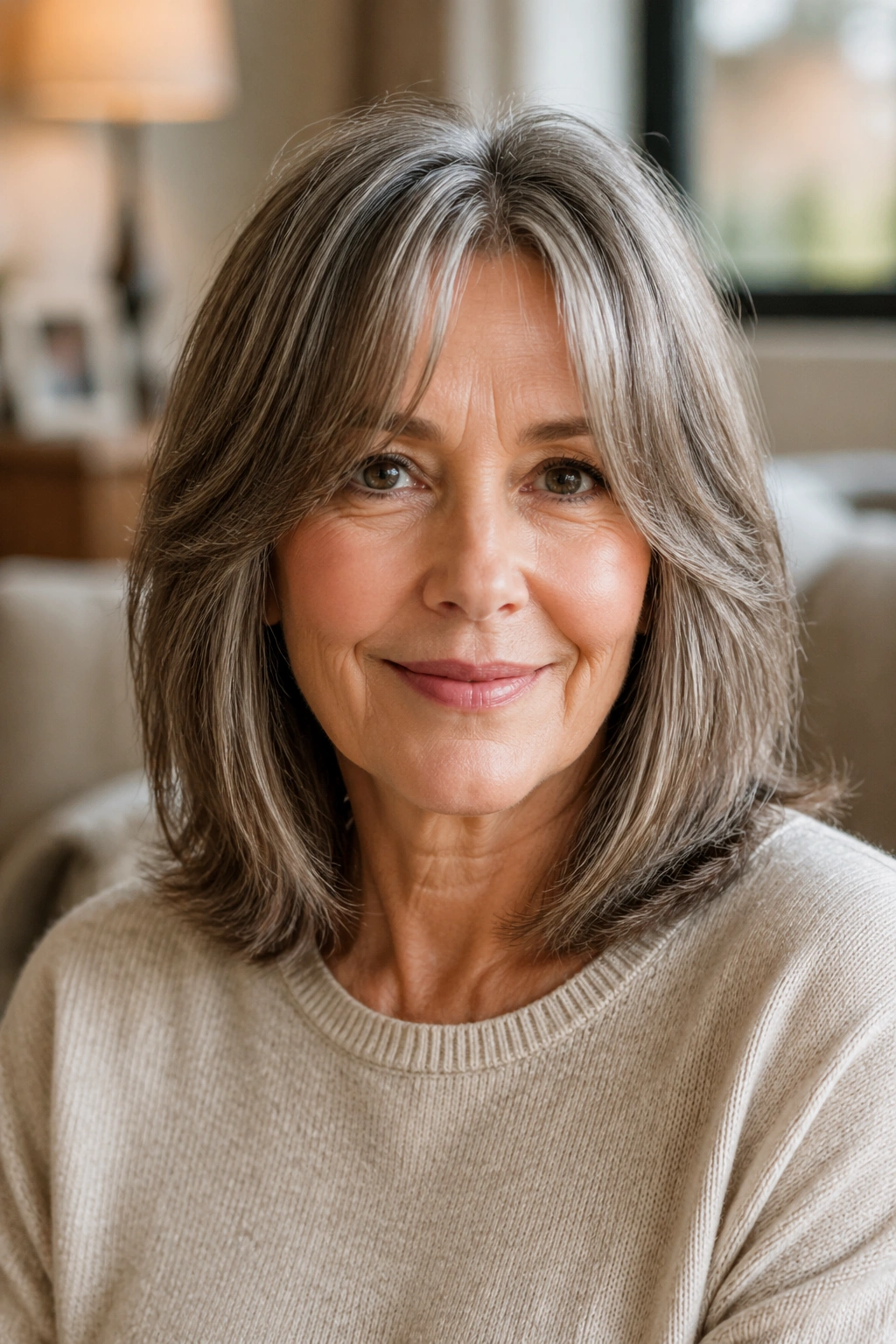
Can you wear bangs after 60 with thick hair? Yes. And curtain bangs are usually the least annoying place to start.
This cut keeps the length around the shoulders, then opens up the face with a fringe that splits in the middle and falls to each side. The bangs can hide a high forehead, soften a strong brow, or simply make the haircut feel less plain. On thick hair, they also help distribute the density so the front does not feel like one solid wall.
Styling in 5 Minutes
- Blow-dry the bangs first with a small round brush.
- Aim the airflow downward at the roots, then curve the ends away from the face.
- Add a tiny bit of light cream to the mid-lengths, not the roots.
That last step matters. Heavy product at the fringe will make thick bangs collapse faster than you want. Keep the bangs airy and leave the bulk to the rest of the cut.
This style is forgiving. If the bangs grow out a little, they blend into the sides instead of looking awkward overnight.
16. Soft Low Chignon
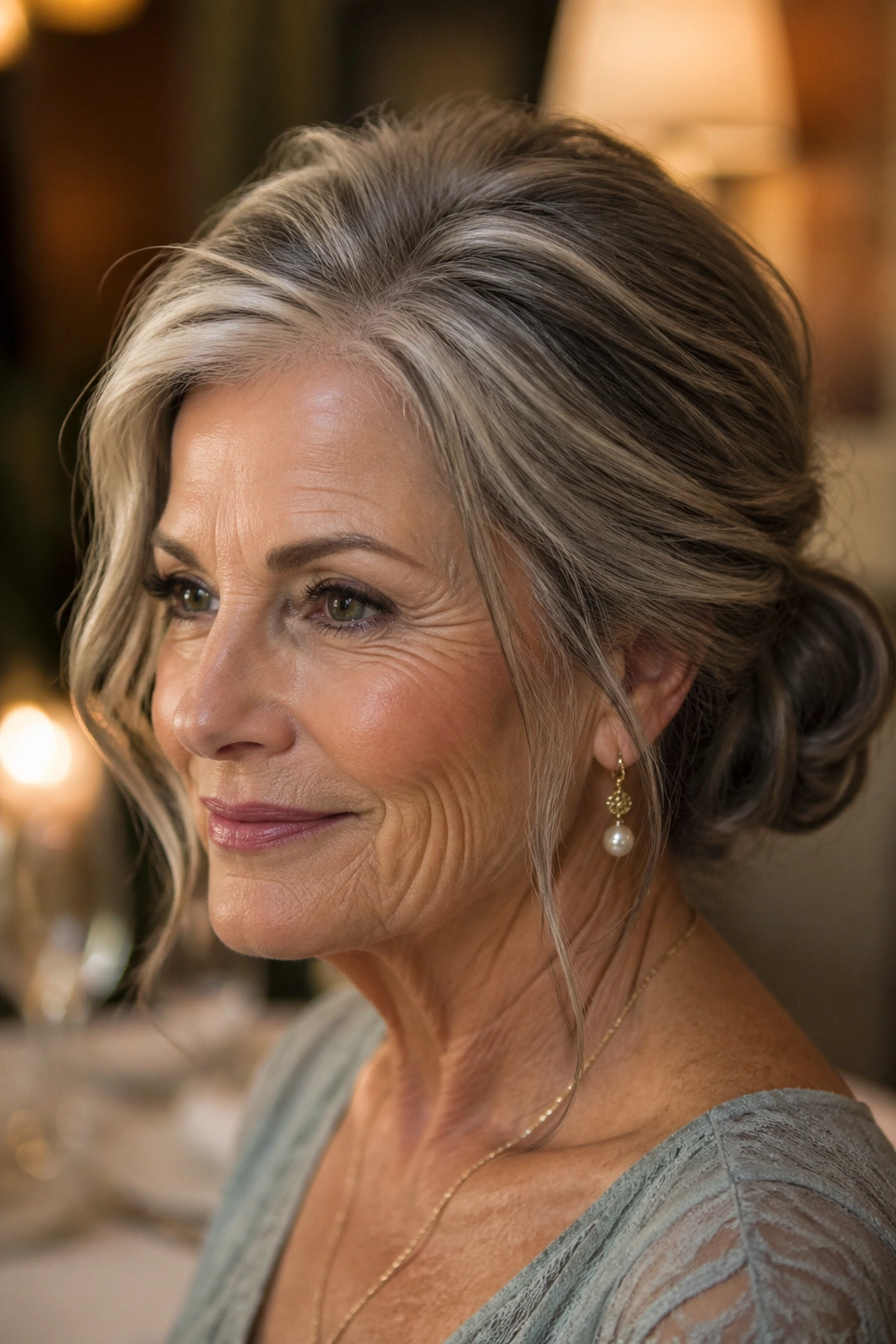
A soft low chignon is one of the nicest ways to use thick hair without wrestling it into submission. The fullness gives the bun structure, so it looks intentional even when the finish is relaxed.
The best version sits low at the nape, with a little volume at the crown and a few loose strands around the face. That little bit of looseness keeps the style from looking too formal or too tight. Thick hair is useful here because the bun looks substantial without needing extra padding.
I reach for this style when the occasion calls for neatness but not stiffness. A dinner, a wedding, a church service, a smart daytime event — all fine. Smooth the hair back with a light cream, twist it loosely, pin it where it wants to sit, and let the shape feel a touch undone.
One nice thing: it keeps the neck clear. When hair is thick, that matters more than people admit.
17. Relaxed French Twist
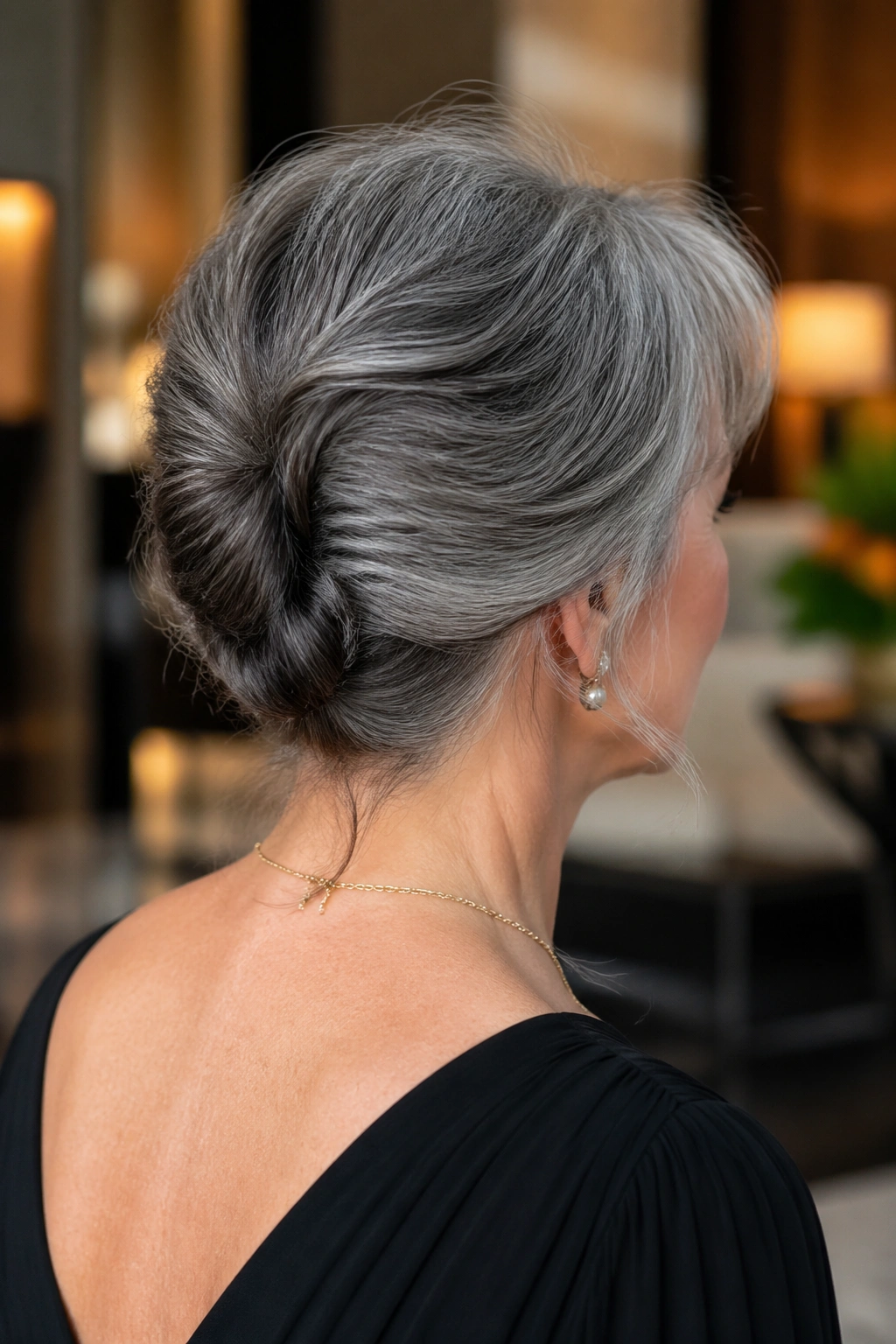
A French twist can look severe if it is pulled tight and built too high. A relaxed version is much friendlier, especially on thick hair, because the natural density creates the body the style needs.
Instead of forcing every strand into a rigid column, leave a little softness through the top and sides. The twist should sit low to mid-height and feel secure, not armored. Thick hair gives this style grip, which means fewer pins than you might expect. That is the part I like.
Best use: dressy events, family photos, or any time you want your hair off your neck without losing shape.
You do want a little prep. A small amount of dry texture spray or light hold spray helps the hair stay where you put it. If the hair is silky and freshly washed, it may slip. A day-old bend often works better.
It is not the easiest style on a rushed morning. But when it’s done well, it looks calm and grown-up in the nicest way.
18. Wrapped Low Ponytail
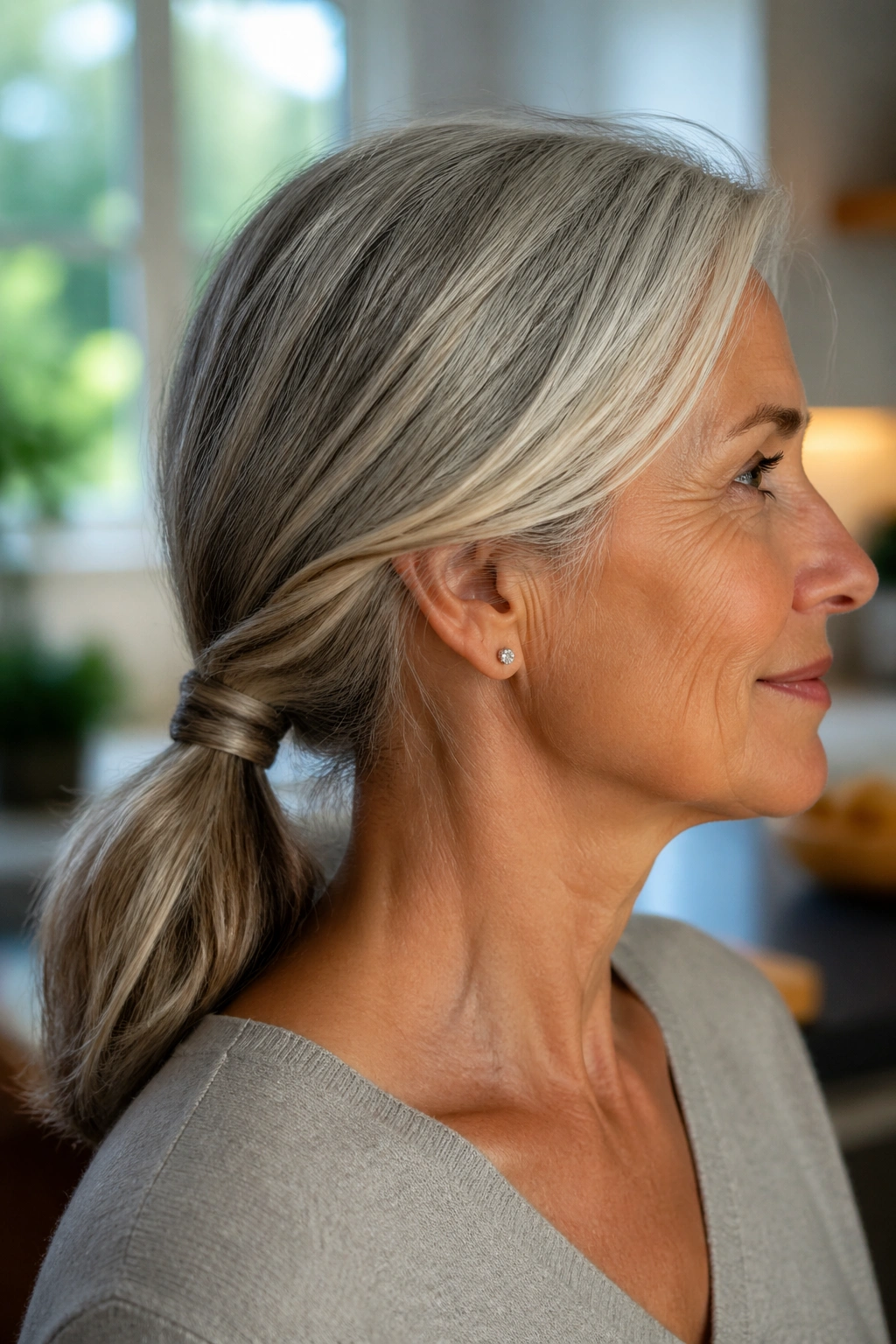
A low ponytail sounds plain until you clean it up properly. On thick hair, it can look polished, heavy in a good way, and much more intentional than people expect.
The secret is the wrap. Take a small section of hair from the ponytail, wrap it around the elastic, and pin it underneath so the base disappears. That one move makes the style look finished. Keep the ponytail low at the nape or slightly to one side if you want a softer line.
This is also a kind cut for the scalp. Thick hair pulled too high can feel weighty by noon, especially if the hair is long. A low ponytail spreads the tension out and keeps the look tidy without yanking at the roots.
Add a little smoothing serum on the surface, then stop. Too much product will make the ponytail look flat at the crown and greasy at the ends.
19. Braided Crown
A braided crown is one of those styles that uses thick hair instead of fighting it. The braid has enough volume to look substantial, and the wrap around the head keeps the whole look secure.
Why Thick Hair Helps Here
Thin hair can struggle to make a crown braid look full. Thick hair does the opposite. It gives the braid enough width to sit like a proper band, which means you do not need much teasing or filler. That said, the braid should stay soft. If it is pulled too tight, the style loses its charm and starts feeling rigid.
Good Details to Ask For
- A loose French braid or Dutch braid starting near the temple
- Soft pins hidden under the braid
- A few face-framing pieces left out
This is a nice choice for warmer weather, active days, or a special event where you want your hair off your face. It also plays well with silver strands, which show off the braid pattern in a pretty clear way.
20. Half-Up Twist With a Clip
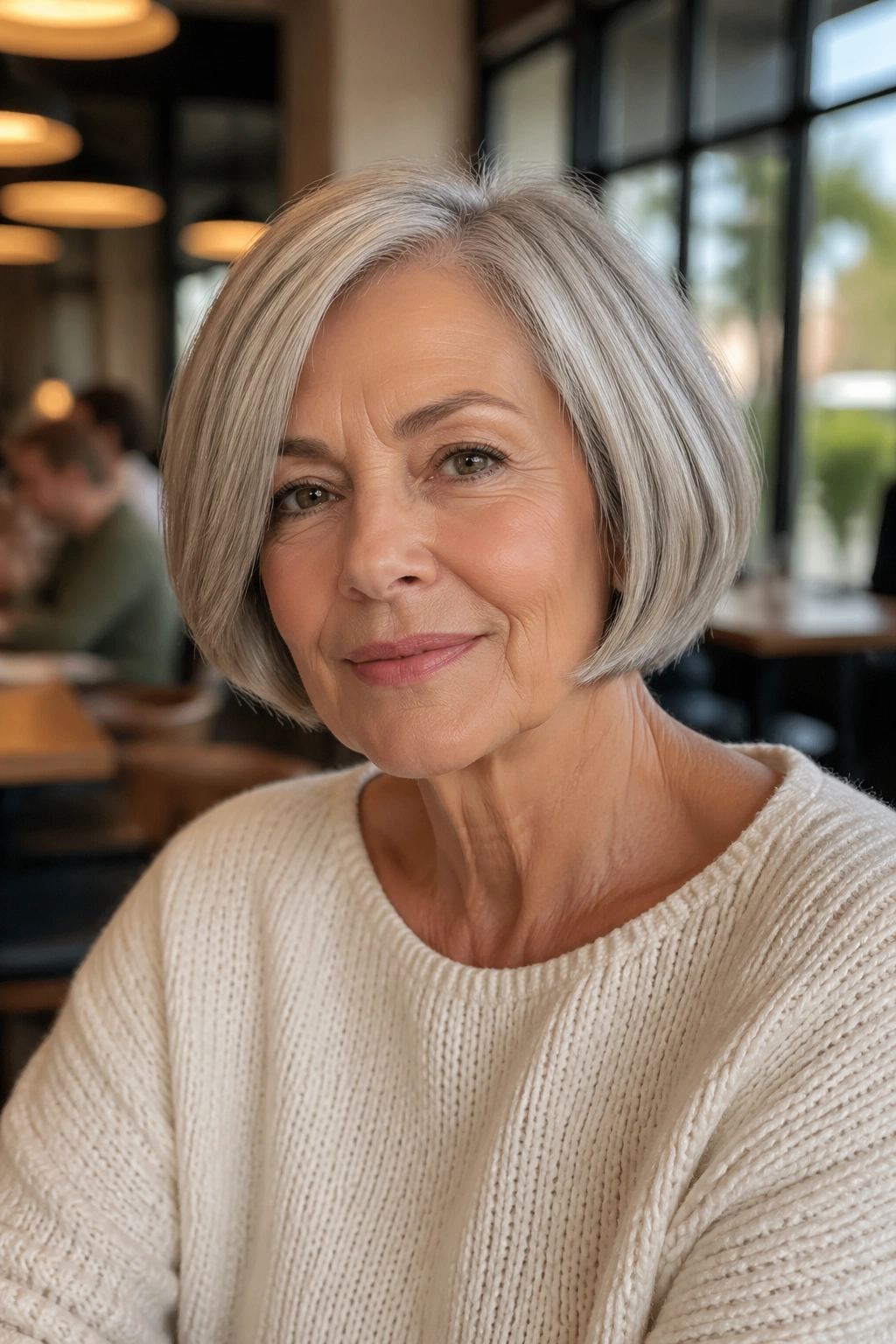
A half-up twist is the sort of style that saves a lot of thick-hair mornings. You get the comfort of having some hair up, but you still keep the length and movement that make the hair feel like yours.
The twist works because it secures the crown area, which is where thick hair often starts to feel bulky. Leave the bottom section loose and the shape stays softer. A strong clip holds the twist without the headache that a tight elastic can cause.
This is one of my favorites for thick hair that has a slight wave. The twist gives the top some lift, the loose back keeps the style from getting too formal, and the whole thing takes less time than a full updo. It also wears well on second-day hair, which is often when thick hair behaves best anyway.
If your hair is very slippery, spray the twist lightly before clipping it. A tiny bit of grip makes a big difference.
21. Brushed-Out Blowout
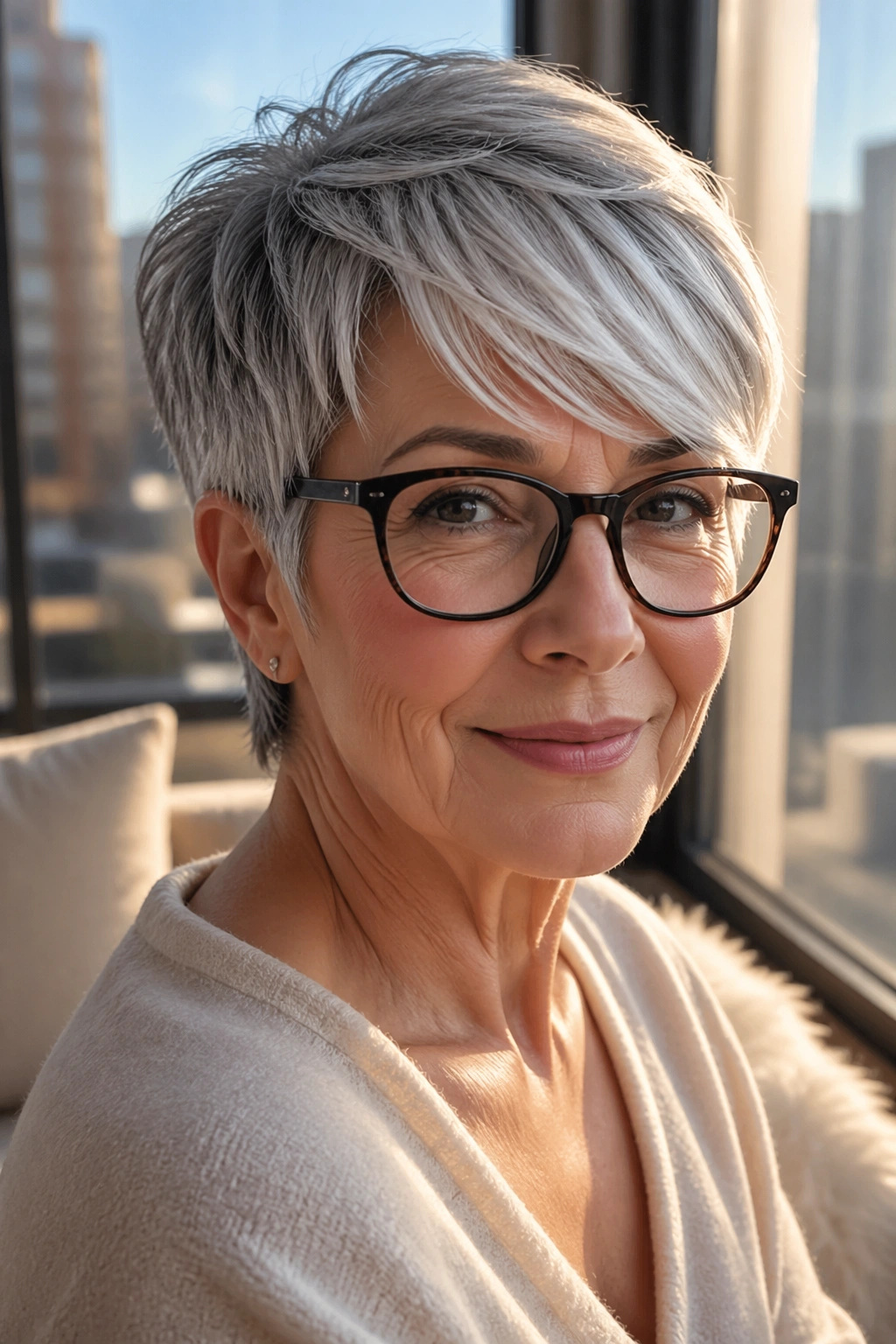
A brushed-out blowout can be gorgeous on thick hair, but it needs a bit of discipline. The goal is smoothness with movement, not that stiff salon bubble that collapses an hour later.
Start with heat protectant, then rough-dry the hair until it’s mostly dry. Use a round brush with a barrel around 1.5 to 2 inches if your hair is medium to long. Pull the sections upward at the root for lift, then curve the ends under or away from the face depending on the shape you want. Once the hair cools, brush it out with a paddle brush to soften the set.
That cool-down step matters. Thick hair holds heat, and if you rush the brushing, the shape can go limp too quickly. A proper cool shot or a few minutes of air cooling gives the blowout a better chance.
This style looks especially nice on women who want a fuller, softer look around the face without a heavy cut.
22. Rounded Bob With Side Sweep
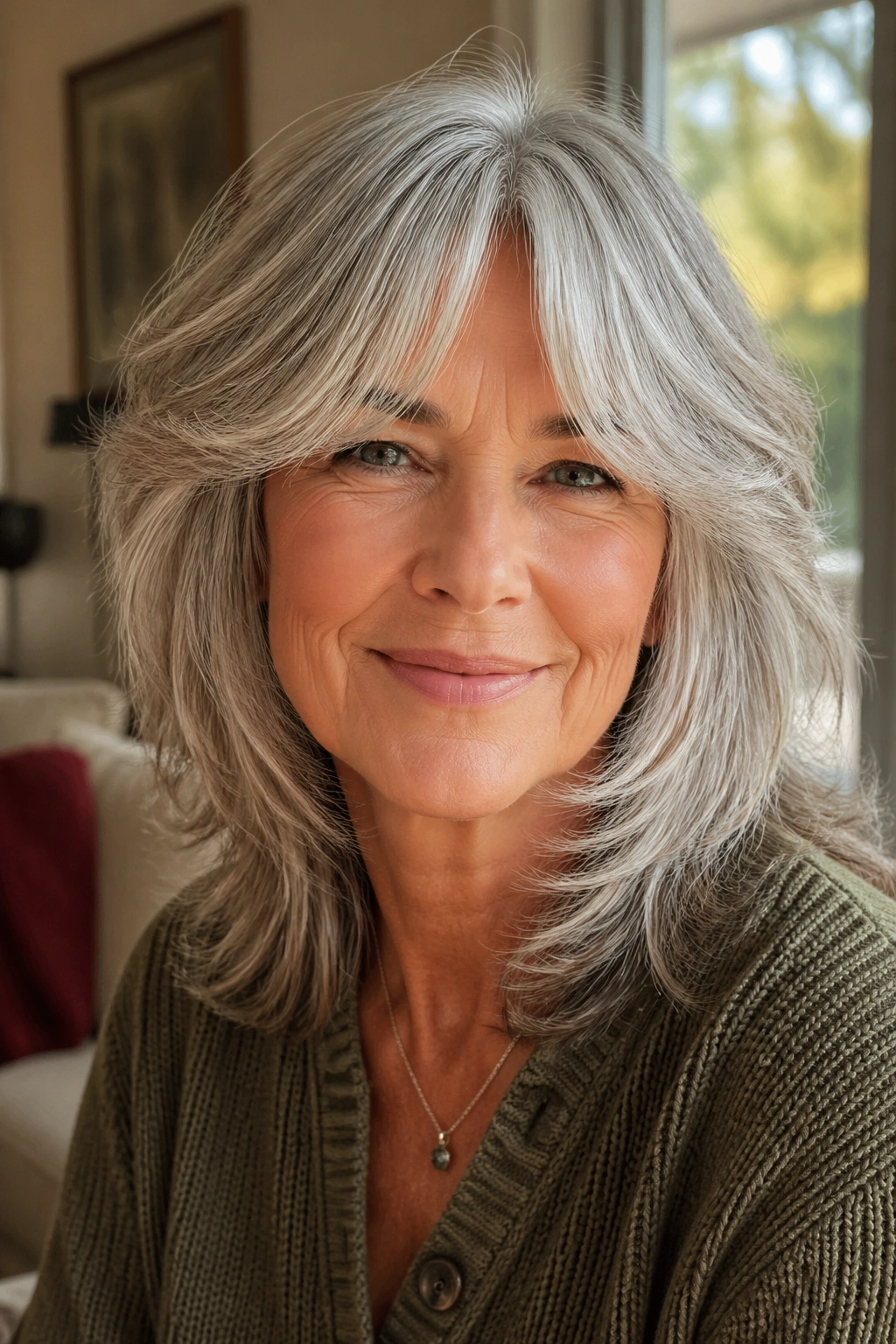
A rounded bob can be a lifesaver for thick hair that tends to stick out at the sides. The curve hugs the head a little more closely, so the style reads as neat instead of bulky.
The side sweep makes the difference. It breaks up the symmetry and gives the front some motion, which stops the bob from feeling too fixed. Compared with a straight-across bob, the rounded version feels gentler around the jaw. Compared with a shag, it feels tidier and easier to smooth down.
This is a strong pick if your hair has a coarse texture or if the ends naturally flare. Ask for a rounded silhouette with soft interior shaping and a side part that you can change if needed. The cut should follow the head shape rather than sit on top of it.
A light blow-dry cream and a medium brush are usually enough. You do not need much else. That is part of the appeal.
23. Deep Side Part With Long Layers
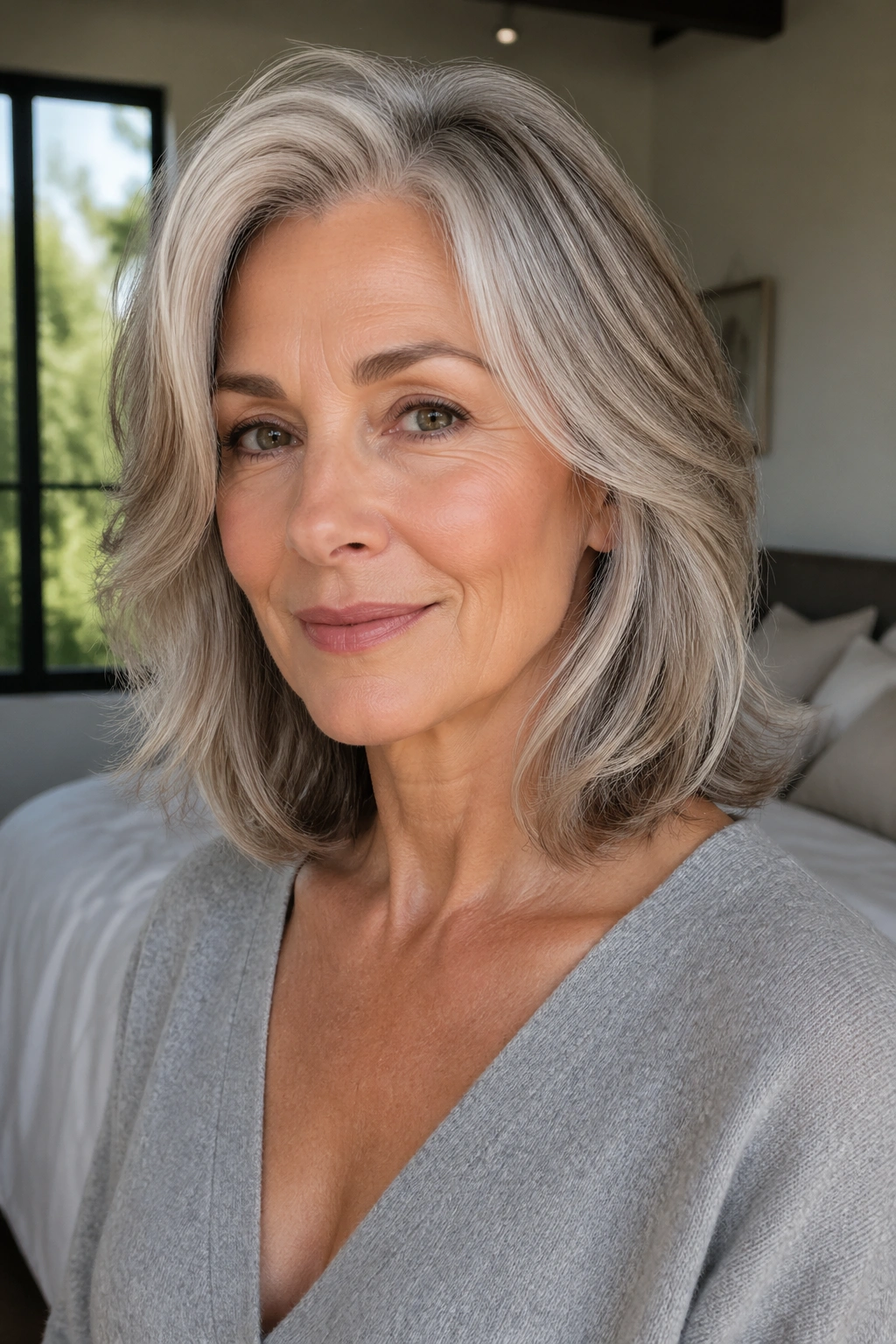
A deep side part can wake up a long layered cut without sacrificing length. On thick hair, it shifts the weight and creates lift where the roots tend to lie flat.
The effect is simple but useful. One side gets more height, the other side falls into a softer curtain, and the whole shape looks less heavy. If your hair has a strong natural bend, this part can work with it. If the hair is straighter, the side part still gives the style a little drama without making it feel fussy.
I like this for women who are not ready to cut a lot of length. It keeps the hair feeling familiar while changing the silhouette enough to make it look fresh. That can matter more than a full haircut overhaul.
A root-lifting spray at the crown helps, but use a light hand. Thick hair does not need much encouragement to hold a part once it is trained.
24. Natural Silver Curls Shaped Into a Halo
If your thick hair is curly, silver, or both, there is a strong case for simply letting the texture do what it wants. A halo-shaped cut keeps the curls rounded and lifted instead of bulky at the bottom.
The idea is to preserve the spring of the curls while removing weight where it blocks the shape. Longer layers around the crown and sides stop the hair from expanding into a triangle, and the silver tone gives the curl pattern extra definition. White and silver curls catch the eye in a way darker hair sometimes hides.
This style needs moisture. A leave-in conditioner, a curl cream, and a gentle diffuser can make the difference between defined curls and a frizzy cloud. Thick curls often need more hydration than people think, especially if the strands are gray, because gray hair tends to feel drier and less flexible.
It is a bold look, but not a loud one. There’s a difference.
25. Voluminous Low Bun
A voluminous low bun is the quiet winner for thick hair when you want something elegant but not stiff. The thickness gives the bun body, so it can sit low and full without looking tiny or skimpy.
The key is keeping a little height at the crown before you pin the bun. That small lift prevents the style from flattening the face. Then build the bun loosely at the nape, leaving a few pieces soft around the ears or temples if you want a gentler finish. Thick hair gives you enough material to create shape without adding padding, which is a nice problem to have.
This is also one of the most practical styles for long days. It keeps hair off the shoulders, handles humidity better than a polished blowout, and looks polished even when it loosens a little. If you are the sort of person who prefers one good hair tie and three pins over a drawer full of tools, this one makes sense.
A bun like this can be the final answer on busy mornings. No drama. Just shape.
