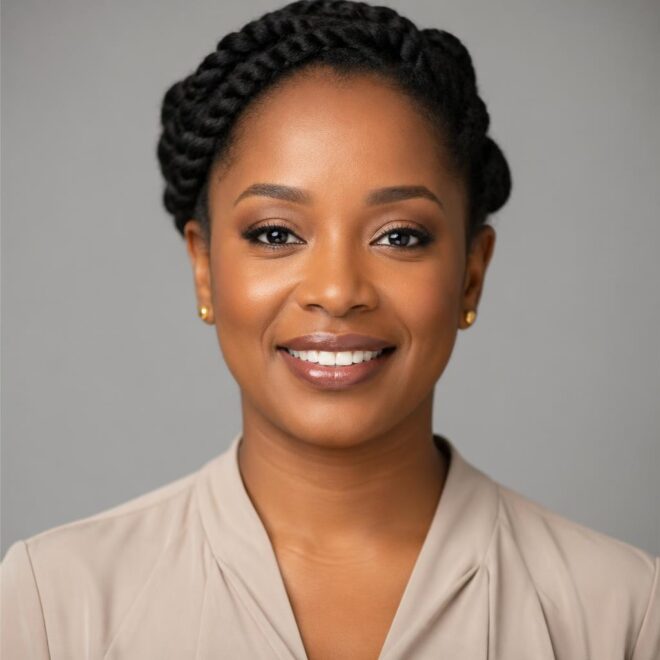


The best 24 youthful short haircuts for women over 60 with fine hair do one thing most people underestimate: they make the hair look fuller by removing the weight that pulls it flat. That sounds almost too plain to matter, but hair has a funny way of obeying gravity. If the length is too long or the shape is too blunt in the wrong spot, fine strands collapse fast.
What looks youthful on fine hair is usually not about chasing big volume everywhere. It’s about putting lift where the eye lands first — around the crown, around the cheekbone, or just off the nape — and letting the ends stay soft enough to move. A good short cut can make silver hair look lighter, cleaner, and more awake without turning it into a helmet.
The other thing people miss is that fine hair needs shape, not weighty layers piled everywhere. Too many choppy layers can make the ends look wispy in a sad way. Too few layers can make the whole cut sit like a cap. The sweet spot is usually somewhere in between, with texture in the right places and enough line left behind to keep the haircut looking intentional.
A round brush, a small amount of mousse, and a stylist who knows how to trim the nape and crown can change everything. So can a side part, a wispy fringe, or a little asymmetry. The options below cover the cuts that do that best, one by one.
1. Soft Pixie for Women Over 60
A soft pixie is one of those cuts that works because it doesn’t try too hard. The top stays a little longer, the sides stay close, and the whole shape lifts the face without making the head look small. On fine hair, that balance matters. Too short everywhere and the style can look sparse. Too long everywhere and it falls flat by lunch.
Why it works on fine hair
The crown has enough length to catch a bit of air when you blow-dry it with a small round brush. Ask for about 2 to 3 inches on top and shorter, tapered sides. That little bit of height makes a bigger difference than people think.
- Best for straight or slightly wavy hair
- Keeps styling quick, usually 5 to 10 minutes
- Looks good with side-swept bangs or a soft fringe
- Needs a trim every 4 to 6 weeks
Pro tip: use a pea-sized dab of light paste, not a heavy wax. Heavy product crushes fine hair fast.
2. Layered Crop With a Tapered Nape
This cut is sharp in the back and softer everywhere else, which is a nice trick for fine hair. The tapered nape clears away bulk so the neck looks longer and cleaner, while the crown keeps enough length to show movement. It’s the kind of haircut that looks neat even when you haven’t fussed much with it.
The best version of this crop has light internal layers, not lots of choppy pieces. Internal layers remove bulk without making the ends look thin. That’s a big difference, especially if your hair is straight and tends to lie close to the head.
I like this cut for women who want polish without a stiff finish. It sits well with glasses, gold hoops, and a little side part. If your hair grows in slightly uneven around the neckline, the tapered back hides that too. Simple. Clean. No drama.
3. Side-Swept Pixie Bob
Why does this cut flatter so many faces? Because it gives you the ease of a pixie with a little more length through the front. The side-swept shape breaks up the forehead line and gives fine hair a place to fall that feels soft instead of flat.
How to style it
Blow-dry the front diagonally across the forehead with a small brush. Then tuck one side behind the ear and leave the other side loose. That slight imbalance adds movement without needing much product.
A pixie bob works best when the front reaches just below the cheekbone. Shorter than that, and the sweep can look too abrupt. Longer than that, and the cut starts acting like a bob instead of a pixie.
If you want a cut that feels a little gentler than a cropped pixie but still easy to handle, this is a strong choice. It has enough length to play with, which means bad hair days are easier to hide. That’s not a tiny thing.
4. Feathered Short Shag
The short shag is the cut I’d hand to someone who says, “My hair goes limp by noon.” Feathered layers lift fine hair in a way blunt ends can’t. They also make silver or white hair look airy, not stiff.
This is one of those styles that looks best when it’s a little imperfect. A perfect blowout can flatten the charm right out of it. Use a root-lifting mousse, rough-dry the top, then finish with your fingers or a diffuser if the hair has a bend.
- Soft feathering through the crown
- Light fringe or face-framing pieces
- Best when the ends are point-cut instead of blunt
- A little texture cream is enough
One warning: too many razored ends can make the cut look frayed. Ask for feathering, not shredding.
5. Chin-Length Bob With Airy Ends
A chin-length bob can be a gorgeous fix for fine hair because it keeps enough line to look full while still feeling light around the face. The cut lands at a spot where the jaw gets a little framing, which often makes the whole face look more awake. I’ve always liked this length more than shoulder-length on finer strands. Shoulder-length hair can be a little too honest about thinning ends.
The trick is in the ends. They should be soft, almost lifted, not chopped into a hard line. A stylist can use point-cutting or a bit of slide cutting to keep the finish from looking heavy. A soft bend at the ends helps too, especially if your hair is straight and wants to hang there like a curtain.
This cut does well with a side part and a round brush. It also behaves nicely with a tucked side if you like to wear earrings. Small detail, but it matters. A good chin-length bob gives you room to breathe around the face.
6. Classic Graduated Bob
A graduated bob is the neatest way to get volume without a lot of teasing. The back is stacked slightly higher, and the front stays longer, which creates a clean slope. On fine hair, that slope gives the illusion of fullness where the cut needs it most.
Unlike a one-length bob, this version builds shape into the haircut itself. That means you don’t have to fight your hair into place every morning. The back wants to sit in a rounded way, and the front falls with a little swing.
Best for
- Straight hair that lies flat at the crown
- Women who want a polished look
- Glasses wearers who like a crisp outline
- Anyone who doesn’t want tons of styling steps
If you have a narrow neck or a delicate jawline, this cut can be especially flattering. The stacked back gives lift. The longer front keeps it from feeling boxy.
7. French Crop With Micro Layers
Could a cut this short still feel feminine? Absolutely. The French crop keeps the sides neat and the top slightly longer, then uses tiny layers to stop the top from lying flat. It’s sleek, but not severe.
What makes it different
The fringe is usually short and soft, not heavy. The top has texture, but only enough to create movement. You don’t want big, obvious layers here. The charm is in the quiet detail.
Ask for the top to stay around 1.5 to 2.5 inches, depending on how much you like to style it. That gives you enough length to sweep it slightly forward or brush it back with a small dab of cream.
This cut is best if you like low-maintenance hair but still want something that looks finished. It does not need much. A quick blow-dry, a bit of finger combing, done. If your hair is fine and dense at the same time, this can remove the triangle shape that some short cuts create.
8. Textured Taper Cut
Picture a cut that hugs the nape, opens around the ears, and leaves the top soft enough to move. That’s the textured taper cut, and it’s one of my favorites for hair that loses shape fast. The sides stay tidy, which keeps the haircut from puffing out at the wrong spots.
What matters here is the balance between texture and control. Too much texture, and the cut can look fuzzy. Too little, and it turns into a plain cap. Ask for texture mostly through the crown and front, with the bottom kept cleaner.
- Keep the neckline narrow and neat
- Leave a bit of softness over the temples
- Use a light mousse before blow-drying
- Finish with a tiny amount of cream on the tips
If you want something easy to grow out, this one behaves well. It doesn’t need a perfect shape to look good. That’s half the appeal.
9. Jaw-Length Bob for Fine Hair
A jaw-length bob sits in a sweet spot for fine hair. It’s short enough to feel light, but long enough to still show density. The length also frames the jaw in a way that can sharpen the face without making it look harsh.
The soft bend is the detail that changes everything. A jaw-length bob with a little bend at the ends looks fuller than a pin-straight version. You can get that bend with a round brush, a flat iron turned slightly under, or even a large Velcro roller while you do your makeup.
This is a good cut if you like neat hair with some movement. It reads as tidy, but not stiff. And if your hair has a slight wave, even better. The natural bend gives the style a little life without much effort.
10. Short Cut With Wispy Fringe
Wispy fringe does a very useful job on fine hair: it softens the forehead without adding a heavy block of hair that drags the top down. That makes the face look lighter, and often younger, because the eye isn’t stopped by a dense line across the brow.
I prefer this style when the fringe is cut piece by piece, not left thick. A thin fringe can blur wrinkles at the forehead without hiding the face. The rest of the cut should stay compact and a little airy.
There’s a catch. If the fringe gets too sparse, it can look stringy. So keep the line soft but not see-through. A dry texture spray at the roots helps the fringe sit where it should, especially if your hair grows in a cowlick at the front. That front growth pattern can be annoying. It is what it is.
11. Piecey Pixie With a Long Top
This is the pixie for someone who likes to play with shape. The top is left long enough to create little pieces, and the sides stay close so the cut doesn’t puff up. Fine hair benefits from that contrast because the longer top gives the eye something to read.
Unlike a softer pixie, this version feels a little sharper. More edited. Less sweet. That can be a good thing if you want your haircut to carry a bit of edge without looking severe.
How to get the most from it
Use a root spray on damp hair, then direct the top forward and slightly up while drying. Once it’s dry, separate the front into pieces with your fingers. Don’t brush it into a smooth helmet. That defeats the point.
This style suits women who like a haircut they can mess up a little and still wear out the door. It also works well with earrings and defined brows, since the face stays open.
12. Stacked Bob With Soft Layers
The stacked bob has a built-in lift at the back, which is why it keeps showing up in good short-hair conversations. Fine hair often needs that little architecture. Without it, the style sinks. With it, the whole shape has a backbone.
Soft layers make this version less boxy. You still get fullness through the nape and crown, but the top doesn’t become choppy. Ask your stylist to keep the graduation smooth and the front a touch longer so the cut doesn’t feel old-fashioned.
If your hair is straight and fine, this bob can do a lot of work for you. It looks neat from the side, full from the back, and controlled from the front. That trio is hard to beat.
13. Asymmetrical Bob for Fine Hair
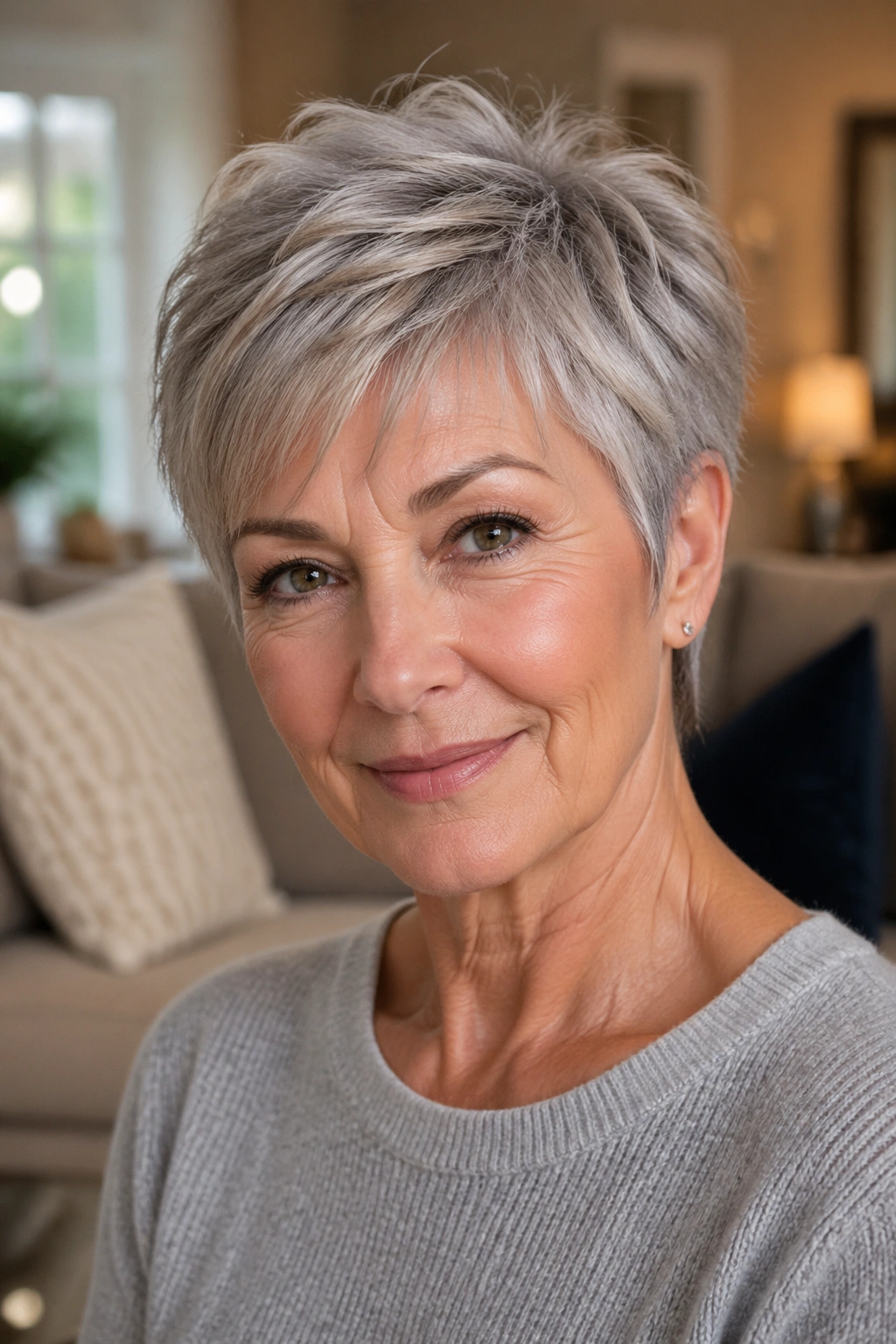
A slight asymmetry can wake up fine hair in a way a straight line never will. One side is a little longer, one side a little shorter, and the imbalance gives the cut motion even when the hair itself is not doing much. It’s subtle. That’s the point.
Who should skip it
If you like symmetry and exactness, this may bug you. A strong asymmetrical bob wants confidence. It looks best when the longer side lands near the jaw and the shorter side clears the cheek just enough to show the neck.
The good news is that this cut doesn’t need a lot of layering to feel fresh. The angle does the work. Keep the ends soft, though. A hard, blunt asymmetrical line can feel too sharp on fine strands.
This one is a nice pick for women who want a haircut that looks intentional in photos and in real life, not only at the salon mirror.
14. Curly Pixie for Women Over 60
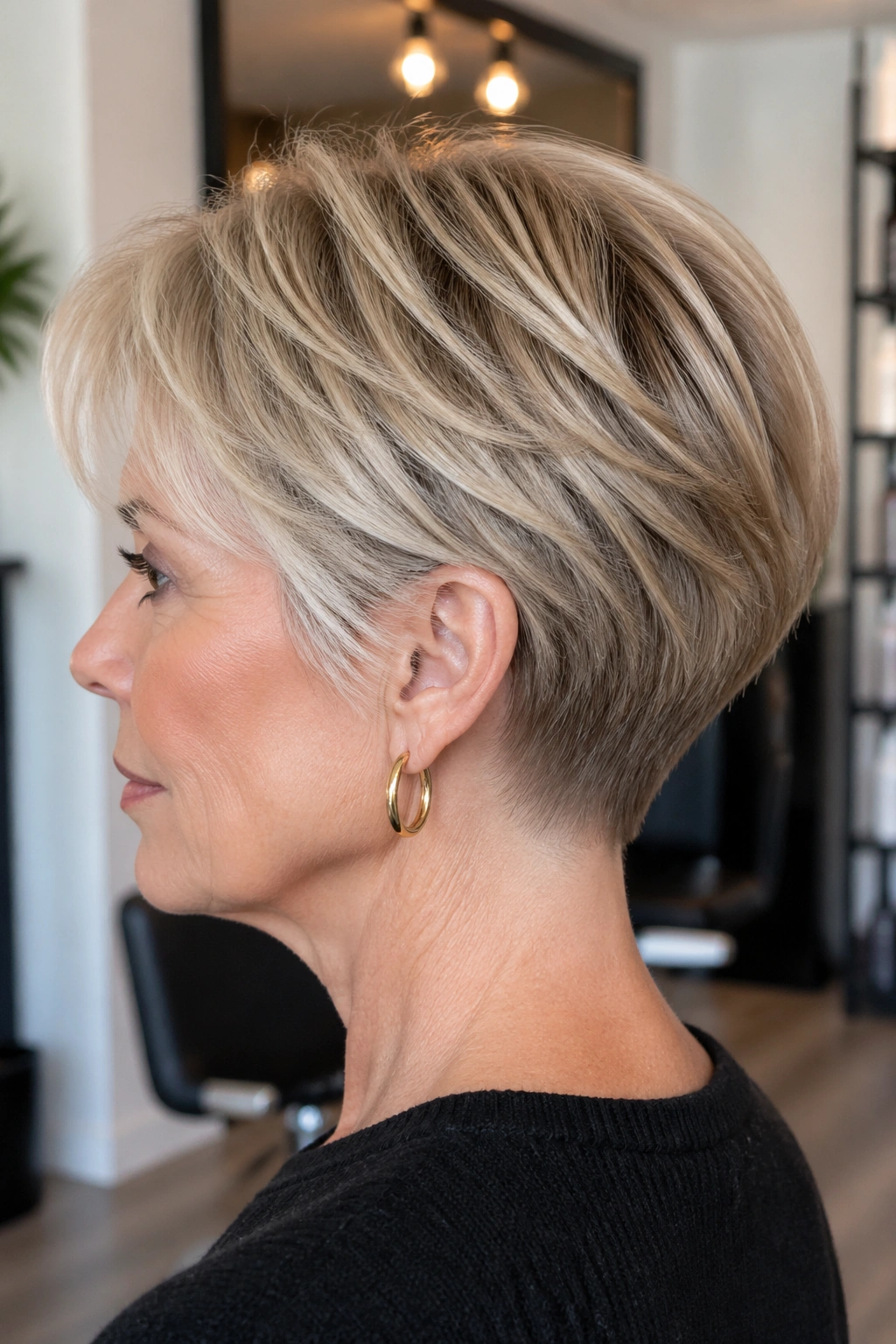
Curly hair and fine hair can live together, even if the relationship is a little temperamental. A curly pixie keeps the curl pattern short enough that it doesn’t stretch out under its own weight. That means more shape at the top and less frizz at the ends.
The best curly pixies leave room for the curl to spring. If the cut is too tight, the curls swell in the wrong direction. If it’s too long, they drag down. Ask for shape around the crown, with tapered sides and a soft outline around the ears.
A diffuser helps, but gentle drying matters more than fancy tools. Scrunch a light cream into damp hair, tip your head slightly forward, and stop touching it once the curl starts to set. Fussing with it too much breaks the pattern.
15. Ear-Length Layered Bob
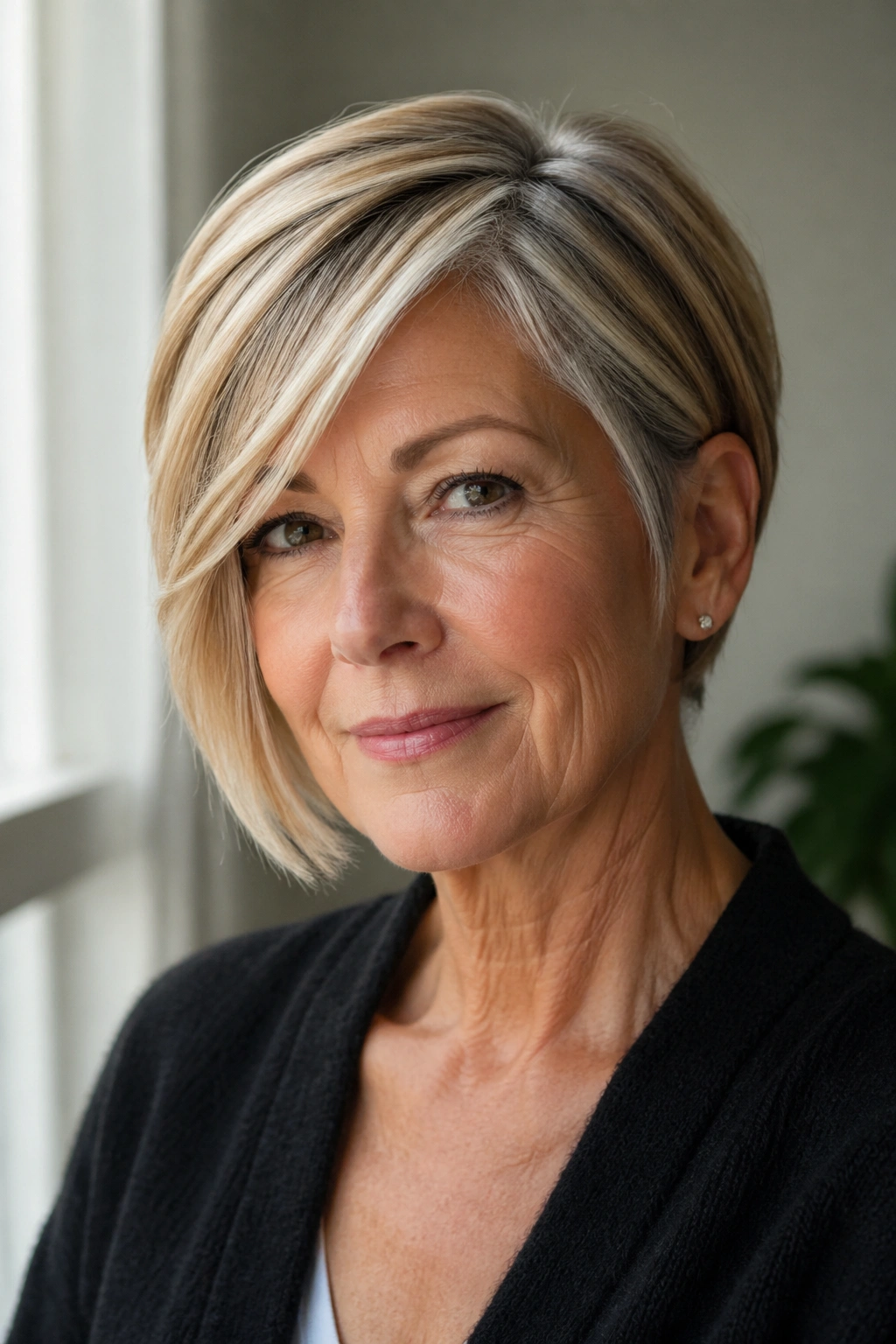
Ear-length cuts can be underrated. They show the jaw, keep the neck open, and remove enough length that fine hair doesn’t sag. A layered bob at this length feels breezy without being fussy.
What makes it work is the way the layers are hidden inside the shape. You want movement, not random ends sticking out. The hair should skim the ear and fall softly toward the cheek. That gives the style a tucked, light feel.
I like this cut on women who wear glasses or prefer a clean neckline. It doesn’t fight with accessories. It also styles quickly because the hair is short enough to dry in a reasonable time, but long enough to tuck behind one ear if you want a change.
16. Brushed-Back Short Cut
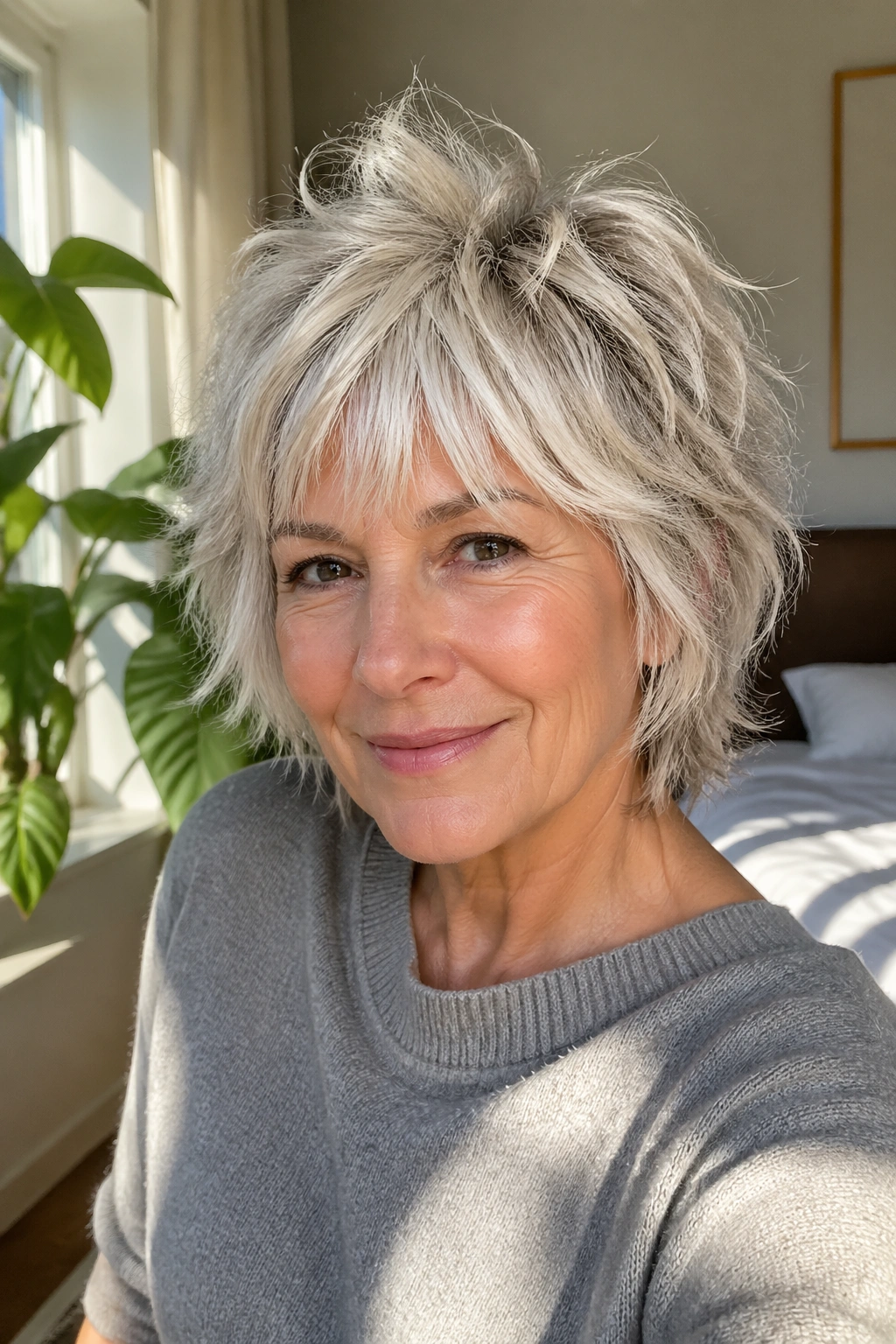
Brushing the hair back is one of the easiest ways to open the face. A short cut with enough top length to sweep away from the forehead gives a lifted look without a lot of work. It’s especially good if your hair tends to fall forward and hide your features.
Unlike fringe-heavy cuts, this one lets the forehead breathe. That can look fresh on silver hair, which often reflects light better when it isn’t buried under bangs. The sides should stay snug so the top has room to move.
Use a mousse at the roots, then blow-dry the front backward with a flat brush or your fingers. Finish with a light mist of hairspray only if needed. Too much spray makes the top hard, and hard hair ages a cut fast.
17. Choppy Crop With Razored Ends

The first thing you notice about a choppy crop is the texture. The edges look broken up, not blunt, and that can be a gift for fine hair if the cuts are done carefully. The shape feels lighter and less formal.
The texture detail that matters
Razored ends work best when they’re controlled. Too much razor work can leave fine hair frayed, especially if the hair is already delicate. Ask for a crop that is chipped through the surface, not shredded at the ends.
A little styling cream goes a long way here. Work it through the top with your fingertips, then press the sides down lightly if they puff out. This cut can look terrific on straight hair that needs movement without a lot of volume.
If you like haircuts that look a bit undone in a good way, this one has real charm. It feels relaxed, not sloppy.
18. Grown-Out Pixie
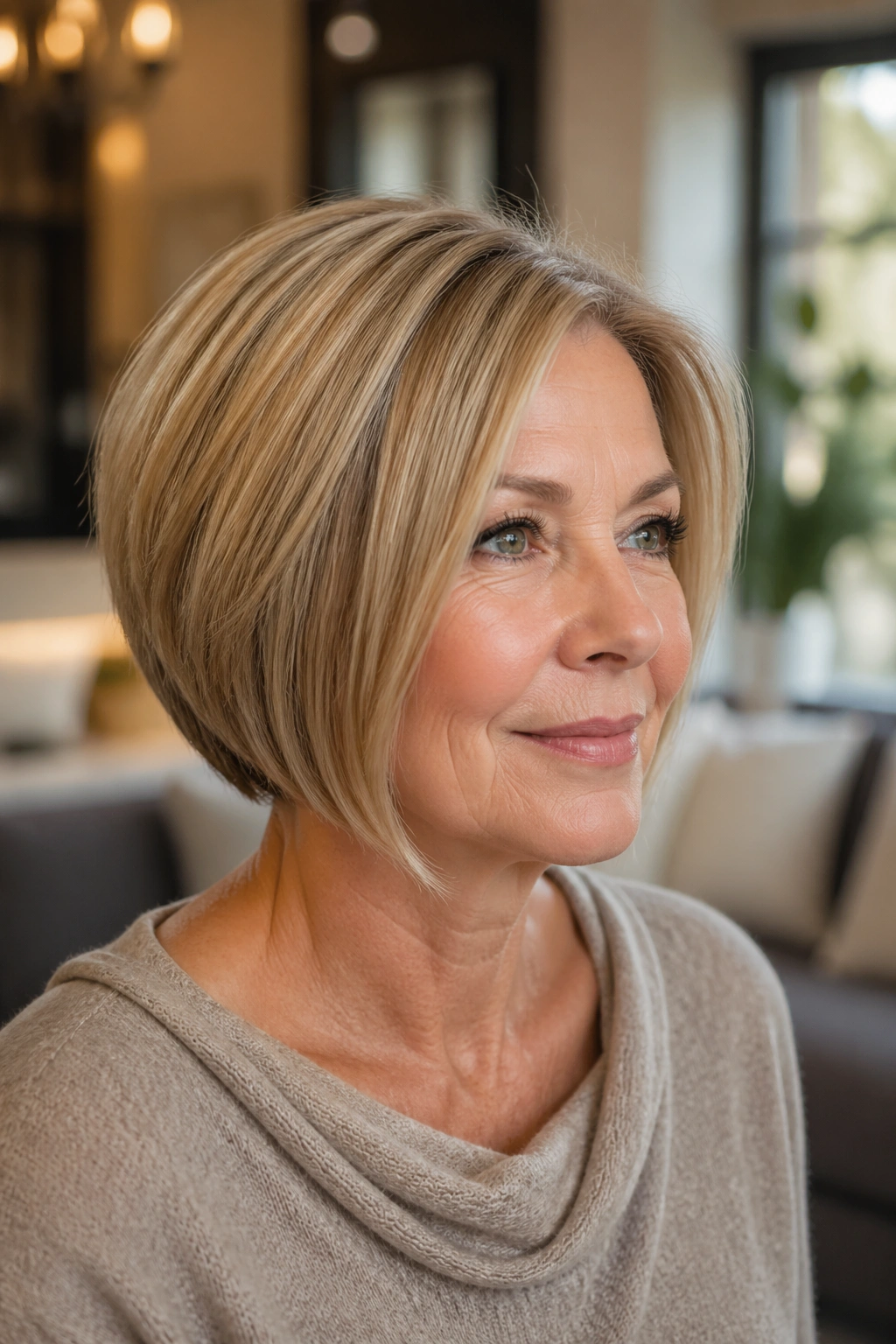
A grown-out pixie is not a compromise. It’s a smart cut for anyone who wants the lightness of a pixie without constant upkeep. Fine hair often looks better with this slightly longer shape because the extra length keeps the top from standing too close to the scalp.
The sides stay tight enough to keep the outline neat, while the top and front carry a bit more length. That means you can tuck, sweep, or tousle it. A grown-out pixie also handles awkward growth better between trims, which is a quiet kind of luxury.
- Ask for soft layering through the top
- Keep the ears partly open
- Let the fringe stay long enough to sweep sideways
- Plan on shaping every 6 to 8 weeks
If you want a cut that looks intentional even when it’s not freshly done, this is a strong pick. It ages well, which is more useful than people admit.
19. Neck-Grazing Bob With a Soft Flip
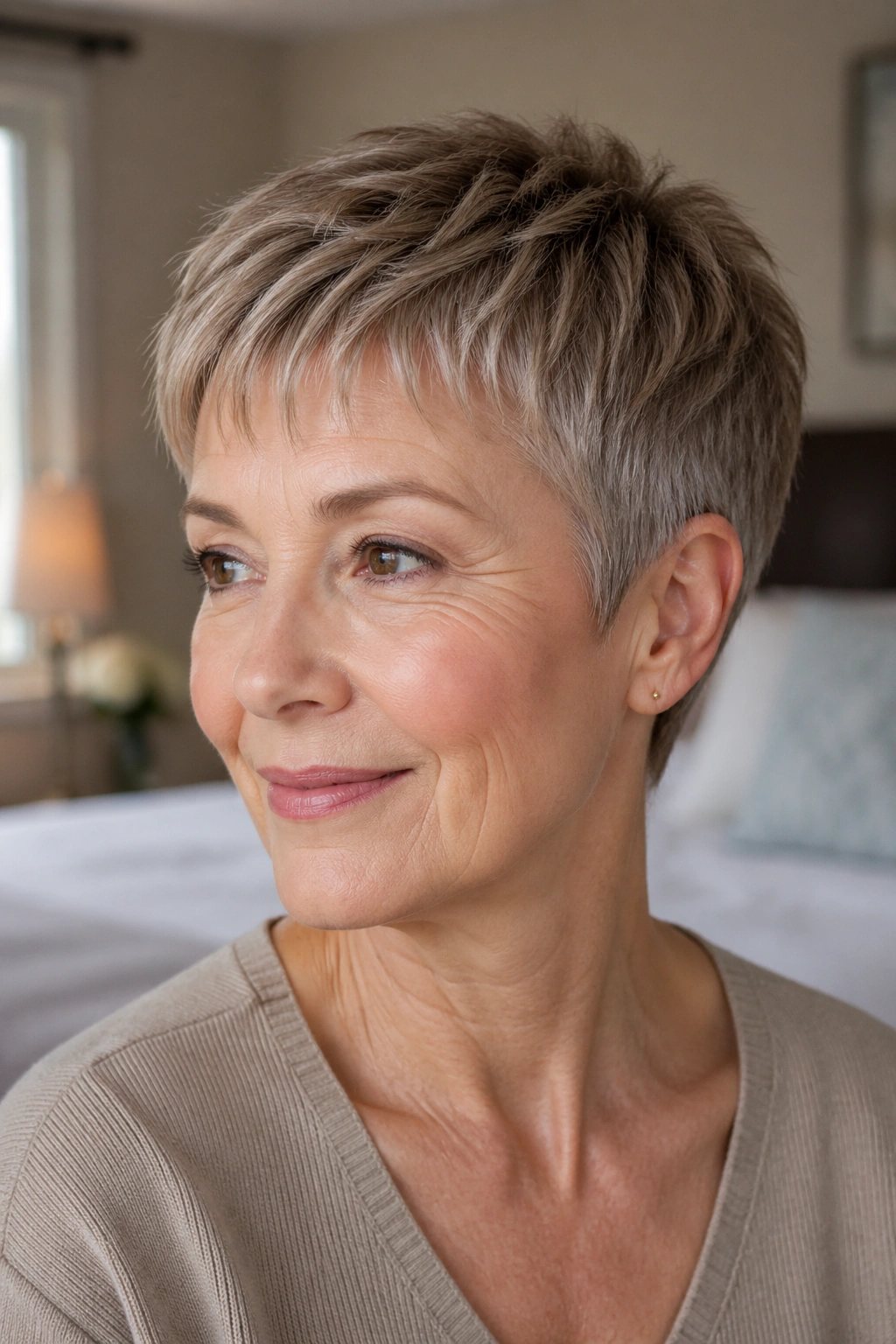
Here’s the contrarian take: sometimes a slightly longer short cut looks fuller than a very short one. A neck-grazing bob with a soft flip at the ends keeps enough length to show body, while still sitting above the shoulders where fine hair often collapses.
The flip at the bottom is what keeps it from looking flat. It can be a tiny outward bend, not a big retro curl. Just enough lift to keep the neckline alive. A center part can work, but a side part usually gives more softness.
This cut is a good middle ground if you’re nervous about going too short. It still feels light, but it won’t expose every scalp line the way some cropped cuts can. That matters if your hair is very fine at the crown.
20. Short Shag With Bottleneck Bangs
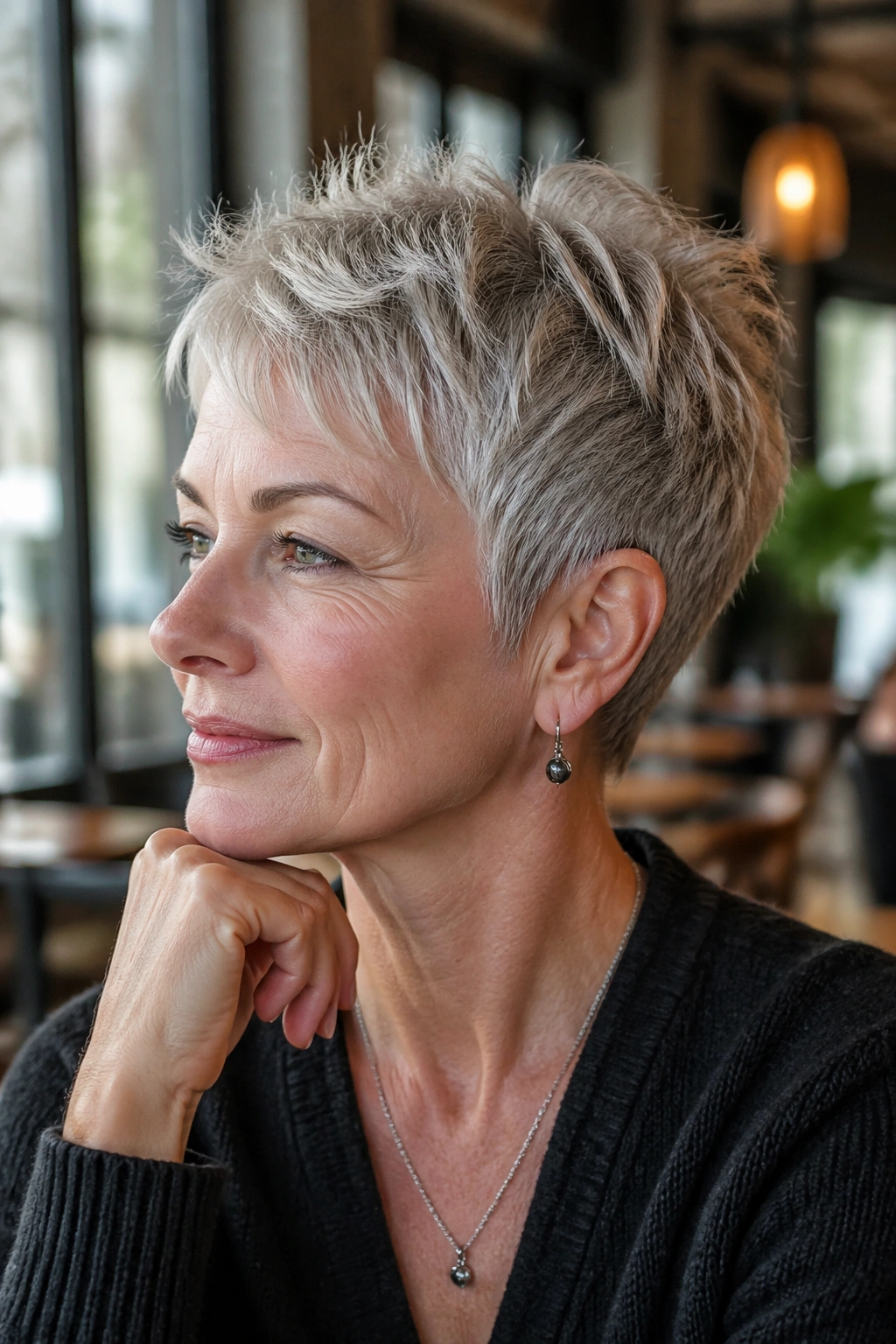
Short shags can go wrong when they get too wild. A softer version with bottleneck bangs keeps the front flattering and the rest of the cut loose enough to move. The bangs are narrower near the brow and wider as they drop toward the cheek, which helps frame the face without building a hard wall.
I like this shape because it gives the haircut a bit of swing. The layers are there, but they don’t need to scream. Fine hair often looks better when texture is implied instead of loudly carved in.
If your hair has a little wave, this cut can be a dream. Scrunch it lightly, let it air-dry partway, then rough it up at the crown. If your hair is straighter, a few bends with a medium barrel iron can create that same easy finish.
21. Sculpted Crop With Side Volume
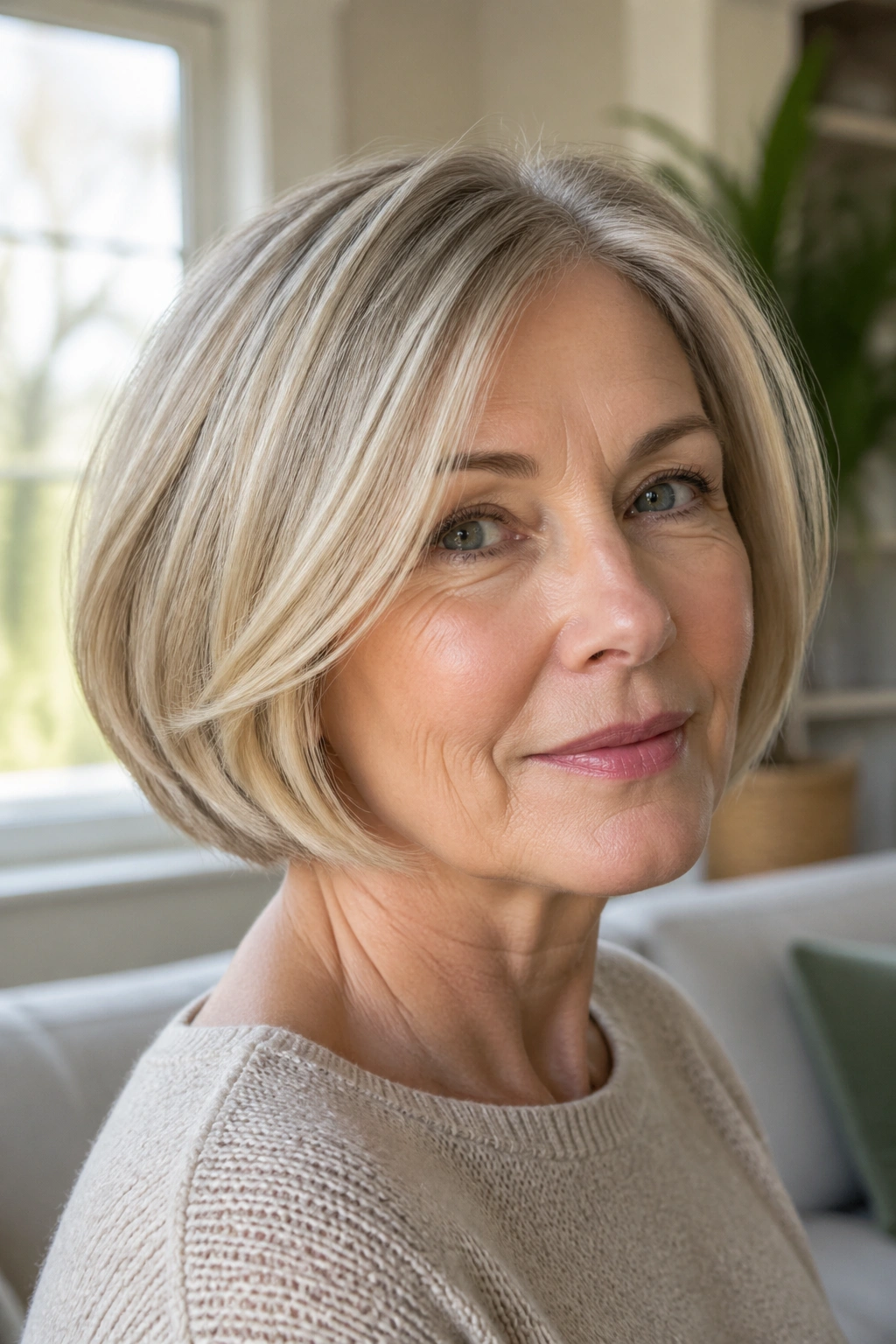
Side volume is underrated. Most people chase height at the crown and forget that a little lift over the temples can change the whole face. A sculpted crop uses that side fullness to soften the upper face and keep the haircut from looking too narrow.
Why the side matters
The side area is where fine hair often goes limp first. By building a small amount of volume there, you get balance without needing a giant blowout. Ask for soft layering around the temples and a compact nape so the shape stays controlled.
This cut suits women who want structure. It feels a bit more tailored than a shag, a bit less fluffy than a pixie. A matte styling cream works better than shiny serum here. Shine products can make fine hair look thinner because they separate the strands too much.
The result is neat, but not severe. That’s the sweet spot.
22. Tucked Bob With Light Layers
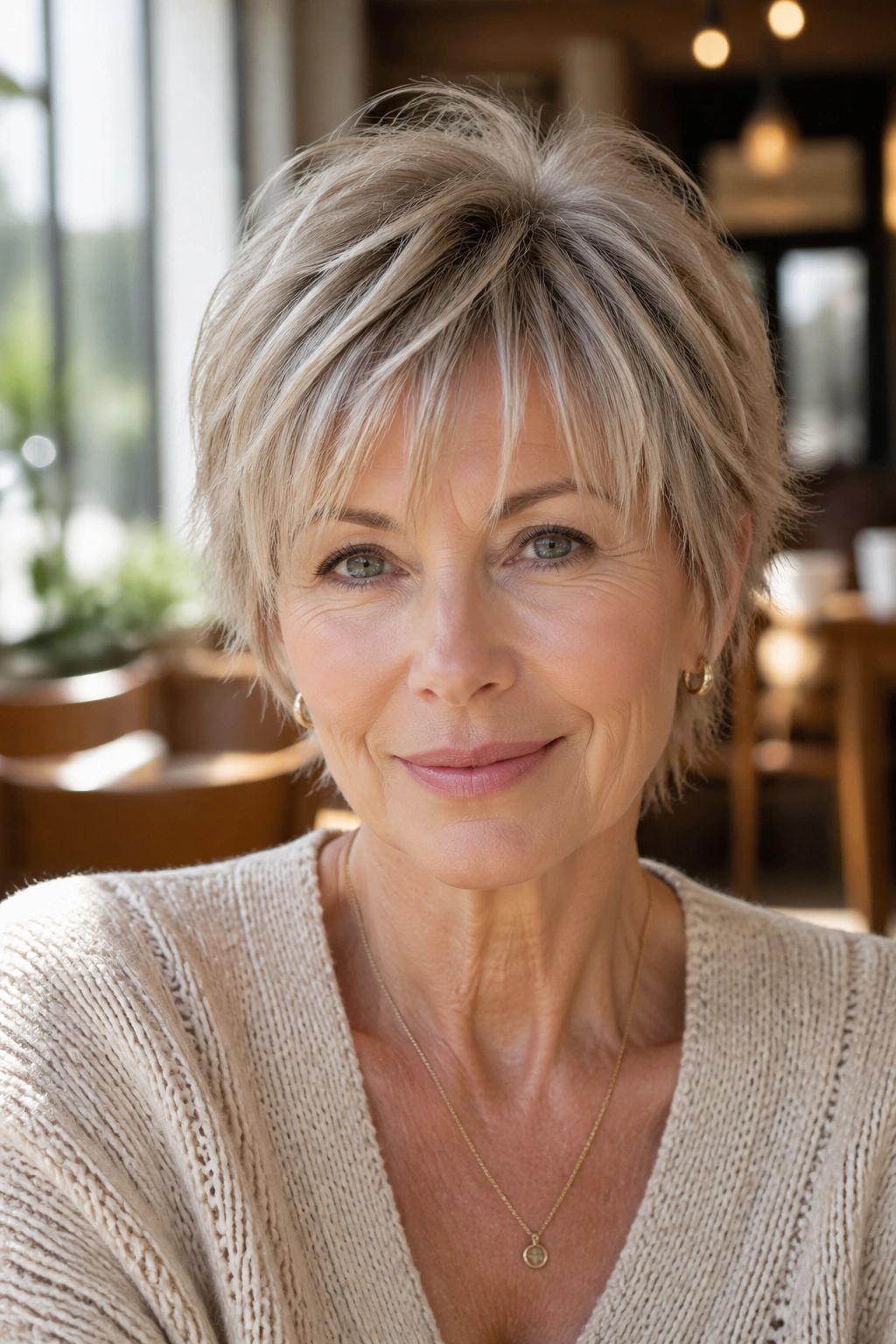
A tucked bob is easy to overlook, which is a mistake. Tucking one side behind the ear instantly changes the shape, and the haircut needs only light layers to support that movement. For fine hair, this gives you a style that can be worn two ways with almost no effort.
The layers should stay soft through the bottom third of the hair. You want enough movement so the tuck doesn’t create a hard shelf behind the ear. If the cut is too blunt, the tucked side looks bulky.
- Best with earrings or a clean neckline
- Works on straight or slightly wavy hair
- Benefits from a side part
- Needs only a small round brush at the ends
If you like hair that feels neat and easy, this is a good one to keep in mind. It doesn’t demand much, which is a relief on busy mornings.
23. Sleek Pixie Bob With a Side Fringe
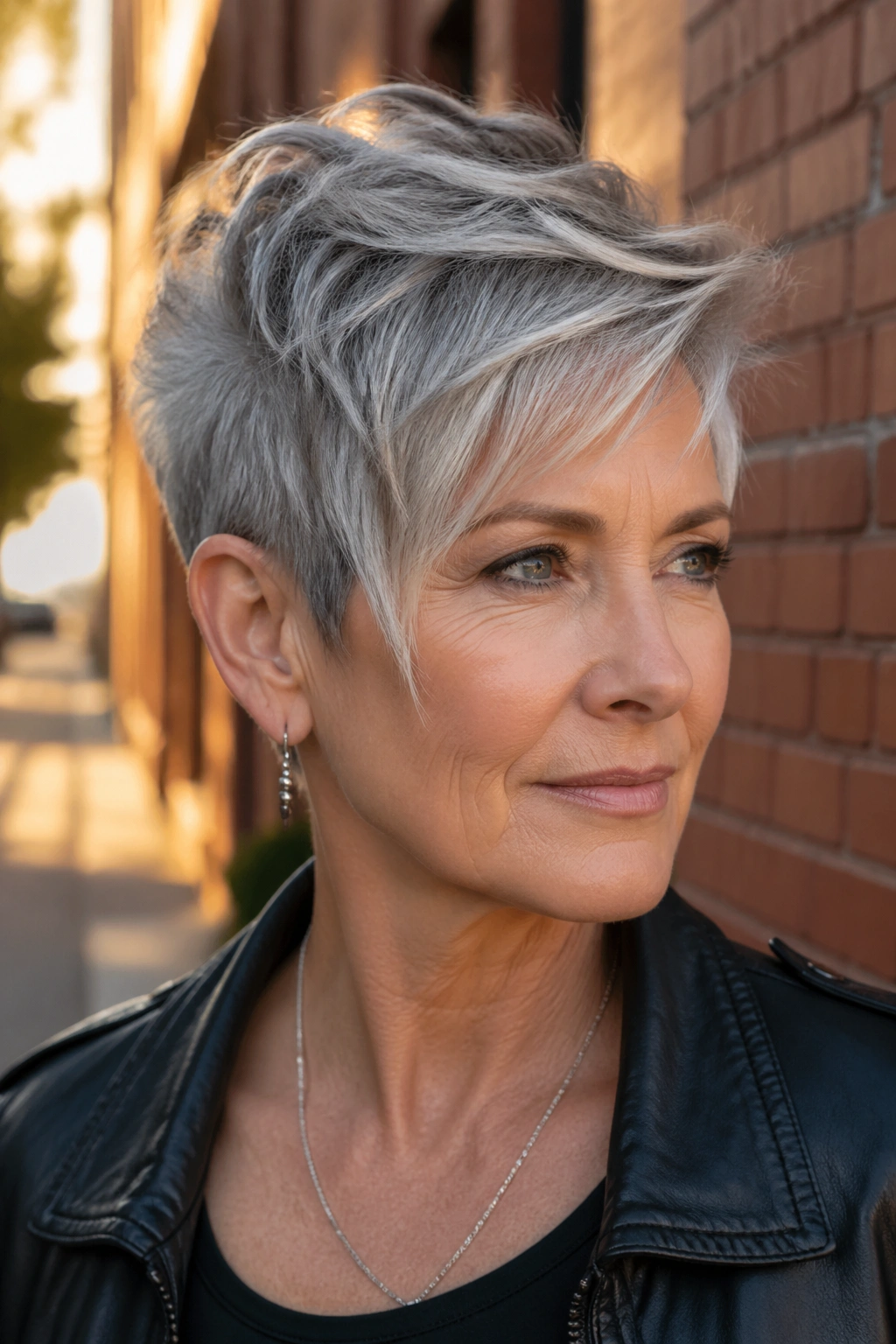
A sleek pixie bob sits between a cropped pixie and a small bob, and that in-between length is useful for fine hair. It gives you enough hair to smooth into place, but not so much that the shape slumps. The side fringe softens the forehead and keeps the front from looking boxy.
Unlike the choppy cuts above, this one leans clean. You’ll get the best result from a blow-dry that follows the head shape, then a tiny bit of cream to keep flyaways in check. The finish should look smooth, not lacquered.
This is a good choice if you like a tidy haircut that still has movement at the front. It’s especially nice on straight hair with a little natural body. The cut can look expensive without trying to be flashy, and I mean that in the useful sense, not the glossy-magazine sense.
24. Rounded Crop With Feathered Temples
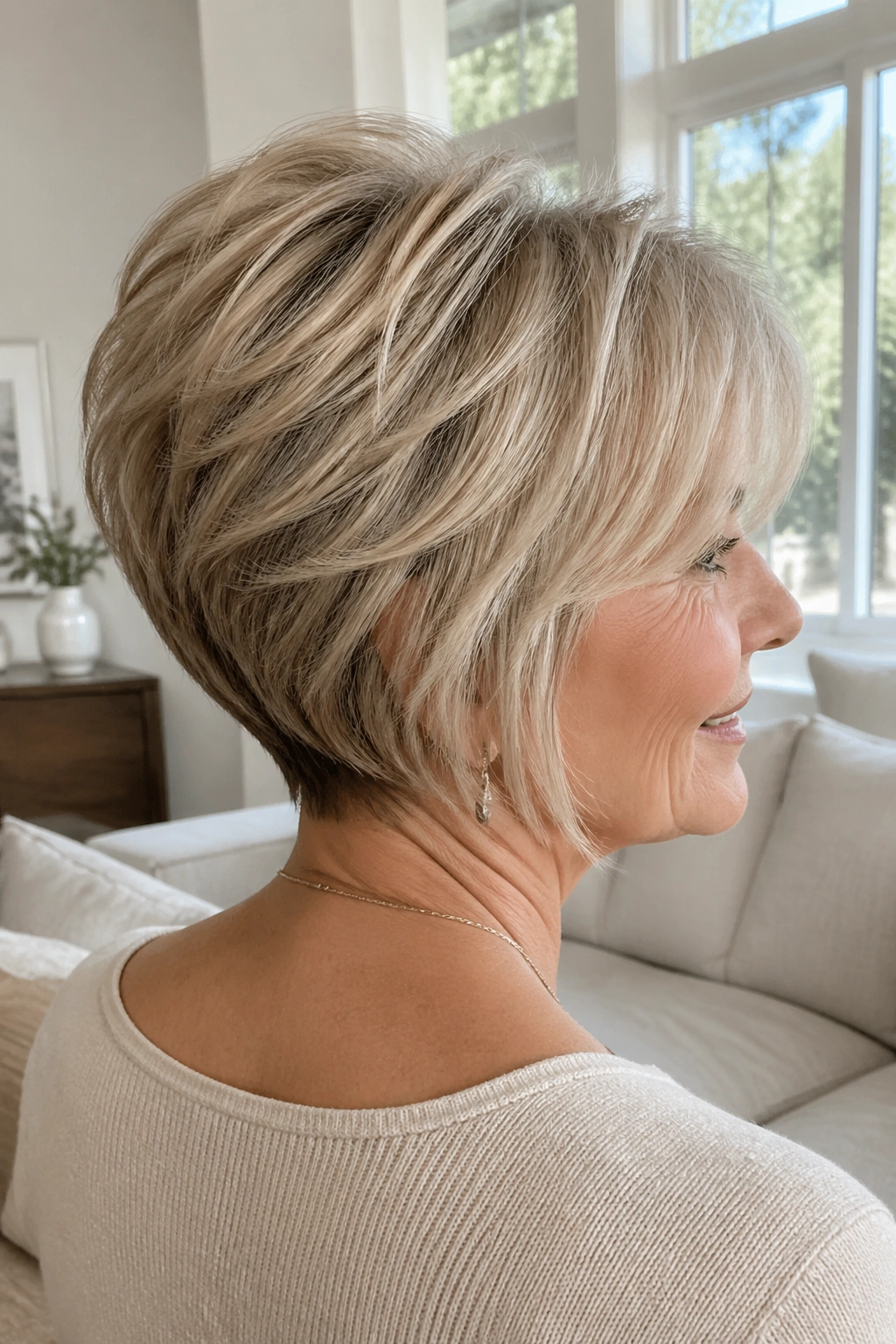
A rounded crop brings the whole conversation back to shape. The top stays gently curved, the temples stay feathered, and the neckline stays close enough to keep the cut from drooping. On fine hair, that rounded outline can feel soft and youthful without turning fluffy.
The temples matter more than people think. When they’re feathered, the face gets a softer frame, and the cut stops looking helmet-like. Keep the crown a touch longer than the sides so the shape has lift, not bulk.
This is the kind of short haircut I’d choose for someone who wants a reliable shape that still has some air in it. It grows out cleanly. It looks good with silver hair, white hair, darker hair, all of it. And when the ends start to soften between trims, it usually still looks better than a cut that was too blunt to begin with.