



The best haircuts for older women do one thing better than any trend-driven style ever could: they make the hair look like it belongs to the face it’s on. Not forced. Not stiff. Just clean, flattering shape with enough softness to feel modern without trying too hard.
Hair changes. That part is boring, but it matters. Ends get finer, crowns can go flatter, curls may get drier, and a cut that once air-dried into place can start behaving like it has a mind of its own. A good haircut works with that shift instead of fighting it. It gives lift where the hair needs lift, removes bulk where the head starts to feel heavy, and leaves enough movement that you are not spending twenty minutes trying to bully it into behaving.
The smartest cuts usually have one thing in common: they make the outline strong and the inside soft. That can mean a chin-length bob, a feathered crop, a collarbone lob, or even long hair with well-placed internal layers. Short does not automatically mean fresher. Long does not automatically mean more youthful. Shape does the real work.
So here’s the fun part. Some of these cuts are polished and neat, some are airy and a little undone, and some are a touch bold if you want something with personality. Pick the one that fits your texture, your styling patience, and the way you actually wear your hair — not the version of yourself who owns three hot tools and wakes up with perfect waves.
1. Feathered Chin-Length Bob for Older Women
A feathered chin-length bob is one of those cuts that quietly makes everything easier. The shape sits right at the jaw, which gives the face a clean frame, and the feathered ends keep it from looking boxy or heavy. It’s especially kind to fine hair, because the cut makes the bottom line feel lighter without taking away too much density.
Why It Works
The chin is a smart stopping point. Too short and some faces can feel exposed; too long and the shape starts to drag down the neck. This length threads the needle.
A little feathering around the ends gives movement without turning the bob into a shag. That matters. You want lift, not frizz.
- Best for fine to medium hair that needs body at the sides
- Sits well with a side part or a soft center part
- Easy to tuck behind one ear for a cleaner line
- Looks good blown smooth or left with a little bend
Pro tip: ask your stylist to keep the front slightly longer than the back. That tiny angle keeps the cut from looking like a helmet.
2. Soft Pixie with a Tapered Nape
A pixie does not have to look sharp or severe. A soft pixie with a tapered nape feels light, tidy, and surprisingly feminine when the top keeps a little length. The trick is in the balance: close at the neck, soft at the temples, and just enough height on top to avoid that flattened, overcut look.
This cut works especially well if your hair has started to feel thinner in the back or if you’re tired of full-style blowouts. It also plays nicely with glasses, because the hair stays out of the frame without making the face look bare. If your hair is thick, the tapered nape removes bulk fast. If it’s fine, the longer top gives the illusion of more hair than you actually have.
Use a pea-sized bit of styling cream or paste on dry hair and push the top slightly forward or to the side. That’s enough. Too much product will make it look wet and narrow, and that usually ruins the point.
3. Collarbone Lob with Loose Ends
Can a longer cut still feel easy? Absolutely. A collarbone lob is long enough to tuck, braid, pin, or twist back, but short enough that it usually dries faster than shoulder-length hair that’s all one length. The loose ends keep it from feeling stiff, which is the mistake a lot of people make when they grow their hair out.
This length is good for women who want options. You can wear it straight and sleek, air-dry it with a little wave, or curl just the front pieces and leave the rest alone. That kind of flexibility matters more than people admit. A cut you can wear three different ways gets used more often, which is half the battle.
How to Style It
A medium round brush gives the ends a soft bend. If you prefer air-drying, scrunch in a light mousse and let the hair fall where it wants.
The best version of this lob is not too blunt and not too layered. It should skim the collarbone and move when you turn your head.
4. Layered Shoulder-Length Cut
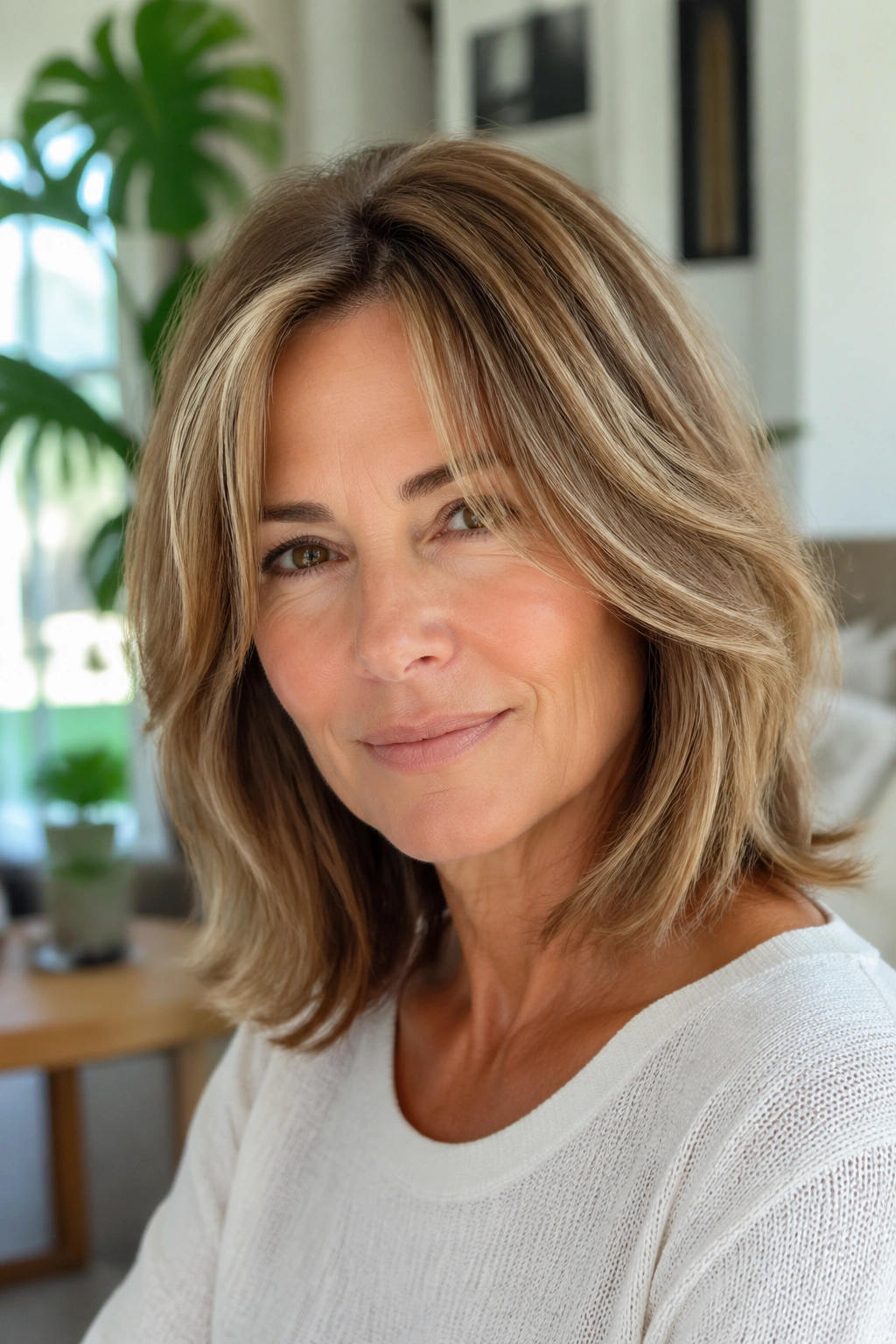
I’ve seen this cut save more “my hair feels heavy” complaints than almost any other shape. Shoulder-length hair with real layers has room to move, but it still gives you enough length for a ponytail, a twist clip, or a low bun on days when you cannot be bothered.
What to Ask For
The word “layers” gets thrown around a little carelessly. What you want is structure, not random choppy bits.
- Start the shortest face-framing pieces around the cheekbone or lip line
- Keep the layers long enough to blend, not stick out
- Remove weight from the mid-lengths if your hair feels thick at the bottom
- Keep the perimeter soft so the cut does not puff out at the ends
This is a solid choice for wavy hair, because it lets the natural bend show without forcing you into a full curl routine. It’s also a nice middle ground if you’re not ready for a bob but want something that feels lighter than one-length hair.
One warning: too many short layers on fine hair can make the ends look see-through. Keep them long.
5. Side-Swept Crop
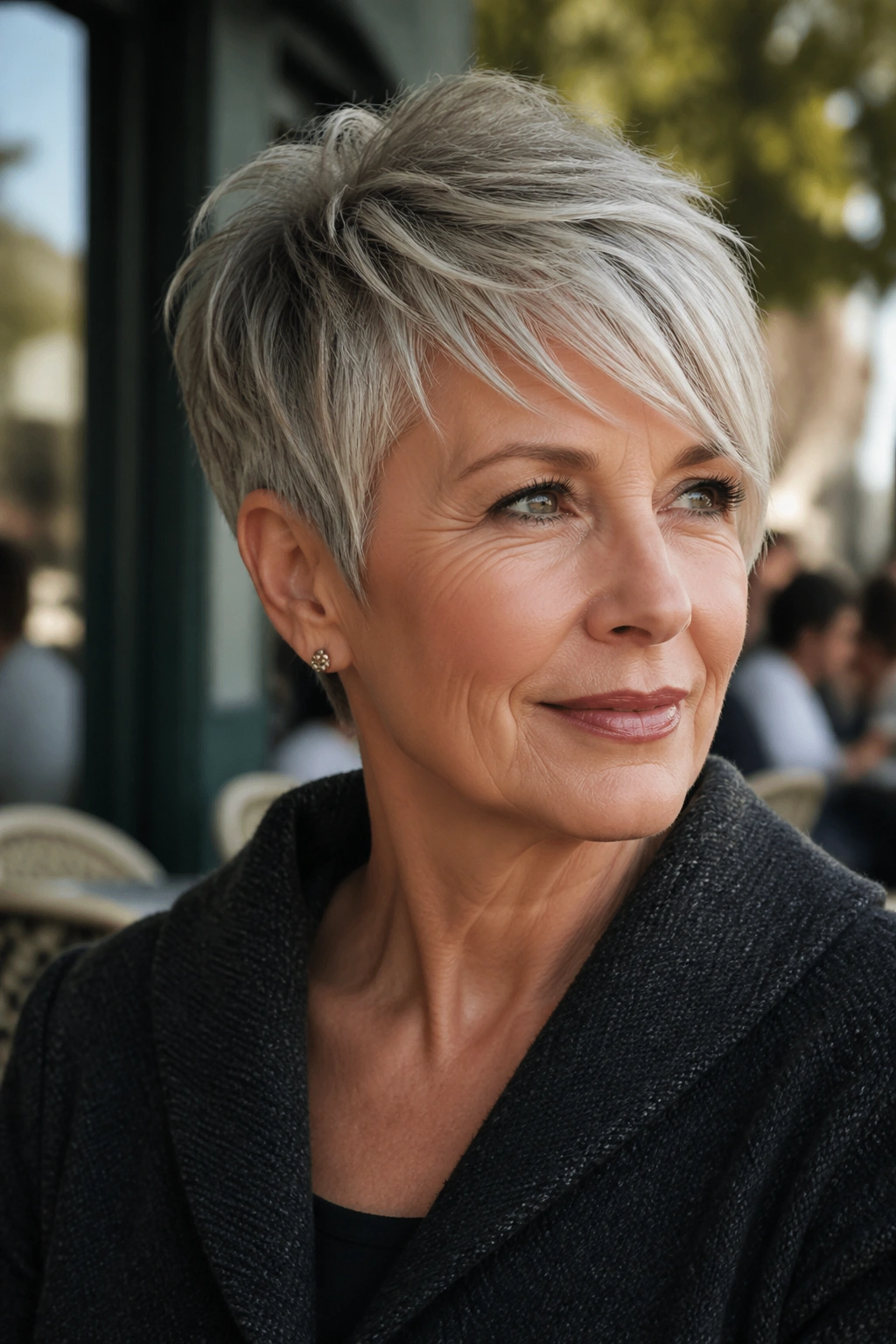
A side-swept crop gives you shape without a lot of fuss. The hair stays short enough to be neat, but the longer sweep across the front softens the face and keeps the cut from feeling too cropped. If you like the idea of shorter hair but worry about anything harsh around the hairline, this is a smart place to land.
What I like about this cut is how it handles real life. Cowlick at the front? A side sweep usually works with it. Want to wear earrings? The cut clears the ears and lets them show. Need a low-maintenance morning? A little water, a touch of cream, and you’re done.
It’s especially useful for straight or slightly wavy hair that tends to lie flat. The diagonal line across the forehead creates movement even when the rest of the hair is short. And if you’re growing out a pixie, this is often the easiest bridge cut.
A small round brush helps keep the front lifted. Don’t flatten it down with too much product; the point is softness, not control.
6. Shag with Wispy Bangs
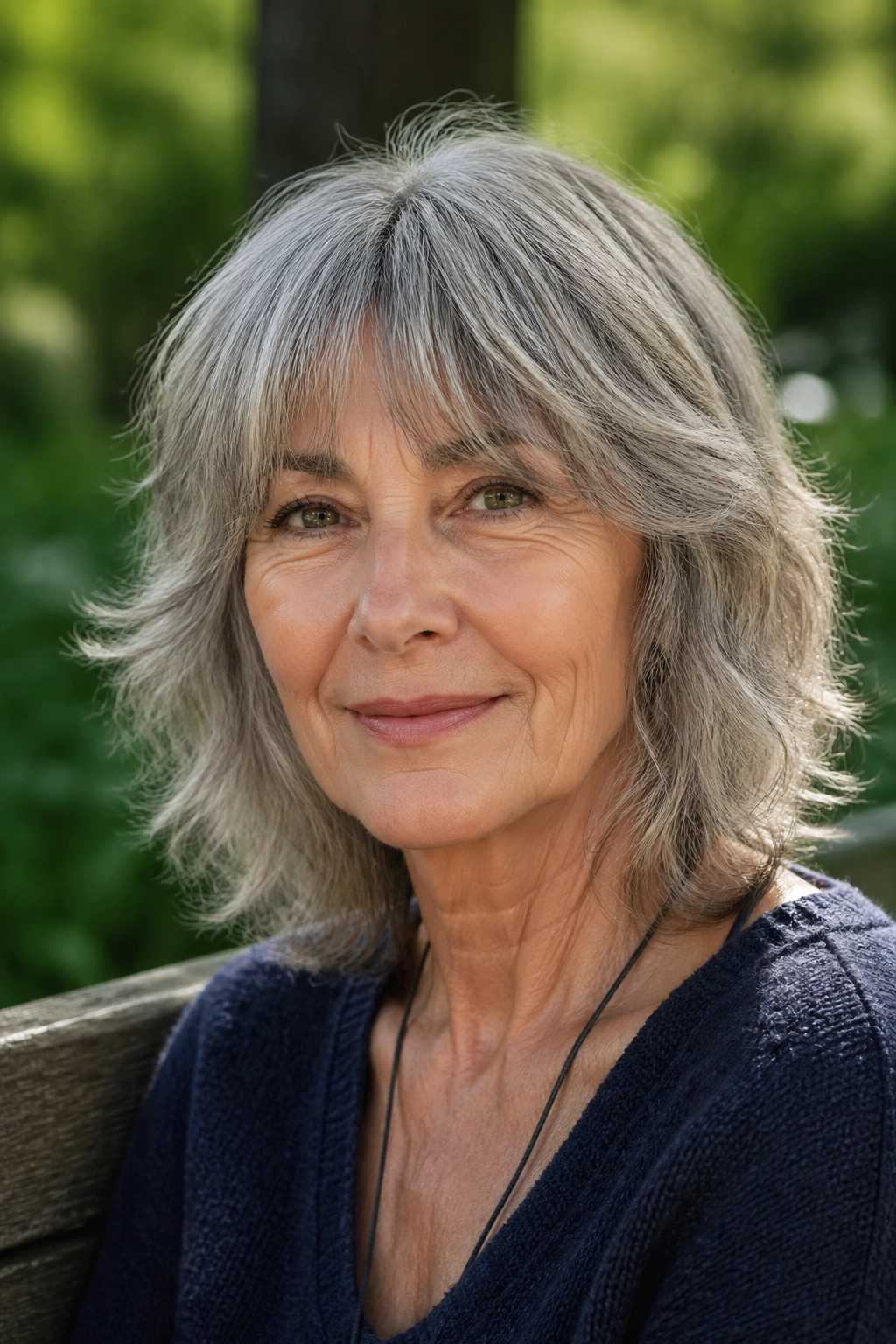
Unlike a neat bob, the shag builds movement into the cut itself. That’s why it works so well on hair that wants texture or feels too heavy in a blunt shape. The wispy bangs are there to soften the forehead and blend into the sides without turning into a heavy fringe that needs daily trimming.
This style suits wavy hair in particular. The layers break up bulk, while the bangs keep the front from looking too long or plain. If your hair has some natural bend, the shag can make it look more alive with less effort than a cleaner cut would need.
It does have a personality. This is not the haircut for someone who wants every strand to sit in a straight line. It’s for someone who likes a little movement around the cheeks and neck and doesn’t mind the ends looking touchable instead of perfect.
If you want it to stay fresh, ask for the layers to begin around the cheek or nose line. That keeps the shape balanced and stops the top from getting too fluffy.
7. Blunt Bob with a Soft Curve
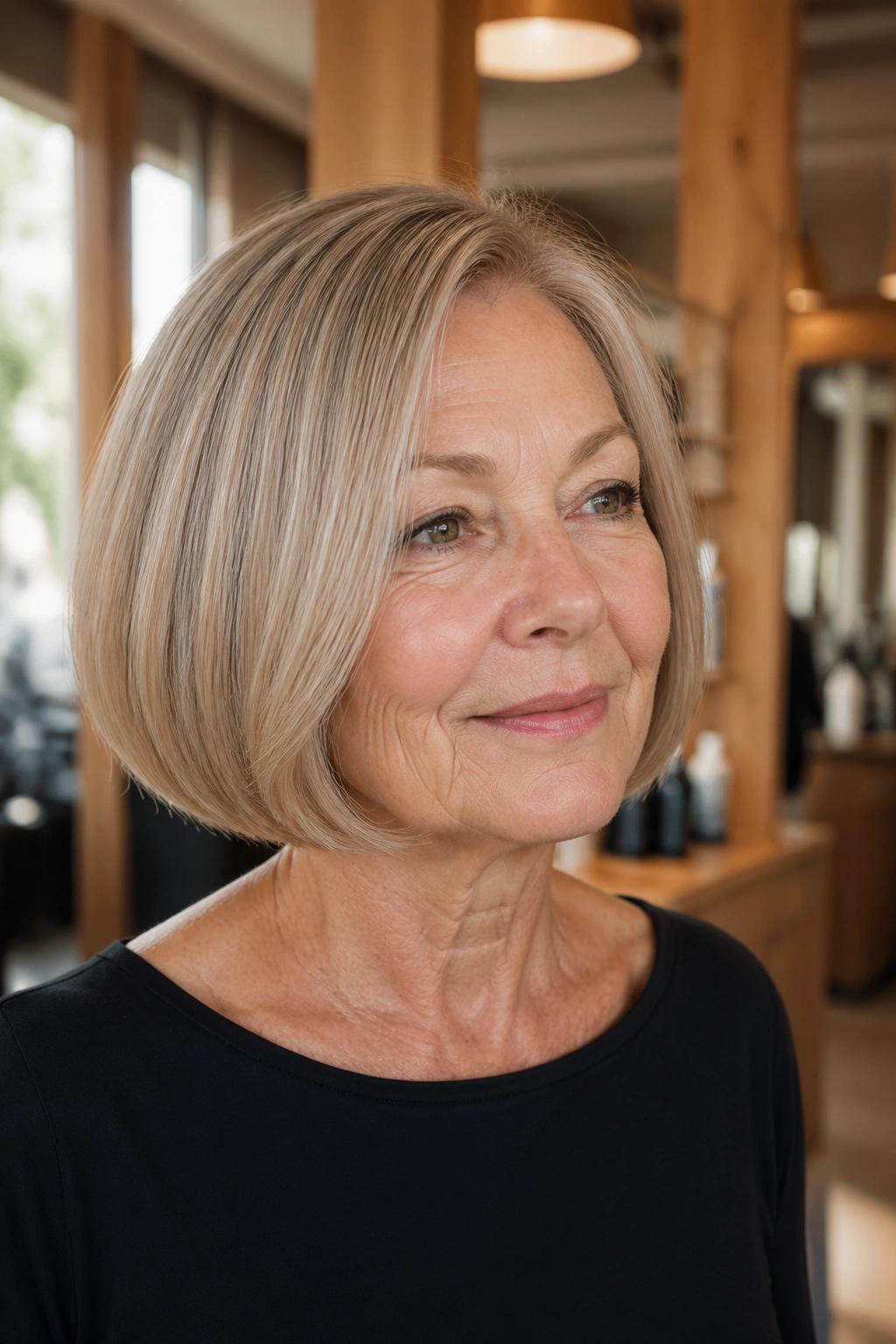
A blunt bob sounds severe on paper. In real life, it can look elegant and easy when the ends are softened just enough to curve under the jaw. That small curve matters. It takes the edge off the cut and keeps the whole thing from reading too hard against the face.
What Makes It Different
The blunt line gives the hair the look of density, which is useful if your hair has gotten finer. But the soft curve keeps it from feeling boxed in.
This is a good cut for straight hair that tends to hang limp when it gets too long. It also works on lightly wavy hair if you’re willing to blow-dry the ends smooth.
- Ask for a clean perimeter with no shredded ends
- Keep the length around the jaw or just below it
- Use a paddle brush or flat brush to bend the ends inward
- Add a side part if you want more softness around the forehead
Best move: dry the hair until it’s about 80 percent dry, then finish the ends with a round brush. That gives shape without overworking it.
8. Rounded Cut for Natural Curls
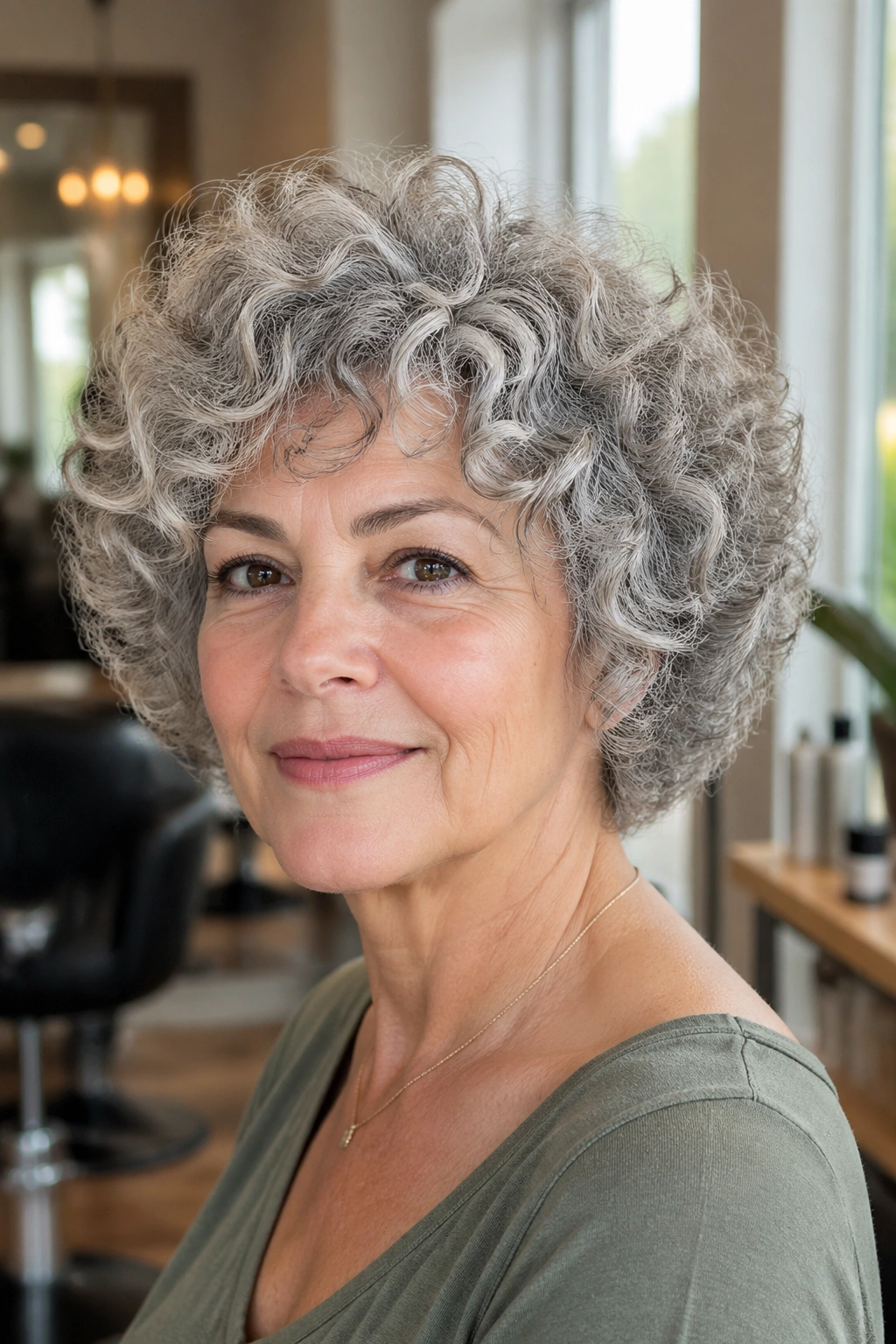
Curly hair usually looks best when the cut respects the curl pattern instead of forcing every strand into the same shape. A rounded cut does that well. It follows the natural volume of the curls, keeps the silhouette balanced, and avoids the triangle shape that shows up when curls get too heavy at the bottom.
The real mistake is over-thinning. A curl can look thin on the ends and bulky at the roots at the same time if the cut is done badly. A rounded shape keeps the bulk distributed more evenly, which makes the whole head of hair look fuller and neater. It also plays nicely with gray curls, which can be a little wirier and need more space to spring out.
A dry cut is often the better choice here because curls shrink. A stylist who understands curl pattern will leave room for that shrinkage instead of guessing.
If you air-dry, use a diffuser on low heat and don’t touch the hair while it sets. The shape will hold better, and the curls won’t frizz out before lunch.
9. Long Layers with Face-Framing Pieces for Older Women
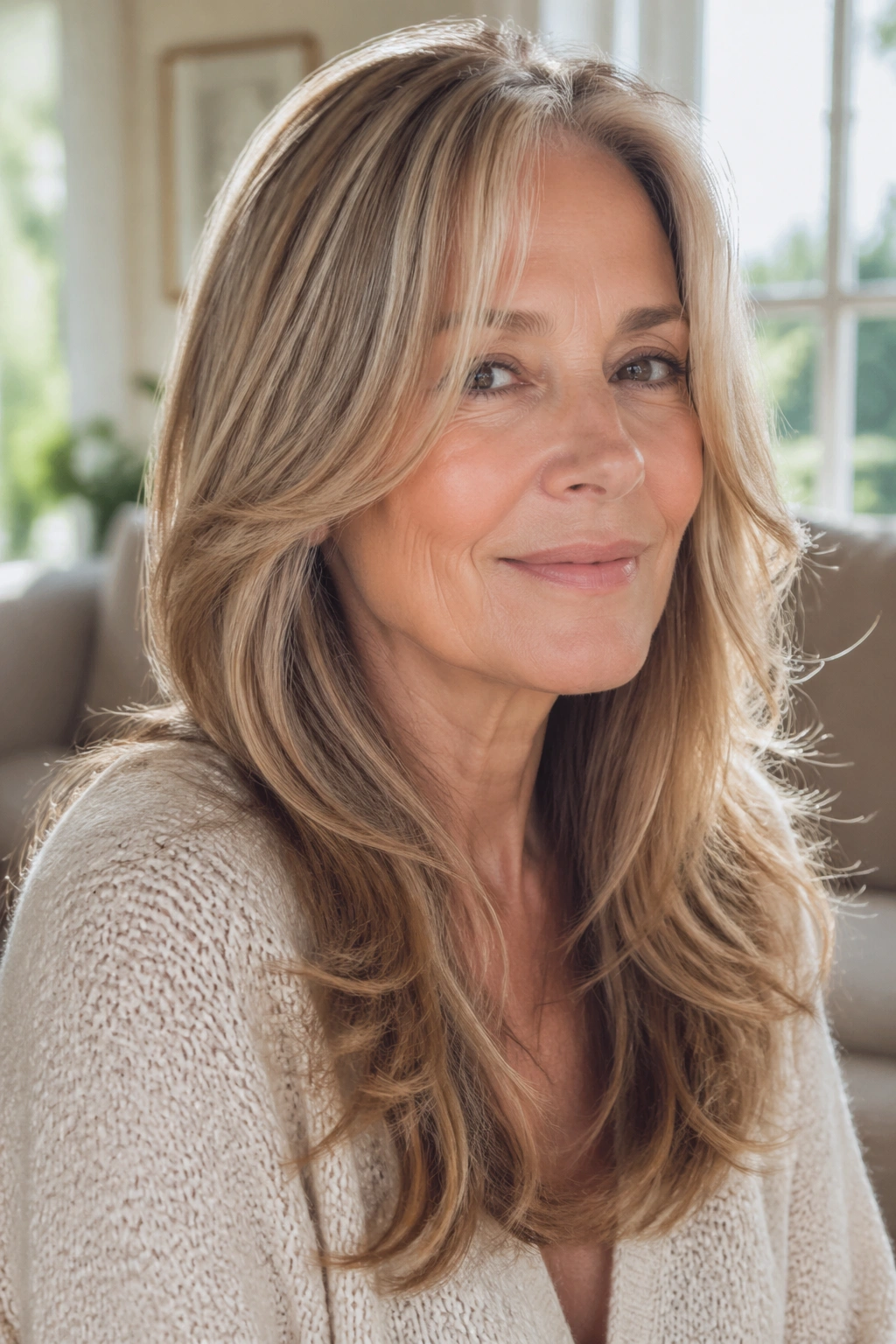
Can long hair still look flattering after the hair starts changing texture? Yes, if the weight is managed properly. Long layers with face-framing pieces keep the length you like while taking the heaviness out of the sides and around the shoulders.
The key is restraint. These are not dramatic layers that start at the crown and race downward. They should be soft and deliberate, with the shortest pieces landing somewhere around the cheekbone or mouth. That keeps the front open without making the haircut look chopped up.
How to Keep It From Dragging
Long hair can sag when the ends are too blunt and the top is too flat. That’s the part most people complain about.
- Keep internal layers light, not short and choppy
- Add face-framing pieces that can tuck behind the ears
- Use a lightweight leave-in, not a heavy cream
- Blow-dry the roots up and away from the scalp if you want lift
This cut is especially good if you wear your hair up part of the week and down the rest. It gives you movement either way.
10. Sleek A-Line Bob
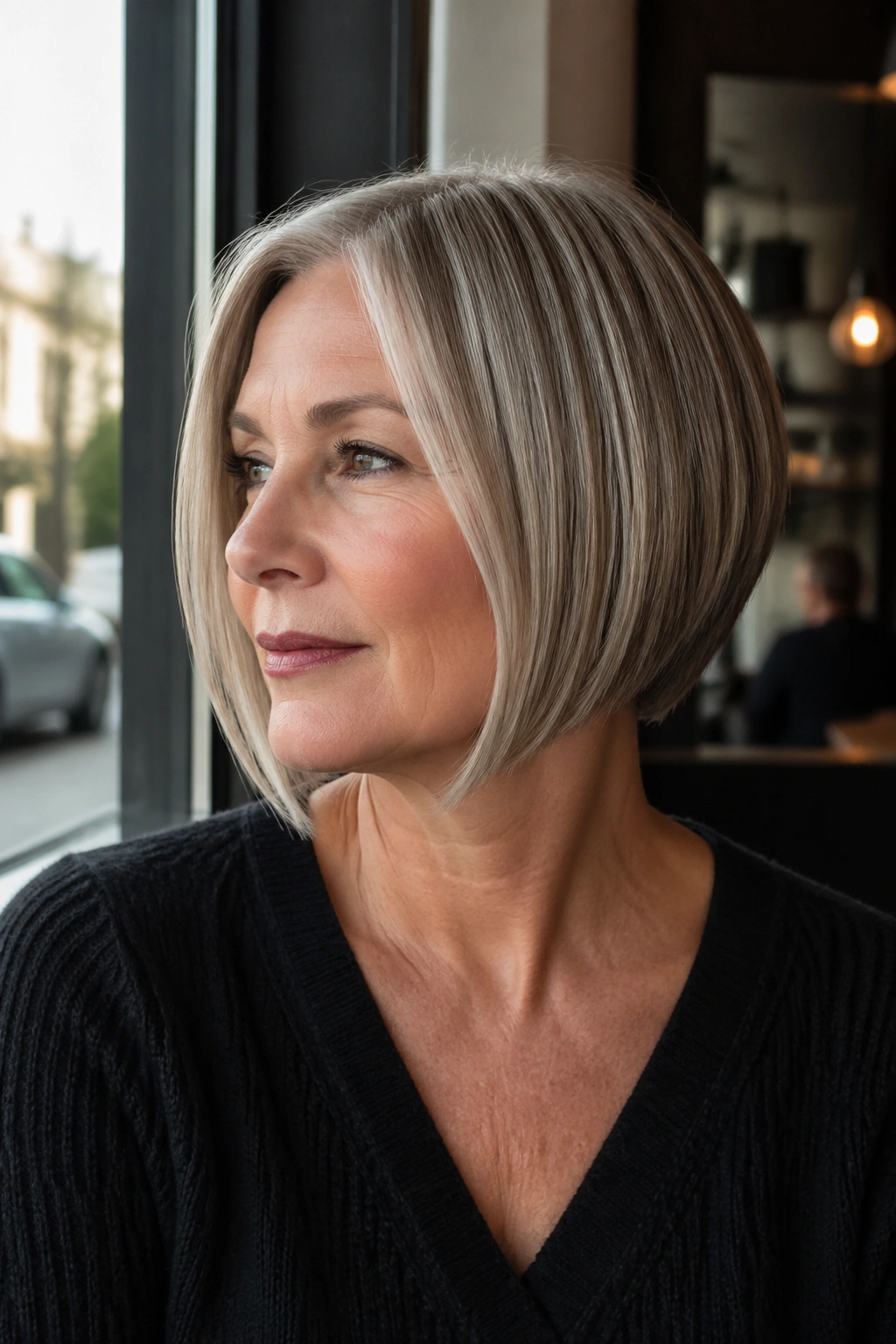
A sleek A-line bob has a sharp outline without looking harsh when it’s cut well. The back sits shorter, the front slides a little longer, and the diagonal line gives the neck a neat, elongated look. It’s one of those cuts that makes straight hair behave like it had a plan.
If your hair tends to puff out at the nape or kick out at the ends, the angle helps control that. It also gives fine hair the sense of fullness because the front pieces create visual length while the back stays compact. That makes the whole cut feel polished, even when you’ve barely done anything to it.
This is a good option if you like earrings, structured necklines, or a cut that looks intentional with a blazer or a simple T-shirt. It has a little edge, but not so much that it feels severe.
Ask for a subtle angle, not a steep one. Too much difference between the back and front can make the cut look dated fast.
11. Textured Crop with Crown Lift
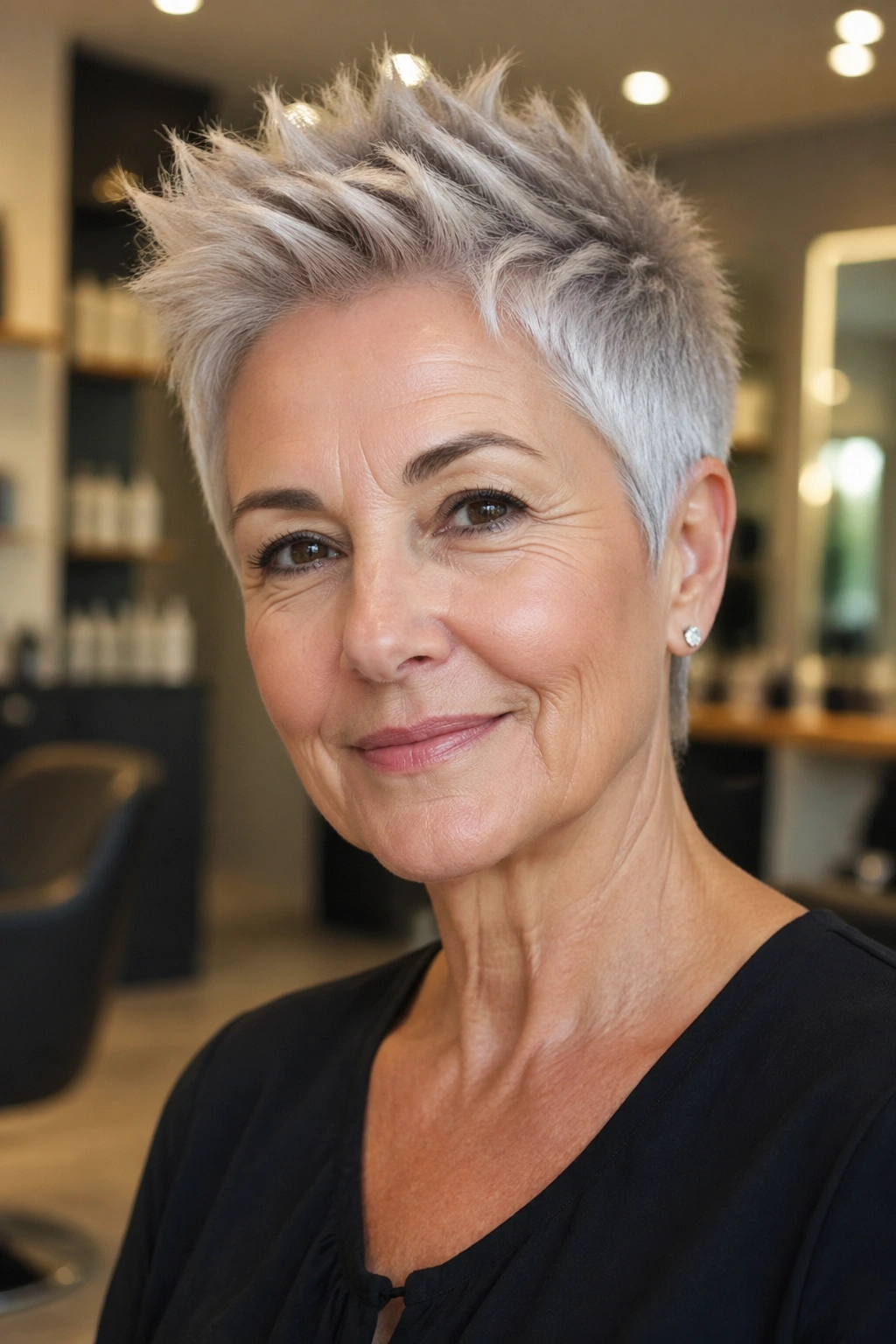
A textured crop is the short cut for people who want volume on top and less hair everywhere else. The crown lift is the point. It gives height where the head tends to flatten, which can be especially useful if your hair loses a bit of root body as it dries.
This cut is not about perfect symmetry. It’s about a shape that looks lively from the front and easy from the side. The texture pieces on top should be short enough to create movement, but not so short that the cut becomes spiky. A bit of softness goes a long way.
Use a lightweight mousse at the roots and rough-dry with your fingers. If you want extra lift, aim the dryer at the crown while flipping the hair forward, then back. That tiny habit makes more difference than piling on product.
One nice thing about this style: it looks good a little messy. That’s a relief on days when you don’t want to fight your hair before breakfast.
12. Curtain Bangs with Mid-Length Layers
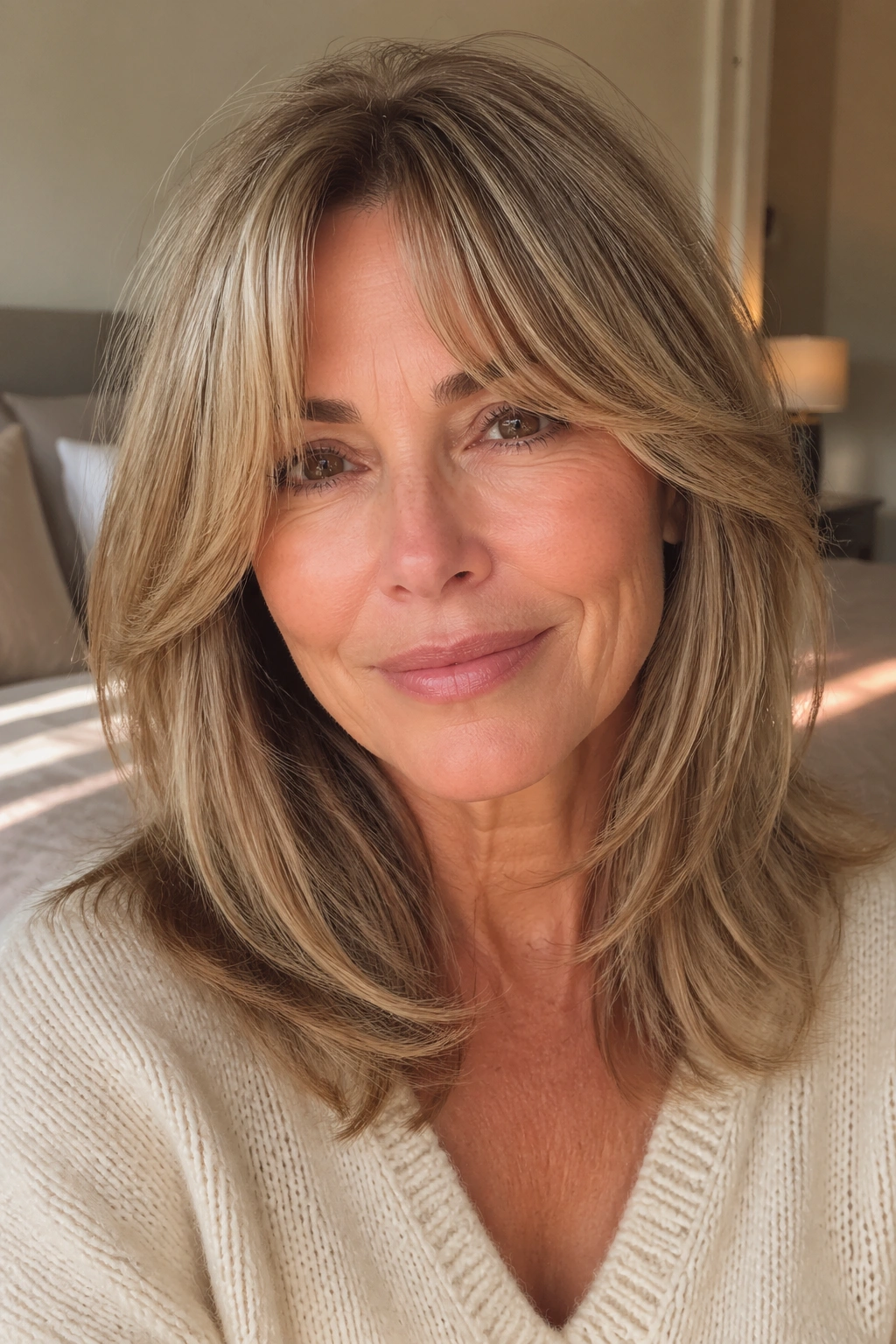
Curtain bangs are popular for a reason, and I don’t think the appeal is mysterious. They soften the face without the blunt commitment of full bangs, and they blend into shoulder-length or mid-length layers in a way that feels easy rather than precious.
What Makes Them Different
Full bangs sit across the forehead. Curtain bangs open in the middle and sweep out toward the cheeks. That gives more room around the eyes and makes the haircut feel lighter.
They’re a good match for women who want a bit of forehead coverage but do not want to trim bangs every few weeks. They also work well if you wear your hair in a low ponytail or clip, because the front pieces still do some of the work when the rest of the hair is pulled back.
A medium round brush can shape the bang area in under two minutes. If your hair is naturally wavy, ask for a longer curtain fringe so it can bend instead of flipping in odd directions. Short curtain bangs can be fussy. Longer ones are easier.
The rest of the layers should stay soft and blended so the bangs don’t look dropped on top of the haircut.
13. French Bob with Airy Fringe
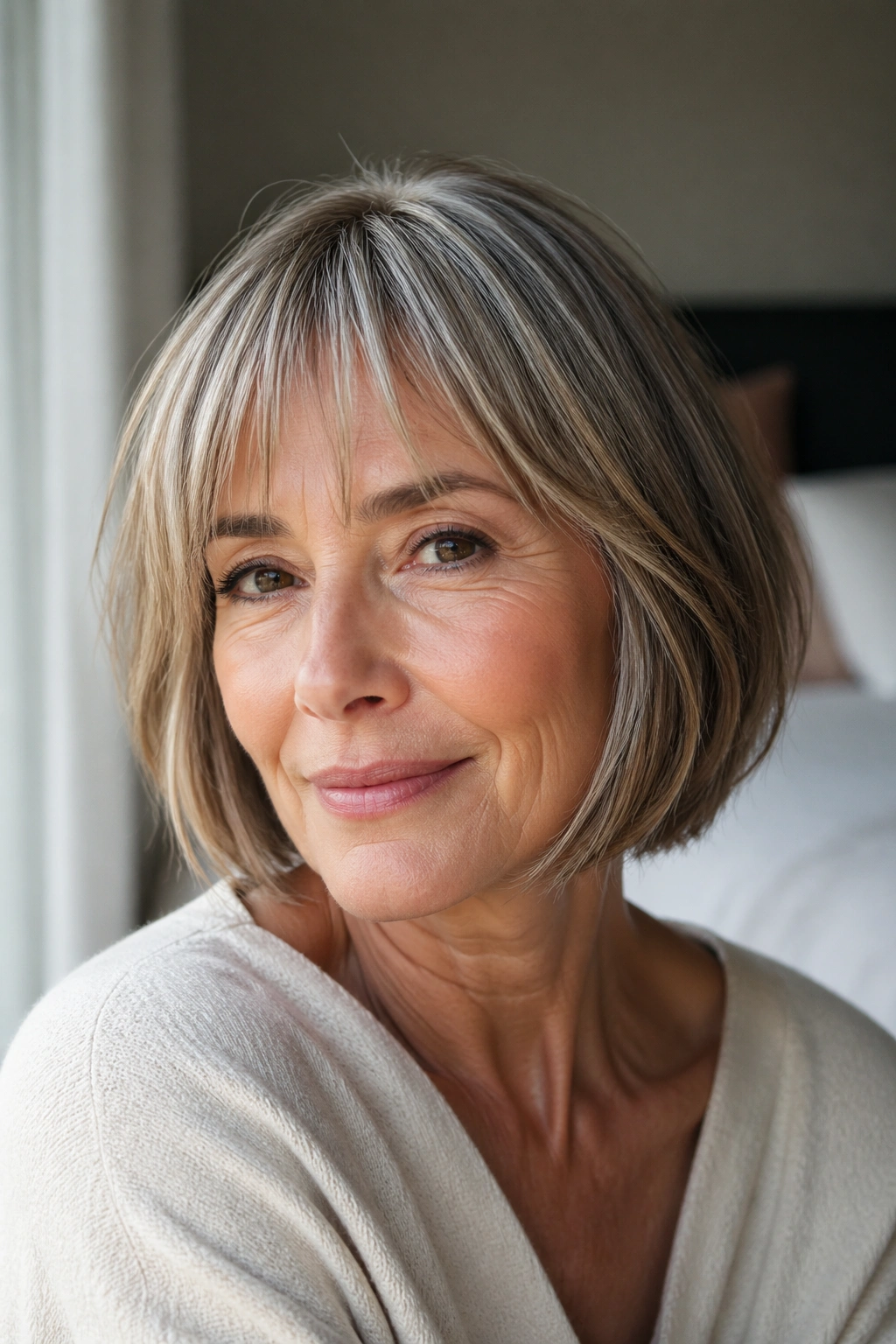
A French bob gives you a little style without a lot of length. It usually lands somewhere around the jawline, with soft, airy fringe and just enough movement to keep it from feeling too neat. The charm is in the looseness. It should look like you didn’t overthink it, even if the cut itself is precise.
Why It Works
The shape draws attention to the eyes and cheekbones. That makes it useful if you want the face to feel more open and lifted.
A French bob works best when the ends are not too blunt and the fringe is not too dense. You want the hair to swing a little, especially around the jaw. The cut can be worn straight, tucked, or left with a slight wave from air-drying.
- Keep the length at jaw level or a hair above
- Ask for fringe that separates naturally
- Use a small amount of styling cream, not a heavy wax
- Let the ends move instead of forcing them flat
It’s a lovely choice for straight hair and soft waves. It’s less lovely if you want a cut that can disappear into a ponytail. This one wants to be seen.
14. Graduated Bob with a Lifted Back
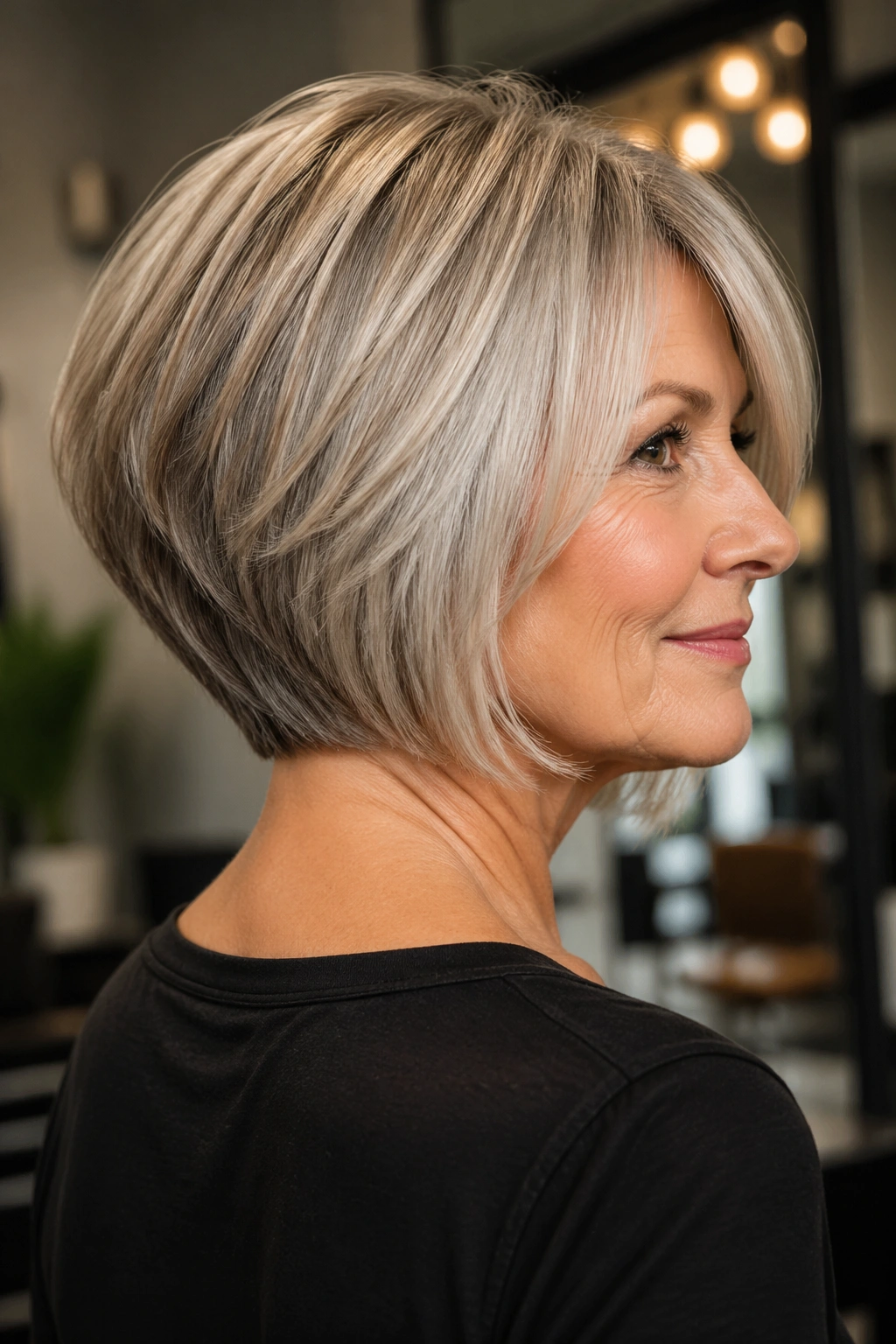
A graduated bob is the cut I’d point to when the back of the head needs more shape than the front does. The stacked layers in the nape build lift where hair often goes flat, and the front stays slightly longer to keep the face soft.
This cut can make fine hair look fuller fast. That’s because the weight is distributed upward instead of hanging all the way down at one length. If your hair tends to collapse against the neck, the graduation fixes that without making the whole thing short.
The line has to be handled carefully. Too much stack and it starts to look stiff. Too little and the shape loses its purpose. A soft graduation keeps the back neat while letting the top move.
It does need upkeep. The nape grows out first and can lose its clean line, so trims matter more here than they do with a shag or a lob. If you like tidy hair and you don’t mind regular shaping, this cut is worth a close look.
15. Feathered Shoulder Flip

Want movement without going short? A feathered shoulder flip gives you that old-school swing at the ends, but it can look fresh when the layers are light and the flip is soft rather than overly curled. The cut sits at the shoulders, then turns out just enough to show shape when you move.
How to Wear It
A large round brush or a hot brush can turn the ends out in minutes. The trick is not to overdo the flip; you want bend, not a dramatic curl that fights the rest of the hair.
This style works well on medium hair that has some body but needs direction. It also suits women who like a little softness around the jaw and collarbone.
A few good notes:
- Keep the layers long enough to blend into the flip
- Avoid heavy creams that drag the ends down
- Use a light spray if you want the shape to last through the day
- Let the front pieces angle away from the face
There’s a playful feel to this cut. Not young, not fussy. Just easy to read from across a room.
16. Soft Wolf Cut
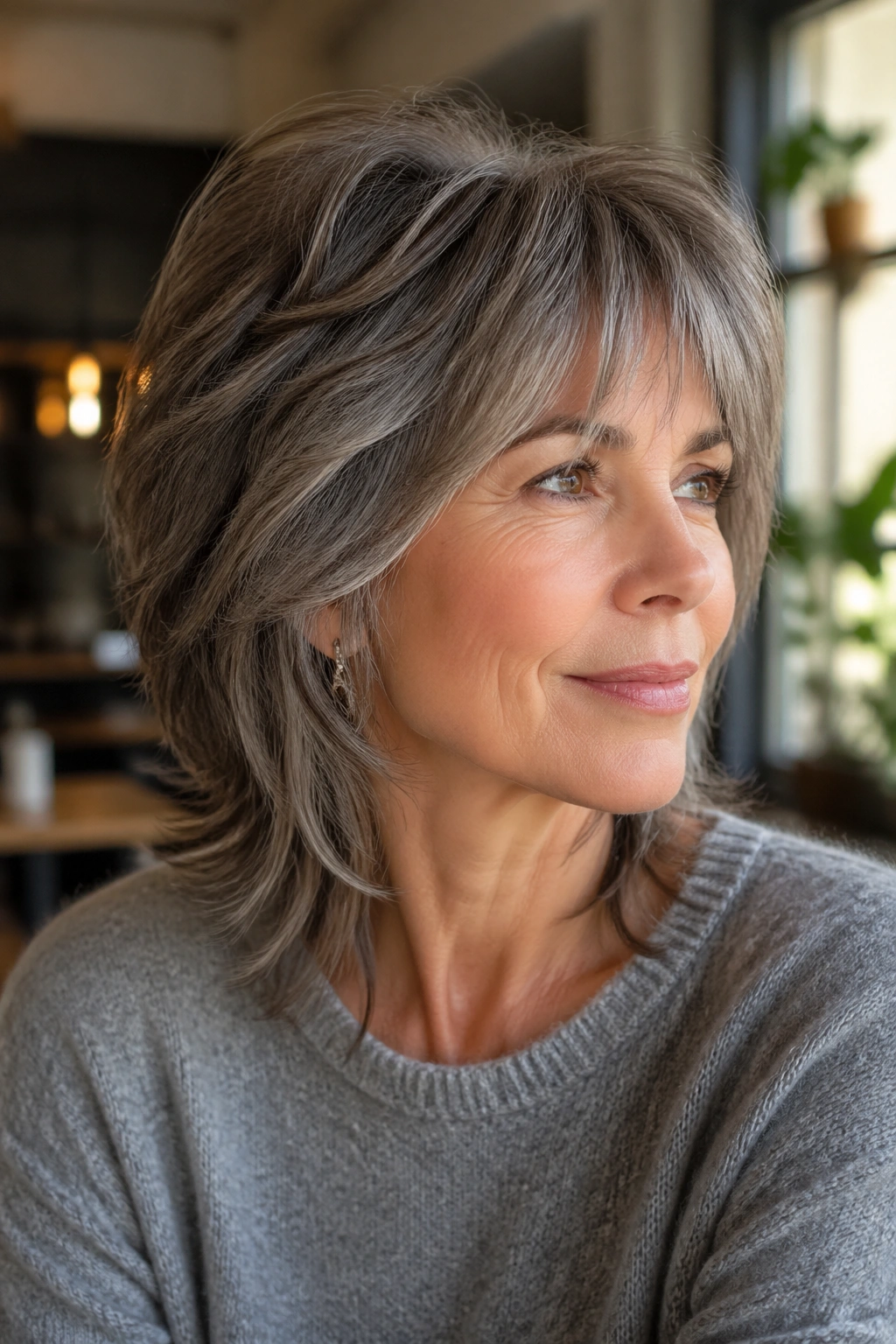
The soft wolf cut is the friendlier cousin of the sharper version that gets all the attention online. It keeps the crown layers, the face frame, and the longer pieces at the nape, but the edges are blended so it doesn’t look too wild or too trendy.
This cut works well for thick or wavy hair, because it removes bulk without flattening the shape. It also gives straighter hair a little more energy. If your hair has started to feel heavy and one-note, this cut breaks that up in a useful way.
It’s not for someone who wants a tidy, polished outline every single day. It looks better with a bit of natural movement and a little roughness at the ends. That roughness is the point.
Ask your stylist to keep the layers soft around the cheek and collarbone so the cut doesn’t jump into mullet territory. A good soft wolf cut still feels wearable. It just has a little more attitude than a plain layered cut.
17. Short Undercut Pixie
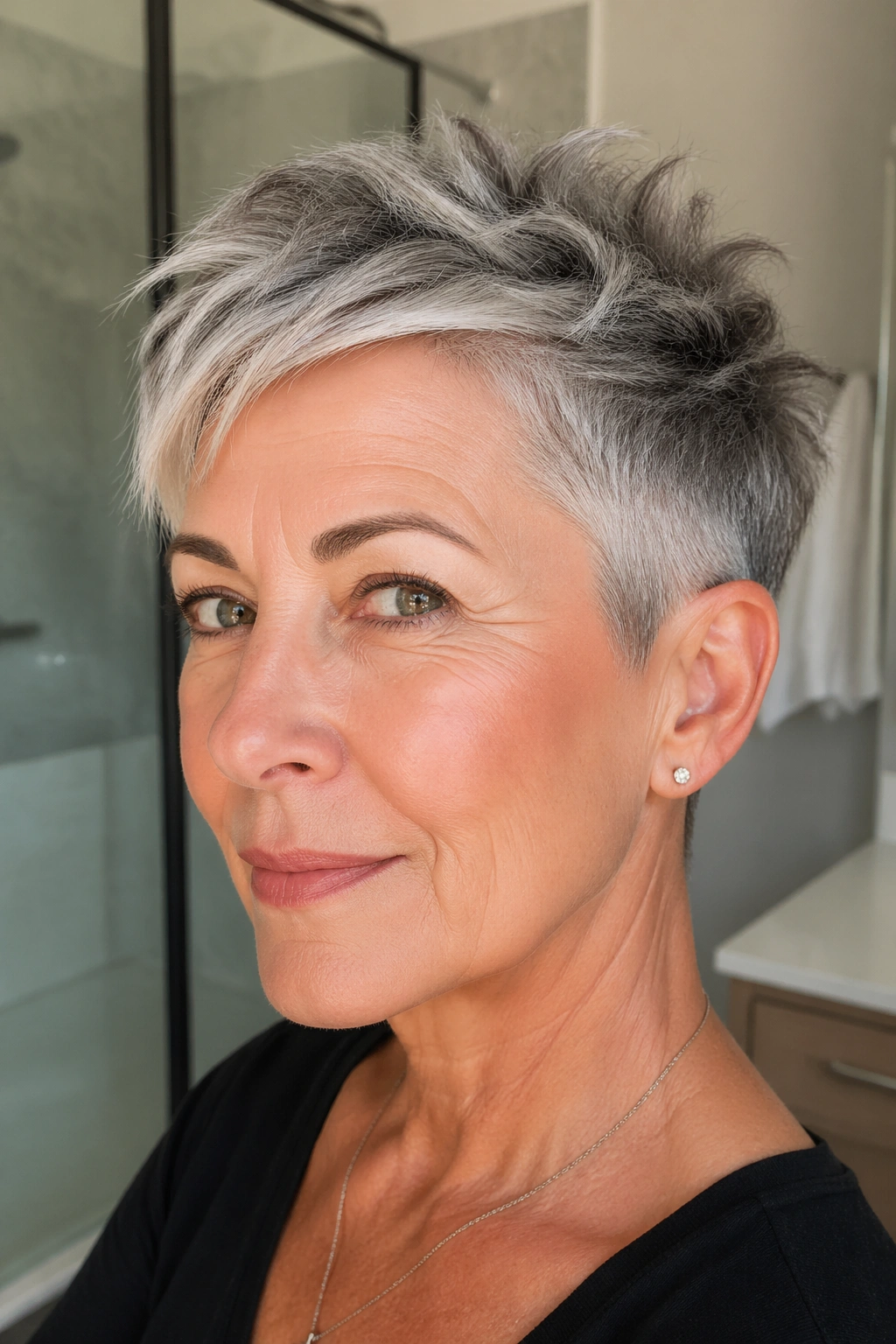
A short undercut pixie solves a very specific problem: too much bulk at the sides and nape. If your hair is thick, coarse, or tends to puff around the ears, taking some weight out underneath can make the top look lighter and more controlled without making the visible part of the haircut extreme.
The undercut can be subtle. It doesn’t have to shout. In many cases, it stays hidden unless the hair is tucked up or pushed back, which makes it a nice compromise for someone who wants ease but not a dramatic change.
This cut is also useful if you want a pixie that dries quickly and sits close to the head. Less hair means less drying time. That sounds obvious, but when you’re getting ready at seven in the morning, obvious things matter.
The main catch is grow-out. If the undercut is too short, it can take some patience to smooth it back into shape. A soft transition makes that phase less annoying. And yes, you’ll want a decent trimmer line around the neck — sloppy edges are a dead giveaway.
18. Wavy Lob with a Deep Side Part
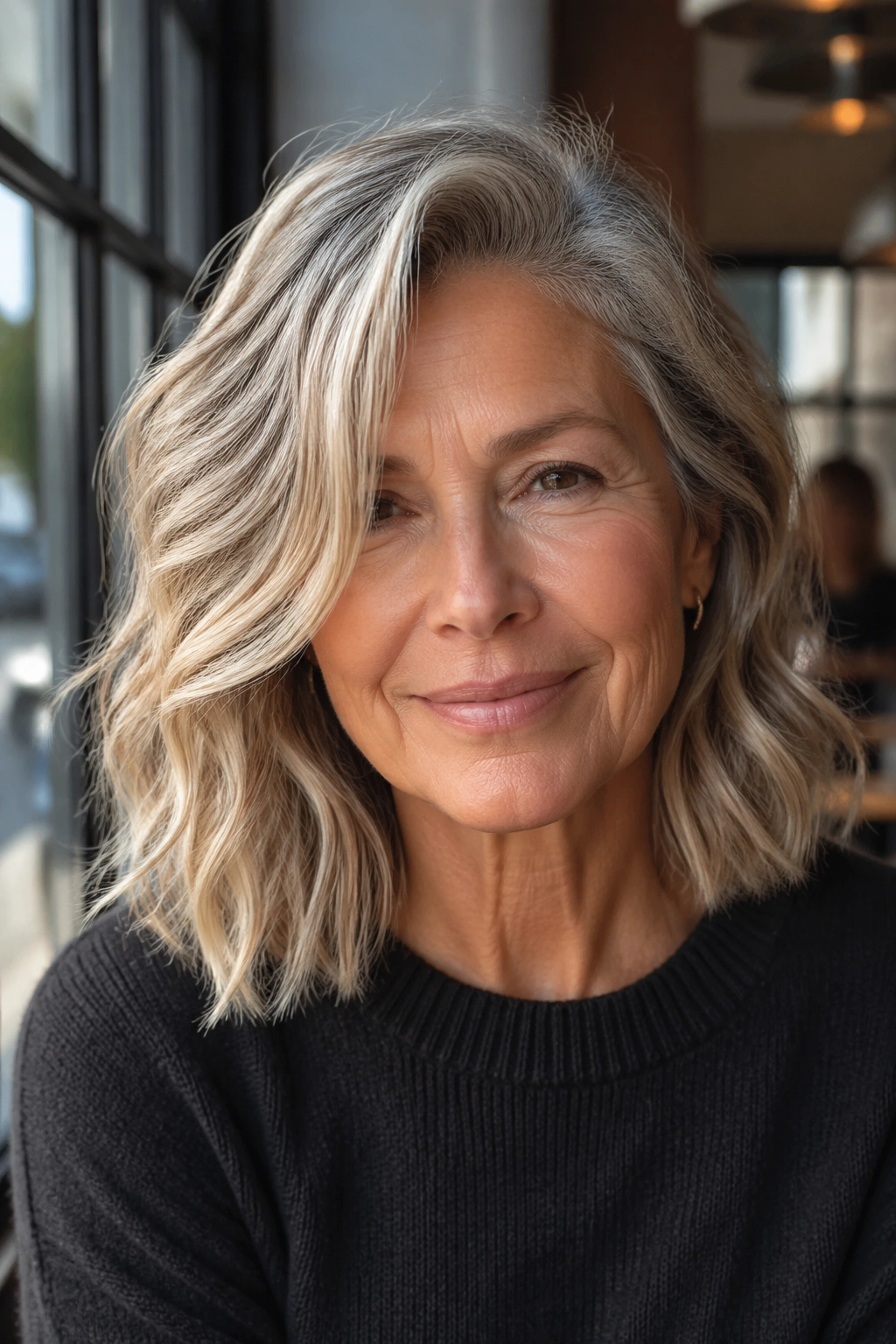
A wavy lob with a deep side part has a nice, easy lift at the roots and a bit of drama around the face without feeling theatrical. The side part creates height on one side and a soft fall on the other, which is handy if your hair naturally wants to lie flat in the middle.
This is a strong choice for women with waves that need direction. The lob length gives the wave enough room to show, but not so much that the hair gets weighed down. A deep side part also helps if one side of your face feels more flattering to you — a lot of people have one side they prefer, and there’s no reason to ignore that.
A 1.25-inch iron, used loosely, can reinforce the wave without making it too curled. Or you can twist damp sections and let them air-dry. Both work. The goal is a bend that looks casual, not corkscrewed.
If your crown is flat, blow-dry the roots on the heavier side first, then sweep the part over. That little move makes a bigger difference than most styling tricks.
19. Piecey Midi Cut
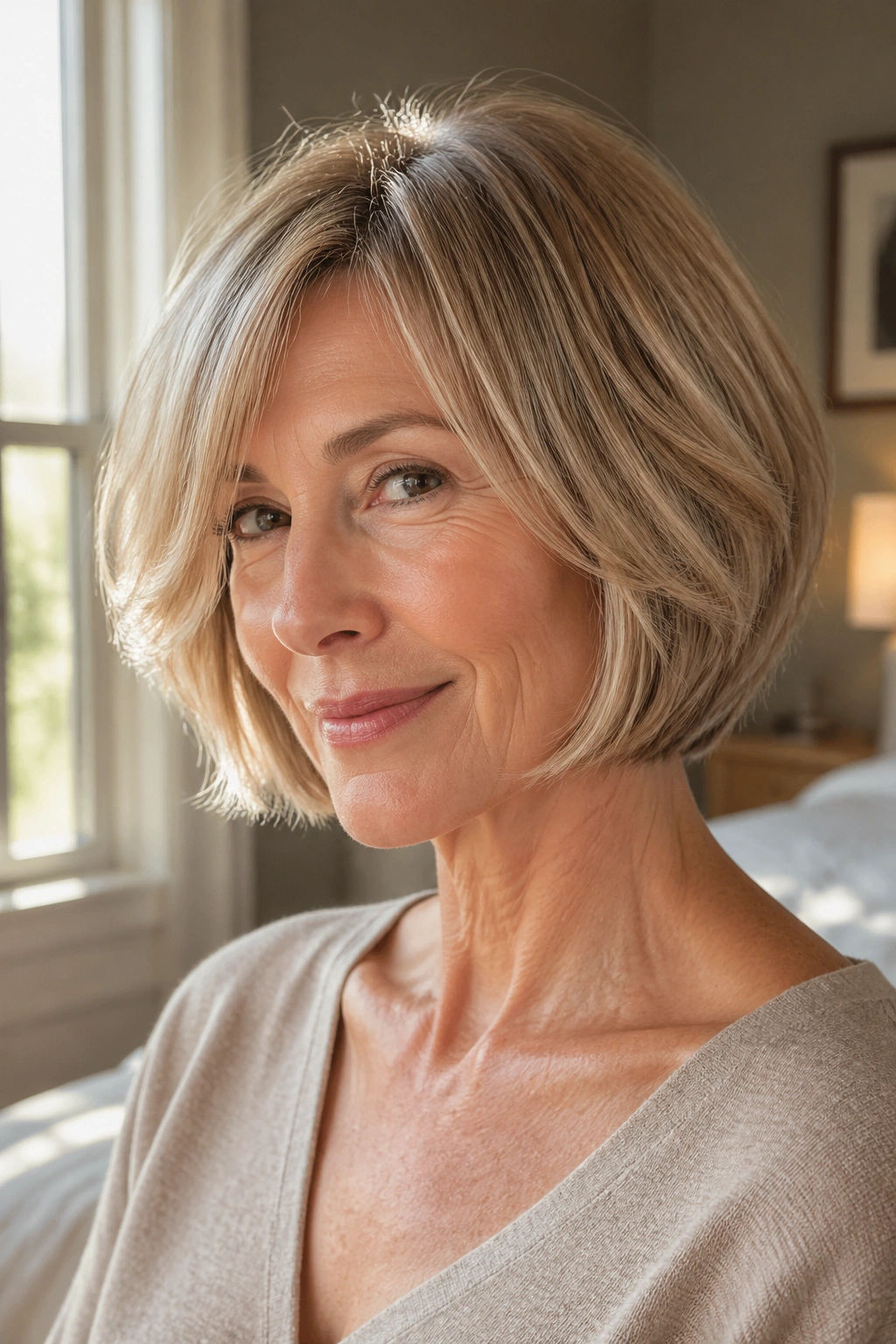
A piecey midi cut sits in that useful middle zone between shoulder length and long hair. What makes it different is the separation at the ends. The pieces are defined enough to show movement, but they’re not so chopped that the haircut feels broken apart.
Why It Earns Its Keep
The piecey finish keeps the hair from looking like one big sheet. That can help a lot if your hair has become finer or straighter over time, because a clean but separated edge gives the illusion of texture.
This cut is also easy to style in small ways. A little wave here, a tucked side there, maybe a half-up twist if you’re heading out. It doesn’t ask for a full blowout, which is refreshing.
- Use a light styling paste on the ends, not the roots
- Keep the layers soft and the perimeter clean
- Add a few face-framing strands that can move on their own
- Let the hair fall a little imperfectly; that’s part of the appeal
It’s a good everyday cut for someone who wants length but not weight.
20. Tapered Cut for Natural Gray Hair
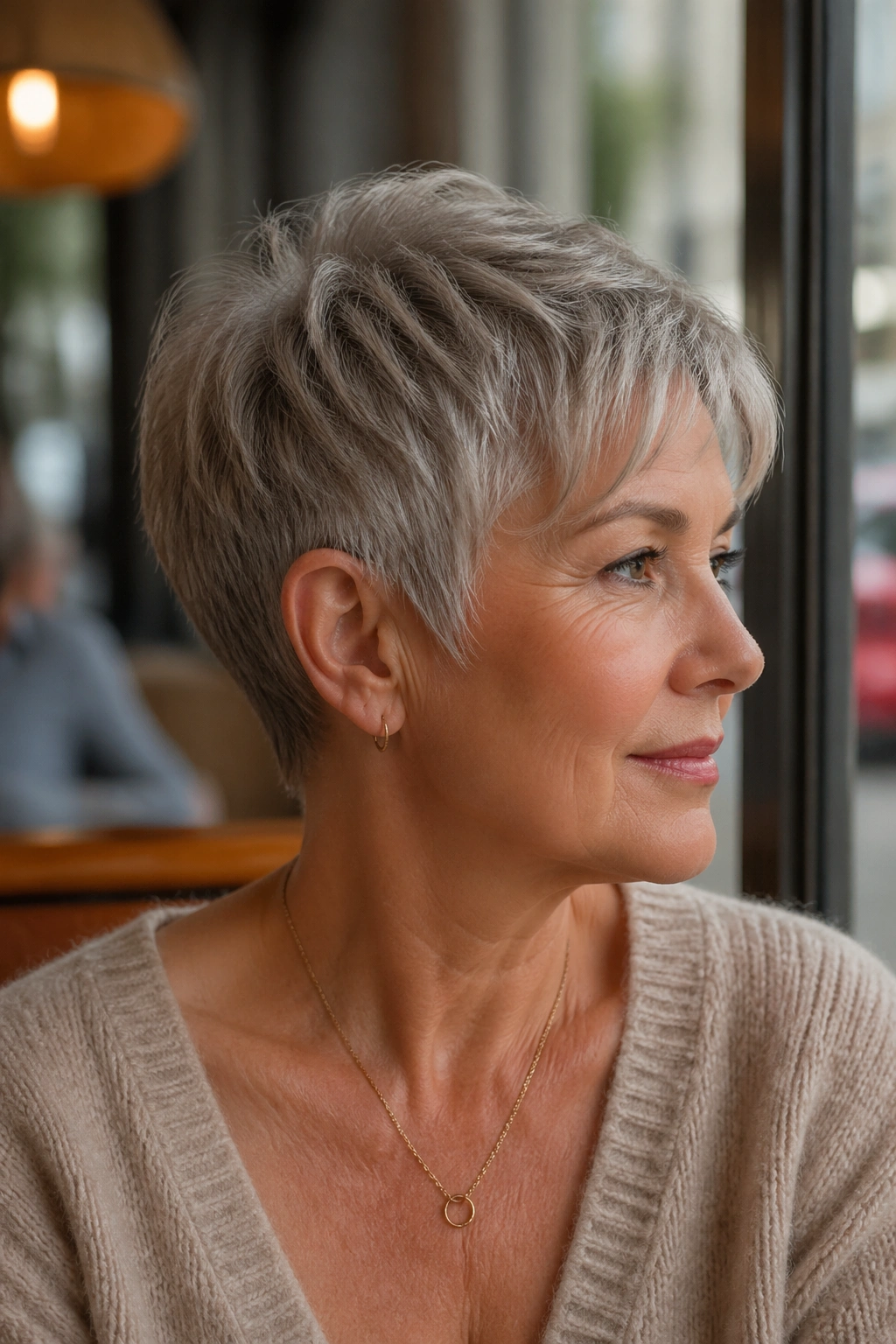
Gray hair has a texture of its own. It can be wiry, soft, coarse, shiny, or all four on the same head. A tapered cut works with that variation by narrowing the shape at the neck and ears while keeping the top and crown full enough to look intentional.
This is one of the best cuts for silver, white, or salt-and-pepper hair because the taper gives the color a clean outline. Gray strands reflect light differently, and a shape that’s too bulky can look puffy fast. A tapered silhouette solves that by keeping the sides neat and the top lifted.
I like this cut when the hairline has softened a bit or when the back starts to flare out. The taper cleans that up. It also makes the color itself stand out more, which is part of the charm. Gray hair does not need hiding. It needs a shape that respects it.
Use a small amount of styling cream or a lightweight leave-in to keep the texture from feeling rough. If your gray hair is porous, be cautious with purple shampoo — too much can leave it flat or dull. A little goes a long way.
21. Sleek Long Cut with Internal Layers
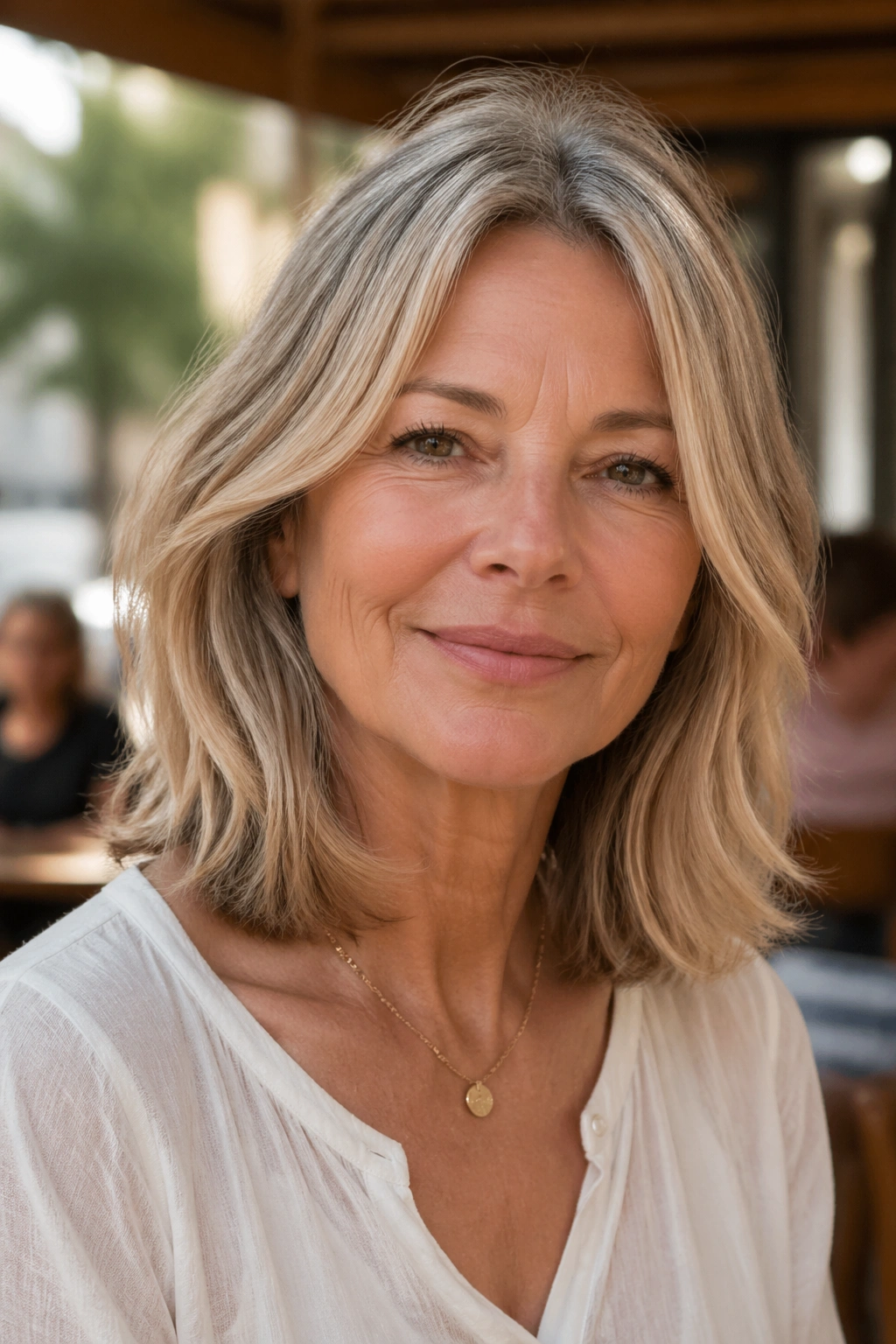
Does long hair have to look heavy? Not at all. The difference between long hair that feels elegant and long hair that feels dragged out is usually hidden inside the cut. Internal layers remove weight from the middle and lower sections without making the outside look shredded, which is why this style can stay graceful instead of sagging.
This is a smart choice if you love length but your hair has started to feel dense at the ends or flat at the crown. The perimeter can stay clean, which keeps the long shape looking polished, while the inner layers let the hair move. That combination is harder to get right than a bob, but when it works, it looks calm and expensive in the plainest sense of the word — tidy, shiny, and not overworked.
Ask for layers that begin below the cheekbone and spread through the mid-lengths. Too many short layers on long hair can make the whole cut wobble. Keep the front pieces soft, keep the ends blunt enough to hold their line, and let the rest of the shape do the quiet work.
