



A double chin affects your confidence in photos, on video calls, and even in everyday conversations. The frustrating part? You can’t always control it through diet or exercise alone—genetics, age, and natural face structure play huge roles. But here’s what most people don’t realize: the right hairstyle can completely transform how your face looks, creating the illusion of more definition and a sharper jawline without a single injection or procedure.
Layered haircuts are particularly effective at this because they create movement, depth, and strategic shadow play around the jawline and neck area. When hair is cut in the right layers, it draws the eye upward and outward, breaking up the visual weight under the chin. The key is understanding how layering works as a face-framing tool—it’s not just about choppy hair for the sake of texture.
If you’ve been avoiding certain hairstyles or camera angles because of your chin, this article walks you through eight specific layered haircuts designed to flatter this area. Each one works through a different mechanism (some use volume to redirect attention, others use length strategically, some rely on movement), so you can find the approach that genuinely fits your hair type, face shape, and lifestyle.
Why Layered Haircuts Work for Minimizing a Double Chin
Layered cuts aren’t a secret hack—they’re based on how human eyes actually perceive face shape and proportion. When hair sits flat against the neck and jawline, it emphasizes fullness in that area. Layers interrupt that flatness with texture, movement, and shadow. The movement creates visual complexity that distracts the eye from focusing on the chin area alone.
Volume at the crown is equally important. When hair is fuller at the top and sides of the head, it expands the perceived width of your face and makes the chin appear proportionally smaller. It’s the same principle that makes strategic contouring work in makeup—you’re creating visual balance through contrast and dimension.
The angle of the layers matters too. Layers that point slightly outward and downward along the jawline can actually create a subtle lifting effect, while longer, subtly curved layers can add definition to the neck area without drawing harsh attention to it. A professional stylist who understands face shape can customize the layer placement to work with your specific chin and neck structure.
1. The Textured Shoulder-Length Shag
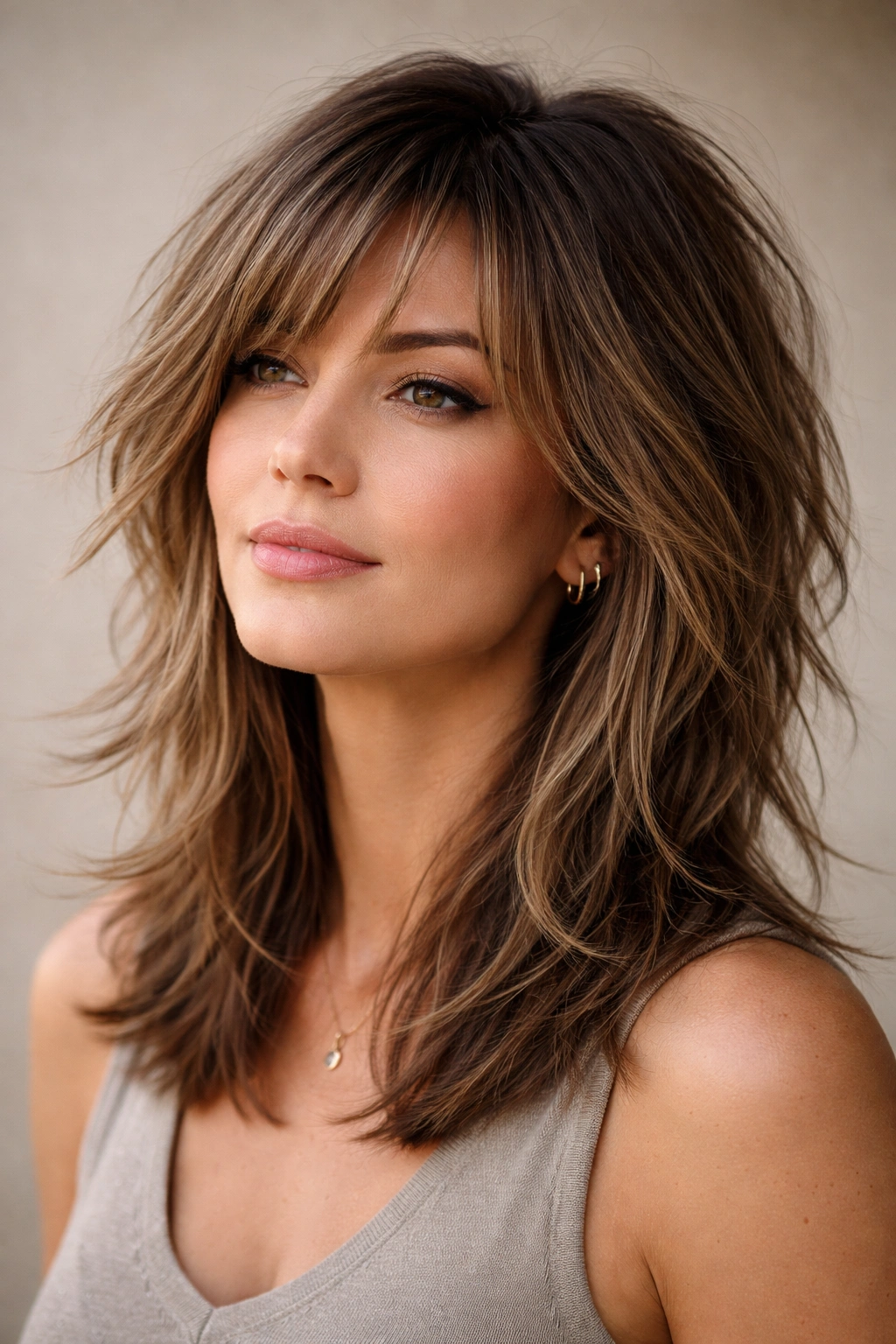
A modern shag is pure movement. This cut features choppy, textured layers throughout that create constant motion when you move your head—and that movement is your friend when dealing with a double chin. The layers aren’t evenly distributed; instead, they’re denser at the crown and cheekbones, then gradually longer as they move down toward the shoulders and neckline. This arrangement pulls visual focus up and outward.
Why This Cut Stands Out
The shag’s magic comes from its inherent texture and the way the layers catch light differently at each level. Unlike a blunt cut that lies flat and emphasizes the neck area, a shag’s choppy layers create shadow and depth. These layers actually move away from the neck, breaking up the line of the chin and drawing the eye toward the cheekbones and crown instead. The tousled, lived-in texture also feels modern and intentional, so it reads as a deliberate style choice rather than a “hiding” strategy.
Best For and How to Style It
- Hair texture: Works beautifully on wavy, textured, or thick hair; can work on straight hair if you’re willing to add texture with styling products and a blow dryer
- Length: Typically 14-18 inches from the crown; the longer, side-swept layers create the jaw-defining effect
- Styling: This cut actually looks better slightly undone—use a texturizing spray or salt spray, scrunch with your fingers while blow-drying, and let it air-dry for that authentic shag movement
- Maintenance: Trim every 6-8 weeks to keep layers sharp and prevent the shag from looking matted or shapeless
Pro tip: Ask your stylist for longer, more dramatic layers around the jawline and cheekbones specifically. This targeted layering is what creates the chin-minimizing effect.
2. The Voluminous Lob With Choppy Layers
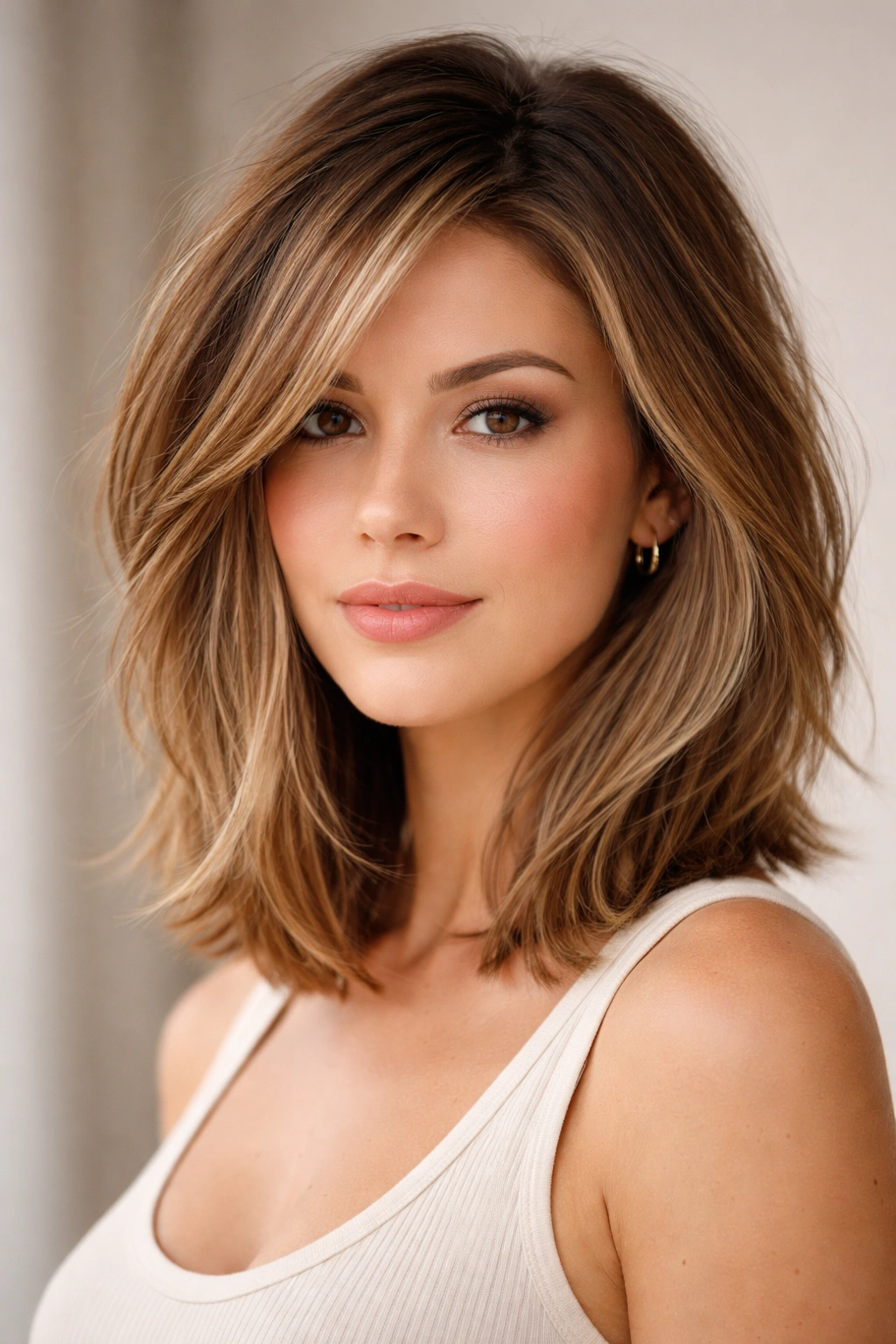
A lob (long bob) gives you length without the weight, especially when layered strategically. This cut typically hits between the chin and shoulders, which means you’re right in that sweet spot where length can hide and layers can create movement. The choppy layers throughout add texture and reduce bulk, so the lob doesn’t cling to your neck.
What Makes This Effective
The lob’s chin-hiding power comes from two factors: the length itself creates a vertical line that elongates the face, and the choppy layers ensure the cut doesn’t sit flat against your neck. This is crucial. A blunt lob can actually emphasize a double chin because the weight rests right at that area. But a layered lob with shorter choppy pieces around the front and sides creates an opening around the jawline—the eye sees the choppy, textured movement instead of the fullness.
Styling and Maintenance Needs
- Hair type: Ideal for straight to wavy hair; works on curly hair if you’re okay with more dramatic movement and texture
- Length: Typically 12-16 inches; the layers should be progressively longer as they move toward the back
- How to wear it: Blow-dry with a round brush for a sleeker, more polished look that emphasizes the shape, or air-dry for texture and movement
- Trim frequency: Every 4-6 weeks to maintain the layer definition and prevent the lob from growing into an undefined length
- Styling products: Light texturizing spray, dry shampoo for grip, or a smoothing serum depending on your hair type
Worth knowing: The placement of layers is everything here. Make sure your stylist adds more layers at the front and sides (around the jawline) and fewer in the back. This front-heavy layering is what creates the face-flattering, double-chin-minimizing effect.
3. The Wispy Face-Framing Layers With Length
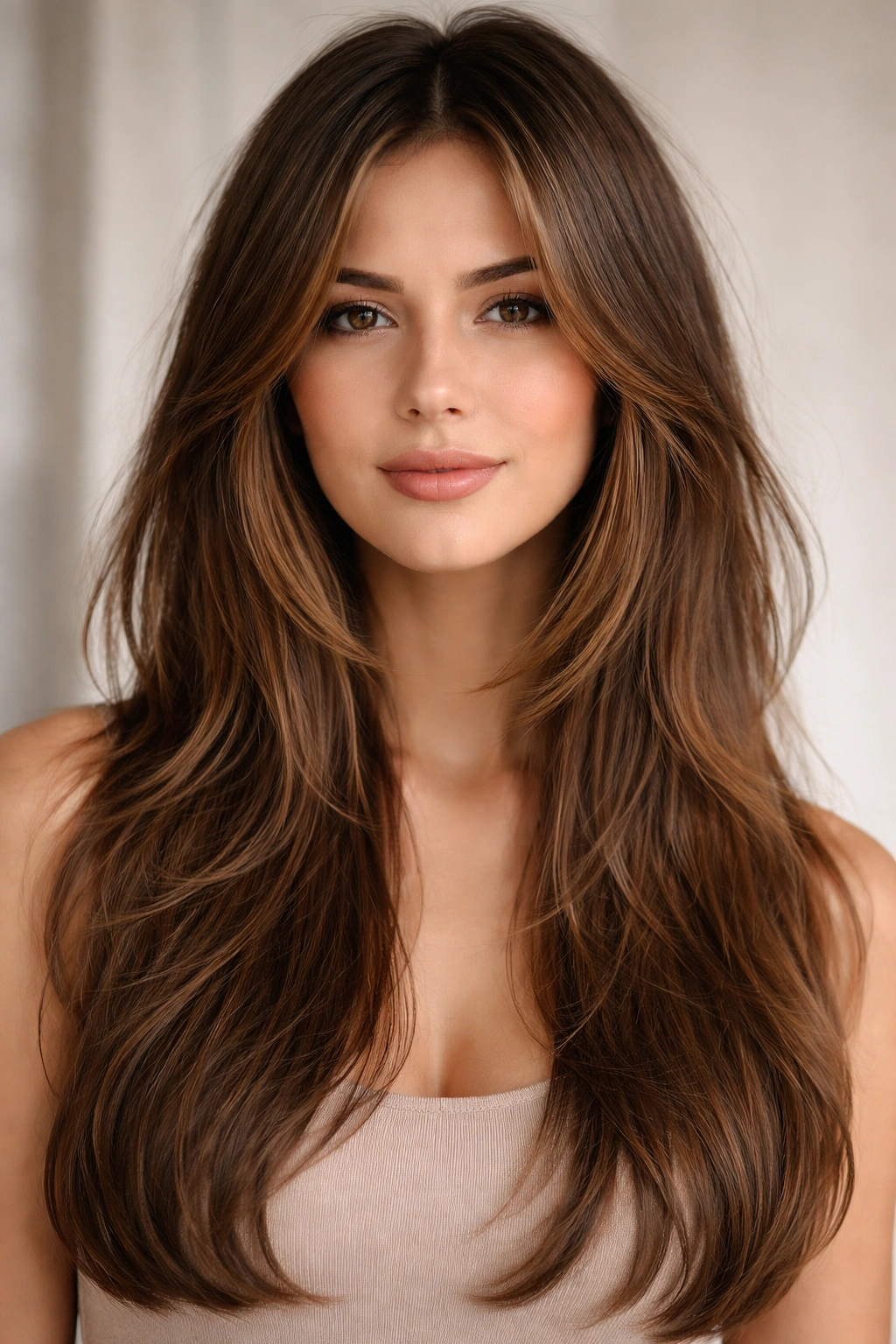
This approach keeps most of your hair long (think mid-back or longer) but adds wispy, feathered layers specifically around your face, collarbone, and jawline area. The longer underneath layers stay intact, maintaining length and body, while the wispy pieces create movement and draw focus upward.
Why Face-Framing Works
Wispy layers act like strategically placed shadows around your face. They’re longer than your hair underneath, so they move independently and create visual texture right where you need it—along your jawline and around your ears. This setup is particularly effective because the majority of your hair still has weight and body (creating fullness at the crown and sides), but the wispy layers create an “opening” around the chin that prevents the area from looking heavy or undefined.
How to Make It Work
- Best for: Straight to wavy hair; this works less effectively on tight curls because the layers won’t have the wispy, feathered movement
- Length: Keep the bulk of your hair long (18 inches or more), but ask for wispy layers around your face and collarbone that are 1-2 inches shorter than the underneath layers
- Styling: This cut benefits from straight to slightly wavy styling; use a flat iron or blow-dry straight for the cleanest effect, or use a curling iron to add soft waves that enhance the movement of the layers
- Maintenance: Trim every 8-12 weeks; you mainly need to maintain the shorter wispy layers while allowing the underneath length to grow
Pro tip: Ask your stylist to make the wispy layers slightly shorter and more dramatic in the front—around your cheekbones and jawline—and gradually longer as they move toward the back. This gradation creates a subtle lifting effect.
4. The Tousled Mullet With Textured Layers
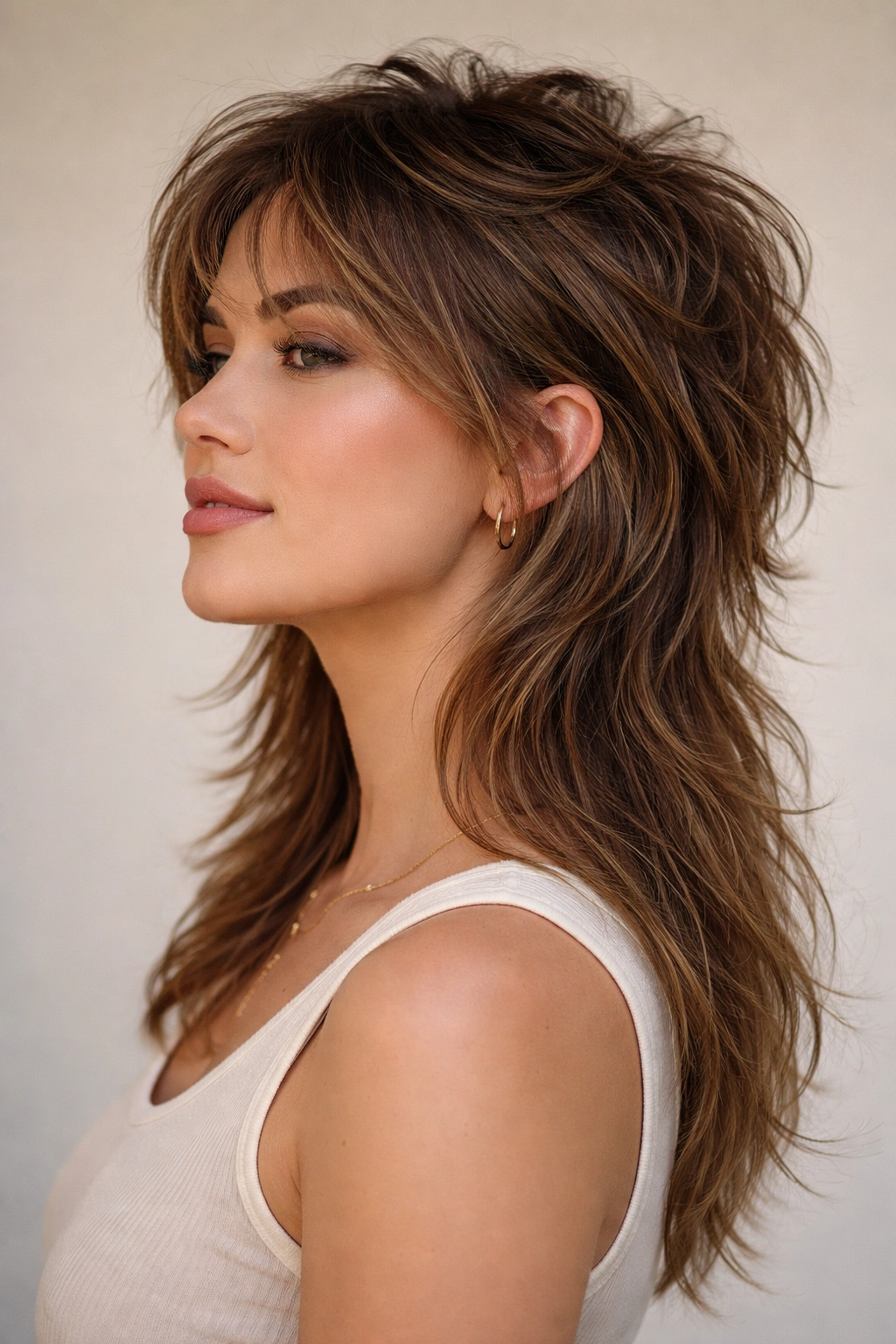
Don’t dismiss the modern mullet—it’s genuinely flattering when done right. A textured mullet combines shorter, layered sides and crown with longer length in the back, all tied together with choppy, movement-creating layers throughout. The key difference from a traditional mullet is the integration; modern versions flow seamlessly instead of having a harsh distinction.
The Chin-Minimizing Magic
A mullet creates volume exactly where you need it: at the crown and cheekbones. Because the sides are shorter and textured with layers, they don’t weigh down your face or create bulk along the jawline. Instead, the volume is concentrated at the crown and upper sides, which makes your face appear wider at its strongest points and—proportionally—makes the chin area seem less prominent. The longer back length adds overall proportion without affecting the chin area.
Who This Works For and How to Wear It
- Hair texture: Thrives on wavy, curly, or naturally textured hair; works on straight hair if you’re willing to add texture with styling products
- Styling approach: Embrace the tousled, textured aesthetic; use a texturizing spray or sea salt spray, blow-dry with your fingers for movement, and avoid over-smoothing
- Length in back: Can be as long as you want (anywhere from shoulder-length to mid-back); the longer back creates proportion without affecting the jawline
- Styling frequency: You might need to style this more intentionally than a traditional cut, but once you master the texture, it becomes easier
Insider note: This cut requires a stylist comfortable with modern, unconventional shapes. Bring reference photos and clearly communicate that you want the textured, integrated version, not a hard-edged 1980s mullet.
5. The Side-Swept Layered Bob With Volume at the Crown
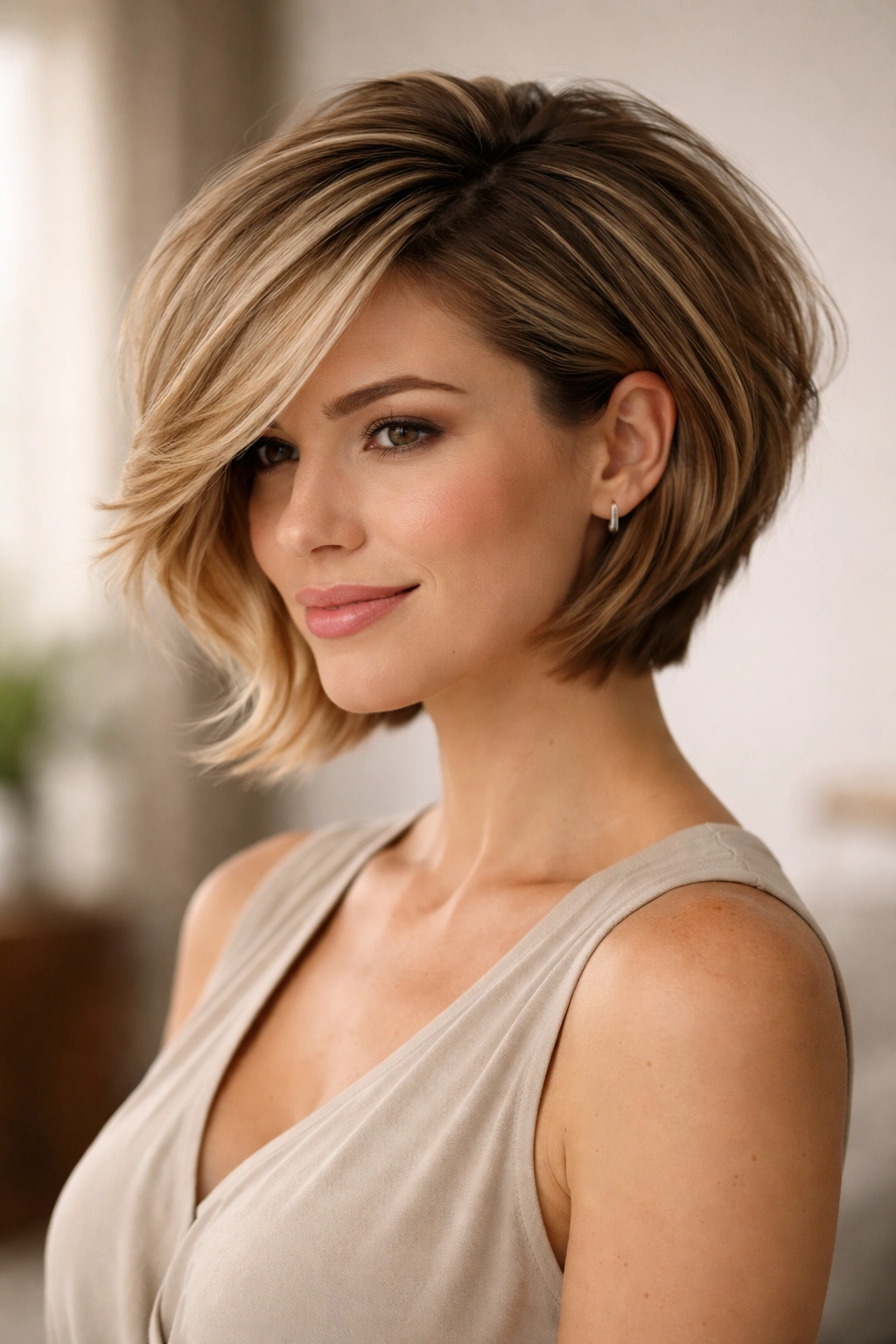
A layered bob that’s longer on one side (typically 1-3 inches longer) and shorter on the other creates instant face-framing without being as dramatic as a shag. The layers throughout prevent bulk, while the asymmetrical length creates movement and draws the eye toward the longer side.
Why Asymmetry Helps
An asymmetrical cut gives your face something to focus on other than the chin area. The longer side creates a diagonal line that’s visually interesting, and the sweep of the longer layers across your face creates movement and shadow. Combined with layers throughout that prevent the bob from sitting flat against your neck, this cut effectively draws attention upward and away from the jawline and chin area. The volume at the crown elongates your face and makes the chin appear smaller by proportion.
Styling and Daily Wear
- Best for: Straight to wavy hair; the asymmetry and layers need to be visually clear, so this works best when your hair can hold a shape
- Length: The shorter side typically hits around ear-level, while the longer side extends toward the collarbone or shoulder
- How to style it: Blow-dry with a round brush to enhance the shape and encourage the longer side to sweep across; you can also use a curling iron to add soft waves that enhance the movement
- Maintenance: Trim every 4-6 weeks to keep the asymmetrical length correct and the layers sharp
- Daily styling: This cut looks best when the longer side is emphasized and has movement; a flat, stationary longer side loses some of the cut’s face-flattering effect
Pro tip: Ask your stylist to make the shorter side even shorter around your ears and jawline, with slightly longer, choppier layers on the longer side. This contrast creates more dramatic face-framing.
6. The Feathered Wolf Cut With Graduated Layers
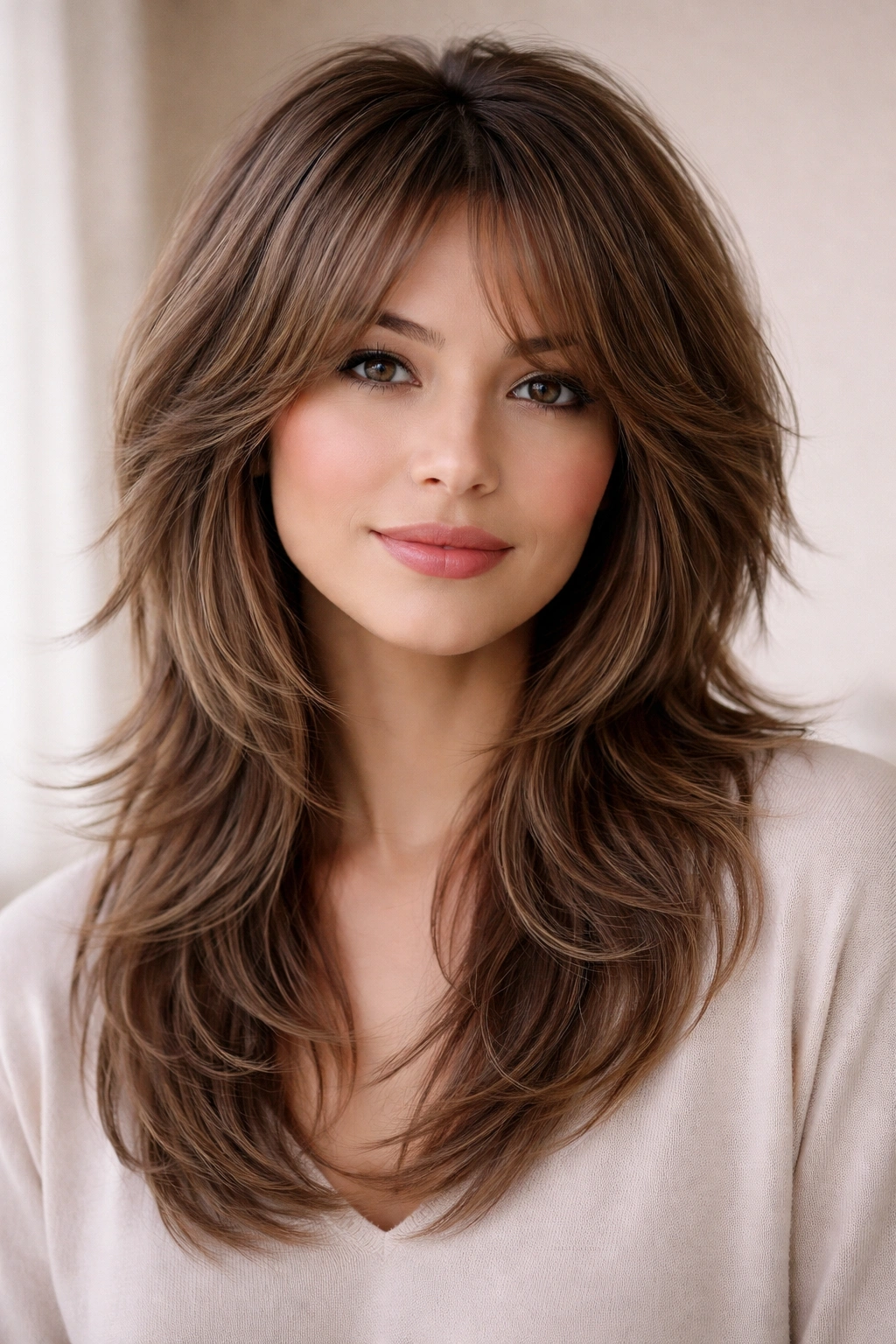
A wolf cut is essentially a hybrid between a shag and a mullet, but with graduated, feathered layers that create seamless movement from crown to neck. This cut features shorter, voluminous layers at the crown and sides, with longer, feathered layers that flow downward, creating a flowing silhouette.
The Technical Advantage
What makes the wolf cut exceptional for minimizing a double chin is the graduated structure. The crown and upper sides are built with volume (creating width and drawing focus upward), while the longer feathered layers move downward and outward instead of clinging to your neck. Each layer is slightly longer than the one above it, creating a smooth, flowing shape that never sits flat against the chin or jawline. The feathering technique—where the edges of layers are blended and softened—creates a soft, blended look rather than choppy hardness.
Who This Suits Best
- Hair texture: Looks stunning on straight, wavy, or textured hair; works particularly well on curly hair where the texture enhances the layered effect
- Length: The back can be as long as you want (shoulder-length to mid-back); the front and sides are typically shorter, around jawline or collarbone length
- Styling: Works beautifully with movement—air-dry for natural texture or blow-dry for more control; the key is letting the feathered layers create their own movement
- Maintenance: Trim every 6-8 weeks; the feathered layers need regular maintenance to stay sharp and defined
Worth knowing: The wolf cut requires a stylist with strong technical skills. This isn’t a cut where you can skimp on the consultation—bring photos and be very clear about your face-shape concerns so they can customize the layer placement.
7. The Choppy Pixie-Bob Hybrid With Textured Length
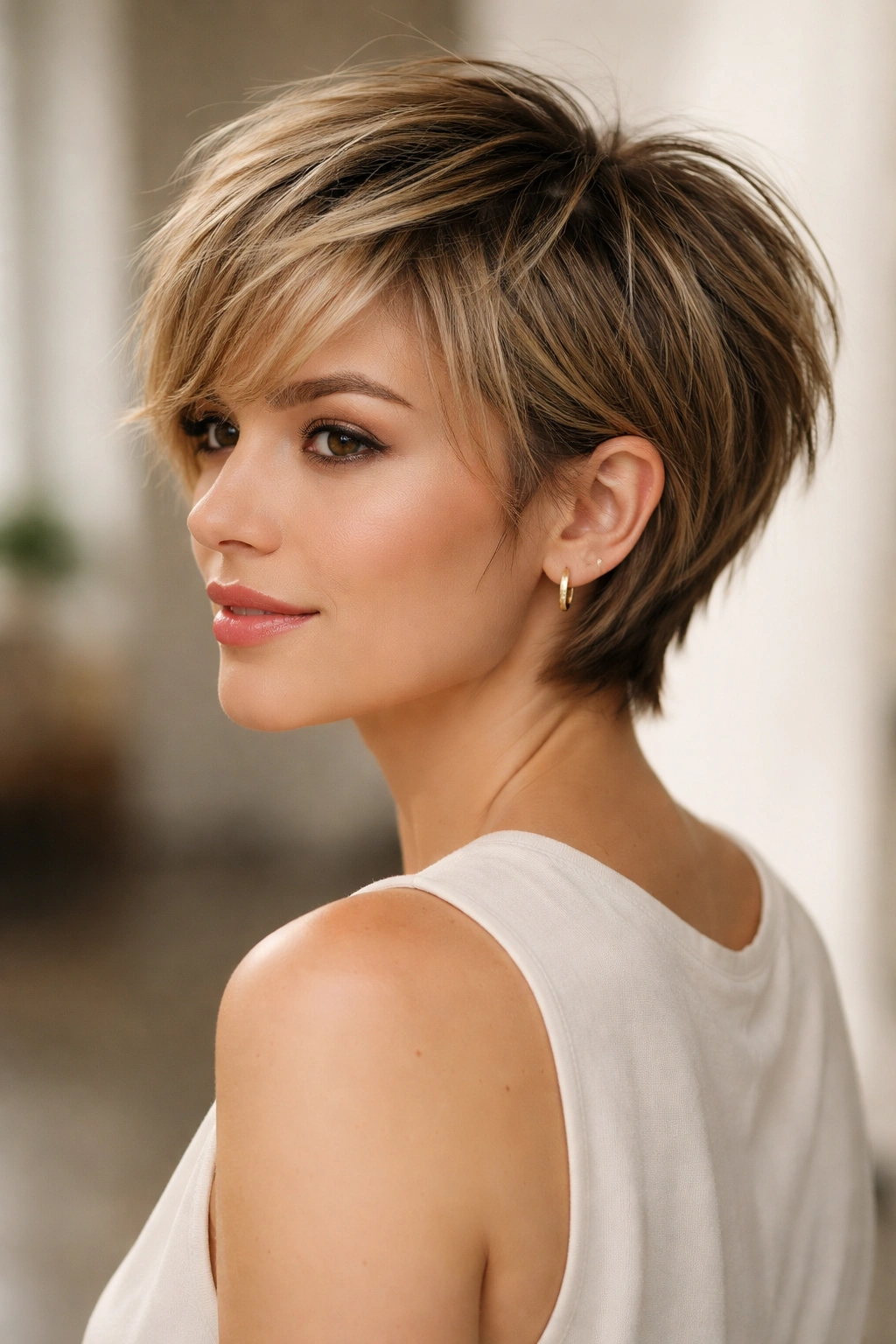
This cut is longer than a traditional pixie (typically 3-6 inches) but much shorter than a full bob, with choppy, textured layers throughout that create movement and visual interest without weight. The shorter length keeps hair off the neck entirely, while the layers create dimension and texture that draws focus away from the chin area.
Why Shorter Length Can Be Flattering
You might think shorter hair would emphasize a double chin, but this particular length and layer placement works differently. Because the hair is entirely off the neck, there’s no weight pulling down or emphasizing that area. The choppy, textured layers create visual complexity and movement that draws the eye upward toward the crown and cheekbones. The overall silhouette tends to be fuller at the crown (especially if you style it with some height), which creates proportion that minimizes the chin.
How to Make This Cut Work for You
- Hair texture: Works on all hair types, but looks especially striking on straight or wavy hair where the choppy layers create clear definition
- Length: Typically 3-6 inches at the longest; shorter at the nape and sides, longer at the crown and front
- Styling: Can be worn sleek and modern or tousled and textured depending on your preference; either way, the key is creating some height at the crown
- Products: Texturizing spray, volumizing mousse, or dry shampoo to enhance the choppy texture and create lift
- Maintenance: Trim every 4-6 weeks to keep the choppy layers sharp and prevent the cut from looking shaggy or overgrown
Pro tip: Ask your stylist to keep the layers choppier and more textured around the front and sides (jawline area) and slightly longer at the crown. This distribution creates maximum face-flattering, double-chin-minimizing effect.
8. The Soft-Wave Layered Cut With Strategic Bangs
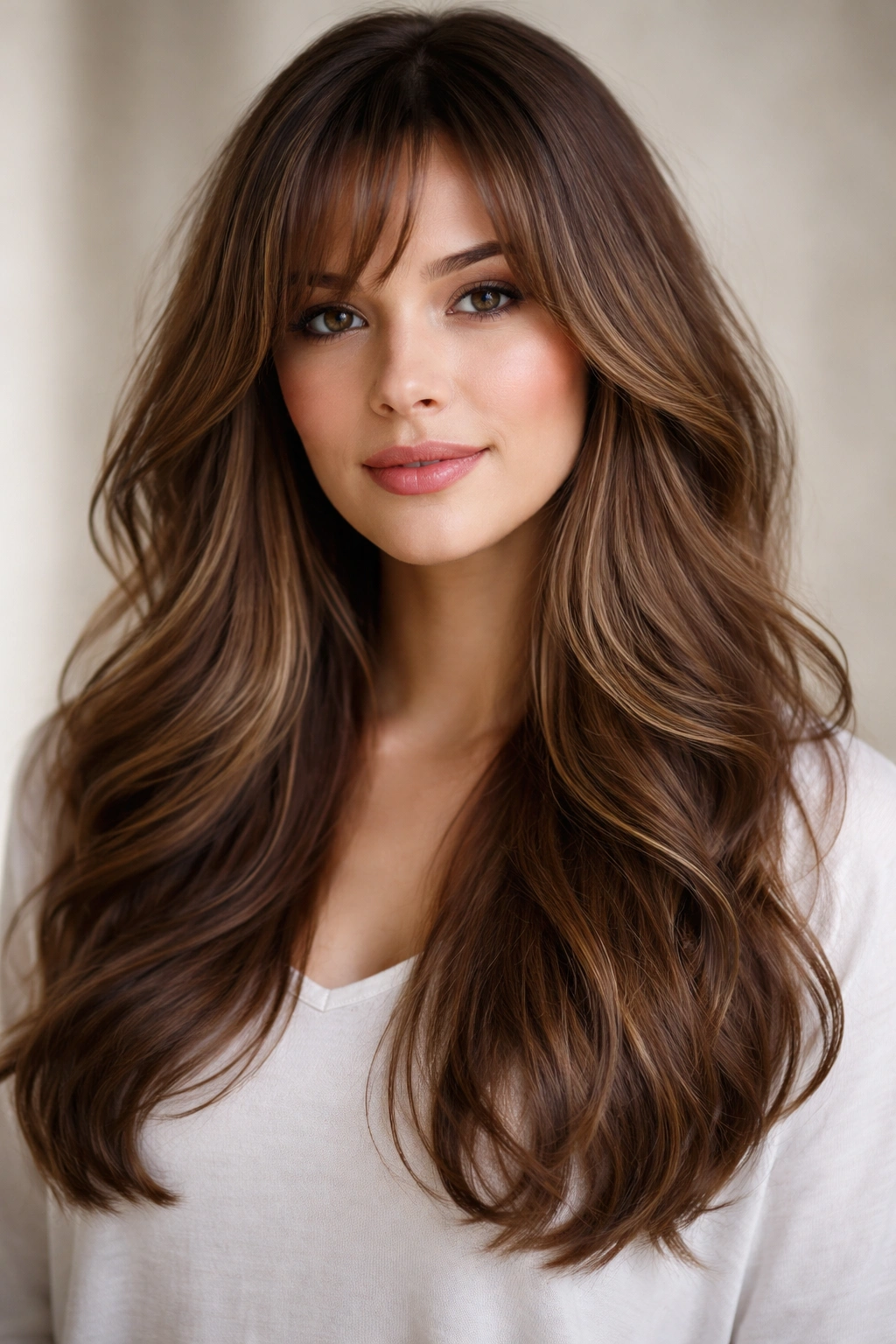
Long or medium-length hair with soft, blended layers throughout and longer face-framing bangs can be incredibly flattering for hiding a double chin. The bangs (whether blunt, wispy, or textured) draw focus to the upper face, while the soft layers throughout create movement that prevents the hair from clinging to your neck.
How Bangs Become a Chin-Minimizing Tool
Bangs redirect your eye upward immediately. Even if they’re not super short, they create a horizontal line on your forehead that draws attention away from the chin area. Combined with soft, flowing layers throughout and longer lengths that extend past the shoulders, this setup is particularly flattering. The layers ensure the hair doesn’t sit flat against your neck or jaw, while the bangs and overall softness create a romantic, face-flattering aesthetic.
Styling and Commitment Considerations
- Hair type: Works beautifully on straight to wavy hair; you need enough texture or styling ability to create soft waves that enhance the layered effect
- Bangs style: Can be blunt, wispy, textured, or grown-out and styled to the side—choose based on your face shape and styling preferences
- Overall length: Typically 16-20+ inches; the length creates visual elongation while the layers provide movement
- Styling requirements: Requires regular styling to achieve soft waves and keep the bangs styled nicely; this isn’t a wash-and-go cut
- Maintenance: Trim every 6-8 weeks overall, but bangs may need trimming every 3-4 weeks depending on how fast they grow and how you style them
Worth knowing: Bangs do require commitment—they need regular styling and trimming. If you’re not willing to blow-dry and style regularly, this might not be the cut for you. But if you are, the chin-minimizing payoff is significant.
Styling Techniques That Amplify the Chin-Minimizing Effect
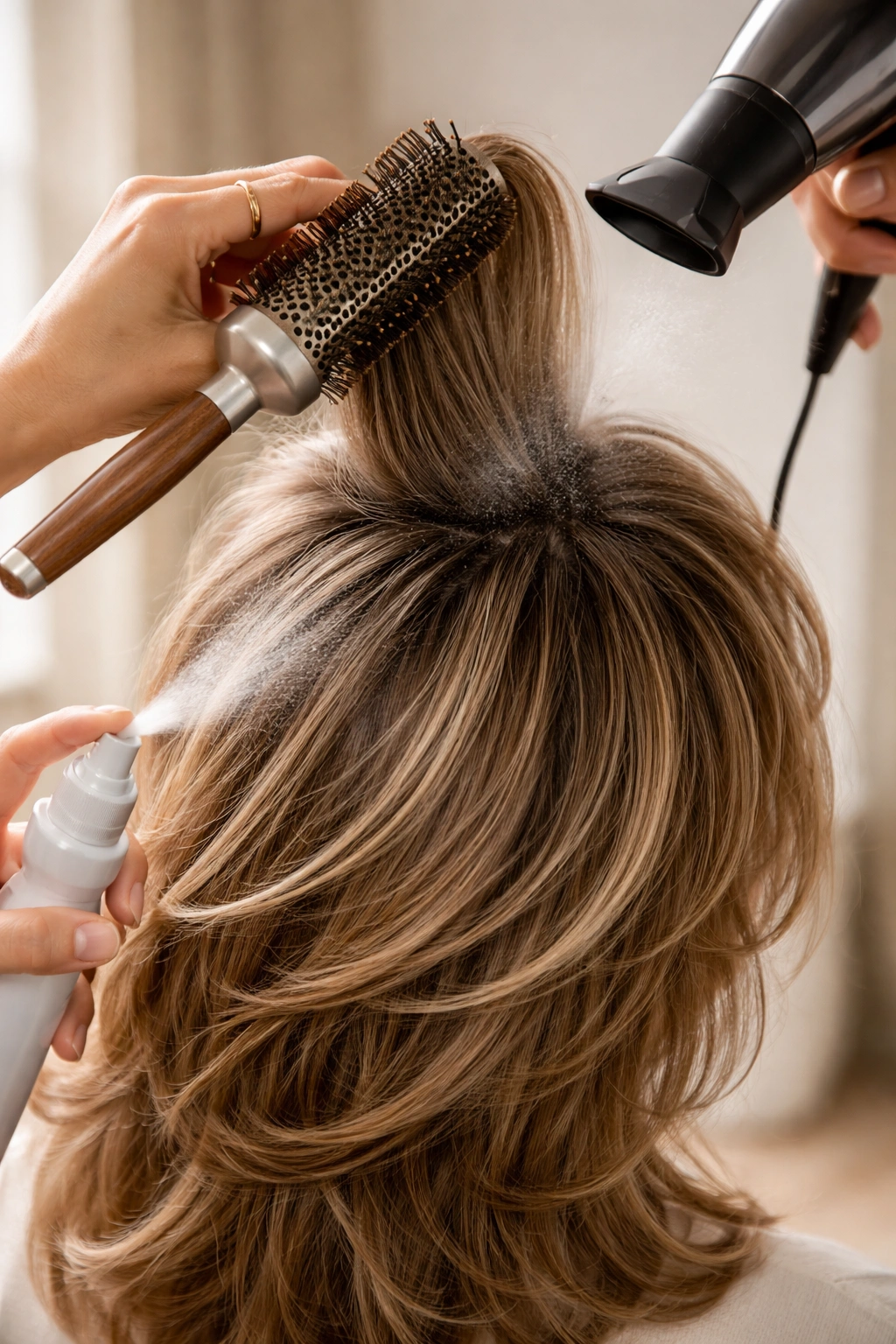
The cut alone does most of the work, but how you style it makes a real difference. The best layered cuts for hiding a double chin all rely on movement, texture, and volume at the crown—and styling either enhances or diminishes these effects.
Creating Volume at the Crown
Height at the crown is your secret weapon. When the crown area has volume and fullness, it makes your entire face appear longer and more balanced, which proportionally minimizes the chin area. Blow-dry with a round brush, directing the hair upward and back from the crown. For extra lift, use volumizing mousse or spray at the roots before blow-drying. You can also use a blow dryer on a lower setting with an upward hand motion to encourage the crown layers to stand away from your head rather than laying flat.
Styling Layers for Maximum Movement
Layers only work if they actually move. This means avoiding overly smoothing or flattening your hair. Instead, embrace texture. Use a texturizing spray, sea salt spray, or dry shampoo to add grip and encourage the layers to separate and move independently. If you’re blow-drying, use your fingers or a paddle brush to separate layers as you dry, rather than smoothing everything flat. The goal is visible texture and movement—layers that sit still against your neck defeat the whole purpose.
Side-Sweeping and Angling
How you position your hair matters. Side-sweeping longer layers across your face creates movement and shadow that’s incredibly flattering. Rather than parting your hair down the middle (which creates a direct, unflattering line down the center of your face), try a deeper side part or even wearing your hair entirely to one side. This asymmetrical positioning creates movement and draws the eye toward the longer, more interesting side of your face rather than focusing on the center and chin area.
Who These Cuts Work Best For
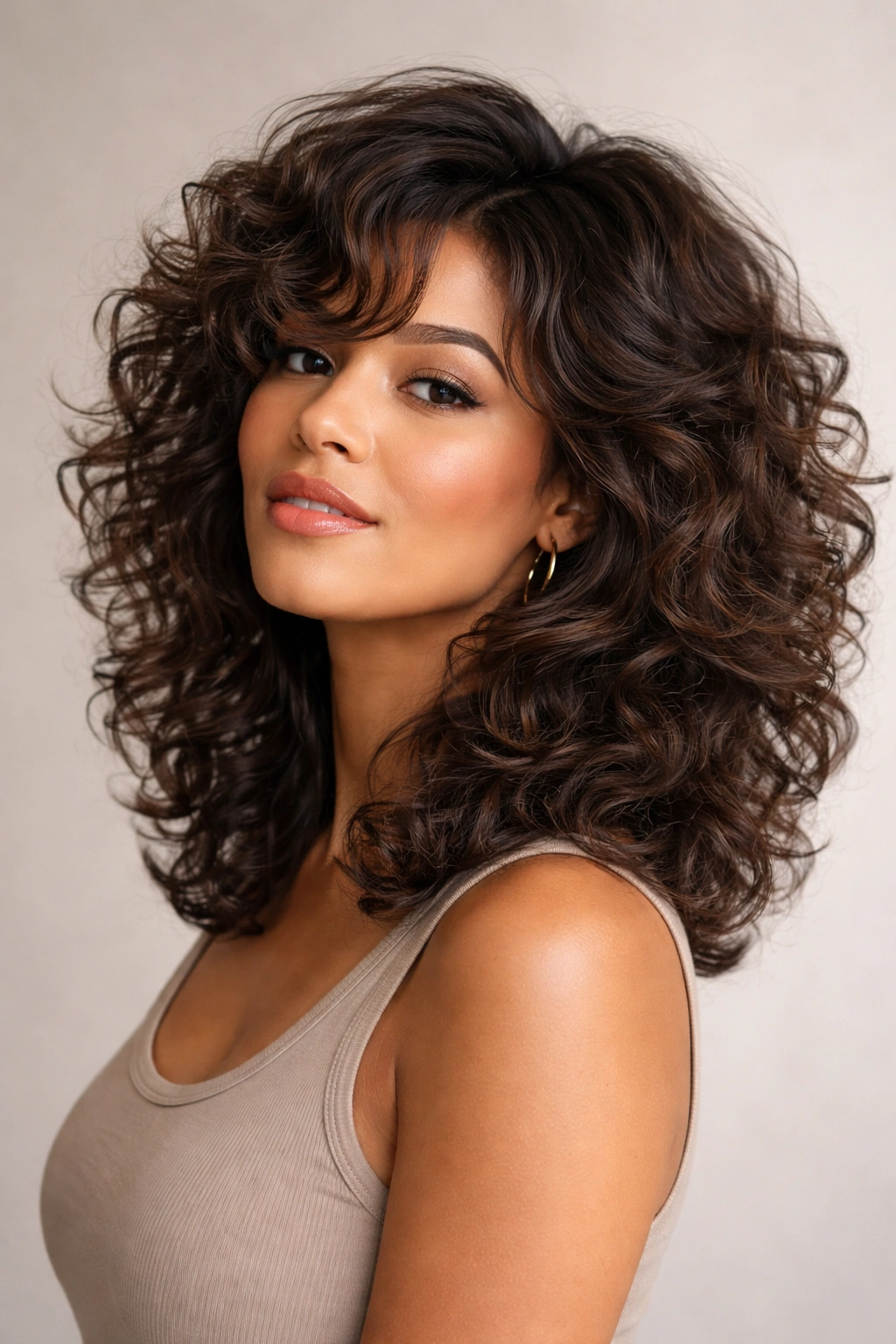
These eight haircuts all emphasize volume at the crown, create movement around the jawline, and avoid sitting flat against the neck—but they work best for specific people and situations.
If you have naturally thick or textured hair, you have an advantage. These layered cuts thrive on texture and natural movement. Thin or fine hair can still wear these cuts beautifully, but you’ll need to be intentional about styling and may benefit from adding texture with products or styling techniques. If you have curly or coily hair, many of these cuts (especially the shag, wolf cut, and textured pixie-bob) can look absolutely stunning with minimal styling—the curl pattern itself creates the texture and movement you need.
Your lifestyle matters too. If you prefer wash-and-go styling, a heavily layered shag or wolf cut might feel high-maintenance. A side-swept lob with layers that can air-dry and still look good, or wispy layers on long hair that doesn’t require daily styling, might suit you better. If you’re willing to blow-dry and style regularly, virtually all of these cuts work beautifully.
Face shape plays a role as well. These cuts all work for double chin concerns, but if you also have a round face, you might lean toward cuts with more volume at the crown and less volume at the sides (like the textured pixie-bob). If you have a longer face, you might prefer cuts with slightly more side volume (like the lob or side-swept bob) to create proportion. A stylist who understands your specific face shape can customize any of these cuts to work best for you.
Maintenance and Upkeep Expectations
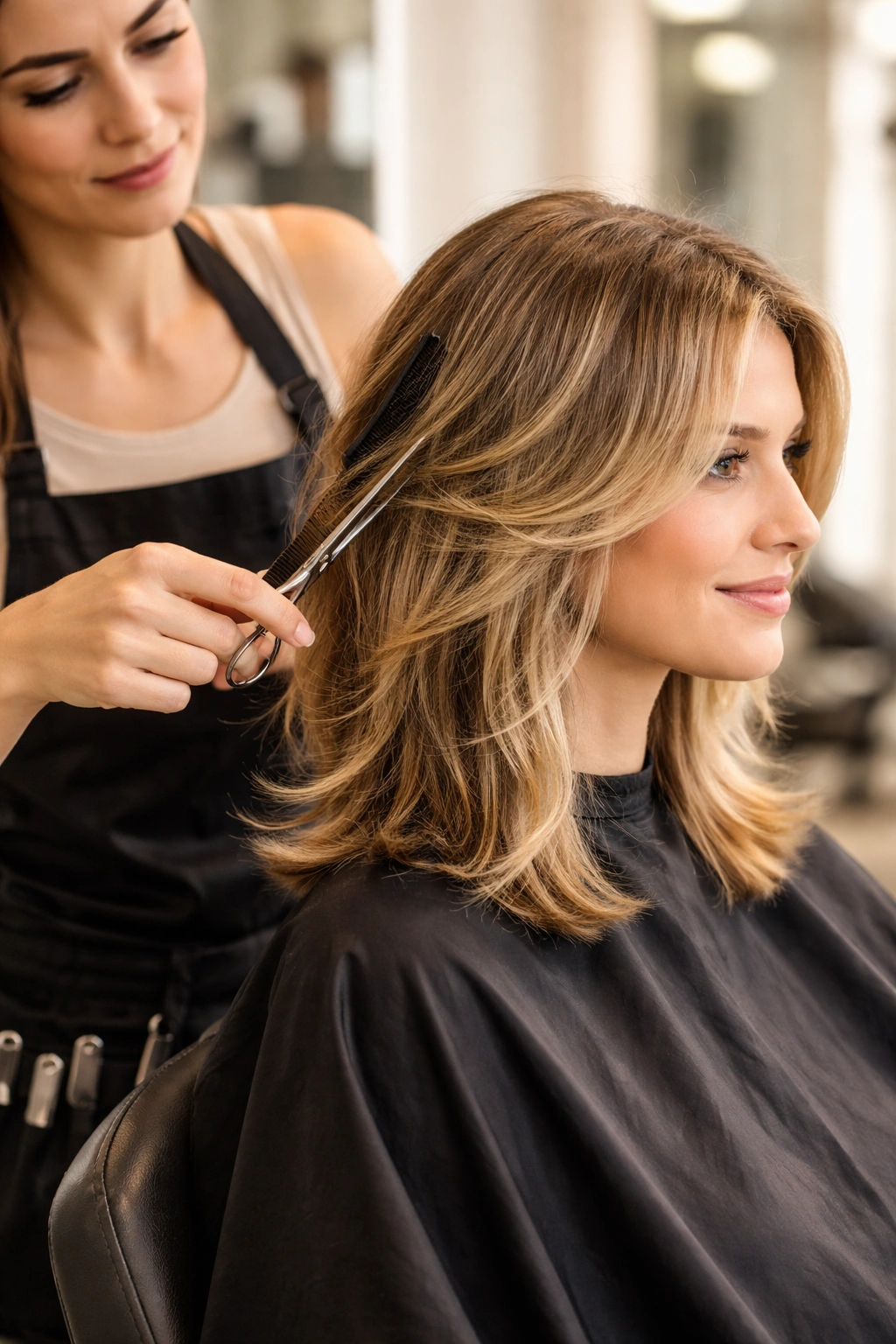
One crucial thing to understand: layered cuts require regular trims to maintain their effectiveness. Layers grow out and blend together over time, which diminishes the texture and movement that makes these cuts work for hiding a double chin.
Most layered cuts need trimming every 4-8 weeks, depending on how fast your hair grows and how dramatic the layers are. A heavily layered shag or choppy pixie-bob might look best with 4-6 week trims, while a longer lob with subtle layers might stretch to 8 weeks. Plan for this commitment upfront—it’s worth it for the face-flattering payoff, but it’s important to be realistic about time and budget.
Between trims, keeping these cuts looking their best requires intentional styling. Blow-drying is your friend. Even if you normally air-dry your hair, a weekly blow-dry with a round brush and some attention to creating volume at the crown will significantly enhance the cut’s effectiveness. If blow-drying isn’t realistic for you, look for cuts with softer, less dramatic layers that can air-dry and still look intentional.
Working With Your Stylist to Get the Right Cut

The most beautiful layered cut won’t work if it’s not customized to your specific face shape and chin concerns. This is where the consultation matters.
When you book your appointment, bring 5-10 reference photos of layered haircuts you like. Don’t just choose based on whether they look cool—choose based on whether you think the specific layer placement, length, and volume distribution might work for your face and hair type. Show these photos to your stylist and clearly explain your concerns: you want a cut that creates movement around the jawline, minimizes the appearance of a double chin, and avoids sitting flat against your neck.
A stylist who understands face-shape dressing will ask questions about your styling habits, your hair texture, how much time you’re willing to spend on daily styling, and your face shape overall. They should take this information into account when customizing the cut. If your stylist doesn’t ask these questions, that’s a red flag—a one-size-fits-all approach to layered cuts won’t address your specific chin concerns.
Final Thoughts
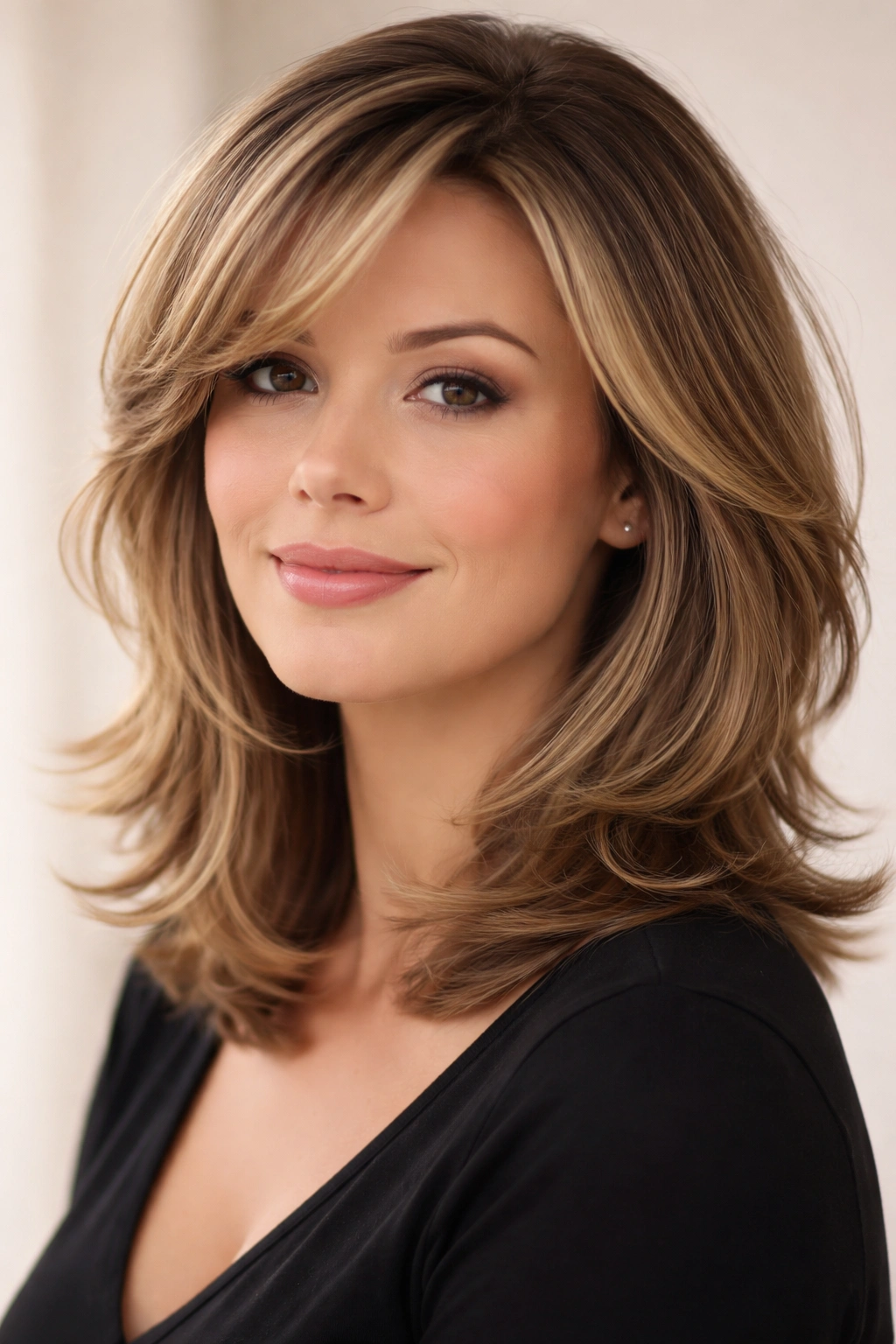
A double chin is incredibly common, and it’s absolutely something a well-designed haircut can address. The eight layered cuts outlined here all work through similar mechanisms—creating volume at the crown, adding movement and texture around the jawline, and avoiding flat, heavy hair against the neck area—but they offer different lengths, styles, and maintenance requirements so you can find the approach that genuinely fits your life.
The most important thing to understand is that the cut alone doesn’t do all the work. How you style it, whether you create volume at the crown, and whether you maintain the layers regularly all contribute to the face-flattering effect. A $200 haircut will disappoint if you don’t style it intentionally or let the layers grow out unattended between trims.
If you’re frustrated by your chin and have been avoiding photos or camera angles, start with a consultation with a stylist who specializes in face-shape dressing. Bring your reference photos, be honest about your styling habits and time commitment, and let them customize one of these cuts specifically for you. The confidence boost when you see a cut that genuinely flatters your face—that’s the real payoff.
