



Long layered hairstyles with bangs have a useful trick: they keep long hair from looking heavy, while the fringe pulls the eye up and frames the face.
That sounds simple. In the chair, though, the details matter: where the shortest layer lands, how much weight gets removed, and whether the bangs are meant to sit at the brow, split in the middle, or melt into the cheekbones.
Get those details wrong and the cut can feel lumpy or fussy. Get them right and long hair suddenly has movement, shape, and a little bit of attitude.
The versions that work best are the ones that respect texture instead of fighting it. Straight hair, waves, curls, and thick density all want a slightly different approach, and that is exactly where a good layered cut starts to feel custom.
1. Soft Face-Framing Layers With Curtain Bangs
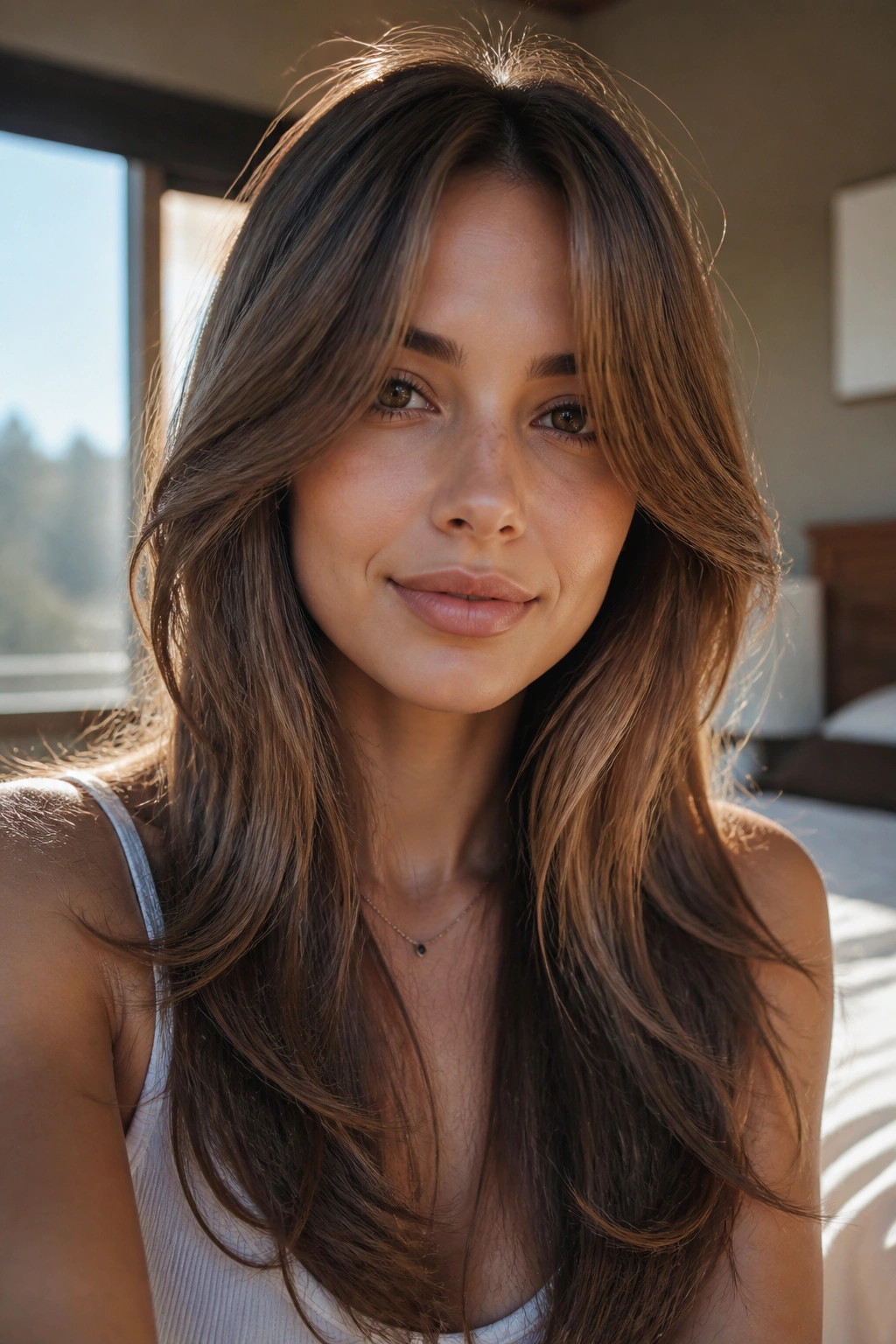
Soft face-framing layers and curtain bangs are the easiest place to start because they flatter almost everyone without looking overworked. The shortest pieces usually begin around the cheekbone or lip, then fall away into longer lengths that keep the cut feeling open and easy.
Why the Shape Works
Curtain bangs split in the center and travel outward, which makes them forgiving on busy mornings. They do not need to sit perfectly to look good. A little bend in the front pieces is enough, and the rest of the hair can stay loose and natural.
- Best for oval, heart, and square faces.
- Works on straight hair, waves, and soft curls.
- Ask for the shortest point at cheekbone level.
- Blow-dry the fringe away from the face with a round brush.
Small tip: keep the bang section a touch longer than you think. It grows out better and still falls softly once the layers settle in.
2. Feathered Layers With Brow-Grazing Fringe
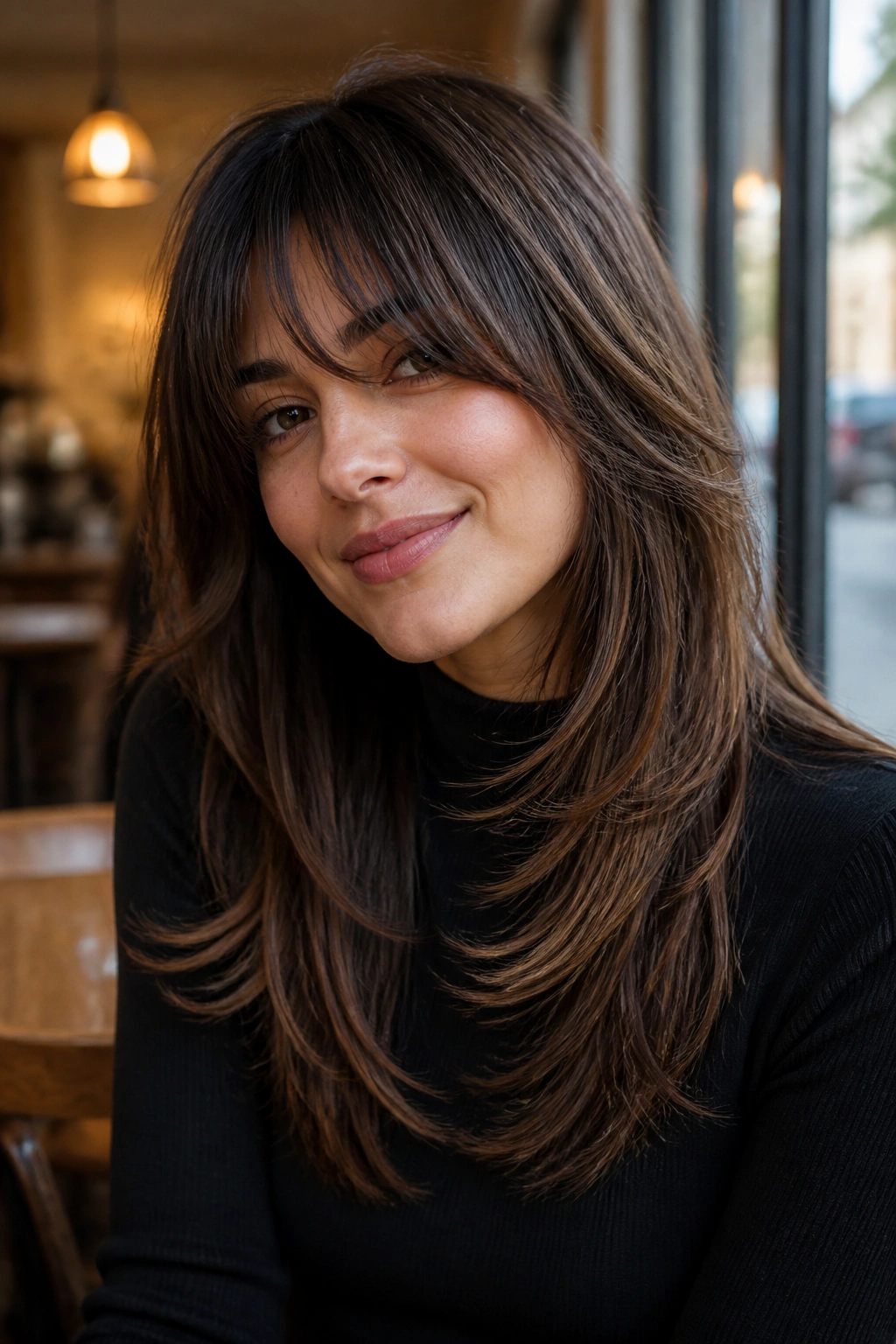
Feathered layers are the cut I reach for when hair feels heavy but the length matters. The ends taper instead of stopping bluntly, so the whole shape moves when you walk, turn, or toss your hair over one shoulder.
Brow-grazing fringe gives the cut a little more personality without making the face feel boxed in. It lands right near the eyes, which is where this style gets its lift. The look is polished, but not stiff. That matters.
A medium round brush and a quick pass with a blow-dryer are usually enough to make the fringe sit right. Let the layers bend under slightly at the ends, and keep the crown soft rather than blown flat. If your hair tends to puff, a light smoothing cream on damp mids and ends helps the feathering show instead of frizzing out.
Worth the effort.
3. Shaggy Long Layers With Piecey Bangs
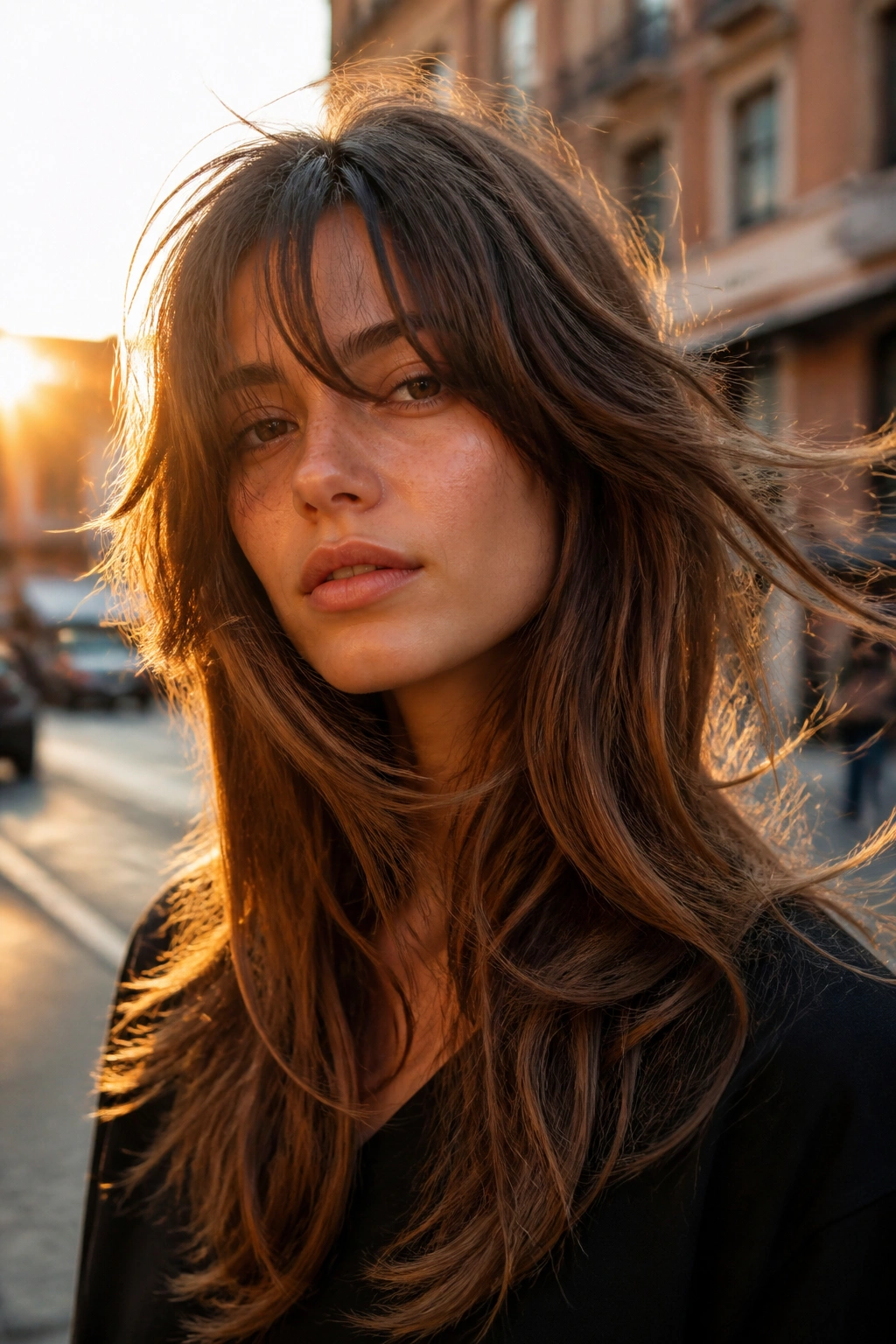
Why do shaggy layers and piecey bangs work so well together? Because they both like a little mess. The cut should feel broken up in the best way, with separated ends, movement at the crown, and fringe pieces that do not all sit in one perfect line.
The Styling Note
Piecey bangs usually look best when they are dried with fingers first, not a brush. A pea-sized dab of styling paste on the ends of the fringe gives that separated effect without making the bangs greasy or stiff.
- Great for wavy hair that wants movement.
- Good choice if you hate a “helmet” look.
- Ask for soft point cutting, not harsh chopping.
- A little dry texture spray goes a long way.
This one is especially good if your hair looks flat on day one and better on day two. The shag shape likes lived-in texture. Clean, glossy, and perfect is not the point here.
4. U-Shaped Length With Wispy Bangs
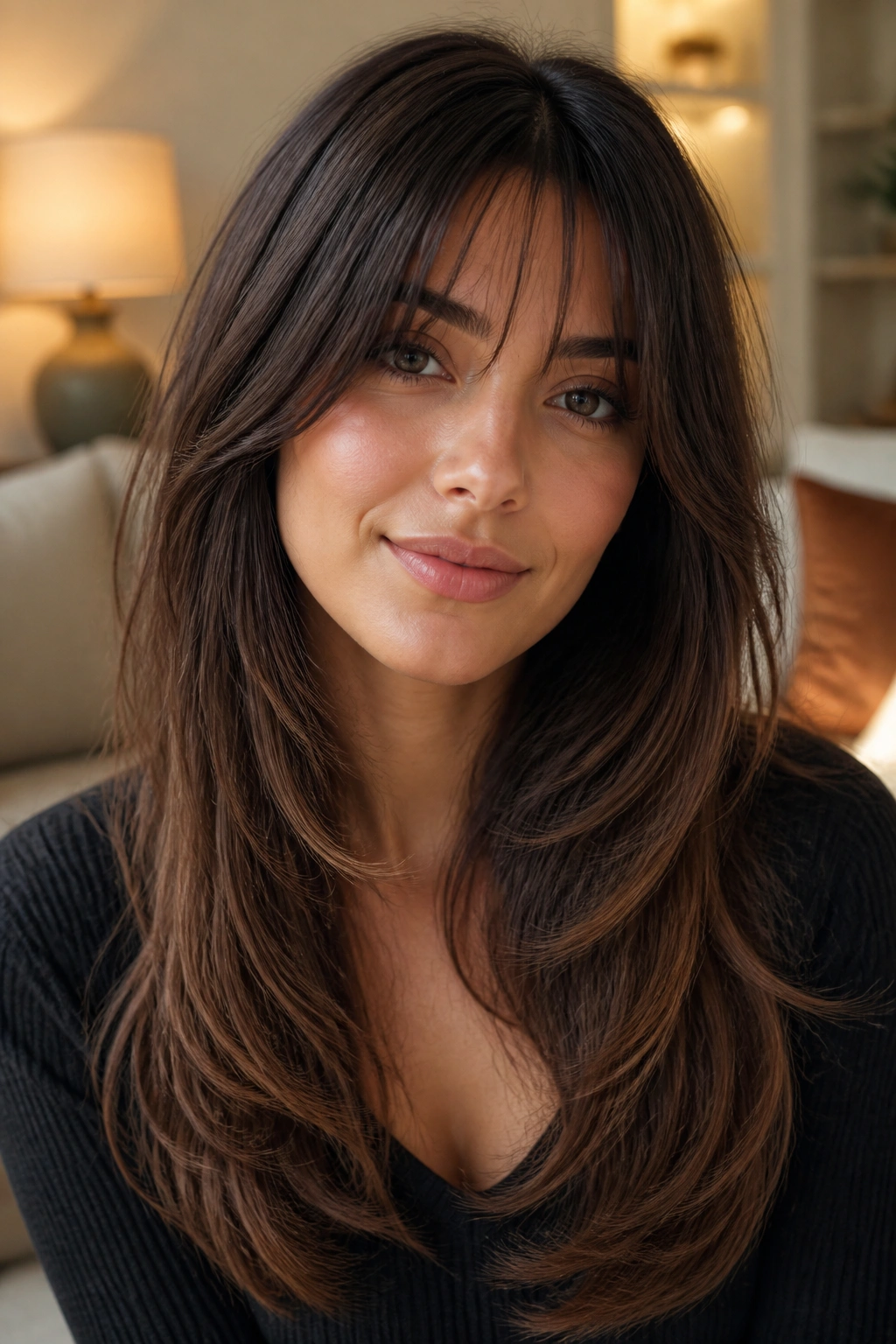
If your hair grows out flat at the sides, a U-shaped cut fixes that in a way a blunt hem cannot. The back keeps the longest length, the sides curve upward, and the whole silhouette feels more lifted. Add wispy bangs and the front stays light instead of heavy.
A cut like this is lovely on thicker hair because it removes weight without making the ends look thin. The bangs should feel airy, almost soft enough to disappear into the rest of the haircut. Nothing boxy. Nothing dense.
One thing I like here is how easy the grow-out is. The shape keeps its curve even after a few weeks, and the bangs can be tucked, parted, or brushed forward depending on the day. That flexibility saves a lot of annoyance between trims.
5. V-Cut Layers With Long Curtain Fringe
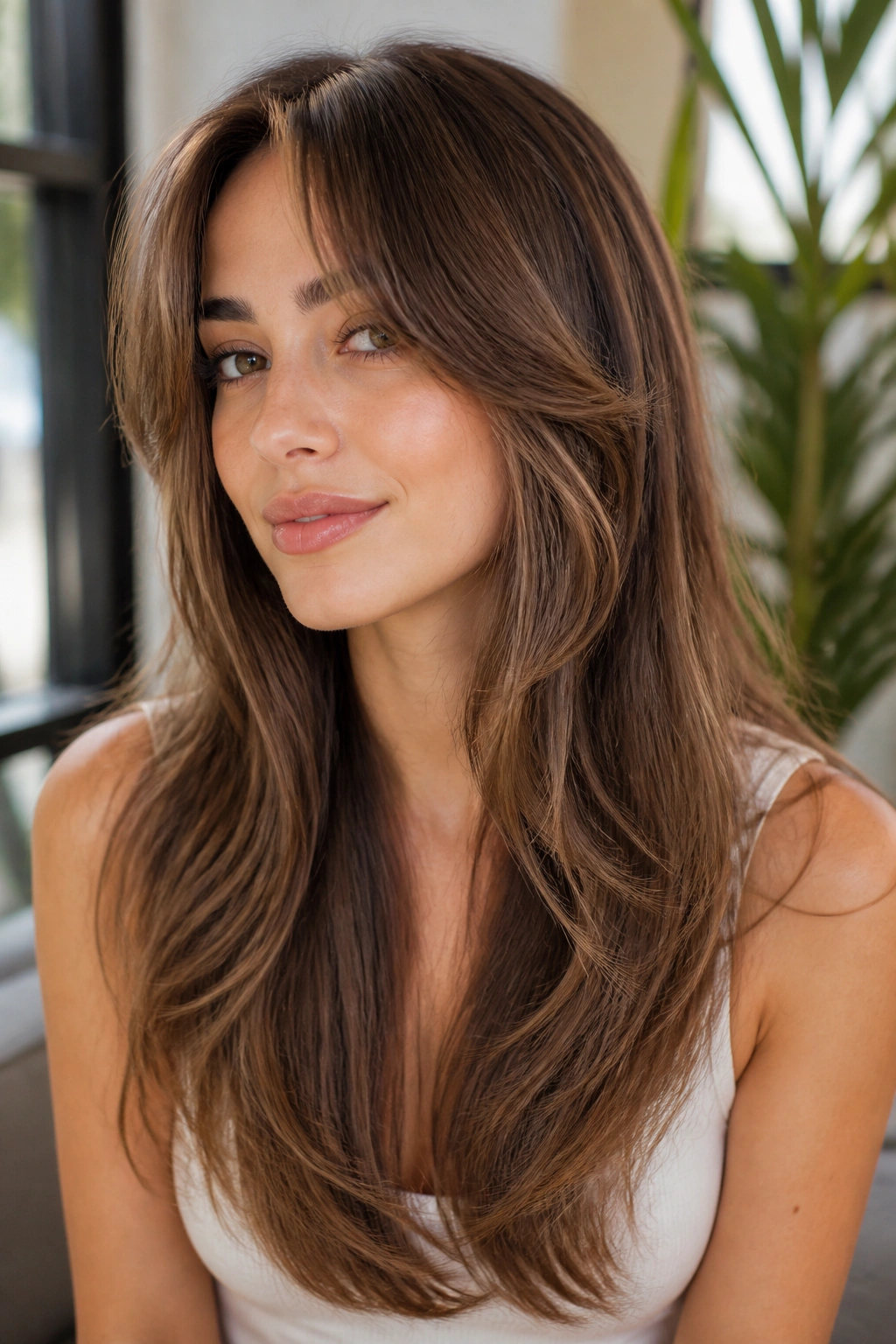
A V-cut is the dramatic cousin of a U-shape. The center back stays longest, and the sides taper more sharply, which creates a visible point when the hair falls down the back. On long hair, that shape can look rich and deliberate instead of flat.
Long curtain fringe softens the V so it does not feel too severe. The front pieces should blend into the first layer around the jaw or collarbone, then drift back into the length. When the cut is done well, the front and back feel connected. They should not look like two separate haircuts.
This style works especially well on thick, straight, or slightly wavy hair. The V gives the lengths a sense of direction, while the fringe breaks up the forehead and keeps the front from feeling closed off. If your hair is fine, keep the V soft. Too sharp and the ends can look stringy.
6. Butterfly Layers With Bottleneck Bangs
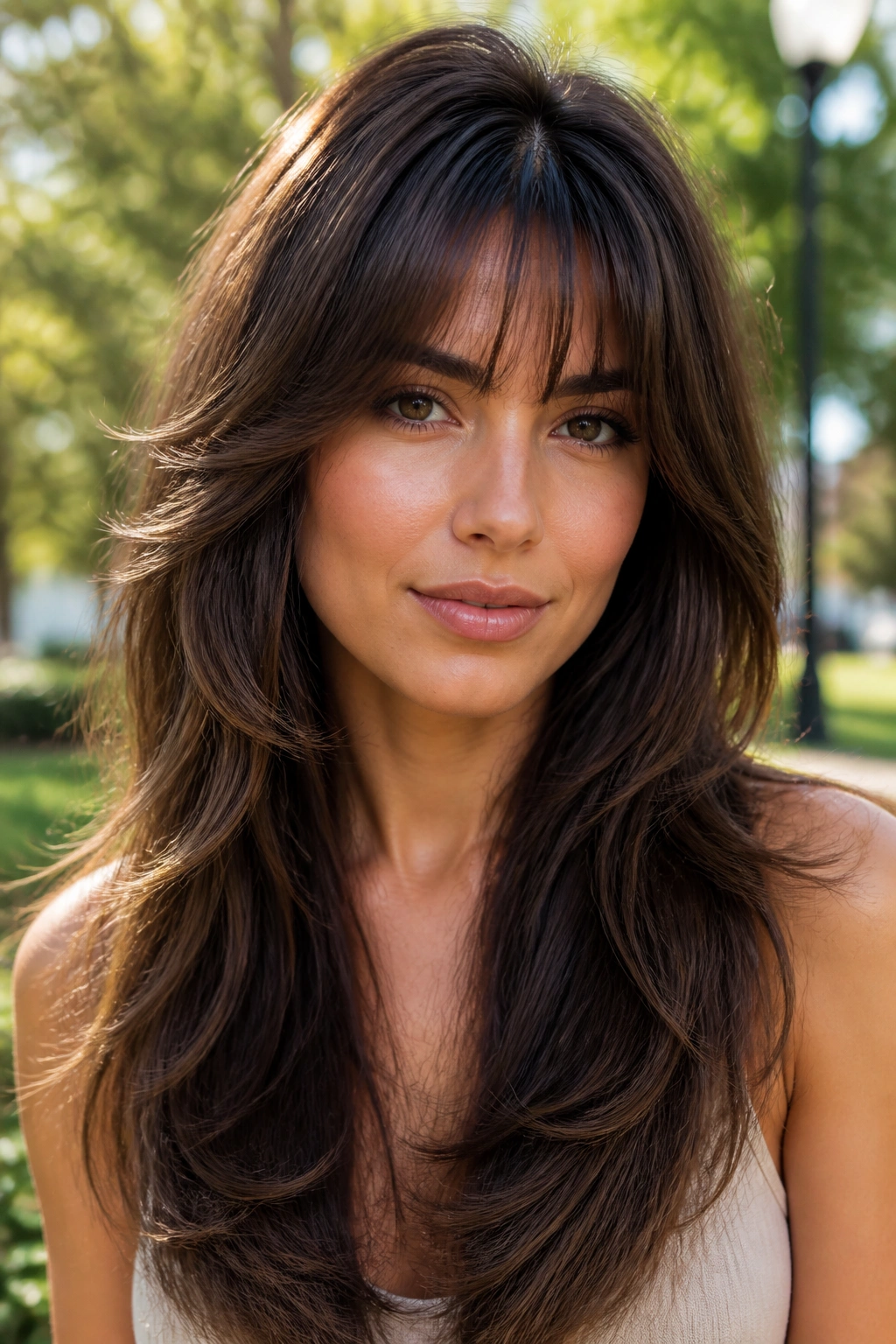
Butterfly layers are not a gimmick. They are a smart way to get upper volume without sacrificing the long pieces people love. The shorter layers around the face and crown create lift, while the bottom section still hangs long and sleek.
Bottleneck bangs fit this cut because they start narrow at the center and open wider as they move toward the cheekbones. That shape makes the face look framed, not covered. It also gives you a little more room to style the fringe in different ways.
Where the Volume Lands
The best butterfly cuts put the shortest layers around the cheekbone or just above it. Any shorter and the cut can feel disconnected. Any longer and you lose the lift that makes the shape special.
If your roots go limp by lunchtime, this is one of the better long layered hairstyles with bangs to ask for. The cut does some of the work before you even touch a hot tool. Nice, right?
7. Sleek Blowout Layers With Side-Swept Bangs
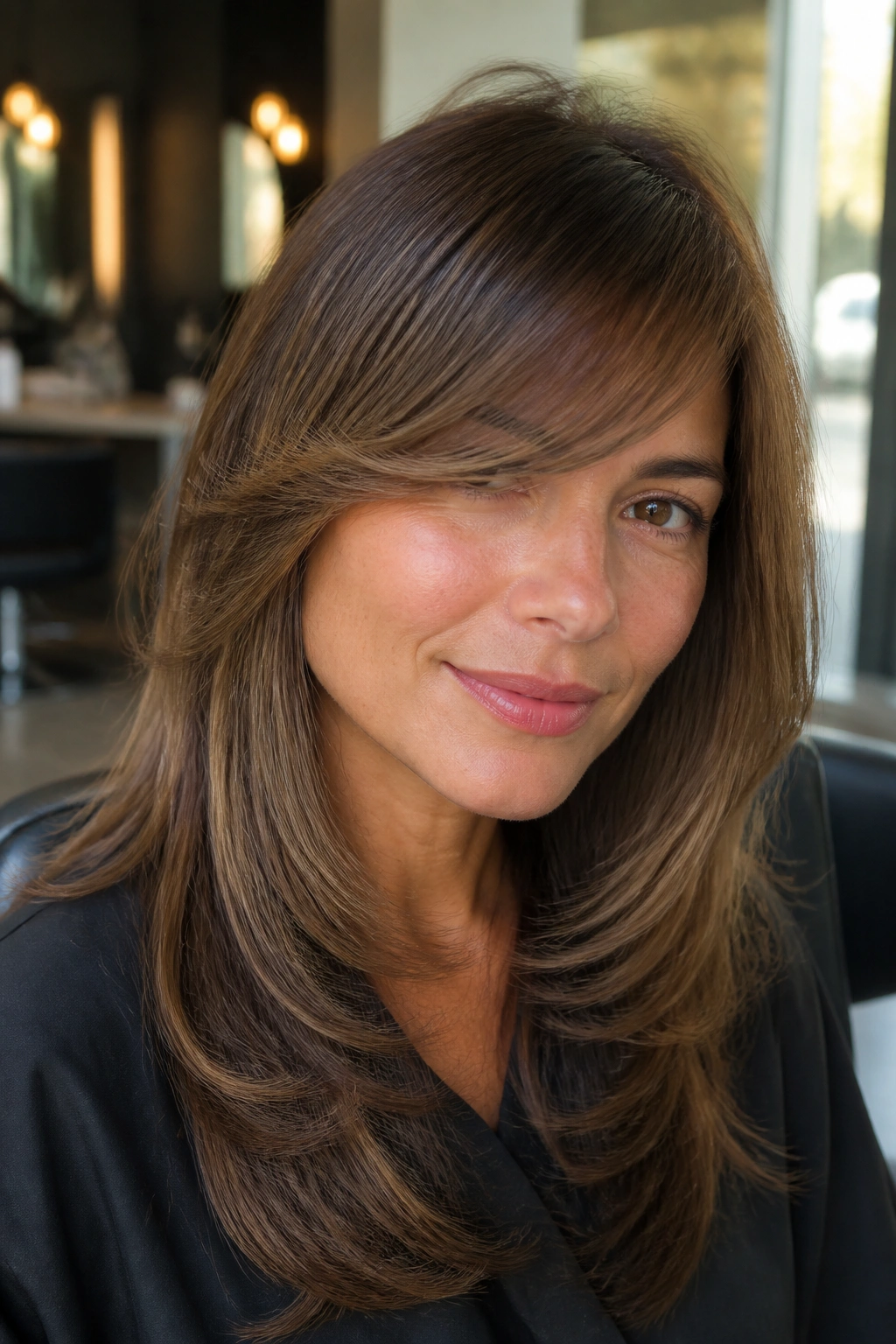
A sleek blowout changes the whole mood of long layers. The hair moves, but it moves in one direction. Ends bend under softly, the crown stays smooth, and side-swept bangs arc across the forehead in a way that feels calm rather than fussy.
This cut is a strong fit for anyone who likes a polished finish without going pin-straight. Side bangs soften strong cheekbones and can take the edge off a longer face. They also behave well with a round brush, which is more useful than people admit.
Keep the layers long enough to drape. If the shortest pieces are cut too high, the whole style starts to flick out in awkward places. A blow-dryer nozzle, a large round brush, and a touch of serum on the ends are usually enough to keep the shape clean.
8. Beachy Wavy Layers With Grown-Out Bangs
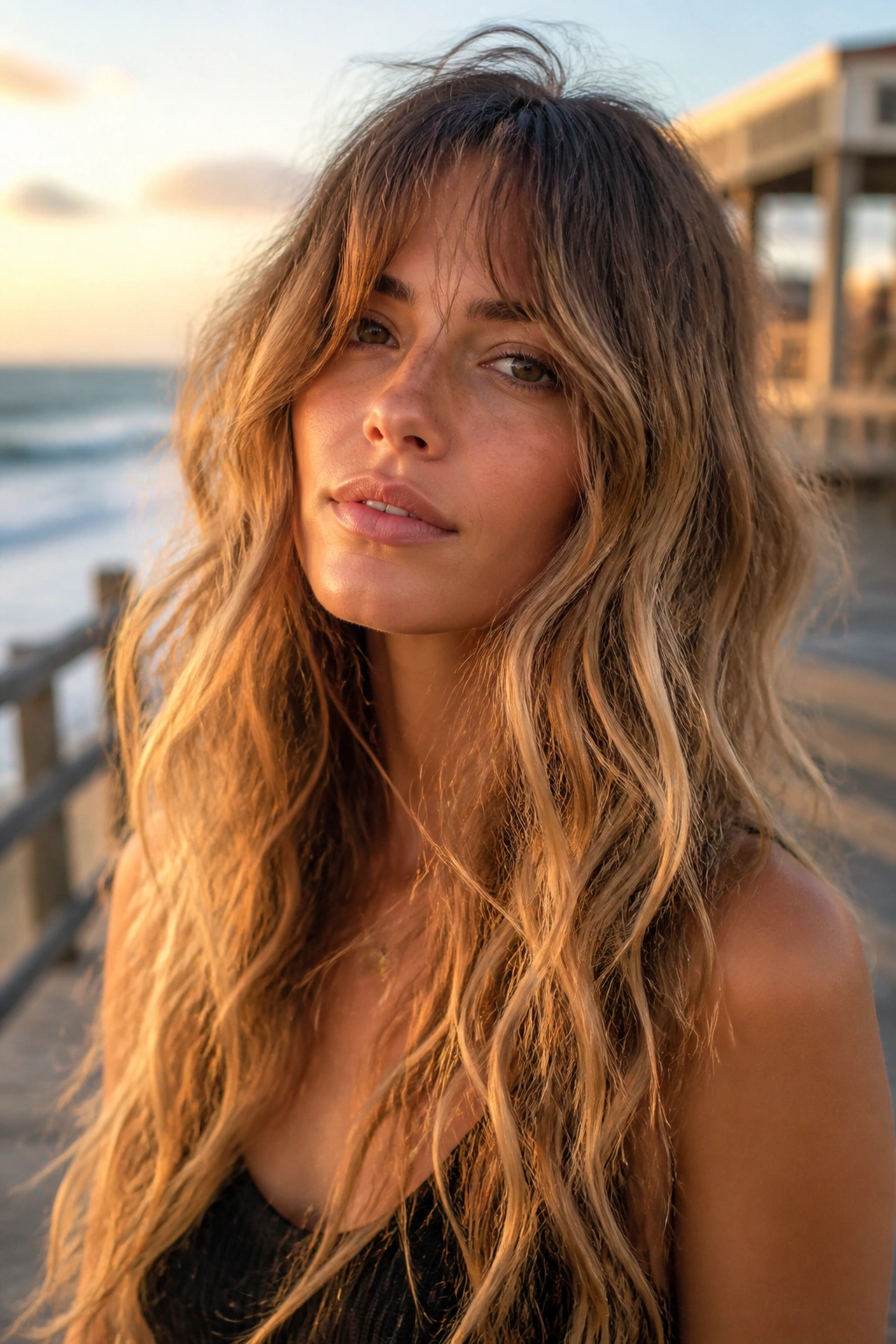
The best beachy version of this cut looks a little undone, not sloppy. Waves bend in loose S-shapes, the ends stay soft, and the bangs look as if they have grown out in a flattering way rather than a neglected one.
Grown-out bangs are useful because they sit between a true fringe and a full curtain bang. They can split in the middle, fall slightly to one side, or tuck into the face-framing layers. That makes them easy to live with if you do not want to trim bangs every few weeks.
A 1.25-inch curling iron, used only on the mid-lengths, gives this look a good bend. Leave the ends out for a less polished finish. Or skip heat and use a wave cream on damp hair. Either way, the point is movement, not perfection.
9. Choppy Ends With Rounded Full Bangs
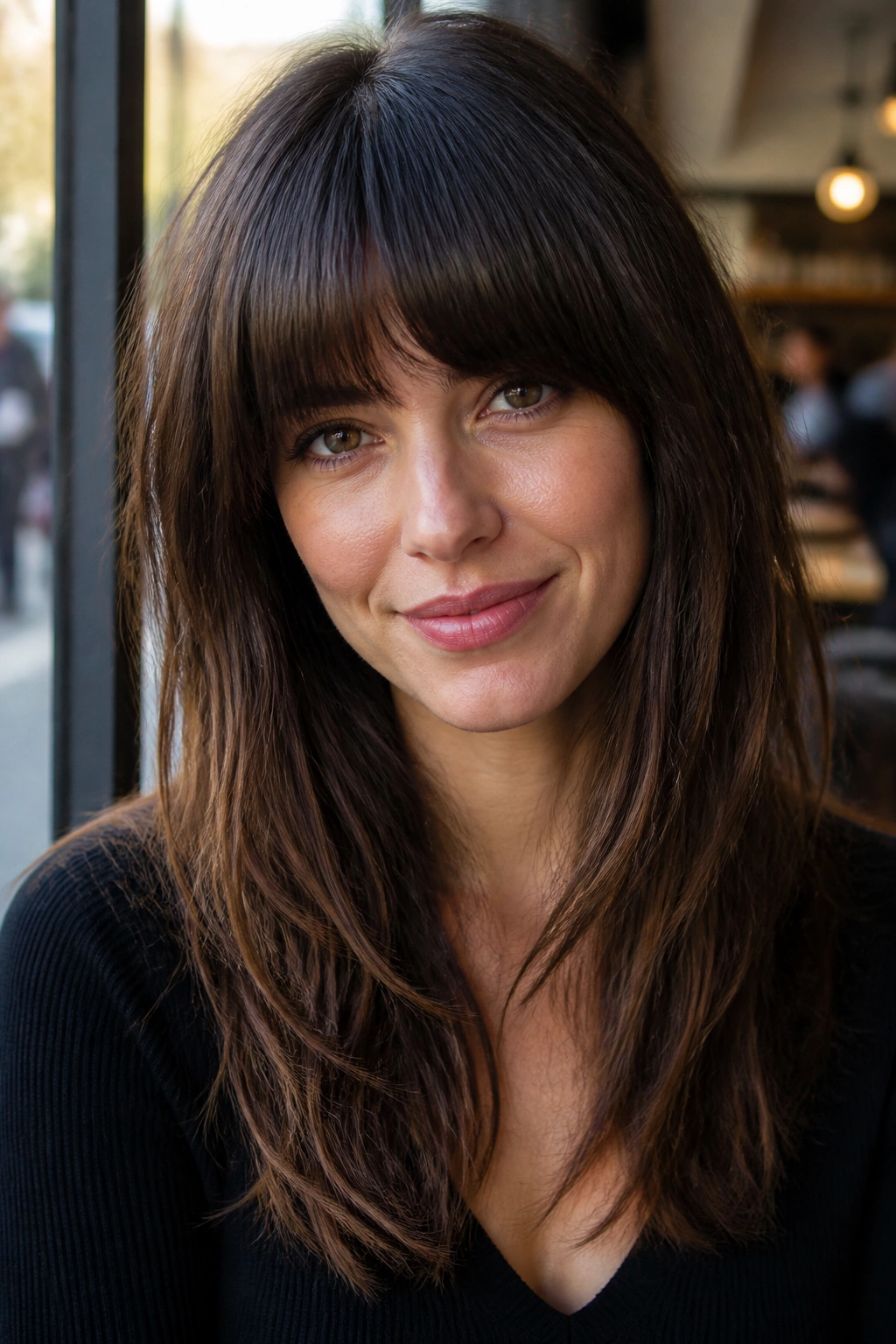
Rounded bangs change everything here. Instead of a straight line across the forehead, the bang shape arches slightly in the middle and softens at the sides. That echo of a curve works nicely with choppy long layers because the haircut has both structure and break-up.
The choppy ends keep the length from looking too formal. They add a bit of edge, which keeps the rounded fringe from feeling dated or too sweet. It is a good balance if you want a haircut that looks deliberate but not precious.
- Strong on thick hair that needs shape.
- Good if your face has sharp angles.
- Ask for point cutting at the ends.
- Trim the bangs before they hit your lashes.
This version can get bulky fast if the layers are cut too bluntly. Softening the edges matters more than people think.
10. Curly Layers With Curly Fringe
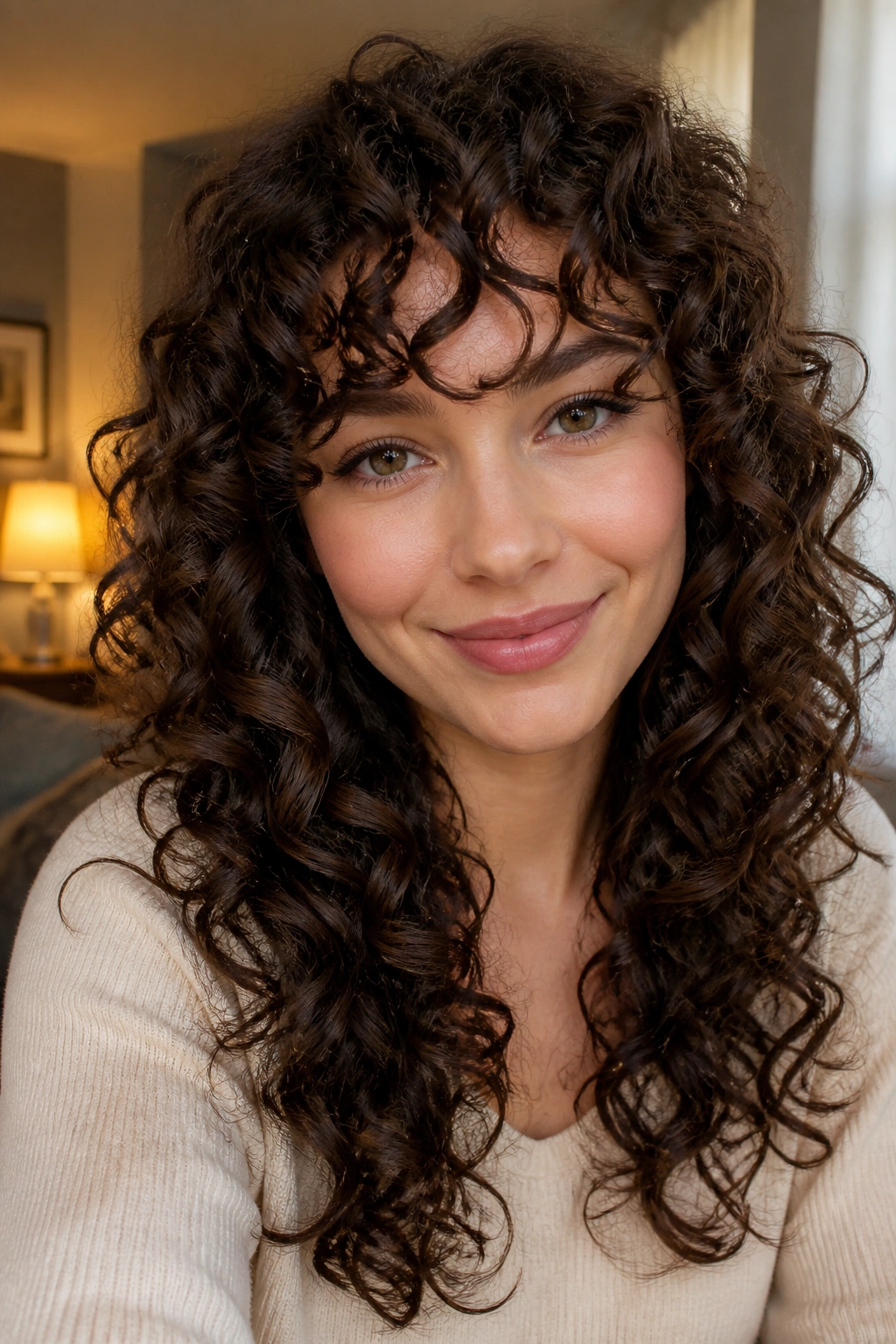
Can bangs work on curls? Absolutely. They just need to be cut with the curl pattern in mind, not treated like straight hair with a twist. Curly fringe should sit a little longer than expected because curls spring up once they dry.
The layers should follow the natural shape of the curl, starting where the hair needs weight removed and leaving enough length for the spirals to sit together. If the front is cut too short, the bangs can bounce up and away from the face in a way that feels accidental.
How to Ask for It
Ask for the cut on dry or mostly dry curls, and bring your usual styling pattern into the conversation. A good stylist will look at how the curls sit, not only at where they land on a wet comb.
Use a light cream or gel in the fringe so the front pieces stay defined. Curls hate rough handling. So does the rest of the haircut, frankly.
11. Center-Part Layers With Bottleneck Bangs
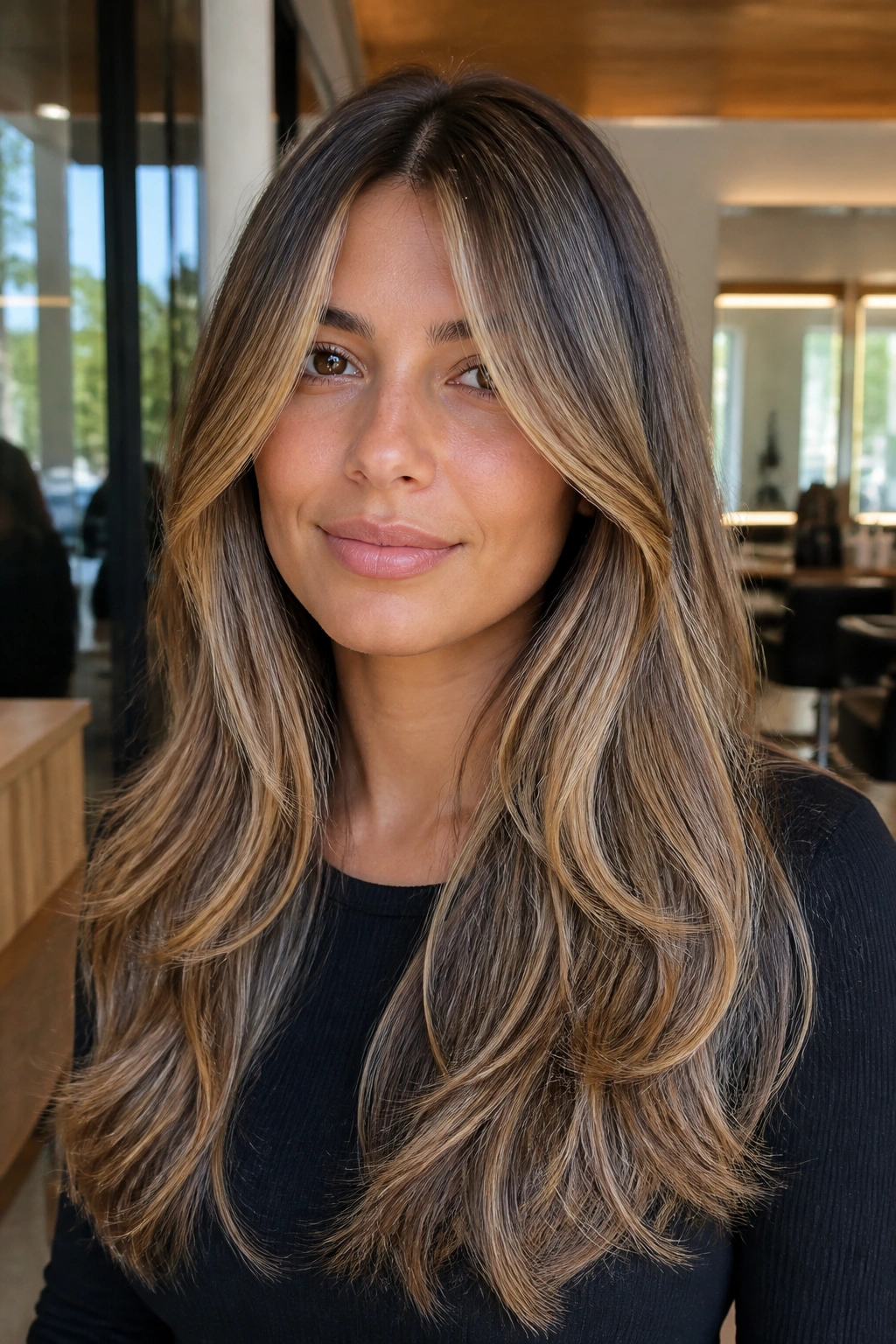
A center part gives long layers a calm, balanced feel, and bottleneck bangs keep that balance from turning severe. The bangs sit close to the forehead at the center, then open outward, which softens the middle part without hiding it.
This is the easiest way to keep bangs from feeling fussy. The shape lets the face show through, which is why it works on people who do not want fringe in their eyes all day. It also flatters long hair because the part and the layers both pull the eye downward in a smooth line.
A clean blowout helps here, but the style does not need to be perfect. Bend the front pieces away from the face with a brush, then let them fall back into place. The cut should do most of the work. If it does not, the bang shape probably needs to be a little longer.
12. Straight Blended Layers With Blunt Bangs
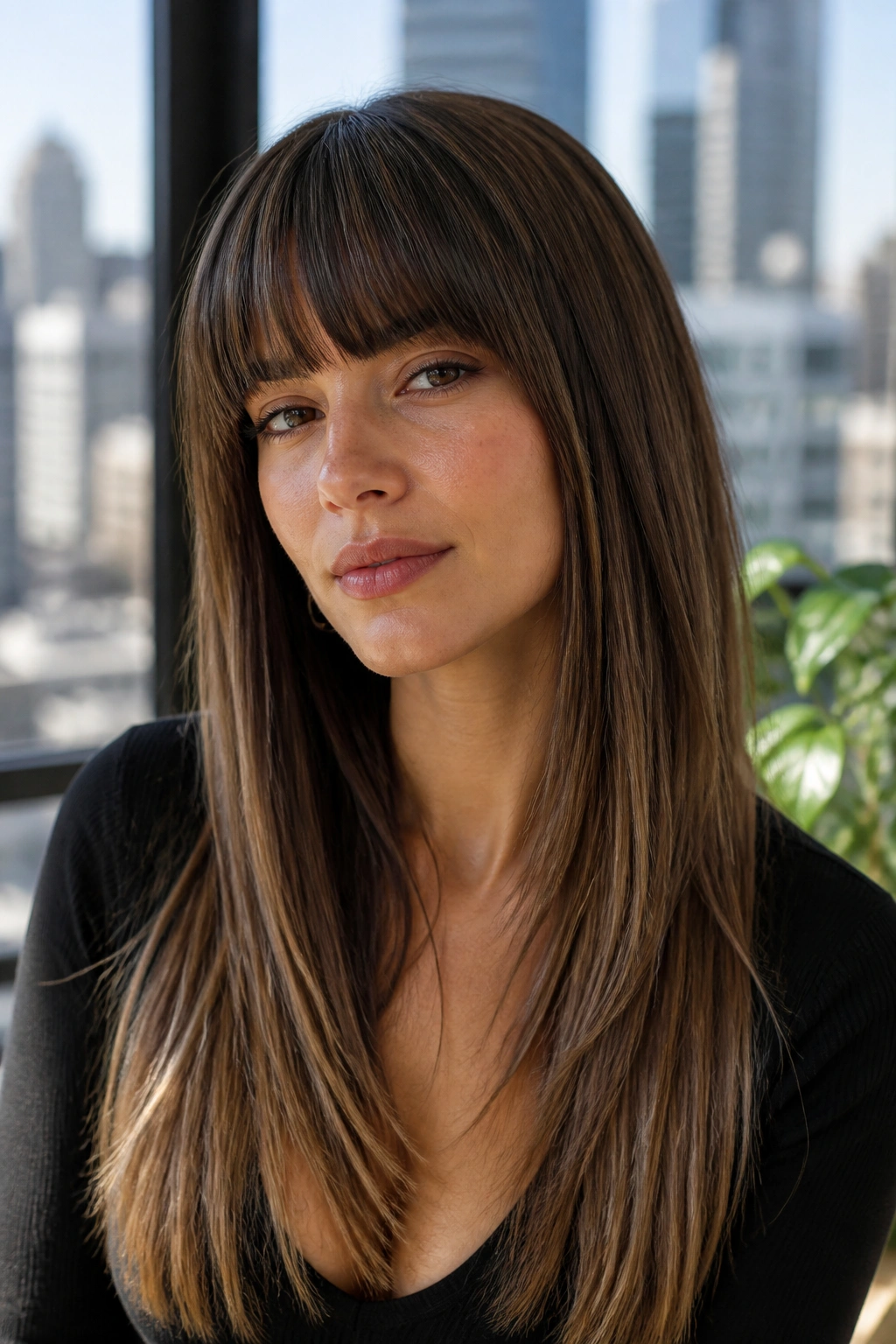
Blunt bangs and long layers make sense together when the layers are blended well. The fringe gives the haircut a graphic front edge, while the length keeps it from feeling boxy or severe.
This is a good match for straight hair that lies close to the head. The smooth texture lets the contrast show: clean line in front, soft motion through the body of the hair. If the layers are too short, the style can start to feel busy. Keep them below the chin so the bangs remain the focal point.
Regular trims matter here. Blunt bangs lose their shape fast, and once they grow past the lashes, the whole haircut changes mood. If you like crisp lines and a bit of polish, this one delivers. If you prefer softness all the way through, skip it.
13. Boho Waves With Ruffled Fringe
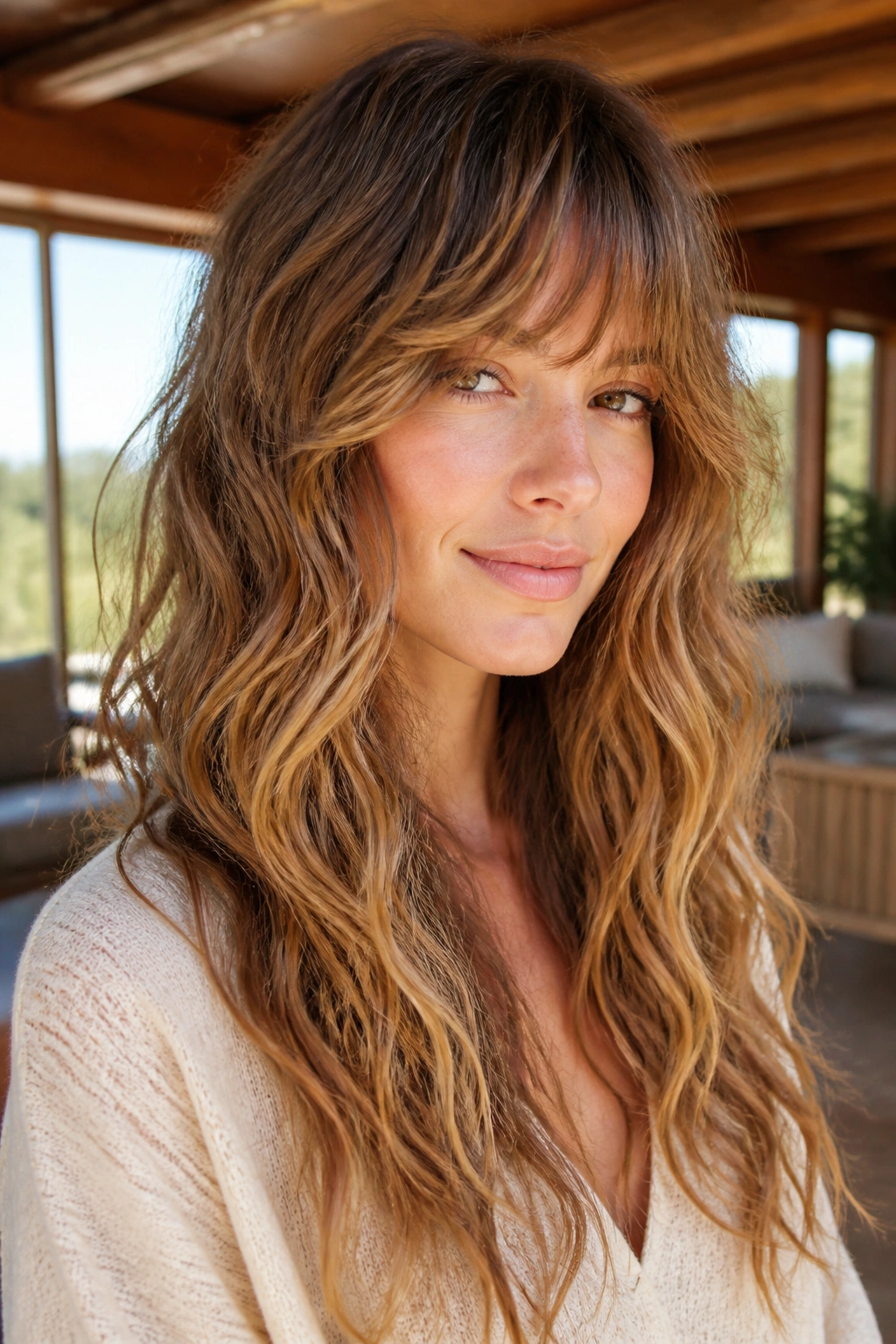
Boho waves are softer and a little more romantic than beachy waves. The wave pattern is looser, the texture is touched with bend rather than obvious curl, and the bangs can look ruffled around the edges instead of polished into place.
That ruffled fringe is what gives the style life. It should frame the eyes without sitting like a heavy curtain. A light styling cream, scrunched through damp hair, keeps the front from puffing out. After that, hands do more good than brushes.
This cut is especially kind to naturally wavy hair because it works with the bend that is already there. Air-drying is fine. A quick twist of the bangs while they dry can stop them from separating too much. If your hair gets big in humidity, keep the layers long and the fringe airy.
14. Invisible Layers With Long Side Bangs
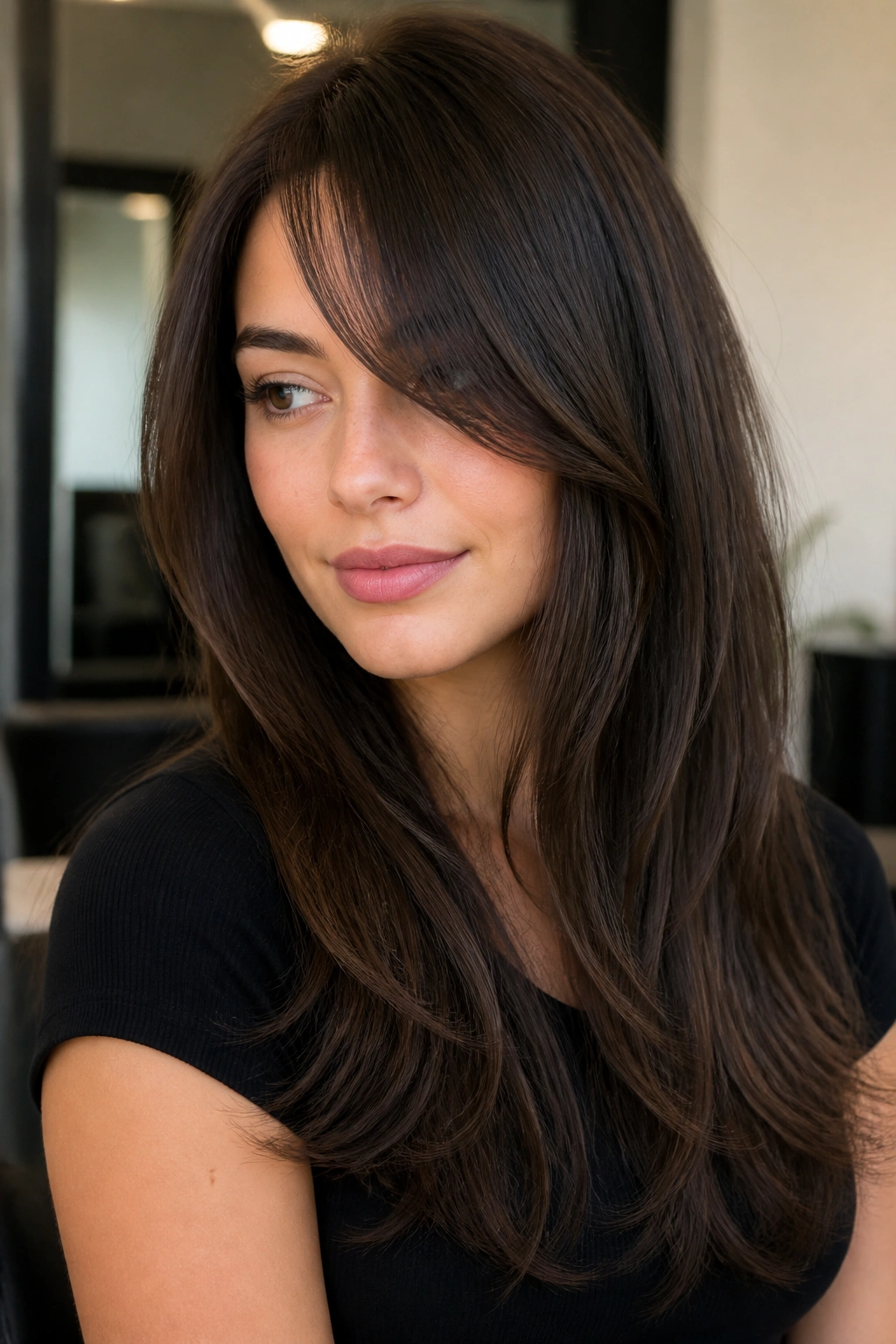
Invisible layers sound boring. They are not. The whole point is that the shaping happens inside the haircut, so the outside line still looks long, full, and smooth.
Long side bangs suit that approach because they add movement without changing the overall length story. The fringe sweeps across the forehead and into the cheekbone area, which gives the cut a softer edge. It also makes this a smart option for people who want shape but not obvious layering.
What to Ask for
Tell your stylist you want the length to stay intact, with internal layers that remove bulk and create bend.
- Keep the outer edge long.
- Ask for soft blending near the face.
- Leave the side bang long enough to tuck back.
- Use a medium-hold blowout lotion if hair slips flat.
This is one of my favorite long layered hairstyles with bangs for conservative settings. It reads neat, not trendy, and that can be a good thing.
15. Glam Layers With Soft Arched Bangs
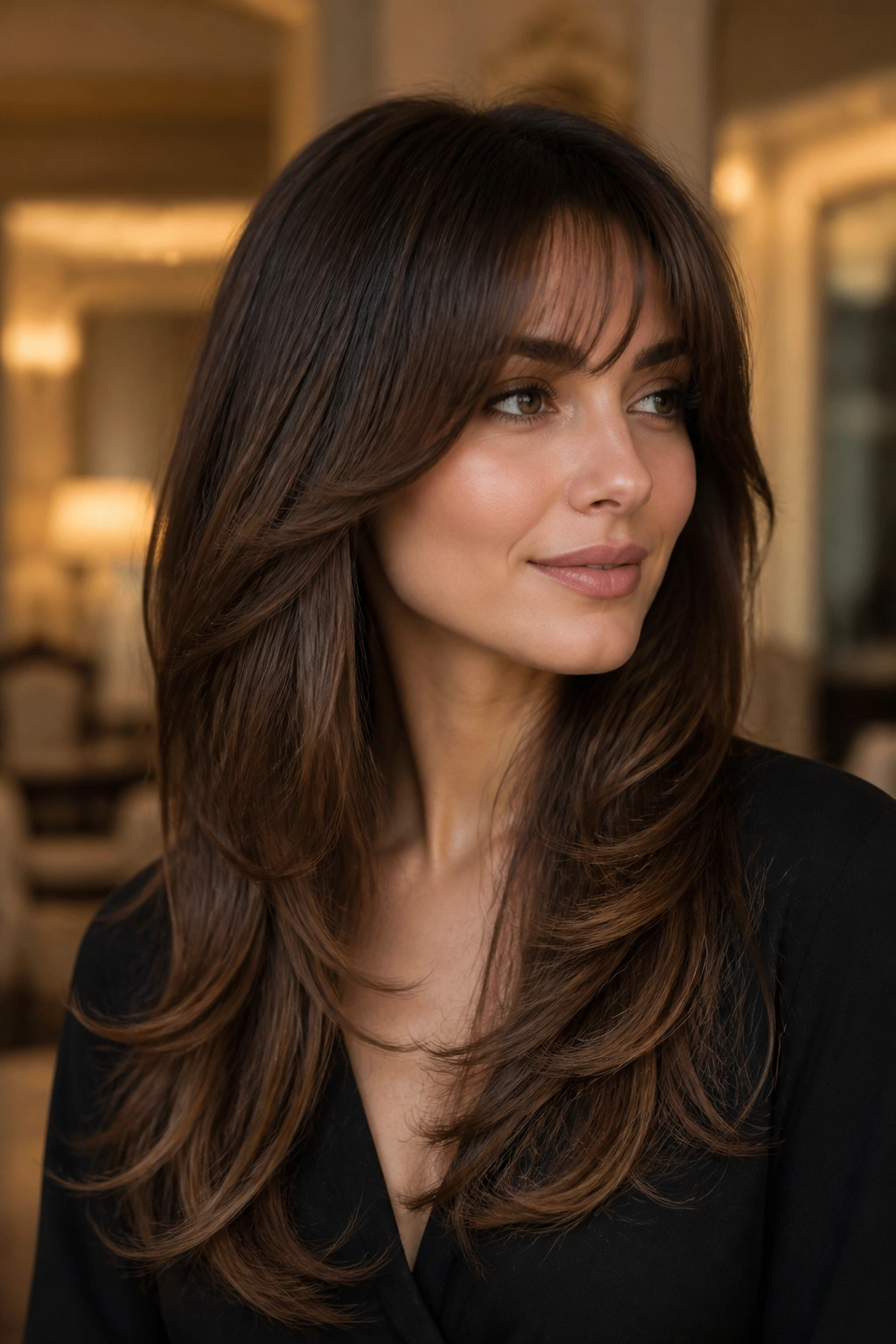
Soft arched bangs make a haircut feel finished. The arc follows the brow line, dips slightly in the middle, and lifts near the sides. On long hair, that shape creates a frame that looks made for a blowout.
The layers should be smooth and controlled, not choppy. Think movement at the ends and softness around the face. The entire style works because each piece has a job: the bangs frame, the layers lift, and the length keeps the whole thing elegant without turning stiff.
A large round brush and a few clips while the front cools can make a bigger difference than another pass with the dryer. That little pause helps the bend hold. If you want a haircut that looks good for dinners, events, or any day you feel like being a bit extra, this one earns its place.
16. Air-Dry Layers With See-Through Bangs
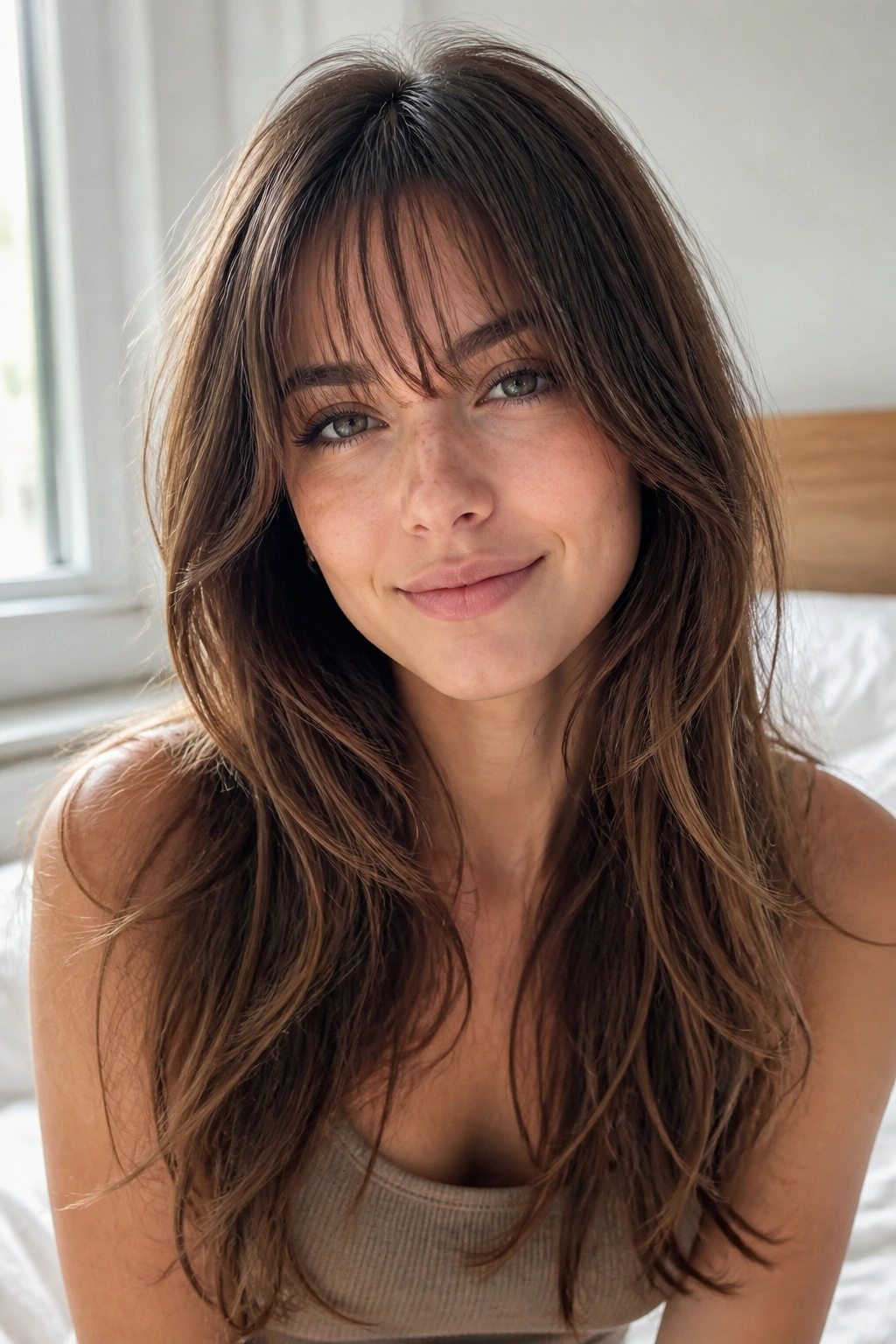
Can bangs survive an air-dry routine? Yes, if they are cut light enough. See-through bangs are wispy by design, which means they do not need a blown-out finish to look intentional.
The layers around them should be soft and long, with enough shaping to keep the silhouette from collapsing. A little leave-in conditioner or a lightweight cream goes on damp hair, then you let the texture do what it wants. The bangs can be separated with fingers once they dry. That’s the trick.
This style is useful for people who hate spending twenty minutes on the front section alone. It also suits fine hair, because the see-through fringe does not steal too much density from the rest of the cut. If your hair bends in odd places while drying, clip the bangs in the direction you want for the first ten minutes. Small habit. Big payoff.
17. Razor-Cut Shag Layers With Wispy Bangs
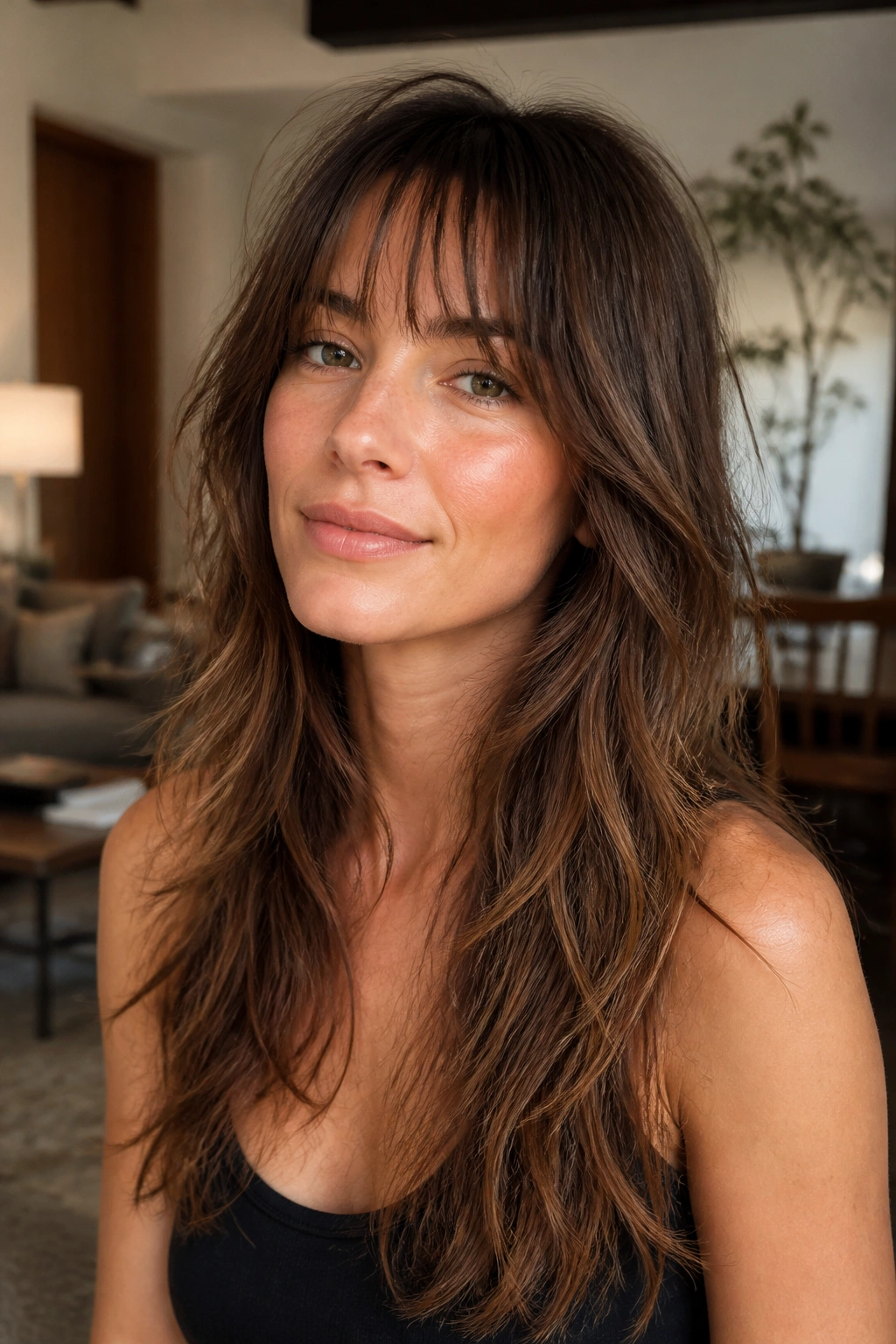
A razor cut changes the texture of long layers fast. The ends feel softer, almost airier, and the wispy bangs match that lighter edge. Together, they create a shag that has movement even when the hair is hanging still.
This shape is not shy. It works best when the goal is separation and texture, not a sleek sheet of hair. The wispy fringe should look piecey and flexible, not sparse. That means the stylist needs to leave enough weight at the front while taking out bulk through the body.
If your hair is damaged or fragile, a razor can expose those rough ends, so this is not the right move for everyone. On healthy hair, though, it gives a loose, lived-in finish that looks much less formal than scissor-cut layers. Add a texturizing spray at the roots and mid-lengths, then scrunch the ends. Done.
18. Thick Hair Layers With Dense Curtain Bangs
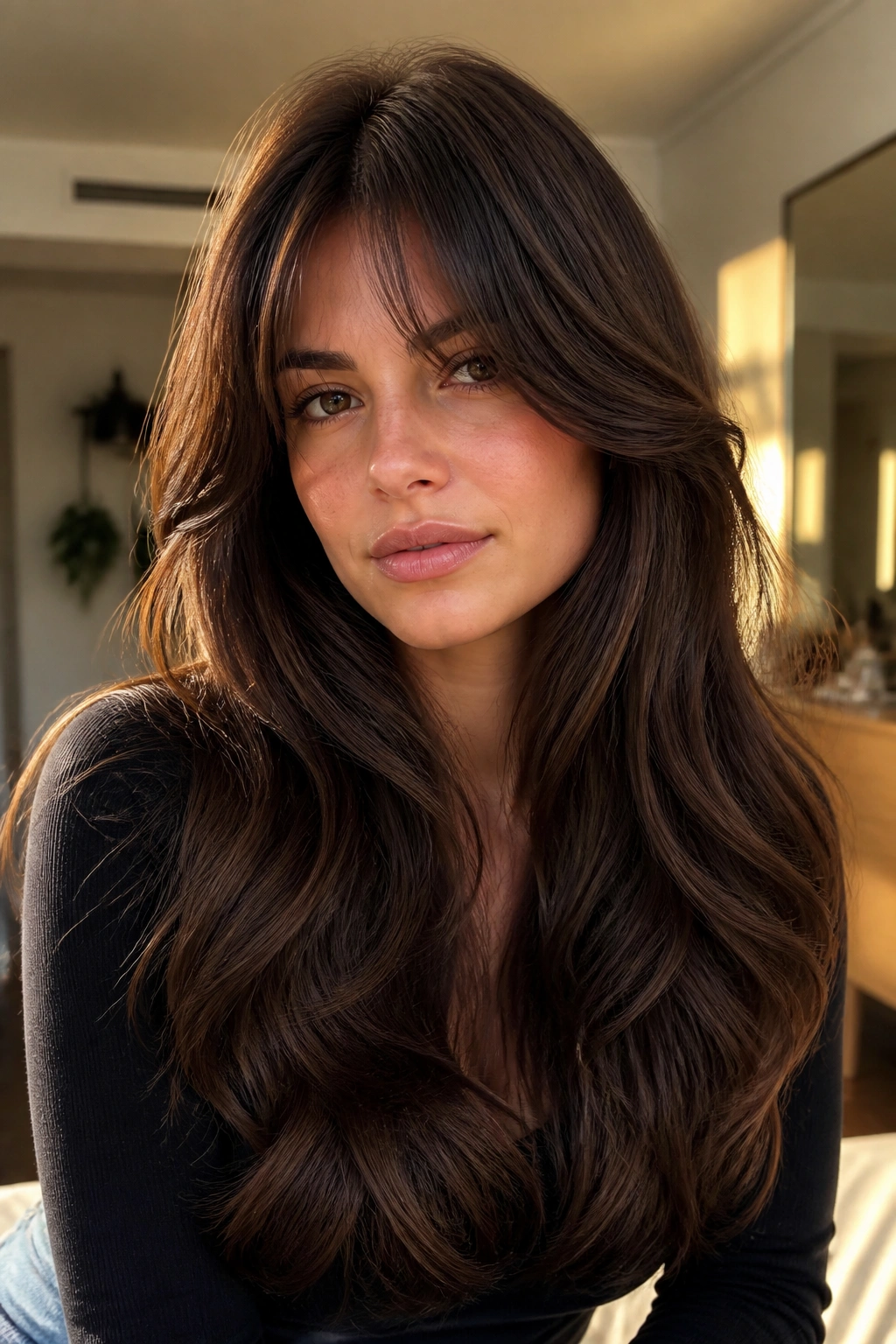
Thick hair needs strategy. If you cut it as if it were medium density, it turns into a wall. Dense curtain bangs and long layers solve that by removing weight where it piles up and keeping the front strong enough to match the rest.
The layers should start high enough to reduce bulk but not so high that the hair frizzes into a halo. Internal debulking near the crown helps the head feel lighter, while the front pieces stay thick enough to split cleanly in the middle. That balance is the whole point.
Don’t over-thin the ends. Thick hair often looks best when the perimeter still has a little weight. Too much thinning makes the shape poof out and fray by the next wash. A good cut here feels controlled, not shredded. If your hair is dense, this is the version that gives you movement without surrendering the body that makes your hair look full in the first place.
19. Fine Hair Layers With Soft, Feathered Bangs
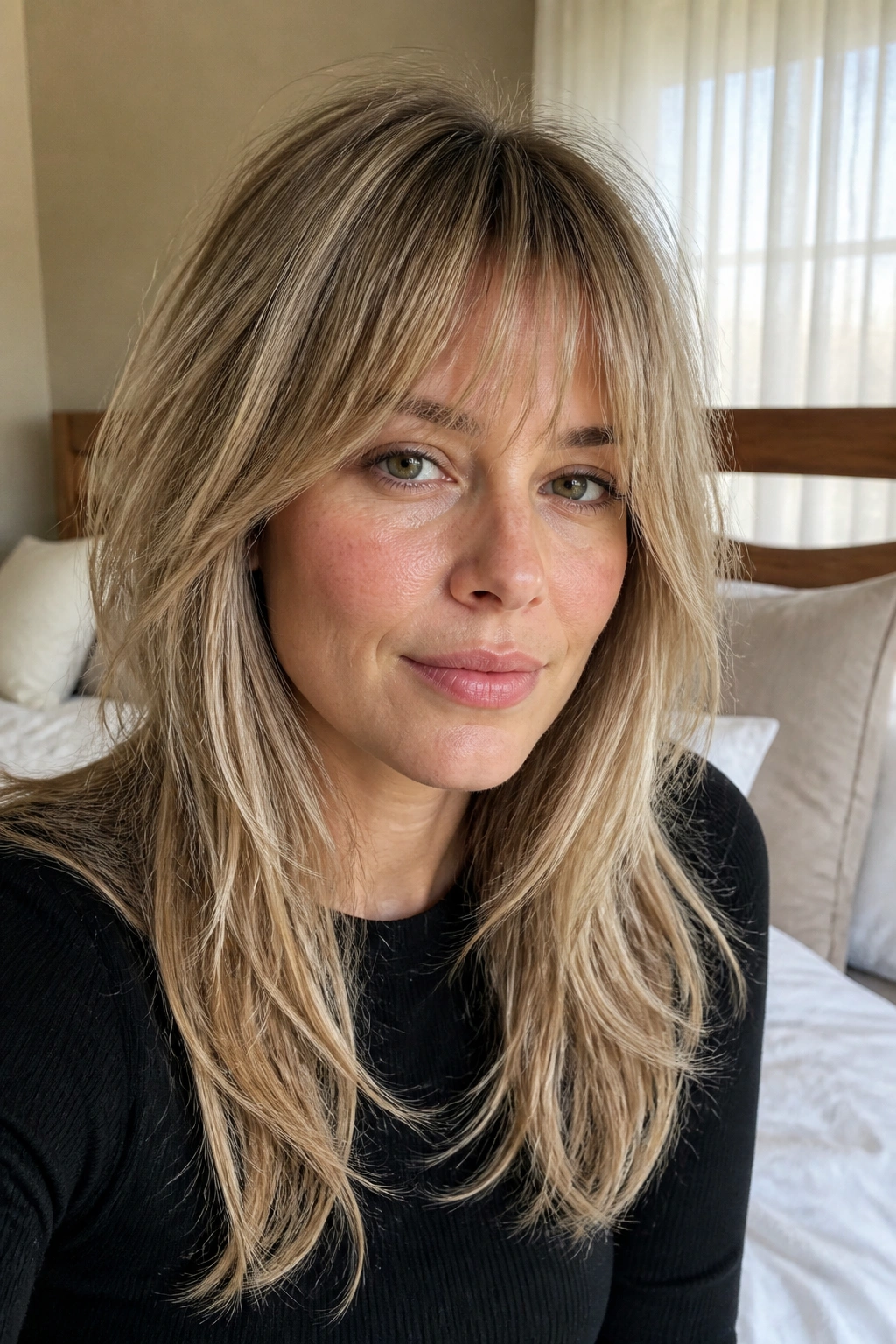
Fine hair is happiest when the cut creates the idea of fullness without stripping away too much length. Soft, feathered bangs do that better than a heavy fringe because they let the front stay light and breathable.
The layers should begin lower, usually below the chin, so the top section still has enough weight to look substantial. If the layers are cut too aggressively, fine hair can end up see-through at the ends. That is the mistake people make most often.
What to Avoid
- Too many short layers at the crown.
- Over-thinning the fringe.
- Heavy creams that make the hair collapse.
- A blunt, straight bang that steals density from the front.
Soft feathering keeps the hair moving without making it sparse. A root-lifting spray at the crown and a quick blow-dry with a paddle brush help the shape hold. That’s the boring part, but it matters.
20. Long Layers With Asymmetrical Bangs
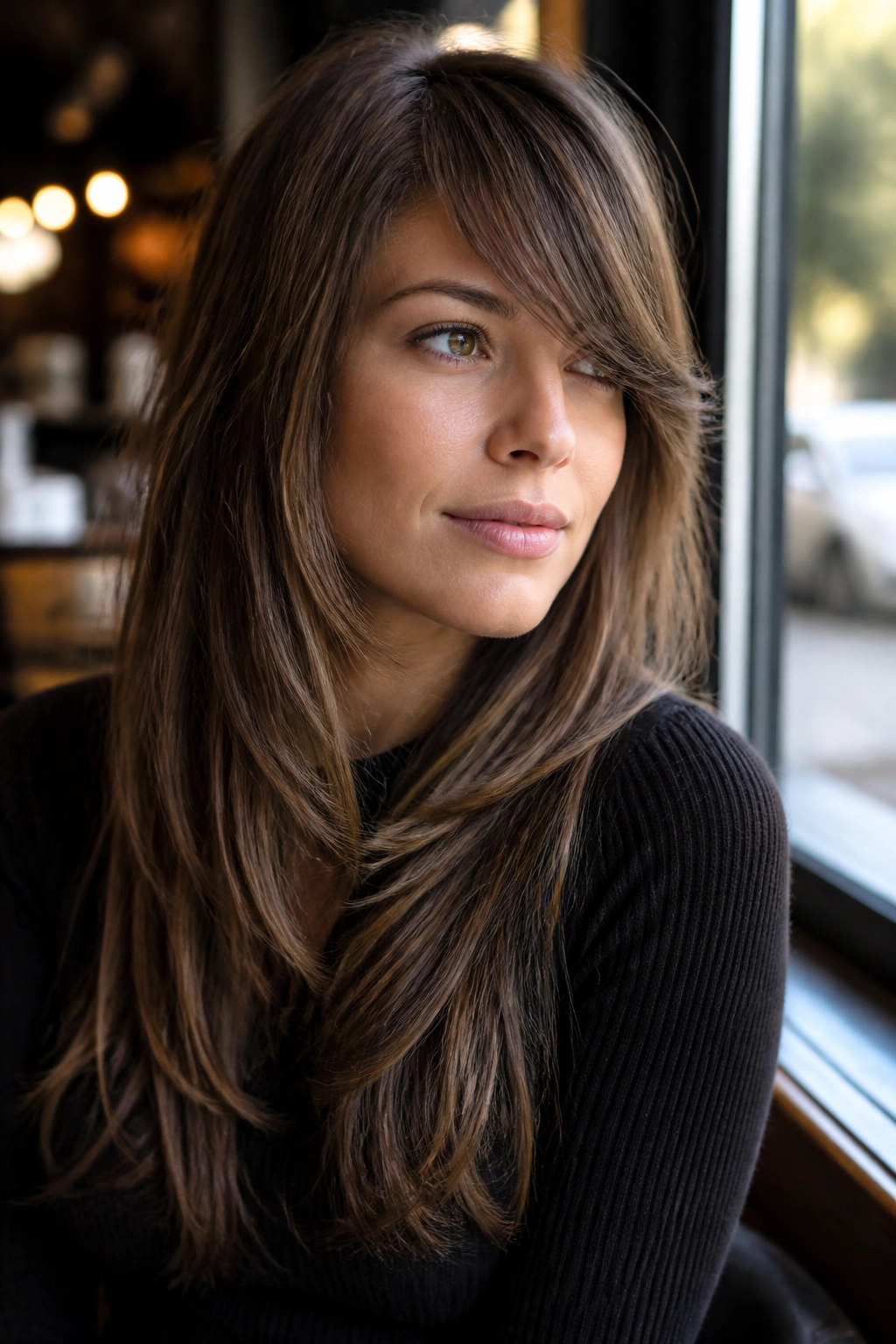
Asymmetrical bangs bring a little tension to long layers in a good way. One side is slightly longer than the other, which breaks up symmetry and gives the haircut a modern edge without turning it severe.
This works especially well if your face is round or soft and you want the front to look a bit sharper. The angled line draws the eye across the face, then the long layers pull everything back down. It is a neat visual trick, and it does not need a dramatic difference between sides to work. Even a small offset matters.
The key is keeping the rest of the hair relaxed. If the layers are too choppy or the bangs too short, the cut starts to feel busy. Keep the ends soft, let the front angle be the star, and style with a flat brush or a quick bend from a dryer nozzle. Clean, not fussy.
21. Waist-Length Layers With Floating Curtain Bangs
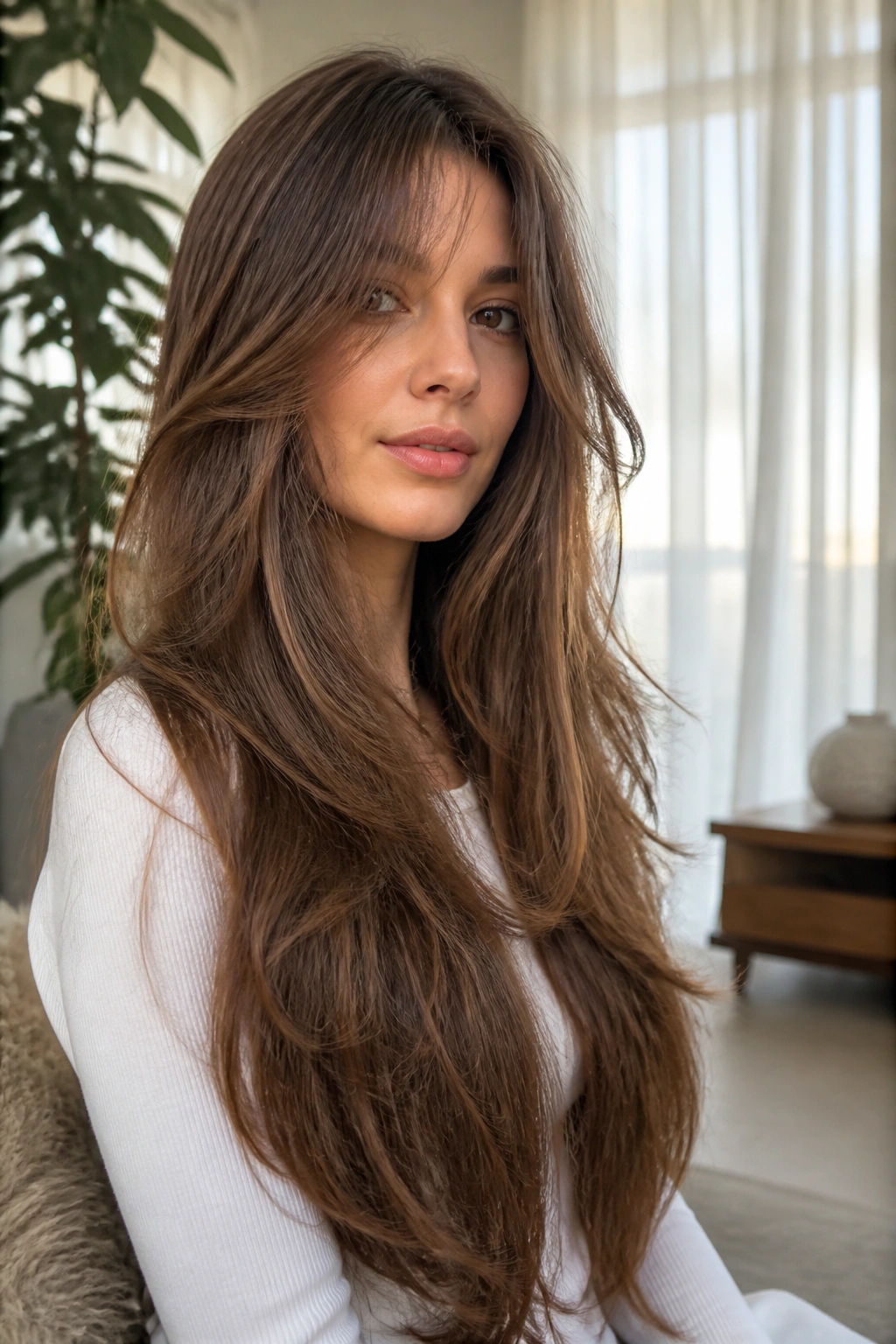
Waist-length hair can look stunning, but it can also look heavy if the shape is ignored. Floating curtain bangs solve that by lifting the front visually while the long layers keep the length dramatic and easy to wear.
The bangs should feel airy, almost suspended in the haircut rather than planted on the forehead. That means keeping them long enough to split and soften, then blending the first face-framing pieces into the rest of the length. The result is a cut that feels open at the top and rich through the ends.
This is a good choice if you love long hair and do not want the fringe to dominate the look. It plays nicely with curls, waves, and straight hair, which is part of the appeal. The length stays the headline, but the layers keep it from dragging. That’s the whole game.
