



An oblong face shape presents a unique styling opportunity that many people actually underestimate. While the elongated proportions might feel challenging at first, the right layered haircut can work absolute magic by adding width at the sides, breaking up vertical lines, and creating a more balanced silhouette. The key is understanding that oblong faces benefit most from cuts that add dimension horizontally rather than emphasizing length vertically—and that’s exactly what strategic layering can achieve.
The beauty of layered cuts for oblong face shapes is their flexibility. Layers create movement, texture, and visual interest that naturally draws the eye outward rather than down the length of your face. When cut with intention, layers can soften harsh features, add fullness where you need it most, and give you endless styling options depending on your mood and lifestyle. Whether you prefer length or a shorter, choppier style, there’s a layered cut designed specifically to flatter oblong proportions.
What makes these cuts truly effective isn’t just the layers themselves—it’s where those layers are placed and how they’re styled. The best cuts for oblong faces typically feature fuller density around the cheekbones and temples, strategic angle work that avoids adding length without purpose, and enough textural variation to keep eyes moving horizontally around your face. If you’ve ever felt stuck with your hair, these ten cuts offer proven solutions that celebrate your face shape while giving you the styling freedom you deserve.
1. Textured Long Layers
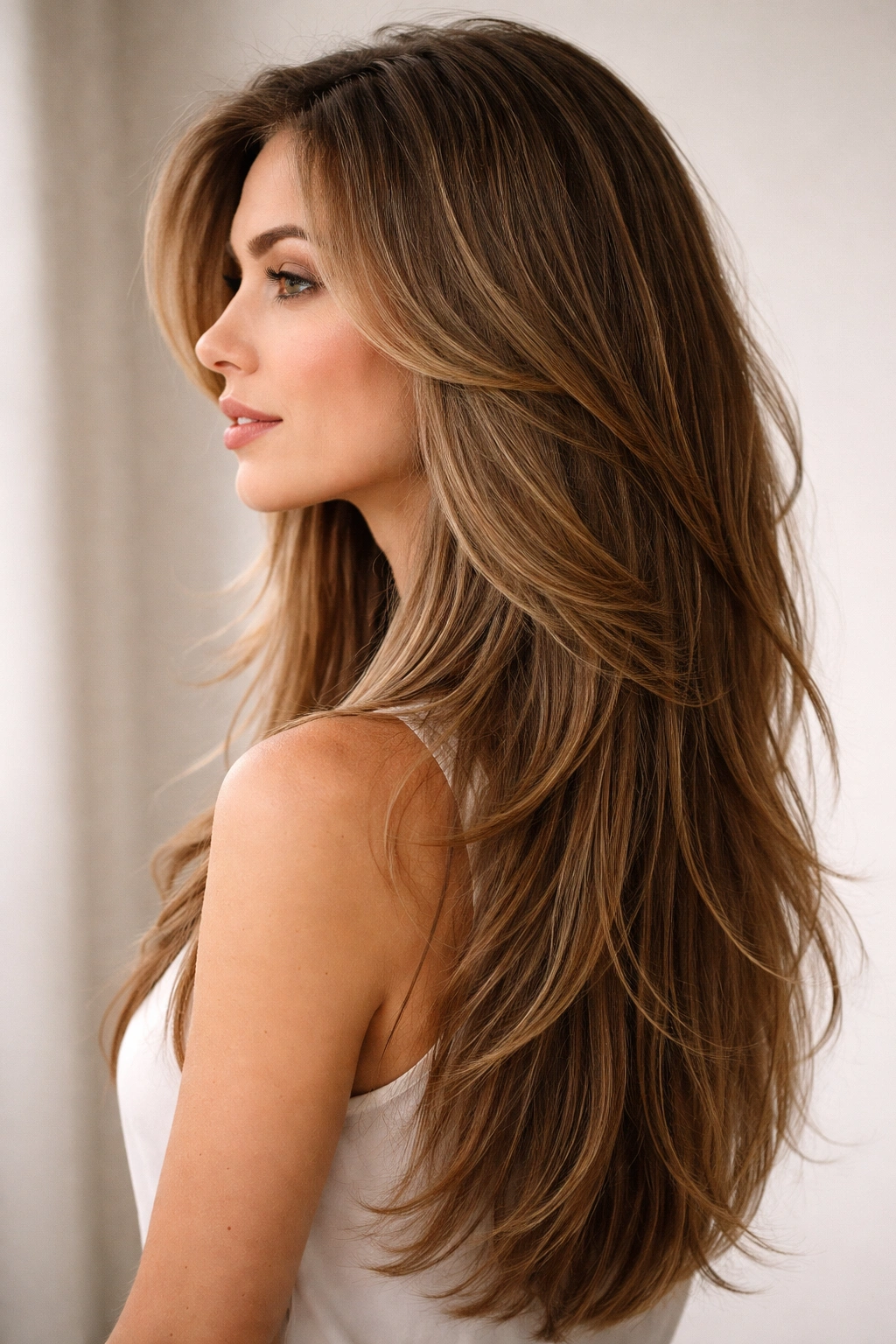
Long, textured layers are the workhorse cut for oblong faces that want to maintain length without looking stretched. This style combines a longer overall length (typically hitting mid-back or waist) with strategic, piece-y layers that start around mid-ear height and continue throughout the length, creating movement and dimension that breaks up vertical lines naturally. The texture prevents the cut from feeling heavy or one-dimensional, which is crucial for longer styles on oblong faces.
Why This Cut Flatters Oblong Face Shapes
The textured long-layer approach works because it creates a busier visual canvas that draws attention outward rather than down the length of your face. When layers are well-placed with intentional choppy ends and texture, your eye naturally travels across the width of the hair rather than following the vertical length. The layers starting near the ears add crucial width at the sides, which is exactly what an oblong face shape needs to appear more balanced and proportional. Additionally, the movement and dimension prevent hair from sitting flat against your head, which would emphasize length even more.
Quick Styling Guide
- Blow-dry technique: Use a round brush to curl layers under and away from your face, focusing on adding volume at the crown and sides rather than sleekness. Scrunching with a diffuser attachment also enhances texture beautifully.
- Best texture type: This cut shines on naturally wavy to curly hair, but works wonderfully on straight hair too when you add texture through styling or gentle waves.
- Maintenance reality: Expect to trim every 8-10 weeks to keep layers looking fresh and intentional rather than grown-out and stringy.
- Styling products that help: Texturizing spray, sea salt spray, or a light mousse will enhance the piece-y quality of the layers and maintain dimension throughout the day.
Pro tip: Ask your stylist to focus heavier layers around your cheekbones and temples—this creates an illusion of width exactly where you need it for oblong faces.
2. Choppy Bangs with Long Layers
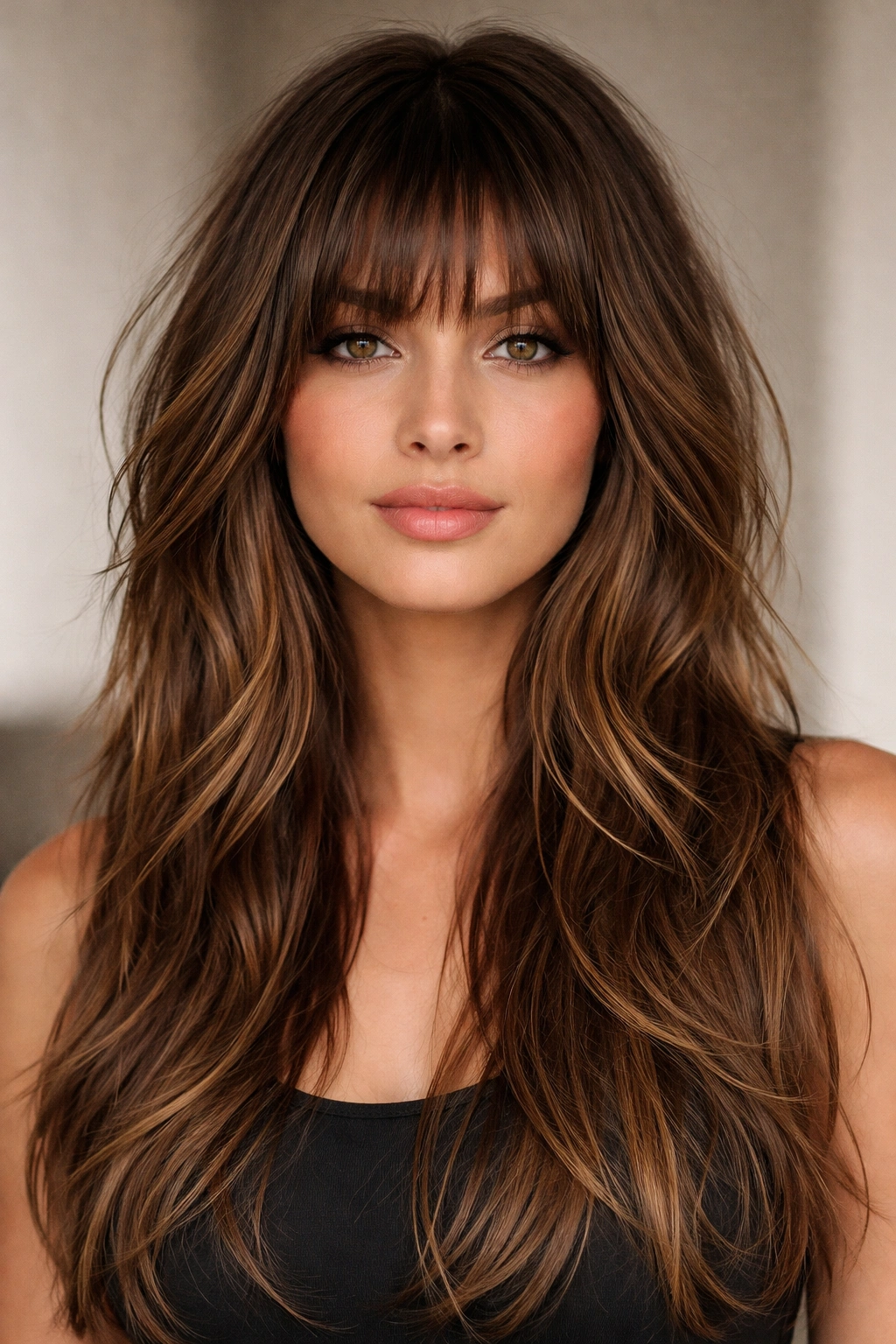
This bold, fashion-forward style combines textured, choppy-cut bangs with heavily layered longer lengths, creating a high-impact look that immediately reshapes how your face appears. The choppy bangs break the vertical line of your face right across the forehead, while the layered lengths add movement and texture throughout. This is a cut that commands attention and works best for people confident enough to embrace a more editorial, statement-making aesthetic.
What Makes This Style Stand Out
The genius of choppy bangs on an oblong face is that they interrupt the vertical line at the most visible point—the very center of your face. By introducing horizontal movement and texture at your forehead, you’re essentially creating a visual anchor that prevents the eye from traveling straight down the length of your face. The longer layers beneath add to this effect by creating maximum texture and movement. This combination works particularly well if you have a longer forehead or want to appear less elongated overall.
How to Style and Maintain It
- Bang styling: These bangs look best slightly piece-y and textured, not blunt or overly neat. Style them with movement, slightly to the side, rather than straight across.
- Cutting frequency: Bangs require trims every 3-4 weeks to maintain their choppy shape and prevent them from becoming too long or losing their impact.
- Hair texture considerations: This style works beautifully on straight hair, where you can see the choppy texture clearly, but also on wavy and curly hair if you’re willing to embrace a more undone aesthetic.
- Daily styling time: Expect to spend 10-15 minutes styling, as these bangs benefit from intentional styling rather than wash-and-go convenience.
Worth knowing: Choppy bangs can feel heavy or unflattering if they’re not cut with the right angle and density for your specific face. Finding a stylist experienced with this particular cut is genuinely worth the investment.
3. Shaggy Layers
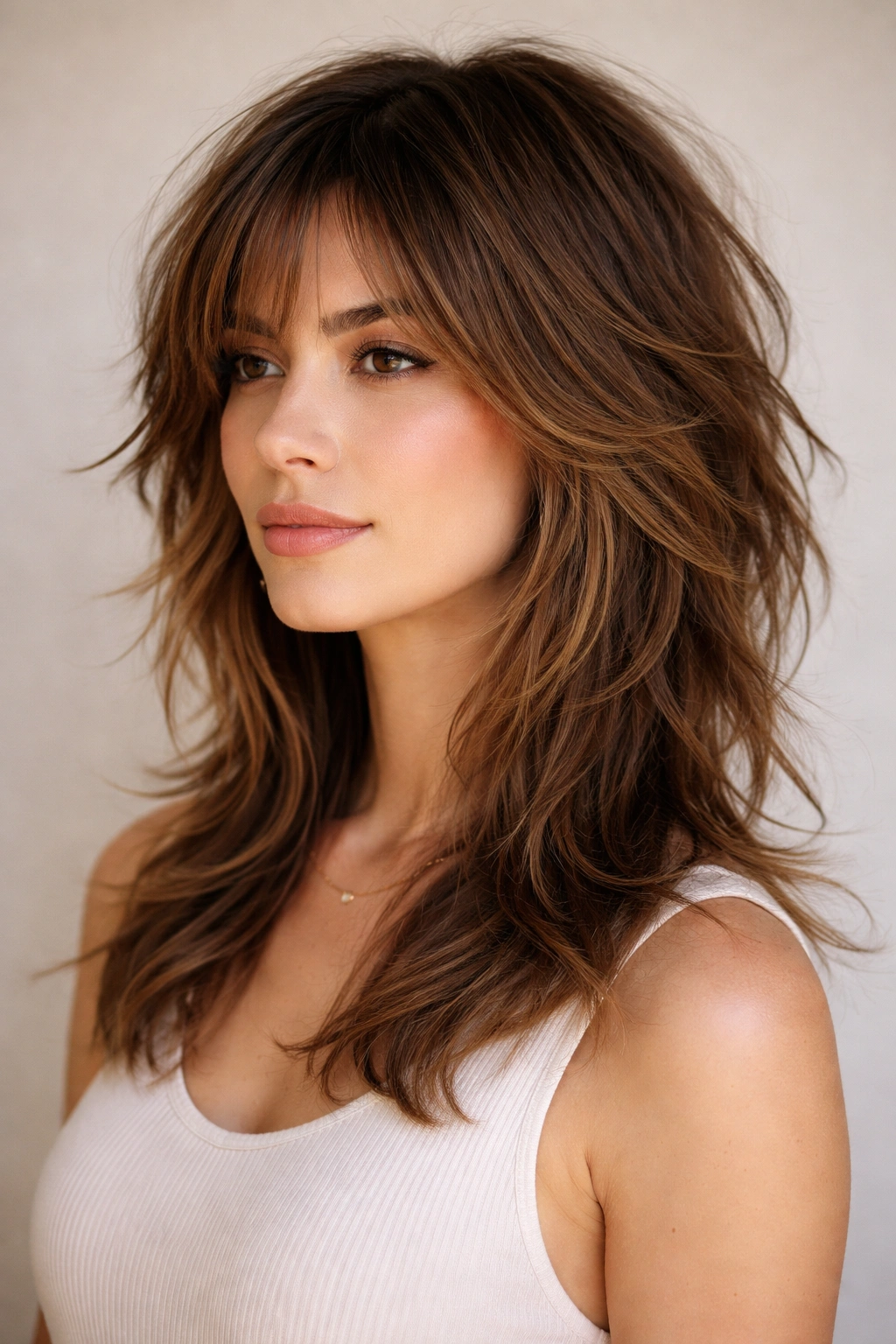
The shaggy layer cut is the ultimate modern take on a classic, and it’s having a significant moment for good reason—it’s incredibly flattering for oblong faces. This cut features lots of texture and movement throughout, with shorter layers on top (creating volume at the crown) that gradually blend into longer lengths. The overall effect is undeniably cool, effortlessly textured, and naturally widens the face by adding dimension at the sides rather than emphasizing vertical length.
Why Shaggy Layers Work Magic on Oblong Faces
A true shag works by creating maximum horizontal texture and movement, which draws the eye across your face rather than down its length. The shorter layers on top create a fuller crown, which balances out a longer face by adding height at the top rather than just length at the bottom. The shorter layers also frame your face and cheekbones, adding width at exactly the points that need it most. The piece-y, textured quality of a shag is also incredibly forgiving—it doesn’t require perfection, which takes pressure off daily styling.
Maintenance and Styling Reality
- Styling approach: Shags look best with texture, whether that’s natural waves, deliberate styling, or a tousled, “just rolled out of bed” effect. Embrace movement over sleekness.
- Product recommendations: A texturizing spray or dry shampoo enhances the shaggy texture and adds grip for styling. A light mousse also helps create volume without weight.
- Trim schedule: Shags need trims every 6-8 weeks to maintain their layered shape and prevent them from looking grown-out or lost.
- Hair type compatibility: This cut works on straight hair, but truly shines on naturally wavy or curly hair, where the texture is built-in and requires minimal effort to style.
Pro tip: Ask your stylist to keep more density through the mid-lengths and ends of your shag—this prevents it from looking too wispy and maintains volume where you need it most.
4. Feathered Layers
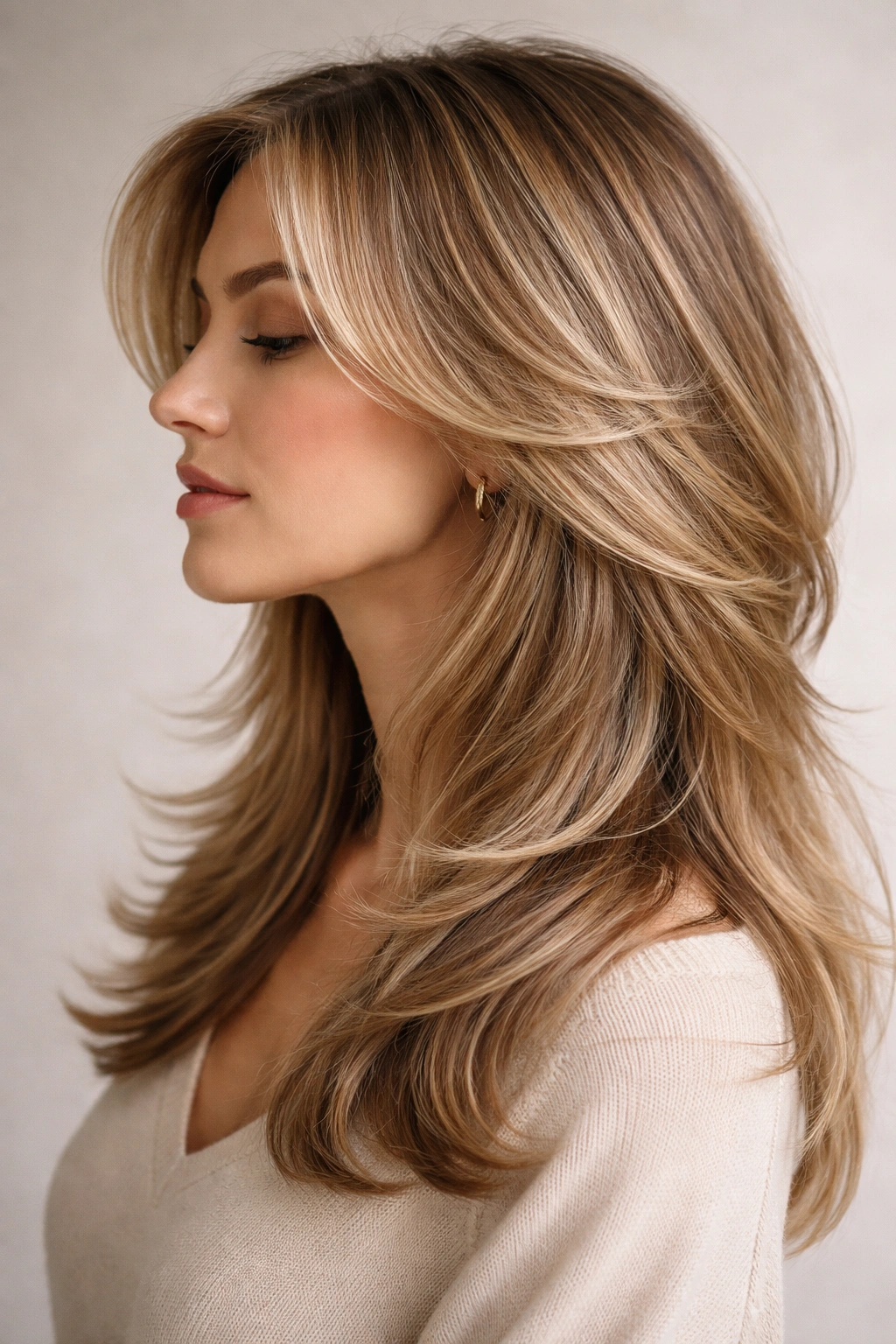
Feathered layers are a sophisticated, refined approach to layering that works beautifully for people who want dimension and movement without a choppy or overly textured feel. This cut features layers with softer edges that blend seamlessly, creating a feathered, flowing effect that moves away from the face and falls smoothly. The result is elegant and polished, with enough movement to flatter an oblong face shape without looking harsh or heavy.
What Makes Feathered Layers Flattering
Feathered layers create softness and flow that naturally directs attention outward and around your face rather than straight down. The technique of feathering—cutting layers with softer edges that blend—prevents the chunky, separated look of heavily choppy layers while still maintaining the width-adding benefits of layering. For oblong faces, this creates the perfect balance: enough horizontal dimension to add width, but with a polished, refined appearance. Feathered layers also work on almost every hair texture and don’t require constant styling to look intentional.
Styling and Upkeep
- Best styling method: Blow-dry with a round brush to create subtle waves and movement. The key is encouraging the layers to move outward rather than sit flat.
- Texture matters less here: Unlike shaggy or choppy styles, feathered layers work beautifully on smooth, sleek hair because the cut does the work of creating dimension.
- Trim frequency: Every 8-10 weeks keeps feathered layers looking fresh and prevents them from becoming too blended or losing their shape.
- Styling products: A light cream or serum enhances shine and smoothness without weighing down the feathered movement.
Worth knowing: Feathered layers hit their stride when your hair reaches shoulder length or longer—this gives the stylist enough length to work with and creates the flowing effect that makes this cut so flattering.
5. Soft Face-Framing Layers
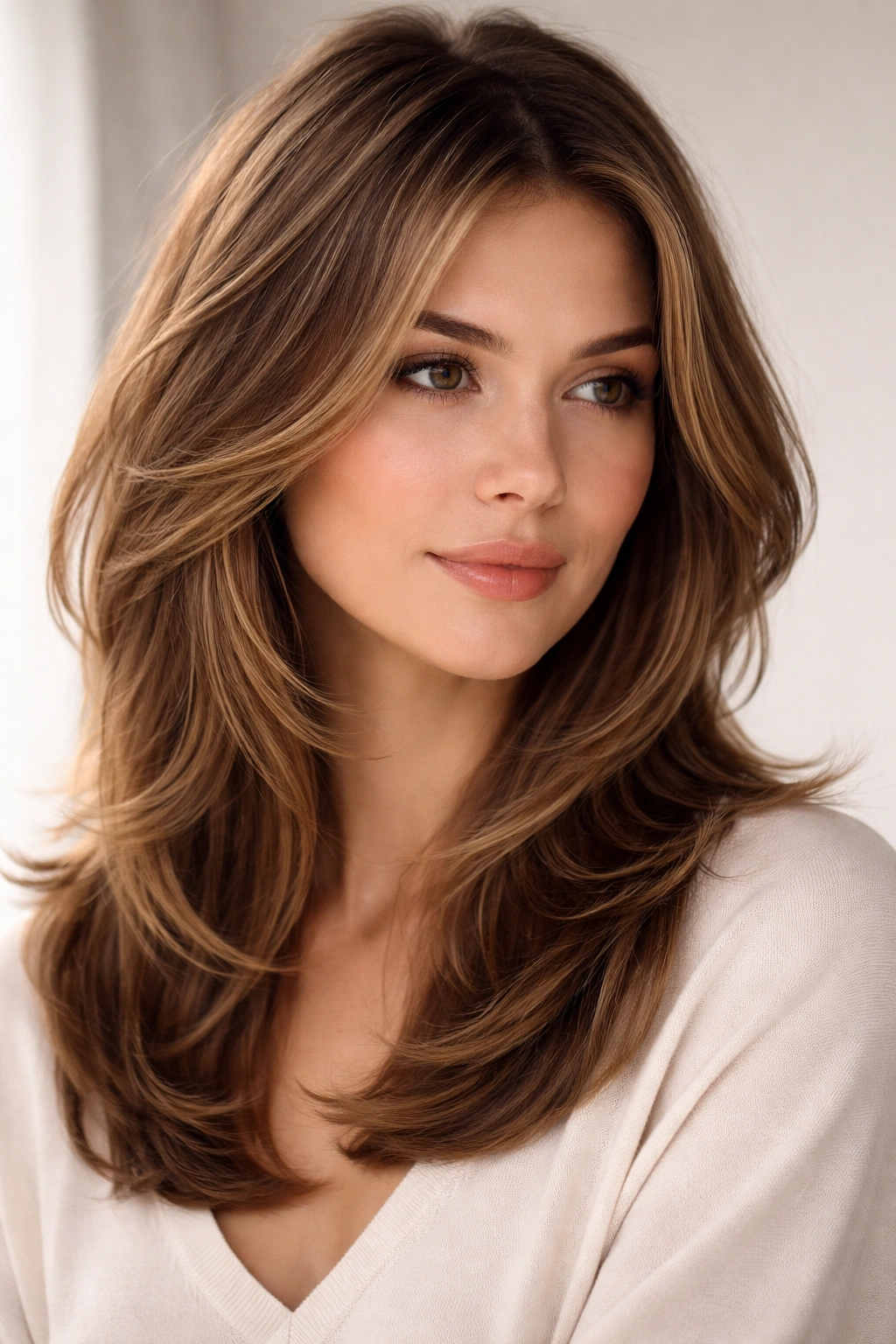
Soft face-framing layers are one of the most universally flattering options for oblong faces, and they work as a complement to almost any length. These are shorter layers (typically starting between the cheekbones and chin) that angle inward slightly, creating a subtle frame around your face that adds width exactly where you need it. The layers are soft and blended, not choppy, giving a polished, intentional look that seems effortless but is actually quite strategic.
Why Face-Framing Works So Well
Face-framing layers address the core challenge of oblong face shapes by adding width and dimension right at the cheekbones and jawline—the widest points of your face. By placing shorter layers precisely in this zone, you draw attention to your face’s widest points rather than to its length. The inward angle of the layers also creates a subtle lift and softening effect that complements most face features. This approach is so effective because it’s minimal intervention—you’re not cutting huge amounts of texture throughout your whole head, just strategically placing layers where they do the most good.
How to Get and Maintain This Look
- Communication with your stylist: Bring photos of face-framing layers you love, and discuss exactly where your widest points are. This cut’s success depends on precise placement.
- Daily styling: These layers look great blown out straight, waved, or curled—they work with your styling preferences rather than requiring a specific approach.
- Trim schedule: Every 8-12 weeks is ideal for maintaining the shape and preventing the shorter layers from growing past their flattering length.
- Works with almost any length: Whether you’re pairing face-framing layers with long, waist-length hair or a shoulder-length bob, this technique translates beautifully.
Pro tip: If you have fine hair that struggles with volume, ask your stylist to cut face-framing layers at a slightly longer length (closer to chin level) and style them with gentle waves rather than blunt straight edges—this creates more dimension without relying on density.
6. Blunt Layers with Volume
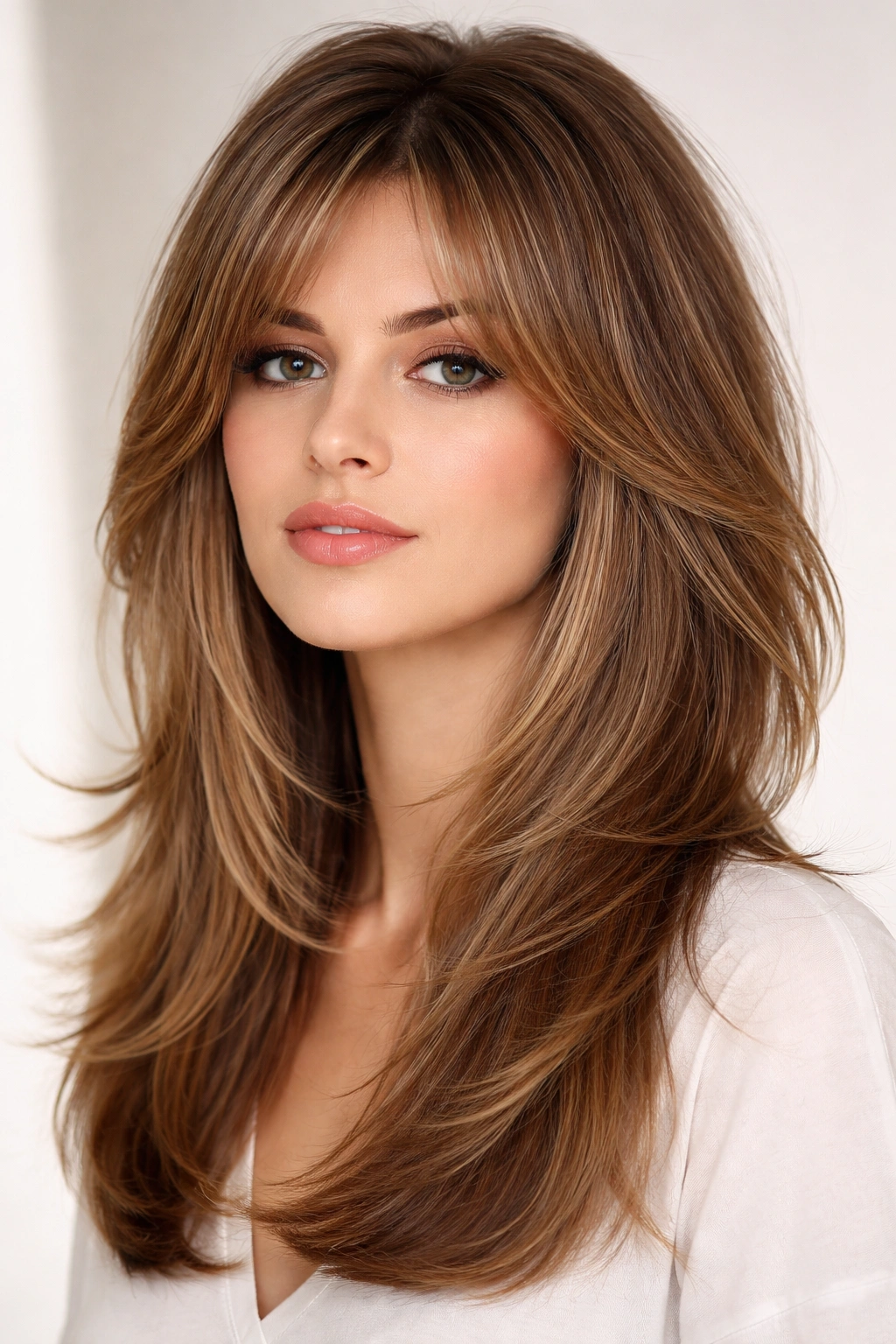
Blunt layers offer a modern, geometric aesthetic that contrasts beautifully with softer layered styles while still delivering the width-adding benefits that oblong faces need. This cut features layers with clean, sharp lines that create distinct visual sections and movement, paired with fuller density that adds volume at the crown and sides. The result is bold, fashion-forward, and incredibly flattering when cut with intention for an oblong face shape.
Why Blunt Layers Reshape Oblong Faces
Blunt layering creates visual interest and movement that prevents your face from appearing as elongated as it might with a blunt cut alone. The sharp lines of blunt layers create horizontal bands of texture that the eye naturally tracks across rather than down. When combined with strategic volume at the crown and sides, blunt layers add width while the clean lines prevent the cut from looking overly heavy or mature. This style reads as intentional and fashion-conscious, not accidental or outdated.
Styling and Maintenance Guidelines
- Best styling approach: Blow-dry straight or with subtle waves to show off the clean lines of the blunt layers. Avoid excessive curl or wave that might obscure the cut’s geometry.
- Hair texture: This cut works best on straight to slightly wavy hair, where the blunt lines are clearly visible and the geometric effect comes through.
- Trim importance: Blunt cuts show every millimeter of new growth, so plan for trims every 6 weeks if you want to maintain the crisp effect. Allowing more growth between trims will soften the bluntness.
- Styling time: Expect to spend 10-15 minutes blow-drying to achieve the polished effect this cut deserves.
Worth knowing: Blunt layers require really good technique from your stylist—a mediocre cut will look harsh or unfinished, while a great one is incredibly striking. It’s worth traveling for the right person if needed.
7. Wavy Textured Layers
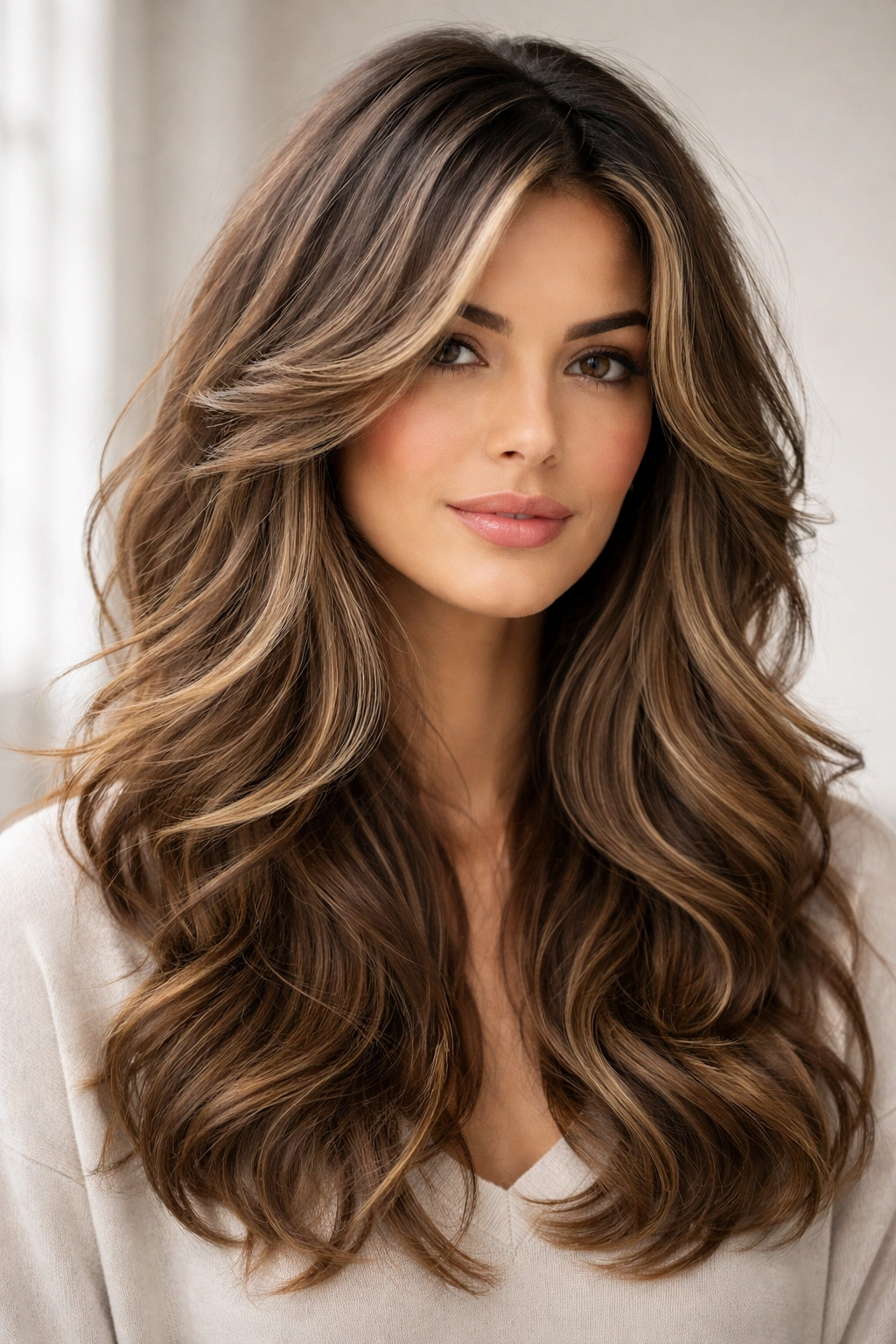
Wavy textured layers are the sweet spot for people who want significant texture and dimension while maintaining an approachable, wearable aesthetic. This cut combines multiple layers throughout with an emphasis on creating movement and wave rather than choppy, piece-y texture. The layers encourage your hair to move in waves and curves rather than hanging straight, which naturally adds width and breaks up vertical lines on an oblong face.
How Wavy Texture Flatters Your Face Shape
Textured waves create visual rhythm and movement that draws the eye horizontally across your face. Each wave essentially creates its own horizontal line, which counteracts the vertical emphasis of an oblong face shape. Unlike straight hair (which emphasizes length) or heavily choppy texture (which can appear too editorial), wavy layers hit the perfect balance: plenty of dimension and movement, but in a way that feels natural and accessible. The waves also create an illusion of width by making your hair appear fuller and bouncier.
Achieving and Maintaining the Look
- Starting point: This cut works beautifully on naturally wavy or curly hair, but can also be achieved on straight hair through styling or with gentle waves.
- Styling method: Blow-dry with a diffuser or curling iron to encourage waves throughout. The goal is consistent wave texture rather than tight curls or straight sections.
- Product essentials: Wave cream, sea salt spray, or curl-defining products help shape and maintain the wavy texture throughout the day.
- Trim schedule: Every 8-10 weeks prevents the layers from becoming too separated while maintaining the wave-friendly shape.
- Heat styling: If you straighten your hair regularly, the layers won’t show their full potential—this cut really sings when styled with texture.
Pro tip: Ask your stylist to focus heavier layers around your cheekbones and temples, then slightly fewer layers lower down. This creates maximum width where you need it without becoming too choppy.
8. Modern Shoulder-Length Layers
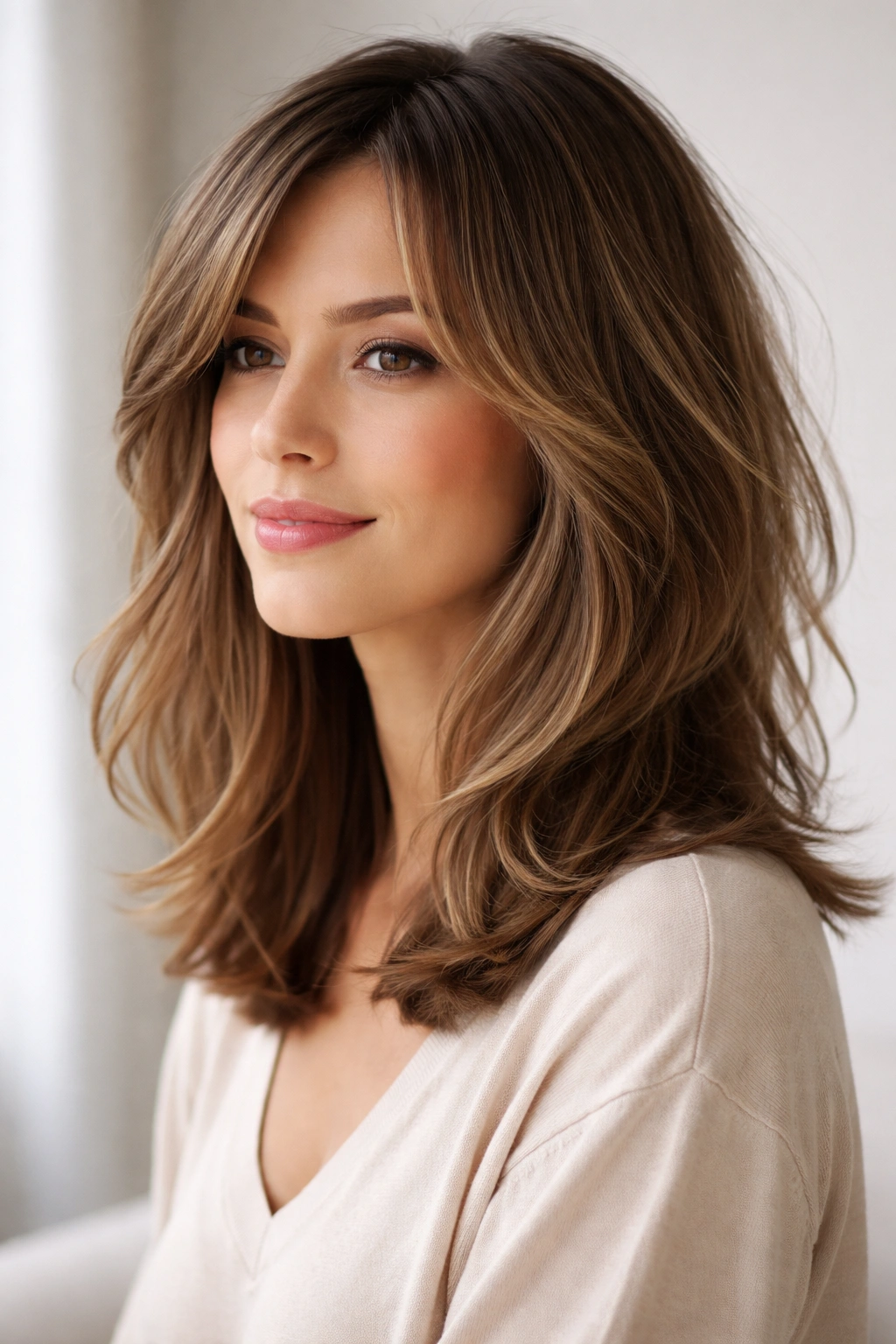
A modern shoulder-length layered cut is the Goldilocks option—not too short, not too long, but absolutely right for creating balance on an oblong face. This cut typically hits right at the shoulders with layers throughout that create movement and dimension. The length is short enough to add volume and prevent excessive emphasis on length, but long enough to maintain the sophistication and styling flexibility that many people love about longer hair.
Why This Length Is Ideal for Oblong Faces
Shoulder-length is genuinely the most flattering length for oblong face shapes because it stops right where your face’s vertical length transitions to your body—it breaks up that vertical line without making you feel like you’ve gone too short. The layers at this length create natural movement that bounces away from your face, adding width and preventing hair from sitting flat against your head. You also get the styling versatility of longer hair (waves, braids, half-up styles) without the maintenance intensity or length-emphasizing effect that comes with longer cuts.
Styling Flexibility and Maintenance
- Blow-dry versatility: This length is perfect for creating waves, curls, or sleek straight styles depending on your mood and the occasion.
- Updo possibilities: Shoulder-length is long enough for ponytails, buns, and half-up styles, giving you daily variety without requiring constant trims.
- Trim schedule: Every 8 weeks keeps the layers looking fresh and the overall shape intentional.
- Works with most textures: Whether your hair is straight, wavy, or curly, shoulder-length layered cuts work beautifully across the spectrum.
- Styling time: 10-15 minutes for a blow-dried wave or curl; 5 minutes if you’re wearing it straight or in an updo.
Worth knowing: This is the length where most people find their happy medium—long enough for versatility, short enough to feel manageable and avoid the elongation effect of very long hair.
9. Side-Swept Layers
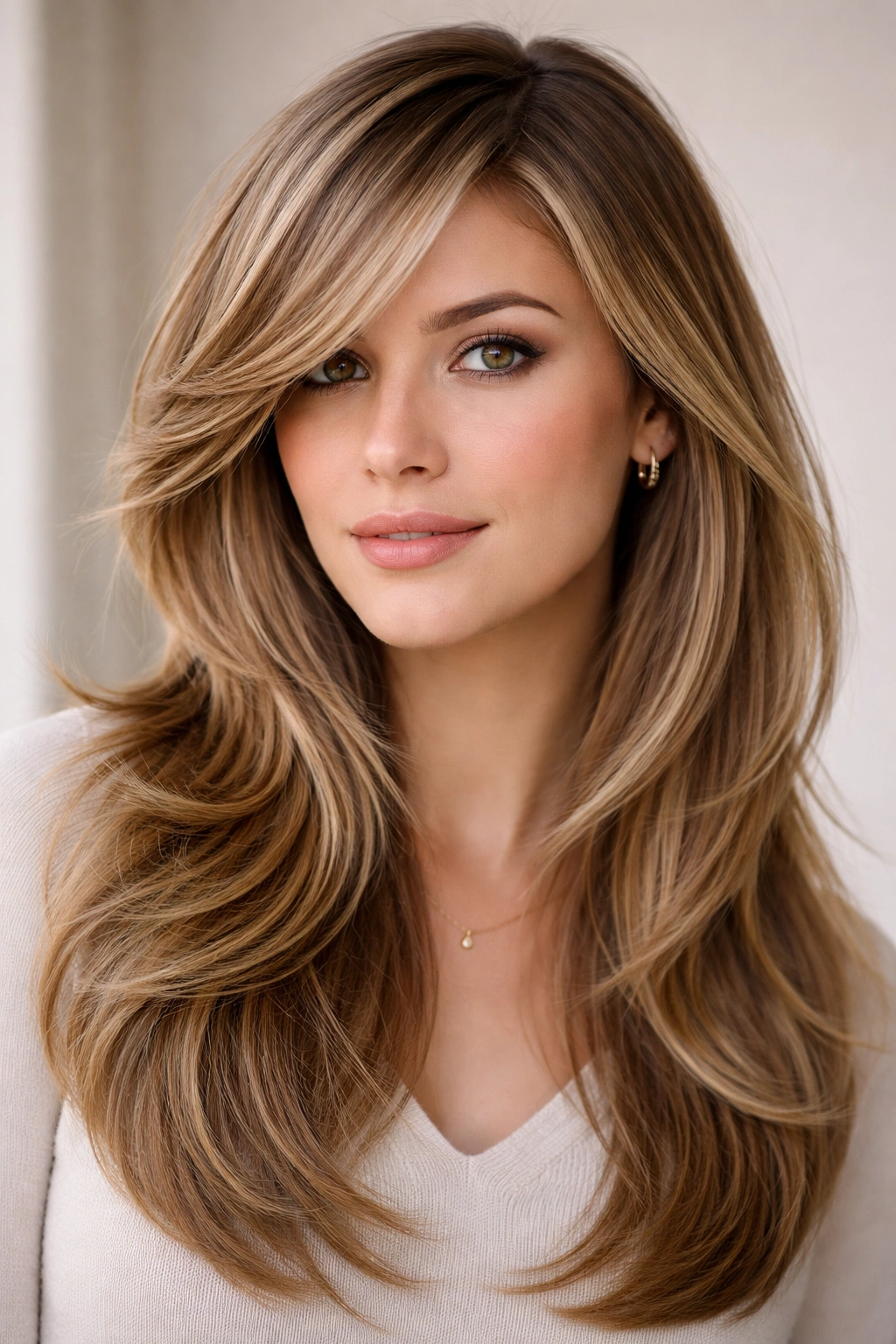
Side-swept layered cuts create an asymmetrical, face-flattering style that’s incredibly versatile and works beautifully for oblong faces. This approach combines longer layers on one side with shorter, more heavily layered sections on the other, creating a diagonal line across your face that breaks up vertical proportion. The sweeping movement naturally directs attention horizontally, which is exactly what an oblong face needs.
What Makes Side-Swept Layers Effective
A side-swept cut works by introducing diagonal and asymmetrical lines to your face, which interrupts the vertical emphasis of an oblong shape. The longer side creates a visual weight that draws attention, while the shorter, more textured side adds volume and dimension. Together, these elements create a dynamic, intentional look that appears carefully crafted rather than accidental. The style also offers flexibility—you can sweep the longer side across your face for a different appearance, or wear it more centered depending on your styling choice.
Styling and Practical Considerations
- Hair placement: You’ll spend a few minutes each morning directing the longer side where you want it—this becomes habit quickly and doesn’t feel like a burden.
- Best for textures: This cut works beautifully on wavy, curly, or straight hair, though it does require intentional styling to maintain the swept shape.
- Trim frequency: Every 7-9 weeks keeps the asymmetry intentional and prevents the shorter side from growing out too much.
- Styling products: A light styling cream or mousse helps direct the longer side where you want it and adds grip without heaviness.
- Occasion flexibility: This cut can be styled sleek and polished or textured and undone, making it suitable for professional and casual settings.
Pro tip: Ask your stylist to add shorter layers on the shorter side to create volume and texture there, while keeping the longer side smoother—this asymmetry is what makes the cut so face-flattering.
10. Subtle Layers with Blunt Ends
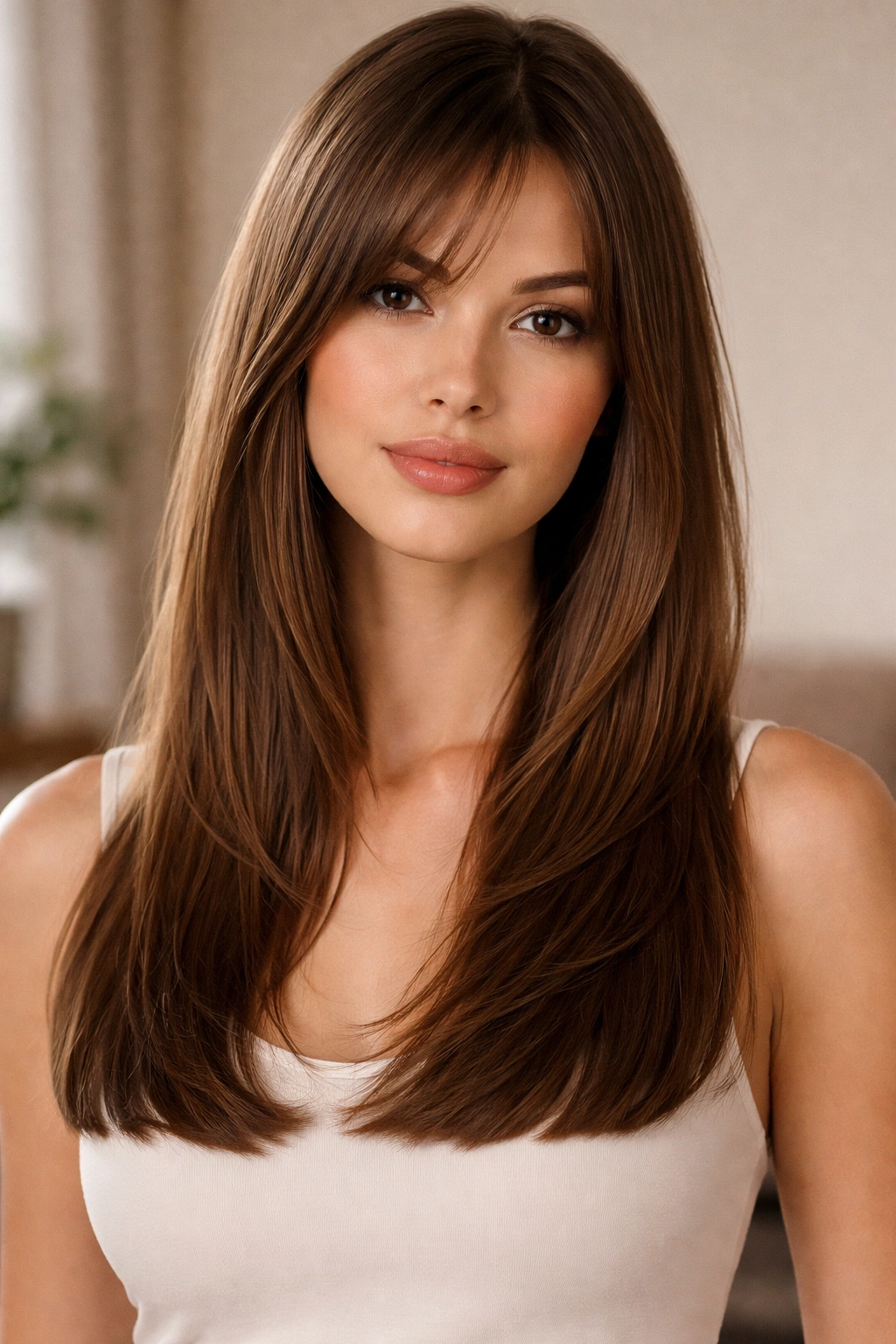
Subtle layers with blunt ends represent the minimalist approach to layering for oblong faces—this cut uses restrained layering (only a few strategic layers rather than throughout) paired with a blunt perimeter that creates a defined, polished silhouette. This style is ideal for people who want the benefits of layering without a dramatically textured or choppy appearance.
Why Restraint Creates Impact
Sometimes less truly is more, and this cut proves it. By using only subtle layers where they matter most (around the face and crown for dimension and width) while maintaining a clean blunt perimeter, you get the flattering effects of layering with a more polished, refined appearance. The blunt ends create a visual weight and definition that prevents the cut from looking wispy or insubstantial, while the subtle interior layers add dimension that keeps the cut from appearing flat or one-dimensional. This approach works beautifully for people who prefer a more understated aesthetic or those with very fine hair that needs the weight of a blunt perimeter.
Execution and Daily Wear
- Stylist skill required: This cut requires precision—placing layers exactly where needed while maintaining a clean blunt line takes real skill and experience.
- Trim schedule: Every 6-8 weeks keeps the blunt ends sharp and the overall shape defined. Blunt lines show every millimeter of growth.
- Styling simplicity: This cut looks great blown straight or with gentle waves, and doesn’t require specific styling to look intentional.
- Hair texture: Works best on straight to slightly wavy hair, where the blunt line is clearly visible and the layers are subtle but effective.
- Versatility: You can wear this sleek and polished for professional settings, or add texture with waves for a softer, less formal appearance.
Worth knowing: This is an excellent choice if you’re hesitant about dramatic layering but want more dimension than a blunt cut alone provides—it gives you the best of both worlds.
Final Thoughts
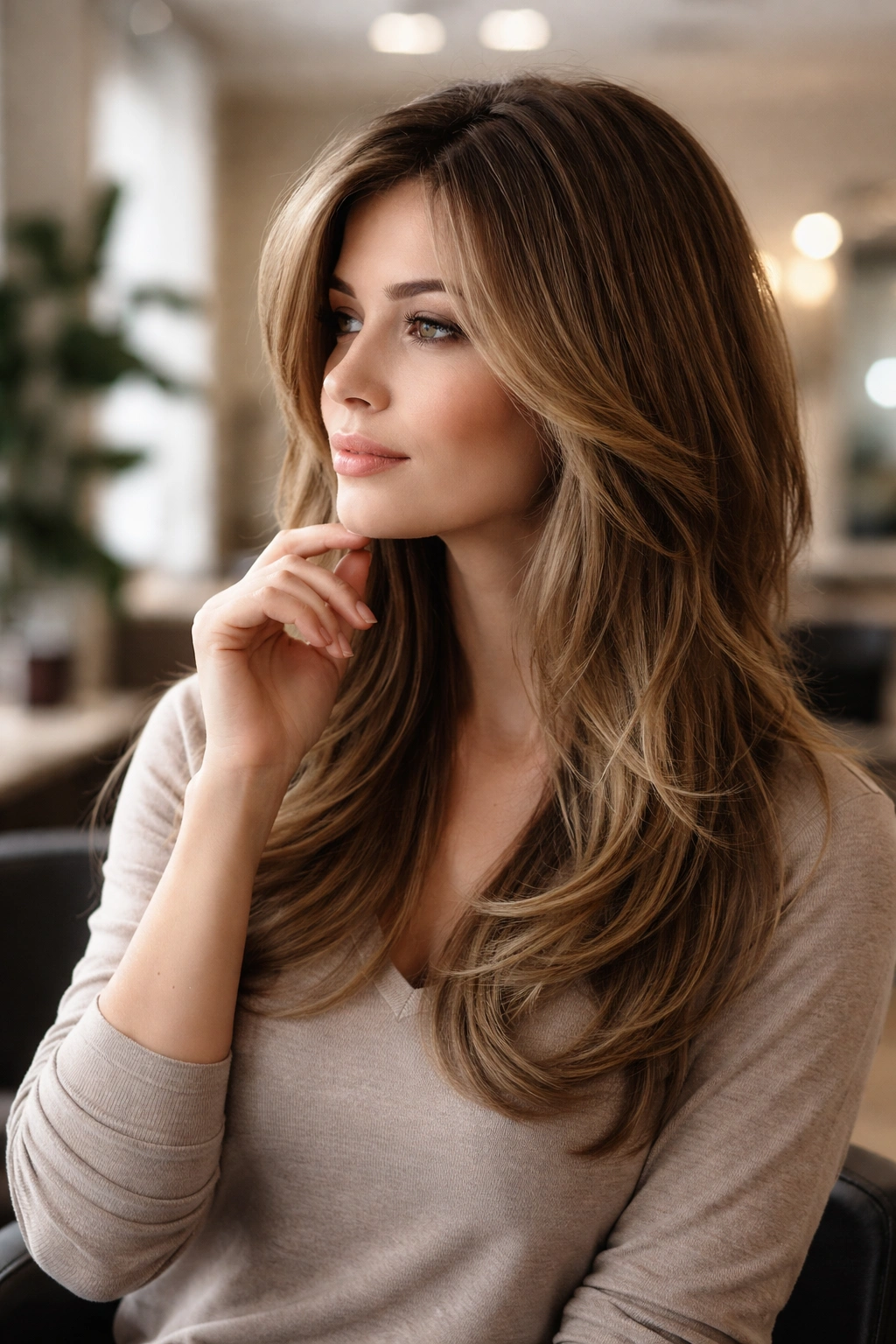
Finding the right layered haircut for an oblong face shape is about understanding that width and horizontal movement are your allies. The cuts above all share a common goal: they use strategically placed layers to add dimension, create visual width, and prevent the vertical lines that can emphasize face length. The key is choosing a style that matches not just your face shape but also your lifestyle, hair texture, and styling preferences.
The beautiful part about these options is that you have genuine flexibility. If you love long hair, textured long layers or feathered layers will serve you beautifully. If you prefer something shorter and bolder, a shag or choppy-bang style delivers impact. If you want something subtle and refined, soft face-framing or minimal layers with blunt ends offer sophistication. The common thread is that all of these cuts have been specifically chosen because they address the particular needs of oblong face shapes.
When you do book an appointment, bring reference photos of the exact style you want, and most importantly, discuss your face shape with your stylist. A skilled colorist or stylist will understand the proportions you’re working with and can adapt these suggestions to your specific features, hair texture, and lifestyle. The right cut can genuinely change how you feel about your appearance—it’s absolutely worth taking the time to find a stylist who gets your vision.
