



Mahogany hair color has a useful little trick: it gives you warmth without pushing all the way into copper, and depth without collapsing into plain brown. On a good head of hair, it looks like dark chocolate with a red ember under the surface. On the wrong formula, it can go muddy fast. That’s why mahogany works best when the shade, placement, and finish are chosen with a little care.
The color sits in a sweet spot that a lot of people miss. It can lean red-violet, red-brown, or almost wine-dark, depending on how much reflect you want and what your starting level looks like. Under indoor light, it may read like a luxe brunette. Outside, the red tones wake up. That shift is half the appeal.
Hair texture changes the whole story, too. Porous hair grabs red pigment quickly, which can make mahogany bolder than you expected. Dense, dark hair tends to hold the brown side of the shade first, so it needs either a richer base formula or a few strategic highlights to keep the color from looking heavy. Small things matter here. A demi-permanent gloss, a root smudge, or a few painted ribbons can change the whole feel.
1. Deep Mahogany Brown With Espresso Depth
Deep mahogany brown is the shade I reach for when someone wants warmth but refuses to look “red.” It’s the most understated version of mahogany hair color, and that’s why it works so well. The finish looks like polished espresso with a faint red-brown pull under the surface.
Why It Feels So Good on Hair
This color is strongest when the brown does most of the talking and the mahogany shows up in motion. Think of it as a low-key brunette with better manners. You get shine, depth, and a soft warmth around the face without going into obvious auburn territory.
Ask for a level 4 or level 5 brown base with a mahogany glaze or red-violet lowlights. That phrasing matters. If you only say “mahogany,” the result can swing too bright or too plum, depending on the formula used.
A blunt bob, long layers, or a sleek blowout all suit this shade. The color needs smoothness to show its polish. Frizz can hide the red-brown glow, which is a shame because that glow is the whole point.
2. Cherry Mahogany Gloss on a Brunette Base
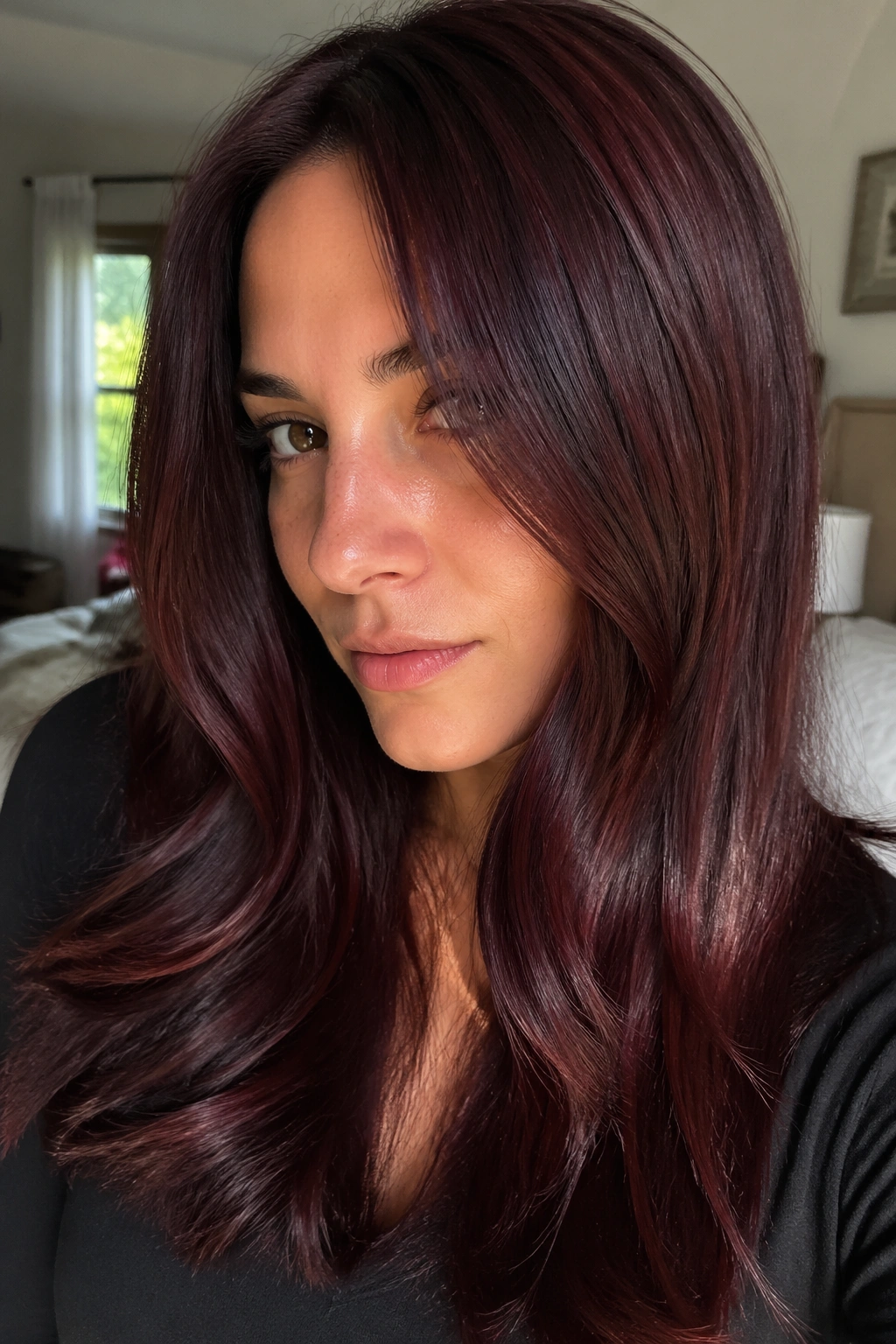
A cherry mahogany gloss gives brunette hair a shiny, almost lacquered finish. It’s one of the easiest ways to test red tones without going fully copper or burgundy. The result sits between cherry cola and dark wine.
Unlike permanent all-over color, a demi-permanent gloss softens the change and keeps the brunette base visible. That makes this a smart option if you like dark hair but want it to look richer in natural light. The color should feel close, not loud.
Best for:
- Brunettes who want a red shift without a dramatic commitment
- Medium to deep hair bases that already have warmth
- Straight or softly wavy styles that show shine
- Anyone who likes color that changes a little in different light
Pro tip: ask for the gloss to be placed a touch heavier through the mid-lengths and ends. That keeps the root area believable and prevents the whole head from looking painted on.
3. Mahogany Balayage That Keeps the Roots Dark
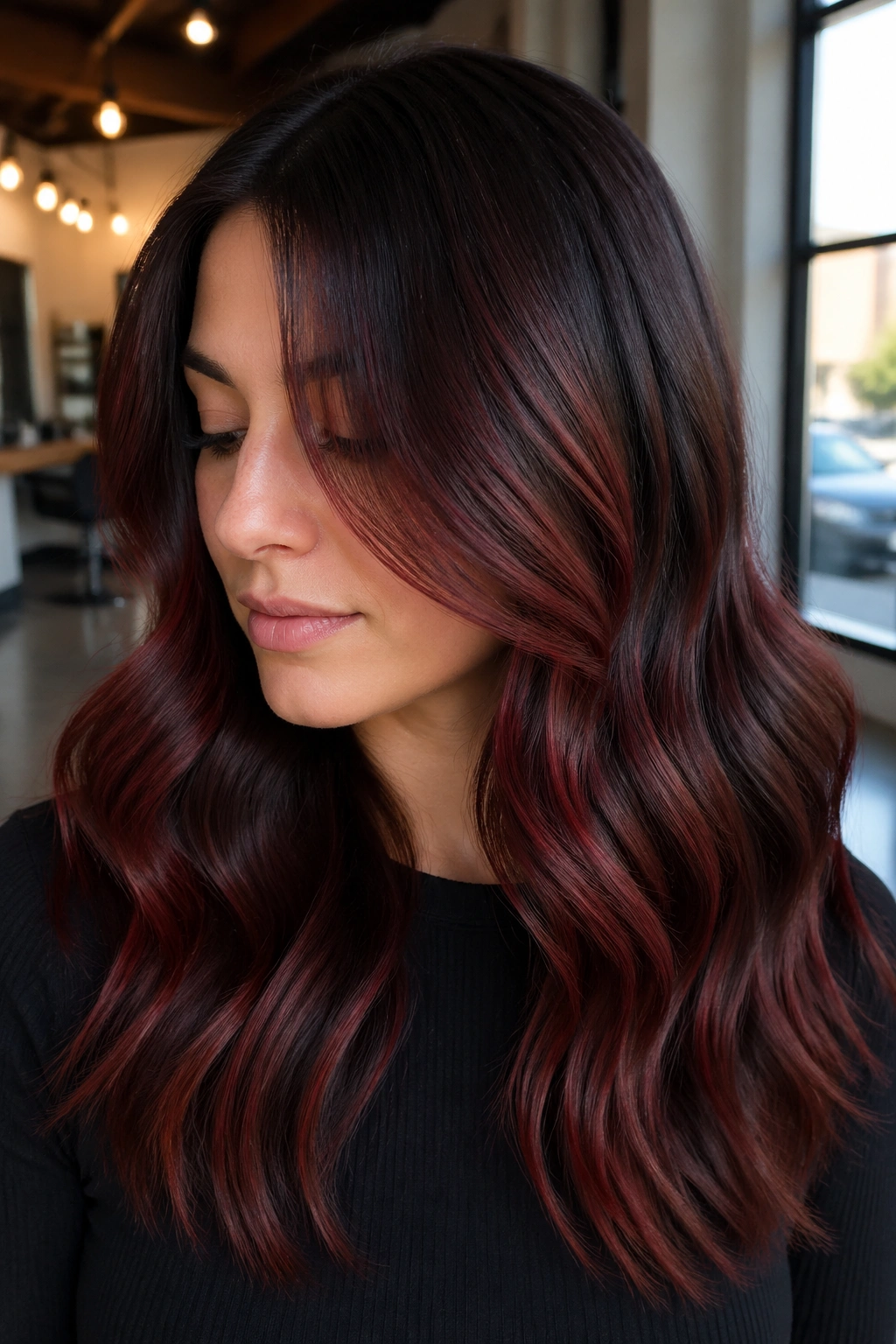
Can mahogany balayage look natural? Absolutely, if the root stays grounded. Dark roots with hand-painted mahogany ribbons give you the best parts of red-brown color without a hard line of regrowth. It’s especially good on shoulder-length cuts and loose waves.
What Makes It Work
Balayage is all about placement, not blanket coverage. The colorist sweeps mahogany through the mid-lengths and ends, then leaves the top area deeper so the hair still feels full. That contrast keeps the shade from flattening out.
Ask for soft mahogany ribbons 1 to 2 shades lighter than your base, painted around the face and through the outer layers. If the pieces are too thick, the look turns stripey. Too thin, and you barely see the warmth.
How to Wear It
- Loose bends show the dimension best
- A center part keeps the ribbons even
- A side part brings more warmth to one side of the face
- Air-dried waves make the red tones look softer
This is one of those color ideas that looks expensive without screaming for attention. Good hair color should do that more often.
4. Face-Framing Mahogany Money Piece
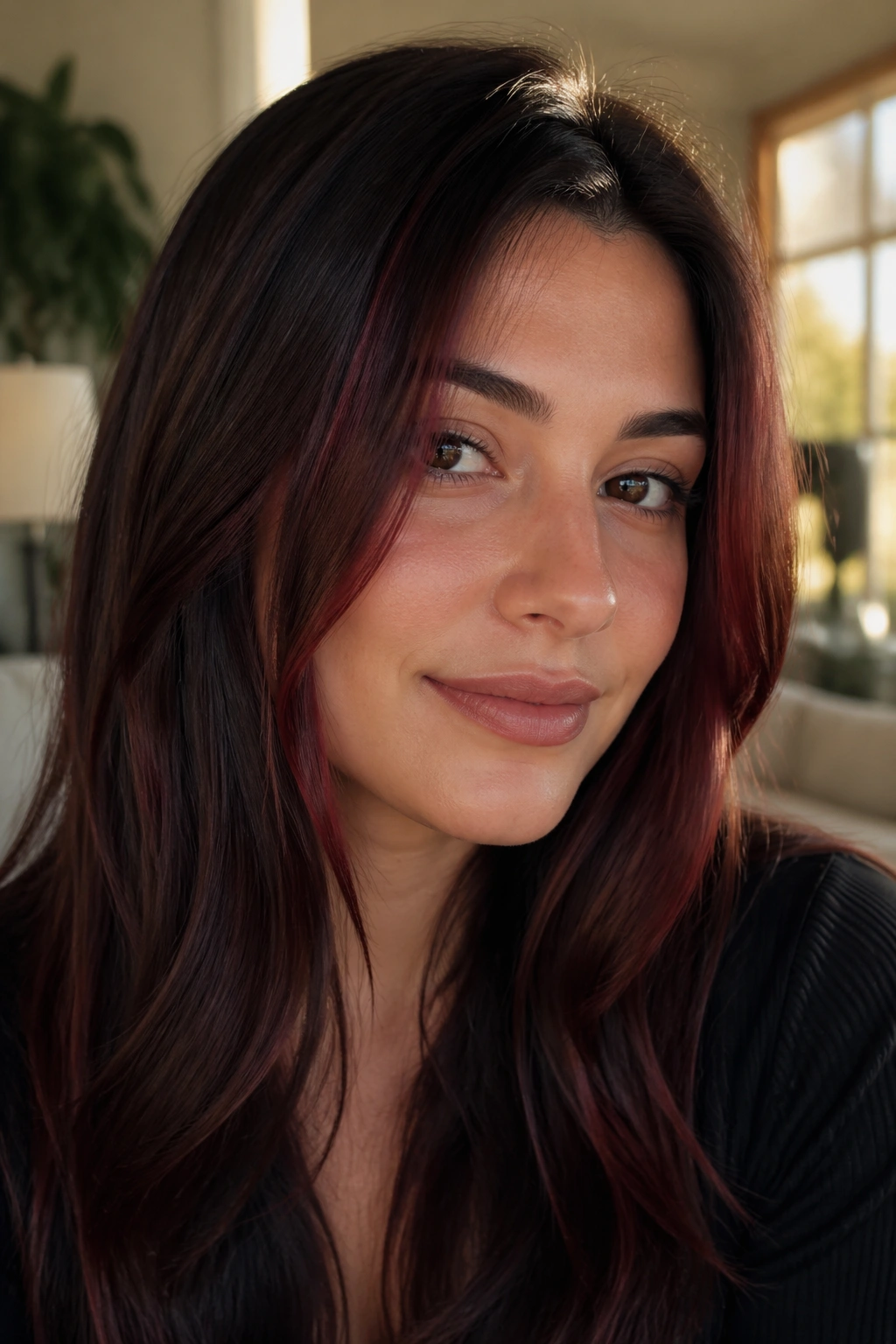
A mahogany money piece can do a lot of work with very little color. Two face-framing sections, lifted just enough to catch the light, can make the whole style look warmer and brighter. It’s a clean answer for anyone who wants change but doesn’t want to dye every inch of hair.
Picture a dark brunette base with mahogany pieces that start near the cheekbone and soften into the front layers. That placement pulls the eye forward. It also makes skin look a little warmer, especially under daylight or soft indoor lighting.
The trick is keeping the front pieces rich, not coppery. Mahogany should stay brown-red, not orange-red. That distinction matters more than people think. Too much orange and the whole effect feels less polished.
This works especially well with curtain bangs, shoulder-length layers, or a lob tucked behind the ears. The color moves every time you turn your head. That movement is the whole appeal.
5. Auburn Mahogany Lob With Soft Movement
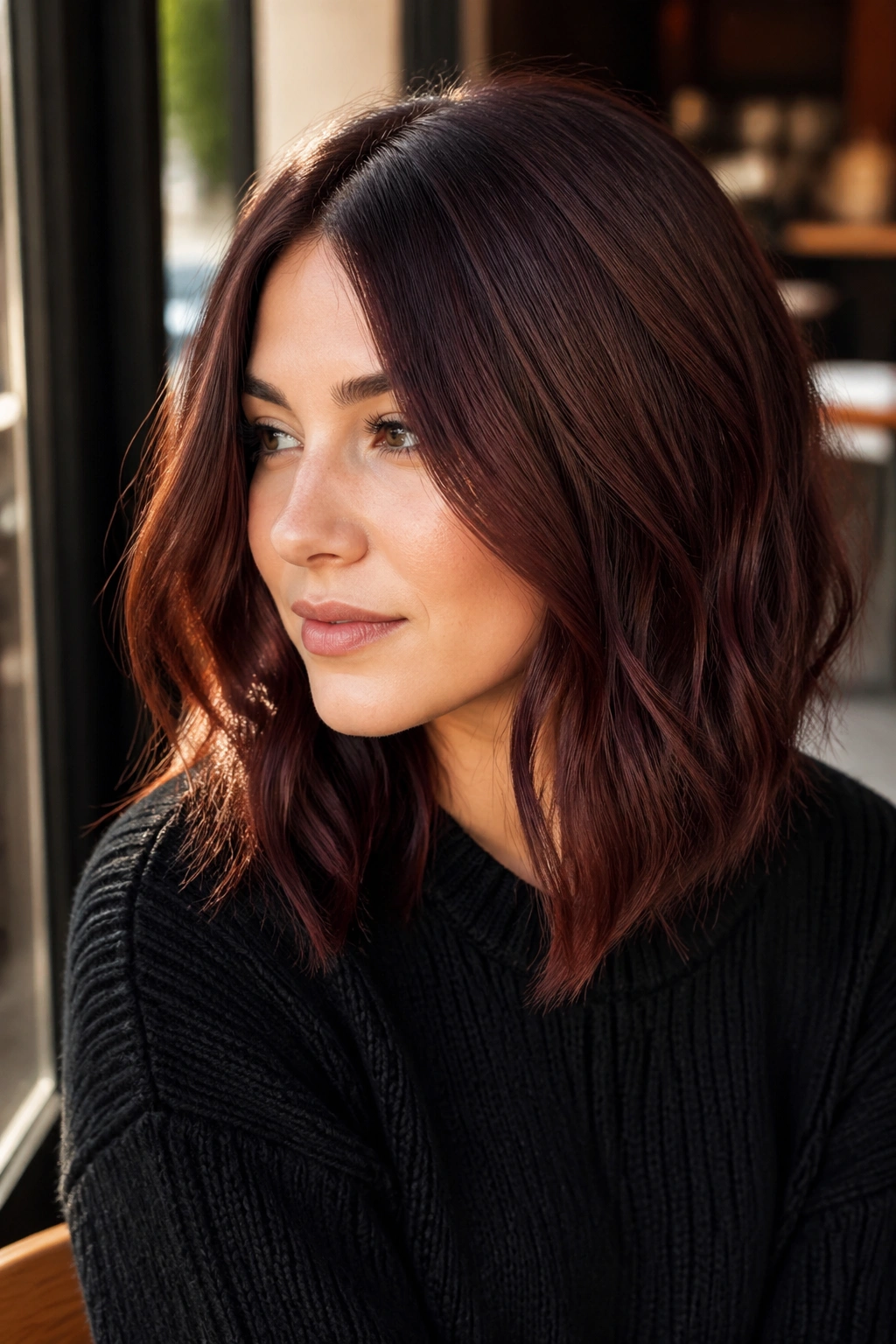
An auburn-leaning mahogany lob is where the color starts to feel more playful. It still belongs to the mahogany family, but the red side shows a little more clearly. On a shoulder-length cut, that warmth has room to breathe.
A lob gives the color a nice edge because the ends move around your collarbone and catch the light. That means even a subtle formula reads as dimensional. The cut does part of the work for you, which is always nice.
The best version isn’t flat from root to tip. Ask for soft layering around the bottom third so the ends don’t hang in one solid block of color. When mahogany is cut into movement, it looks richer, not louder.
This shade suits people who like a warm brunette but want more life than chestnut. It’s especially flattering if your wardrobe leans cream, camel, black, or deep green. Those colors make the red-brown tones feel even more intentional.
6. Black Cherry Mahogany for Bold Warmth
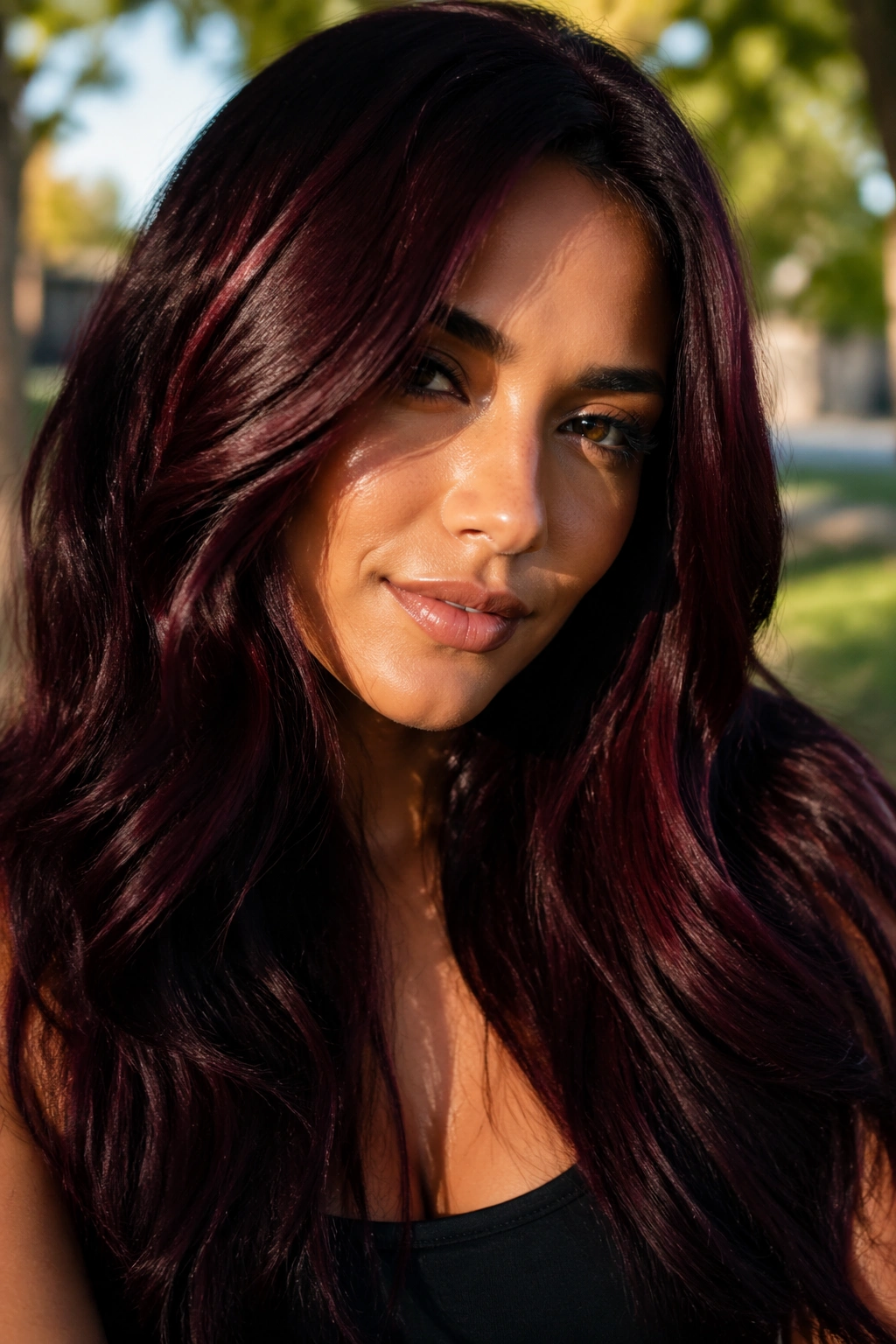
Black cherry mahogany lands on the deeper side of the spectrum. It reads darker than classic auburn and more dramatic than standard brown, with a berry tone that shows up best in bright light. The mood is moody, but not cold.
Why It Stands Apart
Unlike burgundy, which can lean cool and wine-like, black cherry mahogany keeps a brown base under the red. That makes it softer around the edges and easier to wear if you do not want your hair announcing itself from across the room.
This shade looks strongest on thicker hair and longer lengths. The depth gives the red a place to hide, then reveal itself when the hair moves. On a blunt cut, it can look almost mirror-dark. On waves, it looks more alive.
If you want this effect, ask for a dark brown base with cherry mahogany reflect and a glossy finish. The gloss matters. Without shine, the red can read dull instead of rich. That’s a pretty common mistake, and it’s easy to avoid.
7. Cinnamon Mahogany Layers
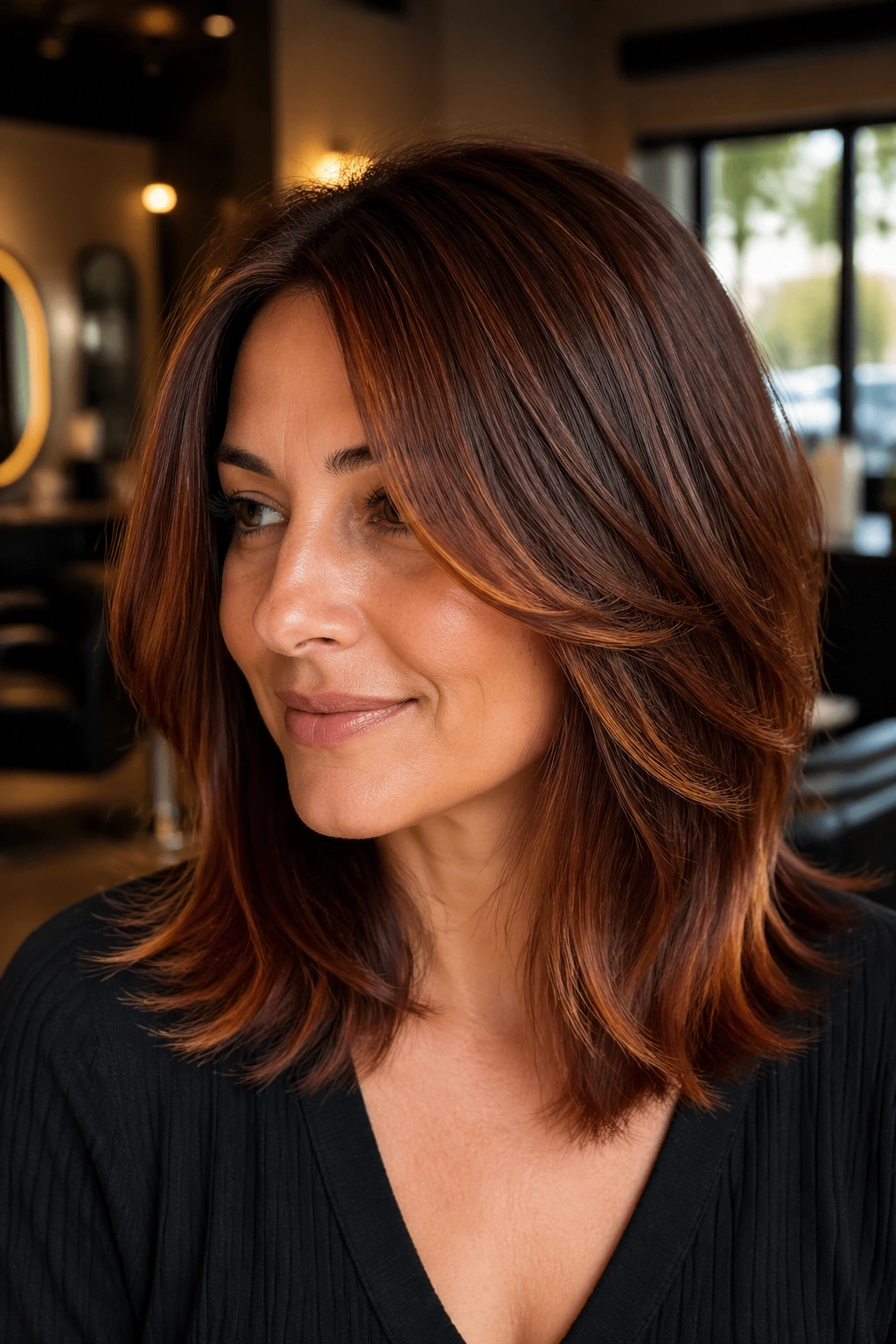
Cinnamon mahogany is warmer and spicier than the deeper mahogany looks. It has the same brown-red backbone, but the red-brown pieces show more clearly along the layers. The whole style feels softer, brighter, and a little easier to read from a distance.
What to Tell Your Colorist
- Ask for a warm mahogany brown base with cinnamon lowlights
- Keep the front pieces 1 shade lighter than the crown
- Put the richest color through the mid-lengths where the hair moves
- Leave the ends slightly warmer so the cut doesn’t look heavy
That last part matters. If the ends are too dark, layers can disappear. Warmth near the ends keeps everything looking feathered.
This is a good pick for medium skin tones, but it can flatter plenty of others too if the formula stays brown-first. The shade has a cozy feel that works well with textured blowouts, soft curls, and even straight hair with a little bend at the bottom.
8. Smoky Mahogany With Cool Lowlights
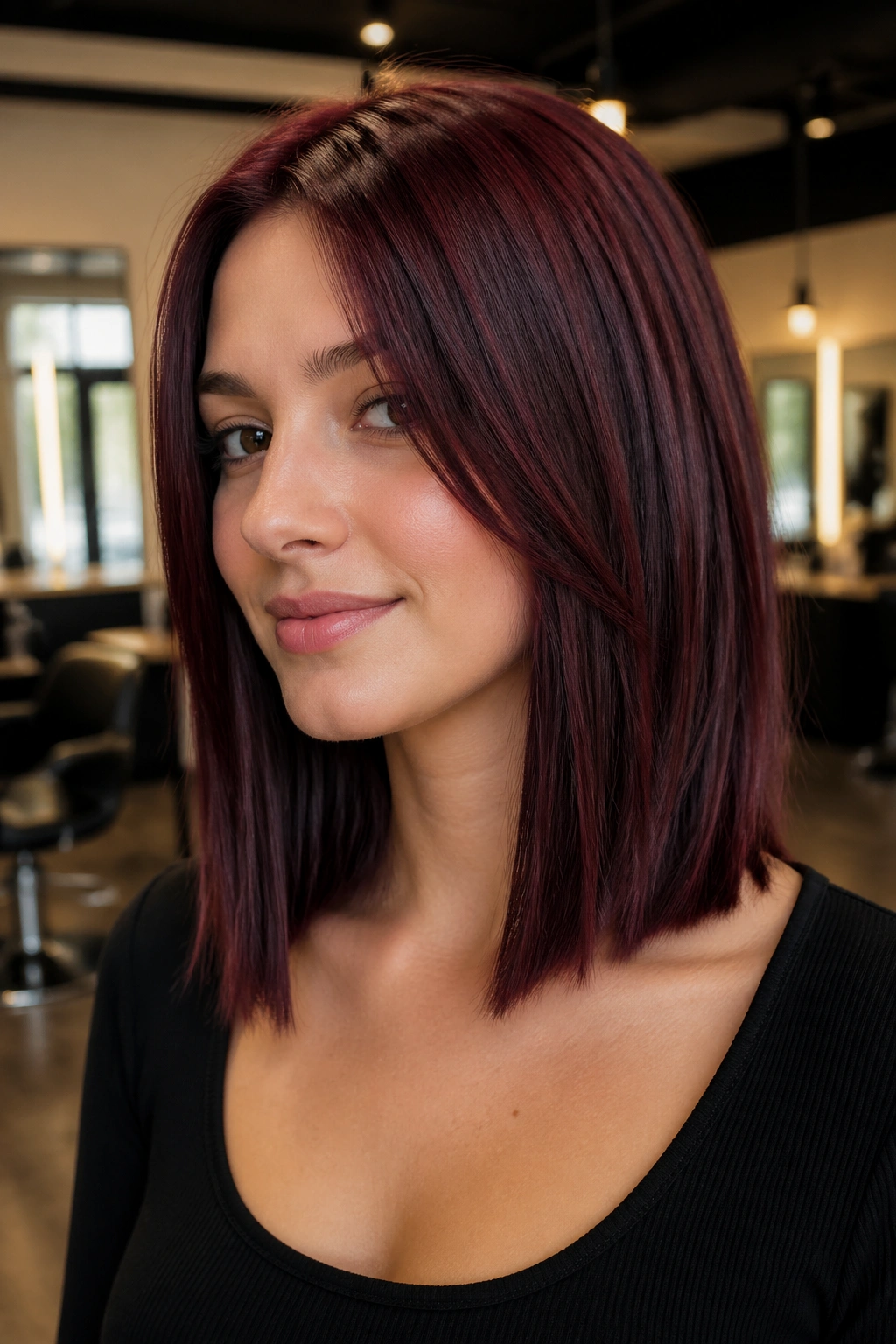
Can mahogany lean quieter? It can, and smoky mahogany is the proof. This version keeps the red-brown core but adds cool lowlights to calm the warmth down. The result looks refined instead of fiery.
The cool lowlights stop the color from getting too sweet. They also add shadow through the hair, which makes the mahogany pieces pop more by contrast. That contrast is subtle, but it does a lot.
This shade is a smart choice if you like red tones in theory but not when they go too bright. It works especially well on straight styles, blunt bobs, and long one-length cuts where every color shift is easy to see.
Best for: people who want mahogany hair color with a little restraint, and people whose wardrobes lean black, charcoal, navy, or muted olive. The cooler clothes bring out the depth instead of fighting the warmth.
9. Rosewood Mahogany Midlength Cut
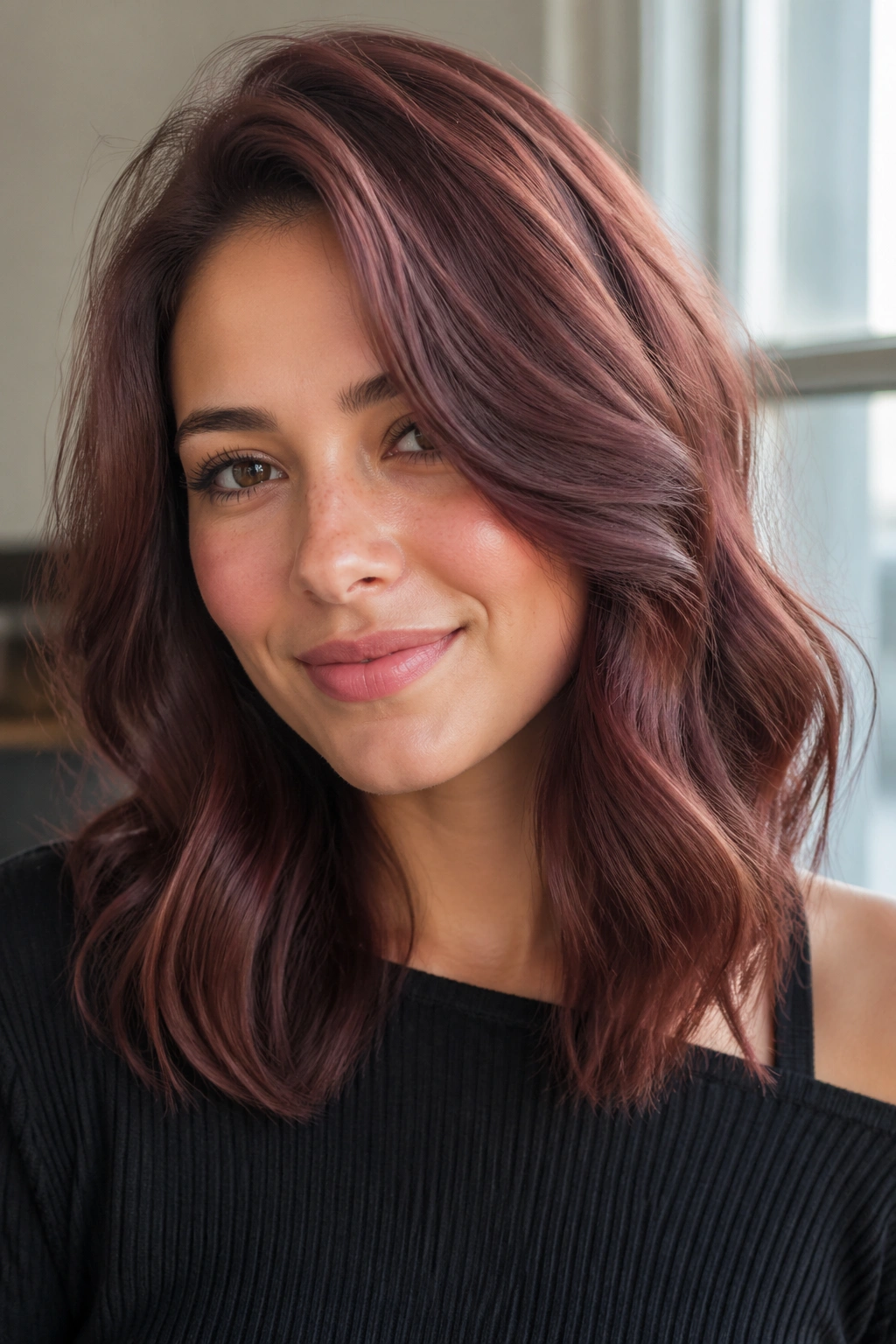
Rosewood mahogany is softer than black cherry and more romantic than a standard brunette red. The tone sits between dusty rose and brown-red, which sounds delicate on paper and looks even better in person. It has that velvety finish some shades try for and miss.
A midlength cut keeps the color from feeling heavy. The shoulder area gives the hair a natural pause, so the red tones can show up in layers instead of one block. That makes the whole look feel lighter, even if the color itself is deep.
A straightened midlength cut gives rosewood mahogany a smooth, almost satin finish. Wavy styling makes it feel more relaxed. Either way, the color works best when the surface looks healthy and the ends are clean.
There’s a reason this shade keeps showing up in salons. It flatters hair that needs a little life without going into obvious fashion-color territory. It’s polished, but not fussy.
10. Mahogany Ombre From Dark Roots to Red Ends
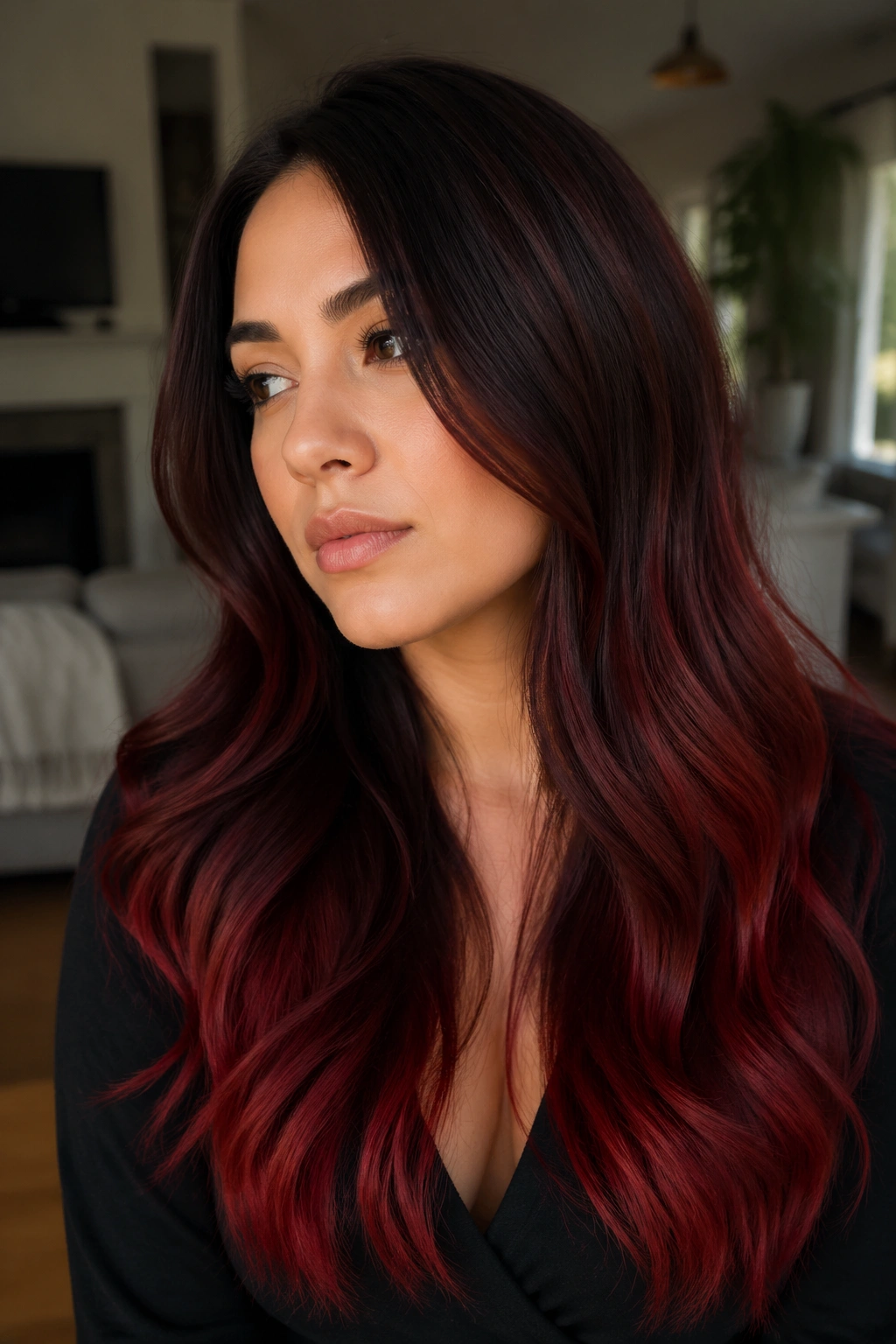
Mahogany ombre is the easygoing cousin of full red-brown coverage. Dark roots melt into mahogany mid-lengths, then soften into richer red ends. That gradient gives you warmth where you want it and depth where you need it.
For anyone who hates visible regrowth, this one is a gift. The root shadow hides the grow-out line, and the lighter ends keep the style from looking flat. It also makes curls and waves look fuller because every bend picks up a different tone.
A Good Ask at the Salon
- Keep the root at a deep brown or soft black-brown
- Melt into mahogany through the middle third
- Add the richest red-brown at the last 2 to 4 inches
- Finish with a gloss so the transition looks smooth
Ombre can go harsh if the bands are obvious. The blend should feel like the color is shifting naturally, not stepping down in hard blocks.
11. Copper-Kissed Mahogany Highlights
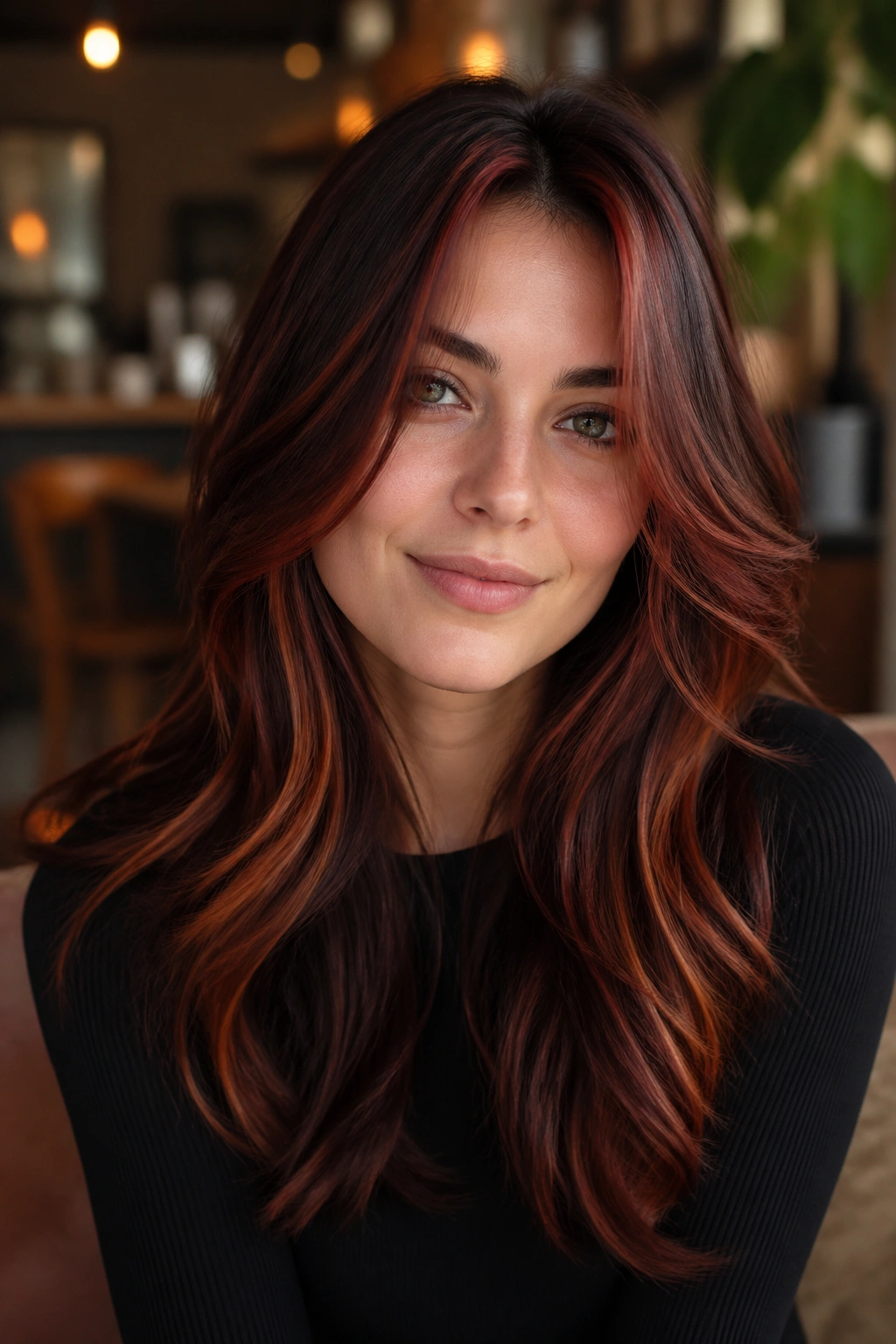
Copper-kissed mahogany is for people who want more brightness and are not shy about it. The copper accent pulls the mahogany into a warmer, slightly flashier place. It still belongs to the red-brown family, but the shine gets louder.
That’s the big difference here. Mahogany alone can sit back. Copper-kissed mahogany moves forward. A few brighter strands around the crown or along the face can make the entire haircut look more energetic.
This works well on layered cuts, because the lighter pieces separate the shape. If the hair is all one length, the copper can feel too obvious. Layering gives it somewhere to go.
If you wear gold jewelry, tan shades, rust, or cream, this color tends to look especially good. Those tones echo the warm reflect in the hair and make the copper pieces look intentional rather than random.
12. Mahogany on Curly Hair With Ribbon Dimension
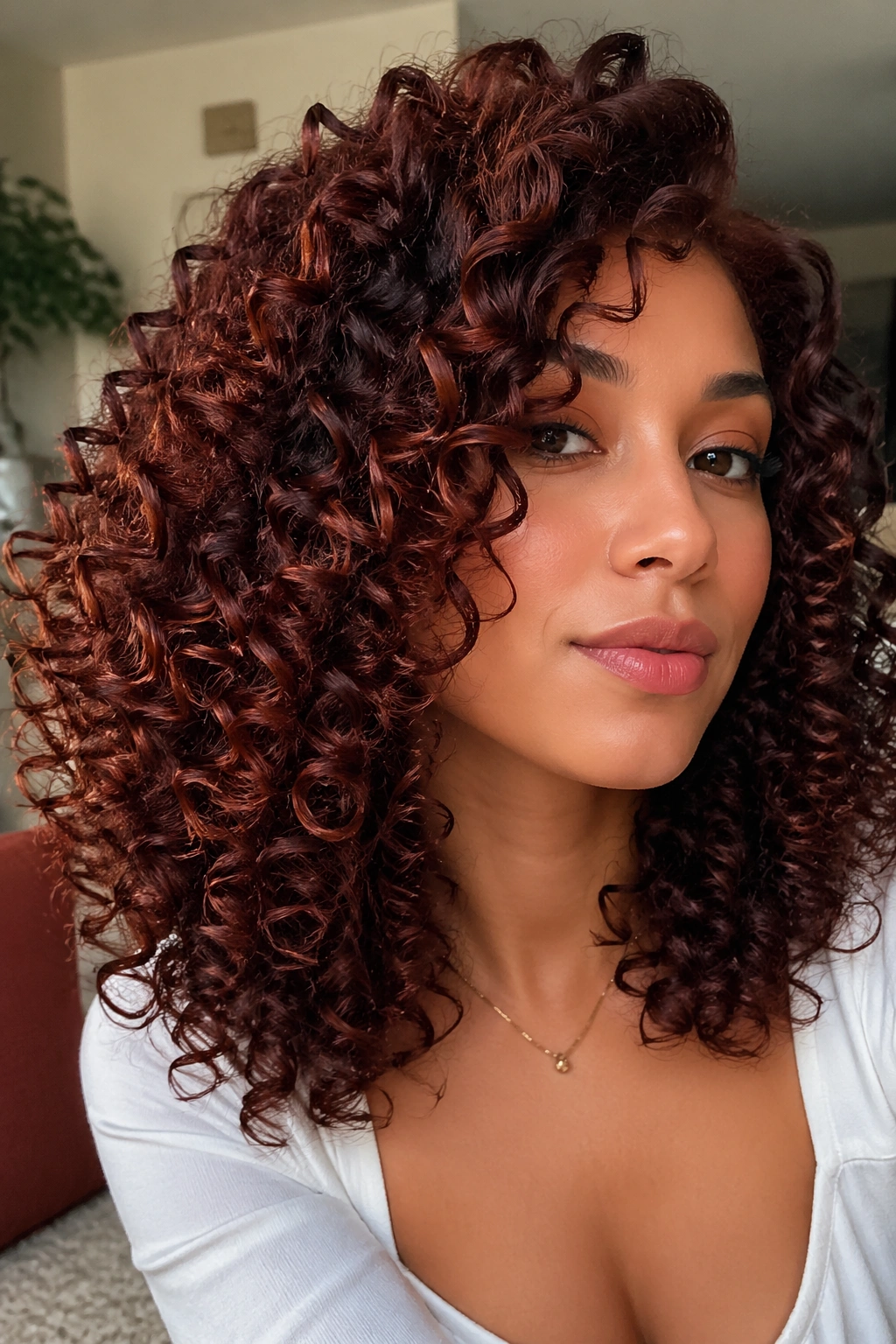
Curly hair loves mahogany. The curl pattern naturally breaks the color into ribbons, which means even a single formula can look multidimensional. Each coil catches the light in a slightly different way, and mahogany gives you enough warmth to make that visible.
Why Curl Pattern Matters
The tighter the curl, the more the color appears to shift from brown to red as the hair moves. That means you do not need massive contrast to get depth. A 1- to 2-level lift can be plenty.
The smartest placement usually starts around the face and the outer layer, where the curls are most visible. If the mahogany sits only underneath, you lose the effect. If it sits everywhere in equal strength, you lose the ribboning.
How to Style It
- Use a curl cream with soft hold
- Diffuse on low heat to keep definition
- Scrunch out the cast once fully dry
- Add a light gloss serum, not a heavy oil
Mahogany on curls has a cozy, plush feel that brown alone can’t quite match. It’s one of the most flattering ways to wear warm color without making the hair look overdone.
13. Plum-Mahogany Blend for Deeper Red Depth
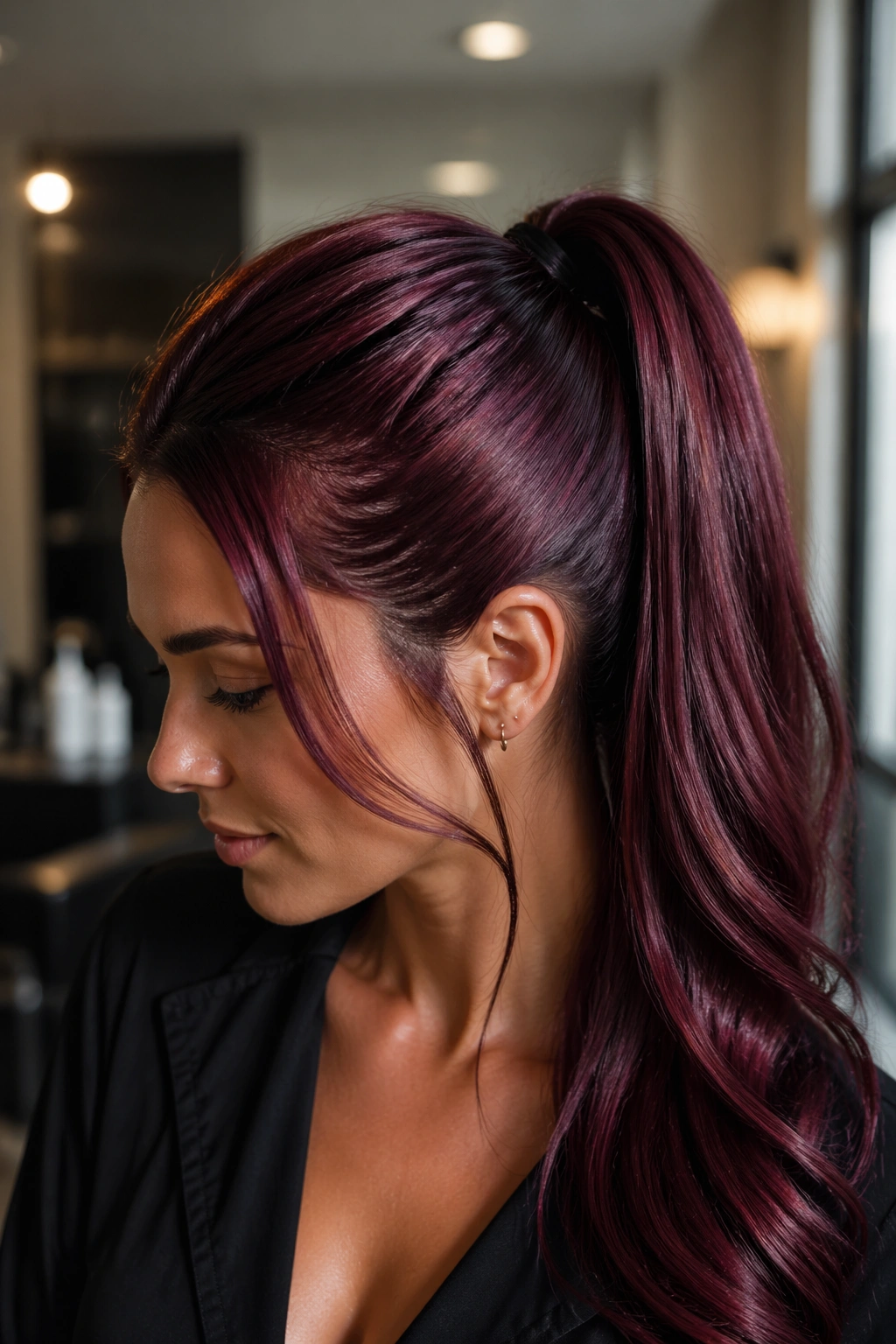
Plum-mahogany is what happens when mahogany decides to go a little darker and a little moodier. The violet side pulls the color away from copper and into berry territory. It’s still warm enough to feel rich, but there’s more shadow in it.
Unlike burgundy, which can sometimes look wine-red first and brown second, plum-mahogany feels softer and more wearable in everyday light. That’s useful if you want a deep red shade that doesn’t shout.
This version looks especially good on medium to deep hair because the base color can support the violet reflect. On lighter bases, the plum can take over too much and look more purple than mahogany. That might be your thing. It might not.
A sleek ponytail, long layers, or a shiny blowout suits this shade best. The color needs surface shine to show both the brown and the plum sides. Dull styling hides the whole point.
14. Chestnut Mahogany for the Softest Warmth
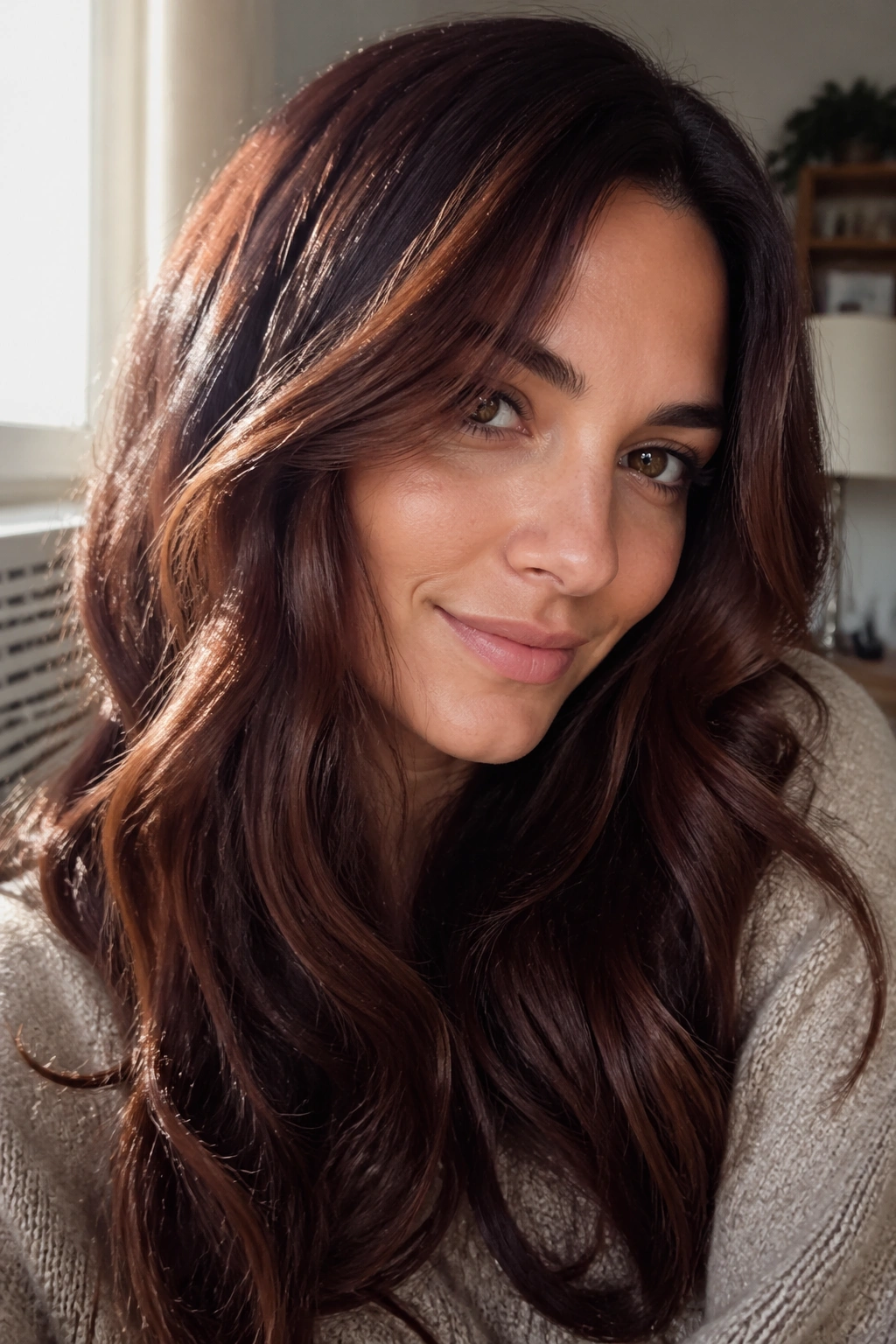
Chestnut mahogany is for people who want warmth but not drama. It’s the gentlest version on this list, with brown taking the lead and mahogany just peeking through. The effect is soft, easy, and quietly flattering.
The shade works well in conservative settings because it does not read as a vivid red. It reads as a richer brunette. That difference matters more than any salon buzzword. You can still get the warmth you want without feeling like your hair is wearing a costume.
This color also tends to age well on the cut. As it fades, it usually softens instead of turning brassy right away, especially if the formula leans brown-red instead of orange-red. A soft gloss every few weeks keeps that chestnut finish alive.
If you like beige sweaters, dark denim, or tan outerwear, chestnut mahogany has a lovely way of picking up those colors. It’s the shade for people who want hair that looks expensive in a quiet room.
15. Mahogany Peekaboo Panels Under Dark Hair
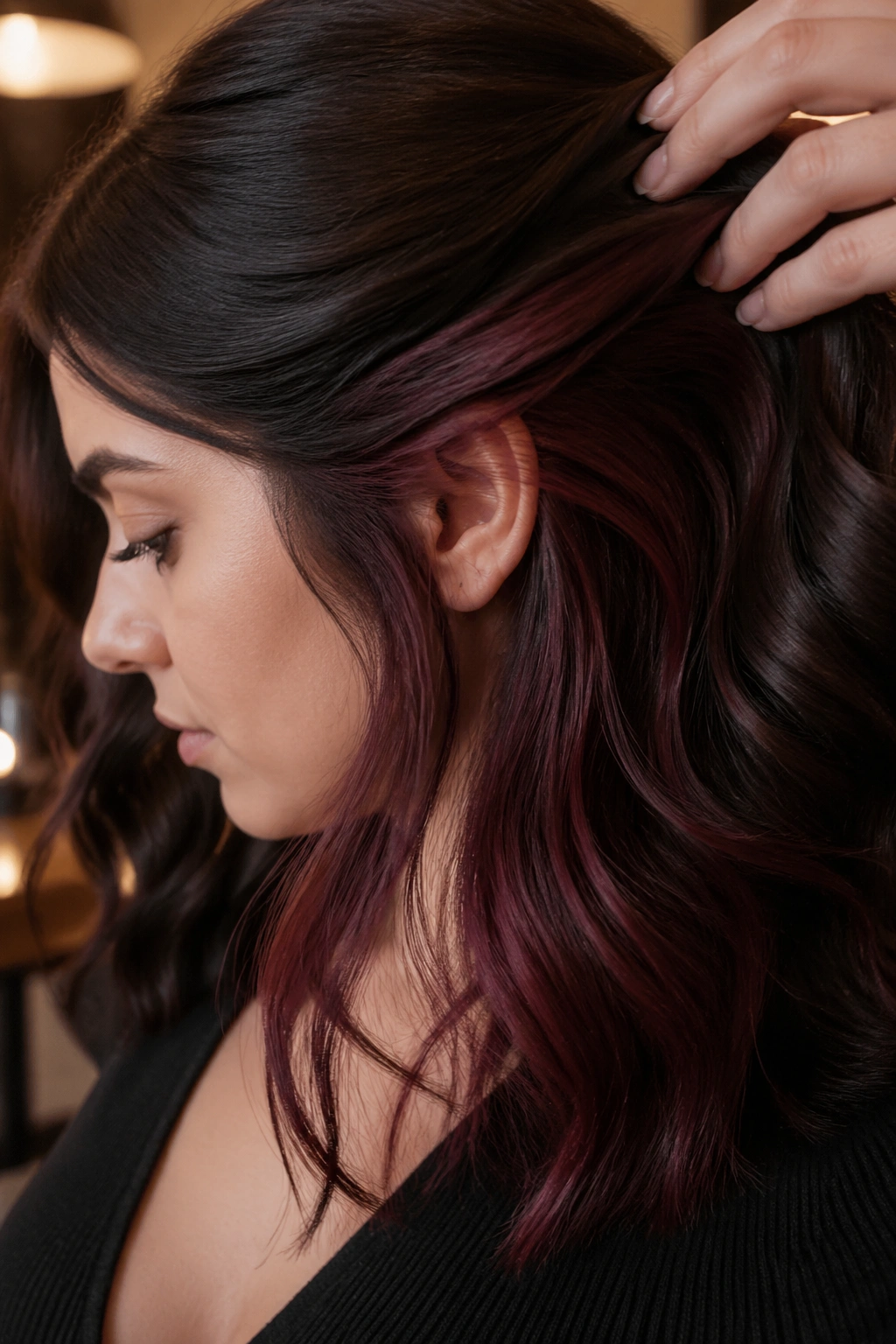
Peekaboo mahogany is one of my favorite ideas because it gives you color without changing the whole head. The mahogany panels hide under the top layer, then flash when you tuck your hair behind your ear or twist it into a half-up style.
That hidden placement makes the color feel personal. You get a burst of red-brown depth only when the hair moves. It’s especially fun on long bob lengths, shag cuts, and midlength layers where the top section can cover and reveal the color easily.
Where to Place the Panels
- Under the crown for subtle movement
- Behind the ears for small flashes
- At the nape for a surprise reveal
- Through the lower layers if you wear updos often
A peekaboo placement can save you from the maintenance of full red color. It also lets you wear mahogany in a work setting without committing every strand to the same shade. That flexibility is the whole appeal.
16. Velvet Mahogany Pixie Cut
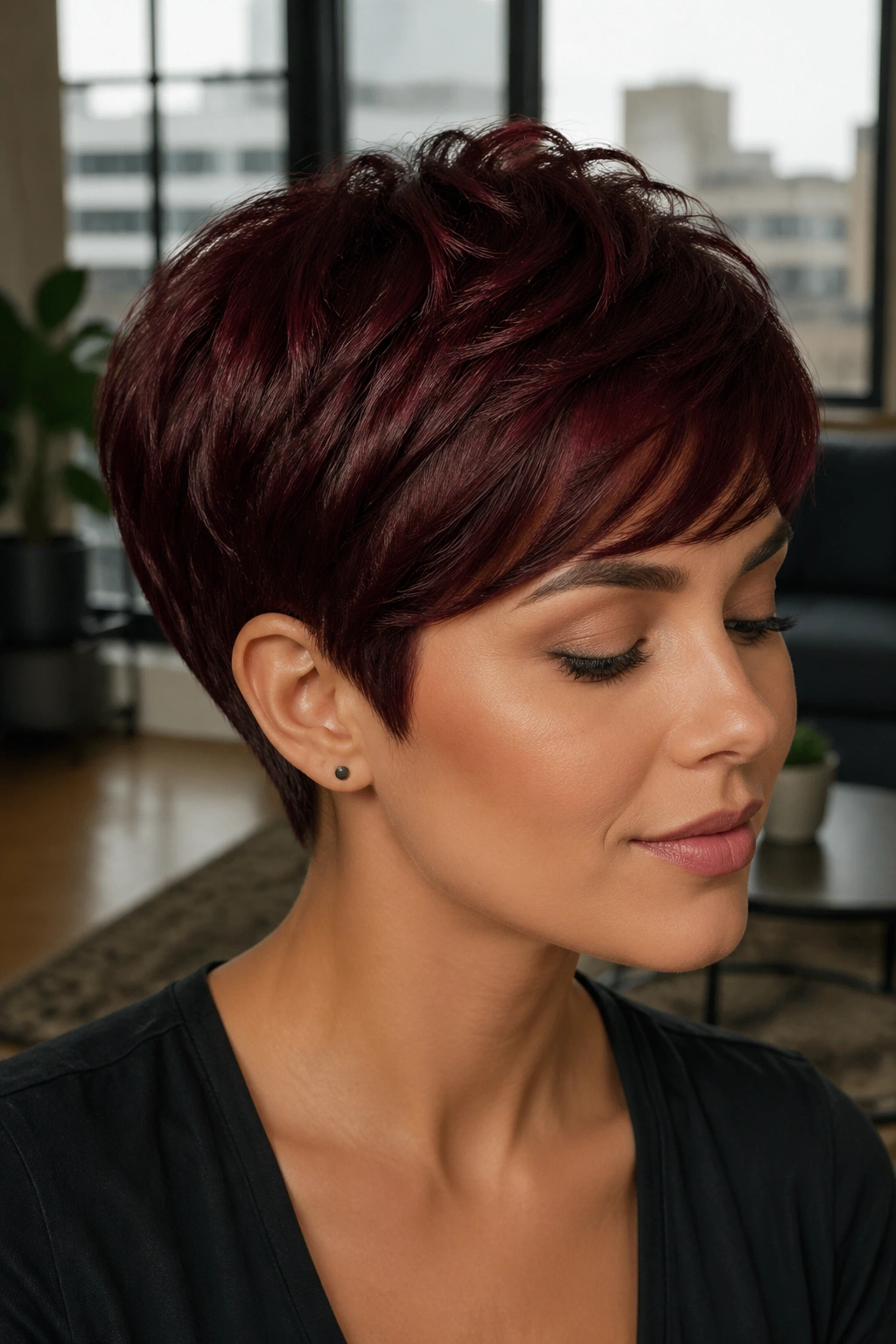
Short hair can carry mahogany beautifully, and a pixie cut is one of the best places to show it. The short length exposes the shine, which matters because mahogany looks richest when the surface reflects light. A velvet finish is the goal here.
A pixie also keeps the color from feeling too heavy. On long hair, dark mahogany can sometimes sit like a blanket. On a cropped cut, the same shade feels sharp and chic. There’s less hair to hide the red tones, so every line of the haircut becomes clearer.
Why Short Hair Loves This Tone
The color pulls focus to the cheekbones, ears, and eyes. That’s a nice side effect of darker red-brown shades; they frame the face instead of fighting it. If the cut has a little texture on top, the mahogany catches even more light.
A soft side-swept fringe, a textured crown, or a tapered nape all work well here. Keep the finish glossy, not stiff. The best pixie color always looks touchable.
17. Dimensional Mahogany Ribbons on Wavy Hair
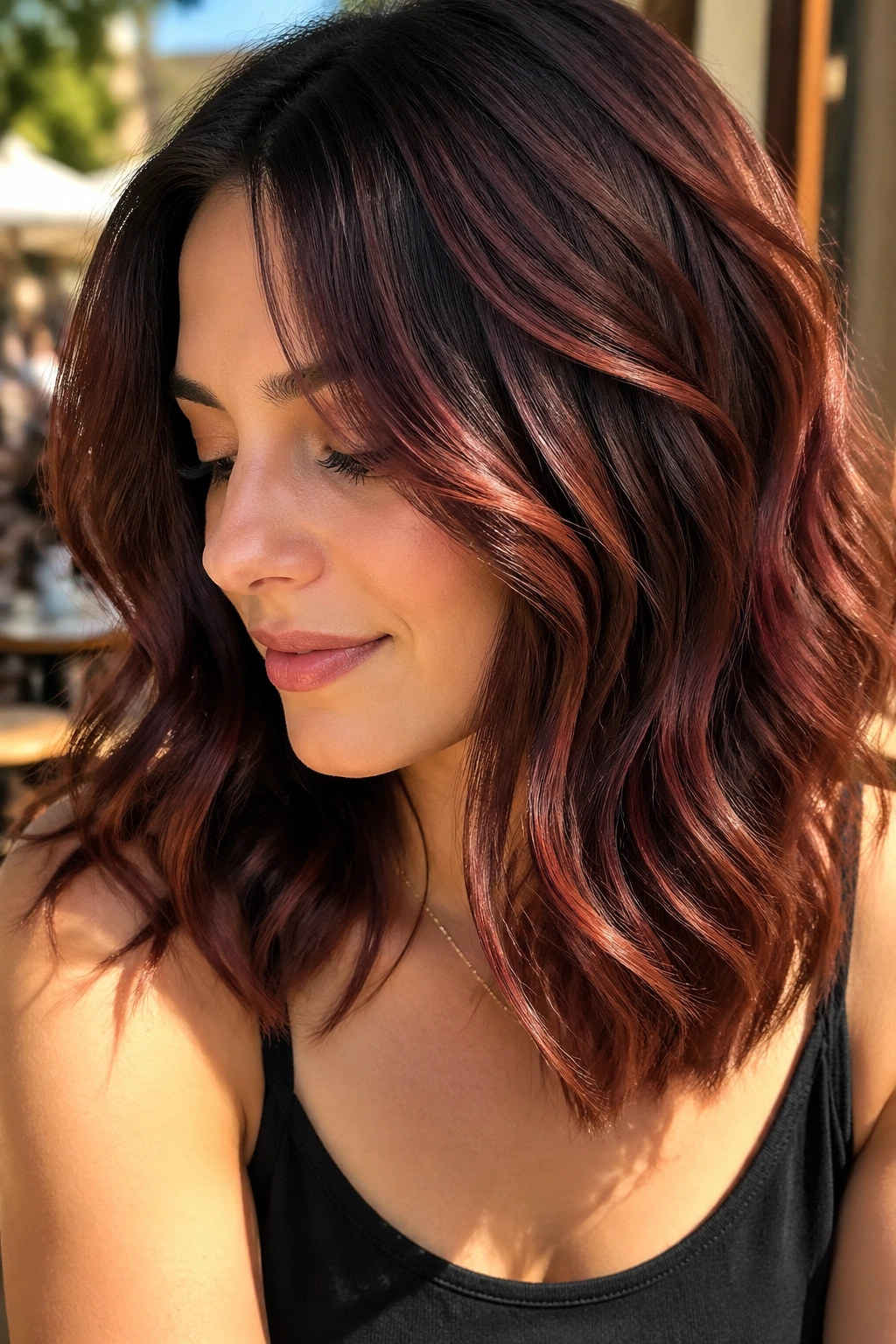
Wavy hair and mahogany ribbons are a strong match because the bend in the hair exposes each tone as it moves. You do not need much contrast for the color to read dimensional. Even small shifts from brown to red-brown can show up clearly on a wave pattern.
How to Ask for Ribbons
Ask for thin mahogany ribbons painted through the outer layer and around the face, with deeper color left near the root. That keeps the style from turning stripey and gives the waves places to break up the shade.
A wave cut benefits from color that changes every few inches. Too much uniformity makes the hair look like one flat block. A ribbon technique keeps the eye moving.
If your hair is naturally bendy, this shade almost styles itself. A 1-inch curling iron, brushed out gently, gives the ribbons a softer look. Air-dried waves do the same job with less fuss. Either way, the mahogany depth shows up in motion first, which is exactly where it should live.
18. Sable Mahogany With Toasted Ends
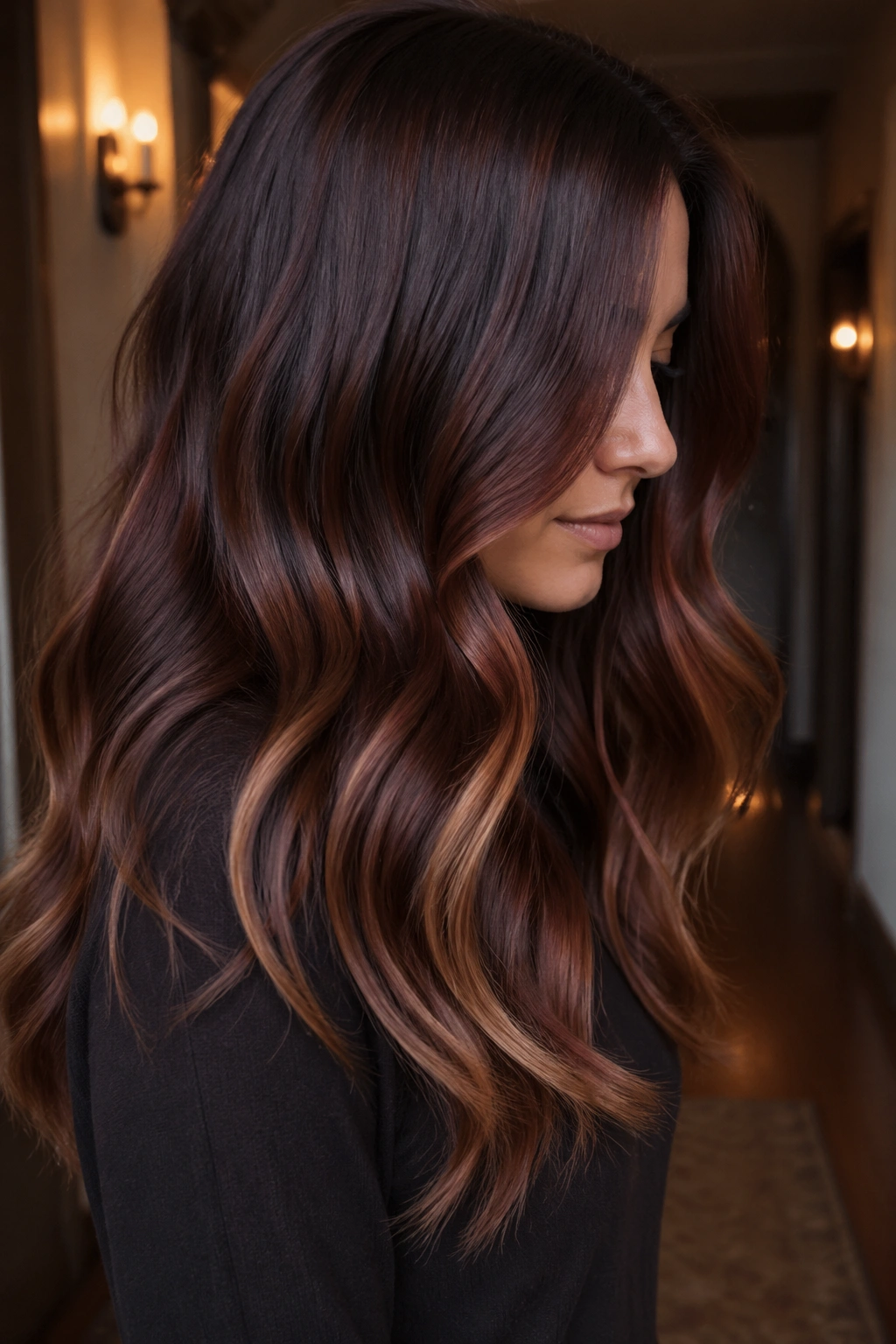
Sable mahogany starts dark and ends a touch lighter, but the lightness stays in the warm brown-red family. The name sounds fancy, but the idea is simple: deep brunette roots, mahogany through the body, and toasted ends that keep the cut from feeling too heavy.
This is a nice option for longer hair. Length can swallow color if the formula is too even, and sable mahogany avoids that by building contrast near the bottom. The ends are not blonde, not even close. They’re just warm enough to show the shape.
It works especially well on layered cuts and blowouts with movement at the ends. A one-length style can still wear it, but layers make the gradient more visible. If you want the color to feel rich instead of dark, this is the detail that matters.
The look is polished, a little serious, and easy to wear. There’s no loud red moment here. Just depth that keeps unfolding as the hair moves.
19. Glossy Mahogany Straight Lob
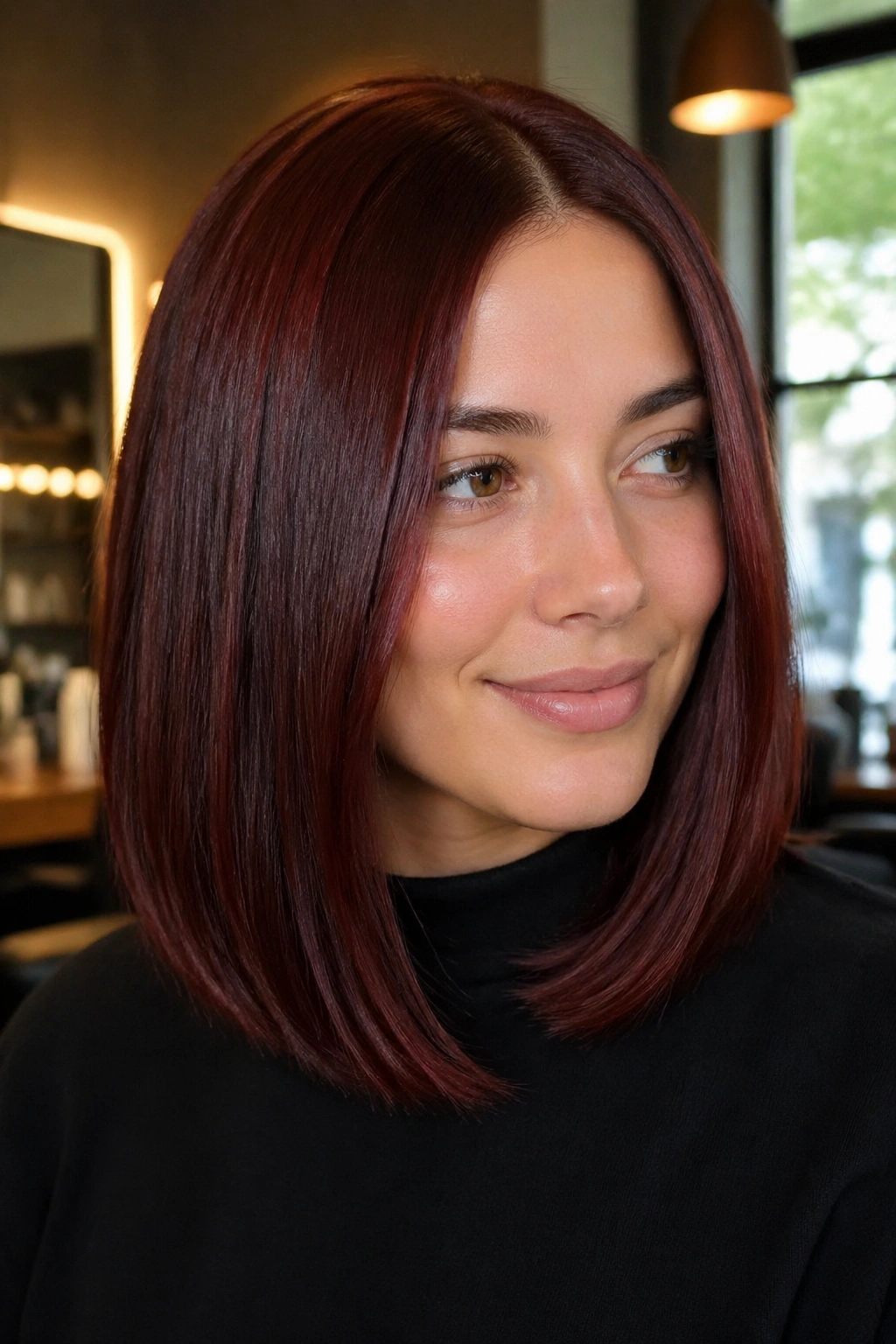
Why do straight cuts and mahogany get along so well? Because the smooth surface gives the color room to shine. A straight lob with a glossy mahogany finish looks sleek, clean, and slightly reflective, which is exactly what this shade wants.
The lob length keeps the hair close enough to the face that the red-brown reflect shows up, but long enough to prevent the shade from feeling severe. That balance is why the style works so often. It’s structured without looking hard.
A middle part makes the color look modern and even. A side part creates a little more softness at the front. Either way, the hair should be blown out with the ends tucked under just enough to catch the light.
This is one of those looks that gets better the healthier the hair is. Split ends swallow shine. A clean hemline and a smooth finish let the mahogany do its job.
20. Sunlit Mahogany With Micro-Highlights
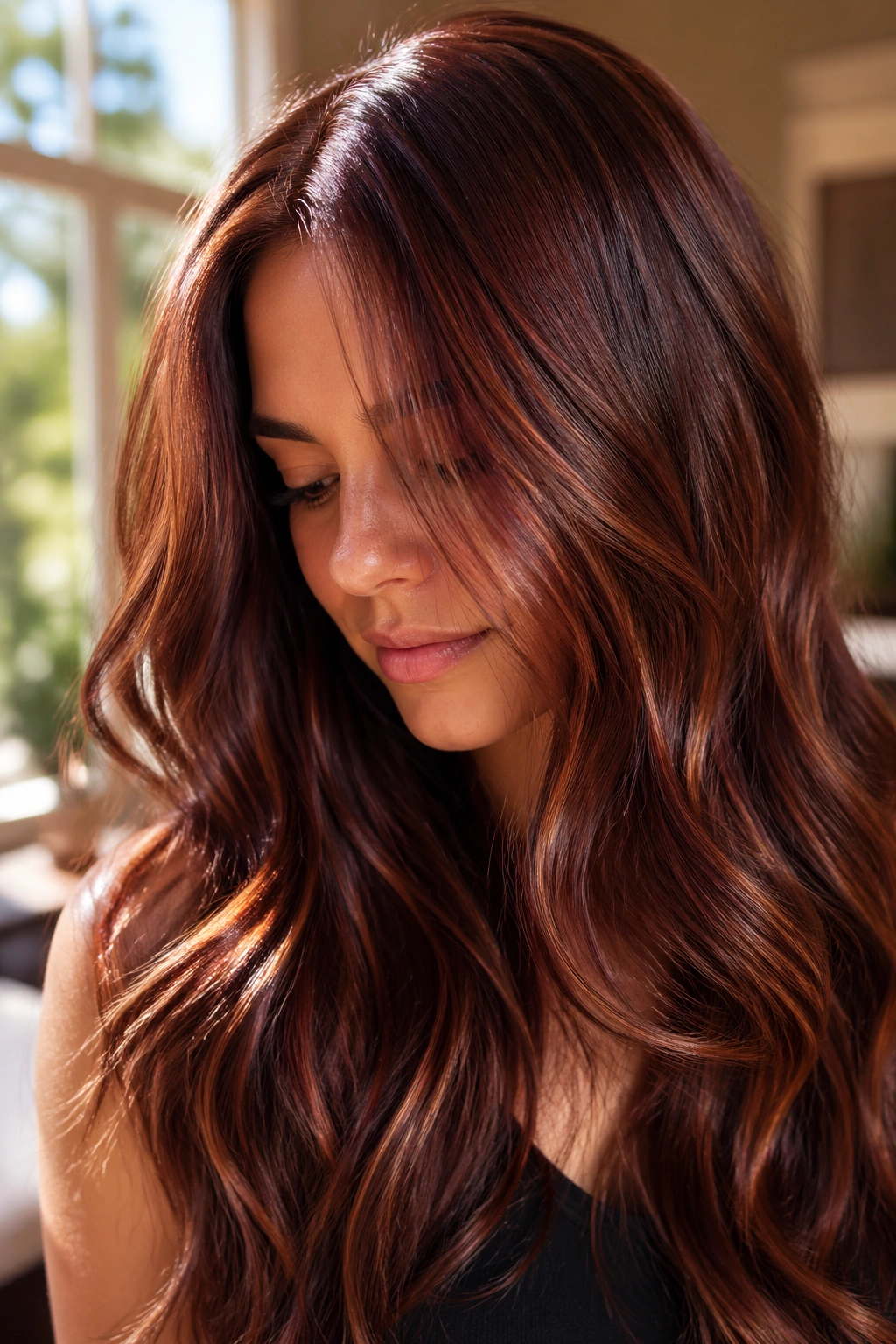
Micro-highlights are the quiet genius move in mahogany hair color. Instead of obvious streaks, you get tiny lighter pieces scattered through the top layer and around the crown. The overall effect is sunlit, not striped.
What Makes It Different
Most people think color dimension has to be obvious. It doesn’t. Tiny mahogany-friendly highlights, lifted just a shade or two, create movement without breaking the base color apart. That’s especially helpful if you want warmth but hate the look of chunky contrast.
The best version uses fine babylight sections and a warm toner so the lighter strands still belong to the mahogany family. Too much lift and the hair starts looking coppery or blonde. The goal is glow, not separation.
This idea works on almost every length, but it’s especially nice on long layers and soft curls. The little highlights catch on the bend of the hair and give the shade more life. That’s a small detail with a big payoff.
21. Wine Mahogany With Burgundy Undertones
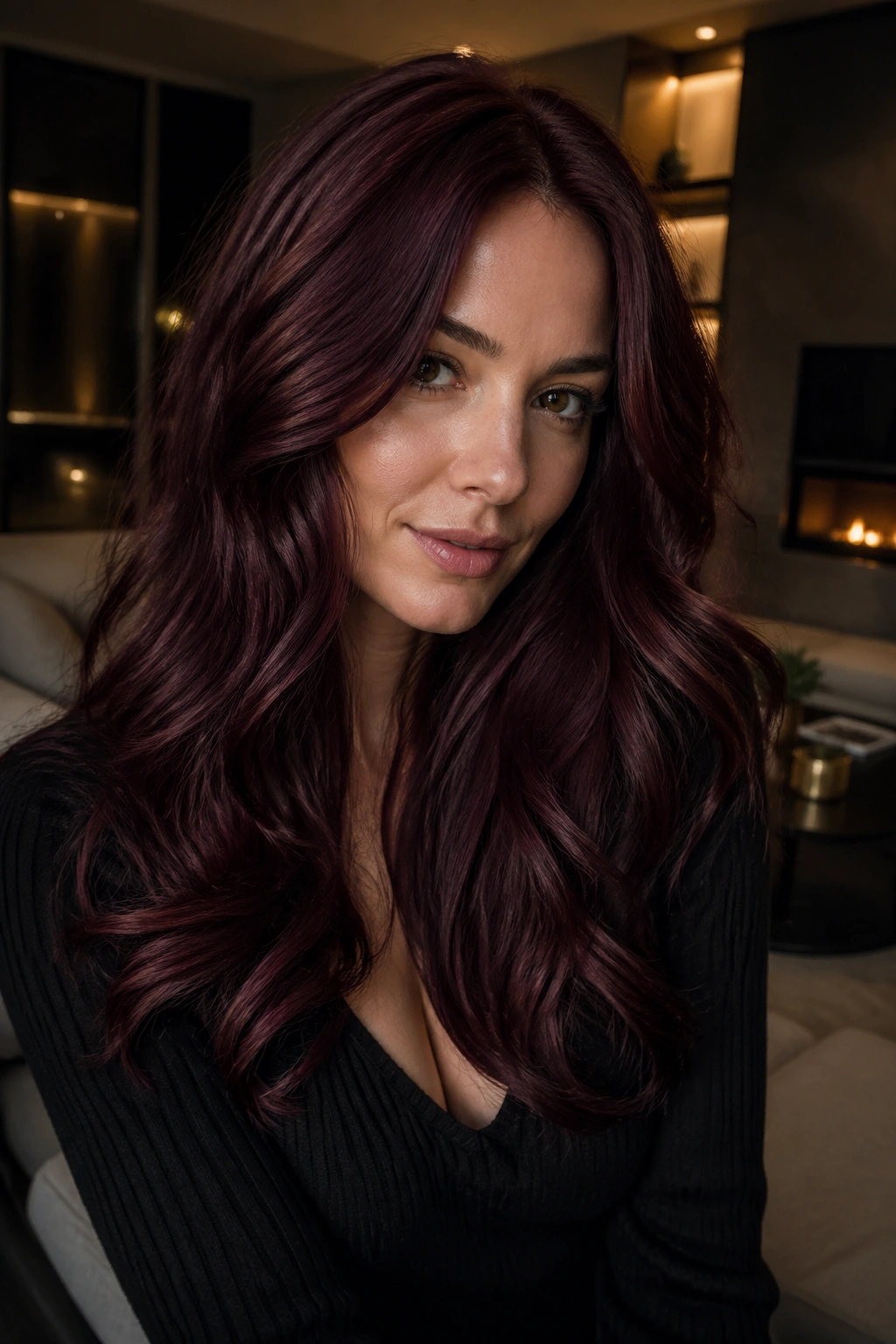
Wine mahogany takes the darker, deeper side of the family and leans into it. The burgundy undertone makes the color feel more intense, but the brown base keeps it from becoming flat or too purple. It’s dramatic without losing the mahogany feel.
Compared with black cherry, wine mahogany tends to read a little more formal and a little less sweet. The red has more depth, and the finish feels closer to crushed berries than cola. On long hair, that depth looks lush. On short cuts, it looks sharp.
This shade makes sense if you wear deep jewel tones, black, or cool neutrals. It also suits evening looks well because the color changes under low light. Bright daylight shows the red. Softer light leans into the wine tone.
If you want a color that feels a touch more grown-up than bright auburn, this is the lane. It has presence. It doesn’t need much styling to say something.
22. Soft Mahogany Ends on a Lived-In Brunette
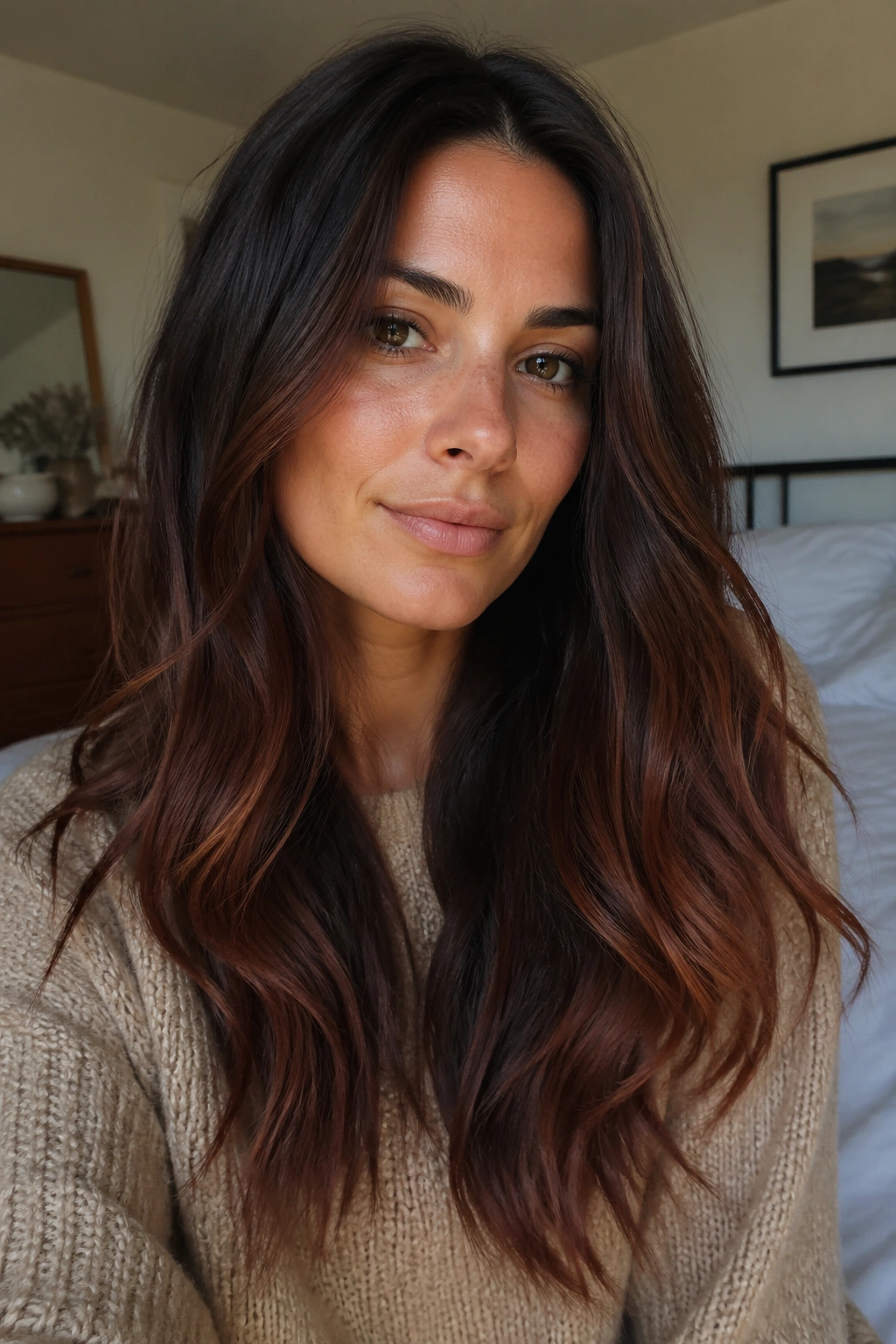
Soft mahogany ends are one of the easiest ways to wear the shade without a full-color commitment. Keep the roots and upper lengths brunette, then let the warmth build near the bottom third. The grow-out is gentler, and the color stays easier to manage.
A lived-in brunette base gives the mahogany room to breathe. The ends look lighter, warmer, and slightly kissed by red light. That small shift is enough to change the whole hair color story. It also means you can go longer between salon visits without the look turning messy.
This style is a good fit if you usually wear your hair in a ponytail, loose waves, or half-up clips. The ends move more than the roots, so that’s where the color gets noticed. It’s a practical place to spend the pigment.
A gloss on the ends every so often keeps the warmth from fading into dull brown. If the hair is very porous, a colorist may tone the ends a bit deeper first, which helps the mahogany stay true.
23. Mahogany Color Melt With a Satin Finish
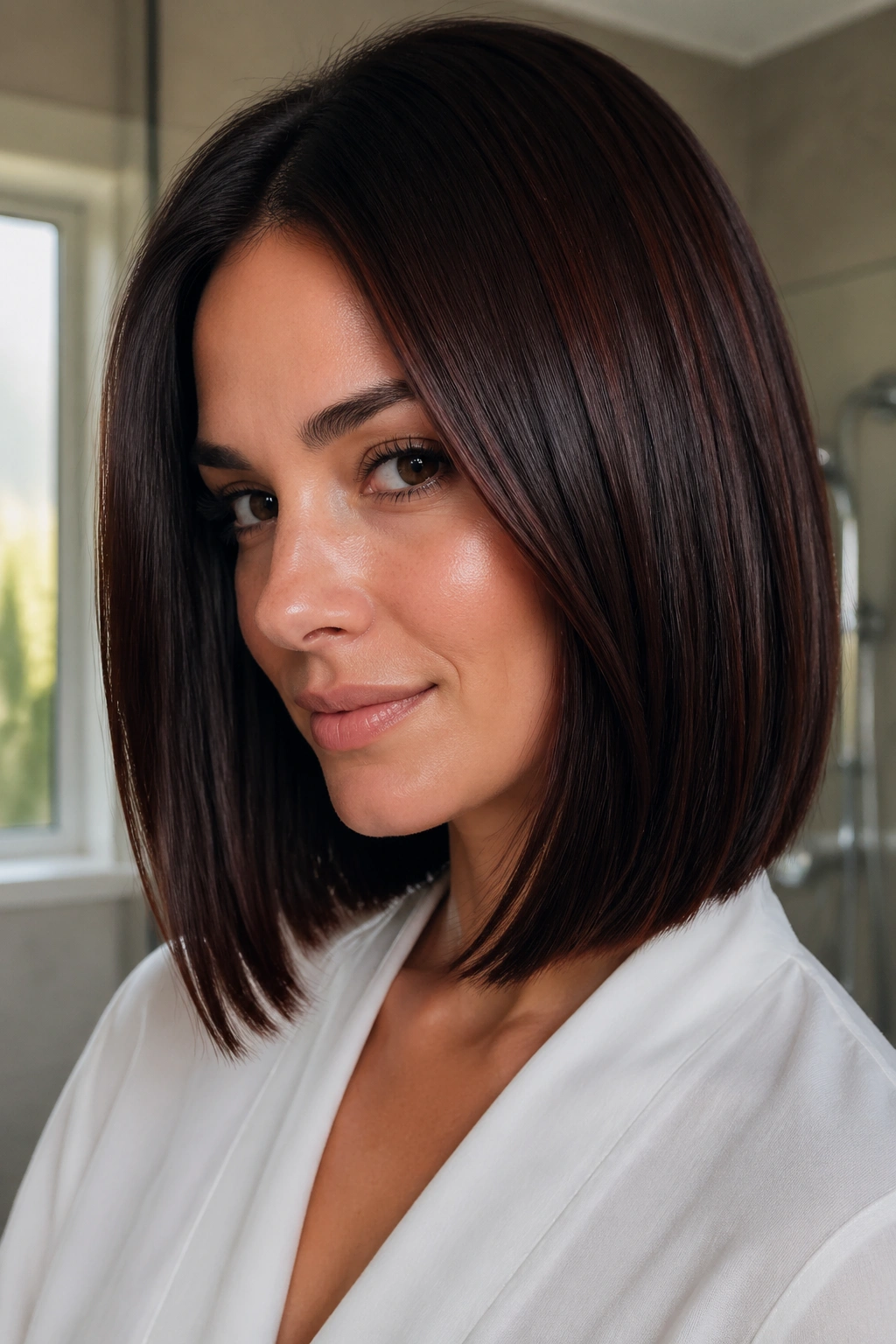
A mahogany color melt is the closest thing to a seamless red-brown gradient. The roots start deep, the mid-lengths bring in the mahogany, and the ends finish with a slightly warmer sheen. Nothing looks stamped on. The whole thing flows.
The satin finish matters here. High gloss can be gorgeous, but satin has a softer, richer feel that keeps the color from looking too hard. That’s especially good if your hair is naturally thick or very dark. The shine still shows, just in a more relaxed way.
This look works best when the colorist blends at least three tones: a deep brunette root, a true mahogany middle, and a warmer end tone that keeps the melt soft. If one section is too bright, the gradient breaks. If one section is too dark, the whole style turns heavy. The blend has to breathe.
For long layers, a color melt is one of the most flattering mahogany hair color ideas out there. It moves well, grows out gracefully, and gives you that rich warmth people notice before they can name it.
