

Subtle color has a funny way of showing up in the mirror before anyone else notices it. Your hair looks a little softer, a little richer, a little more expensive-looking, and people keep asking if you did something different—without being able to name what changed.
That’s where partial hair highlights shine. They don’t flood the whole head with light. They concentrate brightness where it actually moves the cut, lifts the face, and gives the hair a bit of swing. A partial can mean a crown section, the hairline, the outer layers, or a few well-placed foils around the part. It’s controlled. That’s the point.
And controlled is usually better when you want subtle color. Full-head highlights can be gorgeous, sure, but they can also flatten a natural base or push a low-maintenance haircut into high-maintenance territory. Partial highlights let you keep depth where you want it and add light where it matters most.
The trick is placement. A one-inch ribbon at the hairline reads very differently from a tiny weave through the crown, and a cool beige tone behaves differently from honey or copper once it dries and settles. The best partial hair highlights do not scream “highlighted hair.” They make the whole head look better from three feet away and even better up close.
1. Face-Framing Beige Ribbons
Face-framing beige ribbons are the easiest partial highlight idea to love because they do so much with so little. A few soft foils right at the temples and around the cheekbone area can brighten the face without changing the rest of the hair much at all.
Why This Placement Works
The front section catches the most light, so even 4 to 8 foils can change the whole mood of the cut. I like this on layered lobs, long bobs, and shoulder-length hair that needs a little lift near the face. Keep the ribbons around one inch wide or less so they blend into the haircut instead of sitting on top of it.
Beige tones are the quiet middle ground. They sit between gold and ash, which means they read soft rather than brassy or icy. That middle zone is where a lot of subtle color lives.
Best for: brunettes who want to look brighter without going blonde, and blondes who want a gentler pop near the face.
Ask for: soft beige foils at the hairline, with the rest left mostly untouched.
Maintenance: every 8 to 10 weeks if you want the front pieces to stay fresh.
Pro tip: ask your colorist to keep the lightest pieces just a touch shorter around the face so the brightness sits where your eye actually lands.
2. Invisible Babylights Through the Crown
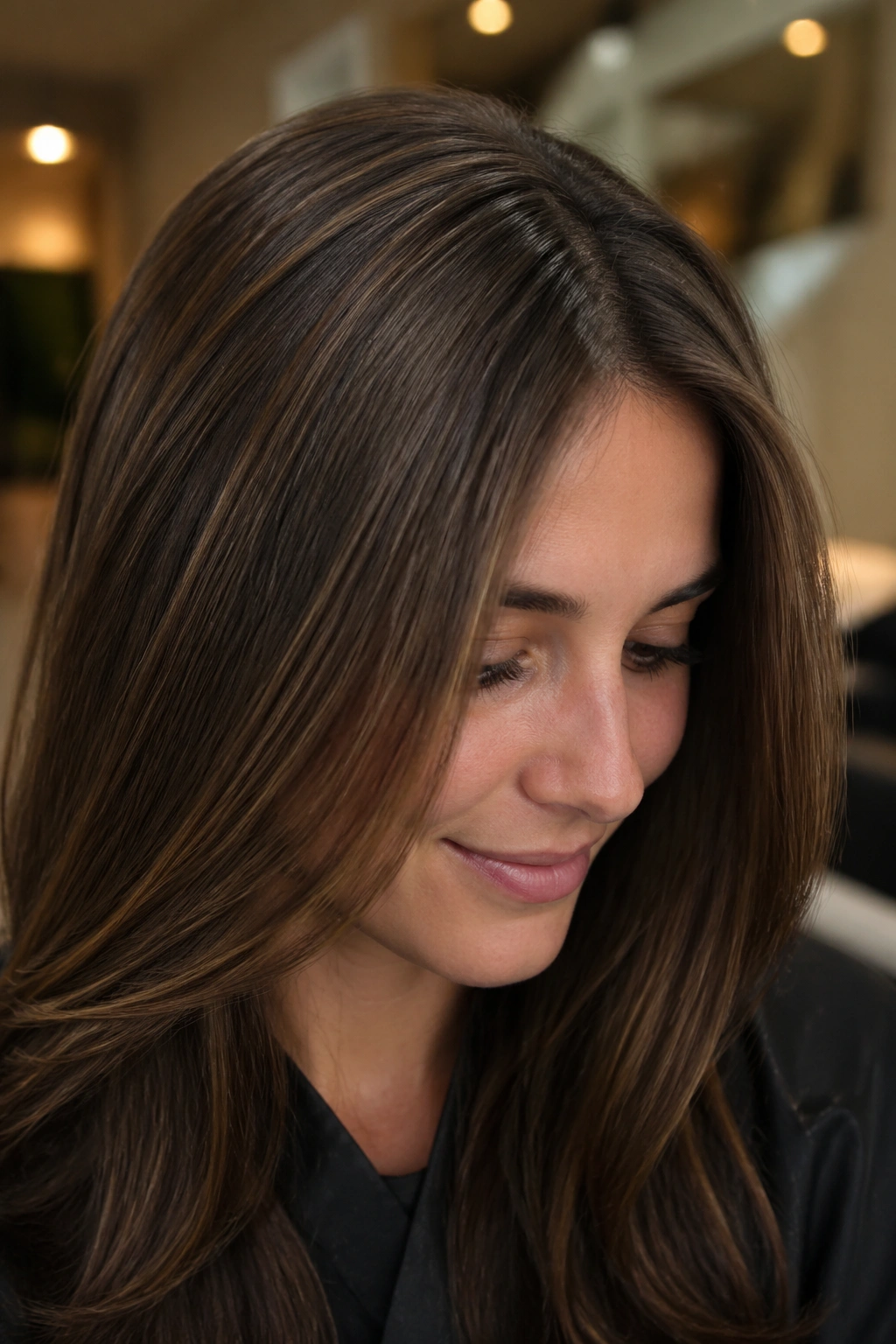
Why do some highlights disappear into the hair in the best possible way? Because they’re tiny, woven close together, and placed where the eye expects natural variation. That’s the whole trick with invisible babylights.
These are micro-fine highlights, usually woven in 0.125- to 0.25-inch sections, and placed through the crown and top layer. On straight hair, they stop the top from looking flat. On wavy hair, they give that soft, multi-tone look that moves when you shake your head.
The nicest thing about this style is that it doesn’t depend on dramatic contrast. You can lift the hair only one to two levels lighter than the base and still get a noticeable effect. It reads as shine, not stripes. That matters if you hate obvious lines.
What Makes Them Different
They’re not trying to be seen individually. They’re there to blur the overall color, which makes the hair look denser and a little healthier.
Use them when you want:
- soft brightness on top without visible streaks
- a low-commitment grow-out
- more dimension in fine or medium hair
- a polished look that still feels close to your natural shade
This is one of those techniques that looks almost too understated on the foil, then dries into something far more useful than it first appears.
3. Honey Lights on Dark Brown Hair
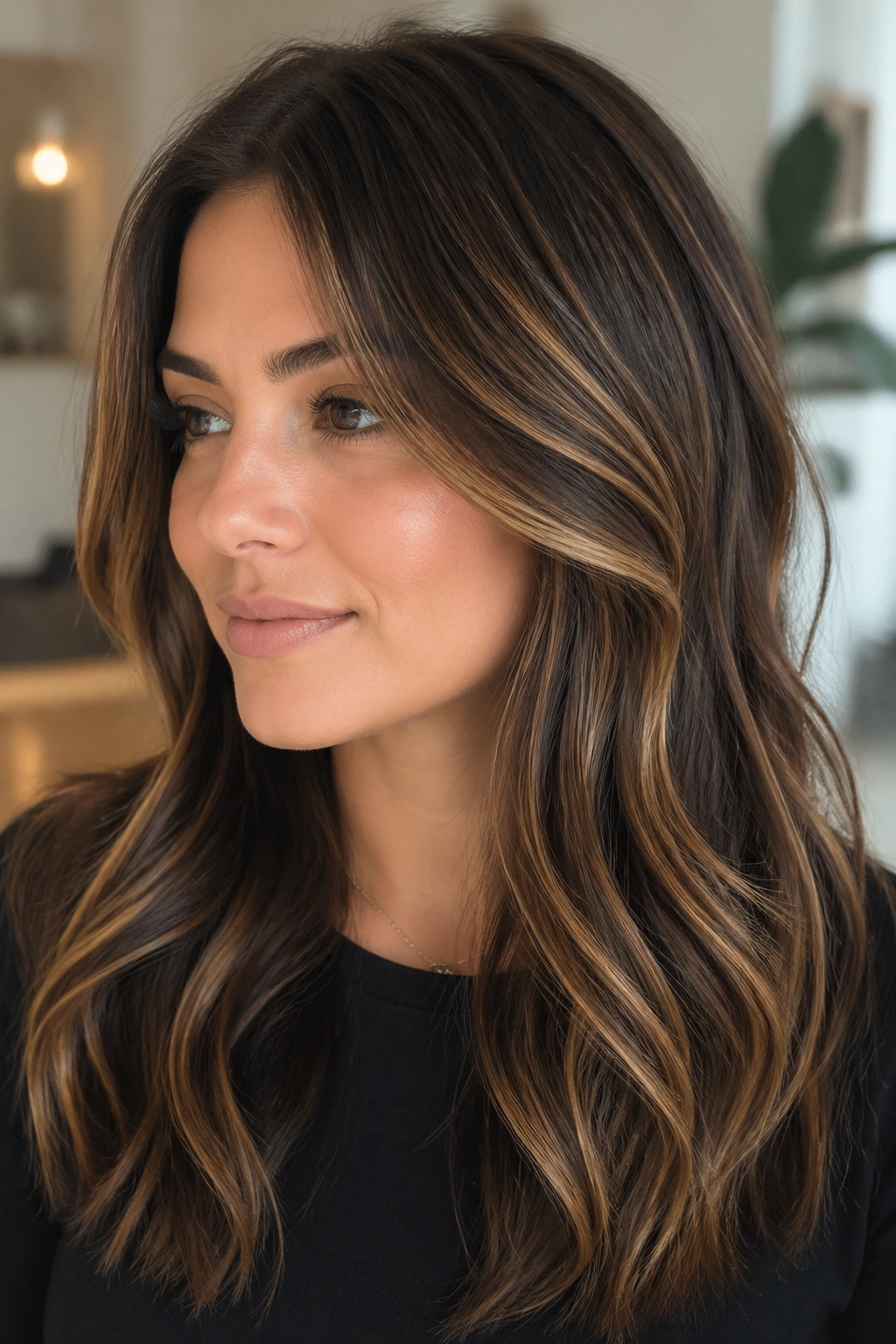
Dark brown hair can look flat when it’s all one tone. Honey lights fix that without forcing you into blonde territory, which is where a lot of brunette highlight jobs go wrong.
Picture thin honey ribbons tucked through the top and around the temples, with the bottom layers left deep. That contrast does the heavy lifting. The hair still looks brown. It just looks warmer, softer, and less heavy around the edges.
How to Keep Honey From Turning Loud
Honey works best when it stays in the soft gold-to-caramel range, not bright yellow. If the light pieces get too pale, the whole thing starts to look harsher than intended. A gloss afterward helps pull the tone back into a creamy place.
I like honey lights on thick hair because they break up the mass without making the cut look choppy. They’re also good if your skin has warm or neutral undertones, since the color echoes that natural warmth instead of fighting it.
A few practical notes:
- place the brightest pieces around the part and front hairline
- keep the underlayer darker for depth
- ask for thin foils, not chunky panels
- tone to a soft gold-beige finish
This one never tries too hard. That’s why it works.
4. Caramel Ends with a Rooty Melt
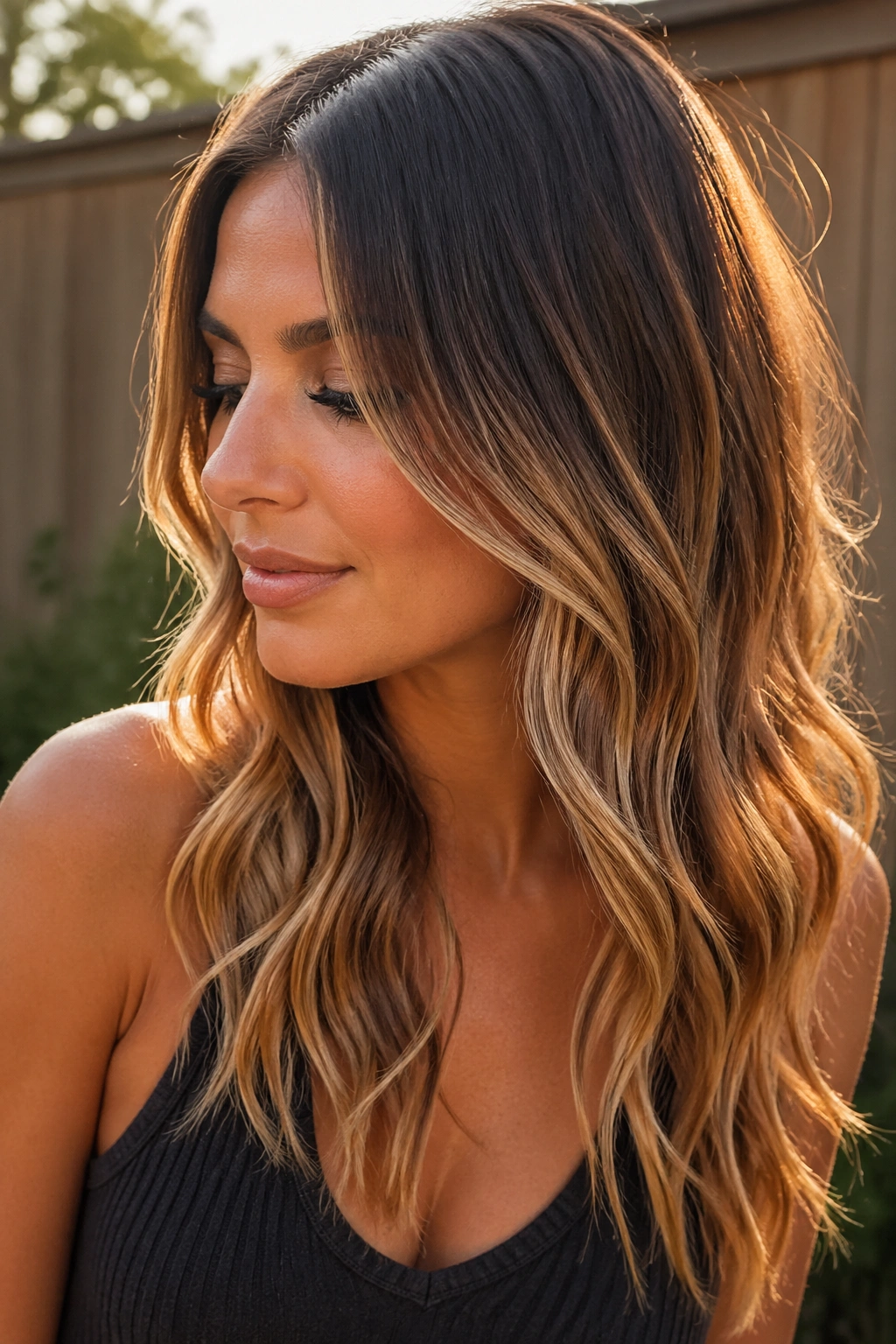
Caramel at the ends is a clean way to add subtle color when you do not want a full highlight pattern. The root stays deep, the mids stay grounded, and the lighter color shows up where hair naturally catches movement.
The look is strongest on medium to long hair, especially if you wear it in waves or loose bends. You’re basically letting the light live on the lower third of the hair, which makes the cut feel longer and more dimensional. It’s also kinder to grow-out than a full-head blonde job.
A rooted melt keeps the top area close to your base color, then slides into caramel through the midlengths and ends. The fade matters more than the exact shade. If the transition is harsh, the whole thing starts to feel patchy. If it’s soft, the hair looks thicker.
Good To Know
This style is especially nice when you want your ends to look fresh without lightening the whole head. It can also help old color look less heavy if the ends have gone too dark from repeated glosses.
- best on layered cuts
- easiest to maintain with a trim every 8 to 12 weeks
- works well with loose waves and blowouts
- keep the lightness about 2 to 3 levels from the base for a calm result
It’s one of the more forgiving partial highlight ideas. And frankly, I trust it more than loud balayage when someone says they want “just a little change.”
5. Mushroom Brown Ribbons for Cool Brunettes
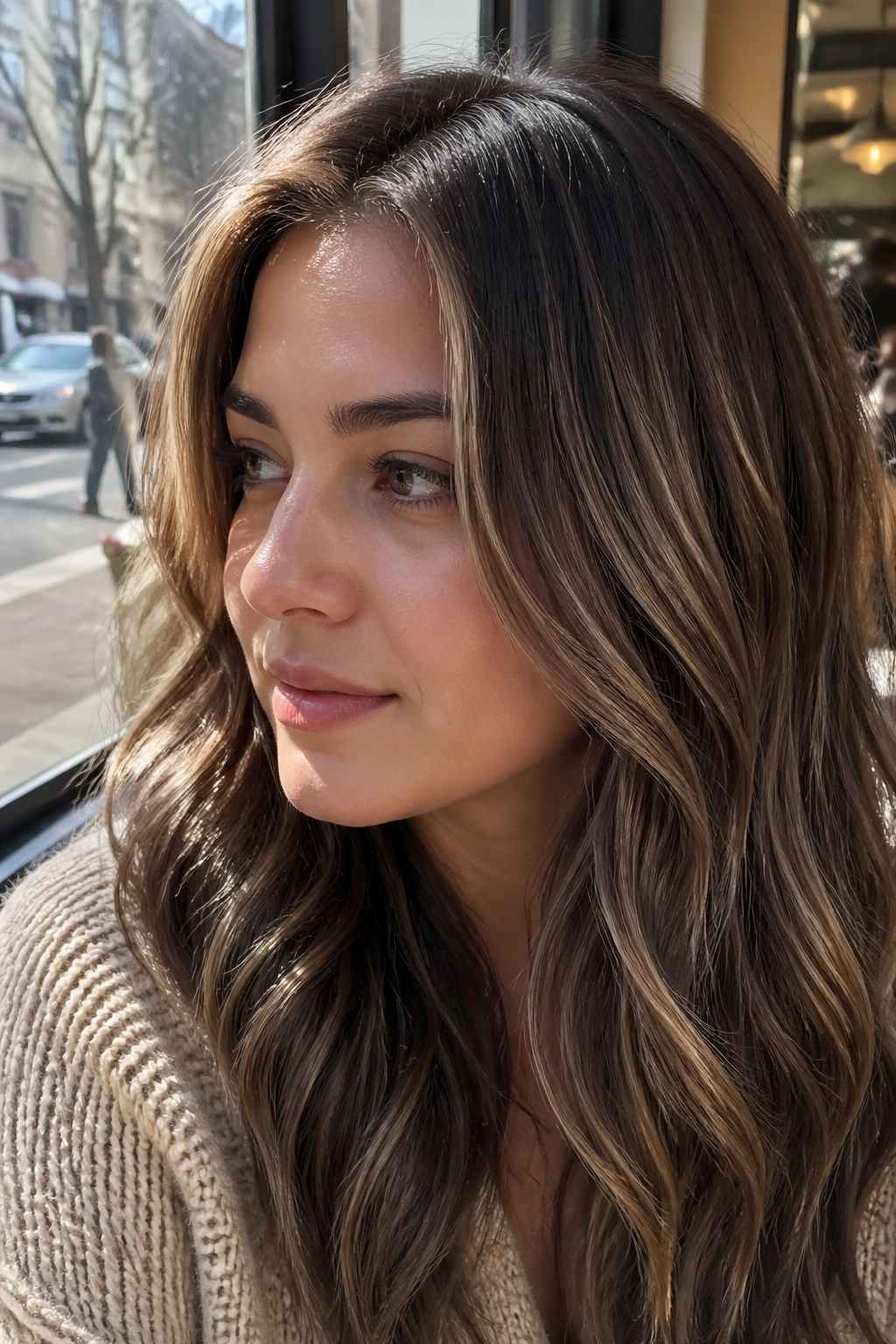
Mushroom brown ribbons are for people who like their color cool, muted, and a little smoky. No orange. No gold parade. Just soft beige-brown pieces that sit inside a darker brunette base and make the hair look more expensive than it has any right to.
This style works because the tone stays grounded. Instead of lifting the hair into blond territory, the colorist keeps the highlights in that cool taupe zone where brunette dimension looks natural. It’s especially good on straight or softly wavy hair, because the ribbons can be seen without screaming for attention.
I like this on hair that already pulls red or copper when lightened. A cool ribbon helps cancel that warmth and keep the result soft. The look can go flat if the pieces are too wide, so thin sections matter. So does a toner that leans beige rather than gold.
One sentence says it all: this is subtle color for people who get nervous about warmth.
6. Copper Whisper Lights on Chestnut Hair
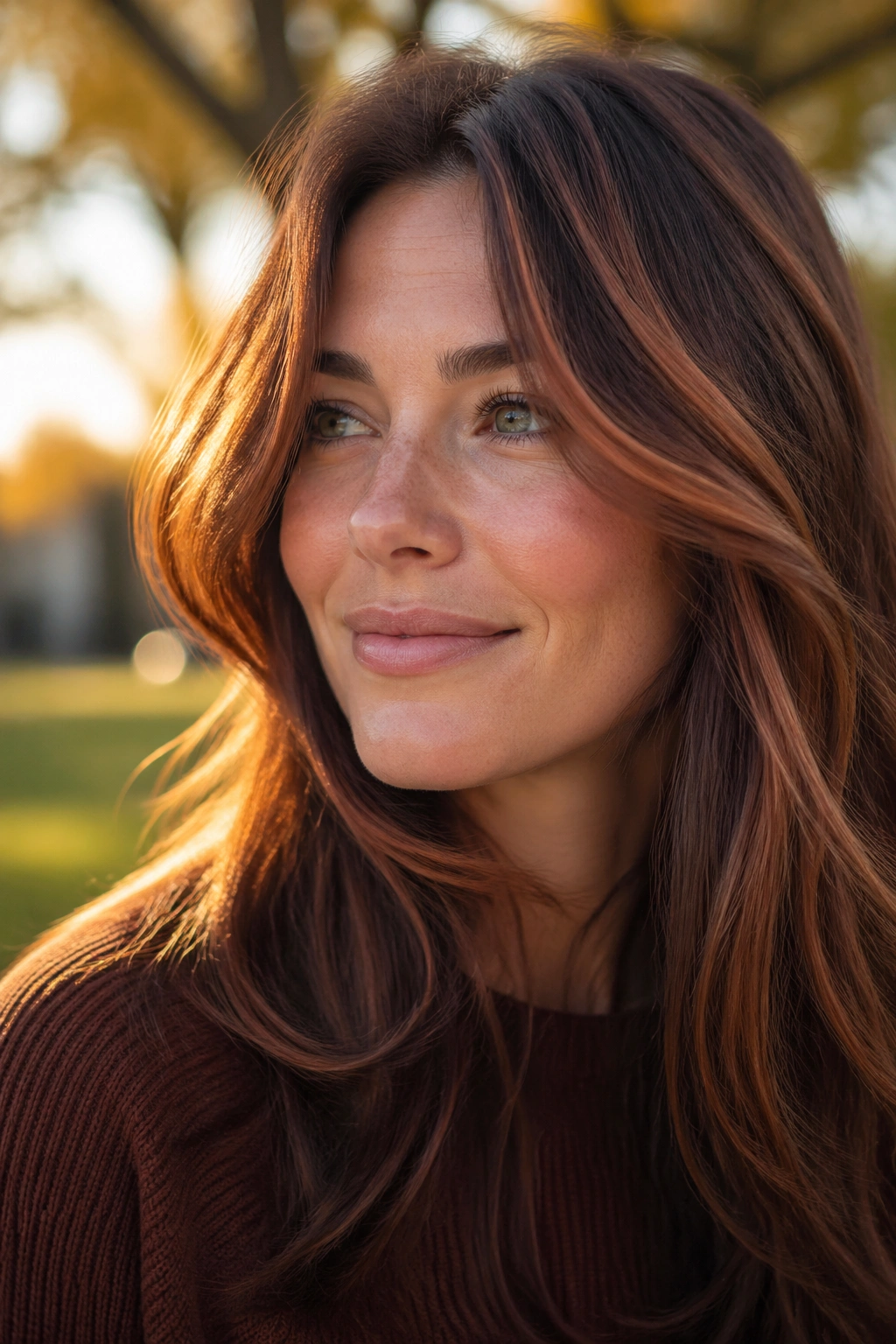
Can red tones stay subtle? Absolutely. They just need to be treated like accent notes, not the main event.
Copper whisper lights work best on chestnut or medium brown hair that already has a little warmth in it. Instead of bright copper streaks, ask for fine ribbons that read as reddish brown in daylight and almost disappear indoors. That shift is the charm. The hair looks different depending on the light, which gives it a lived-in feel.
The color should stay in the soft copper family—more cinnamon than fire engine. I’d keep the placement concentrated around the face and top layer, with a few thin pieces tucked through the crown. That prevents the red from taking over. Too much copper, and the whole head starts looking louder than most people want.
How to Ask for It
Tell your colorist you want sheer copper dimension, not bright red highlights. Mention that you want the effect to sit close to the base, about one to two shades lighter at most.
This is the kind of partial highlight that makes brown hair feel warm and animated without losing its depth.
7. Champagne Babylights on a Lob
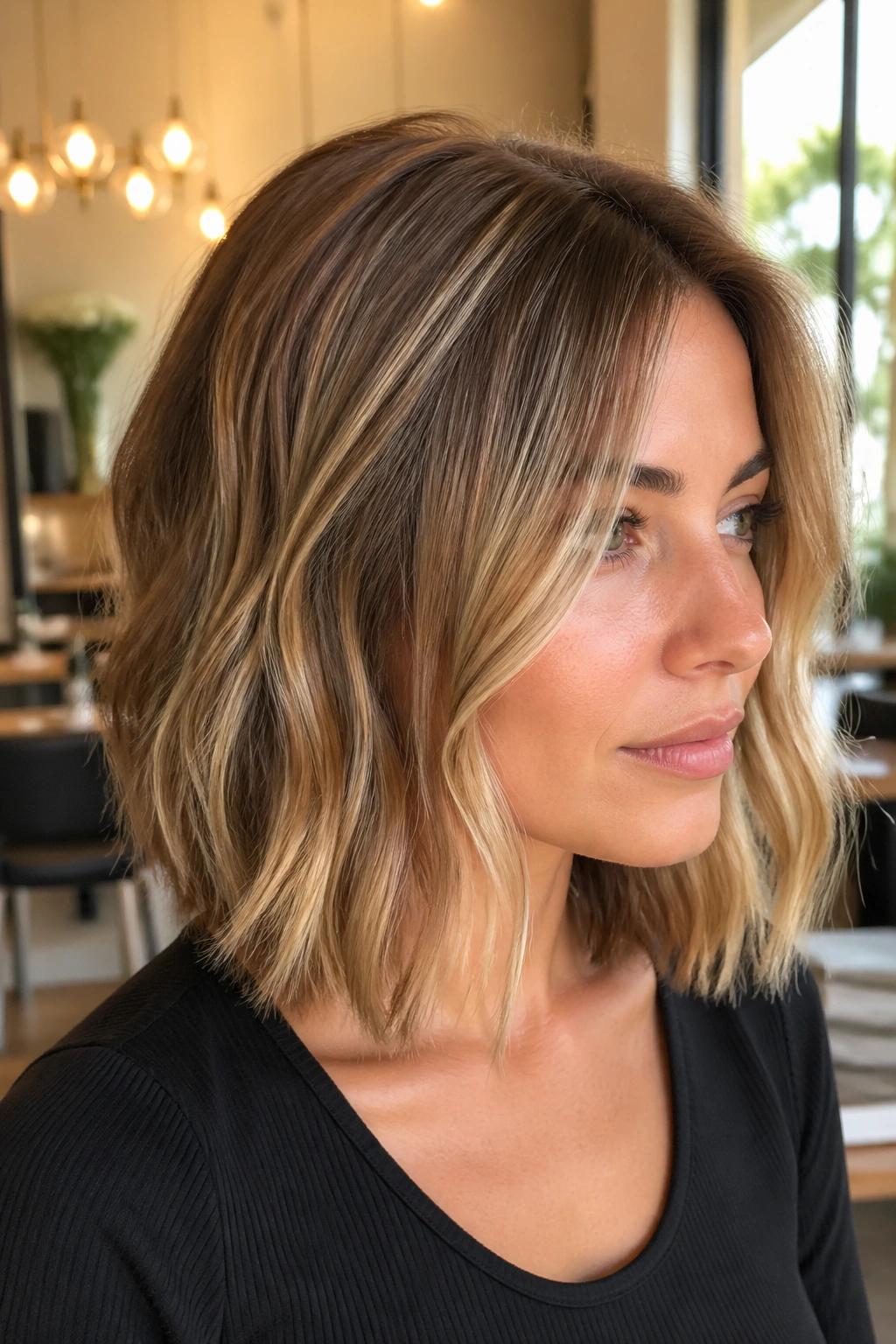
Champagne babylights are softer than blonde, lighter than beige, and much easier to live with than a full brightening job. On a lob, they make the cut look airy and clean without turning it into a high-contrast stripy thing.
The reason this pairing works is simple. A lob has blunt edges or soft internal layers, and champagne color adds movement without needing a lot of space. Fine babylights—wisp-thin pieces woven through the crown, part line, and top sides—give the hair a shimmer instead of a block of color.
I’d choose this if you like a polished finish but do not want obvious streaks. The champagne tone usually lands between pale gold and beige, which means it flatters a wide range of skin tones without looking icy. It’s also one of the better partial highlight choices for finer hair, since the tiny weaves create the illusion of more density.
A good salon note: keep the lightest pieces close to the part and top layers, and let the underlayer stay deeper. That contrast is what gives the lob its shape.
8. Peekaboo Color Under the Top Layer
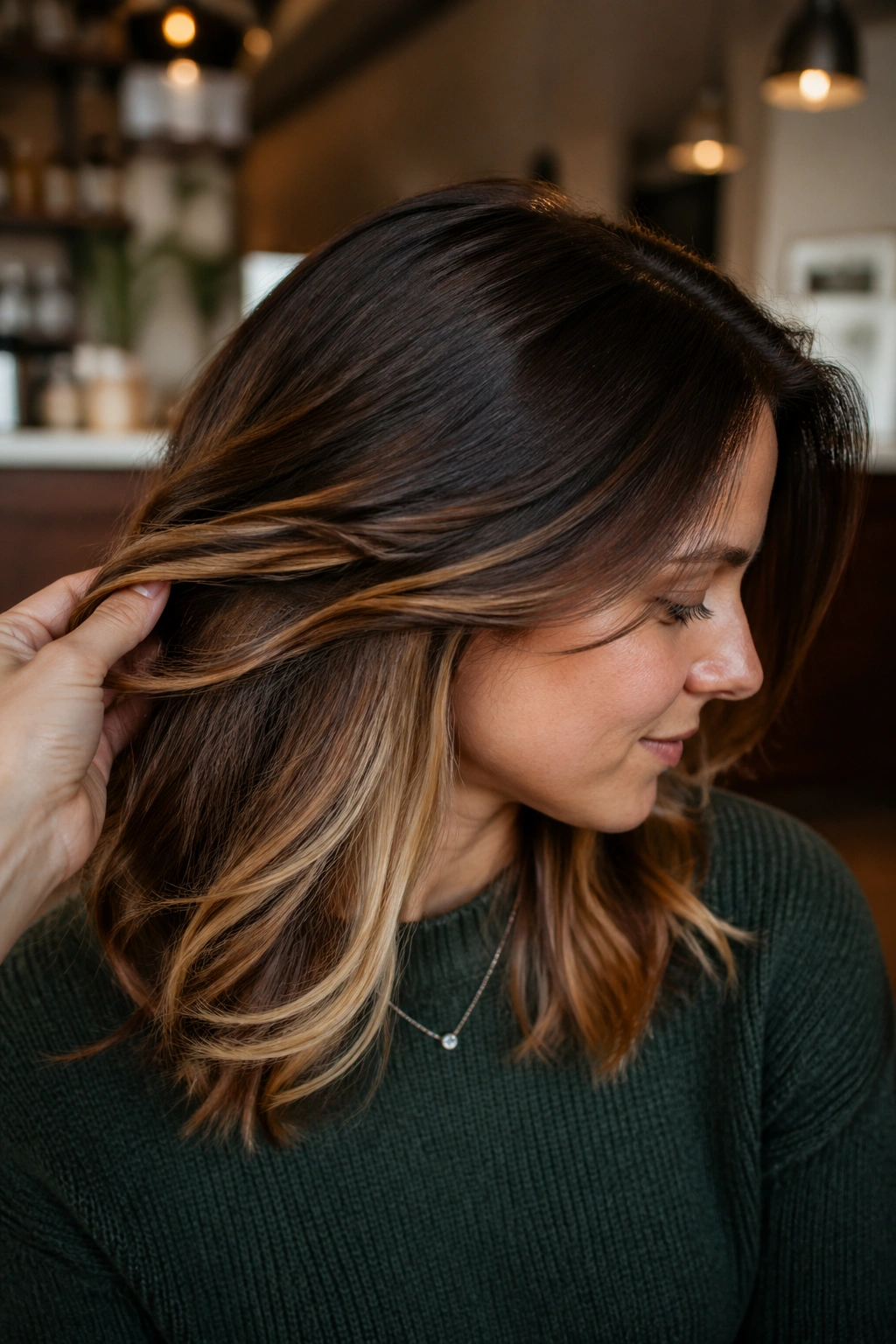
Peekaboo highlights are the fun option for people who want subtle color with a little secret tucked underneath. From the front, the hair still looks mostly natural. When it moves, though, a hidden panel of lighter tone slips out and changes the whole read.
I’ve always liked this placement on shoulder-length cuts and layered hair, because the top layer acts like a curtain. You get surprise without commitment. And if you work somewhere conservative, that matters. Nobody needs to know your color is more interesting than it first appears.
Where to Put It
The smartest version usually sits in the lower side panels or just under the crown, not all over the head. A hidden section 2 to 3 inches wide is enough for a clean effect. Keep the tone close to your base if you want it soft, or use a slight contrast if you want a little more movement.
Good color choices:
- caramel under dark brown
- beige blonde under brunette
- soft copper under chestnut
- rosy beige under dark blonde
The secret is restraint. Too much peekaboo and it stops being subtle.
9. Shadow-Root Money Piece
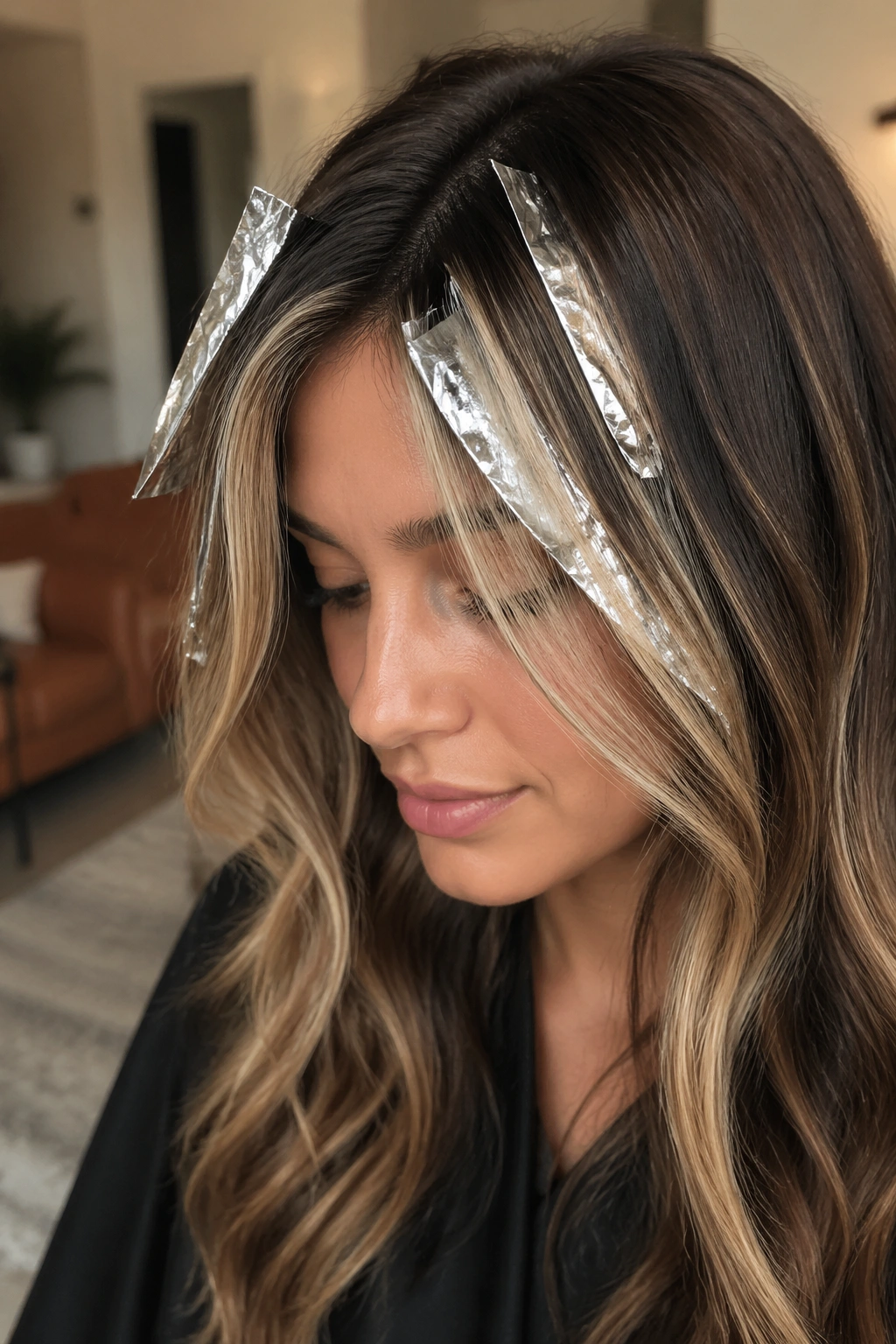
A money piece can be loud. It can also be very good when it’s done with a shadow root and a soft hand.
The idea here is to brighten the front hairline while keeping the roots blurred and natural. You’re not painting two bright slabs beside the face. You’re creating a light frame that starts softly near the root and gets a little brighter through the midlengths. That keeps the look from feeling harsh as it grows out.
For subtle color, I’d keep the money piece to just a few foils on each side—2 to 4 pieces per side is often enough. Leave about 1 to 2 inches of root shadow so the highlight doesn’t look pasted on. That tiny bit of depth at the scalp makes a huge difference.
The Salon Detail That Matters
Ask for the front pieces to be blended into the haircut, not just the color. If you wear curtain bangs or face-framing layers, this placement can make them pop. If your hair is one length, keep the money piece softer so it doesn’t look disconnected.
It’s a small change. And it changes everything near the face.
10. Ribbon Highlights on Long Layers
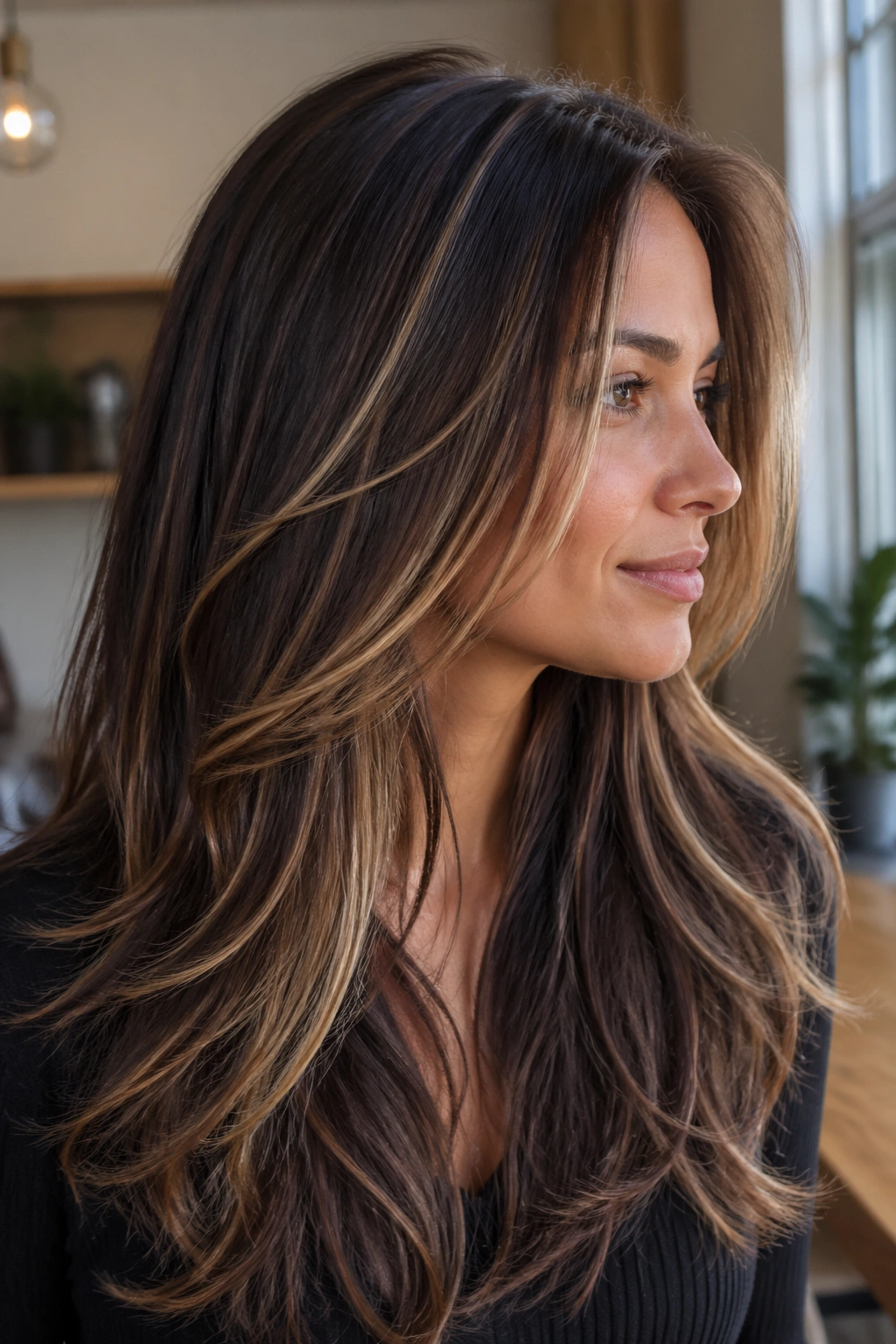
Long layers and ribbon highlights belong together. The cut creates motion; the highlight placement follows that motion. When the two match, the hair looks like it has more shape than it really does.
Ribbon highlights are wider than babylights but softer than chunky streaks. Think of them as thin bands of light that track along the haircut’s movement instead of crossing it at random. On long layers, that means placing color where the hair bends: around the face, through the upper sides, and along the ends of each layer.
Why does this work so well? Because long hair can carry more contrast than short hair, but it still needs softness. Ribboning gives you both. The hair catches light at different points without losing the depth underneath.
How to Keep the Result Soft
- follow the layer pattern, not a strict grid
- keep the light pieces narrow at the root and a touch wider midshaft
- avoid over-lightening the ends if the hair is already dry
- tone to a beige or honey finish, depending on the base
This is one of the few partial highlight looks that can be seen from the back without becoming a full blonding service. That’s a win.
11. Bronzed Foils for Warm Brunettes
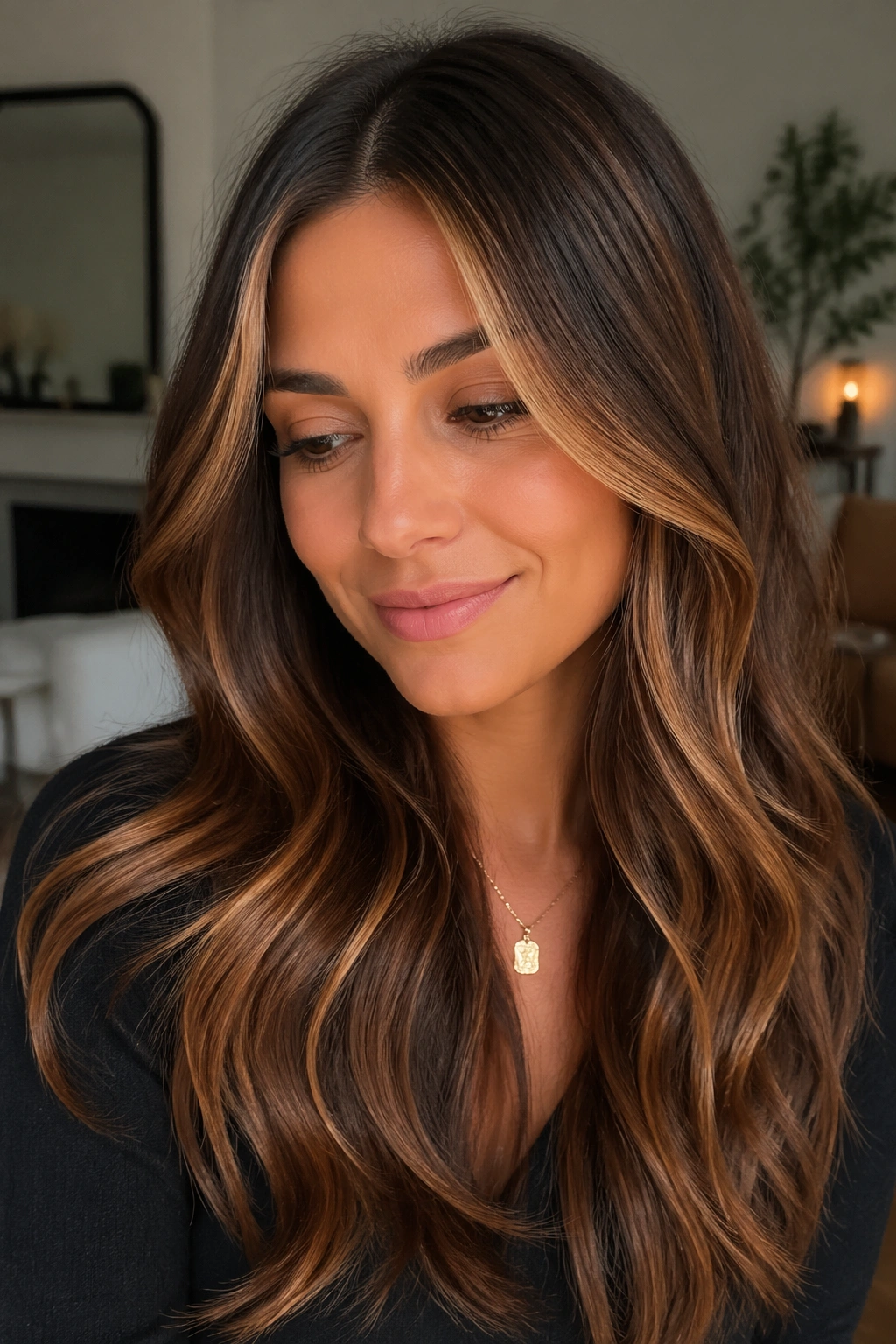
Bronzed foils sit in a nice middle ground between caramel and brown. They brighten the hair, but they keep the warmth grounded and rich. If you dislike blonde highlights on brunette hair, this is the lane I’d point you toward.
The tone usually reads as copper-brown, gold-brown, or toasted bronze depending on the base. What matters is that the light pieces never go pale. They stay close enough to the original color that the result feels expensive instead of loud. On thick hair, that depth is especially flattering because it breaks up heaviness without making the cut look sparse.
This style works well with wavy blowouts and layered cuts. A few carefully placed foils around the top and face are enough. You do not need much. In fact, too many bronzed pieces can turn the hair warm in a way that looks flat rather than dimensional.
Bronze is a good choice when you want people to notice shine before they notice highlights. That’s a decent standard, honestly. If the color reads as gloss first and “I got my hair done” second, you’re in the right place.
12. Ash-Beige Lights for Fine Hair
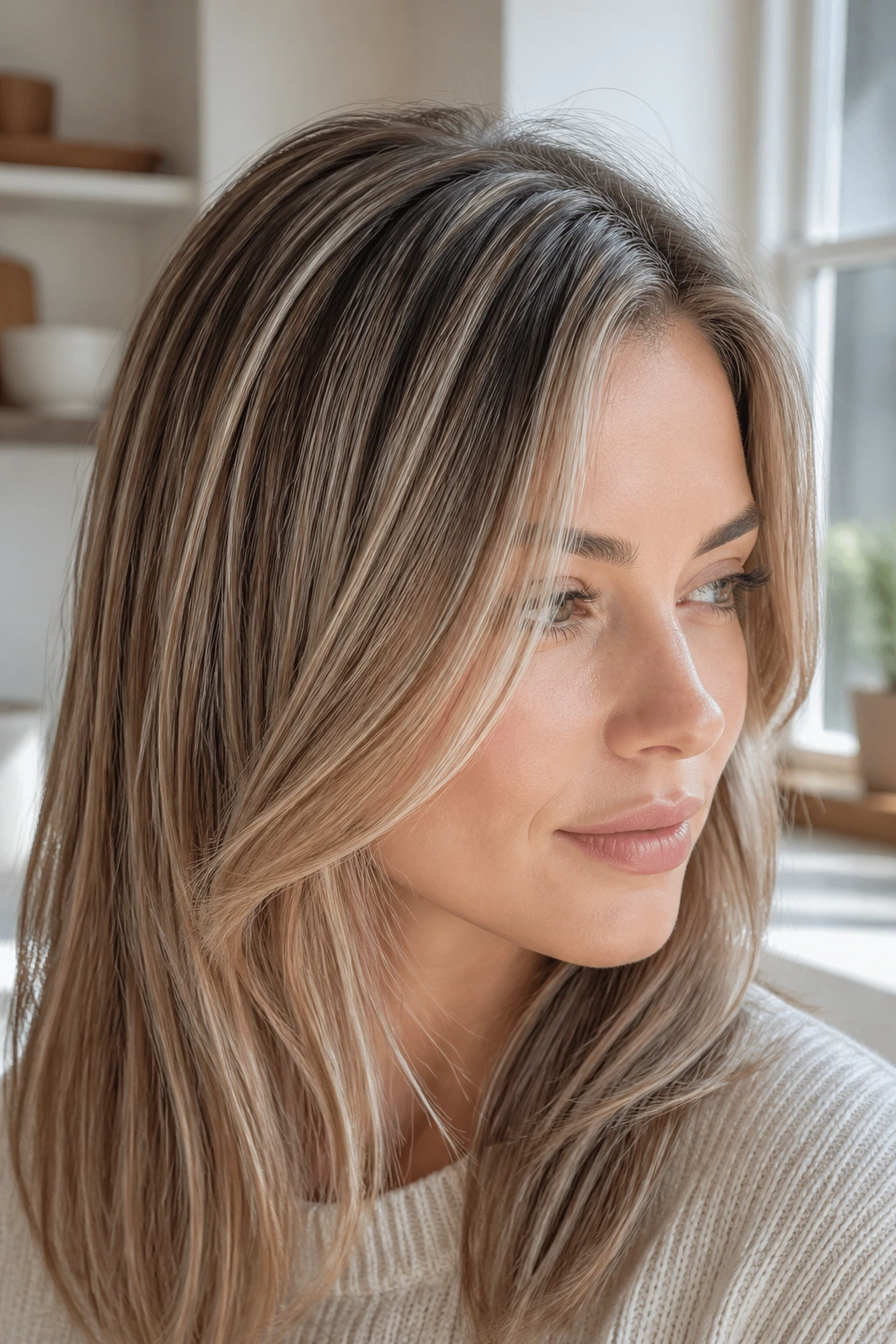
Fine hair needs a careful hand. Too much contrast, and it can look sparse. Too little, and the color disappears into the base. Ash-beige lights split the difference.
These are tiny, cool-leaning partial highlights placed around the part, temples, and top layer. They’re usually woven as microfoils, which means the color gets broken up into very small pieces rather than obvious stripes. That’s what keeps the hair looking full. The beige tone softens the ash so it doesn’t turn flat or gray.
What To Ask For at the Chair
Tell your colorist you want delicate dimension, not bright blonde. That phrase matters more than people think. If the sections are too wide or the lift too high, fine hair can lose the quiet texture that makes it look dense.
A few practical guidelines:
- keep the lightest pieces near the part and around the face
- use narrow slices, not chunky panels
- tone with beige instead of a strong silver
- stop short of the ends if they’re already fragile
This is one of those rare cases where less really does read as more. Fine hair usually benefits from shade variation, not big color statements.
13. Cinnamon Veils on Medium Brown Hair
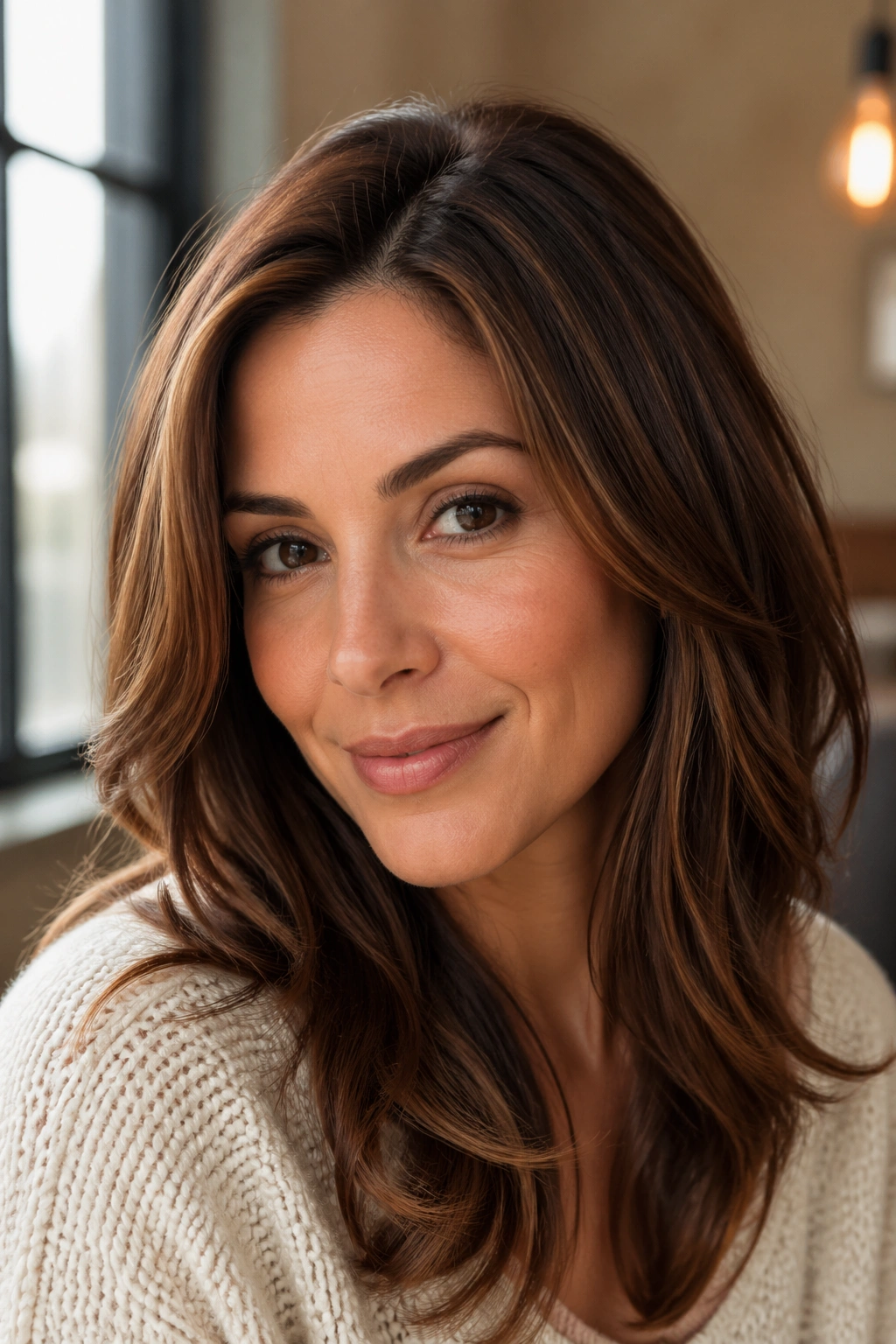
Cinnamon veils are for people who want warmth without going full red. The color sits somewhere between auburn and brown, which makes it feel soft enough for daily wear but still noticeable in daylight.
On medium brown hair, cinnamon works best when it’s layered into the top section and around the hairline. A few translucent ribbons can make the whole head look less flat, especially if the natural shade has gone dull. I like this on medium-length cuts because the movement shows the color off without needing a blowout.
The best version isn’t opaque. That’s the mistake to avoid. You want a veil, not a block. A translucent cinnamon tone lets the base color show through, which keeps the effect believable. If the pieces go too red, the whole look shifts from subtle to obvious fast.
One short note: this tone loves shine. A lightweight gloss or smoothing cream helps the warm pieces look richer rather than dusty.
14. Teasylights for Soft Lift
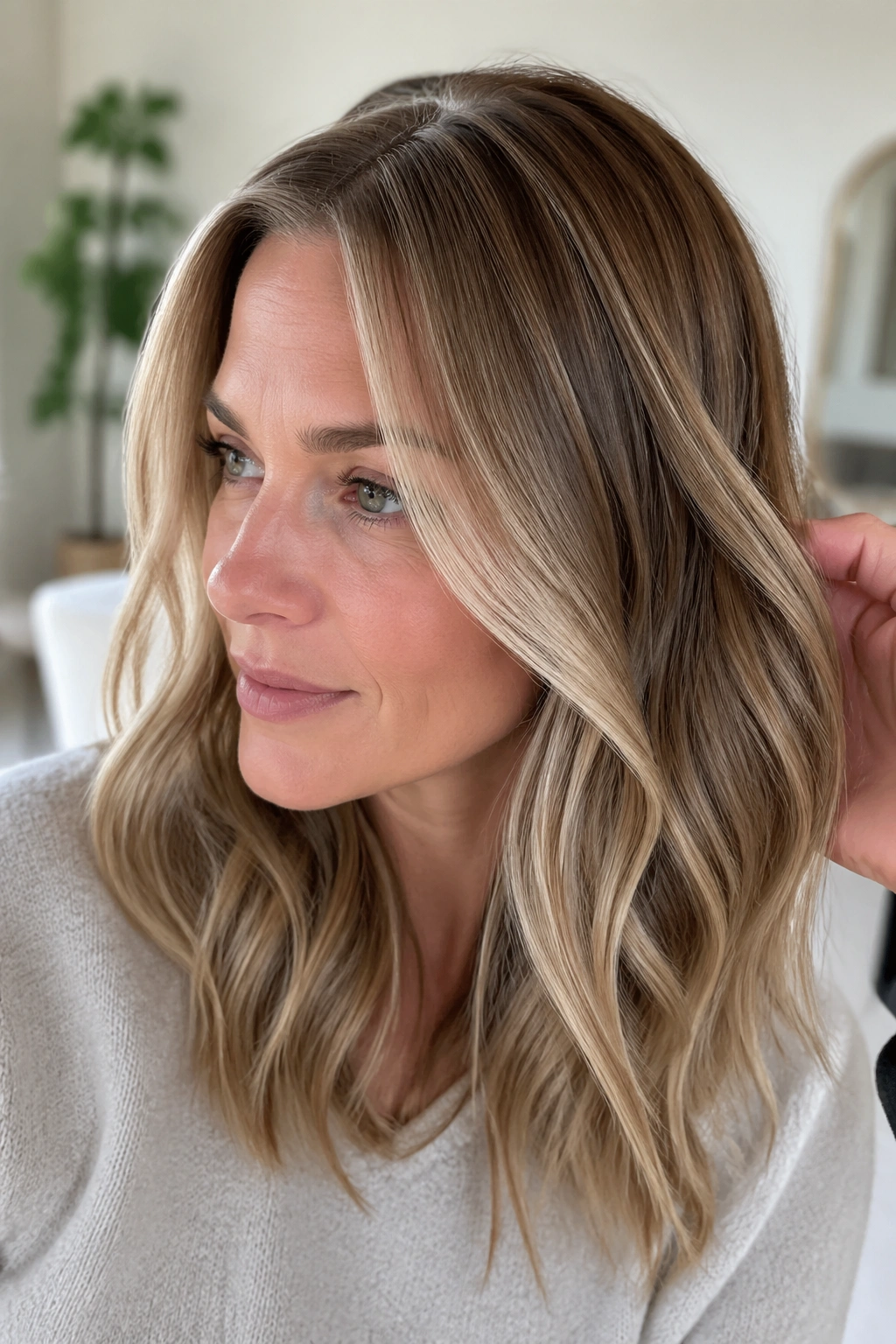
What if you want brightness, but not the kind that leaves a hard line as it grows out? Teasylights are the answer.
The stylist teases the hair lightly at the root before applying lightener to the exposed lengths. That tiny tease diffuses the color so the highlight fades softly into the base instead of starting with a blunt edge. It’s a smart choice for partial highlights because it creates lift without a harsh root line.
I especially like teasylights on thick hair and hair with some natural wave. The texture hides the transition beautifully. On very straight hair, the placement needs to be cleaner, because any uneven teasing can show through if the sections are too broad. Still, when done well, the result is airy and grown-in.
What to Ask For
Ask for teasylights through the top and around the face, with extra softness at the root. Keep the foils narrow and staggered so the color doesn’t form a uniform band.
Teasylights are subtle. That’s the whole appeal. They brighten the hair without making it look newly colored every time you step outside.
15. Vanilla Cream Ends on Dark Blonde Hair
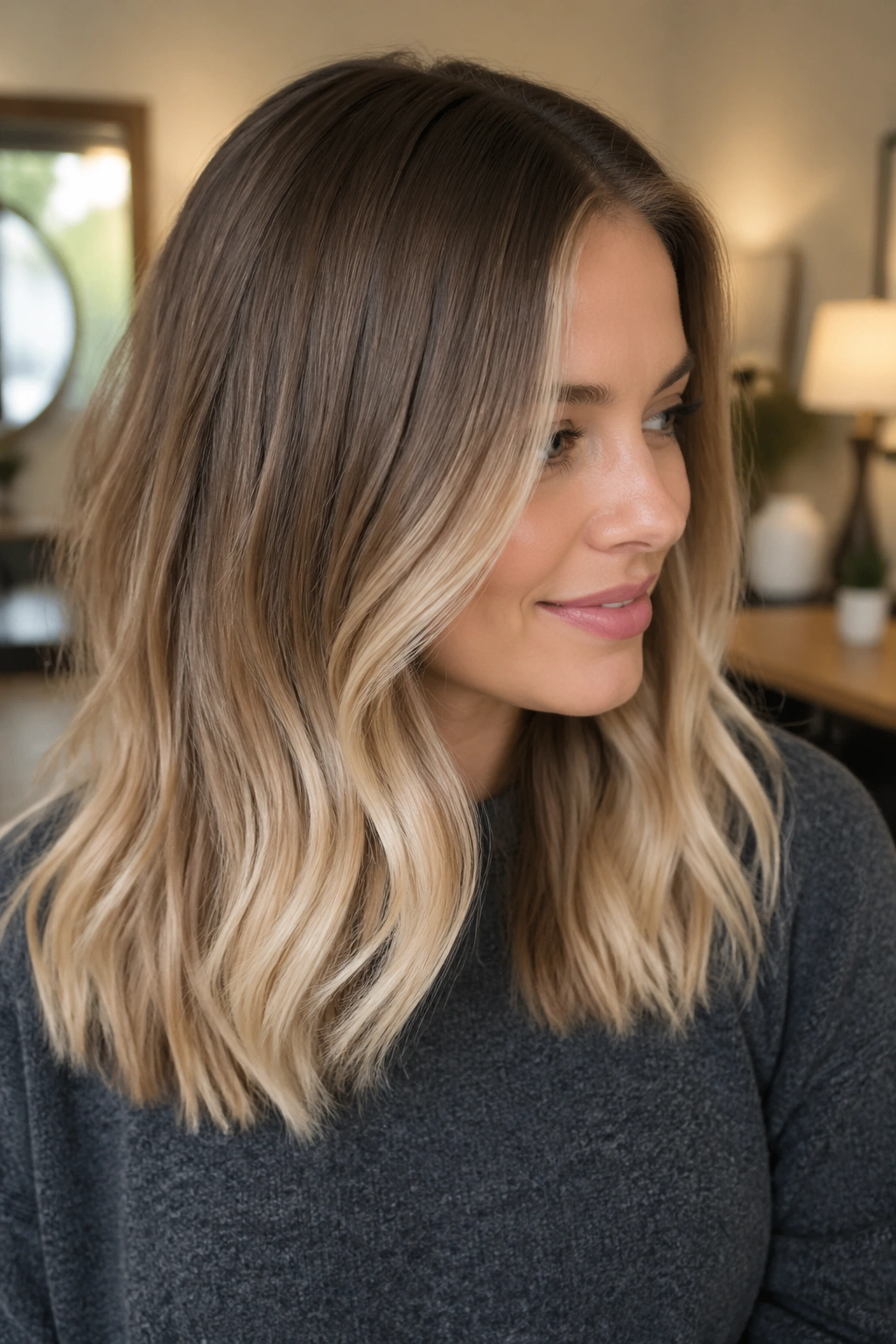
Sometimes the best partial highlight is the one that mostly stays off the scalp. Vanilla cream ends do exactly that. The roots keep their natural depth, the mids stay soft, and the ends brighten just enough to make the hair look fresher.
This idea works especially well on dark blonde hair, light brown hair, and lived-in blondes that need a soft reset. I’d keep the lightness focused on the lower half of the hair, with the brightest concentration in the last 4 to 5 inches. That gives the cut a creamy finish without making the top look overworked.
Vanilla is a better word than platinum here. You want a warm-to-neutral creamy tone, not an icy one. A cooler finish can look chic on the right person, but vanilla is easier to wear and usually softer against the skin.
This style also pairs well with blunt ends. The contrast between a clean cut and softly lightened ends gives the hair shape, even if the haircut itself is simple.
16. Rose Gold Whisper Pieces
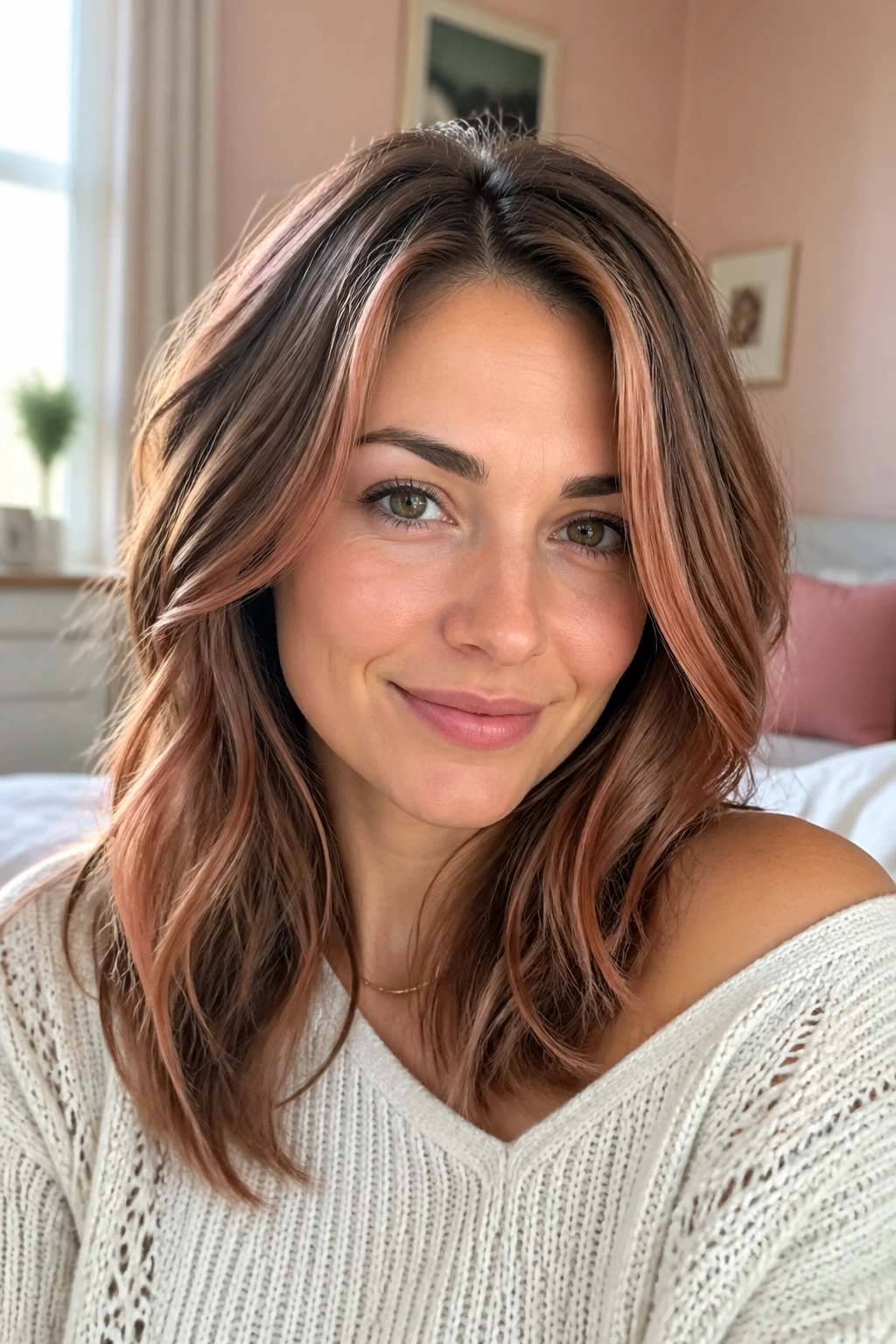
Rose gold highlights can go very wrong if they’re too pink. The subtle version avoids that trap by keeping the tone beige first and rosy second.
I like whisper pieces for people who want a little warmth and a little softness, especially on light brown or dark blonde hair. The placement should stay sparse—think a handful of fine pieces around the temples, part, and top layer. You’re not painting the whole head pink. You’re letting a blush-toned glaze peek through.
Why It Stays Subtle
The rose gold effect works because it’s muted. The gold keeps the color wearable, and the pink cast gives it a softer edge than copper or honey. If the base is too dark, the effect can disappear. If the pink is too strong, it stops looking subtle. The sweet spot is a sheer, tinted reflection.
A few practical pointers:
- use 5 to 8 pieces, not more
- keep the tone close to beige with a pink wash
- best on wavy textures and softer layered cuts
- refresh with a gloss if the rosy tone fades too fast
This is one of those looks that sounds louder than it really is.
17. Auburn Halo Around the Hairline
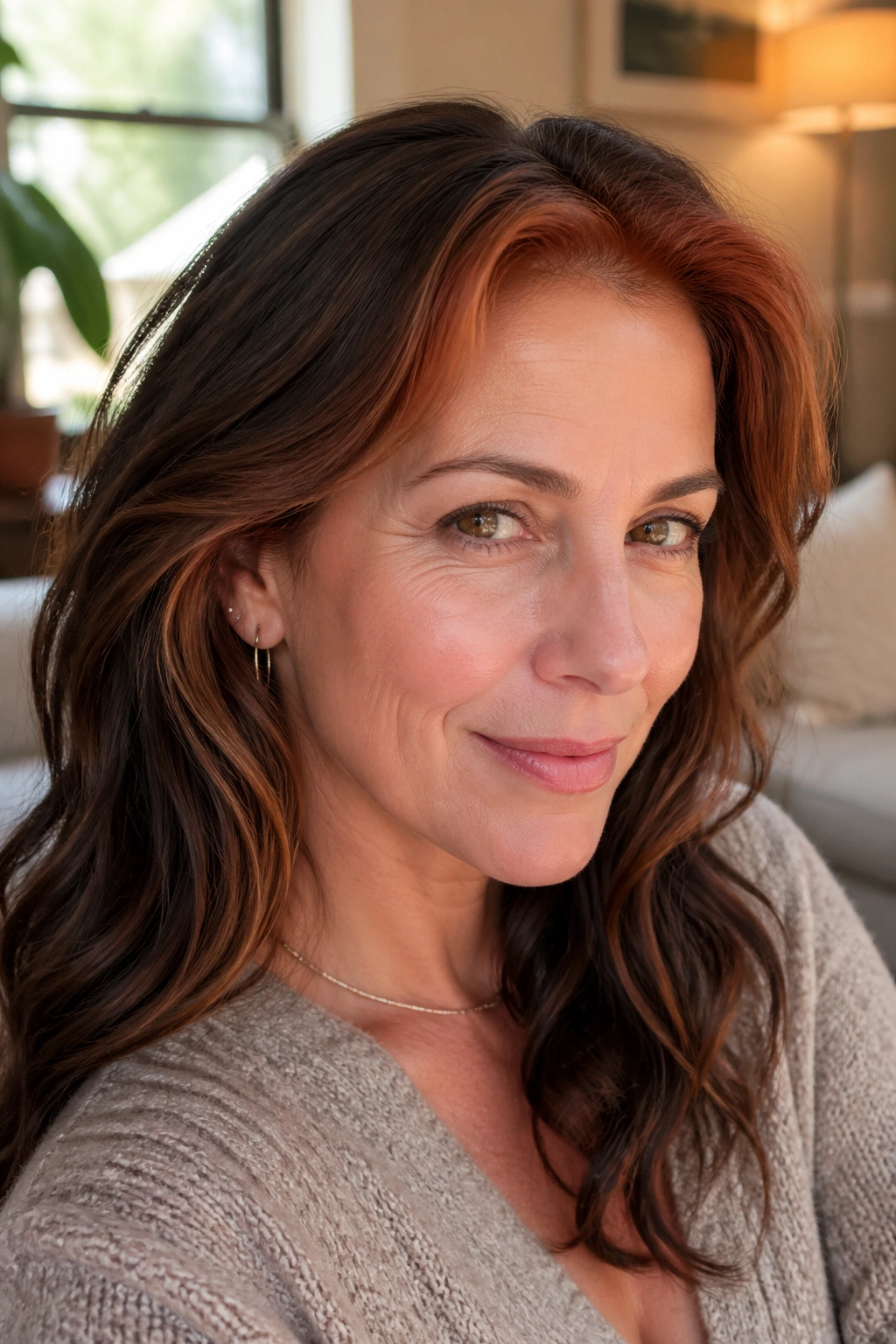
Auburn around the hairline can change the whole face shape. It sounds dramatic when you say it out loud, but the subtle version uses a light touch and a small number of foils.
I first like this on medium brown hair, but it can also work on deep brunette and dark copper bases. The idea is to build a loose halo of auburn pieces around the perimeter, especially at the temples and just above the ears. That catches light where hair naturally curves around the face and neck.
Because the color sits near the skin, tone matters a lot. Keep the auburn soft and brown-leaning, not pumpkin. A few carefully placed foils—maybe 6 to 10 around the front perimeter—are often enough to create the effect.
Best On
- curls that need edge definition
- layered cuts with face pieces
- hair that looks heavy around the sides
- anyone who wants warmth without blonde
This one feels especially good when the rest of the hair stays dark. The contrast is modest, but the framing is strong.
18. Sunlit Part-Line Micro-Highlights
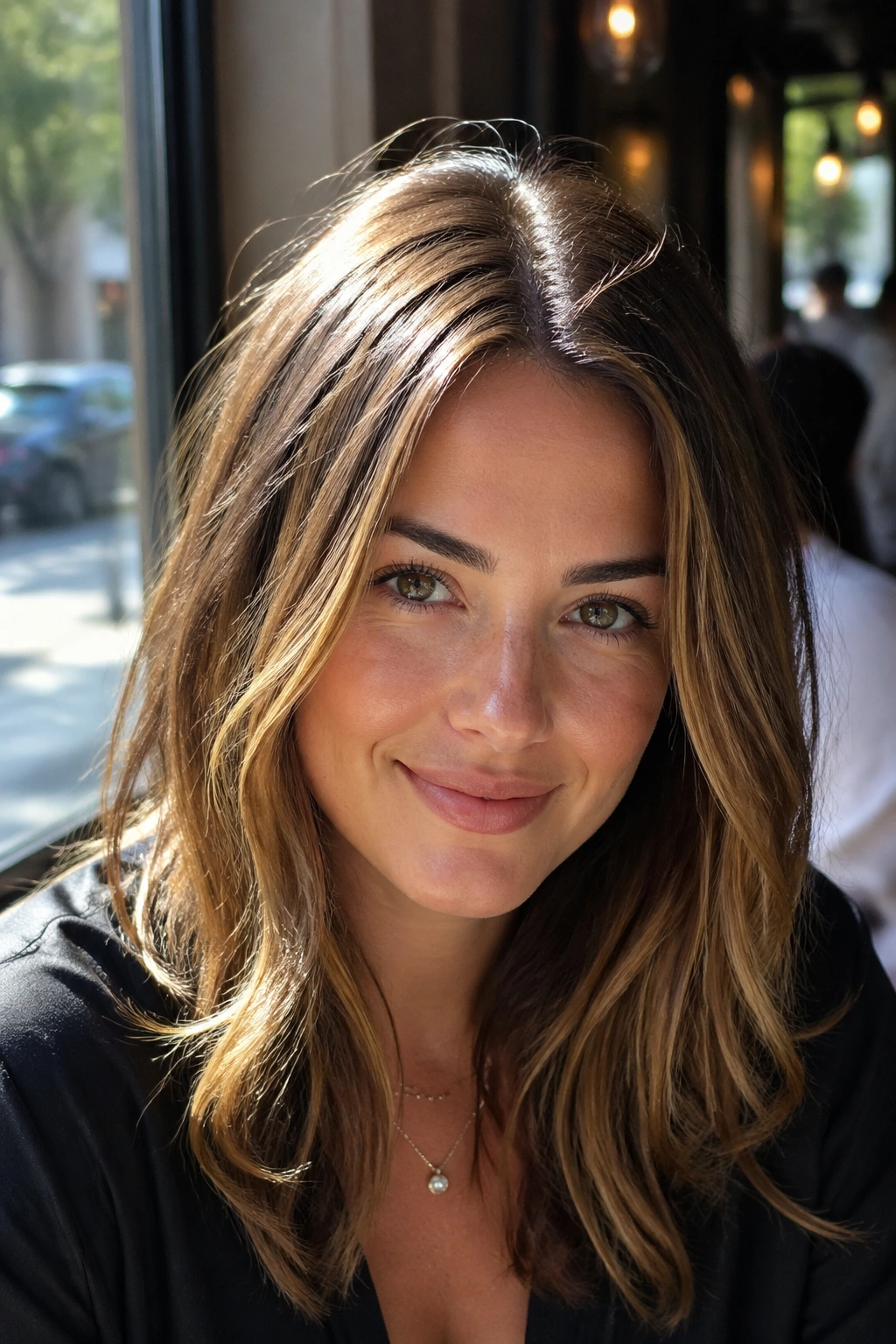
If you wear the same part every day, your part line is probably the best place to spend your highlight budget. A few micro-highlights right along that line can make the scalp area look brighter and cleaner without changing the whole head.
These are tiny, almost invisible foils placed right where the part exposes the top layer. On medium hair, that little strip of light gives the impression of more dimension at the root. On finer hair, it keeps the top from looking flat. On thicker hair, it breaks up the density just enough to feel lighter.
The placement is precise. You’re not painting broad stripes. You’re threading tiny pieces through the narrow strip that sits on top when the hair is parted. That precision is why it works. And yes, you can shift the part slightly after coloring to keep the growth line soft.
One honest note: if you change your part every week, this idea loses some of its punch. It works best for a fairly consistent part.
19. Mushroom Bronde with Lowlights
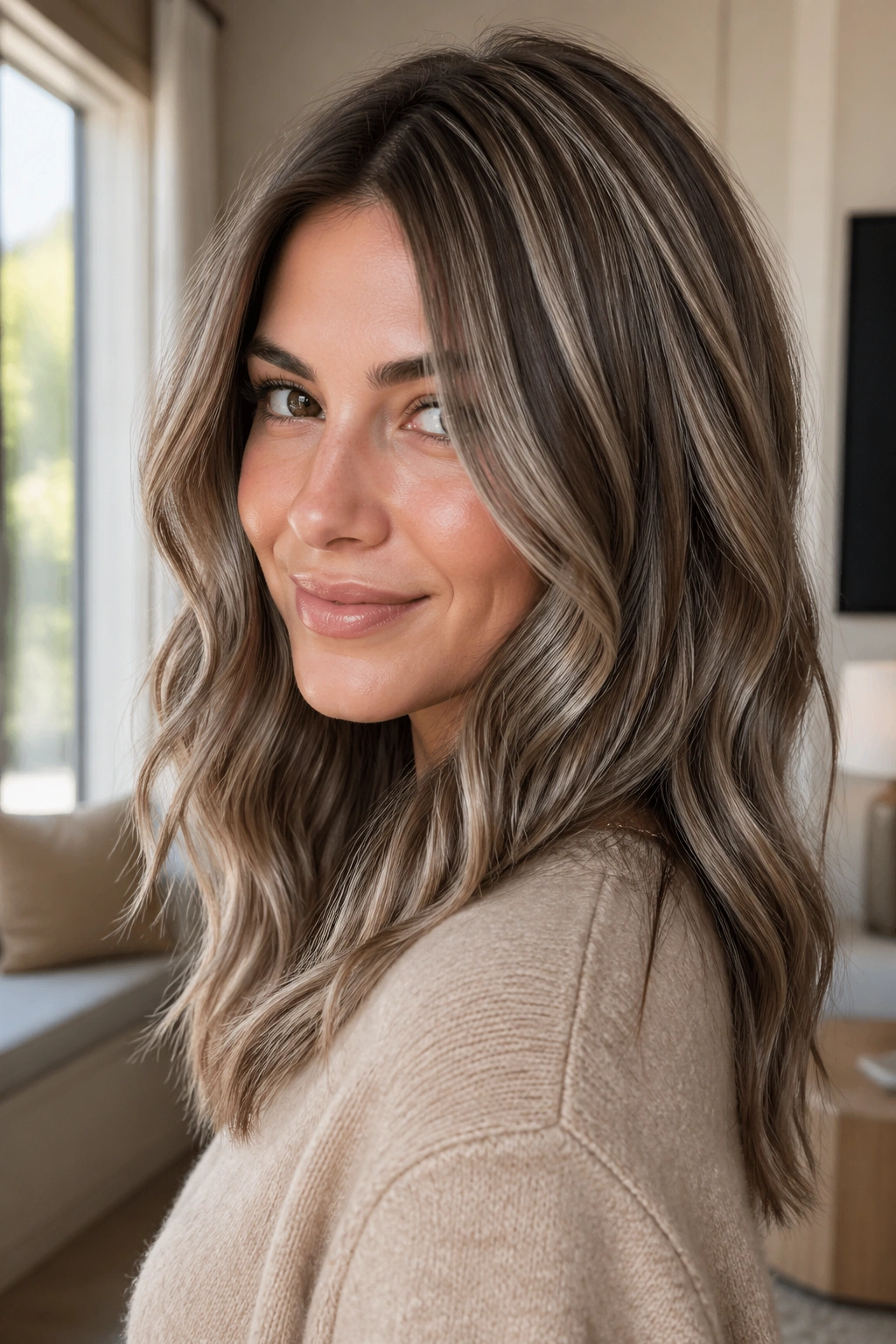
Can partial highlights still look dimensional if you also want deeper pieces in the mix? Yes. In fact, that’s often the smarter move.
Mushroom bronde pairs cool beige highlights with soft lowlights, which keeps the color from going too bright or too flat. The result sits between brunette and blonde, but it leans muted and smoky instead of sunny. I like this on medium to thick hair, where a little lowlight can restore shape and stop the light pieces from looking scattered.
Why the Combo Works
The highlights add lift. The lowlights keep the base from floating away. That balance matters more than people realize, especially when hair has been lightened before and needs depth put back in.
A strong version usually uses:
- cool beige or taupe highlights
- soft brown lowlights one shade deeper than the base
- partial placement through the crown and top sides
- a glossy finish to keep the tones blended
This style is a good choice if your hair has gone a little too bright from previous coloring and you want to bring it back to earth without going dark again.
20. Rooted Pearl Lights for Long Grow-Out
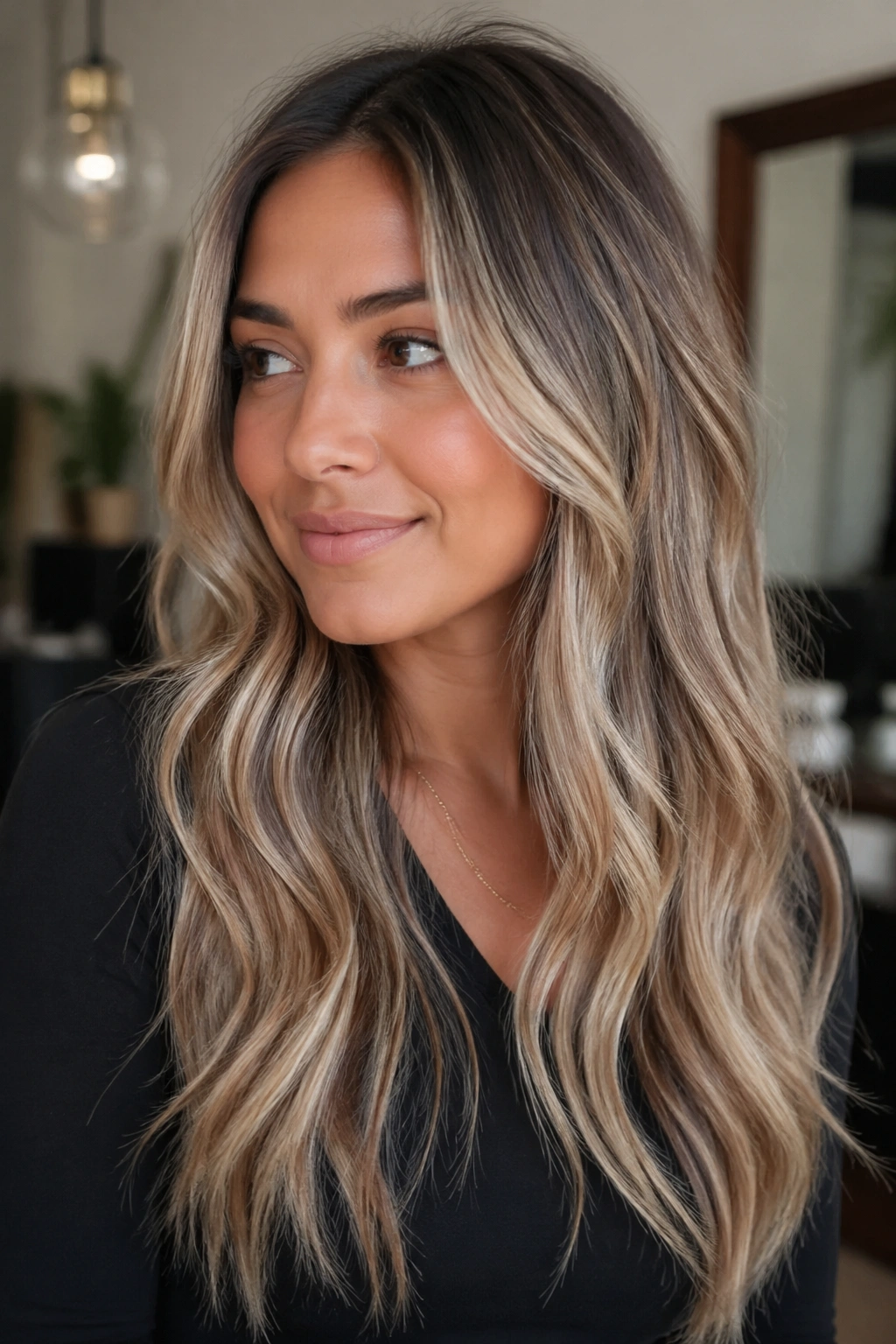
Rooted pearl lights are for people who want the softest possible grow-out. The roots stay dark enough to look natural, and the lighter pieces stay creamy and clean through the mids and ends.
This works especially well on long hair, because the length gives the color room to fade without looking abrupt. Pearl is a useful tone here: softer than silver, cooler than beige, and less yellow than cream. It gives the hair a polished finish without making the whole head look cold.
I’d keep the root shadow around 2 inches or so, then let the lighter pieces begin below that. The partial placement can stay concentrated on the outer layers and crown, which keeps the look airy and low maintenance. If you want subtle color that can stretch between appointments, this is one of the safest bets on the list.
It’s not flashy. That’s the charm. The hair just settles into a cleaner, softer version of itself.
Final Thoughts
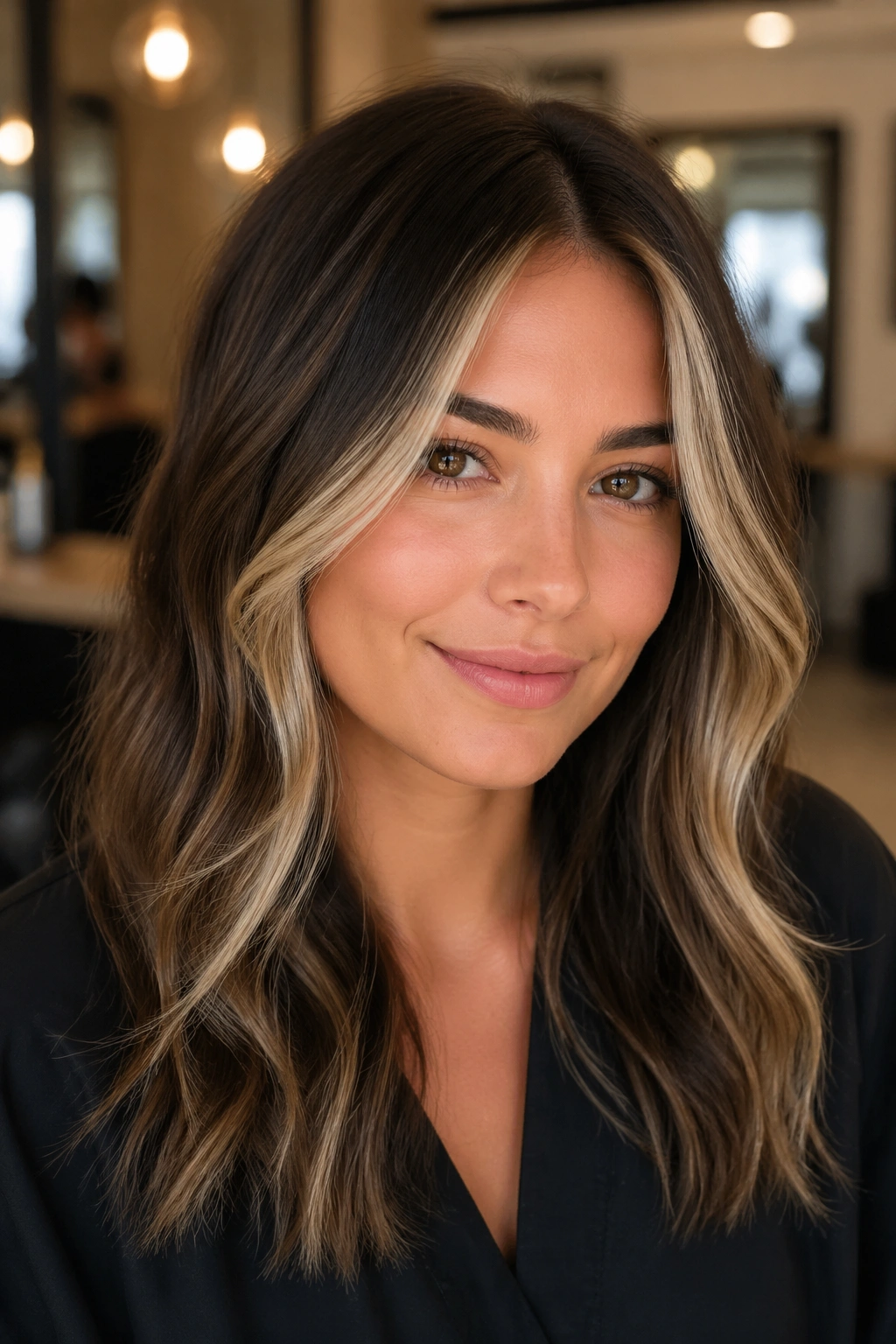
Subtle partial highlights work because they respect the base color instead of fighting it. You get brightness where the eye notices it most, and you keep enough depth for the hair to still feel like your own.
The best version is the one that matches your cut, your texture, and how much upkeep you can tolerate. A tiny babylight through the crown, a few face-framing foils, or a rooted money piece can change the whole mood of the hair without turning your color into a project.
If you’re showing a stylist a photo, the useful question is not “Can you make it blond?” It’s “Where should the light land so the cut looks softer?” That’s usually where the good work starts.