
Balayage hair color ideas earn screenshots when they do three things at once: soften the grow-out, add movement, and still look like you meant to keep the root a little darker. That’s the sweet spot. Too much contrast and the hair starts wearing the color. Too little and it reads flat.
Flat hair eats softness.
The best balayage is rarely the brightest one in the room. It’s the one that bends with a wave, looks rich at the crown, and leaves the ends with just enough light to feel fresh. Hand-painted highlights, a good root smudge, and the right tone do more work than people think. A warm caramel on a brunette base, a smoky beige on a cooler client, a pale cream blonde with a soft shadow root — those choices change everything.
Bring a photo, yes. Bring two if you can. One should show the shade you want; the other should show the tone you absolutely do not want, because salon language gets fuzzy fast when people say “blonde” and mean six different things.
1. Caramel Ribbon Balayage
Caramel ribbon balayage is the shade I reach for when someone wants dimension without a loud stripe pattern. It gives brunette hair that soft, glossy lift that makes layers look fuller and ends look healthier than they did an hour earlier.
Why It Flatters
Caramel sits in that useful middle ground between gold and brown, so it warms the hair without turning it orange. On medium and deep brunettes, the ribbons show up as movement first and color second, which is exactly why they photograph so well in real life — not just under salon lights.
- Best base: level 4 to 6 brunette hair
- Best finish: soft waves, loose curls, or a layered blowout
- Tone to ask for: warm caramel, not copper
- Maintenance: gloss refresh every 6 to 10 weeks
Ask for a soft root shadow so the lighter pieces blend out from the scalp instead of looking dropped in.
2. Honey Blonde Balayage
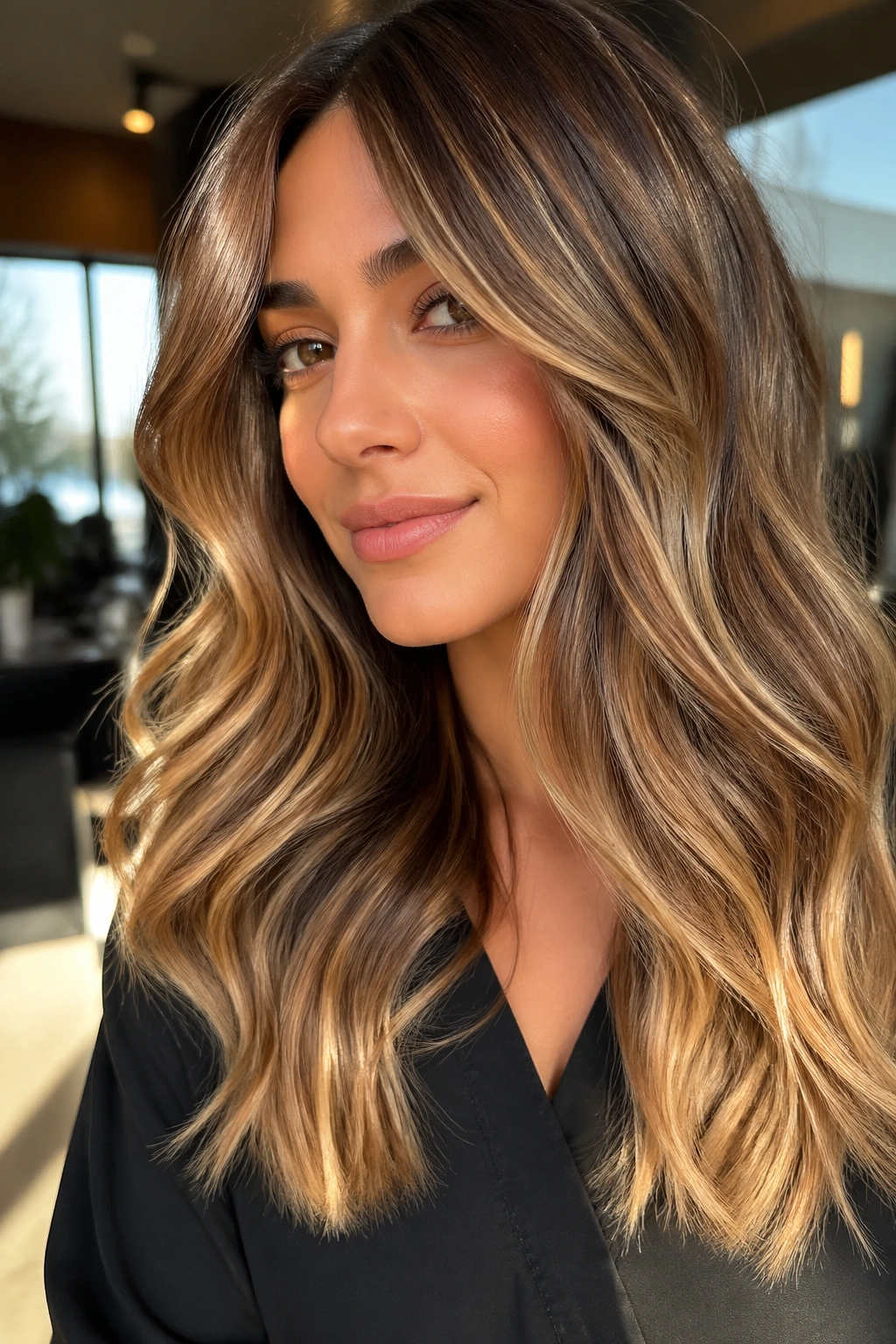
Honey blonde balayage is the warm option for people who want brightness but do not want that icy, high-contrast blonde that can look sharp around the face. It has a golden glow that makes hair look shinier even before you add styling cream.
Why does it work so well on brunettes? Because honey does not fight the natural base. It sits on top of it, almost like sunlight got trapped in the mid-lengths. That means the grow-out is friendlier, and the color still feels soft a few weeks later.
If your skin has peach, olive, or neutral undertones, honey usually looks easy and clean. On cooler complexions, a beige honey blend can keep the warmth from taking over. One more thing: a big, round brush blowout makes this shade look more expensive than beach waves do. Strange, but true.
3. Mushroom Brown Balayage
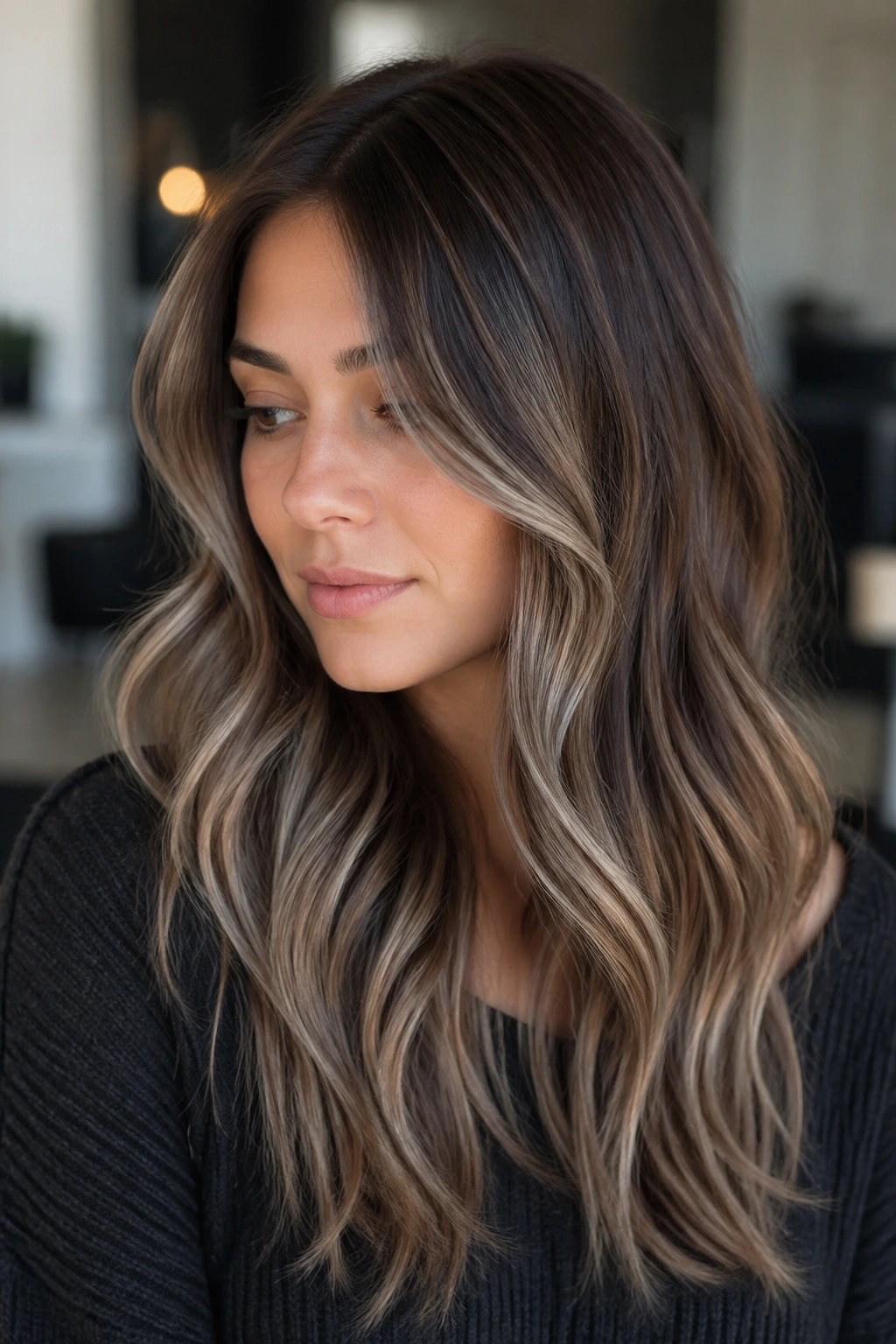
If you’ve ever seen brown hair that looks calm under bad bathroom lighting, it was probably mushroom brown balayage. The whole point is restraint: cool taupe, smoky beige, and soft brown pieces that feel polished instead of sugary.
How to Ask for It
Tell your colorist you want the hair to stay brown first, light second. That one sentence saves a lot of confusion. Mushroom brown is not gray, and it is not ash with no life left in it. The good versions still have warmth in the shadow areas, which keeps the hair from going flat or muddy.
What Makes It Different
A little warmth near the root and cooler ribbons through the mids gives this shade depth that changes in daylight. Indoors, it reads muted and chic. Outside, the lighter pieces show movement without screaming for attention.
Best for: straight hair, blunt lobs, and anyone who hates obvious highlights.
4. Copper Penny Balayage
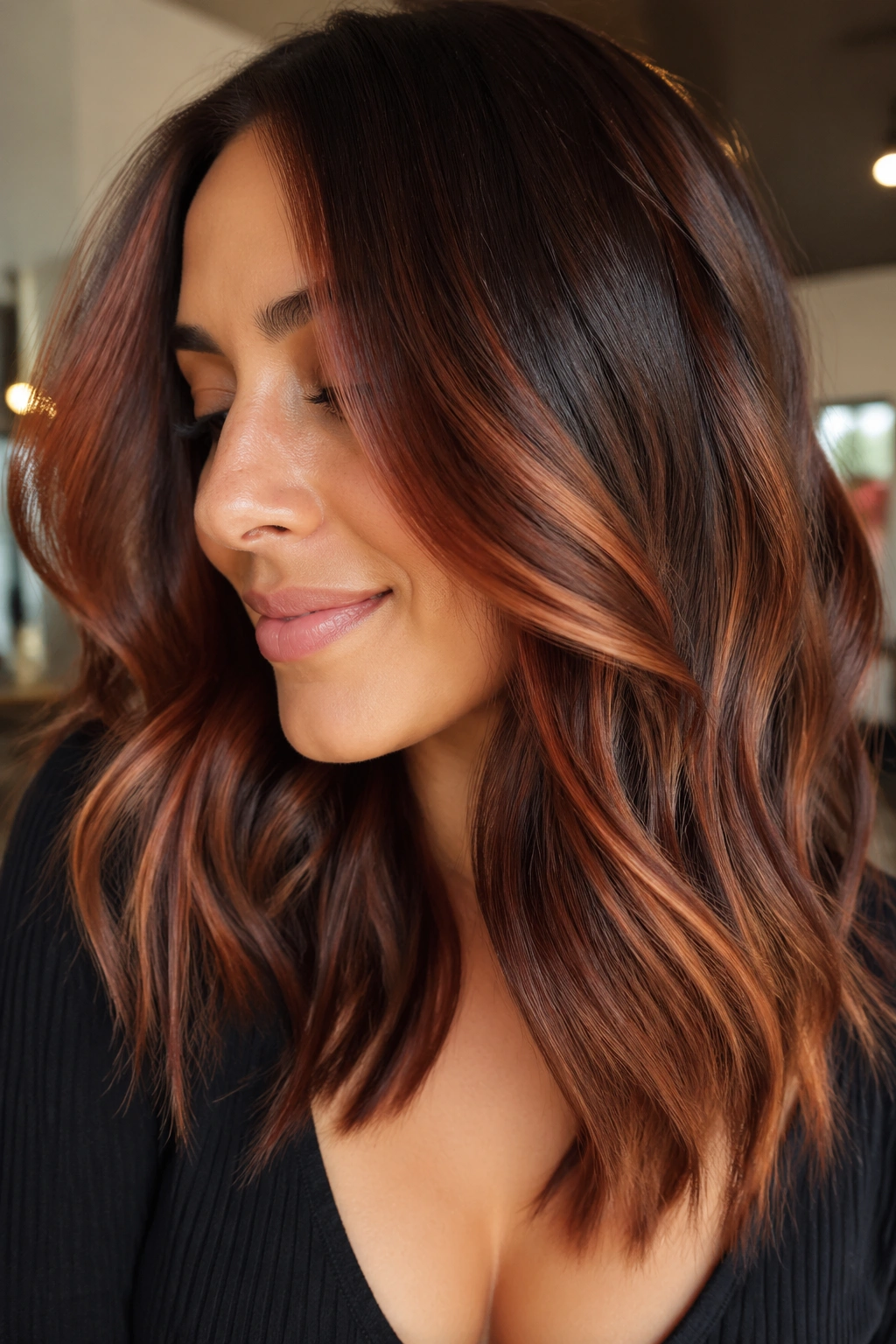
Copper penny balayage can go loud fast, so the trick is keeping it narrow and strategic. The best version looks like a warm metal thread running through brown hair, not a red wash poured over the whole head.
On layered cuts, copper picks up every bend in the hair. That is the part people love. The color moves. It catches the eye around the face, then settles back down through the ends. If the base is dark enough, the copper stays rich instead of neon. That matters more than people think.
- Best placement: mid-lengths, ends, and a few face-framing pieces
- Best haircut: shag, lob, or long layers
- Tone to request: copper with brown depth
- Watch out for: too much red at the root
A clear gloss after lifting keeps copper from turning brassy.
5. Champagne Beige Blonde
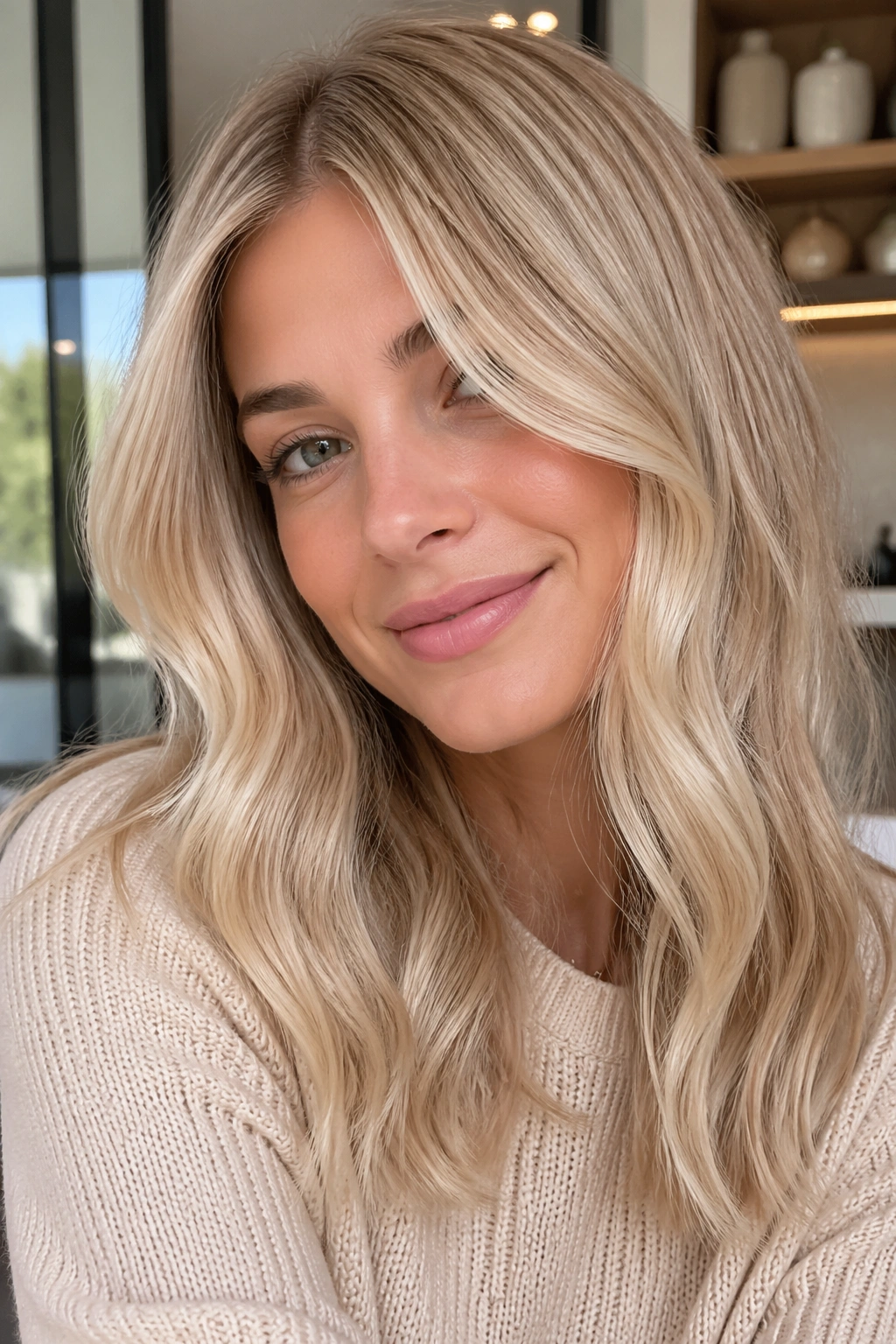
Champagne beige blonde has that soft, creamy gleam that sits between pale blonde and warm beige. It’s a smarter choice than straight-up yellow blonde, and less chilly than a silver-heavy tone that can make the face look washed out.
The appeal is in the balance. Champagne catches light, but it doesn’t shout about it. On slightly darker blonde bases, the color looks expensive in a quiet way. On light brunettes, it can bring the whole style up a level without making the ends look fried.
This shade also has a nice habit of flattering fine hair. The beige dimension keeps the blonde from looking flat, while the champagne tone gives a little sparkle through the ends. It’s one of those shades that looks better when it’s been lived in for a week, not just when it leaves the salon.
A blunt bob or a shoulder-length cut makes it sing.
6. Espresso Mocha Melt
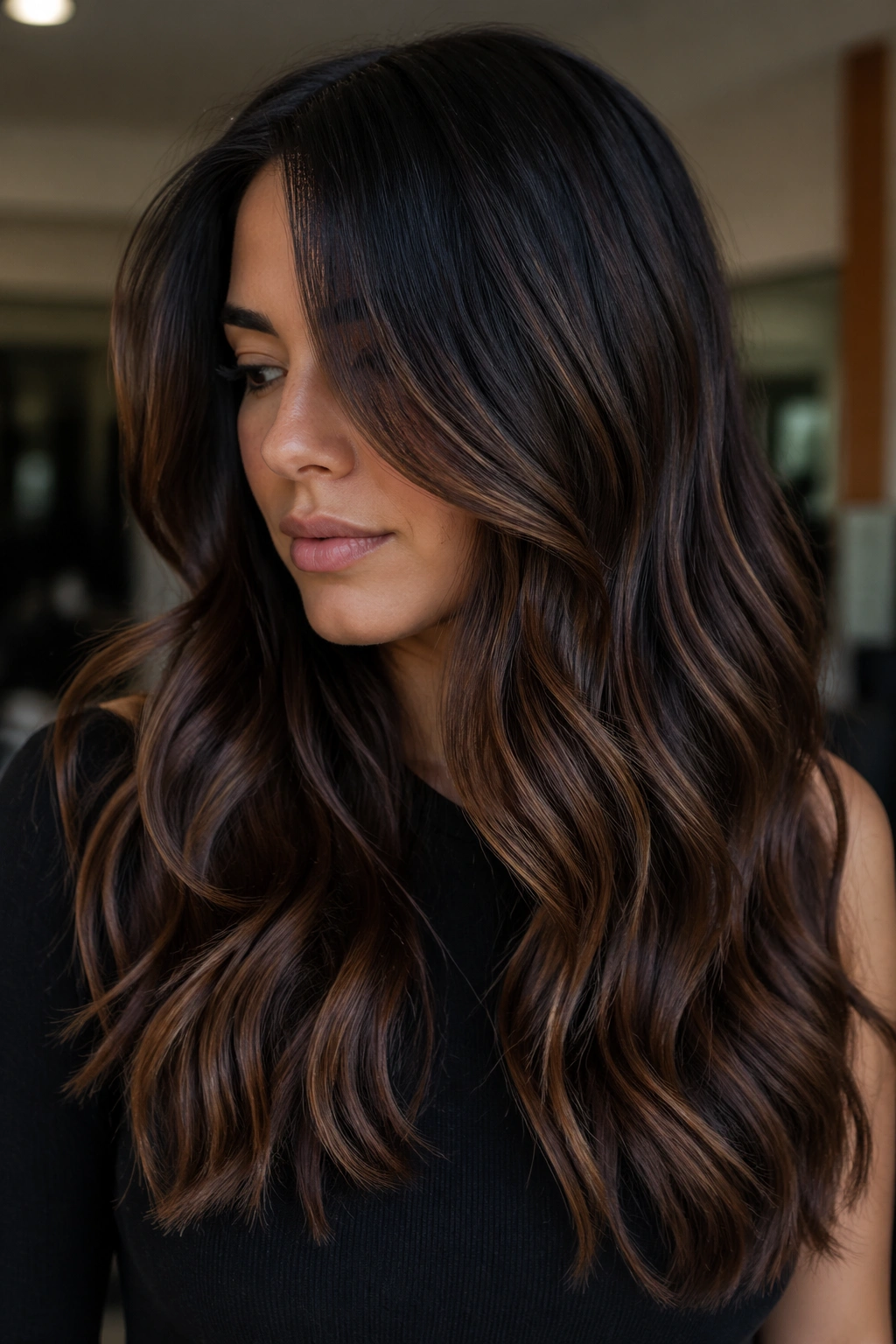
Espresso mocha melt is for the person who likes dark hair and doesn’t want to abandon it. Unlike a full highlight job, this keeps most of the depth intact and lets the lighter pieces show up only where the hair moves.
The effect is rich, not flashy. Think dark espresso at the crown, then a slow shift into mocha through the mids and ends. If the colorist lifts too high, the whole thing loses its mood. The best versions stay close to the base, which is why they grow out so cleanly.
This is a strong pick for straight hair, longer layers, and anyone who wears sleek styles more often than waves. You can still get shine with this shade. Actually, shine matters more here than brightness does.
7. Strawberry Bronde Balayage
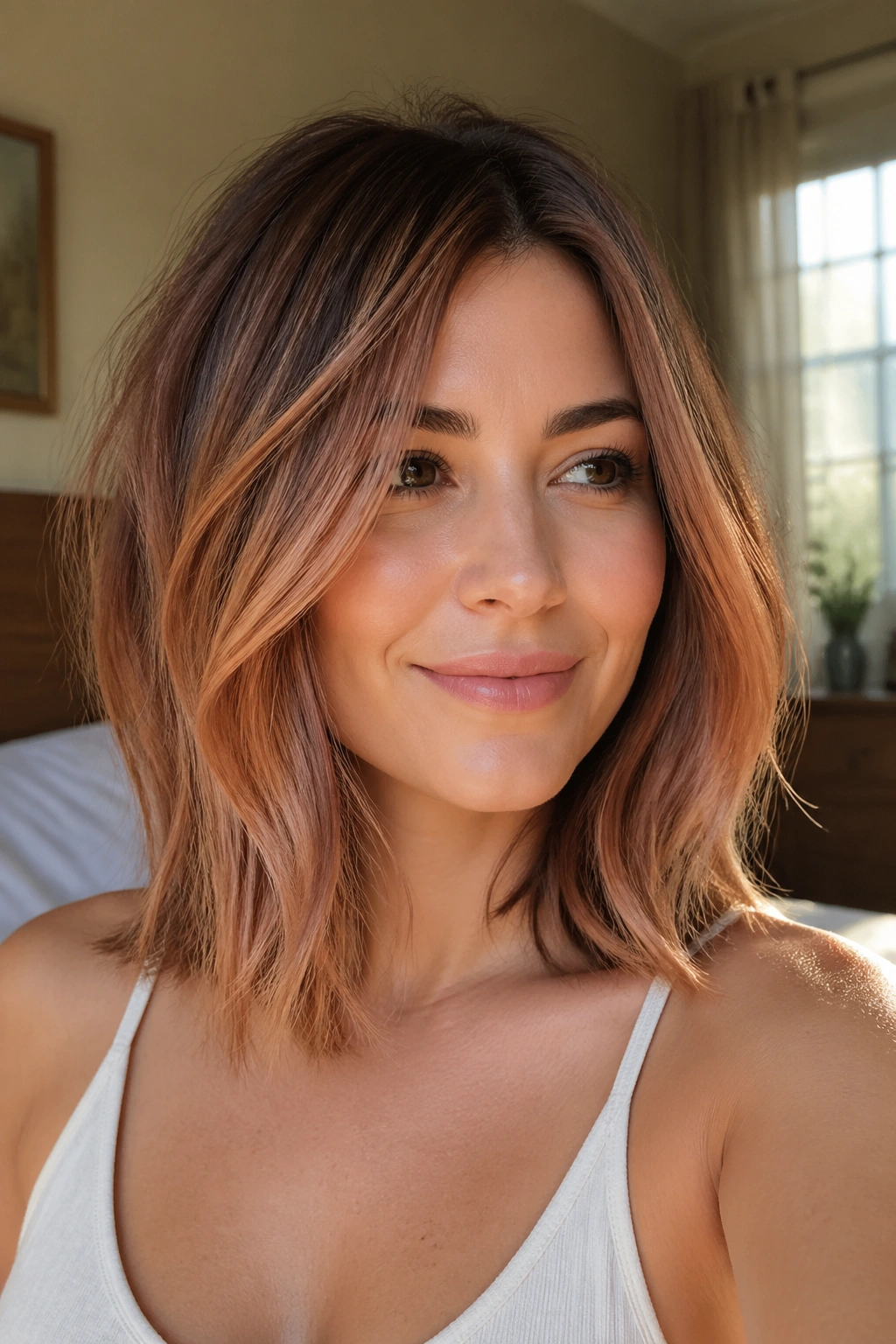
Want warmth without leaning full copper? Strawberry bronde balayage sits right in that gap. It mixes soft peach, light brown, and a touch of rose-gold warmth so the hair looks sweet without turning costume-y.
How It Reads in Real Life
On a brunette base, strawberry bronde usually appears as a glow rather than a block of color. That’s the nice part. The red family tone stays gentle because it’s blended with brown and beige, so the final effect feels wearable on ordinary days, not just in perfect lighting.
How to Ask for It
Tell your colorist you want peachy warmth with brown depth, not a full red. That keeps the result soft. A little brighter around the face is enough; you do not need the whole head to go pink.
If your hair is wavy, even better. The color moves through each bend and looks lighter without needing a huge lift.
8. Ash Beige Brunette
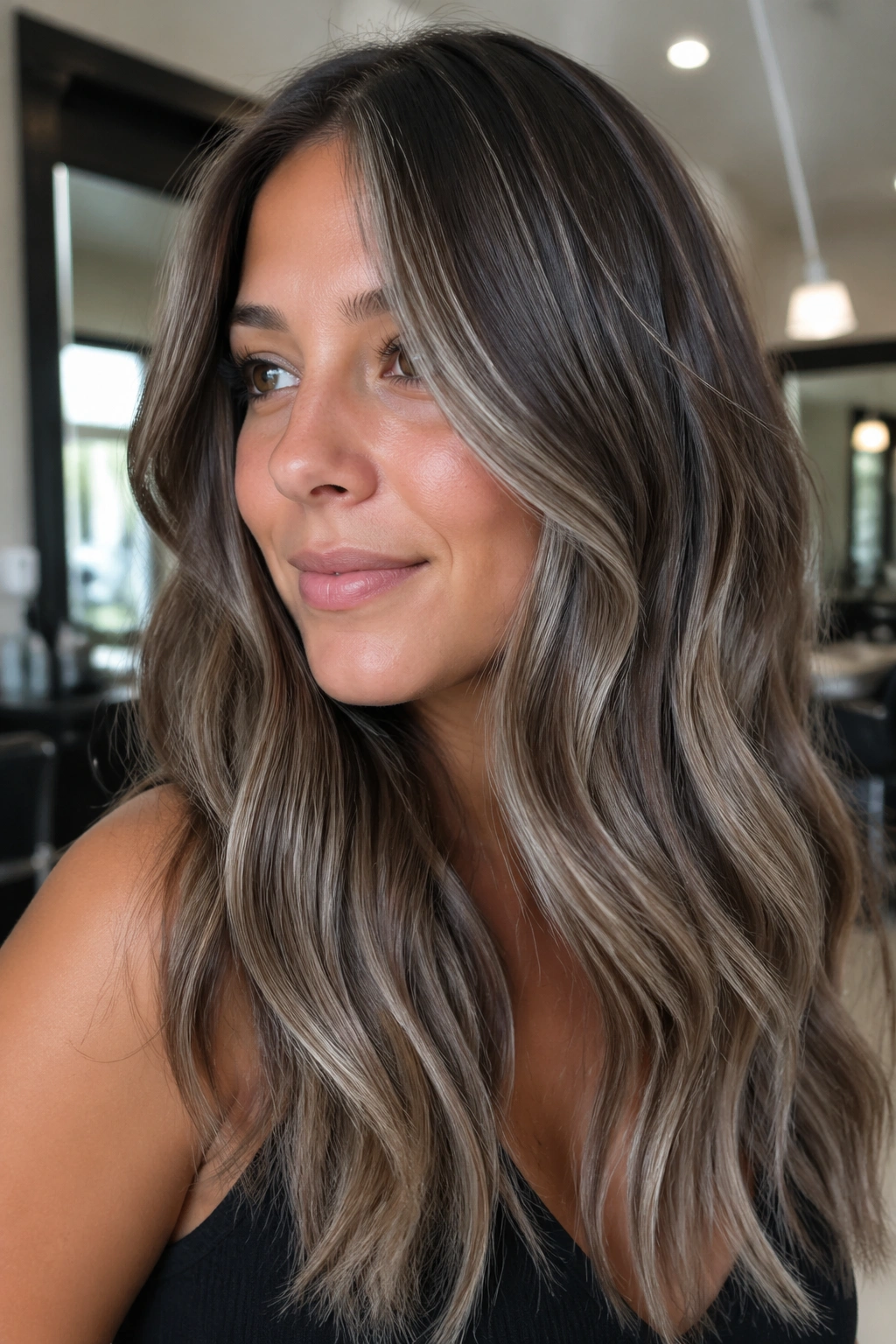
Ash beige brunette is what happens when you want brown hair to look clean and cool without going steel gray. Open a salon cape under bright lights and this is the shade that still looks calm.
The mix is subtle: beige for softness, ash for control. That combination is why it can rescue brunette hair that keeps drifting warm after every gloss. If your natural base pulls red or gold, ash beige helps quiet it down. If your hair already leans cool, the beige keeps it from going flat.
- Best on: naturally brown hair that tends to brass
- Best finish: smooth blowouts, long layers, sleek waves
- Tone to request: beige with a smoky edge
- Upkeep: toner or gloss as needed to keep warmth in check
Do not over-lighten the ends. The whole look falls apart if the contrast gets too sharp.
9. Bronde Balayage
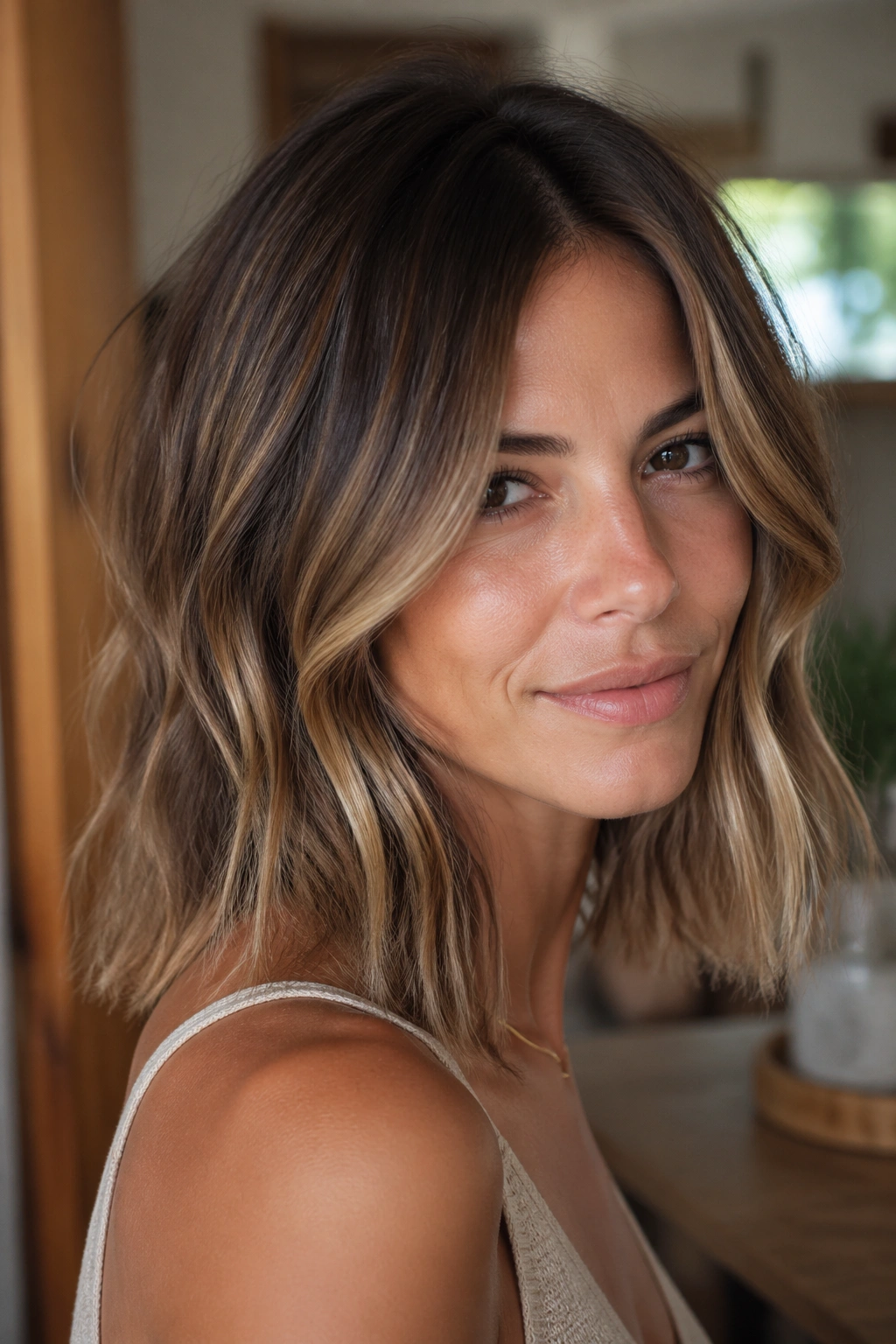
Bronde balayage is the middle lane between brunette and blonde, and that middle lane exists for a reason. It gives you lighter movement without the full maintenance load of a blonde transformation.
For first-time lighteners, bronde is usually the least stressful choice. The root stays grounded, the mids get a soft lift, and the ends carry enough brightness to make the hair feel fresh. Nothing about it should look forced. If it does, the tone or placement is off.
A lot of people ask for bronde when they really want dimension, not actual blonde. That’s the useful part. You can keep the overall look natural while still getting face-framing brightness and a softer finish through the lengths.
It works especially well on shoulder-length cuts. Shorter hair can look busy if the highlights are too chunky.
10. Cinnamon Swirl Balayage
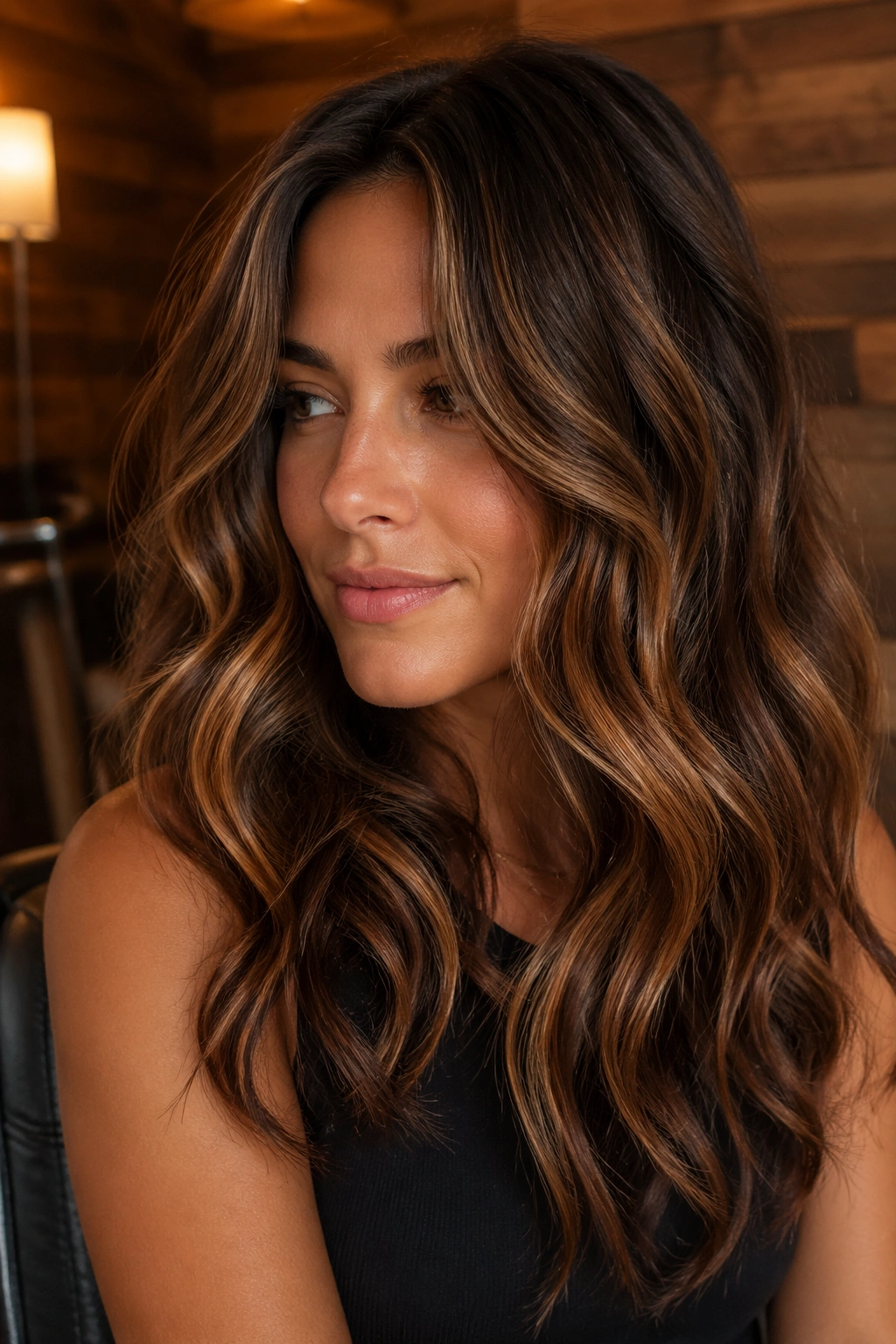
Cinnamon swirl balayage has a warm, toasted look that makes layered hair move. You can almost smell the warmth in it — brown sugar, spice, a little amber at the edges — without the color tipping into red territory.
The best part is how it behaves on curls and waves. The lighter cinnamon pieces sit in the bend of each wave, so the color looks active even when the hair isn’t freshly styled. On straight hair, the tone reads a little calmer and more polished, which is useful if you want warmth but not a huge color statement.
Where It Looks Best
On medium brown bases, cinnamon can feel rich and glossy. On darker hair, it needs enough lift to show up cleanly; otherwise it disappears.
What to Watch For
Keep the lightness controlled. The shade should read brown first and spice second.
11. Face-Framing Money Piece Balayage
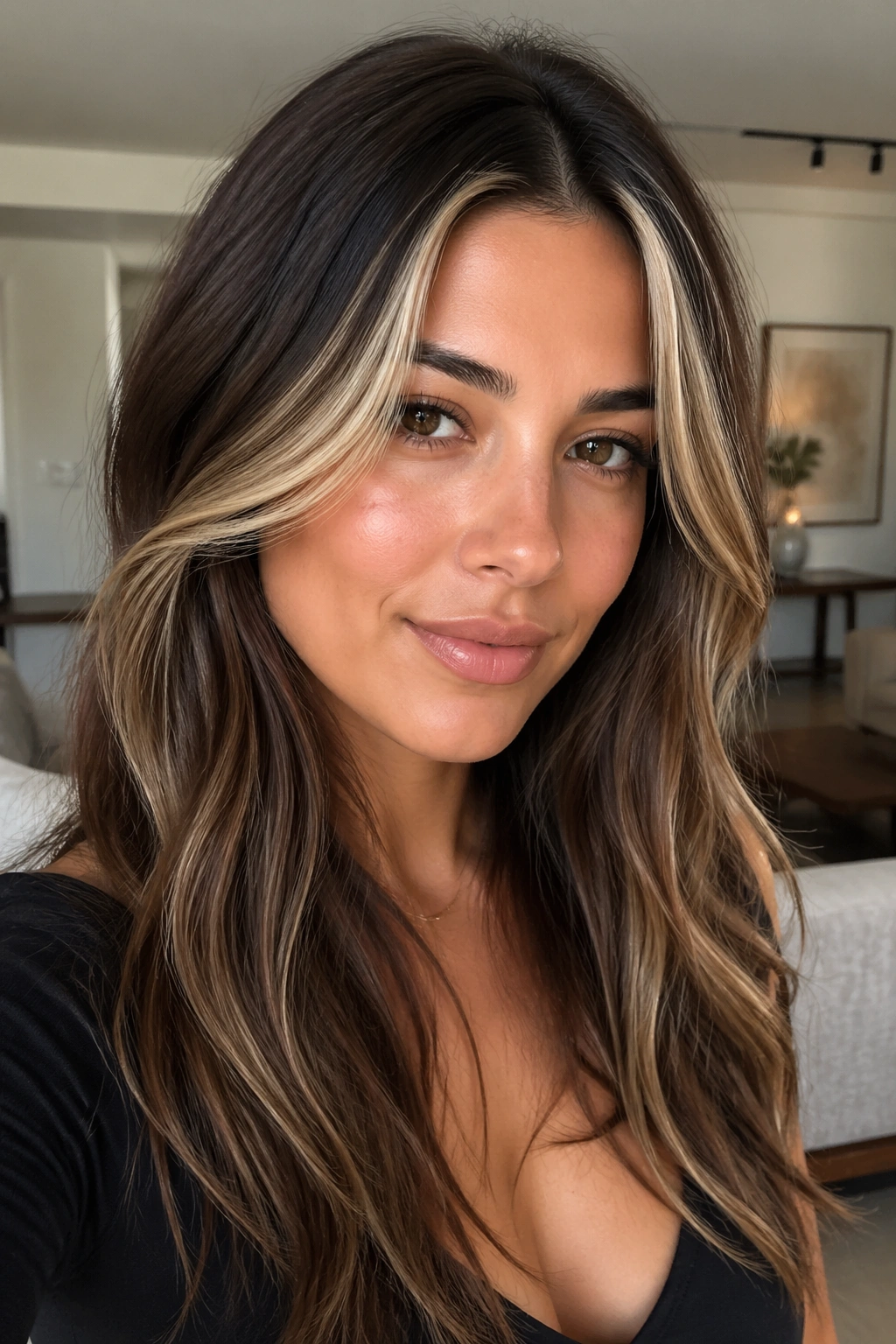
A few brighter strands at the front can change a whole haircut. That is the reason the money piece keeps showing up in salon photos, and it’s also why it can go wrong if the contrast gets too harsh.
When the face-framing pieces are placed well, they lift the eyes, soften the jawline, and give the illusion that the hair has more movement than it really does. The rest of the balayage can stay gentle. It does not need to be a full head of brightness. In fact, the more restrained the rest of the color is, the better the front pieces look.
The catch is upkeep. Those front sections fade first because they get the most light and the most styling heat. So if you want the effect without the maintenance spiral, keep the money piece only one or two shades lighter than the mid-lengths. That way the grow-out stays believable.
It’s a small detail. It changes everything.
12. Chestnut Toffee Balayage
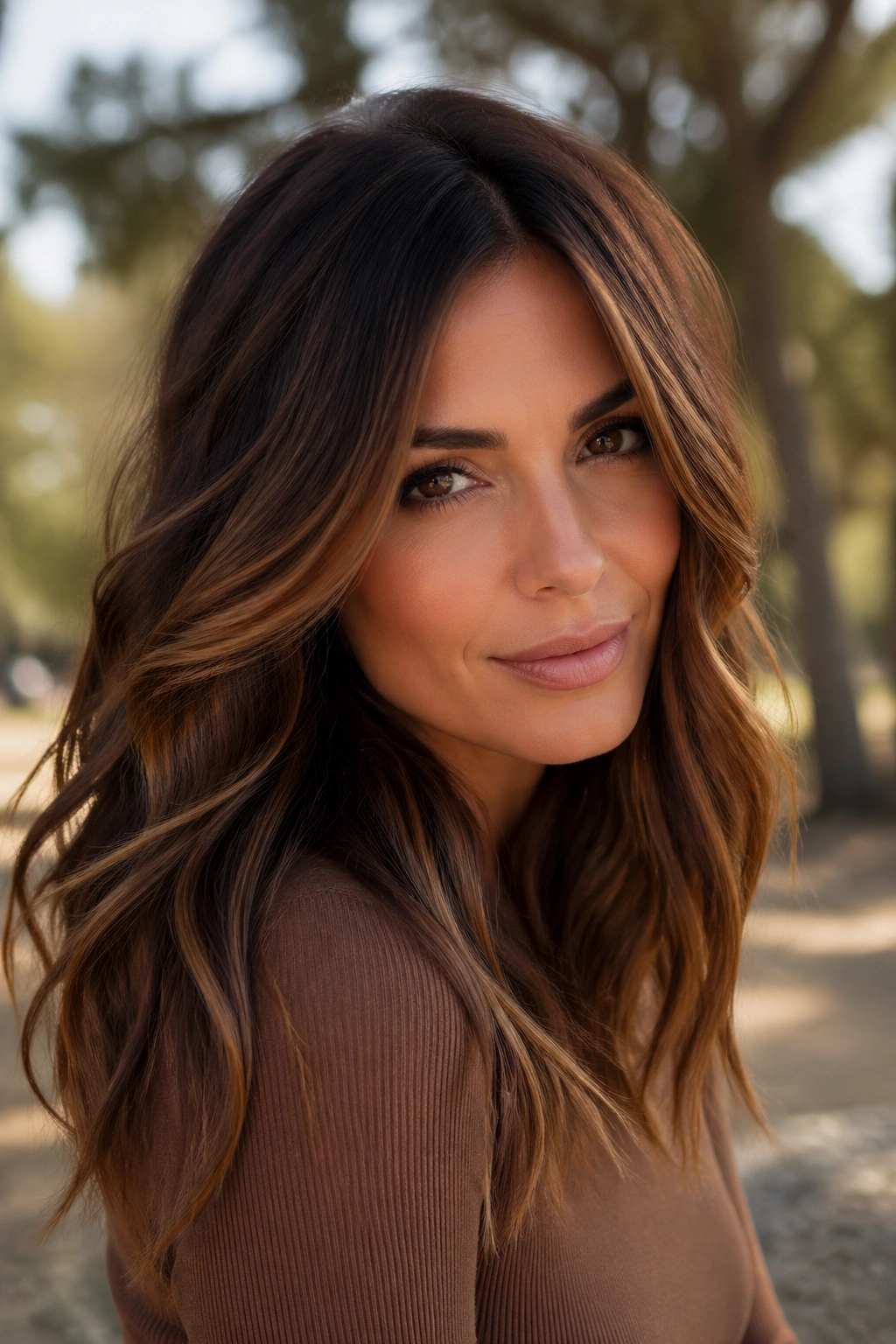
Chestnut toffee balayage is richer than caramel and softer than chocolate, which is exactly why it feels so wearable. If caramel reads sunny, chestnut toffee reads deep and plush.
Unlike brighter blonde work, this shade does not need to be flashy to feel dimensional. The toffee threads show up in the bends and layers, while the chestnut base keeps the overall tone grounded. On medium brown hair, that contrast is enough to make the cut look fuller and the ends look less heavy.
This is one of my favorite choices for longer hair because it keeps length from looking like one solid block. You get movement, but the color still feels adult and low-key. Ask for the lighter ribbons to stay only a few levels above the base, not a huge jump. That small difference keeps the blend smooth.
If your hair is thick, this one earns its keep.
13. Icy Pearl Blonde
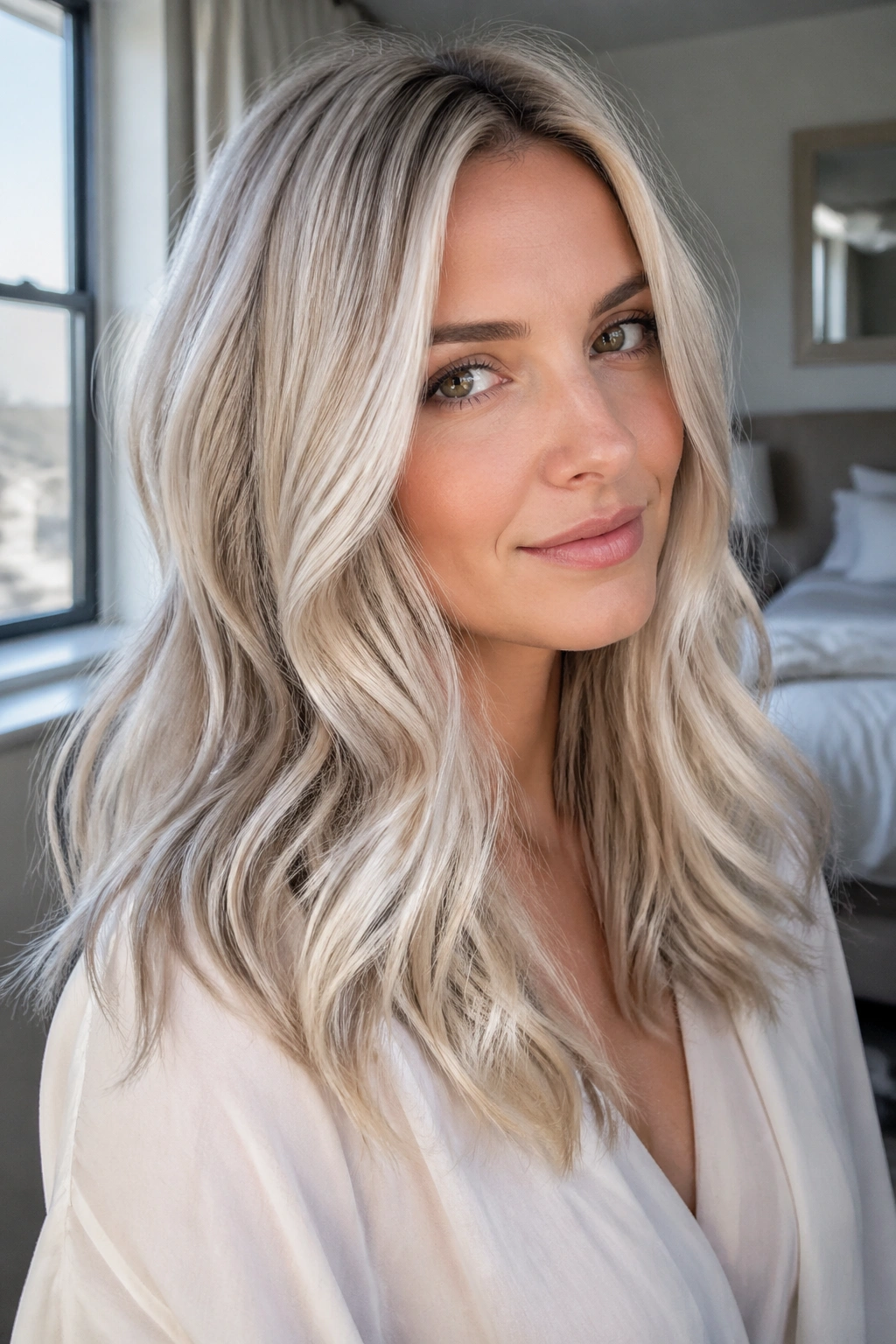
Icy pearl blonde balayage has a clean, luminous finish that sits between silver-blonde and soft pearl. It’s the shade people picture when they want pale hair that still feels smooth instead of chalky.
Why It Flatters
The pearl tone softens the icy edge, which matters more than people realize. Pure cool blonde can make the hair look dry if the lift is too aggressive. Pearl adds a little creaminess back in, so the final result looks polished and light rather than harsh.
Quick Salon Notes
- Best base: light blonde or lightened brunette hair
- Best shape: soft waves, sleek bobs, layered long cuts
- Tone to ask for: pearl, beige-pearl, or silvery cream
- Upkeep: regular glossing to keep brass down
Keep the root shadow cool, not gray. That detail stops the whole style from looking flat.
14. Auburn Glow Balayage
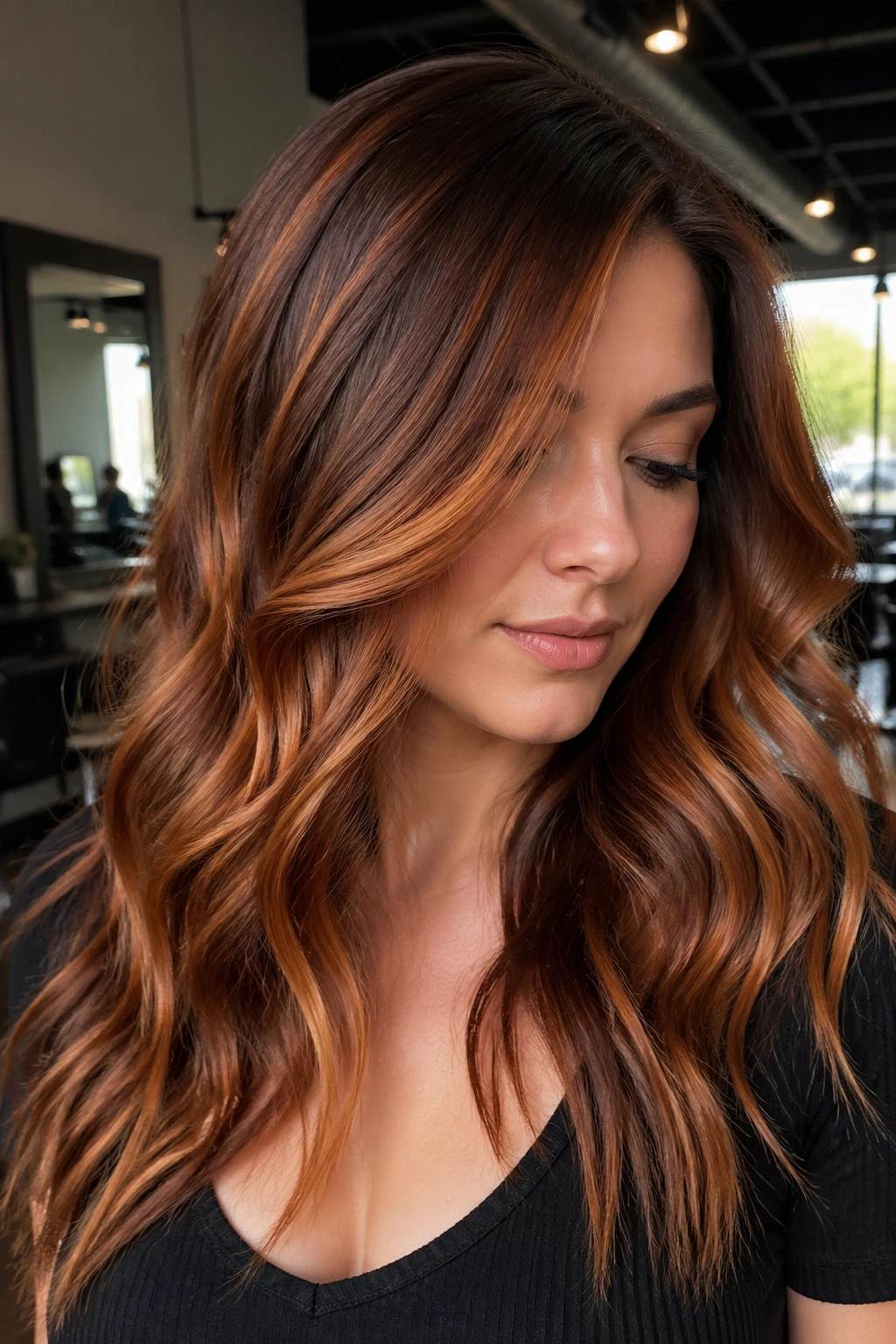
Auburn balayage is the rare red-family shade that still softens the grow-out. It has enough warmth to feel rich, but enough brown in it to avoid the loud, opaque look that pure red can bring.
That’s why auburn works so well on medium skin tones, freckles, and haircuts with texture. The color sits in the cut instead of sitting on top of it. If the base is darker, the auburn threads glow. If the base is lighter, they read softer and more coppery. Either way, the tone has life.
Auburn also pairs well with gloss-heavy styling. A clean blowout makes it look like satin. Loose waves make it look more lived-in. Both are good. The shade has enough character to hold itself.
If you’ve been avoiding red because you don’t want a hard line at the root, this is the version to look at.
15. Vanilla Cream Balayage
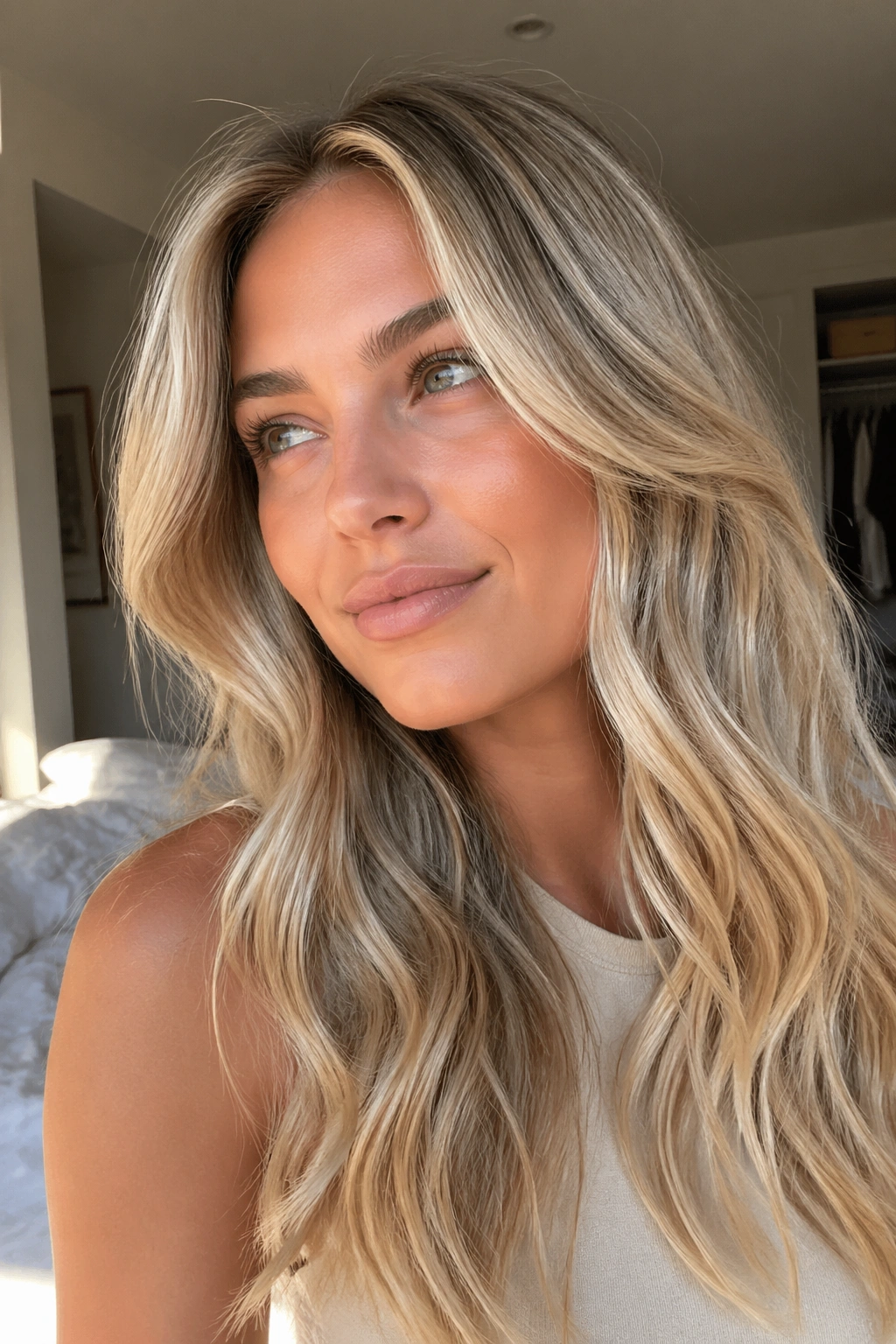
Can blonde look soft instead of bleached? Yes, if it leans vanilla cream rather than banana yellow or flat platinum. Vanilla cream balayage gives you brightness with a cushion of warmth, which is why it feels easier to wear day after day.
How to Ask for It
Tell your colorist you want creamy blonde with a pale beige base. That keeps the tone from drifting too cool or too warm. If you ask for “blonde” on its own, you may get anything from icy to gold, and that is where the disappointment starts.
The best results usually keep a shadow at the root and a slightly brighter veil through the mids. The hair ends up looking expensive without looking brittle. That’s the whole point.
This shade is especially nice on shoulder-length cuts and soft layers. There’s enough light to open up the face, but not so much that the hair starts looking overworked.
16. Smoky Brunette Balayage
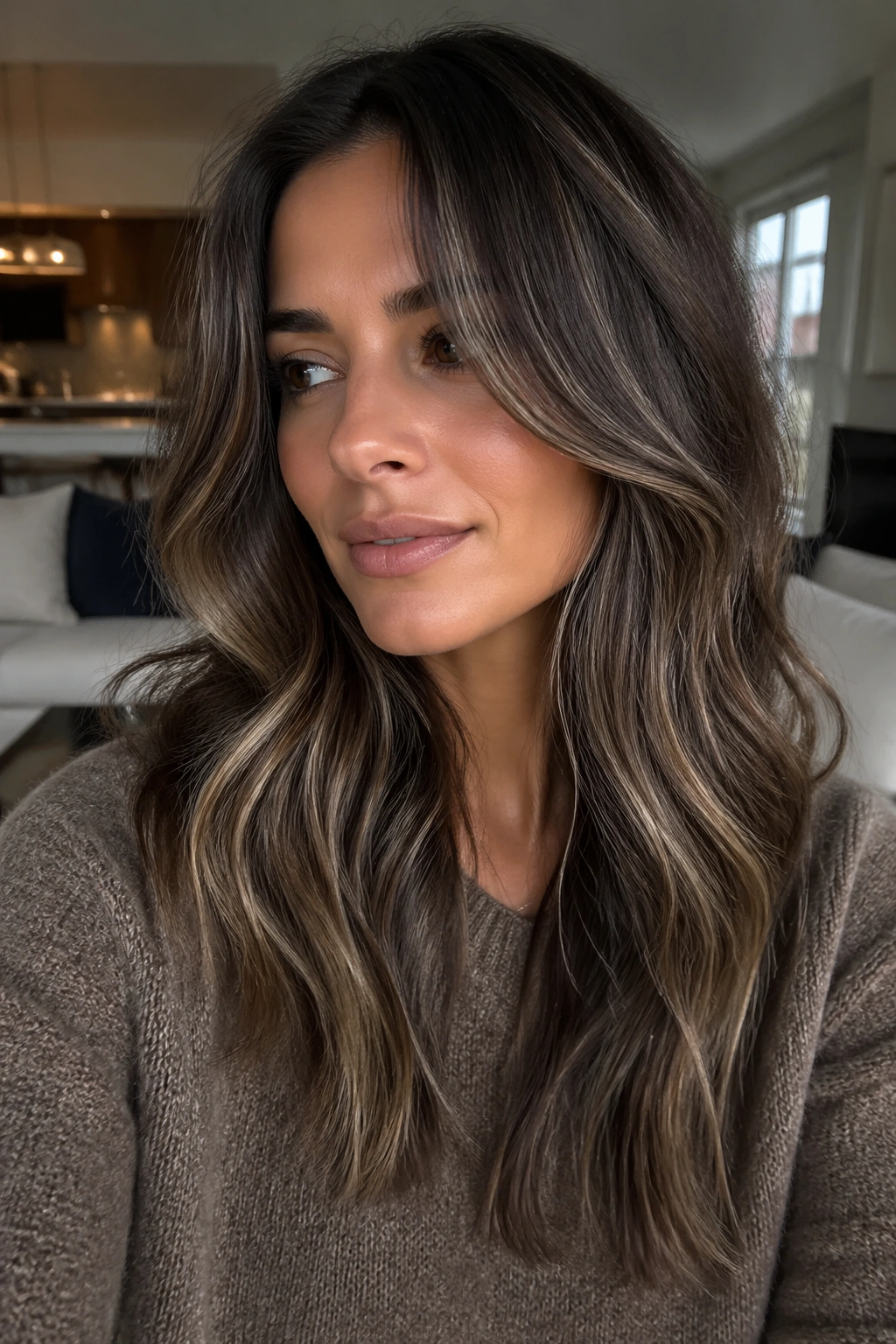
Picture dark brown hair with narrow smoky ribbons near the ends. That’s smoky brunette balayage, and it’s the one I recommend when someone wants dimension but hates visible highlight stripes.
The magic is in the restraint. The lighter bits stay close to the brunette base, but the tone shifts cooler — a little taupe, a little ash, a little shadow. That gives the hair depth without moving it into blonde territory. It also means the style works well in professional settings where loud color feels out of place.
- Best on: long layers, lobs, and naturally dark brown hair
- Best tone: smoky brown, taupe, cool mocha
- Best finish: smooth blowout or loose bend
- Watch for: too much silver, which can look dry
A gloss makes this shade look richer, not lighter.
17. Rose Gold Balayage
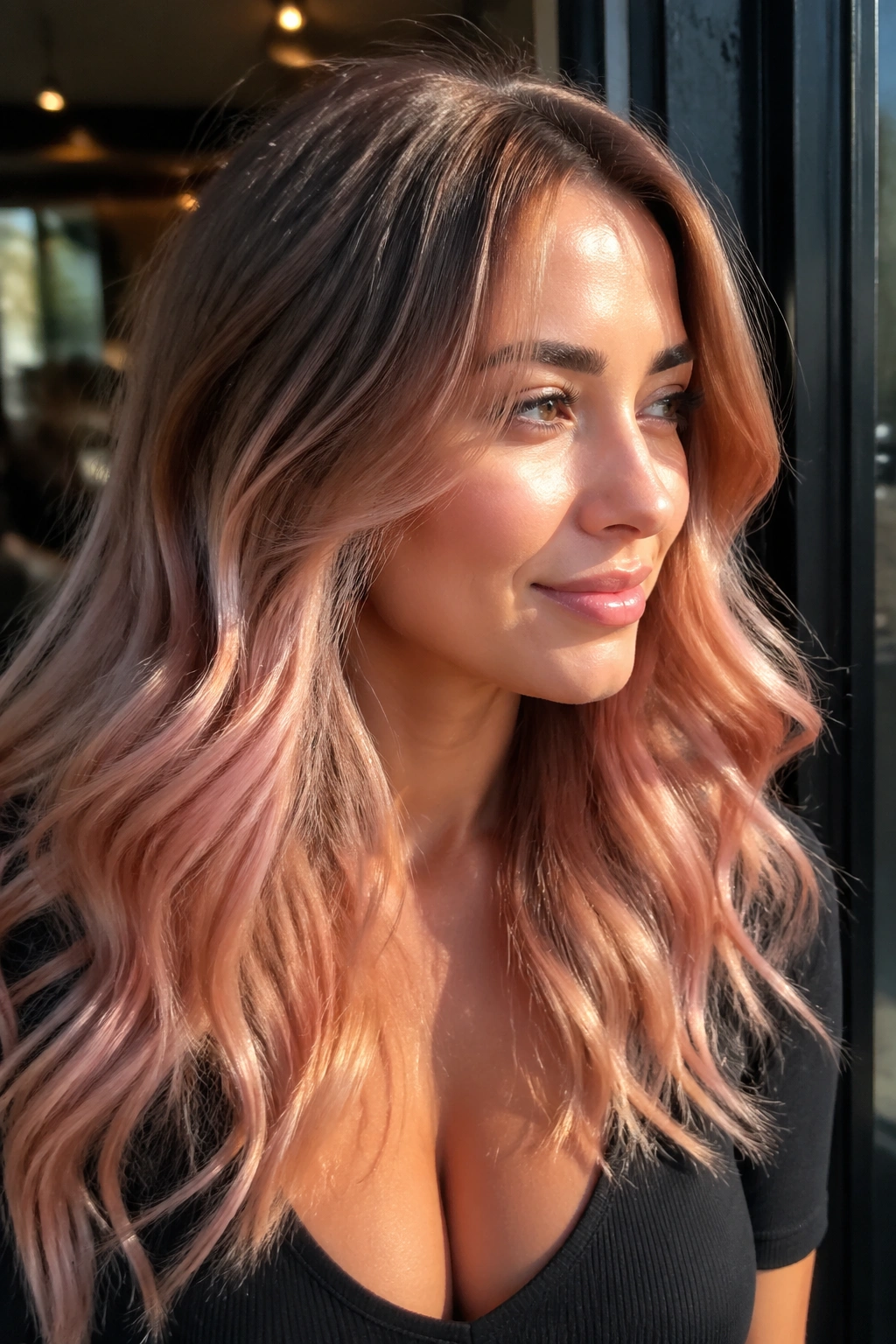
Rose gold balayage can go wrong fast if the pink is too strong. The version worth saving is softer: beige, peach, and a whisper of rose all braided together so the hair feels warm rather than candy-colored.
It looks especially good in natural light. Window light, car light, the kind of soft daylight that hits your face on the way out the door — that’s where rose gold really shows its shape. Indoors, it stays subtle. Outside, it catches the eye without turning neon.
This shade fades gently too, which is part of the appeal. The pink softens first, then the beige remains, so the grow-out does not feel abrupt. That makes it a solid pick for blondes and light brunettes who want a little personality without a full commitment to red.
The key is tone control. Keep the rose under the beige, not on top of it.
18. Sandy Blonde Balayage
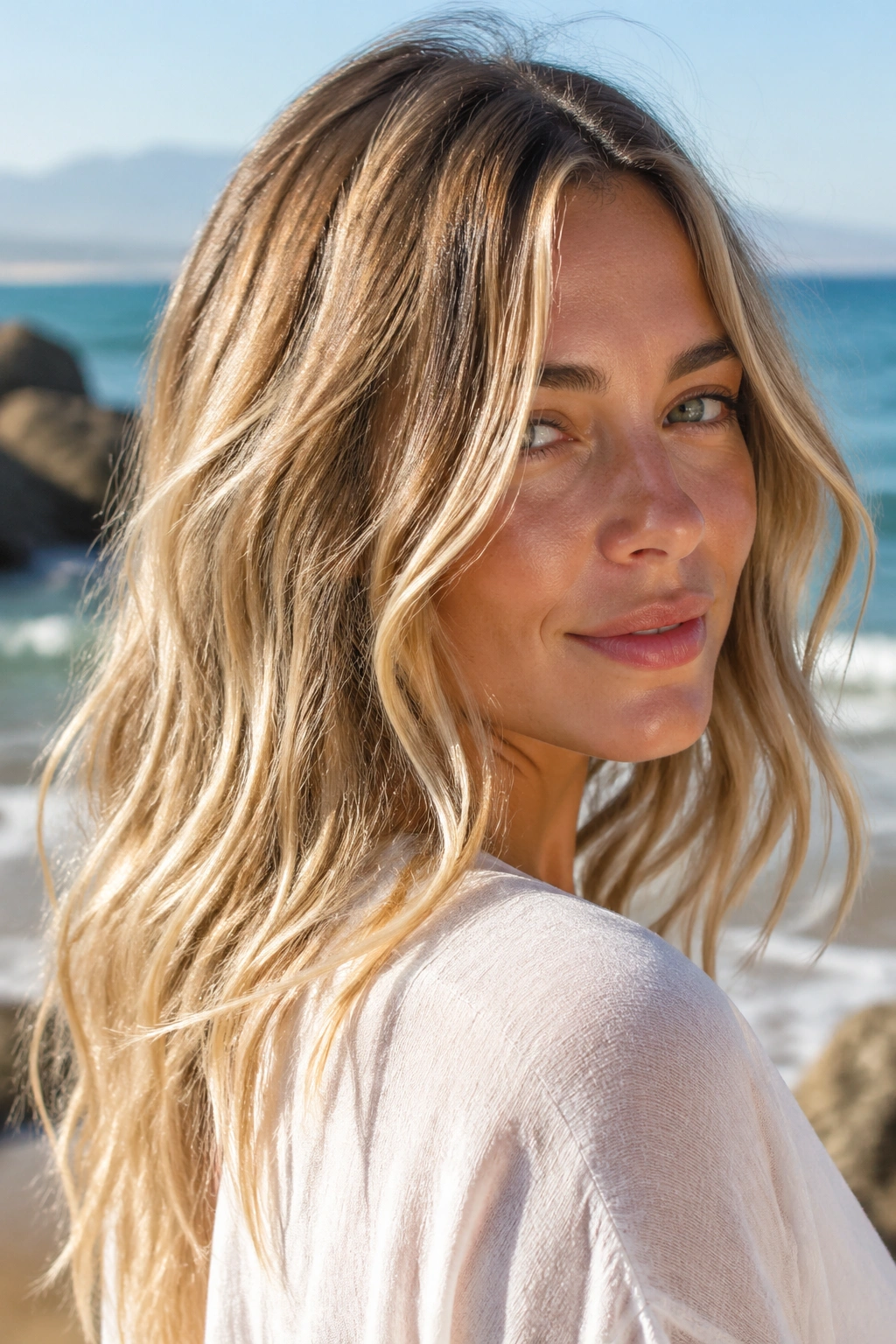
Sandy blonde is quieter than icy blonde and less golden than honey, which is why so many people land on it after trying both extremes. It feels relaxed, neutral, and easy to live with.
Unlike bright platinum, sandy blonde doesn’t rely on shock value. It uses beige and muted gold to make the hair look sun-kissed without making the ends look fragile. That makes it a good fit for medium blondes who want more dimension, not a drastic change.
It also plays nicely with air-dried waves. The neutral tone keeps the texture looking soft instead of crunchy or over-styled. If your hair naturally pulls warm, sandy blonde helps tame it. If your hair pulls cool, the beige keeps it from looking washed out.
It’s the beach look without the salt-crust cliché.
19. Golden Brunette Balayage
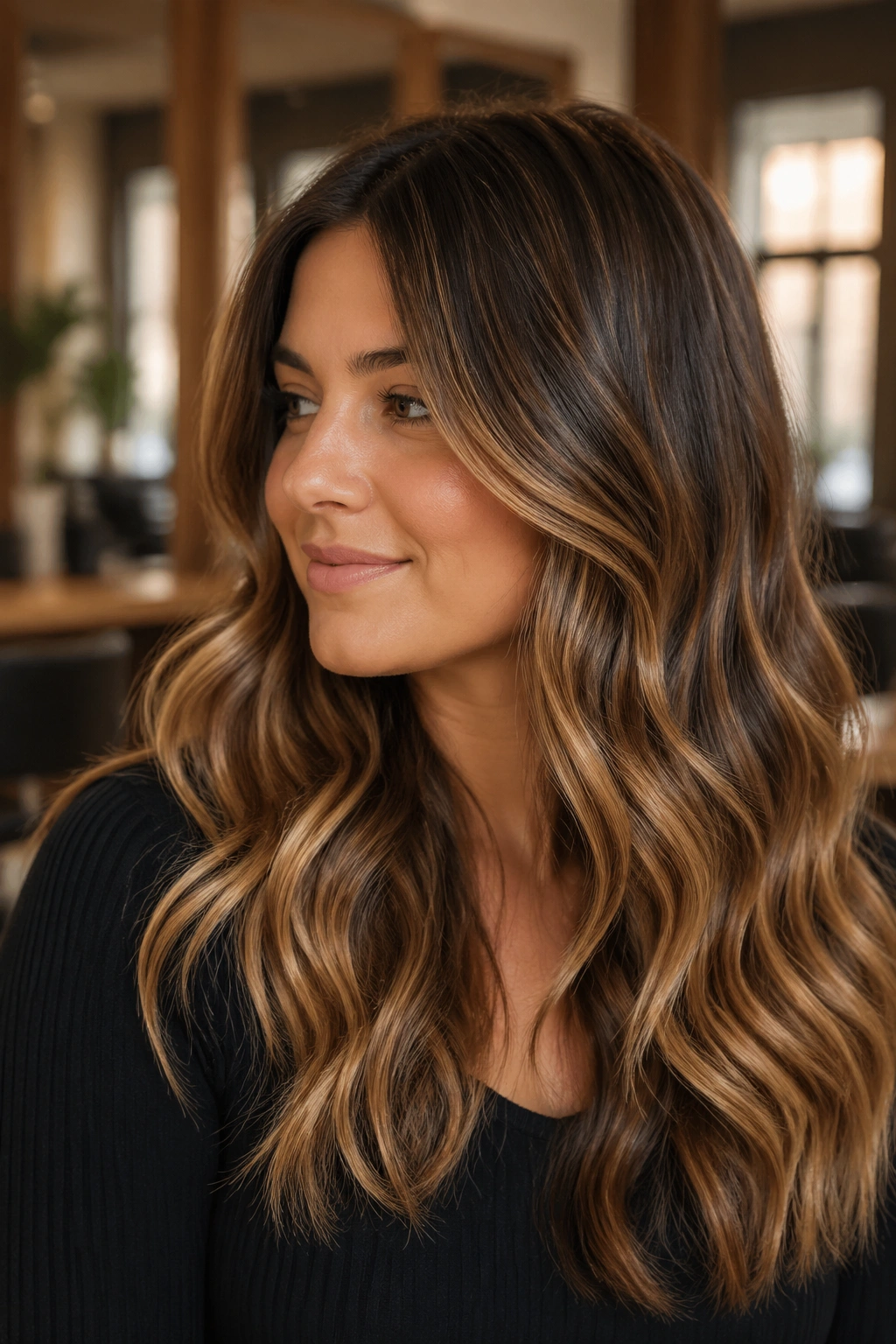
Golden brunette balayage is the shade I’d pick for someone who wants warmth without crossing into caramel overload. It keeps the brown base intact, then threads in gold so the hair looks lit from inside.
Why It Reads Rich
Gold on brunette hair can look expensive when it’s controlled. Too much, and you get a yellow cast. Too little, and nothing changes. The sweet spot is a few well-placed ribbons through the mid-lengths and ends, plus a gloss that keeps the tone clean.
How to Wear It
This shade is a good match for curls, because the gold catches each curve differently. It also works on straight hair, though the effect is calmer and more subtle there.
Best Salon Ask
- Keep the base deep
- Lift only the visible panels
- Ask for gold, not yellow
- Finish with a warm beige gloss
A little shine goes a long way here.
20. Plum-Violet Balayage
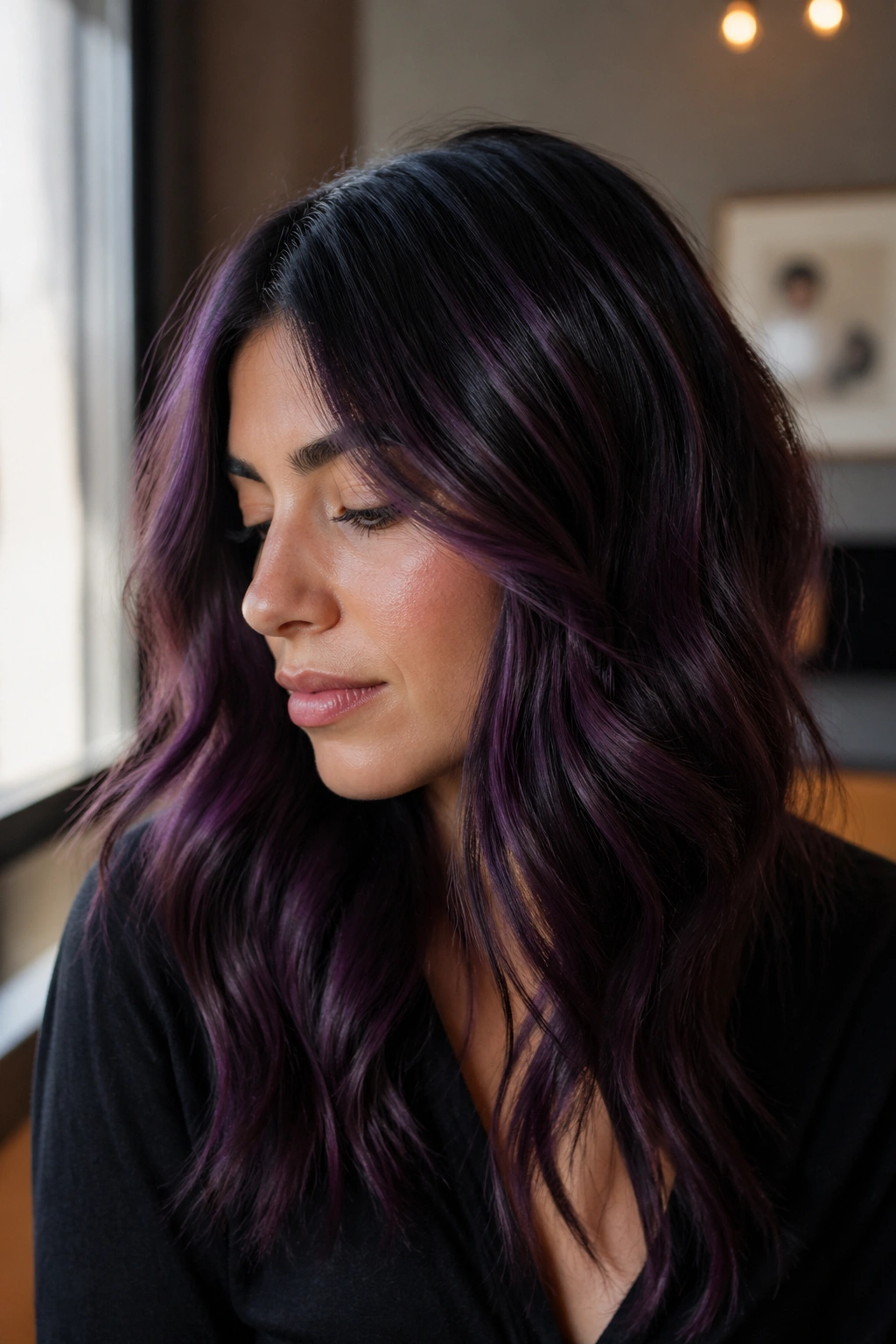
Plum-violet balayage is the one shade here that leans moody, not sunny. It gives dark hair a quiet jewel tone that feels intentional without looking loud or costume-like.
The best versions stay low in saturation. Think plum in the shadow areas, violet only where light hits the hair, and a deep brunette base underneath. That keeps the color wearable. If the violet gets too bright, it starts competing with the face and the haircut. If it stays deep, it looks rich and expensive.
This shade is especially strong on darker hair because the contrast doesn’t need to be huge to show. Even a small amount of violet can change the whole read of the cut. It also looks good with black clothing and deeper makeup tones, which is handy if your closet already leans dark.
Not every balayage has to be sunny. This one proves it.
21. Soft Black Balayage
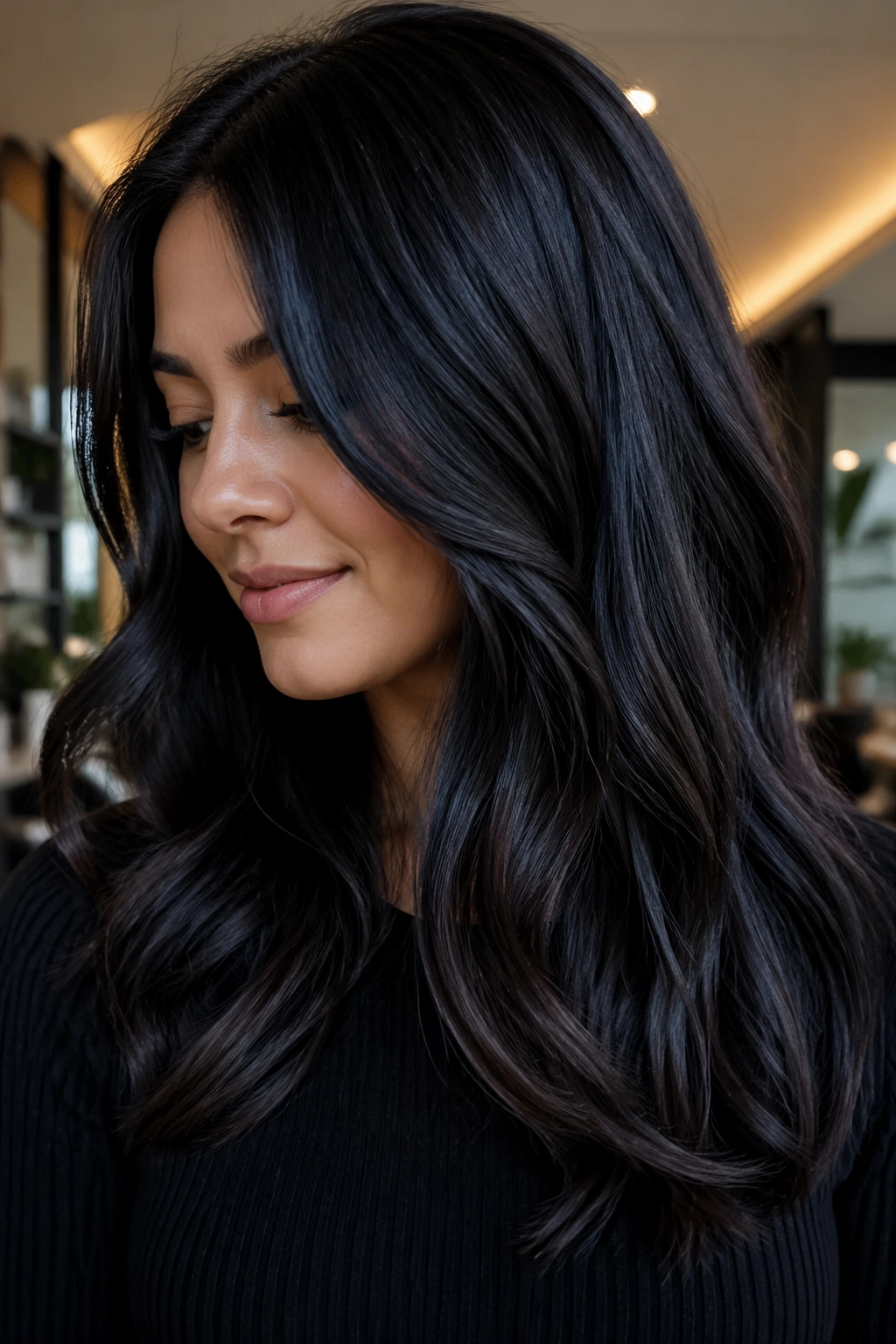
Can black hair have balayage without looking striped? Yes — if the lighter pieces stay subtle and close to the base. Soft black balayage works by adding movement, not by breaking the dark color apart.
How to Ask for Softness
Tell your colorist you want soft espresso or blue-black variation through the mids and ends. That keeps the effect dimensional while protecting the depth that makes black hair look sleek in the first place. If the contrast gets too high, the style turns harsh fast.
Soft black balayage is strongest on glossy hair and clean cuts. A blunt finish can look elegant with this tone, while too many choppy layers can make the shading feel busy. A little bend through the lengths helps the lighter pieces show without screaming.
If you love dark hair but want something more than a single flat color, this is a smart place to land.
22. Toffee Swirl Balayage
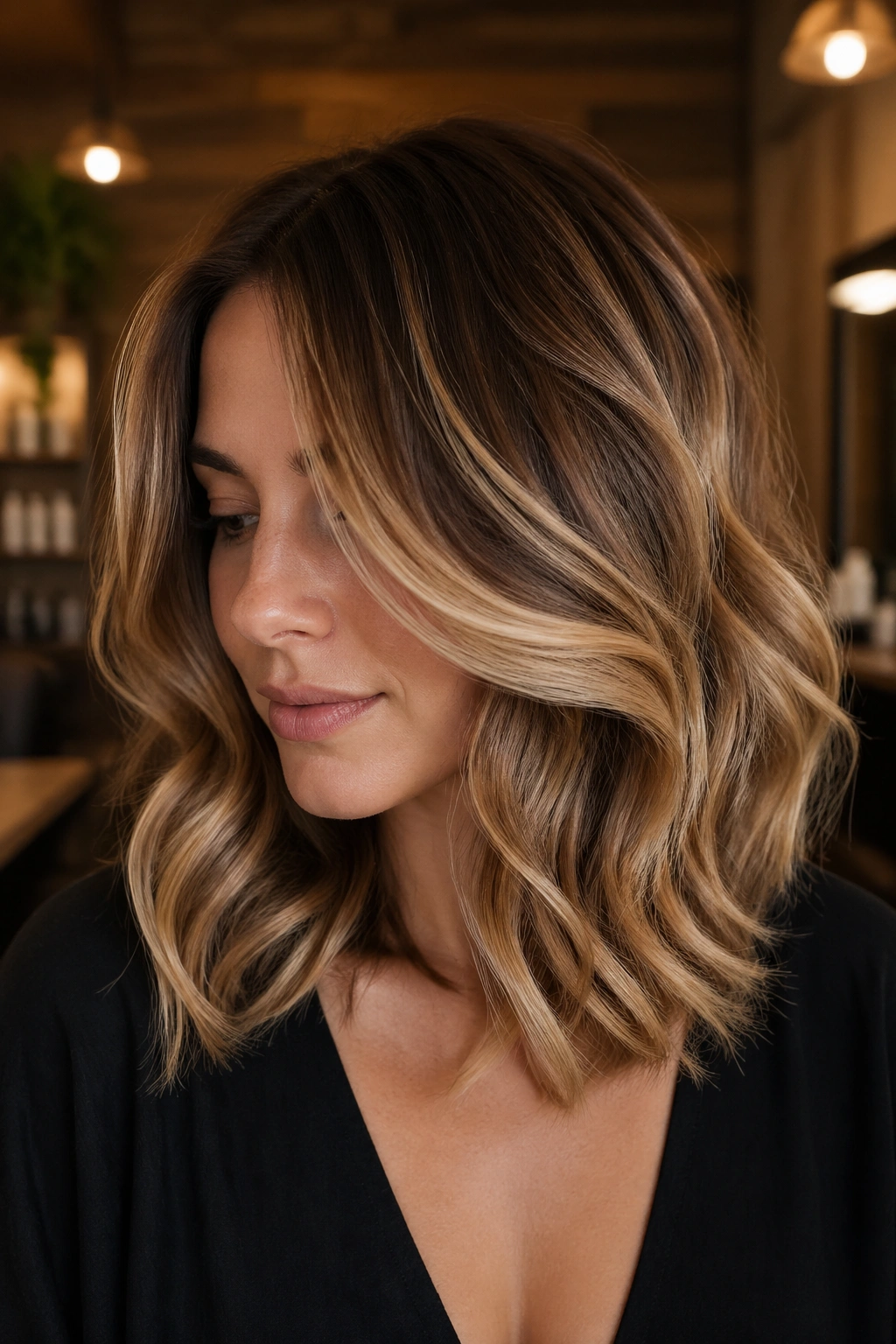
A layered lob with toffee swirl balayage can look thicker than it is. That’s because the lighter ribbons move through the bends of the cut and build the illusion of depth.
The shade itself is warm, creamy, and a little richer than straight caramel. It sits right in the middle of brunette and blonde territory, which makes it easy to wear on medium bases. The swirled placement is the part that matters most. When the pieces are clustered around the face and through the ends, the color feels active instead of scattered.
- Best cut: lob, long bob, or shoulder-length layers
- Best tone: toffee, creamy brown, soft gold
- Best effect: fullness at the ends
- Avoid: chunky panels that fight the swirl
The haircut and the color need each other here. Without movement, the shade loses half its charm.
23. Sunlit Copper Balayage
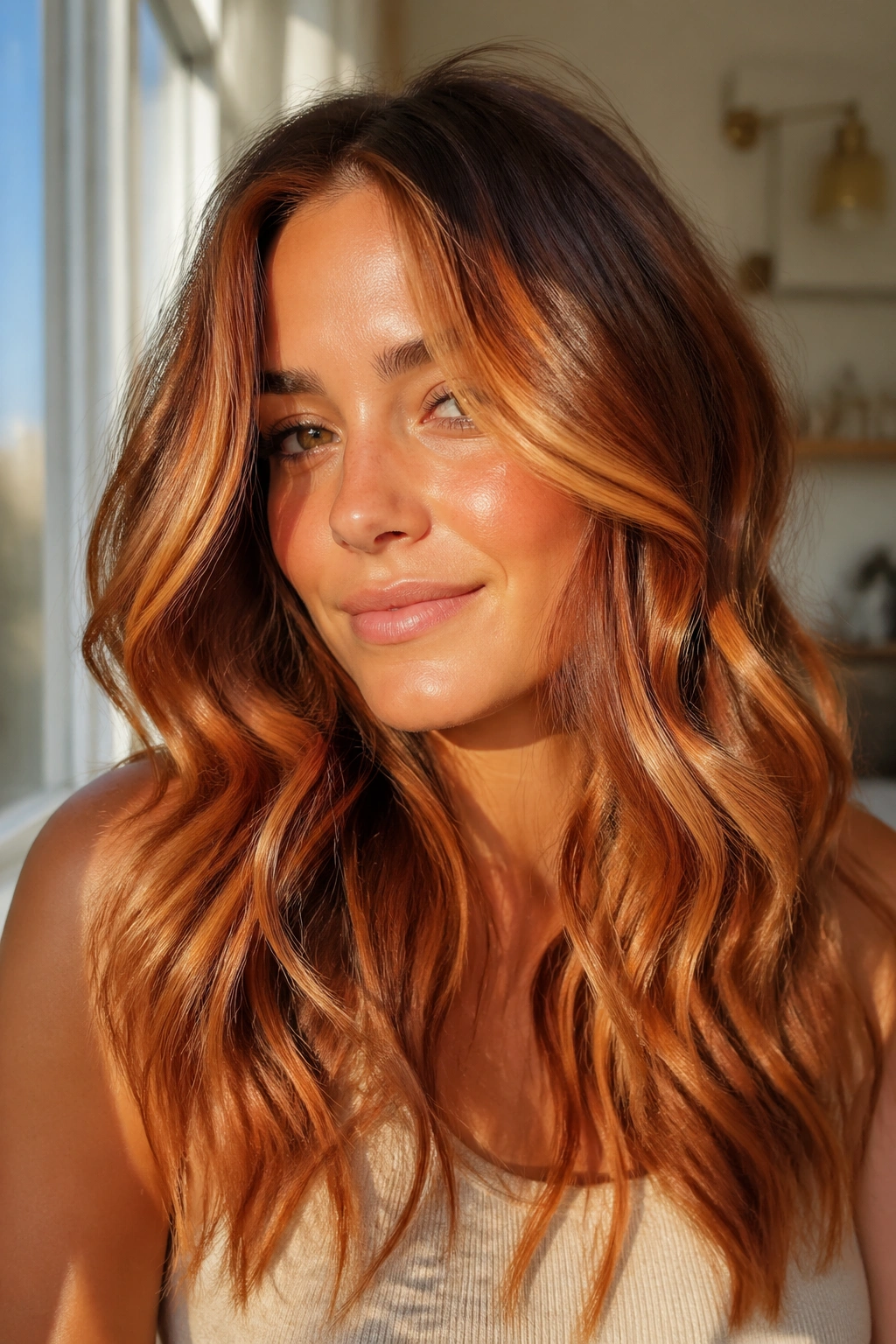
Sunlit copper balayage is warmer and brighter than cinnamon, but less aggressive than a full red copper. It has that late-afternoon glow that makes hair look alive without looking loud.
The best versions keep the copper softened with gold and brown. That way, the tone can sit on different base shades without turning brassy. On textured hair, the color gets even better because the light catches every curve and ridge. On straight hair, it feels smoother and a little sleeker, but still warm.
This is a smart choice if your current color has gone dull and you want warmth back fast. Sometimes you do not need a dramatic change. You need a brighter tone and a better gloss.
If your hair already has red undertones, the lift can be minimal. A few ribbons and a fresh glaze may be enough.
24. Beige Brunette Balayage
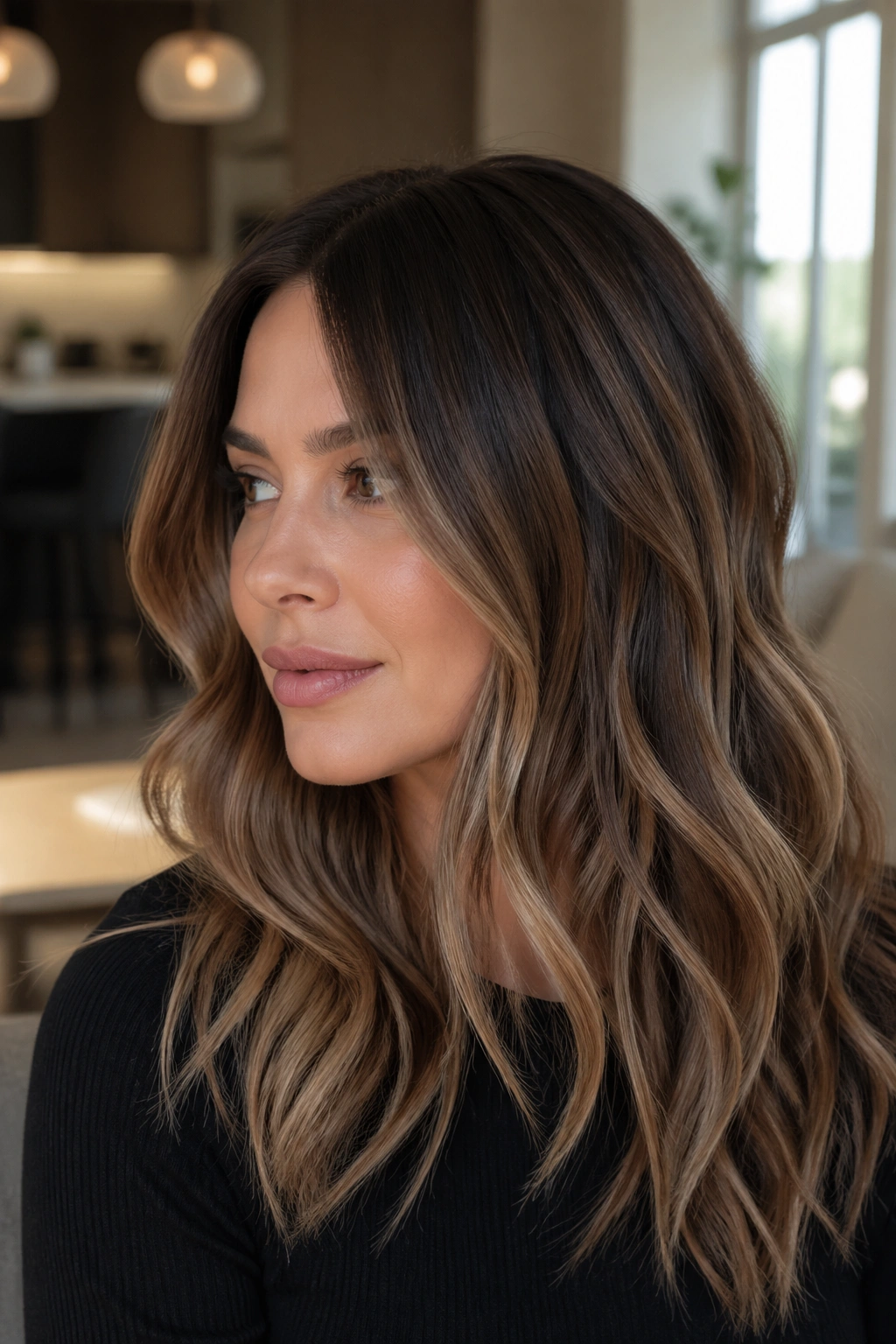
Beige brunette is what you choose when ash feels too cold and caramel feels too sweet. It sits in the middle without looking muddy, which is harder to do than people expect.
The beige tone softens brunette hair just enough to show dimension under indoor lights. It doesn’t shout. That’s the charm. On a medium-dark base, the lighter pieces feel almost sandy, but in a cleaner, more refined way than a beachy blonde. It’s an easy shade to wear if you like understated color and want the hair to look expensive on ordinary days.
This one is especially good for people who want to avoid the orange drift that warmer balayage can bring. Ask for neutral-beige ribbons, not gold. The difference is small on paper and huge in the chair.
It’s a steady, useful color. I like that.
25. Midnight Mocha Balayage
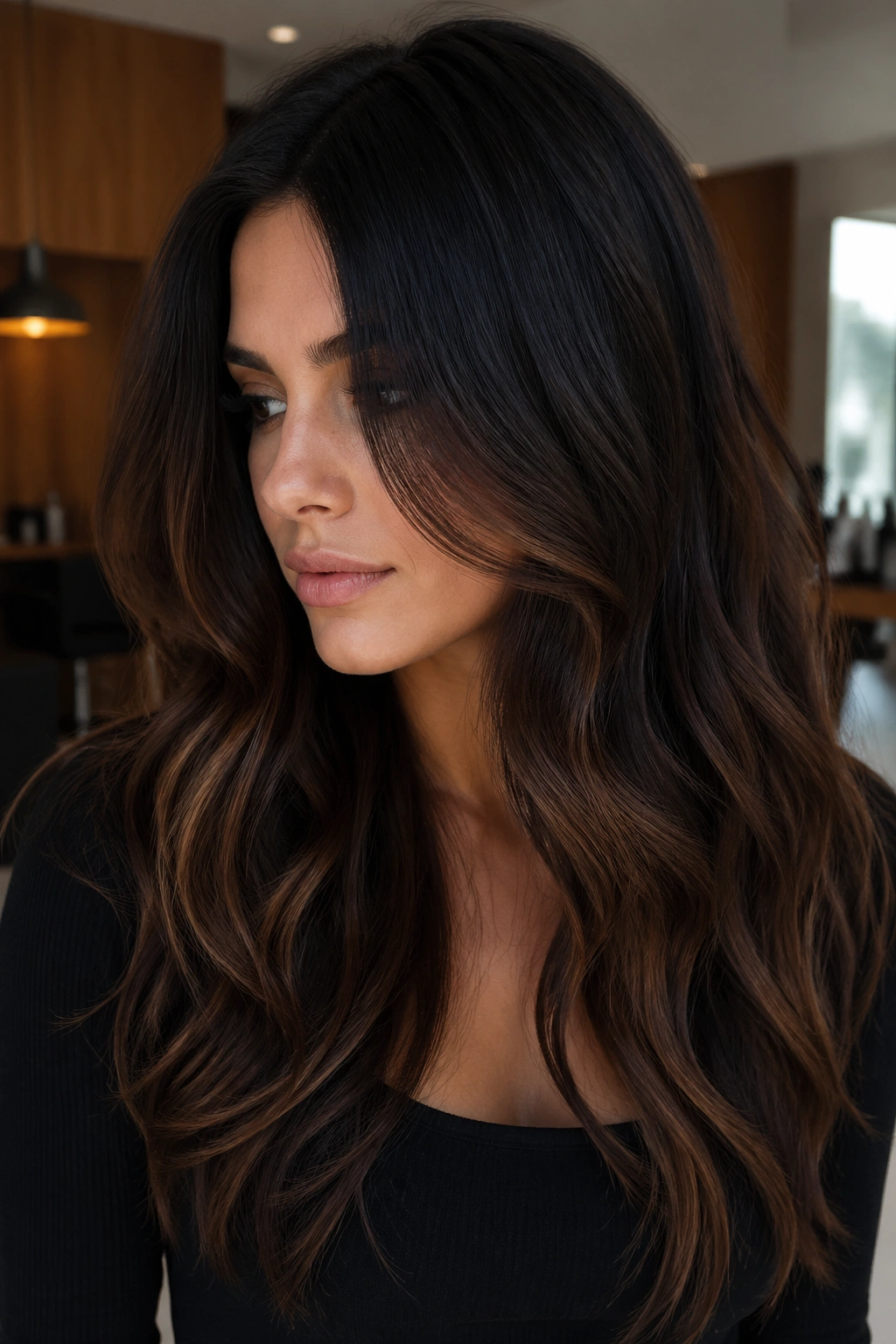
Midnight mocha balayage is the closest thing to dimensional black-brown that still looks polished. It keeps the base deep, then lifts just enough through the ends to stop the color from collapsing into one dark block.
Why It Stays Subtle
The lighter pieces are usually only one or two levels above the base, so the change reads more as sheen than contrast. That’s why it works so well for people who want movement but don’t want obvious highlights. The hair looks expensive because it looks controlled.
Quick Details
- Best on: long hair and dense brunette bases
- Best tone: mocha, deep coffee, soft brown
- Best styling: straight blowouts and loose bends
- Watch for: over-lightening, which kills the mood
This shade is about depth first. Brightness comes second, and only in the right places.
26. Lived-In Butter Blonde Balayage
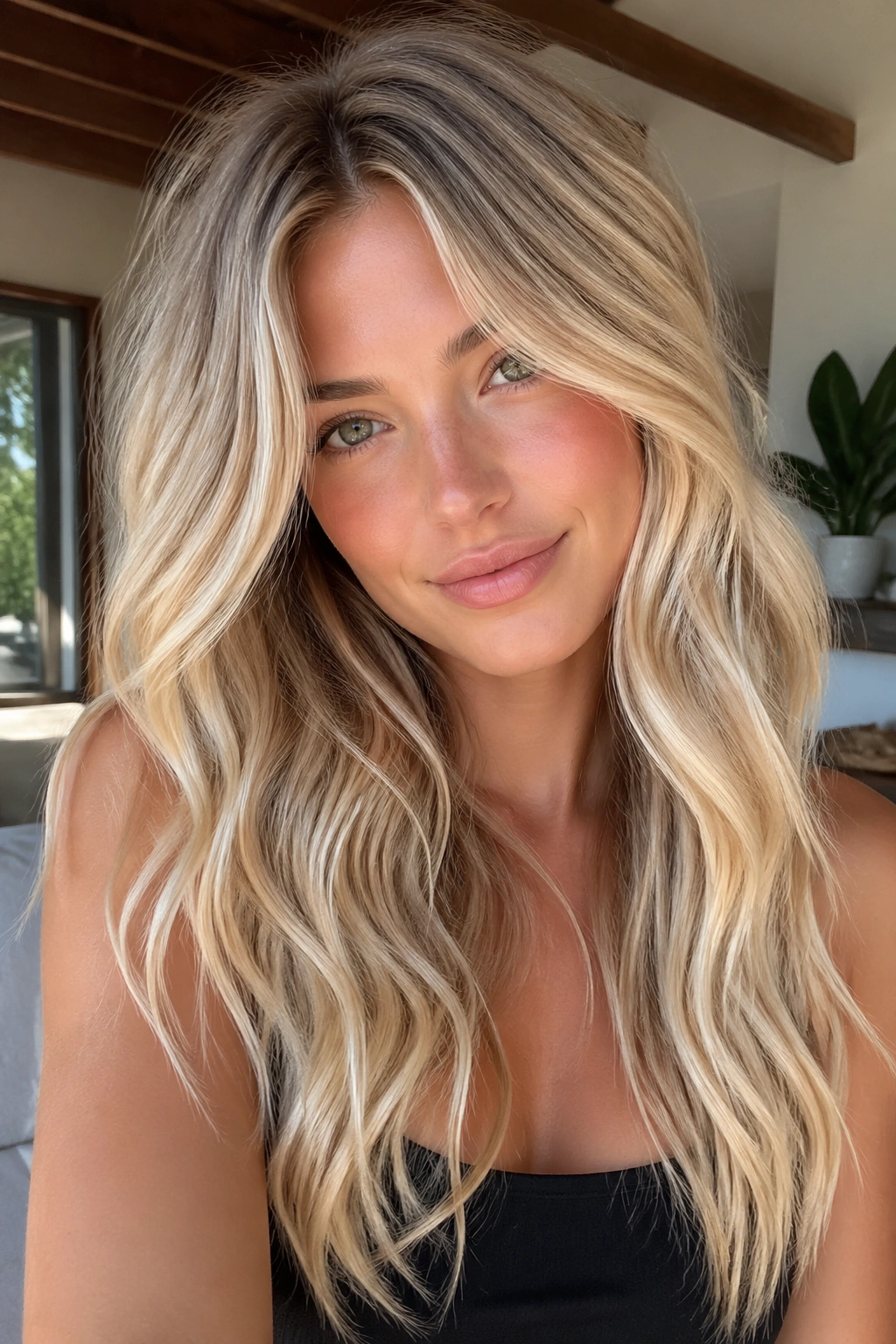
Butter blonde balayage looks best when the root shadow stays soft and the ends stay creamy. That’s what makes it feel easy instead of overprocessed.
Butter blonde sits warmer than champagne and softer than gold, which gives it that smooth, almost edible look people save to their camera rolls. The shade is bright, but not harsh. It needs good placement more than it needs a heavy lift everywhere. When the face-framing pieces are a touch brighter and the mids stay blended, the whole style looks relaxed.
This is a strong pick if you like blonde but hate stripey regrowth. The lived-in part matters. Keep the root soft, keep the ends creamy, and let the tone do the work. A fresh gloss keeps the color from turning yellow, and that’s usually the difference between polished and tired.
If you want blonde that still feels soft after a few washes, this is the one I’d put at the top of the stack.
Final Thoughts
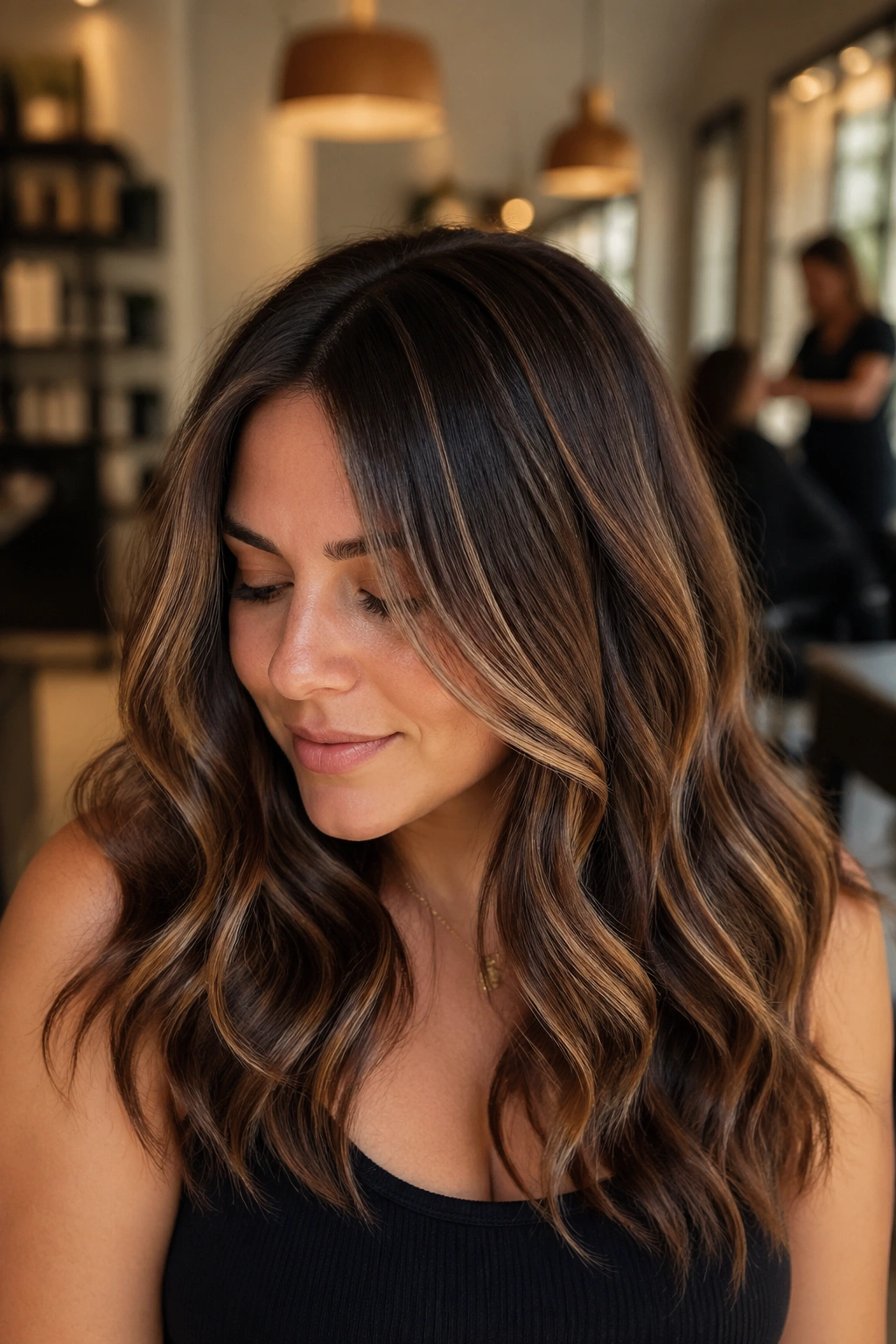
The best balayage hair color ideas are the ones that suit your base, your maintenance tolerance, and the way you actually wear your hair. A great photo helps, but the real win comes from matching tone to cut and grow-out pattern.
A cool brunette can look sharper with mushroom brown or ash beige. A warm base can handle caramel, honey, or toffee without much drama. And if you want blonde, the safest move is usually to keep the root soft and let the brightness build through the mids and ends.
Bring screenshots. Bring a second opinion photo too. The shades that hold up best in real life are usually the ones that feel calm at the crown and slightly brighter where the hair moves. That’s the part people notice when they’re walking past you, and the part that still looks good when the appointment is long over.