
Reddish-brown hair color ideas have a sneaky advantage: they look warm, rich, and believable all at once. You get the softness of brunette with enough red in the mix to make the shade feel alive.
That middle ground matters. A good reddish-brown doesn’t shout from across the room; it glows when light hits it and still looks good when the light is flat. The trick is picking the right amount of copper, auburn, mahogany, chestnut, or cherry tone for your base color and the amount of upkeep you can actually live with.
Red pigment has a habit of fading faster than brown, which is why the smartest versions lean on depth. A darker root, a glossy glaze, or a few ribboned highlights can keep the shade from turning dull after a few washes.
If you want warmth without orange panic, or you want brunette hair that looks less plain, start with a shade that fits your natural level and your styling habits. The first picks below stay wearable, then they move toward richer, moodier, more statement-making territory.
1. Chestnut Copper
Chestnut copper is the shade I reach for when someone wants warmth without drama. It gives you that brown base you can trust, then slips in a copper glow that shows up in daylight and soft indoor light.
Why It Works
Chestnut keeps the color grounded, which matters more than people think. Pure copper can look bright or even brassy on the wrong base, but chestnut acts like a built-in buffer.
That makes this one of the easiest reddish-brown hair color ideas for medium brunettes. On hair that sits around a level 4 or 5, it reads rich and polished instead of loud.
- Best on medium brown bases that already have some warmth.
- Ask for a copper gloss over a chestnut brown base, not a flat red dye.
- A root that stays one shade deeper helps the color wear longer.
- Curls and waves show off the copper dimension better than pin-straight hair.
Pro tip: if your hair is porous, ask for a demi-permanent glaze rather than a heavy permanent lift. The color usually stays softer and fades in a nicer way.
2. Cinnamon Brunette
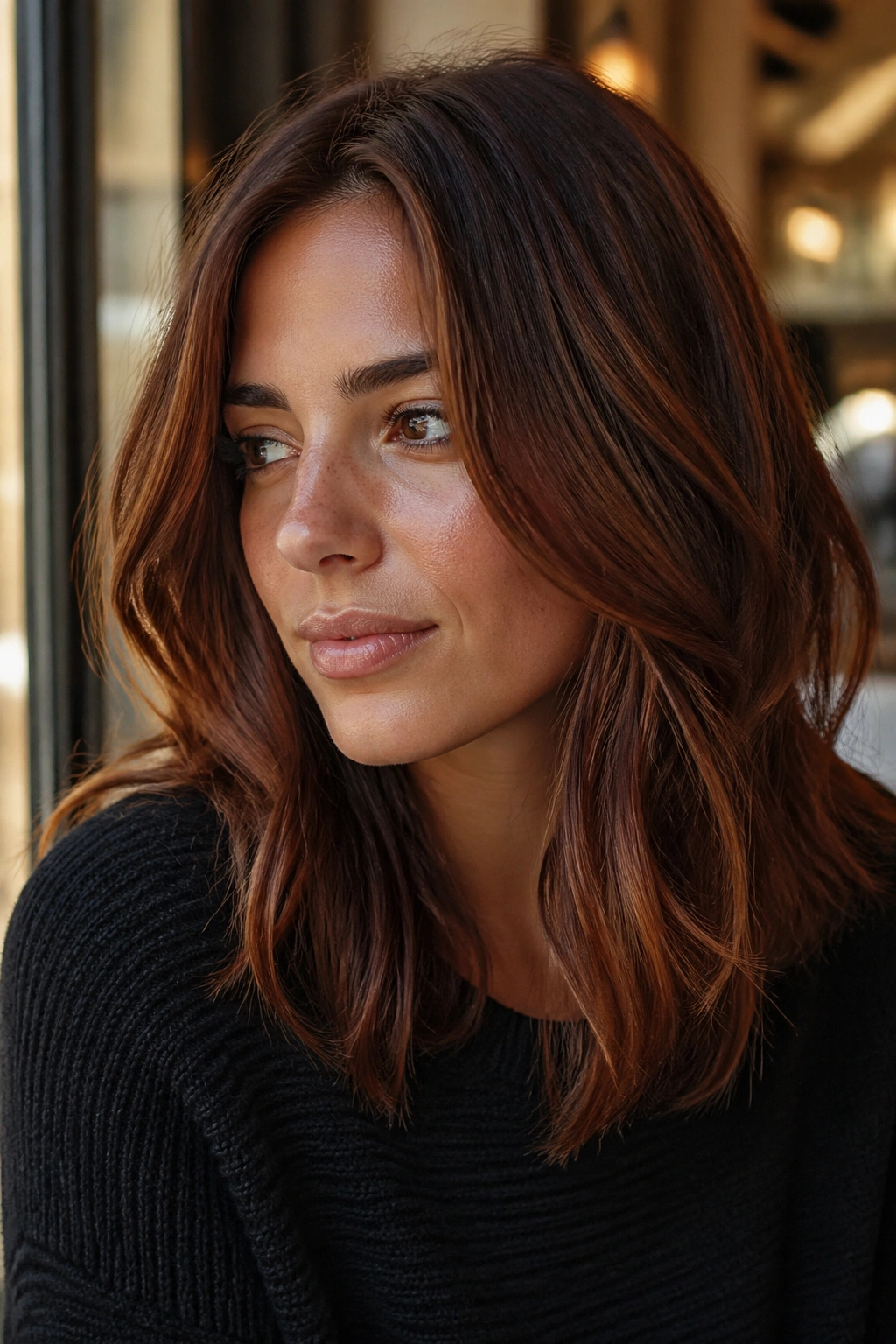
Cinnamon brunette is the easy yes. It looks warm, cozy, and expensive without trying too hard, and it’s one of the rare red-brown shades that works when you do not want your hair to be the loudest thing in the room.
Why does it feel so wearable? Because cinnamon lives in the brown family first. The red comes through like spice, not paint.
That matters on darker skin, lighter skin, and everything in between. The tone warms up cool outfits, softens sharp features, and gives straight hair a little life. It also grows out better than brighter copper because the base stays brunette enough to hide a softer root line.
I like this shade on shoulder-length cuts and layered lobs. The movement makes the red tones show in little flashes instead of one solid block.
A shine spray helps here. So does a color-safe shampoo that won’t strip the warmth out in a week.
3. Auburn Brown Balayage
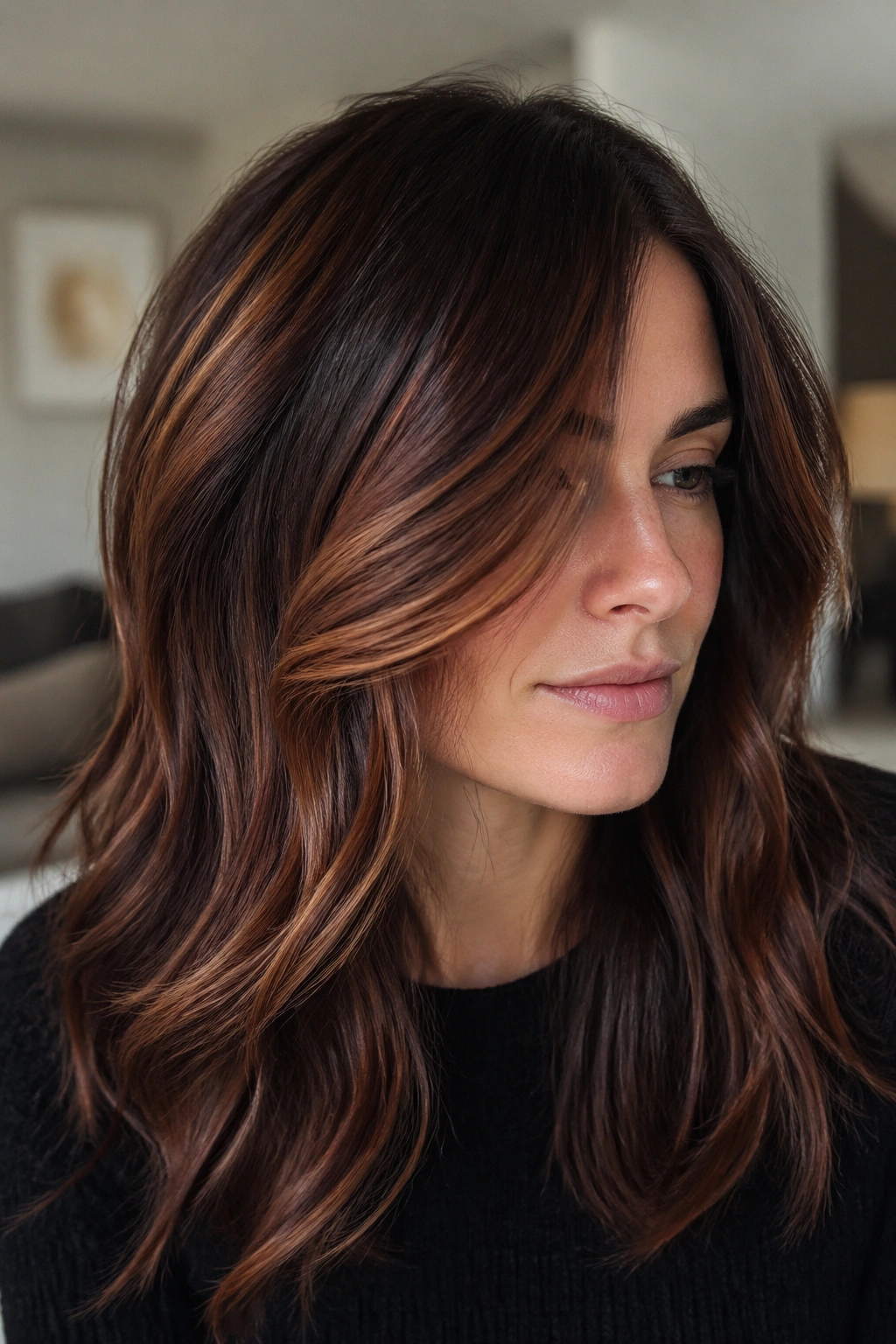
Why does auburn brown balayage work so well when a full red-brown can feel heavy? Because the hand-painted pieces break up the color and keep it from sitting like one solid helmet of warmth.
The beauty here is the contrast. You keep a deeper brunette base near the roots, then place auburn through the mids and ends where the light can catch it. The result feels softer, more expensive, and a lot less high-maintenance than all-over red.
How to Ask for It
- Ask for a shadow root that stays close to your natural brown.
- Request auburn pieces around the face and through the top layer.
- Keep the lightest ribbons no more than 1 to 2 levels lighter than the base if you want a subtle look.
- Tell your colorist you want movement, not chunky stripes.
This is a strong choice if you wear your hair in waves or loose curls. The bend in the hair makes the auburn pieces flicker in and out instead of looking flat.
4. Mahogany Mocha
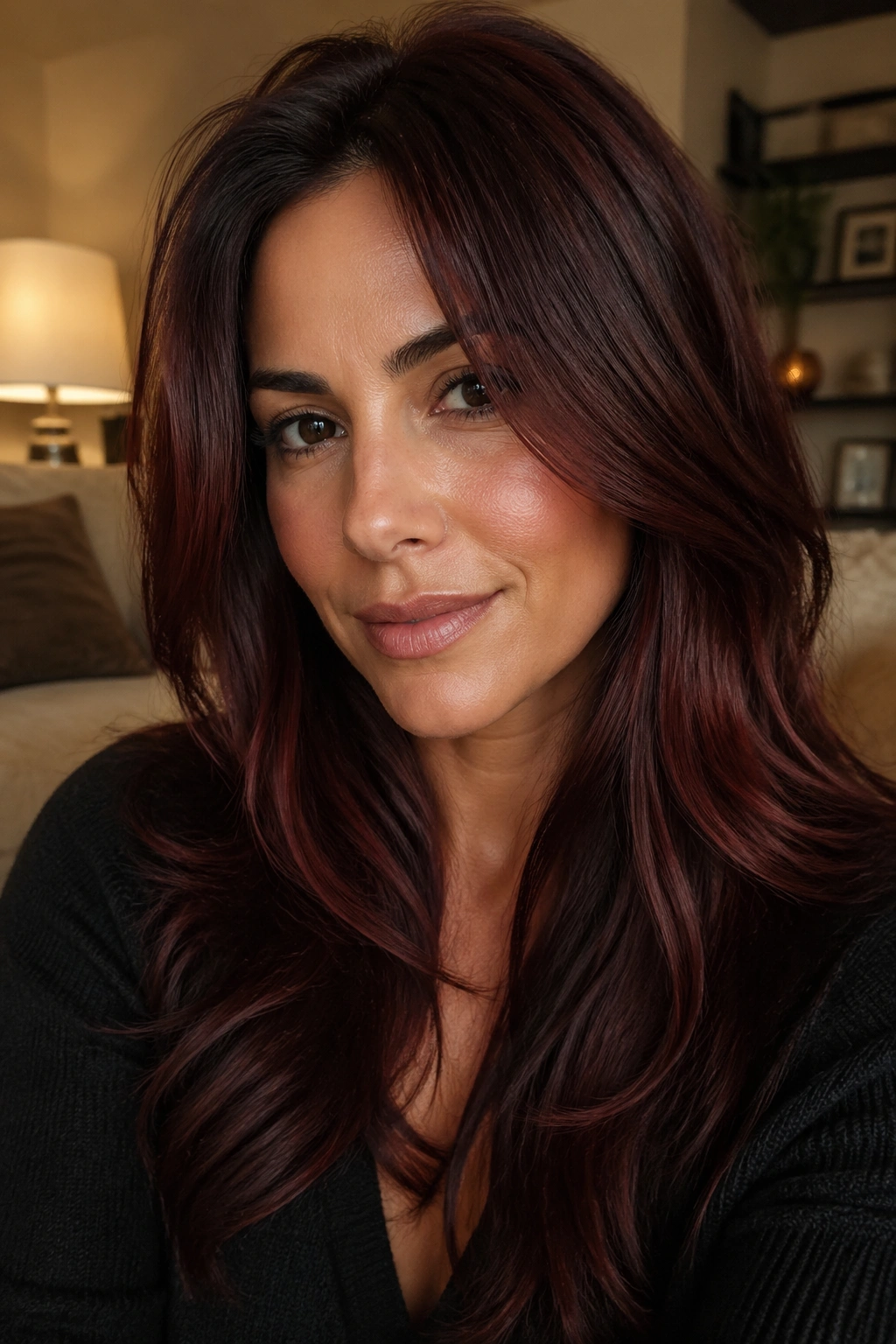
Picture dark mocha hair that has a wine-red undertone only when the light changes. That’s mahogany mocha, and it’s one of the prettiest choices if you want something richer than chestnut but quieter than copper.
Mahogany tones pull the color deeper, which is useful if you don’t want your hair to read orange at all. The red sits under the brown, not on top of it, so the whole shade looks polished and smooth. Under a desk lamp or in a car mirror, it can look almost like a glossy brunette. Step outside and the red starts to show.
- Works well on level 3 to 5 hair.
- Great for people who want red warmth without a bright copper finish.
- A weekly color-depositing conditioner can help keep the mahogany tone from drying out.
- This shade looks especially good on blunt cuts and long layers.
It’s a smart pick for anyone who wants dimension but hates obvious streaks. And honestly, that’s a common request.
5. Cherry Cola Brown
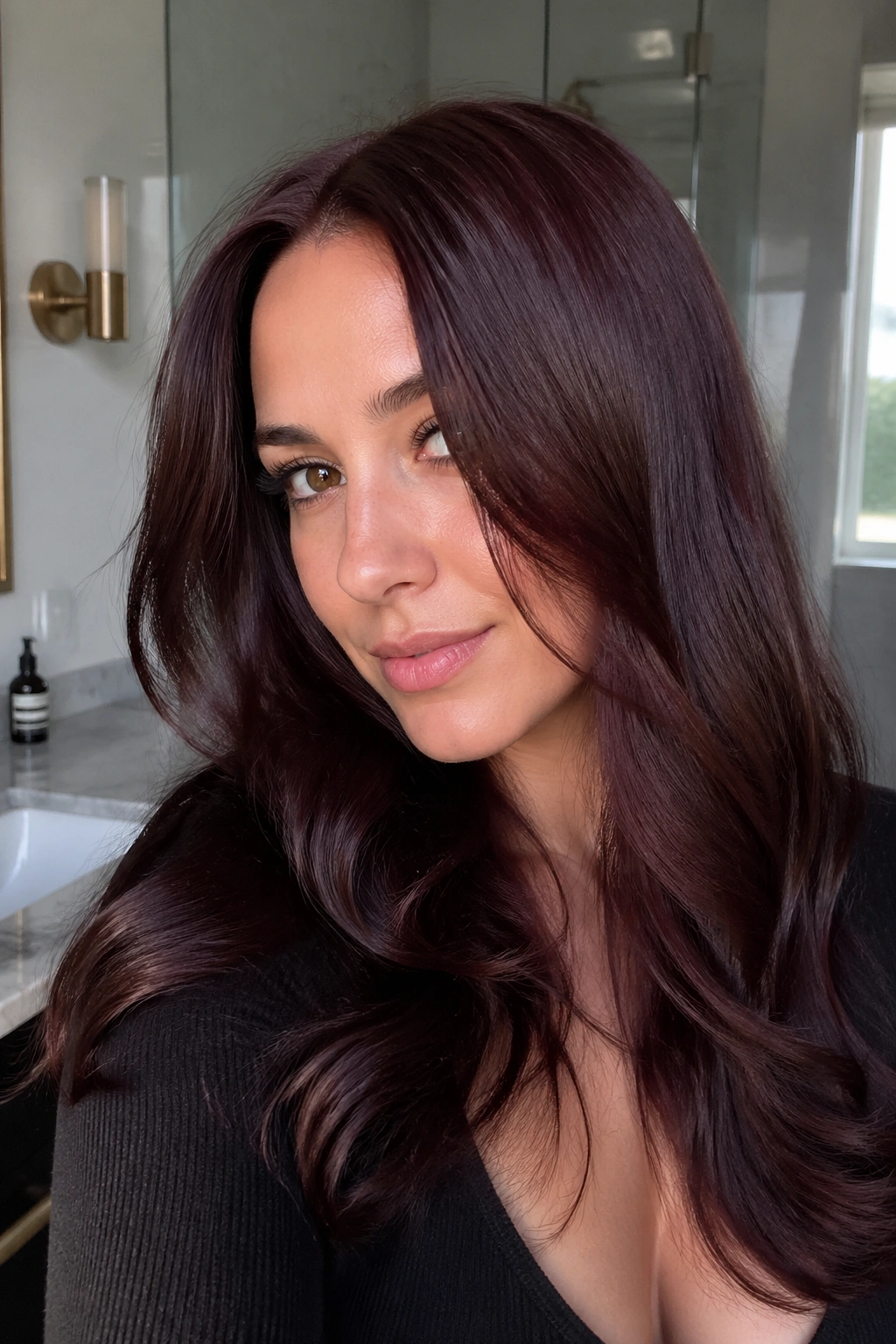
Cherry cola brown is darker than people expect, and that’s what makes it so good. It looks like deep brunette at first glance, then gives off a cherry-red undertone when the hair moves.
The shade has a sleek, glassy feel that works best when the hair is smooth and healthy. Frizz can make the red look uneven, so this is one of those colors that rewards a good blowout or a solid smoothing cream. On curly hair, though, it can look gorgeous because the red peeks through the bends and coils in little hits.
A lot of people choose cherry cola brown because they want a bolder shade without going bright red. Smart choice. It’s moody, but not heavy.
I like it most on medium to dark bases, especially if the ends can hold shine. If your hair tends to get matte fast, ask for a gloss finish every few weeks. That small step changes the whole look.
6. Copper Mahogany Melt
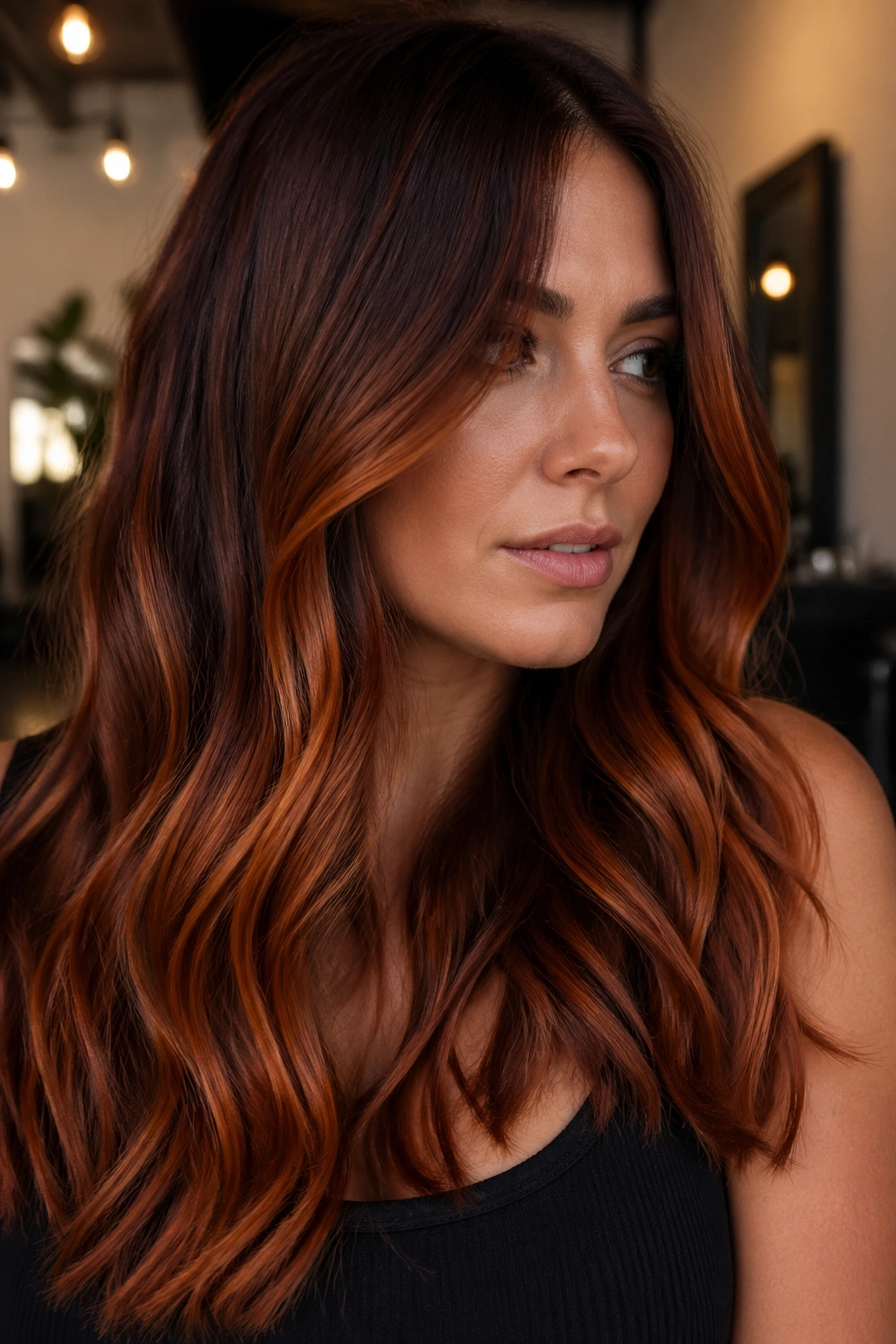
Unlike flat copper, copper mahogany melt gives you depth first and brightness second. That is the whole point. The mahogany base keeps things grounded, while the copper mids and ends bring in warmth where the eye naturally goes.
This version looks best when the transition is smooth, not stripey. You want the color to move from dark root to warm mid-lengths to brighter ends in a way that feels soft. A good colorist will usually blur the line with a glaze or toner so the shift doesn’t look harsh.
It’s a strong choice for thicker hair because the extra density can carry more than one tone without looking muddy. Long layers help too. They give the copper places to show up instead of hiding all the work under one heavy sheet of color.
If you like a warm brunette that still has some punch, this is one of the better reddish-brown hair color ideas to save for a salon visit. Ask for 1 to 2 levels of contrast and avoid anything too bright around the root.
7. Maple Brown
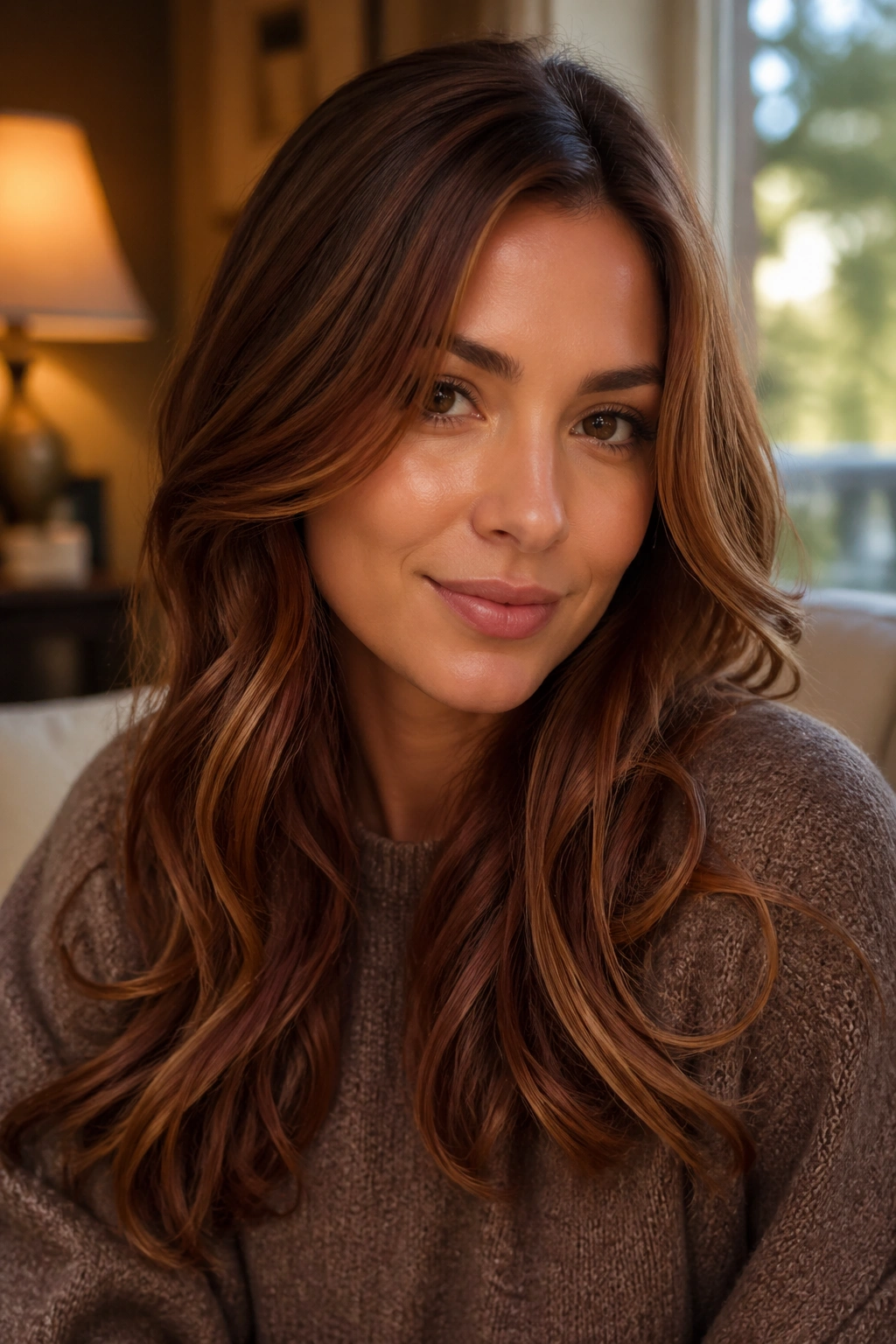
Why does maple brown feel softer than auburn? Because the red lives under a warm caramel-brown base instead of sitting on top like a loud color shift. It has that syrupy, golden-red quality that looks friendly rather than fiery.
Maple brown is one of my favorites for someone trying red tones for the first time. It doesn’t demand attention, and it won’t fight your wardrobe. Cream, black, olive, denim, camel — all of it works.
How to Wear It
- Best on natural brunettes who want a warmer finish.
- Looks especially nice on waves and loose curls.
- A light gloss every 6 to 8 weeks keeps the maple tone from turning flat.
- Ask for soft warmth around the face, not blocky highlights.
This shade also plays well with medium-length hair because the tone can move from root to end without looking chopped up. If you want a change that feels noticeable but not risky, maple brown is a very safe bet.
8. Burnt Sienna Brown
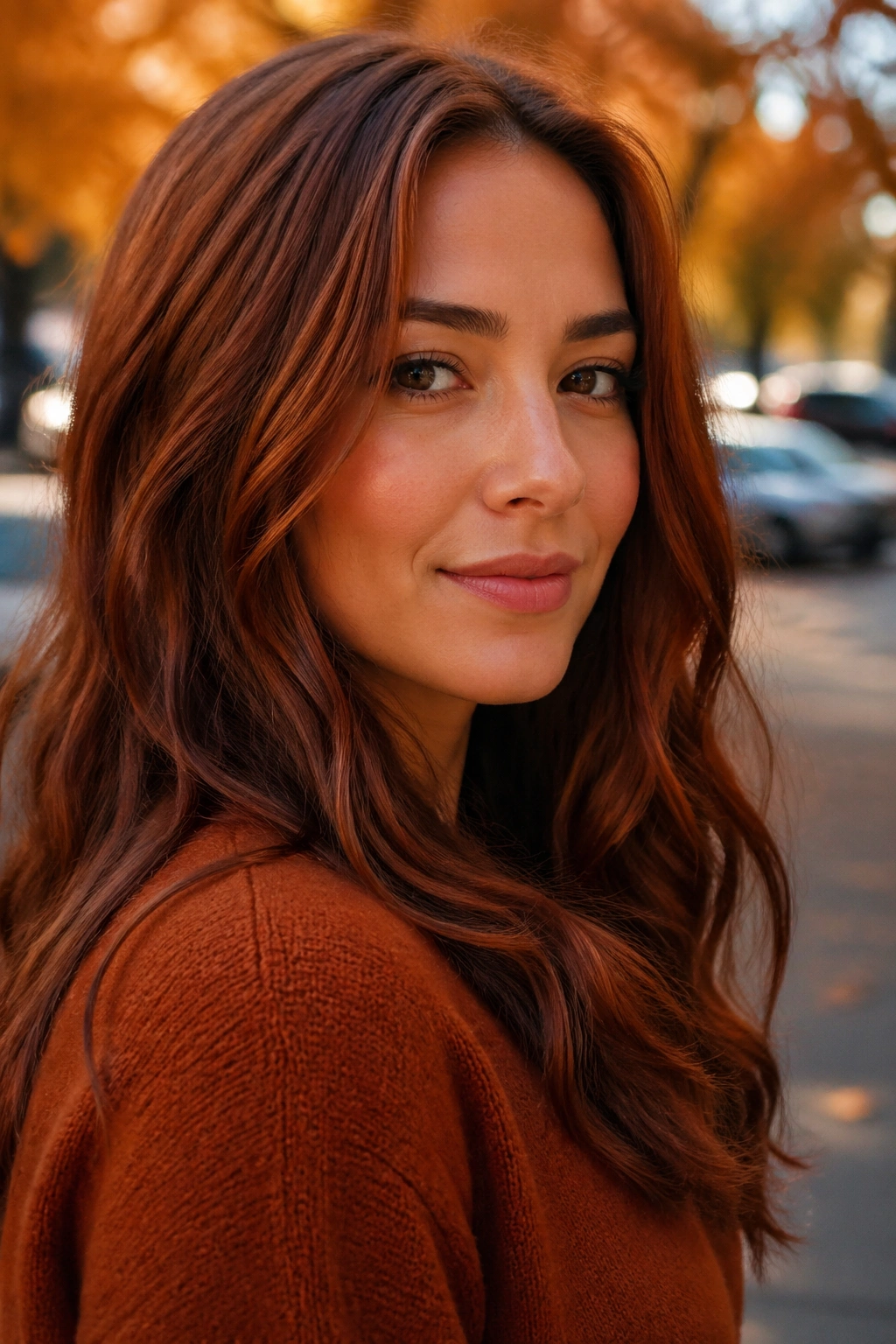
A burnt sienna brown shade looks like earth and fire had a calm conversation. It has that reddish oxide warmth that feels grounded, which is why it works so well on wavy hair and textured cuts.
What makes it different from copper is the brown base. Burnt sienna doesn’t sparkle in the same way. It leans warmer, deeper, and a little more rustic. That gives it an easy, lived-in look that a lot of people like because it doesn’t seem precious.
You can wear this shade on medium skin, deep skin, and lighter skin with warm undertones. It tends to flatter olive tones too, especially when the makeup stays simple and the eyebrows are not overly dark.
- Ask for a sienna glaze over brown hair rather than an all-over bright red.
- Keep the ends a touch lighter if you want extra movement.
- Avoid heavy ash toners; they can mute the warmth fast.
- This color looks good with soft curls, bends, and air-dried texture.
If you want warmth that reads earthy instead of sweet, this is the one.
9. Rosewood Brunette
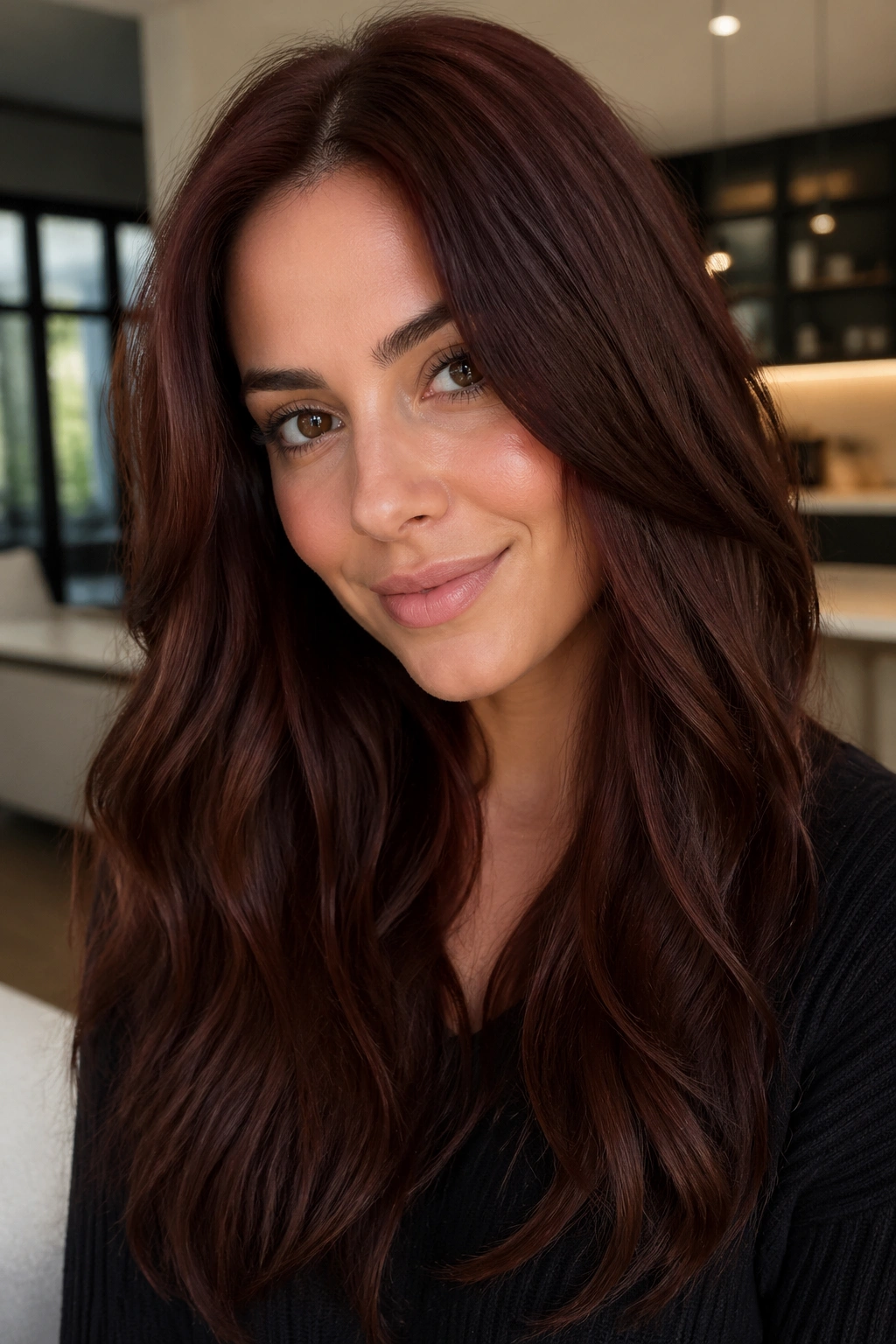
Rosewood brunette has a quieter kind of warmth. It’s deeper than copper, less burgundy than mahogany, and a little more refined than classic auburn. The red sits inside the brown, so the shade changes subtly from one light source to another.
That subtlety is the whole appeal. On fine hair, rosewood can make the strands look fuller because the color doesn’t break into obvious streaks. It gives the surface a smooth, polished look, especially on straight hair or a blunt bob.
I also like this shade because it does not box you into one style. It works with a side part, a center part, waves, curls, and sleek ponytails. You don’t have to dress around it.
If you want hair that looks warm but still grown-up, rosewood brunette is a smart place to land. It sits in that zone where people notice your hair looks better, but they may not be able to name the exact shade. That’s a compliment, by the way.
10. Gingerbread Brown
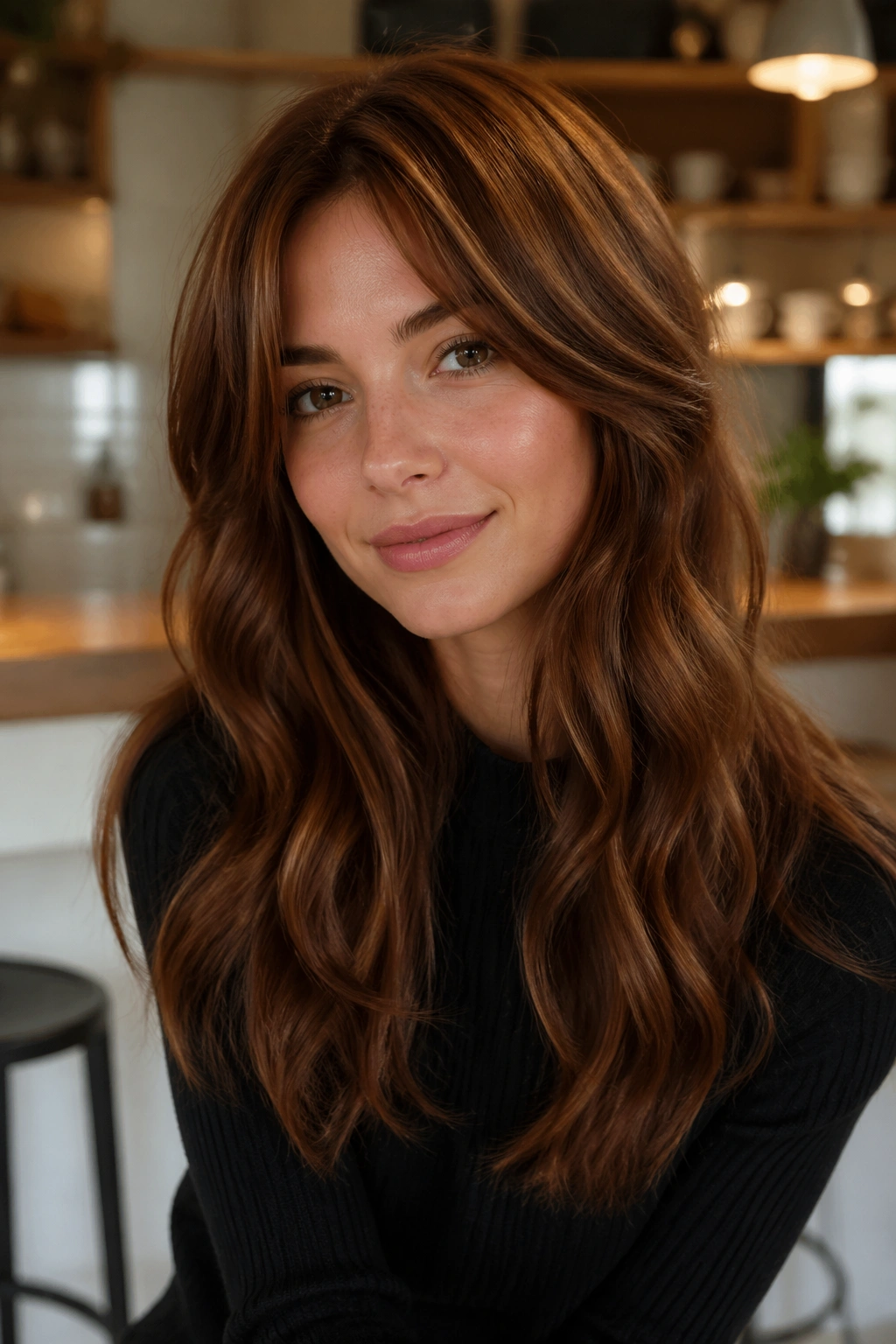
Compared with chestnut, gingerbread brown has more spice and a little more glow. The tone feels toasted, almost like warm bread crust and a hit of red-brown glaze mixed together.
It’s a good pick if you want warmth but do not want obvious copper. Gingerbread sits in the middle, which makes it easy to wear and easy to dress up. On layered hair, the warm pieces can pop without looking streaky. On one-length cuts, the shade still looks rich because the color itself carries the movement.
Best Qualities at a Glance
- Works well on level 4 to 6 brunettes.
- Softens harsh facial features.
- Needs less upkeep than brighter red tones.
- Looks especially nice with gold jewelry and warm makeup.
A lot of stylists will add a soft golden-red gloss to get this effect. That gloss is the real trick. Without it, gingerbread can fall flat and just look brown. With it, the shade has that warm, toasty finish people are usually chasing.
11. Deep Clove Brown

Deep clove brown is the sleeper pick in this whole family. At first glance it looks like a dark brunette, maybe even close to espresso, but the clove warmth sits underneath and shows up when the hair catches side light.
That’s what makes it so good for people who want warmth without obvious red. The color stays elegant and dark, yet it doesn’t feel cold. If your natural hair is already deep brown, this shade can look like your own color after a better sleep schedule and a really good shine treatment.
It also behaves nicely in professional settings. No one has to know you chose a red-brown shade unless they’re standing close enough to notice the warm undertone.
I’d call this a strong low-maintenance option. The darker base hides regrowth for longer, and the warmth fades in a softer way than brighter copper tones. If you want a color that feels rich but not flashy, deep clove brown deserves a look.
12. Caramel Auburn
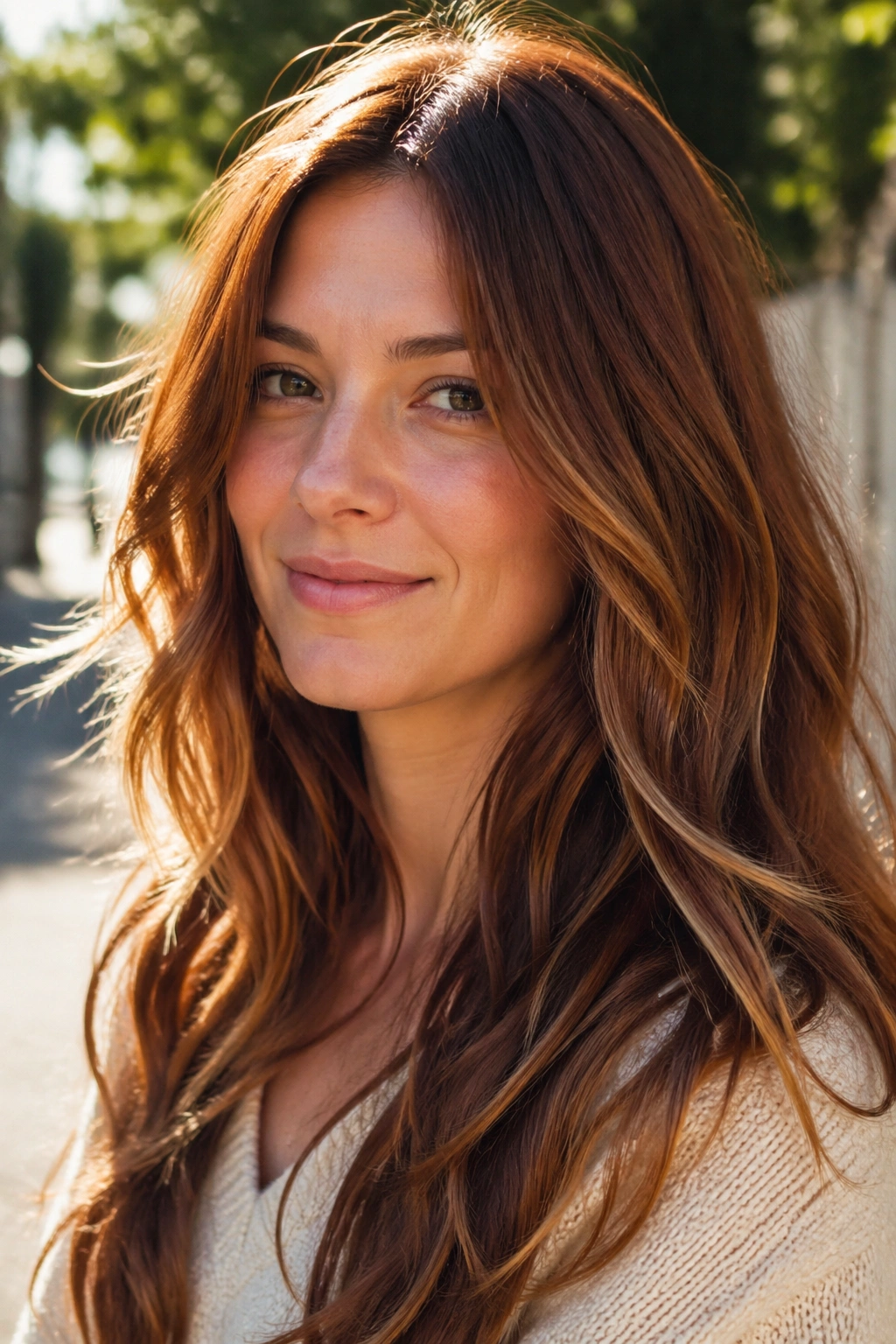
Can caramel auburn still count as reddish-brown? Absolutely, as long as the gold leans warm and the red stays soft. This shade lives in that gentle zone where brunette, caramel, and auburn overlap.
The best version has caramel ribbons woven through a deeper auburn base. That gives the color a sunlit feel without crossing into blonde territory. On long hair, the lighter pieces can run through the mids and ends. On shorter cuts, even a few face-framing highlights can make the whole style feel brighter.
How to Ask for It
- Say you want warm caramel pieces with auburn depth underneath.
- Keep the brightest bits near the face and top layer.
- Avoid too much gold if your skin runs cool.
- Ask for a soft melt, not a hard stripe.
This is a nice choice if you want something friendly and light rather than moody. It also works well if you are moving away from blonde and want a richer shade that still feels airy.
13. Rusted Bronze Brown
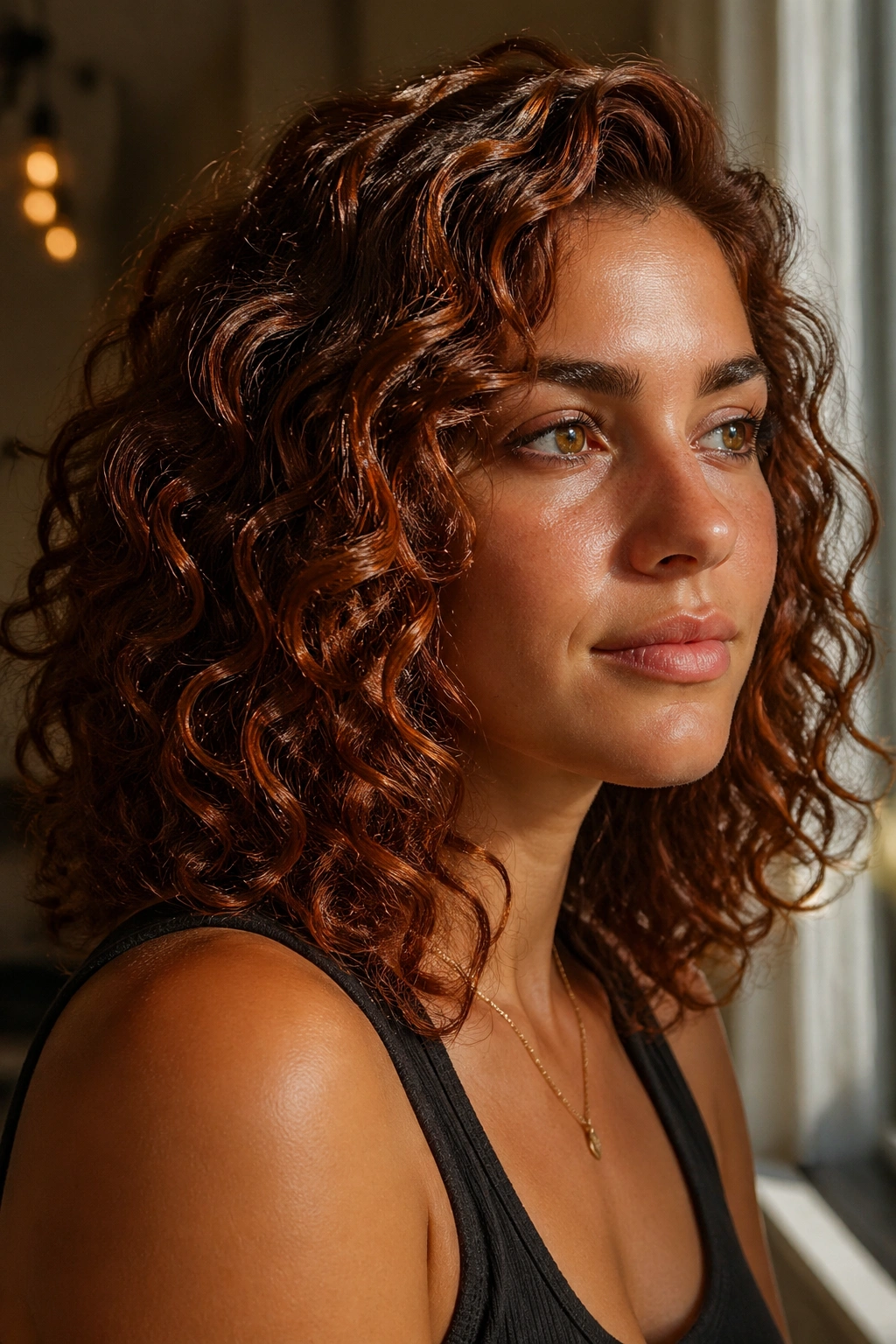
A rusted bronze brown shade looks like it came out of old metal in the best way. The tone has a warm, worn-in edge that makes it feel earthy instead of glossy and new.
That quality helps on darker bases. Bronze gives the color a muted shine, while the rust adds a red-brown lift that keeps the whole thing from going flat. On curls, this shade can look especially good because the bronze reflects light and the rust tone appears in the bends.
- Best on naturally dark brown hair.
- Works well if you want warmth without obvious copper.
- A low-light plus gloss combo gives the nicest finish.
- Great for haircuts with lots of texture.
I’d recommend this one to anyone who wants red-brown hair color ideas that feel grounded and a little more unusual. It is not a bright statement. It’s more like a quiet one that gets better the longer you look at it.
14. Espresso Auburn
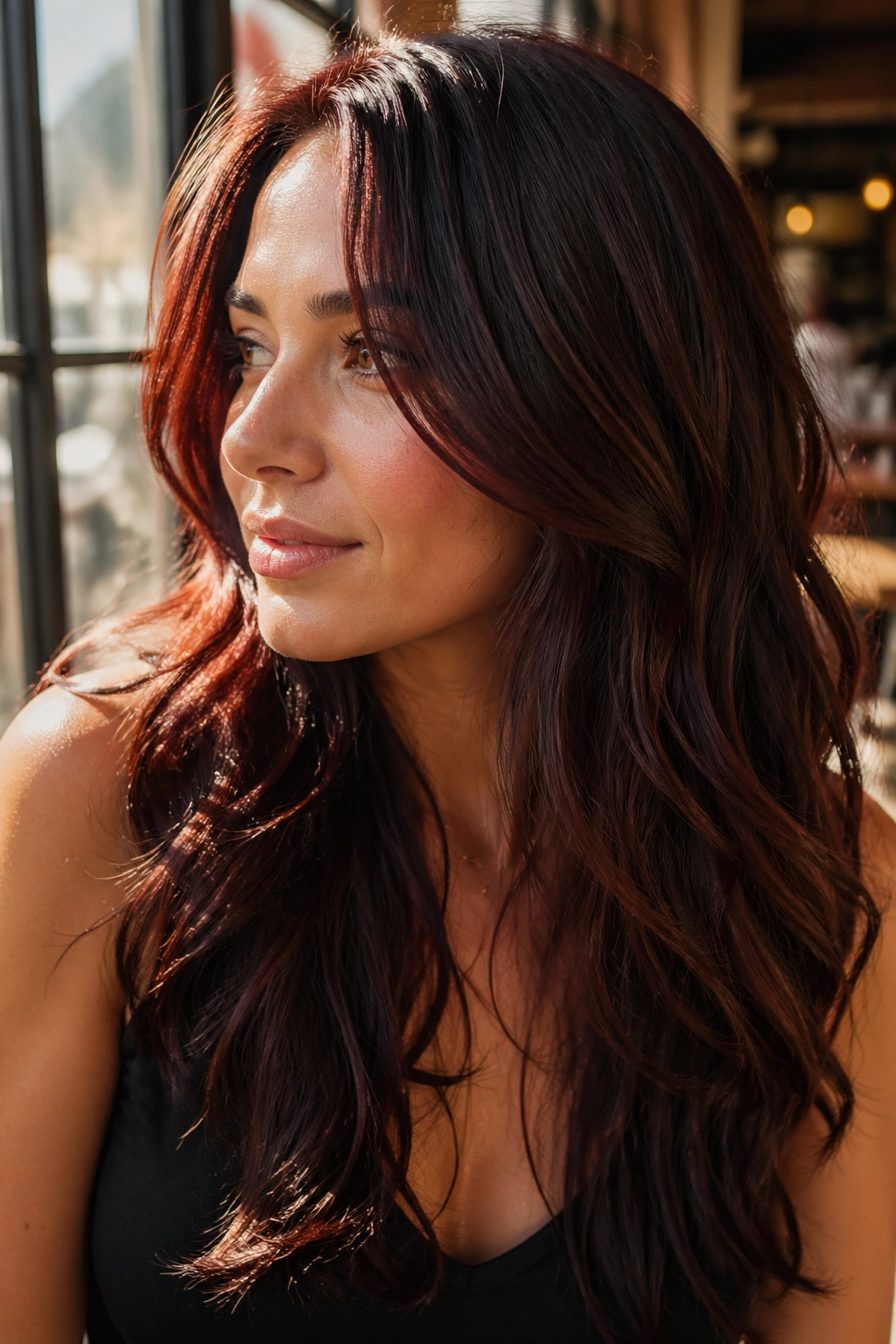
Unlike flat espresso brown, espresso auburn has enough red in it to keep the shade from feeling heavy. That tiny auburn shift matters a lot on dark hair, where a plain espresso tone can sometimes look too dense.
This is a good choice if you love deep brunette hair but want a warmer edge. The auburn doesn’t need to be obvious. In fact, it works better when it appears in side light or at the ends after a wave or curl.
It’s also one of the easier shades to live with. Regrowth blends in fairly well, especially if the root is close to your natural color. If you want a color that does not force you into constant salon visits, that’s worth a lot.
A demi-permanent gloss usually does a nice job here, especially if your goal is depth and shine rather than a full color overhaul. This shade is proof that warm does not have to mean bright.
15. Brick Brown
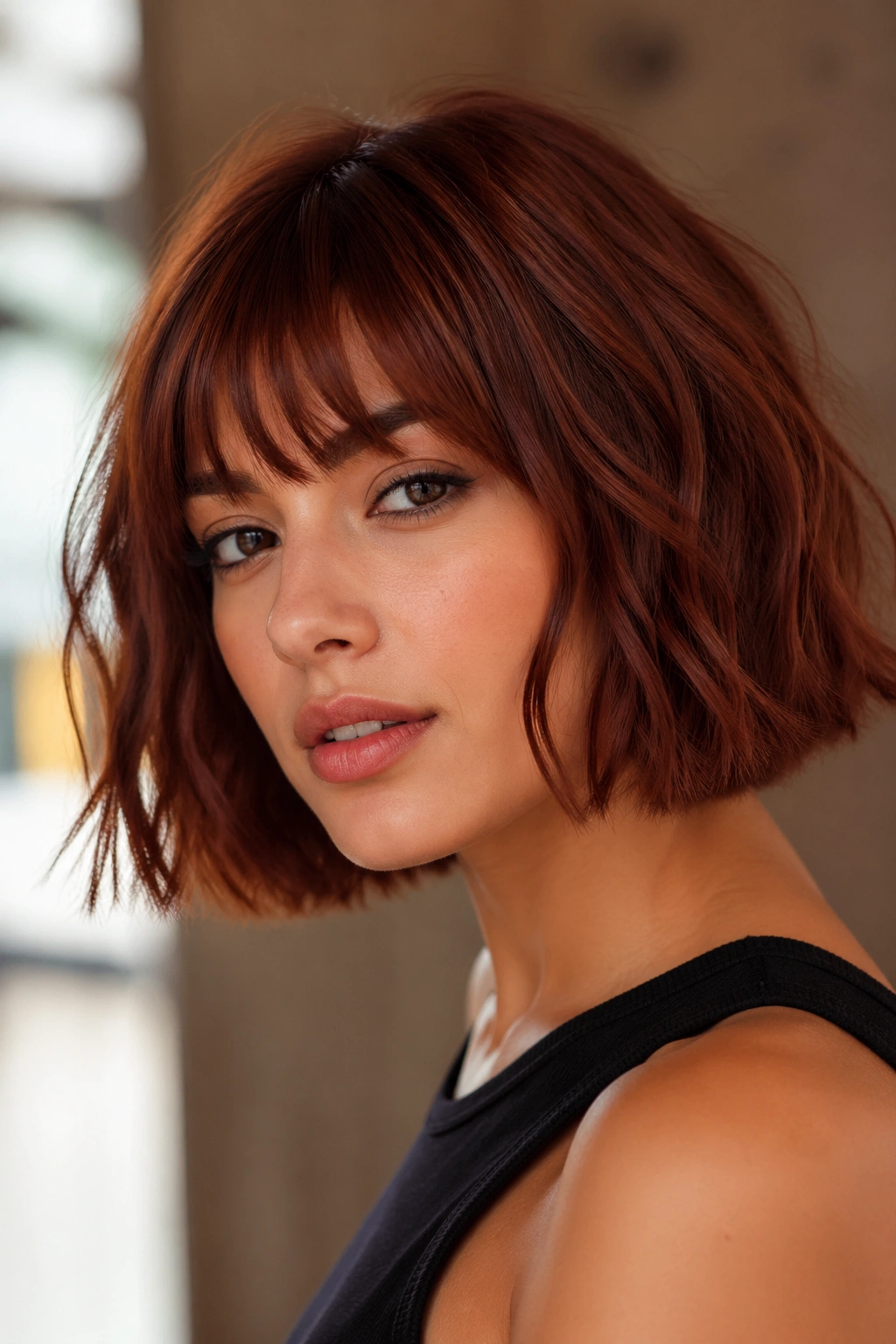
Brick brown has more bite than chestnut and more edge than maple. The red-brown tone sits in a deeper, earthier lane, which gives it a slightly urban, slightly rustic feel that works on short cuts and longer layers alike.
I like brick brown on bobs, shags, and textured waves because the color does some of the styling work for you. The warm red depth helps the cut show shape. A blunt bob can look sharper. A shag can look more lived-in.
It also happens to be one of the easiest shades to pair with makeup. Neutral lips, terracotta blush, soft brown liner — all of it tends to sit well next to brick tones. No need to build an entire beauty look around the hair.
If your current color feels dull but you don’t want copper, brick brown is a very good middle road. It has warmth, but it still feels anchored and grown-up.
16. Warm Toffee Auburn
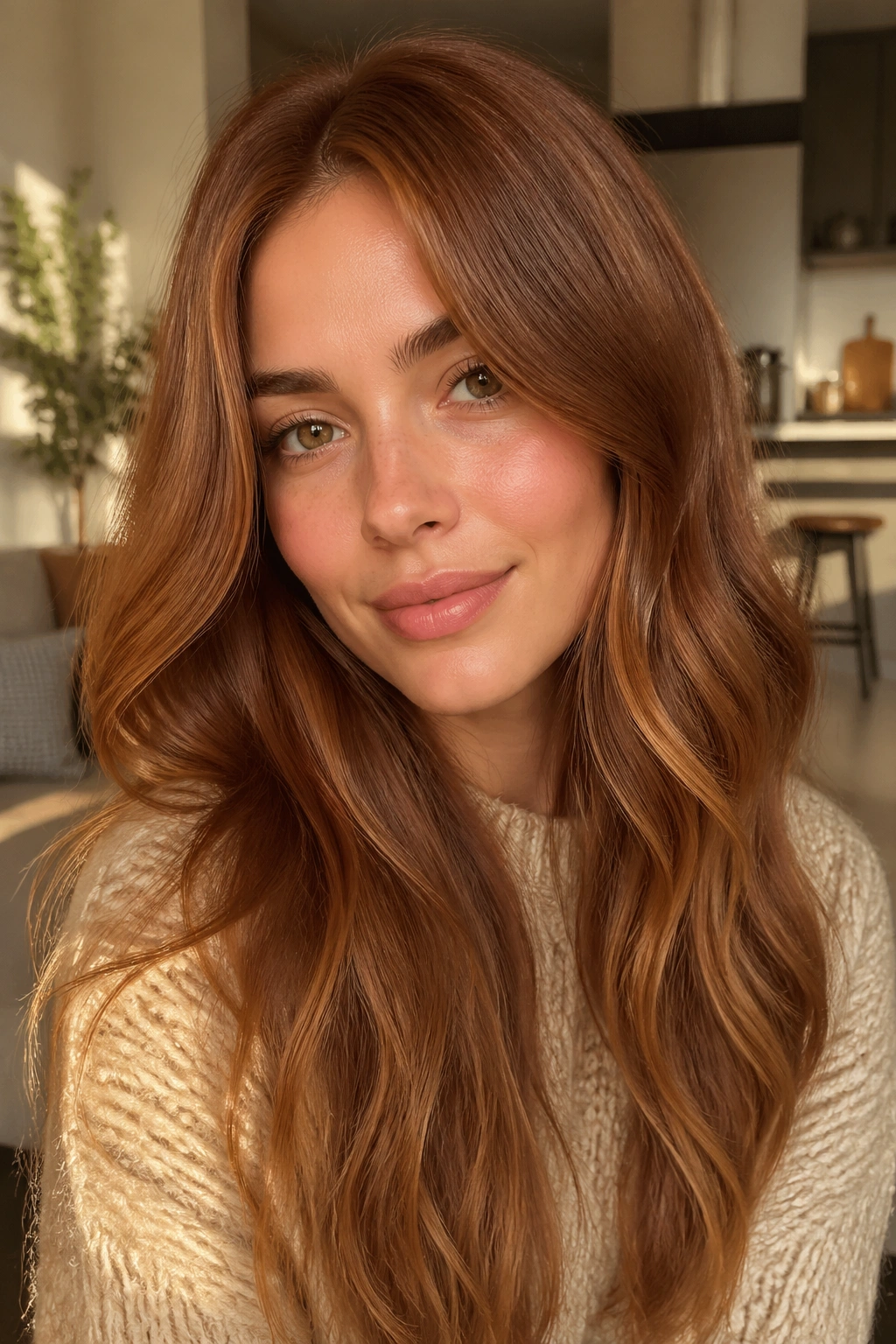
Warm toffee auburn is what happens when brunette hair gets a softer, creamier kind of warmth. The red is there, but it’s wrapped in toffee and brown so the finish feels smooth rather than sharp.
Why It Feels Soft
The shade works because it avoids harsh contrast. You are not looking at brown versus red. You are looking at warm brown with a caramel-red glow threaded through it.
That softness makes it a good pick if you’re moving up from a darker brunette and want change without shock value. It also works on medium-length cuts because the toffee tone can be placed in the mids and ends where the hair has movement.
How to Wear It
- Ask for toffee warmth through the face-framing layers.
- Keep the root close to your natural shade.
- Use a gloss or color conditioner every few weeks.
- Let the ends be a little lighter if you want more dimension.
This one looks especially nice on soft waves and rounded blowouts. The shade catches motion in a gentle way, which is exactly why it feels so easy to wear.
17. Mulled Wine Brown
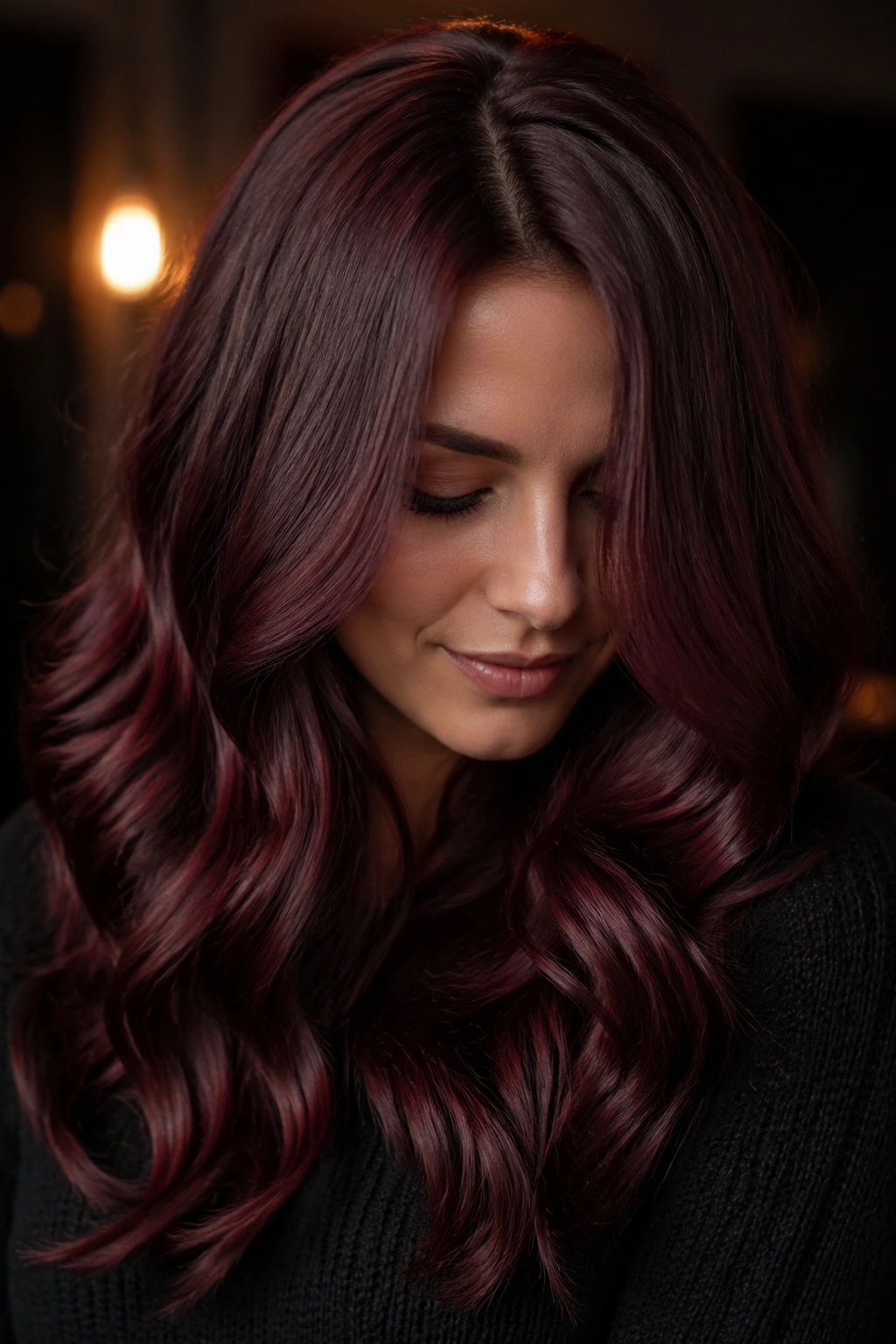
Why does mulled wine brown read warm instead of purple? Because the brown base keeps the red muted and steady, while the wine tone adds depth without turning the hair jewel-toned.
That balance gives the shade a moody feel. It is darker than cherry cola and less coppery than auburn. You get a hint of berry-red warmth, but the overall look stays brunette. Under indoor light, it can look smooth and slightly smoky. Outside, the warmer pieces show a little more.
How to Keep It Glossy
- Ask for a rich brown base with a wine-red glaze on top.
- Use a sulfate-free shampoo if your hair color fades fast.
- A shine serum helps the tone look less dry.
- If your hair is porous, plan on a refresh glaze sooner rather than later.
This shade is a good fit for someone who likes deeper, moodier color but still wants warmth. It’s one of those colors that looks more expensive when the finish is glossy and the ends are trimmed clean.
18. Sunkissed Cinnamon Balayage
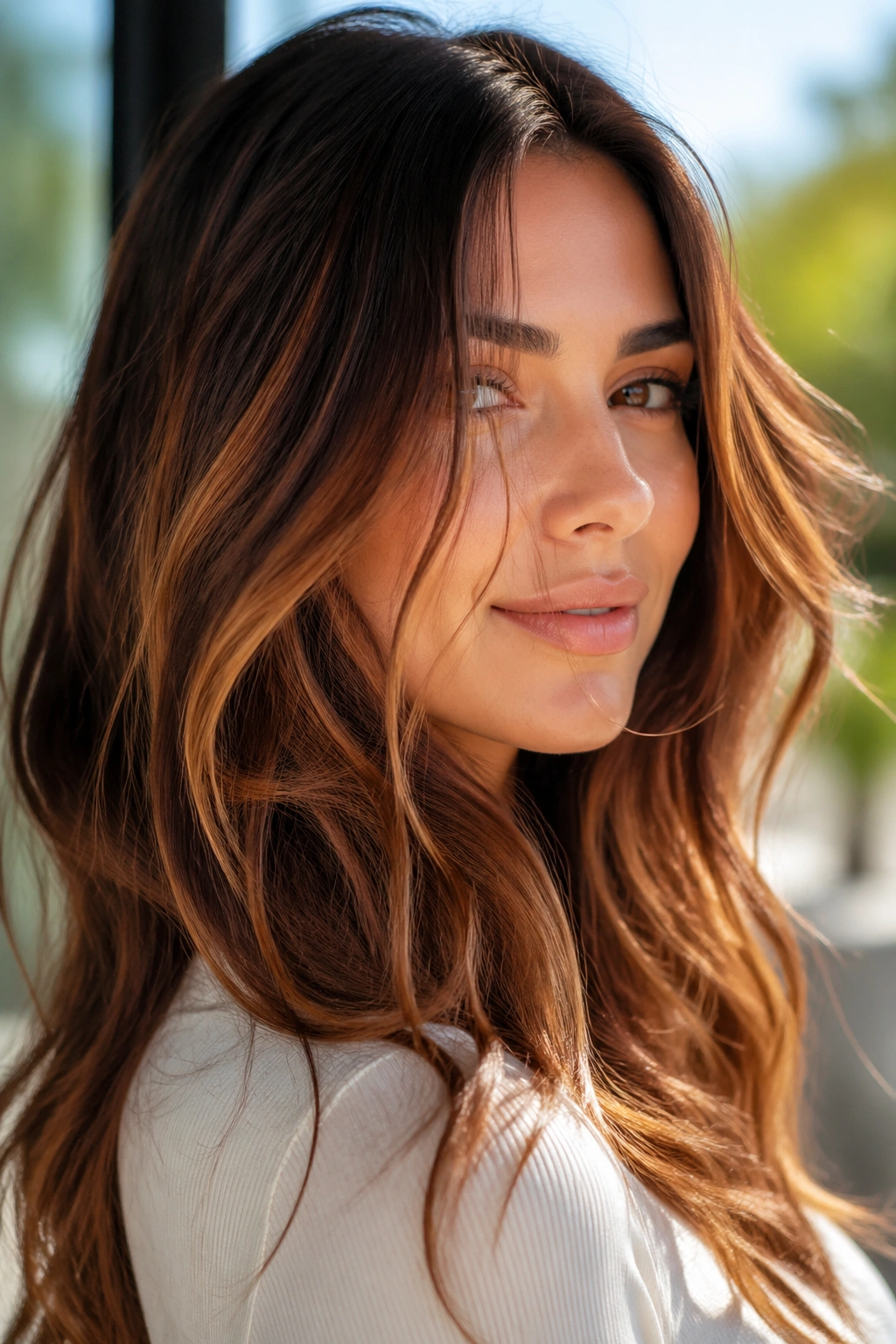
Sunkissed cinnamon balayage is the shade you choose when you want warmth that moves. The color is painted in ribbons, so it feels lighter around the face and softer through the ends, with a brown base holding everything in place.
That placement matters. Instead of covering the entire head in one red-brown block, the cinnamon pieces follow the parts of the hair that naturally catch light. The result looks relaxed and grown-in, which is a big reason balayage stays popular with people who hate obvious regrowth.
This one works especially well on waves and air-dried texture. The cinnamon pieces bend around the hair and show different tones as the head moves. Straight hair can look good too, but the color has a little more life when there’s some bend.
- Ask for painted pieces around the hairline and top layers.
- Leave the root darker for easier grow-out.
- Keep the cinnamon tone soft, not orange.
- A 1.25-inch curling iron gives nice, loose movement.
If you want reddish-brown hair color ideas that feel easy rather than precious, this is a strong contender.
19. Amber Mahogany
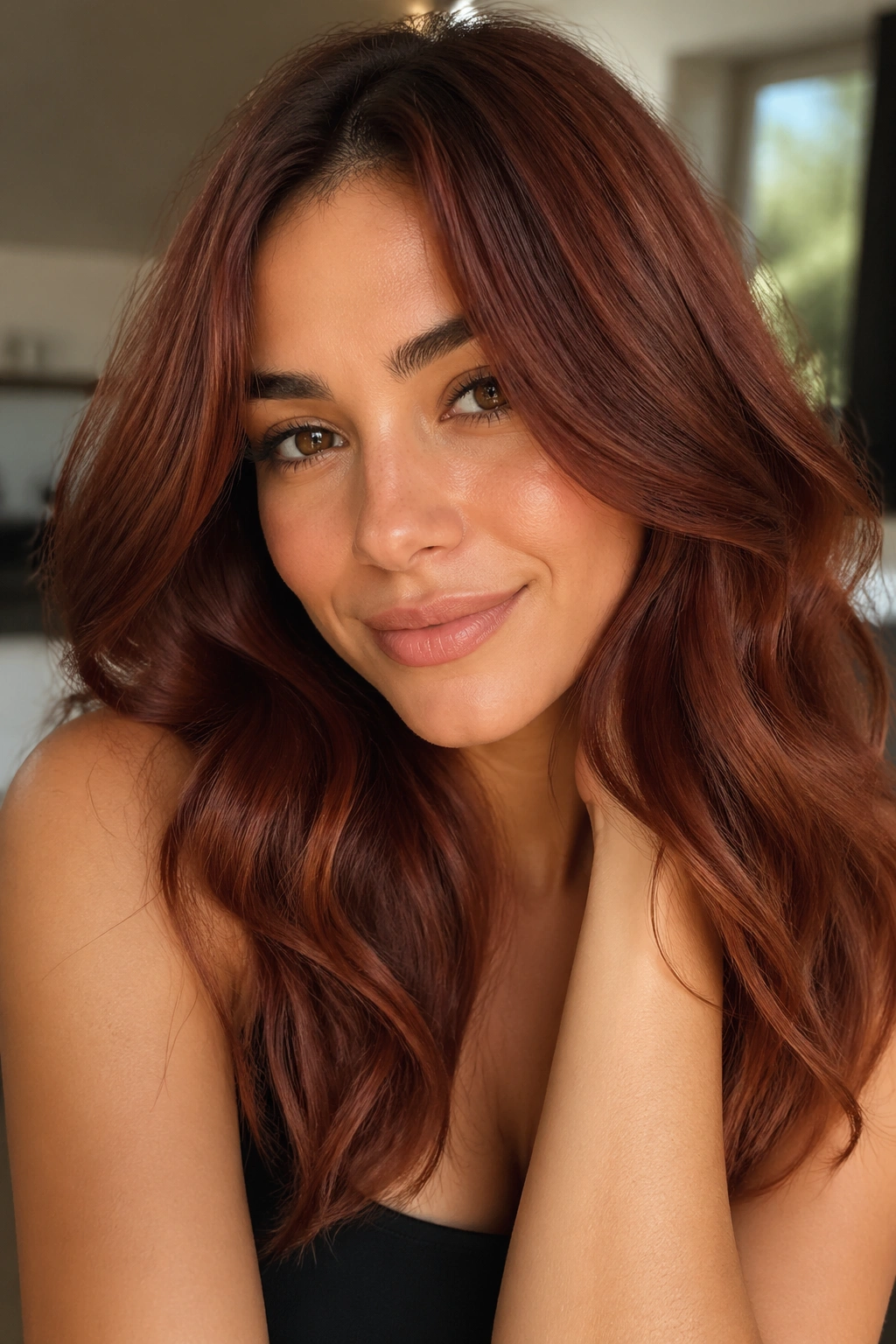
Amber mahogany is rich, warm, and a little deeper than the name suggests. The amber side gives you glow. The mahogany side gives you weight. Put them together and you get a shade that looks polished on straight hair and plush on curls.
This color is especially nice if you want your hair to feel dimensional in natural light. The amber tones can read caramel in one setting and copper in another, while the mahogany keeps the color from tipping too bright. It’s a smart shade for people who want warmth but still prefer a darker overall look.
I also like how well it sits next to strong brows and simple makeup. The shade has enough character that you do not need much else going on. A little mascara, some lip tint, done.
If your hair tends to look flat at one length, amber mahogany can help. The mix of tones gives the surface more life, especially when the ends are trimmed clean and the hair is kept shiny.
20. Dark Cherry Brunette
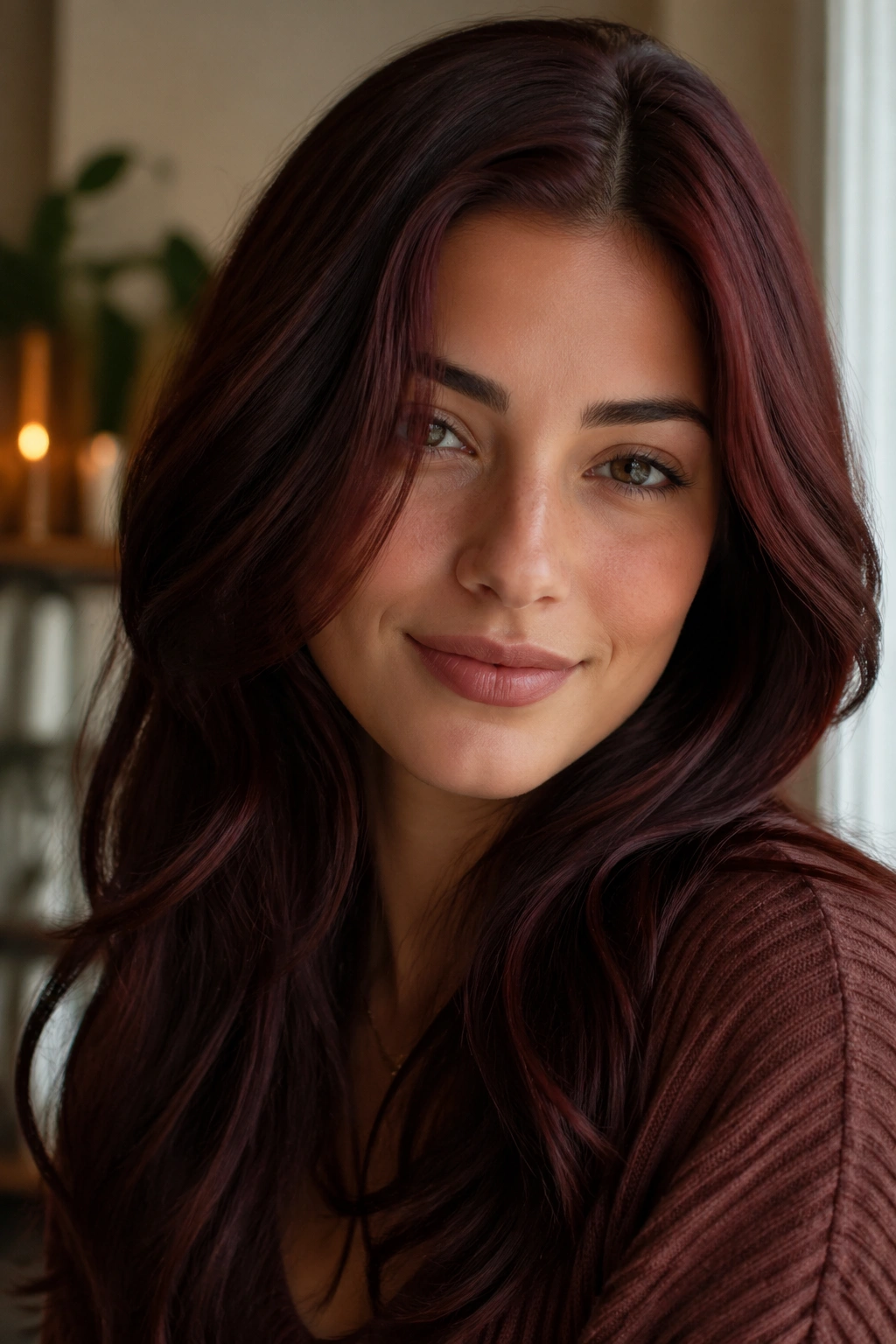
Dark cherry brunette sits closer to the quiet end of the red-brown spectrum. It has cherry warmth, but the brown base keeps it from feeling loud or overly bright.
Compared with cherry cola, this shade is a little more muted and a little less glossy in tone. That makes it a good choice if you want the hint of red rather than the full effect. On dark hair, it can look almost like a standard brunette until the light shifts. Then the cherry tone shows up and the whole color wakes up.
This shade tends to look best with low-contrast placement. A darker root and slightly warmer mids can keep the hair from reading too red around the face. If you like a softer finish, that’s the direction to ask for.
It’s a nice fit for people who want a change that feels grown-up and subtle. No drama. Just a deeper, warmer brunette with a little extra depth when you move.
21. Toasted Chestnut Brown
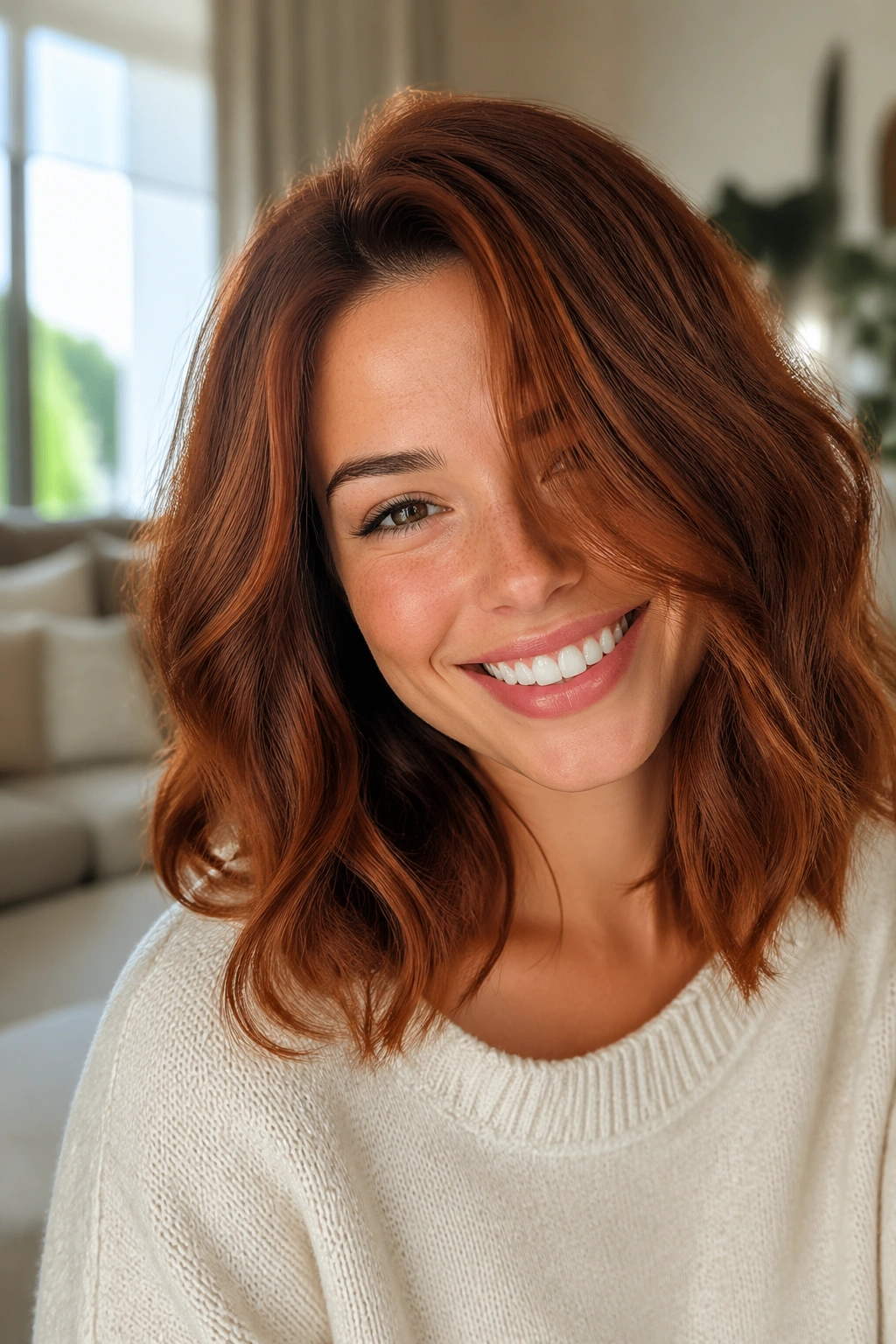
Toasted chestnut brown is the easiest place to land if you want warmth but don’t want to think too hard about it. It sits right in the middle of brunette and red-brown, which makes it one of the most forgiving reddish-brown hair color ideas on the list.
The toasted part matters. It keeps the shade from looking flat or muddy. The chestnut keeps it wearable. Together, they make a color that works on straight hair, curls, short cuts, long layers, and everything in between.
If you are stuck between copper and brown, start here. If you want warmth that won’t fight your wardrobe, start here. If you want a shade that can look soft on a Tuesday and polished on a night out, start here.
A gloss every few weeks helps the tone stay fresh, and a tiny bit of face-framing brightness can keep it from looking too dark. But even without that, toasted chestnut has a nice built-in balance. It is warm, grounded, and easy to live with, which is really what most people want when they ask for red-brown hair in the first place.