
Holographic hair works best when the color behaves like light, not paint. That is the part people miss. If the base is flat, the whole look falls apart; if the placement is clumsy, the shade turns muddy instead of shifting between lavender, aqua, silver, and rose as you move.
The good versions feel almost alive. They have a clean lift underneath, a smart toner on top, and a color plan that respects the hair’s natural movement. I’ve always thought the best holographic looks are the ones that make you notice the shape of the hair first, then the color second. That little delay is what makes the effect look expensive instead of loud.
There’s also a practical side that gets skipped in a lot of beauty chatter. Holographic color is not one thing. It can be soft and pearly, dark and smoky, high-contrast and festival-bright, or tucked into the underside so it flashes only when the hair swings. The trick is matching the tone pattern to the cut, the base shade, and how much upkeep you can stand.
So the real question is not whether holographic hair is bold. It is. The real question is which version will look deliberate on your hair, and which one will feel like too much work by week three.
1. Prism Melt on a Deep Brunette Base
This is the version I’d hand to someone who wants holographic hair without bleaching their whole head into oblivion. Keep the roots and most of the base deep brown, then melt in ribbons of silver, cool violet, and a touch of blue through the mid-lengths and ends. The darker background does half the work for you. It makes the lighter pieces look sharper and cleaner.
Why It Works
The contrast is the point. On a brunette base, even a narrow veil of pale lilac can read like a real color shift instead of a flat pastel stripe. If the colorist feathers the transition well, you get that “moving light” effect every time the hair bends.
A center part or soft waves help this look show off. Straight hair can still wear it, but the shimmer is easier to miss unless the placement is precise.
- Best on level 4 to 6 brunettes
- Needs foils or hand-painted panels
- Works well with shoulder-length cuts and longer
- Looks strongest with cool-toned makeup and silver jewelry
My take: if you want the most wearable holographic style, start here.
2. Smoky Lavender Holographic Bob
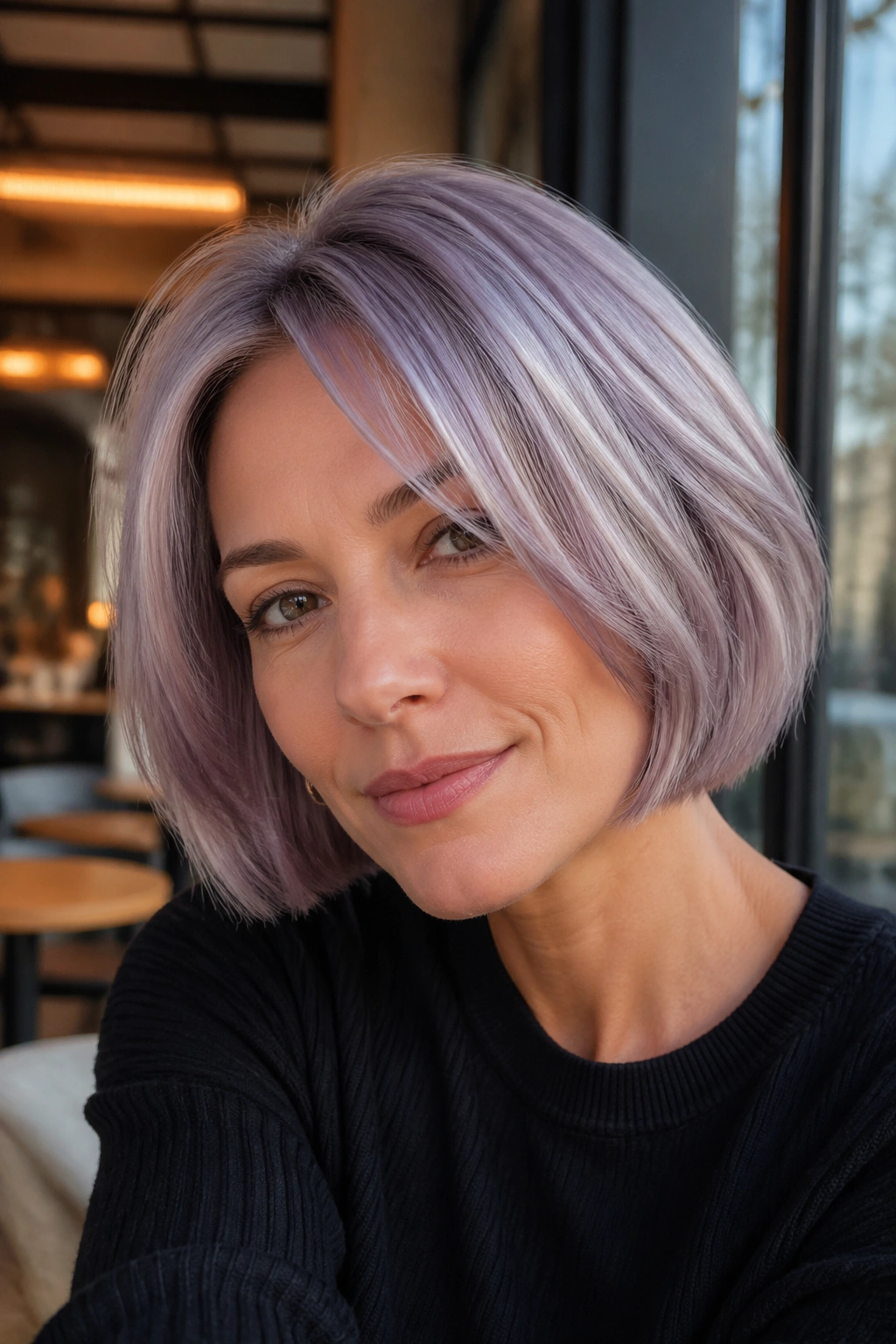
Lavender is one of those shades that can go sugary fast, and that’s exactly why I like it smoky. A silvery-lavender bob feels cleaner, sharper, and more grown-up than the candy version. Keep the tone muted with a gray-violet gloss, then let the light pieces sit over a neutral blonde base so the color reads soft instead of chalky.
The bob matters here. Shorter hair makes the color look denser, which helps the holographic shift show up in less surface area. That can be a blessing if you don’t want your whole head shouting at once.
What to Ask For
Ask for a neutral-to-cool blonde lift, then a violet glaze with a gray cast. Too much red in the formula ruins the effect. The prettiest result has a faint smoke ring around the lavender, not a bubblegum finish.
This one is easy to wear with black clothing, but it also looks good with soft gray knits and white tees. Simple outfits let the hair do the talking.
3. Opal Blonde Waves
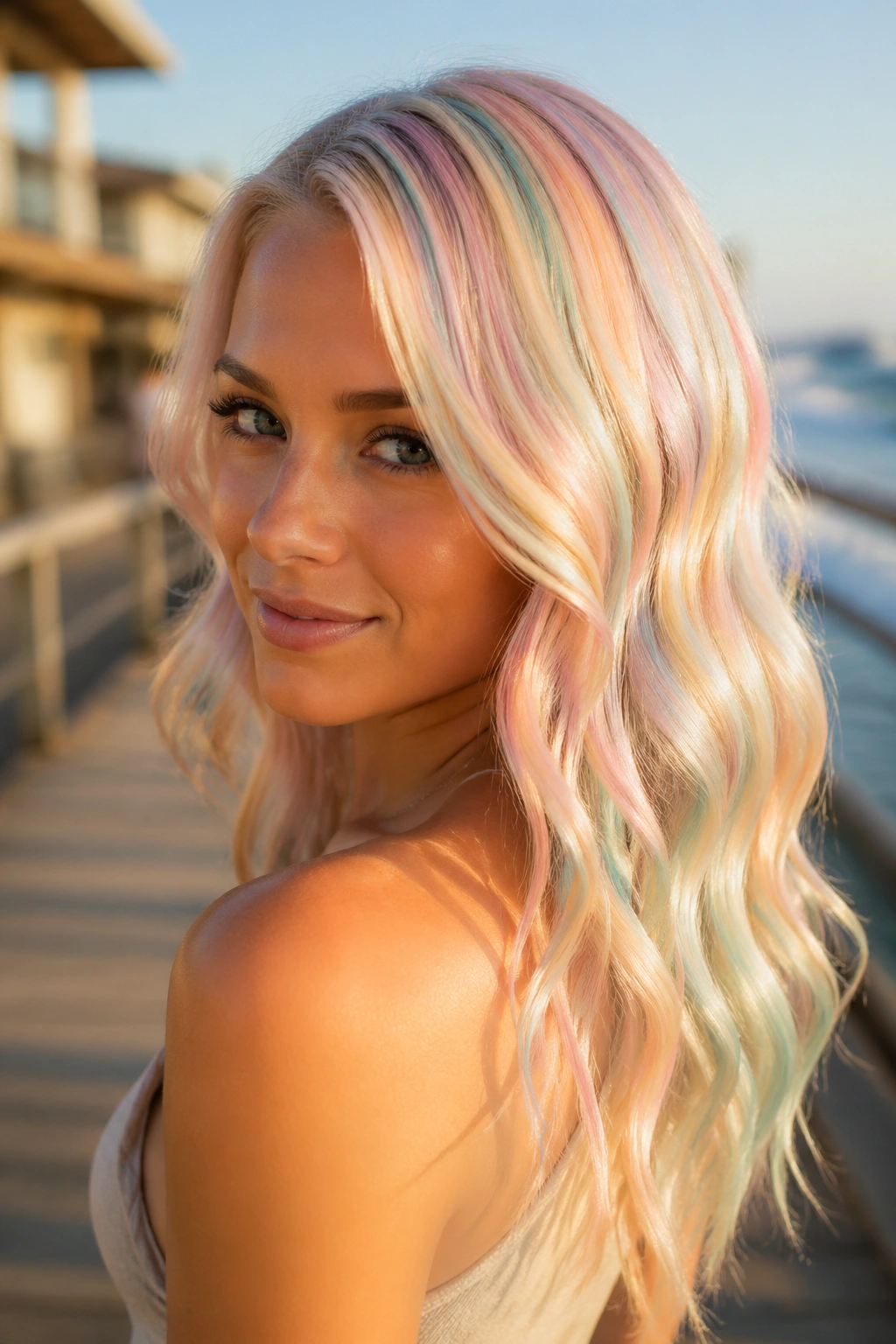
Ever seen a stone that looks pale until the light hits it sideways? That is the goal here. Opal blonde uses a creamy platinum base with flashes of peach, mint, pearl, and pale blue, usually placed as thin ribbons rather than chunky stripes. It reads delicate from a distance and surprisingly rich up close.
How to Get the Most From It
Ask for a level 10 blonde base with a soft pastel overlay. The colors need to be translucent, not opaque. If the pigment is too heavy, you lose the opal effect and end up with random pastel patches.
Soft waves help the look the most. The bends in the hair catch the color at different angles, which is where the illusion comes from. Straightened hair can look sleek, but it flattens the dimension a bit.
This is not the easiest style to maintain. It fades fast. But when it’s fresh, it has that pale, airy shine that people always stare at for a second longer than they mean to.
4. Oil-Slick Midnight Panels
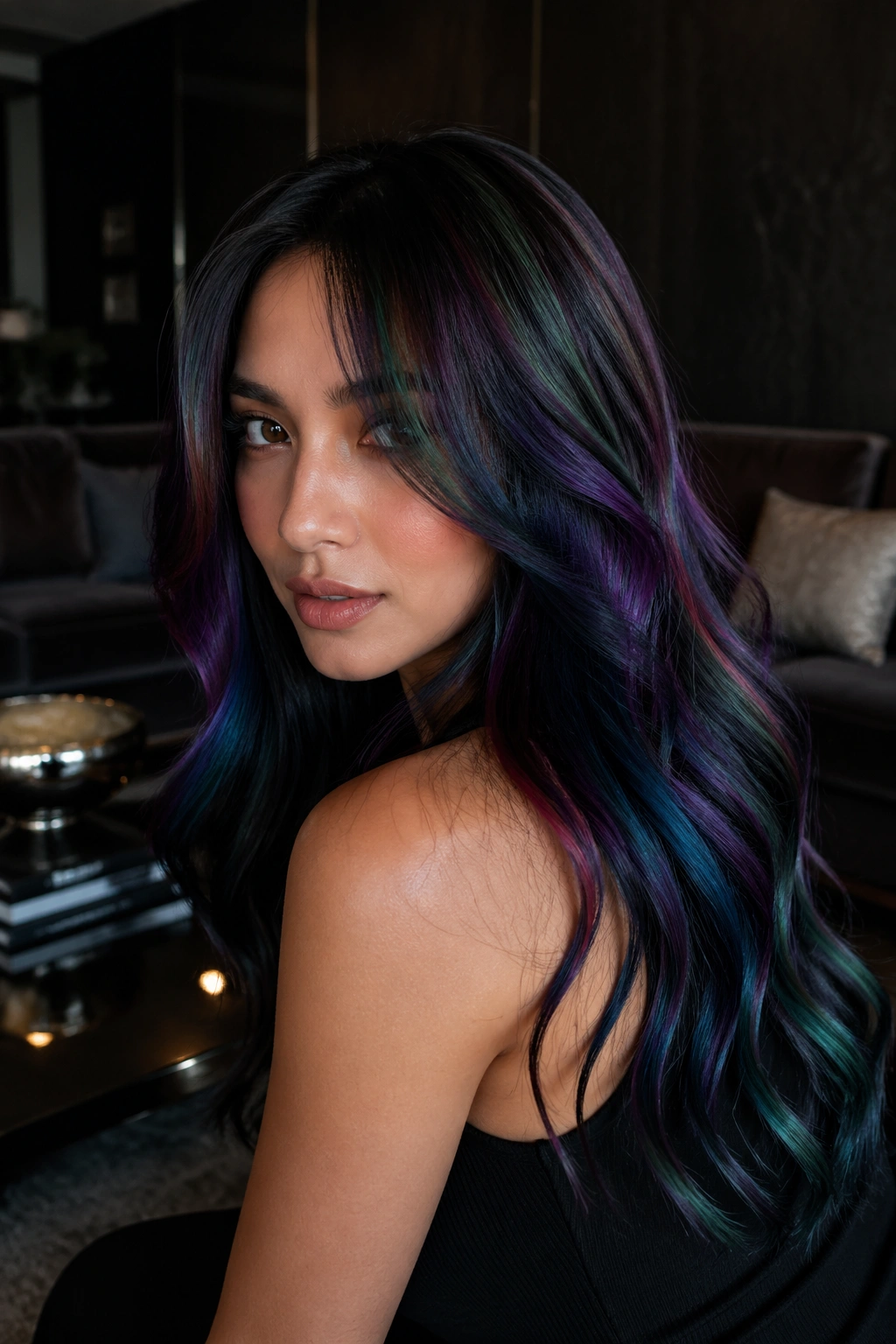
Dark hair can do holographic color too, and I think this version looks especially strong on shoulder-length cuts with blunt ends. Keep the base black or near-black, then layer in deep green, violet, cobalt, and a thin line of red-violet through hidden sections. The effect is richer than a bright rainbow because it feels moody, not playful.
The name “oil-slick” fits for a reason. You want that reflective, almost wet-looking shift when the hair moves under light. It’s less about obvious color blocks and more about a sly shimmer that appears in motion.
- Best placed on underlayers, nape panels, or face-framing pieces
- Works with straight or softly waved hair
- Needs cool jewel tones, not brights
- Looks better with high shine serum than with matte styling products
This is the style for people who want bold color but don’t want it looking sweet. It has edge.
5. Aqua-to-Violet Color Melt
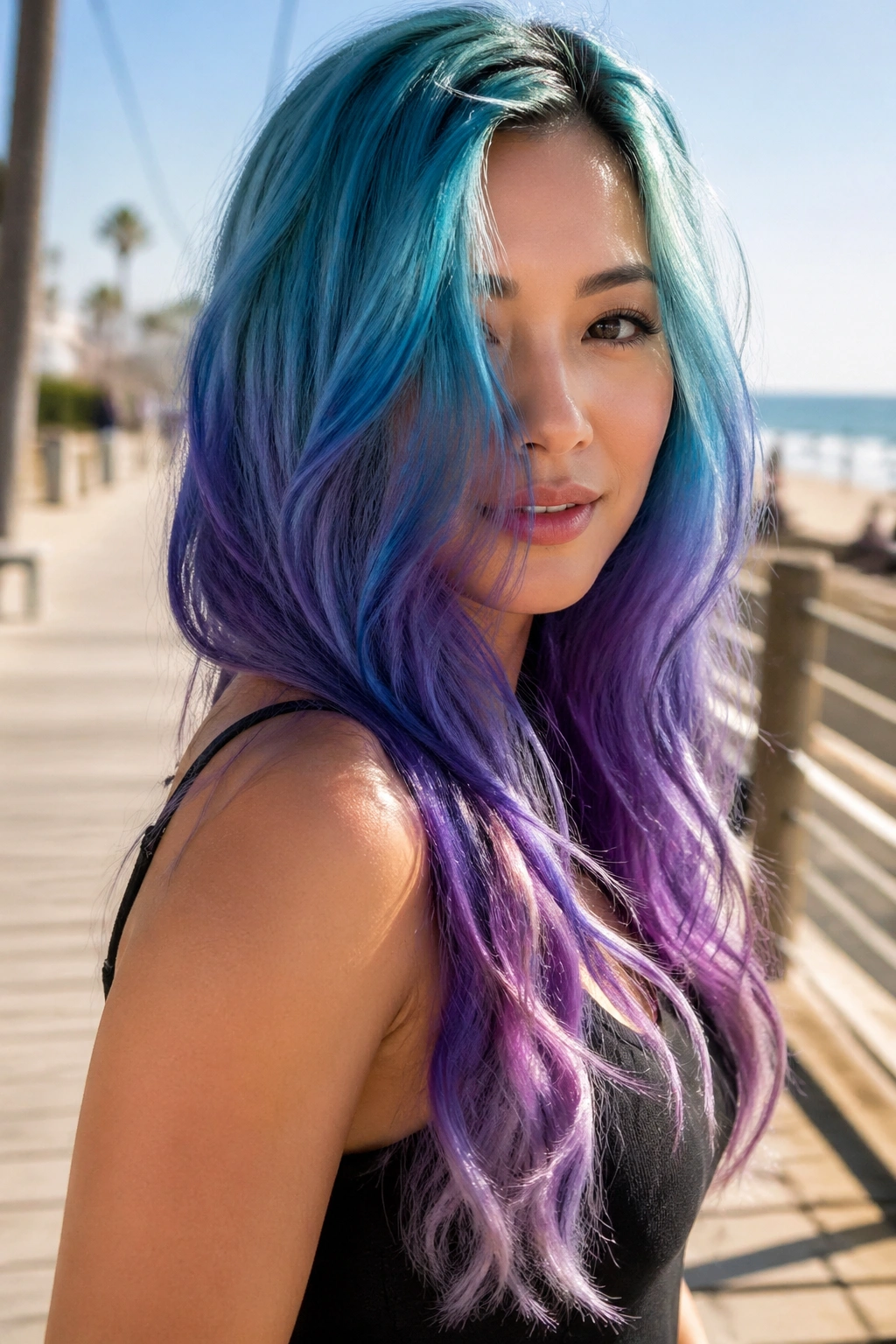
A true color melt is all about the handoff between shades. Here, aqua begins near the top of the lightened sections, then drifts into blue, then violet, then a smoky mauve at the ends. The transitions should be so soft that you can’t point to where one shade stops and the next starts.
That softness is what makes it feel holographic. Sharp stripes look cute for about five minutes. A melt looks intentional for longer, and it grows out with less drama.
I prefer this on hair with a slight wave or a loose bend because the movement keeps the tones from blending into one flat blur. If the hair is poker-straight, the look can lose some of its magic.
A good colorist will control the saturation carefully. Aqua at the top should be lighter and cleaner. Violet at the ends can be deeper. That little shift creates depth, and depth is the whole game.
6. Chrome Silver Face Frame
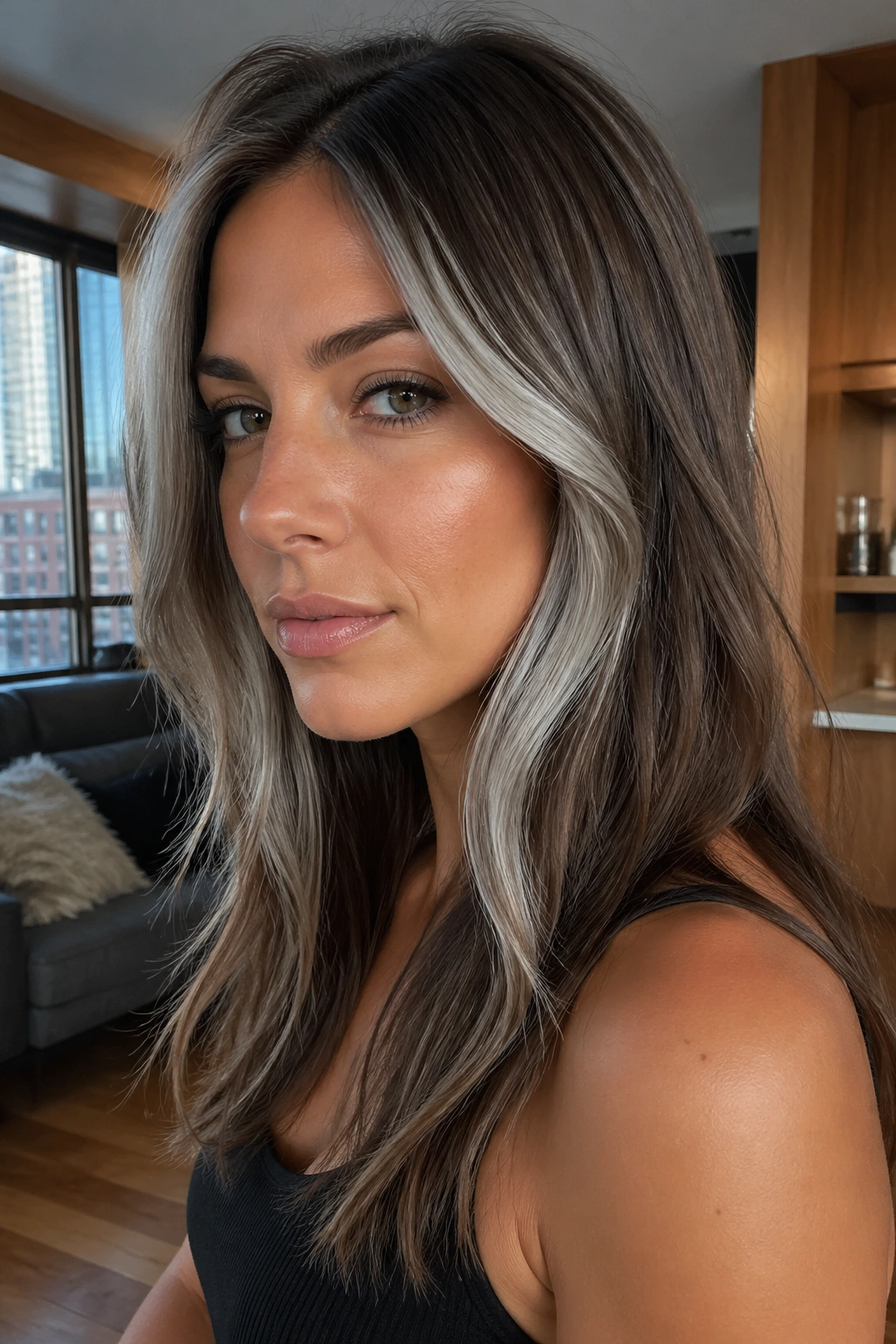
A chrome face frame is a smart choice if you want a bold result without committing every inch of hair to it. Keep most of the hair in a dark blonde, ash brown, or neutral brunette range, then place bright silver or pearly platinum pieces around the face. The contrast sharpens the features and gives the cut a more sculpted look.
Unlike full-head color, this version lets the holographic effect stay selective. It flashes when the hair moves forward, and it disappears a bit when tucked behind the ears. That means less maintenance and less panic when the grow-out phase starts showing.
Best For
- Layered cuts
- Lobs and long bobs
- Side parts
- People who want brightness near the face only
If you wear glasses, this look can be especially good. The silver pieces sit right where the frames create a visual break, and the whole style looks more graphic.
7. Rose Quartz Holographic Curls
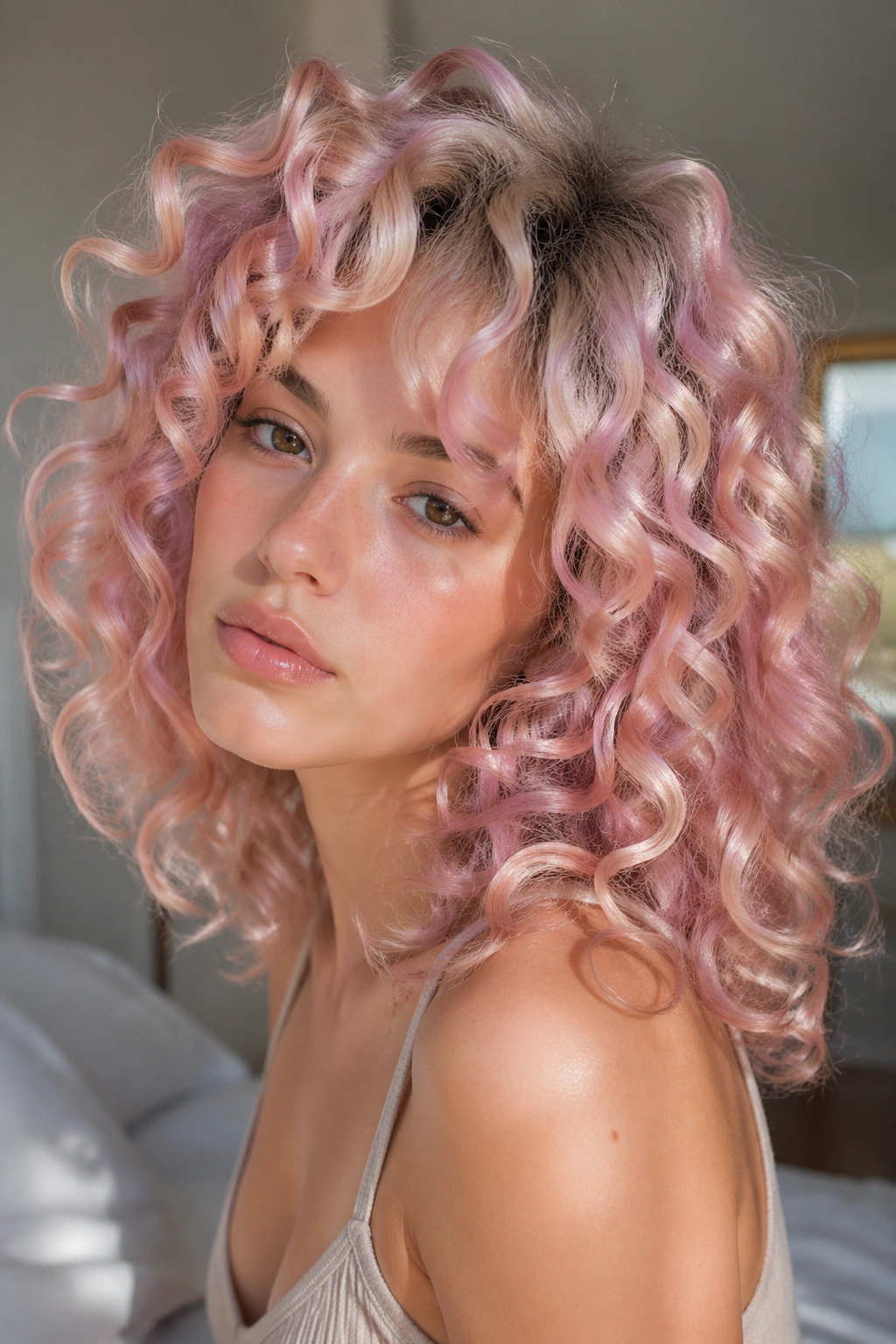
Curls and holographic color are a better match than a lot of people expect. The curl pattern gives you built-in movement, and movement is what makes the color flicker. Rose quartz is a lovely starting place: pale pink, soft gold, a little lilac, and a pearl glaze over a light base.
What Makes It Different
The texture changes the way the color is seen. A curl stack catches light on the outer curve and hides tone on the inner curve, so even a single shade shift can look layered. That means you don’t need to overload the hair with every color in the box.
Use a sheer pastel formula rather than a dense pink dye. Dense pigment can drown the reflection, especially on tighter curls. A lighter hand keeps the pattern breathable.
I’d keep the root shadow soft and natural. Too much contrast at the root can fight the softness of the curl pattern. Let the ends carry the fantasy.
8. Indigo Underlayer With Teal Flash
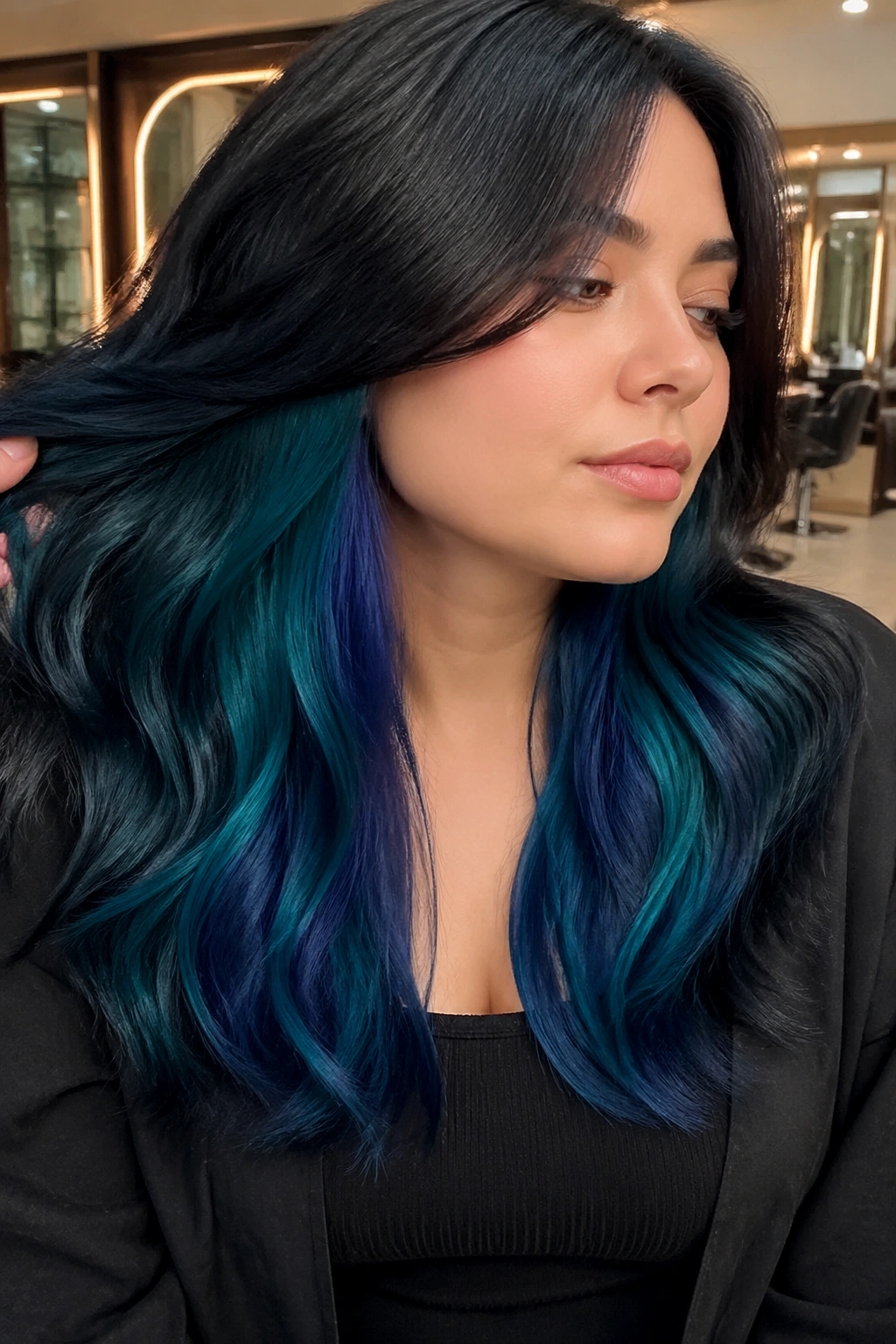
This one is sneaky, and I like that. Keep the outer layer dark brown or black, then pack the underlayer with indigo and teal so the color only appears when the hair shifts, lifts, or gets tucked behind the shoulder. It’s the kind of look that makes you look twice in a mirror.
The best thing about hidden color is control. You can wear the hair sleek and office-safe one day, then curl it or pin half of it up and reveal a much louder story underneath. That flexibility makes it easier to live with.
A blunt cut makes the flash feel bolder. Layers make the reveal softer. Neither is wrong; they just give you a different mood.
This style loves shine spray. Not a greasy one. A light mist that helps the outer hair look glossy enough to frame the hidden color underneath.
9. Pearl Lilac Money Pieces
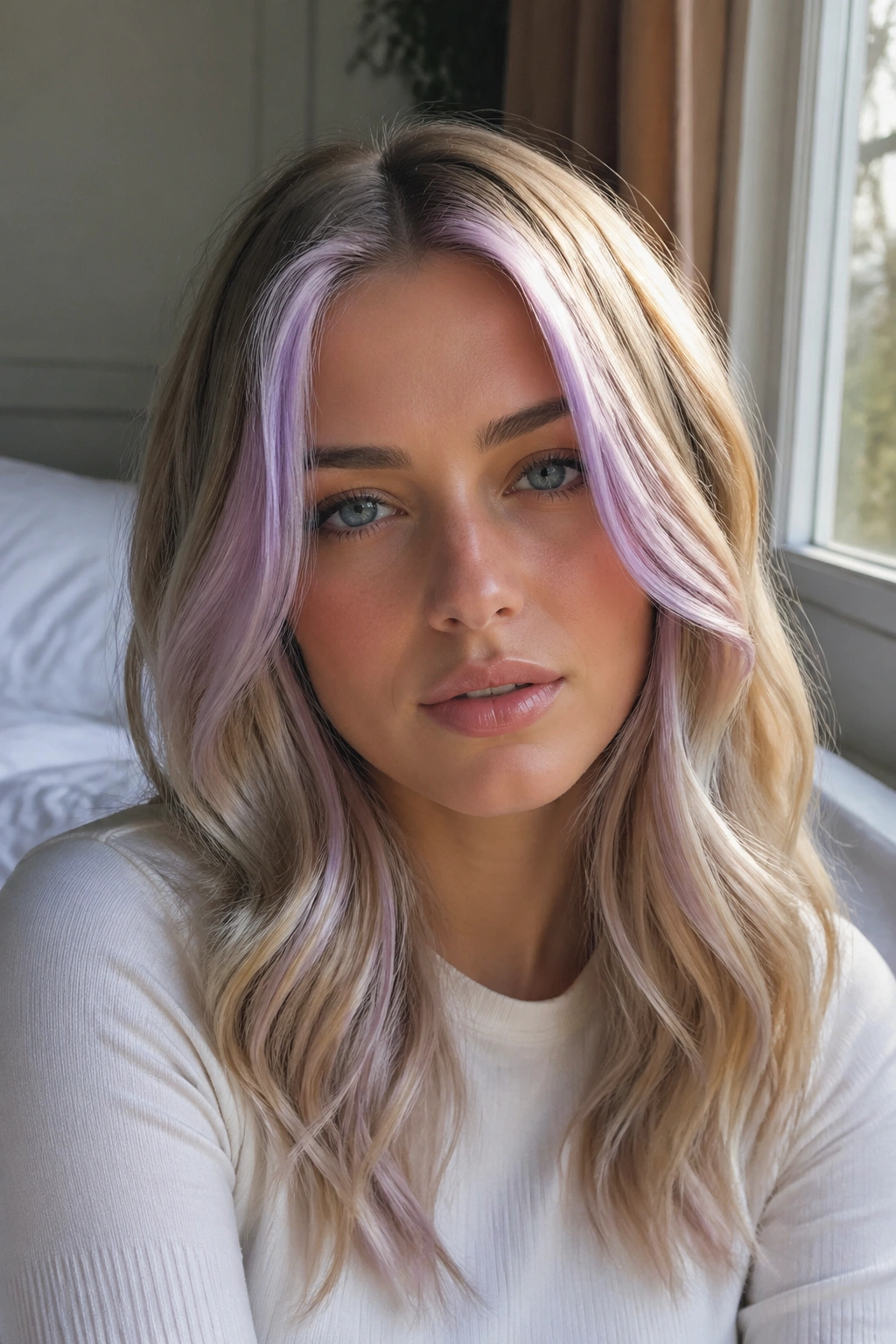
Money pieces can go cheesy fast if the shade is too bright, but pearl lilac has a nicer attitude. It sits between pastel and metallic, which keeps it from looking childish. The rest of the hair can stay in a neutral blonde, dusty brunette, or beige base while the front pieces carry the shimmer.
The point here is framing. Those two front sections should pull attention toward the eyes and cheekbones without taking over the whole head. If the lilac is too saturated, it starts reading like costume makeup for the hair. Keep it airy.
A middle part makes the style look polished. A deep side part makes it feel softer and more romantic. Both work.
If you want to test holographic hair without a huge commitment, this is one of the easiest places to start. Two front pieces. Big payoff. Low chaos.
10. Platinum Prism Lob
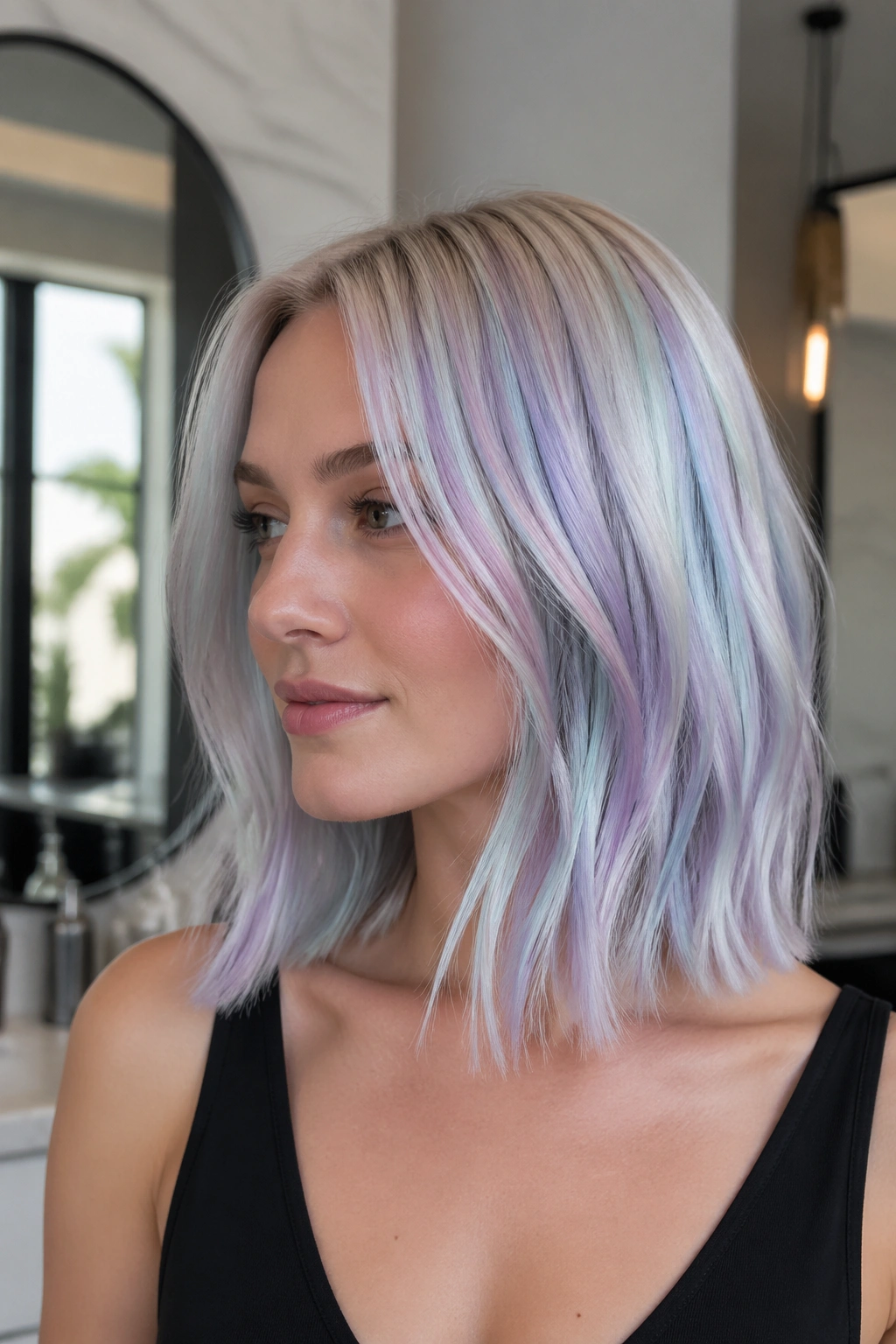
A platinum lob is already clean and sharp; add holographic toning and it turns into something more interesting. The trick is not blasting the hair with five colors at once. Use a pale platinum base, then glaze thin sections with blue-violet, silver, and a hint of mint so the look changes under different light.
The lob length matters because it gives enough surface for the color to move, but not so much length that the effect gets lost. On long hair, tiny shifts can disappear. On a lob, they stay visible.
You’ll want a fresh toner every so often to keep brass out of the picture. Brass is the enemy here. It turns the whole thing flatter and warmer than you want.
Straight styling makes this version feel sleek and editorial. Loose waves make it feel softer and more dimensional. I’d personally choose waves unless you like a crisp, almost icy finish.
11. Holographic Bangs With a Soft Base
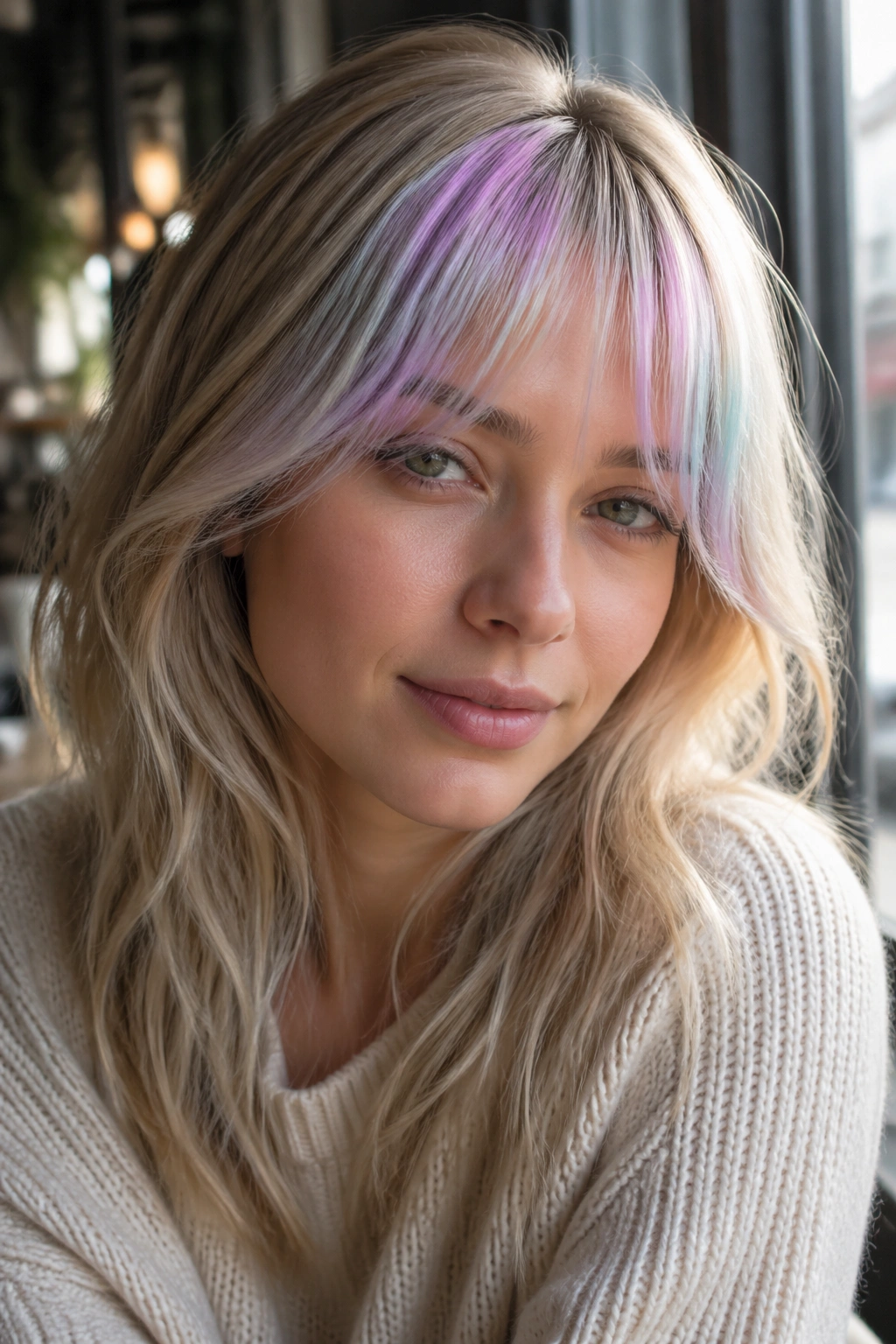
Bangs are a brave place to put shimmer, and that’s why they work. A set of curtain bangs or blunt fringe with holographic pastel veils underneath can change the whole face shape. Keep the main hair in a soft neutral blonde, then add pink, blue, and lavender through the bangs so they catch the eye first.
How to Wear It
The key is restraint. Bangs sit in the most visible part of the hairstyle, so the color has to stay airy or it gets busy fast. Think translucent layers, not blocks of paint.
Curtain bangs are easier than blunt bangs because the split down the center lets the color peek through at different angles. Blunt bangs make the look more graphic and a little tougher. Both can work, depending on your style.
If you like glasses, strong brows, or bold lipstick, this version can be a lot of fun. It frames the face in the best kind of way.
12. Charcoal Base With Rainbow Veil
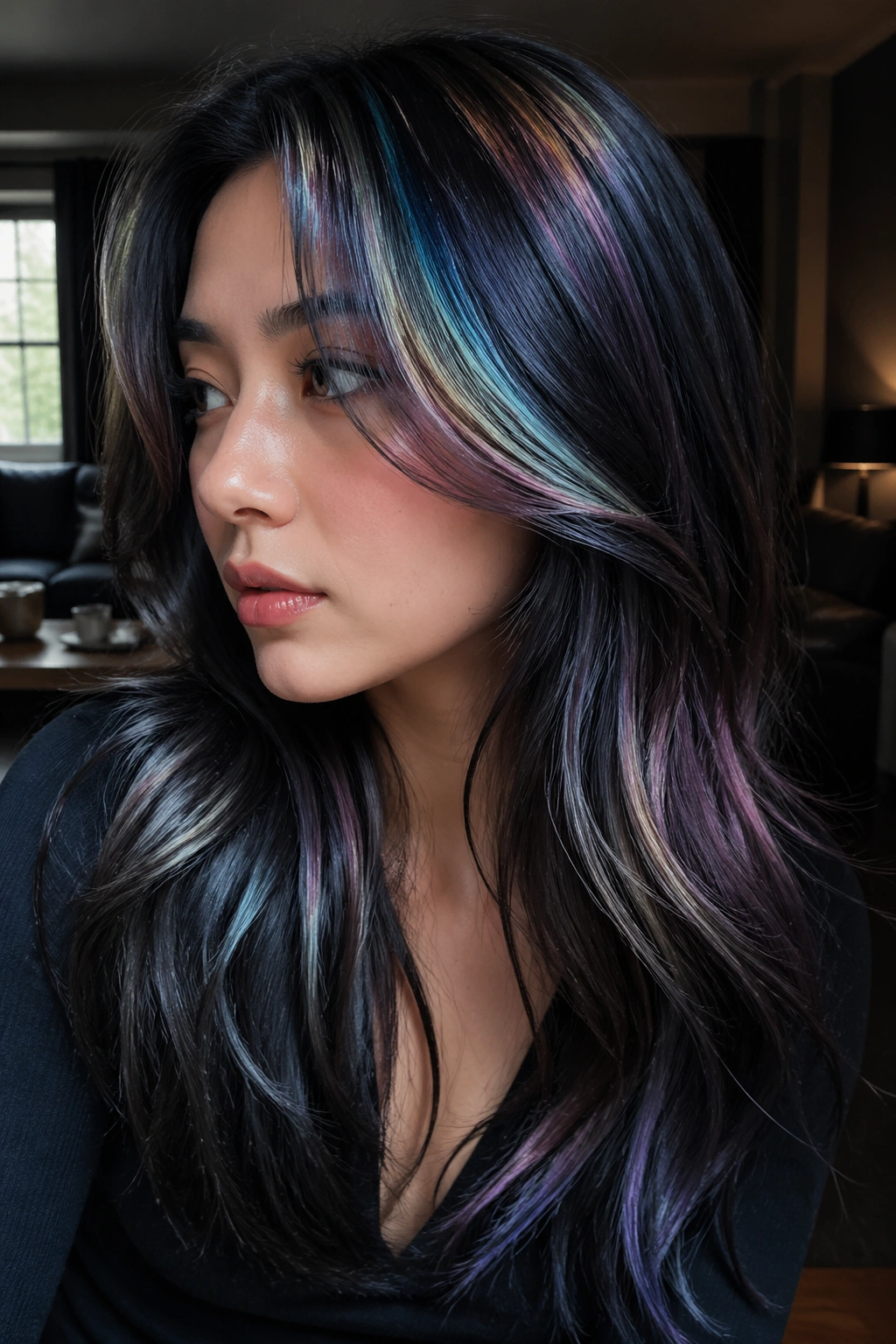
Not every holographic look needs a light base. A charcoal foundation with rainbow veils on top can be striking because it keeps the bright color suspended instead of fully exposed. The result feels moody first and colorful second.
This approach is especially nice if you hate the look of harsh contrast lines. The dark base softens everything. When the hair moves, you get flashes of cobalt, magenta, and green, but the overall effect stays smoky.
It works best when the rainbow sections are thin and placed with intention. Too much saturation turns it into a busy carnival situation, and that is not the same thing. A few clean, reflective ribbons are stronger than a thick wall of color.
This is one of the more grown-up holographic styles. Grown-up does not mean boring. It means controlled.
13. Mermaid Pearl Ends
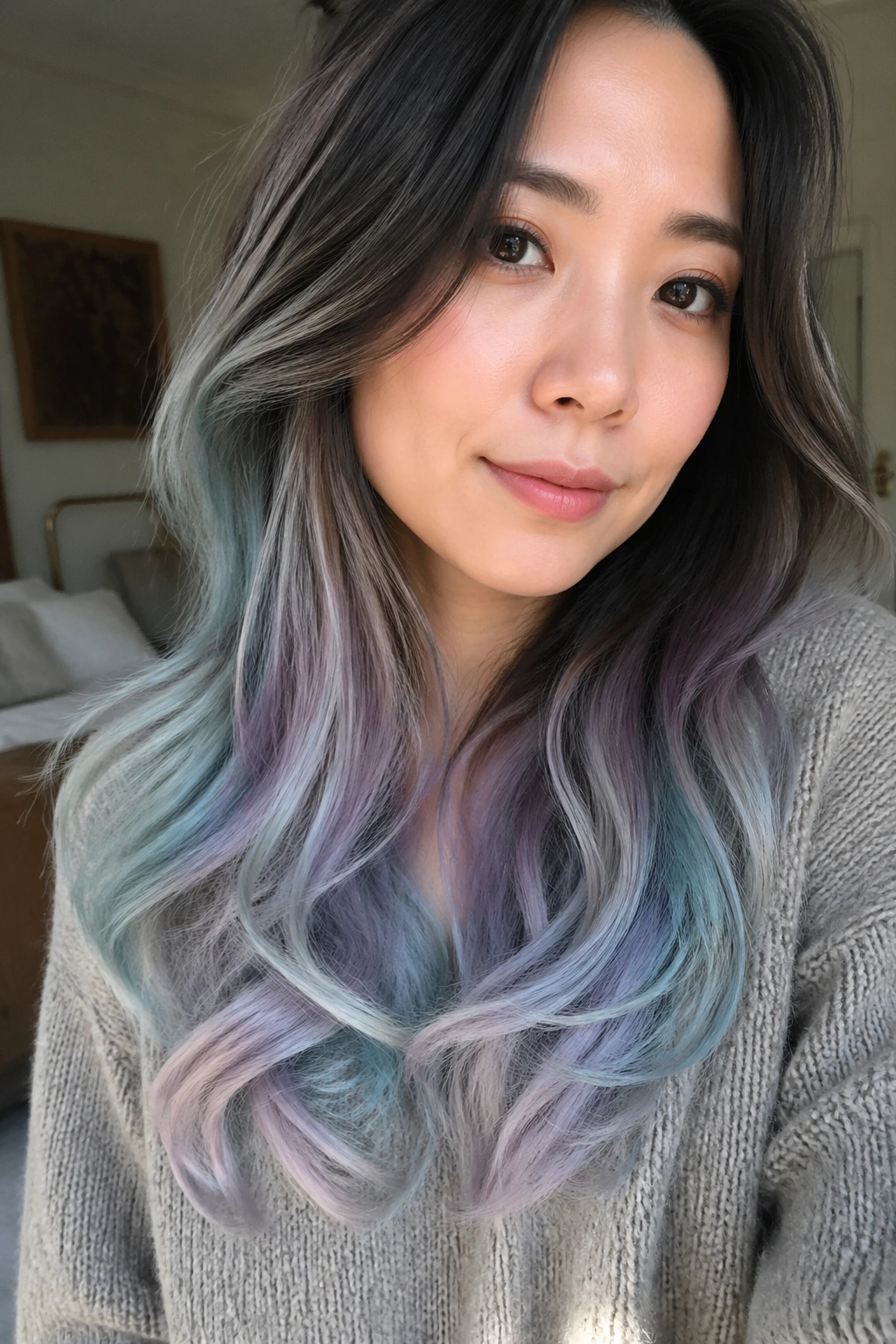
Mermaid pearl ends are for people who want the fantasy low on the hair, where it can peek out from under coats, sweaters, and loose waves. Keep the roots natural or softly shaded, then fade the mids into a pearlized mix of aqua, seafoam, and pale lilac at the ends.
The placement matters more than the shade list. Because the color sits mostly from mid-length to ends, it looks like the hair is catching sea light rather than wearing obvious dye. That subtlety keeps it from feeling too theme-party.
A long layered cut works best because the color can layer over itself. On one-length hair, the effect can look heavier.
This is also one of the better looks if you want to grow out a past vivid color. The lighter ends can be refreshed with glosses and toners instead of constant full re-dyeing.
14. Sapphire Smoke Balayage
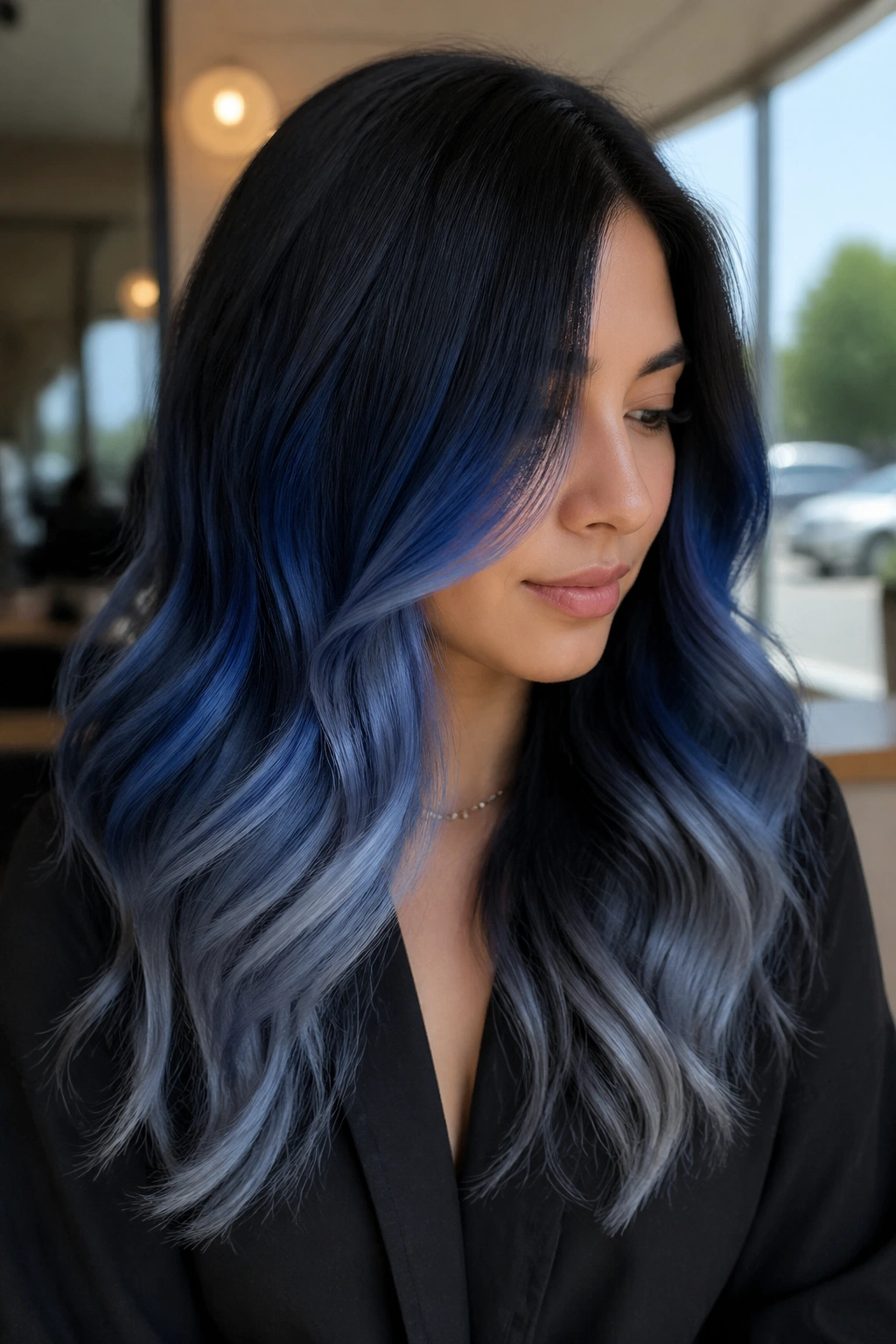
Sapphire smoke is one of my favorite darker holographic ideas because it has depth without needing a neon base. Start with a dark brown or black root zone, then balayage sapphire blue through the mid-lengths and soften it with a smoky gray-blue toner.
Why It Works
Balayage gives the color room to breathe. The hand-painted placement means the blue does not sit in a hard strip. It fades in and out, which keeps the hair looking dimensional from every angle.
The smoke part is what saves it from looking flat. A pure blue can read one-note. Add ash, and suddenly it feels like reflected light instead of dyed denim.
- Use cool-toned blue with a gray cast
- Keep the root melt soft
- Style with large waves or a round brush blowout
- Refresh with a blue shampoo or blue gloss, but do not overdo it
If you want bold color that still looks sophisticated in daylight, this is a strong pick.
15. Frosted Peach Holographic Pixie
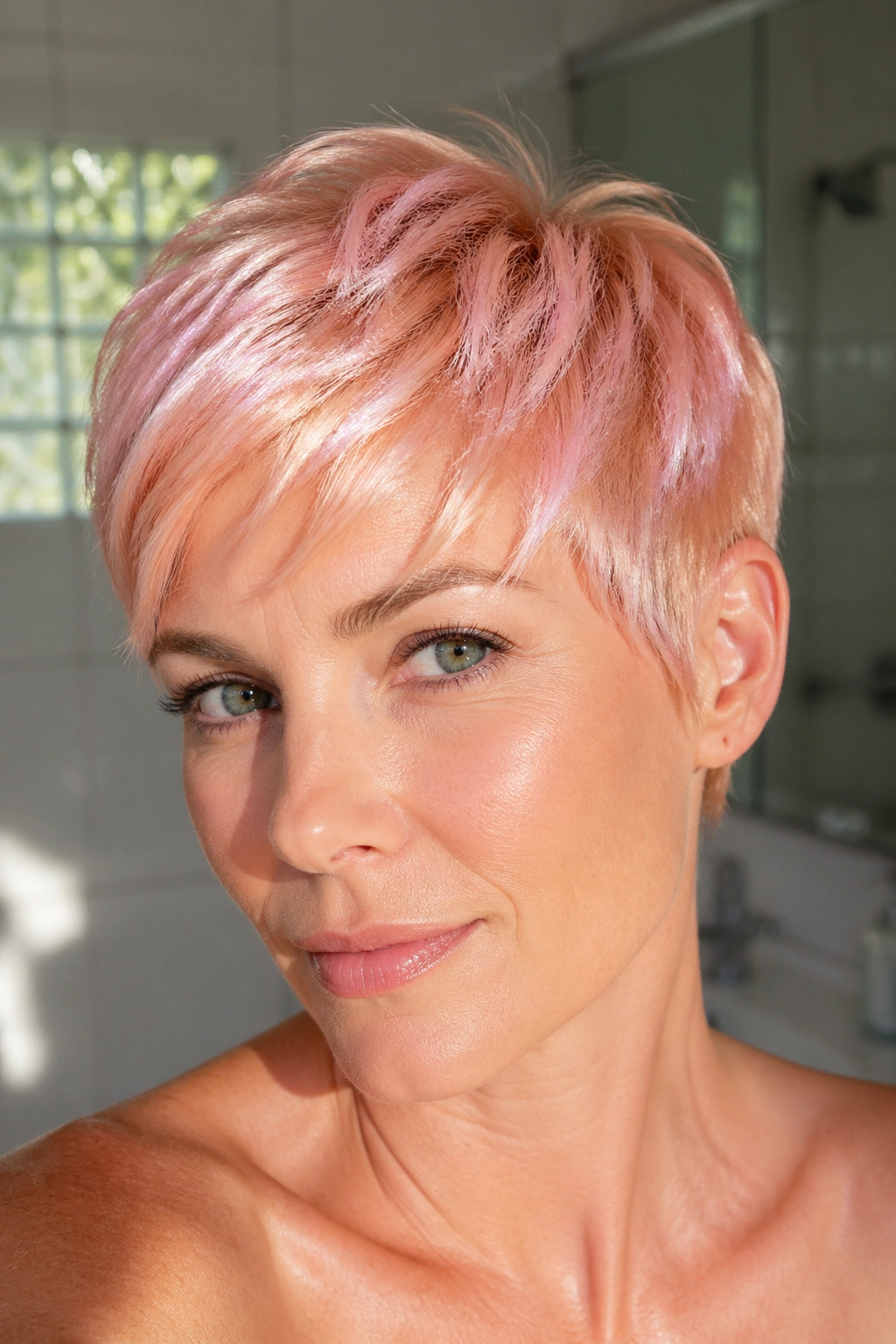
A pixie cut does not need huge color panels to make an impact. In fact, tiny shifts can look better. Frosted peach, pale rose, and a touch of champagne blonde can turn a short crop into a glossy little jewel box.
The cropped length means the reflection has nowhere to hide. Every edge and curve gets exposed. That is why the color formula has to be clean and light, not muddy. A heavy peach can look flat on short hair, while a frosted version keeps the cut crisp.
This is a nice choice if you like short hair but still want some softness. It reads playful without becoming sugary.
I’d keep styling products light here. A matte paste can kill the whole effect. Use a cream or a soft gloss finish instead, and the shimmer will stay visible longer.
16. Holographic Curls With Hidden Pastels
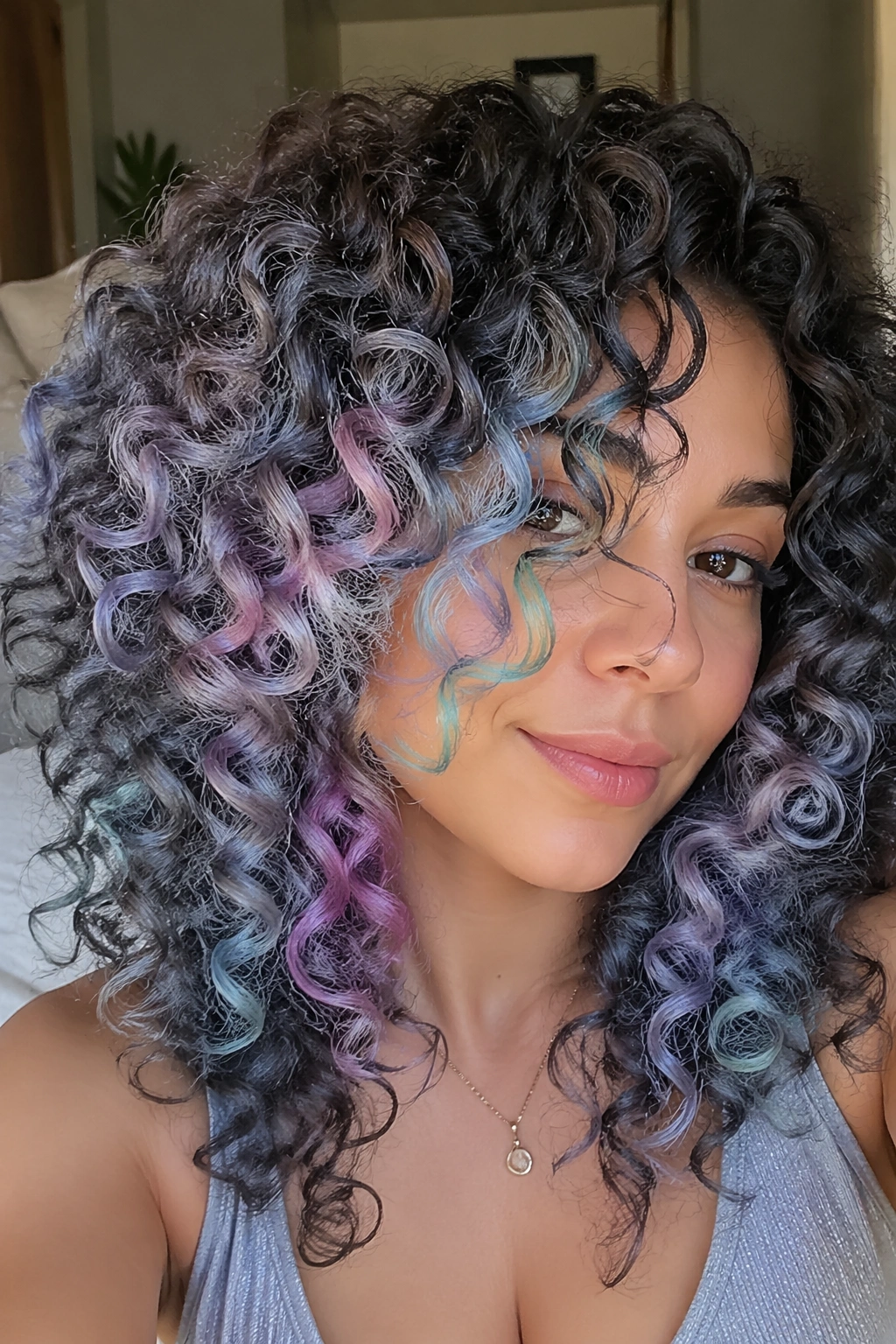
Curly hair gives you a chance to layer color in a way straight hair can’t really fake. Underneath the top layer, tuck pastel blue, lilac, and soft mint so the tones only appear when the curls separate. The style feels fuller because color is doing part of the visual work.
The best thing about hidden pastels on curls is the reveal. A twist-out, a finger-coil set, or even a dry fluff with your hands can change where the color shows up. That makes the hair feel interactive, which is half the fun.
Use a lighter pigment load than you think you need. Curls already hold visual density. If the color is too saturated, the surface can look crowded.
Quick Notes
- Works well with twist-outs, braid-outs, and wash-and-gos
- Needs moisture-friendly products that do not leave a greasy film
- Looks strongest when the outer layer stays darker or neutral
- Benefits from diffused light, which helps the hidden tones flash
17. Peach-Opal Copper Blend
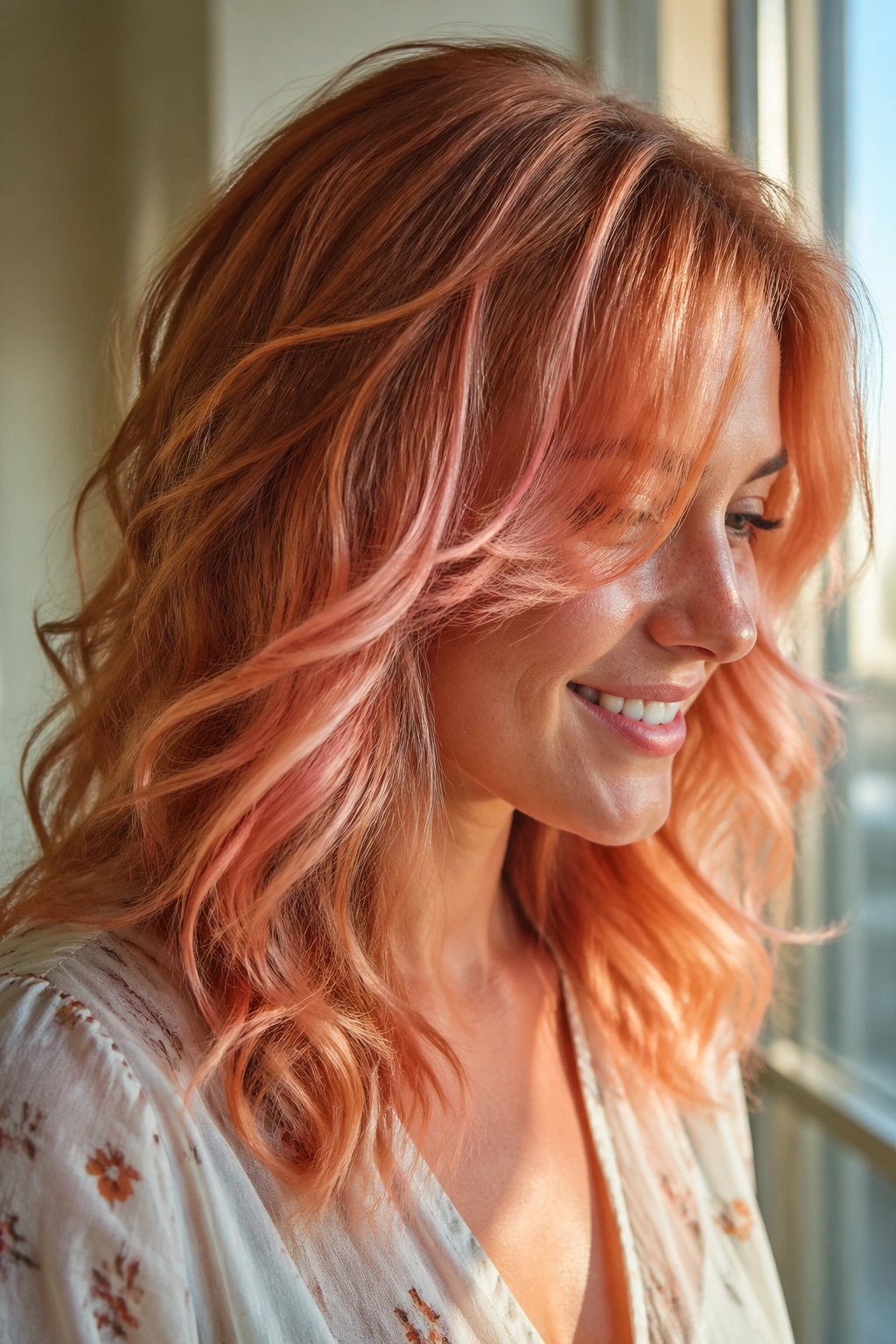
Copper hair with holographic softness is a little unexpected, and that is exactly why it stands out. Instead of fighting the warm copper base, work with it. Layer peach, apricot, rose gold, and a faint opal glaze so the warmth shifts into shine rather than losing its warmth entirely.
The result is less ice queen, more molten glass. I like that. Too many holographic styles chase cold tones and forget that warm hair can reflect just as well.
A copper base also makes the look easier to wear for people who feel washed out by silver-heavy shades. The hair still glows, but it keeps some warmth in the skin.
This one works beautifully on layered shags and soft waves because the different lengths help the peach and opal tones sit on top of each other instead of blending into one flat color.
18. Festival Rainbow Panels
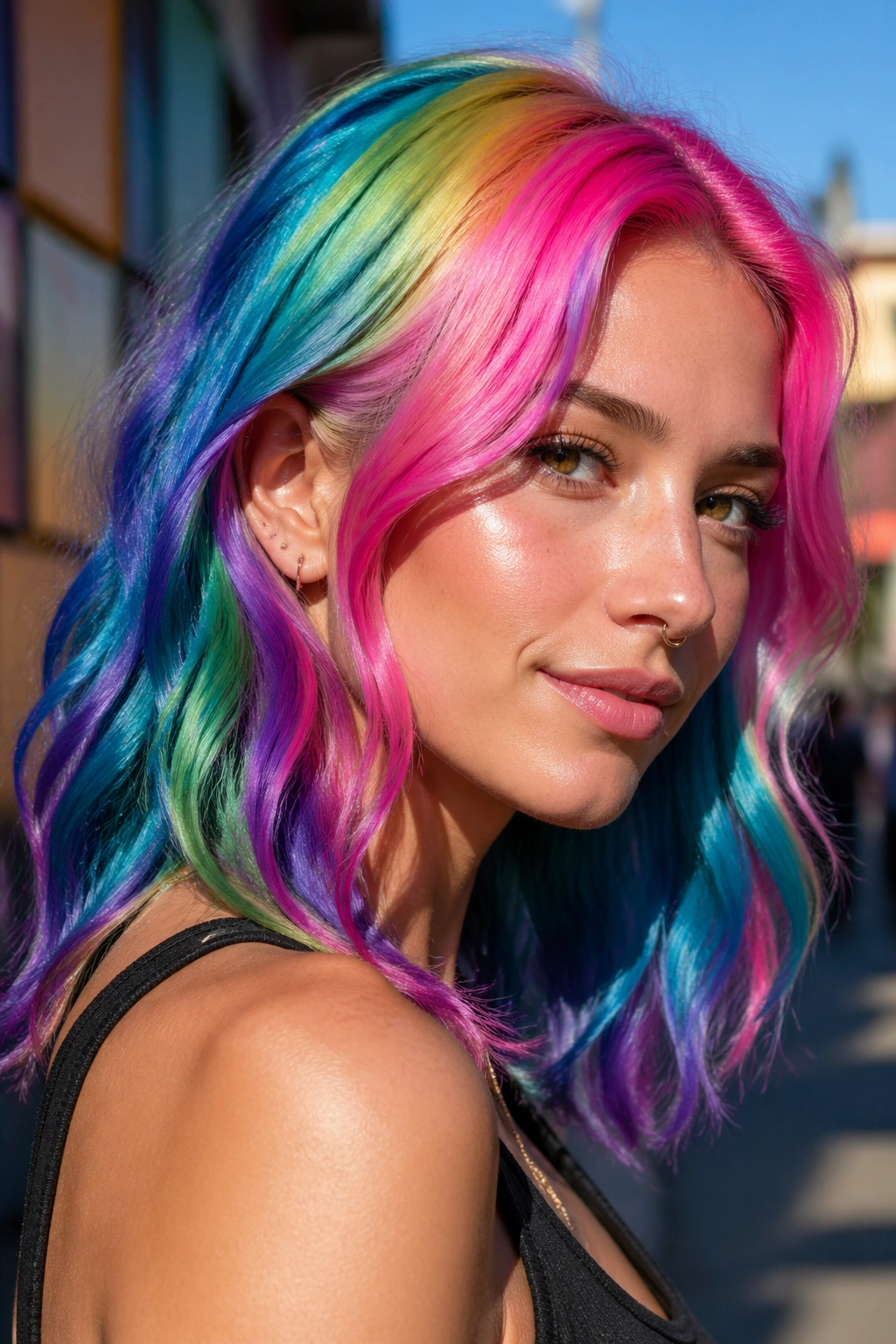
If you want to go loud, go all the way. Festival panels use distinct sections of color — pink, blue, green, purple, sometimes gold — placed as visible blocks instead of soft melts. The holographic effect comes from the way the colors sit next to each other and the shine on top of them, not from subtle blending.
This look is not shy. That is the whole point. It works best on hair that can handle clear sectioning, like an angled bob, long layers, or a thick fringe with enough density to hold the color shapes.
I would not recommend this if you want a low-maintenance style. It needs patience, good toning, and regular refreshing. But if your taste runs loud and graphic, the payoff is worth it.
Sometimes a blunt choice is the right choice. This is one of those times.
19. Smoky Rainbow Braids
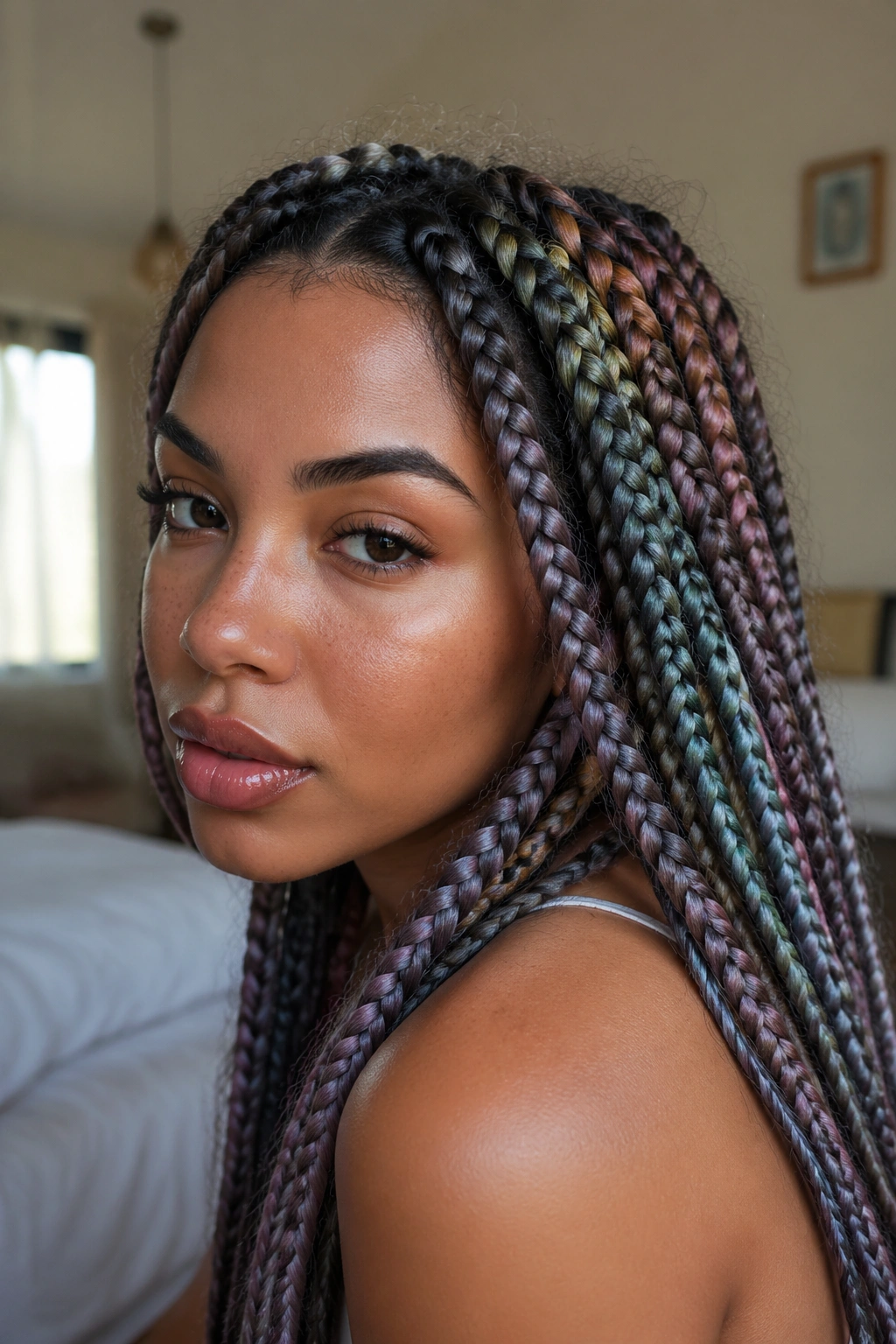
Braids make holographic color look more complex than loose hair does, because every braid becomes a little color map. Smoky rainbow braids use softened versions of red, orange, yellow, green, blue, and violet, all muted with ash or pearl so the result feels rich instead of carnival-bright.
What Makes It Different
A braid compresses color into layers. That means even medium-intensity shades can look deeper once they’re woven together. You do not need neon to make the pattern visible.
If you’re wearing box braids, knotless braids, or feed-in braids, this is especially effective because the color can move from braid to braid without needing a full head of bleach. Synthetic braiding hair can also help if your natural hair is dark and you want more control.
The safest way to keep this looking chic is to keep one neutral anchor shade in the mix. A soft gray, charcoal, or beige-blonde braid gives the eye somewhere to rest.
Braids with holographic color have a built-in edge. They feel finished, which is part of their charm.
20. Full-Head Sheer Prism
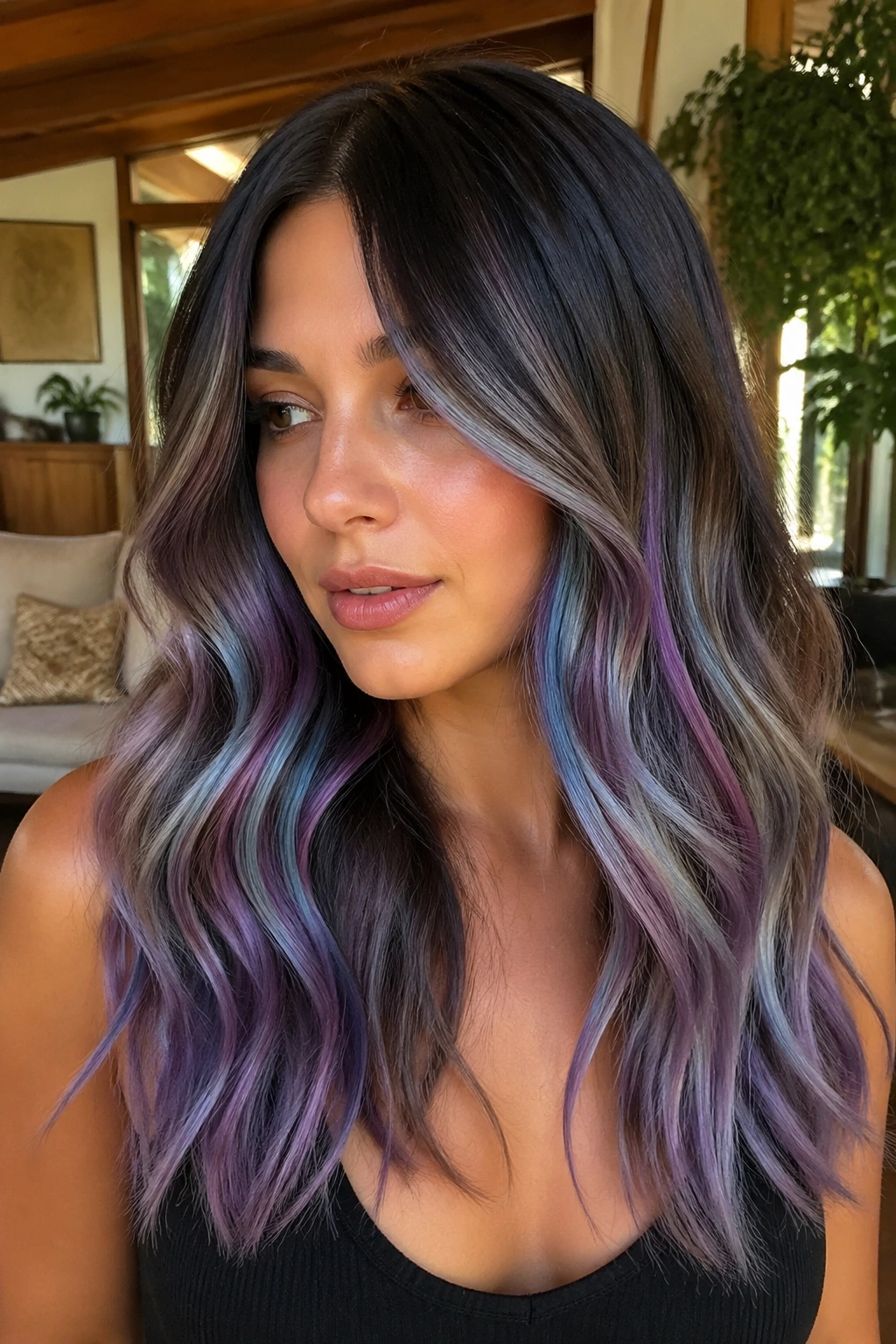
A full-head sheer prism is the boldest version in the bunch, and I only like it when the hair is lifted cleanly and toned with a light hand. The look uses translucent layers of pink, blue, lilac, mint, and silver over a pale base so the whole head shifts like a surface under glass. It is not the easiest color to maintain. It also may be the most satisfying when done well.
The danger, as always, is overload. If the pigments are too dense or the base is too yellow, the effect collapses into muddy pastel. Keep the hues airy, and the shine will carry the style.
I’d save this for hair that already has good condition and enough length to show movement. Shoulder length and longer tend to give the colors more room to play. Short hair can wear it too, but the visual effect is different — tighter, less fluid.
If you love color and don’t mind upkeep, this is the one that leans all the way into the fantasy. It does not whisper. It glows.