



Some braid styles look tidy only from far away. Stitch braids with a crisp middle part are not one of them. The center line gives the whole look its backbone, and the stitch pattern makes the braids sit in clean, deliberate rows instead of drifting loose at the roots.
That matters more than people think.
If the part is even slightly crooked, your eye goes straight to it. If it’s sharp, the whole style reads neater, flatter, and more finished without needing a pile of accessories or a dramatic braid pattern. I like that about middle-part stitch braids: they do a lot of work quietly.
The range is wider than most people expect, too. You can keep them straight-back and simple, go jumbo and bold, add curls, beads, color, layers, or a bun, and the middle part still holds the look together. The styles below all start with that same clean center seam and go in different directions from there.
1. Classic Straight-Back Stitch Braids With a Clean Middle Part
This is the version that makes people understand the appeal of stitch braids right away. The rows travel straight back from the part, the spacing stays even, and the scalp pattern looks organized without feeling stiff. It’s the braid style I’d call the safest bet if you want something neat, wearable, and easy to read from every angle.
Why the center line matters
A crisp middle part does more than split the hair in half. It gives the stitch pattern a place to anchor, which makes the braids look sharper at the root and more balanced across the head. On stretched or blown-out hair, the part tends to lie flatter and cleaner, and the braids usually sit closer to the scalp.
If you want this version to look polished, the part needs to be mapped before the first braid gets started. Once the first row is off, everything else follows that line.
- Works well when you want a low-fuss protective style.
- Looks best with even row spacing on both sides.
- Usually holds its shape well with nightly wrapping.
- Needs a tail comb and patience. A shaky part shows fast.
Best tip: ask for the part to be checked from the hairline to the crown before the braiding hair is added. That one pause saves a lot of regret later.
2. Jumbo Stitch Braids With a Sharp Middle Part
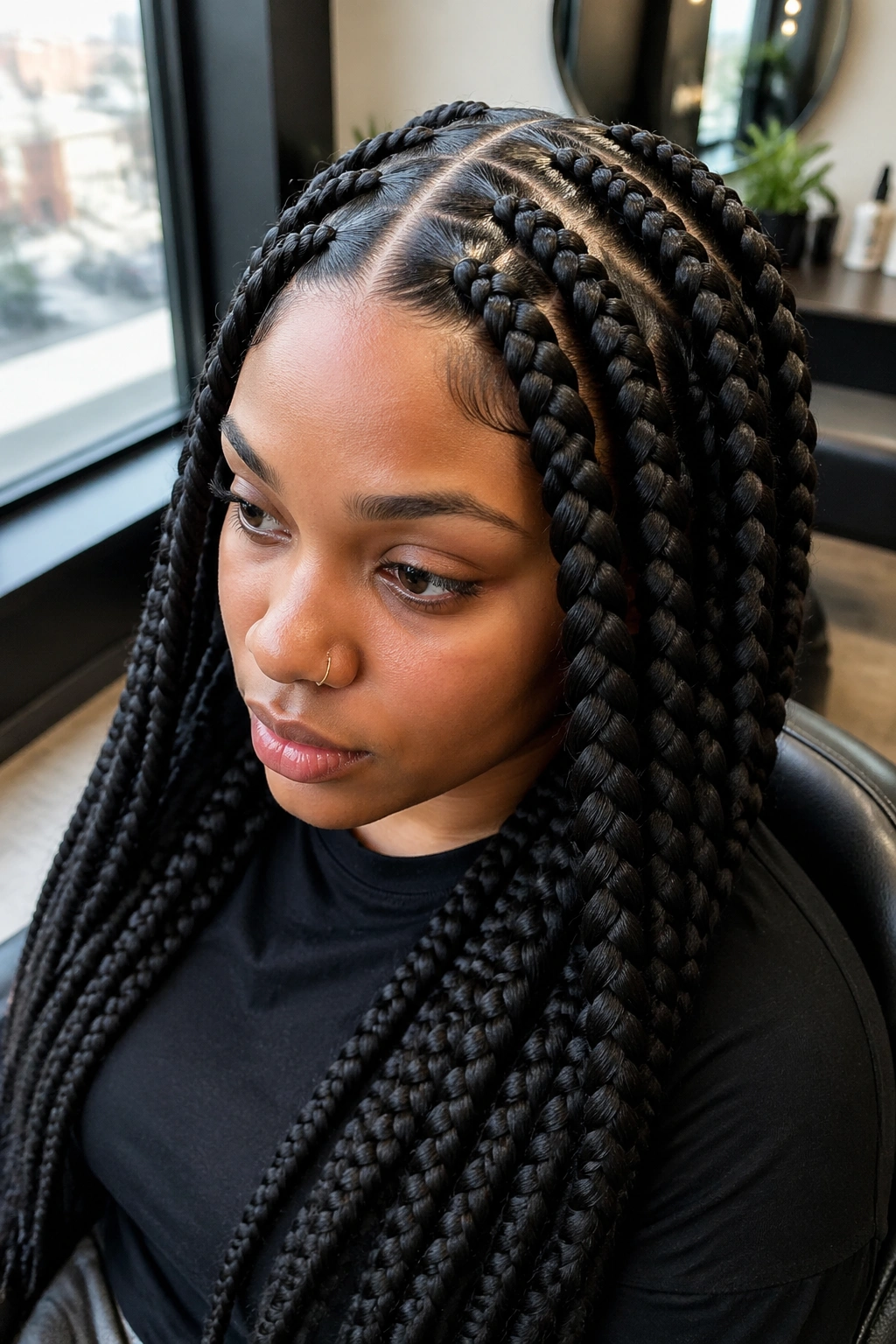
Big braids make the middle part look even cleaner. There’s less visual clutter, so the center line becomes the star and the stitch ridges along each braid read like neat little marks instead of background noise. The style feels bold without being fussy.
Jumbo braids also cut down on chair time, which is not a small thing if you have a thick head of hair or you get restless fast. They can sit heavy if they’re overloaded with extensions, though, so the braid size needs to stay proportioned to the amount of hair at the roots. Too much bulk near the scalp and the style starts pulling instead of lying flat.
I like this version on people who want the middle part to look extra precise. The larger the braid, the easier it is to see whether the part is straight. There’s nowhere for mistakes to hide.
3. Small Stitch Braids With a Pin-Straight Center Part
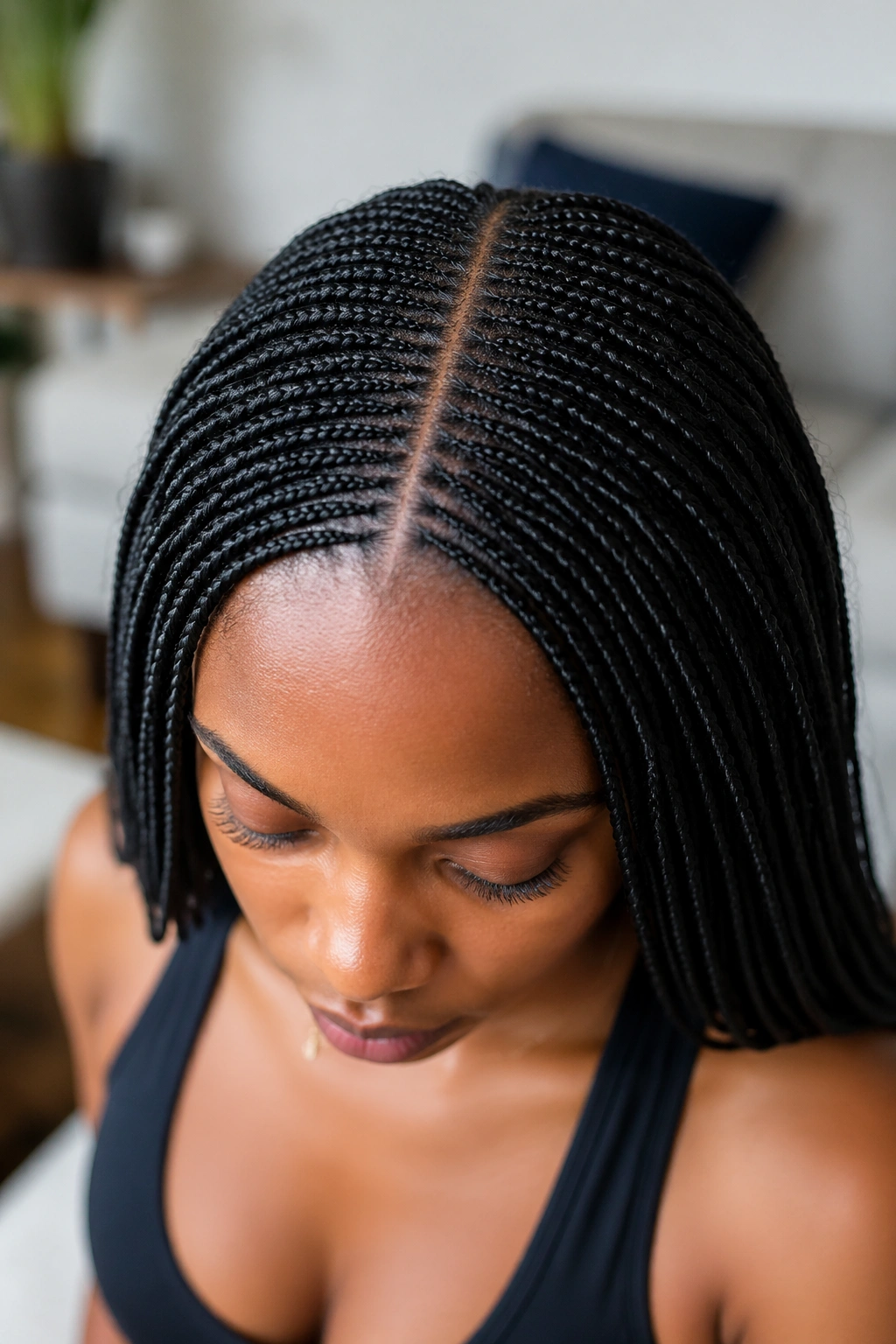
Can tiny stitch braids still feel bold? Absolutely. The smaller the braids, the more the center part starts to read like a clean line drawn across the head, and that line can be beautiful when the sectioning is tight and even. The result has a finer, more detailed look than jumbo braids, almost like the hair was woven with a comb and a ruler.
The trick is patience. Small stitch braids show every parting decision, so sloppy sectioning stands out fast. If the scalp lines are clean and the feed-ins are smooth, the style looks intentional from the front and the back.
How to wear them
- Keep them loose for a sleek, straight-down finish.
- Pull a few back with a small elastic if you want movement around the face.
- Add cuffs only to the ends if you want the part to stay the focus.
- Choose this size if you like detail more than drama.
One note: tiny braids can take longer to install, but they often give the most precise-looking part.
4. Curled-End Stitch Braids With a Crisp Middle Part
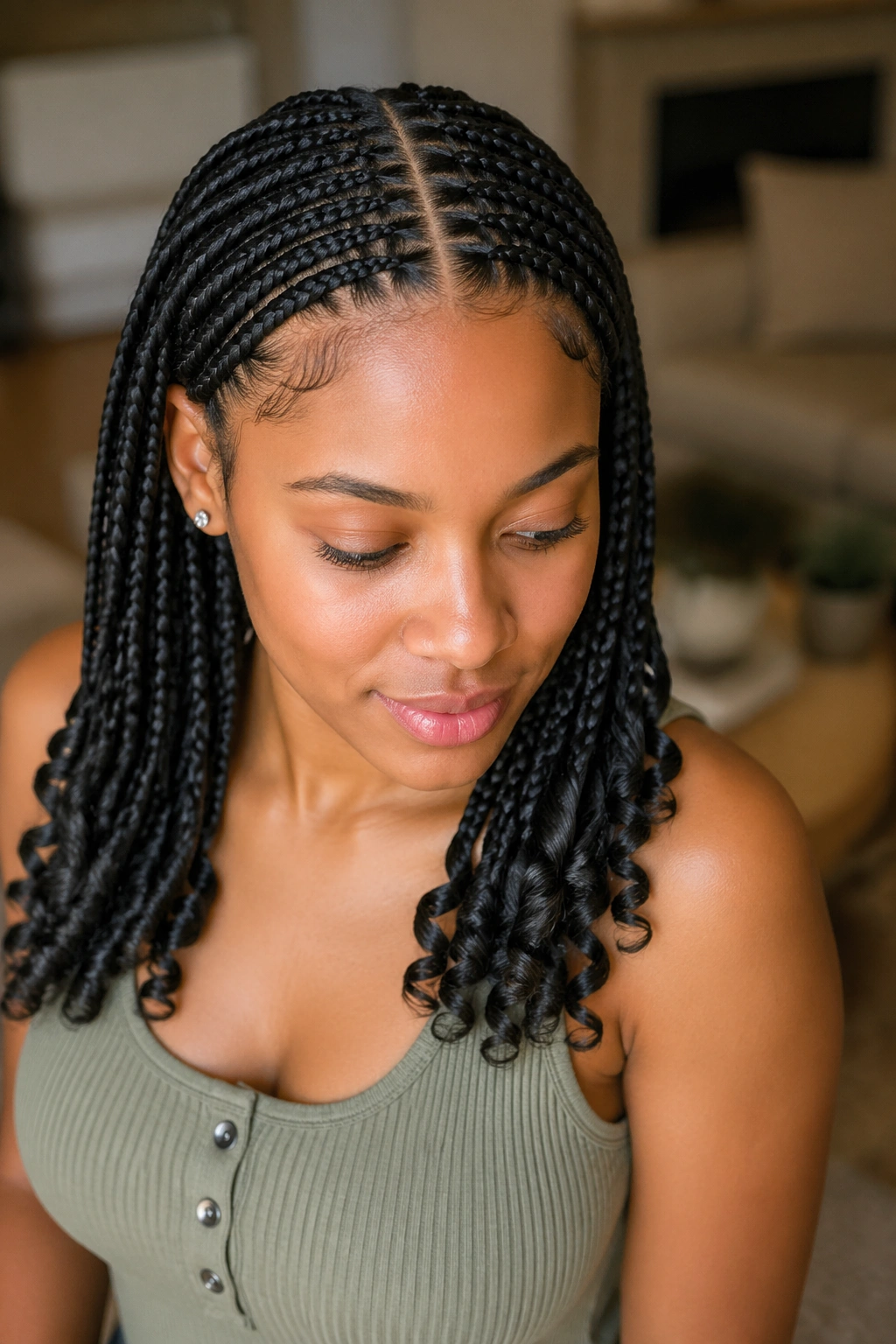
If you want the braids to look finished without stacking on heavy accessories, curled ends do the job nicely. The shape at the bottom softens the straight-back structure, and the center part keeps the whole style from drifting into sweetness or messiness. It’s a clean look with a little bounce at the end.
I’ve always thought curled ends work best when the braid length is not too short. You need enough room for the curl to form and stay visible. Hot water setting, flexi rods, or curling rods can all work, but the ends need to cool fully before you touch them.
- Curl the ends after the braids are secure.
- Let the shape cool before separating it.
- Use a light mousse, not heavy cream, on the finished ends.
- Sleep with the braids wrapped so the curl pattern survives.
A crisp middle part plus curled ends gives you structure at the scalp and softness at the shoulders. That contrast is the whole point.
5. Beaded Stitch Braids Down the Back
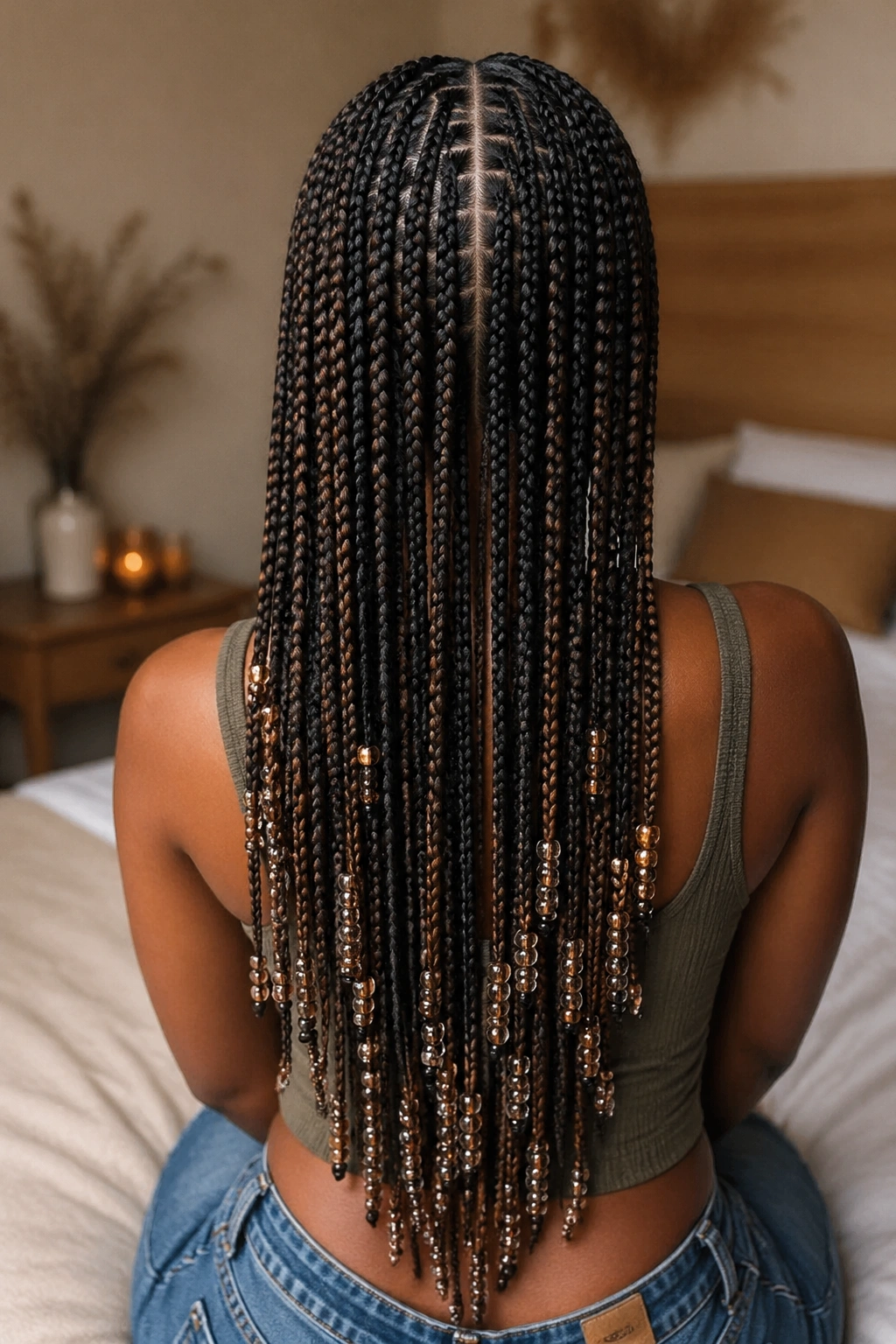
Beads change the mood fast. A middle part keeps the braids grounded, and the beads bring movement, sound, and a little bit of personality every time you turn your head. The style can feel playful, polished, or even a little regal depending on the bead color and how many you use.
What I like most is the balance. When the center part is sharp, the beads don’t make the style look busy. They frame the braids instead of fighting them. Clear beads make the ends look light, wooden beads add warmth, and metallic ones lean dressier without needing any other styling trick.
There is one catch: bead placement matters. If you load the braids too heavily near the nape, the ends can feel clunky and pull a little when you move. I usually prefer beads spaced farther down the length so the base stays neat and the ends still have swing.
The best versions sound soft when you walk. Not noisy. Just enough to remind you they’re there.
6. Waist-Length Stitch Braids That Frame the Part
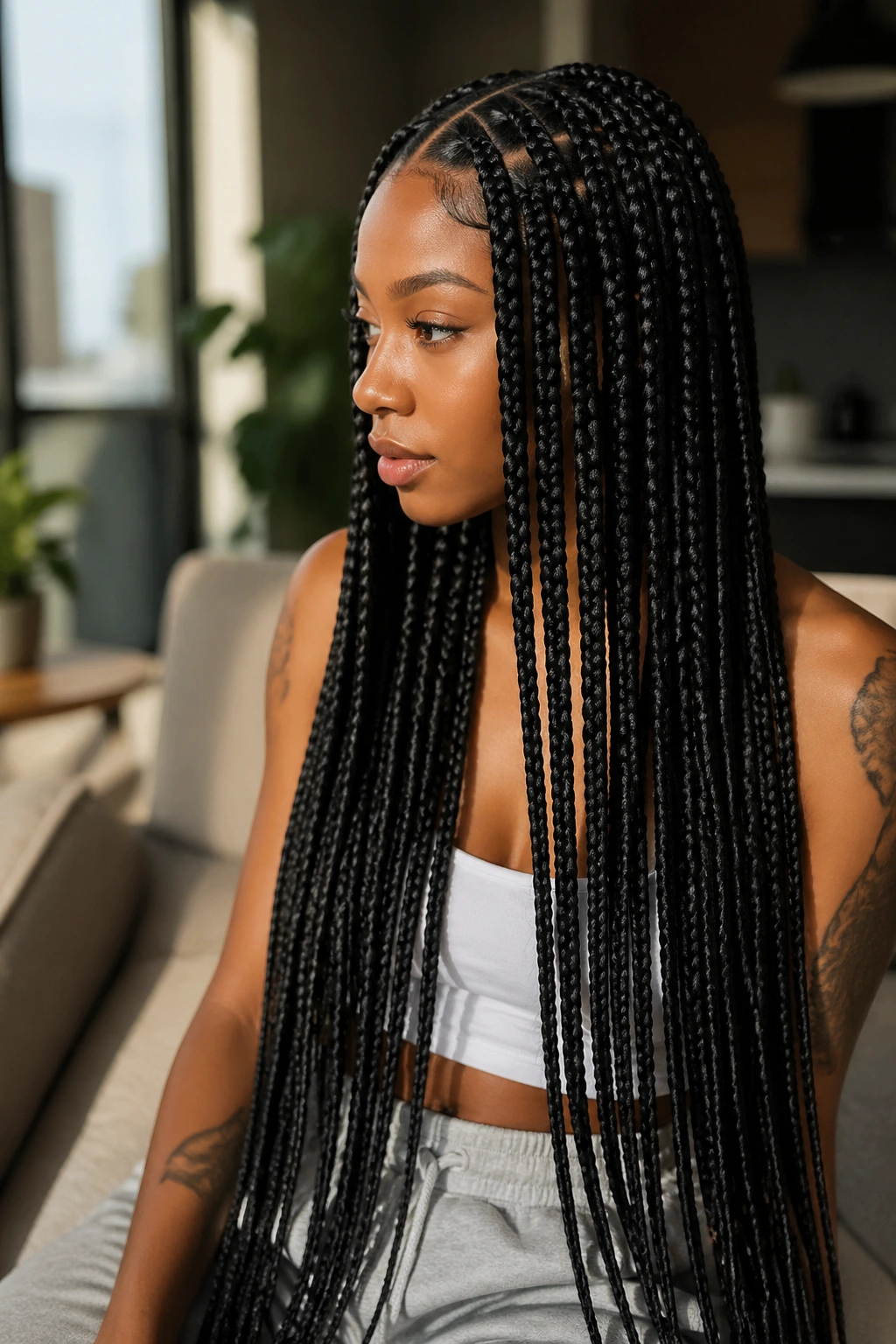
Waist-length braids do something different to a middle part. They make it feel dramatic. Shorter styles show off the sectioning; longer ones turn the part into a strong vertical line that leads the eye down the whole length of the hair. It’s a clean, striking effect, and it works especially well when the extensions are lightweight.
This style is not for someone who wants zero upkeep. Longer braids need better wrapping at night, a little more care at the ends, and a bit of discipline when you’re tossing them over your shoulders all day. Still, the payoff is real. The braids move beautifully and the center part stays visible longer than you’d expect because the length gives it room to breathe.
If your hair is fine or you’re sensitive to tension, ask for fewer but slightly fuller braids rather than a pack of heavy ones. The style should feel secure, not like it’s winning a tug-of-war with your scalp.
7. Half-Up, Half-Down Stitch Braids With a Neat Middle Part
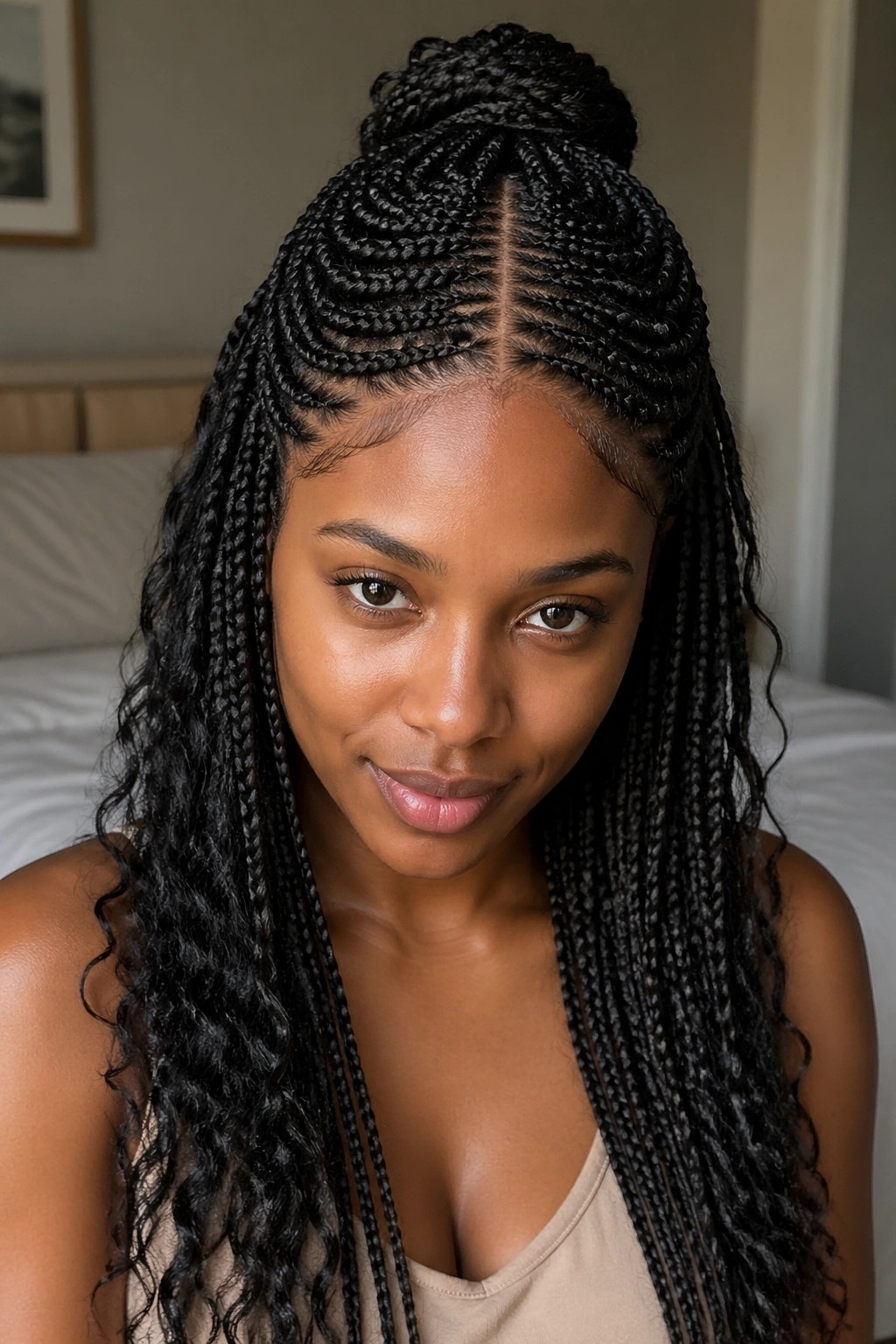
The half-up, half-down version keeps the center part on display while adding a little lift around the crown. That tiny bit of height makes the face look more open, and the loose length below keeps the style from feeling too strict. It’s one of those braid looks that works for errands, dinner, and everything in between.
Why the center line flatters this style
The middle part gives the half-up shape symmetry. Without it, the top section can look lopsided fast. With it, the lifted braids feel balanced, and the loose braids underneath fall in a way that looks planned instead of improvised.
- Use a small elastic or braid a small top section into a knot.
- Keep the lift just behind the hairline so the part stays visible.
- Leave two front braids loose if you want softness around the face.
- Wrap the base at night if you want the lifted section to stay smooth.
My favorite detail: this style looks best when the top half is sleek and the bottom half is left alone. Too much fuss and it loses the clean middle-part effect.
8. Low Braided Bun With a Straight Center Part
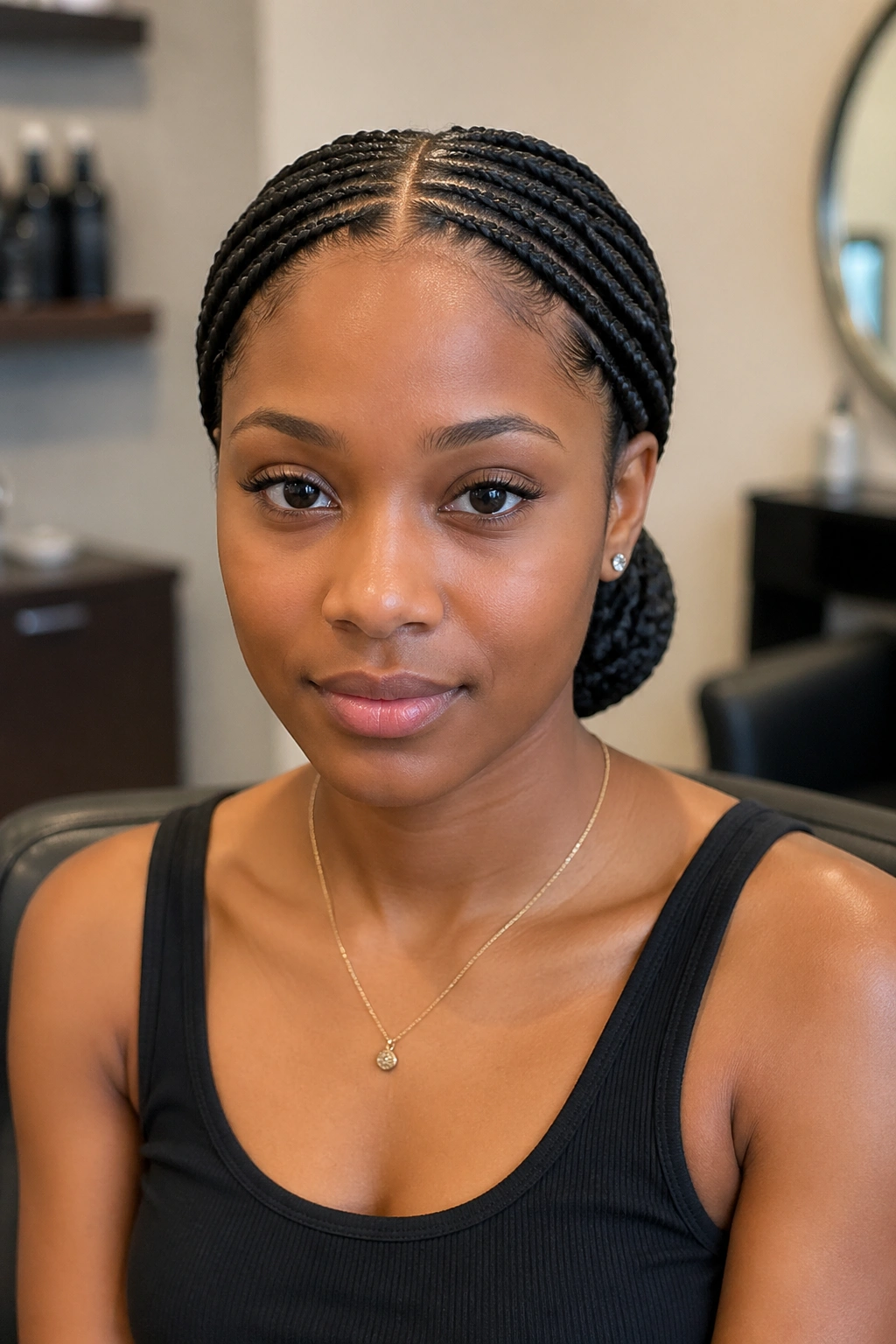
A low braided bun makes the middle part look almost architectural. The front stays sharp, the sides stay neat, and everything gathers into one compact shape at the nape. It’s a strong look. Quiet, but strong.
This is the style I’d reach for when I want braids to feel polished without hanging everywhere. It keeps the neck open, works under collars, and stays out of the way when you need hair off your face. The bun can be tight and smooth or a little fuller, depending on how much braid length you have to work with.
The important part is tension control. If the bun is yanked too hard, the style stops feeling elegant and starts feeling irritating. Use mousse on the surface, smooth the edges with a soft brush, and let the braid rows do the visual work. You do not need to drown the hairline in gel to make this look clean.
9. Zig-Zag Side Details With a Crisp Middle Part
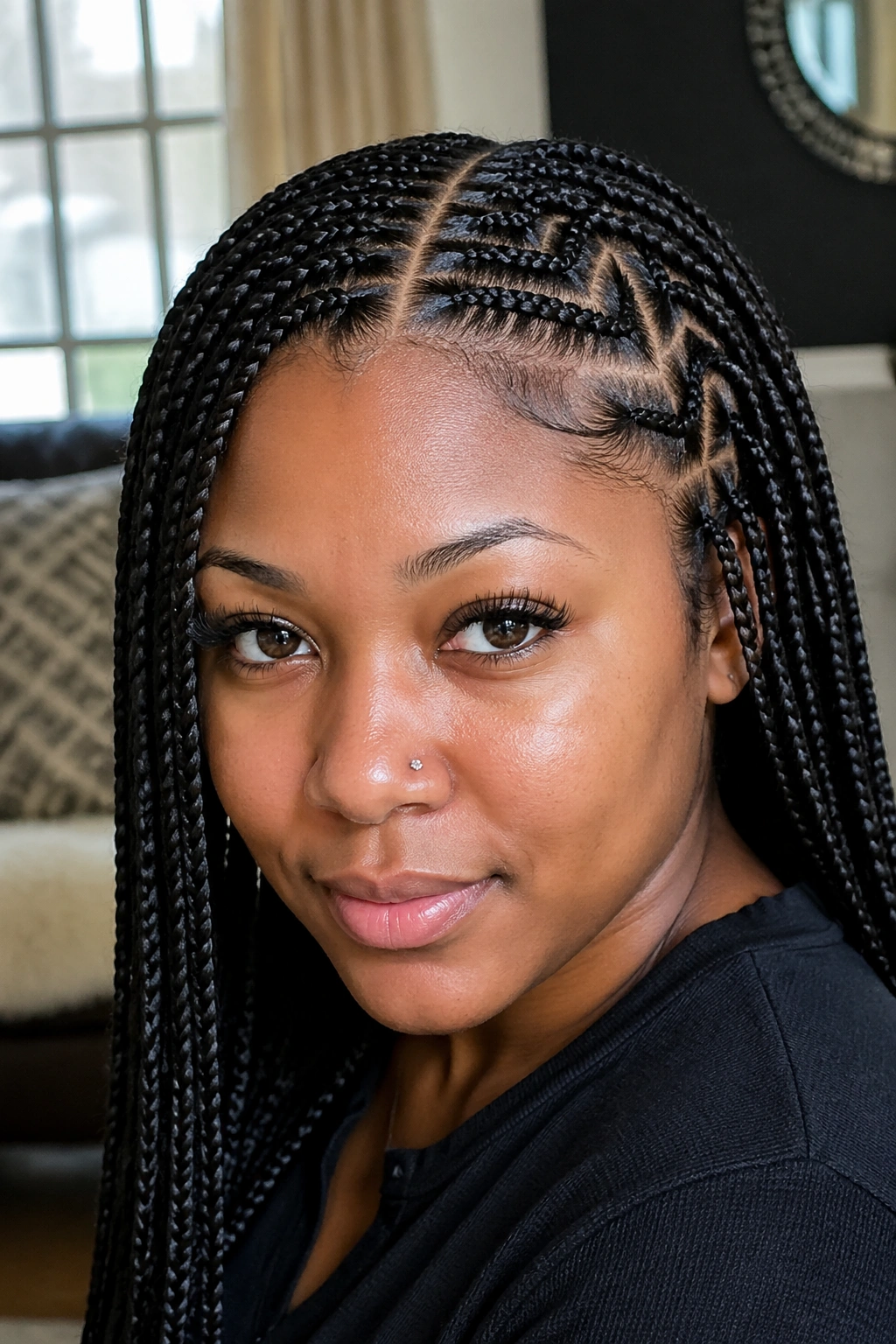
Does a crisp middle part have to be plain? Not at all. Zig-zag accents on the sides add motion near the scalp while the center line stays straight and clean. That contrast is what makes the style interesting. Your eye sees order in the middle and a little attitude at the edges.
The best versions keep the zig-zag subtle. If the side patterns get too deep or too crowded, the middle part loses its power and the whole thing starts to feel busy. A small amount of edge patterning goes a long way here. One or two clean zig-zag rows can be enough.
How to keep it from looking busy
- Keep the middle part the deepest, straightest line in the style.
- Use the zig-zag on the outer rows, not everywhere.
- Let the braid size stay consistent so the pattern feels controlled.
- Avoid piling on extra accessories at the roots.
This style suits someone who wants the neatness of stitch braids but doesn’t want to look too serious. There’s personality in it. Just enough.
10. Boho Stitch Braids With Loose Curls Around the Length
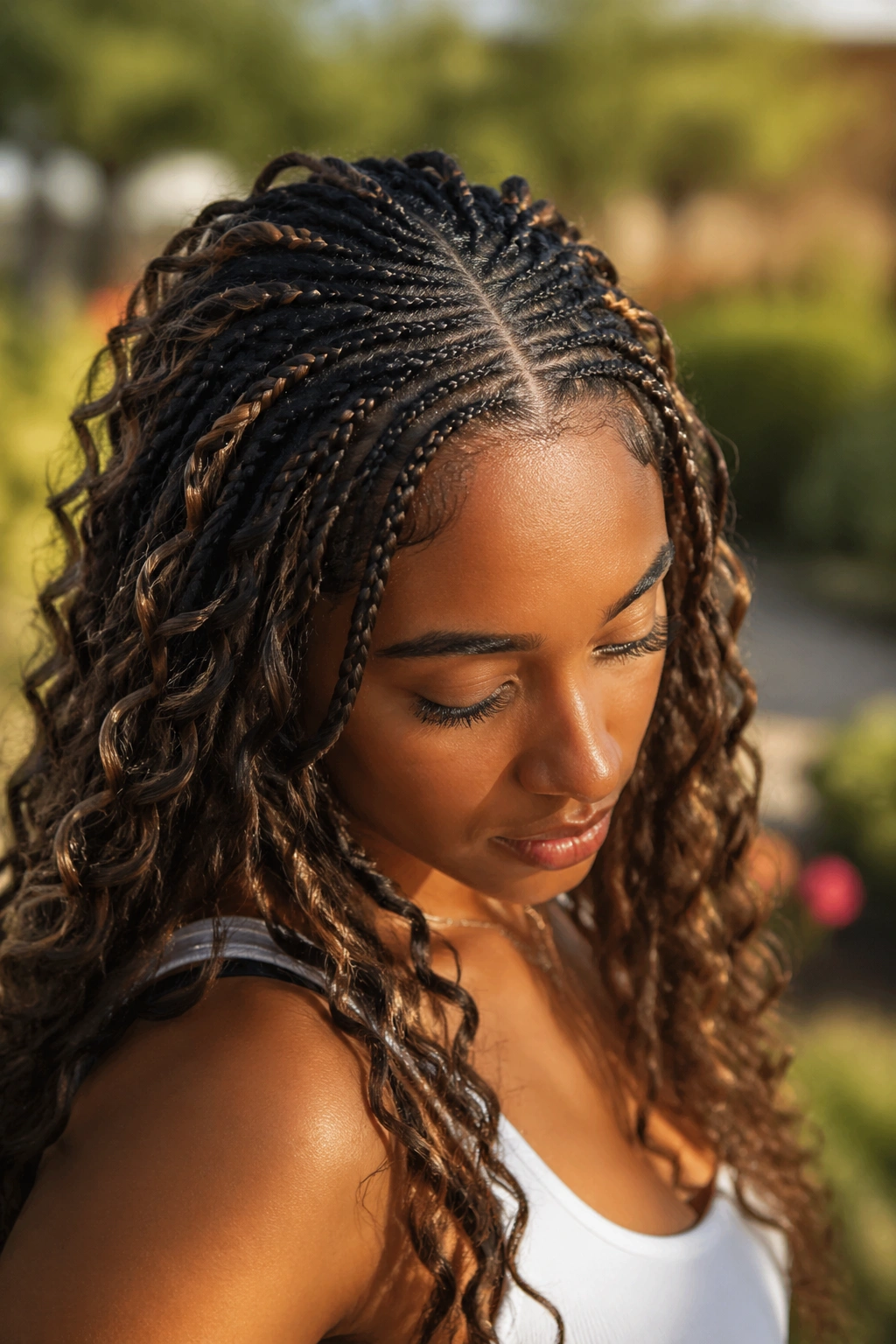
Boho stitch braids are for people who like movement. The middle part gives the look structure, and the loose curls woven into the length keep it from feeling too sealed off. It’s softer, a little airier, and more relaxed than a plain straight-back set.
I think the balance matters a lot here. If the curly pieces take over, the center part can disappear. If there are too few, the style loses that easy, lived-in feel. The sweet spot is a braid pattern that still looks neat at the scalp with curls that fall in controlled pieces rather than all over the place.
- Place most of the loose curls toward the lower half of the braids.
- Keep the front curls soft so they don’t crowd the part.
- Use light mousse to refresh the texture instead of soaking the hair.
- Choose this style if you want a softer finish without losing braid structure.
The middle part is what keeps this version from looking wild. It gives the softness a frame.
11. Colored Stitch Braids That Make the Center Part Stand Out
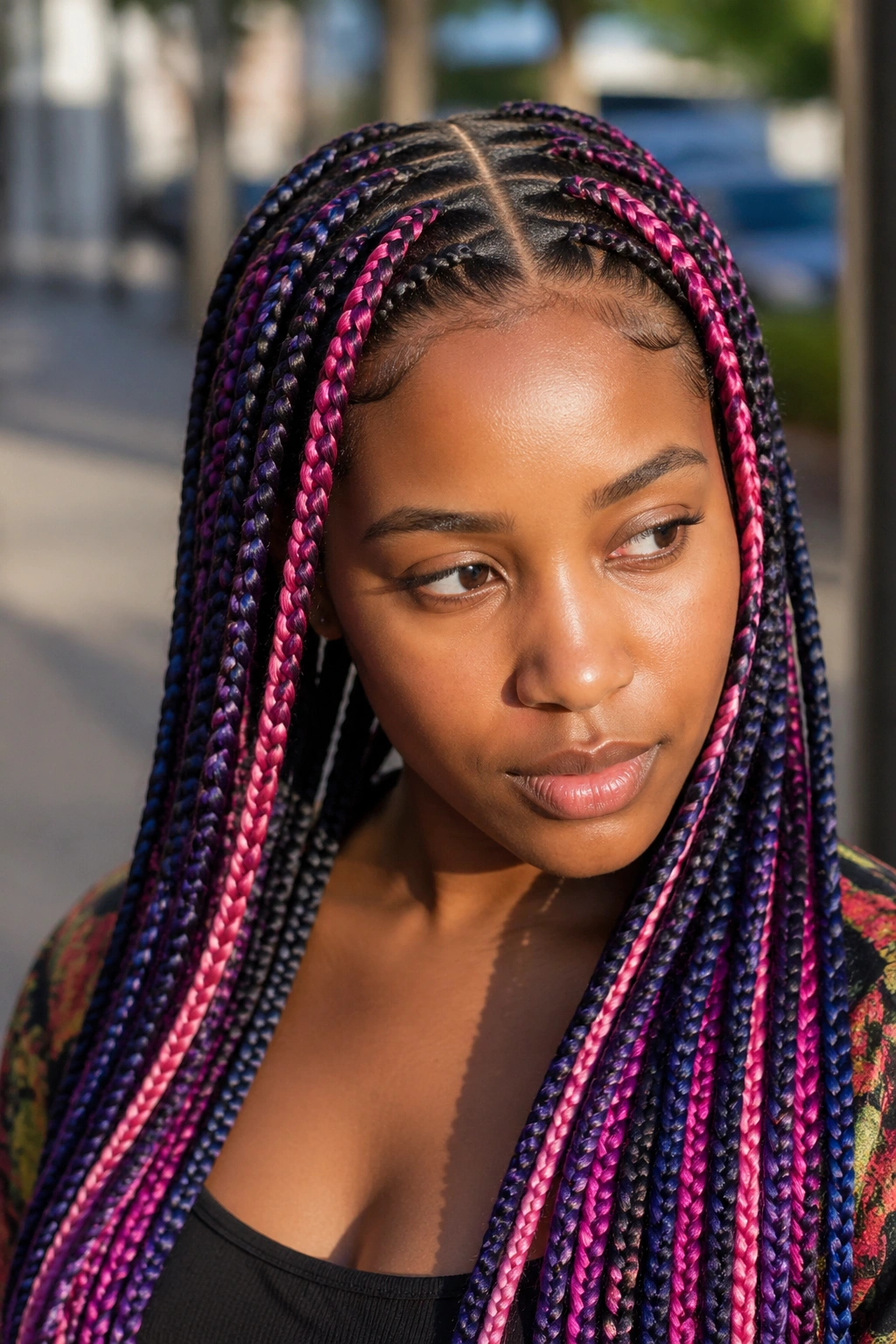
Color changes everything, but a crisp middle part keeps the look grounded. Bright blonde, deep burgundy, copper, honey brown, even a cool ash tone — each one acts a little differently, but the clean center seam gives the color a place to land. Without that line, bold braid color can start looking scattered. With it, the whole style feels organized.
I like color most when the braids are simple enough to let the shade do the talking. If the braid pattern is already heavy and the color is loud, the style can feel crowded. A sharp middle part solves that by giving the eye a resting point right at the front of the head.
One shade close to your natural tone and one brighter tone mixed together can be enough if you want contrast without going full neon. And if you do want a big color shift, keep the part as clean as possible. It makes the style look intentional instead of accidental.
A good part is the frame. Color is the painting.
12. Two-Layer Stitch Braids With a Clean Center Divide
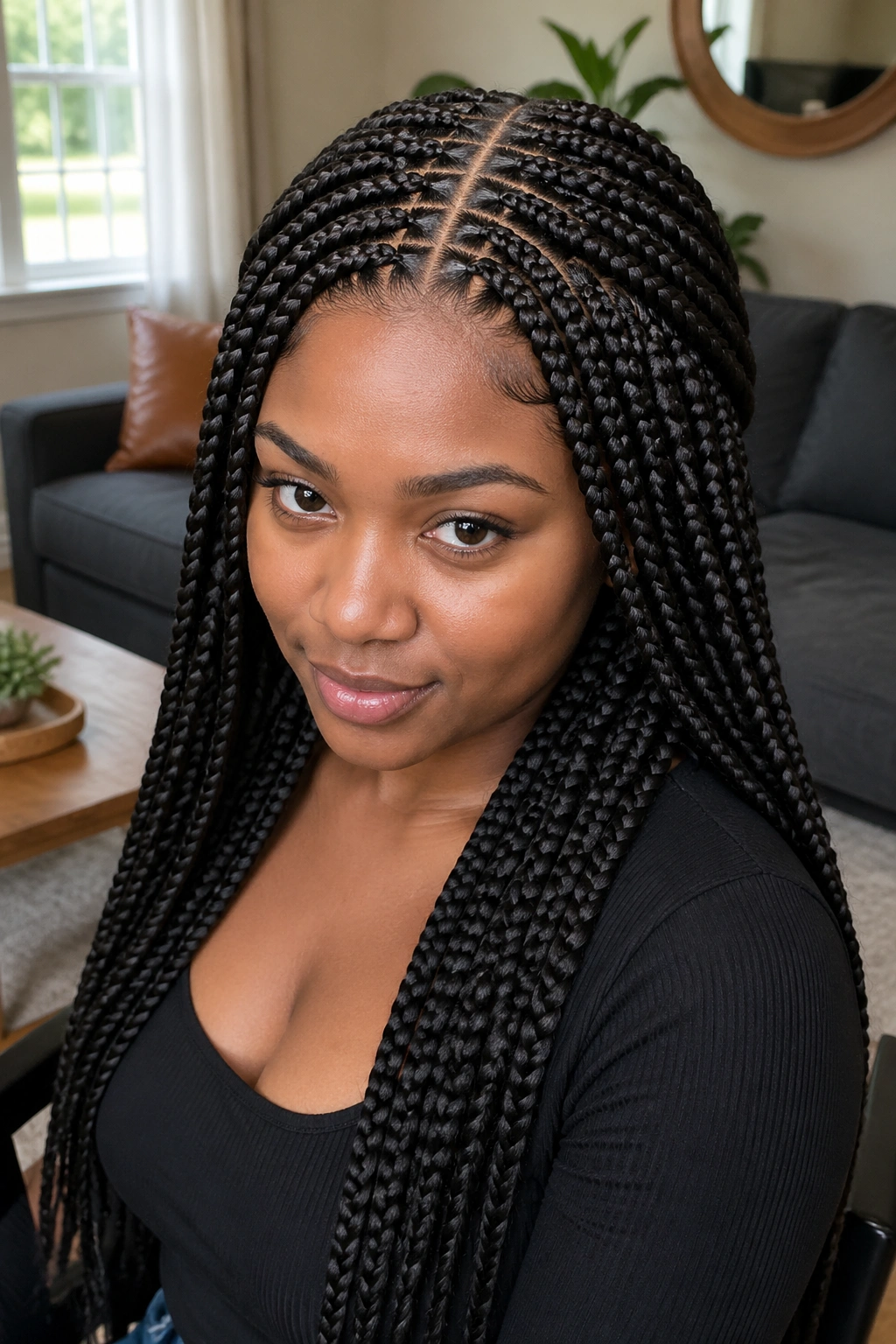
Unlike a single flat row of braids, two-layer stitch braids create depth right away. The top layer sits closer to the crown, while the lower layer gives the style extra bulk and movement. The center part ties both layers together so the whole look stays readable instead of turning into a tangle of sections.
This is one of my favorite options for medium-density hair because it gives the illusion of fullness without needing every braid to be oversized. The layers create shape. The part keeps the shape honest.
What makes it different
The top layer usually has shorter braids or smaller feed-ins, which lets the lower layer hang more freely. That difference in length is what gives the style dimension, and it also makes the braids swing more naturally when you turn your head. If both layers are the same length, the effect disappears.
Best suited for someone who wants movement and a bit of drama without going full waist-length. Keep the rows on each side even, and the middle part will do the heavy lifting.
13. Triangle-Part Stitch Braids With a Razor-Sharp Middle Part
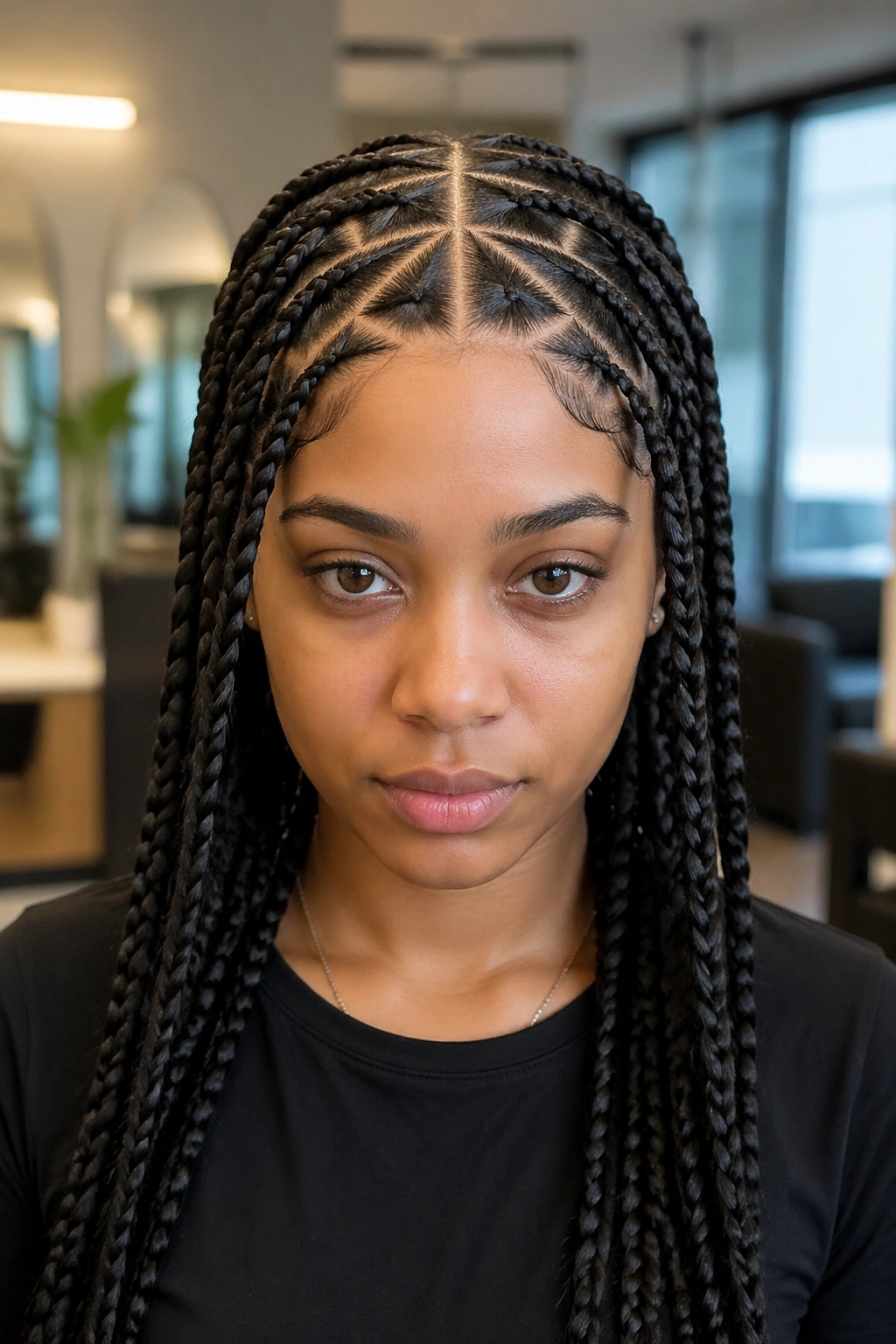
Triangle parts add geometry without fighting the center line. The middle part stays straight from front to crown, and the sections on each side break into clean little triangles that give the scalp design some personality. It’s a small detail, but it changes the feel of the whole style.
Why triangle sections change the mood
Triangle parting softens the look of straight rows because the sections angle outward instead of sitting in neat squares. The result feels a little more custom, a little less standard. It still reads as stitch braids first. The parting just has more character.
- Triangle sections work best when the lines are narrow and even.
- Keep the middle part wider than the side accents.
- Use this pattern if you want the scalp design to be visible from the front.
- Don’t overdo the section size or the braid pattern will get choppy.
A lot of people think the part has to be the only detail. It doesn’t. It just has to stay the clearest one.
14. High Ponytail Stitch Braids With a Center Part
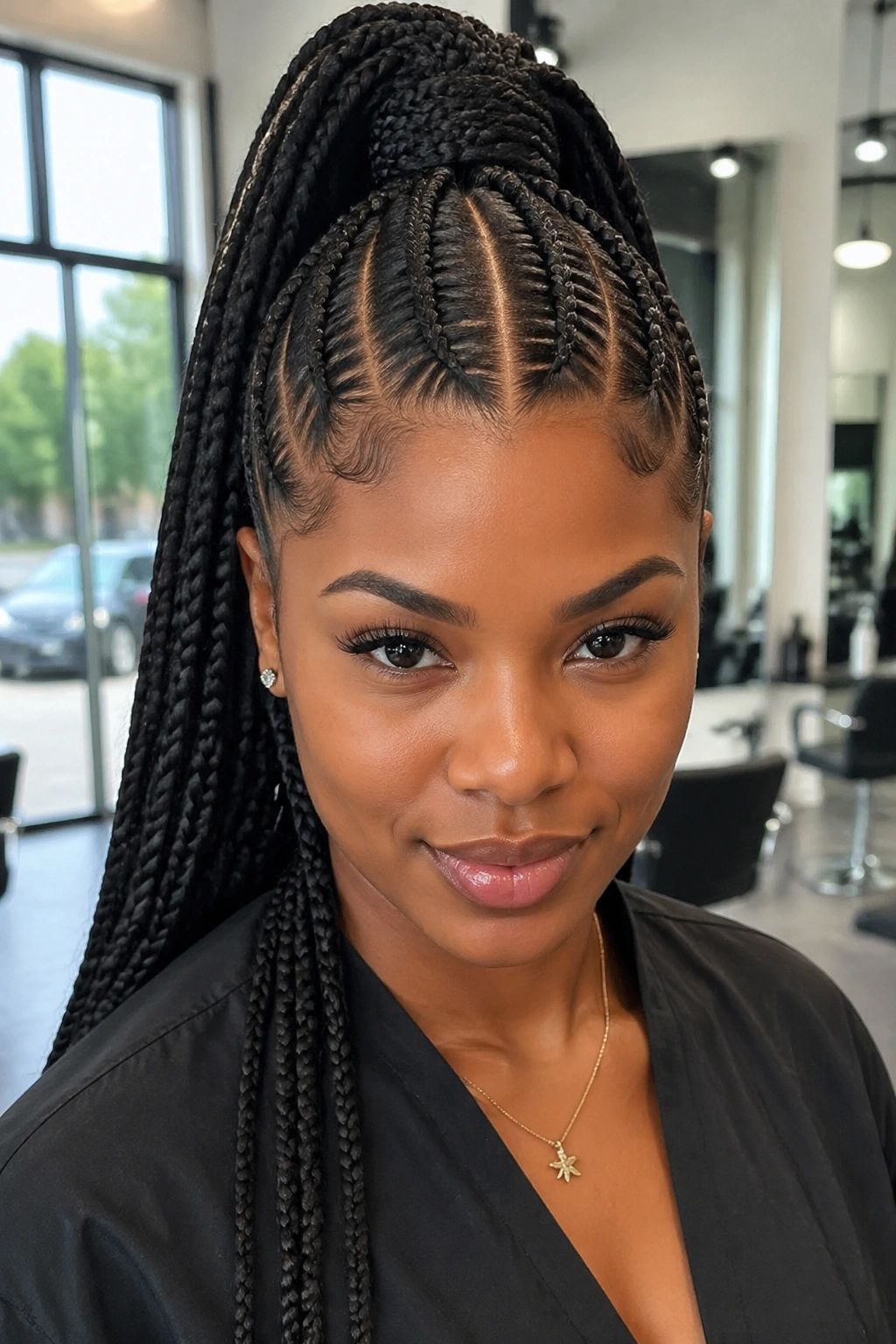
A high ponytail makes the middle part look athletic and polished at the same time. The front stays smooth, the crown lifts, and the braids are pulled into a position that shows off both the part and the braid rows. It’s neat, practical, and a little bit showy in the best way.
The main thing to watch is tension. High ponytails can pull at the roots if they’re anchored too tightly, especially around the front hairline. The style should feel secure, not tight enough to make you think about it all day. A wrapped ponytail base helps the finish look cleaner, and a small amount of mousse on the top keeps flyaways from sticking up.
This is one of those styles that works well when you want your braids out of the way but still visible. The middle part stops the ponytail from looking like an afterthought. It looks designed.
15. Shoulder-Length Stitch Braids That Keep the Part in Focus
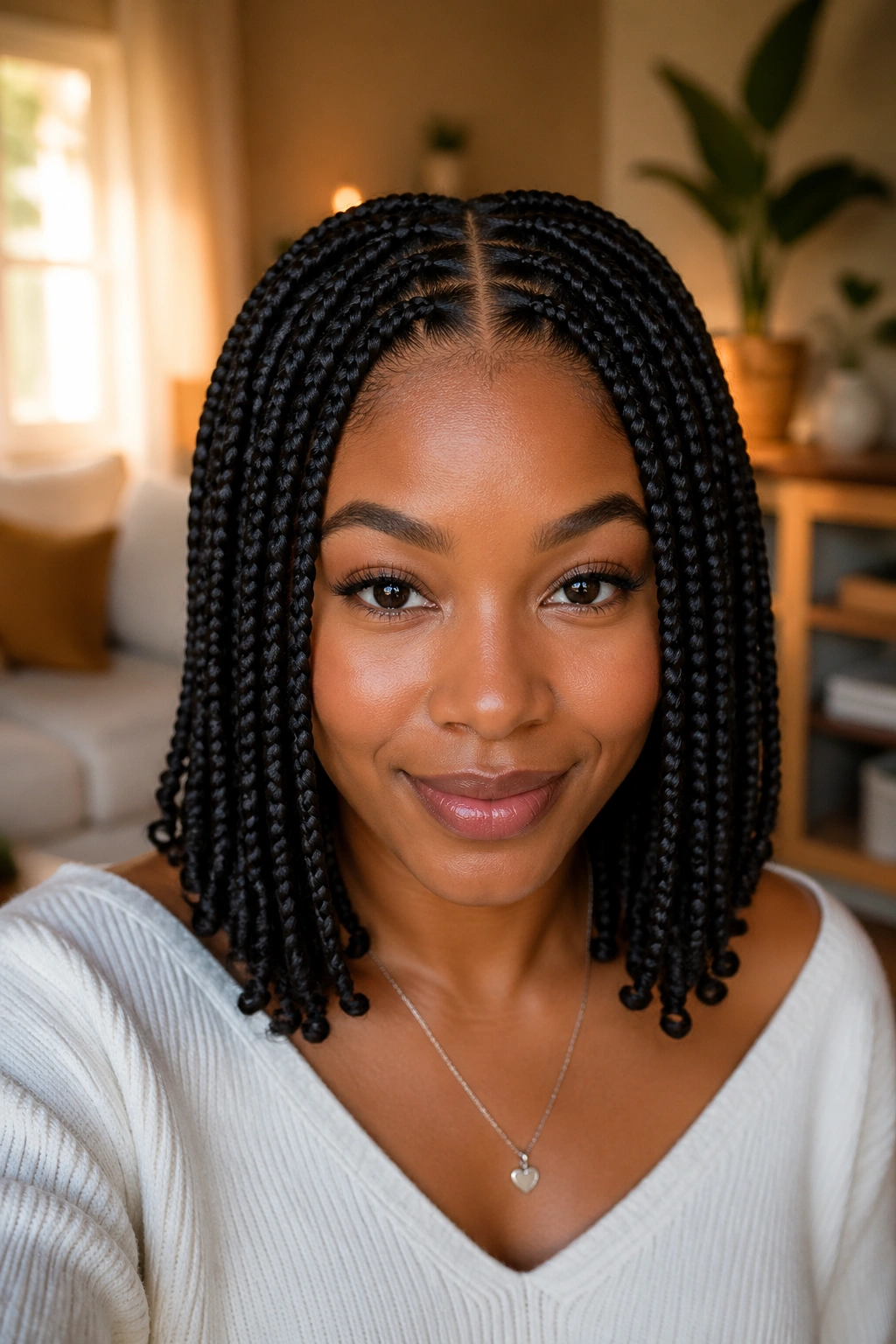
Can shorter braids still feel polished? Definitely. Shoulder-length stitch braids are lighter, easier to sleep in, and much less likely to get caught on your coat, bag strap, or steering wheel. The middle part stands out because the length does not steal the attention.
This length is especially useful if you like neatness but do not want the weight of longer braids. It also makes the style easier to refresh in the morning. A little wrap, a little mousse, and you’re done faster than with waist-length hair.
How to style the shorter length
- Tuck one side behind the ear for a quick shape change.
- Add one cuff near the end if you want a small detail.
- Pull the front two braids back for a half-up feel.
- Leave the ends blunt if you want a sharper finish.
Shorter braids can feel underappreciated. They shouldn’t. They make the middle part look crisp in a way longer styles sometimes can’t.
16. Micro Stitch Braids With a Fine Center Part
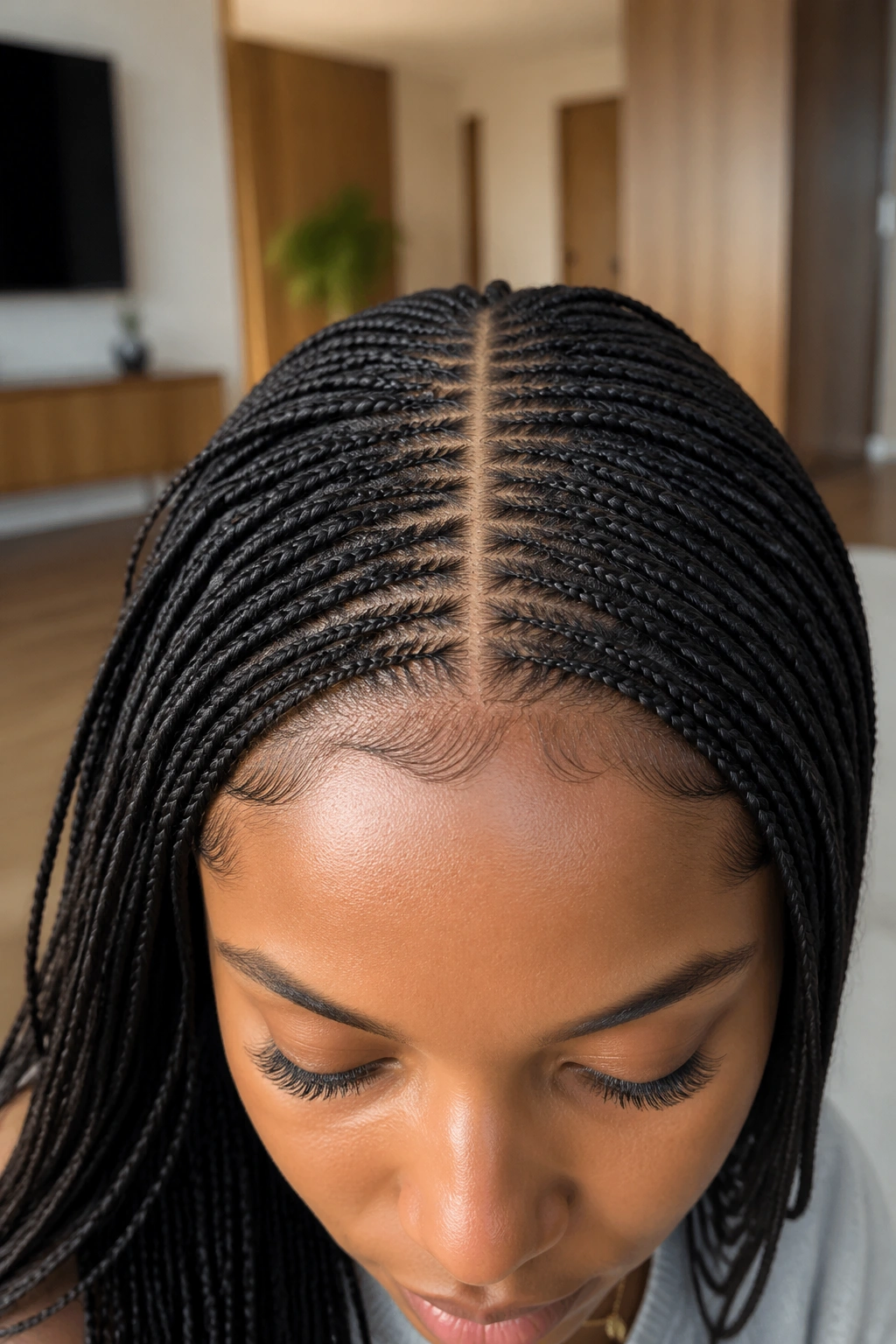
Micro stitch braids are the detail-lover’s version of this style. There are more rows, more sectioning, and a whole lot more patience involved, which means the part and the braid pattern have to be clean. The effect is dense and sleek, almost like a woven curtain laid flat around a sharp center seam.
This style works best when you want fullness without bulky braids. The smaller sections make the scalp pattern look precise from the front, and the middle part becomes almost graphic in how straight it looks. The trade-off is time. You sit longer, and your braider has to keep the sectioning consistent all the way through.
- Good choice if you like fine detail over big shape.
- Best when the hair is fully detangled and stretched first.
- Easier to keep neat if you wear a wrap every night.
- Not the fastest option, but the finish can be worth it.
Tiny braids can look delicate from a distance and very exact up close. That’s the appeal.
17. Gold Cuffs and Rings on Stitch Braids With a Straight Part
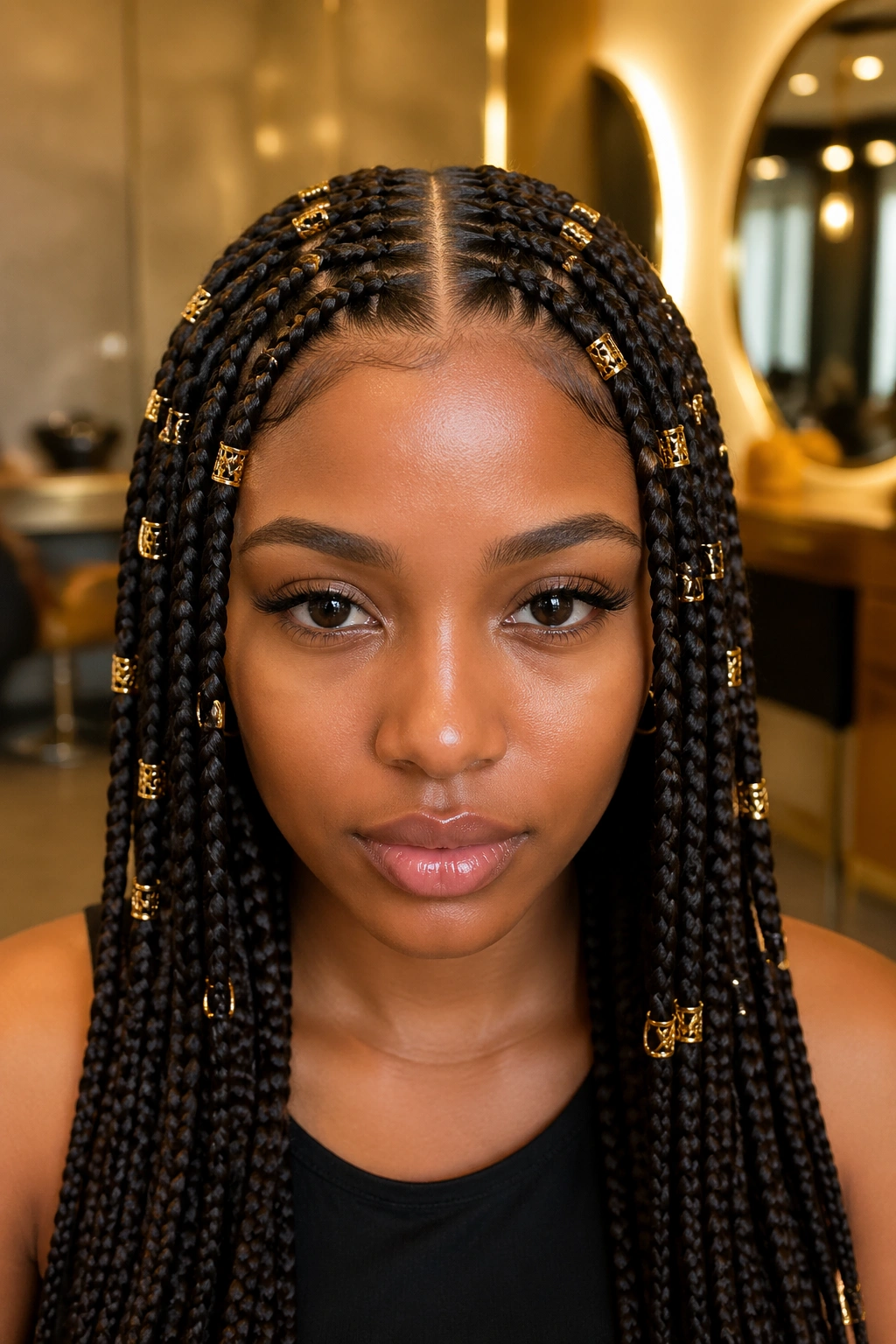
Gold cuffs change the texture of the whole look without messing up the part. A crisp middle part gives the style its clean structure, and the cuffs add little flashes of metal along the braids. Done well, it feels balanced and sharp. Done badly, it turns into clutter.
Placement matters a lot. I’d keep the cuffs mostly toward the lower half of the braids so the front and crown stay clean. The center part should still be the first thing you notice when you look at the style head-on. If the accessories start crowding the roots, the part loses its impact.
A mix of cuff sizes can work, but I usually prefer repeating one or two shapes instead of piling on ten different pieces. A few rings on both sides of the head feel more deliberate than a random scatter. Tiny detail, big difference.
Metal taps softly when you move. That little sound is part of the charm.
18. Crisscross Side Feed-Ins With a Clean Middle Part
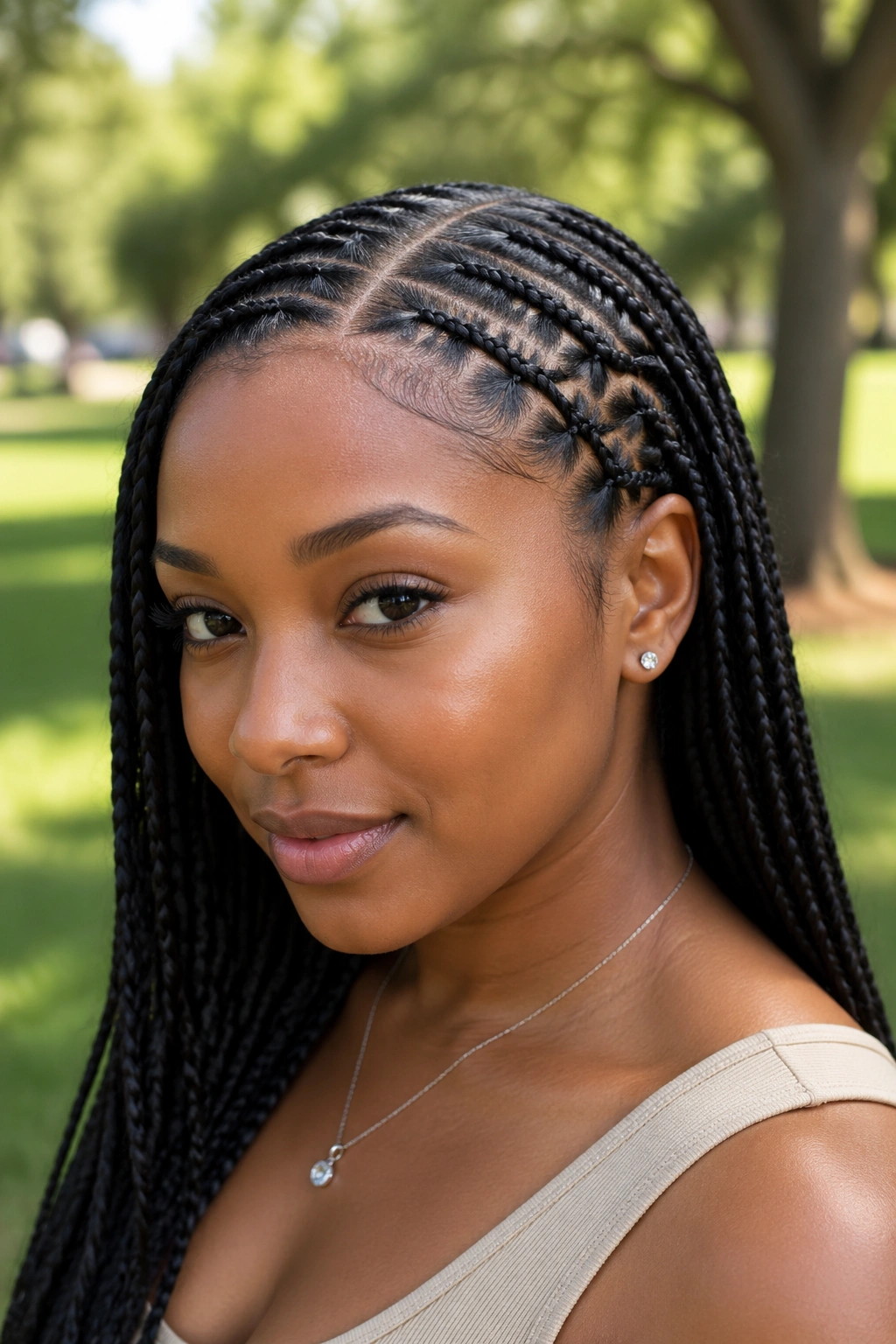
Crisscross side feed-ins bring more movement near the temples while leaving the center line straight and calm. That contrast is what makes the style worth paying attention to. The middle part acts like a spine, and the crossed rows on the sides give the braid pattern some tension and shape.
This is not the style for someone who wants invisible parting. It’s for someone who likes people to notice the hair from a few feet away. Still, the crisscross work should stay low and controlled. If the crosses get too large, the braid rows start competing with the center line instead of supporting it.
Best way to wear it
Keep the side crosses close to the scalp and let the middle part remain the most obvious line in the style. If you want the look to feel cleaner, avoid stacking heavy accessories on top of the crossing pattern. A couple of cuffs at the ends is enough.
There’s a nice tension here: structured in the middle, playful at the edges. That’s the whole point.
19. Side-Swooped Front Braids That Still Keep the Center Part Visible
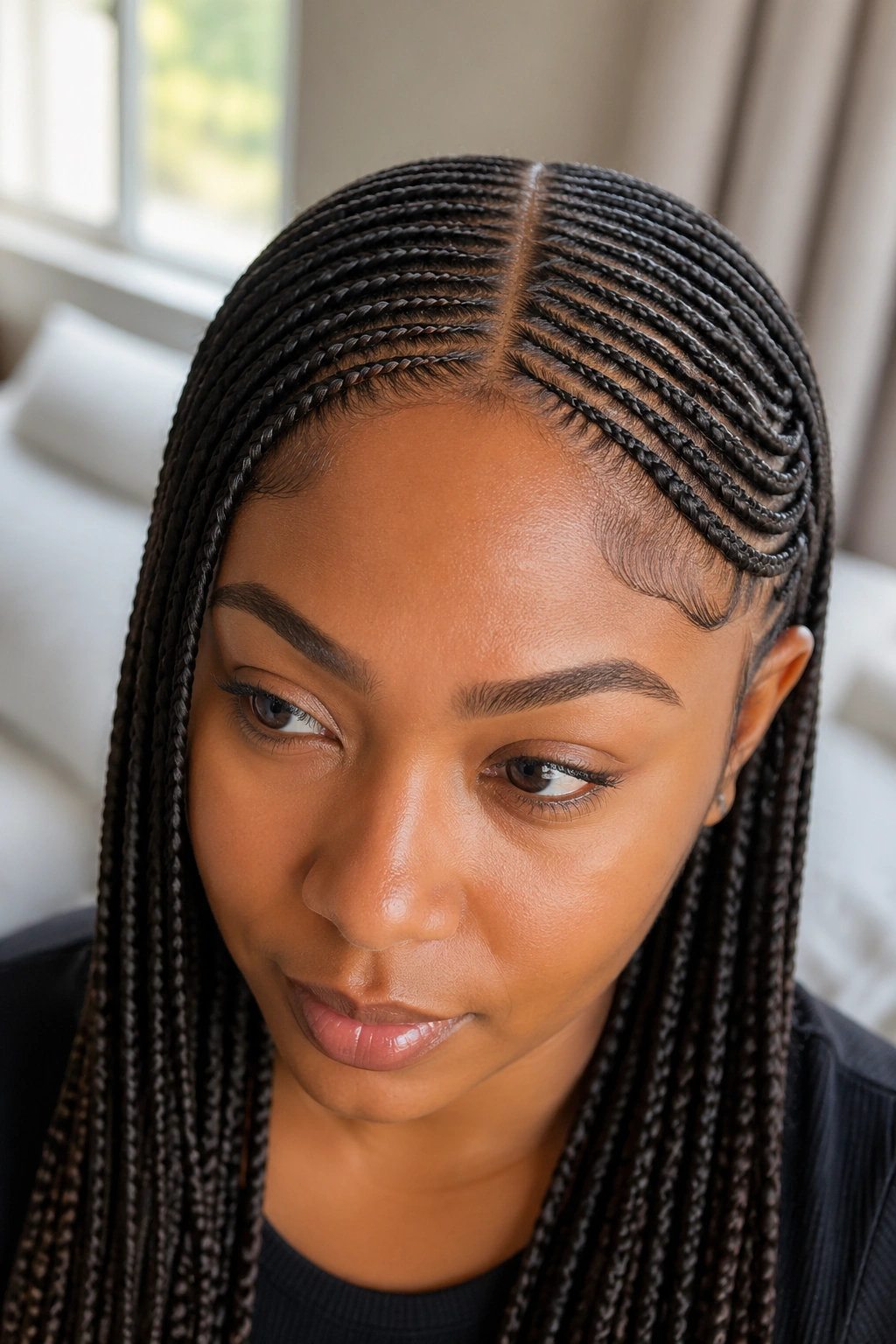
A side-swooped front can soften the face without erasing the middle part. The first braid on each side sits a little closer to the temples, then drifts outward, which gives the style a gentle curve at the front while the rest of the braids stay anchored in place. It’s subtle, but it changes the silhouette.
I like this on people who want a less severe hairline. The middle part still reads clean, yet the front has a bit more motion. That makes the style feel friendlier, especially if you wear braids often and don’t want them to look identical every time.
How to keep the part visible
- Ask for the center line to stay wider than the front swoop.
- Keep the first side braids snug, not oversized.
- Use light mousse on the roots so the curve stays smooth.
- Avoid piling accessories right where the part starts.
A soft swoop at the front and a sharp line in the middle can live together. They usually do.
20. Twin Buns With a Crisp Middle Part and Braided Length
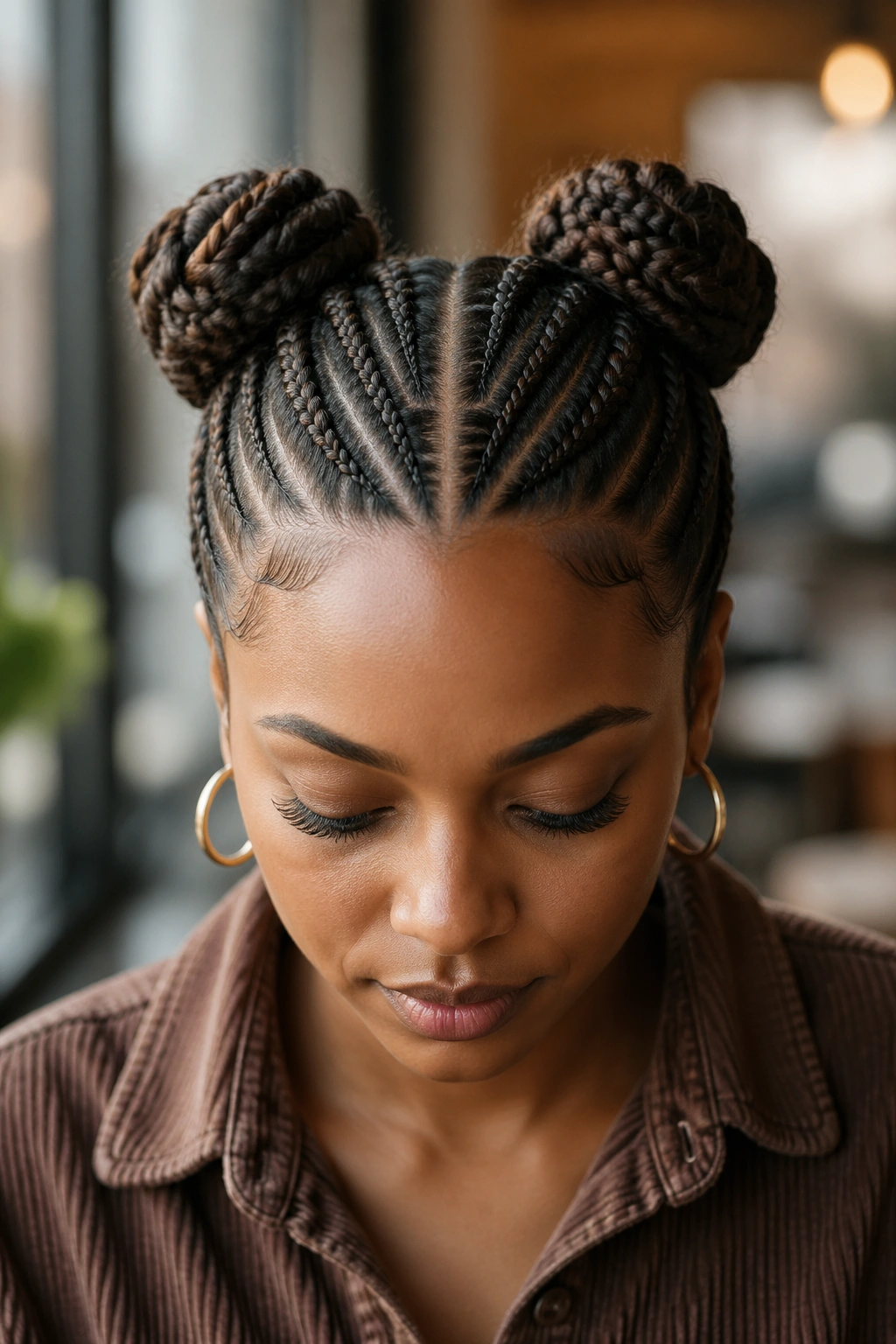
Twin buns give a middle part a playful edge. The part keeps the look symmetrical, and the two buns make the braids feel younger, lighter, and a little more styled without demanding much extra effort. It’s a good option when you want the braids off your neck but don’t want one single bun pulling everything backward.
You can place the buns high for a more animated shape or lower for something calmer. Either way, the key is balance. If one bun sits higher than the other, the whole style looks off right away. The center part is doing some very visible work here, so it should be straight before anything gets tied up.
This style also lets the ends stay tucked, which is handy when you’re tired of long braids brushing your shoulders all day. It’s practical and cute, which is a combination I never get tired of.
21. Bubble Ponytail Stitch Braids With a Center Line
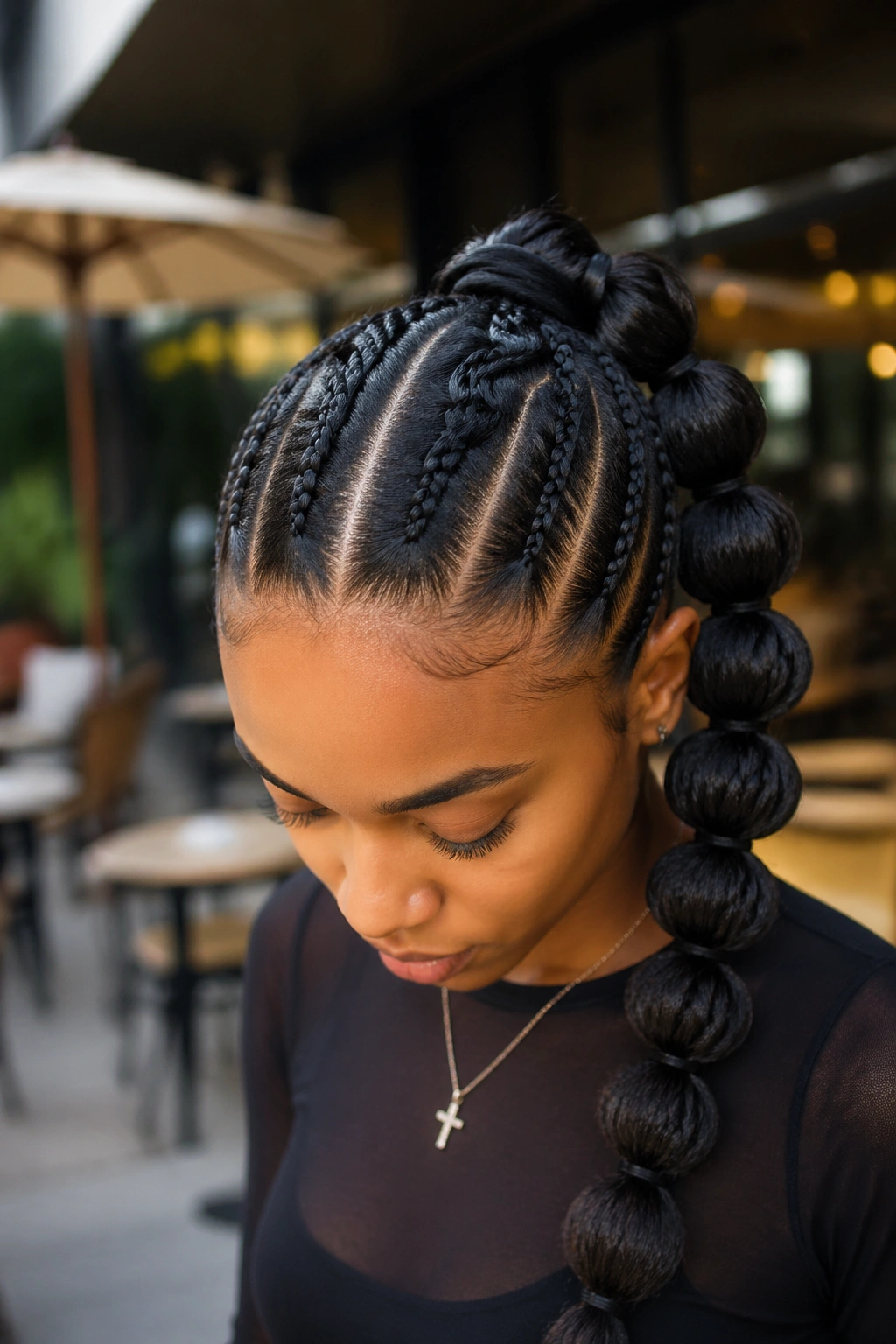
Bubble ponytails give stitch braids a fresh shape without undoing the whole style. The middle part keeps the top neat, then the braids gather into a ponytail and get cinched into sections so each bubble puffs out a little. It looks structured, but not stiff.
The spacing between the elastics matters. Too close together and the bubbles look cramped; too far apart and the shape gets saggy. A few inches between each tie usually works well, though the exact spacing depends on how long the braids are. Once the bubbles are in place, pull each section out just a little so the shape feels round instead of flat.
- Use small clear elastics if you want the bubbles to stay clean.
- Keep the base smooth so the middle part remains the first detail people see.
- Make the bubbles even, but do not obsess over perfect sameness.
- This works well when you want a change without taking the braids down.
It’s a smart way to make long braids feel different fast.
22. Long Layered Goddess Stitch Braids With a Sharp Middle Part
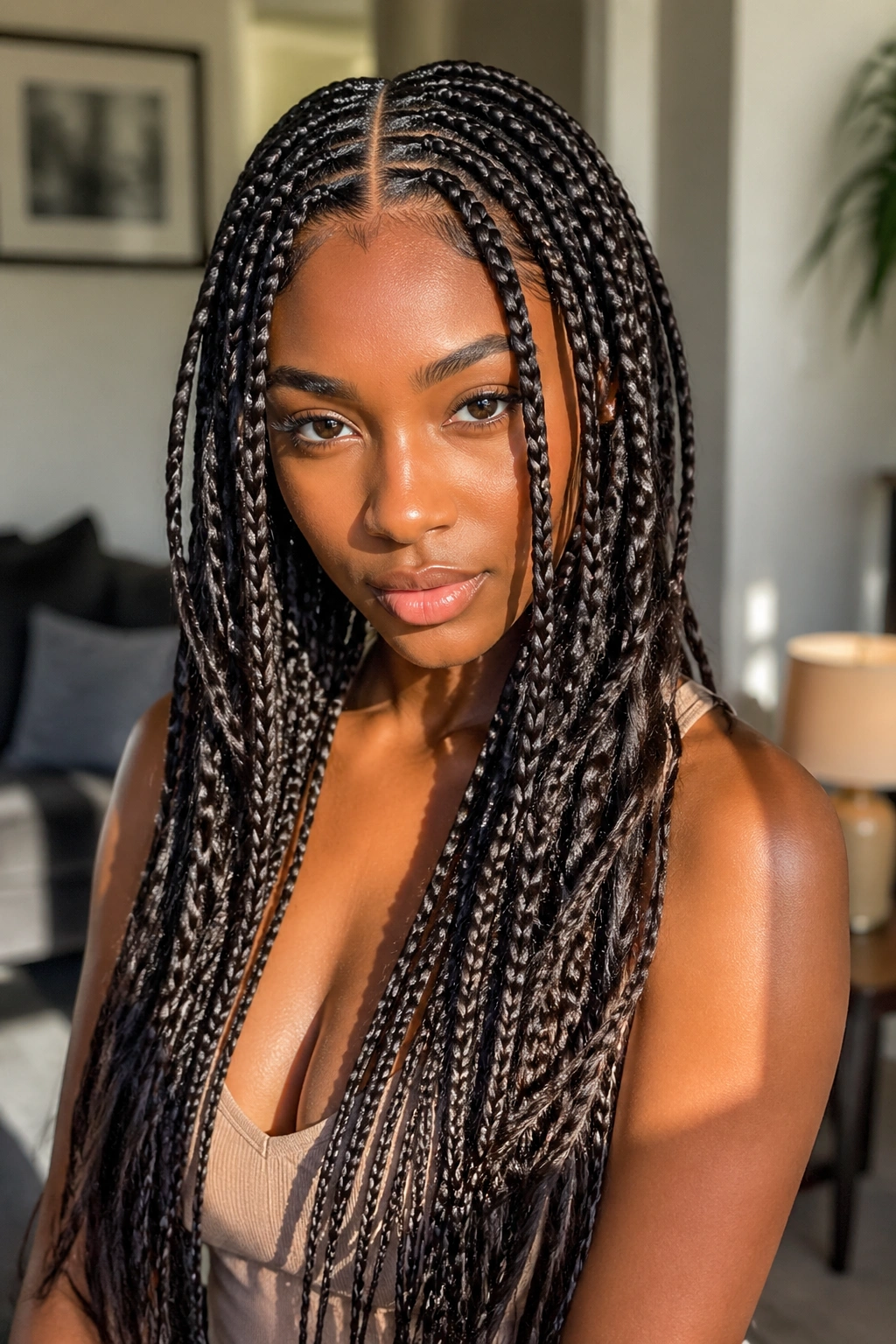
Long layered goddess stitch braids combine structure and softness in a way that makes sense once you see it. The middle part stays crisp, the lengths fall at slightly different points, and the whole style moves better than a blunt set. You get shape around the face and swing in the back, which keeps the braids from feeling heavy.
What makes this version stand out is the layering. Shorter pieces near the front can frame the cheekbones, while longer back sections create that long, cascading effect people usually want from braids of this kind. If the layers are too choppy, the shape gets messy. If they’re too subtle, the style loses its point. The sweet spot is a visible difference in length that still feels smooth.
This is the version I’d pick for someone who wants their middle part to stay the anchor while the rest of the style does a little more. It looks rich in texture without needing a pile of extras.
Final Thoughts
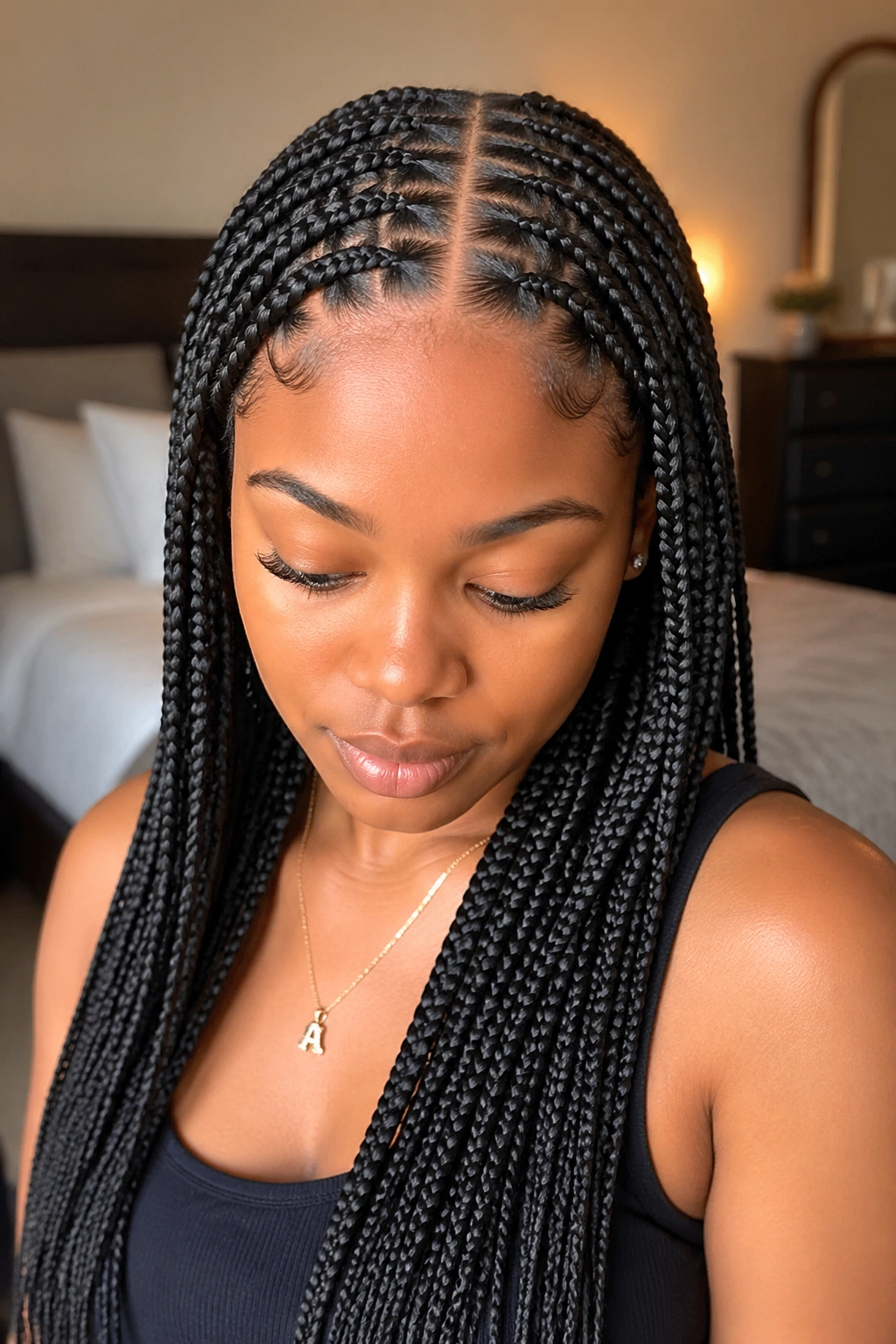
A crisp middle part gives stitch braids a kind of honesty. There’s nowhere to hide, so the sectioning, the tension, and the braid size all have to make sense together. When they do, the style looks calm and deliberate in a way that never really goes out of style.
The biggest mistake people make is treating the part like a small detail. It isn’t. It’s the line that tells the whole braid pattern how to behave. Get that line right, and even simple braids look sharper. Get it wrong, and the whole style feels off no matter how good the ends are.
If you’re taking a reference photo to a braider, zoom in on the hairline and the part first. That’s where the work lives. Everything else follows from there.
