



Trending braids for the cool girl aesthetic are rarely the loudest thing in the room. They work because they look chosen. A clean part, a line that sits where it should, a braid that holds its shape without looking stiff — that’s the whole trick.
The best braid styles do more than keep hair out of your face. They change the mood of your clothes, your makeup, and even your posture a little. A sharp set of cornrows can make a plain tank top look intentional. Soft knotless braids can make a big sweater feel less bulky. A side braid with a loose front piece can make a simple black tee look like you thought about it for five minutes, which, honestly, is half the appeal.
There’s a practical side to this too. Some braids love thick hair. Some are easier on the scalp. Some need a patient hand and a rat-tail comb, while others can be done fast enough before dinner. Tension matters. Parting matters. So does the finish — a braid that looks pretty but feels tight at the hairline is not doing its job.
These 22 styles cover sleek, soft, edgy, and lived-in versions of the same idea: hair that looks cool without looking overworked. A few are classic. A few lean softer. A few are the type you see once and immediately save for later.
1. Sleek Center-Part Cornrows for the Cool Girl Aesthetic
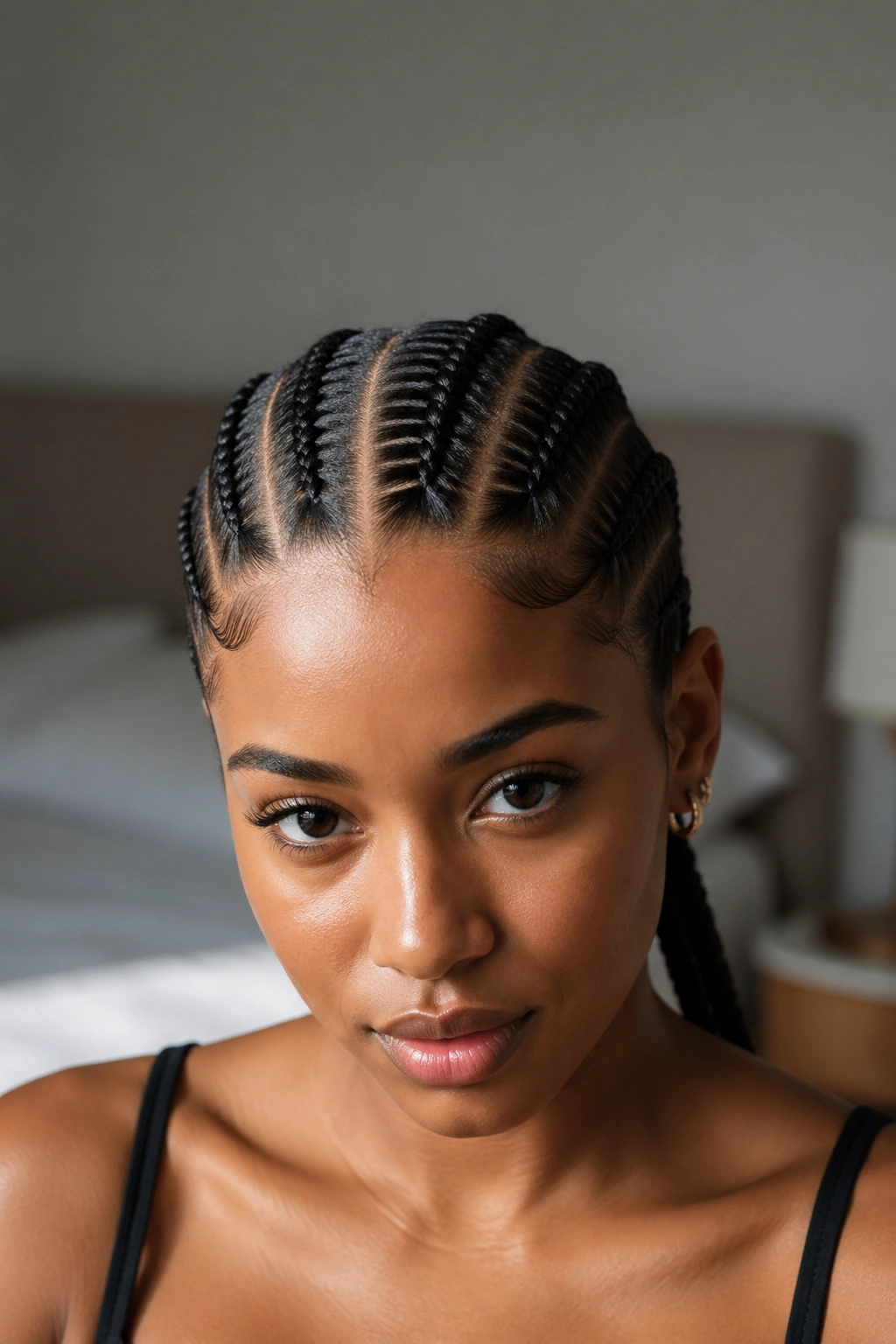
A clean center part changes everything. Sleek cornrows have that sharp, almost editorial look that makes even a hoodie feel styled, and that’s why they sit so comfortably in the cool girl aesthetic.
Why It Reads So Sharp
The part does half the work. Once the line is straight, the braids on either side start to look intentional instead of casual, and the whole style gets a cleaner edge. Keep the rows narrow if you want a more refined finish, or go slightly wider if you want a bolder, more graphic look.
What I like here is the range. You can wear them into a low bun, let them hang long, or end them in a tucked ponytail. The style stays neat either way.
- Best for straight, wavy, or stretched natural textures
- Works well when you want the face to look open
- Pairs with a middle part, slick edges, or a simple scarf at night
- Lasts longer when the scalp is clean before braiding
Pro tip: Ask for the rows to be mapped before braiding starts. A rushed part is hard to fix later.
2. Knotless Box Braids
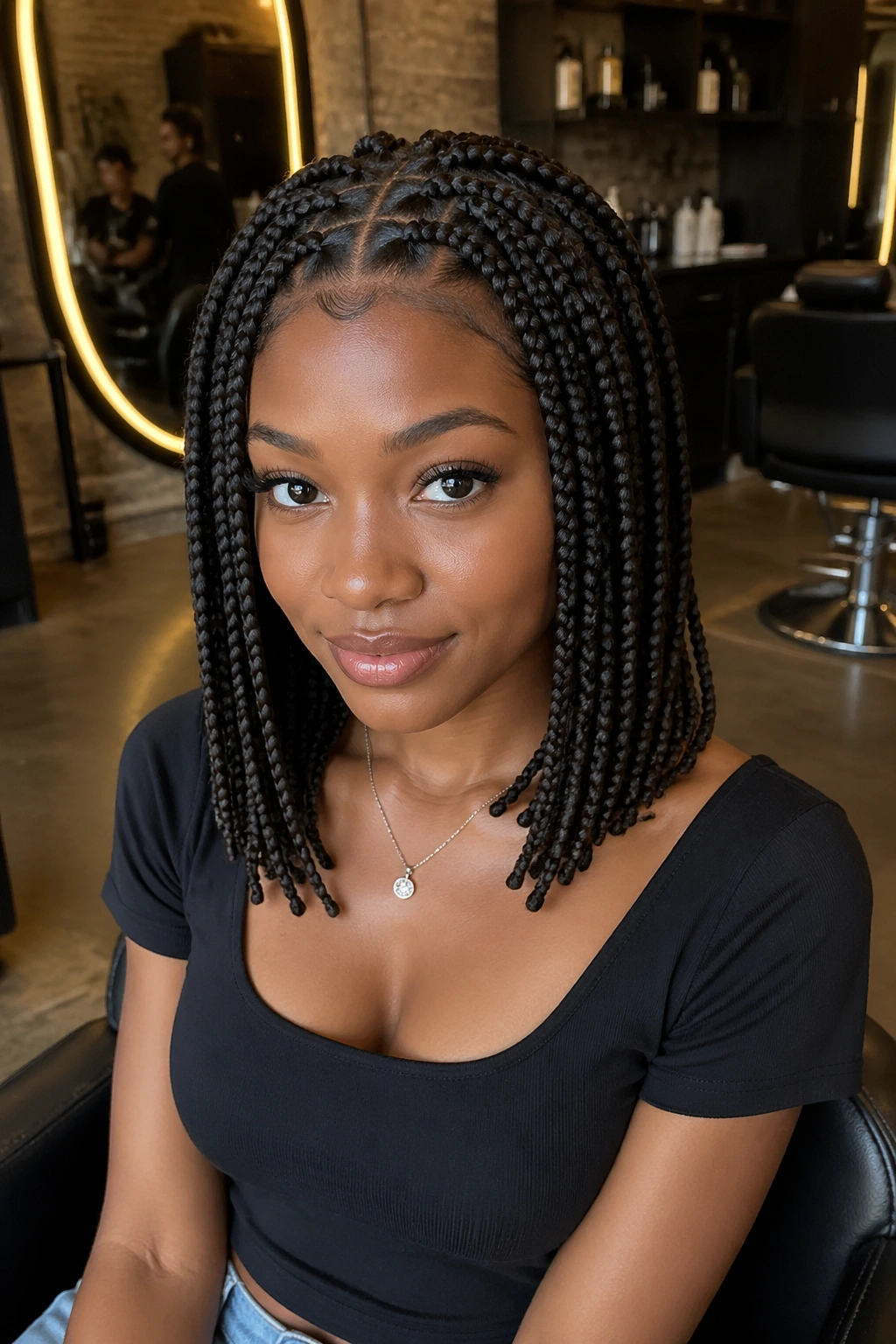
Why do knotless braids keep showing up in mood boards and real life? Because they solve a bunch of small annoyances at once. The root looks lighter, the movement is softer, and the whole style sits closer to the head without that chunky knot at the base.
That matters more than people think. A braid can be long and dramatic and still feel easy if the install is clean. Knotless box braids do that well, especially in medium sizes where the sections can swing a little instead of hanging like ropes.
What to Ask For at the Chair
Be specific about length, size, and density. Waist-length braids feel different from shoulder-length ones, and a full head of tiny braids takes far longer than medium ones.
What Makes Them Worth It
- The root lays flatter than traditional box braids
- They tend to feel lighter on the scalp
- Small to medium sizes move better
- They can be worn down, half-up, or in a braided ponytail
Keep the parts neat and the braids not too thick at the base. That’s where the style starts looking expensive in the everyday sense of the word — clean, balanced, and easy to wear.
3. Boho Knotless Braids for the Cool Girl Aesthetic
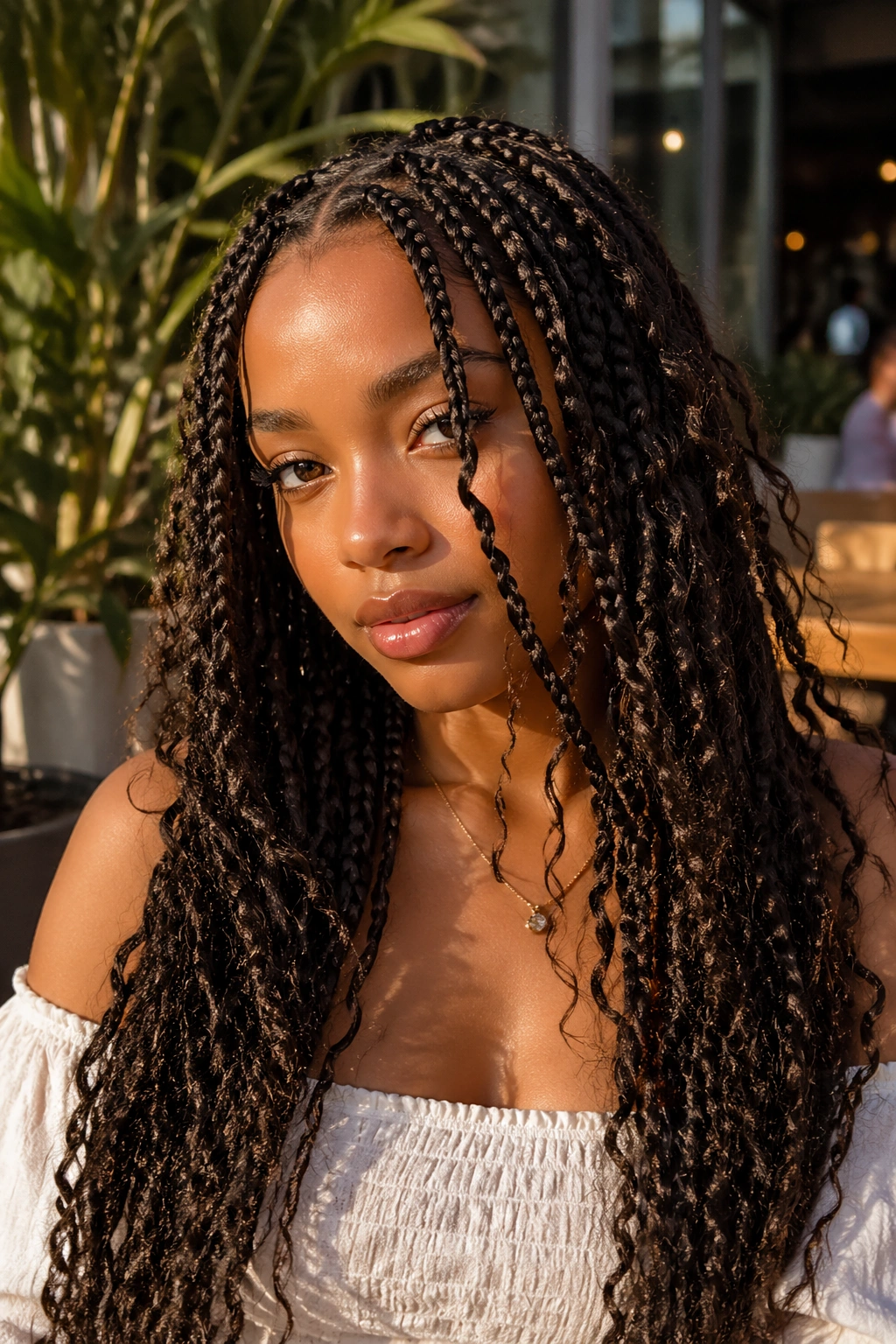
Boho knotless braids are for people who want structure and mess in the same hairstyle. The braid itself stays neat, but the loose curly pieces give it that slightly undone feel that reads very cool without trying too hard.
The trick is restraint. Too many curly pieces and the style gets busy. Too few and you lose the softness that makes it worth choosing in the first place. I like when the curls are placed around the face, through the middle, and in a few scattered spots toward the ends.
A good boho set works best when the braids are medium-sized and the added hair has a bit of movement. If the curls are stiff or overly shiny, the whole thing can look fake fast.
- Choose curls that match the braid color closely
- Keep the loose pieces concentrated, not scattered everywhere
- Use mousse lightly so the braids don’t frizz into a halo
- Sleep with a satin scarf or bonnet to keep the curls from tangling
A little mess is the point here. Not chaos. Just enough softness to keep the braids from feeling too strict.
4. Fulani Braids With Beads and Clean Parting
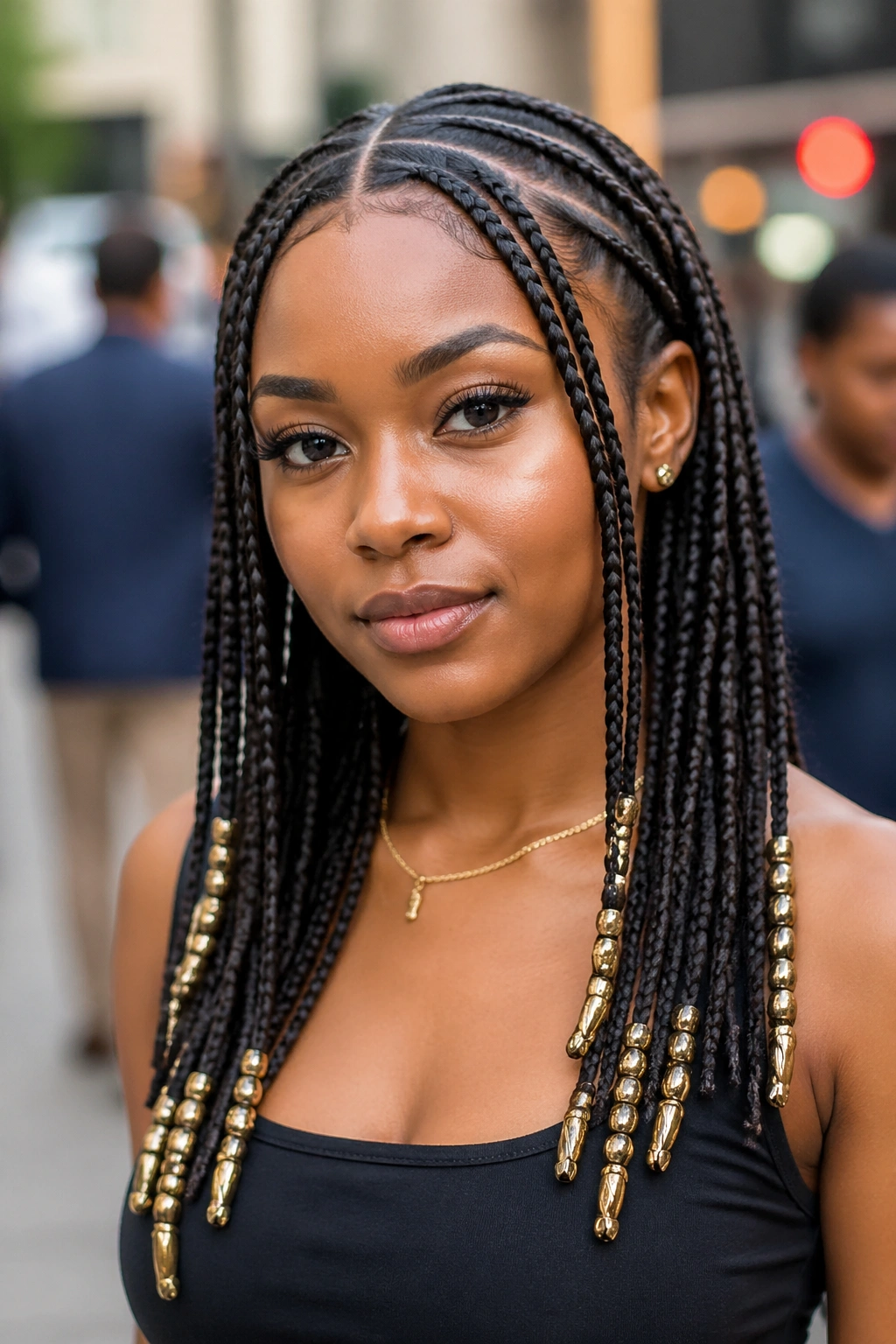
Fulani braids have a built-in sense of rhythm. You get a central braid or row down the middle, side braids that frame the face, and often a few beads or cuffs that make the whole style feel finished without needing much else.
They look especially good when the parting is clean and the front pieces are deliberate. That’s where the style shifts from busy to polished. If the sections are wobbly, the look loses its shape. If they’re tidy, the braids do a lot of work on their own.
Small Details That Matter
- Keep the center part crisp
- Use beads sparingly unless you want a louder finish
- Let the side braids fall at different lengths for movement
- Choose cuffs in one metal tone so the style doesn’t start competing with itself
Fulani braids are one of those styles that can feel traditional and modern at once. That mix is what gives them such a strong place in the cool girl conversation. They stand out, but they still look wearable with a plain tee and hoops.
5. Lemonade Braids
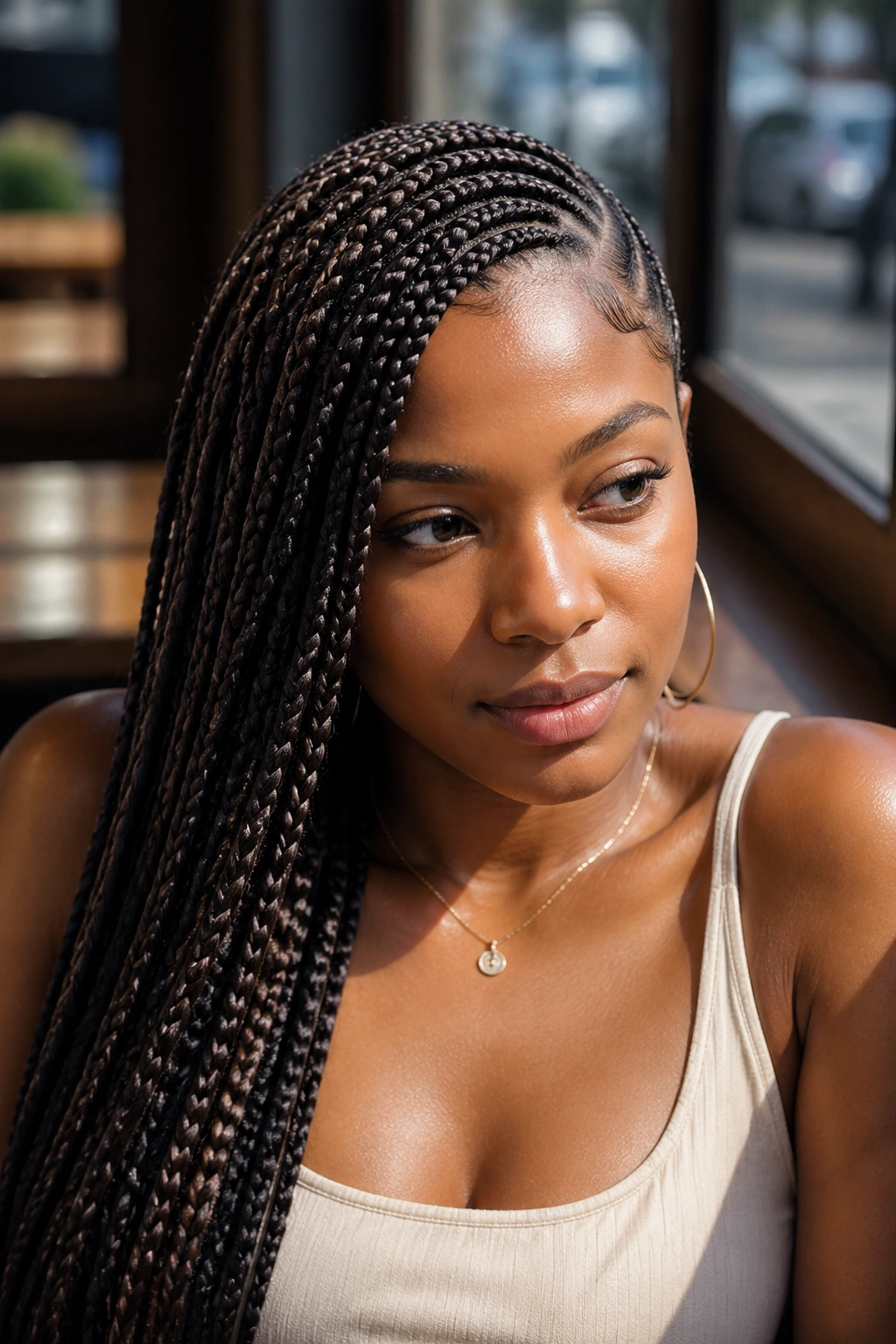
Lemonade braids have a side-swept shape that does a lot of styling work for you. The side part creates motion before you even get to the ends, and that makes the whole style feel a little more relaxed than straight-back cornrows.
What I appreciate most is how they change the face line. The braid direction pulls the eye diagonally instead of straight down, which can soften sharp features or add shape to a simpler outfit. Long lengths work best here, but shoulder-length versions can look clean too if the parting is done with care.
They also play nicely with edge styling. Not overdone. A little shaping around the hairline is enough.
Lemonade braids are a good pick when you want something that reads neat but not severe. The braid pattern is the story, and the rest of the look can stay simple. That’s a smart trade.
6. Stitch Braids With Razor-Sharp Lines
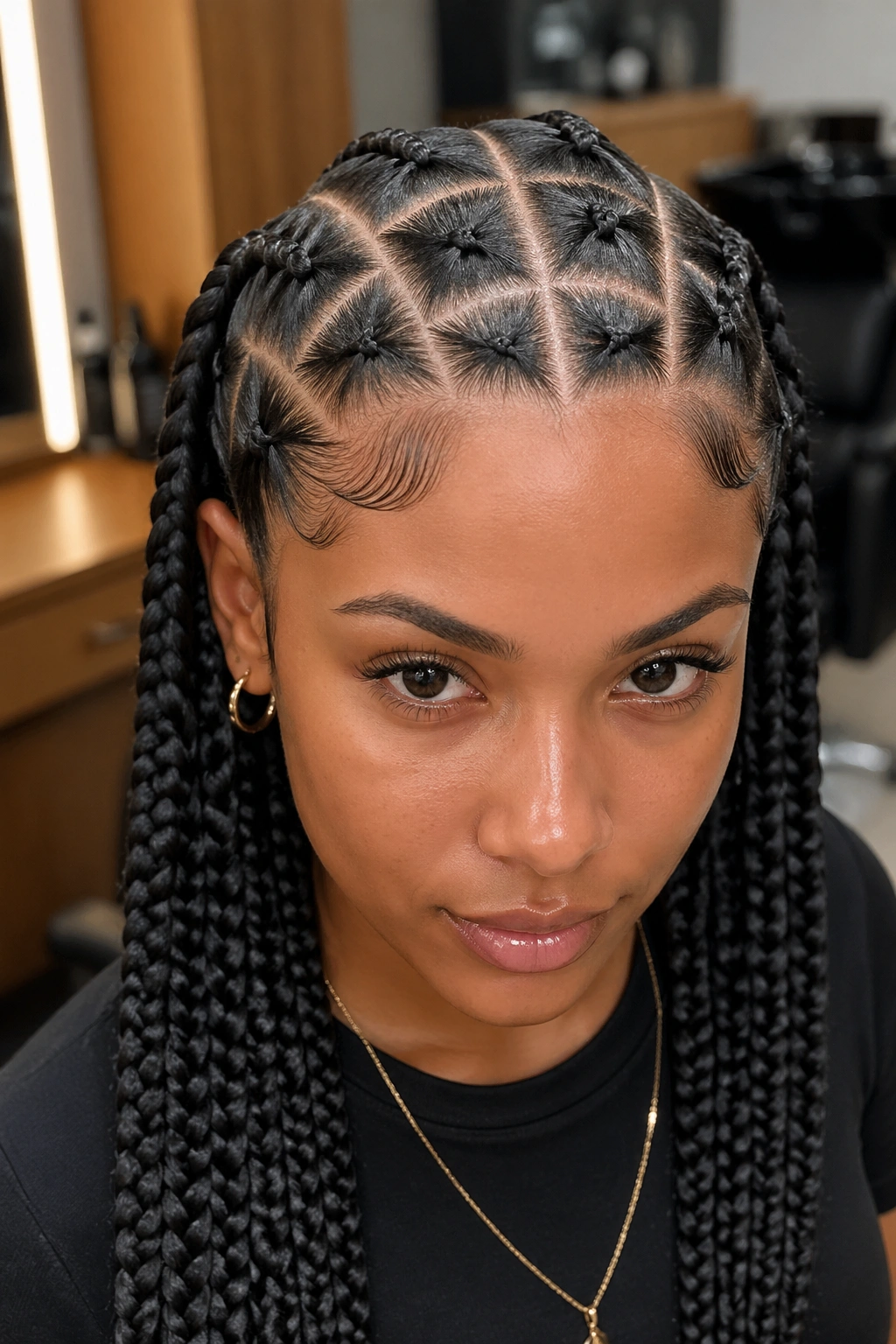
Stitch braids are all about the grid. The scalp pattern looks almost architectural, and that’s what makes them so satisfying to wear and to look at. The braider creates little “stitch” sections across the part before feeding each braid through, so the rows appear extra defined.
Why the Grid Matters
If the parts drift or the spacing changes too much, the whole style loses its snap. Clean stitches make the braid line look deliberate from root to tip.
What to Watch For
- Ask for even section size before braiding starts
- Keep the braid tension firm, not painful
- Use gel sparingly so the scalp doesn’t get flaky
- Protect the style at night with a scarf laid flat over the front rows
Stitch braids are a little more precise than some other styles, and that is the point. They have a crispness that pairs well with hoops, gloss, and a minimal outfit. If you like hair that feels sharply drawn instead of soft and loose, this is one of the best looks on the list.
7. Goddess Braids
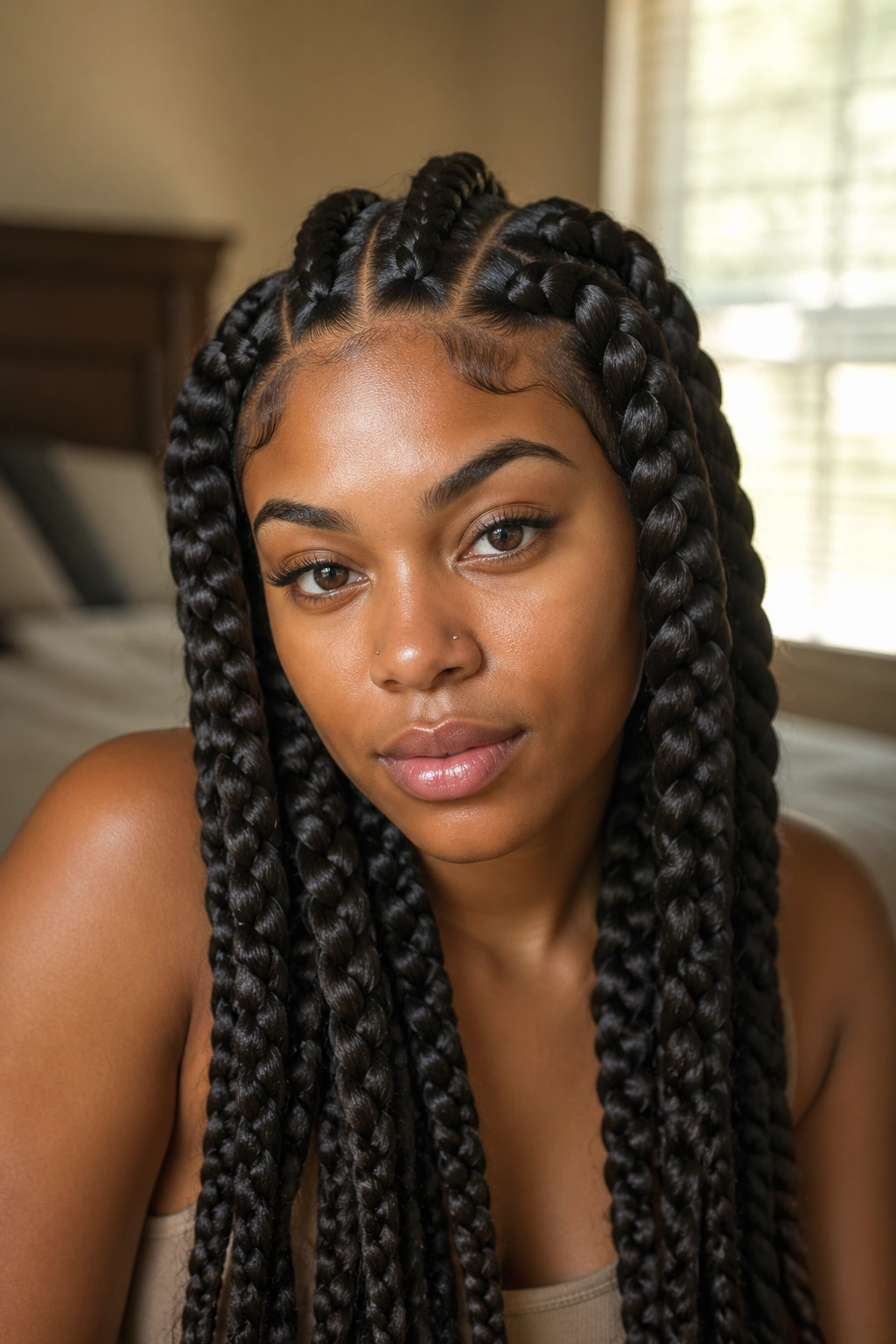
Goddess braids take a simple idea and make it feel fuller. They’re thick, smooth, and usually worn in a few large sections instead of many tiny ones, which gives the style a clean shape and a calm kind of confidence.
A lot of people think of them as a special-occasion braid, but that sells them short. They look good with denim, with tailored jackets, with soft knits. The size is the point. One strong braid can do more than a dozen small ones if the parting is clean and the finish is smooth.
They also hold up well when you want a protective style that doesn’t feel too busy. Less scalp exposure, fewer tiny sections to fuss over, and a shape that still makes a statement. That’s a win in my book.
A little shine cream on the lengths goes a long way. Too much product and the braid starts looking greasy. Keep it controlled.
8. Feed-In Ponytail Braids
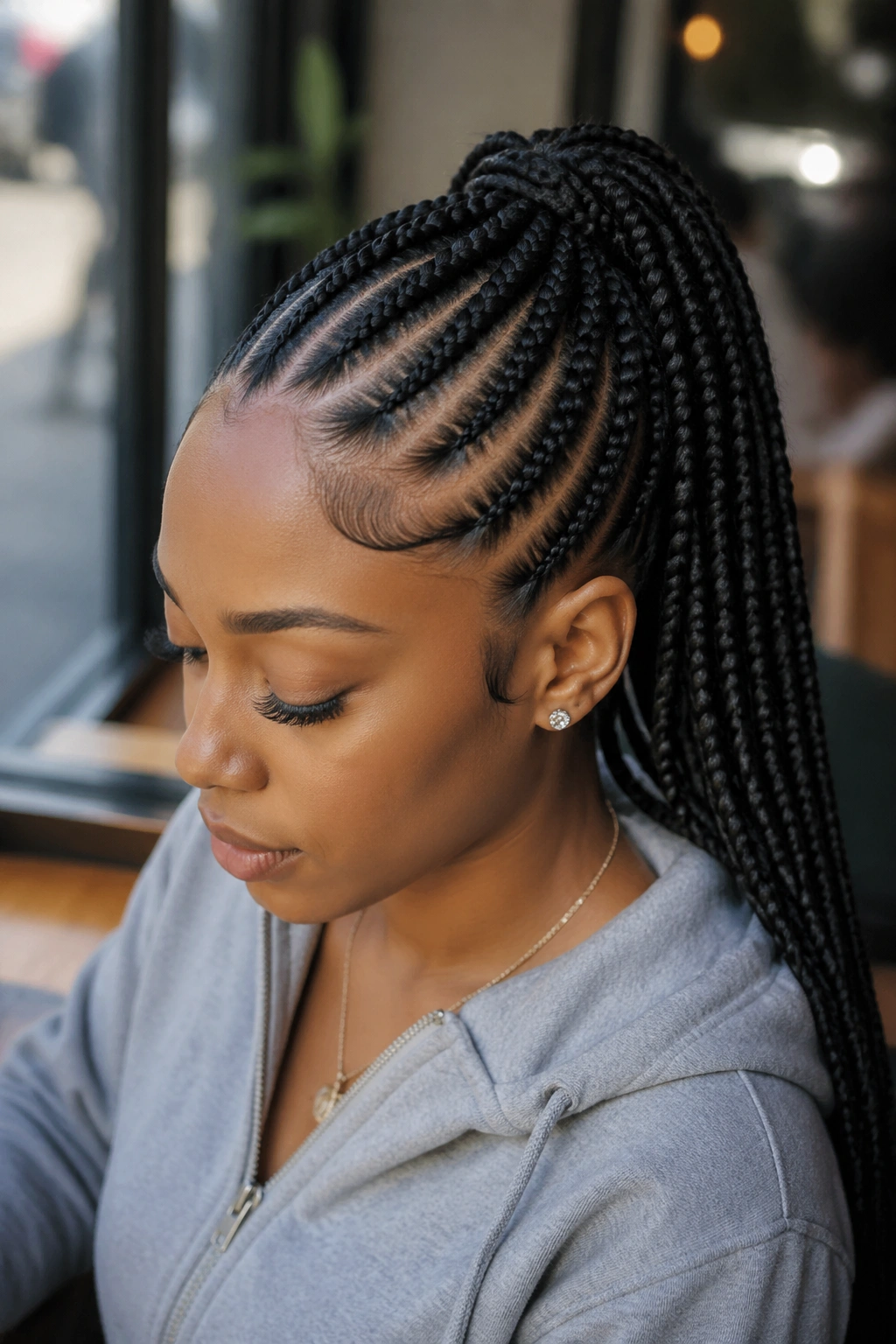
A feed-in ponytail braid is one of the easiest ways to make a ponytail feel styled instead of thrown together. The braid starts small at the scalp and builds gradually, so the base looks smooth instead of bulky, then the length falls into a ponytail that can swing or sit high, depending on how it’s built.
Why does that matter? Because the shape around the crown stays clean. You do not get that heavy knot at the start, which makes the style feel lighter and usually easier on the head.
If you’re planning to wear it for a long day, this is a smart choice. It keeps the hair off the neck, works with earrings, and looks right with gym clothes or a blazer. A rare combo, honestly.
Best Ways to Wear It
- High and tight for a sharper finish
- Mid-height for a softer line
- Wrapped with a section of braid hair for a sleeker base
Keep the ponytail balanced. If the top is too tight and the tail is too heavy, the style stops being comfortable fast.
9. French Braid With Face-Framing Pieces
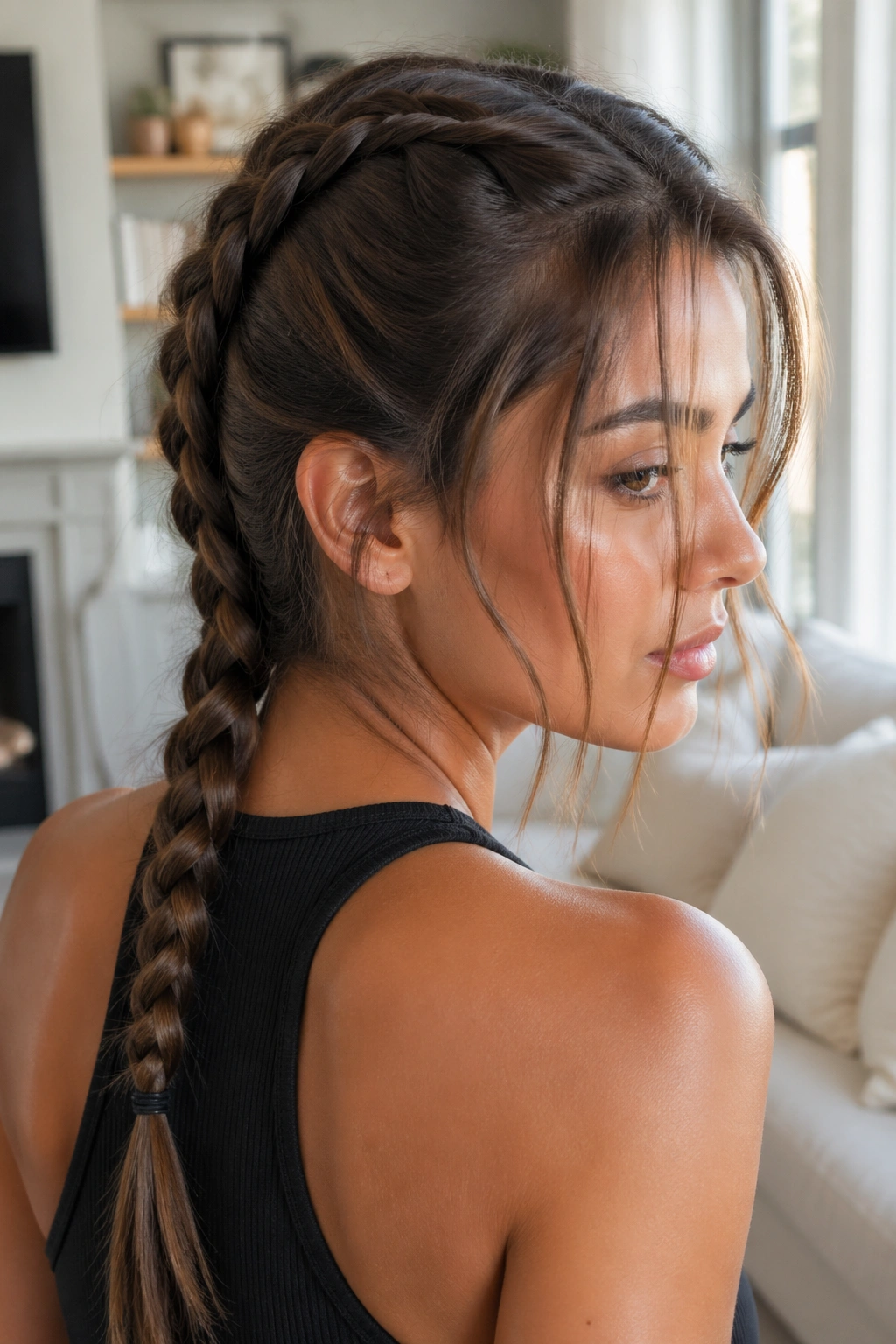
A French braid can look old-school if it’s done too neatly, but pull a few pieces loose around the face and the whole mood changes. It starts to feel softer, a little more lived-in, and a lot easier to wear with everyday clothes.
I like this braid for days when the front of the hair isn’t cooperating. You get the front pieces under control, but you still keep movement around the cheeks and jaw. That mix matters. It keeps the style from looking too pinned down.
The braid itself can sit center-back, slightly off to one side, or split into two French braids if you want more attitude. The face-framing pieces should be intentional, though. A random chunk of hair pulled loose can look accidental.
Use a small amount of mousse before braiding if your hair is frizzy at the crown. It helps the braid lie flat without making it hard. Soft edges. Clean center. That’s the lane here.
10. Dutch Braids That Sit Up Off the Scalp
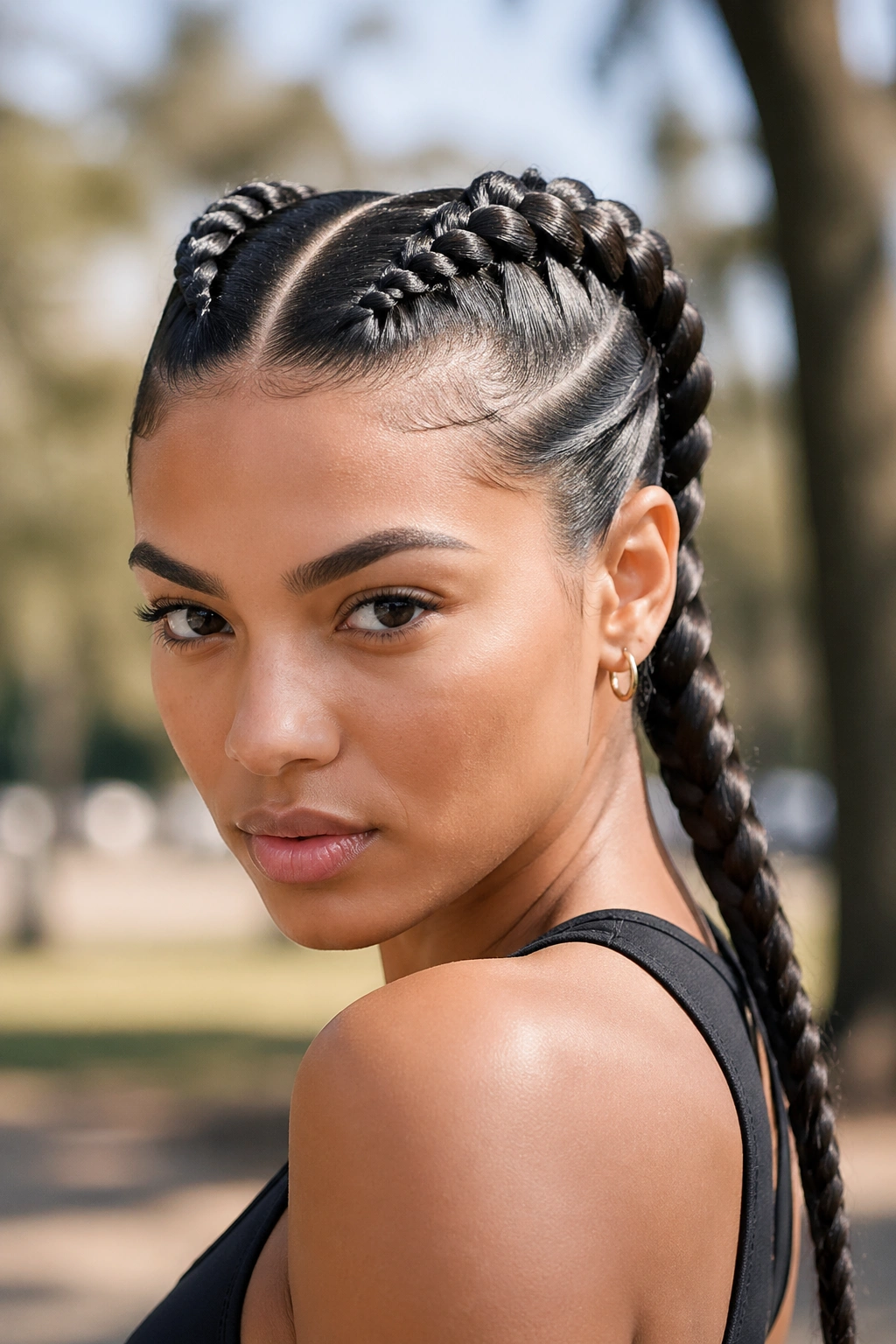
Dutch braids stand out because the braid pattern sits on top of the hair instead of sinking into it. That raised shape gives them more definition than a French braid, and it’s exactly why they read a bit bolder.
What Makes Them Different
The technique changes the whole look. Instead of crossing sections over from the outside, you braid underneath, which pushes the braid outward. The result is more visible, more graphic, and a little sportier.
How to Wear Them Without Losing the Cool Factor
- Keep the part clean and even
- Braid them tight enough to hold shape, but not so tight they pull at the hairline
- Wear them as two long braids, a double bun, or a half-up style
- Pancake the braid gently if you want a fuller look
Dutch braids are one of those styles that can swing sporty, pretty, or sharp depending on the outfit. With a plain white tank and sneakers, they feel casual. With a long coat and a clean lip, they feel pointed. That’s a useful range.
11. Fishtail Braid
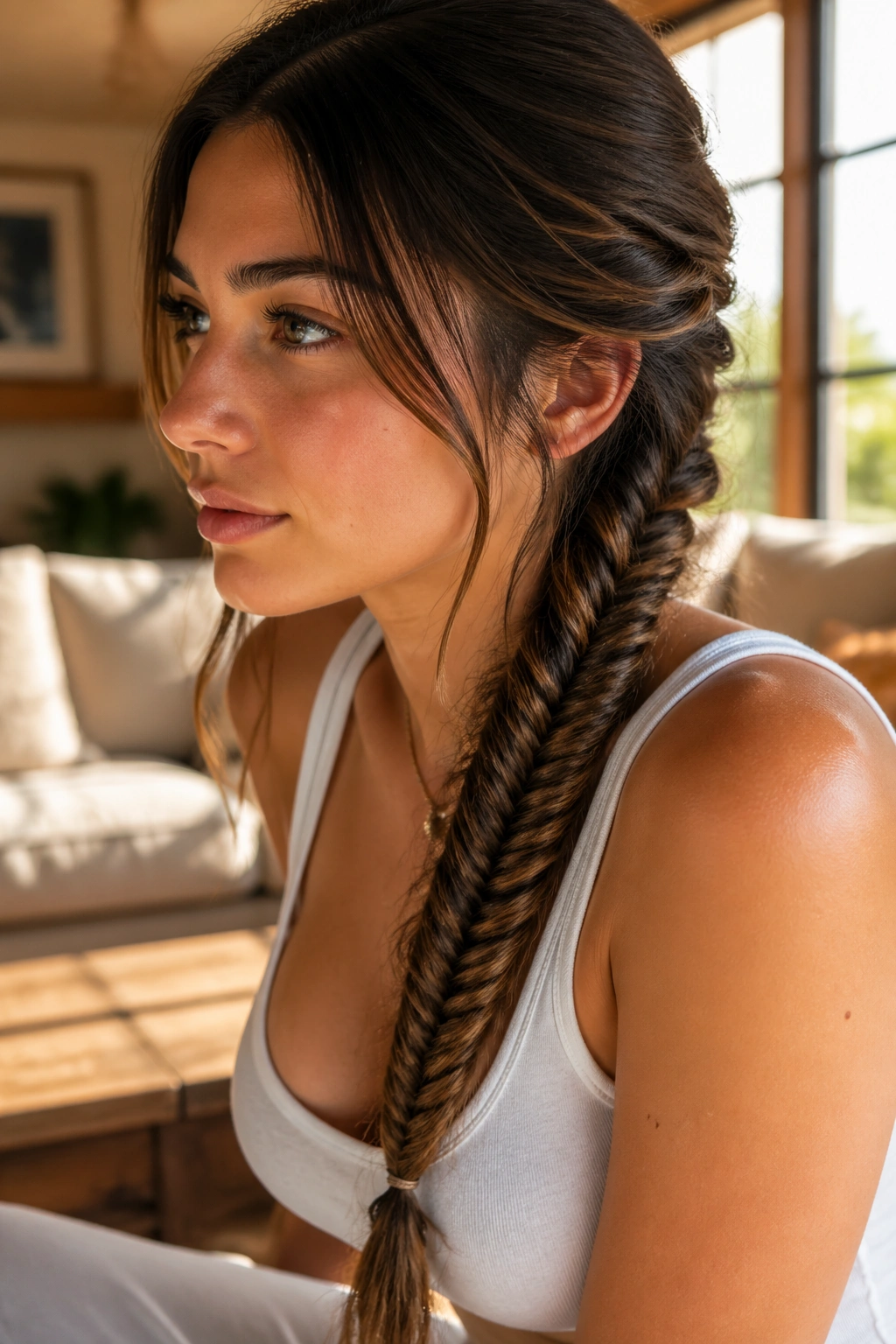
A fishtail braid looks more complicated than it is. Up close, it’s mostly patience and small sections. From across a room, though, it gives this finely woven texture that looks deliberate without seeming stiff.
Long hair helps here, because the pattern has room to show off. If the hair is layered, the shorter pieces may slip out more, so a little styling cream at the hands can help keep the sections smooth. I also like fishtails when the braid is slightly loosened after it’s done. Not messy. Just relaxed enough that the weave can breathe.
The style works well over one shoulder, in a low ponytail, or down the back with a center part. The face stays open, and the braid becomes the main feature.
It is not the fastest braid on this list. That’s the trade. But when you want texture that feels a little more special than a standard three-strand braid, it earns its place quickly.
12. Halo Braid
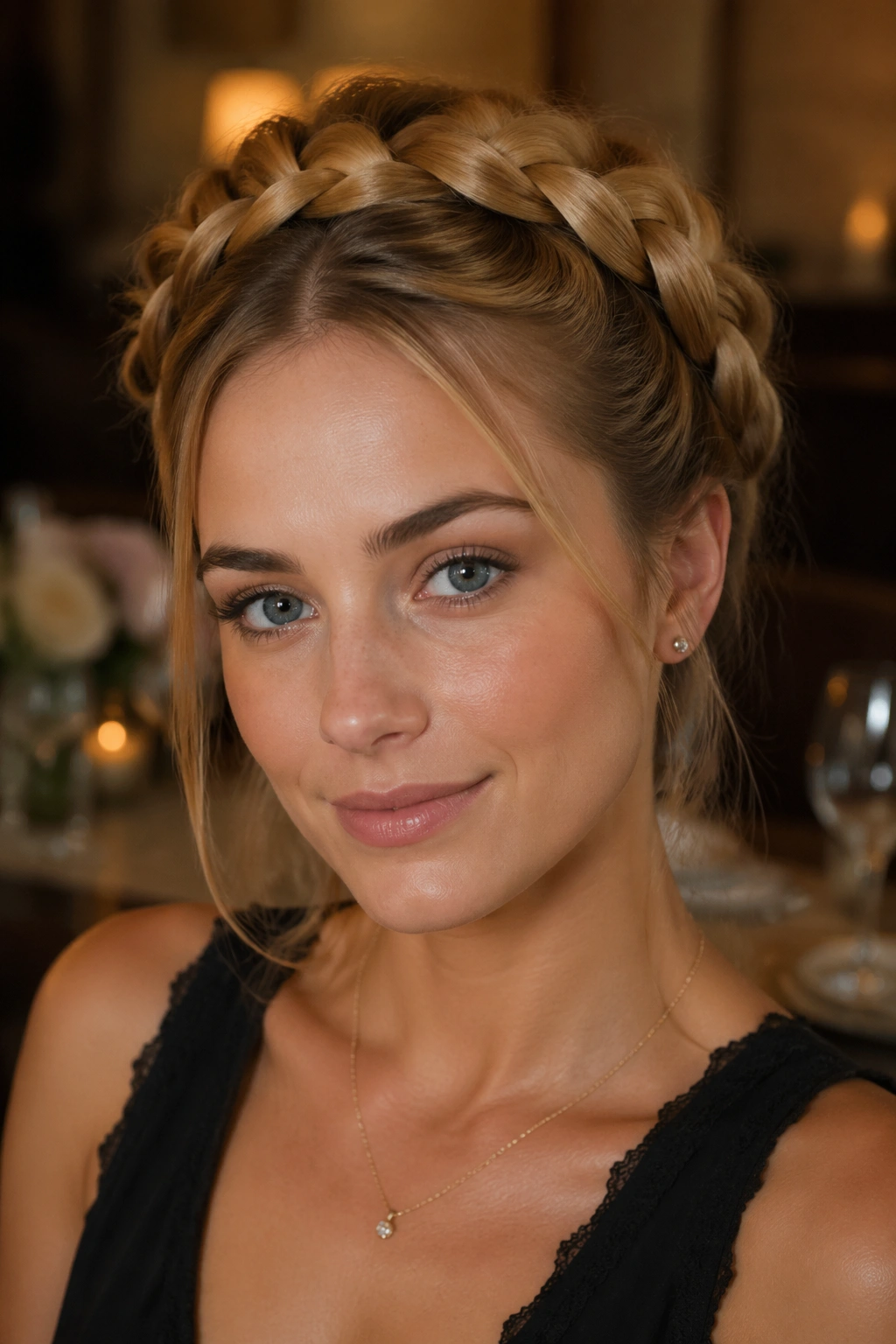
The halo braid is what I reach for when I want hair off the neck but still want the style to feel soft. It wraps around the head like a crown, which sounds dramatic, but in practice it can read surprisingly calm and clean.
This braid works best when the hair has a little grip. Freshly washed hair can slip, so a day-old texture often behaves better. If your hair is very slippery, a touch of mousse or light texturizing spray at the roots gives the braid something to hold on to.
Halo braids are especially nice for dinner plans, events, or any day when you want your profile to look tidy from every angle. They also keep earrings visible, which matters more than people admit.
Pinning the ends neatly is half the battle. If one side starts to loosen, the whole shape can slide out of balance. A few hidden pins fix that fast.
13. Braided Bun
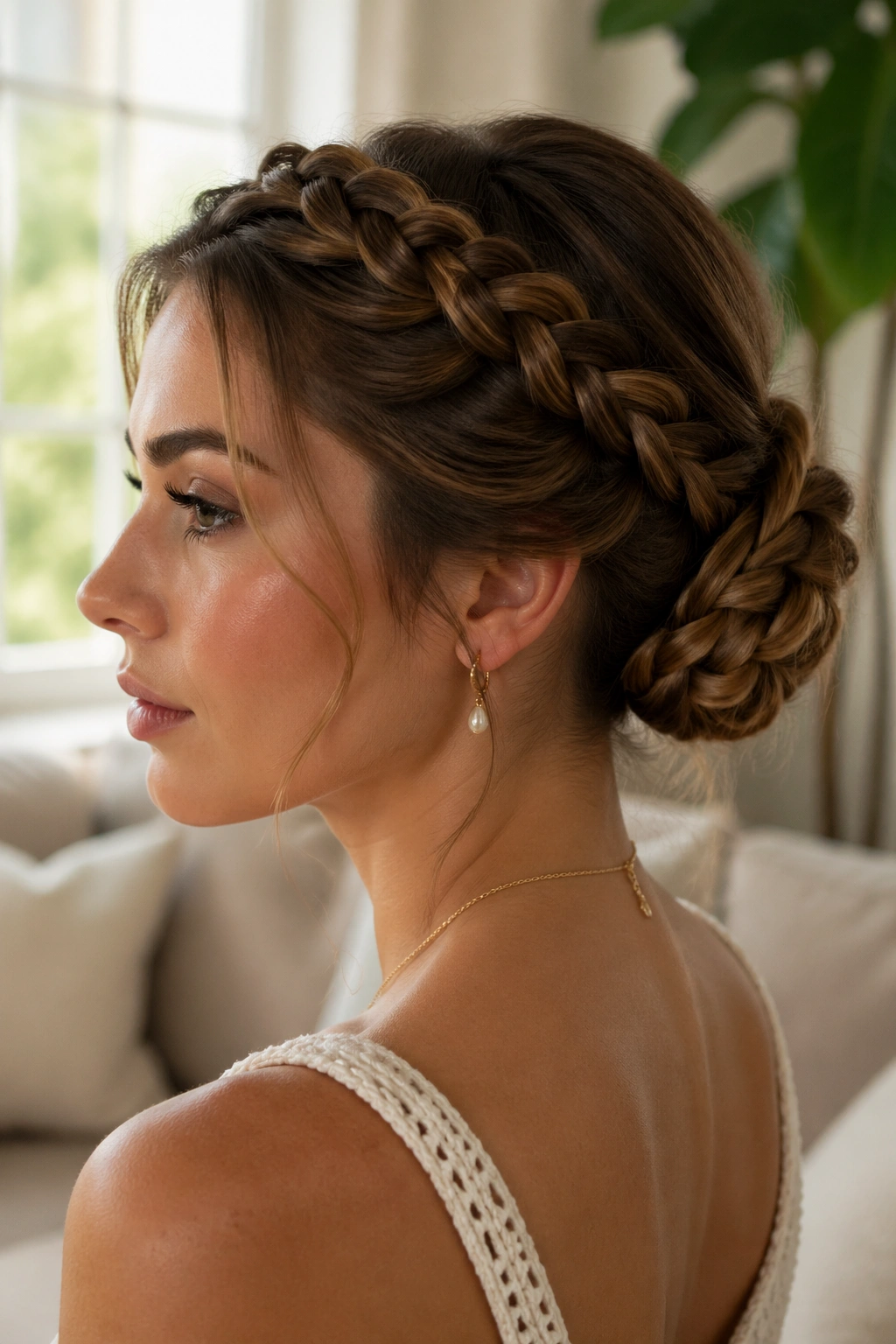
A braided bun is only boring if the braid is an afterthought. When the braid wraps into the bun itself, the whole style gets texture at the base, which makes even a low bun feel more finished.
I like this best when the braid starts either at the crown or along one side and then folds into a bun at the nape or the back of the head. The shape stays compact, which helps if you’re dressing for work, a dinner, or a formal event that still calls for hair that feels like you.
Small Choices That Change the Result
- A low bun feels cleaner and more understated
- A high bun reads sharper and a little more playful
- A loose braid around the bun makes the style softer
- A tight braid gives the bun a more polished edge
This is also a style that holds better when the hairline is secure before you start. A little gel at the front, a few pins under the bun, and you’re done. Simple.
14. Micro Braids
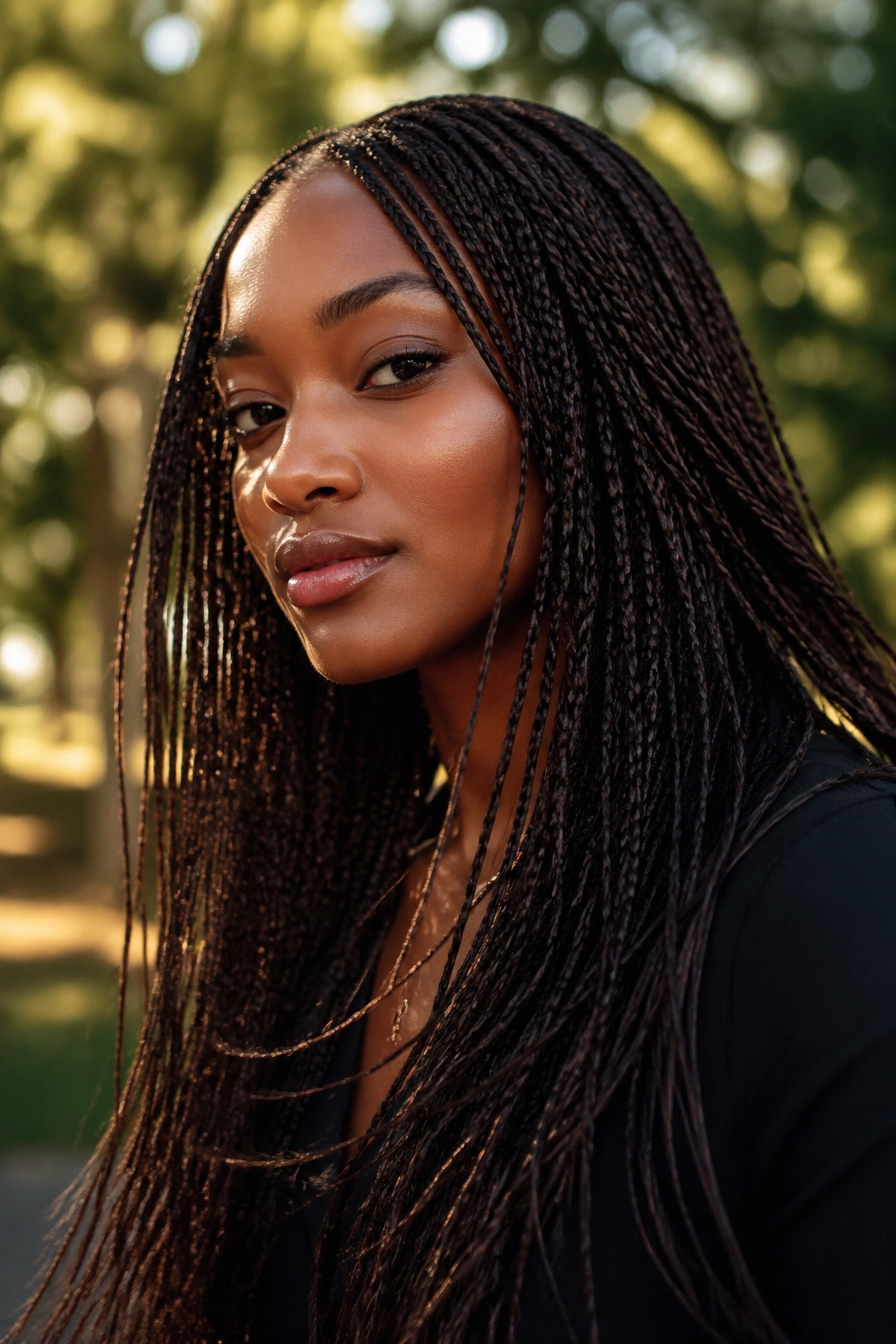
Micro braids are for people who like movement. A lot of it. Tiny sections create a curtain-like effect, and the hair shifts in a way thicker braids can’t really match. The tradeoff is time, patience, and a careful hand.
They look incredible when the parting is even and the braids are installed cleanly, but they can be heavy if too much hair is packed into each section. That’s where people get into trouble. Tiny braid does not mean tiny care. The scalp still needs attention, and the edges still need rest.
If you choose micro braids, plan for maintenance. Oil the scalp lightly, keep buildup from gathering at the roots, and avoid tugging them into tight ponytails every single day. They need room.
Micro braids are not the quick option. They are the long-haul option. If you want a style that moves like fabric and falls with a lot of texture, that patience pays off.
15. Tribal Braids
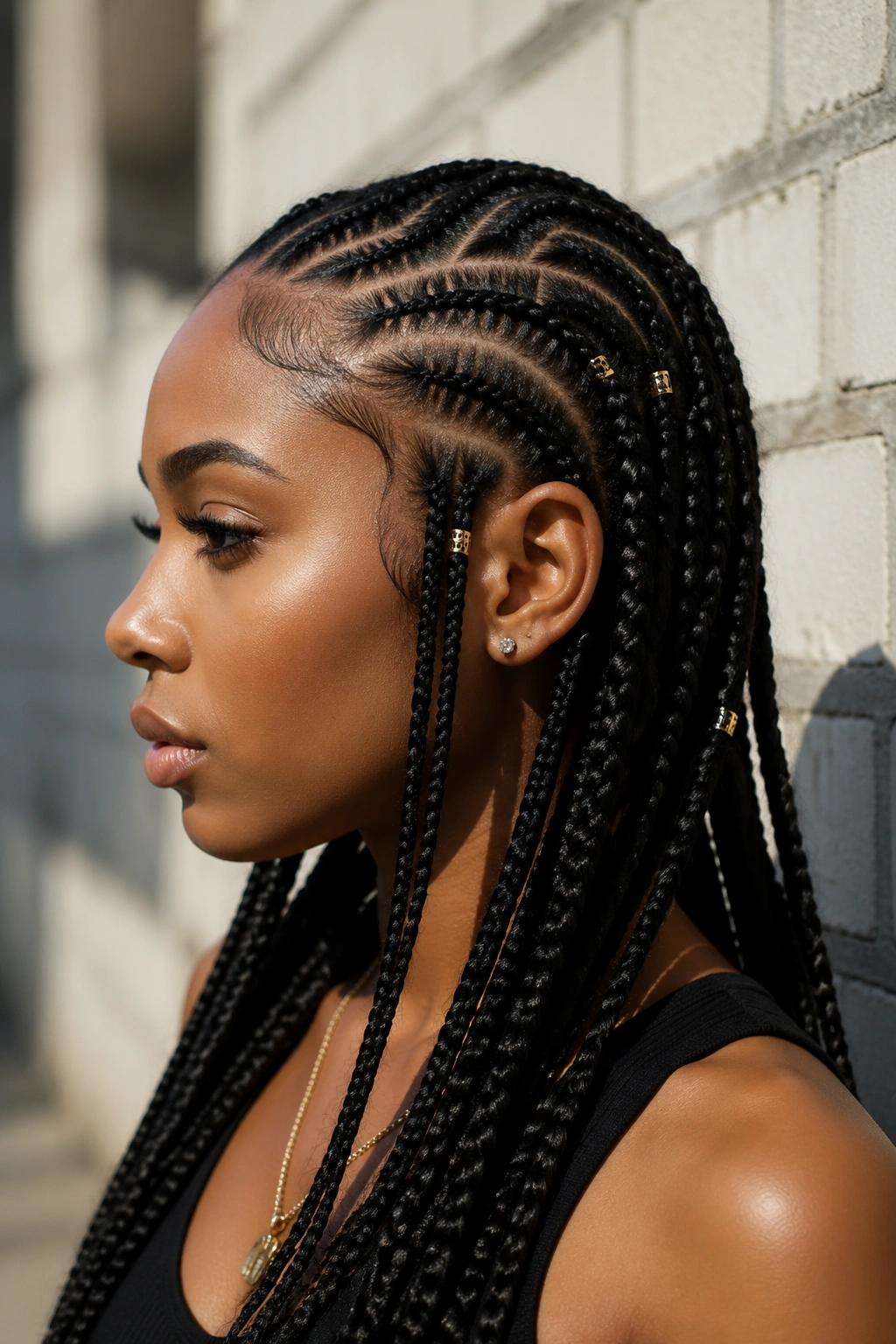
Tribal braids mix pattern and length in a way that feels lively without getting chaotic. You usually get sculpted cornrows at the scalp, then longer braids or loose ends once the structure is set. Beads, cuffs, or a few thin accent pieces can add more shape, but they don’t have to.
What Gives Tribal Braids Their Edge
The contrast is the magic. Tight rows at the top, freer lengths below. That shift keeps the style from looking flat, and it gives the eye a clear place to start and stop.
A Few Things Worth Requesting
- Clean parting at the front and crown
- Braids that vary slightly in size for a more natural rhythm
- Accessories kept to one or two metals, not every bead in the drawer
- Length chosen with your neckline and wardrobe in mind
Tribal braids are strong on their own, so the rest of the look can stay simple. A fitted top, clean lashes, and gold hoops are enough. The braid pattern already does the heavy lifting.
16. Braided Bob
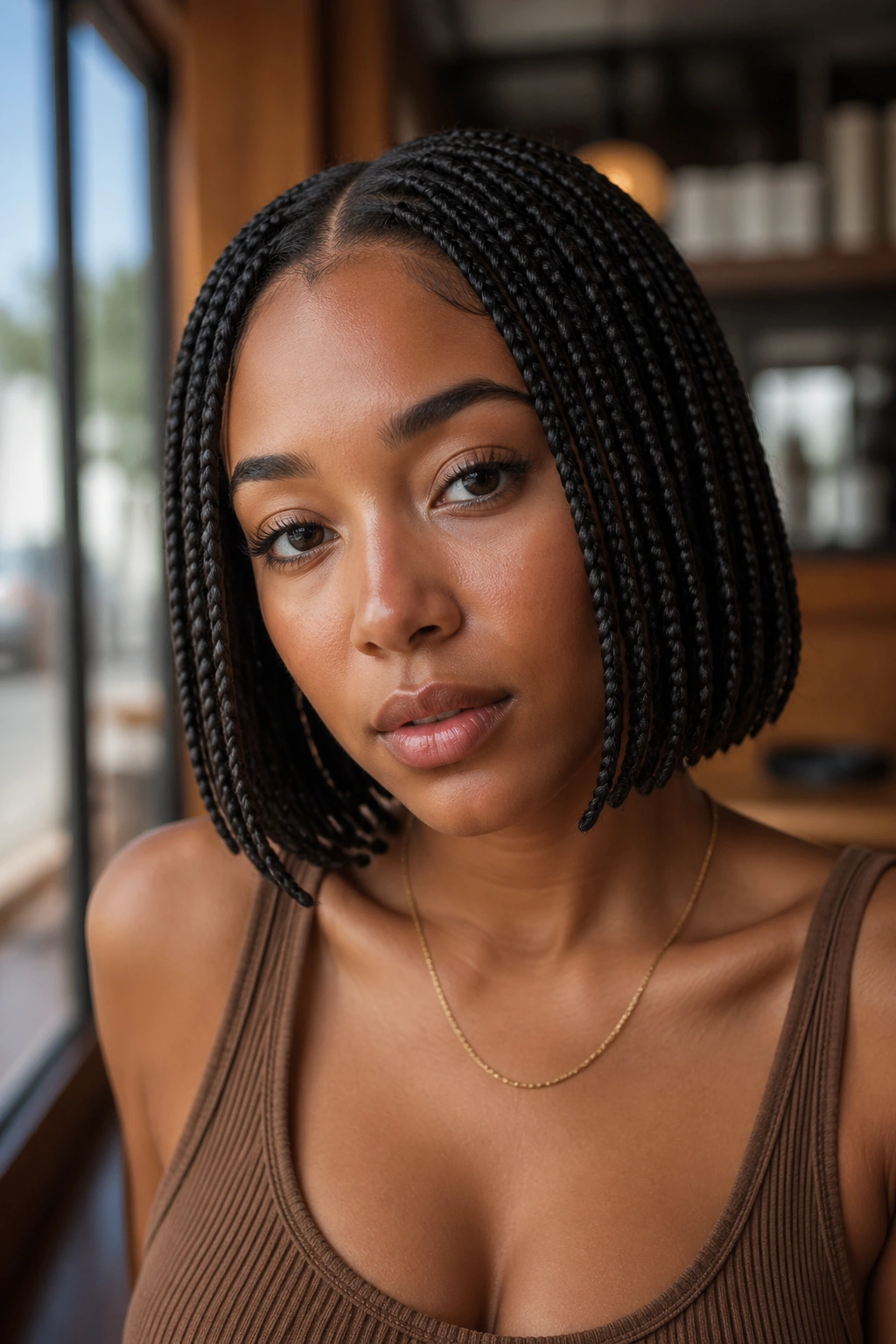
Short braids have a different energy. A braided bob feels sharper, lighter, and easier to wear when you do not want hair grazing your ribs all day. It also puts more attention on the face, which is useful if you like earrings, a clean neckline, or a strong brow.
The bob length works especially well when the ends are blunt or softly tucked, not frayed. If the braids stop around the chin or collarbone, the shape stays neat. Too much length and you lose the point of the cut.
There’s also a practical upside. Shorter braids are easier to dry, easier to sleep in, and less likely to swing into your makeup or lip gloss all day. That sounds small. It isn’t.
Braided bobs look best when the parting is crisp and the weight is balanced on both sides. If one side hangs longer, the whole cut can feel accidental. Keep it even, and the style feels sharp.
17. Braided Pigtails
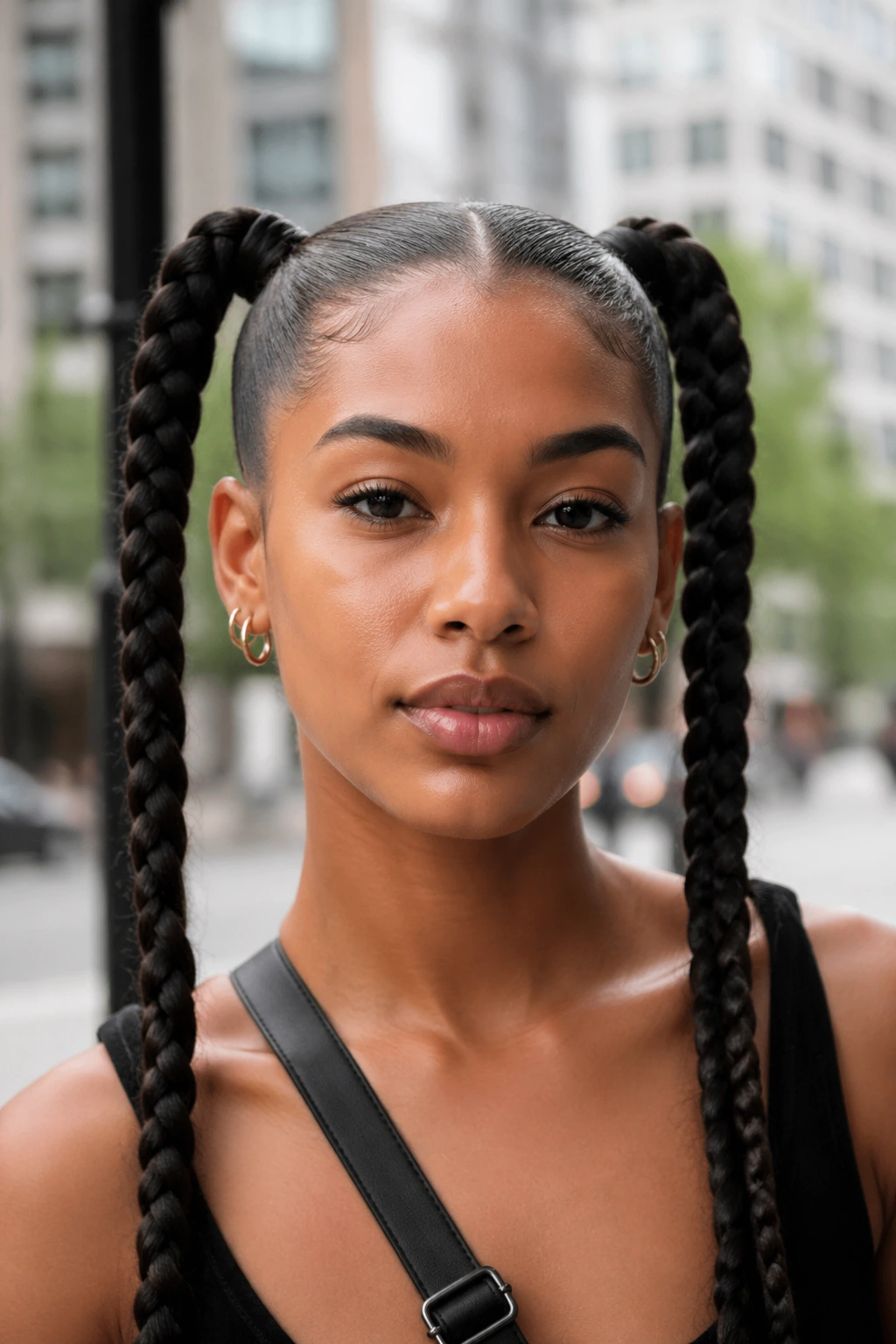
Braided pigtails are having a much better moment than their childhood reputation suggests. The trick is structure. Clean parts, grown-up lengths, and a finish that feels deliberate instead of playful for the sake of it.
Wear them high for a sharper, more athletic mood. Wear them low and loose if you want something softer. Either way, the symmetry gives your face a frame that feels direct. There’s no hiding behind this style, which is part of the charm.
They work especially well when the braids are medium size and the hair around the part is smooth. A little gel at the roots keeps the lines tidy, and that makes the whole look feel less messy.
Pair them with hoops, a plain tank, or a cropped jacket, and they start to read cool instead of cute. That shift is all about proportion. The braids are doing the styling, not fighting it.
18. Side-Swept Braid
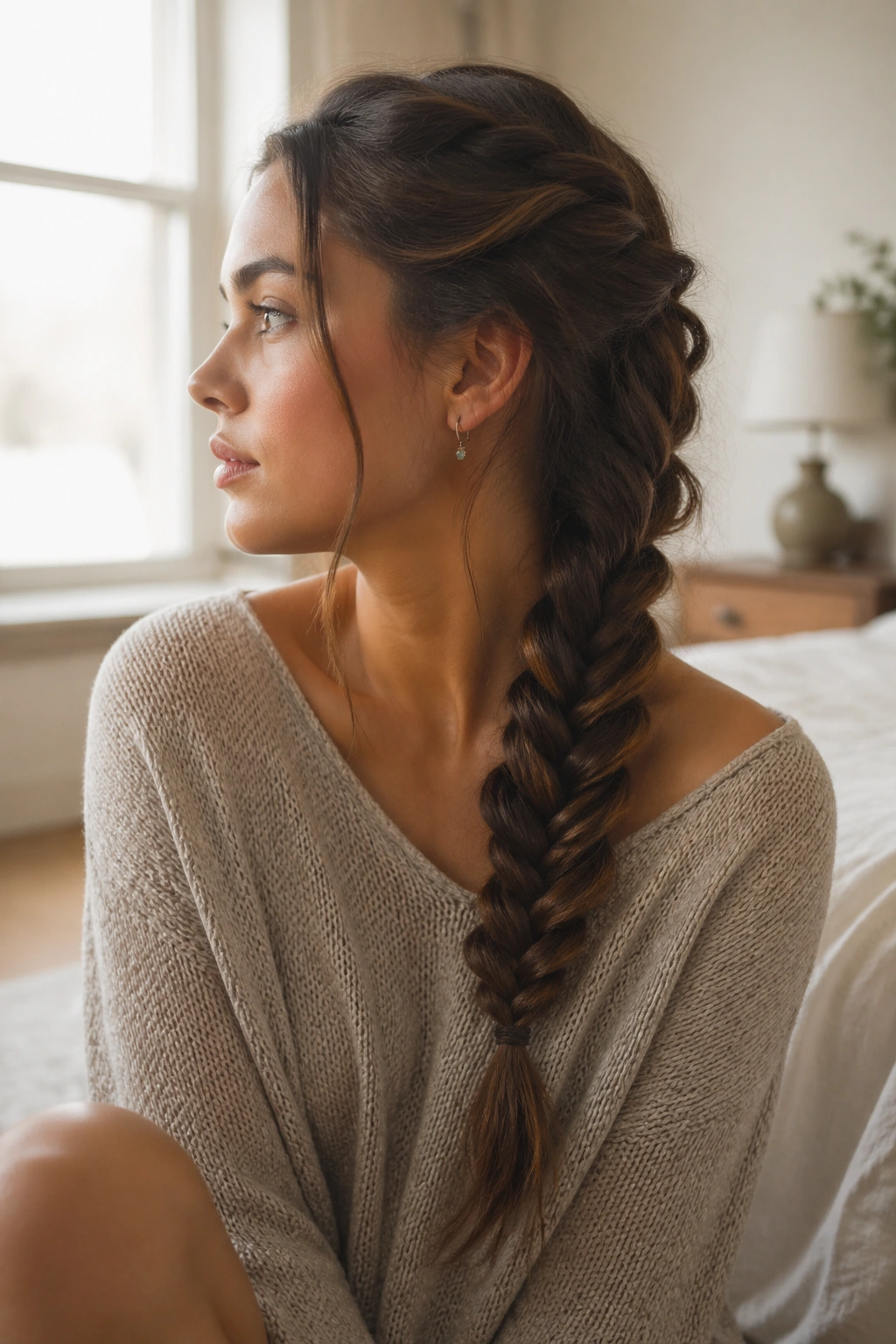
A side-swept braid changes the line of the face in a way that straight-back styles can’t. It draws everything to one shoulder, which gives the look movement before you even start talking about the braid pattern itself.
Where It Works Best
This braid is especially useful when your hair is growing out unevenly or when you want to keep one side tucked away while leaving the other side open. It also pairs well with layered cuts because the front pieces can blend into the braid instead of hanging awkwardly around it.
The braid can be French, Dutch, fishtail, or a simple three-strand version. The angle is what matters. A side part with a braid falling over the collarbone feels softer than a center part with the same braid.
I like this style with a little volume at the crown. Not a bump. Just enough lift so the braid doesn’t cling flat to the head. That tiny lift keeps it from looking severe.
19. Ghana Braids
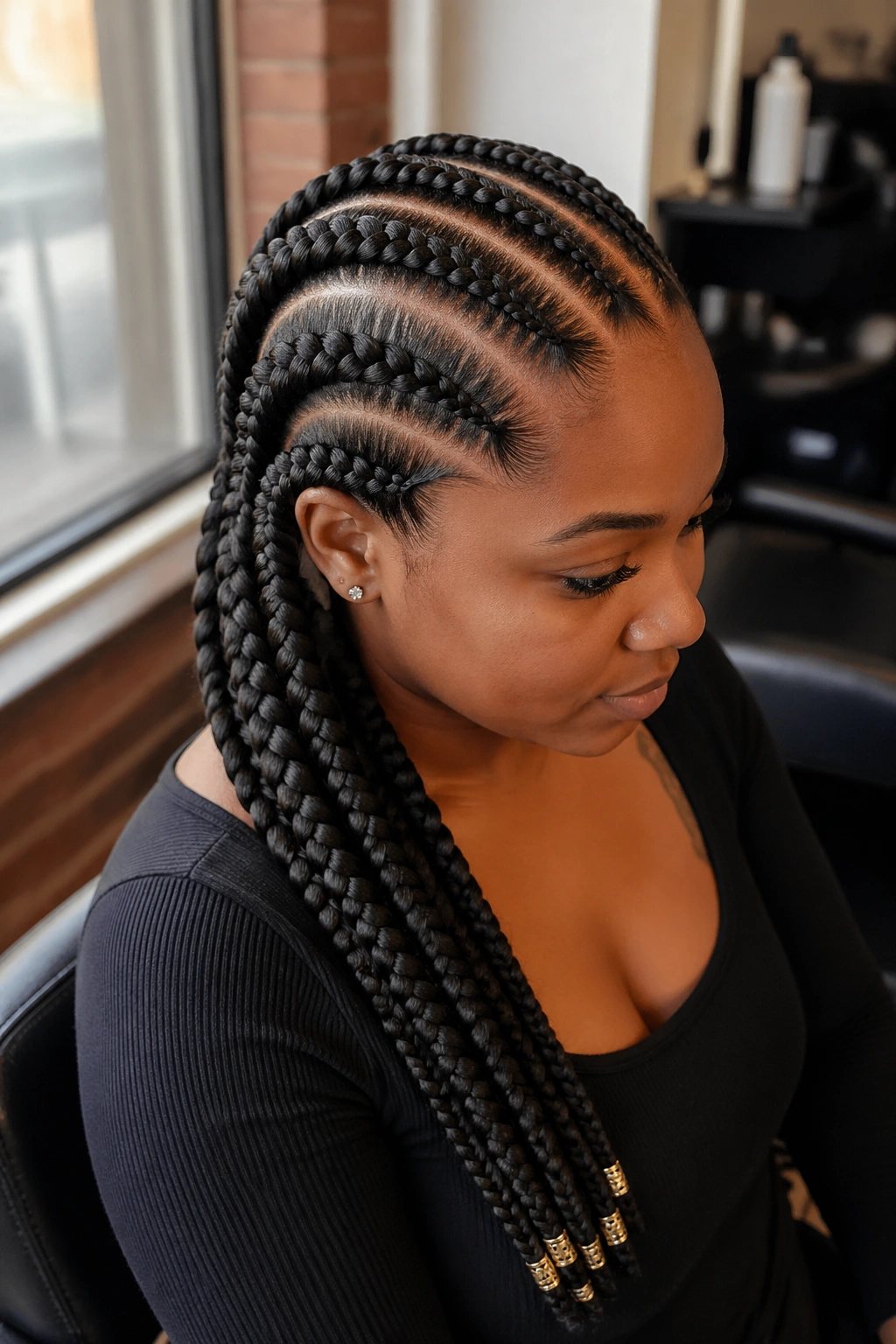
Ghana braids are thicker feed-in braids that start narrow and widen with added hair as they move back. The shape is smooth, bold, and very clean when the sections are done well. You get a style that sits close to the scalp but still has a strong visual line.
The parting matters a lot here. Even spacing makes the braids feel balanced, while uneven sections make the whole thing look rushed. The build from small to large is what gives Ghana braids their distinct shape, so the transition needs to be gradual.
They’re useful when you want something protective but not tiny. There’s enough presence to make the style feel styled, not just installed. That’s the lane.
Ghana braids also hold accessories well. A few cuffs near the ends or one polished bead at the front can sharpen the whole look. Keep it measured. The braid pattern already has a lot going on.
20. Heart-Part Braids
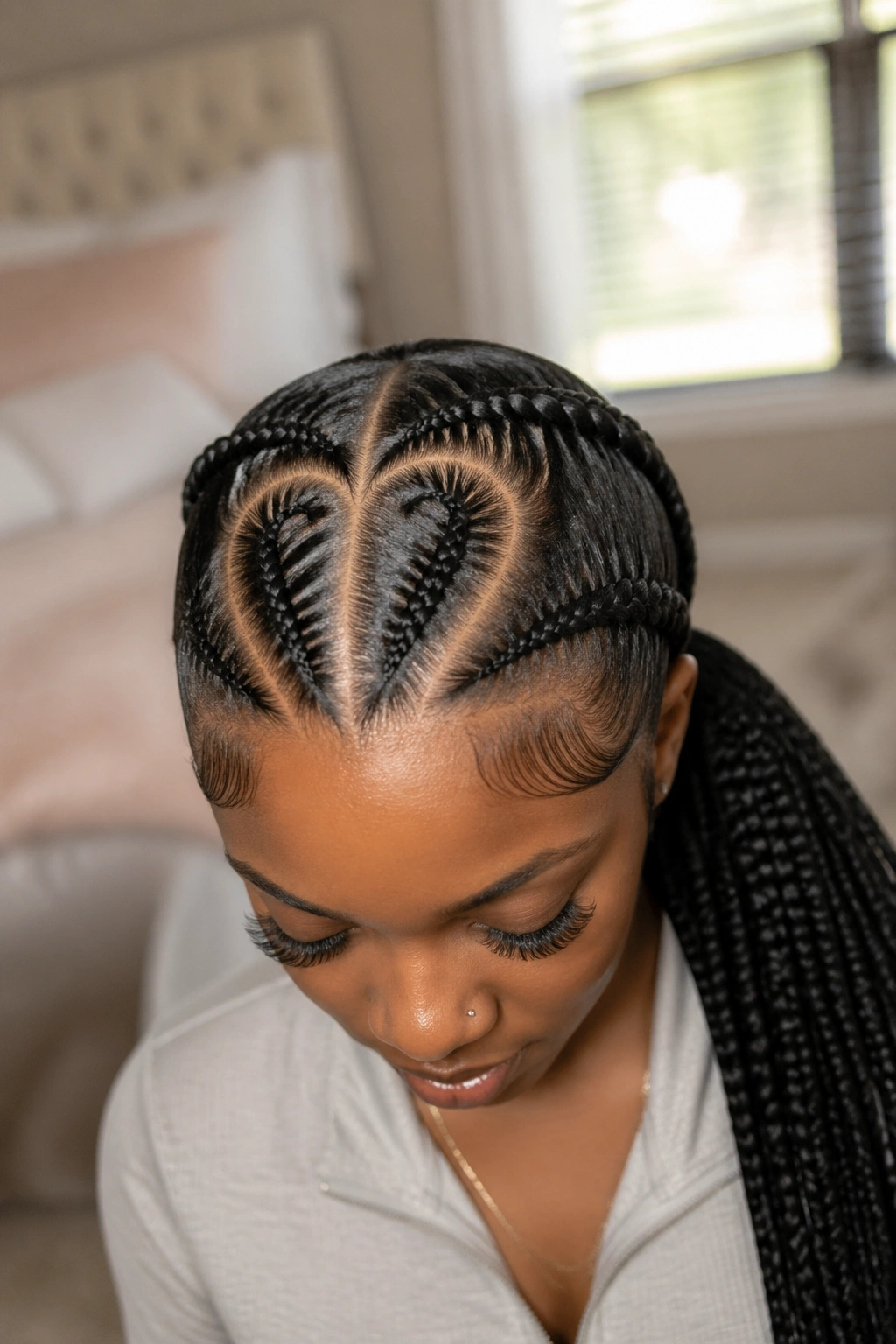
Heart-part braids are one of those styles that make people look twice because the part itself is the feature. The braid can be simple, but the heart-shaped section at the scalp turns the whole look into something more playful and graphic.
Why the Part Matters
The heart has to be clean or it loses the effect fast. A fuzzy outline reads as a parting mistake. A sharp outline reads intentional, and that difference is huge.
How to Keep the Shape Clean
- Use a rat-tail comb with a fine tip
- Outline the heart before you start braiding
- Smooth the root with gel or edge control in a thin layer
- Check both sides in a second mirror before you commit
Heart parts work well in ponytails, pigtails, cornrows, or box braids. They’re not subtle, and that’s exactly why they work with the cool girl aesthetic. The look says you enjoy a little detail, but you’re not interested in overloading the whole head.
21. Criss-Cross Cornrows
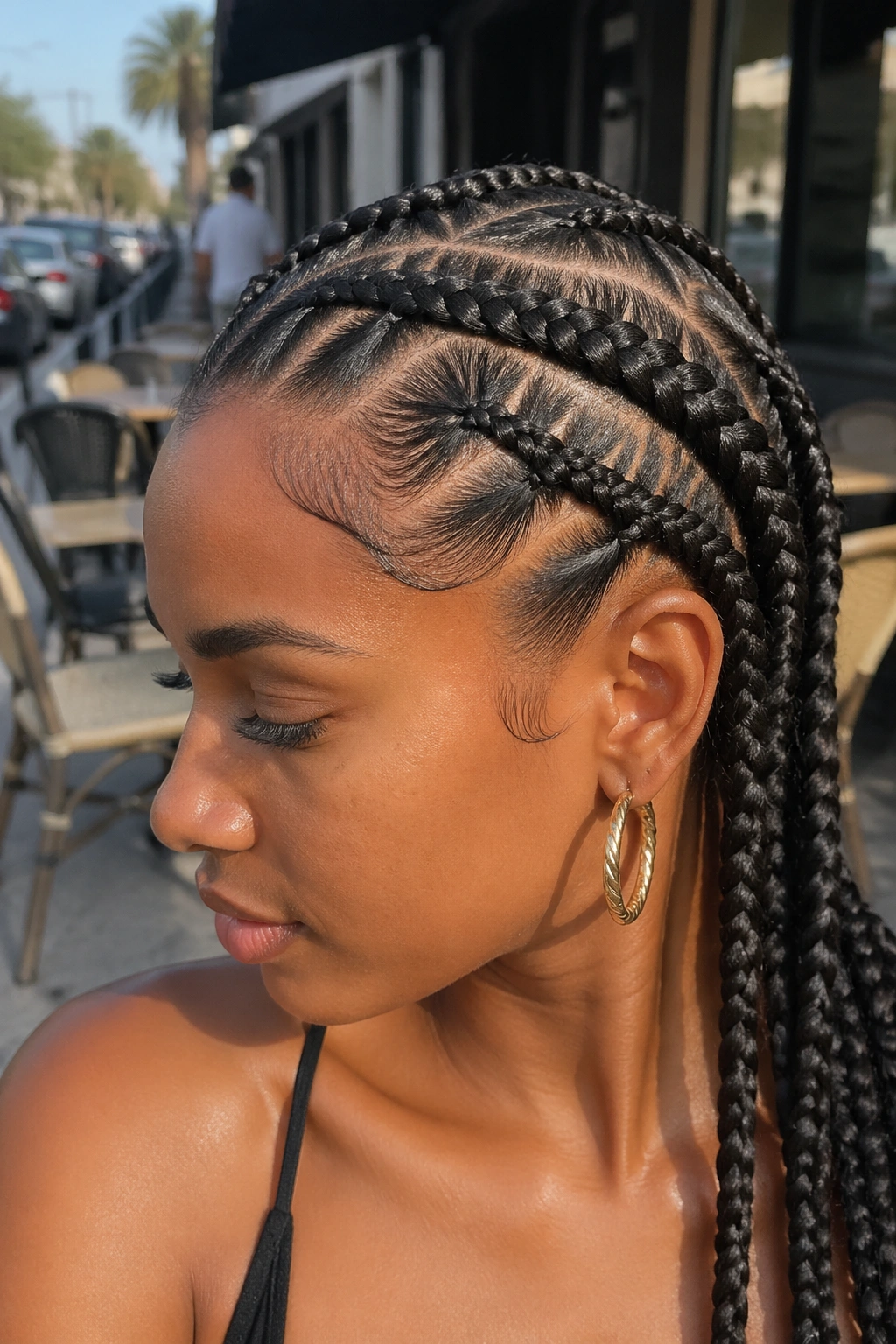
Criss-cross cornrows look intricate from the outside, but the real appeal is the structure. The braids weave over one another in a way that creates movement right at the scalp, so the hairstyle has interest even before you get to the length.
This style works especially well when you want something that feels more styled than straight-back rows. The crossed sections break up the line and give the head shape. It’s a good choice if you like cornrows but want something with a little more visual texture.
What Makes the Pattern Work
- Clean sectioning before the first braid starts
- Braids that overlap neatly, not loosely
- Enough tension to hold shape without pulling hard at the roots
- A finish that stays smooth near the crossover points
Criss-cross cornrows are the kind of braid people often save for a statement day, but they can wear easily with a simple outfit. The braid pattern is already doing enough. You do not need much else.
22. Waterfall Braid for the Cool Girl Aesthetic
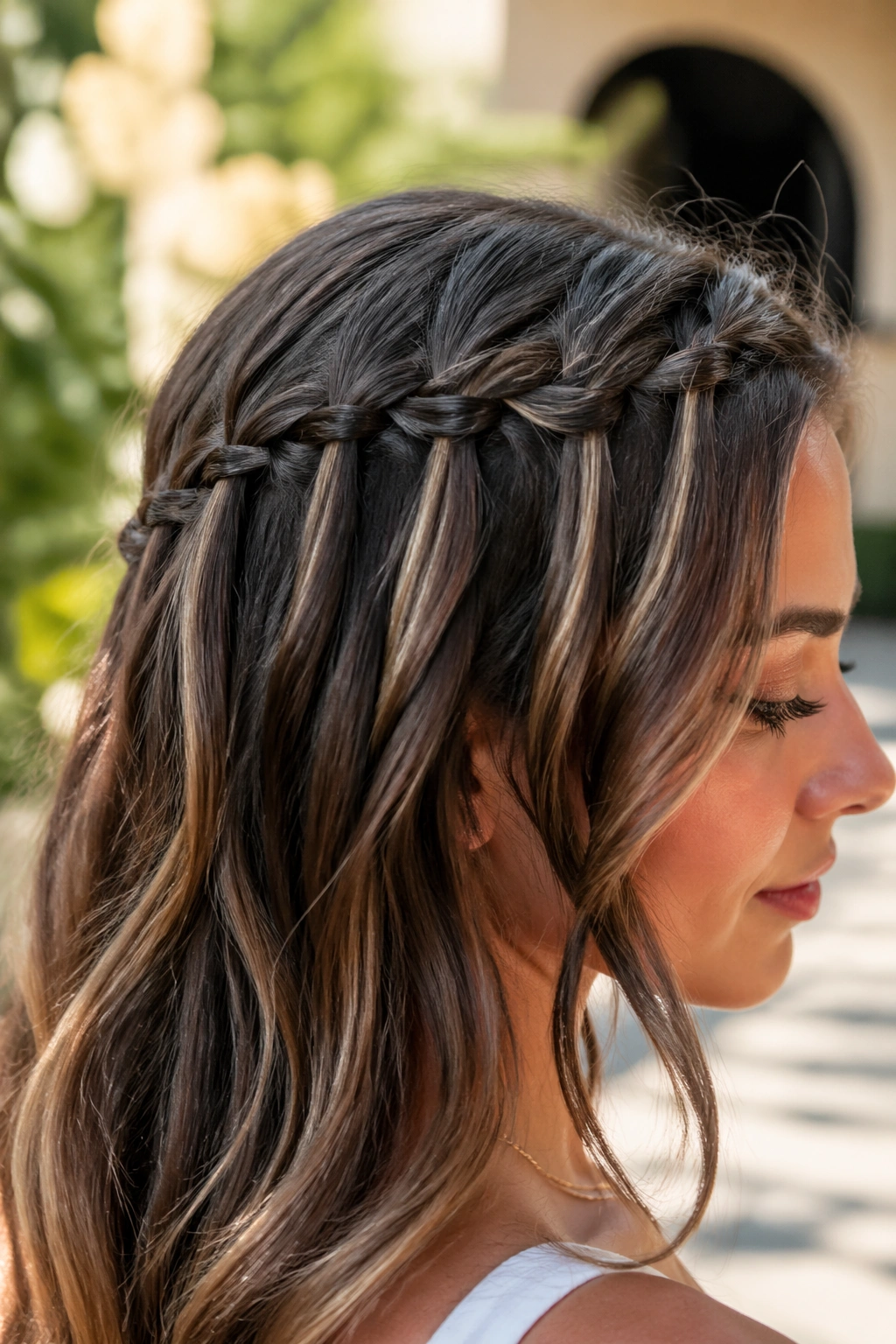
A waterfall braid has a soft, floating quality that makes it different from the tighter styles in this list. Strands drop through the braid as you go, which leaves little pieces free to move and keeps the whole look from feeling boxed in.
That looseness is part of why it fits the cool girl aesthetic so well. It looks styled, but not sealed. Polished, but not rigid. If you want a braid that works with waves, curls, or a little texture around the face, this is a strong pick.
It’s also one of the better styles for half-up looks. You can braid across the crown and let the rest fall, or use it as a side detail with a low wave through the lengths. A few small pins make it hold. A bit of mousse helps the loose pieces behave.
Waterfall braids reward a careful hand, but they do not need to be perfect. A tiny bit of softness at the ends makes the style look more natural, and that’s usually the point anyway. If one braid deserves a trial run first, this is a good one.
