



Long hair can turn into a heavy curtain if you braid it carelessly. The braid collapses. The scalp goes flat. The ends vanish into one thick rope that hides the very length you wanted to show off in the first place.
Dragon braids for long hair fix that problem better than most braided styles. They hold shape close to the head, keep texture visible, and let the tail keep going so the length stays part of the look instead of getting swallowed by it. That matters more than people admit. A braid that looks great on shoulder-length hair can look cramped on waist-length hair, while a dragon braid gives the length room to breathe.
The details are the difference between polished and messy in a bad way. Section size, where you start the braid, how tightly you pull at the hairline, and whether you finish with a clean elastic or a wrapped strand all change the final effect. Small choices. Big payoff. And on long hair, those choices show up fast.
1. Center-Part Dragon Braid Down the Back
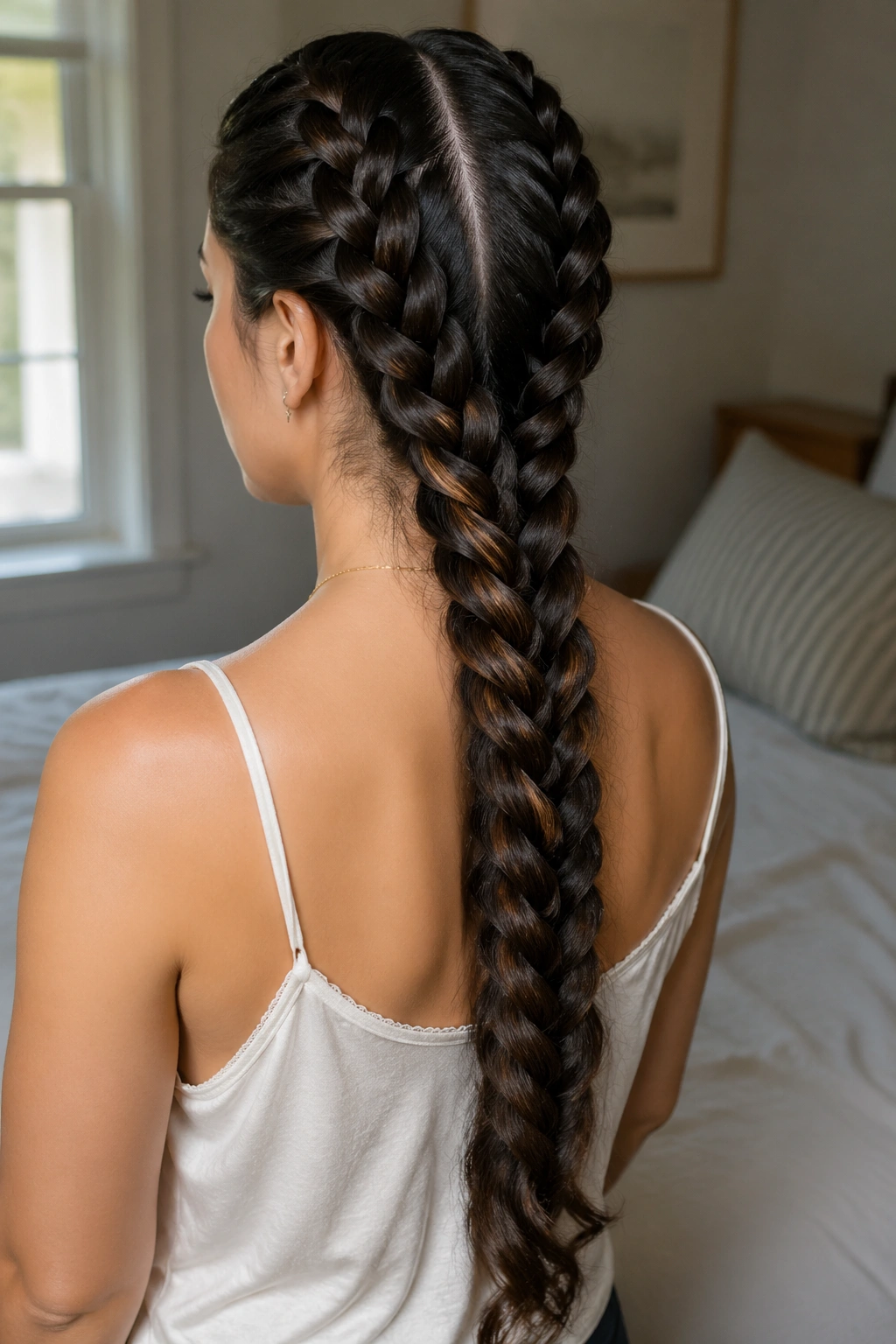
A center-part dragon braid is the easiest way to let long hair look organized without flattening it into a single rope. The straight part gives the braid a clean start, and the long tail keeps the eye moving all the way down the back. It works especially well when your hair already has some thickness, because the braid reads as a strong line instead of a tiny detail lost in the length.
Why It Flatters Long Hair
Start the braid high, near the crown, and keep the first feed-in sections narrow. If the top is too wide, the braid balloons before it reaches the shoulder blades. That’s the part people often miss. The braid should feel snug at the scalp and softer through the tail.
- Best on hair that reaches at least the bra line.
- Keep the first added sections about pencil width.
- Use a light cream on the ends, not the roots.
- Finish with a small elastic, then wrap a thin strand around it.
Best move: pancaking the braid only from the middle down keeps the top clean and the lower length full.
2. Twin Dragon Braids with a Clean Middle Part
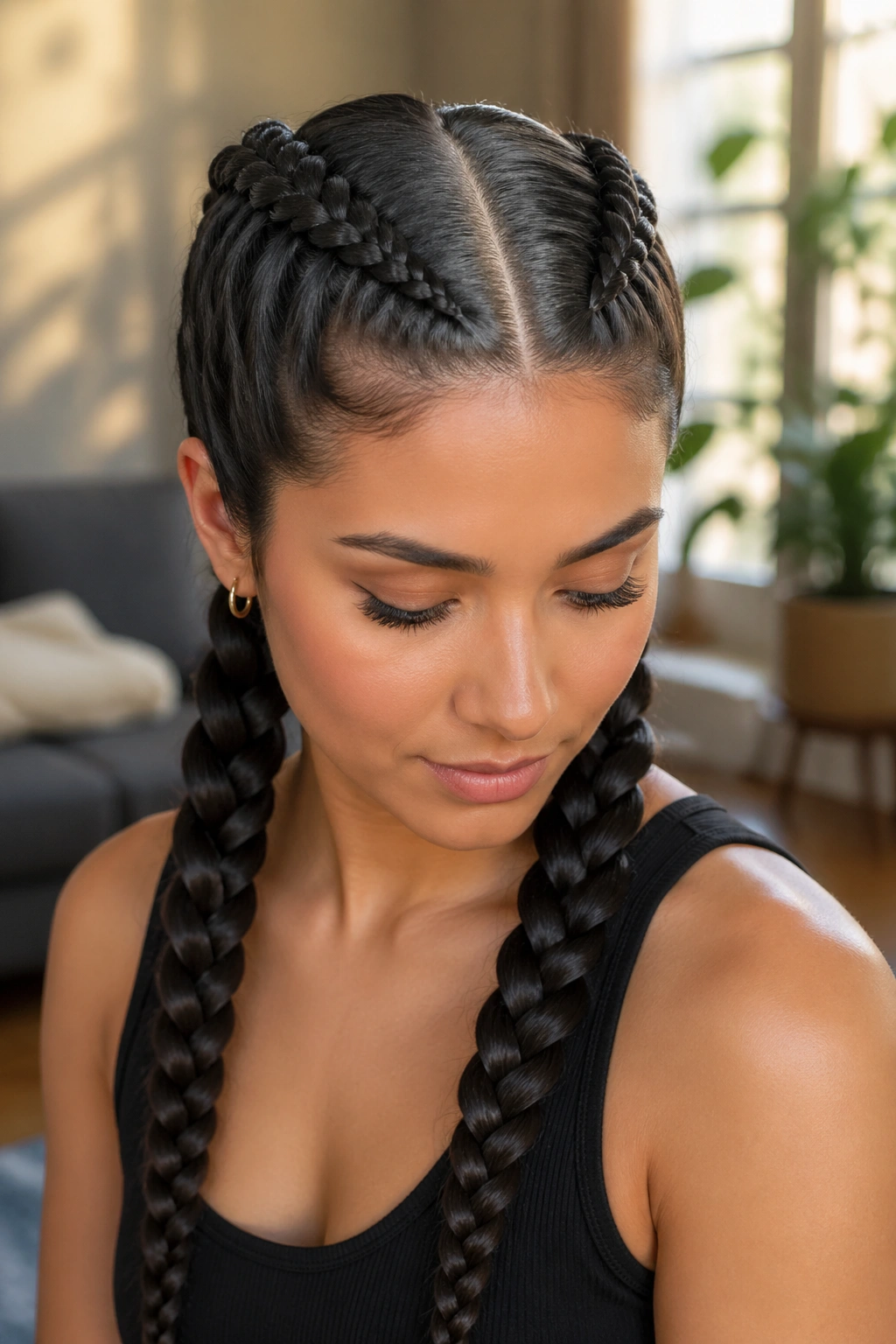
Two dragon braids can look cleaner than one. They split the weight, keep thick hair under control, and turn long length into a feature on both sides instead of dumping everything down the center of the back.
This is the style I’d pick when hair is dense and a single braid starts feeling bulky. The symmetry helps. Each braid gets its own line, so the eye reads the shape faster, and long hair feels intentional instead of heavy. If your hair reaches past the shoulder blades, this style gives it a little lift without forcing you into a bun.
The key is balance at the part. Make the middle line sharp, then feed each braid with sections that match in size. When one side gets chunkier than the other, the whole style starts to lean. Keep the ends long and loose rather than tucked under. The tail movement is half the point.
3. Side-Swept Dragon Braid Over One Shoulder
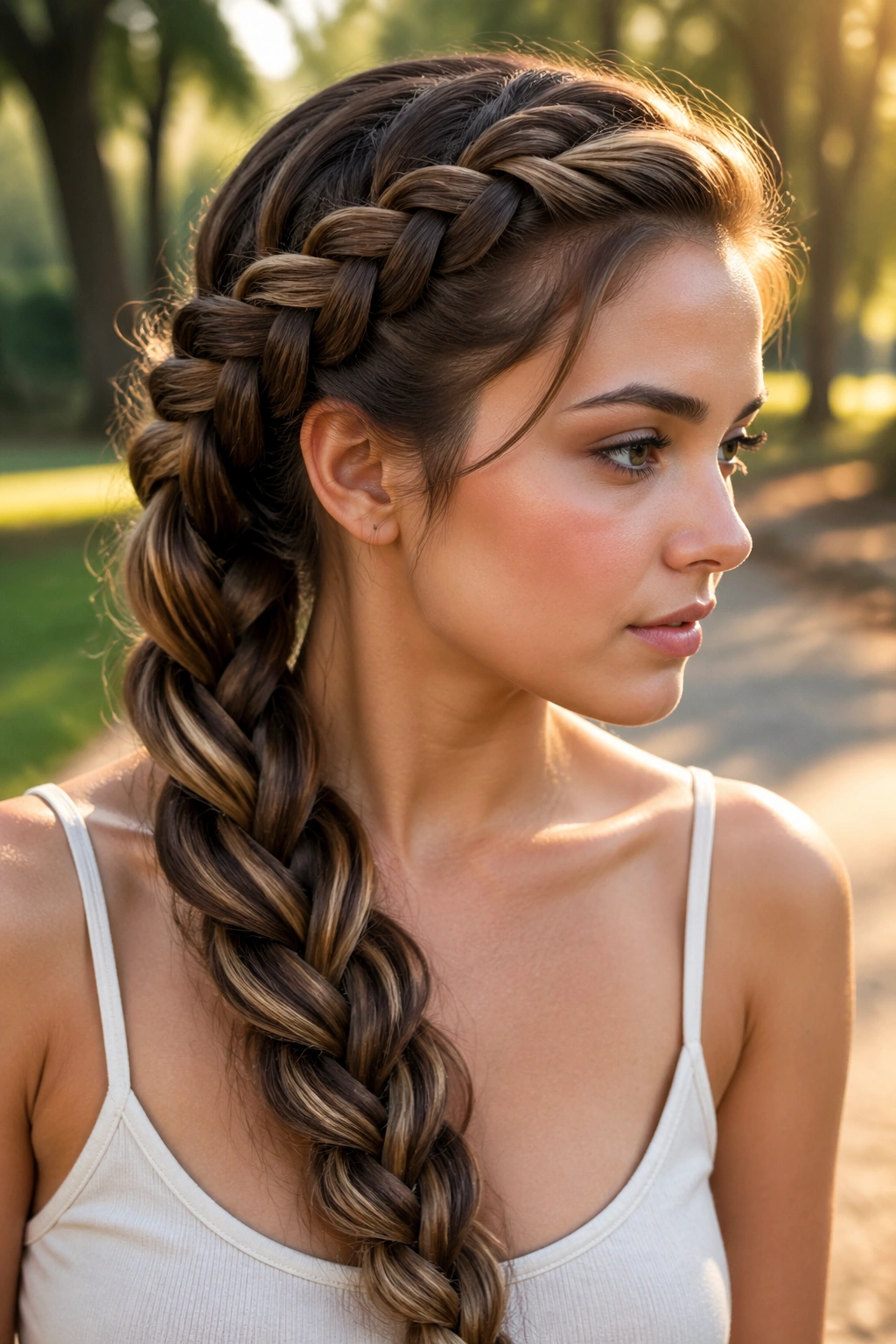
Why does a side-swept dragon braid work so well on long hair? Because it lets the length fall forward where people can actually see it. A braid down the middle can disappear against a shirt or jacket. Shift it to one shoulder, and suddenly the braid gets shape, shine, and movement.
The trick is the angle. Start near the temple or just above the ear on the heavier side of the part, then guide the braid diagonally toward the opposite shoulder. Keep the first few stitches snug, then ease up as the braid drops so it doesn’t feel stiff. That diagonal line flatters long hair because it creates length across the body, not just down it.
How to Place It
- Begin about 2 inches above the ear.
- Braid at a 45-degree angle toward the opposite shoulder.
- Leave the nape slightly loose so the braid doesn’t pinch.
- Pin the top with two crossed bobby pins if your hair is slick.
One small thing matters here: the braid should sit on the shoulder, not behind it. That is where the style gets its drama.
4. High Ponytail Dragon Braid with Lift at the Crown
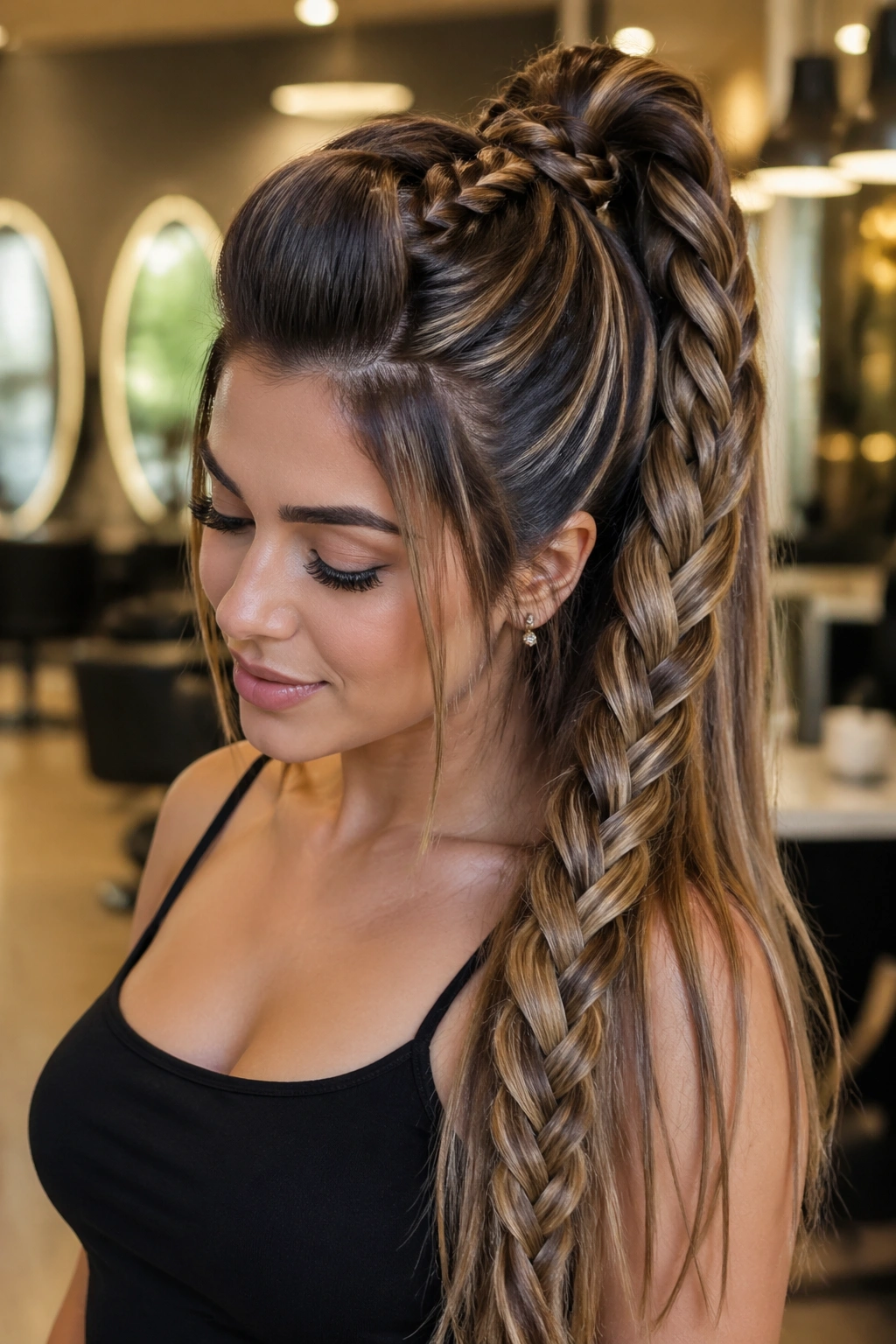
A high ponytail dragon braid is the one I reach for when long hair needs energy. It pulls the face up, keeps the crown from looking flat, and turns the tail into a swingy line that moves when you walk.
Picture a day when you need your hair off your neck but still want it to look deliberate. High ponytail. Tight base. Then braid the tail all the way to the ends, leaving the last 3 or 4 inches neat rather than frayed. A small strand wrapped around the elastic gives the style a finished look without making it fussy.
The crown lift matters more than the braid itself. Brush the hair up with a bit of gel or cream, smooth the sides with a boar-bristle brush, and secure the ponytail before you start braiding. If the base is weak, the style sags by lunch. If the base is clean, the long tail does the rest.
5. Low Dragon Braid Bun for Long Hair
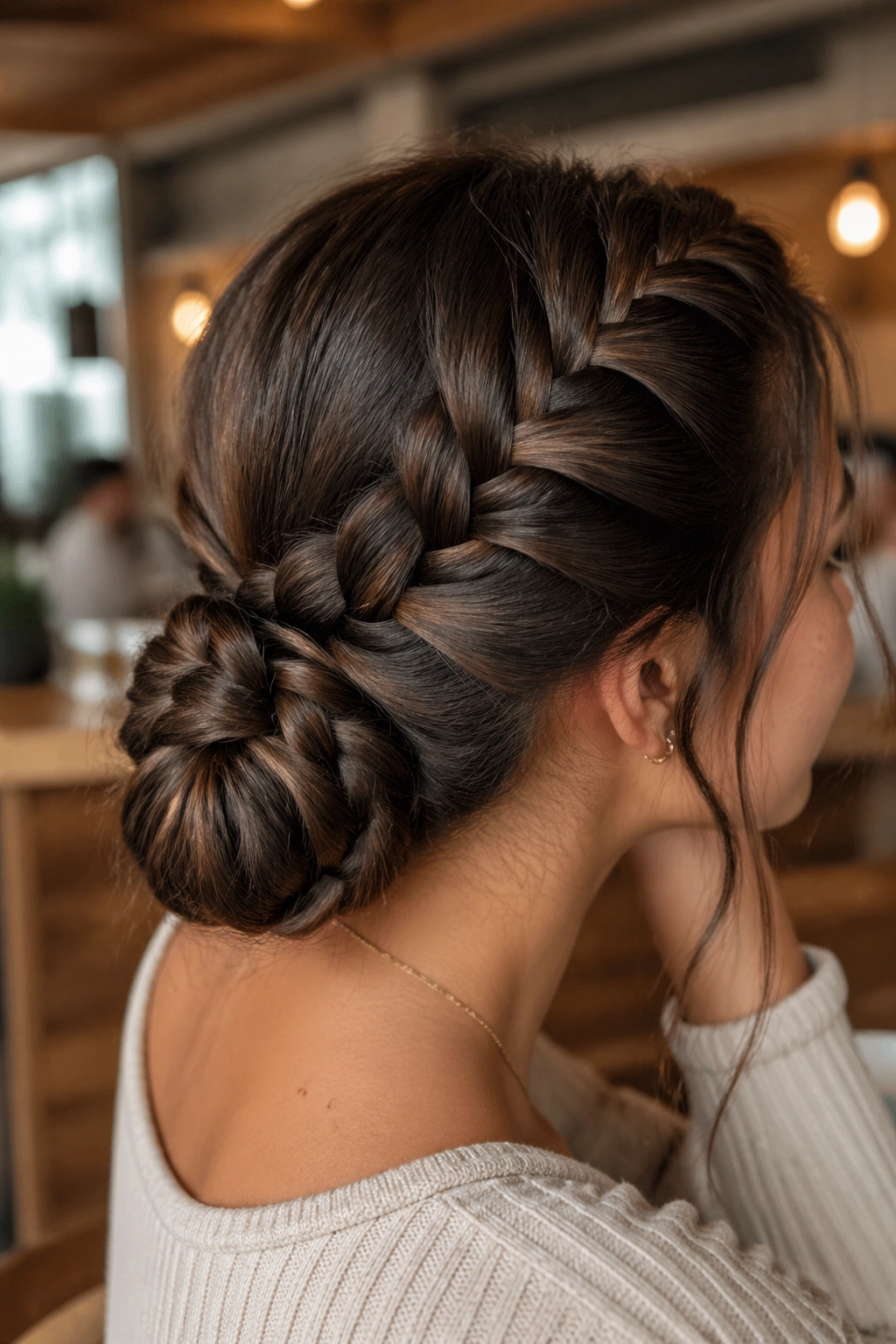
A low dragon braid bun has a different energy. Less swing. More weight. It is the style you choose when you want the long hair controlled, but not hidden.
The braid should start at the scalp and run down into the nape, where the hair is coiled into a bun or tucked into a folded knot. On very long hair, the braid itself becomes a decorative band around the bun, which is the whole point. You still get texture and length, but the ends are contained enough to survive wind, a coat collar, or a long dinner.
Don’t force the bun too tight. That’s the mistake. A hard little knot at the nape makes long hair look compressed and can create a sore spot within an hour. Keep the bun low, pin it with U-pins instead of one giant clip, and let the braid wrap around the base with a little room. The result feels steady, not stiff.
6. Half-Up Dragon Braid with Loose Length
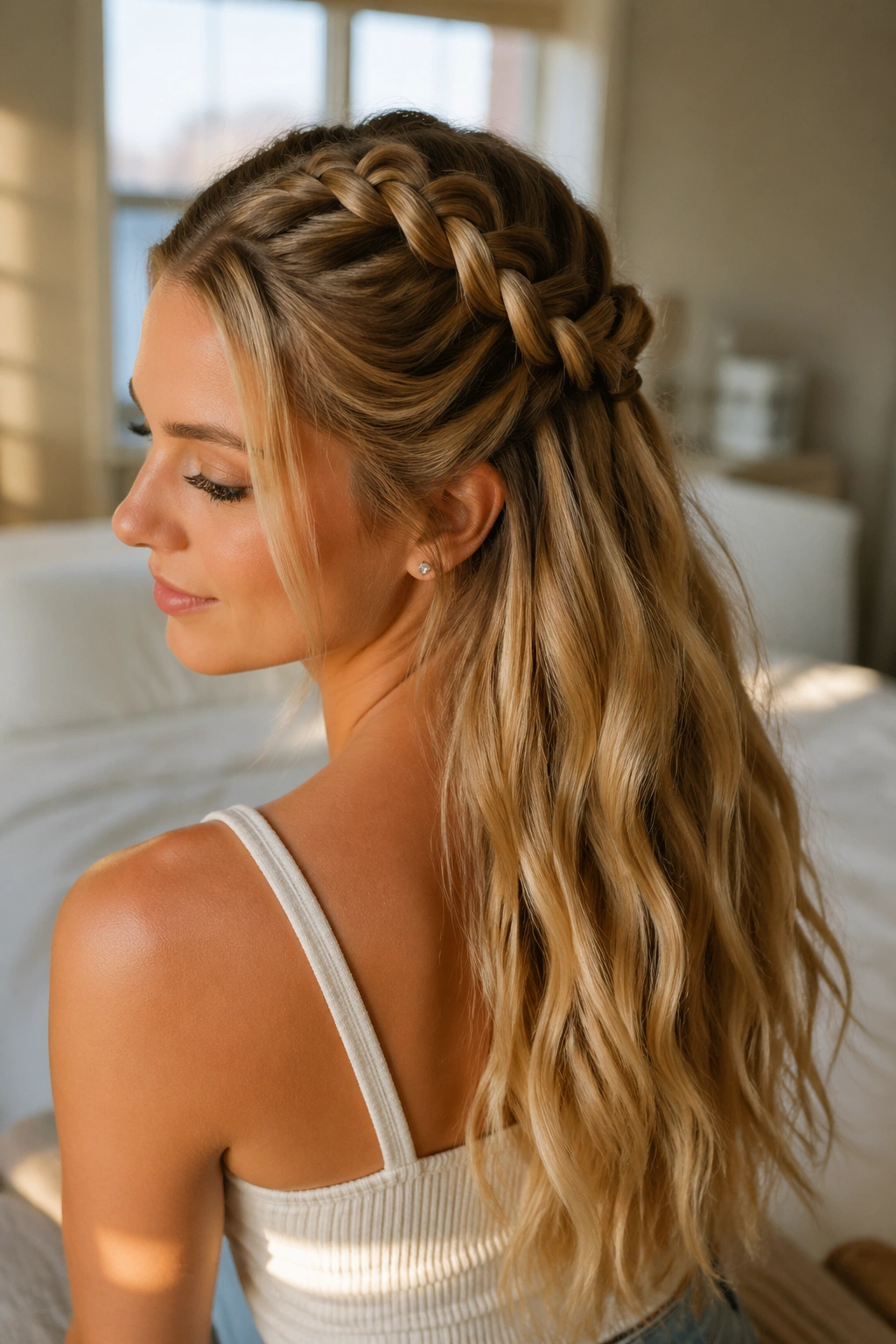
A half-up dragon braid is the easiest way to keep long hair visible without letting it fall into your face all day. It gives you the structure of a braid up top and the softness of loose length underneath.
That split is why it works. A full braid can feel too “contained” on very long hair. A half-up version lets the bottom half keep its motion, which is especially nice if your hair is wavy or layered. The top section does the work of anchoring the look, while the lower length still shows off thickness and shine.
Use a top section about 2 to 3 inches deep from temple to temple. Braid it back in a dragon braid shape, then pin it just below the crown. Leave the rest hanging straight, curled, or air-dried. If the lower hair is frizz-prone, a drop of serum on the last 6 inches is enough. More than that, and the ends go limp.
7. Fishtail Dragon Braid for Extra Texture
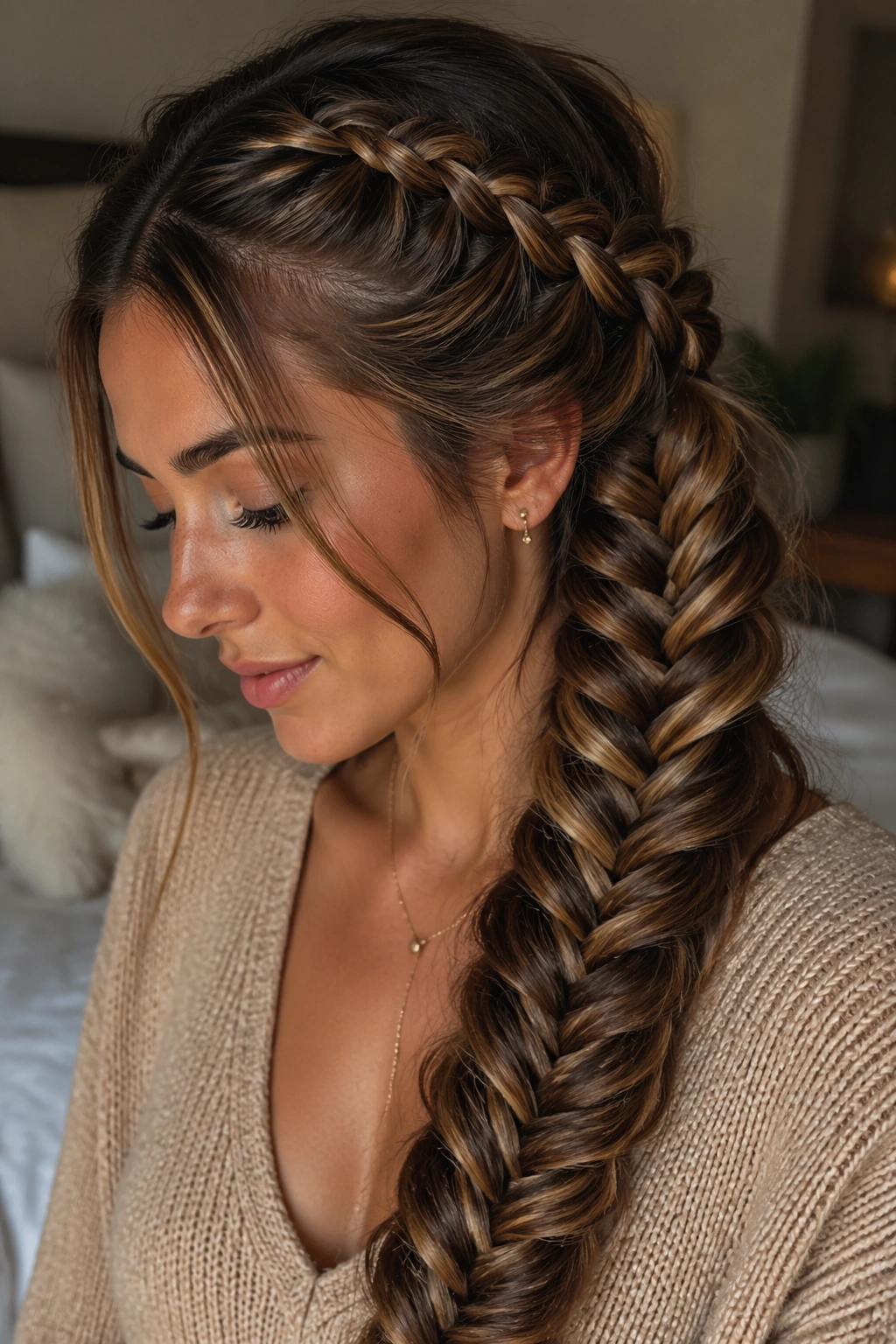
What happens when a dragon braid meets a fishtail? The answer is texture that looks far more detailed than the effort suggests. Long hair gives the fishtail pattern room to show, and the dragon braid structure keeps the top from collapsing into fuzz.
The braid gets especially interesting once it drops past the shoulders. Each tiny split in the fishtail catches a little light and creates a line you can see even from across a room. That matters on long hair, where big sections can sometimes look heavy instead of refined. The fishtail keeps the visual rhythm going.
How to Keep It Readable
- Start with clean, brushed hair so the sections don’t tangle.
- Use small splits near the top; big splits make the braid look loose too soon.
- Tug the edges after you tie off the tail.
- Mist the lengths lightly if the hair slides apart.
It’s a better choice than a plain braid when you want the end of the style to do some work.
8. Bubble-Ended Dragon Braid with Elastic Sections
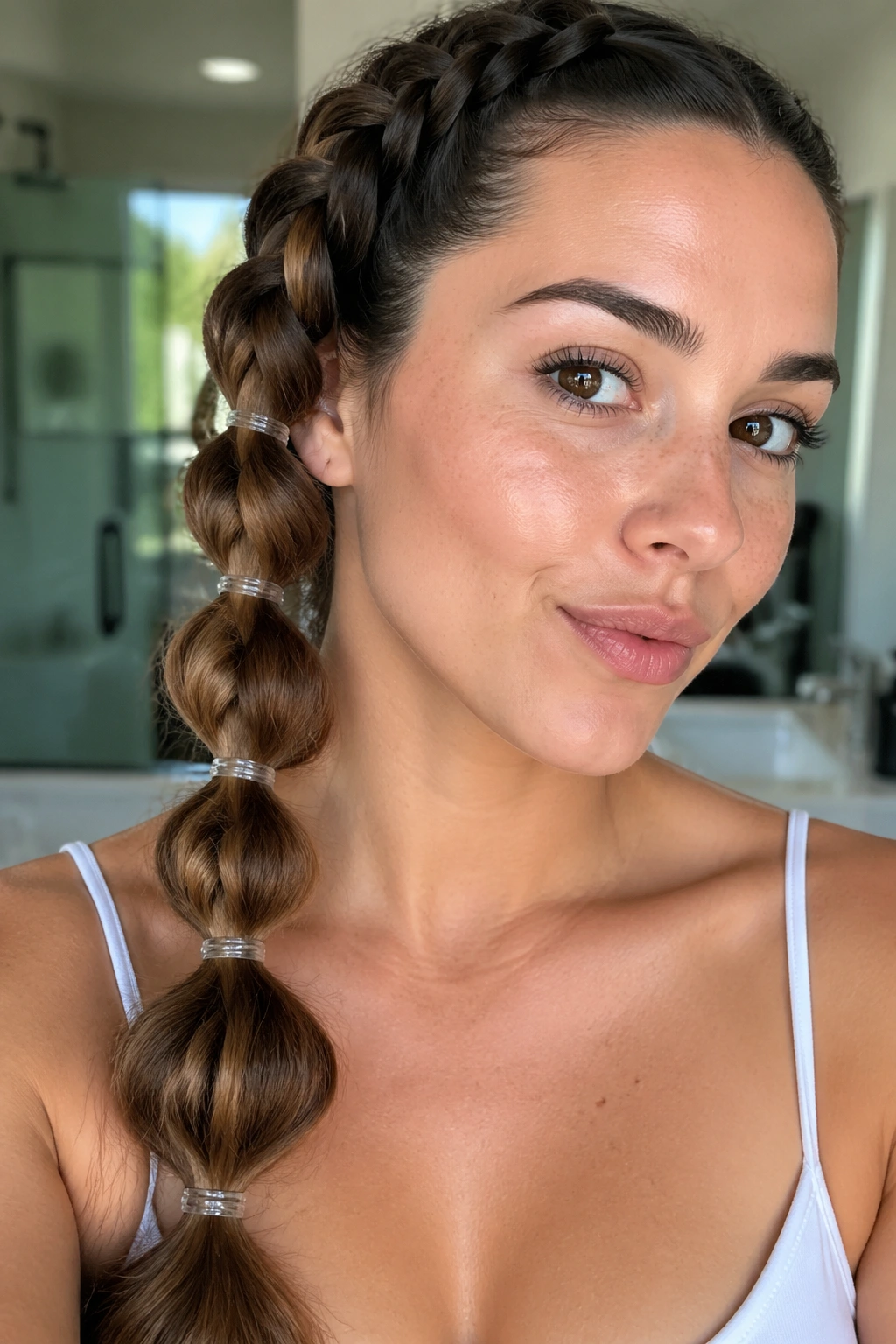
A bubble-ended dragon braid is one of the easiest ways to fake thickness on long hair. The braid itself stays tight, but each section gets puffed out between elastics, which gives the tail a fuller shape without needing extra hair.
The trick is spacing. Put clear elastics every 1½ to 2 inches down the length, then pull each section outward with your fingers until it rounds out. The top should stay neat. The lower bubbles can get bigger as the braid goes down, which looks better on long hair because the length has room to build.
Key Details
- Use matte or clear elastics so the sections look clean.
- Keep the first bubble smaller than the rest.
- Tug both sides of each section evenly.
- Stop about 2 inches before the ends so the tail still moves.
Best match: thick, straight, or stretched hair that needs more shape without more bulk at the roots.
9. Raised Dutch Dragon Braid Along the Scalp
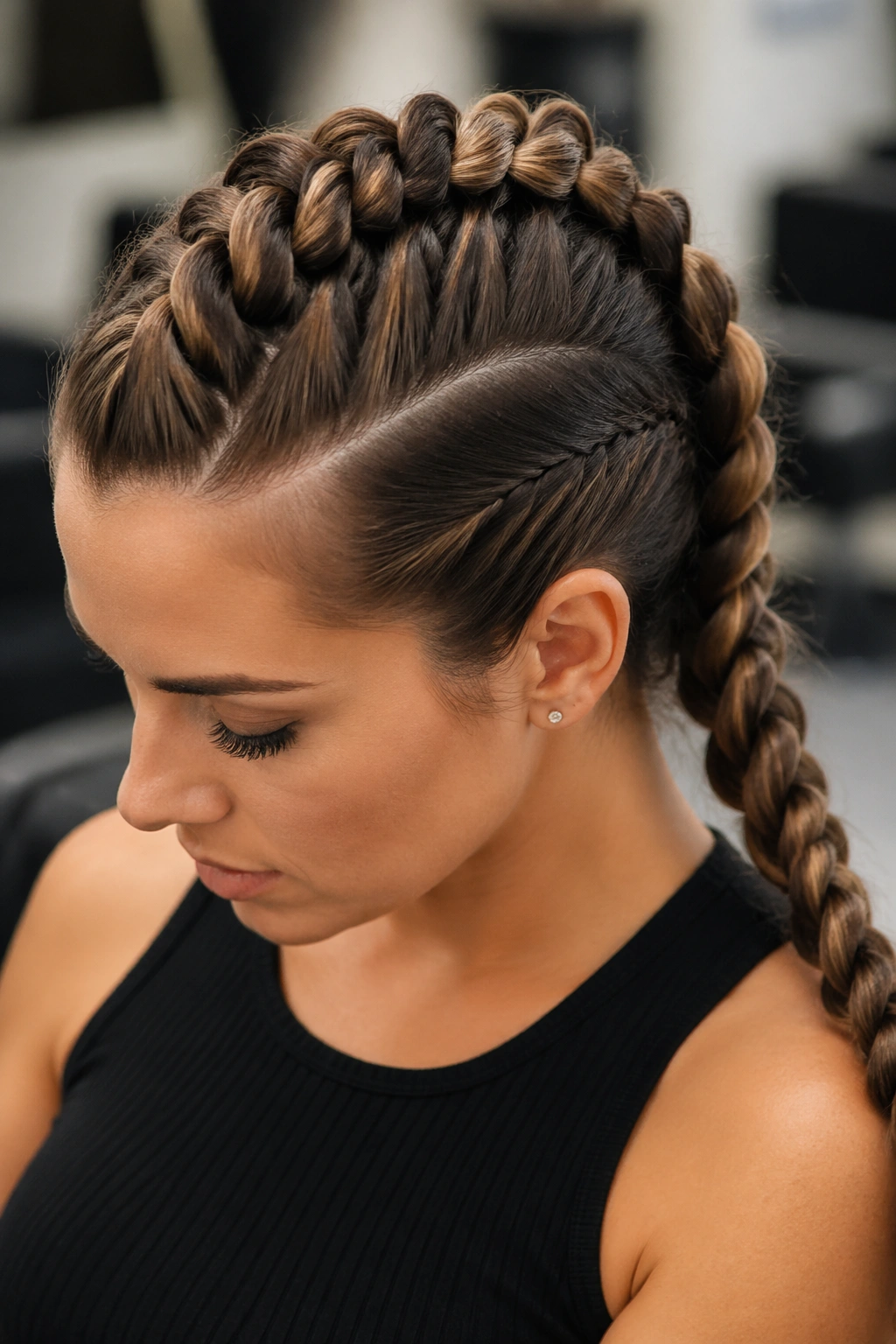
A raised Dutch dragon braid gives long hair a strong spine. The braid sits on top of the hair instead of sinking into it, which is why it shows up so well in photos and in person.
How the Braid Sits on the Head
The underhand crossing is the whole trick. Instead of folding strands over the middle like a regular braid, bring them under so the braid rises away from the scalp. That raised line is what makes the style look bold on long hair, especially if your hair has a lot of natural thickness.
Use a tail comb for the part and keep the sections even. If the pieces are too wide, the braid puffs out and loses that sharp ridge. If they’re too narrow, the braid disappears into the length. Right in the middle is the sweet spot. Stop the raised section a few inches before the ends so the tail can fall freely and keep the long-hair effect intact.
10. Crown Dragon Braid Wrapped Around the Head
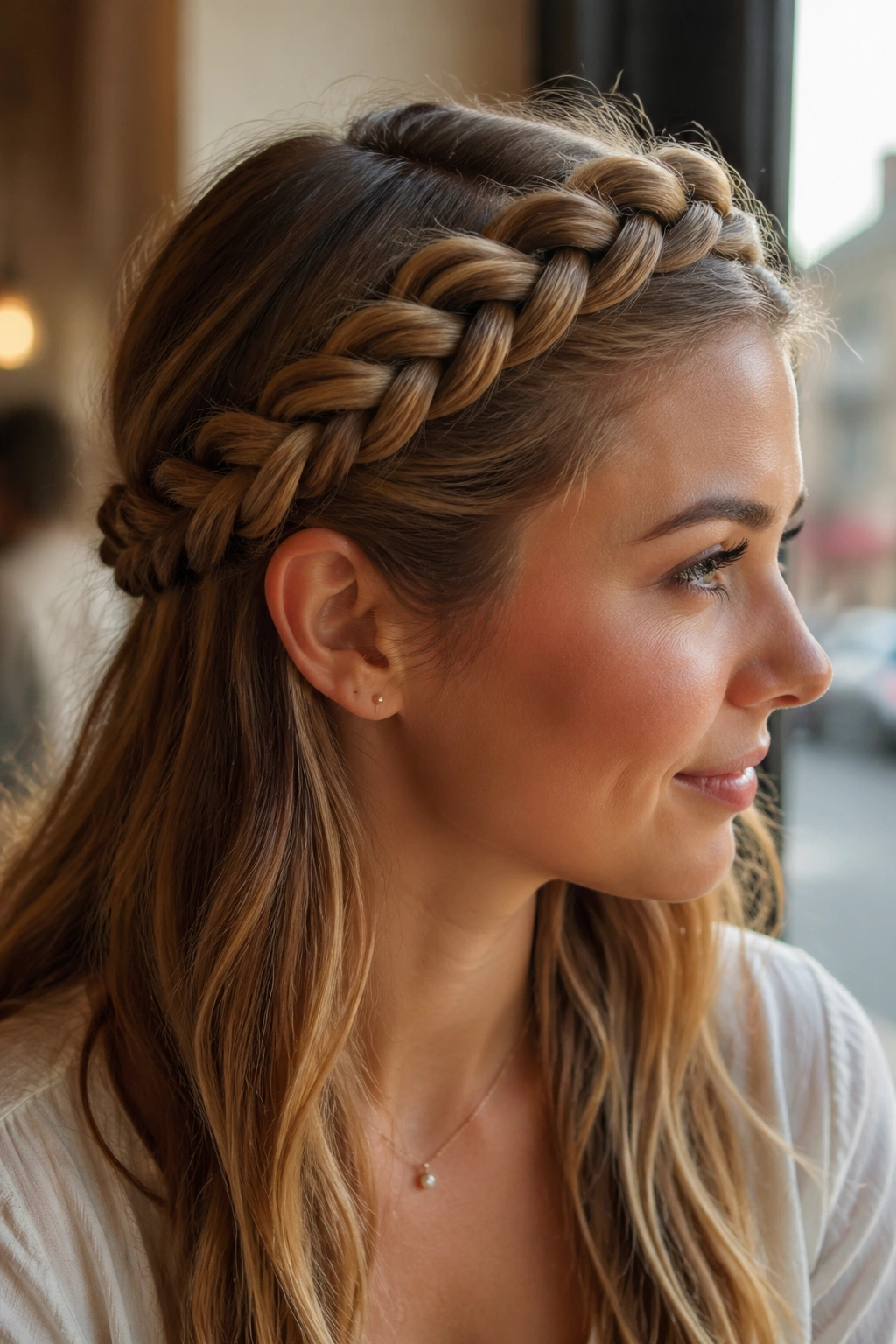
A crown dragon braid changes the whole shape of long hair. Instead of dropping straight down the back, the braid moves around the head like a band, which makes the face look open and the hairline feel clean.
This style works because it uses length in a different way. The braid travels from temple to temple, then wraps behind the head or over the crown, depending on the placement you want. Long hair gives it enough material to feel full as it goes, so it doesn’t look thin the way a short braid sometimes can. If you want, the ends can be tucked away for a smooth finish. If you want a looser finish, leave a small tail at the nape.
One detail makes it look polished: keep the braid sitting just above the ears instead of too high on the head. Too high, and it starts to look like a headband. Too low, and it loses the crown effect.
11. Waterfall Dragon Braid with Falling Strands
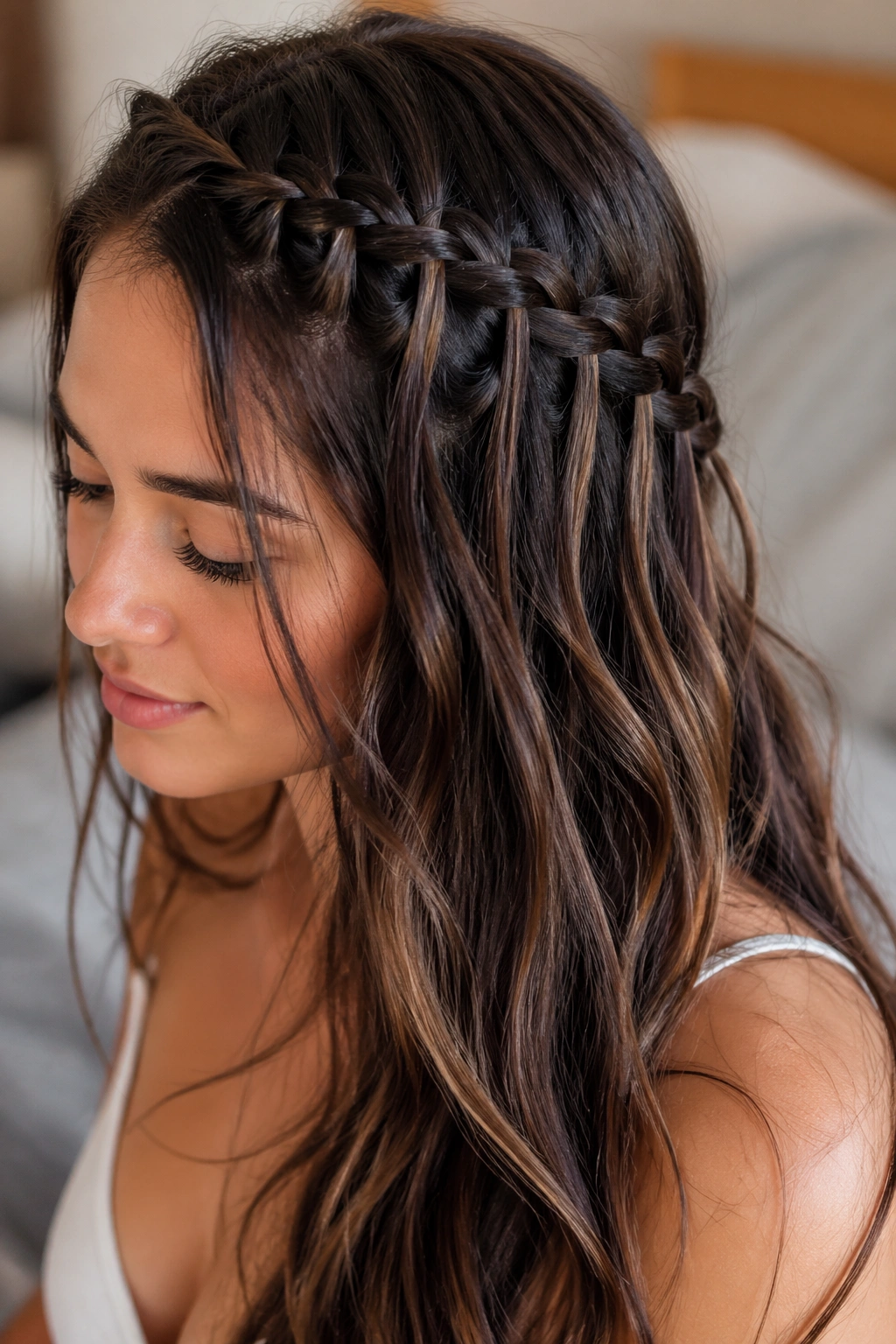
The waterfall dragon braid has motion built into it. Strands drop out as you braid, so the style keeps some of the hair loose while still building a visible braid across the head.
On long hair, that movement is the whole appeal. You get a braided line across the top, then ribbons of hair falling through the gaps like they were placed there on purpose. It looks soft, but not messy. A little wave in the loose strands helps a lot. Straight hair works too, though it can make the dropped pieces look sharper and more graphic.
This is not the style for hair that tangles at the first hint of wind. I’d use it on hair that has been brushed smooth and maybe misted with a little light-hold spray. Layered cuts can blur the pattern, so if your hair is heavily layered, keep the dropped sections narrow and close together. Otherwise the design can start to vanish before it reaches the back.
12. Space-Bun Dragon Braids with Long Tails
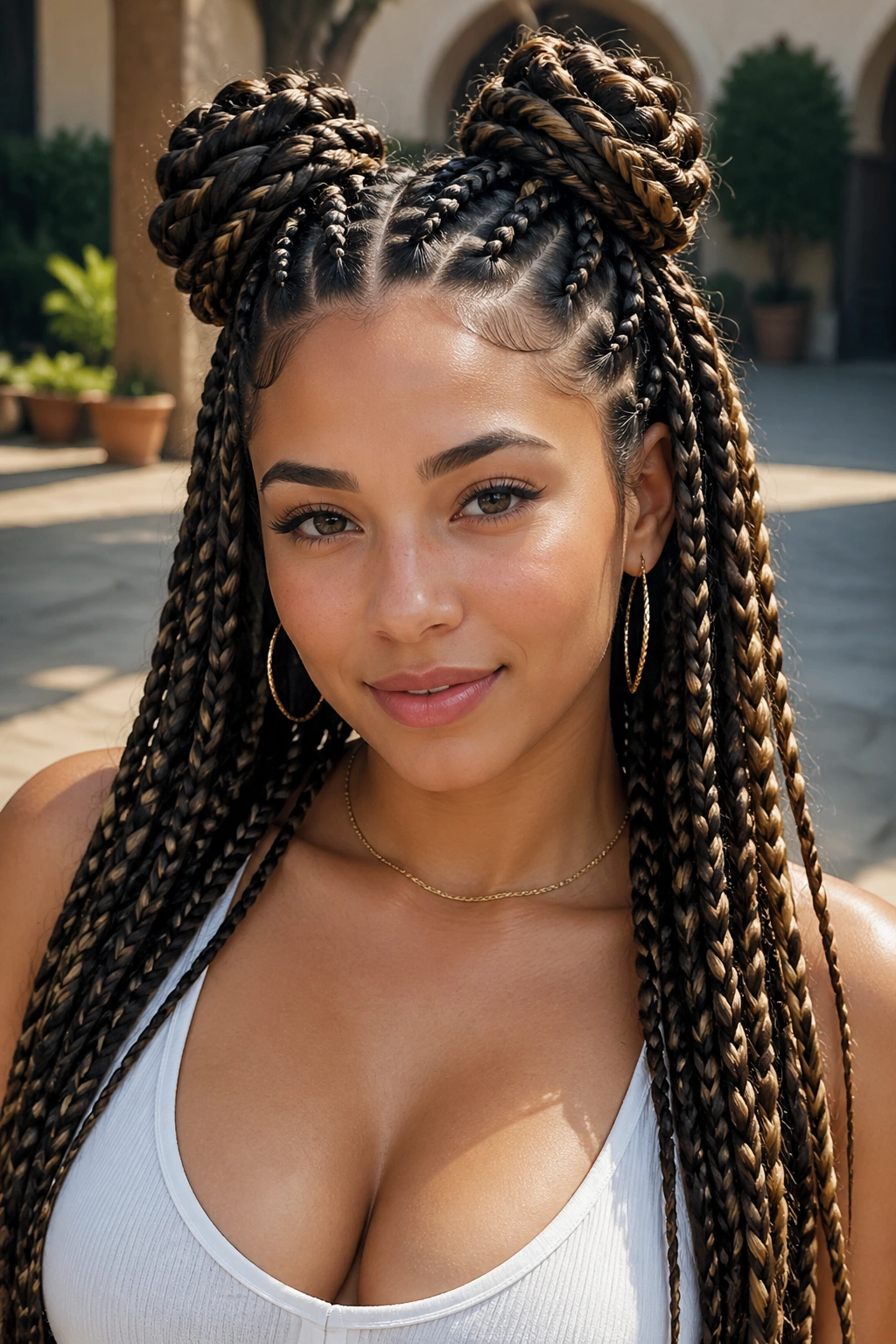
Space-bun dragon braids are playful, but they do not have to look childish. The trick is keeping the parts clean and the long tails long enough to read as part of the style.
You start with two braids, one on each side of a middle part, then coil each braid into a small bun high on the head. Leave the ends hanging or weave them out of the buns as long tails. On long hair, that tail changes everything. It stops the style from feeling like a novelty and gives it some weight.
This one works best when the buns are compact and placed evenly above the ears. If they sit too far back, the whole style loses its shape. If they sit too close together, you end up with a single lump instead of two clear forms. Keep the tails smooth and let them fall past the shoulders. That contrast is what makes the style worth wearing.
13. Sleek Dragon Braid for a Sharp Finish
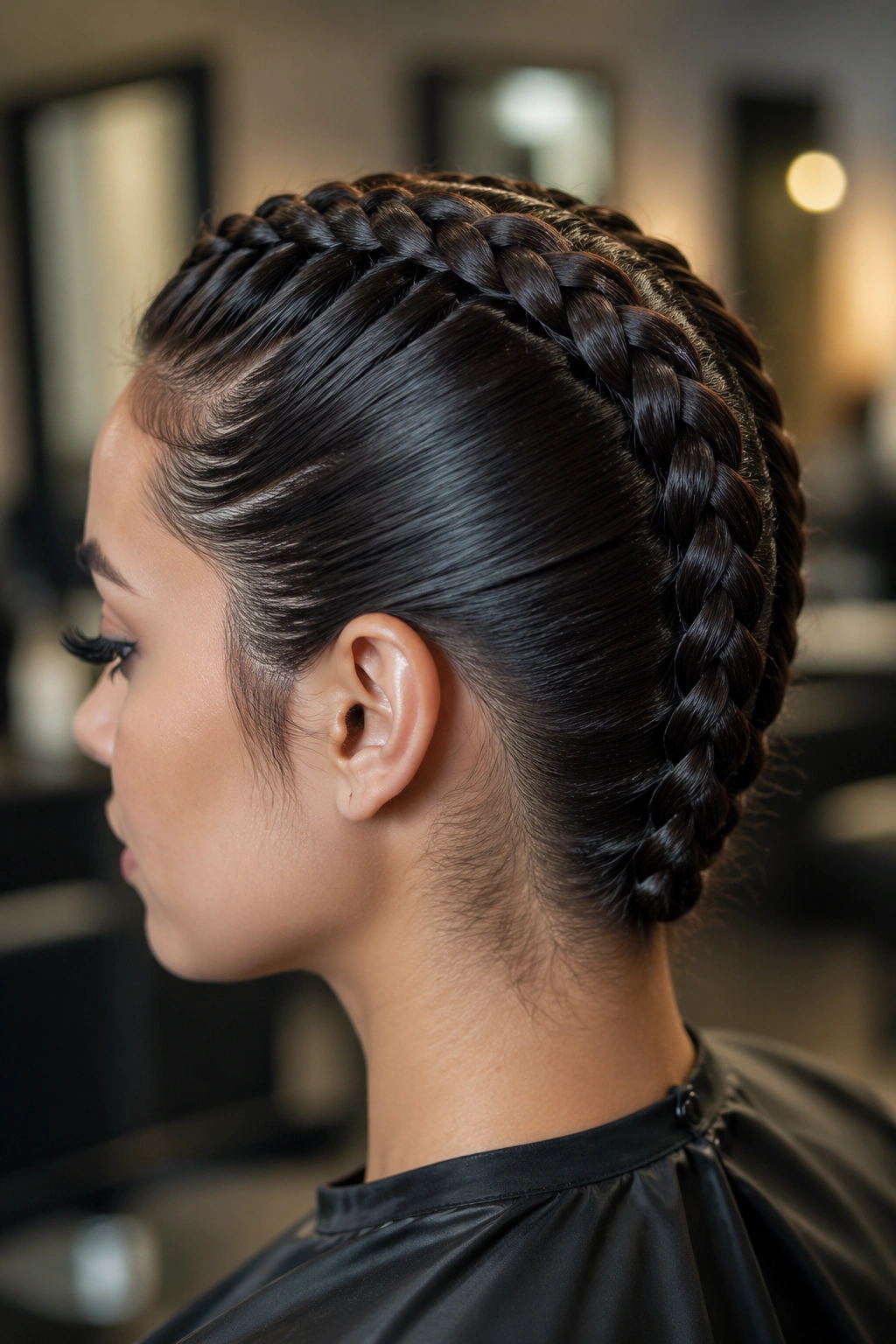
A sleek dragon braid is all about control. Every strand has a job. Every part is clean. Long hair looks especially good in this version because the smooth surface lets the braid pattern stand out without frizz stealing the show.
This style wants a little product, but not a helmet. Work a thin layer of gel or styling cream through the hairline and crown, then brush everything flat before you start braiding. A narrow boar-bristle brush helps keep the surface tight without making the hair look crunchy. The braid itself should be neat from top to bottom, with almost no pulled-out pieces.
This is the opposite of a loose festival braid. It looks strong, crisp, and a little serious. If your hair is very straight, the finish will be sharp. If your hair is wavy, smooth it first or the texture will fight the braid line. One shine spray at the end is enough. More than that, and the braid can look greasy instead of sleek.
14. Messy Dragon Braid with Pulled-Out Ribbons
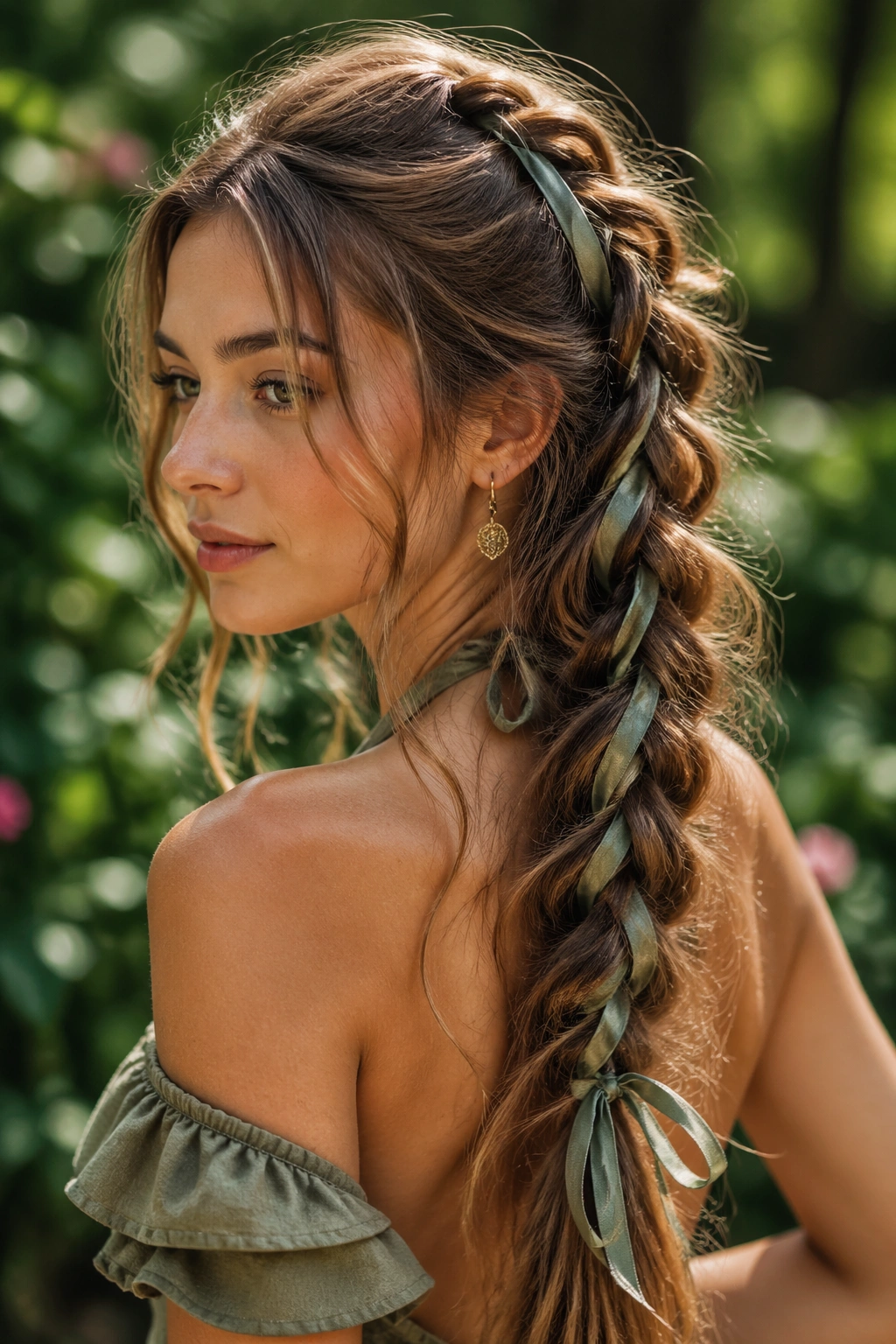
Why does a messy dragon braid work so well on long hair? Because the length gives you room to loosen it without wrecking the structure. A short braid can fall apart the second you tug it. Long hair has enough material to stay readable even when it’s softened.
The idea is not to make a mess. The idea is to create soft edges. Pull 3 or 4 face-framing pieces loose, then gently widen the outer loops of the braid with your fingertips. The braid should still have a spine, but it can breathe a little. On long hair, that looseness makes the whole thing feel lived-in rather than stiff.
A texturizing spray helps more than dry shampoo if the roots are already clean. Dry shampoo can leave a dusty finish. Texturizing spray gives the braid a rougher grip, which helps the pieces stay where you put them. Keep the ends neat even if the top is loose. That contrast keeps the style from sliding into chaos.
15. Four-Strand Dragon Braid with Rope-Like Shape
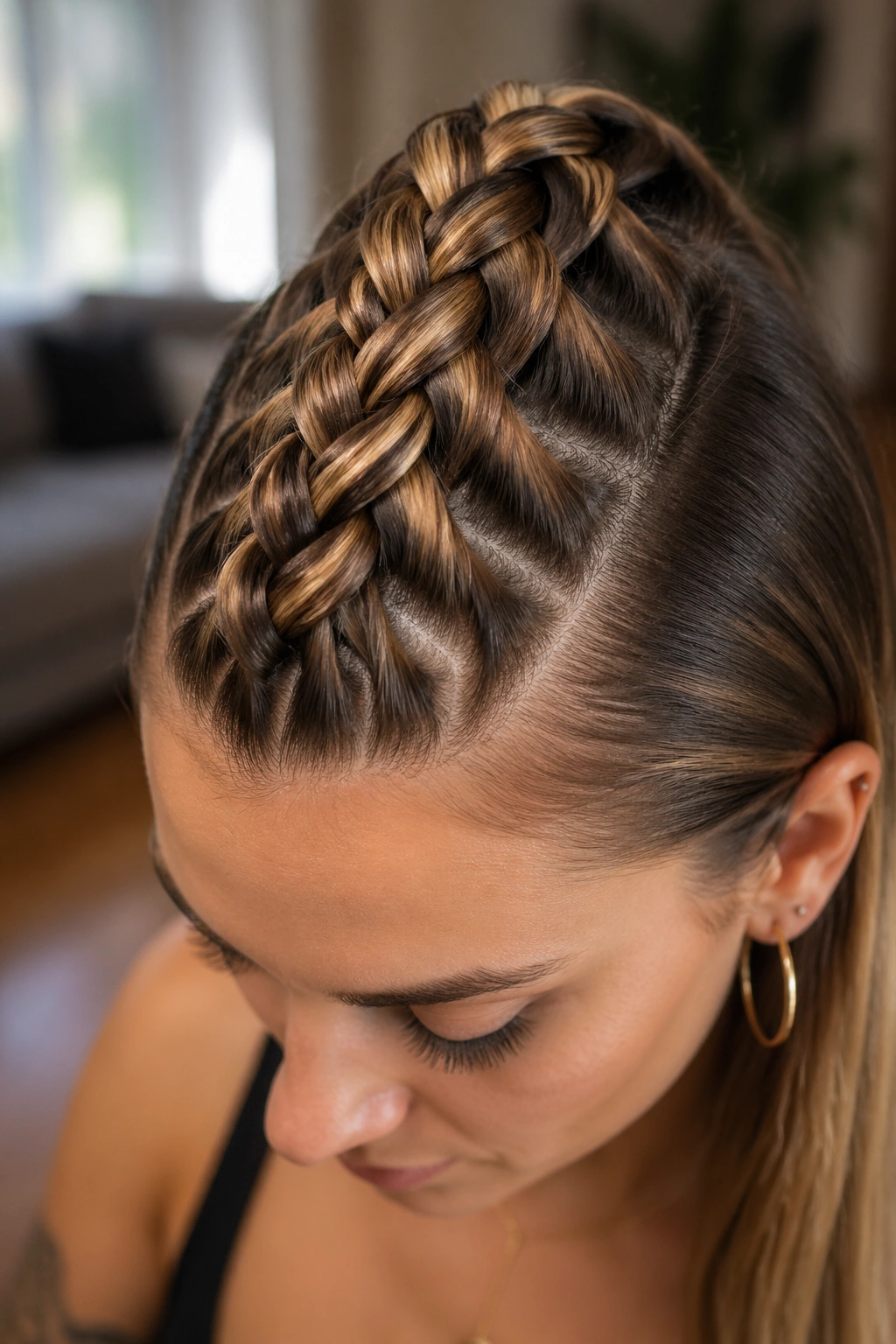
A four-strand dragon braid has more body than a standard three-strand version. It looks thicker, reads from a distance, and gives long hair a rope-like shape that feels full without needing a giant amount of teasing.
What Makes It Different
The extra strand changes the braid’s face. Instead of a simple flat pattern, you get a wider, more dimensional line that sits nicely on thick long hair. It also helps the tail look richer, especially if your hair is fine but long enough to hold tension well.
- Use four equal sections at the start.
- Keep your hands close to the scalp for the first 4 inches.
- Blend the sections tightly so the braid does not twist sideways.
- Finish with a covered elastic if the tail is very long.
The style takes a little more attention at first. After that, it settles into a rhythm. If your hands get tired halfway through, that is normal. The braid is doing more work than a plain plait, and the payoff is worth it.
16. Rope-Twist Dragon Braid for Fast Styling
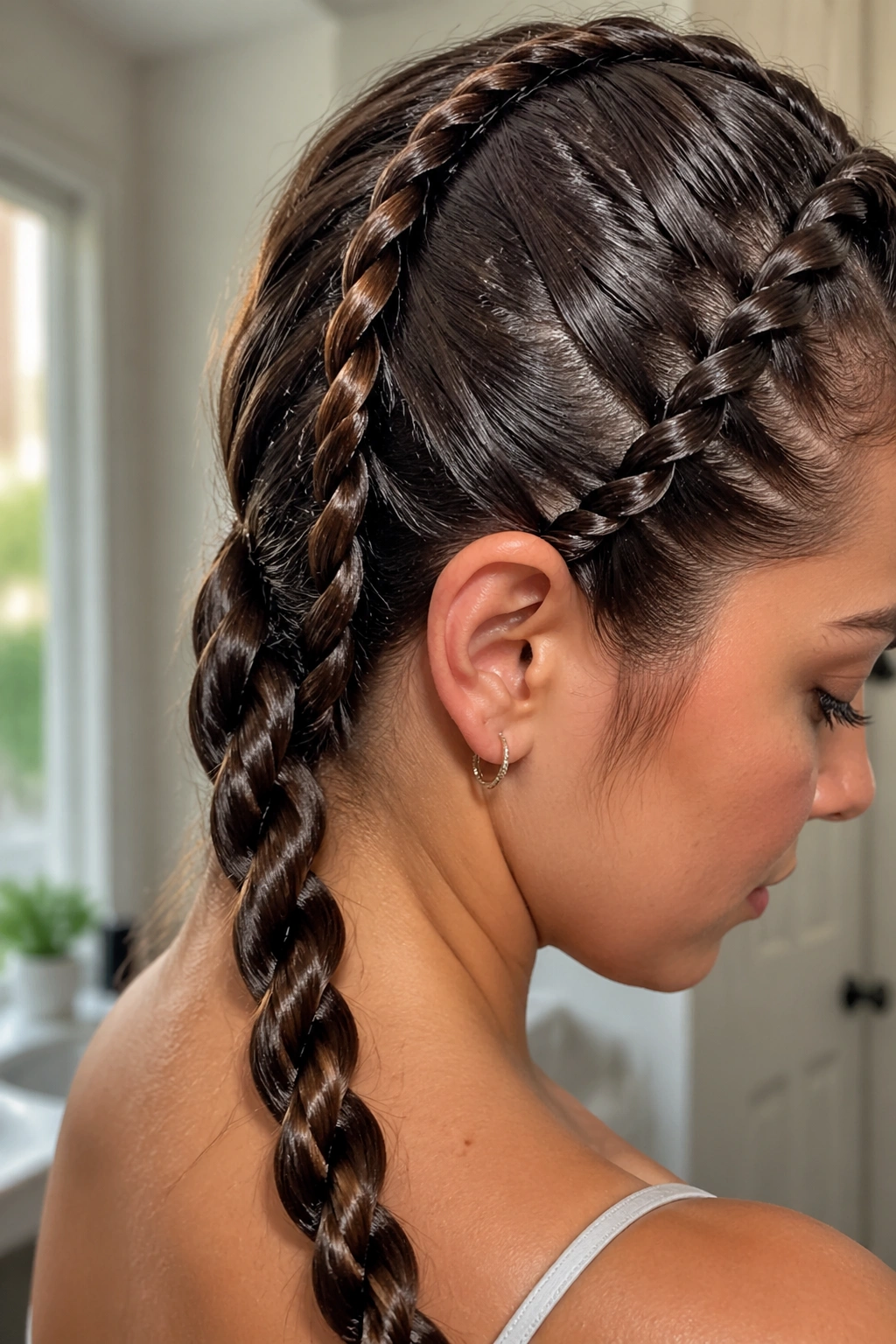
A rope-twist dragon braid is the braid for people who want the look without spending forever on the technique. It uses two twisted sections instead of three, which makes the style faster and, on some hair types, easier to keep smooth.
Long hair suits this approach because the twist shows length in a single clean line. The hair spirals around itself, and that spiral catches the eye as it drops. If your hair is slippery, a little dry shampoo at the roots or a light cream through the mid-lengths helps the twist hold better. Too much product is the enemy here. The twist loses its shape if it gets slick.
This style is also kinder to tired hands. Seriously. If you’ve ever tried to finish a very long braid while your arms are fading, you know why that matters. A rope-twist dragon braid gives you texture and height without turning the last five minutes into a workout.
17. Braided Ponytail Wrap with a Long Tail
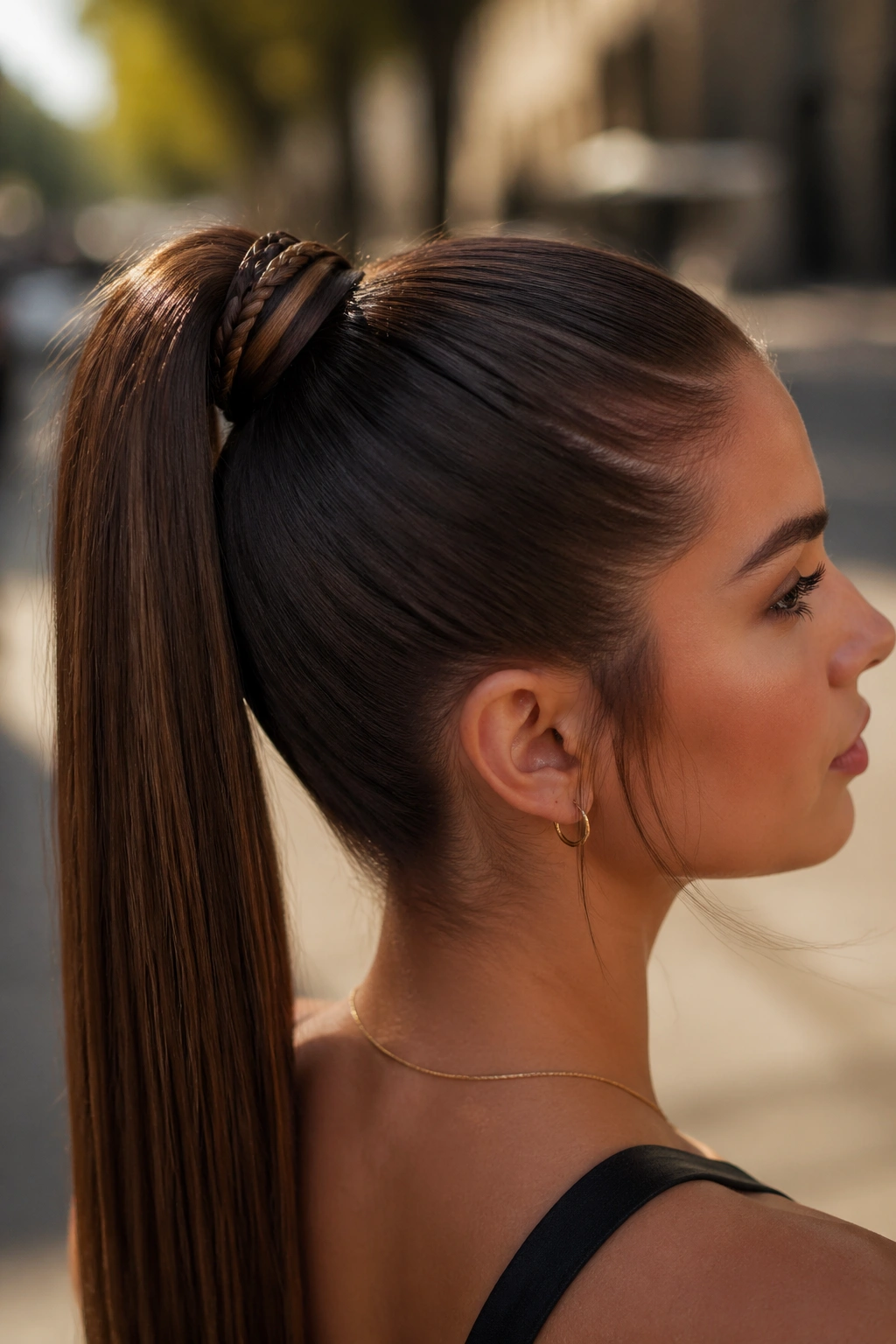
One small braid can make a plain ponytail look finished. A braided ponytail wrap does that job with almost no fuss, and long hair gives it a lot more presence than a standard wrapped elastic ever could.
The braid starts by wrapping a narrow strand around the ponytail base so the elastic disappears. From there, braid the tail itself, keeping the top tight and the lower length clean. That little wrap matters. It turns the ponytail from “pulled back” into “styled.” On long hair, the effect is stronger because the tail has enough length to swing and hold a shape.
I like this version when I want something neat without committing to a full scalp braid. It works at mid-height, high, or low, but a mid-crown ponytail tends to look the most balanced. The base sits nicely, the tail falls straight, and the braid keeps the whole thing from feeling plain.
18. Wrapped-Base Dragon Braid with an Extra-Long End
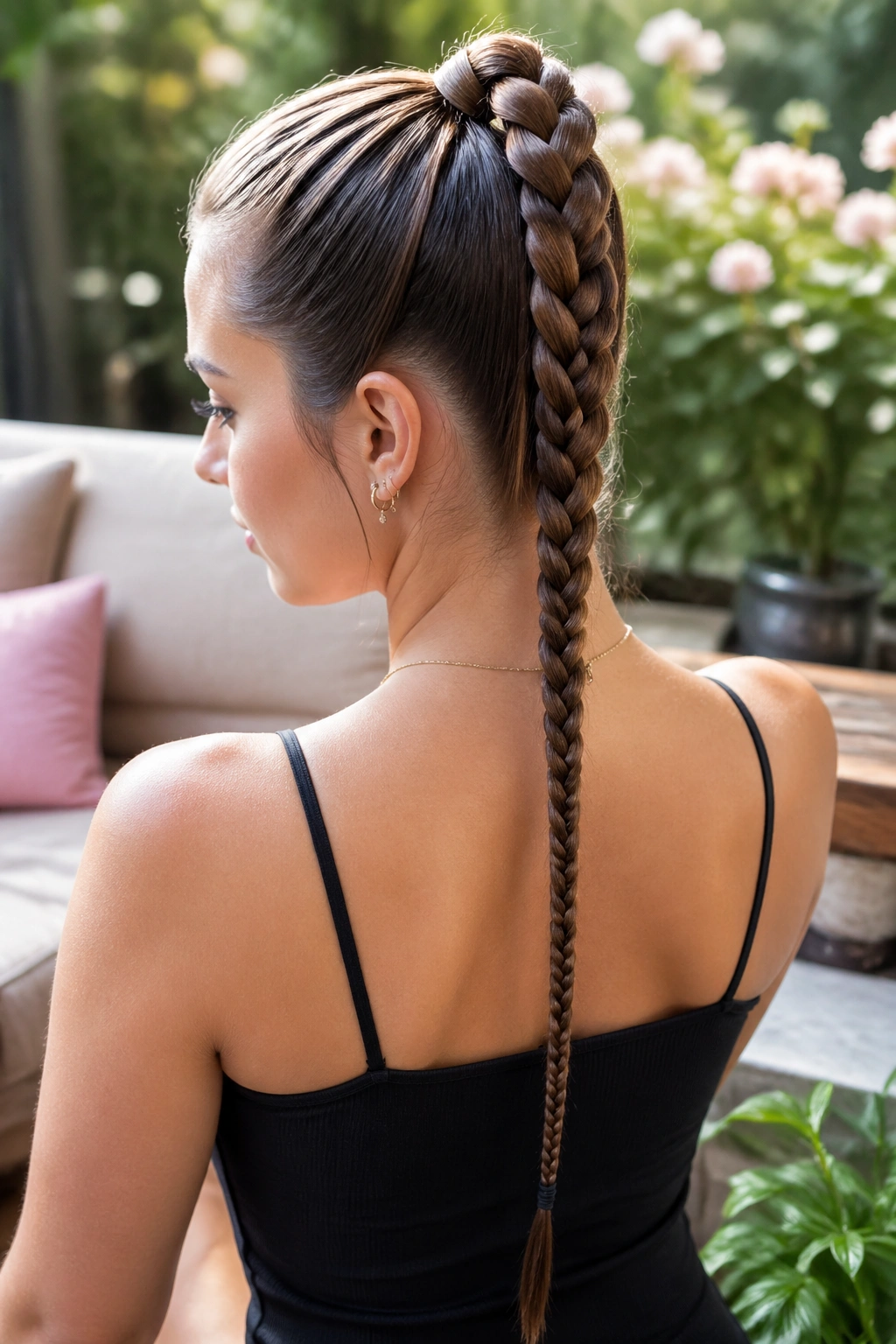
When hair is past the waist, the ends become the whole point. A wrapped-base dragon braid with an extra-long end makes that obvious in the best way. The braid stays tight at the top, then opens into a long, loose tail that feels deliberate rather than accidental.
The contrast is what sells it. Tight braid. Smooth base. Then a long tail left clean and visible for 8 to 10 inches past the elastic. If the ends are frayed, curl them under slightly or seal them with a tiny bit of cream. If you want more drama, wrap the base with a strand of hair or a narrow ribbon in a matching color.
This style is one of those cases where less shaping is better. Do not over-pancake the tail. The long end needs to stay narrow enough to read as length, not fluff. That sharp change from compact braid to hanging end makes long hair look even longer.
19. Boho Dragon Braids with Face-Framing Pieces
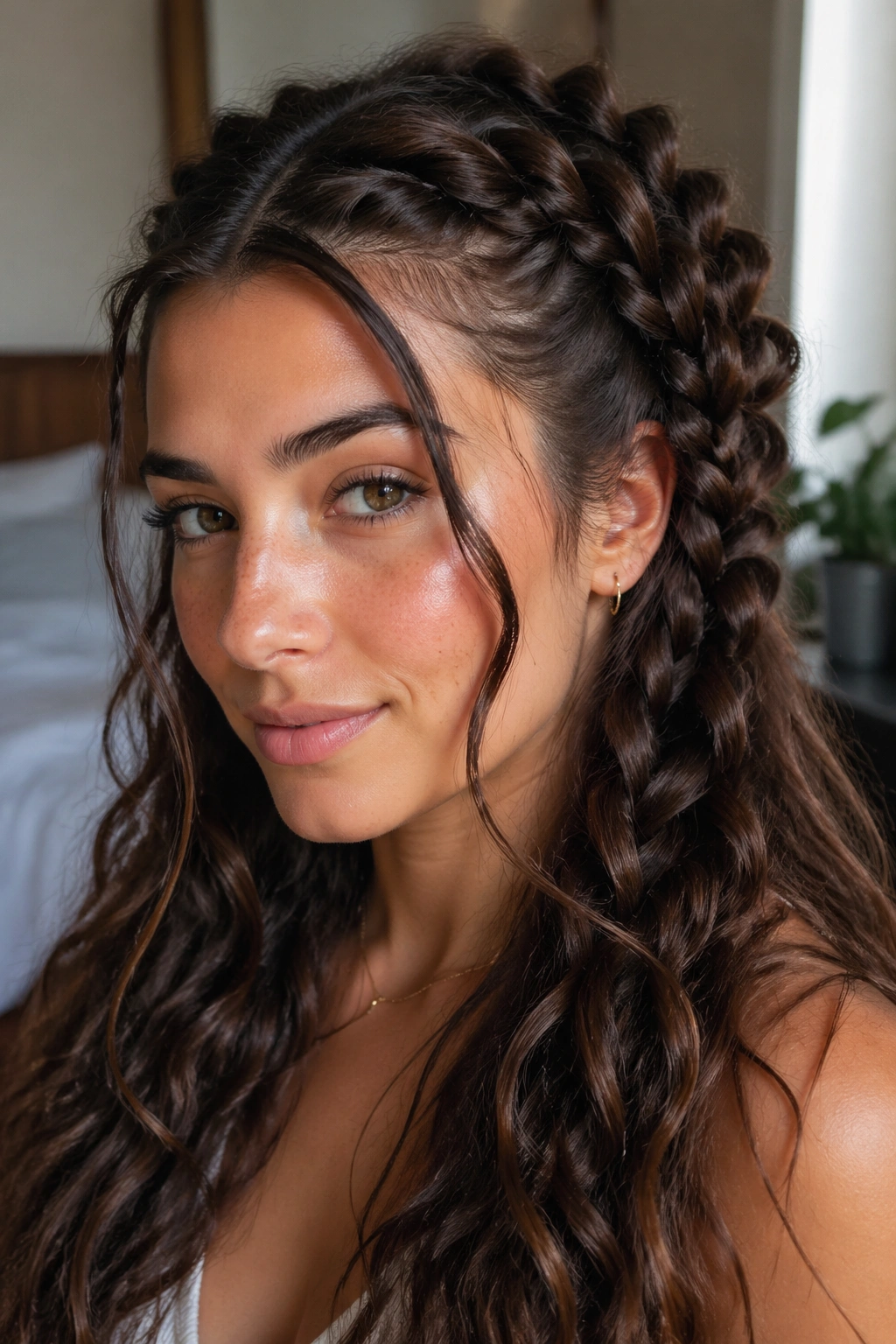
Boho dragon braids are what you wear when you want the braid to feel relaxed without losing its shape. The long hair stays the star, but the style lets a few soft pieces move around the face and neckline.
Leave two thin sections loose at the front, one on each side, then braid the rest with a softer hand. The braid itself can be slightly loosened along the edges, especially around the crown and the mid-lengths. On long hair, the softness keeps the style from looking heavy. The face-framing pieces keep it from looking severe.
This version is especially good if your hair has a natural wave. The loose front pieces blend right in, and the braid gives enough structure that the whole thing still feels planned. A little wave cream on the front pieces helps them stay smooth without sticking to the cheeks. If the wind is strong, pin the front pieces back with tiny crossed pins and let the rest of the style stay loose.
20. Jewel-Clasp Dragon Braid with Pins and Cuffs
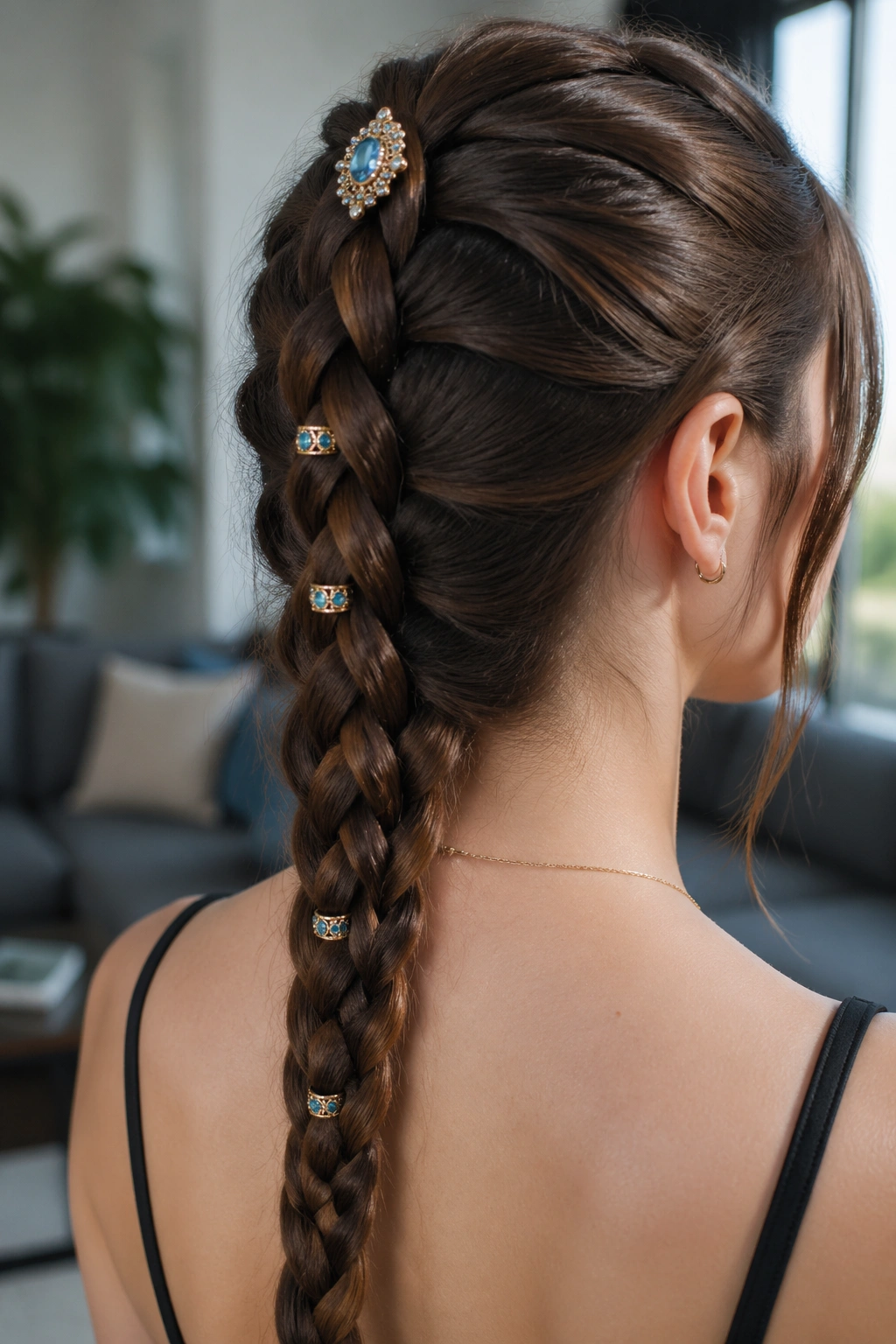
Accessories belong in long braids. Short hair often looks overdone with too many extras. Long hair gives those pieces room to sit where they should, which is why a jewel-clasp dragon braid can look so good.
Use a few small cuffs or pins along the braid instead of loading everything at the top. One cuff near the crown. Another about 4 inches lower. Maybe a tiny clasp near the tail. Spacing matters more than quantity. A braid with accessories every inch starts to feel crowded fast.
- Place one statement pin just below the crown.
- Add smaller cuffs every 4 to 5 inches.
- Use lightweight pieces so the braid does not sag.
- Keep the braid smooth so the accessories stand out.
This style works best when the braid itself is simple. The jewelry should decorate the line, not fight it. Long hair gives you enough length to spread the details out, and that breathing room keeps the look from tipping into costume territory.
21. Twin Front Dragon Braids Joined into One Tail
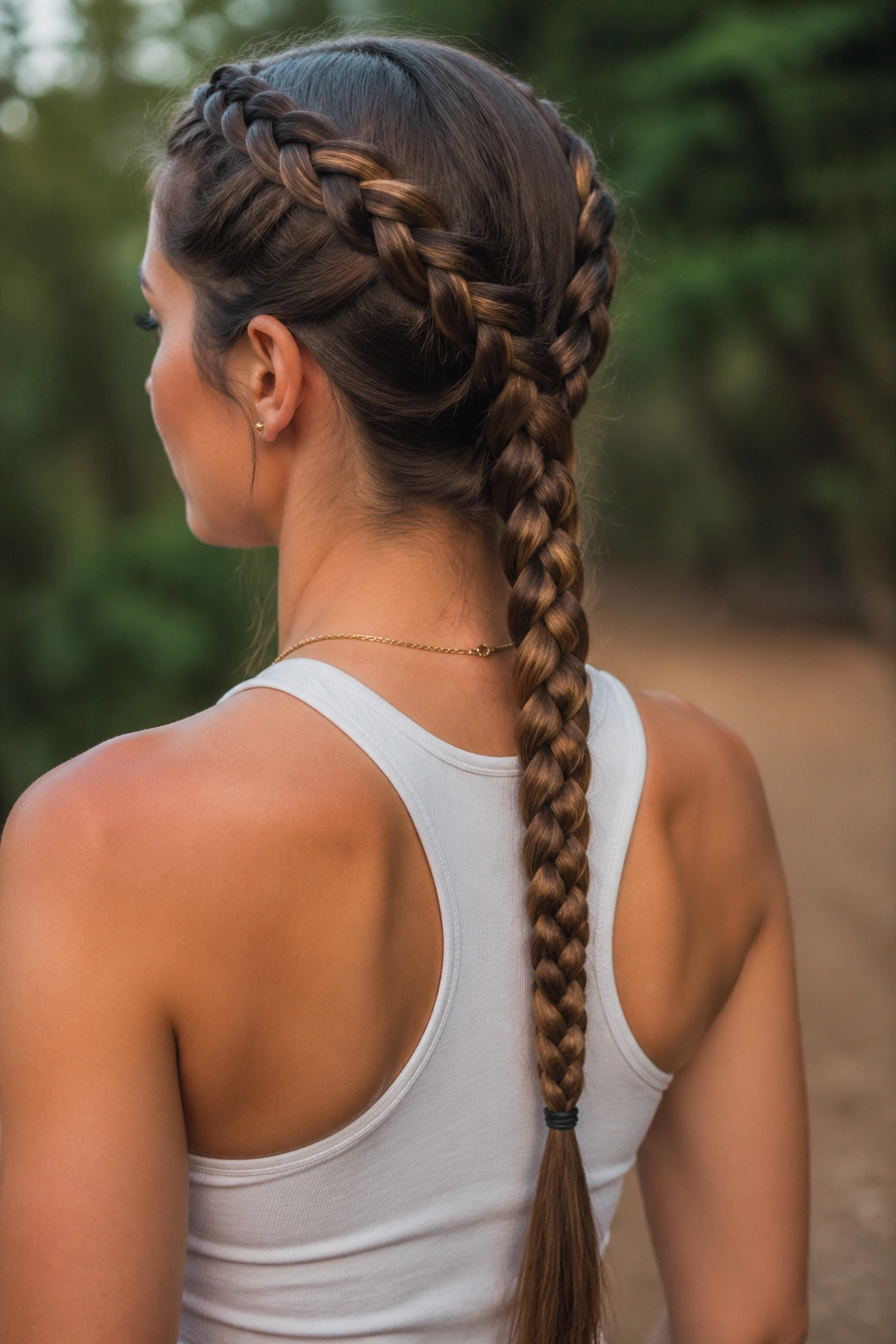
Two braids can become one, and that change is what makes this style interesting. Twin front dragon braids joined into a single tail give you the clean shape of side braids and the length-showing power of one long fall down the back.
How to Join Them Cleanly
Start each braid at the temple and run them back along the sides of the head. Keep them close to the scalp for the first few inches, then merge both braids at the crown or upper nape before tying them into one ponytail or one longer plait. The join point should sit flat. If it buckles, the whole style looks awkward.
This is a strong choice for thick long hair because it keeps the sides under control without hiding the length. The front braids add detail near the face, then the single tail gives the eye somewhere to land. If you want, wrap the join with a small strand of hair so the merge looks cleaner and more finished. That tiny wrap is the kind of detail people notice without being able to name it.
22. Mohawk Dragon Braid with Tight Sides
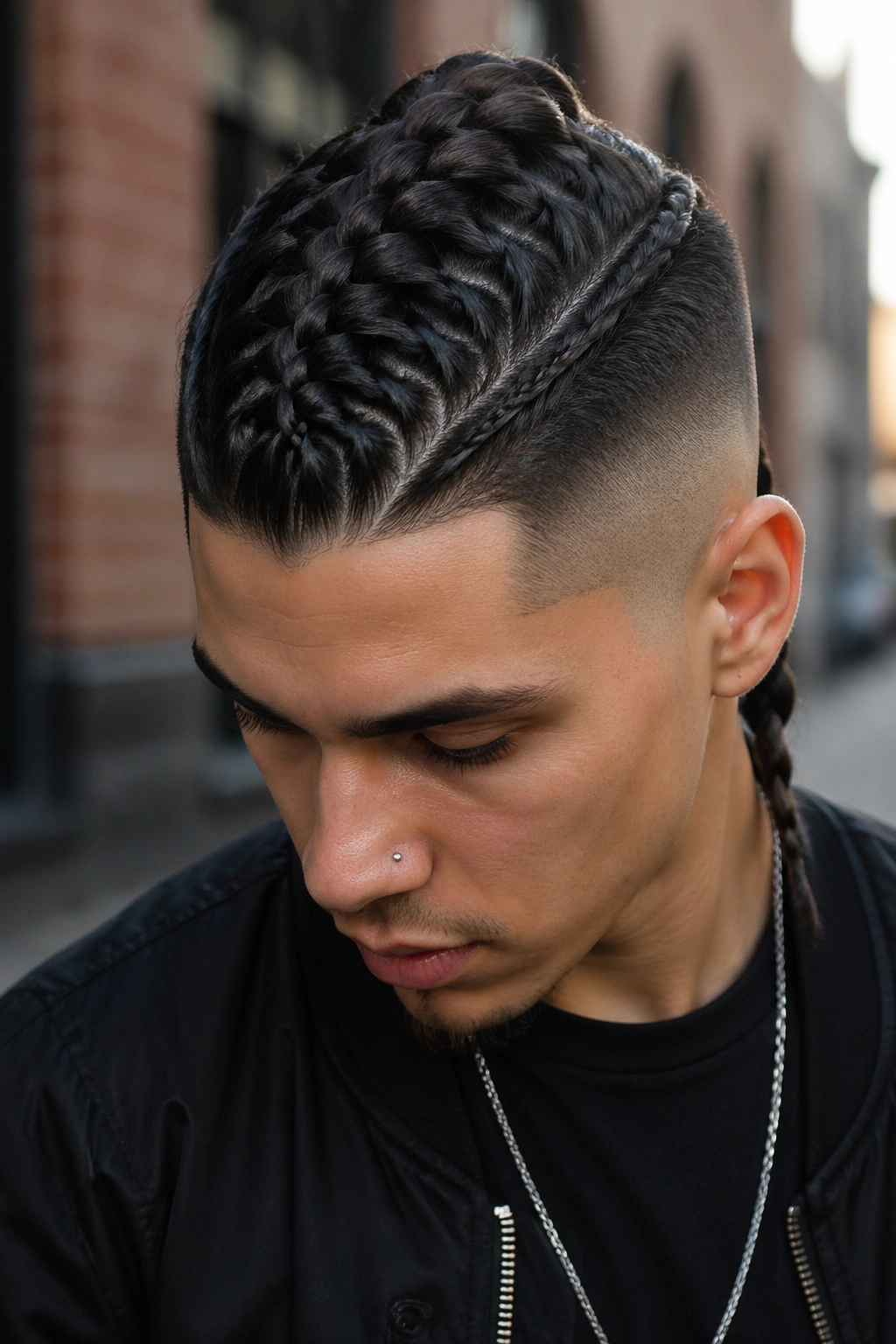
A mohawk dragon braid has attitude. The center braid runs straight down the middle, while the sides stay sleek and tight, which makes long hair look sharper and taller.
Unlike a soft side braid, this one wants contrast. The sides should be brushed flat, maybe even slicked back with a bit of gel, so the center braid has room to stand out. A braid about 2 to 3 inches wide down the middle is usually enough. Wider than that, and the style loses its edge. Narrower than that, and the braid can disappear into the rest of the hair.
This is the braid I’d choose for thick long hair that tends to spread out instead of staying in one place. The mohawk line gives it shape from front to back. It also pairs well with a long tail, because the braid can stay controlled at the top while the lower length keeps moving. Clean sides. Strong center. No confusion about where to look.
23. Waist-Length Dragon Braid That Makes the Length the Point
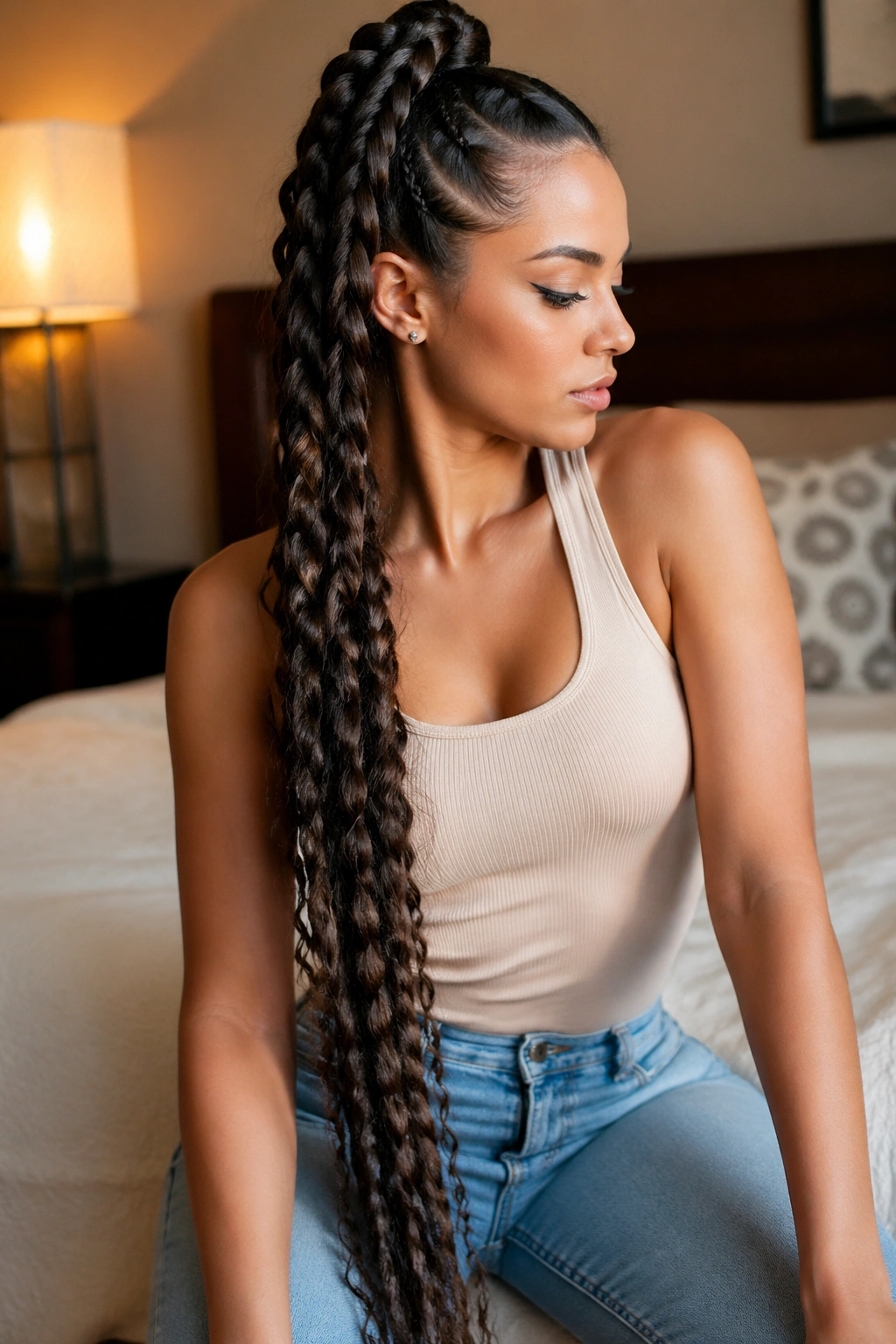
A waist-length dragon braid is the style that turns long hair into the main event. The braid does not just hold the hair. It puts the length on display, which is why this version has such a strong payoff when the hair is truly long.
Keep the crown section snug and the braid line narrow for the first several inches. That keeps the top crisp and stops the braid from widening too early. Once you reach the middle of the back, loosen the edges a touch so the braid keeps its shape without looking pinched. The ends should stay neat. If the tail is allowed to fray or puff too much, the whole thing loses its clean line.
This is also the style where a shoulder drape matters. If the hair is long enough, bring the braid over one shoulder for a few minutes and see how it falls. Sometimes that single move makes the length register more strongly than leaving it down the back. Long hair deserves that kind of visibility. A braid this long should not hide in plain sight.
